
Engagement henna has a different job from wedding henna. It has to look finished in ring pictures and family portraits, but it shouldn’t use up the drama you’re saving for the wedding itself. So I usually draw it lighter and cleaner, borrowing from Indian, Arabic, Indo-Arabic, Moroccan and Gulf styles without going full bridal. The designs below run from full-hand work to ring-focused back hands, floral trails, mandalas, jaali, couple initials and simple finger patterns. Pick by your sleeves, your jewelry and the date of the ceremony, because those three things decide more than any trend.
Planning Around the Ring Exchange Photo
At an engagement, the close-up of the ring going on is the picture everyone shares. I plan the henna backwards from that moment, and a few simple steps make a visible difference.
- Apply a day or two before if you can. Same-day henna is still orange in the photos; a day later it has deepened toward brown.
- Keep the band area of the ring finger lightly patterned or clear, so the ring sits on clean skin.
- Do your manicure and any waxing before the henna, not after. Soaking and scrubbing pulls the fresh stain off.
- Rub a little balm or oil over the stain on the morning of the ceremony. It gives the color a soft sheen on camera.
- Get the ring sized well before the day. Fingers swell in heat, and a ring that sticks at the knuckle turns the moment into a struggle on camera.
Rehearse the hand pose too. Most ring shots catch the back of the left hand at a slight angle, so that is where your best detail should be.
1. Full Hand Engagement Mehndi Design
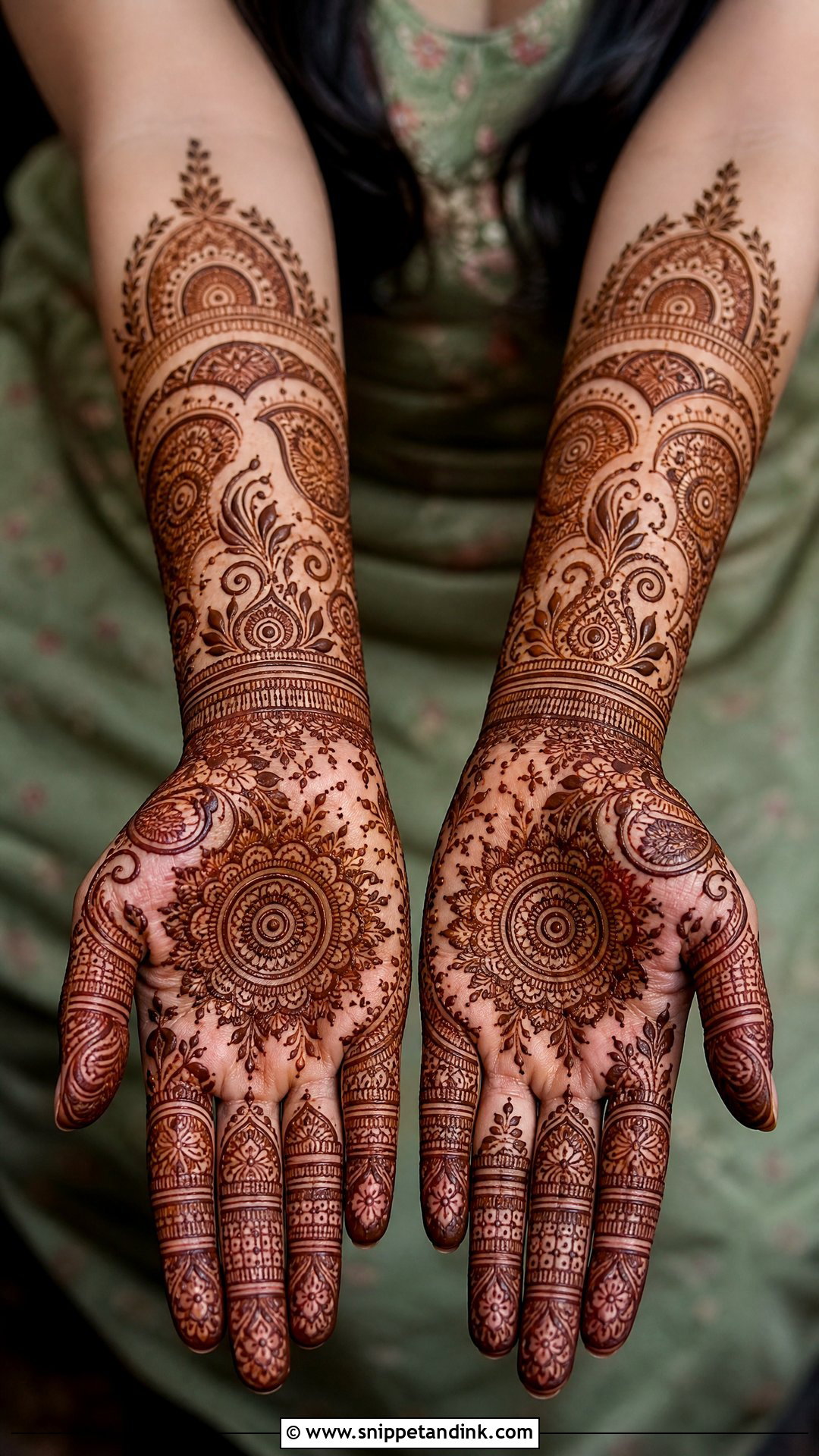
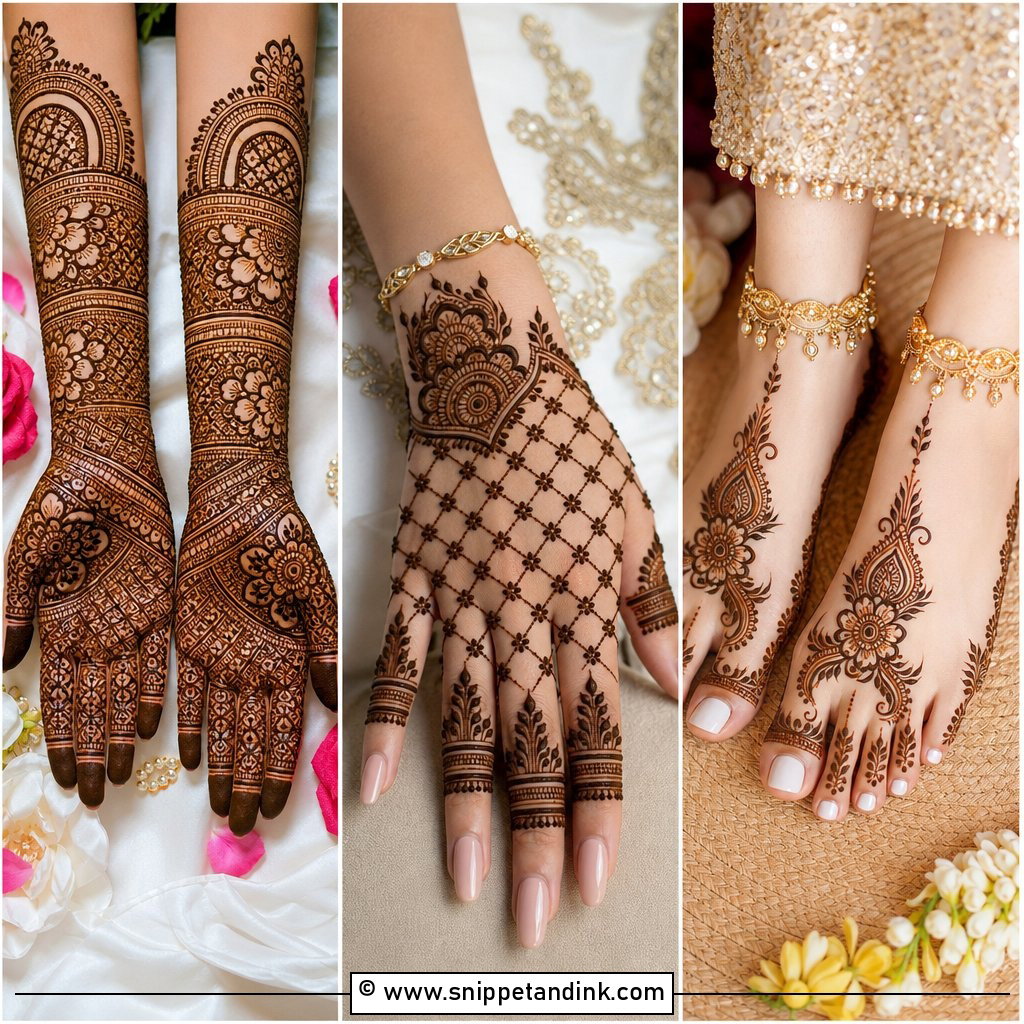
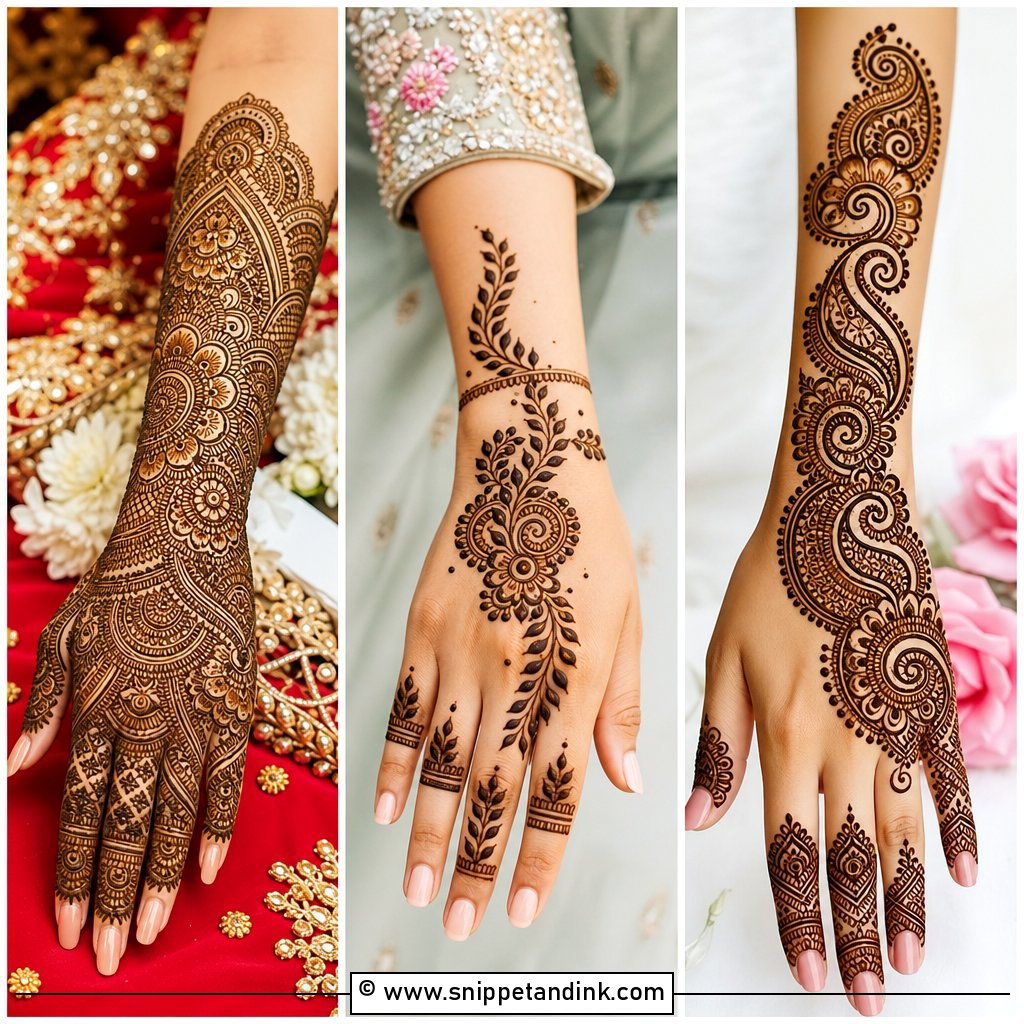
A full hand engagement mehndi design gives you a bridal feel without the weight of wedding work. Palm, fingers, wrist and lower forearm get paisleys, florals, vines and a mandala, with filler kept to a minimum. I deliberately open the spacing a little compared with a wedding hand, partly for style and partly because it fades more evenly that way. Leave a small clear space in the palm if you’d like initials, a ring motif or a tiny heart. Heavily embroidered lehengas, sarees and shararas carry it well.
2. Simple Engagement Mehndi Design
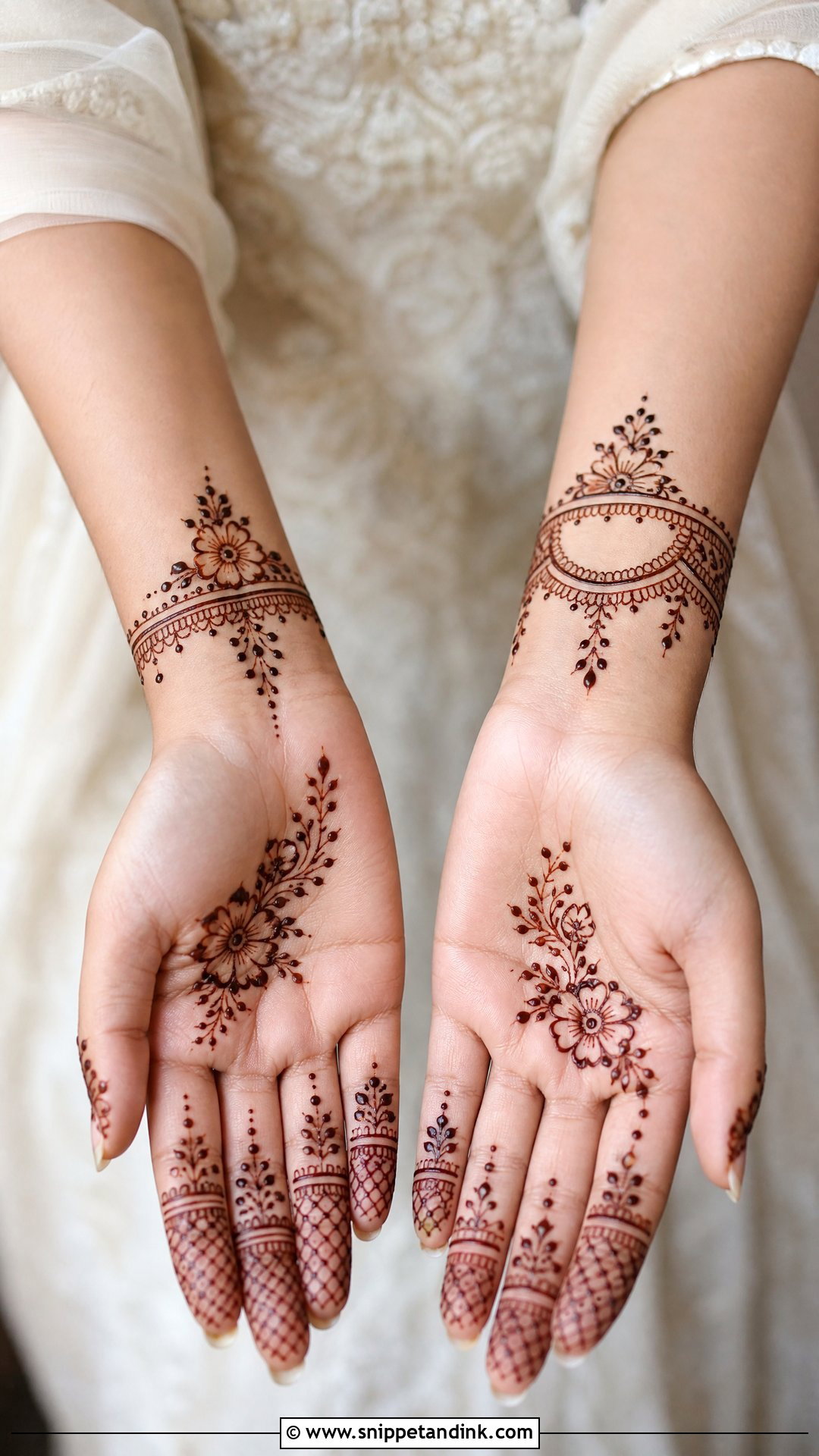
One main palm motif, delicate fingers and a neat wrist band: that is the whole recipe for a simple engagement hand. Floral vines, small paisleys and curved lines keep it festive. I often suggest this when the engagement is a short afternoon event, or when the bride wants her wedding mehndi to feel like a real step up a few weeks later. Open skin gives simple work strong contrast in photos. Diamond rings, pastel outfits and light bangles sit nicely with it.
3. Arabic Engagement Mehndi Design
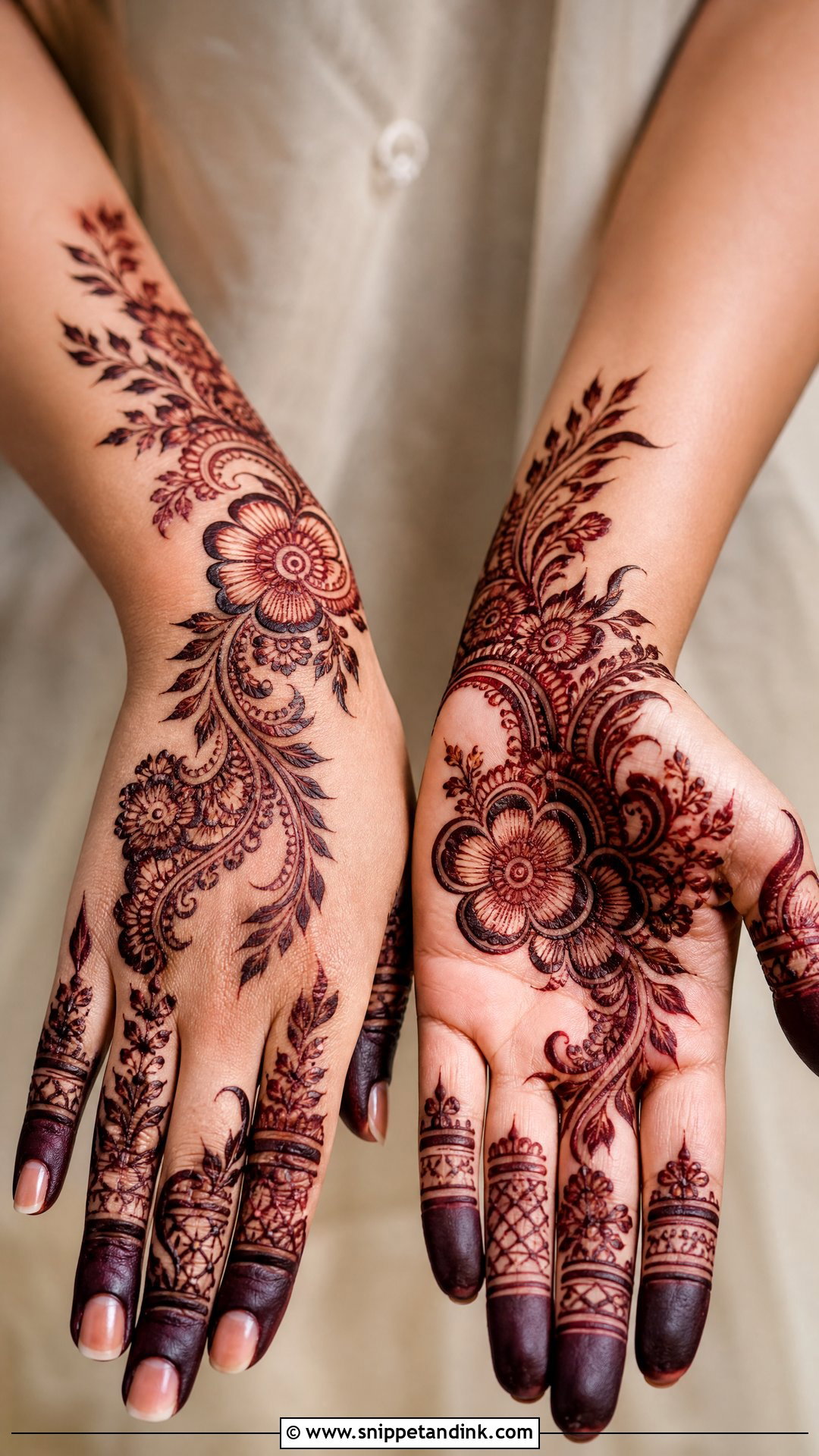
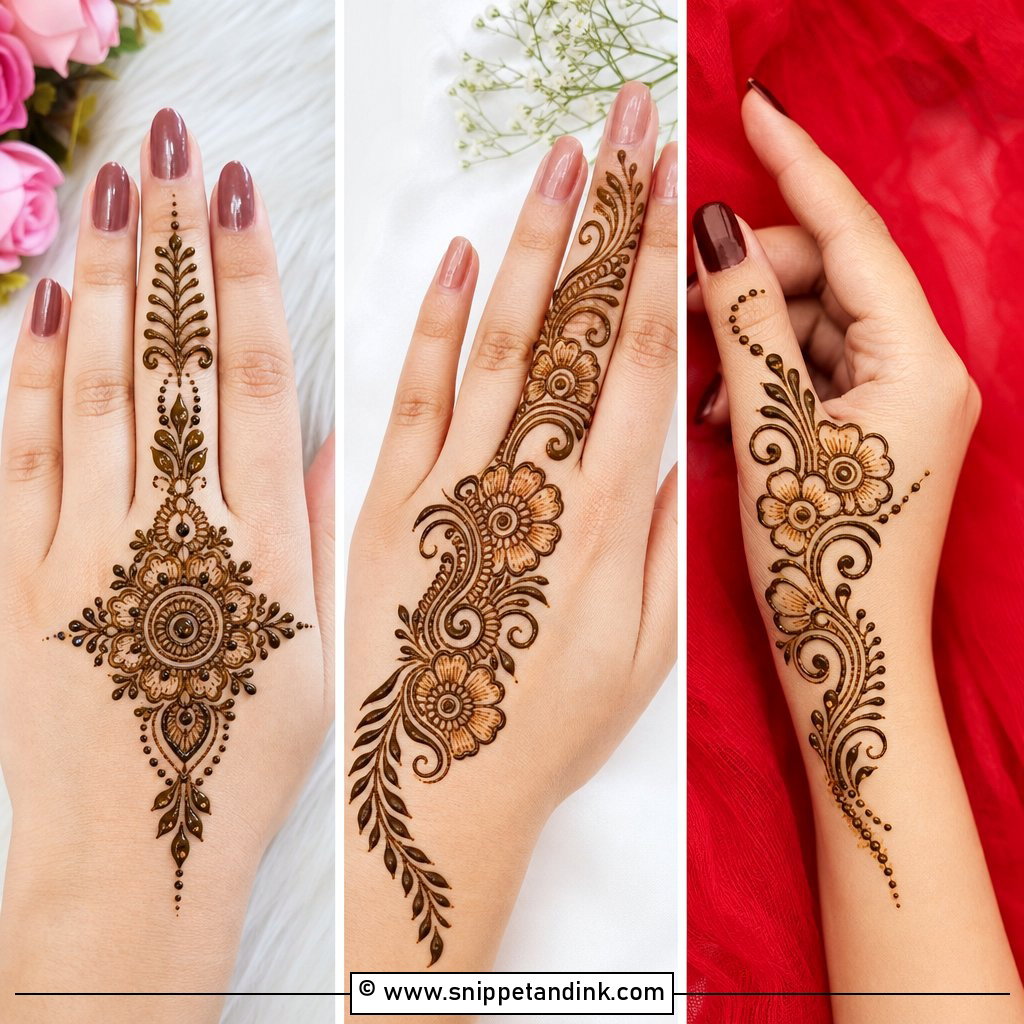
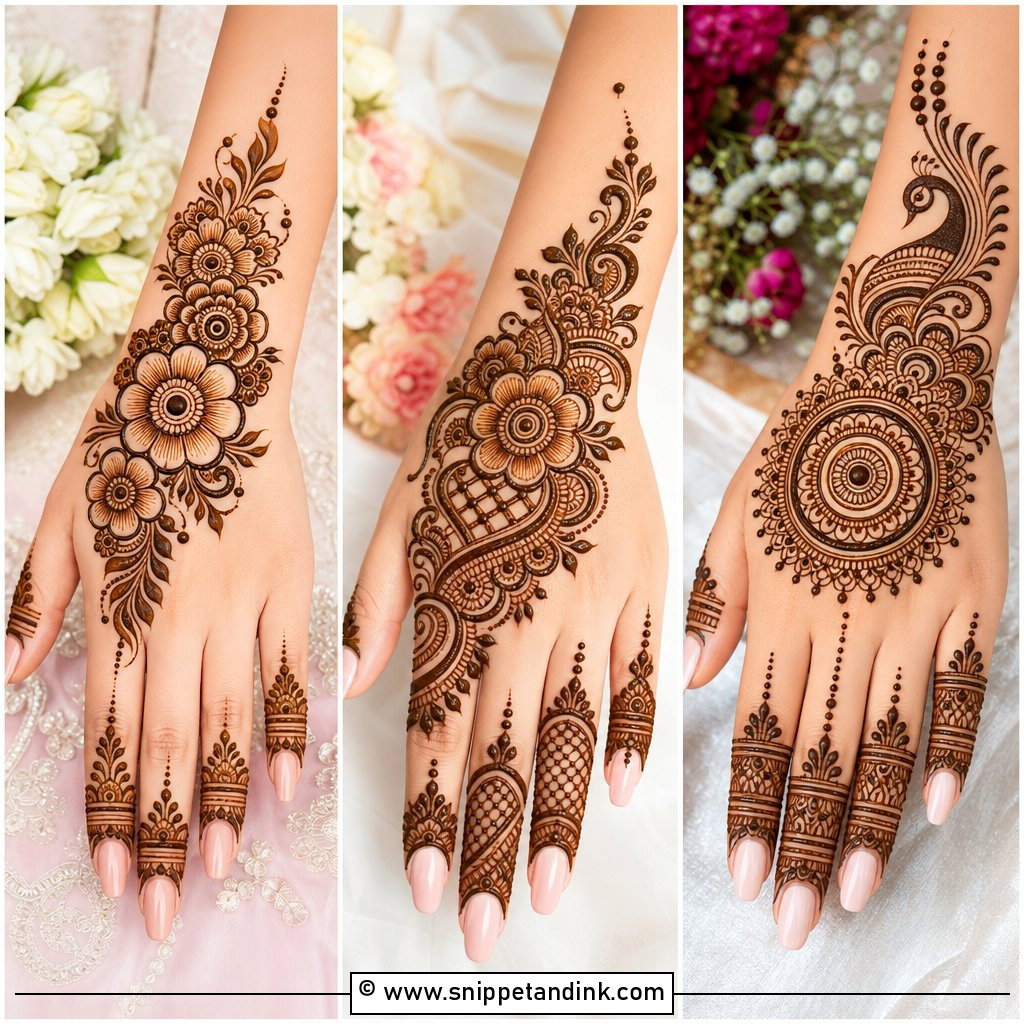
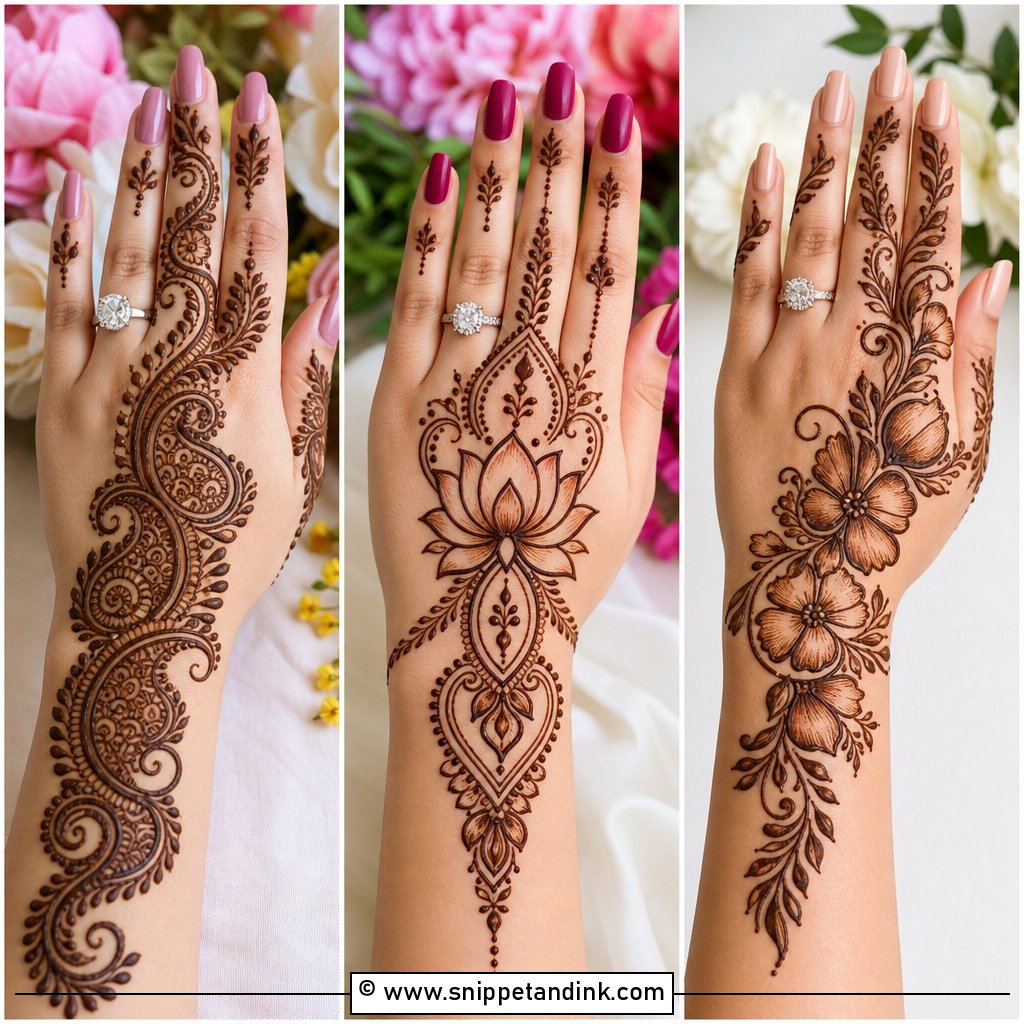
Arabic engagement mehndi design is the quickest to apply of anything on this list, which is why I reach for it when there are a dozen relatives waiting for their turn. It moves diagonally across the palm or back hand with flowers, leaves, paisleys and shaded petals, rather than filling every inch. Thick outlines matter here. A thin Arabic line looks pale and wispy once the stain settles, so I ask for a slightly wider cone opening for the main trail and keep the shading soft inside it. The open skin frames the fingers well for ring shots.
4. Back Hand Engagement Mehndi Design
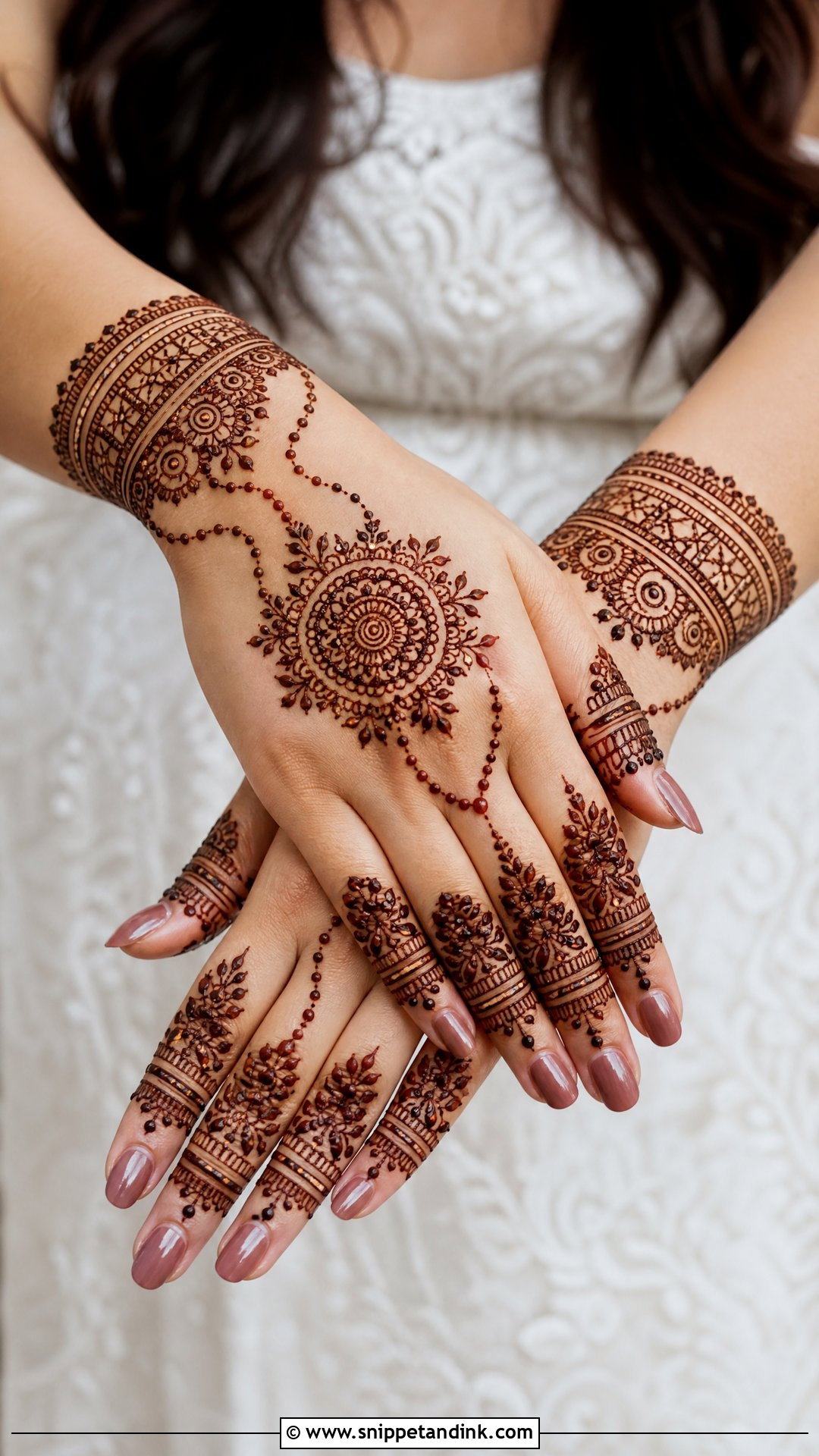
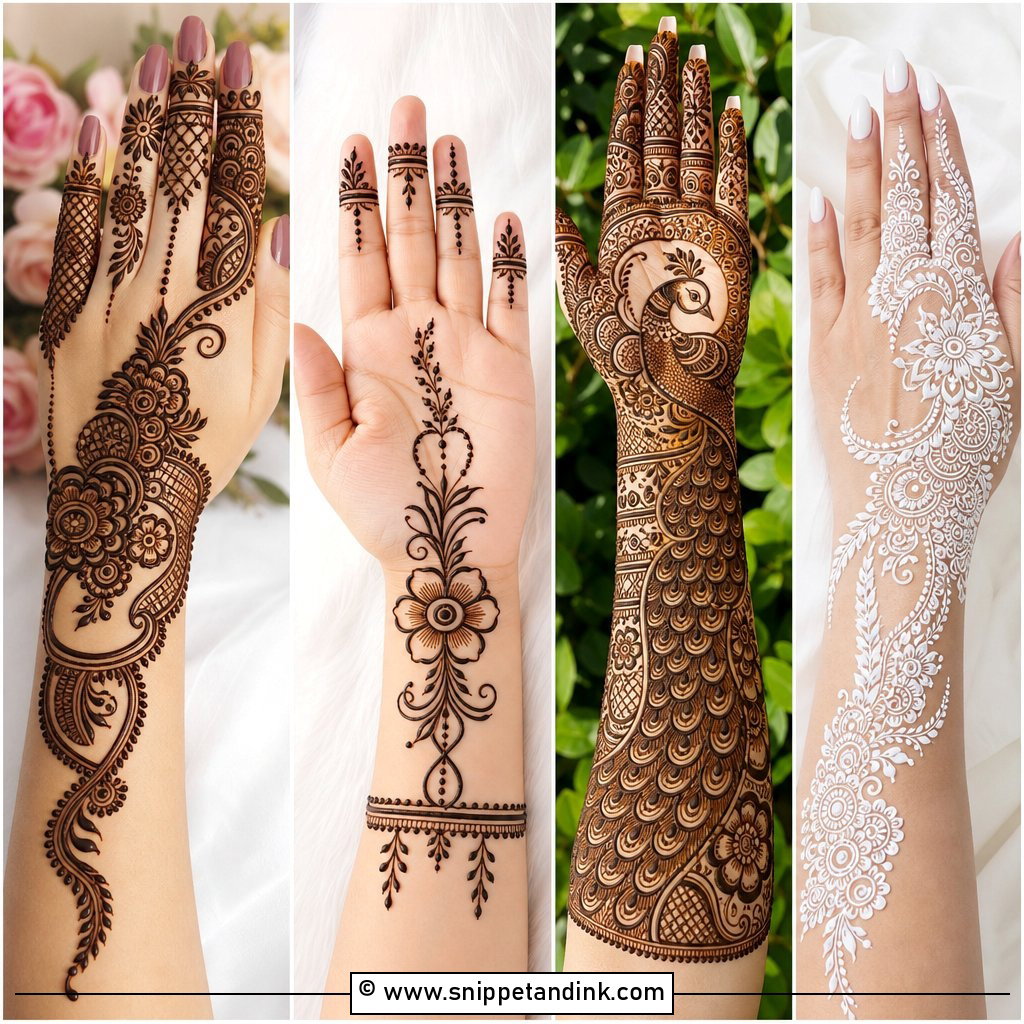
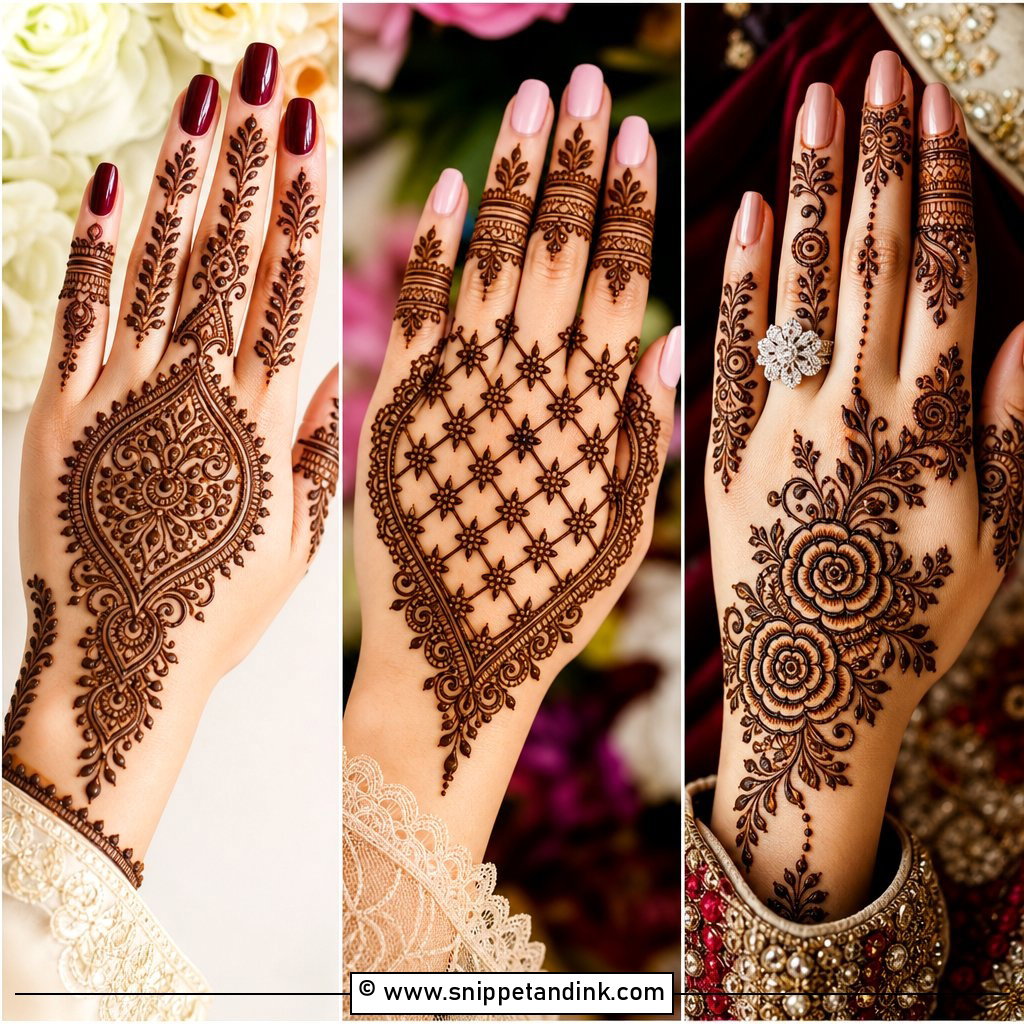
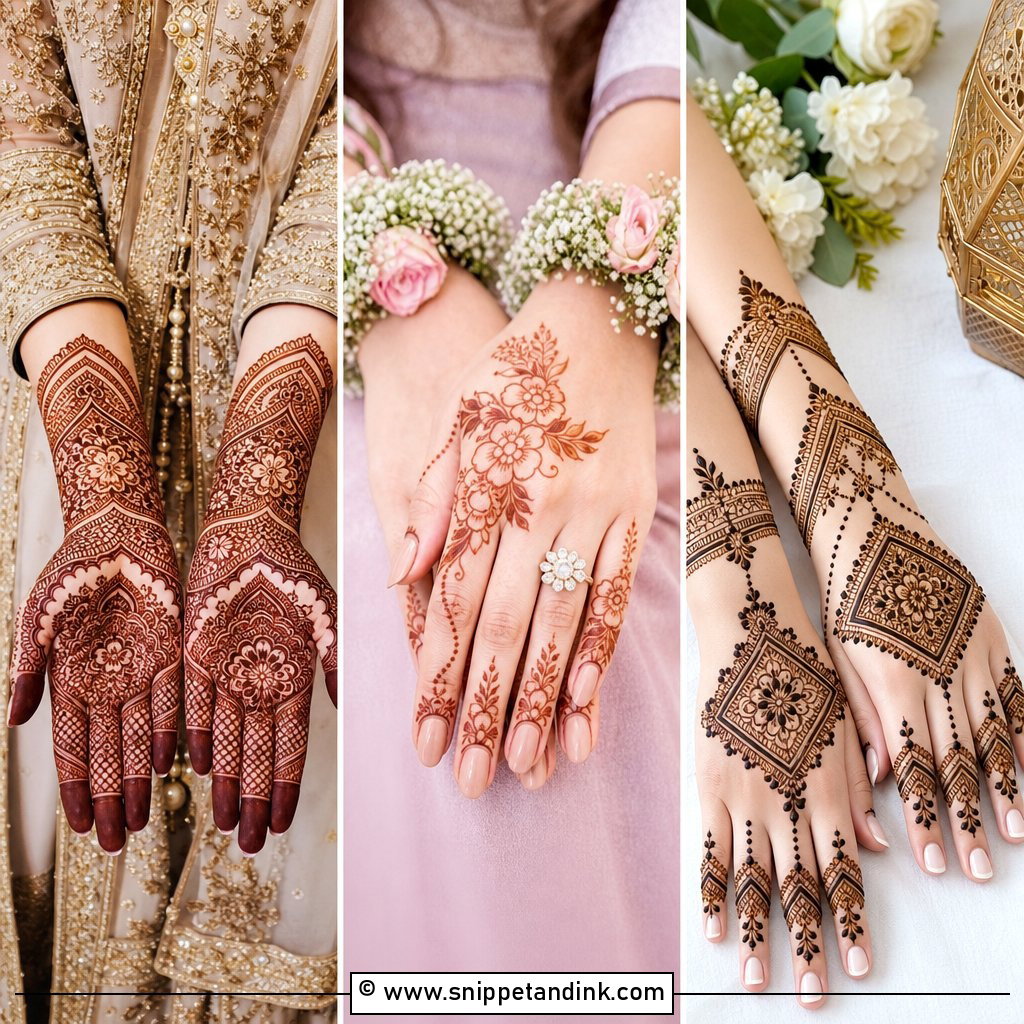
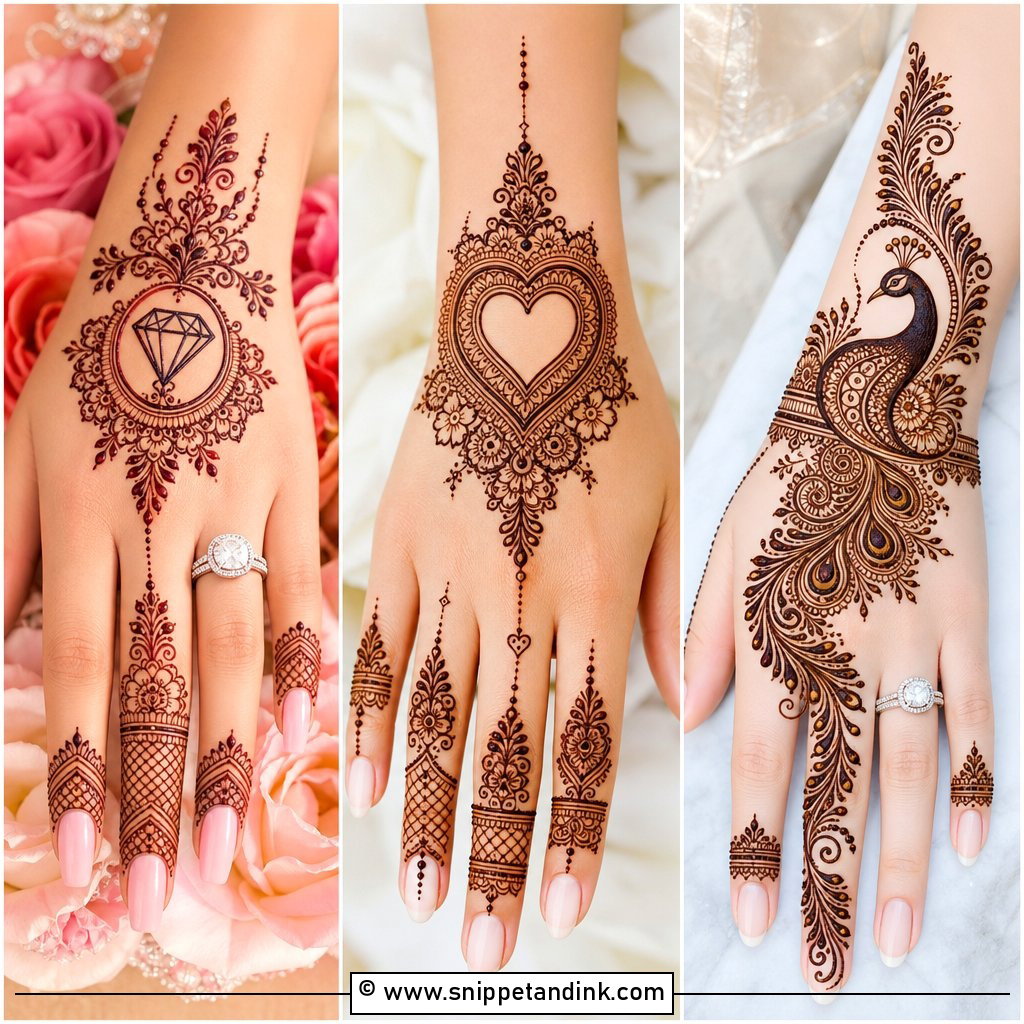
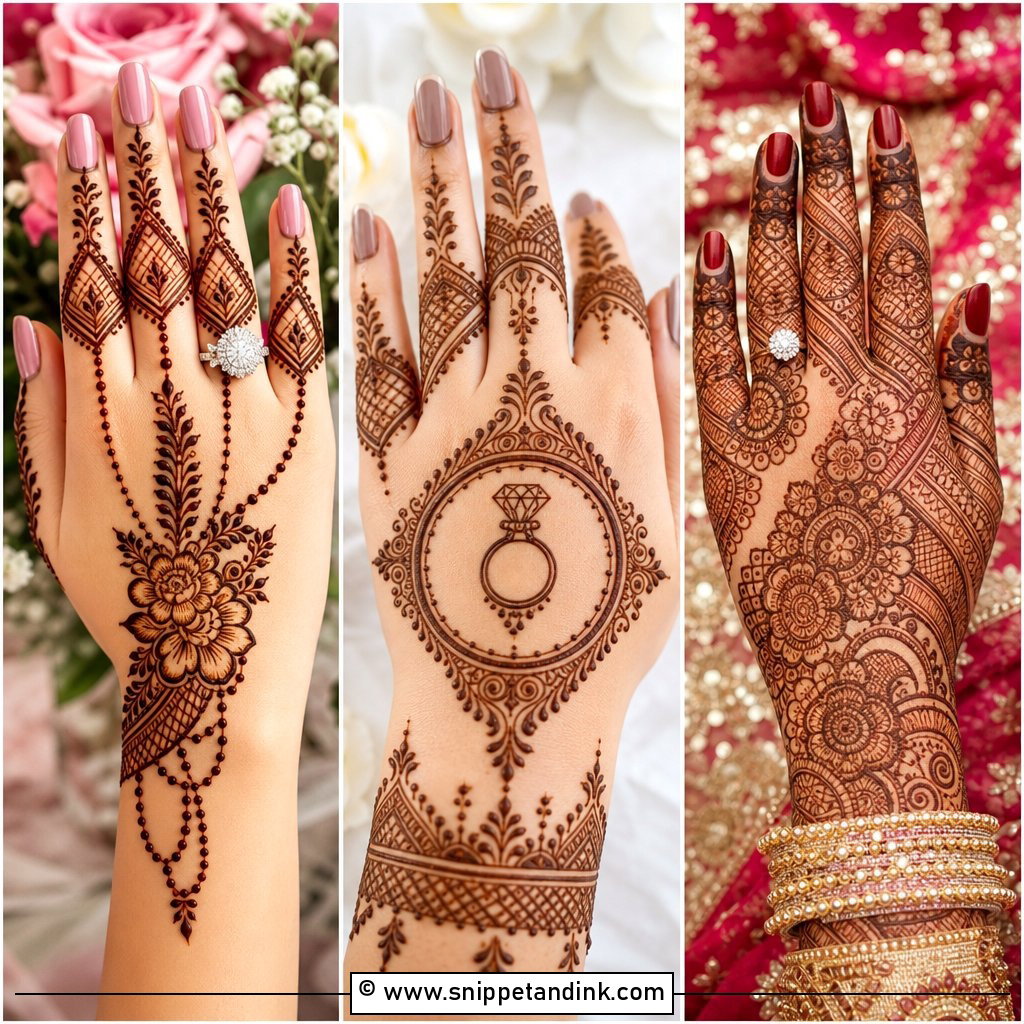
The back hand gets almost all the attention during the ring exchange, so I plan it first. A back hand engagement mehndi design usually has a central mandala, a bracelet band at the wrist, decorated fingers and chain-like connectors, which together read as henna jewelry. Open florals and leafy trails feel modern; paisley borders and fine jaali feel traditional. Whichever you pick, I keep the area just above the ring finger knuckle quiet, so the stone isn’t sitting on top of a busy pattern in the close-up.
5. Front Hand Engagement Mehndi Design
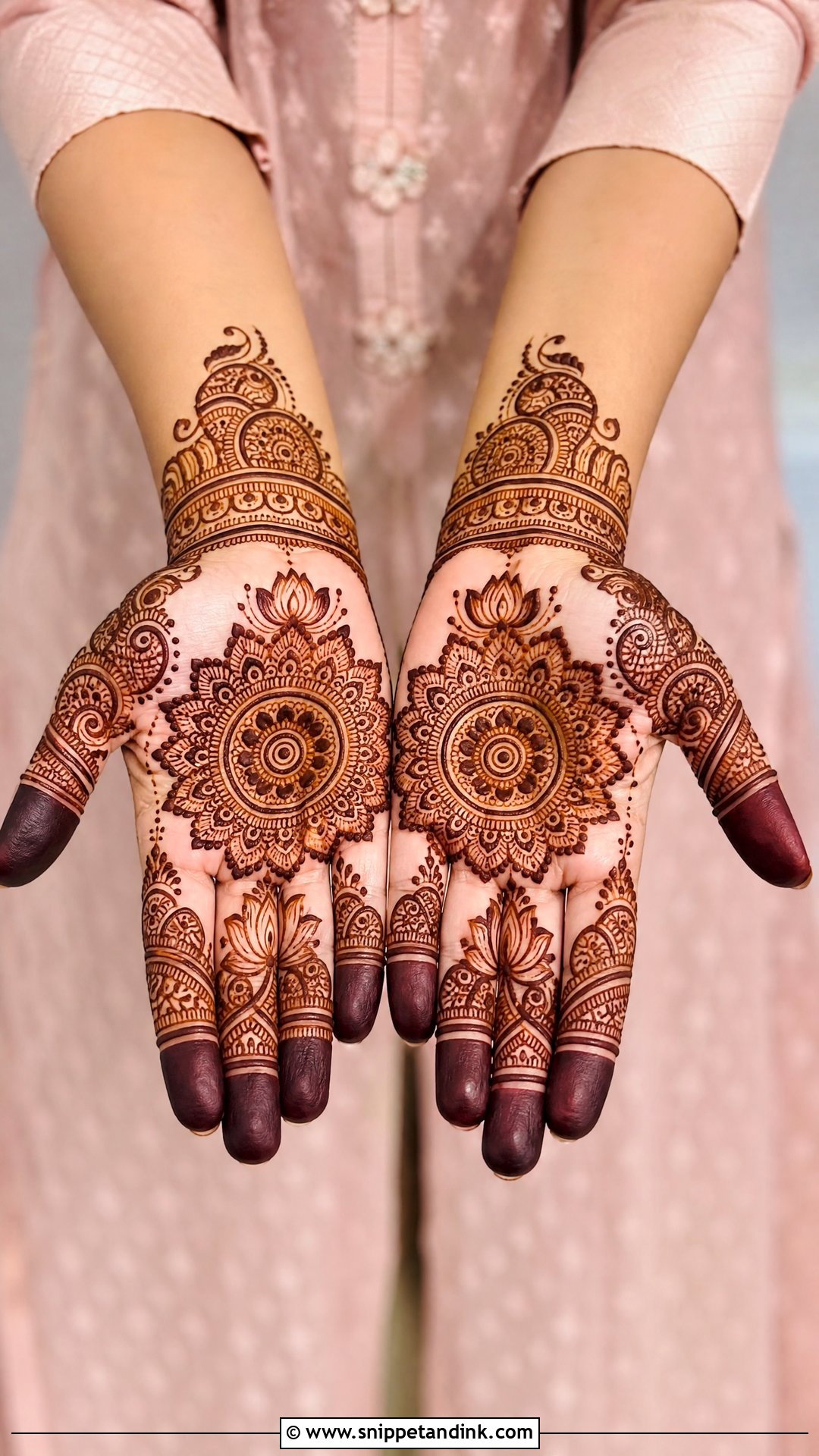
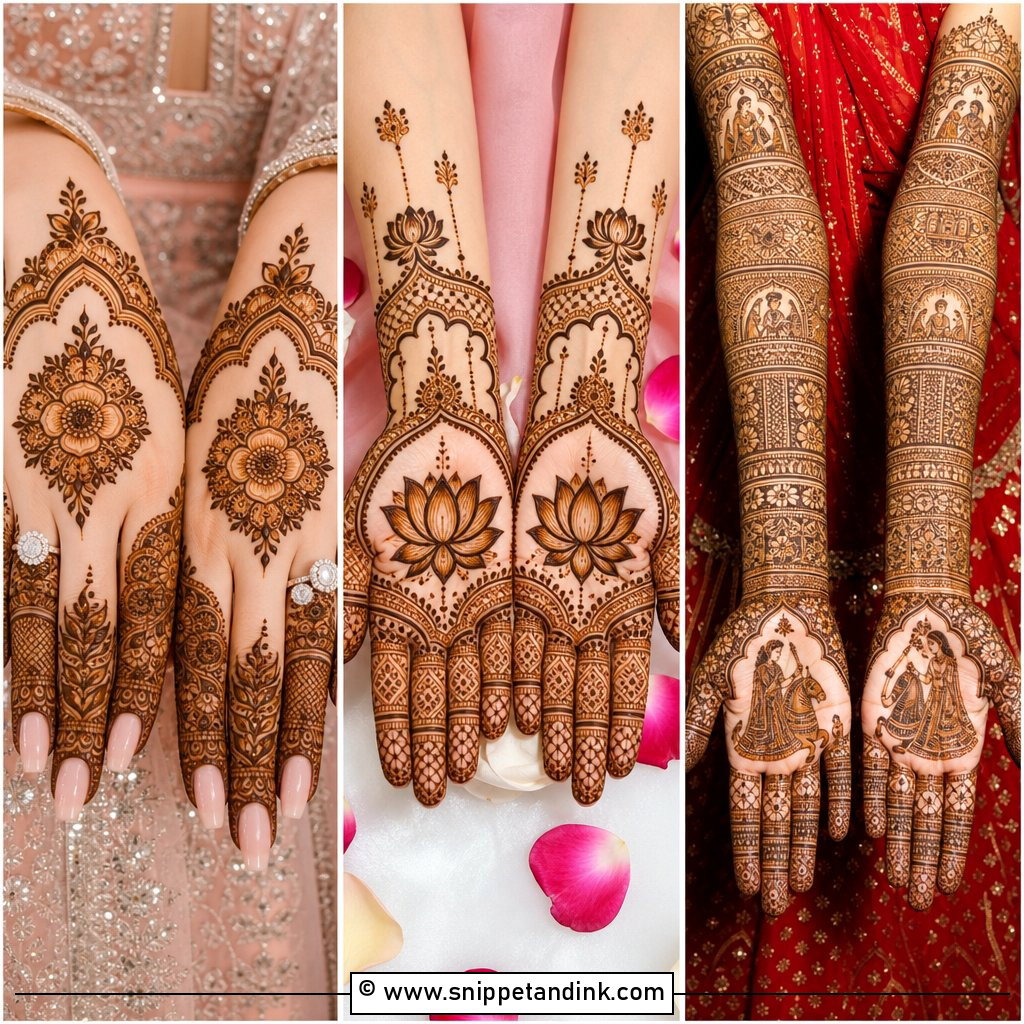
Palms hold color better than any other part of the hand, so a front hand design gives you the deepest, richest stain of the event. I build it around one center: a large mandala, a lotus, a paisley cluster or a floral bouquet that spreads toward the fingers. The fingers get matching lines, leaves and small checks, and the wrist closes with a cuff. Keep it traditional but not crowded. If you’ll be holding flower garlands or a thali during the rituals, the palm is what the camera catches.
6. Bridal Engagement Mehndi Design
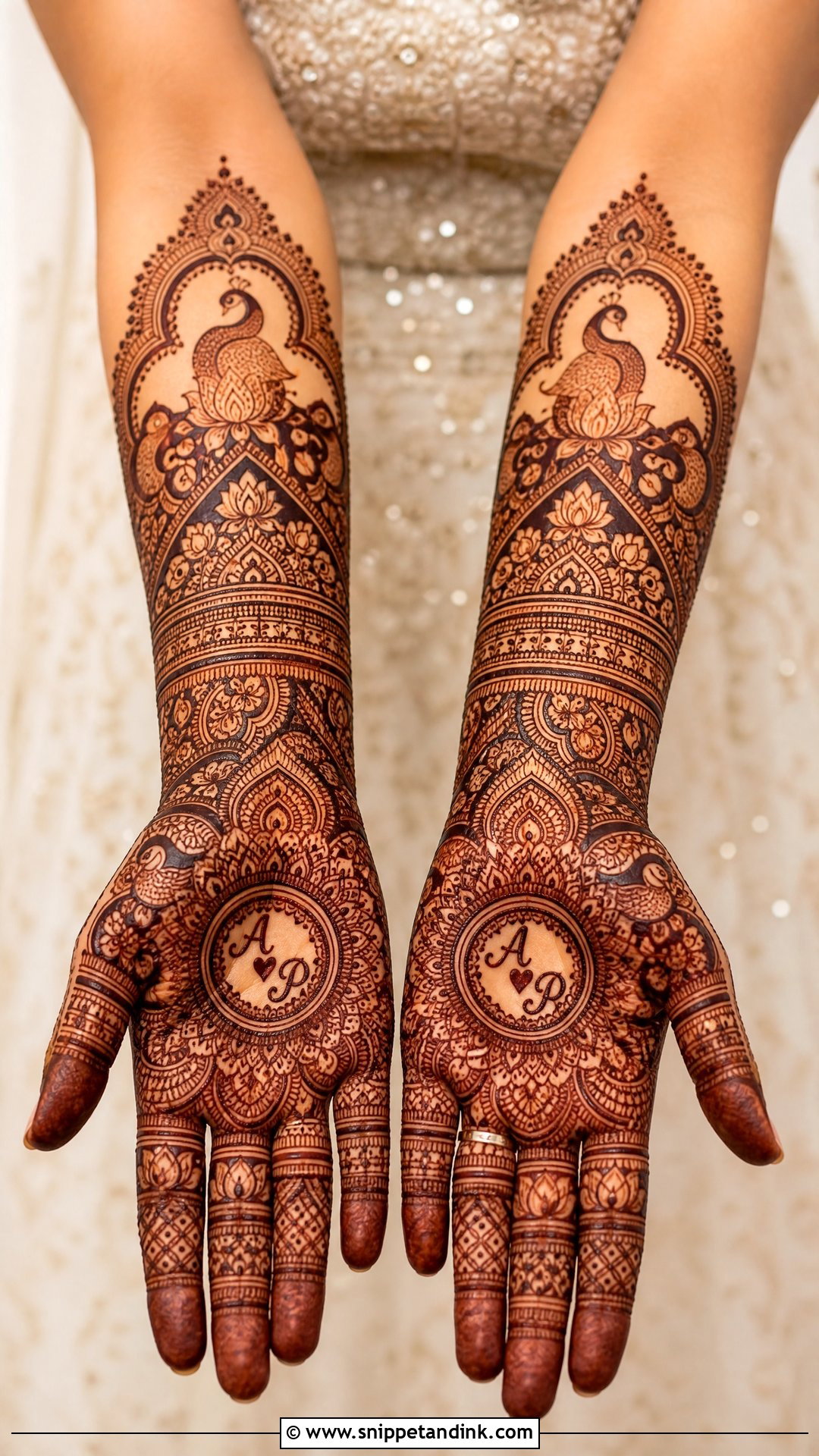
Somewhere between simple and full bridal sits this richer engagement hand: detailed palms, decorated fingers, wrist cuffs and short forearm extensions with peacocks, lotus flowers, paisleys or a mandala. It makes sense when the engagement is a grand evening and you’re in a formal bridal outfit. I hold back from filling every inch, though. Skin between the larger motifs keeps it from looking like you’ve already had your wedding henna. Initials or the engagement date can sit quietly inside a border.
7. Ring Ceremony Mehndi Design
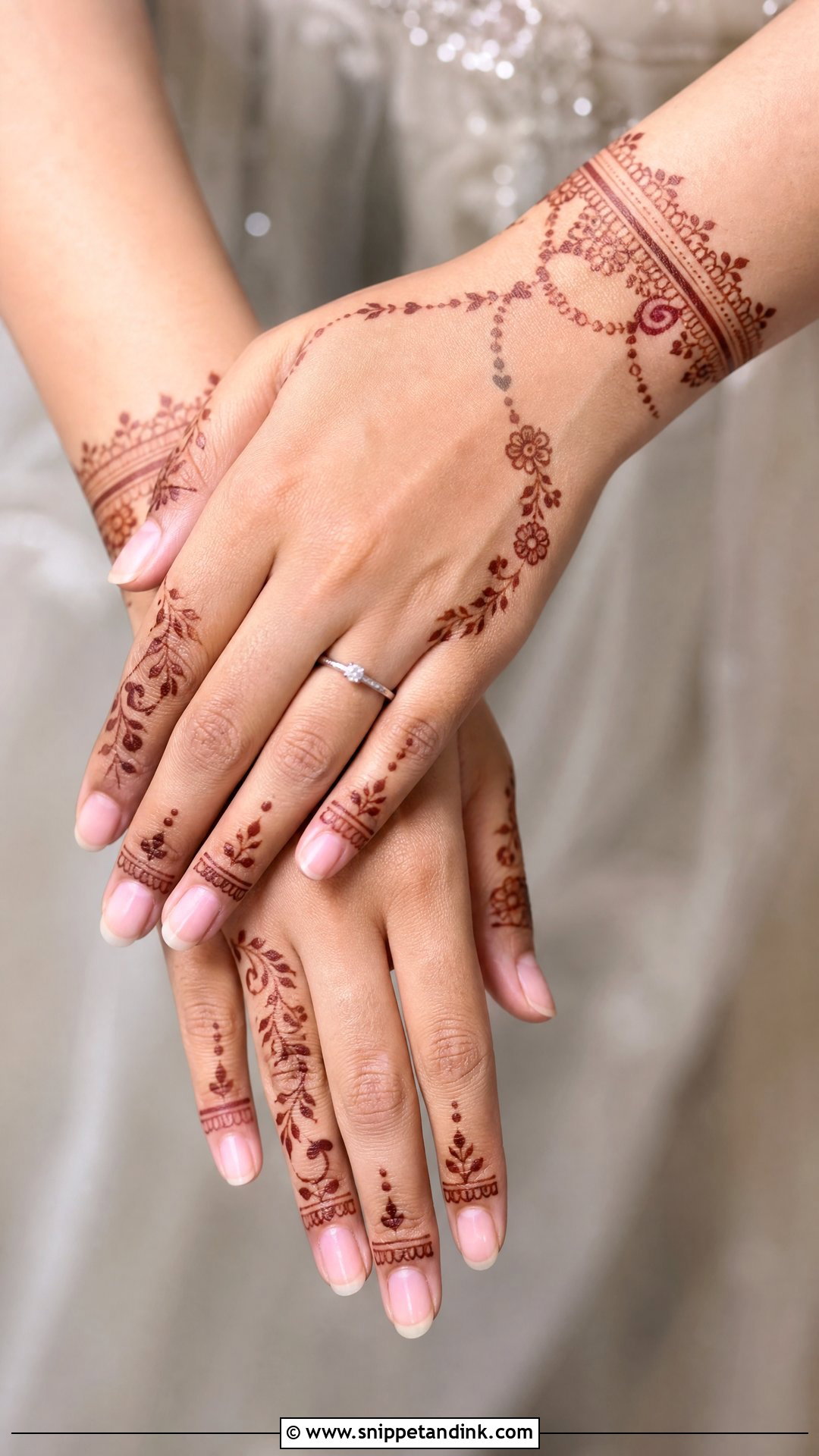
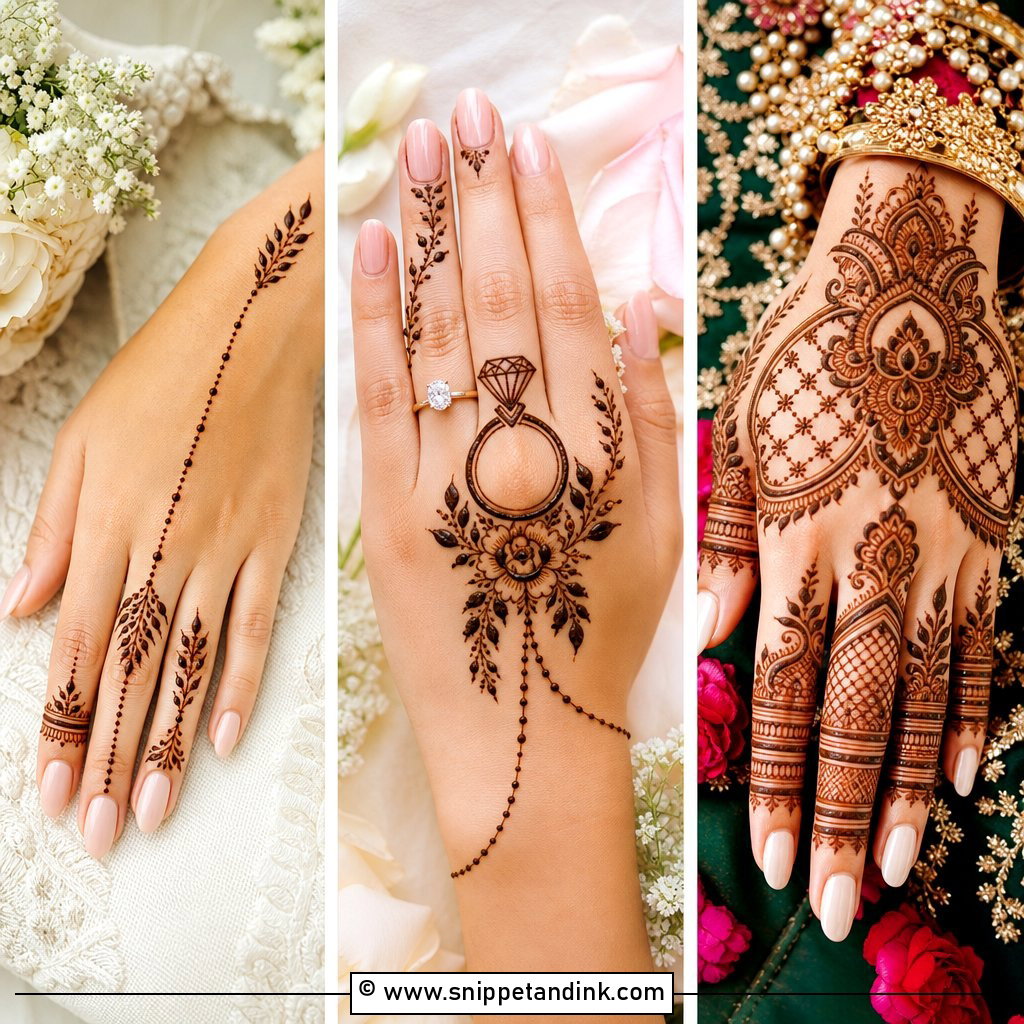
This one is built around a single moment. Delicate finger patterns, a bracelet band and fine chain lines all point toward the ring finger, so the eye travels straight to the stone. Some brides add a tiny ring motif, a heart or an initial at the base of that finger. Floral vines, dots and curved leaves work well around it. My one rule: leave the band area of the ring finger itself lightly patterned, because a ring slid over thick detail hides half of it and looks cluttered.
8. Engagement Mehndi Design With Couple Initials
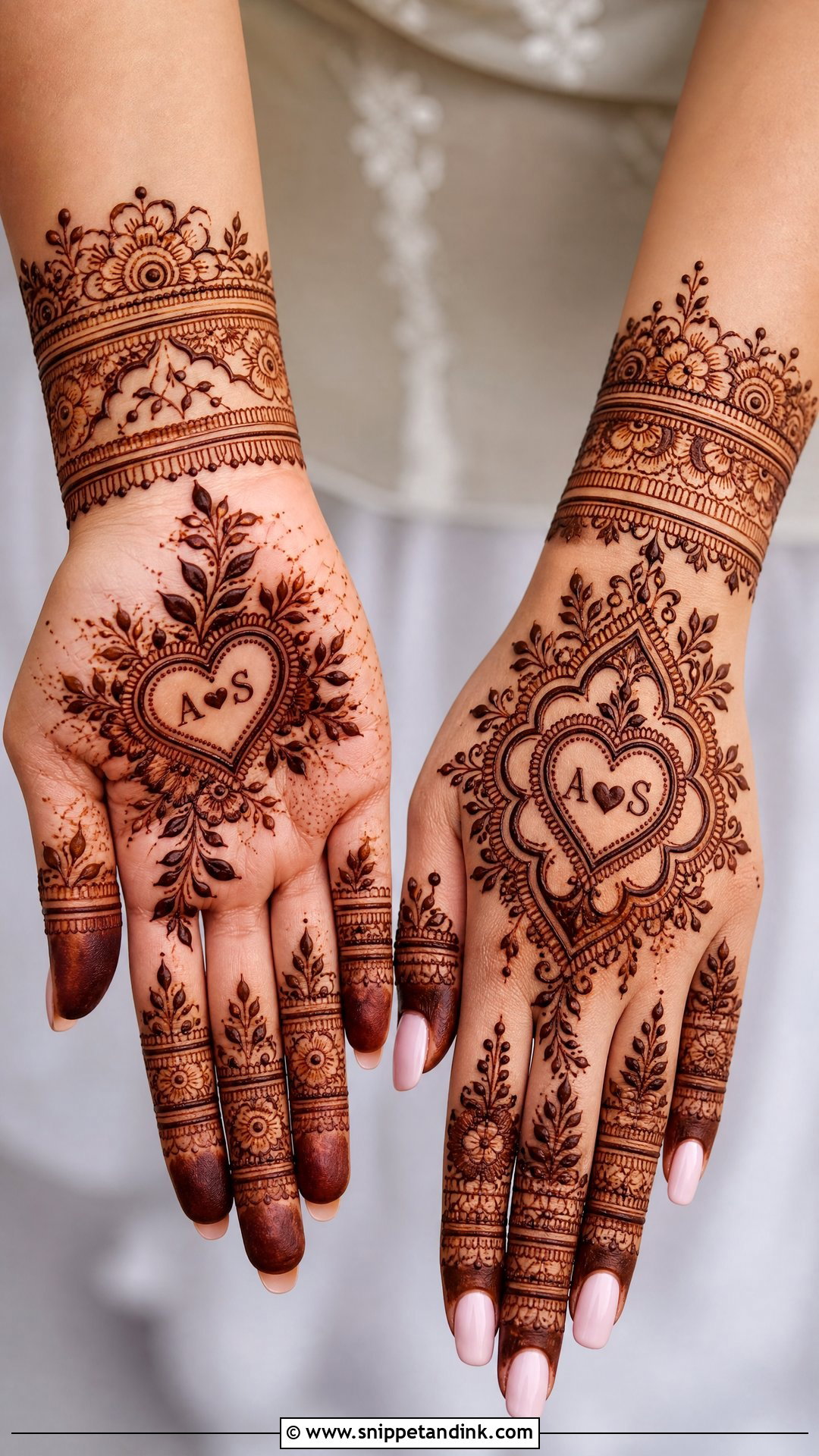
A personalized mehndi design with couple initials adds a private detail most guests won’t spot until they look closely. The letters can sit inside a heart, hide in a paisley, curl into a mandala or run near the wrist. Lettering is the hardest thing to keep crisp in henna, since a thin line that wobbles even slightly makes a letter unreadable. I write initials a touch larger than people expect and leave clear skin around each one. Palm placement is private; back hand or forearm placement is for the camera.
9. Engagement Mehndi Design With Bride And Groom Art
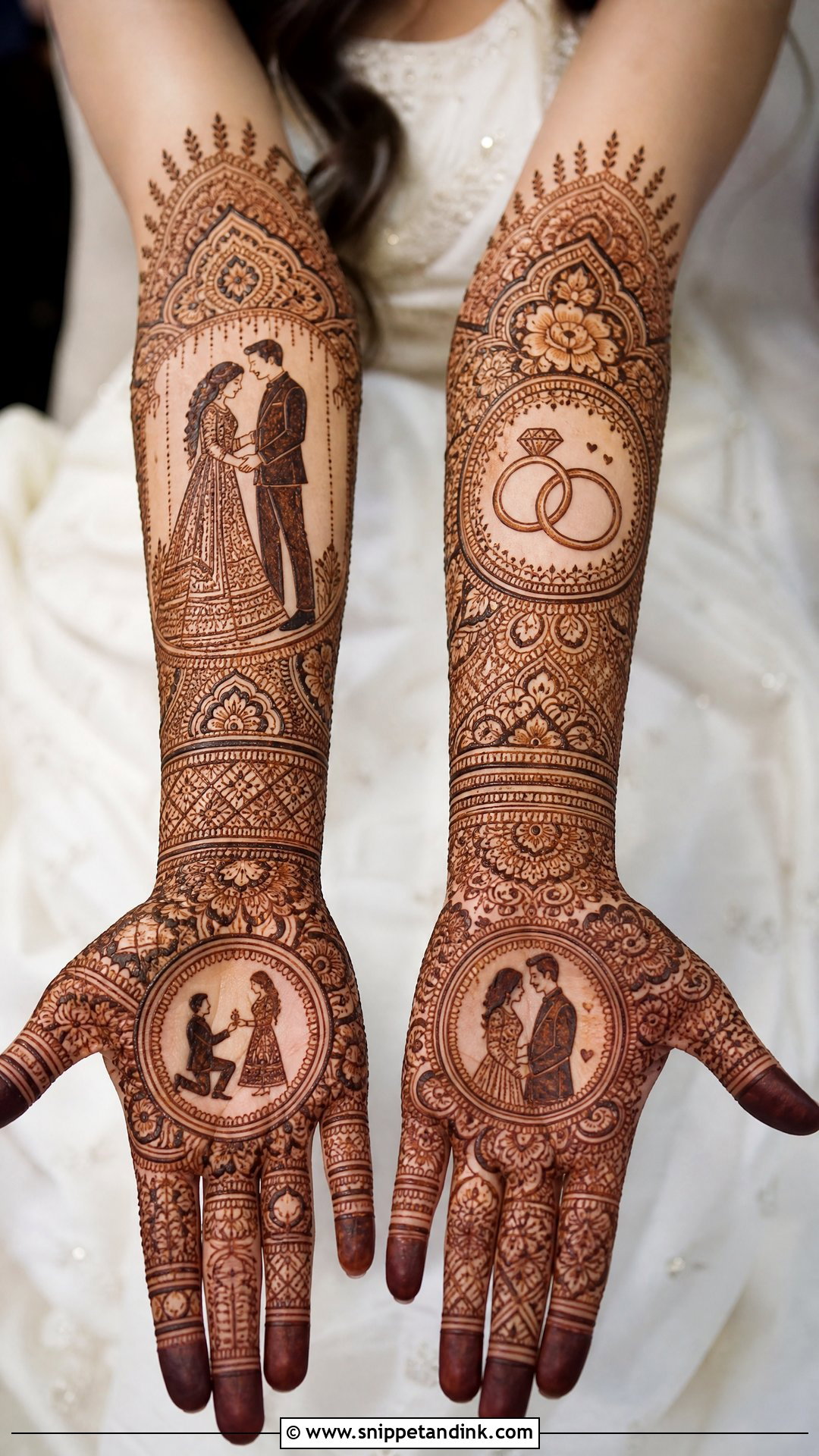
Bride and groom figures turn the hands into a small story, usually on the palms or forearms, framed by wedding motifs. For an engagement, I draw them smaller and simpler than wedding portraits and pair them with rings, floral borders and decorative frames. Faces at that size need an artist with real portrait practice. Ask to see stained results of her figure work before you commit. This needs at least half-hand coverage, because the fine detail around the figures needs room to breathe.
10. Indo Arabic Engagement Mehndi Design
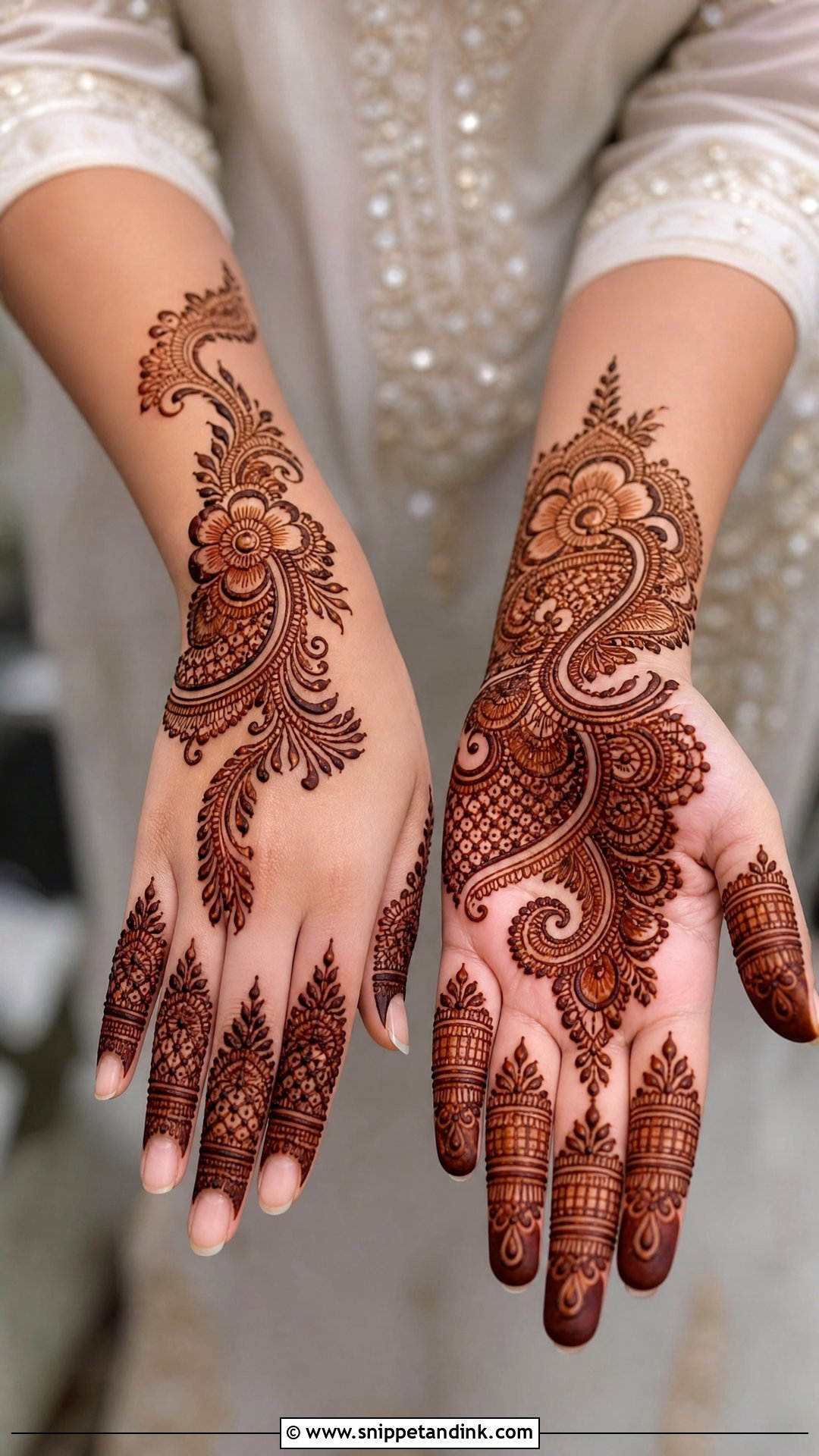
Indo Arabic engagement mehndi design takes the bold diagonal of Arabic work and adds Indian fillers inside it: big flowers, paisleys, leafy trails, shaded petals and detailed fingers in one hand. Open spaces keep it modern, and the Indian detail adds richness without density. It suits front and back hands equally. Ask for a diagonal layout if you like movement, or a bracelet-connected back hand if you prefer the look of jewelry.
11. Floral Engagement Mehndi Design
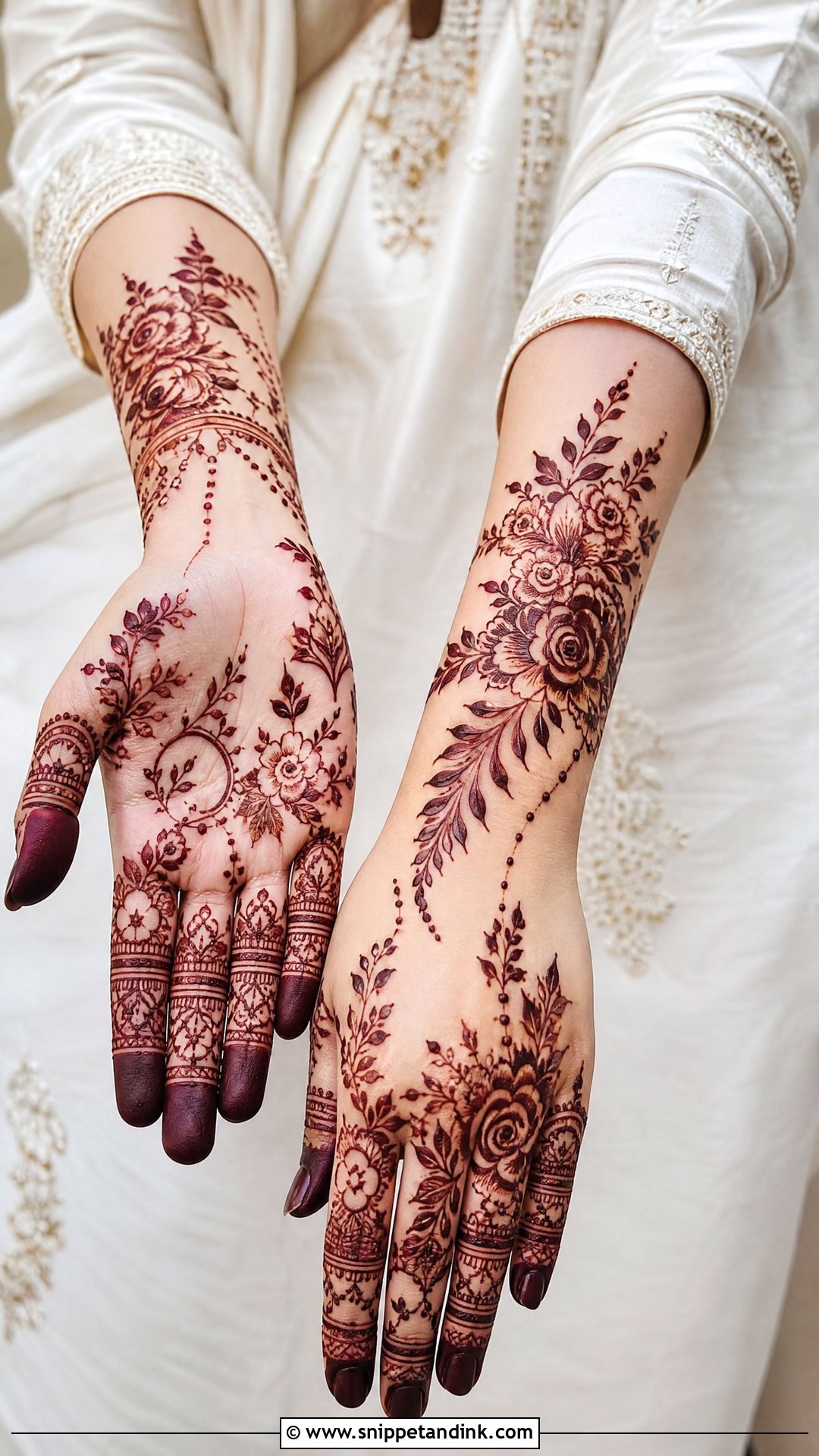
Flowers rarely go wrong at an engagement. Roses, lotus flowers, petals, vines and leaves can cover the palm, the back hand or the wrist-to-forearm area. Large flowers with open space read modern; tiny dots, swirls and shaded petals around the main blooms read richer. I shade from the center of each petal so the flower has depth when it darkens, rather than leaving flat outlines. It sits happily beside ivory, blush, red or emerald, and it’s the design I most often draw for sisters and close friends of the bride too.
12. Mandala Engagement Mehndi Design
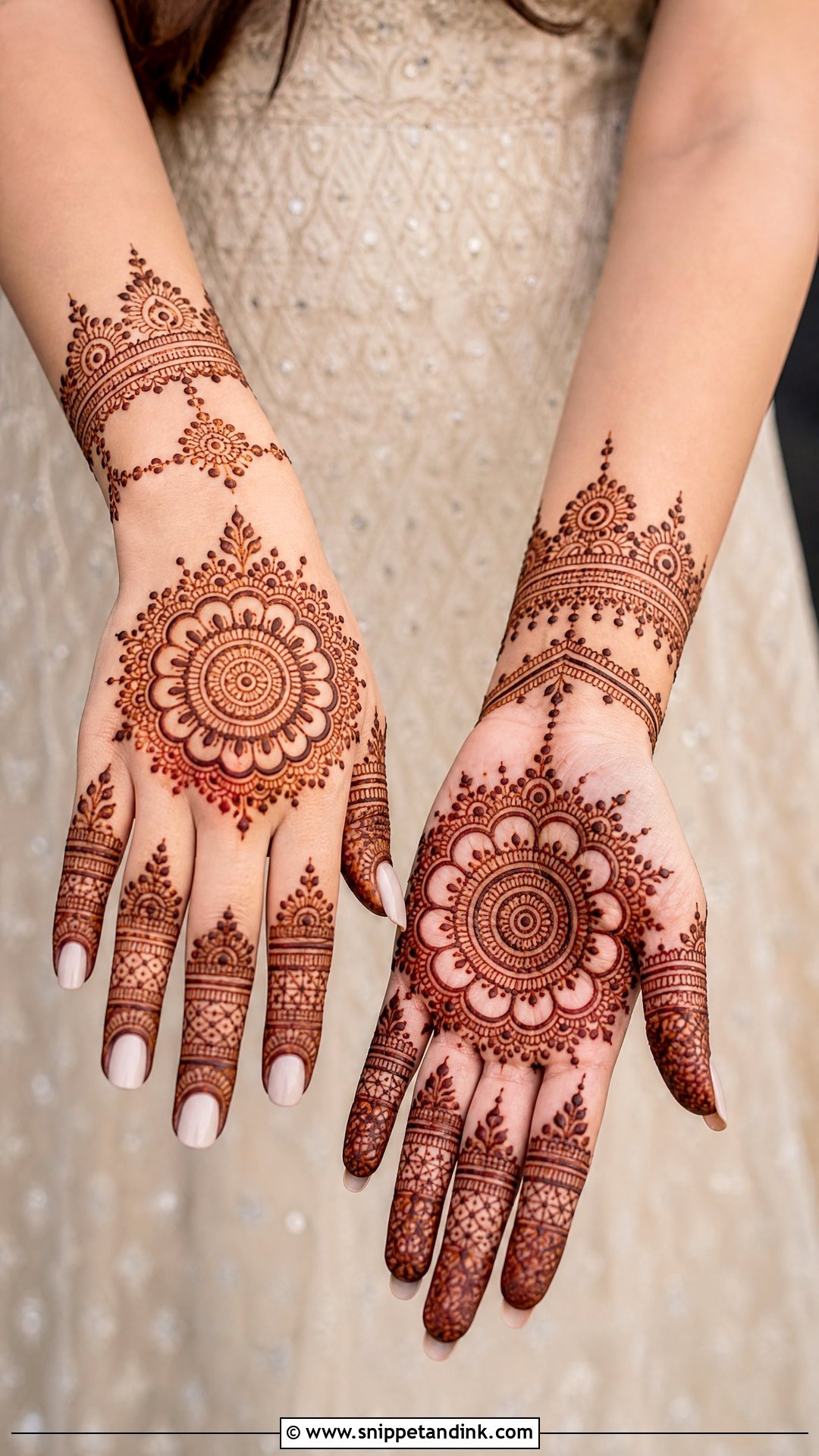
A medium-size mandala, not a huge one, is what I recommend for an engagement. It leaves skin space around it, it’s quick enough that you aren’t sitting for hours on the morning of the event, and it looks clean in photos. The circle goes in the middle of the palm or back hand, with matching fingers and a wrist band. Fine dots, petals, leafy borders and bracelet lines complete it. Round solitaires and simple bangles echo the shape nicely.
13. Peacock Engagement Mehndi Design
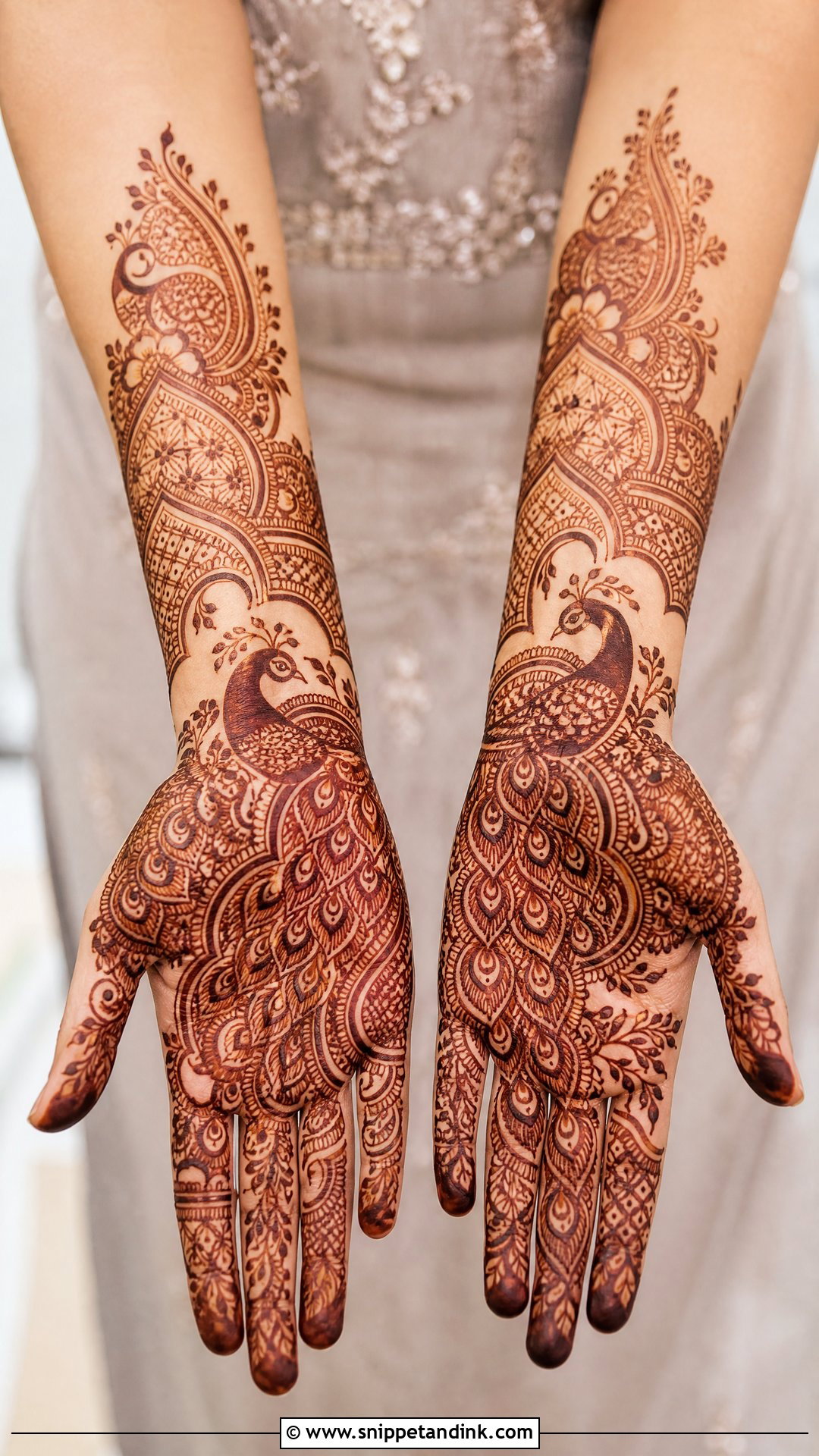
A peacock brings a rich Indian touch without needing full bridal coverage. I place it on the palm, wrist or forearm, letting the feathers flow into paisleys, leaves and floral fillers. One well-drawn peacock on each hand is plenty for an engagement; add more and the birds start to compete. Keep the surrounding detail fine so the head and crest stay clear once the stain sets. Peacock designs pair naturally with silk sarees, lehengas and traditional gold, and give a slightly royal feel to a ring ceremony.
14. Paisley Engagement Mehndi Design
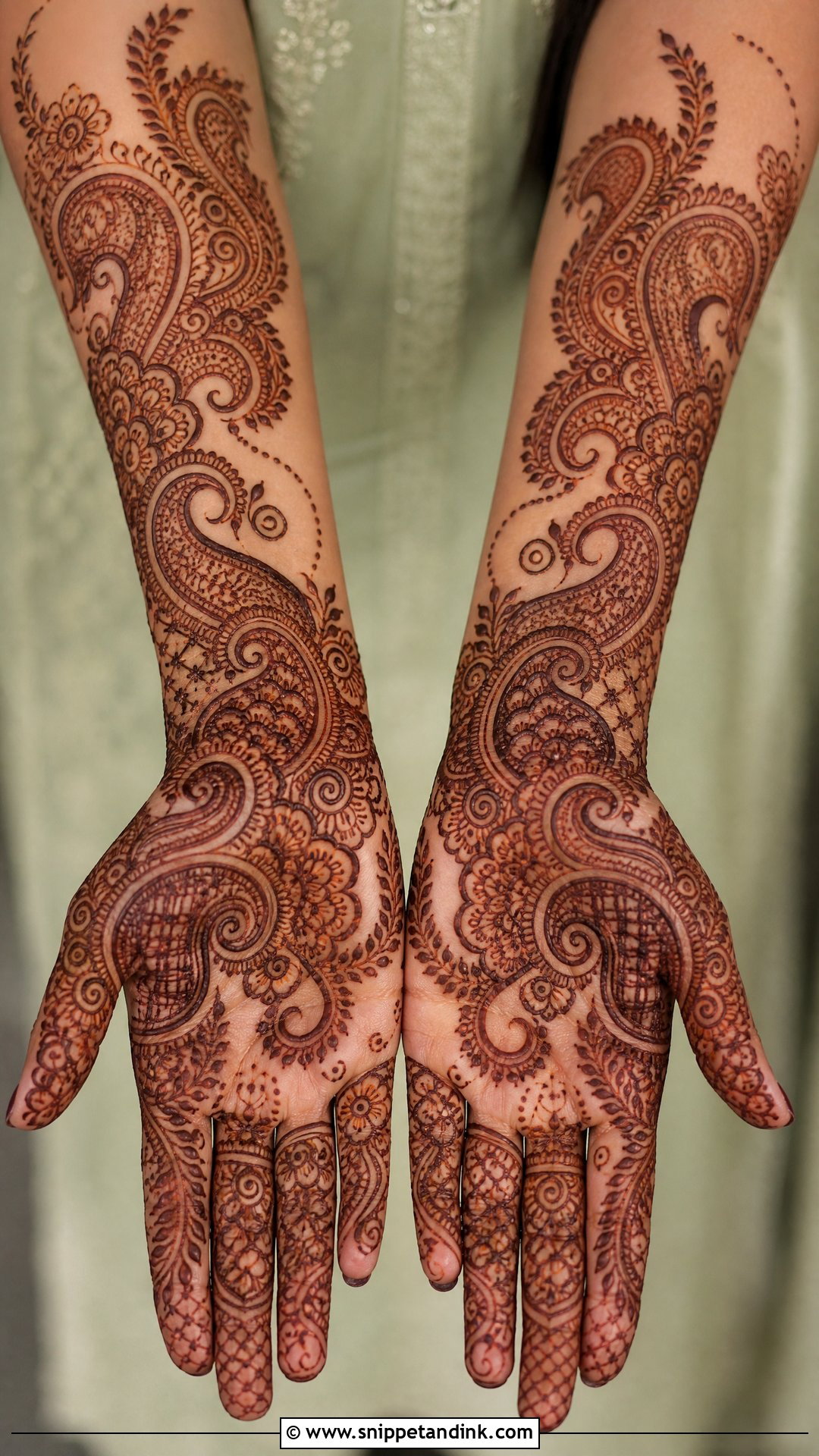
Paisleys follow the natural curve of the hand, which is why they flatter almost every hand shape. They can cluster on the palm, run as a diagonal Arabic trail or build into a full Indian pattern. I fill each one with small flowers, dots or fine lines to give it depth, then decide on spacing. Larger paisleys with clean gaps look modern; dense wrist and finger detail looks traditional. Heavy outfits, light outfits and gold jewelry all work with it.

15. Minimal Engagement Mehndi Design
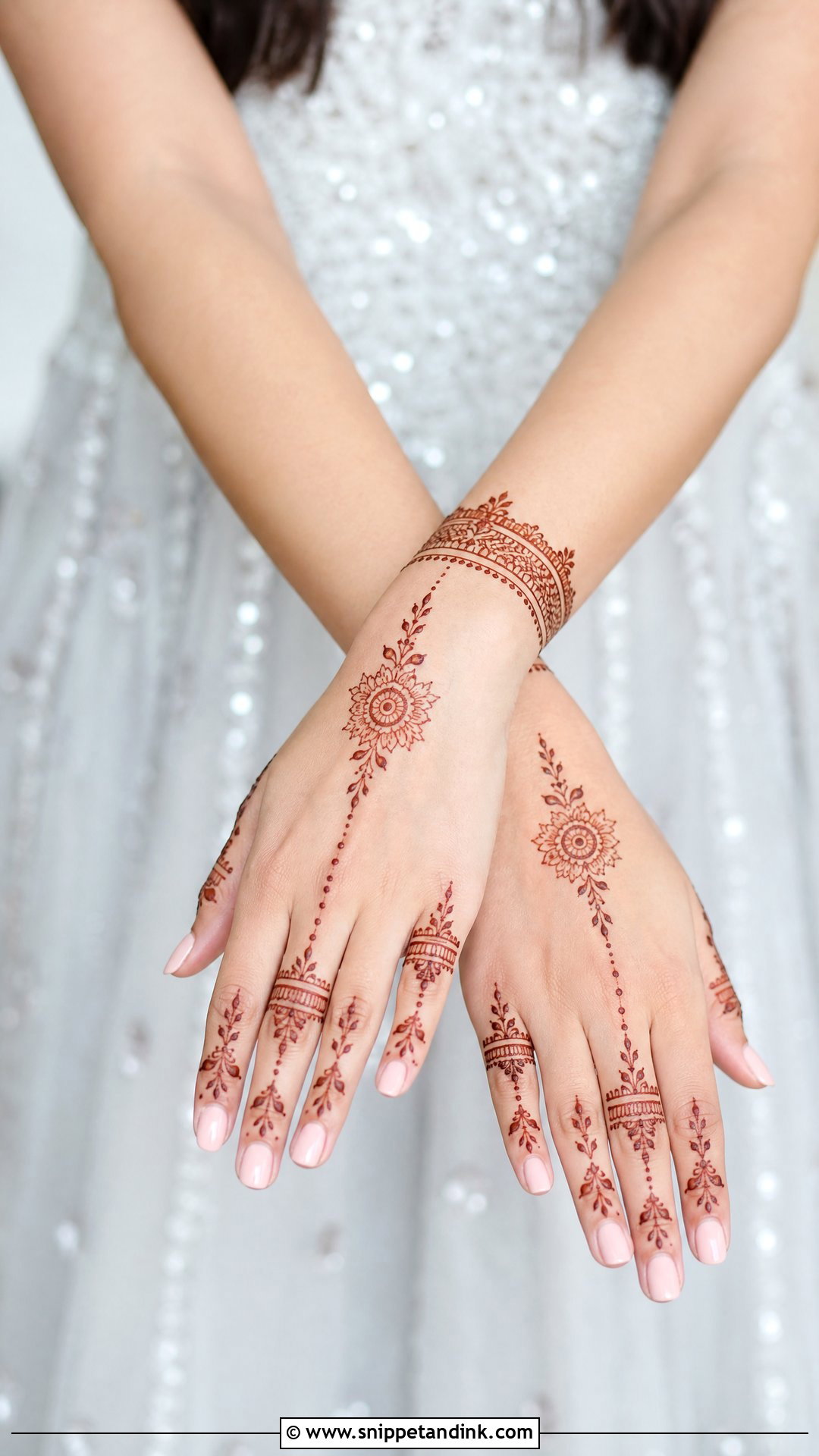
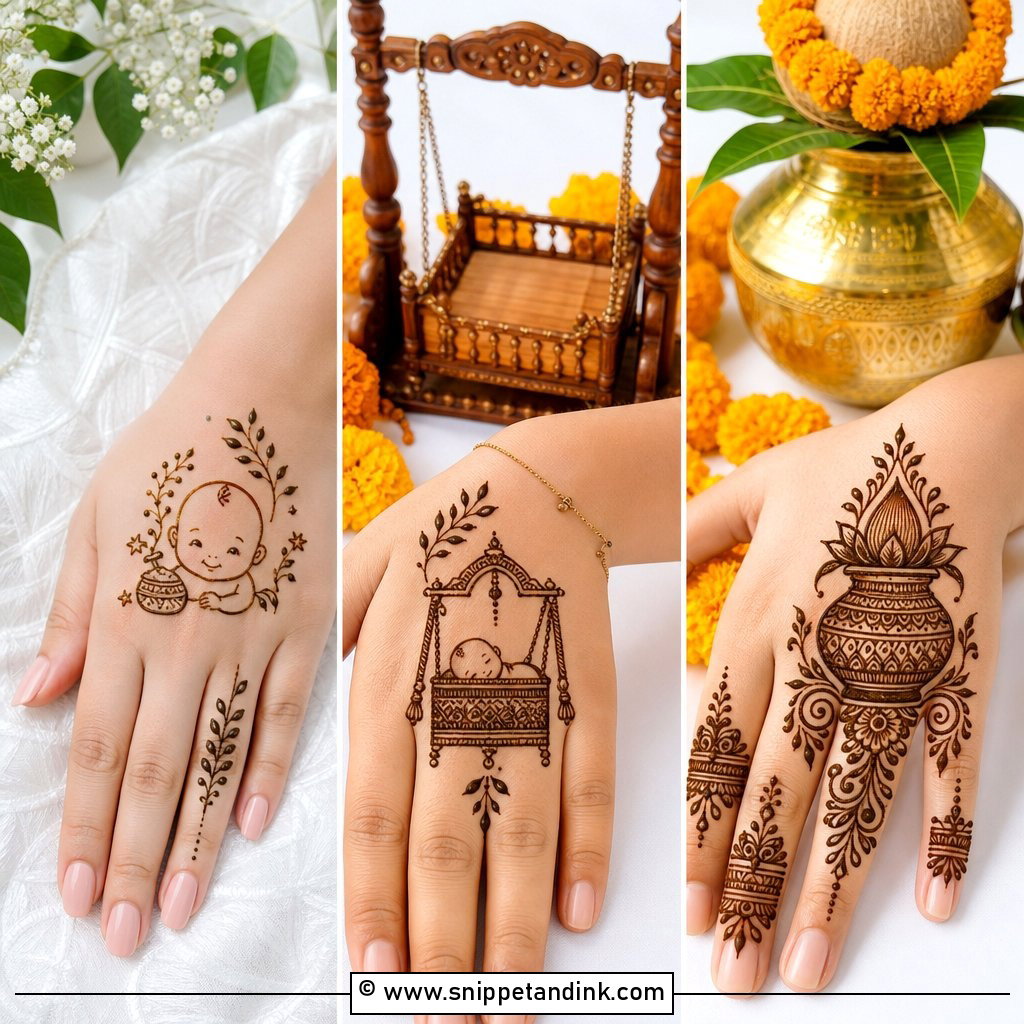
Light henna still has to look deliberate. A minimal engagement hand might be decorated fingers, a small wrist cuff, a tiny mandala and a few fine floral trails, and every hand needs a clear structure so nothing looks abandoned halfway. The most common version I draw is a simple back-hand layout with finger detail and a bracelet line. It lets the ring, nails and accessories take center stage, and it takes very little time to apply, which matters when the engagement is the same day.
16. Jewelry Engagement Mehndi Design
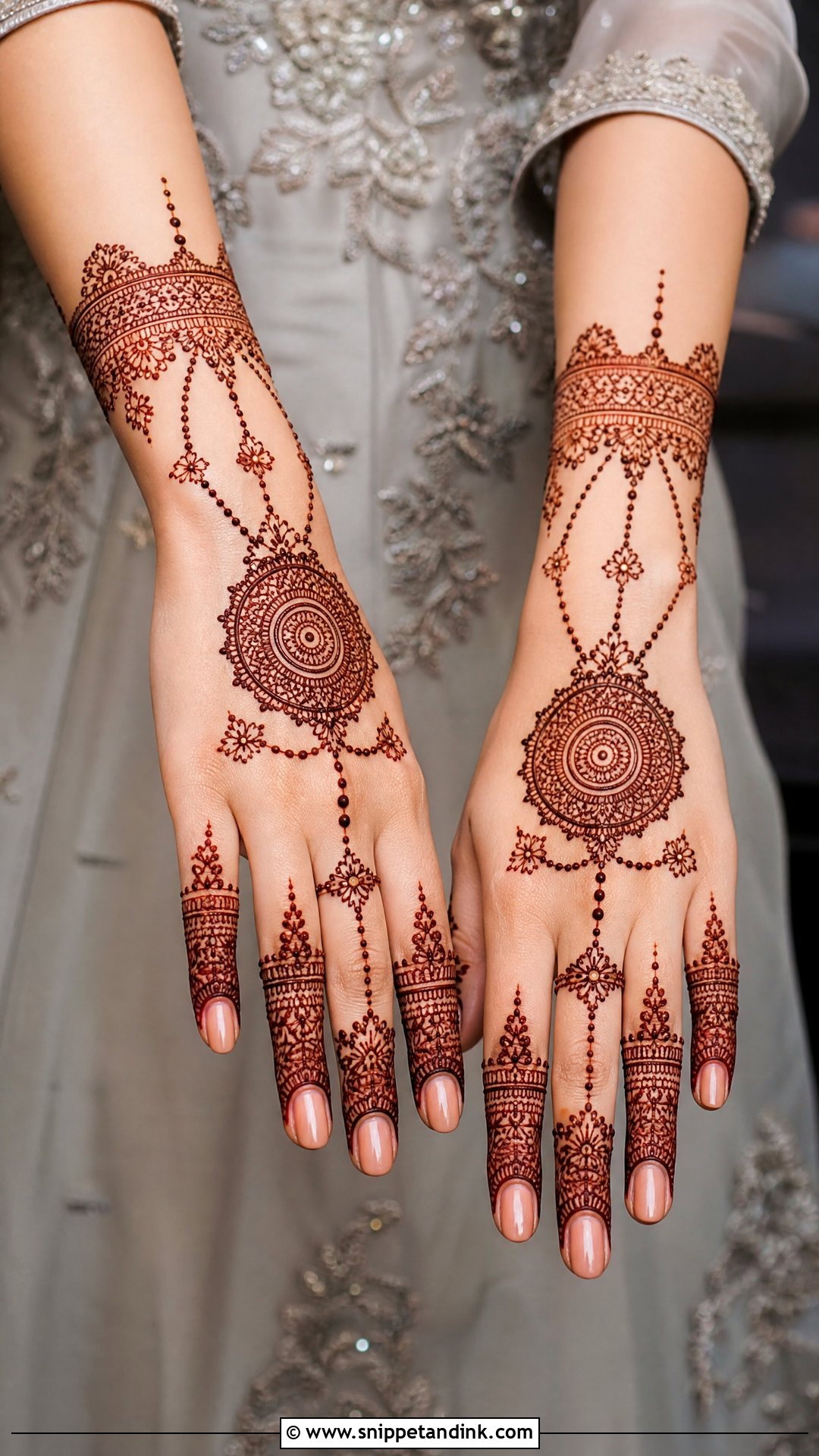
Henna can imitate hand accessories surprisingly well: bracelet cuffs, ring chains, finger bands and hanging bead-like dots. On the back hand it frames the engagement ring almost like a setting. Keep it to thin lines for a minimal look, or add flowers, mandalas and jaali for something richer. Sleeveless, short or sheer sleeves keep the wrist detail visible. The part people underestimate is symmetry. Chains that hang unevenly look accidental, so I mark the center of the wrist and the knuckle line before drawing a single chain.
17. Jaali Engagement Mehndi Design
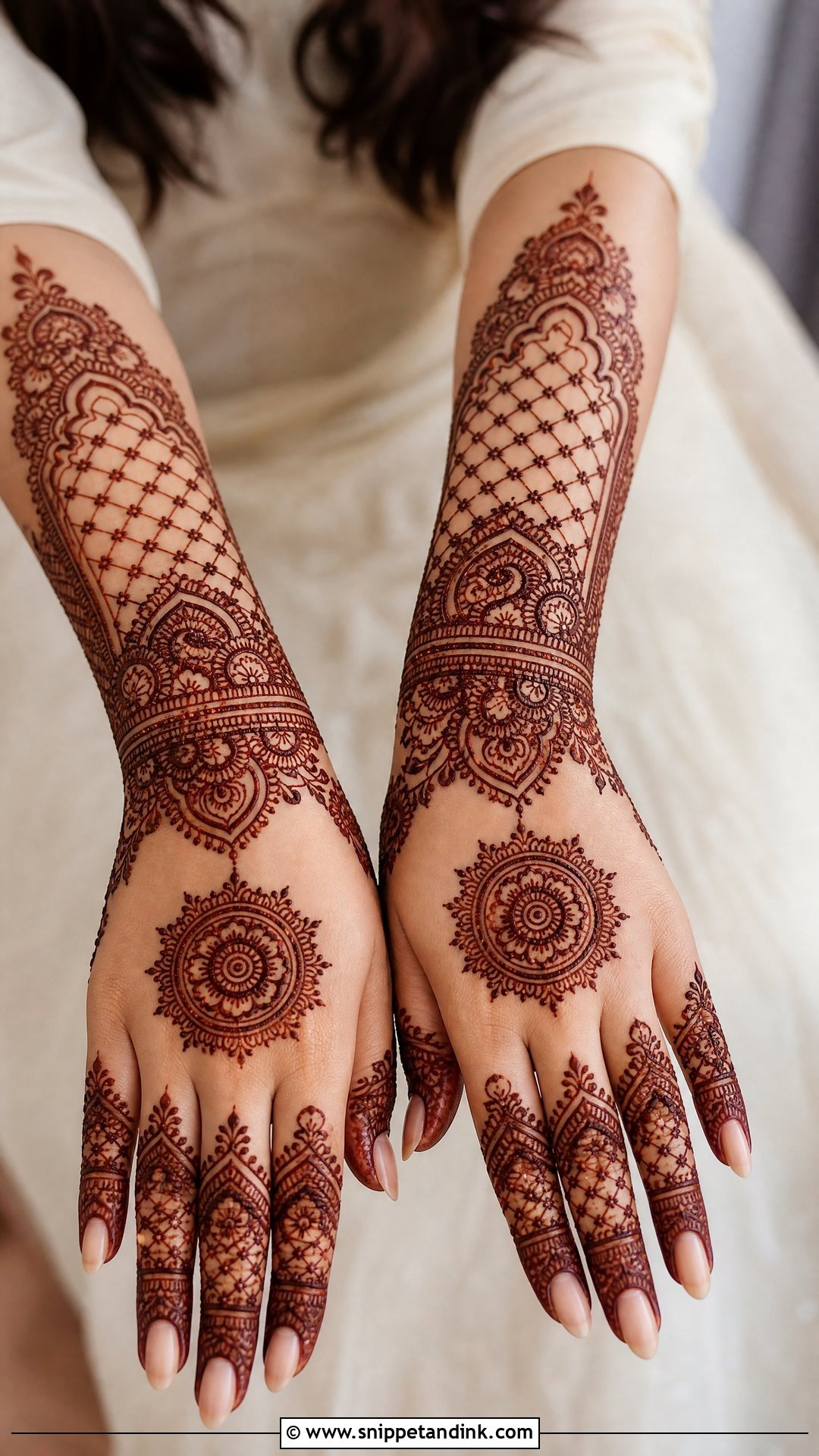
Jaali is mesh-like henna that looks detailed while staying clean. It works on the palm, back hand, wrist or fingers and is usually paired with florals, paisleys or a mandala so it doesn’t look plain. On the back hand it gives a glove-like effect next to a ring; on the palm it adds depth around a central motif. Even lines and clear spaces are everything. Uneven mesh is the first thing a camera exaggerates, so if your artist’s jaali looks wobbly in her portfolio, choose a different design with her.
18. Heart Engagement Mehndi Design
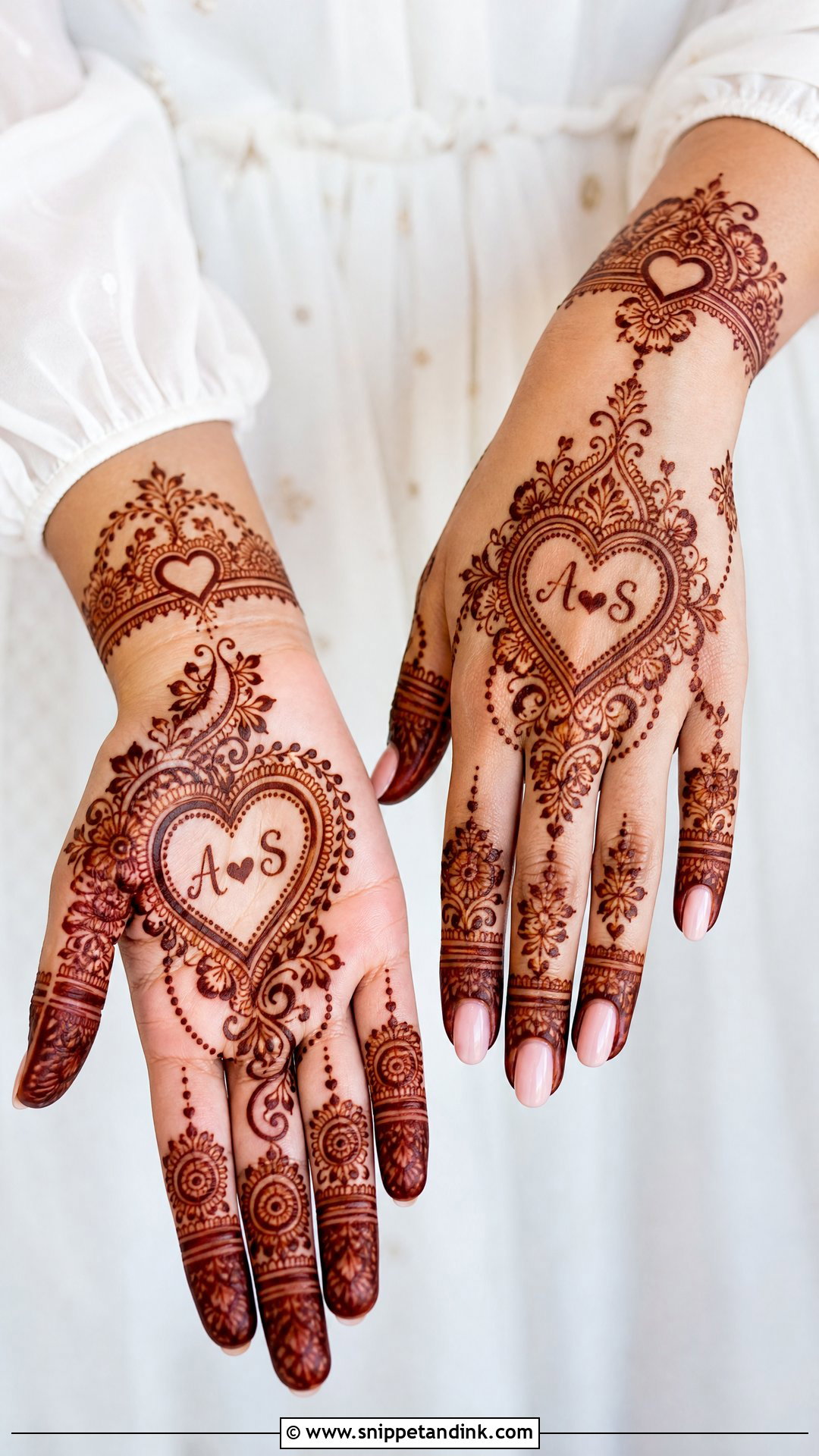
A heart can turn sugary if it’s oversized, so I keep it modest and let it blend into the rest of the pattern. It can sit in the center of the palm, near the wrist or around the couple’s initials, surrounded by flowers, dots, vines and soft paisleys. Matching hearts on both palms come together when you hold hands with your partner, which is a photo many couples ask for. A traditional base keeps the theme from looking like a party sticker.
19. Lotus Engagement Mehndi Design
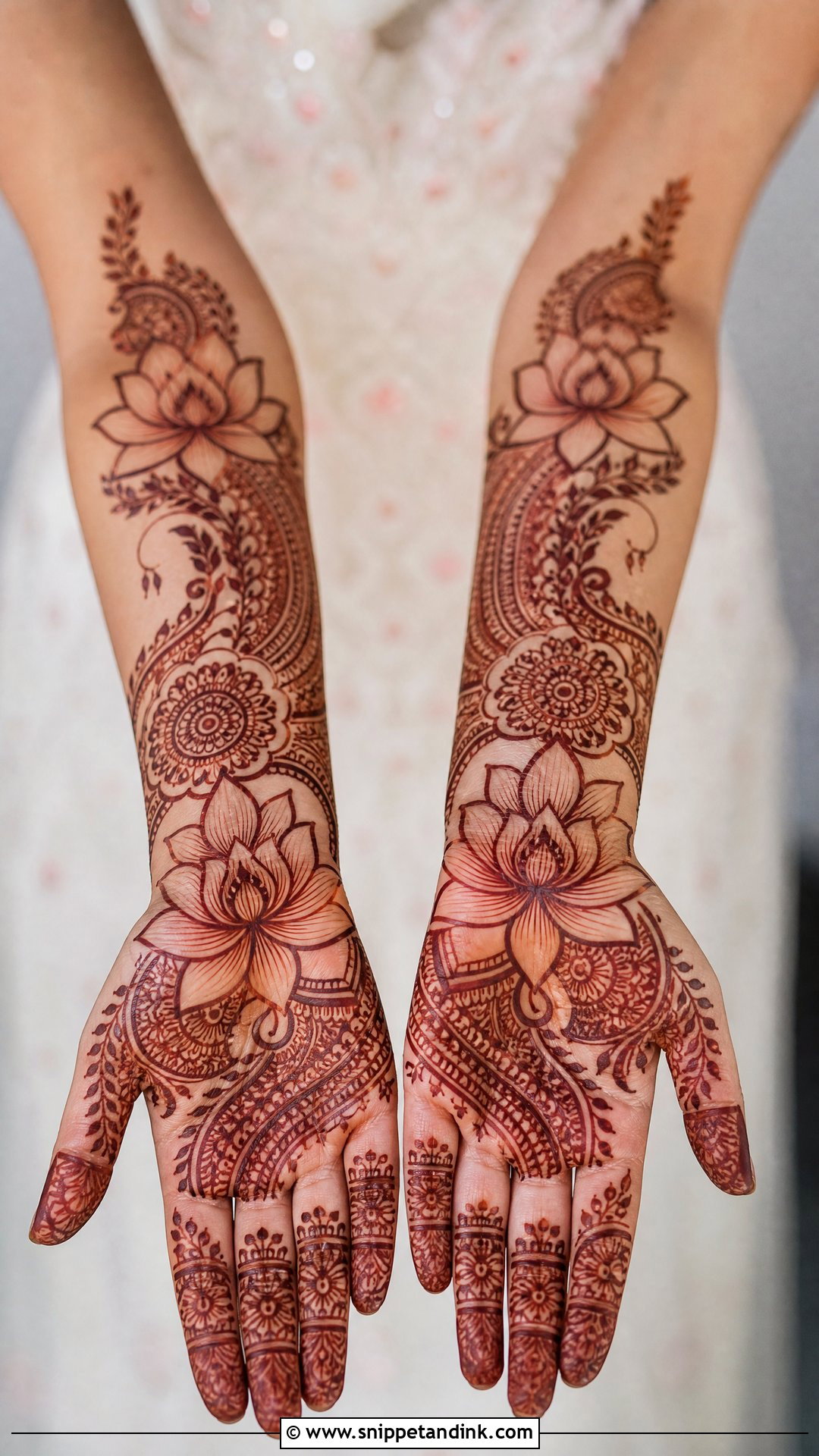
Lotus motifs are calm and traditional. I center one on the palm or repeat smaller lotuses along the wrist and forearm, with soft shading, fine dots and leafy extensions. Pastel, ivory, gold and rose-toned outfits suit it particularly well. Large lotuses with open space feel modern, while mandalas, paisleys and finger fillers around them make it more bridal. It’s elegant without being loud, which is often exactly the tone an engagement wants.


20. Moroccan Engagement Mehndi Design
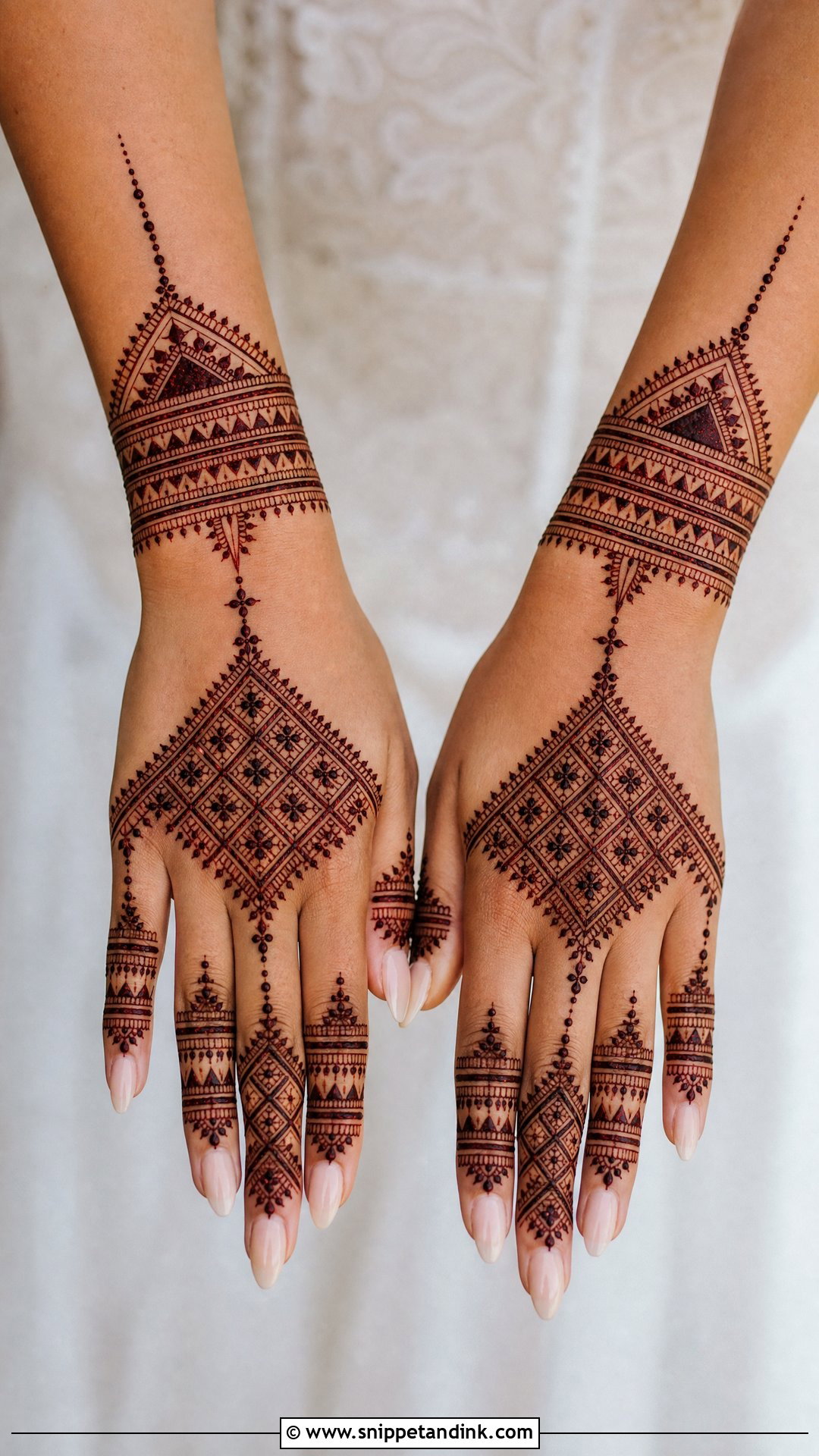
Moroccan-style work uses geometry instead of flowers: lines, diamonds, grids, triangles, dots and bold borders. For an engagement, I keep it to the back hand, fingers and wrist as a neat statement, sometimes softening it with a few small floral accents. Straight lines over knuckles are tricky because the skin moves, so the hand has to rest completely flat while I draw. Contemporary outfits and fusion lehengas suit it, and the defined shapes show up clearly in photos.
21. Gulf Engagement Mehndi Design
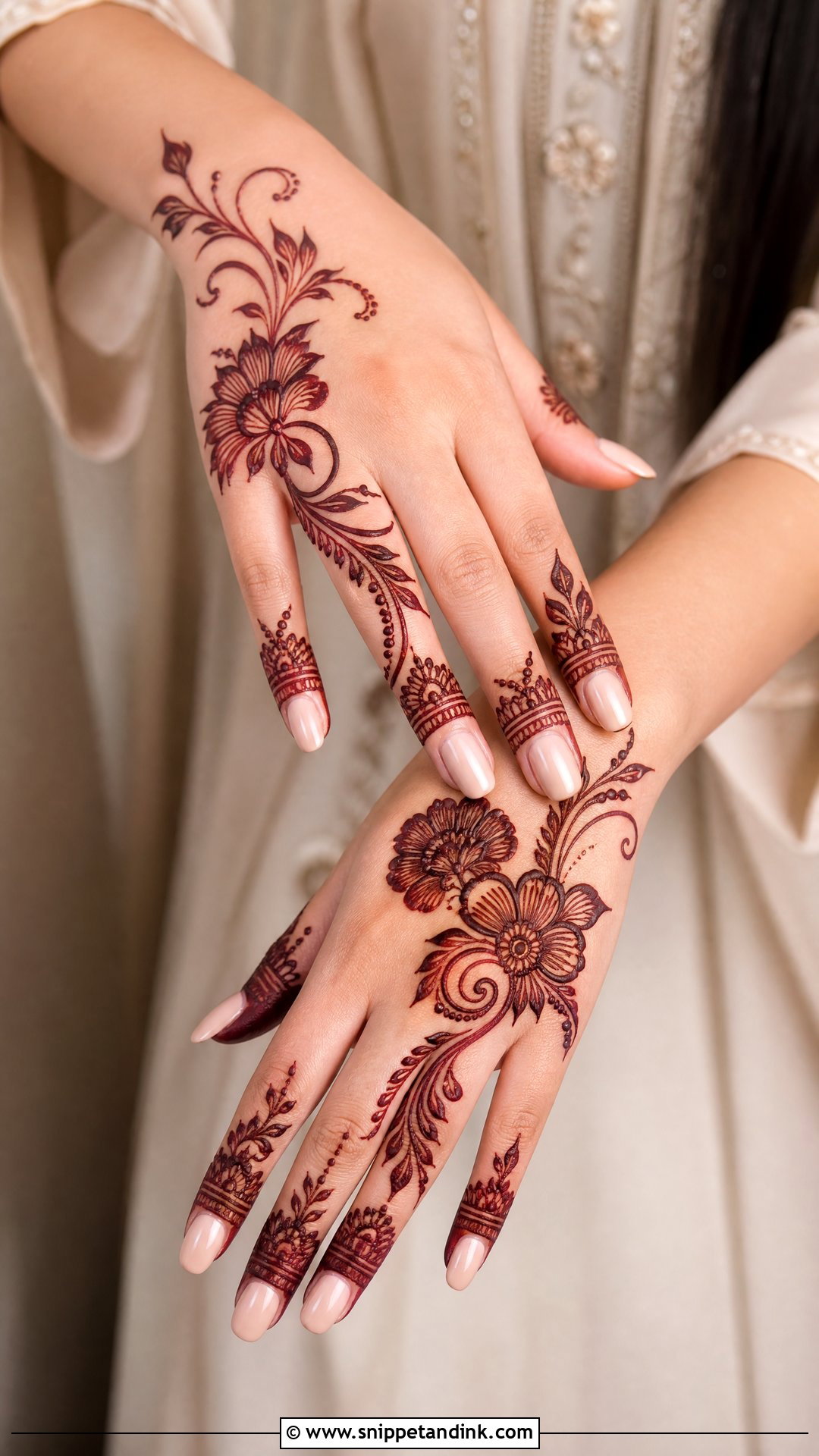
Gulf or Khaleeji-inspired work uses bold flowers, flowing vines, leafy curves and open spacing, giving a luxurious but airy look. It often moves from the fingers to the wrist or across the palm from one side to the other. Large motifs get a strong outline and light shading inside. You get a visible design in photos without spending hours on dense detail. Statement rings and glossy nails finish it.
22. Half Hand Engagement Mehndi Design
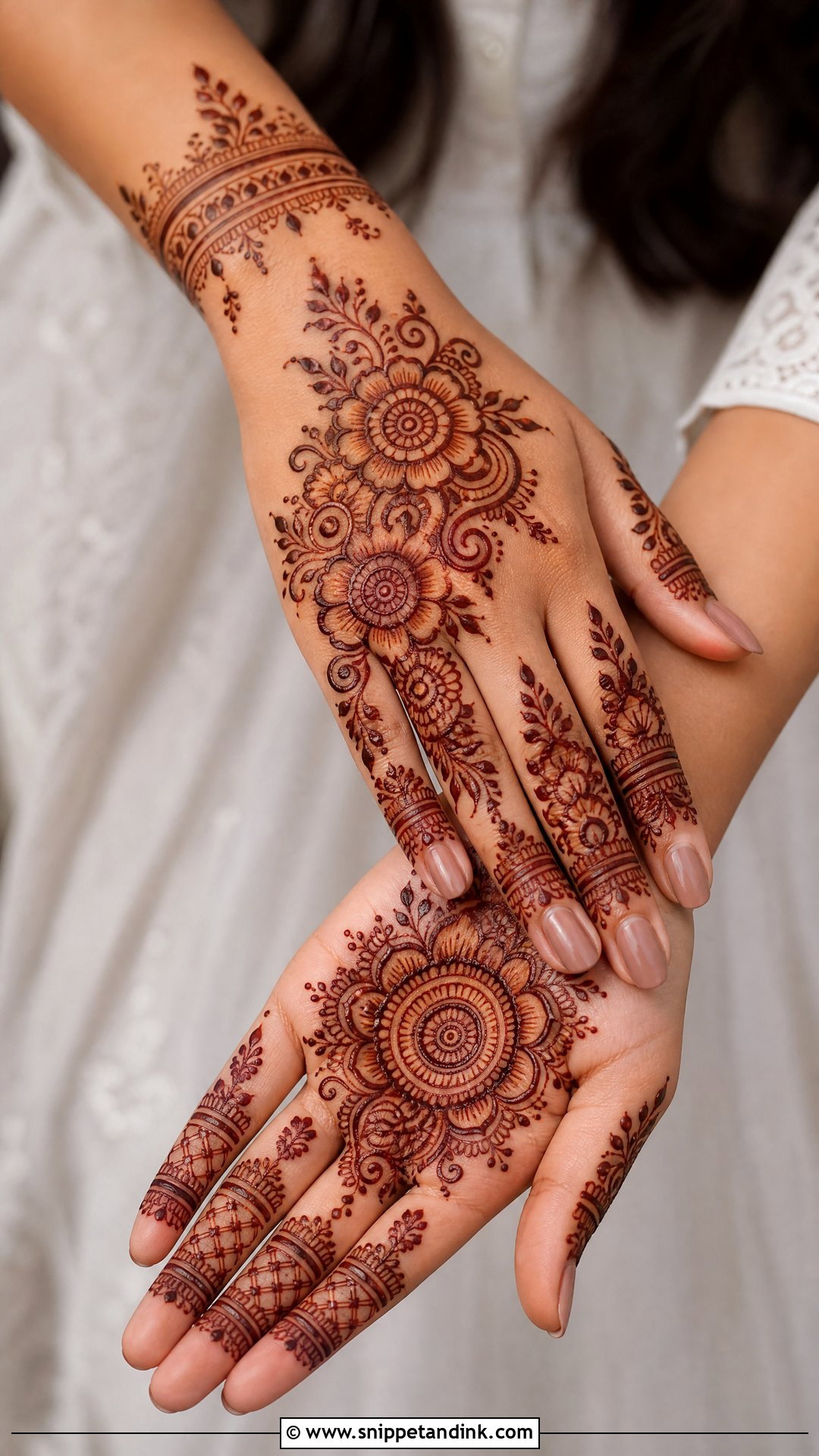
Half hand covers the fingers, palm center and wrist, then stops before the forearm. It’s the most practical engagement choice when you’re planning much heavier mehndi for the wedding. Florals, paisleys, mandalas or Arabic trails all fit, depending on your outfit. The design needs a clear ending, and I always close it with a wrist cuff so it doesn’t look cut off. It dries faster and is easy to keep clean during the event.
23. Finger Engagement Mehndi Design
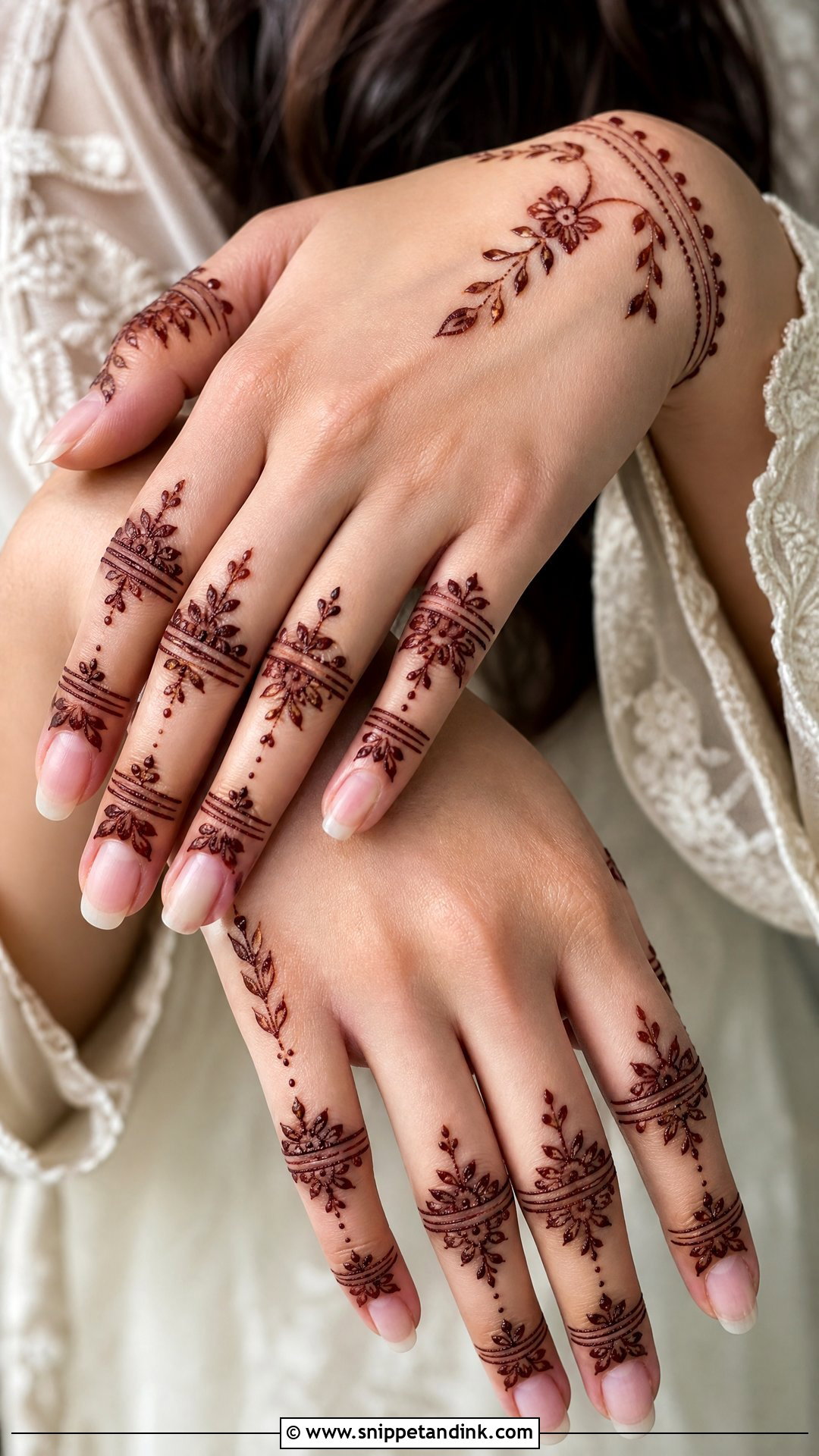
Here the fingers do almost all the work, and the palm or back hand stays mostly open. Fine lines, leafy bands, dots, mini florals and ring-like patterns wrap each finger. A small wrist bracelet or a tiny central motif stops it from looking unfinished. Your engagement ring stays the main event. It suits short nails, long nails and nail art equally; just get the manicure done before the henna, since filing and soaking afterwards can lighten the fingertip stain.
24. Wrist Bracelet Engagement Mehndi Design
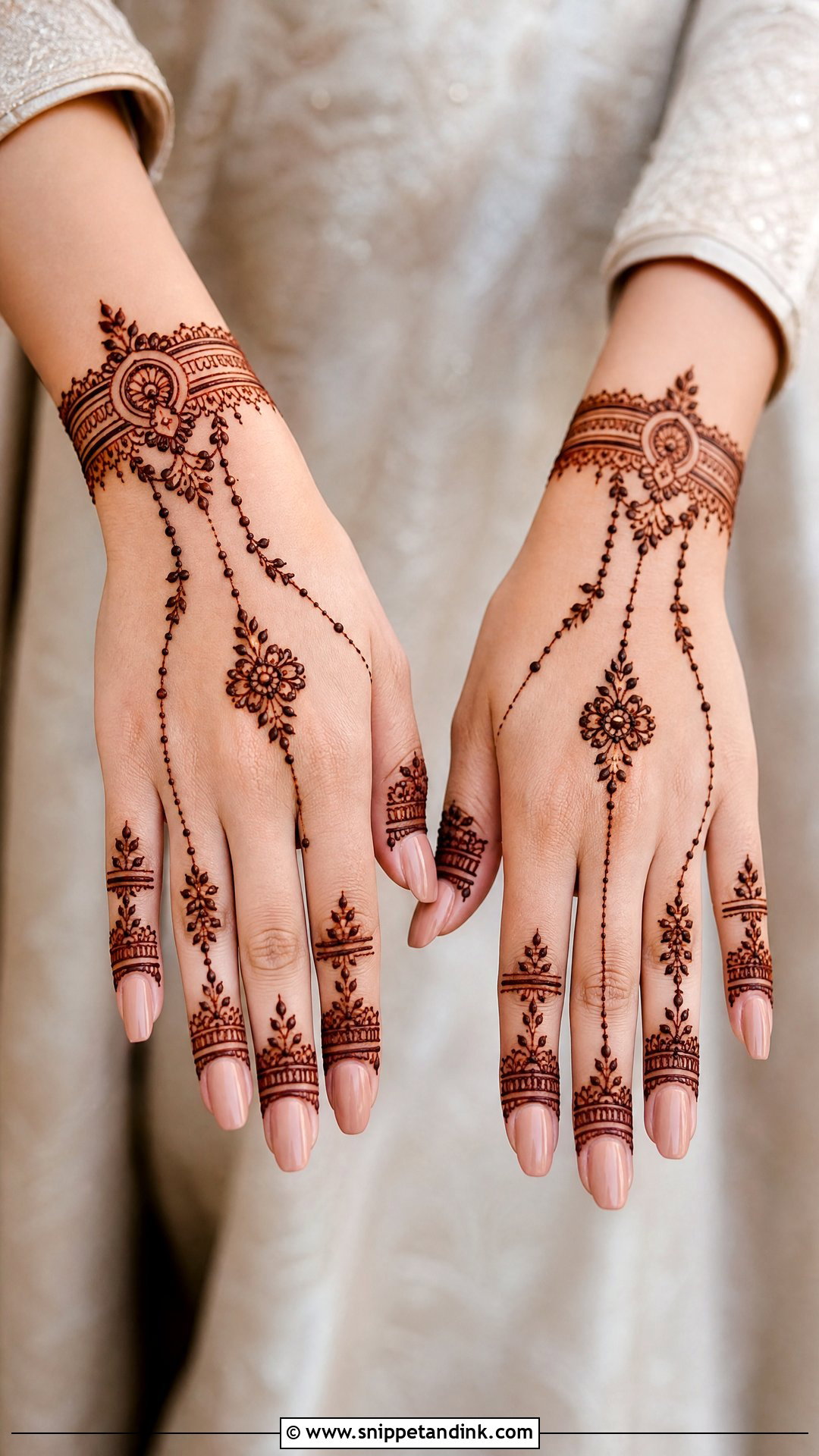
A wrist bracelet engagement mehndi design looks like a delicate henna accessory, built from cuff shapes, chain lines, beads, florals and finger connectors. It shines in back-hand photos where ring, bracelet and nails appear together. The palm can stay nearly bare or carry a small mandala. Paisley cuffs and floral borders give a traditional feel; fine chains and open spaces give a modern one. It covers very little skin, so it’s comfortable to sit for and quick to dry.

25. Feet Engagement Mehndi Design
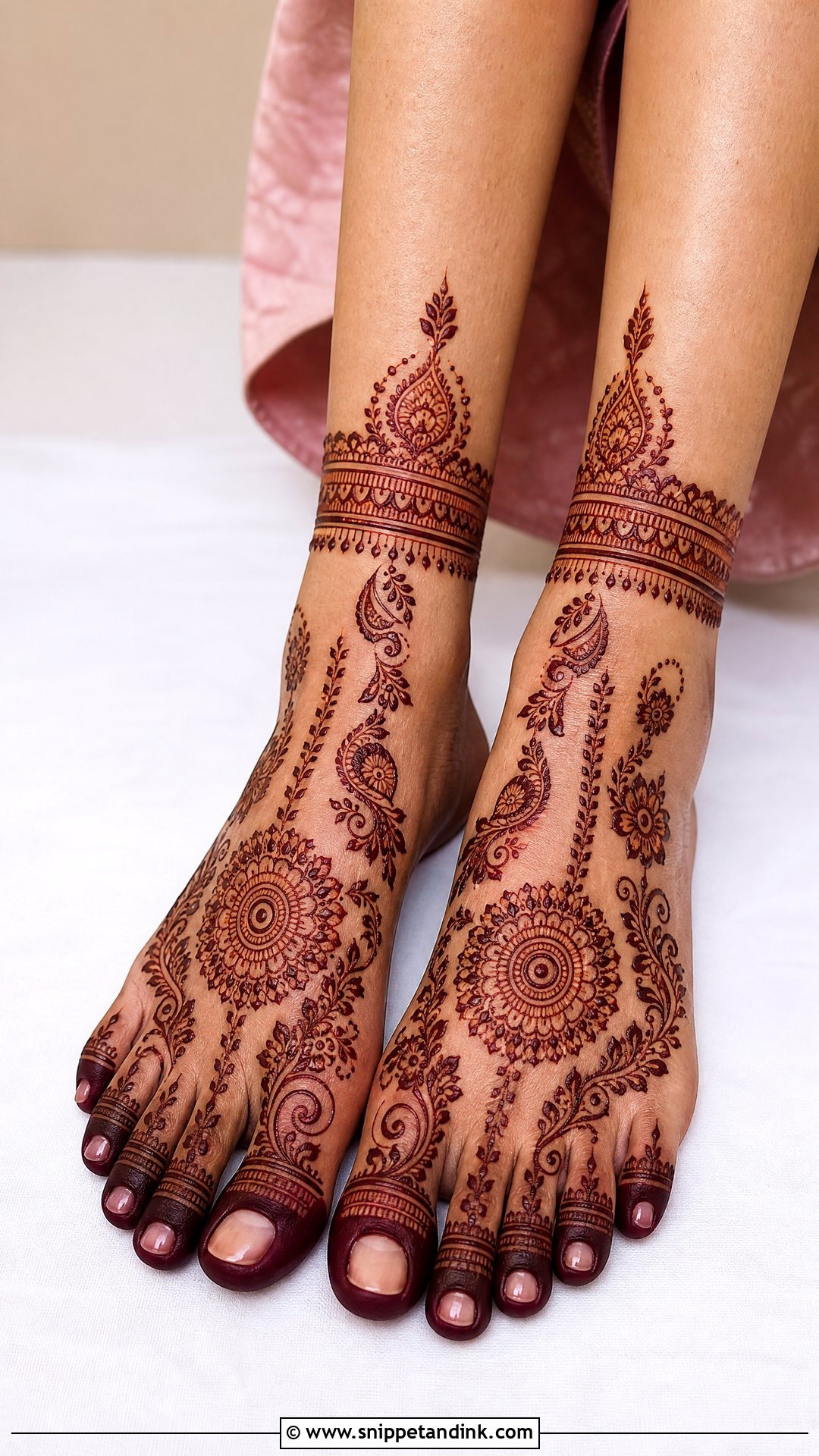
If your lehenga, saree or open sandals show the ankles, foot mehndi finishes the look. Ankle bands, toe detail, floral vines, mandalas and paisley trails are the usual building blocks. For an engagement, I start at the toes and move softly toward the ankle rather than covering the whole foot. Feet stain deeply, so even a simple pattern looks rich. Matching it to your hand design ties the whole outfit together without committing to full bridal foot coverage.
When the Wedding Is Only Weeks Away
A good henna stain lasts roughly one to three weeks, fading as the top layer of skin renews. Palms fade faster than you’d think because they are used constantly, while the back of the hand tends to fade in patches. That timing matters when the engagement and wedding are close together.
Two weeks or less between events
I’d keep the engagement design light and mostly on the fingers and back hand. Bridal henna drawn over a half-faded stain looks muddy, especially on the palm where the wedding centerpiece will go. Some brides skip engagement henna altogether in this case and wear a small finger design only.
A month or more apart
You have room to go fuller. By the wedding, the engagement stain will have faded enough that fresh paste takes evenly. If a few patches linger in the last week, regular warm-water washing and a gentle scrub help them along; avoid bleach creams or lemon rubs that irritate skin right before your bridal application.
Either way, tell your bridal artist what you wore at the engagement. Most of us will deliberately change the motifs so the wedding hands feel new, not like a repeat.
Matching the Henna to the Size of the Party
Your outfit, your comfort and the mood of the ceremony should lead the design. Some brides want full-hand Indian work, others want Arabic trails, finger patterns, henna jewelry or hidden initials. Back hand designs serve the ring photos best, while front hand designs give the deepest stain. An intimate engagement suits lighter coverage; a grand one can carry bridal-inspired detail. Save something for the wedding, though. The step up from engagement henna to bridal henna is part of what makes the wedding hands feel special.
You'll Like These Ideas:






Leave a Reply