
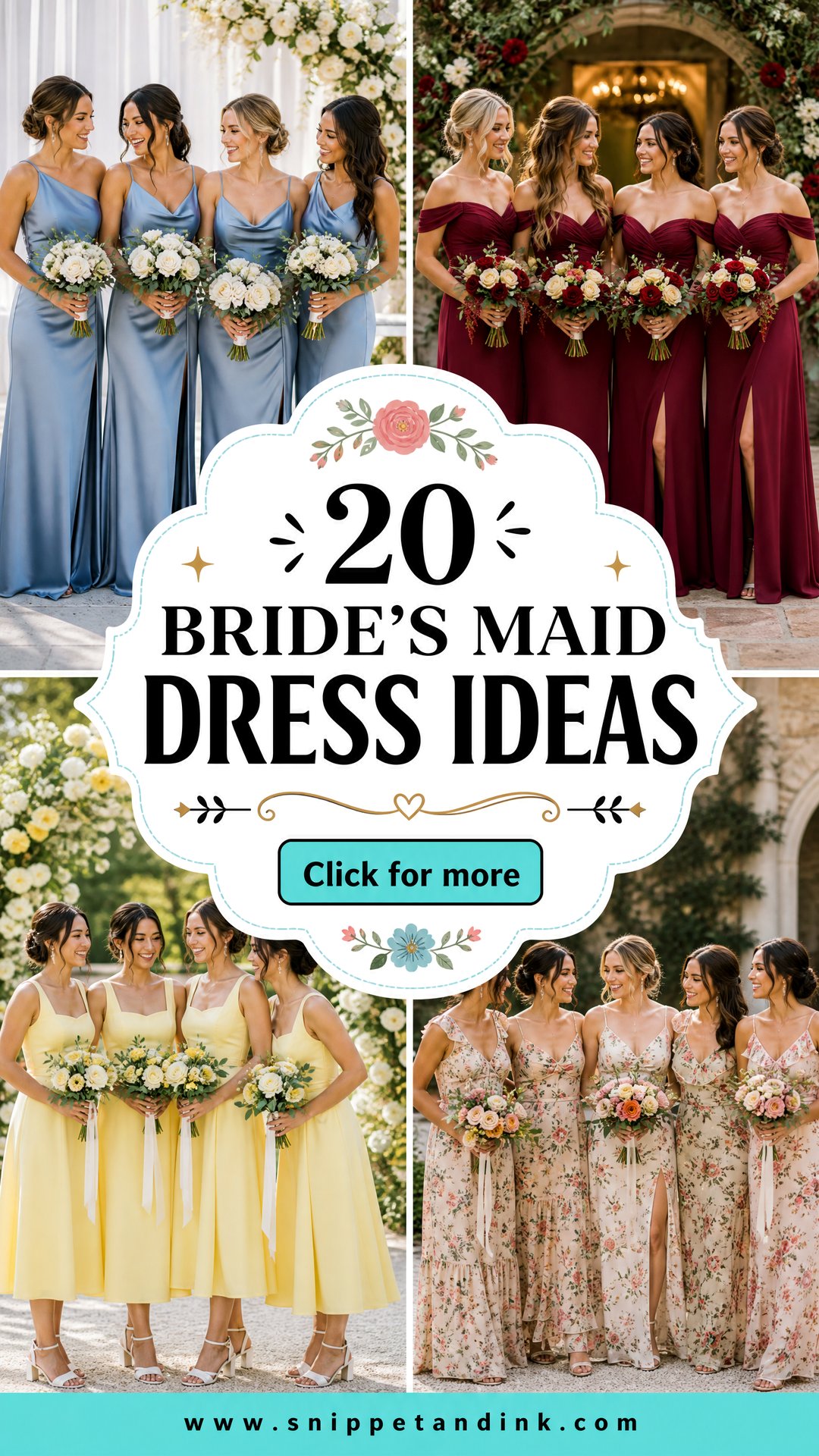
Dressing a bridal party is a different job from dressing a bride. You’re fitting several bodies, budgets and opinions into one picture, and the dress that looks right on the hanger often isn’t the one that works for all of them. These twenty ideas run from soft pastels and quiet neutrals to deep seasonal colours, modern necklines and coordinated mix-and-match options, each with shoes, jewellery and bouquet notes. My approach is to fix one or two things for the whole group, usually colour and fabric, and leave the rest open so each woman can pick the neckline and coverage she’s comfortable in. Order swatches before anyone commits, and check the venue and season, because a fabric that feels fine in a spring garden can be miserable in August heat.
How Early Should the Dresses Be Ordered?
Earlier than most couples think. Many bridesmaid labels make dresses to order after you place the order, and production often takes several months, with shipping and alterations on top. Timelines vary widely by brand, so check each one, but I work back from the wedding date like this:
- About six to eight months out: agree the colour and fabric, order swatches, and test them in daylight next to the bride’s gown or fabric sample.
- Around five to six months out: everyone is measured and orders. If one person lags, the whole group’s dye lot may not match.
- Six to eight weeks before: dresses should be in hand, so alterations can start without rushing.
- Two to three weeks before: final fittings, with the actual shoes and underwear each bridesmaid will wear.
On measuring: have someone else take the bust, waist and hip measurements, not a self-guess, and order to the size chart rather than your usual dress size. Bridesmaid sizing often runs smaller than high-street sizes. When measurements fall between two sizes, order the larger one, since a seamstress can take in a dress far more easily than let it out.
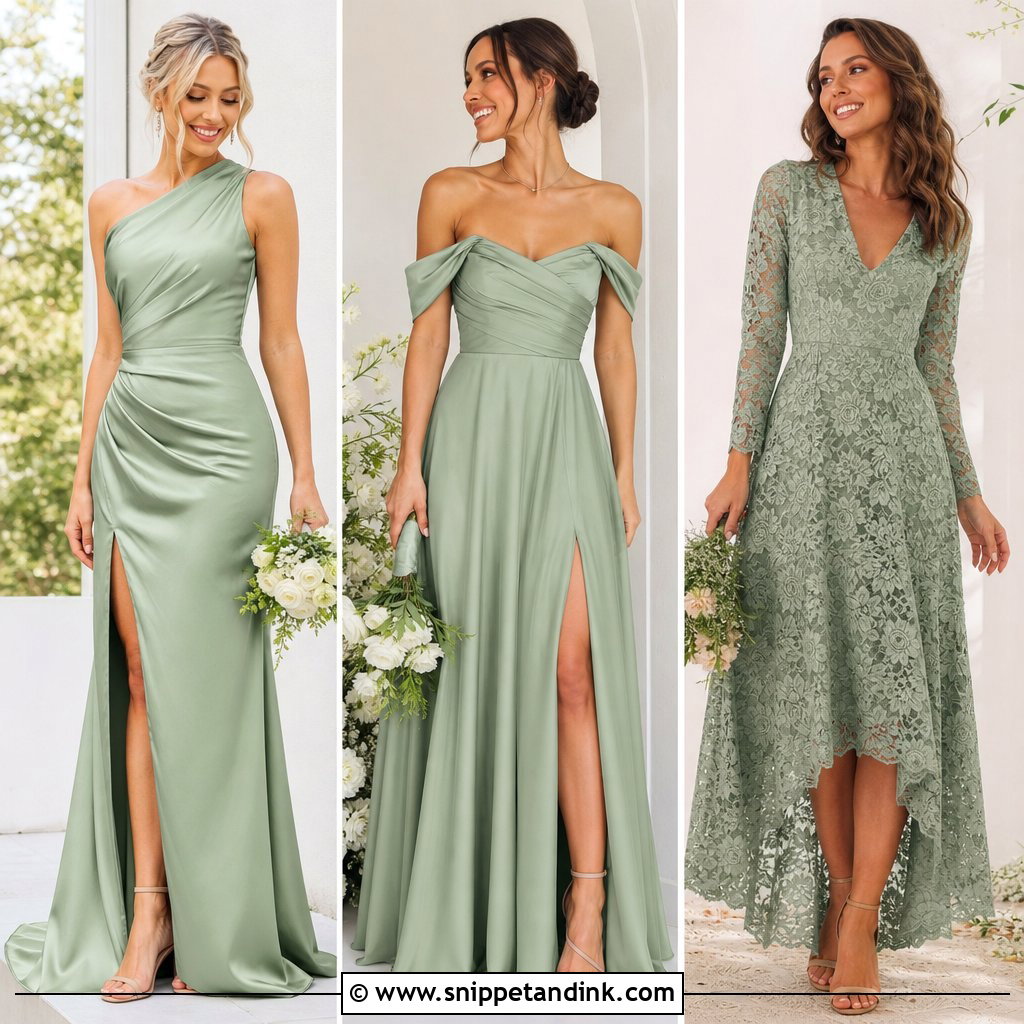
1. Sage Green Chiffon Bridesmaid Dress
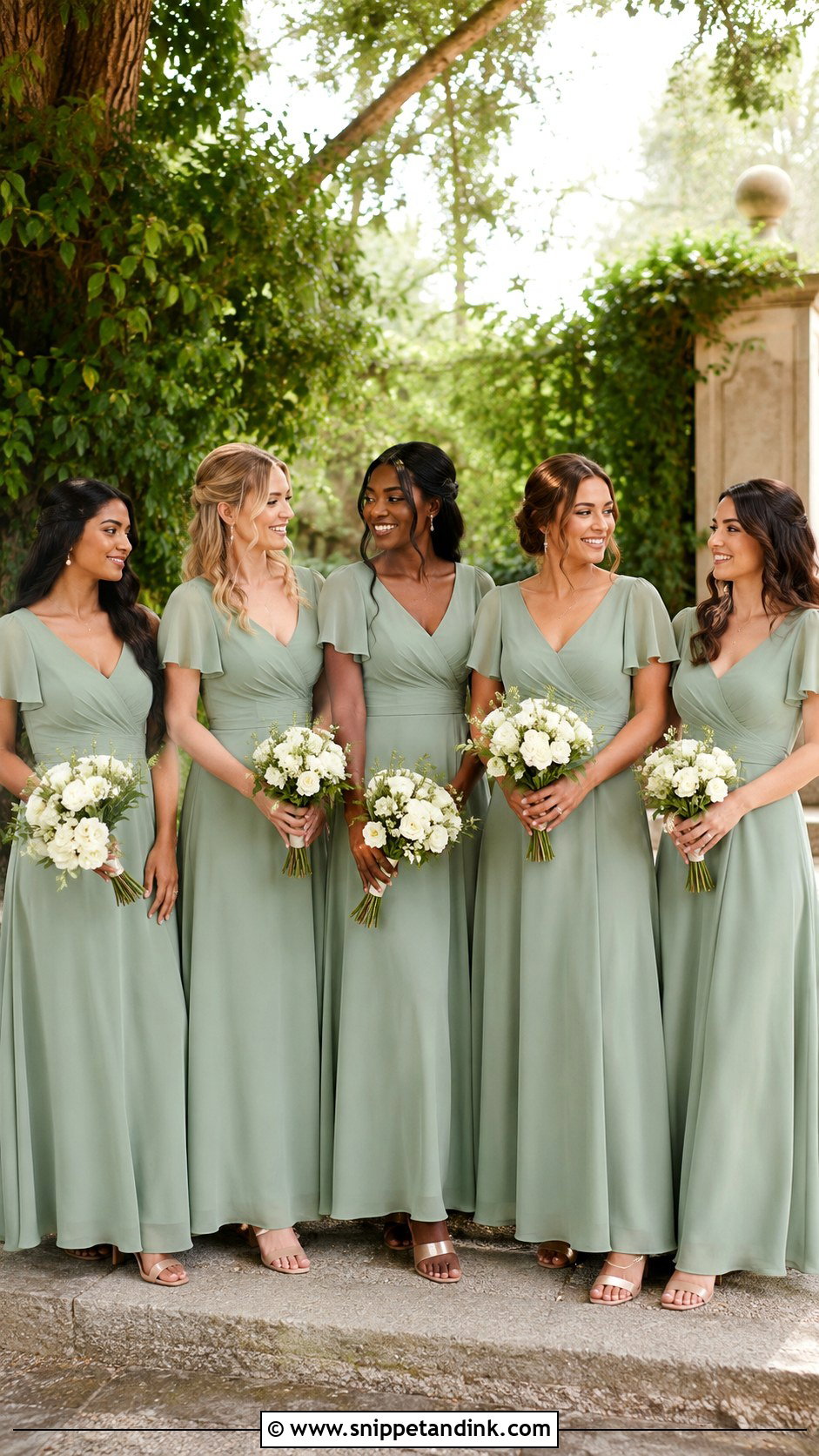
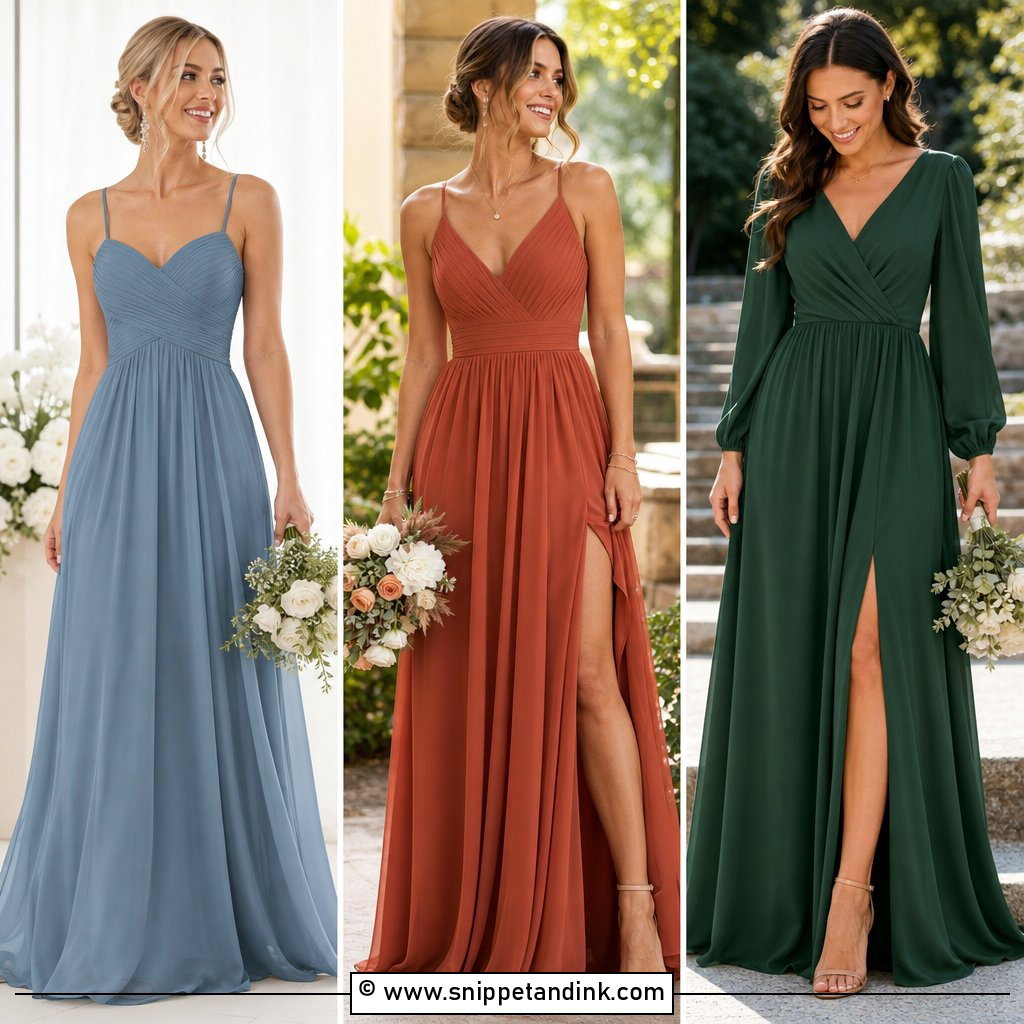
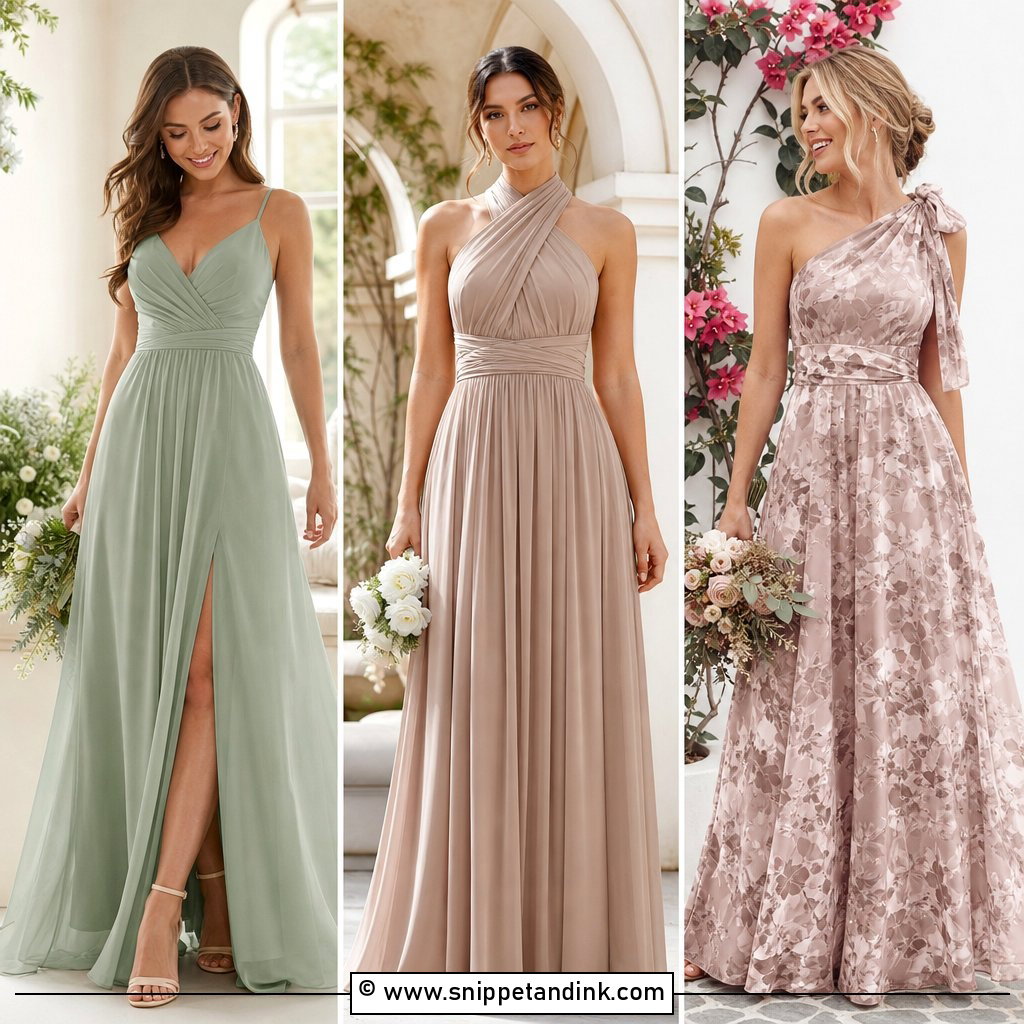
Sage chiffon is one of the easiest colours to put on a mixed group, because its grey undertone sits quietly against most skin tones. I’d let each bridesmaid choose her bodice, wrap, flutter sleeve or adjustable straps, while keeping the same sage and the same chiffon. On a lawn, block heels are kinder than stilettos, which sink into soft ground during the ceremony. Pearl drops and a small bouquet of white roses with pale peach and greenery finish it. Anyone who wants more coverage can add a matching chiffon wrap.
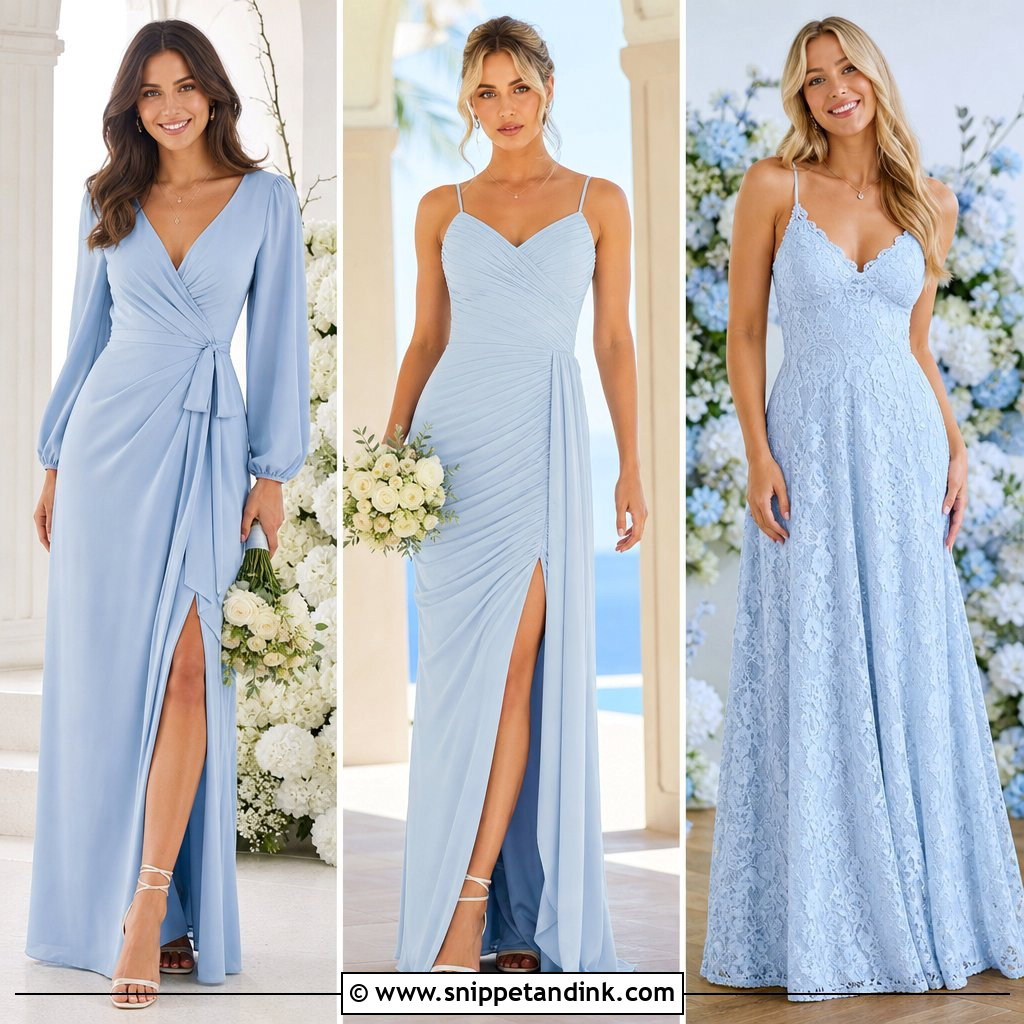
2. Dusty Blue Satin Bridesmaid Dress
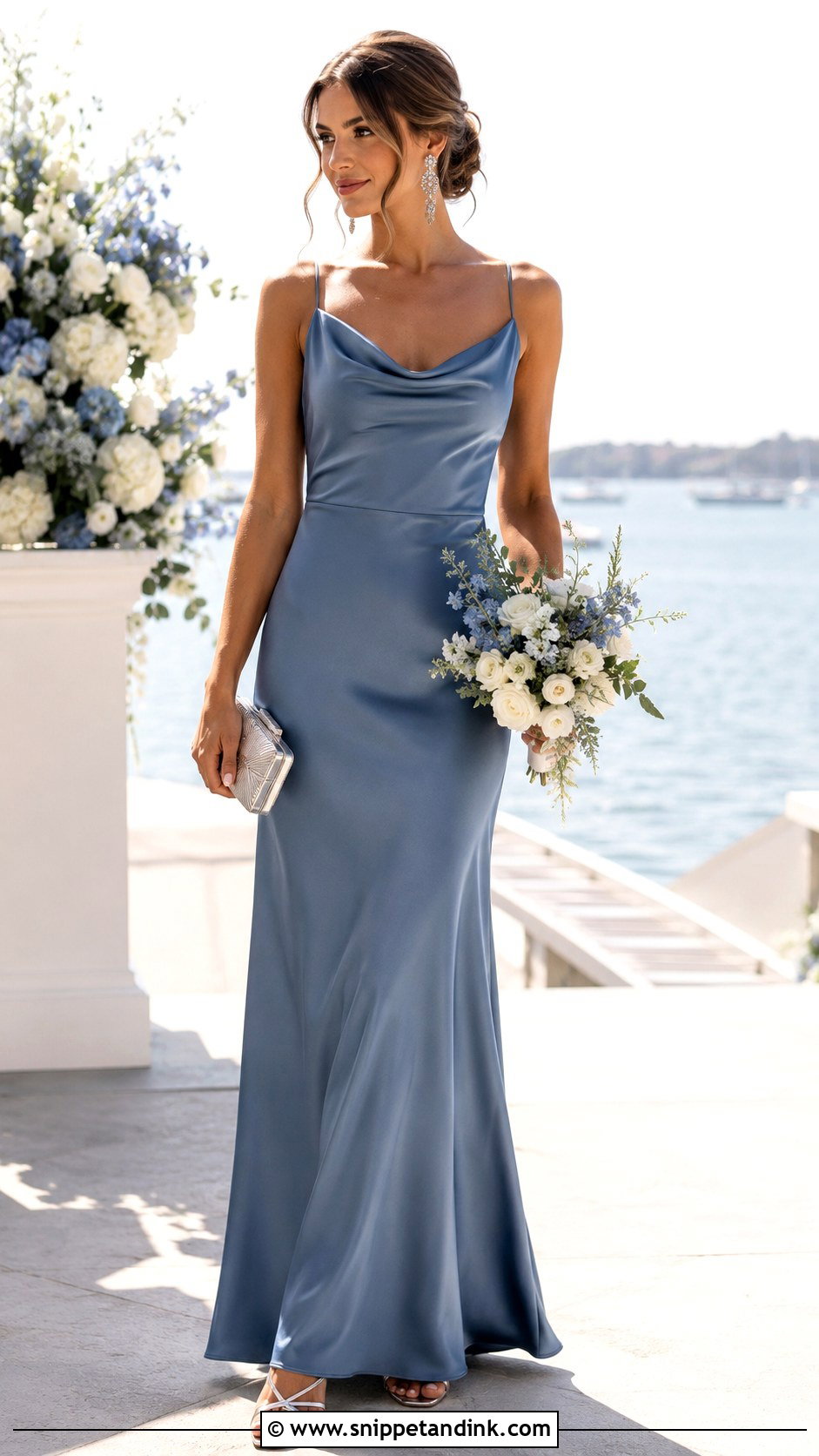
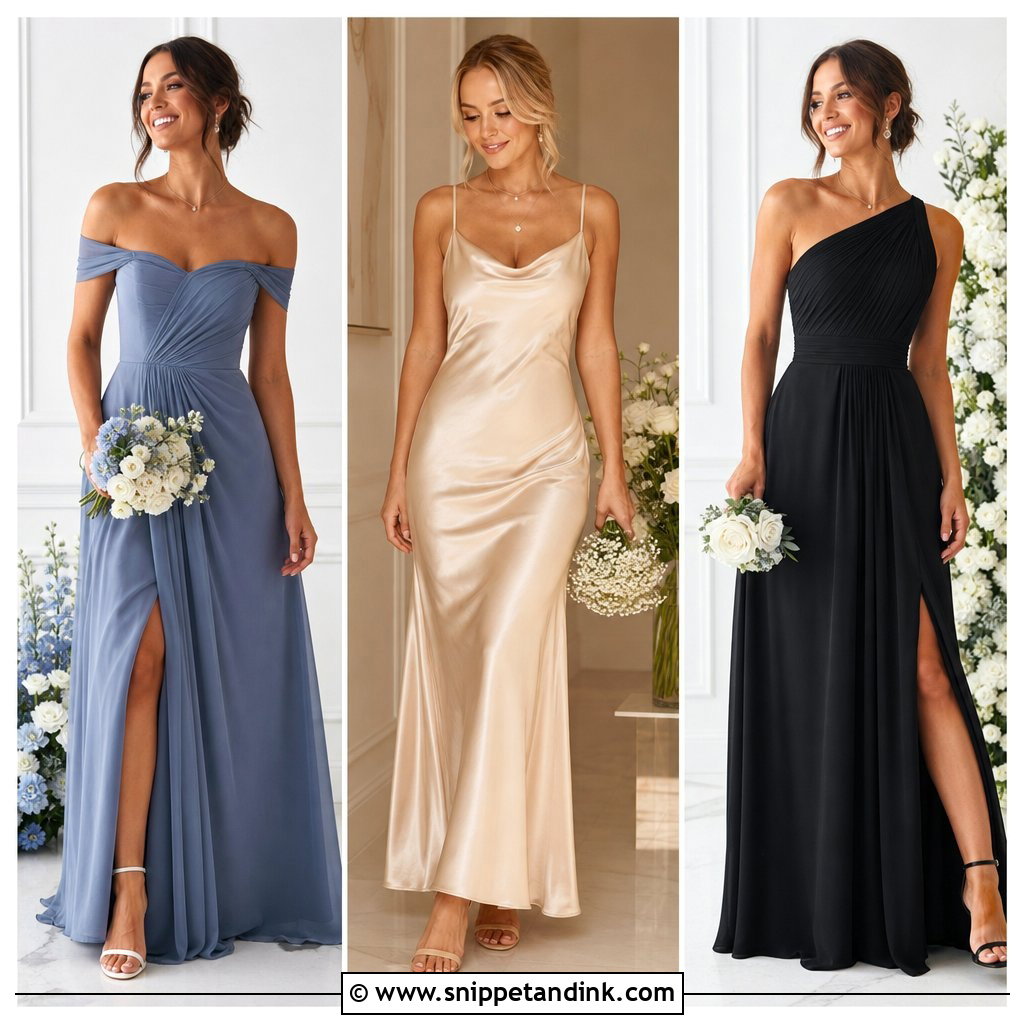
Satin shows everything, and dusty blue satin especially. When a dress is fitted too closely through the hip, the fabric pulls into horizontal lines that catch the light in every photo, so I tell bridesmaids to size for their widest measurement and take the rest in. A cowl neck or draped bodice suits the sheen, and a bias skirt moves smoothly. Silver heels and crystal earrings keep the palette cool. Anyone needing more support should look at a draped V-neck with wider straps; the fabric match keeps the group together.
3. Champagne One-Shoulder Bridesmaid Dress
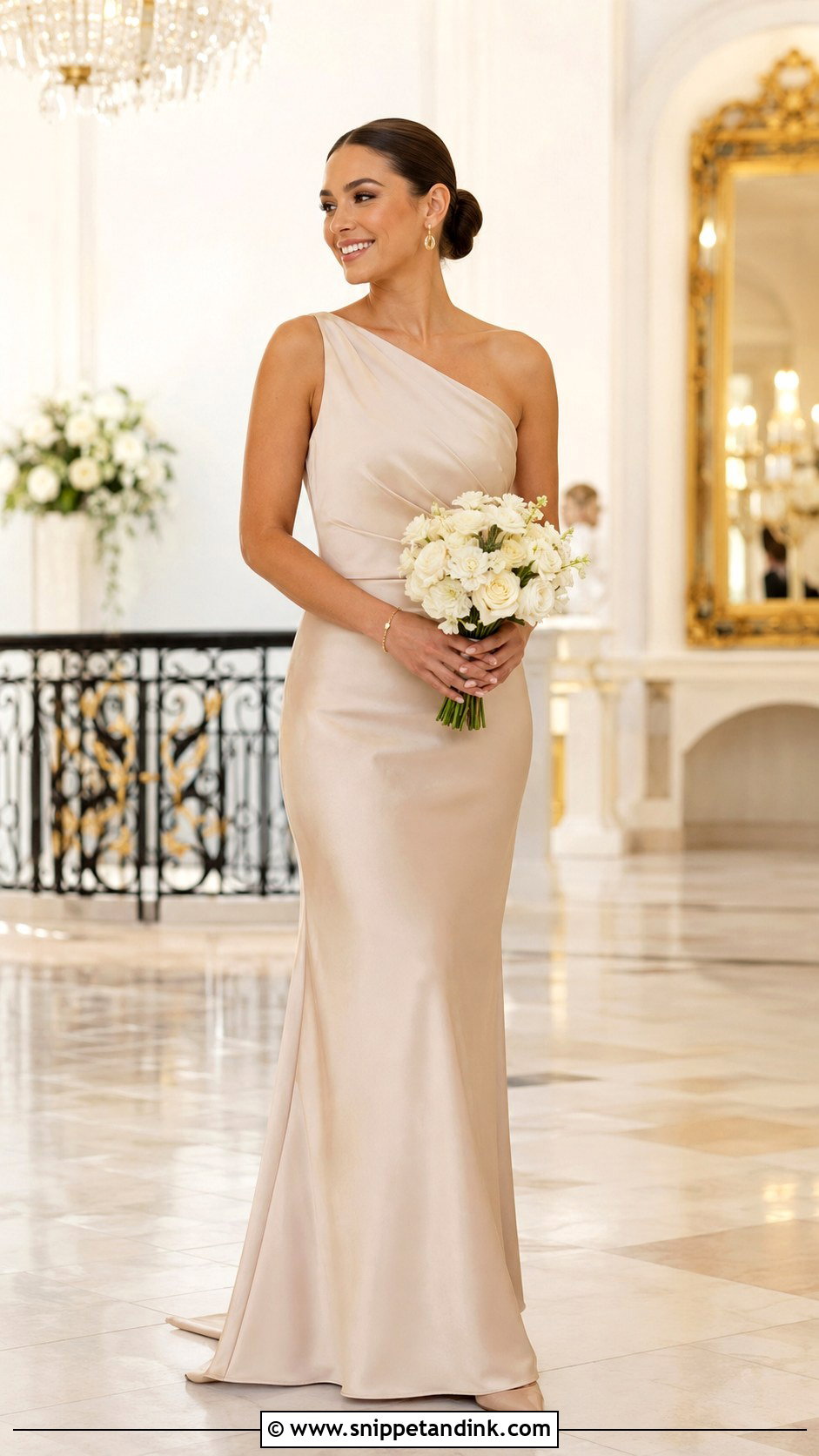
My first question with champagne is always: what colour is the bride wearing? Next to a warm ivory gown, a shiny champagne can look almost bridal, and from the back of the room guests can confuse the two. Matte satin or crepe avoids that, and holding the swatch against the gown in daylight settles it. The one-shoulder neckline is the feature, so keep jewellery minimal, a fine gold earring and slim bracelet, and wear hair up or in a low ponytail so the shoulder line stays clean.
4. Blush Pink Wrap Bridesmaid Dress
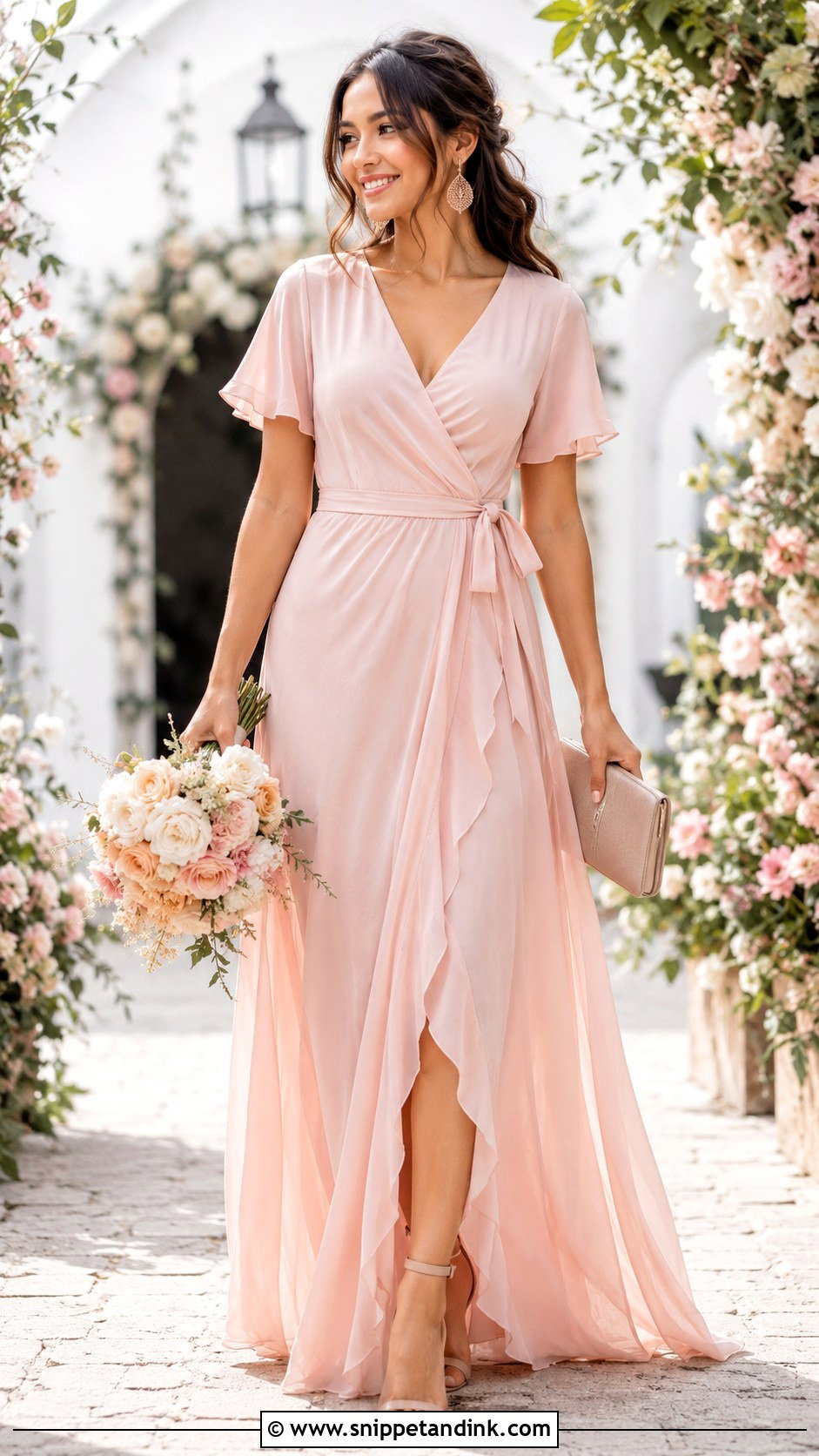
Pale pink is where brand dye lots differ the most. Two blush dresses from different labels can look like completely different colours side by side, which is why I insist the whole group orders from the same colour collection. A true wrap bodice is forgiving across sizes because it adjusts at the waist, and it suits most bust shapes. Floor-length chiffon for a formal ceremony; a midi for a relaxed daytime party. Nude ankle-strap heels and small rose-gold earrings echo the warmth of the colour.
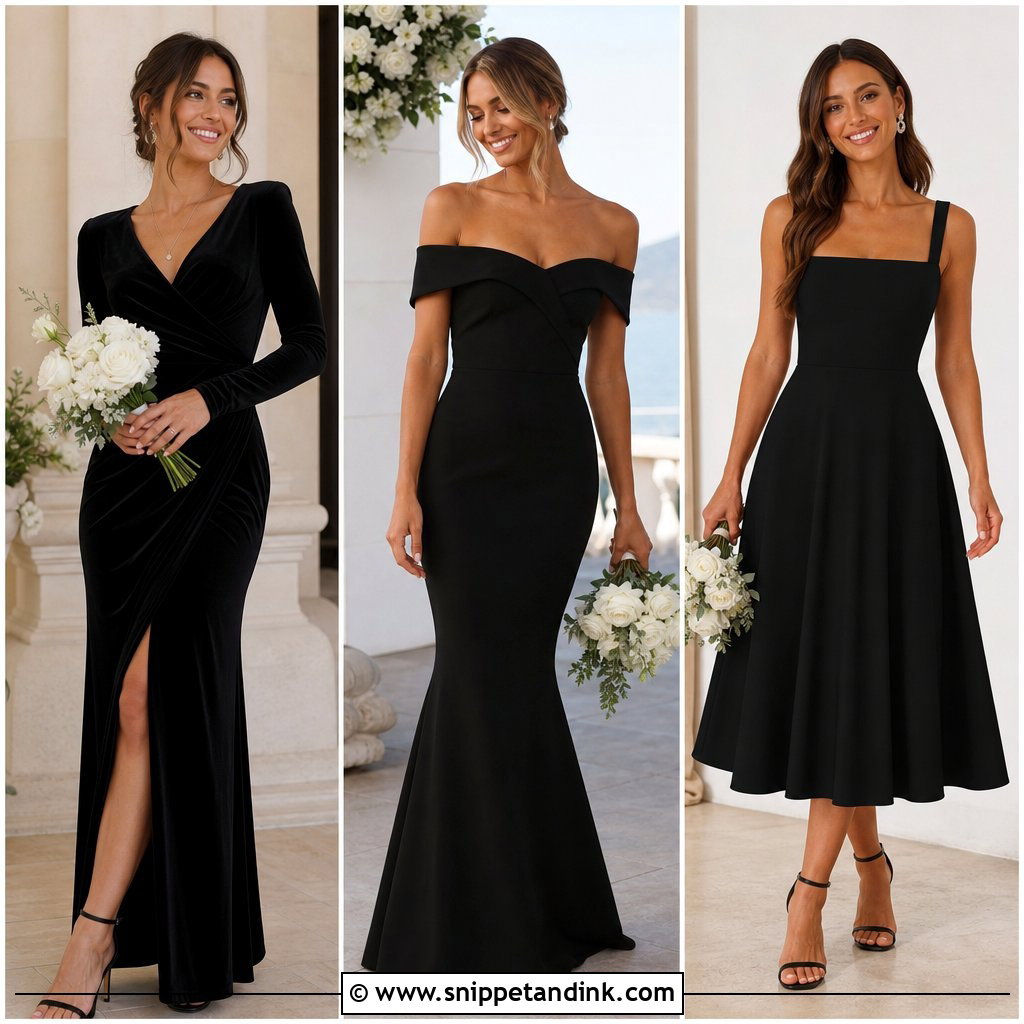
5. Black Satin Bridesmaid Dress
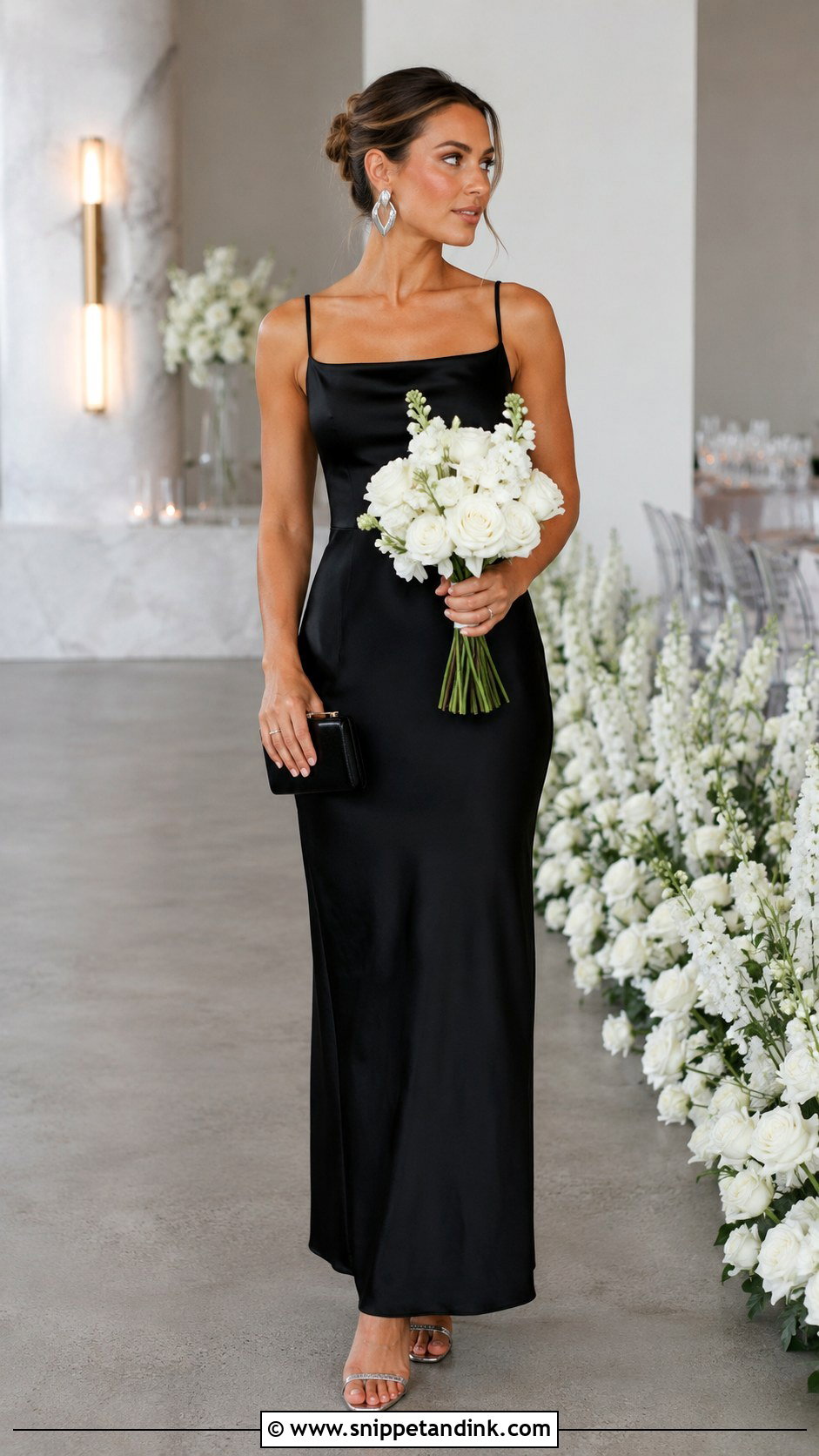
Black needs length and a clean line to read as celebration rather than office wear. A black satin bridesmaid dress in a straight-neck maxi, draped halter or off-the-shoulder cut does that well. Choose a satin with a muted finish if you want it softer; high-shine black can look harsh under flash. Blacks vary too, from blue-black to brown-black, so keep one fabric source. White or brightly coloured bouquets lift the group, and luminous makeup keeps faces from looking washed out against so much dark fabric.
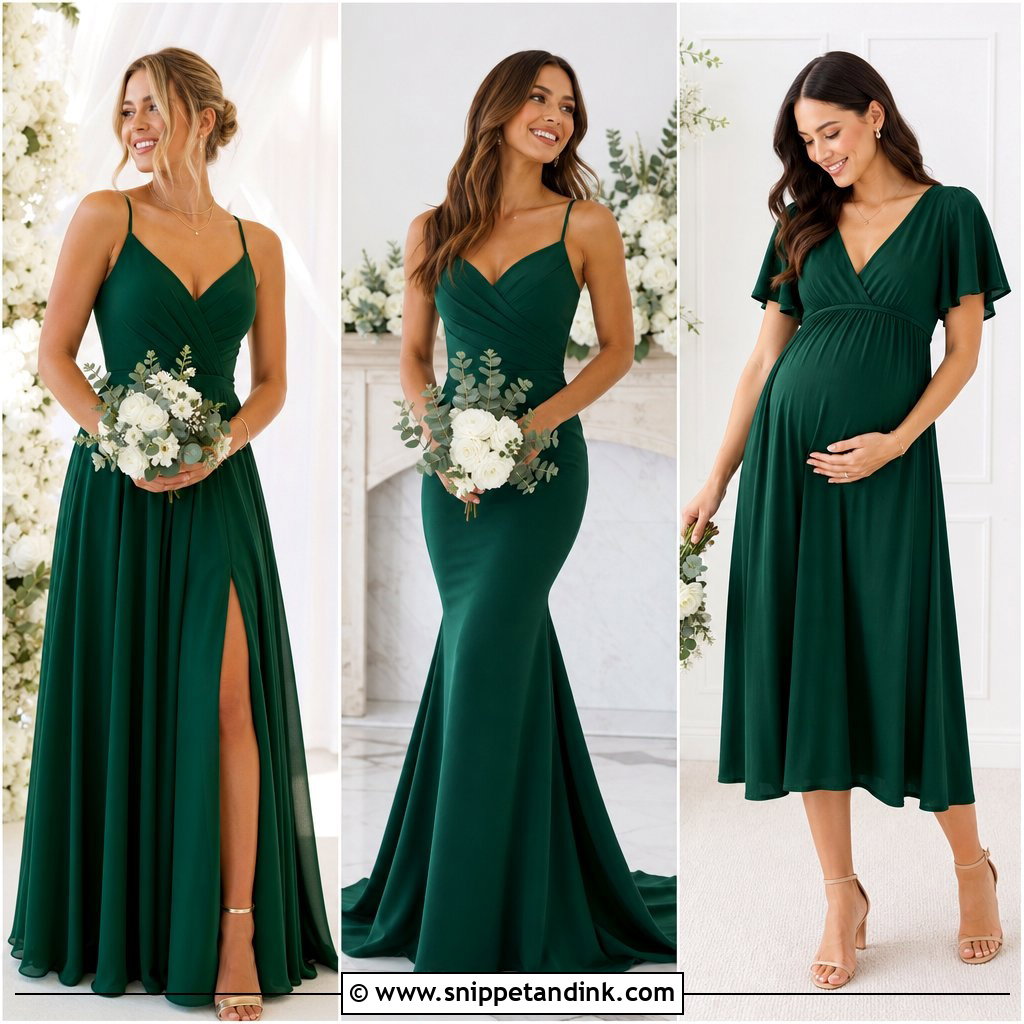
6. Emerald Green Velvet Bridesmaid Dress
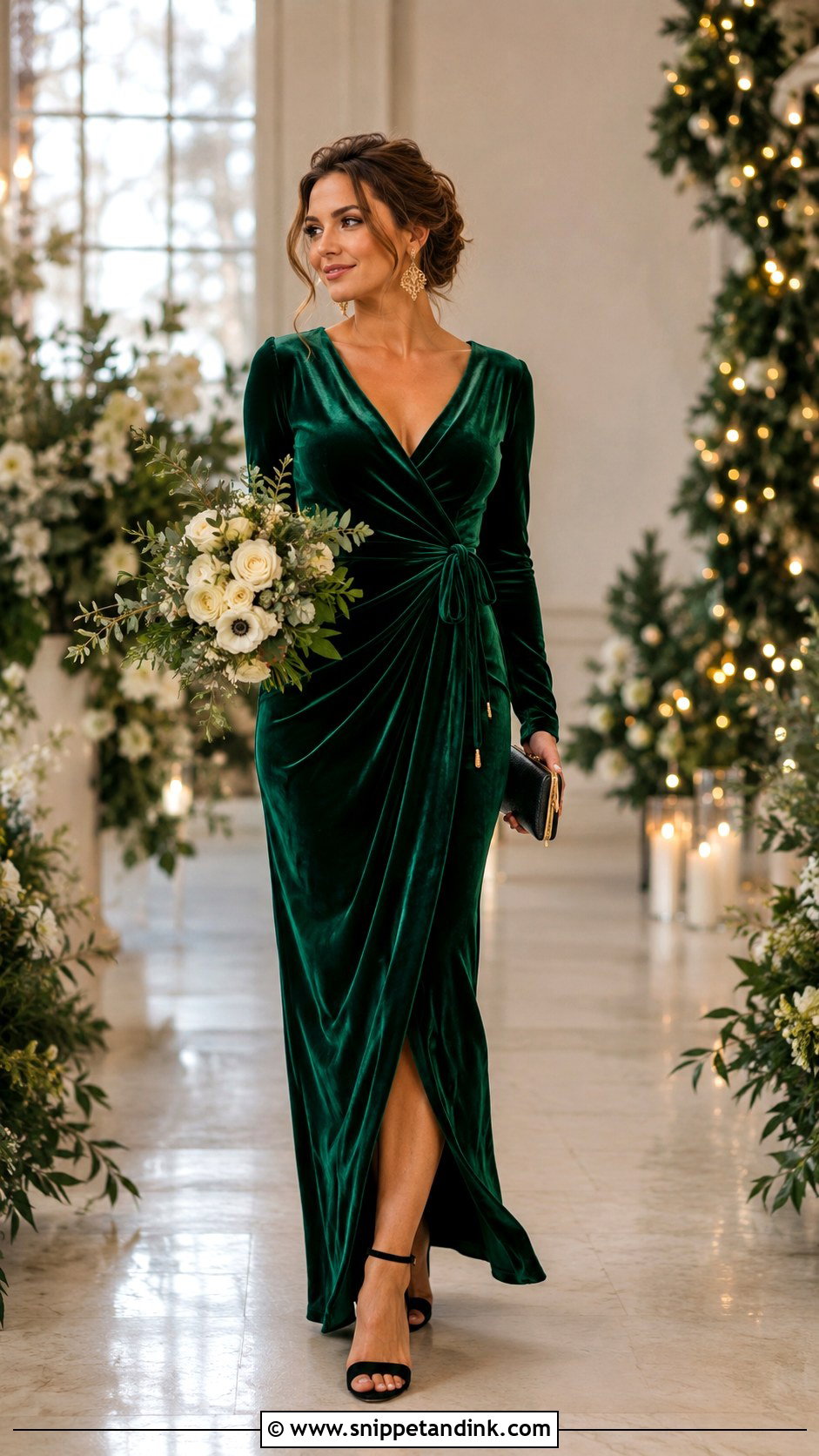
Velvet has a pile that catches light differently depending on which way it lies, so the same emerald can read bright green from one angle and almost black from another. That’s why I want velvet dresses from the same production batch, and why the panels should all be cut in one direction. A long-sleeved wrap gown keeps bridesmaids warm at a winter wedding; a sleeveless column with a shawl works if the venue is heated. Gold drops and an ivory bouquet with berry accents stand out against the deep green. Skip necklaces, since the fabric is already doing plenty.
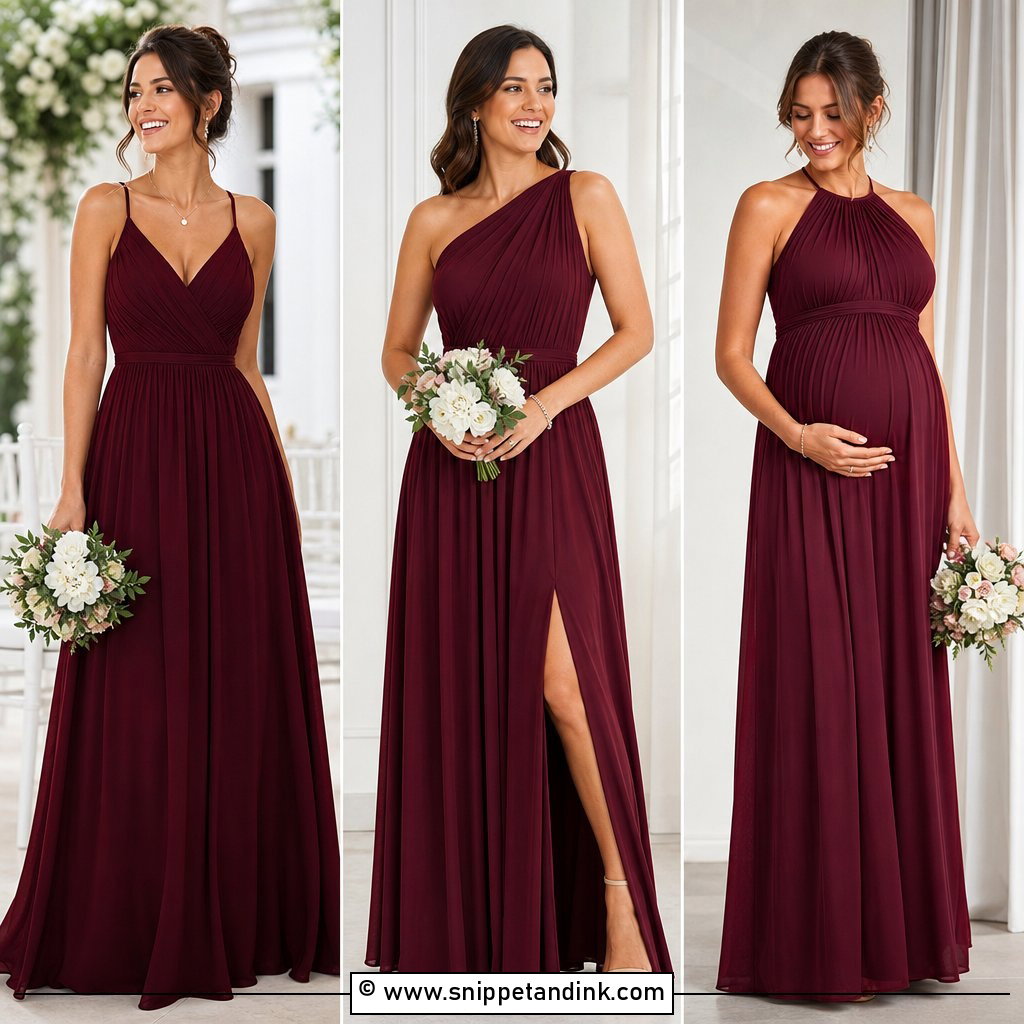
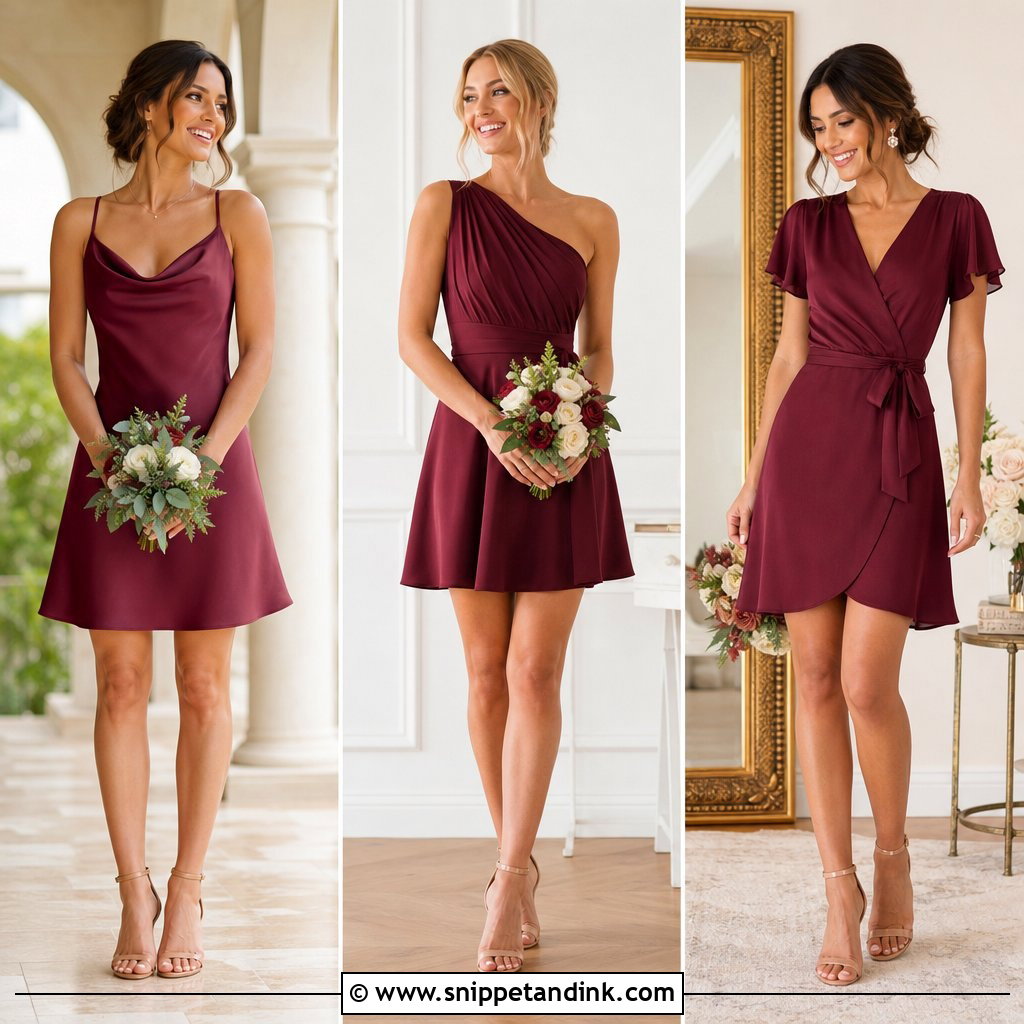
7. Burgundy Off-the-Shoulder Bridesmaid Dress
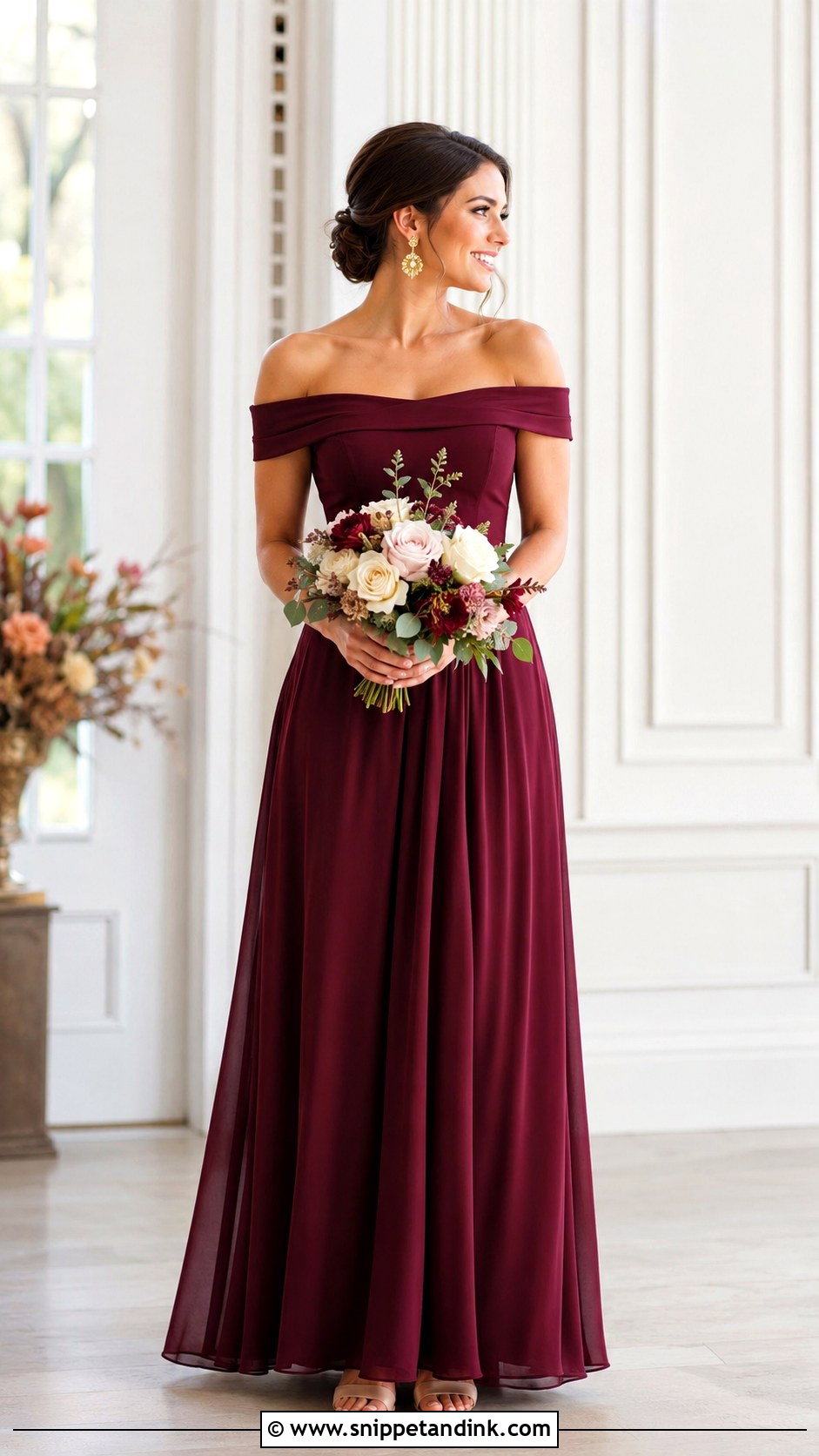
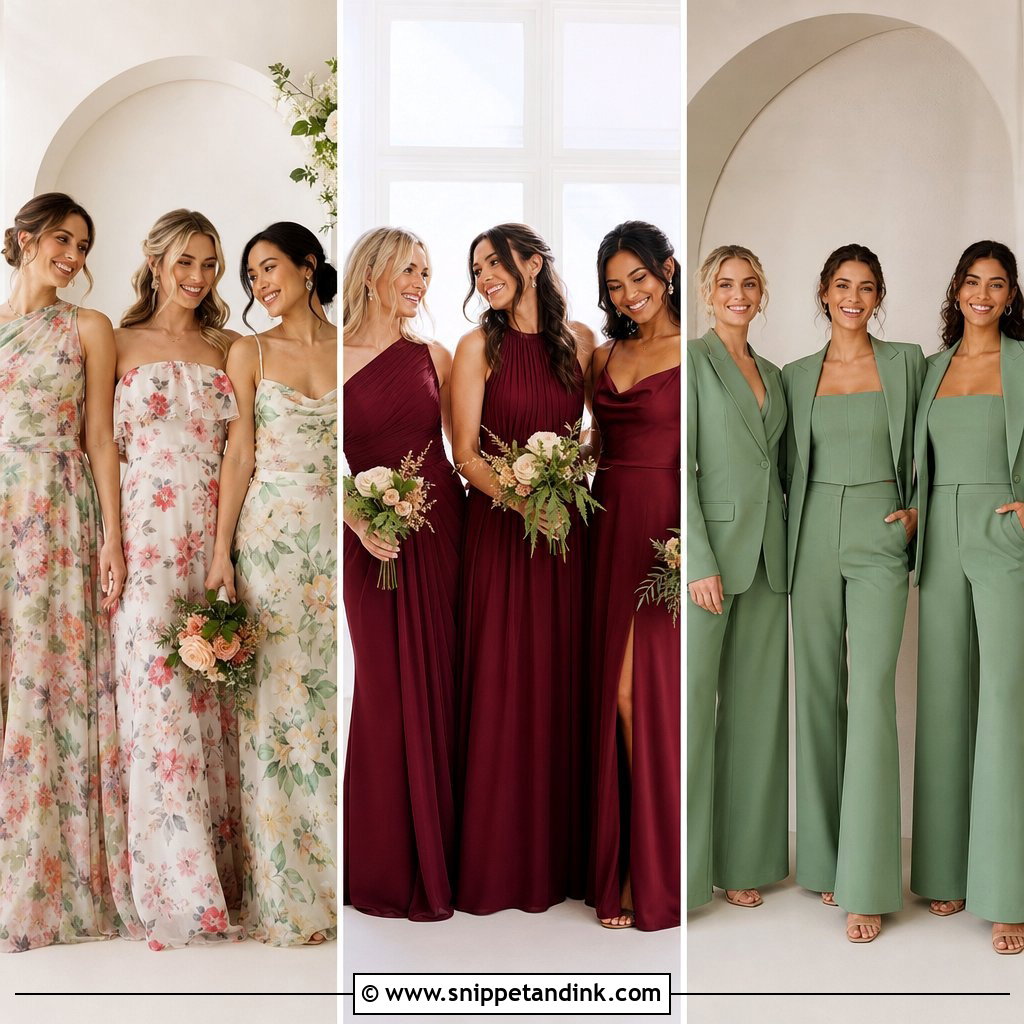
The off-the-shoulder style is the one I see fail most often on the day, because it slips down every time someone hugs or raises a glass. A structured bodice with hidden straps under the fold, or a wider portrait neckline, solves most of that. Alter it properly and have each bridesmaid lift her arms at the fitting. Burgundy suits autumn and winter, and a chiffon or crepe skirt keeps it easy to walk in. A low bun shows the shoulders; cream and muted pink flowers with eucalyptus soften the deep colour.
8. Terracotta Halter Bridesmaid Dress
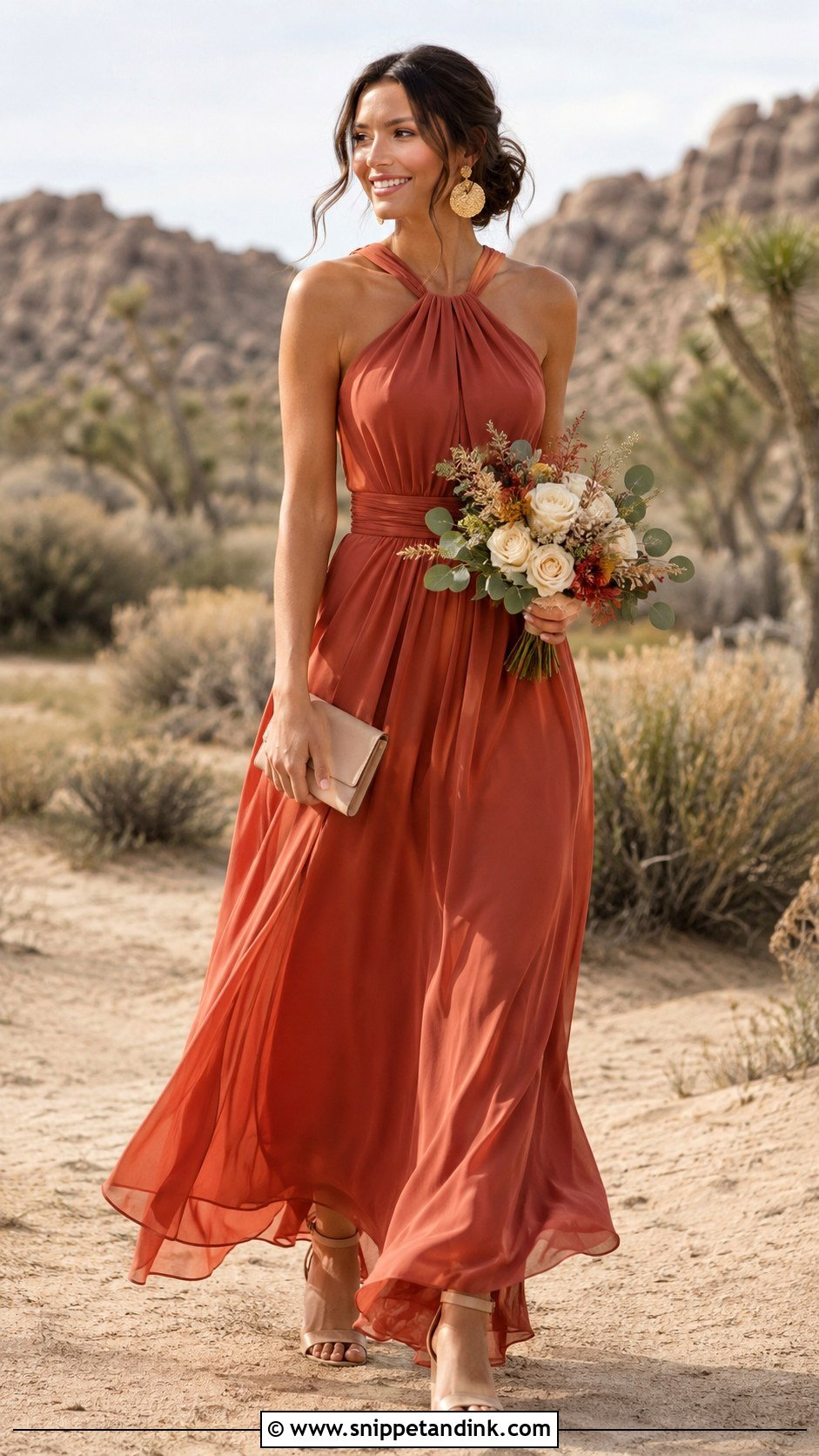
Terracotta photographs warmly at golden hour, which is why it’s so popular for desert, barn and autumn weddings. The halter neck draws the eye up and balances a full skirt, but standard halters offer little bust support, so anyone who needs it should choose a version with wider straps and a structured bodice. Chiffon moves; matte satin looks more formal. Terracotta shades can lean orange, brown or pink depending on the label, so lay the swatches side by side before anyone orders.
9. Navy Blue Long-Sleeve Bridesmaid Dress
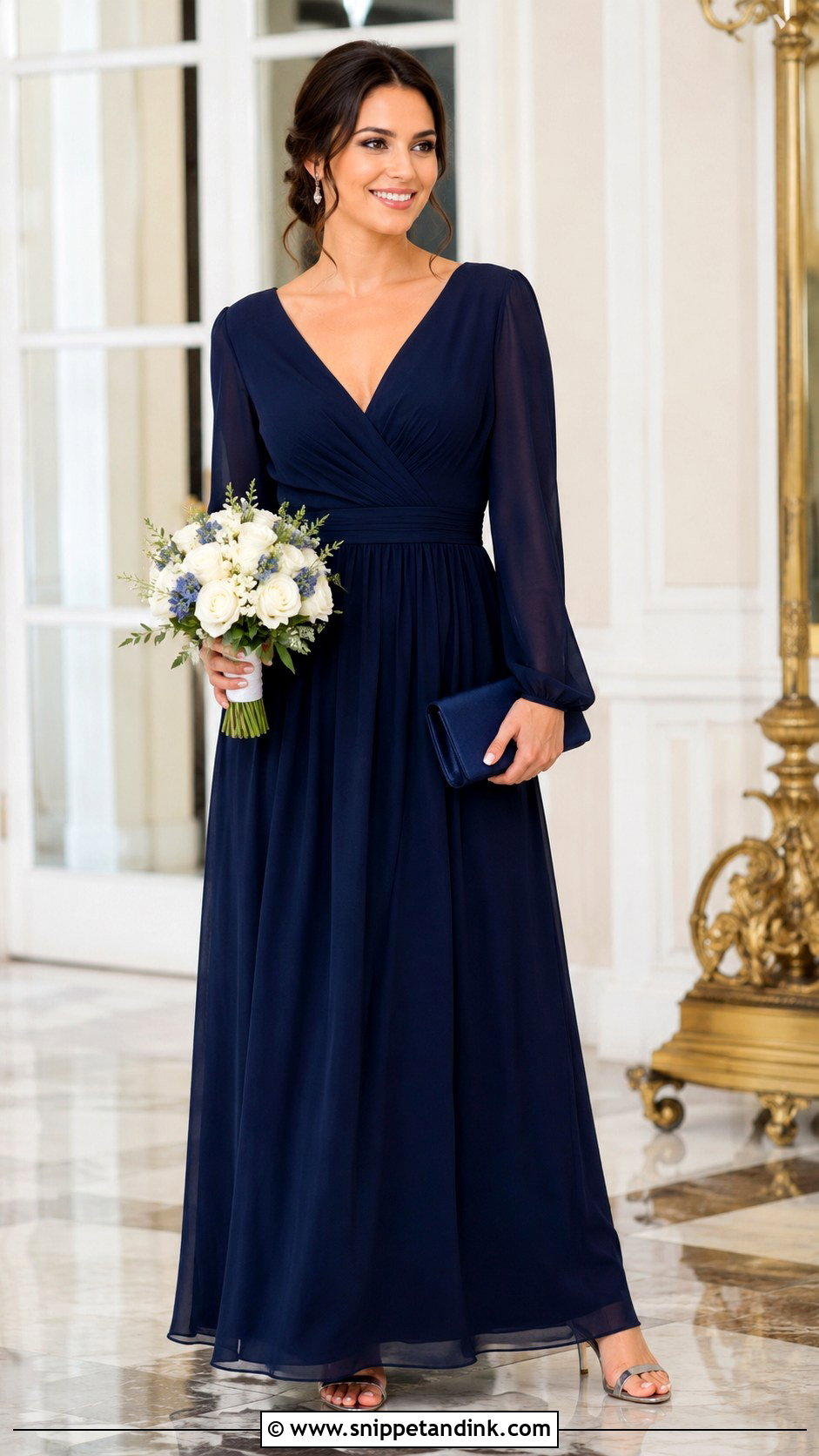
Navy is the dark colour I suggest when a couple likes the formality of black but worries about a sombre feel. Long sleeves make it practical for cold-weather ceremonies and churches with coverage expectations. Sheer chiffon sleeves keep it light; lined crepe sleeves are warmer but heavier. A V-neck wrap bodice and fluid skirt suit most figures. Navy undertones vary a lot, some near black, others close to royal blue, so I’d pick one shade and send everyone the same swatch. White bouquets with blue accents read crisply against it.
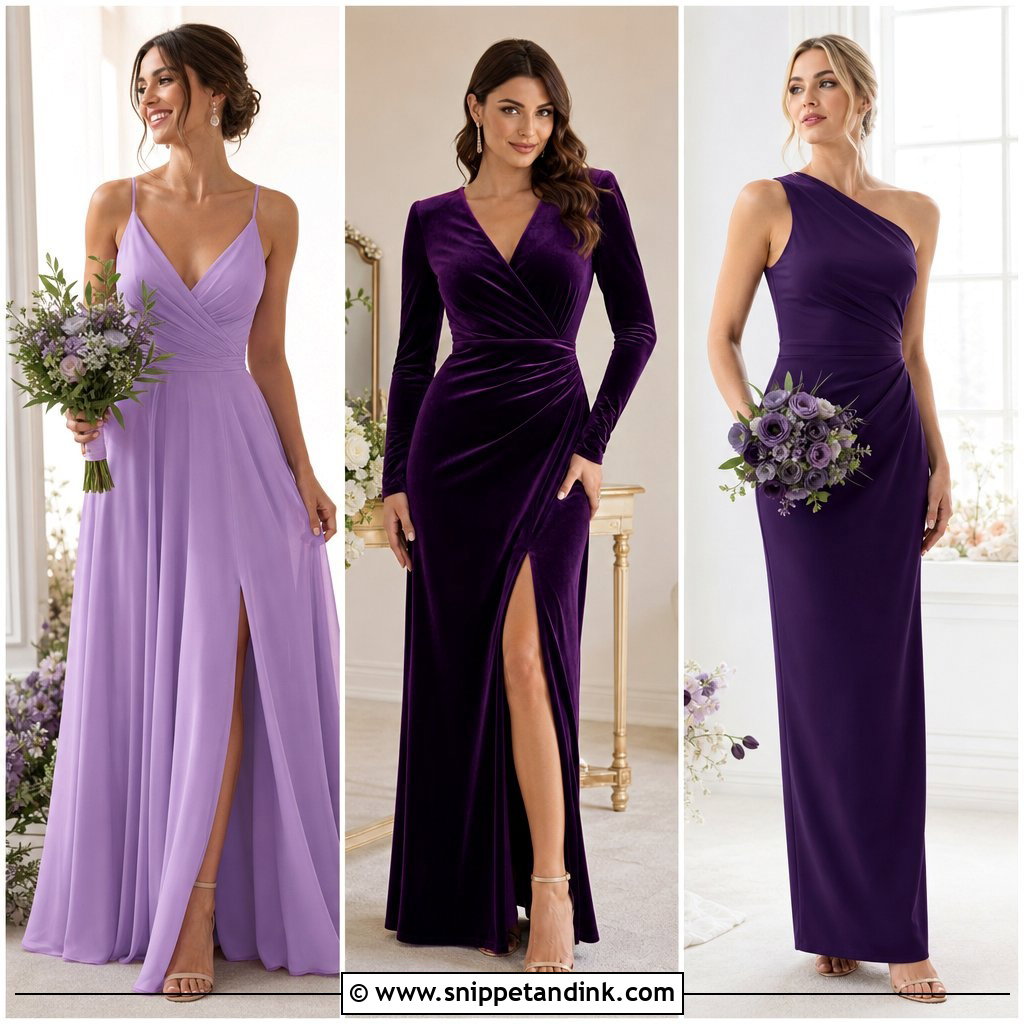
10. Lavender Pleated Bridesmaid Dress
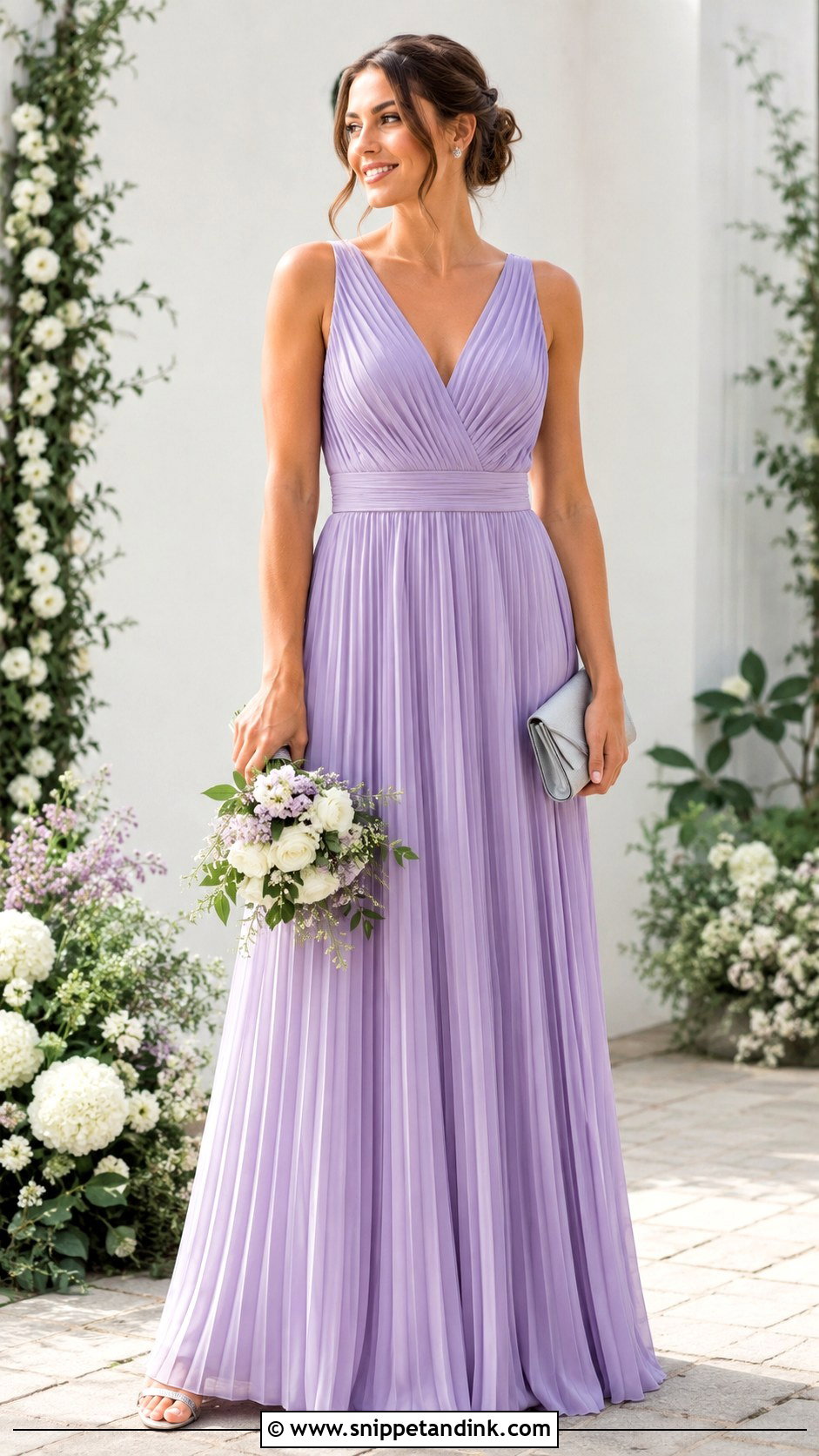
Pleated fabric hides creases from travel and sitting better than plain chiffon does, which matters more than people expect. Lavender in fine pleats gives texture without beading, and a V-neck or high-neck bodice keeps it clean. Petite bridesmaids usually look better in narrow pleats; wide pleats can swamp a small frame. One thing I always check is the lining length, because a lining cut shorter than the pleats shows as a line when the skirt swings. Silver sandals, crystal studs and lilac-and-white flowers complete the cool palette.
11. Butter Yellow Midi Bridesmaid Dress
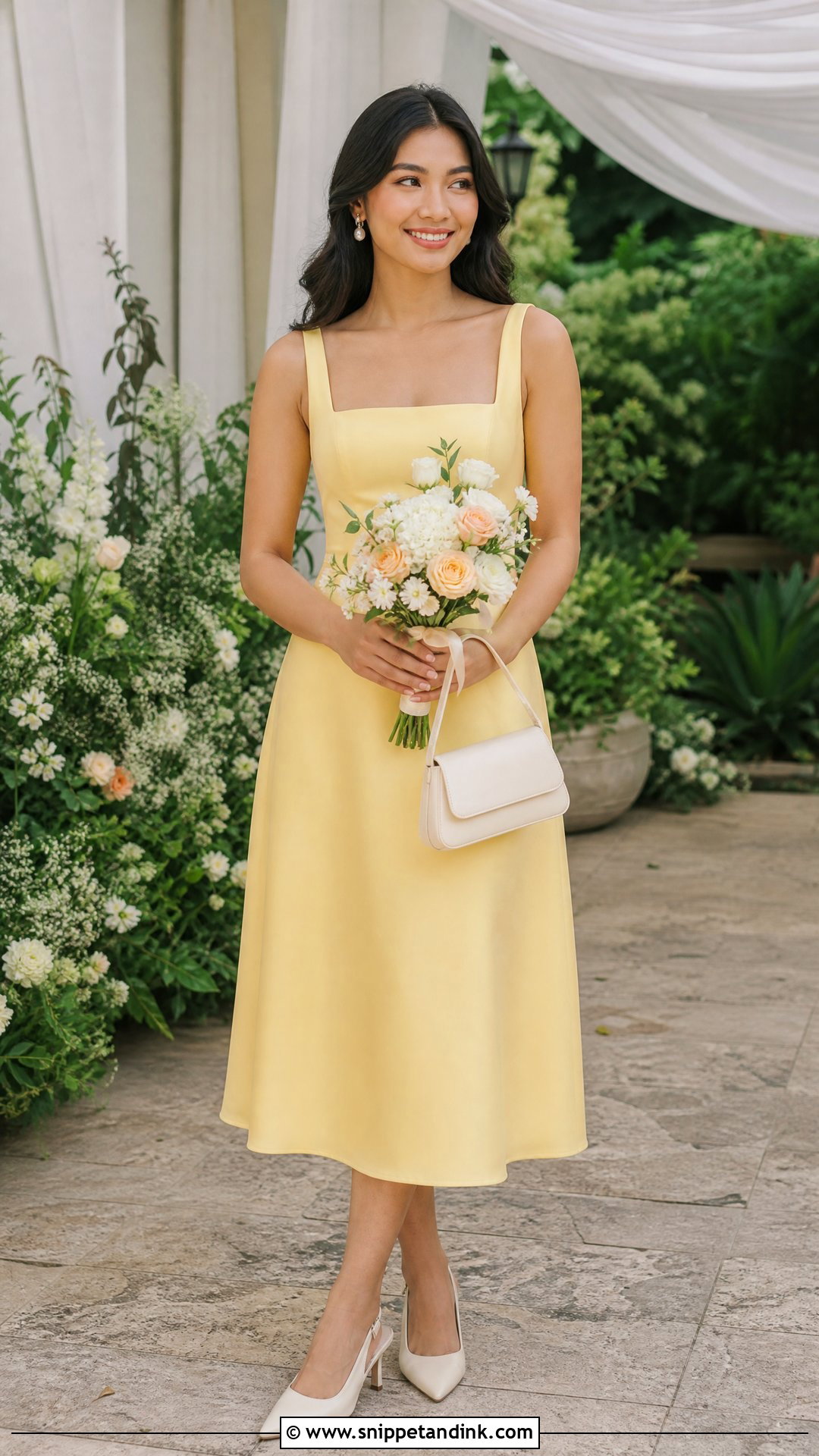
Butter yellow is the hardest pastel to put on everyone. On some skin tones it glows; on others, especially very fair or olive skin, it can drain the face. My solution is to choose one fabric and hem length and let bridesmaids move a shade lighter or deeper within the yellow family. A square neckline with wide straps gives support, and the midi hem suits daytime garden parties. Cream slingbacks, pearl earrings and daisies with pale peach flowers keep it fresh.
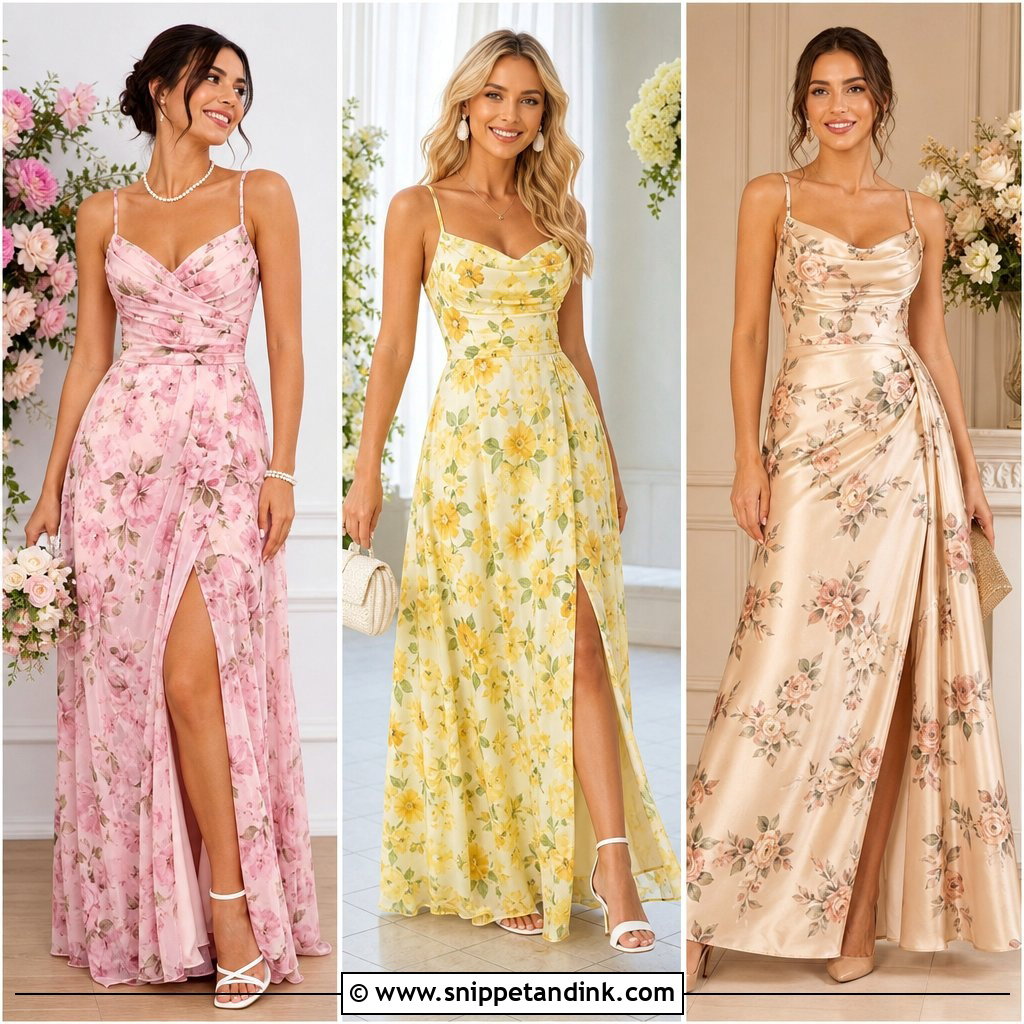
12. Floral Print Bridesmaid Dress
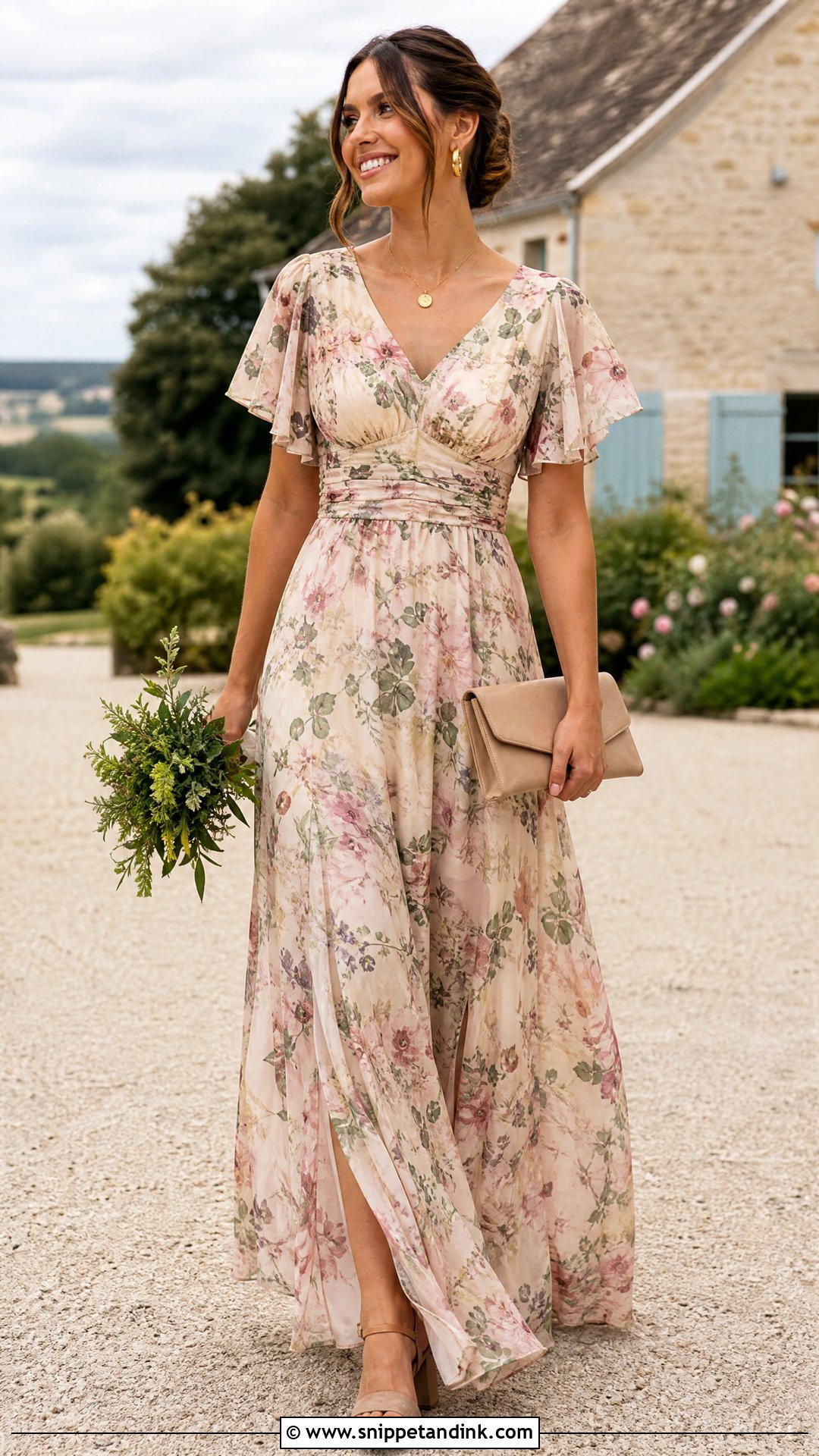
A print does a lot of work, so the bouquets should do less. Choose a floral print bridesmaid dress whose colours come from the wedding flowers rather than a busy multicolour pattern, then keep bouquets to a few matching blooms and greenery. A fitted bodice and flutter sleeves on an A-line maxi works on most bodies. In a larger party, I like one or two bridesmaids in the print and the rest in solid colours pulled from it; it looks planned, and it gives anyone who dislikes prints a way out.
13. Olive Green Cowl-Neck Bridesmaid Dress
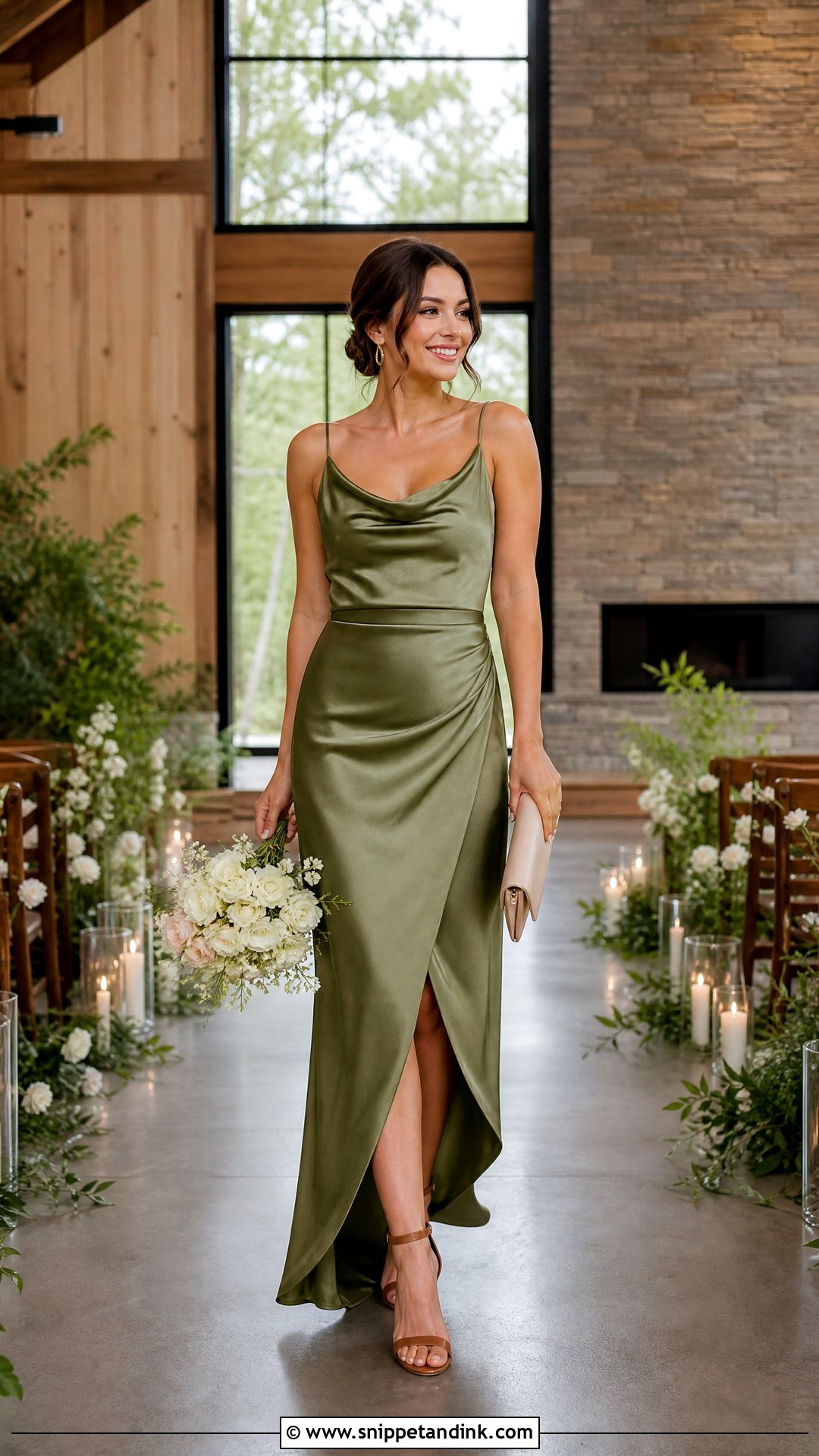
A cowl neck in satin falls into soft folds, so it flatters a smaller bust and can be too revealing on a fuller one when the wearer leans forward. Fashion tape helps, or a bridesmaid can opt for a higher neckline in the same olive. The colour itself ranges from yellow-green to grey-green, and I’d confirm which one with swatches before anyone orders. Bronze heels, simple hoops and cream flowers with pale foliage keep it earthy. For cooler evenings, a cropped jacket in matching fabric works well.
14. Chocolate Brown Column Bridesmaid Dress
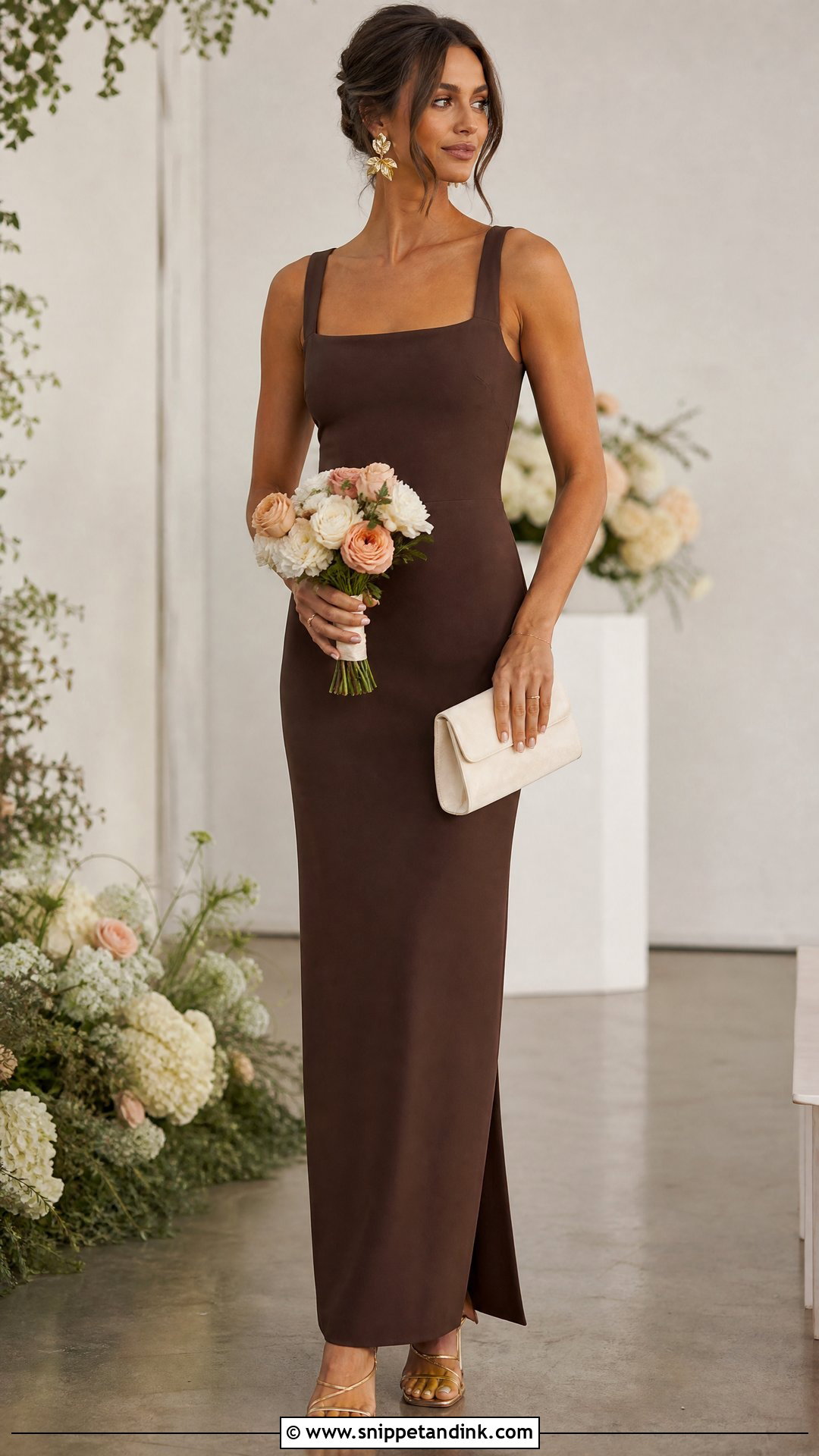
Chocolate brown is the neutral I’d suggest to anyone who wants the depth of black with a warmer feel. A column silhouette needs a back or side slit for walking, otherwise bridesmaids end up taking tiny steps down the aisle. The plain shape looks best with some definition at the neckline, such as a square or asymmetric bodice. Brown ranges from warm cocoa to near-espresso, so fix the shade first. I don’t think shoes need to match; give everyone a rule, gold or neutral, and let them wear what they own.
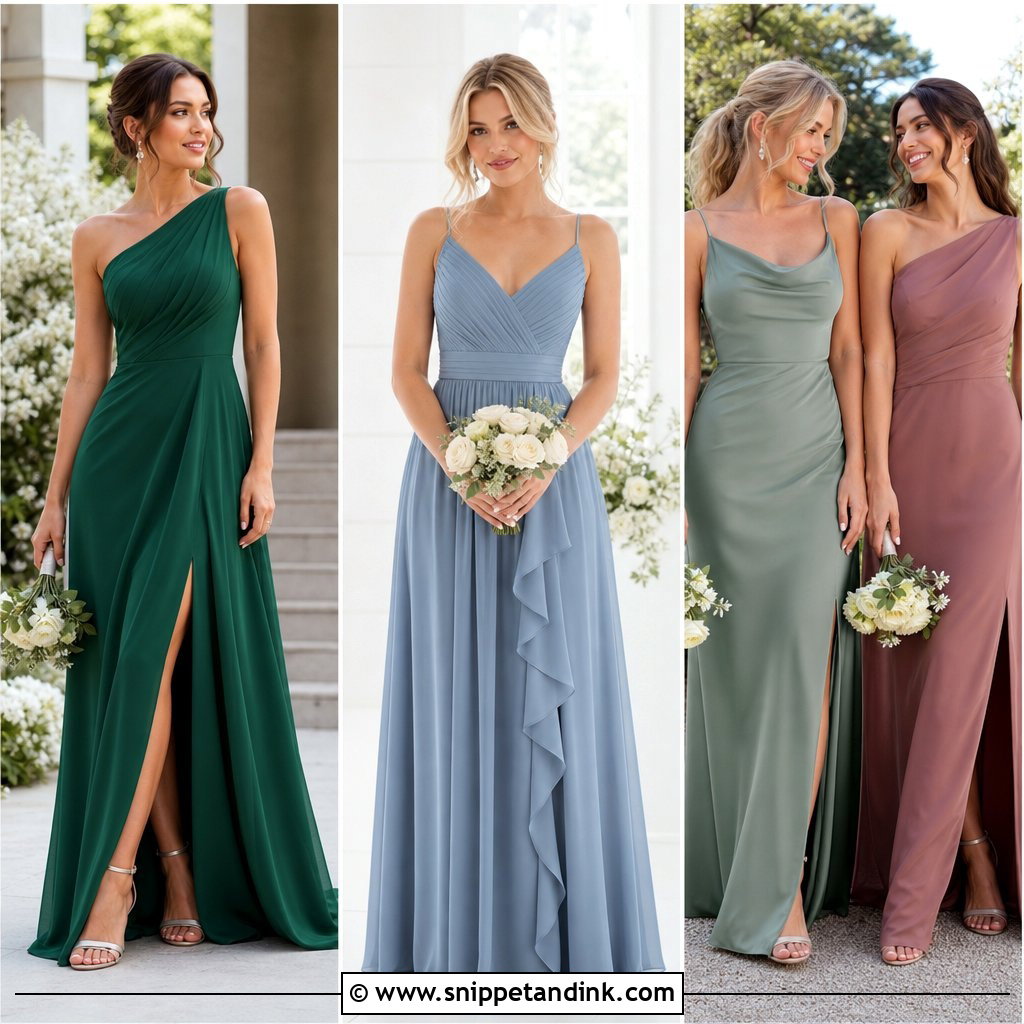
15. Coral Ruffle Bridesmaid Dress
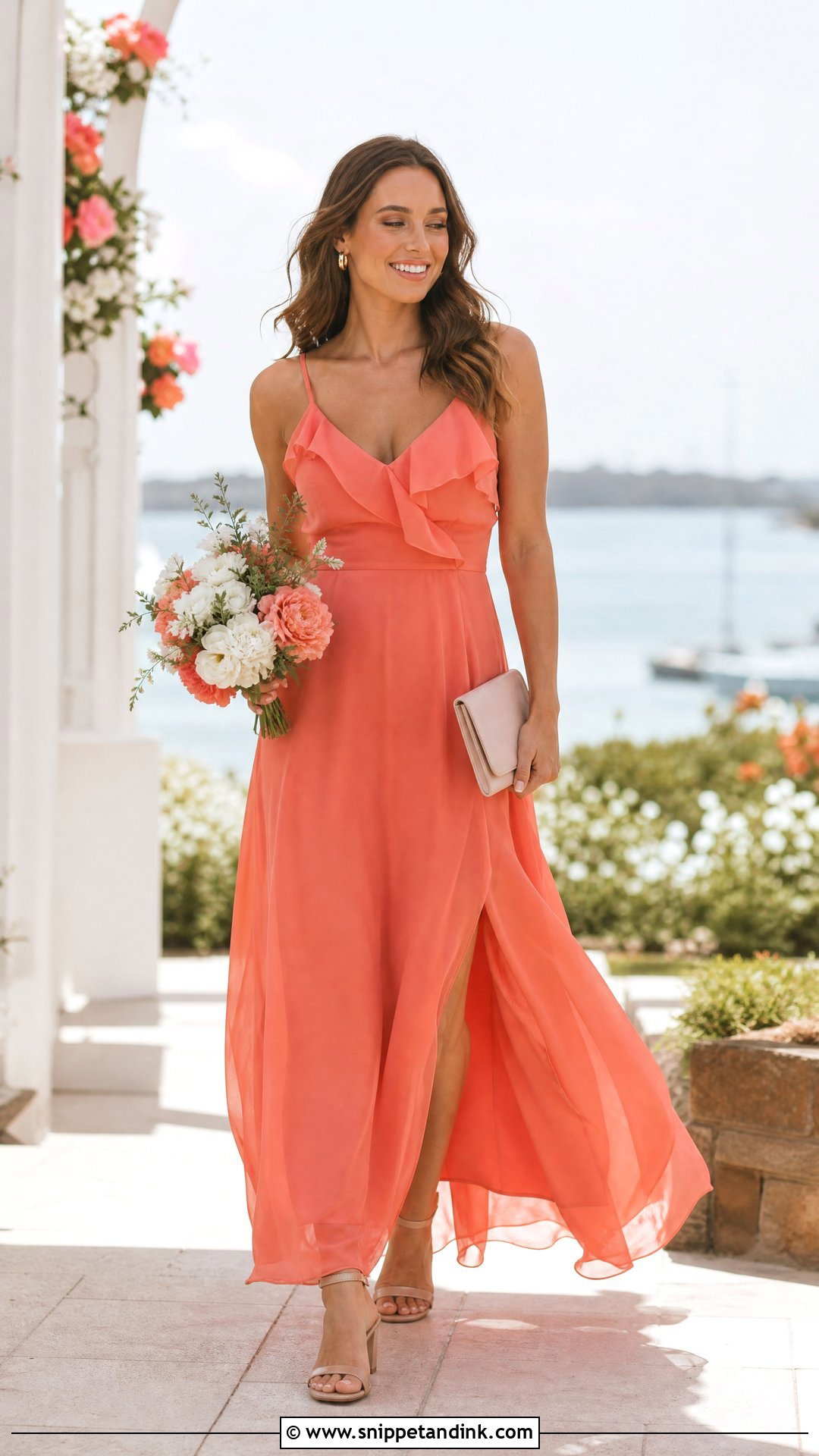
Coral is unforgiving if it leans too far toward orange or pink, so I aim for a middle shade that suits a group with different undertones. Keep the ruffle at the neckline rather than tiers down the skirt, which add bulk and look heavy in photos. Chiffon suits beach and destination weddings because it dries and moves easily in a breeze. Nude block sandals help on sand or decking. A bridesmaid who doesn’t want ruffles can wear a plain dress in the same coral and fabric.
16. Mauve Convertible Bridesmaid Dress
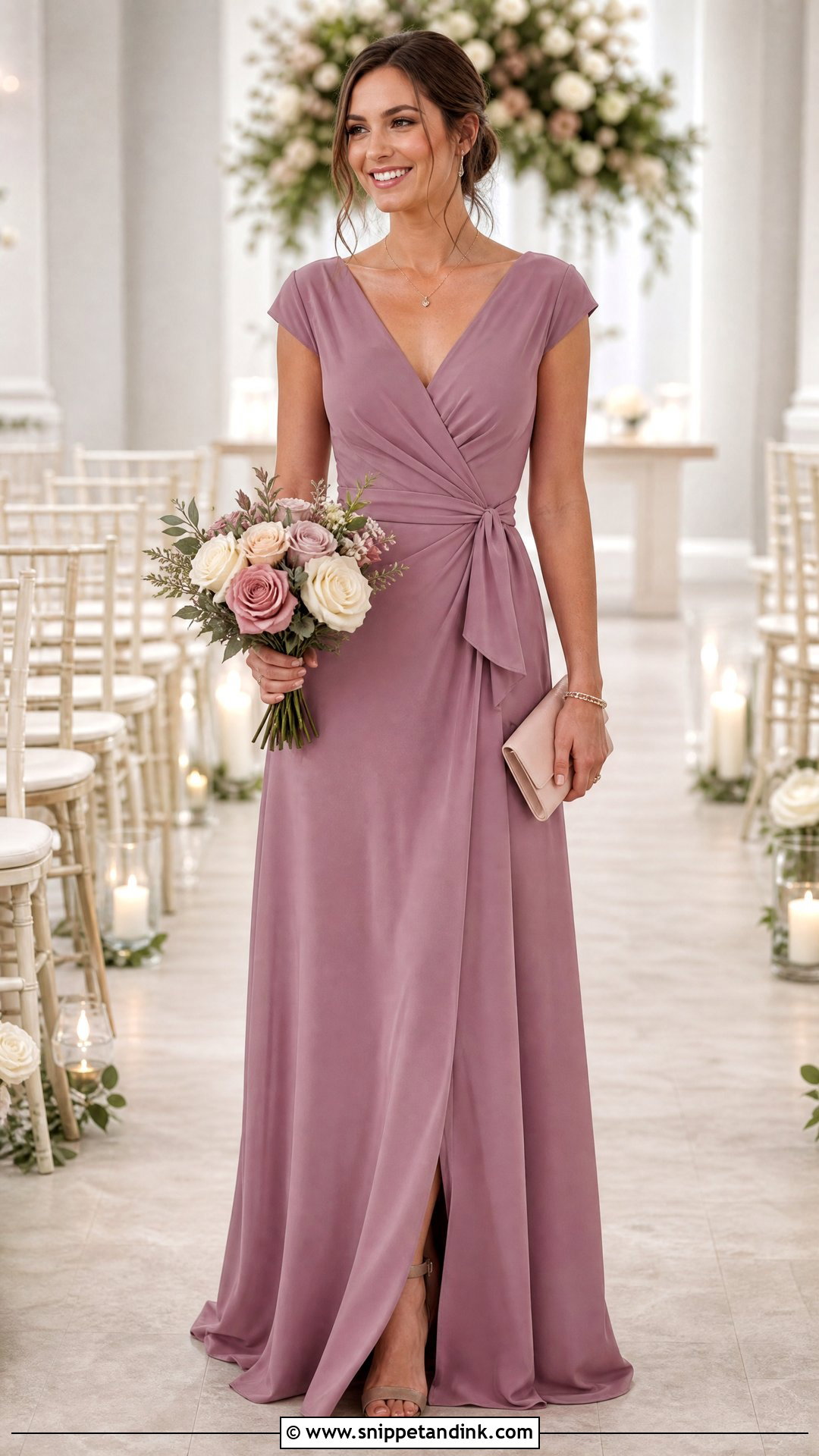
Convertible dresses are clever but take practice. A mauve convertible gown can be wrapped into cap sleeves, a halter, one shoulder or a V-neck, which solves a lot of coverage debates. The catch is that it takes a few tries to wrap evenly, so I ask each bridesmaid to choose her style early, practise it at home and secure it with a hidden safety pin on the day. Her bra or shapewear depends on the wrap, so she should do a full fitting with both. Taupe heels and rose-gold jewellery suit the muted pink.
17. Red Square-Neck Bridesmaid Dress
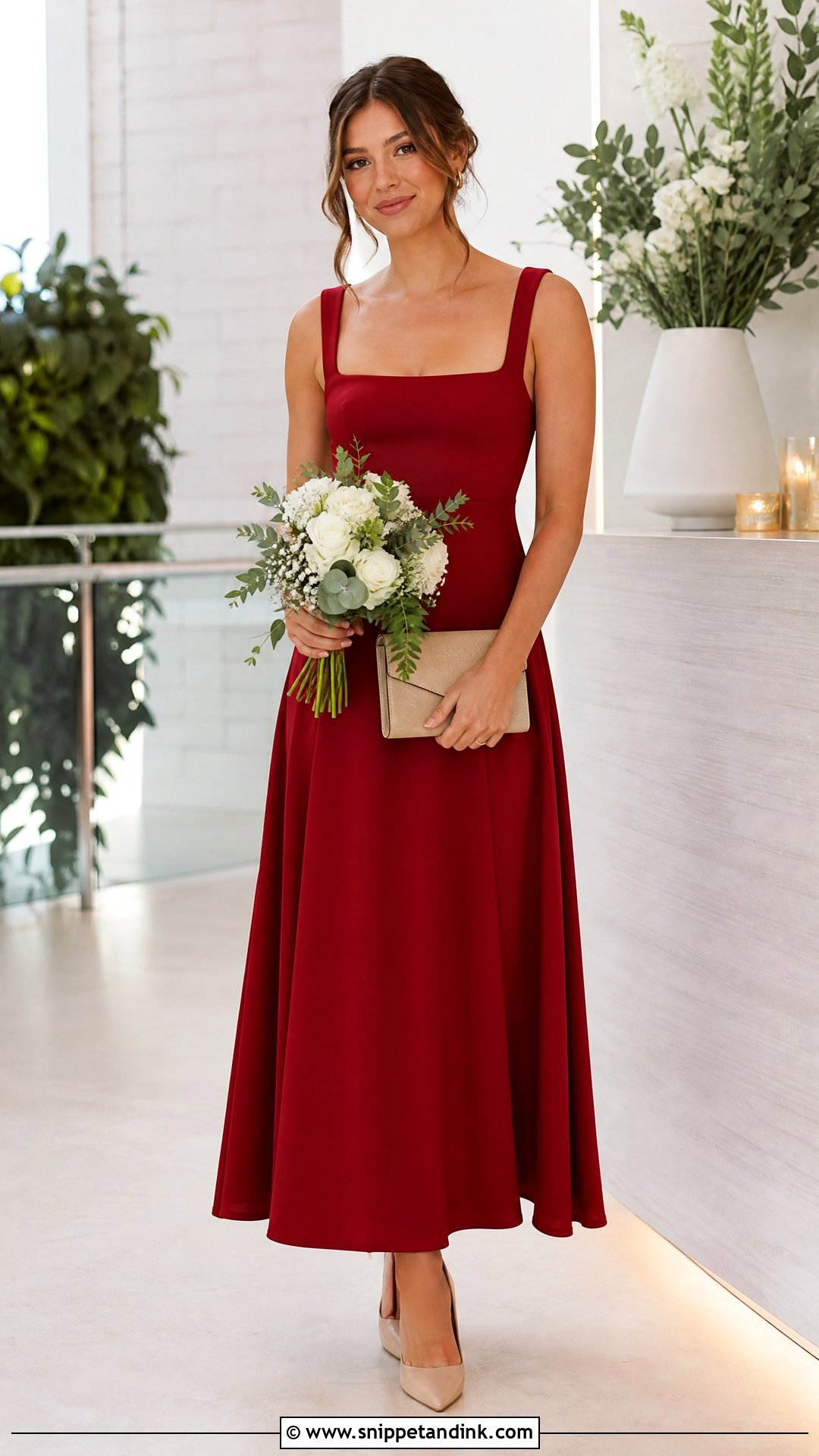
Red pulls focus faster than any other colour in a ceremony line, so restraint everywhere else is essential: plain heels, small gold earrings, white flowers and greenery. Decide between a deep true red and a lighter poppy based on the venue; deep red looks rich in candlelight, poppy suits daylight. The square neckline with wide straps supports well. Let bridesmaids choose A-line or column skirts as long as the neckline, fabric and exact red stay the same.
18. Dusty Rose Flutter-Sleeve Bridesmaid Dress
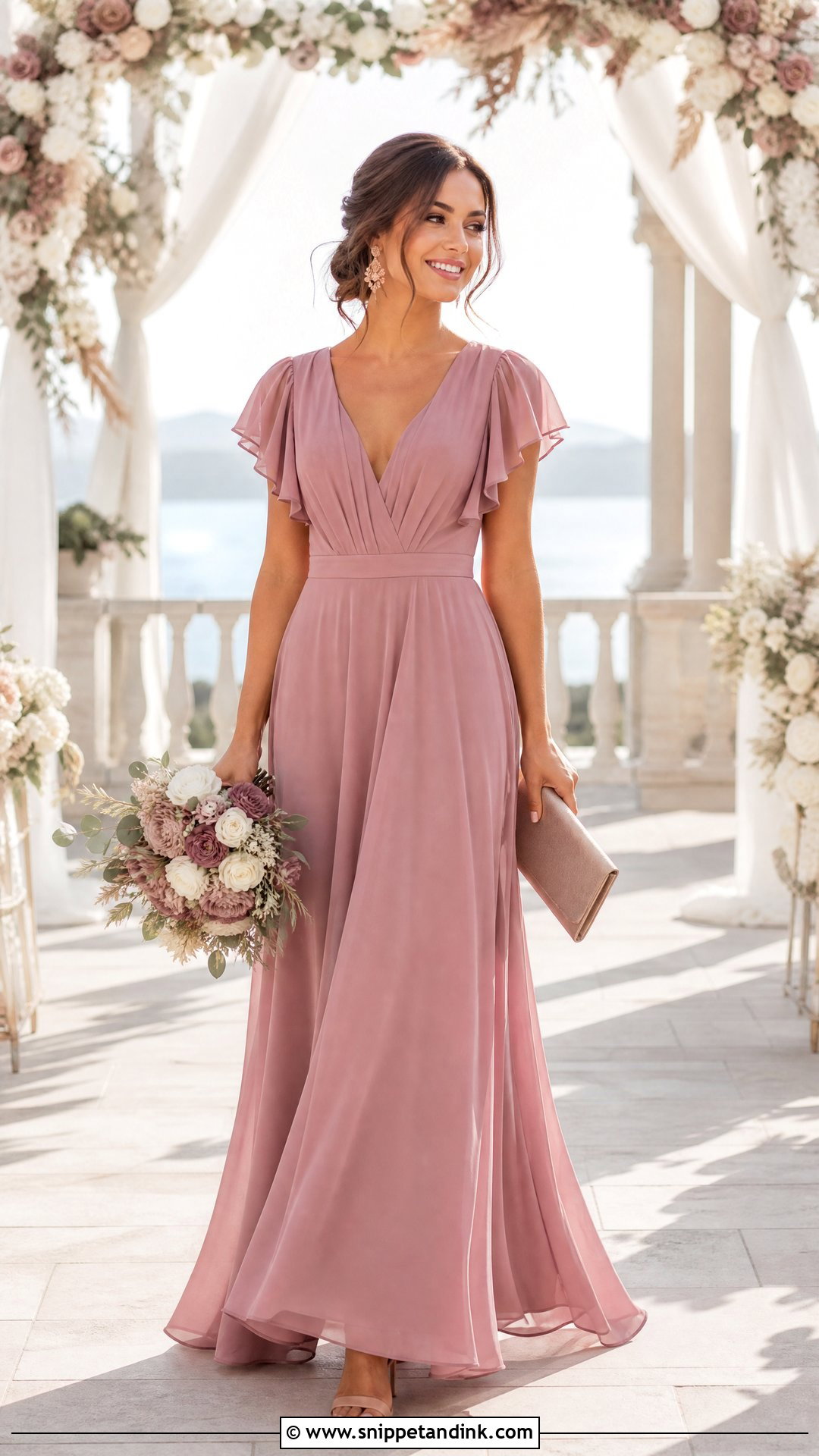
Flutter sleeves are a gentle answer for bridesmaids who want their upper arms covered without a full sleeve. The fitting point I watch is armhole room: sleeves cut too close bind when you hug or lift a bouquet. Dusty rose has a muted grey edge that suits most skin tones better than bright pink. A V-neck and floor-length A-line skirt work on most figures. Mix sleeveless, short-sleeve and flutter-sleeve versions if the shade and chiffon stay consistent; bouquets with ivory flowers and mauve accents keep the flowers from blending in.
19. Teal Asymmetrical Bridesmaid Dress
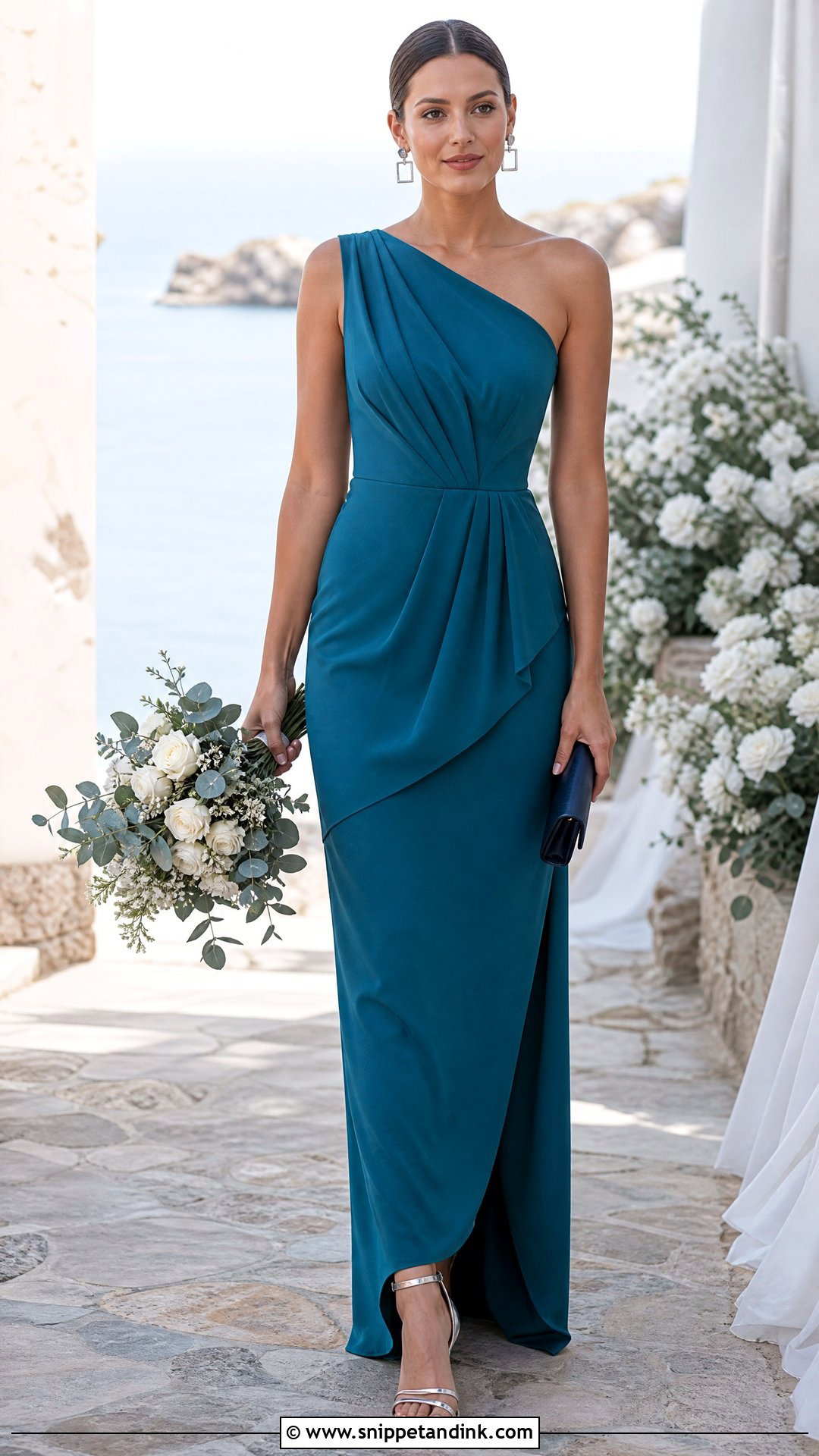
One-shoulder gowns depend on a close fit at the bust and waist, because there’s only one strap to hold them up. I’d never rely on off-the-rack sizing here; book alterations for every bridesmaid. Teal sits between blue and green and suits coastal settings and evening ceremonies. A light drape across the bodice is more forgiving than a tight one. Silver heels, geometric earrings and white flowers with blue-green foliage complete it, and the group stays cohesive as long as the teal and fabric repeat.
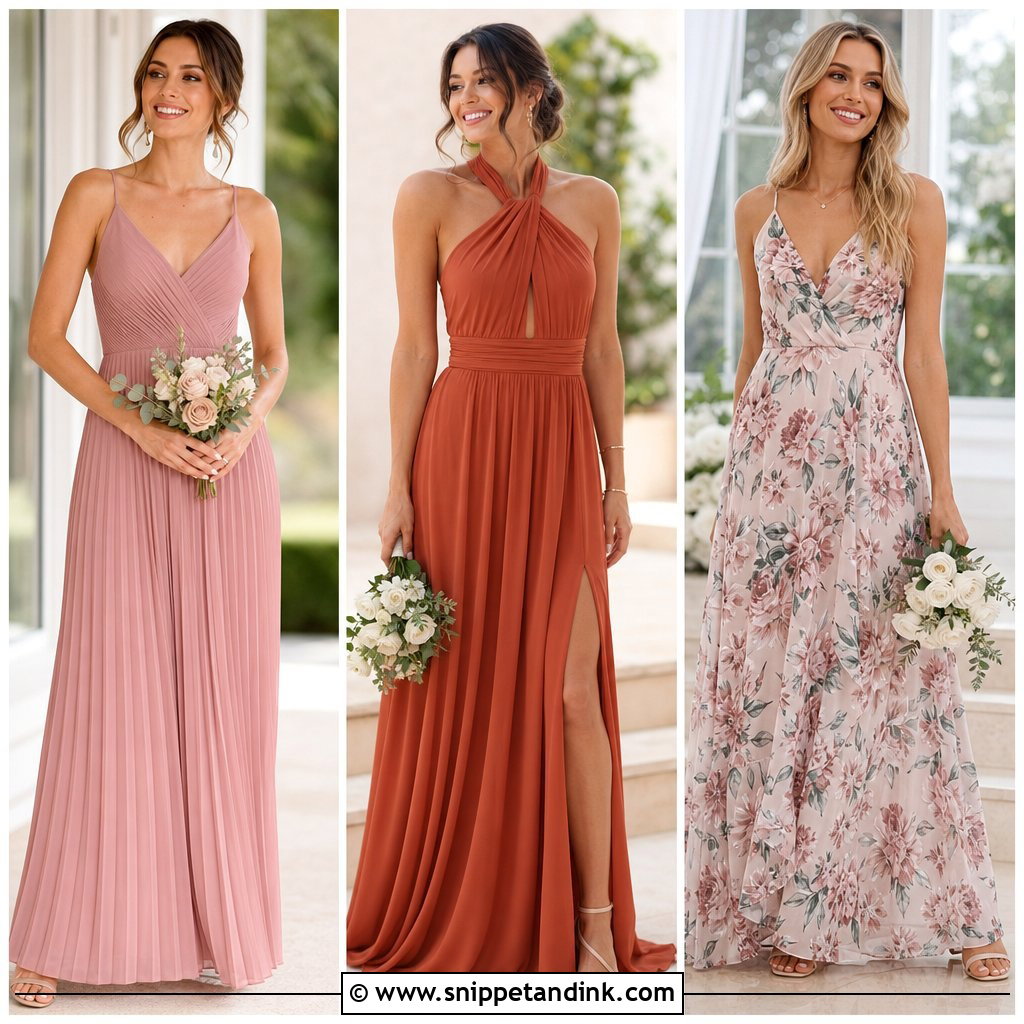
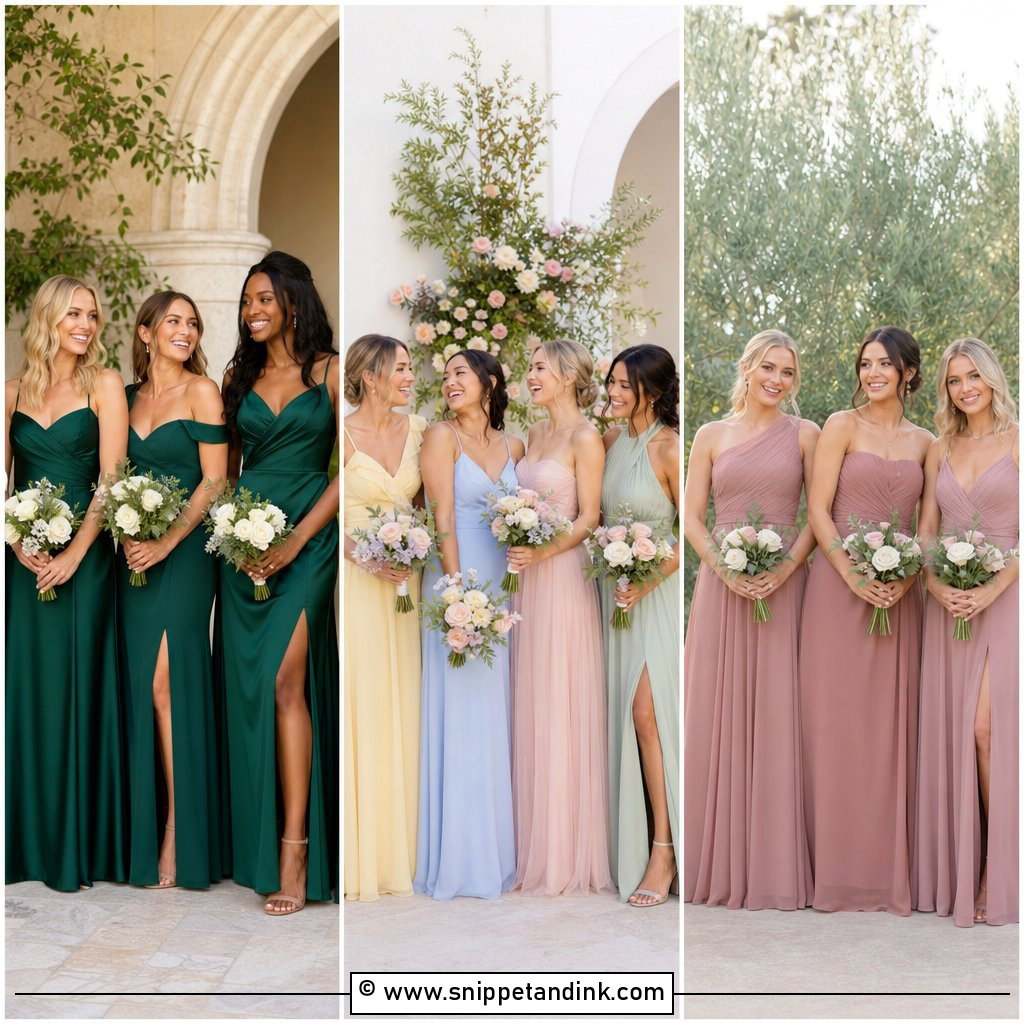
20. Mixed Pastel Bridesmaid Dresses
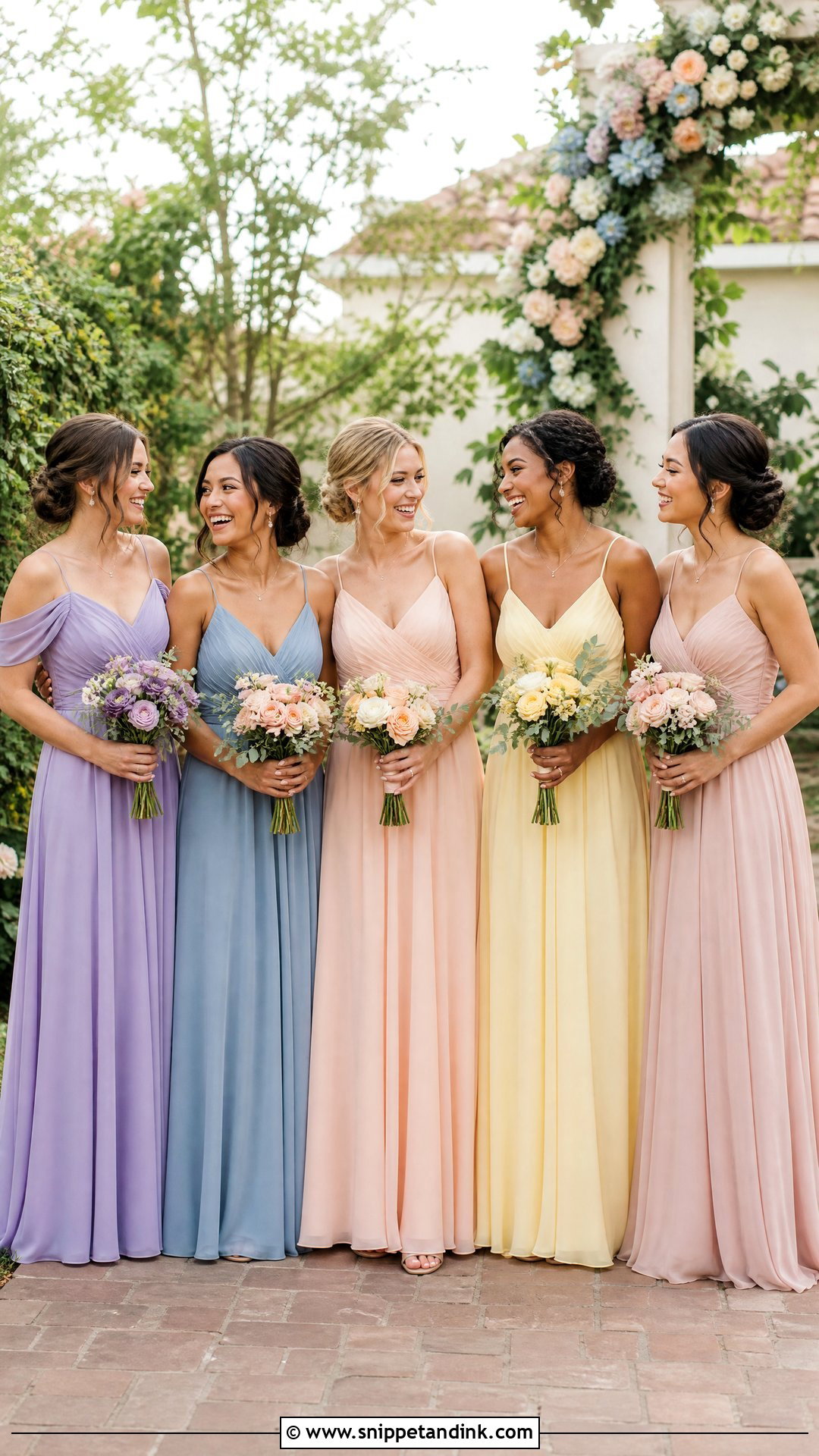
Mixed pastels look planned only when something else is fixed. I keep either the fabric, the hem length or the silhouette identical, and then assign each colour in advance so you don’t end up with three blush dresses and one lavender. Choose four or five shades with similar depth, lavender, dusty blue, pale peach, butter yellow, blush, rather than mixing a bright mint with a faded pink. Pastels on a screen often look brighter or greyer than in life, so order swatches. A shared mood board saves endless group-chat messages.
Pregnancy, Budgets and Changing Sizes
Real bridal parties rarely stay static for six months, and planning for that at the start is easier than fixing it at the end.
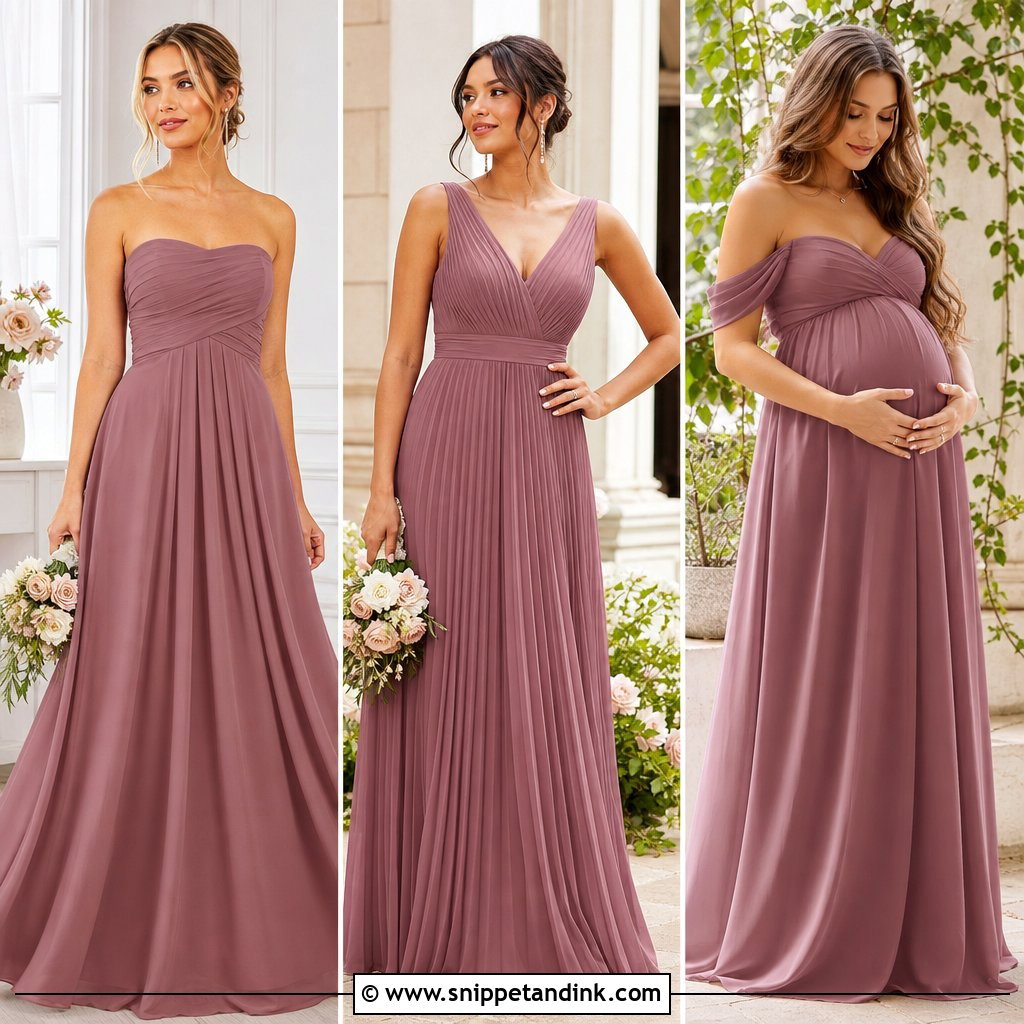
A bridesmaid who is pregnant
Many ranges offer a maternity version in the same fabric and shade. If not, an empire-waist style in the group’s colour usually works. I’d order as late as the label allows and choose a design with a stretch panel or wrap, because it is hard to predict size at the wedding date months in advance.
Different budgets
Talk about cost before anyone sees a dress they fall in love with. Setting a colour and fabric but letting bridesmaids pick from several price points within one range is fairer than one expensive style for everyone. If the couple has a firm vision, it’s kind for them to contribute toward dresses or alterations.
Weight changes before the day
Bodies change over a long engagement. That’s why I leave the final fitting for the last few weeks, and why I prefer wrap, tie-back or corset-laced bodices for larger groups, since they adjust without a seamstress.
Set a Few Rules, Then Let Them Choose
The best bridesmaid dress choice is the one that fits the wedding and the women wearing it. Colour pulls a group together, but fabric, support, shoes and coverage decide whether they’re comfortable all day. Navy, blush, terracotta, red or mixed pastels can all work if you set a few clear rules before anyone orders. Get swatches, take measurements properly and book fittings early. Then let bouquets tie the group to the flowers and let each woman wear something she feels like herself in.
You'll Like These Ideas:


Leave a Reply