
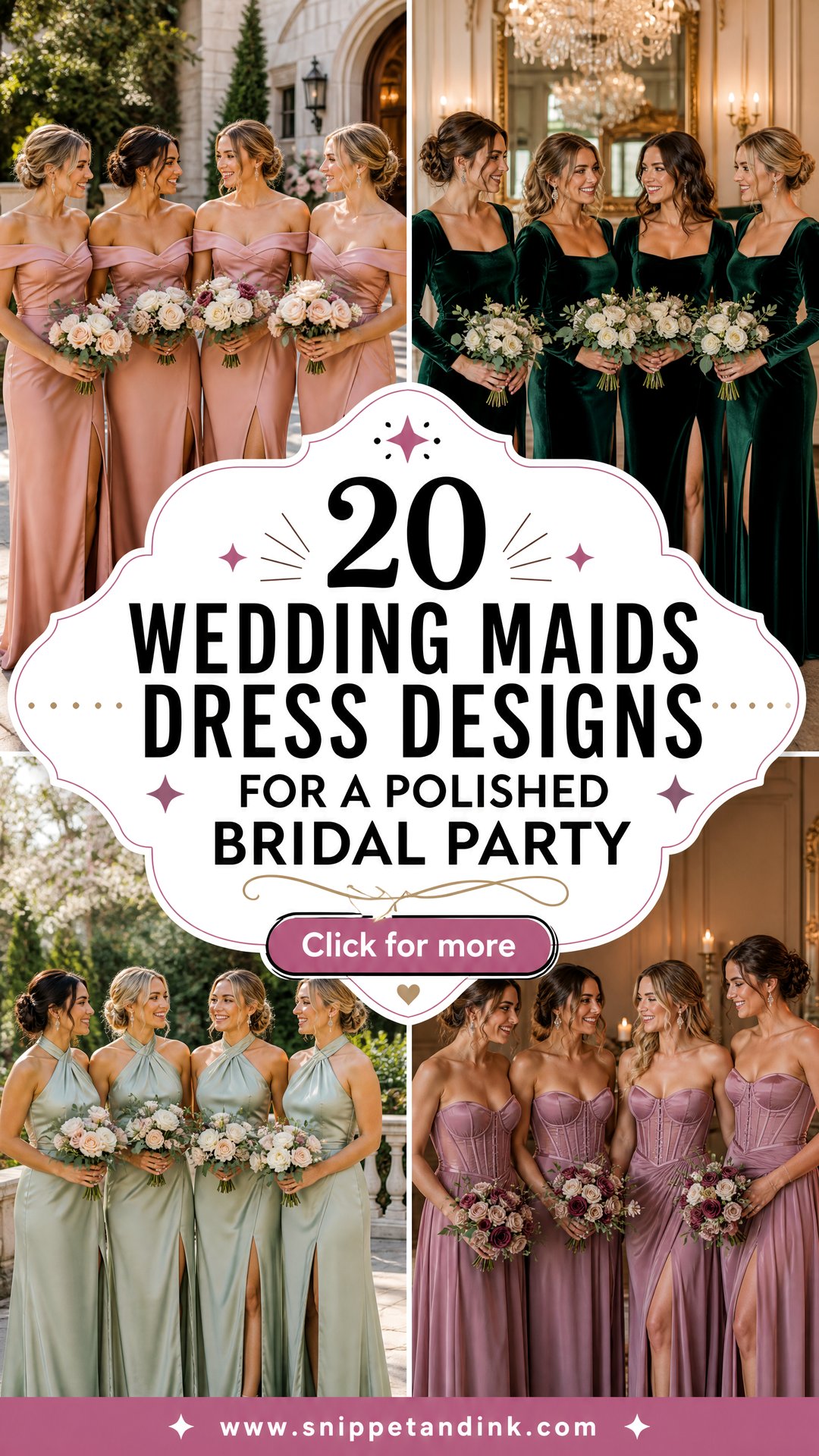
Dressing a bridal party means one vision on several different bodies, budgets and comfort levels, and it’s one of the planning jobs I see cause the most quiet friction. These 20 Wedding Maids Dress Designs run from classic silhouettes to modern details and seasonal fabrics, each with notes on shoes, jewelry, hair and bouquets. Several work for petite, tall, curvy and plus-size attendants without forcing everyone into the same cut. Use them to find a group look that holds together in photos and that your friends can actually stand in for eight hours.
A Bridesmaid Order Schedule That Leaves Room for Hems
Most bridesmaid dresses are made to order, not pulled from a shelf, and that catches couples out more than any style decision. Production times vary by brand, but several months is common, and rush fees add up quickly. This is the schedule I work back from.
- Six to eight months out: agree the color family, fabric and a budget ceiling with the group. Ask the shop for its current production time in writing.
- Within the following few weeks: everyone gets measured properly, ideally by a seamstress or the shop, not with a tape at home. Sizing charts for bridesmaid dresses often run differently from high-street sizes.
- Place the order together. Dresses cut from the same dye lot match; a late order can arrive a shade off, which is very visible in group photos.
- Two to three months out: dresses arrive. Each bridesmaid tries hers on the day it lands and reports any damage or sizing problem straight away.
- Four to six weeks out: alterations, with wedding shoes and underwear at the fitting.
I keep a shared list of every bridesmaid’s order number, size and delivery date. When a parcel goes missing, that list is the difference between a phone call and a panic.
1. Satin Cowl Neck Bridesmaid Dress
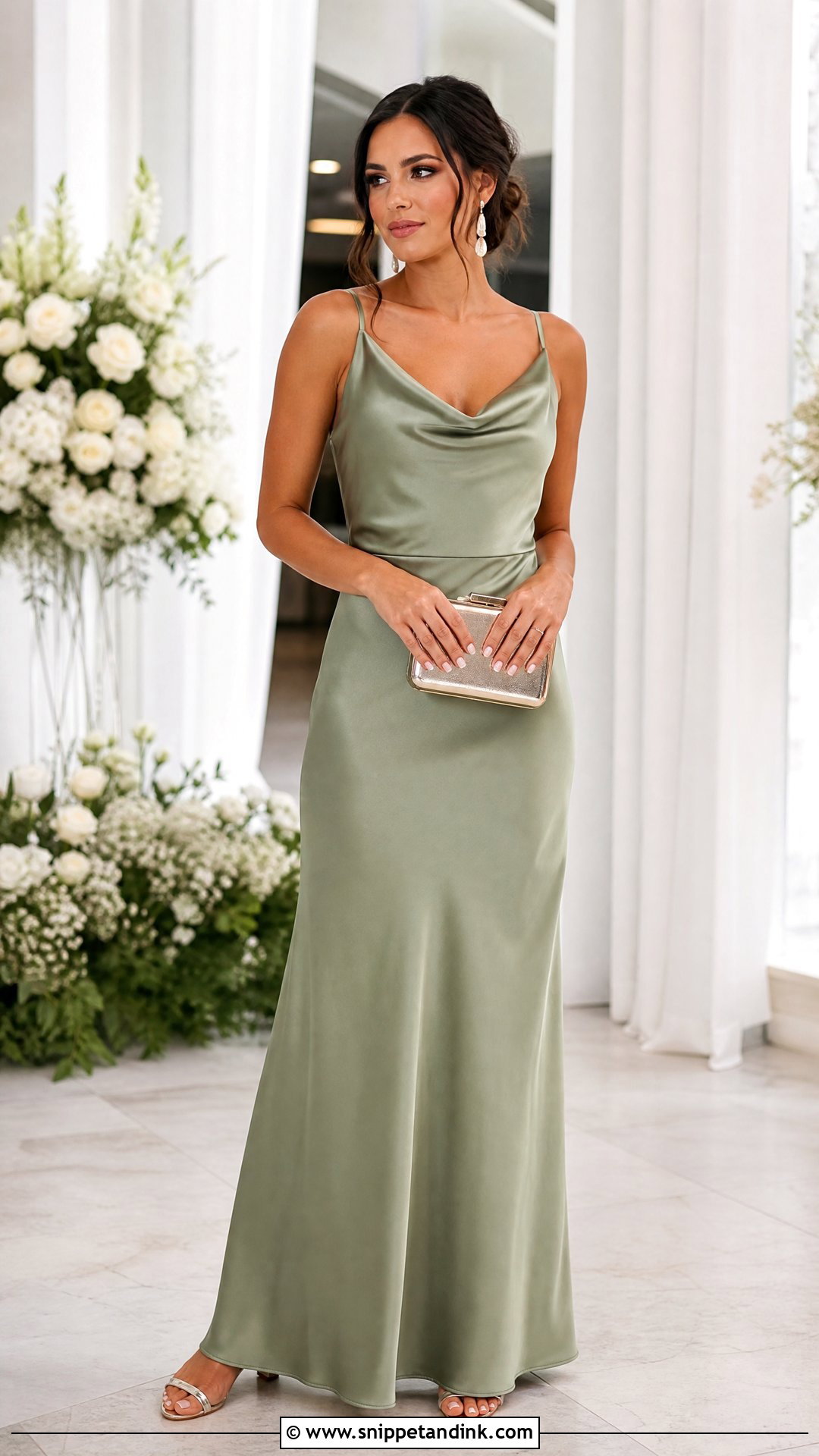
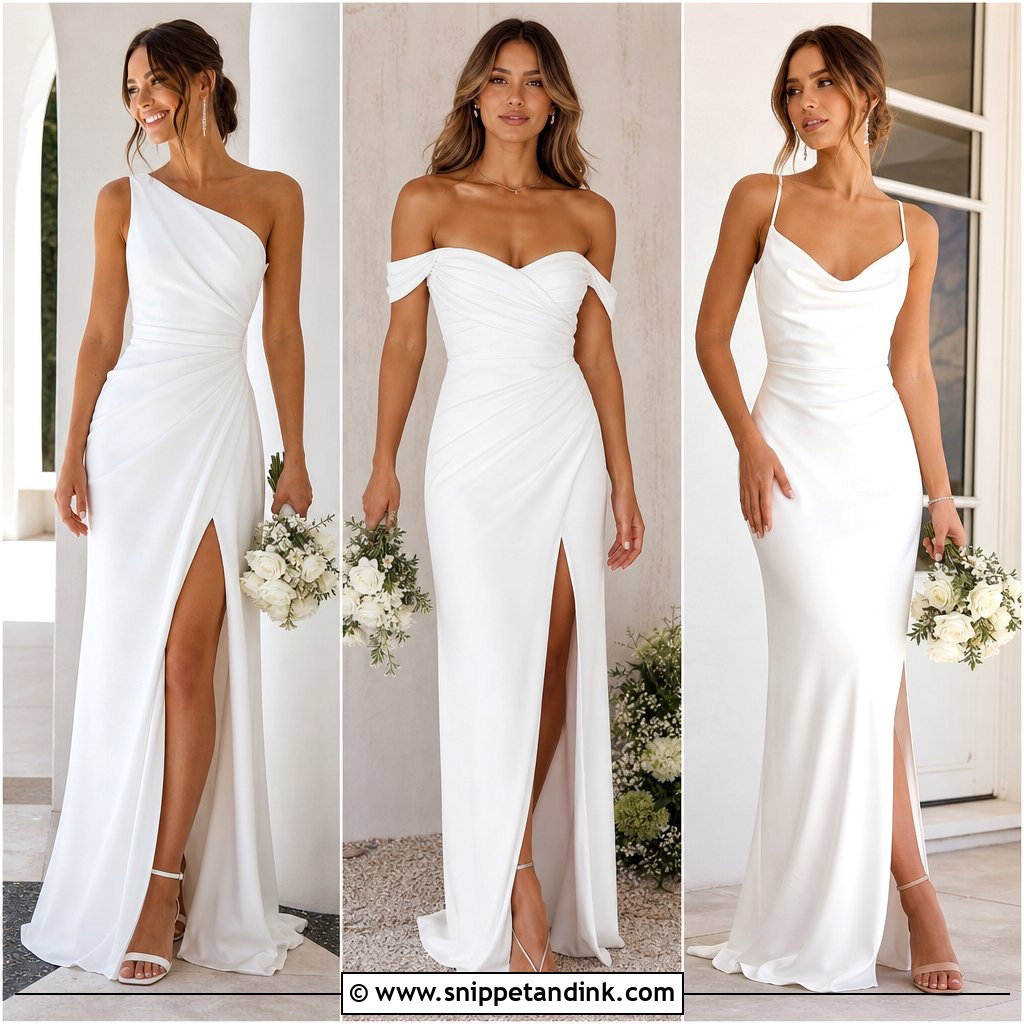
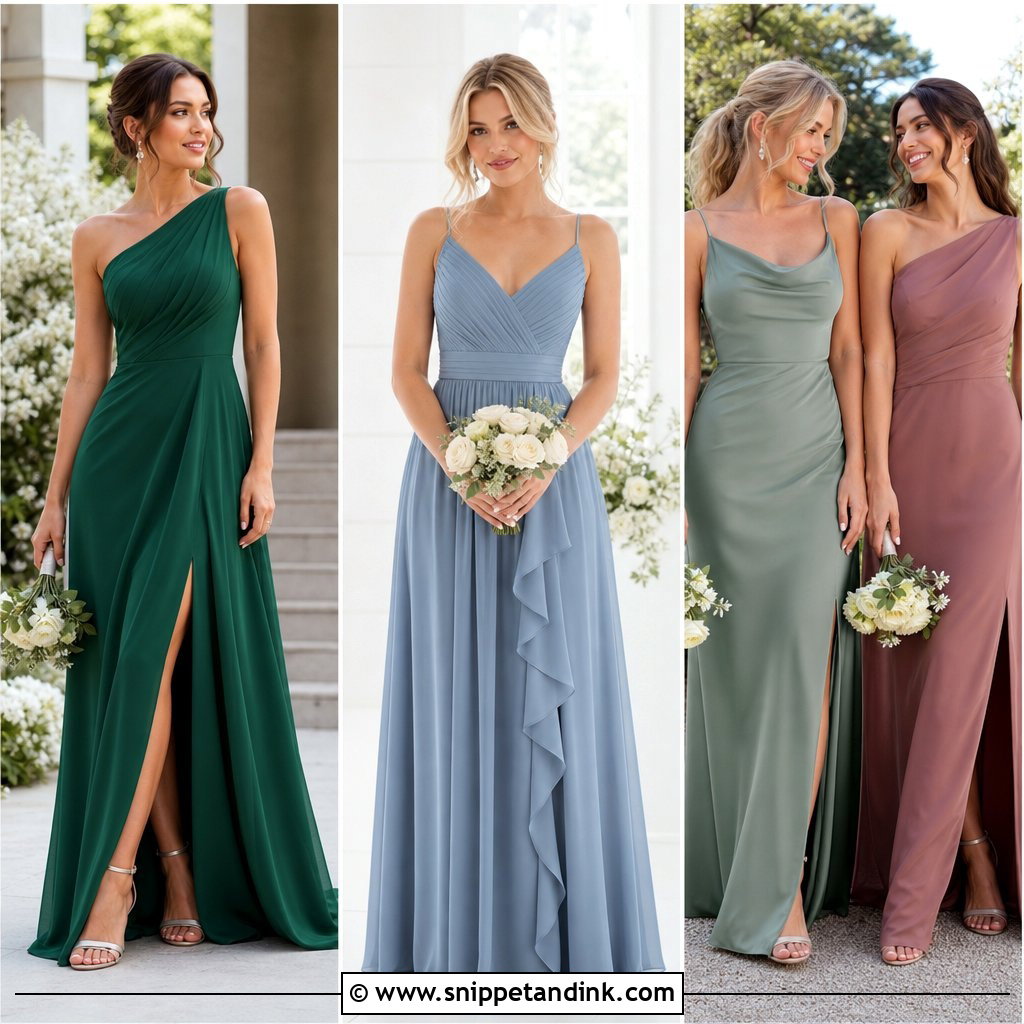
A satin cowl neck maxi looks sleek without feeling stiff. The draped neckline frames the collarbone, and a bias-cut skirt follows the body without needing a tight fit. Satin is honest about fit, though. Every pull across the hip shows, so I build a hemming appointment into the schedule for anyone in this one. Sage, champagne, dusty blue and terracotta all suit it, with slim metallic sandals, small drop earrings and a low bun that keeps the cowl visible. A light wrap in a matching shade covers anyone who wants more coverage.
2. Chiffon A-Line Bridesmaid Dress
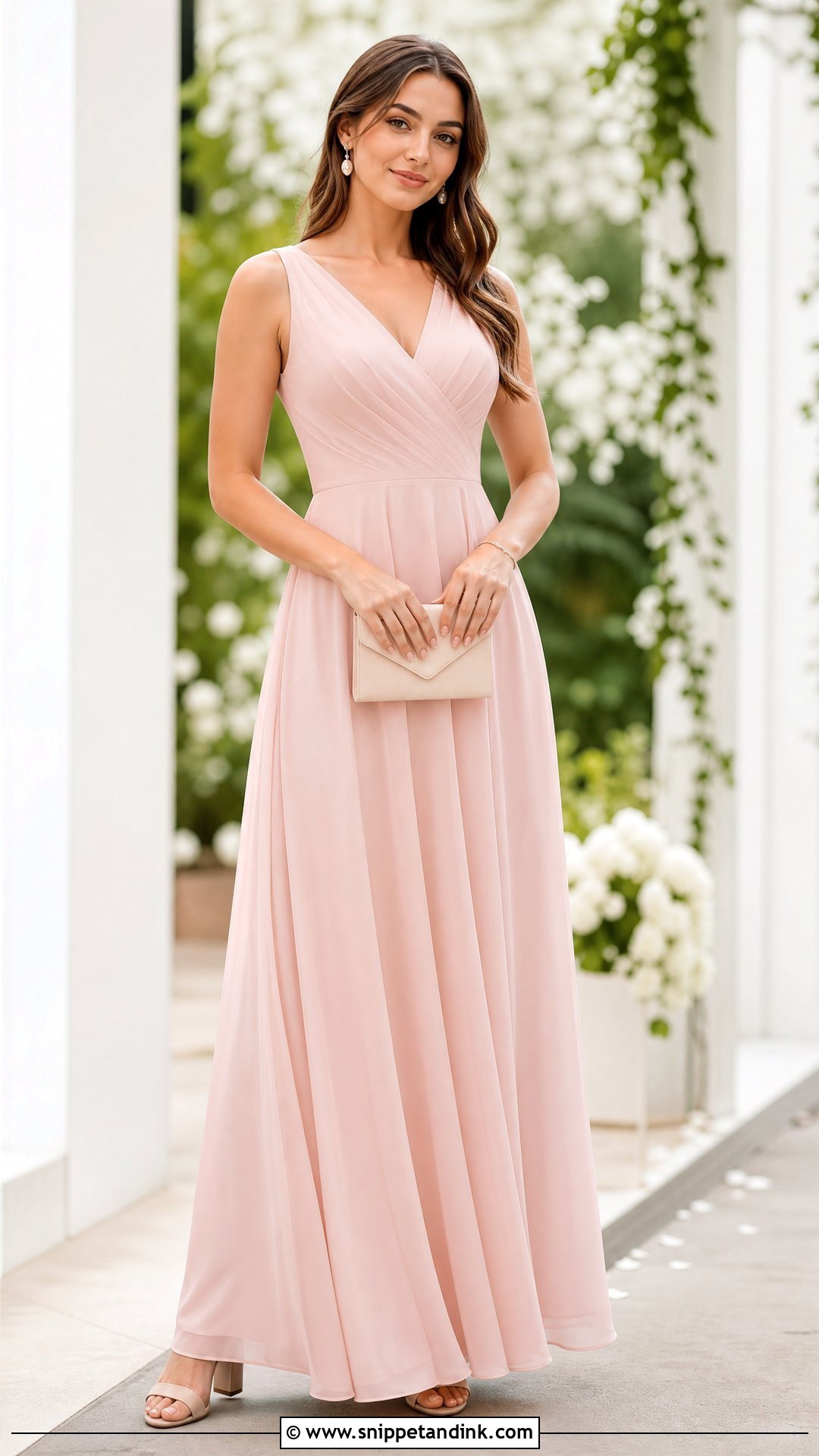
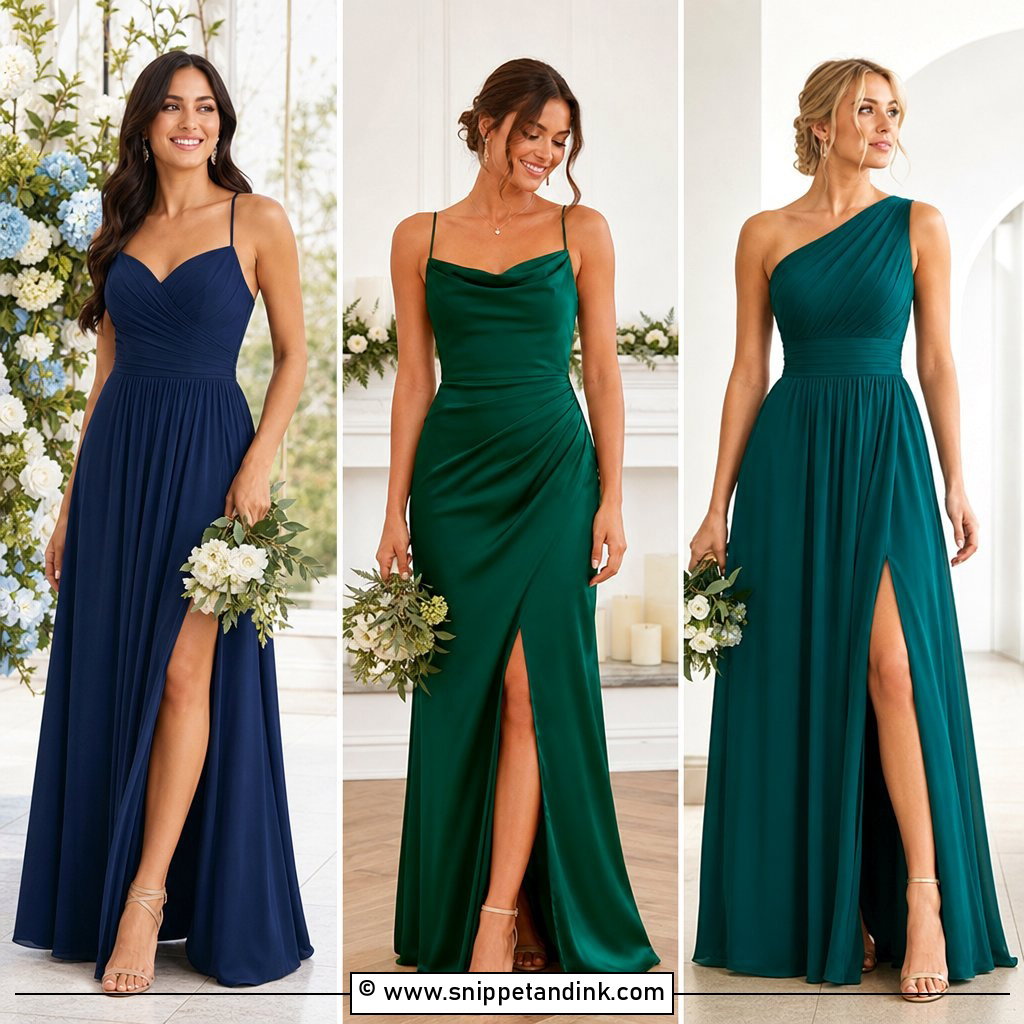
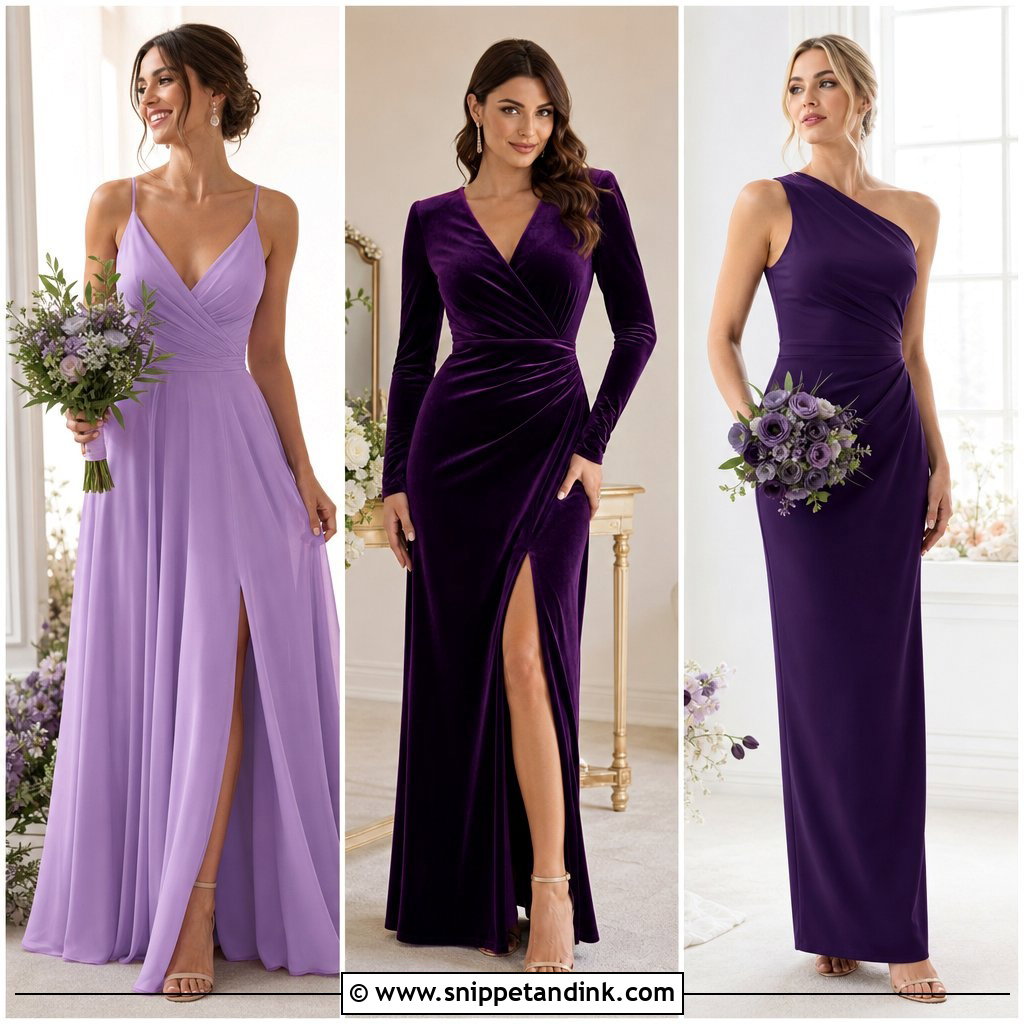
For hot ceremonies and outdoor photos, chiffon in an A-line is the easiest dress to stand in. The fitted bodice holds its shape, the skirt falls away from the waist and forgives different hips, and each attendant can pick a V-neck, scoop or gathered bodice. Chiffon can go slightly sheer in bright sun, so a full lining and nude underwear matter. Nude block heels won’t sink into grass, and pearl earrings with a twisted updo keep the look classic. Blush, eucalyptus, lavender and slate blue suit the fabric.
3. One Shoulder Pleated Bridesmaid Dress
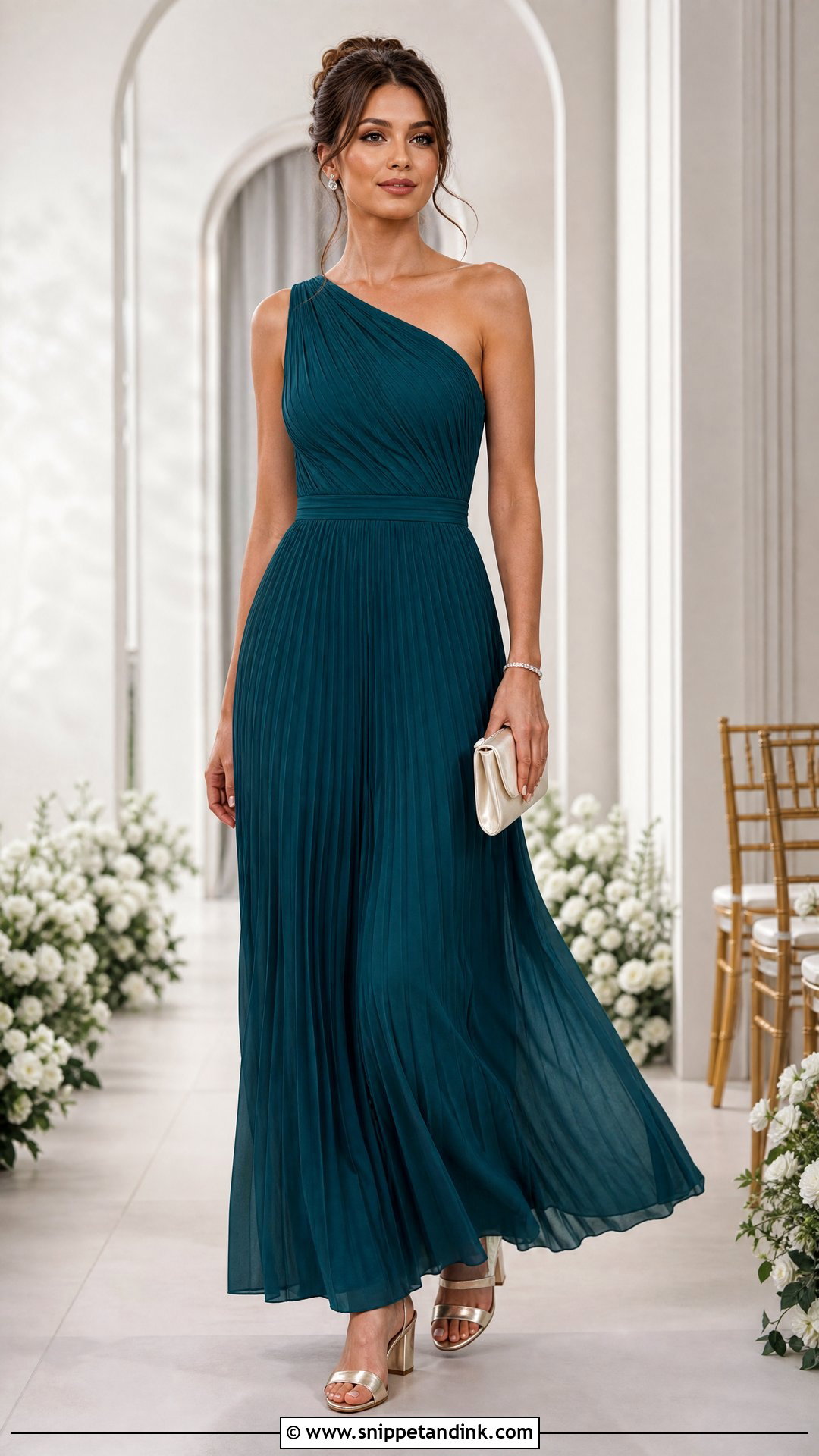
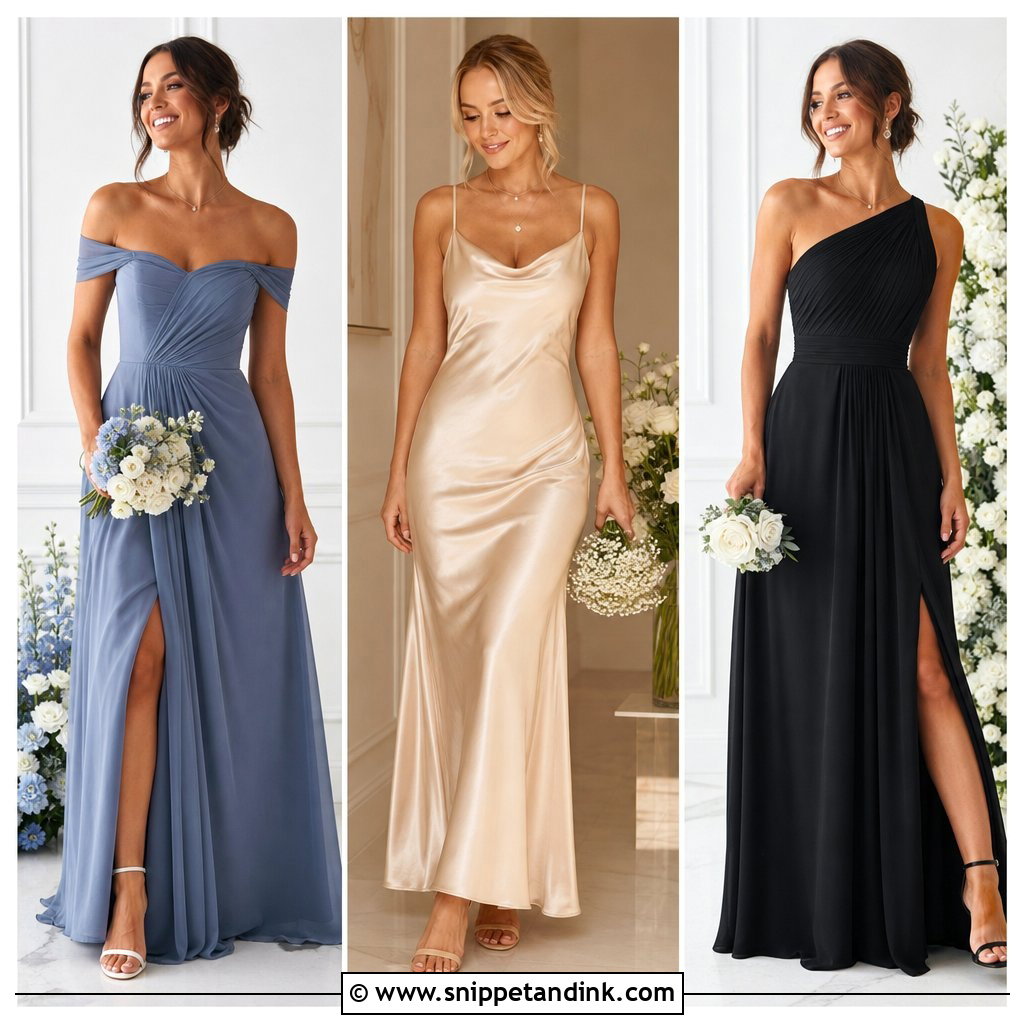
Fine pleats and a single shoulder give this dress shape without any embellishment. Because the neckline is the feature, I tell bridesmaids to skip the necklace and wear a slim bracelet or studs, with the hair swept into a side bun on the bare shoulder or a neat low chignon. The practical check is support. One-shoulder bodices rule out most regular bras, so look for built-in structure and get anyone with a fuller bust to try it before the group commits. Deep teal, plum, navy and rose are strong colors here.
4. Off Shoulder Bridesmaid Dress
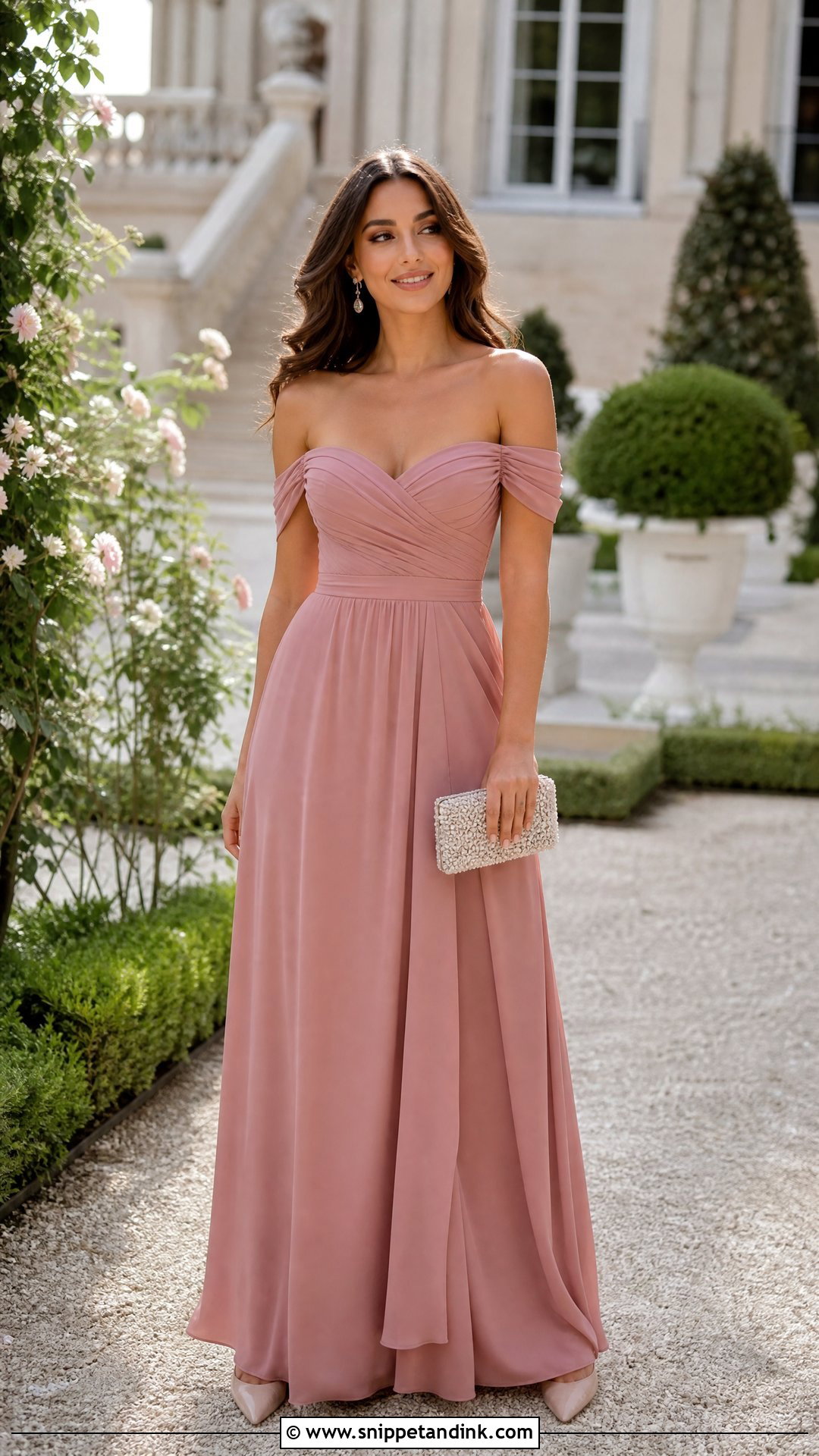
Draped off-shoulder sleeves suit garden ceremonies, estate venues and formal receptions, and the open neckline leaves room for a small pendant or short pearls. Loose Hollywood waves suit the shape, but in humidity a low bun lasts much longer. My worry with this neckline is arm movement. Have each bridesmaid hold a bouquet, sit, dance and raise her arms in it; if she has to tug the sleeves back up each time, it needs adjusting. Dusty rose, mauve, pale blue and burgundy all work.
5. Long Sleeve Velvet Bridesmaid Dress
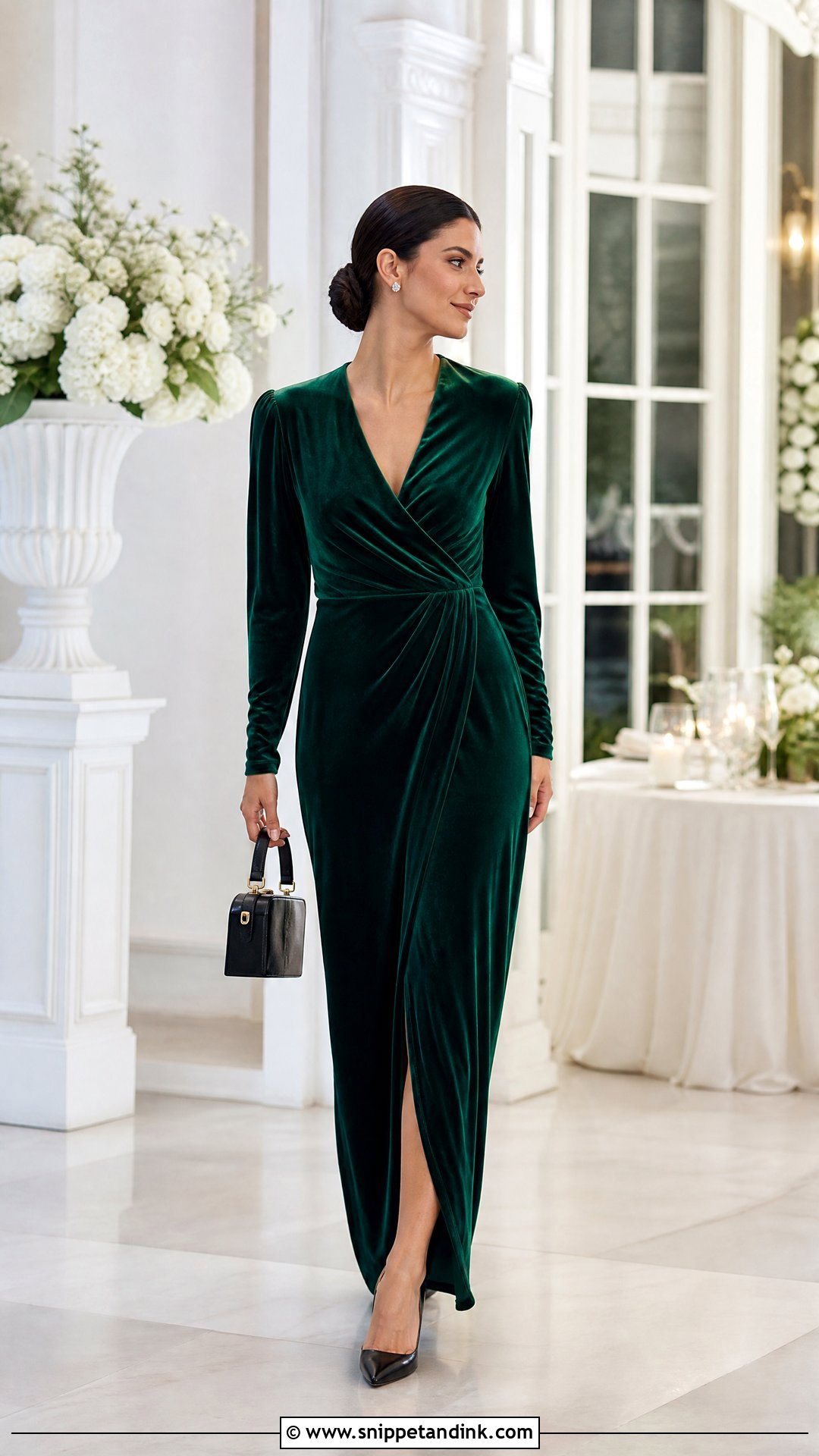
Velvet earns its place once the weather turns cold. A wrap or V-neck bodice keeps the heavier fabric from looking bulky, and a defined waist balances it. Velvet looks different depending on the direction of the pile, so order every dress in one go from the same dye lot; a bridesmaid ordering a month later can turn up a shade off. Emerald, wine, midnight blue and chocolate are rich choices. Closed-toe heels, crystal studs and a sleek bun finish it, and everyone should sit in hers for a while to check that sleeves and lining stay comfortable.
6. Floral Print Bridesmaid Dress
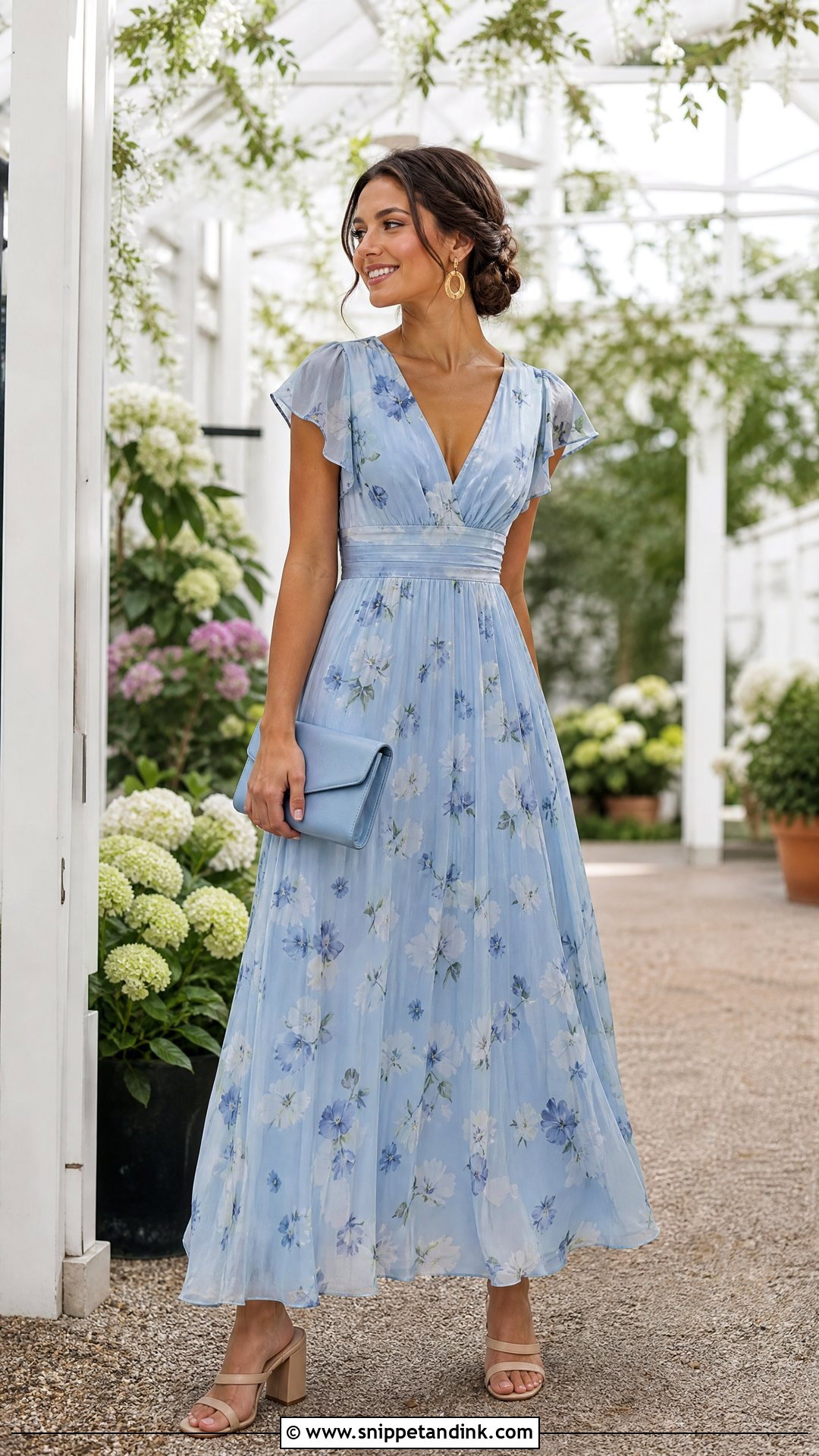
Prints bring color and personality to spring, summer and destination weddings, as long as the palette stays tight. A print with three or four colors keeps the group connected; a busier one looks scattered across a row of people. A flowing maxi with slim straps, flutter sleeves or a soft V-neck lets the pattern lead, while neutral sandals, gold hoops and a clutch in one shade from the print keep everything else calm. Bridesmaids can wear different silhouettes in the same fabric. Keep the bouquets solid so they don’t compete with the dresses.
7. Convertible Wrap Bridesmaid Dress
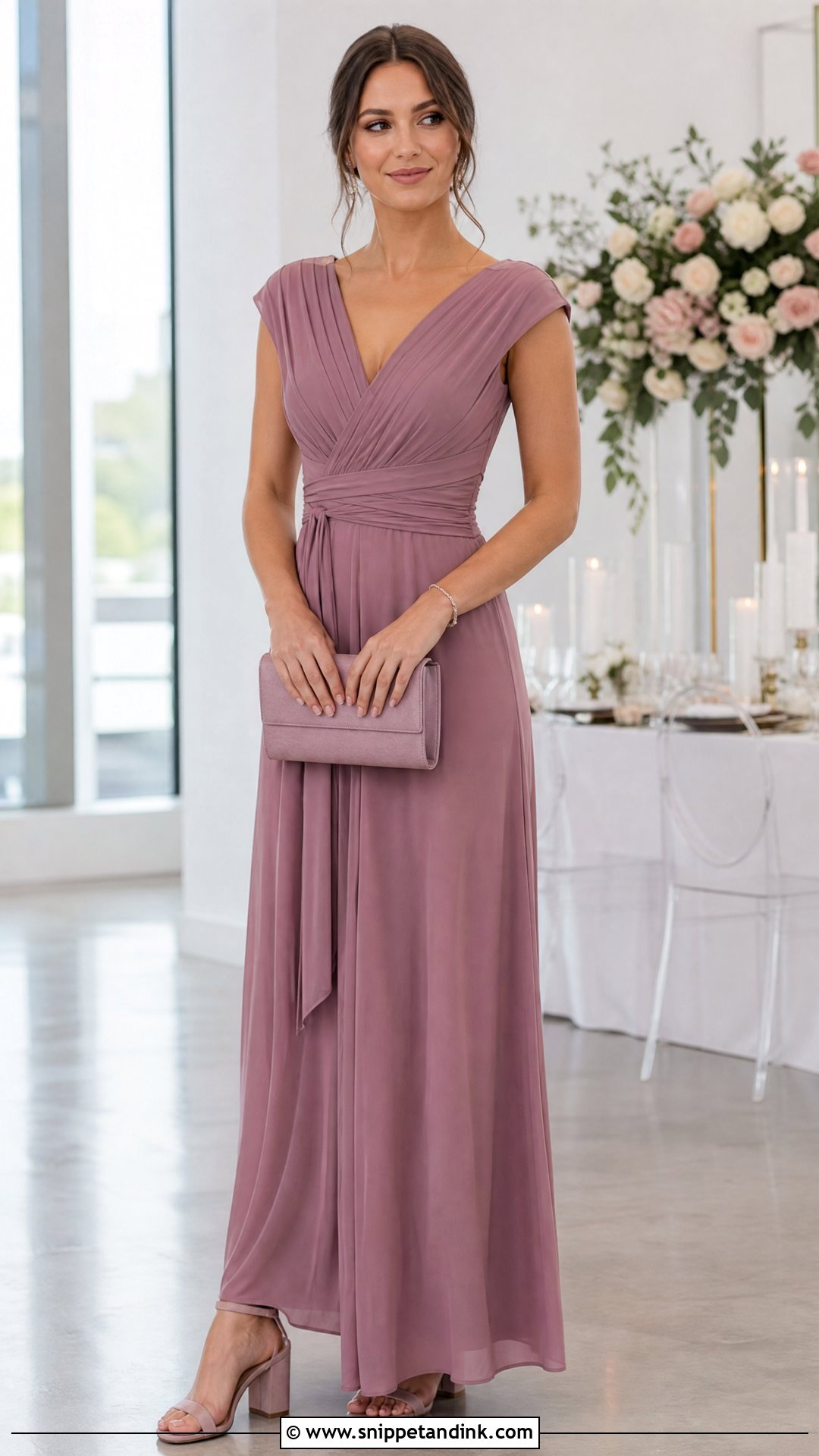
When attendants have very different shapes and coverage needs, a convertible wrap bridesmaid dress solves a lot. The long panels tie into a halter, one shoulder, cap sleeve or crossed V while the skirt stays identical. Choose matte jersey or a soft stretch that holds a knot. Here’s what nobody plans for: tying them takes practice. I schedule a short session before the wedding so everyone learns her wrap, and I keep fashion tape and small safety pins in my kit for windy ceremonies and the dance floor.
8. Empire Waist Bridesmaid Dress
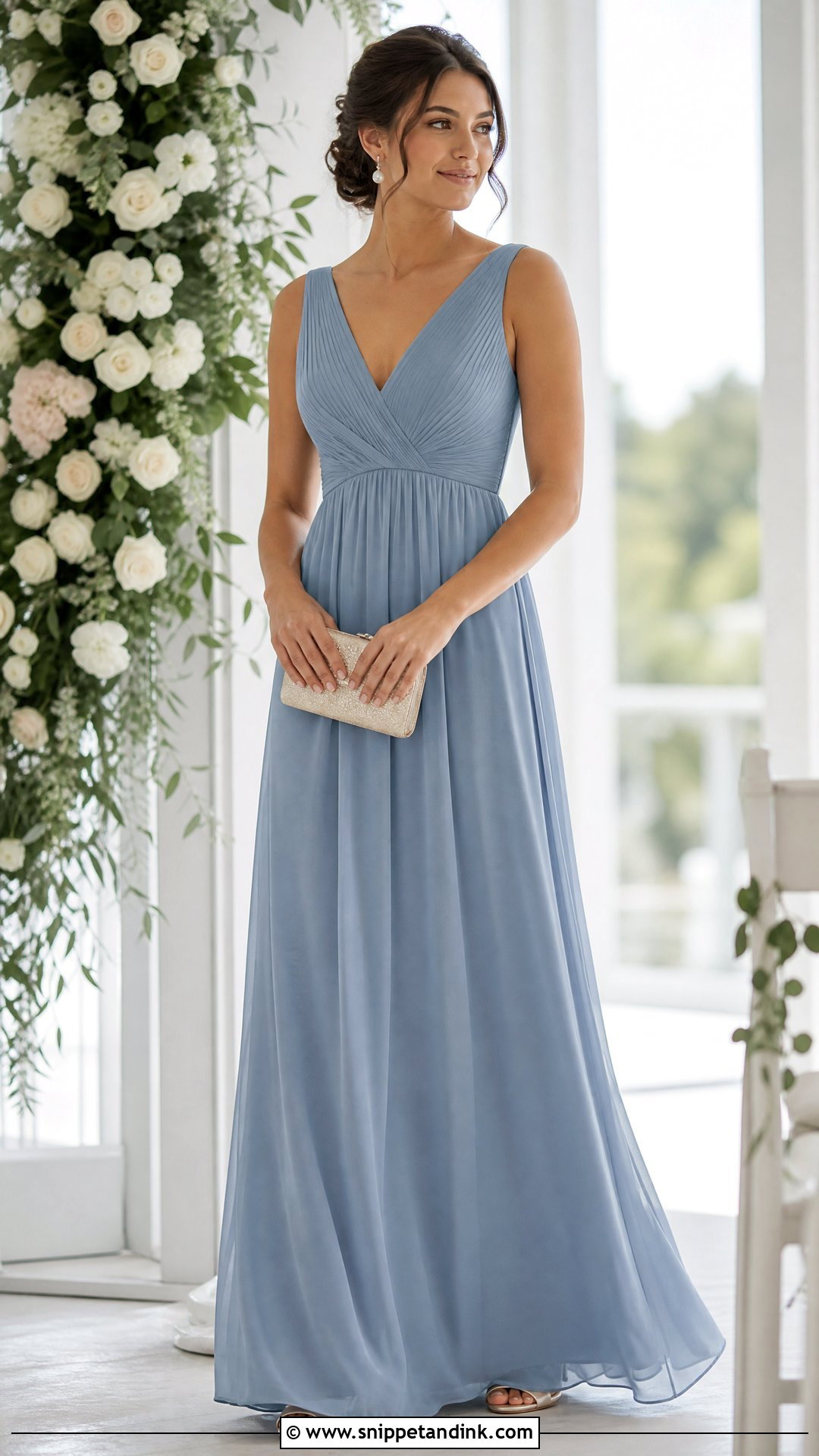
The raised seam under the bust lets the skirt fall freely, which gives easy coverage through the waist and hips. That makes the empire line a kind choice for anyone who doesn’t want a fitted middle, and for pregnant bridesmaids. A gathered chiffon skirt with a supportive V-neck and wide straps is the most wearable version. Check the seam on every size, since it should sit under the bust, not across it. Misty blue, lilac, sage and soft gray suit it, with low block heels and a half-up style.
9. Halter Neck Bridesmaid Dress
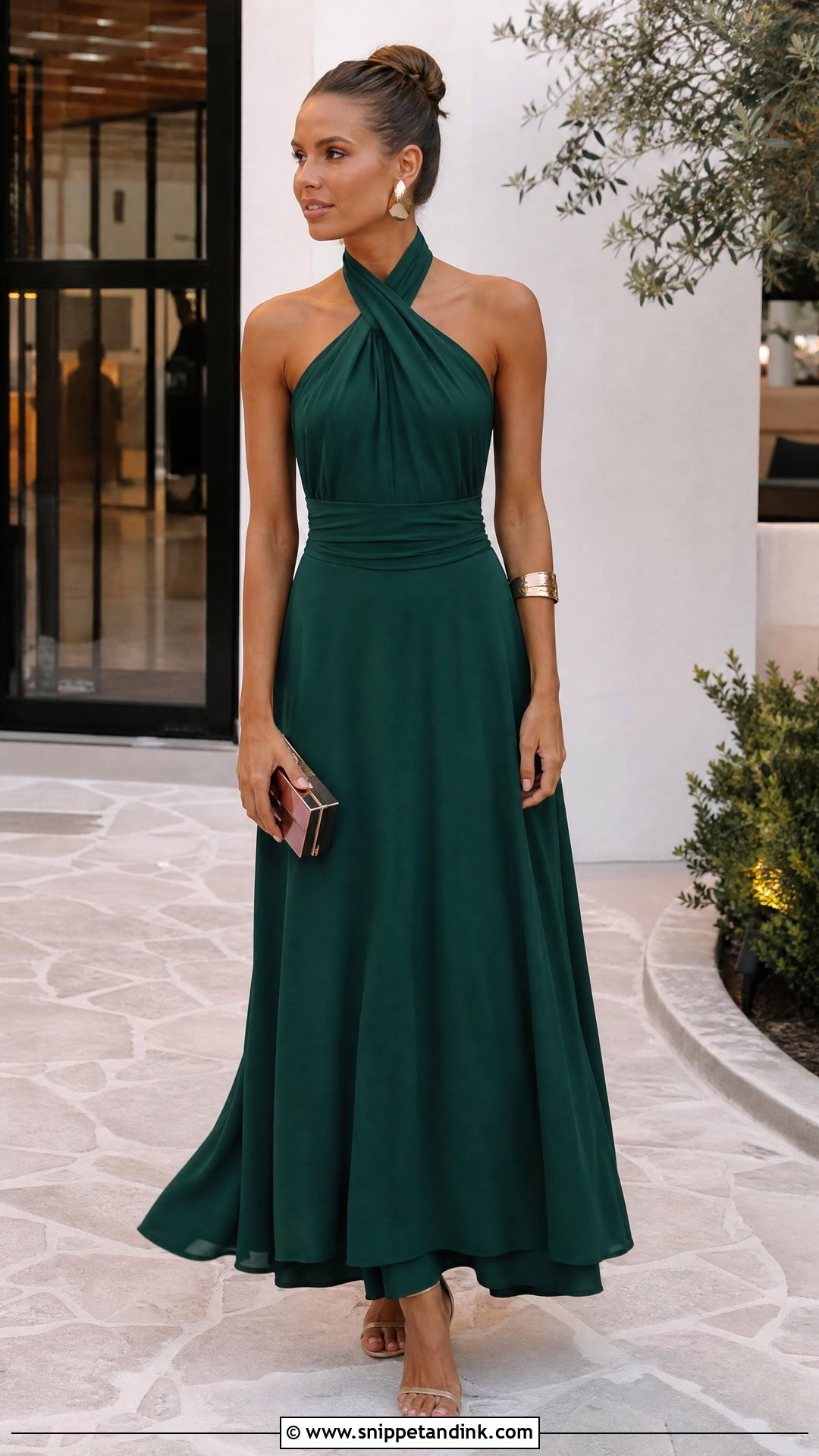
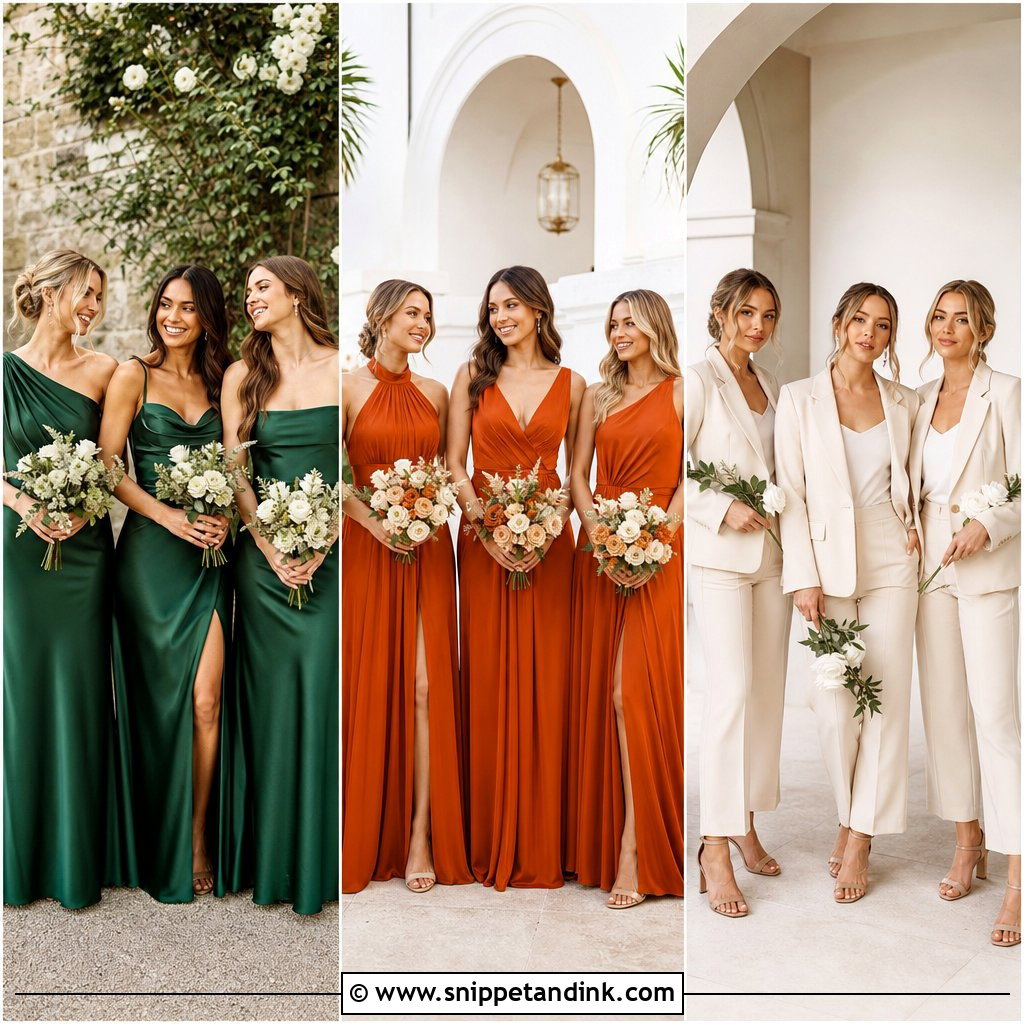
Clean lines make the halter a good fit for contemporary ceremonies and warm venues. It shows off the shoulders, so skip the necklace and go for sculptural earrings, a slim cuff and a high bun or smooth ponytail that keeps hair off the neckline. The tie at the neck carries weight all day, and on some women it starts to ache by the speeches. Adjustable ties or a supportive inner bodice help. Black, deep green, cobalt and burnt orange give the simple shape real impact.
10. Square Neck Bridesmaid Dress
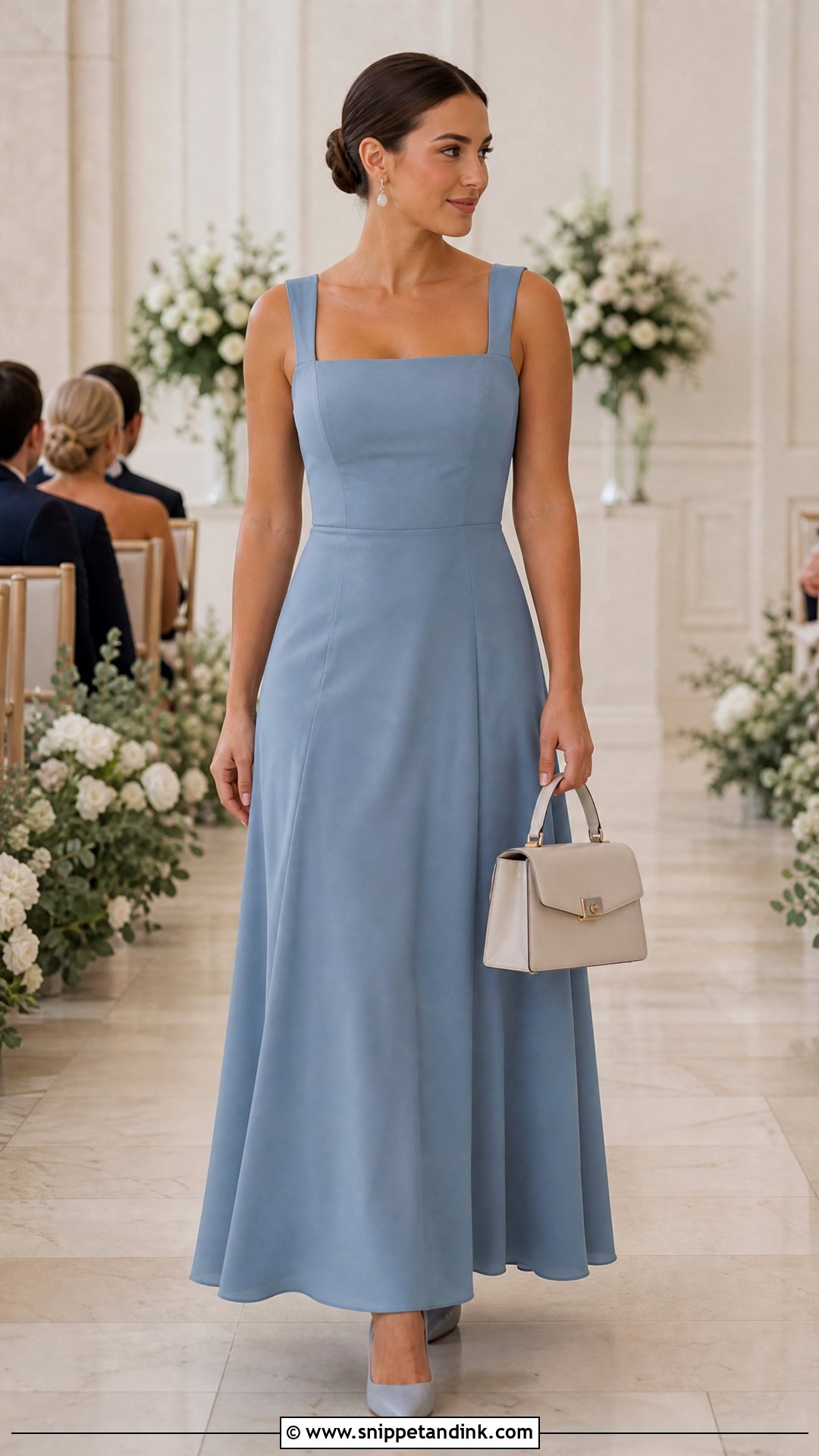
Square necks hold their shape better than a low V or a strapless bodice, which makes them steadier on a long day. Wide straps frame the shoulders and the fitted bodice supports without constant hitching. An A-line skirt reads traditional; a straight satin one, more modern. The fit point is the neckline itself. It must lie flat against the chest, and adjusting the straps and bust usually matters more than any skirt alteration. Olive, dusty blue, rosewood and navy suit the structured line.
11. Corset Bodice Bridesmaid Dress
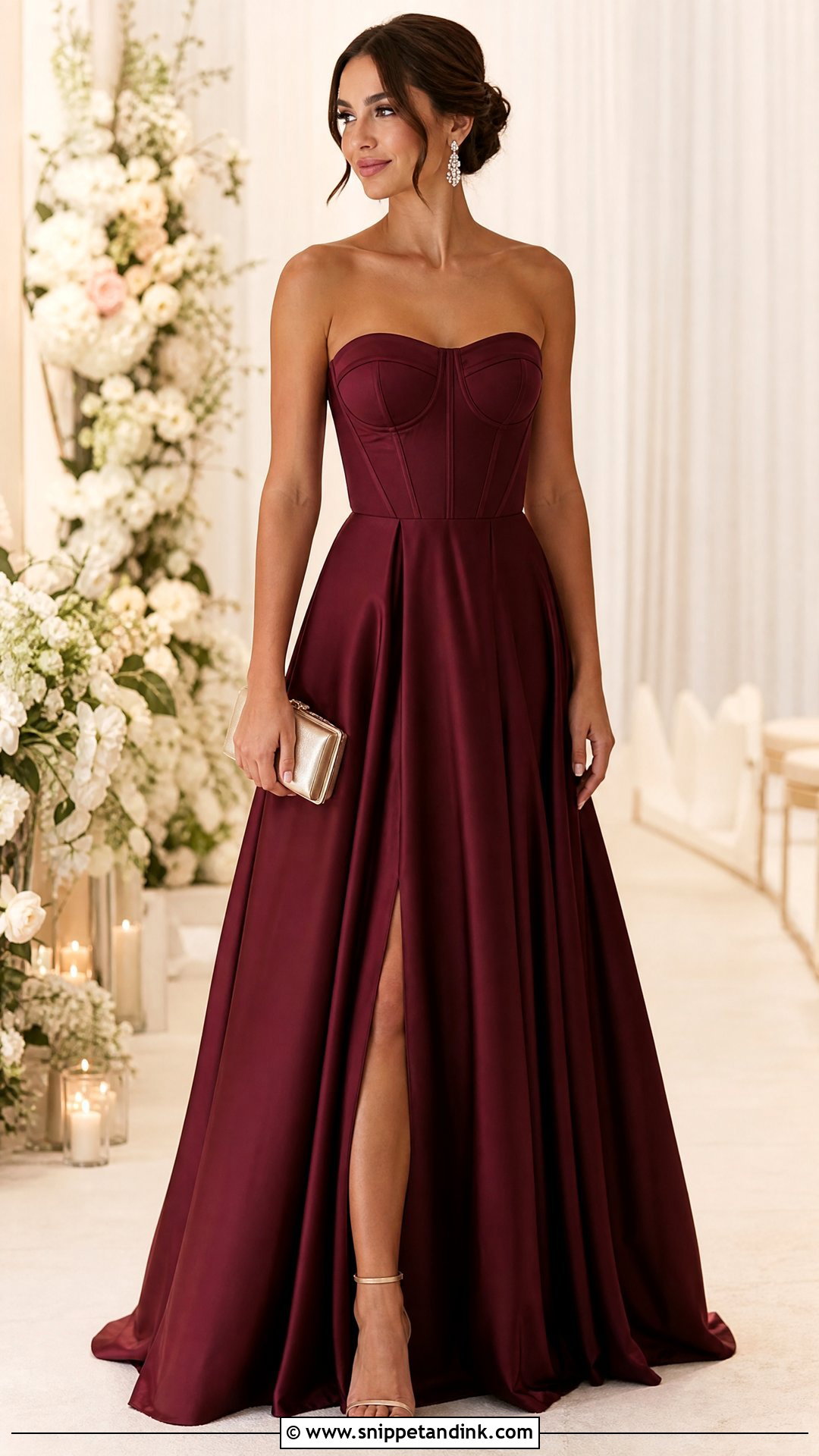
Visible boning above a soft skirt looks refined when the corset is well made and costume-like when it isn’t. Choose covered boning, a modest neckline and adjustable lacing at the back so each bridesmaid can be fitted properly. A corset should support without limiting breathing or sitting through dinner. Several attendants needing different cup and waist adjustments means extra fittings, so start earlier than you think. Espresso, burgundy, muted gold and forest green work well, with a loose low bun to soften the structure.
12. Flutter Sleeve Bridesmaid Dress
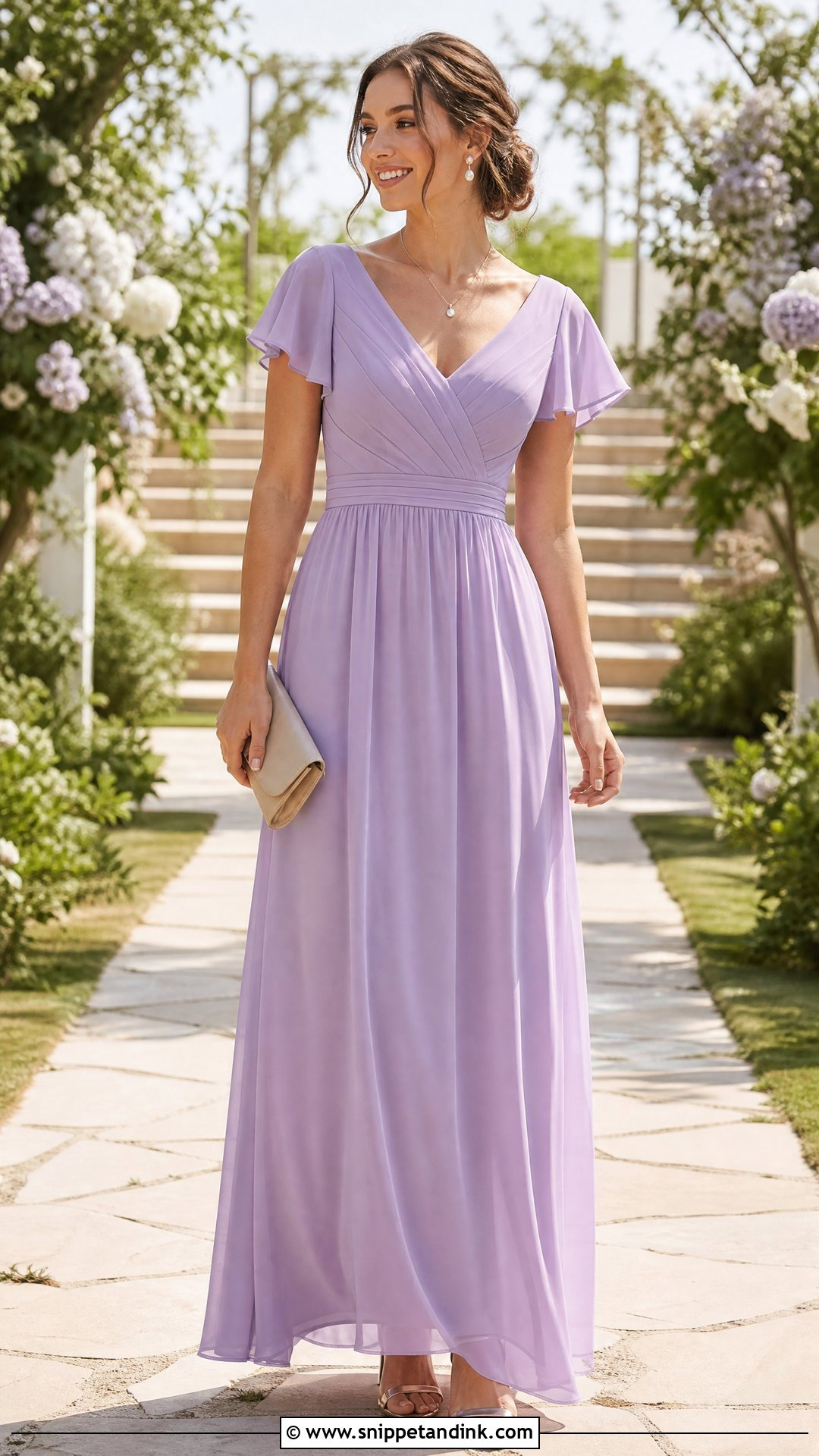
Flutter sleeves give a little arm coverage with none of the weight of a full sleeve. They suit a V-neck and gently defined waist in chiffon or georgette. Keep the sleeve at or above the elbow so it doesn’t get crushed by the bouquet. Broader shoulders usually look better in a narrower flutter, while a longer layered version suits anyone wanting more coverage. Cornflower blue, muted coral, lavender and sage feel light here.
13. Tiered Chiffon Bridesmaid Dress
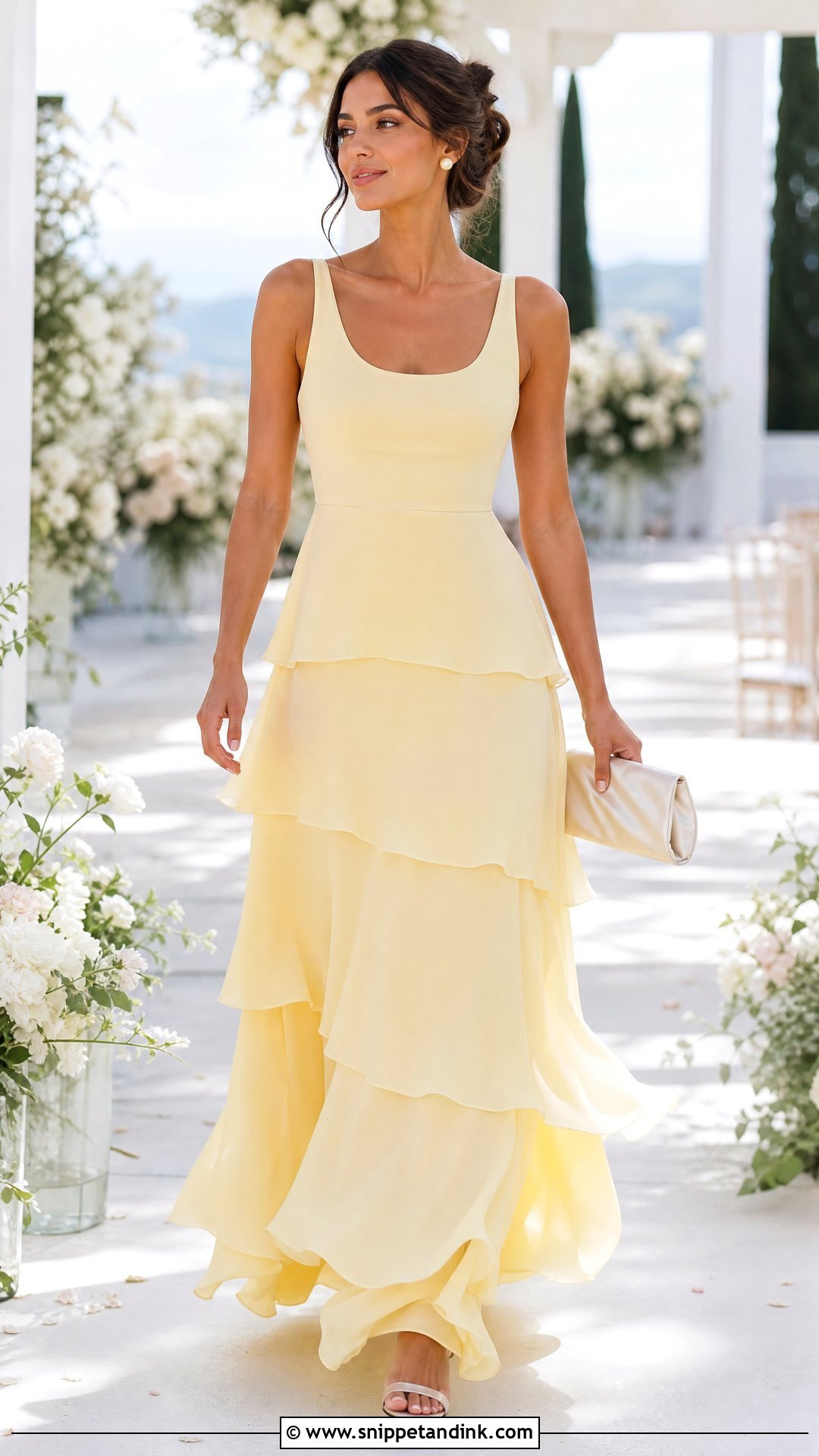
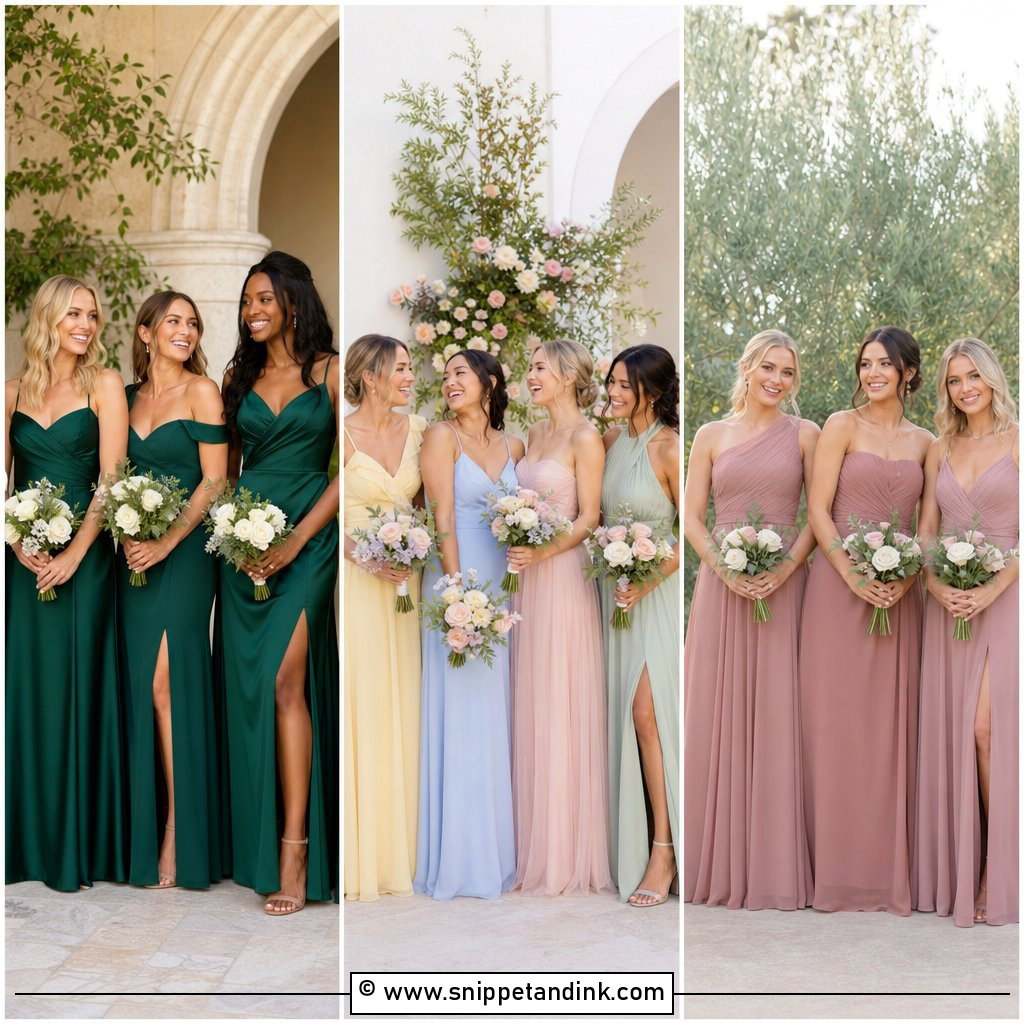
Tiers move well on the dance floor, if they fall softly. Stiff tiers add width; vertical, floaty ones don’t. A fitted V-neck or scoop bodice gives contrast, and pale yellow, powder blue, dusty pink and soft green suit the fabric. Petite bridesmaids may need fewer or narrower tiers so the skirt doesn’t swamp them. Hem it to float just above the floor, because layered chiffon caught under a heel tears quickly.
14. High Neck Bridesmaid Dress
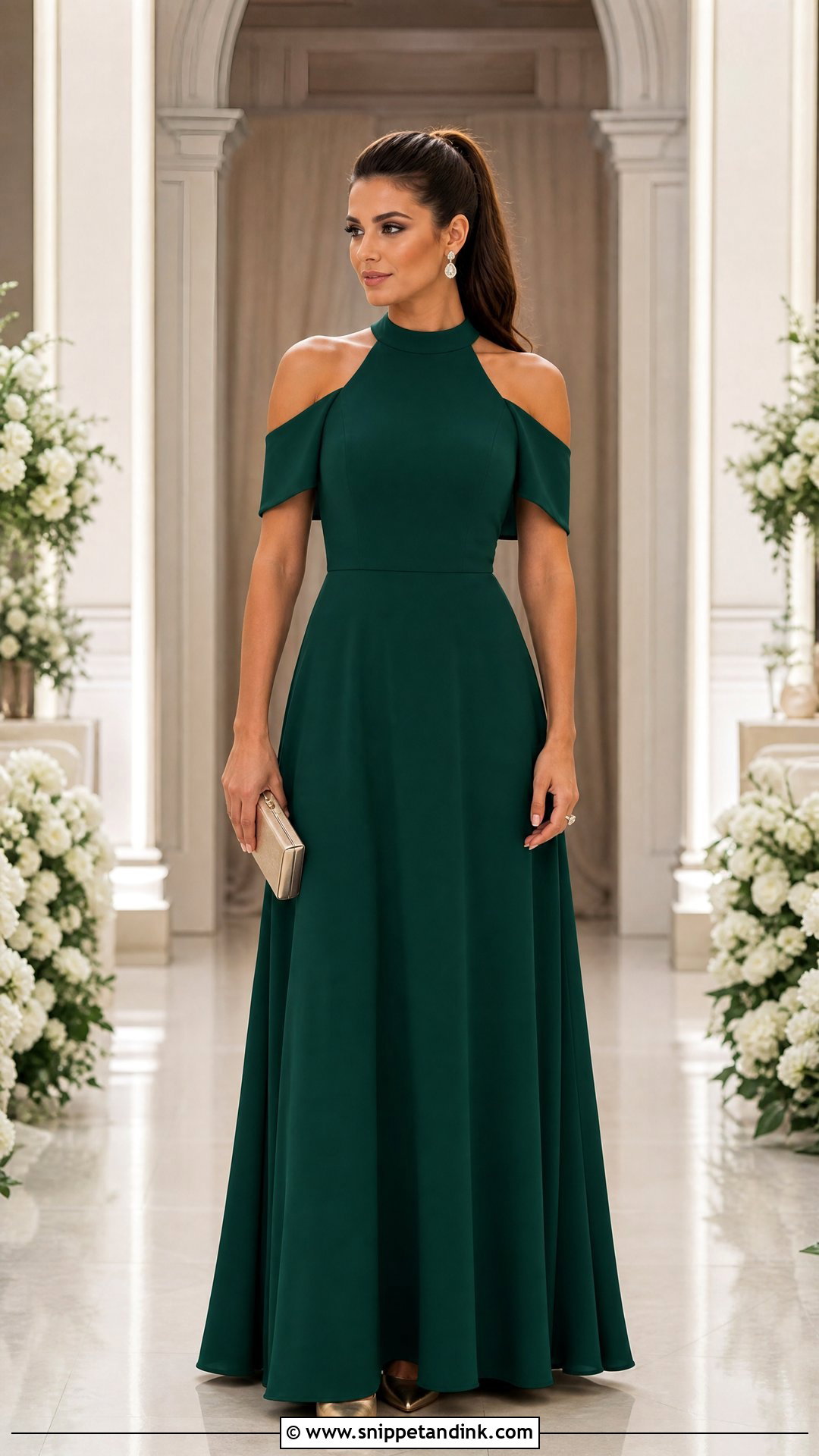
A high neck gives full chest coverage and a long, clean line. Sleeveless versions balance it, since bare shoulders stop the top half from looking closed in. Leave necklaces at home and wear drop earrings, an updo or a sleek ponytail. One thing I always ask attendants to check: turn your head and sit down in it. A collar that rubs leaves foundation on the fabric and red marks on the neck. Ruby, emerald, bronze and deep navy all suit it.
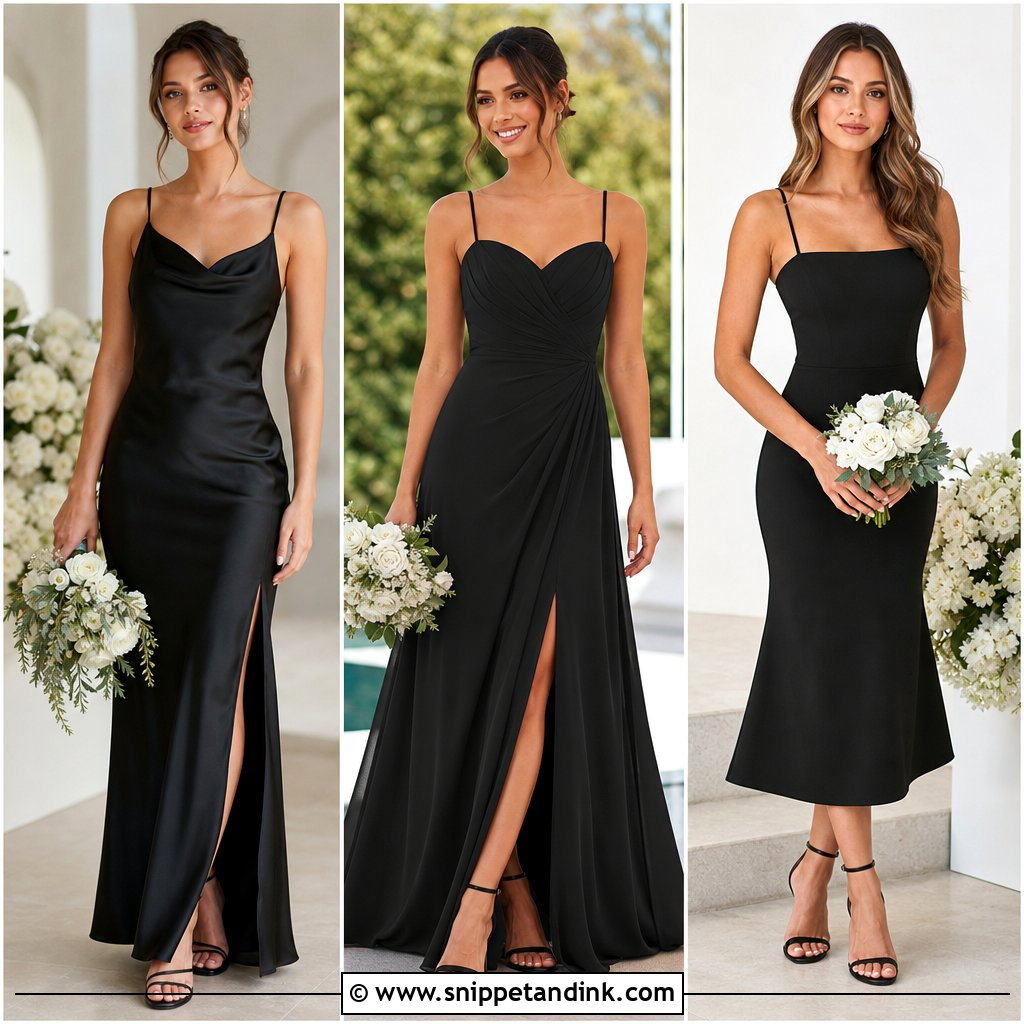
15. Satin Slip Bridesmaid Dress
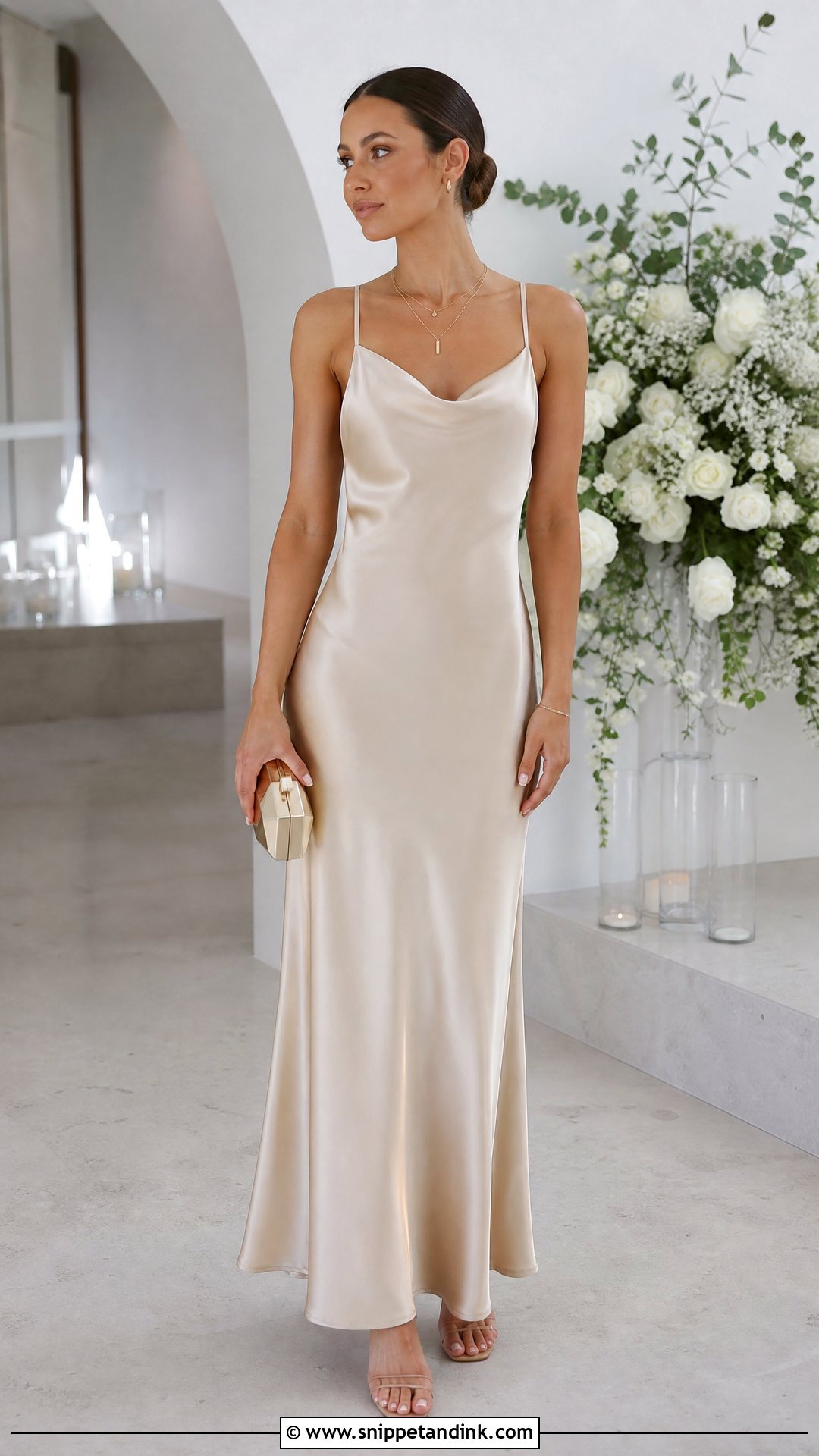
Satin slips are minimal, modern and very honest about what’s underneath. Thin satin shows every seam and strap, so smooth, supportive foundations are not optional, and a lined dress with adjustable straps and some ease through the hips makes a big difference. A straight or slightly flared maxi skirt keeps the line clean. Champagne, copper, eucalyptus, navy and pale pink all work, with barely-there sandals and fine jewelry. In a cool venue, plan a matching wrap rather than leaving it to everyone’s coat.
16. Wrap Midi Bridesmaid Dress
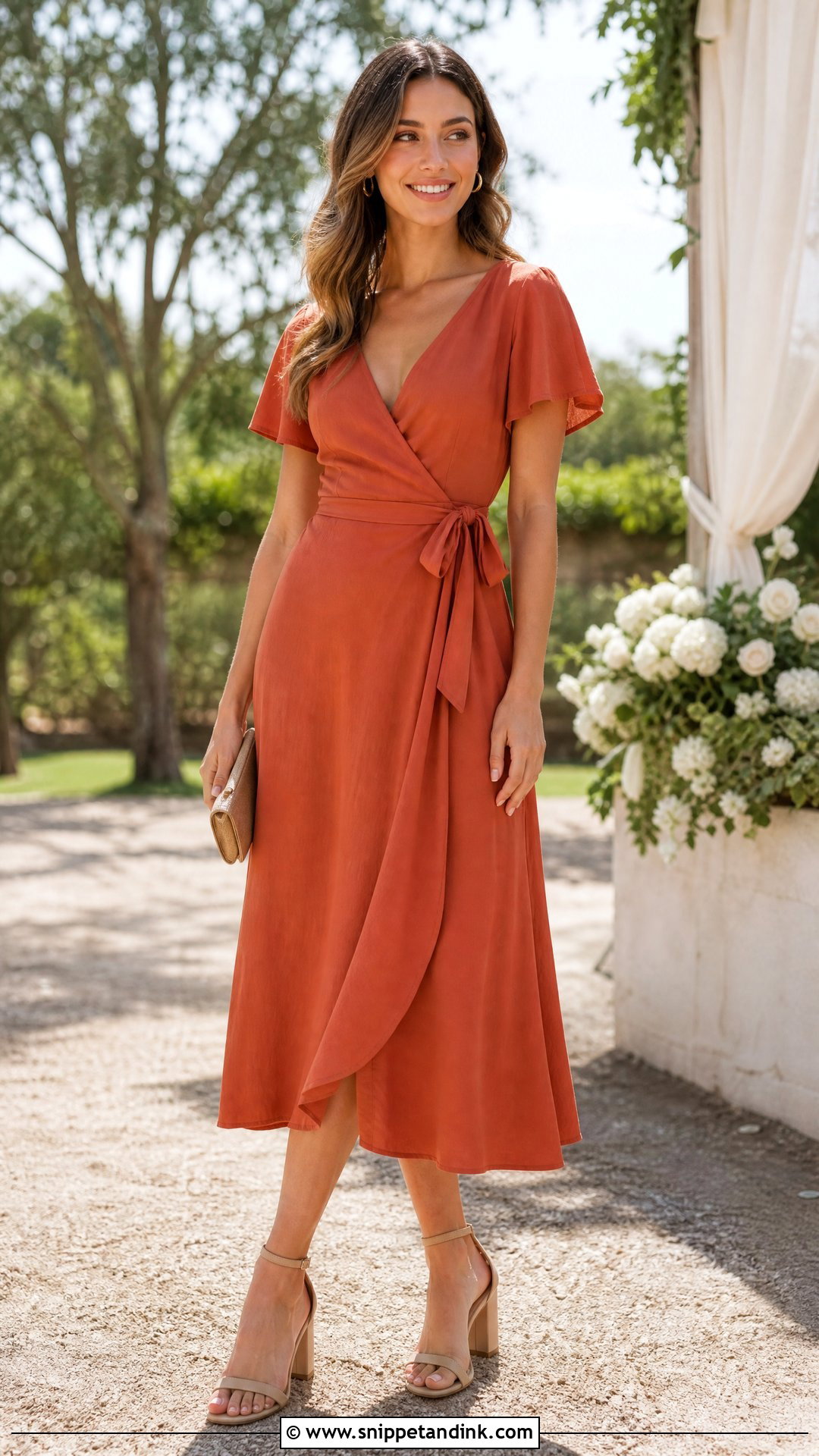
A wrap midi bridesmaid dress feels less formal than a floor-length gown but still coordinated. The adjustable waist suits different shapes, and the shorter hem is far easier on lawns, gravel and daytime venues. Look for a secure inner tie so the wrap doesn’t open on a windy step. Midi lengths land very differently by height, so check each one: petite bridesmaids may need shortening, and taller ones might prefer a longer tea length. Terracotta, French blue, sage and berry all photograph well.
17. Sequin Bridesmaid Dress
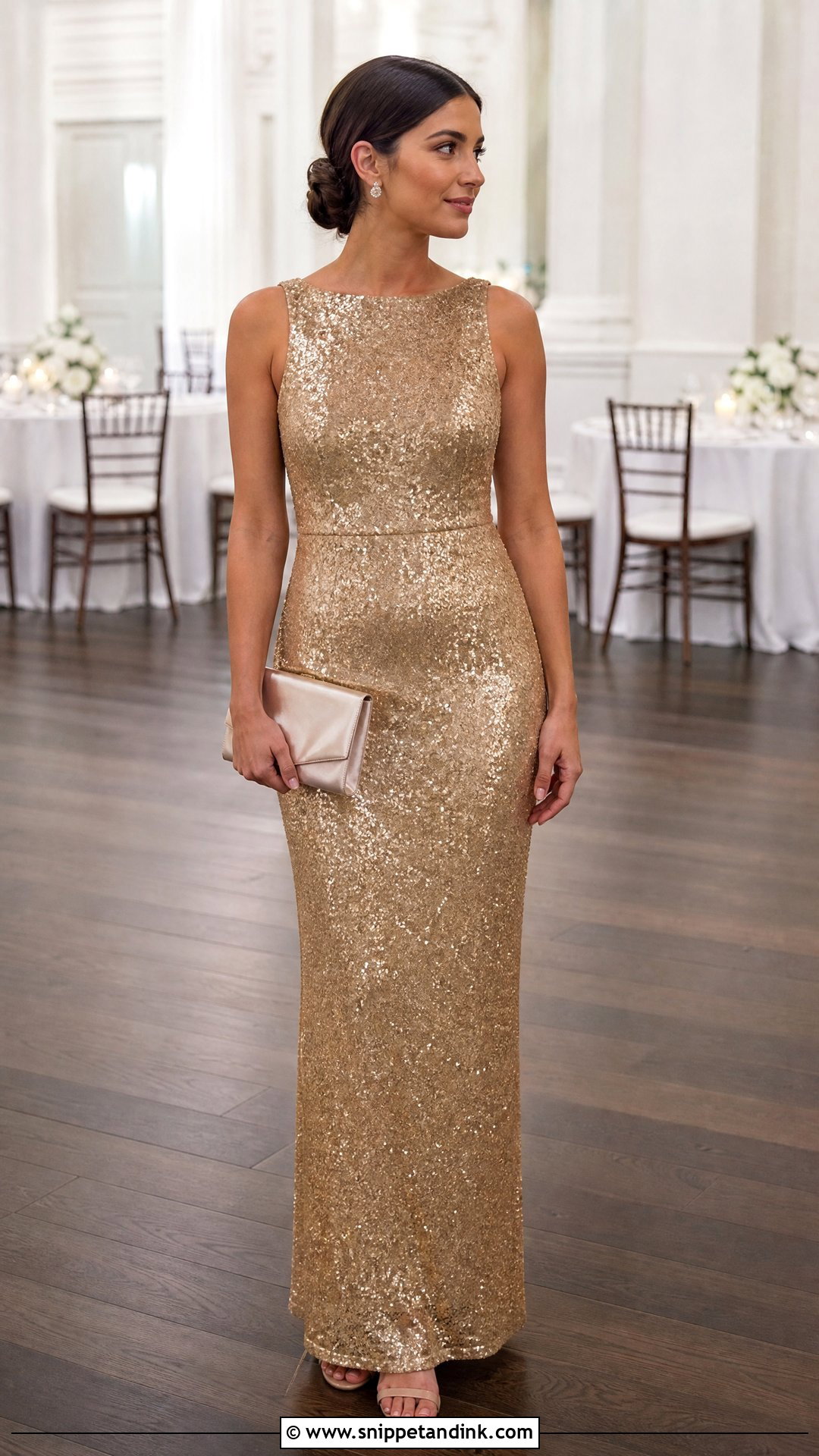
Sequins carry an evening wedding with almost no accessories. Choose a floor-length column or soft A-line in one consistent tone; matte gold, rose gold, navy and gunmetal coordinate more easily than multicolored finishes. Then keep it bare: simple heels, small studs, a plain satin clutch, no necklace. A soft lining stops sequins scratching, and it’s worth checking under the arms where they rub. If a whole row of sequins feels like too much, reserve the design for the maid of honor.
18. Tea Length Bridesmaid Dress
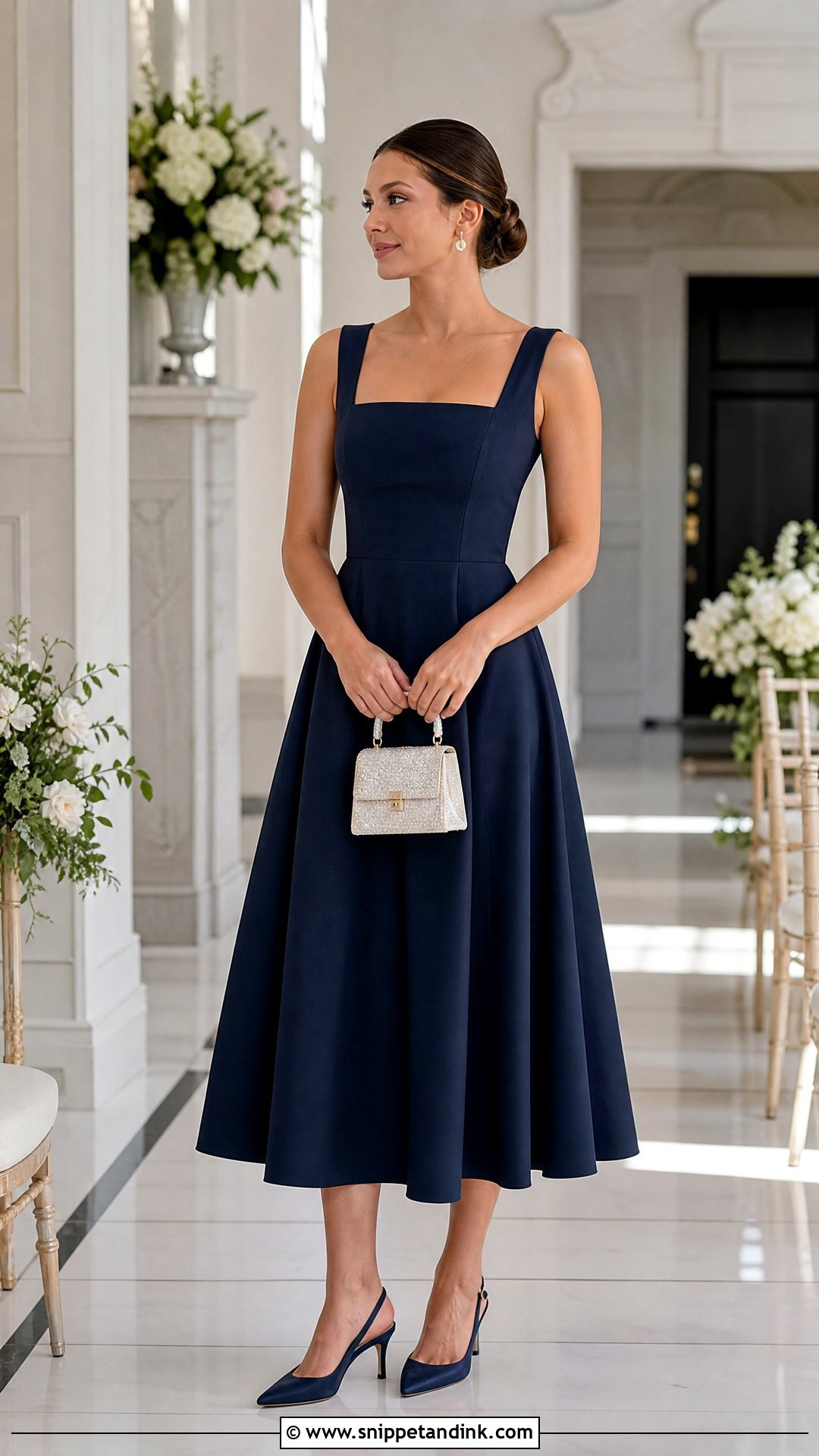
Tea length lands between knee and ankle, with a fitted bodice and fuller skirt giving it a vintage feel. Shoes become part of the outfit at this length, so plan pumps, slingbacks or ankle straps in one neutral or metallic finish for the whole group. Full skirts can shift on stairs and when sitting, so try both. Hemlines don’t need to match exactly between bridesmaids, but each should end at a similar point on the leg. Navy, blush, emerald and soft florals suit it.
19. Cape Sleeve Bridesmaid Dress
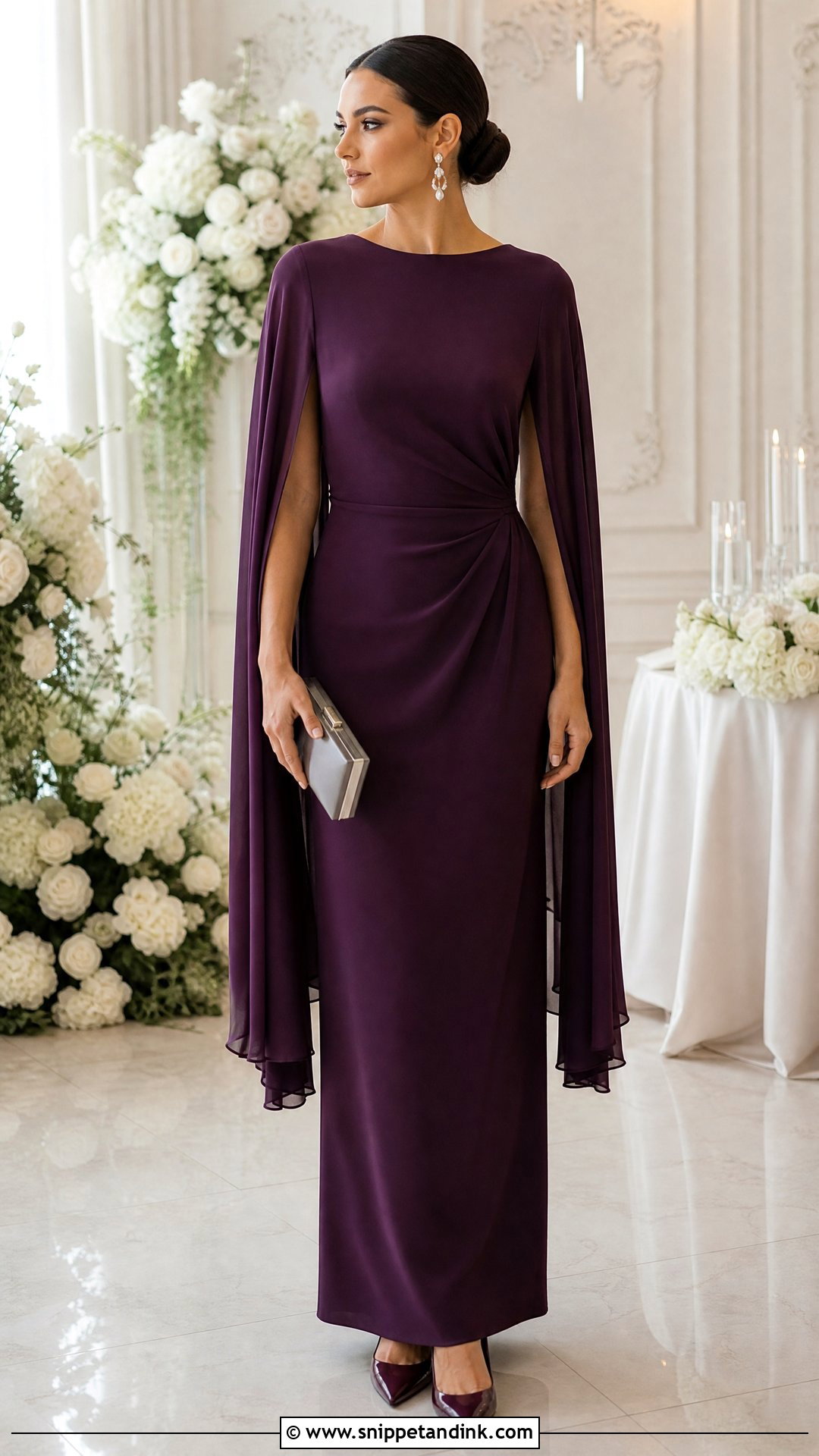
A cape sleeve gives arm coverage while keeping the ease of a sleeveless gown. It may fall from the shoulders, attach at the neckline or drape over the upper arm. Put it on a simple column or A-line so the extra fabric stays manageable, and wear hair low so it doesn’t tangle with the cape. Chunky bracelets catch on it. Ask everyone to carry a bouquet up and down a staircase in it before the day. Plum, navy, deep teal and soft gray suit the drape.
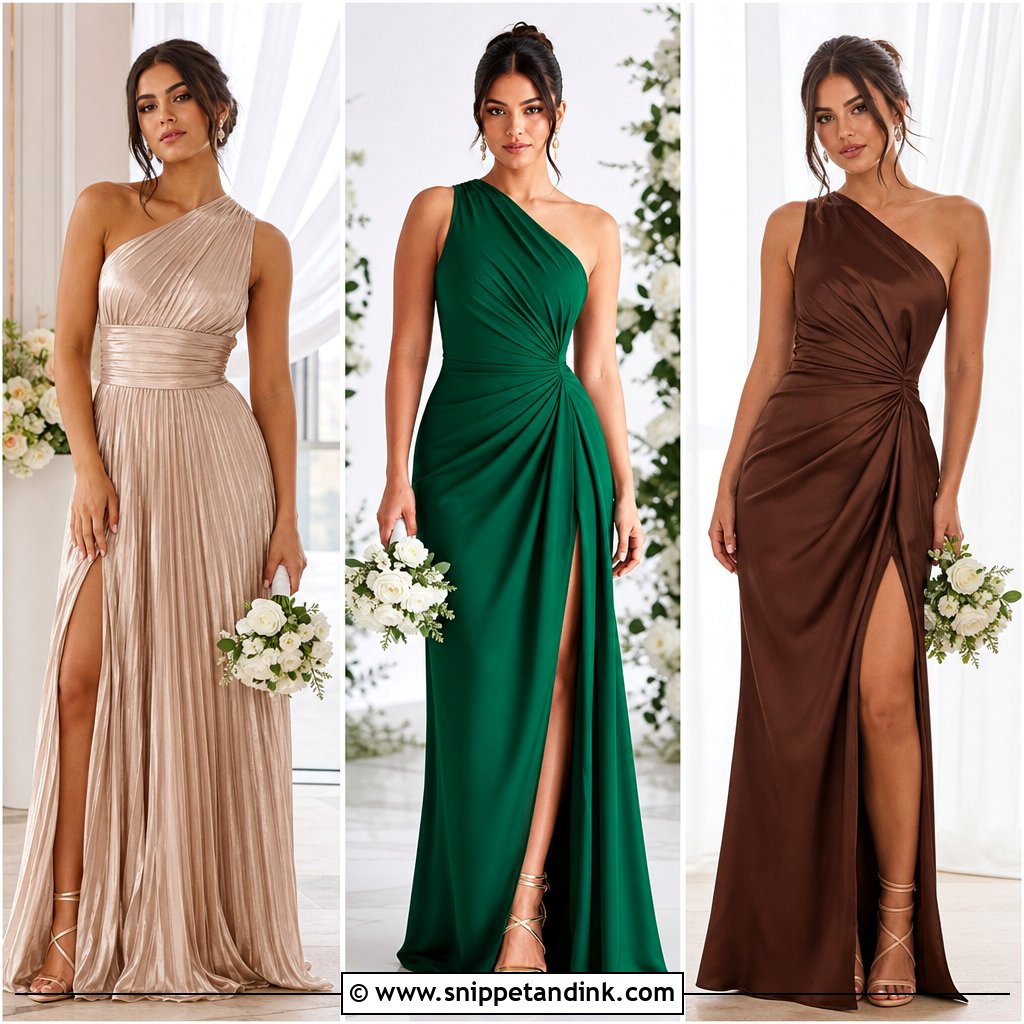
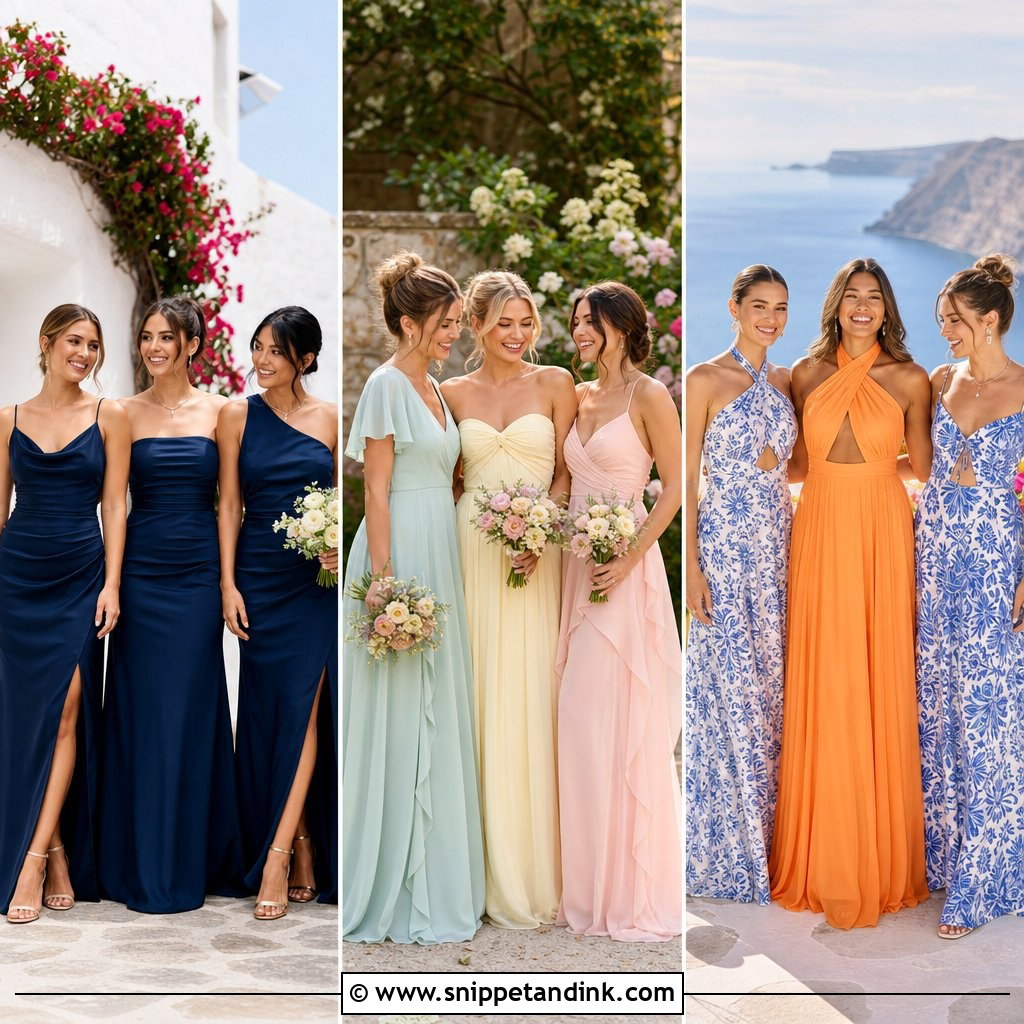
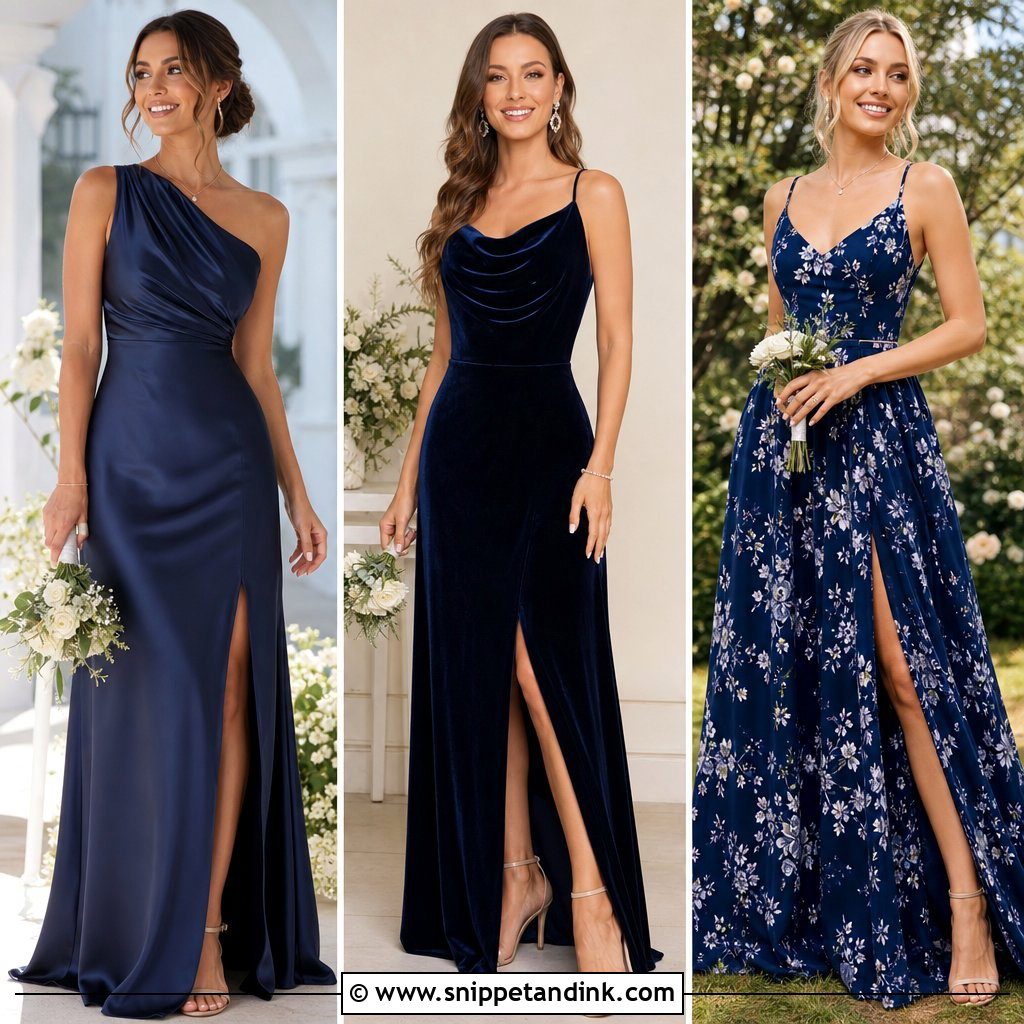
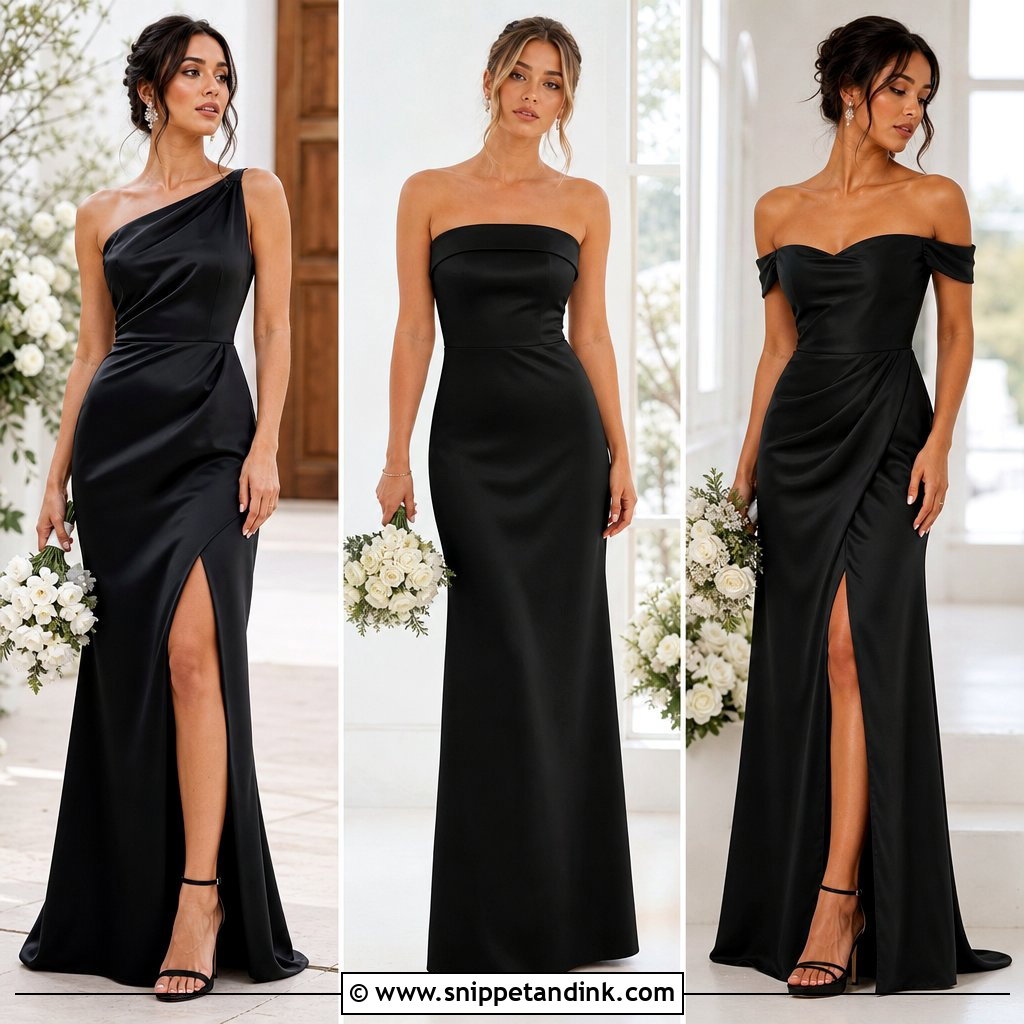
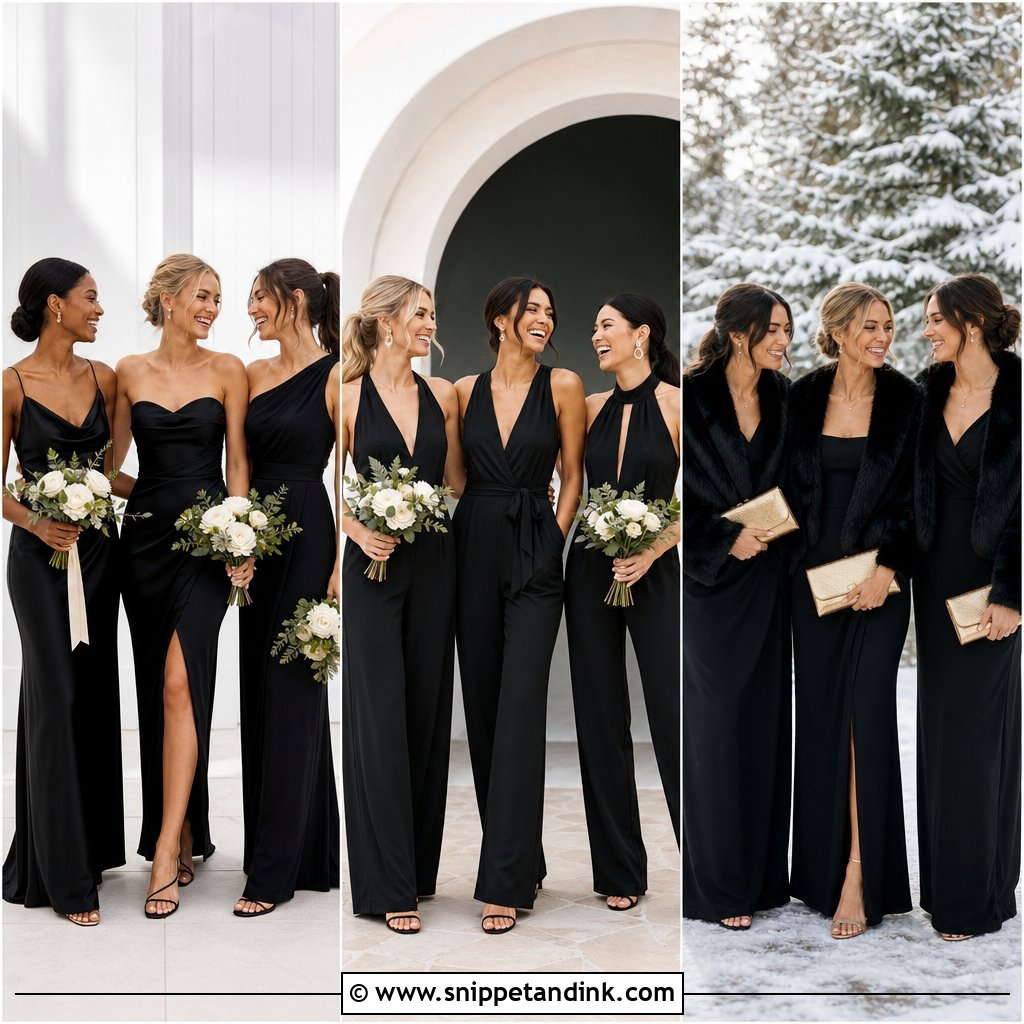
20. Mismatched Tonal Bridesmaid Dress
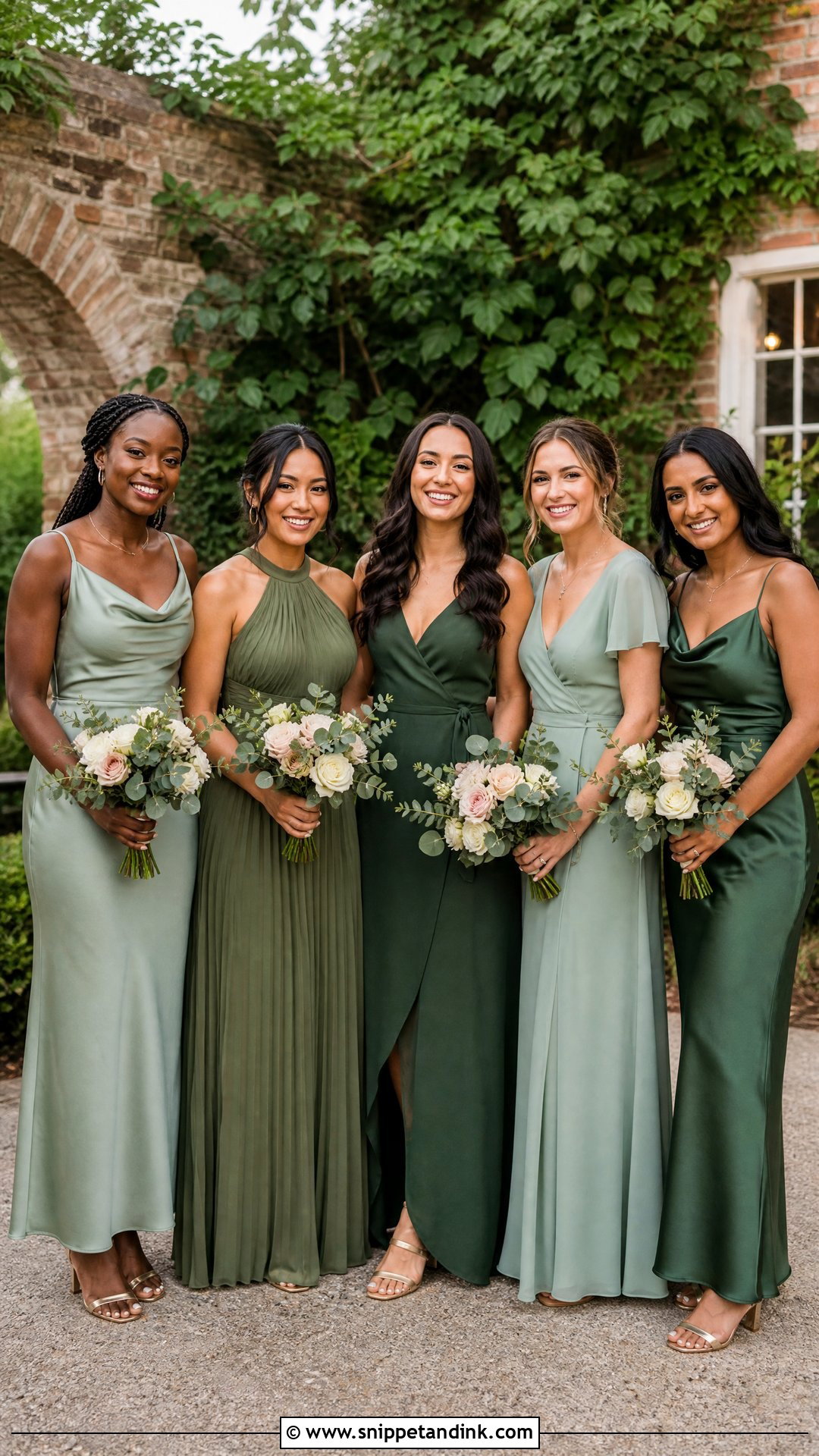
Mixing silhouettes within one color family lets each attendant choose what she’s comfortable in. Start with a single family, graduated blues, greens, roses or browns, then set approved fabrics and lengths so the dresses don’t look unrelated. One bridesmaid might choose a satin cowl, another chiffon sleeves, a third a pleated halter. Matching metallic shoes and bouquets tied with the same ribbon pull it together. Hairstyles can vary too, within one overall direction. Before final approval, I ask everyone to send a photo of her dress in daylight, because two dresses both called “dusty blue” online can have completely different undertones.
A Pregnant Bridesmaid, a Long-Distance One and a Tight Budget
Almost every bridal party has at least one attendant whose situation doesn’t fit the standard order. Planning for her early is kinder than improvising a month before.
Pregnancy
Bodies change a lot over a few months, so measurements taken at the start of the order won’t match the wedding day. Many lines make maternity versions of their styles, and empire waists, wraps and stretch jersey adapt well. Ask the shop how they suggest sizing for her due date, and leave her alteration appointment as late as is safe.
Distance
A bridesmaid in another city can still be measured by a local seamstress and have her alterations done there. Send her the fabric swatch, the shoe details and a photo of the agreed hem length so her dress finishes like everyone else’s.
Budget
Dress, alterations, shoes and hair can add up to far more than the dress price. Be upfront about the total cost before anyone agrees, and if one friend is stretched, offering to cover her alterations or letting her choose a cheaper style in the same color family solves it quietly.
Let Fabric and Color Do the Matching, Not the Cut
A bridal party wardrobe should carry the wedding’s look while every attendant feels comfortable and dressed for the occasion. Satin gives a sleek finish, chiffon moves easily, velvet suits cold months and adjustable silhouettes cover the widest range of bodies. Settle color, fabric, length, budget, delivery date and alterations with the whole group before anyone orders, and let shoes and accessories do the matching. Most of all, book fittings early and leave room for personal preference.
You'll Like These Ideas:


Leave a Reply