
Dressing a bridal party is a different job from dressing a bride. I’m fitting five or eight people of different heights, budgets and comfort levels into one picture, and the dress that suits the maid of honour can be miserable on the cousin standing next to her. The thirty ideas below cover colours, fabrics, necklines and full alternatives like jumpsuits. With each one I’ve added what I’d check before the group commits: how the fabric behaves, who the cut works for, and where it tends to cause trouble.
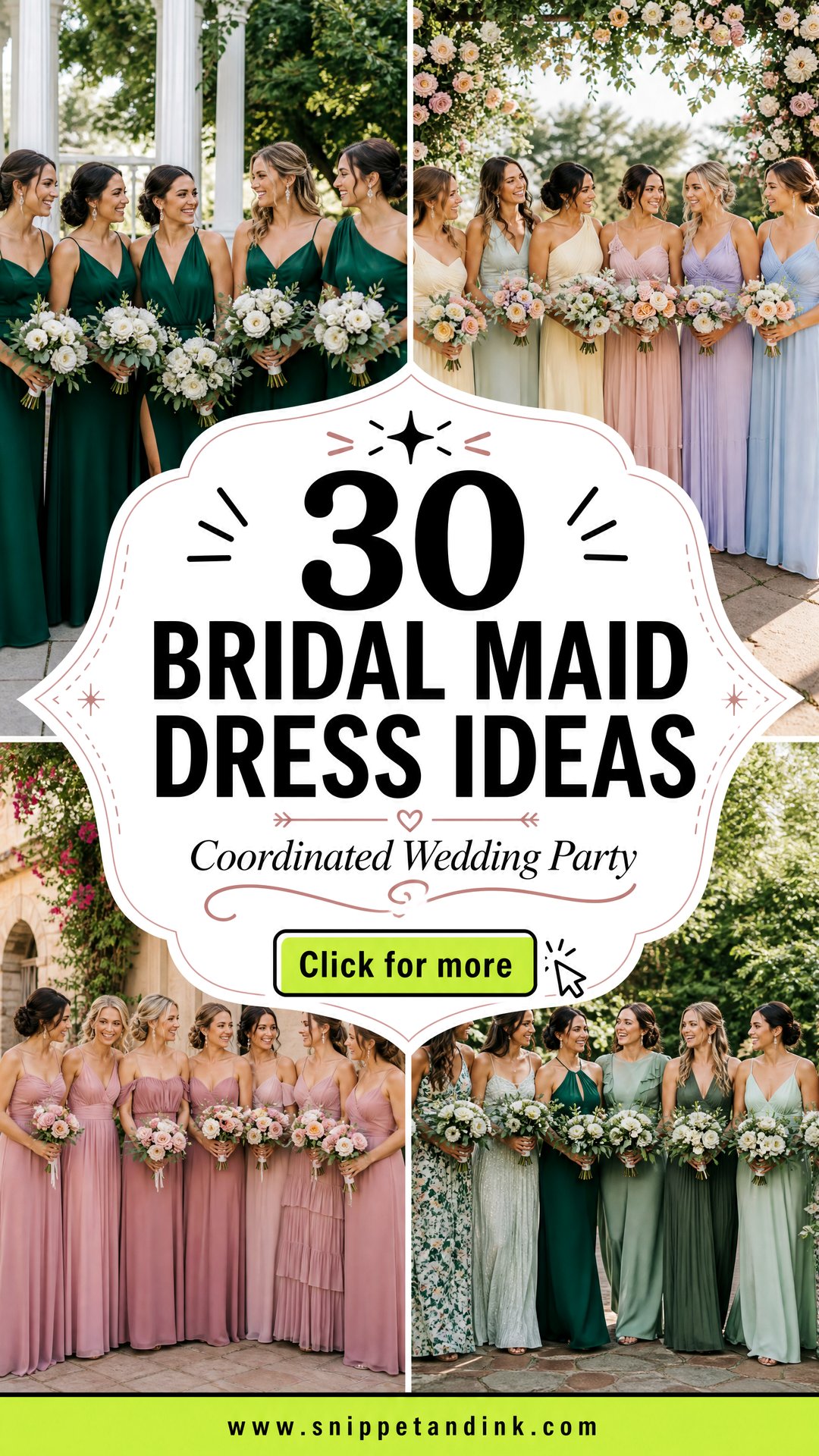
Ordering for Six Different Bodies at Once
The part of a bridal party I spend the most time on isn’t colour, it’s logistics. Bridesmaid dresses are often made to order, and lead times of around three to four months are common before any alterations start. I’d plan backwards from the wedding date and allow time for that.
- Measure everyone with a tape on the same day, ideally by one person, and compare with the retailer’s own chart rather than usual dress sizes.
- When a measurement falls between two sizes, order the larger; taking a dress in is easier than letting it out.
- Place all orders at the same time from the same retailer, so the fabric comes from one dye lot and the shades match.
- Leave four to six weeks for alterations after the dresses arrive.
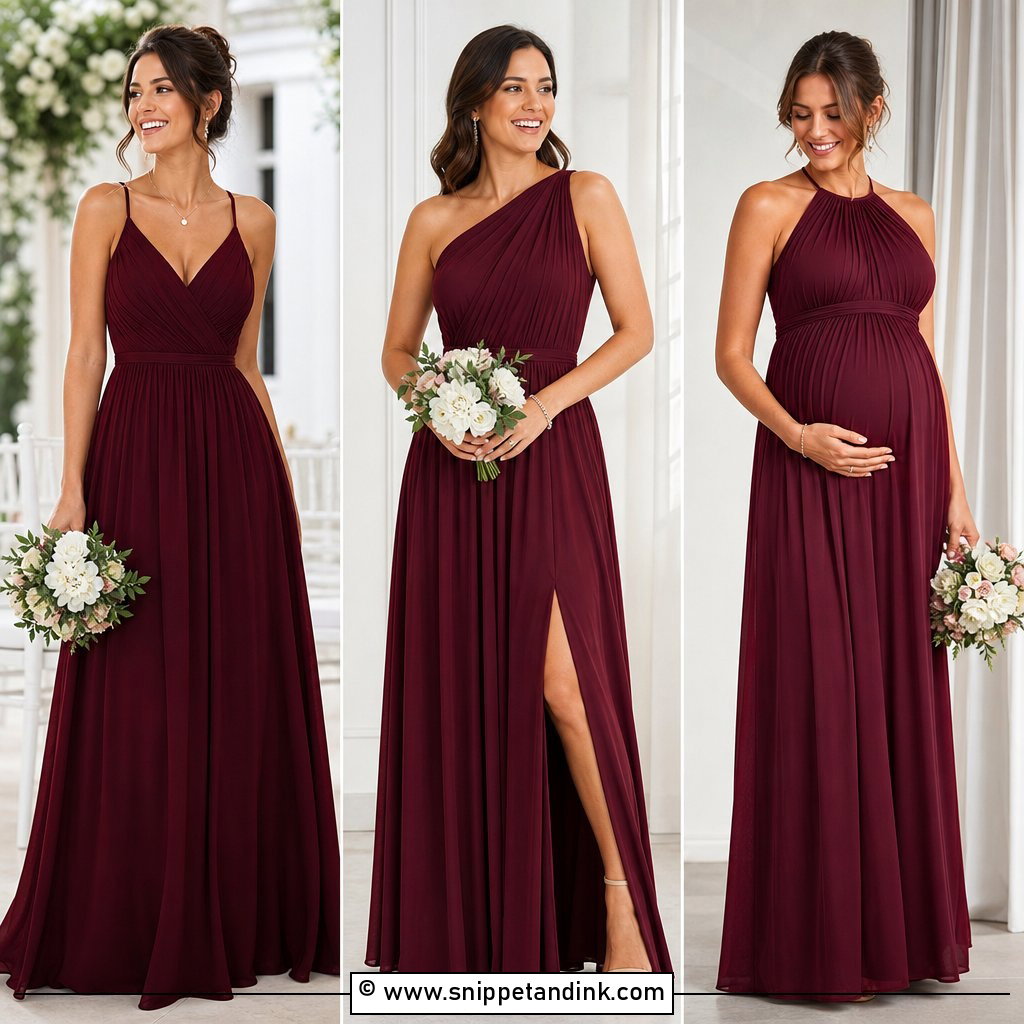
If one bridesmaid lives far away, ask her to get measured by a local seamstress rather than doing it herself. And if anyone is pregnant or expects her size to change before the wedding, tell the retailer when ordering. Some styles come in maternity cuts, and a wrap or empire waist with a stretch lining gives room that a fitted bodice won’t.
1. Sage Green Chiffon Bridesmaid Dress
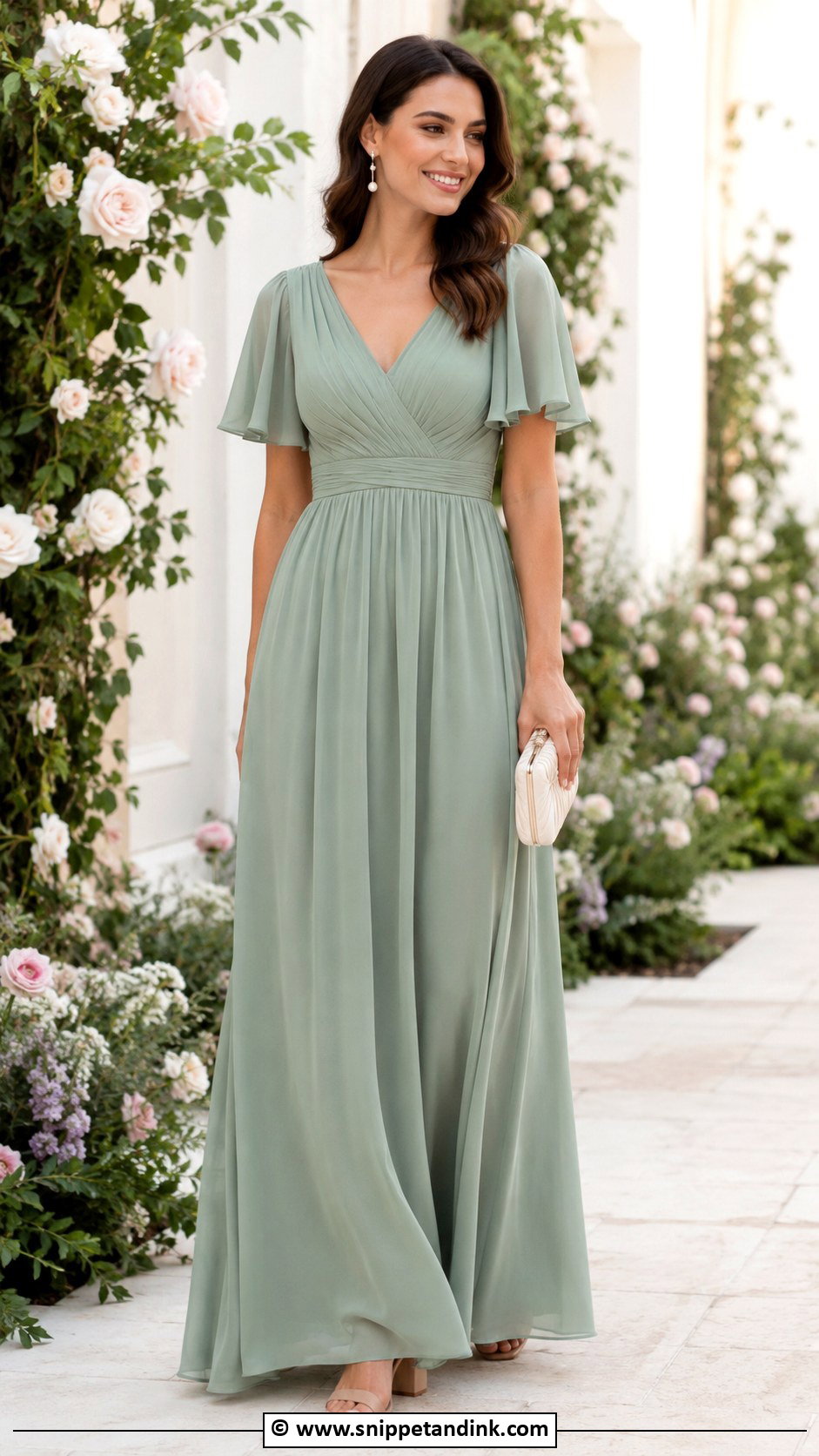
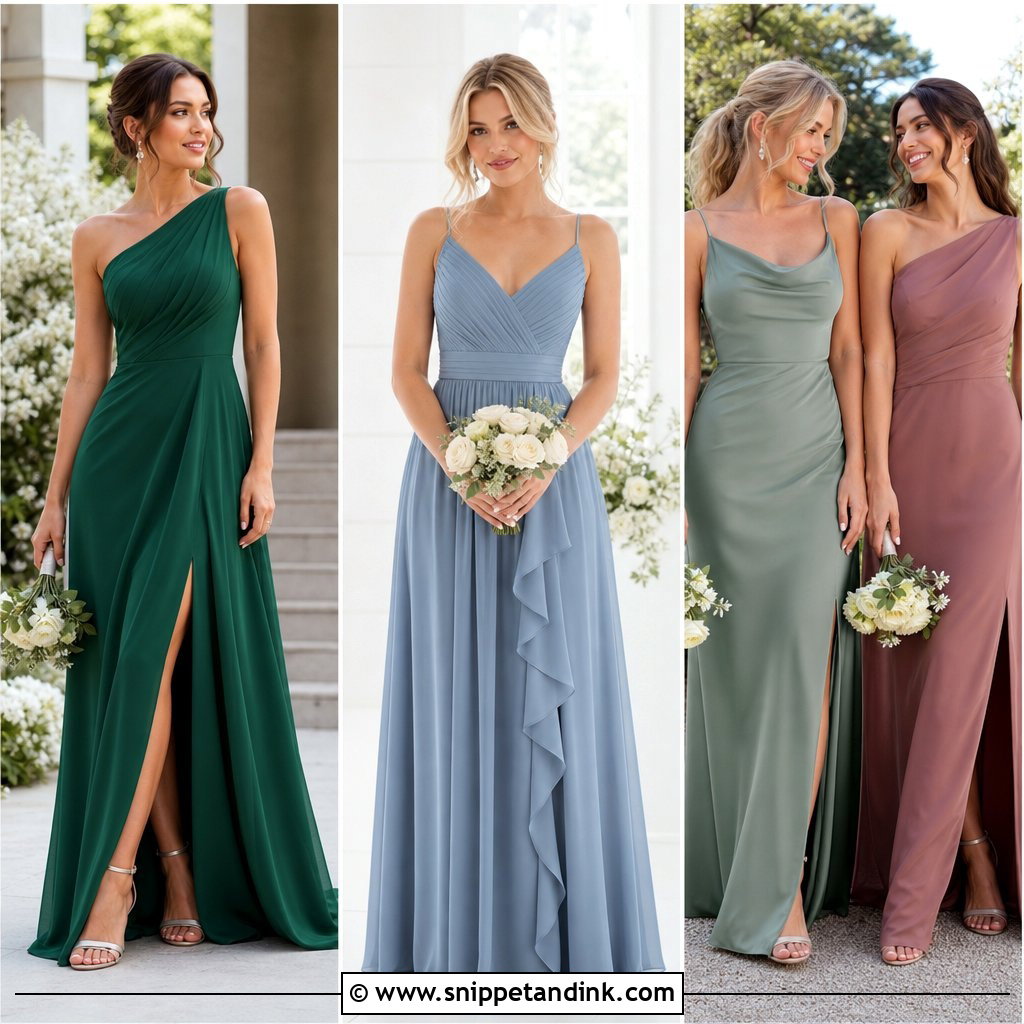
Sage chiffon is the easiest colour I can put on a mixed group, because the grey in it keeps it from fighting with warm or cool skin. Chiffon is also the most forgiving fabric for alterations: hems are simple and the layers hide minor fit issues at the waist. An A-line with a fitted bodice and flutter sleeves or thin straps suits most bodies. Nude block heels sink less on grass than stilettos, which matters at the garden and vineyard venues where this colour is usually chosen.
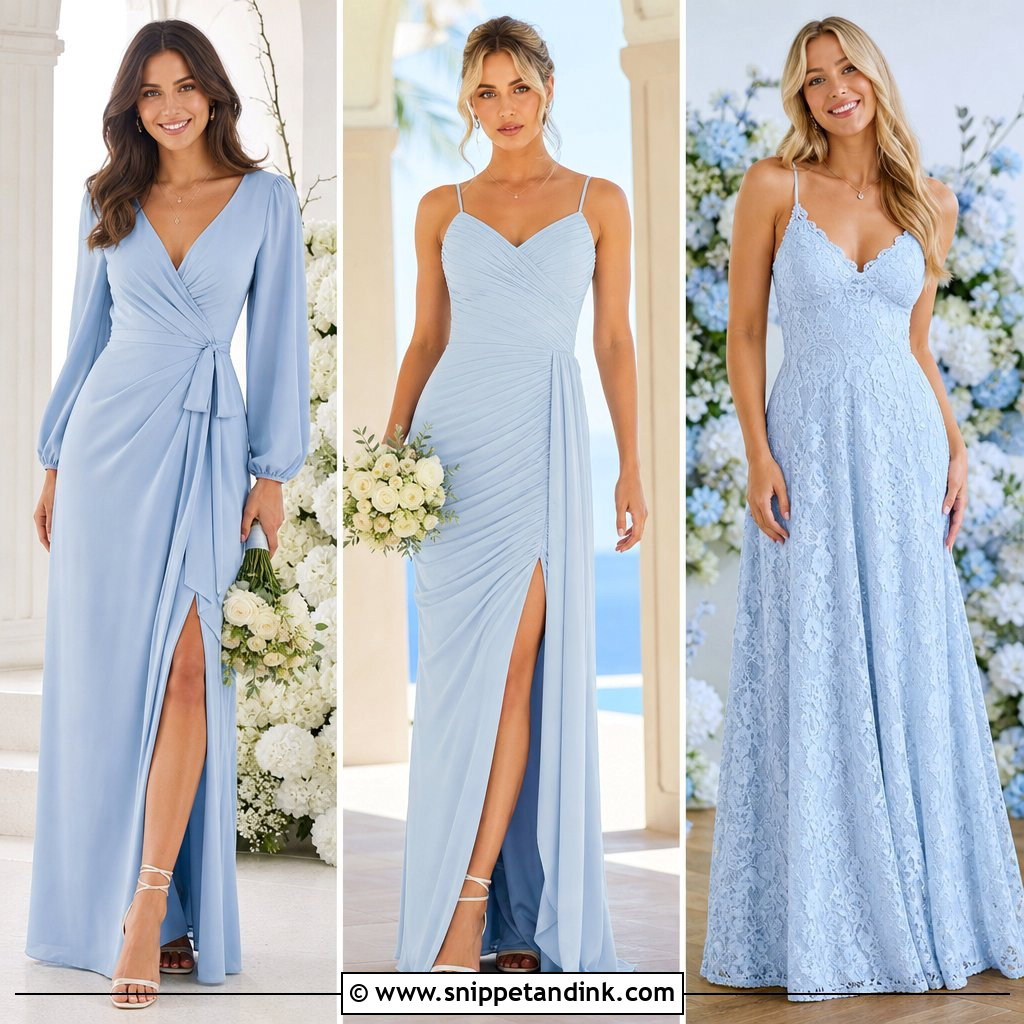
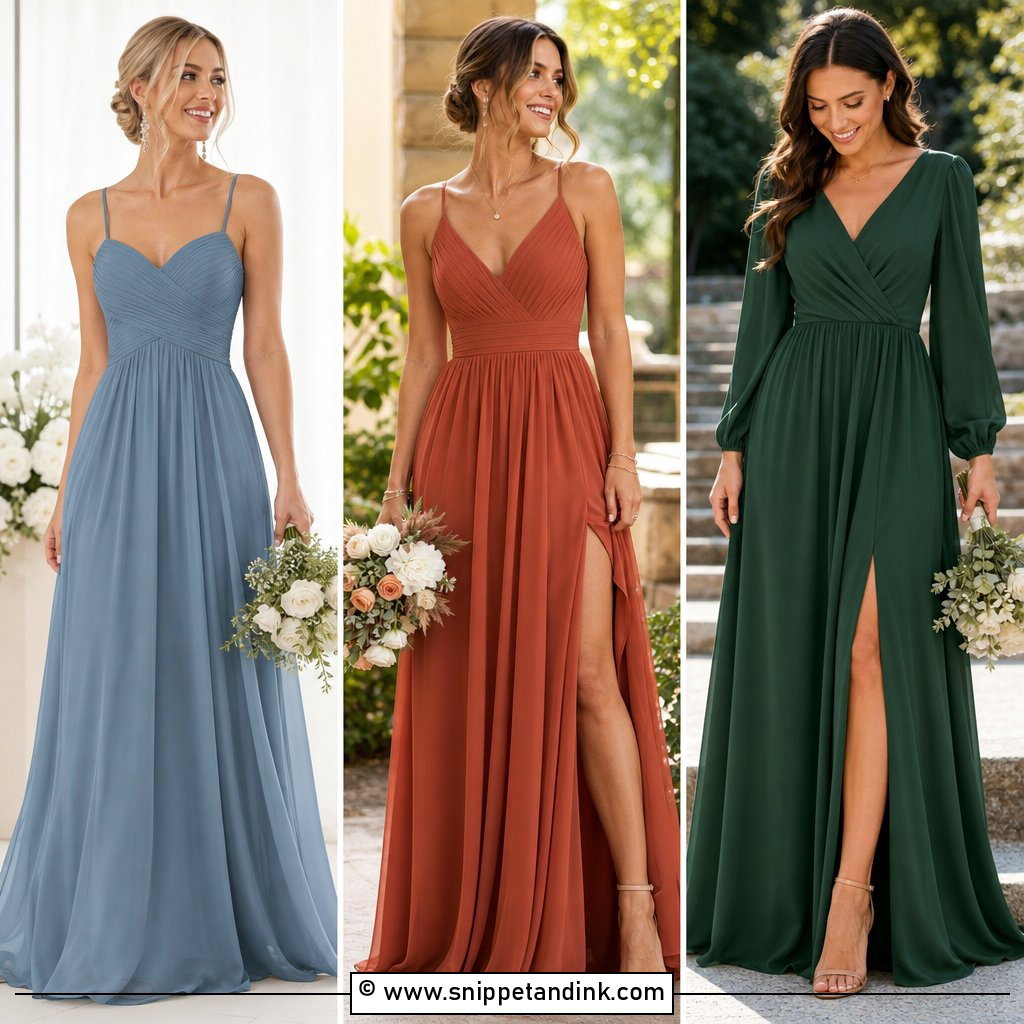
2. Dusty Blue Satin Bridesmaid Dress
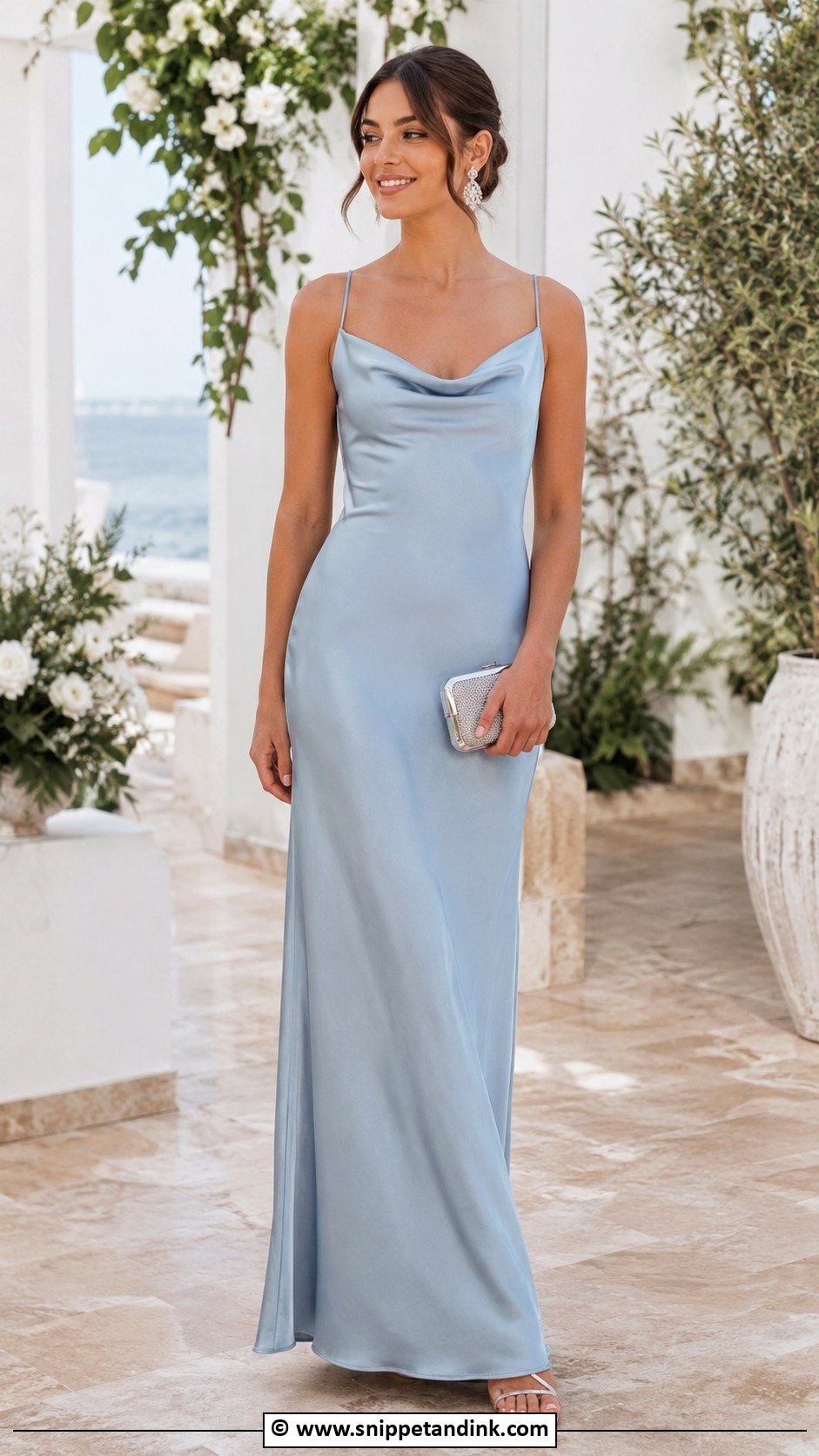
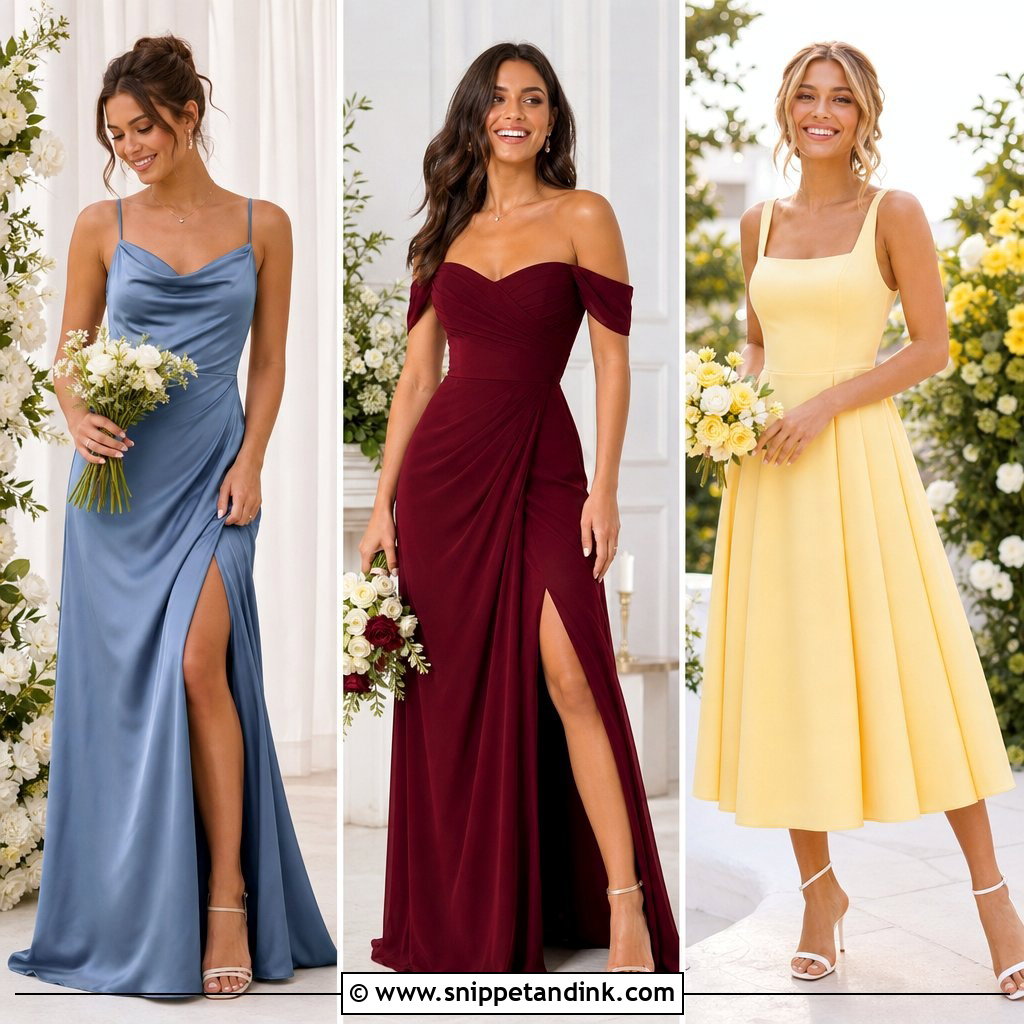
Satin in dusty blue has a sheen that shows every pull across the hip and every crease from sitting, so I’d only choose it for a group willing to get each dress fitted properly. A cowl-neck slip or wrap maxi skims rather than clings, which helps. Silver heels and crystal studs keep it cool-toned. Satin is also heavier than it looks, and on a hot afternoon a coastal party may wish it had picked chiffon in the same blue.
3. Champagne Bridesmaid Dress
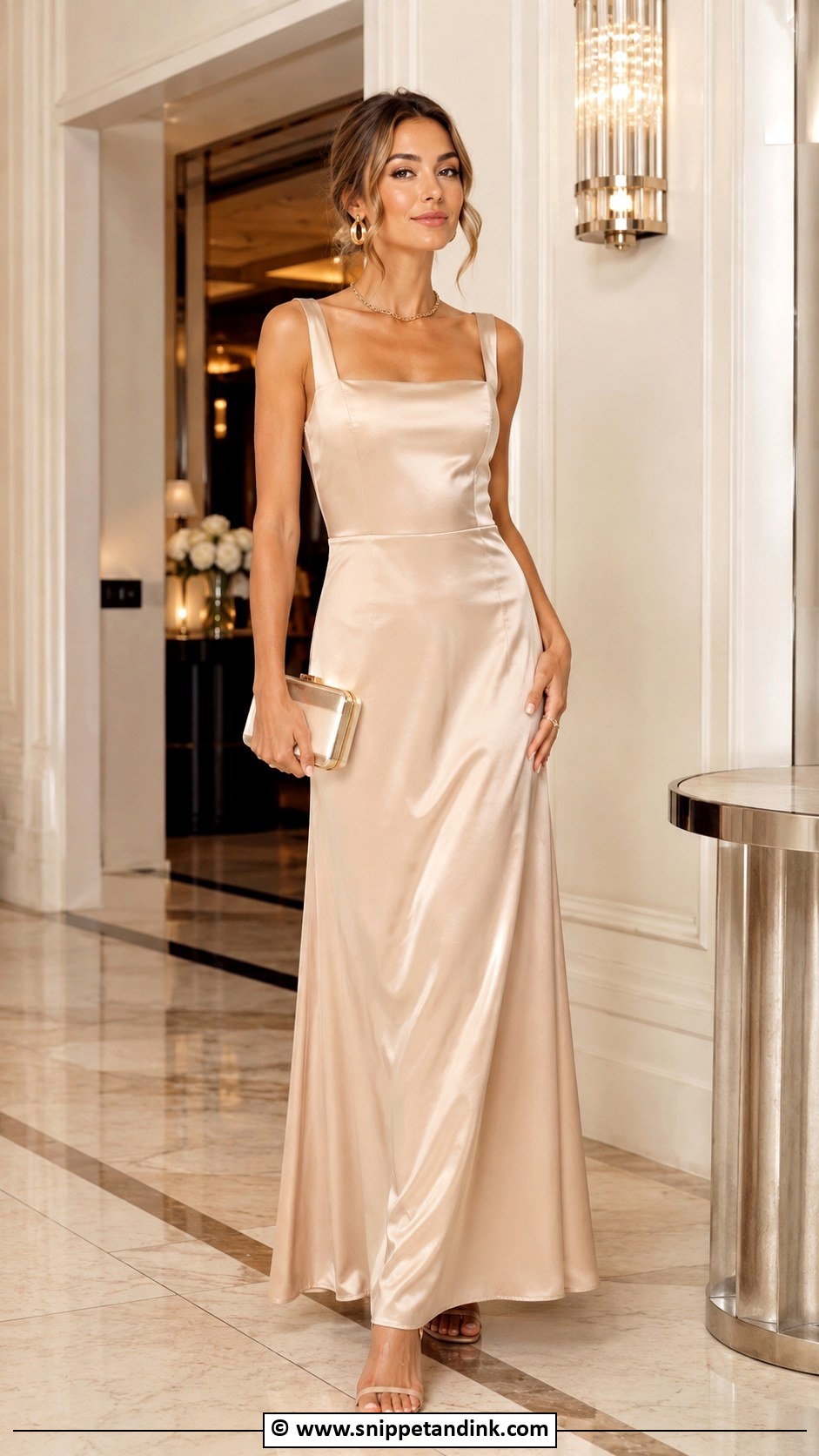
Champagne is a neutral I approach carefully. Next to an ivory or warm white gown, a champagne bridesmaid can read as a second bride in the group photos, so the bride’s dress needs to be clearly brighter or more detailed. A crepe or satin gown with a plain square, one-shoulder or halter neck keeps it simple. Gold jewellery suits the warm tone. I’d always hold a swatch against the bridal gown before ordering.
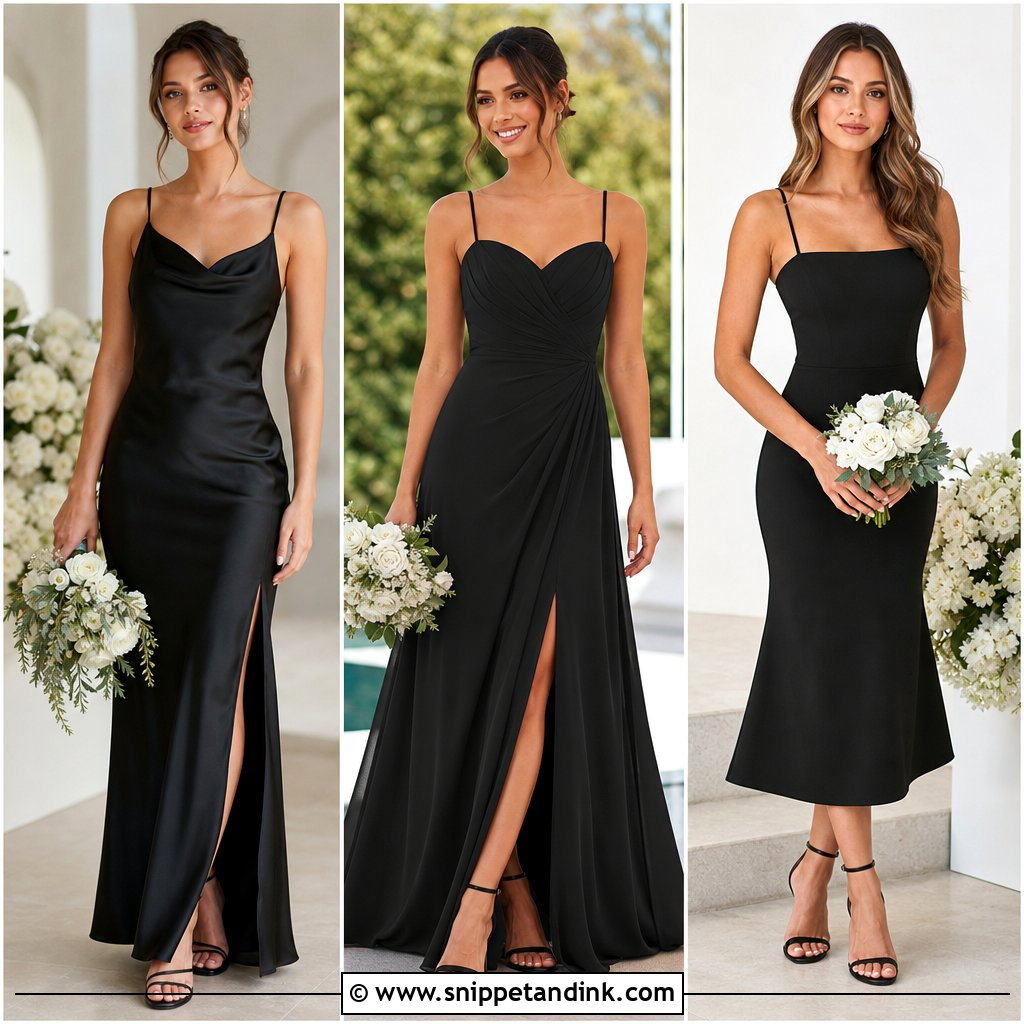
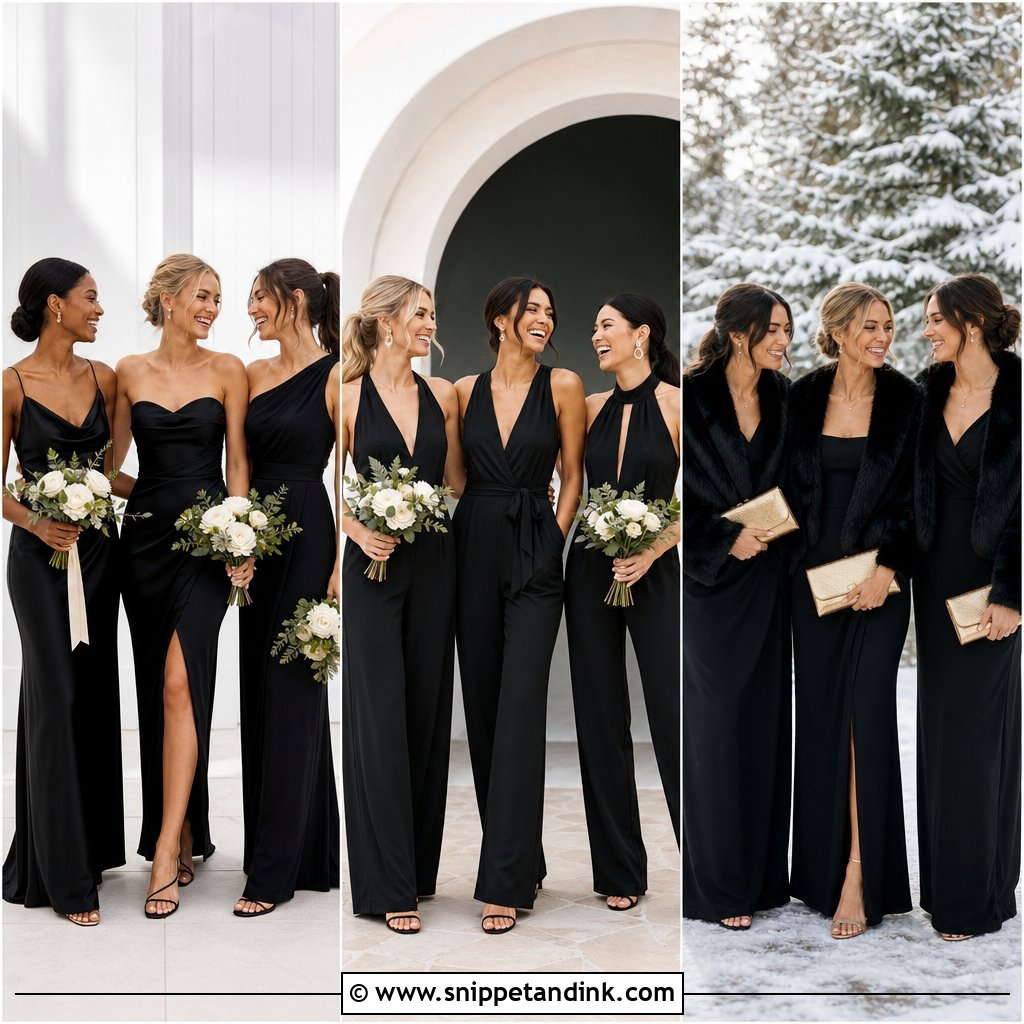
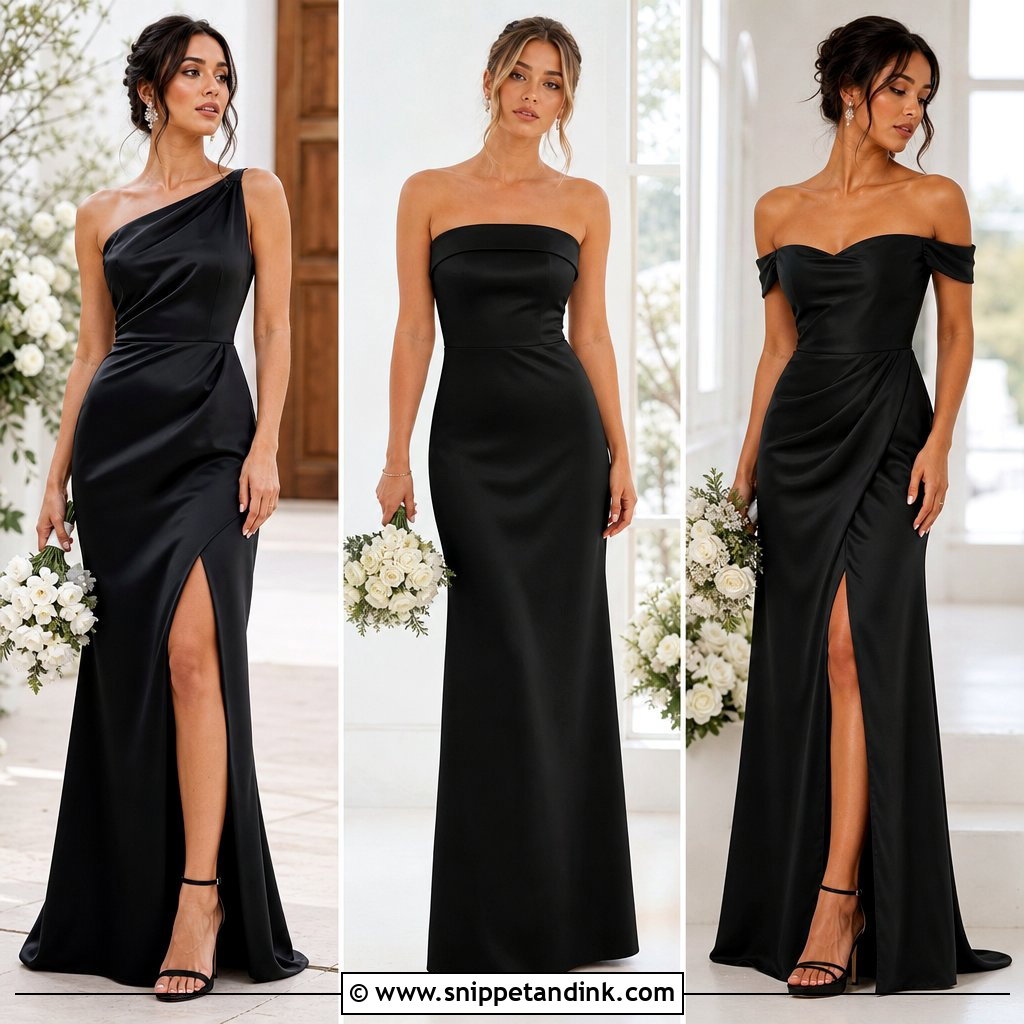
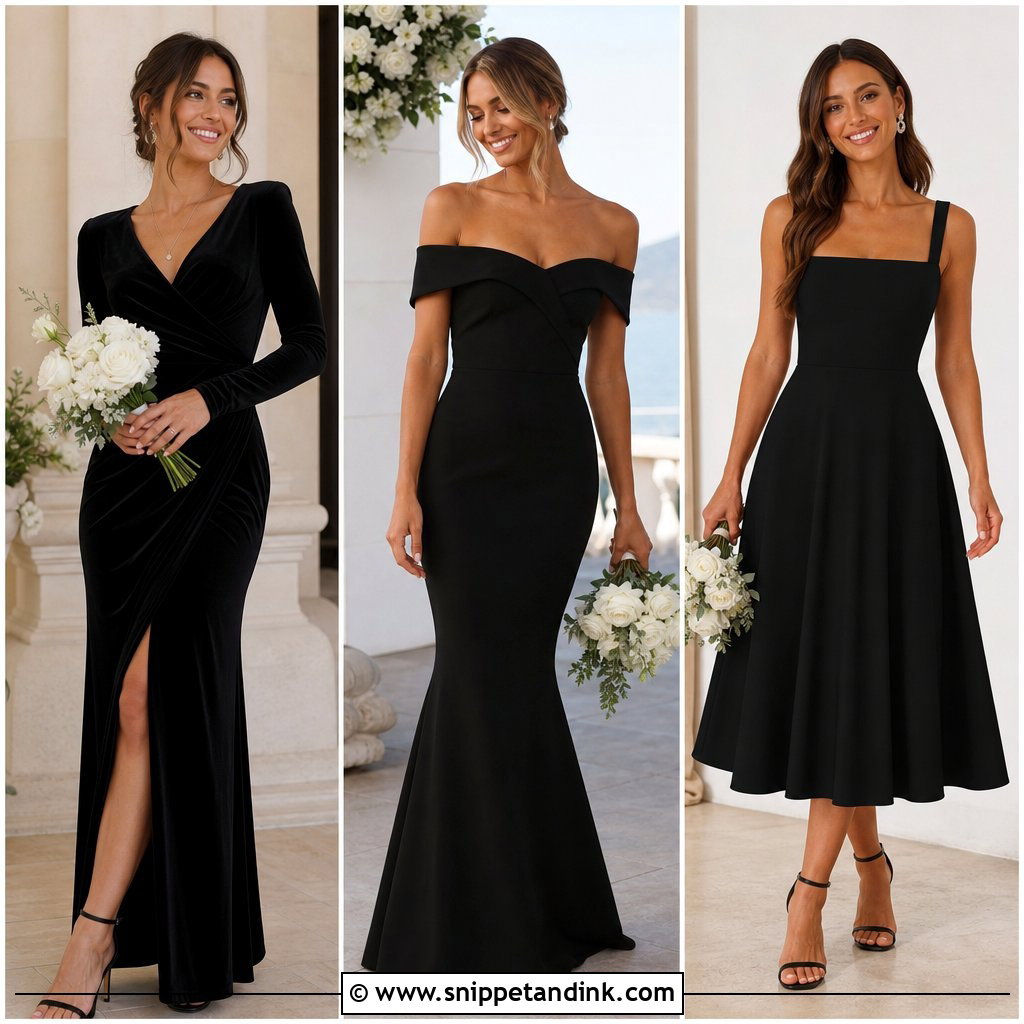
4. Black Satin Bridesmaid Dress
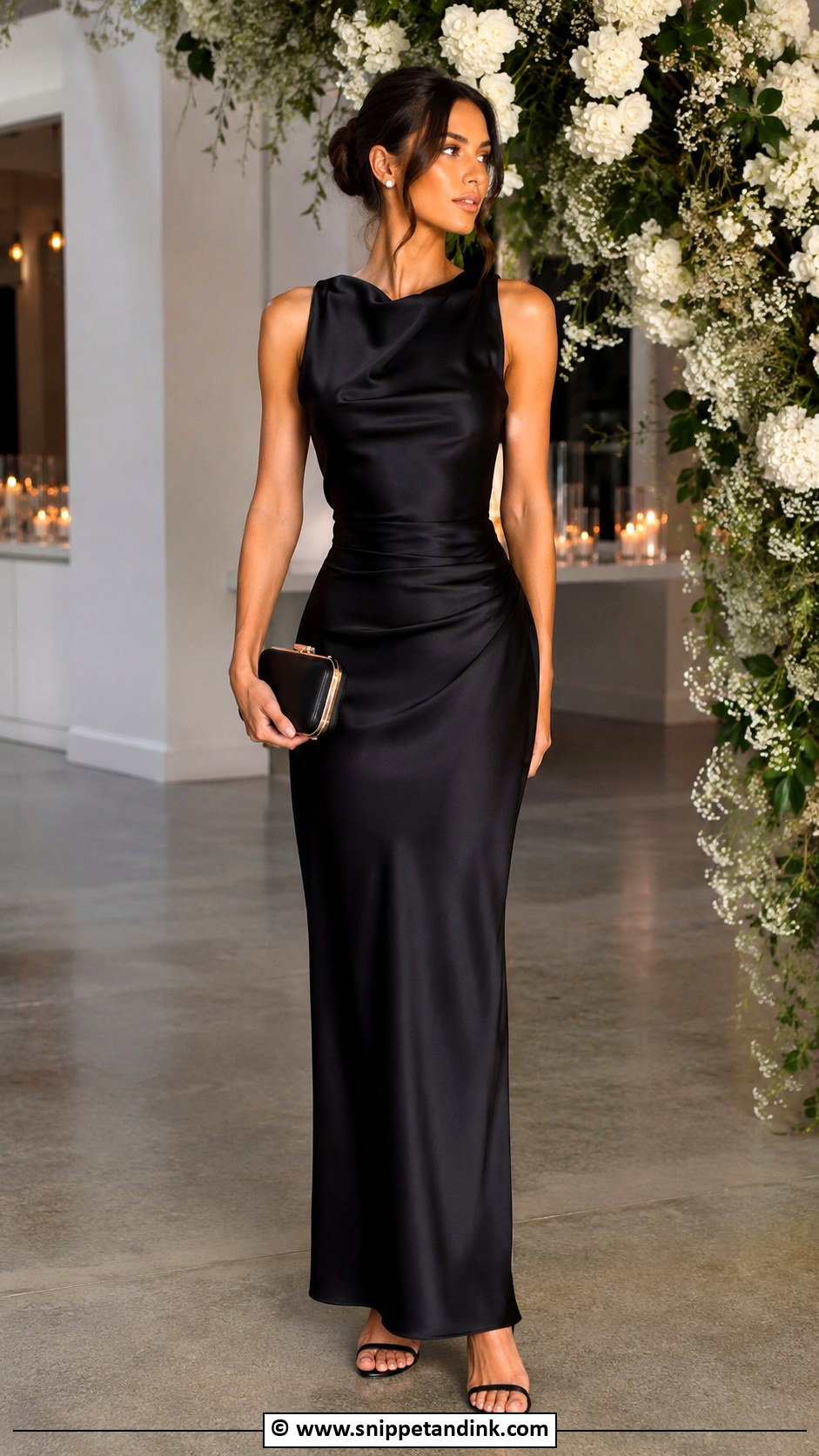
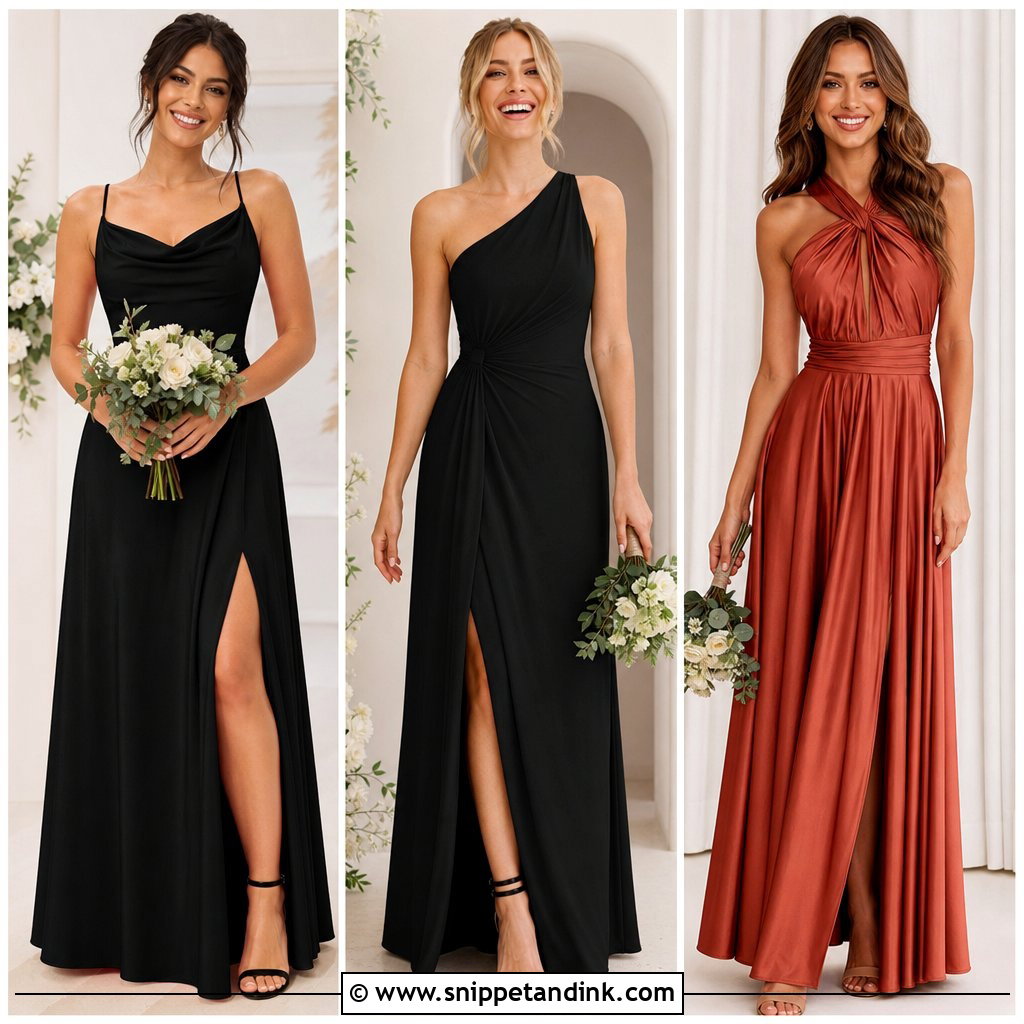
Black satin is the easiest way to let every bridesmaid choose her own silhouette without the group looking random, because the colour does the coordinating. A floor-length column with a square or cowl neckline suits an evening or black-tie room. White or pale pink flowers stop it reading severe. Of all the colours here it is the one bridesmaids are most likely to wear again, which I’d point out to anyone worried about the cost.
5. Blush Pink Chiffon Bridesmaid Dress
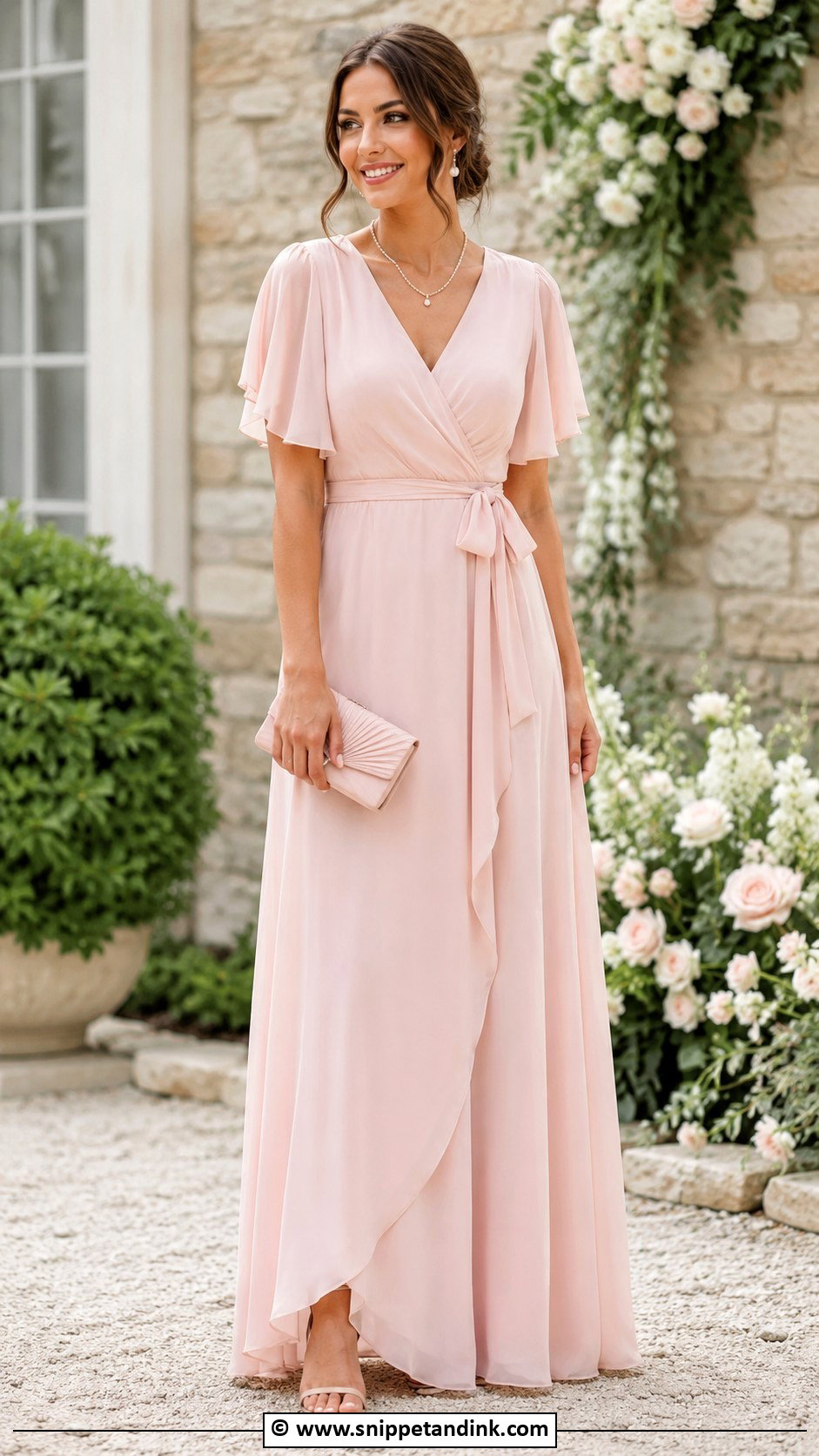
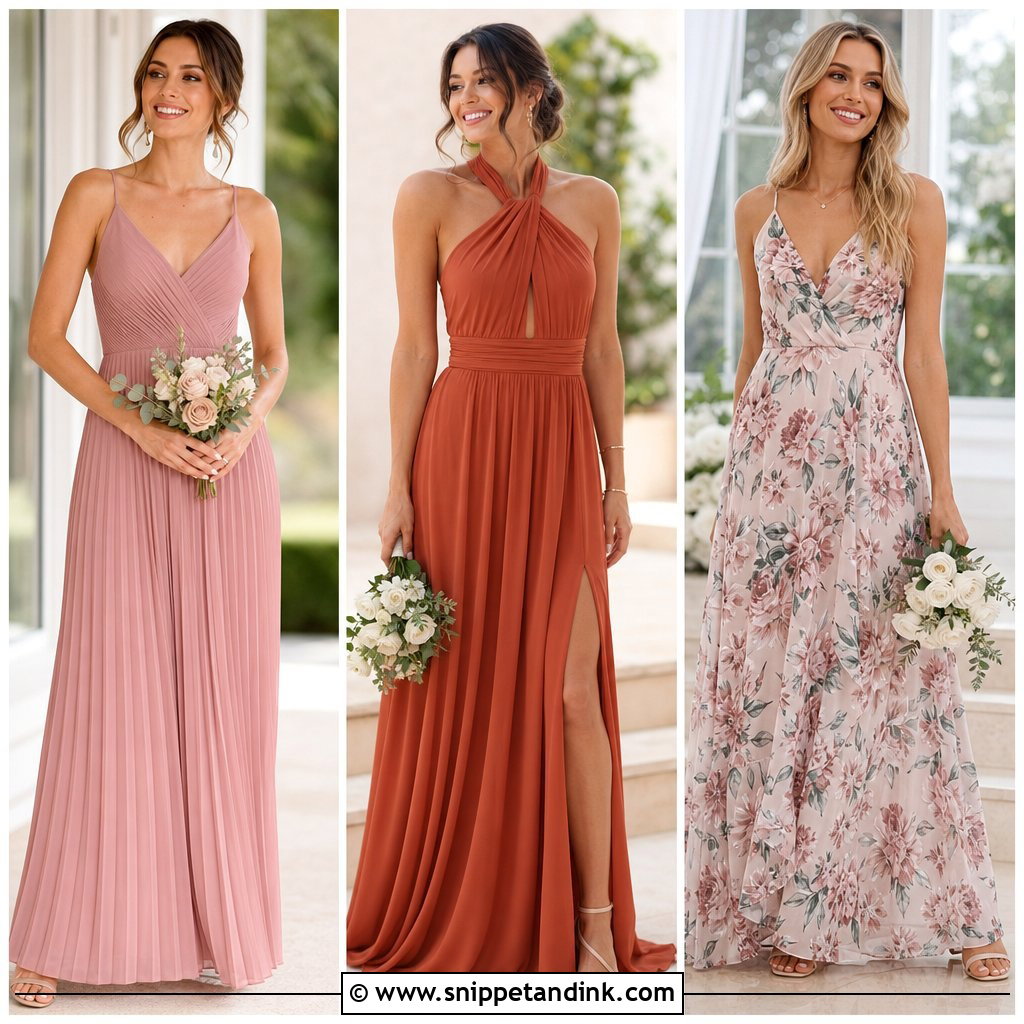
Blush chiffon can tip into sugary if every detail is soft as well, so I’d balance it with a cleaner cut: a wrap bodice or a plain V rather than ruffles. Blush also varies widely between brands, from peach to almost lilac, so order every dress from one retailer if you want them to match. Pearl studs and nude sandals are enough. A low ponytail or braided updo keeps hair off a chiffon neckline that can catch on pins.
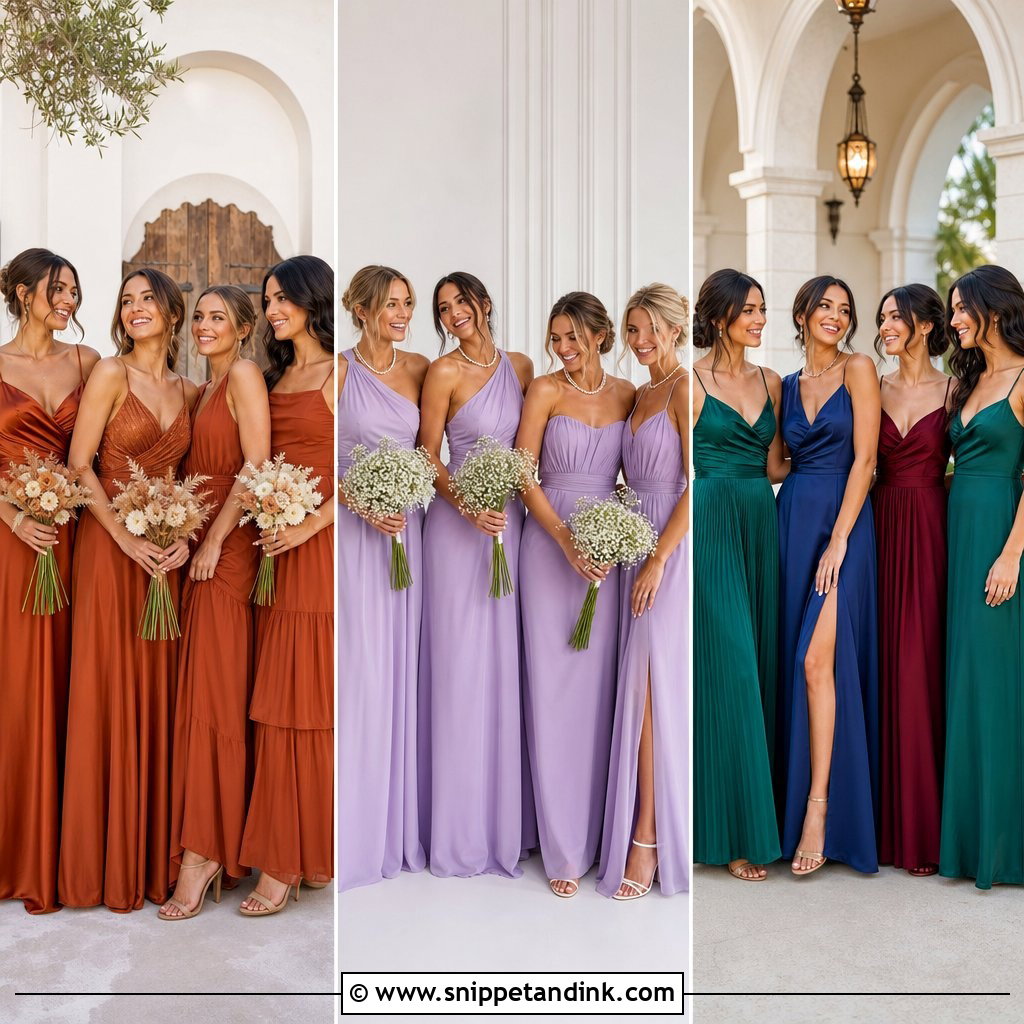
6. Terracotta Bridesmaid Dress
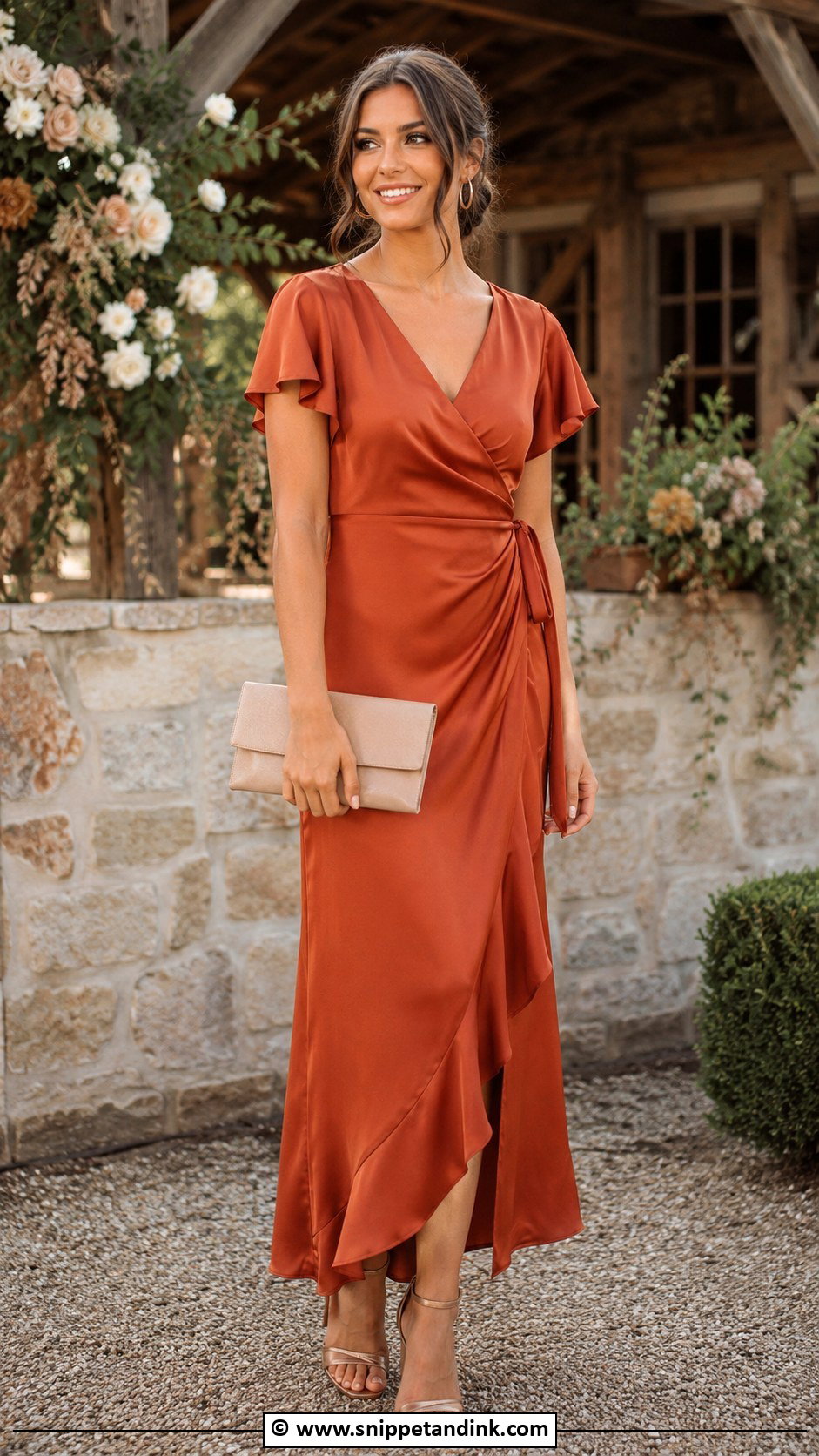
Terracotta is a warm clay orange that flatters warm and olive skin especially well; on very fair, cool-toned skin it can wash the face out, so try a swatch near the face first. Choose satin for a formal evening, crepe for structure or chiffon for an outdoor ceremony. Tan or bronze heels and gold hoops suit it. Dried florals, cream roses and olive greenery pick up its warmth. Keep the cut simple, a slip, wrap or A-line, because the colour is already doing a lot.
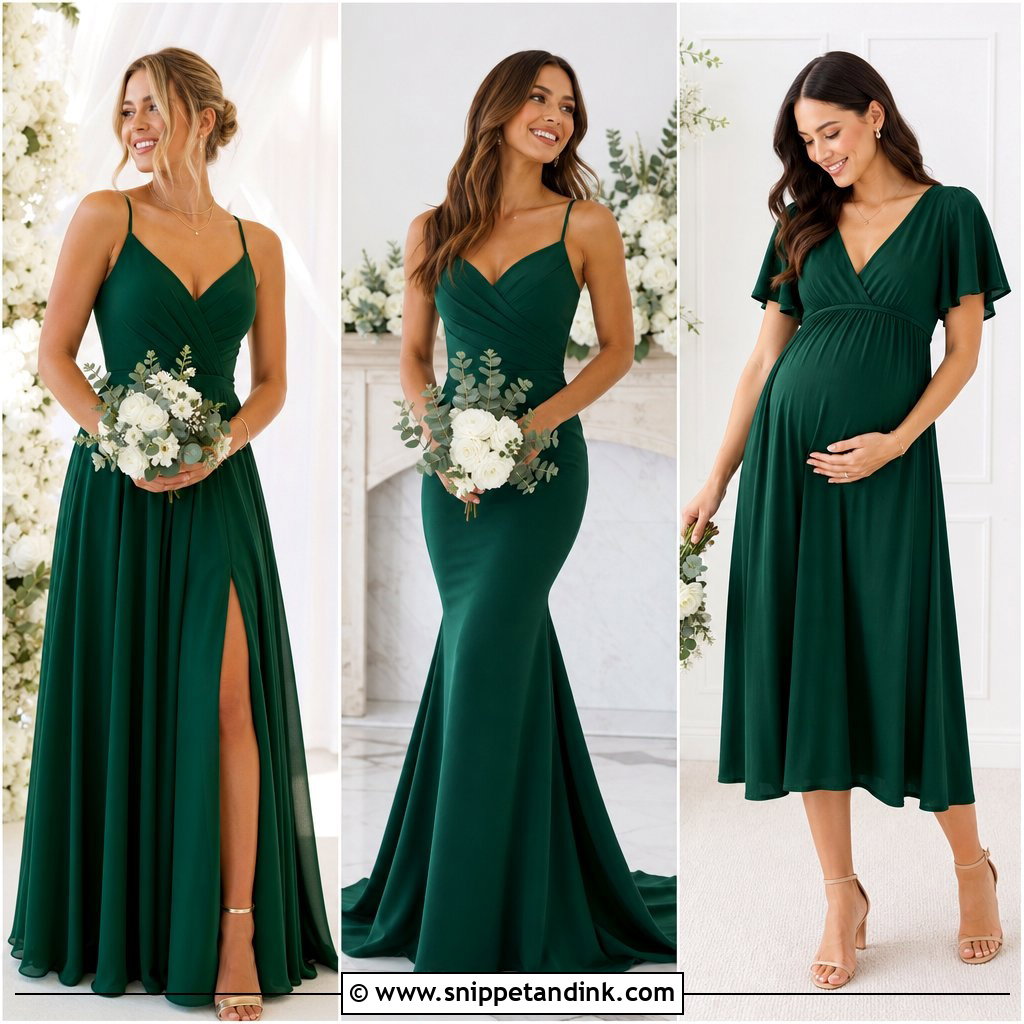
7. Emerald Green Bridesmaid Dress
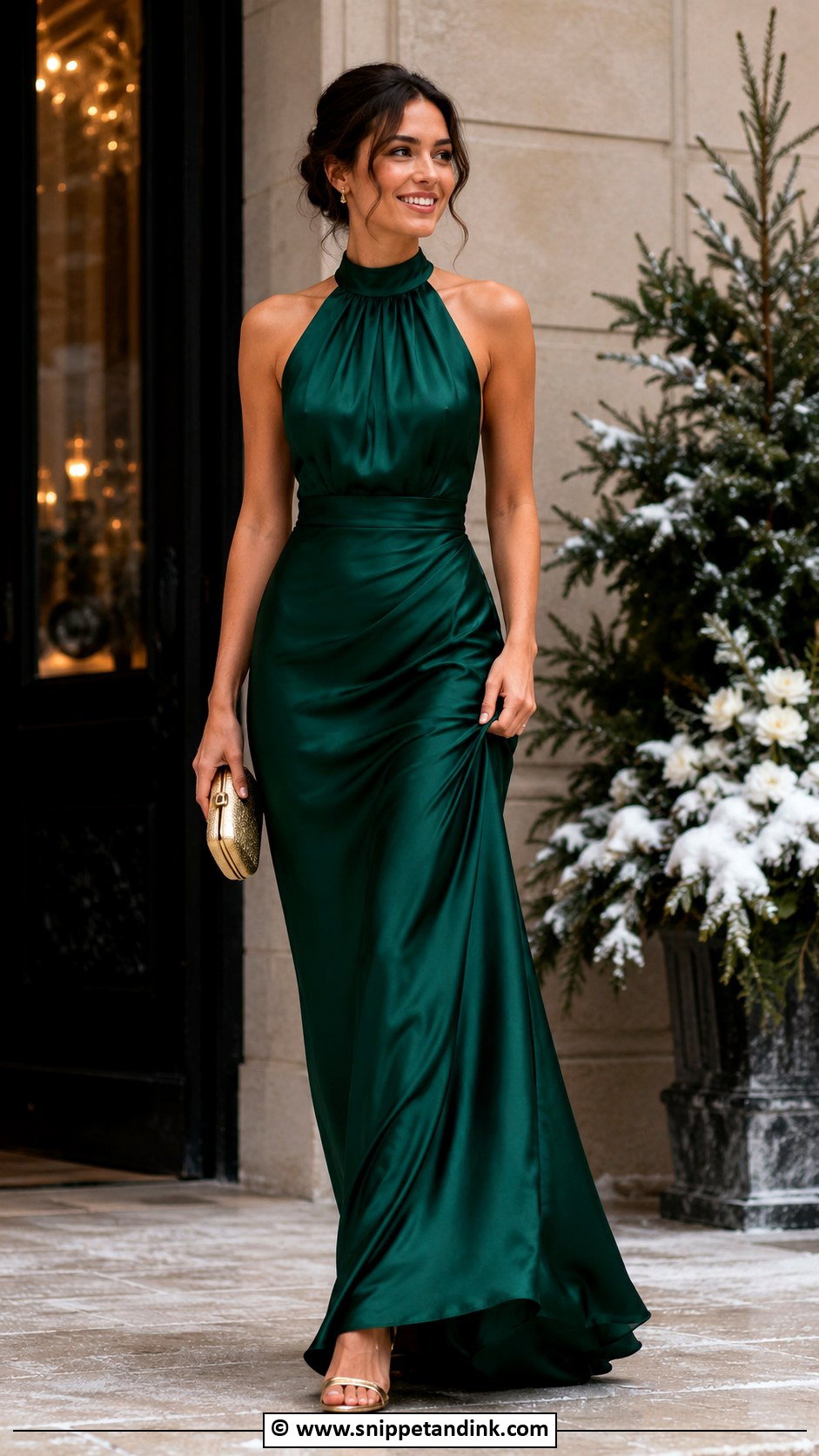
Emerald holds its depth in every fabric, but it changes character: in satin it looks formal and glossy, in velvet richer and darker, in crepe flatter and more modern. I’d decide the fabric before the colour, then check that the green is the same across all orders. Gold heels and a small gold clutch let the colour stay the focus. Next to white flowers and burgundy accents it suits a winter ballroom or an evening estate wedding. A sleek bun or soft waves both work.
8. Floral Print Bridesmaid Dress
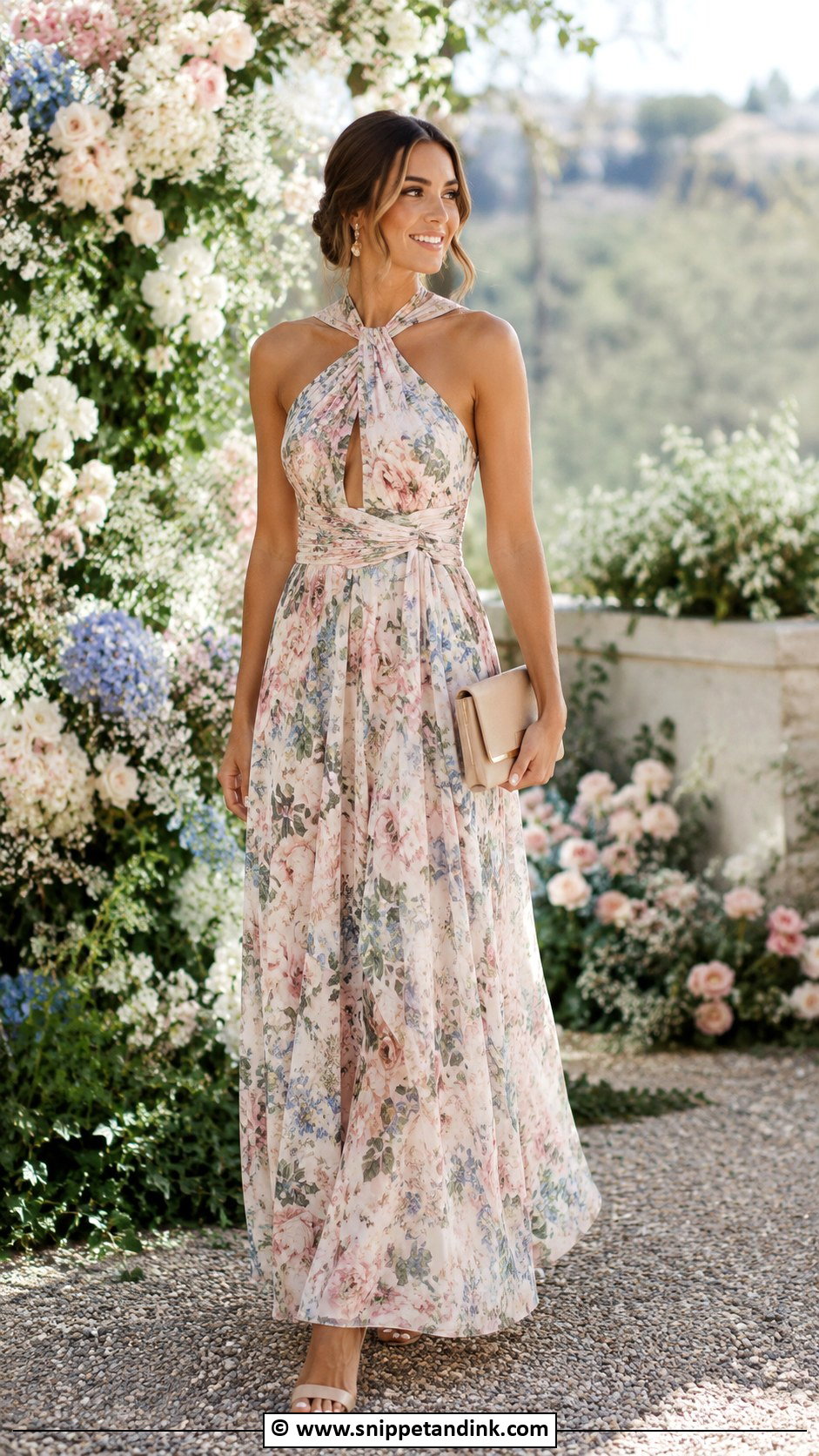
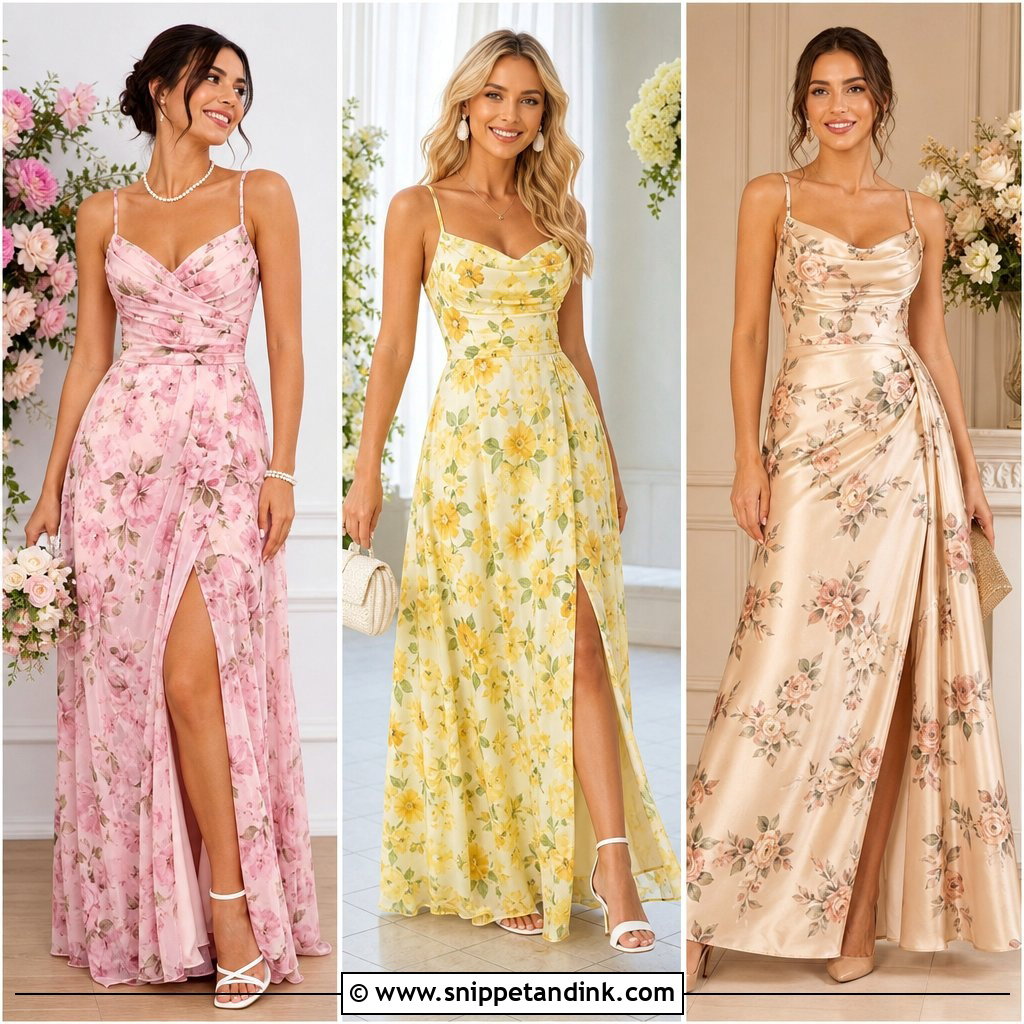
A floral print adds texture that a solid colour can’t, but the busier the print, the simpler the rest must be. I’d pick a print with a clear two- or three-colour palette and then match shoes, clutch and jewellery to the plainest shade in it. For a group, either use one print in different silhouettes or mix florals with solids pulled from that palette. Printed chiffon hides small creases better than satin, which helps on a summer outdoor day.
9. Mismatched Pastel Bridesmaid Dress
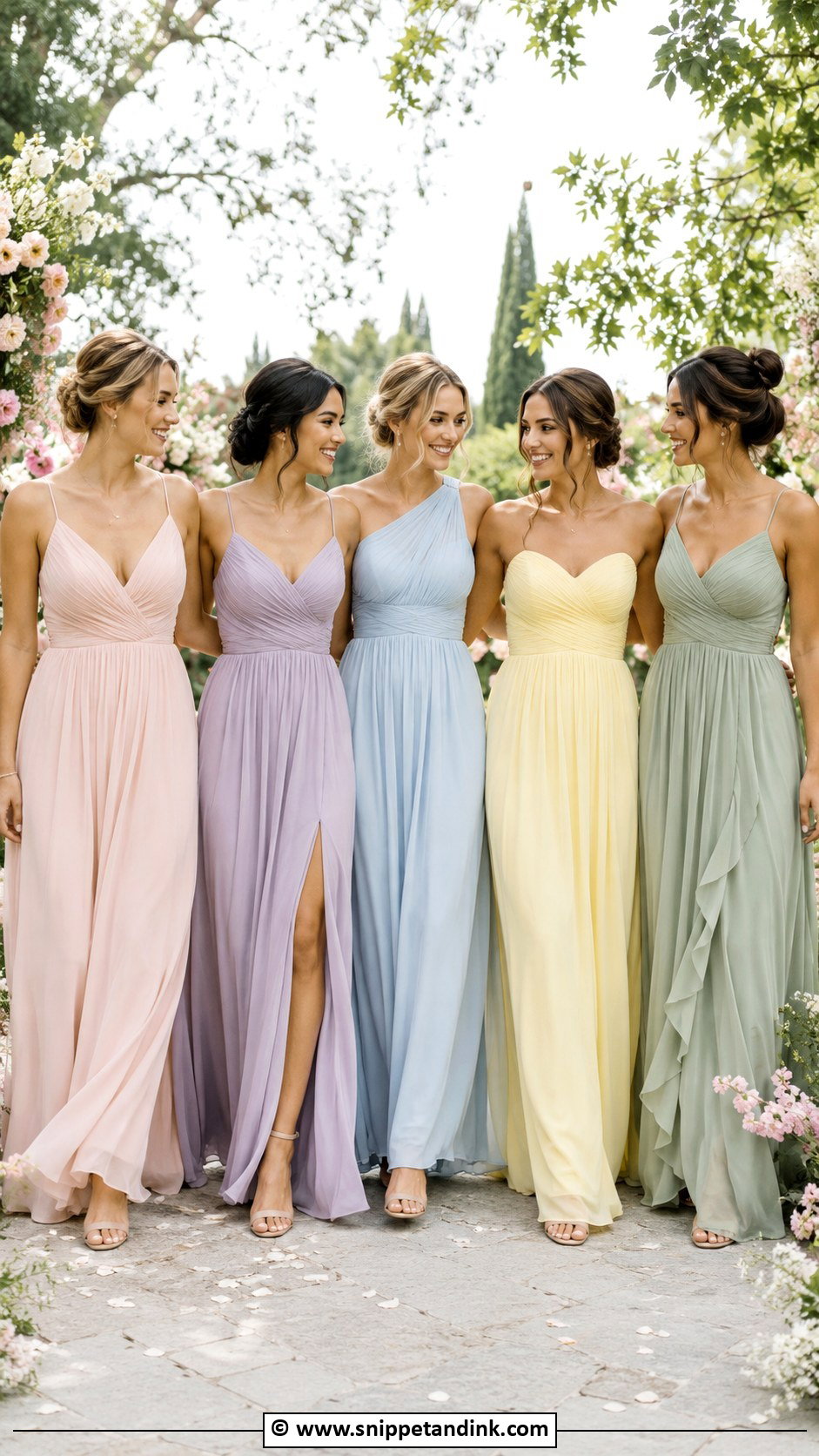
Mismatched pastels work only when something else matches. Blush, lavender, pale blue, butter yellow and sage can stand together if the fabric and length stay the same, so I’d fix those two and let each bridesmaid choose her own neckline. Buying from one retailer’s palette is easier than mixing brands, because their shades are designed to sit together. Keep shoes nude and jewellery similar across the group.
10. Burgundy Velvet Bridesmaid Dress
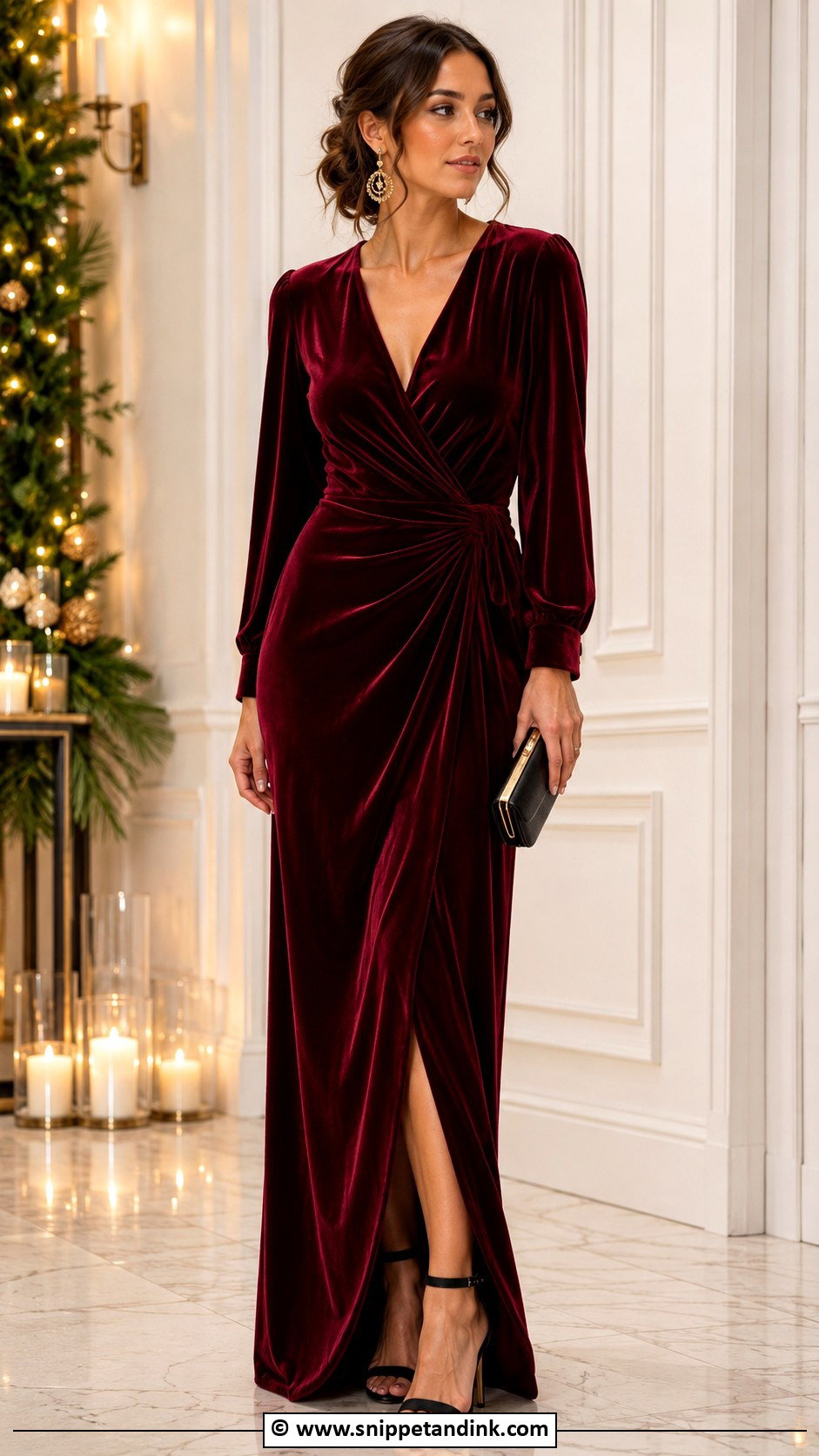
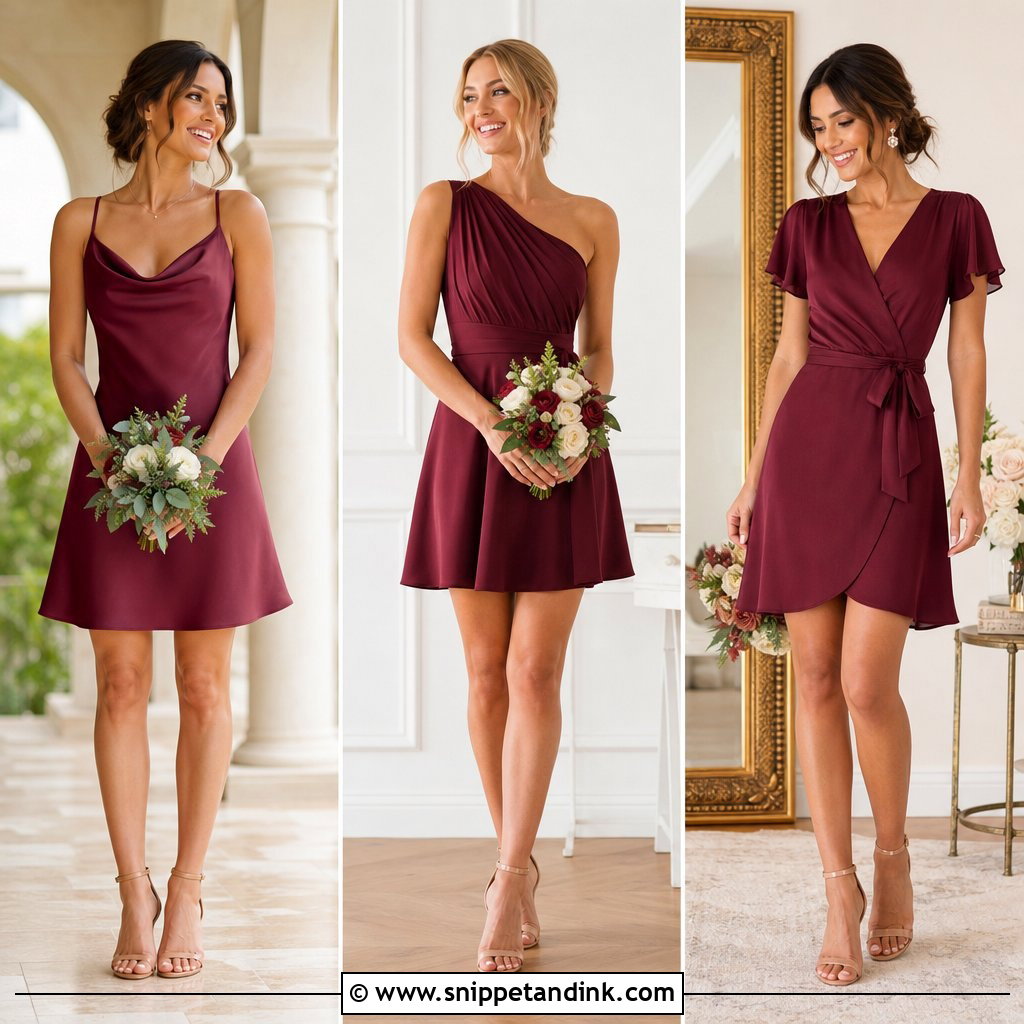
Velvet carries its own weight and depth, so burgundy in velvet looks rich without any embellishment. It’s also warm, and a long-sleeved velvet gown at an indoor winter reception with a full dance floor can get uncomfortably hot; I’d consider a wrap dress with short or no sleeves for the warmer members of the group. Velvet crushes when packed and shouldn’t be ironed directly, only steamed from the inside. Gold earrings and a simple clutch are enough.
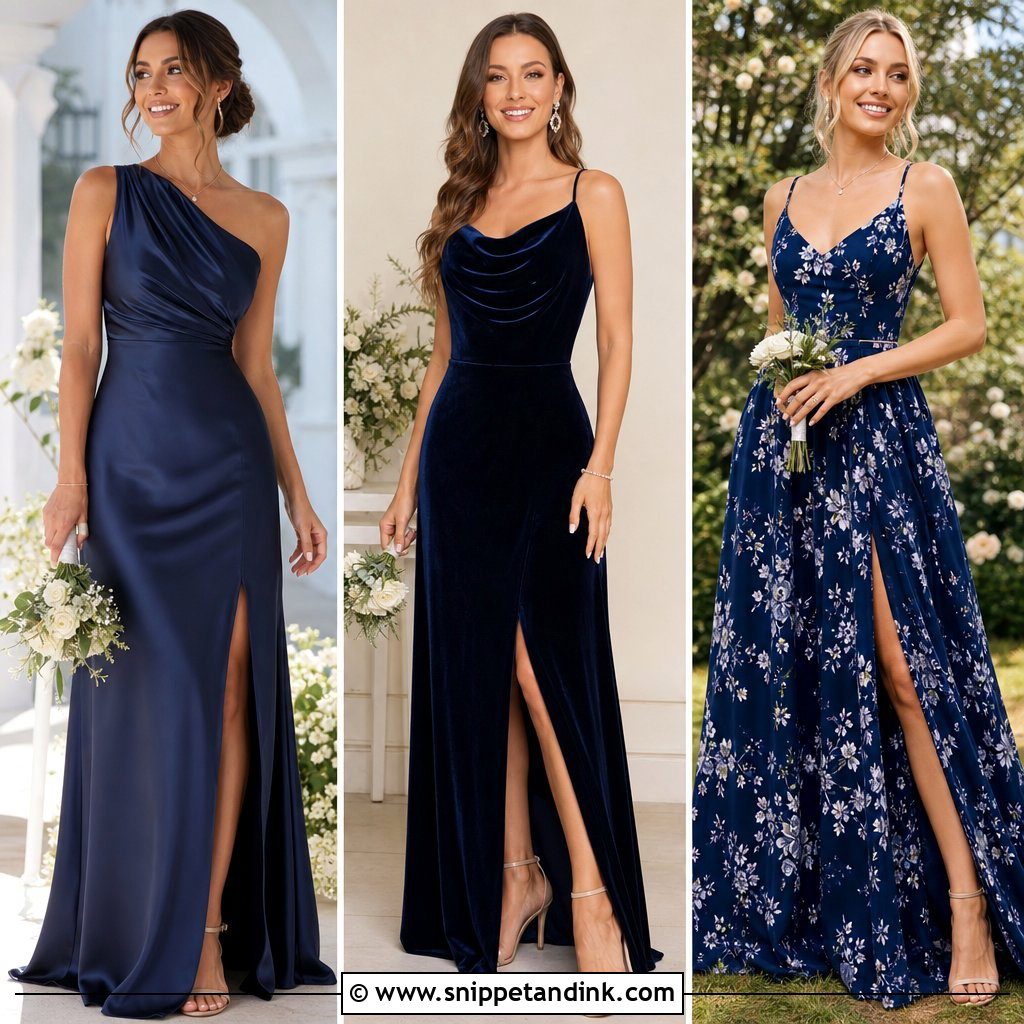
11. Navy Blue Bridesmaid Dress
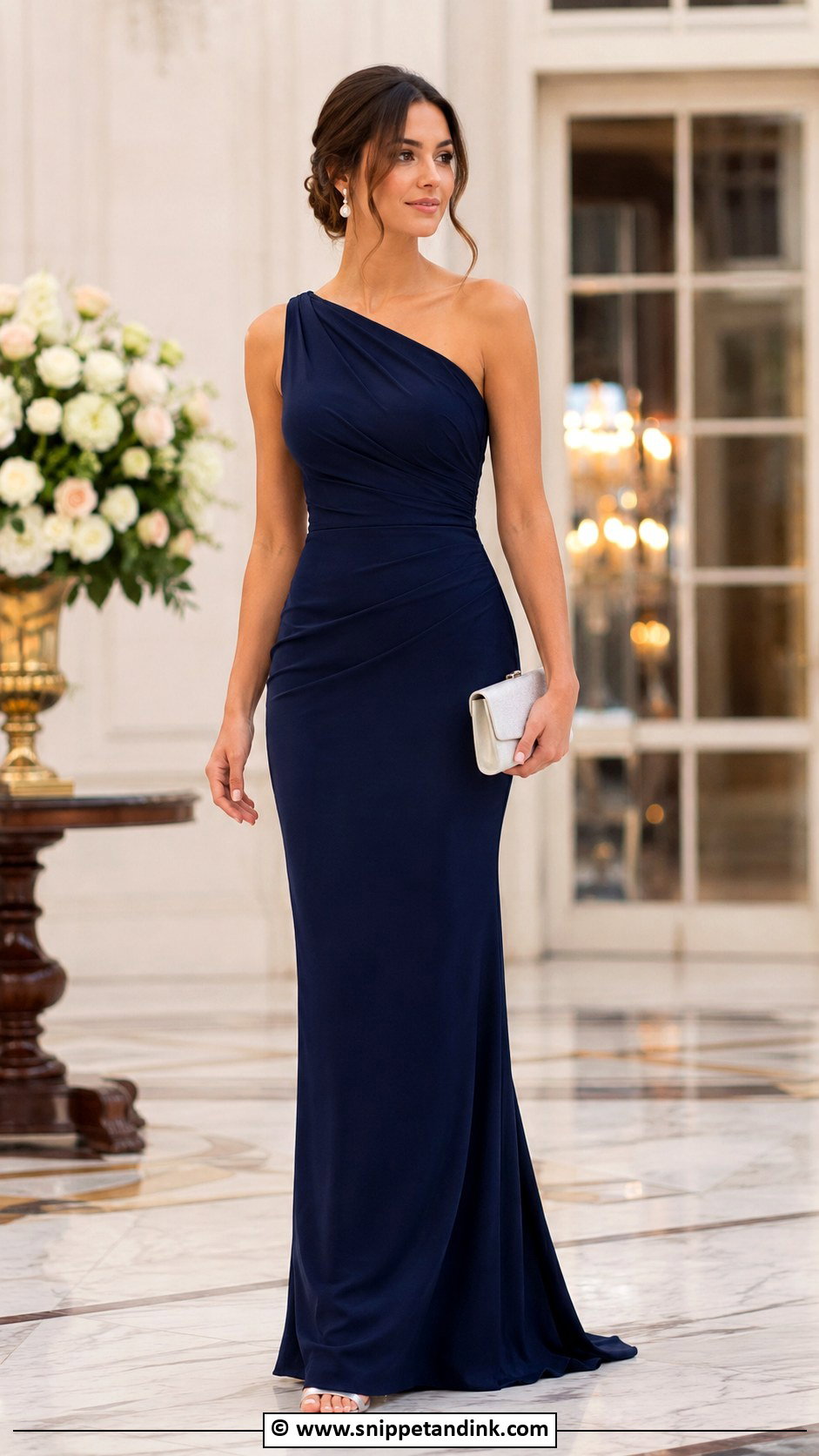
Navy is the colour I’d suggest to a bride who isn’t sure, because it suits most skin tones and seasons and looks formal without the severity of black. Crepe, chiffon or a satin wrap all work. Silver heels and pearl earrings keep it crisp. Navy also hides the small marks a long day leaves on a dress, which a pale colour doesn’t.
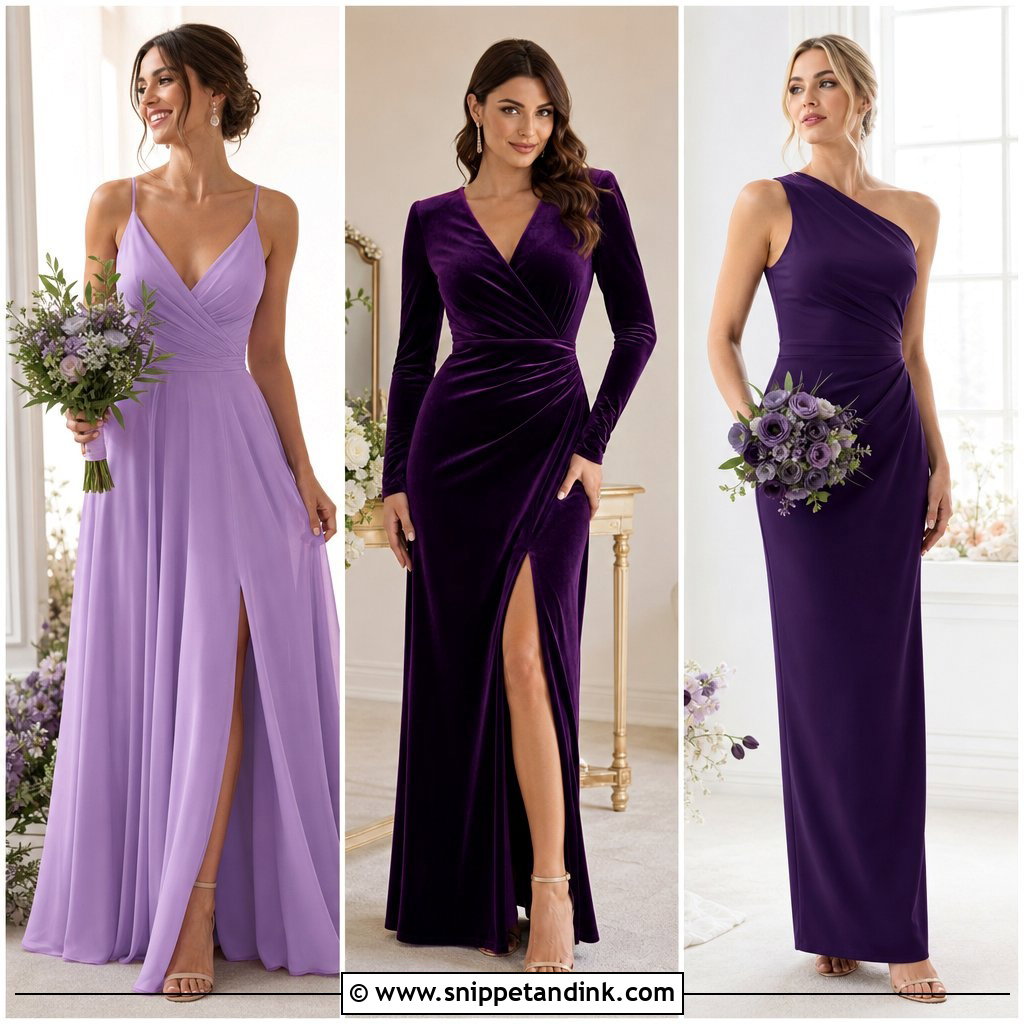
12. Lavender Bridesmaid Dress
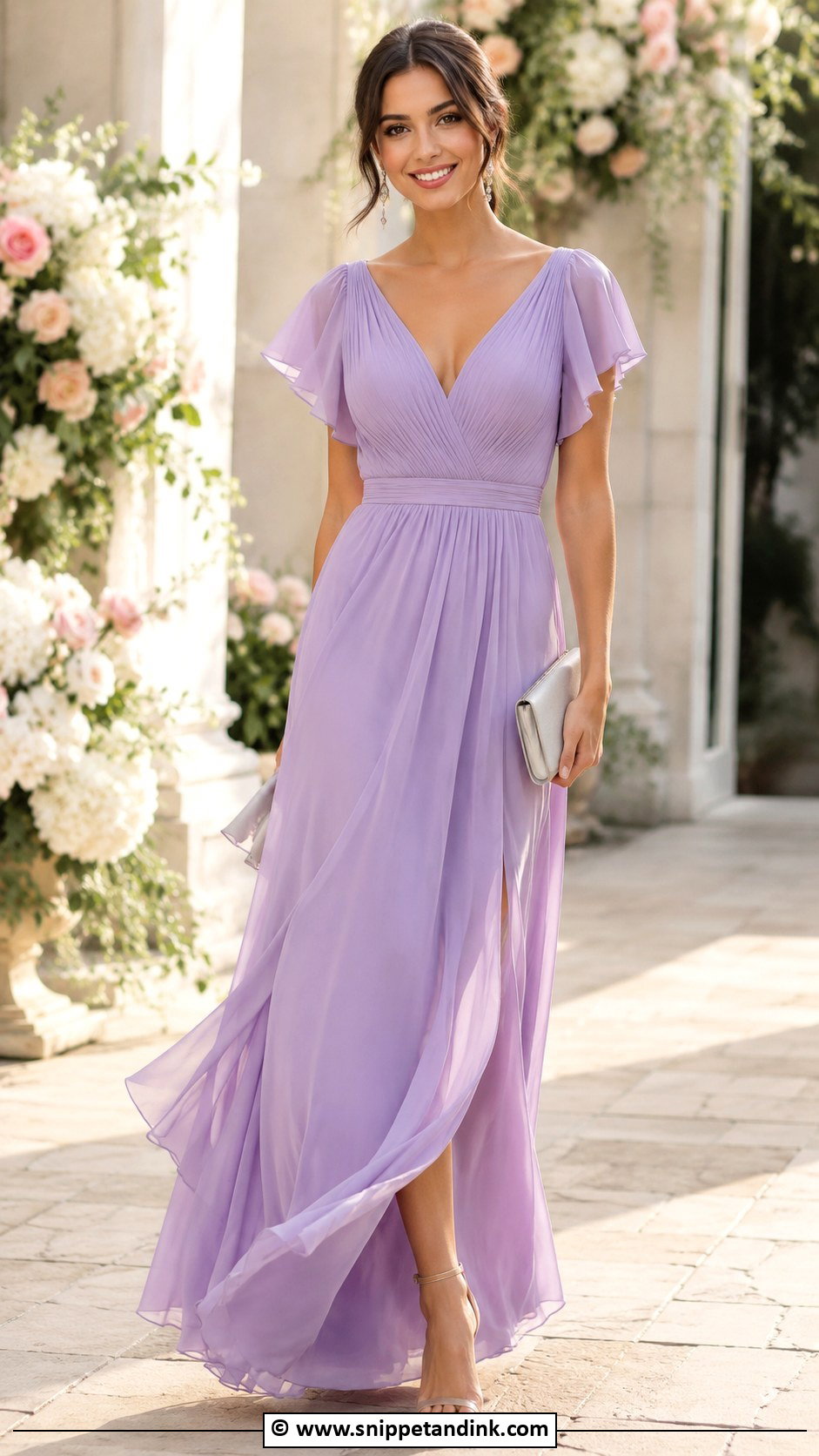
Lavender needs restraint. With ruffles, sparkle and matching accessories it can start to look like a costume, so I’d keep the cut clean: a chiffon maxi with flutter sleeves, a satin slip or a one-shoulder crepe. It can look grey on cooler skin in some lights, so try it near the face before ordering. Silver or nude heels and small crystal earrings are plenty.
13. Olive Green Bridesmaid Dress
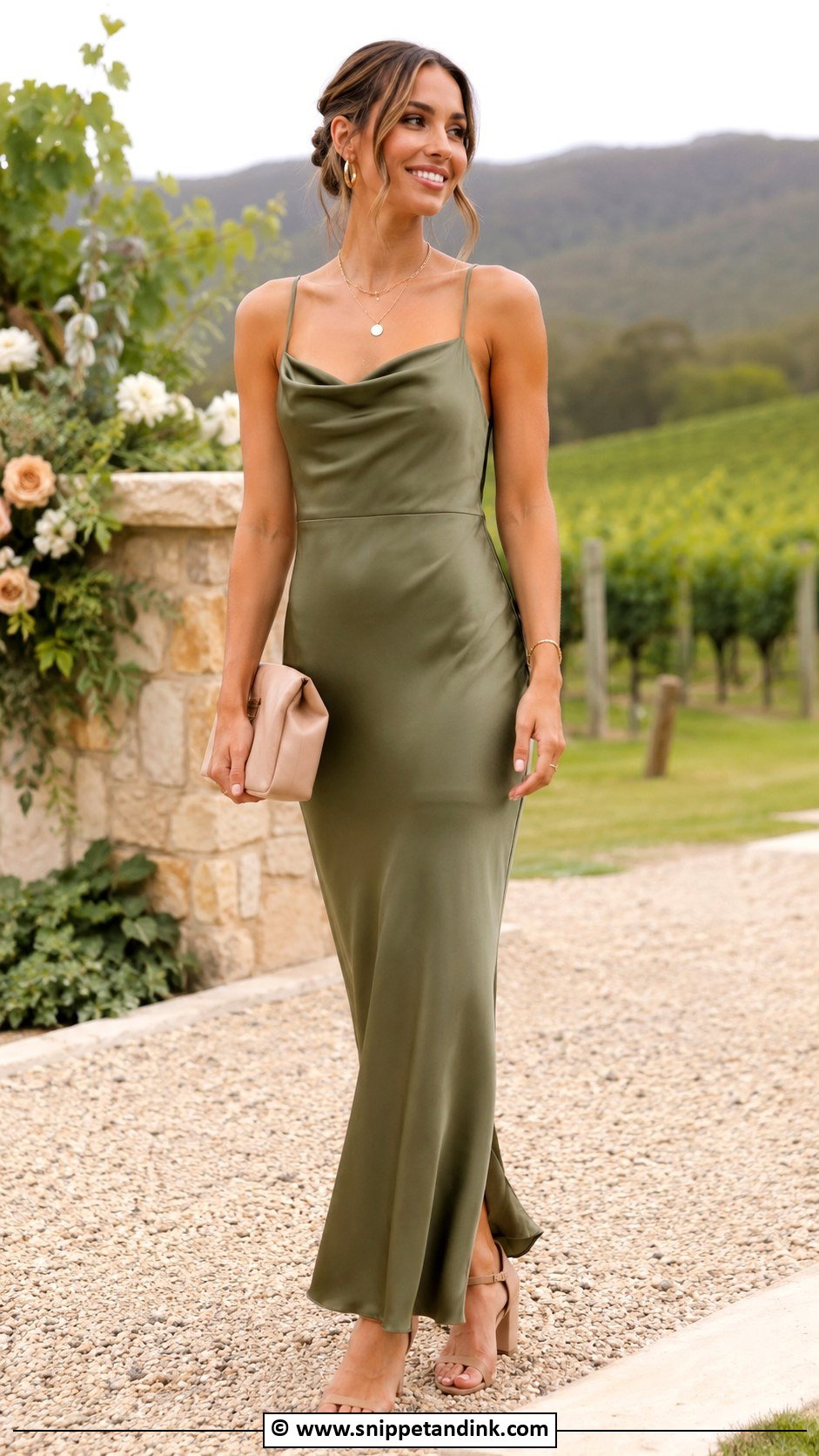
Olive is a muted, earthy green that works with wood, stone and neutral flowers. A satin slip, chiffon wrap or crepe halter keeps it modern. Tan block heels and gold jewellery suit the warm undertone. It also pairs well with champagne, rust, terracotta and cream if you want a mismatched bridal party, and I’d use olive as the anchor colour in that mix because it calms the brighter shades.
14. Rose Gold Bridesmaid Dress
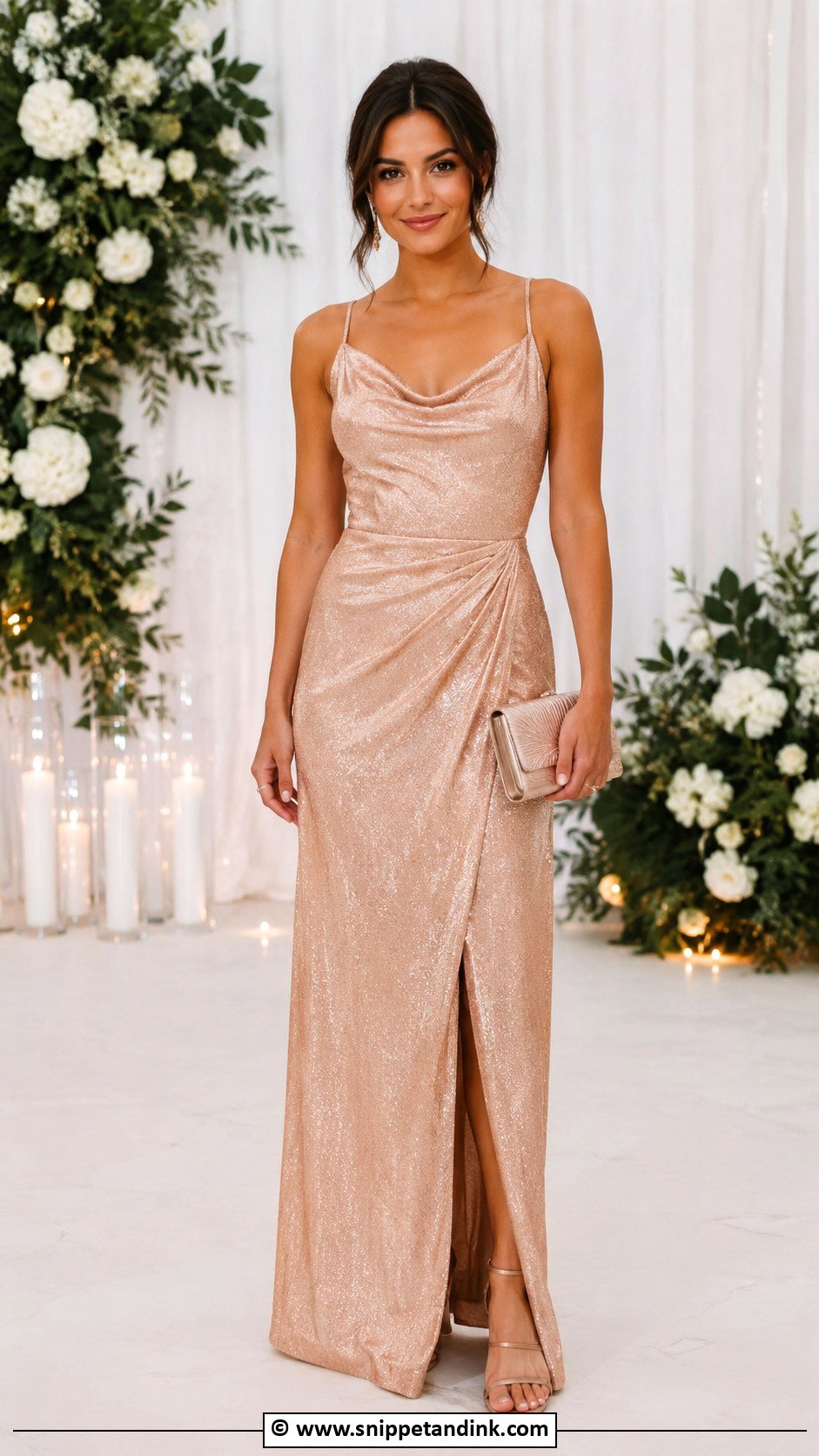
Rose gold is shimmer, and shimmer is unforgiving under bright indoor lights: sequins catch every bit of light and can look busy. A satin column or a subtly sequined wrap in a clean silhouette keeps it under control. Skip heavy jewellery and elaborate hair, because the dress is already the statement. Sequined fabric can also scratch the inner arm, so check the armholes at the fitting.
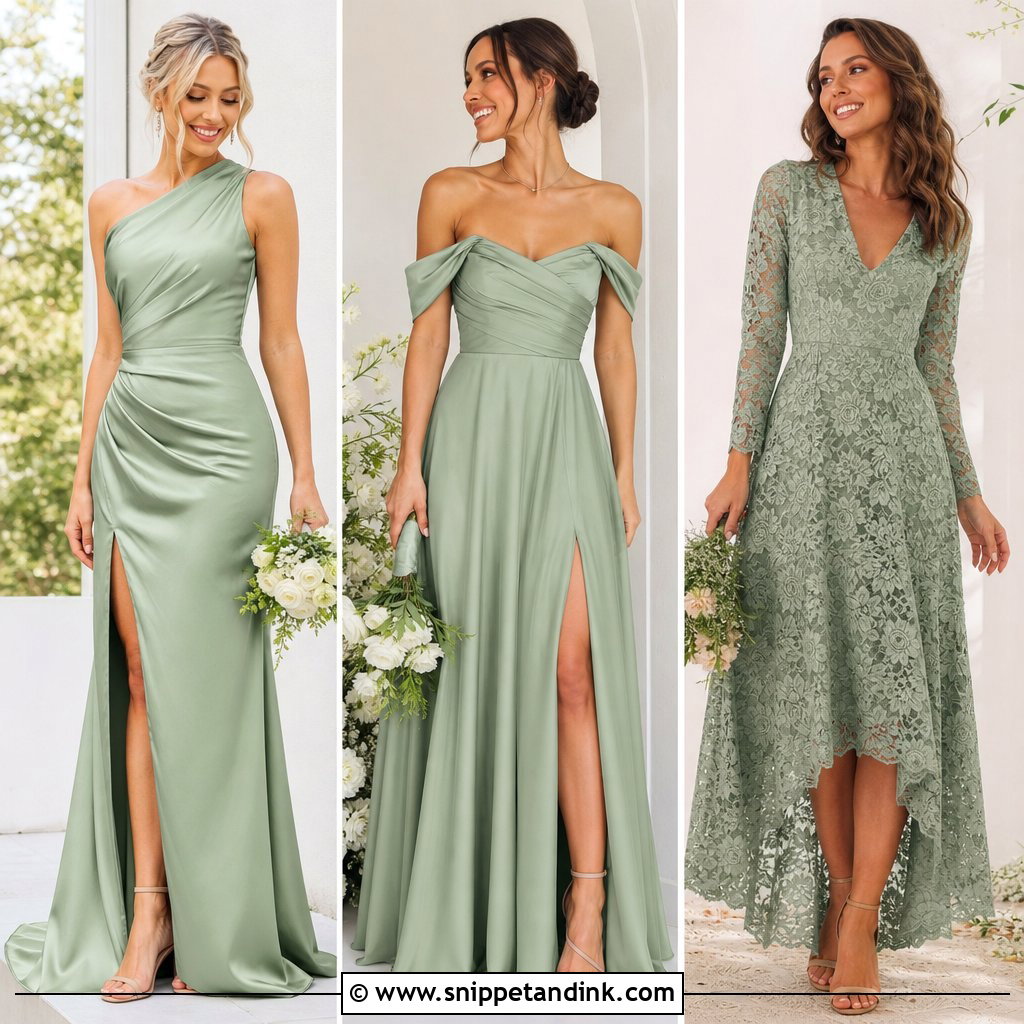
15. One Shoulder Bridesmaid Dress
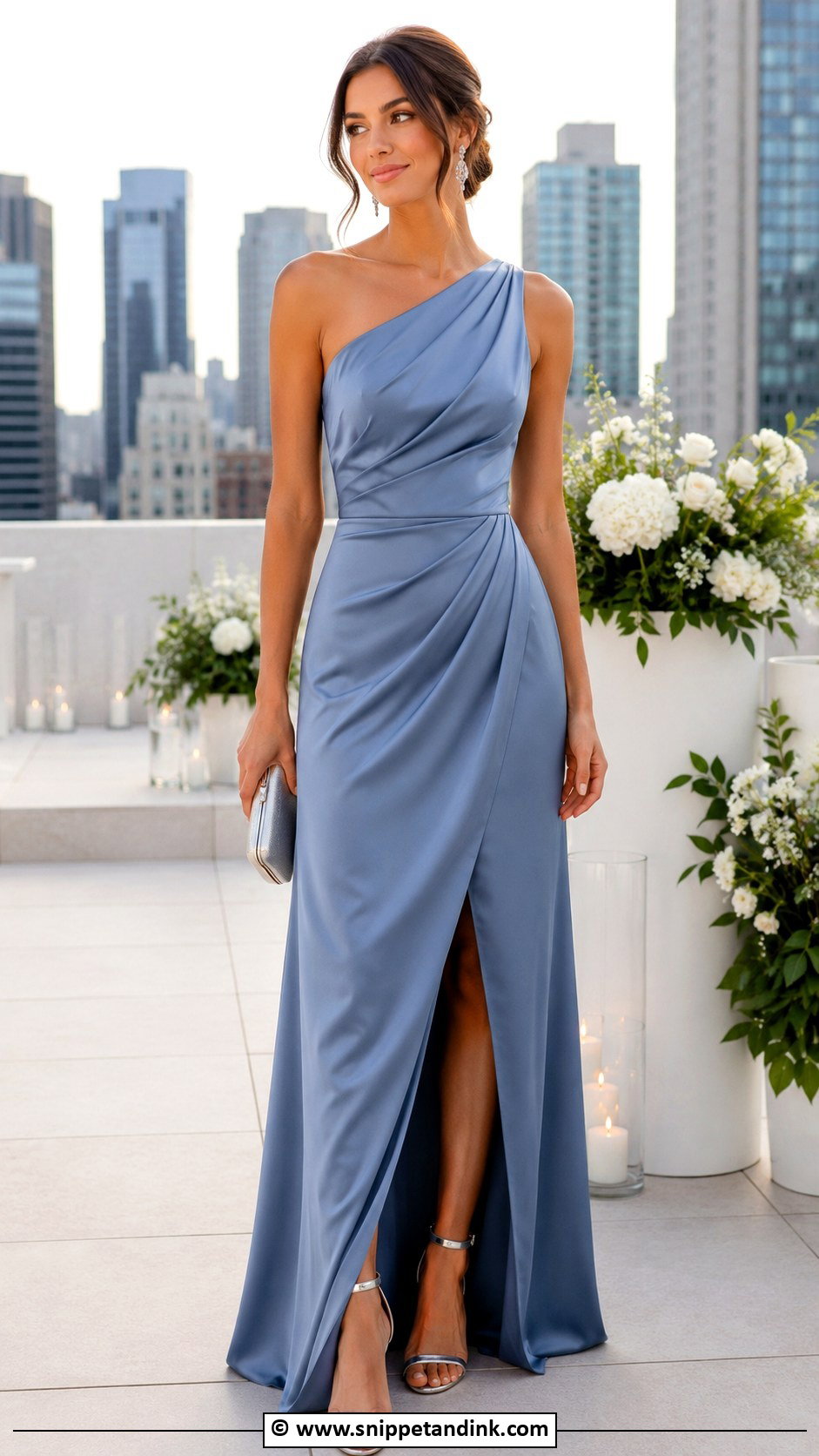
A one-shoulder neckline needs structure to stay in place, so I’d look for an inner elastic or a lightly boned bodice; without one, the strap slides off and the bridesmaid spends the evening pulling it up. It suits satin, crepe and chiffon in one colour for the whole group. Small drop earrings and a sleek bun let the shoulder line show. It’s a poor choice for anyone who needs a strapless bra for support, since the cut leaves one side bare.
16. Halter Bridesmaid Dress
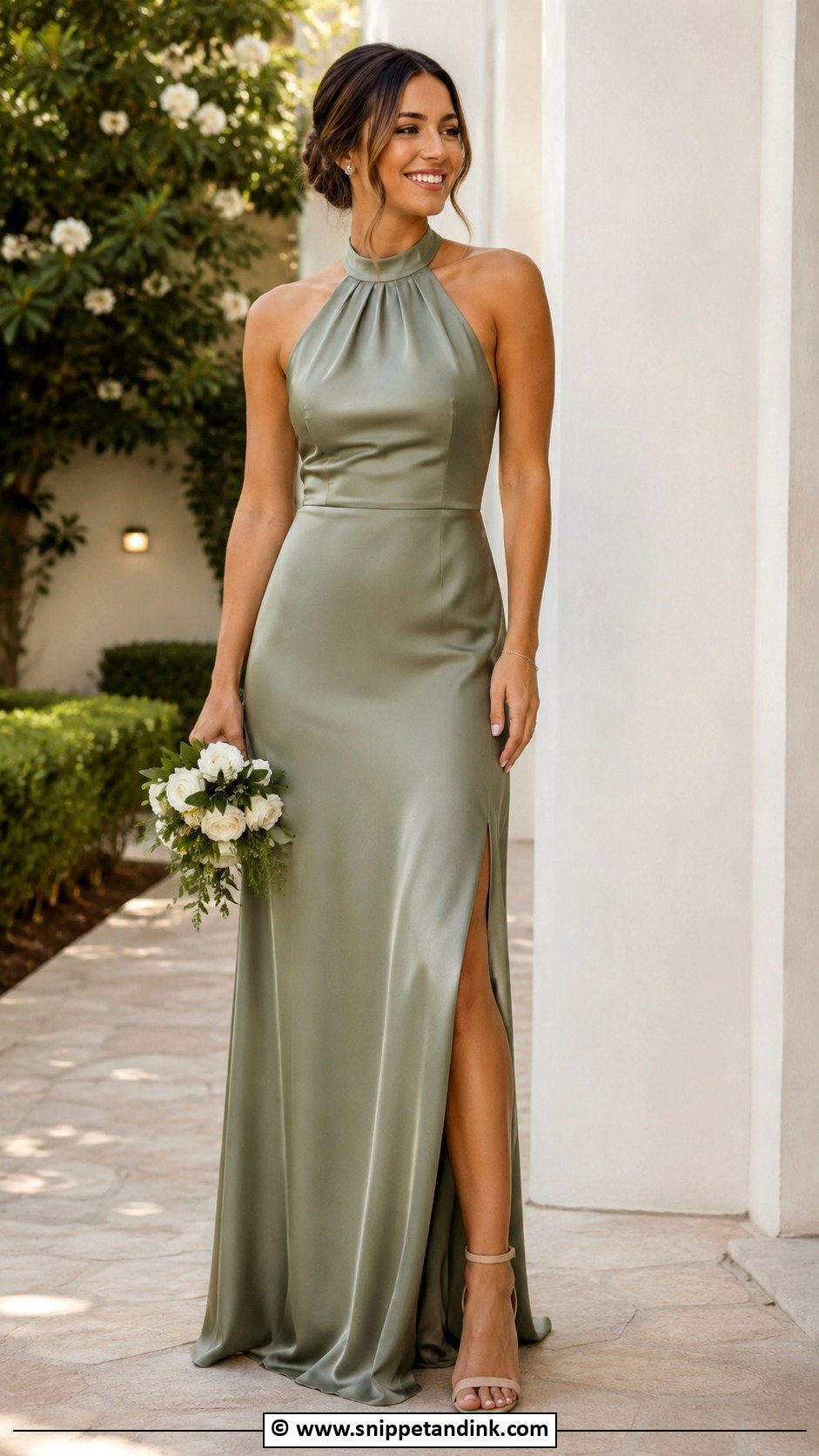
A halter draws the eye up to the shoulders and supports the bust better than most strapless cuts, which makes it a good choice for fuller chests if the strap is wide enough. A neck strap that is too thin will dig in after a few hours, so check the width. Satin suits a formal room, chiffon an outdoor ceremony. Skip the necklace and finish with an updo or polished ponytail so the neckline shows.
17. Long Sleeve Bridesmaid Dress
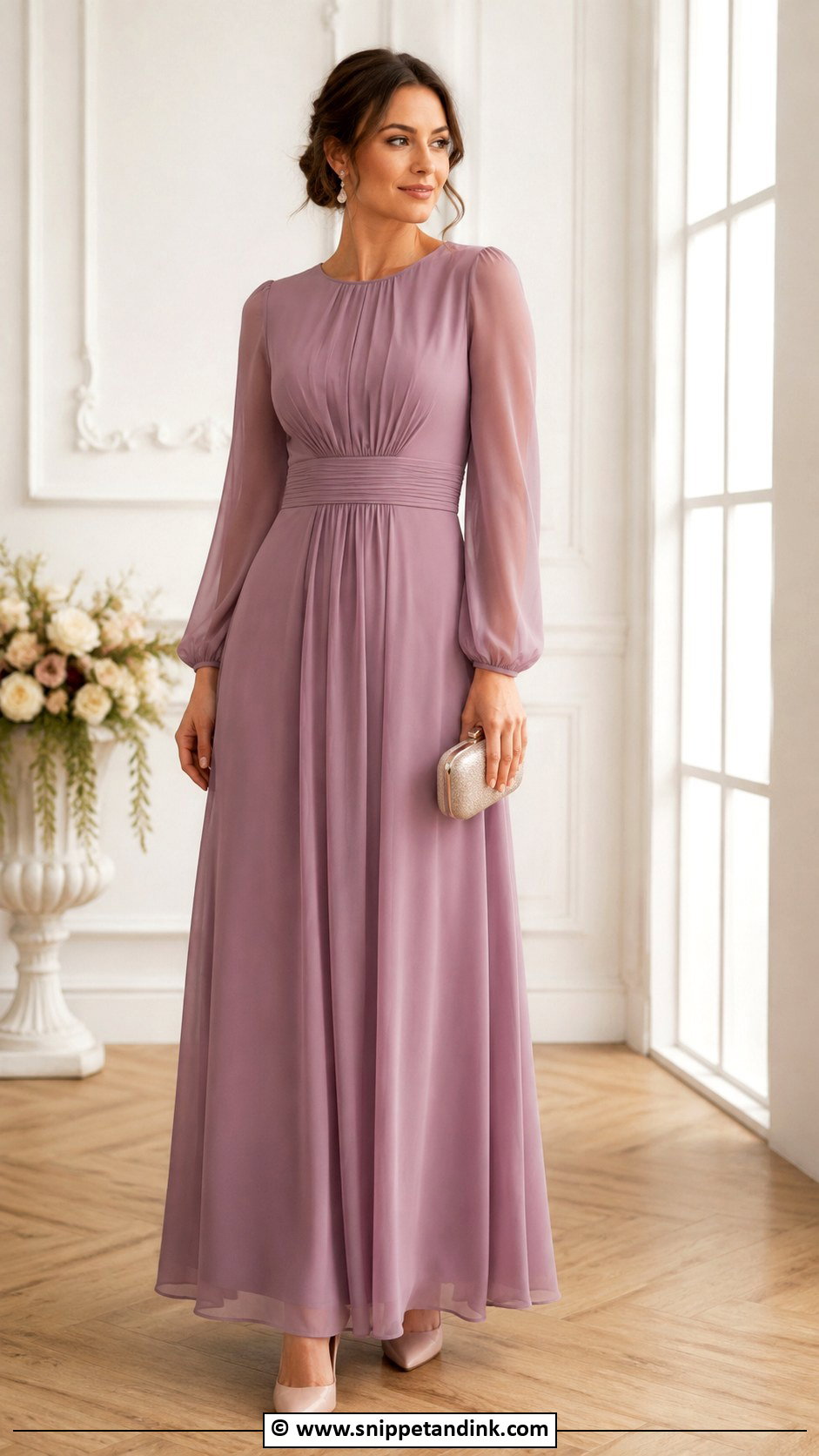
Long sleeves give warmth and coverage, which suits winter, formal venues and families with modest dress codes. Sheer sleeves keep it from looking heavy. The thing I’d check is arm movement: a fitted sleeve set too high or too tight makes it hard to hold a bouquet or hug. Chiffon is softest, satin dressier, velvet warmest. Closed-toe heels or simple sandals depending on the season.
18. Slip Bridesmaid Dress
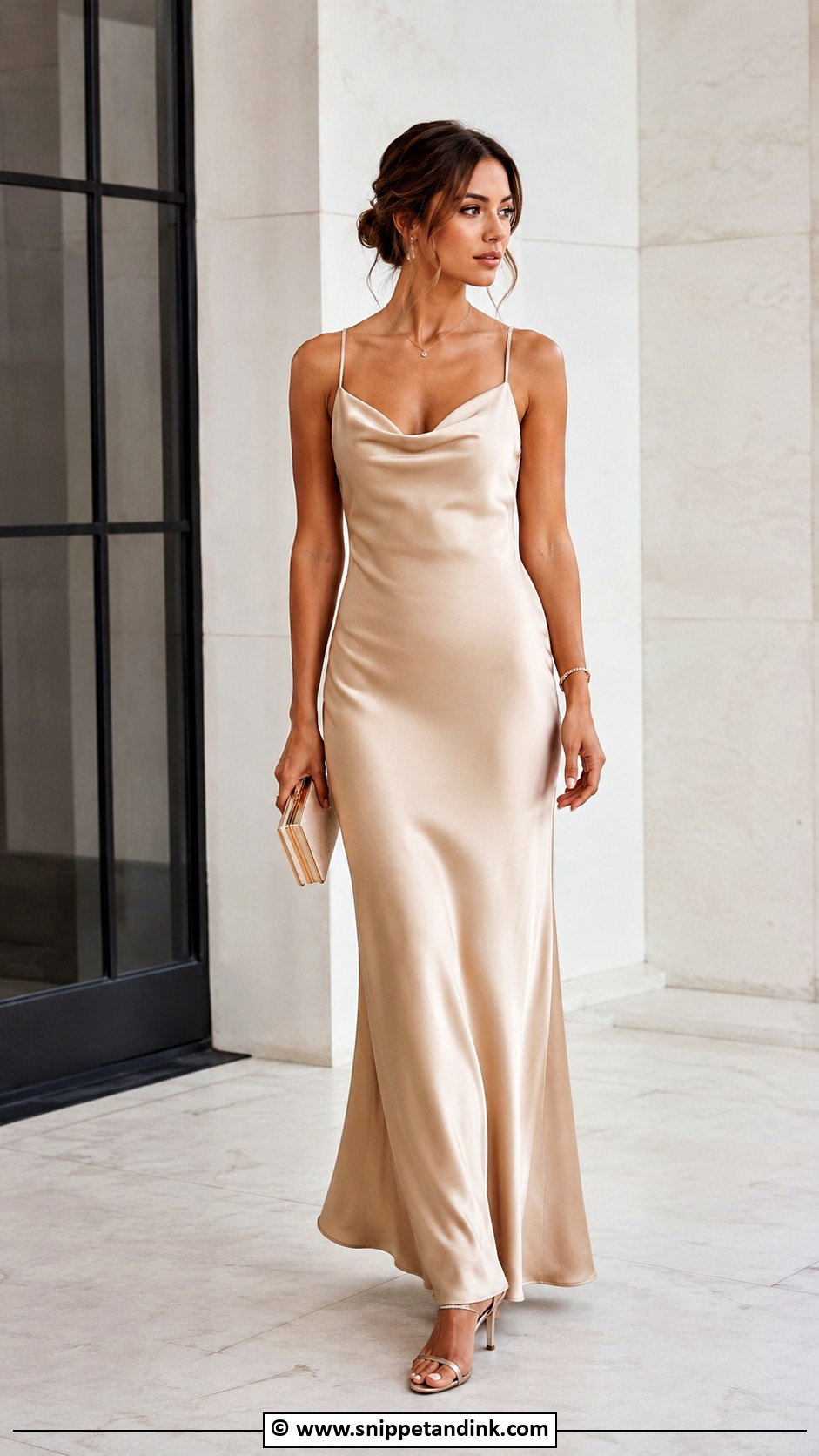
A slip dress is the simplest cut and the least forgiving. Satin or charmeuse cut on the bias skims the body and shows every undergarment line, so smooth, unlined underwear and a good fit through the hips matter more than with any other style. Adjustable straps help. Champagne, dusty blue, black, olive or blush all work. It’s also one of the easiest bridesmaid dresses to wear again.
19. Convertible Bridesmaid Dress
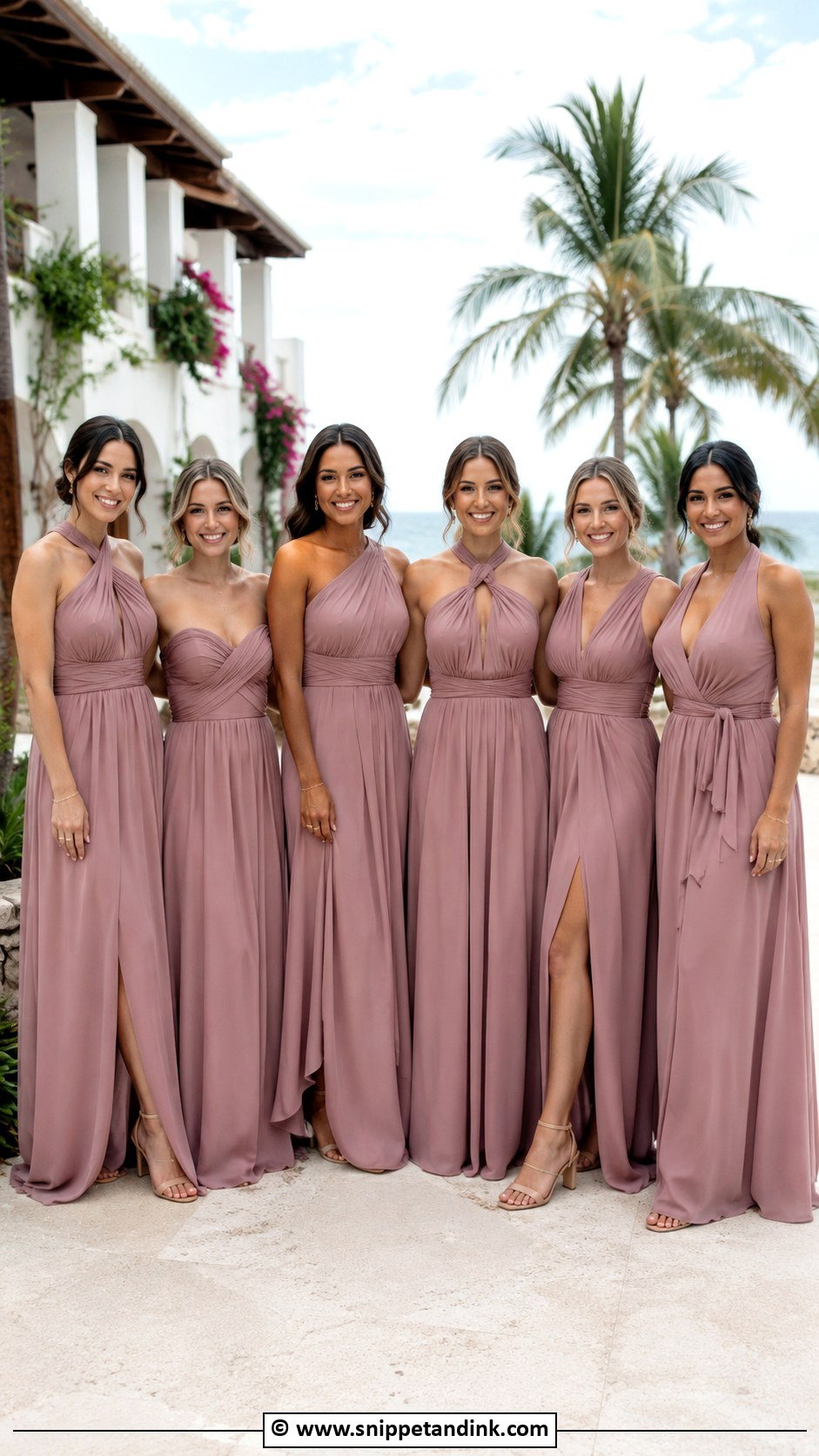
A convertible bridesmaid dress uses long straps that can be wrapped as a halter, one-shoulder, strapless or cap sleeve, so one style can suit very different bodies. Jersey and stretch fabrics are typical. I’d ask each bridesmaid to practise her wrap before the wedding morning, because the first attempt usually takes much longer than expected. Matching shoes help keep the group together.
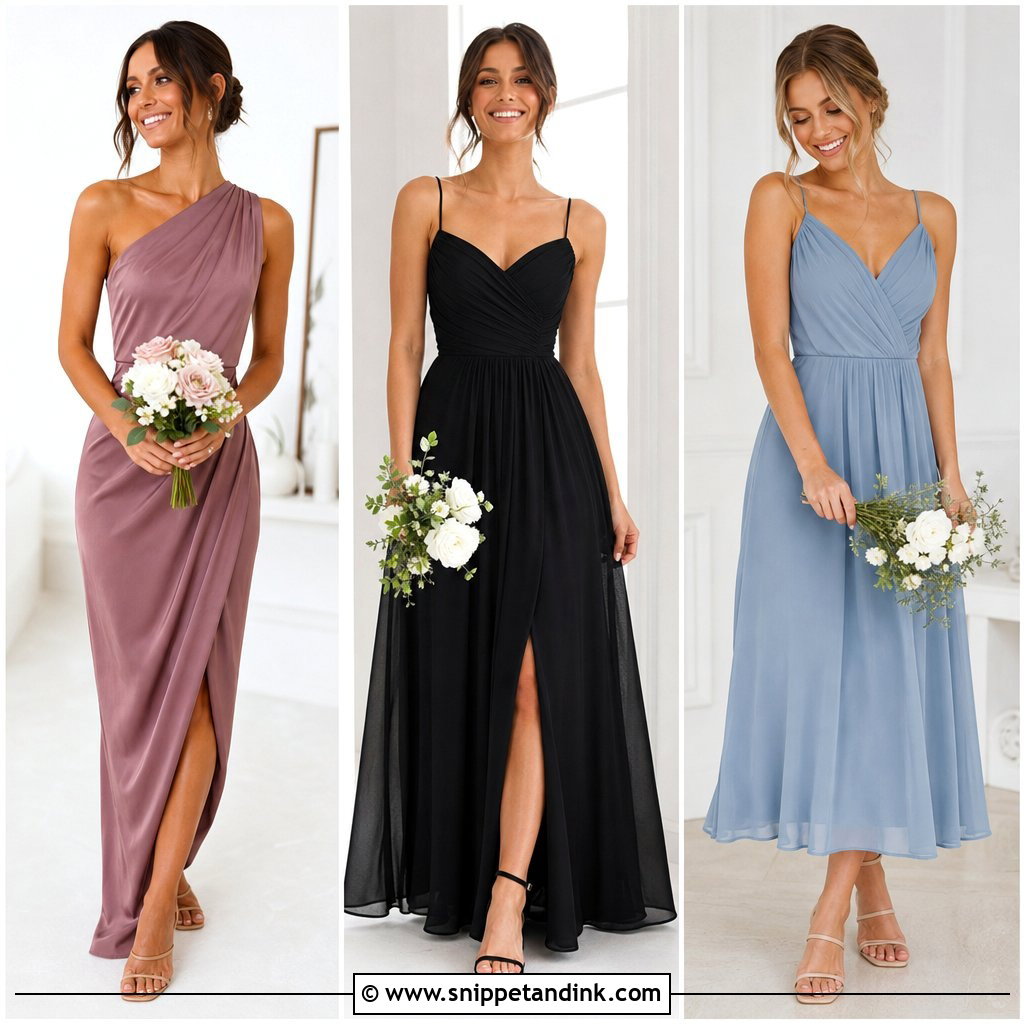
20. Plus Size Bridesmaid Dress
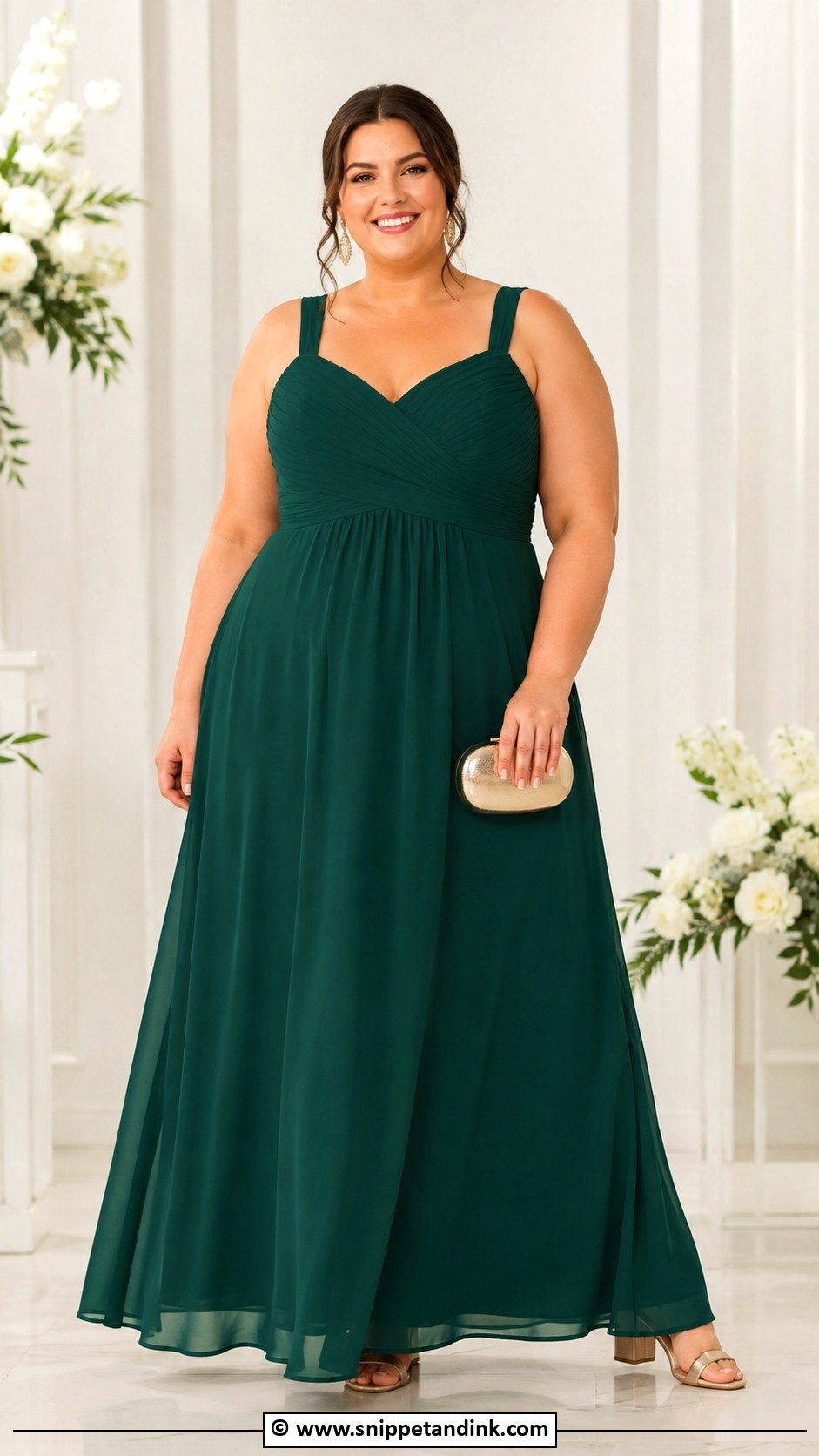
A plus size bridesmaid dress should be chosen with the same care as every other dress in the group, not as an afterthought. I look for wider straps, a defined waist, a wrap bodice or stretch lining, and real bust support built in. A floor-length A-line in chiffon, crepe or satin moves easily. If the group style is a strapless cut that doesn’t offer support, I’d let her choose a different neckline in the same colour rather than force it.
21. Petite Bridesmaid Dress
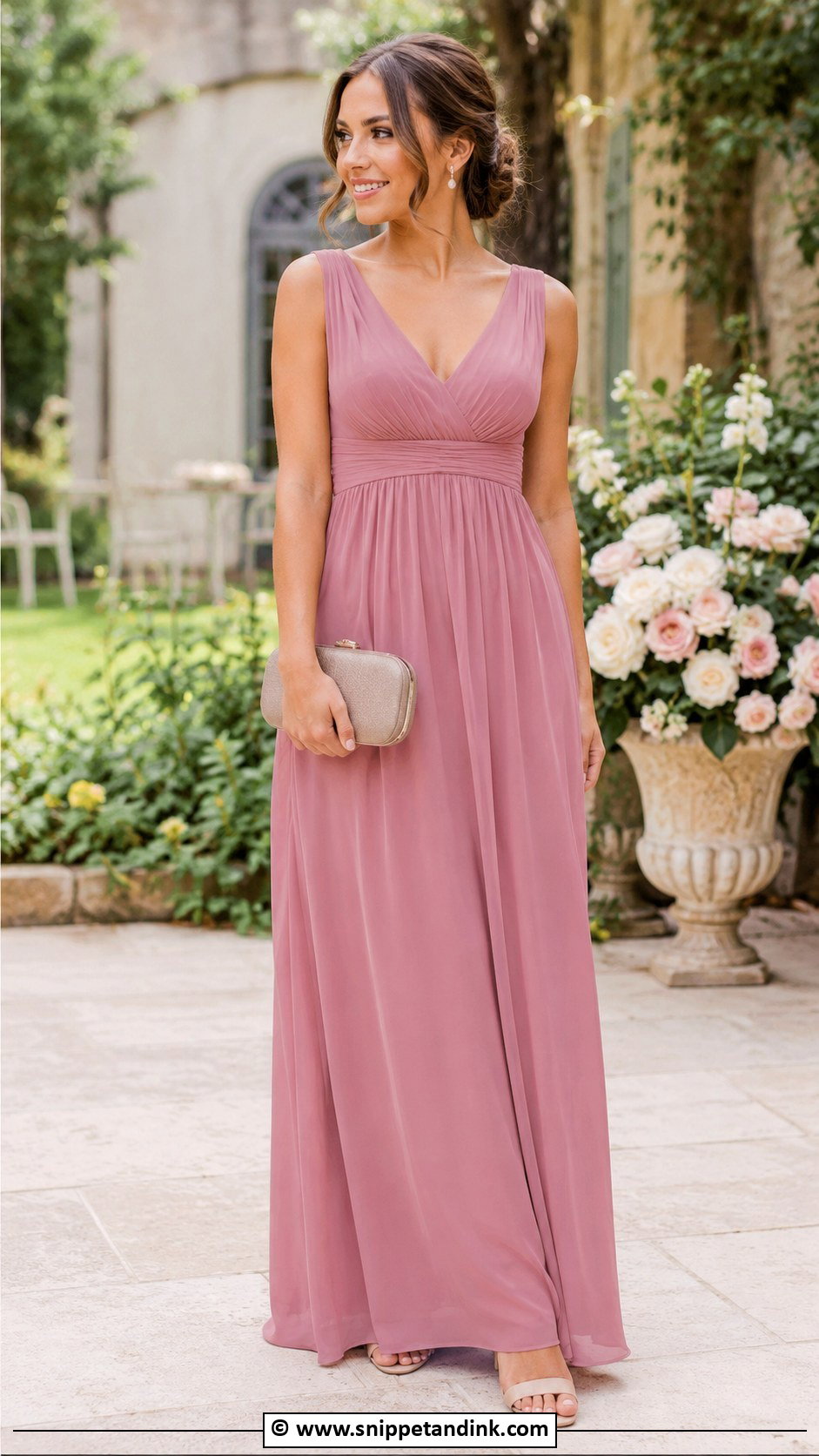
For a petite bridesmaid, the dress has to lengthen without overwhelming her. A clean vertical line works best: a slip, wrap, empire waist or narrow A-line. Heavy layers of tulle add bulk. A V-neck or a high waist makes the leg look longer. The other thing I watch for is hem length: floor-length dresses usually need taking up several inches, so budget for that alteration.
22. Satin Cowl Neck Bridesmaid Dress
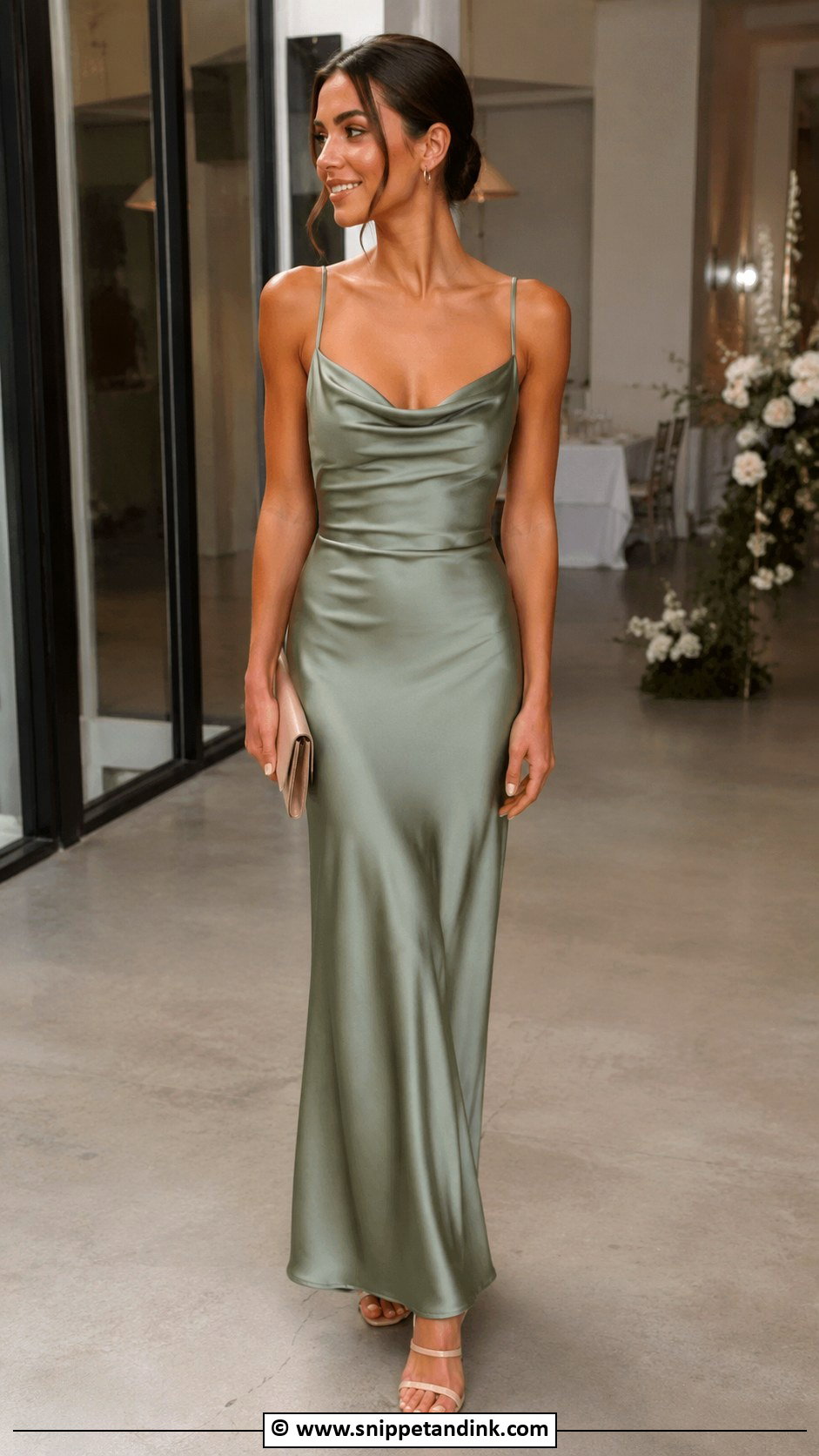
The cowl neck adds detail by draping, so the dress needs no lace or beading. It’s also the neckline that moves most, and on a fuller bust the cowl can gape when leaning forward; a small stitch or fashion tape at the drape solves it. Satin shows every line, so smooth undergarments matter. Strappy heels, small hoops and a low bun keep the shape clean.
23. Square Neck Bridesmaid Dress
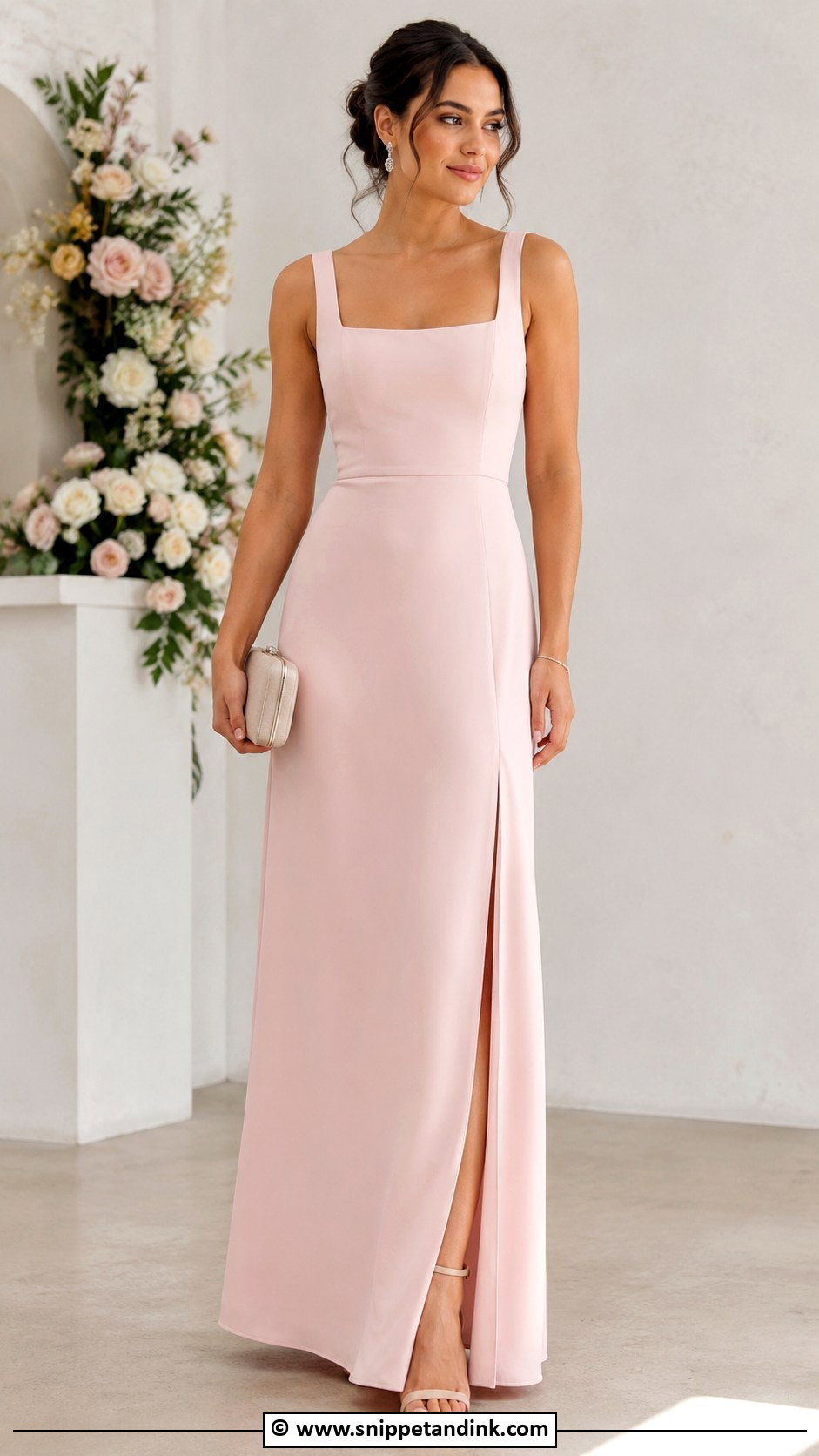
A square neckline frames the collarbones neatly and suits most bust sizes, as long as the straps are wide enough to hold a bra. It works in crepe, chiffon or satin, and in blush, sage, navy, black or lavender. In a row of bridesmaids the matching neckline lines up cleanly. Delicate earrings and a small clutch finish it.
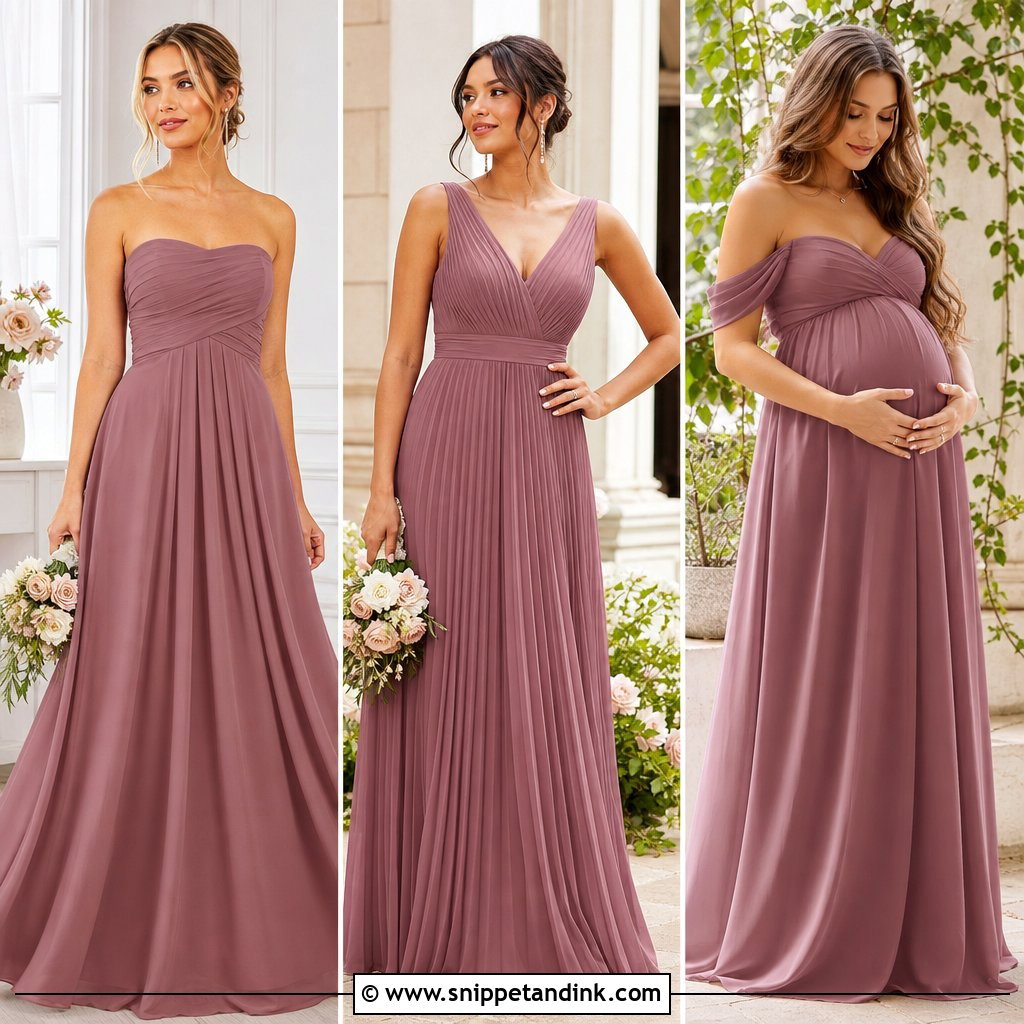
24. Mauve Bridesmaid Dress
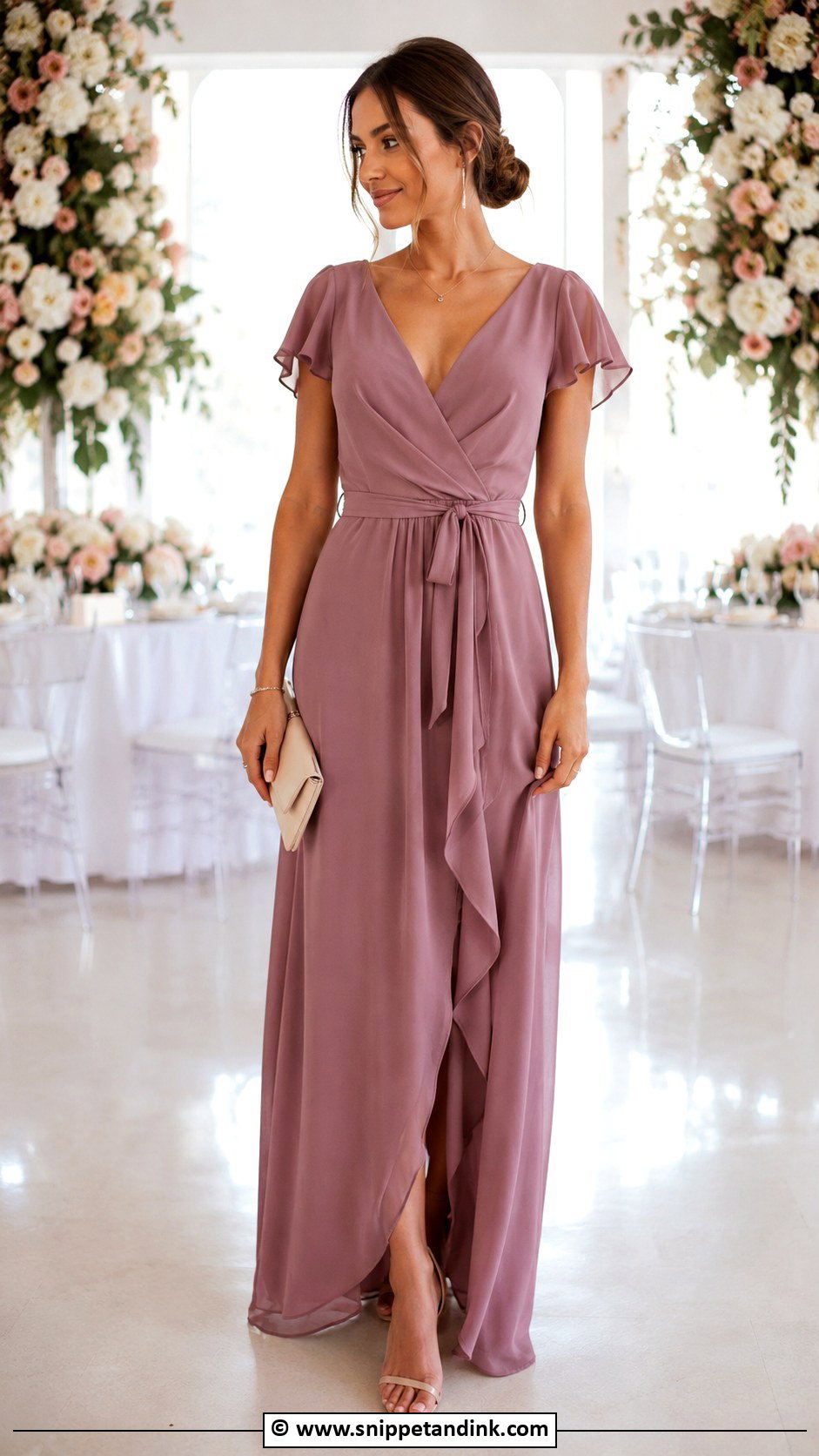
Mauve sits between pink, purple and neutral, and it flatters a wide range of skin tones because it has warmth and depth. A chiffon wrap, satin slip or crepe A-line works depending on the venue. Nude heels and rose gold jewellery suit it. I’d pair it with ivory flowers and dusty rose accents rather than bright pinks, which can make mauve look muddy.
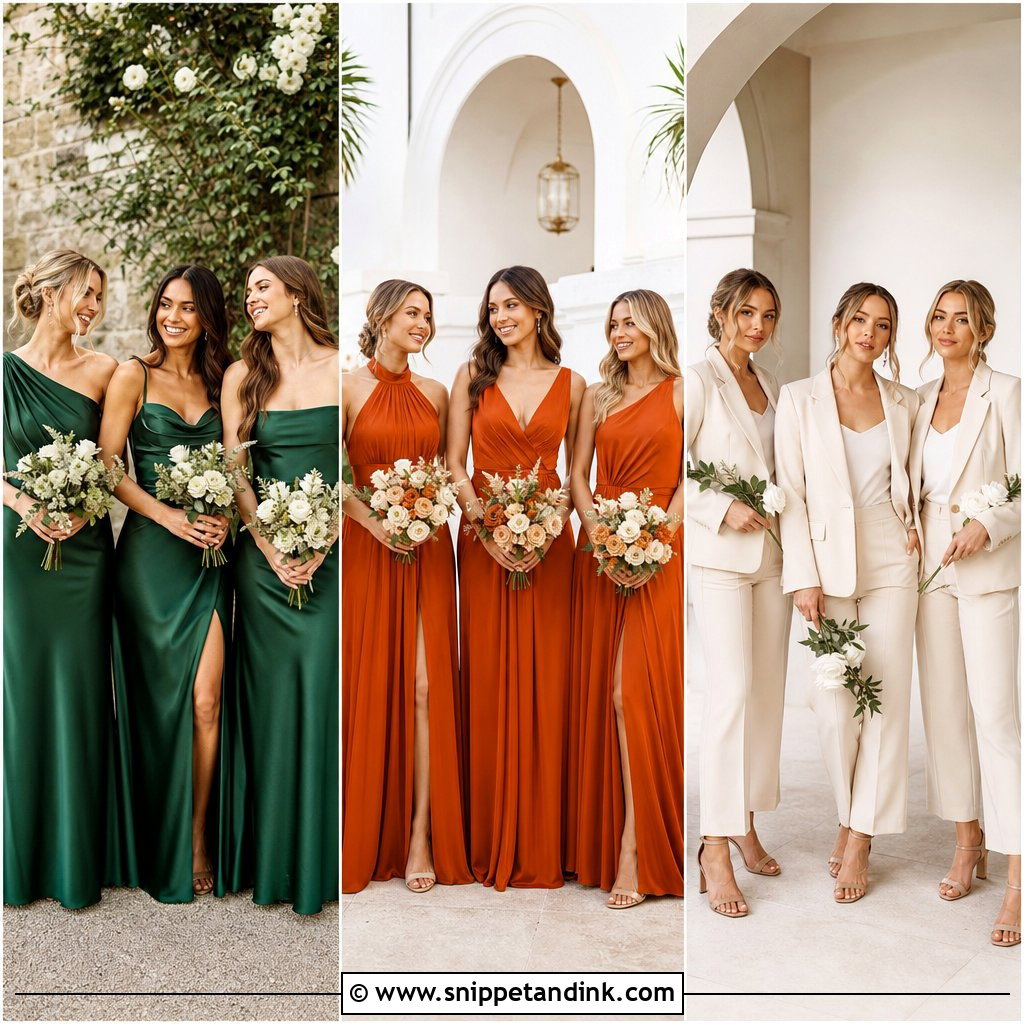
25. Burnt Orange Bridesmaid Dress
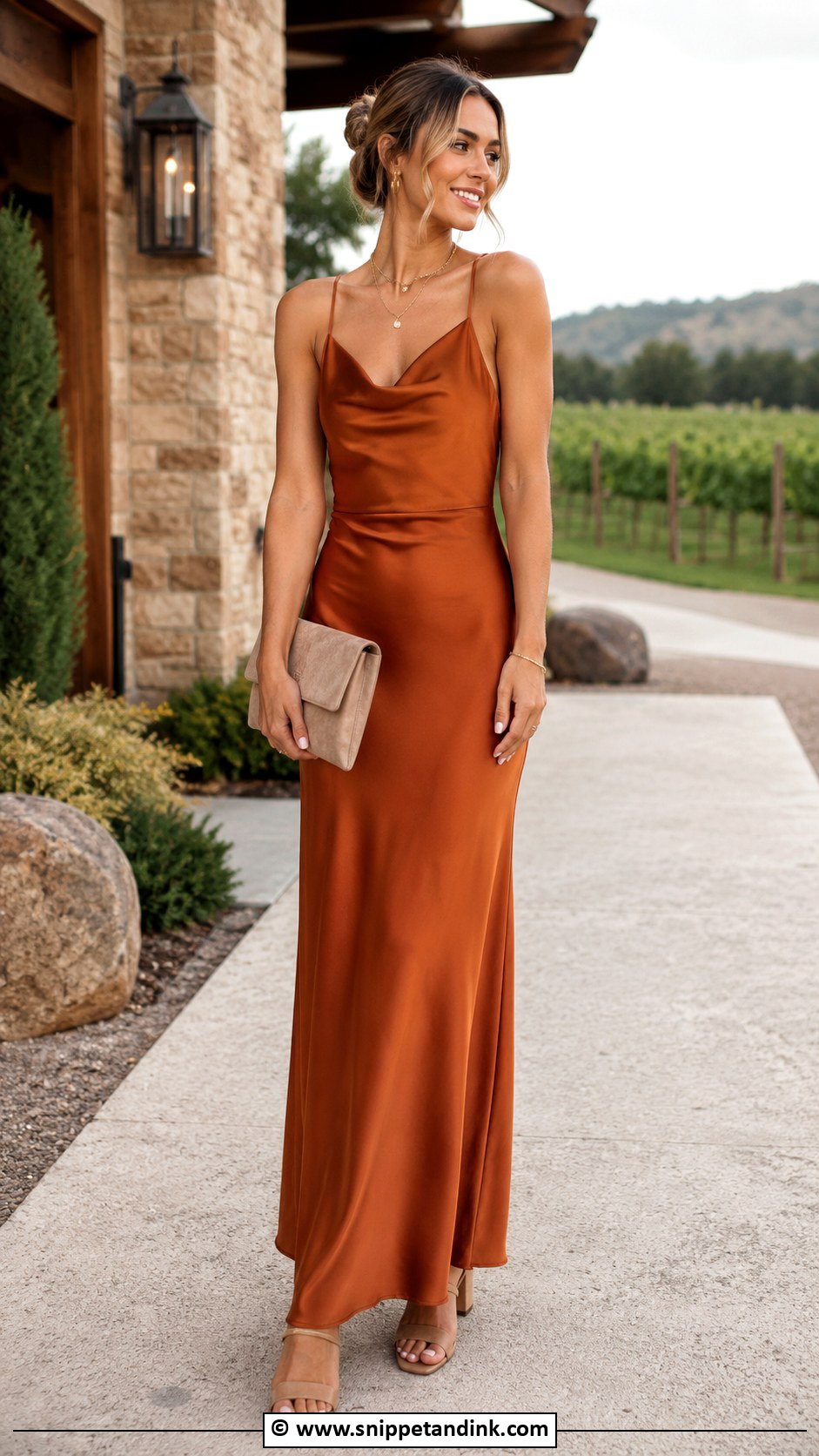
A burnt orange bridesmaid dress is the boldest of the warm shades here, suited to fall, desert and boho weddings with an earthy palette. Satin gives it a sleek finish; chiffon softens it. Tan block heels and gold jewellery keep it warm. Like terracotta, it can be harsh on very fair, cool-toned skin, so try it near the face before ordering a whole group.
26. Dusty Rose Bridesmaid Dress
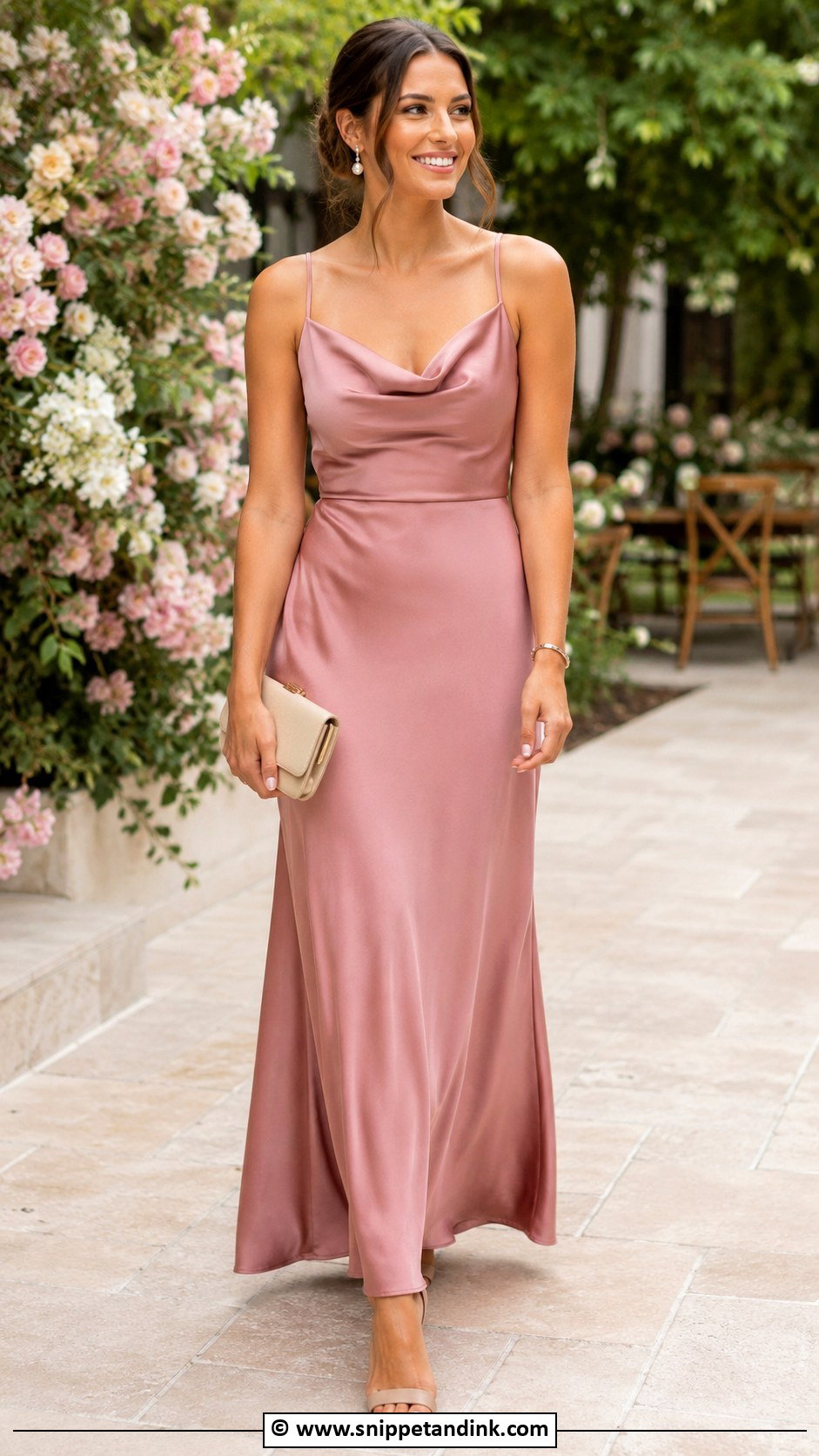
Dusty rose is deeper than blush, which makes it suit more skin tones and keeps it from looking washed out against a white gown. A chiffon wrap, satin cowl or crepe off-shoulder all work. Pearl earrings and a champagne clutch suit it. It’s one of the easiest pinks for a mixed group and a safe choice for spring through early fall.
27. Mismatched Green Bridesmaid Dress
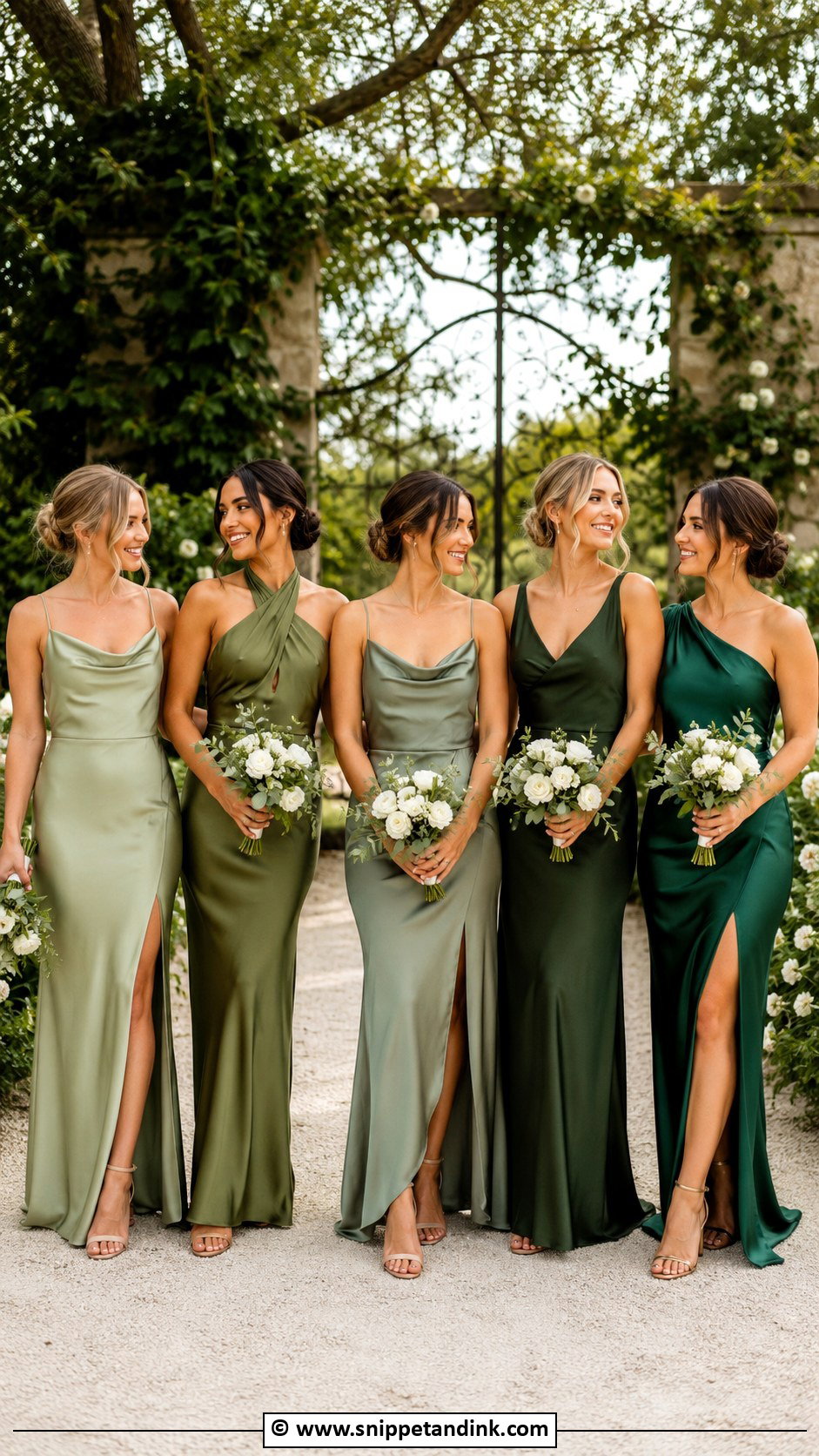
A mix of greens, sage, olive, eucalyptus, forest and emerald, gives each bridesmaid some say while still looking planned. I’d keep one fabric or one length for everyone: all satin looks sleek, all chiffon softer. Arrange the line from light to dark or alternate shades when you stand them up. Nude or gold heels keep the focus on the greens.
28. Floral Burnout Bridesmaid Dress
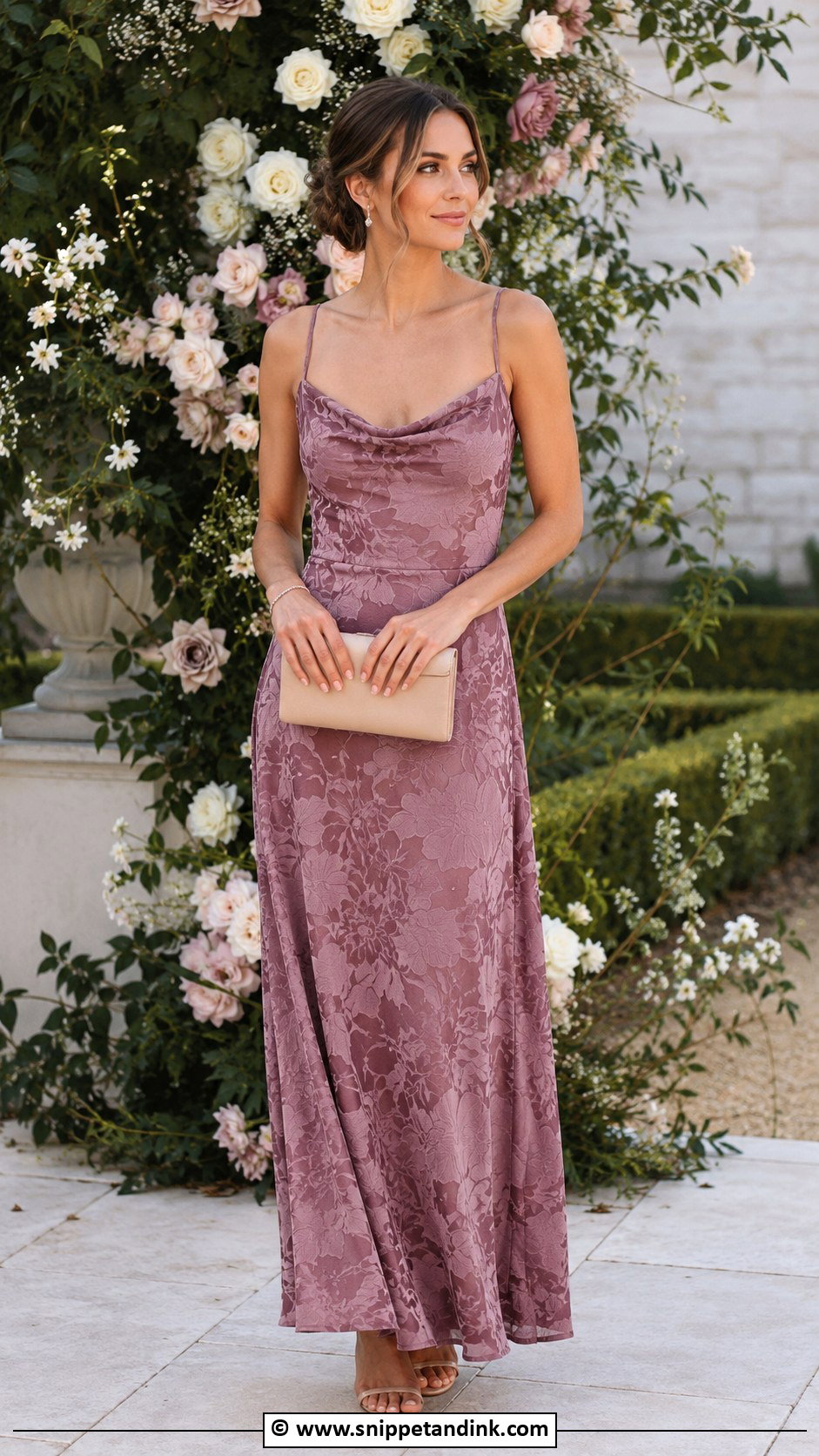
Burnout fabric has a pattern created by dissolving part of the fibre, leaving sheer areas next to opaque ones, so it adds texture without a printed pattern. It’s delicate, and burnout chiffon can snag on jewellery or a rough bouquet stem, so I’d keep bracelets off. A soft maxi in blush, mauve, sage, dusty blue or champagne works. It also mixes well with solids in matching tones.
29. High Neck Bridesmaid Dress
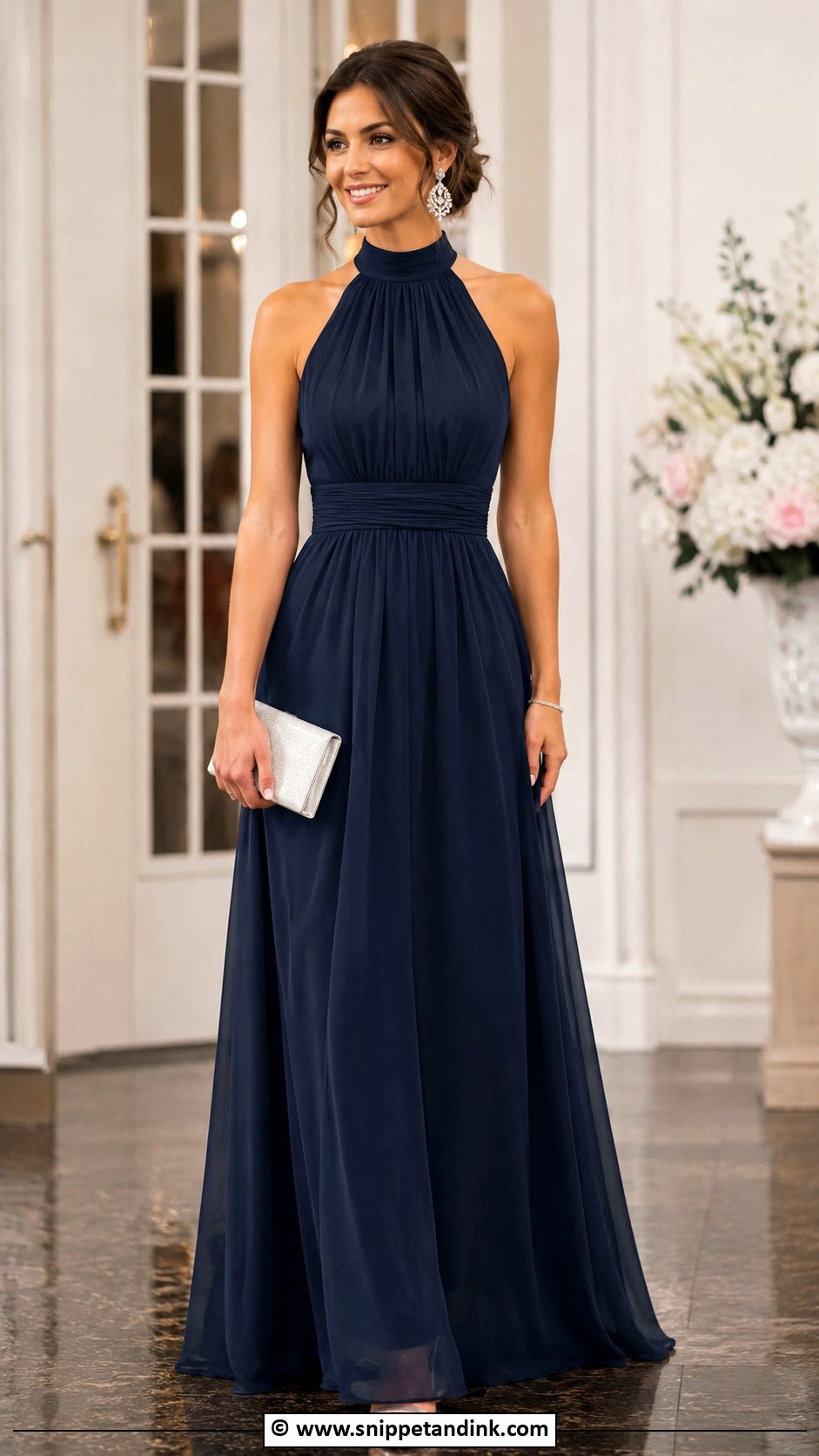
A high neckline covers the chest and shoulders, which suits formal ceremonies, modest dress codes and religious venues. Chiffon is soft, satin elegant, crepe structured. Skip the necklace in favour of earrings or a bracelet. A high neck can feel warm at a summer wedding, so a sleeveless version or a lighter fabric helps. An updo or sleek ponytail keeps the neckline visible.
30. Bridesmaid Jumpsuit Outfit
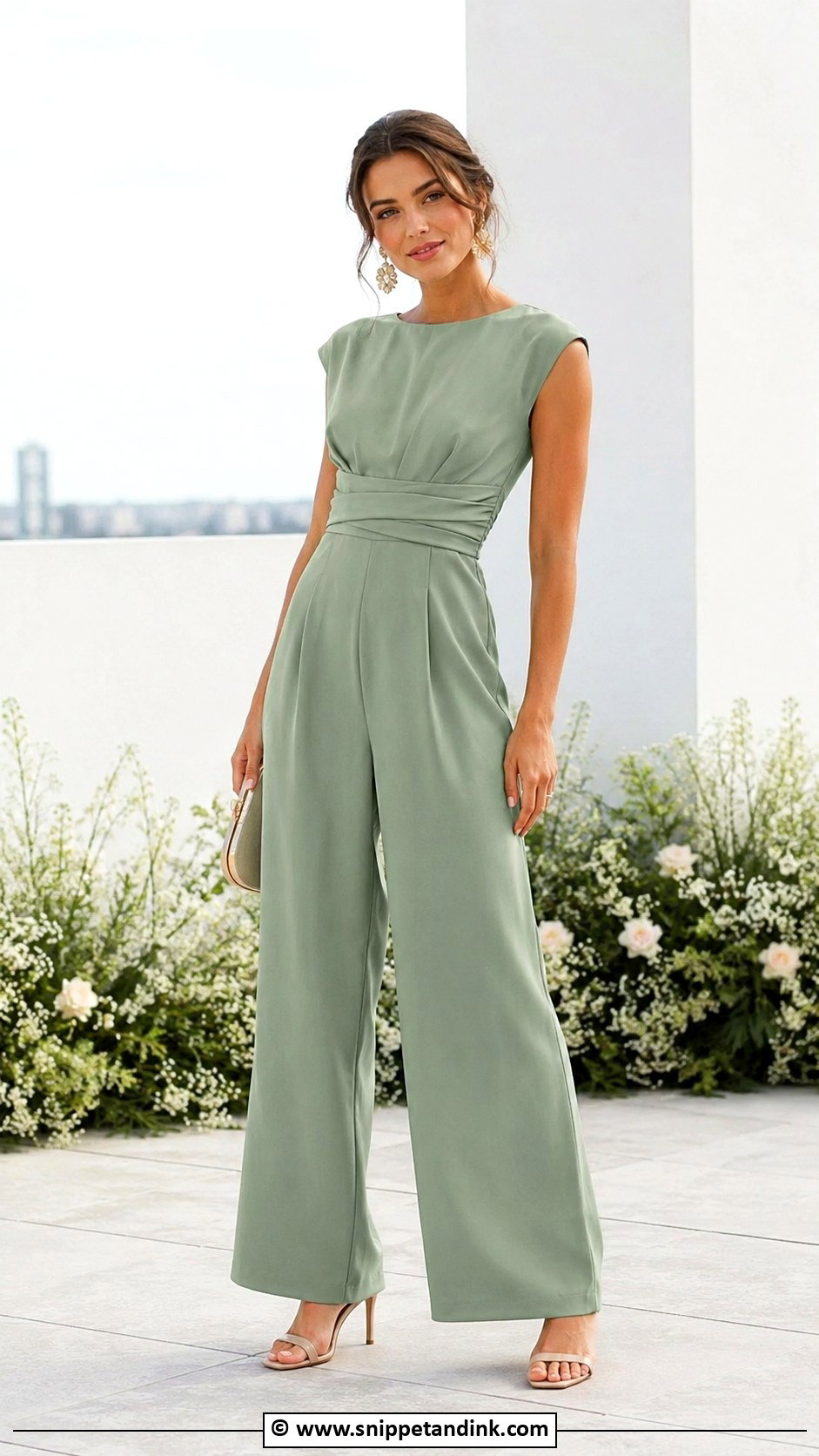
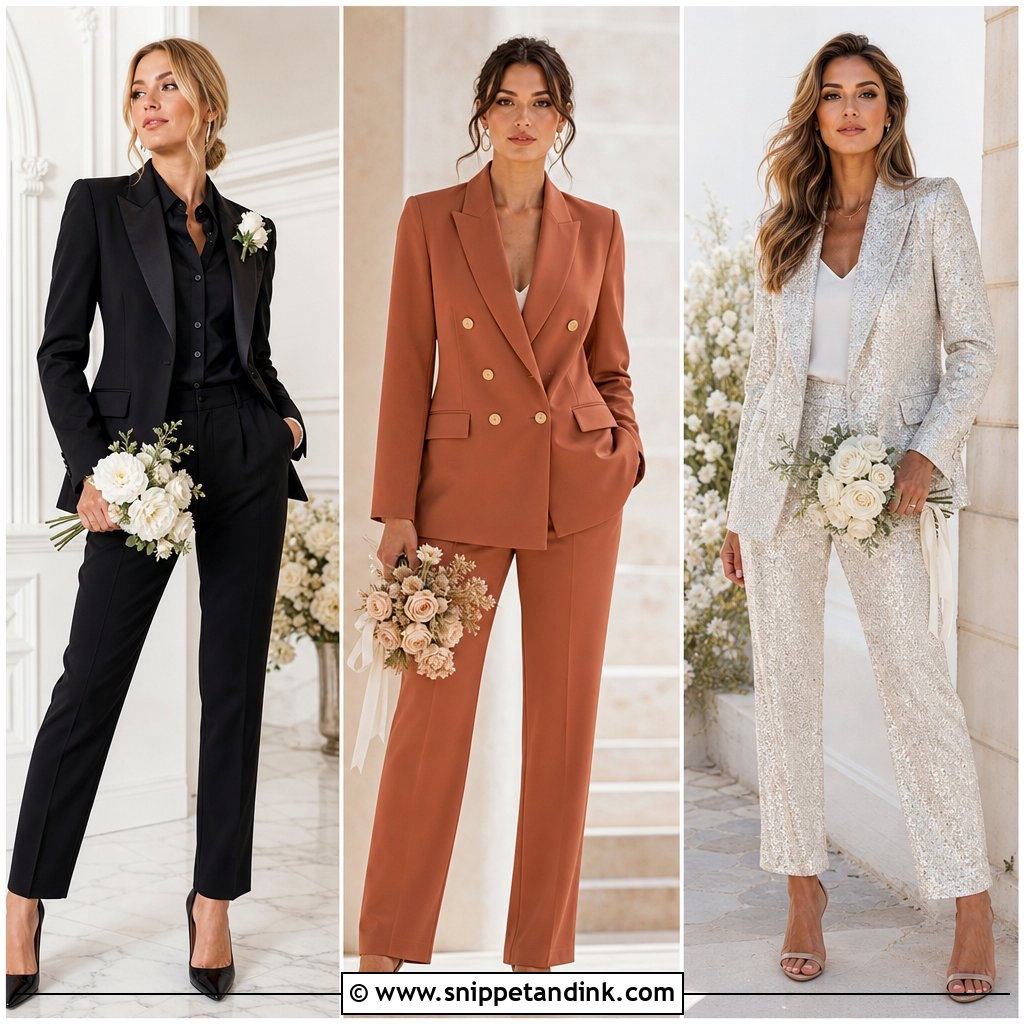
A bridesmaid jumpsuit outfit suits modern weddings, courthouse ceremonies and rooftop receptions, and bridesmaids who prefer trousers. Wide-leg crepe, satin or soft tailoring in black, champagne, sage, navy or dusty rose keeps it formal. A defined waist or wrap bodice makes it read as dressy. The hem needs to be set with the exact shoes she’ll wear, and I’d mention the bathroom question honestly: a one-piece takes longer to get in and out of.
Hems, Heels and the Alteration Appointment
I tell every bridesmaid the same thing: bring the shoes to the fitting. A floor-length hem set without the actual heels will be wrong, either dragging or showing the ankle. Fabric matters as much as the length.
- Chiffon has multiple layers, each hemmed separately, which takes longer but hides small errors.
- Satin shows needle holes when a seam is let out, so it can only be taken in safely.
- Velvet shows marks where it has been pressed or pinned, so a careful seamstress steams it rather than irons it.
On the wedding morning
Hang every dress as soon as you arrive, and steam it from the inside, holding the steamer a few inches away so satin doesn’t water spot. Bring a small kit: fashion tape, safety pins, a needle with thread in each colour, and stain wipes. Most small issues can be fixed in minutes if the kit is in the room.
I also check each bridesmaid sitting down and lifting her arms before she leaves the final fitting. A bodice that is fine standing can dig in at the ribs when she sits through a long ceremony, and that is much easier to let out a little at the fitting than to live with for ten hours.
Fabric, Fit and One Shared Rule
Any of these ideas can work for a bridal party as long as each dress fits the person wearing it and the group shares one clear rule, whether that’s one colour, one fabric or one length. Satin brings shine, chiffon softness, velvet warmth and prints personality. Shades like navy, blush, and sage suit almost everyone, while emerald, terracotta, burgundy and burnt orange make a stronger statement. Order early, fit carefully, and the group will look like it belongs together.
You'll Like These Ideas:


Leave a Reply