
Dressing a bridal party is a group puzzle, not a color choice. Five or six people with different shapes, budgets and comfort levels have to stand in one row and look like they belong together. The approach I trust most is to think in complete outfits: the dress, the shoe, the bag and the hair as one unit. Right now I’m dressing a lot of mix-and-match parties in soft greens, dusty blues, champagne neutrals and black satin, along with prints, sleek crepe, convertible gowns and dresses people will actually wear again. Below are thirty bridesmaid looks I’d happily put on a lineup, from garden ceremonies to formal ballrooms, with notes on who each one suits.
Ordering Matching Dresses for a Party Spread Across Cities
Most bridesmaid lines are made to order, and the problems I see almost always come from ordering in dribs and drabs. Colors are dyed in batches, and two batches of the same named shade can come out visibly different. If one bridesmaid orders in March and another in June, they may not match in the photos.
- Place every order together, ideally as one group order through a single shop.
- Have each bridesmaid measured by a professional or with a soft tape, not guessed from her usual size. Bridal sizing often runs smaller than high street sizing.
- Allow for production plus shipping; many lines quote two to four months, so check the brand’s own estimate.
- Leave four to six weeks after delivery for hemming and strap adjustments.
For a party scattered across different cities, I ask everyone to send a full-length photo in the dress and shoes once alterations are done. It catches hem lengths that are wildly different before everyone arrives.
1. Sage Green Chiffon Bridesmaid Dress
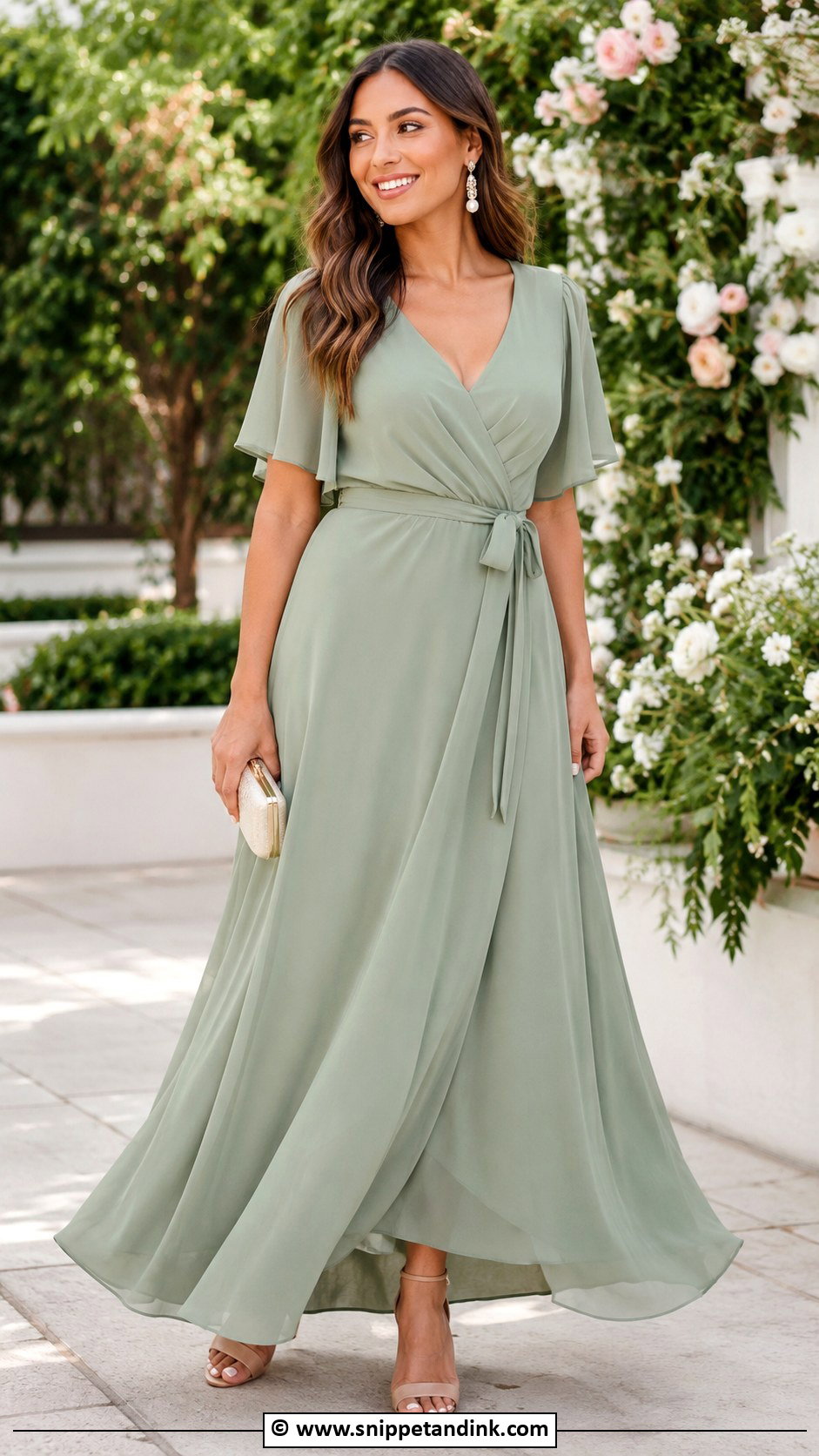
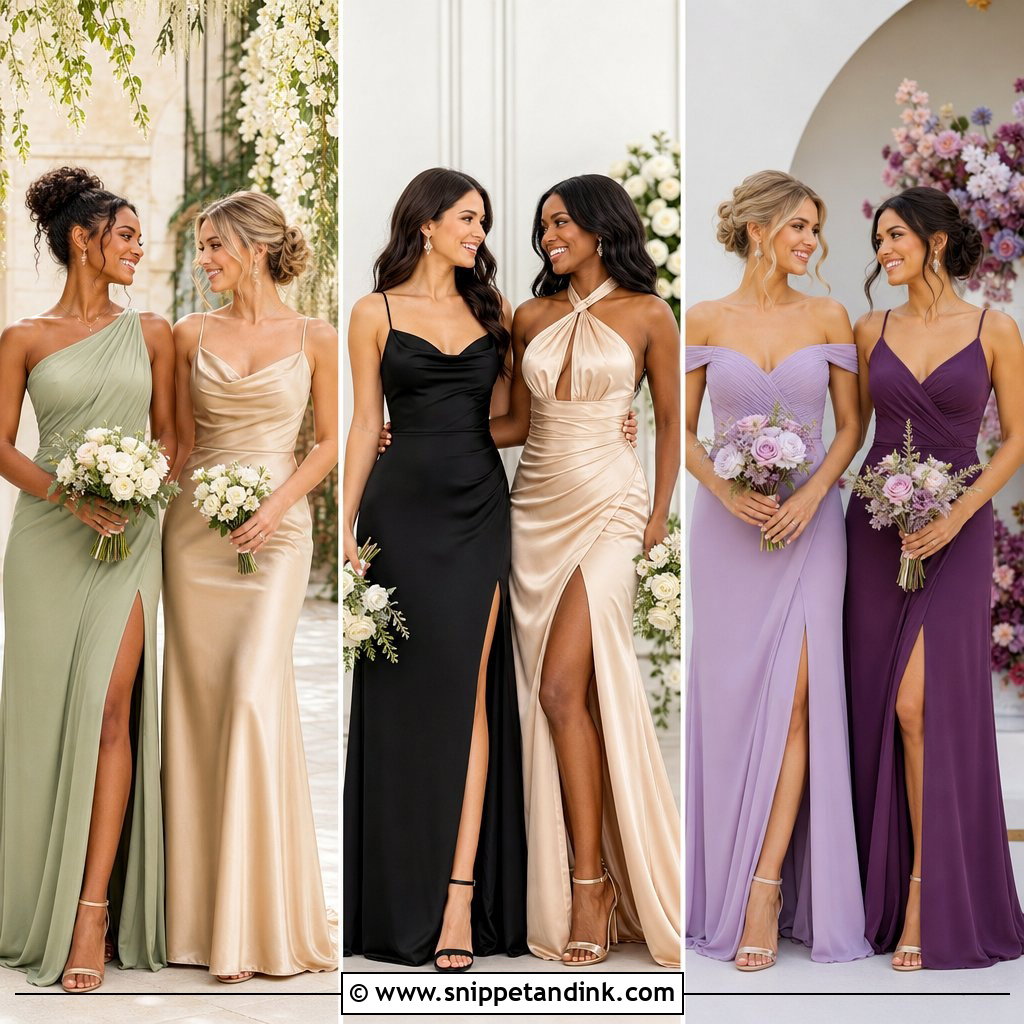
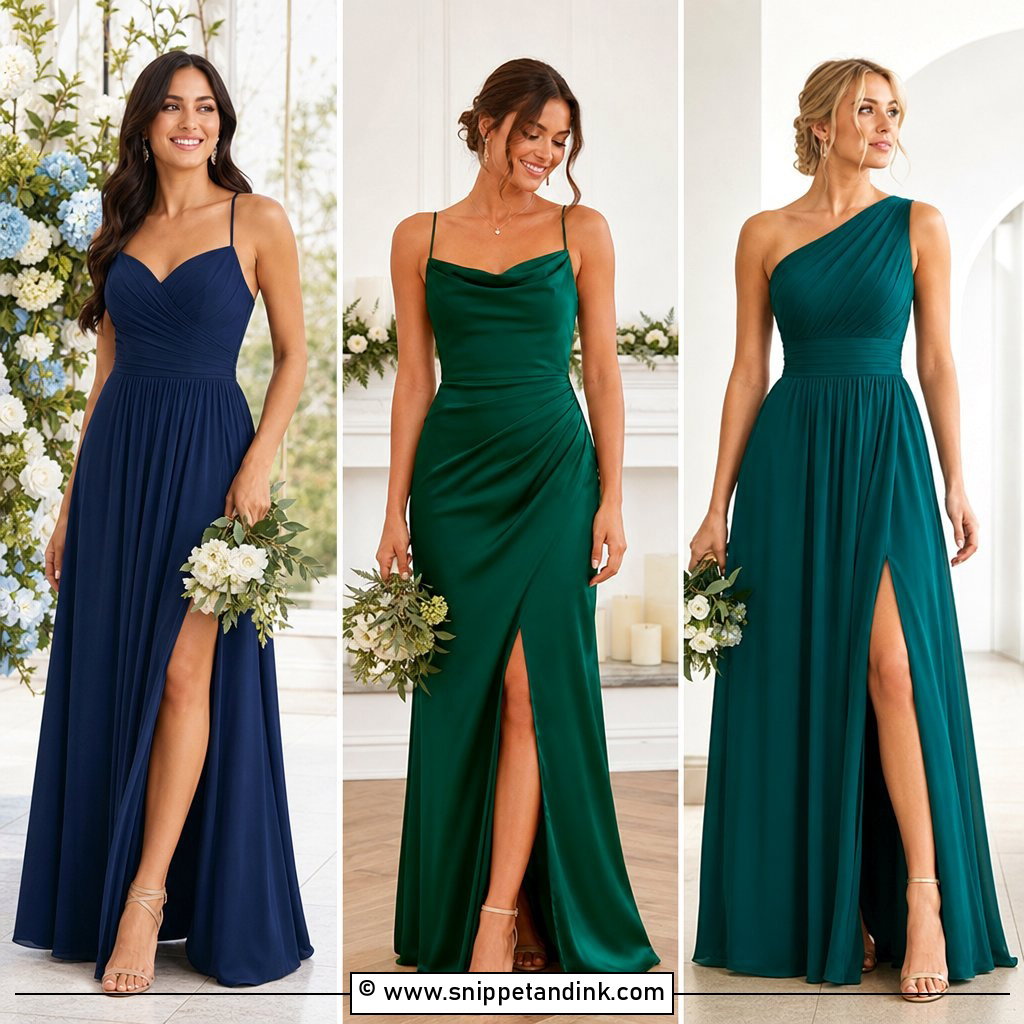
Sage chiffon is my go-to when a party has very different body types, because chiffon floats instead of clinging and sage flatters warm and cool skin alike. A flowing A-line or wrap gown with a defined waist works on almost everyone. Nude block heels, pearl drops and a small ivory clutch keep it clean, with a beige or taupe shawl if evenings turn cool. Against eucalyptus, white roses and natural wood, it looks calm without disappearing into the greenery.
2. Champagne Satin Bridesmaid Dress
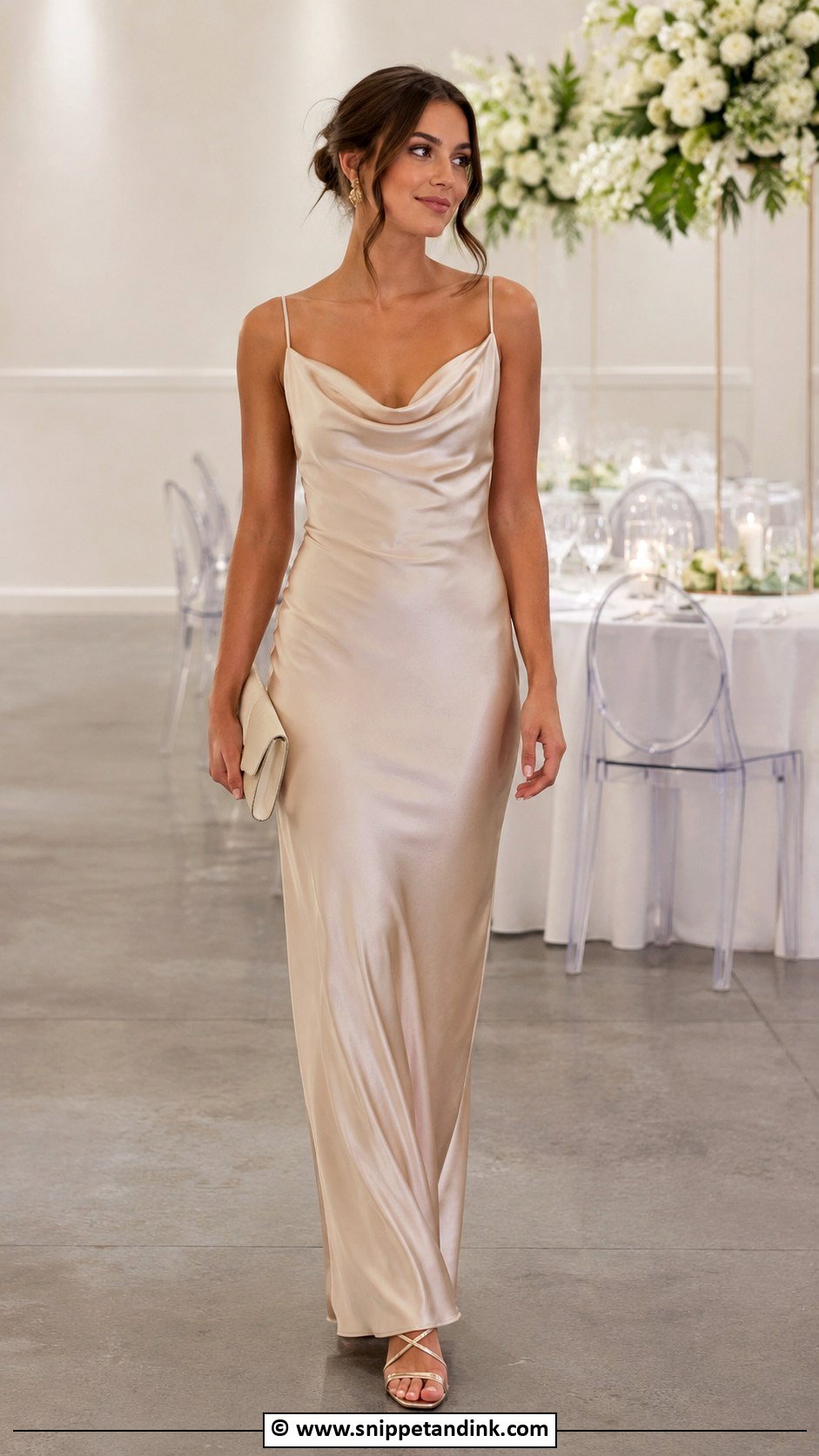
Champagne satin glows under warm reception lighting, but it’s the shade I check most carefully against the bride’s gown. If she’s in ivory, a pale champagne can look almost the same in photos, so I go a step deeper. Next to bright white, it adds warmth. A cowl-neck maxi, slip or bias-cut gown in a soft satin with good drape suits it. Nude or metallic heels, simple gold earrings and a sleek low bun keep the shine refined.
3. Dusty Blue Bridesmaid Dress
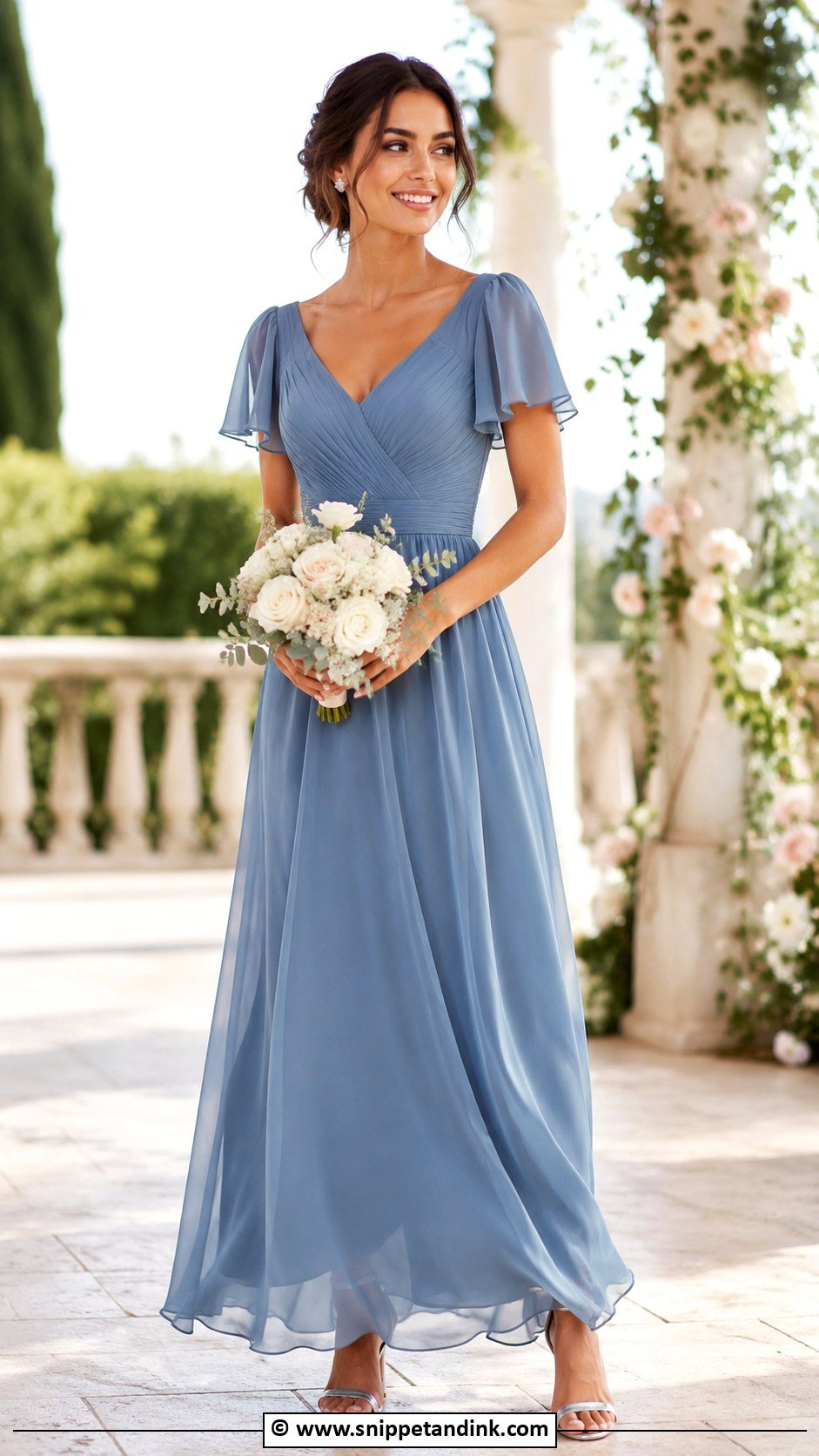
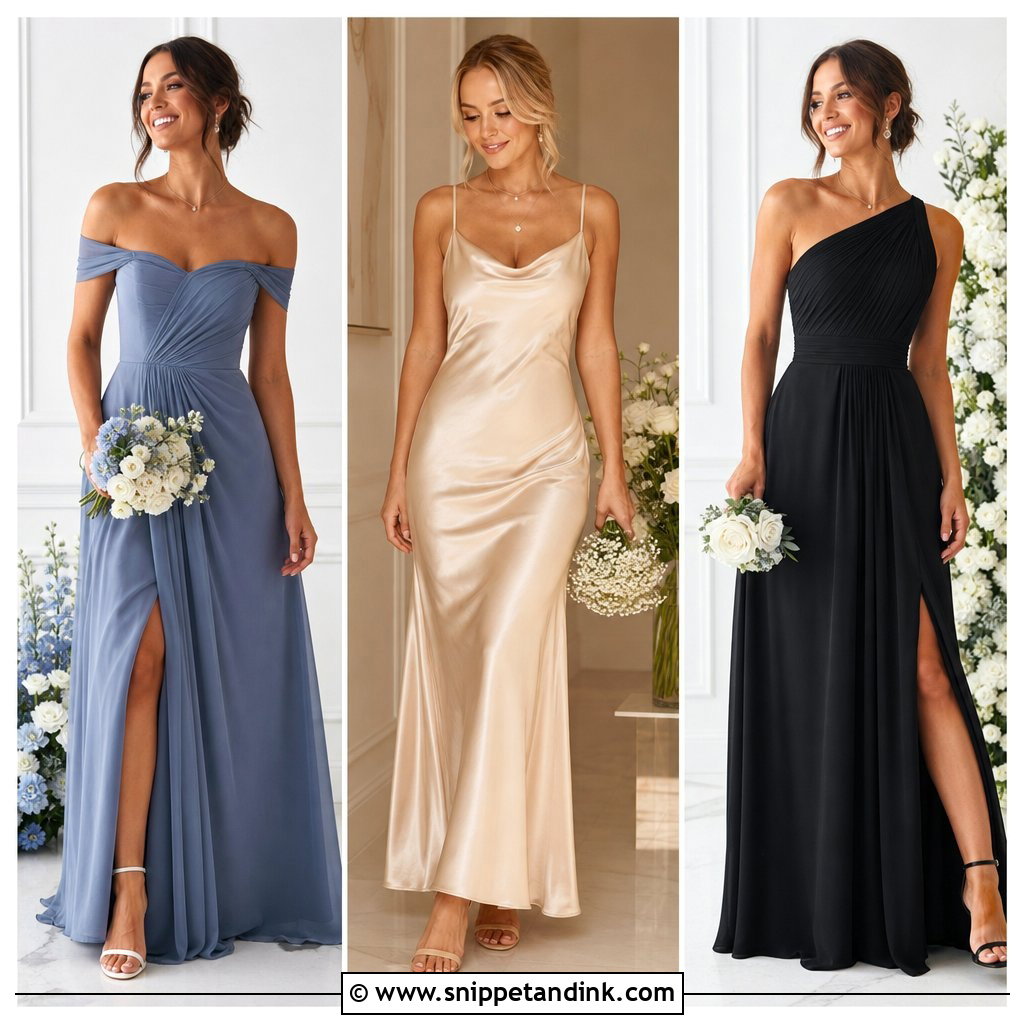
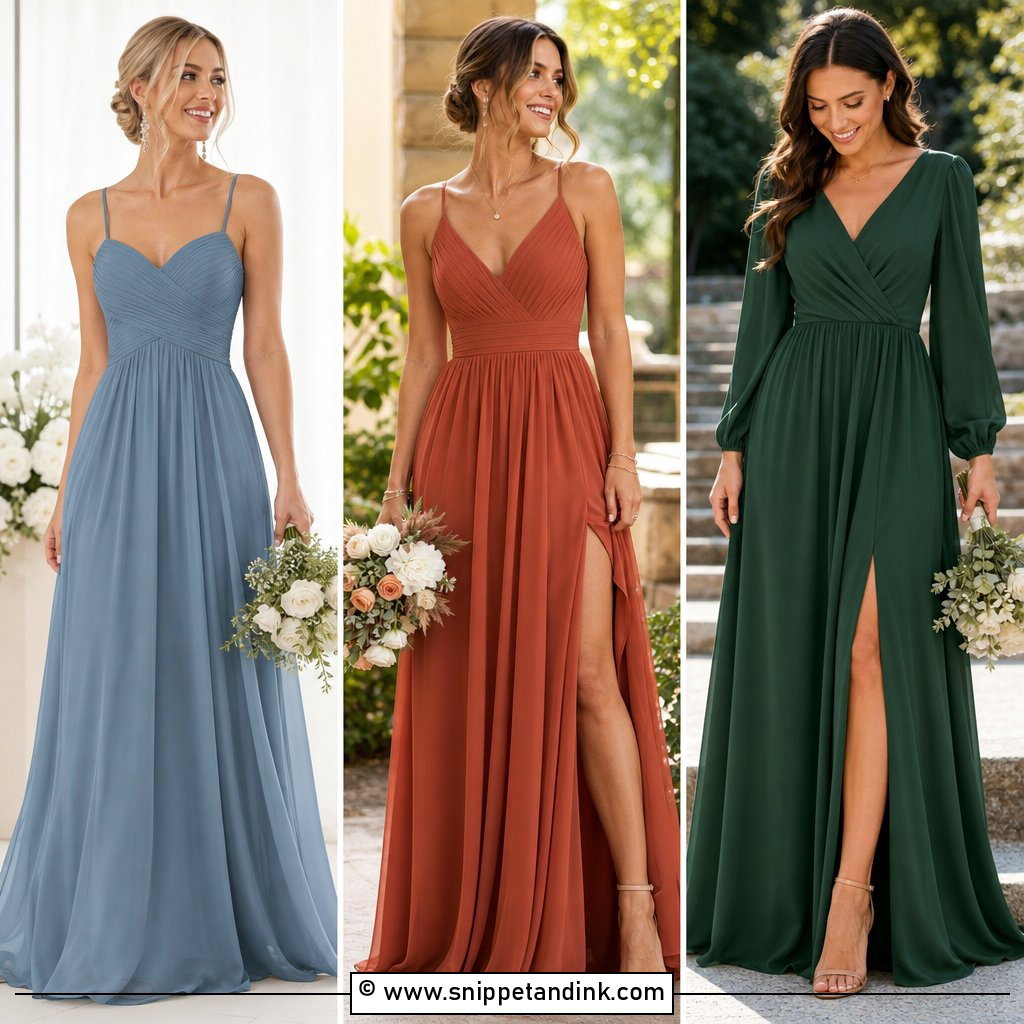
Dusty blue suits most of the skin tones I see in a party, which is why it keeps coming back. Floor-length chiffon or crepe with flutter sleeves, a V-neck or a square neck all suit it. Silver heels and crystal studs work, with a pale blue or ivory bouquet. For a coordinated group, I keep everyone in one fabric and let each bridesmaid choose her neckline; the shared texture does the unifying. It sits well with white, navy, blush, sage and gray, at a coast or in a ballroom.
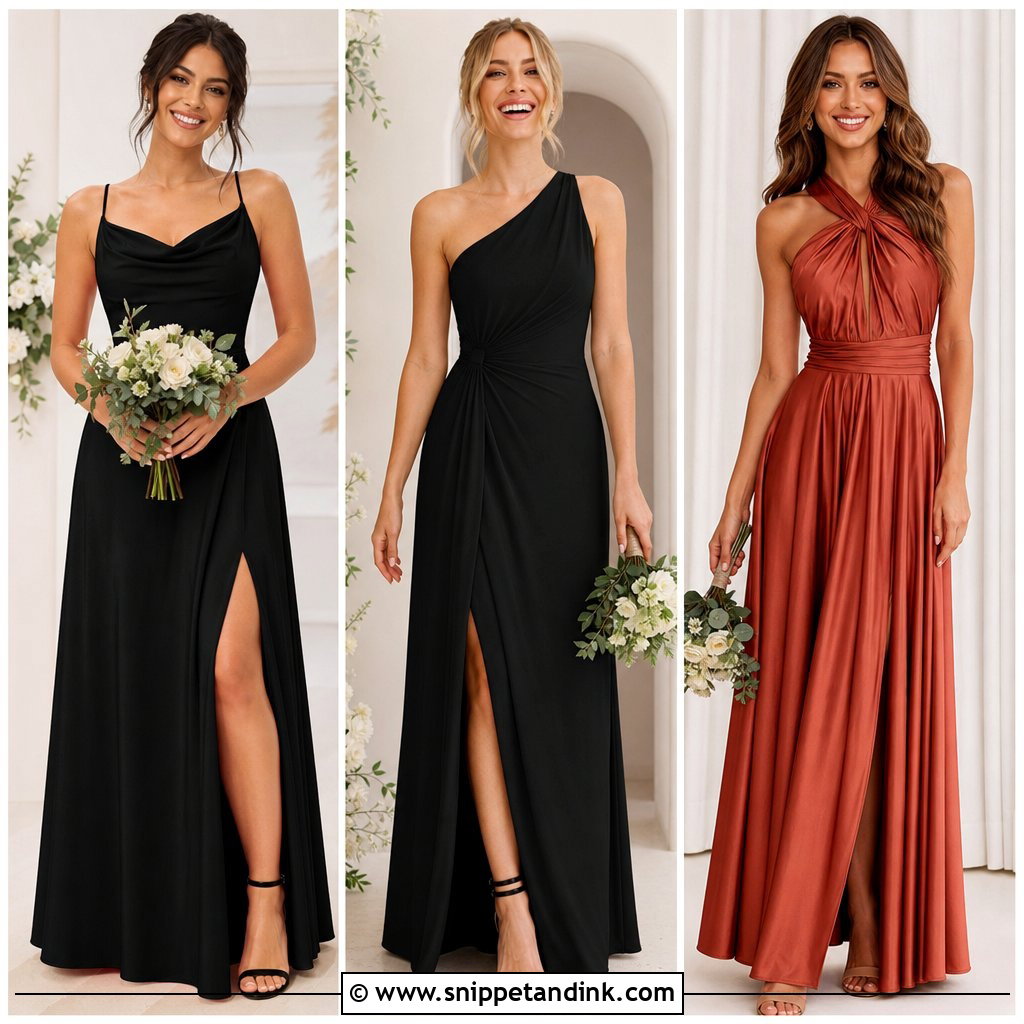
4. Black Satin Bridesmaid Dress
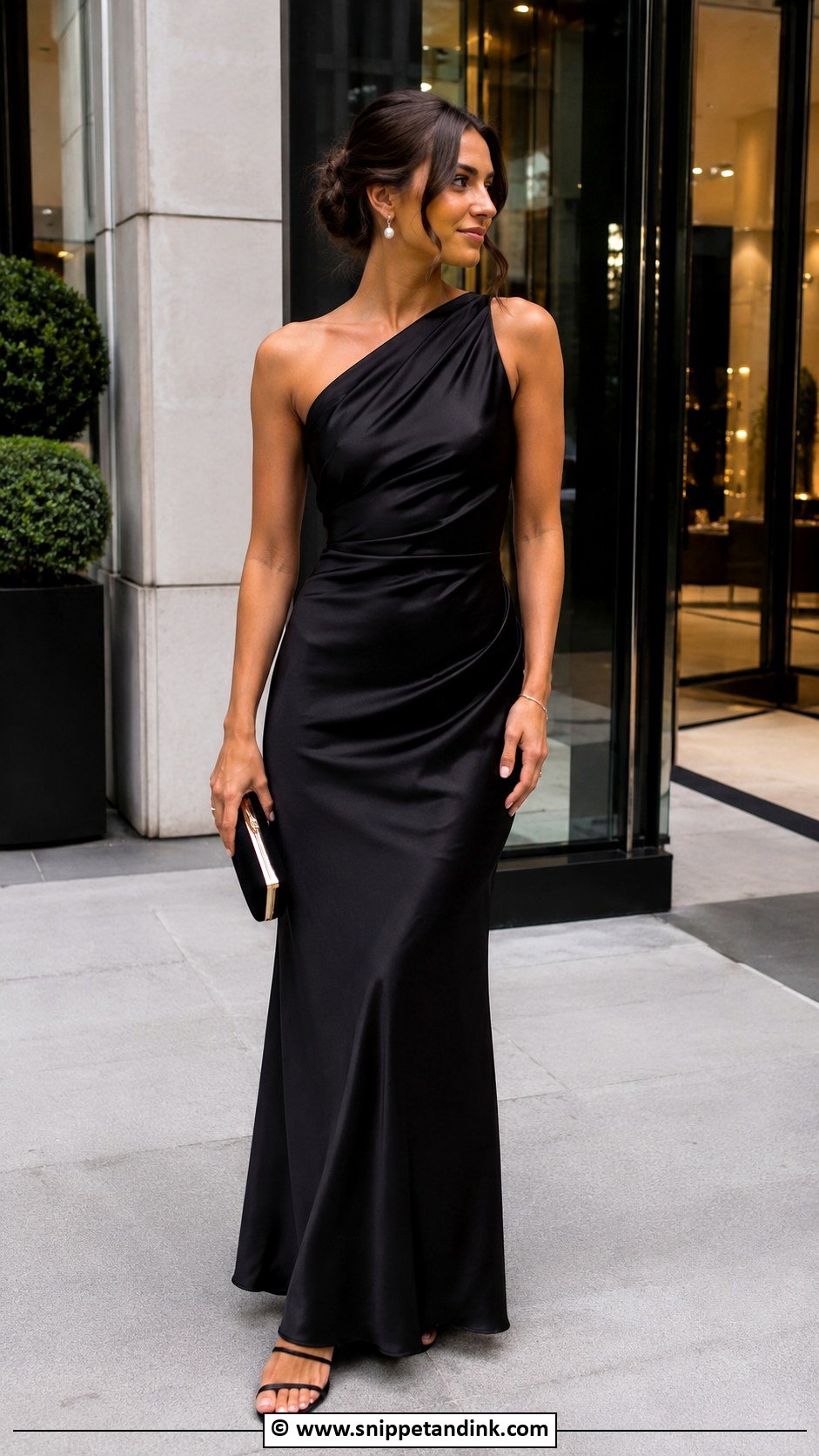
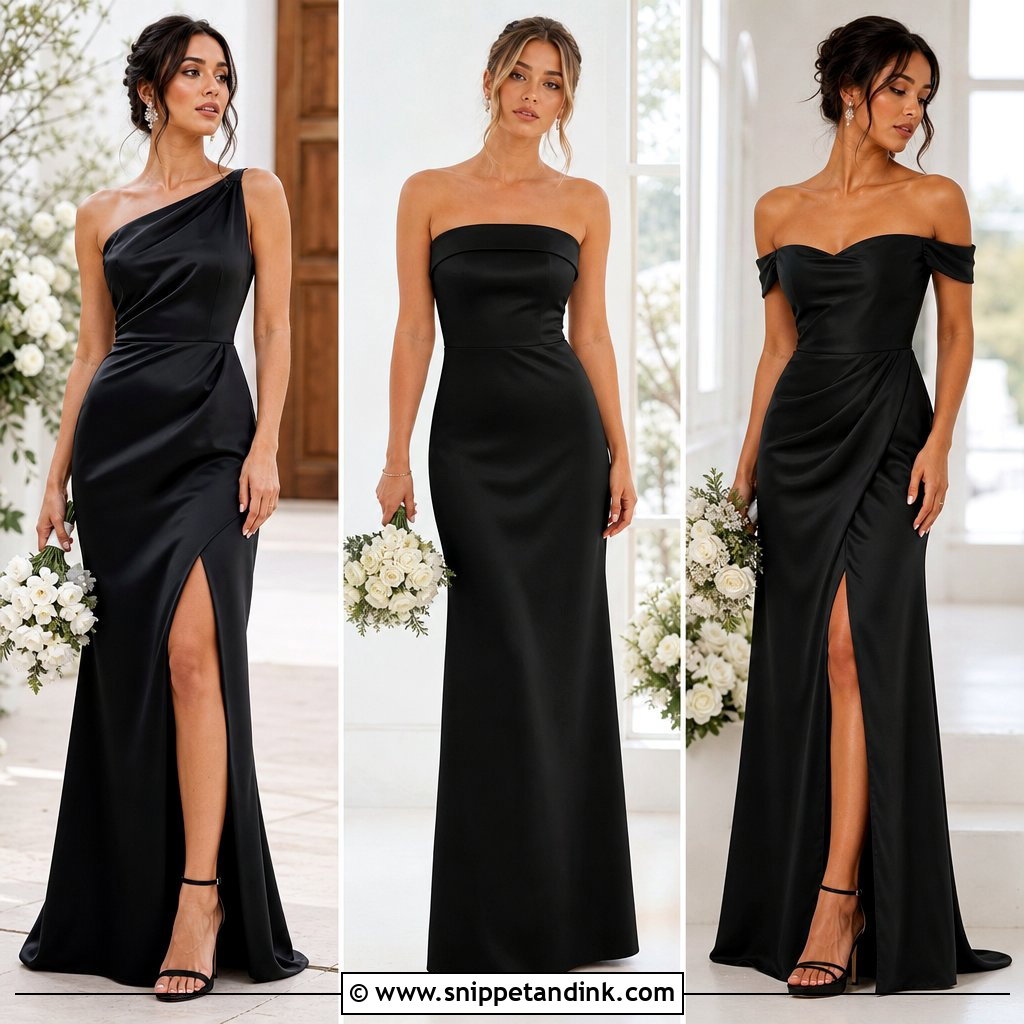
Black satin gives a formal evening lineup a crisp, graphic look, and nobody has to hunt for shoes afterwards. One-shoulder gowns, square-neck columns or wrap maxis with a slit all suit it. Satin shows every crease in black, so I tell bridesmaids to hang theirs in the shower steam on the morning. Black strappy heels, pearl earrings and a small structured clutch finish it. White bouquets or greenery soften the group, and of every color here, it’s the dress they’re likeliest to wear again.
5. Blush Pink Tulle Bridesmaid Dress
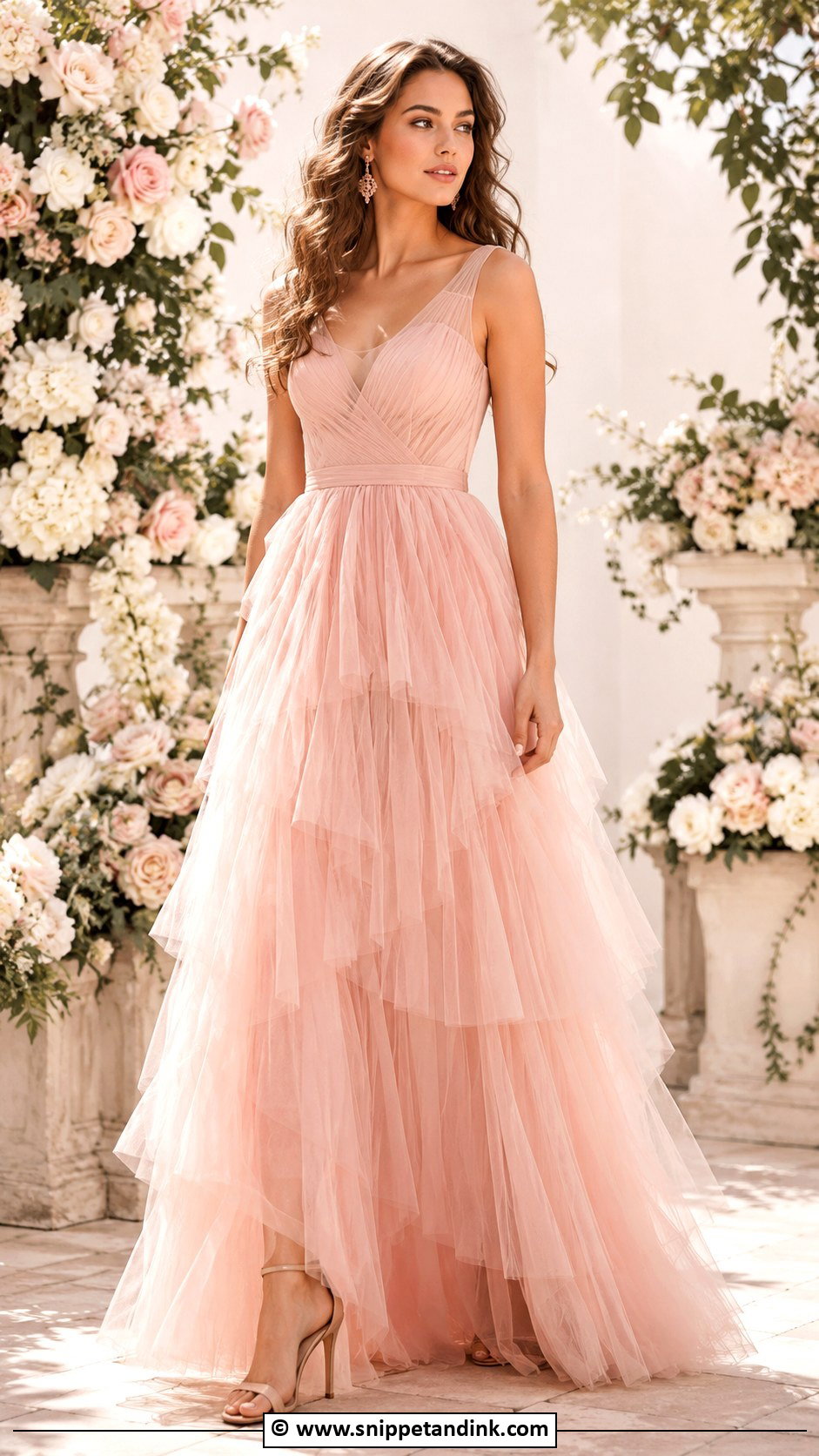
Layered tulle in blush can tip into prom territory fast. What keeps it grown-up is a clean, fitted bodice and a skirt without ruffles. Midi or floor-length both work. Tulle also snags on bracelets and bouquet stems, so I’d keep jewelry to rose-gold earrings. Nude heels and soft waves balance it, and the layered skirt adds depth to group photos at a spring garden wedding with ivory, cream and greenery.
6. Navy Blue Crepe Bridesmaid Dress
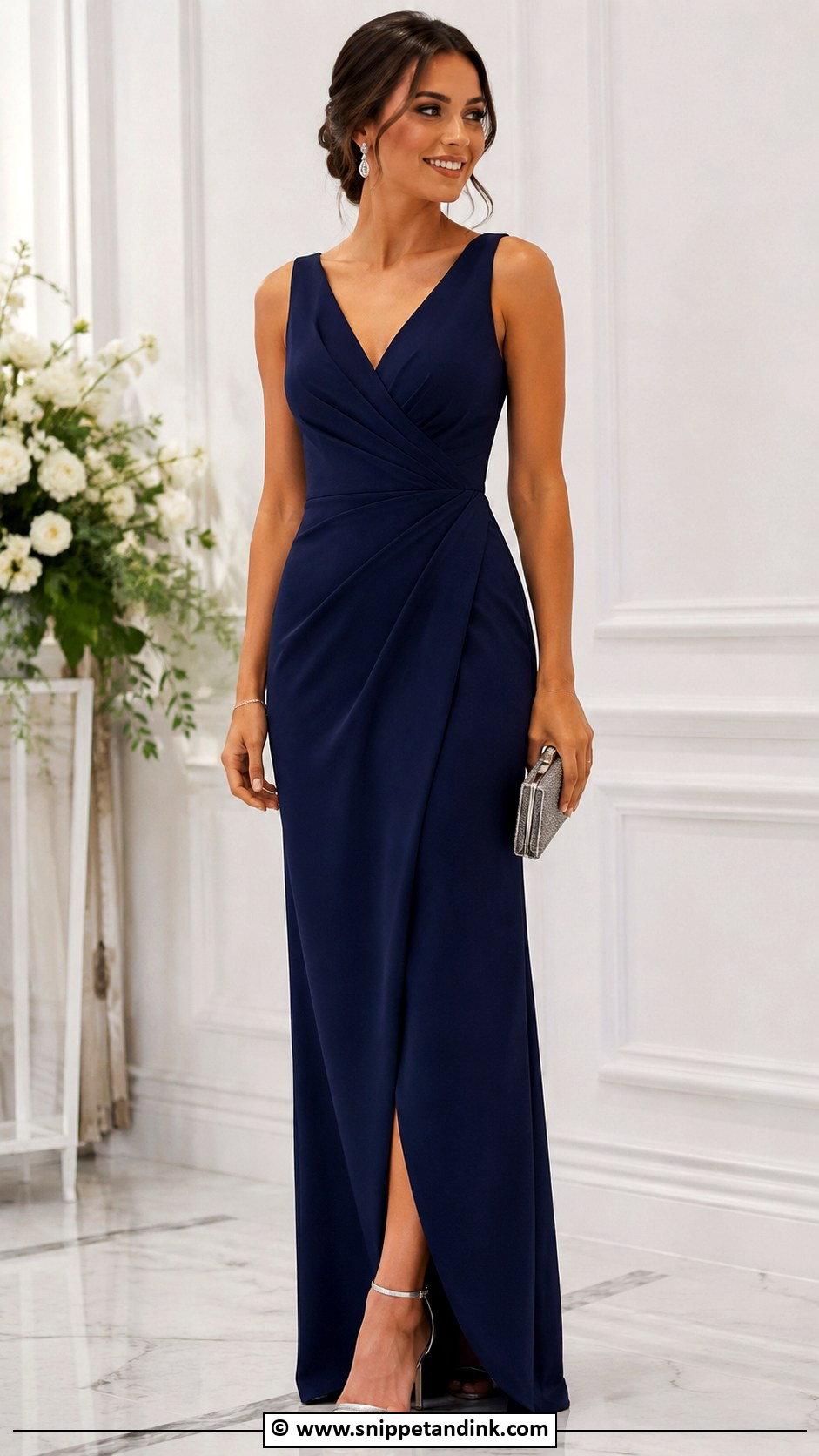
Crepe is the fabric I suggest when a bride wants structure without shine, and navy blue makes it work in any season. It hangs straight, hides sweat marks better than satin and survives a long day of hugging. A fitted waist, high neck, wrap bodice or off-shoulder cut all look formal. Silver heels, small crystal earrings and a neat clutch suit it. Navy pairs with white flowers, burgundy accents, gold decor and soft greenery for evening or fall weddings.
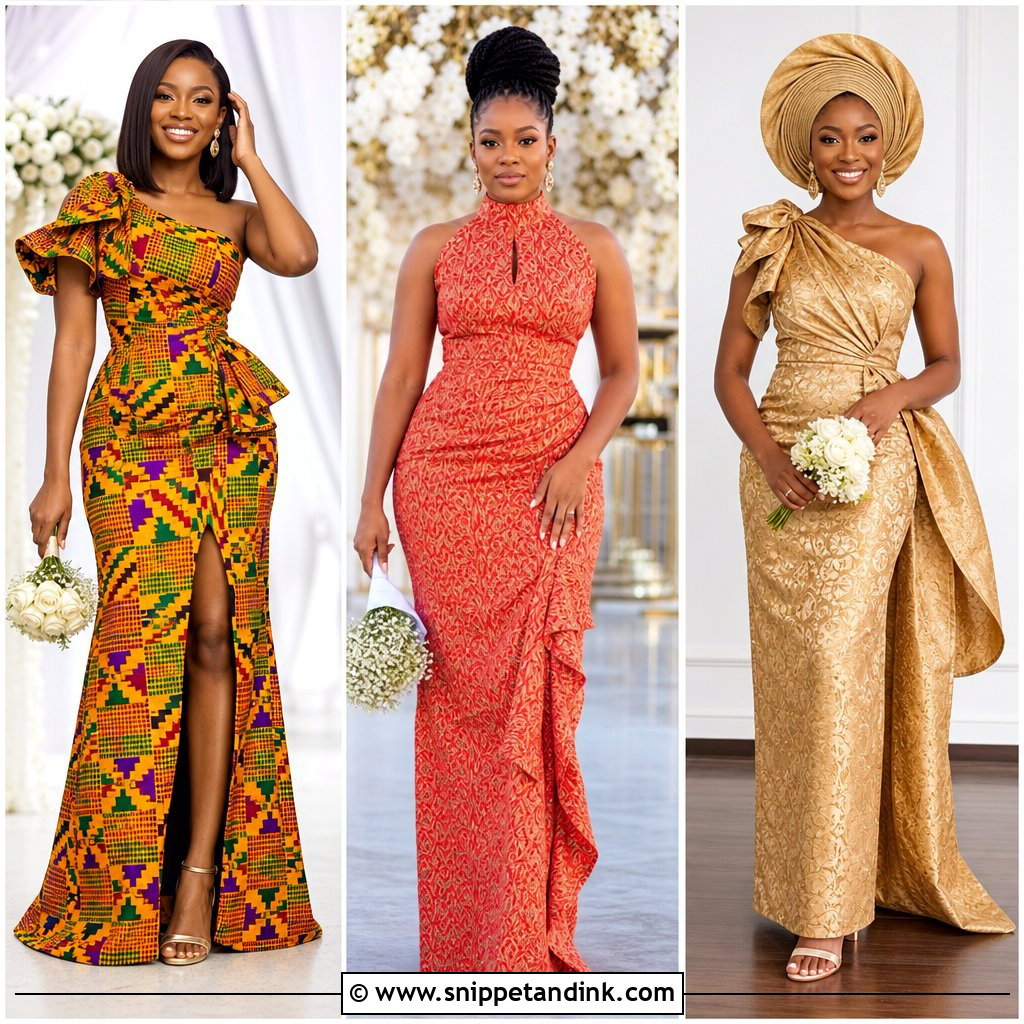
7. Floral Print Bridesmaid Dress
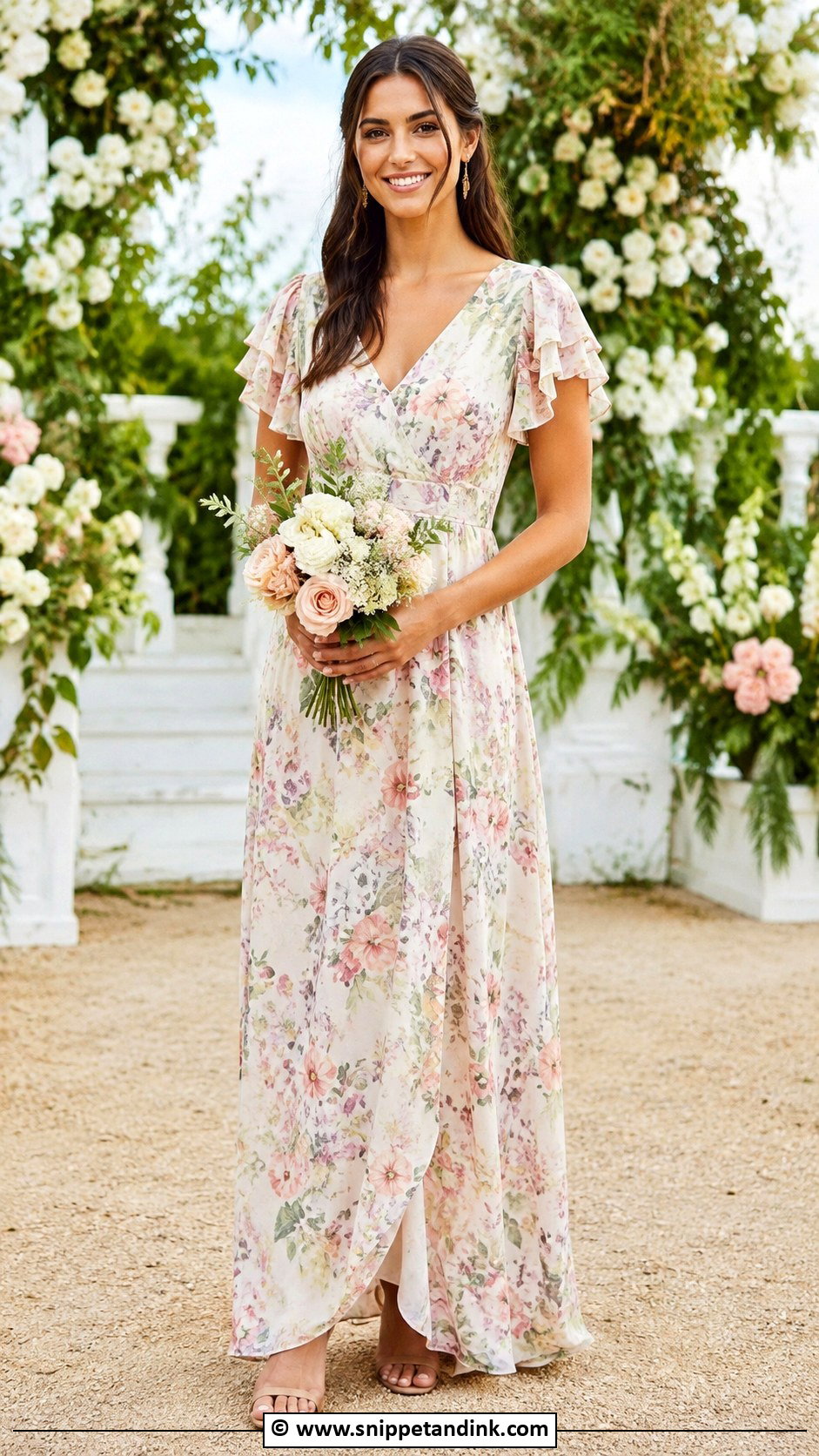
A floral print suits garden ceremonies and relaxed outdoor parties, provided the print keeps its colors soft: blush, lavender, sage, blue or cream drawn from the wedding palette. Scale matters most. A small or mid-size print reads as texture across a lawn, while large motifs get chopped up awkwardly when bridesmaids stand shoulder to shoulder. A flowy maxi with thin straps, flutter sleeves or a wrap is comfortable. Nude sandals, delicate earrings and a simple bouquet let the print lead. I also like one or two prints mixed in with solids pulled from a single color in the pattern.
8. Mauve Bridesmaid Dress
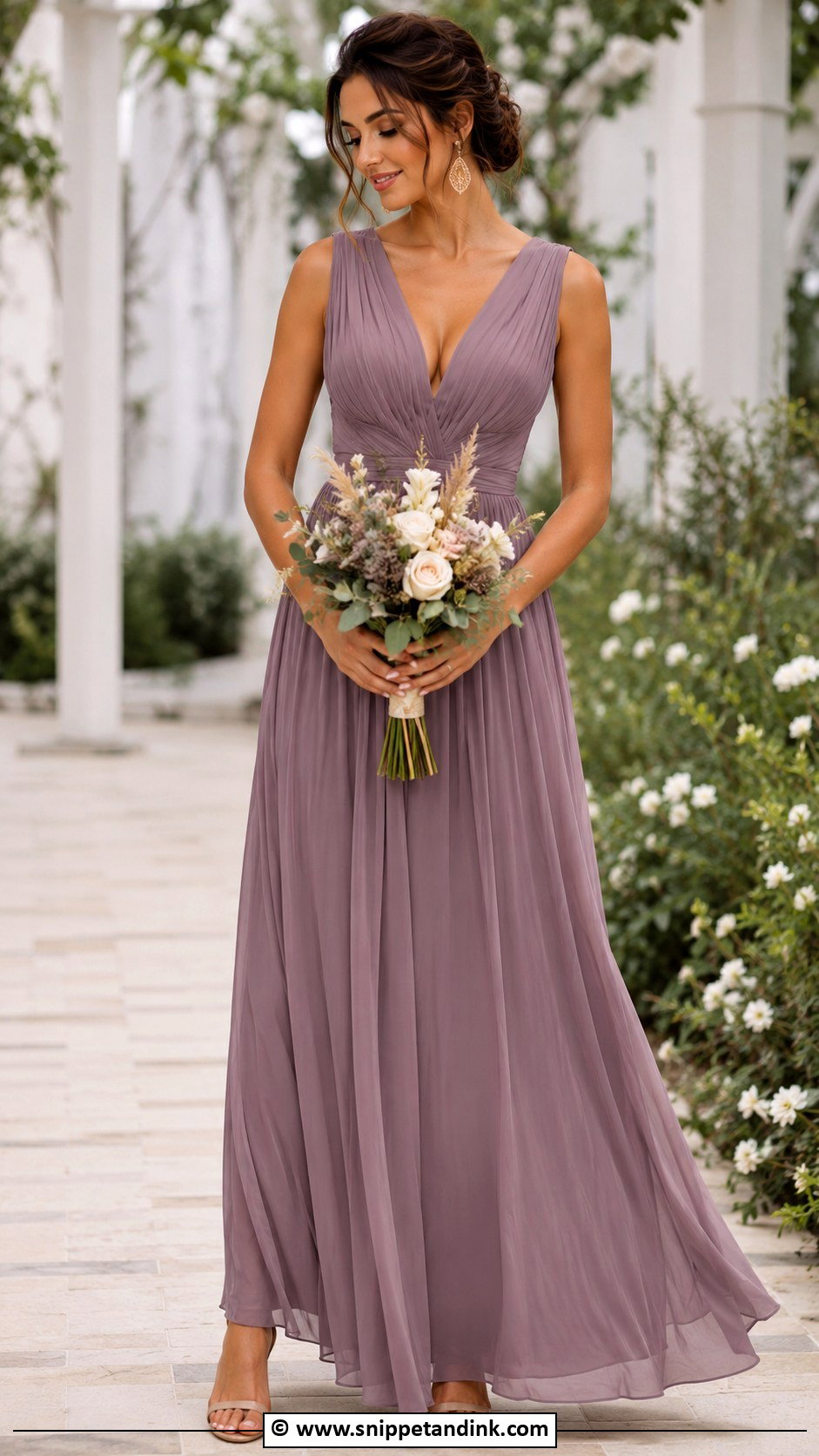
Mauve sits between pink, purple and neutral, and I find it reads more grown-up than blush on almost everyone. It works for fall, spring and vintage-leaning weddings. A chiffon maxi with a pleated bodice, cowl neck or soft sleeves moves well. Antique-gold jewelry, nude heels and a muted bouquet of cream and dusty rose suit it. For a mixed bridal party, combine mauve with dusty rose, taupe, plum or soft gray.
9. Emerald Green Bridesmaid Dress
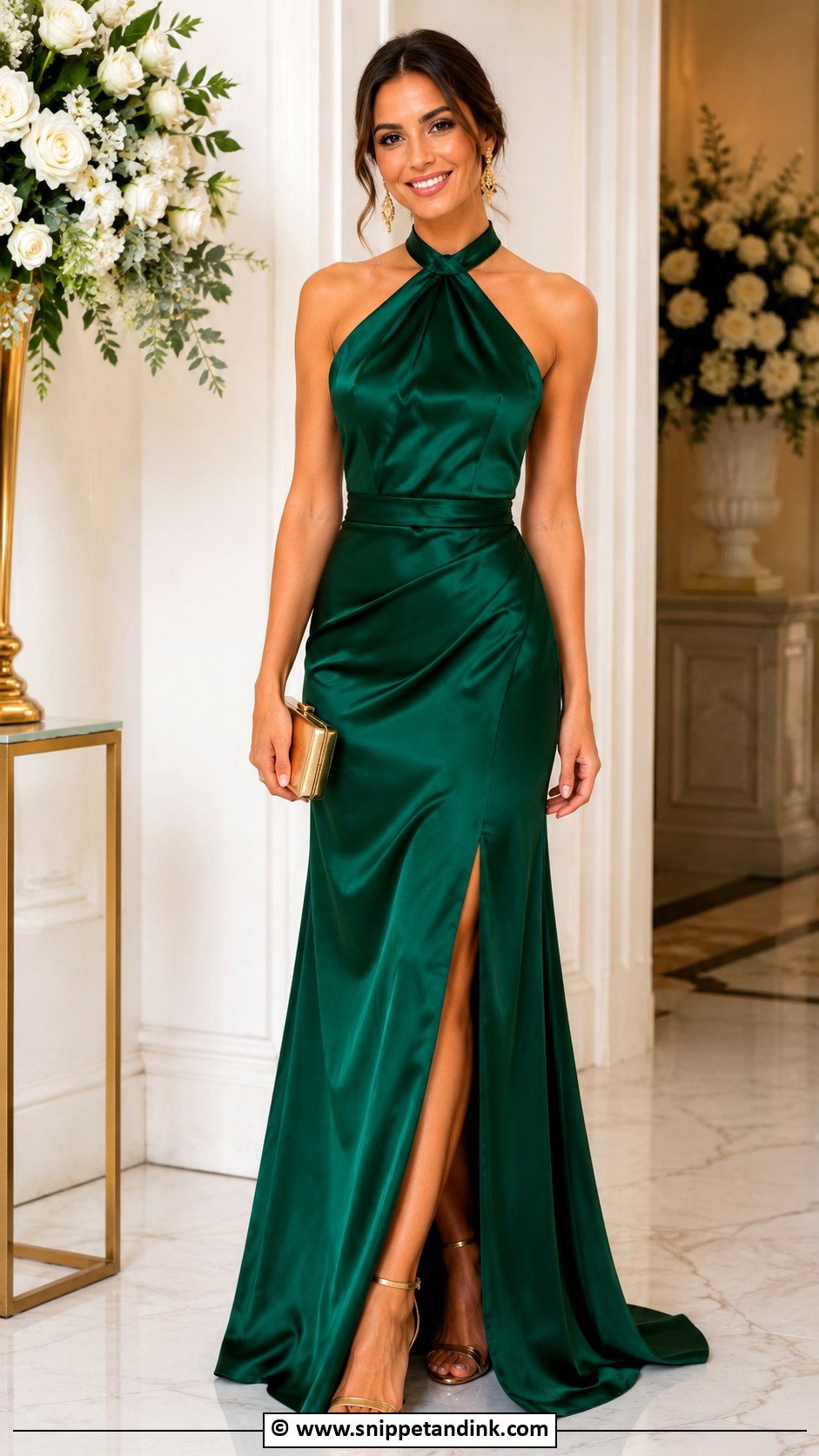
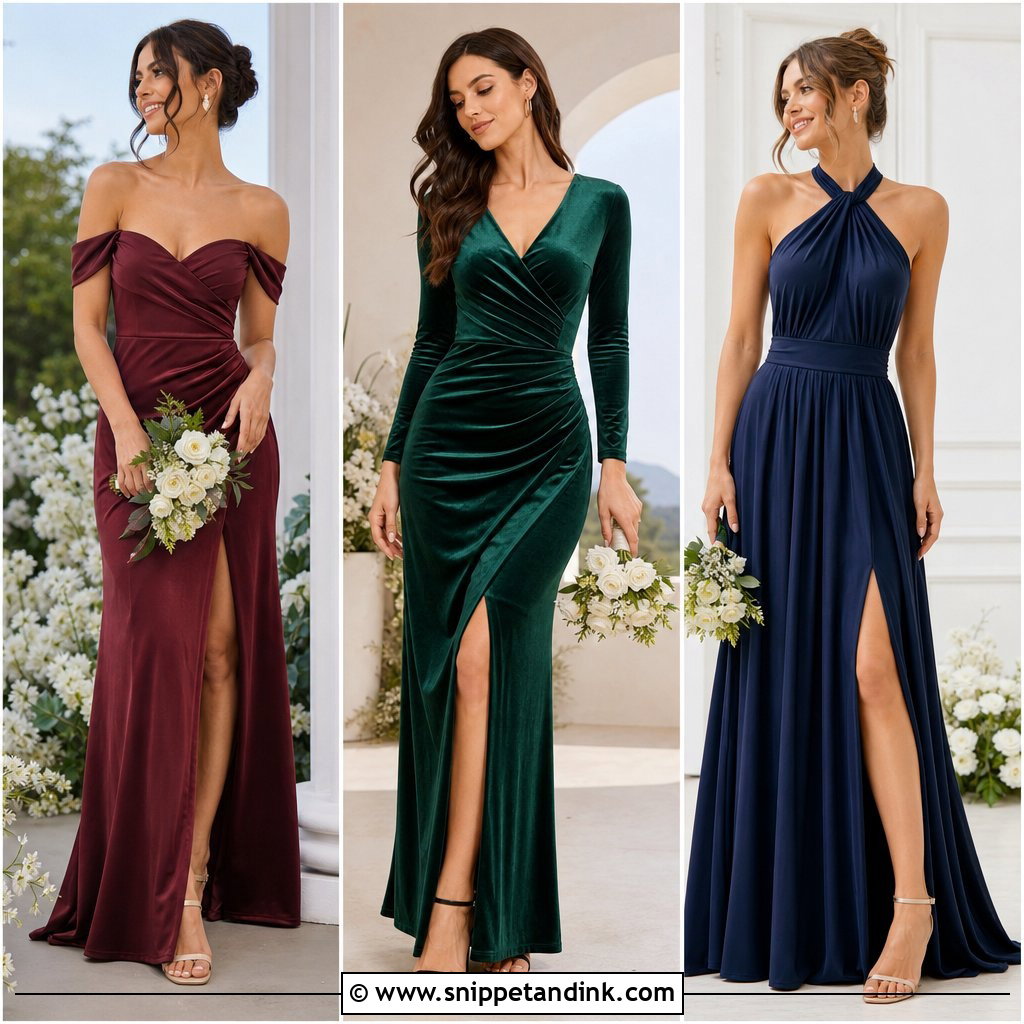
Emerald needs a fabric with weight to look rich. In thin chiffon the color can look flat; in satin, velvet or crepe it deepens. A halter gown suits a summer evening, a long-sleeve maxi a winter one. Gold heels, gold earrings and a sleek clutch match its warmth, and it glows near ivory flowers and candlelight. For a bride who wants real color without anything bright, it’s the shade I’d suggest first.
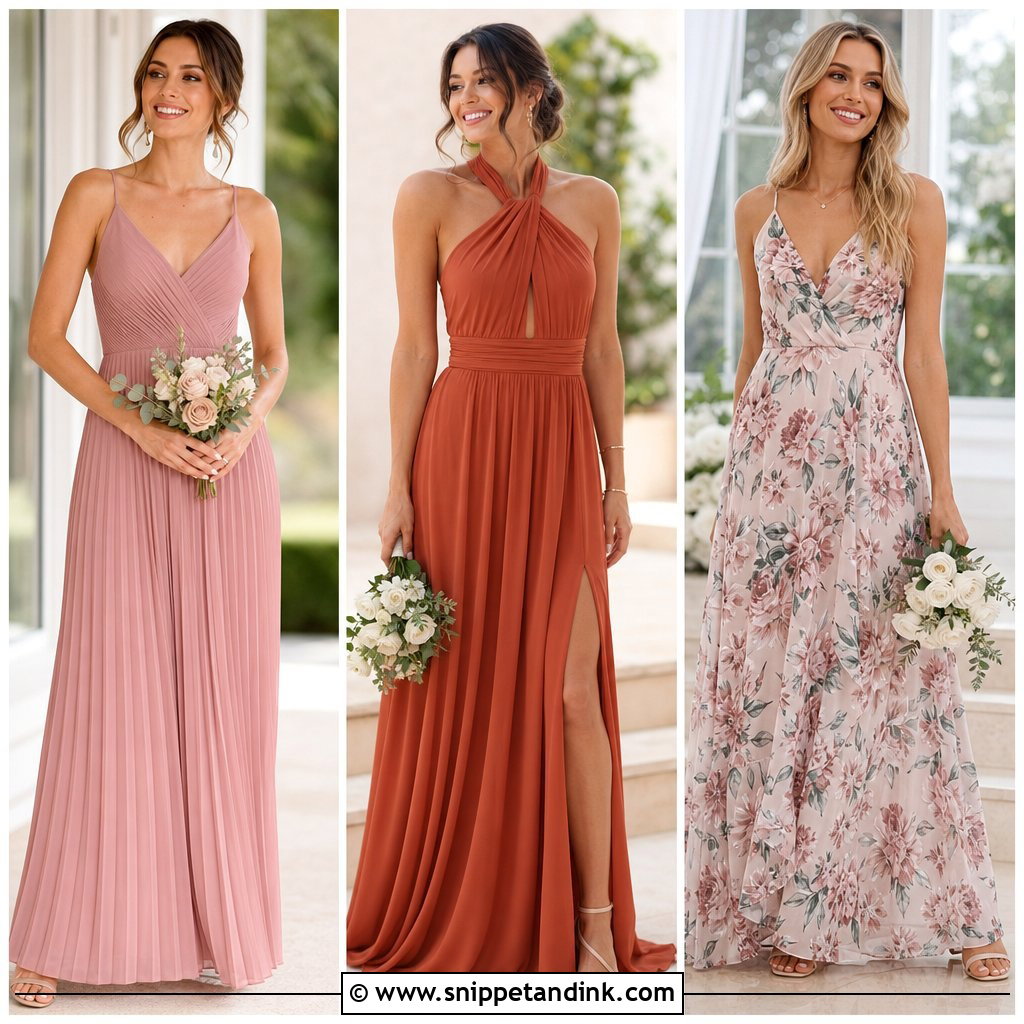
10. Terracotta Bridesmaid Dress
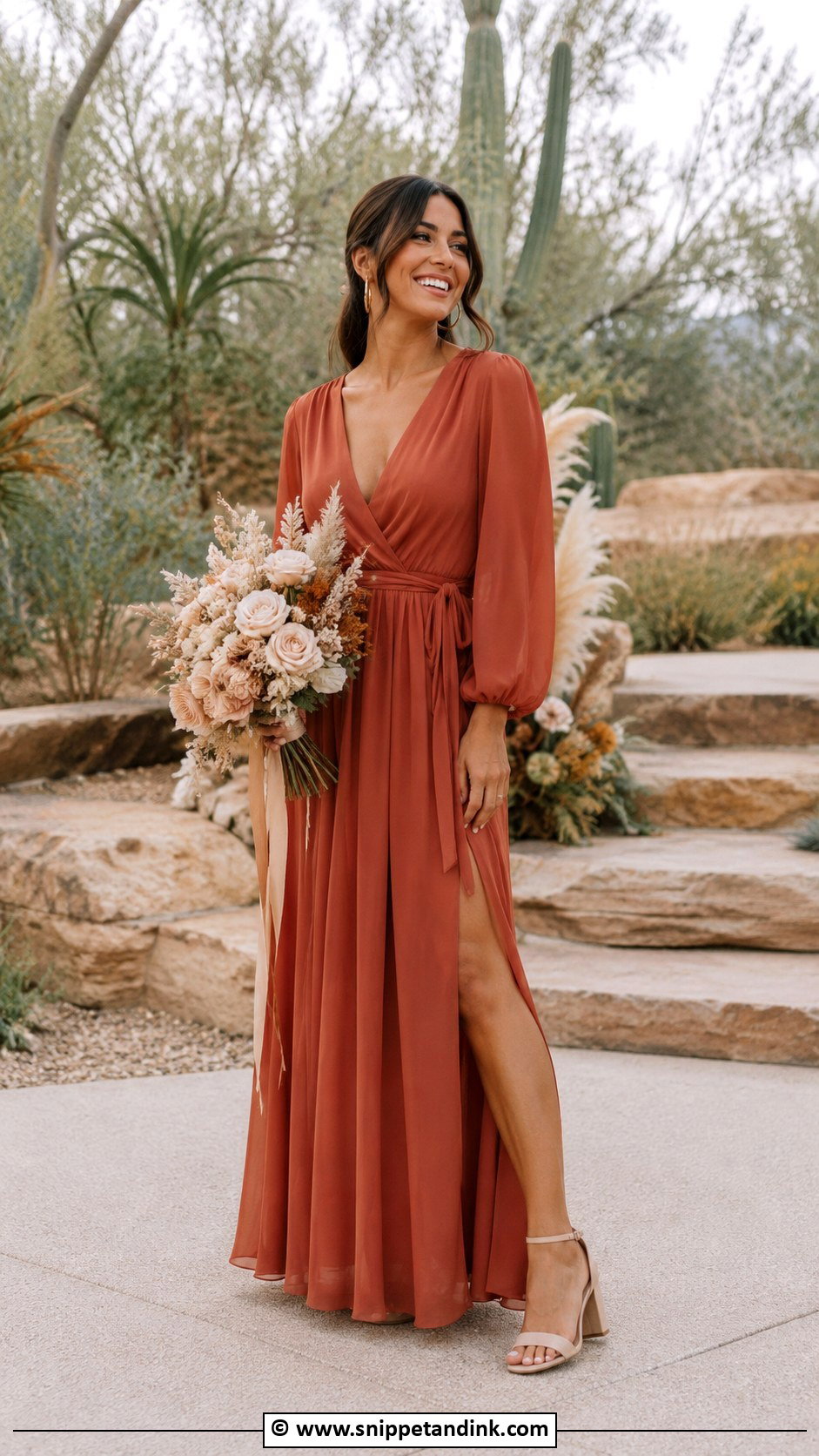
Terracotta belongs outdoors: desert venues, barns and fall fields where the landscape echoes it. Look for rust, clay or burnt orange in chiffon, satin or crepe. A wrap maxi or square-neck A-line is easy to wear through a long day. On very fair, pink-toned skin, a bright rust can look harsh, so I’d steer those bridesmaids toward the softer clay end. Nude block heels, gold hoops and a bouquet of cream, peach and greenery suit it. For a mixed lineup, pair it with copper, champagne, olive or dusty rose.
11. Lavender Bridesmaid Dress
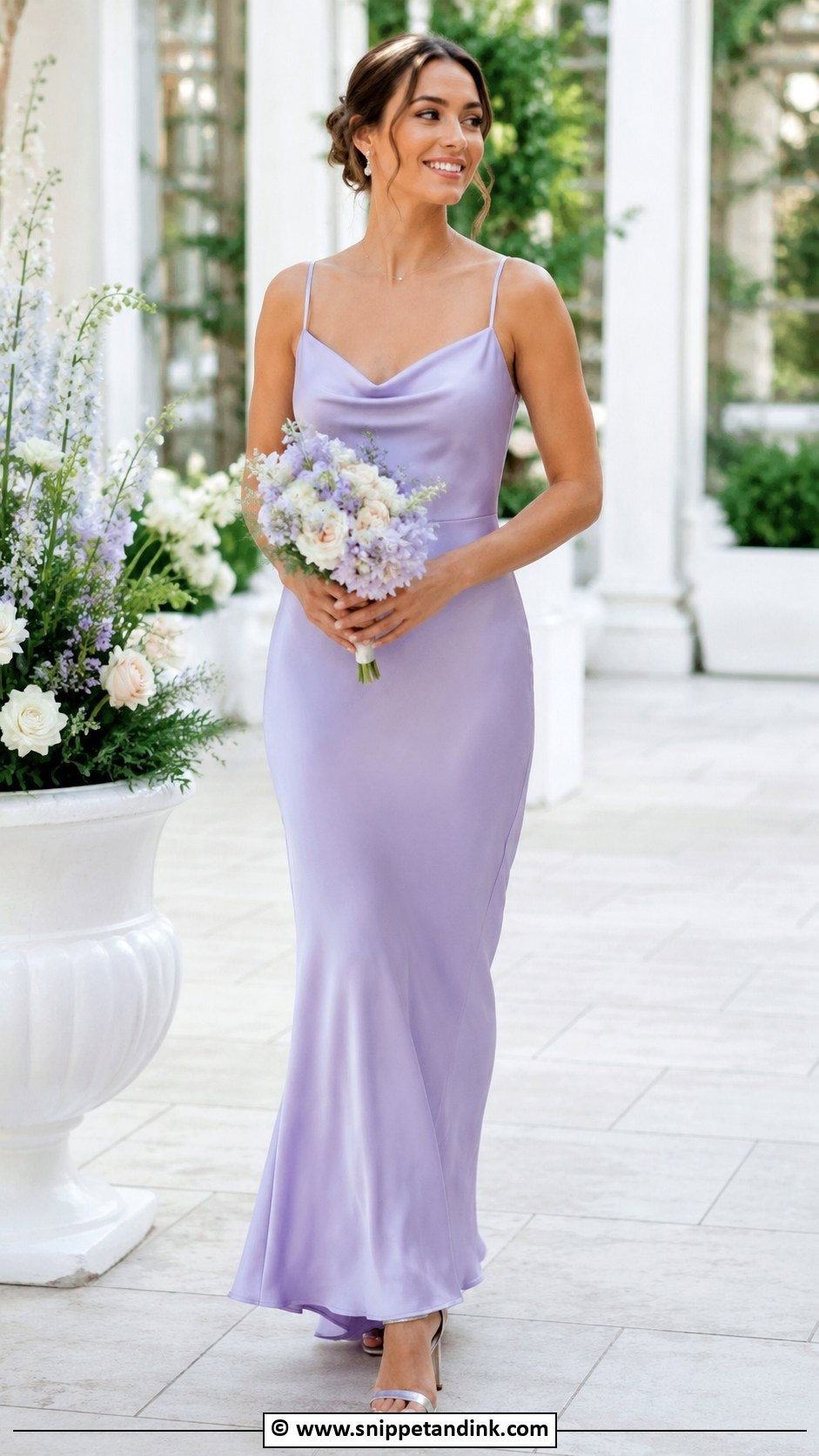
Lavender looks current when the accessories stay matte; shiny metallics and glitter push it toward a sugary look. A chiffon maxi, a satin slip dress or a soft crepe gown with a clean neckline suits it. Silver heels, pearl earrings and a pale bouquet keep it fresh. It sits easily with lilac, dusty blue, sage, blush and ivory at a spring garden wedding, and adds personality to photos without shouting.
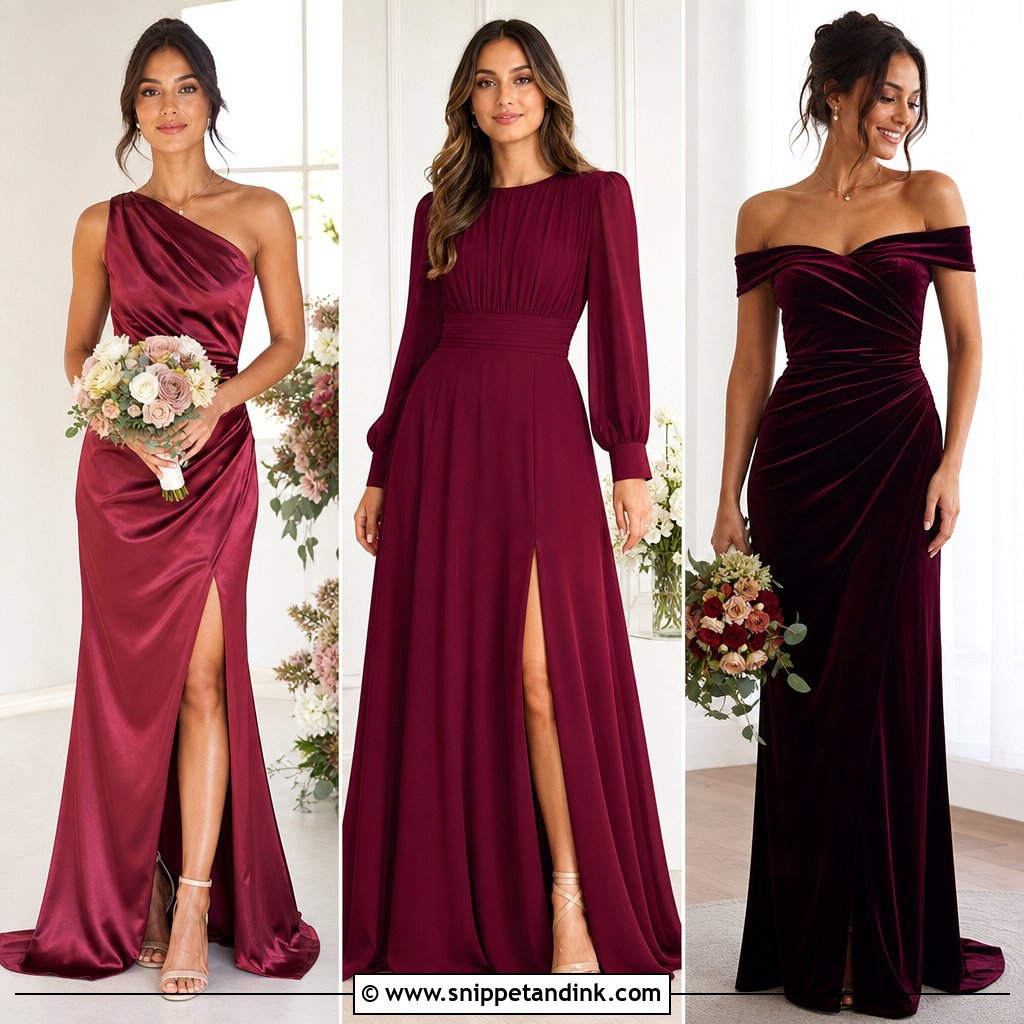
12. Burgundy Velvet Bridesmaid Dress
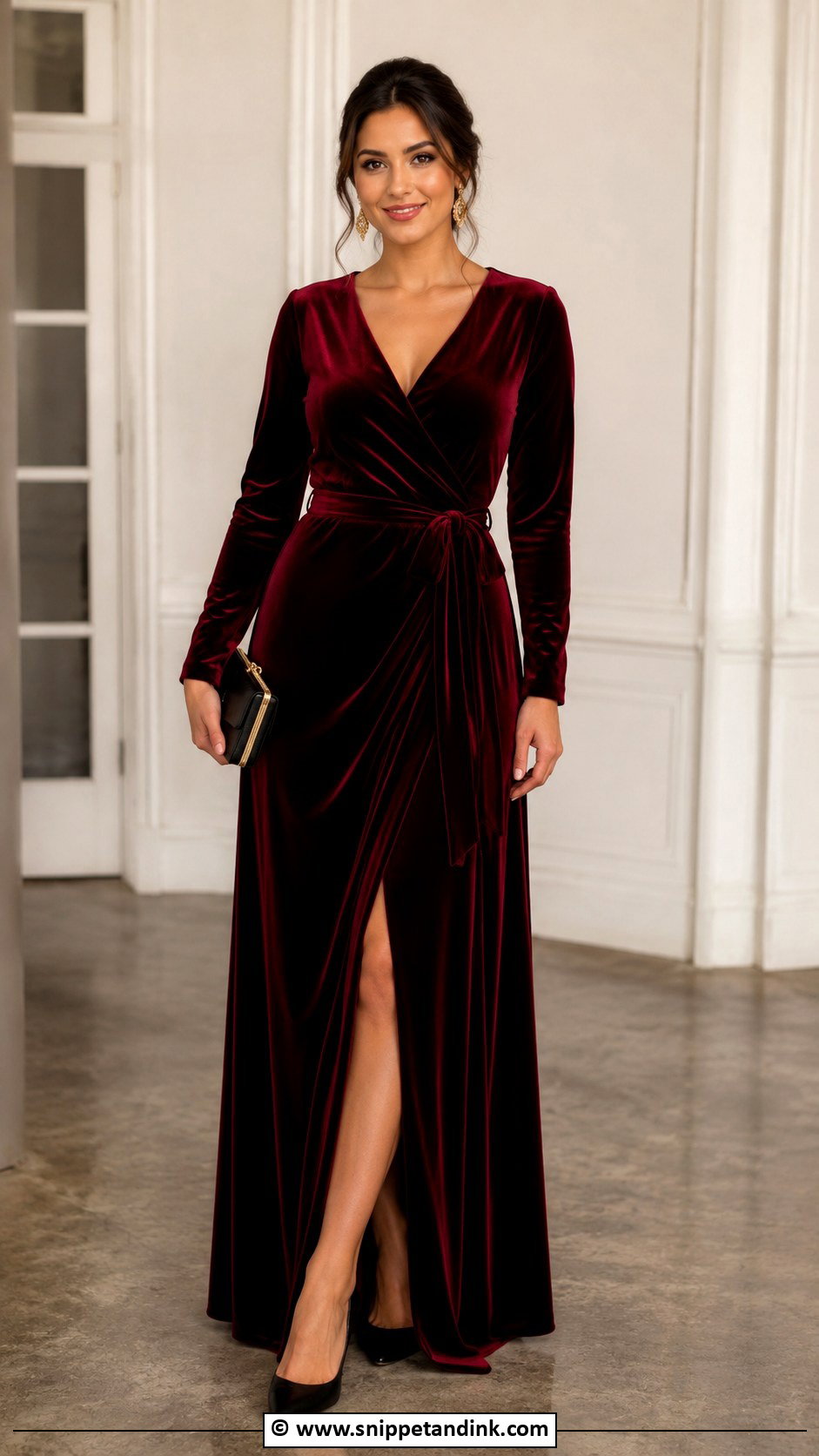
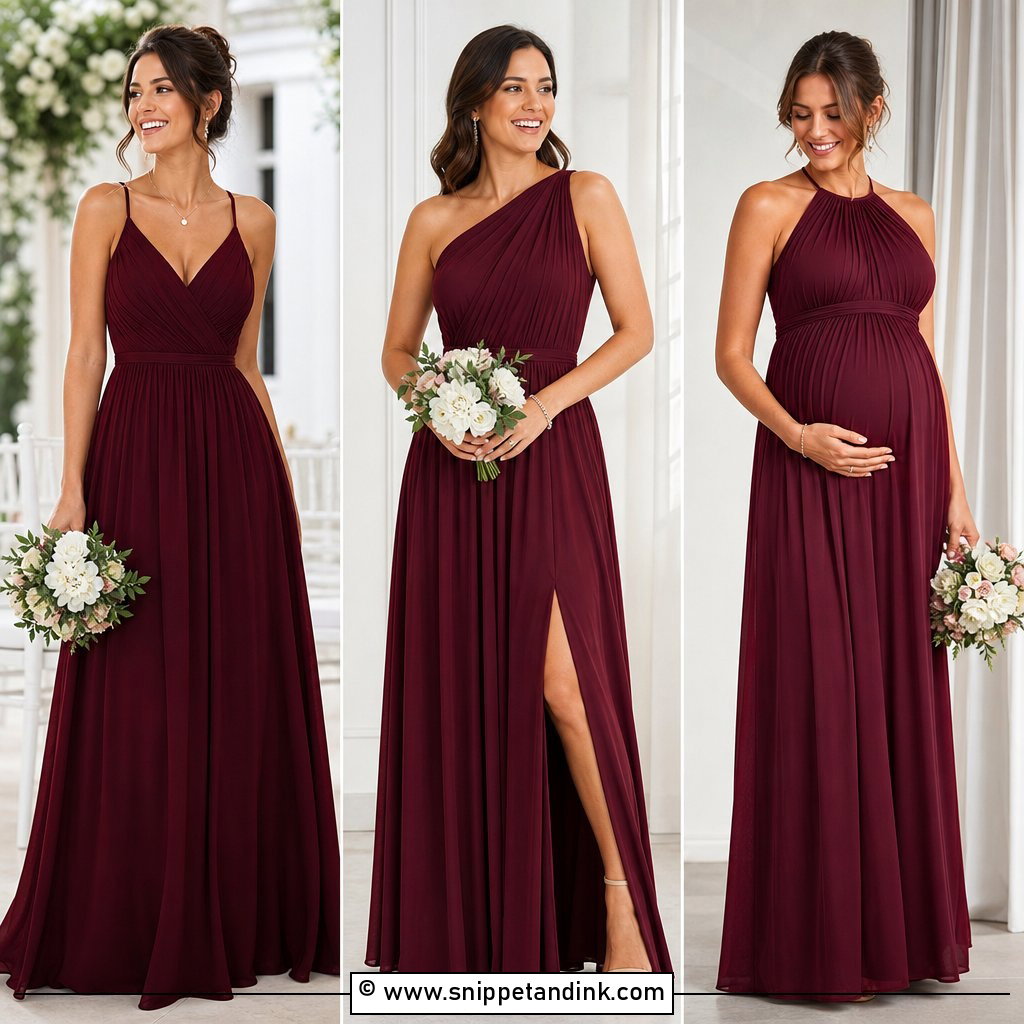
Velvet is heavy, and I always remind brides that a bridesmaid will be standing in it for the whole ceremony. Choose a simple silhouette and leave room to move: a long wrap dress, a fitted column or a V-neck maxi with long sleeves. Burgundy suits it best in cooler months. Black or nude heels, gold jewelry and a small clutch are enough. Steam velvet from the inside, never press it flat, or the pile shows shiny marks. Ivory flowers, greenery and warm metallics set it off at a formal evening venue.
13. Pale Yellow Bridesmaid Dress
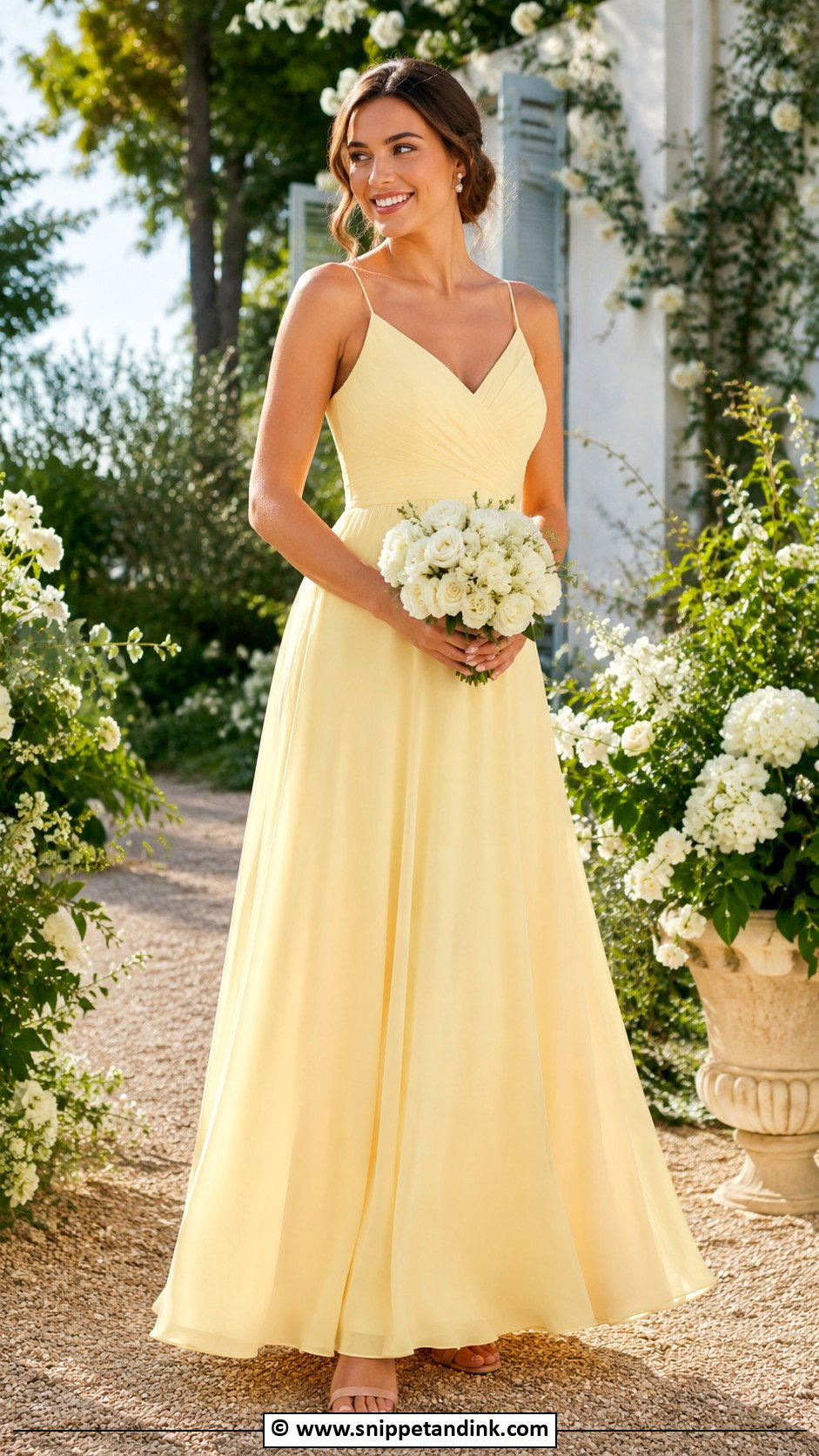
Pale yellow is cheerful, but the exact shade matters. Butter yellow warms the skin; lemon can make some complexions look sallow in daylight. A chiffon A-line, slip dress or delicate-strapped midi suits a spring or summer wedding. Nude sandals, pearl studs and a white-and-green bouquet keep it light. It mixes nicely with blue, sage, peach and ivory, and soft natural makeup is the right companion.
14. Slate Blue Bridesmaid Dress
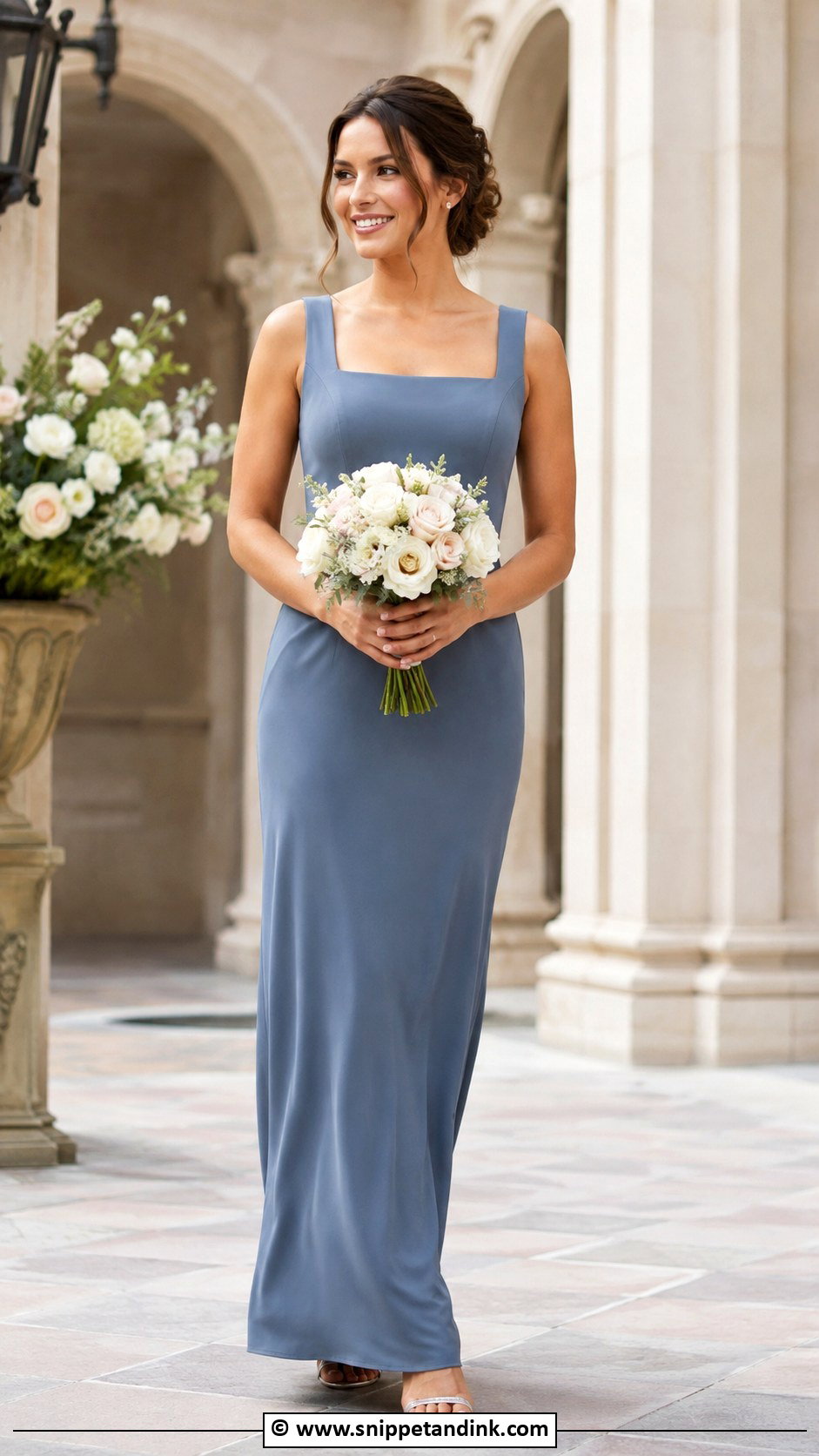
Slate blue sits deeper than dusty blue and softer than navy, and it’s my pick for a spring or autumn wedding where the weather could go either way. A crepe or chiffon maxi with a square neck, draped bodice or wrap waist looks polished. Silver heels, small earrings and a pale bouquet suit it. It works with white, taupe, sage, charcoal and soft blush, and gives you a blue that never looks beachy.
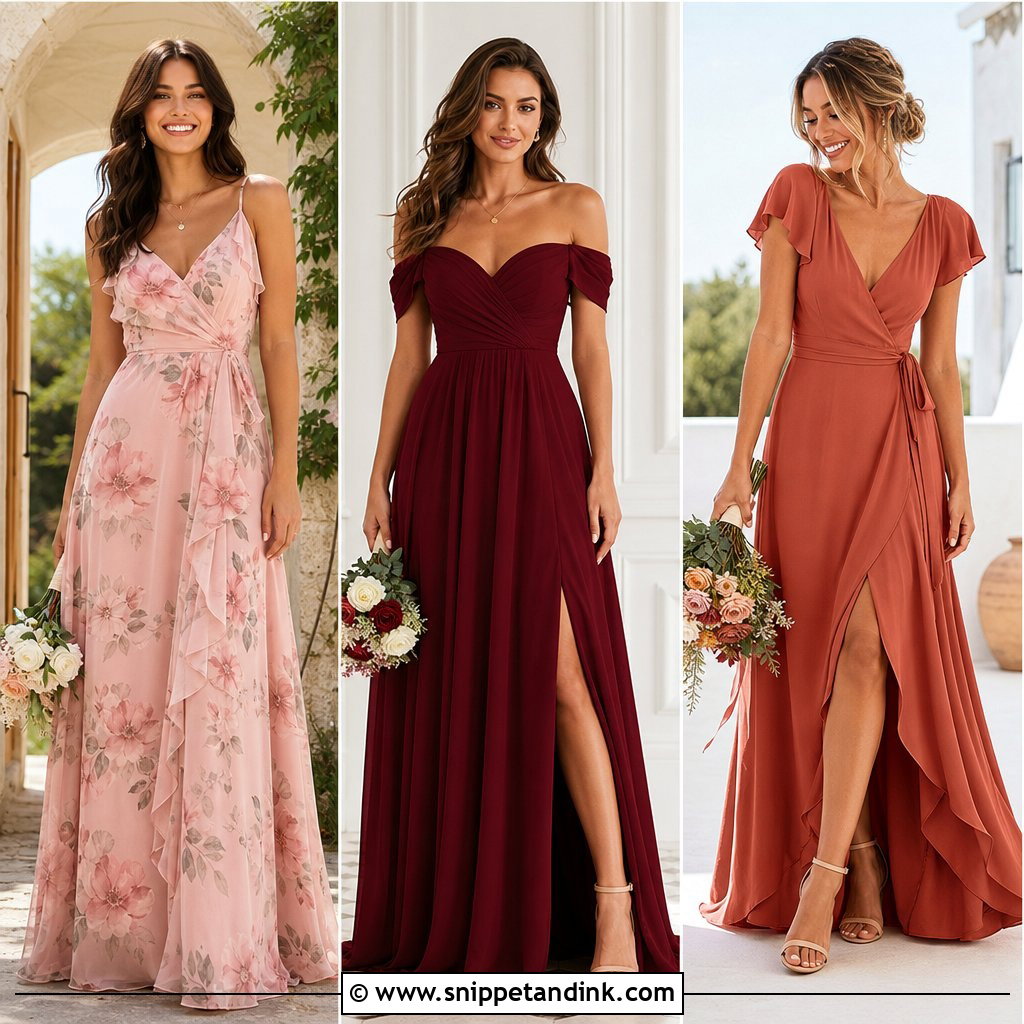
15. Dusty Rose Bridesmaid Dress
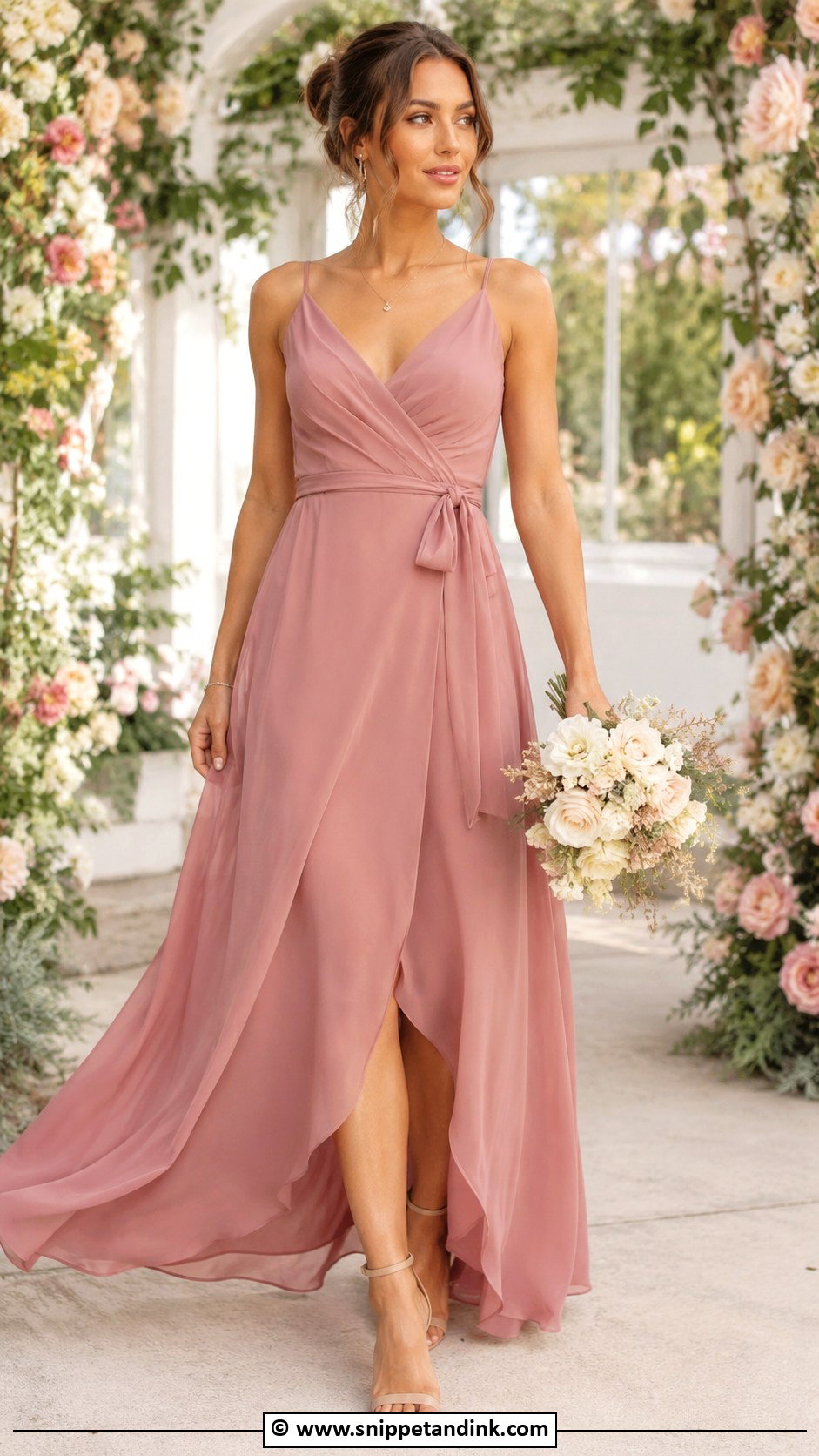
Dusty rose is the pink I find easiest to put on a whole lineup, since it’s muted enough not to fight with any skin tone or the flowers. A chiffon wrap gown, satin midi or crepe maxi can match the dress code. Nude heels, rose-gold jewelry and a simple clutch make it cohesive. It fits garden and romantic venues, and mixes with mauve, taupe, sage or champagne.
16. Olive Green Bridesmaid Dress
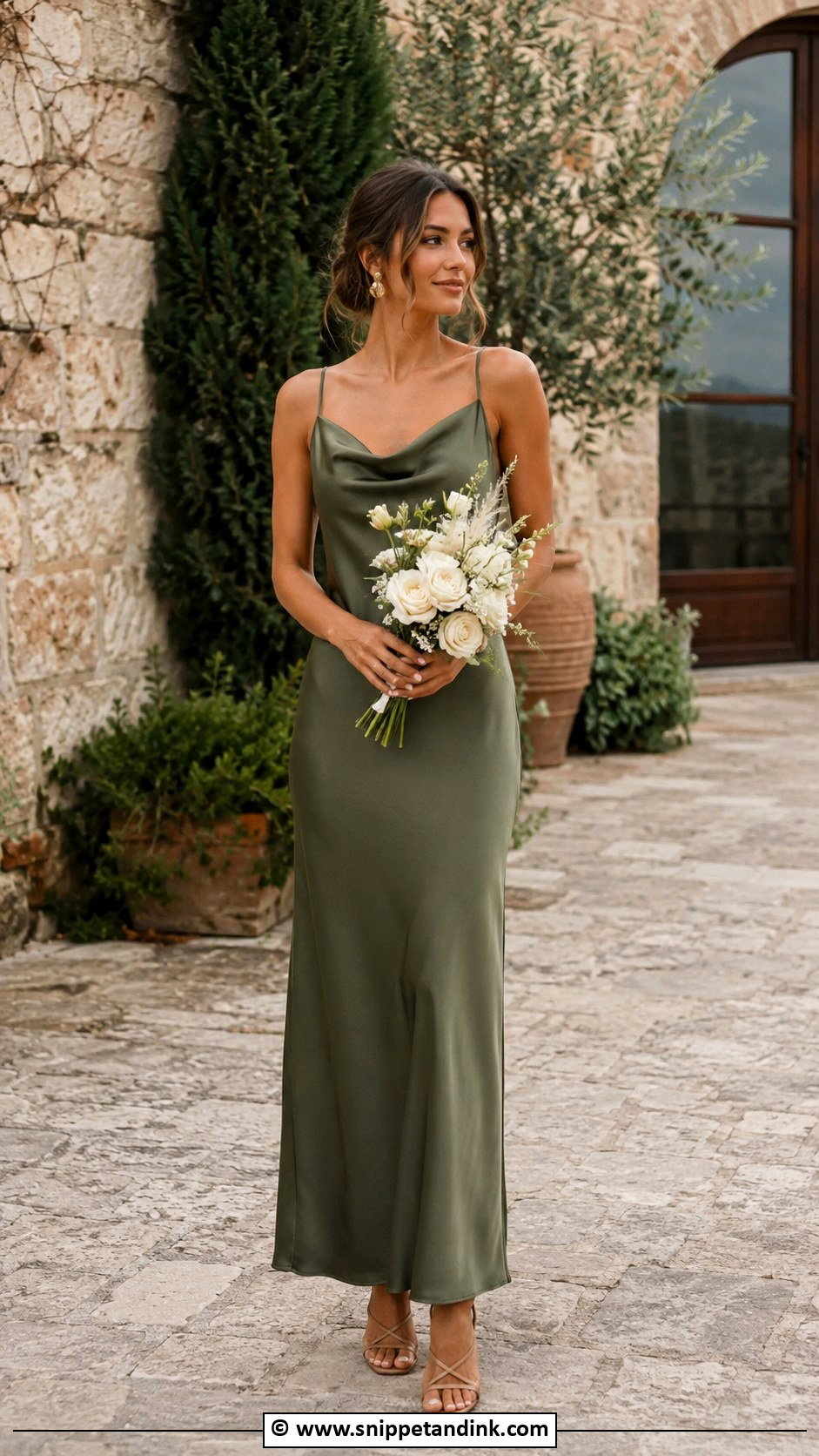
Olive is earthy and modern, and less formal than emerald. A satin slip, chiffon wrap gown or crepe maxi in a muted olive suits outdoor weddings and neutral palettes. Gold jewelry, nude heels and cream flowers finish it. Olive leans warm, so it flatters bridesmaids with golden or olive skin and pairs with beige, tan, champagne and rust. In a mixed group, it pairs naturally with sage, terracotta or deep green.
17. Taupe Bridesmaid Dress
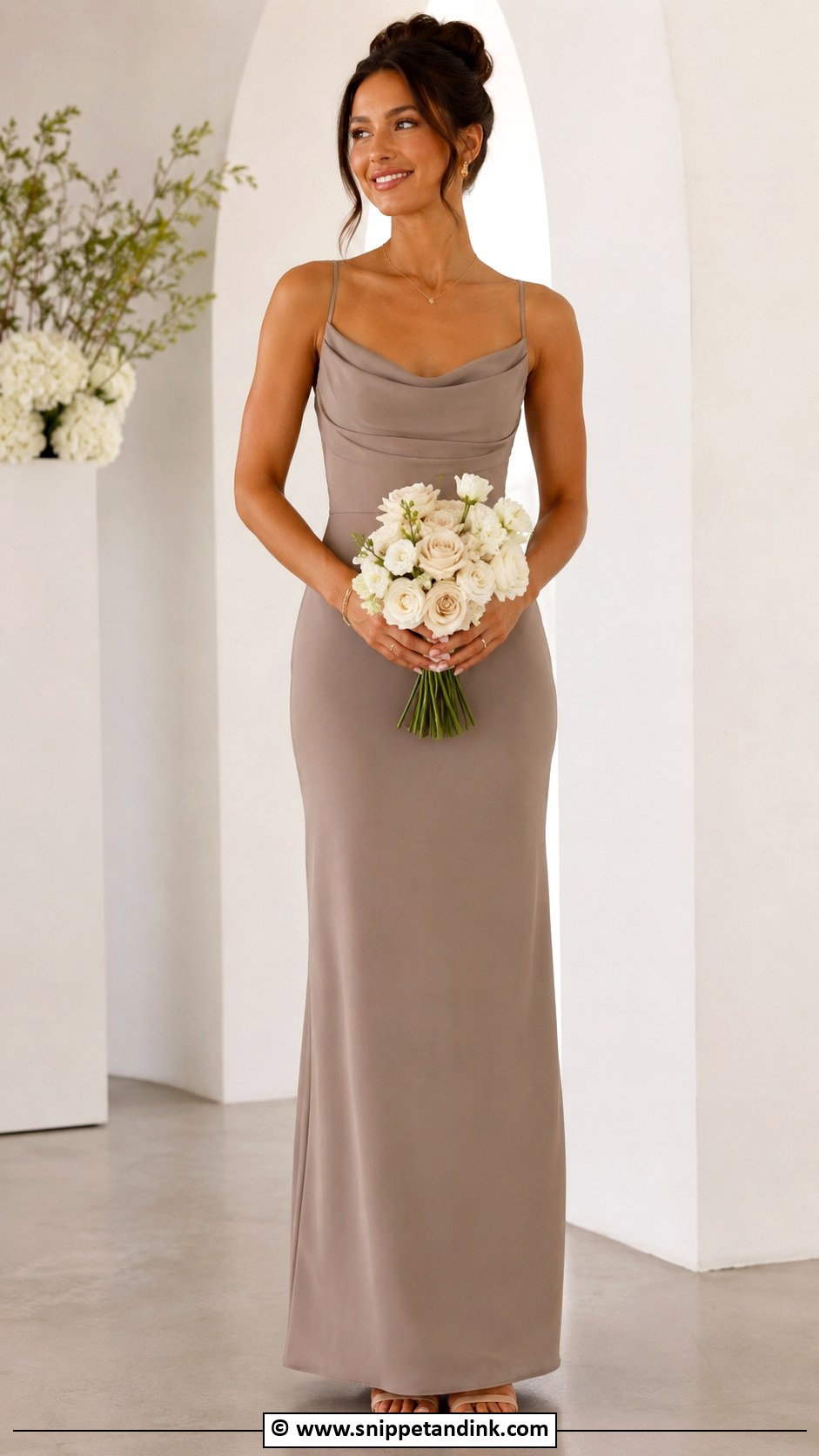
Taupe needs warmth to work. A flat, gray taupe can look dull in photos, so I look for one with a little brown or pink in it. Satin, crepe or chiffon in a column, wrap or draped maxi suits it. Nude heels, gold jewelry and a cream bouquet keep it soft, and the bride’s gown and flowers stand out against it. For a mixed neutral lineup, add champagne, mocha, beige, blush or soft gray.
18. Coral Bridesmaid Dress
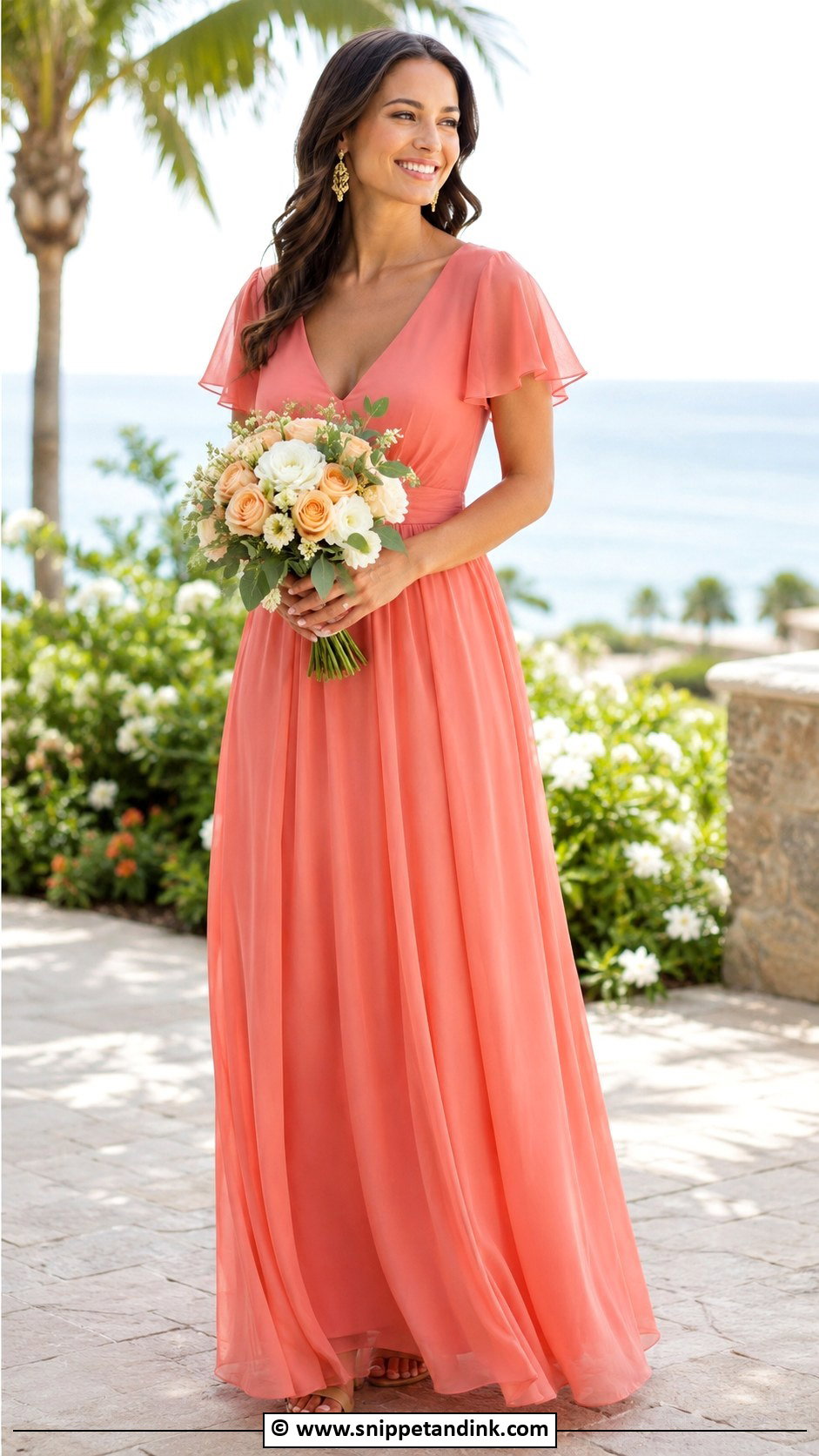
Coral brings energy to spring, summer, beach and destination weddings, but neon coral looks cheap in photos, so stay with the softer end. A chiffon maxi with flutter sleeves or a satin midi with a clean neckline suits it. Nude sandals, gold earrings and a bouquet of white, peach and greenery complete it. It pairs with turquoise, ivory, blush and warm neutrals when the mood is colorful but still refined.
19. One Shoulder Bridesmaid Dress
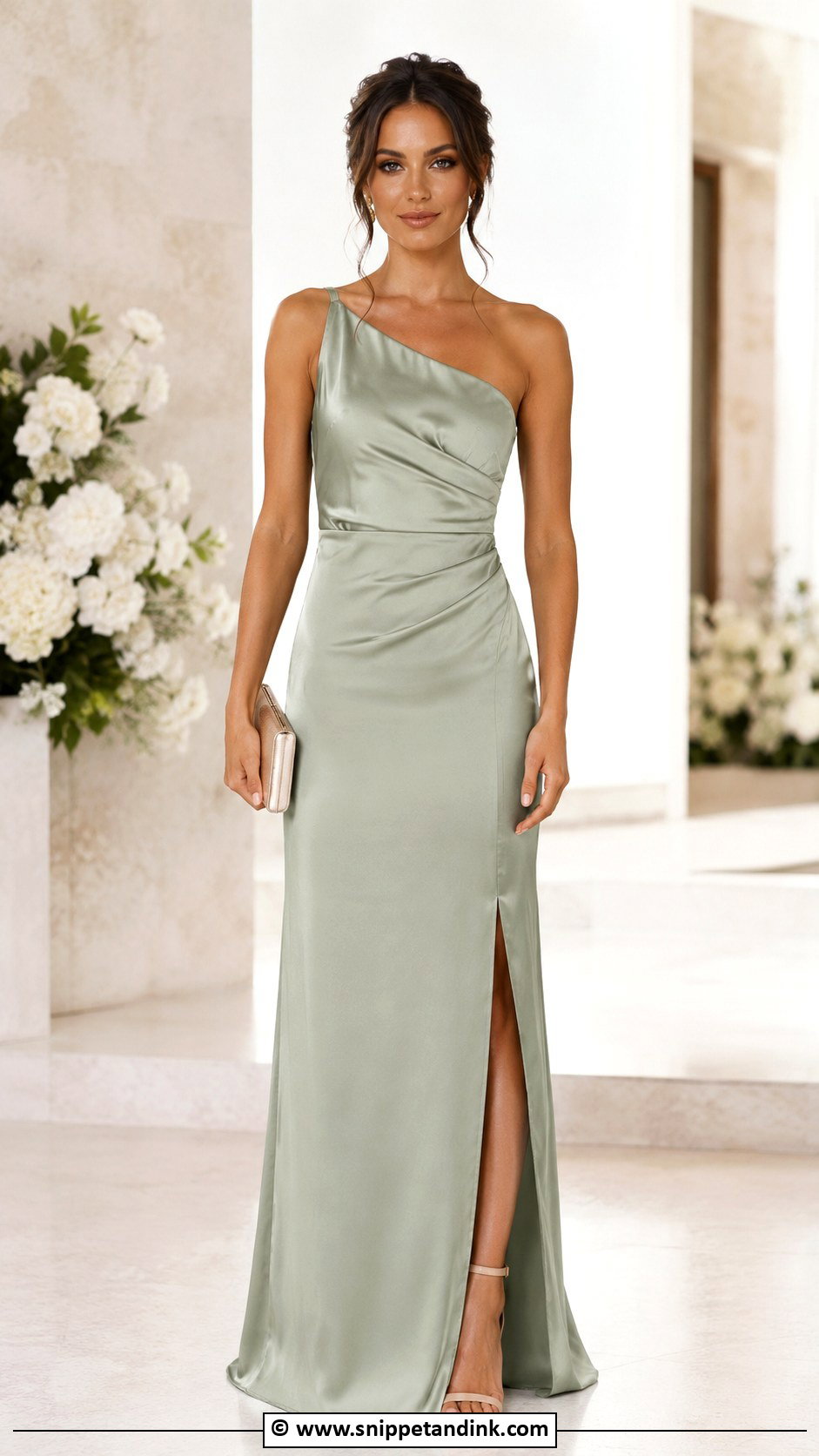
One-shoulder necklines look sculpted and need very little jewelry, but the single strap has to be anchored well. I’d ask the seamstress to add a silicone gripper or a bra strap keeper inside, or the strap slowly slides out toward the arm through the evening. Satin, crepe and chiffon all hold the shape. Sage, dusty blue, champagne, black or mauve suit it, with simple heels, small earrings and a sleek clutch at a formal or evening venue.
20. Convertible Bridesmaid Dress
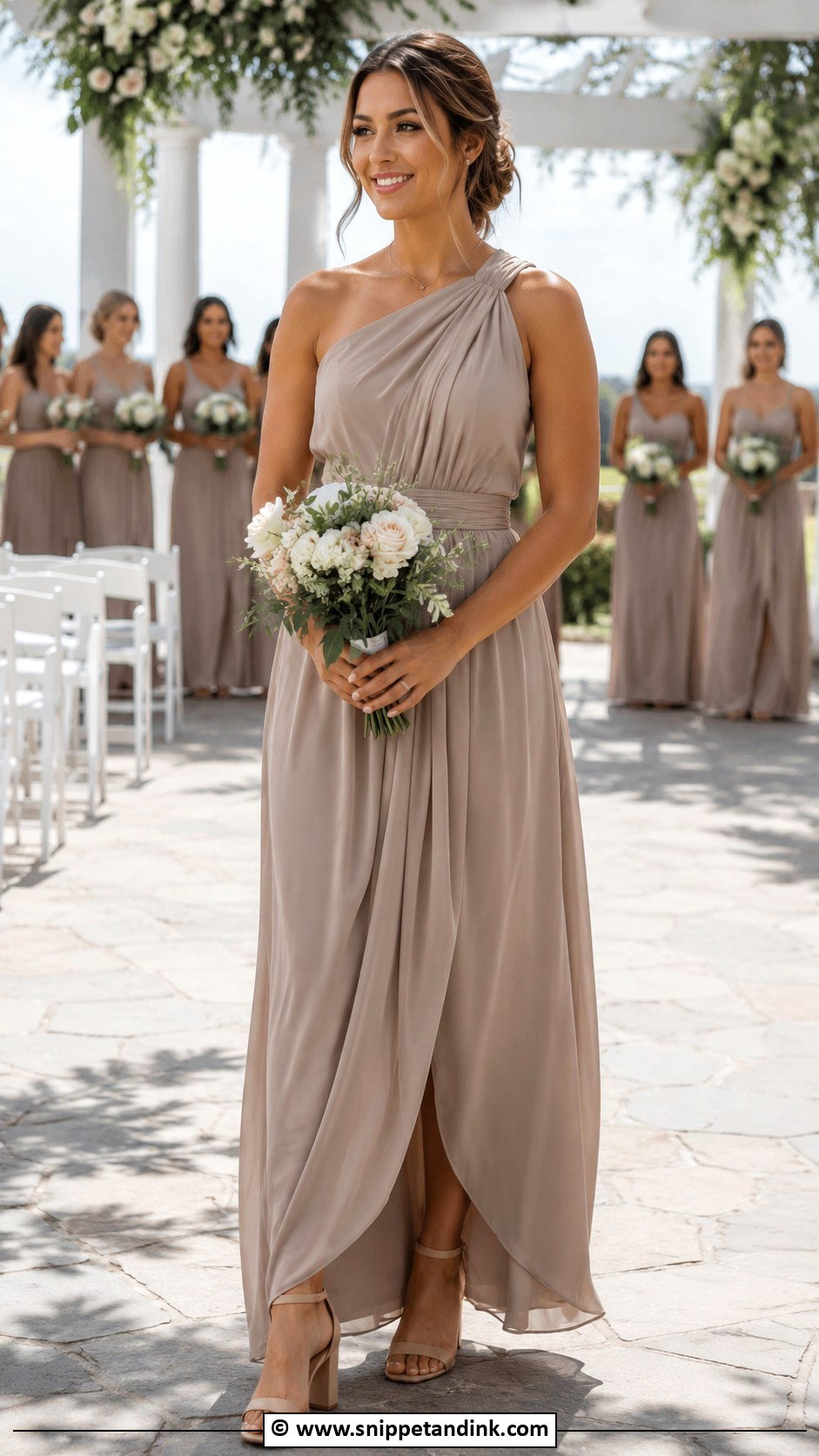
Convertible dresses are a lifesaver for parties with very different body types. One dress can be wrapped as a halter, one-shoulder, cap-sleeve, strapless or V-neck. The catch is that wrapping takes practice, so I ask each bridesmaid to learn her style at home and photograph it, then do a quick wrap session the morning of. Chiffon and stretch jersey suit them best. Matching nude heels, simple jewelry and coordinated bouquets tie the lineup together, which helps a lot with large or traveling parties.
21. Slip Bridesmaid Dress
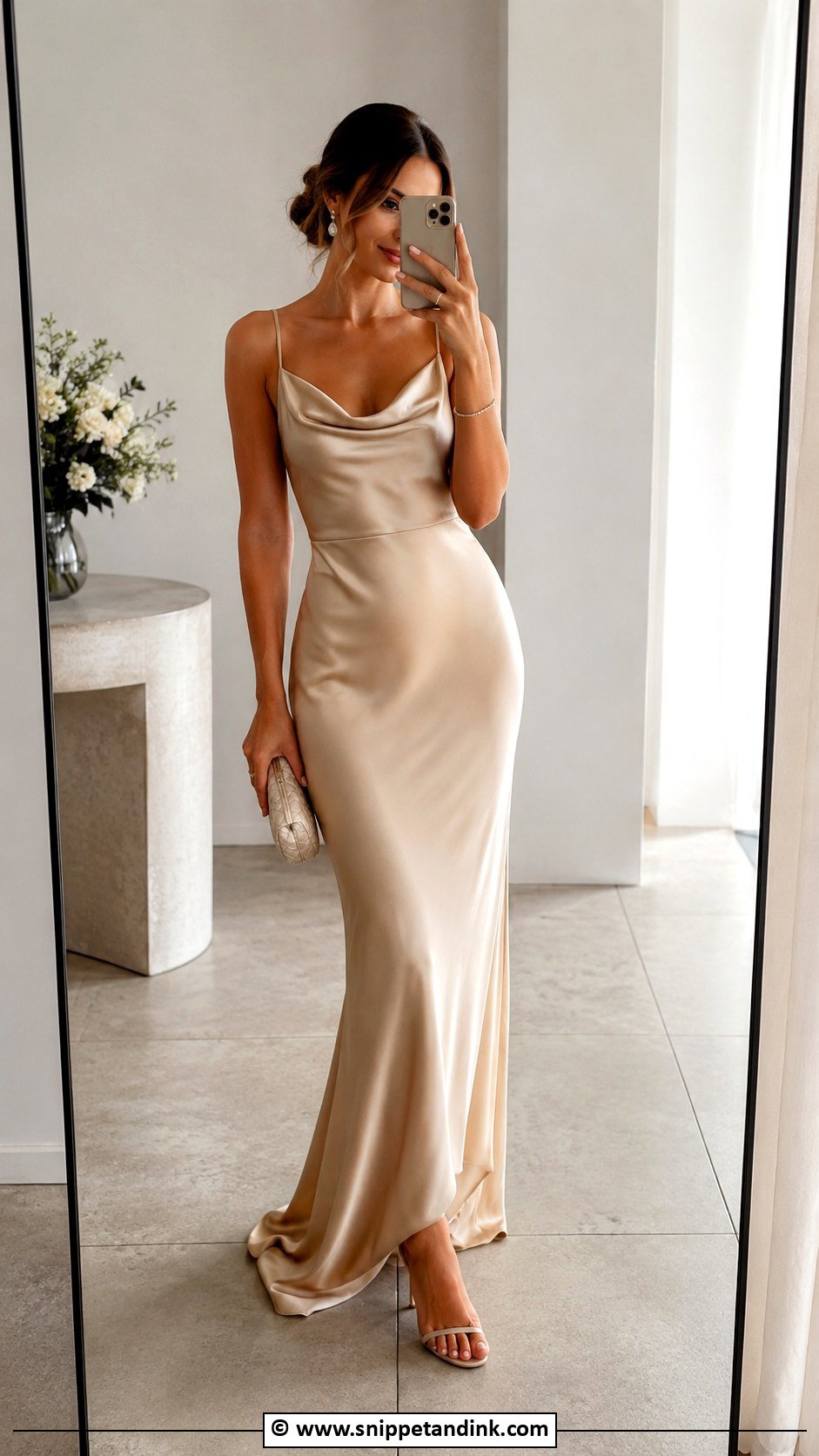
Slip dresses are the most rewearable thing here, and the least forgiving of fit. Bias-cut satin shows every line underneath, so I’d suggest crepe for anyone who feels self-conscious. Look for adjustable straps and a soft cowl. Champagne, black, sage, mauve and dusty blue all suit the cut. Strappy heels, delicate earrings and a small clutch finish it, and a sheer wrap or tailored shawl adds coverage. The fit should skim, not cling.
22. Midi Bridesmaid Dress
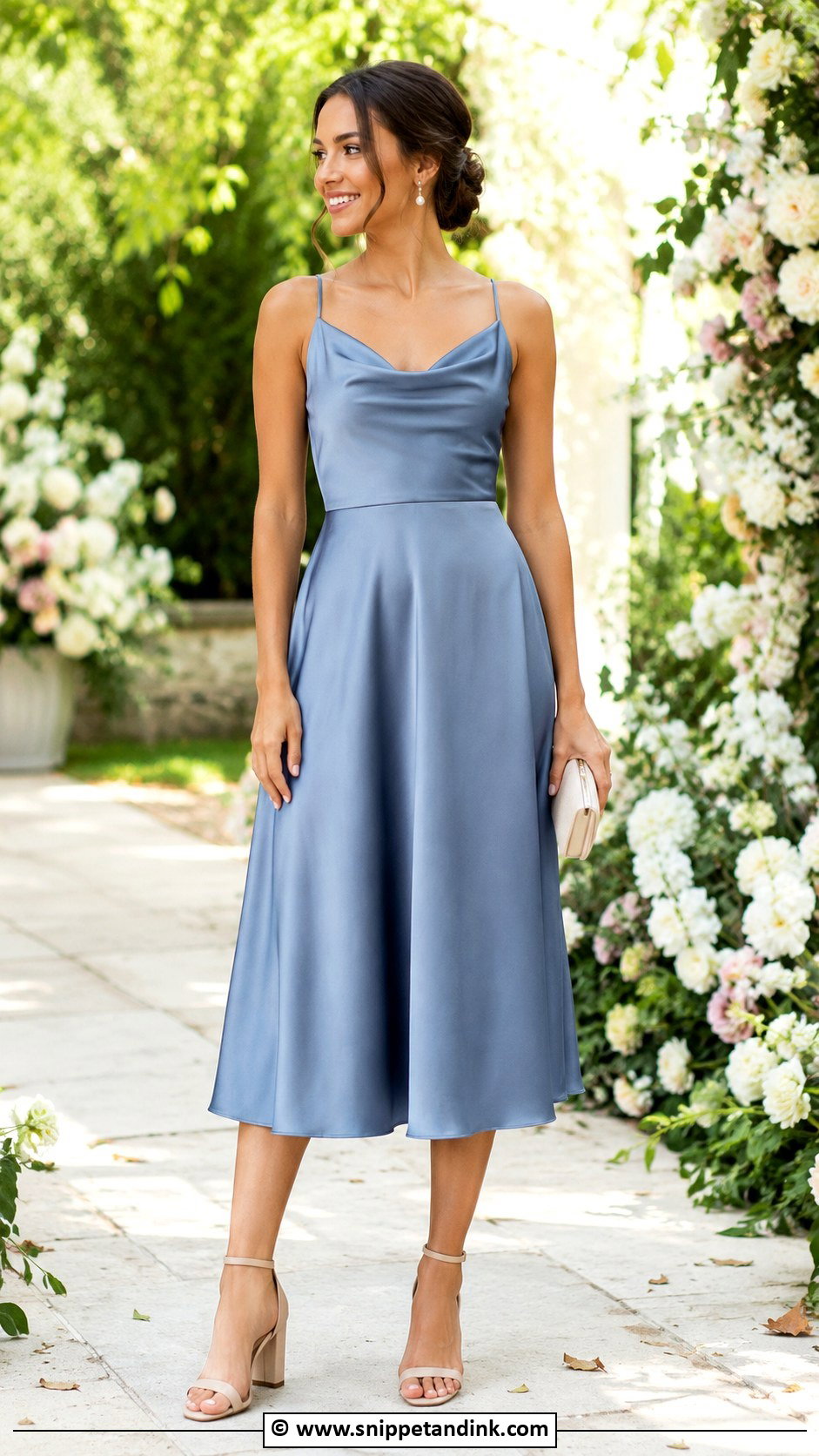
Midi dresses fit semi-formal and daytime weddings, and they’re easier to dance in than any maxi. An A-line, wrap or slip midi in satin, chiffon or crepe suits warm venues. Nude block heels, pearl earrings and a small clutch are right. Because the shoes show, I’d coordinate them across the group. Courthouse, garden and relaxed receptions all suit a midi, and keeping the colors coordinated is what makes a shorter lineup look intentional.
23. Long Sleeve Bridesmaid Dress
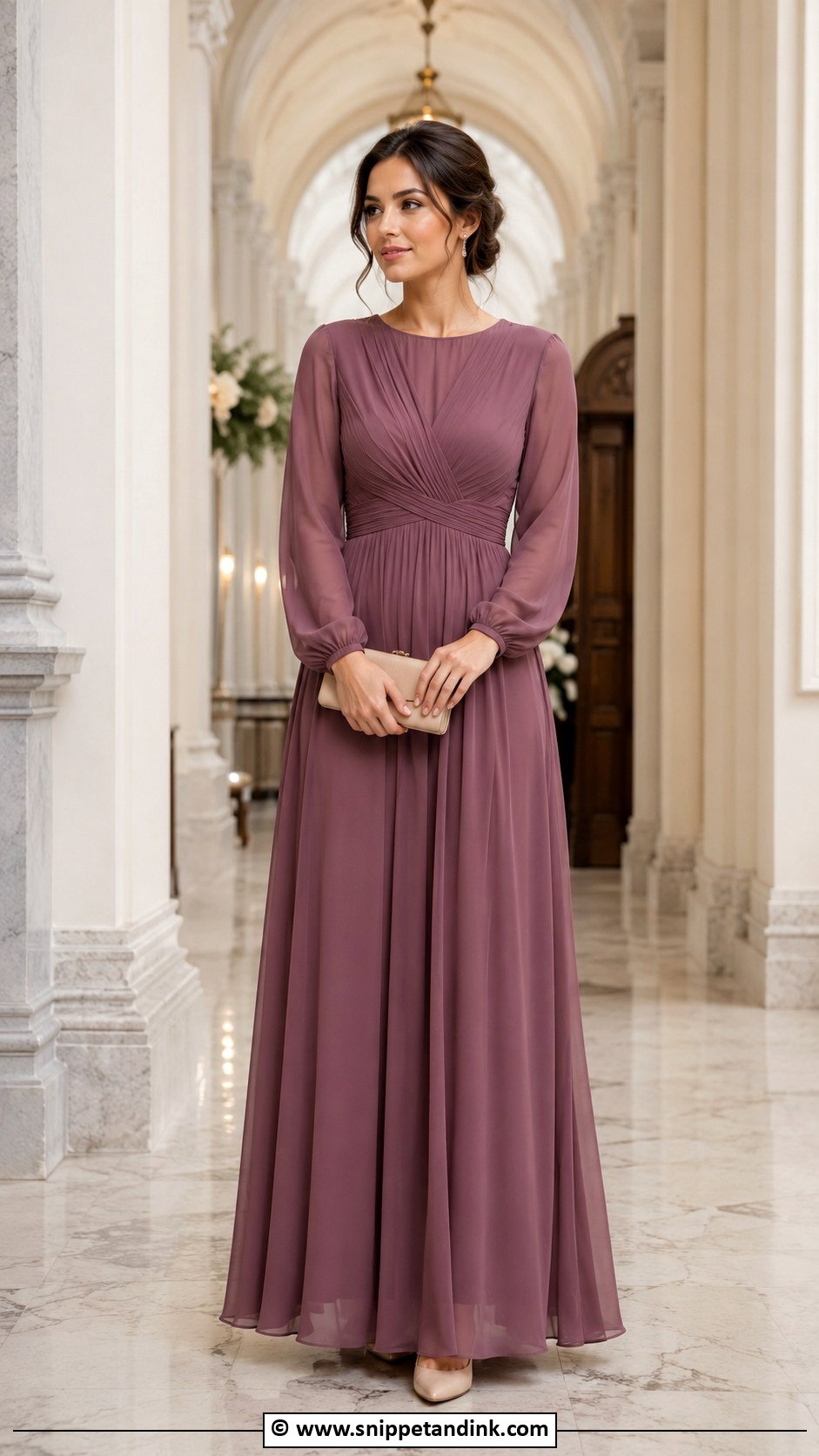
A long sleeve bridesmaid dress covers cooler weather and bridesmaids who simply prefer covered arms. Chiffon sleeves keep it soft, crepe gives structure and velvet suits a winter wedding. Check that the armhole is cut high enough to raise arms, because low armholes pull the whole bodice up when someone waves or hugs. A V-neck, wrap waist or A-line skirt keeps it flattering. Closed-toe heels, simple earrings and a neat clutch suit burgundy, navy, emerald, mauve, black or dusty blue.
24. High Neck Bridesmaid Dress
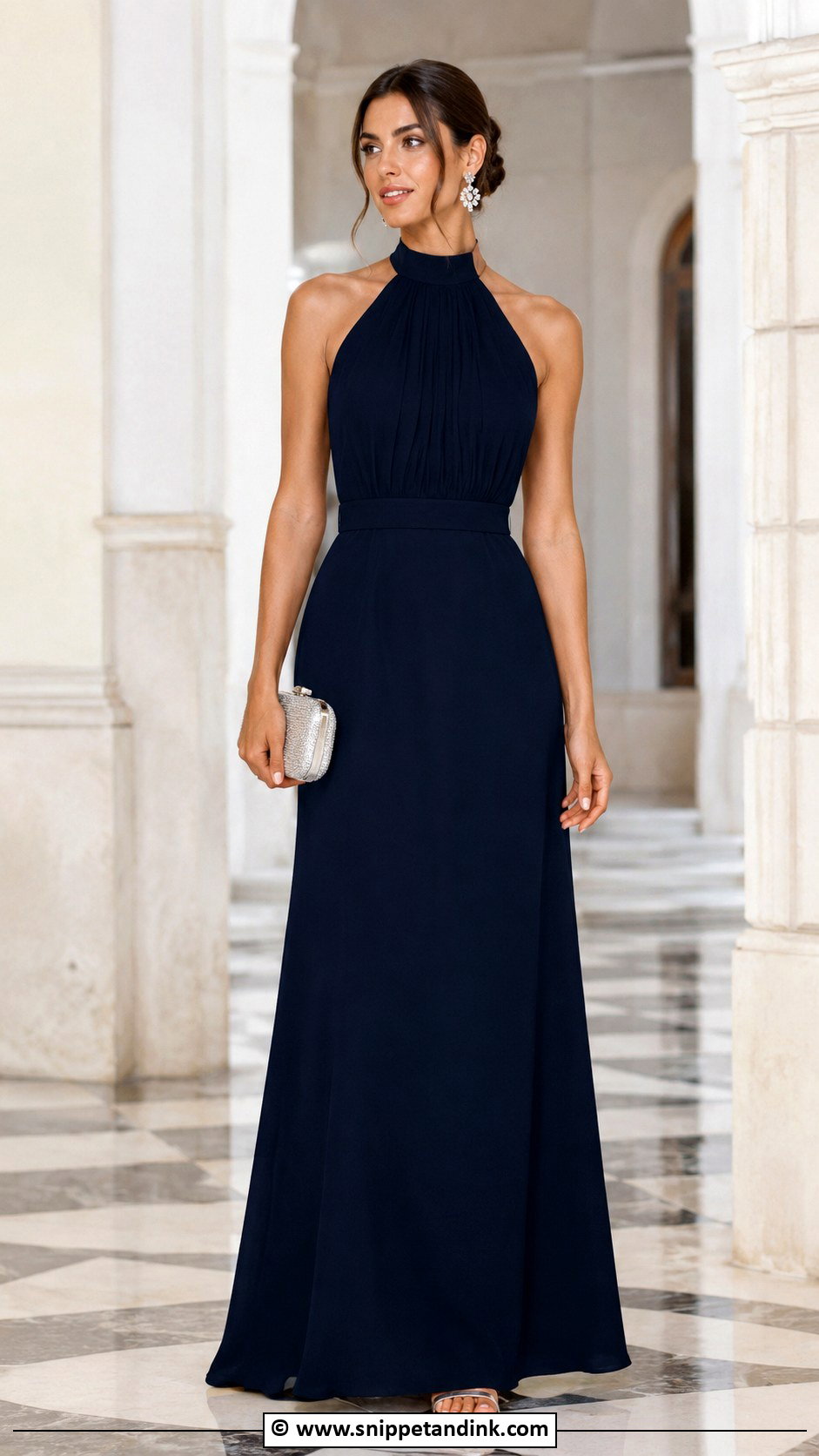
High necks (halter, mock or gathered) give a clean, secure fit; nobody is adjusting a neckline in photos. Satin, chiffon or crepe all suit them, balanced by a defined waist or flowing skirt. Swap the necklace for statement earrings, with sleek heels and a simple clutch. Black, navy, champagne, emerald and slate blue suit the neckline best at a formal or modern wedding.
25. Off Shoulder Bridesmaid Dress
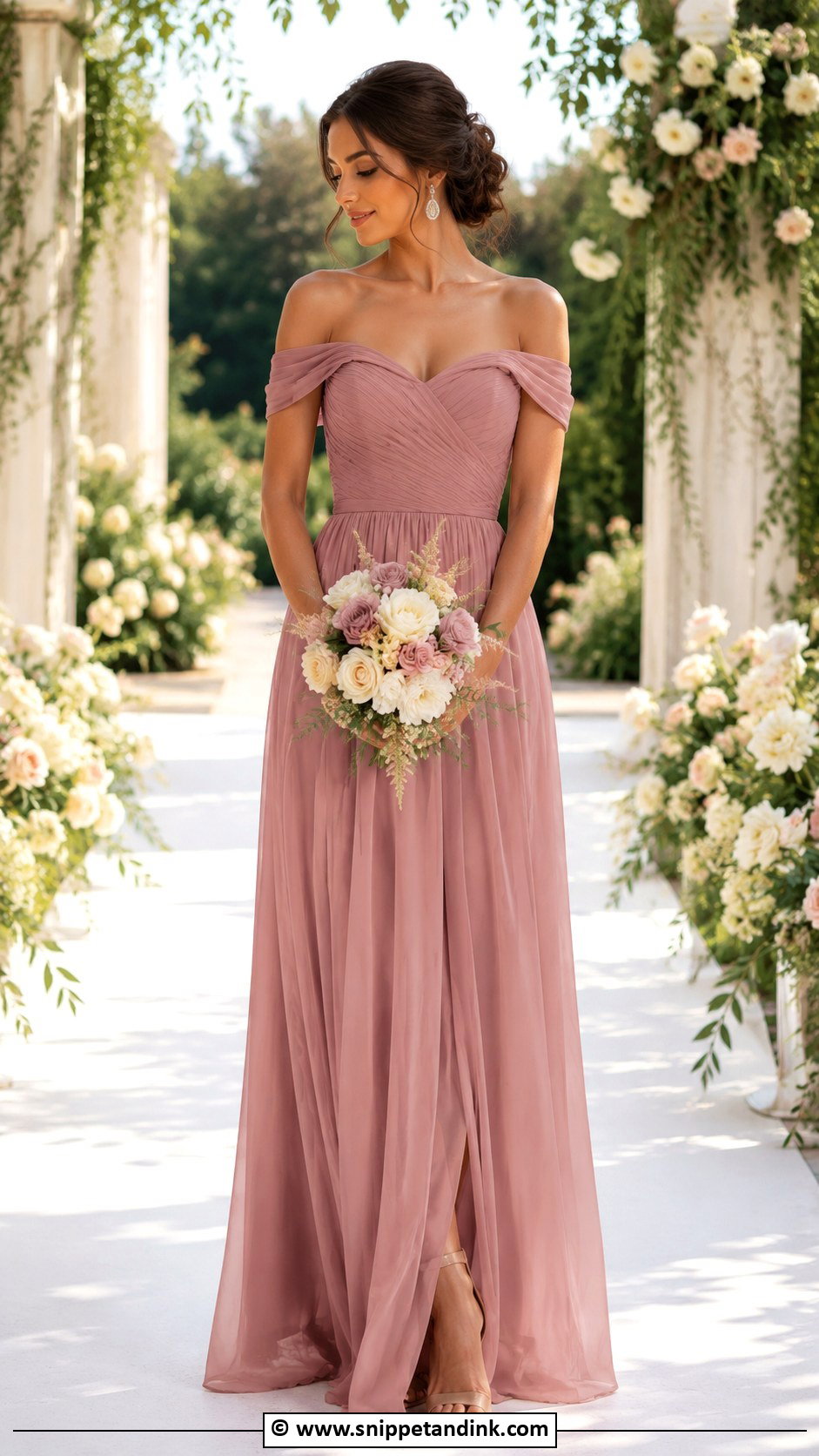
Off-shoulder bodices frame the shoulders but restrict arm movement, so I’d ask each bridesmaid to raise her arms in hers before ordering. Flowing chiffon, smooth crepe or soft satin in blush, dusty rose, sage, navy or champagne makes a classic floor-length look. Drop earrings, a delicate bracelet and nude or metallic heels suit it, with no heavy necklace. A securely fitted bodice matters most for garden and ballroom weddings.
26. Plus Size Bridesmaid Dress
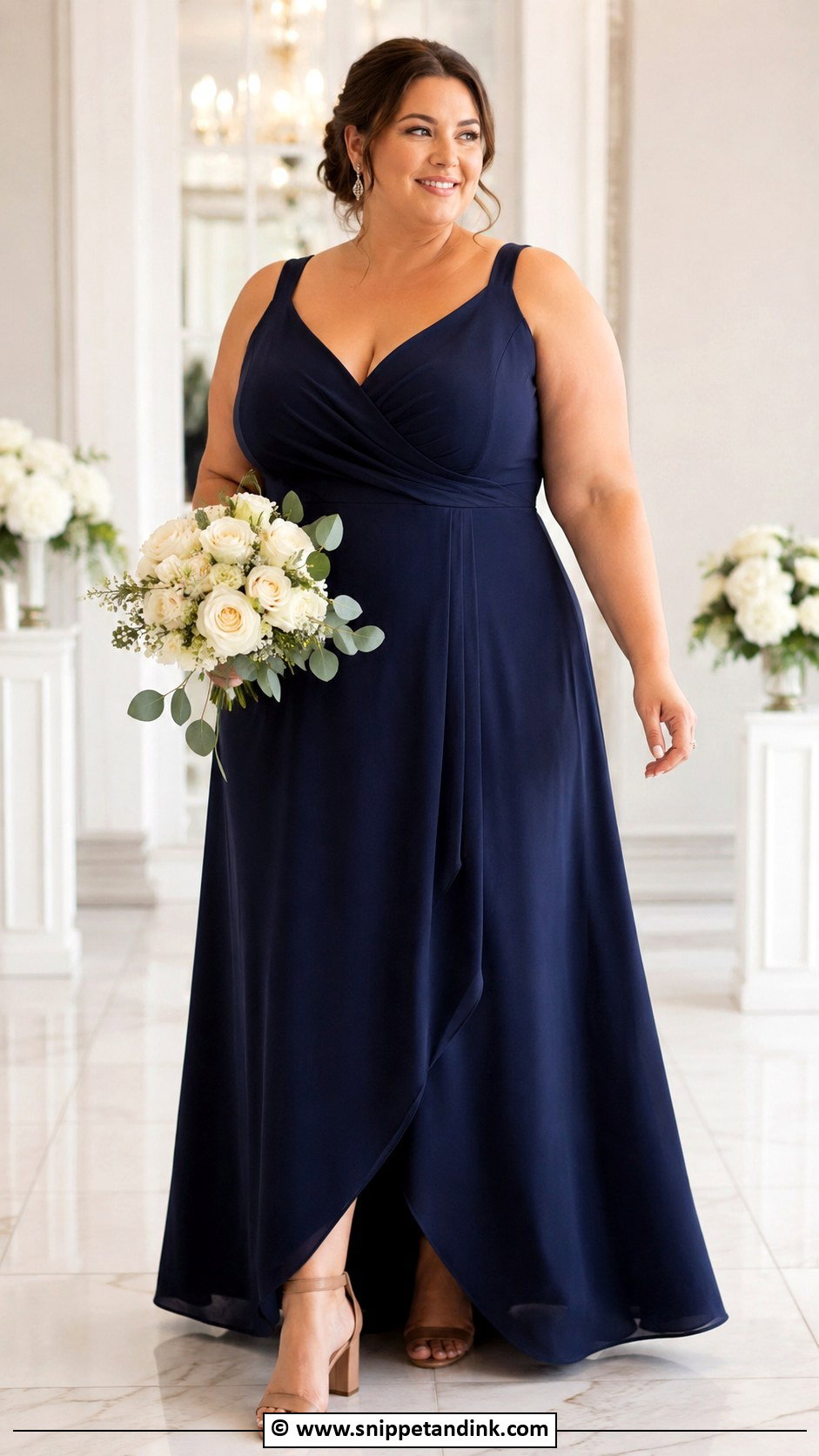
Plus size bridesmaids deserve the same choice as everyone else, and in practice the issue is usually that a dress line’s size range stops short. I check the brand’s full size chart before a bride commits to any style. Wrap waists, A-line skirts, wide straps, stretch crepe, chiffon overlays and adjustable details all help. A V-neck or sweetheart neck with a defined waist gives shape without restriction. Comfortable block heels and supportive underwear matter more than any accessory. Navy, mauve, emerald, dusty blue and black all look polished.
27. Mismatched Bridesmaid Dress
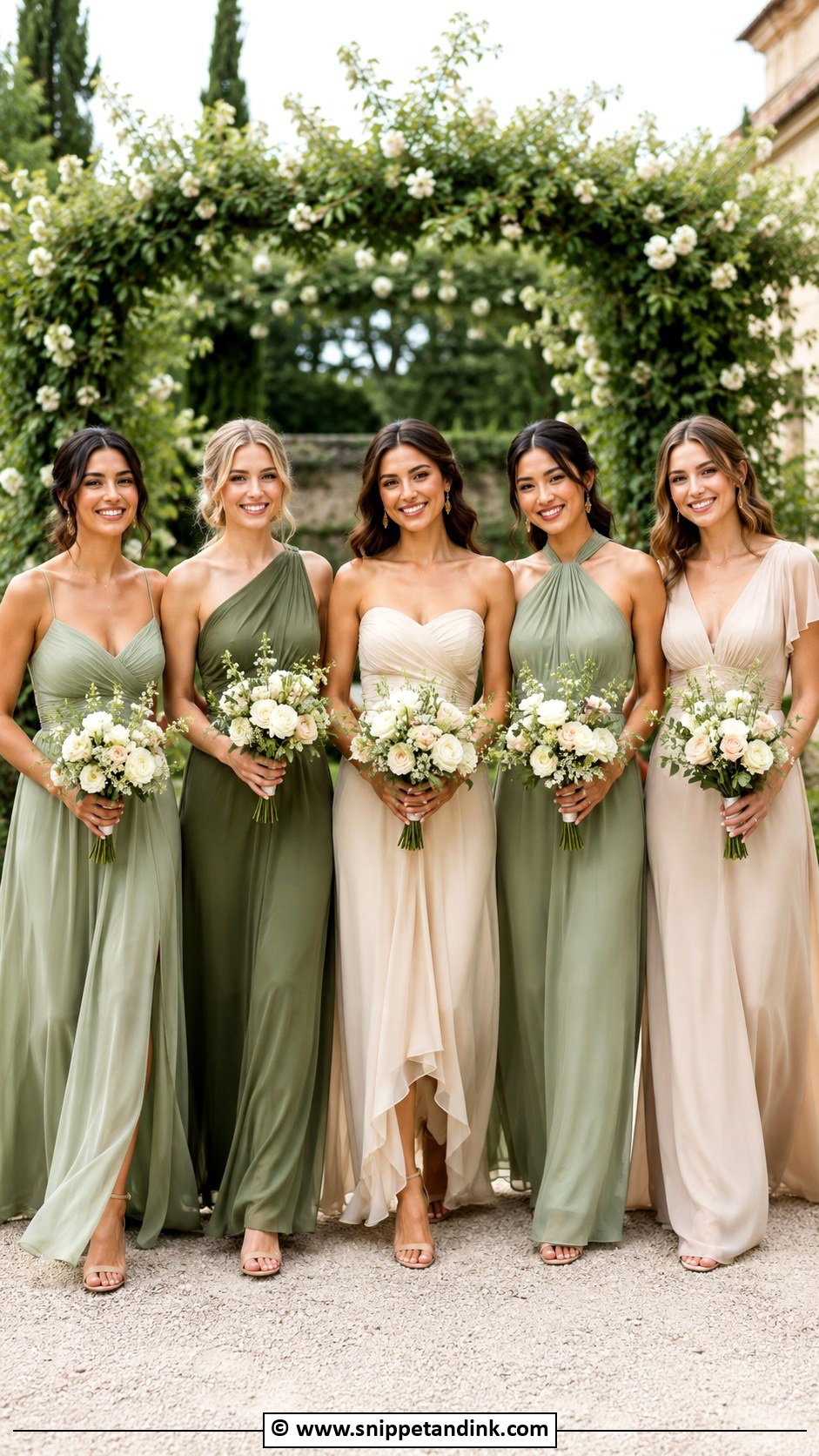
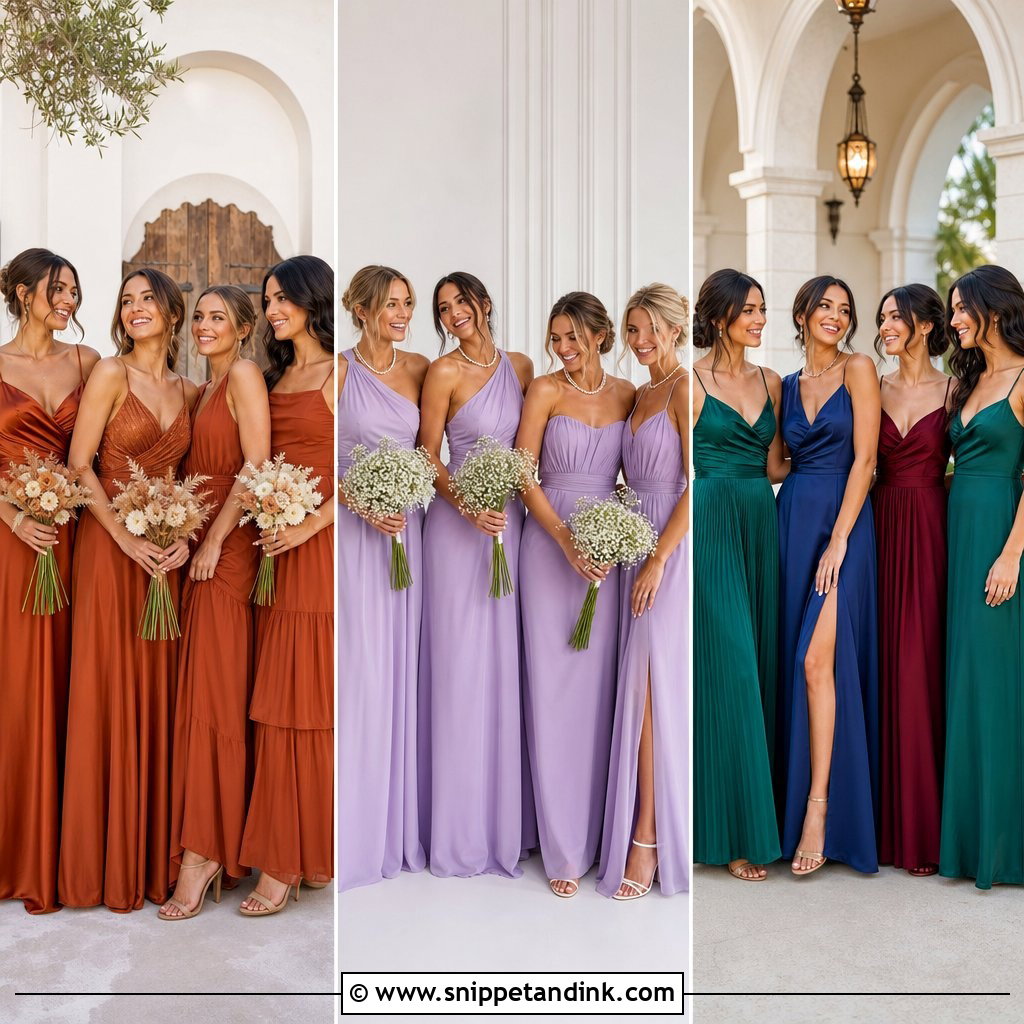
A mismatched party looks intentional when there’s one clear rule. I give every bride that rule first: one shared element, whether a color family, fabric, length or floral palette. Sage, olive and champagne in chiffon is a reliable trio; dusty rose, mauve and a matching print is another. Each bridesmaid picks her own neckline and shape. Coordinated shoes, bouquets and jewelry keep the group connected. It’s also kinder to friends with different budgets and sizes.
28. Sequin Bridesmaid Dress
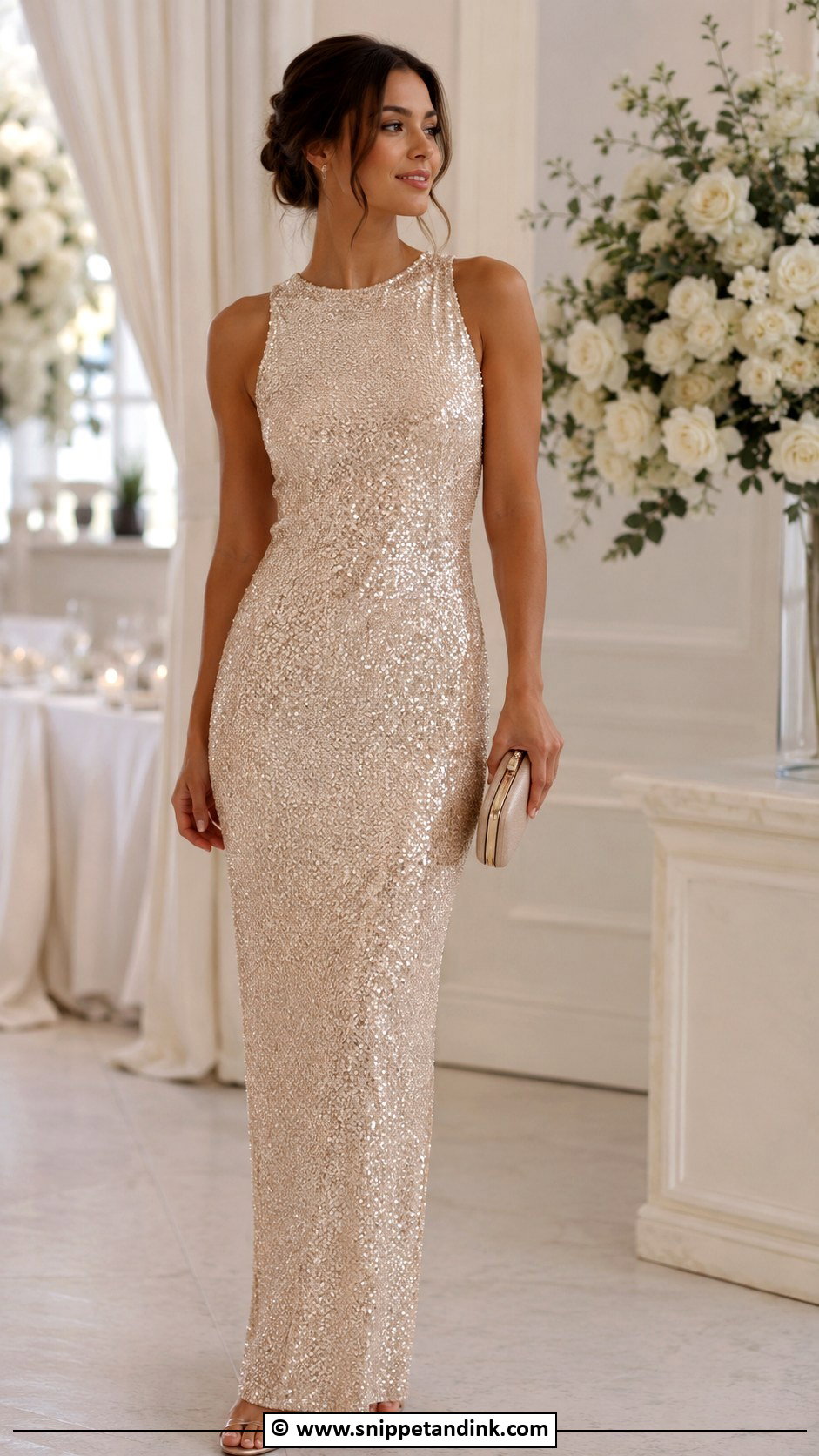
Sequins suit evening and formal weddings only, and fine sequins rather than large ones, since big paillettes bounce camera flash back into the lens. Champagne, rose gold, black, navy or silver in a simple column, wrap or short-sleeve maxi keeps it elegant. Minimal heels, small earrings and a sleek clutch stop the shine from competing with the bride. I like sequins most for maid-of-honor looks while the rest of the party wears matte fabric. Keep the bouquets soft to balance the texture.
29. Floral Burnout Bridesmaid Dress
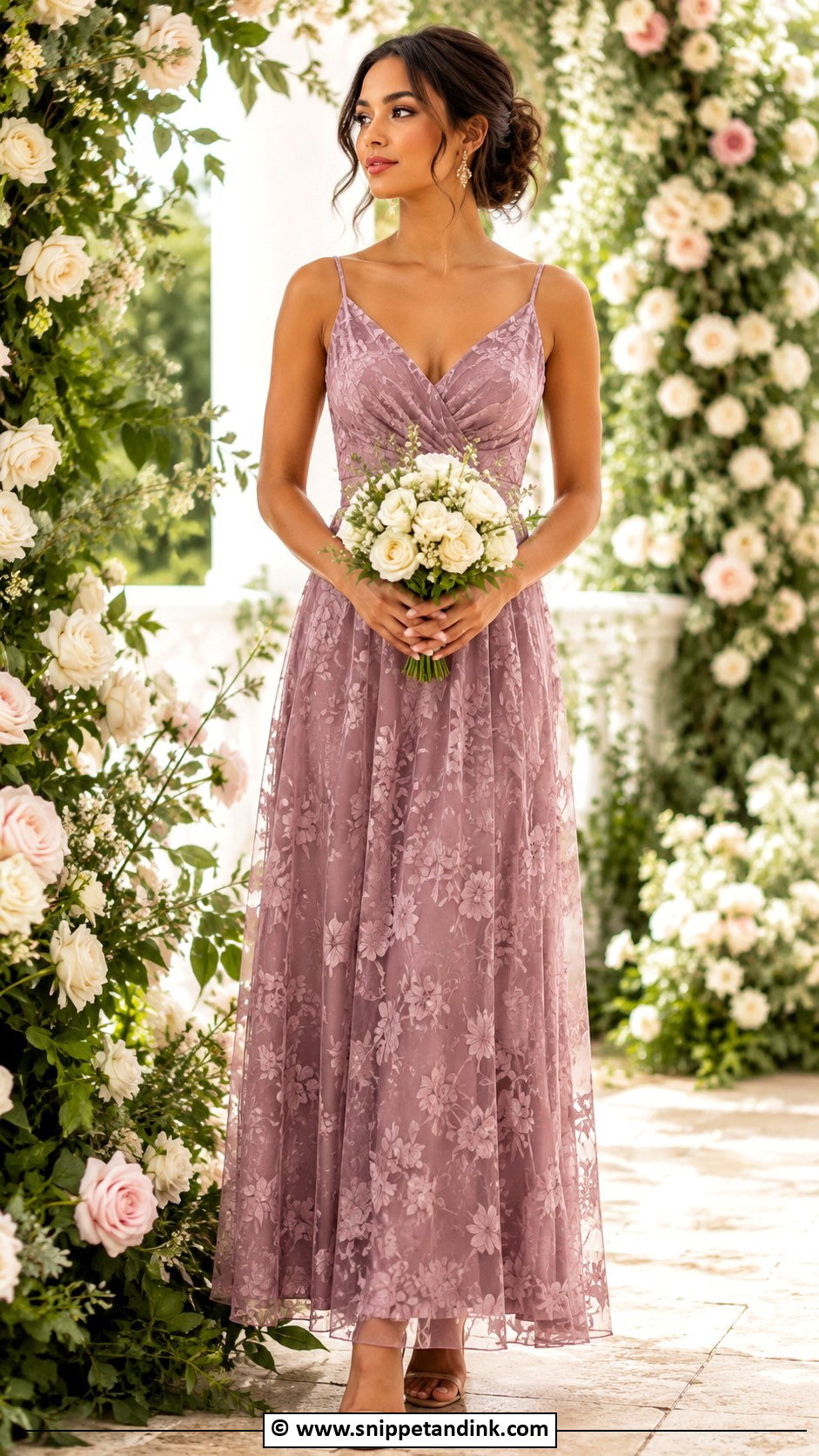
Burnout fabric has a pattern etched into it, where part of the fiber is dissolved to leave a sheer floral outline. That gives texture without a loud print. It’s usually velvet, chiffon or a sheer overlay, so check the lining, because the sheer areas show what’s underneath. Mauve, sage, dusty blue, blush and champagne suit it. Nude heels, delicate earrings and a simple bouquet avoid clutter. It’s a nice option for a maid of honor standing next to solid dresses in the same shade.
30. White And Blue Bridesmaid Dress
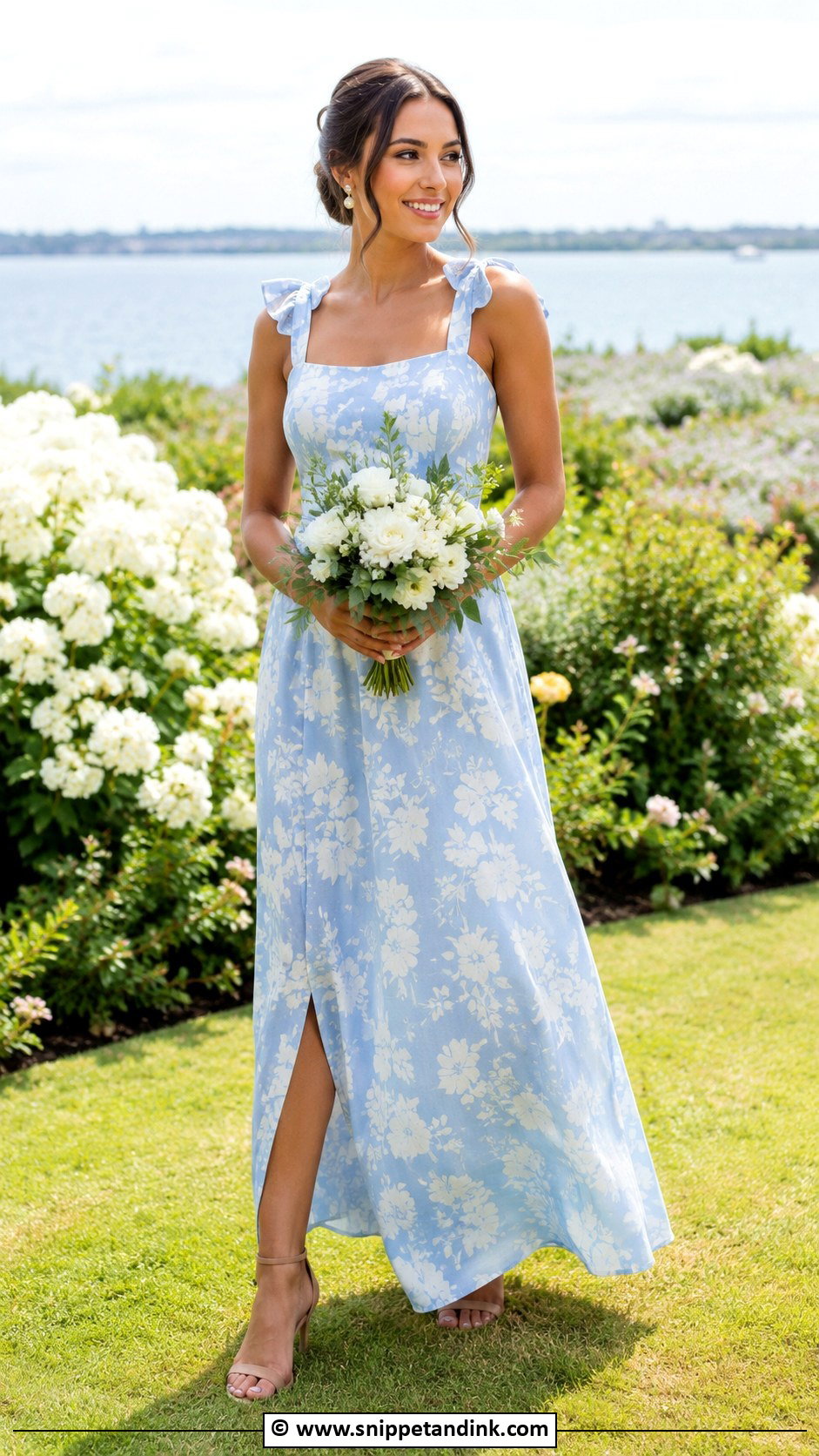
Blue and white needs one rule: blue must be the main color. A dress that reads mostly white will compete with the bride, so look for blue grounds with white florals, white trim or soft blue-and-ivory patterns. A flowy maxi or midi with nude sandals and pearl earrings suits seaside, garden and summer weddings. A white-and-green bouquet finishes it. Simple silhouettes let the print stay clean.
Standing in a Row: How the Dresses Read in Group Photos
A bridal party is mostly photographed in a line, which changes how you should judge the dresses. Hold the swatches together side by side, never one at a time. Colors that look close alone can jump apart in a row.
In a mismatched lineup I place the darkest shades at the ends and the lightest nearest the bride, so the eye moves toward her. Hem lengths should match within a few centimeters, or the line looks uneven. And ask everyone to hold the bouquet at hip height with relaxed arms; held high, a bouquet covers the bodice detail you paid for.
Who Pays for the Dress, and What Is Fair to Ask?
Traditionally the bridesmaid buys her own dress, though plenty of brides now cover part or all of it. Whichever you choose, say it up front. I’d give the party a price range before they agree to the role, and pick options inside it. Mismatched styles help here, since one person can choose a simpler dress in the same color. If you are asking for a specific designer gown, consider paying for the alterations as a thank-you.
Does Your Lineup Look Like One Party?
The best bridesmaid dresses are the ones that let a whole group stand together, move freely and still look connected. Sage chiffon, black satin, florals, champagne neutrals or a mismatched palette can all get you there, as long as each fits the setting and the people wearing it. Think about fabric, season, neckline, shoes and how the dresses read side by side. Nobody needs an identical gown; what the party needs is a clear direction and a few shared details. Settle that first, and the rest of the choices get much easier.
You'll Like These Ideas:


Leave a Reply