
Ask a room of bridesmaids what they’d like to wear and a surprising number say a ponytail. It’s the style closest to everyday hair, it keeps the neck cool, and it lets length show without leaving curls to collapse on the shoulders. The catch is that a wedding ponytail has to look deliberate from every angle and still be up at midnight, which a quick gym ponytail never is. Below are twenty versions I’d put on a bridal party, from sleek and low to braided and high, with what each one needs at the base and where it tends to go wrong.
Where the Elastic Sits Changes the Whole Face
Before anyone picks sleek or wavy, the bigger decision is height. A ponytail placed half an inch too high or too low can change how a face, a neckline and even a dress look. I find the spot by using the face itself as a guide.
- High: follow an imaginary line from the chin up past the cheekbone to the back of the head. Where that line meets the crown is where a lifting ponytail looks natural rather than cartoonish.
- Mid: level with the tops of the ears. This is the most forgiving height and suits nearly any neckline.
- Low: at the nape, just above the hairline. It suits cowl necks, high necks and bridesmaids who get headaches from tension.
The dress matters as much as the face. A halter or high neck looks crowded with a low ponytail resting on the fabric, and an open back looks best when the tail falls clear of it. Bring a photo of the dress from behind to the trial.
1. Low Bridesmaid Ponytail Updo
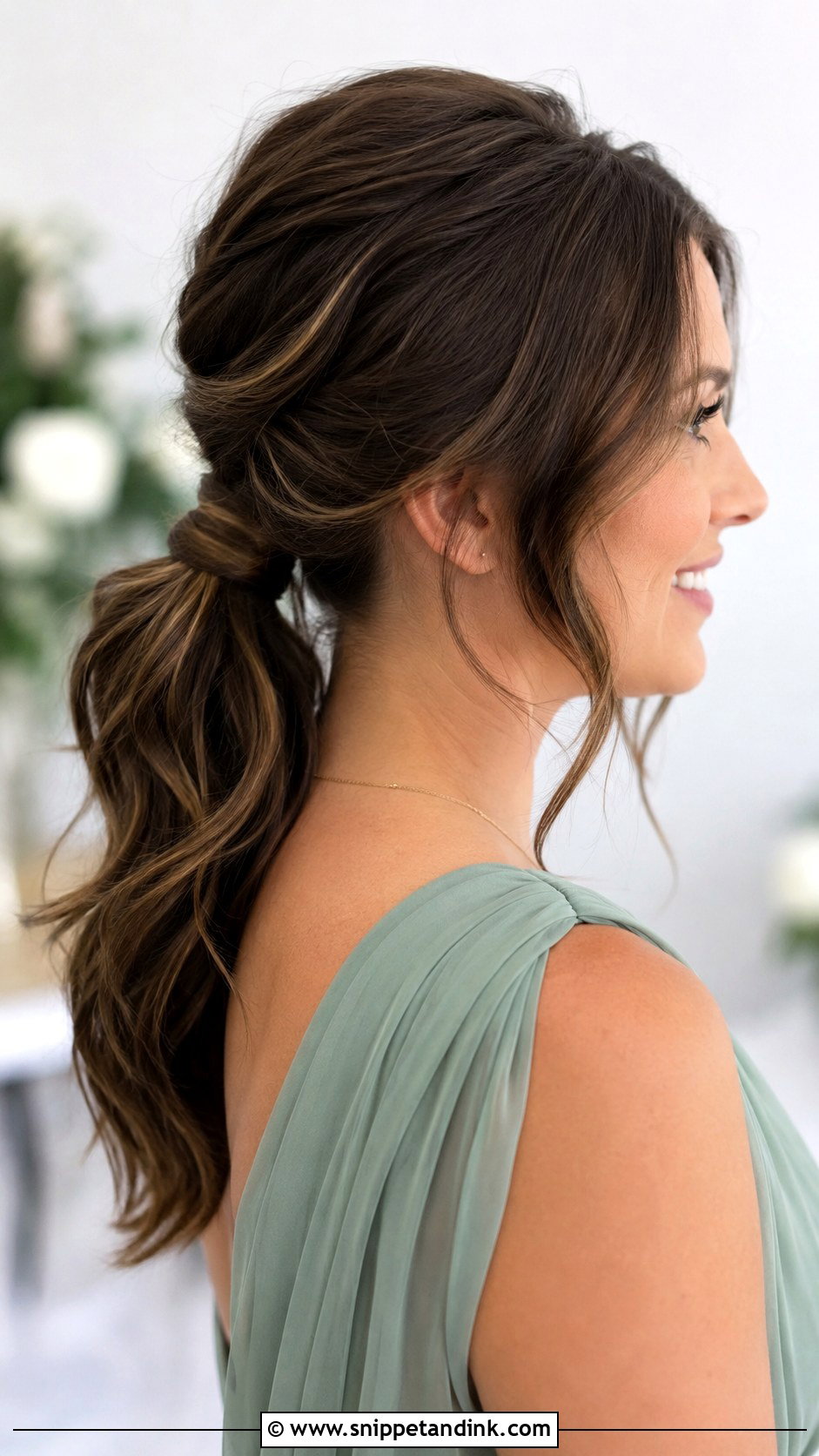
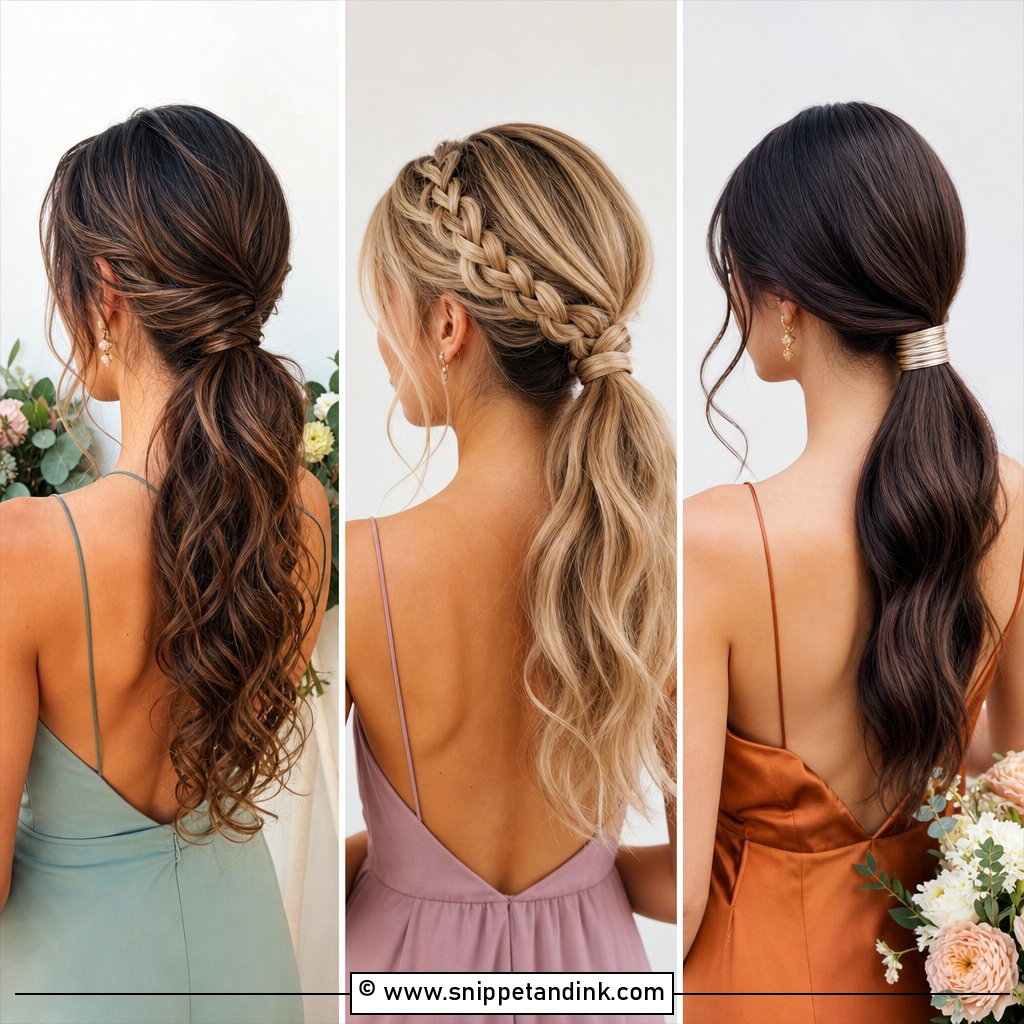
Sitting at the nape, a low ponytail stays out of the way of every neckline: strapless, square neck, cowl neck and high neck all work with it. I wave the length so it doesn’t hang flat, and I wrap a thin section of hair around the elastic, pinning the end underneath so no band shows. Because the weight sits low, it pulls less on the scalp than a high one, which suits long and medium hair over a long day. Two soft pieces at the cheekbones keep it from looking too stark.
2. Sleek Bridesmaid Ponytail Updo
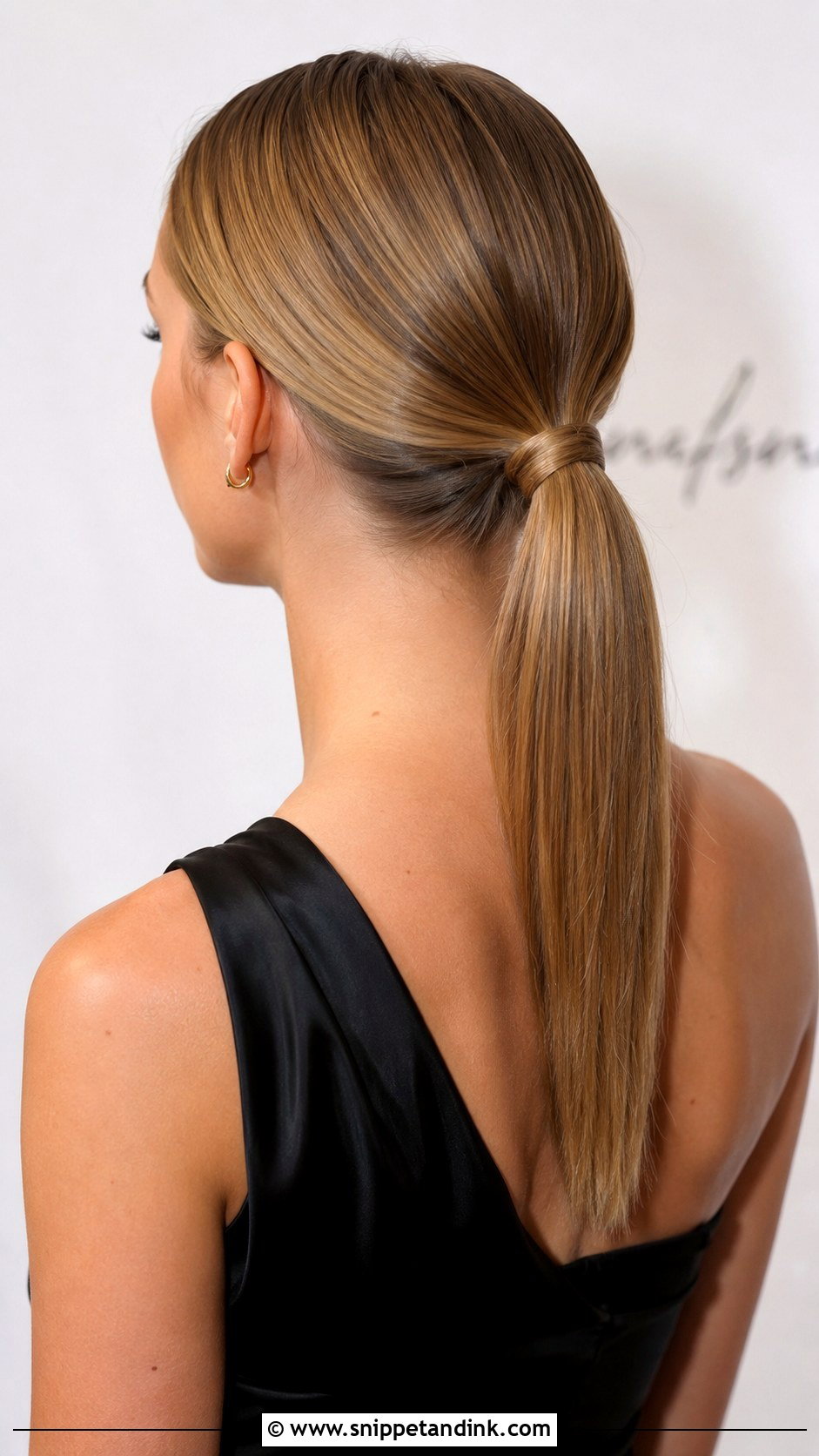
A sleek bridesmaid ponytail updo lives or dies by the brushwork. I smooth the hair against the scalp with a boar bristle brush and a small amount of gel, working in sections so there are no ridges, then gather it low, mid or slightly higher depending on the dress. Formal weddings, city venues and satin or black dresses are where it shines. A centre part reads refined; a deep side part adds drama. Go light on shine spray, because under flash too much of it looks oily rather than polished.
3. High Bridesmaid Ponytail Updo
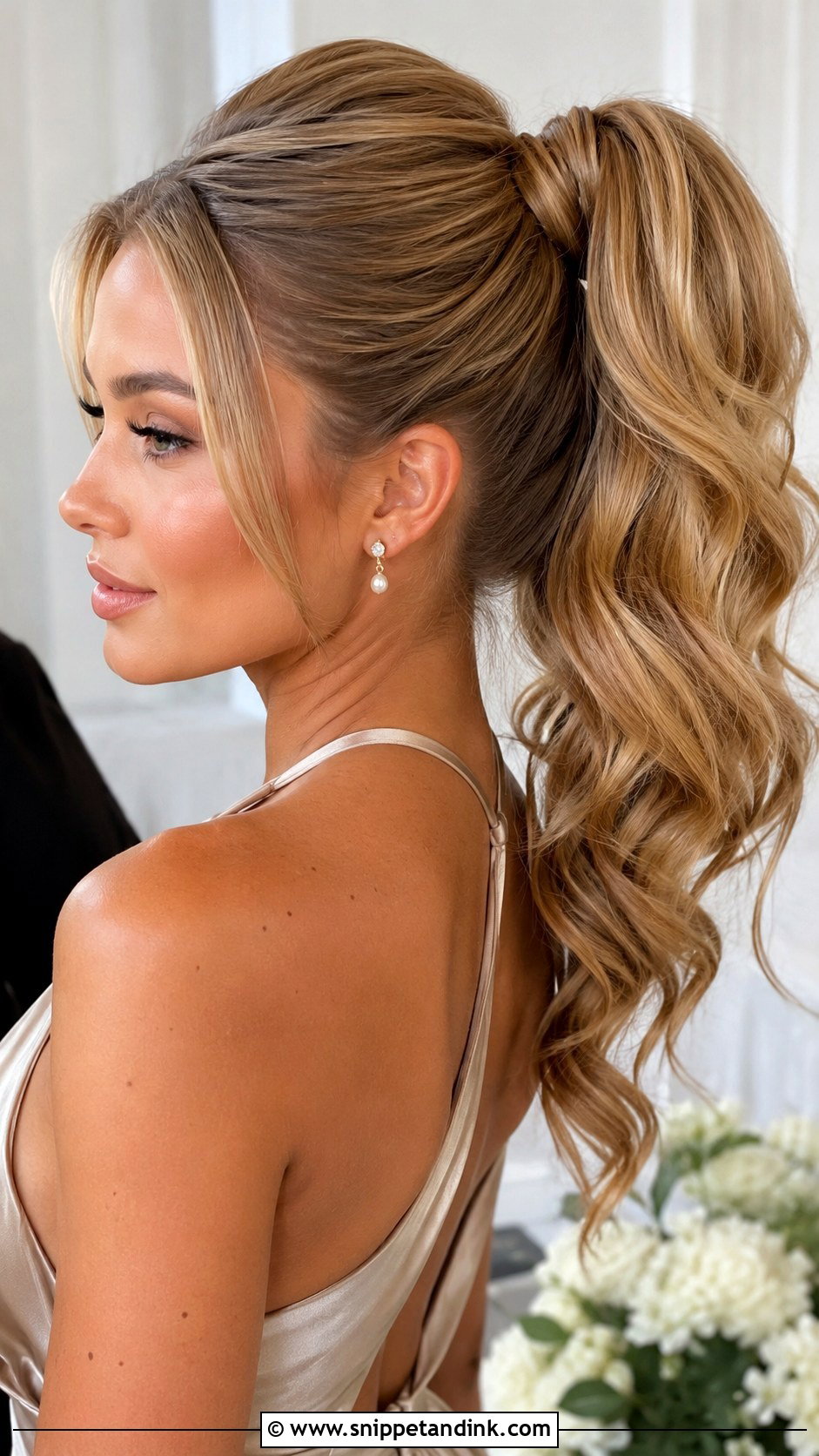
Height changes the whole face. A high ponytail at the crown lengthens the neck and pulls attention to earrings and makeup, and it reads more playful than a bun while still being formal enough for a wedding. The crown should stay smooth so the volume belongs to the ponytail itself, which I curl or brush into soft bends. High ponytails also strain the scalp and droop the fastest, so I prop the base from underneath with a couple of hidden pins and wrap it in hair to finish.
4. Curly Bridesmaid Ponytail Updo
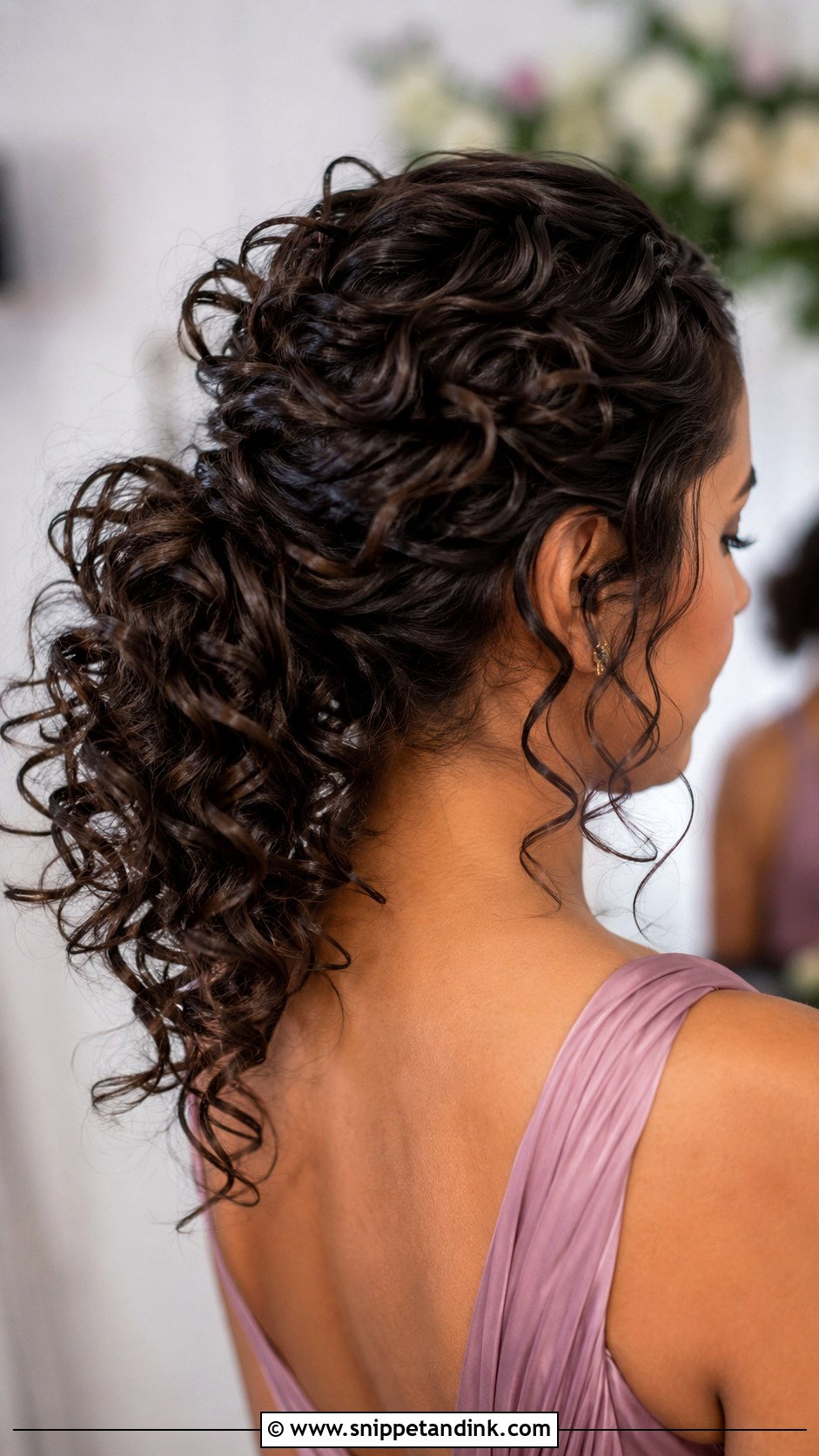
Curls need shaping before they’re gathered, not after. If I pull curly hair straight into a ponytail and then try to define it, it fluffs into a cloud. So I set the curl pattern first with a light curl cream, let it dry, then gather it gently with my hands instead of a brush. Off-the-shoulder and sweetheart necklines suit it, and a few curls left at the face soften it. Flexible spray and a couple of well-placed pins hold the shape without making it stiff.
5. Braided Bridesmaid Ponytail Updo
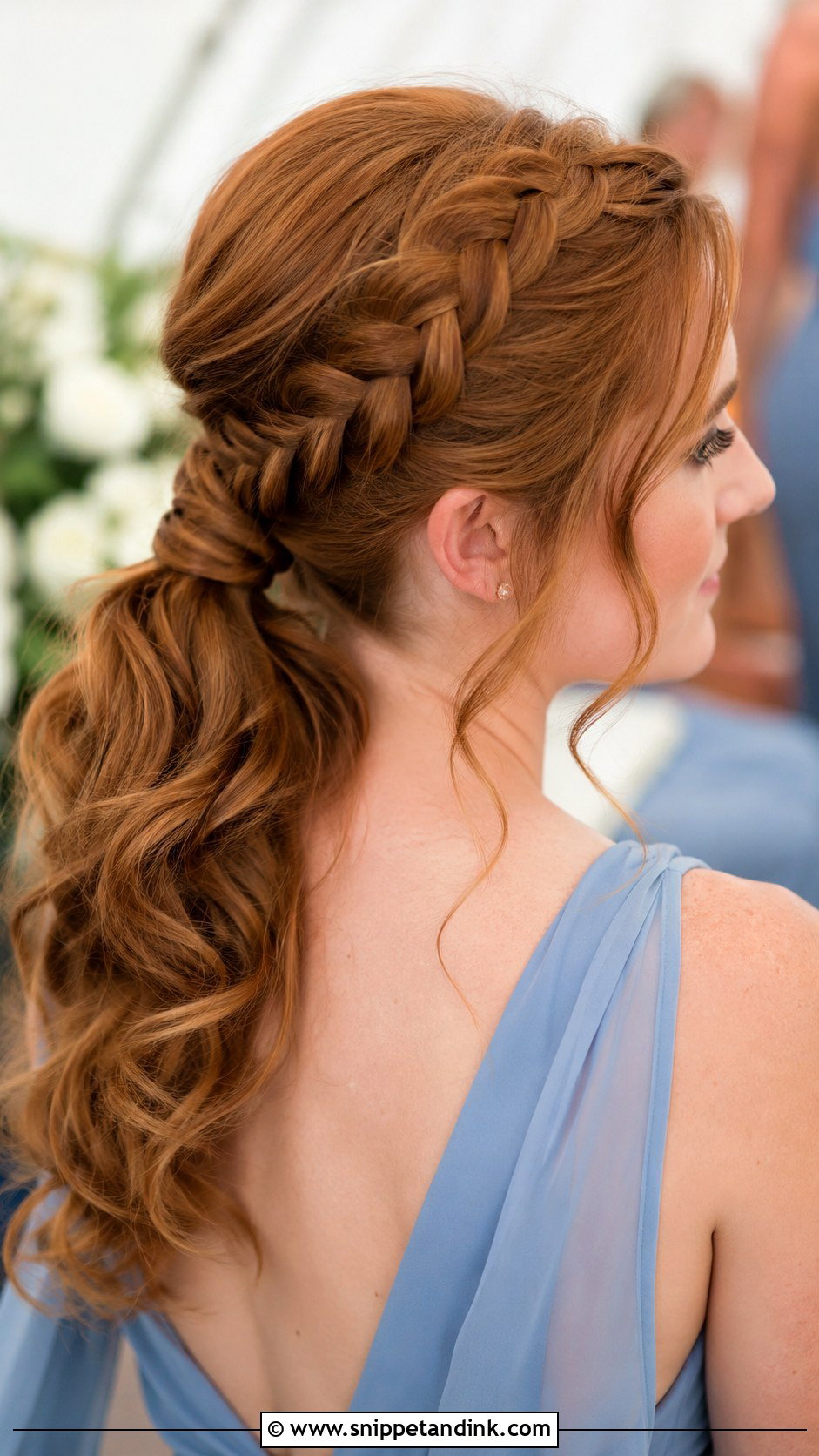
A braid running into the base of the ponytail adds detail and acts as a lock: it holds the front hair so nothing falls forward when she leans in for a hug. The braid can start at the crown, trace one side or wrap the elastic itself. Garden, rustic and beach weddings suit it best, especially with plain dresses. Pearls or tiny flowers can be added, but sparingly; the braid should stay the main event or the whole thing looks busy.
6. Twisted Bridesmaid Ponytail Updo
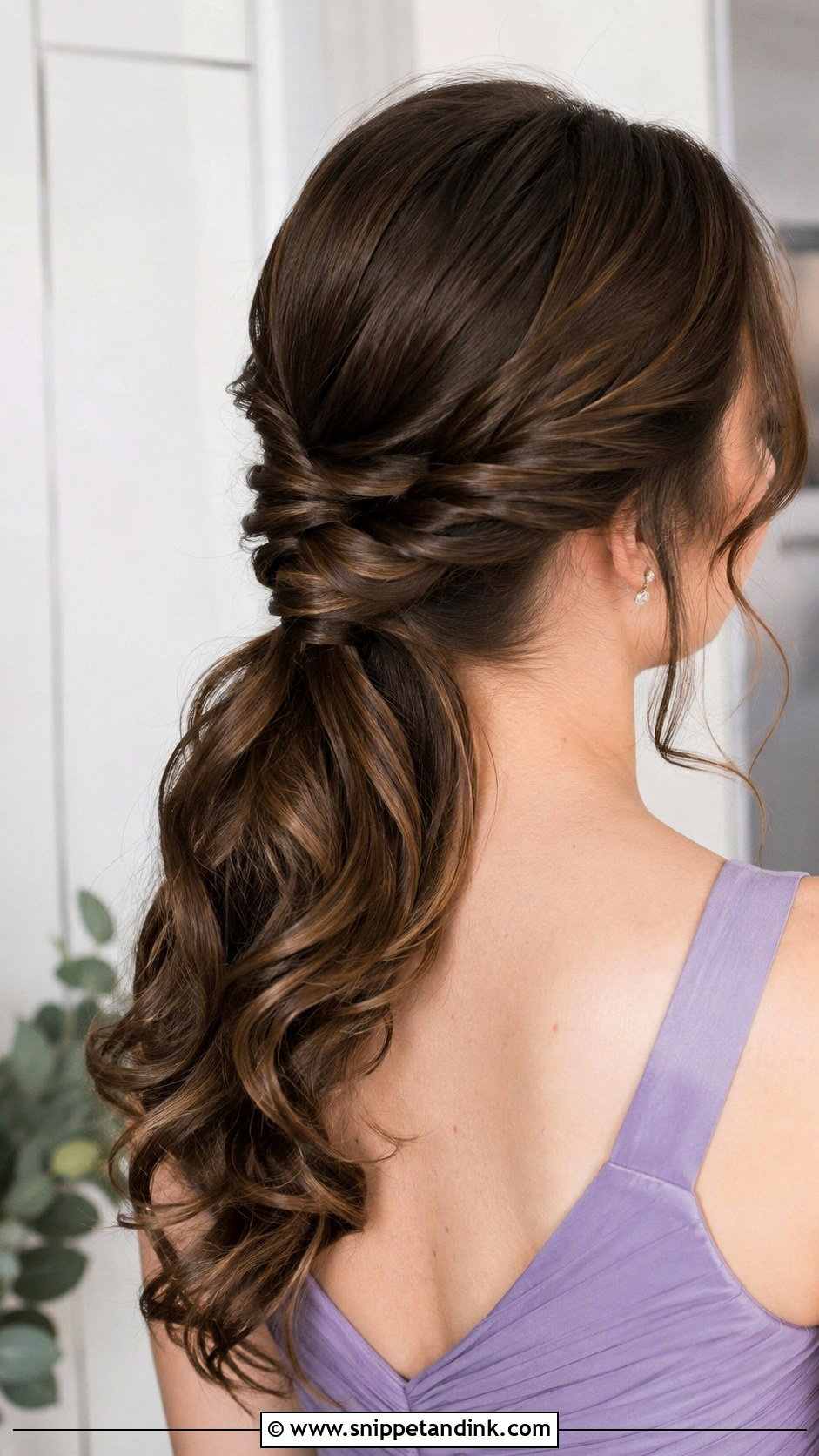
Twisting the sides back is softer than braiding and quicker too, and it adds gentle shape at the temples without height. Each twisted section gets pinned into the ponytail base, where it also hides pins and the elastic. This is a good answer for medium hair, since twists need less length than braids, and curling the ends gives the tail more fullness. It’s easy to wear all day because the tension is spread across several small sections instead of one tight band.
7. Wavy Bridesmaid Ponytail Updo
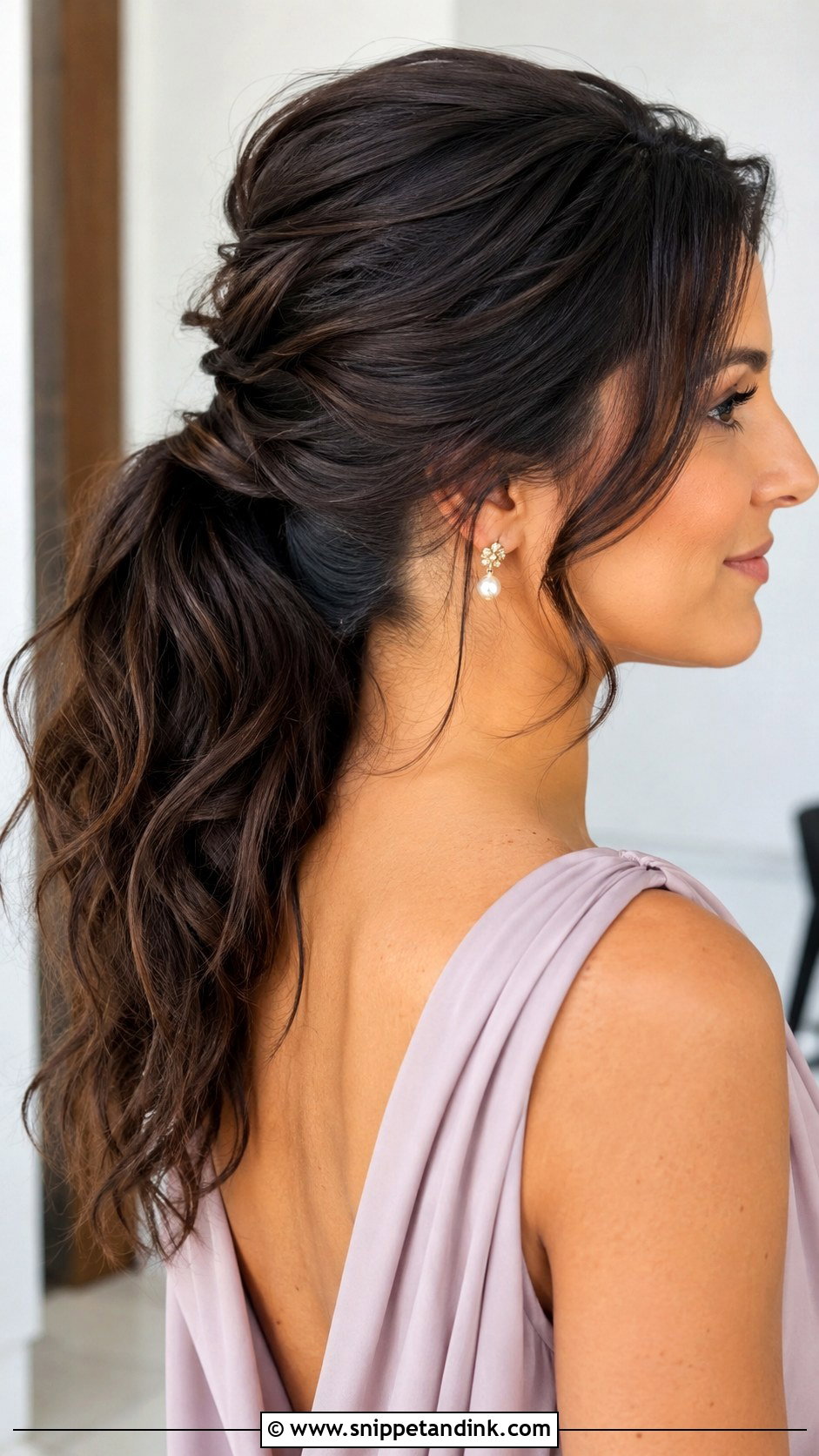
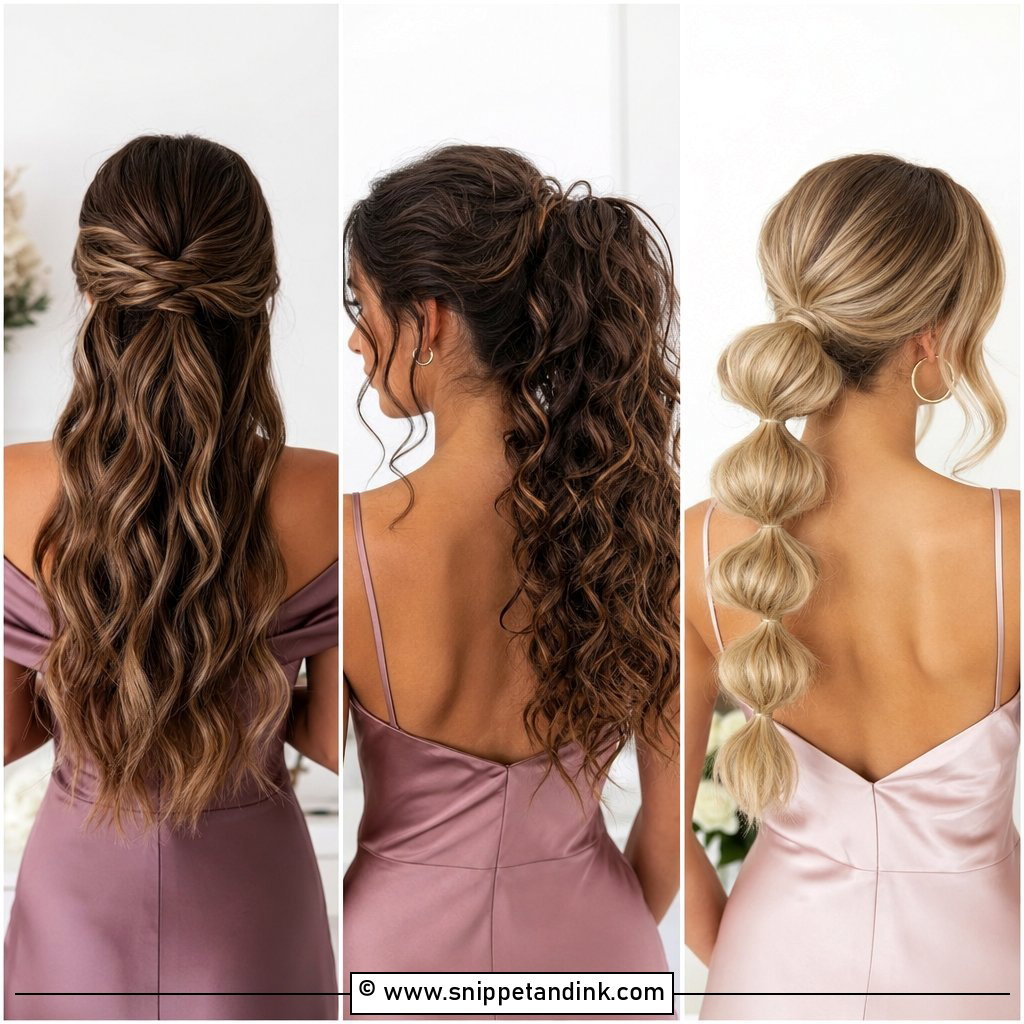
For a wavy ponytail, the curl comes first and the brush comes after: I set the waves, let them cool completely, then brush through lightly so they join into soft bends instead of separate ringlets. Outdoor weddings, chiffon and floral dresses all go with it. A slight lift at the crown and a couple of loose pieces keep it relaxed; a smooth top and a touch of light spray on the waves make it formal. Skip heavy spray, which flattens the movement you just created.
8. Side Bridesmaid Ponytail Updo
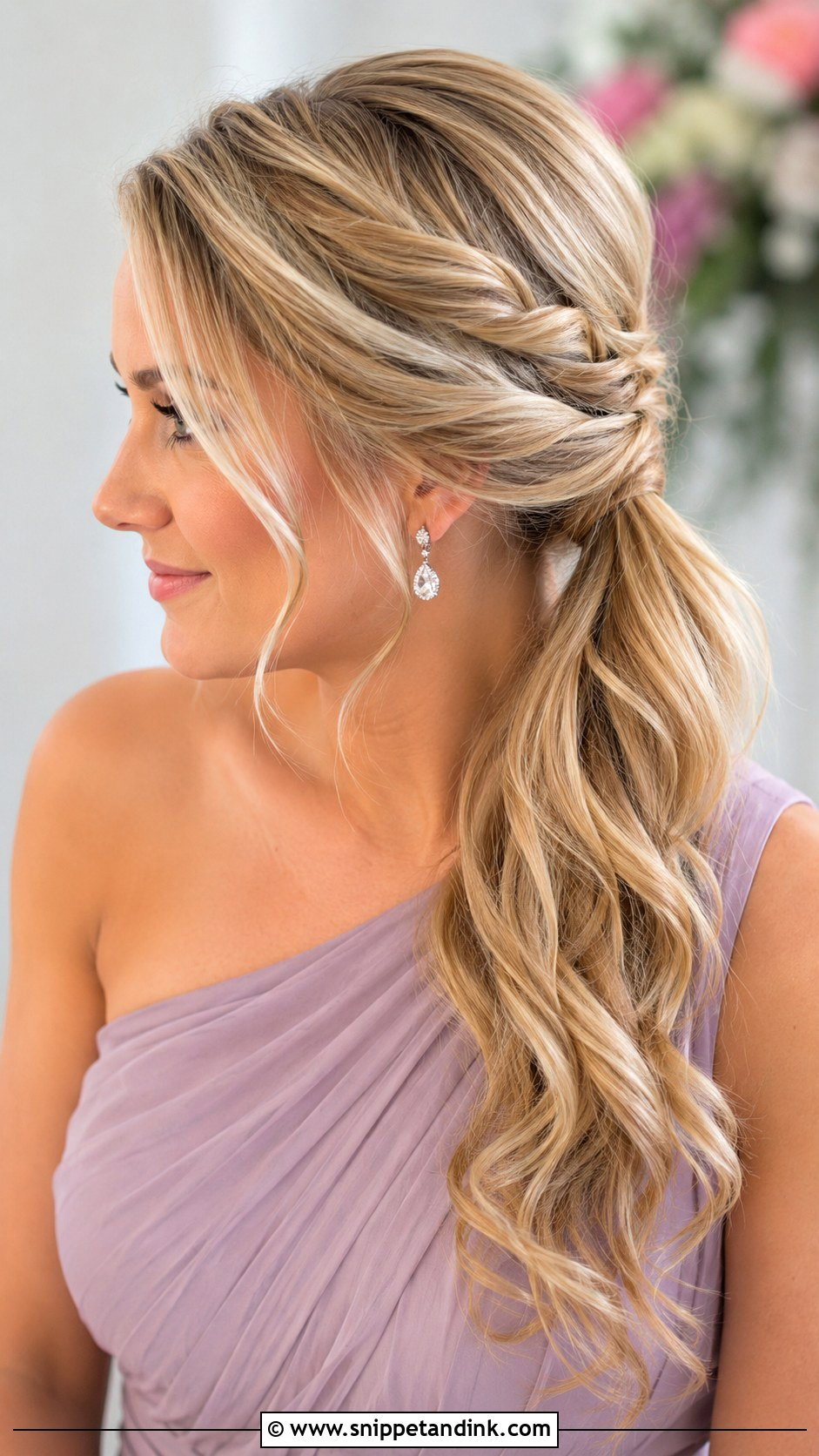
Gathered behind one ear and draped over a shoulder, a side ponytail looks generous in front-facing photos and clears an open back or delicate straps entirely. Balance is the hard part. Pull all the hair to one side and the opposite side of the head can look flat, so I twist or braid a small section on that side and pin it toward the ponytail, which guides the hair and fills the gap. Waves help the length fall softly over the shoulder. Pick the side that faces the guests at the ceremony.
9. Textured Bridesmaid Ponytail Updo
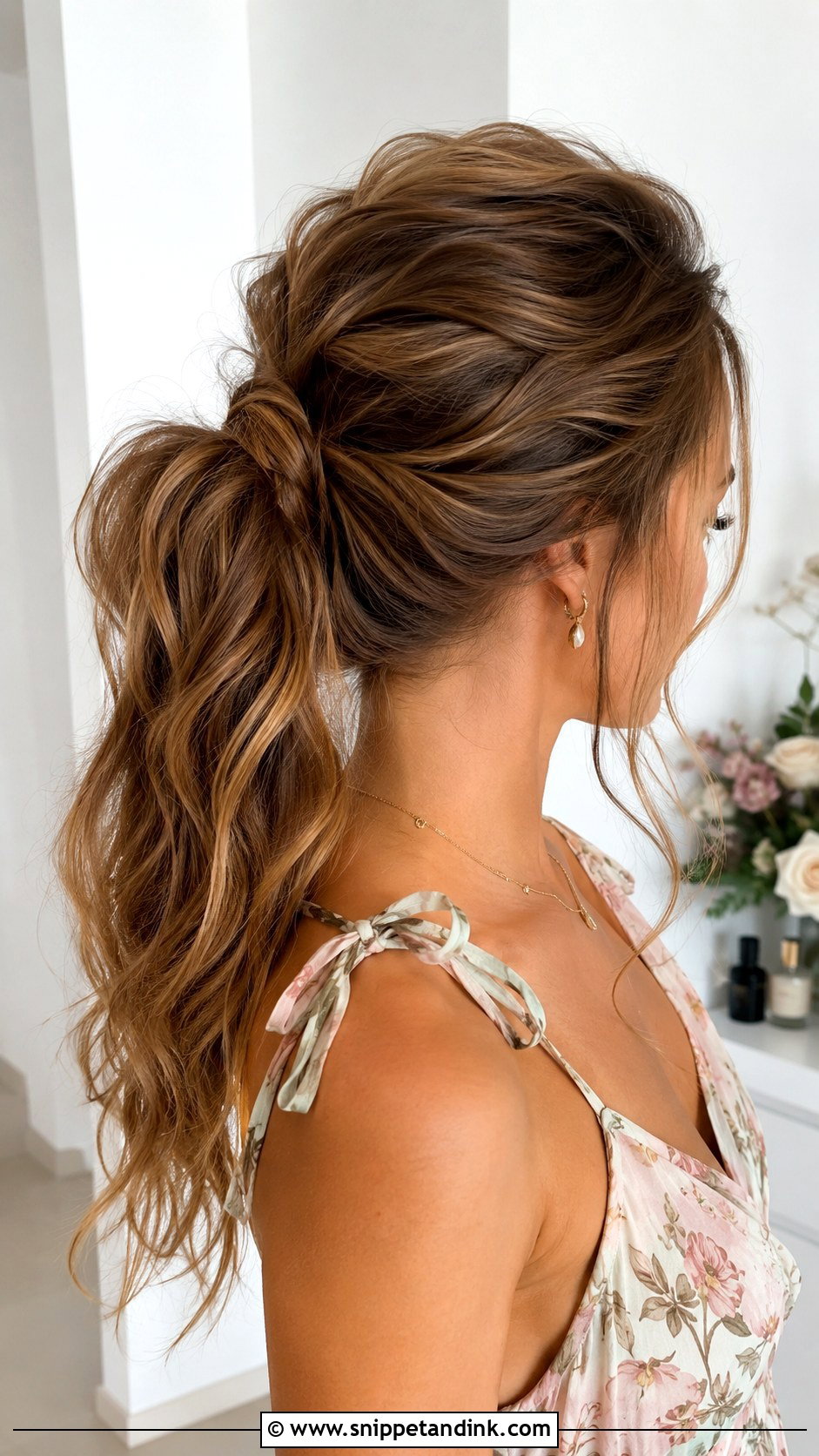
Of all the ponytails on this list, the textured one forgives the most on a long day, because a little movement only helps it. I spray dry texture at the roots, curl the length in sections, then break up the waves with my fingers for piecey fullness. Boho, barn and vineyard weddings suit it. The line I watch is between texture and frizz: in humidity, finger-separated waves can puff, so on damp days I separate less and set them with a light serum instead.
10. Bubble Bridesmaid Ponytail Updo
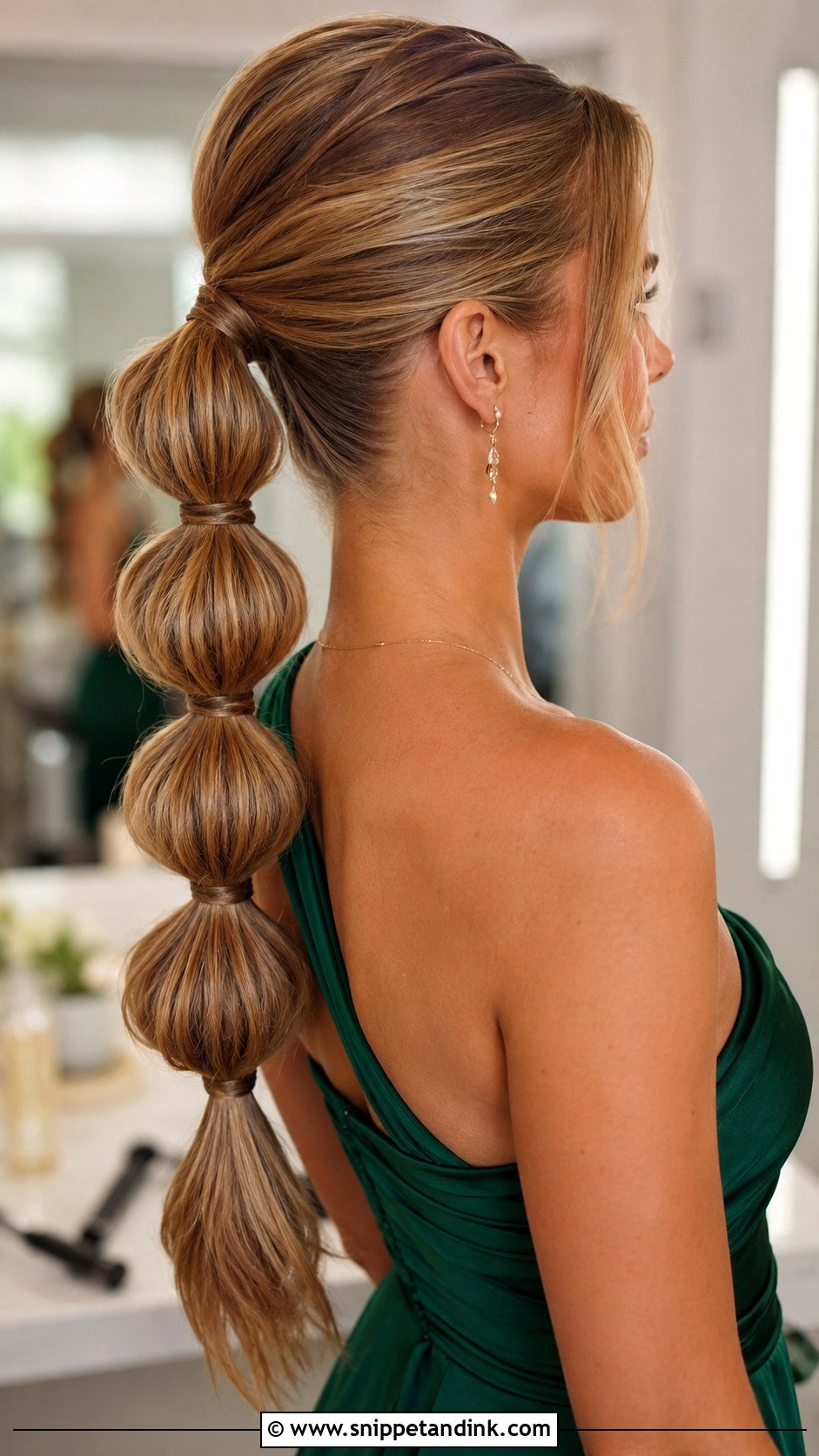
A bubble bridesmaid ponytail updo is built with small clear elastics placed at even gaps down the tail, and each section is pulled gently wider into a rounded bubble. It’s modern and fashion-led, and it suits long hair best. Because each section is fastened separately, it holds through dancing and humidity better than any curled ponytail. I wrap each elastic with a thin strand of hair for a finished look, and pearl pins can go between the bubbles. Keep the bubbles evenly sized, or the eye catches the one that’s off.
11. Half Up Bridesmaid Ponytail Updo
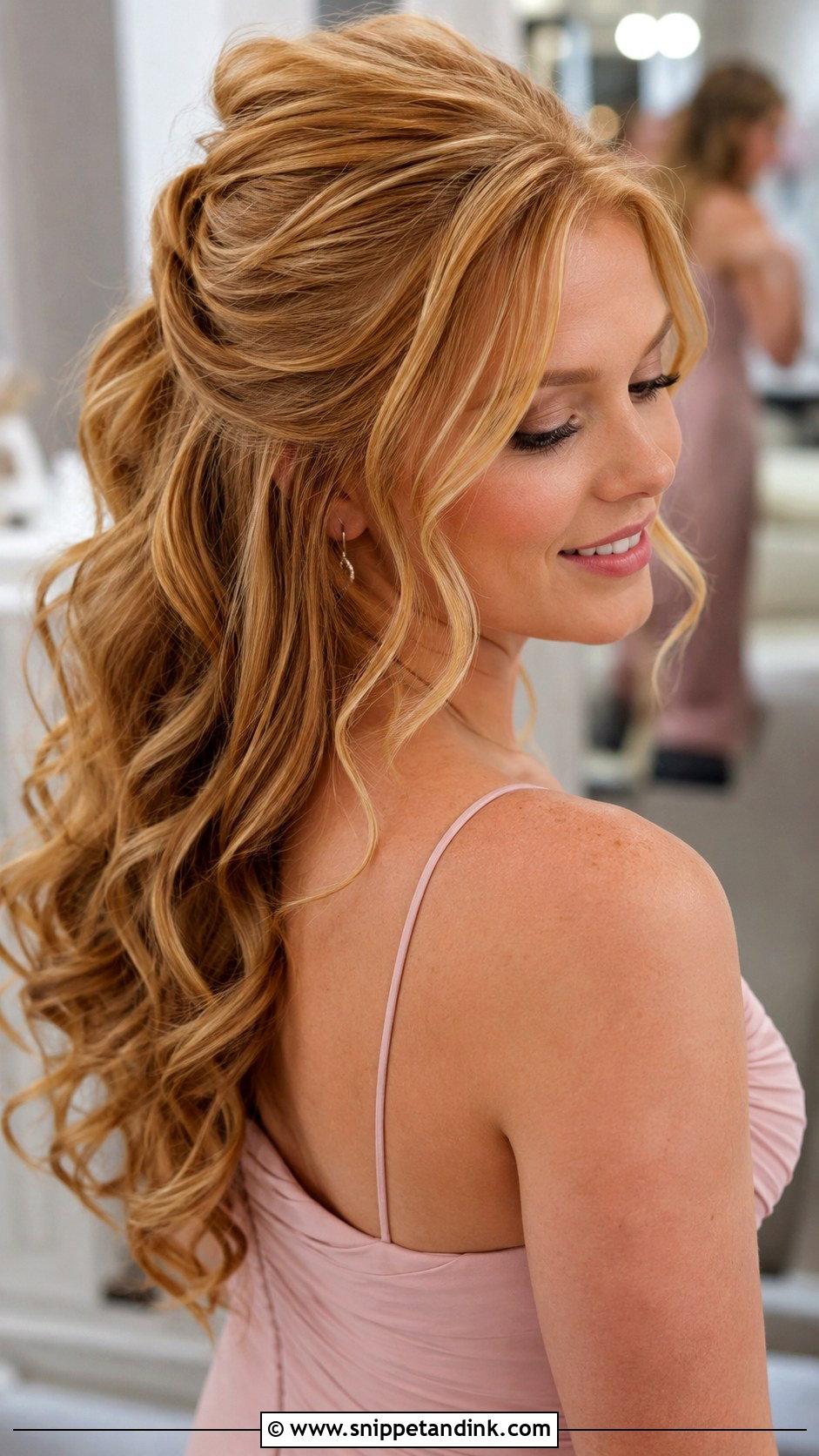
A half up bridesmaid ponytail updo suits the bridesmaid who hates having all her hair back. Only the top section goes into the ponytail, which opens the face, and the rest stays down in curls. Layered cuts and curtain bangs suit it well. Place it high for something playful, lower for something softer. It’s also my fix for a bridal party with very different lengths, because every version can look related without anyone matching. The loose lengths will relax in heat, so curl them a little tighter than you’d want them to end up.
12. Pearl Bridesmaid Ponytail Updo
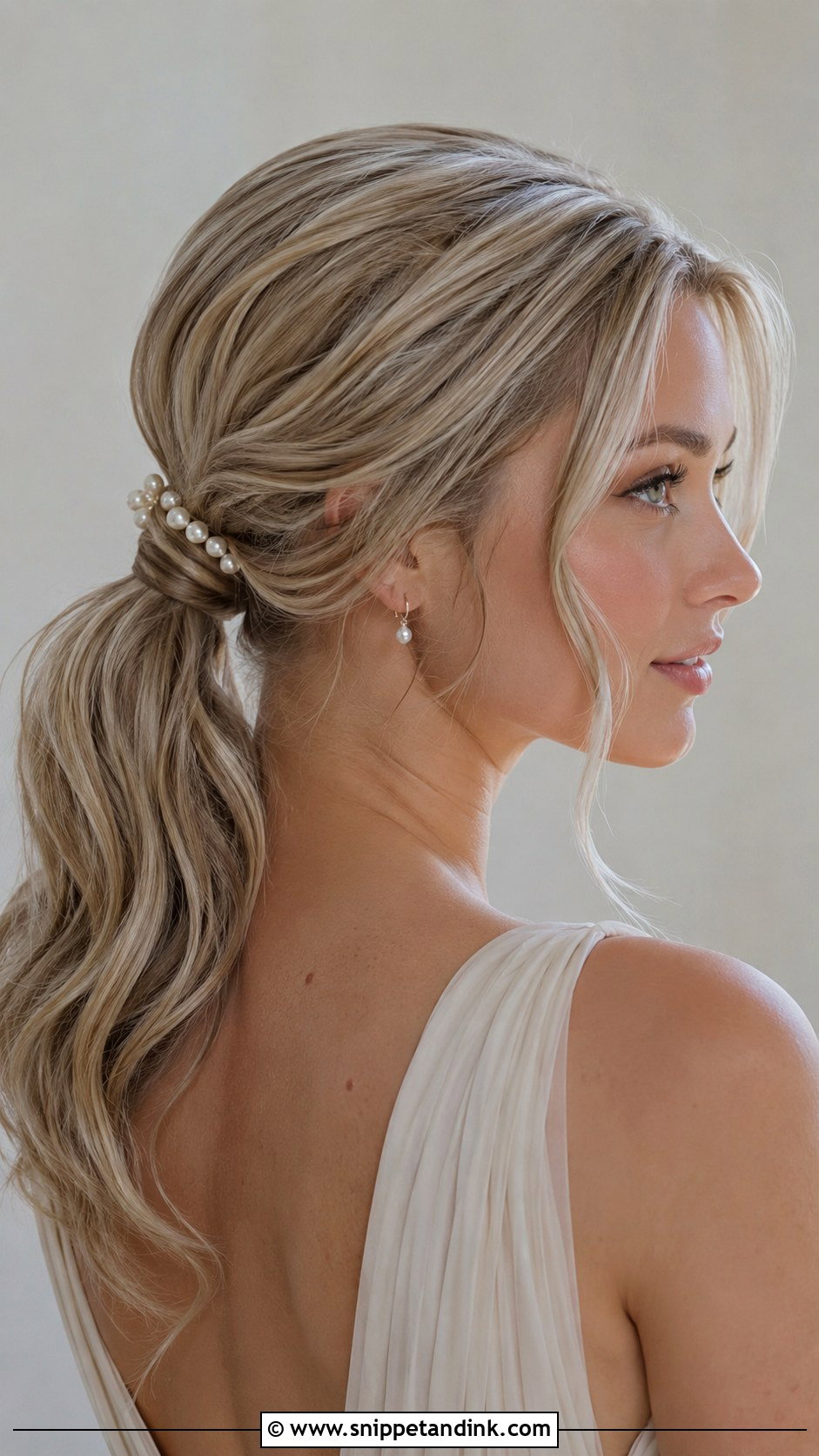
Pearls look best on a simple ponytail; add them to heavy curls or braids and the two compete. I set a few around the base, along a twist, or in a line down one side, and always after the hairspray has dried, so the finish doesn’t dull them. Low and mid ponytails show pearls at the right height for portraits. Classic gowns and ivory bouquets are a natural partner. Fewer, well-spaced pearls look more expensive than a cluster.
13. Messy Bridesmaid Ponytail Updo
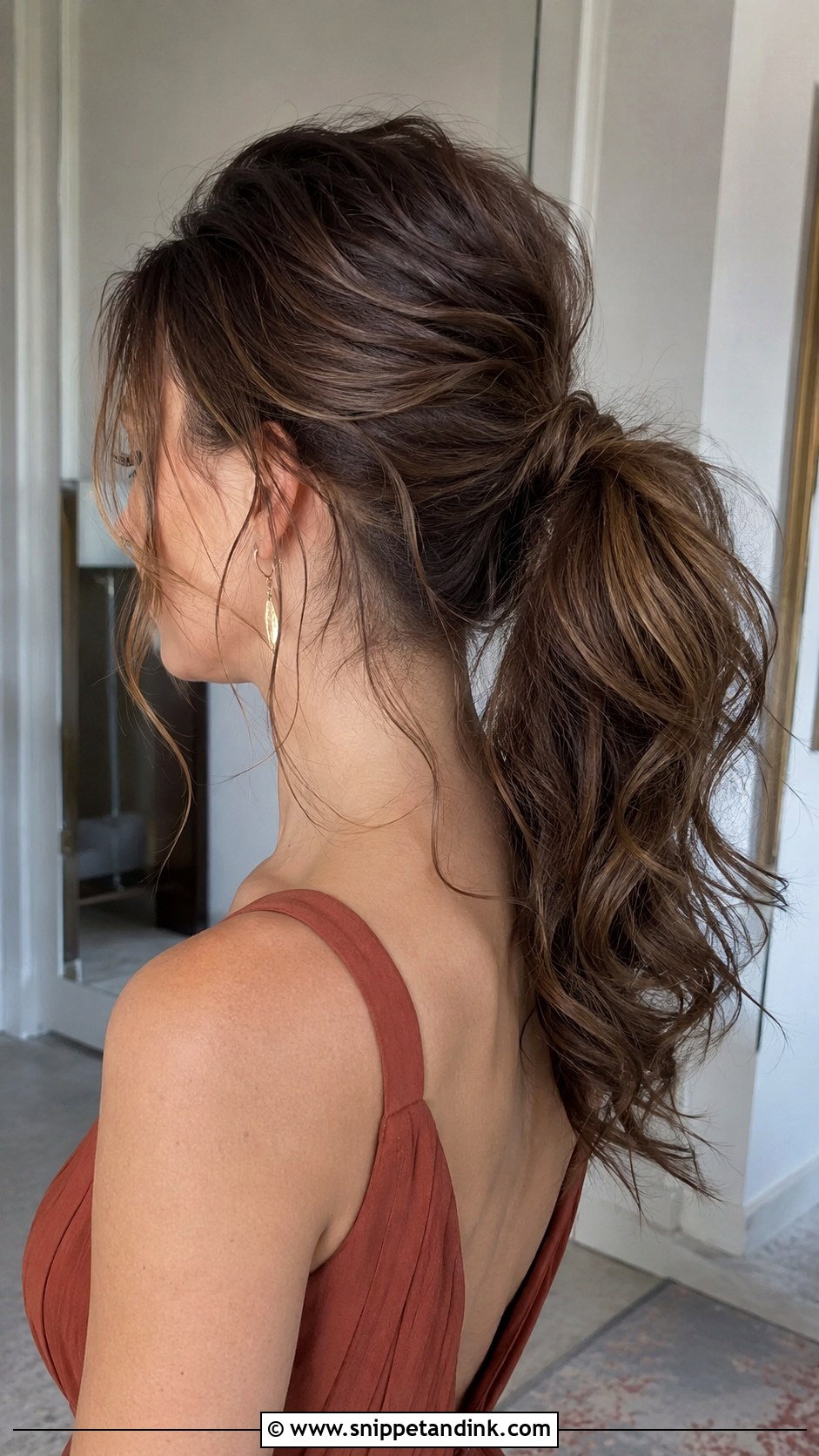
The messy ponytail is the most misunderstood style here. It shouldn’t look rushed; it should look relaxed while being pinned as firmly as a sleek one. I build the shape properly with texture spray and pins, then loosen the crown and pull out a few face-framing pieces at the end. Bridesmaids who find tight styles uncomfortable love it, and it works with boho dresses and floral prints. Loosen too early, before the structure is pinned, and it really will be messy by the photos.
14. Voluminous Bridesmaid Ponytail Updo
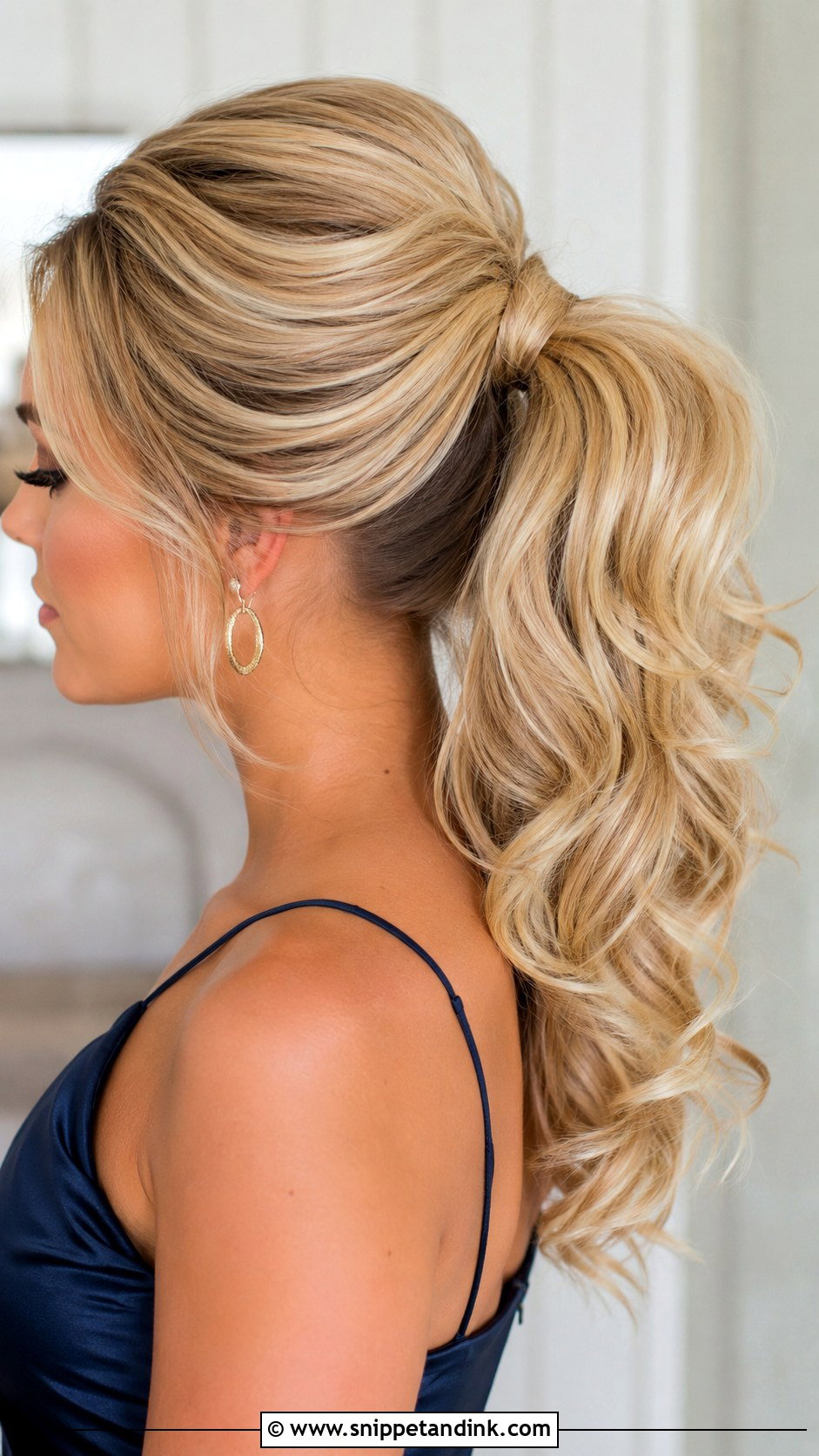
Volume at the crown is created with light backcombing or styling powder, never with a big teased bump at the front. The ponytail itself is curled and expanded to give a glamorous silhouette for an evening reception or a gown with a strong neckline. On fine hair, extensions or padding hidden at the base make the difference between full and thin. I keep the top soft rather than puffy, and a smoothly wrapped base keeps the whole thing from looking like a 1980s throwback.
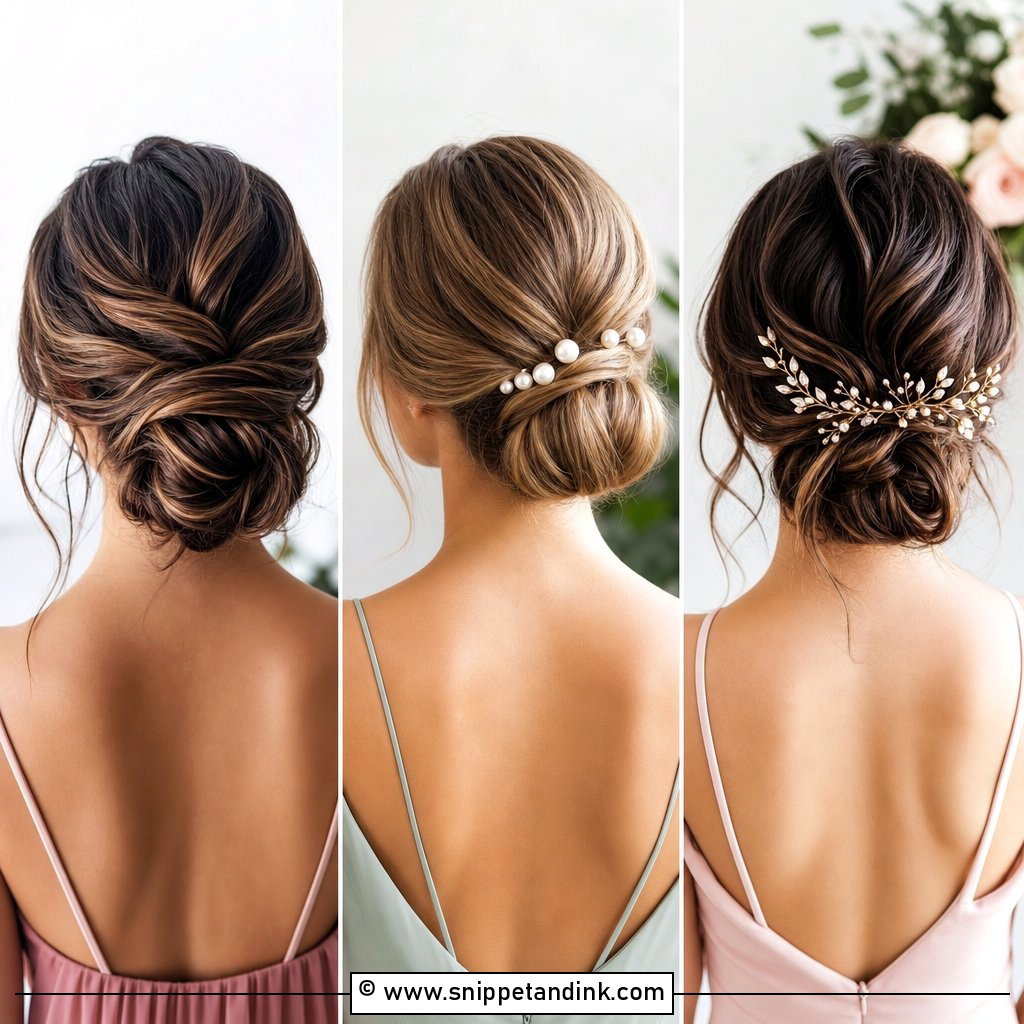
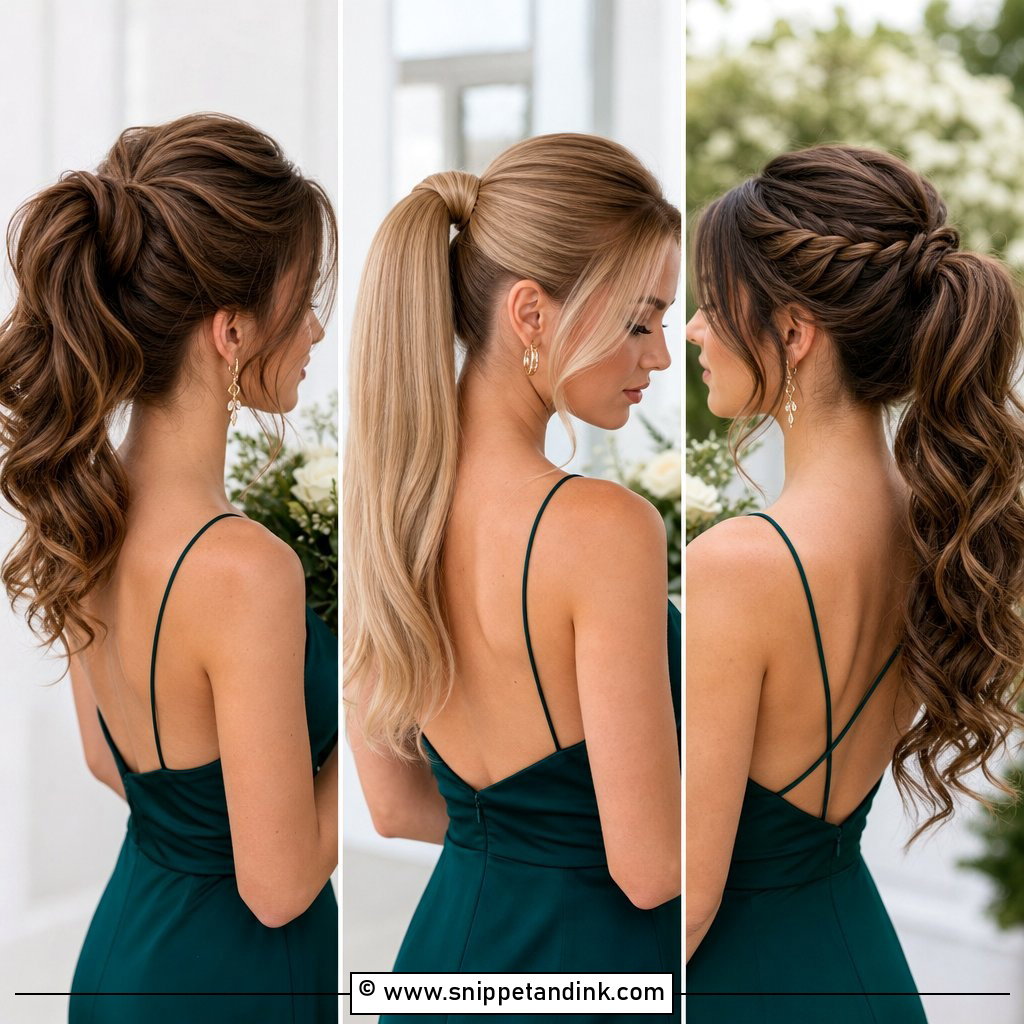
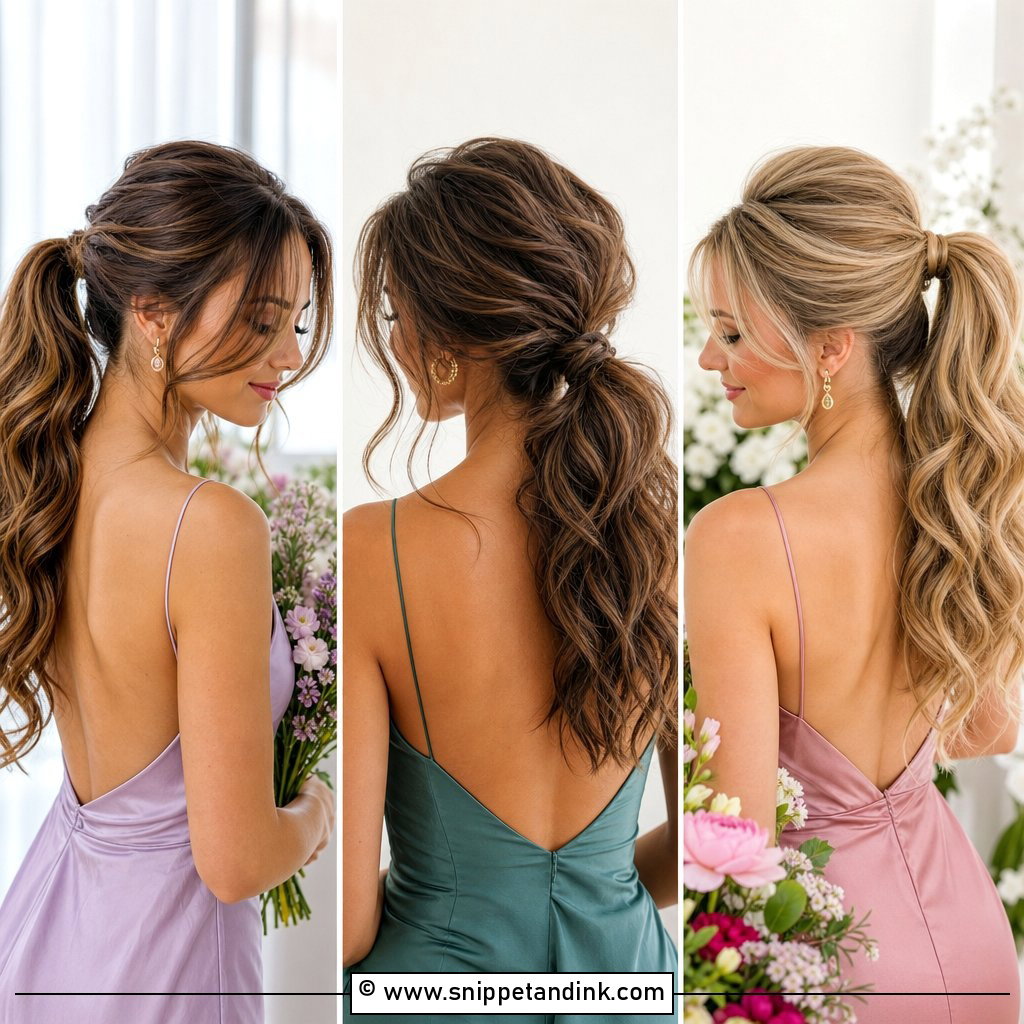
15. Ponytail Updo With Face Framing Pieces
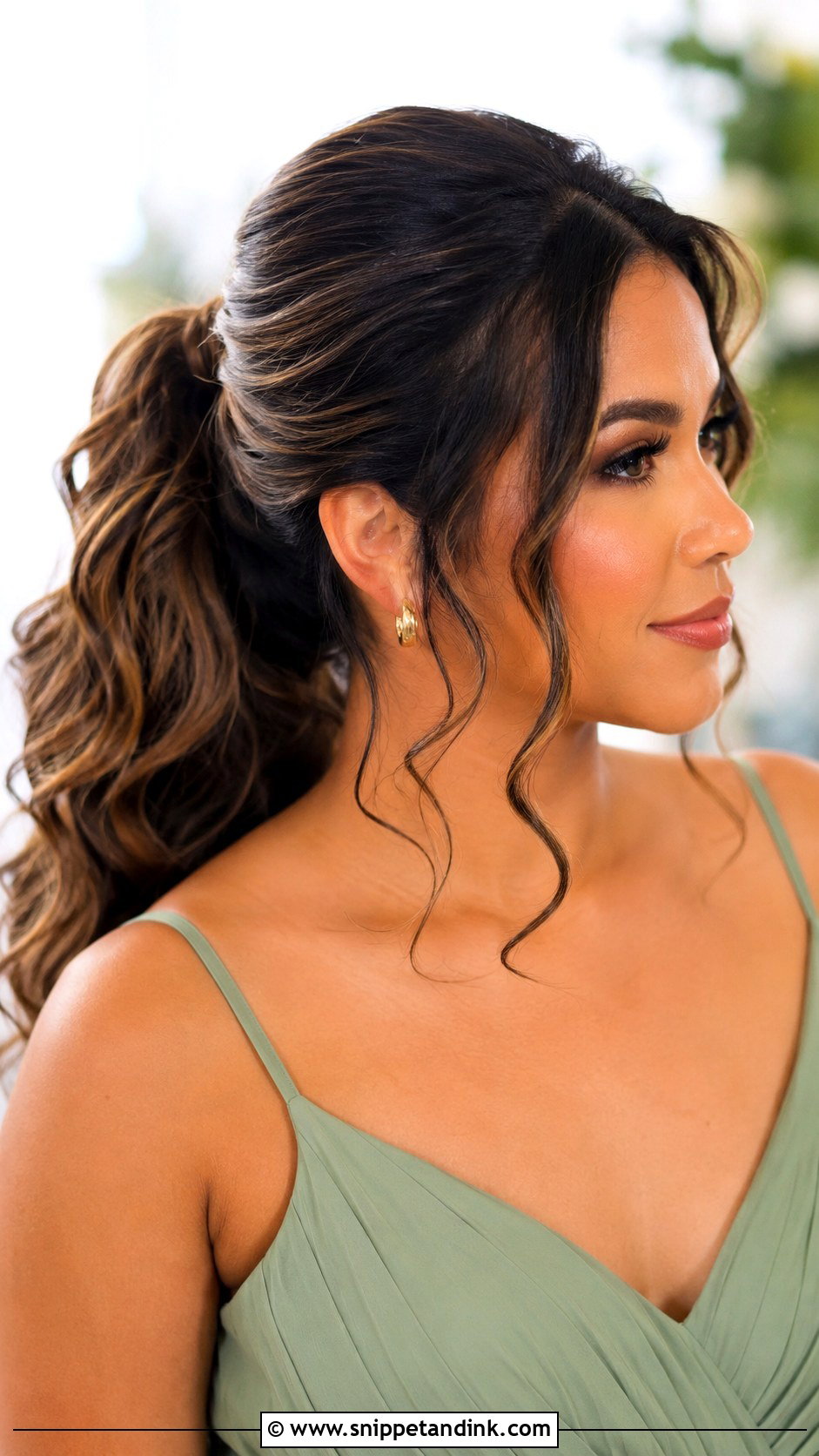
Loose front pieces are the easiest way to make one style suit a whole bridal party, because they can be placed differently for each face: at the cheekbones on one bridesmaid, at the jaw or collarbone on another. The ponytail behind can be sleek, wavy, high or low. They work well with curtain bangs and layered cuts. The mistake is leaving pieces out at random. I curl them away from the face, soften them with fingers and set them lightly so they move without going stringy.
16. Low Ponytail Updo With Middle Part
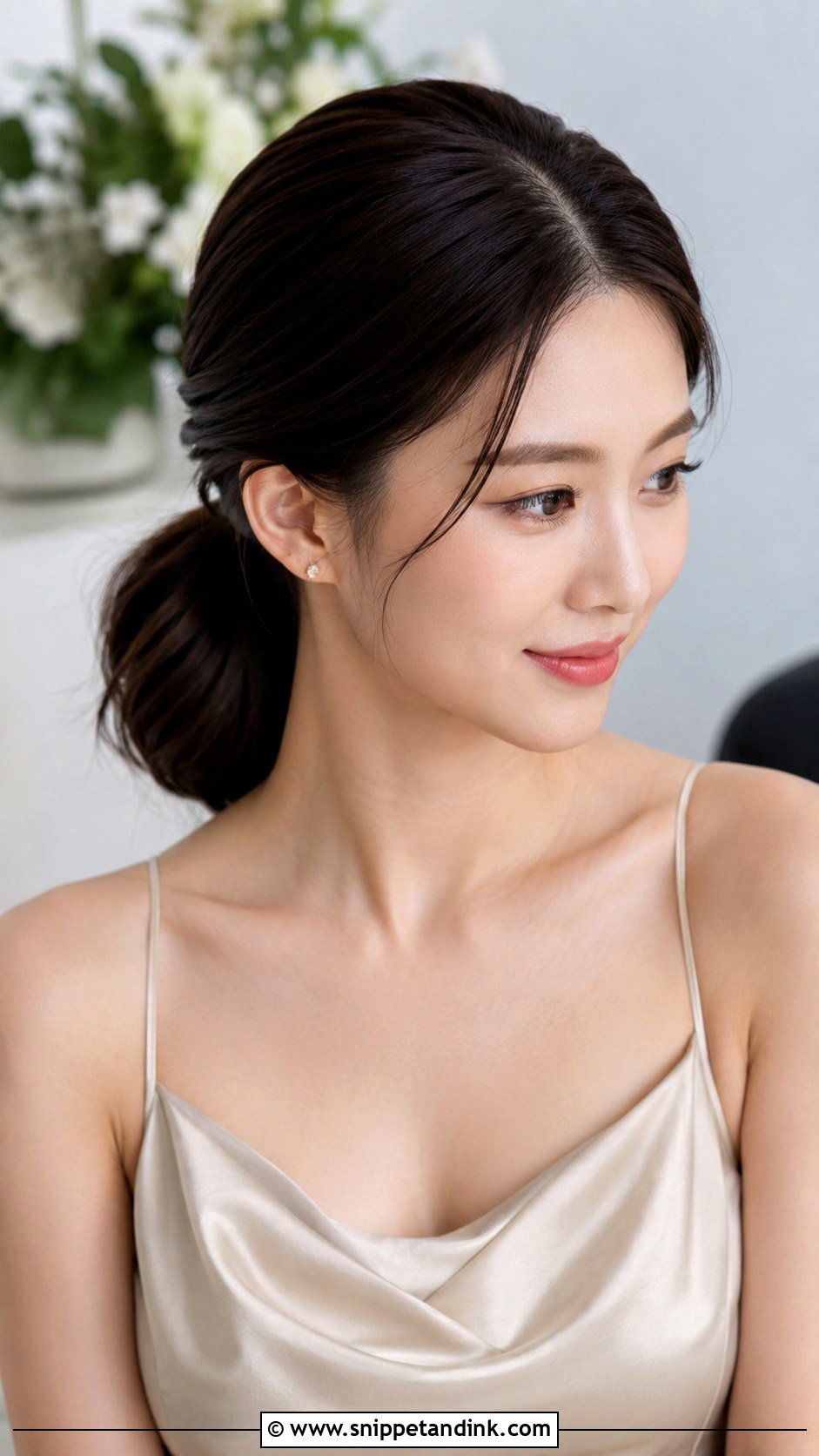
A middle part demands symmetry, so I check it from the front and in the mirror before anything is gathered. Set low, the ponytail reads clean and modern, and it goes with satin dresses, simple jewellery and indoor venues. Straight, wavy and softly curled hair all suit it. Tuck the front behind the ears for sleekness or leave fine tendrils. The wrapped base matters more here than anywhere, because a visible elastic in such a symmetrical style is all anyone notices.
17. Low Ponytail Updo With Side Part
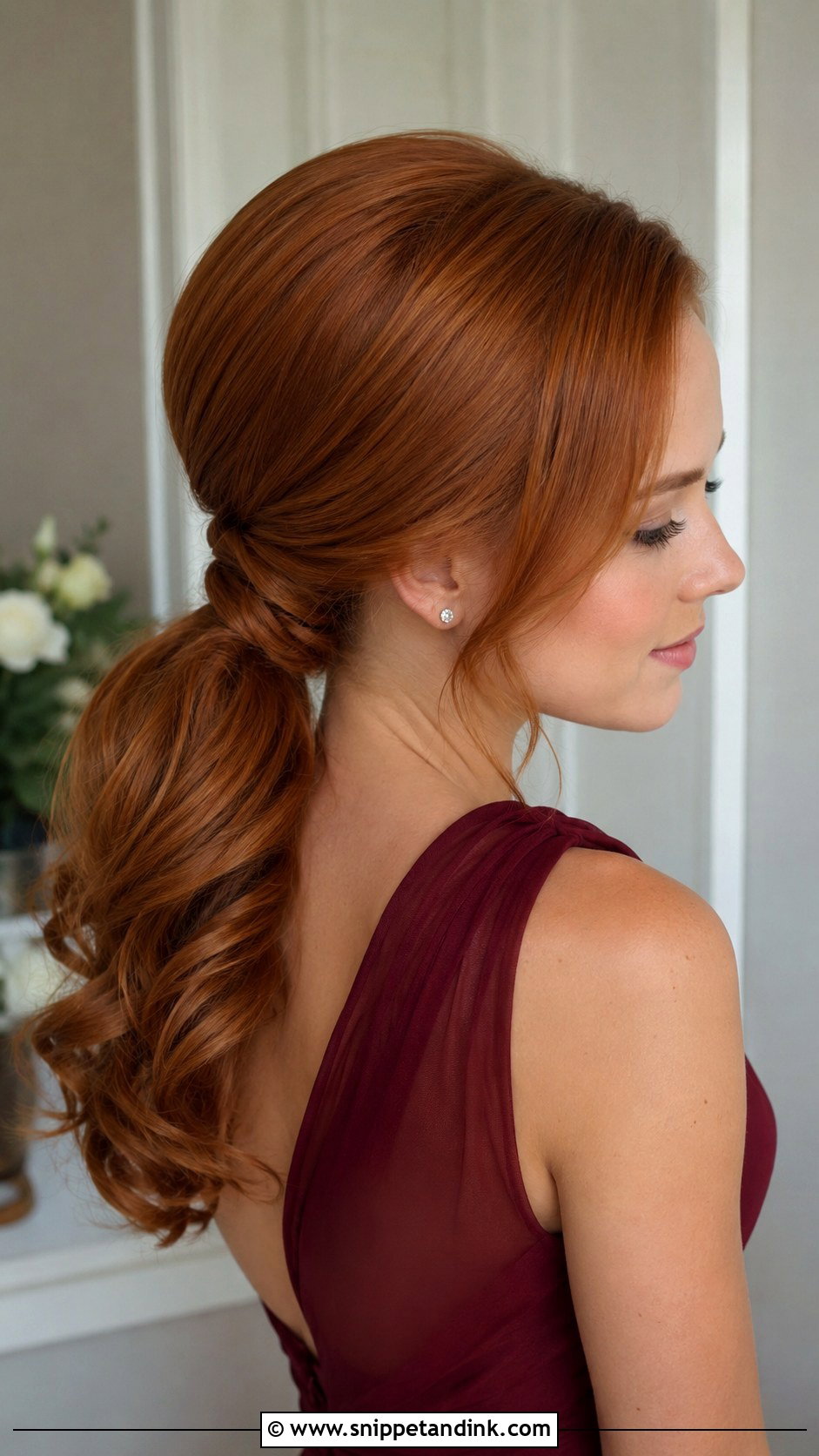
The side part gives the face an angled frame and brings in a little old-Hollywood glamour, especially with waves sweeping across the forehead. It’s a good alternative for bridesmaids who want shape without crown height. I tuck the heavier side behind the ear and pin it there with two crossed pins, because that sweep is the first thing to slide forward during dancing. Then the ponytail falls low with controlled movement. Keep the part subtle for a daytime wedding and deeper for evening.
18. Bridesmaid Ponytail Updo For Long Hair
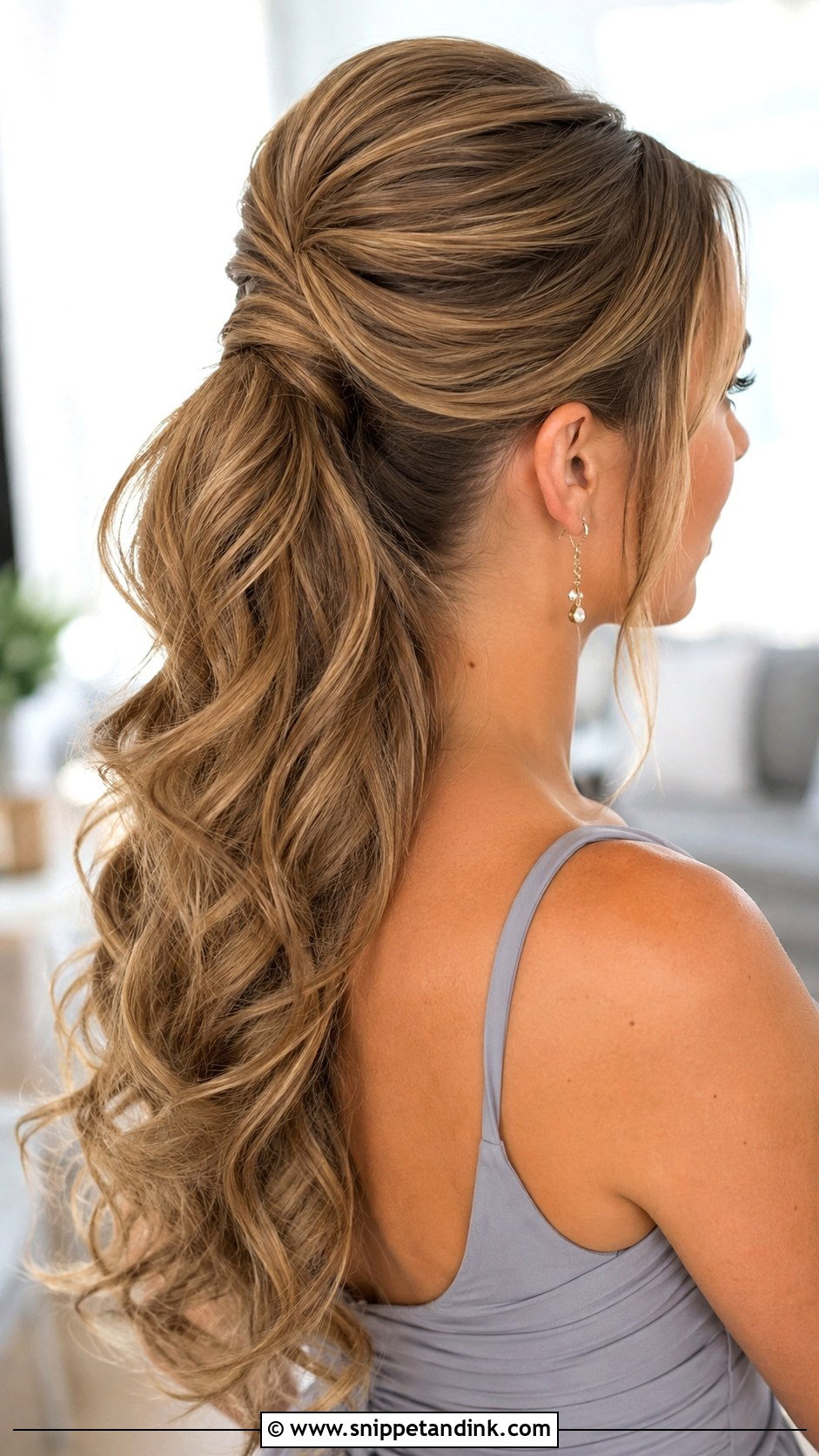
Long hair gives a ponytail drama, with room for curls, bubbles, braids or twists, but it also makes it heavy. The rule I follow is one place of volume: a full ponytail needs a clean crown, and a lifted crown needs a softer tail. Thick or slippery long hair also needs real prep. I secure it with two elastics, one over the other, and add texture spray and hidden pins at the base so the weight doesn’t drag the ponytail down by the evening.
19. Bridesmaid Ponytail Updo For Medium Hair
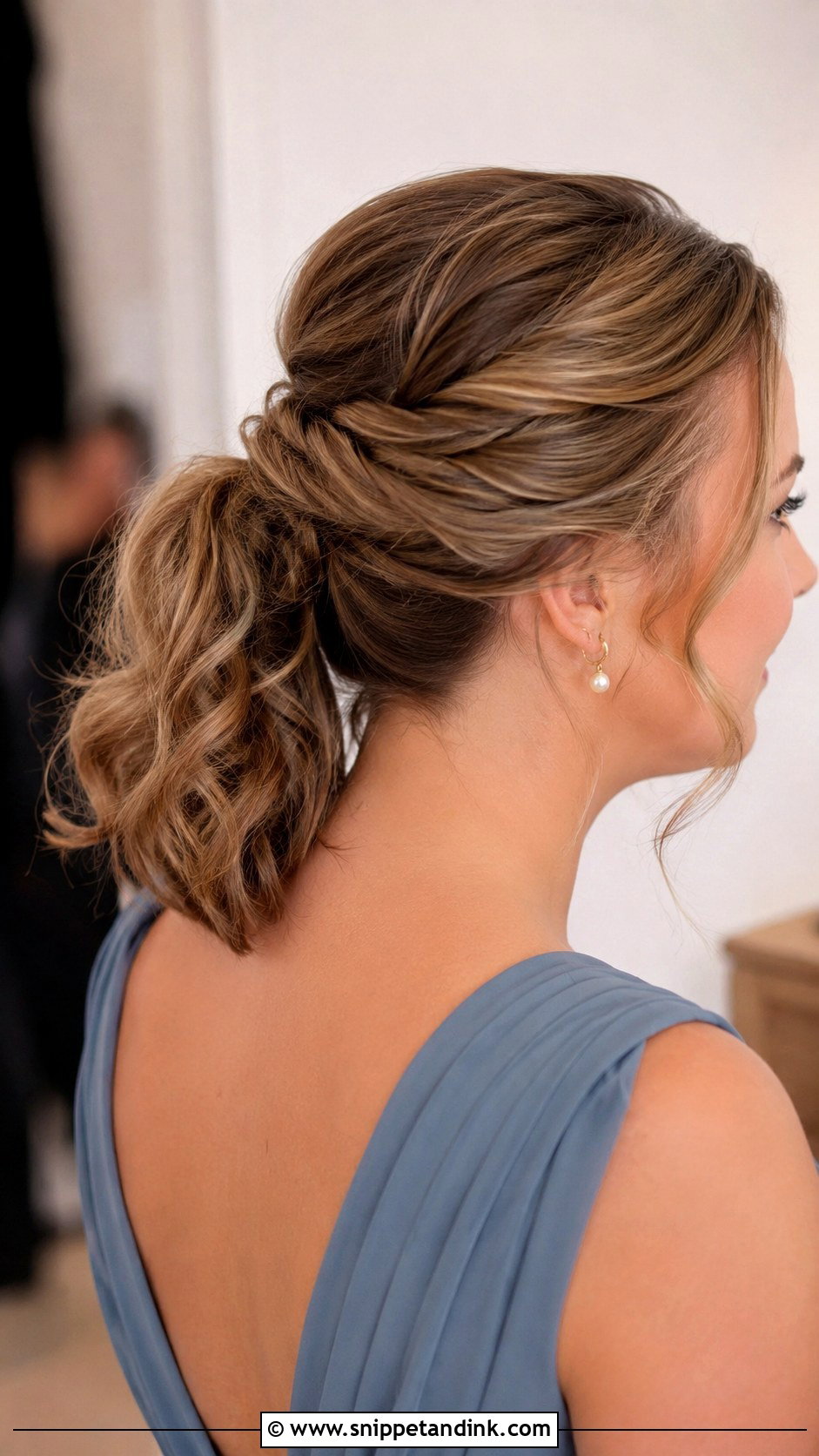
Medium hair often makes the most comfortable ponytail on the list, since it isn’t heavy enough to droop. It sits well at the nape or mid-height. Shoulder-length cuts, lobs and layered hair all work; I curl the ends for fullness and add a twist or wrap near the base for detail. Short layers that won’t reach the elastic get pinned underneath or styled around the face on purpose, rather than left to escape on their own.
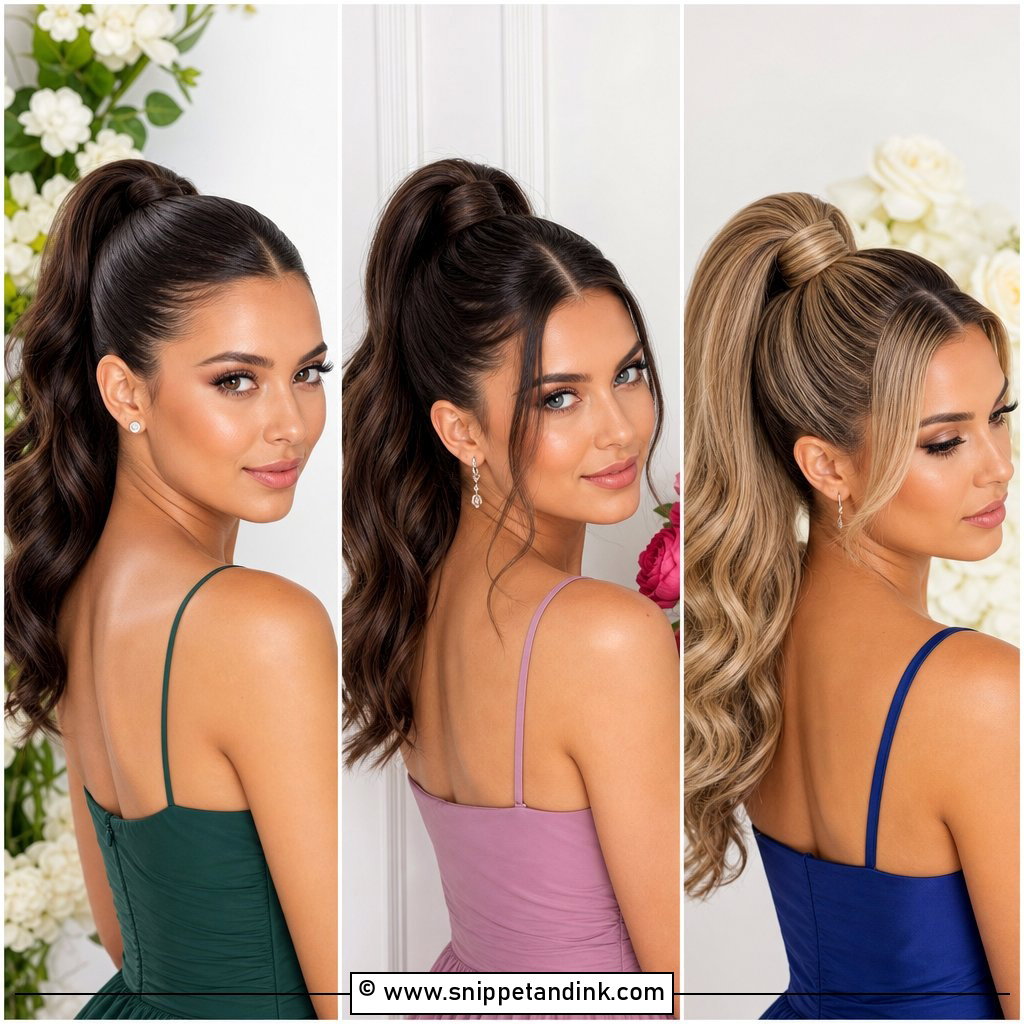
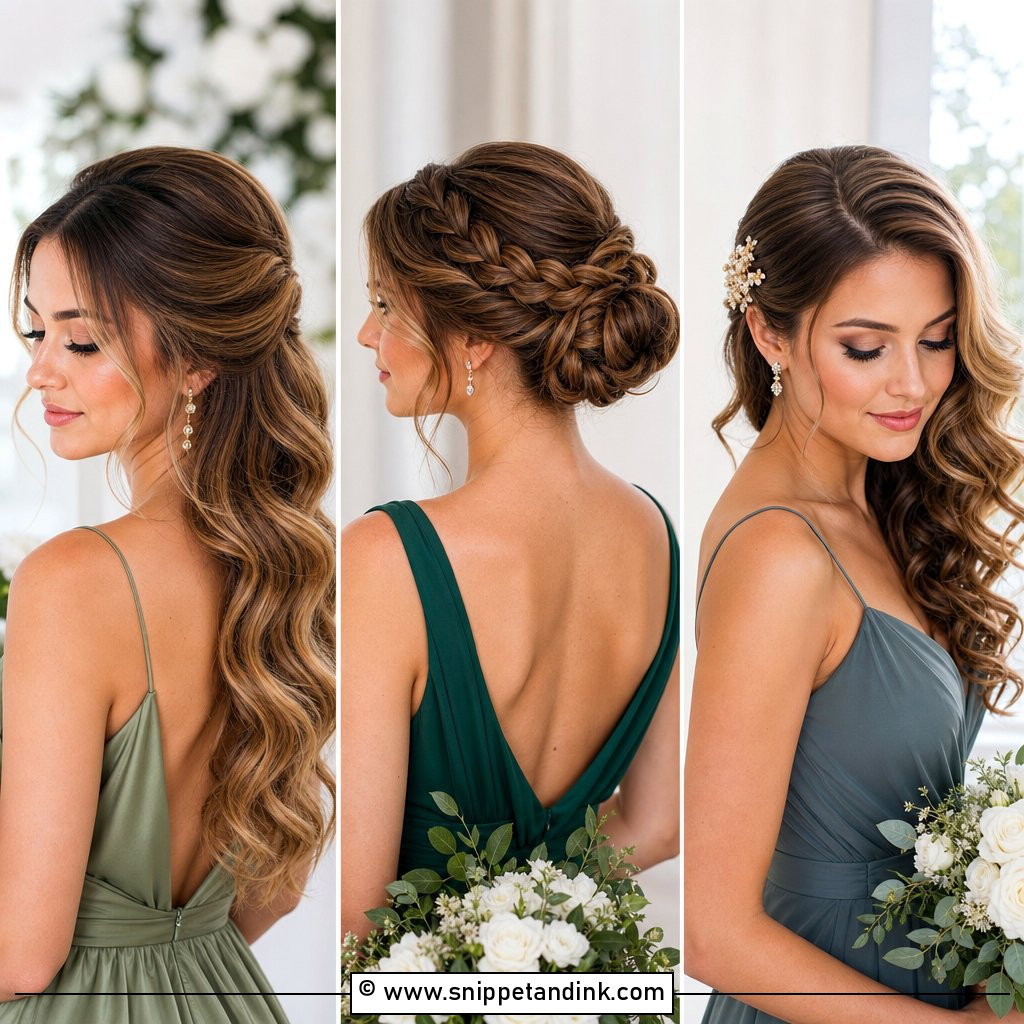
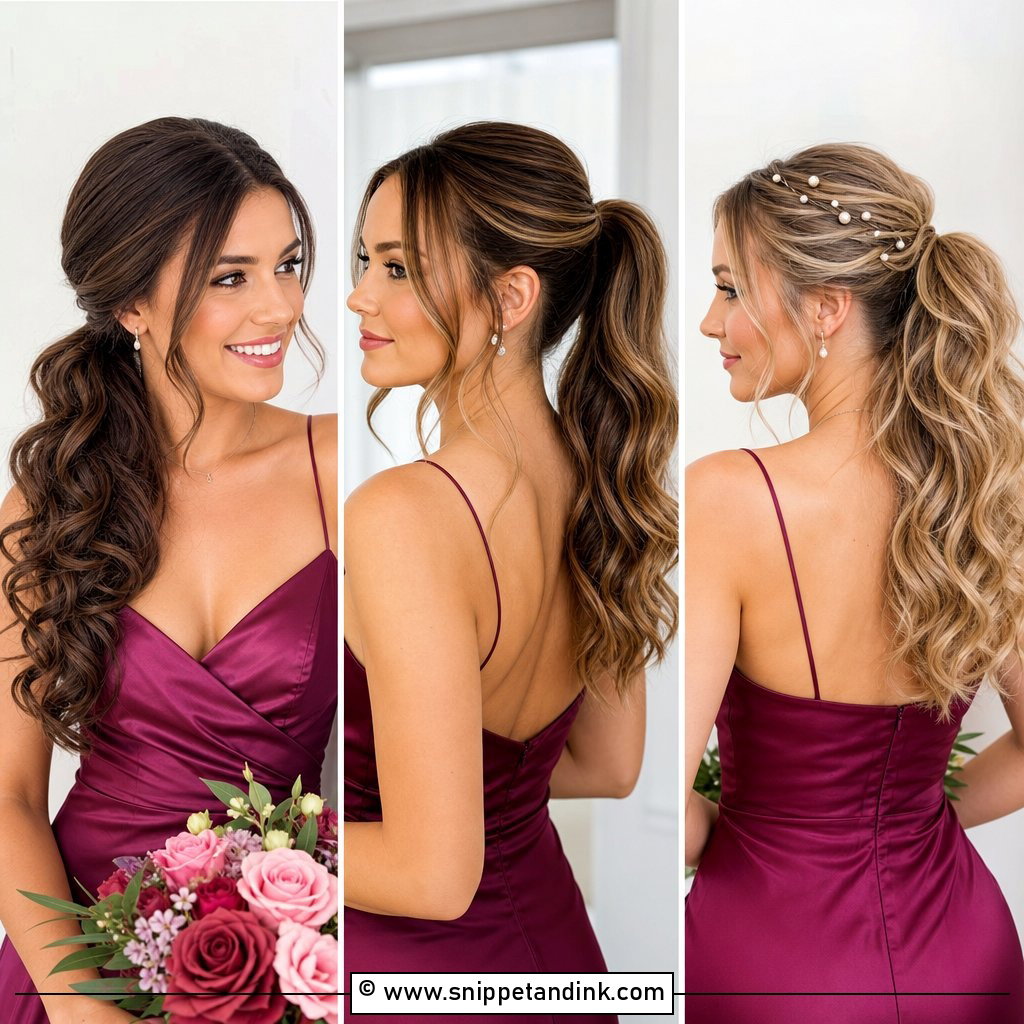
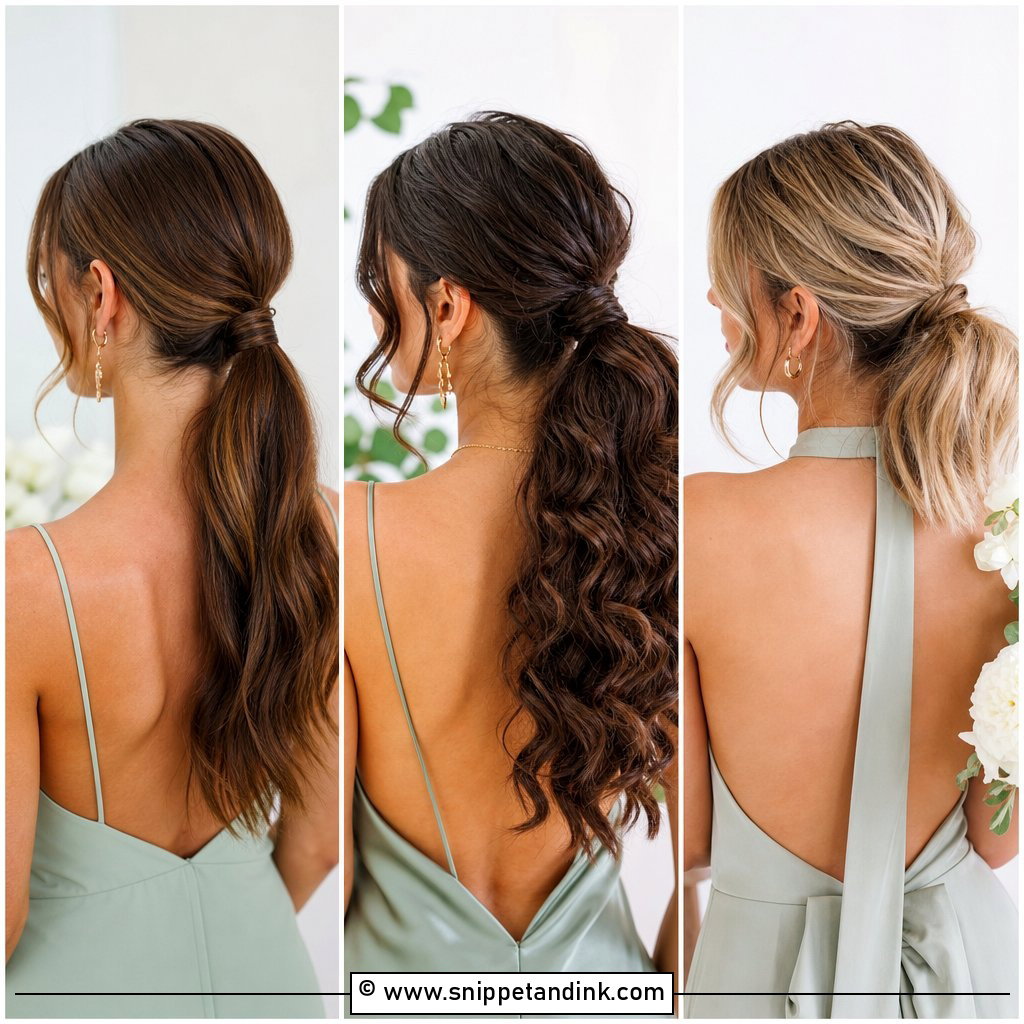
20. Bridesmaid Ponytail Updo For Natural Hair
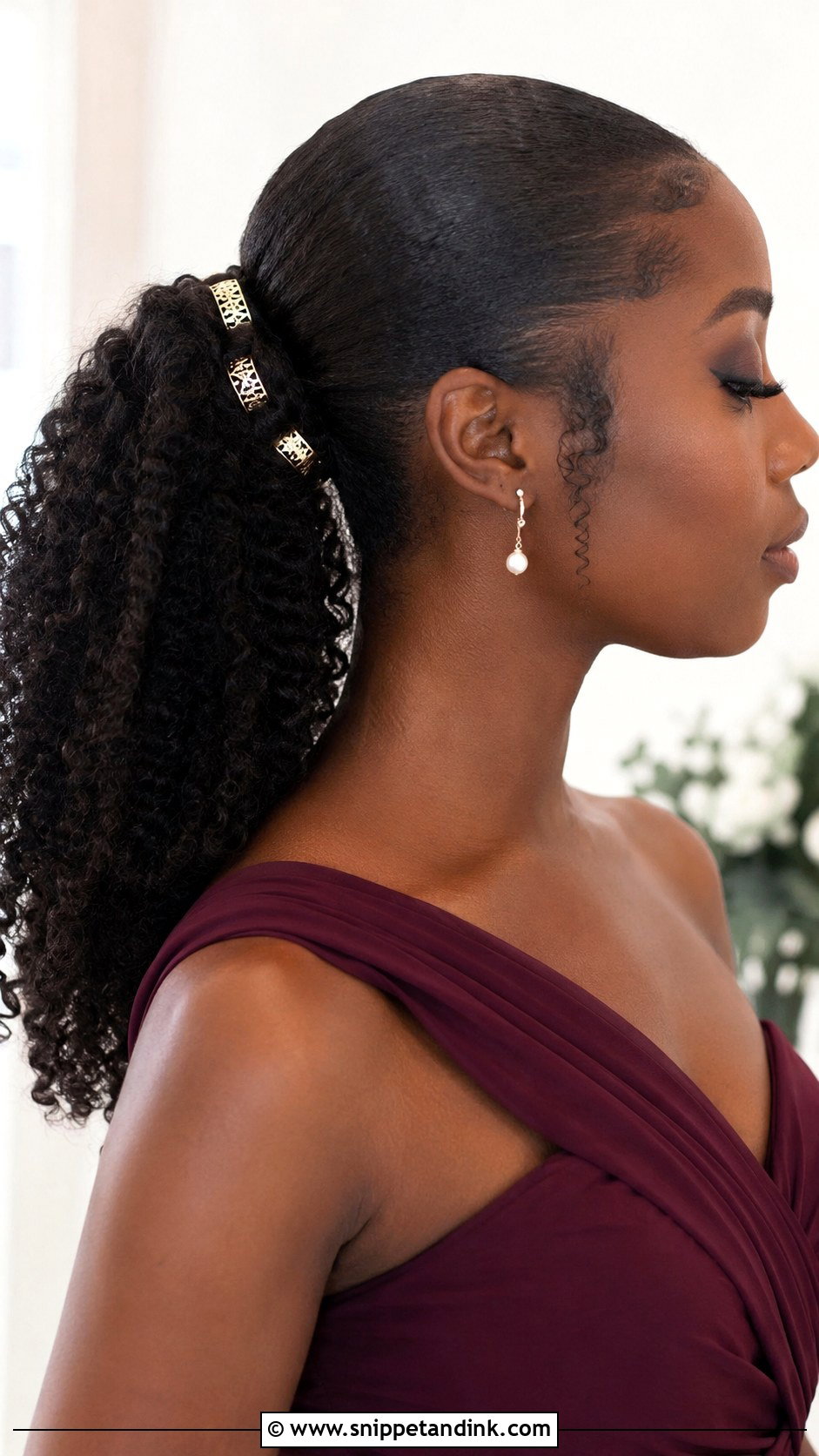
Natural hair makes some of the most striking ponytails, and they can be protective as well. The ponytail can be defined curls, a puff, twists, braids or stretched texture, depending on what the bridesmaid is comfortable with. A sleek base against a textured ponytail is a striking contrast, while a softer gathered shape feels romantic. Moisture first, then gel and a soft brush for the edges, and gentle tension at the base. Never pull so tight that the hairline is stressed. Cuffs, pins or small flowers add a finish. The best version works with the texture she actually has.
Ponytails Droop by Nine O’Clock Unless They’re Propped
The tail of a ponytail is a lever. Every swing and every hug pulls the elastic down a little, and by the evening a high ponytail can be sitting closer to mid. These are the steps I use so it stays where we put it.
- Two elastics, not one. The second one goes over the first, which grips far better than a single band wrapped three times.
- Prop the base. Slide two bobby pins up under the ponytail, angled toward the crown, so the tail rests on them.
- Wrap and pin. The strand that hides the elastic is pinned underneath, not tucked, so it doesn’t unravel.
- Spray the underside. A mist of flexible spray on the hair under the base stops it slipping on the scalp.
Who Should Skip a Ponytail Altogether
A ponytail isn’t the kind choice for everyone. Very short layers that stop above the ears will escape all night. Thin hair at the crown can show scalp when it’s pulled back tight, which the camera picks up under flash. And anyone who gets tension headaches will be miserable by the speeches with a high ponytail. For those bridesmaids, a low twisted bun or a half up style gives a similar look with far less strain.
A Wrapped Base and a Propped Elastic Do Most of the Work
A ponytail updo covers a lot of ground: it keeps hair controlled, shows off length, and can be dressed up or down. Sleek suits a ballroom, textured or braided suits an outdoor wedding, low reads classic and high reads fresh. Let the neckline, the weather and her hair type choose the version. The details that make it a wedding style rather than an everyday one are always the same: a wrapped base, a propped elastic and loose pieces placed on purpose.
You'll Like These Ideas:


Leave a Reply