
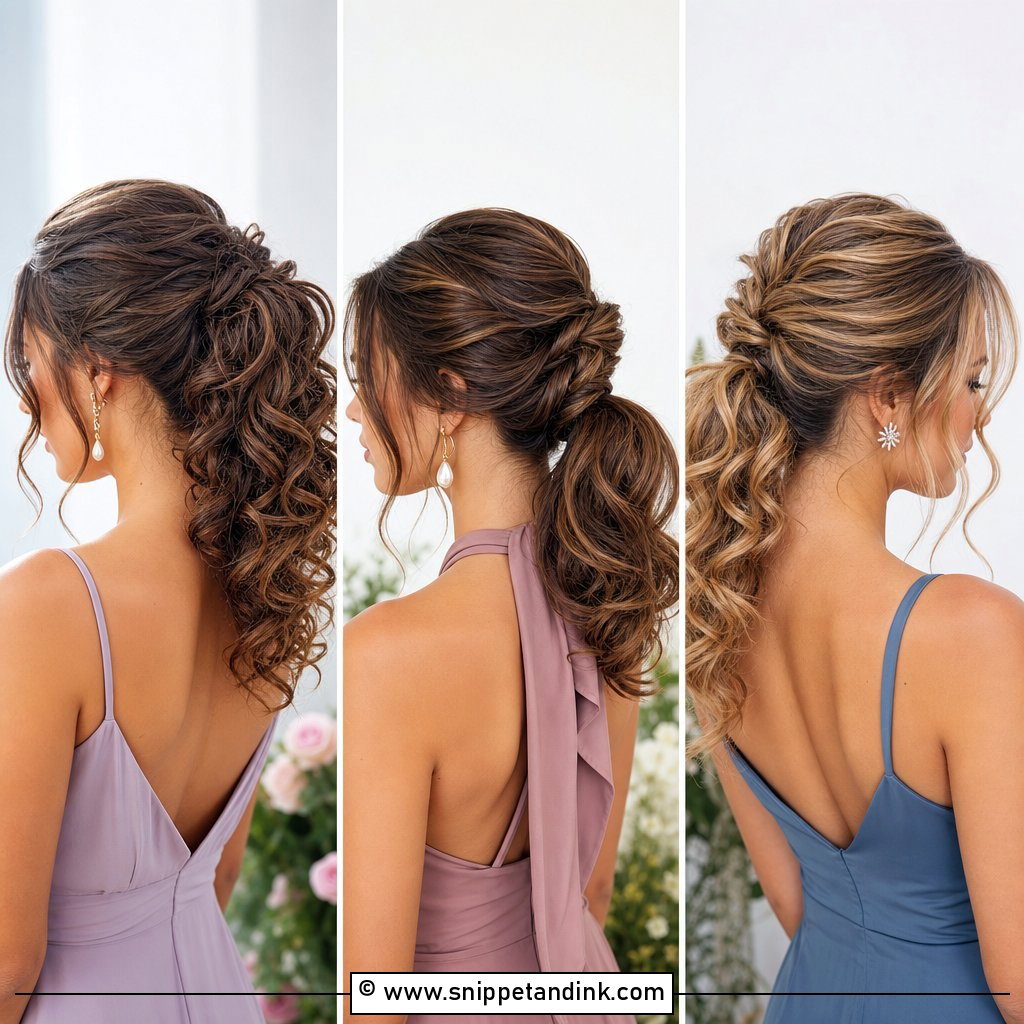
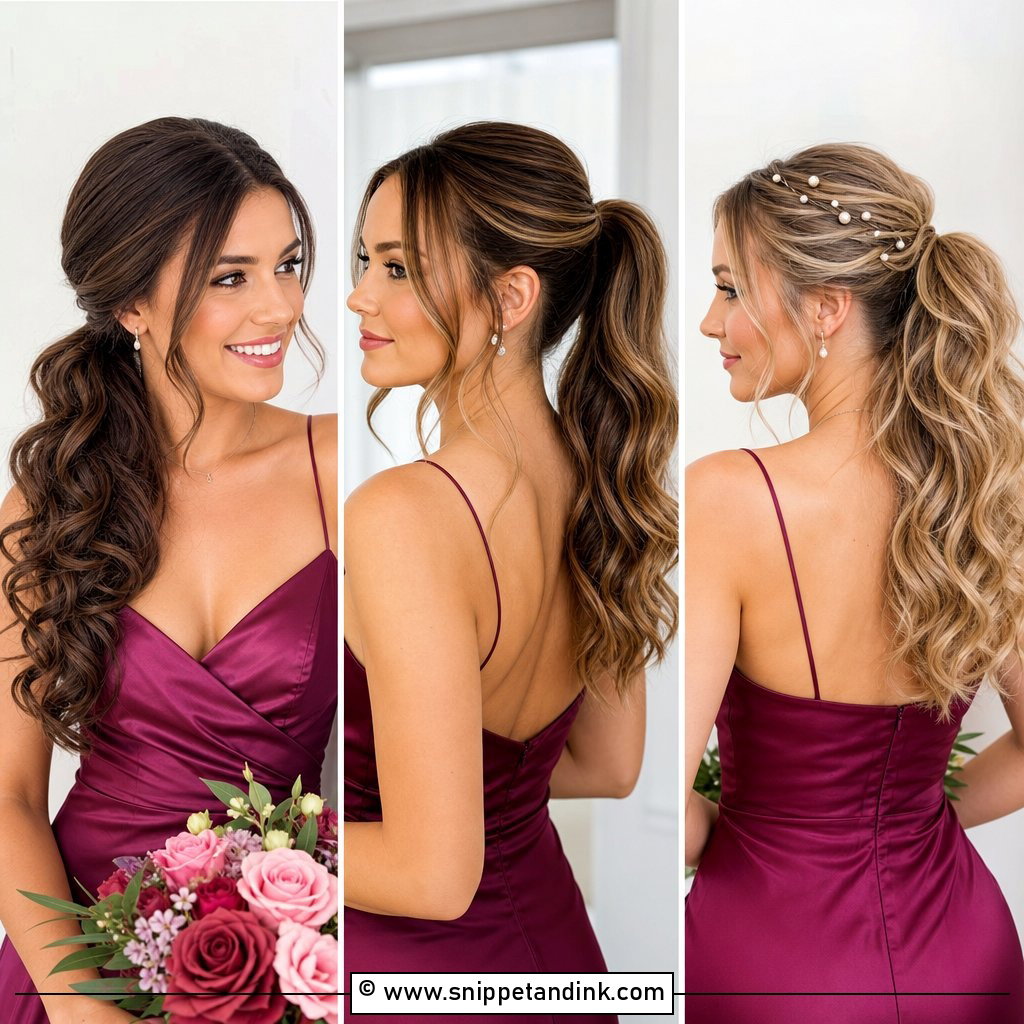
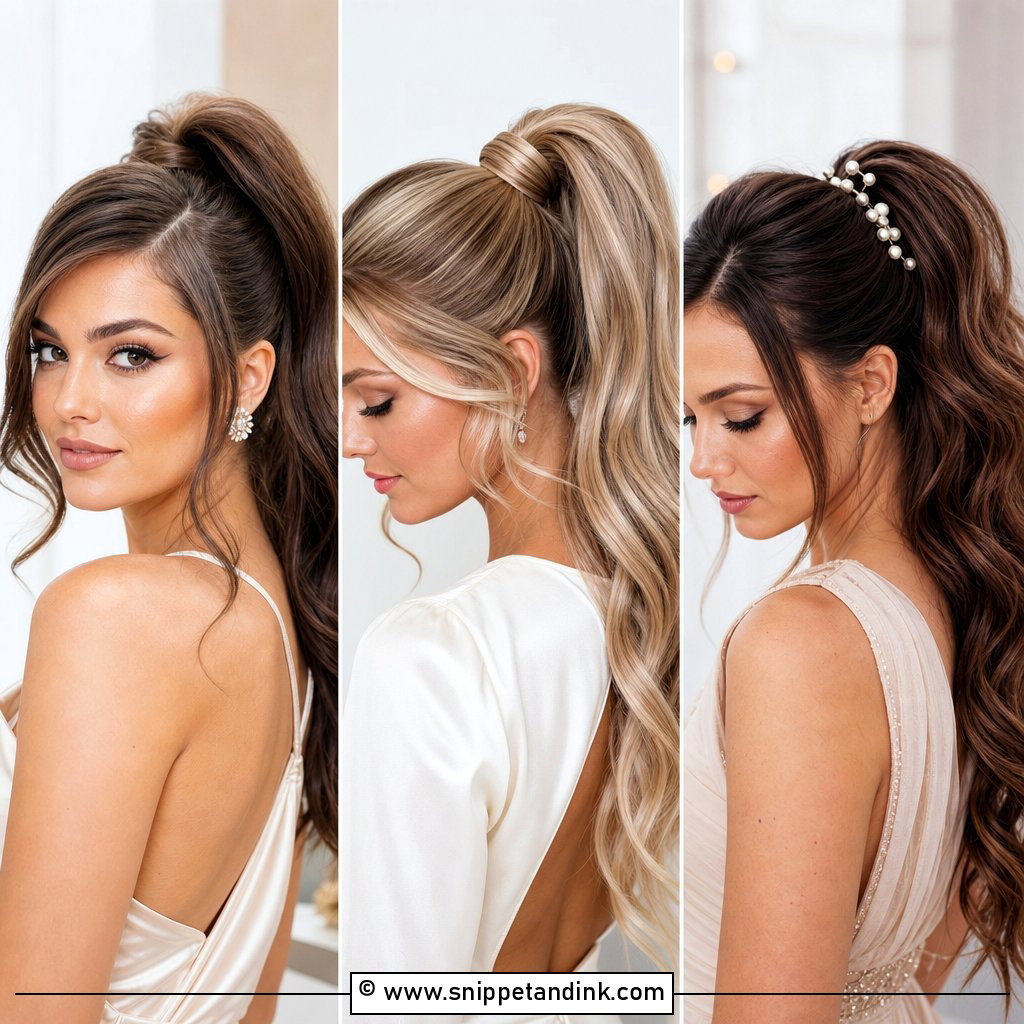
A low ponytail is the style I offer bridesmaids who say they hate updos. It keeps the hair gathered and off the face through hugs, wind and dancing, but it doesn’t feel pinned to the head, and nothing digs in. Done well, bridesmaid low ponytail hairstyles also flex nicely across a group: one bridesmaid wears hers waved, another sleek with a center part, a third adds pearls, and the party still looks like it belongs together. It suits strapless gowns and high-neck satin alike. The hard part is the base. A ponytail that looks flat, lumpy or loose at the elastic will look that way in every back-view photo, so I’ve noted for each style below how the base should be built.
The Elastic Decides Whether a Low Ponytail Survives
Most ponytails that fail at weddings fail at the base: the elastic loosens, the ponytail slides down the neck, and a lump appears at the crown. This is how I build one that stays.
- Prep the hair with a light texture spray, not oil. Slippery hair lets any elastic slide.
- Brush the hair toward the nape in two sections, top and bottom, so the crown doesn’t bunch.
- Use a hook elastic (sometimes called a bungee band) instead of a standard tie. It tightens without being pulled over the whole ponytail, so the hair above it stays smooth.
- On heavy or long hair, add a second elastic directly over the first for extra grip.
- Push two bobby pins up through the base, toward the head, to stop the ponytail from sagging over the evening.
- Wrap a strand around the elastic and pin it underneath to finish.
For extra fullness, I sometimes tie two ponytails, one just above the other, and let the top one fall over the bottom. It doubles the visual length without extensions, and it’s especially useful on fine or layered hair.
1. Sleek Bridesmaid Low Ponytail
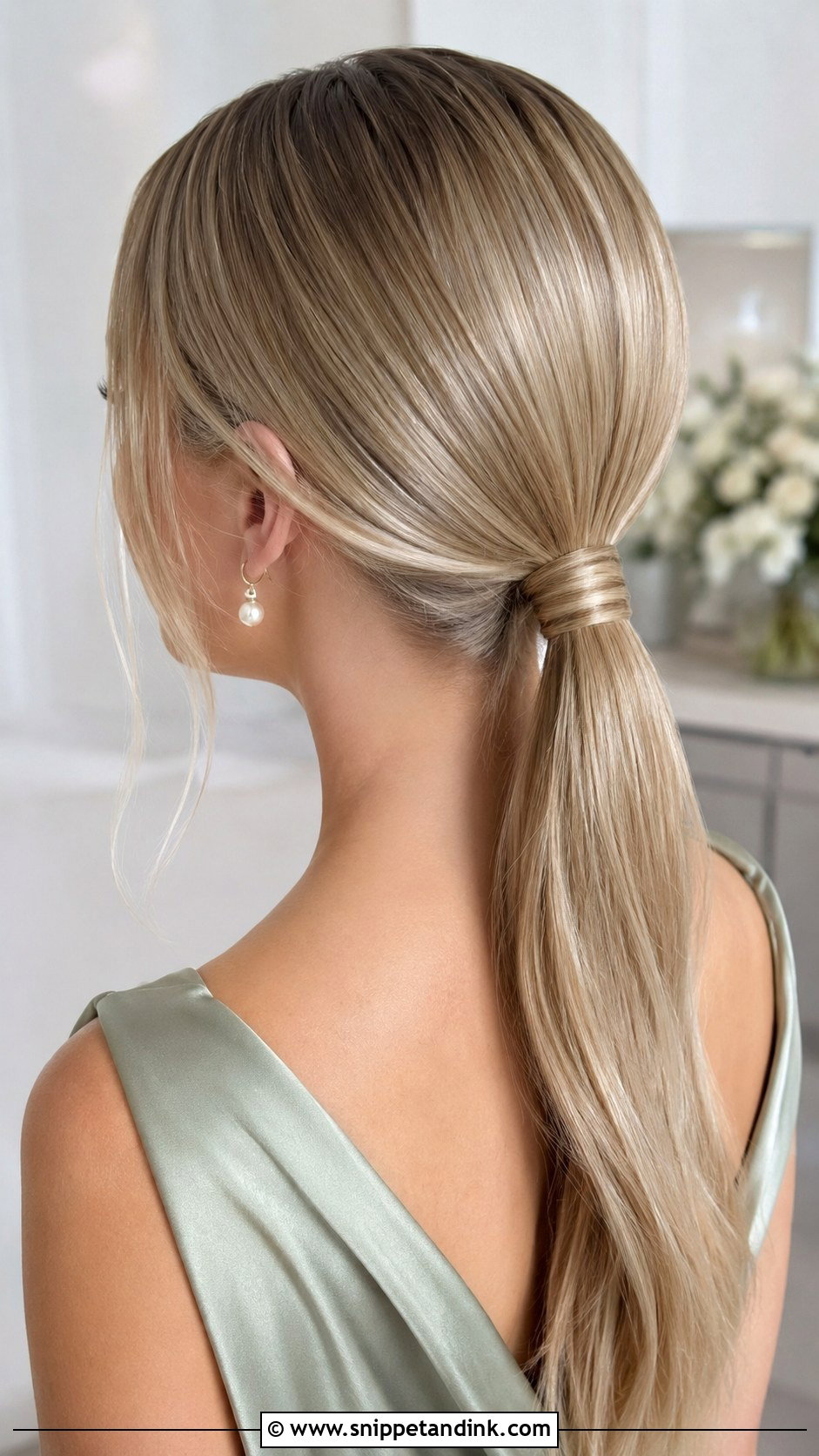
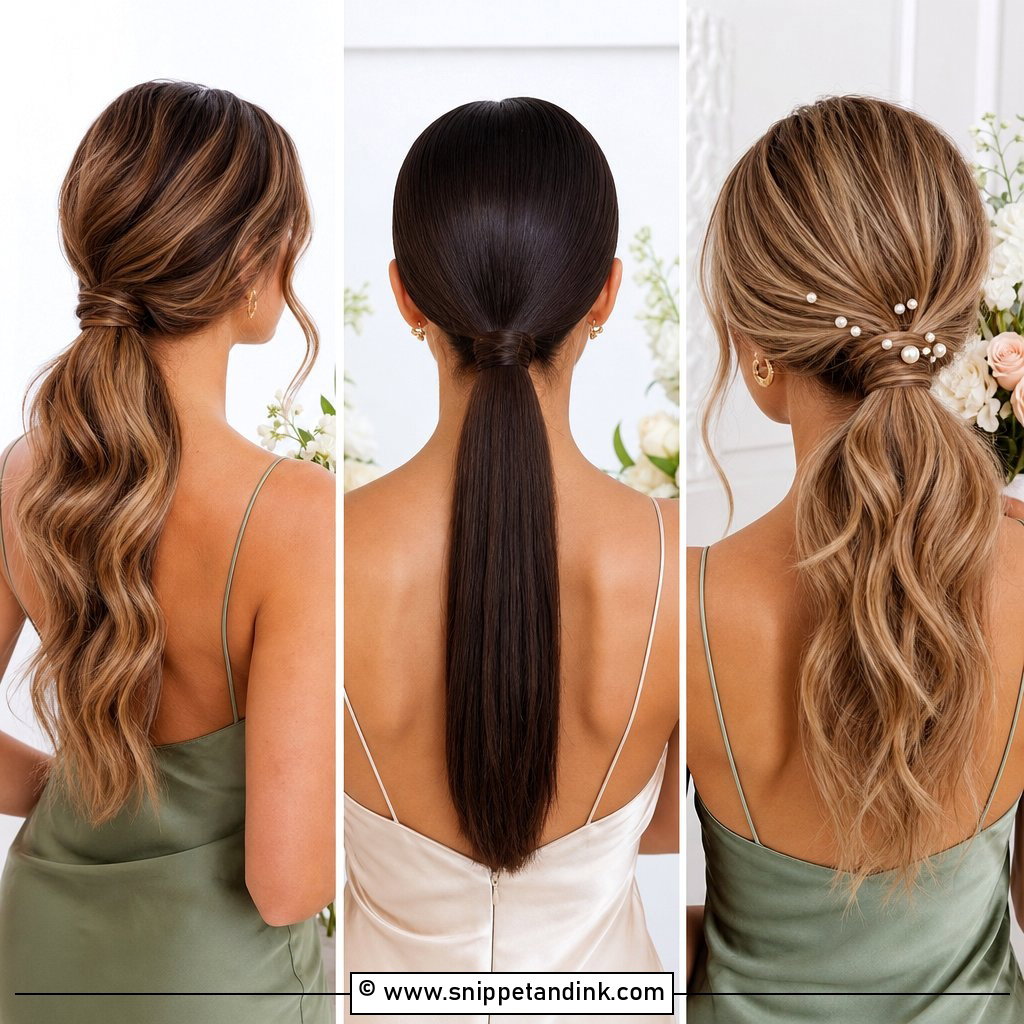
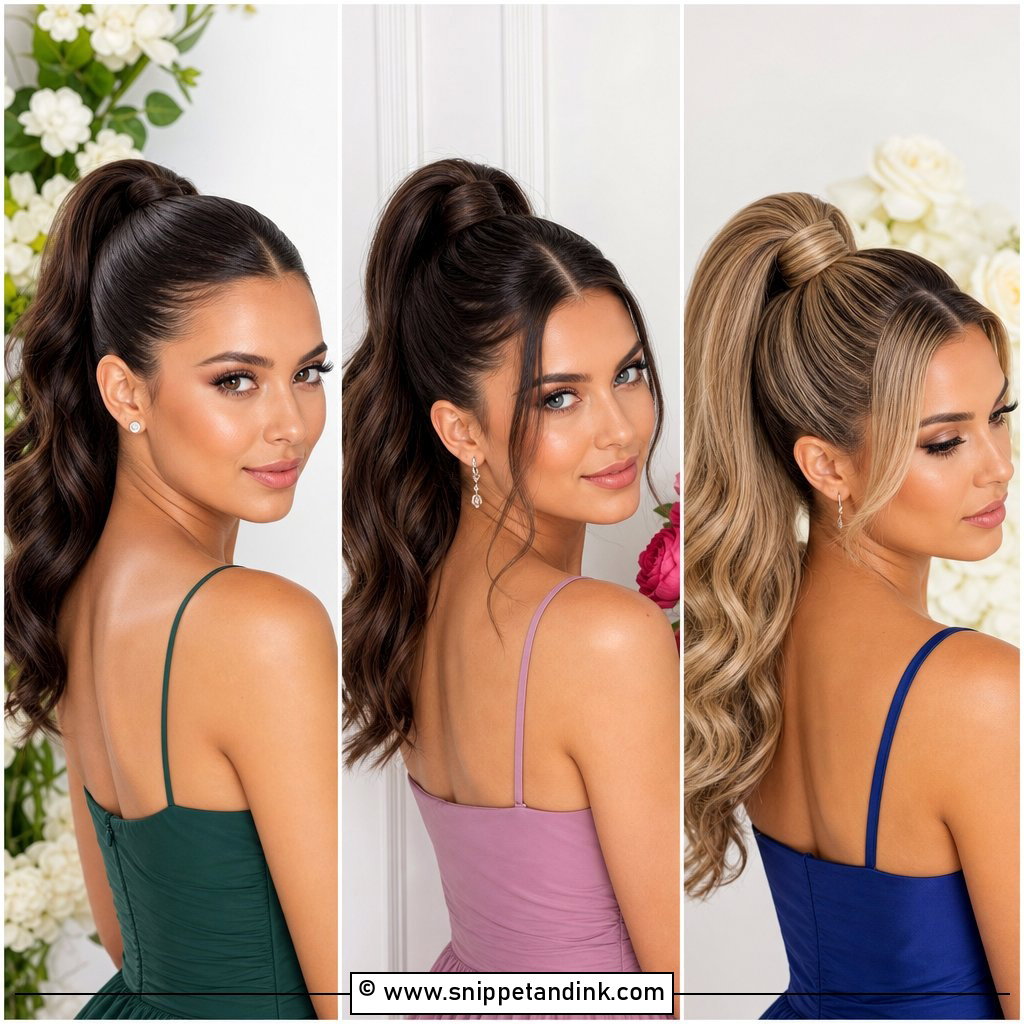
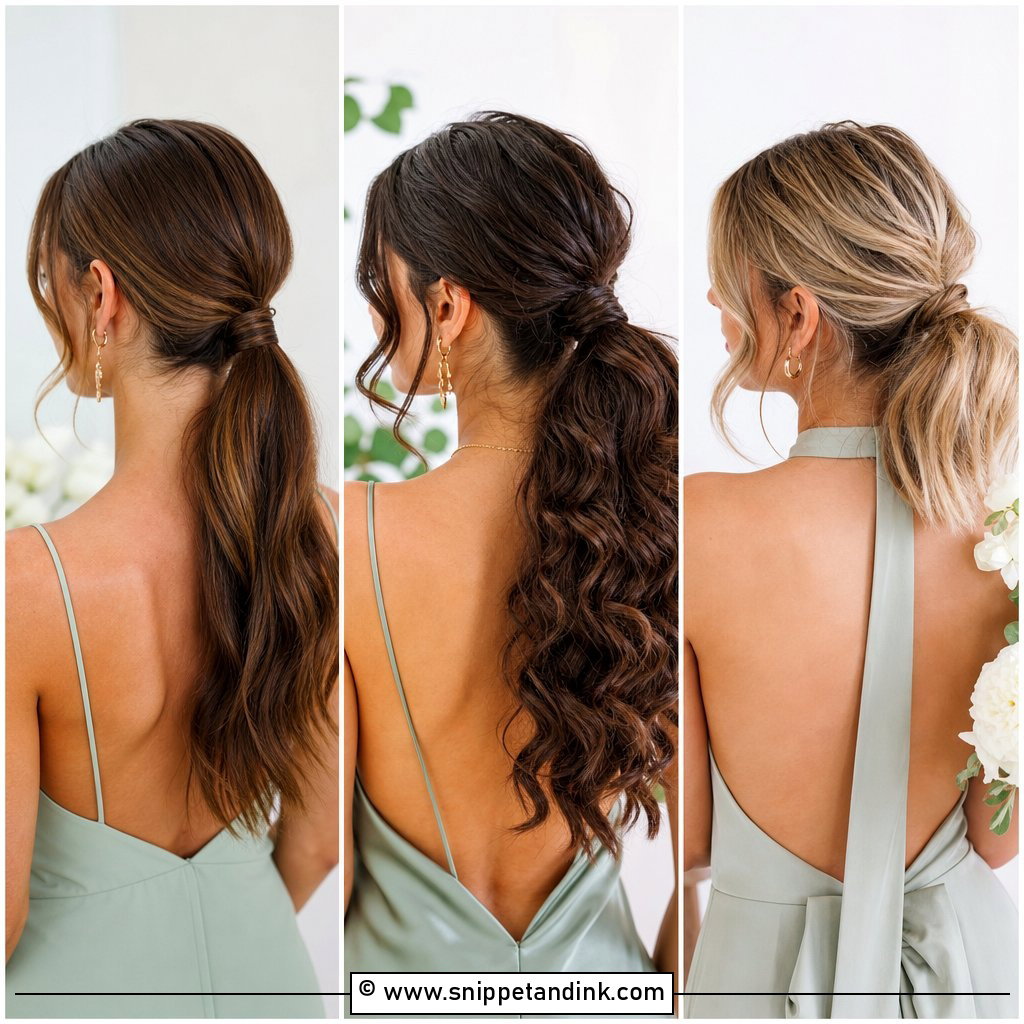
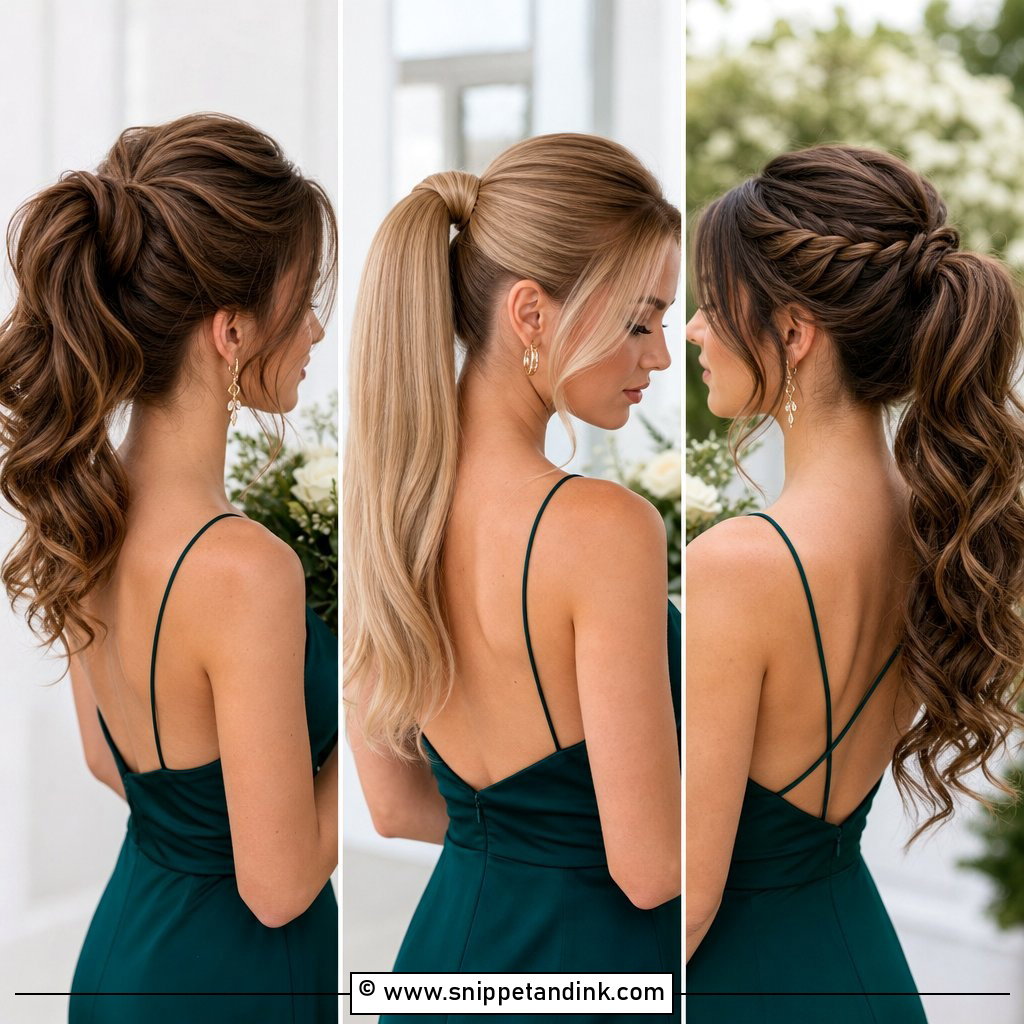
Sleek is the most demanding version, because every bump shows. I smooth the hair close to the head with a light gel and a boar bristle brush, tie it at the nape, and wrap a strand around the elastic. It belongs with satin, structured gowns and minimalist styling, and it leaves their makeup, earrings, or neckline to do the talking. I go easy on the gel at the hairline; too much turns white in flash or looks wet in close-ups.
2. Wavy Bridesmaid Low Ponytail
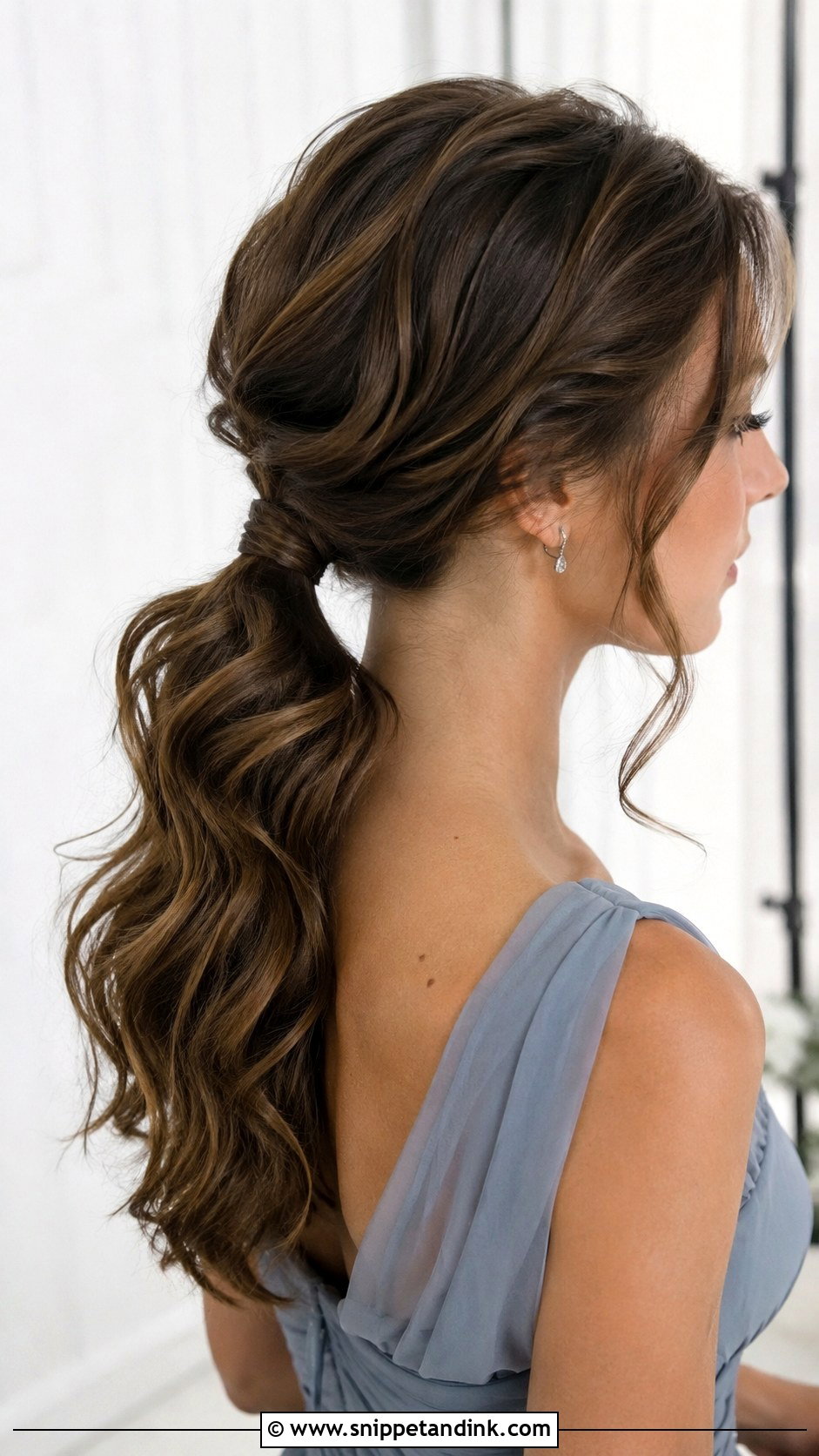
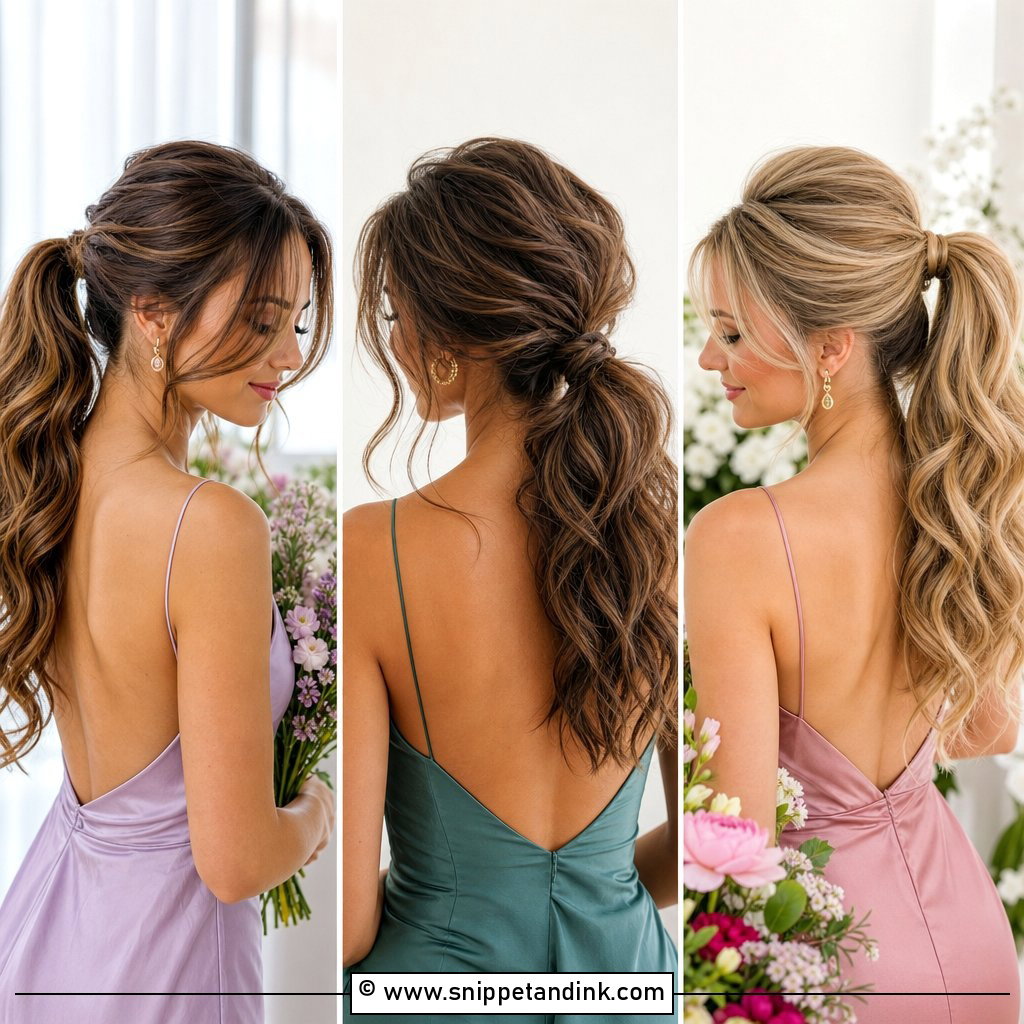
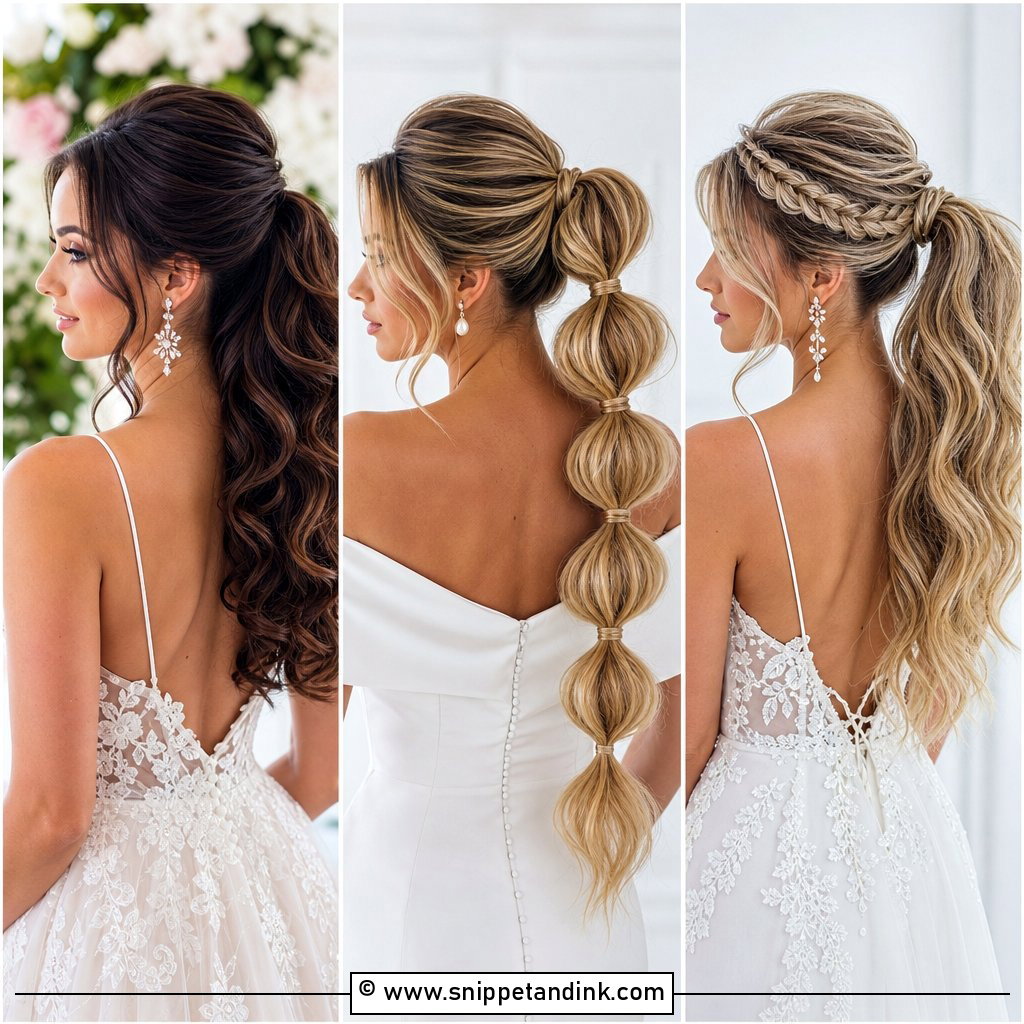
The crown stays smooth while the length gets loose, brushed-out waves, which gives shape from behind and from the side. It’s my pick for chiffon and garden weddings. I curl the ponytail after it’s tied, not before, because gathering curled hair into an elastic crushes the top few inches of every wave. Face-framing pieces curled away from the face keep it airy. A flexible spray lets the ponytail swing without the waves falling.
3. Curly Bridesmaid Low Ponytail
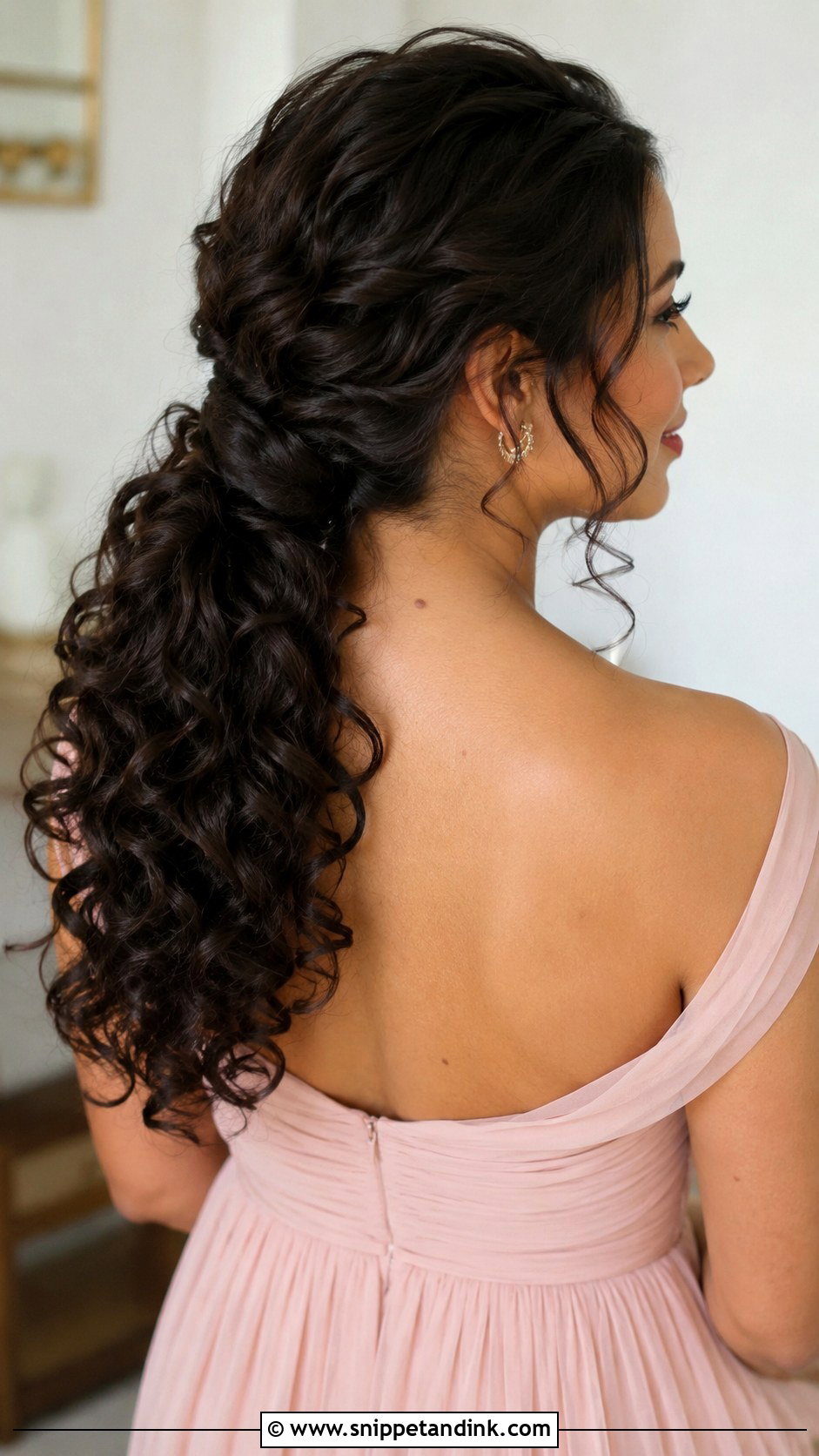
Curls, natural or set, give the fullest ponytail on this list. I gather them low and keep the crown soft rather than slicked, which is kinder to the scalp over a long day. The base should look full; if it’s flattened, the ponytail reads as two separate halves. A few curls left at the hairline soften the face. Curl cream and a light gel define the shape, and large pins hold the base without crushing the pattern.
4. Textured Bridesmaid Low Ponytail
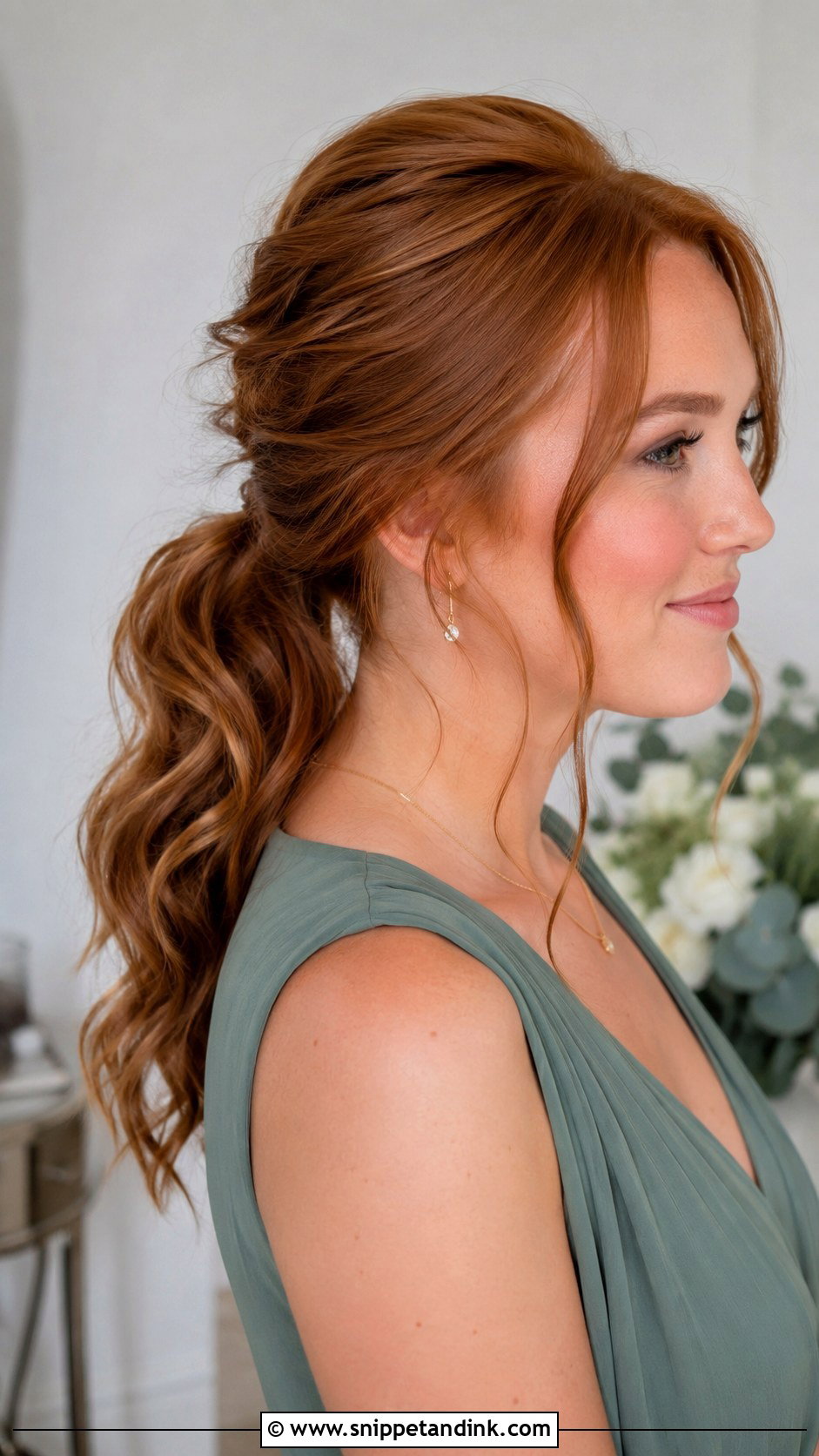
Volume at the crown, loose movement through the tail, soft pieces at the face. It’s less polished than sleek but still clearly styled for a wedding, which suits beach, vineyard and rustic venues. Texture can come from waves, gentle teasing or the hair’s own movement. My trick is to secure the ponytail first, then hold the elastic and gently pull small pieces at the crown loose with my fingertips. Doing it in that order keeps the base tight while the top looks soft, and it holds up in professional photos.
5. Braided Bridesmaid Low Ponytail
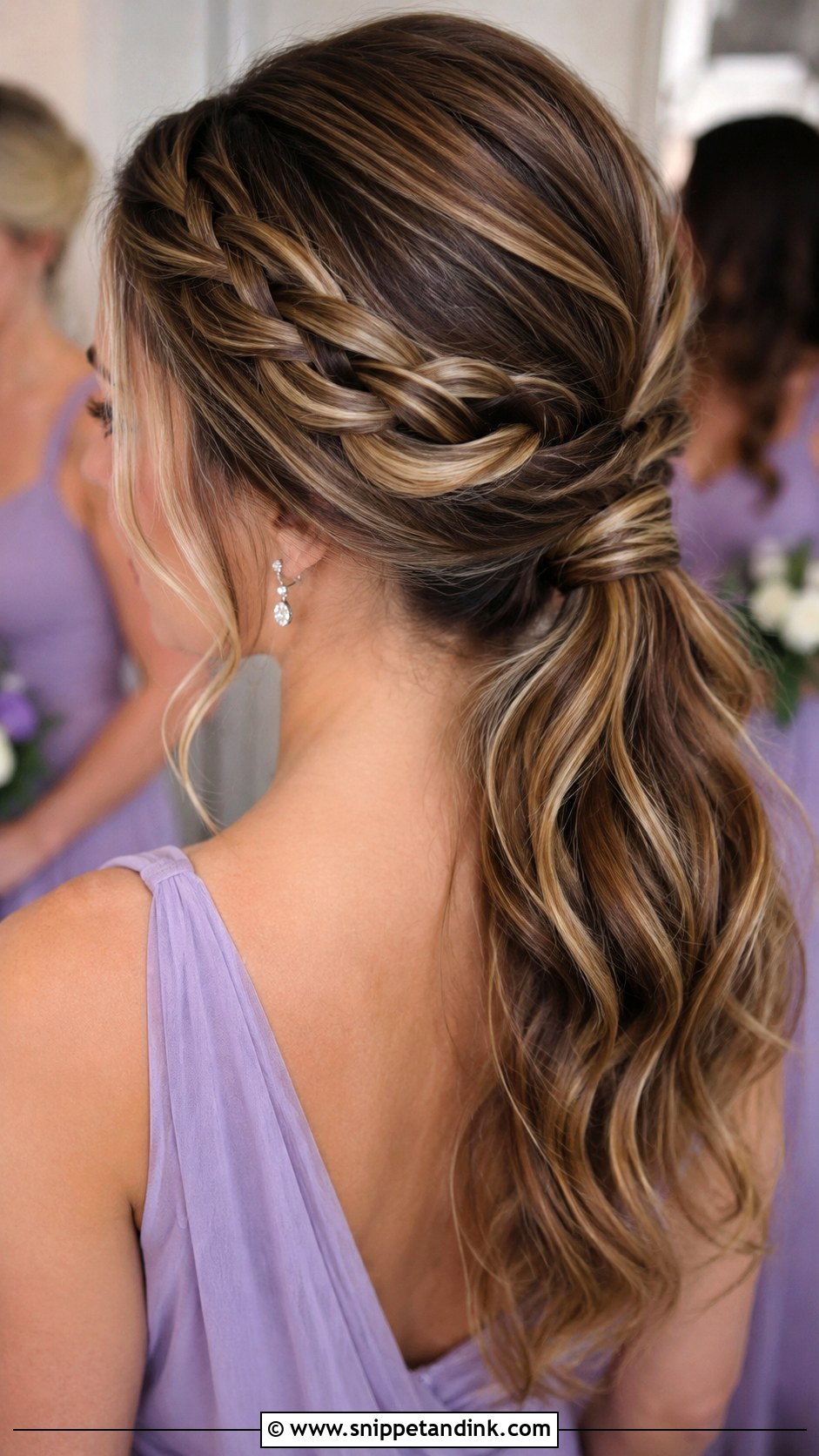
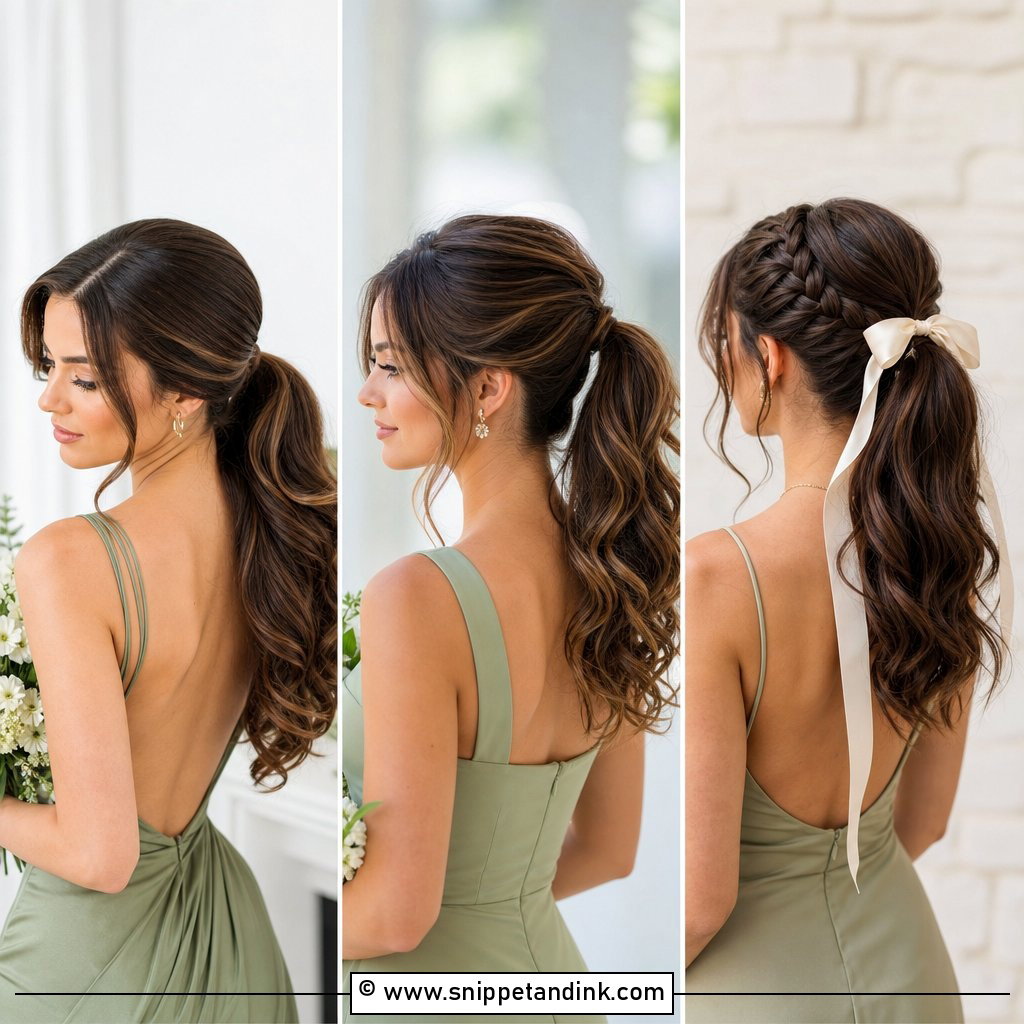
A braid running from the crown, along one side or wrapped around the base adds interest from the back, which is the view guests have during the ceremony. Highlighted and dimensional hair shows off well in the braid, because each section catches a different tone. Outdoors, the braid also catches short pieces that would otherwise blow loose. I keep the tail soft with waves so it doesn’t feel tight, and use a couple of small pins to lock the braid into the base.
6. Pearl Bridesmaid Low Ponytail
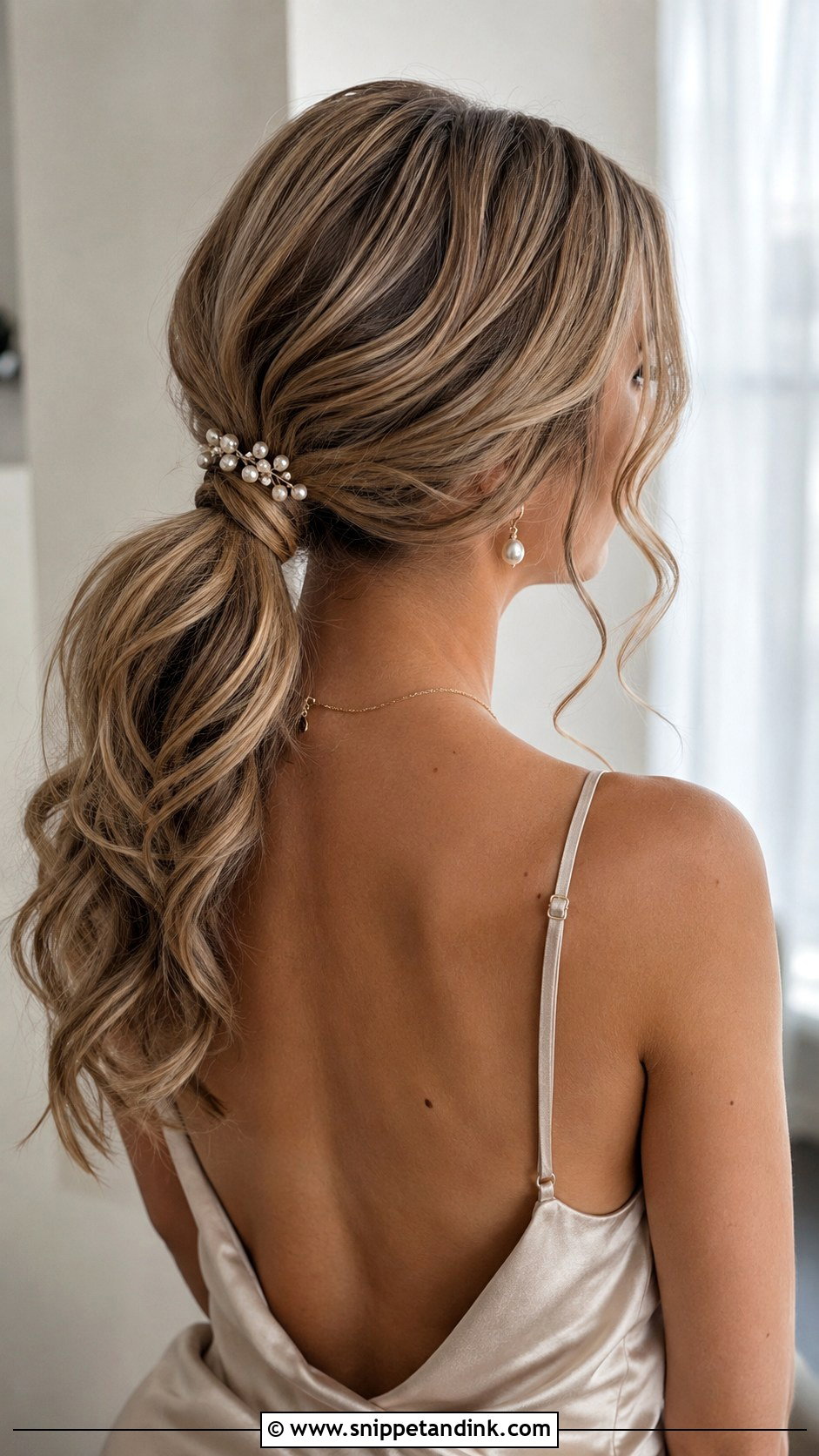
Pearls add a bridal note without stealing focus. They can line one side, be scattered through waves or circle the ponytail base. The ponytail underneath can be sleek, wavy or textured. Small, evenly spaced pearls look refined; large ones crowded together overwhelm the style. I’d choose pearl pins with a slight grip ridge, since the smooth kind slide out of clean hair. They look best against soft neutrals, blush, champagne and sage, navy, or black dresses.
7. Twisted Bridesmaid Low Ponytail
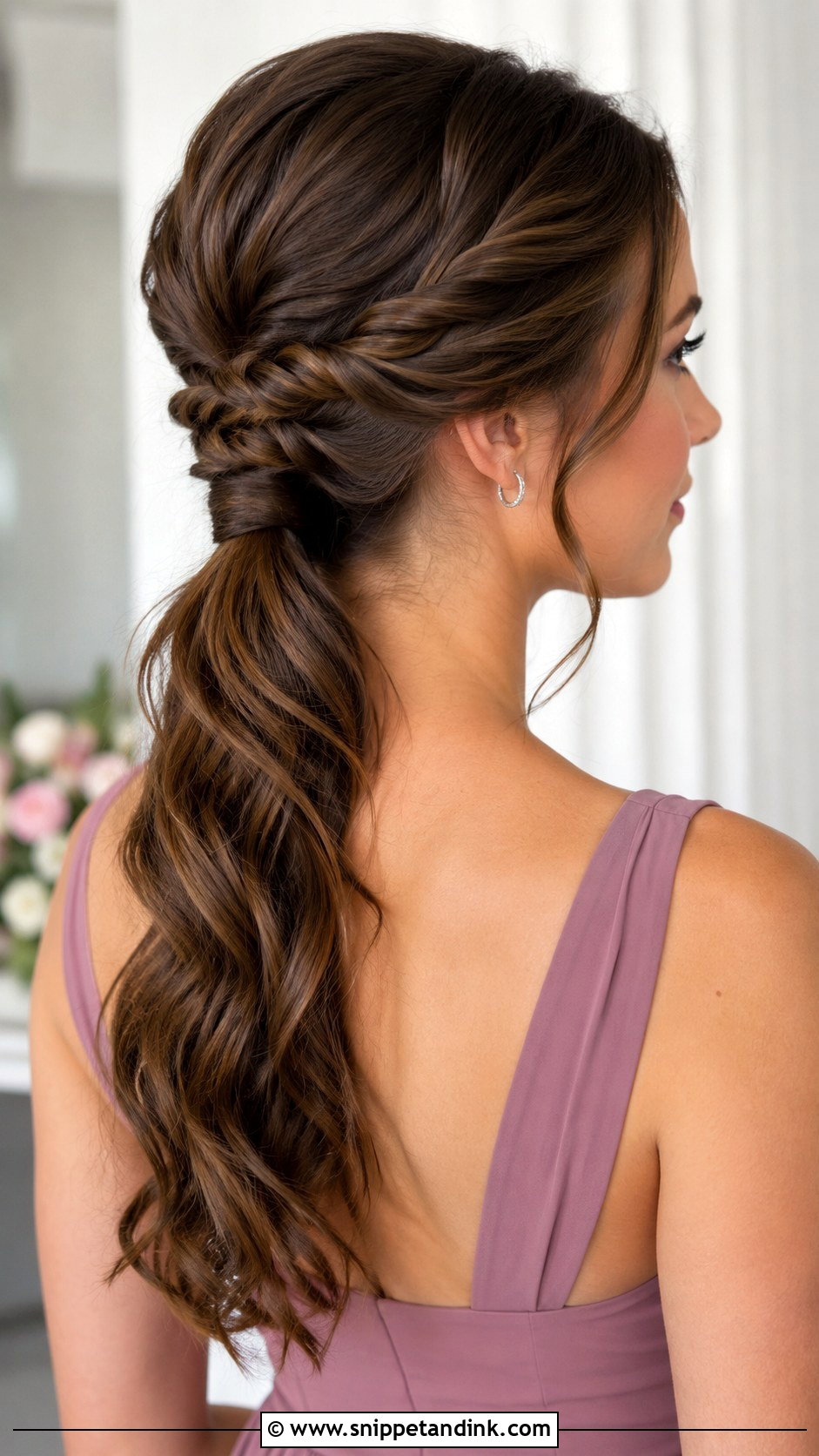
Sections from each side twist back and join the ponytail, adding soft detail at the crown with very little effort. It blends best on medium to long hair, since the twists have enough length to merge into the tail. Bridesmaids who want something romantic without full curls or braids tend to like it. Tight twists look neat and formal; loose ones read softer. I pin each twist into the base before tying the elastic over everything, so the twists can’t slide out.
8. Side Part Bridesmaid Low Ponytail
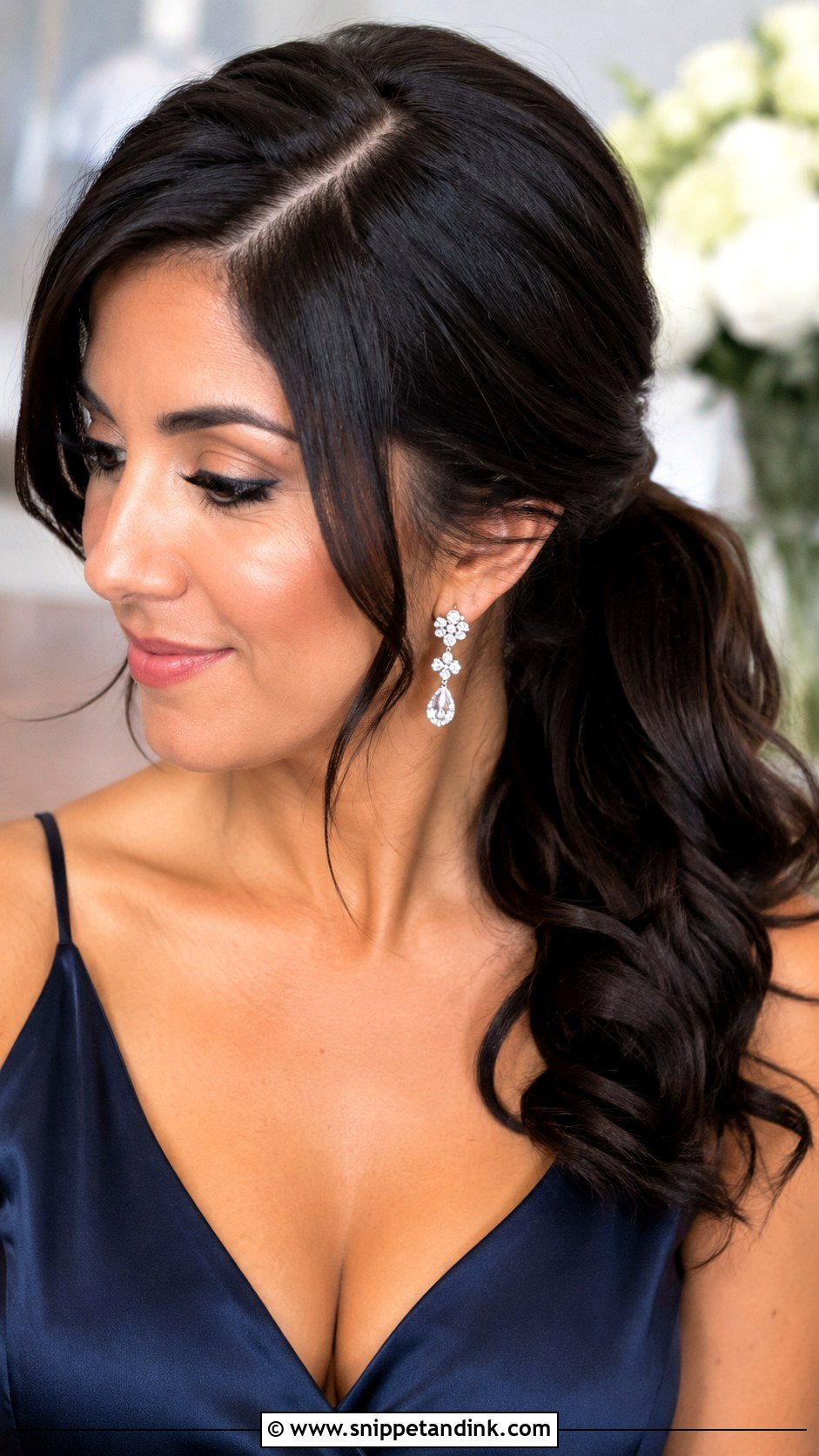
A deep side part adds structure at the front and a touch of glamour. It’s good for anyone who prefers asymmetry or wants to soften a strong neckline. The swept side can lie smooth across the forehead or carry a soft wave. One side of the face stays open, so statement earrings show off well there. My one warning: a heavily swept front tends to slide into the eye by evening, so I pin it discreetly behind the ear on the swept side.
9. Middle Part Bridesmaid Low Ponytail
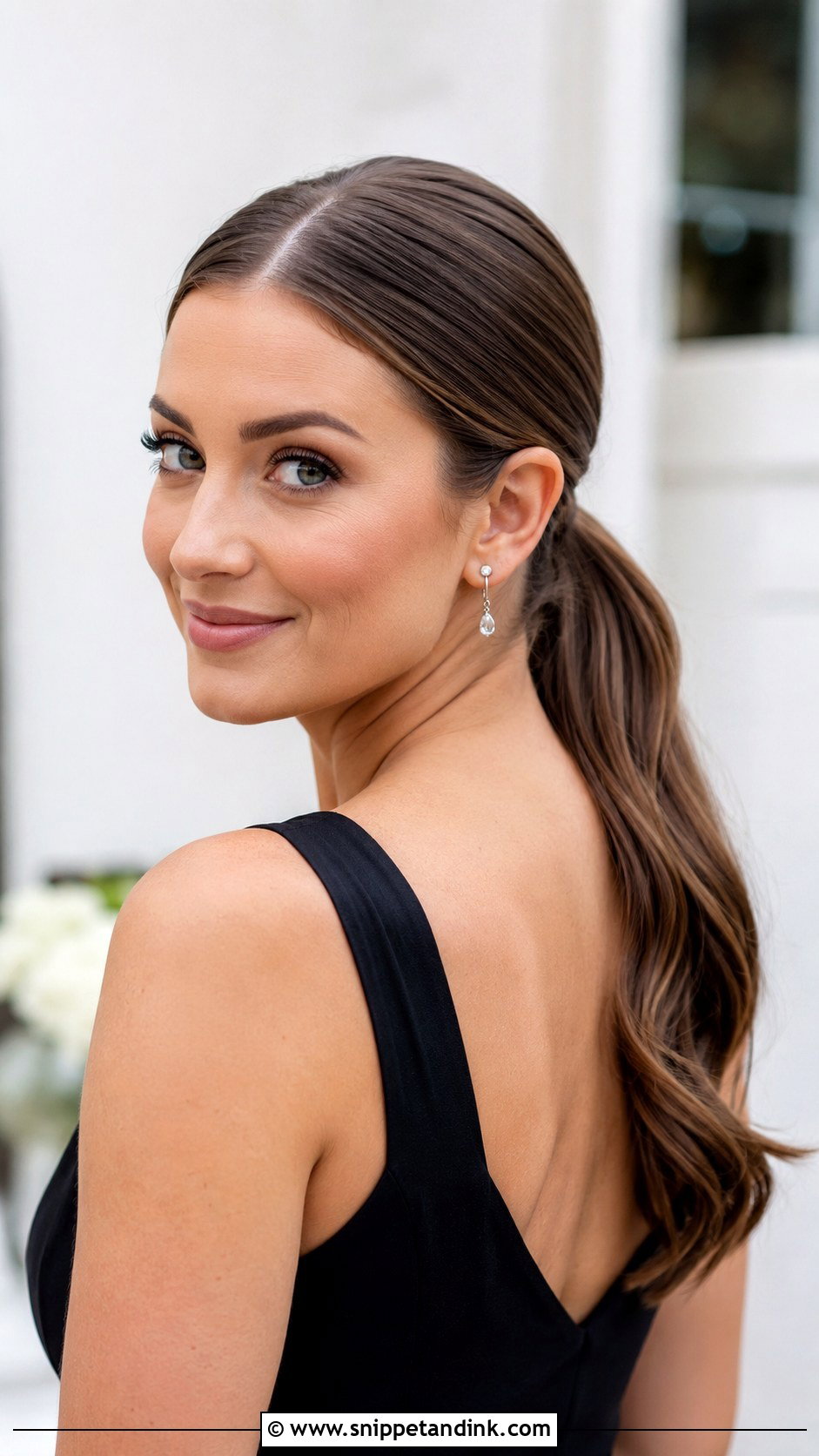
Easy to coordinate across a whole bridal party, because the center part looks the same on every face even when the hair lengths differ. It works sleek or softly waved. Face-framing strands can come out if the group wants a softer front. I use a lightweight smoothing product right along the part. Heavy products sitting on the scalp look greasy in photos within a few hours, especially on fine hair.
10. Voluminous Bridesmaid Low Ponytail
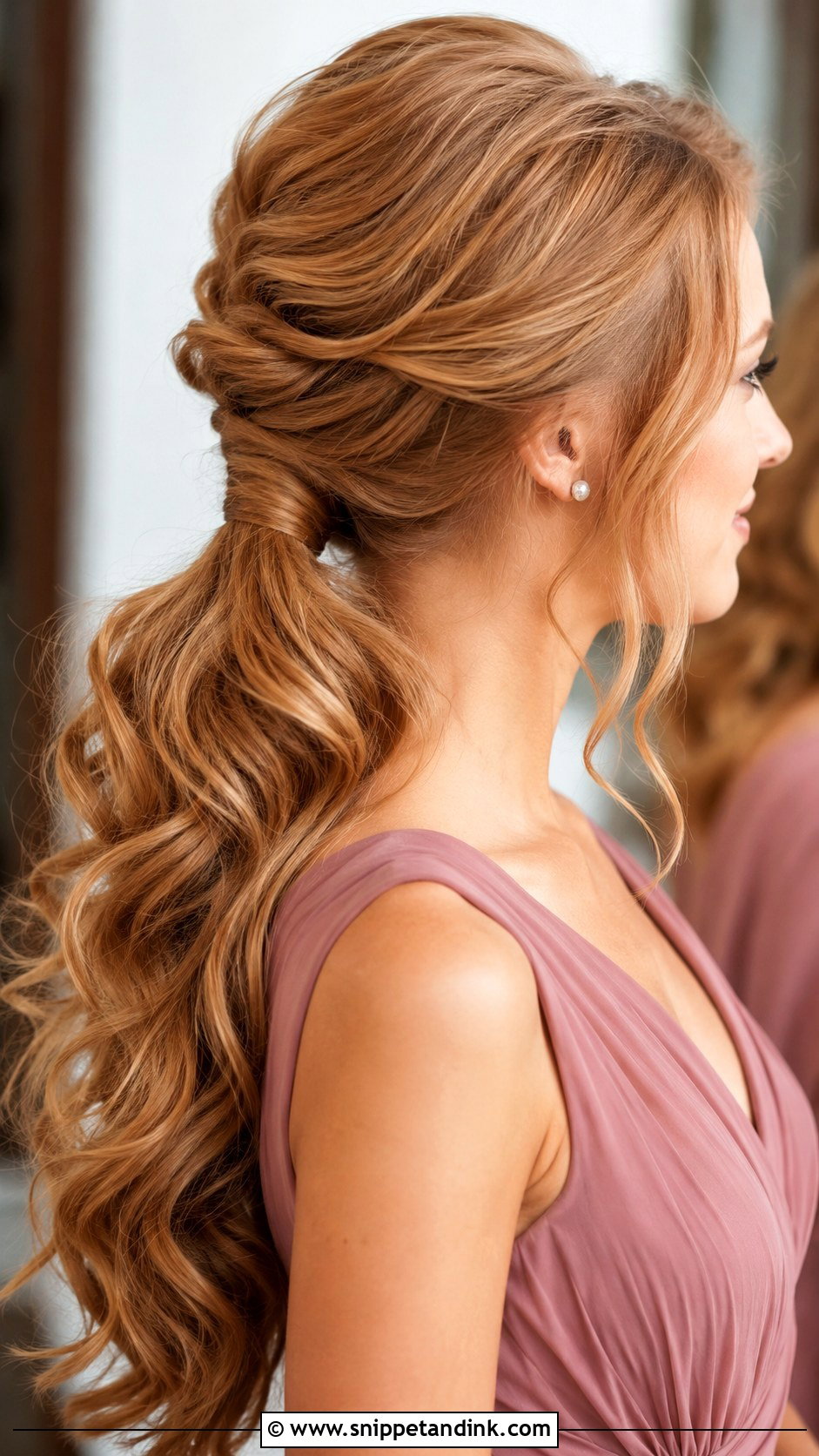
Height at the crown gives presence in photos, especially with simple dresses. For a voluminous bridesmaid low ponytail, I tease lightly or use styling powder at the root, then smooth the top layer over so the lift looks soft rather than teased. The tail can be curled, waved or brushed out. It balances off-shoulder necklines and long gowns in formal rooms. Hidden pins under the crown support the volume so it doesn’t sink over the evening.
11. Loose Bridesmaid Low Ponytail
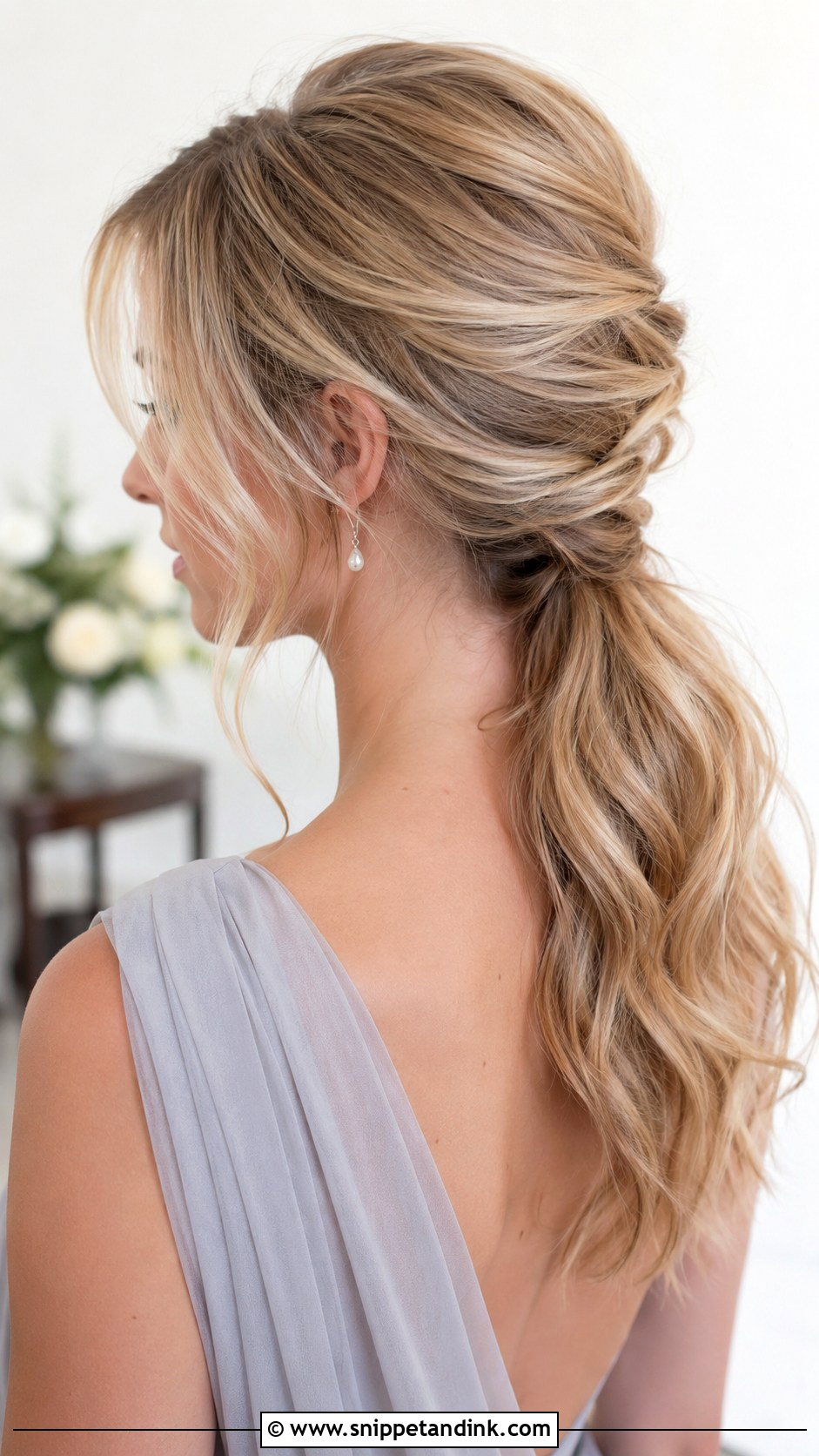
Not pulled tight against the scalp, so the hair sits in a relaxed shape. It pairs with soft curls, wispy front pieces and flowy dresses. Outdoors it’s forgiving: a bit of movement during the day only makes it look more natural. The looseness is on top only. Underneath, the base must be firm, and I add hidden pins and a light texture spray for grip. It suits bridesmaids who want something comfortable that isn’t stiff.
12. Low Ponytail With Face Framing Pieces
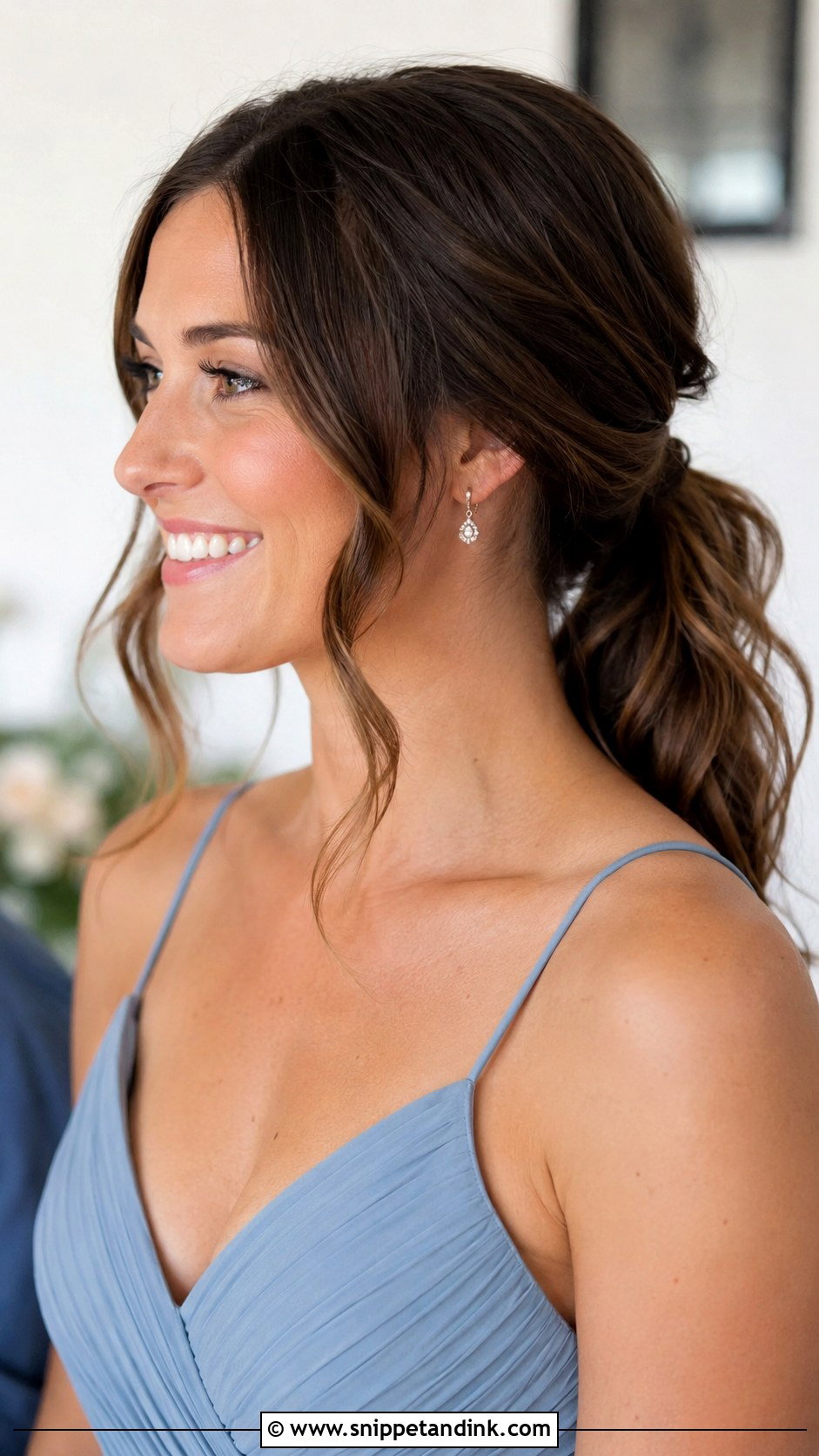
This is the most flattering ponytail on the list for most faces, because the loose pieces move around the cheeks and jaw. They can curl away from the face, wave gently or stay smooth. The ponytail itself can take on whatever finish the wedding needs. For windy ceremonies, keep the pieces fewer and slightly shorter; long loose strands stick to lip gloss. A tiny amount of styling cream stops frizz without making them stiff.
13. Low Ponytail With Hair Wrap
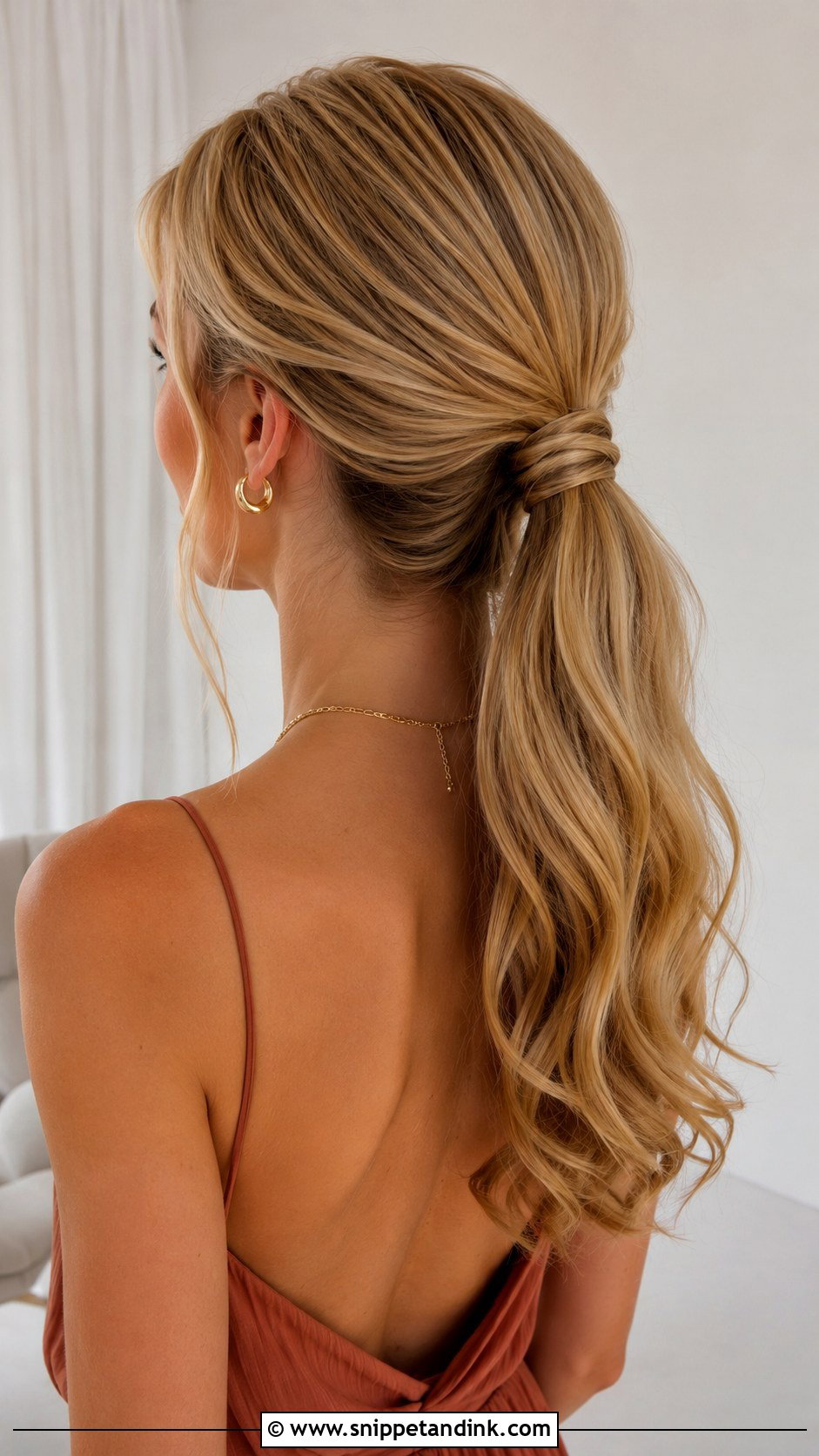
Wrapping a small strand around the base hides the elastic and turns any ponytail formal in seconds. It works on sleek hair, waves, curls and natural texture, and it’s a neat way to keep a group consistent without buying matching accessories. I take the strand from underneath the ponytail, wrap it two or three times, then pin the tail into the elastic with a bobby pin so nothing shows in photos. It suits nearly any dress, from chiffon to modern satin.
14. Floral Bridesmaid Low Ponytail
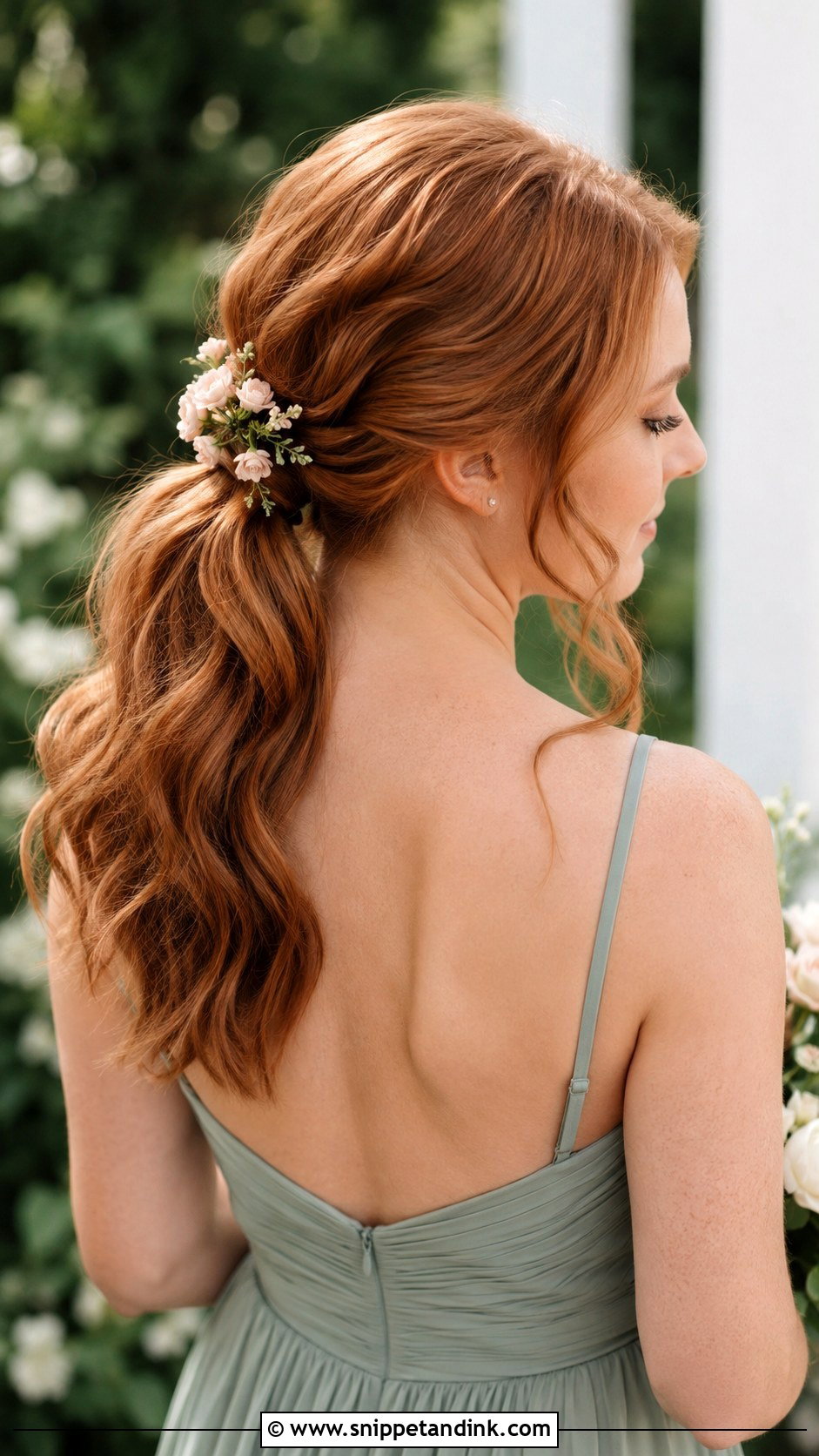
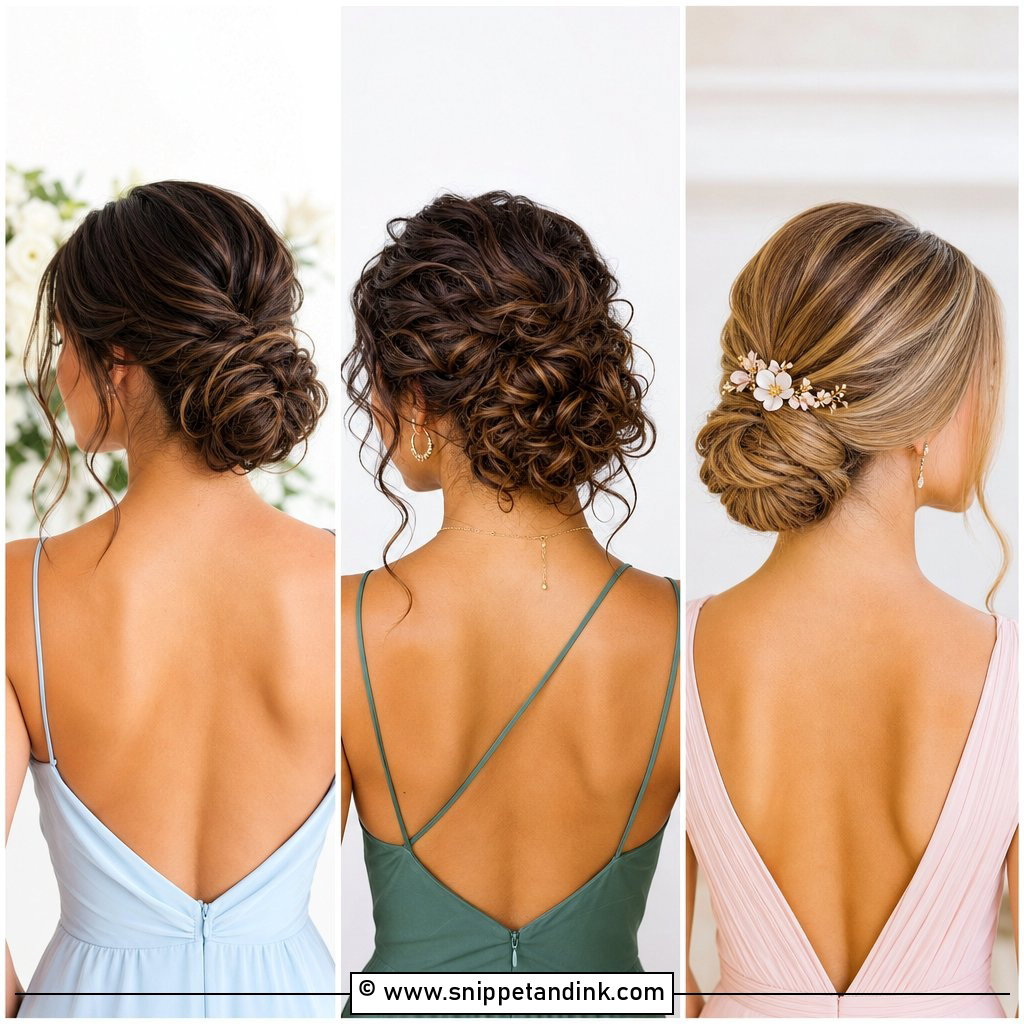
Small fresh or faux flowers can sit at the base, tuck into a twist or be scattered lightly through waves. Matching them to the bouquet connects the party to the floral design. Soft texture holds flowers better than sleek hair, because the stems have something to grip. Avoid heavy blooms that drag or slip. If using fresh flowers, ask the florist for hardy small blooms and greenery on picks, and add them last; delicate petals bruise against the warmth of the head.
15. Ribbon Bridesmaid Low Ponytail
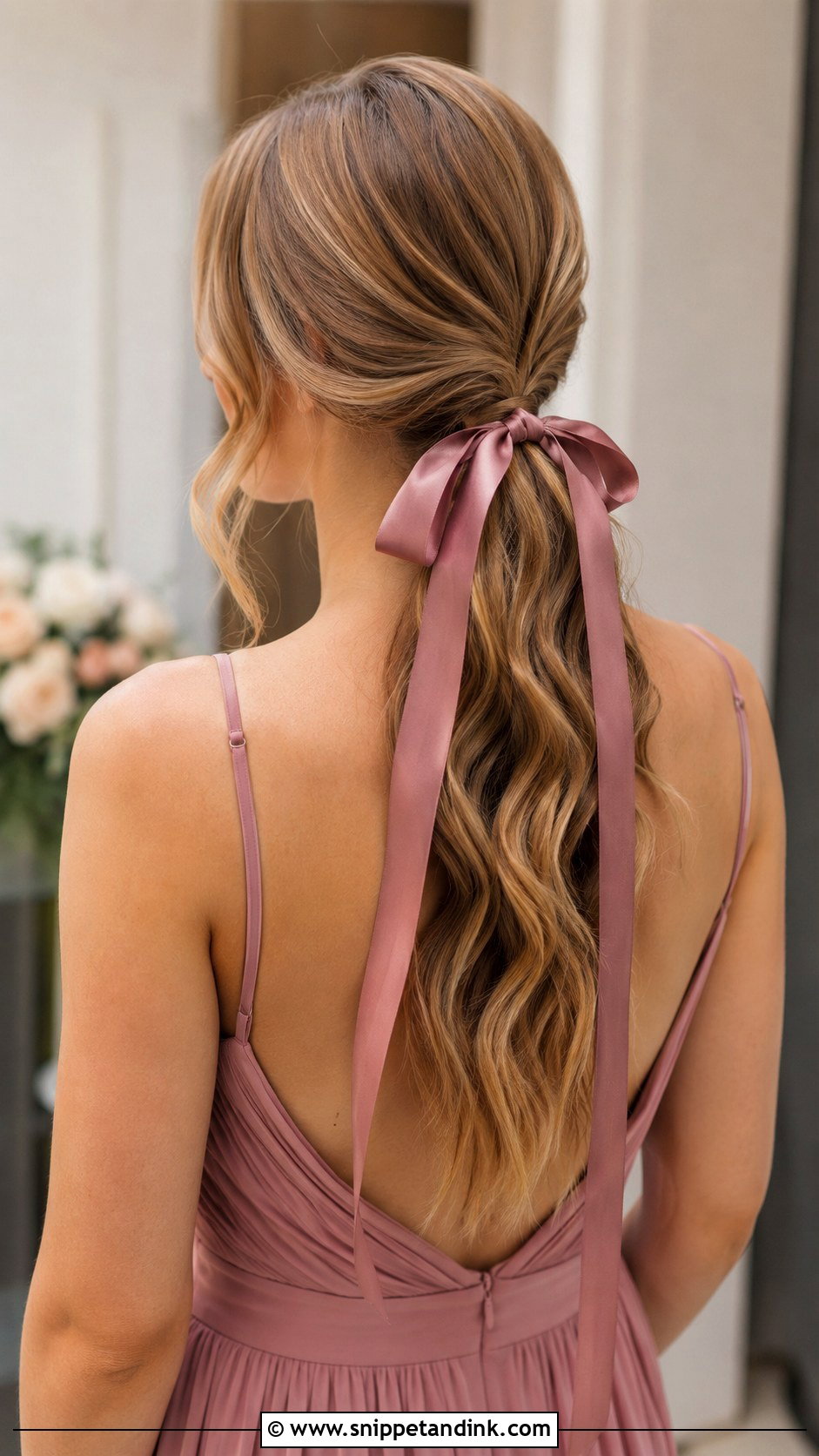
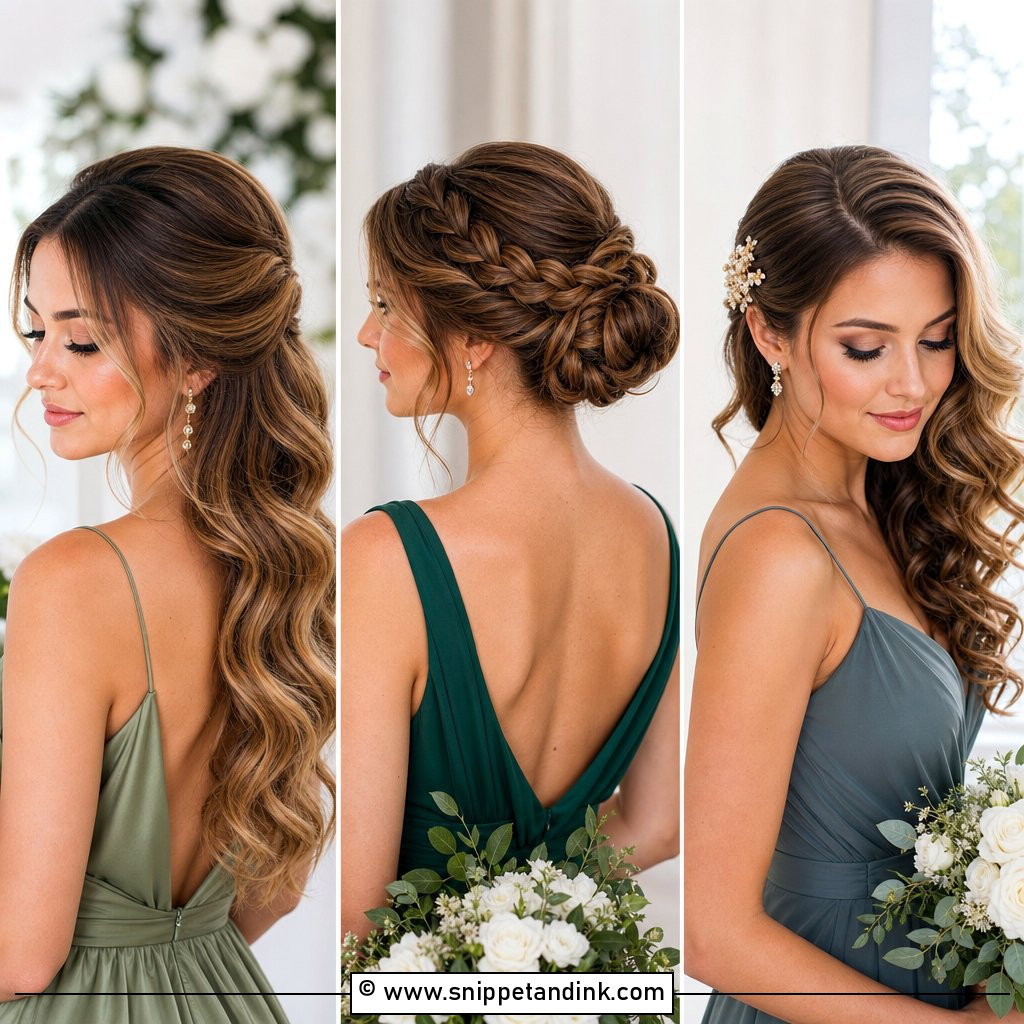
A ribbon is the quickest way to tie a bridal party together without matching hairstyles. Tie it around the base with long tails, or shape it into a soft bow. Velvet suits fall and winter; satin or chiffon suits spring and summer. It’s useful when the bride wants a coordinated bridal party look. Match the ribbon color to the dresses or the accents. I always tie it over a hidden elastic, then pin it underneath; a ribbon on its own loosens within an hour.
16. Hollywood Wave Bridesmaid Low Ponytail
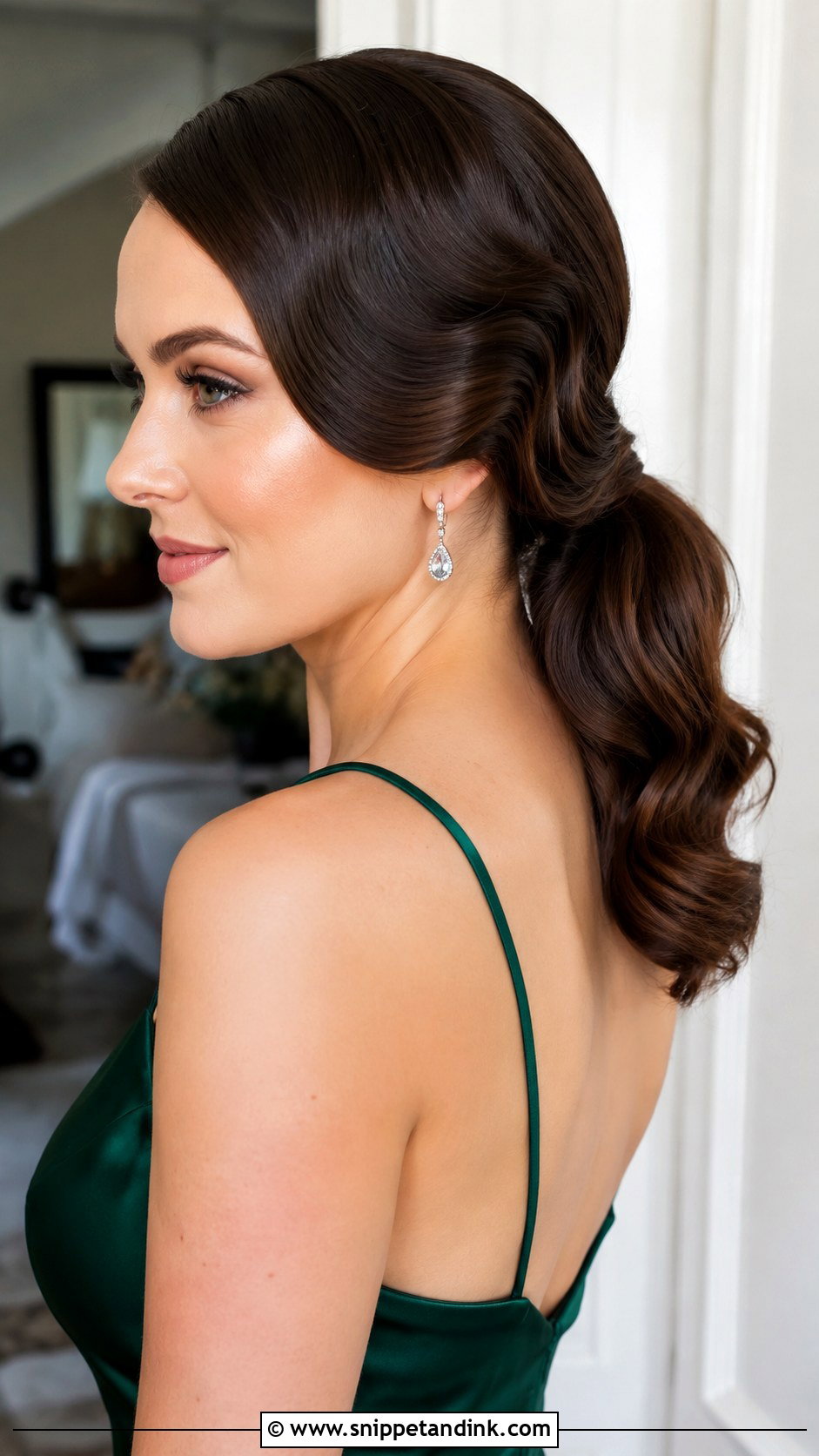
The wave pattern is set first, then gathered low while keeping the S-shape visible down the ponytail. It feels at home with satin, formal venues and evening weddings. A side part leans vintage; a soft middle part reads more current. This style demands shine, so I finish with a light gloss spray from a distance. The hold product needs to be strong but flexible, because a brittle finish cracks the wave pattern apart when the bridesmaid turns her head.
17. Boho Bridesmaid Low Ponytail
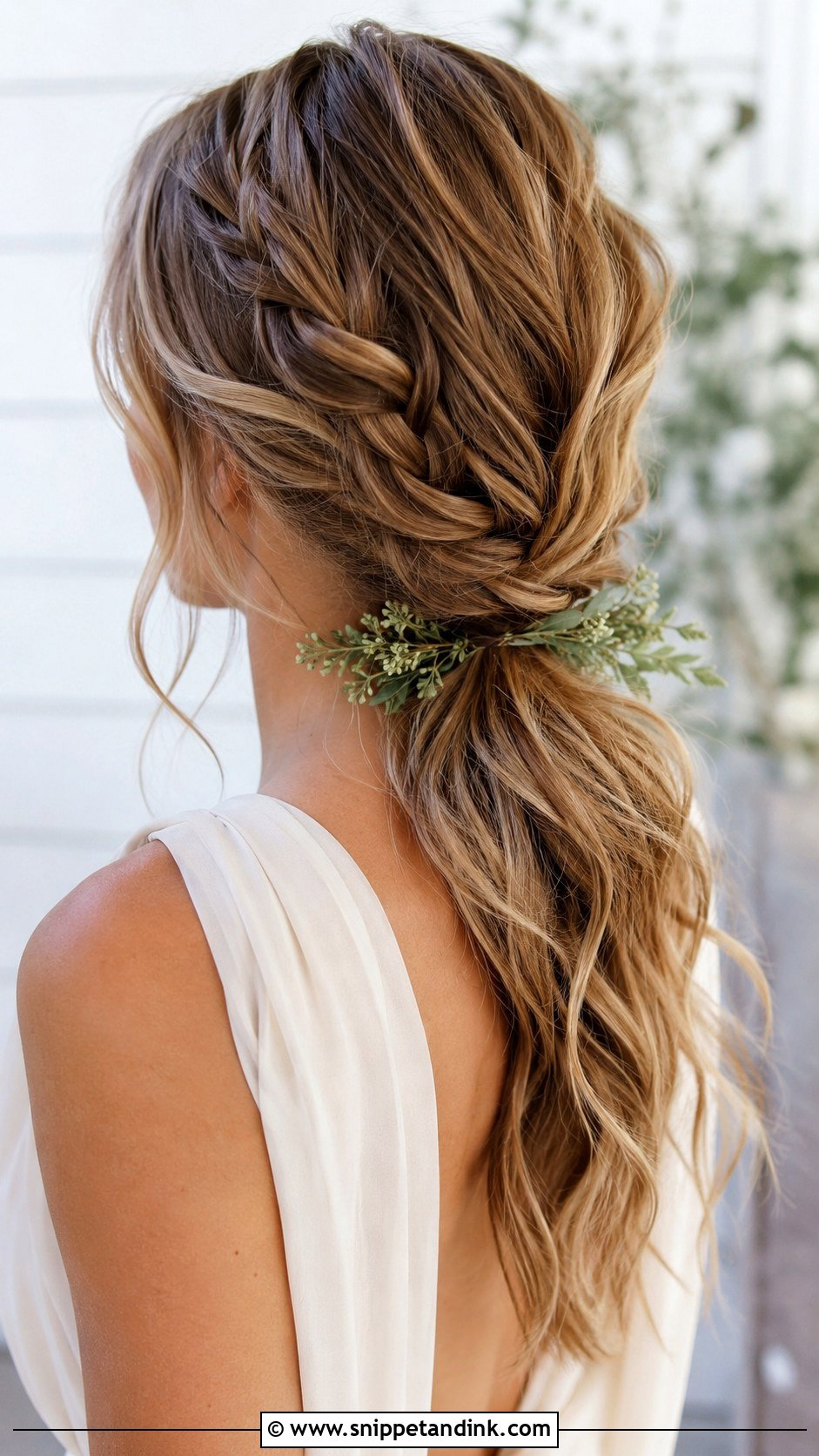
Boho mixes loose waves, small braids, twists or tiny flowers with gentle volume at the crown and an airy tail. It suits outdoor and barn weddings, beach ceremonies, and lace or flowing fabrics. It should look styled but not perfect. Texture spray gives the grip and movement. My test: if the bridesmaid shakes her head and it still holds its shape, the base is right, and the softness on top can be as loose as she likes.
18. Short Hair Bridesmaid Low Ponytail
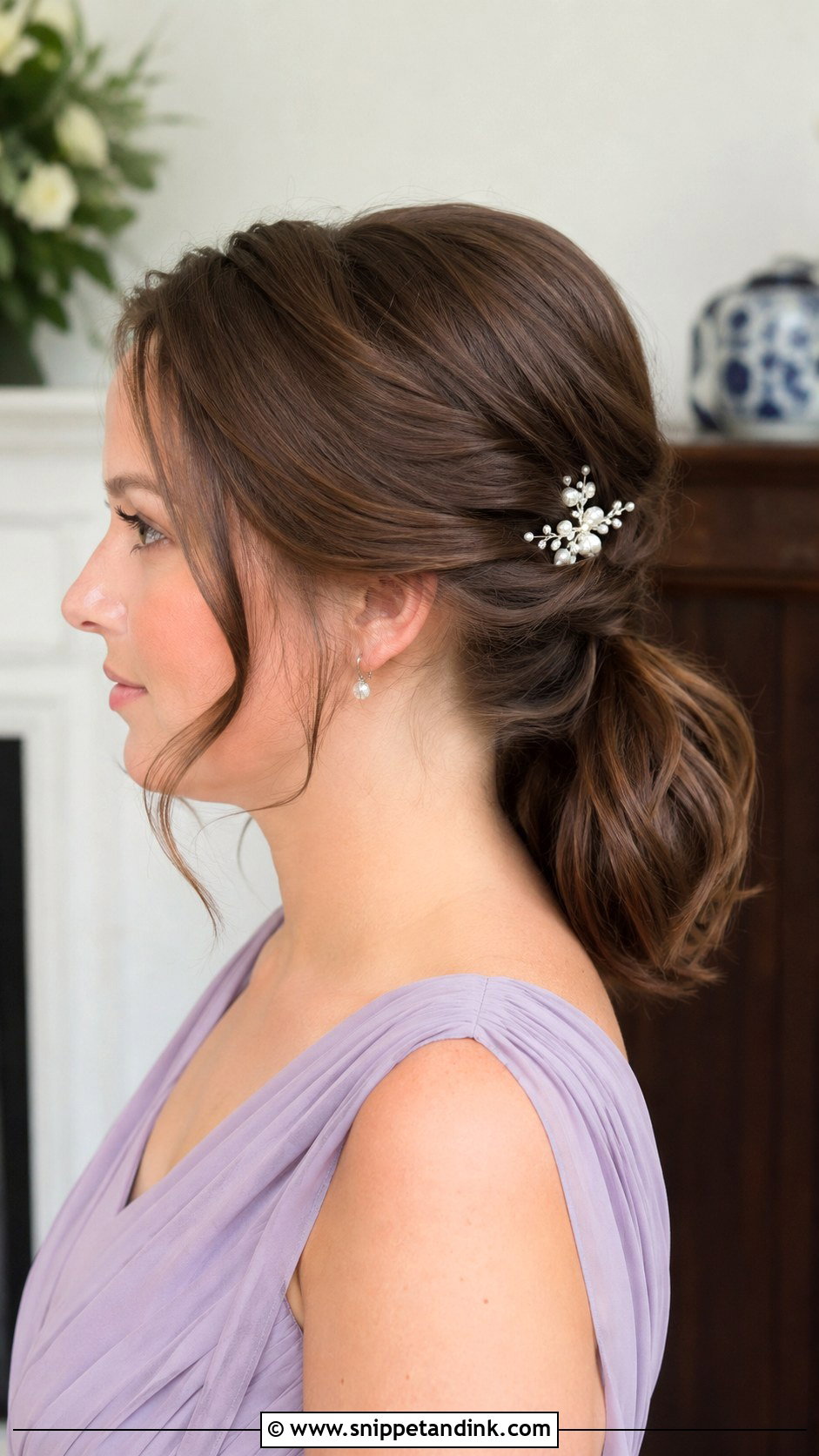
Shoulder-length hair and lobs can wear a low ponytail if the hair reaches the nape. I sit the ponytail close to the neck and tuck the sides, using pins to catch the shorter layers that don’t make it to the elastic. Waves add fullness and grip. A hair wrap, pearl pin or small comb dresses it up. It’s a good option for bridesmaids who don’t want extensions. Curl the ends under or flick them out so the short tail has a shape instead of a stub.
19. Long Hair Bridesmaid Low Ponytail
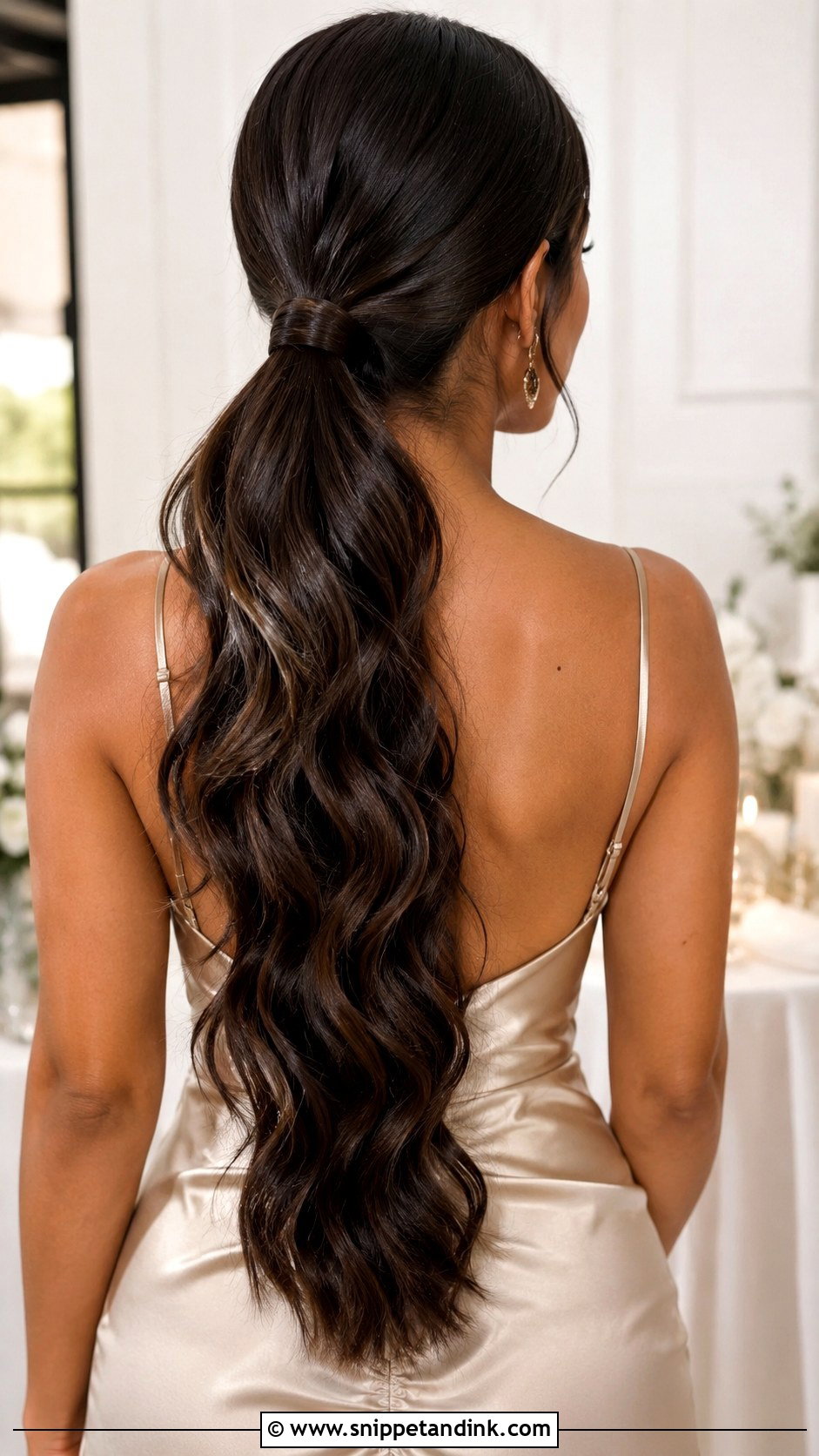
Length gives drama, and every aisle photo is taken from behind. The tail can be curled, bent smooth or left sleek. Weight is the issue with long hair, so I use two elastics, one on top of the other, and pins under the base to stop the ponytail from sliding down the neck over the day. A wrapped base supports it further. Spray shine through the lengths only, not the root, so the hair catches light without looking oily.
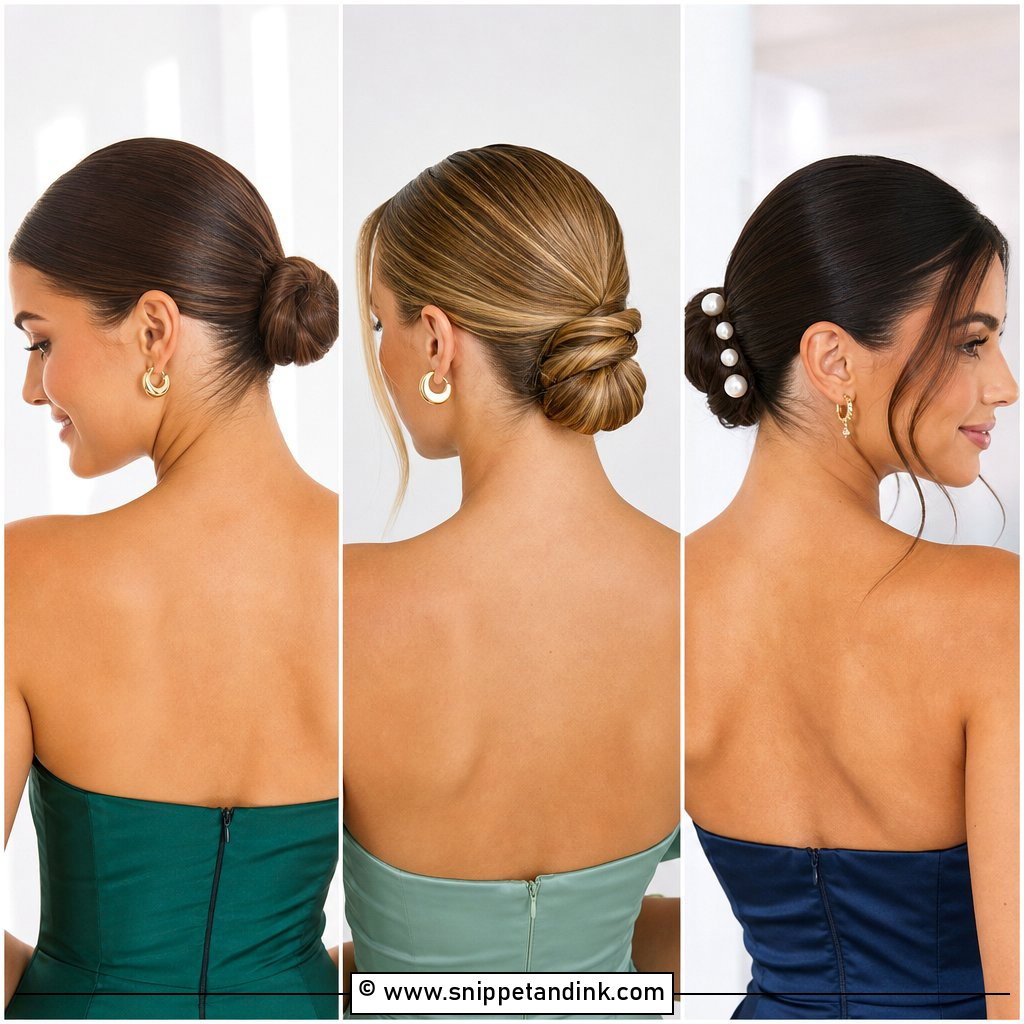
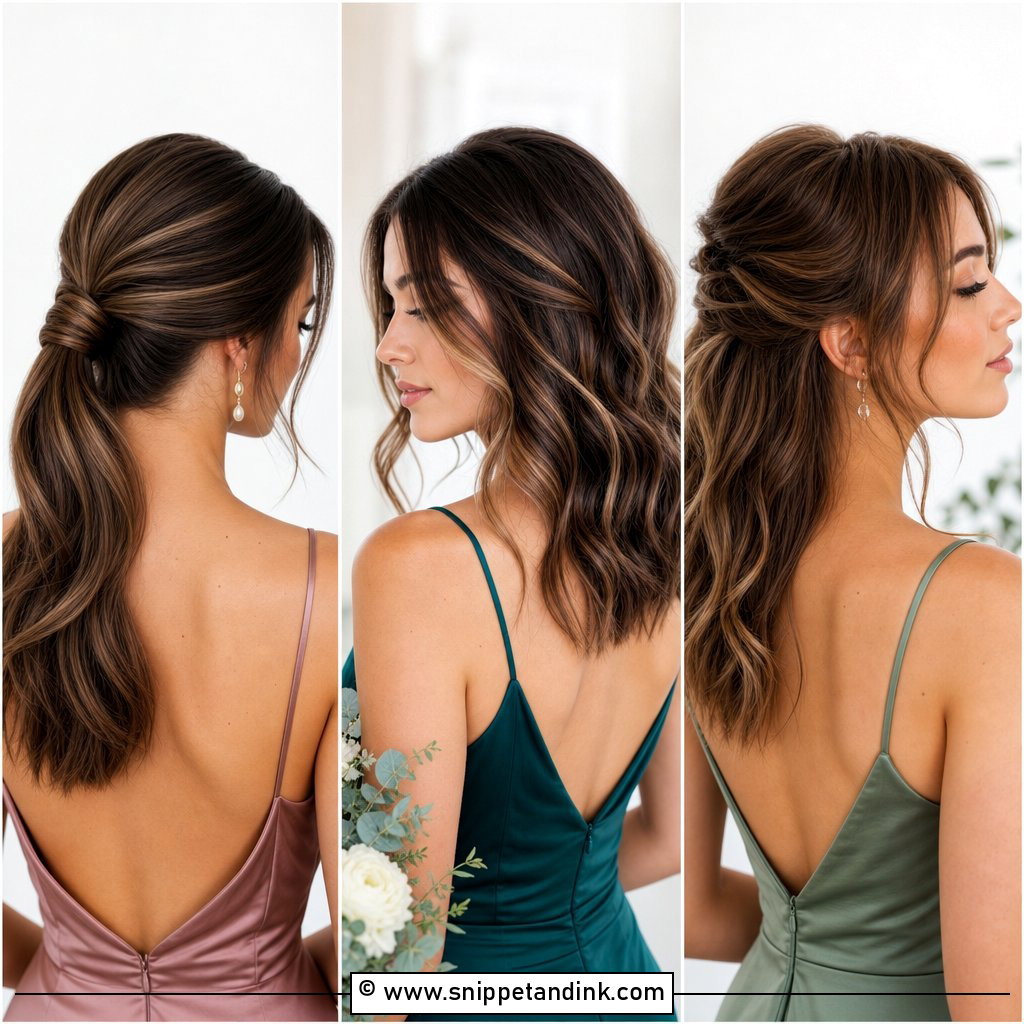
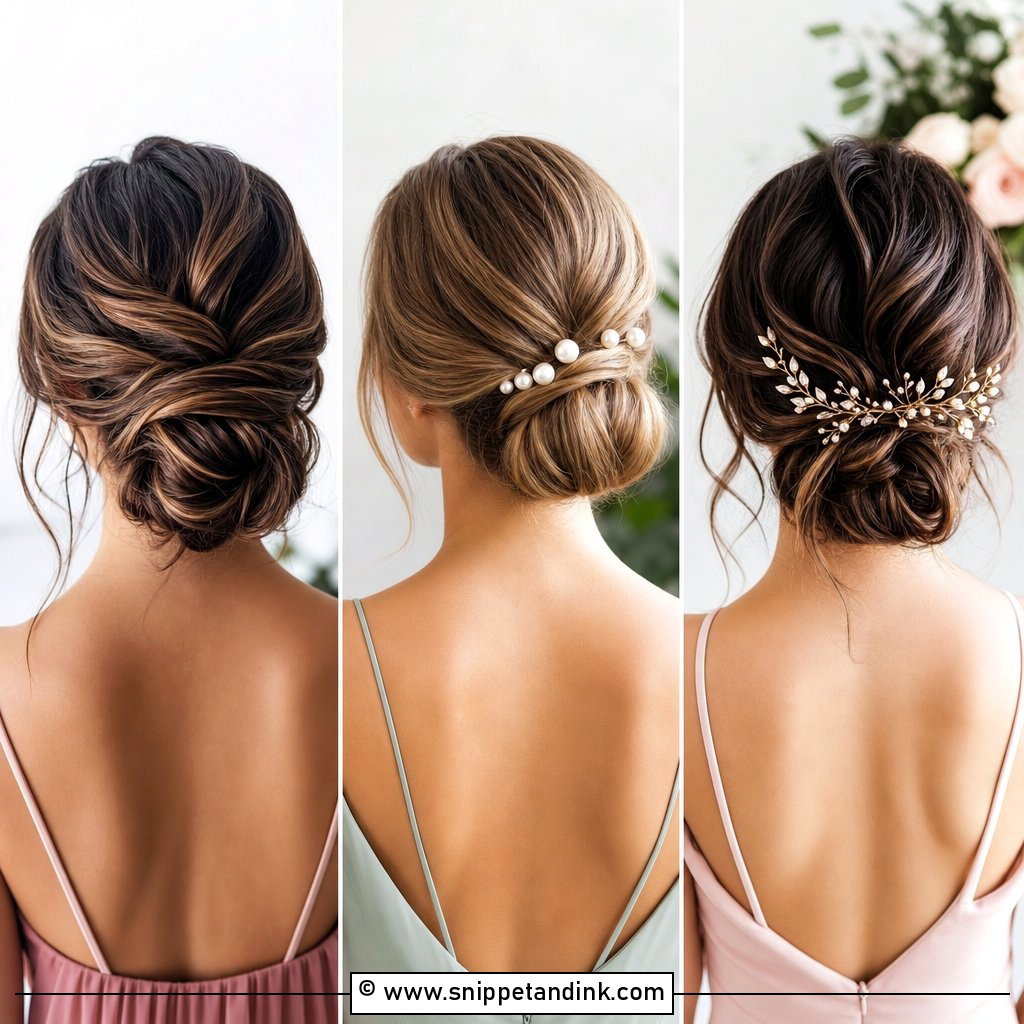
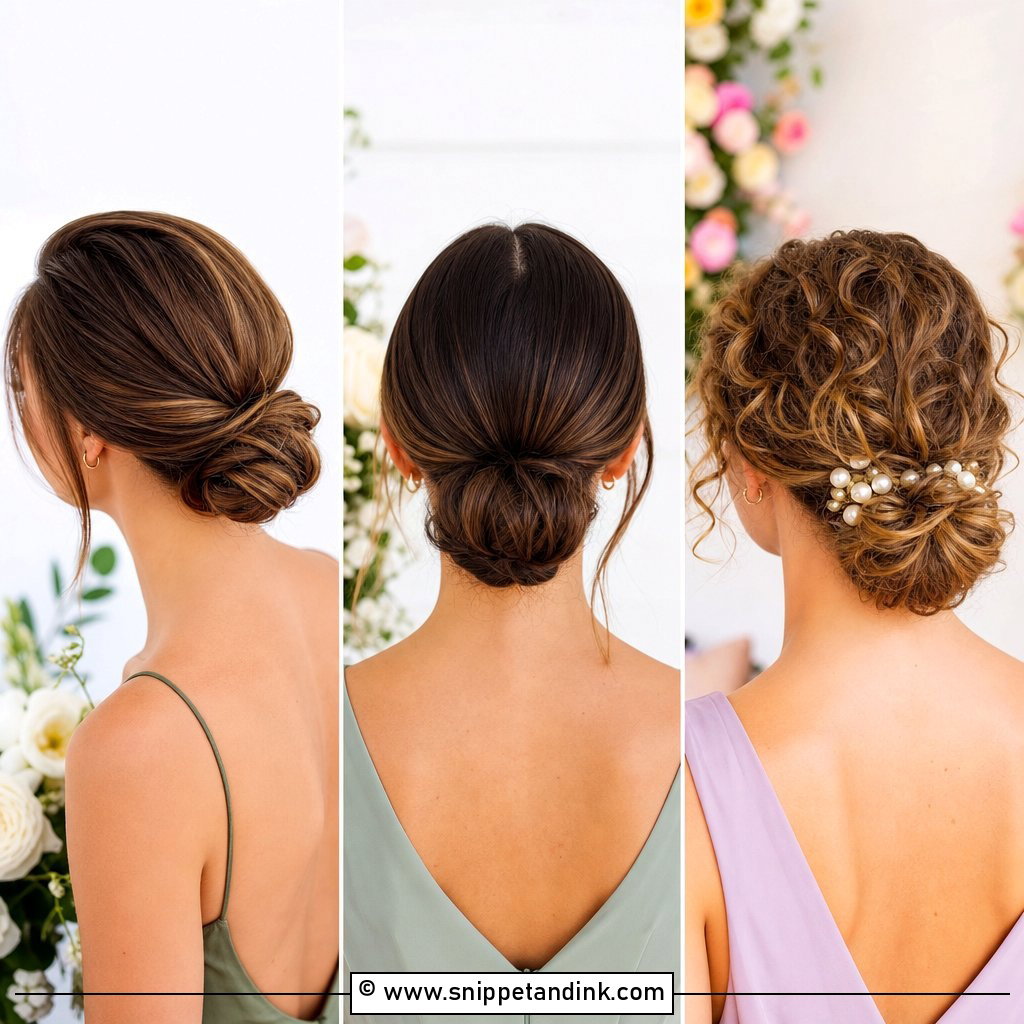
20. Natural Hair Bridesmaid Low Ponytail
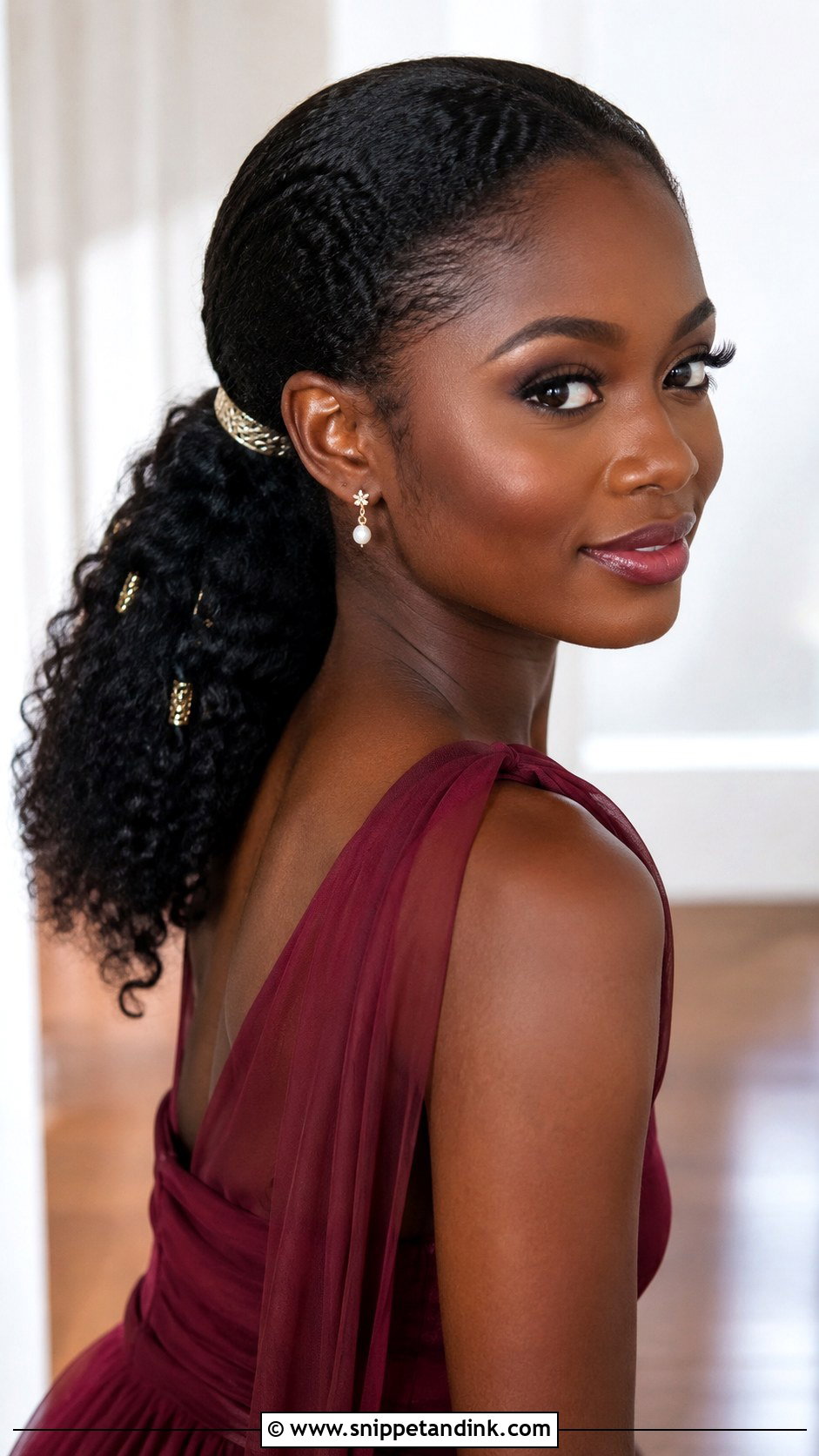
Coils, curls and textured hair can be gathered low with a smooth crown, defined edges or soft volume, depending on what the bridesmaid prefers. The ponytail can be rounded and full, stretched, curled or extended with added length. Moisture and hold both matter; I prep with a leave-in and a cream before styling, and avoid pulling the edges tight, since tension at the hairline is uncomfortable over a long day. Pearl pins, gold cuffs or small flowers suit it, and the result should feel secure and true to her natural texture.
Thin Ponytail? A Clip-On Piece Is Easier Than You Think
A low ponytail shows the full thickness of the hair, and fine hair can look narrow from behind. A wrap-around ponytail piece or a few clip-in wefts fix that quickly, and they’re one of the most useful things a bridesmaid can bring to her trial.
Matching the color
Match the piece to the ends of the hair, not the roots, and check it in daylight. If the hair is highlighted, a piece with blended tones looks more natural than a single solid shade.
Securing it
I tie the natural ponytail first, clip the piece in around the base and then wrap a strand of natural hair over both. Synthetic pieces can’t be curled at high heat, so if the bridesmaid wants waves, a human hair piece is the safer choice.
When to skip it
Very short hair that barely reaches the nape can struggle to hold the weight of a long piece. In that case, a smaller, shorter piece or a low bun is the better plan.
Twenty Ponytails, One Rule About the Base
Low ponytails cover a lot of wedding-day needs at once. They’re elegant, practical and easy to adapt to different hair types, dresses and themes. Sleek reads modern and formal; wavy or floral reads romantic. Braids, pearls, ribbons, twists and face-framing pieces let each bridesmaid look like herself while the group stays in harmony. Let the venue, weather, neckline, hair texture and comfort decide the version. Whatever the finish, get the base firm and smooth, and the rest of the style will hold from the first photo to the last dance.
You'll Like These Ideas:


Leave a Reply