
Bridesmaid high ponytails are one of the styles I get asked for most, and I understand why. Hair stays off the neck through a hot ceremony, earrings finally get seen, and nobody spends the reception pushing curls out of her lipstick. What changes from one ponytail to the next is the crown, the texture of the length and how the base is hidden. Below are twenty-five versions I’d happily put on a wedding party, with notes on who each one suits, what tends to go wrong and how I build it so it lasts.
Where on the Crown Your Ponytail Should Sit
Before I pick a texture, I decide the height. The quick test I use: imagine a line running from the jaw, past the cheekbone and up the back of the head. A ponytail placed along that line lifts the face; one set much higher than that looks dramatic and starts to pull, and one set lower drifts toward a mid ponytail.
Height also depends on the hair. A sleek ponytail on fine hair can sit right at the top of the crown with no discomfort. Thick, long or braided hair carries more weight, so I usually bring it down slightly, because the higher the ponytail sits, the more leverage it has on the scalp.
The base I build under every version
- A coated elastic, never a bare rubber band, which snaps and snags when it comes out.
- Two bobby pins pushed through the elastic in an X so the ponytail can’t slip down.
- A strand wrapped around the base and pinned into the band, not just into hair.
- A light hold spray on the crown before I brush up, so the surface lies flat.
If a bridesmaid tells me ponytails always give her a headache, I believe her. That usually means we drop the height an inch and use a softer elastic, rather than fighting it all day.
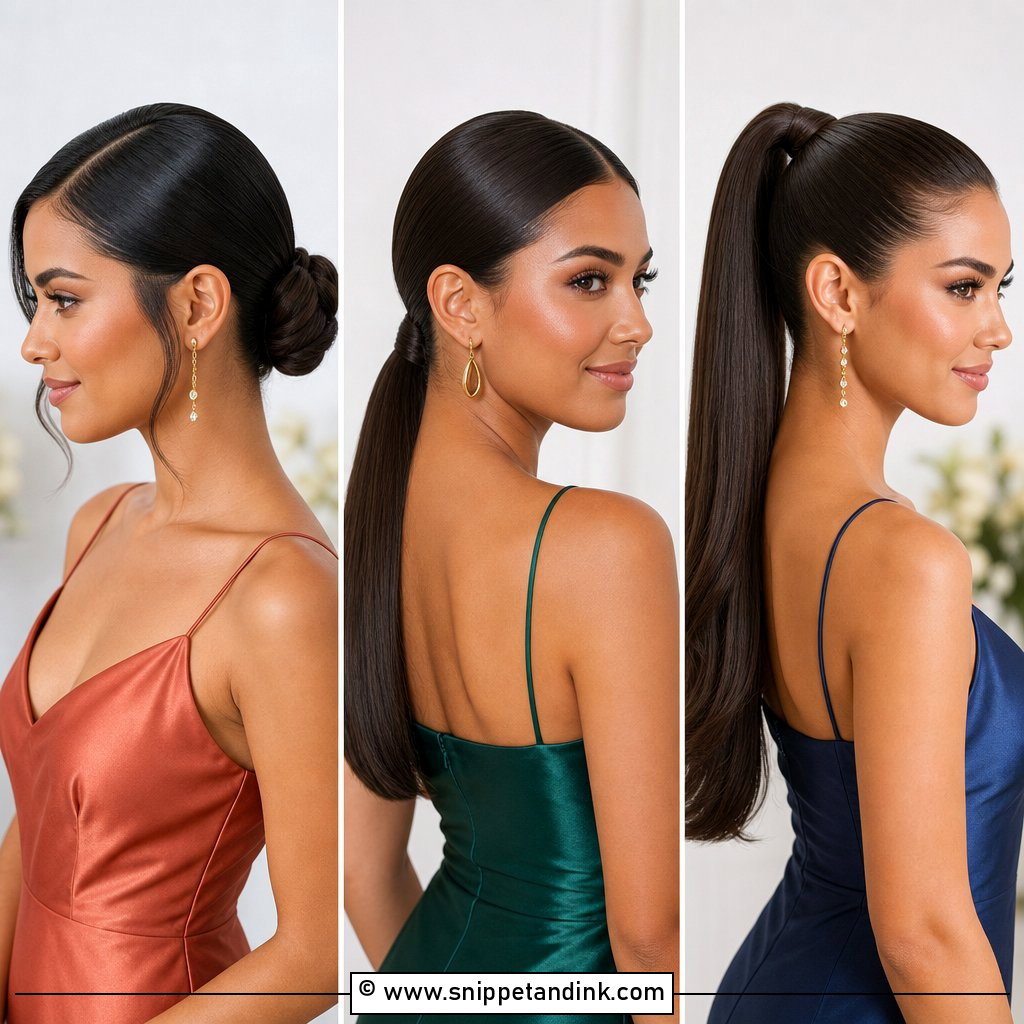
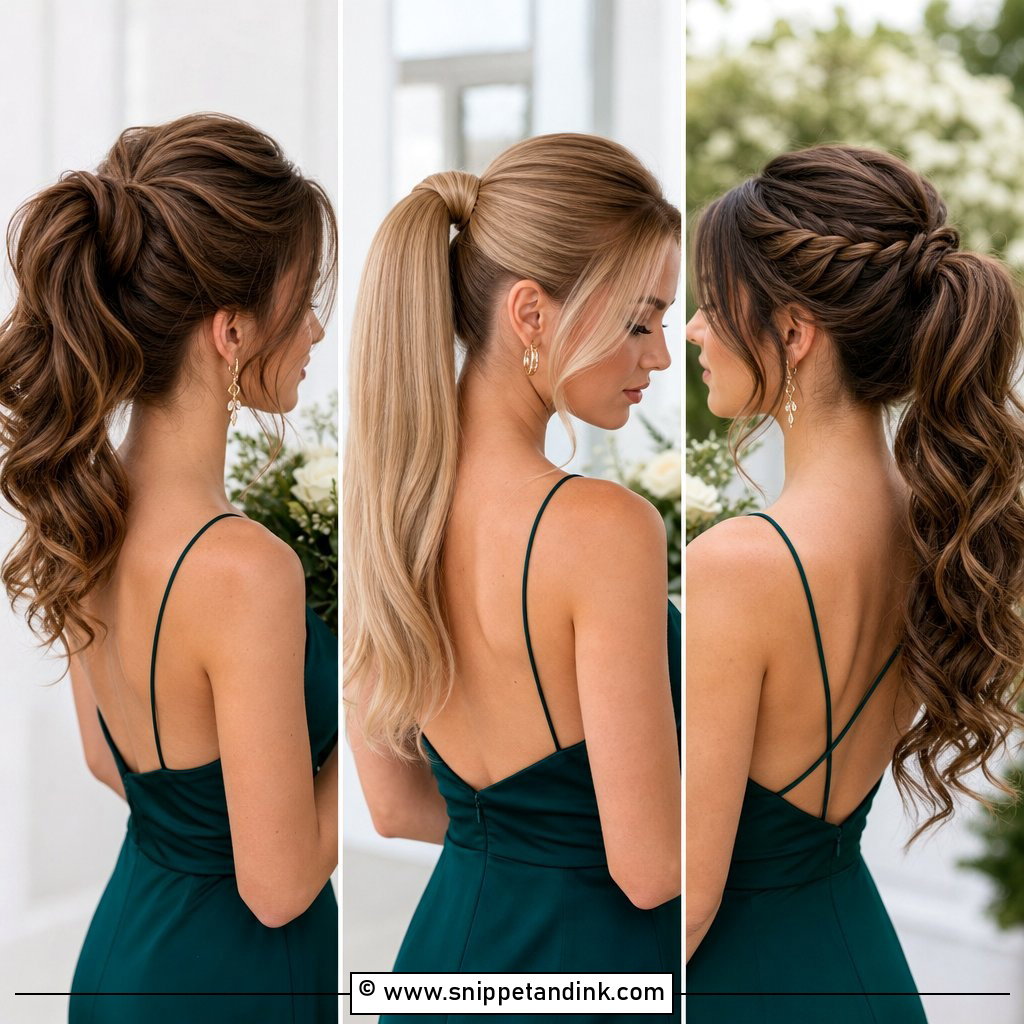
1. Sleek Bridesmaid High Ponytail
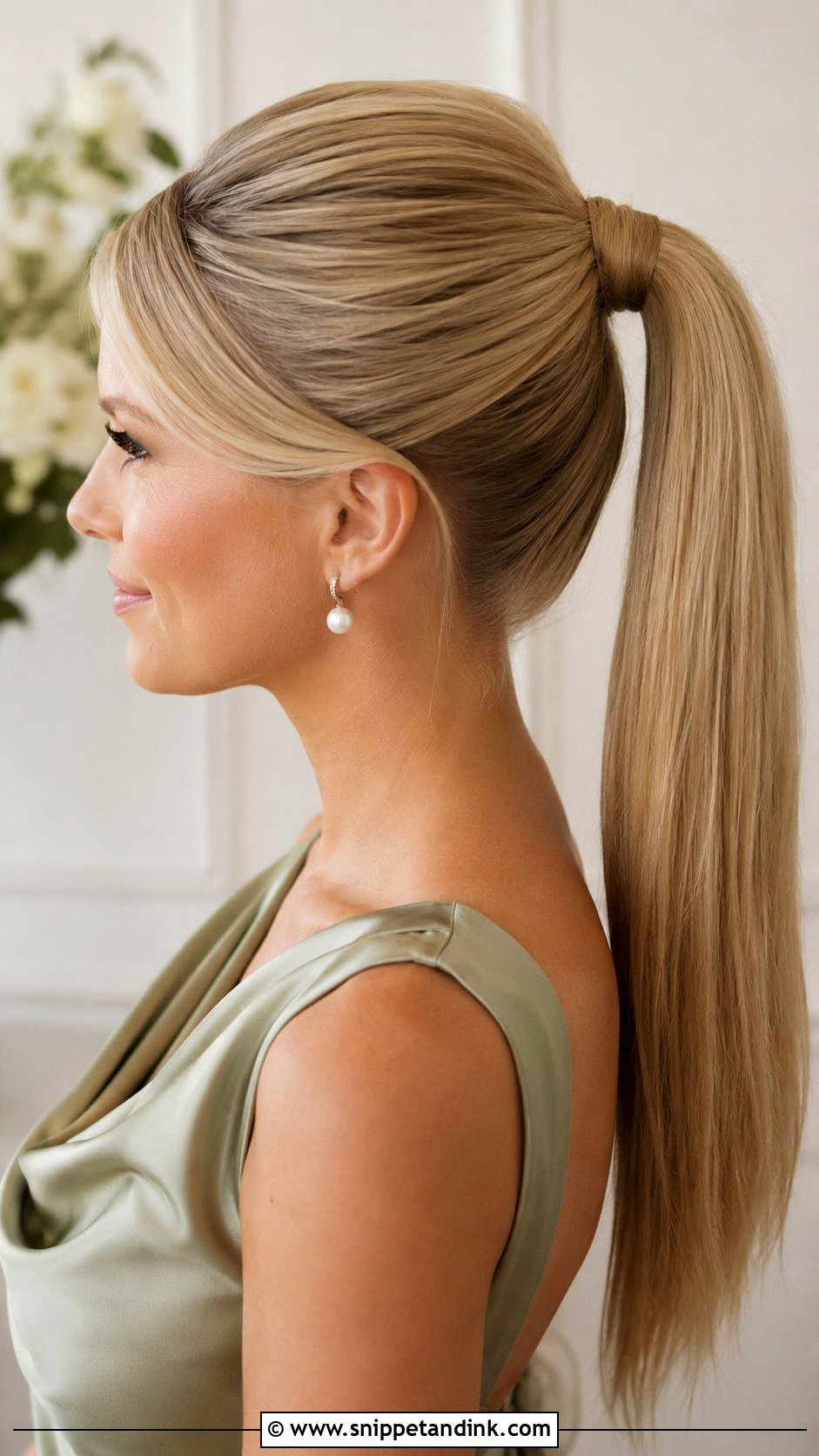
The sleek version lives or dies on prep. I blow-dry the whole head smooth first, because a ponytail brushed up over natural kinks shows every ripple under flash. Then I brush the hair up with a boar bristle brush and a small amount of strong gel, secure it at the crown, and wrap a strand around the base to hide the elastic. It reads very clean with one-shoulder dresses and high necks. If a bridesmaid has a cowlick at the nape, I warn her it will fight upward brushing all day, so we either set it with gel and a wax stick or drop the ponytail an inch.
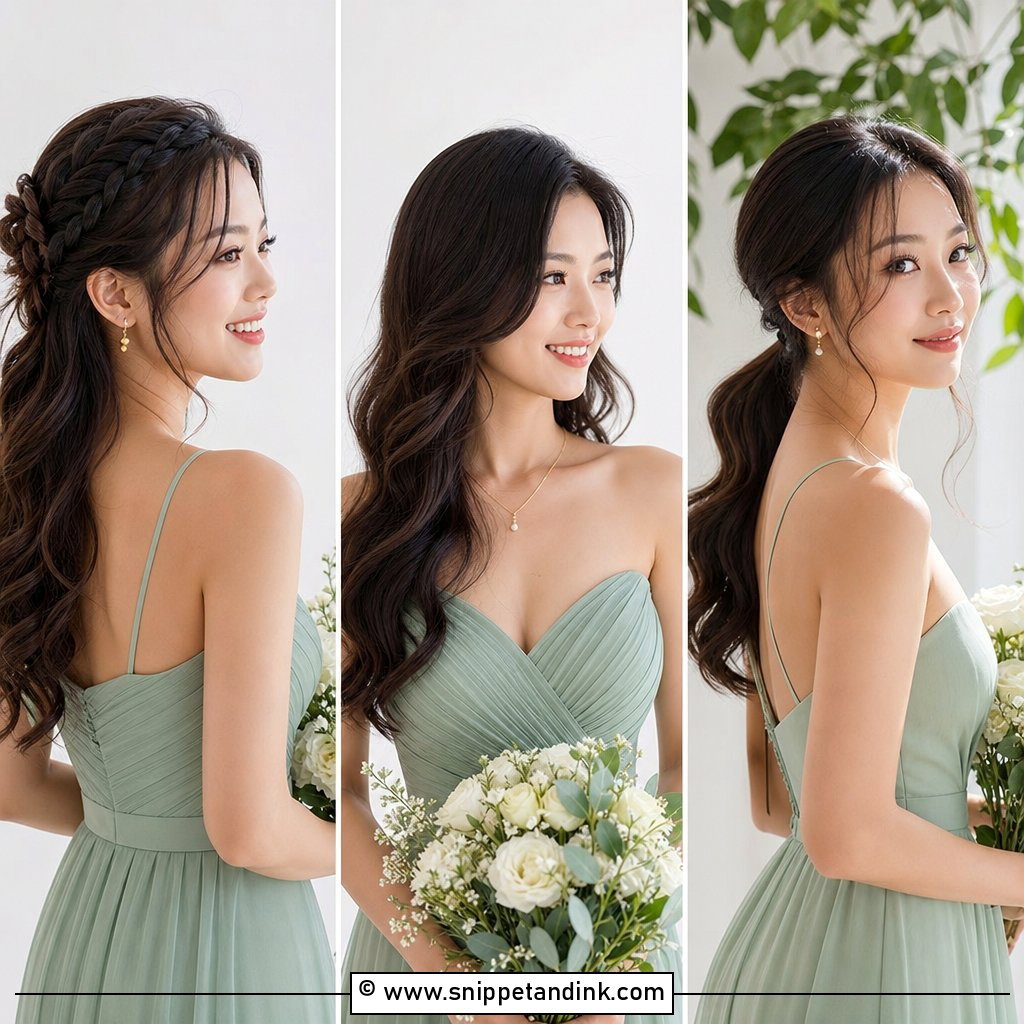
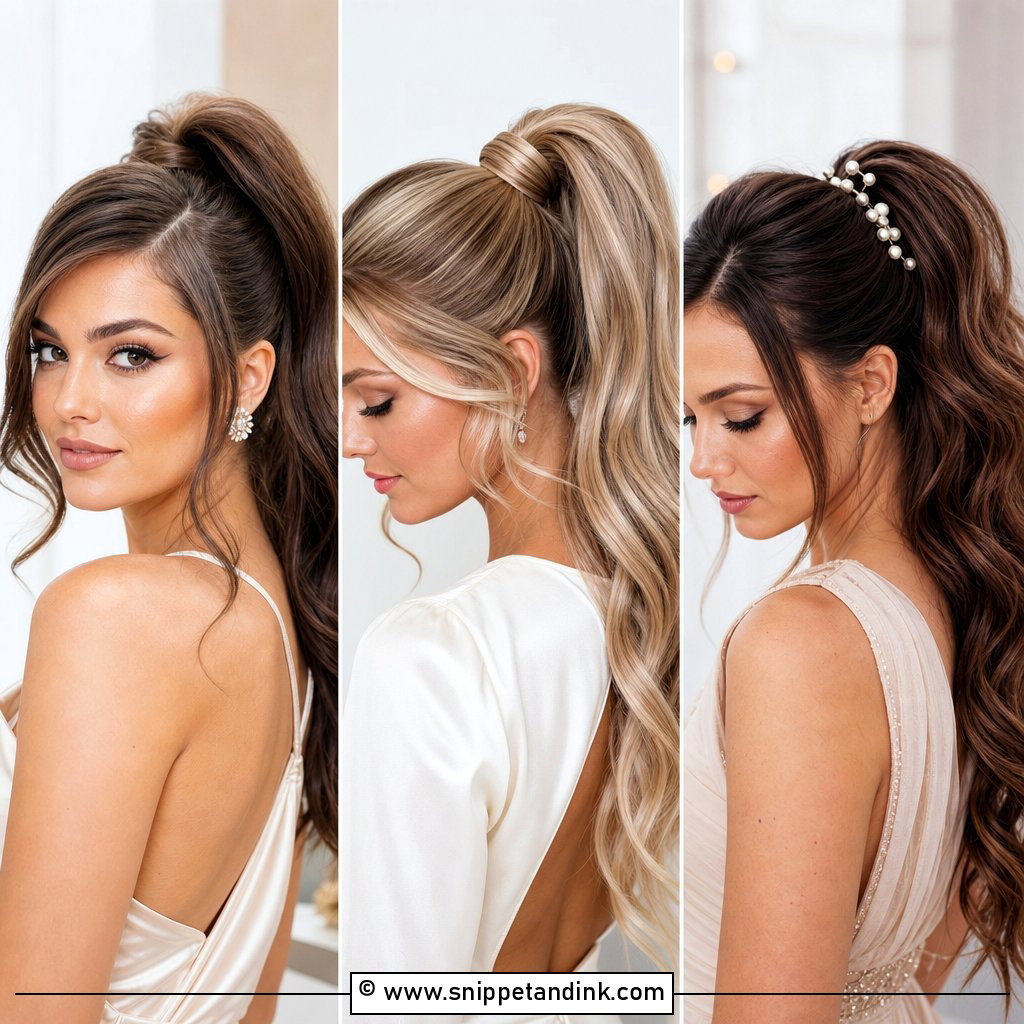
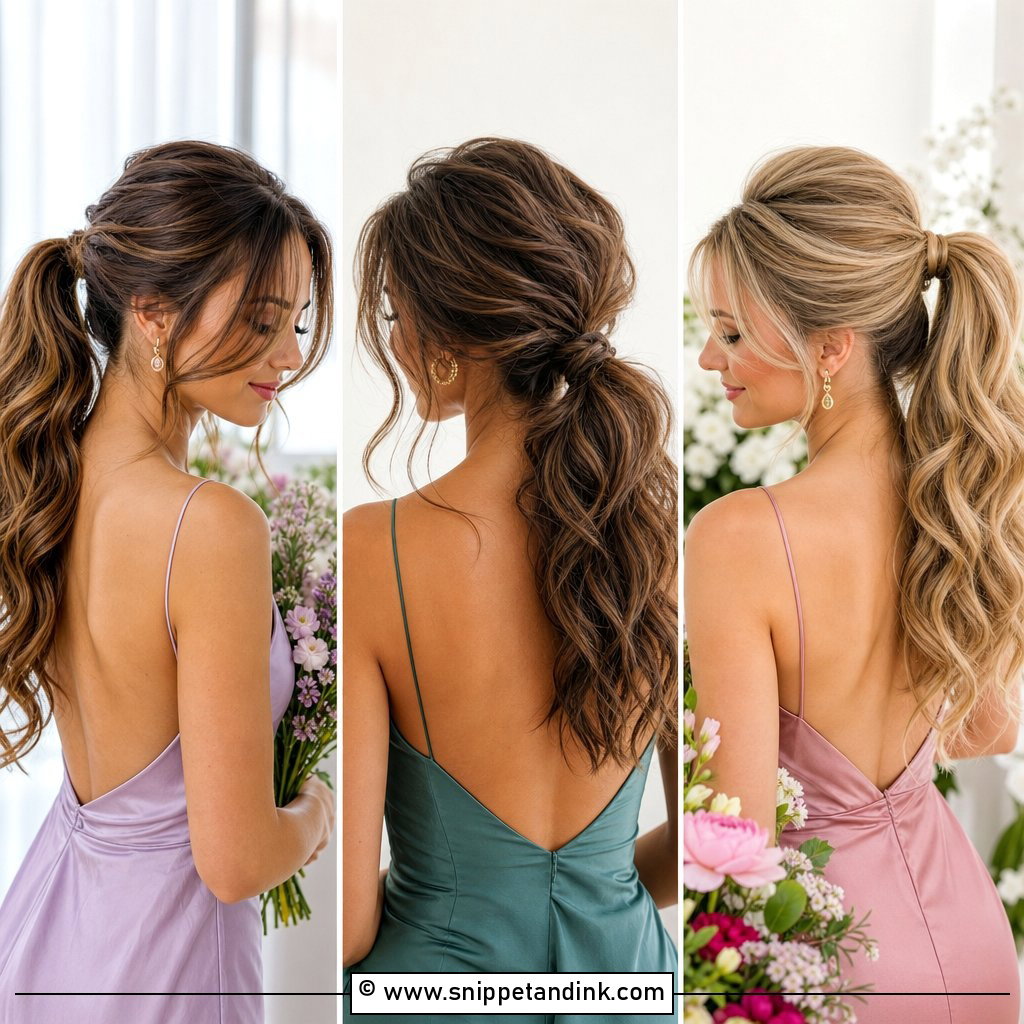
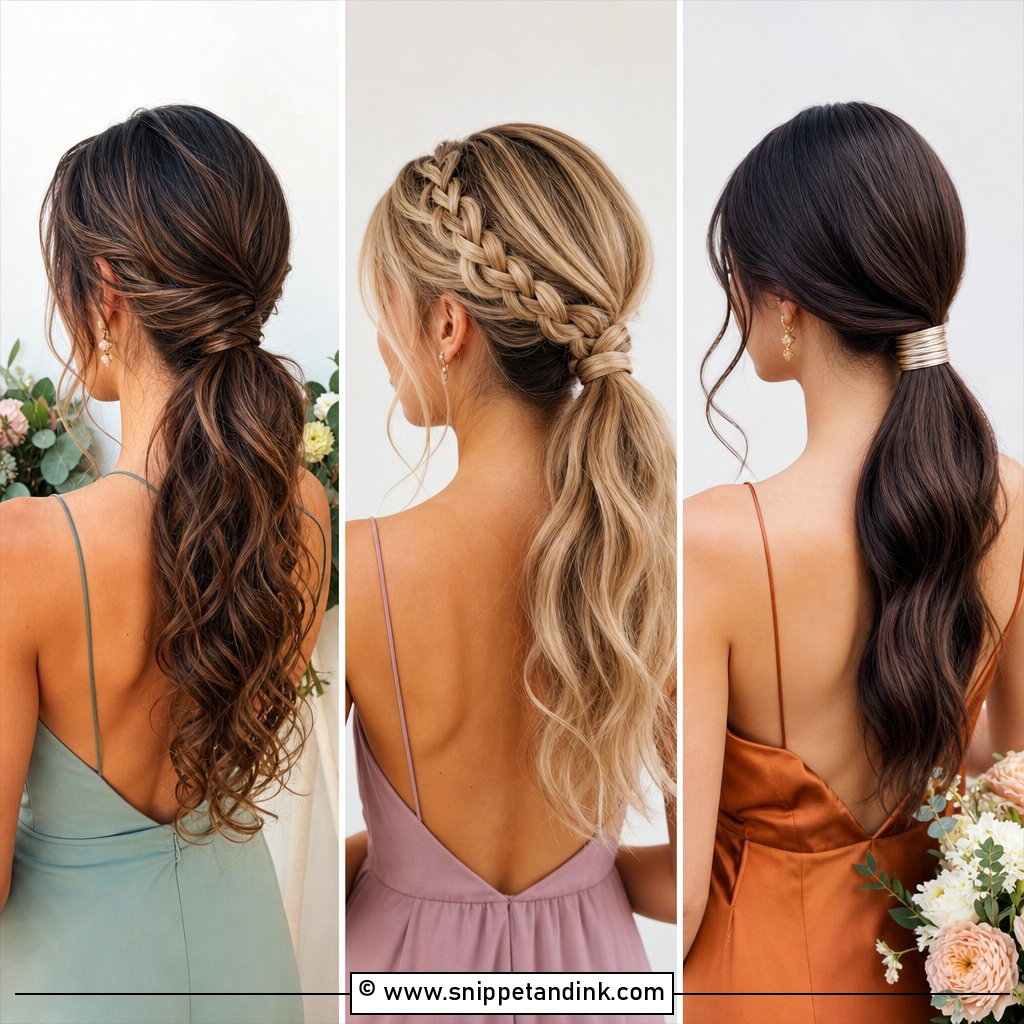
2. Wavy Bridesmaid High Ponytail
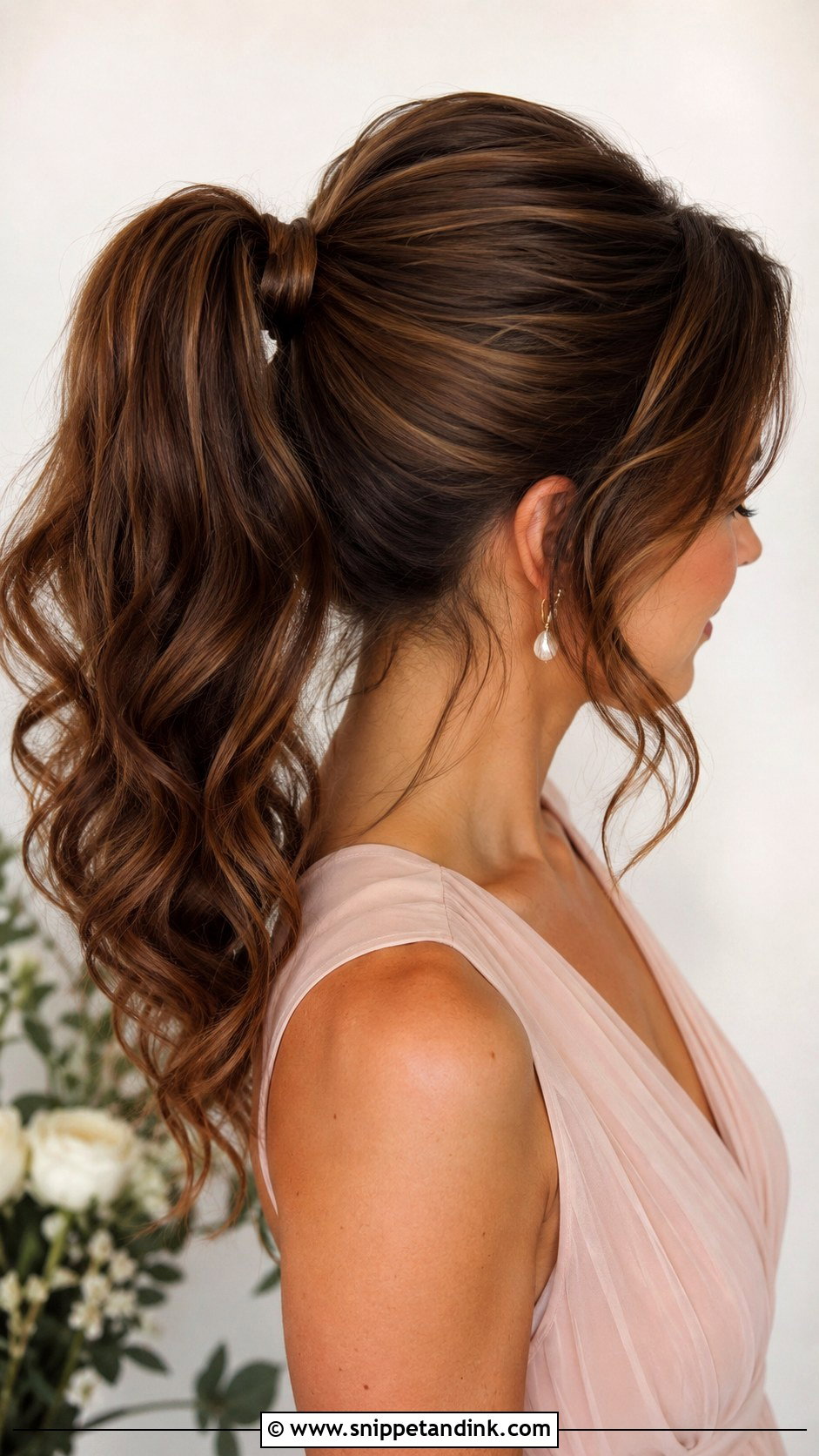
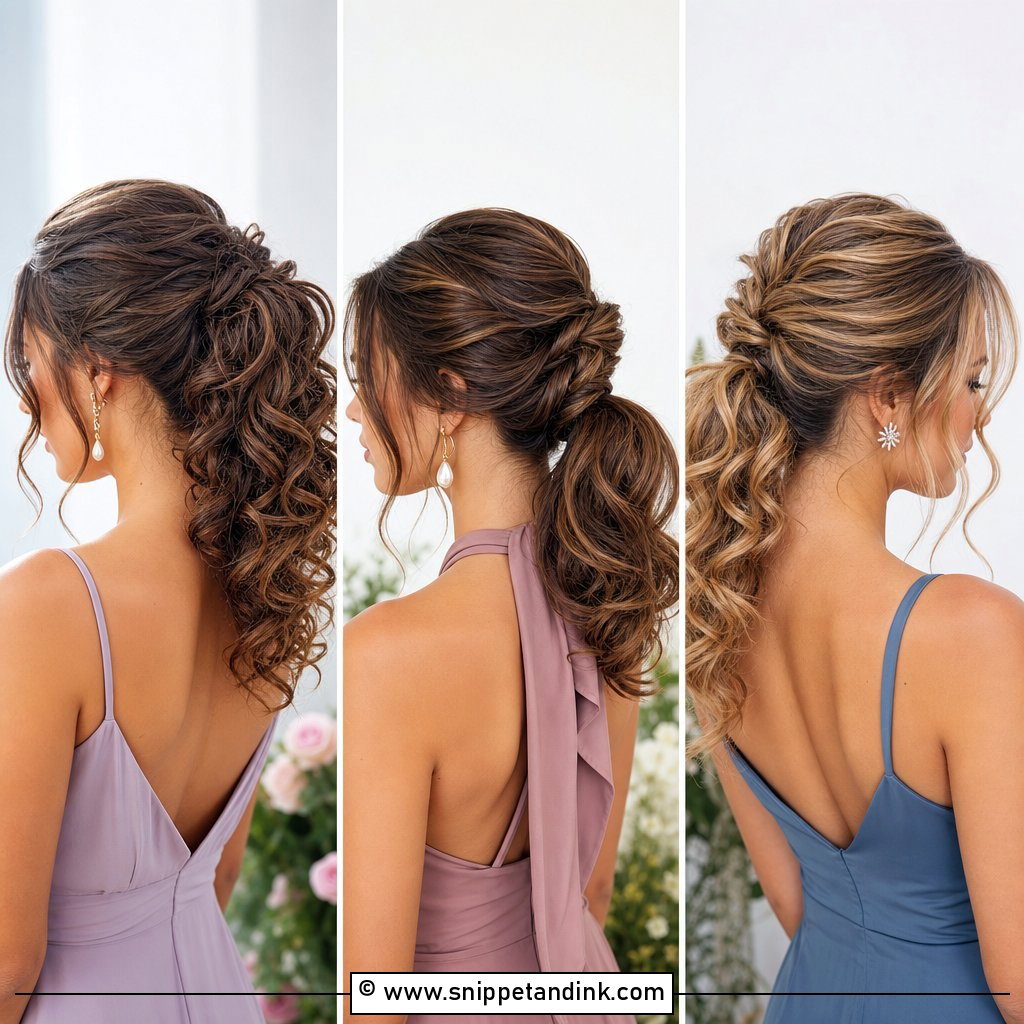
A wavy bridesmaid high ponytail is my pick for outdoor and garden weddings, where perfectly polished hair can look out of place. I keep the crown smooth and put the movement in the length: curls set with a 1.25 inch iron, pinned to cool, then raked out with fingers rather than a brush. Waves drop faster than tight curls, so I always curl tighter than the finished look we want. A couple of curled pieces at the cheekbones keep it from looking severe.
3. Curly Bridesmaid High Ponytail
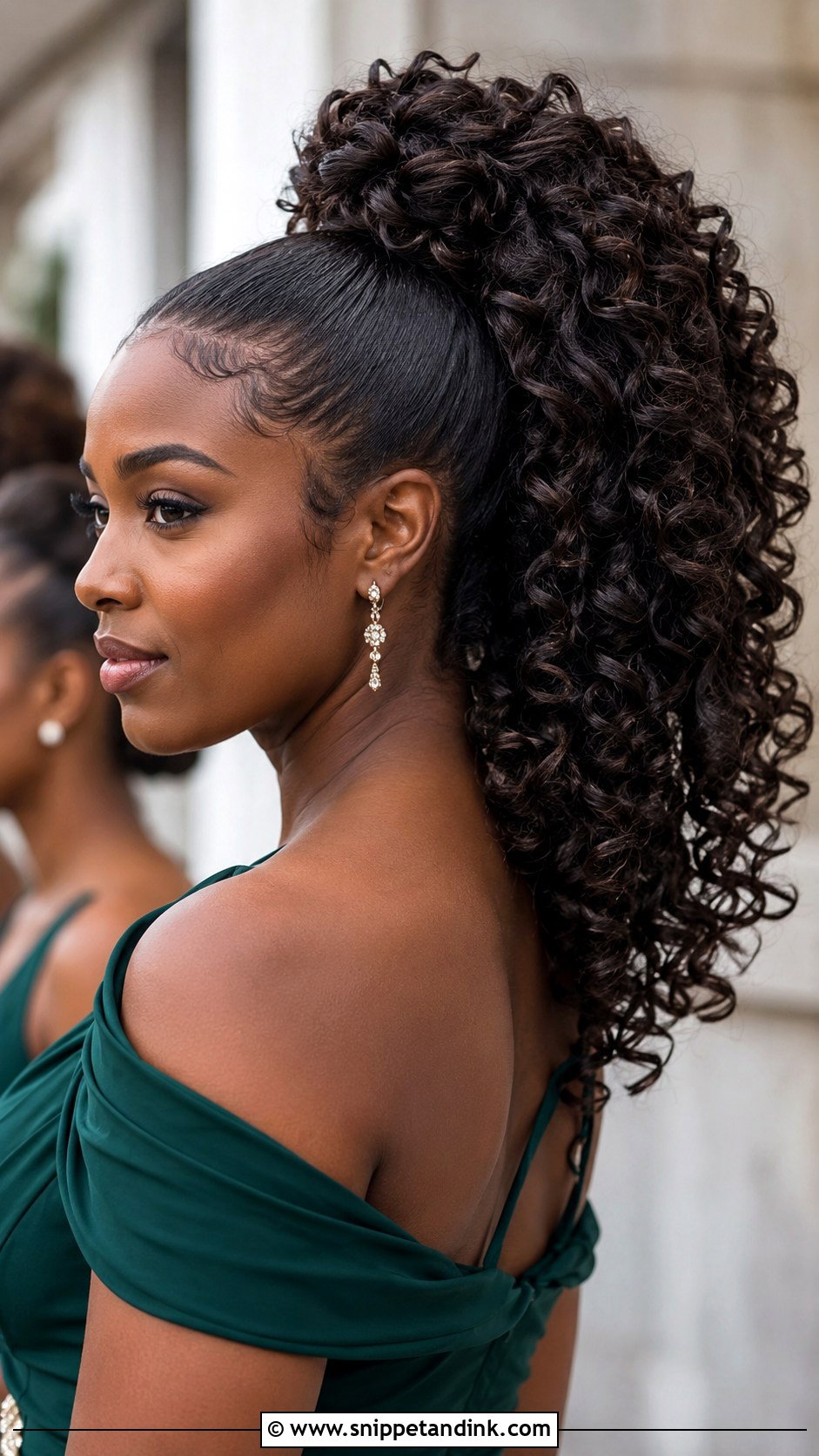
Curly high ponytails need almost no added volume, which is the whole appeal. My worry with this one is weight. Thick curls gathered high pull hard on the elastic and on the scalp, so I secure the base with two bobby pins crossed into the band and keep the elastic snug but not cranked. Curl cream on damp hair the morning of, a little edge control along the hairline and a flexible spray are enough. A smooth crown gives sharp contrast against the curls; a brushed, softer crown suits relaxed weddings better.
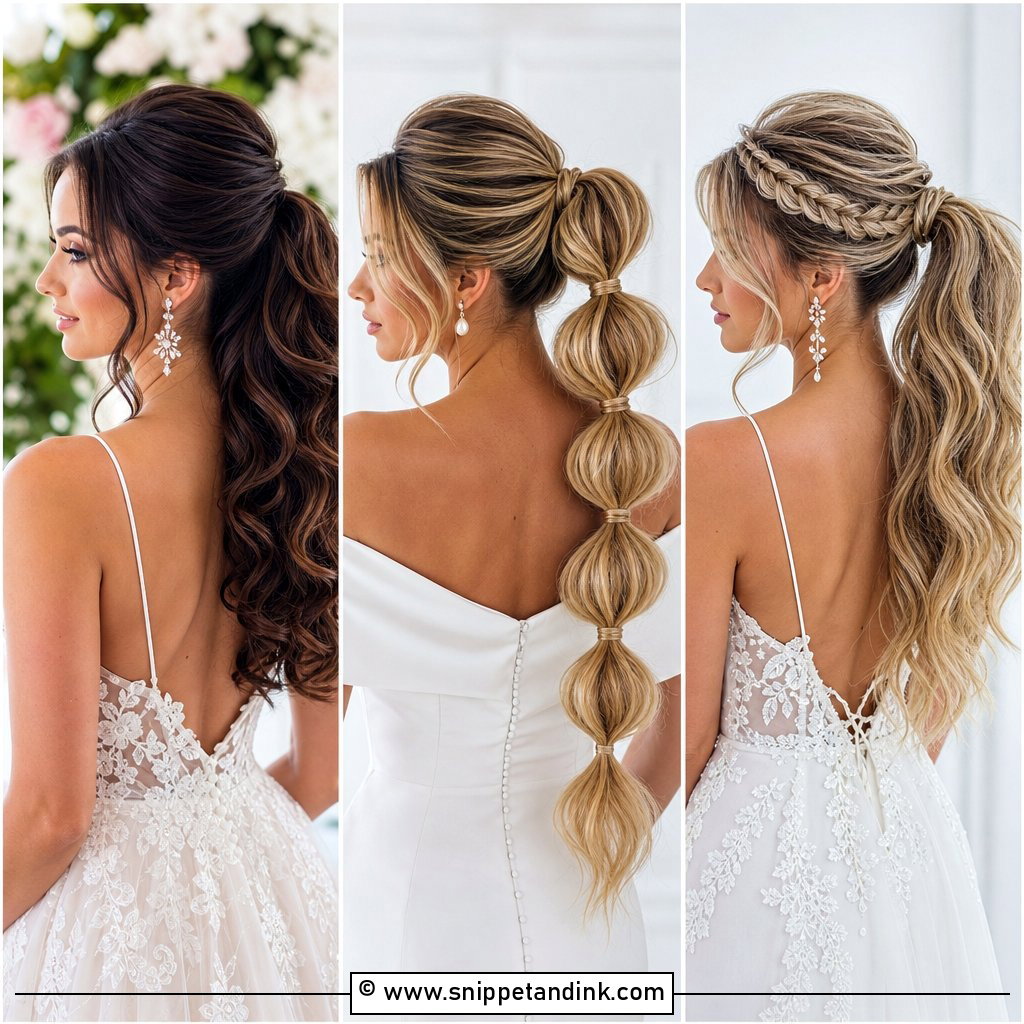
4. Braided Bridesmaid High Ponytail
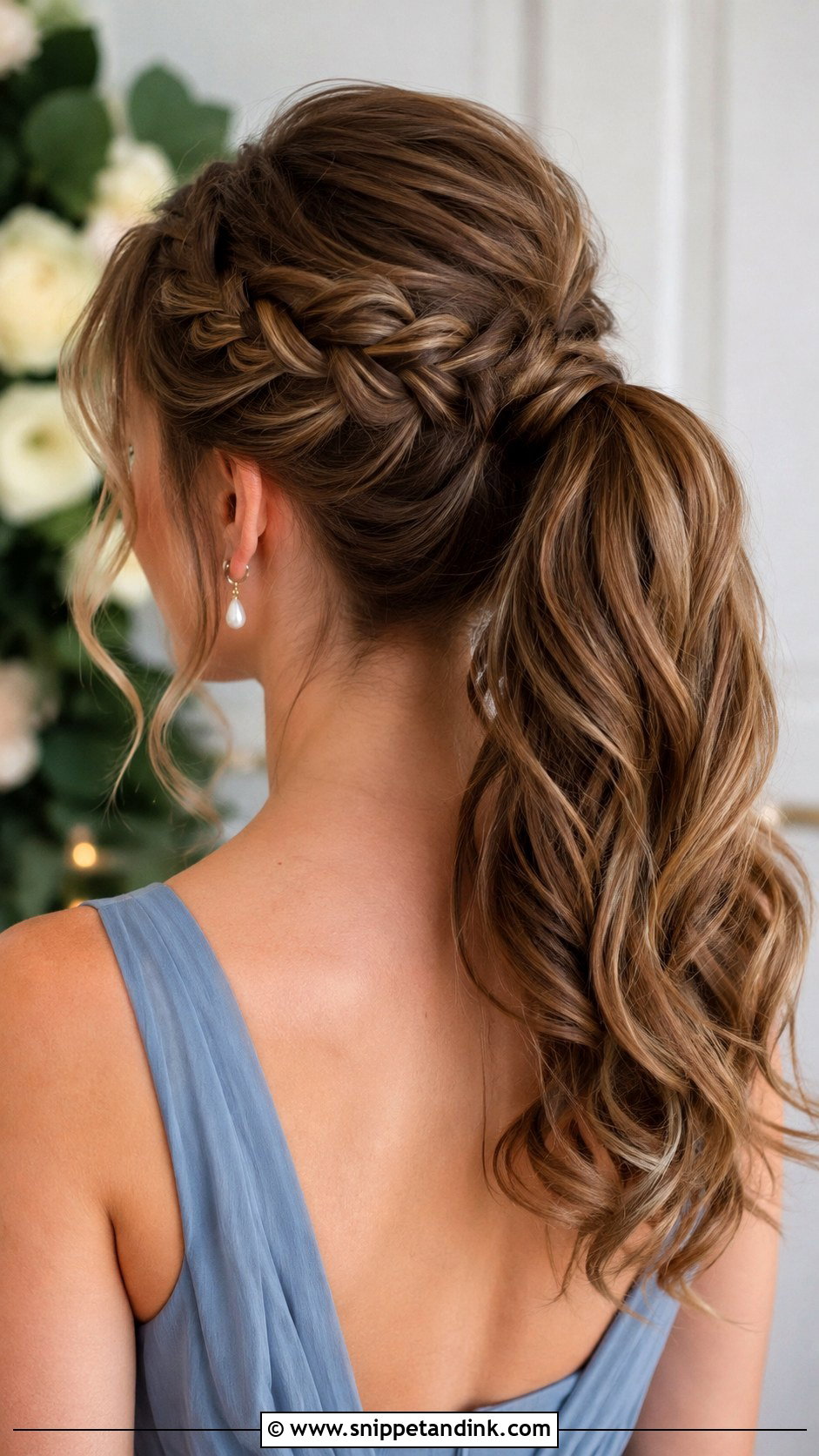
Adding a braid gives a bridesmaid something to look at from behind without committing her to a full updo. I can start it at the crown as a Dutch braid, wrap a thin braid around the base or plait the length itself. Braids are also a practical fix for layered cuts, because shorter layers that would escape a plain ponytail get caught in the weave. Tight braids look sculpted and formal. Pancaked ones look softer, but only if the hair has some grip, so I add texture spray before I start rather than after.
5. Bubble Bridesmaid High Ponytail
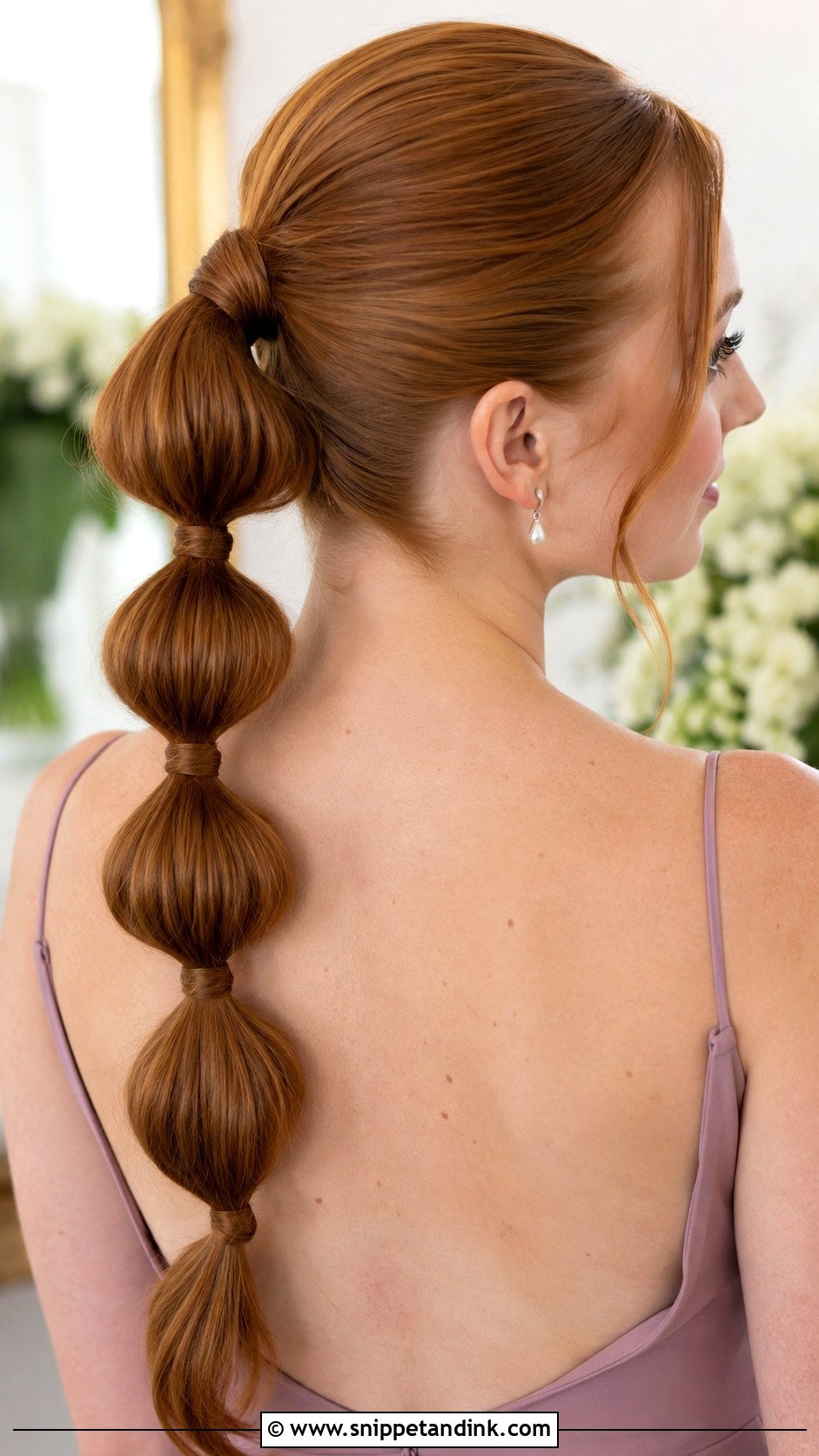
A bubble bridesmaid high ponytail needs length more than anything else; with less than about shoulder-length hair below the base you only get two or three bubbles and it looks unfinished. I section the length with clear elastics spaced evenly, then pull each section gently with fingertips to round it out. Uneven spacing is what usually ruins it, so I measure by eye against the first bubble. It does a lot of work on its own, so I keep it for simple dresses and skip heavy hair accessories.
6. Voluminous Bridesmaid High Ponytail
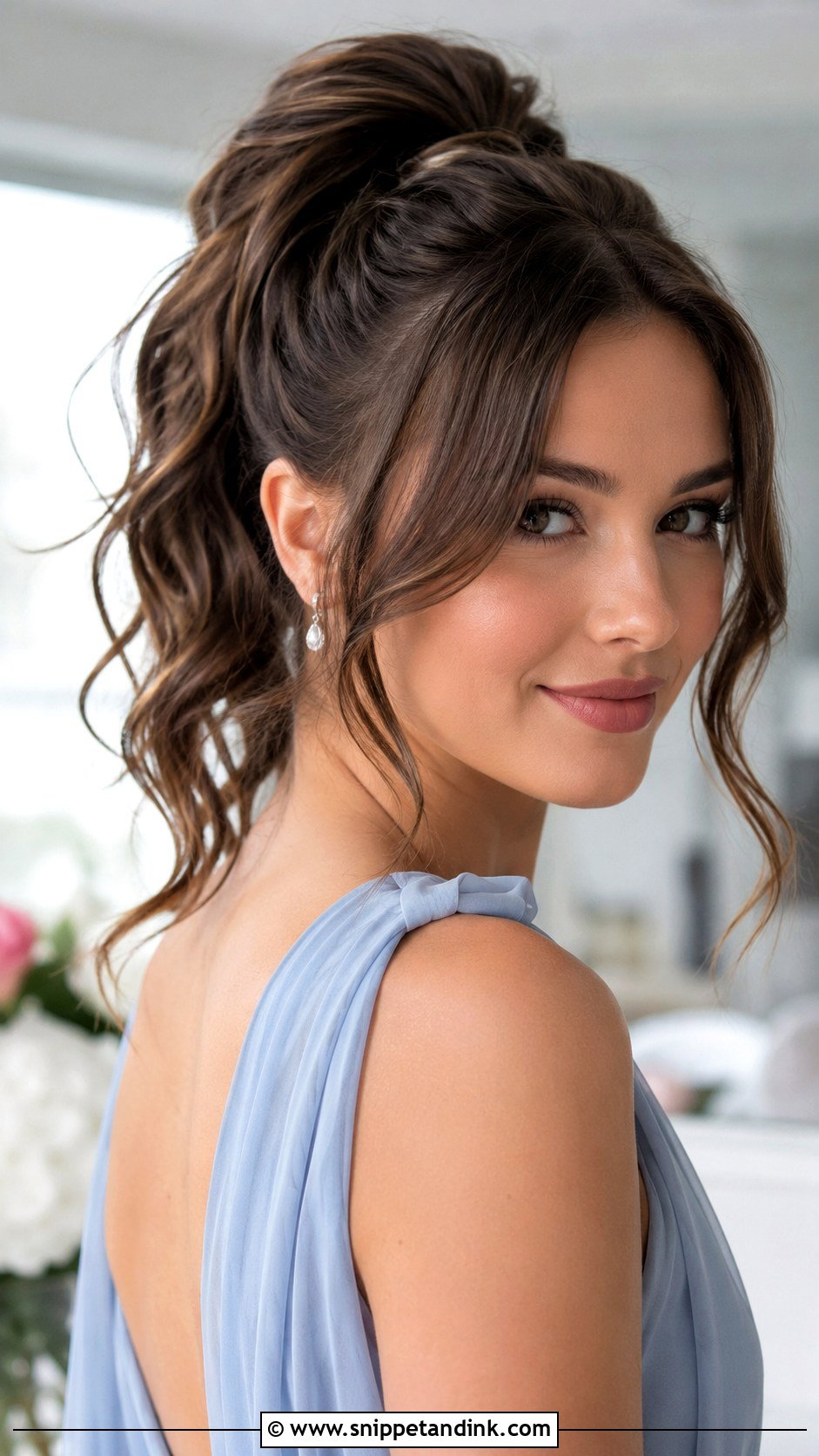
Glamour comes from the crown and the curl size here. I lift the crown with a root spray and a round brush, add light backcombing just under the top layer so the surface stays smooth, then curl the length in big sections. Height at the crown lengthens a round face, which is why I often suggest this one when a bridesmaid tells me ponytails make her face look wide. Evening and ballroom weddings carry it best. The finishing spray should be flexible; a stiff hold makes big curls swing as one solid piece.
7. High Ponytail With Face Framing Pieces
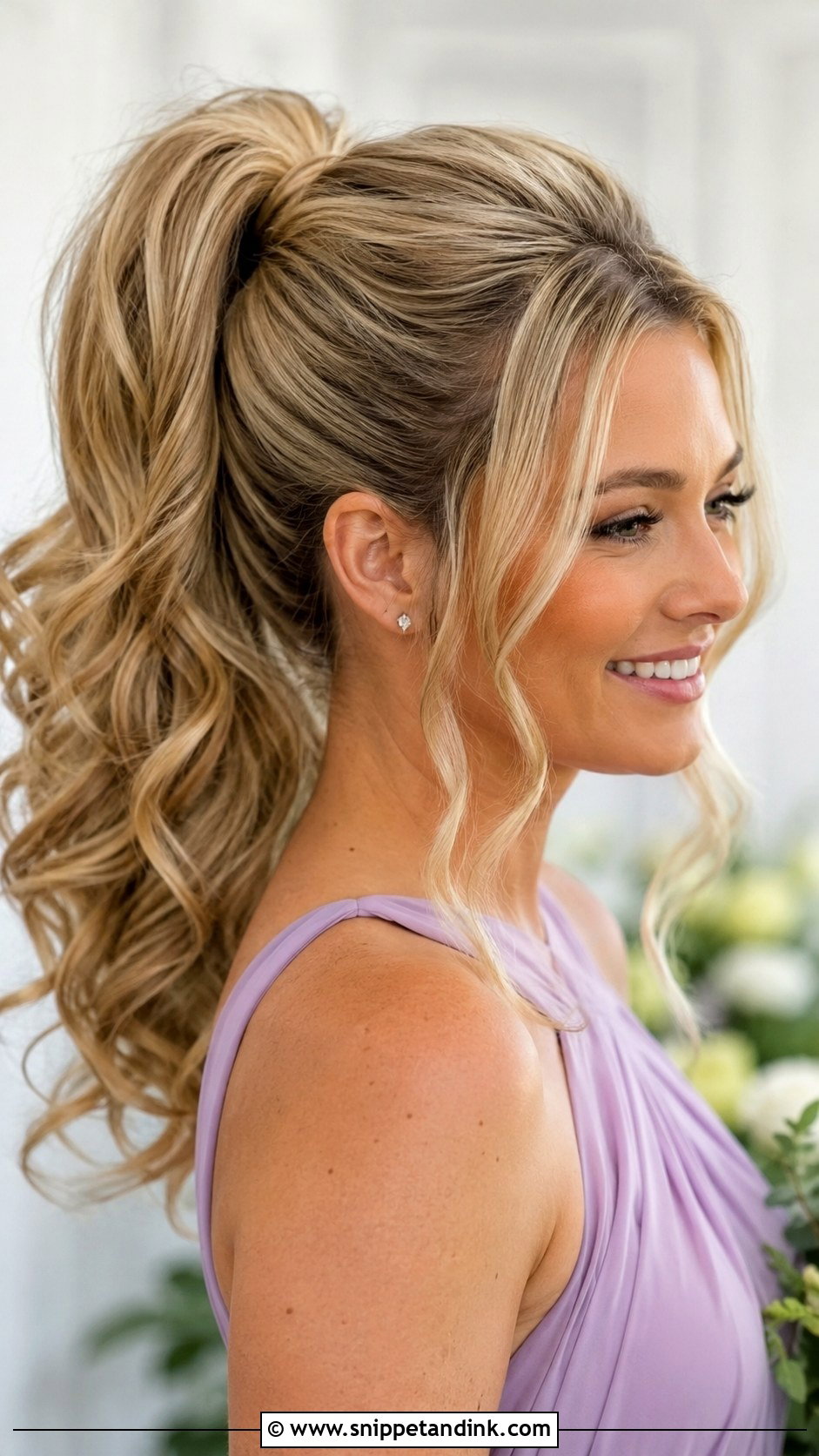
Most bridesmaids who say ponytails feel harsh on them are really reacting to a fully exposed hairline. Leaving out two or three thin pieces at the front fixes that. I decide which pieces at the trial, because the strands that look best are usually the ones that already fall forward naturally. I curl them away from the face with a small iron and mist them lightly; too much spray and they turn into crunchy ribbons by the speeches. Too many pieces left out and it starts to look like the ponytail is falling apart.
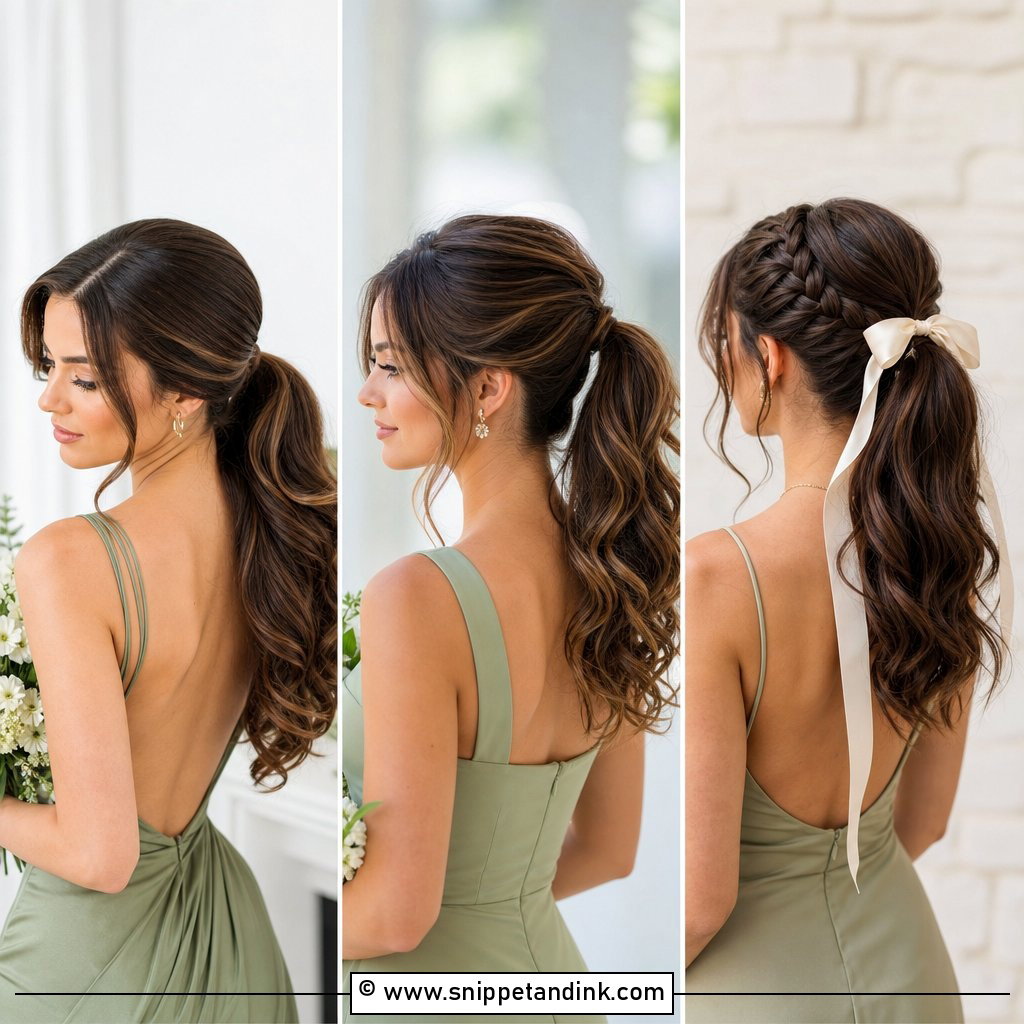
8. High Ponytail With Curtain Bangs
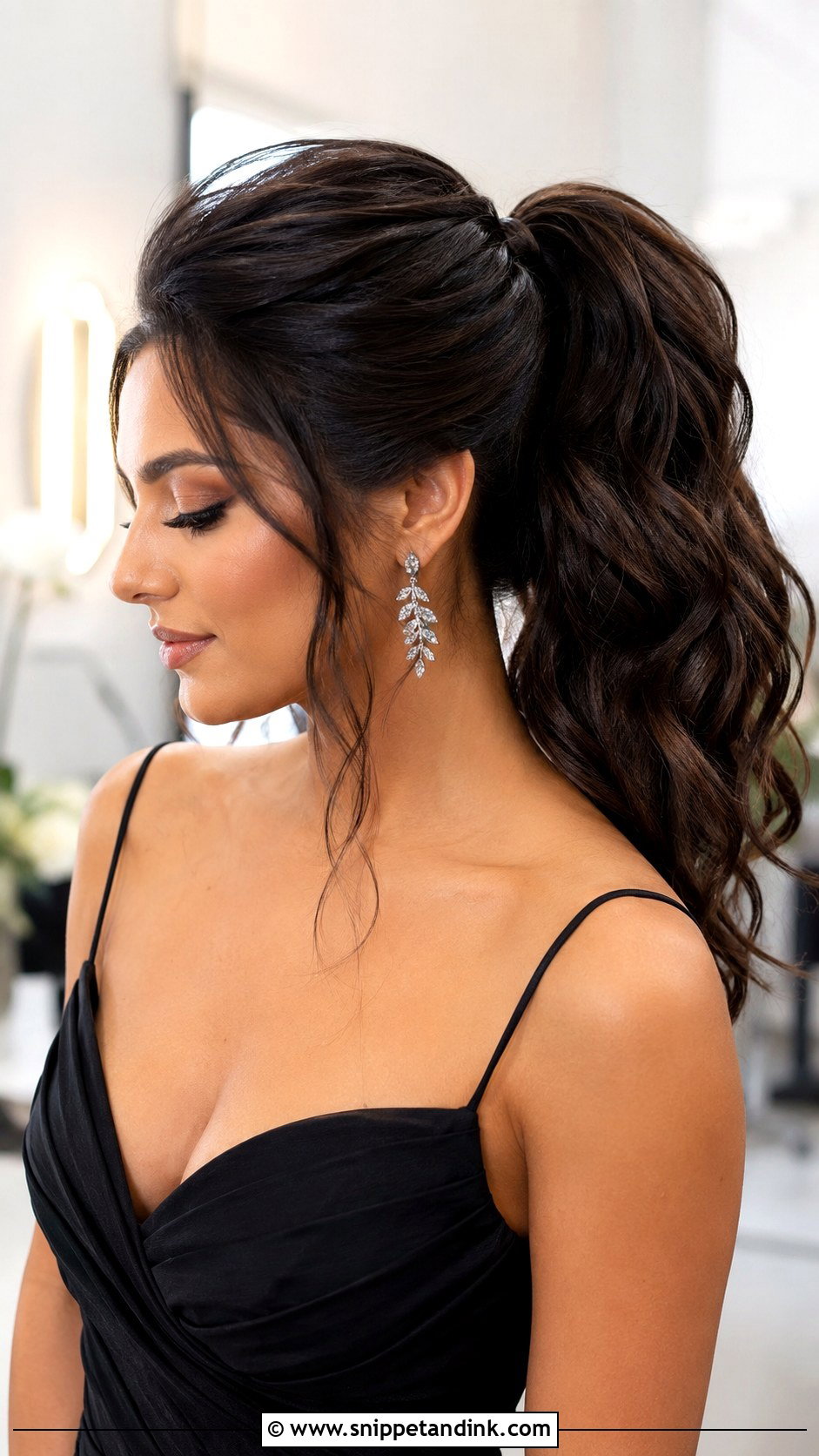
Curtain bangs are already a face-framing tool, so pairing them with a high ponytail is low effort for a soft result. The bangs part near the center and sweep away from the cheeks while everything else goes up. Blow-dry the curtain bangs with a round brush so they bend outward, and do it on clean, dry hair; bangs that were slept on flat rarely recover with an iron alone. I’d skip this for a very windy venue, because bangs lifting in every photo is the first thing a bride notices afterward.
9. High Ponytail With Side Part
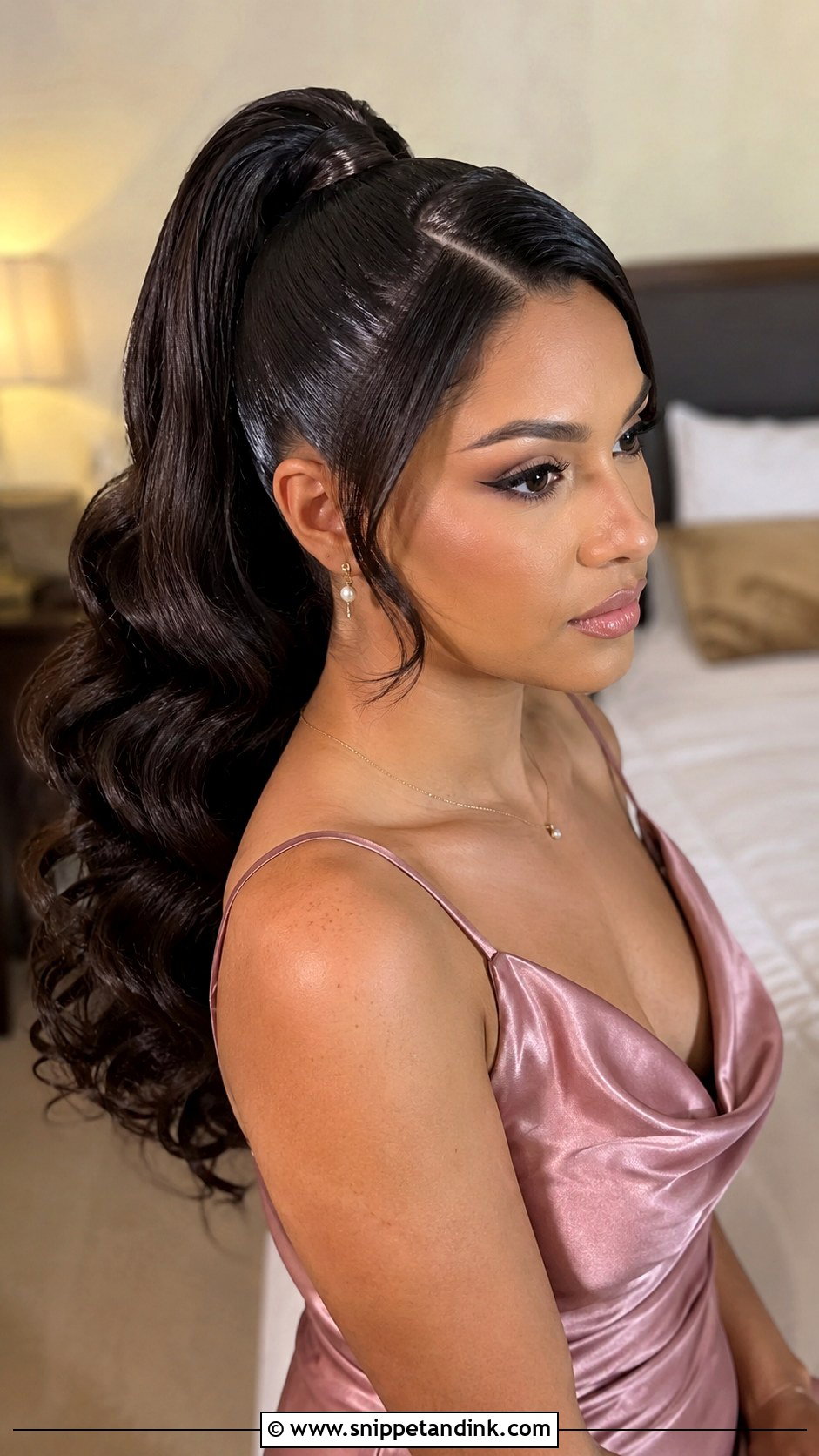
A deep side part softens a high ponytail and covers more of the forehead, which a lot of bridesmaids appreciate. I comb the part in first, then smooth the heavier side back slowly so it doesn’t bubble at the temple, which is where side-parted ponytails usually go lumpy. Soft waves in the length balance the structure at the front. A wrapped base and a little shine spray finish it.
10. High Ponytail With Middle Part
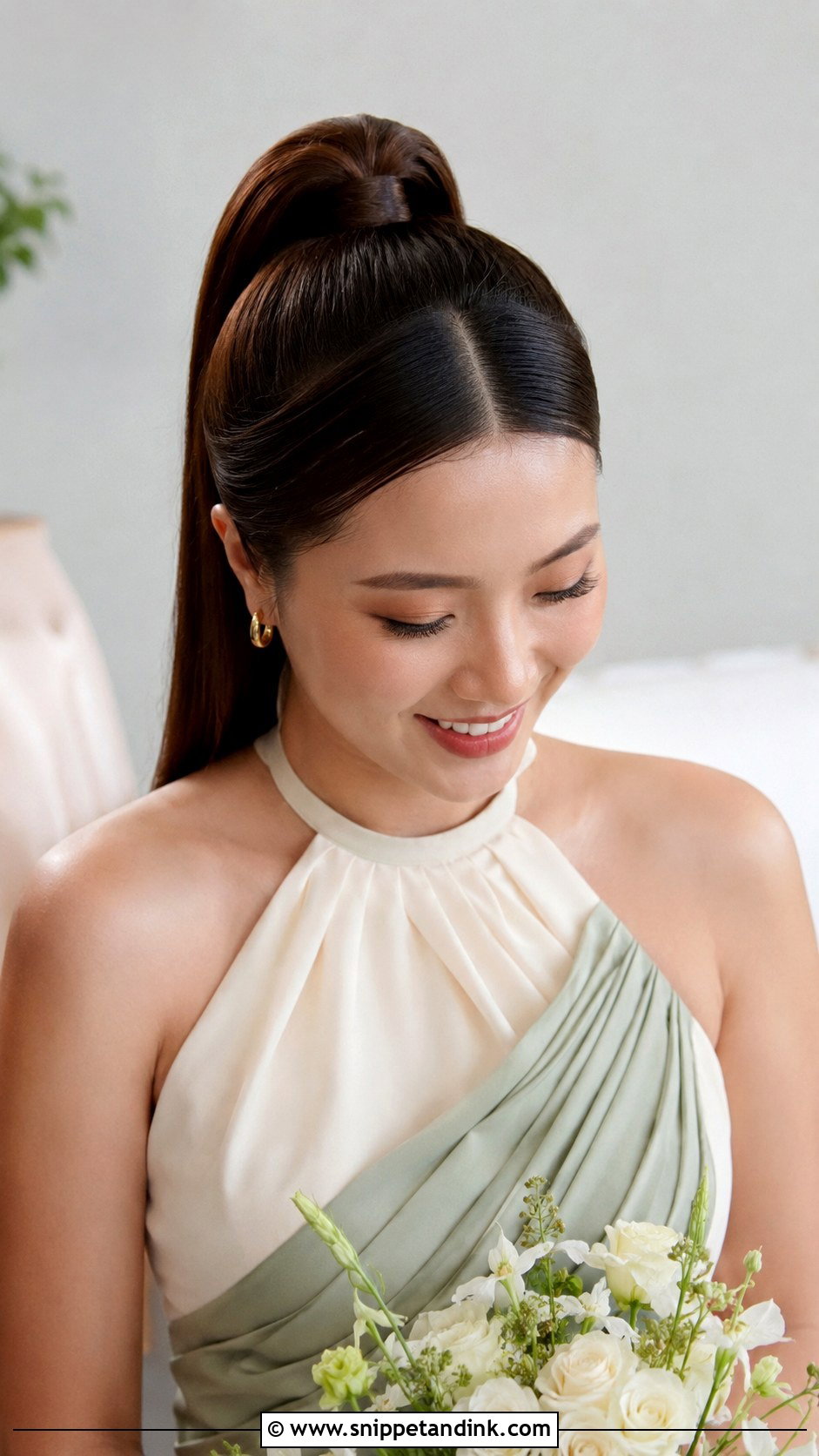
Center parts are less forgiving than they look. Any difference in how the two sides are pulled back shows straight away in a front-on photo, so I smooth both sides with a tail comb and check symmetry in a mirror before I secure anything. Straight ends make it read as modern; waves warm it up. It pairs especially well with square necklines and strapless dresses. If a bridesmaid naturally parts on one side, I check that a center part actually lies flat on her before committing the whole party to it.
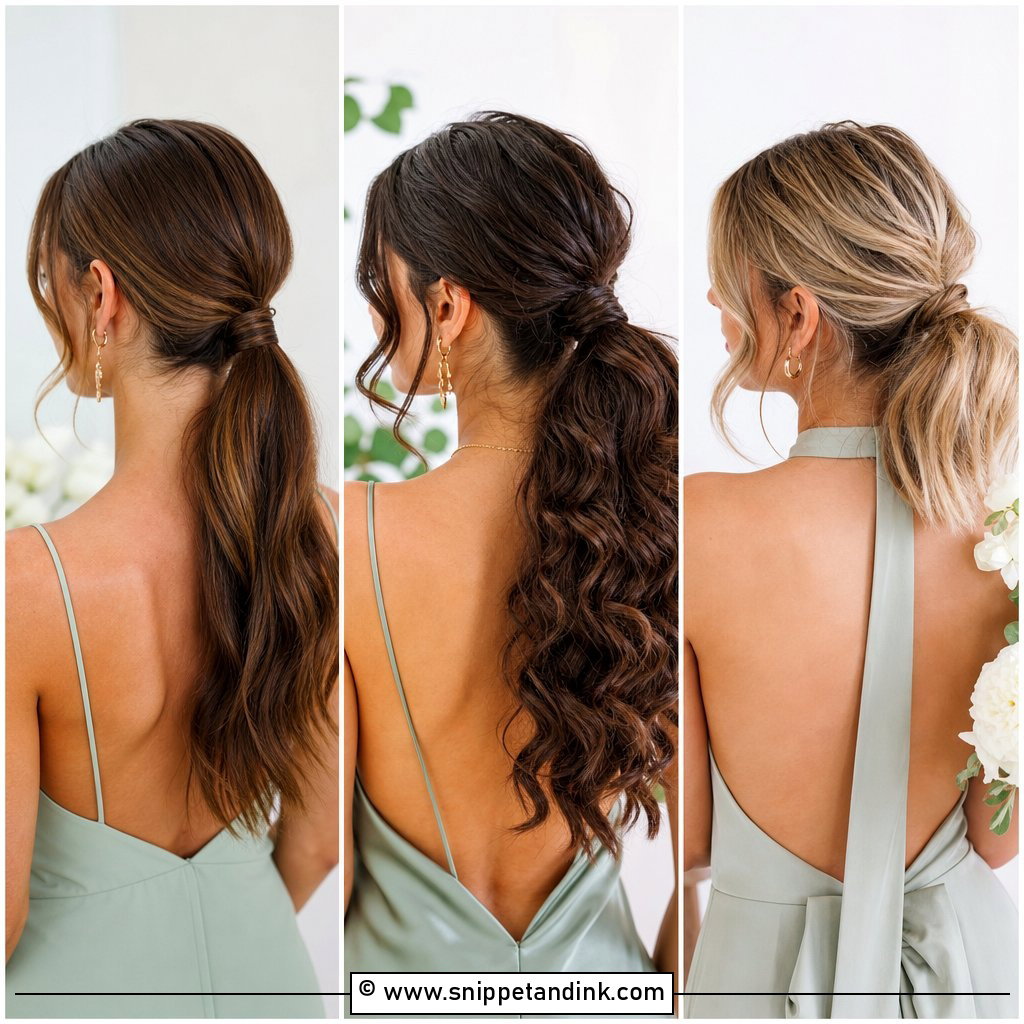
11. High Ponytail With Wrapped Hair Base
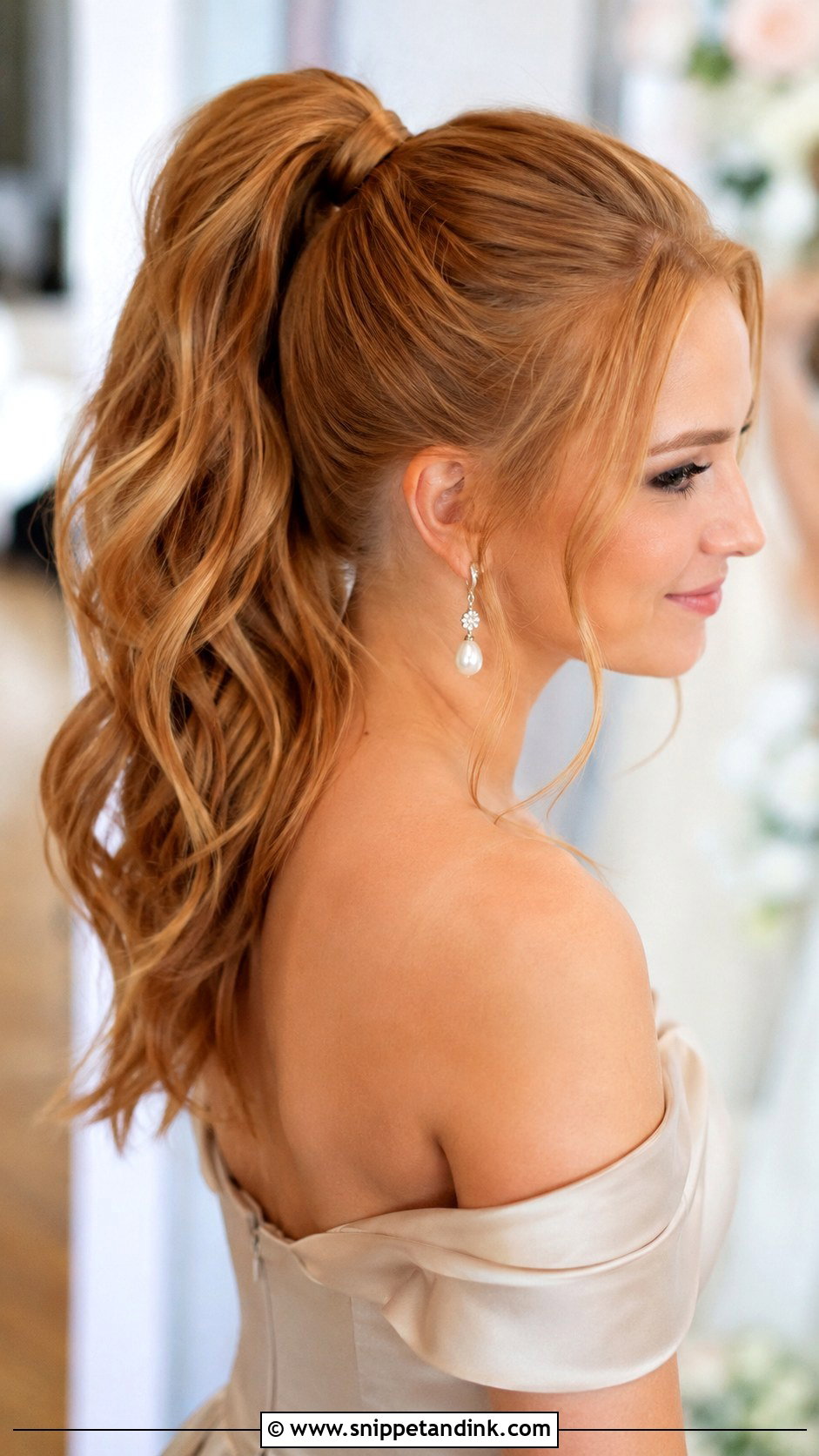
Wrapping the base is the single step that makes any ponytail look finished, and I do it on nearly every one. After securing the ponytail, I take a strand from underneath, wrap it around the elastic and pin it through the band so the pin grips the elastic, not just hair. A wrapped strand that’s only pinned into loose hair slides down within a couple of hours. Because it’s neutral, it lets a bride give her party matching bases with different textures below, which is a simple way to coordinate several hair types.
12. High Ponytail With Pearl Pins
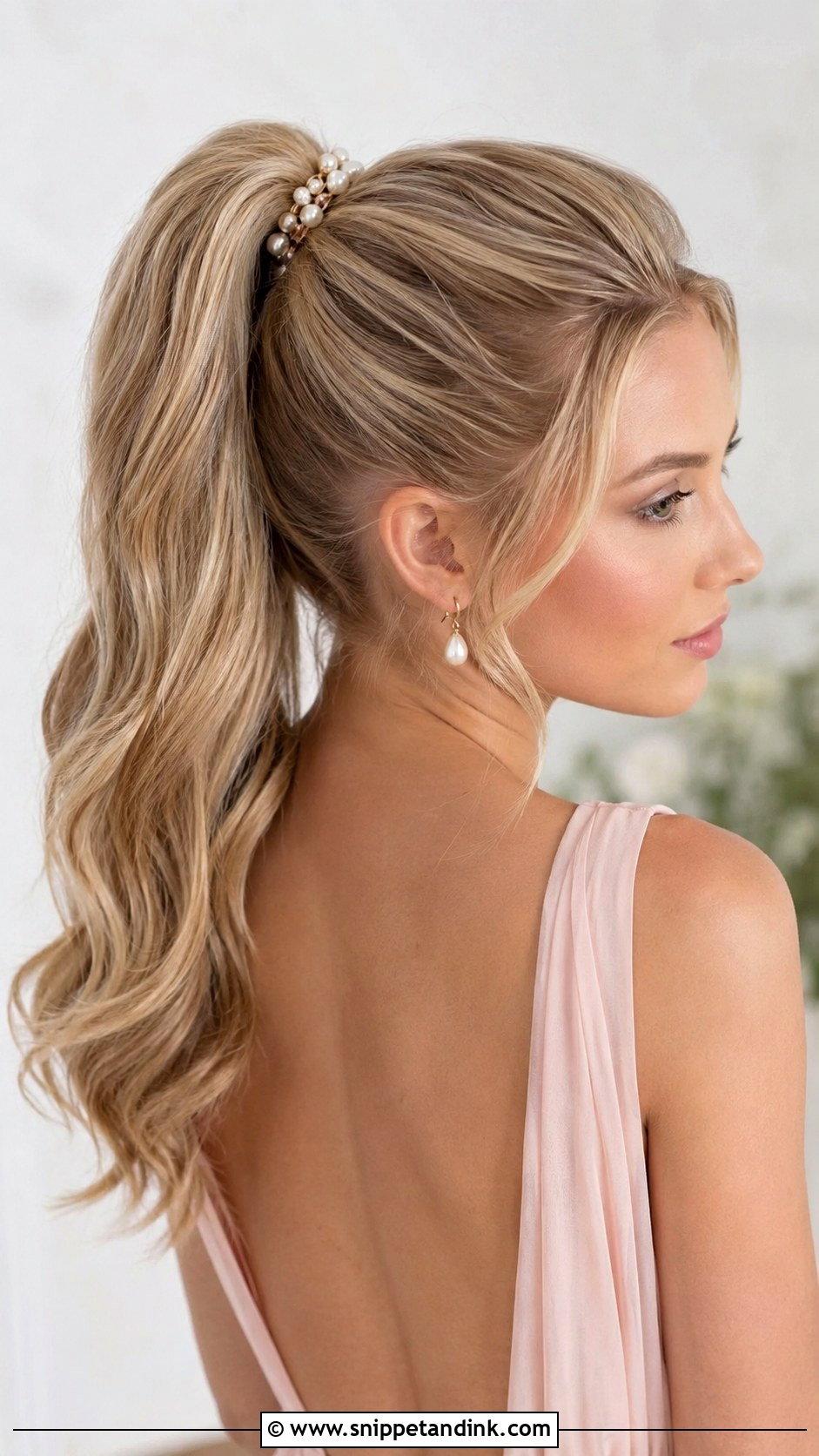
Pearl pins add bridal detail without turning a bridesmaid’s hair into a second veil. I place them near the base, along one side or in a loose line across the crown, and I count them; five or six usually reads as considered, more starts to look busy. On satin dresses and classic color palettes they look right at home. If the dresses are already beaded, I cut the number down. Pearl pins slide out of very silky hair, so I spray the spot with a little dry texture spray before inserting them.
13. High Ponytail With Ribbon
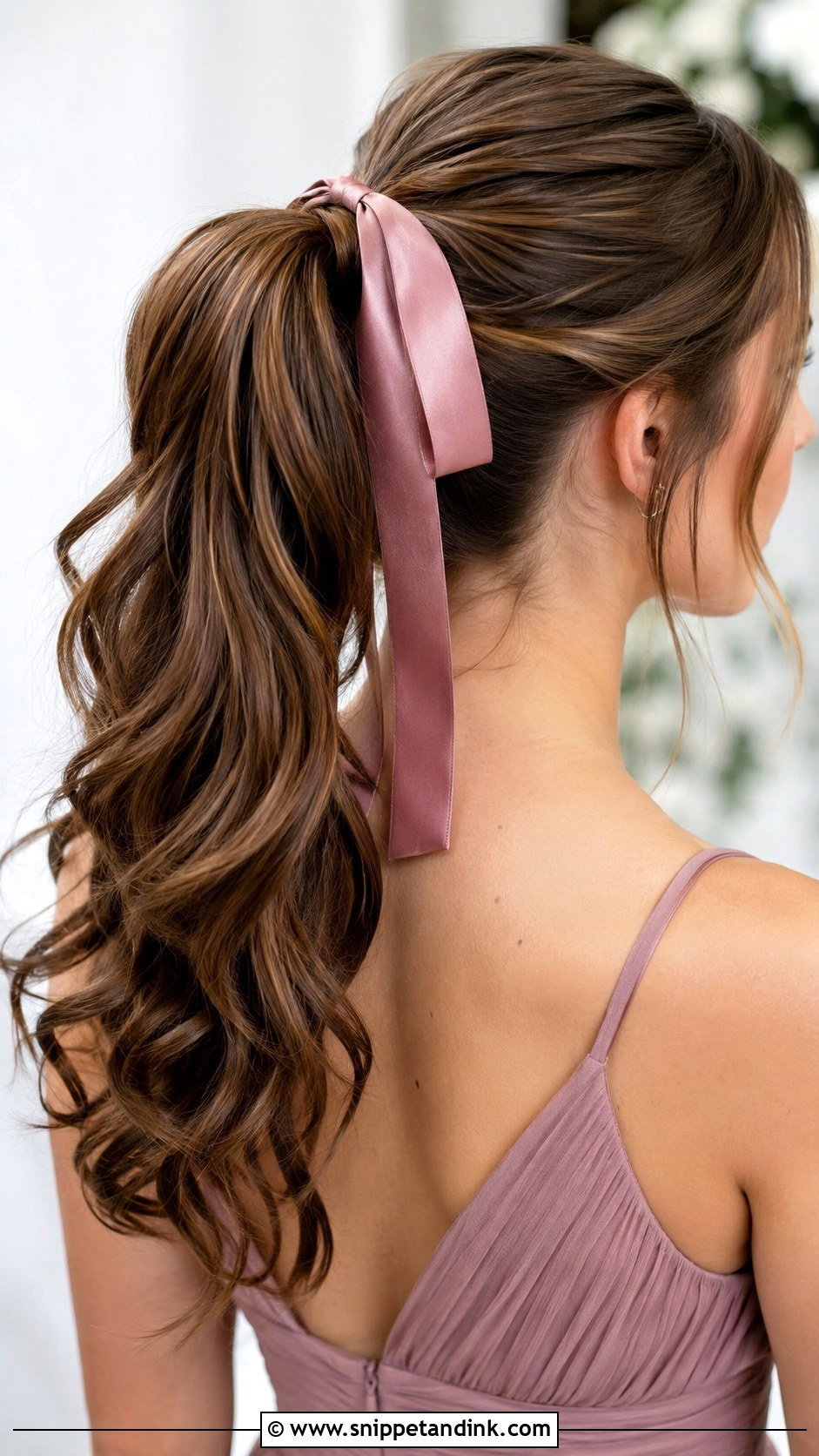
A high ponytail with ribbon is the easiest way I know to tie hair into the wedding colors. The ribbon goes over a secured elastic, never instead of one, because ribbon alone loosens as soon as the ponytail moves. Satin suits formal weddings, velvet holds a knot better in cooler months and sheer chiffon suits light, airy dresses. I trim the tails at an angle so they don’t fray before the reception. Waves or curls in the length give the ribbon tails something to move against.
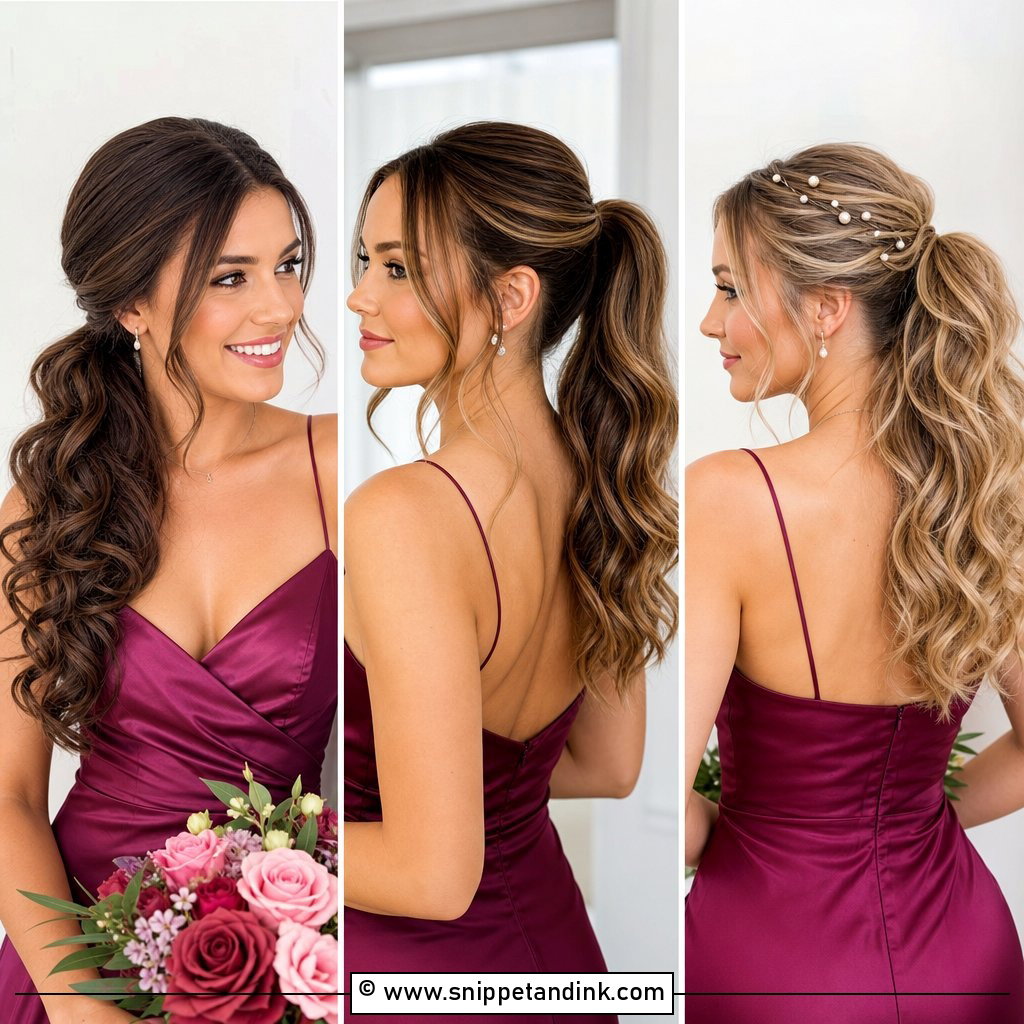
14. High Ponytail With Loose Curls
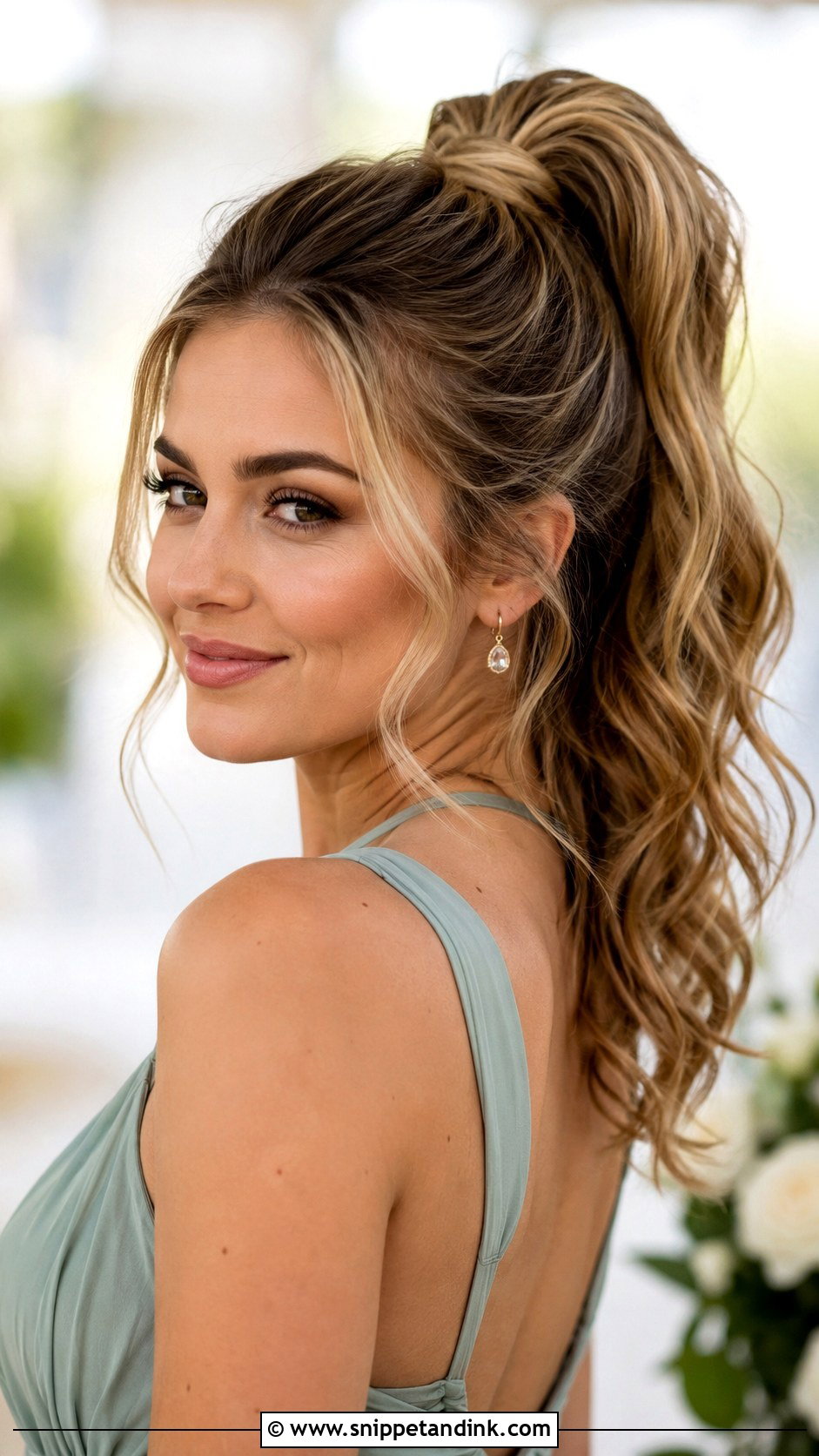
Loose curls are a reliable choice for a whole party because they look good from the front, side and back, which matters when bridesmaids are photographed walking away down the aisle. I curl the ponytail in large sections, let them cool fully, then brush through lightly so they read airy instead of ringlet-tight. They pair well with long hair, clip-in extensions and layered cuts. Heat protectant before the iron, flexible spray after, and a little teasing at the base for lift.
15. High Ponytail With Hollywood Waves
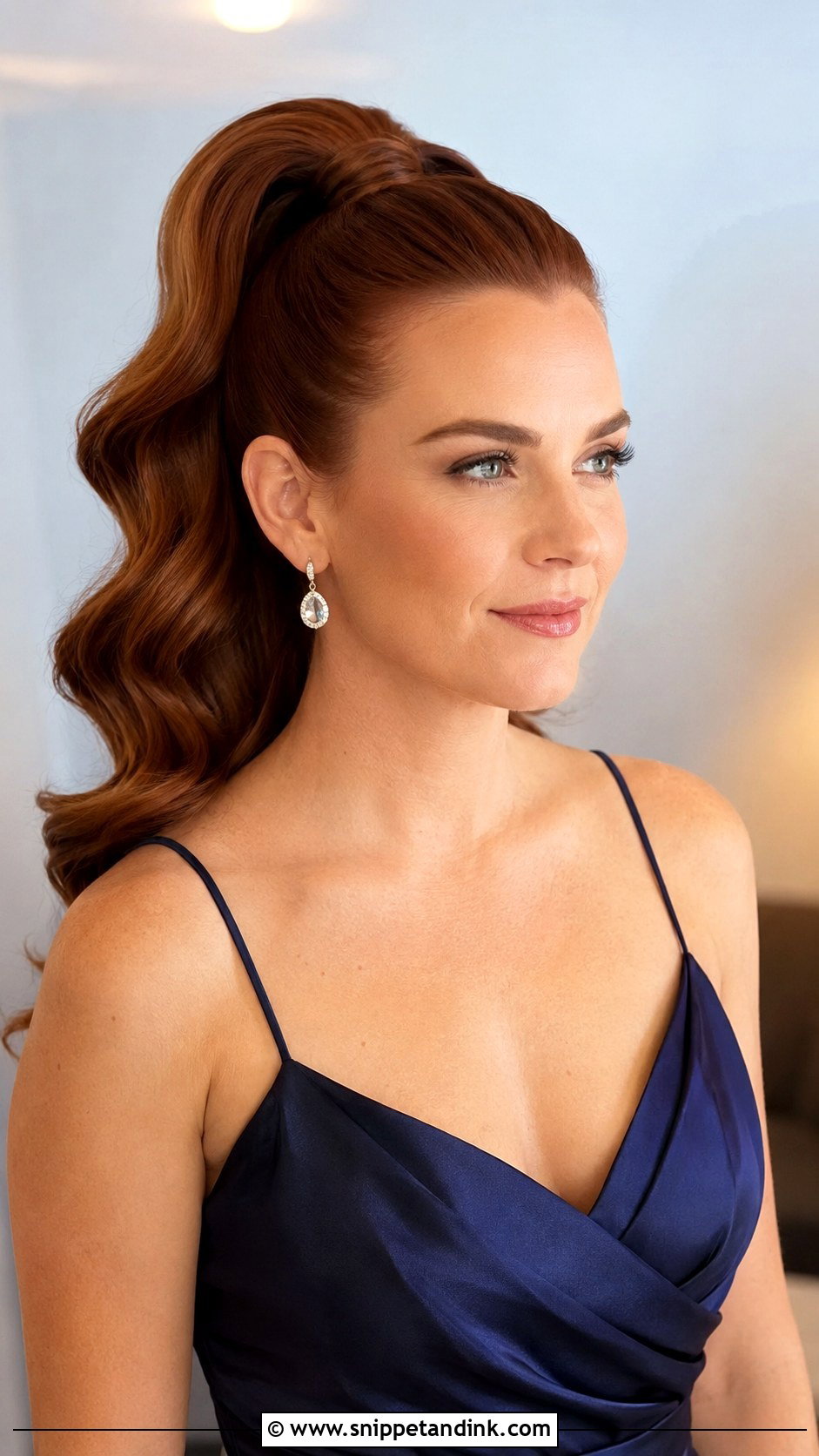
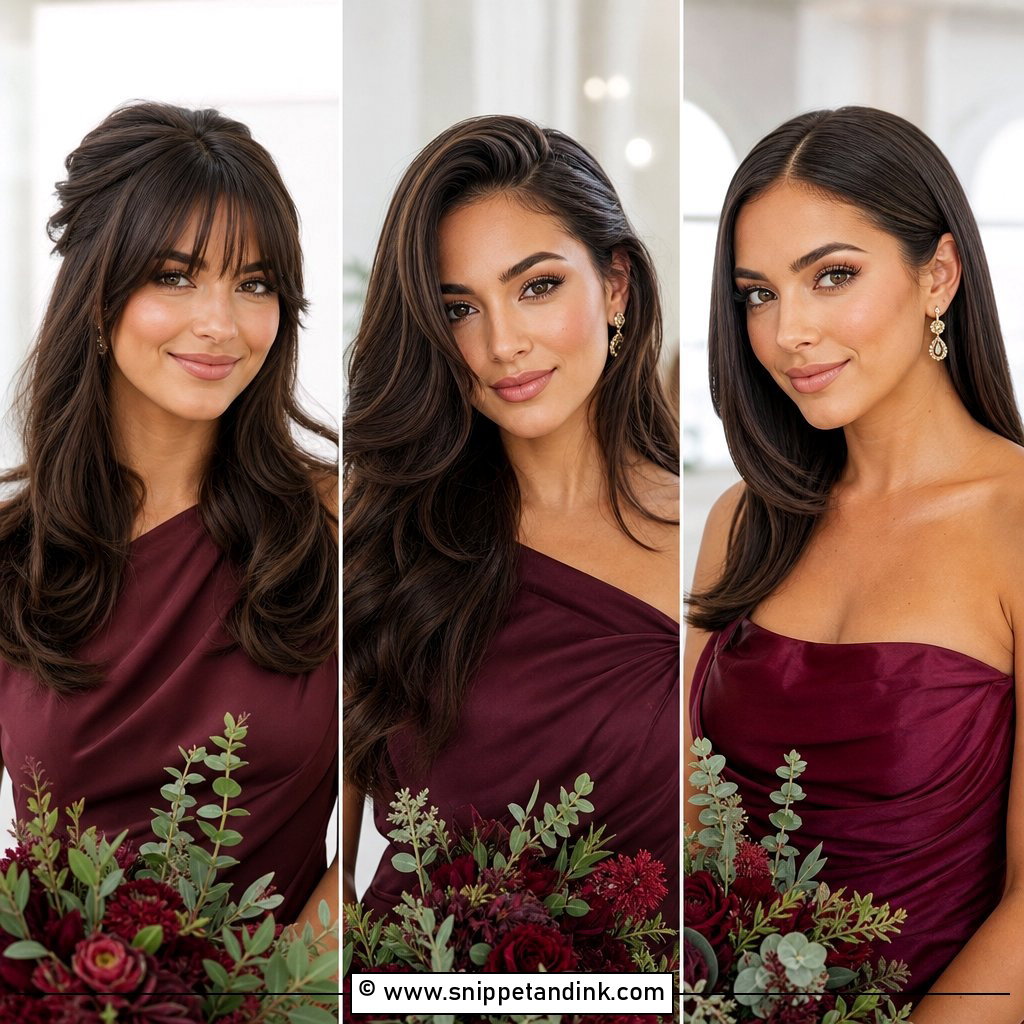
Hollywood waves in a ponytail take more time than most people expect. Every curl has to go in the same direction and be brushed out together so the waves form one continuous S-shape, and I set the troughs with wave clips while the spray dries. The crown stays sleek so the length gets all the attention. It needs at least medium-length hair below the base to show the pattern. Formal gowns and evening weddings suit it; at a casual barn reception it can look overdone.
16. High Ponytail With Natural Curls
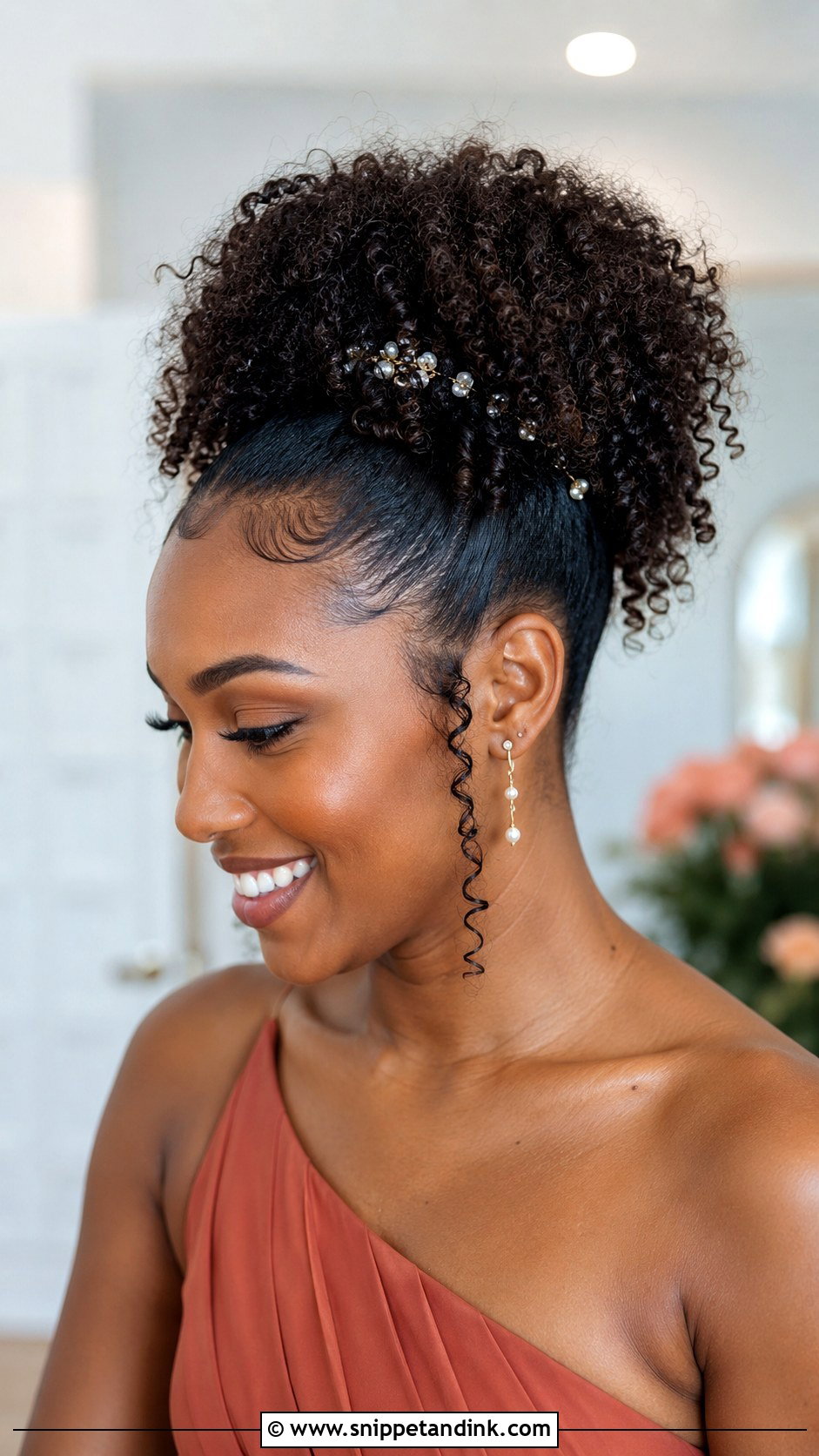
Natural curls hold up through a long day because nothing is fighting the hair’s own pattern. I gather the curls high without brushing through them, which would break up the definition, and use my hands or a soft brush only along the hairline. Hydrating curl cream and a light gel give definition and hold. The front can be sleek with laid edges or left softer. I’d plan this around wash day so the curls are fresh, ideally styled the day before or that morning.
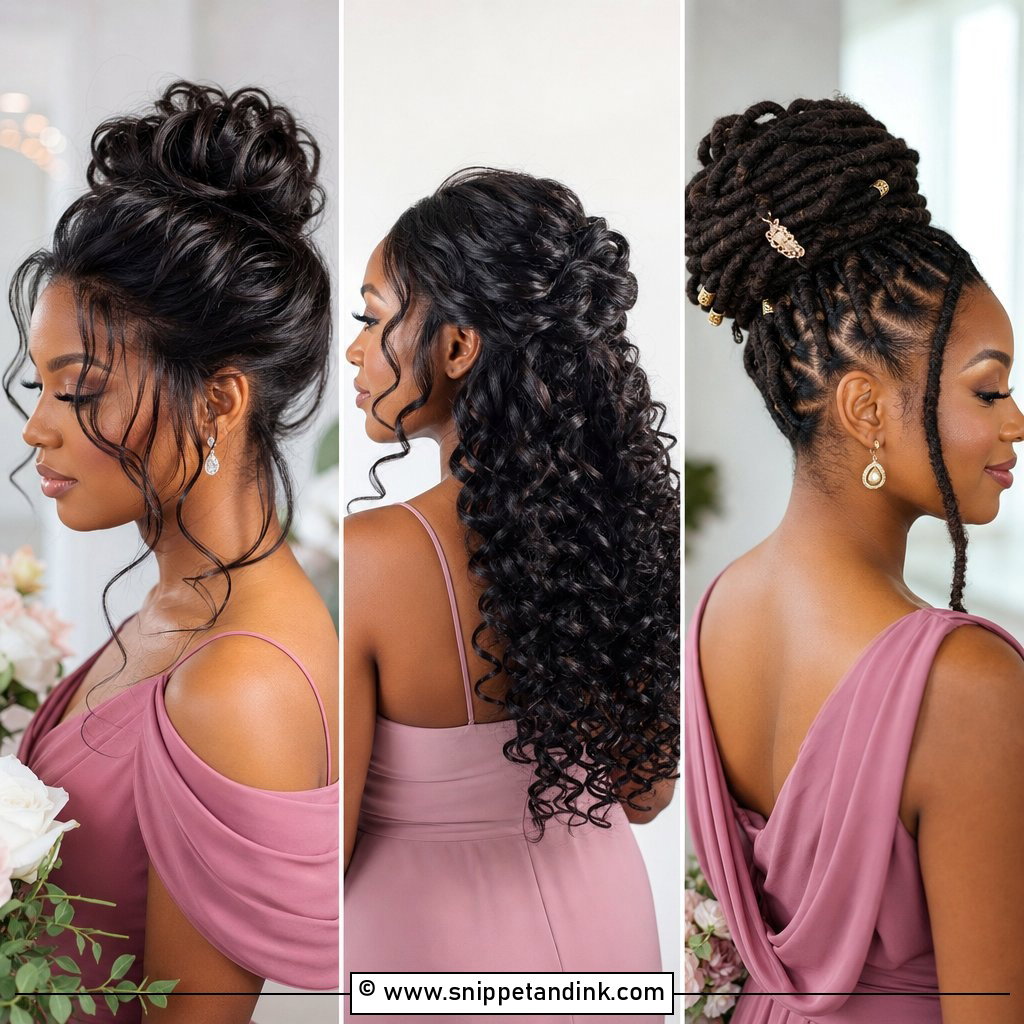
17. High Ponytail With Box Braids
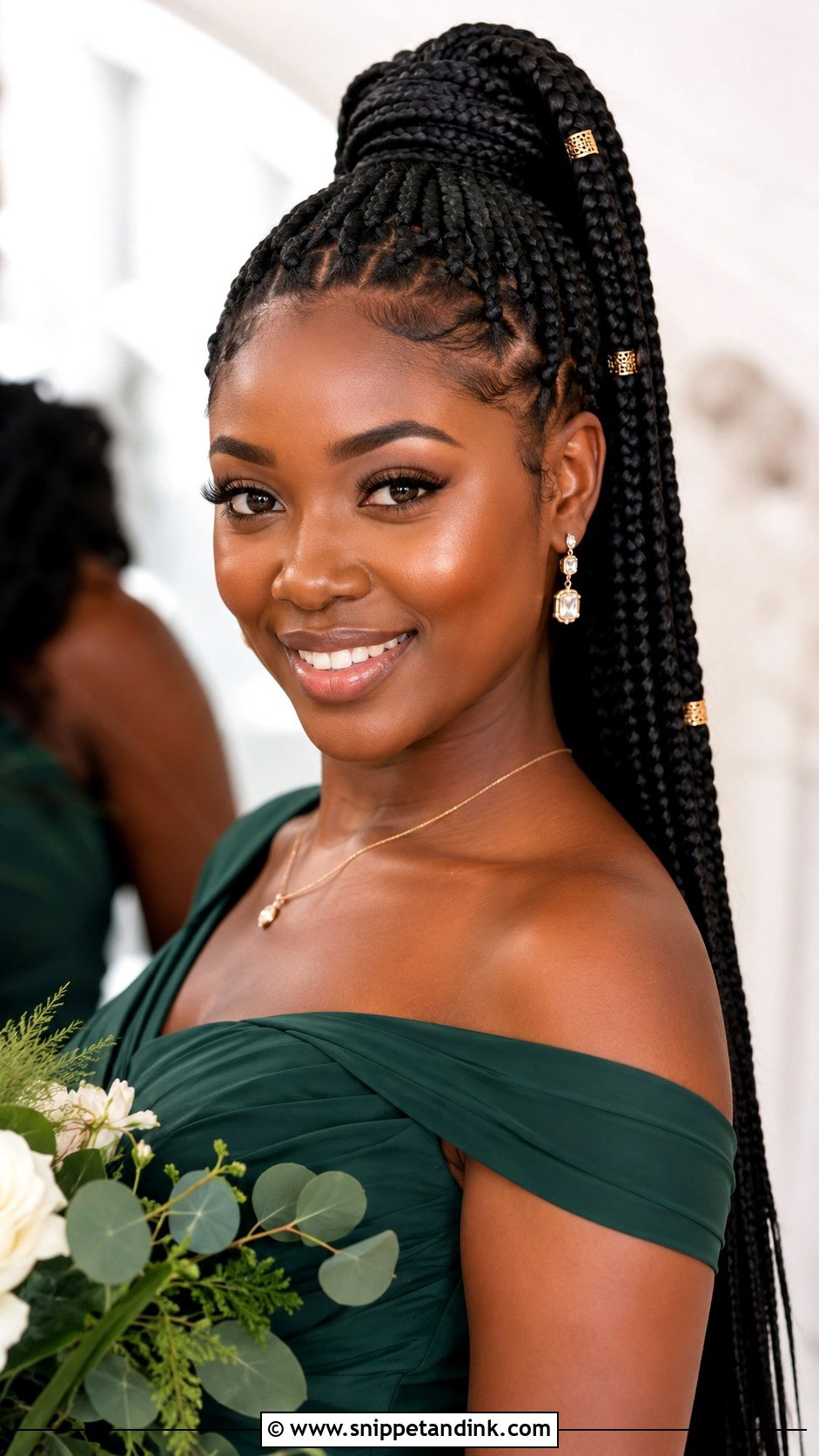
Box braids gathered into a high ponytail give length, drama and a lot of security. The thing I watch is weight: a full head of long braids is heavy when it all hangs from one point, so I keep the gathering point slightly lower than a sleek ponytail would sit and make sure the edges aren’t strained. Wrapping a few braids around the base looks polished and hides the band. Gold cuffs or pearl pins can go in if they match the theme. It’s comfortable in hot weather because the neck stays clear.
18. High Ponytail With Cornrow Braids
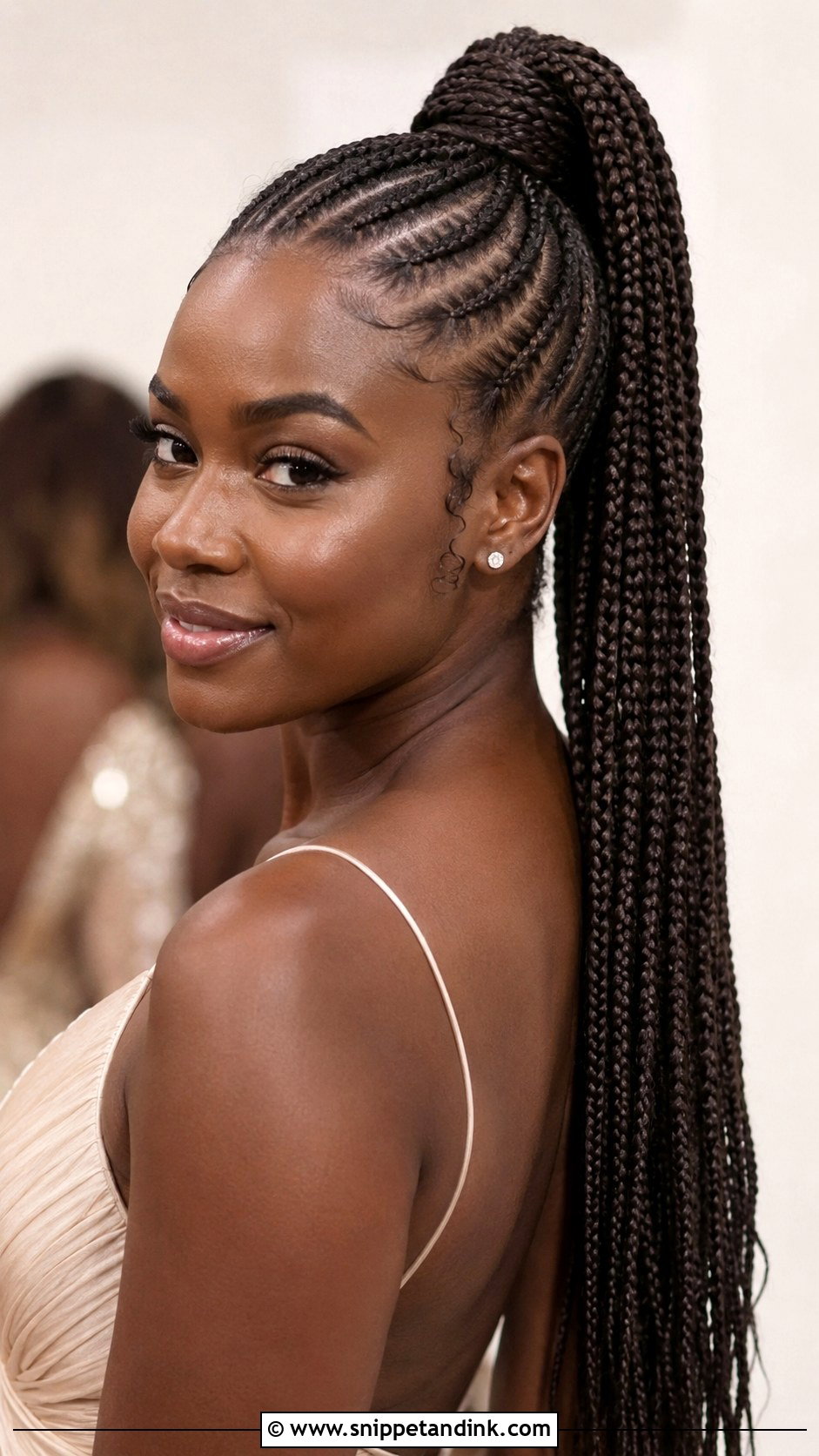
Cornrows into a high ponytail give detail at the scalp and length behind, and they stay neat for hours, through portraits and dancing. The rows can run straight back or curve gently into the base. I’d book the braider well ahead and have the braids done a day or two before so any tenderness at the scalp settles before the wedding. Added braiding hair gives fullness. A few small cuffs or beads catch light without pulling attention from the bride.
19. High Ponytail With Fishtail Braid
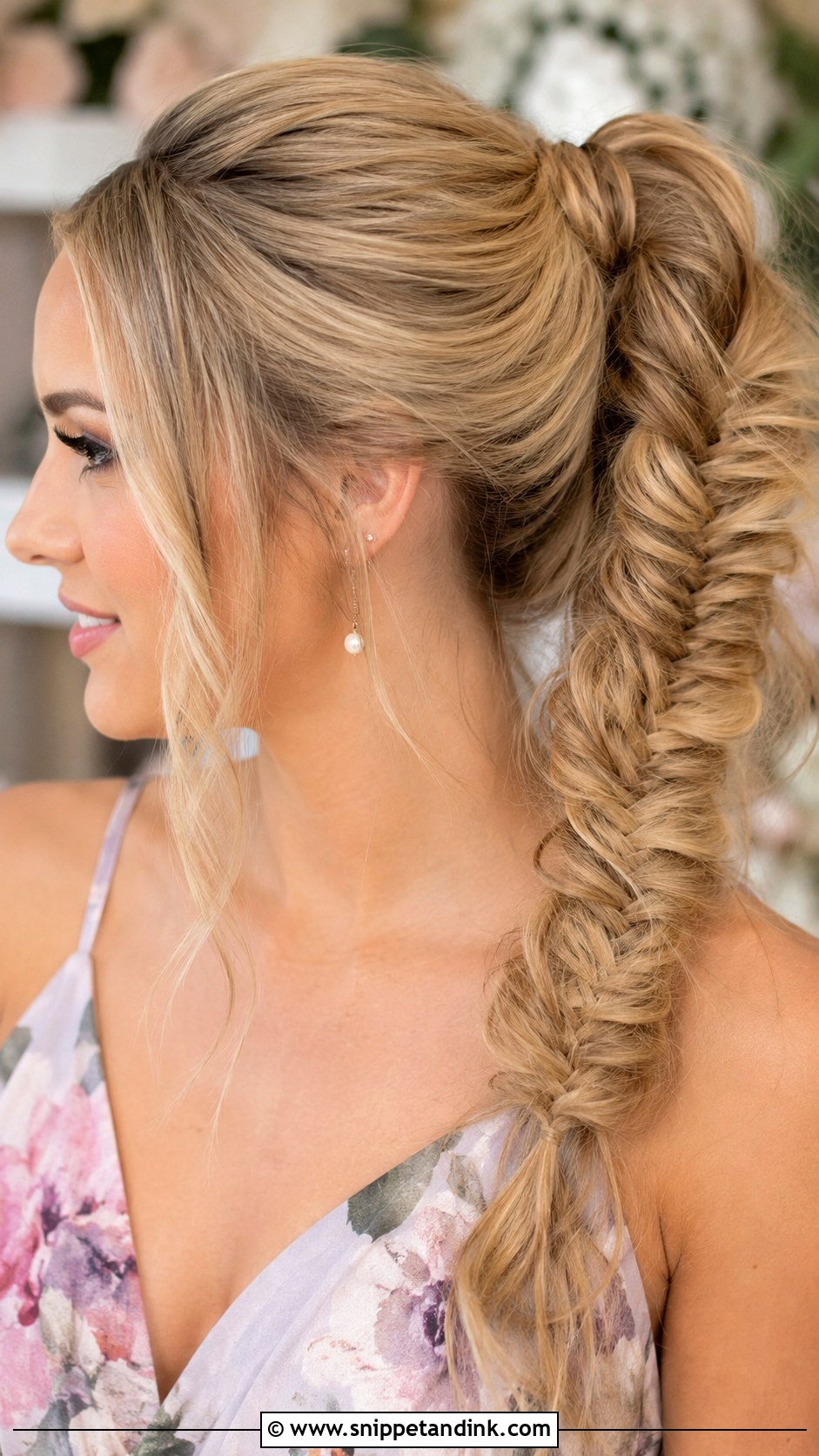
Fishtail braids look softest when they’re pulled apart a little after braiding. I braid the length fairly tight, secure the end, then tug the outer edges of each section so the plait widens and looks fuller. It fits outdoor and rustic weddings and dresses with lace or florals. Long hair keeps it controlled through a day of hugging and dancing. Texture spray before braiding gives the hair the grip it needs; very slippery hair tends to unravel at the bottom.
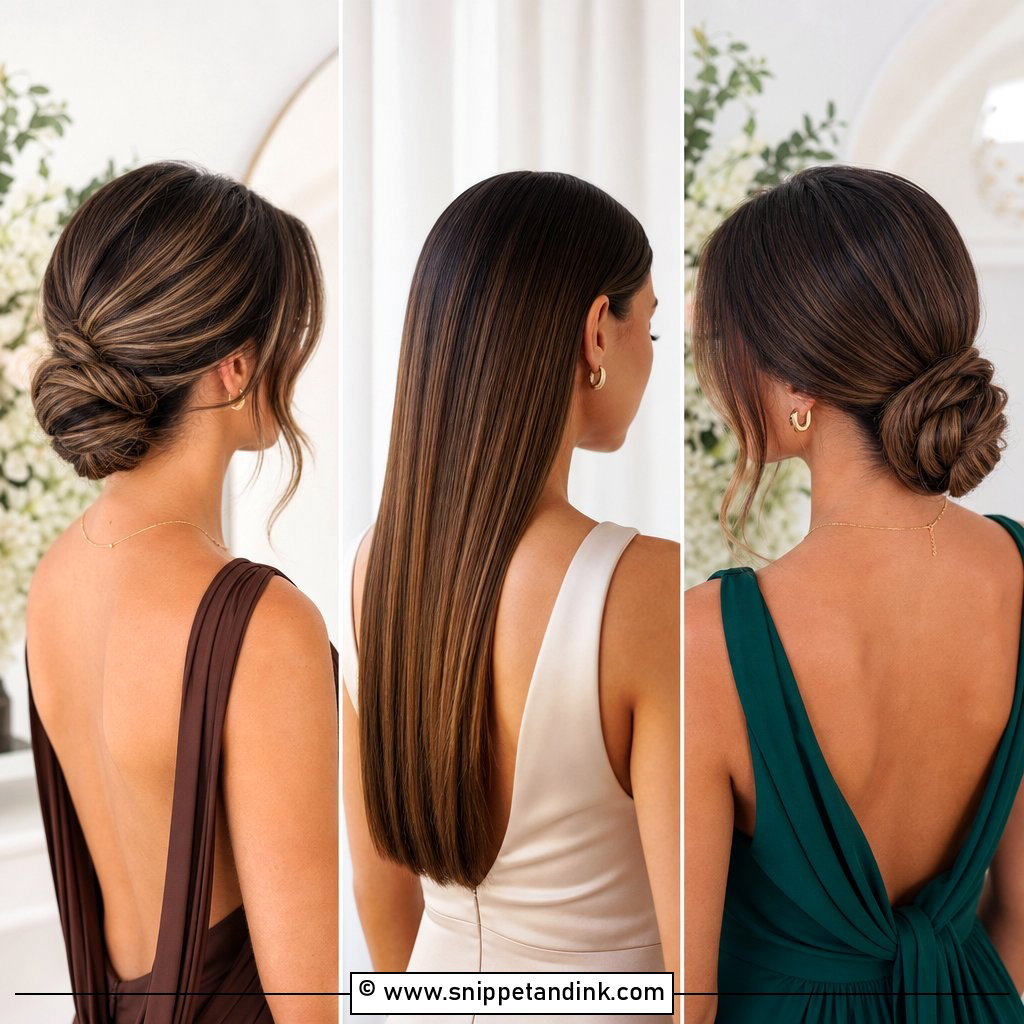
20. High Ponytail With Rope Braid
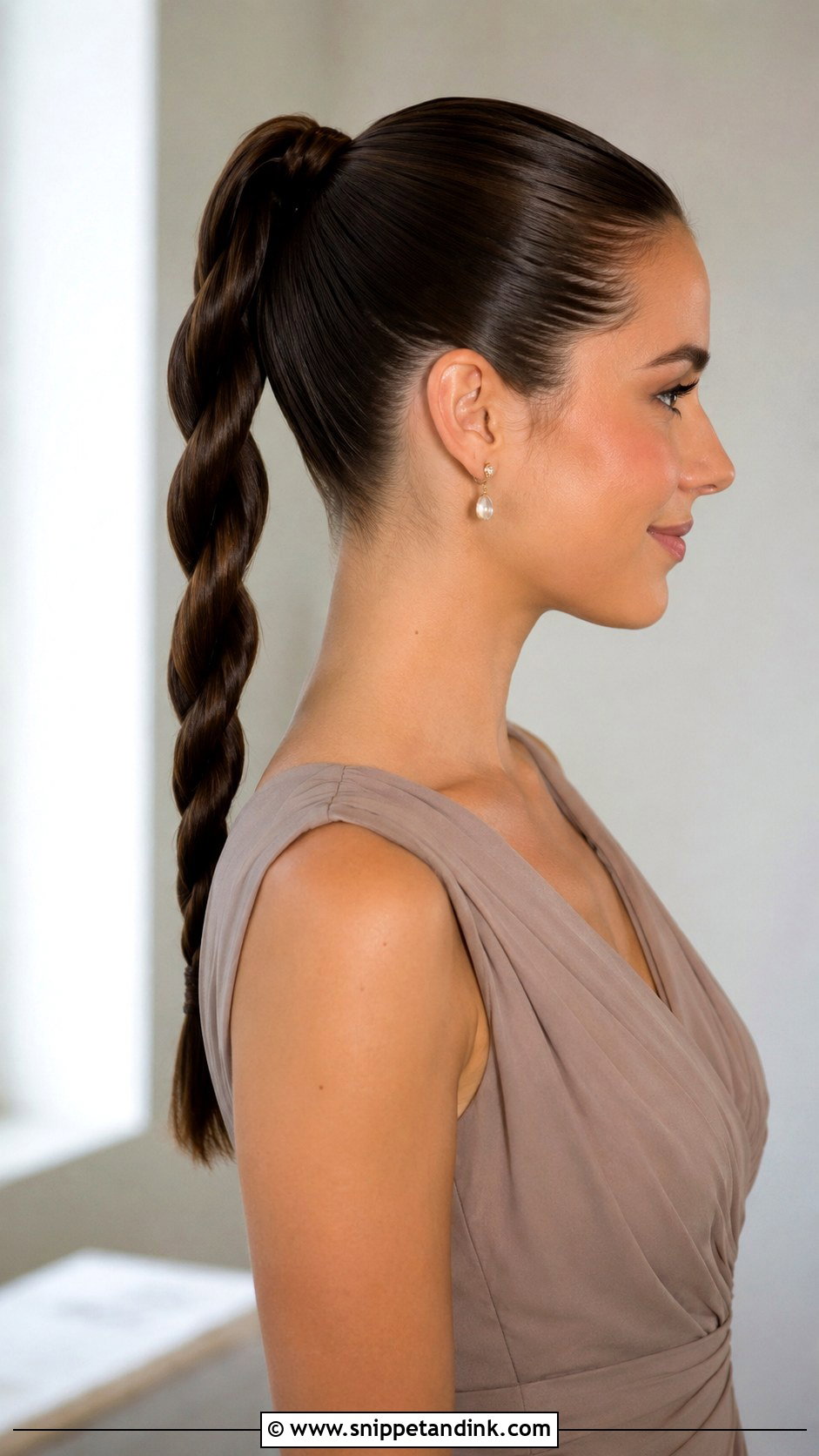
The rope braid sits between a sleek ponytail and a proper braid. I divide the length in two, twist each section the same way, then wrap them around each other in the opposite direction; that opposite twist is what keeps the rope from unwinding. It suits minimalist dresses and needs smooth, shiny hair to read clearly. I wrap the base and finish the end with a small clear elastic.
21. High Ponytail With Twisted Sides
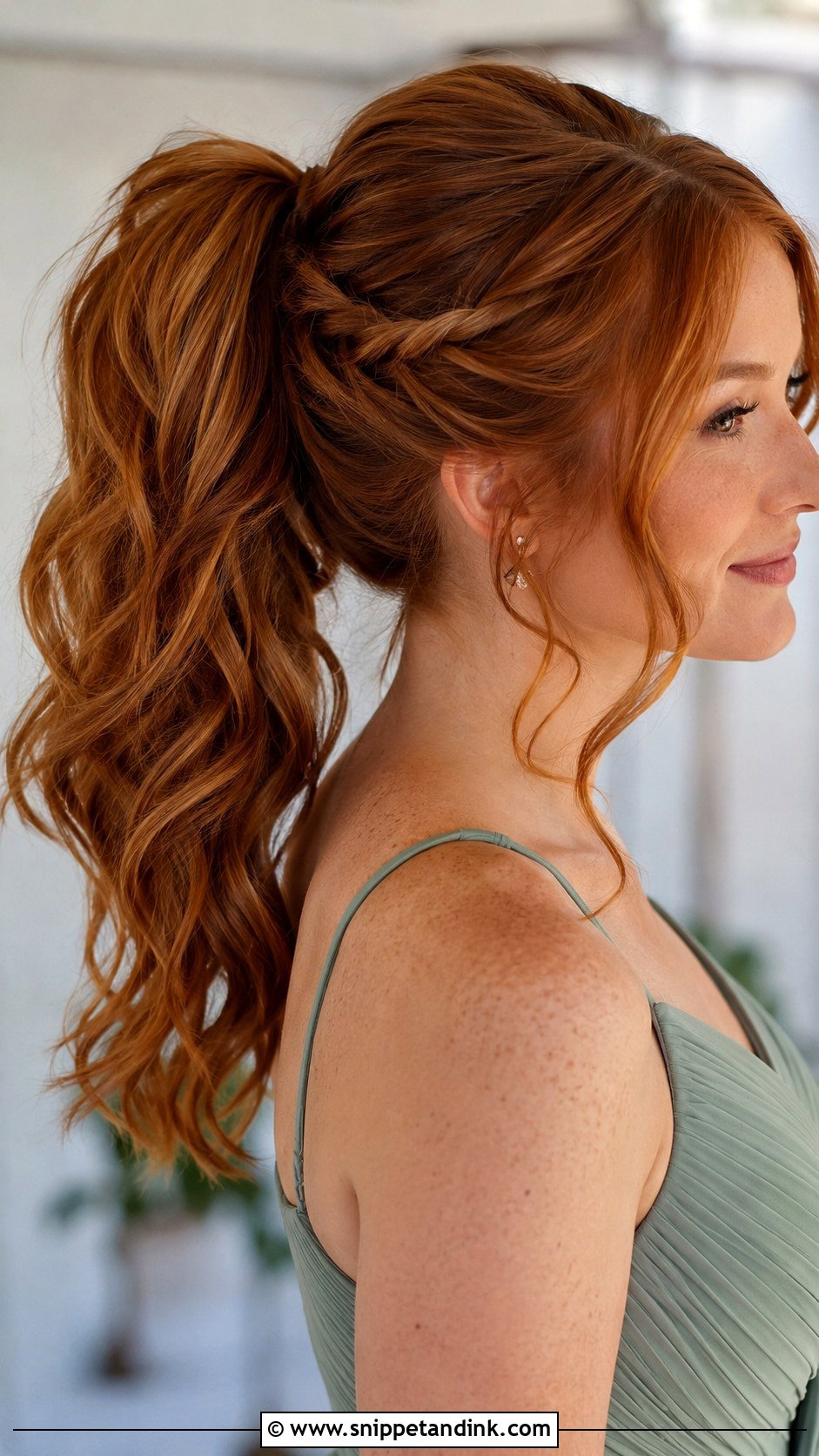
Twisted sides give the crown a little detail and quietly solve a common problem: short front layers that won’t reach a high ponytail. I take small sections from each side, twist them back toward the base and pin them into the ponytail before securing it. Straight, wavy or curly hair all take this. Pins matched to the hair color disappear into the twists; I avoid shiny black pins on blonde hair because they show in every close-up.
22. High Ponytail With Soft Volume Crown
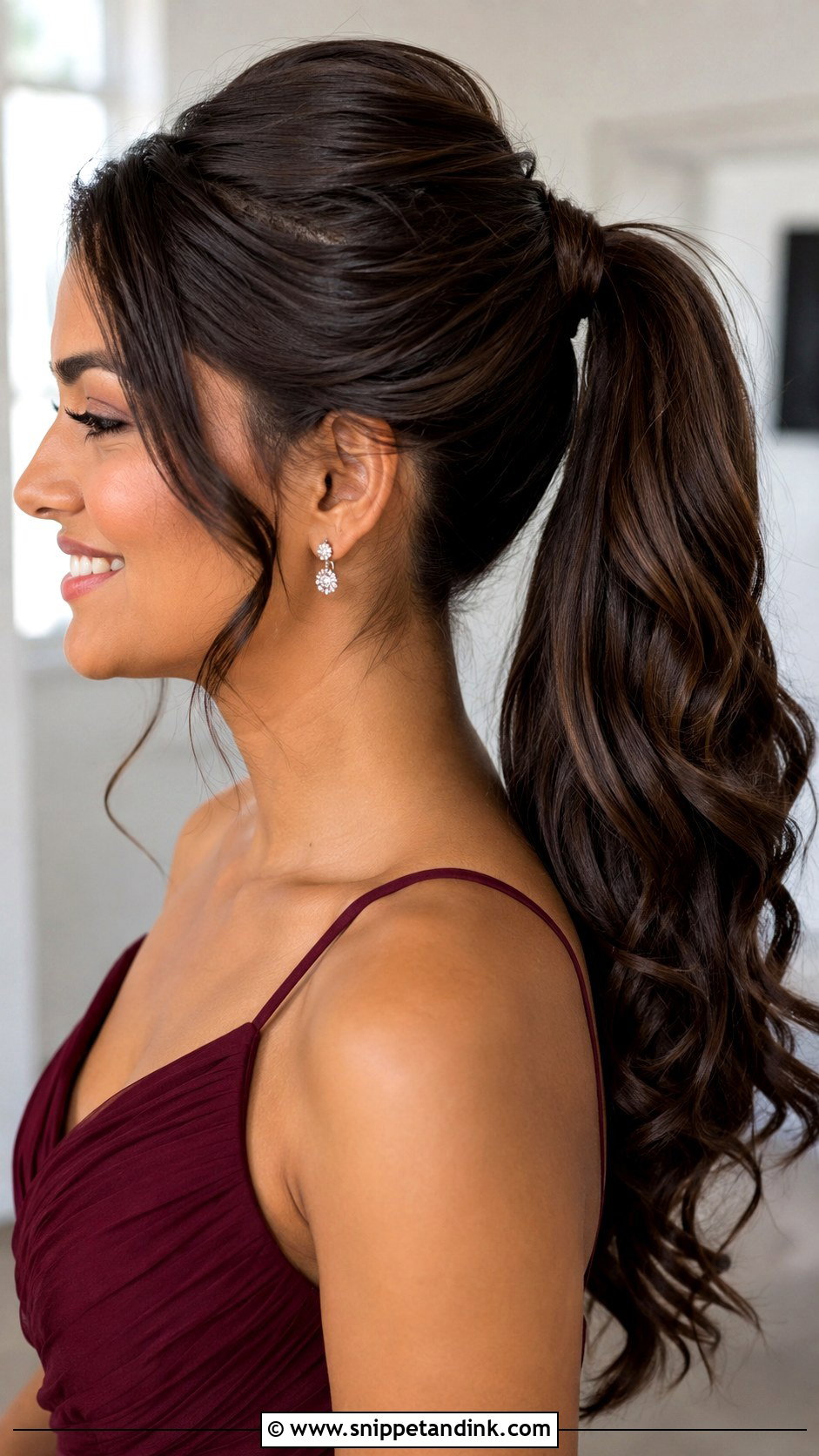
A soft volume crown suits fine hair particularly well, because flat hair pulled tight to the scalp can make a high ponytail look sparse. I blow-dry the crown upward with root spray, lightly backcomb underneath, then smooth the top layer over it before gathering. The aim is a gentle rise in profile, not a bump. The length can be curled, waved or left straight depending on the dress.
23. High Ponytail With Straight Hair
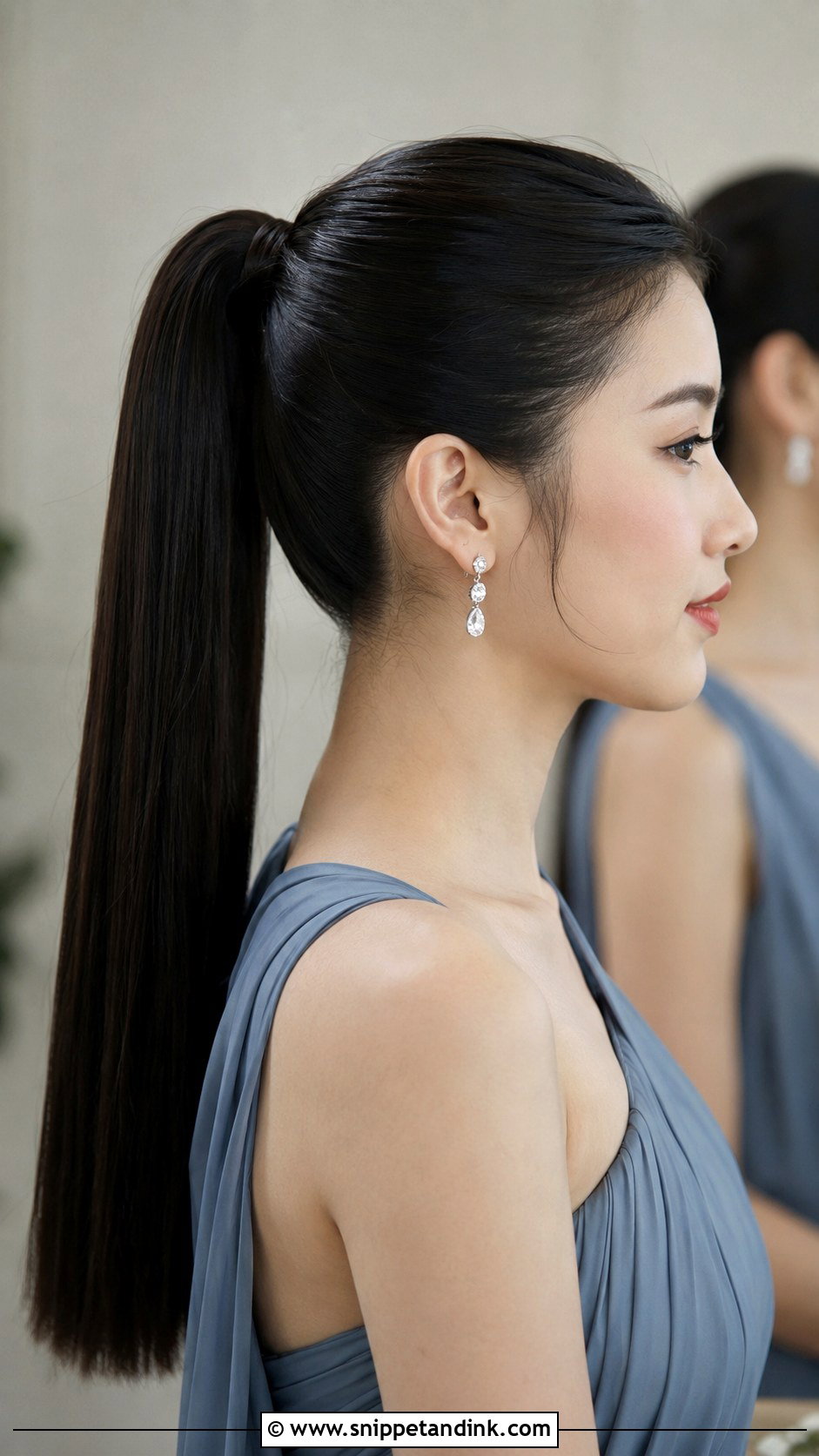
Straight high ponytails look simplest and show every flaw. Ends need to be freshly trimmed, the base wrapped and the crown free of flyaways, because there’s no curl or texture to hide anything. I flat iron the length but keep a slight bend at the ends so it doesn’t look stiff. Minimalist dresses, bold earrings and city venues suit it. A drop of serum through the length gives shine without making the roots greasy.
24. High Ponytail With Extensions
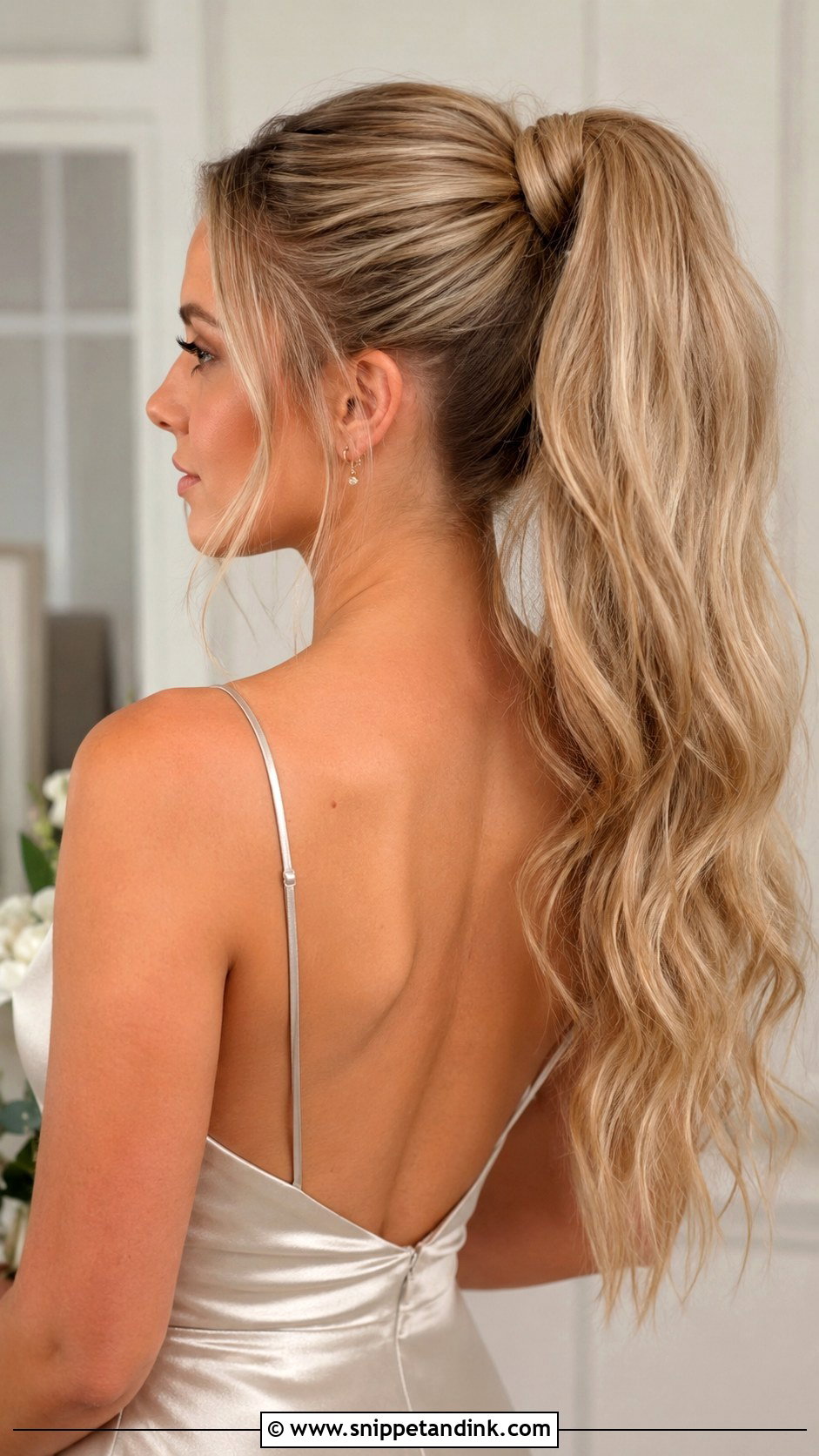
Extensions are the honest answer for bridesmaids with fine or shoulder-length hair who want a long, full ponytail. Clip-ins or a wrap ponytail piece can both work; I match color and texture to the natural hair first, because a sleek extension on wavy hair is obvious from across the room. The wrapped base hides the clip or comb. I always have the bridesmaid move her head around and bend down before she leaves my chair, since a wrap ponytail that feels loose at 10 a.m. will be sliding by the first dance.
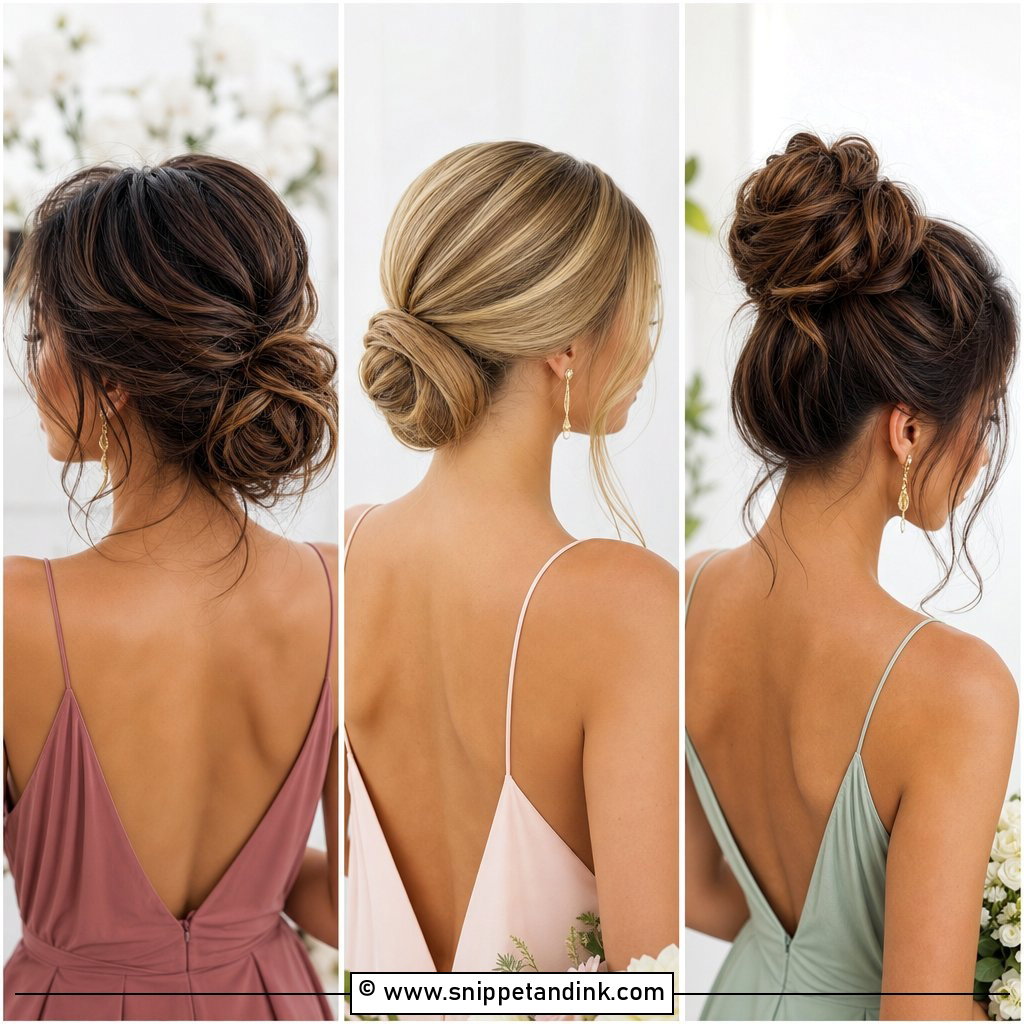
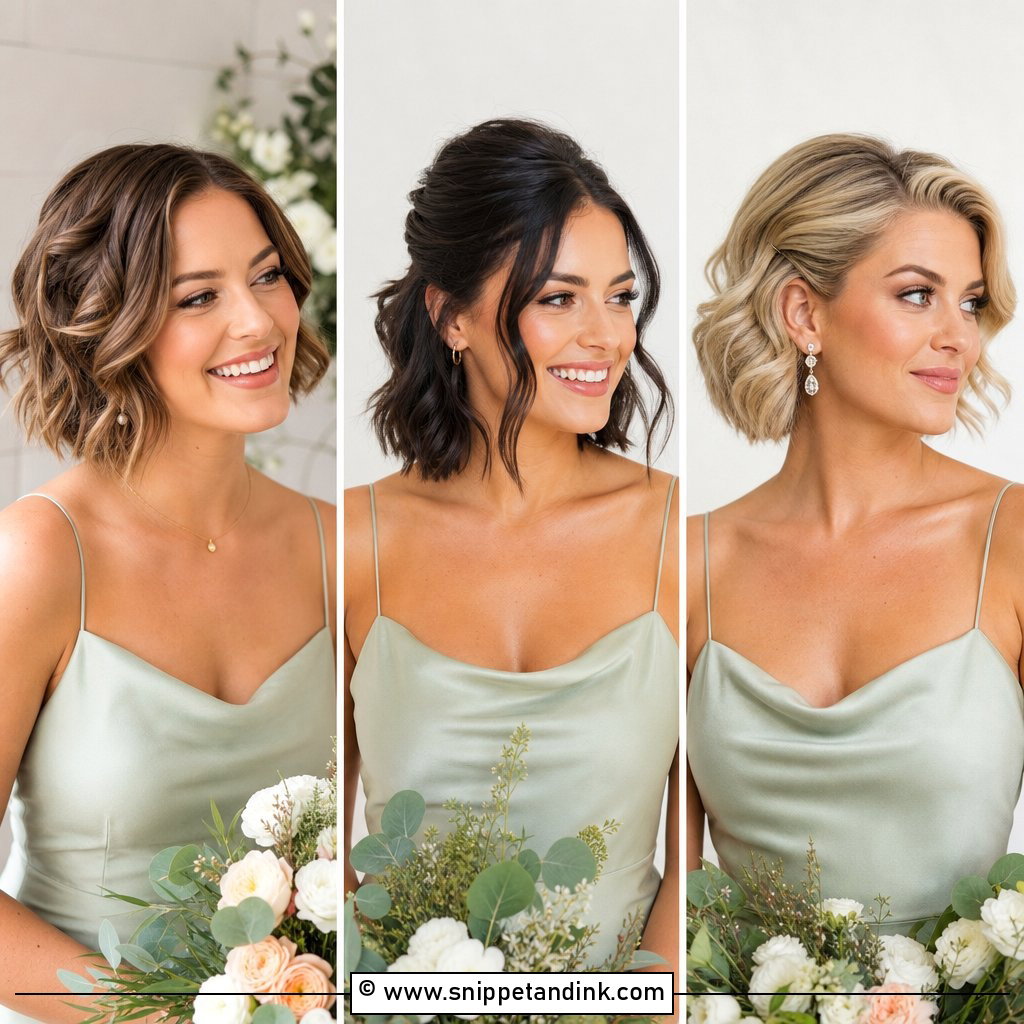
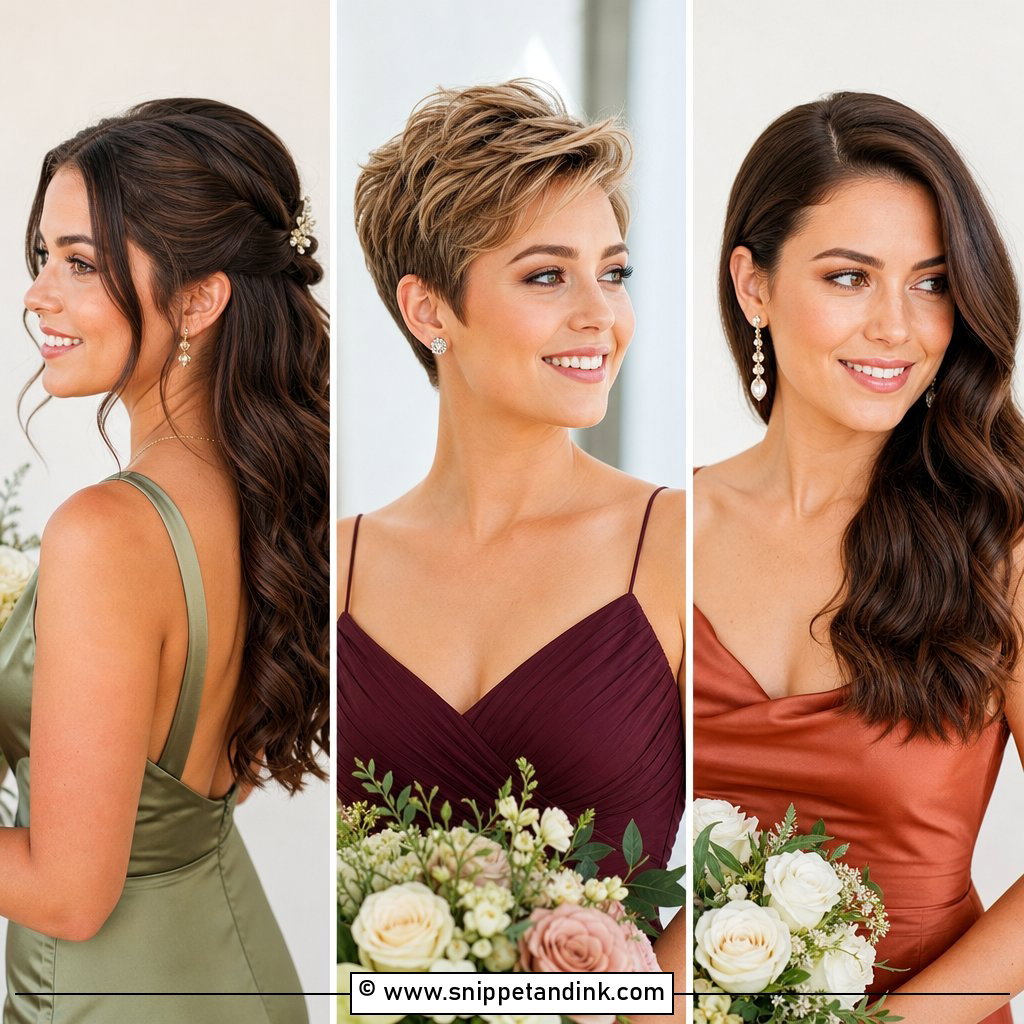
25. High Ponytail For Long Bridesmaid Hair
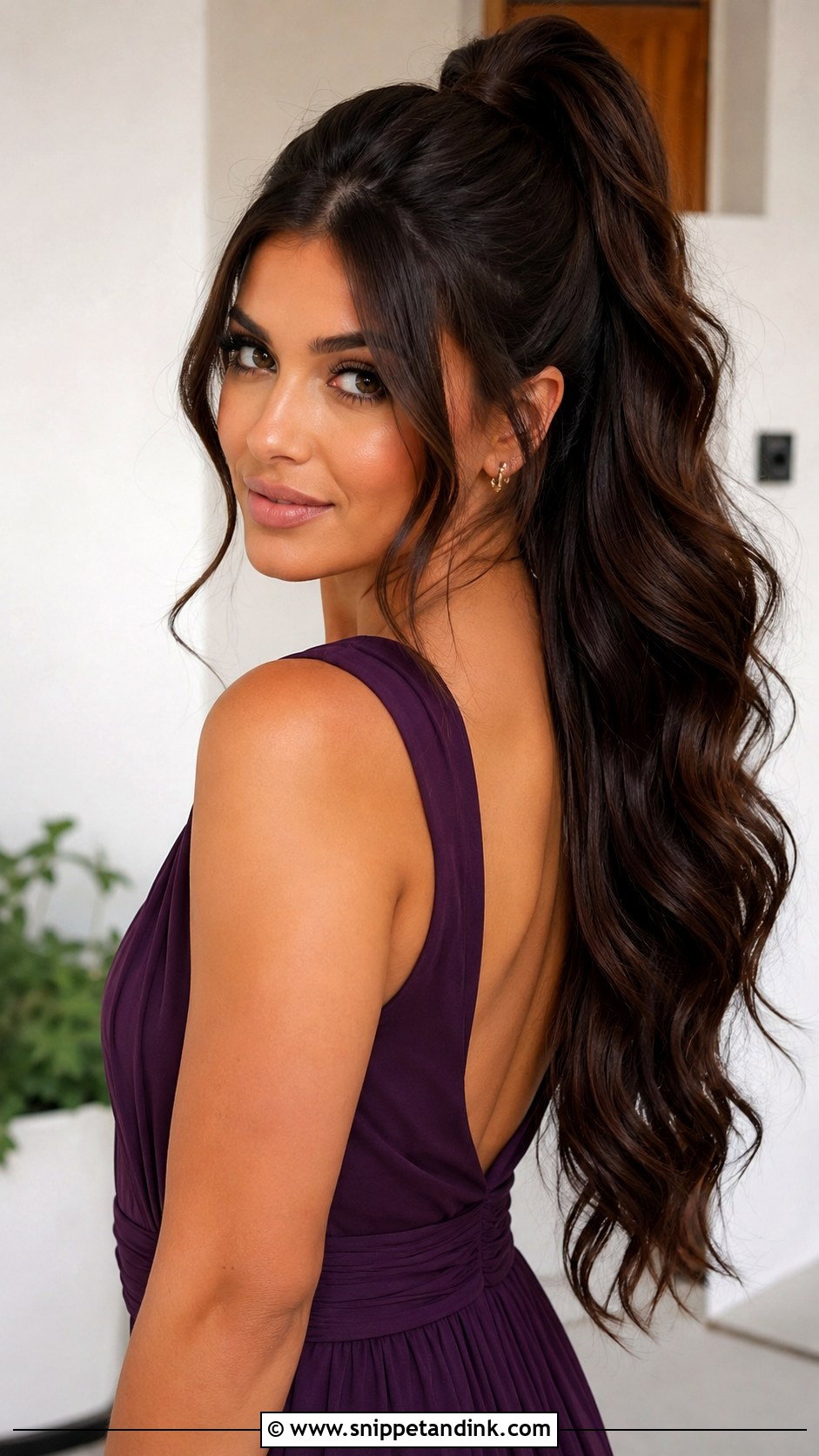
Very long hair gives the most freedom here, but it’s also the heaviest ponytail to wear. A high base on waist-length hair can feel like it’s pulling the scalp backward after a few hours, so I use a strong elastic plus pins locked into the band to spread the weight. Open-back and strapless dresses show off the length well. Curls, waves, braids, bubbles or a straight finish all work; I’d just keep the hold soft enough that the ponytail still swings.
Matching Five Bridesmaids Who Have Five Different Hair Types
Bridal parties rarely share one hair type, and forcing everyone into identical sleek ponytails is the fastest way to make one bridesmaid miserable. I’d rather fix one or two elements and let the rest follow each person’s hair.
- Keep the height consistent across the party. Same placement reads as coordinated even when textures differ.
- Repeat one detail, such as a wrapped base, a ribbon in the wedding color or the same pearl pins.
- Let the length do what it naturally does: curls stay curly, straight hair gets a soft bend, braids stay braided.
- Use extensions only where someone actually wants extra length, not to force everyone to match.
At the trial, I photograph each finished ponytail from behind as well as the front. The ceremony photos most people forget about are the ones taken from the guests’ side, where you see the back of every head lined up at the altar.
Small Fixes I Carry for Ponytails Late in the Night
By the reception, the problems are predictable: the wrap at the base slips, flyaways rise at the nape and curls in the length relax. A small kit in the bridal suite handles all three.
- Bobby pins in each bridesmaid’s hair color, to re-lock a slipping wrap into the elastic.
- A travel can of flexible hairspray and a clean toothbrush to smooth flyaways at the hairline.
- Two spare coated elastics, because one always disappears.
- A small wax stick for the nape, where humidity lifts short hairs first.
If a bridesmaid gets a headache anyway, I’d rather she take the ponytail down an inch than suffer. Releasing the top elastic and re-securing it lower takes a few minutes and is far better than a pained face in every dance photo.
A Ponytail Built to Last Until the Last Song
High ponytails work for bridal parties because they’re comfortable, they keep hair out of the way and they read clearly in photos. The details that make one look professional are the same across all twenty-five: a hidden, secure base, a crown that suits the face and texture that matches each bridesmaid’s own hair. Get those right and a sleek version, a curly one and a braided one can stand side by side and still look like one wedding party.
You'll Like These Ideas:


Leave a Reply