
Cottage core is the hardest wedding look to fake, because its whole charm is that nothing seems to have been ordered from a catalogue. Soft florals, handmade details, flowing dresses, linen on old tables and cakes that look baked in a farmhouse kitchen all belong, but only when they feel gathered over time. I design these weddings by picking one story and letting the venue carry most of it. The twenty ideas below cover meadows, barns, back gardens, greenhouses, orchards and woods across every season and a range of budgets, with notes on what I’d keep, what I’d cut and what tends to go wrong outdoors.

Building a Collected Table That Doesn’t Look Like a Jumble Sale
The look depends on mismatched pieces, and mismatched is easy to get wrong. When I build these tables I fix one thing and let everything else vary.
- One constant per table. Same linen color, or same glassware, or same cutlery. Mixed china looks intentional when something underneath it repeats.
- A color rule for the china. Collect plates that share one or two colors, such as blue-and-white or pink-and-green florals, rather than any pretty plate you find.
- Count before you shop. Secondhand teacups and plates come in odd numbers. Start collecting early, buy around ten percent extra for breakage and decide who washes and packs them afterwards.
- Rent the bulk, collect the details. Chairs, tables and dinner plates are usually cheaper and easier to rent. Put your thrifting budget into the things guests touch and notice: teacups, vases, candlesticks, a dresser for desserts.
Linen is where I’d rather spend. Real linen or a good cotton blend creases softly and reads handmade in photos, while shiny polyester undoes the whole aesthetic from across the lawn.
1. Cottage Core Wildflower Garden Wedding
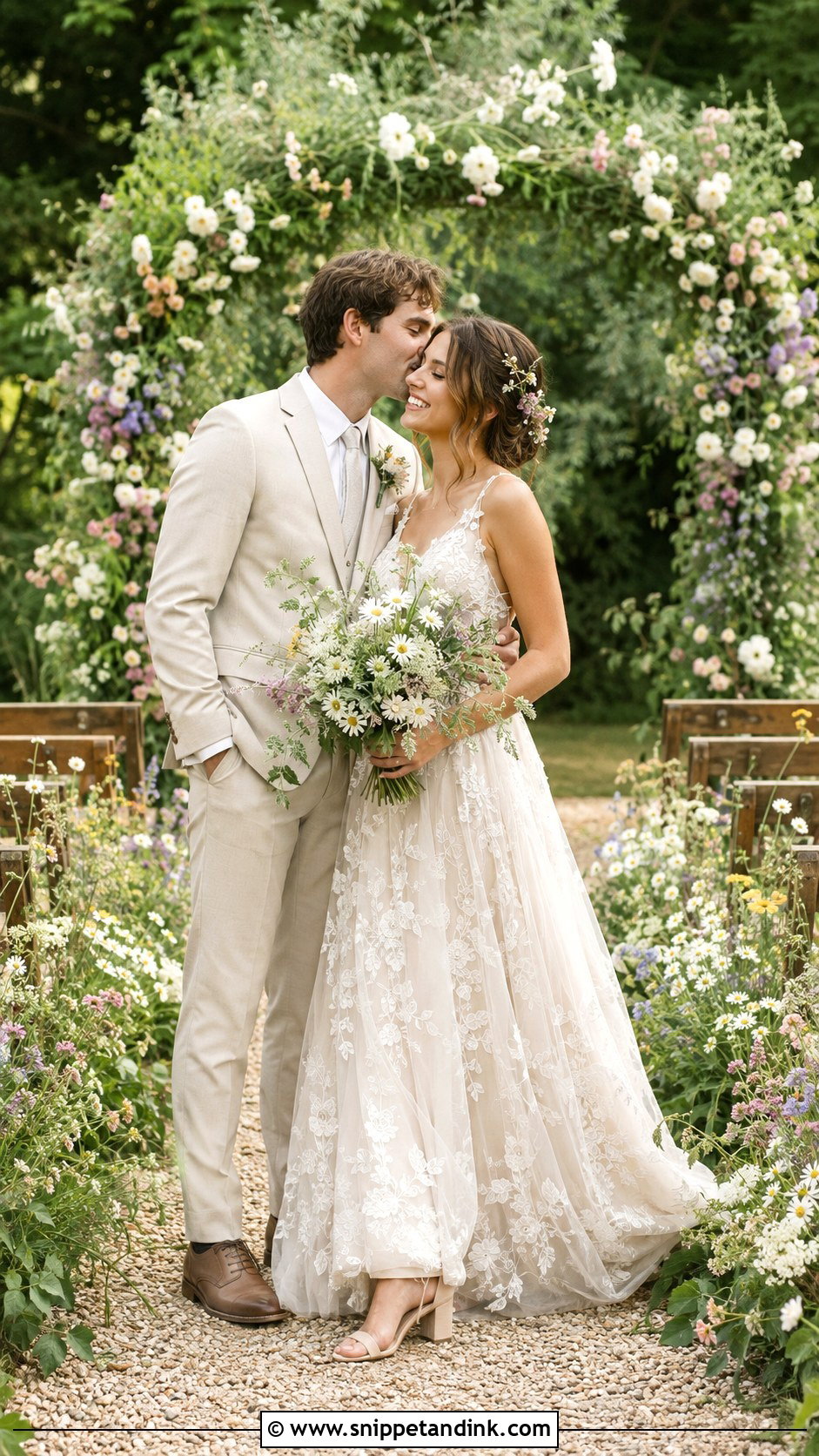
This is the look most people picture first. A flower farm, botanical garden or grassy backyard gives you most of the decor before you’ve bought anything. I line the aisle with low, airy arrangements set straight onto the ground so they seem to grow there: cosmos, daisies, delphiniums and seasonal greenery. Be warned that cosmos and other true wildflowers flop within hours out of water, so every arrangement needs hidden water sources. A flowing lace gown and block heels for the bride, a light beige or brown suit for the groom. Mismatched floral linens, glass bud vases, handwritten place cards and a buttercream cake with edible flowers carry the garden indoors. Keep arrangements a little uneven.
2. Cottage Core English Countryside Wedding
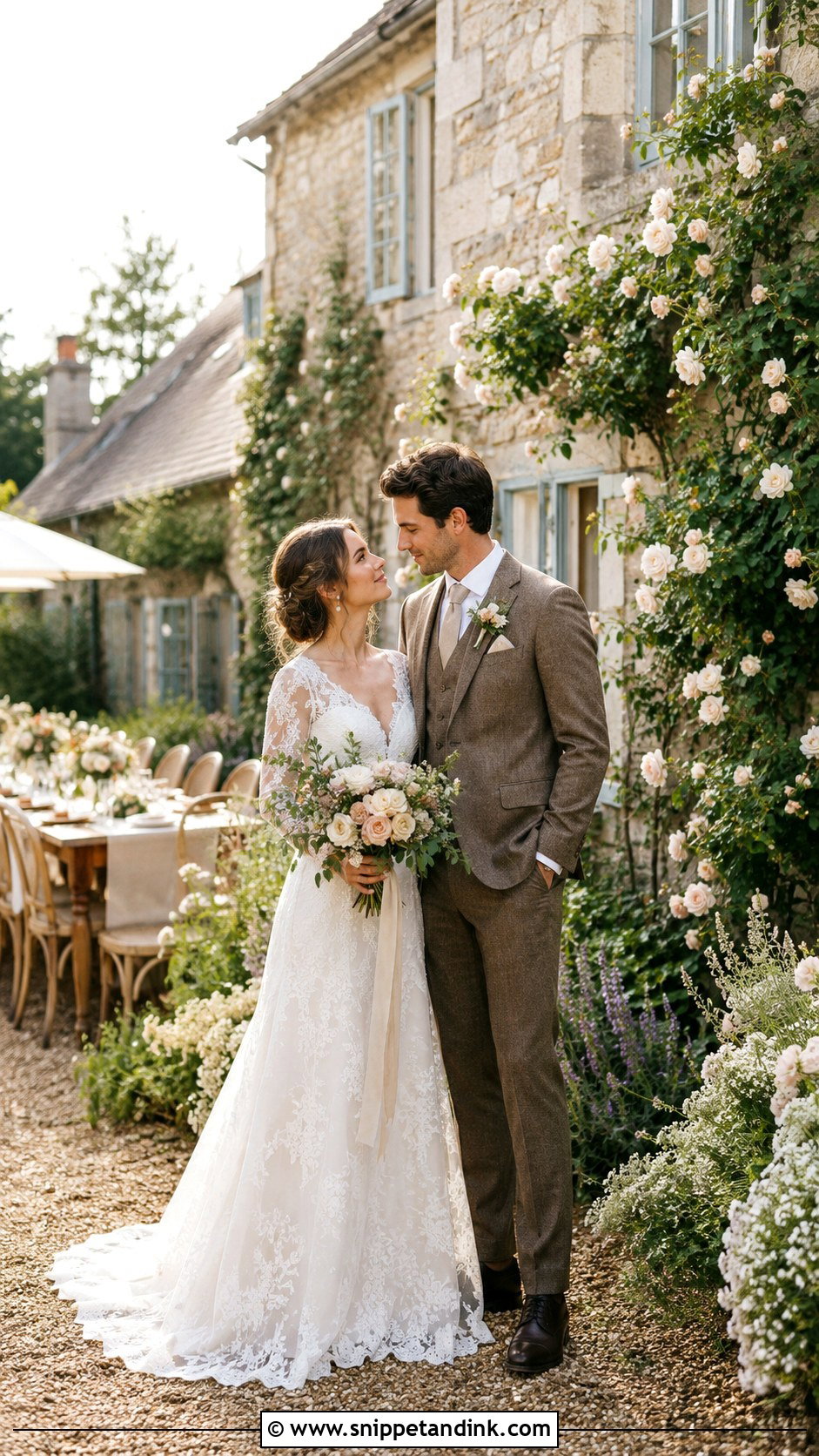
Climbing roses on old stone do half my job at an English country house or inn. I’d hold the palette to sage, pale blue, cream and soft pink, and dress attendants in different floral prints inside that range. A long-sleeved lace gown with pearl earrings and loosely pinned hair suits the setting. For the reception: wooden tables, linen runners, garden roses, antique brass candlesticks and patterned china. Tea, fruit pastries, fresh bread and a lightly decorated tiered cake fit the hour. Garden roses drop petals fast in warm rooms, so I place them last. Botanical-illustrated menus finish this cottage core wedding aesthetic.
3. Cottage Core Rustic Barn Wedding
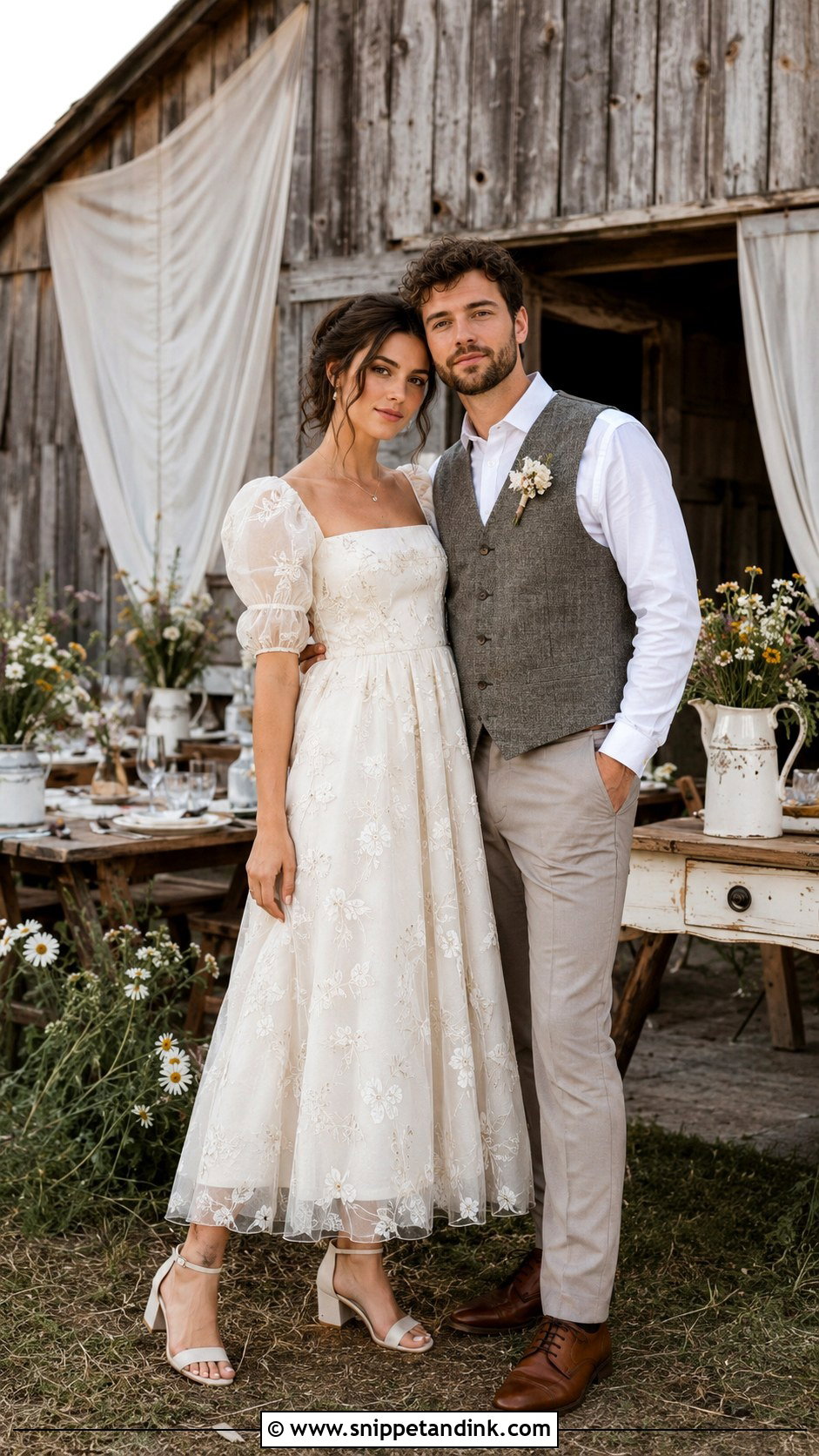
Barns lean rustic by default. The trick is softening the rough timber with fabric and delicate flowers. I’d hold the ceremony outside by the barn under a plain wooden arch with greenery and scattered blooms. The bride could wear a puff-sleeve gown with embroidery; the groom a textured waistcoat, white shirt and leather shoes. Inside, drape light fabric panels and string small white lights across the beams. Oatmeal linen, vintage glassware, ceramic jugs and meadow centerpieces dress long farmhouse tables, with fruit tarts, cookies and a semi-naked cake on the dessert table. Skip the burlap and distressed slogan signs; they pull the room straight back to rustic.
4. Cottage Core Woodland Wedding
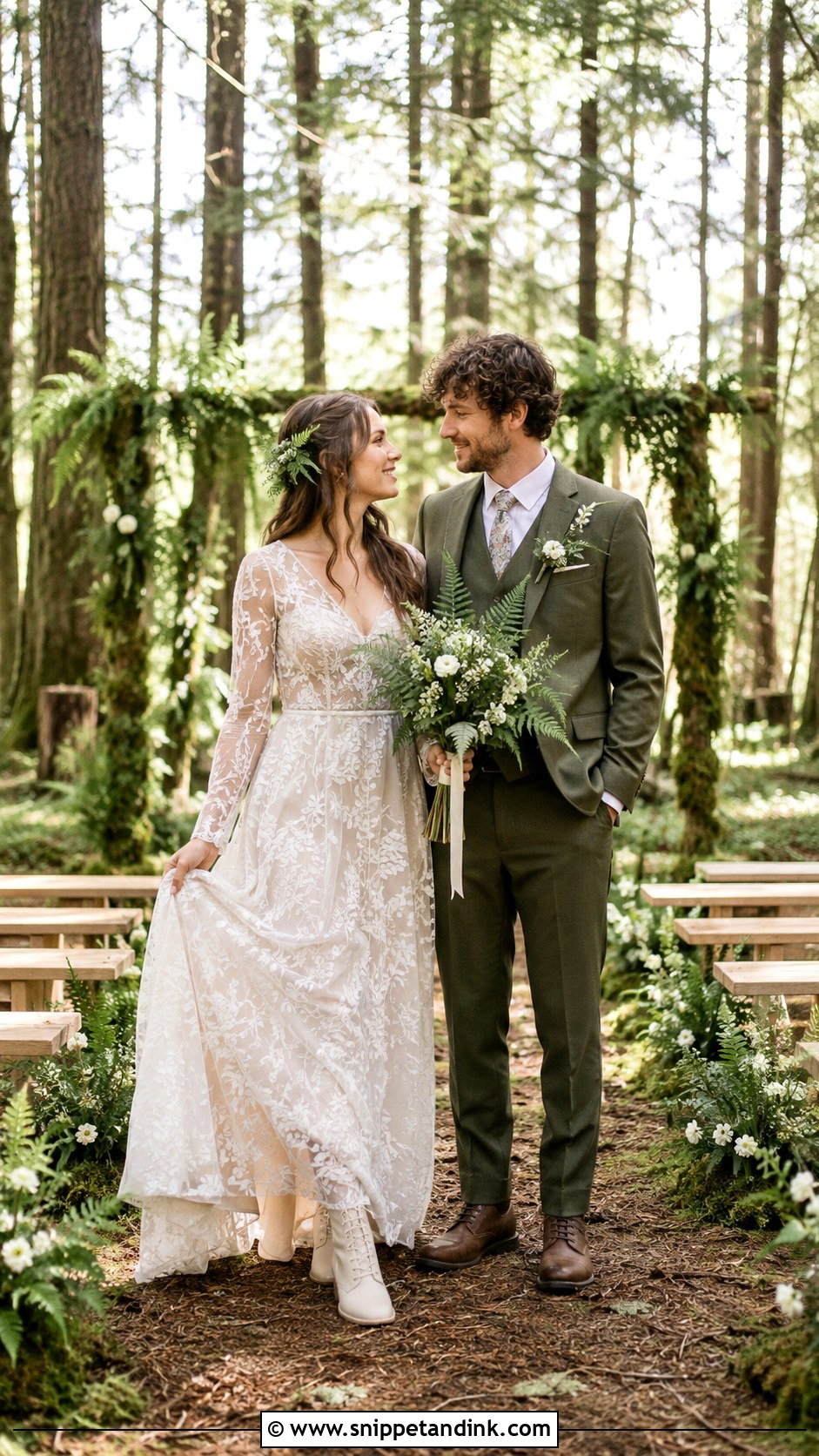
A woodland wedding only feels welcoming if there’s light. Pick a clearing with an open canopy and visit at the hour you’ll marry, because tall trees put the aisle in shade sooner than you’d think. Use the landscape itself instead of building a big structure: ferns, white flowers, moss and wooden benches. Chiffon or botanical lace lets the bride move over roots and uneven ground, with low heels or bridal boots; an olive, brown or soft grey suit for the groom. Cream linens, clear glassware, potted ferns and white tapers suit tables under the trees. Botanical stationery and a cake decorated with pressed flowers tie it together.
5. Cottage Core Vintage Tea Party Wedding
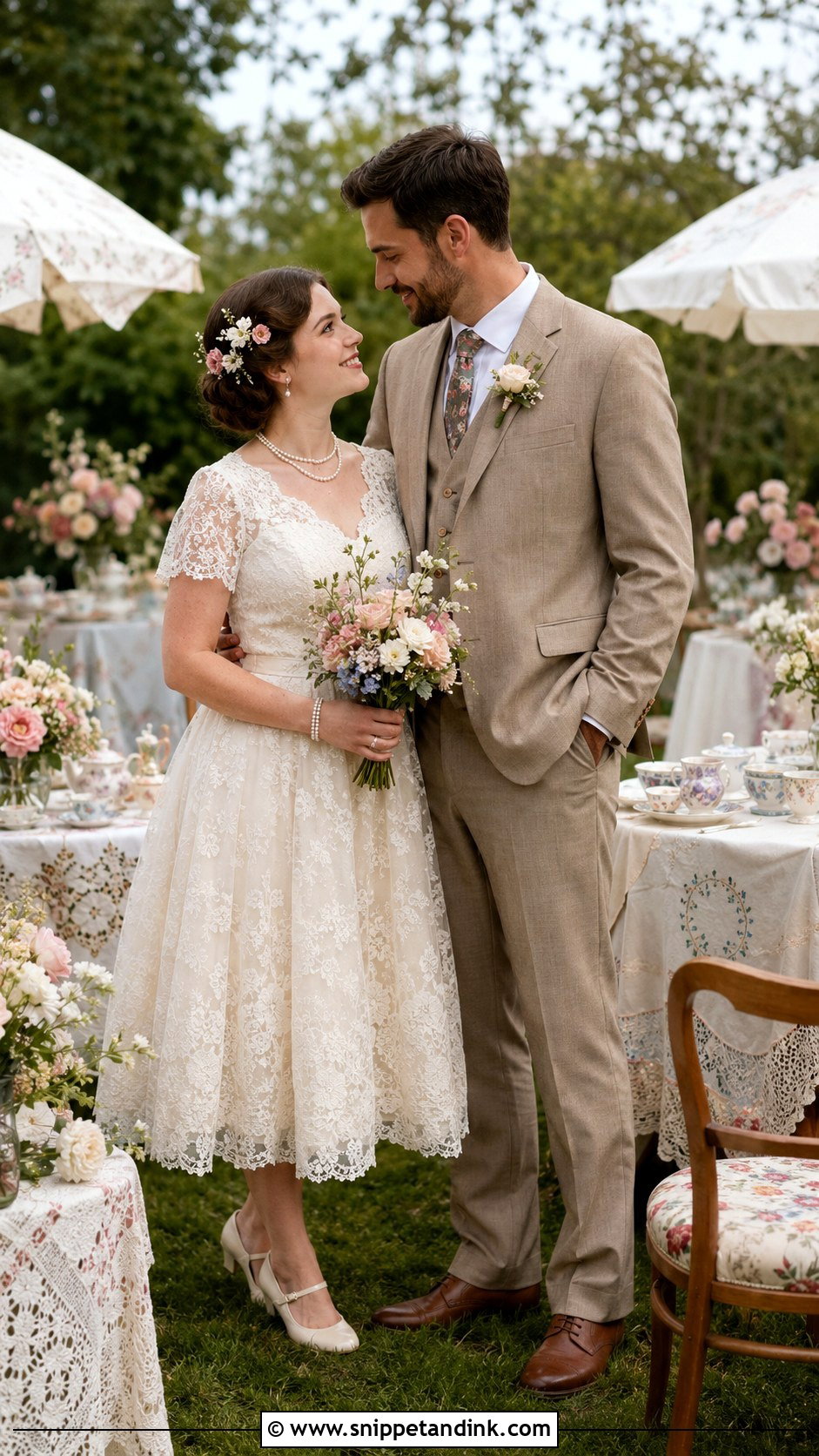
Afternoon on a lawn, veranda or terrace is the natural home for a tea party wedding. A tea-length lace dress, low heels, pearls and a small floral hairpiece for the bride; a tan suit with a floral tie for the groom. I set round tables under pale umbrellas with embroidered linens, mismatched teacups, small posies and handwritten menus. Herbal tea, lemonade, finger sandwiches, scones, berries and small cakes are the menu. A vintage dresser makes a good dessert station and an old writing desk a guest book table. The more mismatched the china, the softer the color palette needs to be, or the tables start to look cluttered.
6. Cottage Core Orchard Wedding
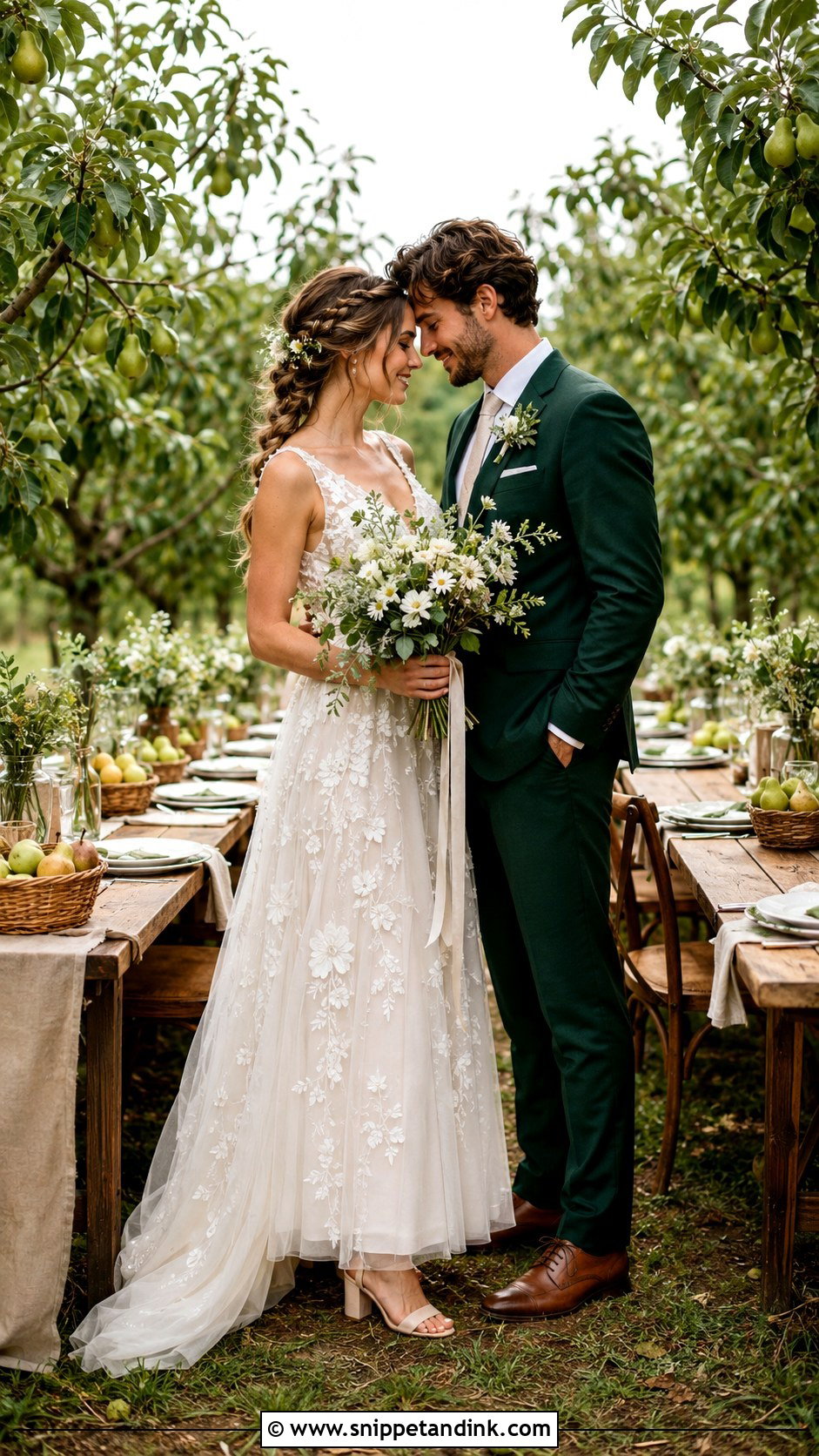
Rows of fruit trees give an orchard ceremony its own aisle, so I leave the branches almost untouched and place one grounded arrangement at the entrance. An ivory A-line with floral appliqués, a loose braid and block heels suits soft orchard grass; brown or forest green for the groom. Wooden tables under the trees, linen runners, baskets of seasonal fruit, ceramic plates and loose greenery. Fruit illustrations on the invitations and table numbers. For dessert, fruit pastries, a simple frosted cake and small jars of preserves as favors. Ripe fruit attracts wasps late in summer, so ask the grower which weeks are calmest.
7. Cottage Core Lavender Field Wedding
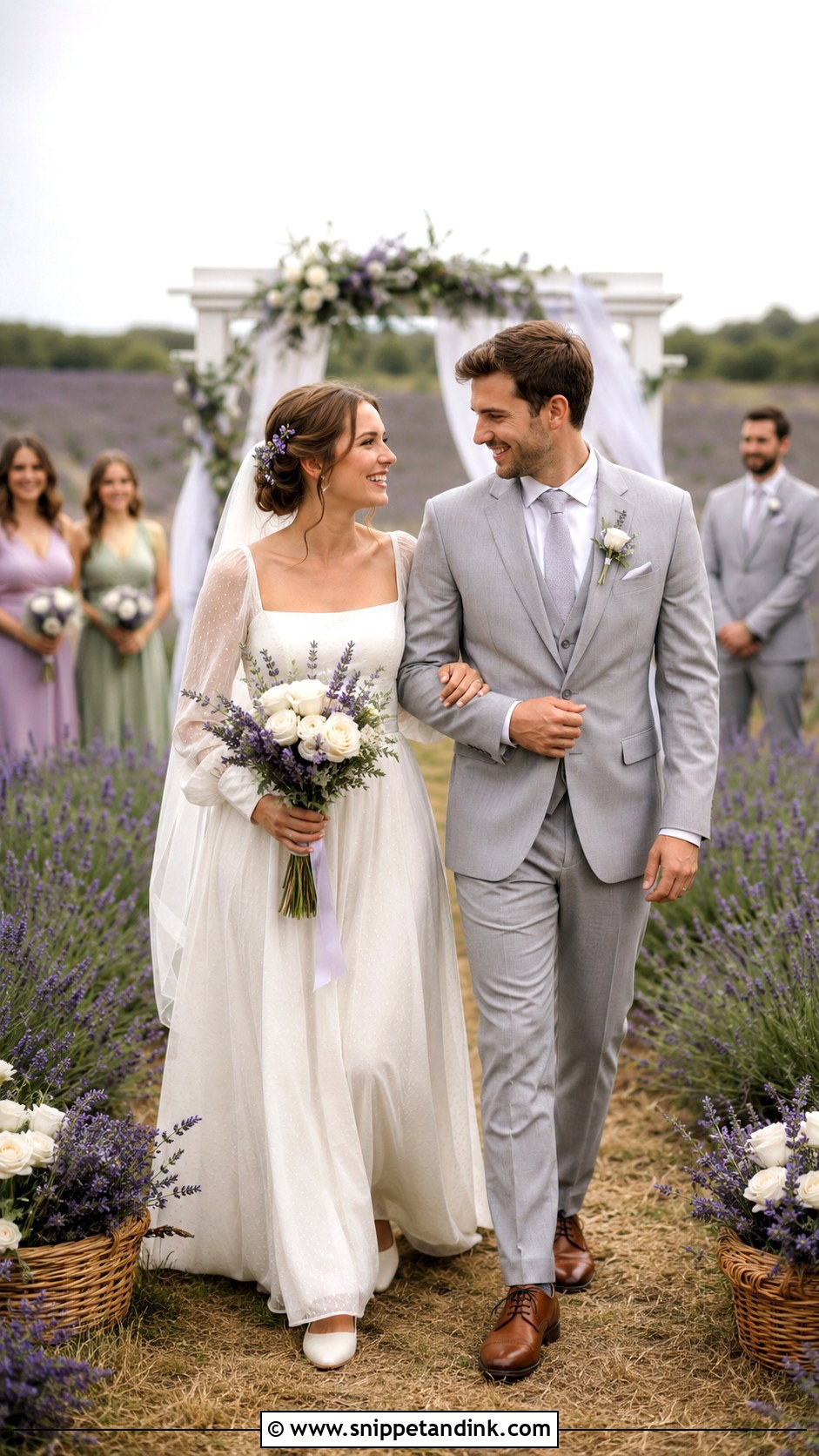
Lavender rewards restraint. Hold the ceremony beside the field, never in it, since the plants are woody and easily damaged and the rows are full of bees in bloom. A white wooden arch with lavender, cream roses and loose greenery frames the vows. A simple square-neck gown with sheer sleeves, lavender pins and ivory flats for the bride; lilac, dusty mauve or sage for attendants. Pale linen tablecloths, sprigs of lavender, white ceramics and natural wood chairs keep it calm. Use the scent and color sparingly in stationery, favors and desserts. A smooth white cake with small purple flowers is enough. Bloom is short and weather-dependent, so check timing with the farm before you set a date.
8. Cottage Core Greenhouse Wedding
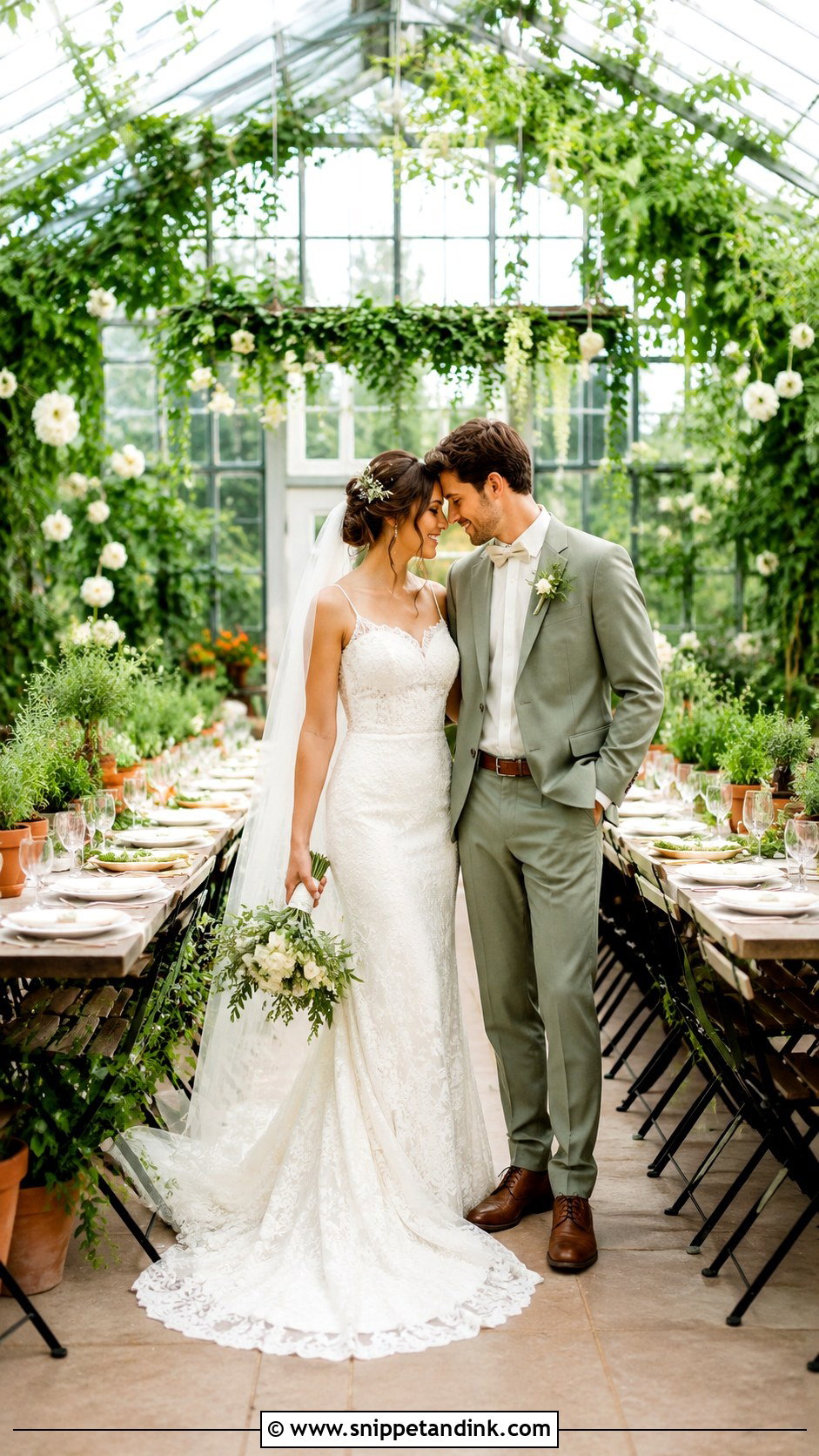
Glasshouses come decorated, so my instinct is to do less. White flowers and trailing vines at the ceremony, a minimalist lace gown, a fine veil and a botanical comb for the bride, and light grey, sage or beige for the groom. Narrow tables, crisp ivory linen, potted herbs, clear bud vases and pale wooden chairs. Name tables after plants on botanical place cards. A clean buttercream cake with leaves and small flowers lets the architecture lead. Glass traps heat badly on a sunny afternoon; ask about vents, fans and shade cloth, and keep buttercream out of direct sun.
9. Cottage Core Spring Pastel Wedding
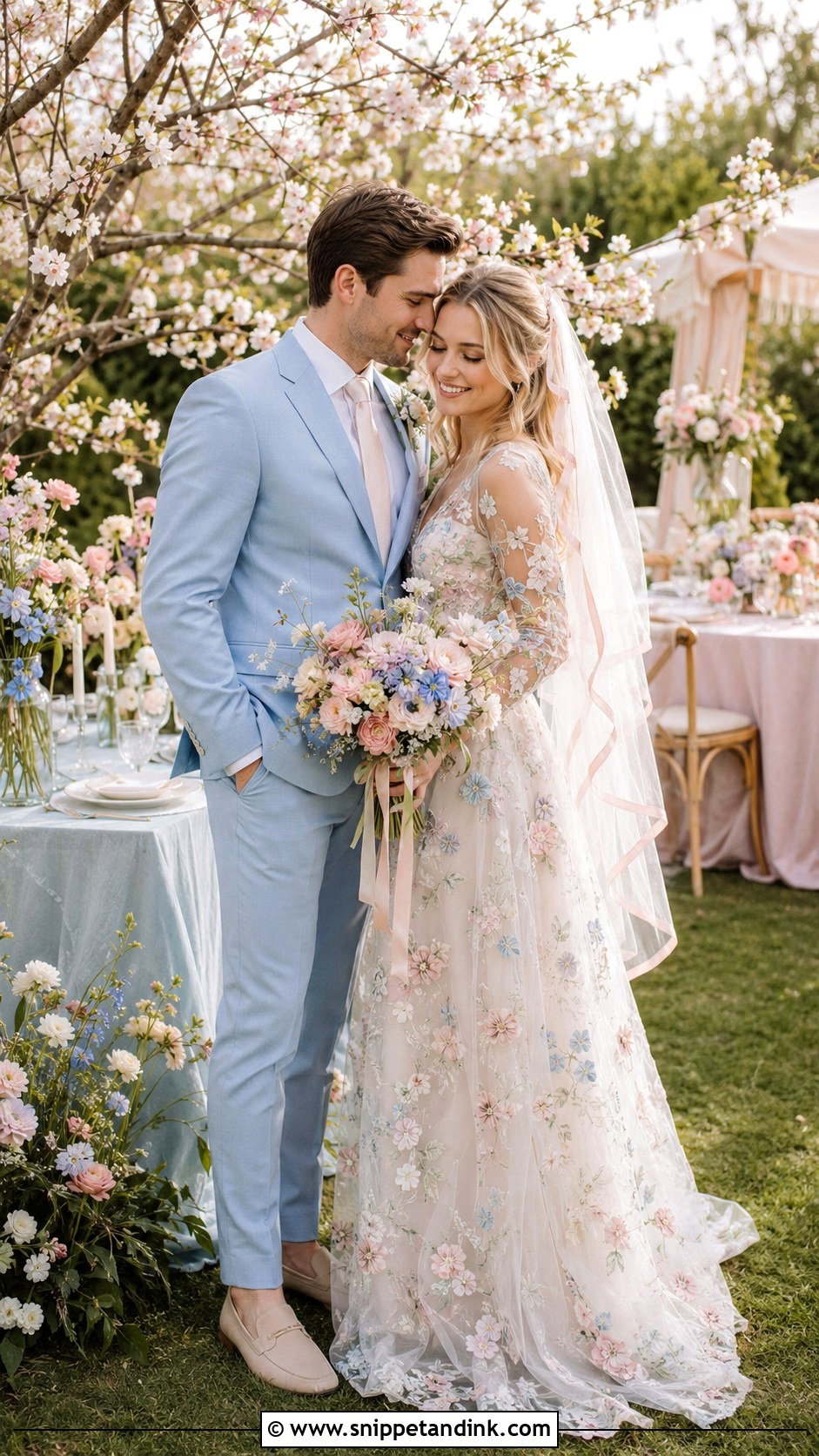
Spring pastels go sweet quickly if every shade gets equal weight. I pick two leads from butter yellow, blush, lilac, powder blue and soft green, and use the rest as small accents. A floral-embroidered gown, ribbon-edged veil and pastel bouquet for the bride; light blue or beige for the groom with one floral touch. Flowering branches and low meadow arrangements at the ceremony. Pastel napkins on white cloths, painted candles and clear bud vases at the reception. A pressed-flower seating chart and small iced cakes add the handmade note, and white or natural wood furniture keeps the color clean.
10. Cottage Core Summer Meadow Wedding
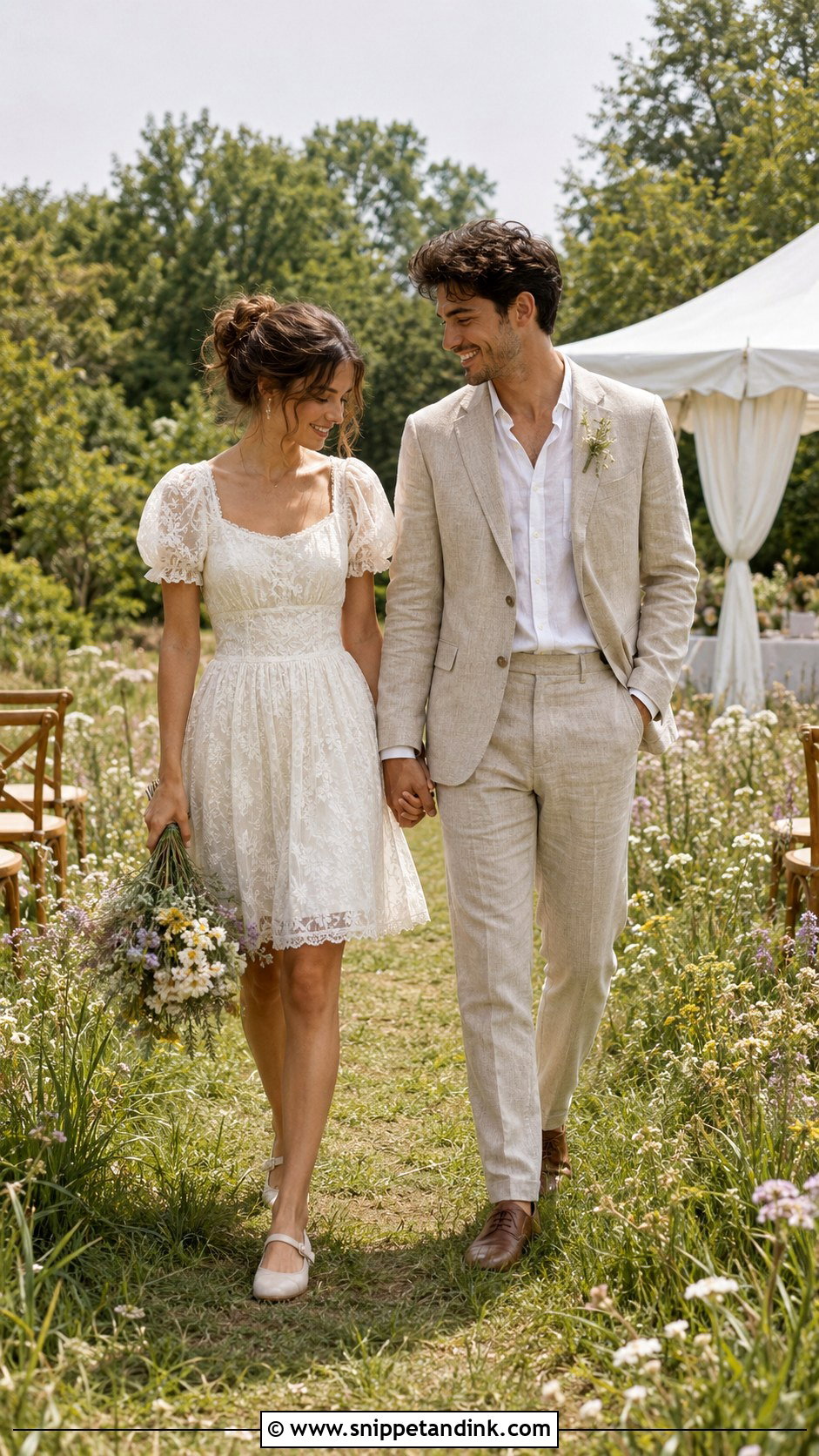
A summer meadow needs very little added. I’d use wooden chairs and an asymmetrical floral arch that follows the slope of the land. Breathable cotton, chiffon or light lace with short puff sleeves, flats and a loose updo suit the bride; a linen suit and open collar suit the groom. Put the reception under a white canopy with long tables, natural linens, woven baskets and bright garden flowers. Chilled fruit drinks, seasonal salads and a berry cake fit the weather. Long grass hides holes and ticks, so have the venue mow paths and the seating area a day or two before. Shade and hand fans are not optional in high summer.
11. Cottage Core Fall Harvest Wedding
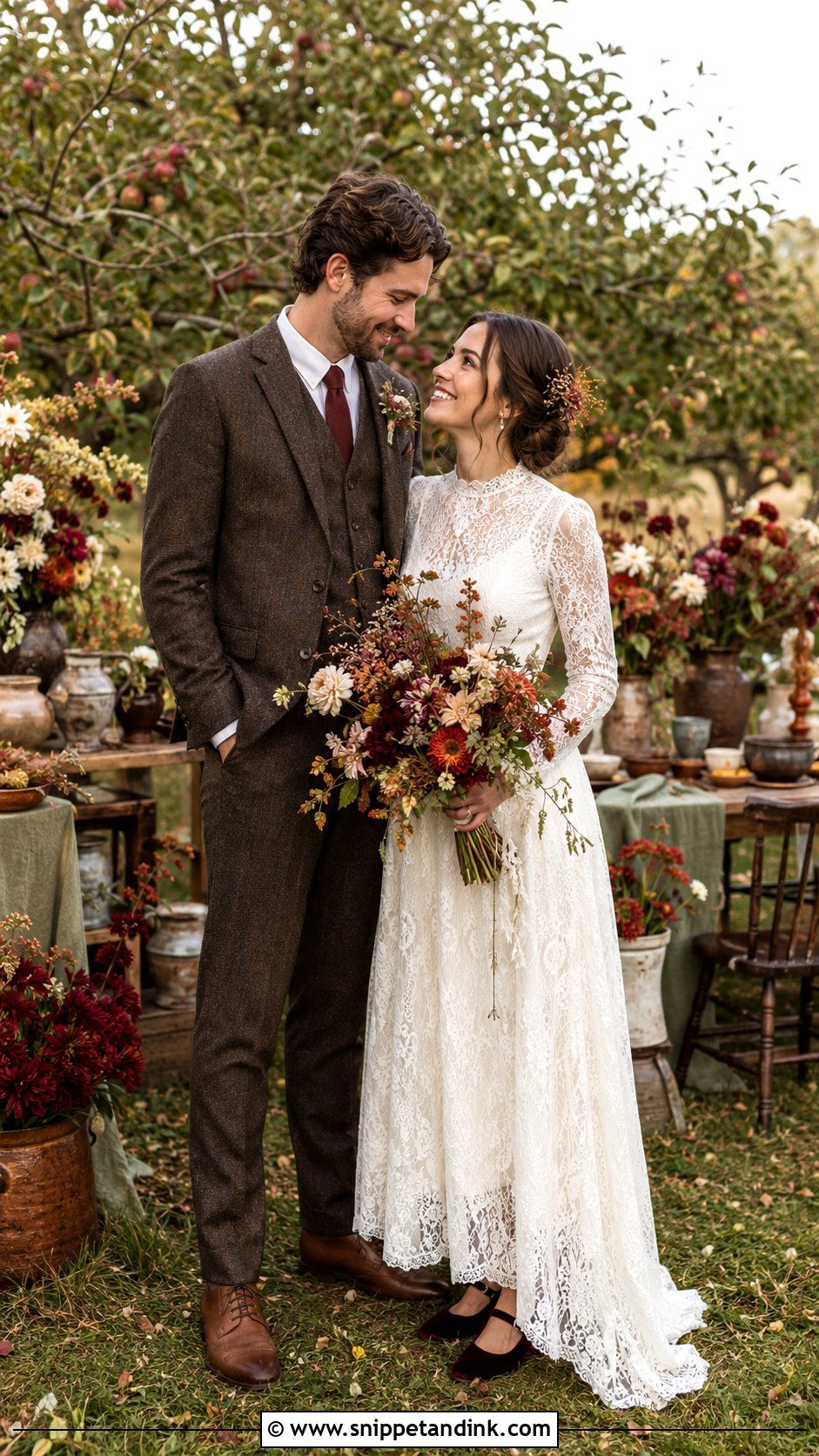
Fall can tip into a pumpkin-and-hay-bale theme fast. Keep it cottage core by using rust, cream, moss, muted gold and burgundy in measured doses. An orchard, farm or wooded estate works. An ivory long-sleeved lace gown, brown velvet shoes and a textured bouquet suit the bride; tweed or dark brown suits the groom. Dahlias, branches, seed heads and turning leaves for the ceremony. Flax linen, handmade pottery, pears, figs and low florals for tables. Dahlias bruise easily and hate being moved twice, so I place them once, on site. Candlelight is good, but leave the room bright enough that all those deep colors still read.
12. Cottage Core Winter Wedding
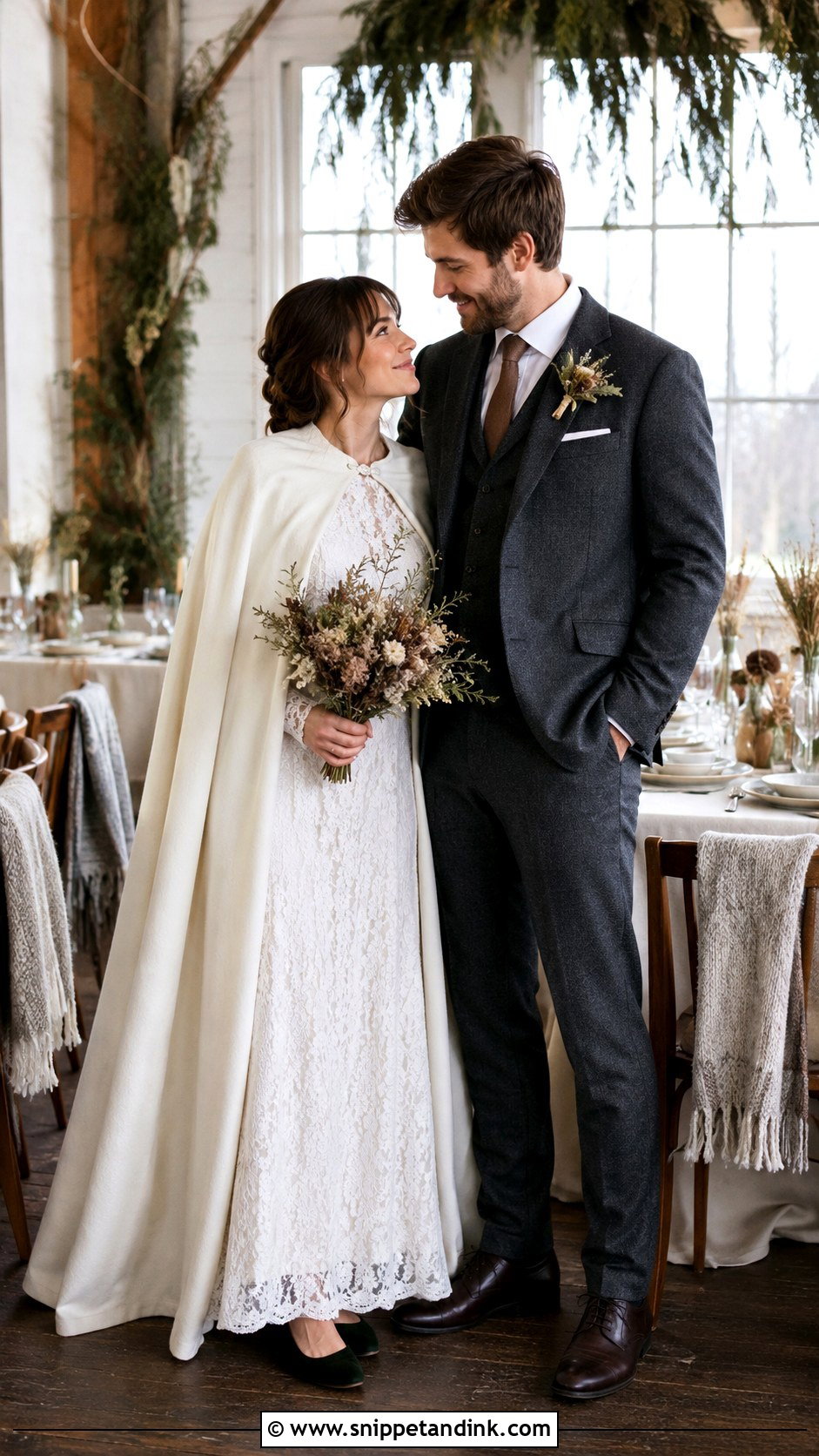
Winter cottage core should feel like a warm farmhouse kitchen, not a Christmas set. An inn, lodge, farmhouse or conservatory with big windows gives you daylight in the short afternoons. Ivory, evergreen, dusty blue, soft brown and muted berry make the palette. A long-sleeved lace gown, velvet flats and a simple cape for the bride; charcoal or brown wool for the groom. Linen cloths, ceramic plates, evergreen branches, dried flowers and white candles on tables, plus armchairs and knitted throws for lounging. Fresh bread, soup, roasted vegetables and small fruit desserts. An ivory cake with fine sugar leaves keeps the season understated.
13. Cottage Core Backyard Wedding
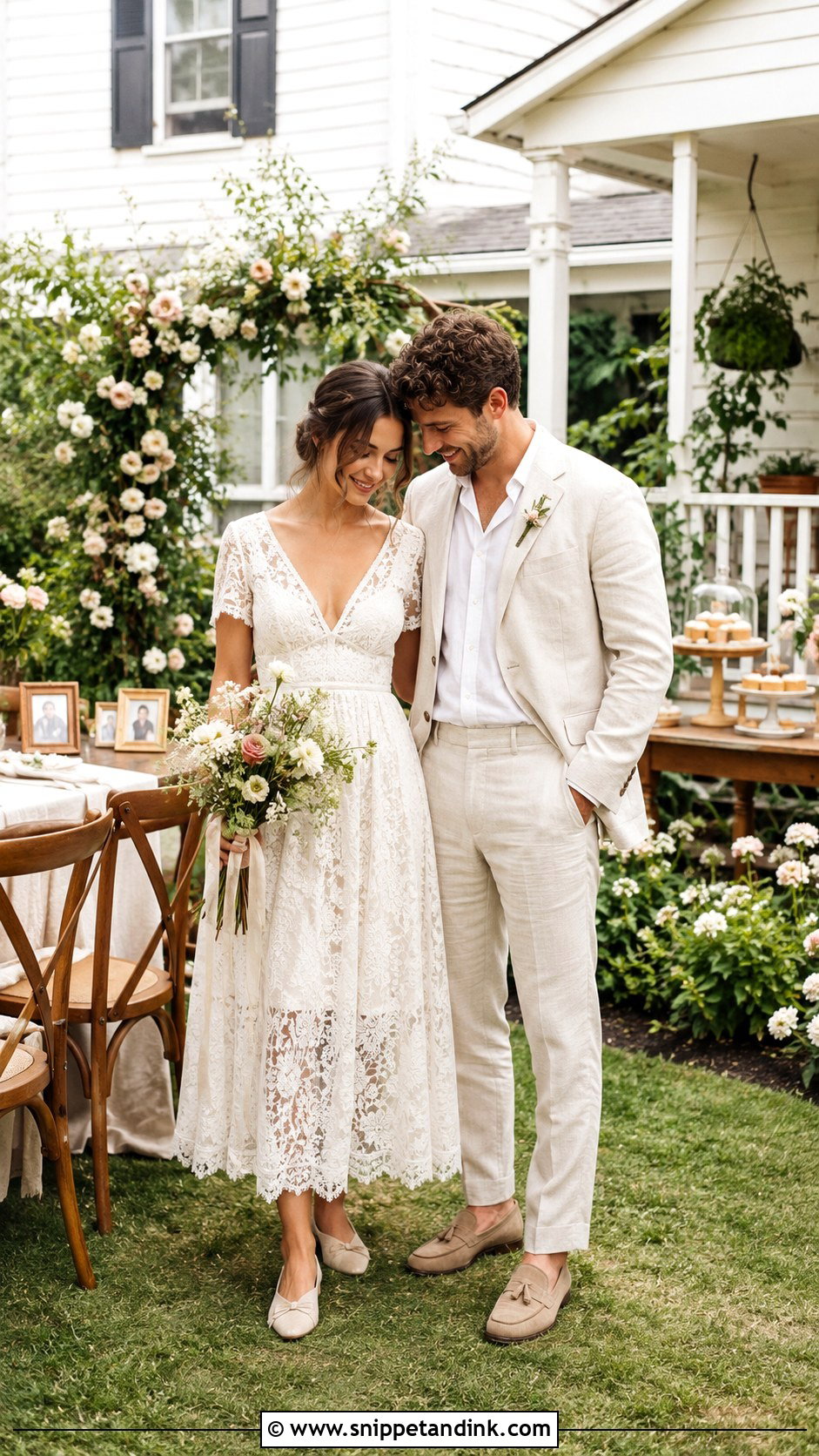
A backyard wedding starts with zoning. I walk the garden and divide it into ceremony, dining and lounge areas before buying a single decoration, then use the existing trees, beds, fences and porch as part of the design. A lace midi or flowing long dress with low shoes for the bride, a relaxed linen suit for the groom. Folding wooden chairs around a simple floral backdrop. Borrowed tables look like one set once they share the same neutral linen. Garden flowers, family china, handwritten signs and framed photos make it personal; a porch or shed holds desserts and drinks. Add warm overhead lights after dark, and stop there.
14. Cottage Core Picnic Wedding
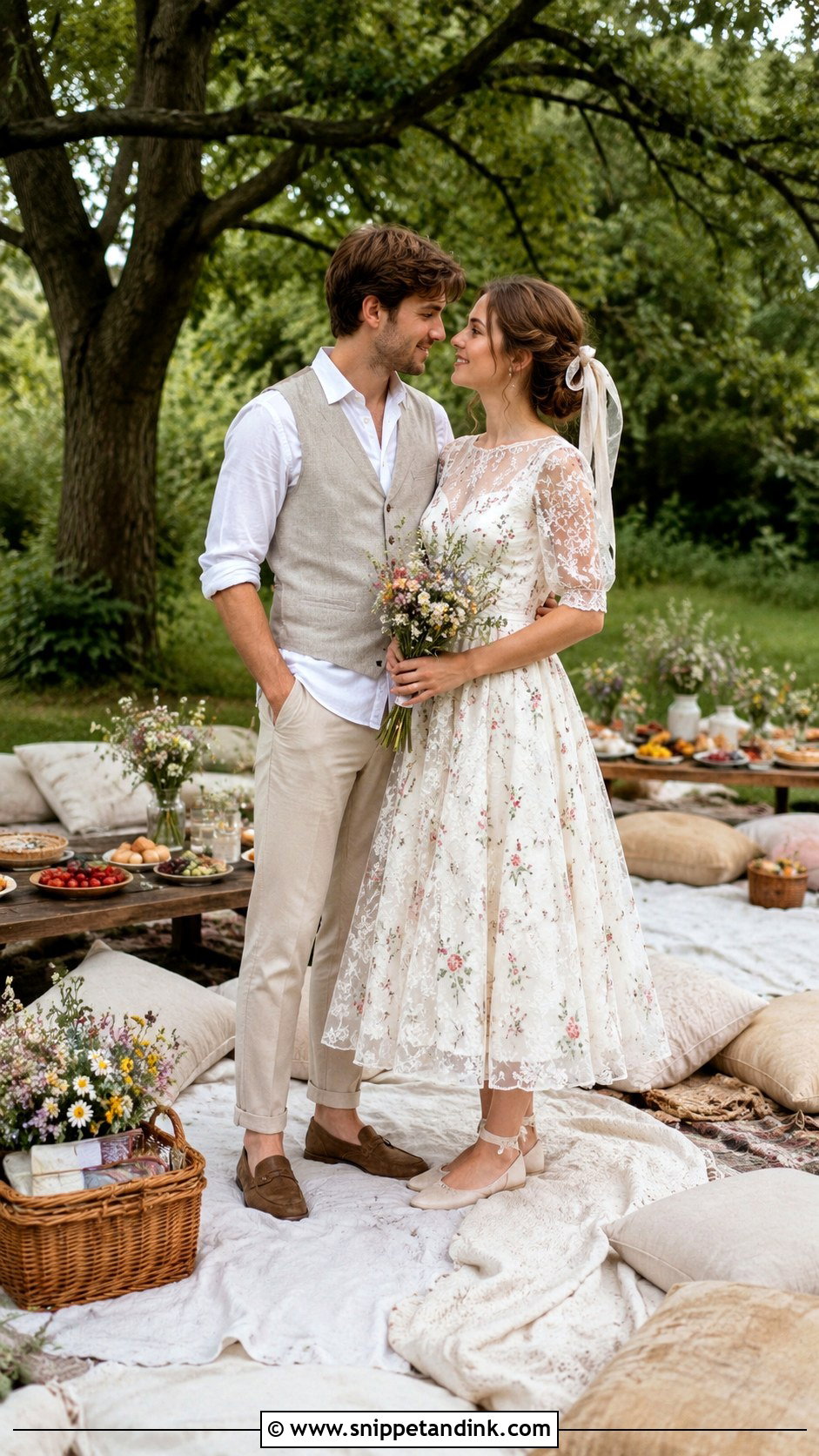
Picnics are best for small daytime weddings in a garden, park or private meadow. Low wooden tables, big blankets and cushions set the tone, but I always add a few standard-height tables and chairs for older guests or anyone who can’t sit on the ground. A tea-length floral lace dress, ballet flats and ribbons in the hair for the bride; waistcoat, rolled sleeves, trousers and loafers for the groom. Baskets of napkins, bread, fruit and wrapped treats, small jars of wildflowers and simple ceramic plates. Lemonade, iced tea and sparkling water at a self-serve station. Lawn games, acoustic music and a dessert table featuring pies, cookies and small cakes finish it.
15. Cottage Core Farmhouse Wedding
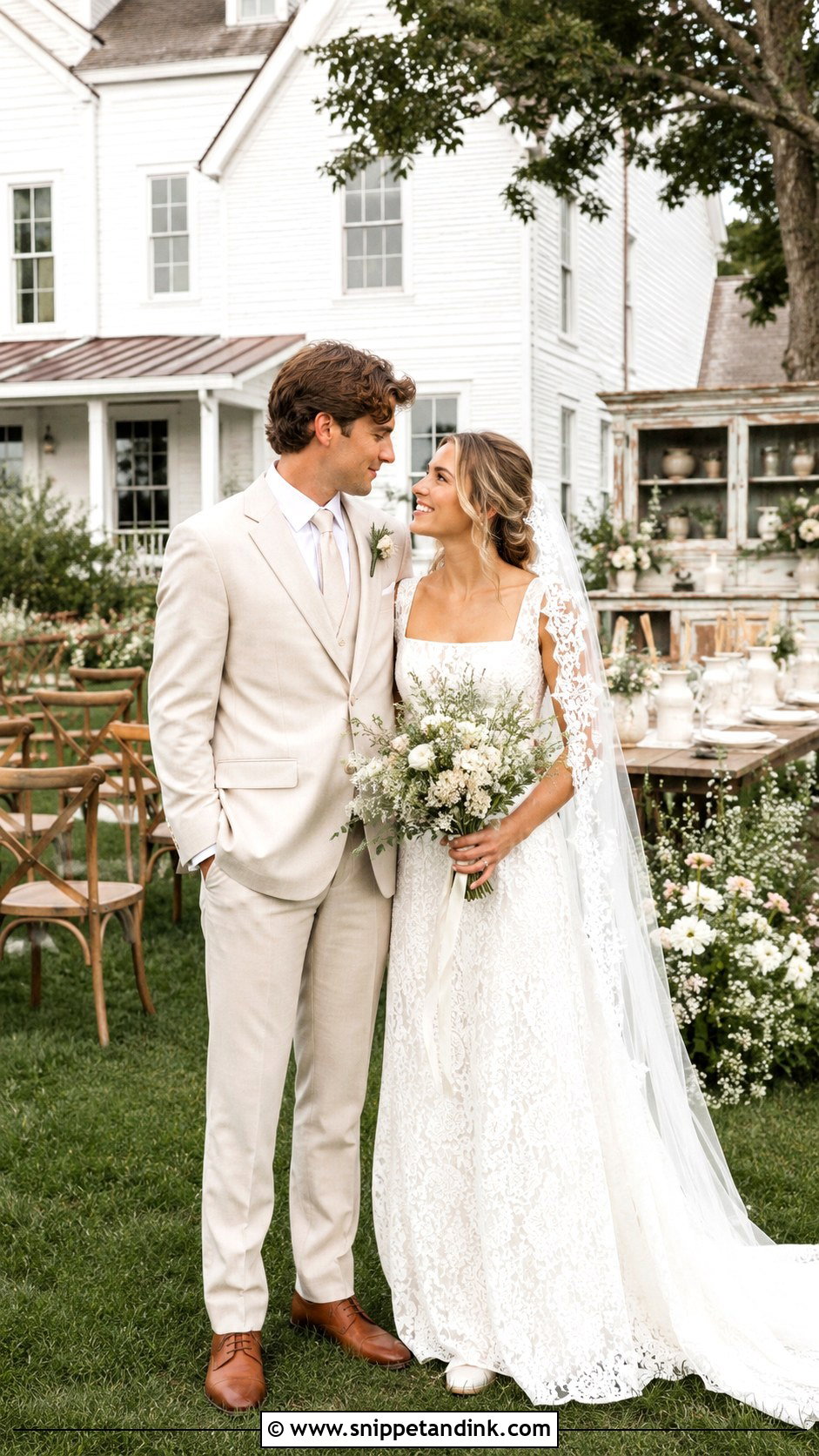
White siding, a deep porch and open fields mean a farmhouse needs a neutral palette: ivory, sage, faded blue and warm brown. I’d run the ceremony on the lawn with plain wooden chairs and abundant flowers placed right on the grass. A square-neck lace gown and floral veil keep the bride romantic without formality, and a beige suit with brown shoes suits the groom. Long tables, linen runners, ceramic jugs and loose garden flowers inside. Vintage cabinets can display family photographs, favors or desserts. Seasonal comfort food and a homemade-looking cake on a plain wooden table finish it.
16. Cottage Core Lakeside Wedding
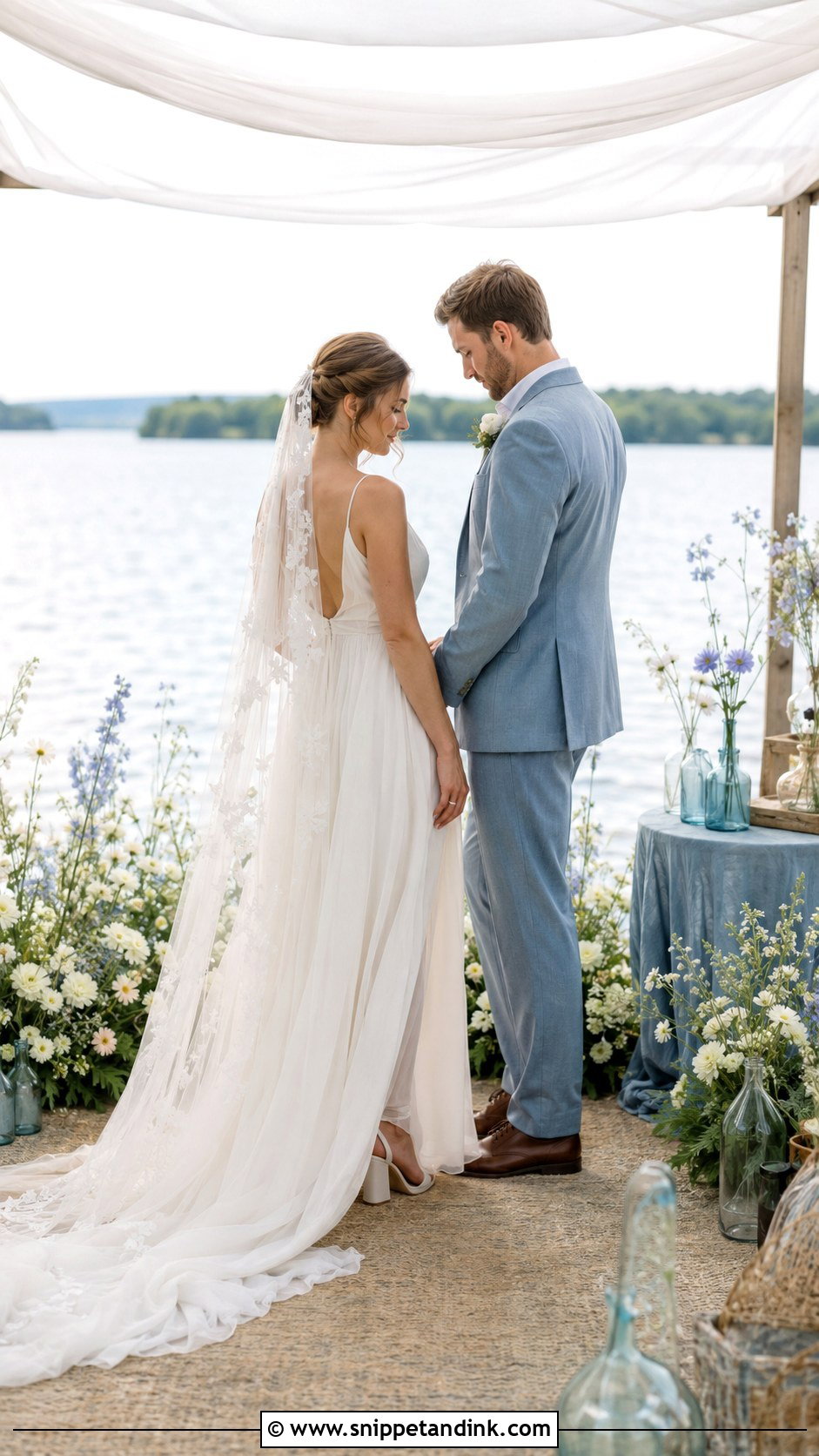
Put the water behind the couple and keep the ceremony flowers low so nobody’s view of the lake is blocked. A flowing chiffon gown, embroidered veil and sturdy block heels for the bride; soft blue, grey or green for the groom. I’d host dinner under an open-sided canopy so guests keep the view. Blue-grey linen, white flowers, fine greenery and vintage glass bottles on the tables, with watercolor stationery and place cards inspired by local plants. A simple cake with berries and botanicals. Lake edges get cold and buggy at dusk; mark paths clearly, offer wraps and ask the venue about insect control.
17. Cottage Core Mushroom Forest Wedding
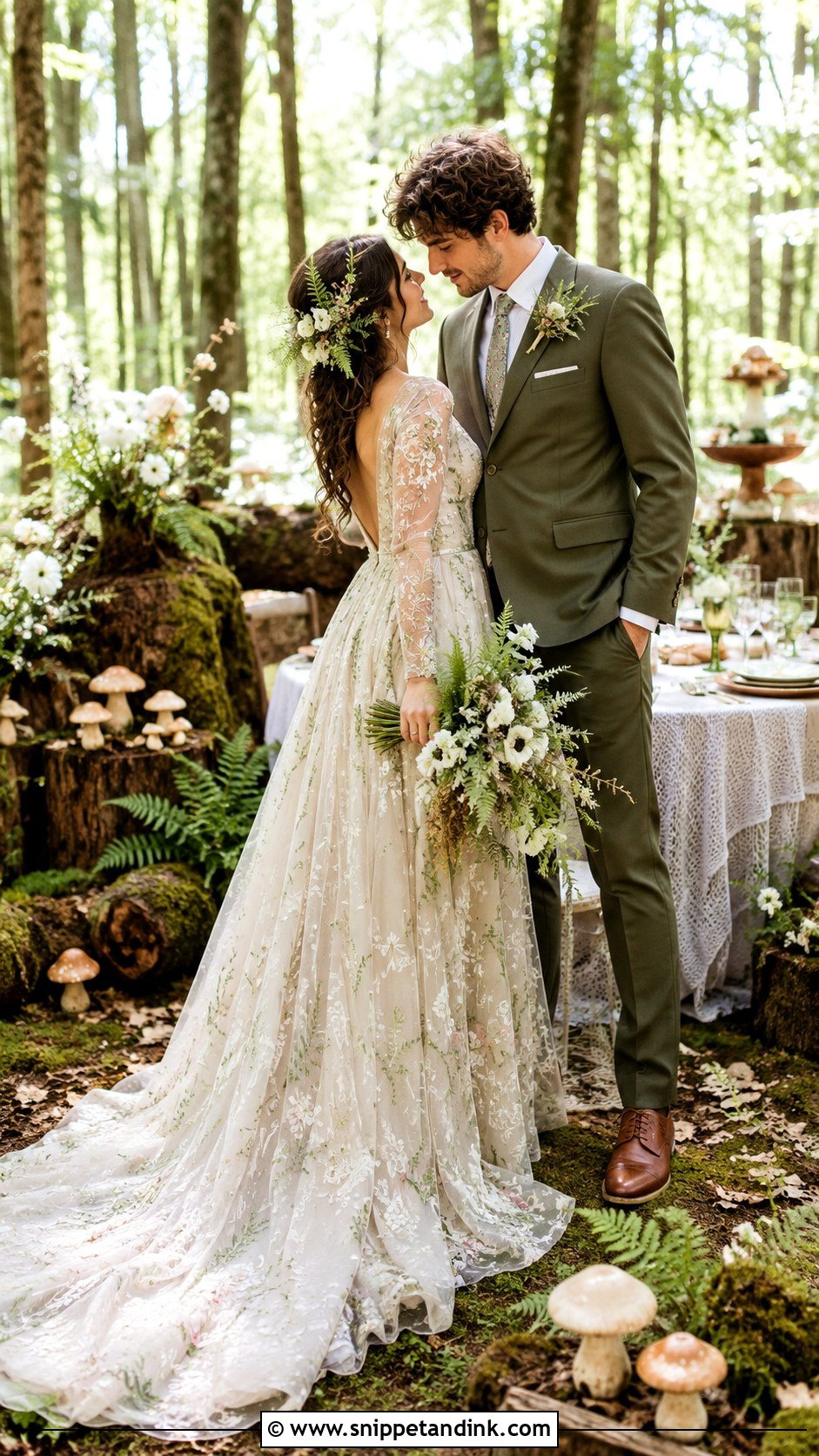
Mushrooms are a motif to use sparingly. I start with a bright forest, garden clearing or fern-filled conservatory, then pick cream, moss, rust and muted red as accents rather than covering everything in mushroom prints. A flowing embroidered gown with a flower-and-fern hairpiece for the bride and an olive or brown suit for the groom. Moss-covered logs, white flowers and small ceramic mushrooms near the ground at the ceremony; woodland illustrations, potted ferns, textured linens and candles at the tables. Let the mushrooms appear on place cards, cookies or the cake, but not all three. Never decorate with foraged wild mushrooms near food.
18. Cottage Core Antique Rose Wedding
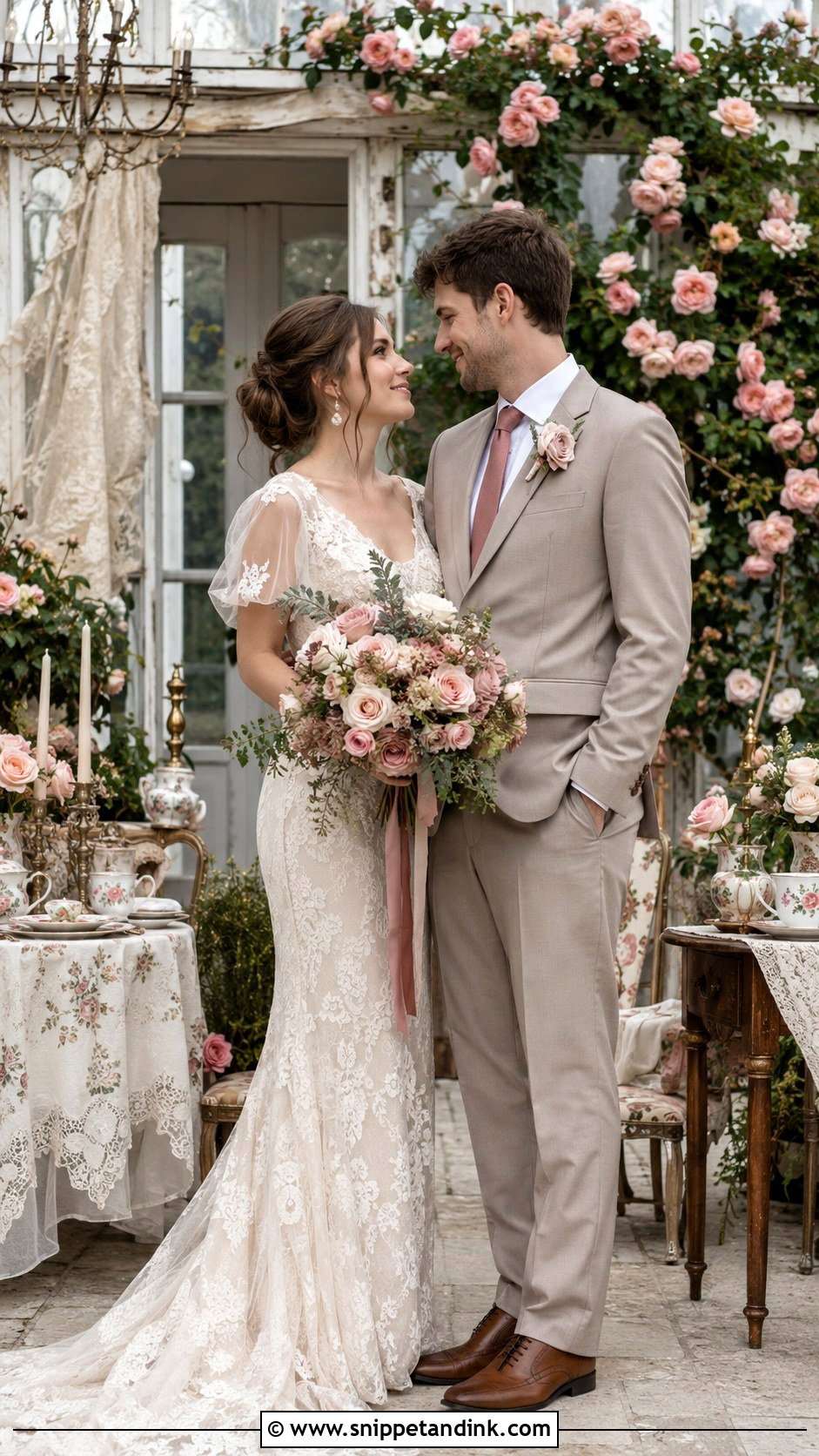
Faded rose patterns and old furniture give the most nostalgic version of this style. Dusty pink, ivory, sage and antique gold work in a rose garden, historic house or terrace. A lace gown with a fitted bodice, soft sleeves, pearls and a blush rose bouquet for the bride; a taupe suit with a muted pink tie for the groom. Floral china, embroidered cloths, brass candlesticks and rose-filled ceramic vases. An antique vanity holds escort cards and a small desk becomes the guest book station. A smooth ivory cake with sugar roses. I limit the patterns to two per table, otherwise the china, cloths and flowers start arguing.
19. Cottage Core Botanical Book Wedding
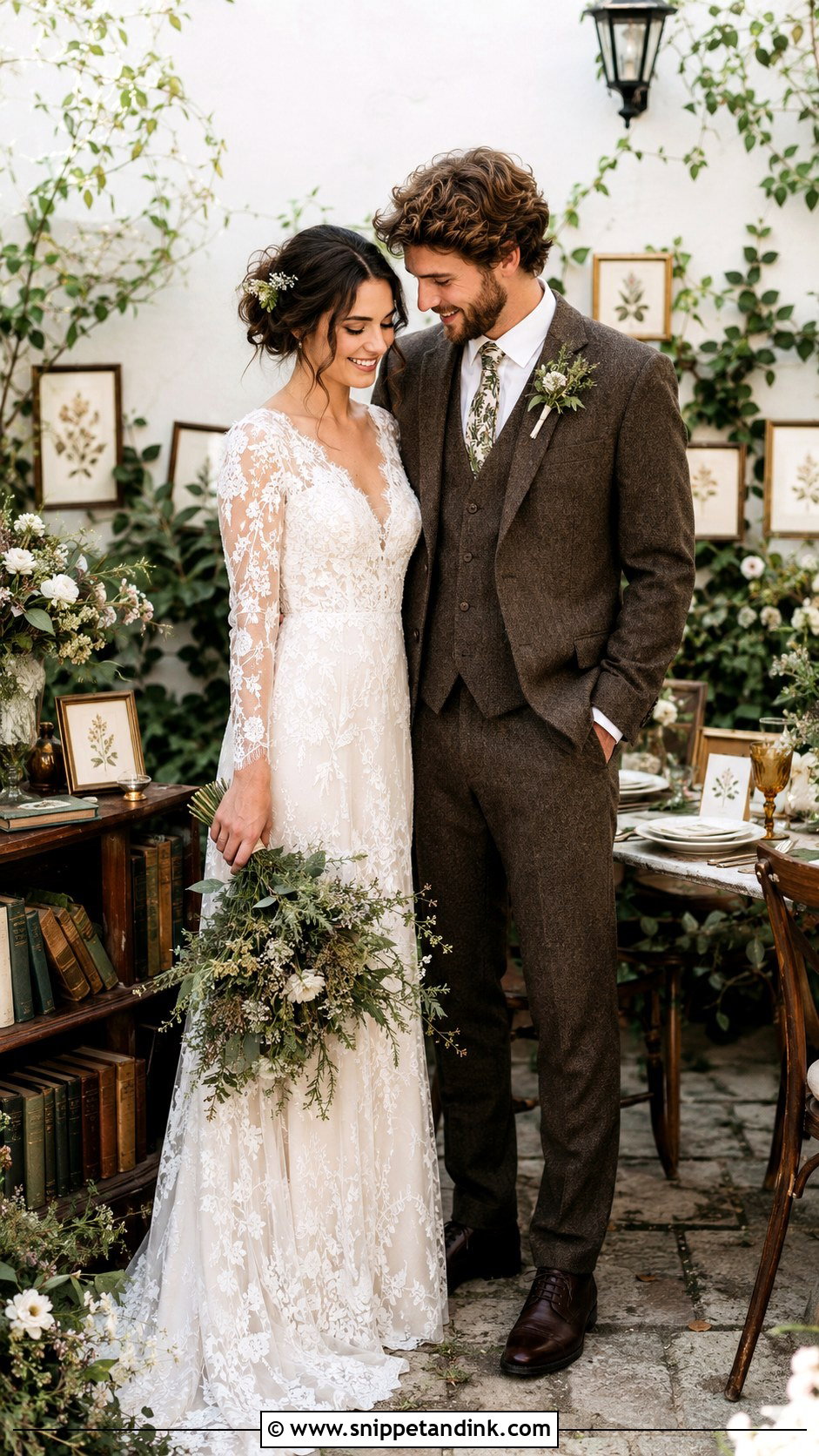
Books, plant drawings and handwriting make a quiet, thoughtful wedding. A garden, library courtyard, greenhouse or old estate works. Use secondhand botanical books as props and never cut up a valuable edition for decor. An embroidered lace gown, a loose greenery bouquet and a small floral comb for the bride; brown or sage with a botanical tie for the groom. I name tables after herbs, flowers or trees and frame matching illustrations for the seating chart. Stack books under the flower arrangements and use library-style place cards. Handwritten vows and a bound guest book carry the literary theme, and a pressed-flower cake keeps it from getting theatrical.
20. Cottage Core Minimalist Wedding

Cottage core doesn’t have to mean clutter. The minimalist version I design keeps natural materials and a few handmade pieces, and drops the layers of vintage objects. A garden, meadow, courtyard or plain wooden space gives a clean backdrop. An unembellished linen, silk or crepe gown with a small wildflower bouquet for the bride, a well-cut beige or olive suit for the groom. Ivory linens, handmade ceramic plates, clear glass and single stems. One handwritten lettering style across every sign. A seasonal meal and a single well-finished cake are all it needs.
What Gardens Do to a Wedding Between Noon and Midnight
Nearly every idea above happens outdoors, and outdoors changes hour by hour. These are the problems I plan around at every garden wedding.
Flowers in the heat
Loose, garden-style flowers are the least hardy. Cosmos, sweet peas and garden roses wilt or shatter in direct afternoon sun, so I condition them overnight, keep them in water until the last moment and place sturdier stems such as lisianthus, hydrangea in water tubes or herbs where the sun hits longest.
Grass, bugs and the ground itself
Stiletto heels sink into lawn, so tell guests in the invitation. Mow the day before, check for uneven patches under the aisle and keep insect repellent and sunscreen in a basket by the entrance. Flowers and sugar draw wasps, so cover desserts until they’re served.
The rain plan
Book a marquee or an indoor fallback when you book the venue, not the week before, and decide the cutoff for calling it. The prettiest rain plans I’ve seen moved the same linens, china and flowers inside, which is another reason to keep the decor portable.
Start with the Venue and Let It Lead
This style stretches a long way: bright and playful in a meadow, refined in an English garden, snug in a farmhouse or almost bare in the minimalist version. In my experience the weddings that work start with a venue and a seasonal palette, then let clothing, flowers, stationery, furniture and food follow the same direction. Vintage and handmade pieces earn their place when they mean something or do a job. You don’t need every cottage core detail, only the few that sound like the two of you.


Leave a Reply