
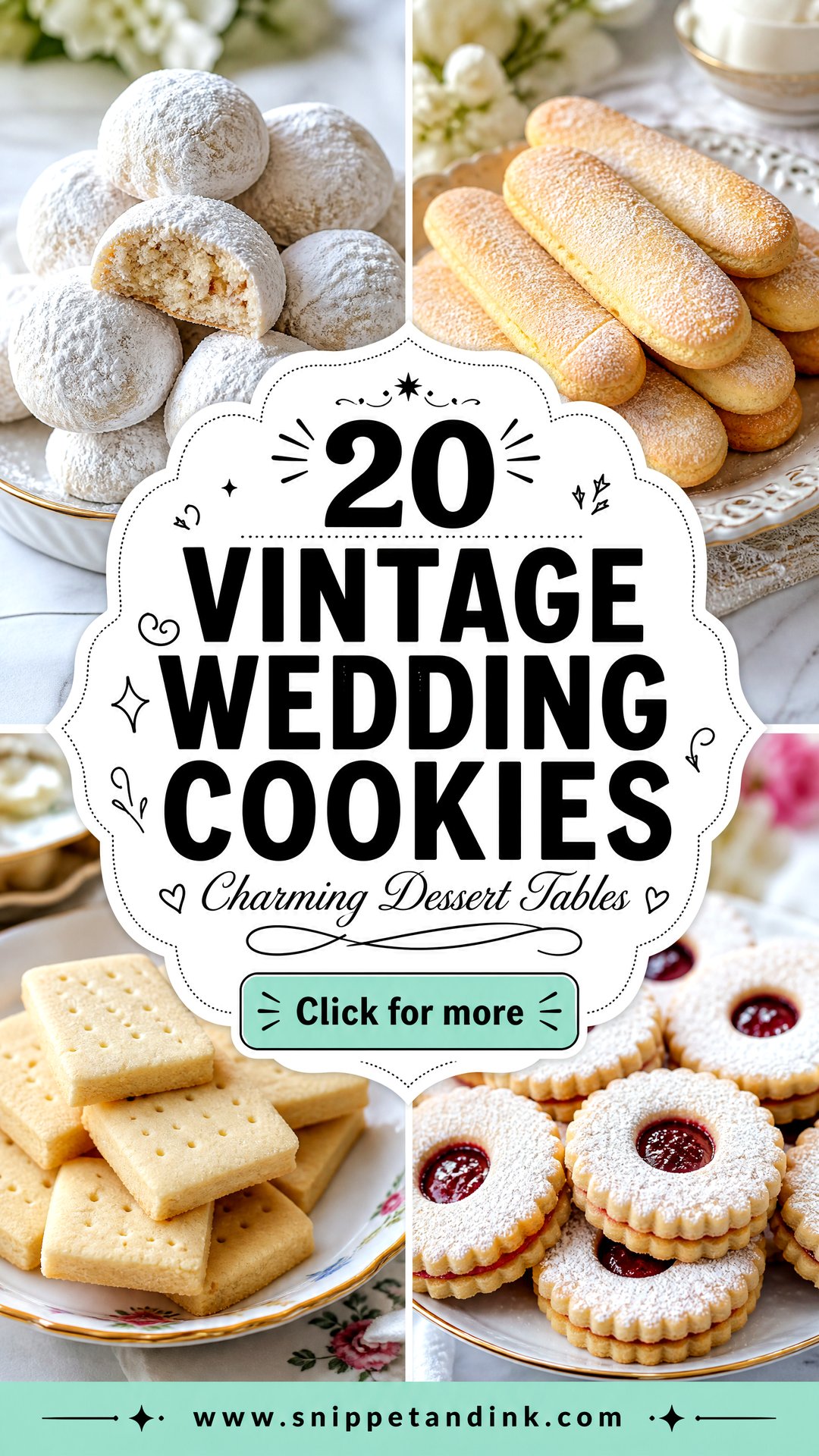
Guests remember a cookie table differently from a cake. They come back to it, fill a napkin, and argue about whose aunt’s recipe is best. A vintage wedding cookie table borrows from family recipe boxes: powdered sugar rounds, almond glazes, jam centres, pastel icing and crisp lace rounds that look homemade in the good sense. From a catering point of view, cookies are also forgiving. Most can be made ahead, they don’t need cutting, and they double as favours. Below are twenty old-fashioned cookies, with notes on how each one behaves on a table for five hours.
Counting Cookies Per Guest Before Anyone Starts Baking
The question I’m asked most about cookie tables is how many to make. As a rough starting point, I plan around three to four cookies per guest when there’s also a wedding cake, and closer to six when cookies are the main dessert. Add more if the table stays open late or guests are encouraged to take a box home.
Variety matters more than volume. Six to ten kinds is plenty for most receptions. More than that and the trays get small, the table looks busy, and leftovers pile up in the kinds nobody recognises.
When relatives are baking, give each person one or two kinds and a target number, and agree a drop-off day and time. Ask everyone to bring their cookies in sealed tins, sorted by type, with a note listing nuts and other allergens. It saves a frantic hour sorting unlabelled boxes on the morning of the wedding.
1. Italian Wedding Cookies
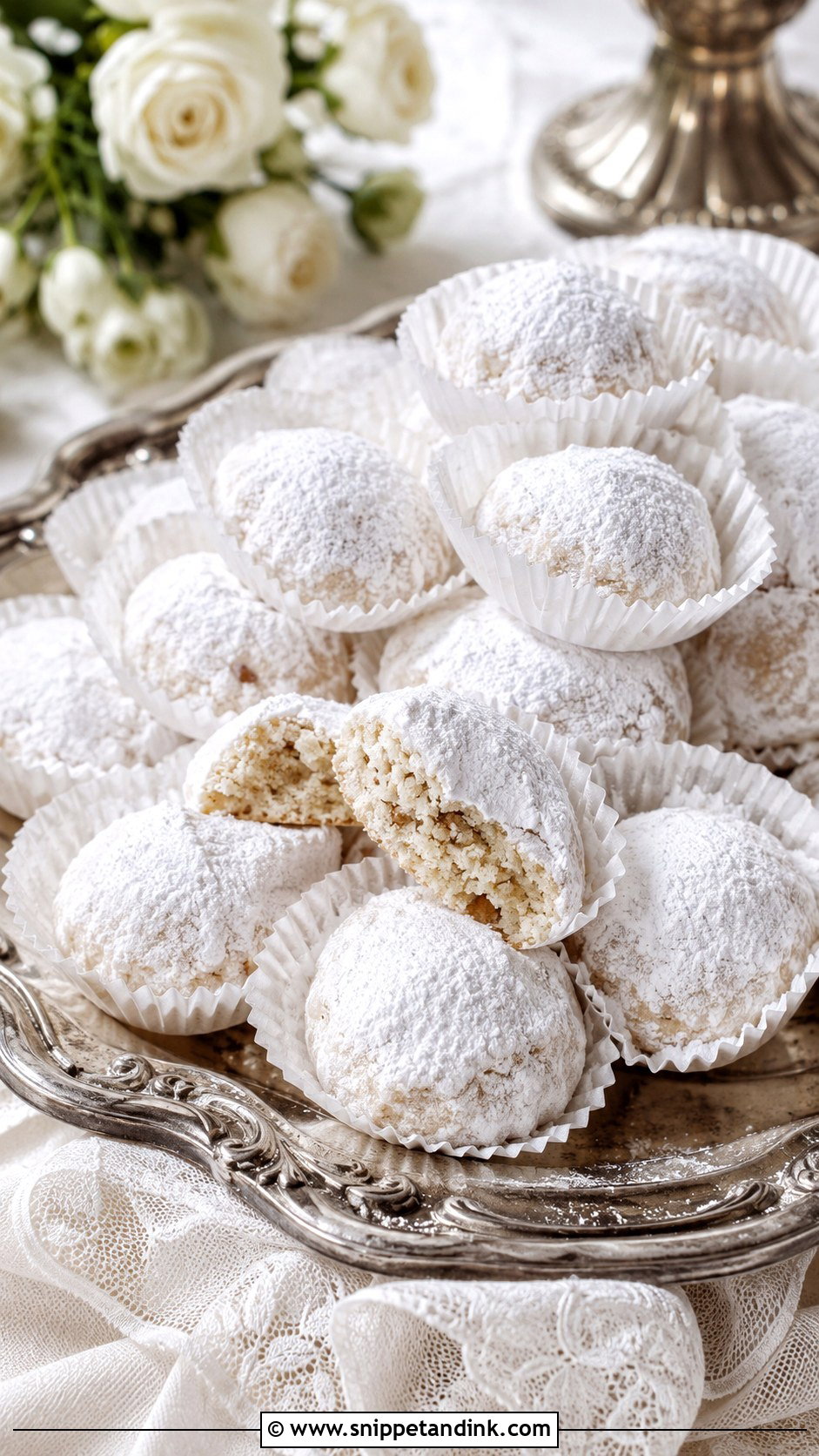
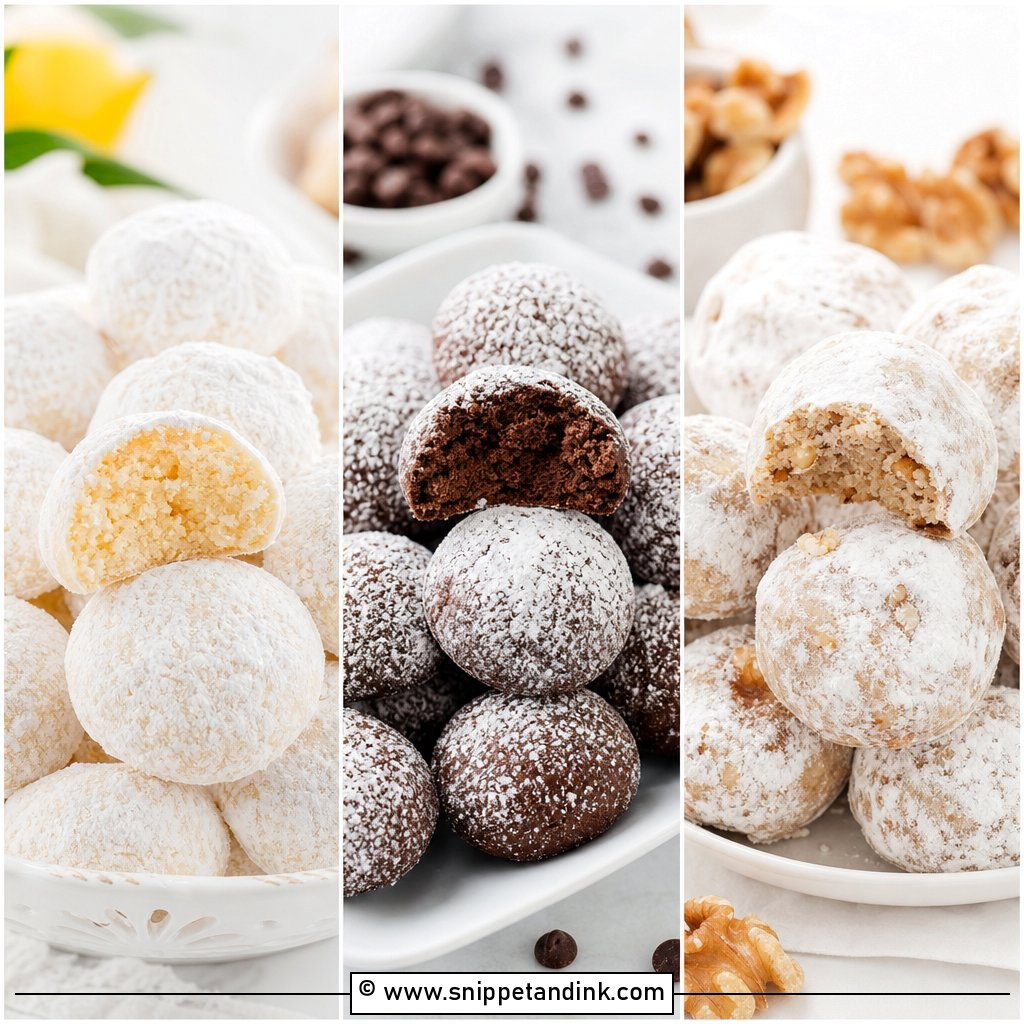
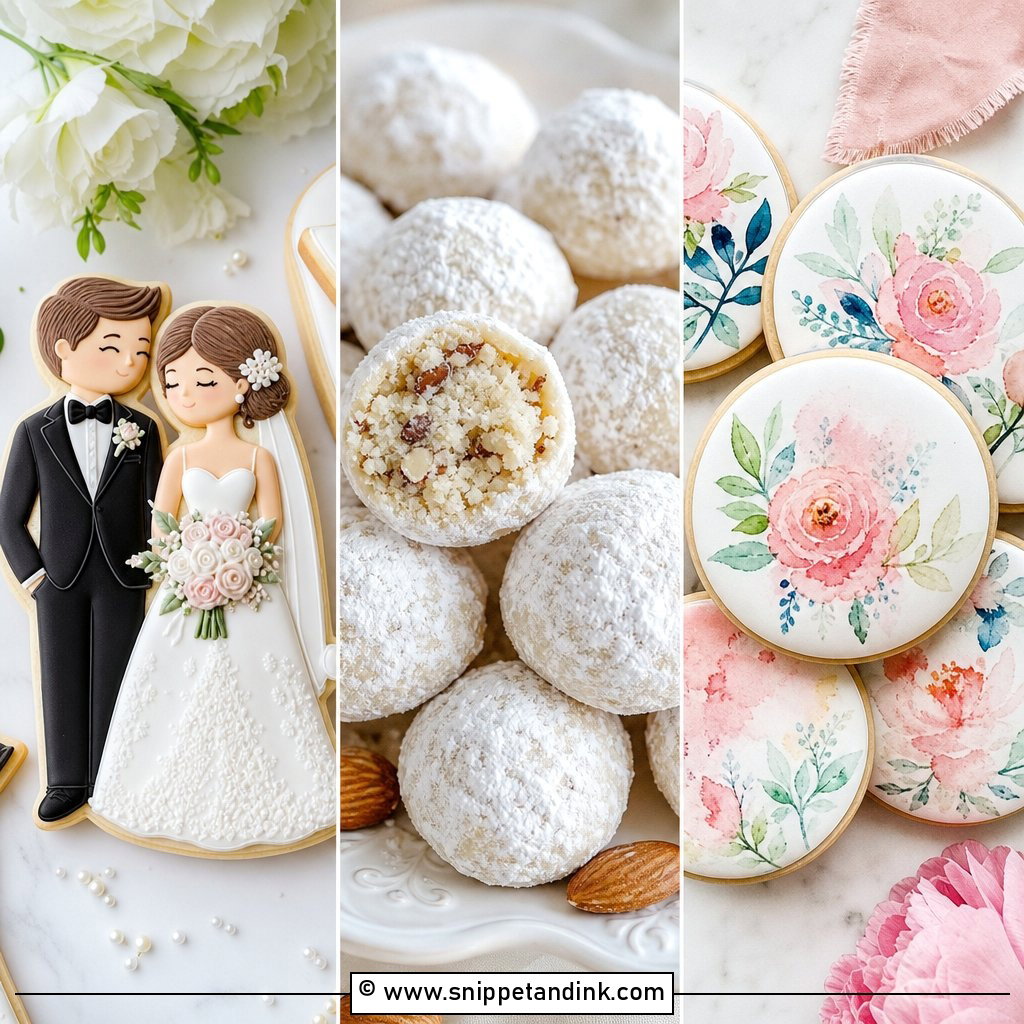
These are the snowballs most guests recognise straight away: small, buttery rounds packed with finely chopped almonds, pecans or walnuts and rolled twice in powdered sugar. Italian wedding cookies get that snowy finish from the second roll, done once the cookie is completely cool, so the first coat can melt slightly into the warm surface and the second stays white. Keep them to one or two bites, because guests will want to try several kinds before cake. White paper cups stop the sugar from coating everything else on the tray.
2. Mexican Wedding Cookies
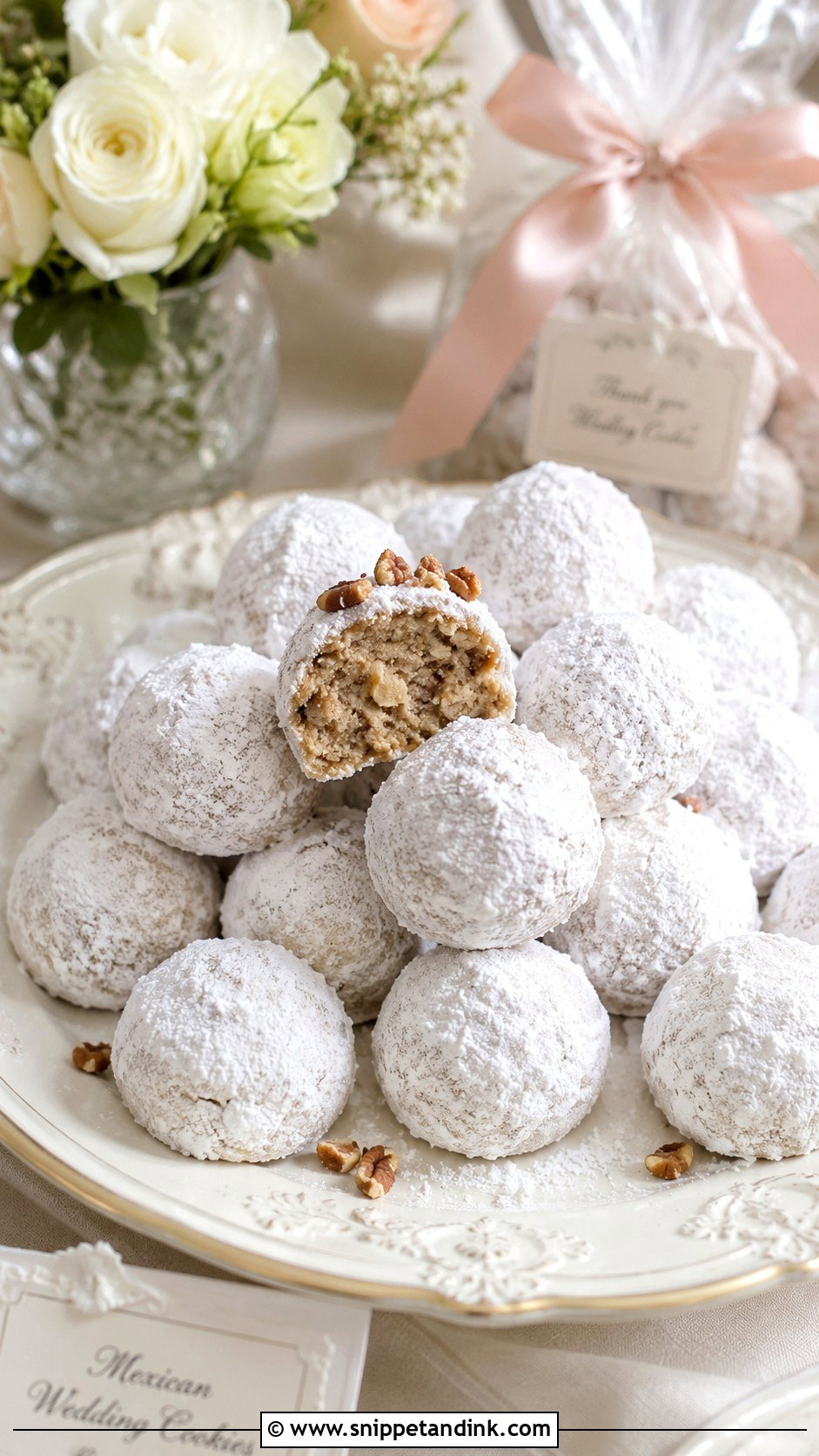
Mexican wedding cookies are close cousins of the snowball, made with butter, flour, powdered sugar, vanilla and finely chopped pecans. They melt fast on the tongue because the dough has so little liquid, which also means they crumble if you pack them tightly. I’d bag three per favour in a clear bag with a satin ribbon rather than stacking them deep. On a display they look right on antique silver with blush napkins, and they hold up well over a long reception.
3. Russian Tea Cakes
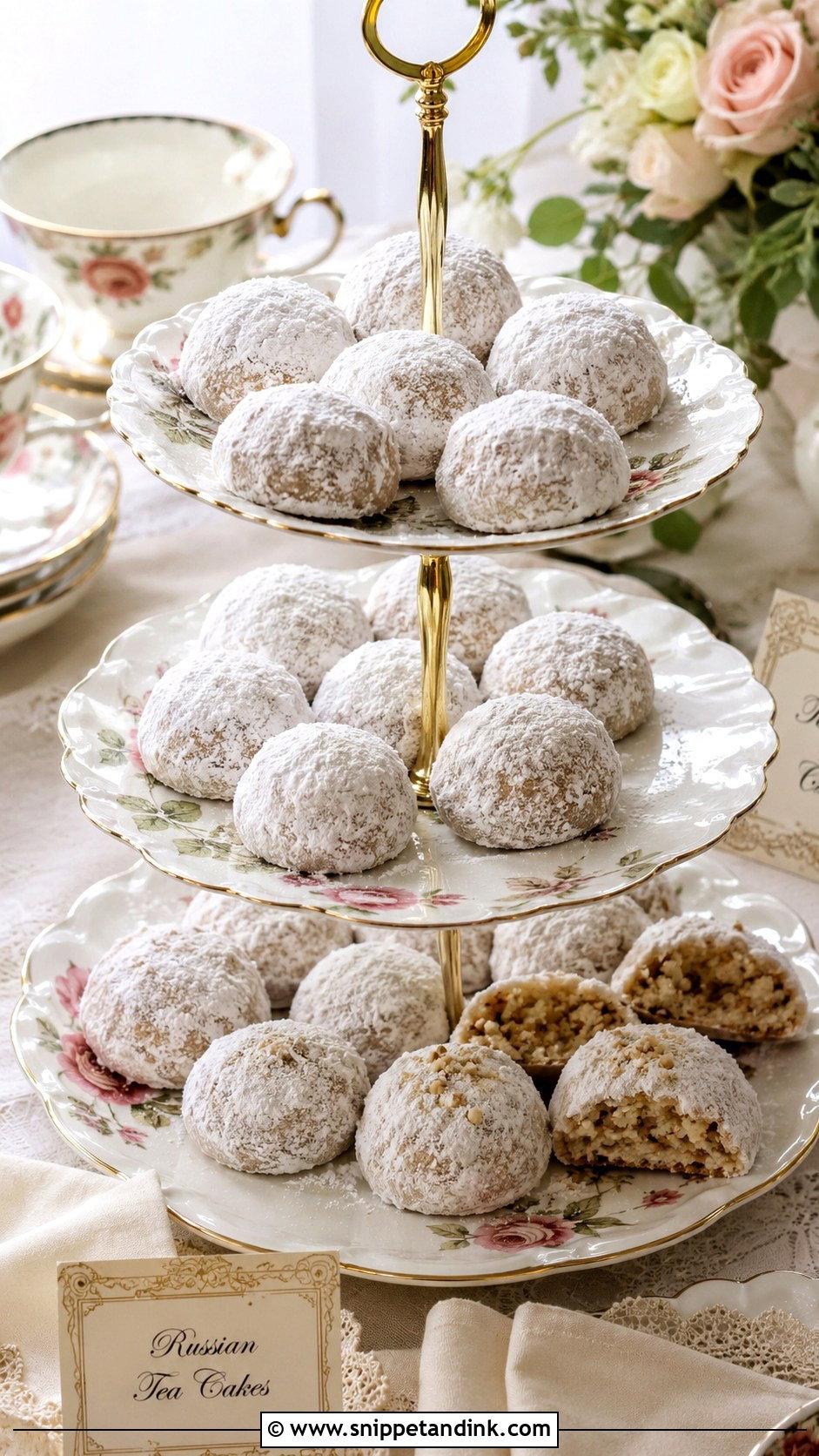
Russian tea cakes are another powdered round, usually made with walnuts, which give a slightly deeper, earthier taste than pecans. On a table full of similar white cookies, guests can’t tell them apart, so a small label makes a real difference here. Their even shape suits circular arrangements on a tiered stand. Powdered sugar slowly soaks into the butter over a day or so, so I give them a fresh dusting right before they go out.
4. Greek Kourabiedes
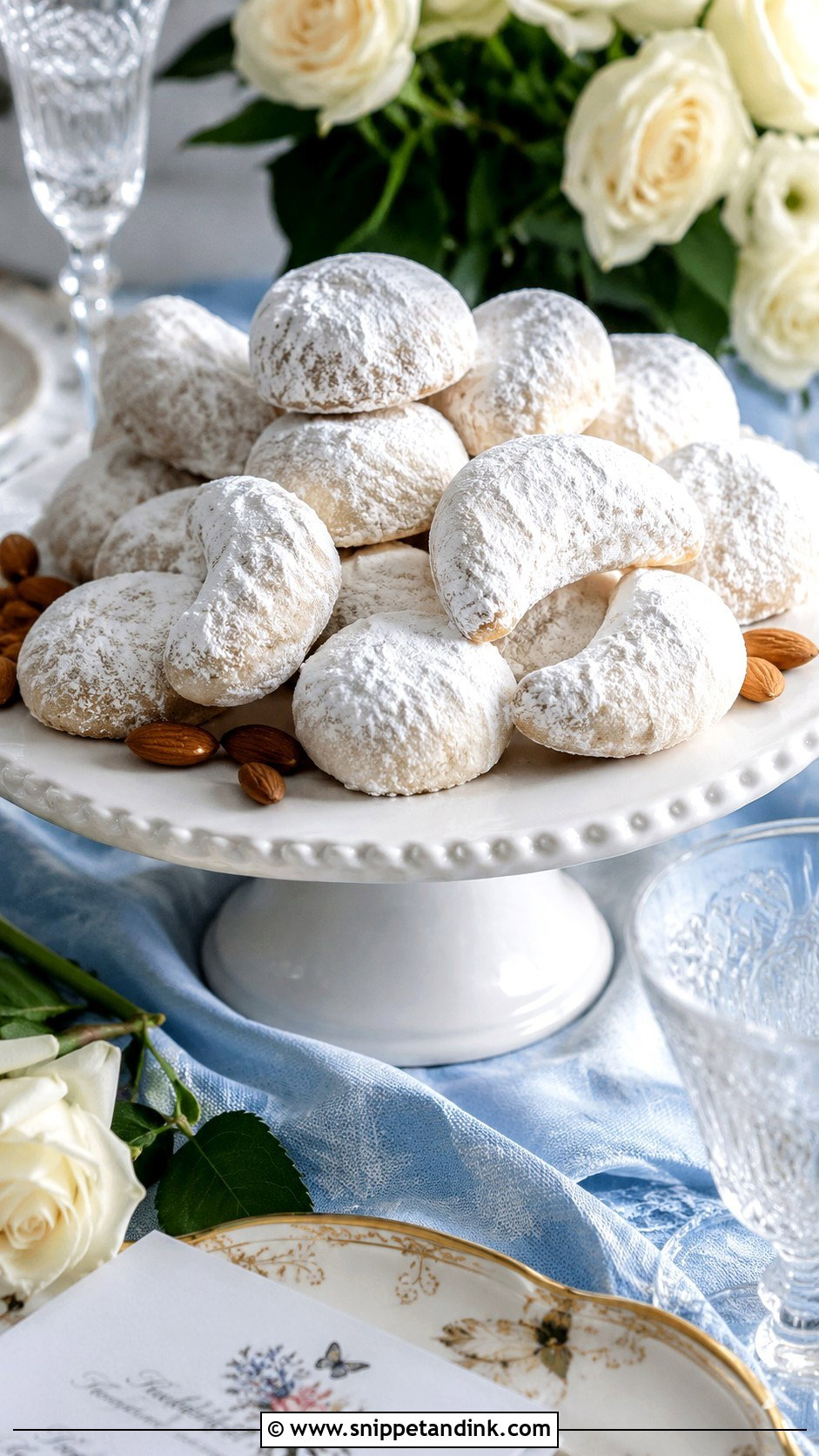
Kourabiedes are the Greek version: rich butter cookies shaped into rounds or crescents, often with toasted almonds and a hint of vanilla or citrus, buried under a thick drift of powdered sugar. I pile them high on a white pedestal plate so the sugar looks generous rather than messy. They shed sugar onto everything nearby, though, so give them their own plate and keep them away from dark chocolate cookies and dark clothes. A name card helps guests who haven’t met them before.
5. Almond Crescent Cookies
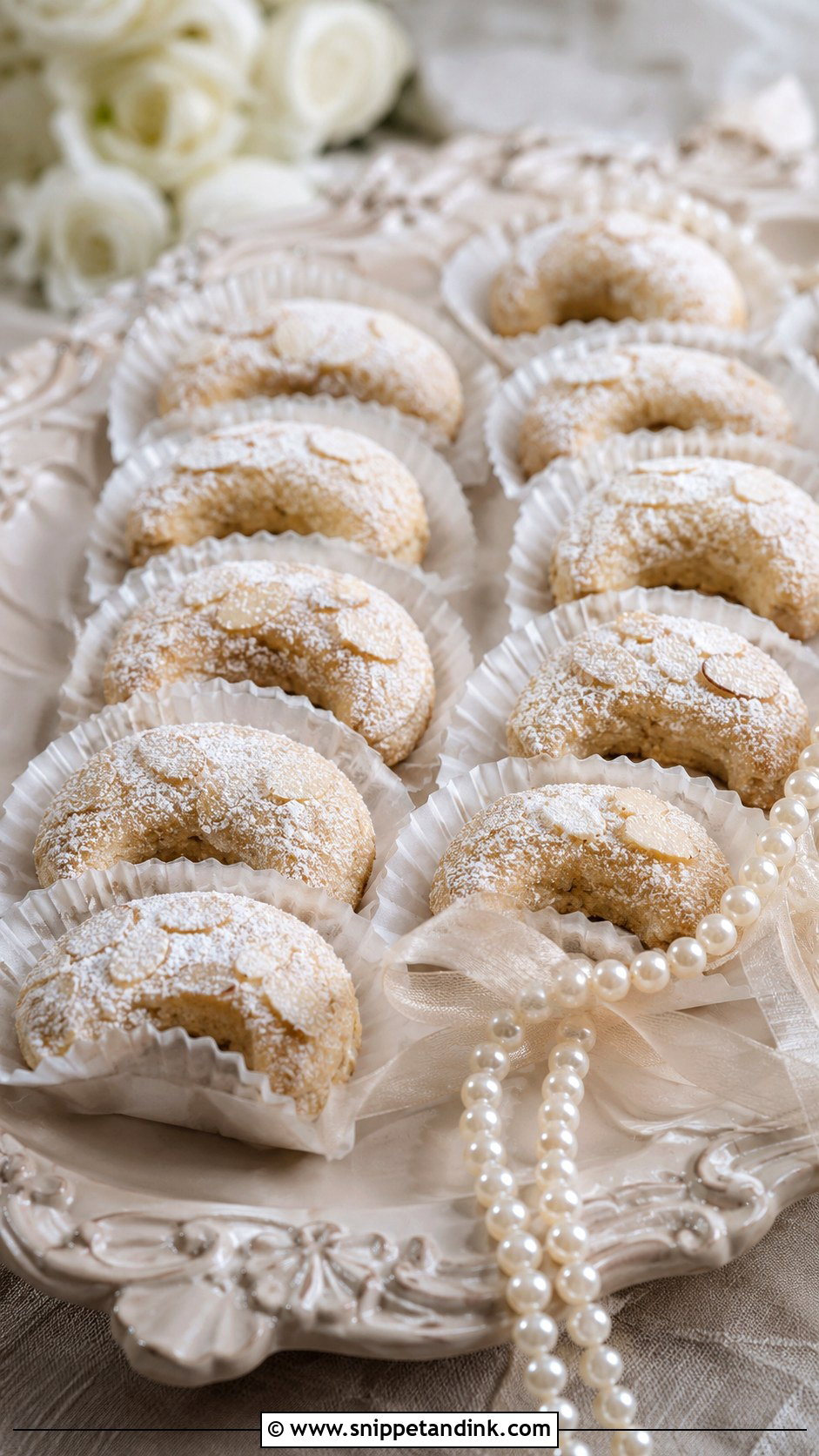
Crescents are the prettiest shape among the powdered cookies and the easiest to break. The thin tips crack if they’re handled warm, so I let them cool fully on the tray before coating. Ground almonds, almond extract or both give the nutty flavour that sits well beside coffee and fruit desserts. Lined up in rows with every curve facing the same way, they look like a bakery case. They also pack neatly into favour boxes without needing any icing.
6. Pecan Sandies
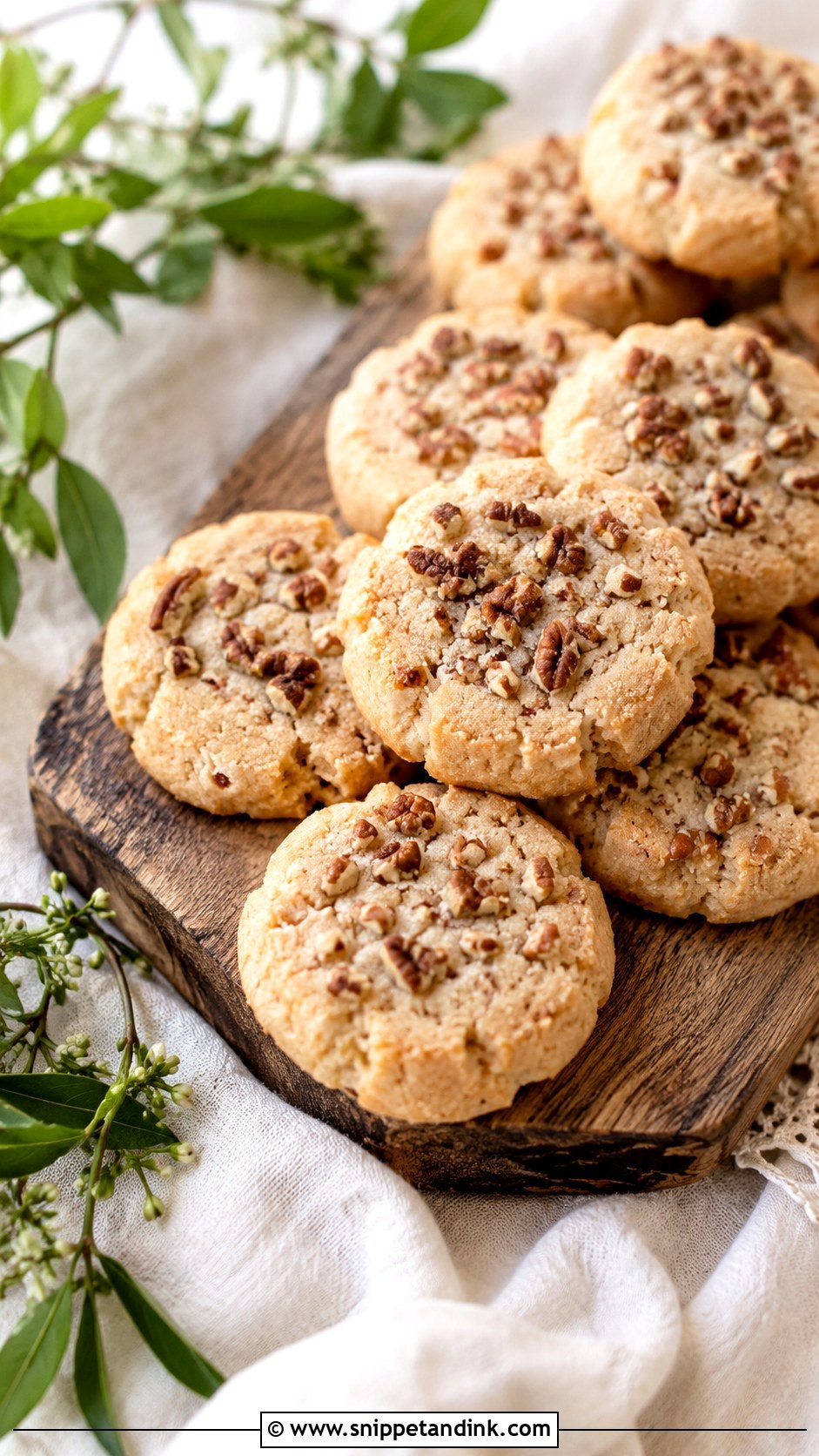
Pecan sandies are the golden counterweight on a table full of pale cookies, and without them the whole spread can look washed out. Crisp at the edge and tender inside, with chopped pecans through the dough, they’re sturdier than the powdered rounds and travel well. For a wedding I make them smaller than the usual size and press the tops flat so they stack evenly. Wooden boards, pressed glass or kraft favor boxes with cream ribbon suit their homely look.
7. Thumbprint Jam Cookies
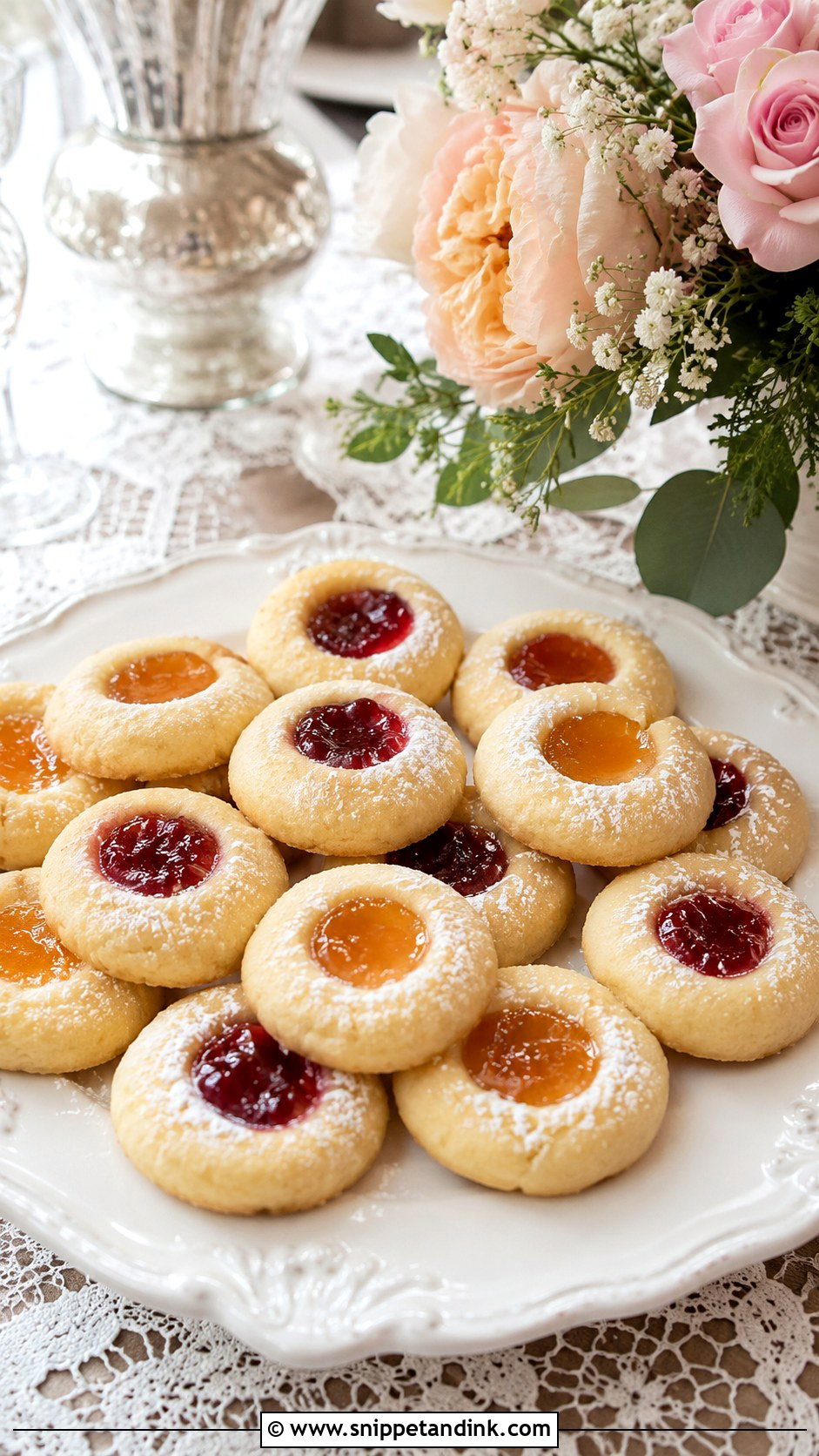
The jam is the colour, so choose it with your palette in mind: raspberry for deep pink, apricot for gold, blackberry for something darker. Use a smooth jam or seedless preserves. Chunky fruit sinks and bubbles in the oven and the centres look lumpy. Fill the wells partway through baking or right after, so the jam sets glossy rather than drying out. A light dusting of powdered sugar around the edge is fine; over the jam it just turns pink and sticky.
8. Linzer Cookies
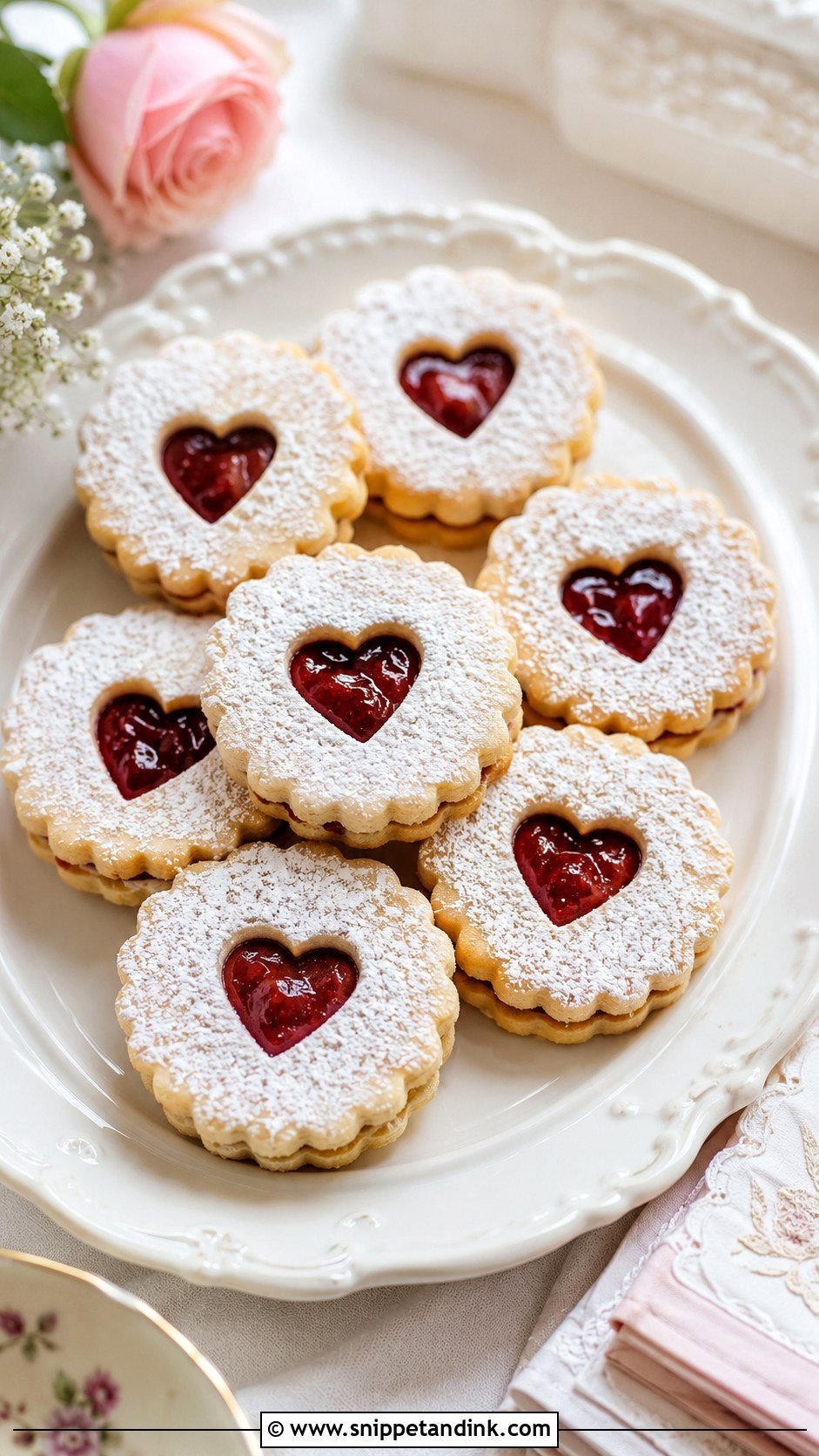
Linzers look dressed up before you do anything to them. Two thin almond cookies sandwich a layer of jam, with a cutout in the top one that shows the filling. Hearts, rounds, flowers and scallops all suit a wedding. The trick is to sugar the top cookie before sandwiching, so the jam window stays clean and red. They soften as the jam seeps into the dough, so I assemble them no more than a day ahead. On white platters they look striking, and boxed in pairs they make elegant edible favors for guests.
9. Madeleines
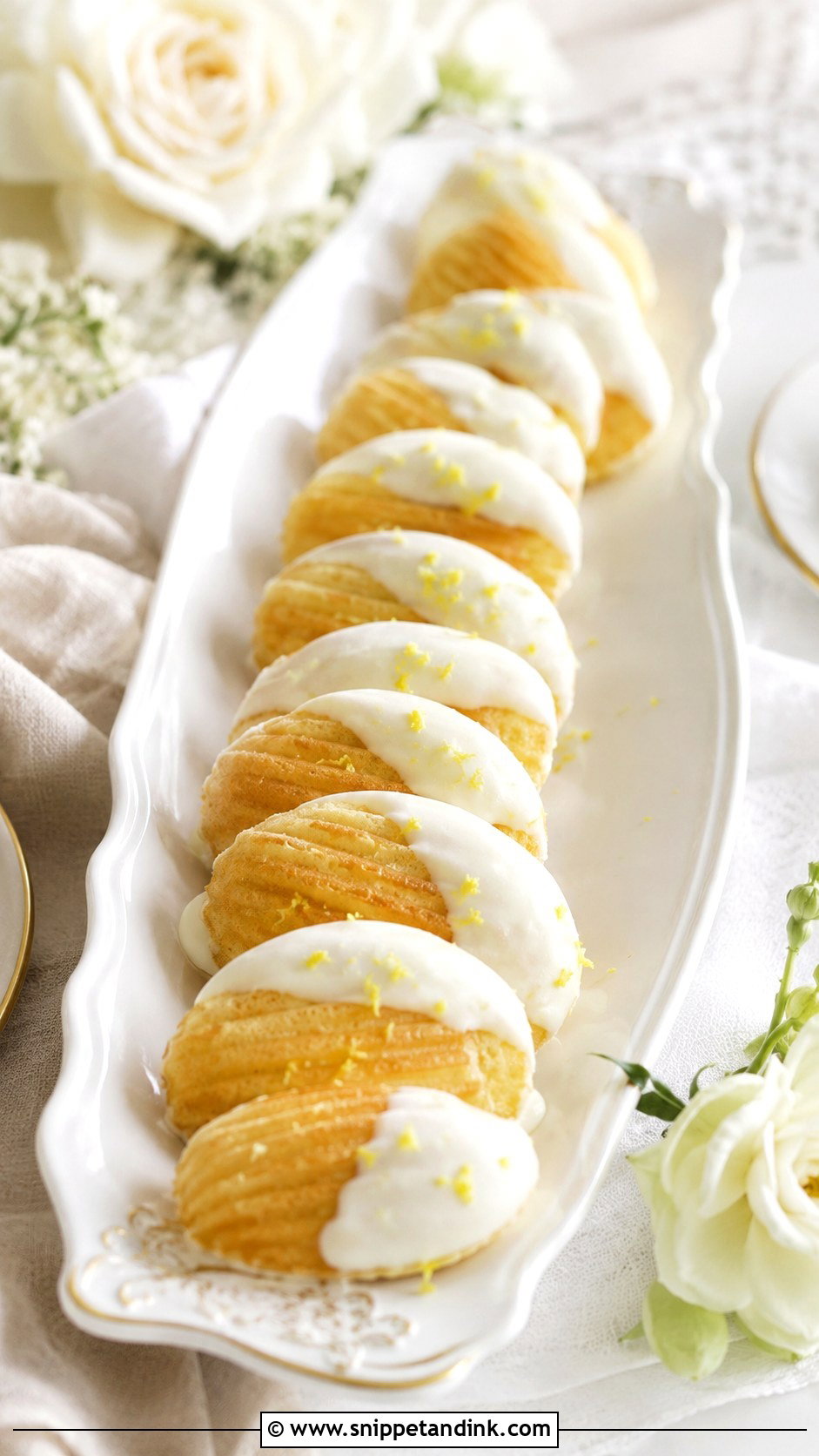
Madeleines are really tiny sponge cakes baked in shell moulds, and they’re at their best within hours of baking. By the next day they’ve lost the crisp edge and the tender crumb. If you want them on the table, either bake the same day or choose a baker who can. Vanilla and lemon are classic; a dipped edge of white chocolate makes them look more formal and slows the staling slightly. Overlapping rows on a long porcelain tray show off the shell pattern best.
10. Ladyfinger Cookies
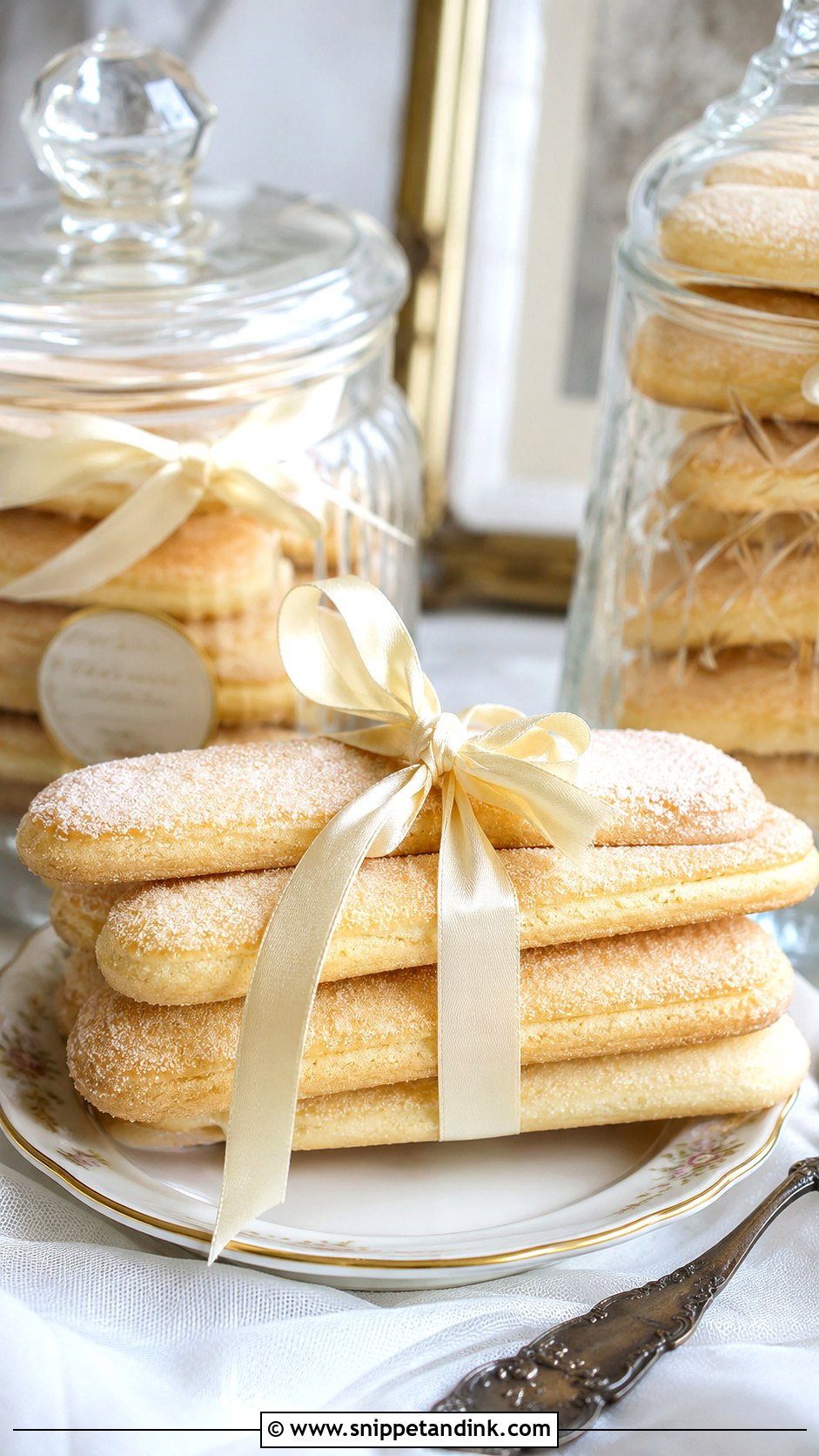
Ladyfingers are piped sponge fingers, dusted with sugar before baking to give that fine sparkle on top. Most people know them from tiramisu, but served alone with coffee they feel light and old-fashioned. Being airy, they go stale quickly when left out and soften if the room is humid. I’d keep them in glass jars, standing upright with the sugared side facing out, or tied in small ribbon bundles. They suit ivory, gold and dusty blue palettes.
11. Shortbread Cookies
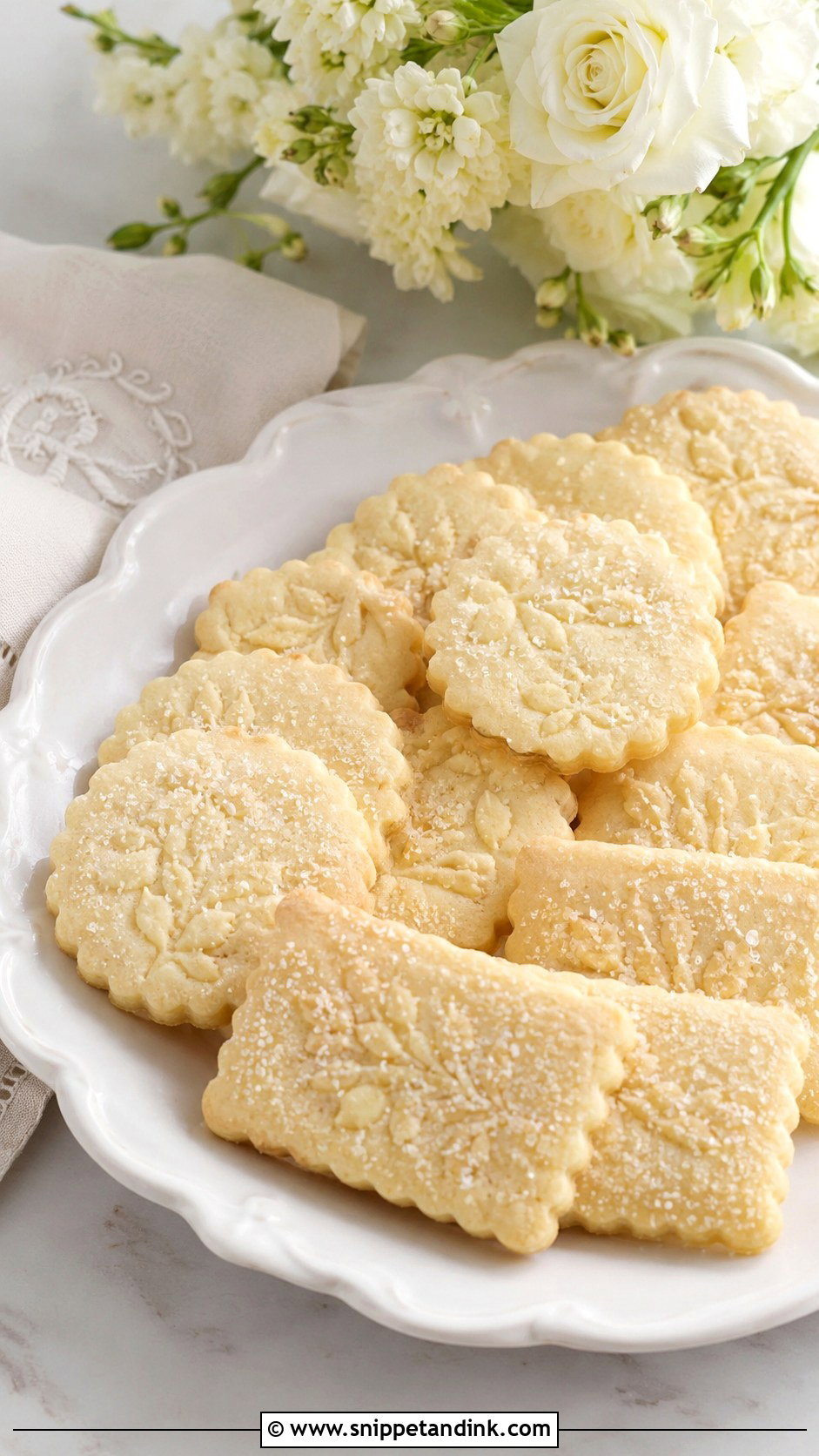
Good shortbread is just butter, sugar and flour, which means the butter quality is the whole flavour. It’s not very sweet, so it balances richer cookies on the same table. Cut it into rounds, hearts or scallops, and chill the shaped dough before baking so the edges stay sharp. Shortbread is the best base for stamped monograms or pressed floral patterns, because it barely spreads in the oven. A white chocolate dip is about as far as I’d go with decoration.
12. Butter Spritz Cookies
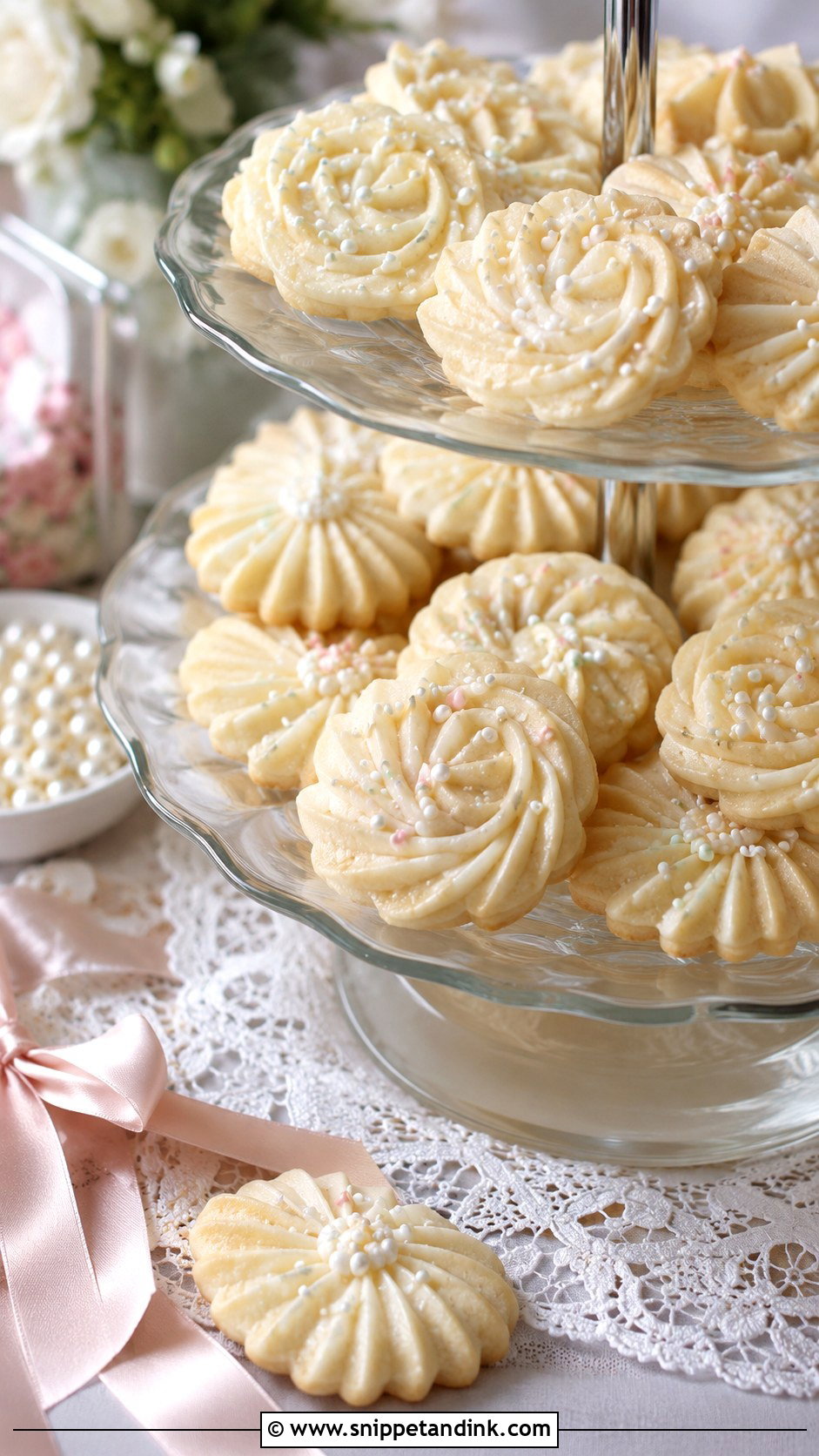
Spritz dough is pushed through a cookie press into stars, shells, wreaths and rosettes, and that’s where the vintage bakery look comes from. The dough has to be the right softness. Too cold and it won’t press; too warm and the shapes blur. Almond extract gives them a traditional flavour. Pearl sugar, pastel sanding sugar or a dot of jam in the centre is enough decoration. Because they’re small and sturdy, they’re my go-to for big receptions where guests graze while walking.
13. Lace Cookies
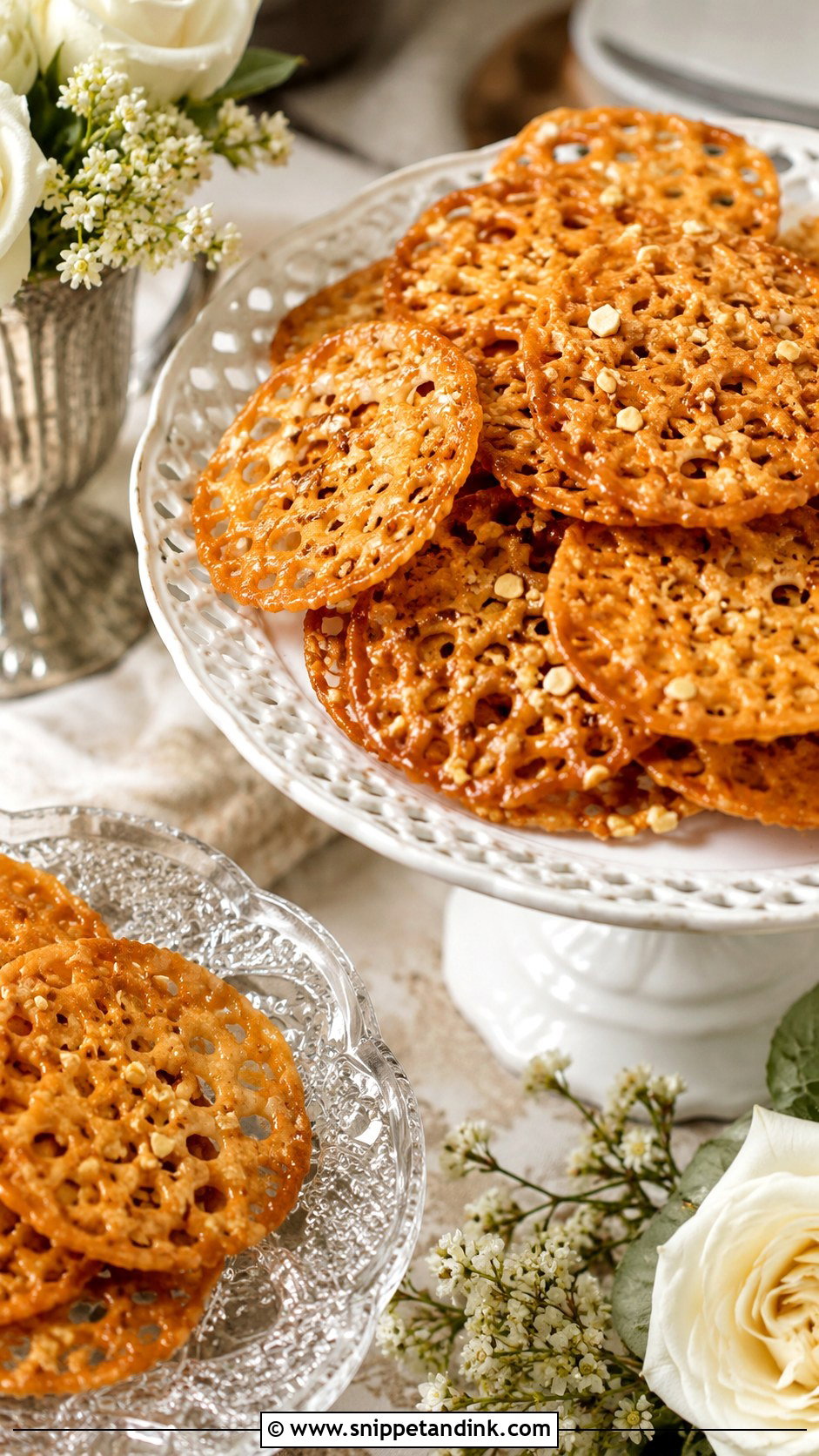
Lace cookies spread in the oven into thin, crisp rounds full of tiny holes, which is where the name comes from. Oats, almonds, brown sugar and butter give them a caramel flavour. They’re fragile and hate humidity. On a damp day they turn bendy within a couple of hours, so I keep them sealed until the last moment and serve them in small, low stacks rather than tall piles. Sandwiching two with a thin layer of chocolate makes them sturdier. Their golden colour looks right beside white flowers and glass stands.
14. Lemon Tea Cookies
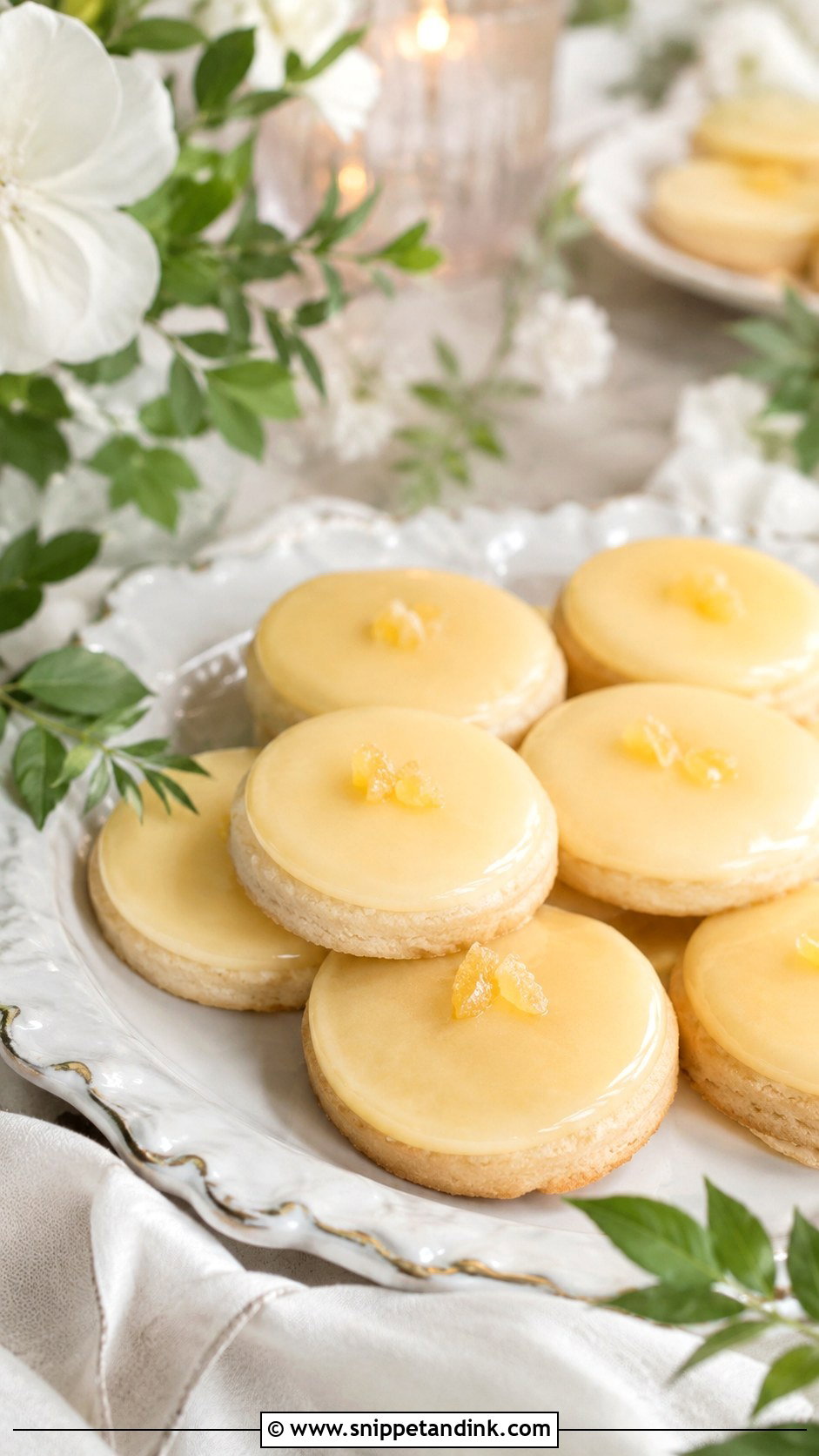
Lemon cookies are the ones guests reach for after a heavy dinner. A butter cookie base with zest and juice, finished with a thin pale yellow glaze and a sliver of candied peel, tastes light and clean. Glazed cookies need time to set, so I glaze them the day before and let them dry uncovered before boxing. They suit garden weddings and afternoon receptions, and white china shows the glaze best.
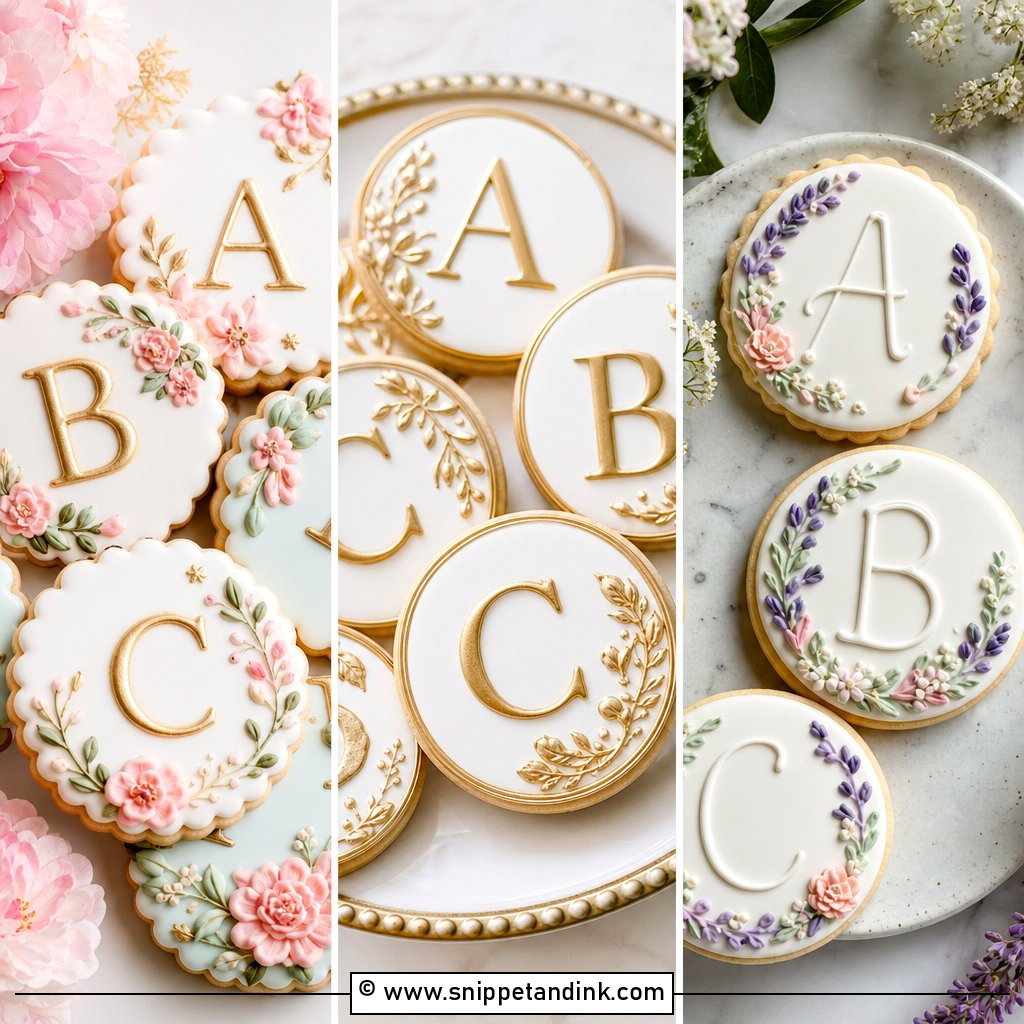
15. Iced Sugar Cookies
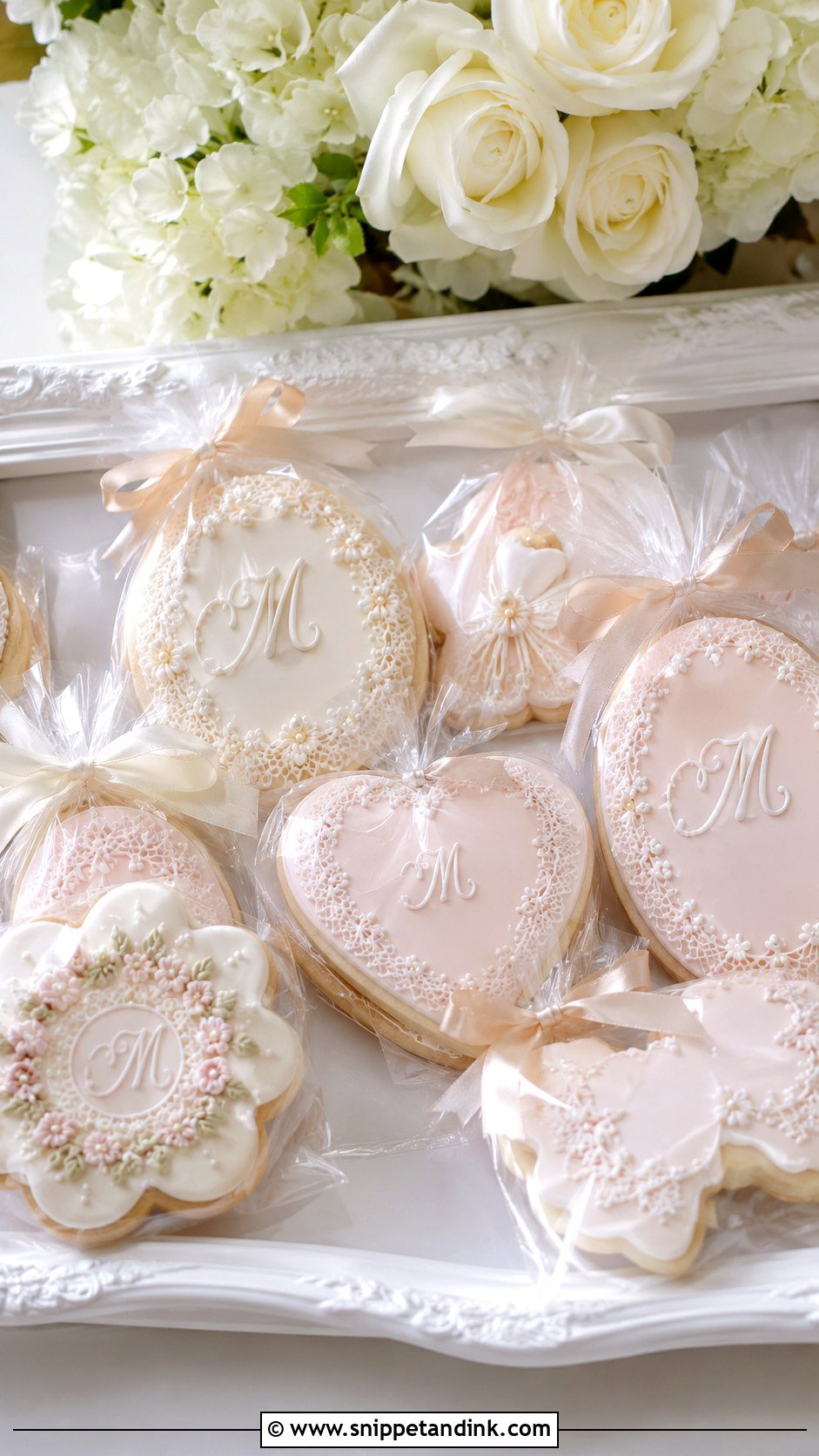
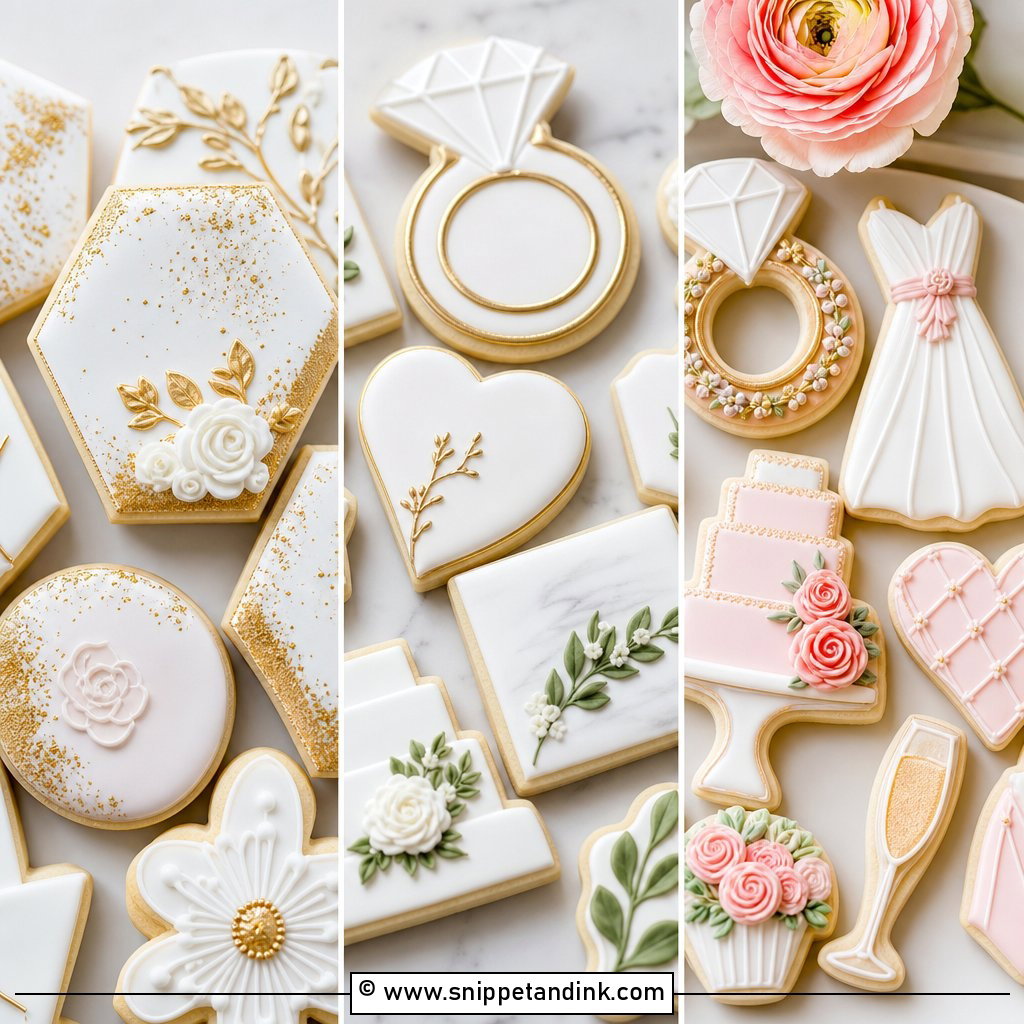
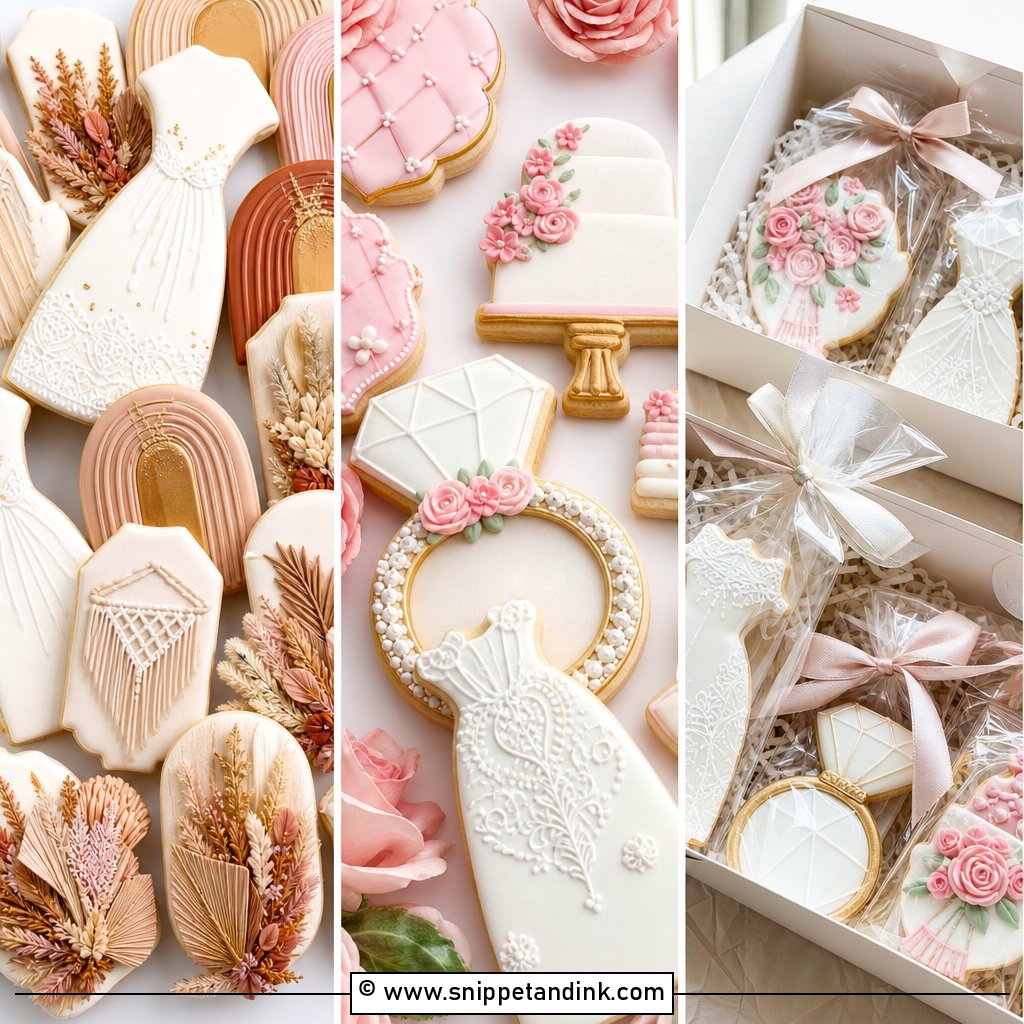
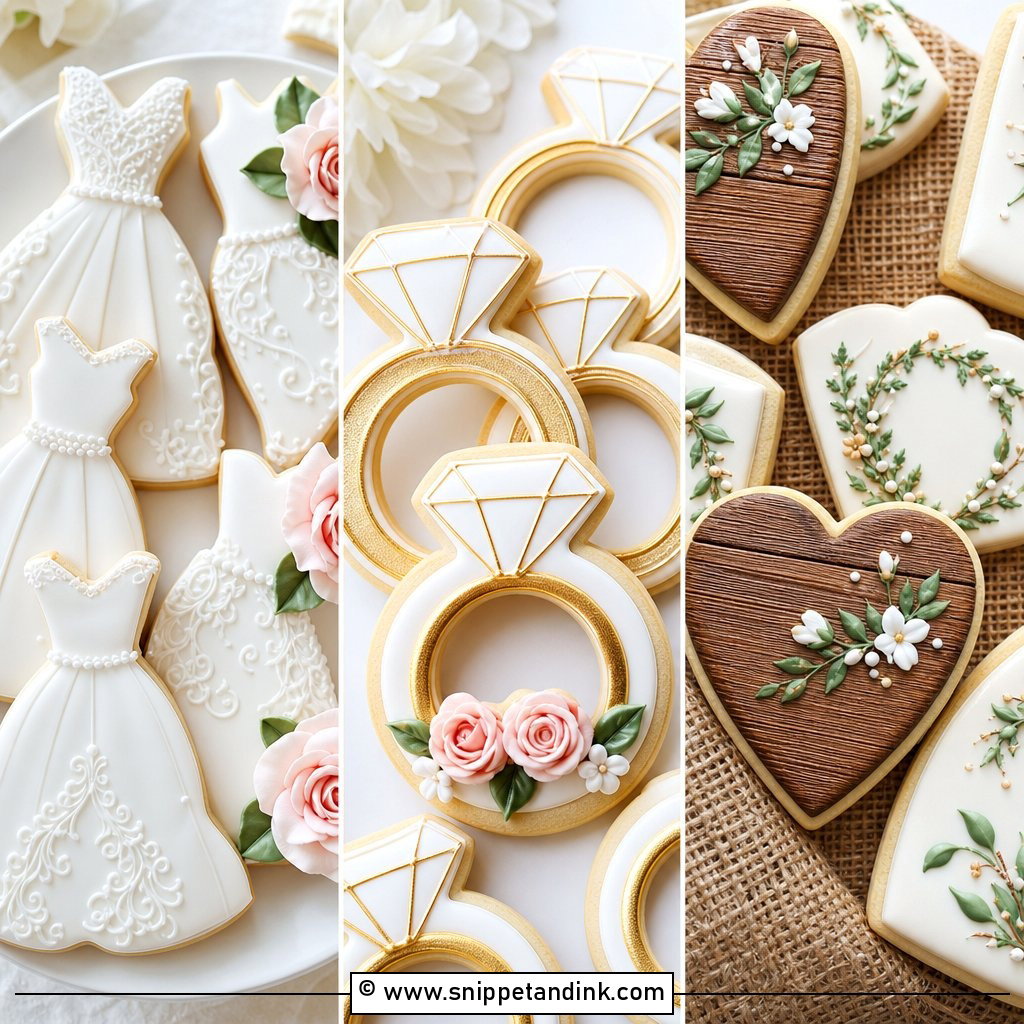
Iced sugar cookies are the most flexible cookie on the list. Bells, hearts, ovals, cameos and scalloped plaques all suit a vintage theme, and soft icing in ivory, blush, pale blue, sage or champagne keeps them from looking modern. Fine piping, tiny dots, monograms, and lace-inspired borders can be matched to the stationery. The timing matters: royal icing needs to dry for many hours, ideally overnight, before cookies can be bagged without smudging. Done well, they make good individually wrapped favours.
16. Anise Cookies
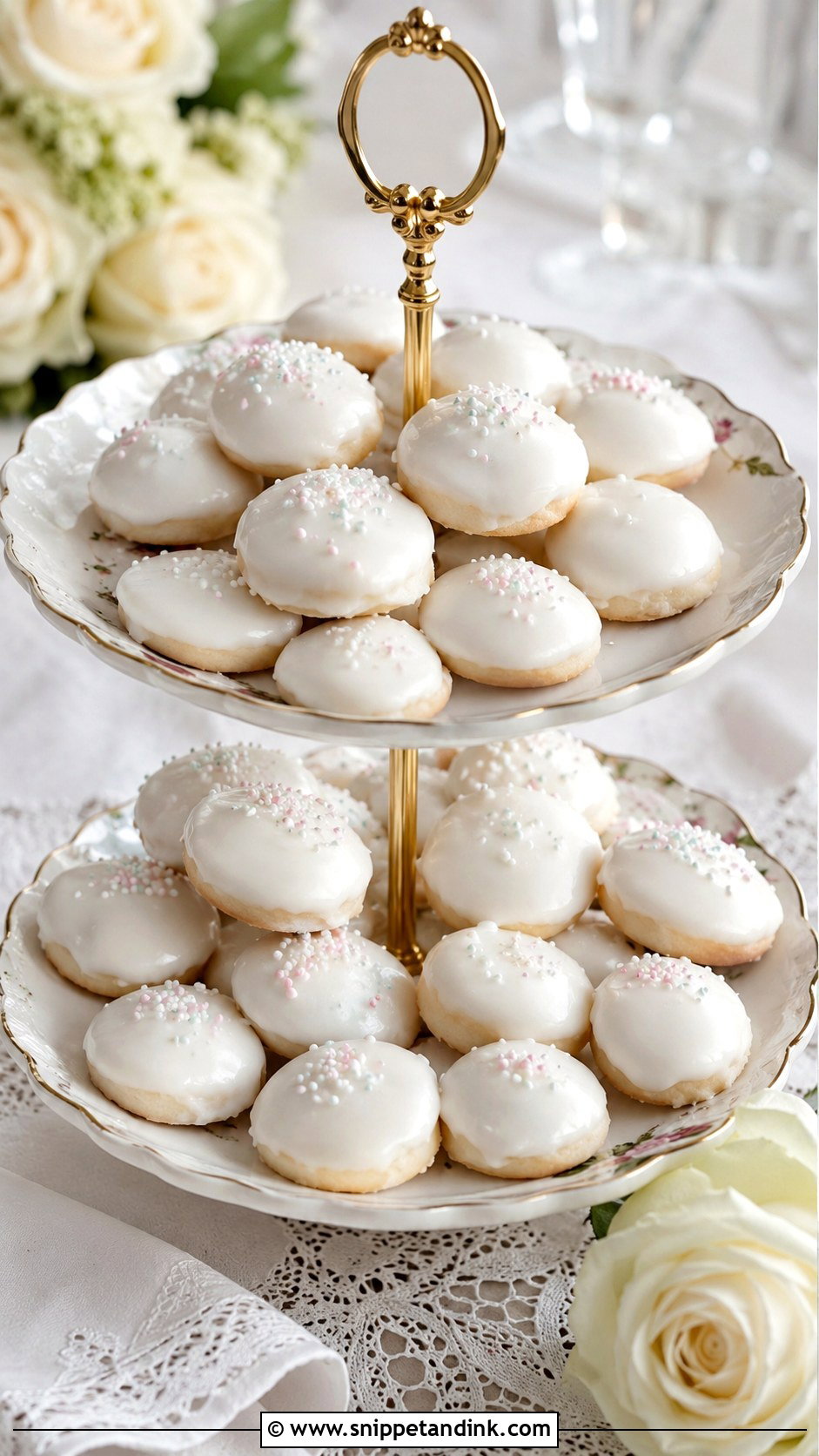
Anise is a flavour people either love or avoid, with a clear licorice note. These soft, pale cookies are usually finished with a simple glaze and tiny nonpareils, and they look festive on a tiered tray. I’d always put them next to familiar flavours rather than making them a large share of the table. Where a family has Italian, Greek or wider Mediterranean baking traditions, they’re often the cookie older guests seek out first, and that alone justifies a plate.
17. Jam Sandwich Cookies
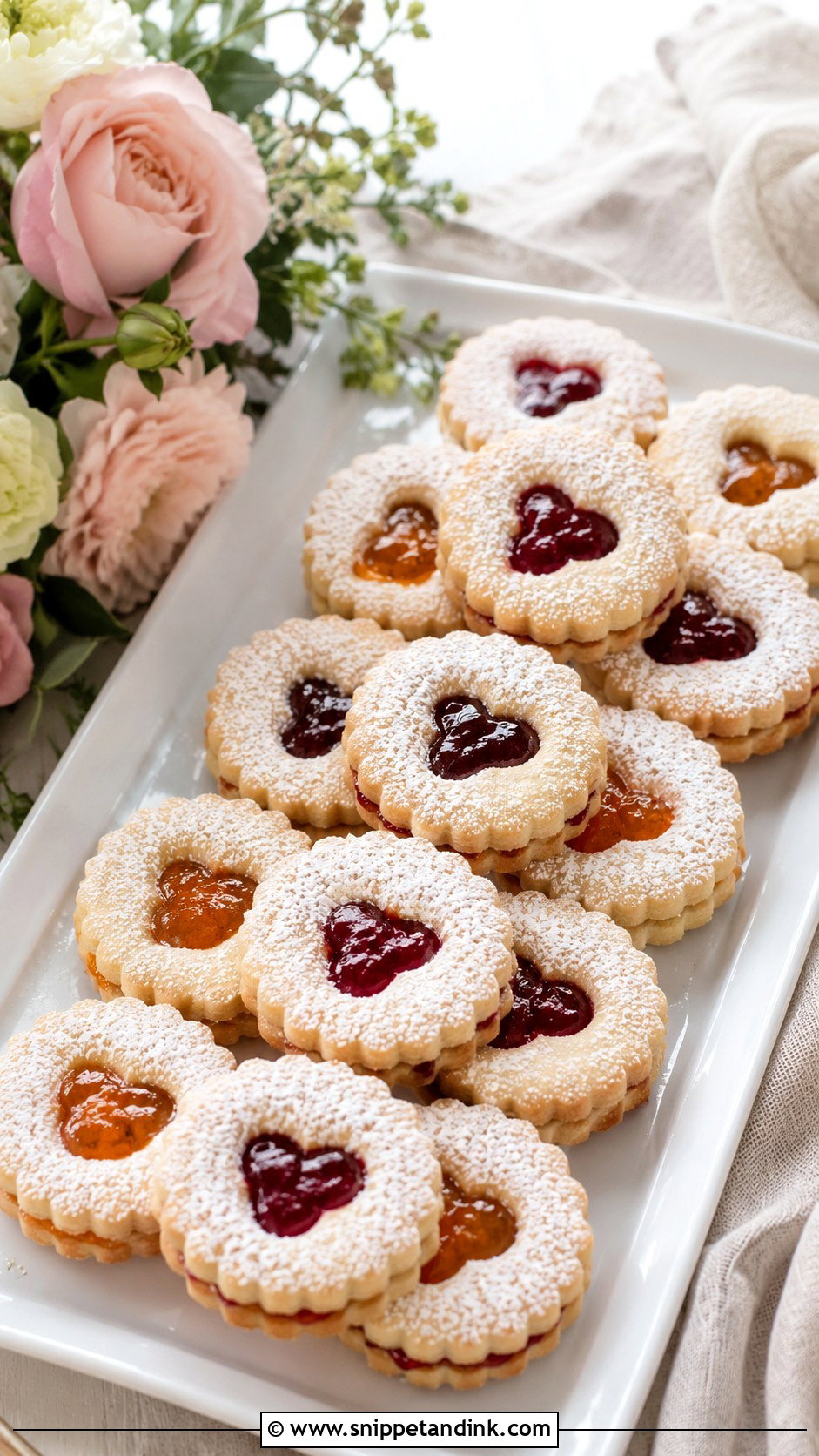
Seen from the side, a jam sandwich cookie shows a thin stripe of colour, so I arrange them flat in neat rows where guests can see both the shape and the filling. Raspberry and apricot show clearly without looking garish. Use a firm jam, spread thin, or the cookies slide apart in a warm room. Round, scalloped, heart and flower cutters all give them a vintage outline. A light dusting of powdered sugar on top makes them a touch more formal.
18. Coconut Macaroons
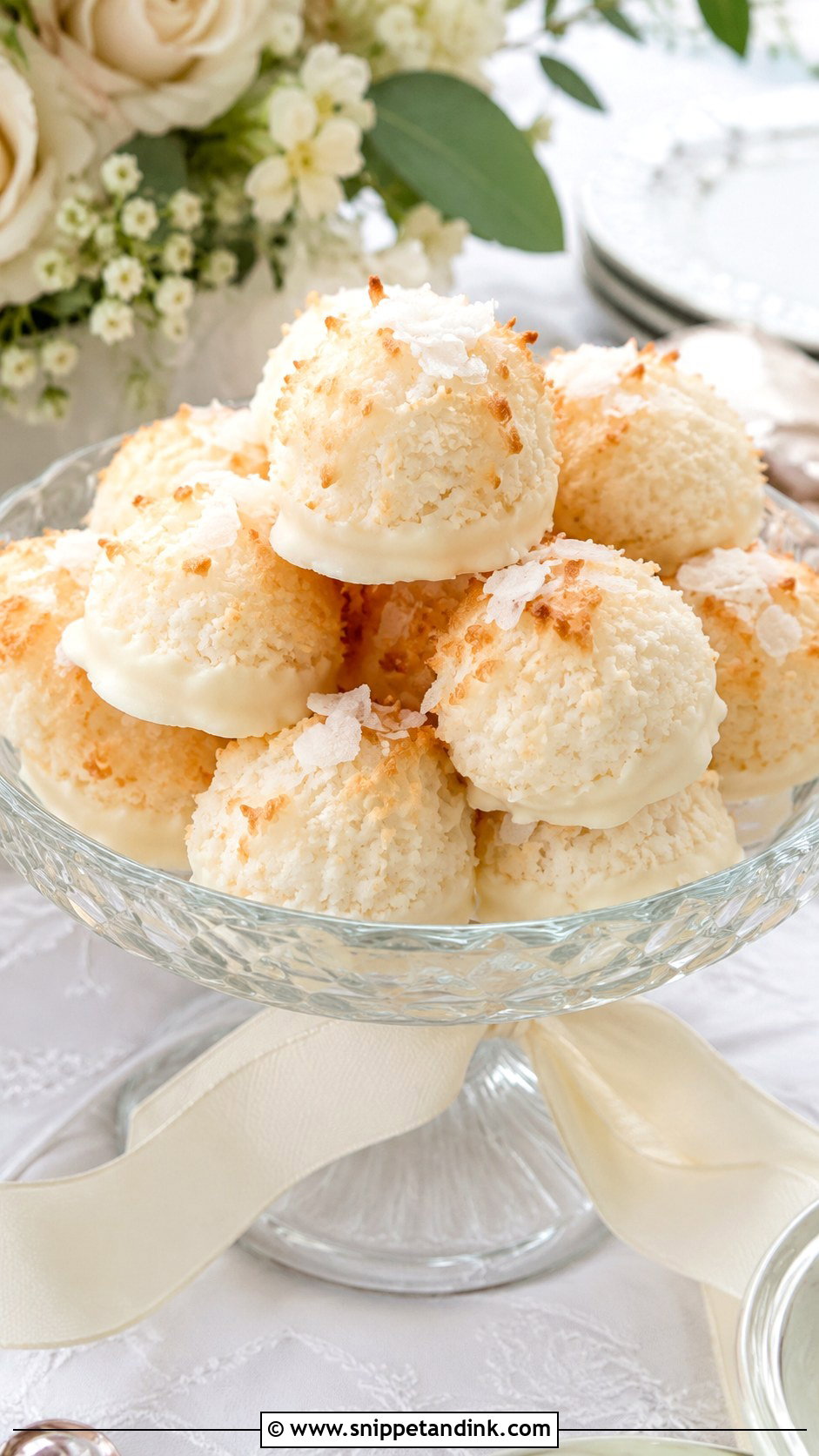
Macaroons bring height and chew to a table of flat butter cookies, and they’re naturally made without flour, which can help guests avoiding wheat. Check the ingredients before claiming them as gluten-free, though, since some recipes add flour and shared kitchens matter. Keep them small and rounded so they sit neatly in paper cups. A dip in white or dark chocolate makes them more formal. Coconut pairs well with lemon, almond and berry flavours elsewhere on the table.
19. Hermit Cookies
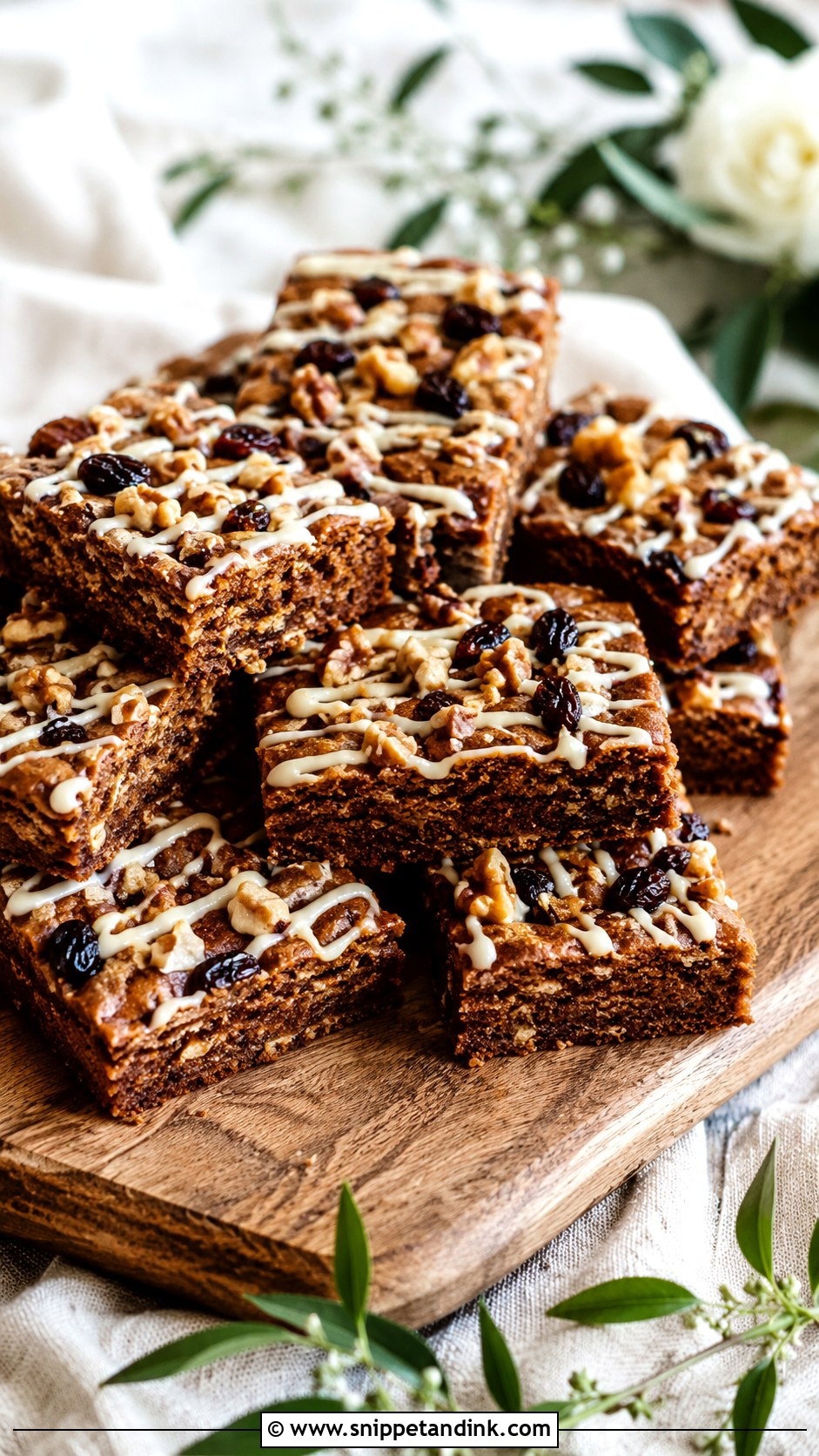
Hermits are the opposite of dainty: spiced, chewy, full of brown sugar, raisins, dates or nuts. They add depth to a spread that might otherwise be pale and sweet. Bake them as a slab and cut small, neat bars for the table. A thin glaze makes them a little more festive. They keep well for several days and actually improve as the spices settle, which makes them a sensible bake-ahead option. Autumn weddings and family-style dessert tables suit them best.
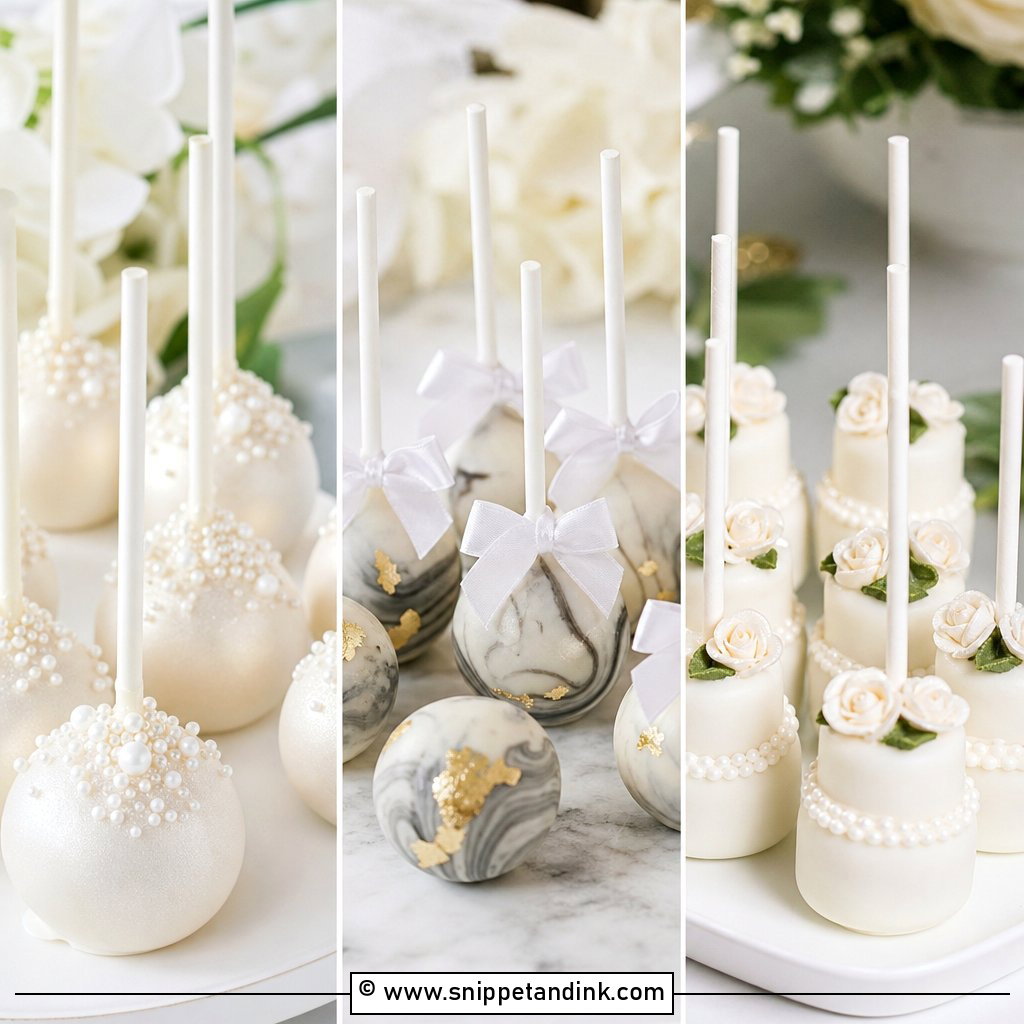
20. Chocolate Dipped Butter Cookies
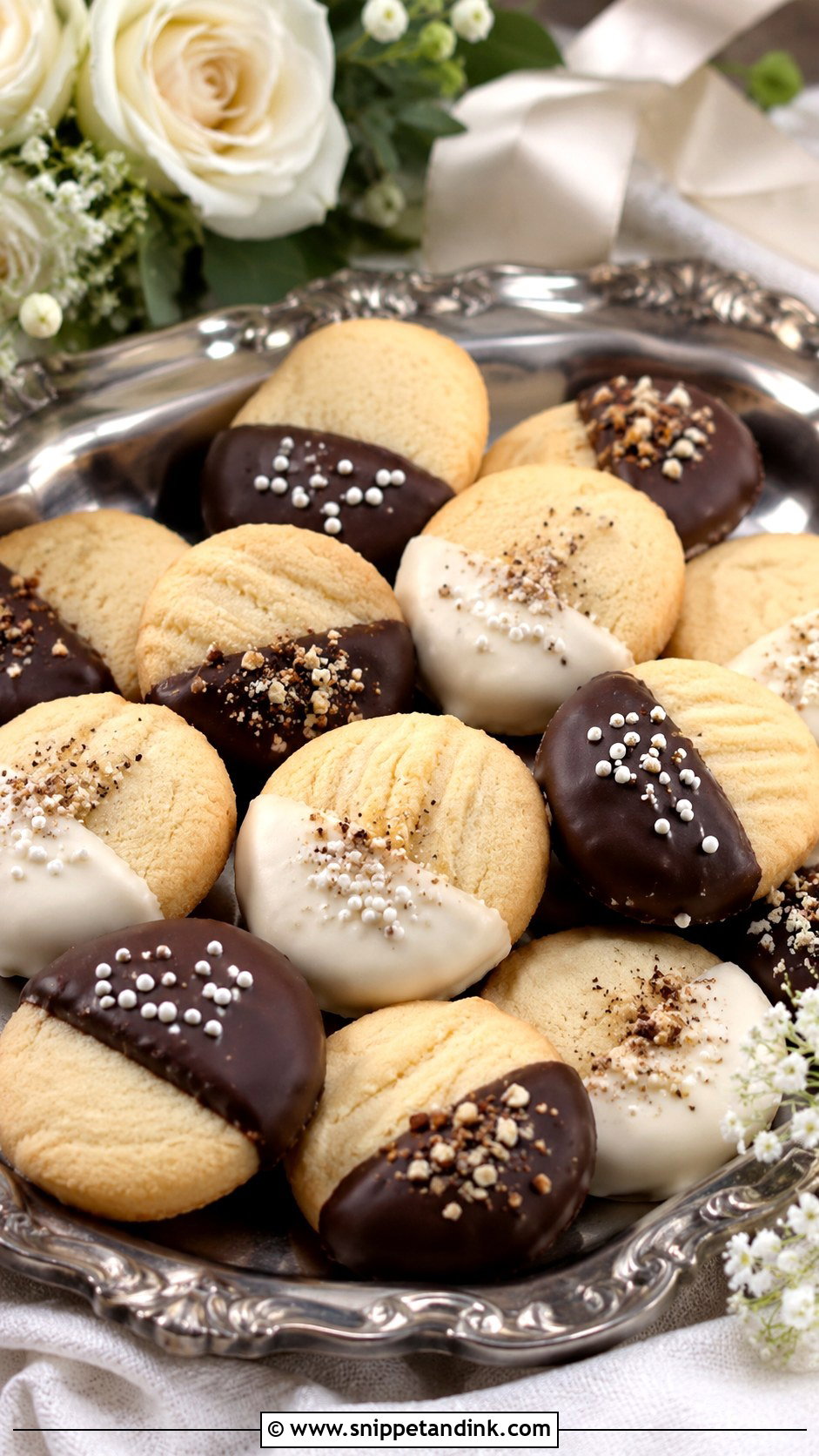
Dipping is where most home bakers come unstuck. Chocolate melted without tempering sets dull and streaky, and it softens in a warm room. Use properly tempered chocolate or a good coating chocolate if you want a clean, shiny edge. Dip half of a plain butter cookie, scatter chopped nuts or pearl sugar while it’s wet, and let it set fully before stacking. White chocolate suits bridal colours. Laid in alternating directions on a tray, the dipped edges make a neat pattern guests notice.
Cookies That Keep for a Week, and the Ones That Barely Last a Day
Spreading the baking over a fortnight is what makes a cookie table manageable. Roughly, the cookies on this list fall into three groups:
- Bake well ahead and freeze: powdered nut rounds (without the final sugar coat), shortbread, spritz, pecan sandies, hermit bars and plain butter cookies for dipping.
- Bake two or three days ahead: iced sugar cookies (they need drying time anyway), lemon glazed cookies, thumbprints and coconut macaroons.
- Bake or assemble the day before or the same day: linzers, jam sandwiches, lace cookies, ladyfingers and above all madeleines.
Store crisp and soft cookies in separate tins. Moisture moves from soft cookies into crisp ones, so a tin of lace cookies shared with chewy macaroons ends up limp overnight. Thaw frozen cookies in their sealed containers, then give powdered rounds their last coat of sugar once they’re at room temperature.
A Nut-Heavy Table Needs Labels and Its Own Tongs
More than half of these cookies contain almonds, pecans or walnuts, and several look nearly identical once they’re coated in sugar. That’s a real risk for guests with nut allergies. I put a small card by every plate naming the cookie and its main allergens, and each plate gets its own tongs so nothing crosses over. If someone in the wedding party has a serious allergy, I’d include a few nut-free kinds like shortbread, spritz or iced sugar cookies, baked and packed separately and set on their own stand.
A Cookie Spread With Something for Every Grandparent
A good cookie table tells guests something about the family behind it. It also softens a formal reception and makes a dessert table feel generous. Aim for contrast: a few powdered rounds, something with jam, one iced cookie, one crisp, and one dark or rich option like hermits or chocolate-dipped butter cookies. Keep the styling simple, label anything with nuts, and plan the baking schedule around the cookies that don’t keep. Do that, and the cookie table may get more visits than the cake.
You'll Like These Ideas:


Leave a Reply