
Some couples want a clean rustic cake with two or three forest touches. Others ask me for a full enchanted forest moment: tiers dressed in moss, mushrooms and wild blooms. Both can work, and the difference usually comes down to the room it will stand in. A cake built for a candlelit barn needs different finishes from one meant for a garden at noon. The twenty designs below range from barely-there bark to fully sculpted stumps, so use them to work out how much forest you actually want before you show your baker a single photo.
Putting Together a Brief Your Baker Can Quote
A board of thirty woodland cakes tells me what you like but not what you want. The quotes I can give quickly and accurately come from couples who send a short, specific brief. The price of these cakes is driven mostly by hand-made detail, so the brief needs to show how much of it you expect.
- Your date, venue and whether the cake stands indoors or out.
- Guest numbers, so we can work out servings before we talk tiers.
- Two or three photos at most, with a line on what you like in each: the bark on one, the colour of another.
- Anything you don’t want, such as fondant, mushrooms or dark icing. This saves more time than the likes.
- A rough budget range, so I can tell you honestly which details fit inside it.
If a sculpted stump or a hundred sugar mushrooms is outside your budget, a good baker will suggest where to hold back, such as decorating the front of the cake heavily and keeping the back simple, since only one side faces the room.
1. Birch Tree Wedding Cake
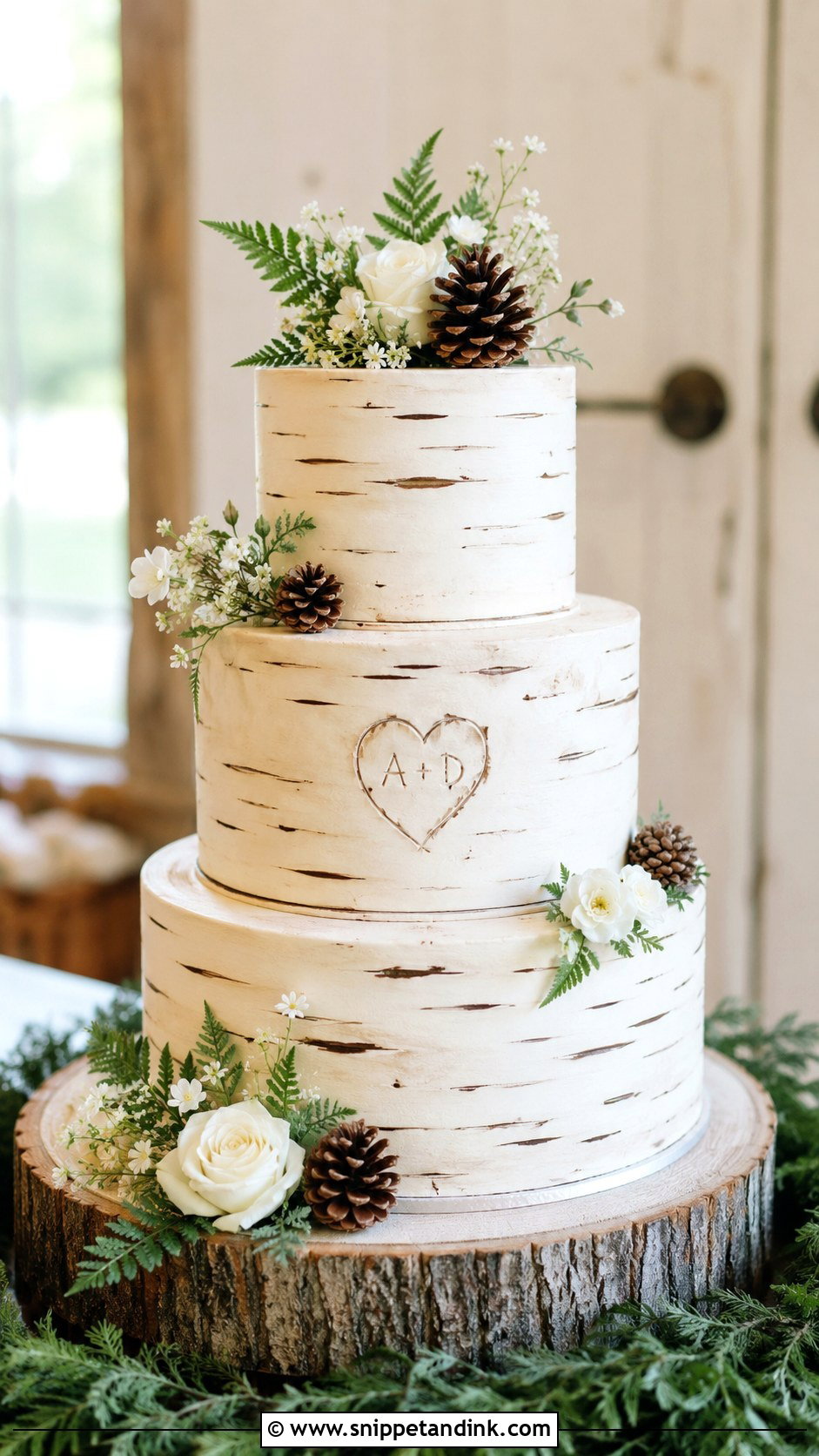
Birch is the woodland design couples ask me for most, partly because it personalises so easily. I cover the tiers in ivory buttercream, chill them hard, then drag a palette knife loaded with grey cocoa-tinted icing across the surface to make the bark lines and dark knots. Chilling first matters; on soft icing the grey smears instead of breaking into those crisp peeling edges. A carved heart with initials suits two or three tiers. If you prefer something calmer, hand-painted bark is flatter and quieter than piped texture. A wood slice stand underneath completes it.
2. Moss Wedding Cake
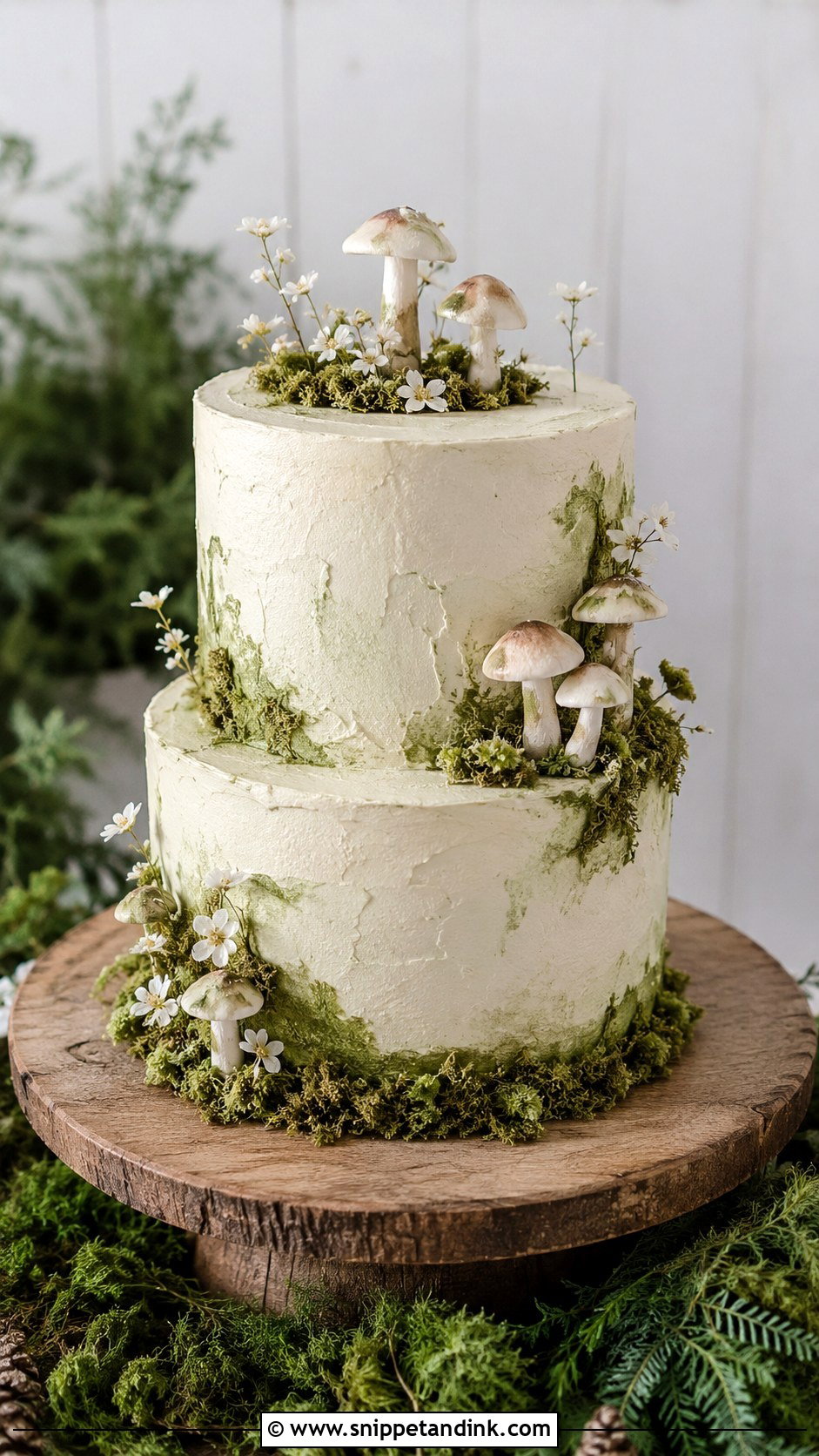
Real moss never goes on my cakes. I make the effect from green-tinted cake crumbs, toasted coconut or piped buttercream grass, which all eat well and look convincing from a metre away. The skill is restraint: moss gathered only around the lower edges of a smooth ivory tier looks like a forest floor, while moss everywhere looks like an accident. Small sugar mushrooms and chocolate twigs give it scale. A soft green palette and that one low band of texture is usually enough.
3. Woodland Mushroom Wedding Cake
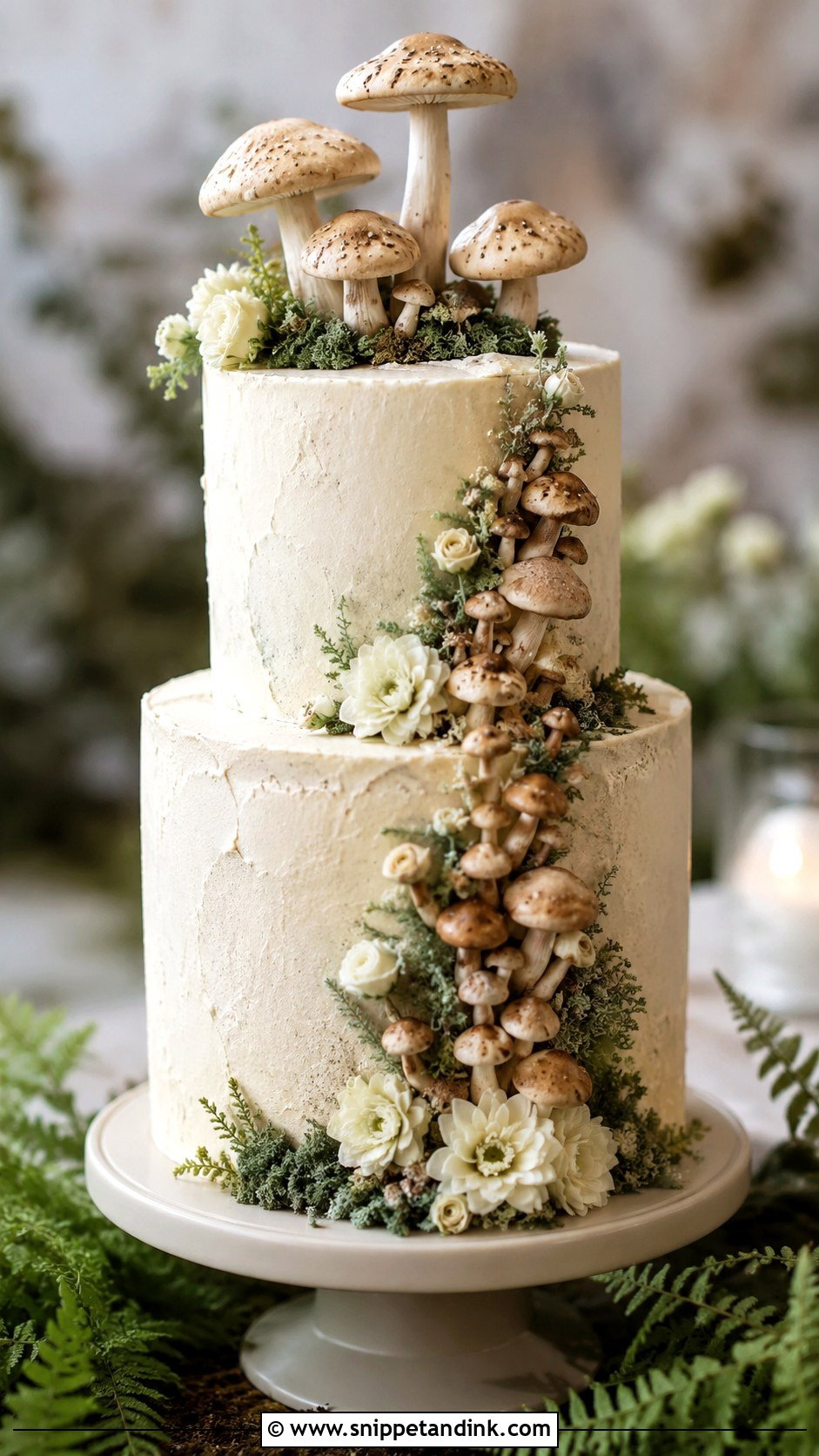
A woodland mushroom wedding cake stays grown-up when the caps stay muted: cream, tan, rust and a dusty red rather than pillar-box red. I like the mushrooms climbing one side as if they are following a path up the tiers, which gives the eye a line to follow. They are gumpaste and fully dry, so they keep their shape for days, but they are hard to bite, which I tell couples so nobody is surprised at cutting. A plain round two-tier gives the clusters room. Add edible moss and a few pressed leaves to finish.
4. Semi Naked Woodland Wedding Cake
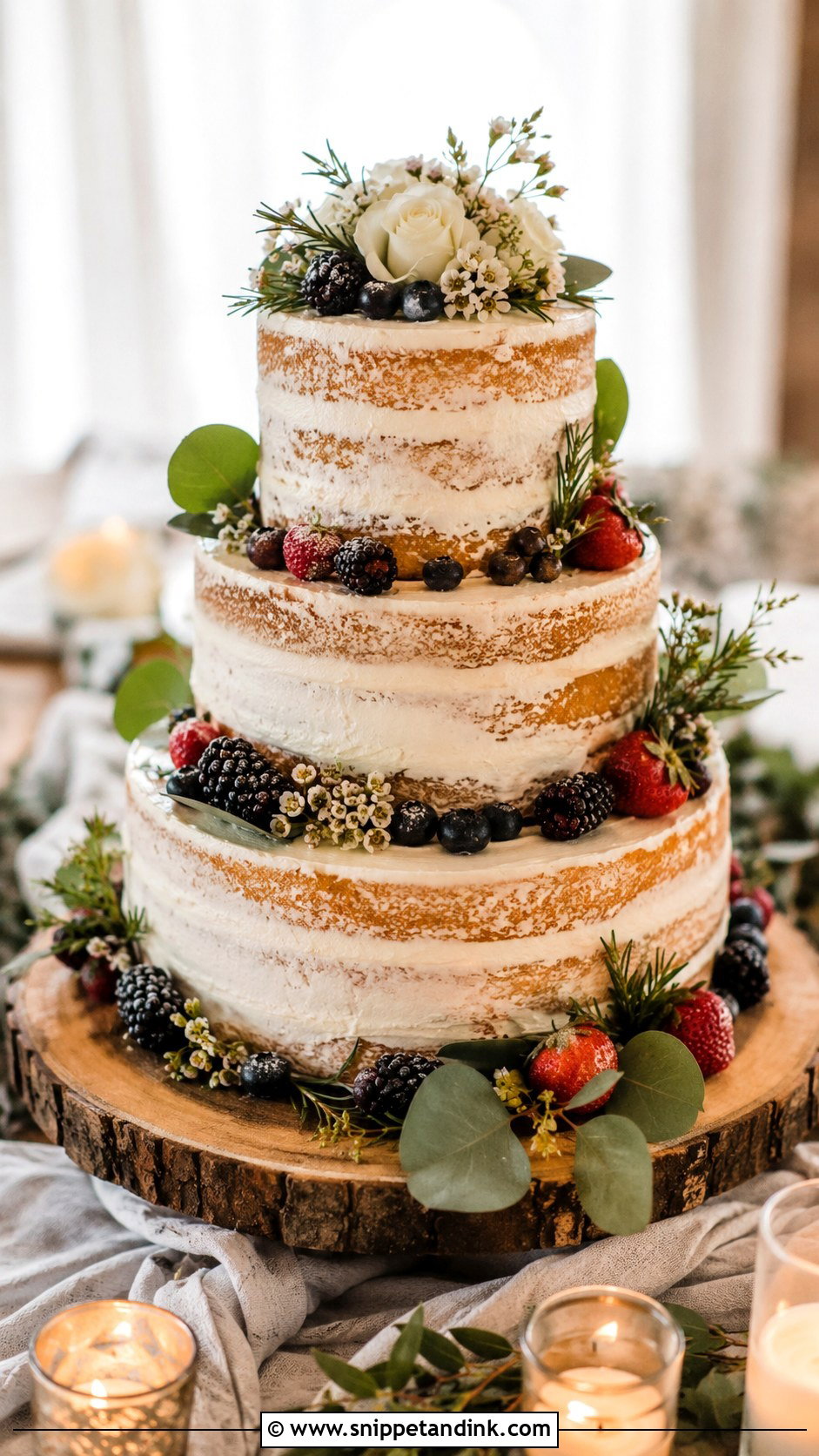
Semi naked is the relaxed option, though it looks easy only when the baking is precise. A thin scraped coat lets the sponge show, so the layers need to be level and the filling evenly piped, or the gaps show straight away. The exposed sponge dries quicker than a fully iced cake too, which is why I assemble these as late as I can. Vanilla, spice, carrot and chocolate all look warm through the frosting. Dress it with edible greenery, berries and a few white blooms, and stand it on a wood slab.
5. Fern Wedding Cake
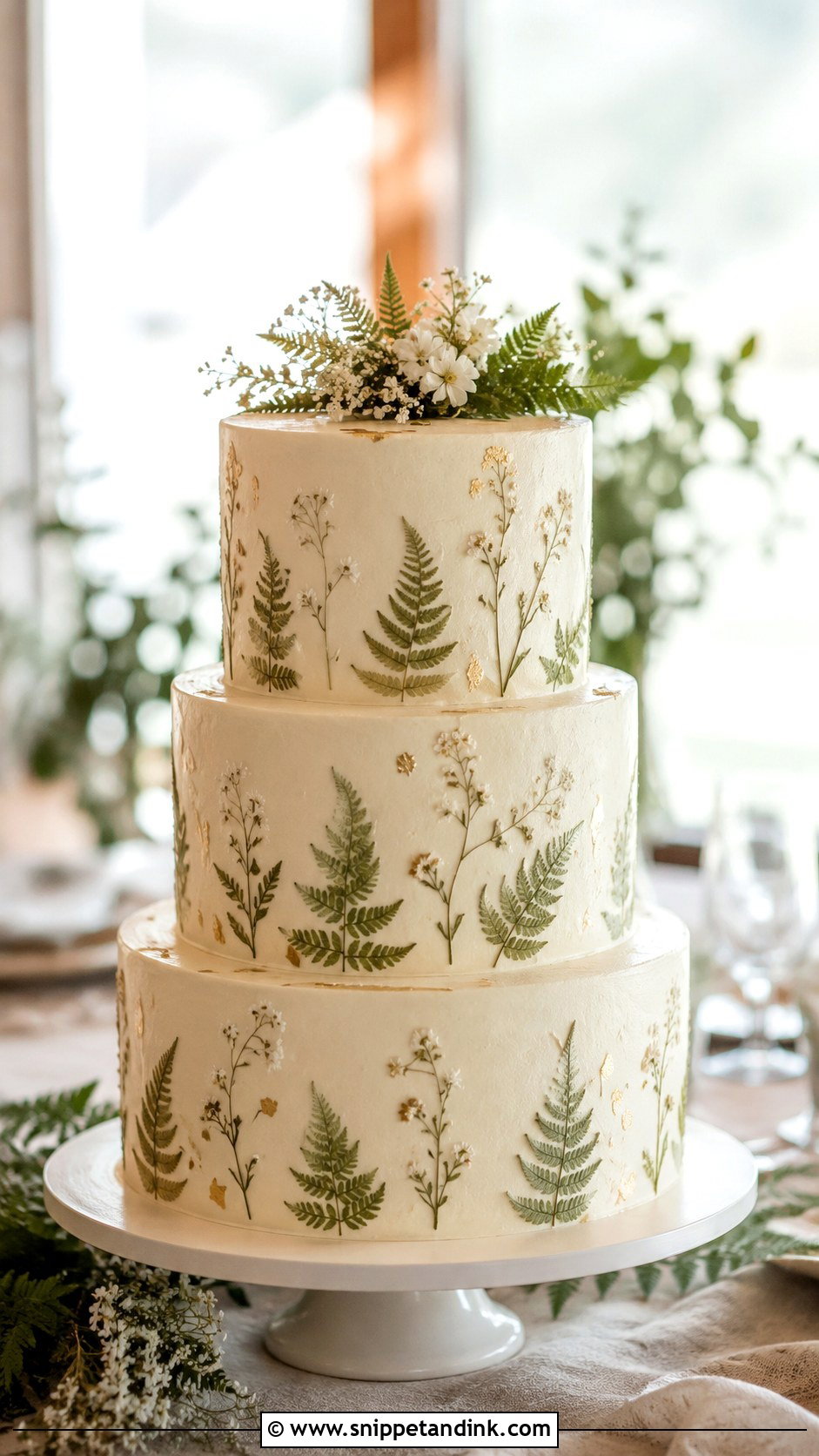
Ferns suit almost any season because green reads fresh in spring and rich in winter. I either press fern impressions into fondant, pipe the fronds in two shades of green, or paint them on with thinned gel colour. Real fronds are risky; plenty of fern species are not food safe, so I only use cake-safe greenery on a barrier. Keep the base plain white and wrap the fronds around each tier. On a modern table with linen and candles, a few low green arrangements suit it better than heavy flower clusters.
6. Wildflower Woodland Wedding Cake
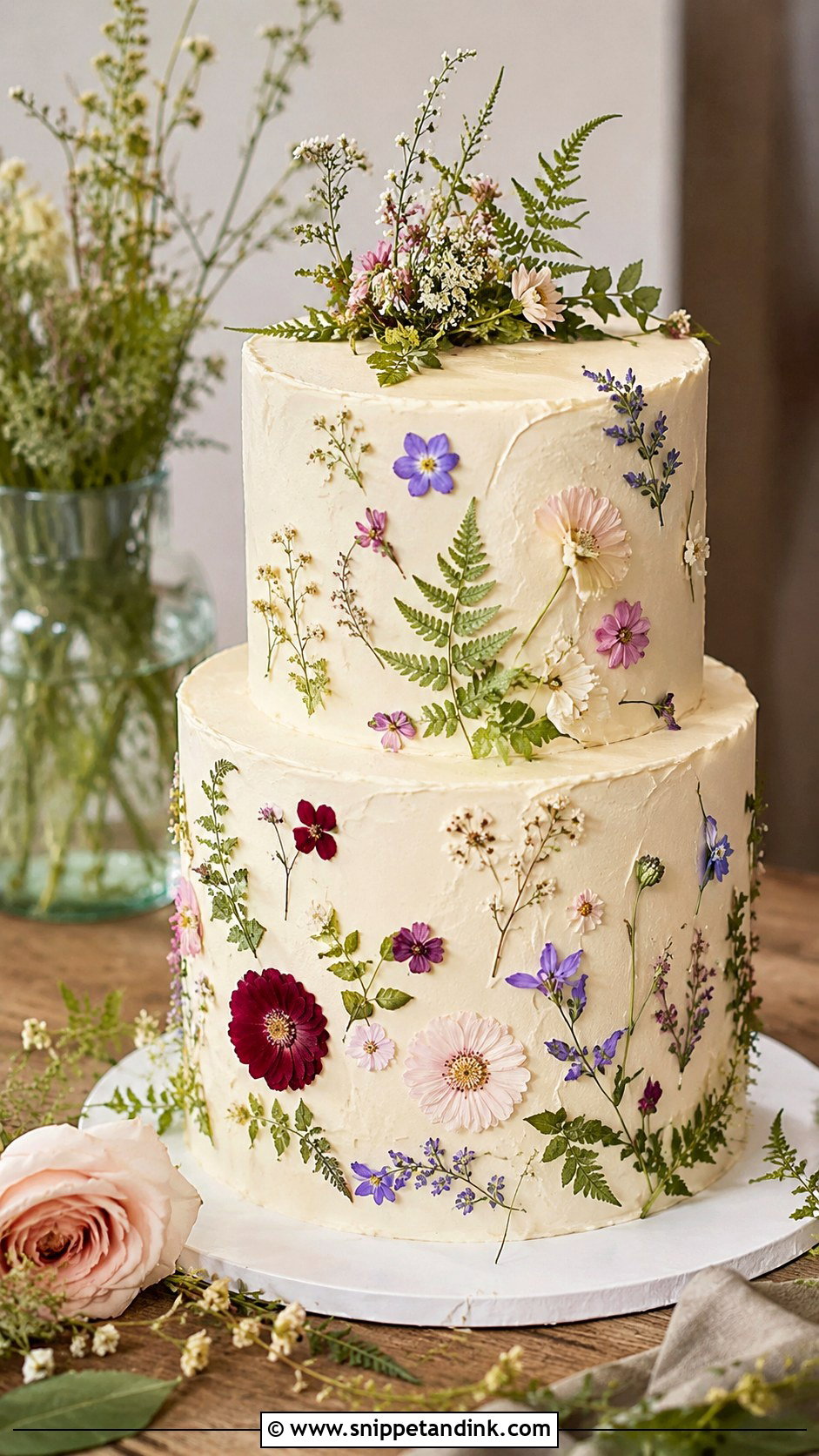
A wildflower woodland wedding cake is the cheerful one. It suits spring through early autumn, when the venue itself already looks like a clearing. I build the flowers from edible blooms, sugar flowers or pressed pieces, and I scatter them with gaps between clusters so each small flower can be seen. Ivory, lavender, pale yellow and soft blue sit well together. Too many blooms and a meadow cake starts looking like a florist’s bucket. A trailing vine or two connects it back to the woods.
7. Woodland Drip Wedding Cake
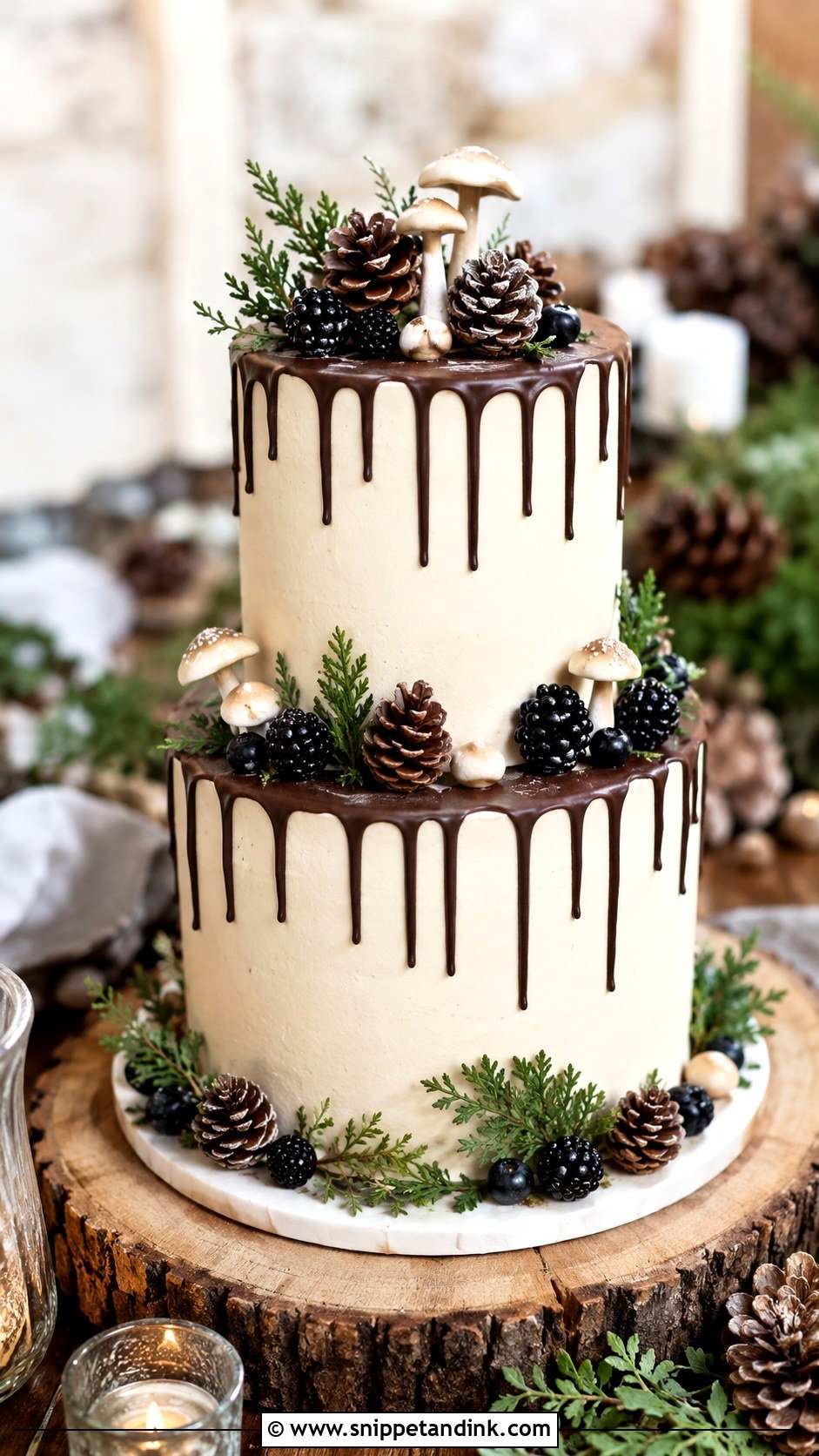
Drips give a rustic cake some drama, and they are more technical than they look. The cake has to be cold and the ganache barely warm, or the drips run all the way to the board. I test one drip on the back of the tier before going round. Chocolate on ivory reads bold; caramel reads softer. A coloured glaze in muted green can work in spring. Finish the top with berries, figs, chocolate pinecones or sugar mushrooms. A drip cake left in a warm marquee will soften, so this is one for a cool room or an evening reception.
8. Forest Green Wedding Cake
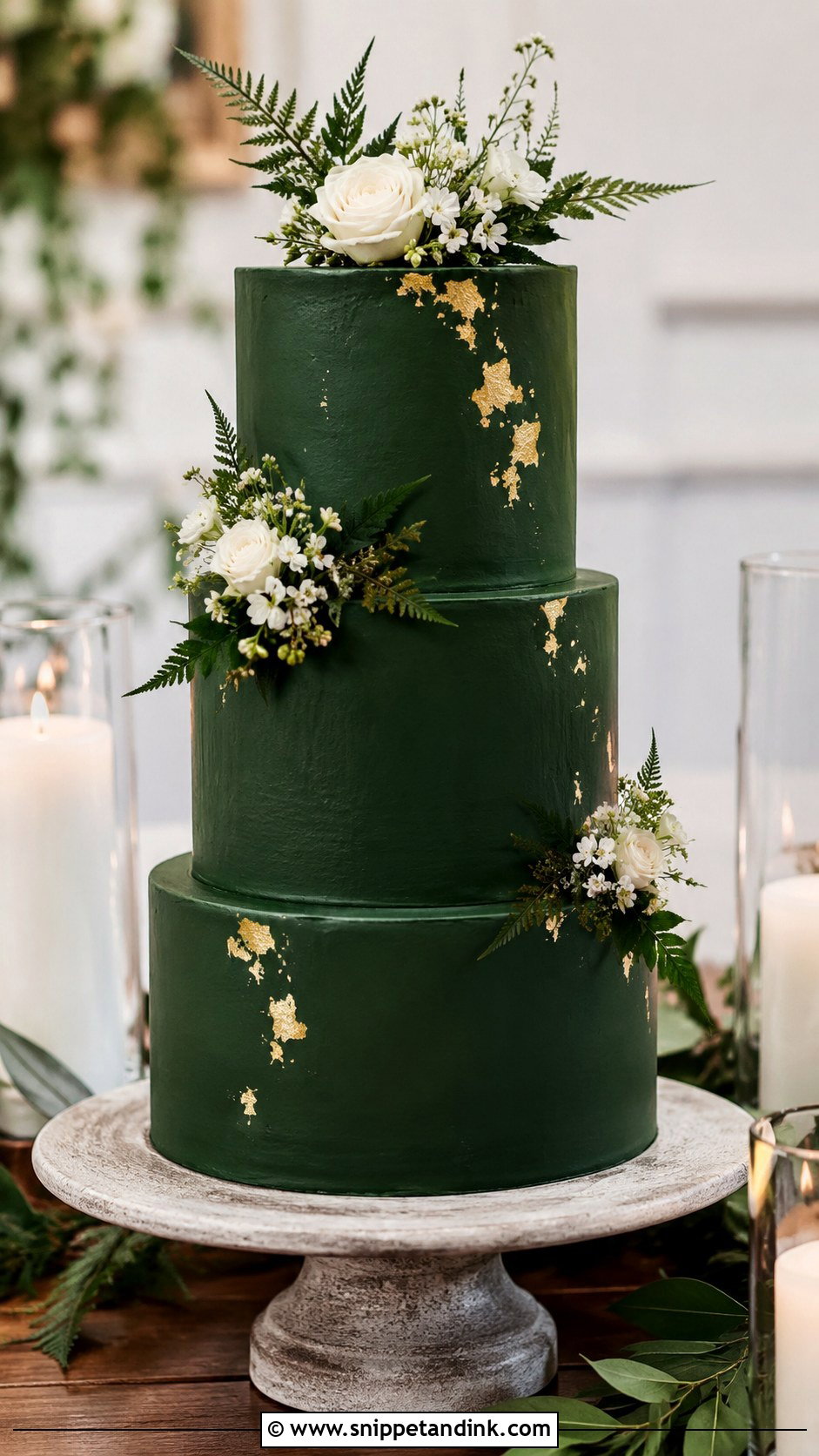
A forest green wedding cake carries the whole colour on its own. Deep green icing needs a lot of gel colour, and two things follow: the shade darkens for several hours after mixing, so I colour it a day ahead, and very saturated green can tint teeth. Fondant handles dark colour better than buttercream for that reason. Pair it with ivory flowers, gold leaf or a soft fern pattern, and choose matte for modern or textured for rustic. It sits well against wood tables and white linen.
9. Woodland Floral Wedding Cake
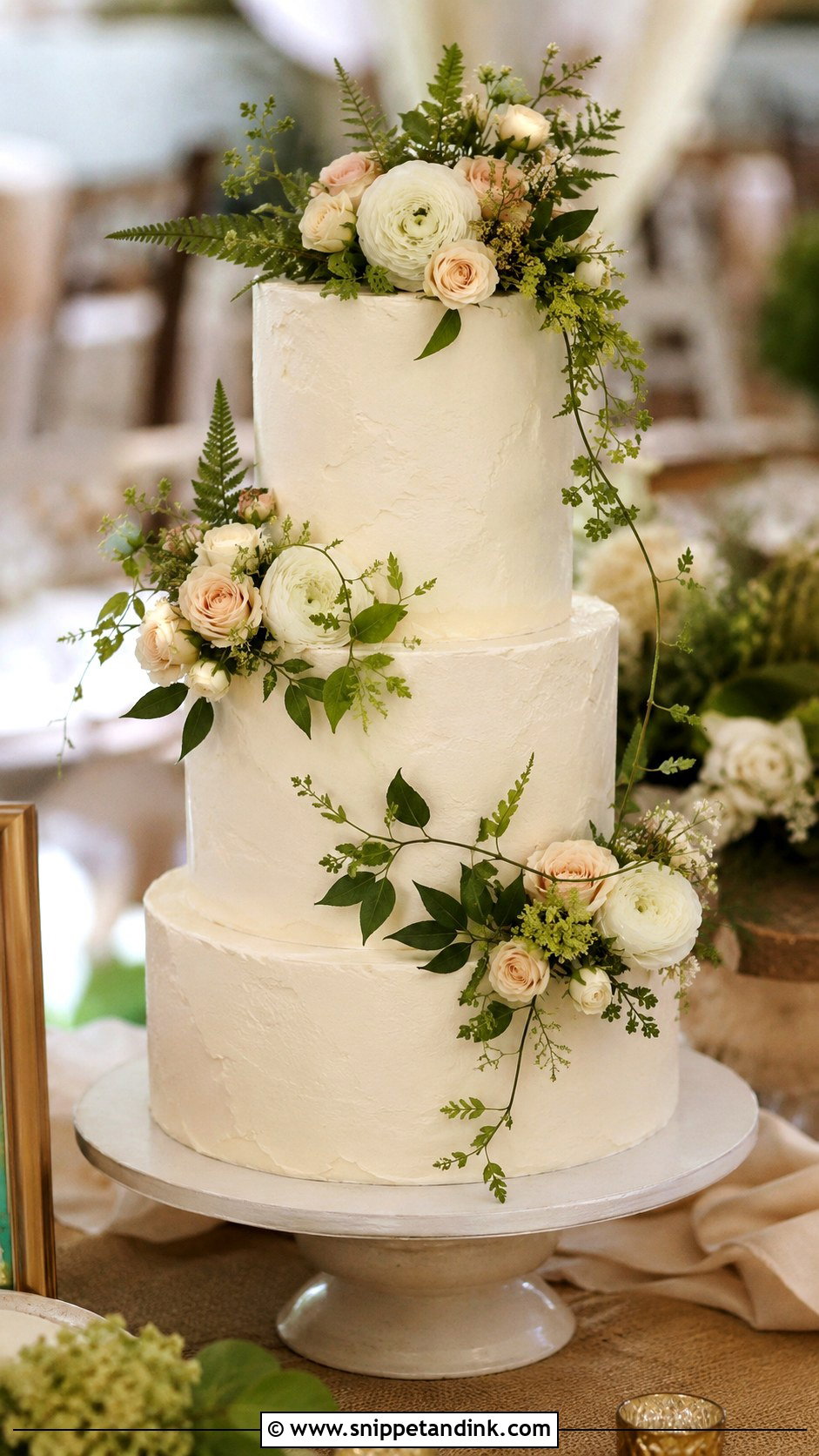
Formal rose clusters belong at a ballroom; the woodland version uses flowers that look gathered. Ranunculus, small roses, wax flowers and chamomile-style daisies tucked in with trailing greenery give movement. Fresh flowers on a cake must be grown without pesticides and kept off the icing with tape or picks, so I ask the florist and baker to agree the list together. Loose clusters on smooth or lightly textured buttercream suit garden venues and rustic indoor rooms alike.
10. Woodland Tree Stump Wedding Cake
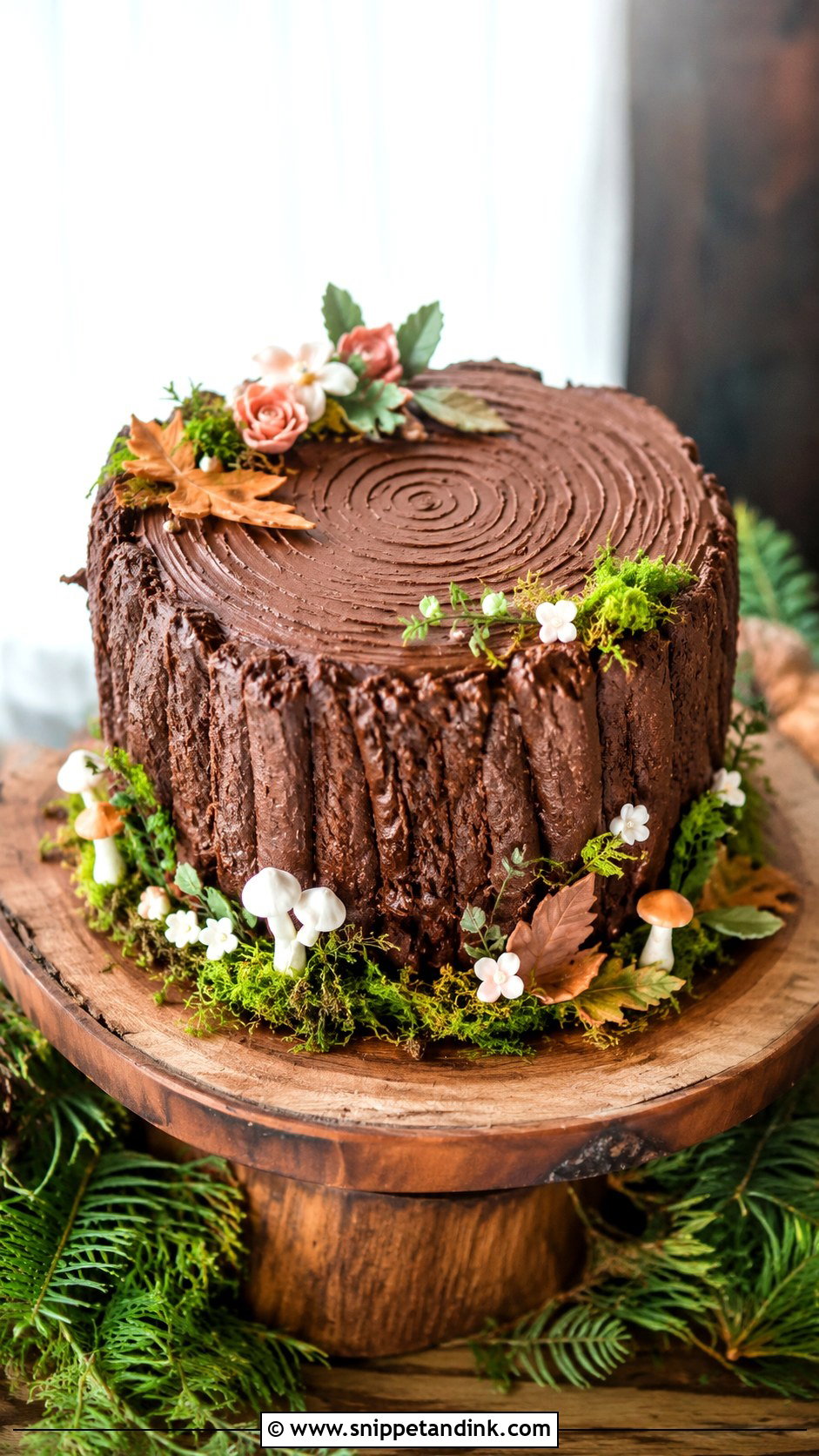
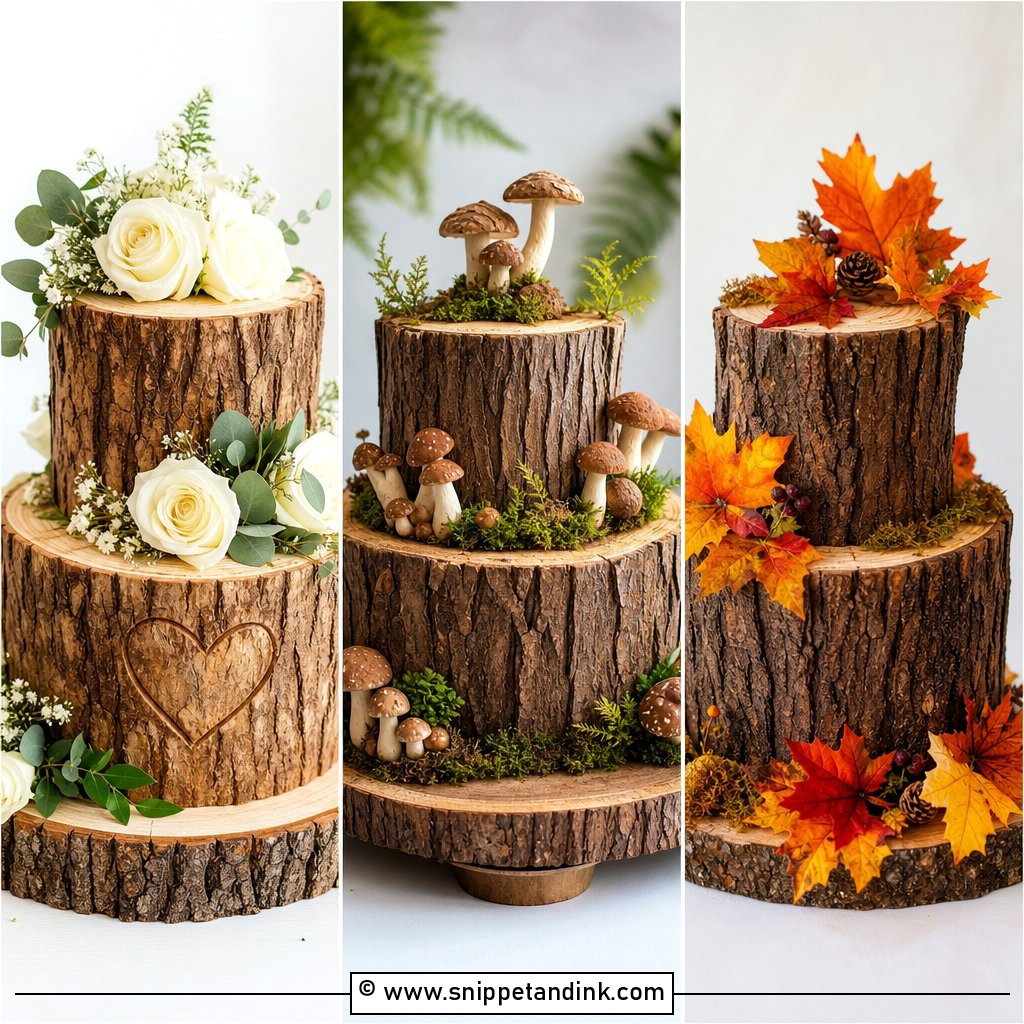
A woodland tree stump wedding cake is often the bottom tier of a larger cake rather than the whole thing, and that is how I suggest couples use it. The bark is made from chocolate buttercream or modelling chocolate, which holds sharper grain than fondant, and the rings on top are combed in two tones. Balance the rough wood with soft flowers and greenery so it still reads as wedding cake. Initials, a few mushrooms or edible moss add personality at a lodge or cabin.
11. Pressed Flower Woodland Wedding Cake
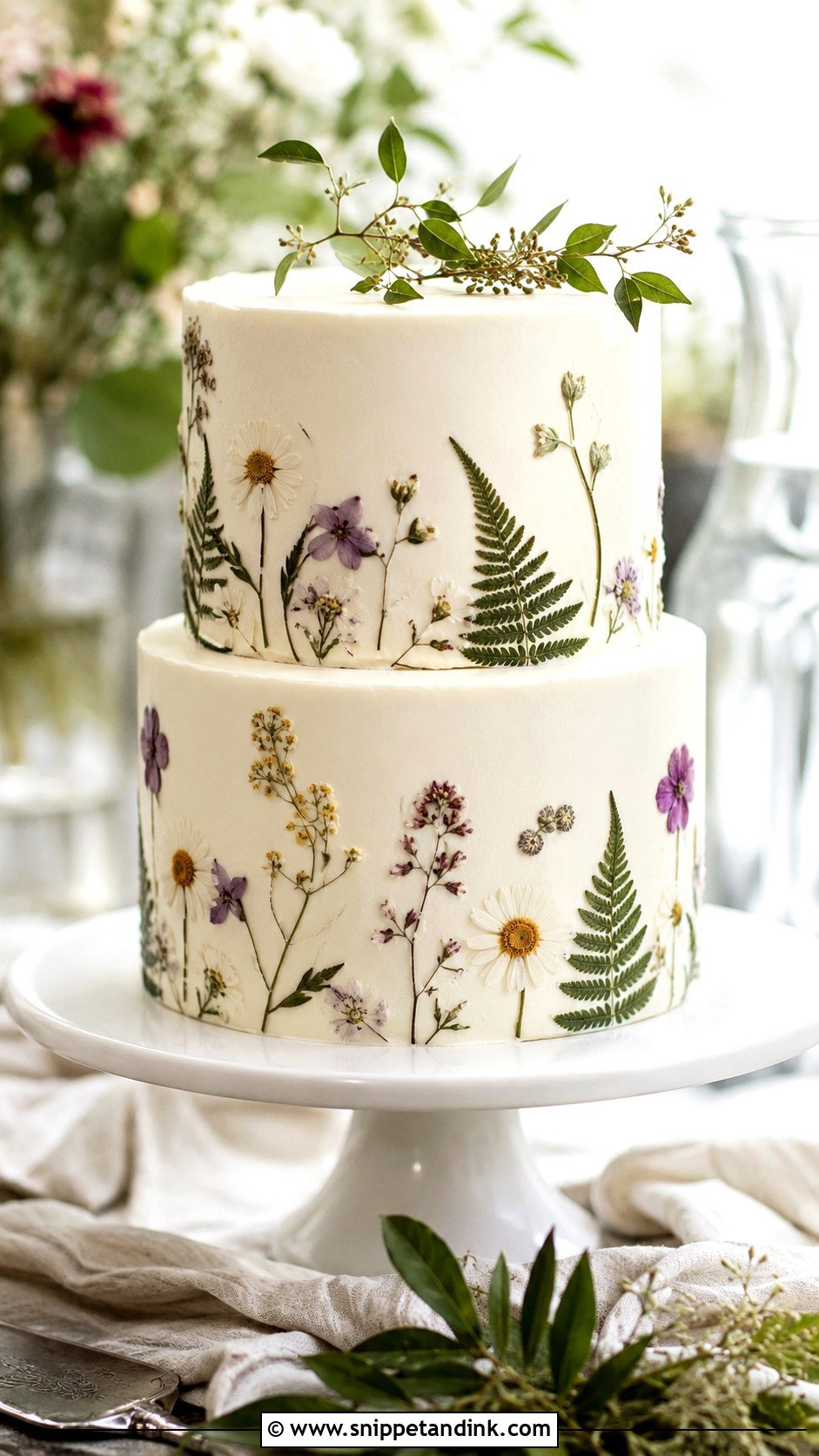
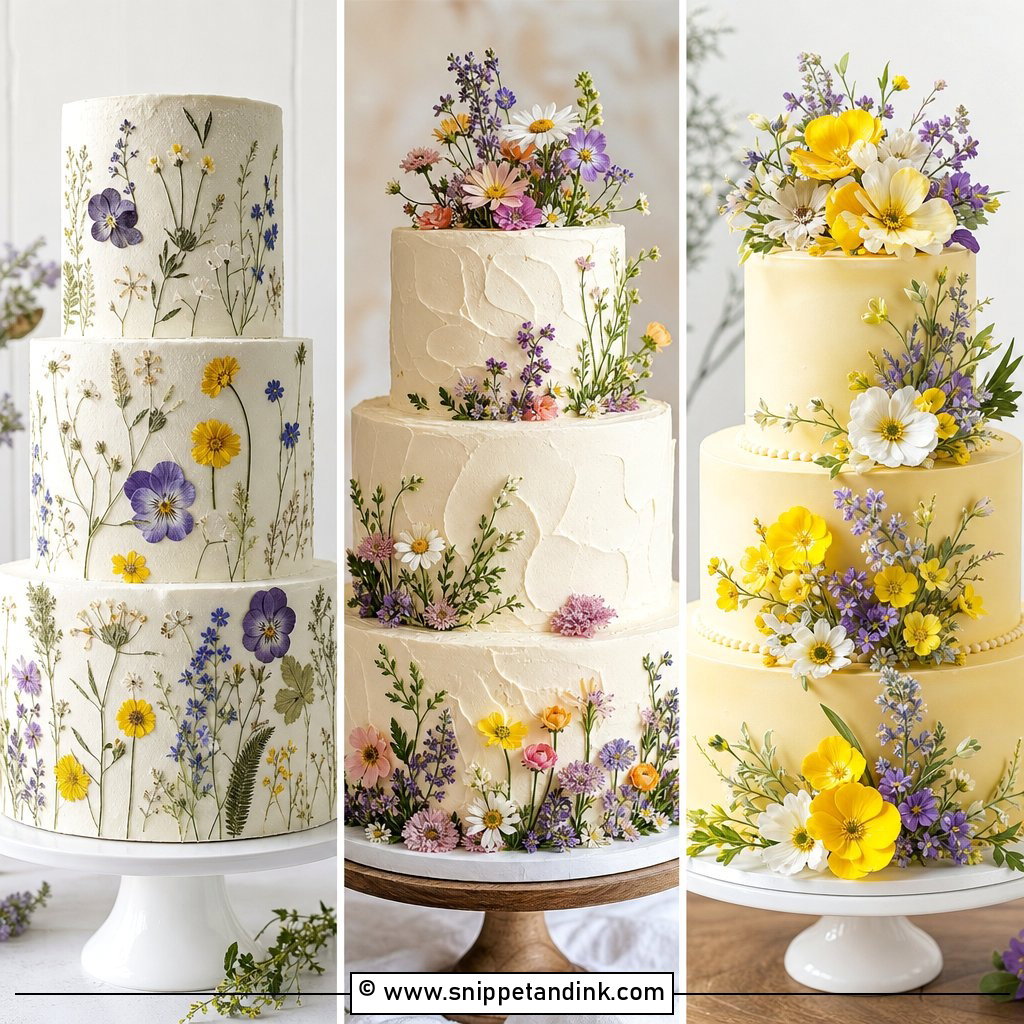
Pressed flowers lie flat against the frosting and tell a botanical story across the tiers. I use dried edible flowers or sugar versions and set them on chilled buttercream, because pressing petals into soft icing leaves a smudged halo round each one. Pale colours suit spring; deeper petals carry it into autumn. A few fern pieces or tiny leaves near the base keep it woodland. It is a quiet, handmade style for couples who like a lot of white space.
12. Woodland Berry Wedding Cake
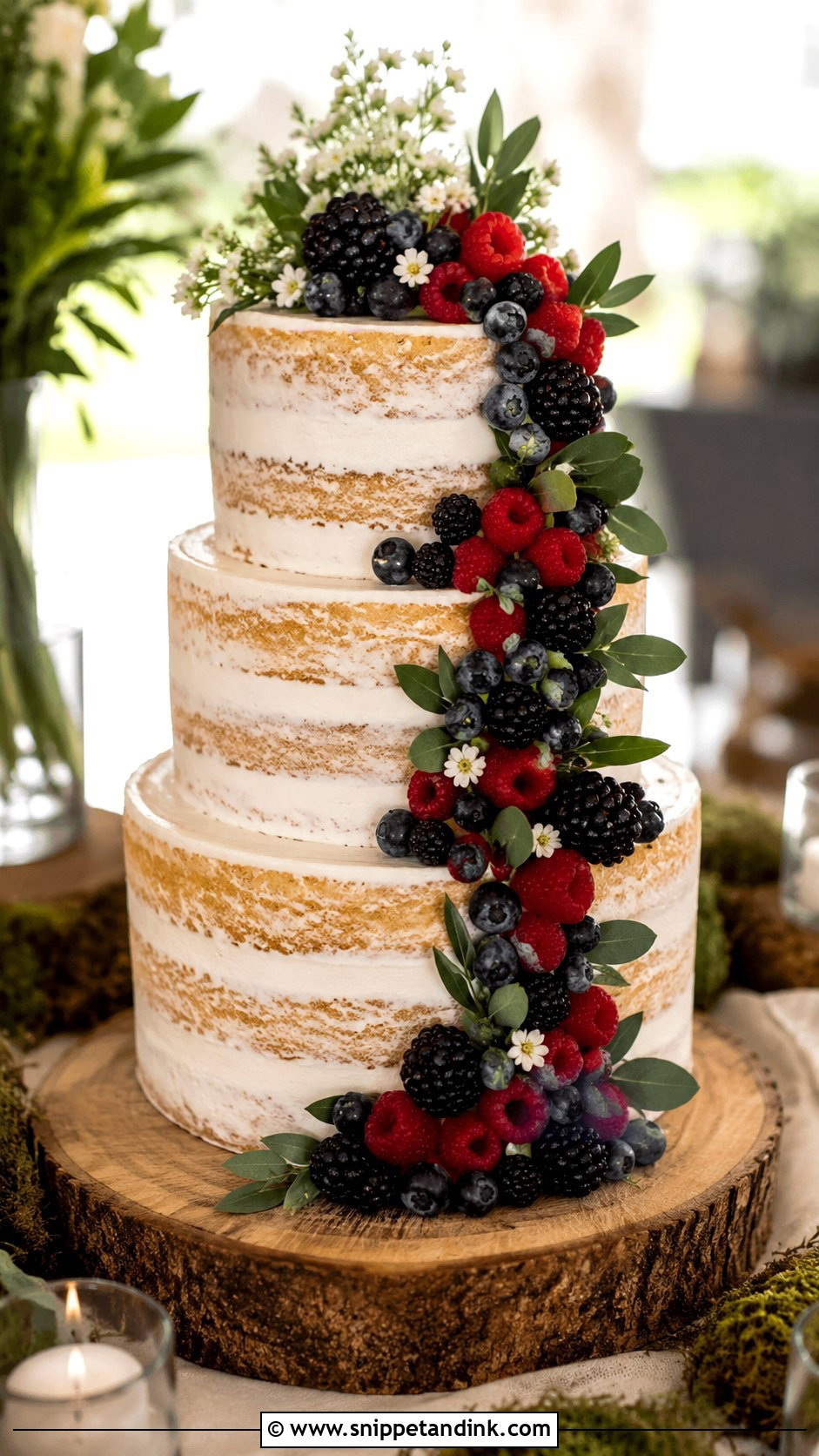
Berries are the clearest flavour hint you can put on a cake: guests see raspberries and expect raspberries inside. Blackberries, blueberries and raspberries suit chocolate, vanilla or lemon sponge. A dusting of powdered sugar looks foraged, though it melts into the fruit within an hour or so, so I add it at the venue, not before transport. Let the berries cascade in small clusters from the top tier rather than covering everything. Summer woodland weddings and brunch receptions suit this best.
13. Woodland Watercolor Wedding Cake
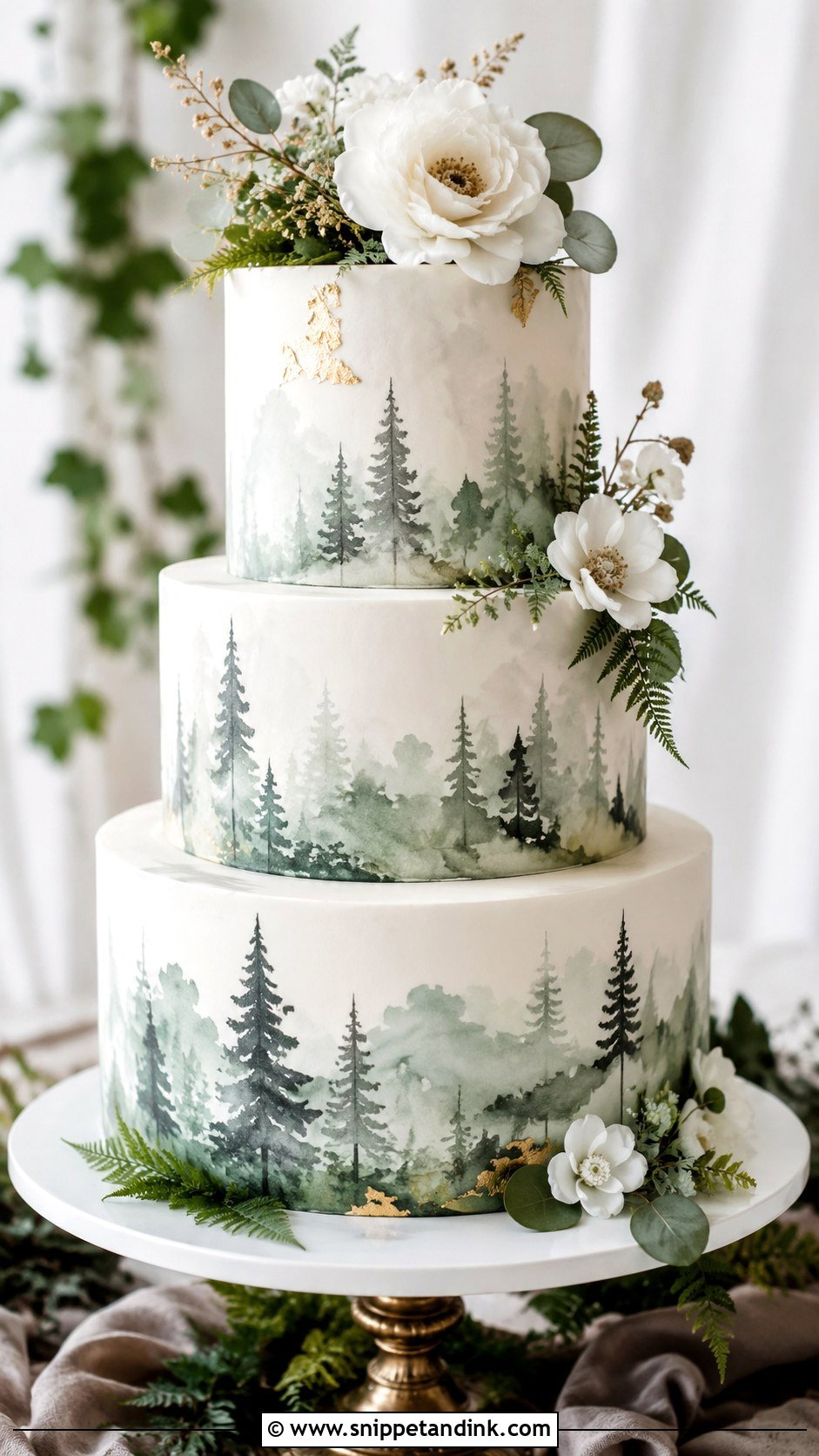
Watercolour work is painting, and it needs a firm surface. I paint on chilled buttercream or fondant using gel colours thinned with a clear spirit or extract, building pale washes first and darker tree silhouettes last. Mistakes can’t be wiped off buttercream, so I sketch the scene before I start. Keep the palette muted, with sage, grey, dusty blue and soft brown, so it reads as mist rather than cartoon. A few sugar flowers or touches of gold finish it, and it suits couples who find bark and moss too heavy.
14. Woodland Leaf Wedding Cake
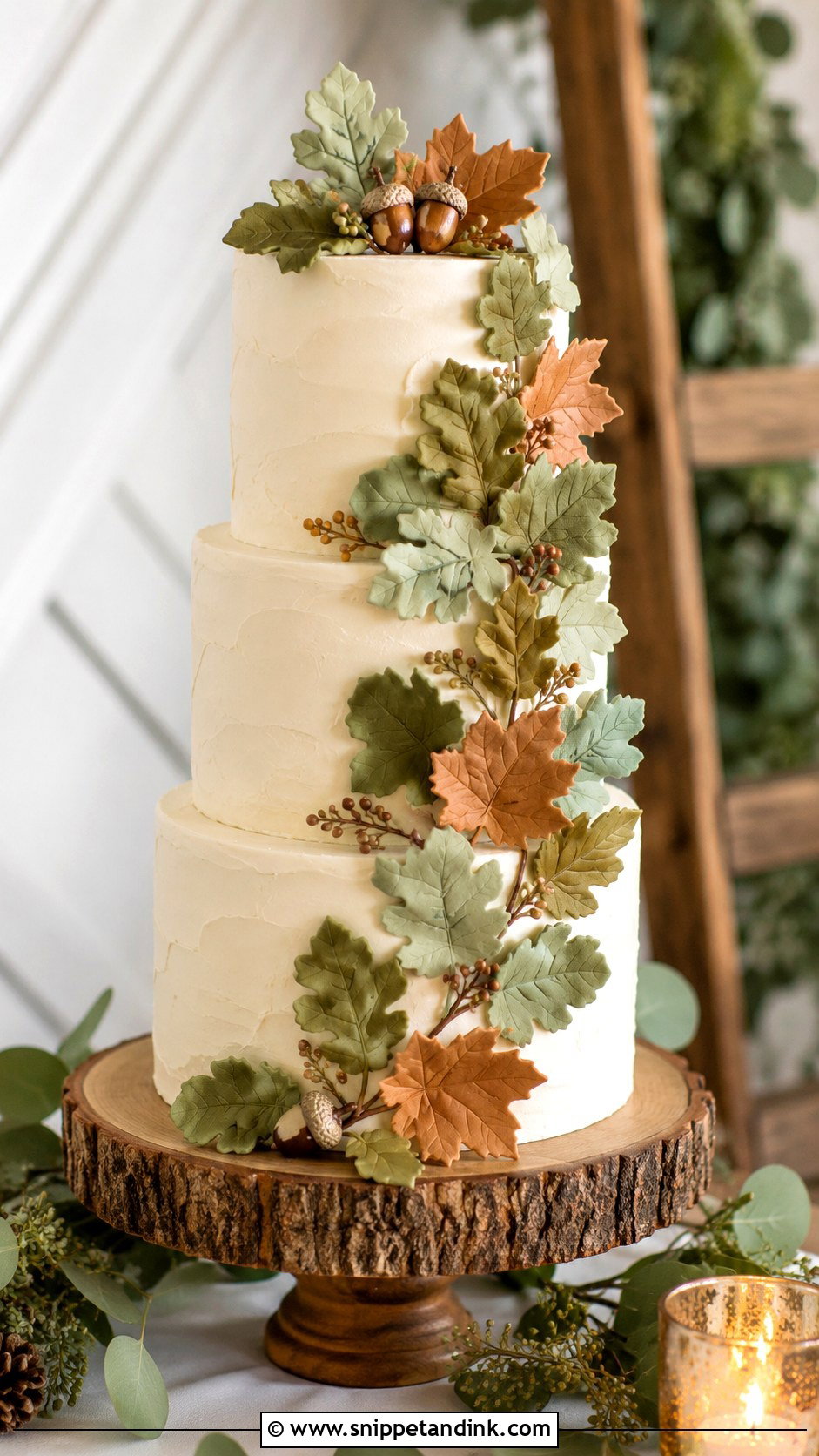
Leaves are the lightest way into the theme, and you can let the season pick the colour. Amber, rust and copper for autumn; sage and olive for spring and summer. Piped leaves are softest, sugar paste leaves hold the most detail, and pressed leaves look most modern. I usually run one cascade down one side and leave the rest of the cake plain. A few berries or acorns add texture without crowding it.

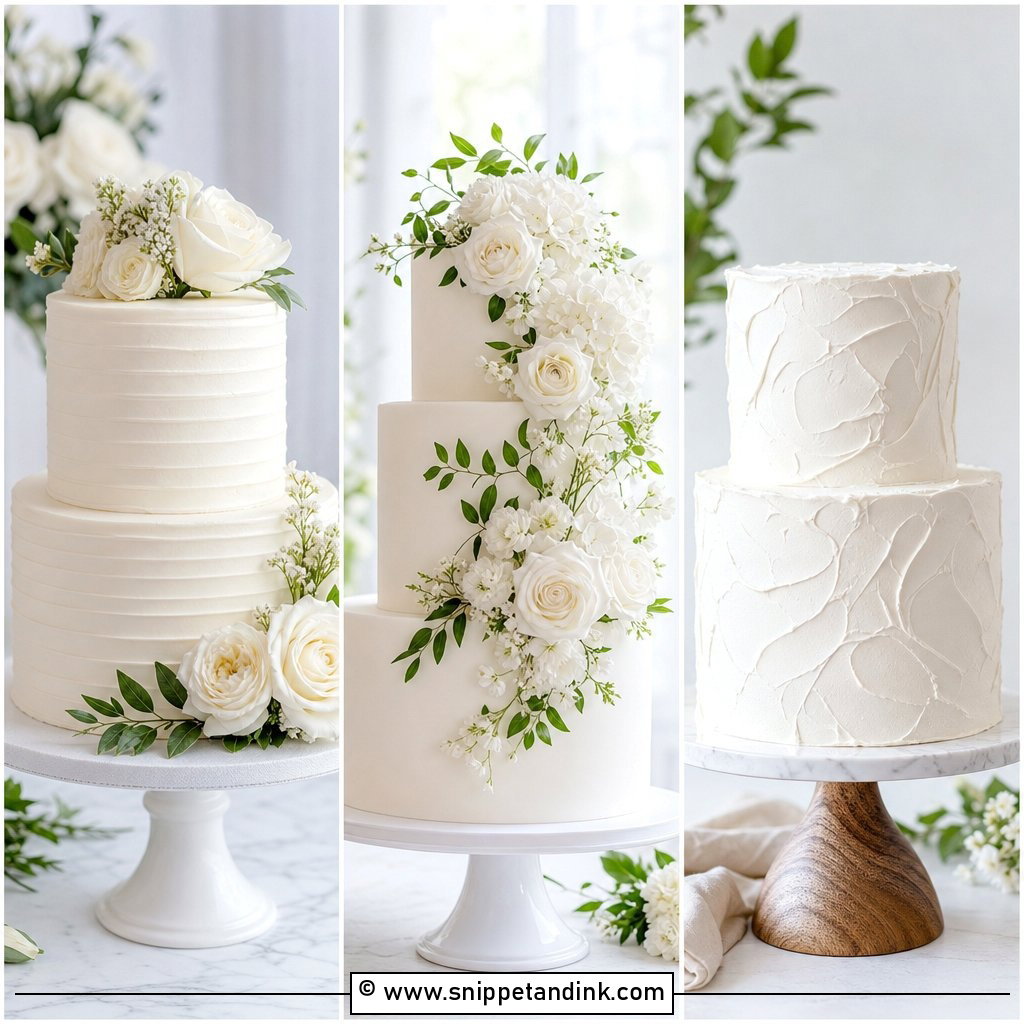

15. Woodland Acorn Wedding Cake
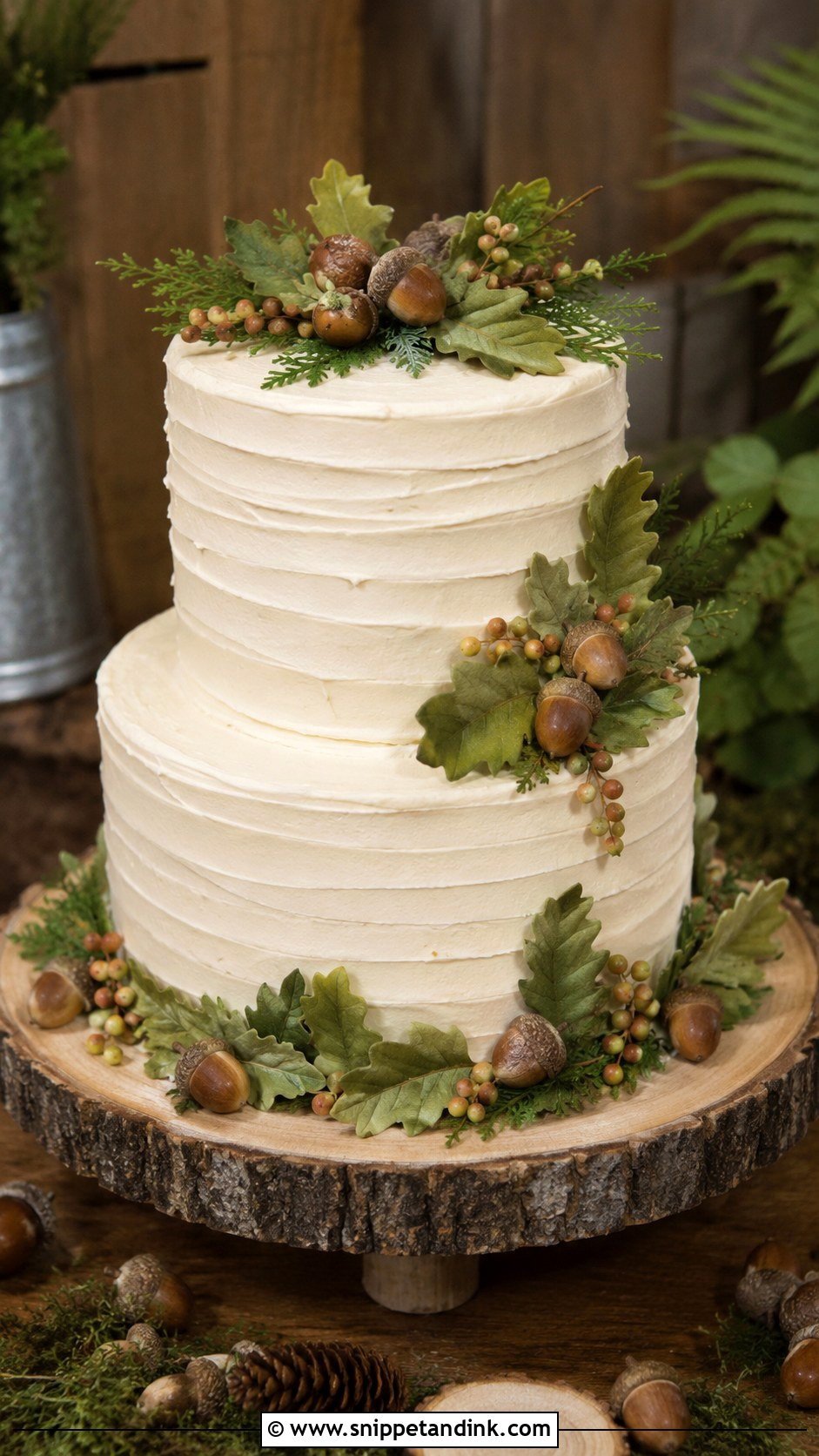
Acorns are small, so they need company. I model them in sugar with a textured cap, then group them with fondant oak leaves and a few berry clusters around the base of a two-tier cake. Ivory frosting with caramel and soft brown accents stays neutral enough to suit a rustic venue in any month, though autumn is where acorns feel most natural. A faint bark texture or a little gold on the caps adds polish if the plain version feels too simple.
16. Woodland Fairy Wedding Cake
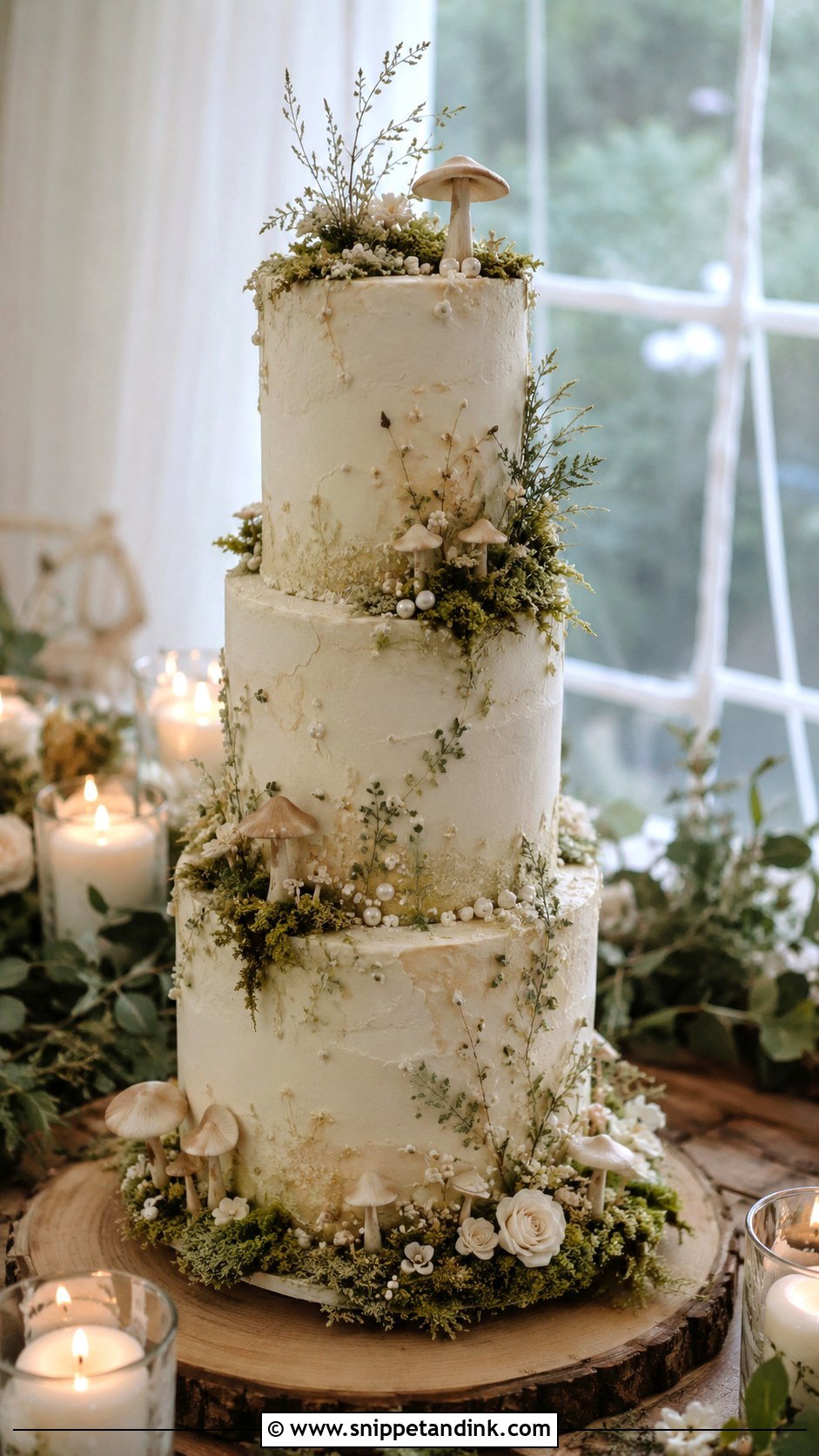
Fairy cakes walk a fine line between magical and nursery. I keep figures off them entirely and let small things carry the mood: sugar mushrooms, edible moss, pearl dragées and a little edible shimmer brushed on the petals. A tall ivory cake with pale green moss and small blooms gives that dreamy fairy-tale mood without tipping over. A slim crescent topper or tiny gold stars can work at a twilight reception, if they match the rest of the decor.
17. Woodland Succulent Wedding Cake
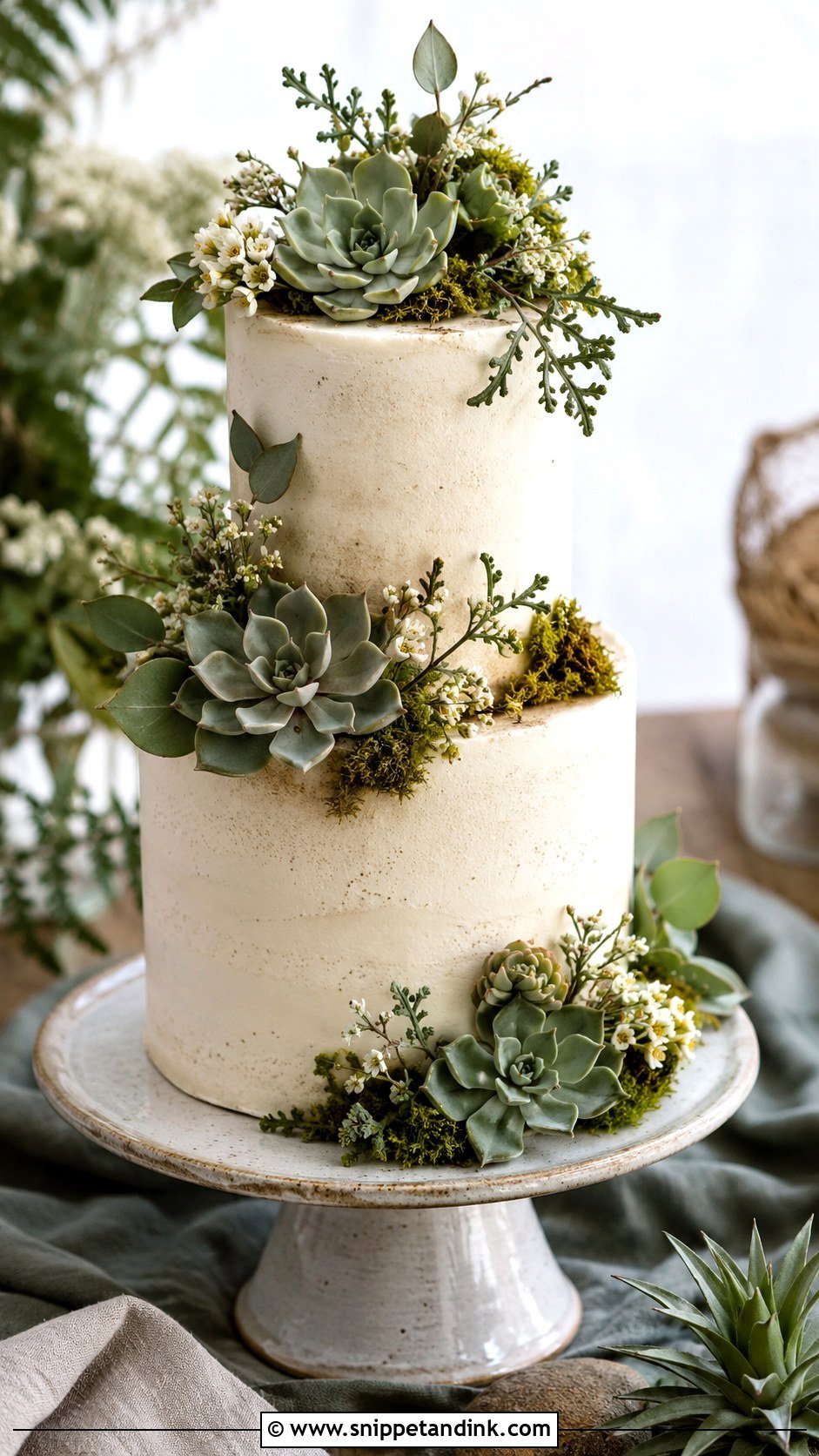
Succulents give shape and structure without big floral arrangements. I make them in sugar or pipe them in buttercream with a petal tip, and for a cake that will sit out for hours the sugar versions are the safer choice; real succulents carry soil at the root and need careful wrapping. They suit smooth buttercream, stone-grey fondant or a semi naked cake. Moss, small white blooms and wood accents tie them to the forest, and the palette works with sage, taupe and muted green weddings.
18. Woodland Chocolate Wedding Cake
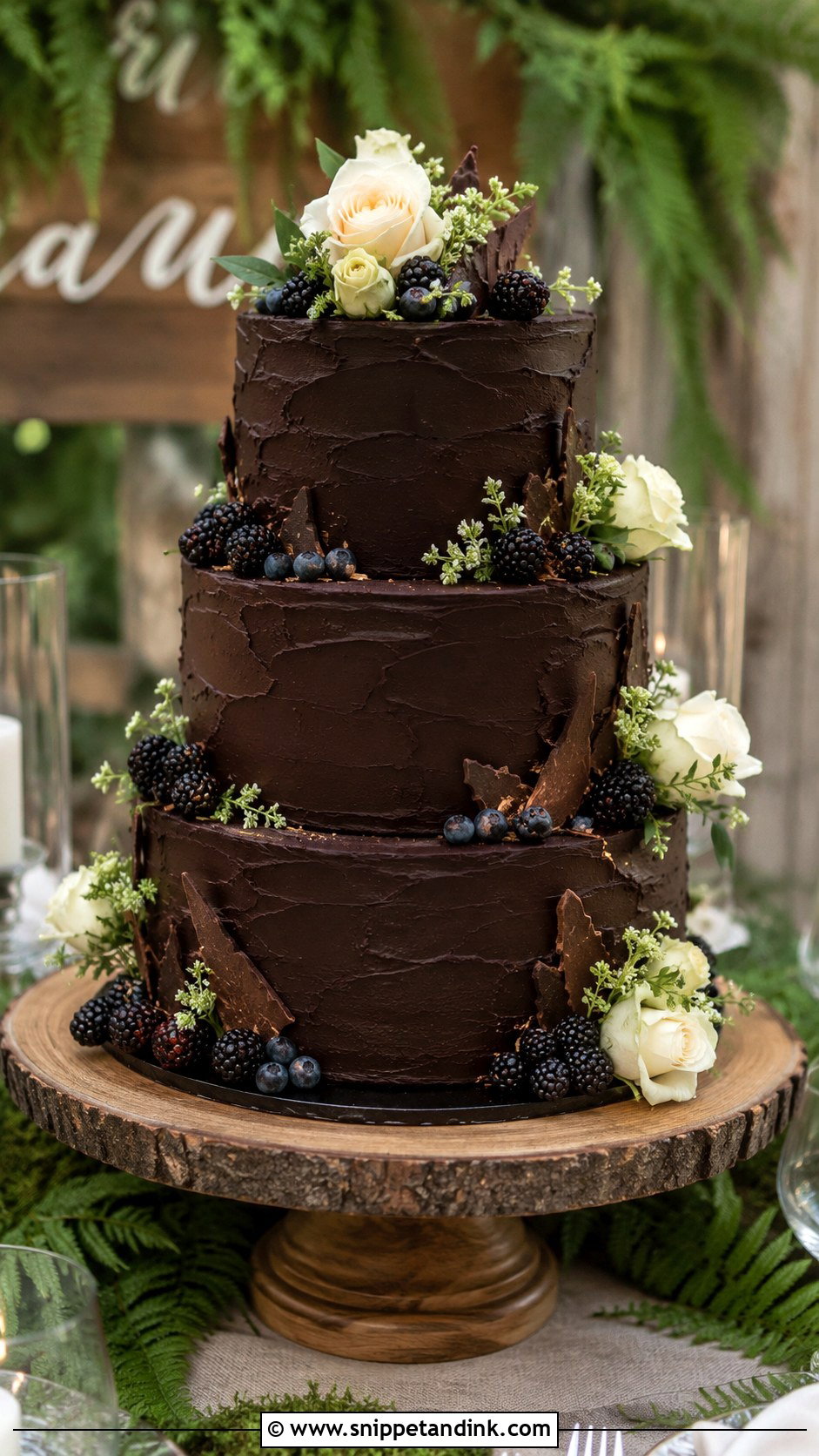
Chocolate already looks like bark and soil, so the forest theme takes care of itself. To keep it bridal I use a smooth or lightly textured finish and add berries, greenery, shards of chocolate bark and small ivory flowers. A ganache drip makes it richer. Dark chocolate softens before any other finish once the room warms up, so for a summer wedding I would steer you toward a ganache coat rather than chocolate buttercream. Autumn and evening receptions suit it best.
19. Woodland Geode Wedding Cake
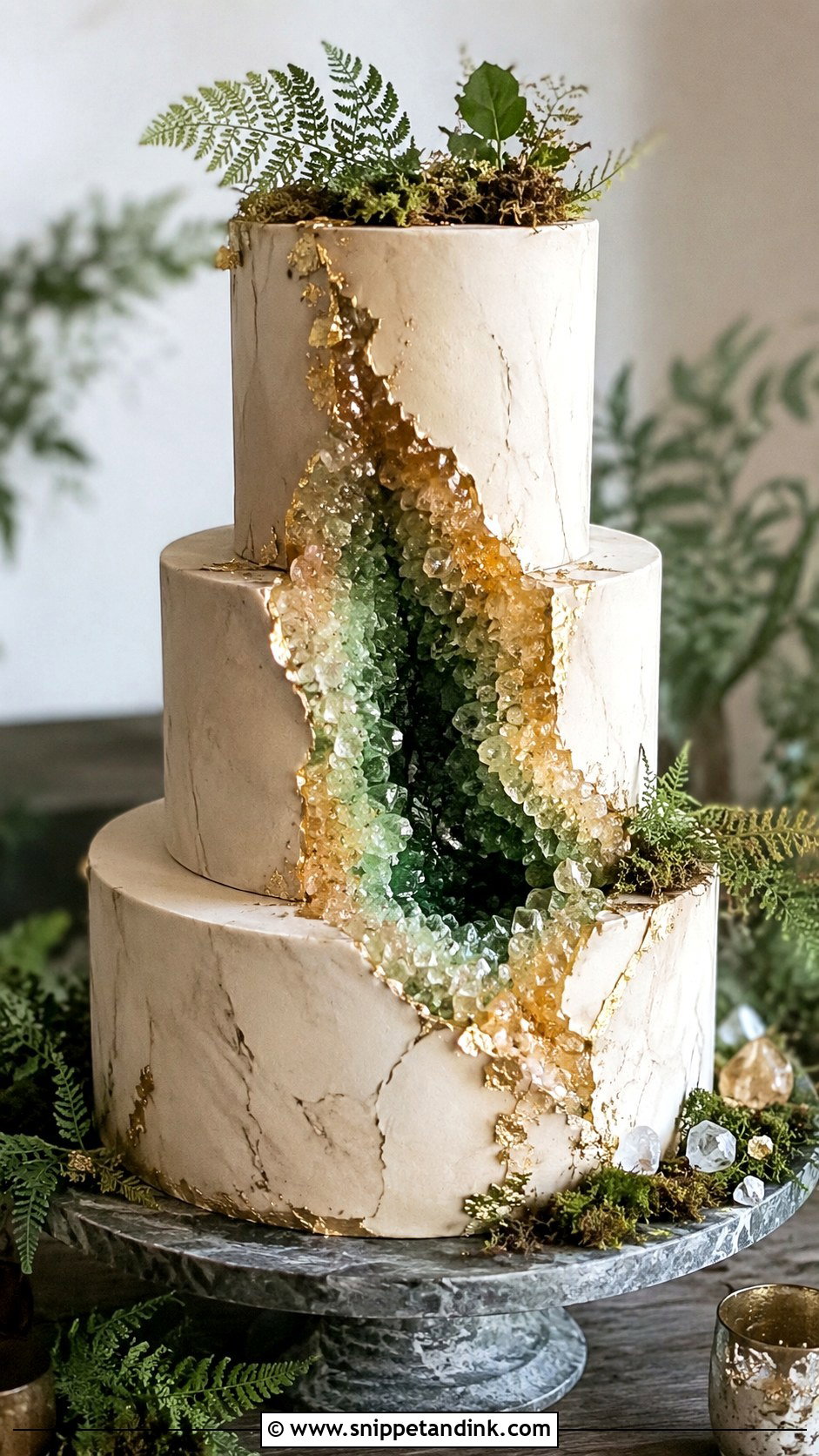
A geode is a cut into the cake filled with sugar crystals, usually rock candy or isomalt, in green, amber, smoky grey or soft gold. The tier needs a firm covering to hold the opening cleanly, which is why I make geode tiers in ganache and fondant. Isomalt crystals are very hard to bite, so I let guests know they are decoration. Pair the crystals with bark texture, moss or ferns and set them in a smooth ivory or taupe tier. Mountain venues and candlelit rooms show the sparkle best.


20. Woodland Tiered Wedding Cake
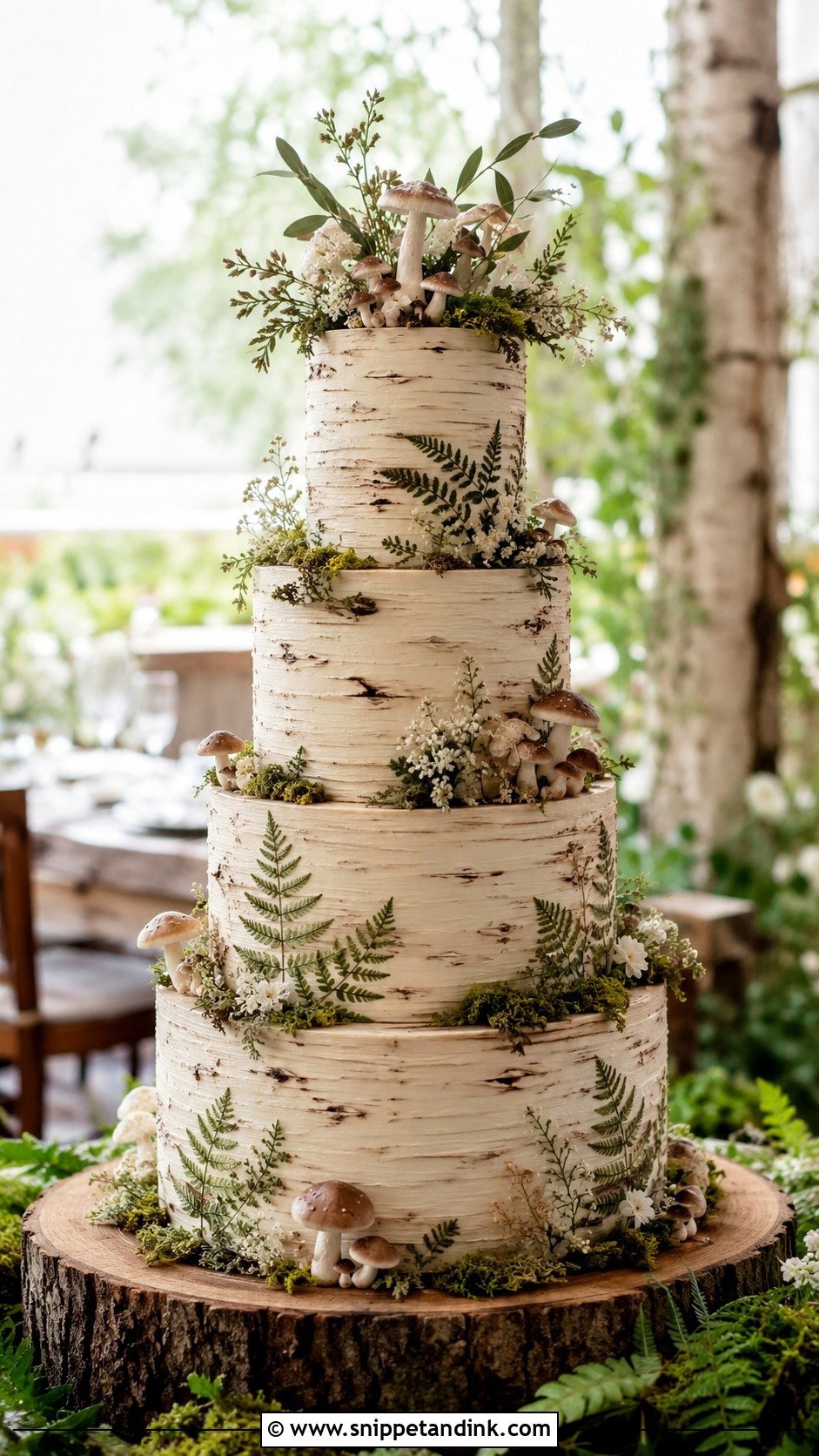
A tall tiered cake gives each tier space for its own detail, such as birch on one, moss on another, fern painting or mushrooms on a third. The risk is a cake that looks like four separate cakes. I solve it by repeating colours and one shape across every tier, so a sage leaf or a cream mushroom shows up top to bottom. Ivory, sage, brown and soft blush make a dependable palette. Pick three or four details, not ten, and let a cascade or mossy trail link them.
Getting Tiers Across Gravel Paths and Barn Steps
Forest venues are wonderful to stand in and awkward to deliver to. A three-tier cake cannot be carried stacked down a bark path or up uneven barn steps, so I travel the tiers separately and stack them on site with dowels and a central support. That takes a flat, level table near a power point, and enough time before guests arrive.
Ask your venue how far the cake table is from where a car can park, and whether there are steps. If the answer is a long walk across grass, your baker may need a trolley, extra hands or a later setup slot. Tell them early. The worst surprise for a cake designer is a table in a clearing a few hundred metres from the van.
Which Decorations Guests Can Eat at Cutting
Woodland cakes carry a lot of decoration that looks edible and isn’t, or is edible and unpleasant to bite. Before cutting, whoever serves needs to lift off wired sugar flowers, any real greenery, toppers and the dowels hidden in the tiers. Gumpaste mushrooms, isomalt crystals and modelled acorns are technically edible but rock hard, so most caterers set them aside rather than plating them. I give the venue a quick note listing what comes off, and I’d suggest you ask your baker to do the same.
The Venue Decides More of This Than You Think
A birch cake reads cosy, a moss cake reads enchanted, pressed flowers read delicate and chocolate reads rich. Each of those moods depends on where the cake will stand, the season, how many guests you are feeding and how close the photographer will get. Bring your baker clear inspiration, then ask the honest question: which of these will hold up in my weather and my room? The answer often narrows twenty ideas to two.
You'll Like These Ideas:




Leave a Reply