
Most of the brides who come to me asking for an earthy gown aren’t trying to avoid white so much as trying to stop the dress from looking separate from the place they’re marrying in. Ivory, champagne, sage, clay and sand all sit closer to wood, stone and greenery than bright white does, and fabrics like raw silk, crochet and loose chiffon move with a breeze instead of fighting it. The silhouettes that suit this mood are usually the comfortable ones, with soft color and botanical details doing the work that sparkle would do in a ballroom. For each gown below I’ve noted the shoes, jewelry and flowers I’d put with it, plus the fitting or fabric issue I’d watch for, because an outdoor dress has to cope with grass, wind and a long day on its feet.
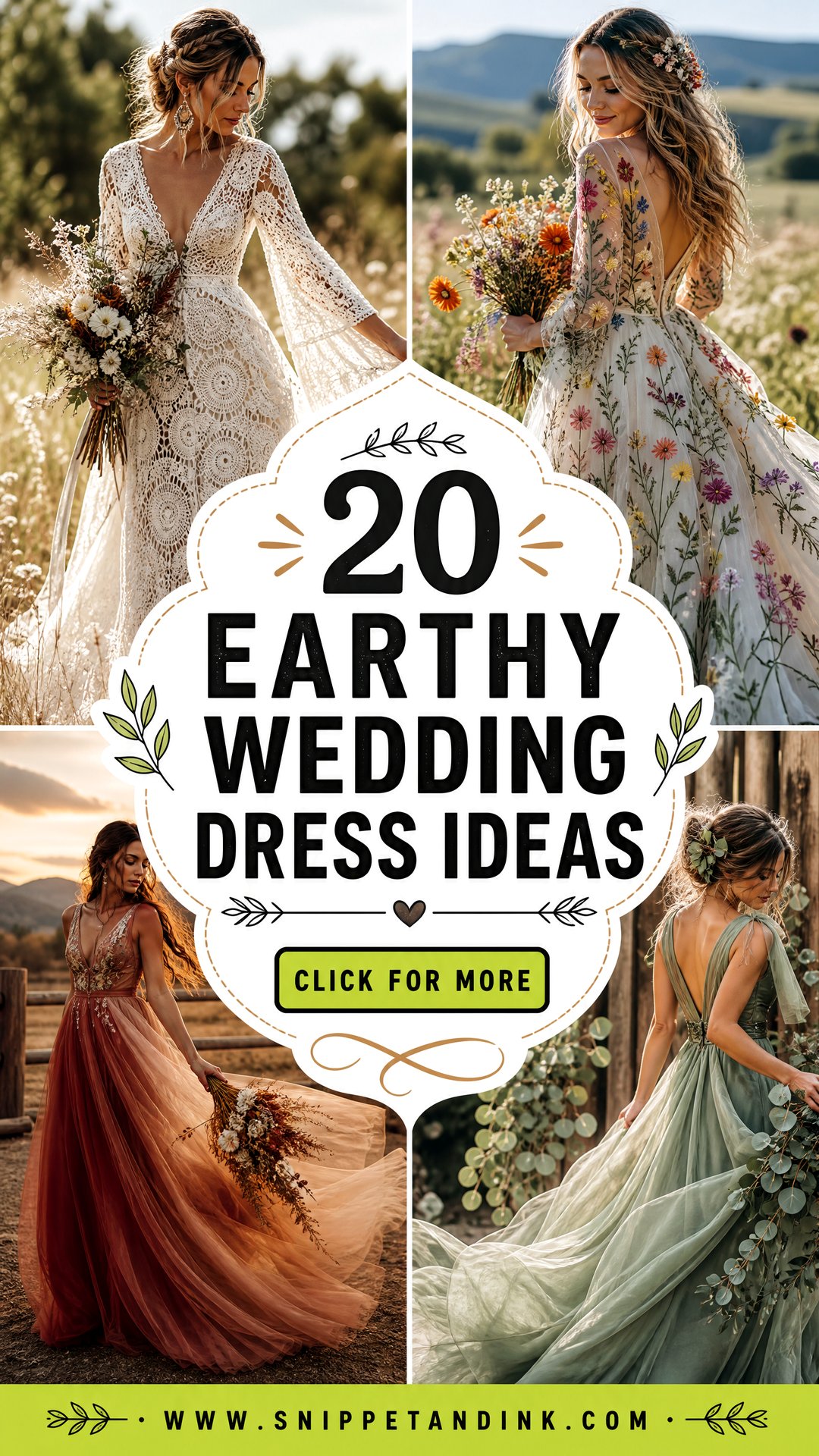
Testing a Sage, Clay or Taupe Swatch Outdoors Before You Order
Colored bridal fabric behaves differently from white. Most earthy shades are dyed to order or come from a specific dye lot, so the sample you tried on in the shop may not be exactly what arrives. Before I let a bride commit to a colored gown, I ask the boutique for a fabric swatch of the actual color and lining combination she’s ordering, and we look at it in three places: by a window in daylight, in shade, and next to her face without makeup.
Daylight is honest, and it’s where your ceremony probably is. Sage and eucalyptus can turn grey in deep shade. Champagne can look yellow at golden hour. Taupe and mocha sometimes pull muddy against cool, pale skin, while terracotta and clay tend to warm most complexions. None of that shows under boutique spotlights.
- Hold the swatch against your jaw and neck, not your hand; the face is what the camera sees.
- Lay it next to a petal or leaf from your planned bouquet to check the two don’t clash.
- Ask whether the lining shade can change. Nude, ivory and champagne linings shift the outer color noticeably, especially under lace and tulle.
- Check delivery timing with the shop. Custom-dyed gowns often take longer than ivory, and reorders for a wrong shade can be hard to fit in.
If you can’t get a swatch, ask for an unedited phone photo of the fabric taken outdoors. Edited catalogue images are the reason I’ve seen colors arrive darker or cooler than brides expected.
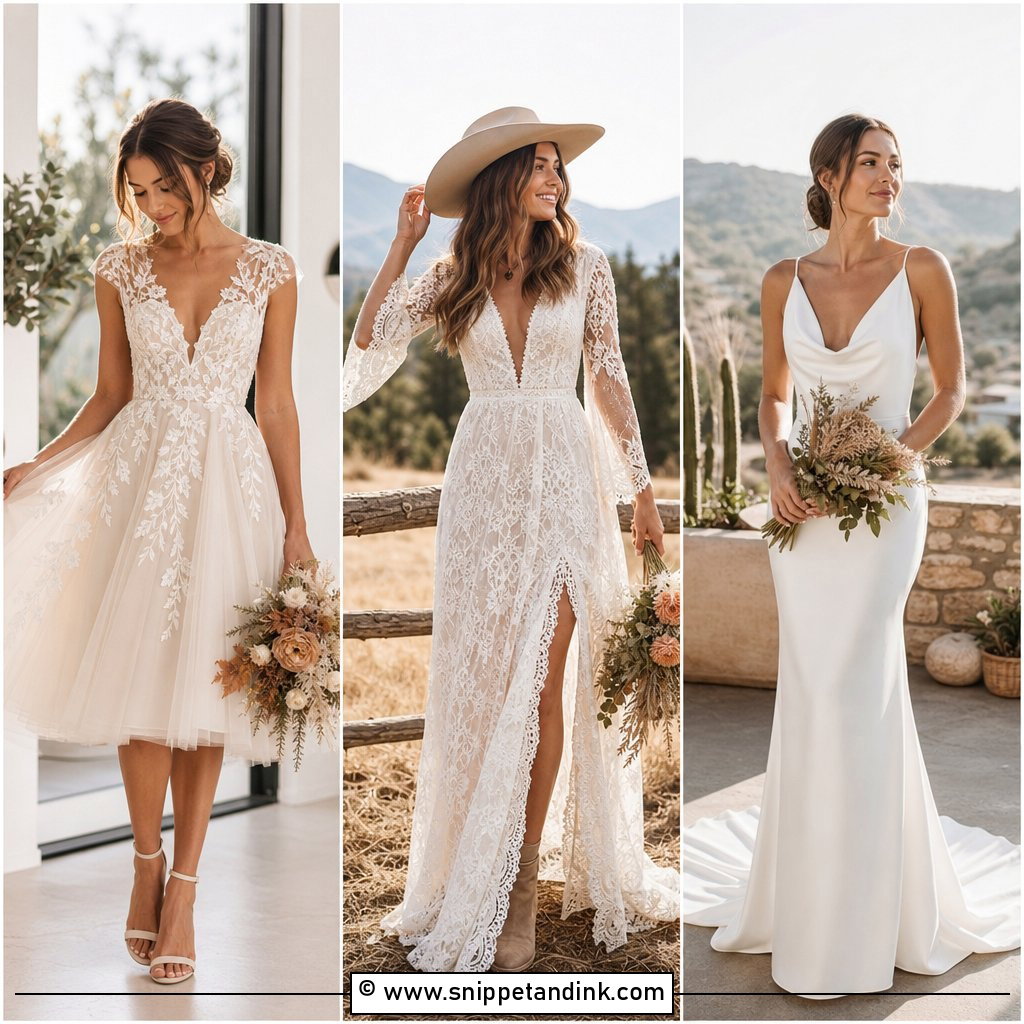
1. Ivory Botanical Lace Wedding Dress
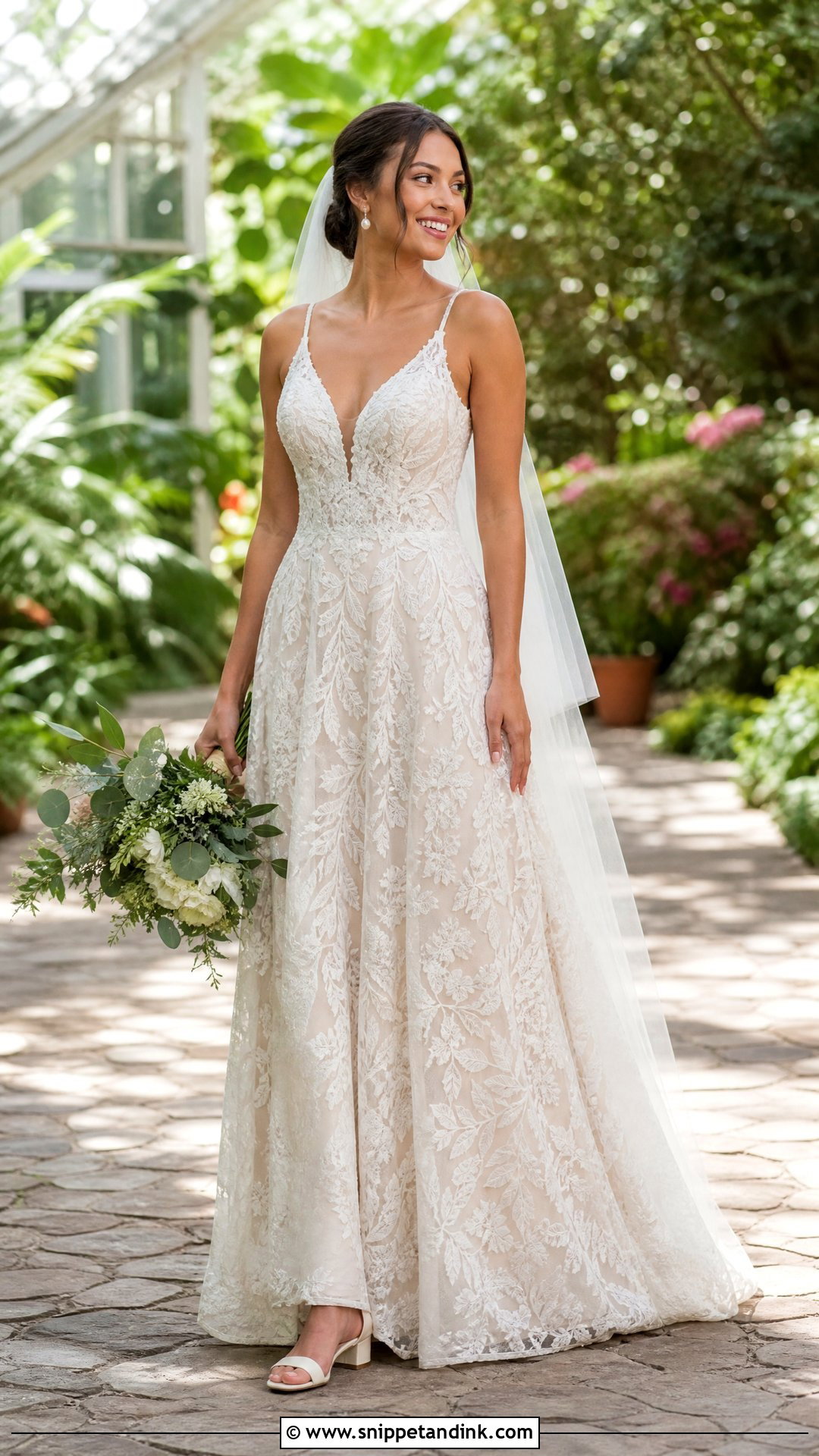
Botanical lace is the safest entry point into this style, because ivory still reads as bridal to every guest. What changes the look most is the lining: a warm ivory or pale nude underneath lets the leaf motifs show, while a stark white lining flattens them. I’d keep the A-line skirt light so it swings when you walk on grass. Cream block heels or pointed flats, a loose low bun, small pearls and a fine gold bracelet are plenty. Carry white flowers with ferns and trailing greenery, and if you want a veil, a fingertip length with a plain cut edge keeps it from fighting the lace for attention.
2. Champagne Silk Slip Wedding Dress
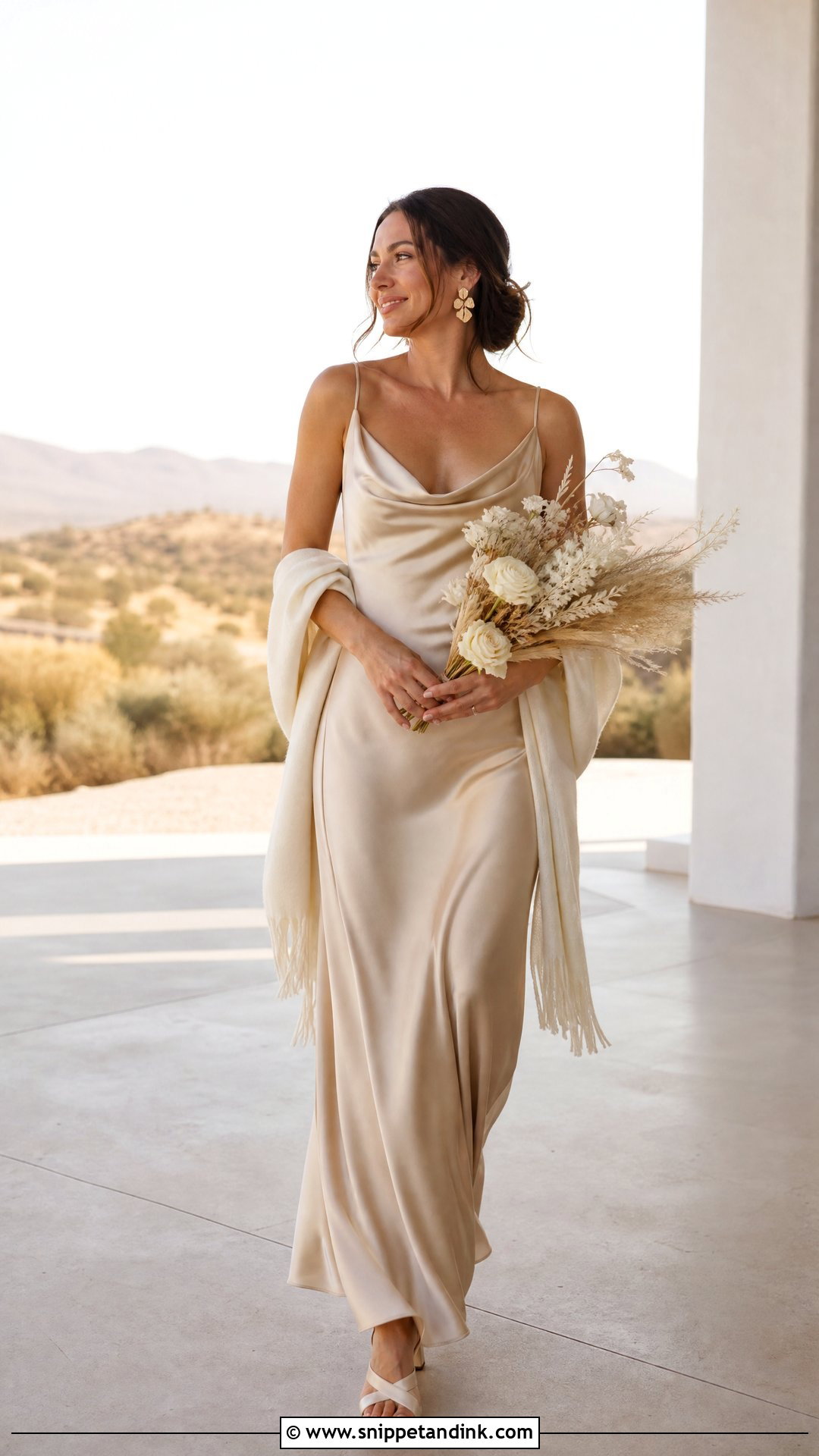
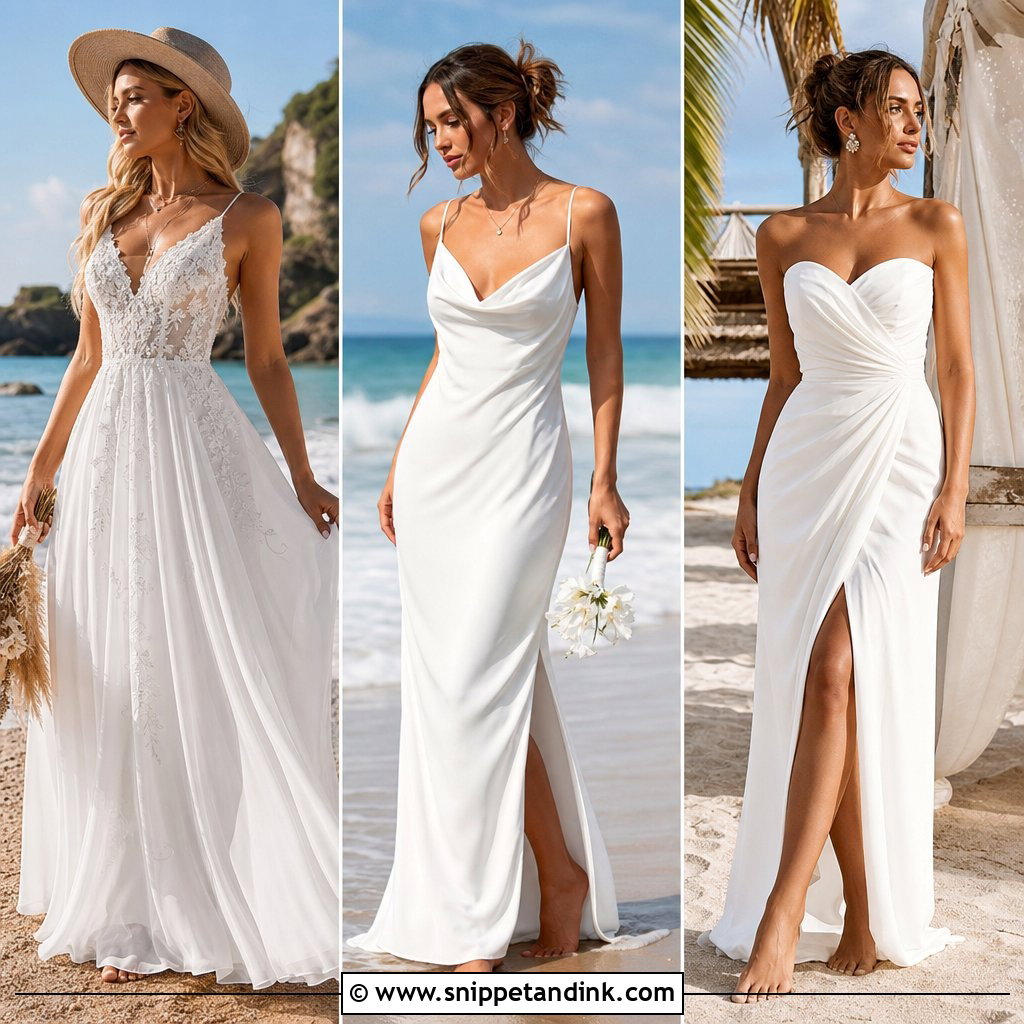
Champagne silk is honest about every seam and every line underneath it, so I always fit a bias-cut slip over the exact underwear the bride will wear on the day. Cut on the bias, the fabric skims rather than grips, and a soft cowl at the neck with narrow straps and a short train keeps it simple. Ivory leather sandals, sculptural gold earrings and a slim cuff suit it. A silk ribbon through a low ponytail is a sweet detail, and a cream cashmere wrap solves a cool evening. Keep the bouquet quiet: dried grasses, white roses and beige blooms. One warning from experience at fittings: silk this thin marks with water, so keep drinks and damp hands away from the front.
3. Sage Green Chiffon Wedding Dress
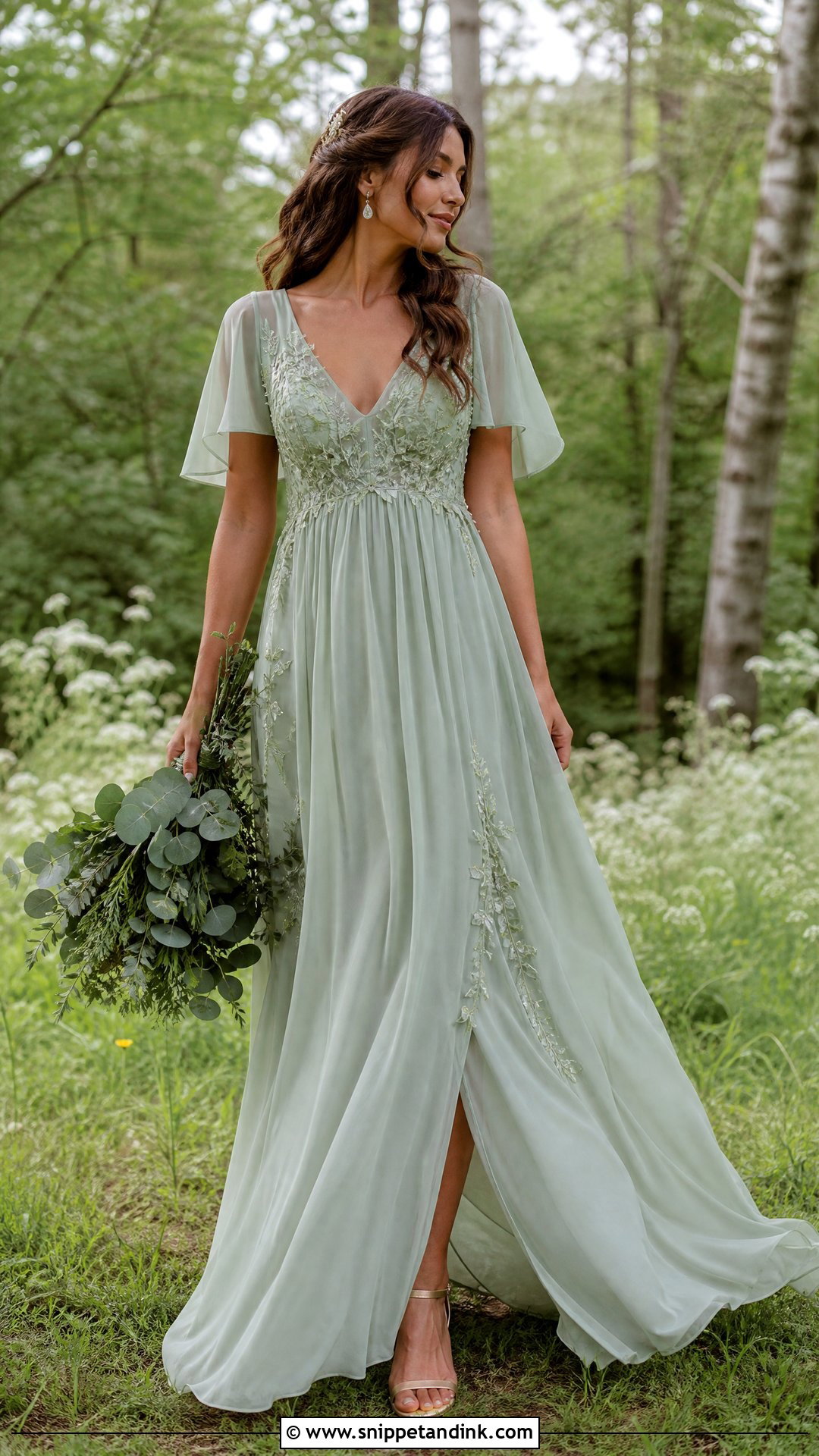
Can a green gown feel as bridal as ivory? It can, if the green is muted enough. Sage chiffon in a flowing A-line or empire waist, with flutter sleeves and a pleated skirt, reads soft rather than costume. Delicate floral embroidery on the bodice ties the color back to the landscape. I pair it with champagne sandals, small opal earrings and a fine gold chain, plus loose waves or a textured half-up style with a couple of greenery pins. Cream flowers, eucalyptus and pale sage foliage give a tonal bouquet. Skip dark or heavy accessories, which make the shade look washed out next to them. Sage does lose some color in deep shade, so I’d check it outdoors before ordering.
4. Terracotta Satin Wedding Dress
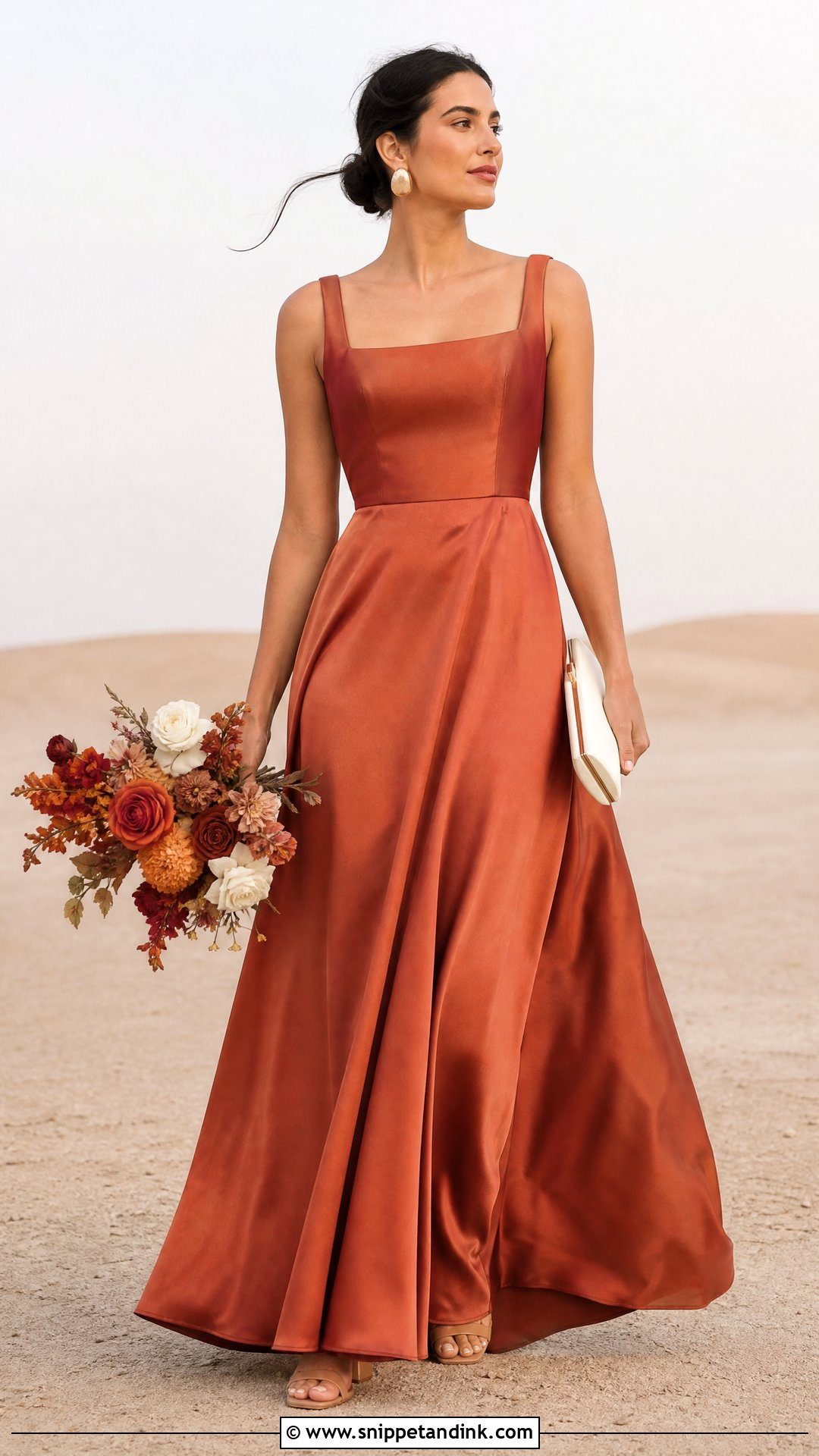
Warm terracotta is the most confident color on this list, and it only works if the shape stays clean. A matte satin gown with a square neckline, a shaped waist and a softly flared skirt lets the clay tone carry the look. Matte matters: shiny satin in rust can look like a bridesmaid dress under a flash. Tan block heels or refined leather sandals keep you steady on grass. Brushed gold earrings, a slim cuff and a structured cream clutch lift it, and a sleek low bun or side part keeps the focus on color. Dried palms, ivory blooms, rust flowers and olive branches complement the dress without matching it exactly, which looks more natural at desert or autumn sunset ceremonies.
5. Blush Floral Tulle Wedding Dress
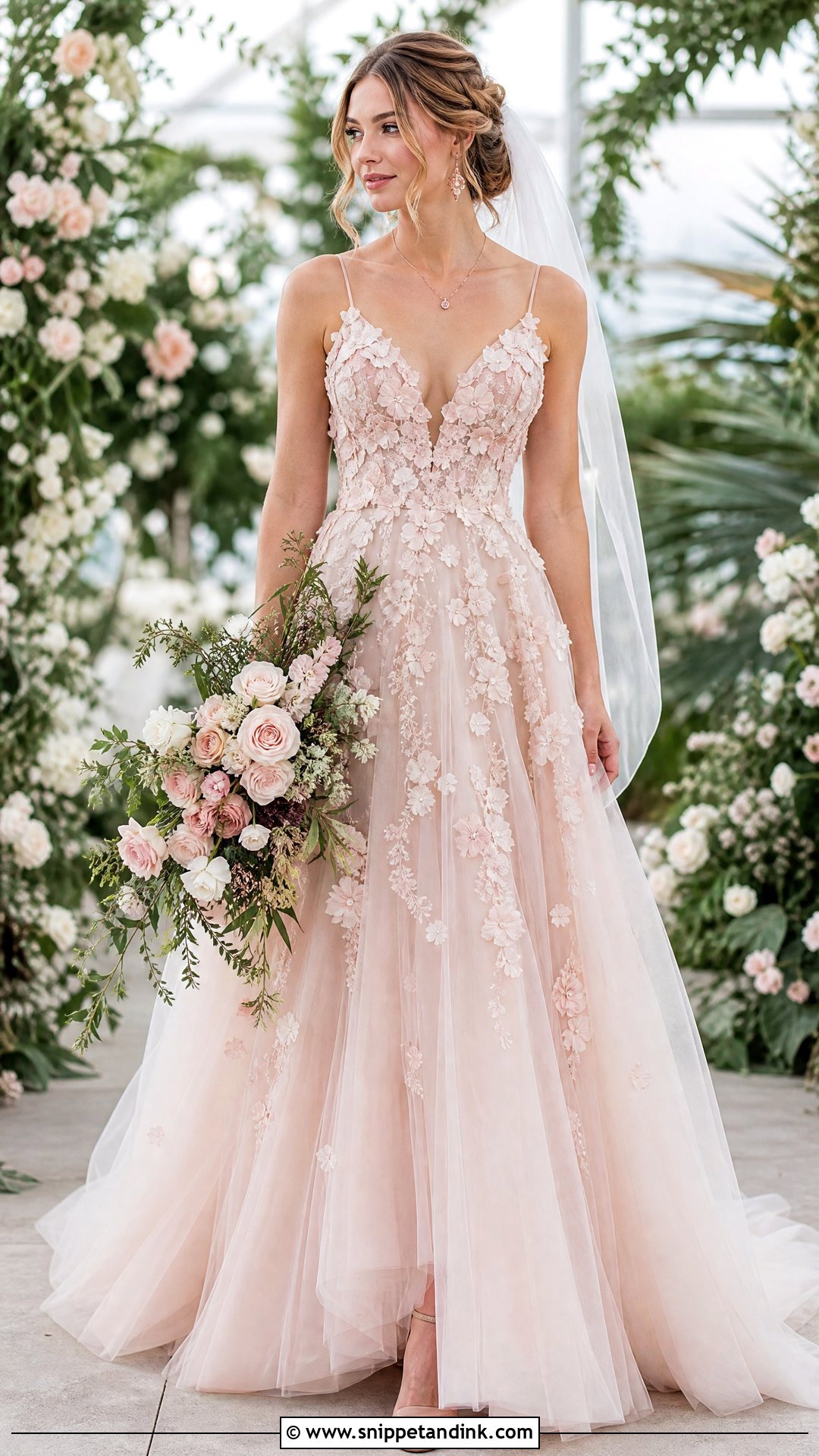
Three-dimensional flower appliqués are where blush tulle earns its place. On the gowns I like best they cluster on the bodice and scatter thinly down the skirt, and a warm nude lining makes both the blush and the flowers easier to see. At a fitting I check that appliqués near the underarm don’t scratch when you hug people, since they’re often stiffened. Pale pink pointed flats or low champagne heels, delicate rose-gold earrings and a plain bracelet are enough jewelry. A loose updo with a few tiny flower pins echoes the dress, but more than three or four starts to look like fancy dress. Carry ivory roses, dusty pink flowers and fine greenery, and finish with a sheer, unembellished veil.
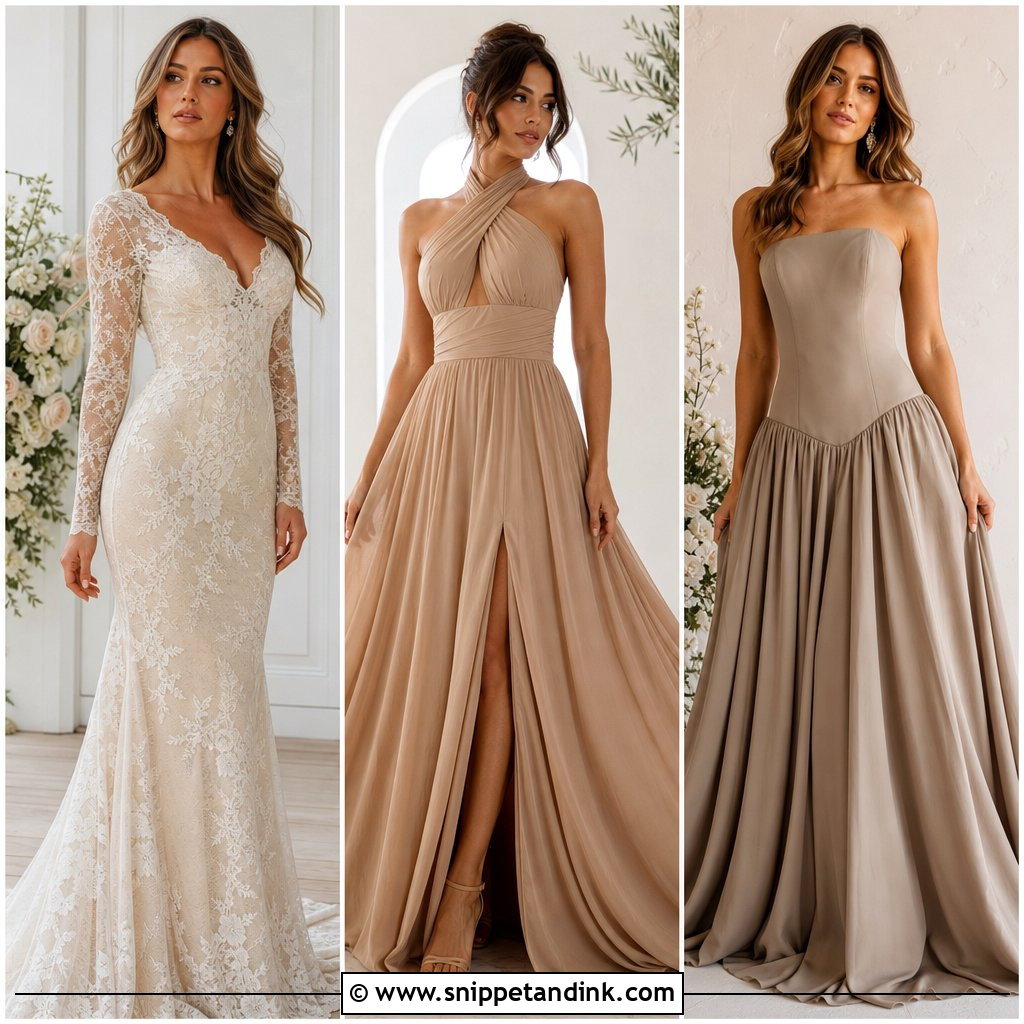
6. Sand Linen Wedding Dress
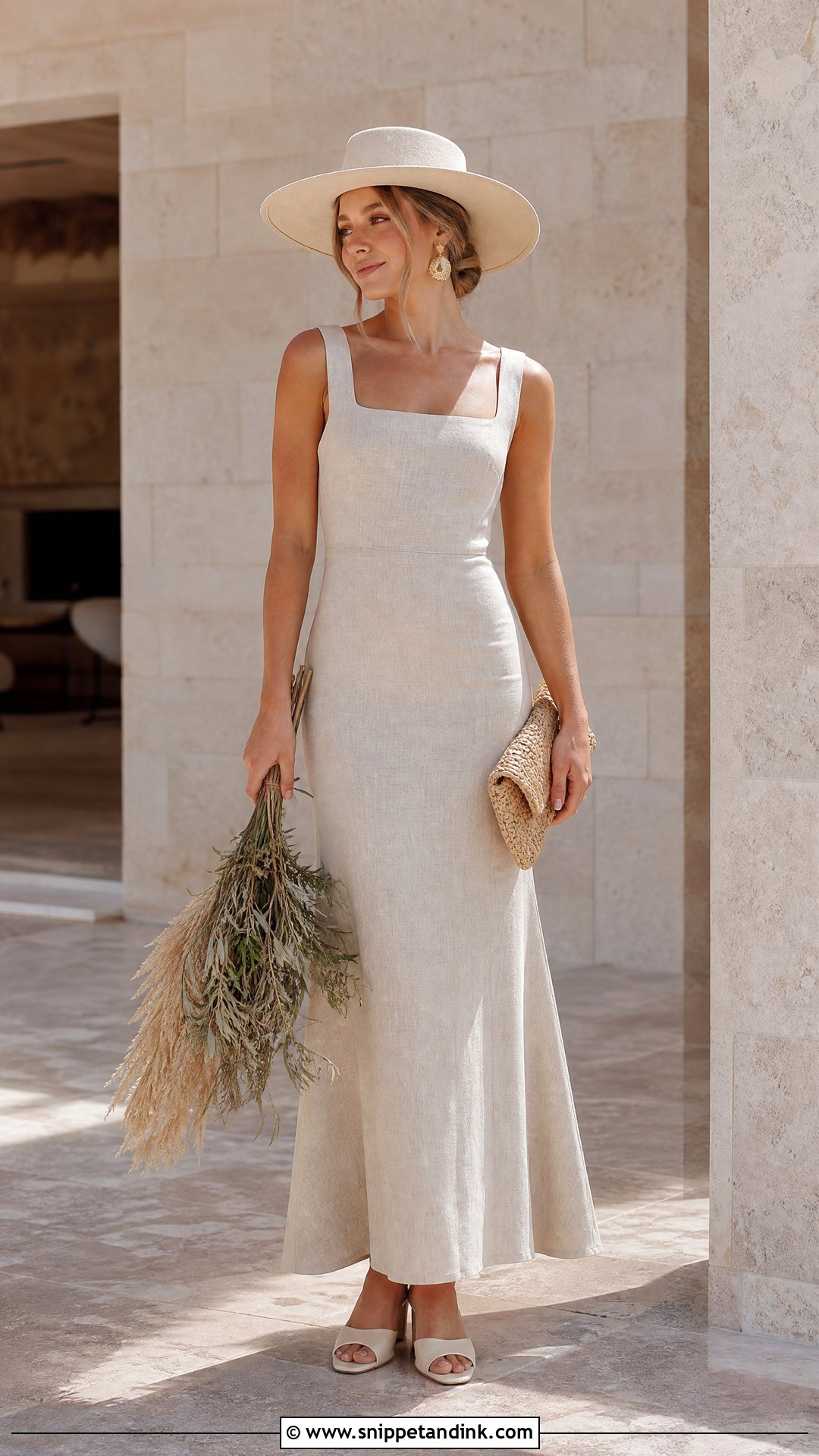
Linen is the fabric brides ask about most and the one I’m most honest about: it creases from the moment you sit in the car. A lined linen blend reduces that while keeping the texture, and in my view the creases are part of the charm as long as the fit is precise. A square-neck column, fitted waist and slightly flared hem stop it looking like a sundress. Cream leather mules or flat sandals, hammered gold earrings and a woven ivory clutch suit the sand tone. A wide-brim hat can replace a veil at a desert or countryside ceremony, with a low braided bun under it. Dried grasses, white flowers and olive leaves finish it. Tailoring is not optional here; a loose linen waist reads as casual very quickly.
7. Mushroom Taupe Crepe Wedding Dress
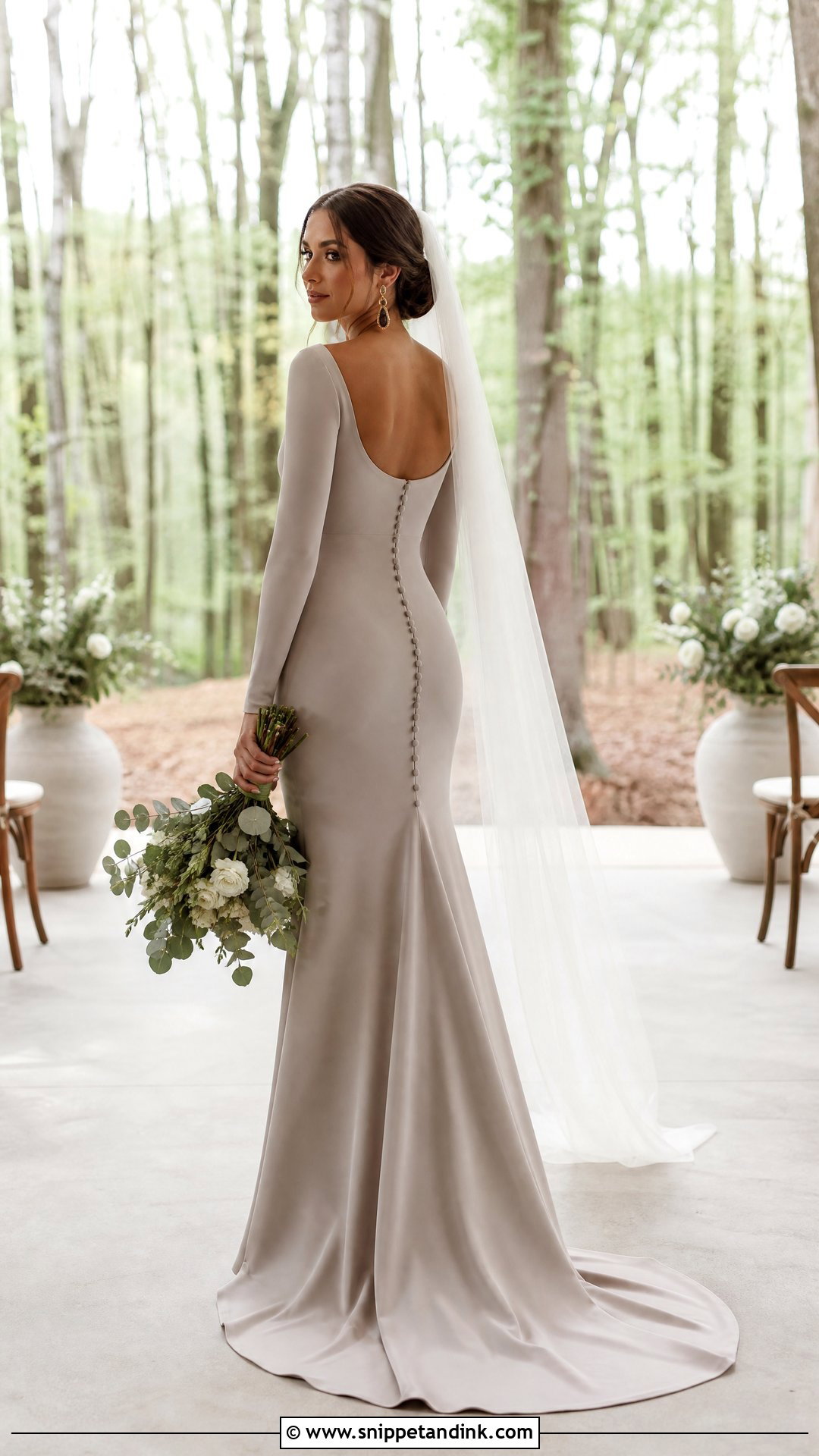
Mushroom taupe sits between beige, grey and soft brown, and it can look either very chic or drab depending on the cut. Crepe saves it. A fitted crepe gown with a bateau neckline, long sleeves and a gently flared skirt gives the shade structure, and a low back or a line of fabric-covered buttons adds interest without decoration. I’d hold a taupe swatch up to your face in daylight first, because on some cool, pale complexions it can drain color. Nude pointed heels, smoky quartz earrings and a narrow gold comb in a polished chignon keep it streamlined. Cream anemones, taupe foliage, seed pods and eucalyptus give natural contrast. If you wear a veil, choose sheer ivory rather than matching taupe; the slight difference frames the dress.
8. Off-White Crochet Lace Wedding Dress
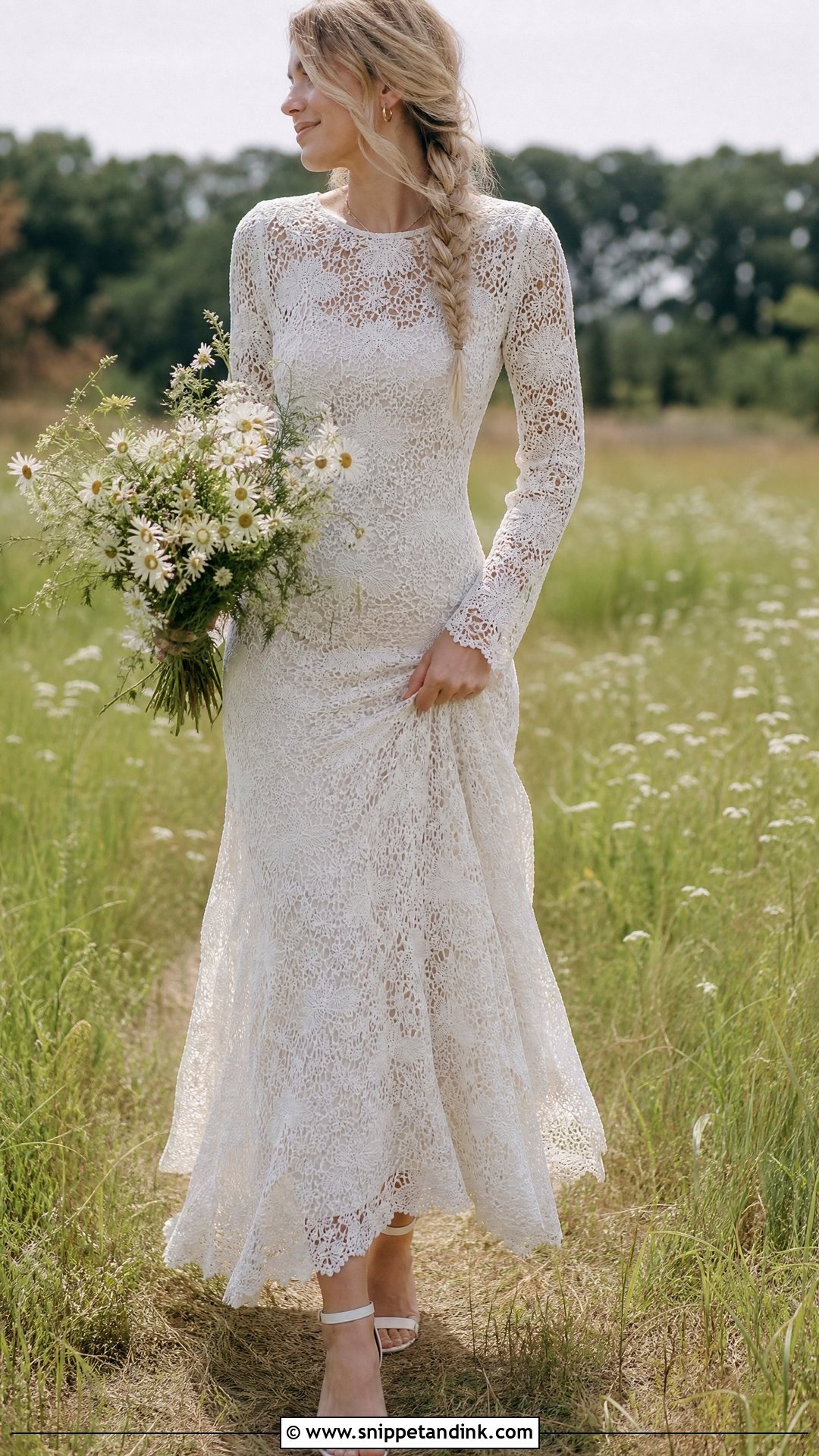
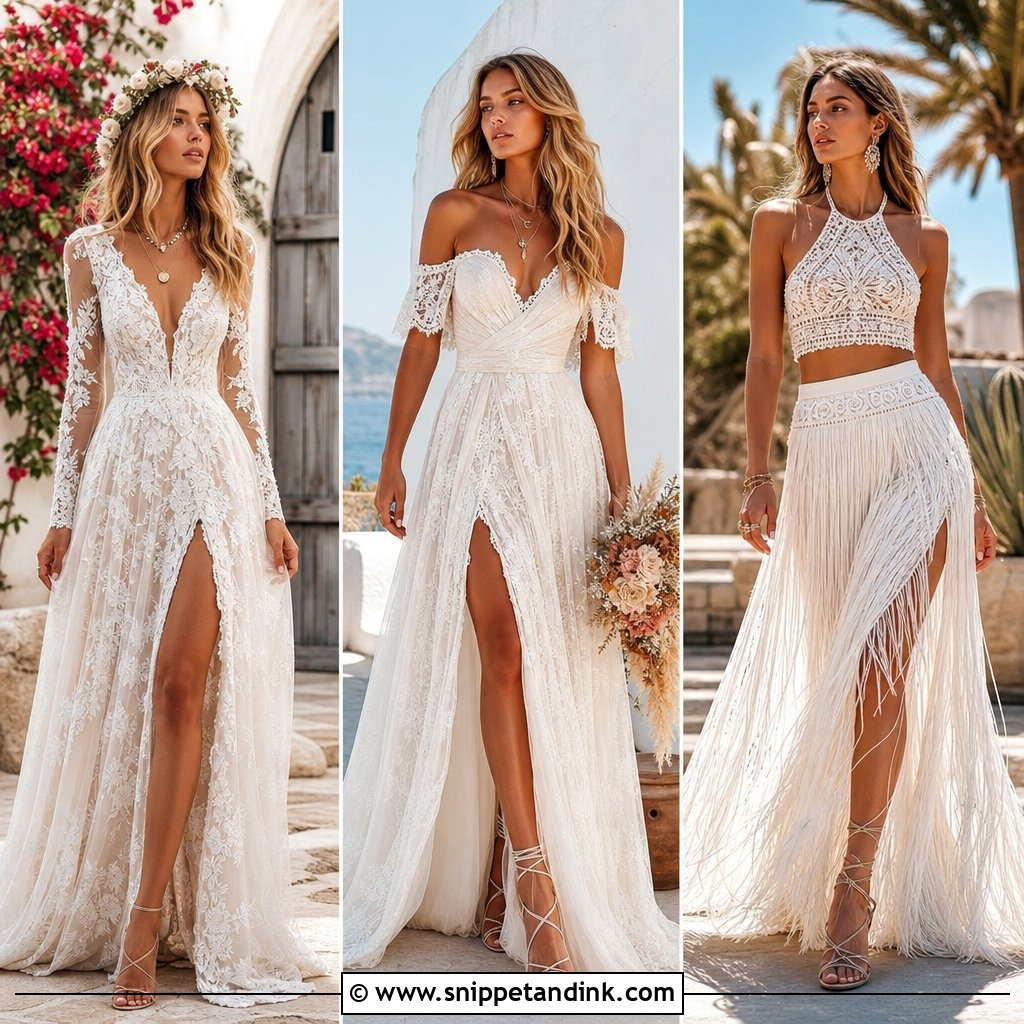
Crochet lace is handmade-looking by nature, and that’s why it suits a meadow or a farm far better than a formal hall. Look for a fitted bodice with a high neck, openwork sleeves and a flowing skirt lined either to mid-thigh or the full length; the shorter lining is a bolder choice and I’d only suggest it if you’re happy being seen through in strong sun. A scalloped hem adds detail. Ivory ankle-strap sandals, small gold hoops and a simple pendant work, and hair can go into soft waves or a loose braid with a narrow ribbon. Daisies, white cosmos, chamomile and greenery keep it informal. Crystal jewelry clashes with the tactile stitch, so stick to matte metals. Crochet also catches on bark and brambles, so watch where you lean for photos.
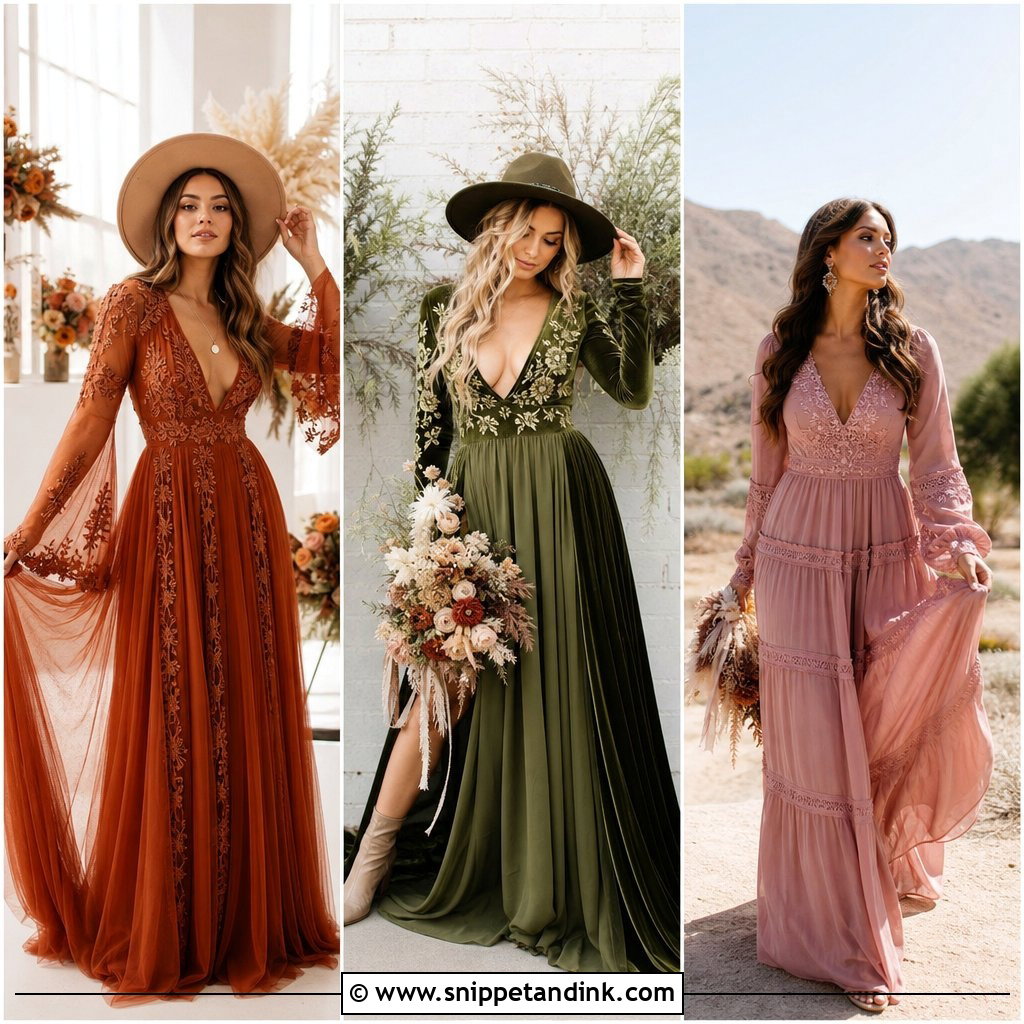
9. Wildflower Embroidered Wedding Dress
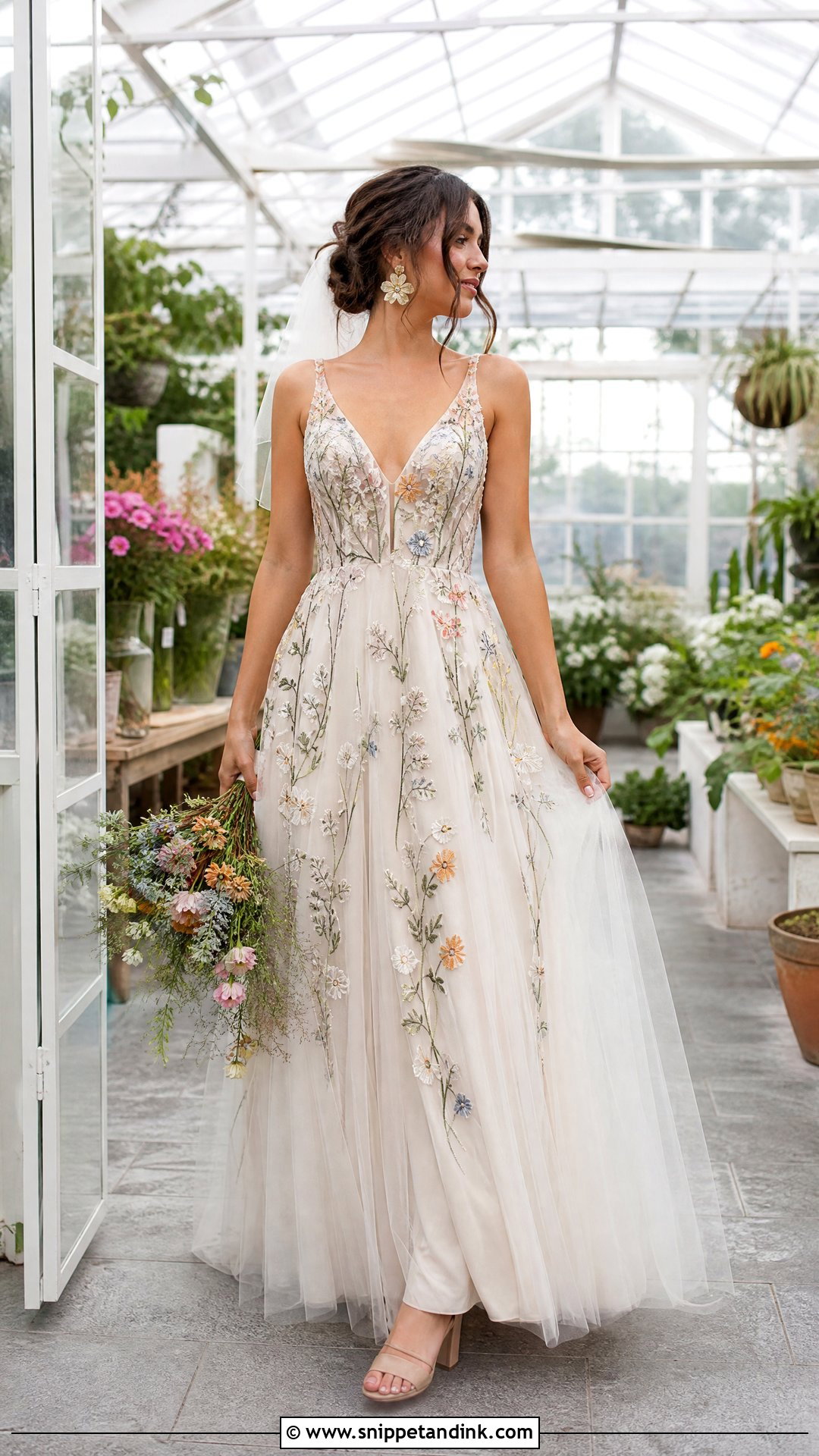
Wildflower embroidery in dusty blue, muted yellow, faded pink and soft green brings color in without committing the whole gown to one shade. The versions that flatter most are heaviest at the bodice and lighten toward the hem, so the pattern doesn’t swallow a petite frame. Neutral block heels, tiny flower earrings and a plain ivory clutch are all it needs. I’d keep the hair to a simple half-up style so the embroidery stays the main thing people notice. For the bouquet, borrow a few of the embroidery colors but not all of them; an exact match looks forced. A short plain veil, or none, works best at a woodland or garden ceremony.
10. Olive Velvet Wedding Dress
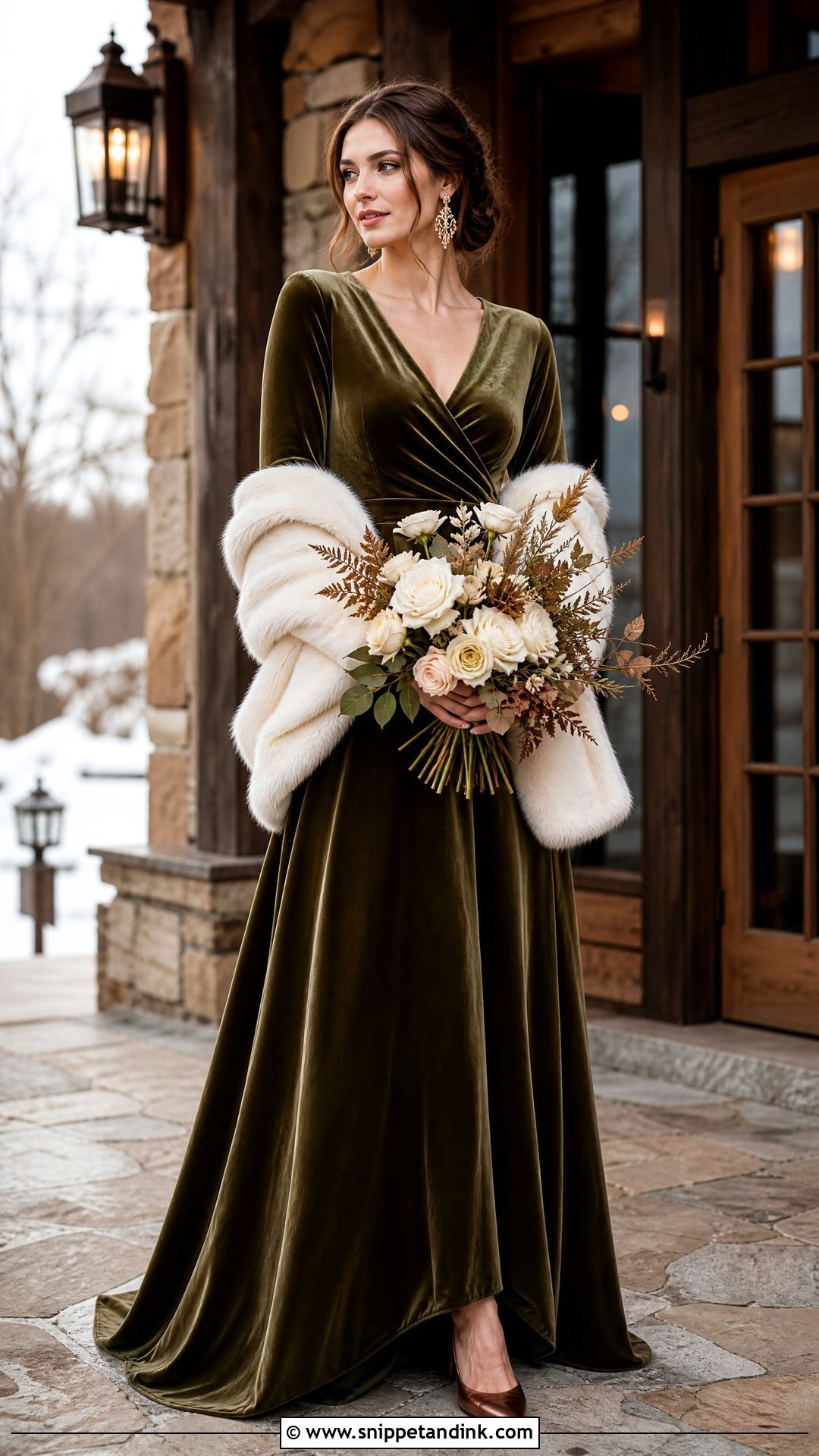
Olive velvet is a cold-weather fabric, full stop. In a warm room it gets heavy and hot, but at an autumn or winter ceremony it looks rich and feels comfortable. A softly fitted bodice, long sleeves, a defined waist and an A-line skirt let the pile fall smoothly, and a V-neck or wrap front stops it from looking weighty. Antique-gold earrings, a slim metallic belt and dark nude or bronze heels suit it. An ivory faux-fur wrap adds warmth and contrast. Carry cream roses, olive branches, seed pods and dried foliage, and keep makeup neutral with a muted rose lip. Velvet shows crush marks where you sit, so I always tell brides to steam it on the day rather than press it. I’d save this one for an autumn woodland venue, a historic lodge or a refined rustic setting.
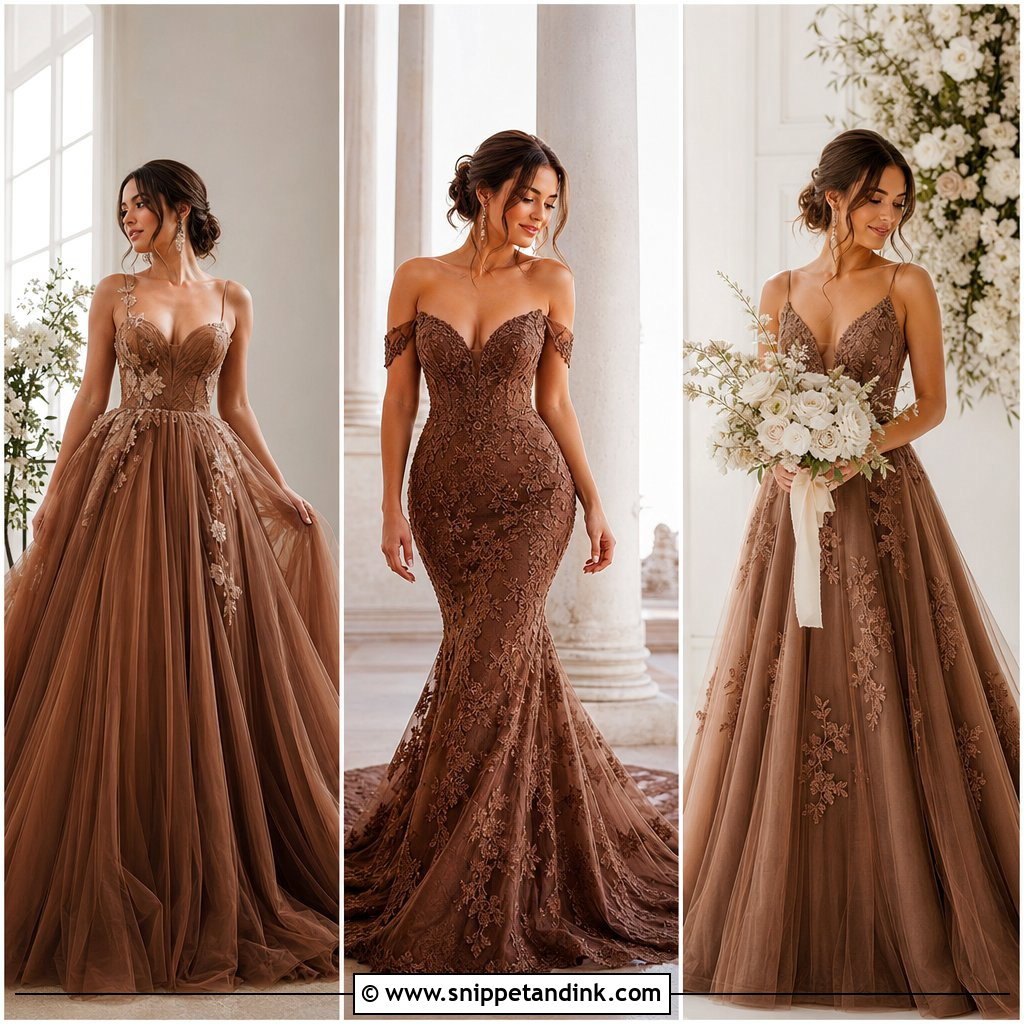
11. Mocha Tulle Wedding Dress
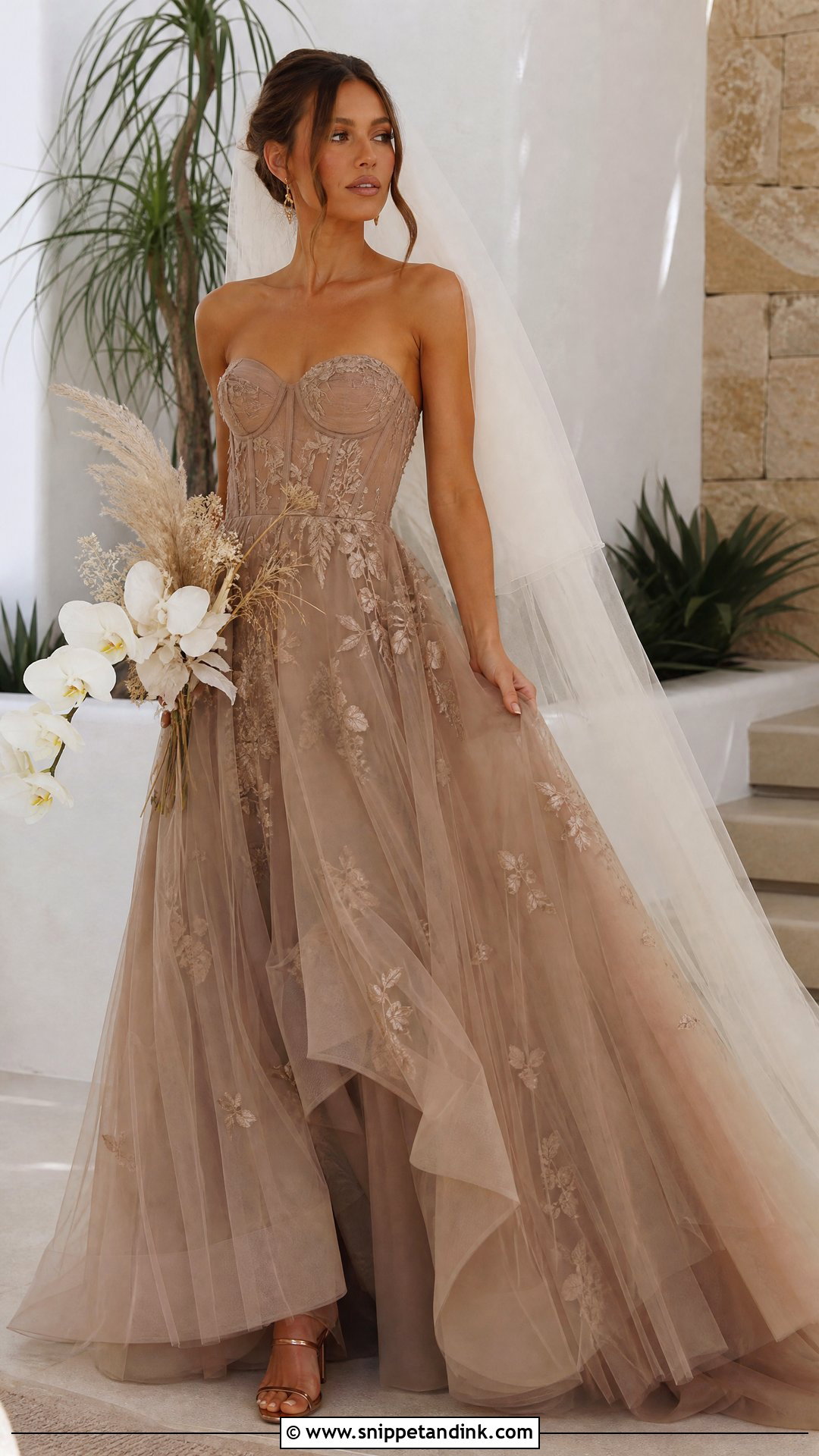
Mocha is the deepest neutral here, and in tulle it gains dimension that flat fabric can’t. A layered ball gown or full A-line with a corset bodice and tonal appliqués is the classic shape. The trick I look for in construction is a lighter lining under the mocha layers; without it, the color reads flat and slightly muddy in photos. Bronze sandals, warm gold drop earrings and a small taupe satin clutch suit it, and a sleek center-parted bun balances all that skirt. Ivory orchids, brown-toned foliage and dried grasses make a refined bouquet. Don’t add more embellishment, since the layers already provide plenty. A sheer beige cathedral veil keeps the palette tonal for a formal evening.
12. Rust Ombre Wedding Dress
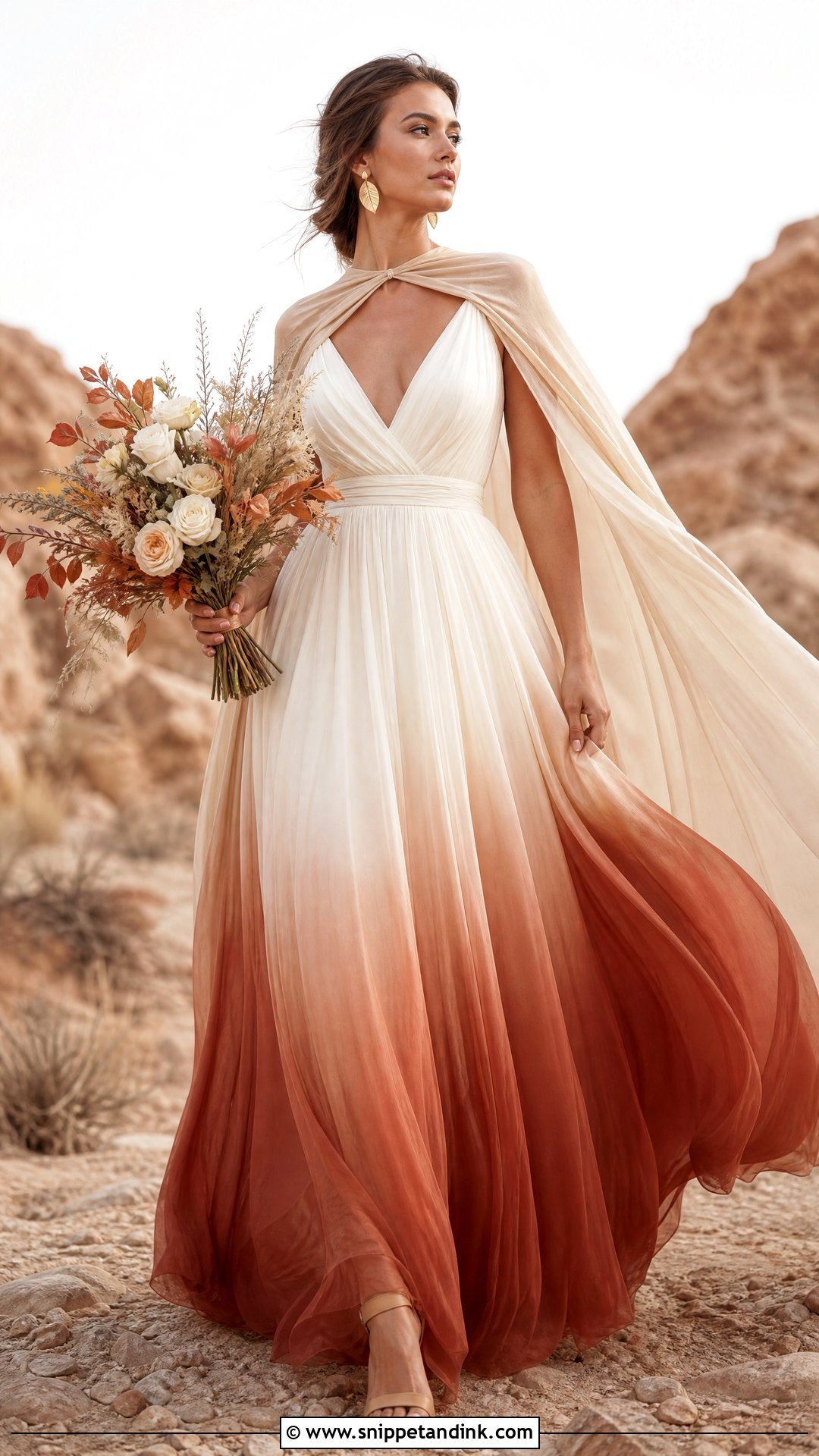
Ombre has to be dyed well or it looks like a mistake, so I’d ask to see the actual fabric, not just a photo. The rust gown that works starts cream at the bodice and deepens toward the hem, in chiffon or silk with an uncomplicated A-line so the gradient stays smooth. Tan heels, brushed-gold statement earrings and a minimal cream clutch complete it, with loose waves pinned back on one side. Ivory blooms, copper foliage and a few small rust flowers support the color shift. Skip a bright white veil, which fights the cream bodice; a sheer champagne cape or shoulder drape is kinder. Against stone, sand and open fields at sunset, this is one of the strongest pictures on the list.
13. Eucalyptus Green Organza Wedding Dress
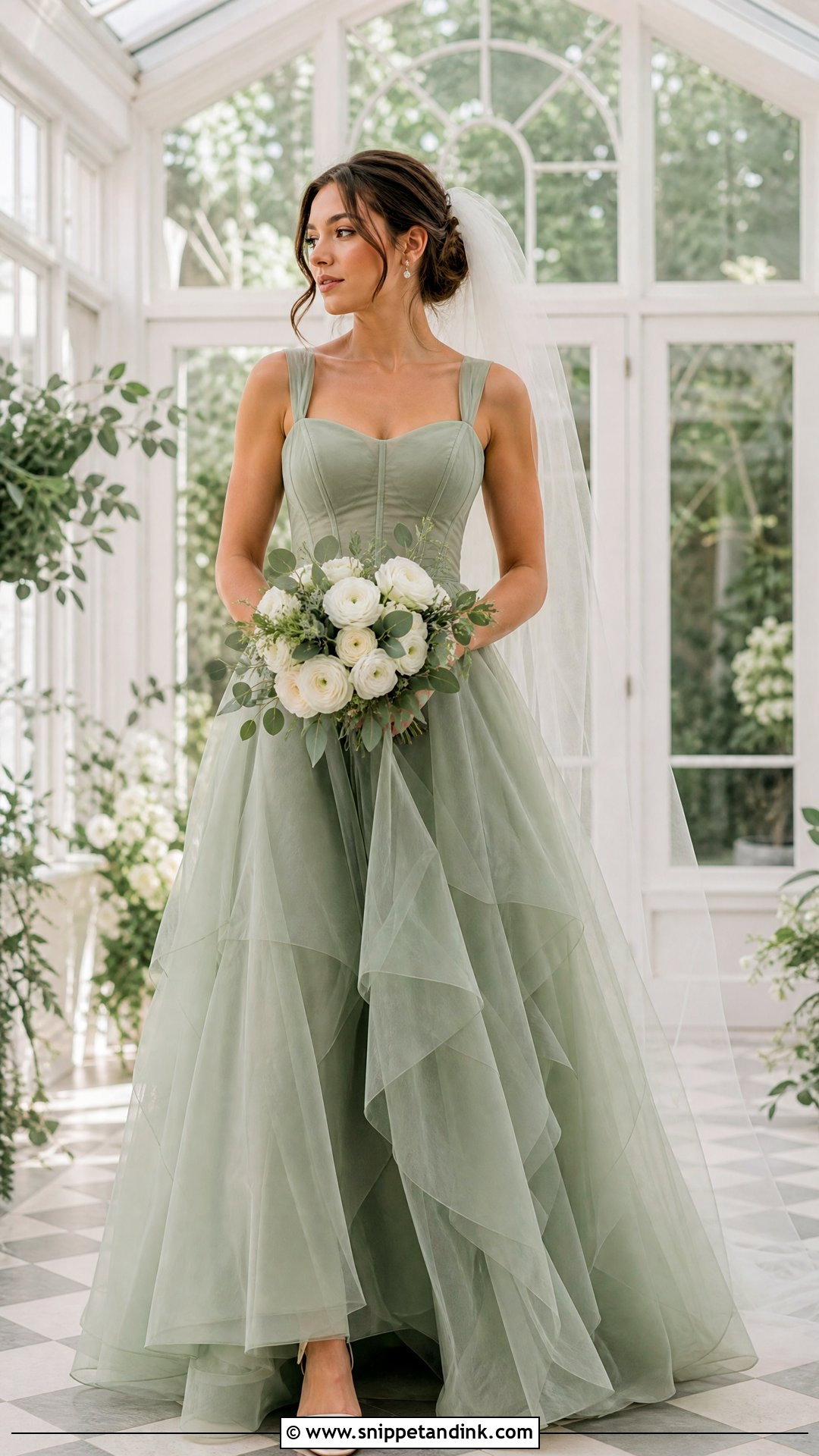
Organza has a slight sheen that keeps a muted eucalyptus green from looking dull, which is exactly why I’d choose it over matte chiffon for this shade. A structured bodice with wide straps and a full skirt of translucent layers keeps the shape modern. Organza is crisp, though, and it creases sharply if it gets crushed in a car, so travel with the skirt spread out. Ivory slingbacks, pearl-and-gold earrings and a small cream bag finish it, with a clean low ponytail or bun. White ranunculus, eucalyptus stems and pale green foliage make a loose bouquet. A sheer ivory veil just past the train adds bridal definition and brightens the green. Conservatories, formal gardens and airy barns suit it well.
14. Ivory Bell Sleeve Boho Wedding Dress
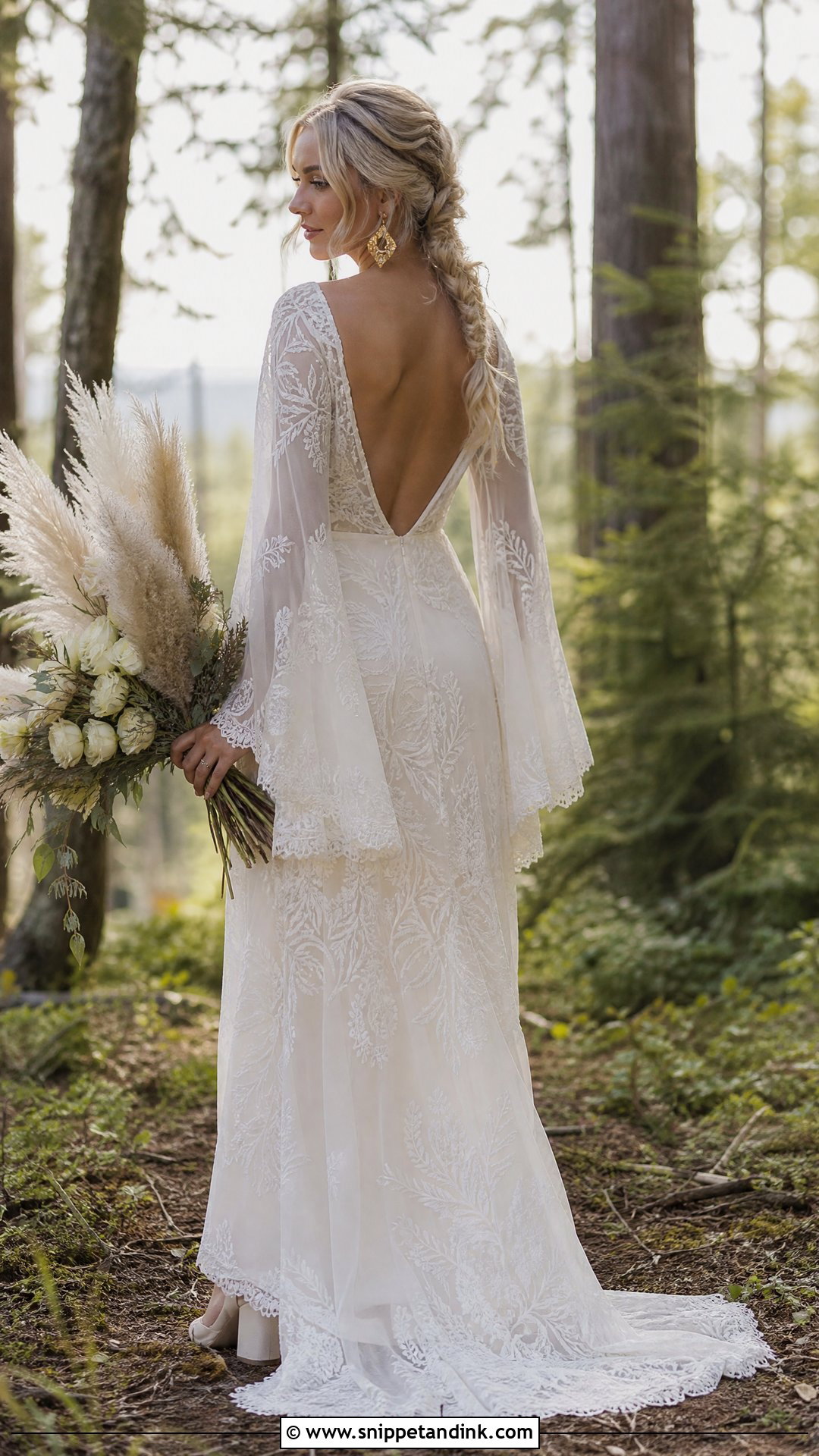
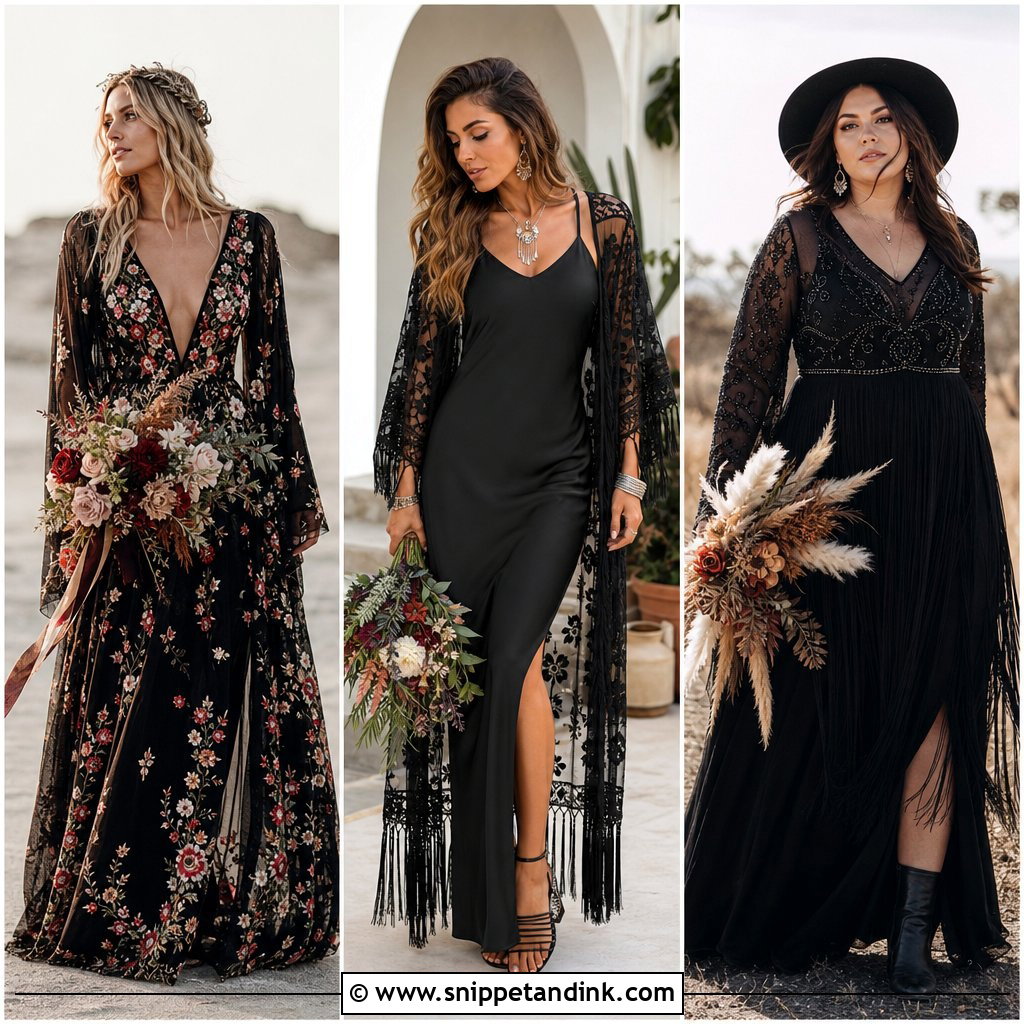
Bell sleeves are the most recognizable boho detail there is, and they need a practical check: raise your arms and reach for a glass at the fitting, because wide sleeves trail into food and candles. A lightly fitted lace dress with a V-neck, defined waist, open back and sleeves that flare below the elbow is the classic version. Keep the train manageable so you can walk on uneven ground. Cream block-heel sandals, hammered metal earrings and a narrow gold arm cuff suit it, with loose waves or a textured braid holding a few small white flowers. Pampas grass, ivory blooms and trailing greenery make an unstructured bouquet. The sleeves already frame you, so a veil is optional; if you want one, a plain fingertip length is enough.
15. Cotton Eyelet Empire Wedding Dress
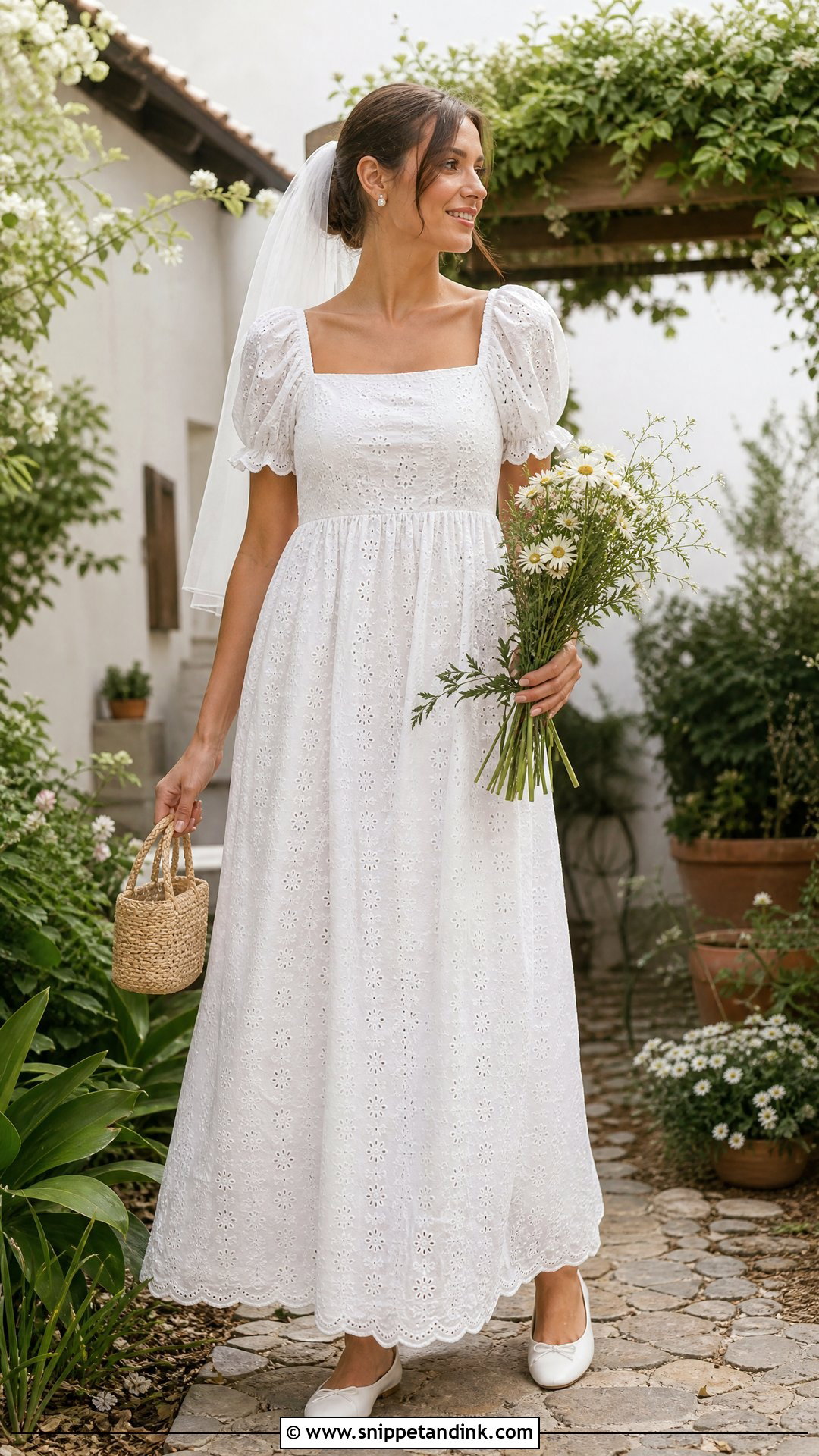
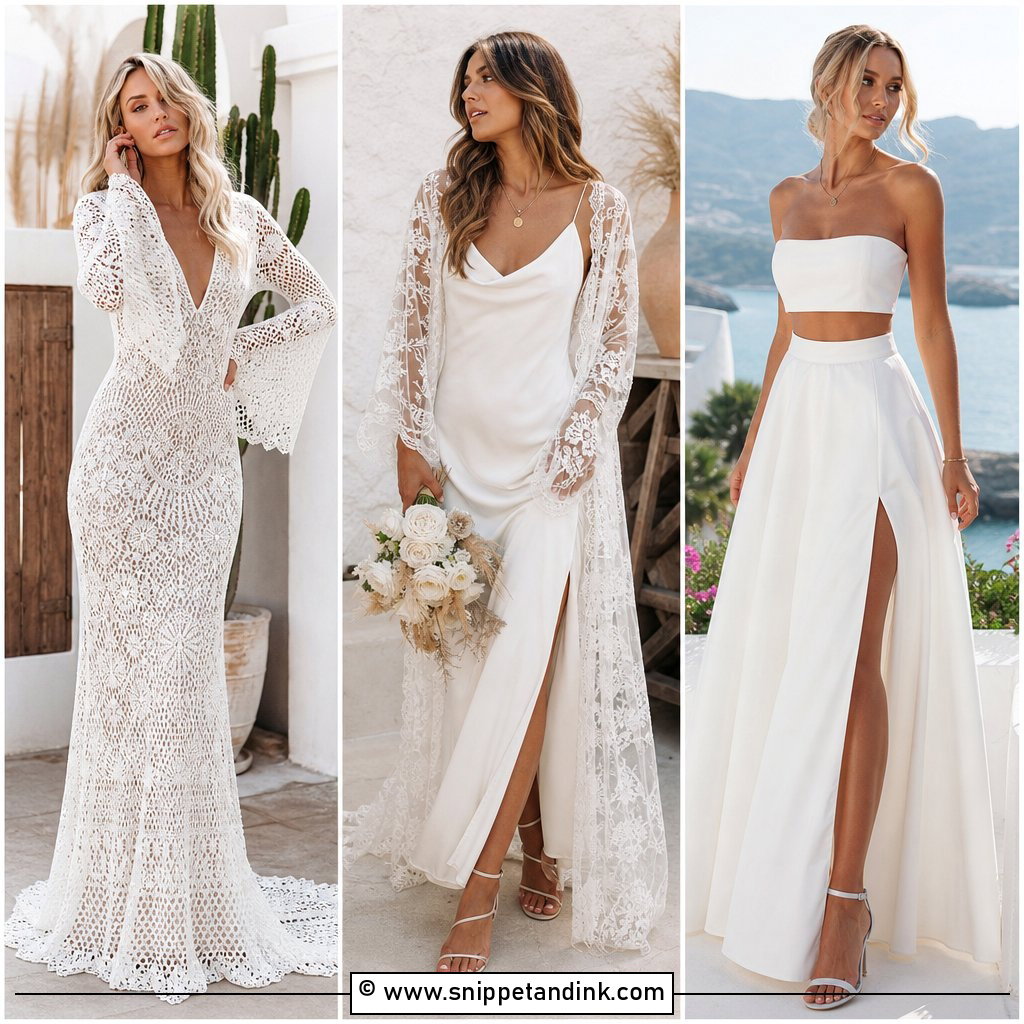
Cotton eyelet is breathable and unfussy, which makes an empire-waist wedding dress in it a good answer for a hot summer garden. A square or scoop neckline, short puff sleeves and a skirt starting just under the bust give it a gentle vintage feel. Insist on a full lining; eyelet holes are see-through in sunlight, and you’ll want coverage without losing the texture. White leather flats, low espadrilles or block-heel sandals all work on lawns. Small pearl studs, a fine chain bracelet and a woven bag finish it, and a soft braided updo stops it tipping into costume. Daisies, sweet peas and leafy herbs suit the bouquet. A short tulle veil or an ivory ribbon in the hair is better than a long veil here.
16. Nude Underlay Lace Wedding Dress
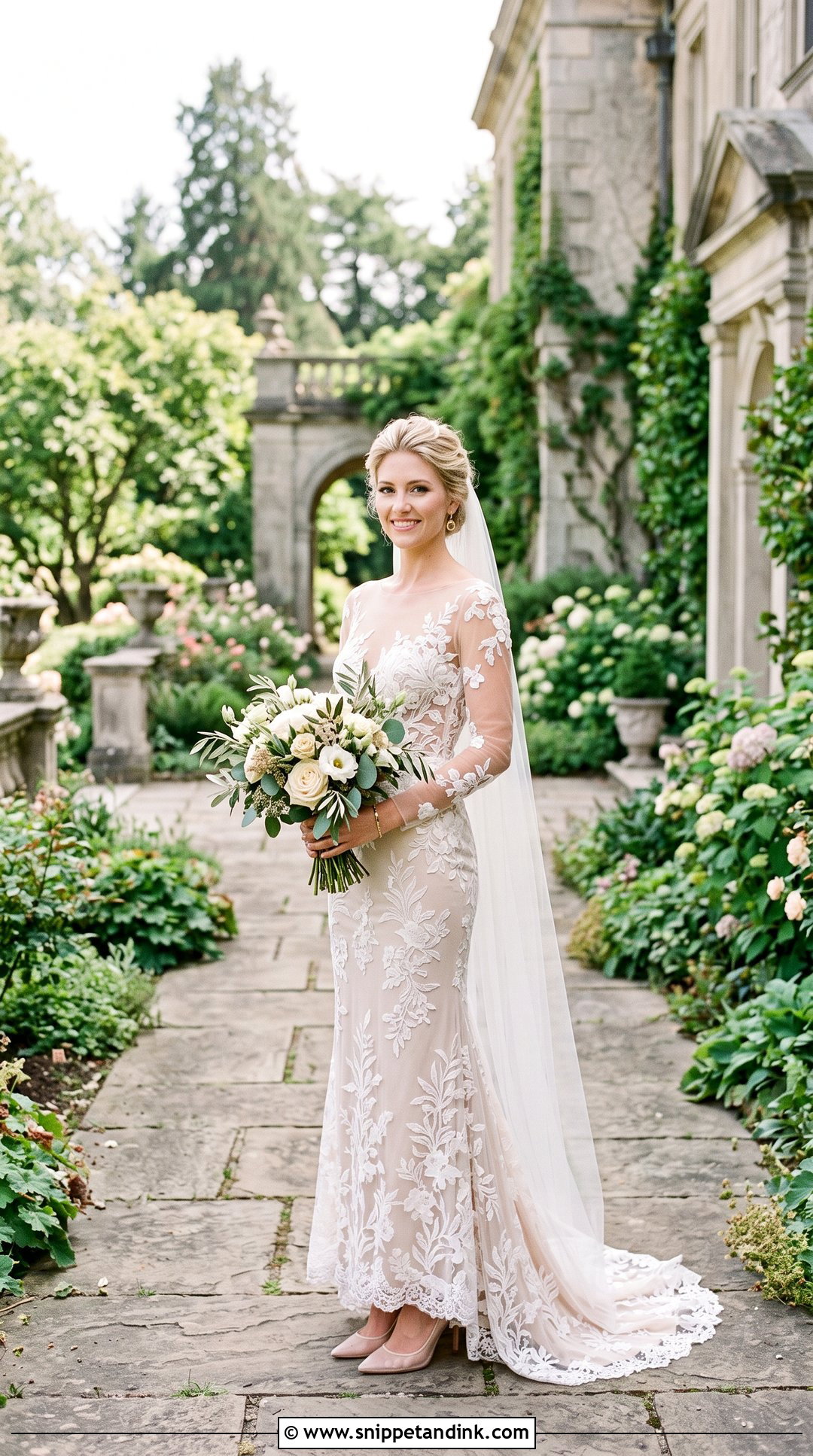
A nude underlay is how lace designers make an ivory pattern stand out, and the shade of that underlay is the decision I spend longest on at a fitting. It needs to complement your skin without matching it so exactly that the lace looks like it’s floating on bare skin in photos. On a sheath or fit-and-flare gown with botanical lace, a modest illusion neckline and a soft train, that balance matters even more. Nude pointed heels, delicate gold earrings and an ivory satin clutch keep things quiet, and a smooth low bun shows the neckline. Cream roses, muted greenery and pale dried flowers add texture. Pick a sheer veil with lace only at the edge so it doesn’t compete.
17. Clay Pink Corset Wedding Dress
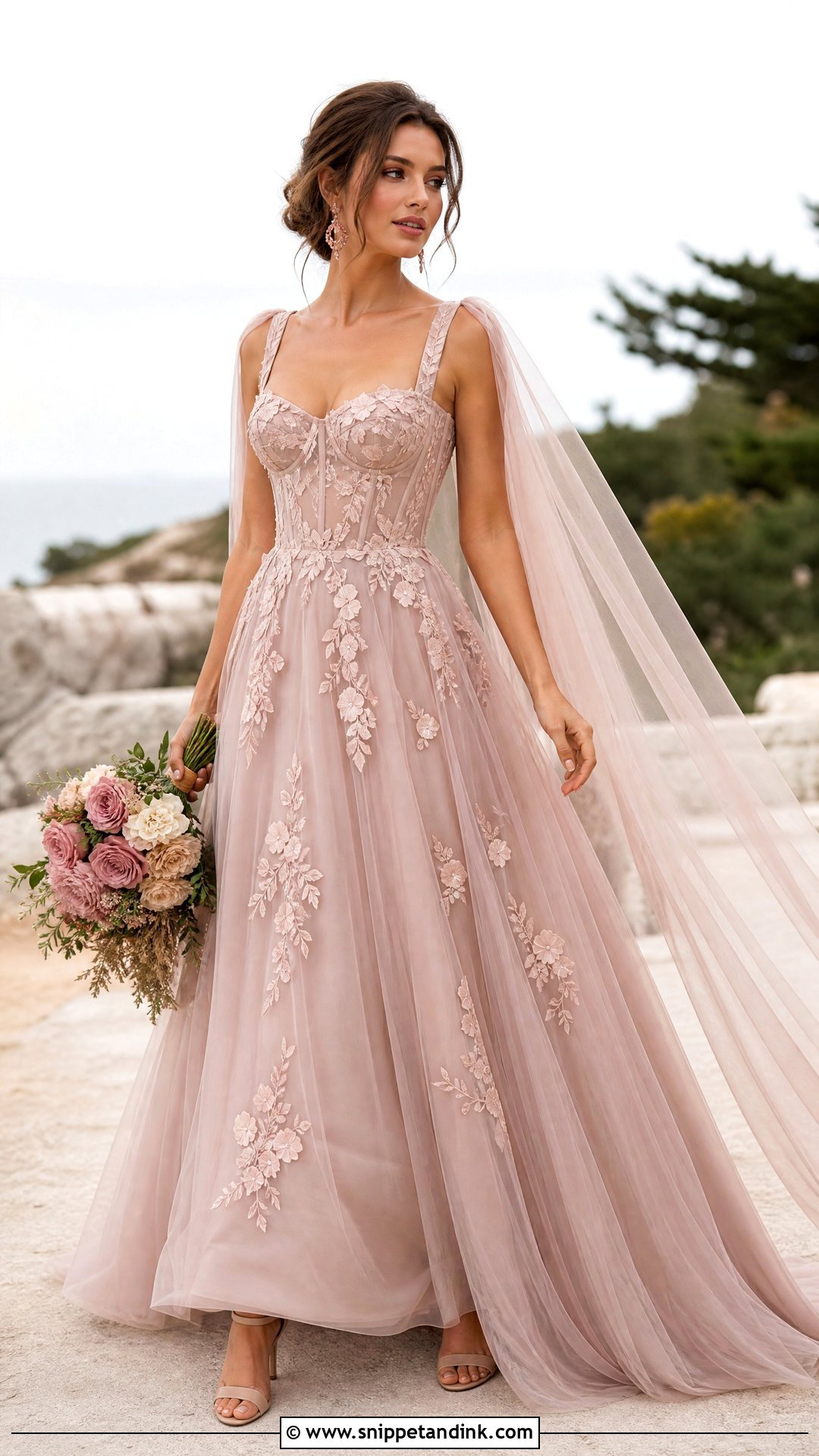
Clay pink is warmer and dustier than bright pink, and it’s easy to wear because it sits close to most skin tones. A structured corset gown with a supportive bodice, wide straps or removable sleeves and layers of matte tulle gives it shape. Corsets need a proper fit: I check that you can sit, eat and breathe without the boning digging in at the waist, since you’ll be in it for hours. Tonal appliqués at the neckline and waist add texture without sparkle. Pale beige heels, rose-gold earrings and a slim bracelet suit it, with a relaxed updo and a few face-framing pieces. Cream roses, dusty pink blooms, dried fern and greenery bring out the clay undertone. A plain blush veil or light tulle cape adds movement.
18. Forest Green Wedding Dress
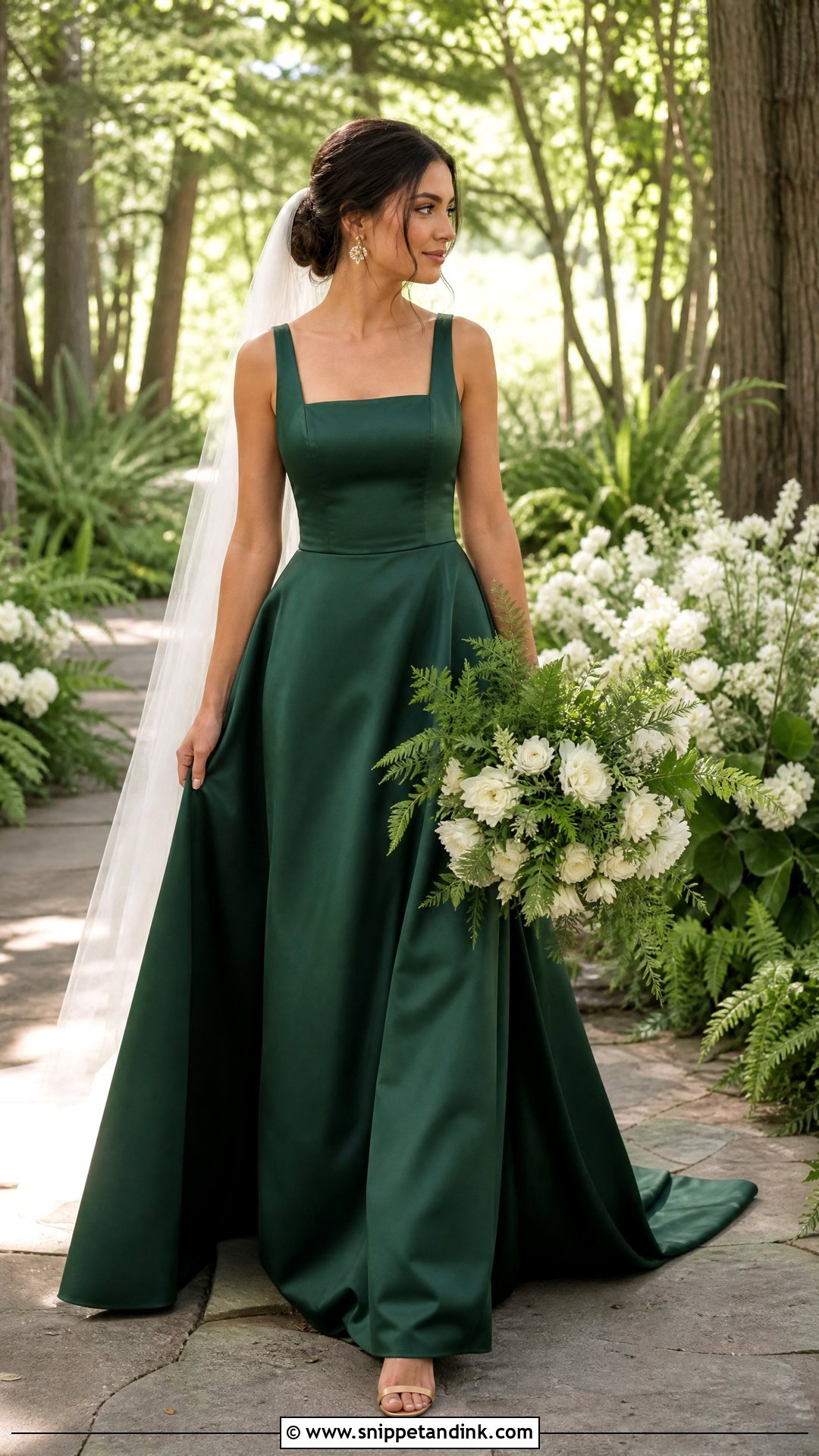
Forest green is a bold color, and the risk I warn brides about is the bouquet. Dark flowers vanish against a deep green dress in photos, so carry white flowers, ferns and only a little pale green foliage to keep contrast. The gown itself works best as a flowing satin A-line with a fitted waist, square neckline and simple straps, with removable sheer sleeves or a matching cape if you want coverage. Gold sandals, emerald or clear stone earrings and a cream clutch finish it, and a sleek low bun keeps the deep color looking deliberate. A sheer ivory veil gives a recognizable bridal note, while a gold headband is the modern option for forests, greenhouses or evening gardens.
19. Dried Flower Applique Wedding Dress
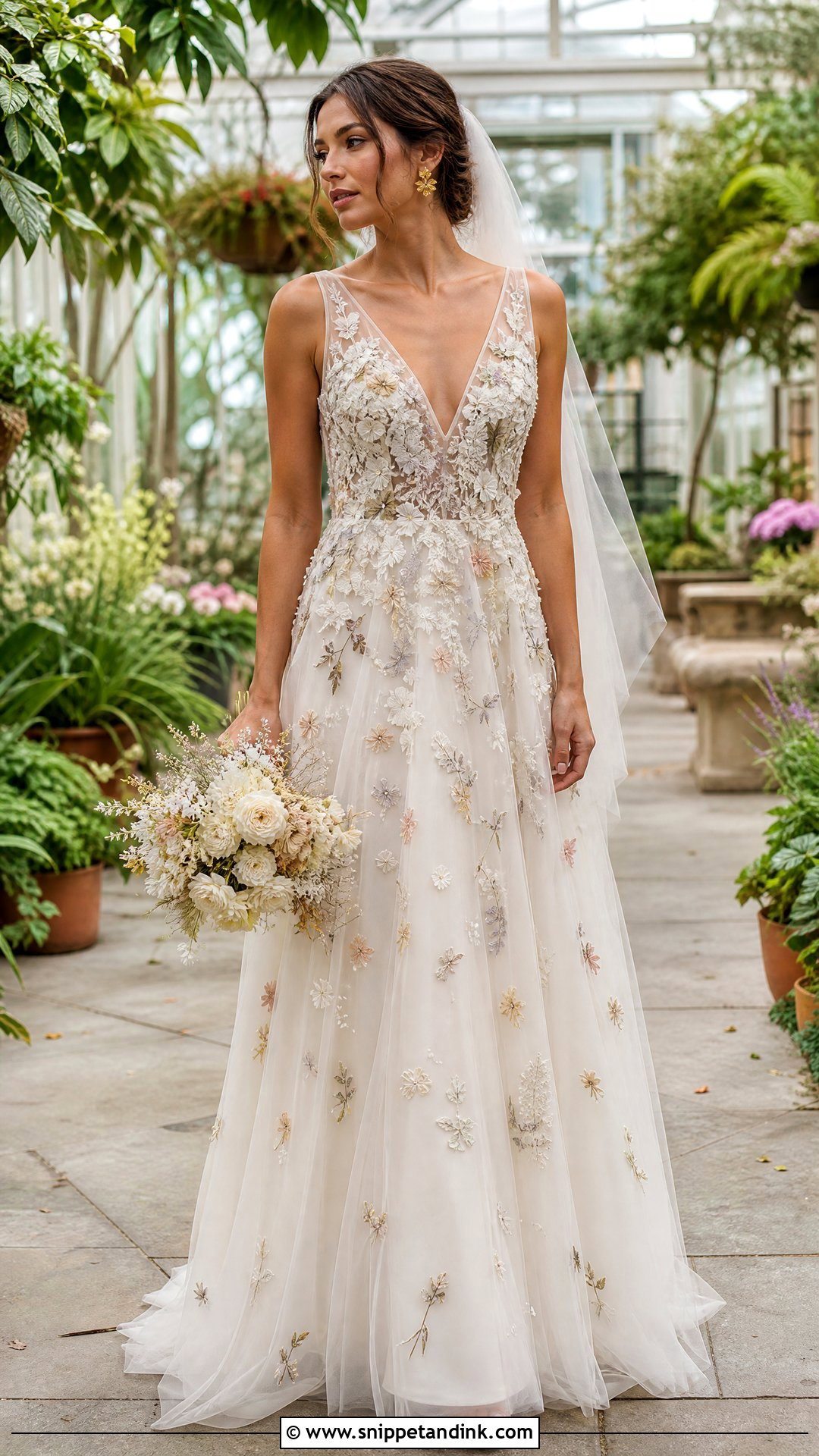
Dried flower appliqués are pressed or preserved-look motifs scattered across the bodice and upper skirt of a clean tulle or organza A-line. Keep them muted: beige, faded yellow, dusty pink and soft lavender look natural, while vivid colors look printed. Real dried petals are fragile, so I’d ask the maker how they’re sealed and whether they survive a garment bag. Neutral heels, tiny gold flower earrings and an understated ivory clutch are all you need, with a low textured bun keeping the dress central. Carry fresh cream flowers and greenery rather than more dried stems, so the look doesn’t overdo one idea. A plain veil or a single flower comb suits meadow, greenhouse and barn ceremonies.
20. Raw Silk Minimalist Wedding Dress
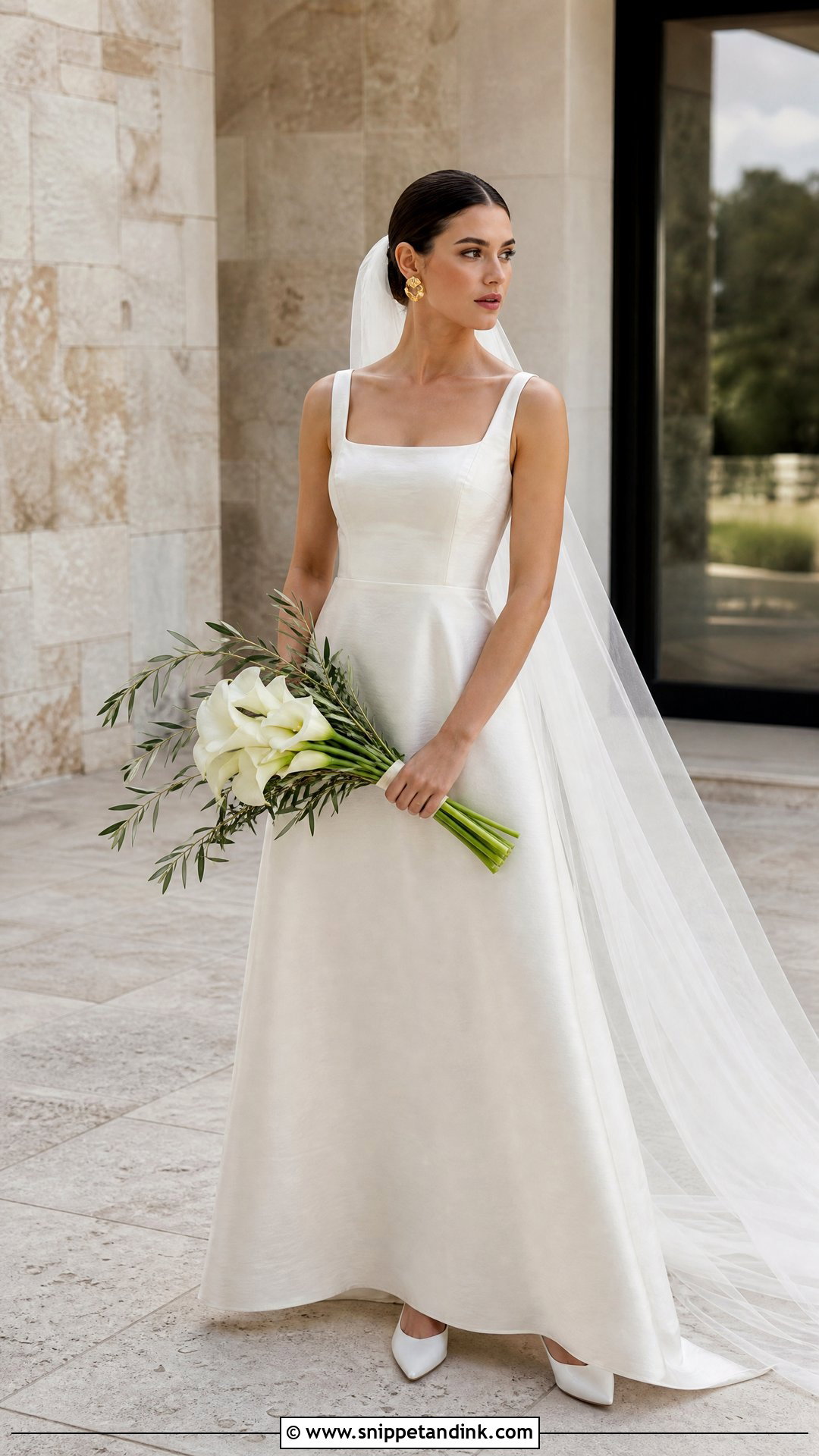
Raw silk has visible slubs and a soft, low sheen, so the cut can be very plain and still look expensive. A clean column or A-line with a square neckline, wide straps and fabric-covered buttons down the back is enough. Warm ivory, oatmeal or natural cream bring out the fiber’s texture. It does water-spot, like most silks, so I keep a dry cloth handy rather than dabbing at marks. Pointed ivory flats, low heels or polished leather sandals work, with sculptural gold earrings and a structured mini bag. A sleek bun or smooth shoulder-length waves, a restrained bouquet of calla lilies or olive branches, and a long plain veil complete it. Precise tailoring is what turns this from simple into properly bridal.
Grass, Sand and Gravel: Protecting the Hem of an Outdoor Gown
The hem is the first part of an outdoor dress to suffer, and it happens before the vows. Damp grass leaves green marks on pale fabric, sand works into tulle layers, and gravel snags chiffon. At the final fitting I ask a bride to walk the same kind of surface she’ll walk on the day, in the actual shoes, and we hem accordingly.
- For lawns and fields, a hem that just clears the top of the shoe is safer than one that brushes the floor. A little shorter is better than a dragging edge soaked in dew.
- Block heels or flats stop you sinking. Stilettos aerate a lawn and pull you off balance in photos.
- Ask for a bustle if your gown has any train at all, and practice it with whoever will fasten it. Wet trains get heavy fast.
- Pack white tissue and a clean white cloth. Blot grass and mud once it dries; rubbing wet marks spreads them into the weave.
How Linen, Velvet, Crepe and Silk Hold Up Over a Long Day
Earthy fabrics are chosen for texture, and texture changes over twelve hours of sitting, hugging and dancing. Knowing what each one does lets you plan for it instead of panicking at the reception.
Fabrics that forgive
Crepe barely creases and keeps its line all evening. Lace, crochet and embroidered tulle hide small marks and wrinkles in their pattern. Mocha and taupe tones conceal dust far better than ivory.
Fabrics that need a plan
Linen creases deeply wherever you sit, so I’d steam it just before the ceremony and accept softer lines later. Velvet crushes under you; steam it from the back and never press it flat. Raw silk and silk satin water-spot, so keep drinks away and let marks dry before you touch them. Organza creases sharply if folded, so it travels hung, never packed. After the wedding, take any of these to a cleaner who handles bridal and colored fabrics, and point out every stain, including clear ones like champagne that yellow later.
An Earthy Gown Still Needs a Bridal Finish
Start with the ground you’ll be standing on and the season, then pick the fabric, and only then the color. Earthy does not have to mean casual; raw silk, velvet, embroidered tulle and colored satin all look refined when they’re tailored properly. Once the gown is settled, choose shoes, jewelry, hair details and flowers that support it rather than compete. My last piece of advice is the one brides skip most: wear the dress outdoors at the final fitting if the shop allows, or at least hold a swatch outside, because natural light is where an earthy color either comes alive or goes flat. Subtle ivory lace or deep forest green, the right one is the dress that still looks like you at the end of the night.
You'll Like These Ideas:


Leave a Reply