
Nature-themed gowns are mostly about texture: three-dimensional blossoms, botanical embroidery, climbing vines, leafy lace and airy tulle or organza that moves when you do. When I pull dresses for an outdoor bride, the decoration is rarely the hard part. The hard part is matching how much of it a gown carries to the ground she’ll walk on, the weather she’ll stand in and how close her guests will be. Below are twenty directions I’d actually hang on a fitting rail, each with the shoes, hair and bouquet I’d put beside it so the dress stays the focus.
Lace, Appliqué and Print Wear Differently on a Lawn
Before anyone falls for a particular gown, I explain how the nature detail is built, because construction decides how it survives an outdoor day. Three-dimensional appliqué is cut separately and hand-stitched on, petal by petal. It catches light and adds depth, but every petal is a small edge that can snag, crush or loosen. Embroidery is stitched into the fabric itself, so it lies flat, travels well and rarely lifts, though raised metallic or beaded work can still catch on bark. Print is the lightest and usually the most affordable, and it never snags, but it shows creases and grass marks more readily.
None of these is better than the others. A greenhouse ceremony with a short walk on stone can handle the most delicate appliqué. A forest clearing reached by a dirt path needs something tougher, or at least a hem that stays clear of the ground.
What I check on the hanger
- Turn a 3D petal over. Each one should be tacked at more than one point, not hanging from a single stitch.
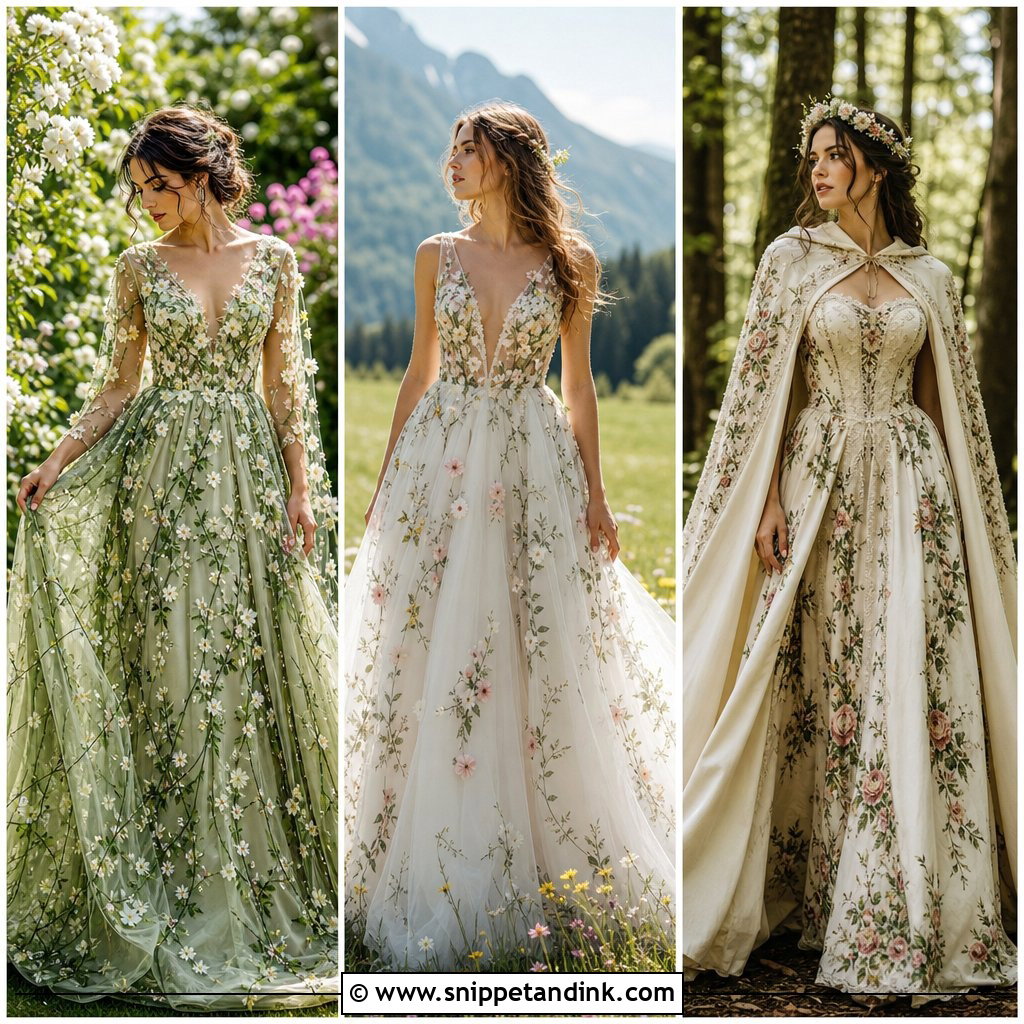
- Look at where the decoration stops near the hem. Appliqué right at the floor will drag through grass and wear first.
- Hold the lace against the lining in daylight. A nude or champagne lining shows the motif; white can swallow it.
- Lift the skirt with one hand. If that tires you in thirty seconds, picture doing it on a slope all afternoon.
- Sit down in it. Dimensional flowers at the hips flatten when seated, and some fabrics spring back better than others.
1. 3D Floral A-Line Wedding Dress
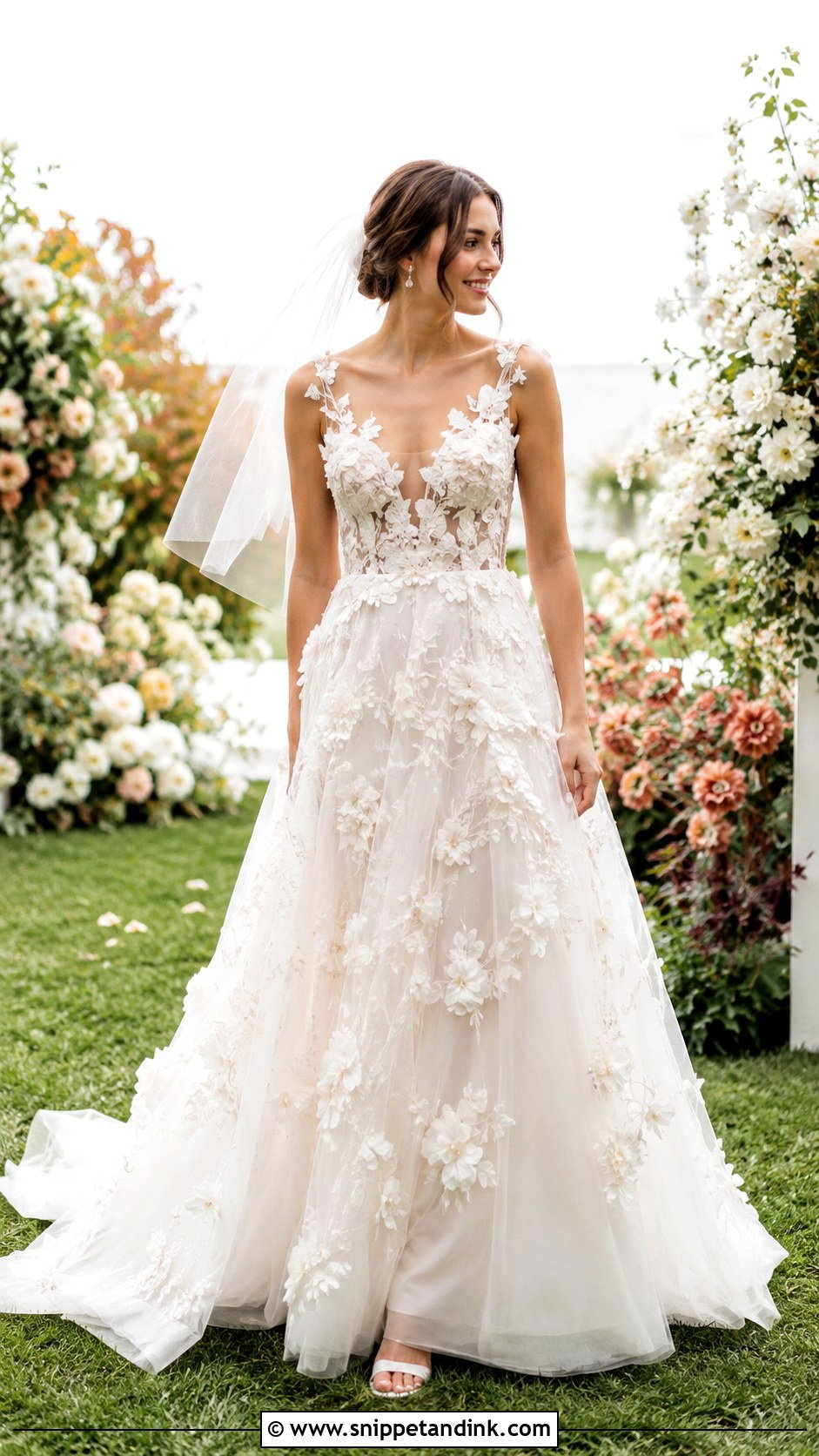
Dimensional petals on an illusion bodice catch side light in a way flat lace never does, which is why this shape reads so well in a garden. I look for petals that thin out as they travel down the tulle skirt; a heavy scatter near the hem catches on grass and gets flattened the first time you sit. Ivory flowers keep it traditional, and pale blush appliqués add color without fighting the greenery around you. Pearl drops, a loose low bun and a fingertip veil with a few matching flowers finish it. Pointed ivory flats or low block heels stop you sinking into a lawn, and a small seasonal bouquet adds color without covering the bodice work.
2. Leaf Lace Long Sleeve Wedding Dress
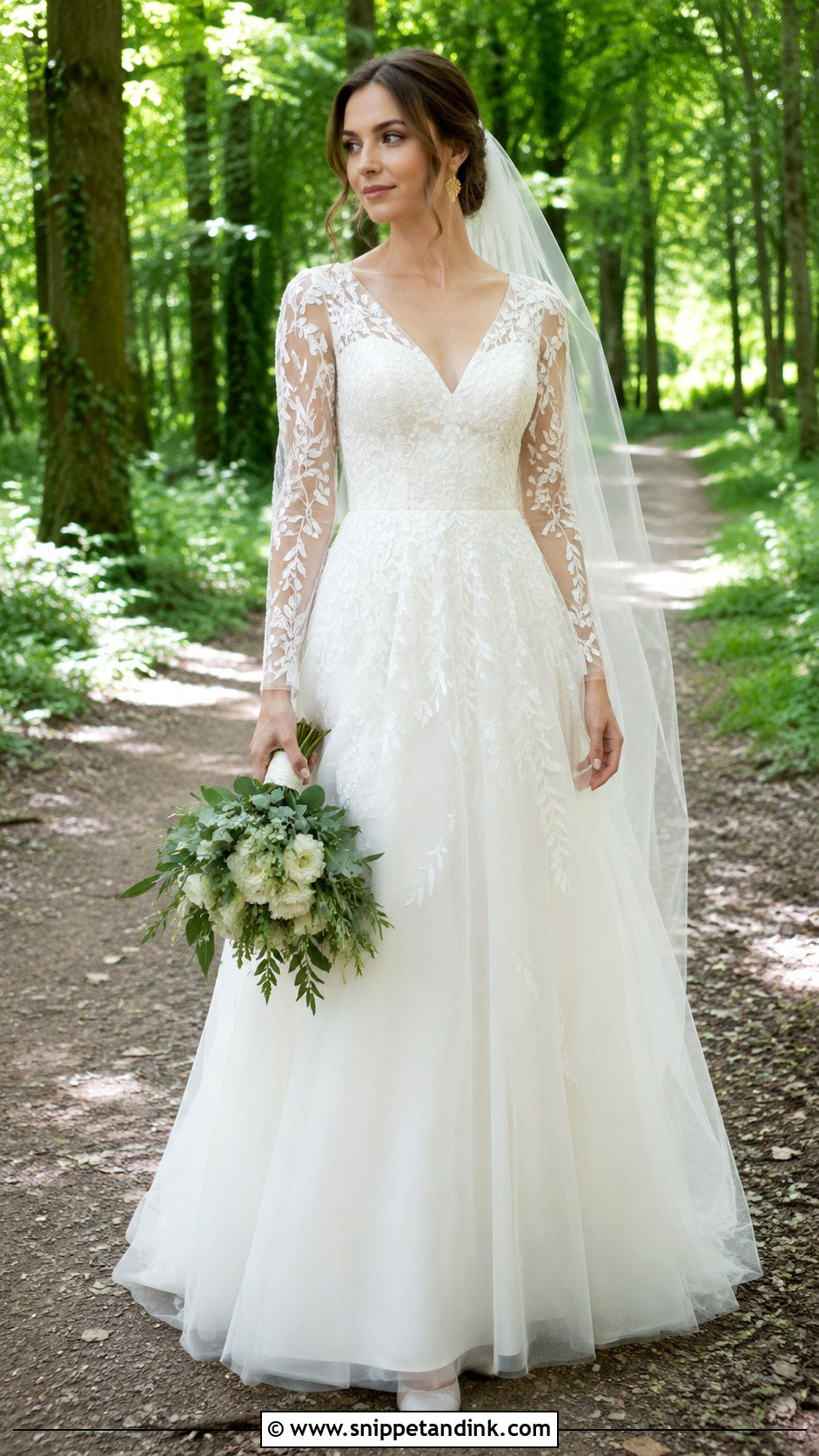
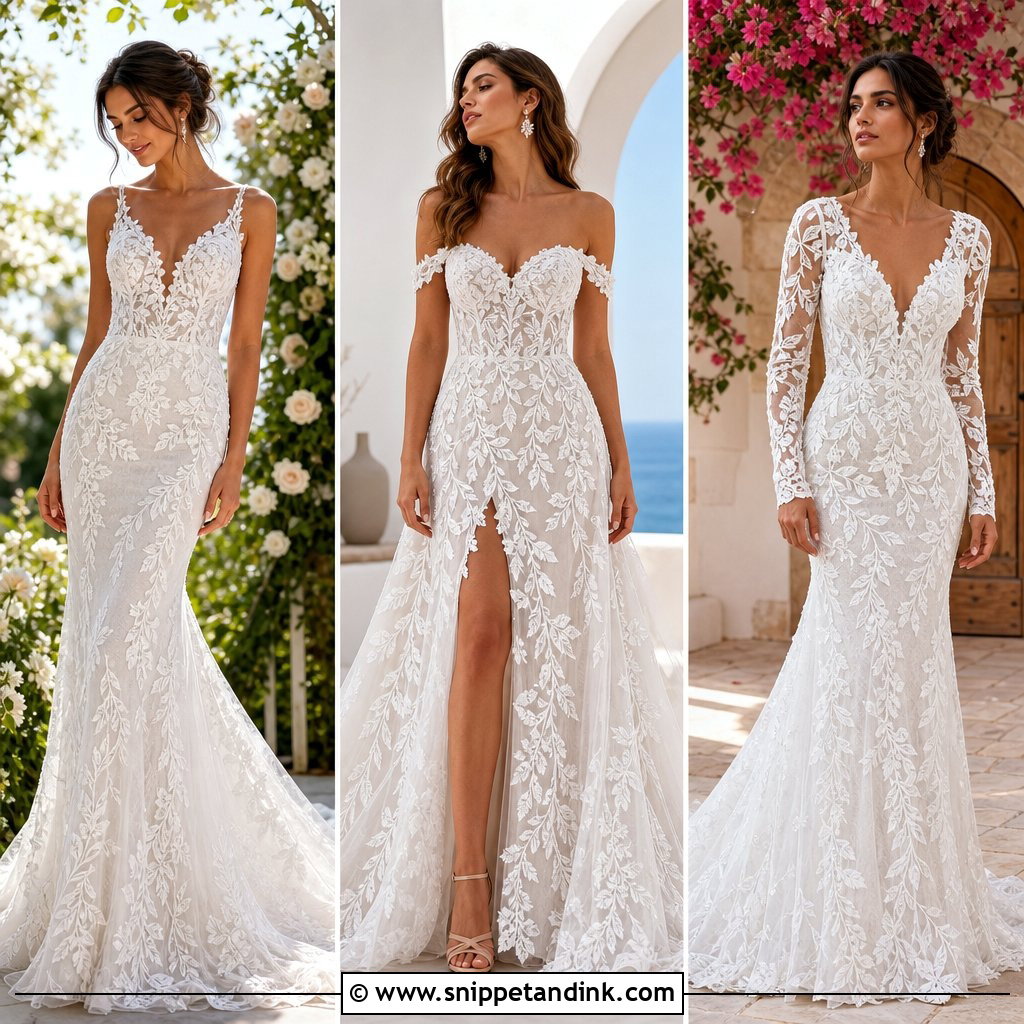
Leaf lace on a long sleeve reads earthy without tipping into costume. My first check at a fitting is the sleeve with the arms raised: sheer lace sleeves cut too close pull at the shoulder seam during all the hugging, so I’d rather leave a little ease at the bicep. A soft V-neck and leaf motifs flowing into an A-line skirt keep it balanced, and an illusion back stops the coverage from feeling heavy. Wear a twisted updo so the lace shows, add small gold leaf earrings and keep the tulle veil plain. Closed-toe pumps or supportive block heels suit the cool forest, autumn garden and mountain settings this gown belongs in.
3. Wildflower Embroidered Tulle Wedding Dress
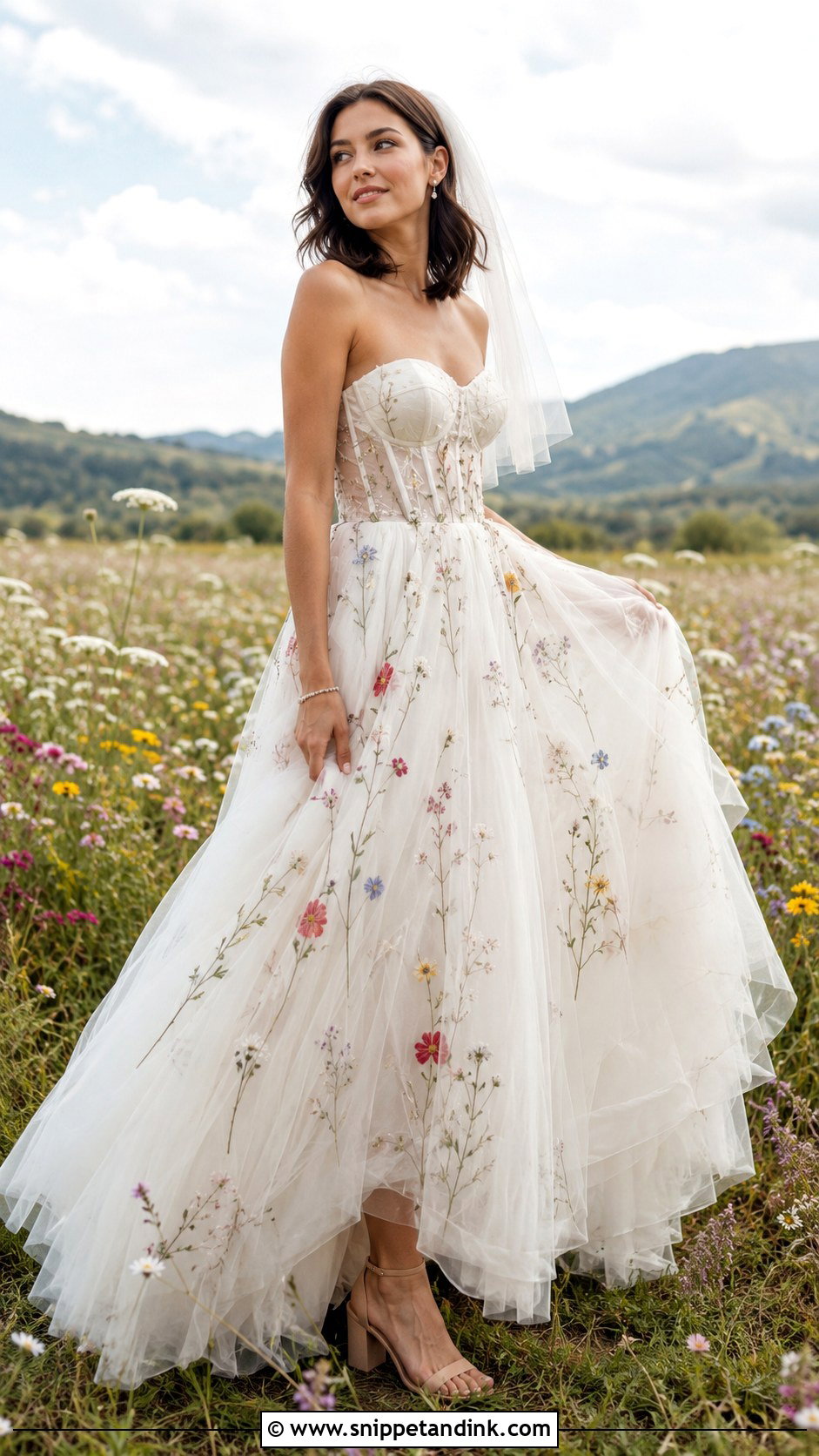
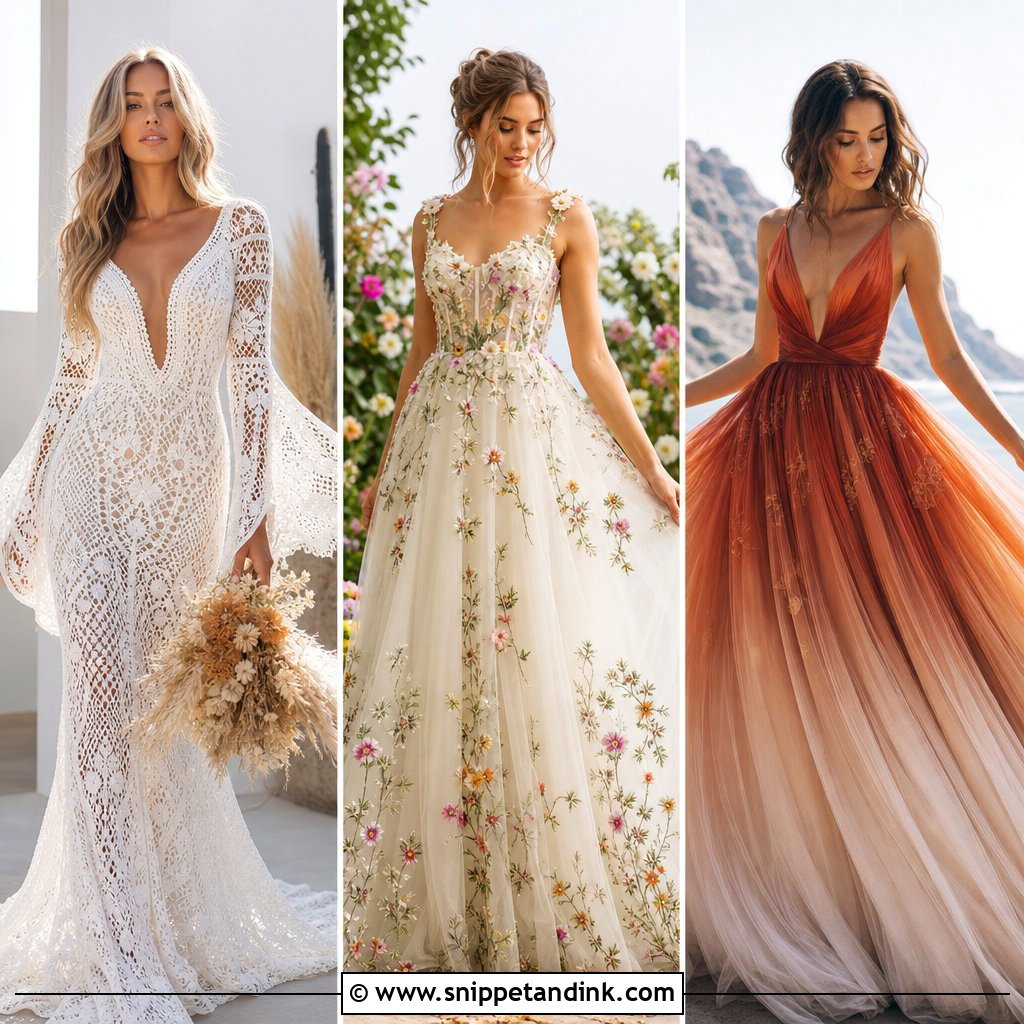
Colorful wildflower embroidery trailing down a tulle skirt does all the talking here, so I keep everything else quiet. Small blue, pink, yellow and lavender blossoms on a structured ivory bodice look like a meadow growing up the dress, and narrow straps with several airy tulle layers keep it light. Pearl studs, a thin gold bracelet and a shoulder-length veil are plenty. One warning I give every bride in colored embroidery: blot spills, never scrub them with water, because dyed thread can run into the tulle. Pale nude block heels and a loose bouquet in just one or two of the embroidery shades tie it together without looking matched.
4. Vine Embroidered Corset Wedding Dress
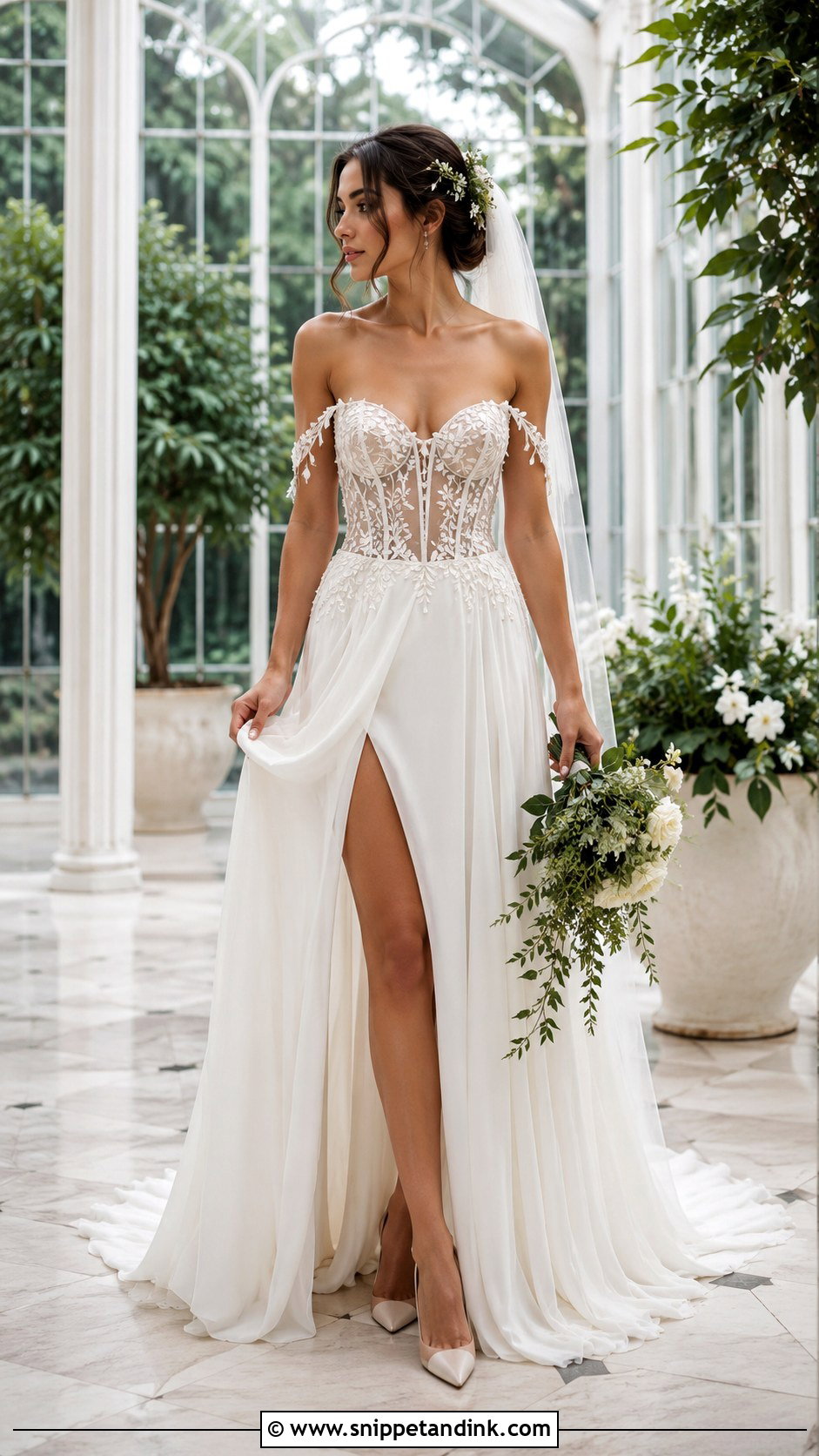
Boning is what makes this one wearable for a long day. A semi-sheer boned bodice with curling ivory vines, tiny leaves and scattered buds holds its shape through dinner, but only if it was fitted over the shoes and undergarments you’ll actually wear. Fitted over the wrong bra, it digs at the side seams by evening. A chiffon or tulle skirt softens all that structure. Detachable off-shoulder straps add romance for the ceremony and come off for dancing. A simple chapel veil, botanical hairpins, leaf-shaped earrings, pointed neutral heels and a small cascading bouquet that follows the vines are all it needs, under trees or inside a glass conservatory.
5. Botanical Lace Ball Gown Wedding Dress
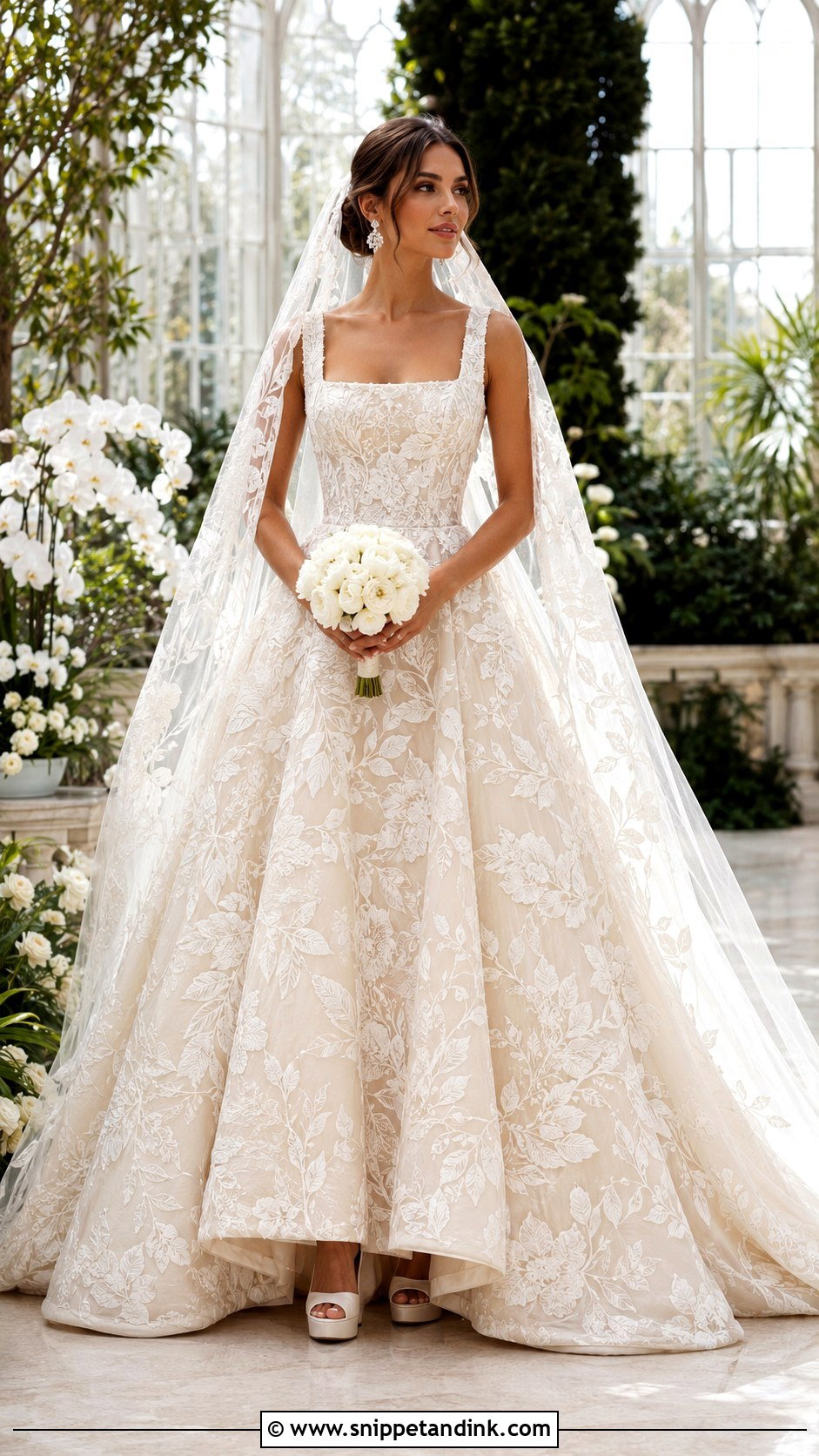
Oversized lace leaves on a full skirt are the grandest version of this theme, and the lining underneath matters more than most brides expect. Over champagne or nude, every motif stands out. Over pure white, the lace can vanish in bright sun. A strapless or square-neck bodice and a fitted waist balance the volume. If you want a cathedral veil, choose a clean cut edge so it doesn’t argue with the lace. Pearl or crystal earrings, a sleek bun and platform heels hidden under the skirt suit it. Skip the oversized bouquet: a compact arrangement of white flowers and greenery leaves one hand free to manage the skirt on estate steps.
6. Green Floral Embroidered Wedding Dress
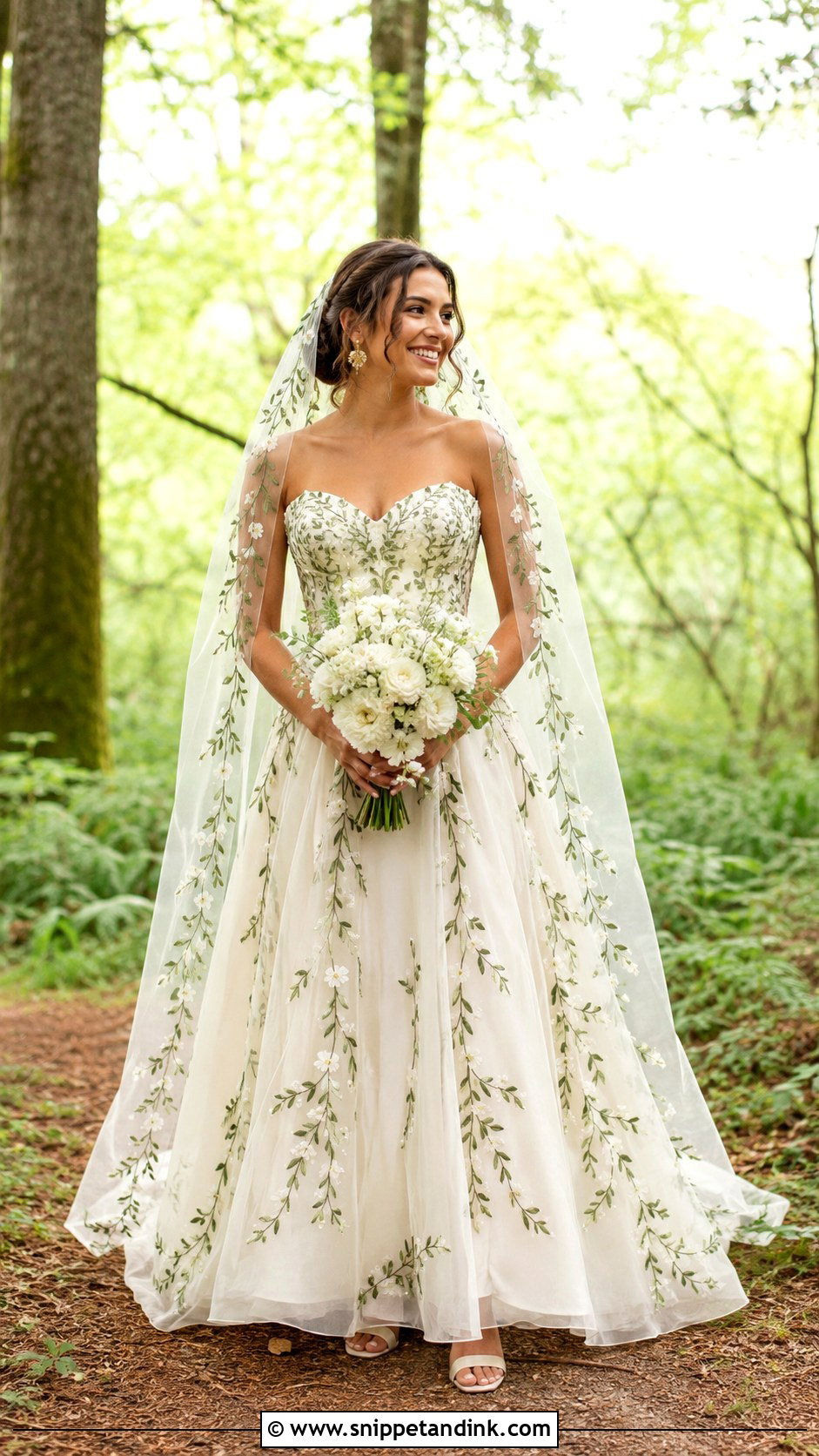
Sage or olive vines climbing from the hem are a welcome break from all-white, but green thread is the detail I ask brides to see in daylight before ordering. Under boutique lighting it can turn greyish; outdoors it usually reads truer. An ivory A-line base keeps the gown bridal, scattered white flowers soften the green, and a sweetheart neckline or fine straps keep the shape light. I like a veil with a few matching embroidered leaves at the edge, simple gold earrings, a textured low bun and cream block heels. Keep the bouquet mostly white with limited foliage, or it disappears against the skirt in woodland photos.
7. Floral Appliqué Mermaid Wedding Dress
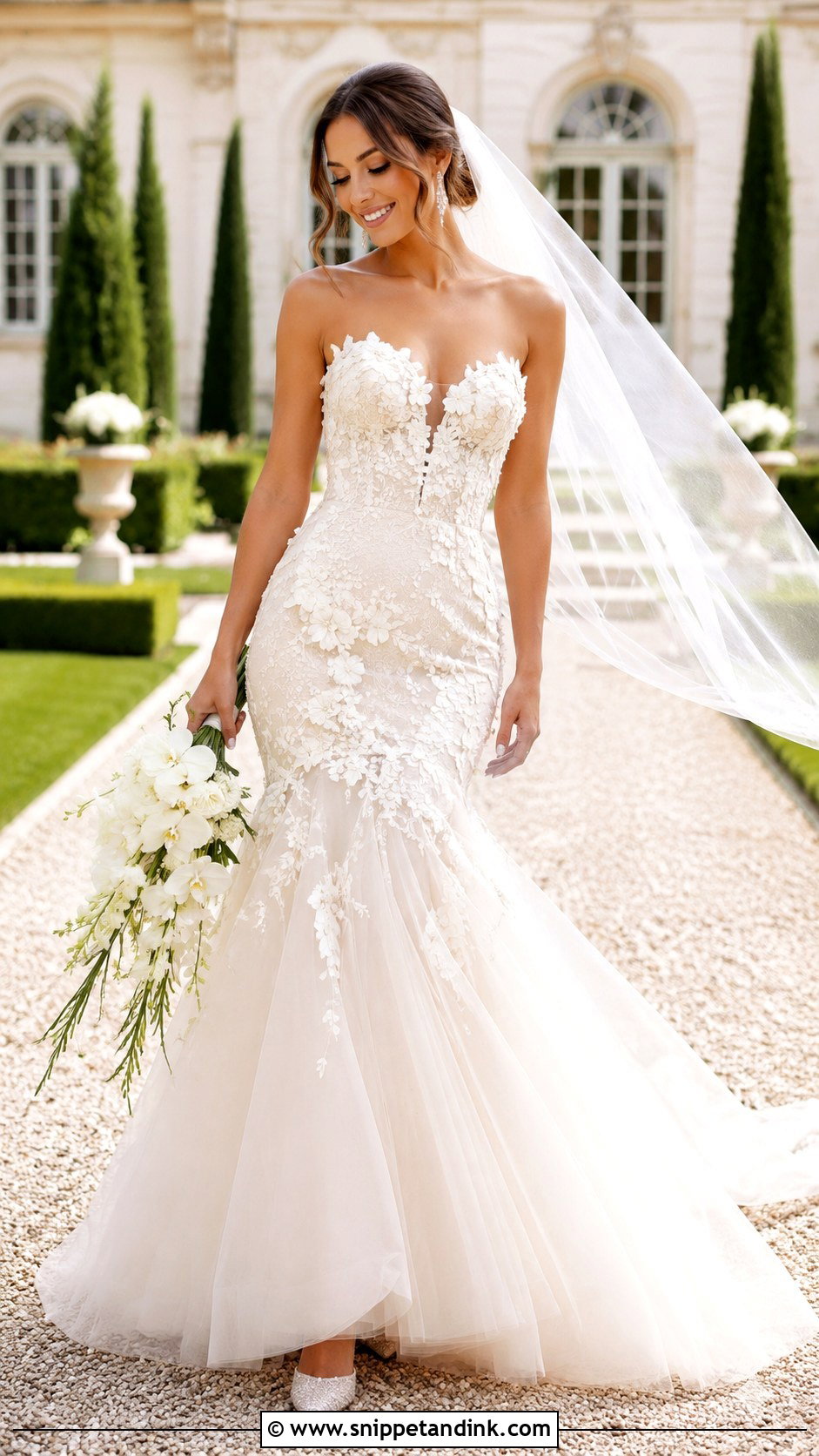
This is the one gown on the list I’d make you sit down in at the fitting. Appliqué concentrated at the bodice and hips is glamorous, but the flare has to start low enough to walk on a lawn and high enough to climb a step without hitching the skirt. Blossoms fading into a tulle flare keep the train airy instead of heavy. Sweetheart or off-shoulder necklines suit the sculpted shape. A neat chignon, small crystal earrings and a single-layer veil secured below the bun keep the styling tidy. Pointed heels lengthen the line; if any part of the day happens on grass, choose a stable heel. A narrow bouquet of long-stemmed flowers keeps everything long.
8. Off-Shoulder Garden Wedding Dress
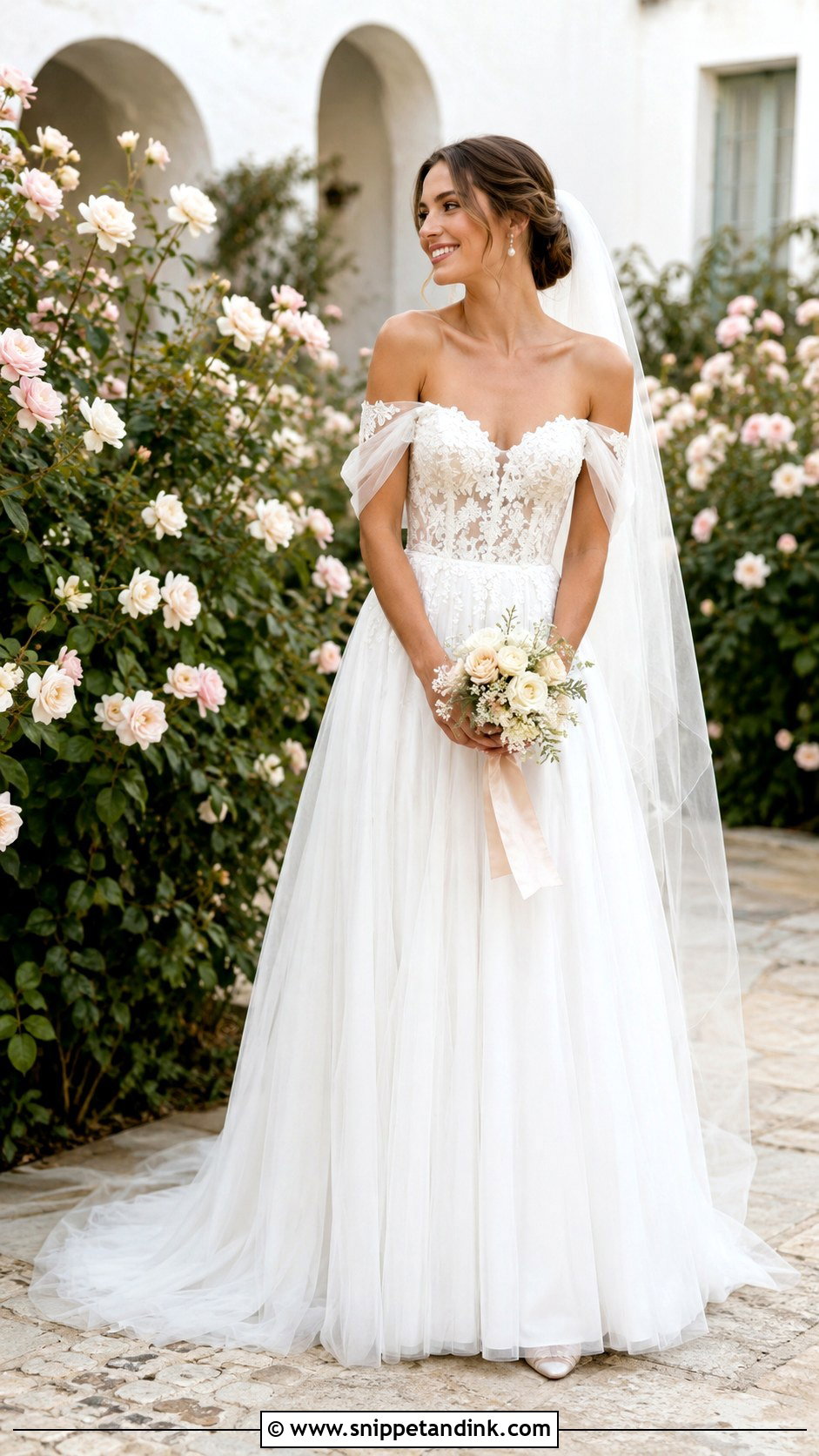
Off-shoulder tulle sleeves are relaxed and romantic, though they creep up if the bodice isn’t anchored. I ask brides to lift their arms as if hugging; if the sleeves slide off the upper arm, a silicone strip inside the neckline usually fixes it. Floral lace kept around the neckline on a plain A-line skirt puts the decoration in one place and lets the skirt move in a breeze. Loose waves or a half-up style with a few floral pins frame the face, and a plain chapel veil adds softness. Low ivory heels, pearl earrings and a small bouquet tied with trailing silk ribbon suit spring and summer ceremonies in rose gardens and bright courtyards.
9. Fern Lace Boho Wedding Dress
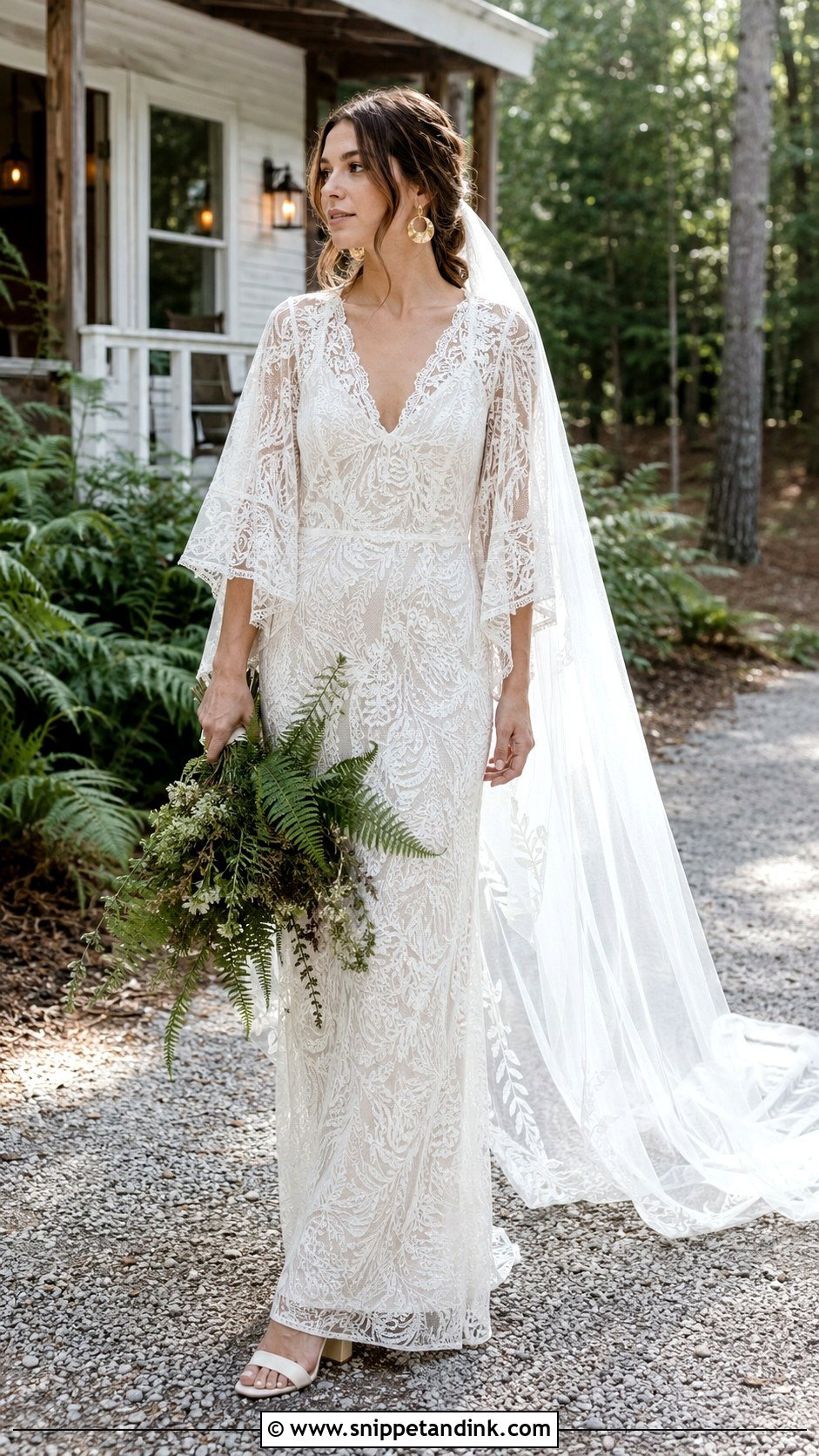
Fern-patterned lace is the quiet option for brides who like leaves more than flowers. Very open lace snags easily on bark and brambles, so for a woodland ceremony I steer toward a pattern on a tighter net base with a comfortable lining. A relaxed sheath or soft A-line with gently flared sleeves suits it, and a modest train is far easier on natural ground. Textured waves, a small greenery comb and hammered-gold earrings feel right. Skip the decorated veil for a plain one or a sheer cape. Leather-lined sandals or low block heels keep you steady, and a loose bouquet of ferns and trailing foliage echoes the lace.
10. Floral Cape Wedding Dress
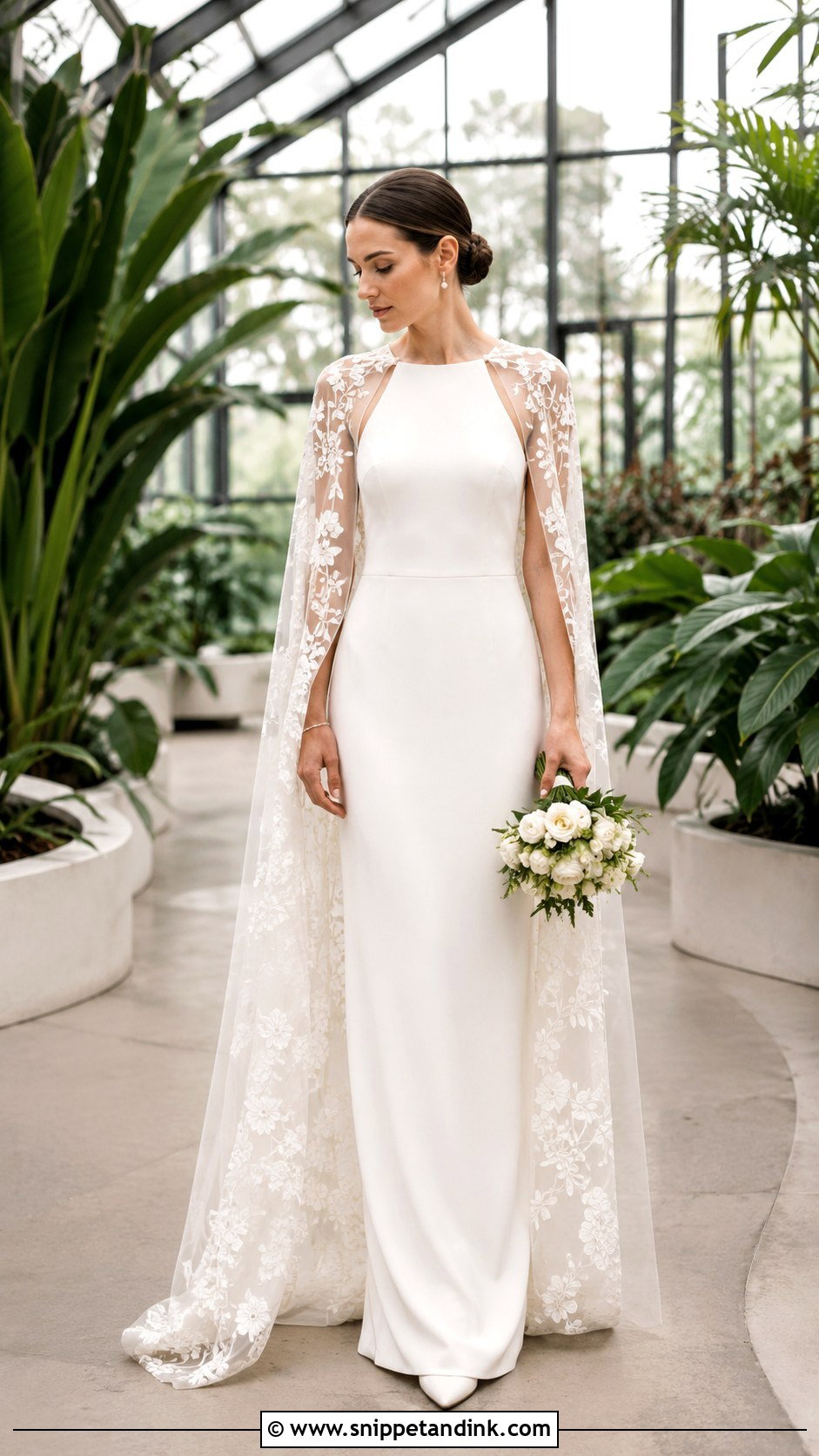
A clean crepe column with a floral tulle cape over it is the most flexible idea here, because you get two outfits from one dress. The cape carries the flowers, vines or falling petals and can stand in for a veil; take it off and the plain crepe becomes your reception look. Ask how the cape attaches. Hooks at the shoulder seams stay put, while a single clasp at the throat tends to drag backward by evening. Keep the rest streamlined: smooth low bun, small pearl earrings, a slender bracelet, pointed pumps or ankle-strap heels. Hold a compact bouquet low so the front embroidery shows. Museums, greenhouses and modern gardens all suit it.
11. Butterfly Appliqué Wedding Dress
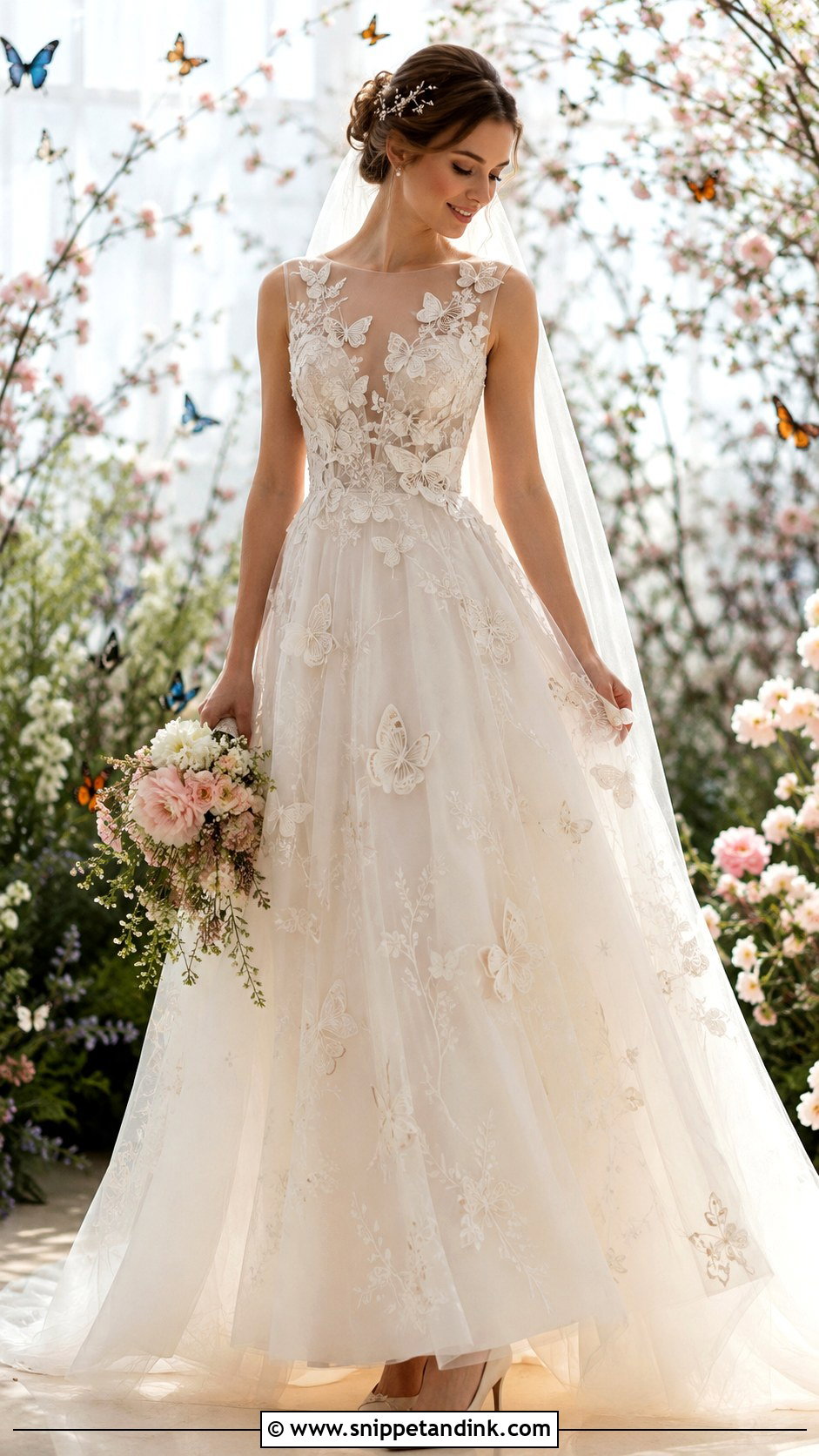
Butterflies slide into costume quickly, so I look for small, tonal ones tucked among embroidered flowers rather than large colored wings. On an illusion bodice and a flowing tulle skirt, dimensional wings lift slightly as you walk, which is the whole charm. Ivory keeps it subtle; hints of pale blue and blush make it more whimsical. Raised wings are fragile, though. They crush under a seatbelt or in a tight garment bag, so travel with the dress laid flat. A loose updo with tiny crystal pins, stud earrings, a plain veil, low satin heels and a light bouquet of seasonal blooms finish it for a spring garden or butterfly conservatory.
12. Meadow Print Wedding Dress
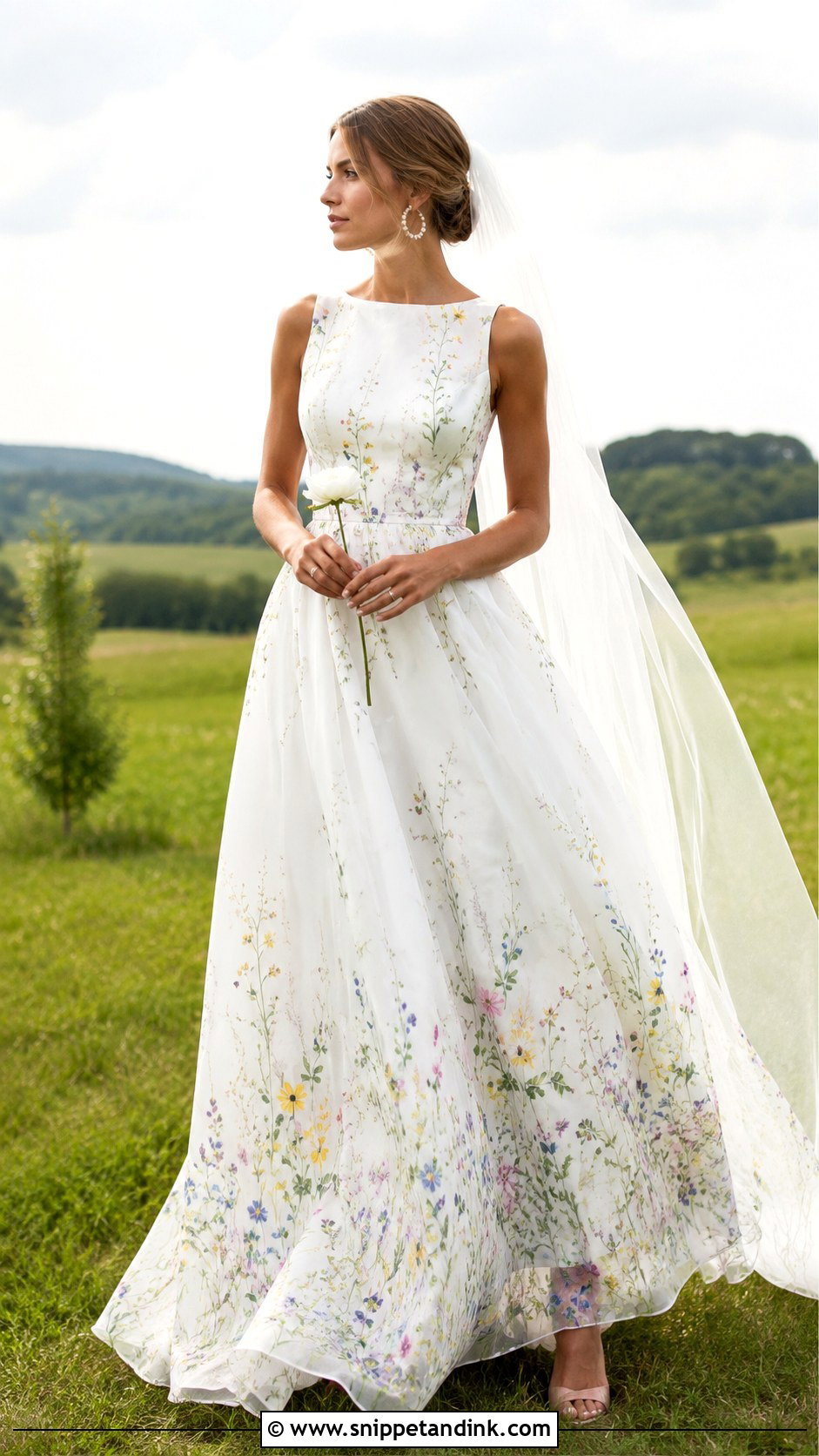
Print gives you color without the weight or the cost of embroidery. Watercolor grasses and tiny flowers on flowing organza need a fitted sleeveless bodice to look polished and a full skirt so the artwork has room. Printed organza shows creases more than lace does, so plan a steam on the morning and avoid sitting on the skirt in the car. Small pearl hoops, smooth hair and a plain ivory veil are enough, and soft green, blush or nude heels can pick up one shade from the print. A single flower variety in the bouquet reads cleaner than a mix against fabric that’s already busy, which is what meadow and countryside weddings want.
13. Floral Sleeve Wedding Dress
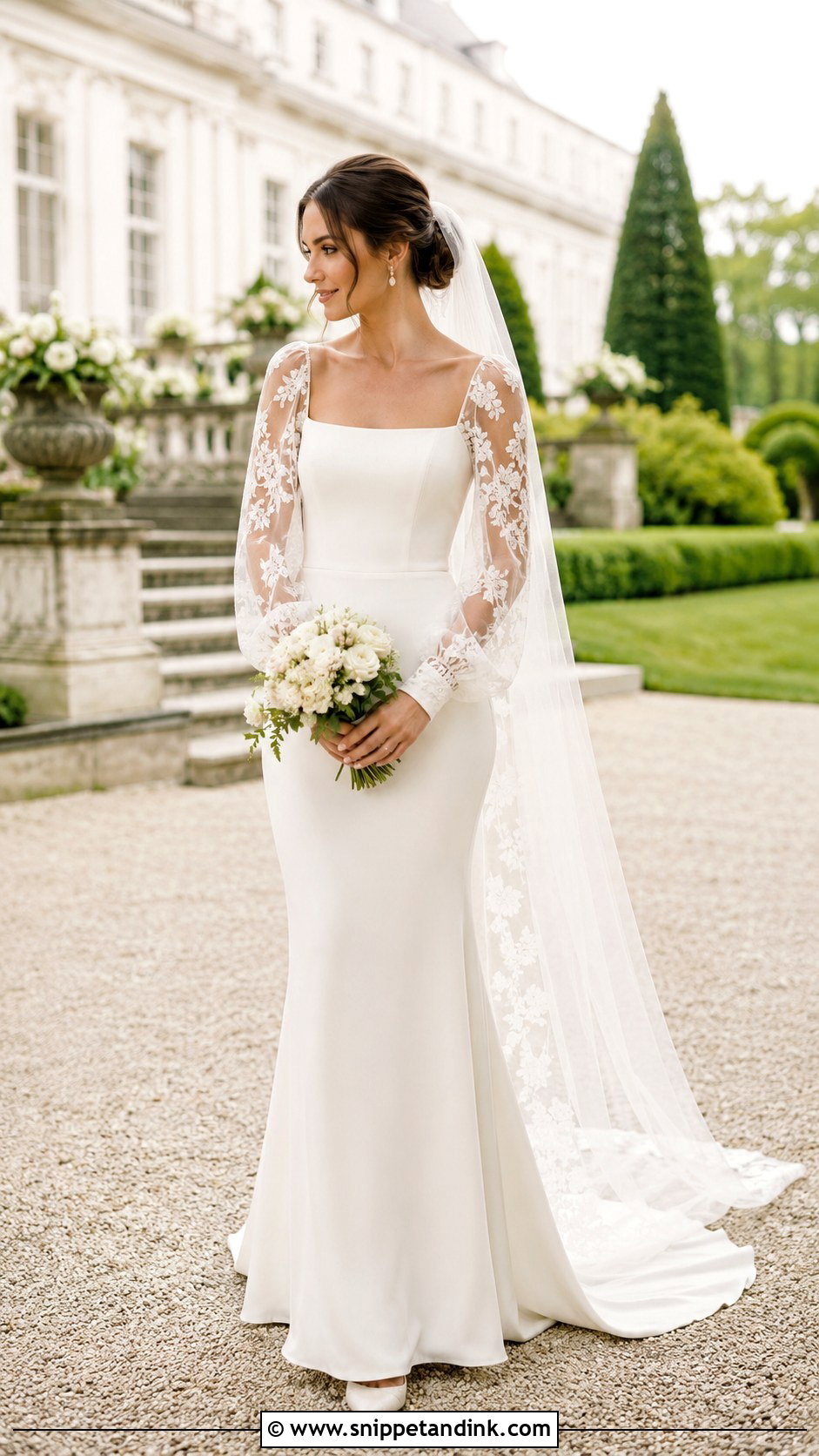
Sheer bishop sleeves covered in lace blossoms put the detail near your face, so the skirt can stay simple. The narrow cuff is doing real work: without it the volume collapses and the sleeve looks shapeless in side-on photos. A fitted crepe gown with a square or V-neckline and a gently flared skirt balances it. Hair goes in a low ponytail or polished bun so nothing covers the sleeves. Add small earrings, a plain chapel veil and classic ivory pumps. With this much floral at arm level, I’d keep the bouquet compact with little foliage. It’s a smart answer for garden estates, modern barns and cooler ceremonies where you want some arm coverage.
14. Floral Jacquard Wedding Dress
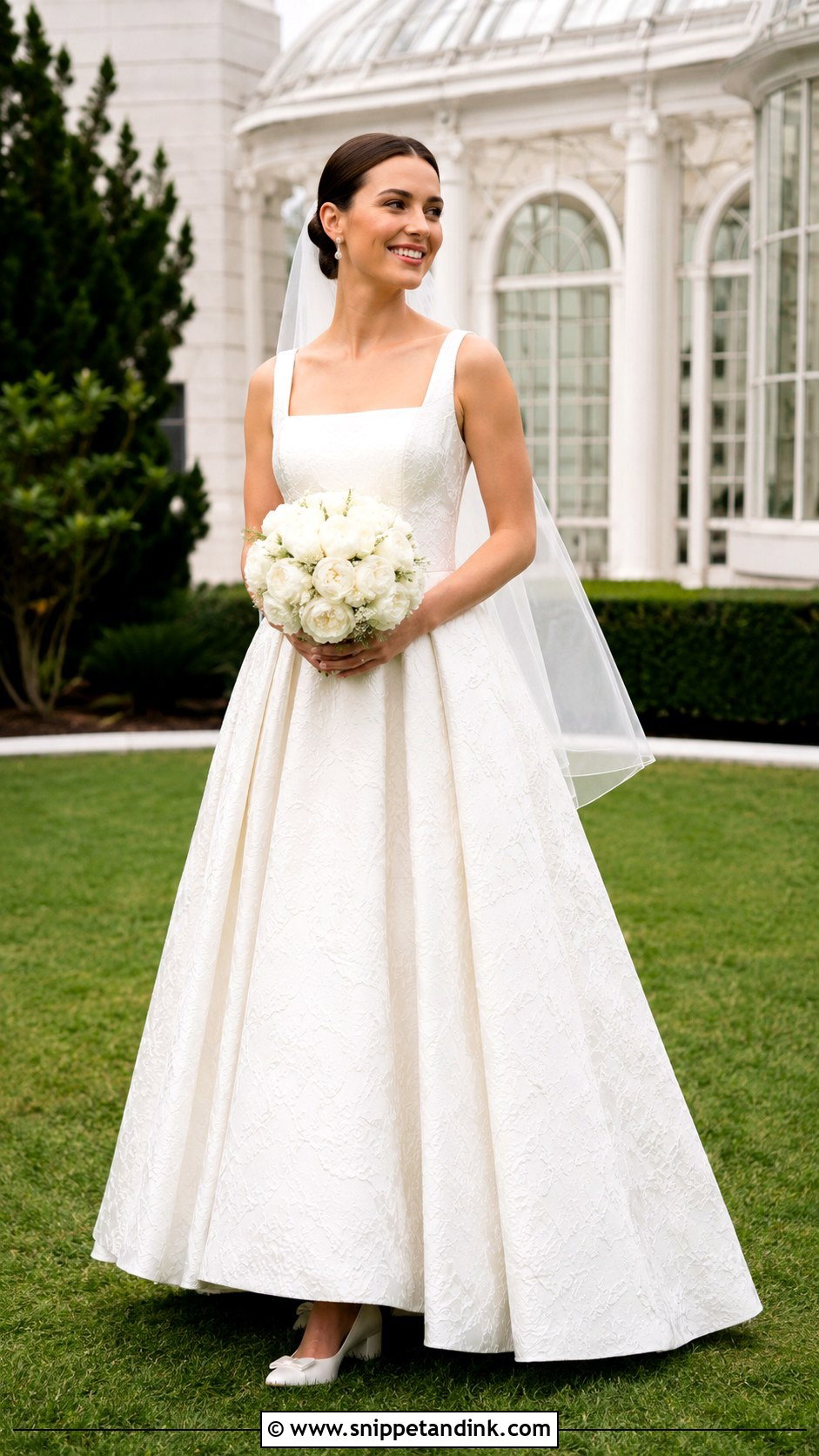
Jacquard is woven rather than stitched on, so the flowers are part of the cloth and the fabric holds a crisp shape that lace can’t. That structure suits a square-neck or strapless bodice over a pleated skirt with hidden pockets. Ivory-on-ivory is classic; a pale champagne base shows the pattern more clearly in photos. The trade-off is weight and warmth, and a full jacquard skirt in midsummer sun is hard work. A sleek bun, sculptural pearl earrings, a plain fingertip veil and satin block heels suit it, with a compact bouquet of rounded flowers for a formal botanical garden or an estate lawn.
15. Branch Embroidered Sheath Wedding Dress
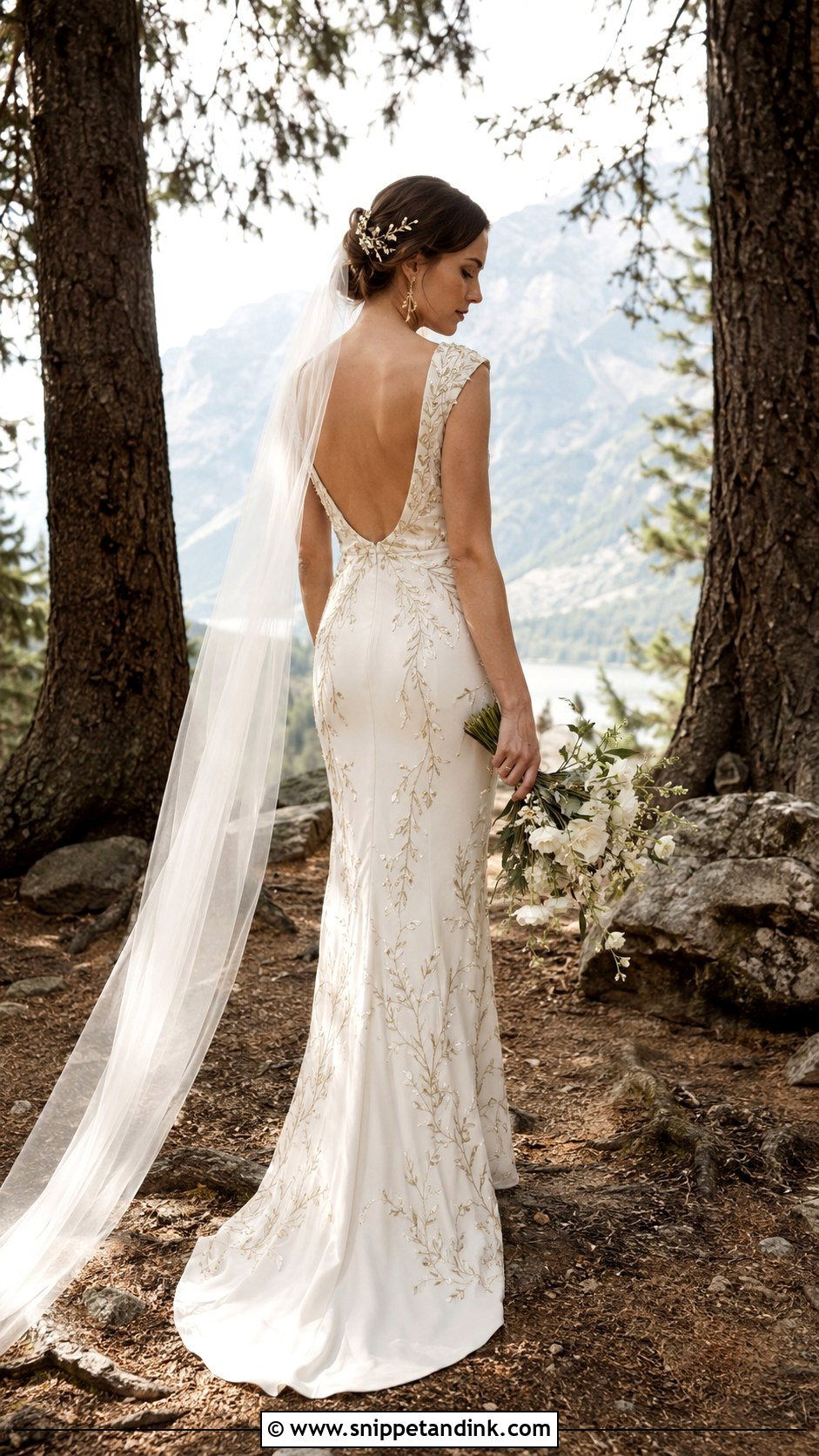
Branches running diagonally across a sheath give a narrow silhouette movement it wouldn’t otherwise have. Fine silver, ivory or pale gold thread all work, but metallic thread can scratch the inner arm on a sleeveless style, so I check where the branches cross the side seams. Lightweight crepe or lined tulle follows the body without stiffness, and a bateau neckline or narrow V-neck with a low back keeps it refined. Branch-shaped hairpins, small metallic earrings and a sheer veil suit the theme. Closed-toe heels keep your feet warm on cool days, and a slender bouquet of white flowers and twigs fits forest lodges and mountain venues.
16. Water Lily Organza Wedding Dress
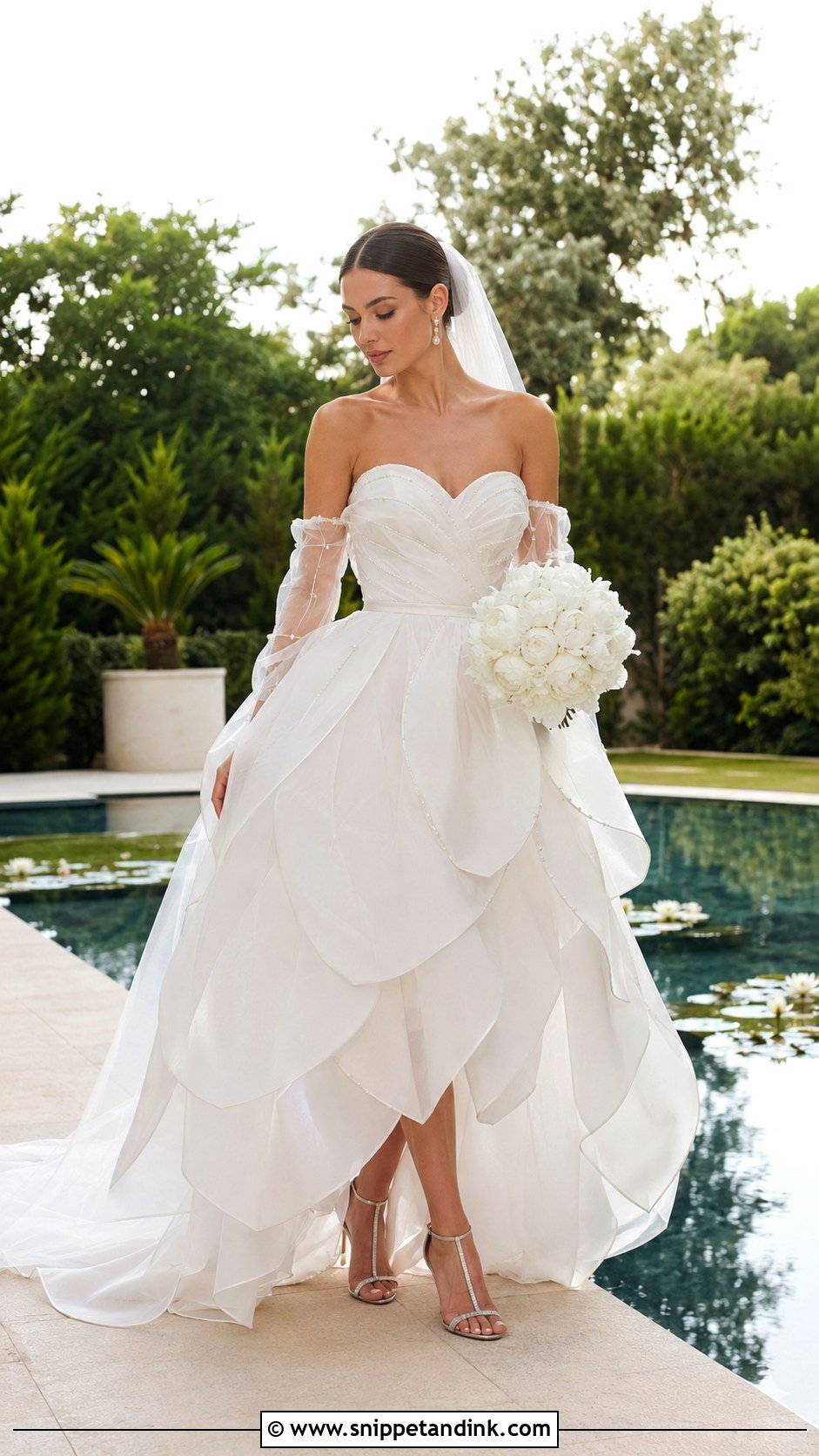
Overlapping organza petals give a skirt that floating, lily-like look, and organza is the right fabric because it holds a curved edge. Subtle pearl beading reads like water drops. A strapless neckline keeps the sculpted panels in focus, with detachable sheer sleeves if you want coverage. My worry with this one is wind. Layered petals lift and flip beside a lake, so I ask the seamstress about small weights tacked into the outer hems. Pearl earrings, a smooth bun, a light tulle veil and silver or ivory heels suit the cool finish, and a rounded bouquet of white flowers with almost no greenery fits a reflecting-pool garden.
17. Daisy Lace Tea-Length Wedding Dress
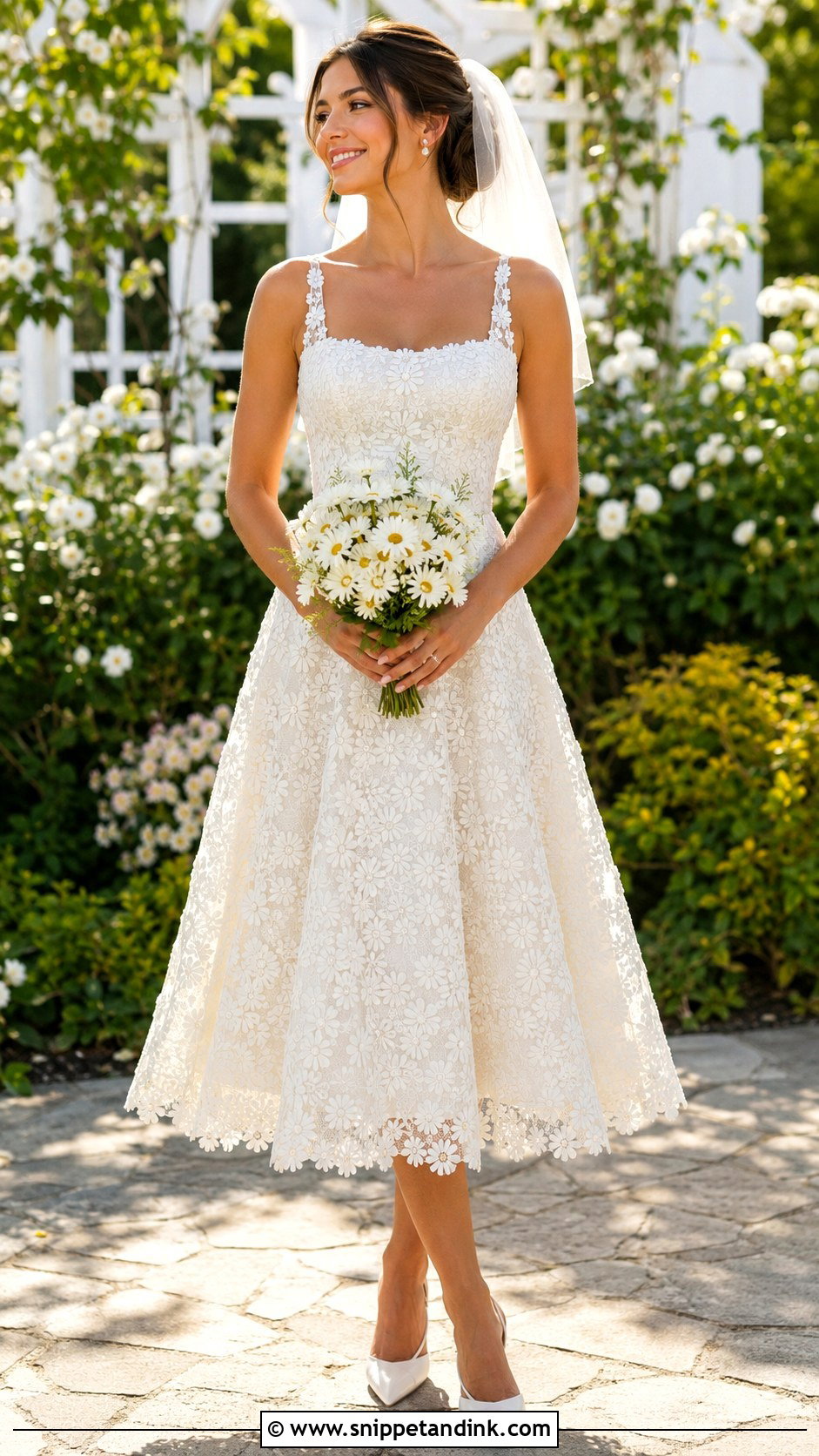
Tea length is the practical choice here: the hem stays clear of grass and gravel, and your shoes become part of the outfit. Small daisy motifs over a pale nude lining show up far better than over ivory. A fitted bodice, defined waist and softly flared skirt keep it polished. Because the shoes are on display, have the hem set while wearing the exact pair, pointed slingbacks for instance, since a centimeter either way changes the proportion. Pearl studs and a short veil or floral comb are enough, with a tidy bouquet of daisies and white blooms. Backyards, courthouse ceremonies followed by an outdoor lunch and small daytime weddings suit it.
18. Woodland Wedding Dress With Cape
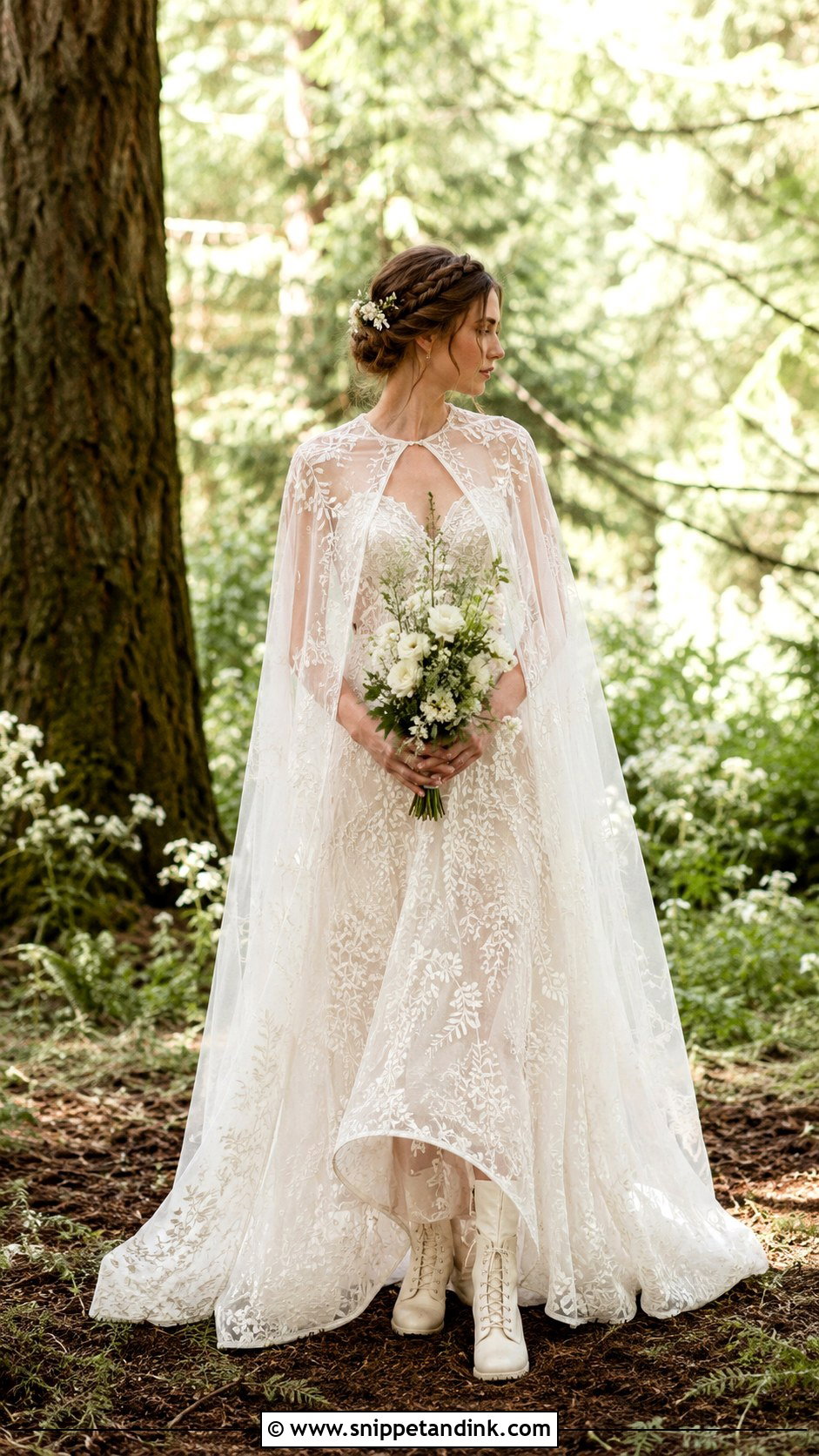
A sheer cape over a leaf-lace A-line feels dramatic while staying grounded in its setting. Keep the train manageable, because on leaves and moss a long one collects debris within minutes. The cape can carry ferns, branches or forest flowers, and a clasp at the neckline lets it flow behind you. A braided low bun with small botanical pins sits nicely against the cape’s collar. Honestly, sturdy ivory boots beat heels on uneven ground, and nobody sees them under the skirt. Carry a narrow bouquet of white blooms and textured greenery. Remove the cape for the reception and you’re left in a comfortable gown for the dancing at a forest clearing or mountain lodge.
19. Pearl Beaded Ocean Wedding Dress
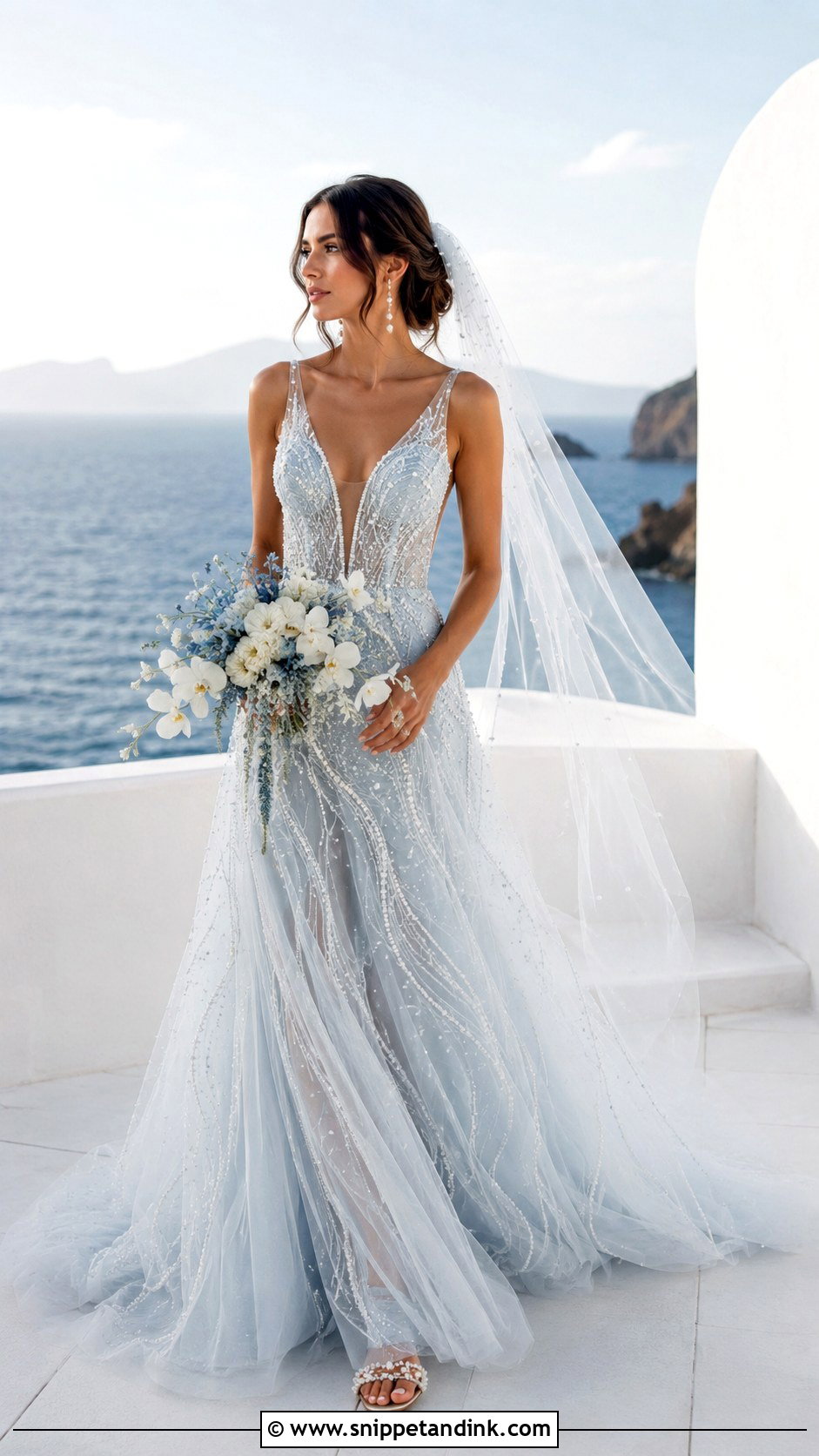
Nature doesn’t stop at the garden gate. A pearl-beaded gown takes the ocean as its idea through light and texture instead of shells and anchors. Scattered pearls on flowing chiffon or tulle, wave-like draping and a softly fitted bodice look calm, and a pale blue-gray lining adds depth. On a beach, sand and salt air both cling to chiffon, so brush the hem off with a hand rather than rubbing it, which protects the beading. Pearl drop earrings, a loose bun and a sheer veil that moves in the breeze suit it. Wear flat embellished sandals on sand or block heels on a terrace, and carry white flowers with soft blue accents.

20. Sunset Ombre Wedding Dress
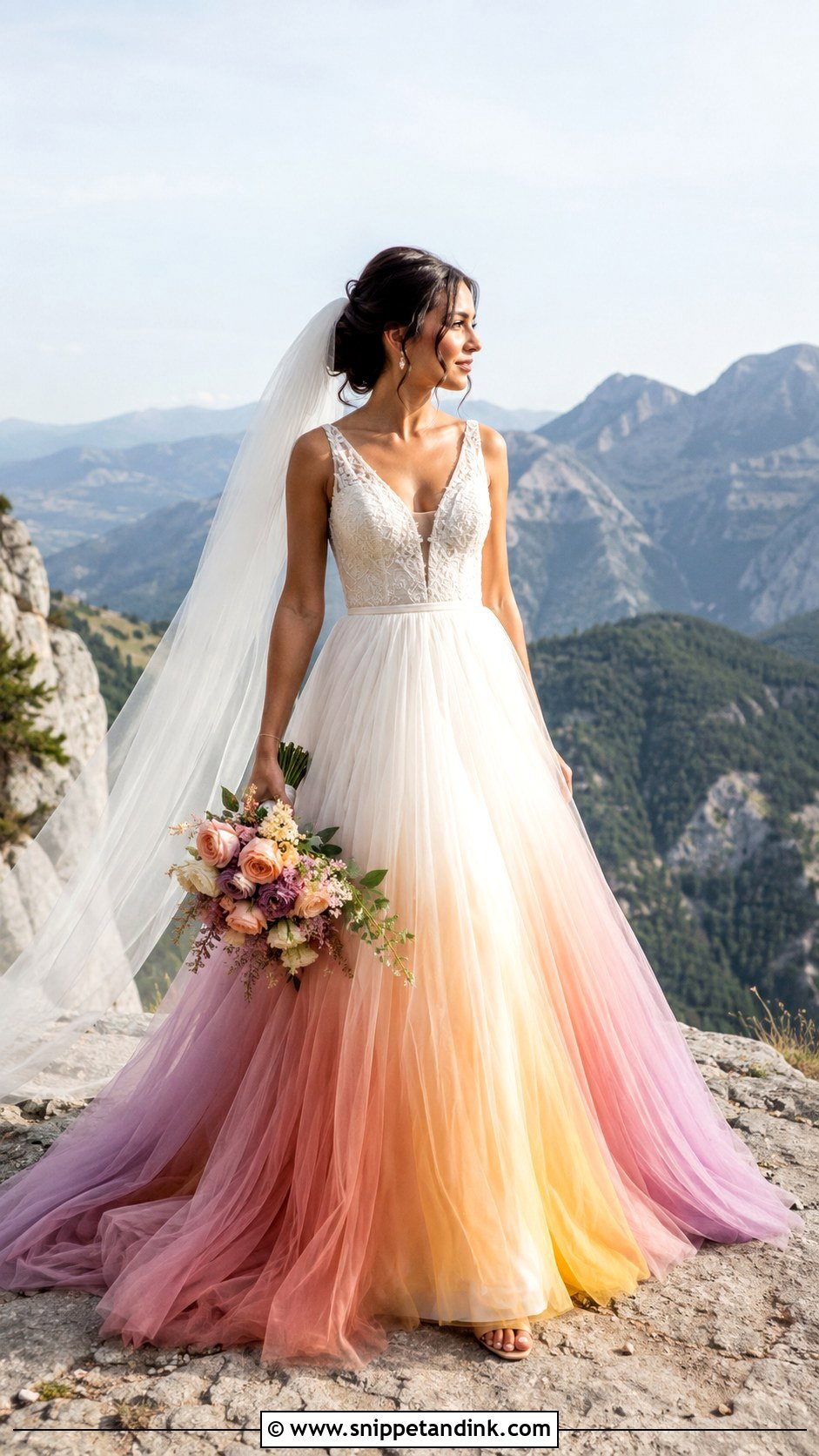
A sunset ombre wedding dress moves from ivory at the bodice to blush, peach, lavender or soft gold at the hem. Tulle and organza carry a gradual fade best because light passes through several layers at once. Ombre is dyed, and dye runs vary, so I always ask to see a swatch from the actual run rather than trusting the sample gown. Keep the shape simple with narrow straps, a defined waist and an airy A-line. Minimal jewelry, a plain veil and neutral heels let the color lead. A bouquet in one or two of the skirt’s shades connects it, ideally for golden-hour portraits in open country.
Pollen, Damp Hems and a Loose Petal on the Day
Outdoor gowns meet nature in less flattering ways too. Lily pollen is the classic culprit: it stains ivory fabric orange, and rubbing pushes it deeper. Ask your florist to remove stamens from any lilies near the bouquet, and if pollen does land, lift it off with a piece of tape or a dry soft brush rather than a damp cloth.
Dew soaks a hem fast in a morning ceremony, and wet tulle picks up every blade of grass. Bustle the train before the reception moves across the lawn, not after. For appliqué gowns, I pack a needle already threaded with ivory thread and a few small safety pins, because a loose petal can be tacked back on in two minutes if someone catches it early.
Cleaning and storing it afterward
Have the dress cleaned within a few weeks. Champagne and sugary drinks dry invisibly, then turn brown as they oxidize over months, and that marks botanical lace as badly as plain satin. A gown with heavy beading or dense 3D flowers is better stored flat in an acid-free box than hanging, since the weight slowly stretches the shoulders. Pad the dimensional petals with acid-free tissue so they don’t crush, and keep the box somewhere dry and away from plastic, which traps moisture.
One Botanical Detail Can Carry the Whole Dress
Appliqué, leaf lace, embroidery, capes, pearls and dyed color all point outdoors, but none of them need to appear at once. Before you fall for a train or a sleeve, think about the ground, the weather and how formal the day is, because those three decide more than the motif does. Let accessories sit back from the texture of the gown. A plain dress with one botanical feature done well often looks more considered than one covered from neckline to hem. Pick the version you can walk, sit and dance in, and by the second hour you’ll forget you’re wearing it.
You'll Like These Ideas:


Leave a Reply