
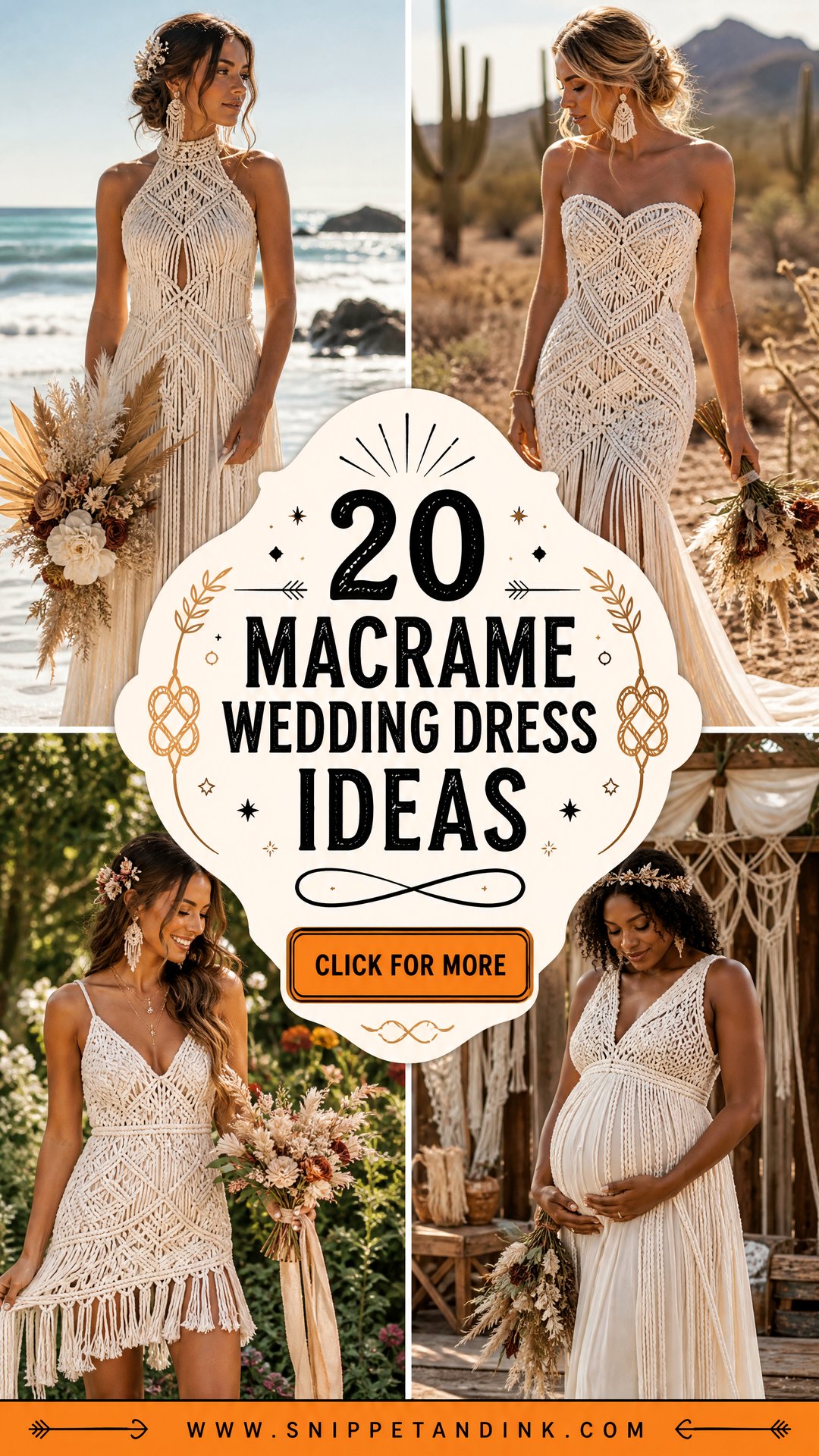
Macrame is cord knotted by hand into a pattern, and as a wedding dress it has a texture nothing else quite matches: open, slightly raised, and visibly made by someone. The same knotwork can look boho, modern, vintage or beachy depending on the shape and what you wear with it, and it sits naturally alongside the openwork, crochet effects, fringe and artisan finishes that keep turning up in bridal collections. Because the dress is so detailed, I keep the rest simple: plain jewelry, natural makeup, shoes for the ground you’ll stand on. Below are twenty outfits, from flowing gowns to minis, with the lining, support and movement checks I’d do on each.
Cotton Cord Behaves Differently From Lace
Most macrame dresses are knotted from cotton or a cotton blend cord, and it handles nothing like woven fabric. It’s heavier than it looks, it stretches slowly under its own weight, and its open structure snags on anything with an edge. Knowing that before you buy saves trouble at the fittings.
- Never leave a macrame dress hanging for weeks. Store it folded flat in tissue, or the bodice and skirt lengthen.
- Have the final fitting done after the dress has been worn for an hour, once the cord has relaxed.
- Keep hook-and-loop fasteners, prong-set rings and rough bag clasps away from it.
- Ask how length is adjusted before you buy, as knotted hems can’t simply be cut.
Color is the other surprise. Natural cotton cord is usually a warm cream rather than white, and it can look slightly yellow beside a bright white veil. Hold your veil fabric against the dress, or a sample of it, in daylight before ordering, and match the veil to the cord rather than the other way round.
1. Long Sleeve Macrame Wedding Dress
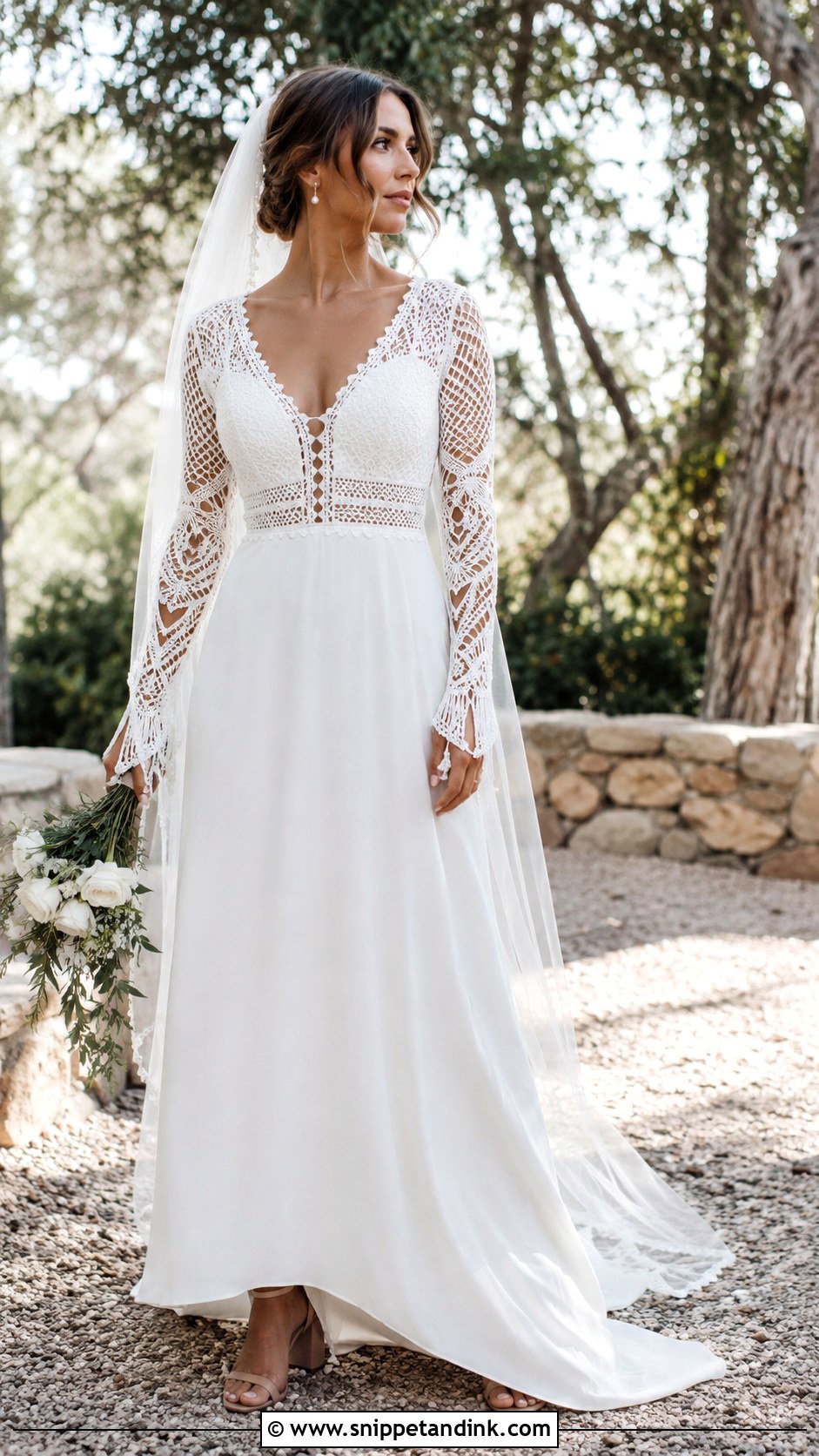
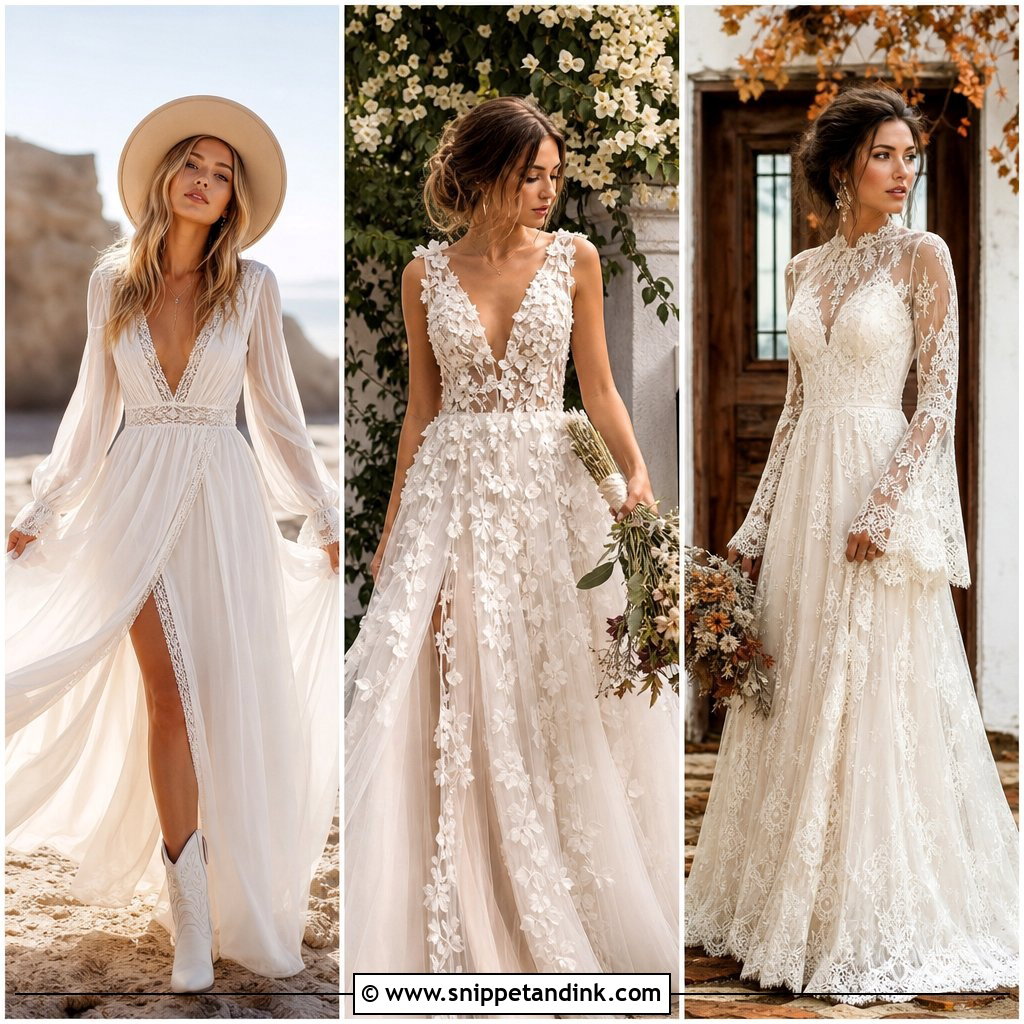
Openwork sleeves give you coverage while staying light, which is why I like long sleeves in macrame more than in heavy lace. The lining is what makes or breaks this one: a smooth ivory lining behind the bodice keeps the pattern readable, while the sleeves are usually left unlined, so check that the knots don’t scratch the inside of your elbow when you bend. A fitted bodice over a flowing A-line suits gardens, woodland and rustic venues. Pearl drops, a low twisted bun and a plain-edged fingertip veil keep it romantic. Nude block-heel sandals, a removable cream wrap and a loose bouquet of white flowers and greenery finish it.
2. Backless Macrame Wedding Dress
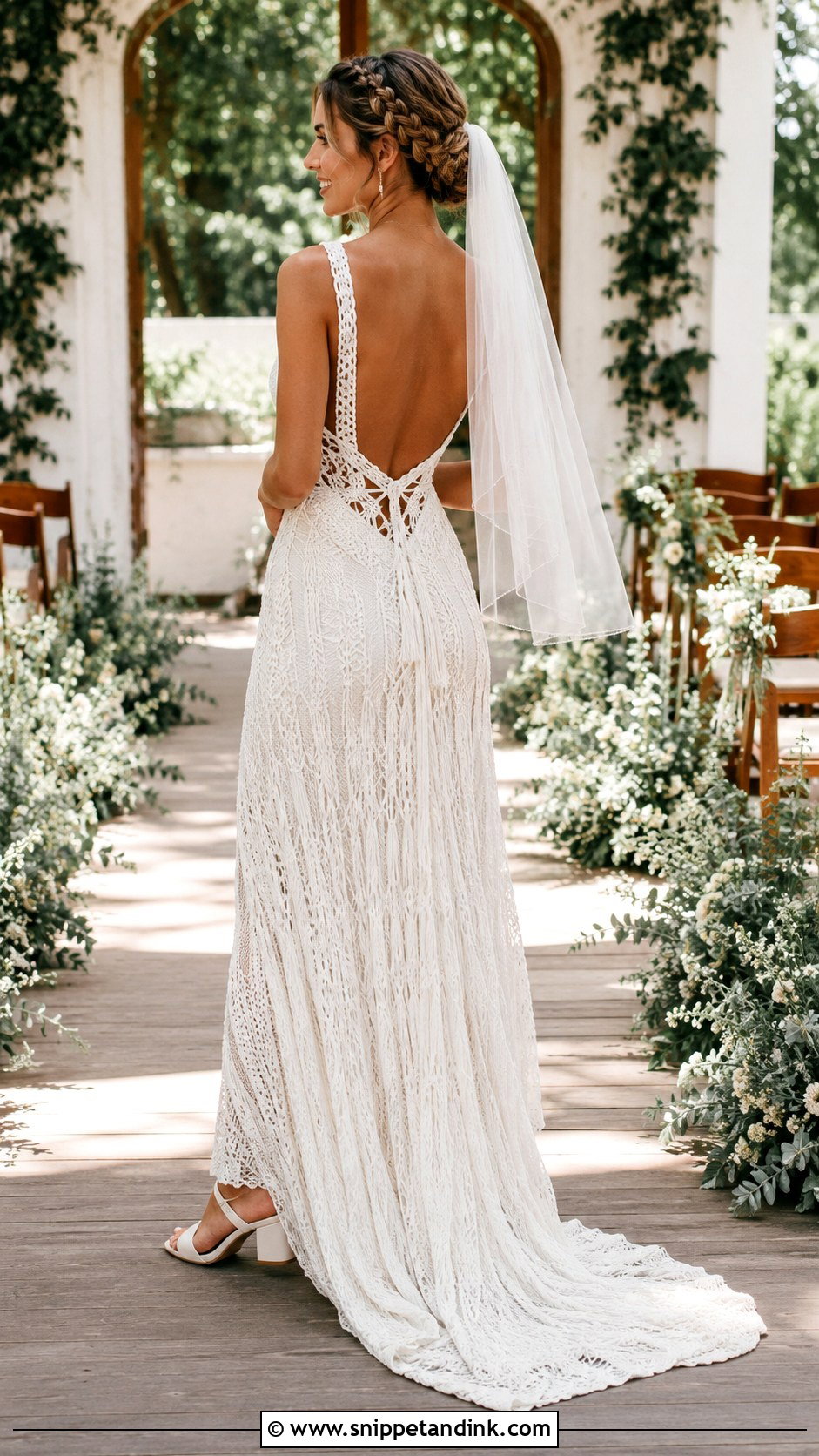
Knotwork framing an open back is the shot everyone remembers from the aisle. The catch is support: with no back, the front has to hold everything, so look for wide straps and a supportive front panel, and ask about built-in cups or a fine mesh insert before you rely on tape. Wear hair up, braided or in a sleek bun, so the back stays in view. Threader earrings, a fine bracelet and ivory low heels are plenty, with no heavy necklace. A chapel veil attached below the hair adds movement without covering the back. A flowing skirt and short train soften the deep cut.
3. Beach Macrame Wedding Dress
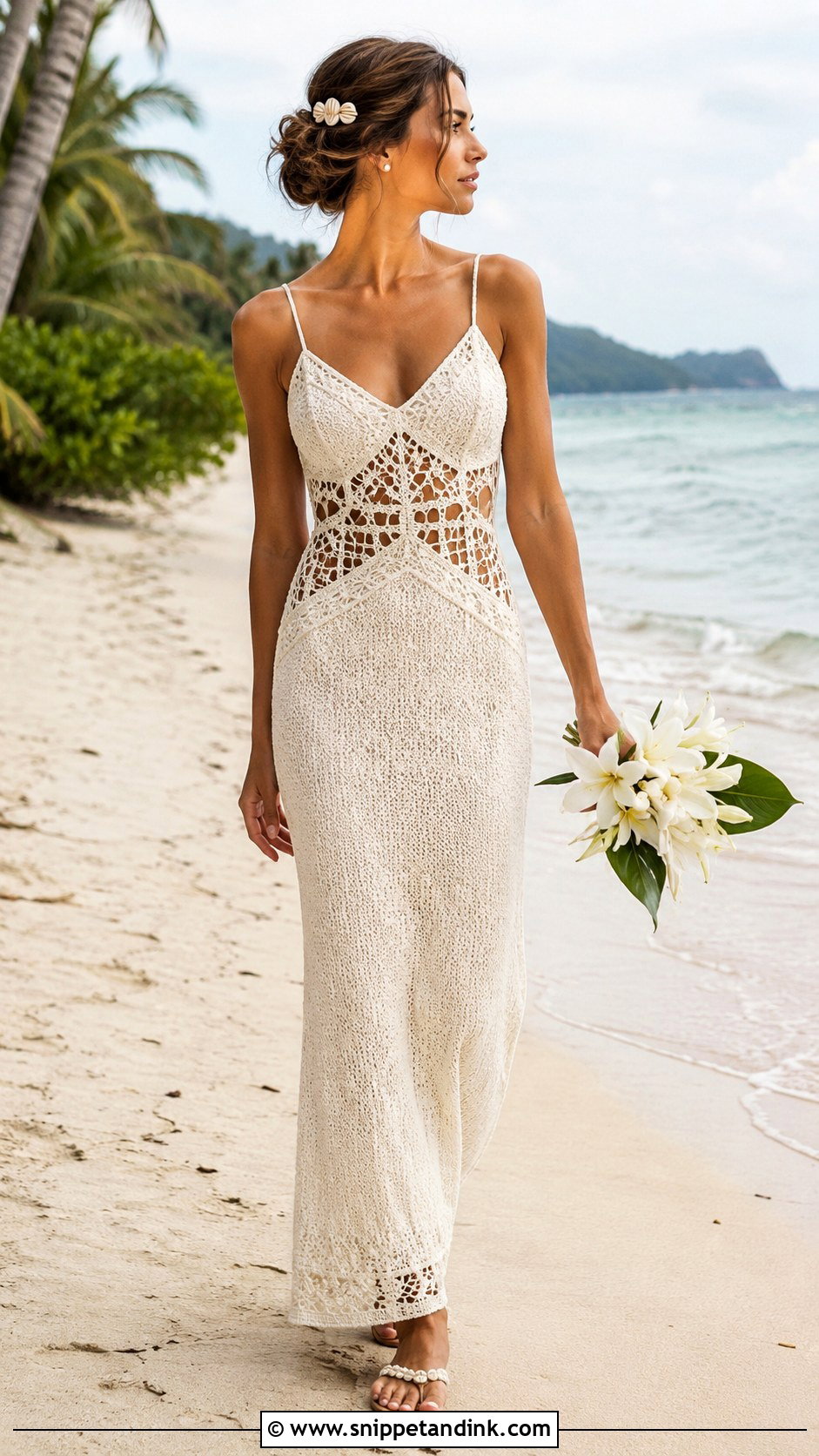
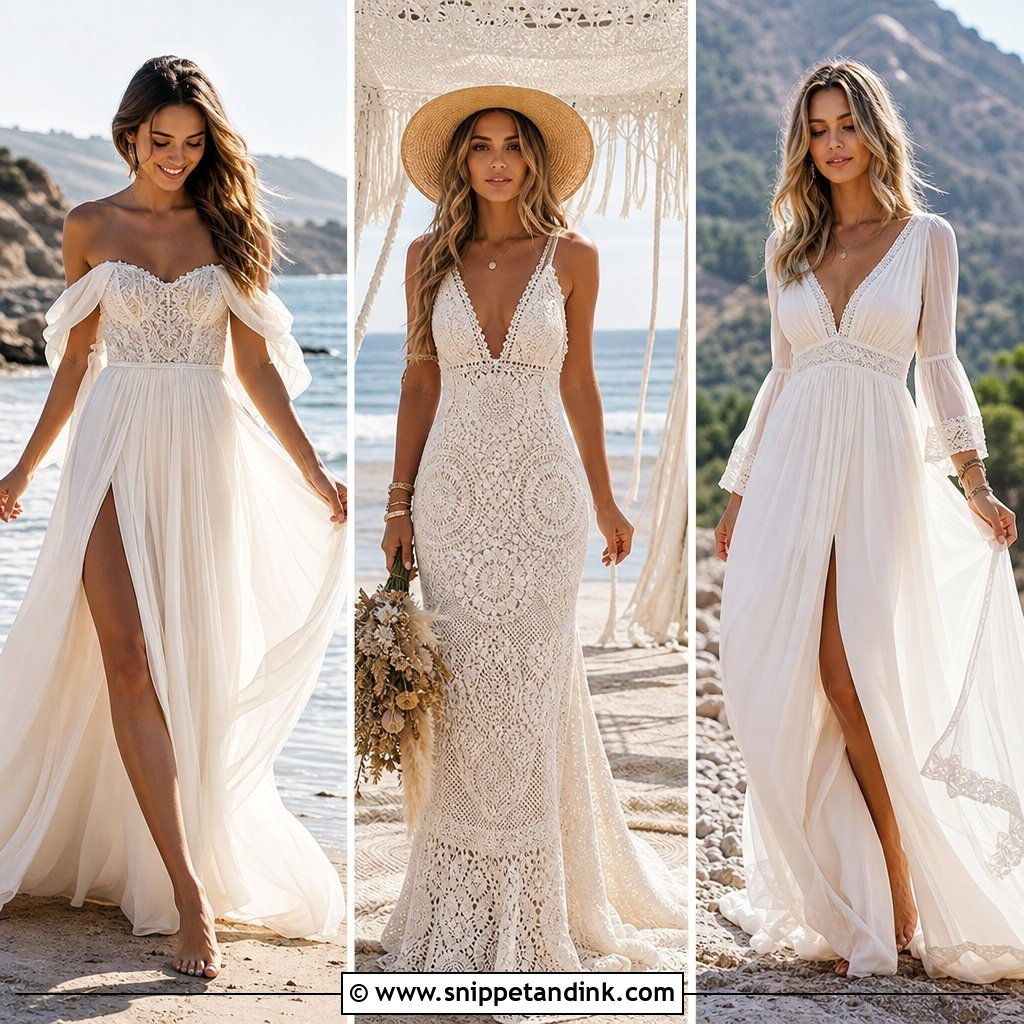
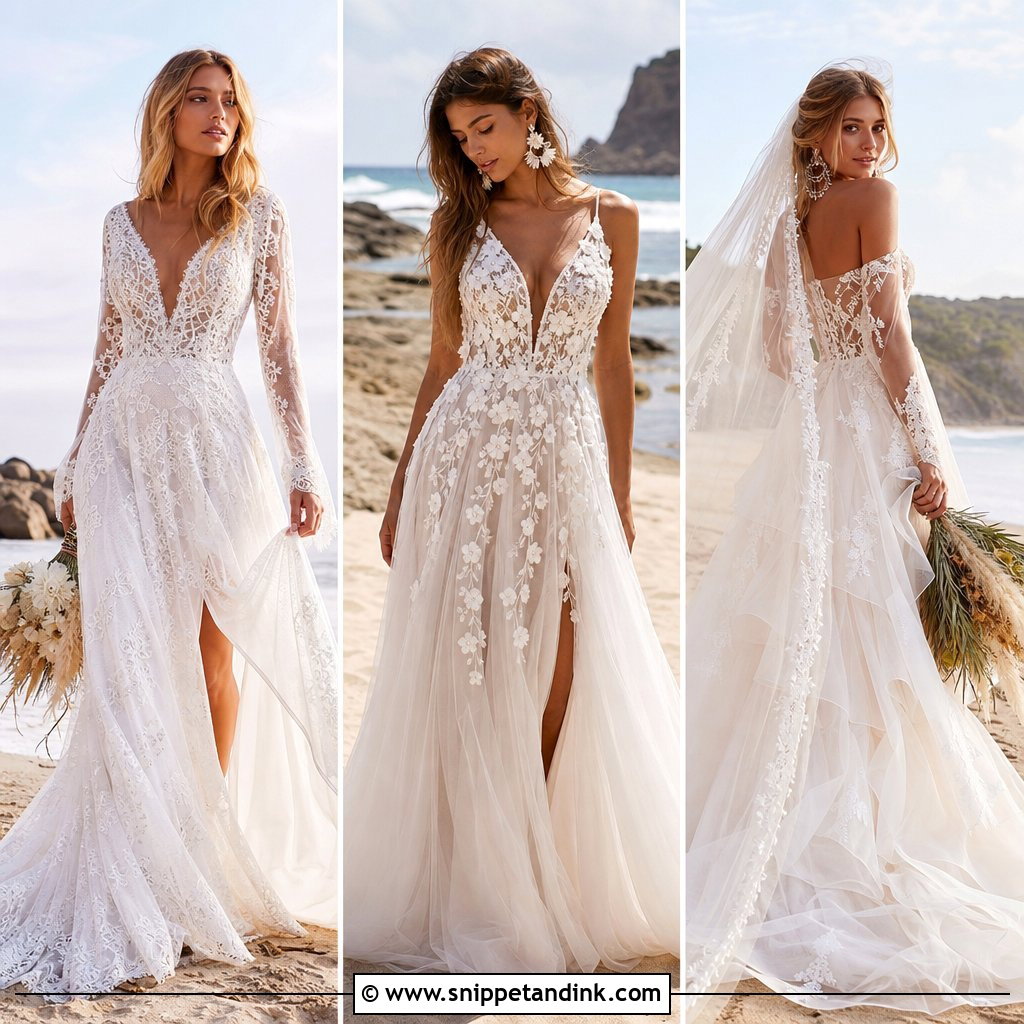
Beach weddings are where macrame makes the most sense: it breathes, it doesn’t show sand the way satin does, and a lightweight beach macrame wedding dress moves well in wind. Choose a column or loose A-line with a comfortable lining and a hem that clears the sand, because wet cord at the hem gets heavy and drags. Openwork at the waist or shoulders adds shape and keeps it airy. Flat embellished sandals or bare feet with simple foot jewelry, where allowed, suit it. Pearl studs, a shell-style hairpin and a small bunch of white tropical flowers finish it. Loose waves look lovely, but half-up stays neater in a sea breeze.
4. Fringe Macrame Wedding Dress
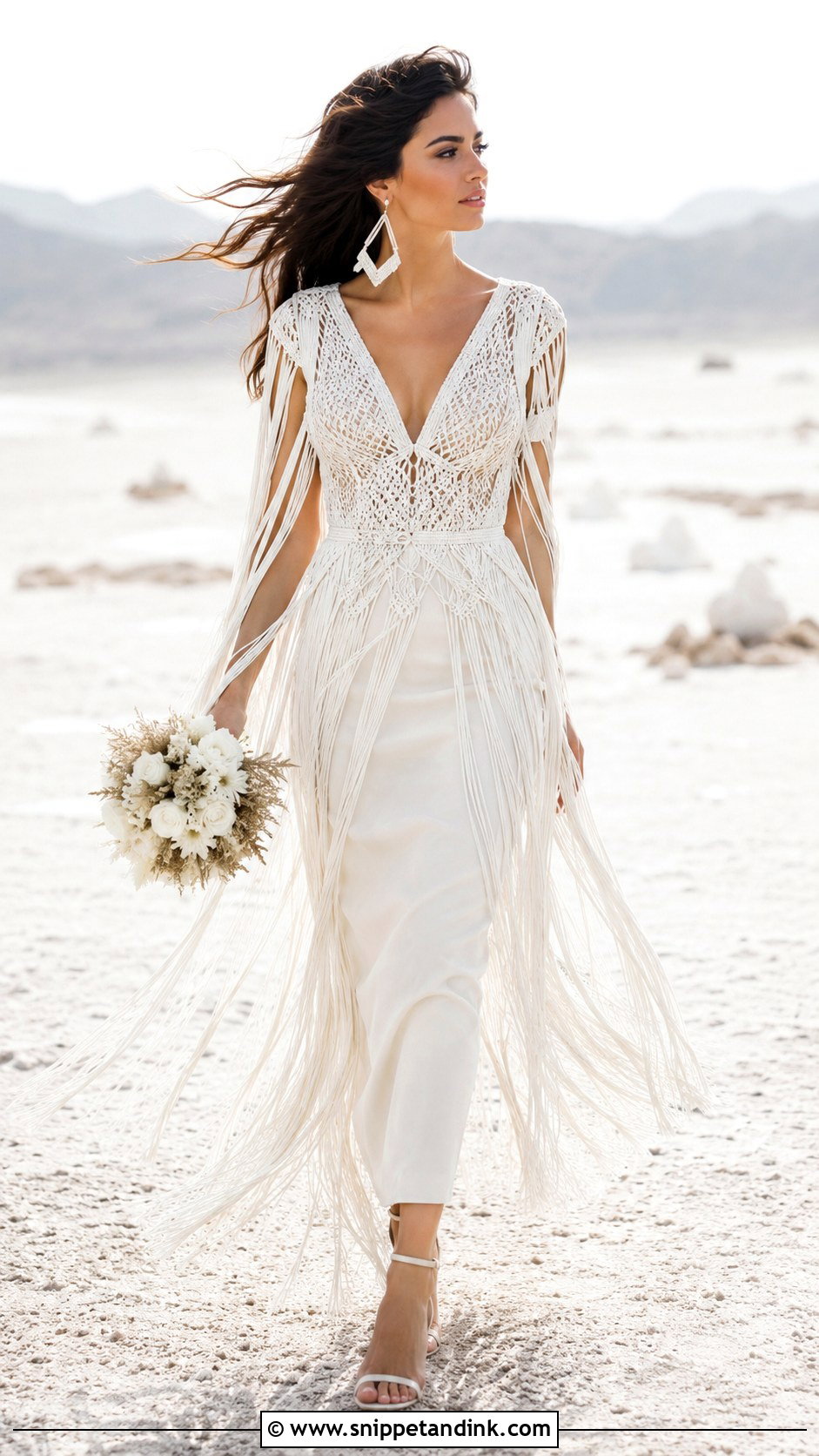
Fringe moves with you, which is the appeal and the risk. Keep it to the sleeves, skirt edge or train rather than all over, and the dress stays bridal instead of looking like a festival costume. Walk and dance in it at the fitting: long fringe at the legs can wrap around ankle straps and catch in buckles, so choose a smooth-sided shoe. Simple ivory heels, geometric earrings and a compact bouquet suit it. A sleek low ponytail contrasts well with the free movement. A plain satin lining makes knots and tassels show clearly in photos. Desert ceremonies, creative venues and relaxed outdoor weddings suit it.
5. A-Line Macrame Wedding Dress
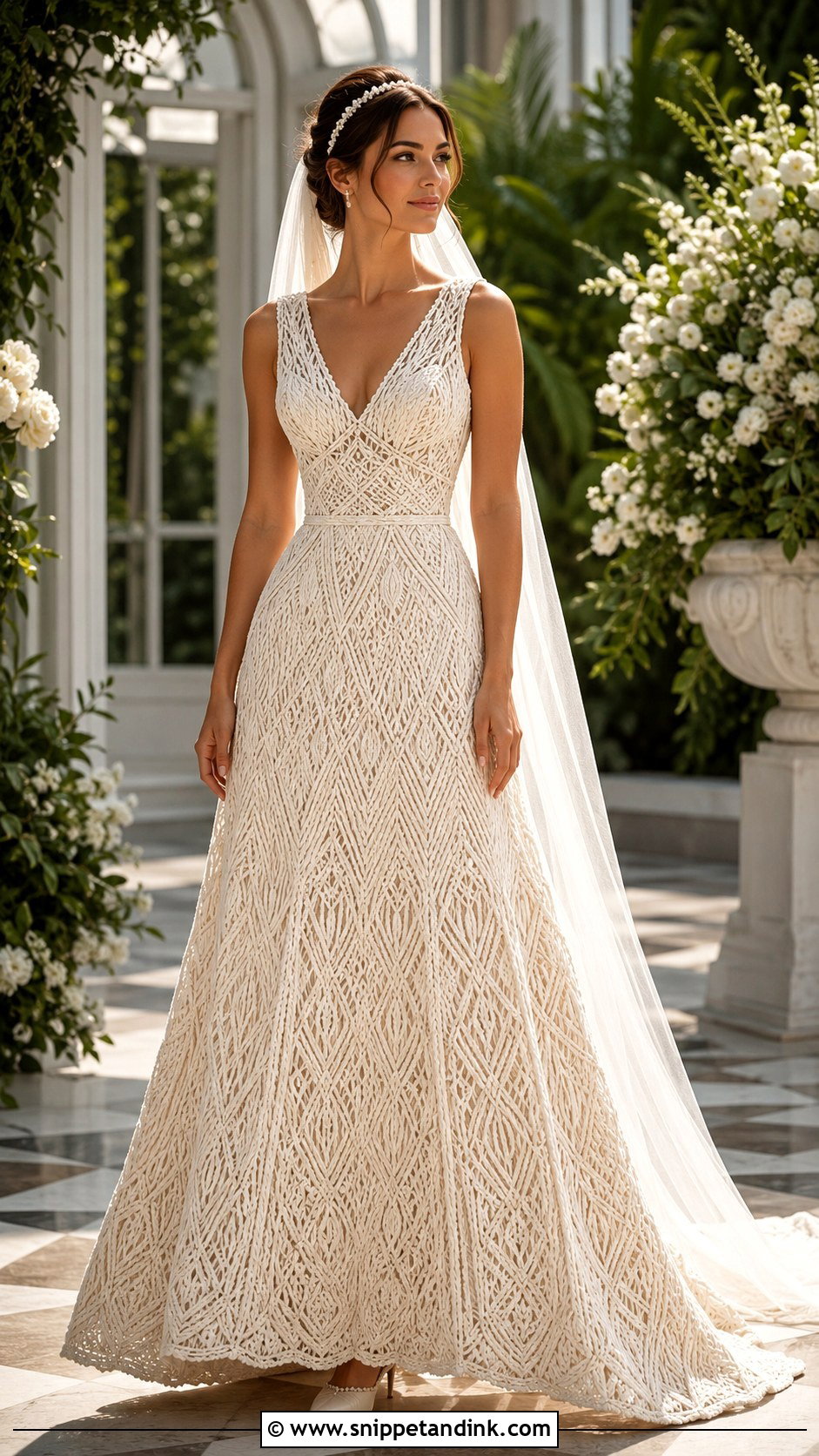
I’d recommend the A-line to most brides trying macrame for the first time; it’s a familiar shape that lets the texture be the new part. The best versions have denser knots on the bodice and more open patterns toward the hem, so the eye goes to the waist. Be aware that a knotted hem can’t simply be cut and turned up like fabric. It has to be shortened from the waist or re-knotted, so ask how length will be adjusted before you buy. Ivory or champagne lining shows the detail. Pointed kitten heels, a slim pearl headband and small earrings suit it, with a rounded bouquet and a veil of whatever length suits the formality.
6. Two-Piece Macrame Wedding Dress
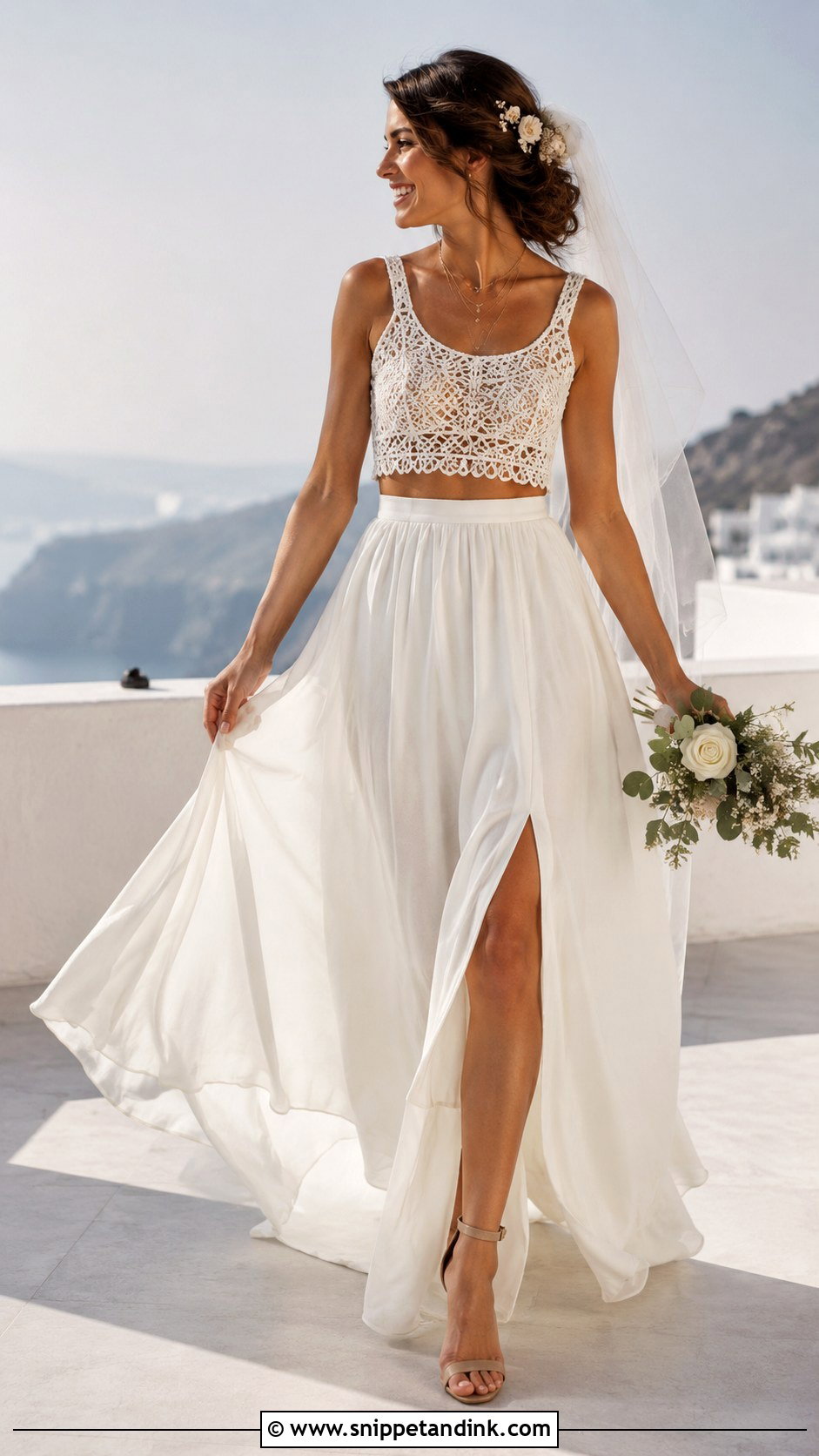
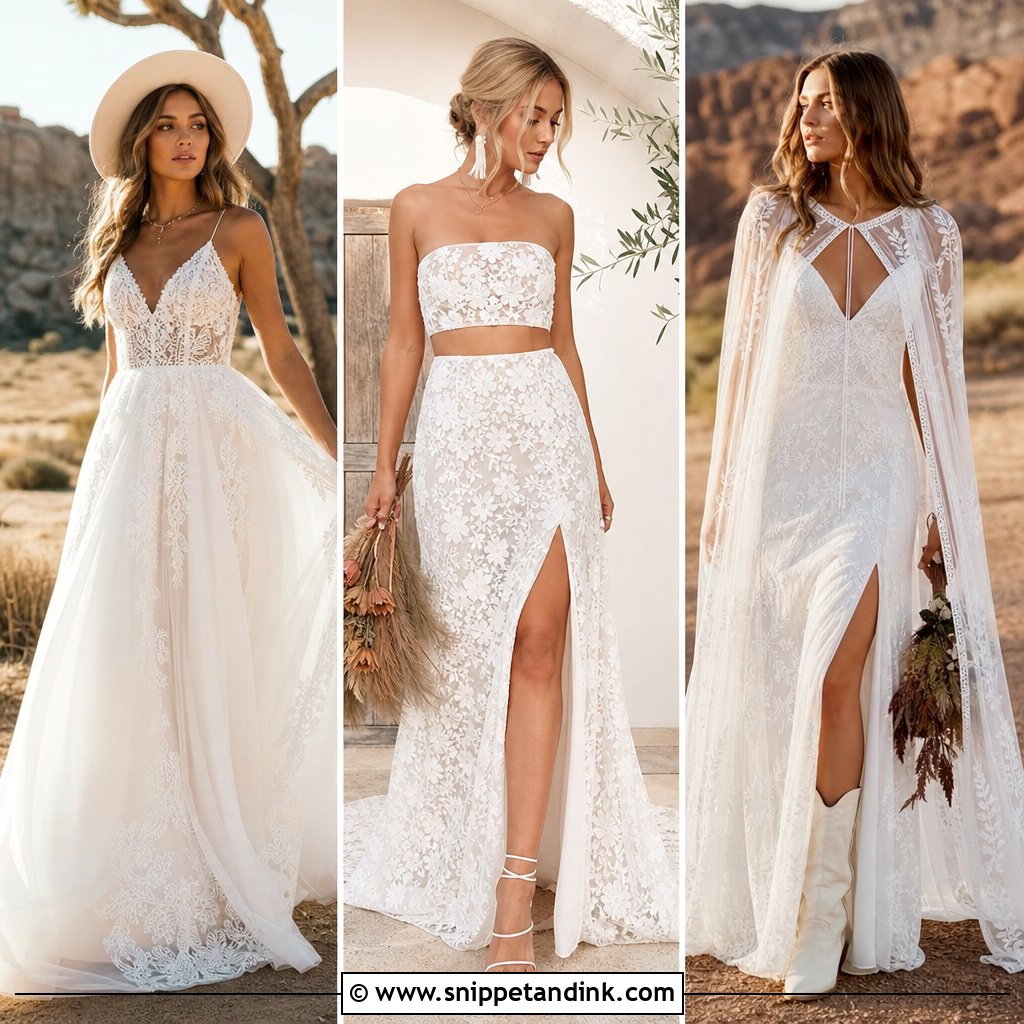
Separates suit a casual destination wedding and give you two pieces to wear again. A fitted macrame top with a high-waisted flowing skirt can leave a little skin showing or meet edge to edge for more coverage. Check the gap while sitting and lifting your arms; knotted tops can ride up more than woven ones because the cord gives slightly. Choose a lined top with adjustable straps or real support. The skirt can be chiffon, crepe or lined macrame. Strappy block heels, delicate layered necklaces, a floral comb and a short veil or sheer scarf suit it. Swap to flat sandals after the ceremony.
7. Bell Sleeve Macrame Wedding Dress
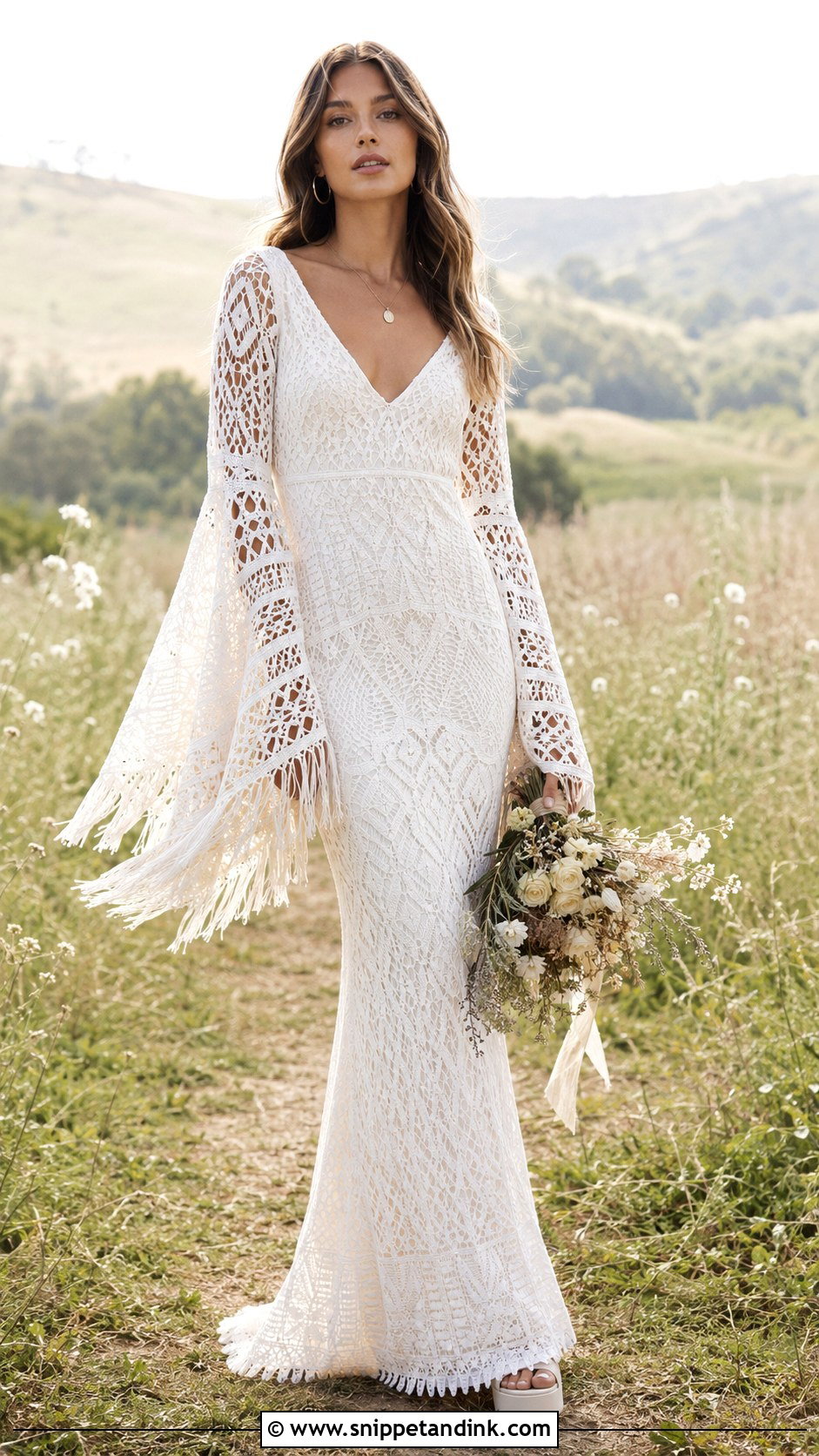
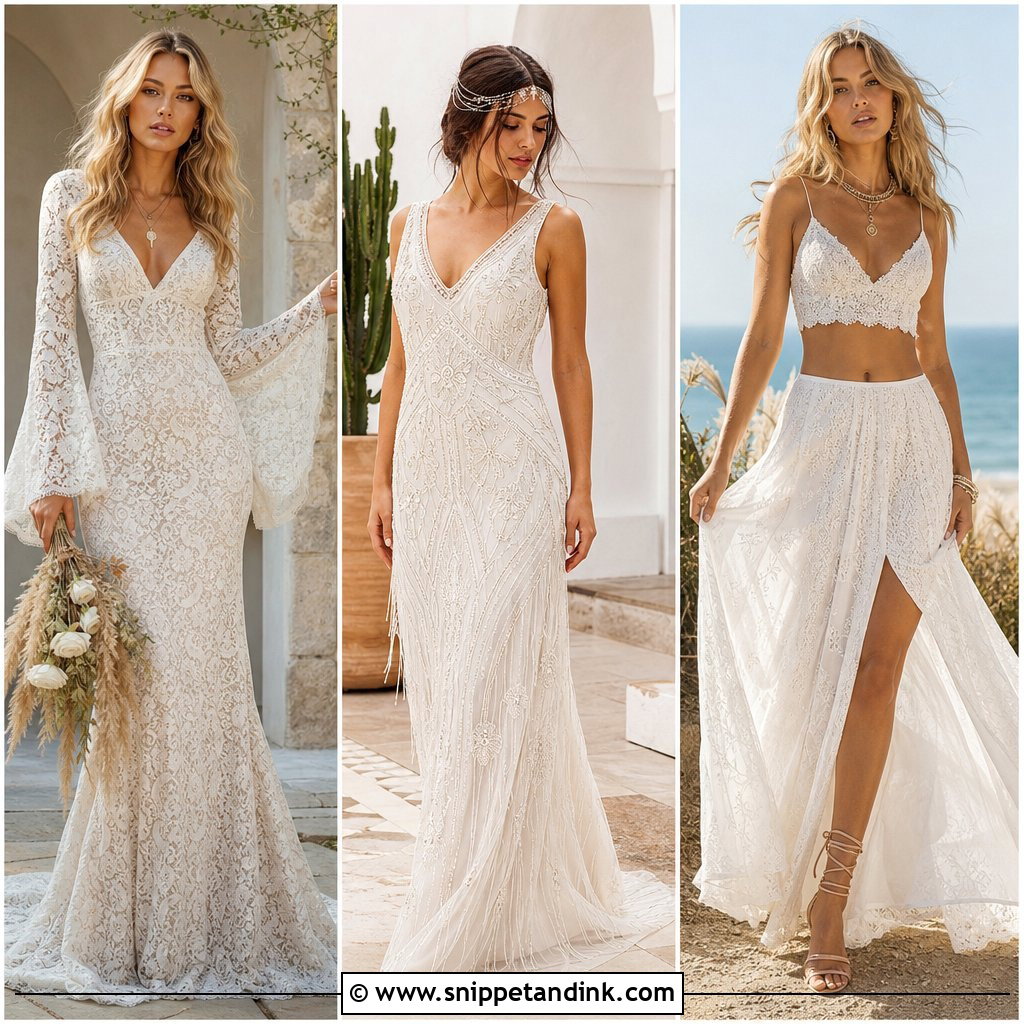
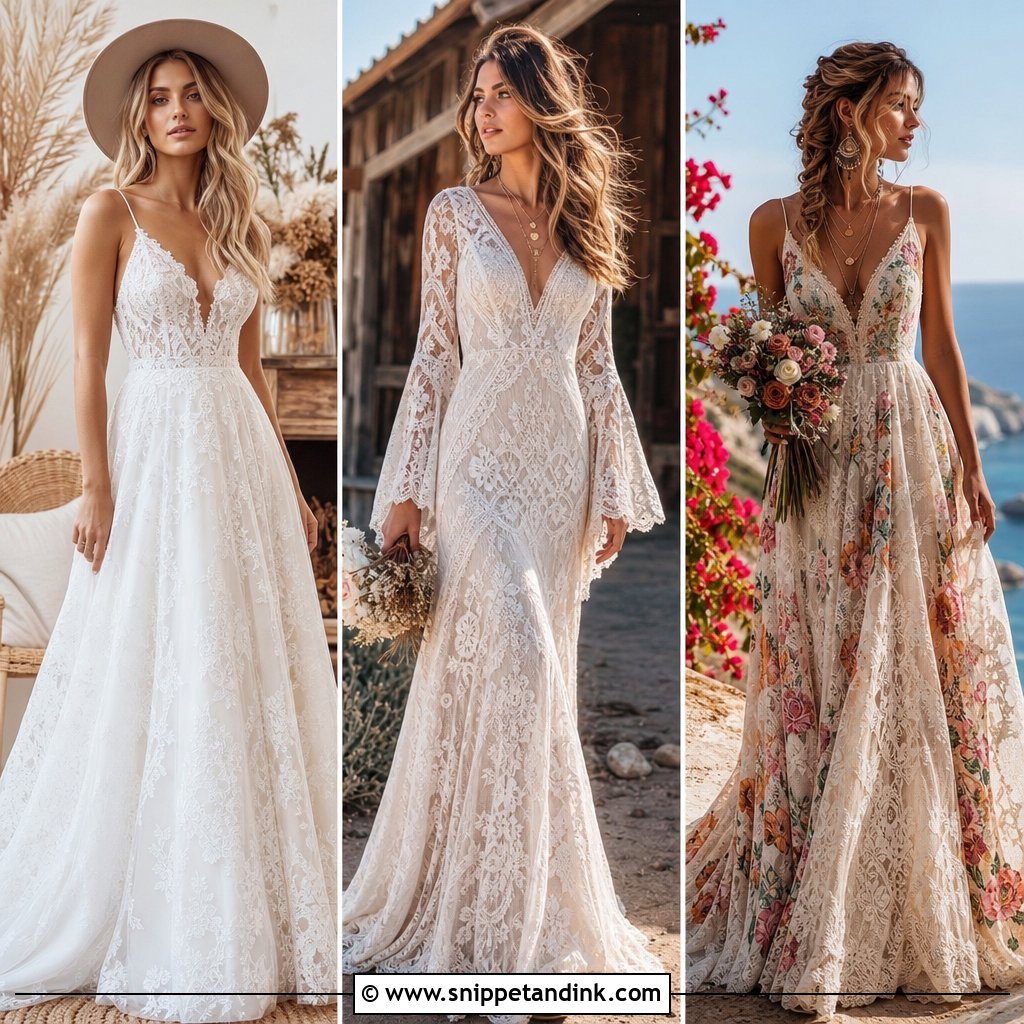
Wide bell sleeves push macrame straight toward the 1970s. Sleeves fitted at the shoulder and flaring below the elbow move well, but open knots at a wide cuff catch on everything: cutlery, rings, the bouquet stems. Practice reaching, eating and holding flowers in the dress before you choose it, and skip bracelets entirely. A streamlined bodice and soft skirt balance the volume. Platform block heels give height under a long hem. Small hoops, a simple pendant and a loose cream bouquet suit it, with polished waves or a center-parted half-up style. Detachable sleeves give you the look with an option to remove them later.
8. Off Shoulder Macrame Wedding Dress
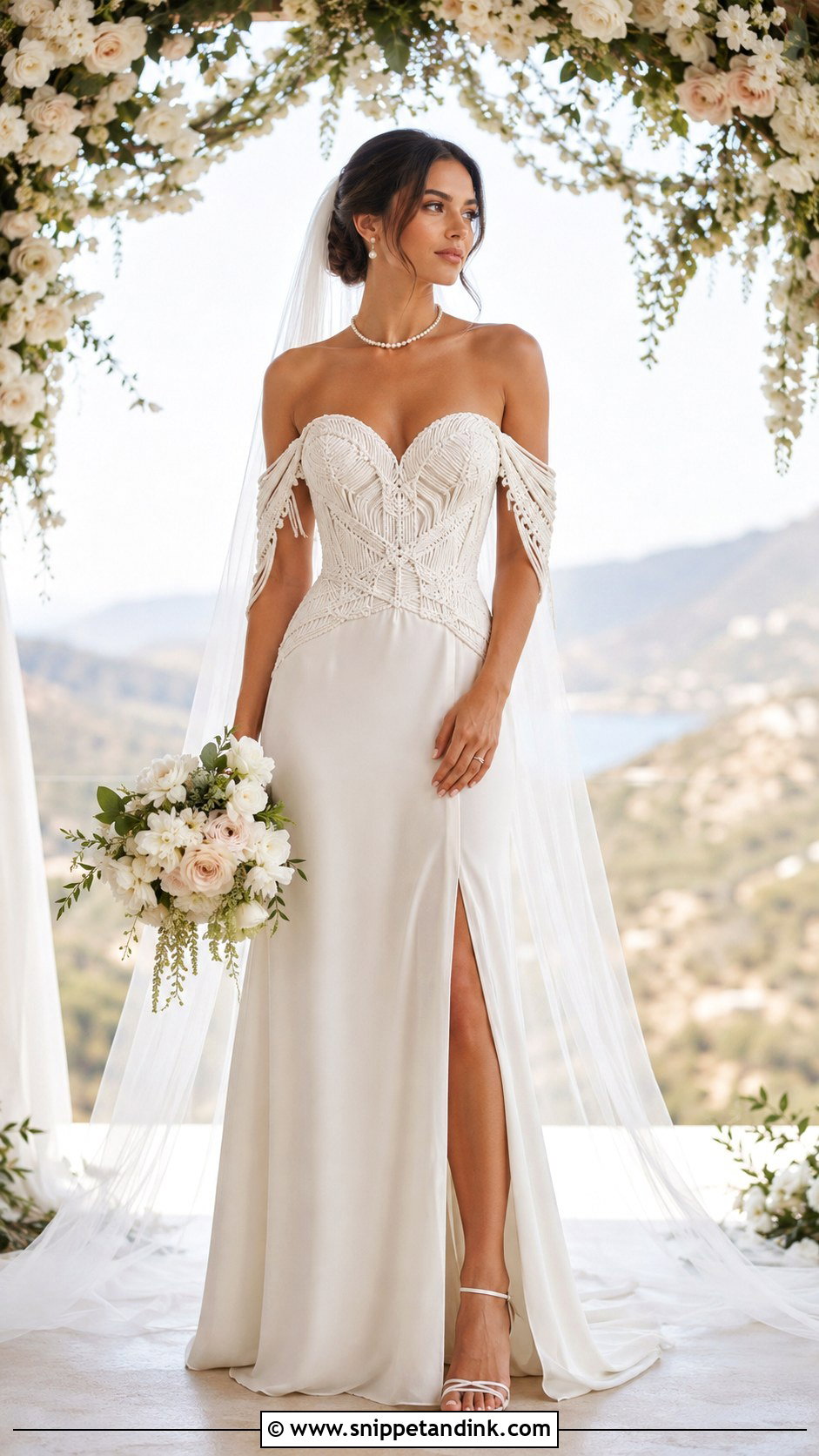
Off-shoulder macrame needs an inner bodice doing the real work, because cord stretches and the neckline will slowly slide down your arms if the knotwork is holding it alone. Knotted straps or draped panels across the upper arm can rest over that firm base. A fitted waist and flowing skirt balance the shape. A short pearl necklace, matching studs and ivory slingbacks suit the open neckline, with a loose chignon keeping it visible. A plain cathedral veil makes it formal; a flower comb keeps it outdoorsy. Hug, lift the bouquet and dance at the fitting. Detachable shoulder panels give you a second look for the reception.
9. High Neck Macrame Wedding Dress
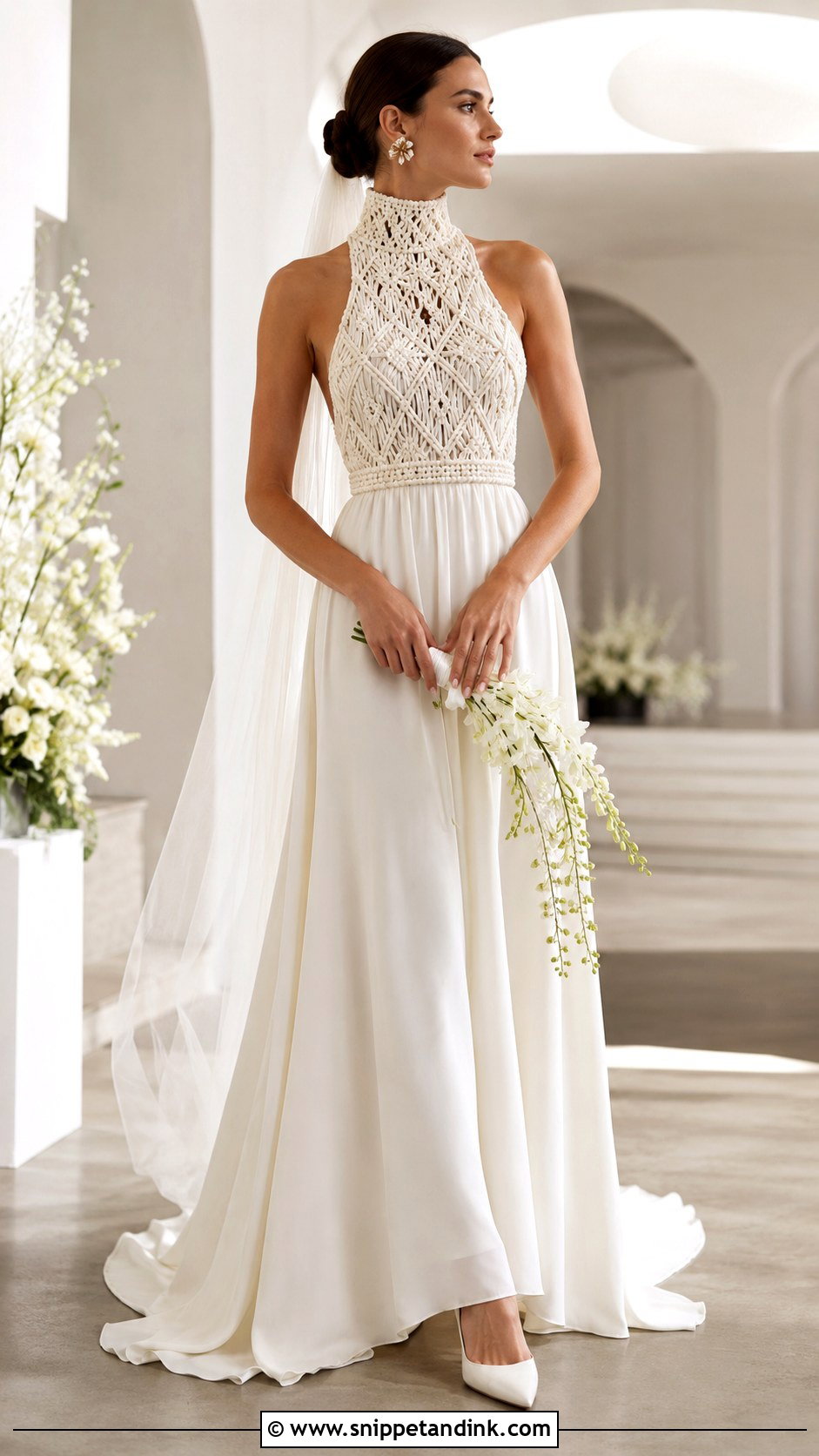
High necks in macrame put the knotwork right next to your face, so the cord has to be soft. Turn your head side to side at the fitting; a stiff or synthetic cord can rub the neck raw by evening. A sleeveless gown with a fitted collar, lined bodice, defined waist and fluid skirt makes the most of it. Skip the necklace and let sculptural earrings lead. A clean low bun with a delicate pin at the back keeps the collar clear, with the veil set beneath the bun. Pointed pumps polish it; block heels steady you outdoors. A long-stemmed narrow bouquet suits the vertical line. A removable lining panel lets you adjust how much skin shows through.
10. Fitted Macrame Wedding Dress
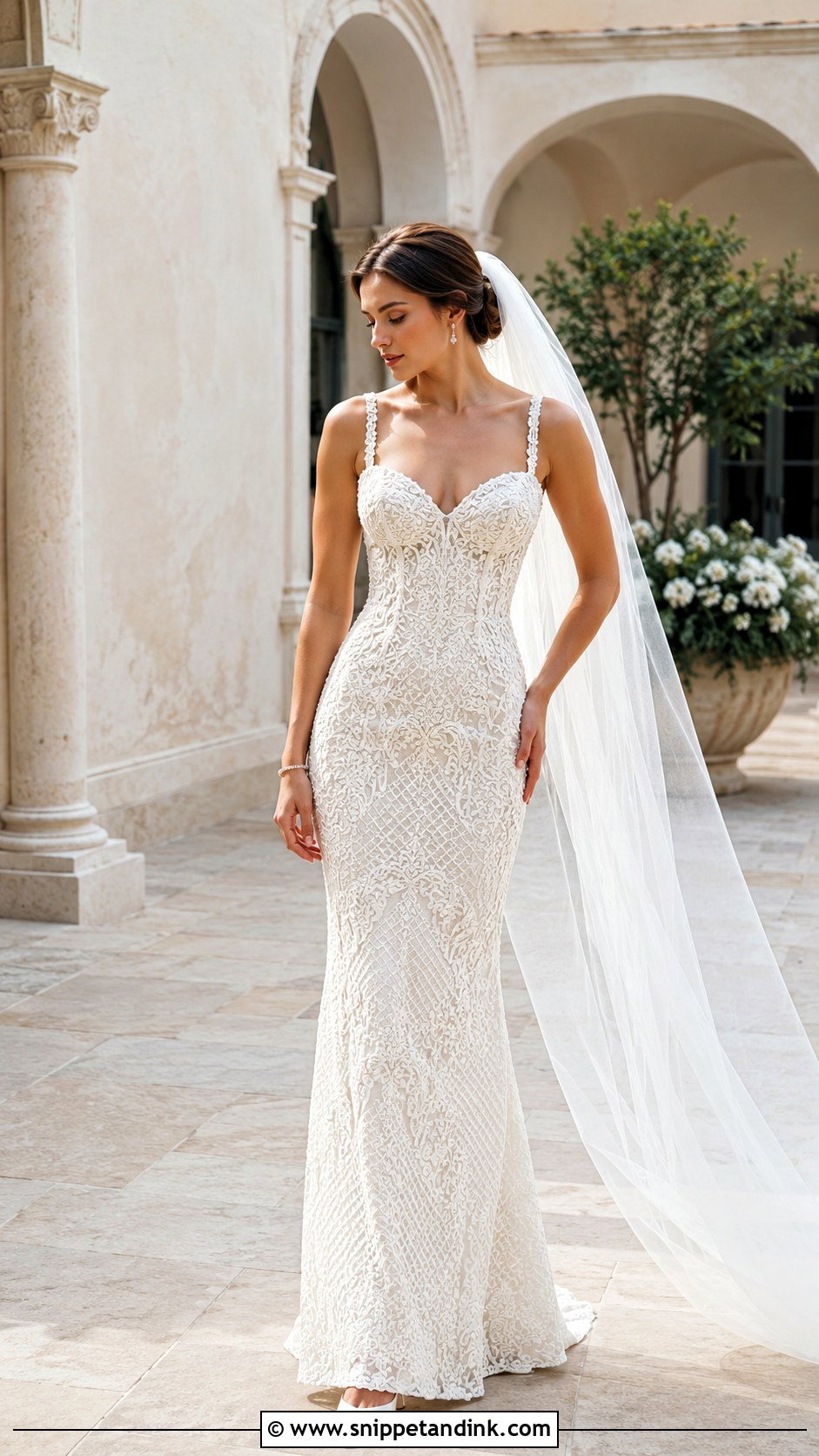
Close-fitting macrame shows the body through texture rather than decoration. A sheath or gentle mermaid shape with a smooth stretch lining under the knotted overlay works best, and well-placed pattern changes can define the waist. The two layers have to be fitted together, or the lining shifts and wrinkles under the cord; I’d ask your seamstress to tack them at the waist. Walk, sit and climb a few steps at every fitting. Minimal drops, a sleek bracelet and pointed slingbacks suit it. A side-parted bun or polished waves add polish. Choose a plain tulle veil a little longer than the train, and smooth underwear with built-in support.
11. Macrame Wedding Dress With Train
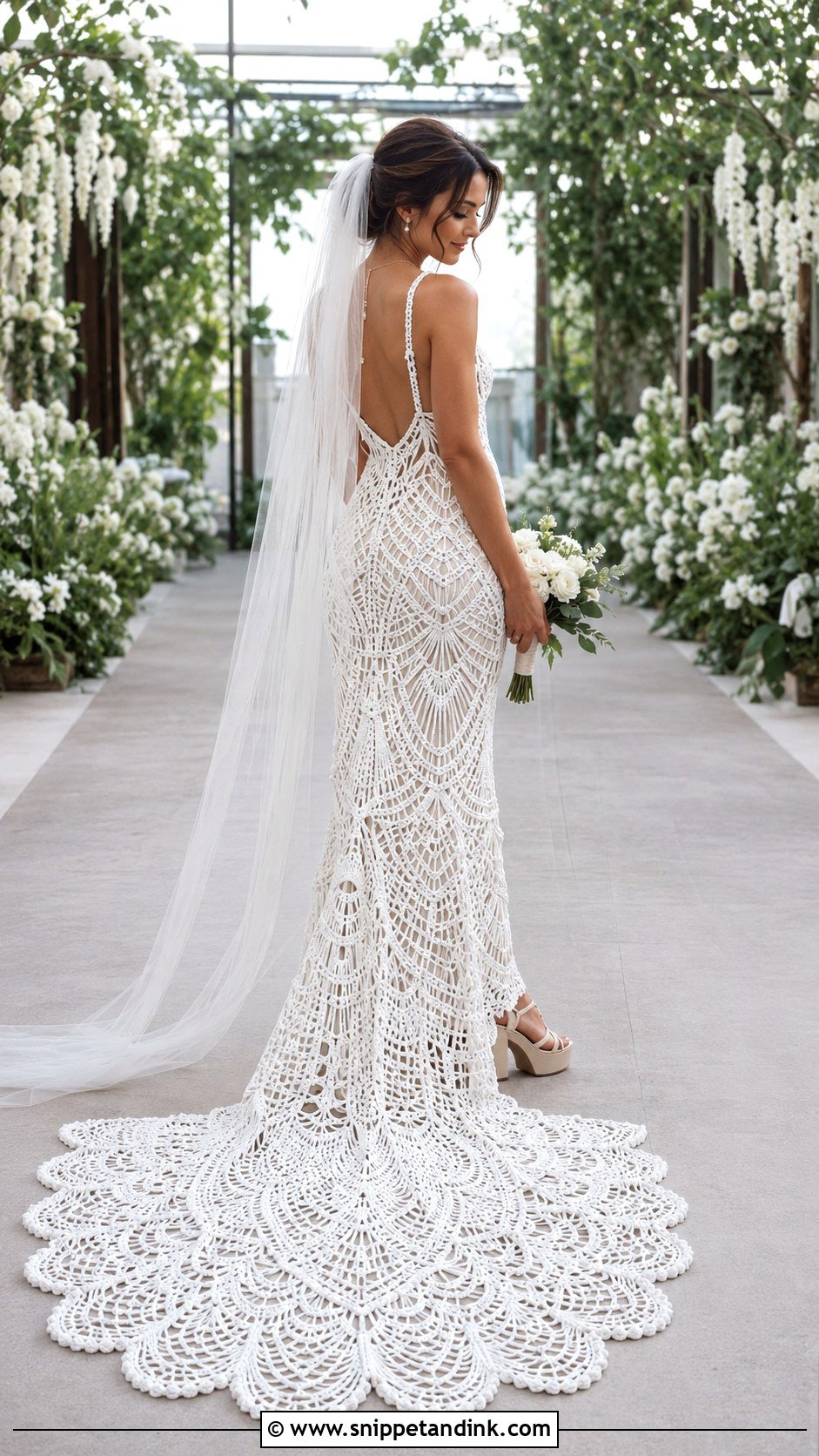
A knotted train builds drama gradually, flowing out from a fitted top. Scalloped or fringed edges show the knotting well in photographs. The thing to plan is the bustle: cord can’t take hooks the way fabric can, so your seamstress may need to stitch loops into the knot junctions, which is fiddly and worth asking about early. Practice lifting and arranging the train before the day, and lay a clean sheet under it outdoors for portraits, as grass stains cotton cord quickly. Comfortable platform sandals, crystal studs and a plain cathedral veil suit it, with a soft updo and a restrained white bouquet.
12. Sleeveless Macrame Wedding Dress
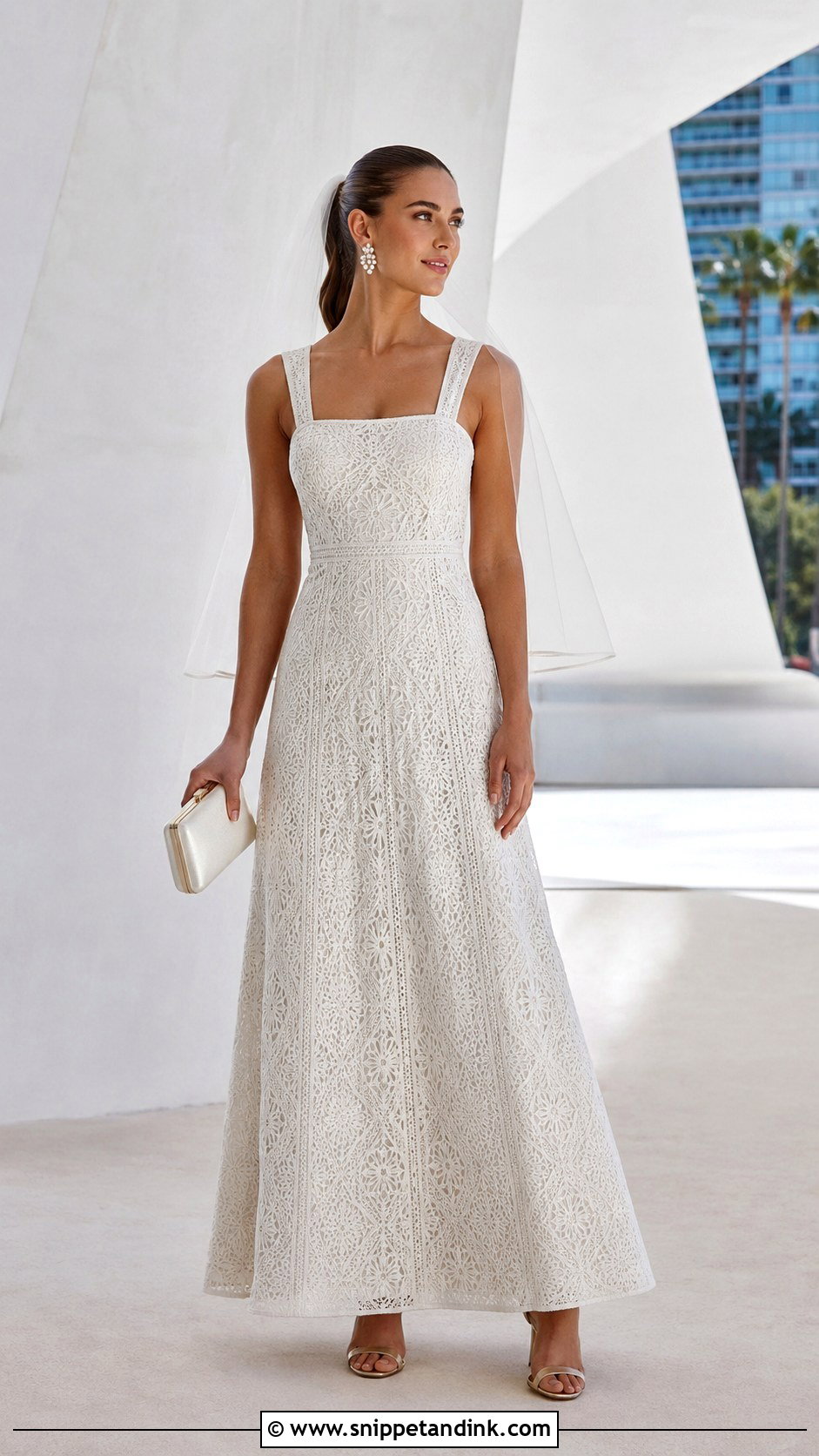
Sleeveless macrame is the coolest option for heat, modern venues and destinations. A scoop, square or modest V-neck over a straight or gently flared skirt keeps the lines clean. Wider straps give better bust support. Check the armholes at the fitting; if the lining peeks out when you raise your arms, it needs trimming back. Metallic low heels, pearl cluster earrings and a structured ivory clutch contrast well with the handmade texture. A sleek ponytail looks modern; loose waves relaxed. Add a plain fingertip veil for the ceremony and remove it later. A tailored ivory jacket or soft wrap covers you if it cools down.
13. Strapless Macrame Wedding Dress
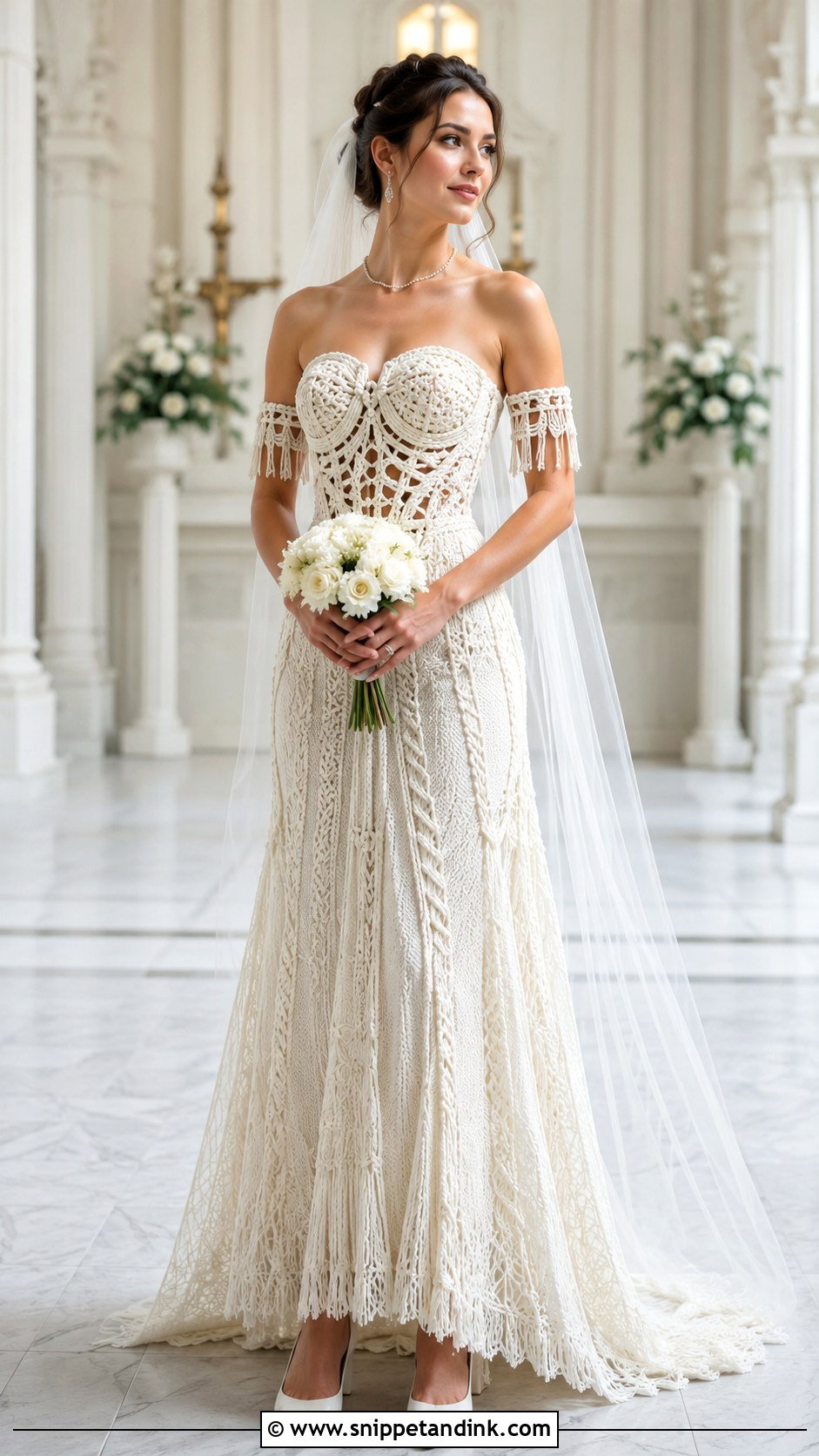
Strapless macrame has to be built on internal structure: boning, cups and a firm top edge underneath. Knotwork stretches under its own weight and can’t hold a bodice up alone. A fitted bodice and softly flared skirt suit formal and relaxed weddings. Check the fit after sitting and moving, not only while standing. A delicate collar necklace, matching earrings and ivory block-heel pumps suit the open neckline, with a textured bun and plain veil. Keep the bouquet small so the waist pattern shows. Detachable knotted arm bands, gloves or a matching bolero give a second look without altering the dress.
14. Macrame Mini Wedding Dress
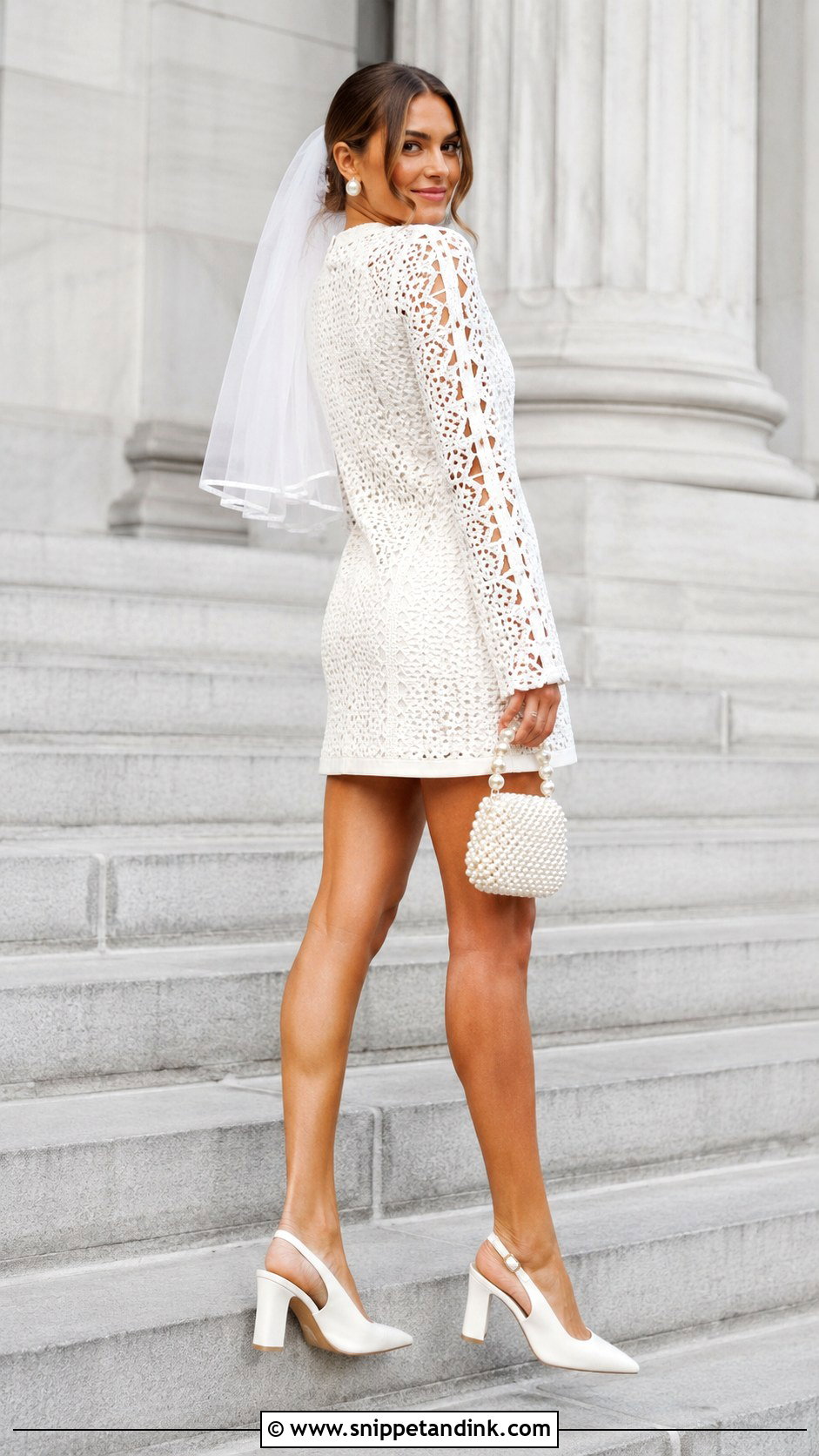
Short macrame suits a courthouse, a reception change or a casual destination wedding. Look for a structured shift, fitted sheath or flared shape with a smooth lining and a properly finished hem, as loose cord ends at a short hem fray quickly. Long sleeves balance the length; sleeveless keeps it summery. Built-in shorts or a lining a little longer than the open fringe give coverage when you sit. Ivory slingbacks, pearl earrings and a compact top-handle bag suit it, with a short veil or bow. Choose block heels or flats if you’ll dance. A small bouquet and a manicure that suits the cream tone finish it.
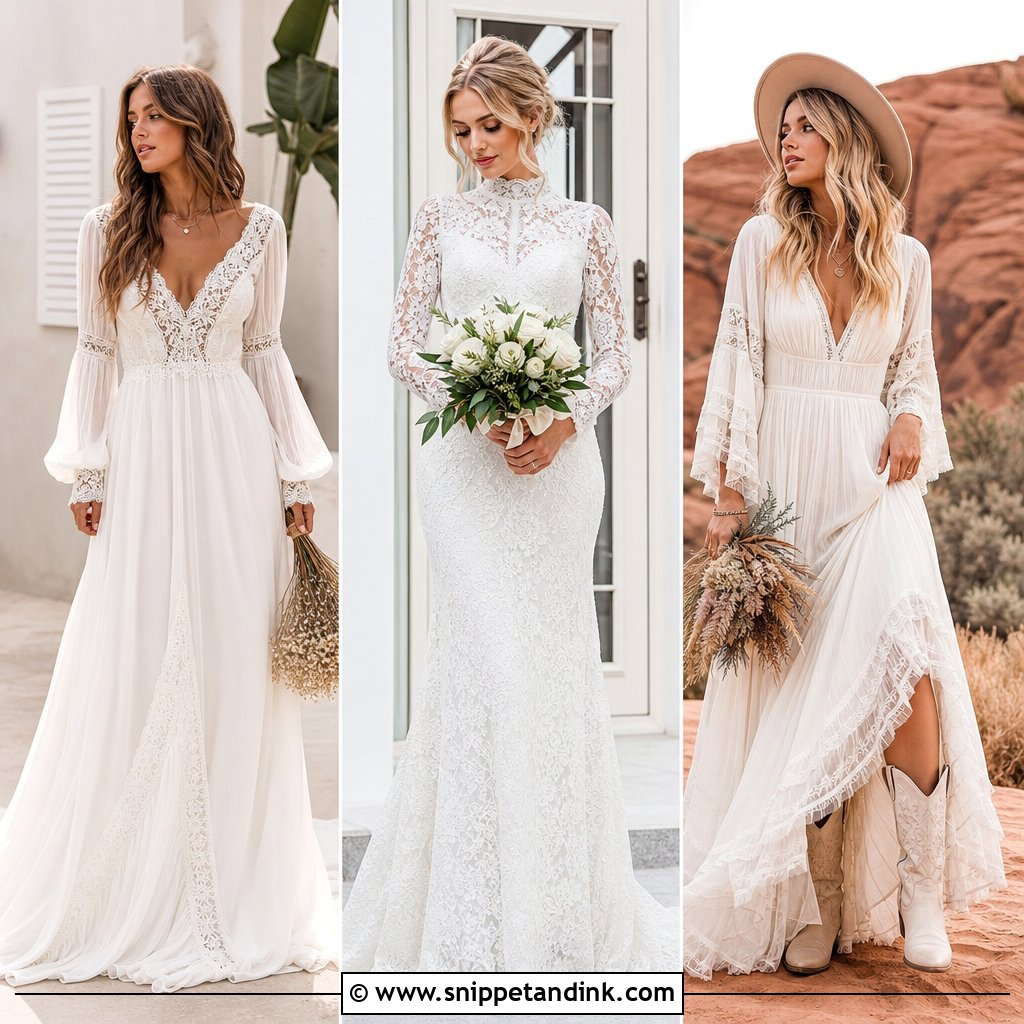
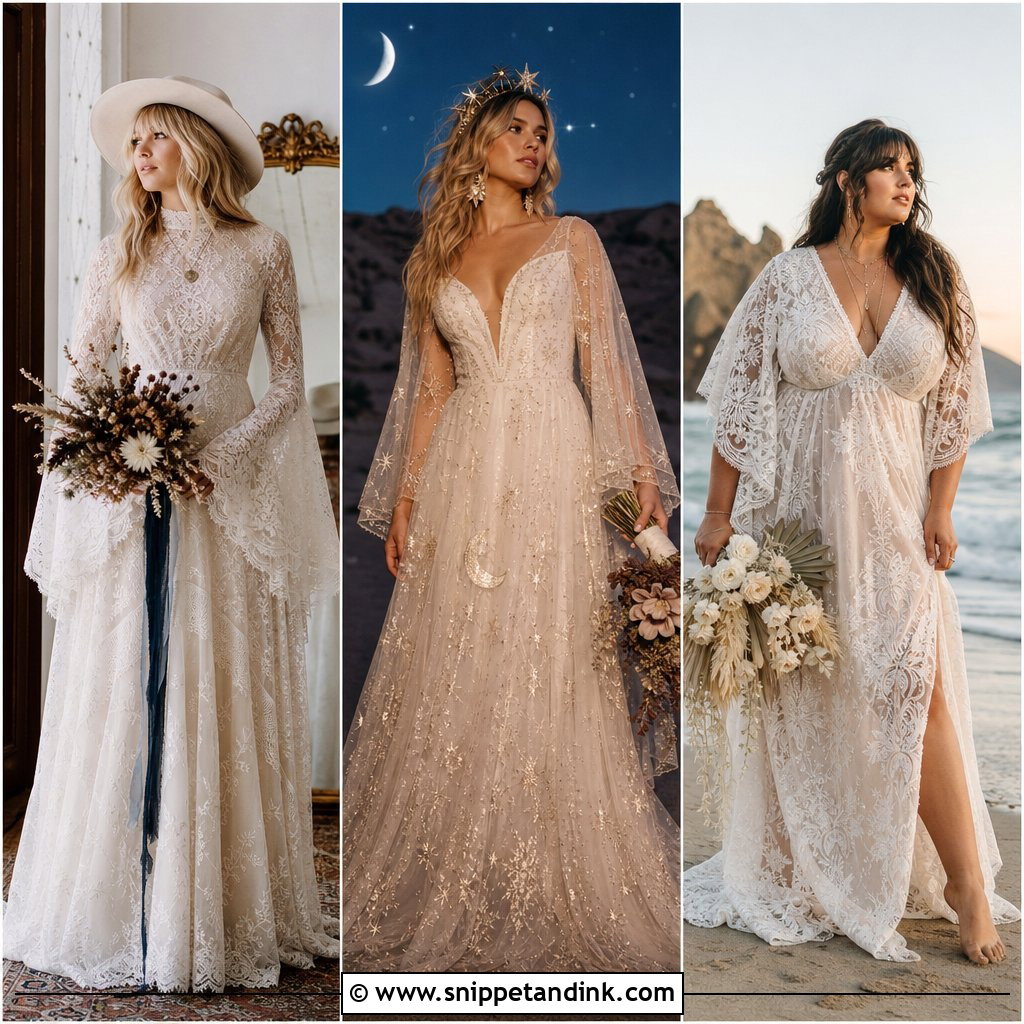
15. Macrame Midi Wedding Dress
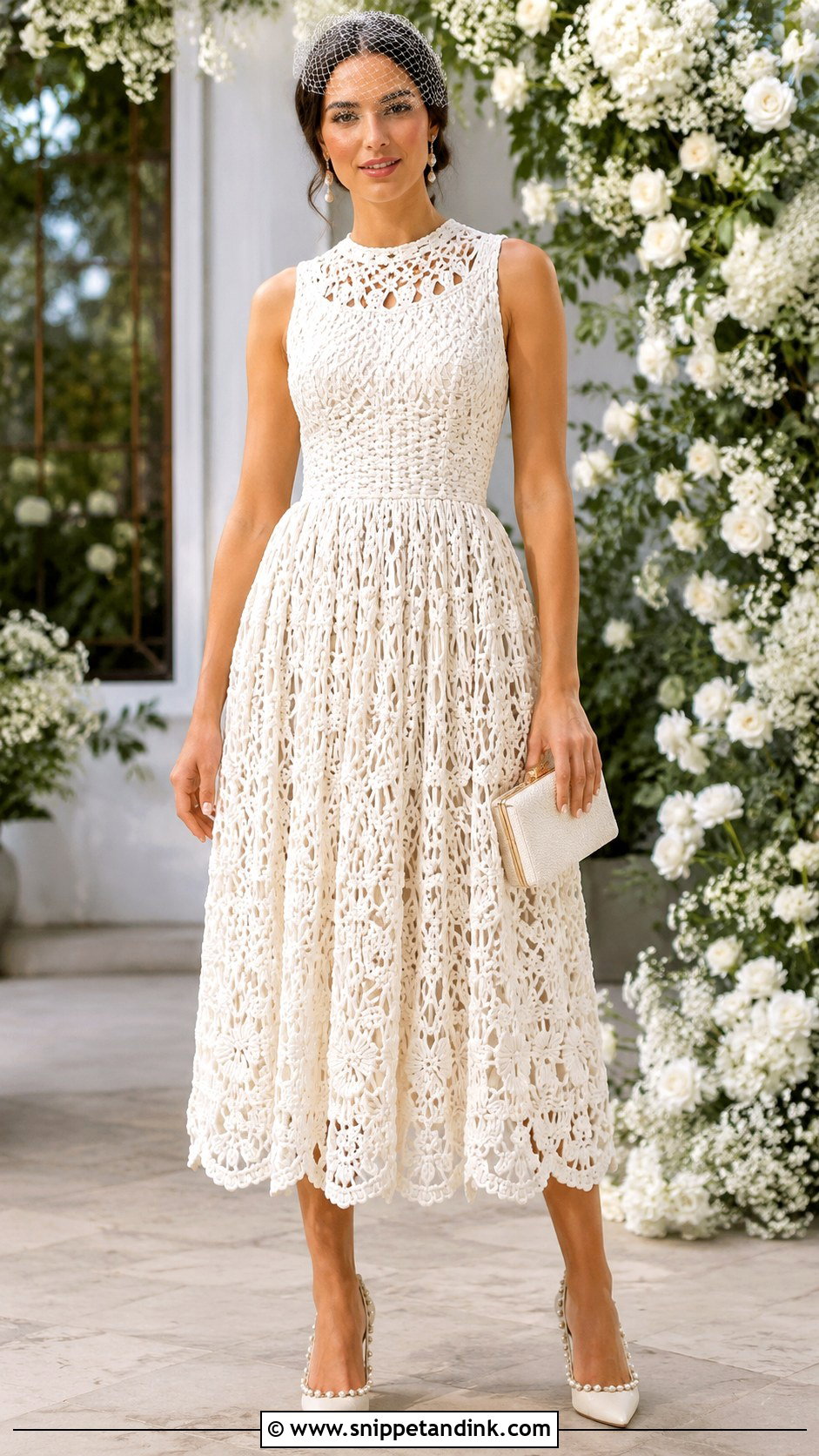
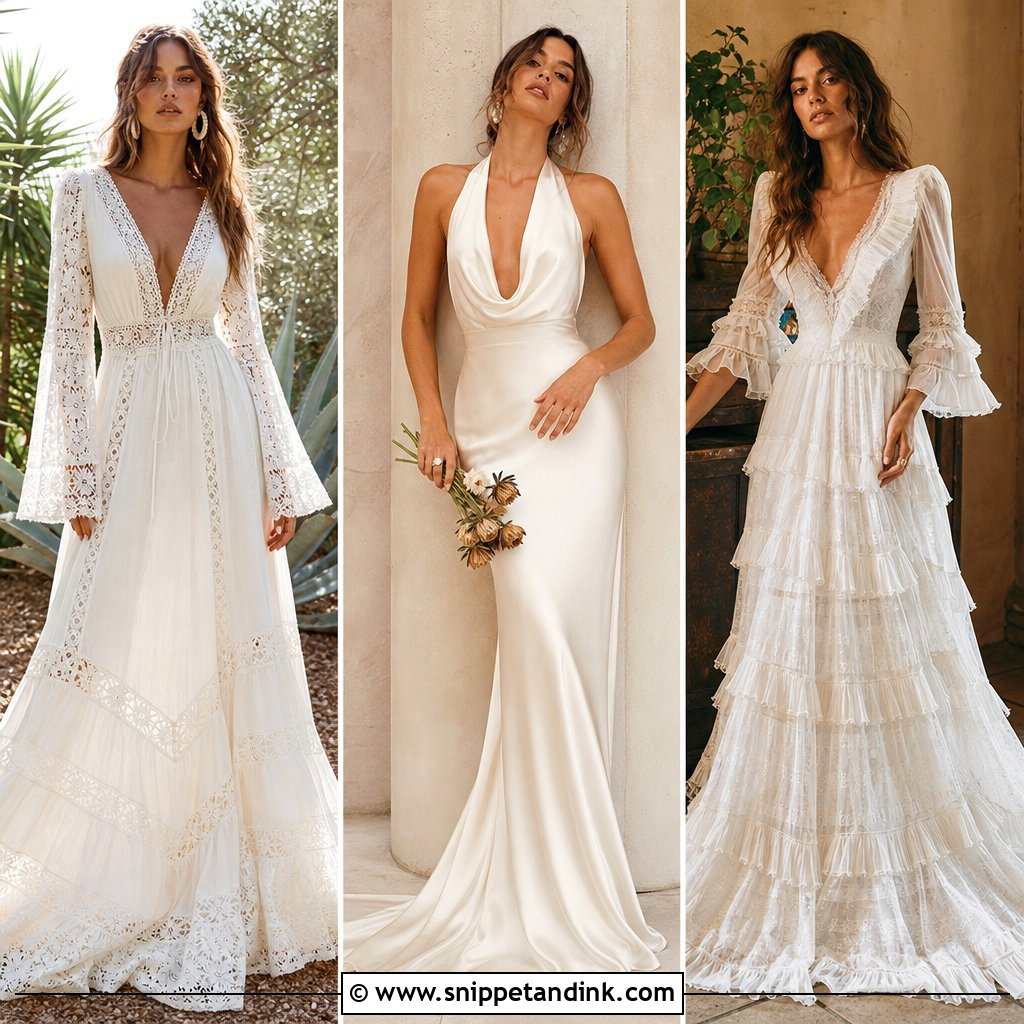
Midi length gives you macrame with everyday ease: a tea-length A-line or fitted column ending between knee and ankle. The detail I always check is the lining hem. It should end just above the decorative knotted edge, not cut a visible line across the pattern. Since the shoes show, make them count: pearl-trimmed pumps or ivory ankle straps. A birdcage veil, small drops and a structured clutch suit it. A low bun leans vintage; soft waves lean current. Dense knots on the bodice with a lighter skirt keep the balance right. City ceremonies, daytime weddings and gardens suit it.
16. Plus Size Macrame Wedding Dress
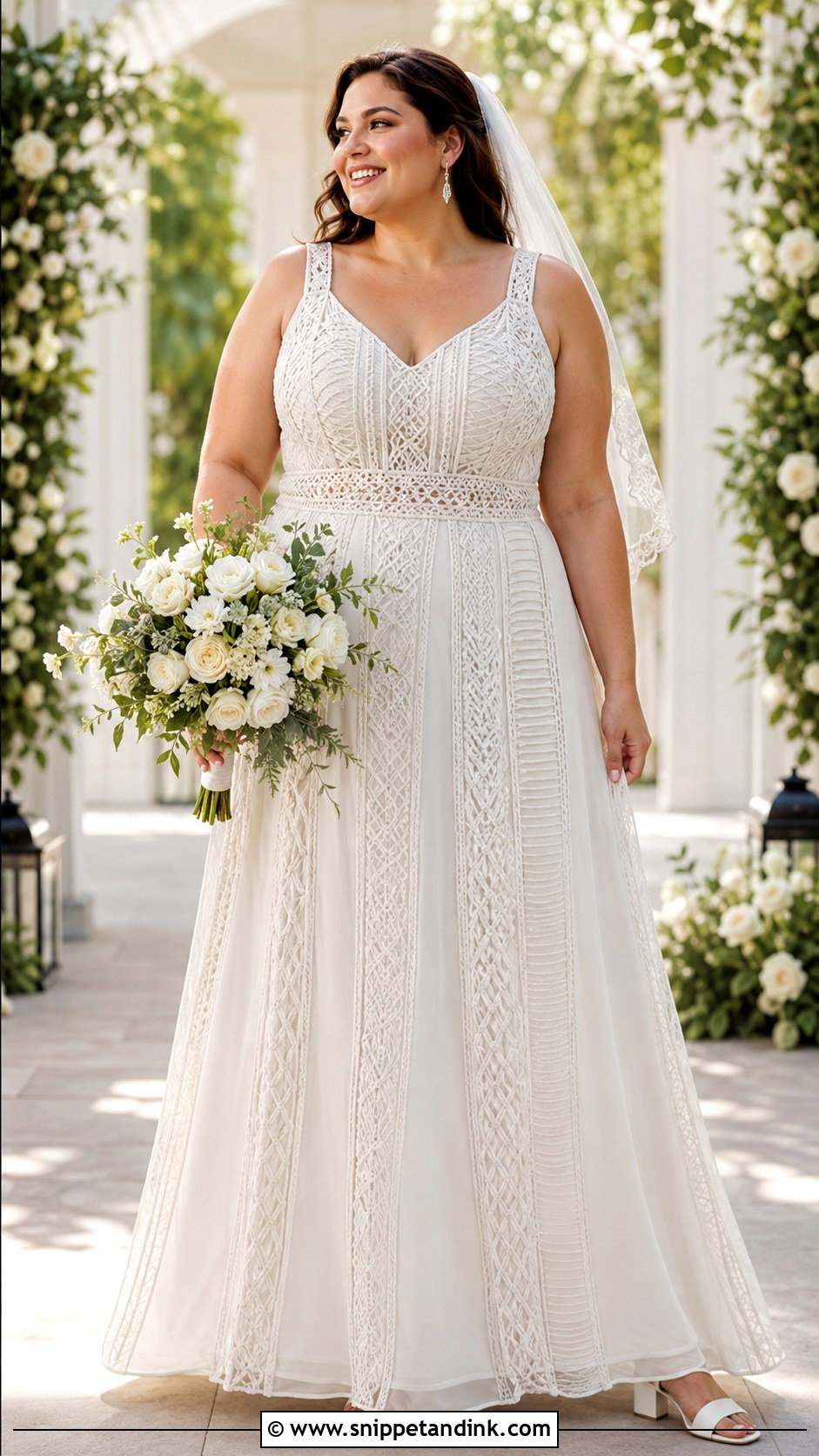
On a plus-size bride, I’d look at support and pattern placement before anything else. An A-line or softly fitted gown with a structured lining, reinforced waist and straps wide enough to hide a supportive bra is the base. Vertical knot patterns create a long line; a defined waistband marks the shape. Cord stretches, so open knotwork over the bust and hips should sit on a firm lining, or it can pull open when you sit. Don’t accept a dress that needs constant adjusting. Stable block heels, drop earrings and a medium bouquet suit it, with a side-swept style or low bun. Handmade pieces can often be made to measure, so ask for a cord sample first.
17. Maternity Macrame Wedding Dress
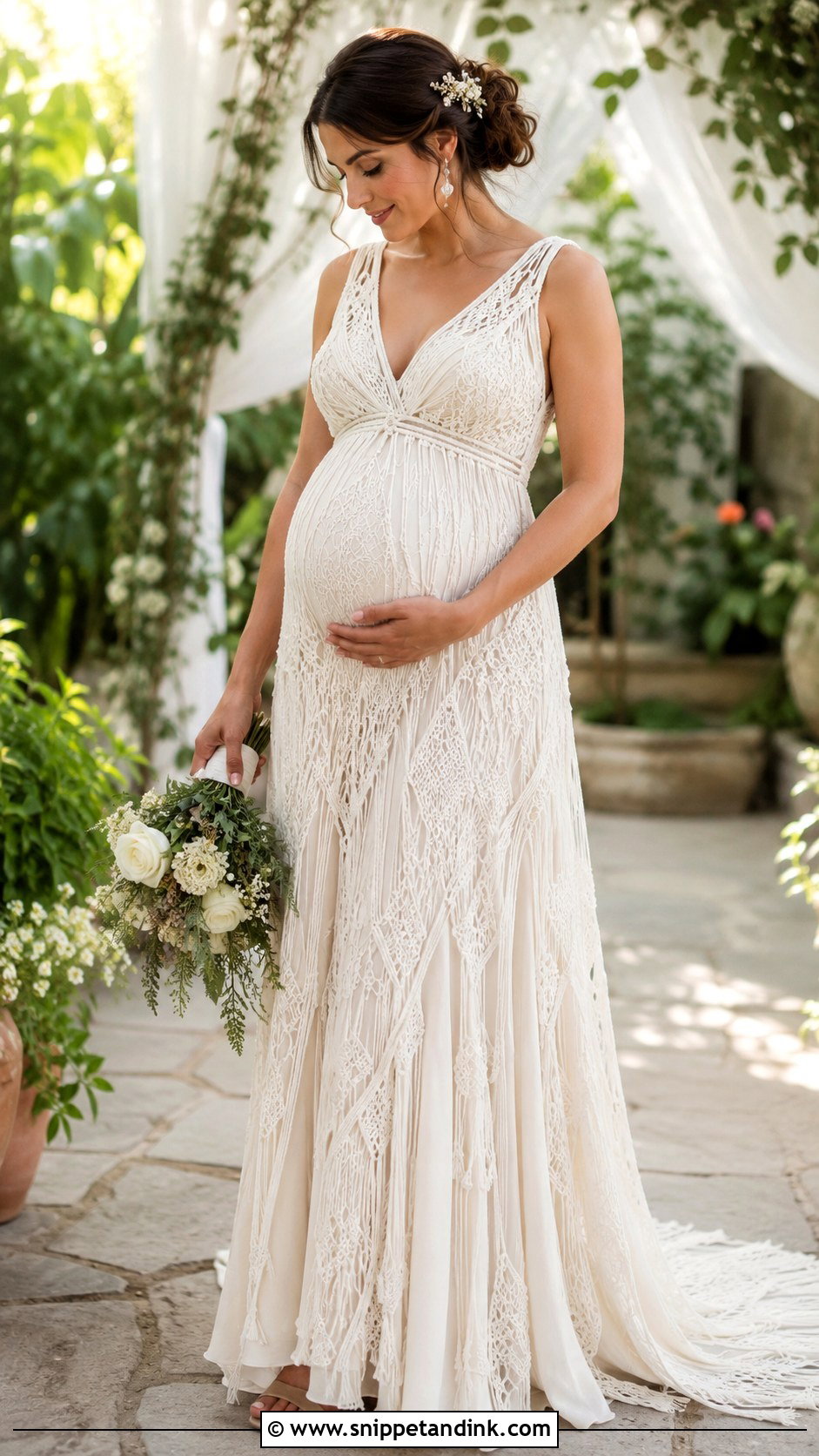
An empire waist lets the skirt fall from under the bust without pressing on the bump, which is why it’s the shape I’d start with for a maternity dress. Choose a soft lining and a light knotted overlay with room to spare, and avoid heavy fringe and rigid waist details. Book the final fitting close to the date, a week or two out if you can, because the body changes fast in the last months. A wrap bodice or adjustable lace-up back gives extra give on the day. Low block heels, cushioned flats or comfortable sandals suit it, with light earrings, a floral comb, a small bouquet and a soft half-up style.
18. Vintage Macrame Wedding Dress
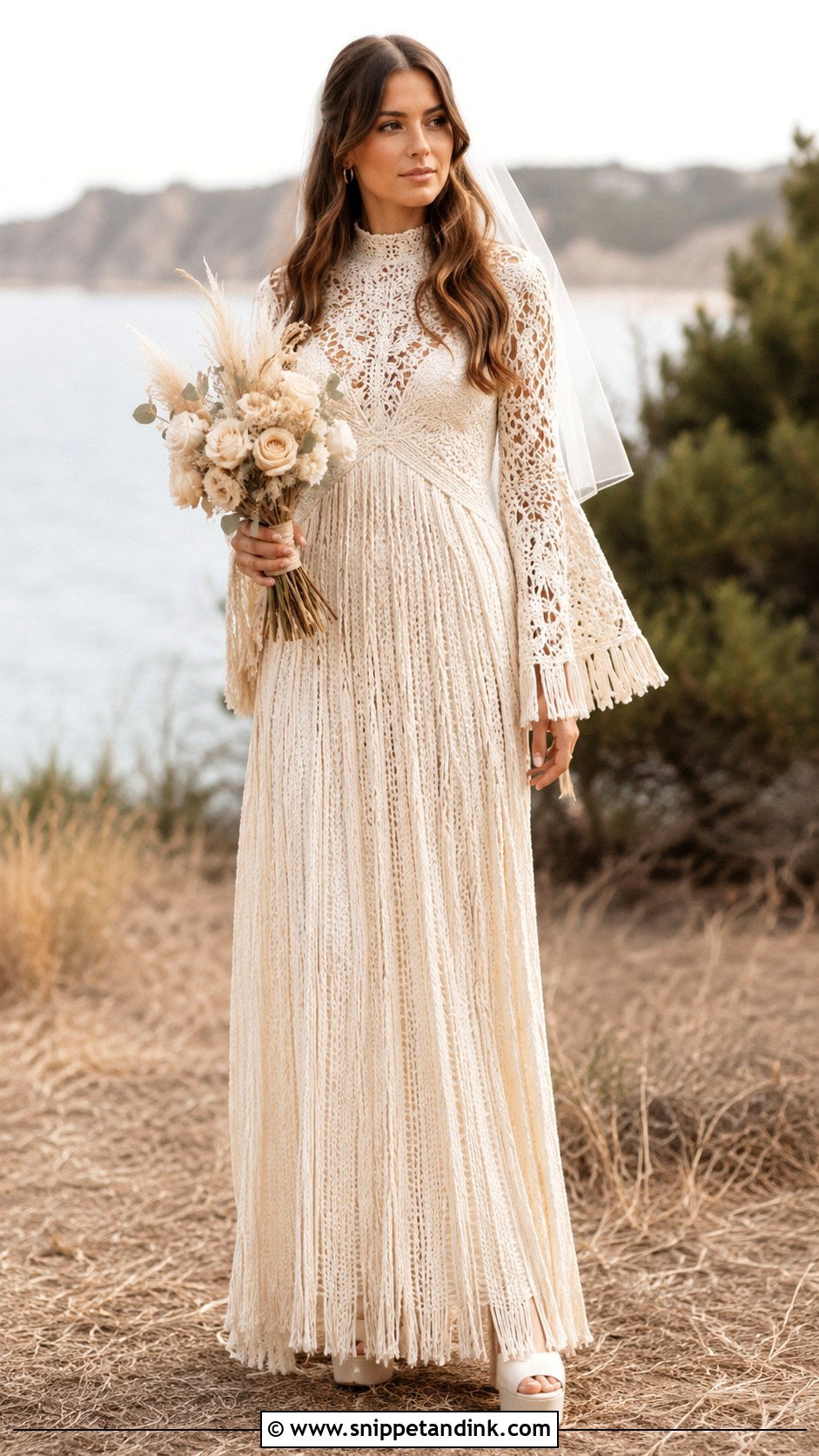
Bell sleeves, high necks, floral knotwork and empire waists all belong to 1960s and 1970s bridal fashion, the era when macrame first became a wedding look. Platform heels, a center part and small gold hoops keep the mood. A dried-look bouquet in cream and muted green suits it. Pick one headpiece, a tulle veil, macrame headband or floral crown, not all three. With a genuinely old dress, inspect lining, closures, seams and every knot before anyone alters it; aged cotton cord can be brittle and may need a specialist to repair. A new underlining makes it more comfortable and protects the original.
19. Minimal Macrame Wedding Dress
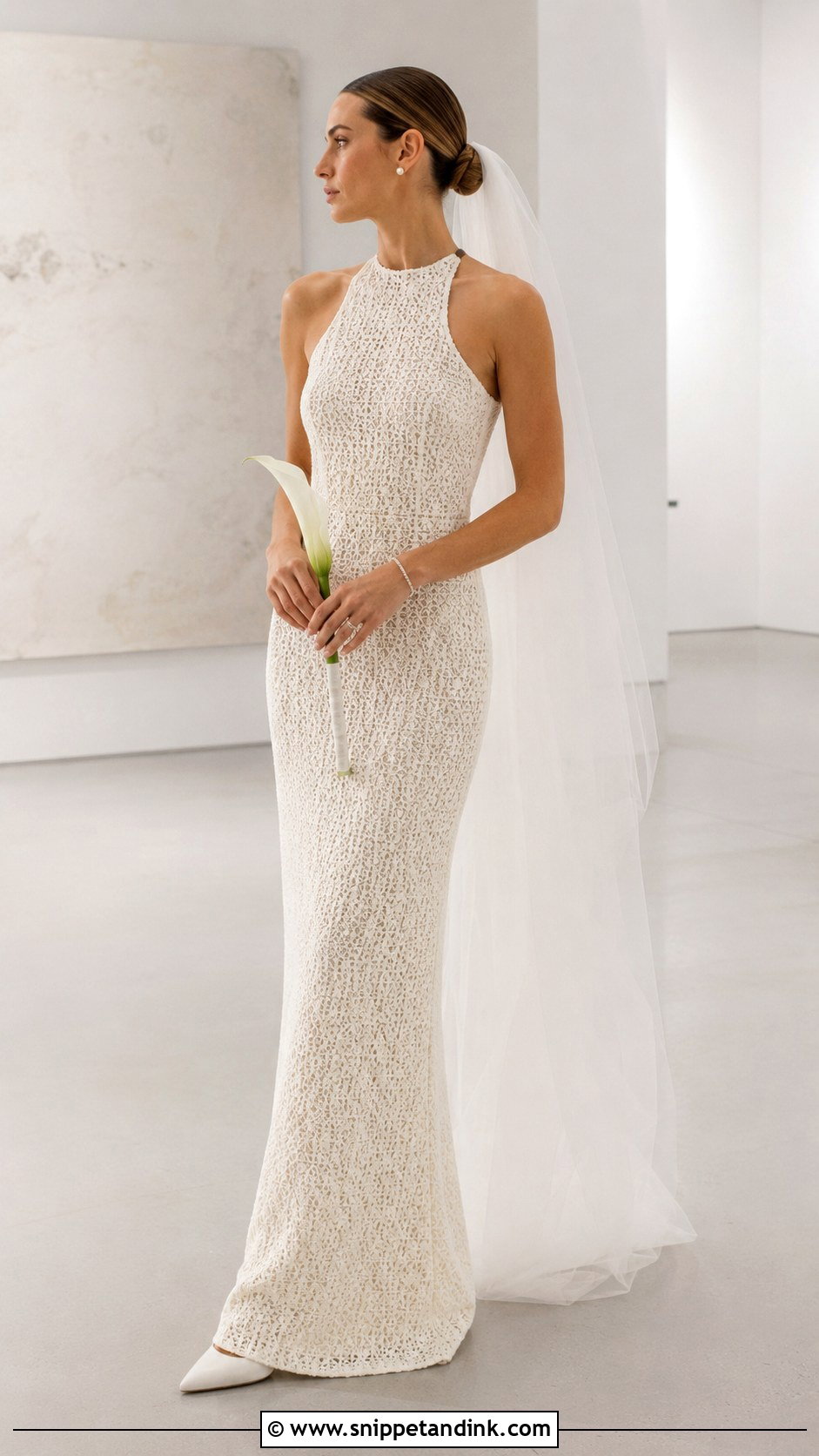
Can textured knotwork still look minimal? Yes, if the shape is plain and the pattern is a single repeating knot with little or no fringe. A simple column or slip silhouette with a matching ivory lining creates a quiet tonal look. I’d hold back on everything else: small pearl studs, a slim bracelet, clean pointed pumps and a smooth bun or straight hair tucked behind the ears. One flower variety in a compact bouquet and a plain floor-length veil complete it. Galleries, city venues, restaurants and clean modern outdoor spaces suit it.
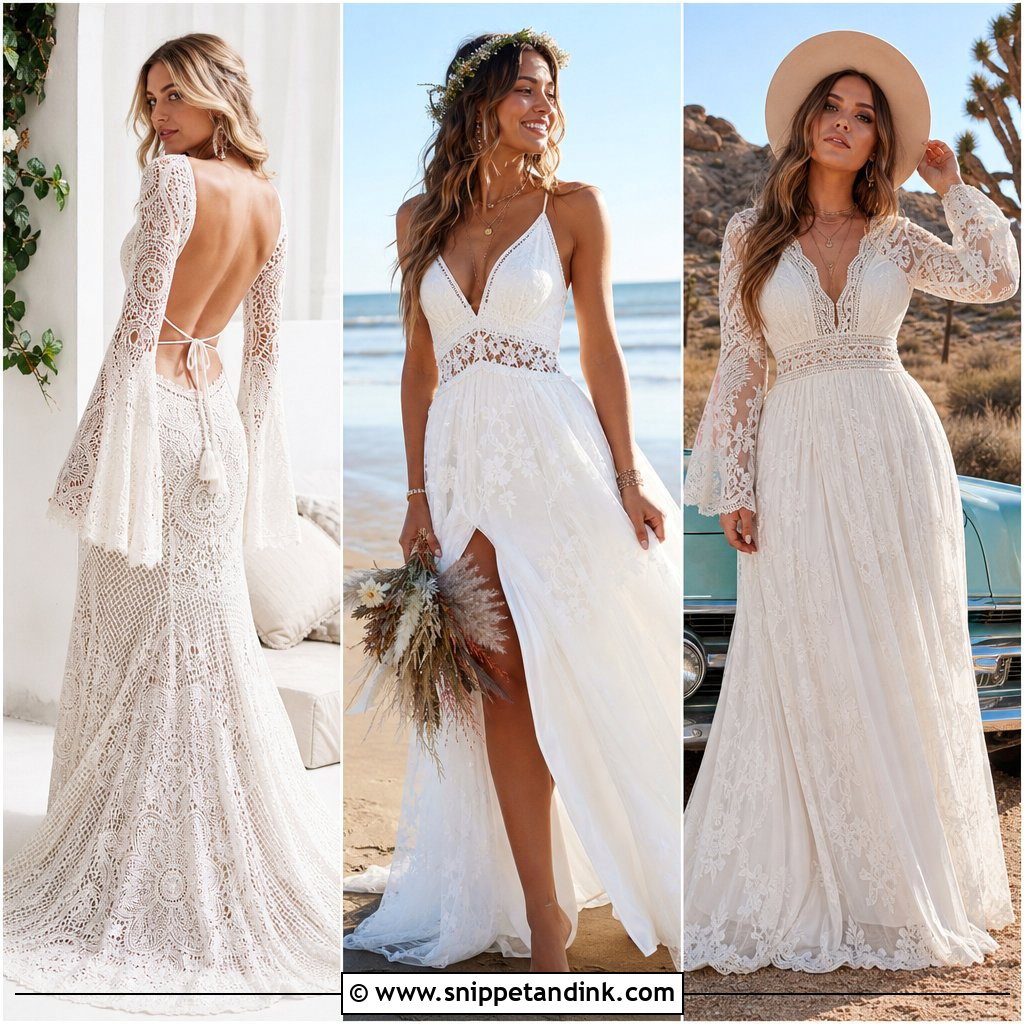
20. Macrame Wedding Dress With Cape Sleeves
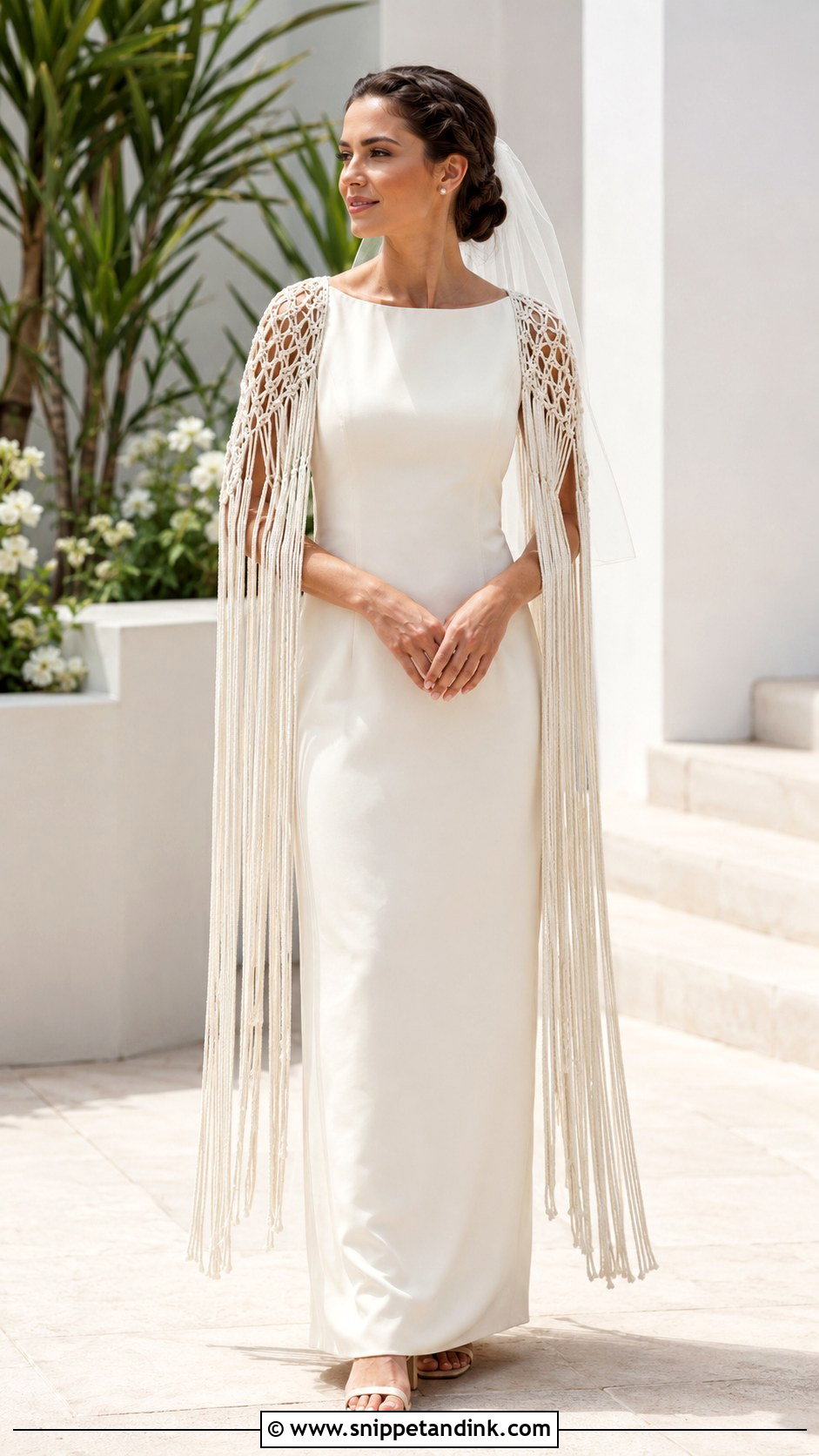
Cape sleeves give coverage and movement without the close fit of set-in sleeves, which makes them comfortable in heat. Knotted panels fall from the shoulder to elbow or wrist over a simple lined gown. Keep the skirt fairly streamlined so the cape leads. A loose cape catches on the bouquet and on people hugging you, so greet a few friends during the fitting. Delicate studs, a low braided bun and ivory block-heel sandals suit it, without a necklace. Skip the veil or keep it short and plain. Detachable cape panels let you lighten the dress for the reception.
Commissioning a Gown From an Independent Maker
Many macrame wedding dresses are made to order by small makers rather than stocked in salons. Every knot is tied by hand, so a full gown takes considerable time, and makers often have a queue. Order at least six months ahead, and ask the maker’s own timeline before paying a deposit.
- Ask for a small cord and knot sample so you can feel the softness and see the true color.
- Send measurements taken by a seamstress, not yourself.
- Confirm whether a lining is included and in what shade.
- Ask what changes are possible once it’s knotted, and who does them.
Cleaning Cotton Knotwork Once the Party Is Over
Grass, wine and makeup sink into cotton cord quickly. Blot spills on the night, don’t rub, then take the dress to a cleaner who has handled handmade knitwear or macrame before. Hand washing at home is possible for some cotton pieces, but the dress gets very heavy when wet and must dry flat on a towel, reshaped by hand, or it stretches permanently. For long-term storage, wrap it in acid-free tissue in a breathable box away from light, which slows the yellowing natural cotton is prone to.
Knotwork, Lining and a Dress That Moves With You
Start with a silhouette that feels secure on your body, then let the knotted texture set the tone for the rest. Simple shoes, restrained jewelry and an uncomplicated veil usually give the best balance. Check the lining, then sit, walk and dance in the dress before you commit, and allow extra time for handmade orders and alterations. Beach gowns, vintage bell sleeves, long trains and short minis all show how much range this handmade texture has, so choose the version that suits your venue and the way you actually want to spend the day.
You'll Like These Ideas:


Leave a Reply