
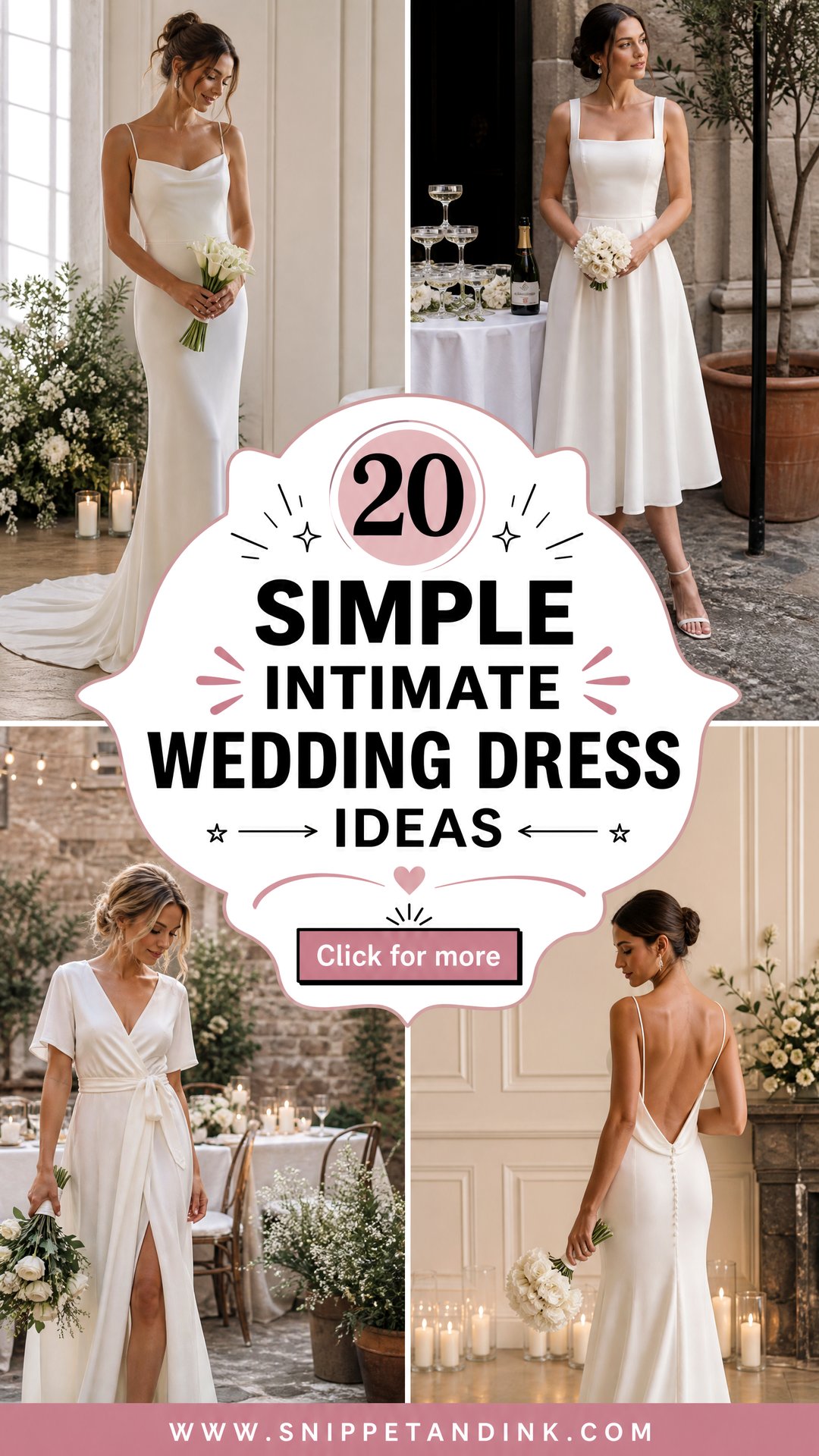
A small wedding changes what a dress has to do. Nobody is watching you from forty rows back; guests are standing a few feet away at a courthouse, around a table at a restaurant, or on the lawn at one of those backyard gatherings where the photographer is never far off. That closeness is why I steer intimate-wedding brides toward clean cuts and good fabric rather than heavy beading. Below are twenty silhouettes I’d happily put a bride in, each shown with the shoes, jewelry and hair that finish it, plus the fitting detail I check first on each one.
Where a Plain Gown Shows Its Seams
Take away the lace and beading and every construction detail is suddenly on display. When a bride brings me a simple dress, either in the shop or for alterations, I look at four things before we ever talk about style.
- Fabric weight. Hold the skirt up to a window. If you can clearly see your hand through satin or crepe, it will show underwear lines and wrinkle at the hip the moment you sit.
- Lining. A well-made plain dress is fully lined in something that moves with the outer fabric. A cheap polyester lining under silk can cling and twist in a warm room.
- Seams and darts. They should lie flat with no puckering. A puckered seam on a bare bodice looks worse at arm’s length than it does in a shop mirror.
- Hem allowance. If you’re petite or might change shoes, check there’s enough fabric turned up inside the hem to lengthen or level it later.
How the fitting calendar usually runs
Made-to-order gowns commonly take several months to arrive, while ready-to-wear dresses can be bought and altered within weeks, so the timeline depends on which you choose. I’d plan the first fitting around two months before the wedding and the last one or two weeks out, wearing the shoes you’ll actually walk in. A simple dress needs fewer fittings than a corseted ball gown, but it rarely needs none.
1. Satin Slip Wedding Dress
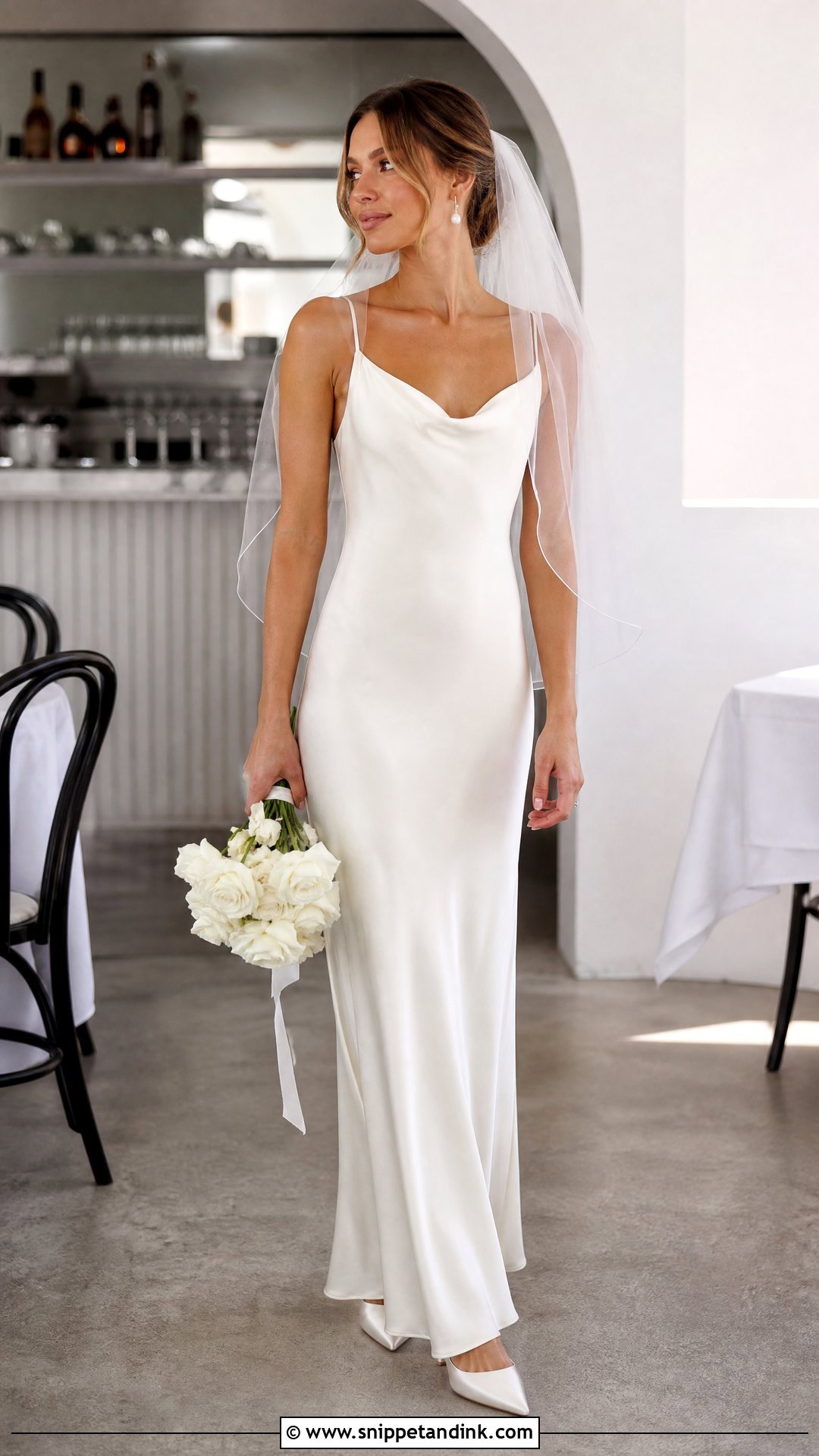
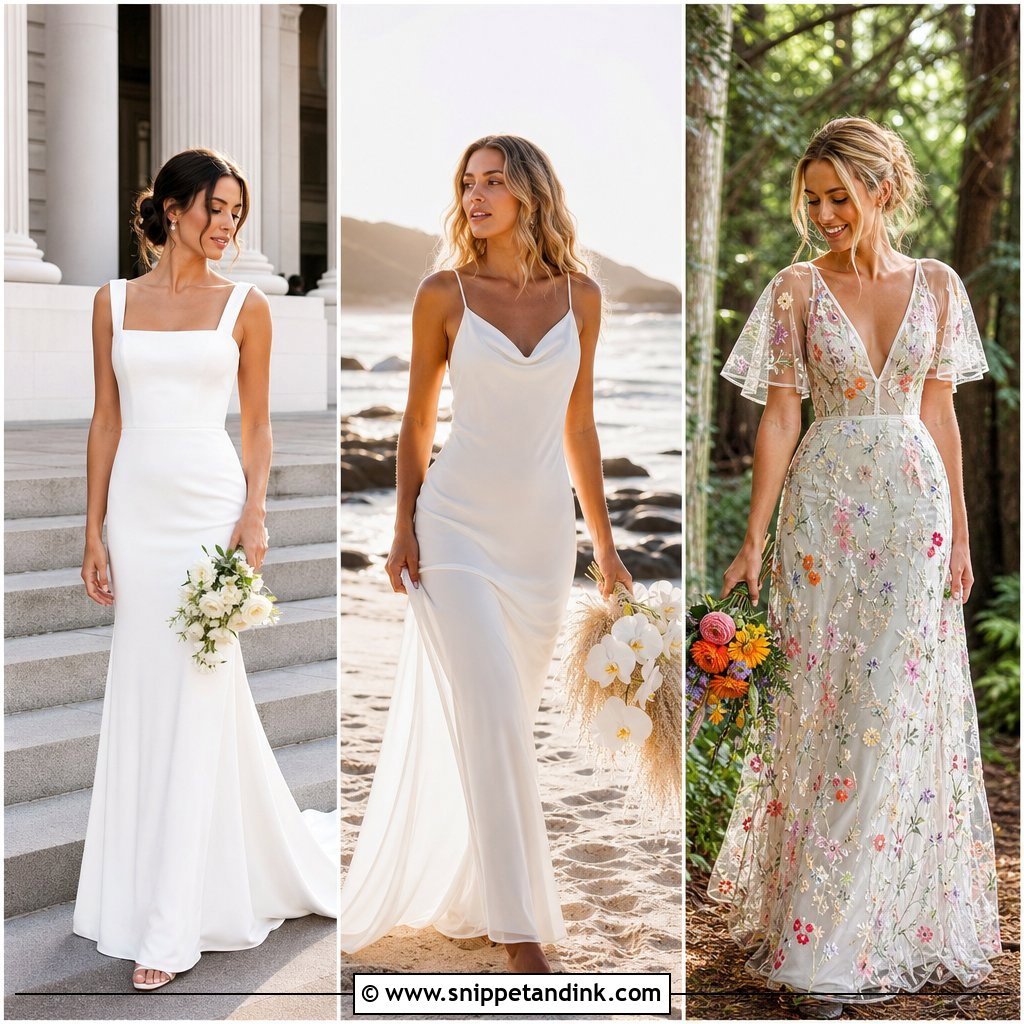
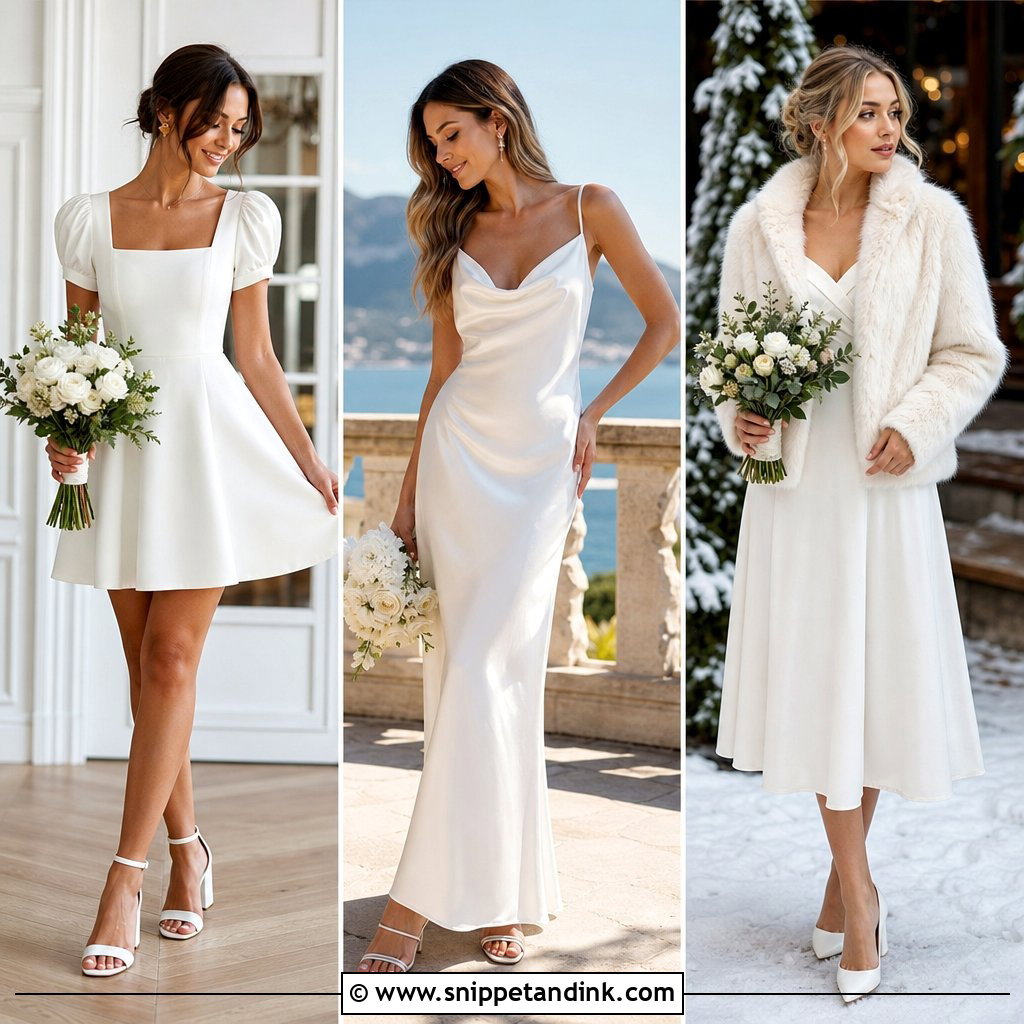
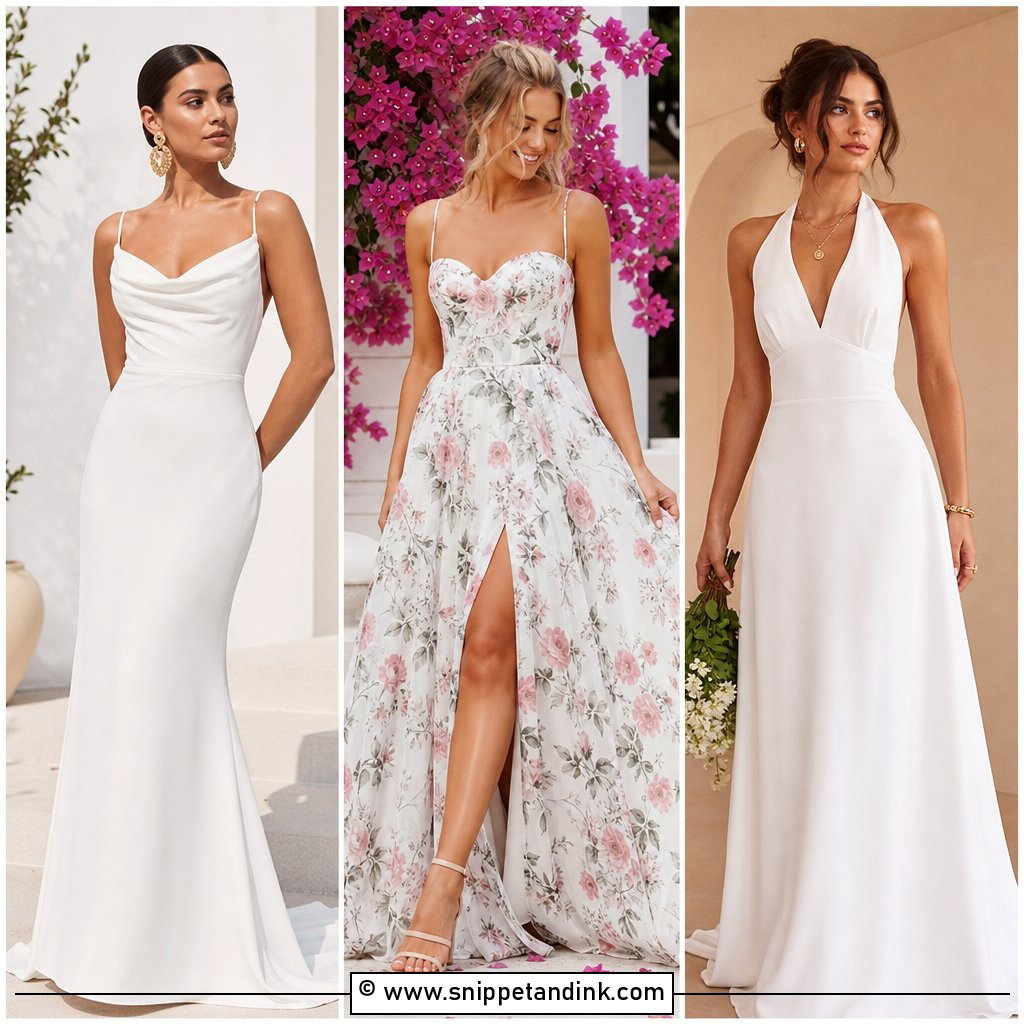
Bias-cut satin is the most honest fabric in bridal: it skims everything, including a bra line or a seam allowance that was never pressed flat. I fit a slip with the bride in the exact underwear she’ll wear, because the wrong layer beneath it is the thing I correct most often on the morning itself. Pick a maxi with slender straps and a soft cowl or draped neckline, then keep the rest quiet with ivory kitten heels, pearl drops and a small structured clutch. A sleek bun shows the neckline, and a fingertip veil adds the traditional note if you want one. Bring a light wrap, since satin holds no warmth once the sun goes down.
2. Crepe Sheath Wedding Dress
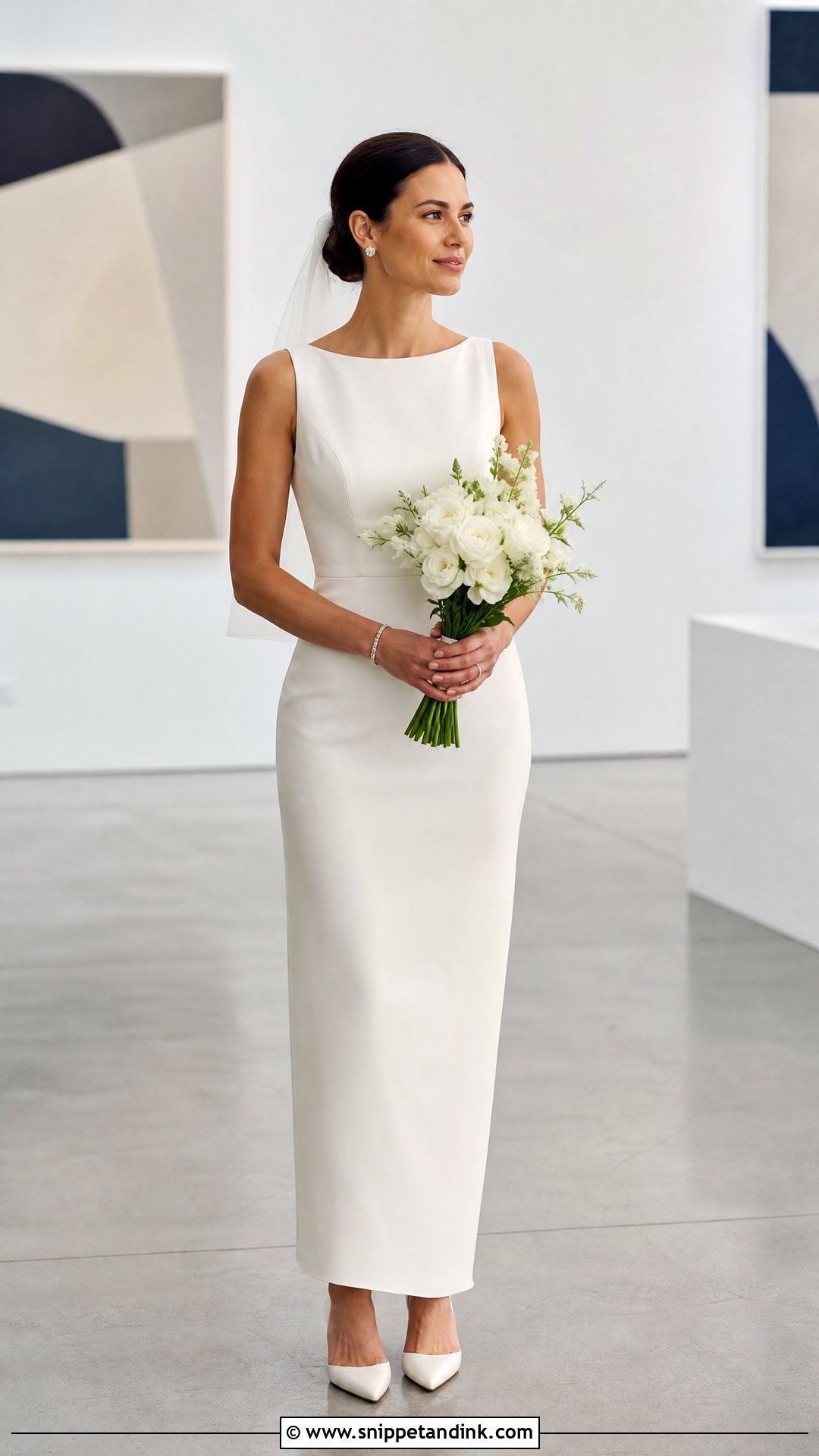
Matte crepe is what I reach for when a bride wants to look tidy rather than decorated, and a crepe sheath wedding dress is the purest version of that idea. Look for gentle waist shaping and a skirt that falls straight, sleeveless or with a small cap sleeve. The catch is your stride. A true sheath shortens your step more than you expect, so at the fitting I have brides climb a step and sit in a low chair. Stretch crepe forgives a lot here. Low pointed pumps, a fine tennis bracelet and small studs are all it needs, with a short veil and a bouquet tied in plain ribbon.
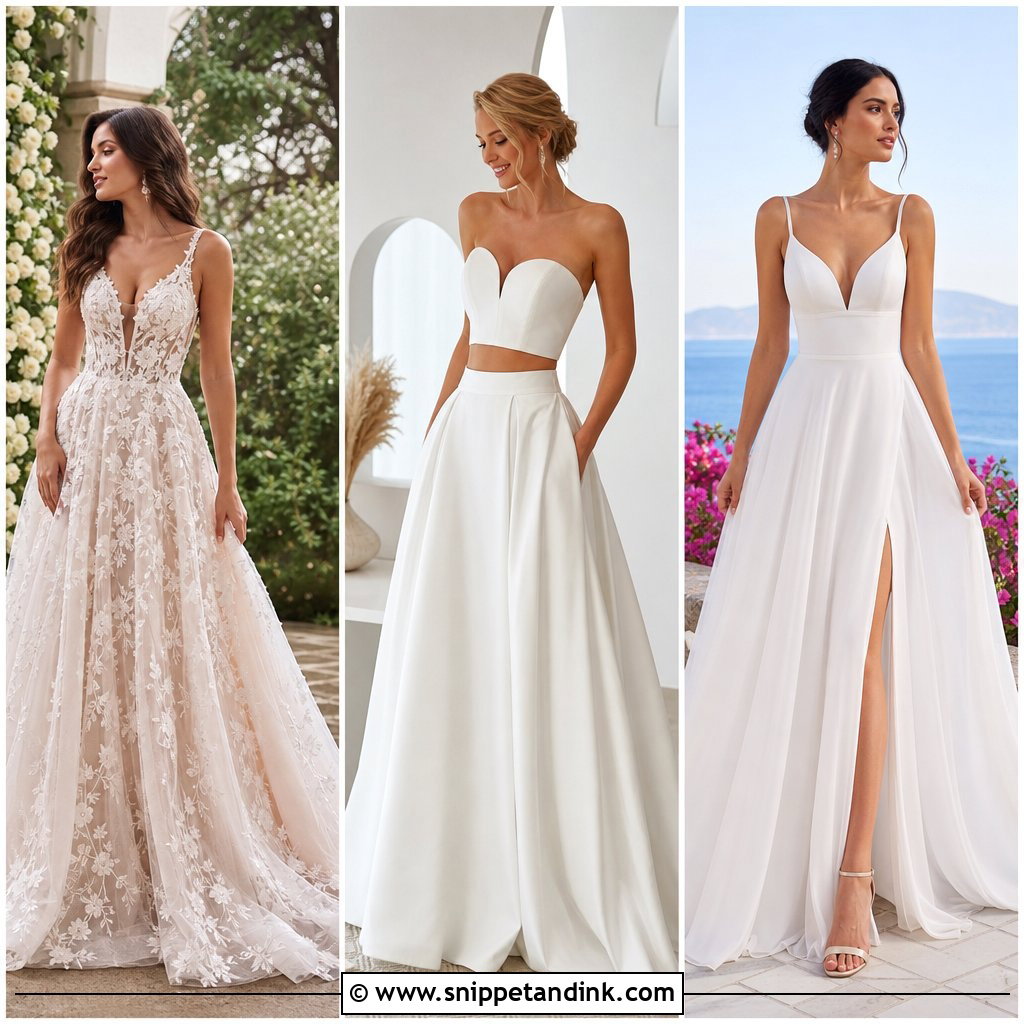
3. Simple A-Line Wedding Dress
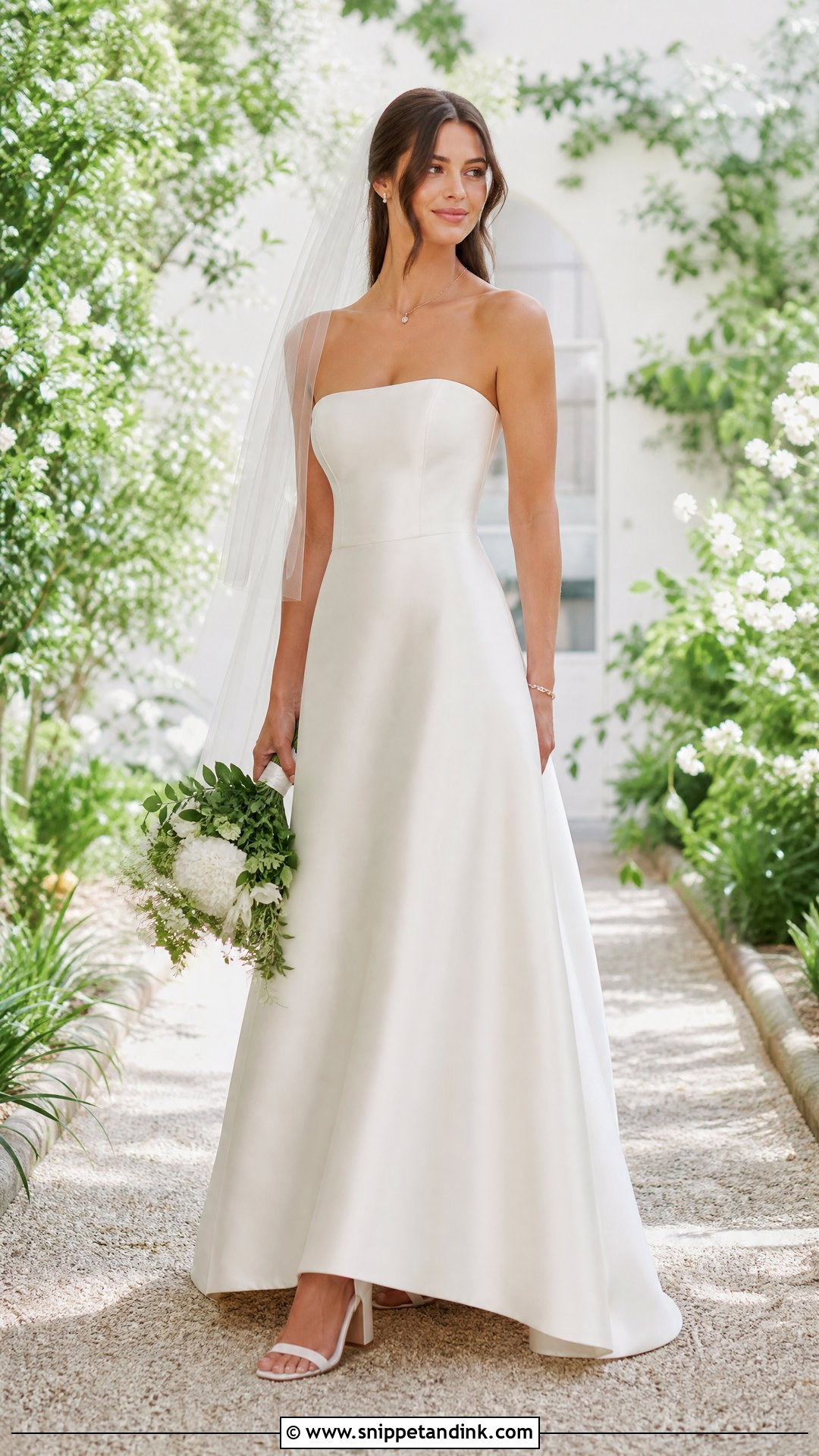
Would you like something that reads as a classic wedding dress but doesn’t need a helper to manage it? An A-line does that: fitted bodice, defined waist, and a skirt that widens gradually, which is why it suits most figures. In satin or mikado it holds its own shape; in crepe it softens. The alteration I make most on A-lines is moving the waist seam a fraction up or down, because where it sits decides whether your torso looks long or cut short. Keep the train to a modest sweep in a small room. Block heels on grass, pumps indoors, a fine chain and a low chignon under a waist-length veil.
4. Tea-Length Wedding Dress
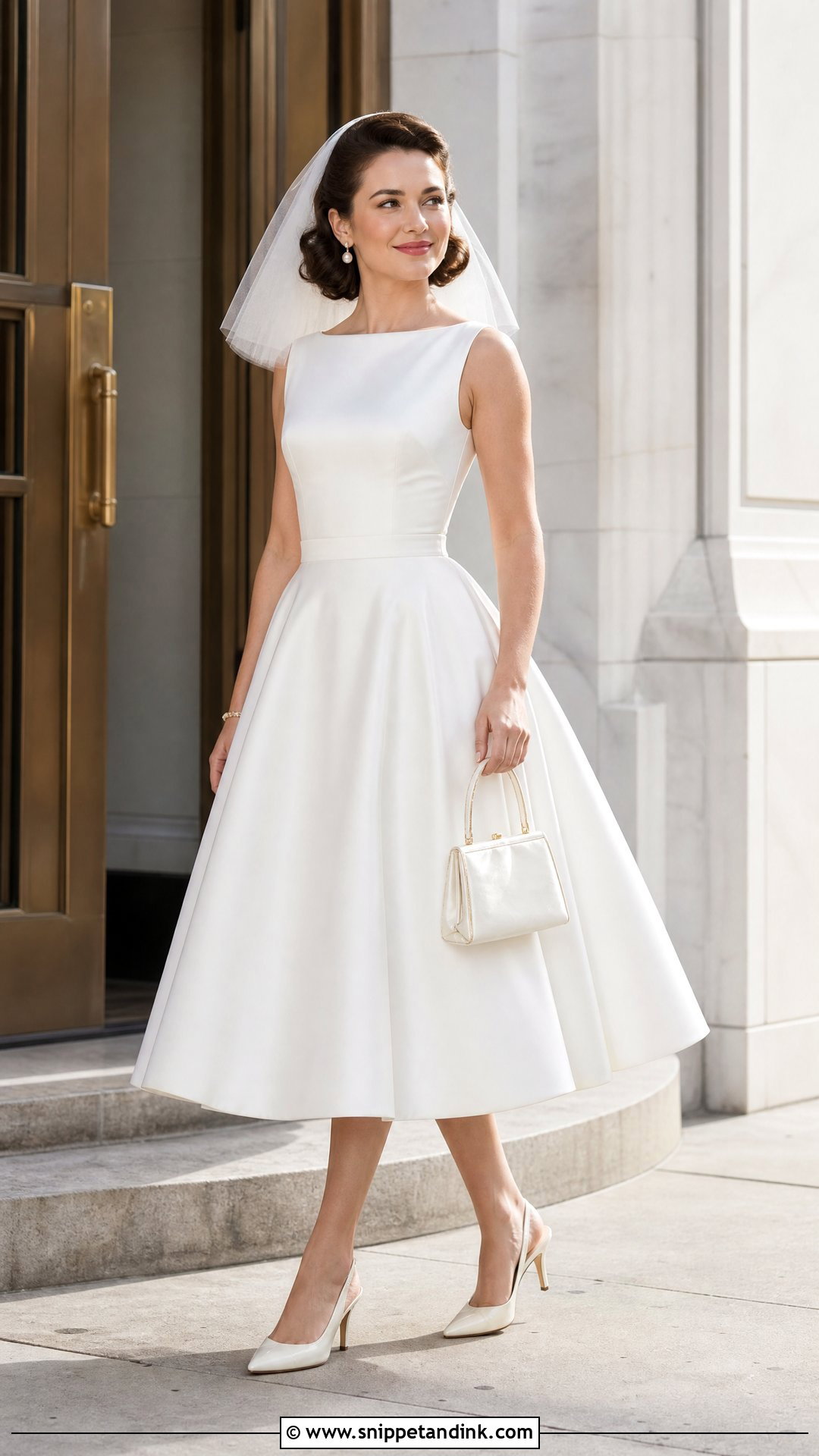
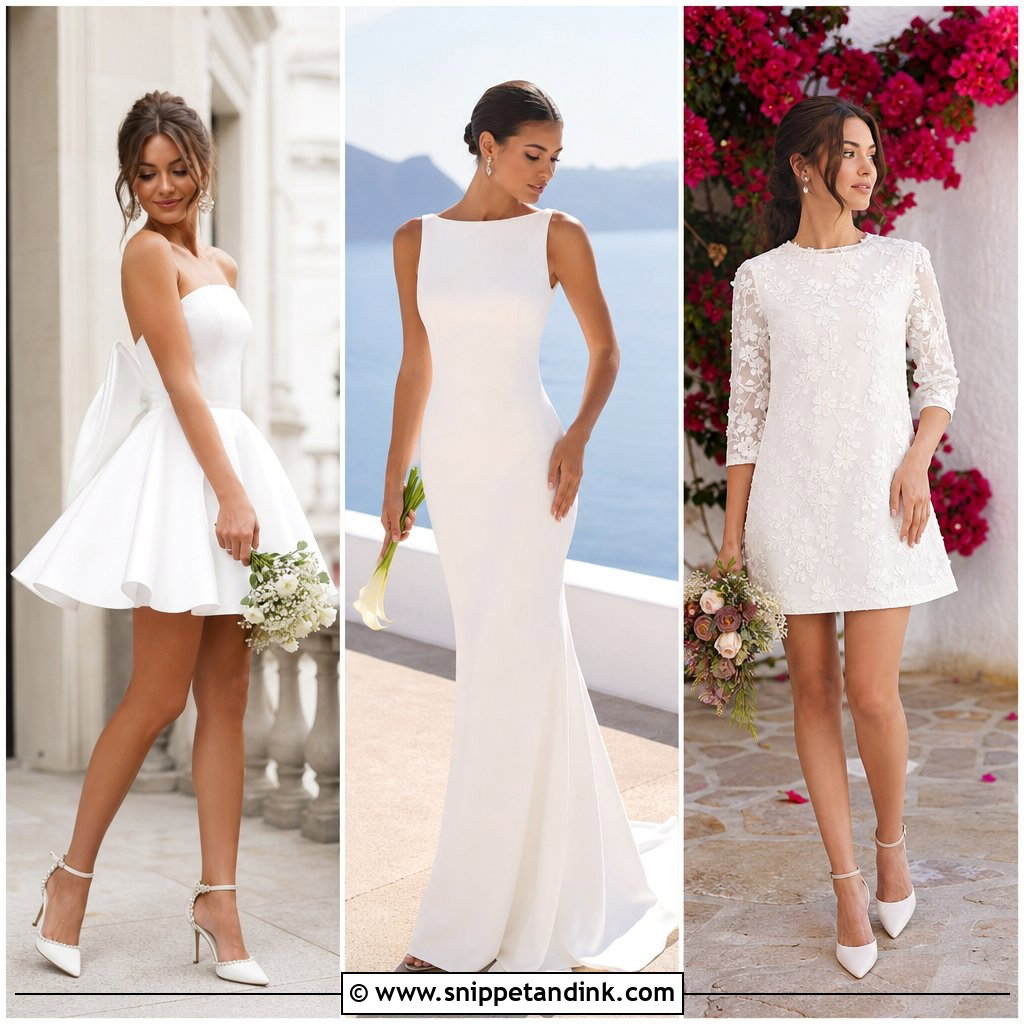
Tea length puts your shoes on show, so I treat them as part of the dress rather than an afterthought. The hem lands between knee and ankle, and a fitted bodice over a softly flared satin or organza skirt gives it that vintage swing. Pointed slingbacks are my usual pairing, with pearl earrings and a small top-handle bag. A birdcage or short tulle veil keeps the proportions right; a long veil tends to swamp a short skirt. If you can, ask for hidden pockets and a boned inner bodice. You’ll be glad of both by dessert, and the shorter hem means nothing drags through a wet lawn.
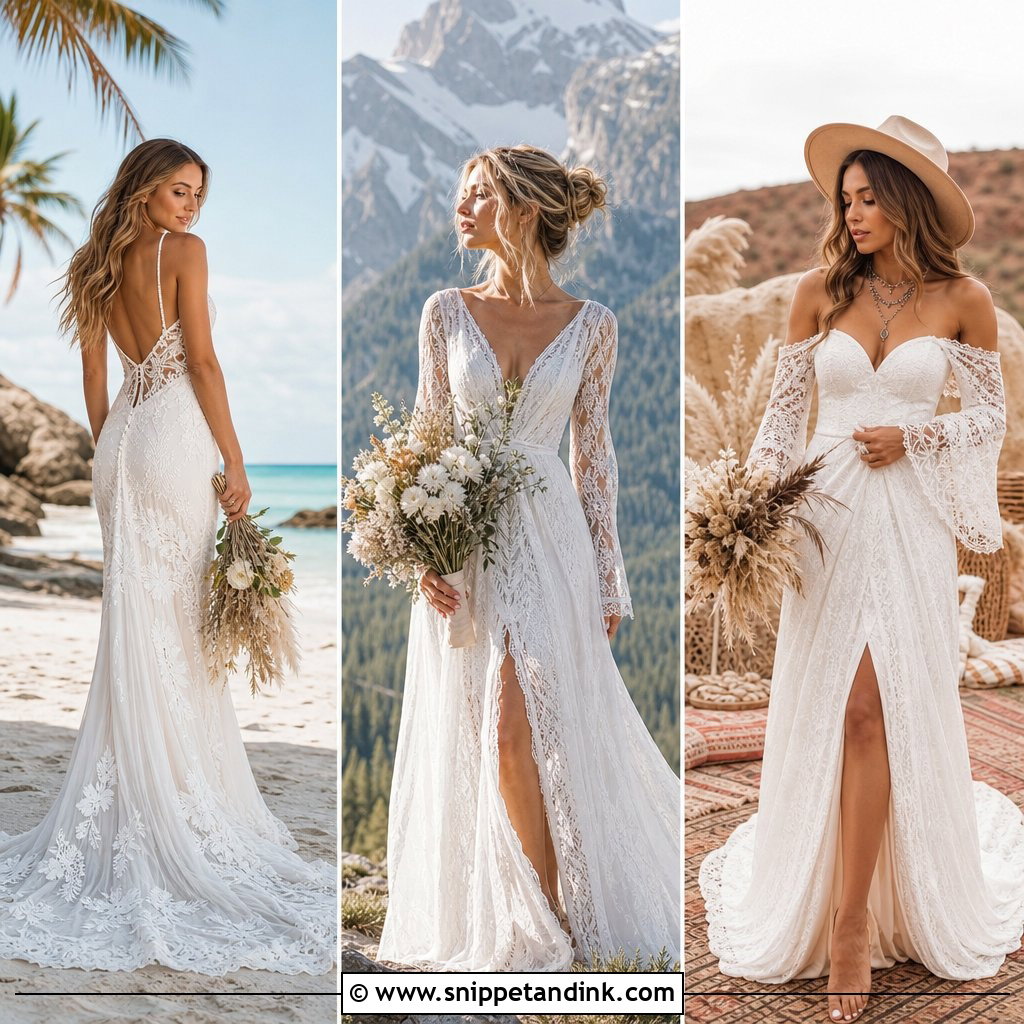
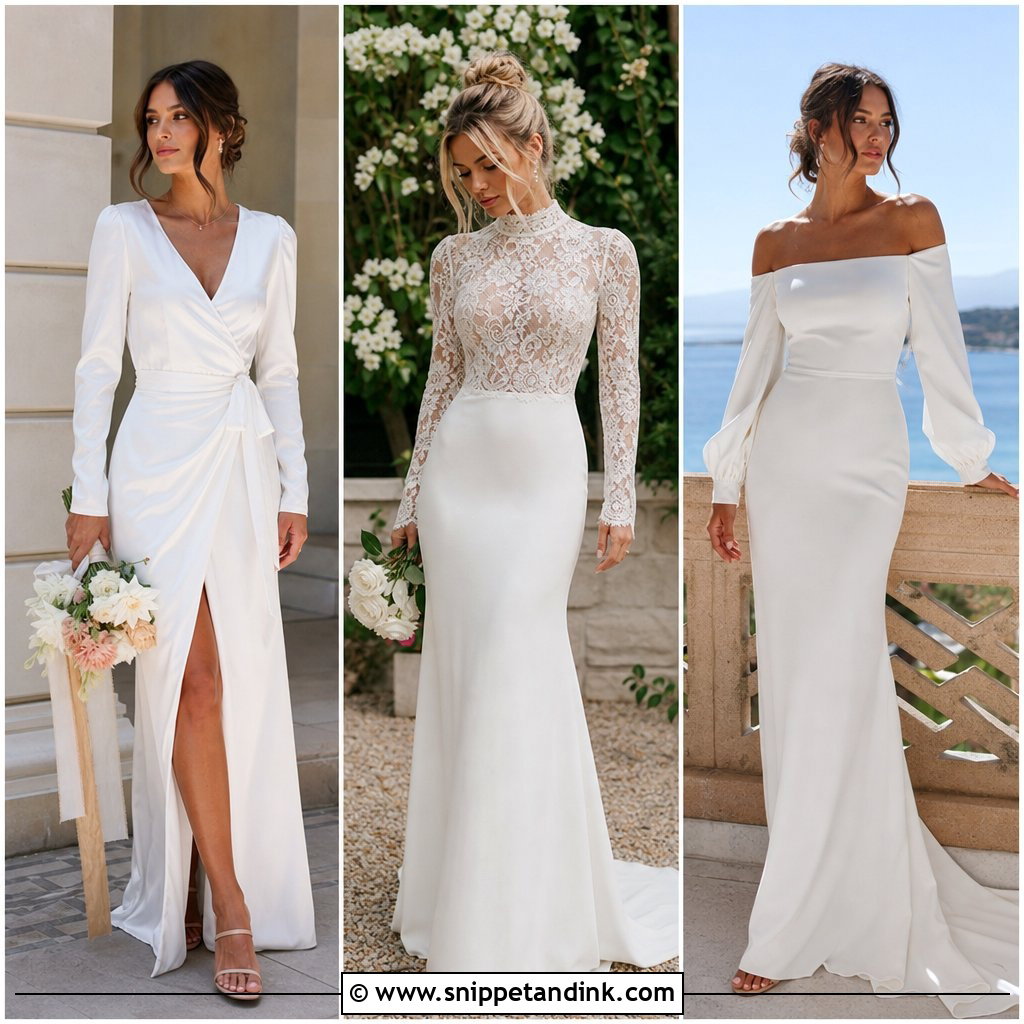
5. Long Sleeve Lace Wedding Dress
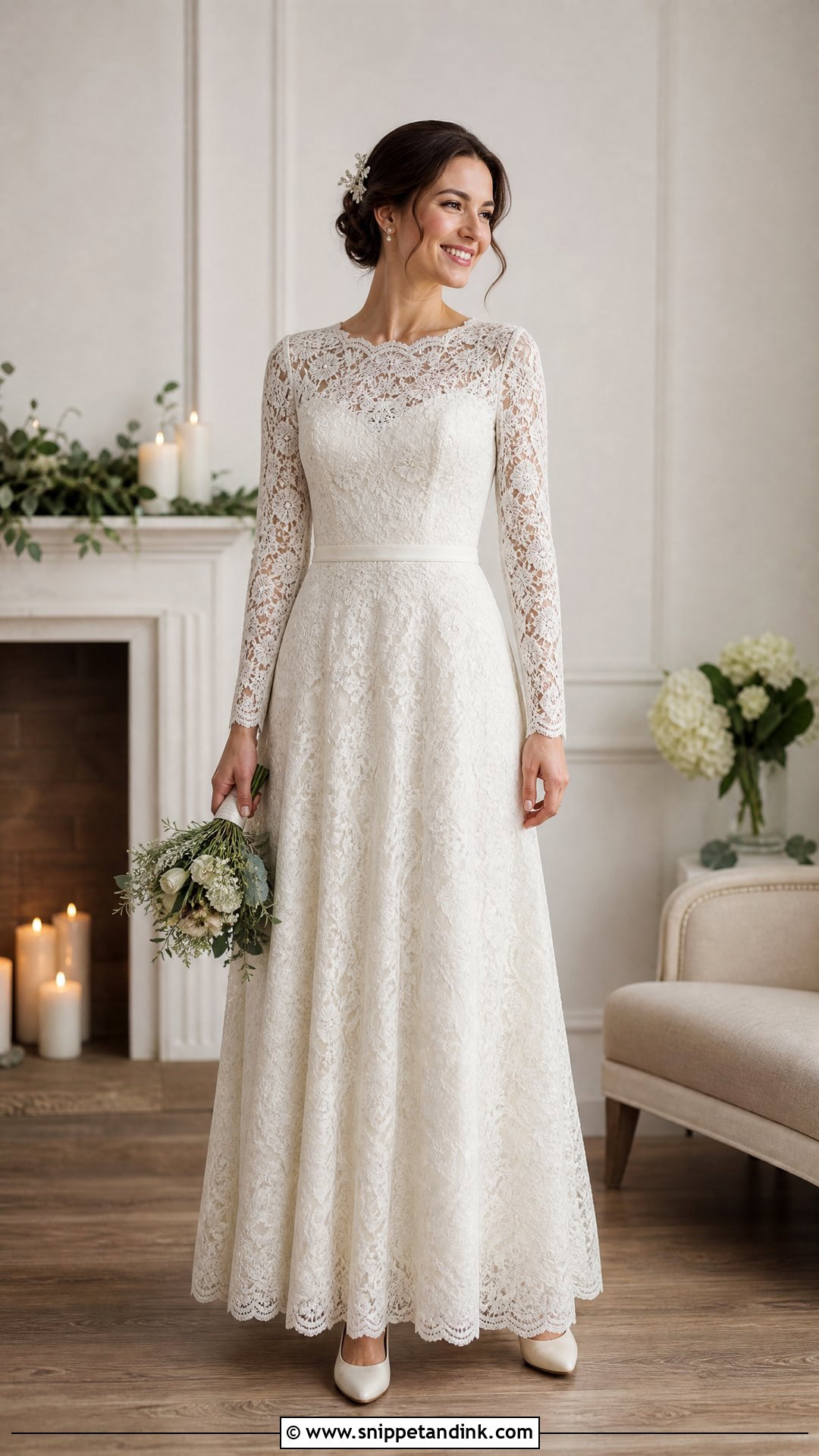
With lace sleeves, comfort goes wrong at the arms, not the bodice. Before I fit anything else I have the bride reach forward as if hugging someone, because a sleeve set too tight across the back pulls every time she lifts her arms. Pick a clean lining, a fitted waist and a skirt that flows rather than flares hard; floral lace reads romantic, geometric lace reads modern. Since the lace is already doing the decorating, a veil is optional, and if you wear one, keep its edge plain. Ivory closed-toe pumps, pearl studs and a small comb above a low bun finish it. Check the neckline and cuffs against your skin, because a scratchy corded edge can be relined in soft tulle.
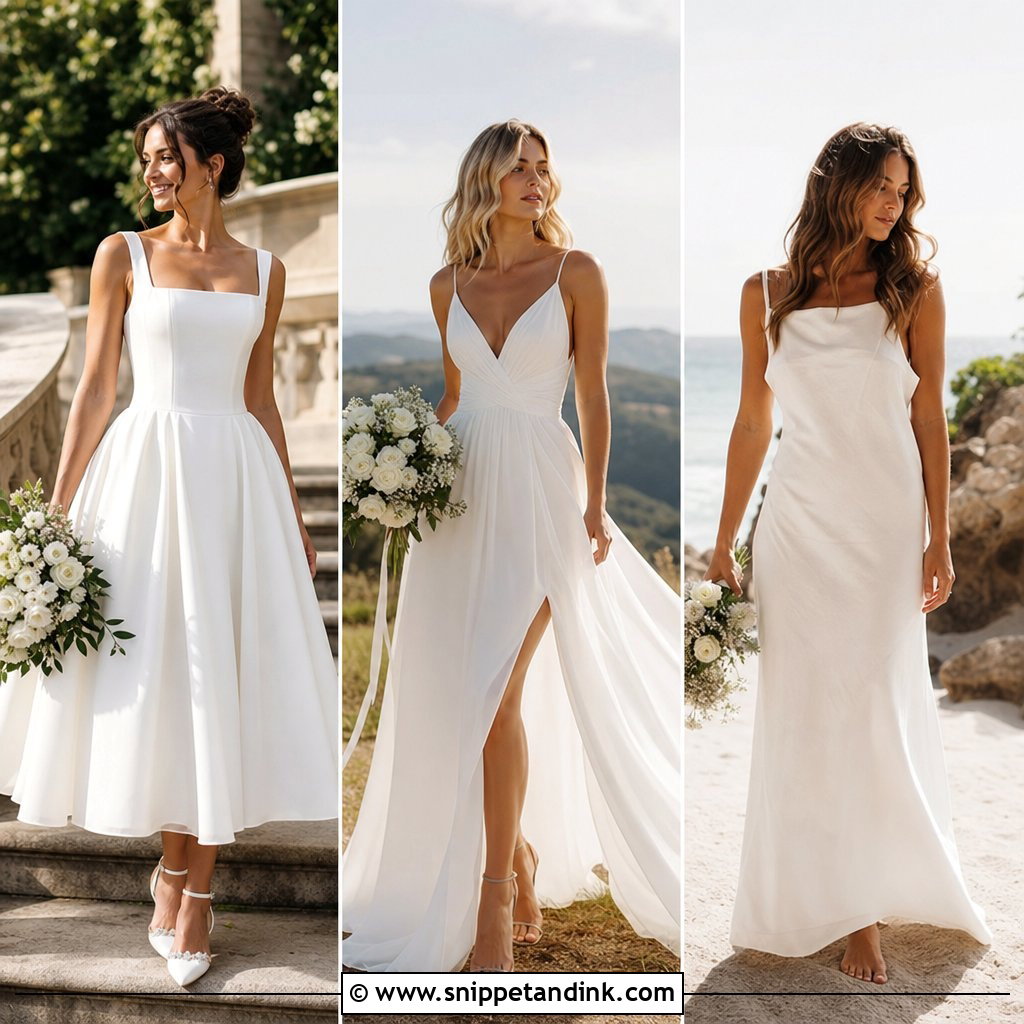
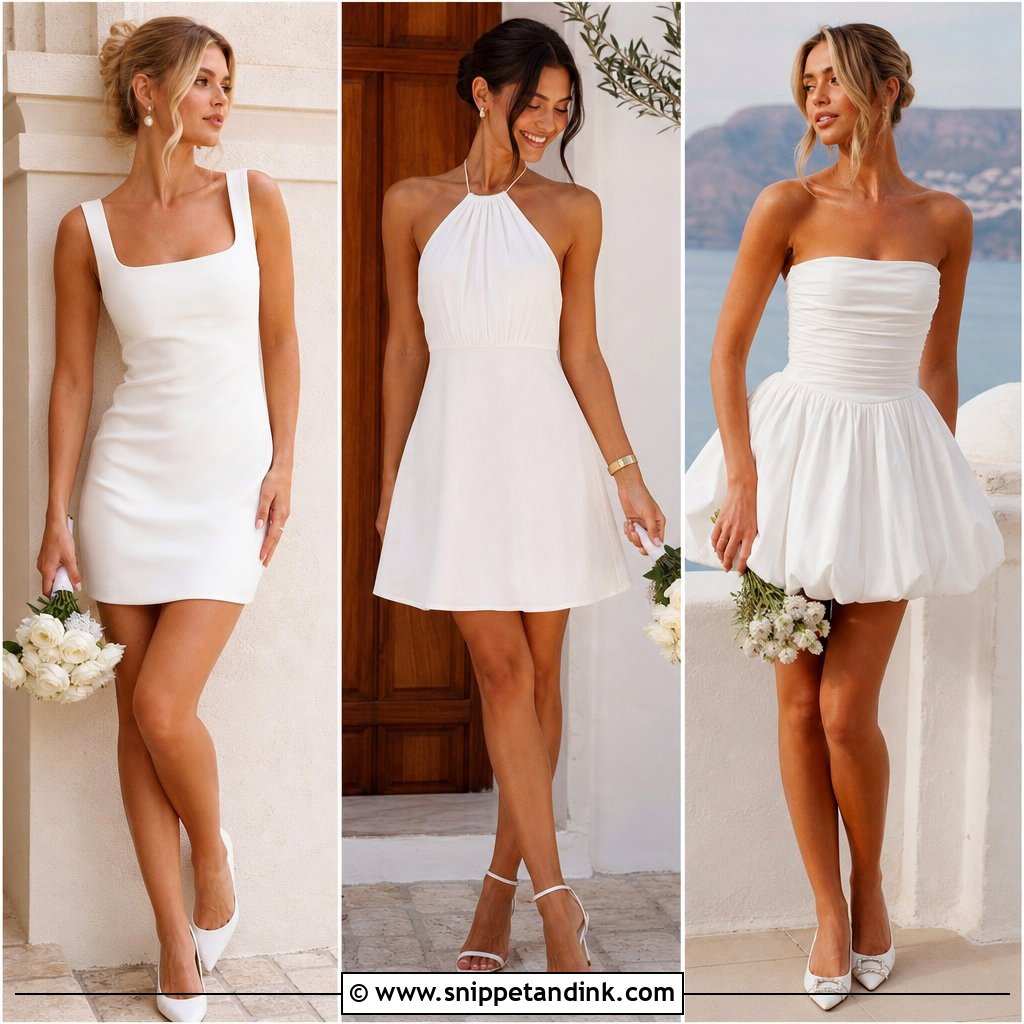
6. Square Neck Midi Wedding Dress
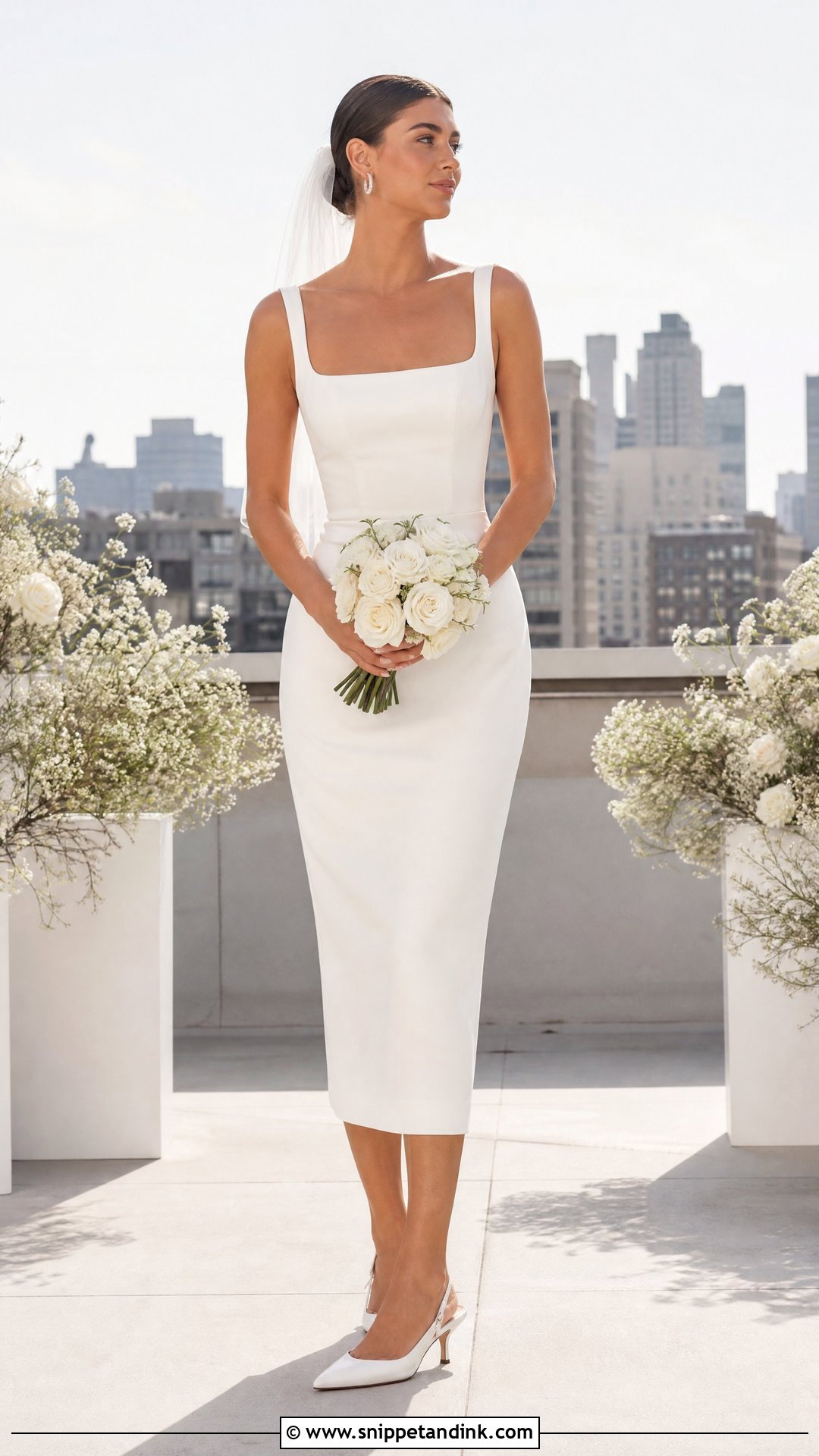
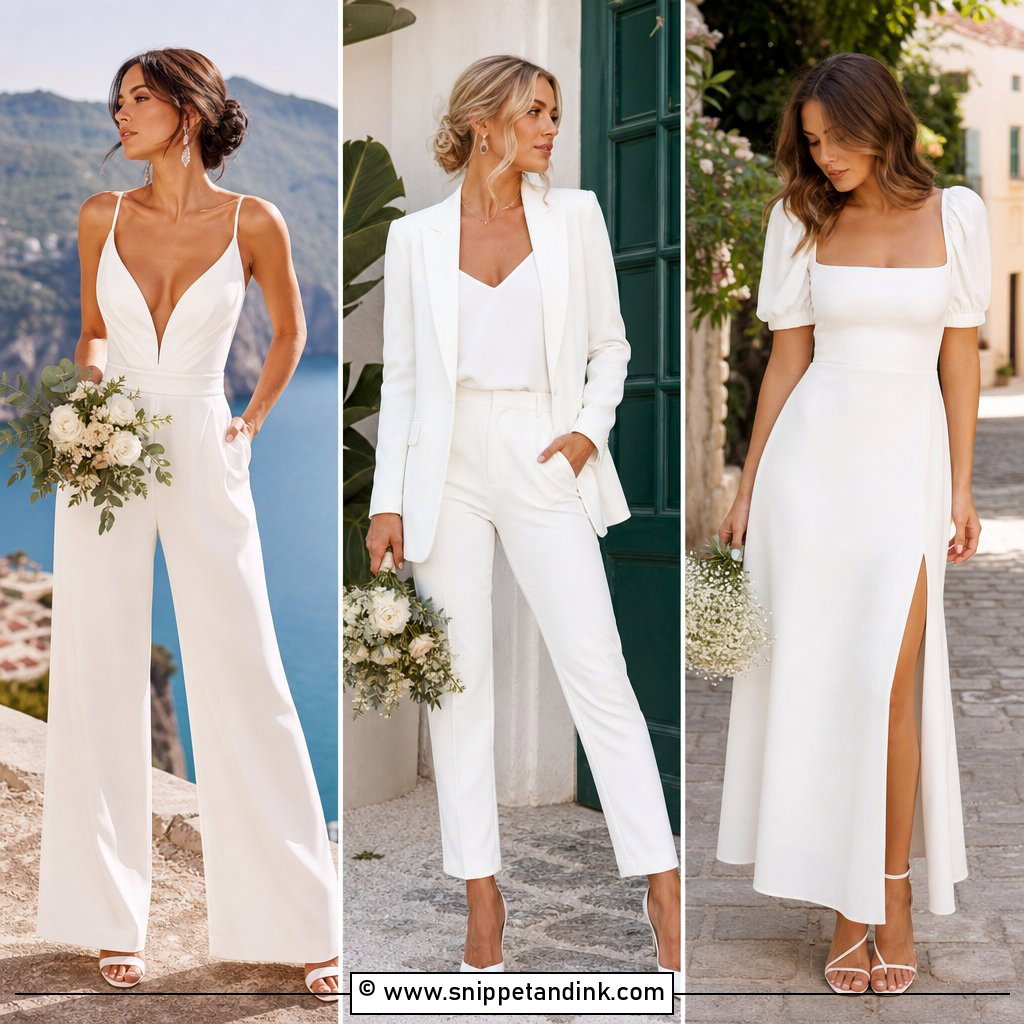
Structure is what makes a square neck midi wedding dress work. The neckline has to stay flat and crisp at the corners, and that only happens in fabric with body, such as structured crepe or a heavier satin. If it gapes when you lean forward, the fix is usually a small dart or stay tape along the edge, not a tighter bodice. Wide straps or short sleeves suit it, with the skirt ending below the knee. Slingback kitten heels, a slim bracelet and little pearl hoops are plenty. Tuck a short veil under a smooth bun so it frames the shoulders without crossing that straight line.
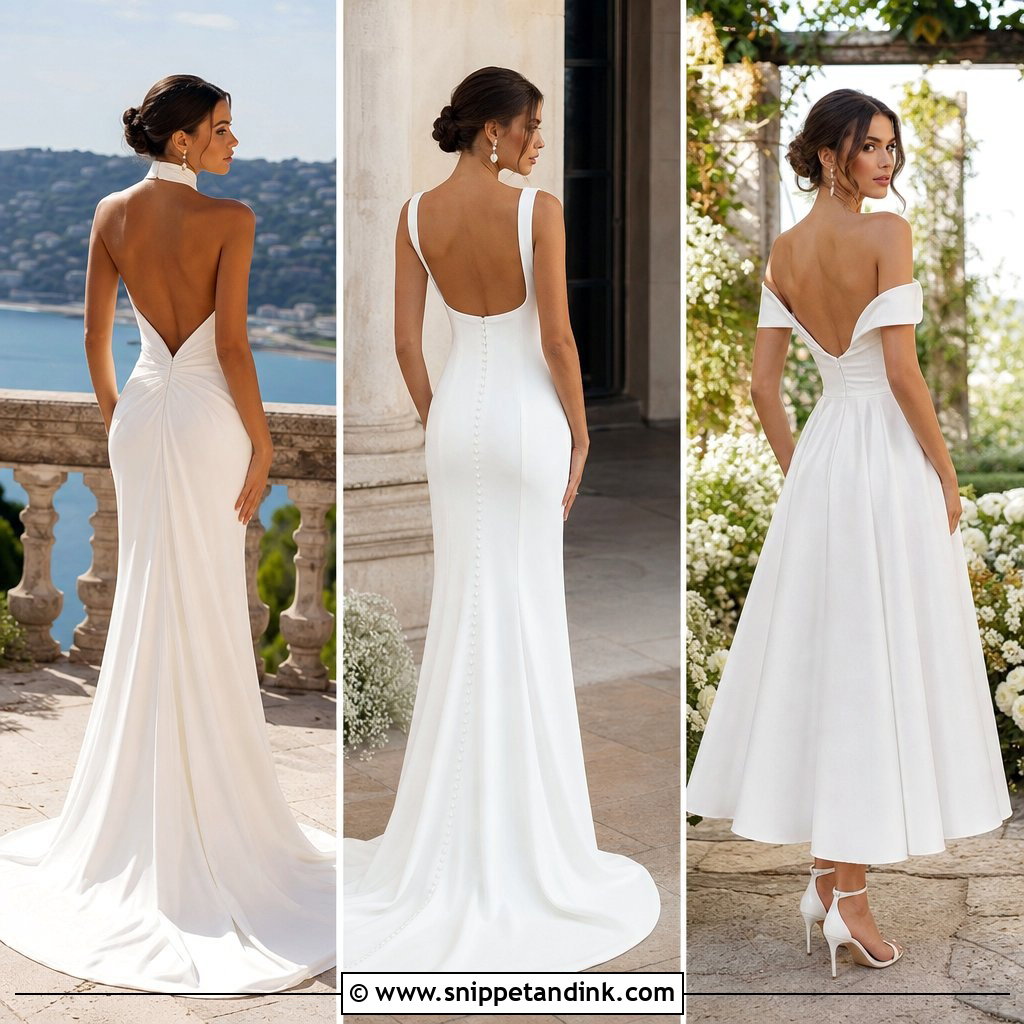
7. Halter Neck Wedding Dress
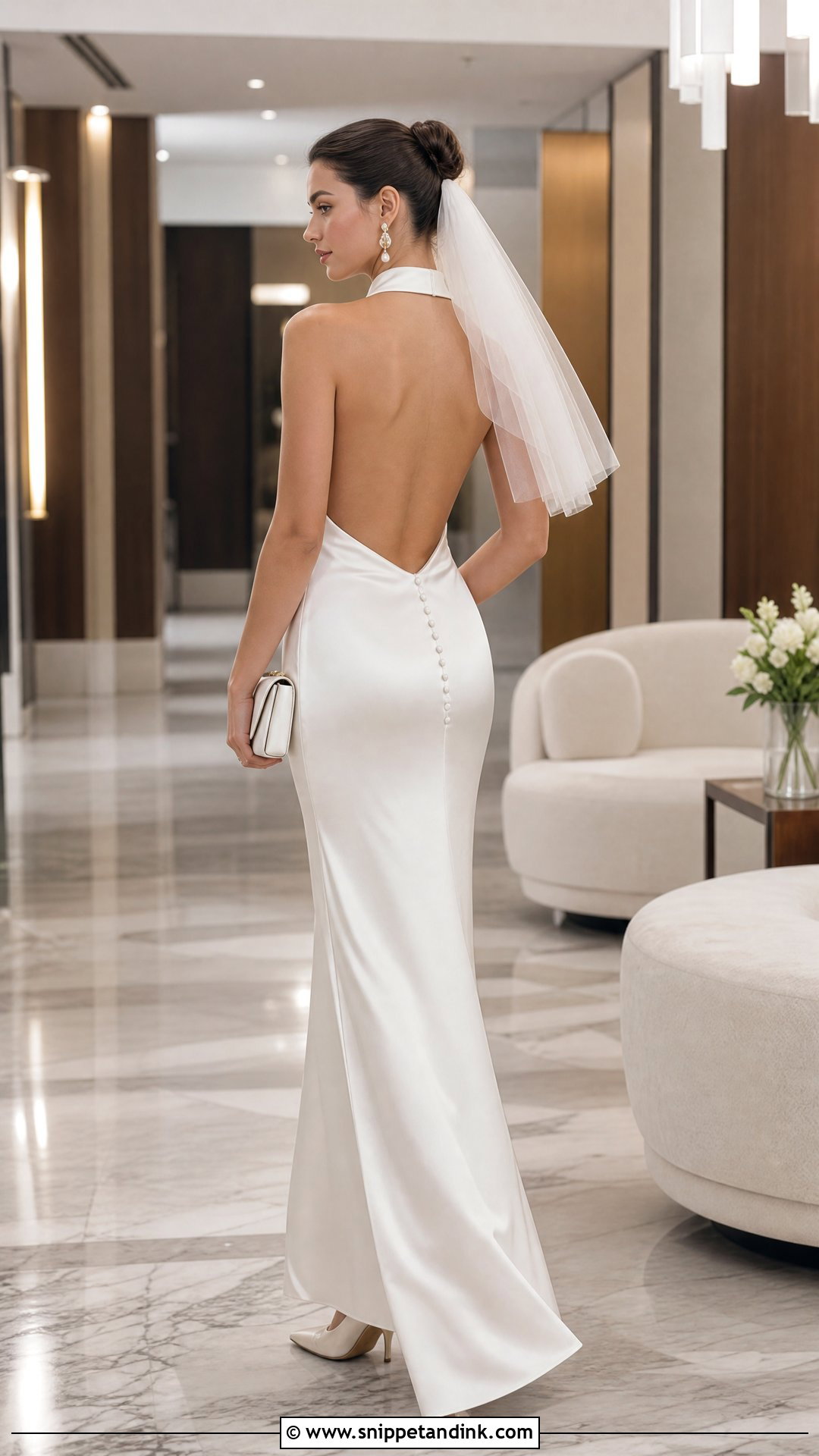
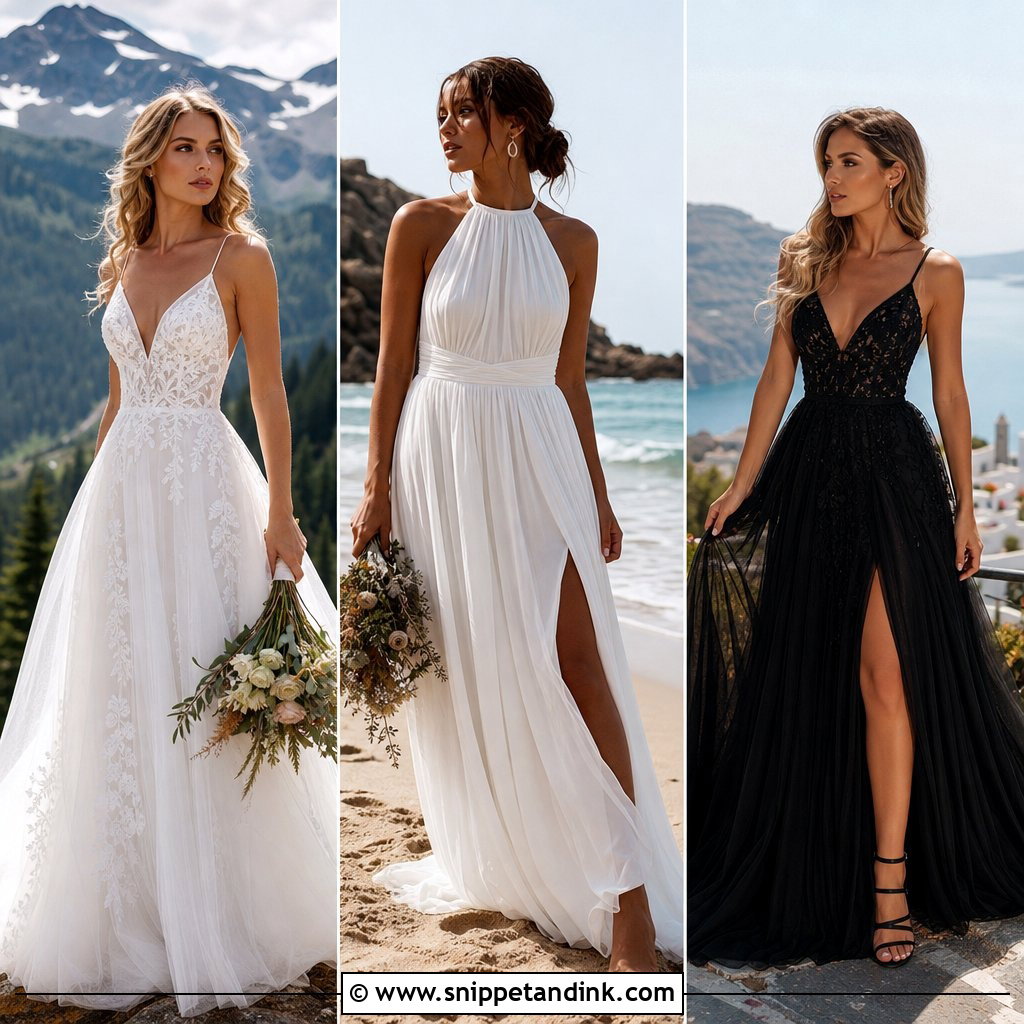
A halter carries the weight of the dress from the back of your neck. That’s why I ask brides to wear one for a good twenty minutes at the fitting before deciding. A satin or crepe column with a softly fitted waist and an open or draped back suits the neckline best. The halter is your necklace, so skip one and wear drop earrings with pointed pumps and a slim metallic clutch. A low ponytail or bun keeps the neck clear, and a detachable shoulder-length veil comes off after the ceremony. If the strap starts to dig in, a tailor can add a hidden elastic section or a second fastening so the load spreads.
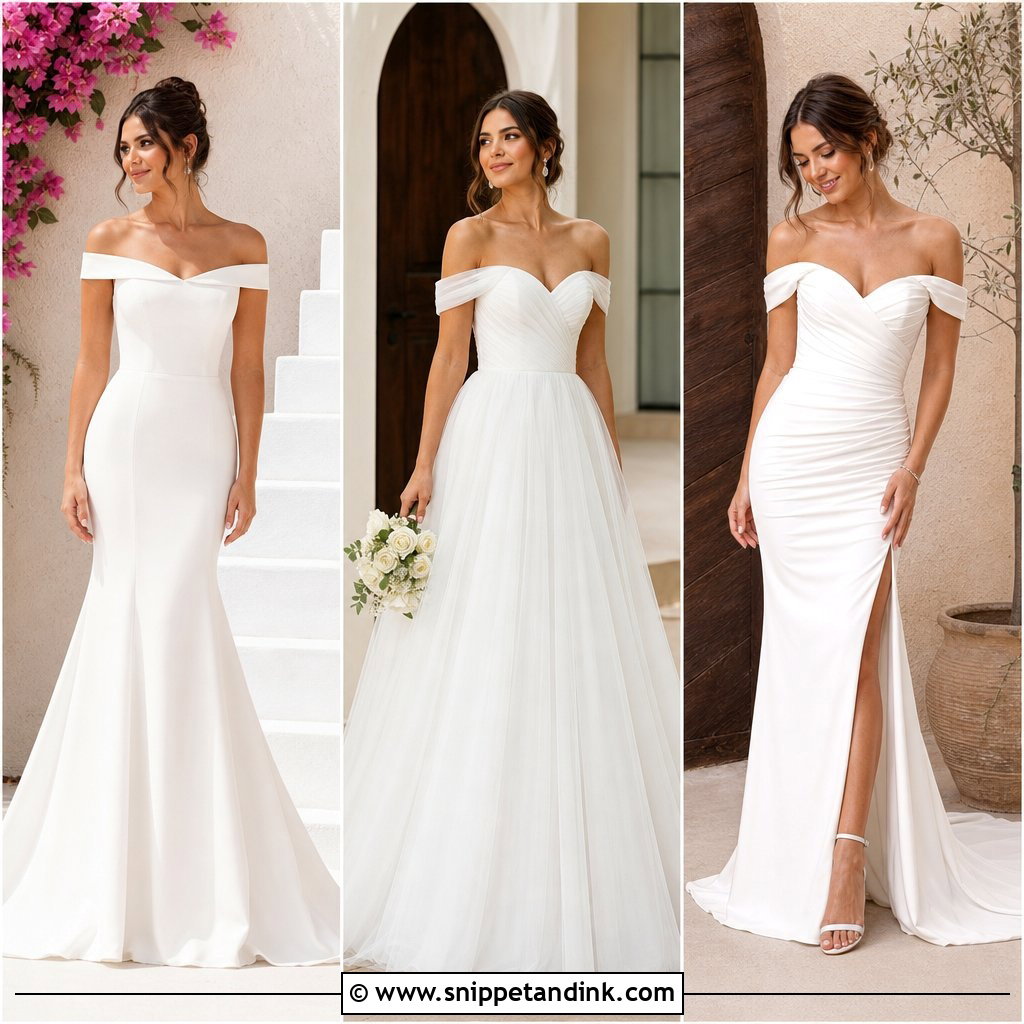
8. Off-the-Shoulder Wedding Dress
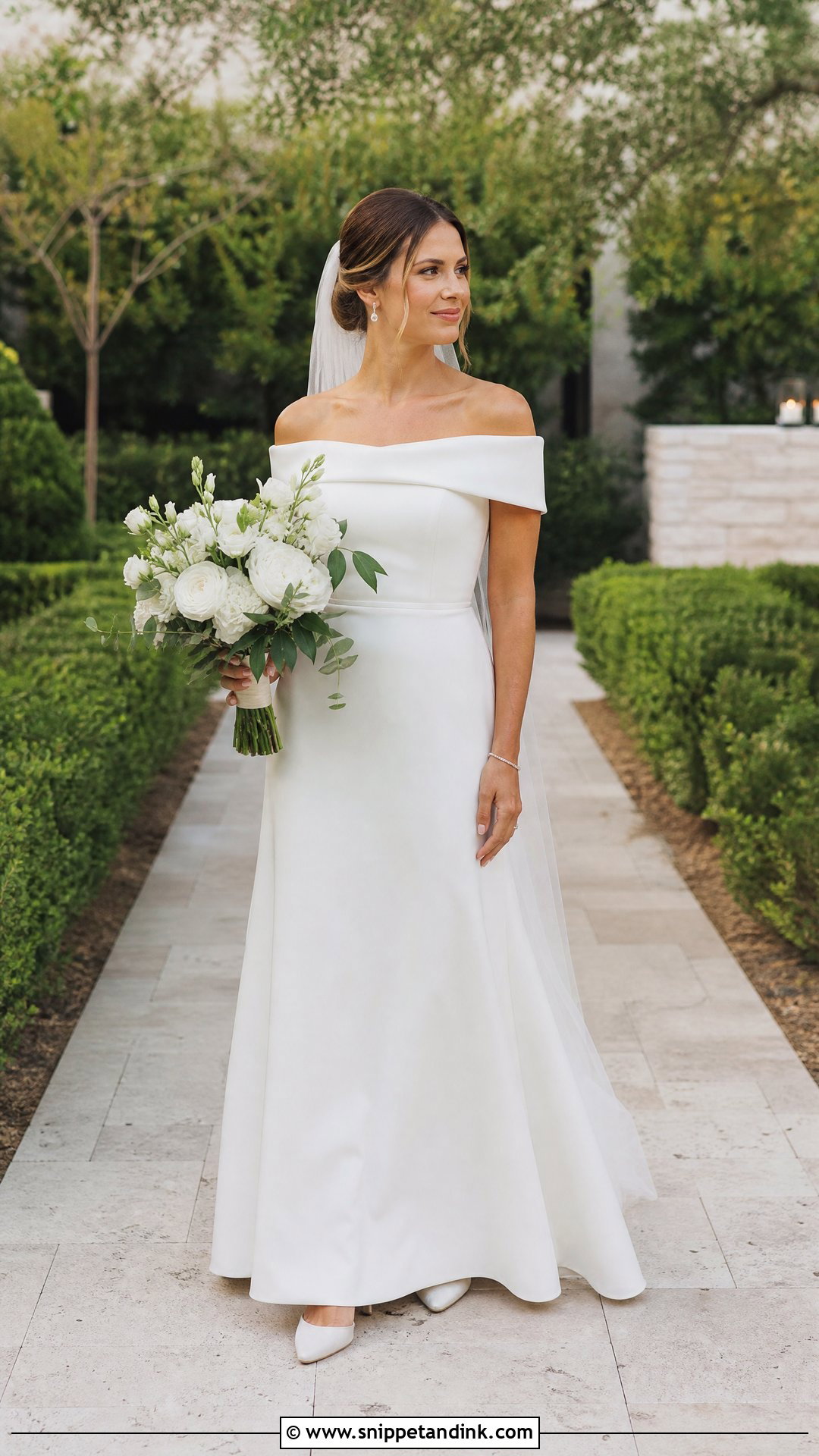
This neckline lives or dies on whether it stays put. During alterations I have every bride raise both arms above her head; if the band rides up, it needs silicone gripper tape or a fitted inner corset to anchor it. Go for a crepe bodice with folded detailing and a straight or gently flared skirt. Low block heels keep you steady, while pearl earrings and a slim bracelet leave the collarbone clear, and a smooth updo shows the full shoulder line. For a chilly evening, a structured cape you can remove indoors is kinder to photos than a cardigan. Add a chapel or fingertip veil only if the dress feels too plain to you.
9. Wrap Wedding Dress
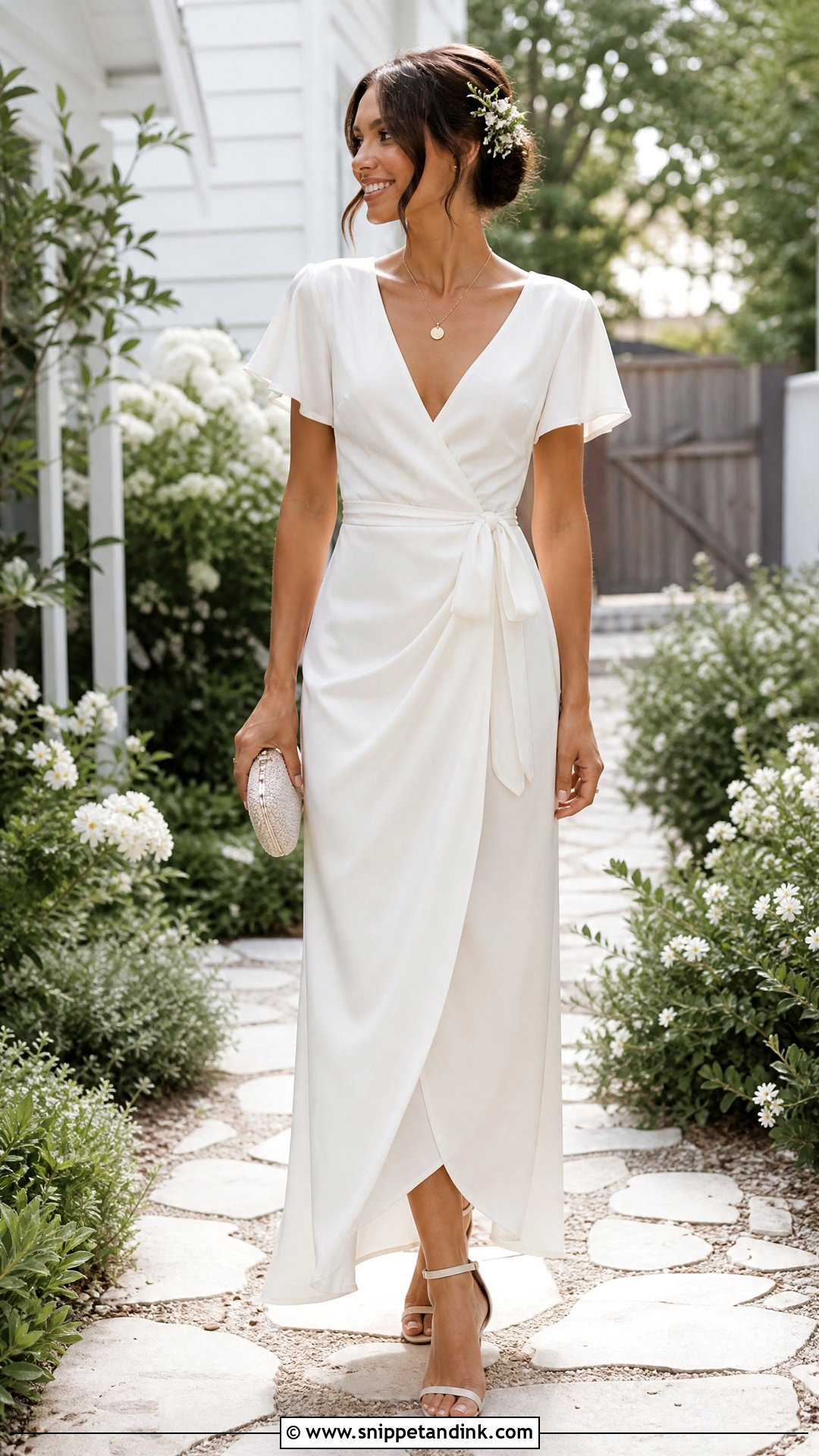
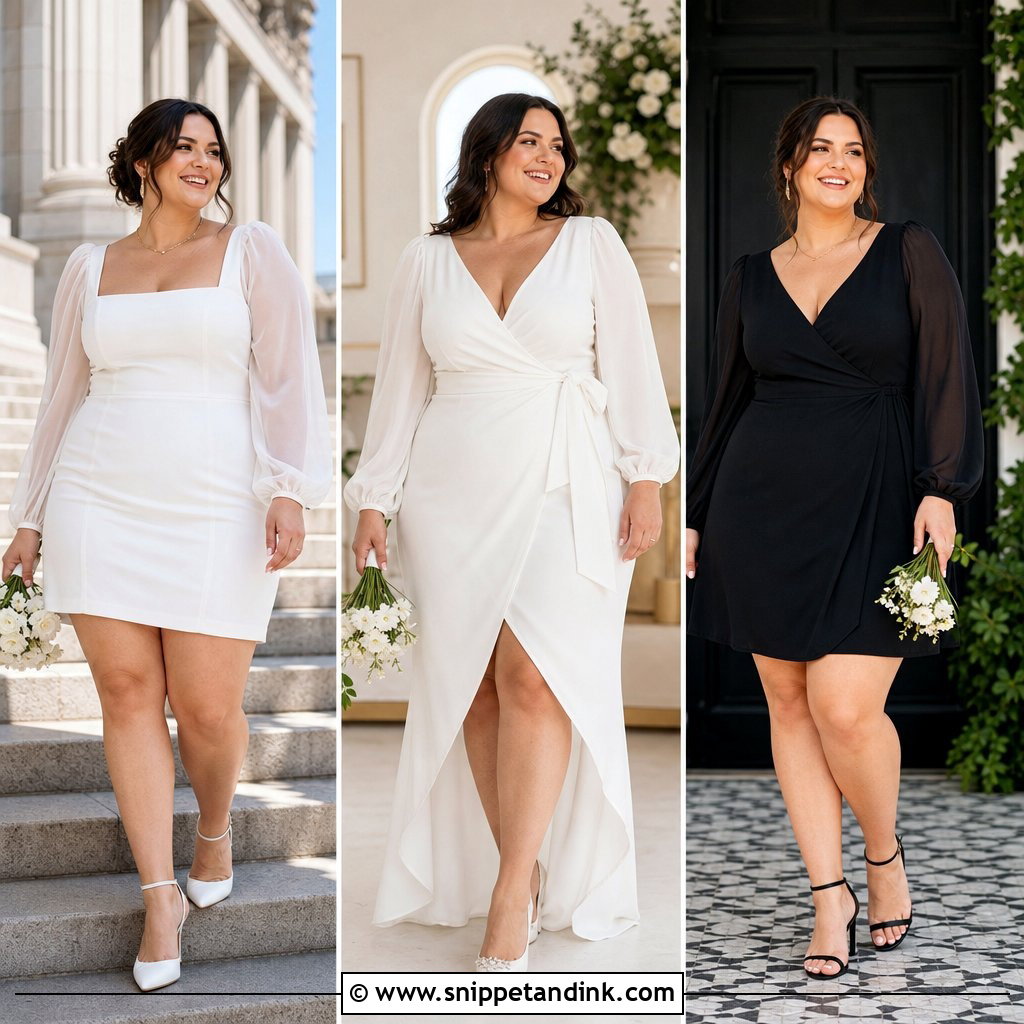
Wrap dresses are the most adjustable thing on this list, which makes them a sensible pick if your size may change between ordering and the wedding. Look for a midi or ankle length in silk, crepe or light satin with a hidden inner tie or snap. That inner fastening is the difference between a dress that stays closed and one you adjust all evening. The wrap gives you a natural V and the tie marks the waist. Heeled sandals, a fine pendant and a mini top-handle bag keep it relaxed, and a floral comb can stand in for a veil. Put fashion tape along the neckline, then cross your legs while seated at the fitting to see where the overlap opens.
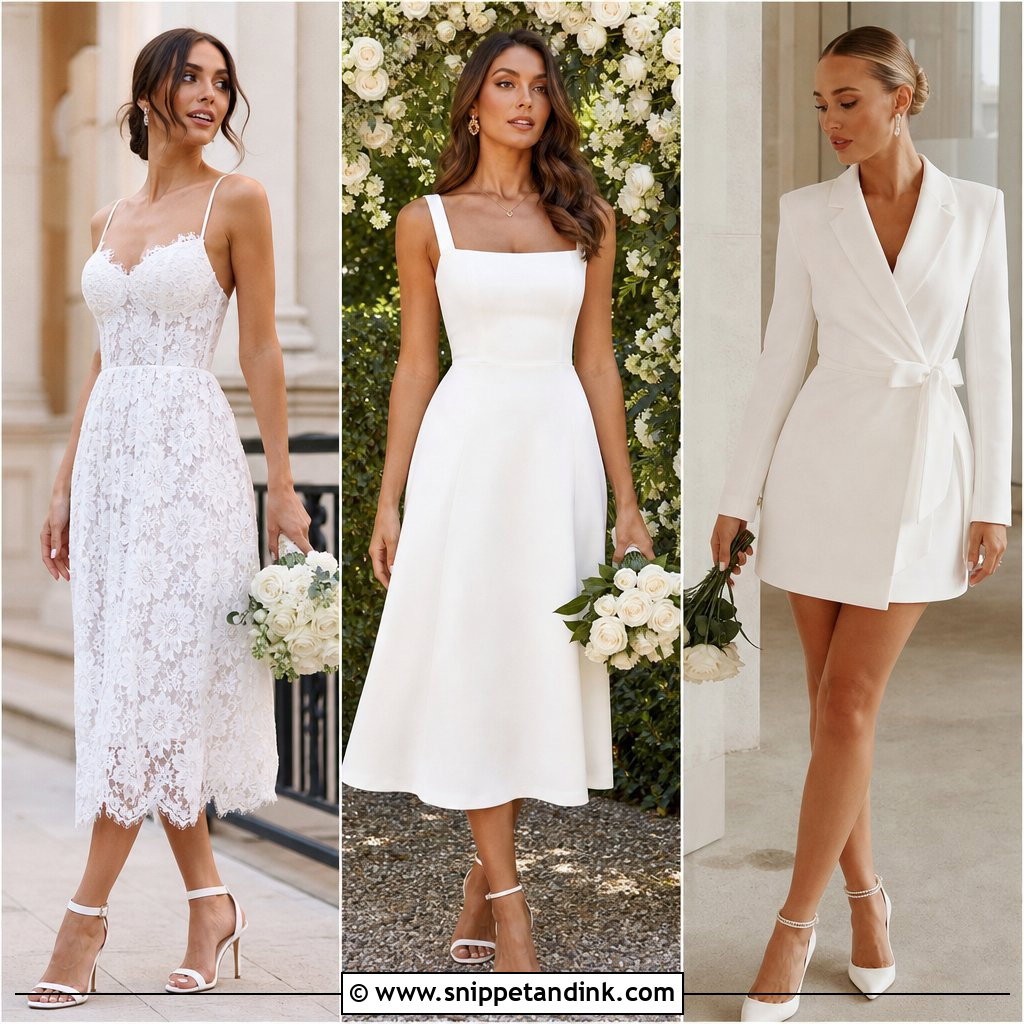
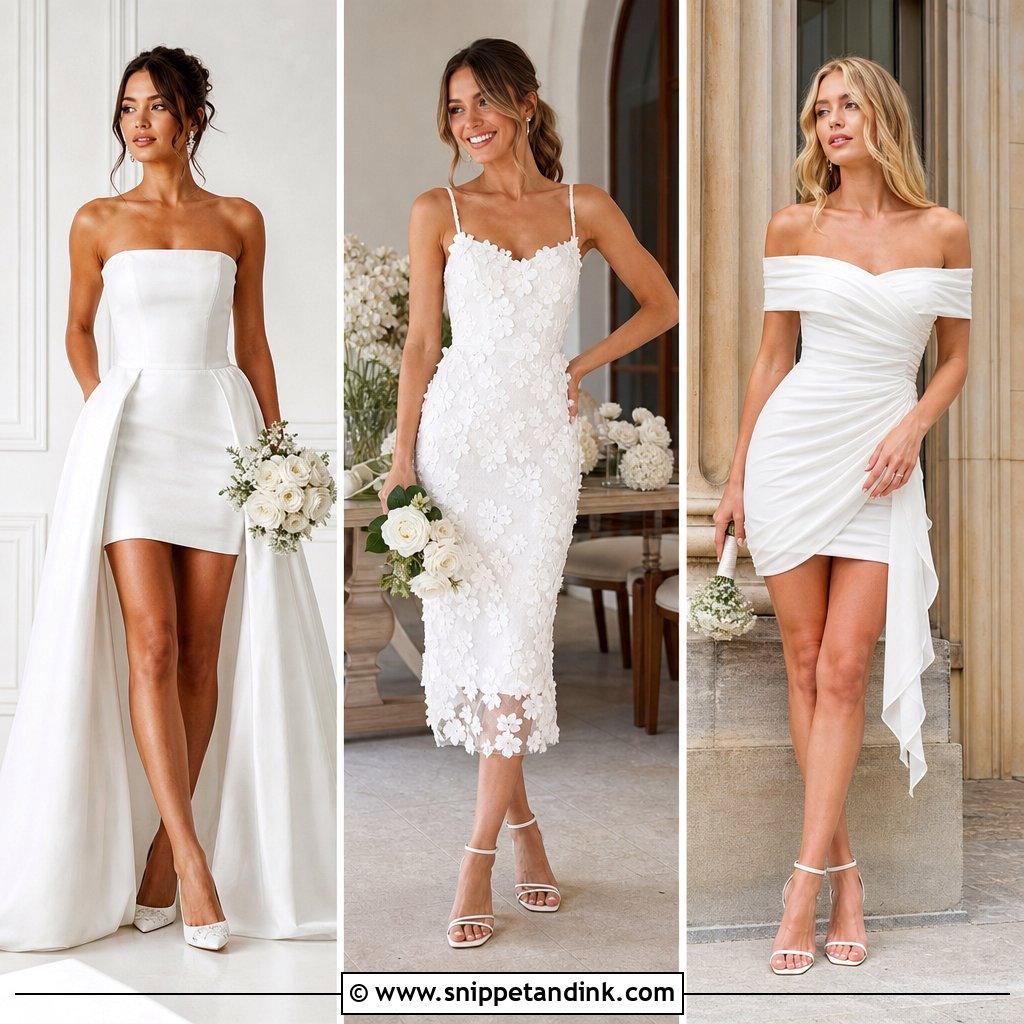
10. Short Lace Wedding Dress
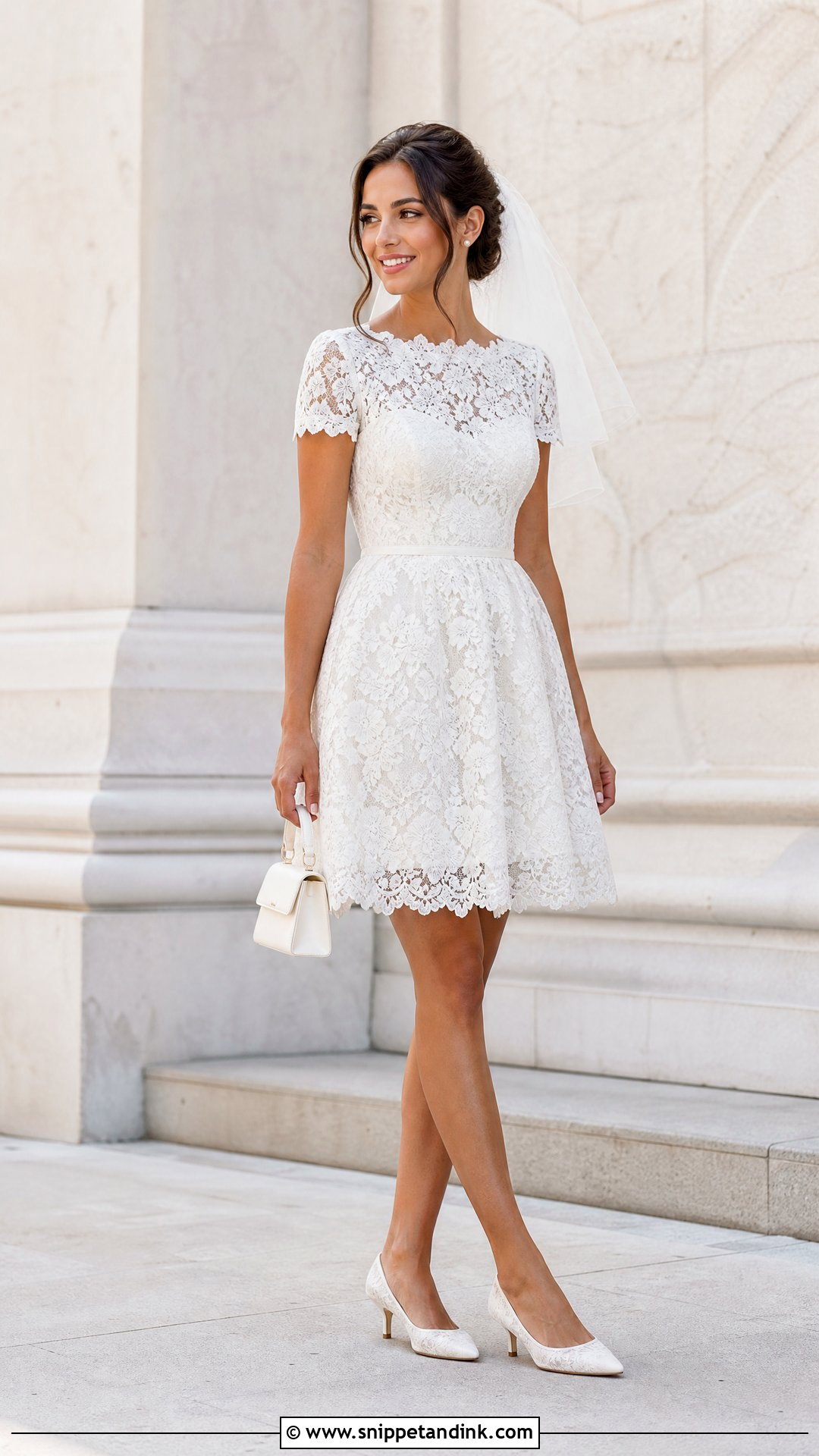
Short lace looks playful on the hanger and much shorter on camera, because photographers often shoot from slightly below. I check a mini from every angle, seated too, and I usually suggest knee length to anyone who’ll be photographed on courthouse steps. Choose a lined bodice and defined waist, with sleeves or wide straps to balance the shorter skirt. Floral lace with a slight flare leans classic; geometric lace with a straight cut leans modern. Pointed kitten heels, pearl earrings and a structured mini bag go with either, and a short veil makes it unmistakably bridal. Fitted shorts or a smoothing slip underneath won’t show and will stop you thinking about your hem all day.
11. Puff Sleeve Midi Wedding Dress
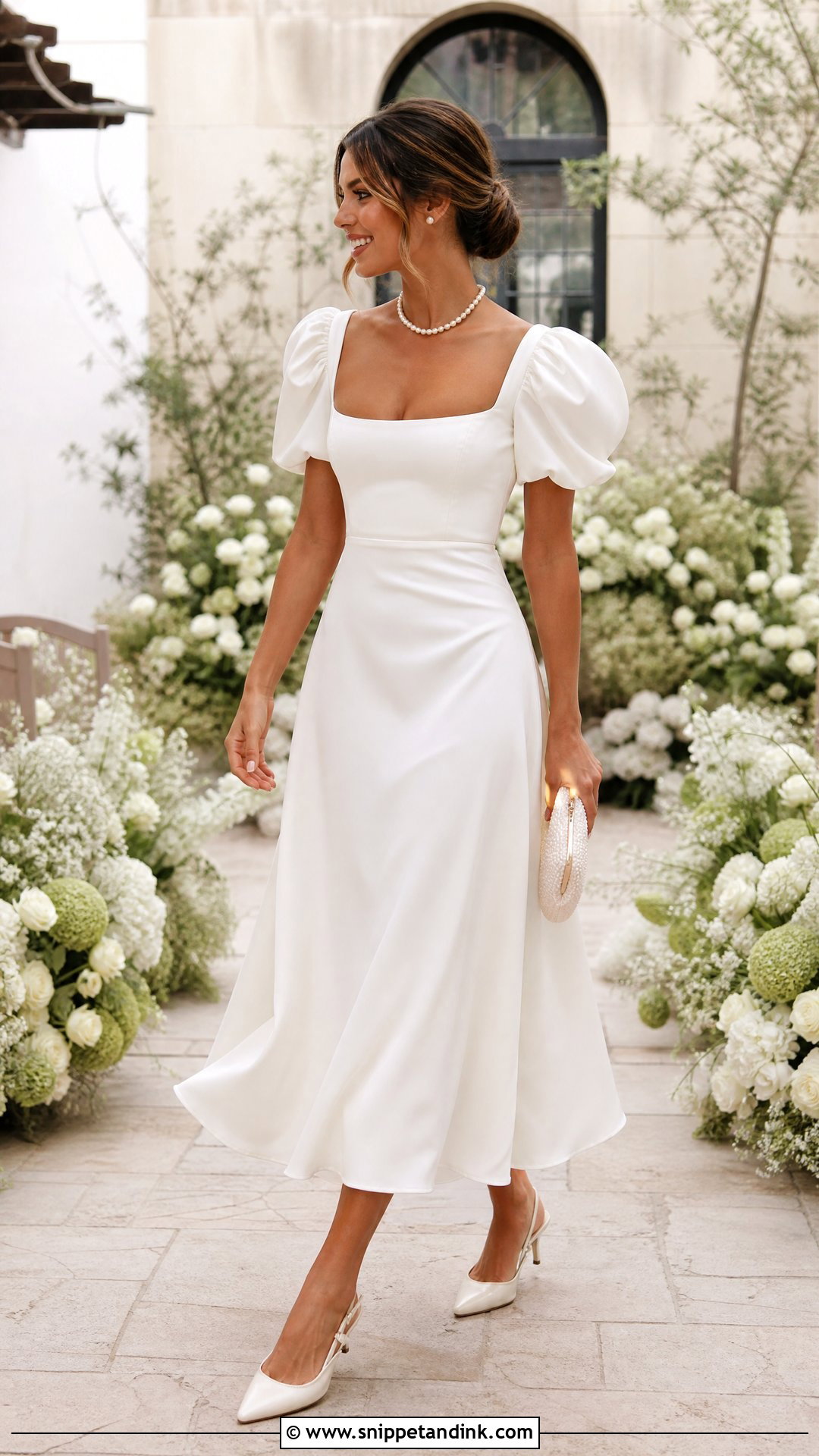
Puff sleeves are charming in proportion and comic out of it. In a small venue I keep them modest so they don’t crowd the frame in close portraits or brush the person beside you at a dinner table. Pick softly gathered sleeves, a fitted waist and a flowing skirt in satin, chiffon or a smooth cotton blend. Low slingbacks, a petite pearl necklace and a neat clutch suit the shape; a ribboned ponytail or soft bun keeps the mood light. A narrow fabric belt adds waist if you want it. Because a bra strap shows instantly beside a puff sleeve, the bodice needs its own support, so ask for cups to be sewn in.
12. Column Wedding Dress
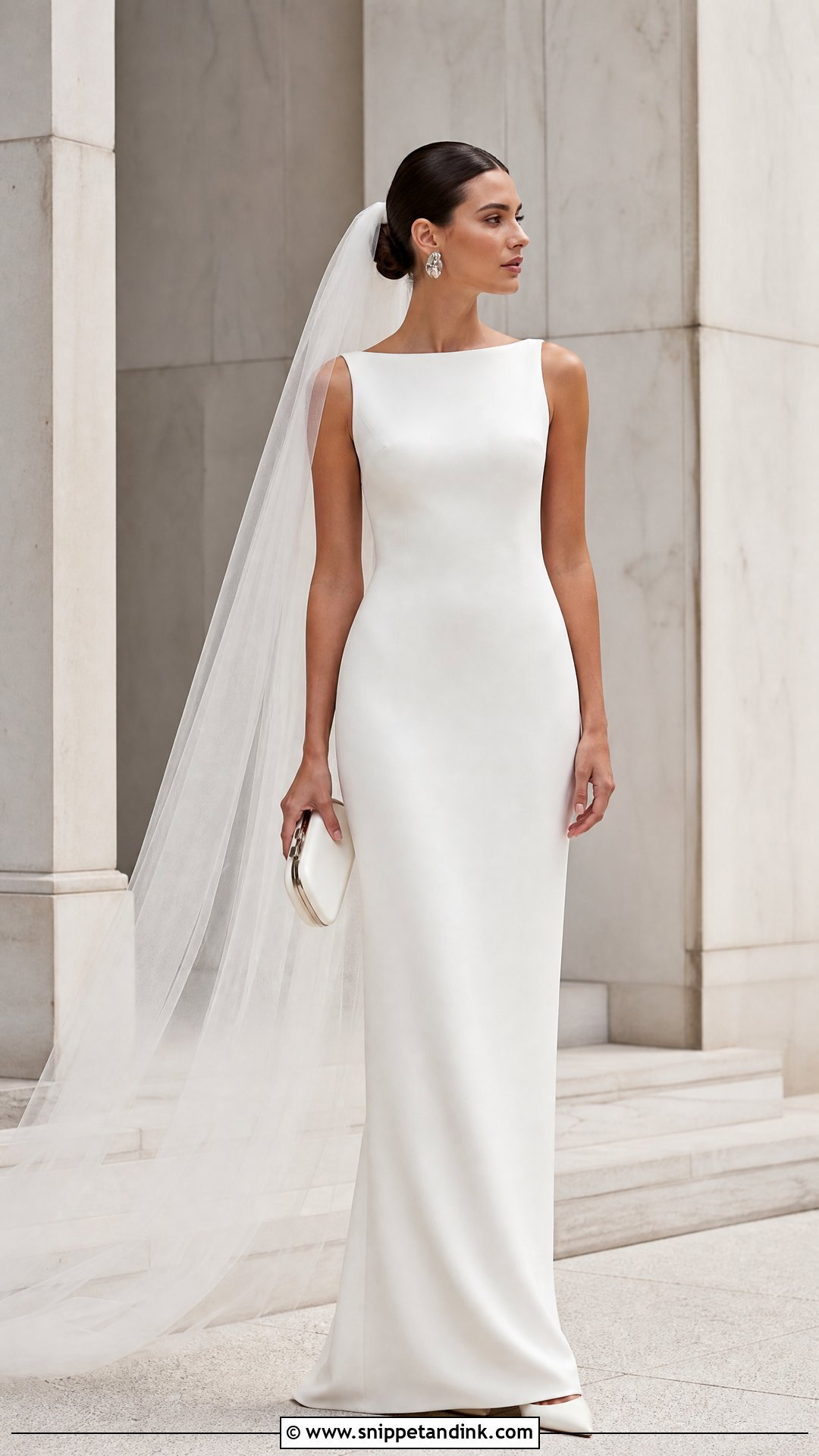
Columns hide nothing. With so little seaming, the cut and the fabric weight are all you’ve got, which is why I push brides toward heavy satin or thick matte crepe and a bateau, scoop, or straight neckline. Thin fabric on a column shows every ridge underneath it. The practical problem is walking: a gown narrow through the hips can turn stairs into a sideways shuffle, so test steps and a low chair. A back slit, a stretch lining or a slight flare at the hem fixes that without losing the line. Pointed heels, sculptural earrings, a sleek clutch, a low bun and a long plain veil keep everything vertical.
13. High Neck Wedding Dress
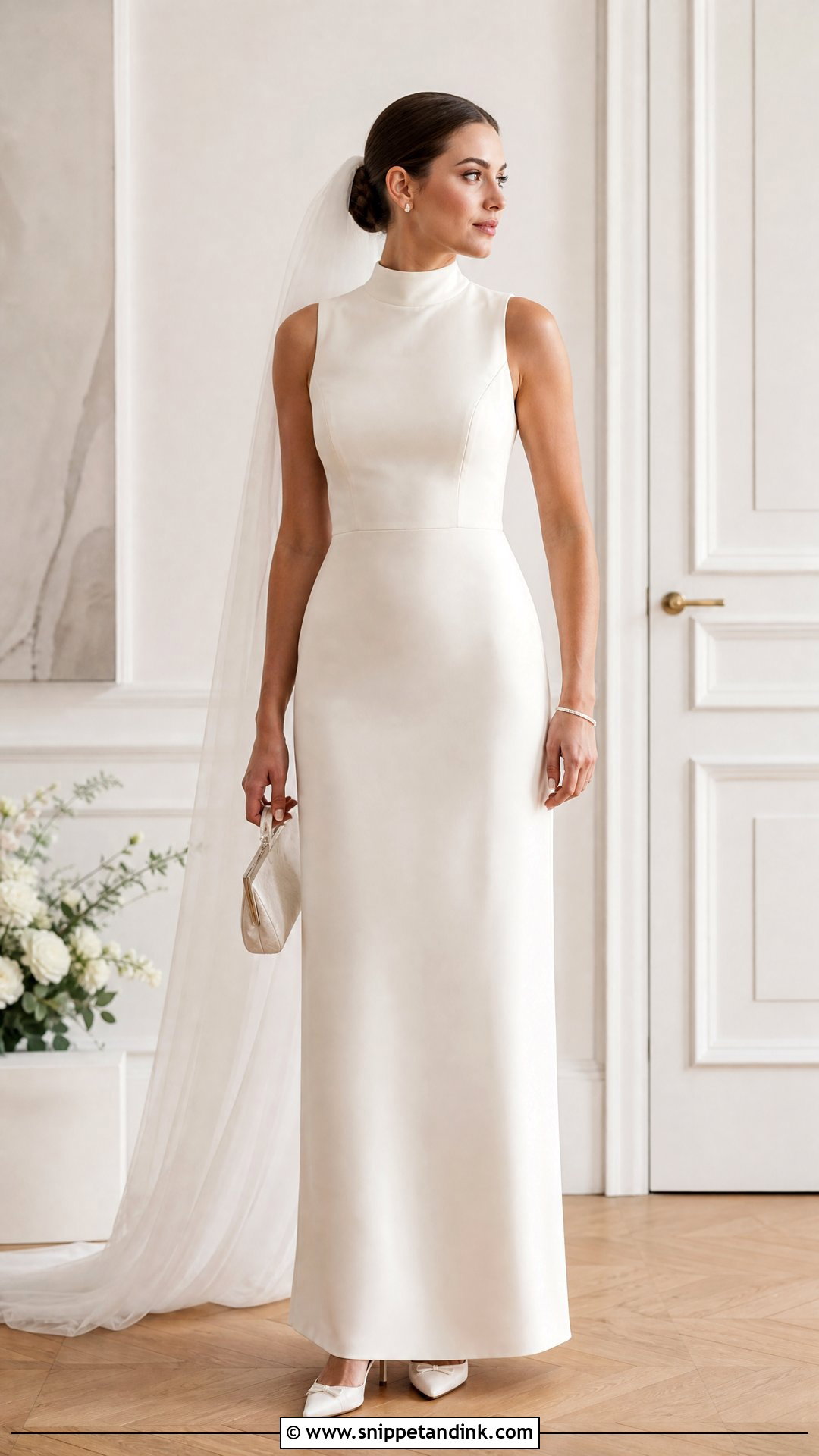
A high neck frames your face, and that’s exactly why the collar fit matters more than anything else on this dress. A fraction too tight and you’ll feel it every time you turn your head; too loose and it folds forward when you sit. I ask brides to look over each shoulder and nod a few times during the fitting. Sleeveless crepe, a soft lace midi or a satin maxi all carry the neckline well. Leave off the necklace and wear studs or small drops, with low heels and a narrow bracelet. Hair goes up in a bun or twist, with the veil anchored underneath so nothing crosses the collar.
14. Backless Wedding Dress
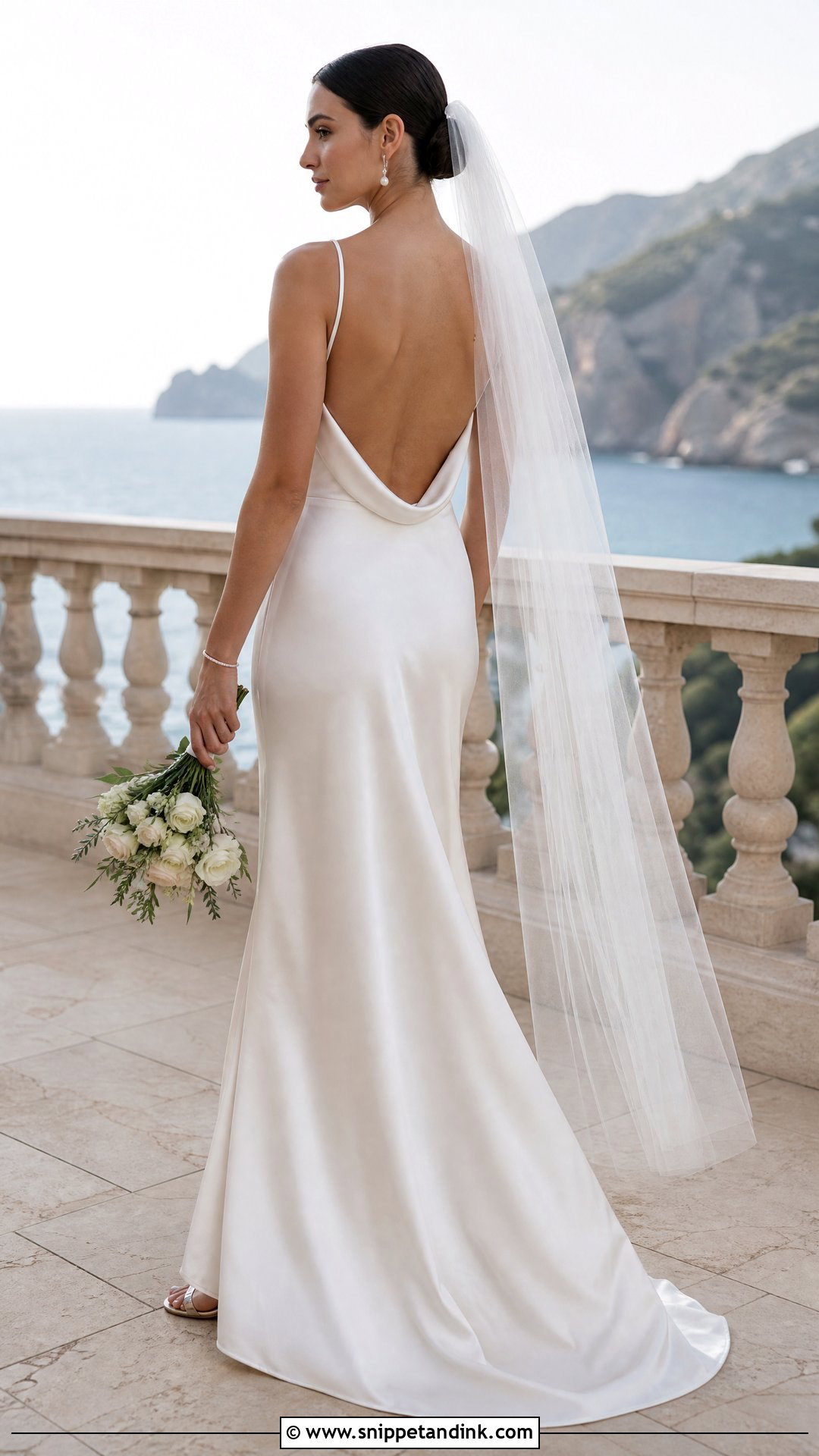
Support is the real conversation with a backless wedding dress, and it’s better had at the first fitting than the last. Most backless styles can take sewn-in cups, a low-back bra built into the lining or a discreet panel of skin-toned mesh, but each one changes how low the back can go. Keep the front simple so the back stays the focus, whatever the silhouette. Delicate earrings, a slim bracelet, low sandals or pointed pumps and a smooth bun leave the back clear, with a sheer veil for movement at the ceremony. At each fitting, bend to pick something up off the floor. That’s the moment a poorly fitted back gapes.
15. Empire Waist Wedding Dress
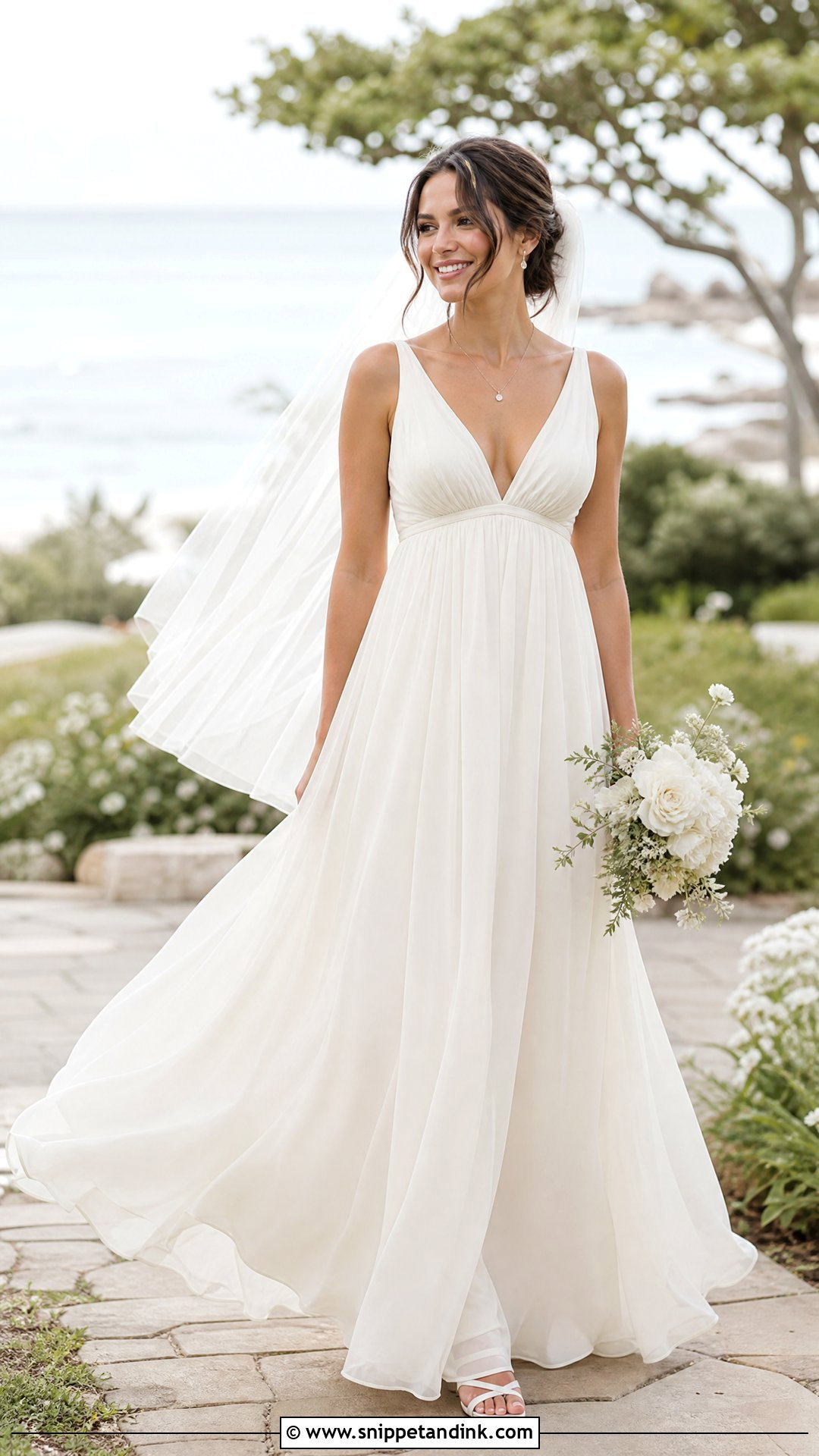
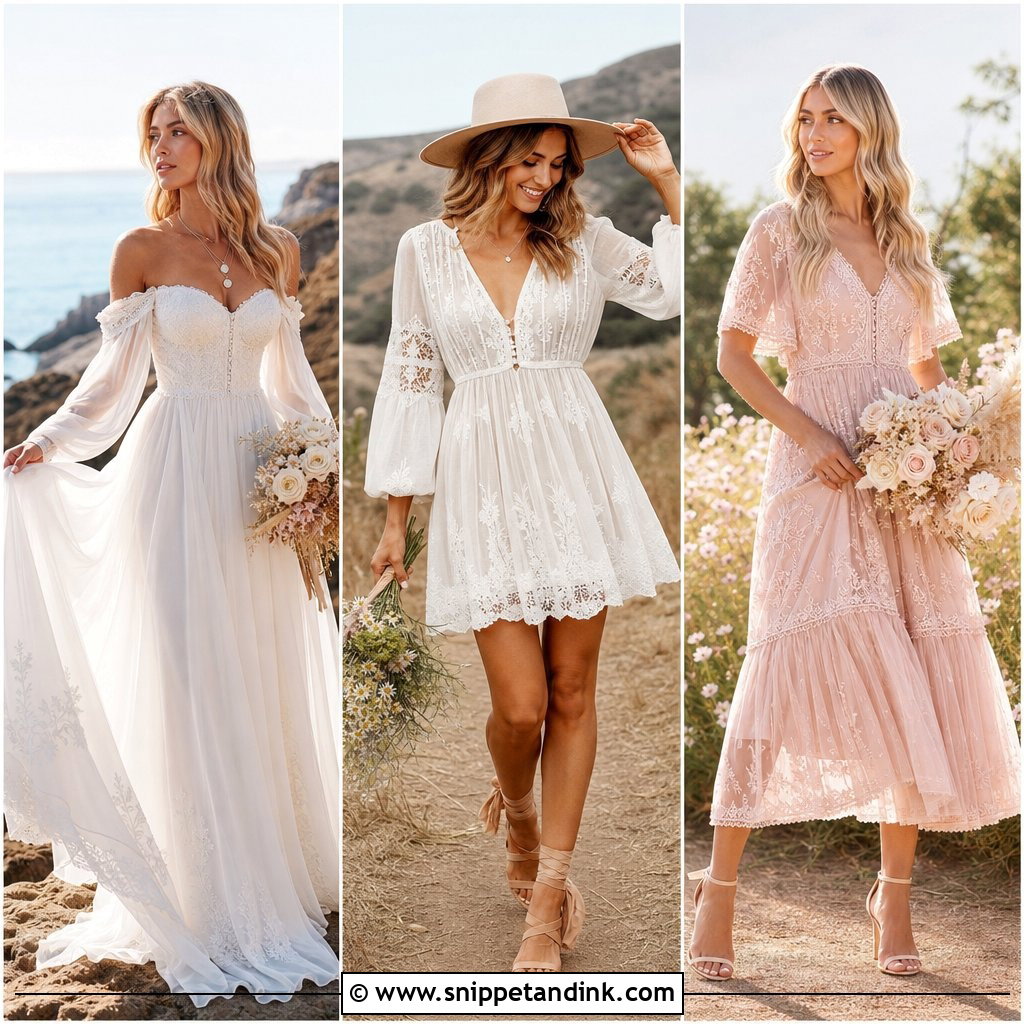
The raised seam on an empire waist sits just under the bust, so nothing presses on your stomach when you sit through a long dinner. It’s also the shape I suggest most to pregnant brides, since the skirt drops from above the bump and can be let out late. Choose chiffon or soft crepe that falls without heavy gathering, with a V-neck, square neck or small cap sleeve to give the bodice some shape. Low block-heel sandals, a fine pendant and a loose updo under a fingertip veil keep it gentle. Make sure the seam lands under the bust and not on the rib cage; a seam sitting too low starts digging in by the speeches.
16. Blazer Wedding Dress
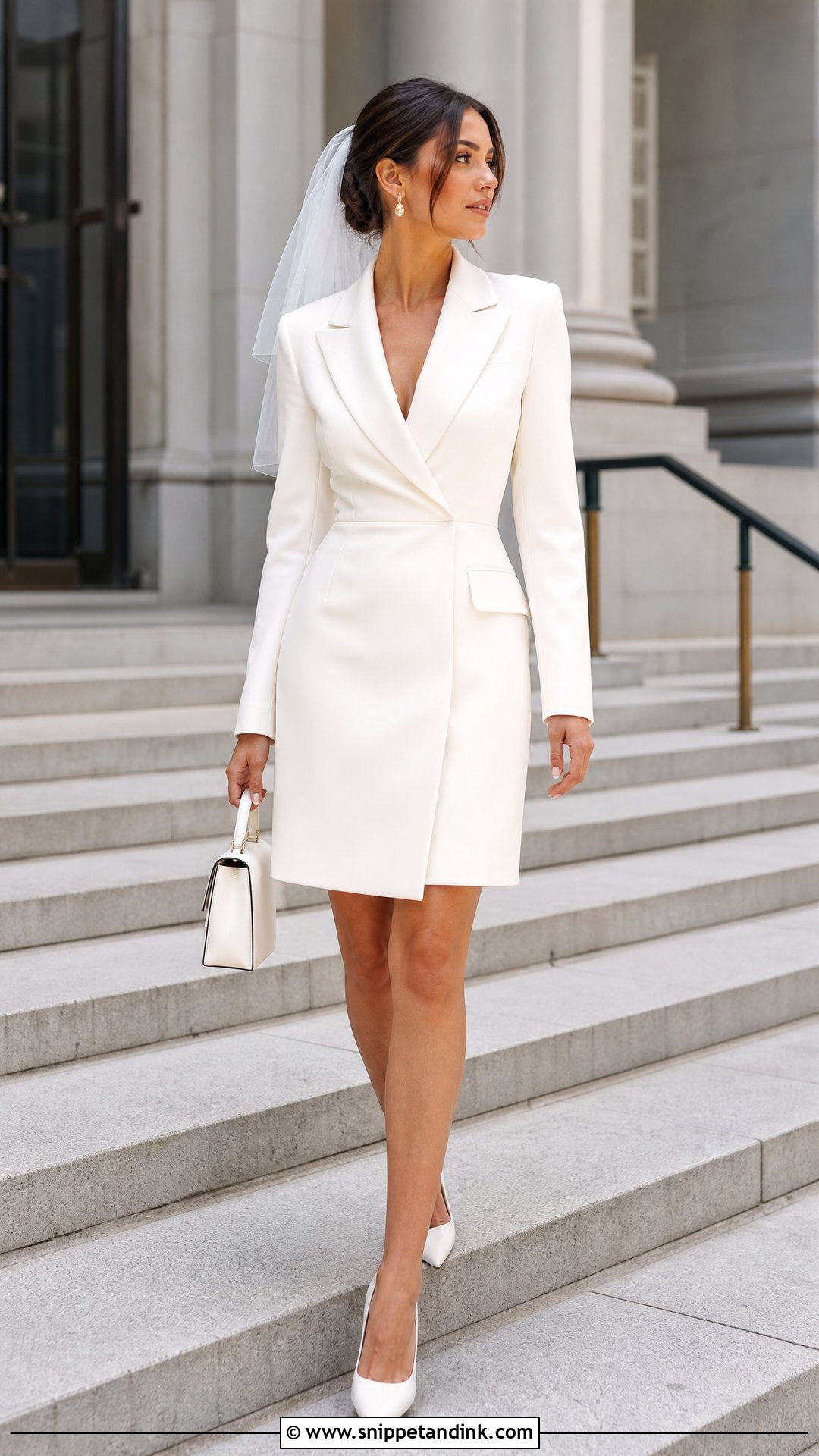
I judge a blazer dress like a jacket first and a wedding dress second: shoulders ending at your shoulder bone, sleeves at the wrist bone, no pulling across the buttons. Choose a substantial crepe or suiting fabric with a defined waist and a secure double-breasted or wrap closure, at mini or knee length. If the lapels fall too low, a camisole or snap-in modesty panel solves it. Pointed pumps, polished earrings and a structured top-handle bag suit the sharp line, and a short veil, sleek headband or small bow says bride. Hug someone at the fitting. If the front pops open, it needs an extra inside button.
17. Tiered Chiffon Wedding Dress
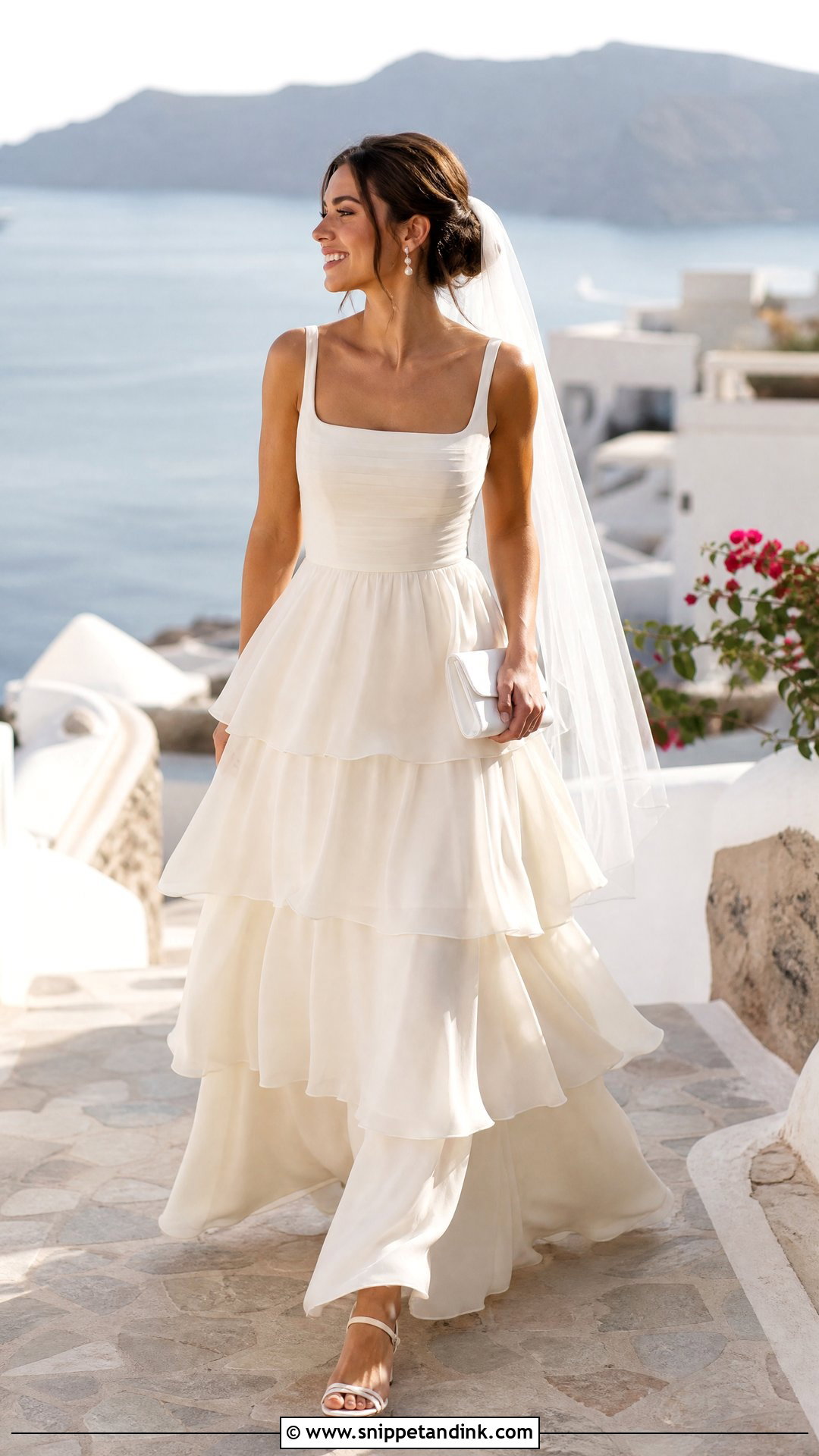
Chiffon tiers catch light and wind, which is lovely outdoors and messy if the dress is unlined. I insist on a full lining here, otherwise the layers photograph patchy wherever they overlap. Two or three soft tiers are plenty, and they should start below the waist or hip, since tiers beginning right at the waist add width exactly where most brides don’t want it. A fitted V or square bodice balances the movement. Block-heel sandals, small drop earrings, a satin clutch and loose waves keep it easy, with a plain veil if you want tradition. Have it hemmed with your actual shoes on so it clears the ground.
18. Cotton Eyelet Wedding Dress
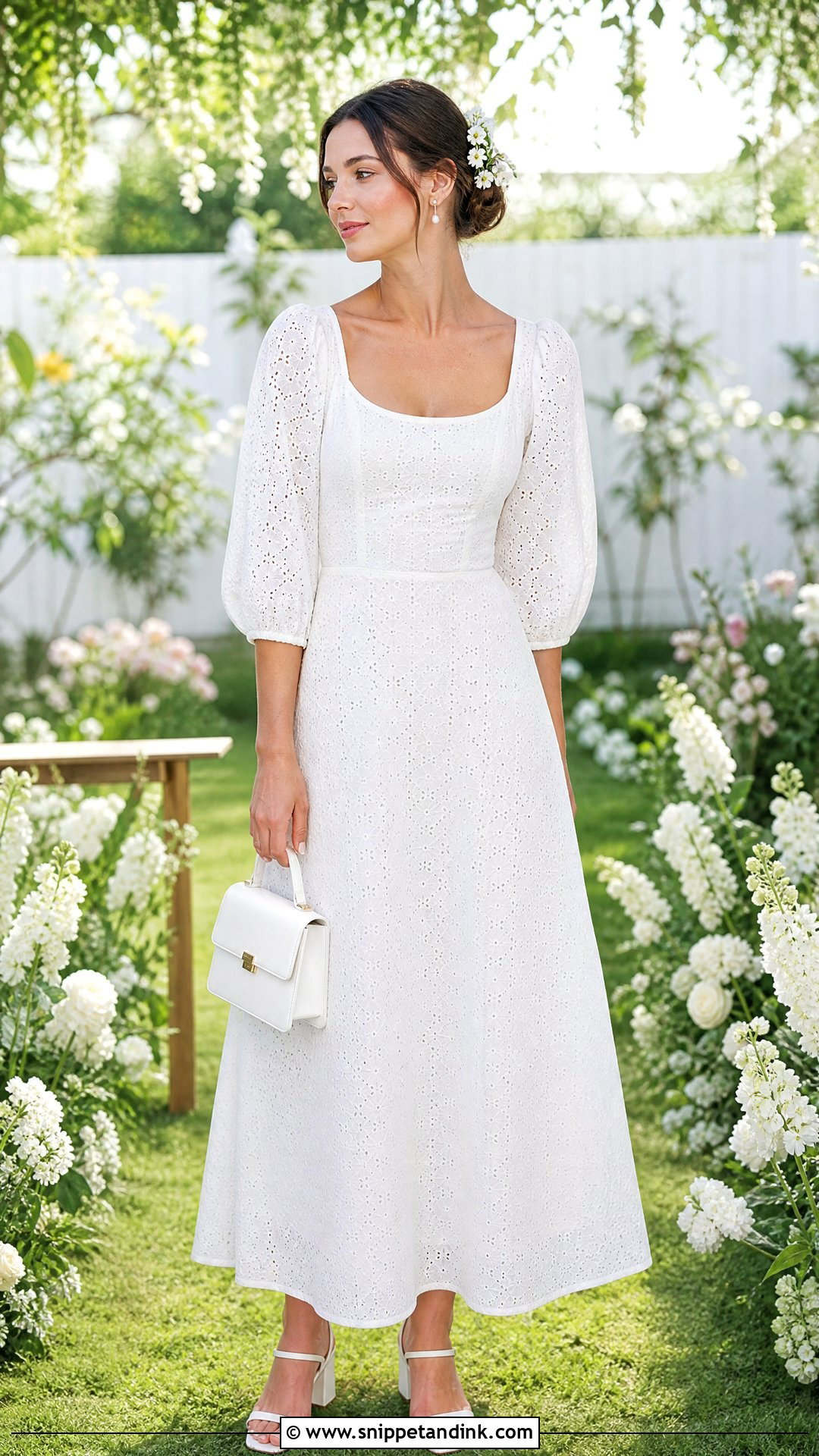
Eyelet is the fabric I suggest for heat, and a cotton eyelet wedding dress breathes in a way satin never will. The holes are the catch. The lining underneath has to be the right length and shade, or skin and lining show through unevenly in daylight photos. Choose a midi or ankle length with a fitted bodice and soft sleeves. White block-heel sandals, simple gold or pearl earrings and a woven mini bag match its relaxed nature, and a small floral hair piece can replace the veil. Cotton creases fast, so steam it as close to getting dressed as you can.
19. Floral Appliqué Wedding Dress
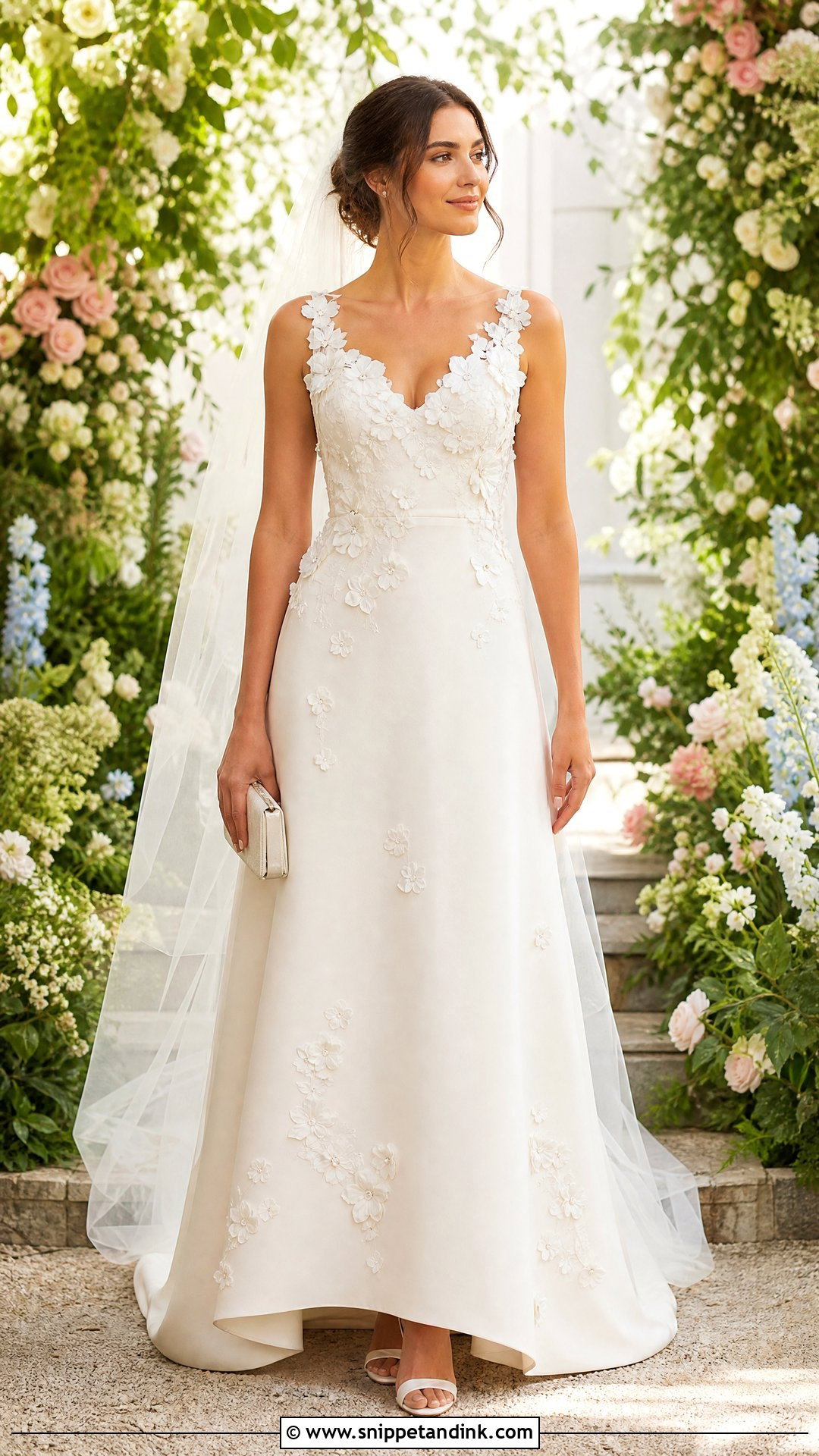
Scattered appliqués only look intentional if their placement does. I pin them and view the dress from front, back and side before anything is stitched, because a flower landing on the bust point or right at the hip pulls the eye somewhere you never meant it to go. Pick an A-line, sheath or midi with flowers along the neckline, sleeves or skirt, and leave the rest of the fabric smooth. Plain ivory heels, tiny studs and a minimal clutch keep things quiet, and a veil without lace or beading avoids clashing pattern. Run a hand over every appliqué edge too, since a loose one snags on bouquet wire.

20. Cape Sleeve Wedding Dress
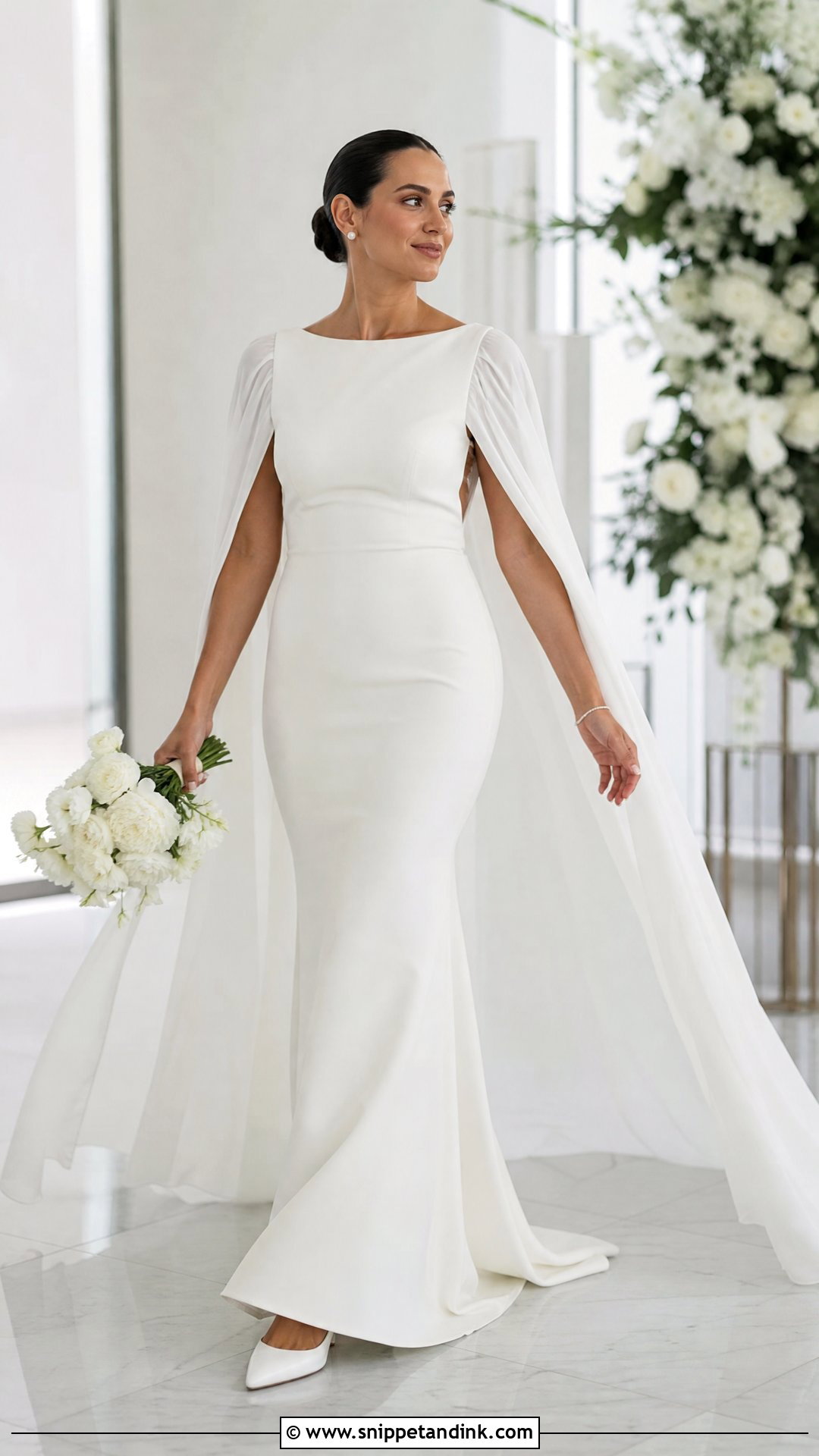
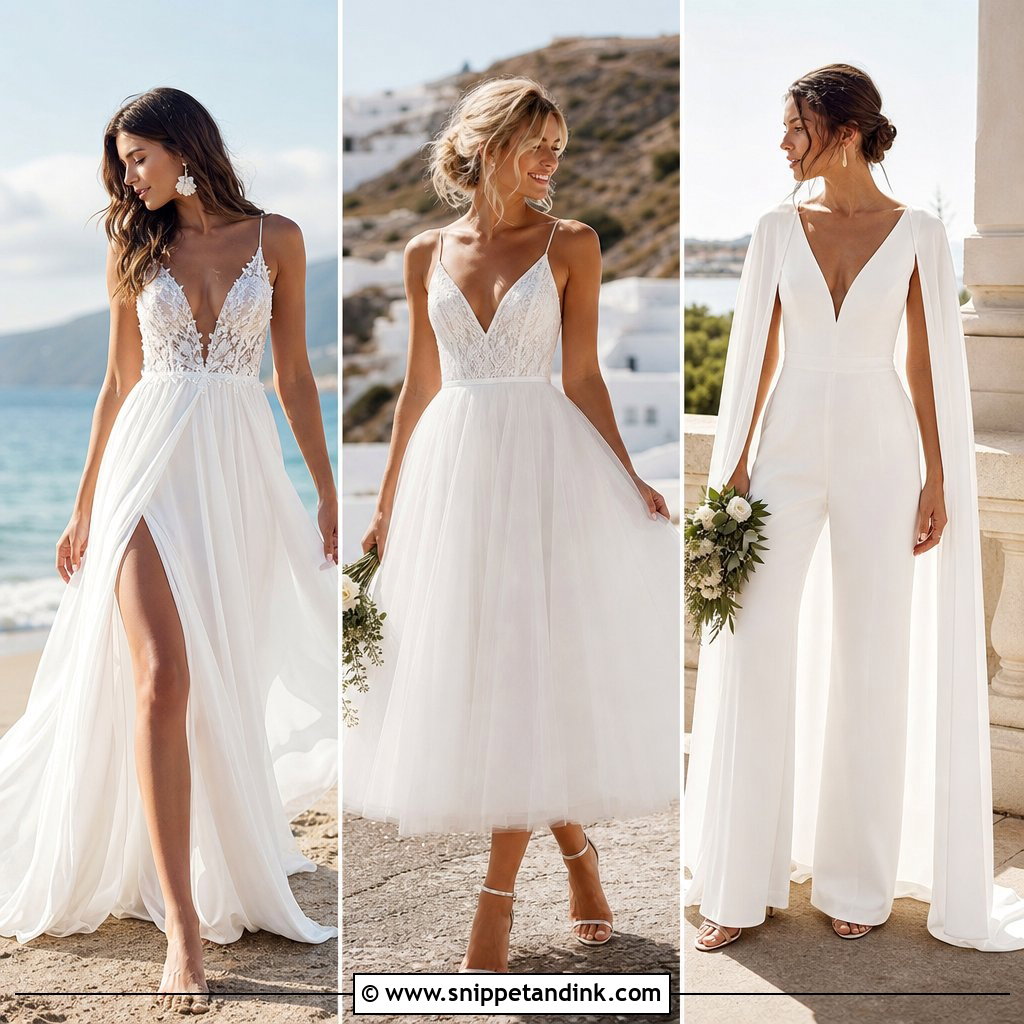
A cape gives you the movement of a train with nothing dragging behind you, which I like for venues with tight aisles. It can attach at the shoulders or the neckline and run short and airy or all the way to the floor. Put it over a sheath or a softly fitted A-line; since the cape already moves behind you, a veil is usually one layer too many. Pearl studs, a slim bracelet and pointed low heels keep it restrained, and hair worn up shows where the cape meets the dress. A floor-length cape needs one real test: eat a plate of food at a table in it. If it catches under your arms or trails into the chair, have it shortened or fitted with a wrist loop.
What a Simple Dress Goes Through Before the First Toast
At a small wedding people see you up close, for hours, usually in daylight. Most of the little disasters happen before the ceremony even starts, and nearly all of them are easy to head off.
Creases from the car
Satin and cotton crease wherever you sit. In the car, sit on a clean sheet and lift the back of the skirt so it spreads behind you instead of bunching underneath. A handheld steamer at the venue fixes most creases quickly. Never iron the dress on the day without testing a hidden seam allowance first, because satin can turn shiny or scorch in seconds.
The small kit I hand to one person
- White chalk or a stain pen for spills on white and ivory, tested on the inside hem first.
- Fashion tape and a few safety pins for straps and wrap necklines.
- Clear nail polish to stop a pulled thread in lace from running.
- A lint roller, since dark venue chairs shed onto pale crepe.
Give the kit to someone who will be near you all day, not to whoever happens to be holding your bag. Once it’s over, have the dress cleaned within a few weeks even if it looks spotless. Champagne and cake sugar can be invisible on the night and turn yellow later, so point out any spill to the cleaner.
The Dress You Forget You’re Wearing by Hour Two
Of these twenty, the right one is the dress you stop noticing by the second hour, in the venue you’ve actually booked, at the level of formality your day really has. Bring your real shoes and underwear to every fitting. Walk, sit and lift your arms each time. Treat alterations as part of the budget, because good tailoring makes a modest dress look far more expensive than a costly one worn straight off the rack. Then let the accessories support the gown instead of fighting it, and wear the version that feels most like you.
You'll Like These Ideas:


Leave a Reply