
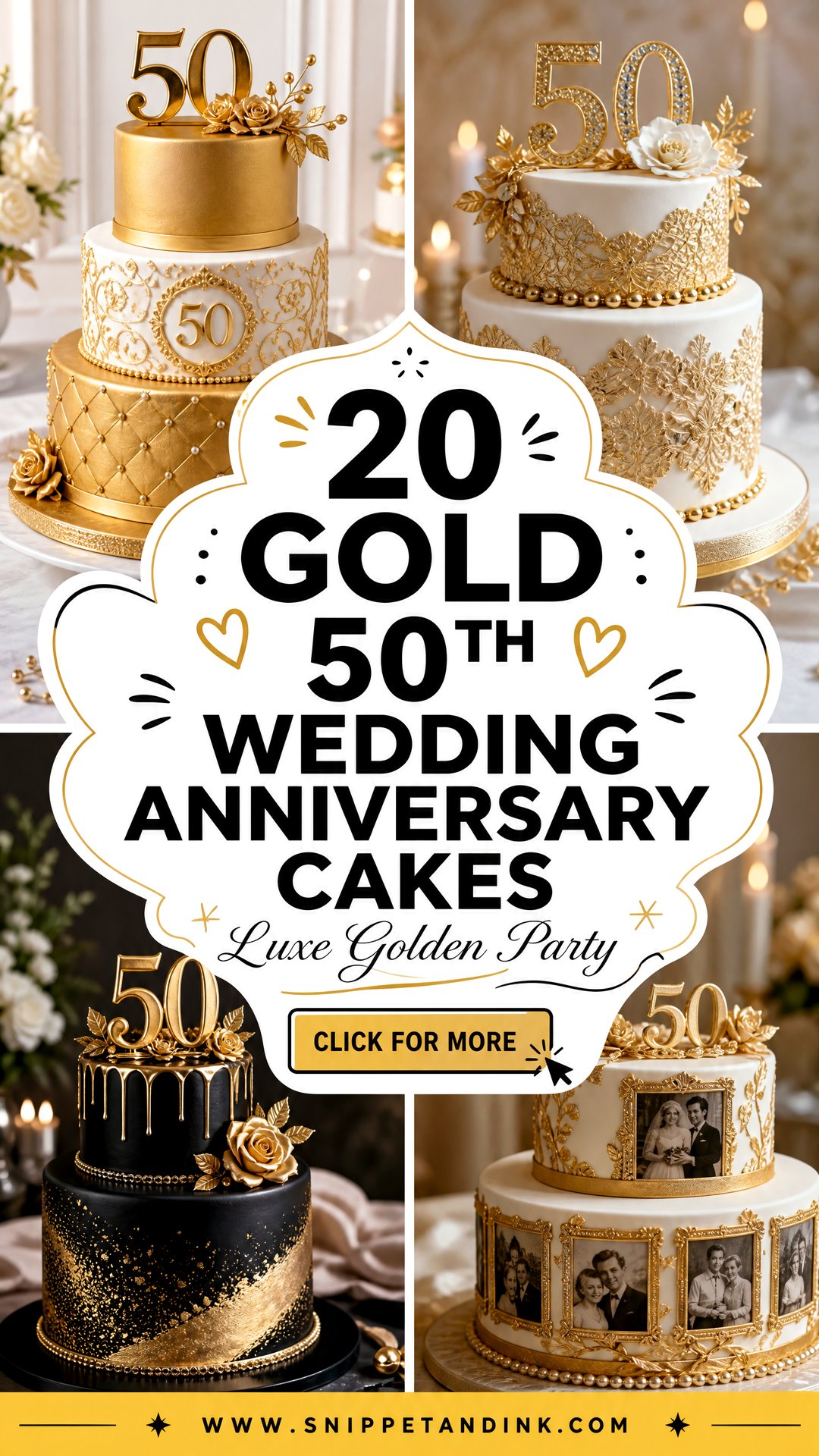
Fifty years married is rare enough that the cake often becomes the photograph everyone keeps. I start every golden anniversary design with two questions: how many people are eating, and how formal is the room. Gold goes on top of those answers rather than the other way round. Ivory and cream carry most of the designs below, with gold arriving as leaf, pearls, painted edges or a script topper, and a “50” somewhere obvious. Some of the twenty suit a banquet hall; others are right for lunch at the couple’s own table.
Sizing the Cake to the Guest List Before You Fall for a Design
The number of tiers should come from the number of guests, not from a photo. Bakers count in portions, and the standard wedding portion is a slim finger of cake roughly one inch by two, about four inches tall. Party portions are about twice that, so the same cake feeds far fewer people if it’s cut generously.
As a rough guide in wedding portions, and every baker’s chart differs a little:
- A 6-inch round gives about 12, an 8-inch about 24, a 10-inch about 38.
- Two tiers of 6 and 8 inches feed around 36 people.
- Three tiers of 6, 8 and 10 inches feed around 74.
- Three tiers of 8, 10 and 12 inches feed well over 100.
Not everyone eats cake after a big lunch or dinner, and older guests often take a small piece, so I rarely size for every single head. If you want more height than you need cake, ask for a dummy tier: a frosted foam layer that looks identical on the table and costs less. If you need more cake than height, a plain sheet cake kept in the kitchen covers the gap.
1. Gold Leaf 50th Wedding Anniversary Cake
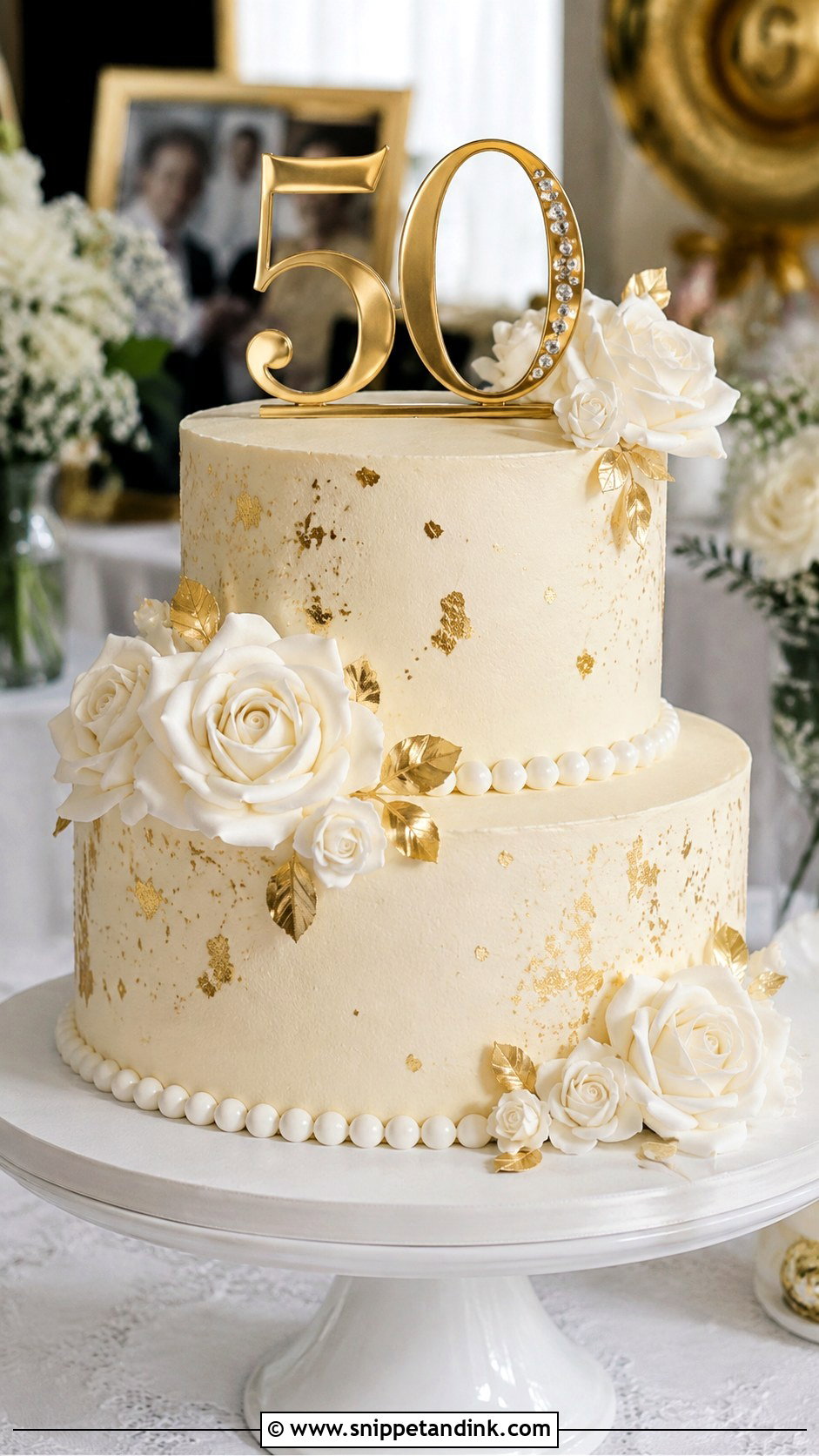
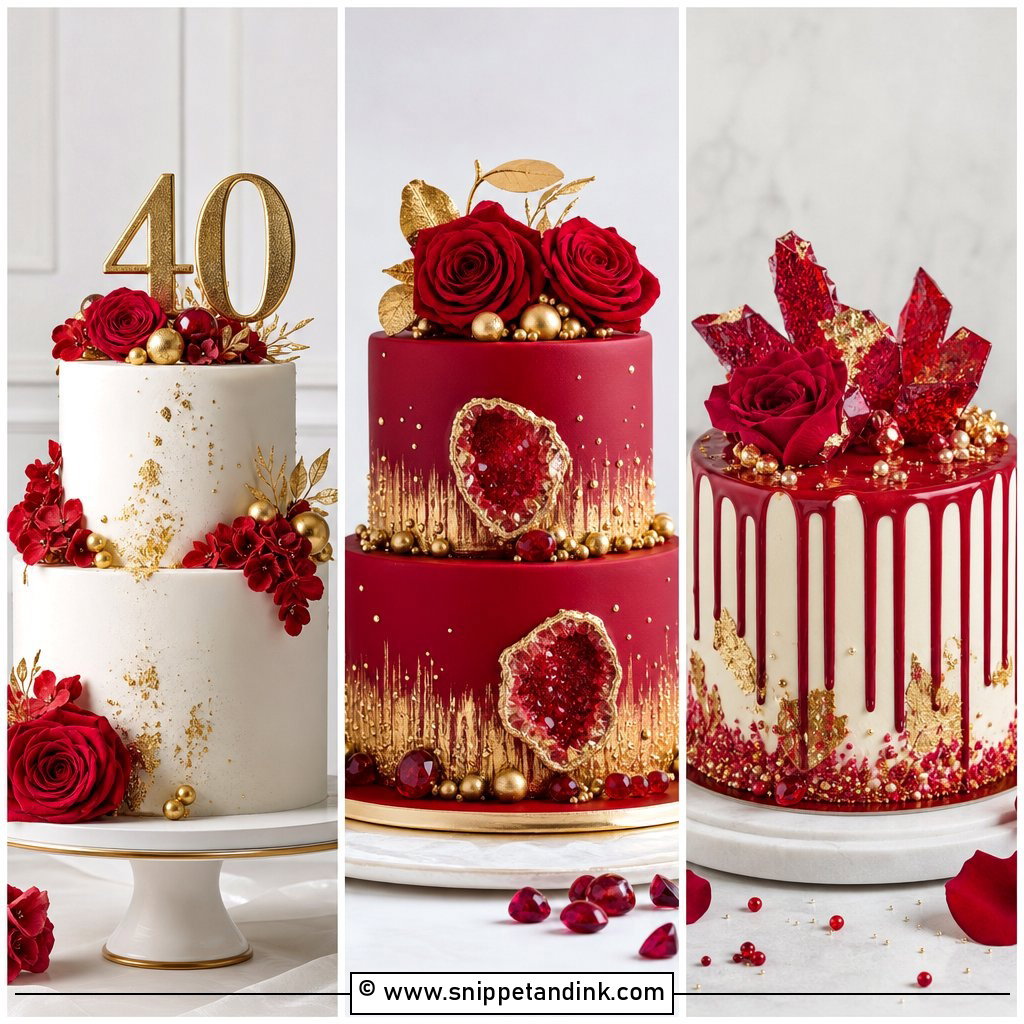
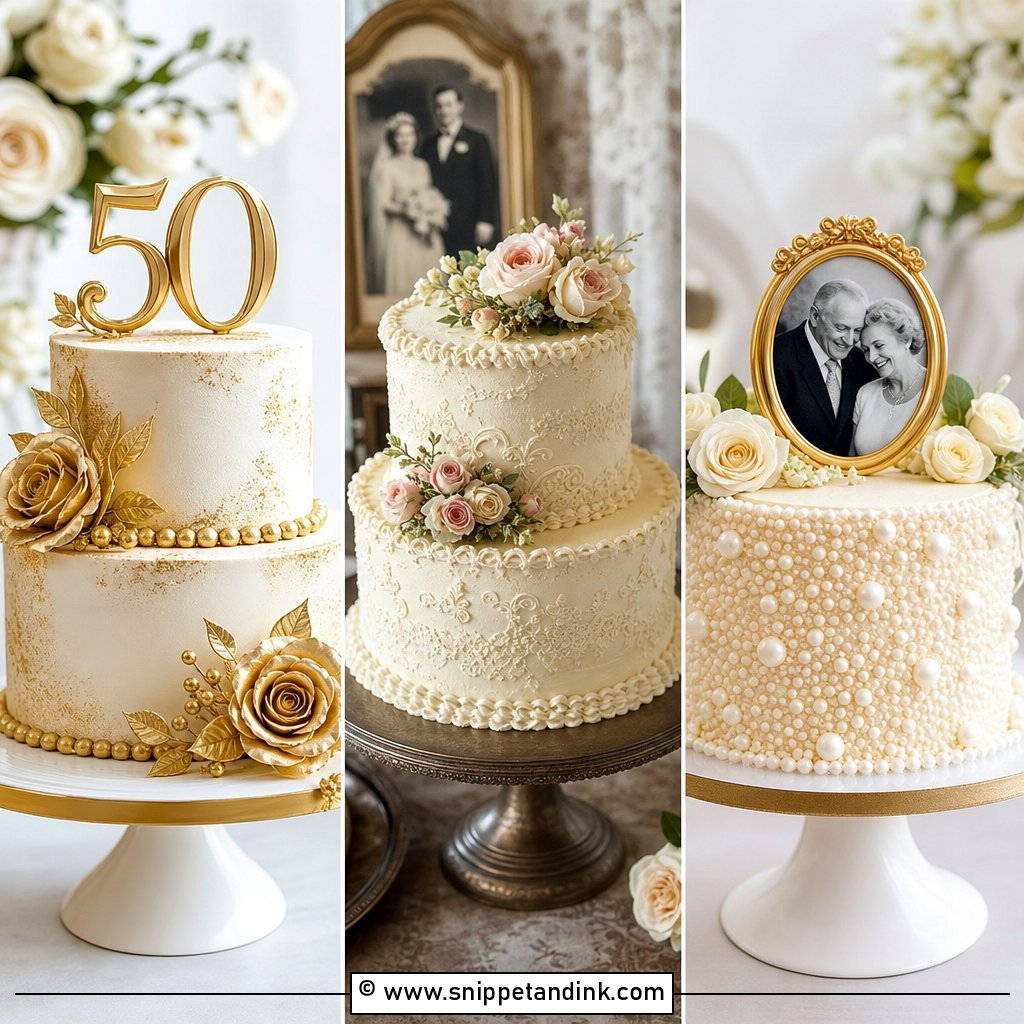
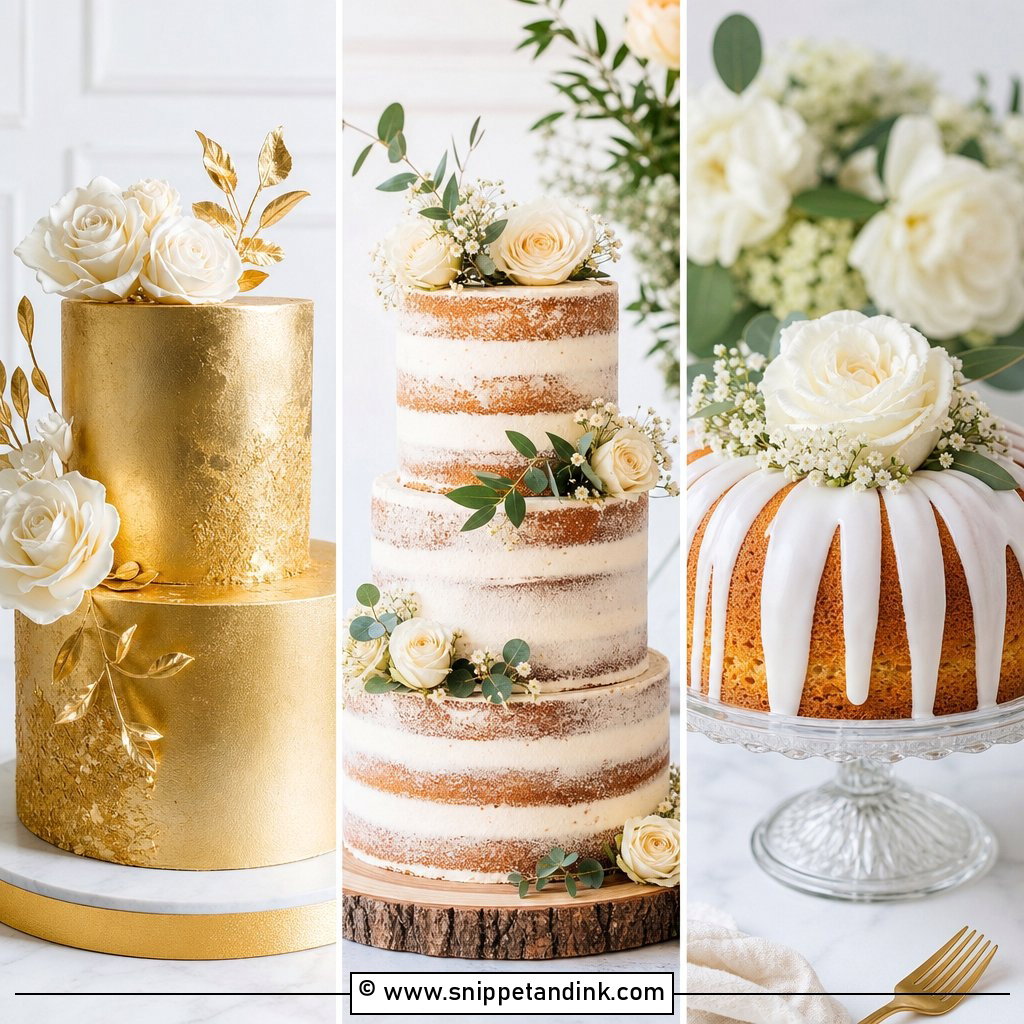
Of all the ways to add gold, leaf gives the most shine for the least work, which is why a gold leaf 50th wedding anniversary cake is where I’d start if you’re unsure. Thin sheets of edible leaf press onto chilled ivory buttercream or fondant, and they look best in loose clusters rather than a full wrap, because the gaps let the crinkled texture show. Handle leaf with tweezers or a dry brush, never fingers; it clings to skin and tears instantly. A “50” topper, a few white roses and a pearl border balance it. Vanilla almond, lemon cream or white chocolate raspberry keep the inside light.
2. White And Gold 50th Anniversary Cake
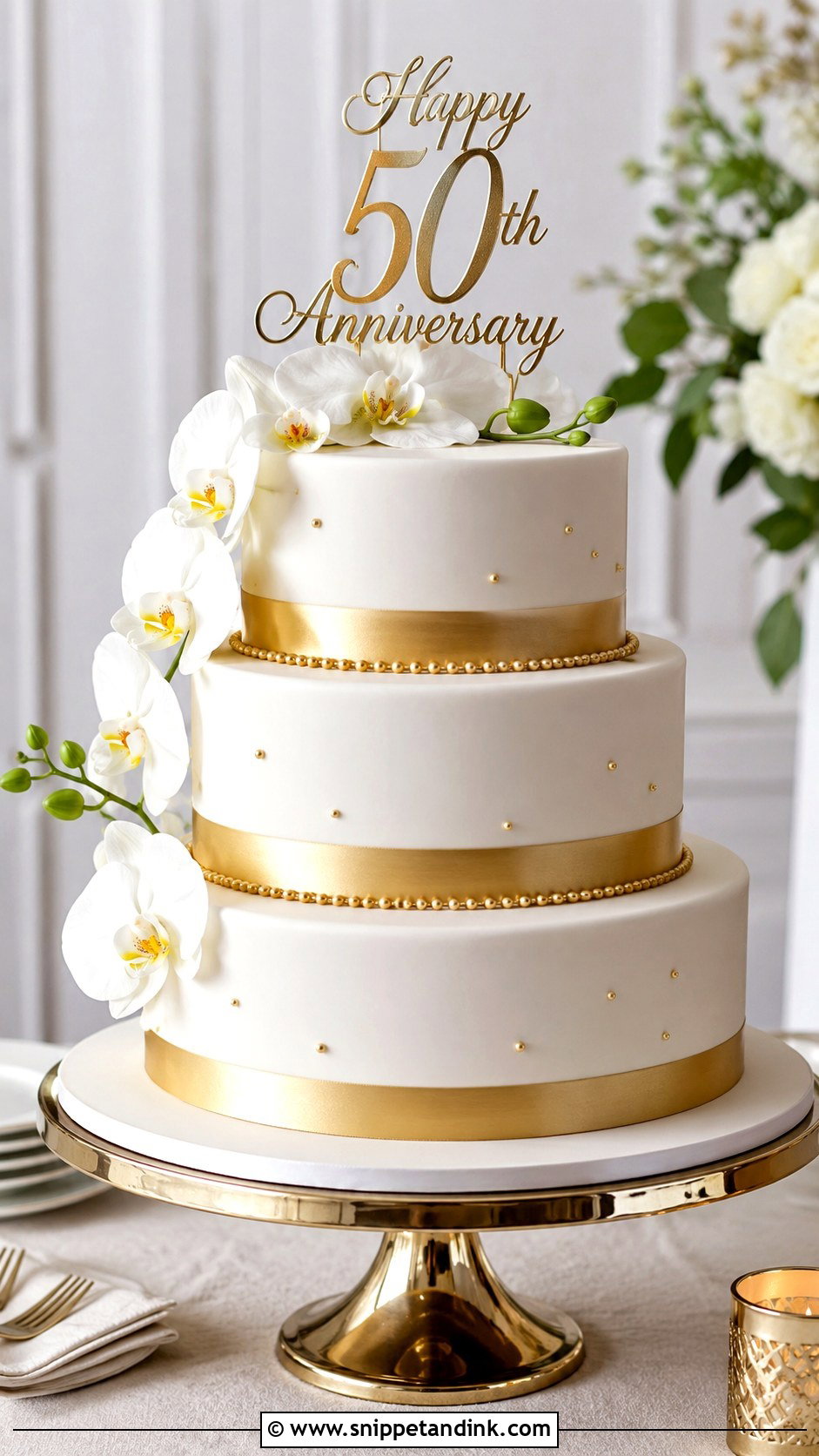
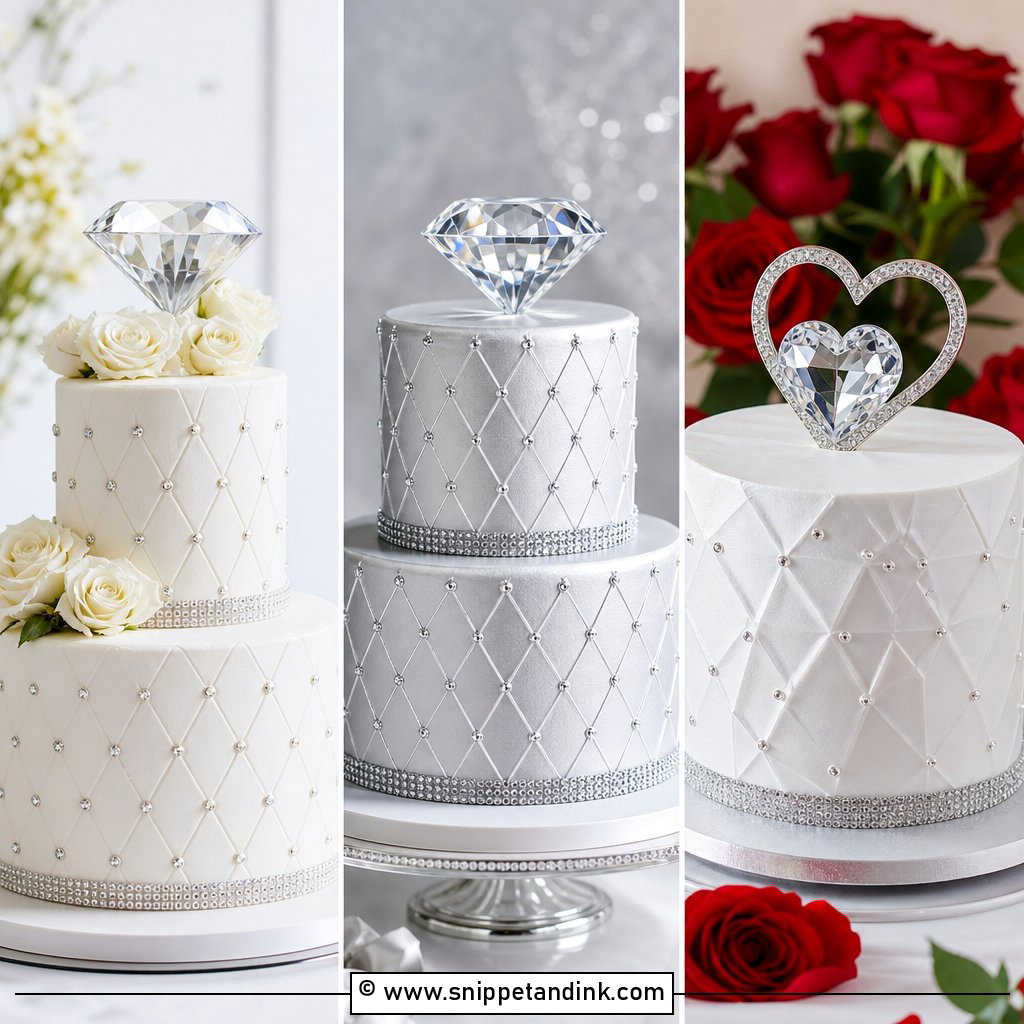
Most couples who married fifty years ago cut a white cake, so a white and gold 50th anniversary cake often feels like a quiet nod to the original. Gold arrives through ribbon borders, painted edges, gold pearls or a soft drip. Two tiers suit a family party, three suit a hall. Real ribbon needs a strip of acetate behind it, otherwise the butter in the frosting seeps through and leaves greasy spots by evening. Keep decorations neat so the contrast stays crisp, and a gold “Happy 50th Anniversary” topper will read clearly from across the room.
3. Gold Drip 50th Wedding Anniversary Cake
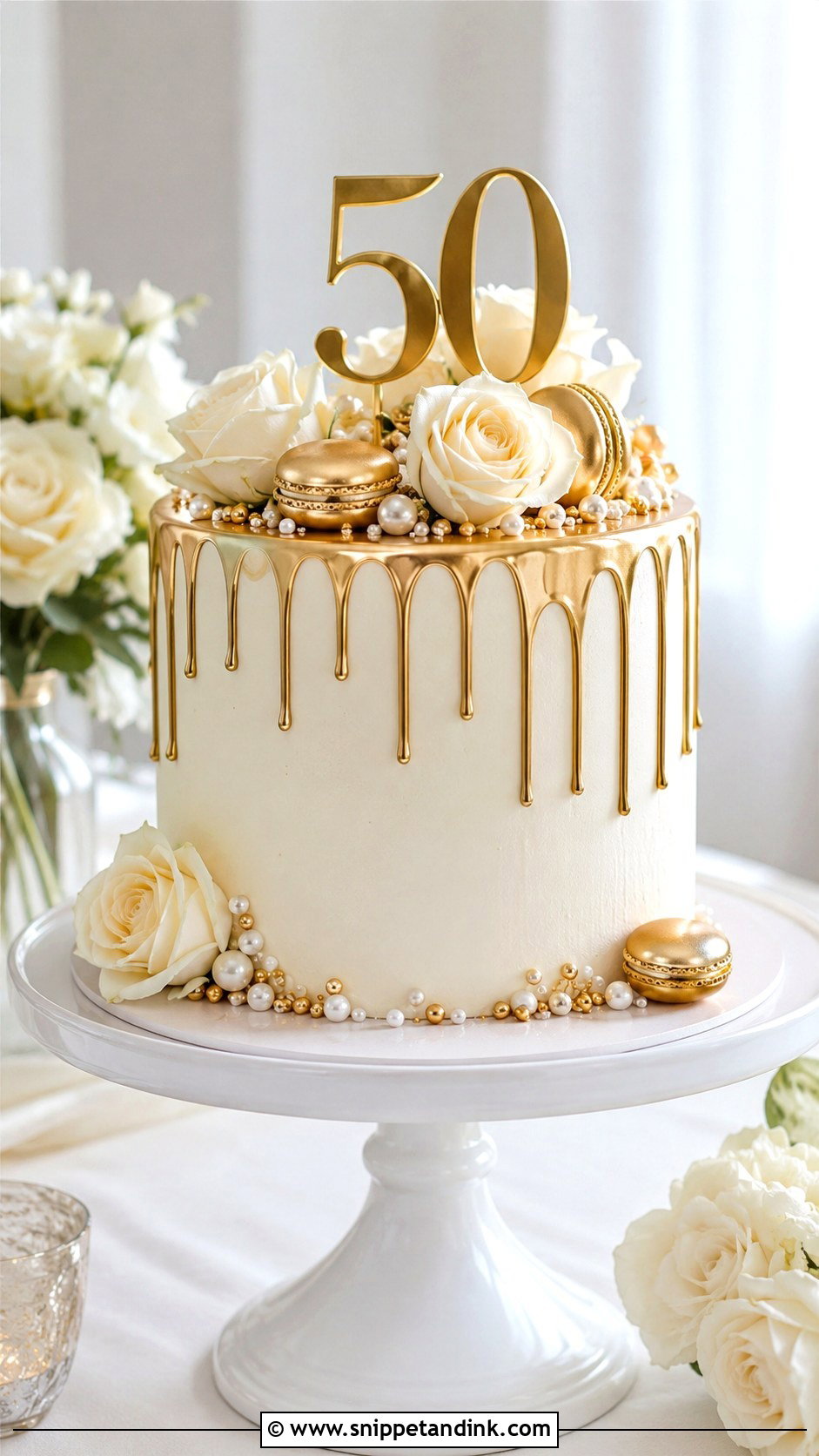
Drips look modern, and they’re less forgiving than photos suggest. The gold should fall in controlled, glossy runs over smooth white or cream frosting, and the cake must be cold when the drip goes on, or it runs straight to the board. I pour a white chocolate ganache, let it set, then paint it gold, which gives a cleaner shine than tinted ganache. Swiss meringue buttercream or fondant underneath holds a firm edge. Finish with fresh white flowers, a few gold macarons and a 50 topper, and stop there.
4. Gold Rose 50th Anniversary Cake
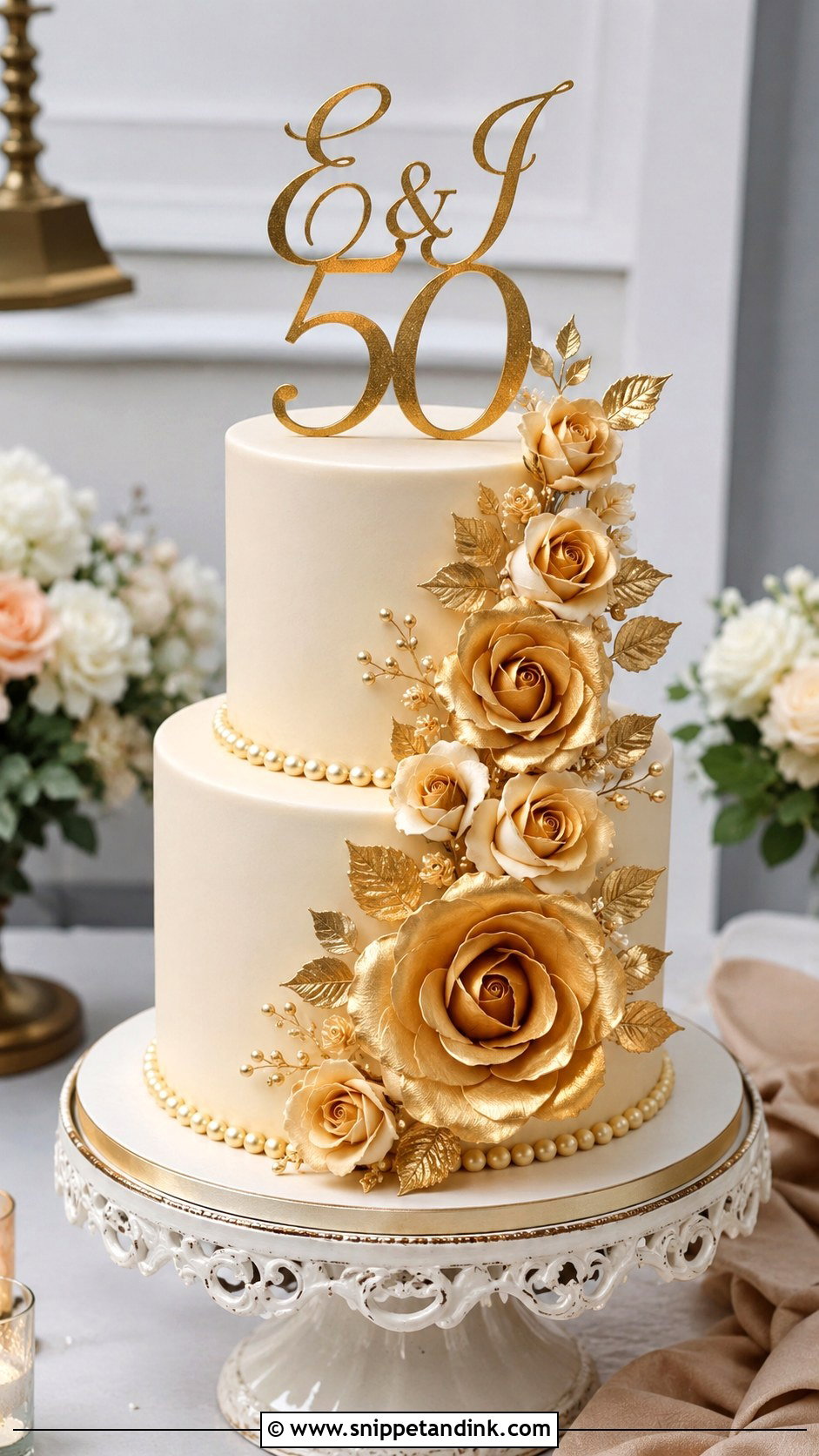
Roses are the most romantic way to bring gold in. I make sugar roses and brush only the petal edges with gold luster, which keeps them looking like flowers rather than ornaments; a fully gilded rose reads as plastic in photos. Buttercream roses piped around the tiers, or fresh ivory roses beside gold-painted sugar leaves, work too. A cream base stops the flowers looking heavy, and a gold pearl border finishes the edge. The couple’s initials in gold script on the front tier make it theirs. If the luster you used is decorative only, lift those sugar roses off before slicing.
5. Two Tier Gold 50th Wedding Anniversary Cake
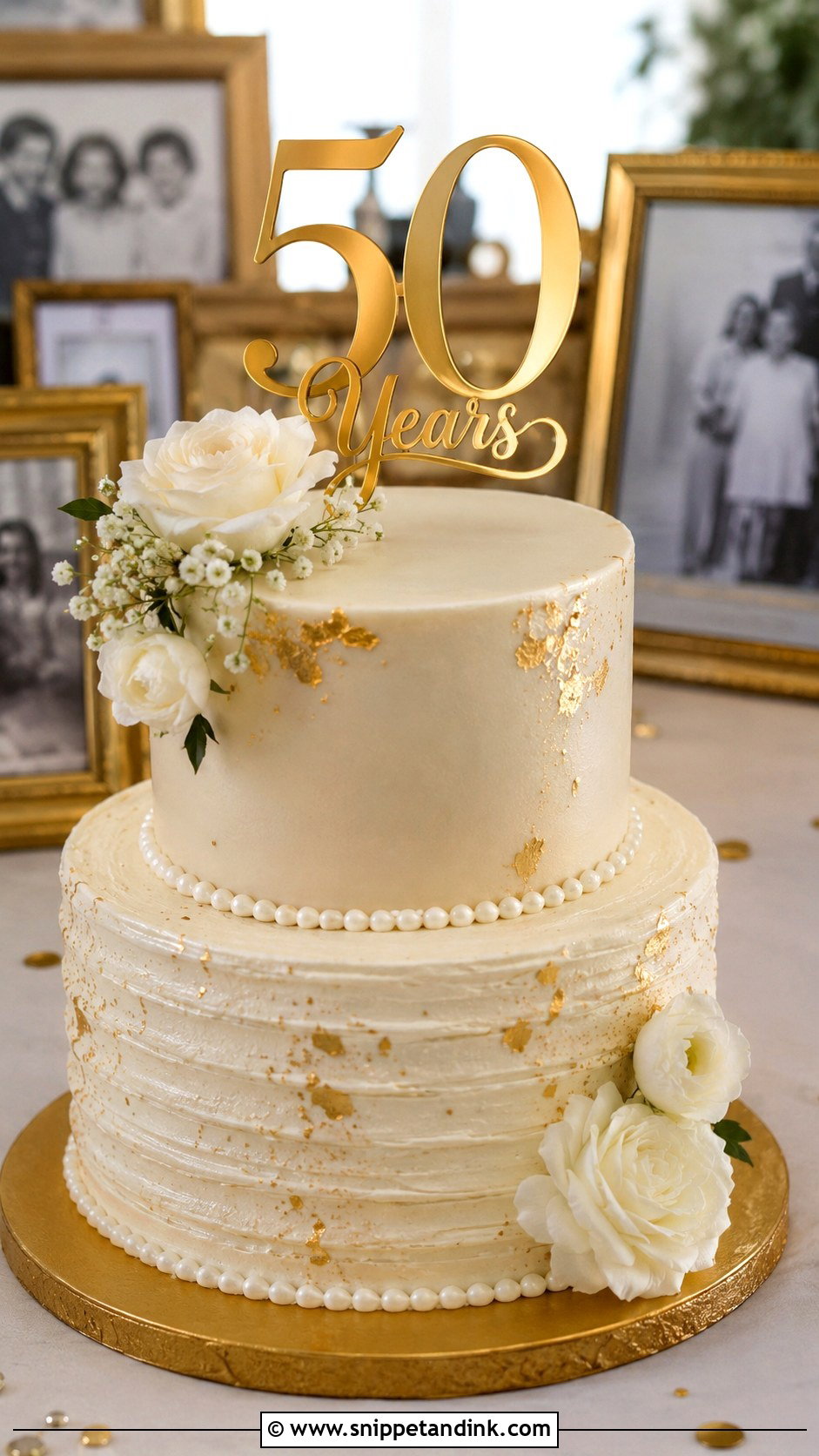
Two tiers is the size I suggest most for a smaller party: enough height to feel like a centerpiece, not so much that half of it goes home in boxes. The bottom tier can carry texture such as buttercream ridges or quilted fondant, while the top stays smooth under a gold number topper. A little gold leaf, pearl beads and a small floral cluster where the tiers meet tie them together. Carrot cake with cream cheese frosting is a family favorite, but that frosting is soft, so I keep it inside as the filling and use a firmer buttercream outside. Even two tiers need dowels in the lower one to carry the top.
6. Three Tier Gold 50th Anniversary Cake
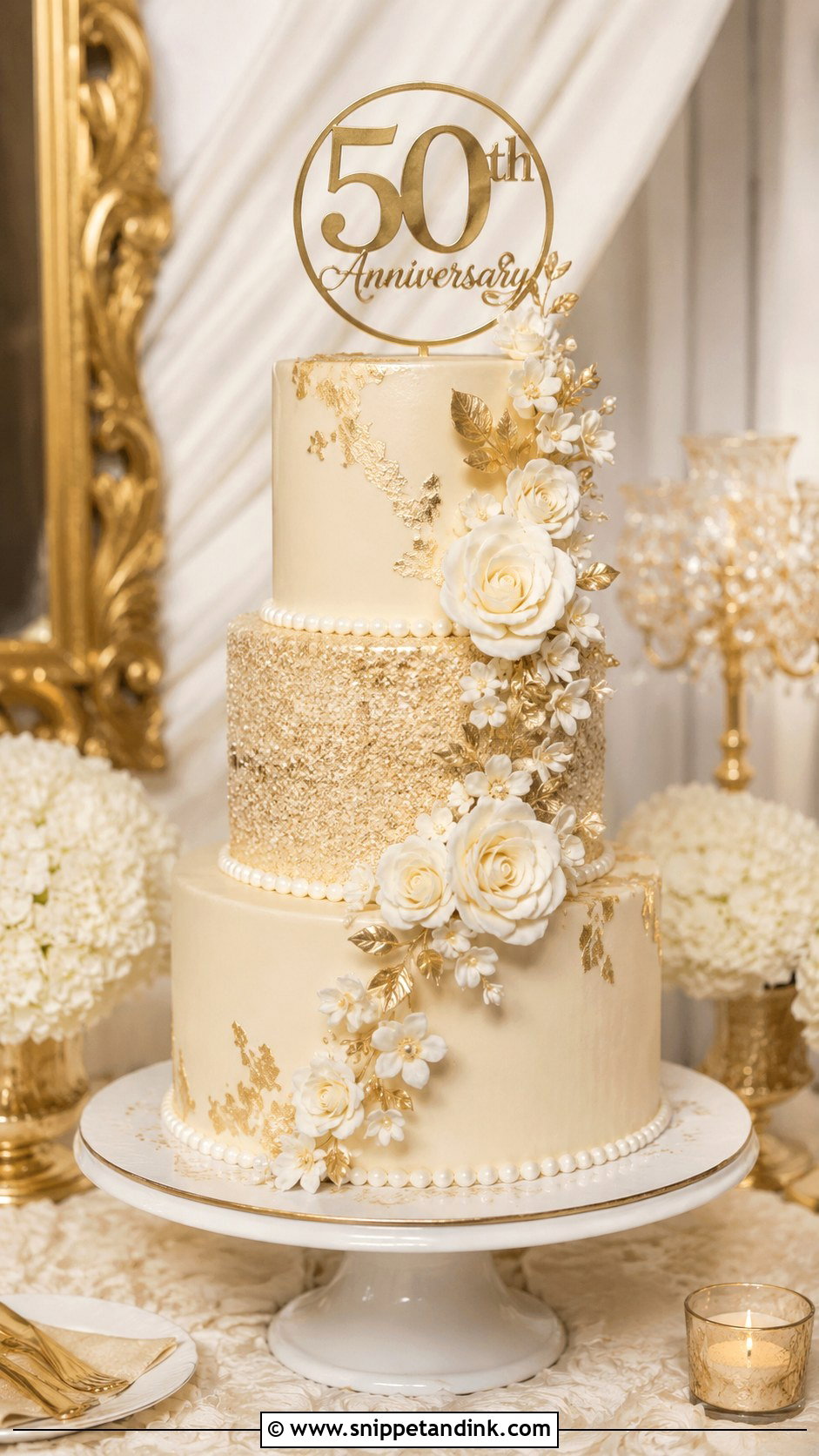
When a hall is full, the cake needs presence, and three tiers give it. I usually treat each tier differently: smooth ivory on top, gold accents in the middle, texture at the bottom, with a cascade of sugar flowers linking them. The trap is adding a new gold idea to every tier. Pick one gold detail and repeat it lightly, and the cake looks grand rather than crowded. Three tiers also let you serve three flavors, which helps when the family can’t agree. Sugar flowers for a full cascade take days to make and dry, so this is a design to order early.
7. Simple Gold 50th Wedding Anniversary Cake
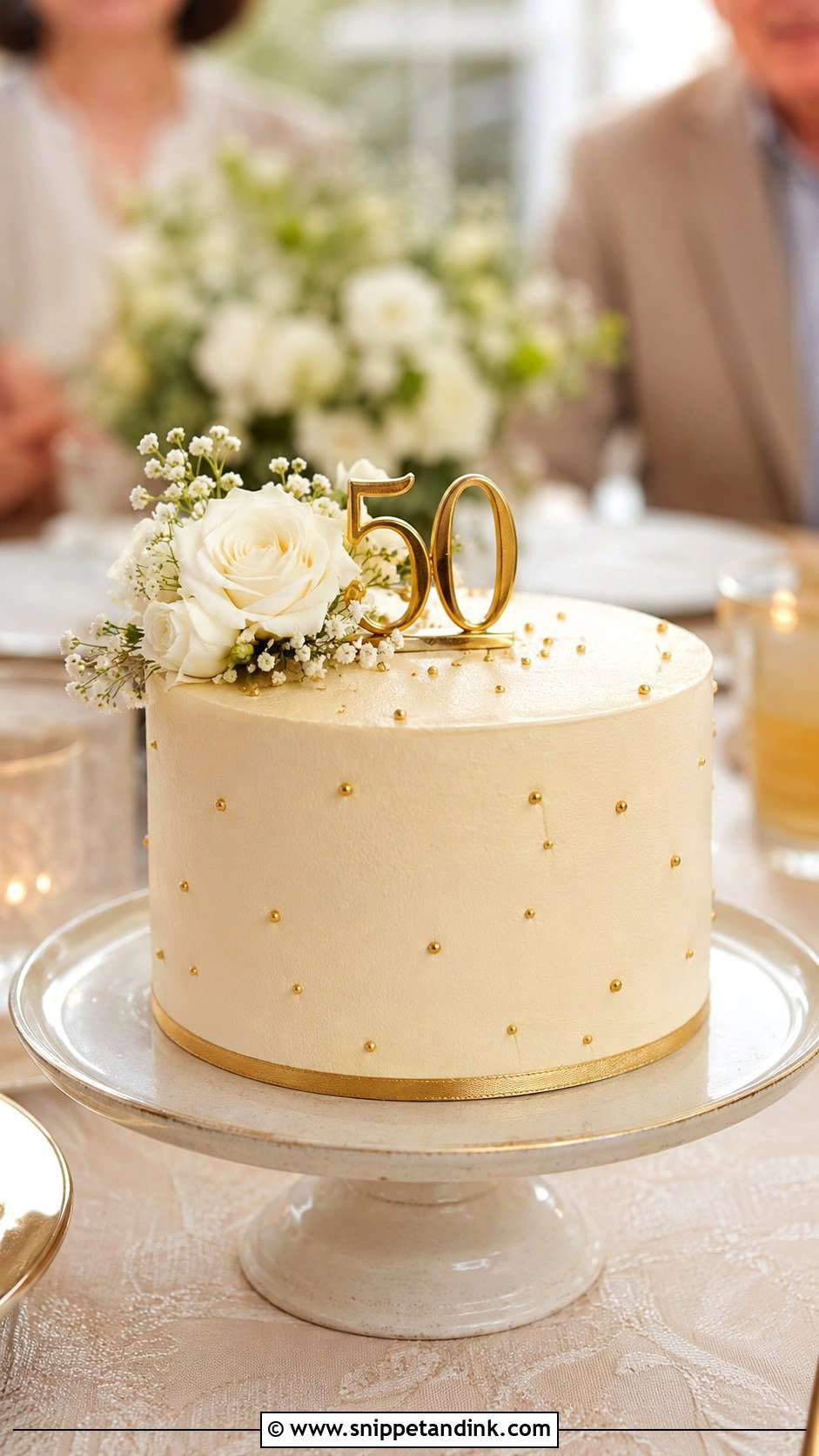
Not every golden anniversary needs a tall cake. A single round tier of smooth ivory buttercream with a thin gold border, a small “50” and a few flowers on one side can carry the day, especially when the table already holds candles, flowers and framed photos. The fewer the details, the more each one shows, so a smooth finish and a neat border matter more here than on a busy design. Gold script piped by hand looks warmer than a printed plaque.
8. Square Gold 50th Anniversary Cake
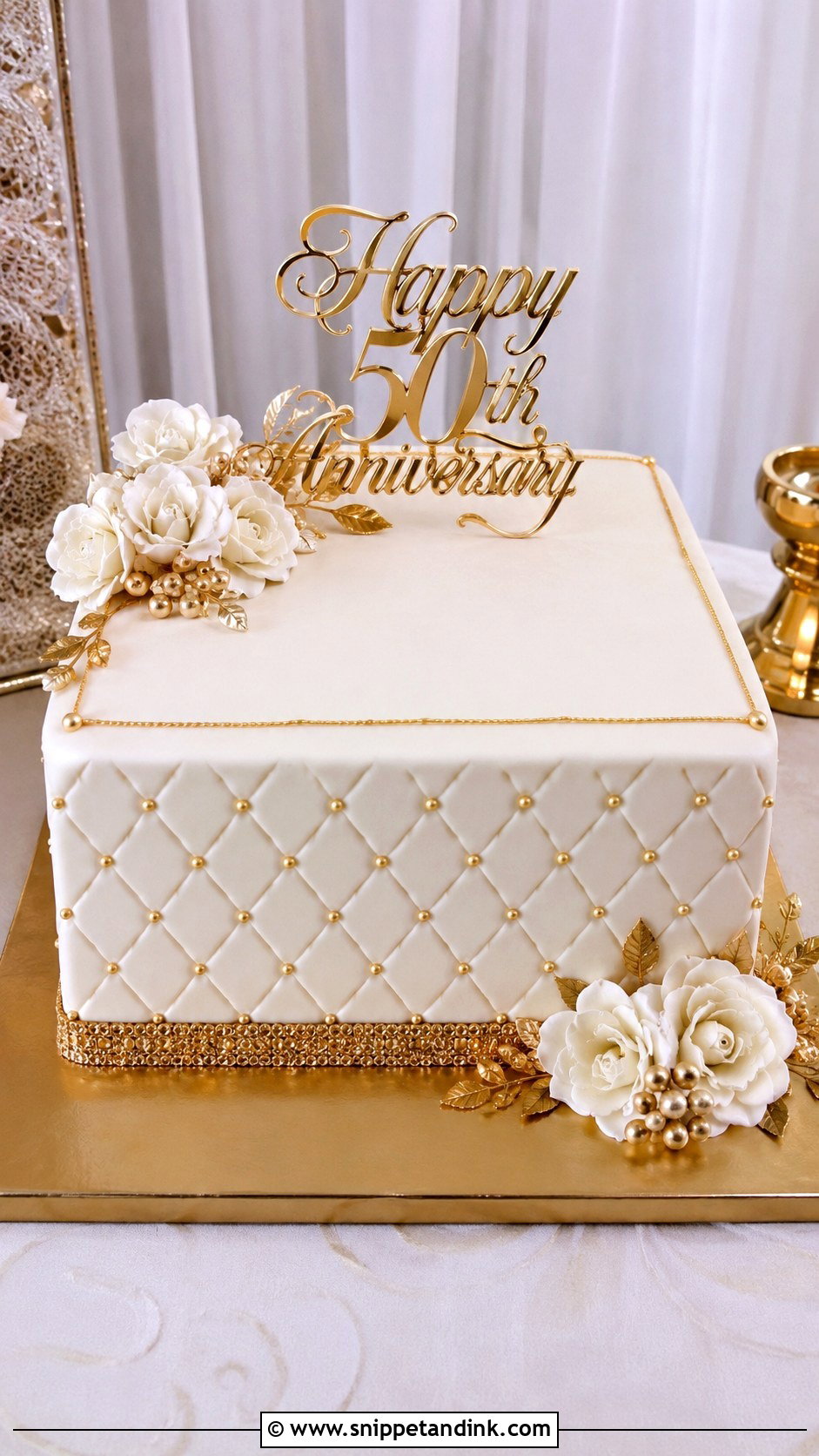
Square cakes look formal and slice in clean rows, which is why caterers like them. Fondant suits the shape best because it holds a sharp corner; buttercream corners soften as the room warms up. The flat top leaves room for names, a date or a short message, and quilted patterns, edible pearls and gold borders sit neatly on the sides. I place gold sugar flowers on two opposite corners and leave the rest clear. For a banquet, square tiers serve far more neatly than rounds.
9. Heart Gold 50th Wedding Anniversary Cake
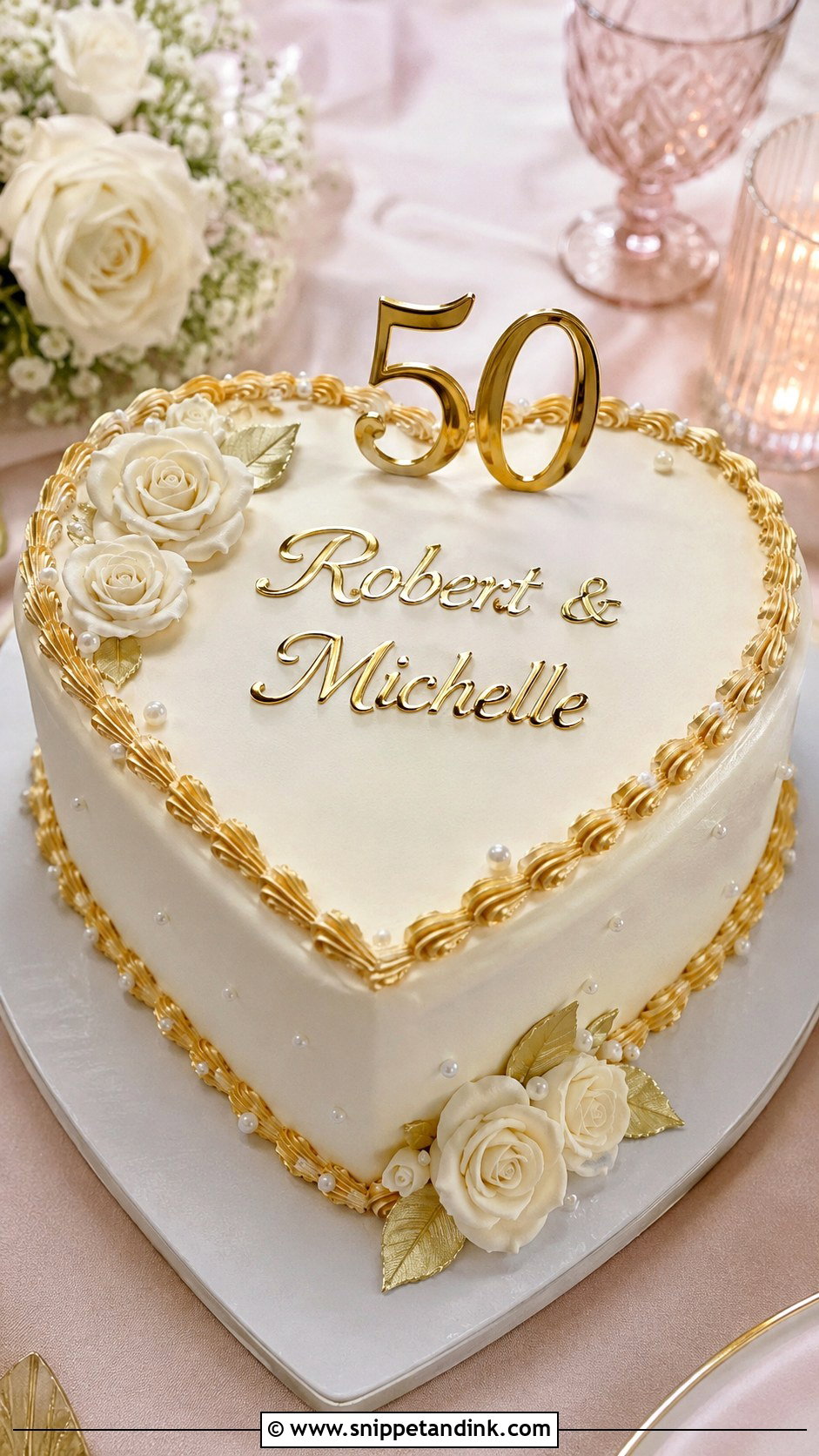
A heart says what the day is about without a single word, so the decoration can stay modest. Smooth white frosting, gold piping, pearl edging and a small spray of flowers are enough, or the couple’s names in gold across the top. A heart on its own feeds a small family; to serve more, set it on a larger round tier. The point of the heart is the hardest spot to frost cleanly, so I chill the cake between coats there. Vanilla cream, strawberry vanilla or almond sponge suit it.
10. Gold Floral 50th Anniversary Cake
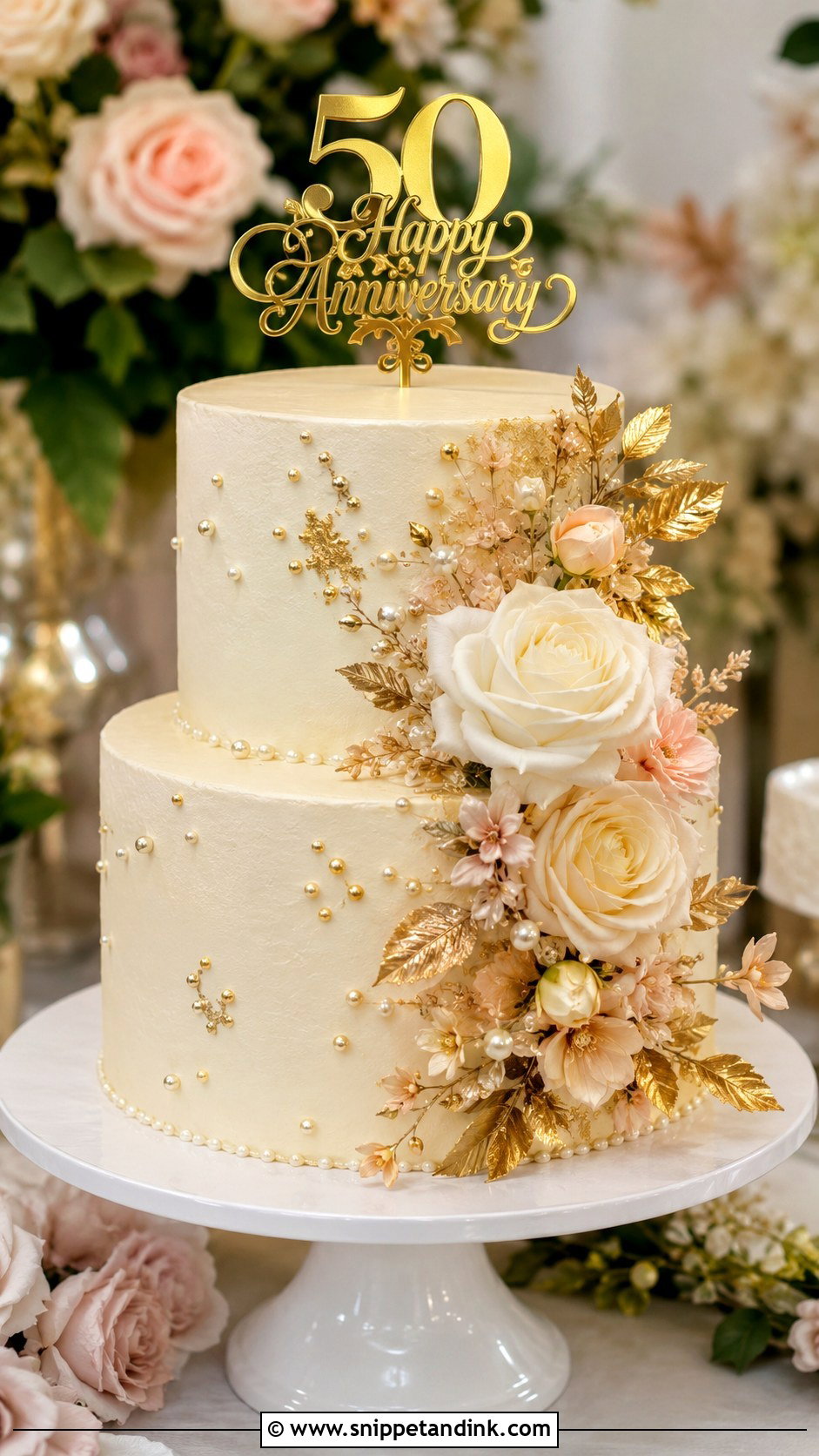
Flowers mean most when they connect to the wedding, so I always ask what was in the bride’s bouquet. Fresh, sugar or buttercream blooms all work if the palette stays soft: ivory, blush, cream and pale gold. Gold-painted sugar leaves or a metallic stencil on the tier link the flowers to the theme, and a cascade down one side of a two-tier cake gives a natural curve. Fresh flowers have to be unsprayed and kept off the sponge with food-safe picks or wrapped stems. Some common blooms are toxic, so let your florist and baker check the list together.
11. Gold Pearl 50th Wedding Anniversary Cake
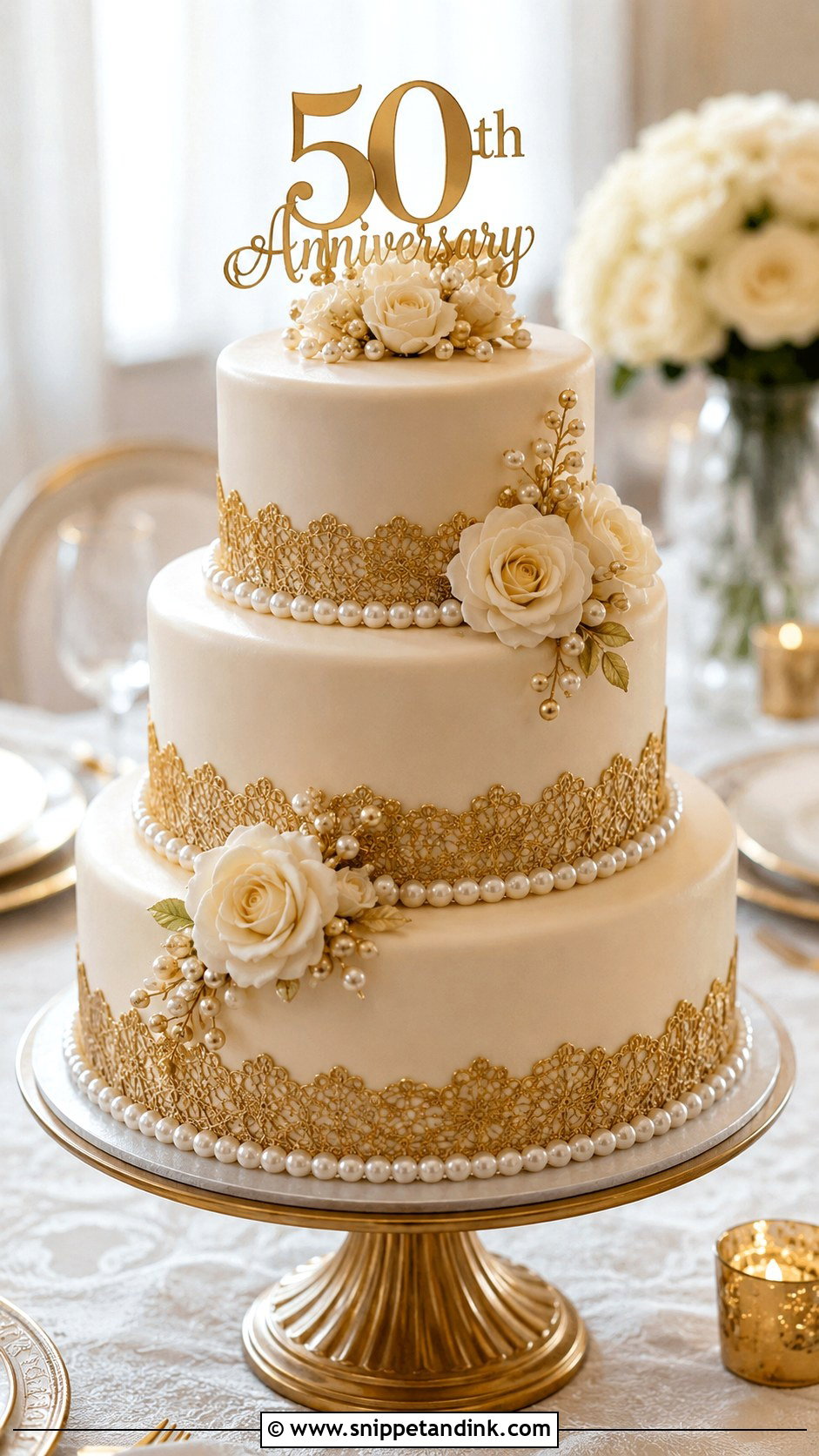
Pearls soften gold and suit couples who like traditional cake detail. I use edible pearl strands around each tier, small clusters, or a single border at the base, with gold kept to accents so the pearls stay visible. Ivory frosting, gold lace and vintage-style piping all suit them. Sugar pearls draw moisture, so in a humid room they can lose their sheen and bleed color into the frosting; I add them as late as I can. A gold “50” or monogram is all the topper this one needs.
12. Gold Sequin 50th Anniversary Cake
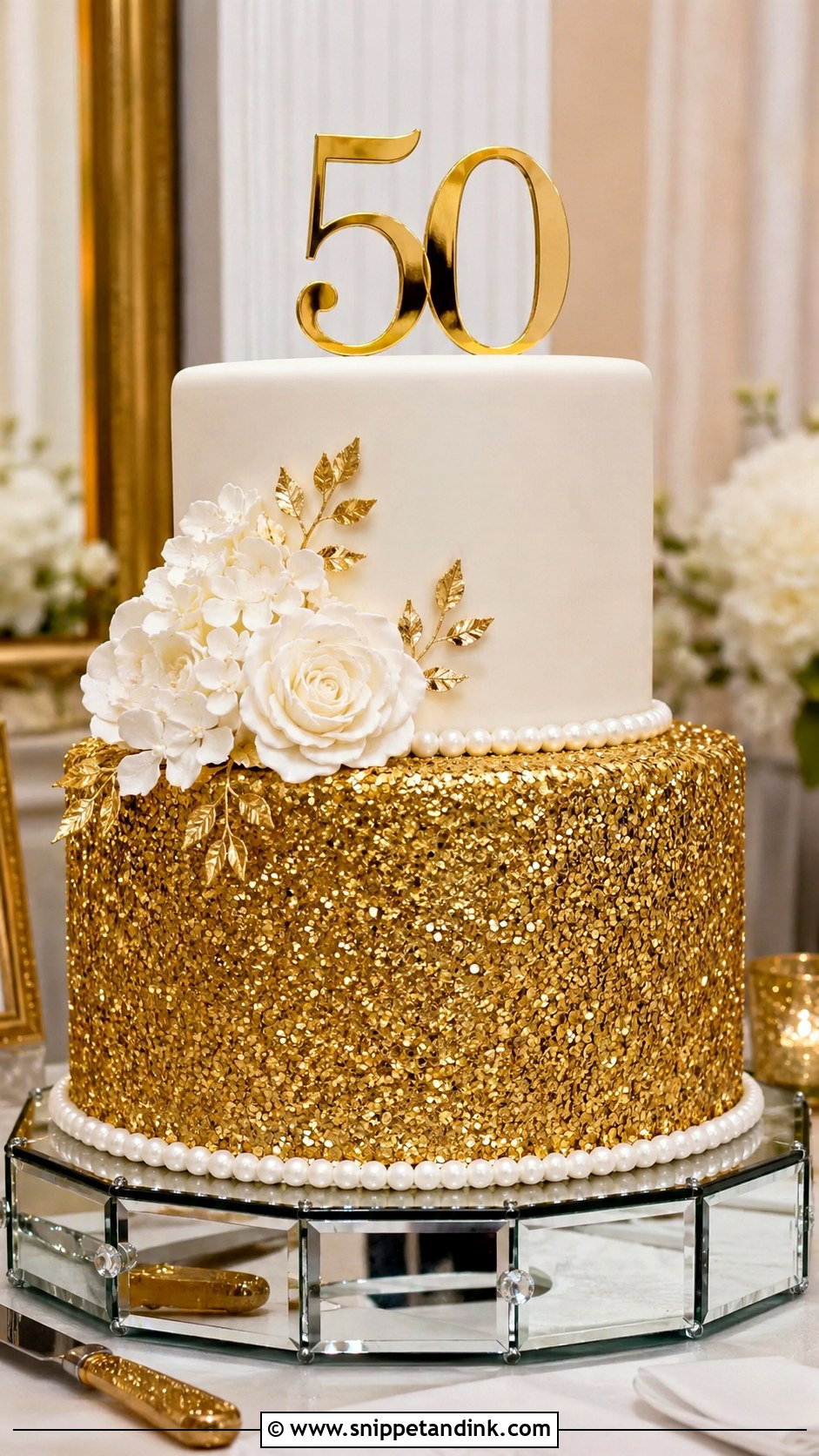
Sequins are the party option. Edible gold sequins pressed over one tier make a glittering band under evening lighting, and the trick is to stop at that one tier. Pair it with smooth white or ivory tiers, a few white flowers and a simple topper. Each sequin is placed by hand in overlapping rows onto a tacky surface, which is why this design costs more in time than its materials suggest. Chocolate, vanilla bean or marble inside keep the flavor familiar under the sparkle.
13. Gold Buttercream 50th Wedding Anniversary Cake
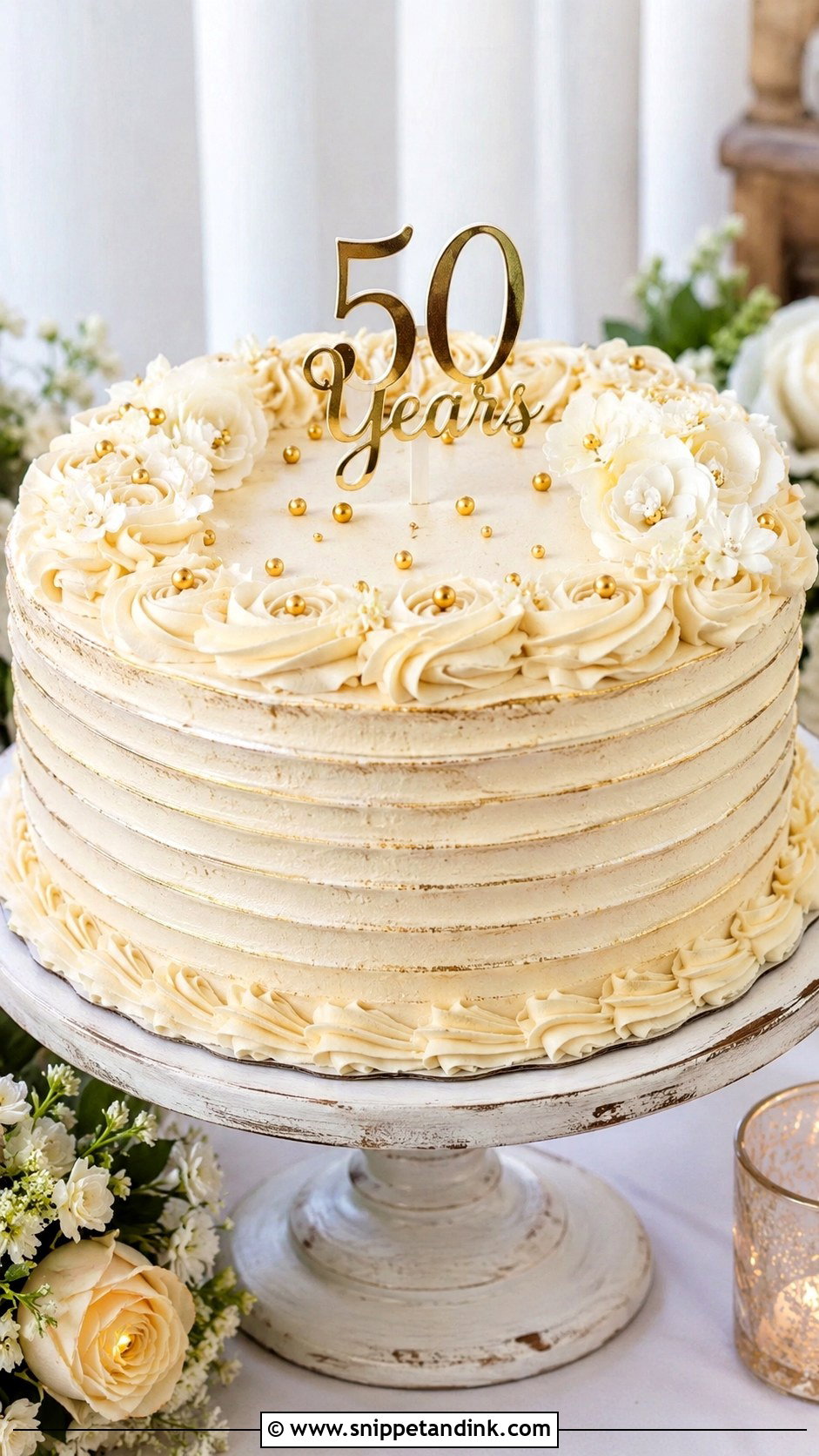
Buttercream tastes better than fondant to most people, and its softer finish looks made by hand. Instead of a sleek surface, try spatula texture, rosettes or gently combed ridges, then add gold with edible paint, sprinkles, pearls or a light dusting on the raised edges. Texture helps: gold dust catches the ridges and leaves the grooves pale, which gives depth with very little product. The weakness is heat. Buttercream softens in a warm room, so keep the cake out of sunlight and away from buffet lamps.
14. Gold Fondant 50th Anniversary Cake
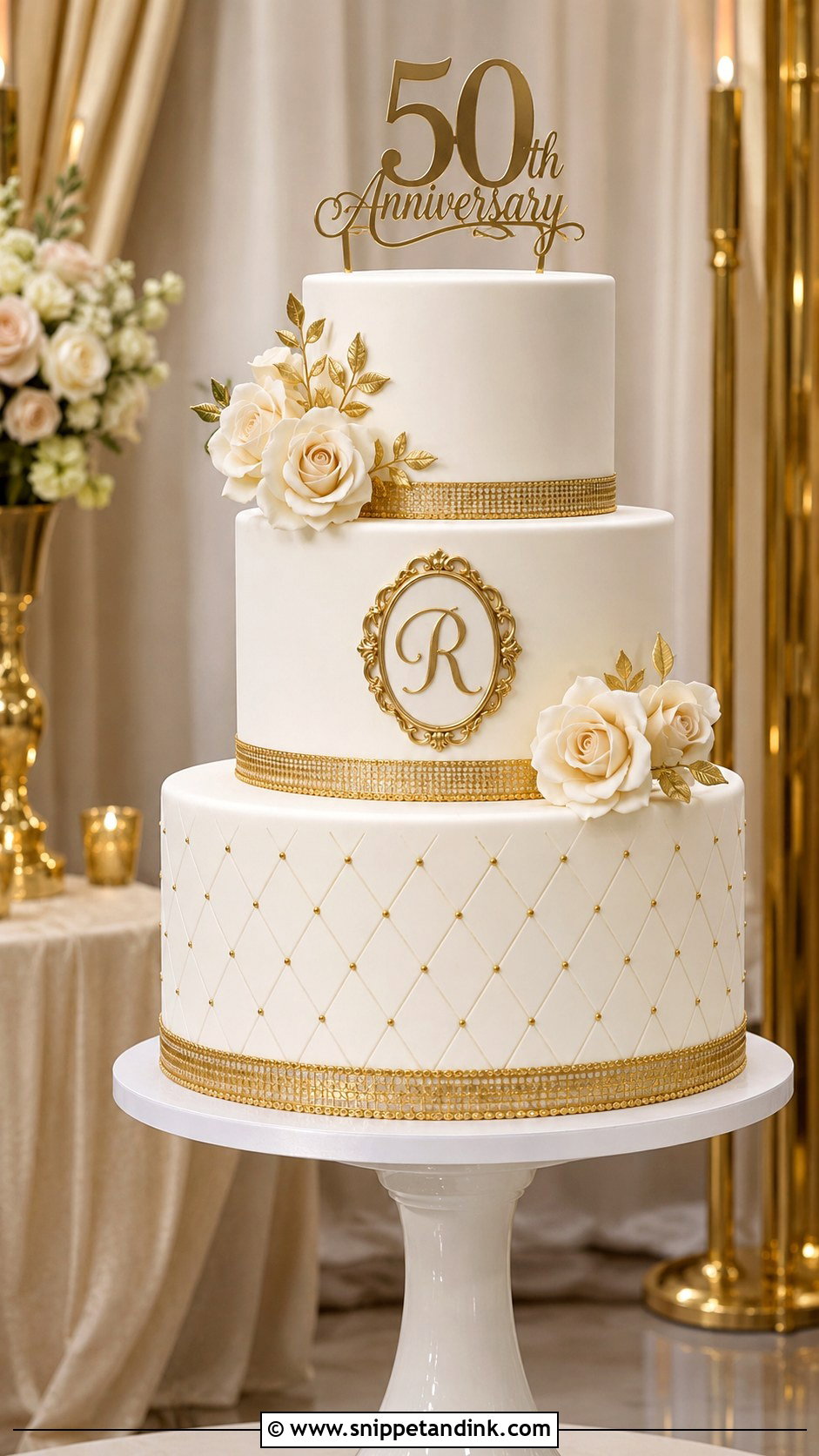
Fondant gives the cleanest, most formal finish, and it holds detailed gold work better than any other surface. Quilting, embossing and painted bands all stay sharp on it. A white fondant base with a gold band at each tier is hard to beat for a large reception, with sugar flowers, a gold monogram or a plaque on the front. Gold paint dries hard on fondant, whereas on buttercream it can smudge when someone brushes past the table. Keep gold to borders, patterns and the topper rather than coating whole tiers.
15. Gold Number 50 Anniversary Cake
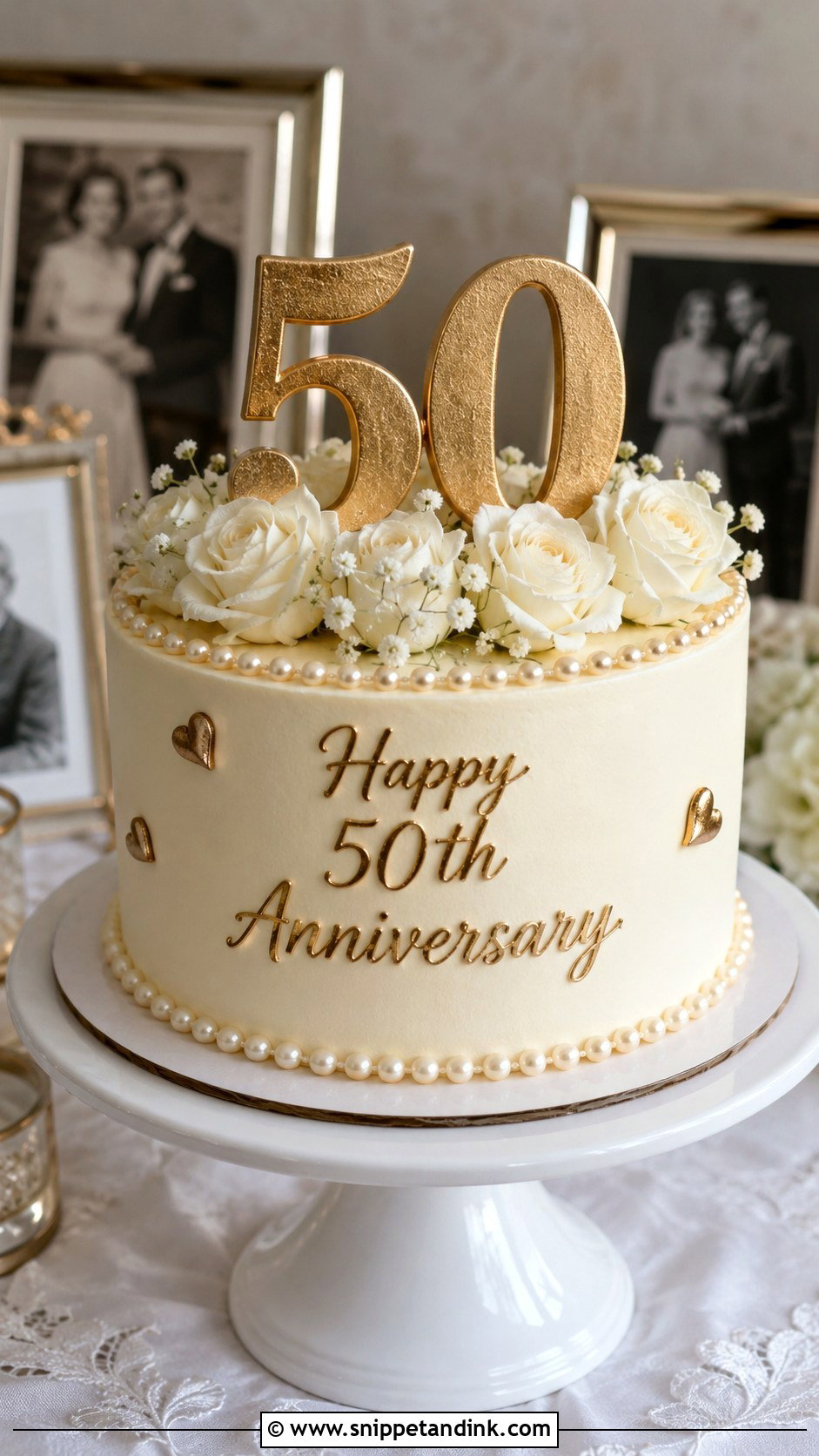
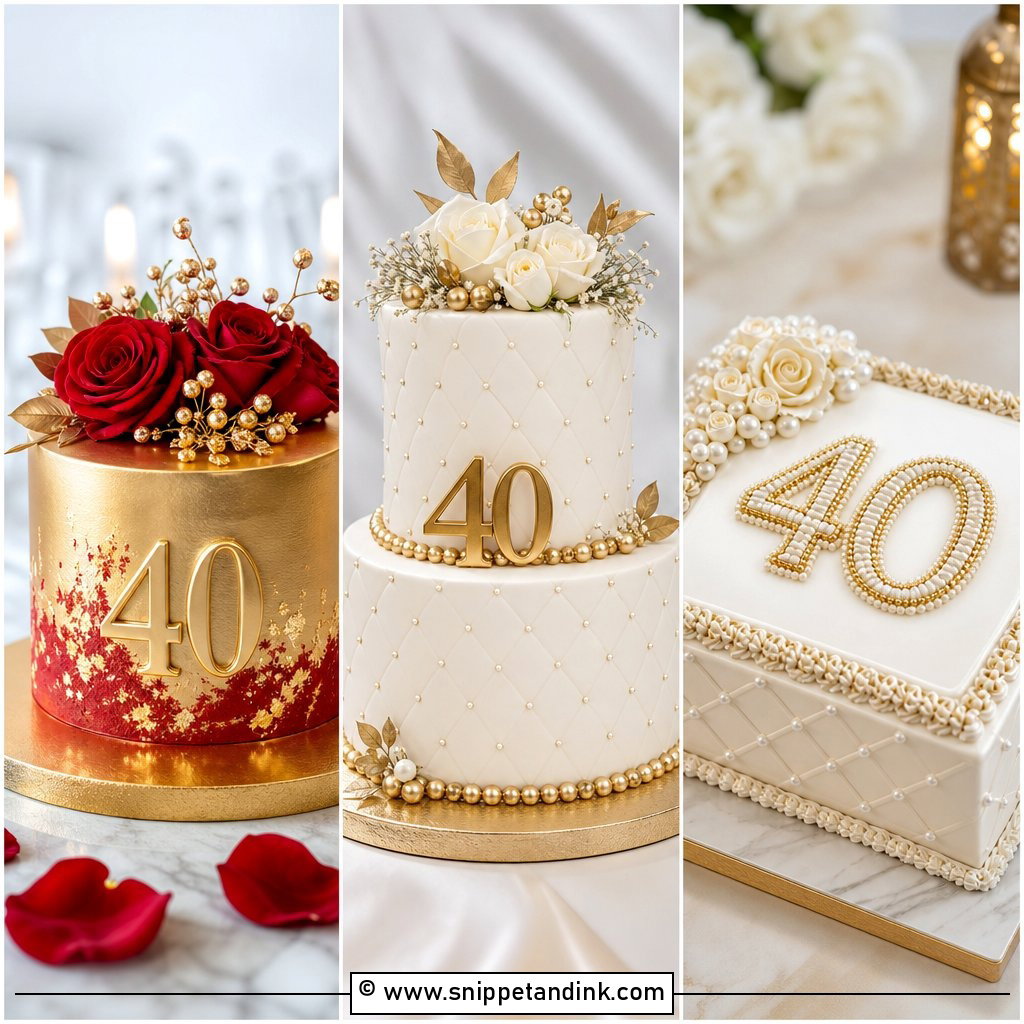
The number does the explaining. It can be a topper, a fondant plaque, an edible print or the shape of the cake itself, and gold numerals read best against white, ivory or cream. Add flowers, pearls and a short line like “50 Years” or “Golden Anniversary”. Tall toppers need support: I tape a wooden skewer to the back and push it well down into the cake, because acrylic numerals lean as frosting softens through an afternoon.
16. Gold Lace 50th Wedding Anniversary Cake
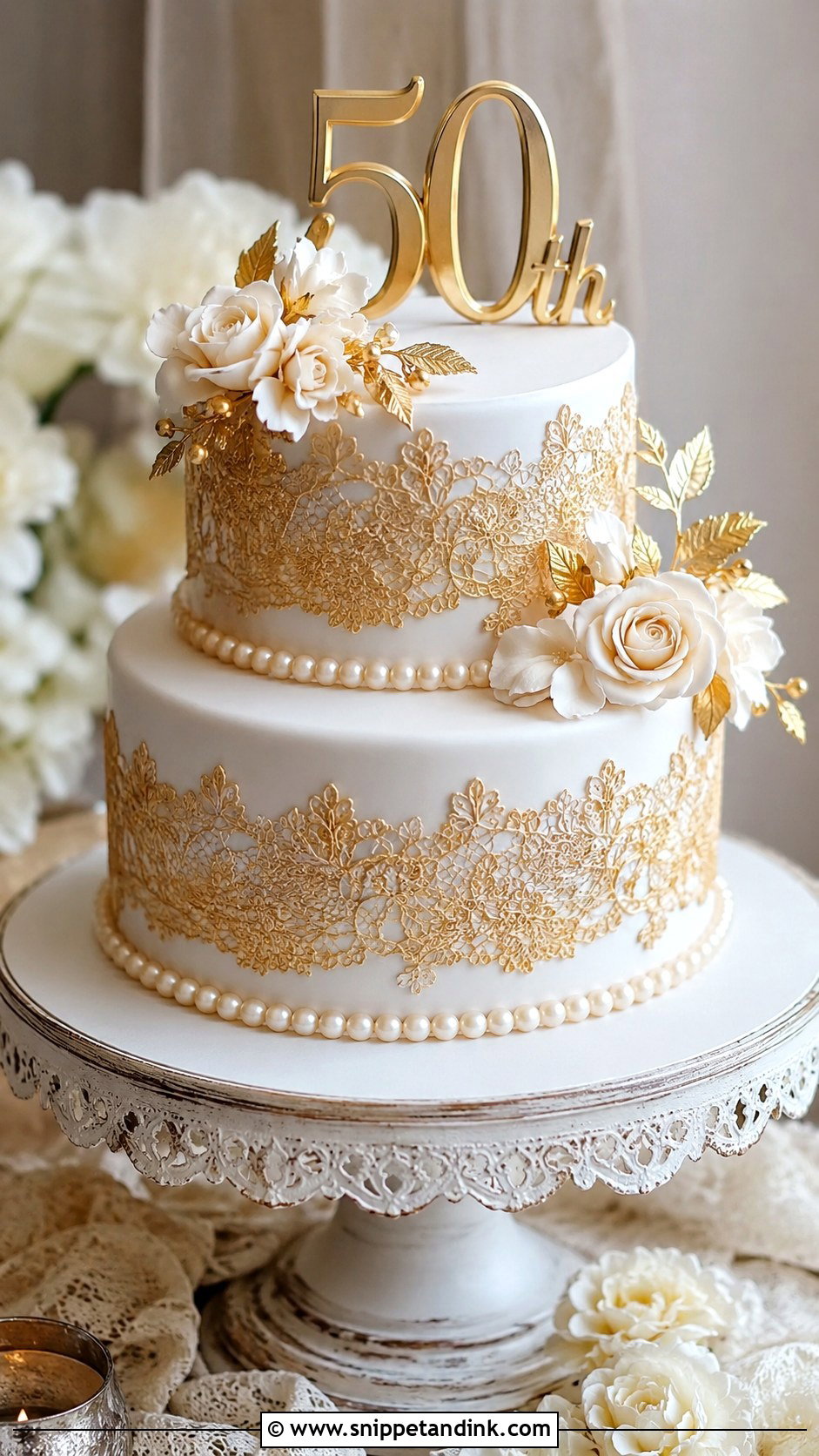
Lace is the detail most likely to echo the couple’s actual wedding, especially if the bride’s dress shows lace in the old photos. It can be piped in royal icing, pressed from fondant molds or painted in gold over a white base. Royal icing piping is the traditional method and the one many cakes of that era were decorated with, so it suits the occasion. Keep the tiers smooth so the lace has a clean field, then add pearl borders, ivory roses and a small gold topper. Almond, vanilla bean or lemon sponge pair well.
17. Black And Gold 50th Anniversary Cake
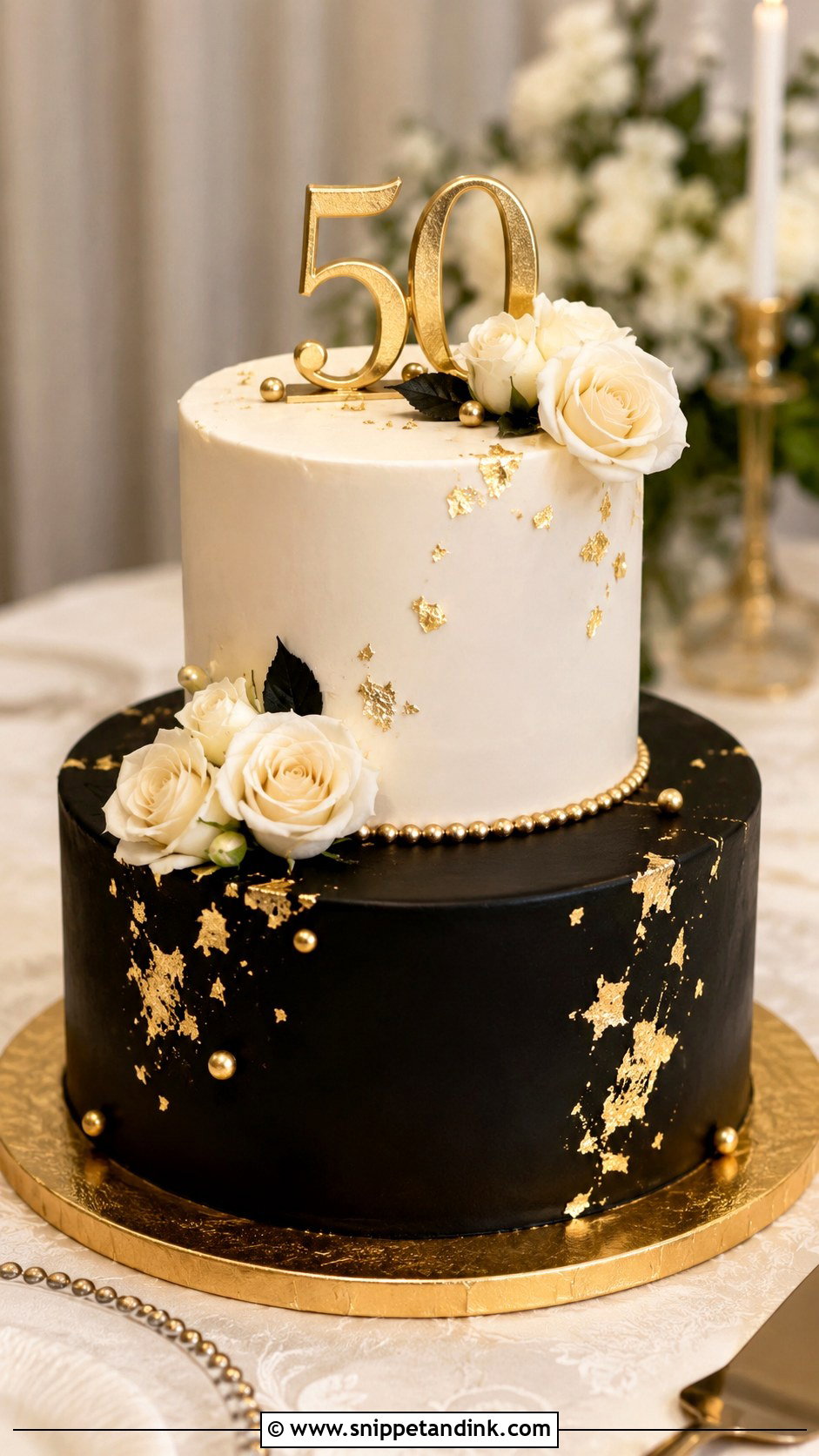
Black and gold suits an evening dinner where the room is already dark-toned. To keep it right for a golden anniversary, let gold stay the star and limit black to one tier: a black bottom tier with gold leaf under a white top tier looks sharp without feeling gloomy. Ivory flowers or pearls soften it further. Deep black frosting stains teeth and can taste bitter from the sheer amount of coloring, which is another reason I keep it to a single tier.
18. Gold Marble 50th Wedding Anniversary Cake
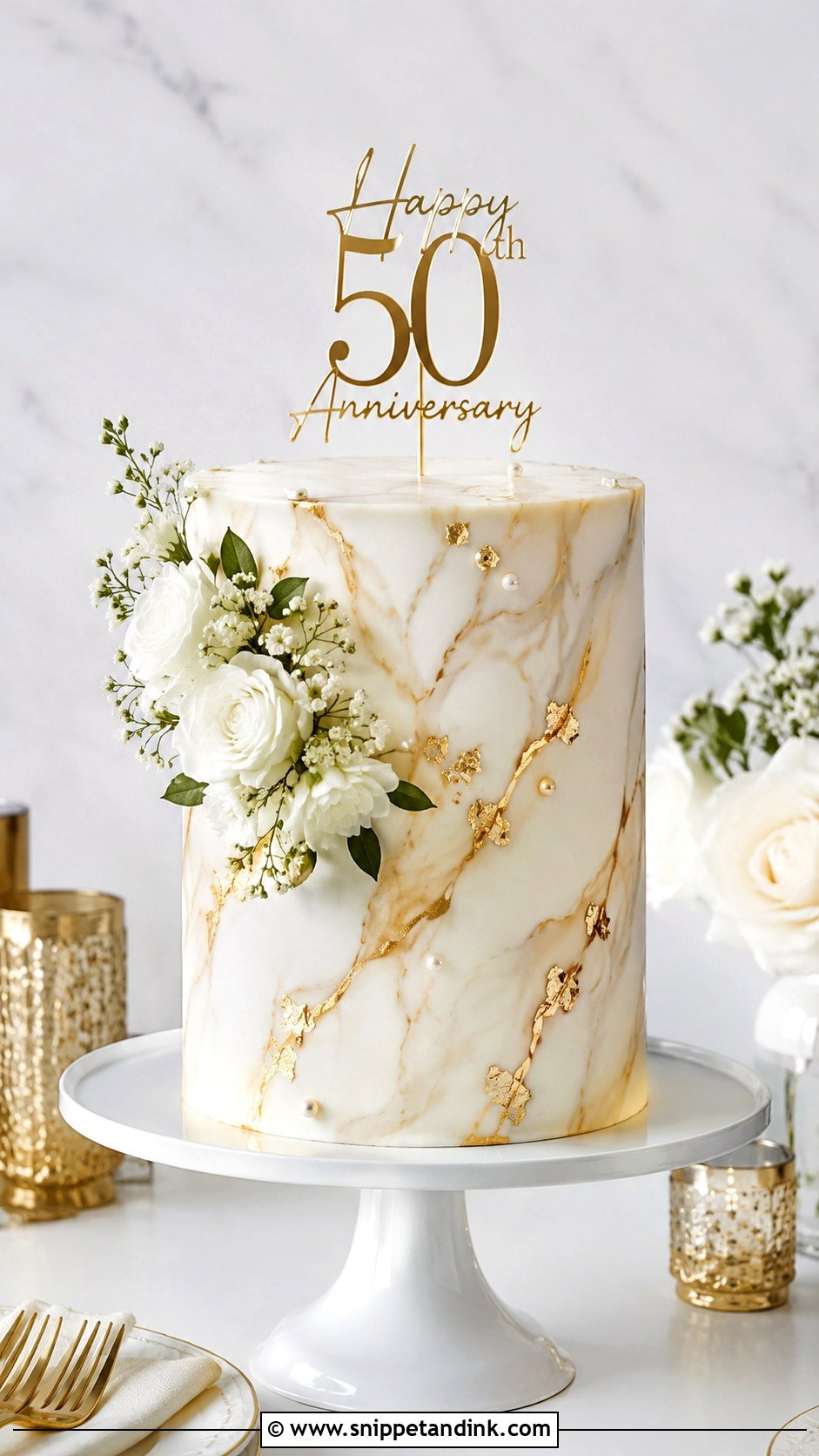
For a venue with neutral decor and clean lines, a gold marble 50th wedding anniversary cake fits better than anything floral. The marbling can be soft grey, ivory or cream, with fine gold veins through fondant or buttercream, and it looks sharpest on one tall tier or a slim two-tier. Keep decoration to a single white floral cluster and a gold topper. In fondant I only partly knead the grey in, so the streaks stay random; overworking it turns the whole sheet a flat pale grey. Vanilla bean, white chocolate or almond cream inside.
19. Gold Photo 50th Anniversary Cake
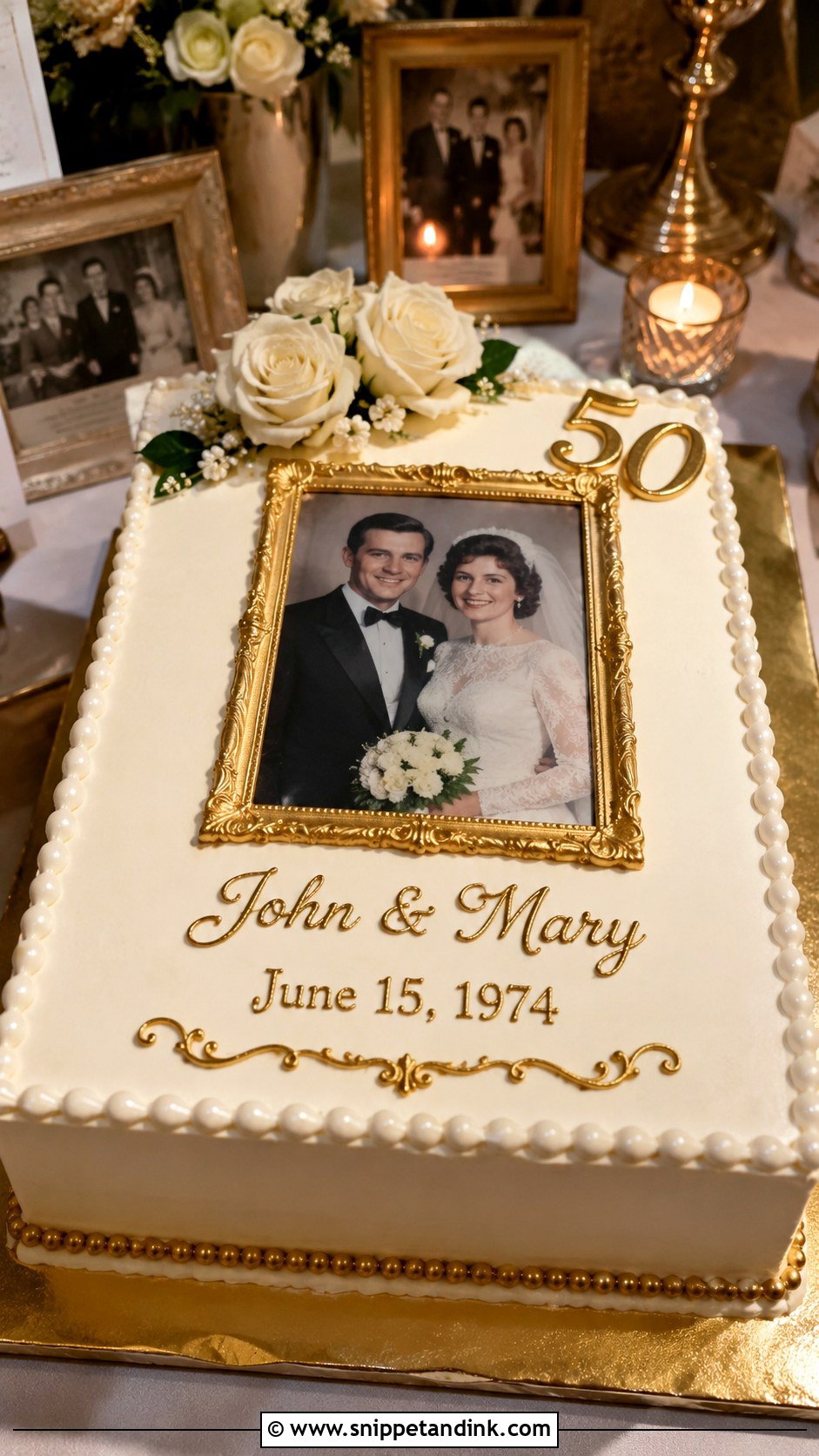
Families crowd around a gold photo 50th anniversary cake more than any other design here, because it shows them something they haven’t seen in years. Use an edible print of the wedding portrait, a favorite later photo or a small collage, framed with gold piping, pearls or a fondant picture frame. One image is usually stronger than five. A smooth white base keeps the print clear, and since edible prints don’t like moisture, the image goes on as late as possible. Names, the wedding date and a gold 50 complete it.
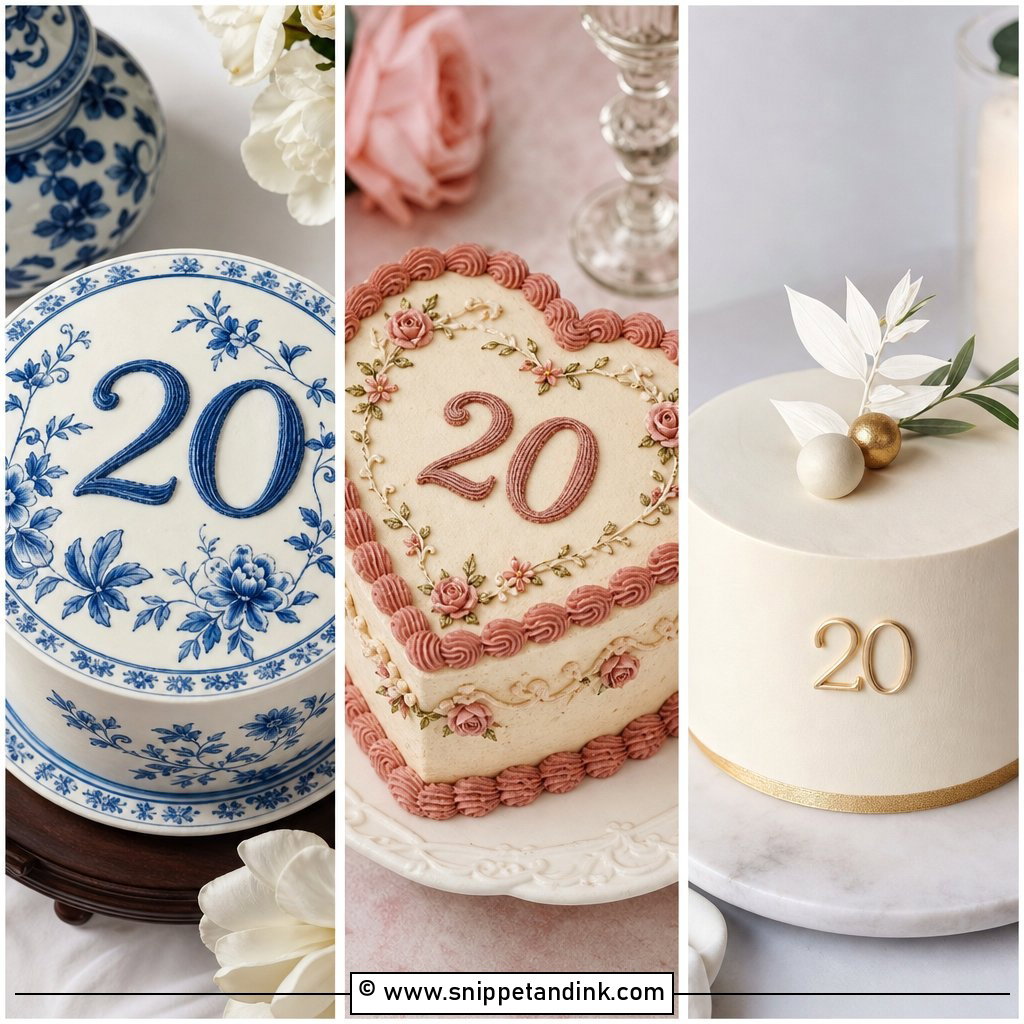
20. Gold Bundt 50th Wedding Anniversary Cake
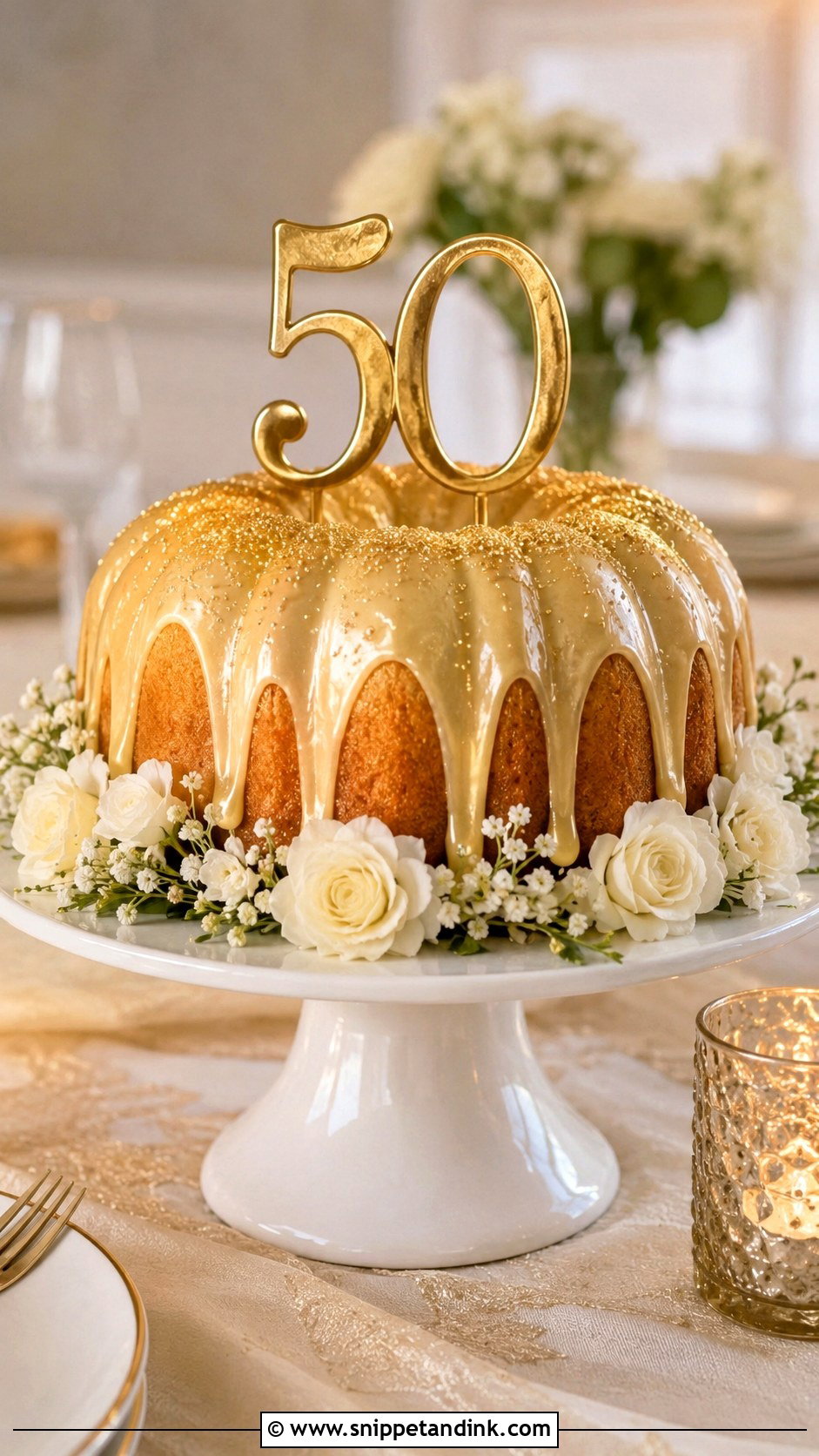
For a family lunch, a gold Bundt 50th wedding anniversary cake feels like home baking at its best: nostalgic, easy to serve and nothing to stack. Dress it with a smooth vanilla glaze, edible gold dust, gold sprinkles and white flowers around the base, with a small “50” in the center opening. Grease every flute of the pan and let the cake rest about ten minutes before turning it out, or the pattern tears. Lemon, almond and butter pecan all suit it.
The Drive to the Venue Is Where Cakes Get Ruined
Most cake disasters I hear about happen in the car, not the kitchen. If the family is collecting the cake rather than having it delivered, a few habits save it.
- Carry tiers separately and stack them at the venue, unless the cake was built with a central rod for transport.
- Put the box on a flat surface, the floor of the car or the trunk, on a non-slip mat. A seat slopes and the cake will slide.
- Run the air conditioning before the cake goes in. Buttercream starts to slump in a hot car within minutes on a summer day.
- Drive as if there’s a full glass of water on the dashboard, and take corners slowly.
Cutting it, and the slices nobody tells you about
At an anniversary party I suggest the couple cut the cake earlier than they would at a wedding, soon after the meal, so older guests who leave early still get a slice and a photo. Check whether the venue charges a fee for cutting and plating an outside cake, and decide who actually does the slicing. Keep a few boxes on hand too: the couple’s family will want to take pieces home to anyone who couldn’t travel.
One Cake, Fifty Years, and the Party You’re Actually Throwing
Gold can be a pearl border or a sequin tier, a painted edge or a cluster of leaf, and any of them works when the cake fits the party. A formal hall carries tiered fondant, lace or a floral cascade. A small lunch is better served by a single buttercream tier, a heart or a Bundt. Start from the guest count and the room, give your baker enough time, and let the couple’s own story settle the details.
You'll Like These Ideas:


Leave a Reply