
I photograph a lot of anniversary cakes, and the ones that come out best aren’t always the most expensive. They’re the ones with a clear idea: gold on ivory, a crescent of roses, a heart with neat piping. Camera sensors and phone screens flatten detail, so a cake with one strong feature survives the trip into a photo far better than one with ten small ones. The cake doesn’t have to be big; it has to suit the couple and the room. Here are twenty directions, with notes on how each one looks once it’s in front of a lens, and what to do about it.
Where the Cake Sits Decides Half the Photo
Most disappointing cake photos come from the table, not the cake. Venues often push the cake into a corner beside a fire exit sign or a stack of chairs. Before the party, I’d walk the room and choose a spot with three things.
- Side light. A window to the left or right of the cake shows texture. Light from straight behind turns the cake into a silhouette; light from directly above flattens piping.
- A quiet background. A plain wall, a curtain, or greenery. Move bags, bottles and signs out of the frame.
- Room to stand. The couple needs space behind or beside the table for portraits, and the photographer needs a few steps back for a full shot.
If the party is in the evening, avoid putting the cake under a single spotlight. It makes white frosting glare and pushes everything else into shadow. A few lamps or candles around the table give softer, warmer light.
1. Gold Anniversary Cake
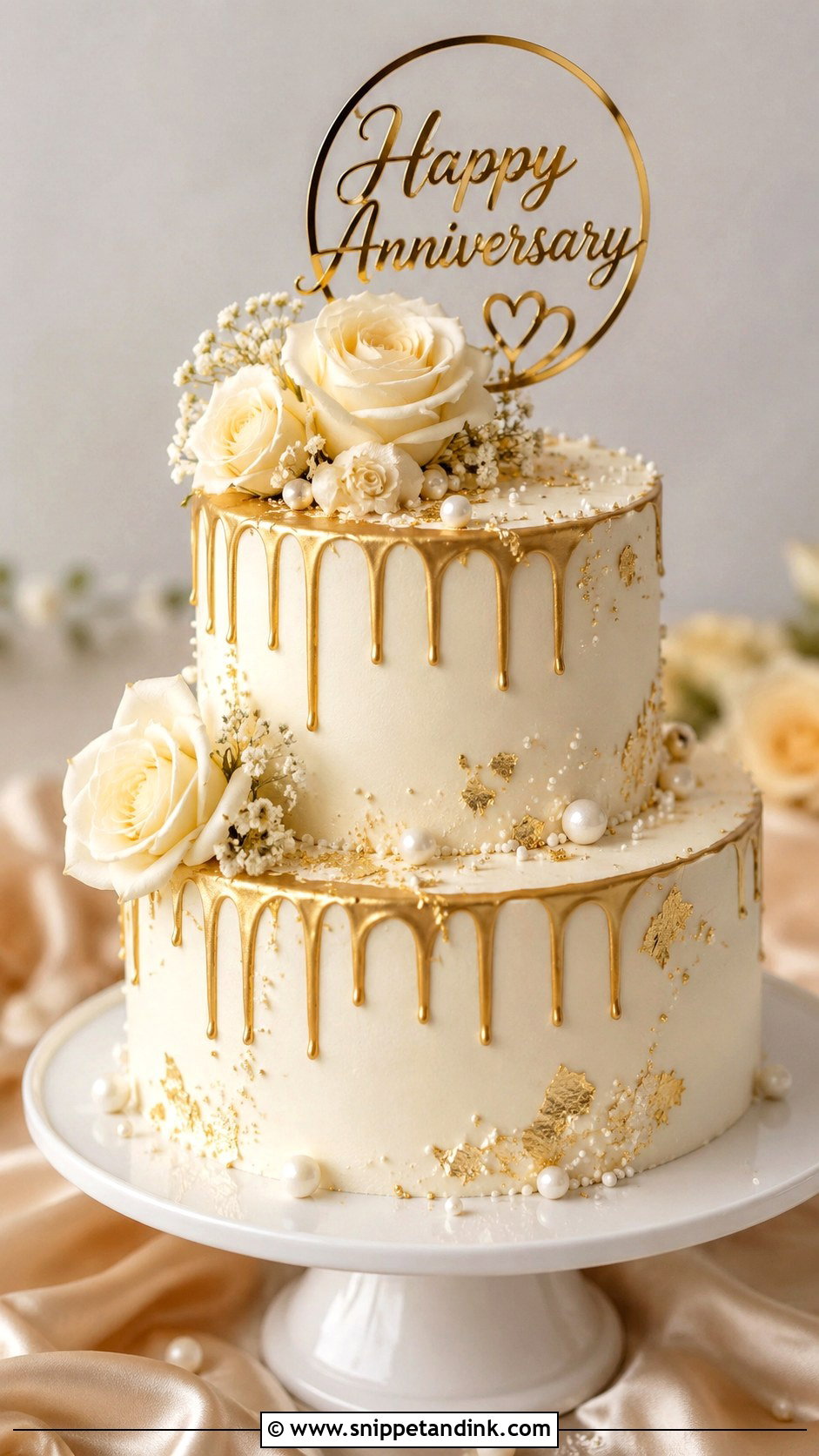
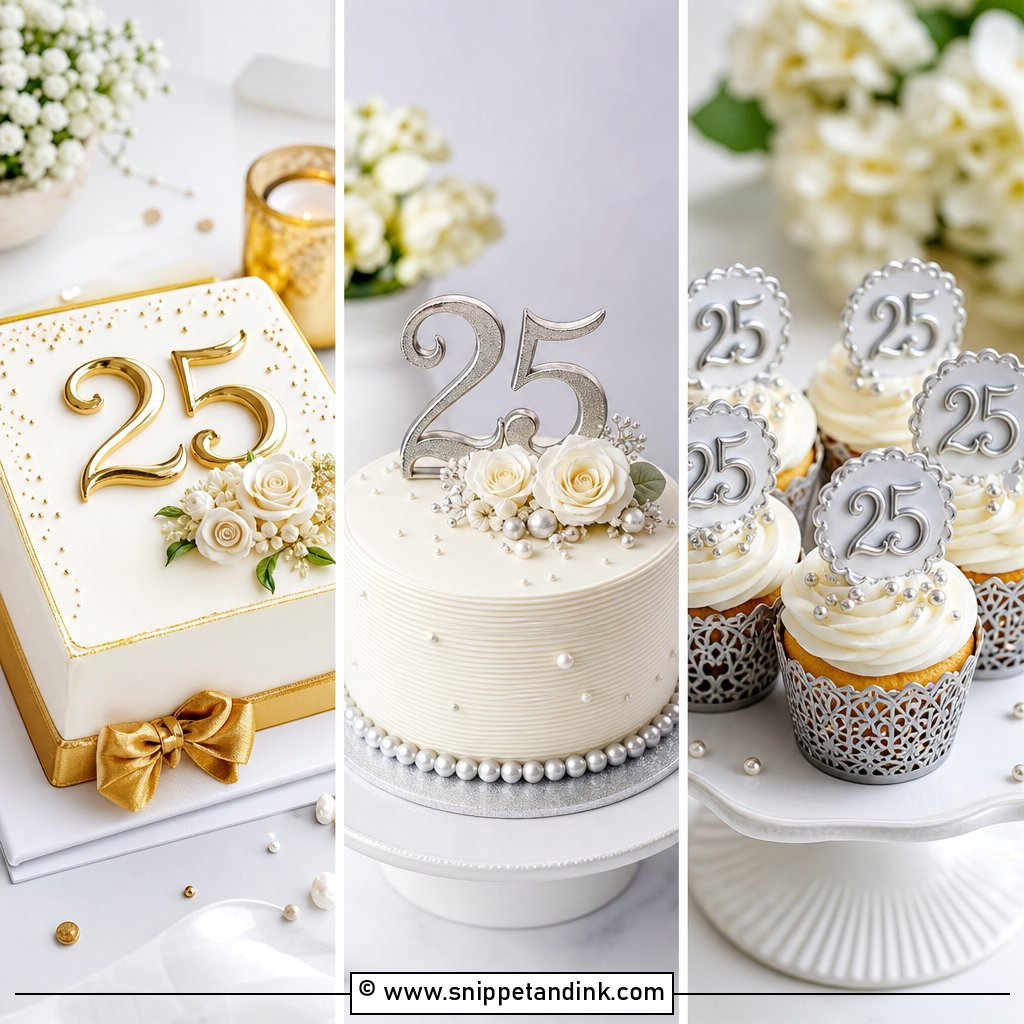
Gold leaf on white buttercream is the most reliable milestone look I shoot, and the gold anniversary cake fits rooms dressed in ivory, champagne, cream or blush. On camera, gold only reads as gold when light hits it; in a dim corner it turns flat brown. I angle the cake so a window or lamp catches the leaf from the side. A plain white or glass stand and a few roses or orchids are enough styling. Vanilla, almond, lemon or white chocolate inside keeps the cut slices pale and clean in close-ups.
2. Silver Anniversary Cake
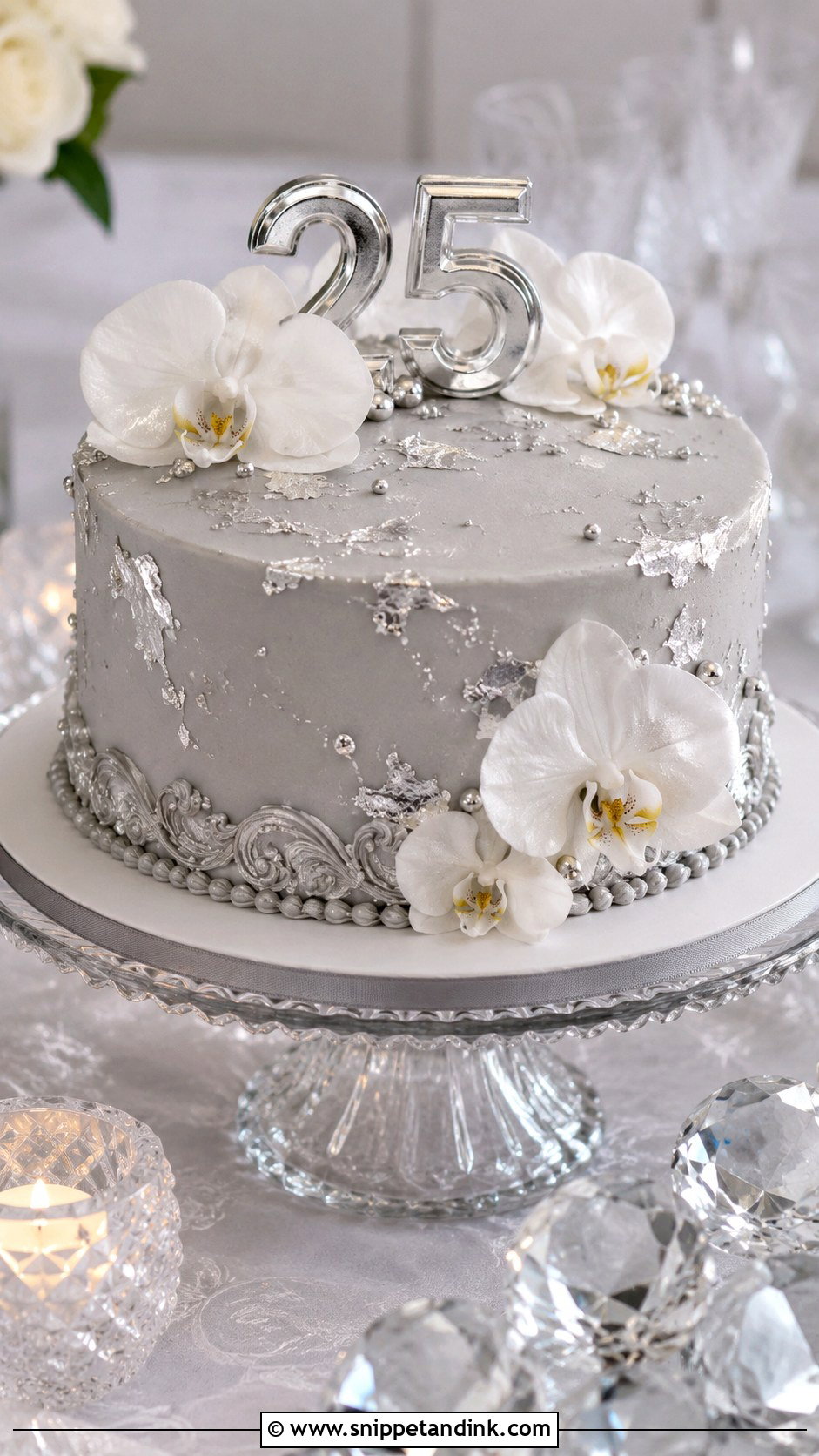
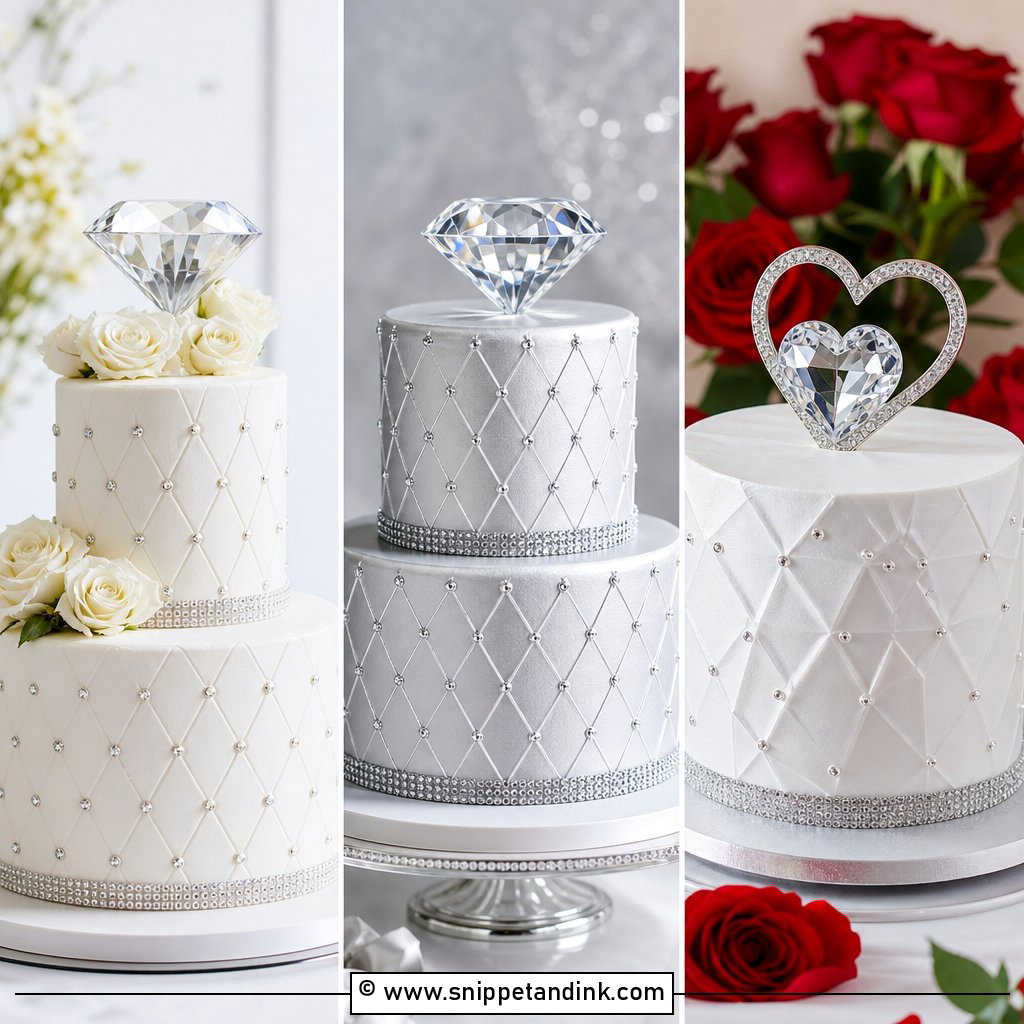
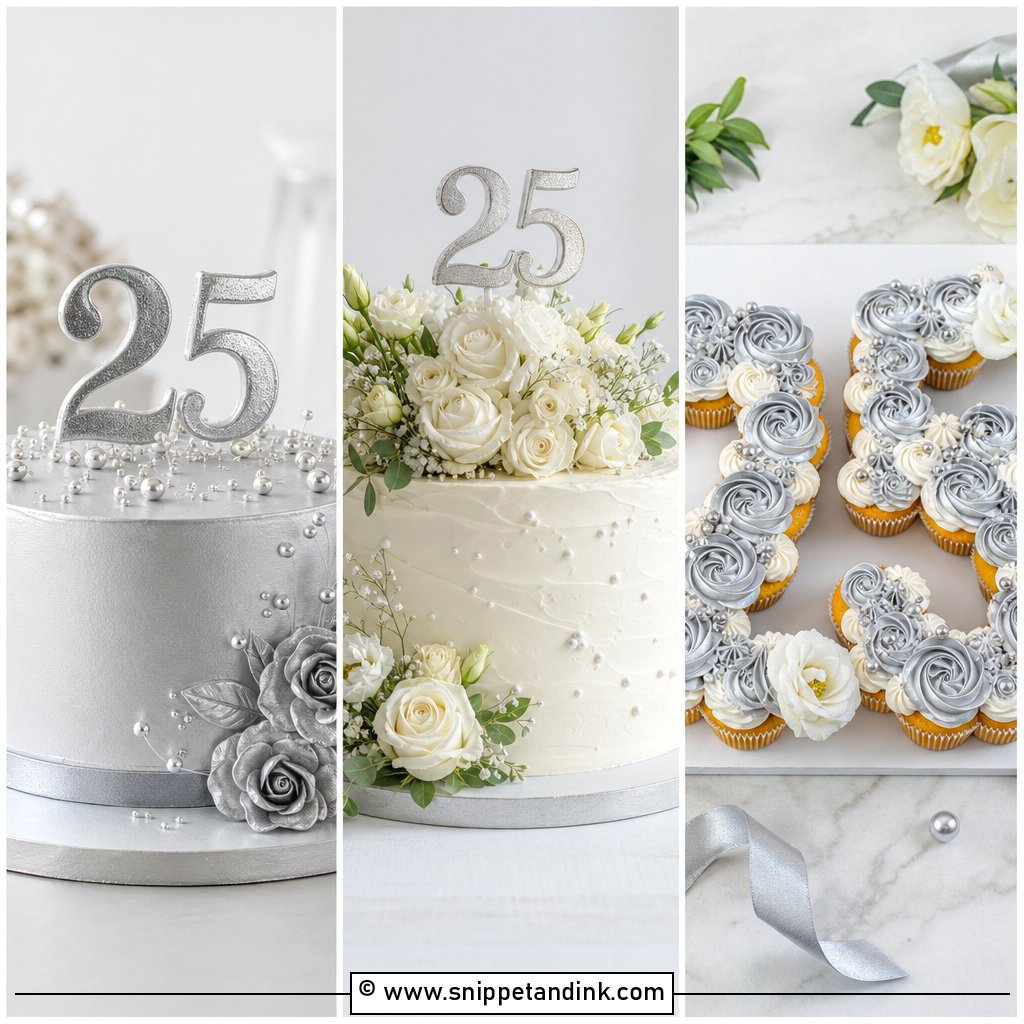
For a 25th anniversary celebration, silver works best as an accent: silver dragées, a little edible silver leaf and fine piping on white or pale gray buttercream. Cover the whole cake in metallic and it photographs like foil, reflecting every light in the room as hot spots. Cool-toned flowers or soft blue details suit it. A simple topper with the year gives the close-up shot a focal point. It’s a good fit for couples with modern taste.
3. Floral Anniversary Cake
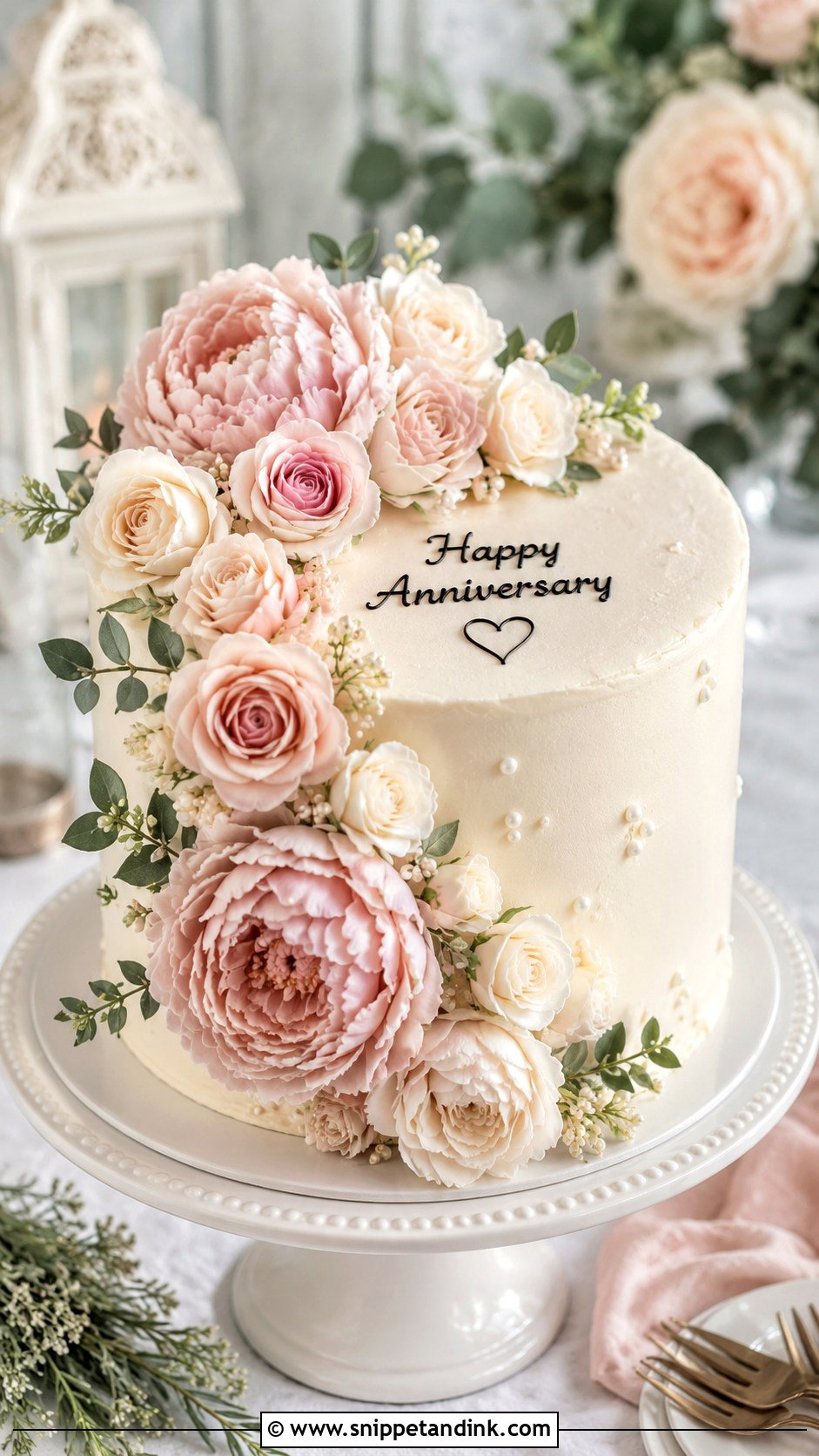
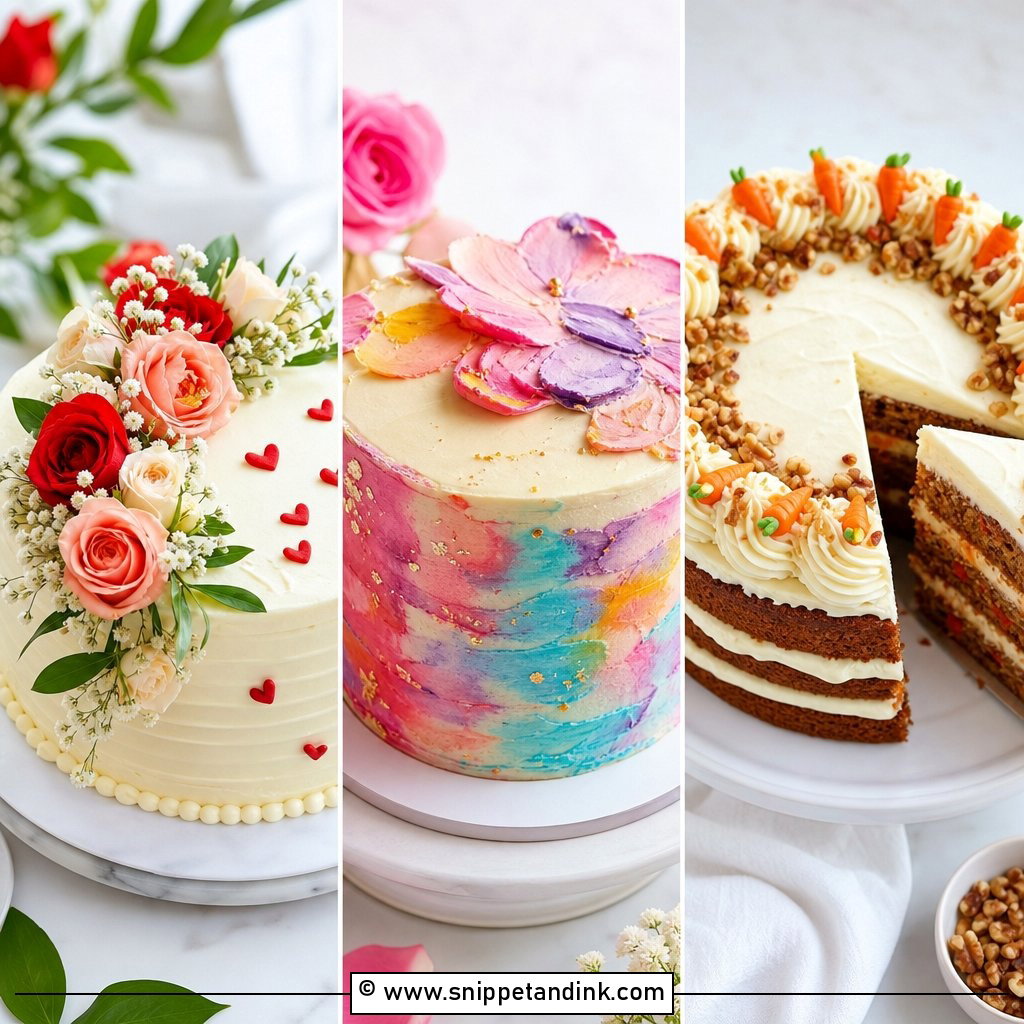
Flowers carry a cake in photos more than any other decoration, because they give the eye shape and shadow. Fresh, sugar, wafer paper or buttercream blooms all work, depending on budget. Roses, peonies, ranunculus and orchids add volume. I’d keep to two or three colors, blush, white and sage being an easy set; more than that and the frame starts to look busy. Fresh flowers need food-safe stems in picks. Smooth ivory buttercream or fondant gives the flowers a clean backdrop.
4. Heart Anniversary Cake
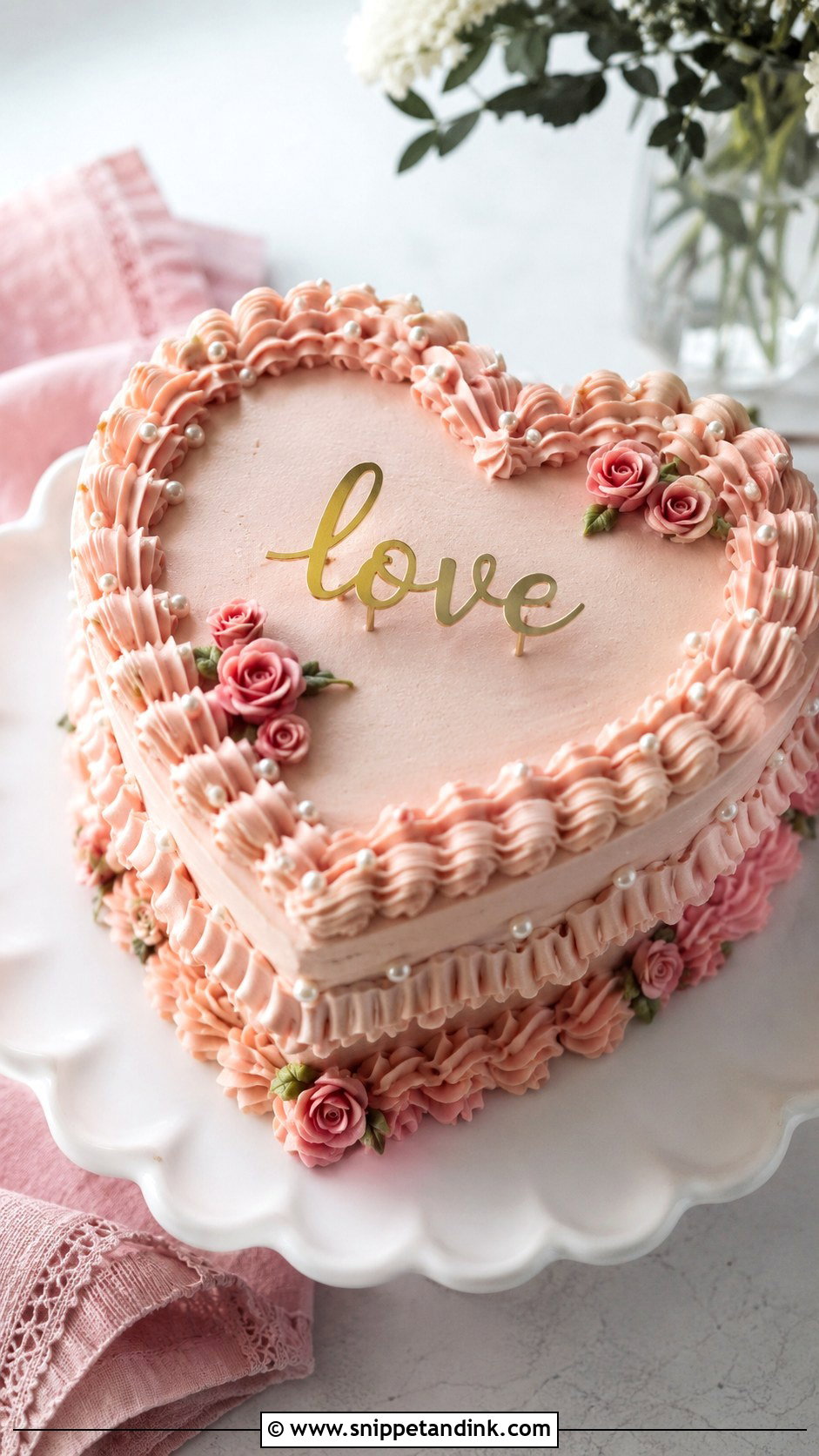
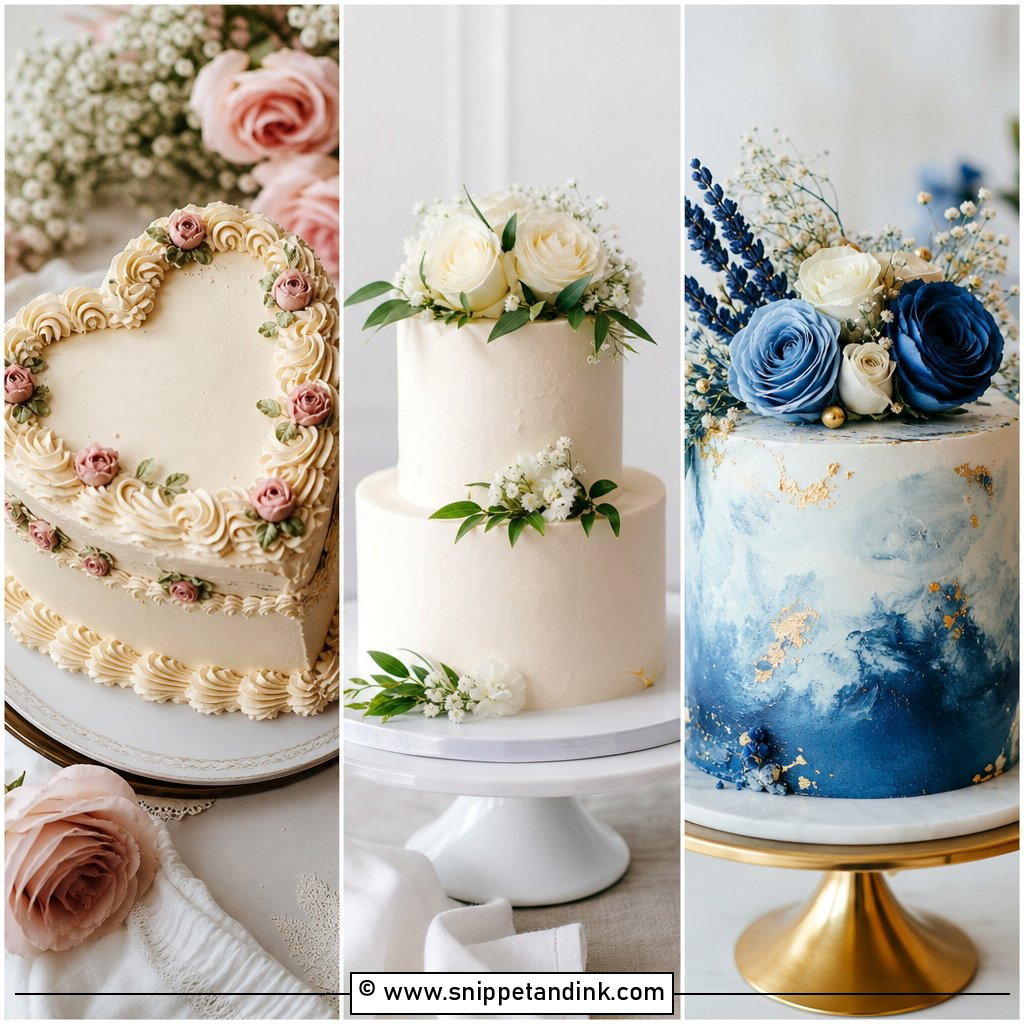
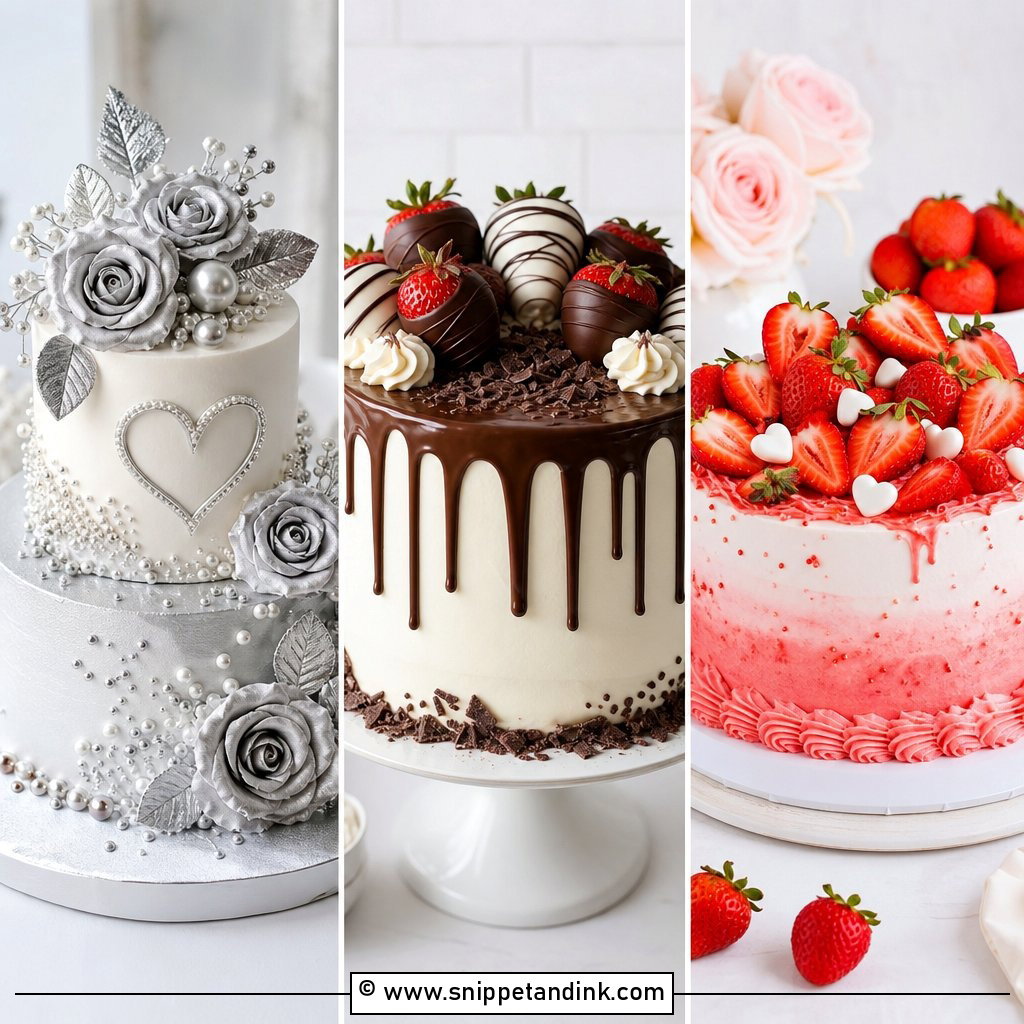
A heart reads from across a room, which is why it’s so friendly for small parties: the shape does the work. A vintage heart cake with piped borders, pearls and a short message has that handmade charm; smooth buttercream with tiny roses and a gold topper is the modern route. Pink, white, red and ivory are the obvious colors. Champagne or dusty rose looks more grown-up and also behaves better on camera than bright red, which tends to oversaturate.
5. Two Tier Anniversary Cake
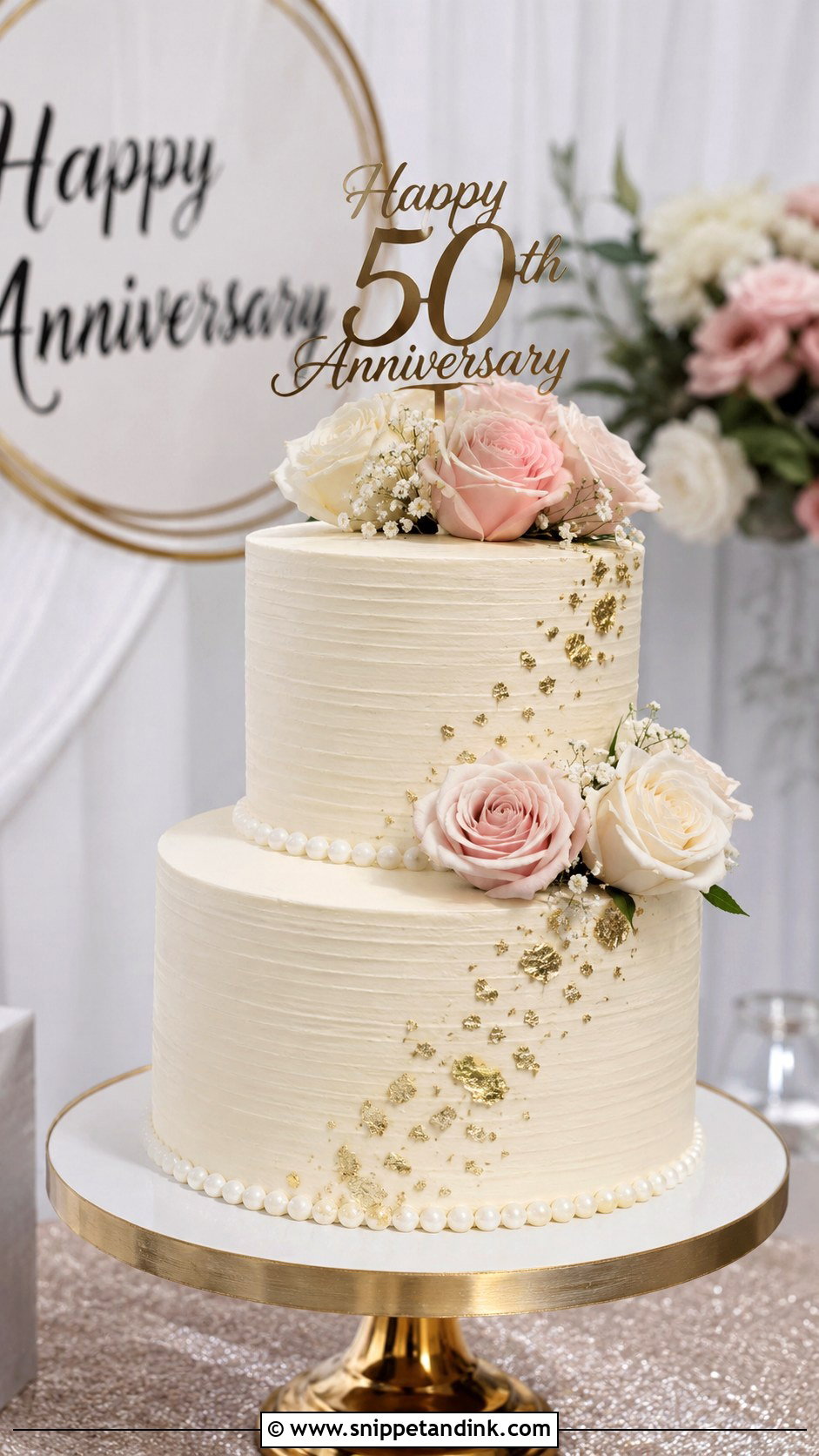
Two tiers give height, and height is what makes a cake look important in a wide shot of the room. It suits a family party, a restaurant dinner or a milestone. Keep the bottom tier plain and put the main decoration on top, flowers, gold trim, pearls or a custom topper, so the eye travels upward. Two tiers also means two flavors. For photos, I raise it on a stand and clear everything off the wall behind it; a tiered cake against a cluttered background loses its outline.
6. Buttercream Anniversary Cake
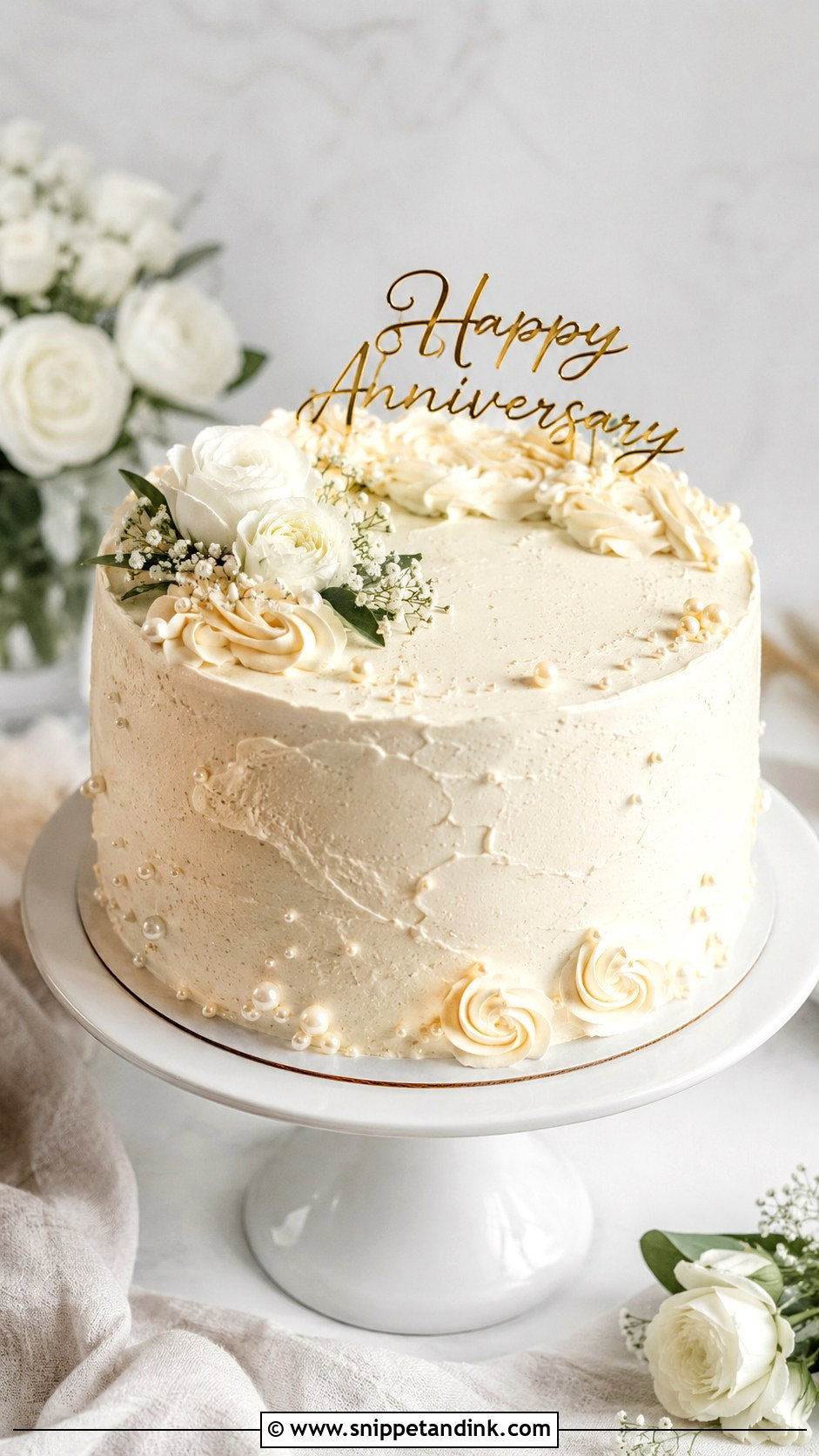
Buttercream is soft-looking in pictures because it has texture, and texture catches side light. It can be smooth, lightly combed or fully piped. It takes ivory, blush, sage, champagne and dusty blue well. Add fresh flowers, edible pearls or a small gold topper. The weakness is warmth: buttercream starts to sweat and lose its edges in a hot room or under strong lights, so I photograph it early in the party, not after it’s been sitting for three hours. Soft linens nearby help frame it.
7. Fondant Anniversary Cake
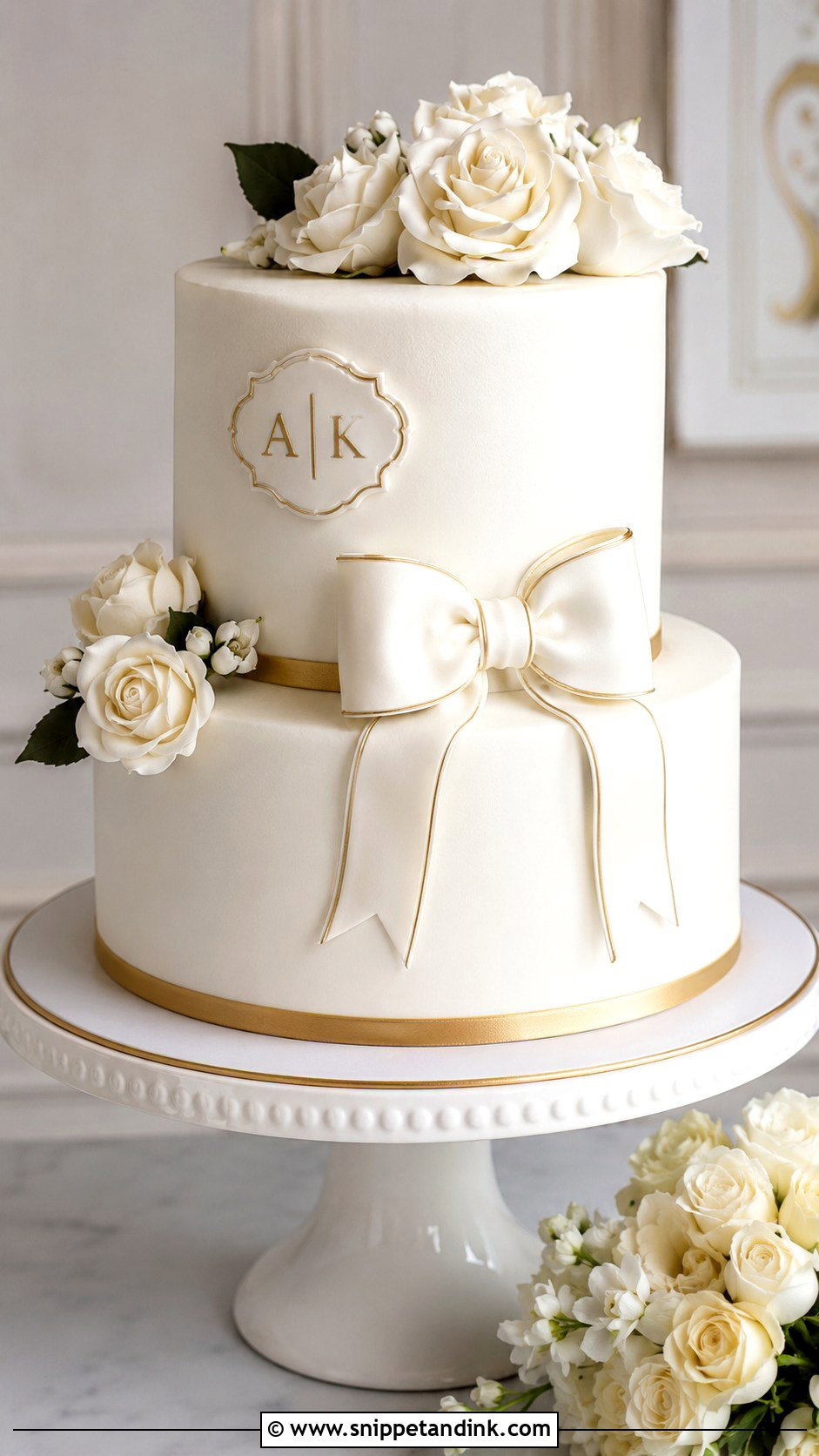
Fondant gives a sharp, almost sculptural finish, with crisp edges and smooth sides for bows, lace patterns, monograms and metallic details. In formal photos it holds its lines all evening, which buttercream can’t promise. White, ivory, pearl and soft blush are dependable colors. A plain fondant tier can look like plastic in photos, so add sugar flowers, fine piping or a thin gold band at each tier. One trade-off to mention: plenty of guests peel fondant off, so it’s for the look more than the taste.
8. Vintage Anniversary Cake
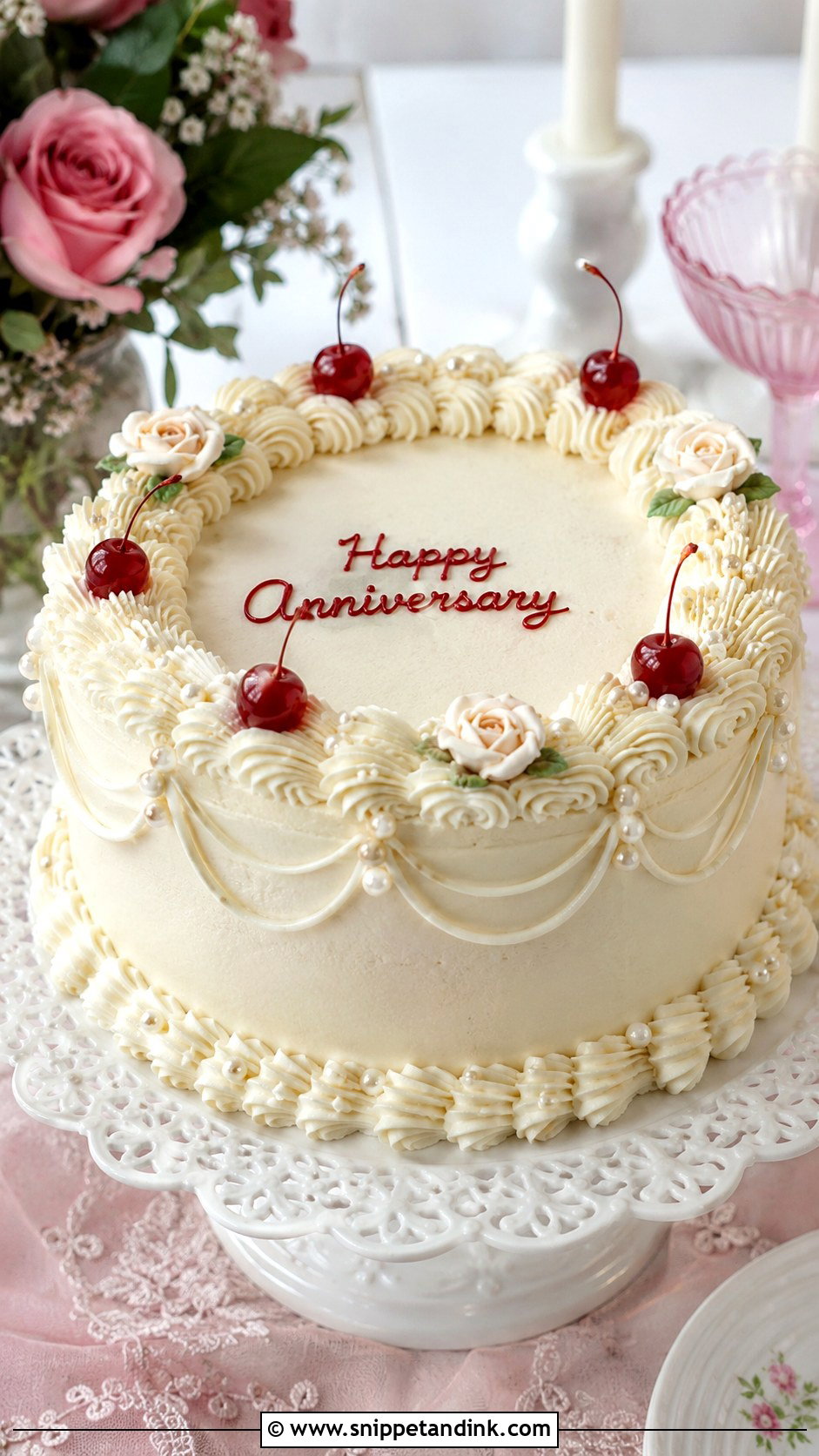
Shell borders, ruffles, swags, pearls and a piped message across the top. Vintage piping is wonderful for photos because every ridge throws a small shadow, so the design keeps its depth even on a phone. Heart or round shapes both work. Ivory, butter yellow, pink and pale blue make the piping show clearly; cherries, tiny roses or pearl sprinkles add nostalgia. Have your baker show you photos of their own piping in this style, because uneven swags are obvious in a close-up.
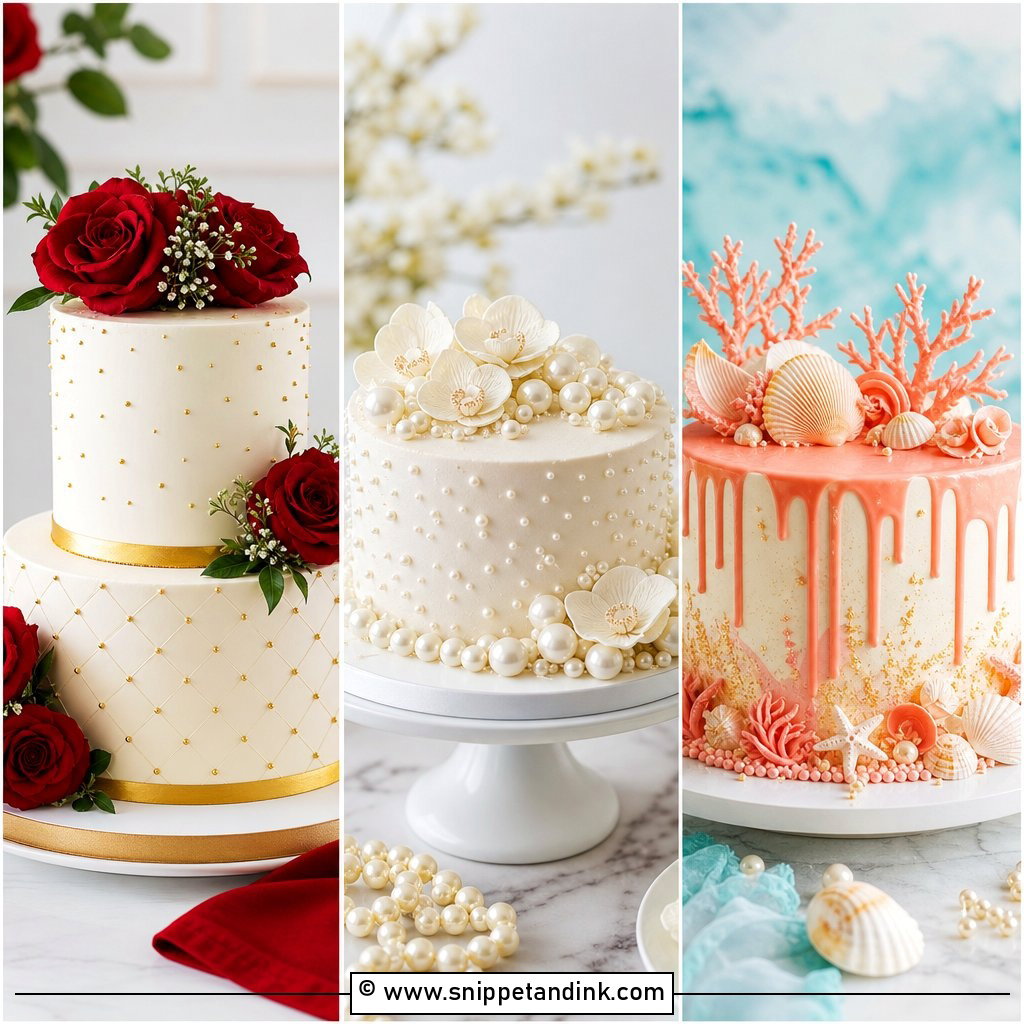
9. Pearl Anniversary Cake
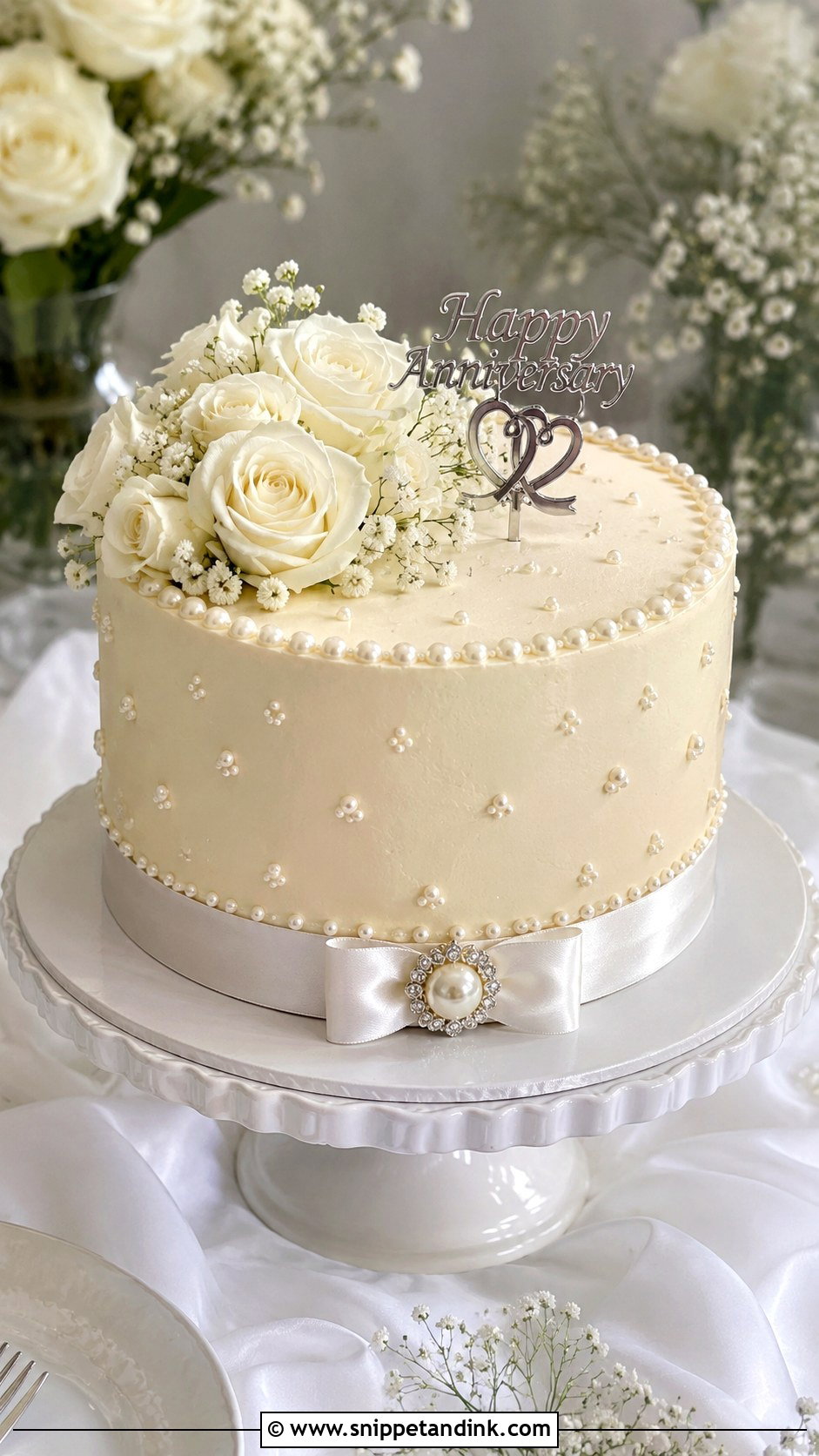
Pearls give a cake detail without color. Small edible pearls can line the borders, be scattered over the sides or set in rows for a formal finish, usually on ivory buttercream or fondant. In photos they add sparkle points that keep a white cake from looking flat. A satin ribbon, a few white roses and a gold or silver topper go well with it. It suits any anniversary year, and it’s one of the easiest white cakes to expose correctly because the pearls give the camera something to focus on.
10. Marble Anniversary Cake
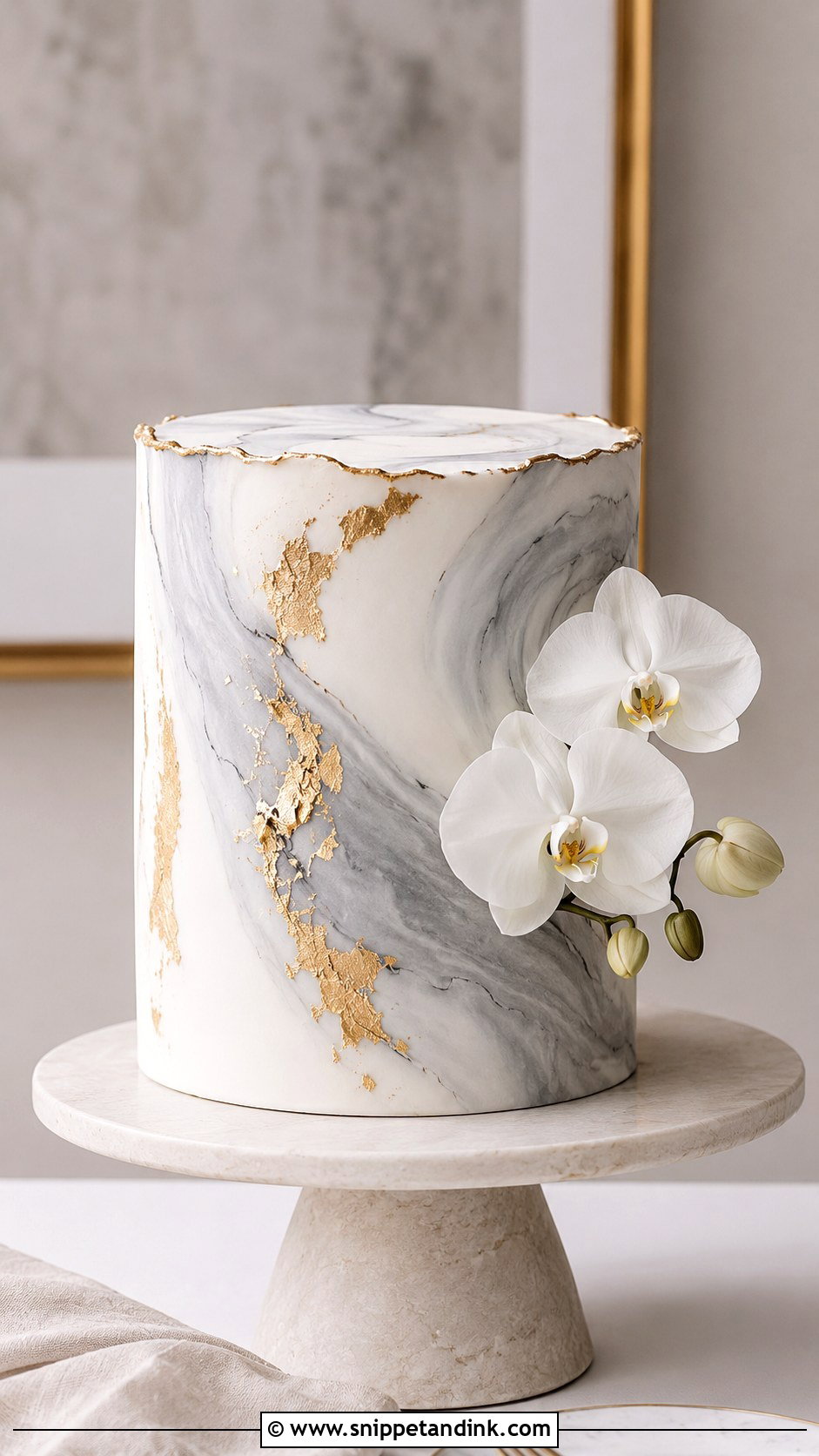
Marbled fondant or buttercream blends white with gray, blush or beige veining into a stone-like finish. A little gold leaf along a vein or a thin metallic edge warms it up. It works on round tiers, square cakes or a single tall cake. The marble pattern is busy by nature, so the flowers should be minimal, one cluster of orchids or roses, or the photo has too much going on. It’s a good match for couples with minimalist décor.
11. Rose Anniversary Cake
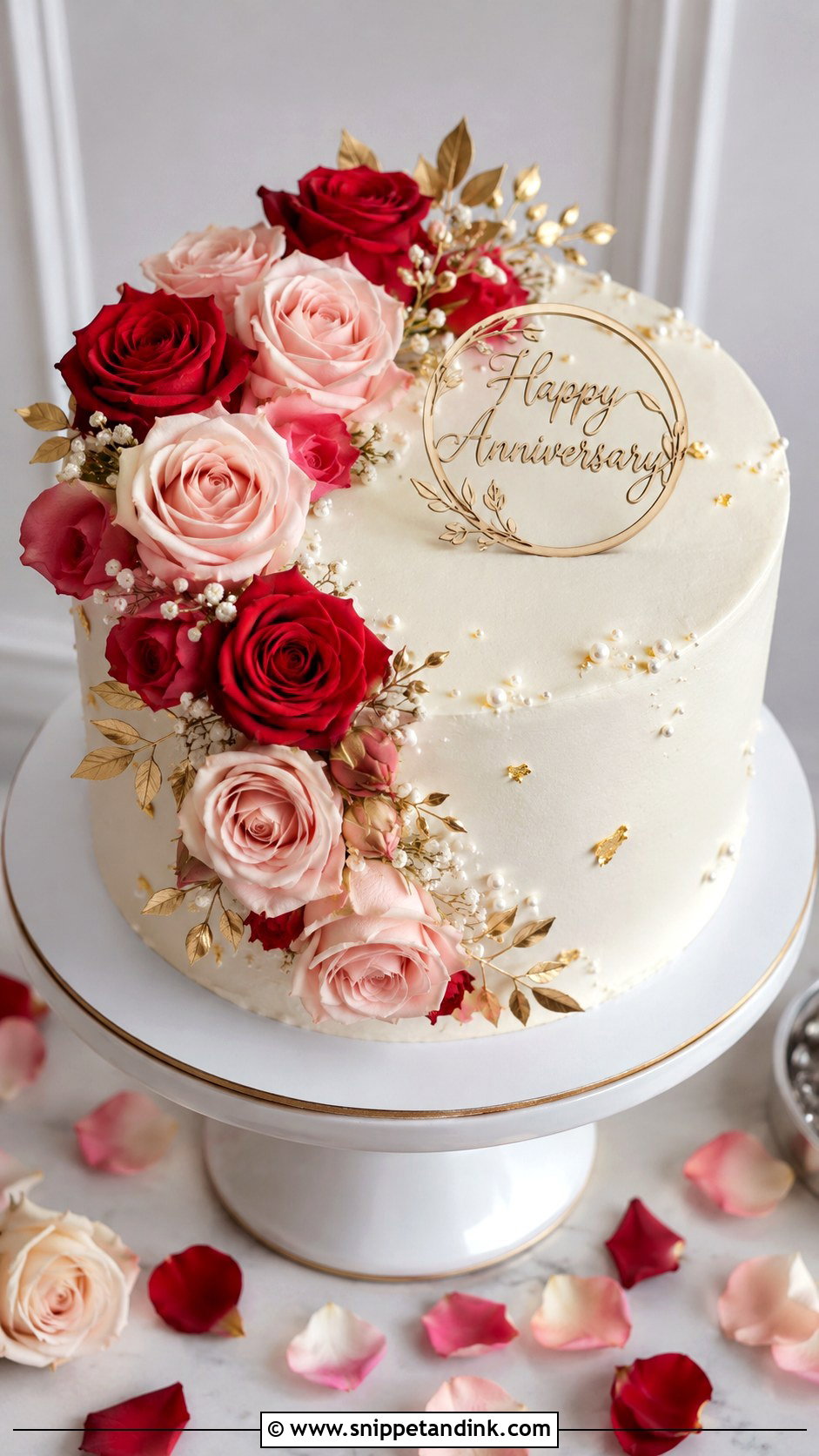
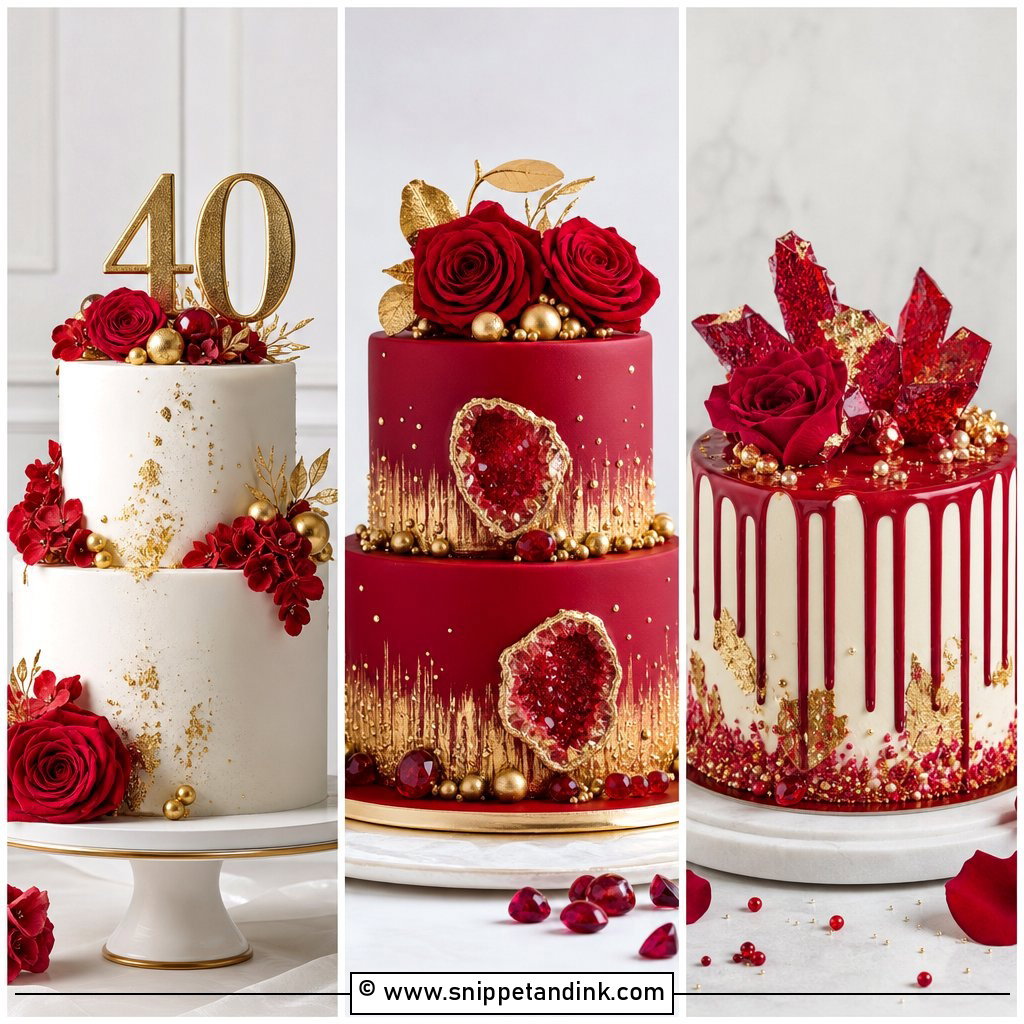
Roses are the shorthand for love on any cake. Fresh ones look natural, sugar ones look luxurious, buttercream ones look homemade. My favorite arrangement to photograph is a crescent sweeping round one side of a white or ivory cake, rather than full coverage; it leaves negative space, which makes the photo feel calm. Red, blush and dusty pink all suit it, though deep red needs a little care with exposure. Gold leaves or pearls make it formal. It works for the first year as easily as the fiftieth.
12. Minimal Anniversary Cake
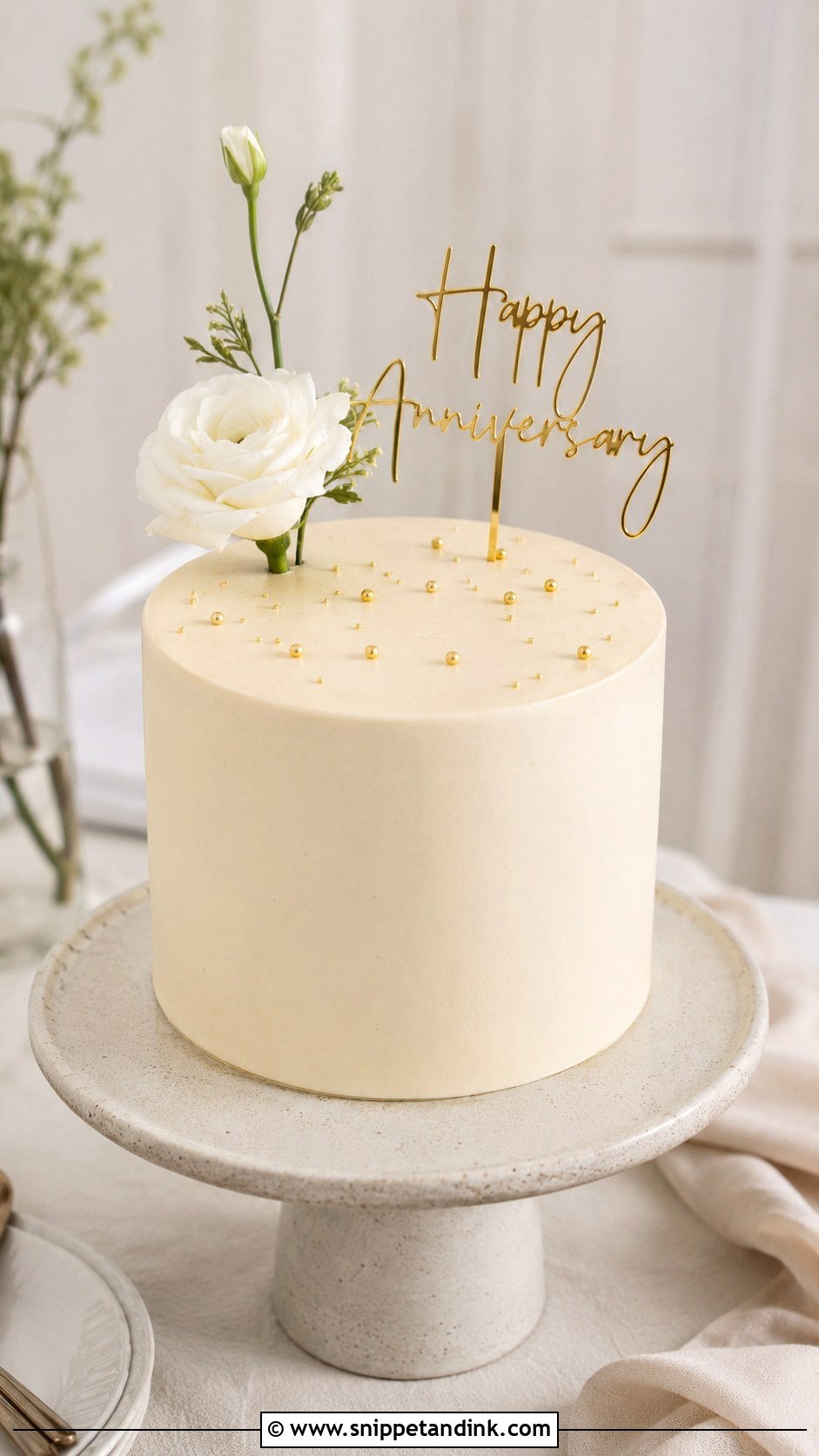
Minimal cakes rely completely on the finish, smooth buttercream, one color and very little decoration: a slim topper, one stem, a small cluster of pearls. Sharp edges or a soft rounded top both work. White, beige, sage and pale pink suit it. In photos there’s nowhere for a flaw to hide, but there’s also nothing to distract from the couple standing beside it, which is why I like it for portrait shots. Put it on a plain ceramic stand against a clear background.
13. Photo Anniversary Cake
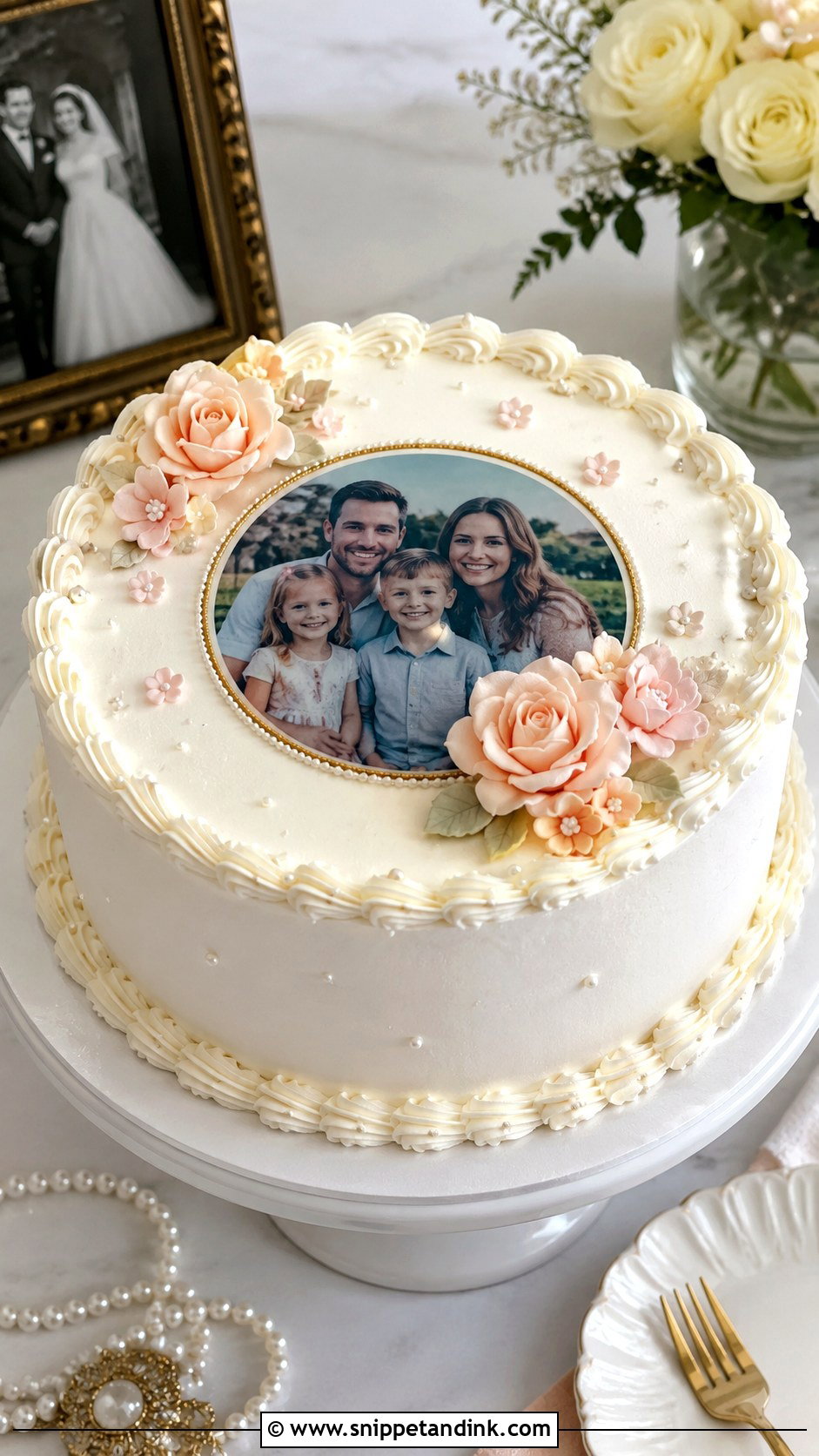
An edible print, a framed fondant plaque or a small picture topper above a classic buttercream cake is something guests notice right away. Edible prints come out best from a clear, well-lit original; a dark or blurry phone photo gets worse once it’s printed onto icing. Keep the colors around it simple, white, gold and blush, and resist extra decoration. It’s meaningful for a milestone, a vow renewal or a family gathering. Center the image and frame it with soft piping, flowers or a pearl border.
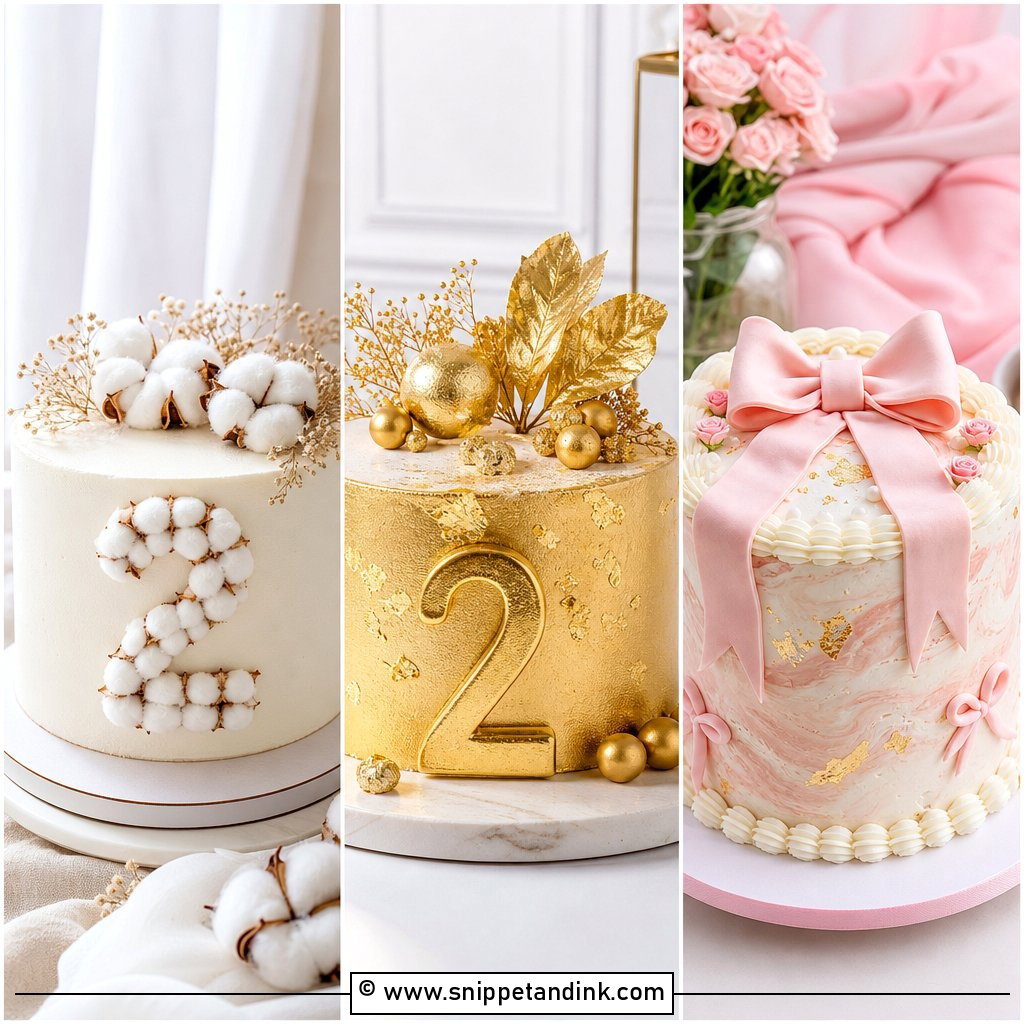
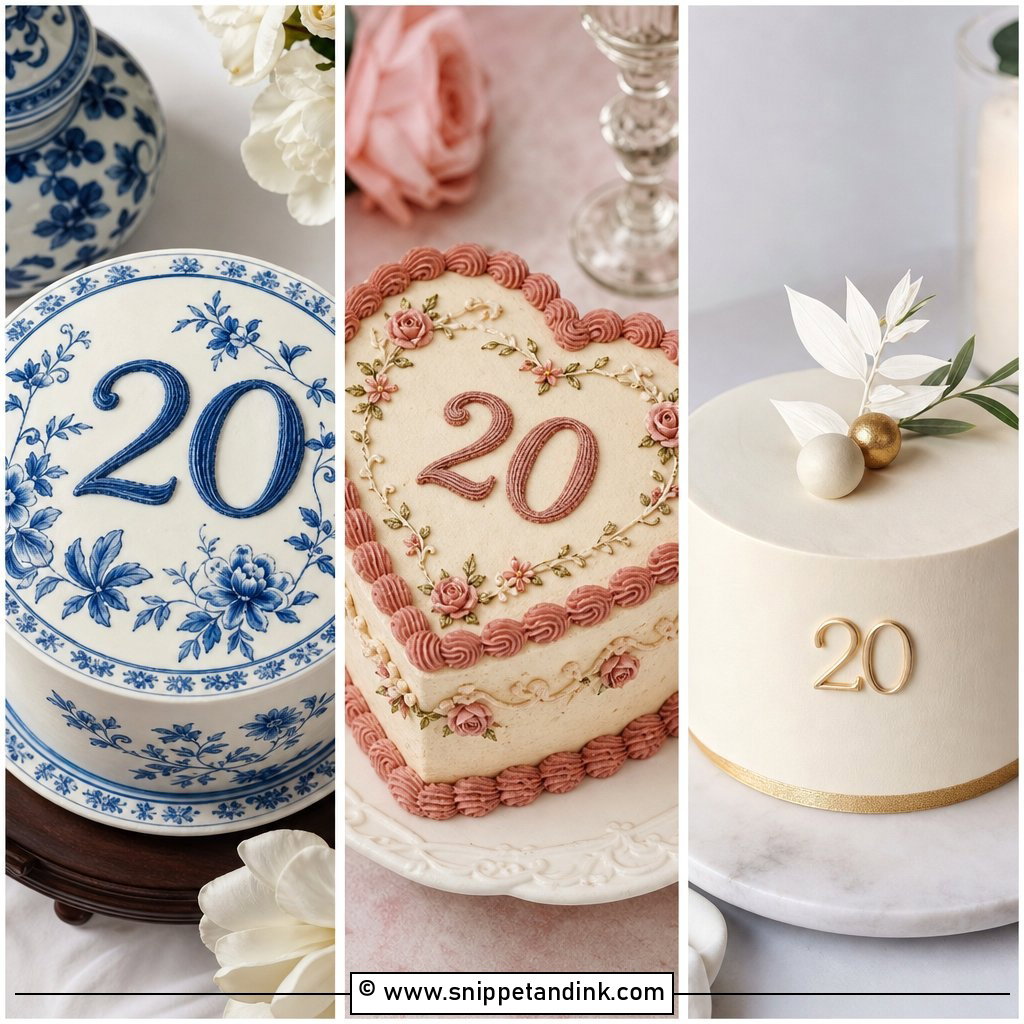
14. Number Anniversary Cake
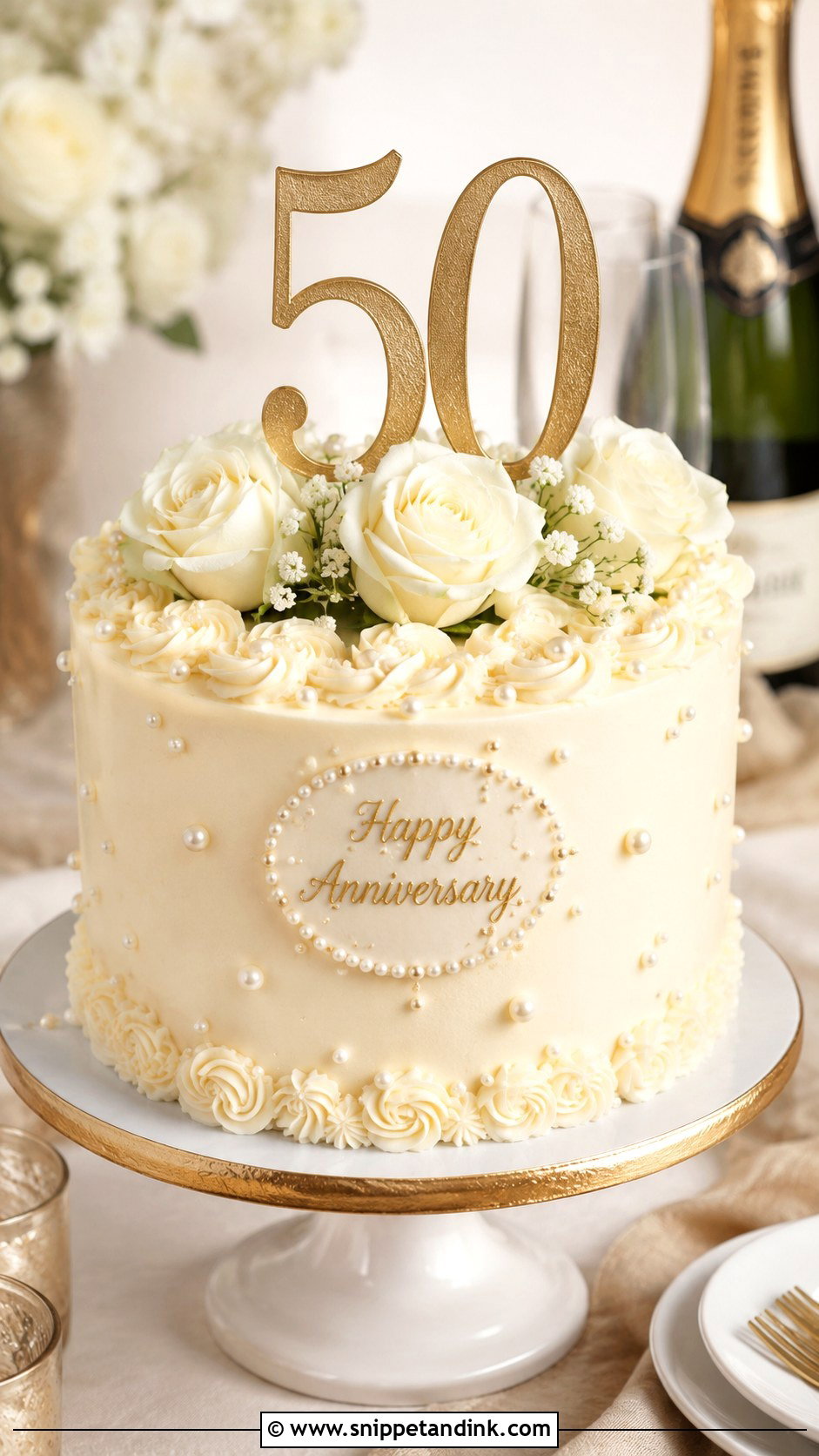
The milestone becomes the design, through number-shaped cakes, number toppers or large fondant numerals on the front of a round cake. For a clean photo, keep the base simple and let the numbers stand out in gold, silver or pearl white. Shaped number cakes are often decorated with fruit, flowers, macarons or rosettes, and shot from directly above they look like a still life. They’re popular for 10th, 25th, 40th and 50th anniversaries. Match the flavor to the color, vanilla for ivory, chocolate for darker tones.
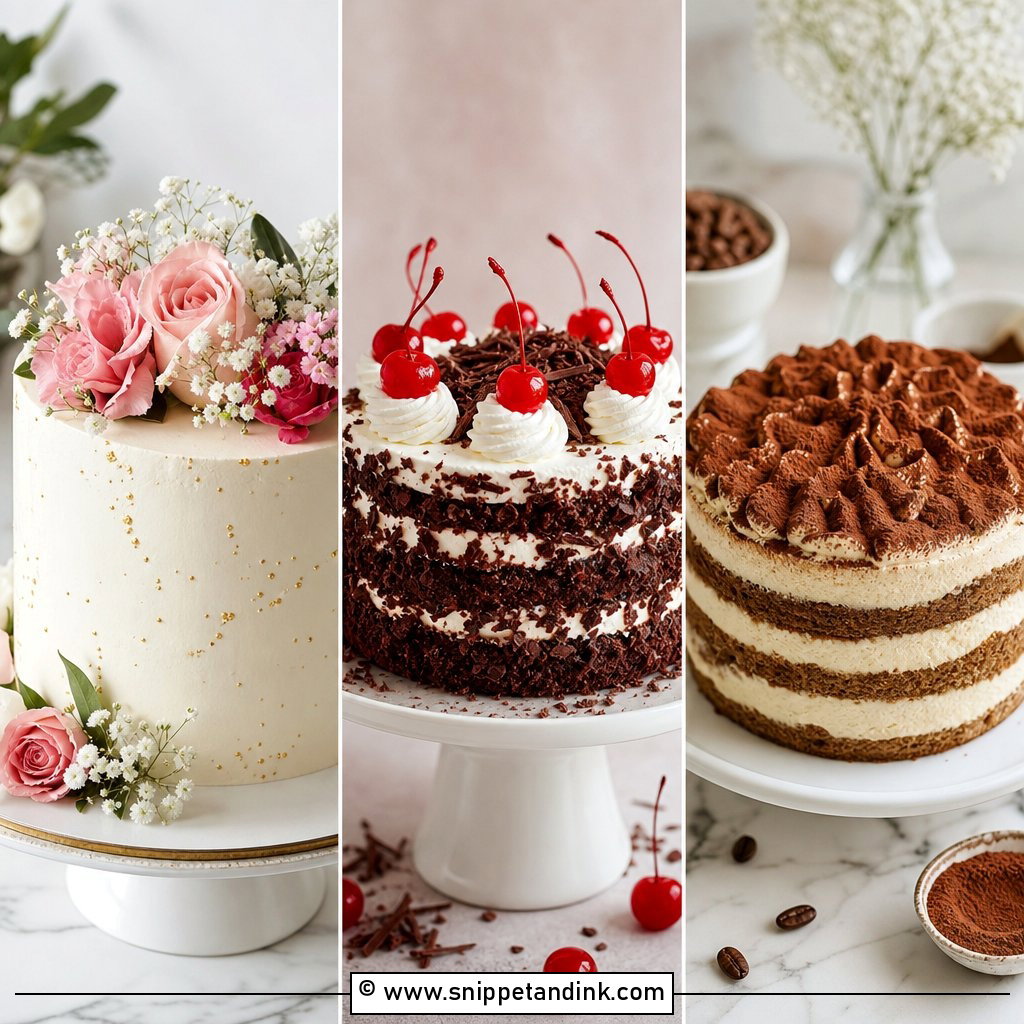
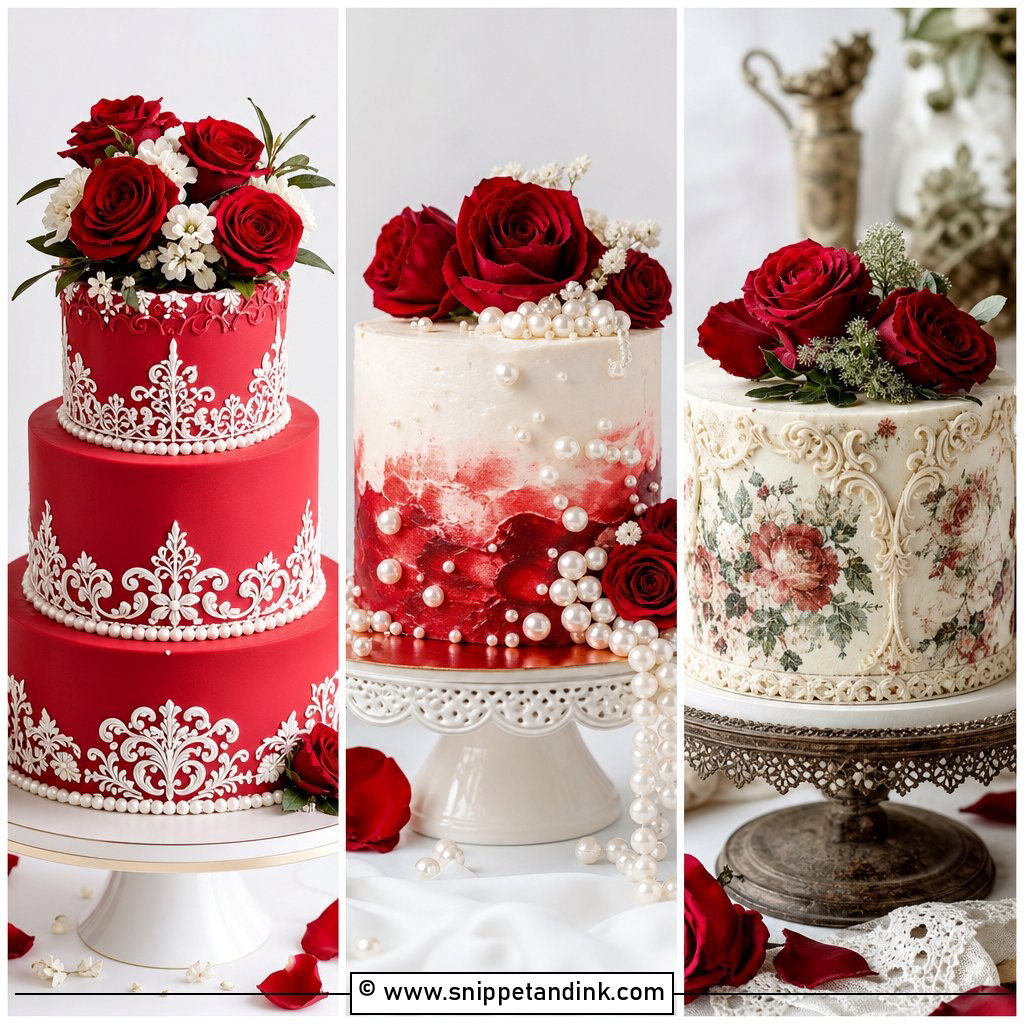
15. Red Velvet Anniversary Cake
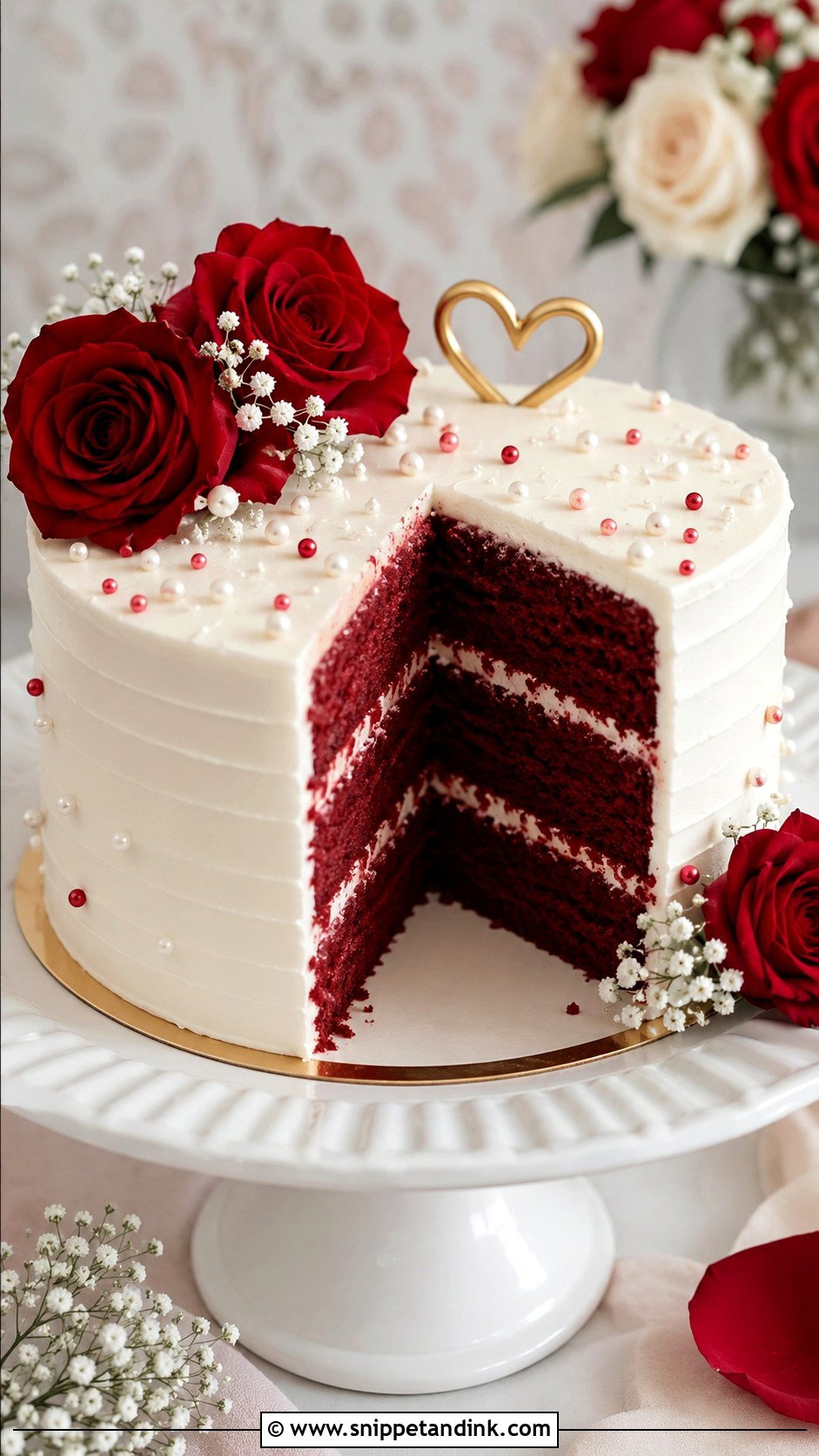
Red velvet is the cake I most want photographed after it’s cut. The red crumb against white cream cheese frosting gives the strongest contrast of any slice, and a side-lit plate shot shows off those layers. Outside, keep it smooth and white with small red roses and a few pearls; a heart topper or gold plaque personalizes it. Cream cheese frosting is soft, so do the slice photos promptly before the layers start to sag at room temperature.
16. Chocolate Anniversary Cake
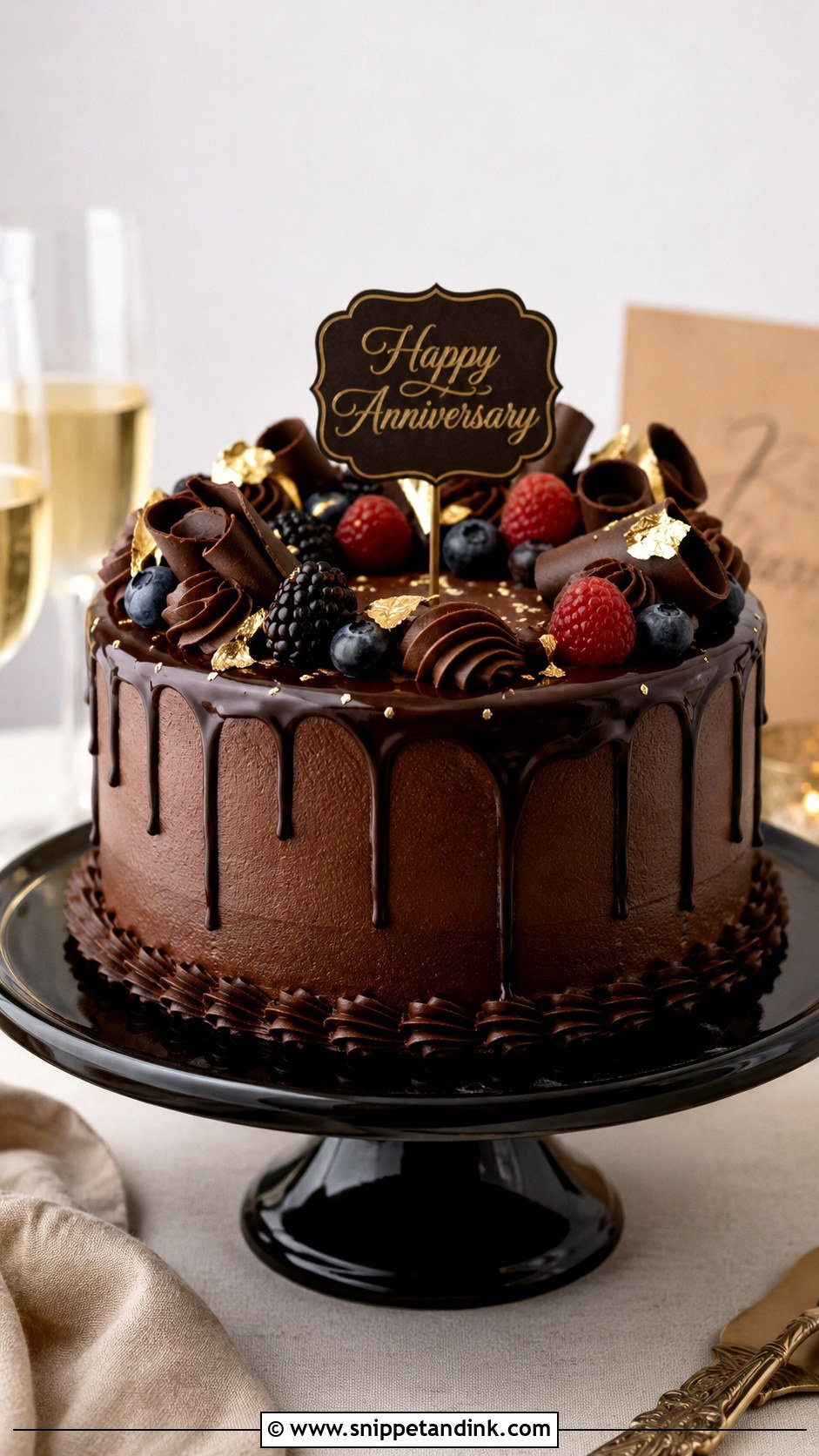
Dark chocolate sponge, chocolate buttercream and glossy ganache look rich, but dark cakes are tricky on camera. Under overhead light the ganache goes shiny on top and black in the shadows, losing all detail. I shoot it with soft side light and something pale nearby to bounce light back in. Chocolate curls, gold leaf, berries or a floral accent make it romantic, and a drip edge adds movement. Warm, low lighting suits dinner parties.
17. Vanilla Anniversary Cake
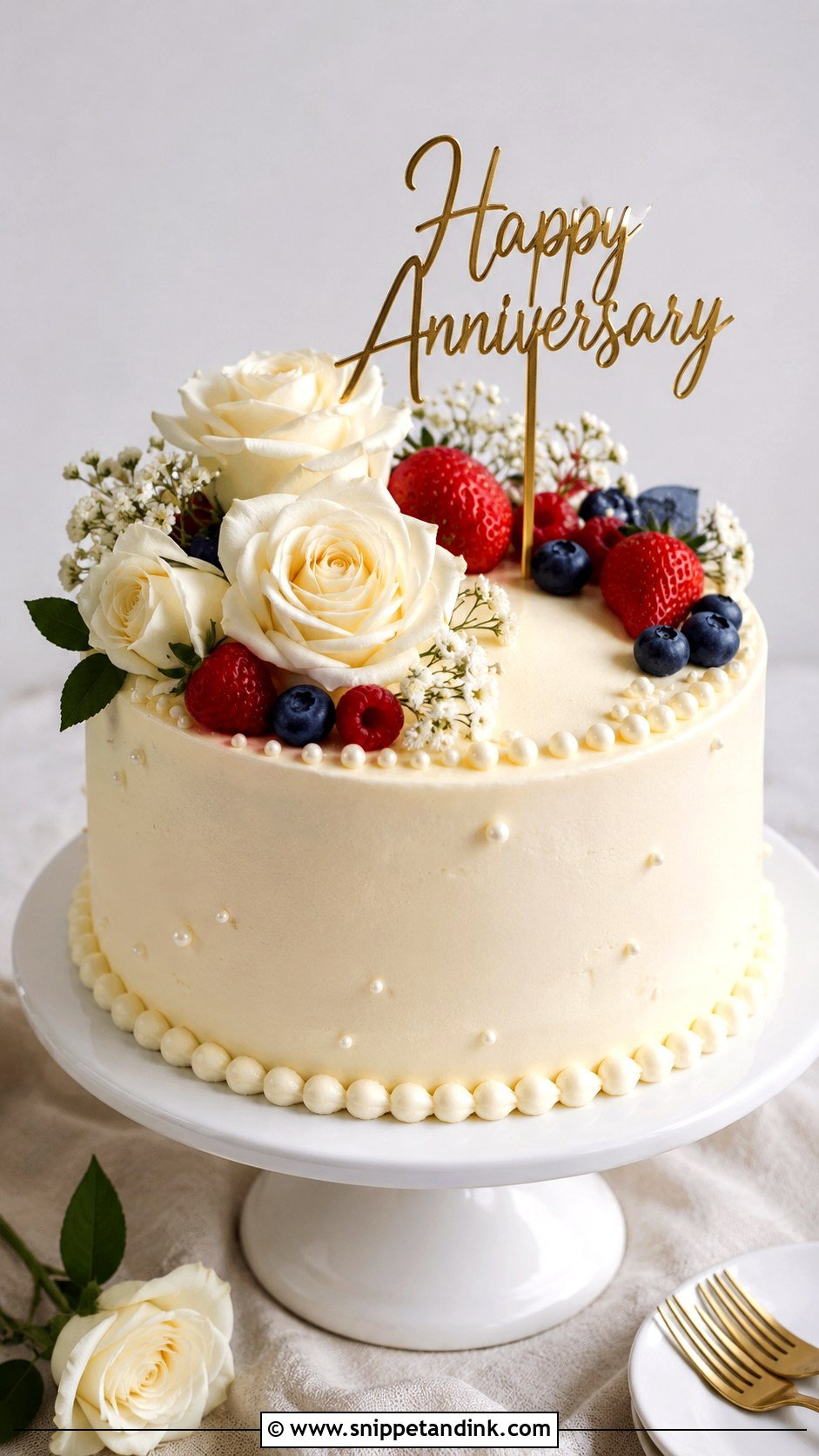
Vanilla is the flexible base that takes almost any style, floral, gold, pearl or minimal. A smooth vanilla buttercream finish gives you a clean canvas, then berries, white roses, piped borders or a gold topper personalize it. Fillings can change the whole cake: strawberry, raspberry, lemon curd or white chocolate cream. Pure white frosting can look blue or gray in shade, so I’d photograph a vanilla cake in warm, indirect light to keep it looking creamy.
18. Lemon Anniversary Cake
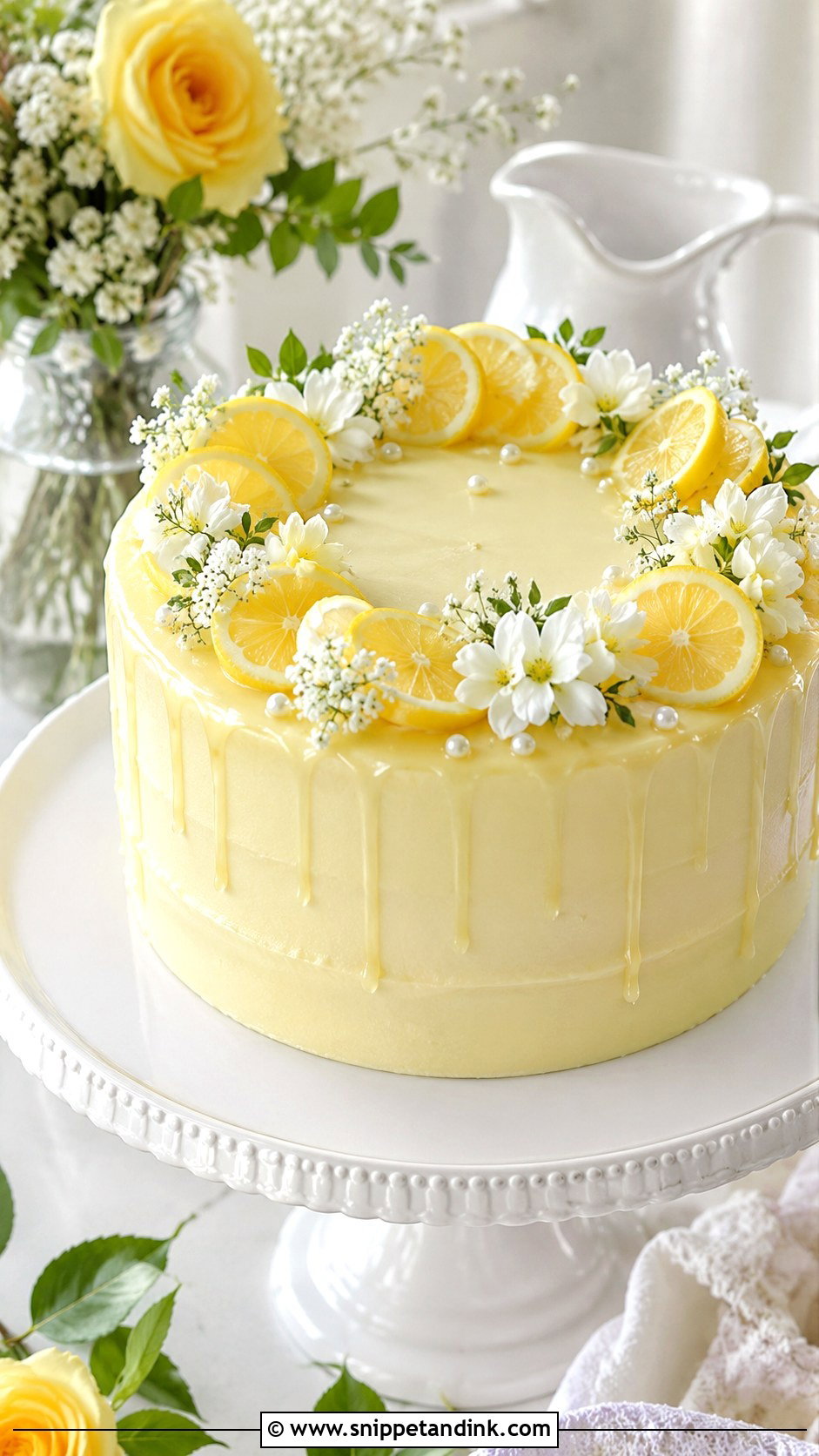
Lemon suits spring and summer: pale yellow layers, lemon buttercream and maybe a thin glaze. Fresh lemon slices, white flowers, tiny pearls or a little greenery are enough decoration. It’s one of the easiest cakes to photograph outdoors or near a window, because the color looks natural in daylight. Lemon slices weep onto frosting after a few hours, though, so add them close to serving. Keep the styling neat so it still reads as a celebration cake.
19. Sheet Anniversary Cake
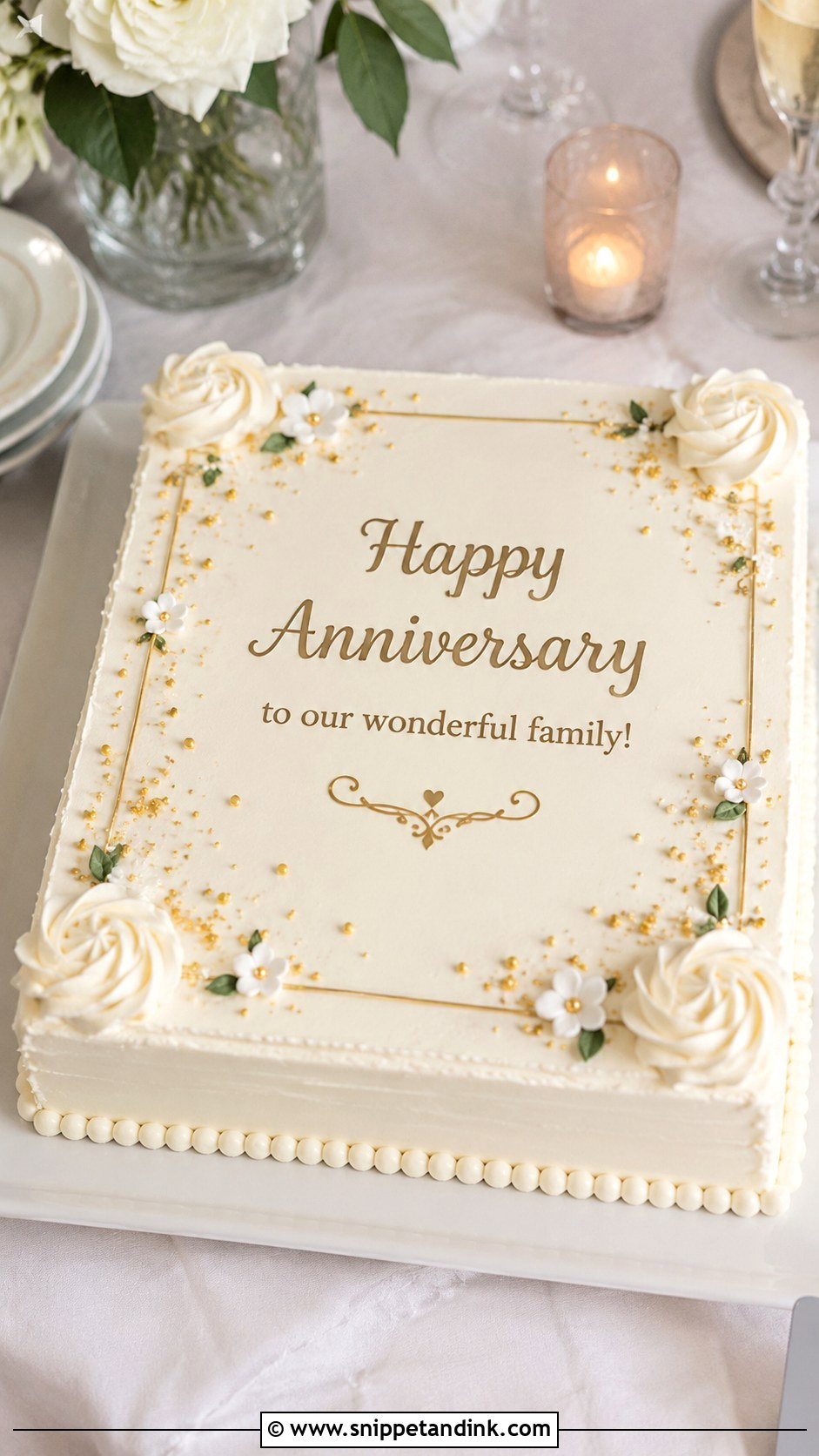
Sheet cakes are made for serving a crowd at family parties, office celebrations and casual gatherings, and the flat top holds a piped message, floral border, number or printed photo. To make it look finished in pictures, I’d ask for clean square corners, a tidy row of rosettes and one restrained palette. Gold sprinkles, a pearl border or a few sugar flowers add some occasion. Shoot it from slightly above so the message is readable; at table height, a flat cake almost disappears.
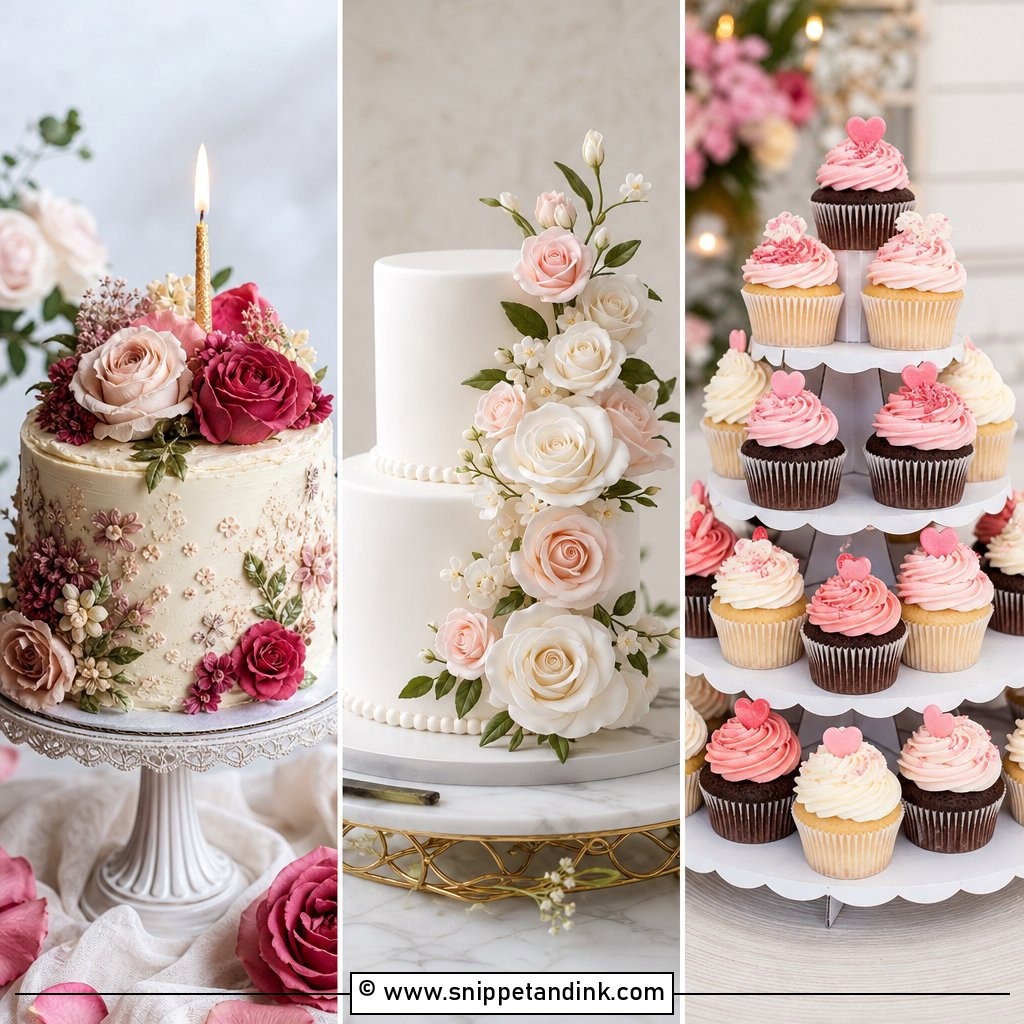
20. Mini Anniversary Cake
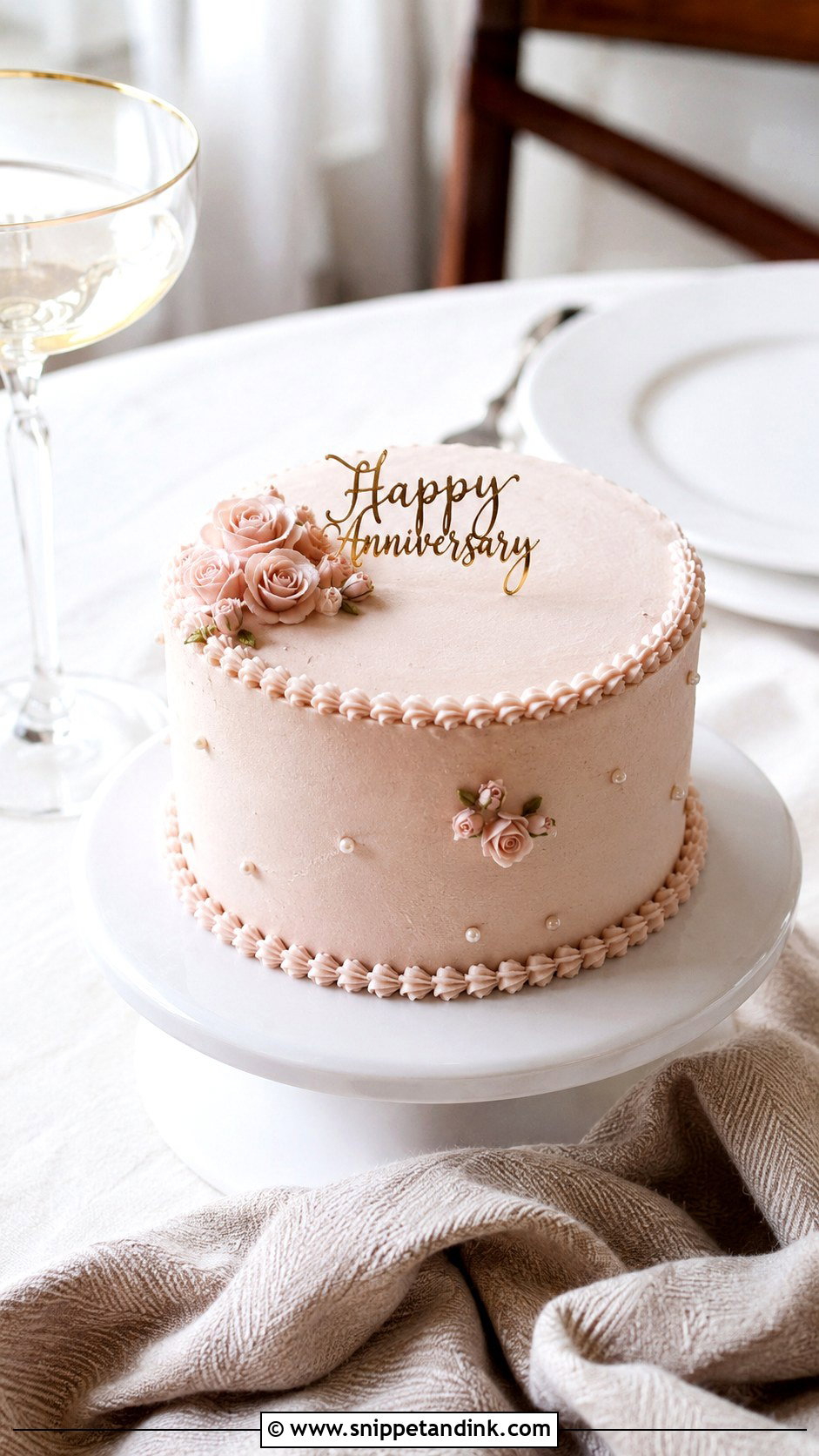
Small cakes suit an intimate dinner or a little dessert table. A six-inch round cake can look just as special as a tiered one when the details are right: smooth buttercream, tiny flowers, pearl dots and a small topper. Pick a flavor with character, vanilla bean, chocolate, lemon or red velvet. In photos, a small cake is close to the lens, so every smear and crumb shows. Ask for a clean finish, and wipe the board before you shoot.
A Shot List for the Cake Moment
The cake is on the table for hours, but the useful photos happen in about ten minutes. I try to get these, roughly in this order:
- The whole cake, untouched, before guests gather. Straight on at the height of the middle tier.
- A close detail: the topper, the piping, one flower.
- The couple with their hands on the knife, looking at each other rather than the camera.
- The first slice lifted onto a plate, especially for layered or colored sponge.
- A candid of family reaching in or the grandchildren watching.
White Frosting, Gold and Other Things Cameras Misread
Phones expose for the average of the scene. A white cake against a white wall comes out gray, and a dark chocolate cake comes out muddy. Tap the screen on the cake, then drag the brightness slider until the frosting looks white but still shows texture.
Metallics need a light source to reflect, so turn the cake slightly until the gold catches. Bright reds can lose detail and glow, so step back on brightness for red roses or red velvet. And switch off the flash. It flattens buttercream and puts a hard reflection on ganache and fondant.
What Ends Up in the Album
The cake that photographs best is the one that looks like the couple. Some will want gold tiers and flowers; others a little buttercream cake with one topper. Across all of them, the pictures I’m happiest with share a clear palette, a careful finish and one detail the eye lands on first. Gold, pearls, flowers, a heart, vintage piping, marble or a personal topper can each be that detail. Choose one, light it well, and the photo takes care of itself.
You'll Like These Ideas:


Leave a Reply