
The diamond anniversary is one of the few milestones where a cake can be quiet and still feel enormous. White, silver, pearl and crystal details suit sixty years, along with soft flowers, number toppers and a little vintage piping. What I steer families away from is anything that looks like a birthday cake in different colors. These twenty designs run from tiered and formal to small and deeply personal, and I’ve noted where each one tends to go right or wrong.
How Many Slices a Three-Generation Room Eats
Sixtieth parties usually run from great-grandchildren to the couple’s oldest friends, and appetites vary a lot across that range. I size the cake on the guest list first, then think about who’s actually on it.
- A 6 inch and 8 inch two-tier cake gives around three dozen wedding-size slices.
- Adding a 10 inch base tier takes it to roughly seventy-five.
- Small children and many older guests eat half portions, so a mixed crowd stretches a cake further than the headcount suggests.
- After a big lunch, plenty of guests skip cake or take a slice home instead.
For crowds past a hundred, I’d keep the display cake modest and add a kitchen sheet cake in the same flavor. Nobody sees it, and it usually costs less per slice than adding another tier.
The opposite problem comes up too: a big banquet room with a modest guest list. There I’d go taller rather than wider. Extra-height tiers give the cake presence from the back of the room without adding slices nobody will eat, and they cost less in sugar work than a fourth tier would.
1. Diamond Anniversary Cake
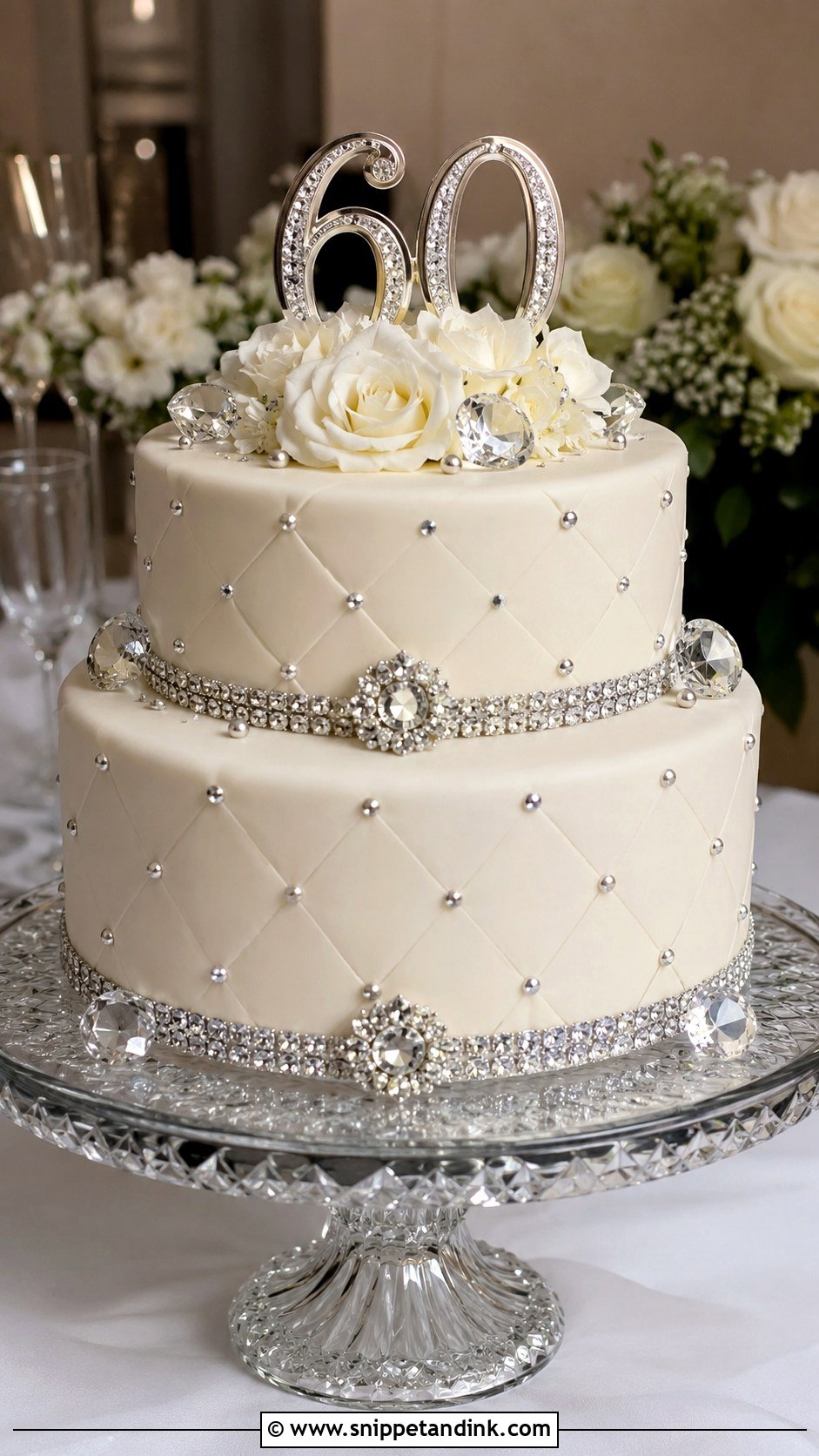
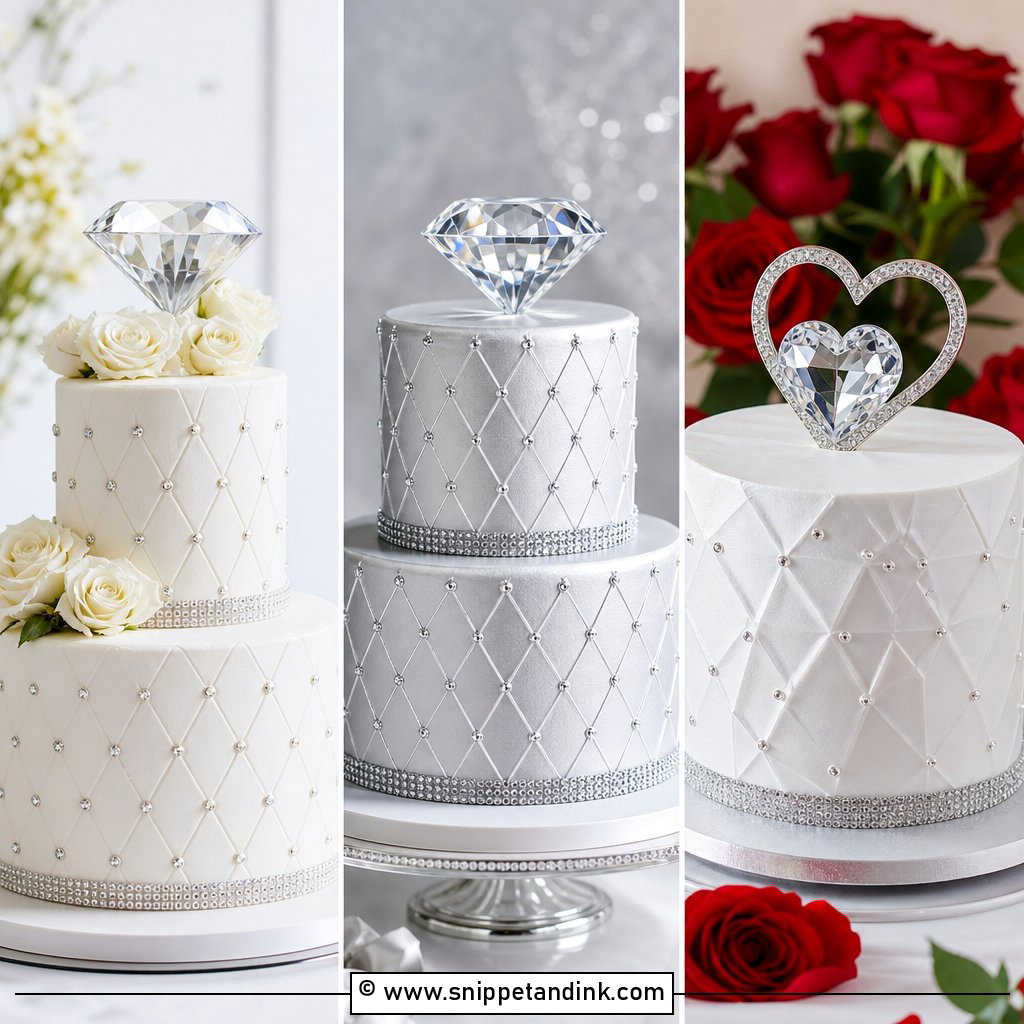
The classic answer is a diamond anniversary cake: white or ivory, silver details, edible crystals and a 60 topper. It works at two or three tiers when the finish is smooth. I set the small sugar diamonds around the base rather than up the sides, because down there they catch light from the table and don’t have to be glued against gravity. Vanilla, almond, white chocolate or lemon keep it bright and easy for every age at the table.
2. White And Silver Anniversary Cake
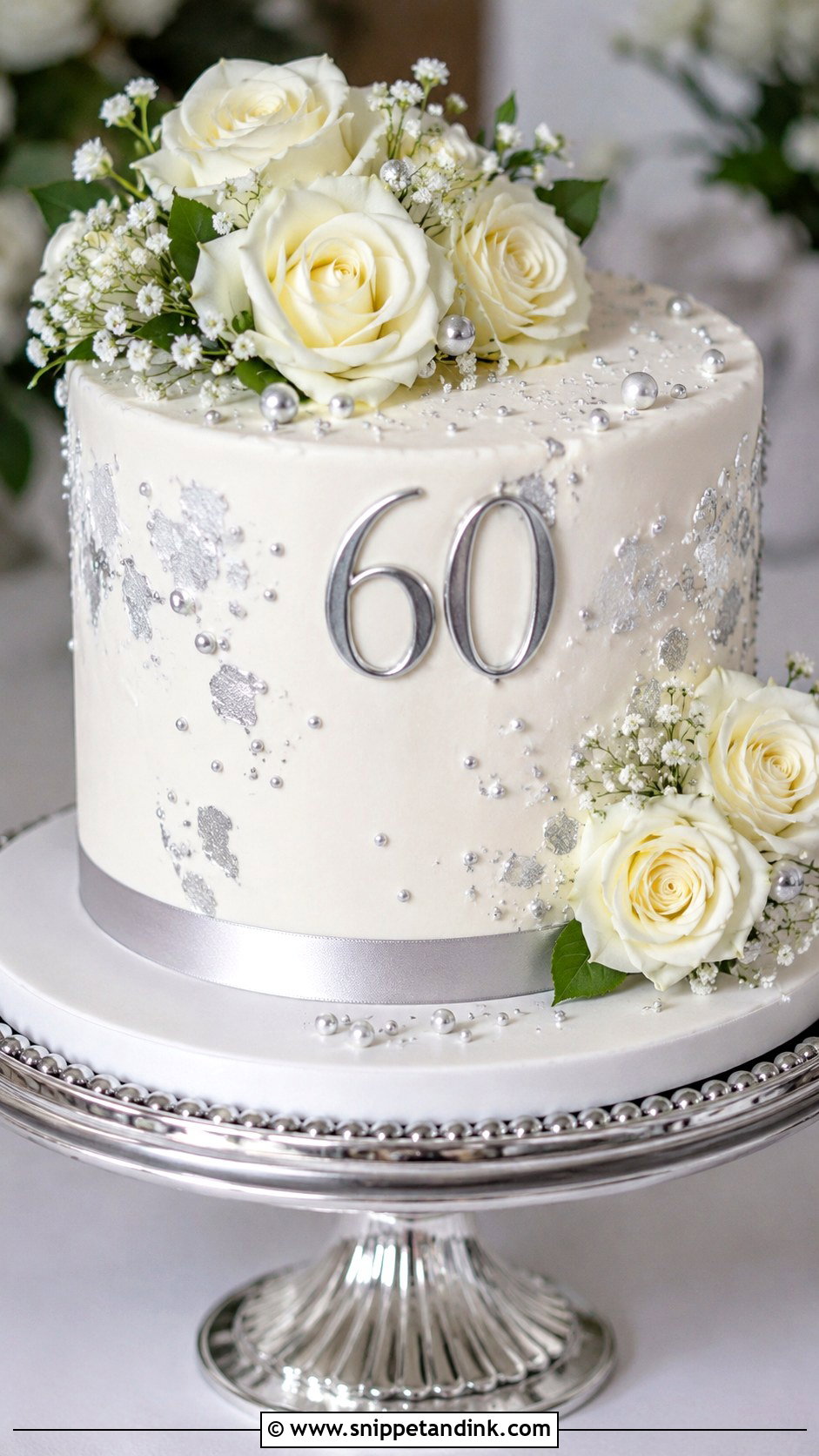
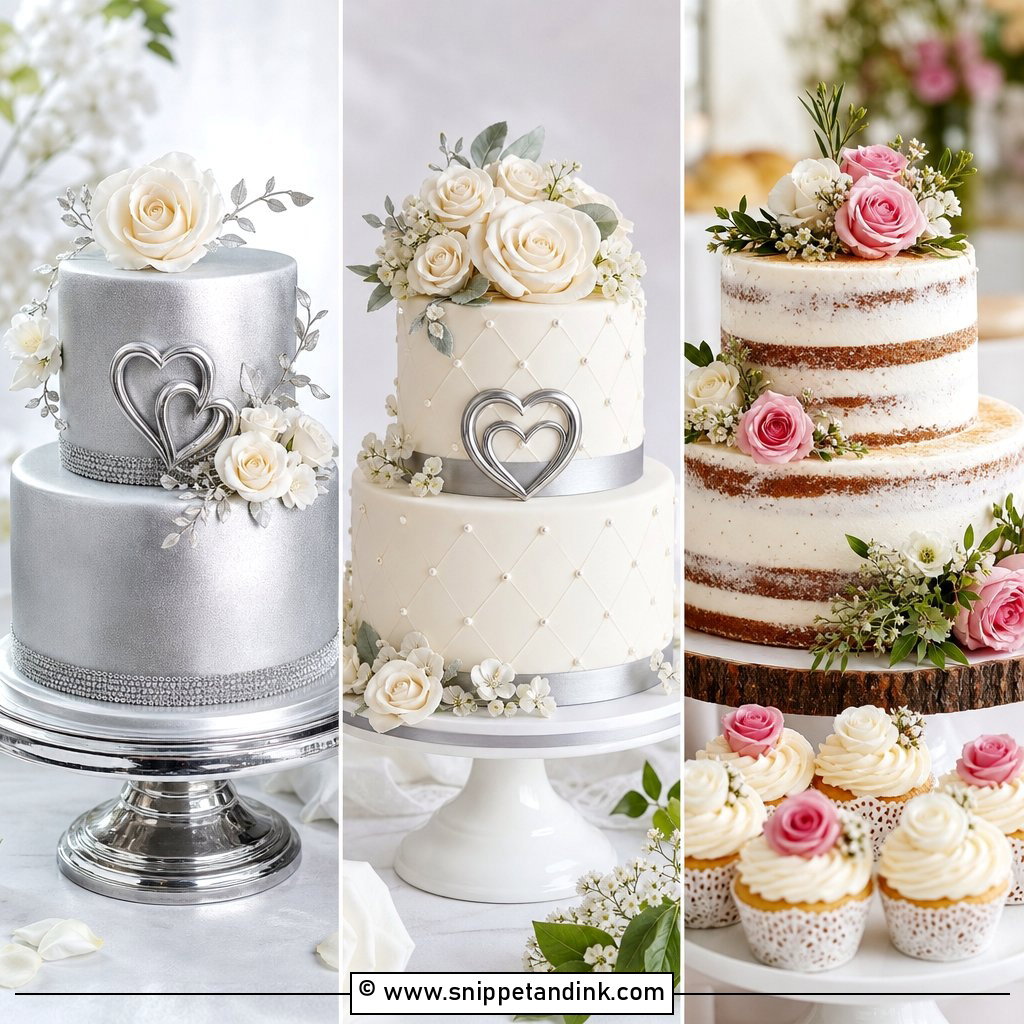
White with silver is hard to get wrong. Buttercream, fondant or a light texture will all take silver leaf and sugar pearls. Leaf needs a firm, dry surface, so on buttercream I chill the cake first or the leaf wrinkles as it lands. A round tier reads well from any side of the room. Keep the flowers minimal, maybe white roses or pale orchids, and keep baby’s breath off the frosting itself since it isn’t food-safe.
3. 60th Anniversary Tiered Cake
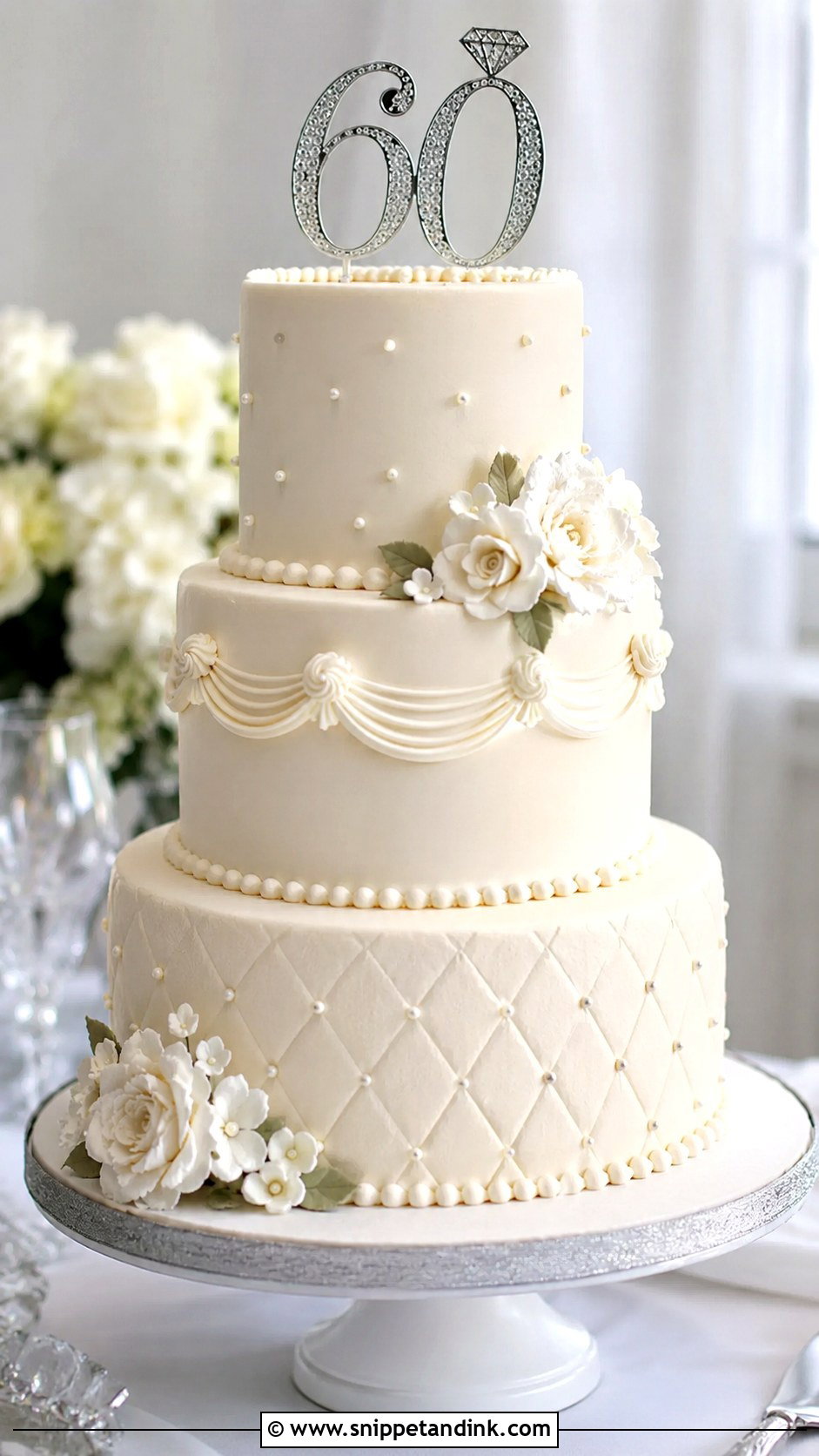
Two tiers suit an intimate gathering; three feel right in a banquet room. I like giving each tier its own job: quilted fondant at the bottom, smooth buttercream in the middle, flowers on top, all within ivory, silver and champagne. A plaque or the top surface leaves room for names, both dates or a short message. Stacked tiers need internal dowels and a central rod if they travel assembled, so ask whether your baker stacks on site.
4. Vintage Wedding Anniversary Cake
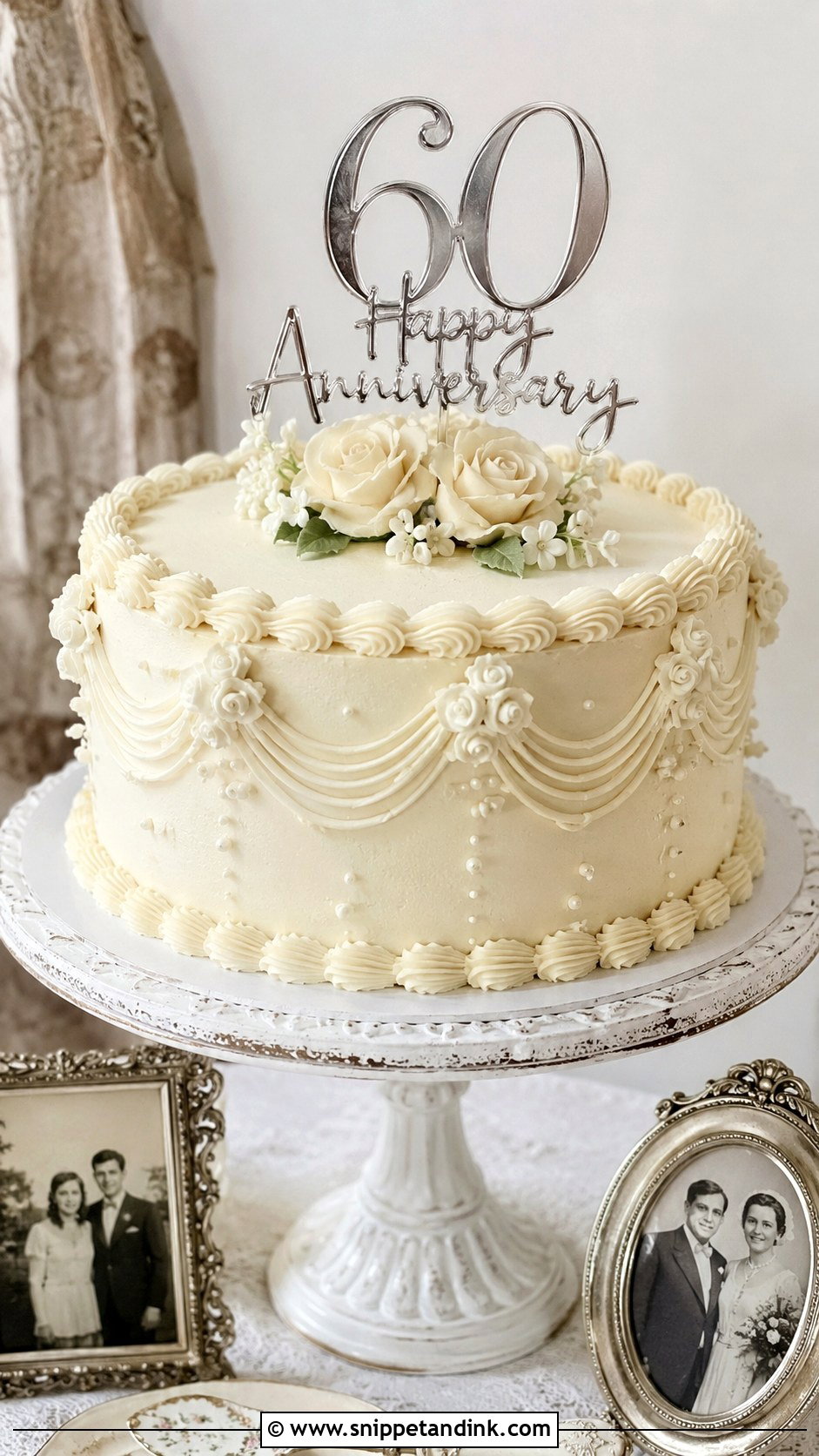
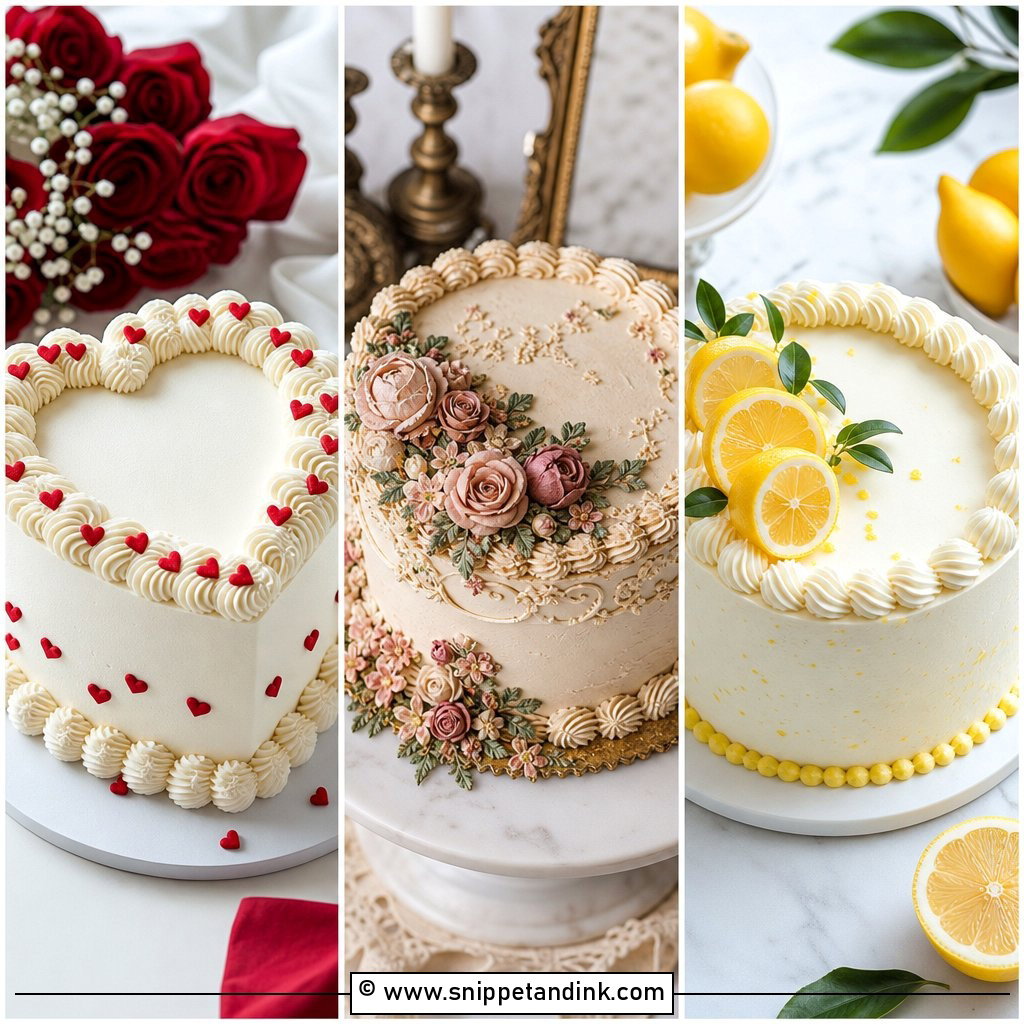
Piped swags, shell borders and soft ivory frosting are the details people remember from wedding cakes of the 1960s. I keep the piping crisp and set the cake on a clean modern stand, so it reads nostalgic rather than dated. Buttercream does this better than fondant, because that soft piped texture is the whole point. A framed wedding photo beside it ties the story together.
5. Pearl Anniversary Cake
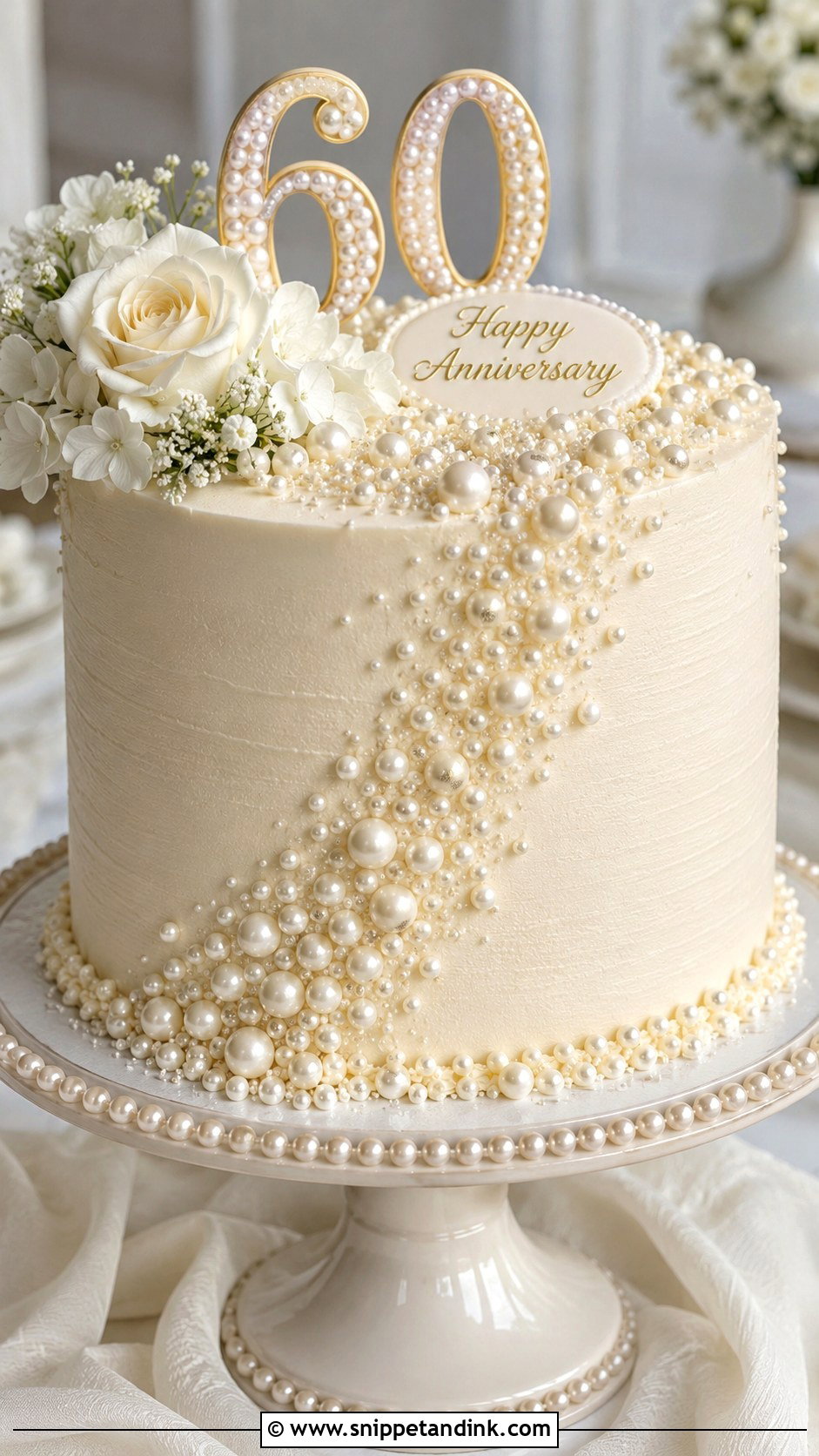
Pearls add texture where diamonds add sparkle. White buttercream with pearl borders and small clusters looks refined, and graded sizes can cascade down one side. I set each pearl with a tiny dot of buttercream and build the cascade from the bottom up, which keeps the line even. Hard sugar pearls are tough on teeth, so whoever cuts should know to brush them aside. Vanilla bean or coconut sponge suits a daytime party.
6. Floral 60th Wedding Anniversary Cake
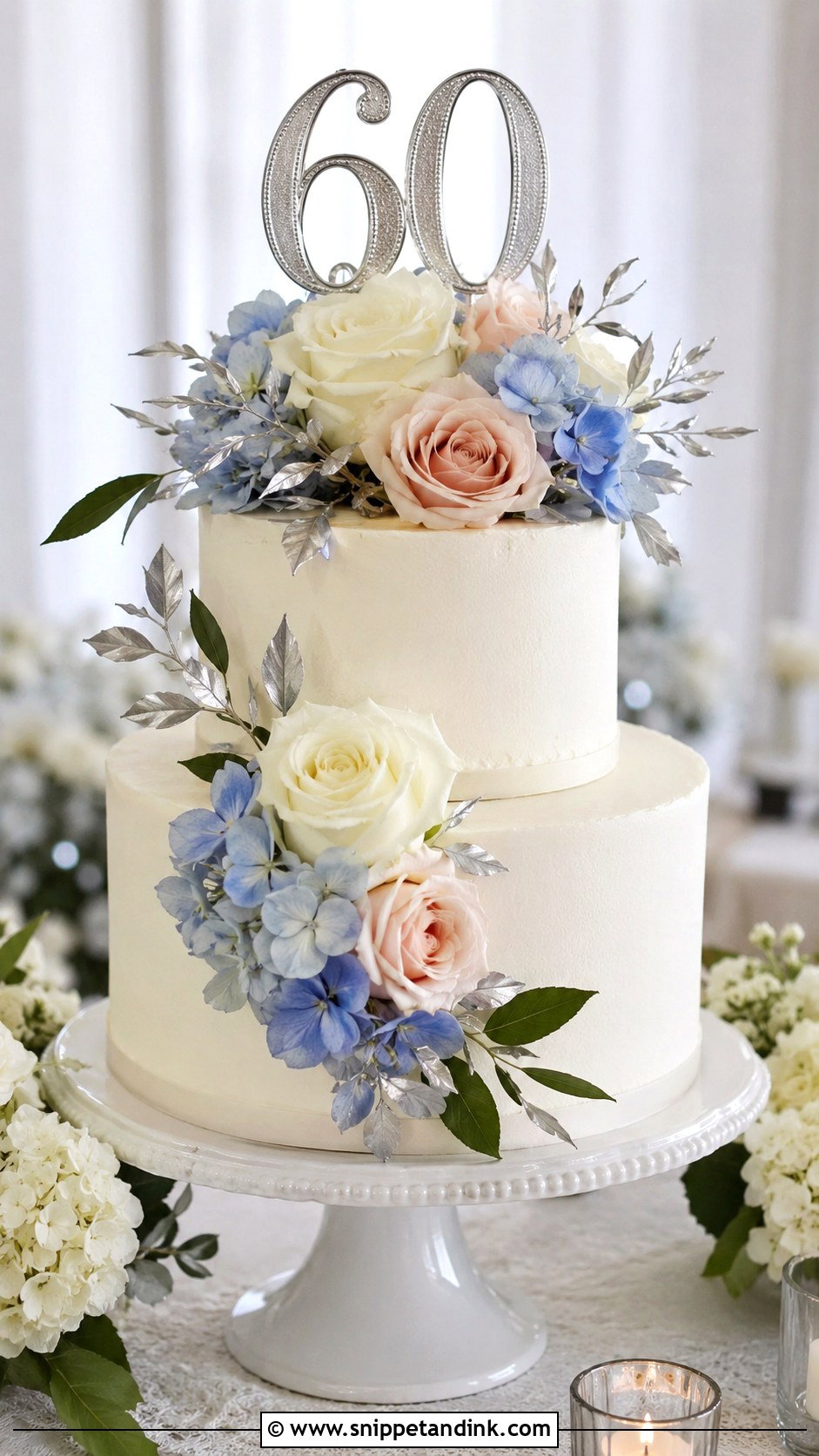
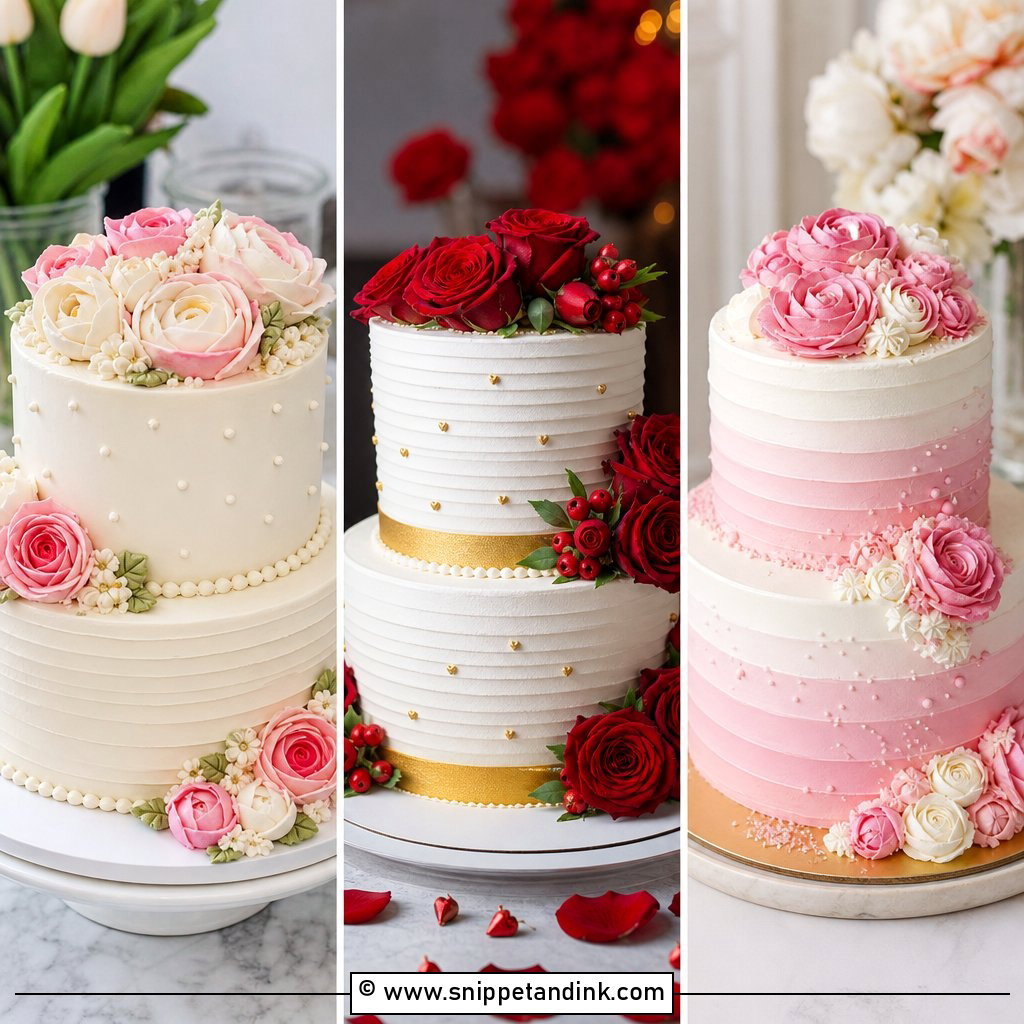
When the room is already full of flowers and family photos, a floral cake ties everything together. White and blush roses, hydrangea, orchids and pale blue blooms all sit well with silver. Fresh flowers look natural; sugar flowers take far longer to make, but they can be lifted off and kept afterwards, which some families treasure. Add a silver 60 or a small name plaque so it doesn’t read as any floral cake.
7. Photo Anniversary Cake
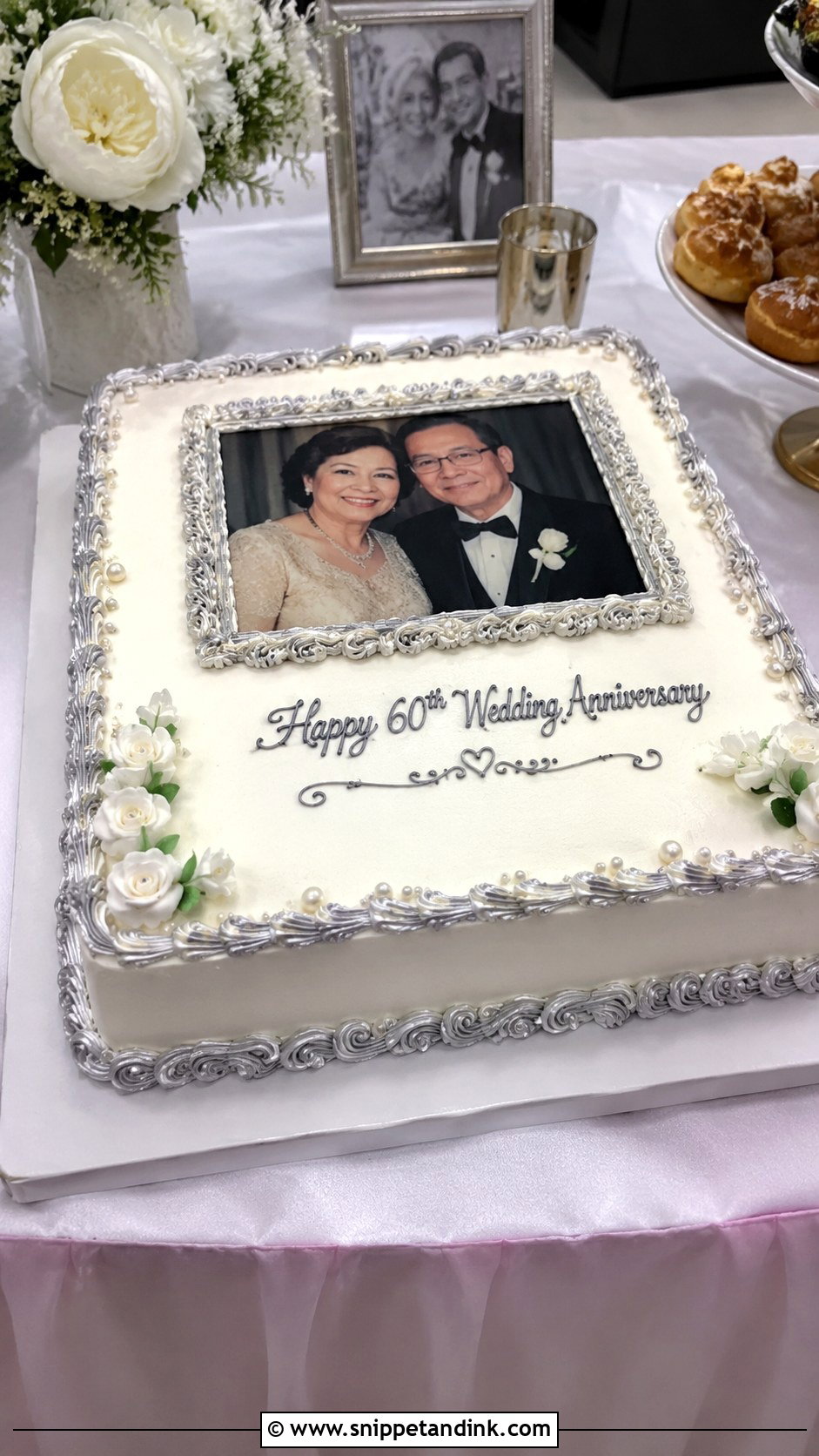
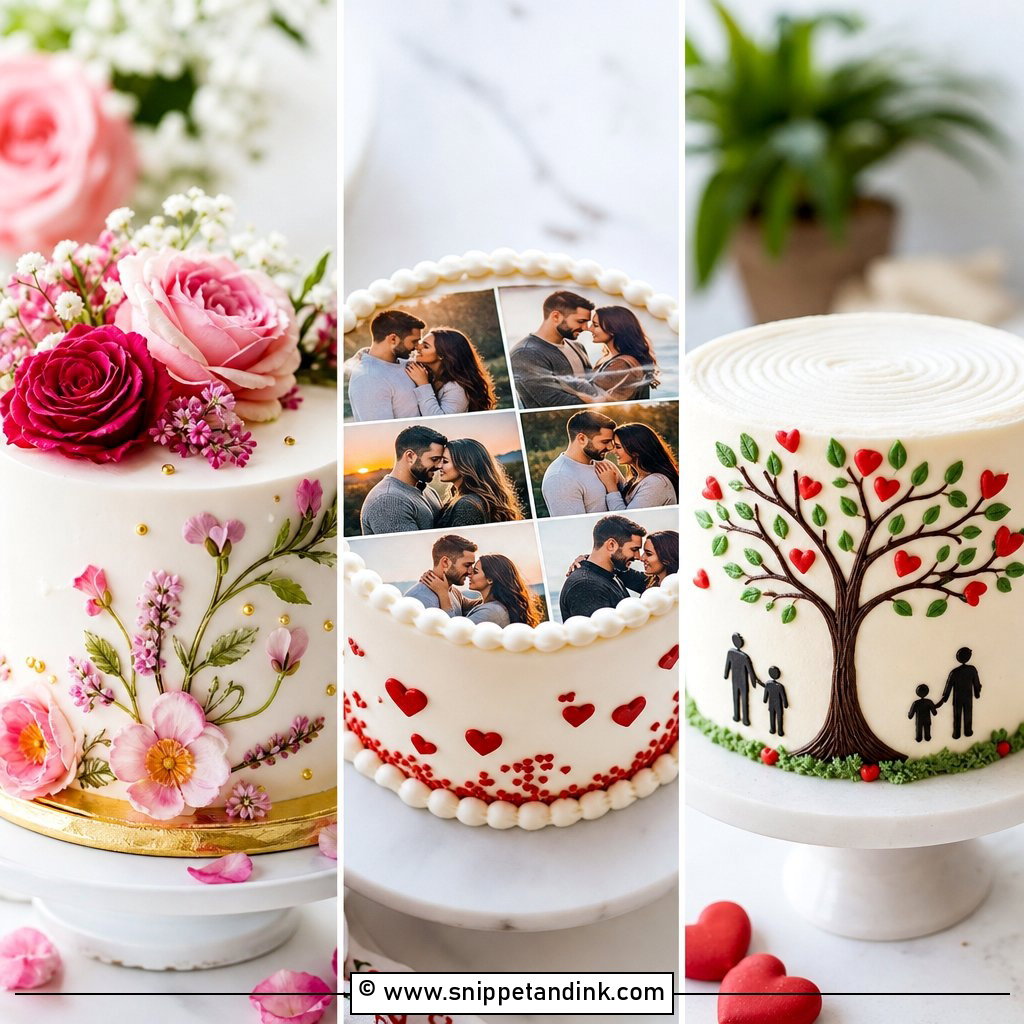
An edible photo makes the cake a conversation starter, and a side-by-side of their wedding day and a recent picture always draws a crowd. Edible prints laid straight onto very moist buttercream can bleed or bubble, so I put them on a thin fondant plaque first. Keep the rest simple: white buttercream, a silver border, a few pearls. Vanilla, chocolate or marble inside pleases most people.
8. Heart Shaped Anniversary Cake
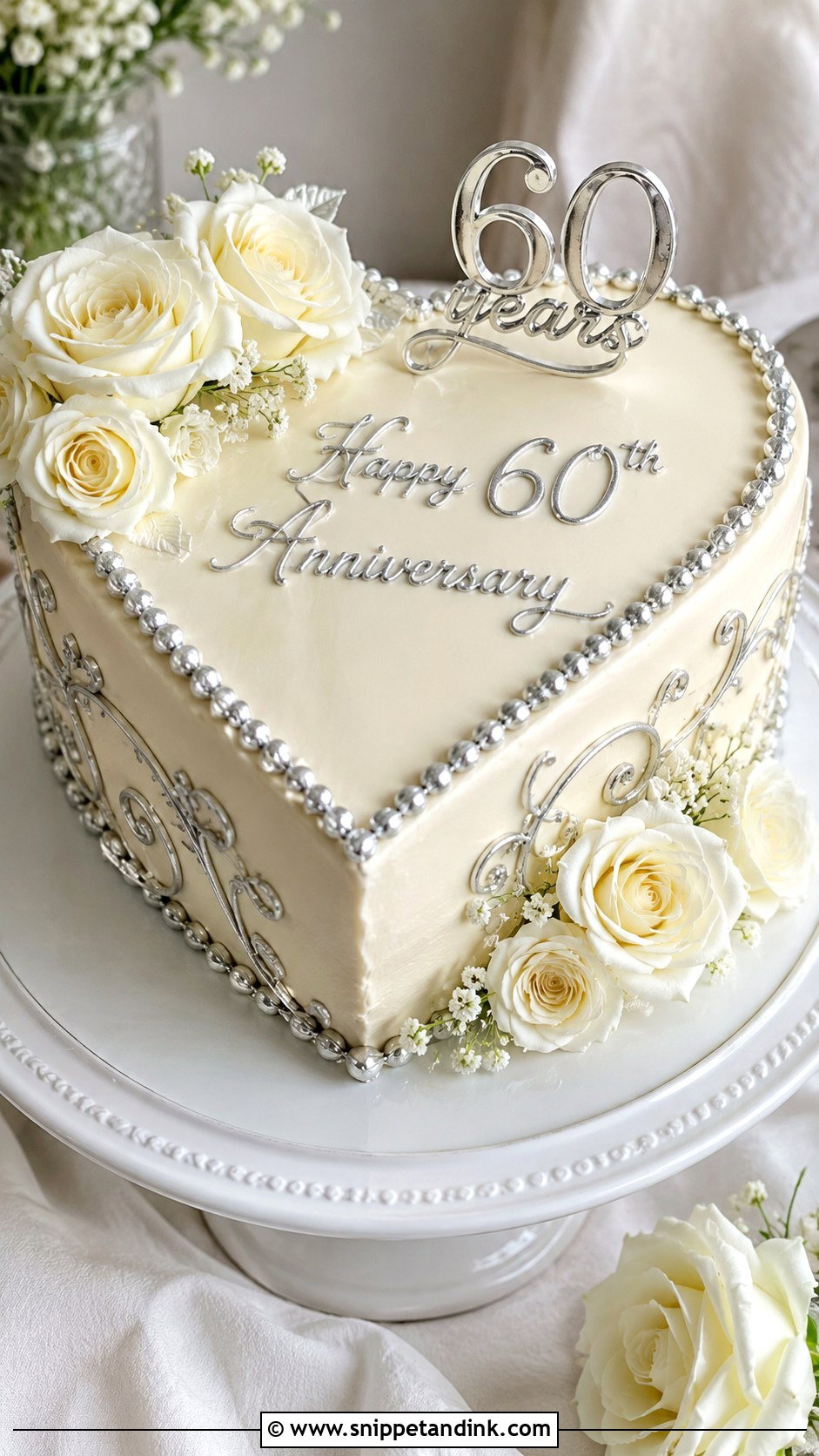
A heart shaped anniversary cake is the one for a brunch or family dinner where tiers would feel too formal. Ivory frosting, silver piping, a few pearls and a small 60 years topper keep it grown-up, and vintage piping follows the curve of a heart nicely. I keep roses to one side so the outline stays clear from above, which is the angle most phone photos take.
9. Buttercream 60th Anniversary Cake
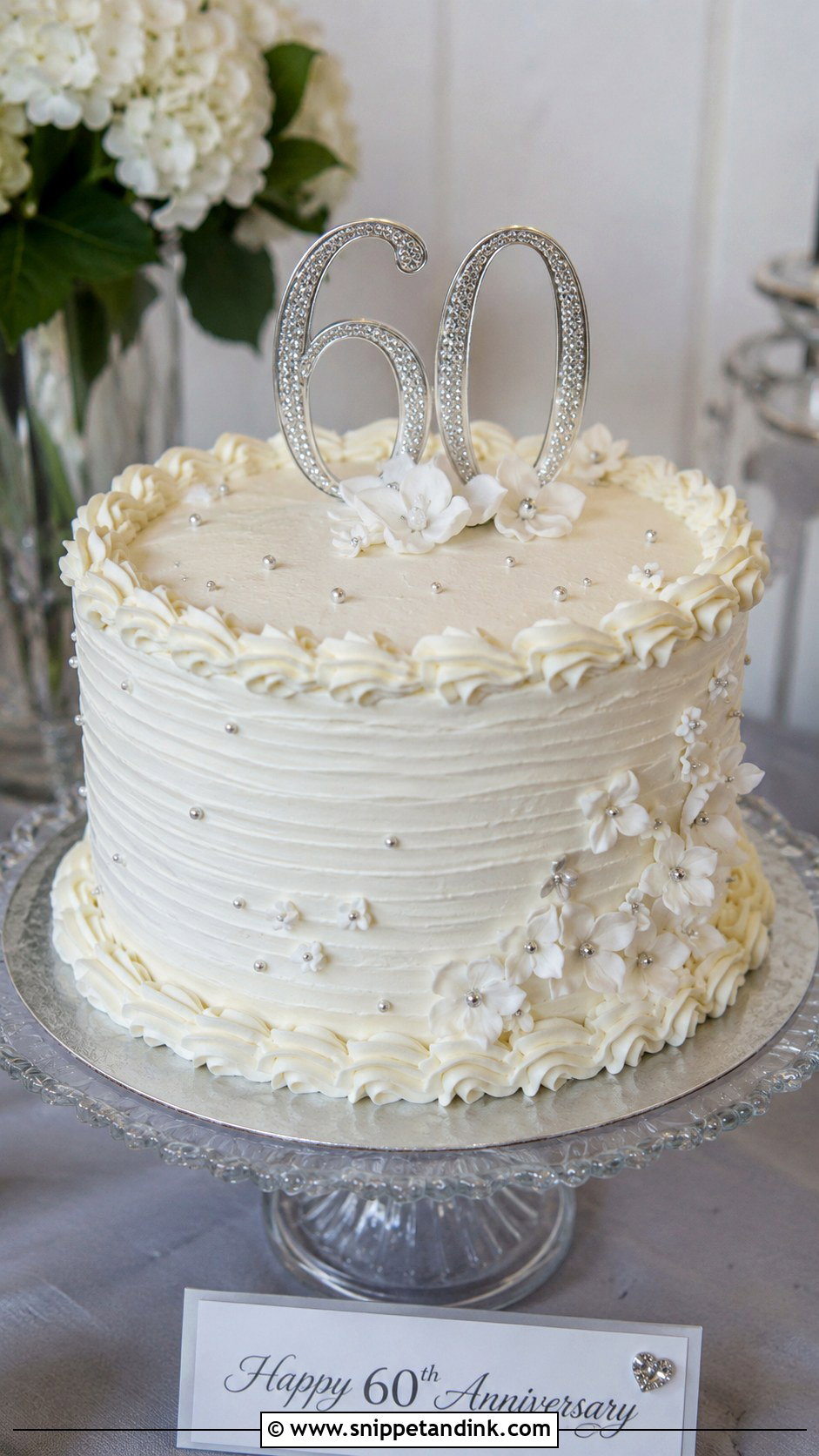
Buttercream feels approachable, and it tastes the way most people expect cake to taste. It takes piped borders, flowers and textured sides, so the same cake can turn rustic or vintage depending on the piping. The trade-off is heat. Buttercream softens in a warm hall, so I’d ask the venue to keep it away from windows and serve within a few hours of setting it out. White or ivory with silver pearls and a number 60 topper fits the milestone.
10. Fondant Diamond Cake
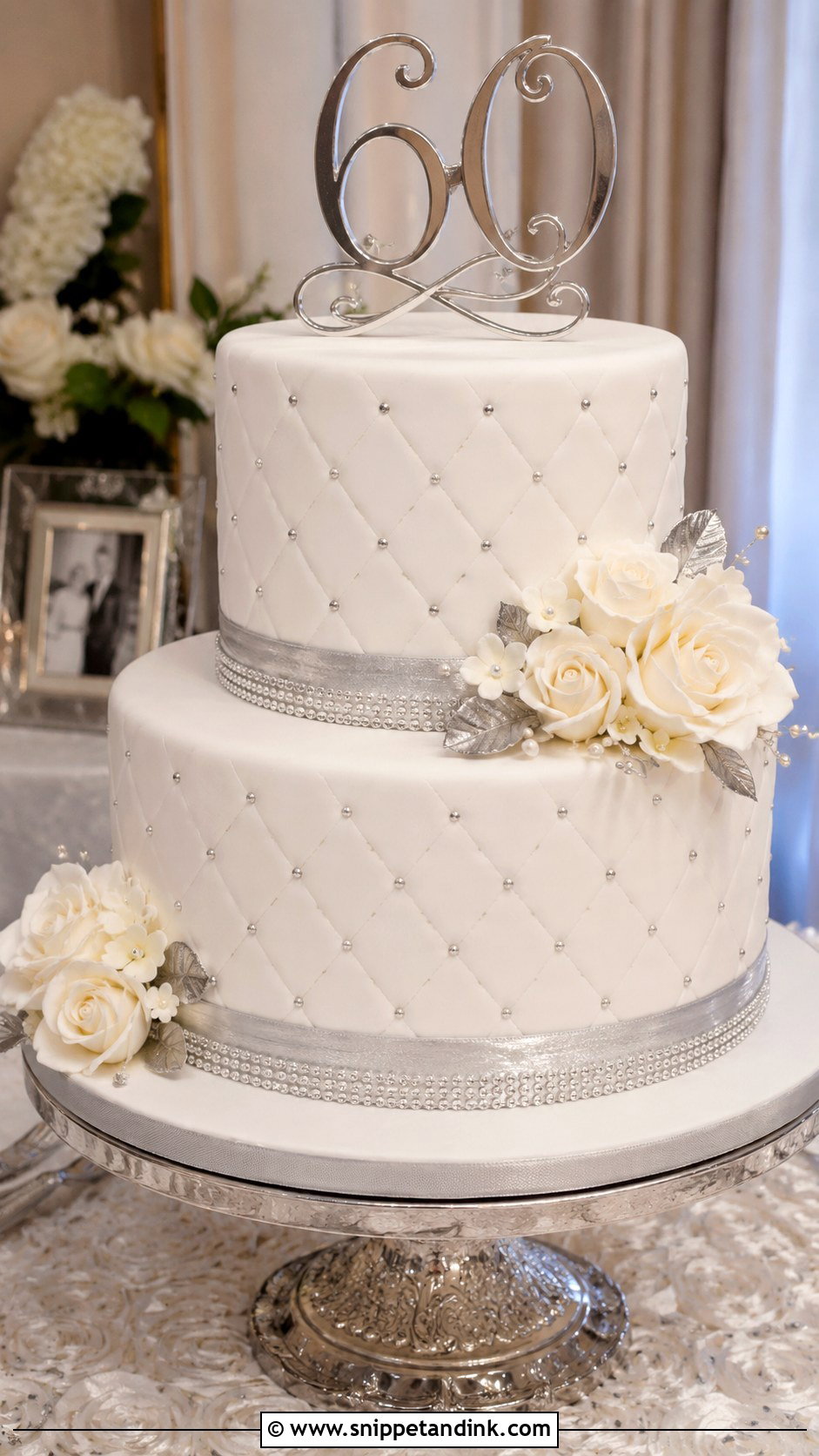
Fondant gives the sharpest edges, the cleanest lettering and crisp molded diamonds. A quilted fondant tier with tiny silver dragees at each crossing builds a diamond texture without overwhelming the cake. Fondant is a covering, though, and plenty of guests peel it off, so I roll it thin and make sure the cake underneath is moist: vanilla bean, chocolate or raspberry-filled white. Reception halls and formal dinners suit it.
11. Silver Drip Anniversary Cake
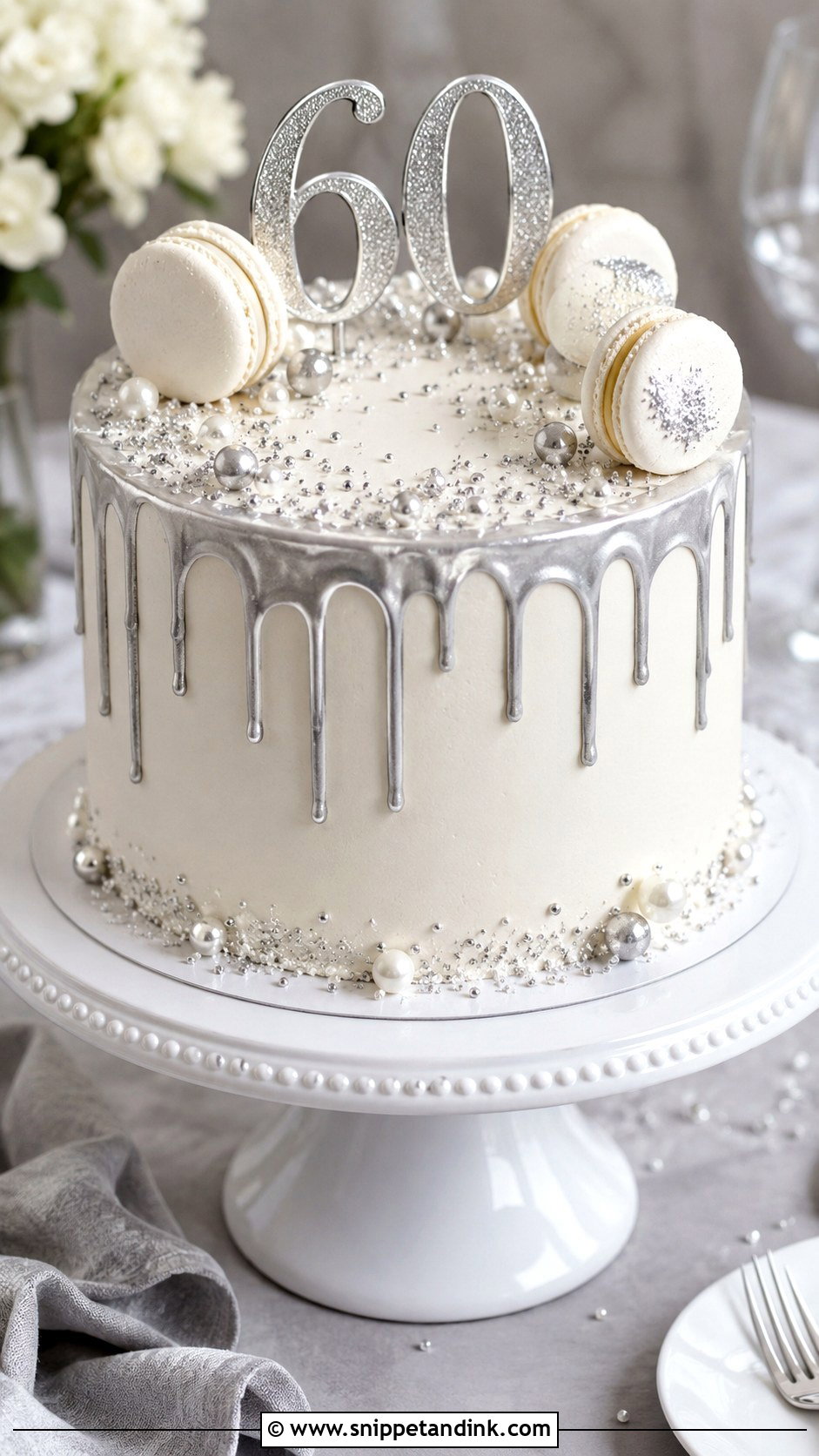
A silver drip is the modern take. White chocolate ganache goes over a well-chilled cake and gets painted silver once it sets; the chilling is what keeps the drips short and controlled instead of running to the board. White macarons, sugar pearls and a clean 60 topper add height. I’d suggest it to families who want something fresh rather than formal, with white chocolate or almond sponge underneath.
12. White Rose Anniversary Cake
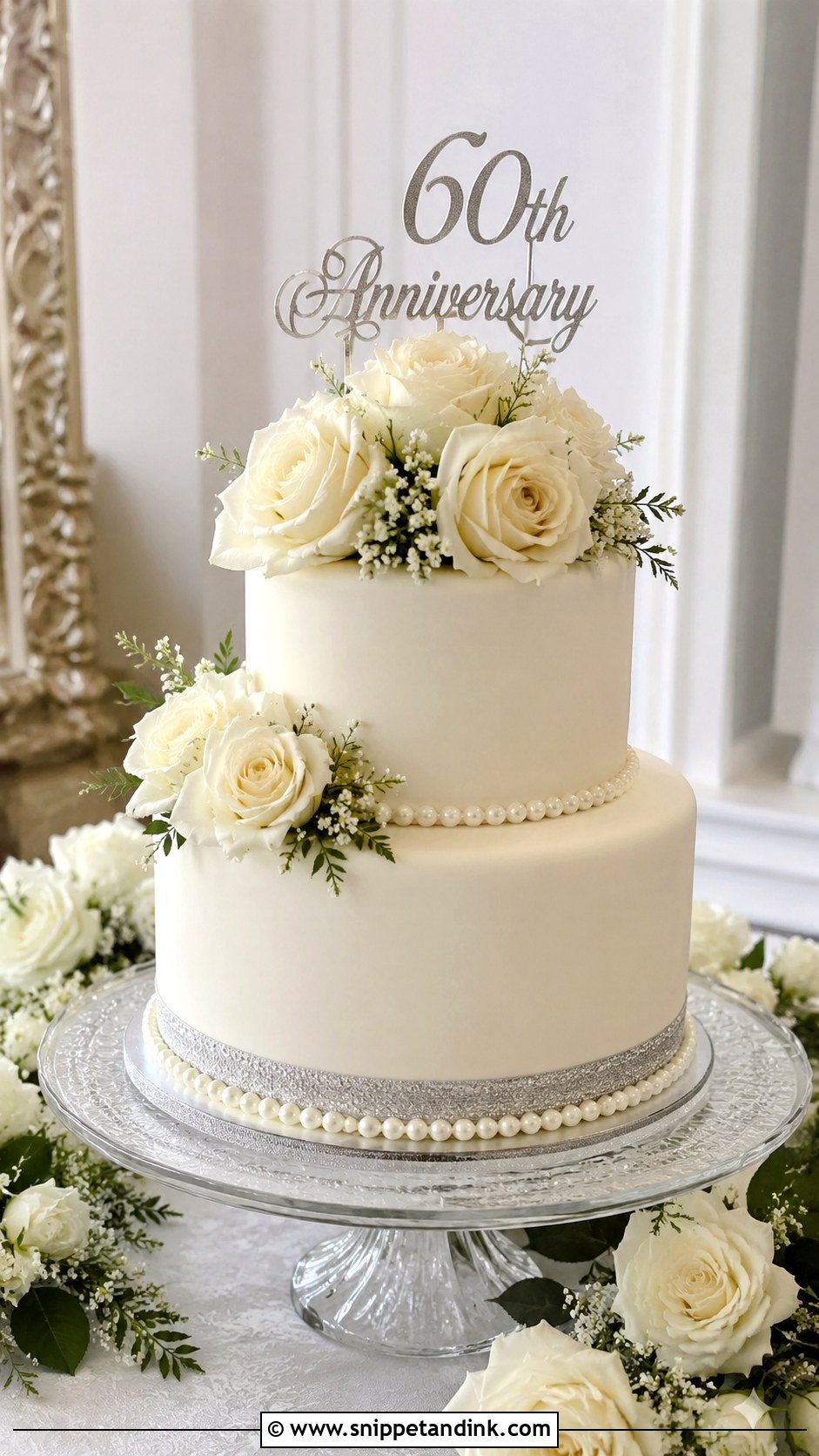
A white rose anniversary cake is soft and fitting, since white roses have long stood for love and loyalty. Use them as a topper, as a cascade down one side or around the base of each tier. Roses for cakes should come from a grower who hasn’t sprayed them, or be wrapped wherever they touch frosting. Smooth buttercream or fondant with silver ribbon works underneath, and a clear glass stand keeps it light. Vanilla or lemon keeps the flavor gentle.
13. Lace Anniversary Cake
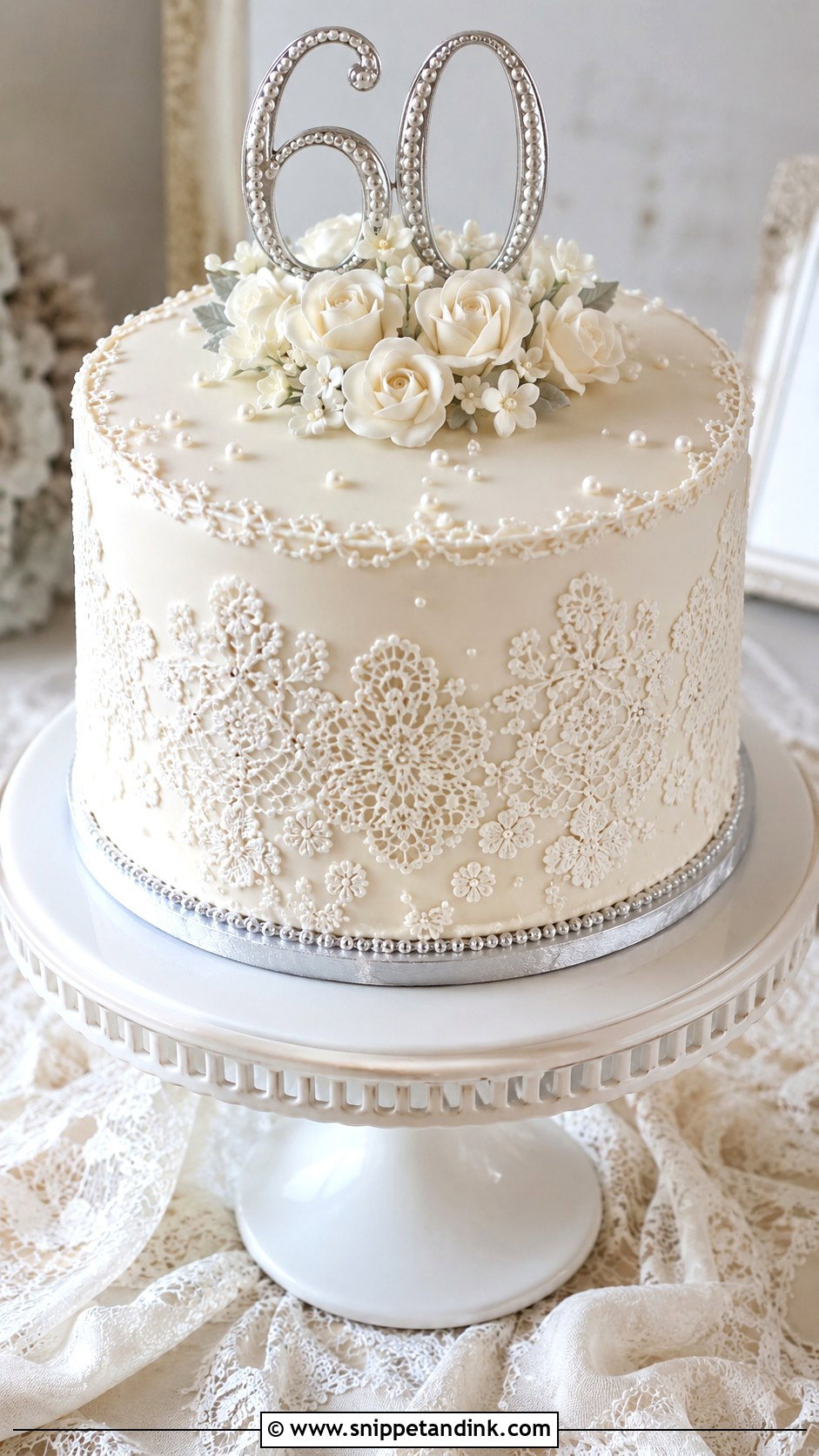
Lace is a way to echo the bride’s original dress or veil if it had lace. Edible lace is made in silicone mats and left to set before it’s laid against the cake; piped lace is drawn freehand. If the old photos show the pattern, I try to match it. Keep it to a band on one tier with smooth frosting on another so the design can breathe. A small floral topper or silver 60 finishes it.
14. Simple 60th Anniversary Cake
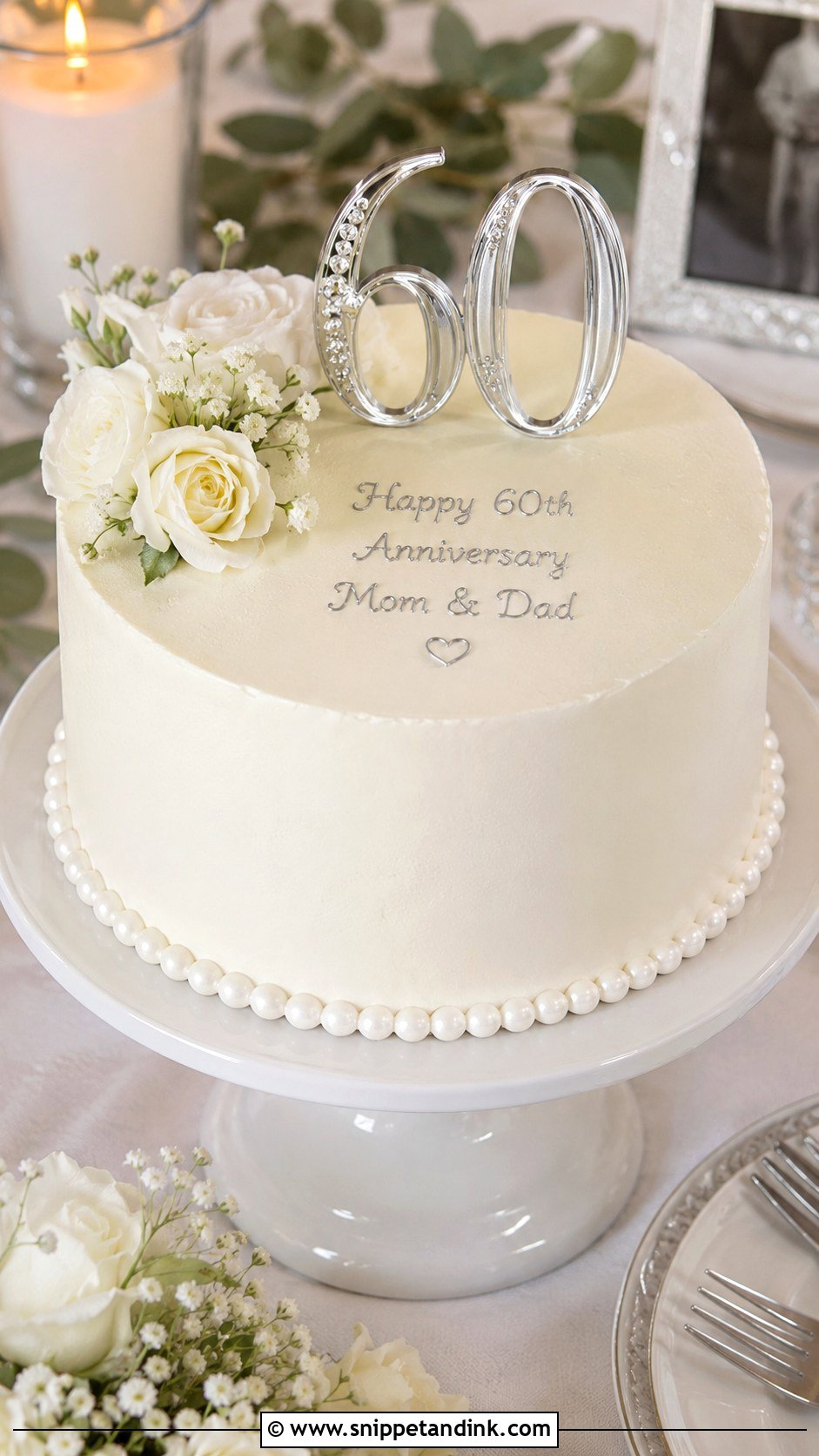
When the day is about family, speeches and photos, a simple round cake is often the better call. White buttercream, a silver number, a pearl border and a short message are enough. It’s also easier to order, carry and serve, which matters when the organizers are the couple’s grown children juggling everything else. Pick whatever flavor the couple likes best and stop there.
15. Square Diamond Anniversary Cake
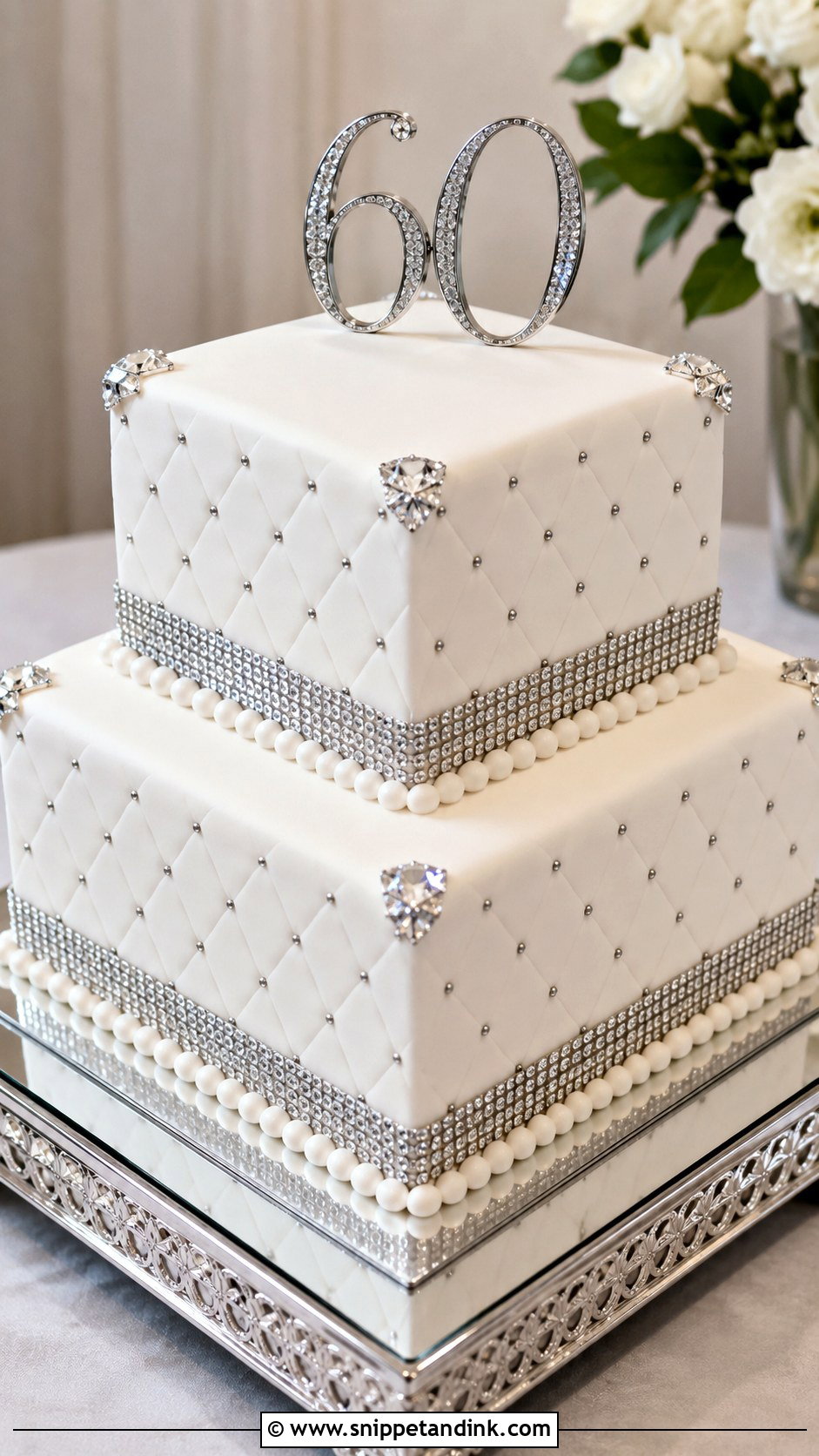
A square diamond anniversary cake stands apart from all the round ones. Flat sides take quilting, silver bands or a photo plaque easily. Square corners are harder to frost sharp than a round edge, and they’re the first thing to get bumped in the box, so ask how the baker protects them. Two square tiers feel formal; a single tier suits a smaller party. As a bonus, square cakes cut into very even slices.
16. Gold And Silver Anniversary Cake
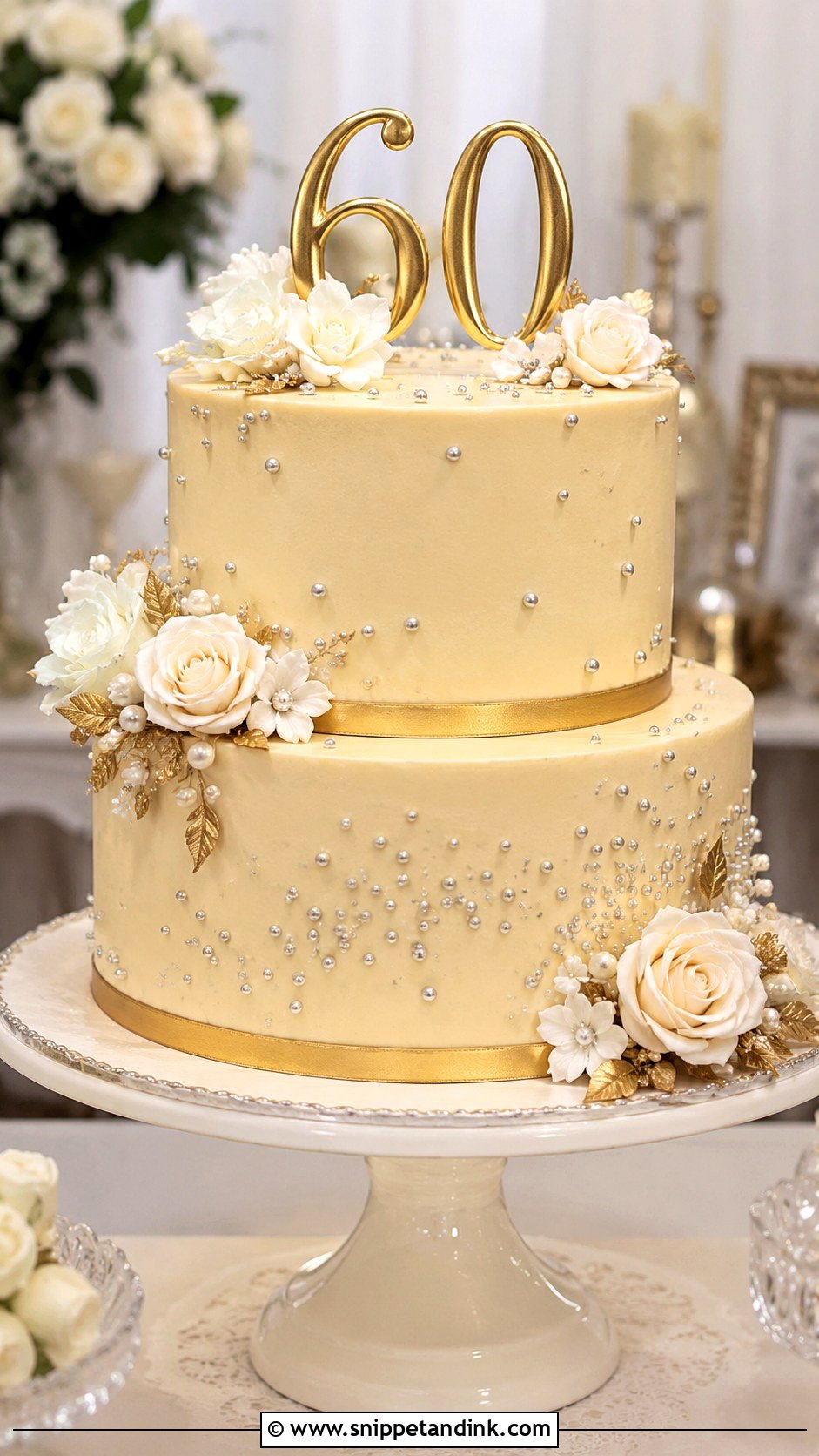
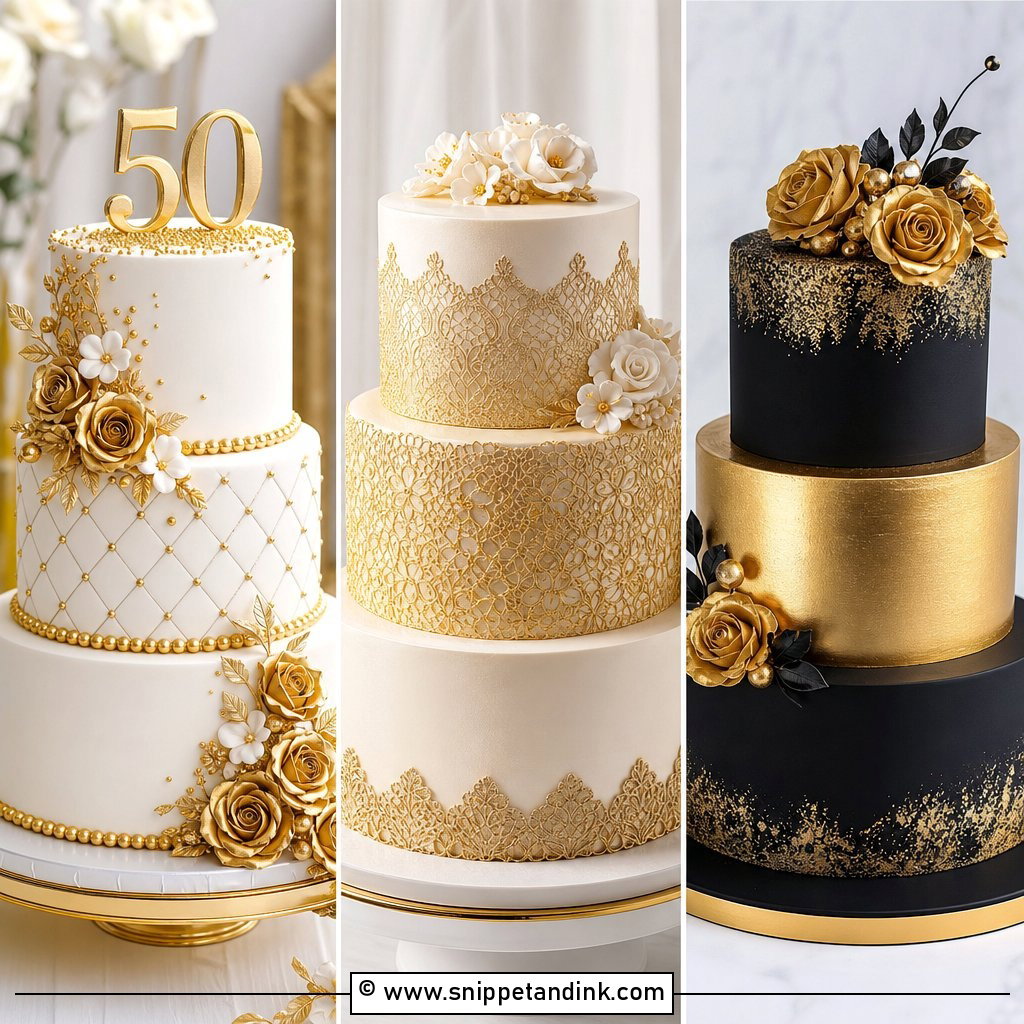
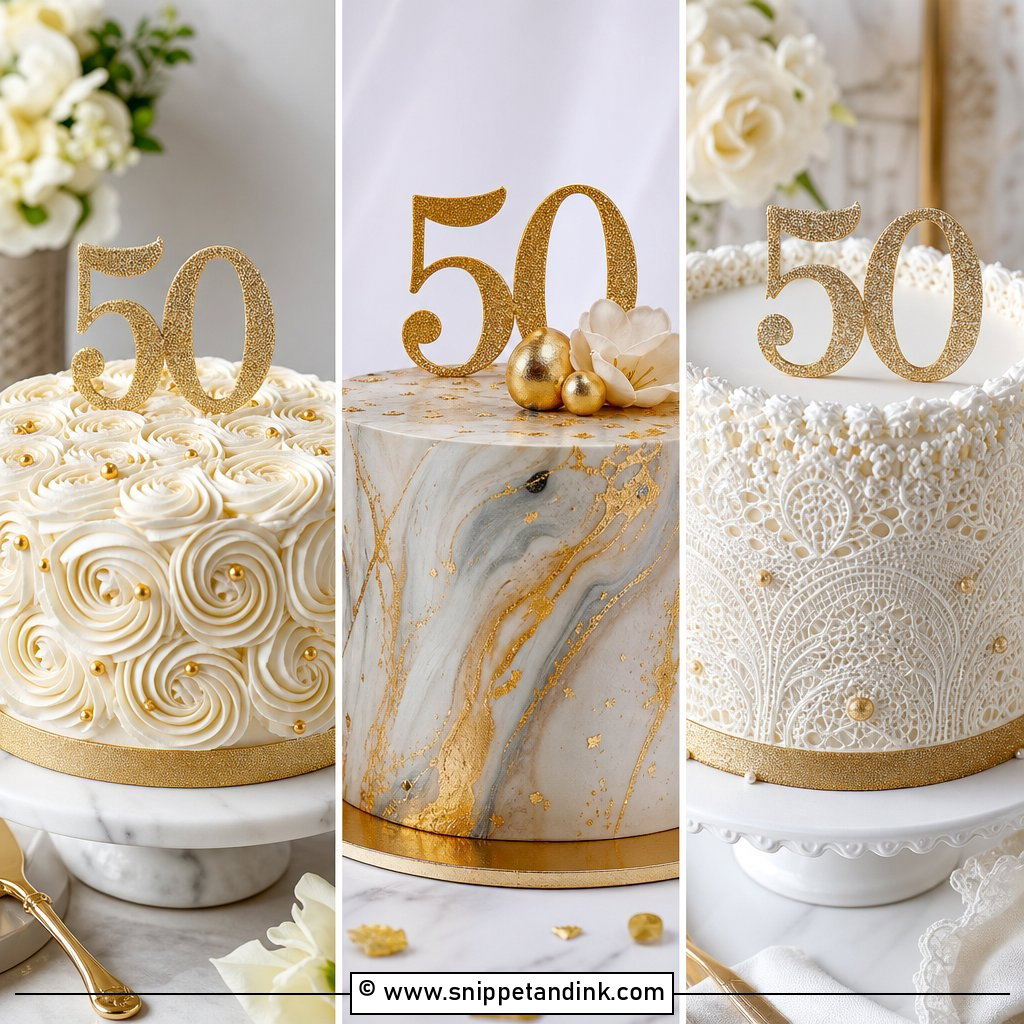
Gold warms the diamond palette. I keep both metallics balanced: ivory base, a thin gold ribbon, silver pearls and a restrained topper instead of shine everywhere. Champagne roses or delicate sugar leaves go well with it. Real gold leaf is edible in tiny amounts, but some gold dusts and paints are labeled non-toxic rather than edible, which isn’t the same thing, so check before they go on. Caramel or white chocolate sponge suits the warmer colors.
17. Number 60 Anniversary Cake
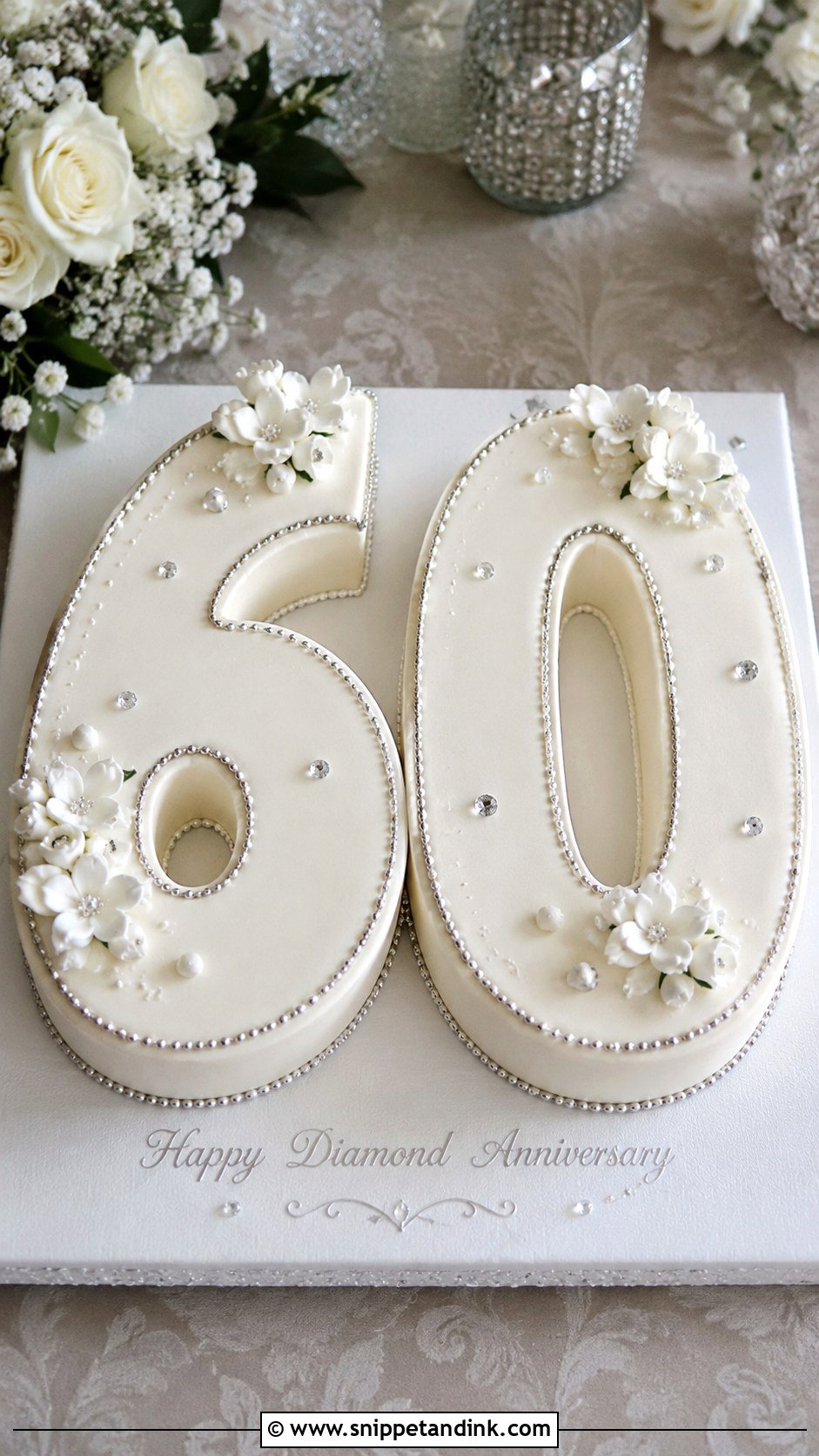
Number cakes make the milestone obvious from the door. The cake is either cut into a 6 and a 0 or kept as a classic shape with a big topper. The risk is that it looks like a birthday, so I hold the colors to white, silver and ivory and soften it with pearls and small flowers. Carved shapes need a sponge firm enough to hold an edge, so a pound-style cake with buttercream filling cuts and serves best.
18. Modern Diamond Cake
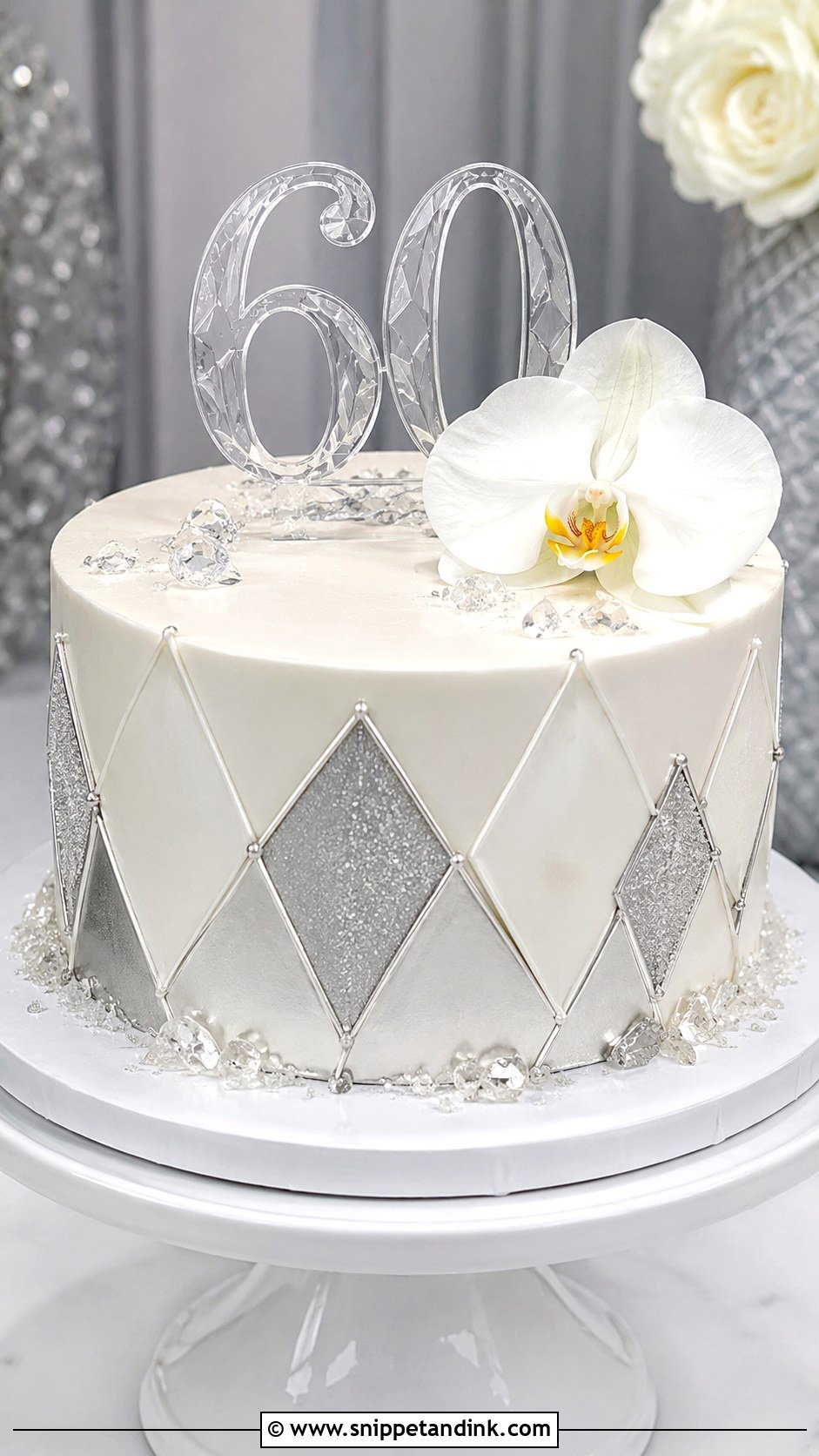
Modern diamond cakes rely on line instead of flowers: smooth white frosting, geometric silver patterns, a clear acrylic topper and a few well-placed sugar crystals. Geometric work needs precise stencils or tape guides, and every wobble shows, so look for it in a baker’s portfolio before you commit. One white orchid is plenty if you want a single flower. White chocolate raspberry or vanilla almond sits well inside.
19. Family Tree Anniversary Cake
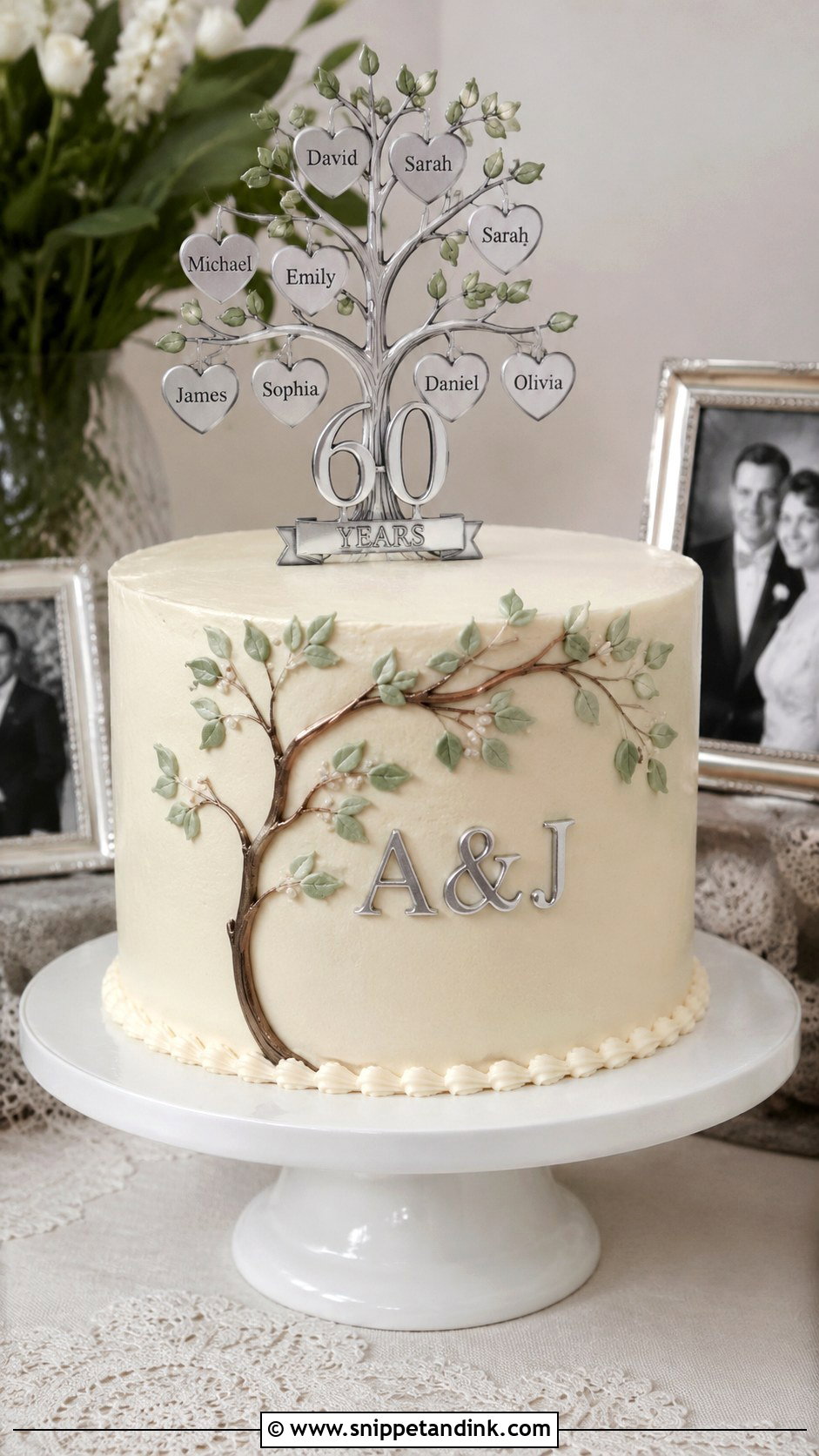
A family tree anniversary cake honors everyone who came from those sixty years: piped branches, small leaves, initials, grandchildren’s names and the couple at the center. Send the baker a full, correctly spelled list of names early. A missing grandchild is the mistake a family remembers. White buttercream, silver accents and soft green leaves keep it elegant. Photograph it properly before the first cut.
20. Replica Wedding Cake
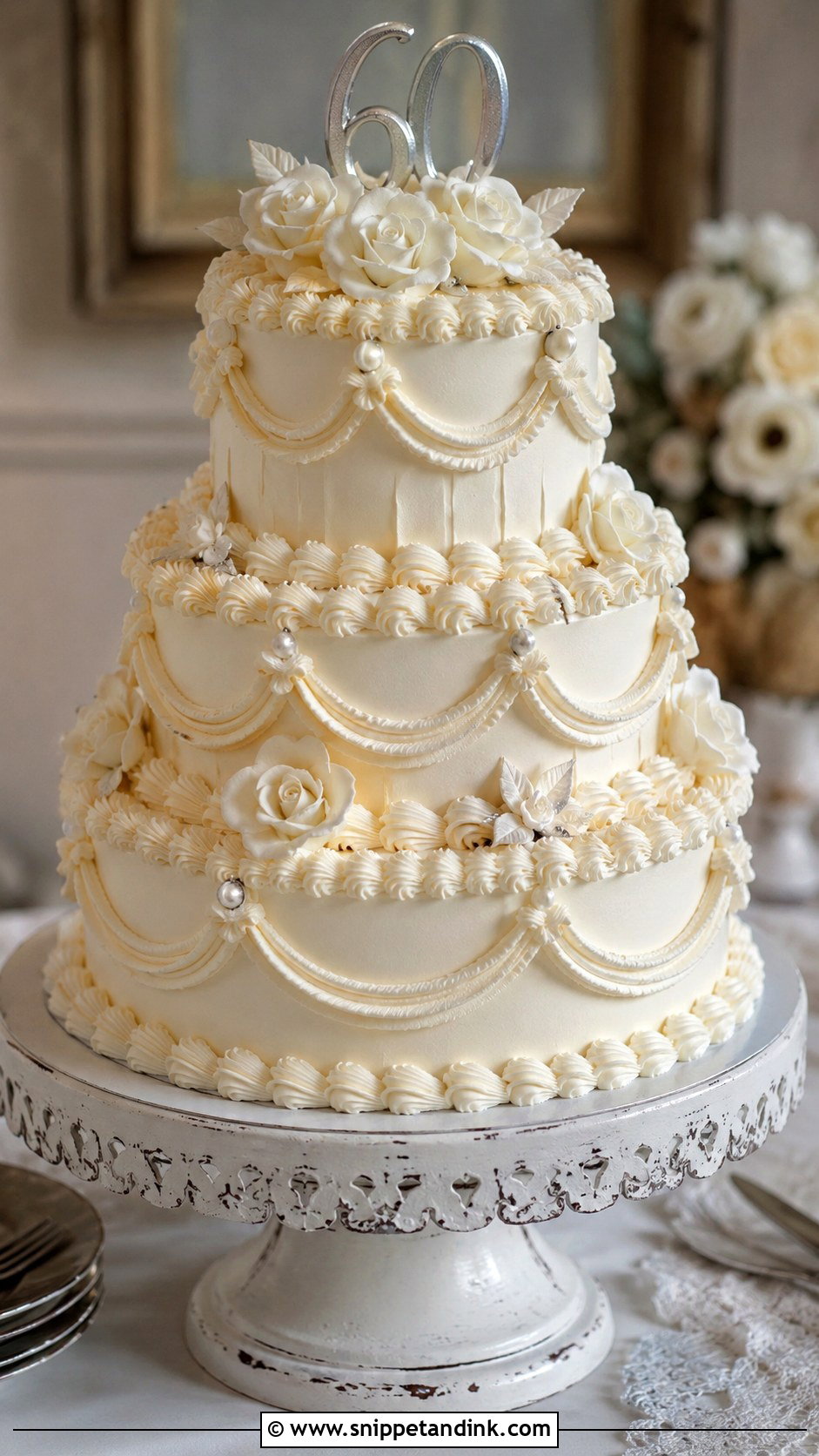
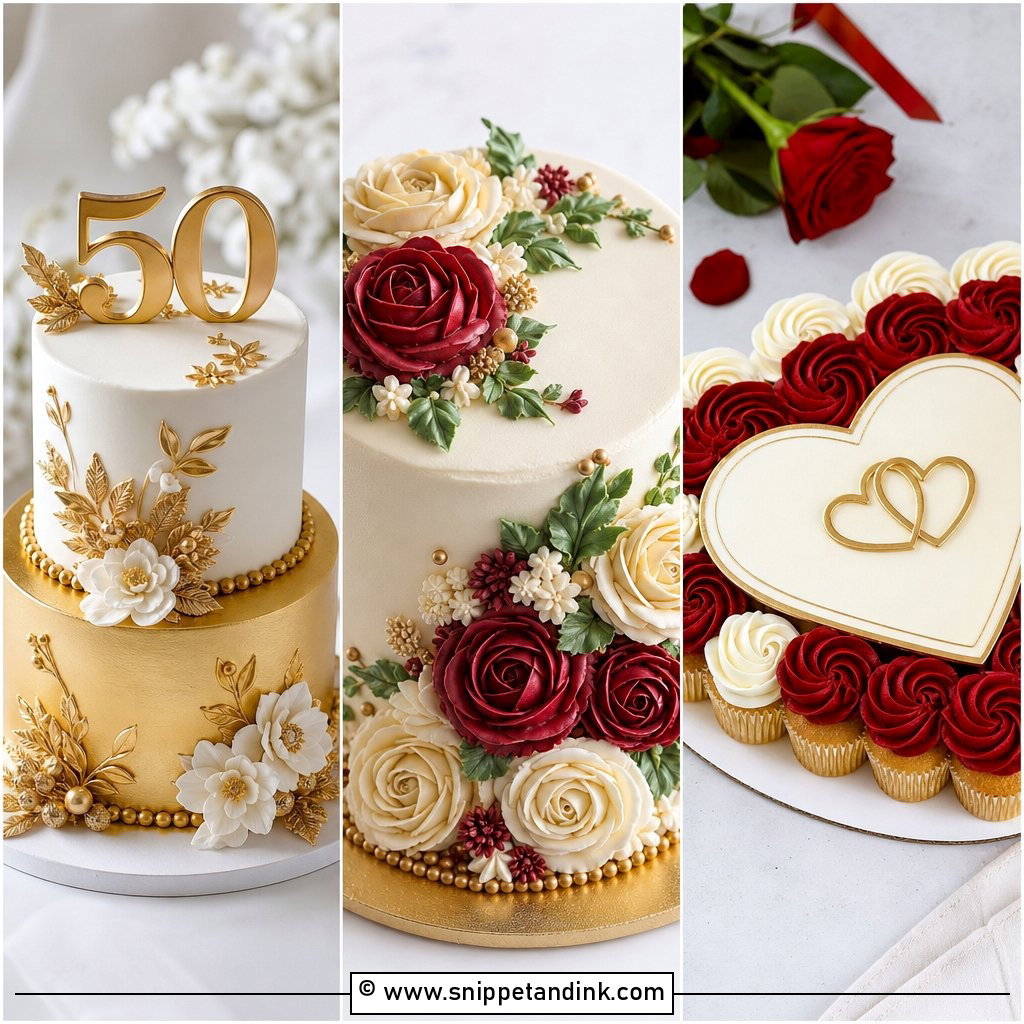
Rebuilding the original wedding cake is about as sentimental as this party gets. From a photo, a baker can recreate the shape, the piping and the flowers. It doesn’t have to be exact; the same flower or similar borders are enough to bring the memories back. I use modern supports and fresher frostings so it serves safely. Revealed as a surprise, it tends to stop the room.
Cutting the Cake Before the Guests of Honor Tire
At a wedding the cake can wait until late evening. At a diamond anniversary I’d move it up the running order. Plenty of couples in their eighties are flagging by mid-evening, and the cutting photo is one you’ll want them fresh for.
- Toasts first, while everyone is seated and listening.
- Cake straight after, with the couple seated or standing next to a chair.
- Family photos around the cake before it’s cut, then slicing in the kitchen.
- Dancing or a slideshow afterwards, so anyone who leaves early has already shared the moment.
If the couple’s hearing or eyesight isn’t what it was, tell the photographer and whoever is speaking where the cake table sits, and keep it close to the couple’s seats. A short walk across a crowded dance floor is harder than it looks at eighty-five, and nobody wants that walk to be the photo.
Sending leftovers home
Buttercream cake keeps a day or two in a closed box somewhere cool; anything with cream cheese, fresh fruit or whipped cream goes in the fridge. Ask the venue to have takeaway boxes ready. The couple will almost certainly want the top tier, and many like to freeze a slice to remember the day by.
A Cake Worth Sixty Years of Stories
Diamond details, silver, white flowers, pearls, lace and vintage piping all suit a 60th because they feel graceful rather than loud. The right cake comes down to the party style, guest count, budget and the couple’s personality. A simple buttercream round can move people as much as a grand tiered design when it carries something of their story. Modern or nostalgic, aim for the cake they’ll still be talking about on the drive home.
You'll Like These Ideas:


Leave a Reply