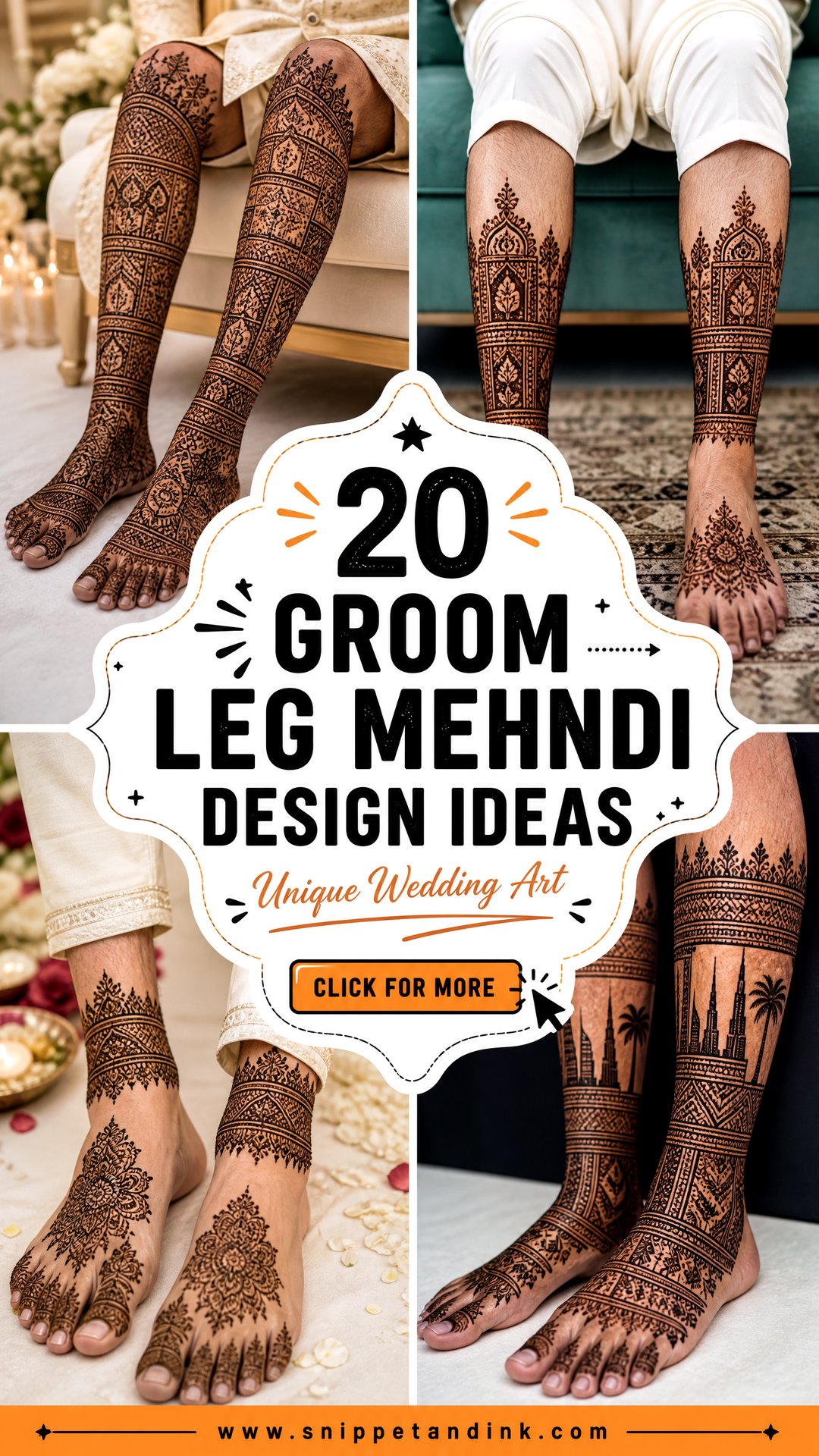
Groom leg mehndi is becoming a bold wedding detail for men who want tradition with a personal edge. Instead of keeping henna only on the hands, many grooms now choose ankle, foot, shin, or calf patterns that look clean with sherwanis, mojris, sandals, and rolled wedding trousers. The best designs feel masculine, balanced, and photo-ready without looking too heavy. Some grooms prefer simple Arabic trails, while others want royal Indian motifs, geometric bands, initials, or symbolic wedding art. Leg mehndi also works well for pre-wedding shoots, haldi events, and intimate mehndi ceremonies. Use these 20 Groom Leg Mehndi Design Ideas to find a look that matches your outfit, personality, and wedding vibe.
1. Simple Groom Leg Mehndi Design
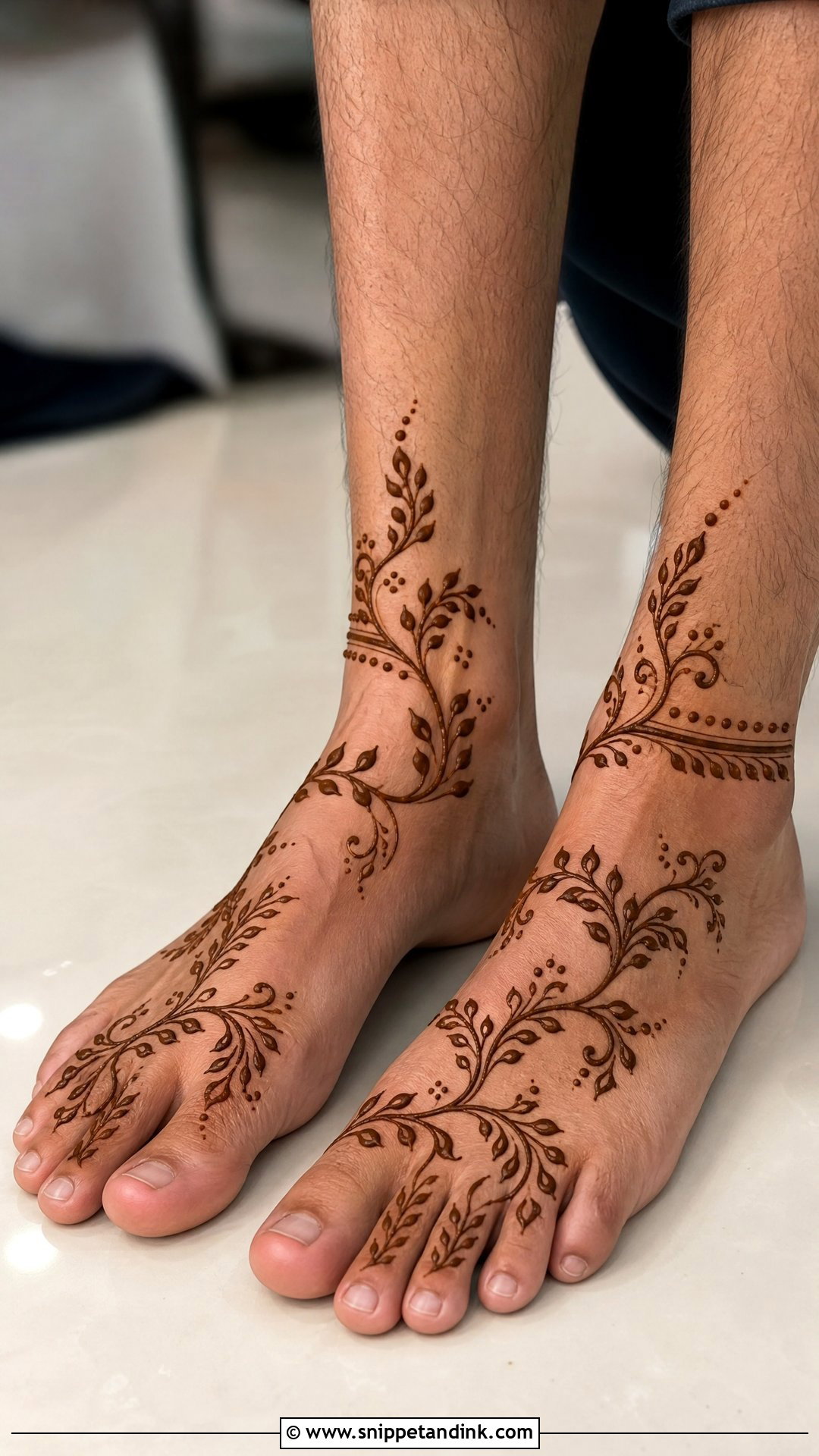
A simple groom leg mehndi design is perfect for men who want a traditional touch without covering the entire leg. This look usually begins around the ankle and extends slightly onto the foot or lower shin. Clean lines, small leafy vines, dots, and a few bold curves keep it neat and masculine. The beauty of this design is its low-maintenance feel. It does not compete with the groom’s outfit, yet it still looks intentional in close-up wedding photos. It works especially well with sandals, juttis, or cropped ethnic pants. Ask your artist to keep the spacing open so the natural reddish-brown stain stands out clearly.
2. Arabic Groom Leg Mehndi Design
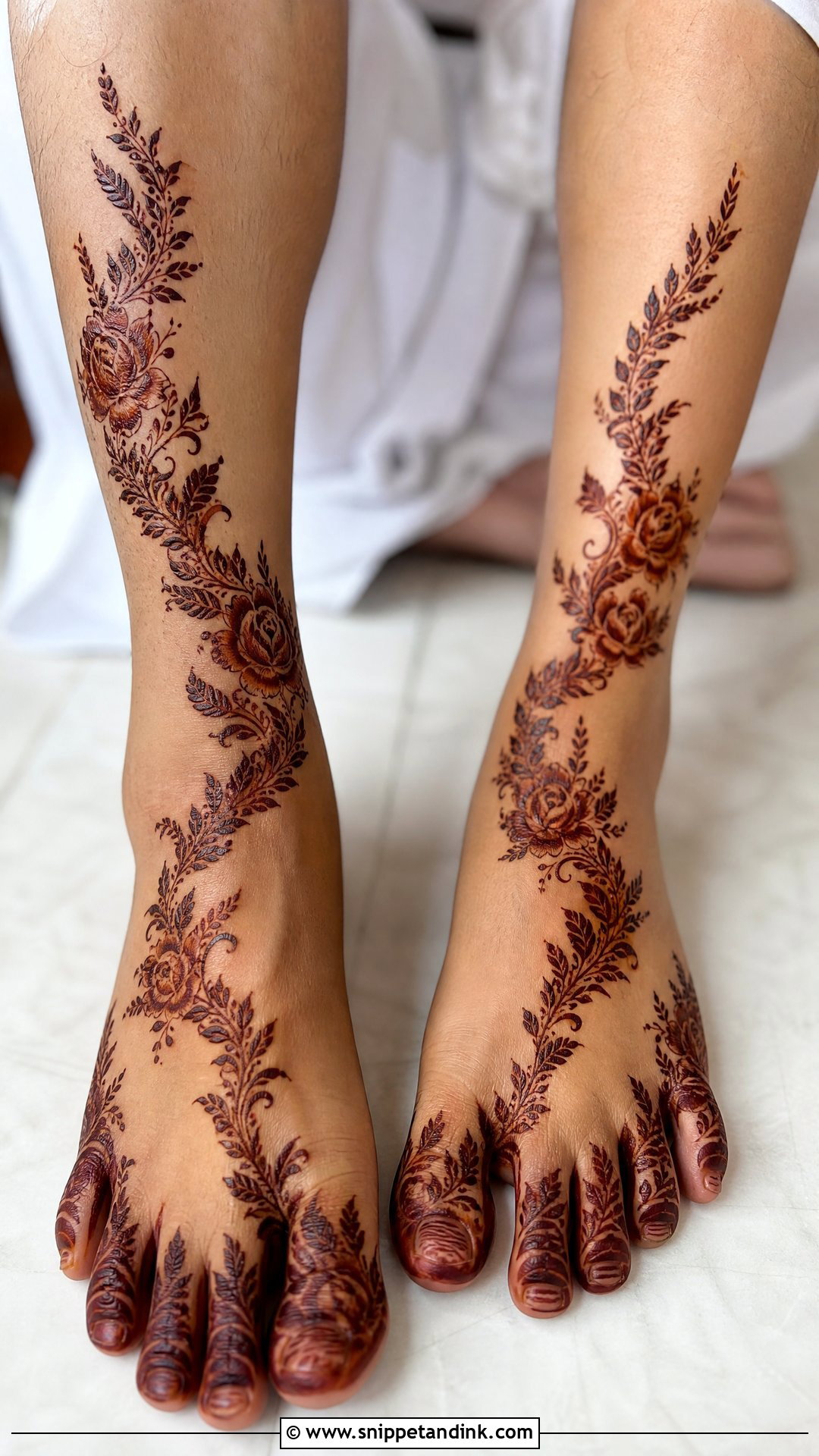
Arabic groom leg mehndi design works beautifully when you want movement, flow, and open space. This design often uses diagonal trails that move from the side of the foot toward the ankle or calf. Bold flowers, leafy strokes, curved vines, and shaded petals create a stylish but not overly crowded look. Arabic mehndi is a good choice for grooms who like visible patterns but do not want full coverage. It also suits outdoor daytime events because the spacing makes every motif easy to see. For a sharper groom look, keep the toes minimal and let one main trail become the focus of the leg.
3. Indian Groom Leg Mehndi Design
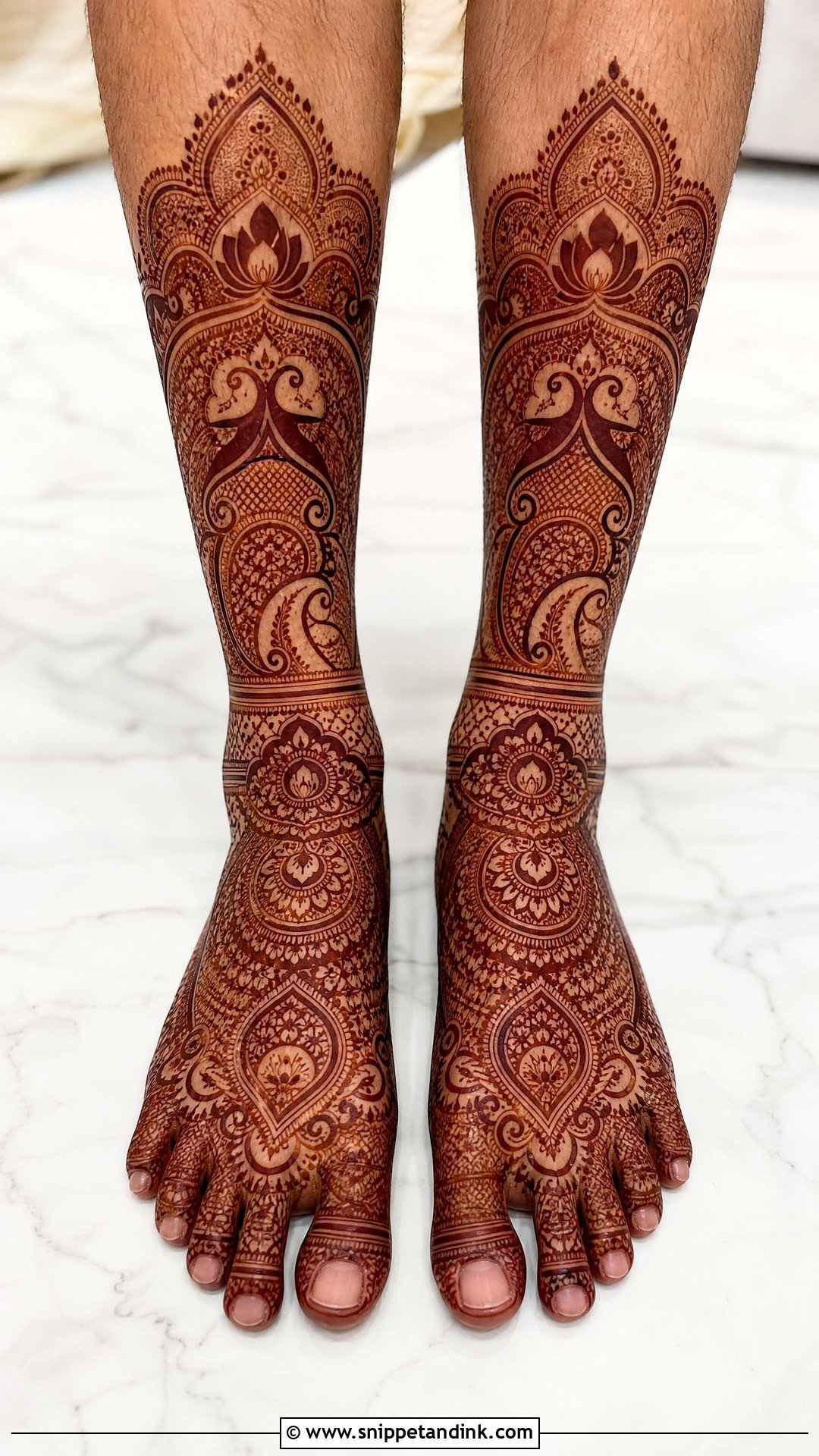
Indian groom leg mehndi design gives a richer and more traditional wedding feel. It can include paisleys, mandalas, peacock accents, lotus motifs, fine lines, and filled borders. For grooms, the pattern can be made slightly bolder so it does not look too delicate. A good version covers the top of the foot, ankle, and lower shin in a balanced way. This design is ideal for classic wedding ceremonies, especially when paired with an ivory, gold, maroon, or emerald outfit. If you want a meaningful detail, add small initials or a wedding date inside a paisley or mandala without making it too obvious.
4. Minimal Groom Leg Mehndi Design
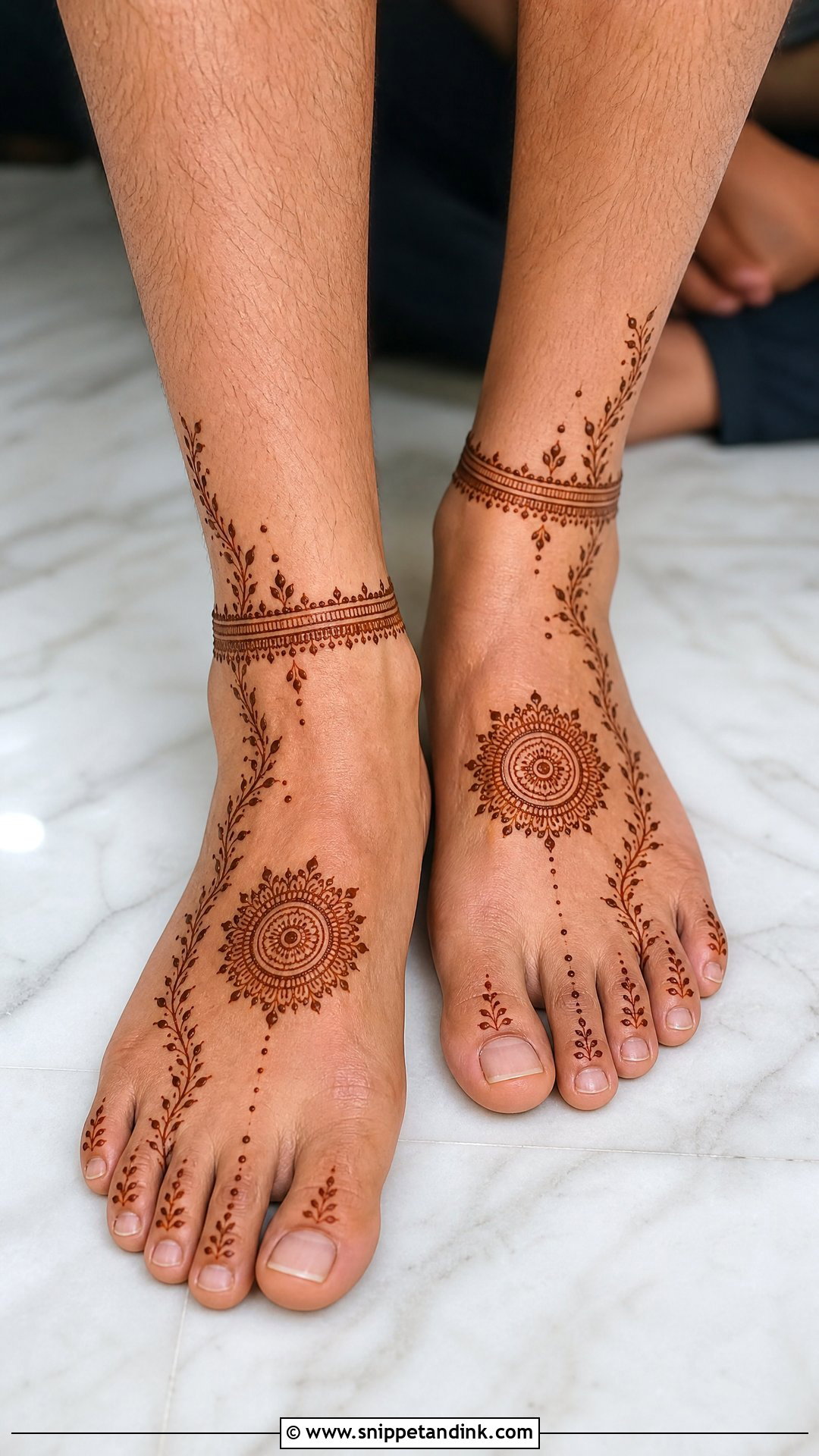
Minimal groom leg mehndi design is for grooms who want the ceremony look without a heavy stain. Think of a slim ankle band, a small mandala on the top of the foot, or a clean vine running along one side of the leg. The pattern should feel sharp, light, and easy to wear. This design is also great for men trying mehndi for the first time. It gives enough detail for photos but stays subtle under footwear and clothing. Keep the lines crisp and avoid too many shaded areas. A minimal look feels modern, polished, and comfortable for long wedding events.
5. Full Leg Groom Mehndi Design
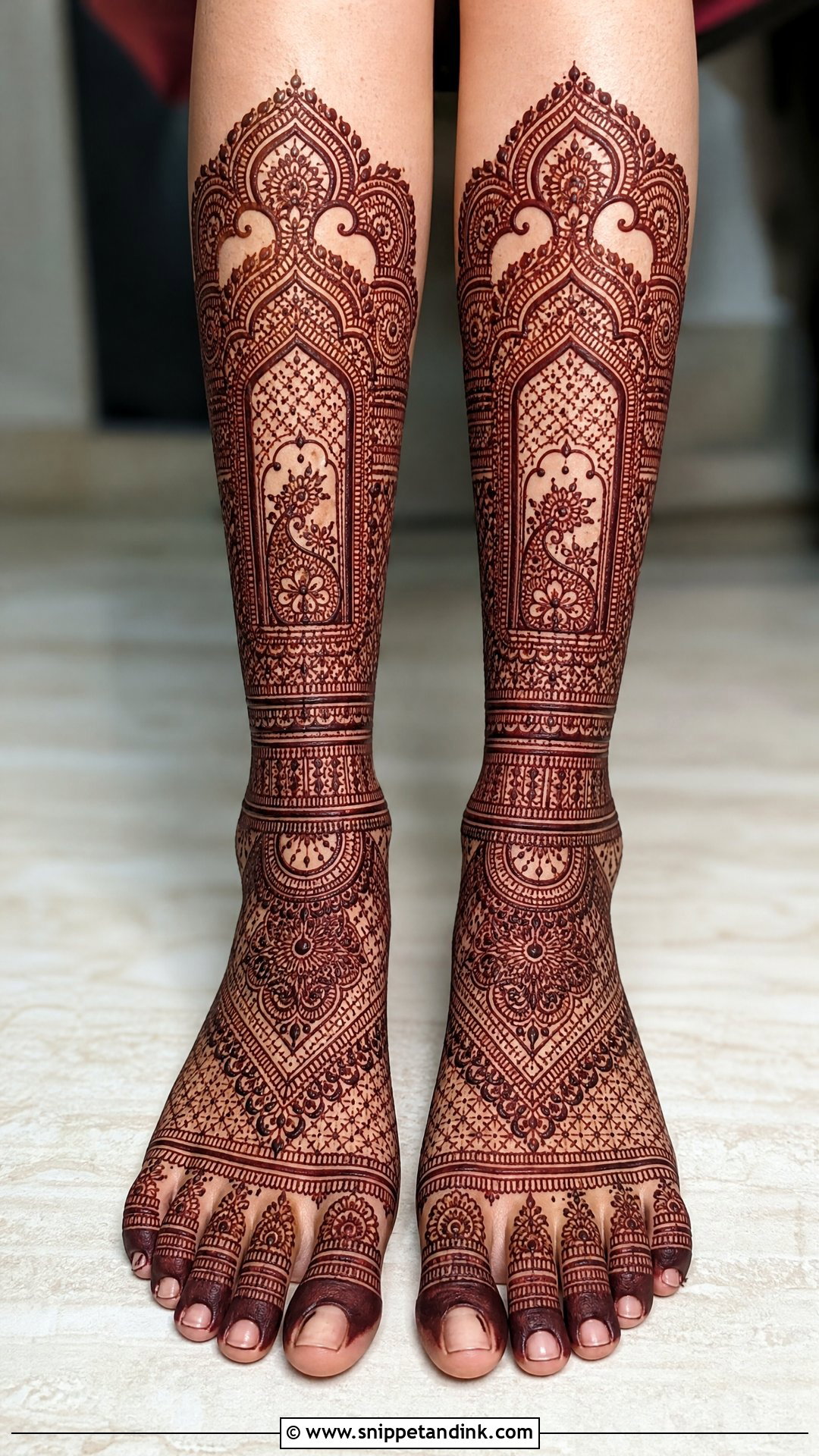
Full leg groom mehndi design makes a strong statement and works best for grand weddings or themed mehndi shoots. This look can cover the foot, ankle, shin, and sometimes the lower calf. To keep it groom-friendly, use strong borders, geometric panels, mandalas, paisleys, and clean negative spaces. A full leg design should not feel random. It needs a clear structure, such as a central shin panel with matching side vines and ankle bands. This style looks impressive with traditional Indian or royal wedding outfits. It also photographs well during mehndi ceremonies when the groom’s full leg design is part of the celebration.
6. Half Leg Groom Mehndi Design
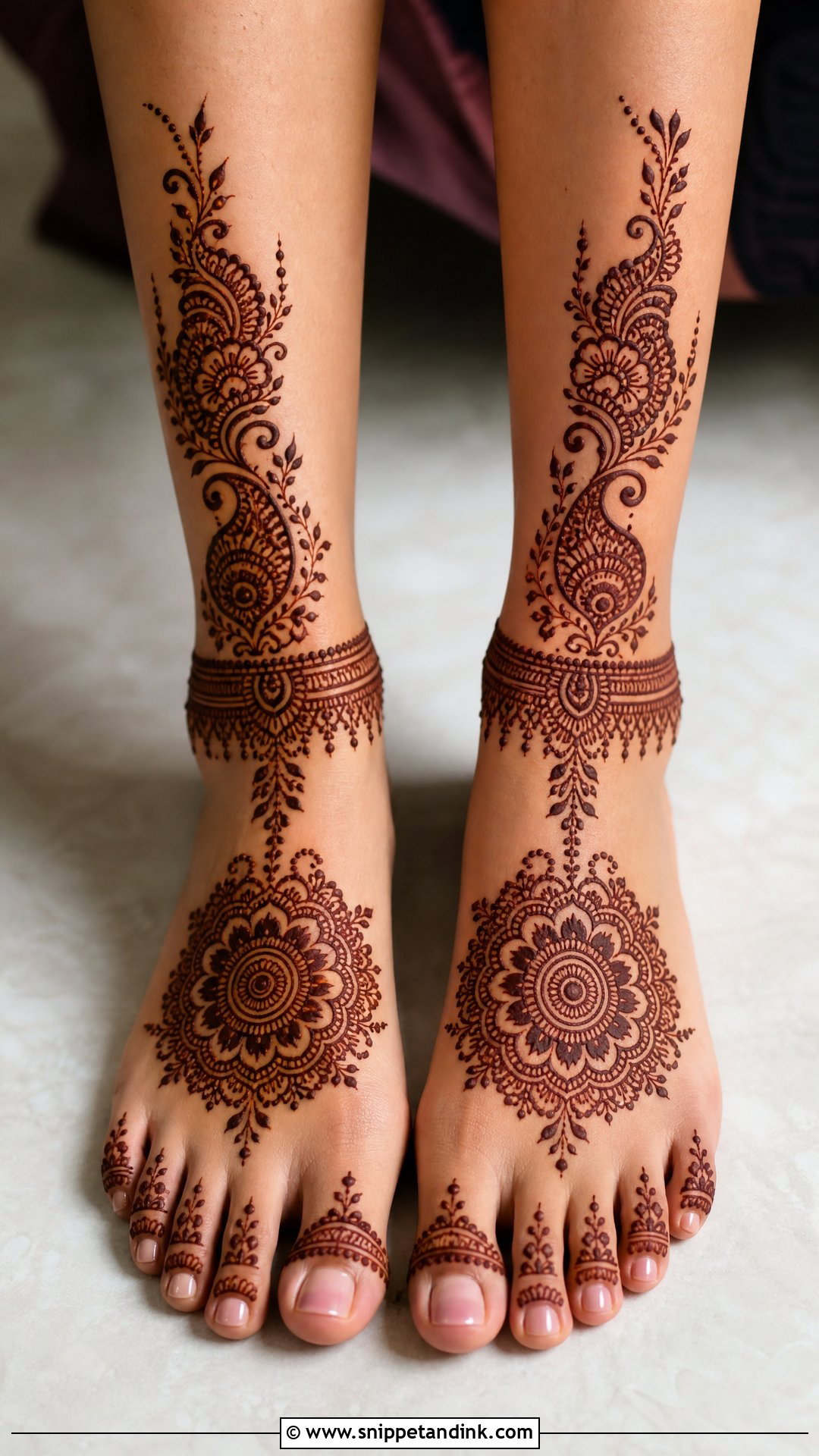
Half leg groom mehndi design gives more impact than a minimal pattern but feels easier to wear than full coverage. It usually covers the foot, ankle, and lower shin. This makes it practical for grooms who want a visible design with sandals or rolled pants. A strong half-leg layout can include a mandala on the foot, a bracelet-style ankle band, and a vertical paisley or floral trail rising upward. The spacing matters a lot here. Keep the top section lighter so the design does not look too dense. This style suits modern ceremonies, destination weddings, and relaxed mehndi events.
7. Groom Foot And Ankle Mehndi Design
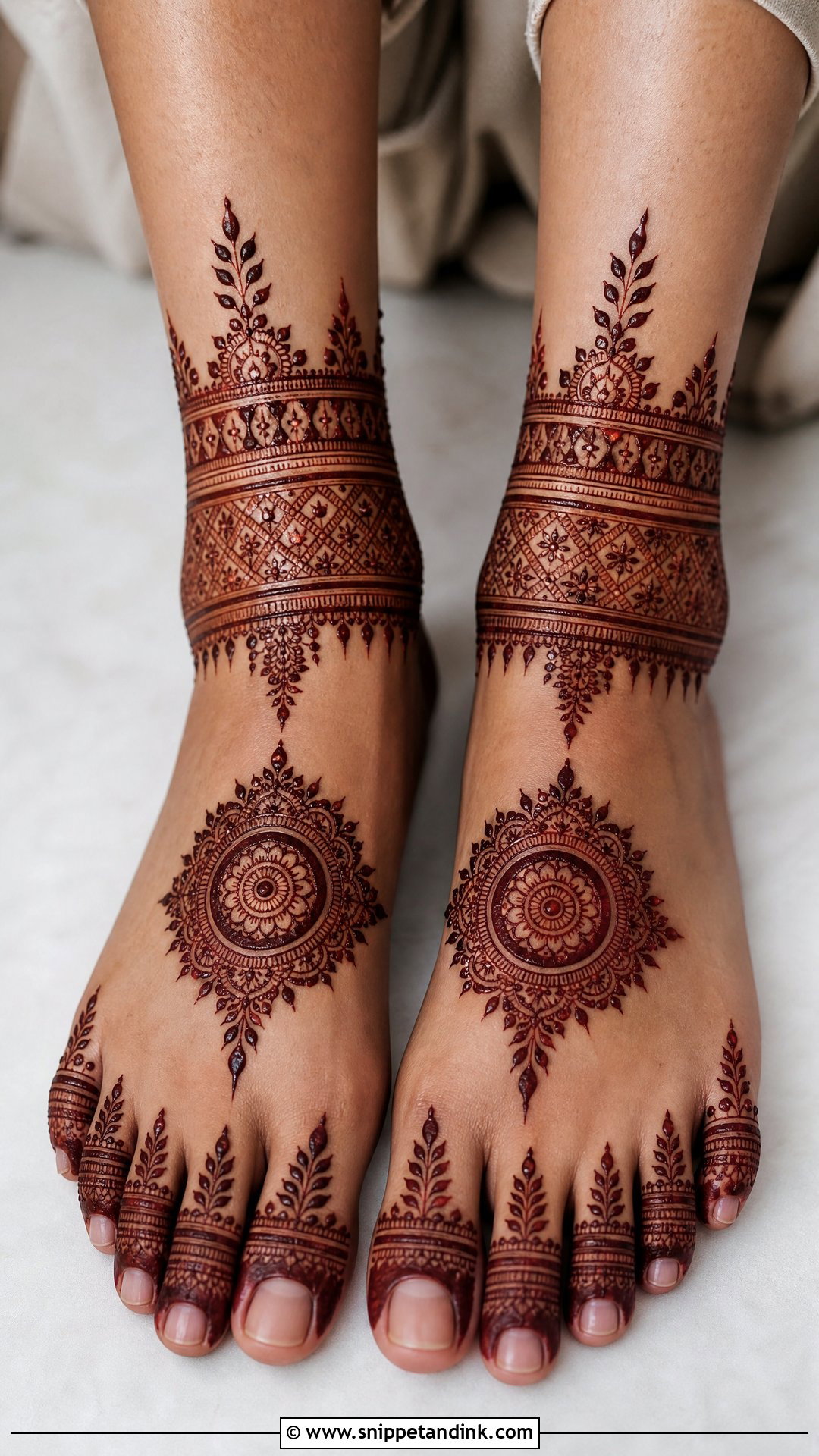
Groom foot and ankle mehndi design is one of the most wearable choices. It focuses on the top of the foot and wraps around the ankle like an ornamental band. The result feels traditional but not overwhelming. You can choose a bold mandala on the foot, a side floral trail, or a geometric ankle cuff. This design works well with open footwear because it frames the foot nicely. It is also a smart option if the groom wants mehndi that can stay partly hidden under pants. For the cleanest finish, keep the toe details simple and let the ankle band define the look.
8. Groom Calf Mehndi Design
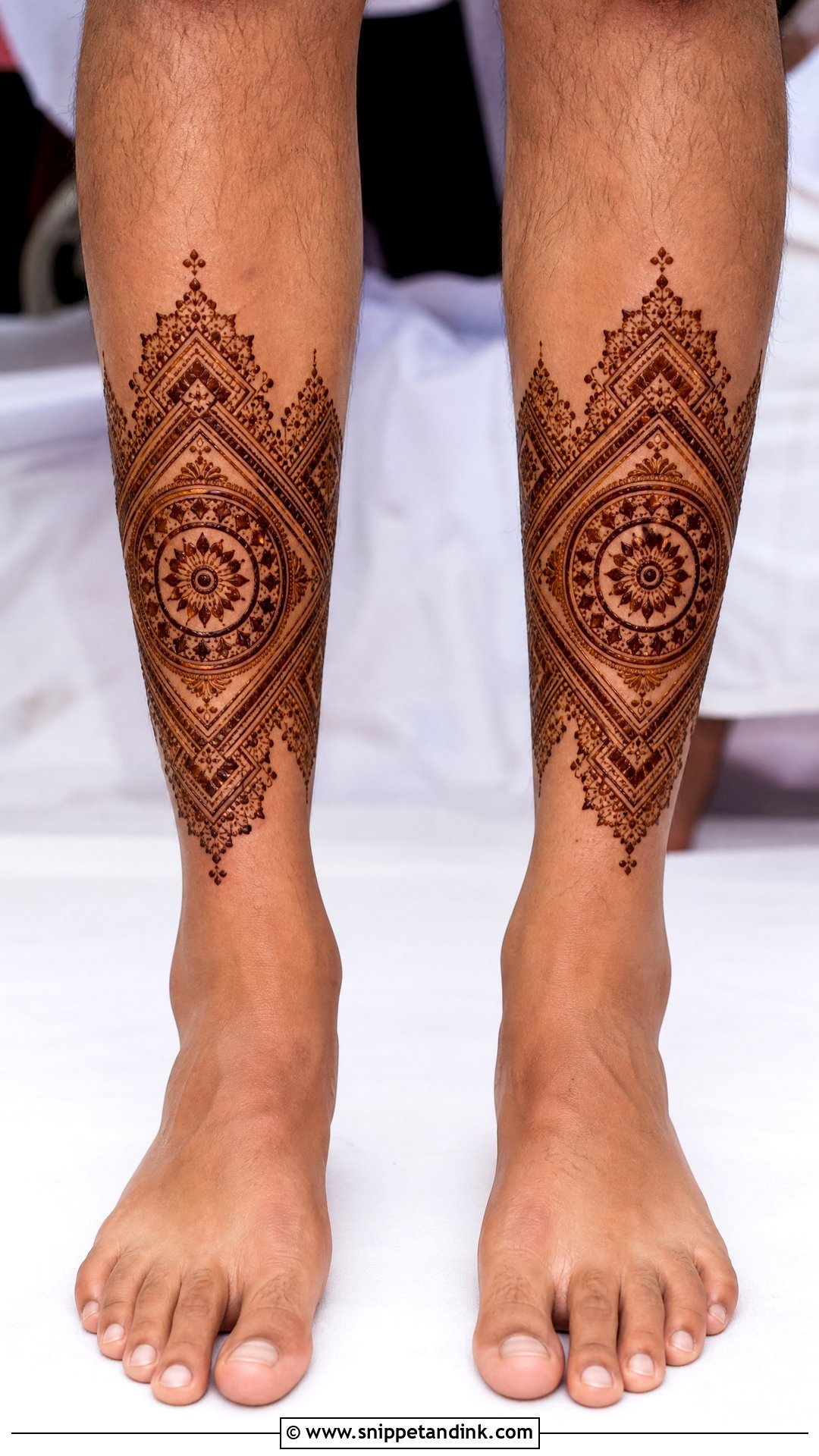
Groom calf mehndi design is a modern choice for men who want the design placed higher on the leg. It can be bold, symbolic, or geometric depending on the wedding style. A calf design looks great when built as a vertical panel, circular mandala, or shield-like pattern. Since the calf has more space, the artist can add wider motifs and stronger outlines. This look is especially good for pre-wedding photos, beach weddings, or cultural ceremonies where the groom’s lower leg is visible. Keep the design centered and balanced, so it looks intentional from the front, side, and back angles.
9. Groom Shin Mehndi Design
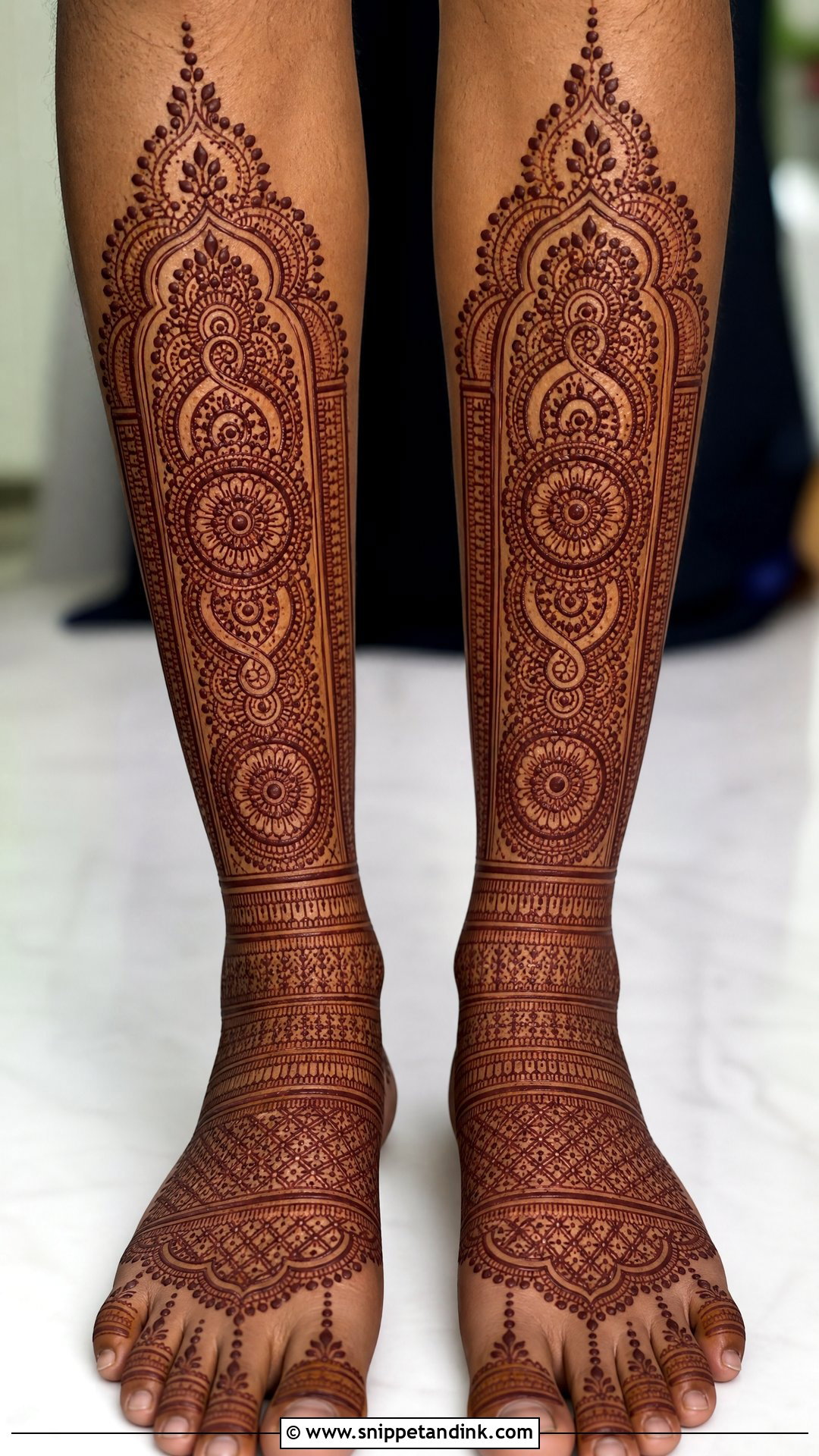
Groom shin mehndi design has a clean, vertical look that feels sharp and masculine. The pattern usually runs down the front of the lower leg, starting below the knee or mid-shin and ending near the ankle. Popular elements include stacked mandalas, geometric blocks, paisley chains, and fine line borders. This design is great if you want something bold but organized. It also works well with straight-cut ethnic pants that reveal the lower leg while sitting or walking. Avoid making the shin pattern too wide. A narrow, centered layout gives a taller, cleaner appearance and keeps the design stylish in wedding photos.
10. Geometric Groom Leg Mehndi Design
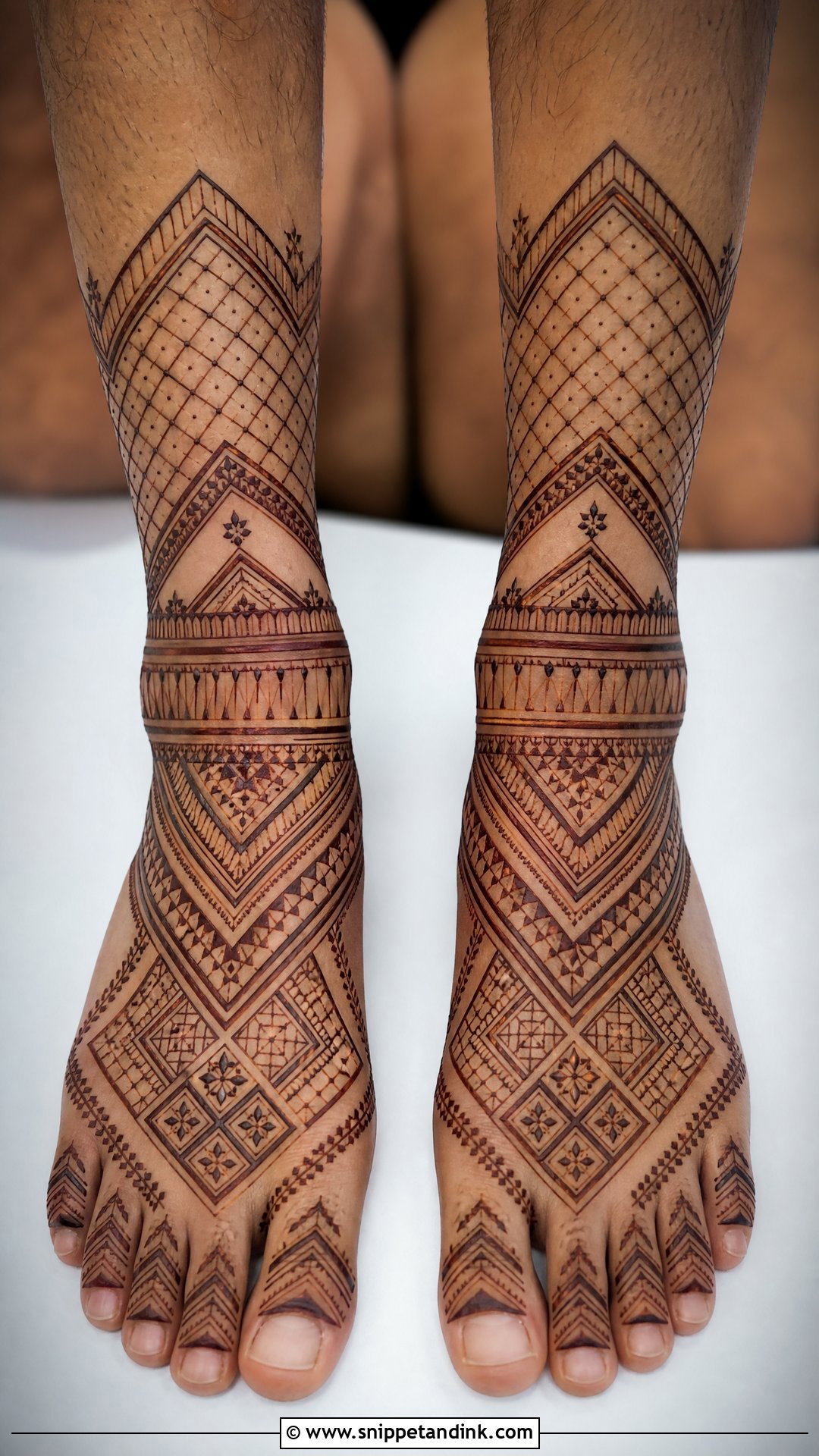
Geometric groom leg mehndi design is a strong choice for men who prefer structure over floral detail. This look uses lines, triangles, diamonds, grids, chevrons, and cuff-like bands. It can be placed around the ankle, across the foot, or vertically on the shin. The design feels modern while still connecting to traditional henna art. Geometric patterns also work well with Indo-western groom outfits because they look sleek and graphic. Ask your artist to use bold outlines with small filler details inside selected shapes. This creates contrast without making the design too busy. It is clean, stylish, and very photo-friendly.
11. Mandala Groom Leg Mehndi Design
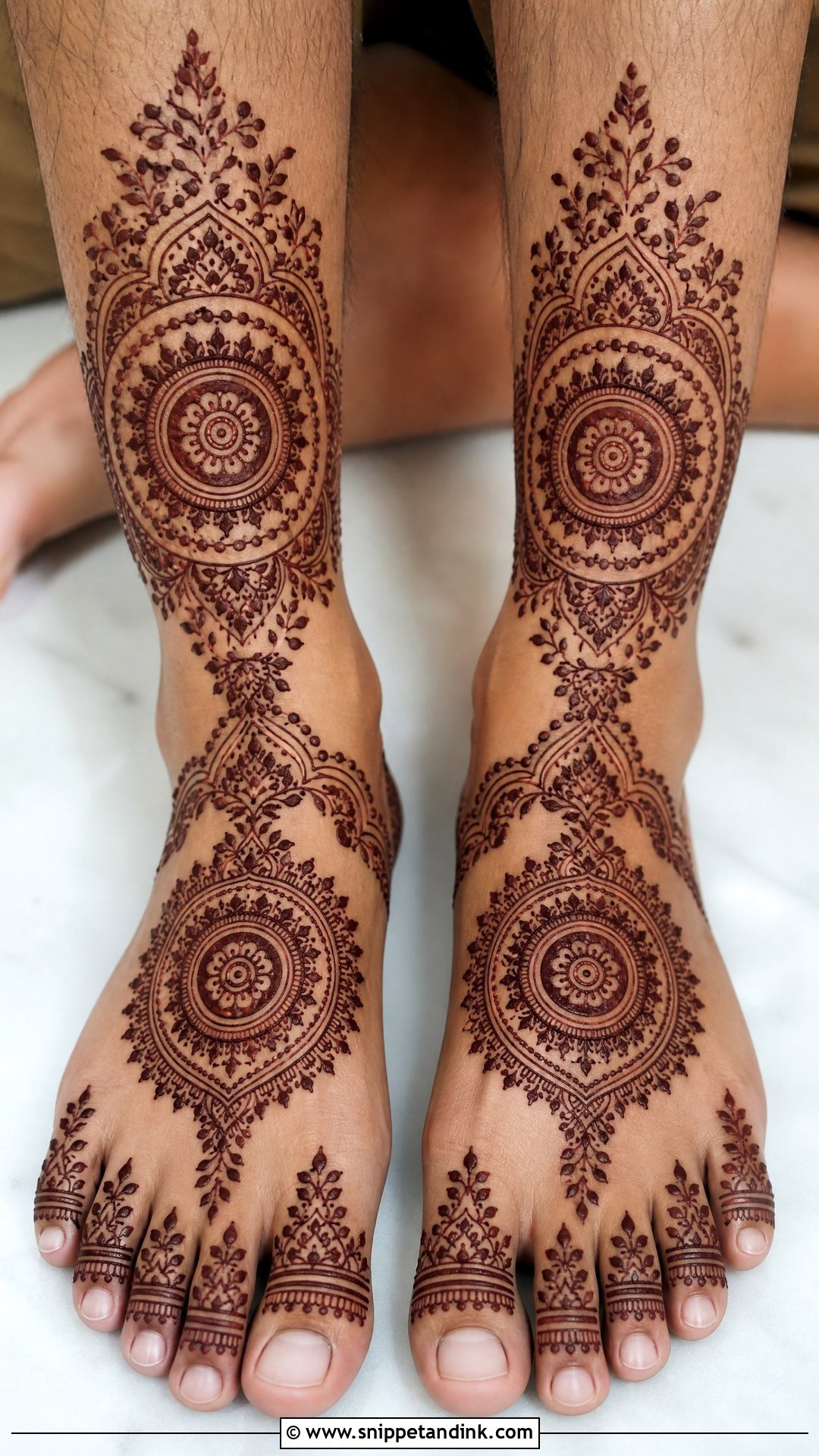
Mandala groom leg mehndi design creates a centered and balanced look. A round mandala can sit on the top of the foot, ankle area, shin, or calf. For grooms, the mandala should have bold rings, clean symmetry, and limited filler so it feels strong instead of overly delicate. You can pair it with a narrow ankle band or a short vine for extra movement. This design is meaningful because mandalas often feel calm, complete, and ceremonial. It is a great option for men who want one main focal point rather than a full trailing pattern. The final stain looks elegant and grounded.
12. Paisley Groom Leg Mehndi Design
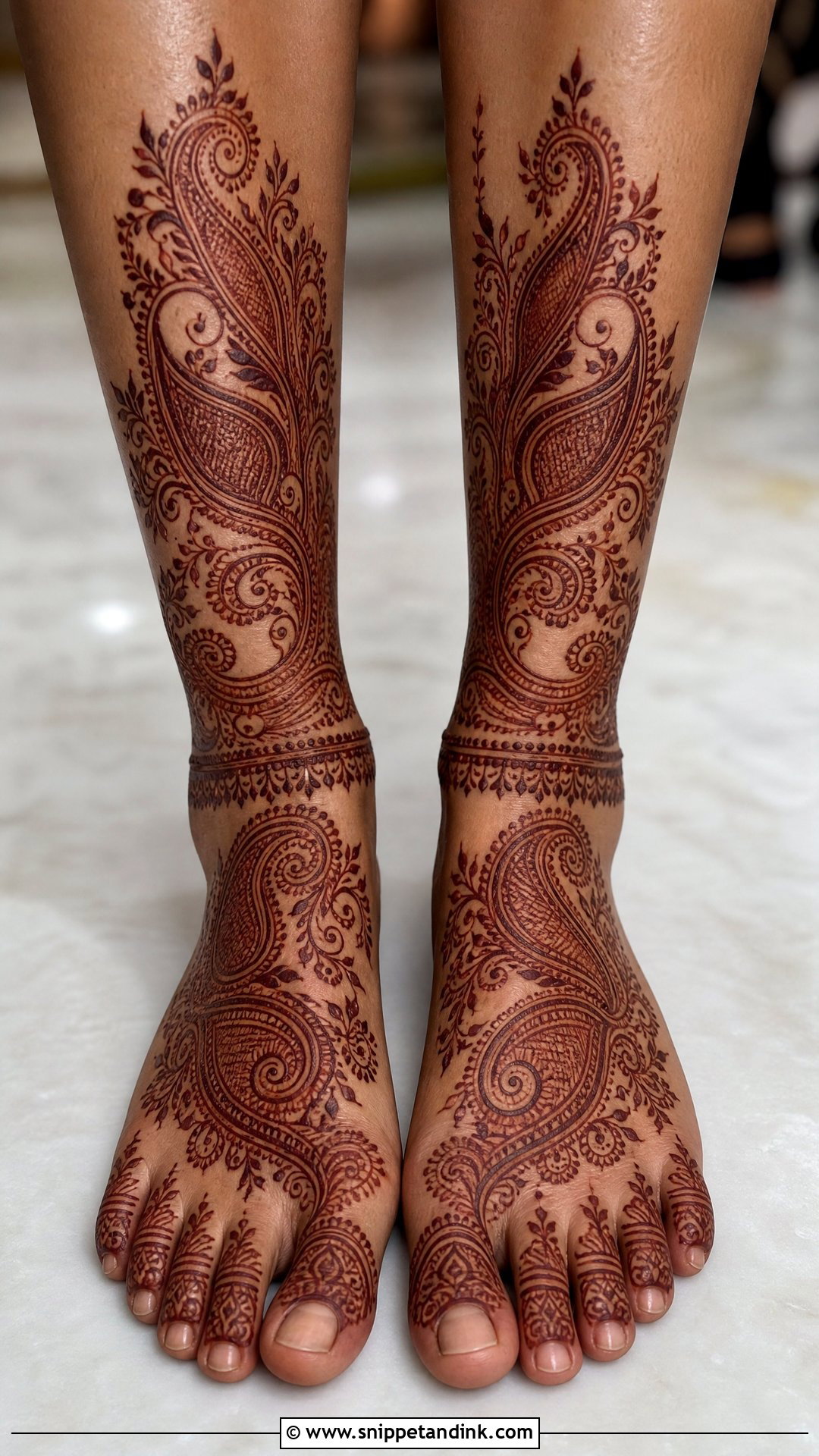
Paisley groom leg mehndi design is a classic choice with a rich wedding feel. Paisleys can be arranged as a foot trail, ankle wrap, or vertical shin design. The curved shape gives the leg a smooth flow, while inner lines, dots, and leaf fillers add detail. For a groom, use larger paisleys with bold borders instead of many tiny shapes. This keeps the design strong and readable. Paisley mehndi pairs well with embroidered sherwanis, brocade jackets, and traditional footwear. It also allows personalization because initials, wedding dates, or tiny symbols can be hidden inside the paisley without disturbing the overall layout.
13. Royal Groom Leg Mehndi Design
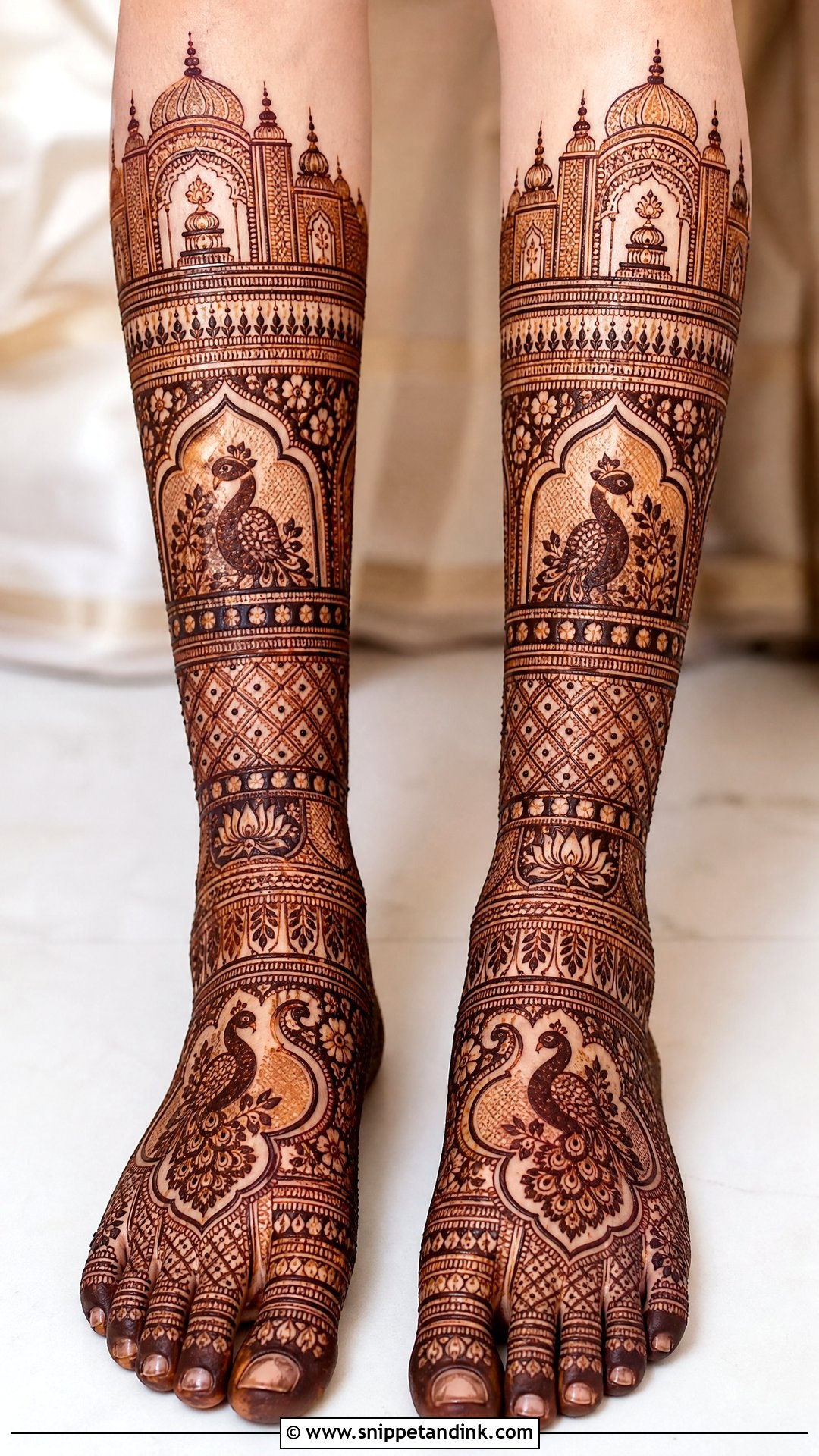
Royal groom leg mehndi design is all about richness, symmetry, and wedding grandeur. This look may include palace-inspired borders, peacock details, lotus shapes, jaali mesh, paisleys, and ornamental ankle bands. It works best when the design has a strong central layout instead of scattered motifs. A royal design can cover the foot and lower leg, or it can focus on the shin with a bold frame. This style suits grooms wearing regal outfits in cream, gold, red, navy, or deep green. To keep it refined, balance heavy filled areas with open skin spaces. That contrast makes the design look more expensive.
14. Indo Arabic Groom Leg Mehndi Design
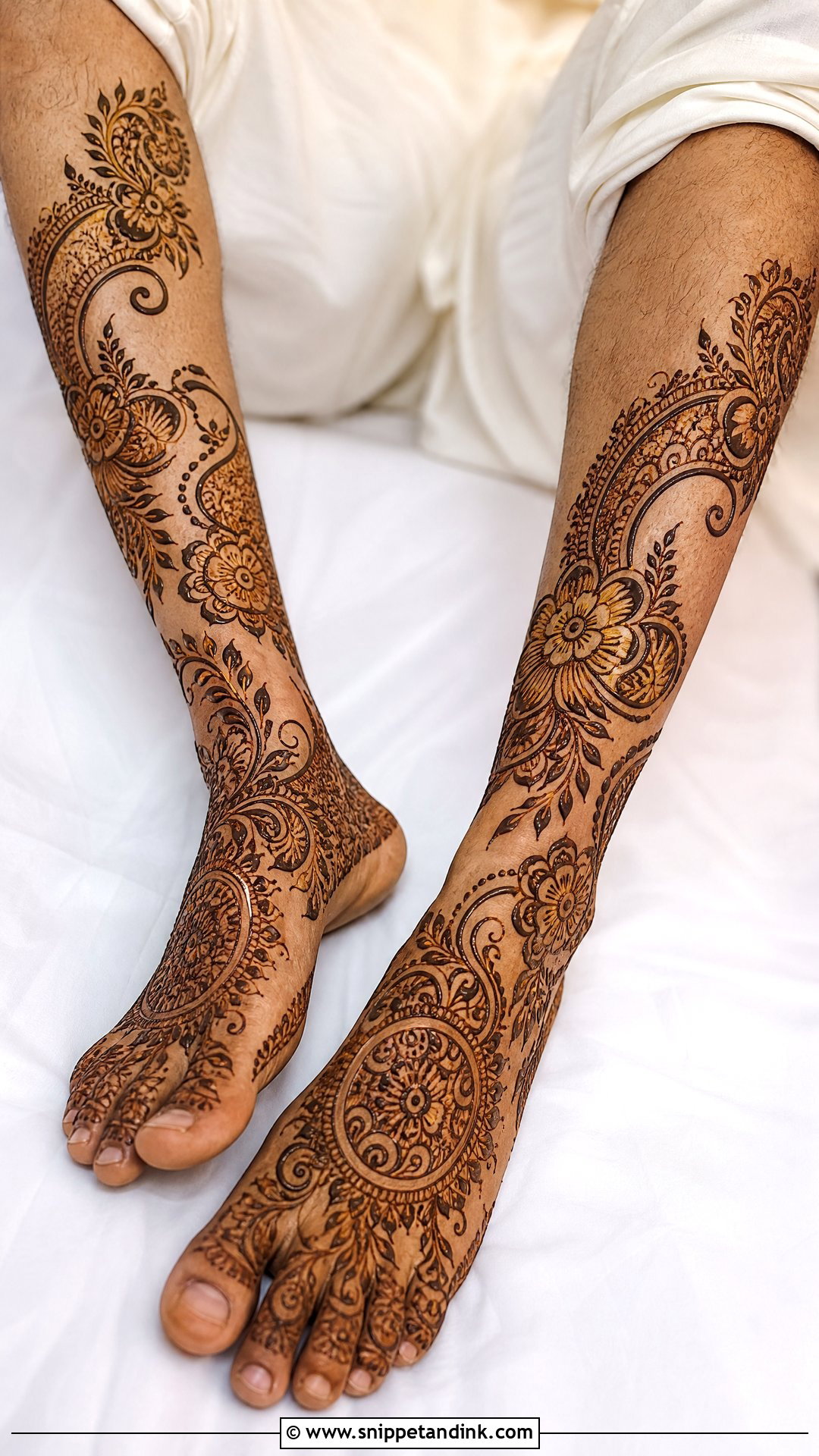
Indo Arabic groom leg mehndi design blends Indian detail with Arabic flow. It is a great middle choice when you want the richness of traditional mehndi but still prefer open spacing. The design can include paisleys, mandalas, florals, leafy trails, and bold curved outlines. A common layout starts with a mandala on the foot, wraps an ankle border, and continues into a diagonal shin trail. This creates movement without full leg coverage. It works for almost every groom outfit and ceremony type. Keep the fillers neat, and ask for thicker outlines around the main motifs so the design looks clean after staining.
15. Moroccan Groom Leg Mehndi Design
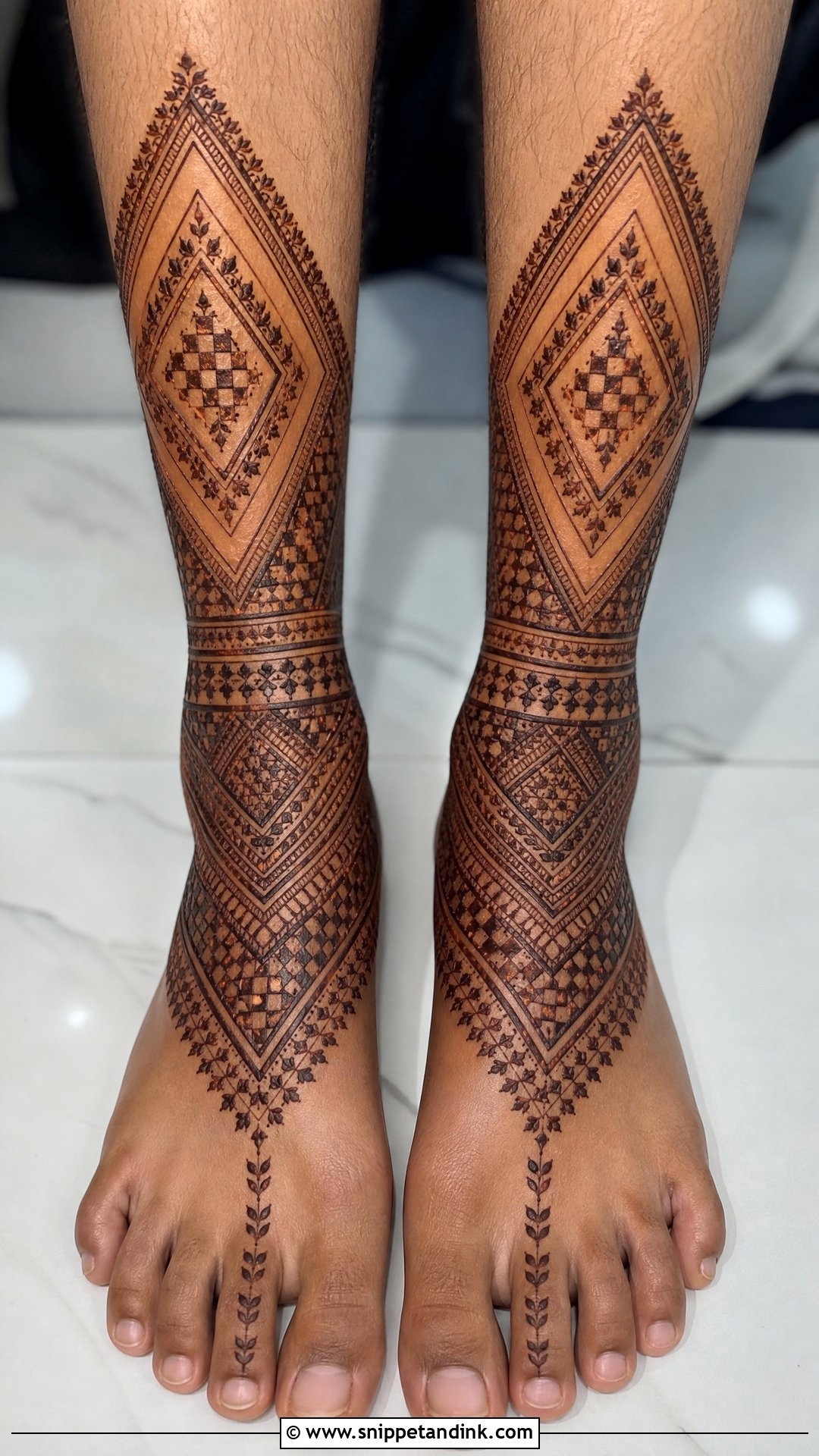
Moroccan groom leg mehndi design has a bold and graphic personality. It uses diamonds, straight lines, checker patterns, angular bands, and structured panels. This style is especially good for grooms who want something less floral and more modern. A Moroccan-inspired leg design can wrap around the ankle like a cuff or run vertically along the shin. The beauty is in the clean geometry and even spacing. It pairs well with simple kurta sets, Indo-western outfits, and minimalist wedding looks. For best results, keep the pattern symmetrical and avoid mixing too many soft floral elements. The final effect feels sharp and confident.
16. Gulf Groom Leg Mehndi Design
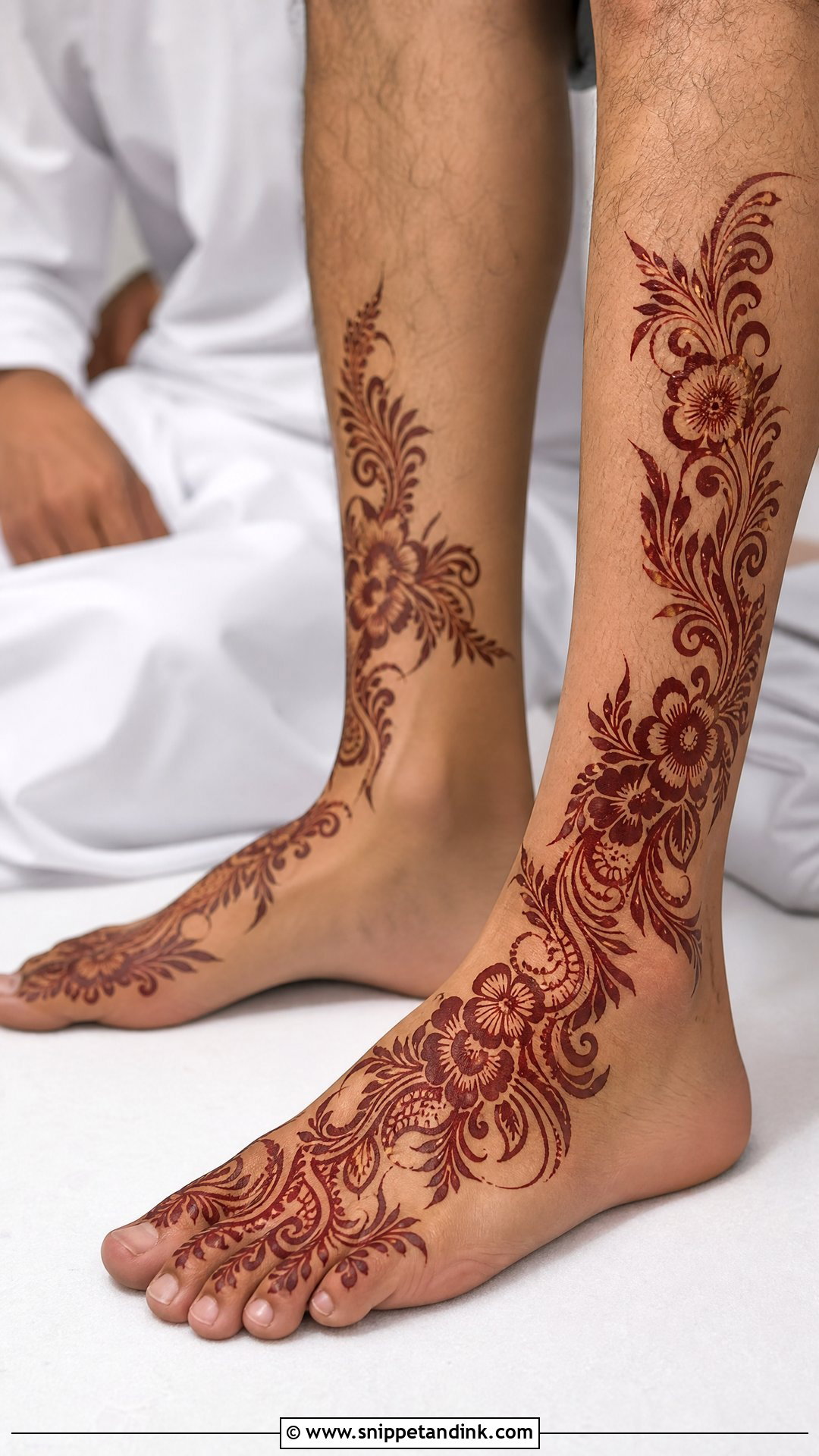
Gulf groom leg mehndi design, also called Khaleeji-inspired mehndi, often uses bold florals, leafy curves, open spacing, and flowing side placements. It looks graceful but still strong when adapted for a groom. The design can start at the side of the foot, curve around the ankle, and move slightly up the lower leg. Large motifs make it quick to apply and easy to see in photos. This is a good option for grooms who like Arabic designs but want something fuller and more dramatic. Keep the toes and heel area simple so the main side trail stays clean and stylish.
17. Name Groom Leg Mehndi Design
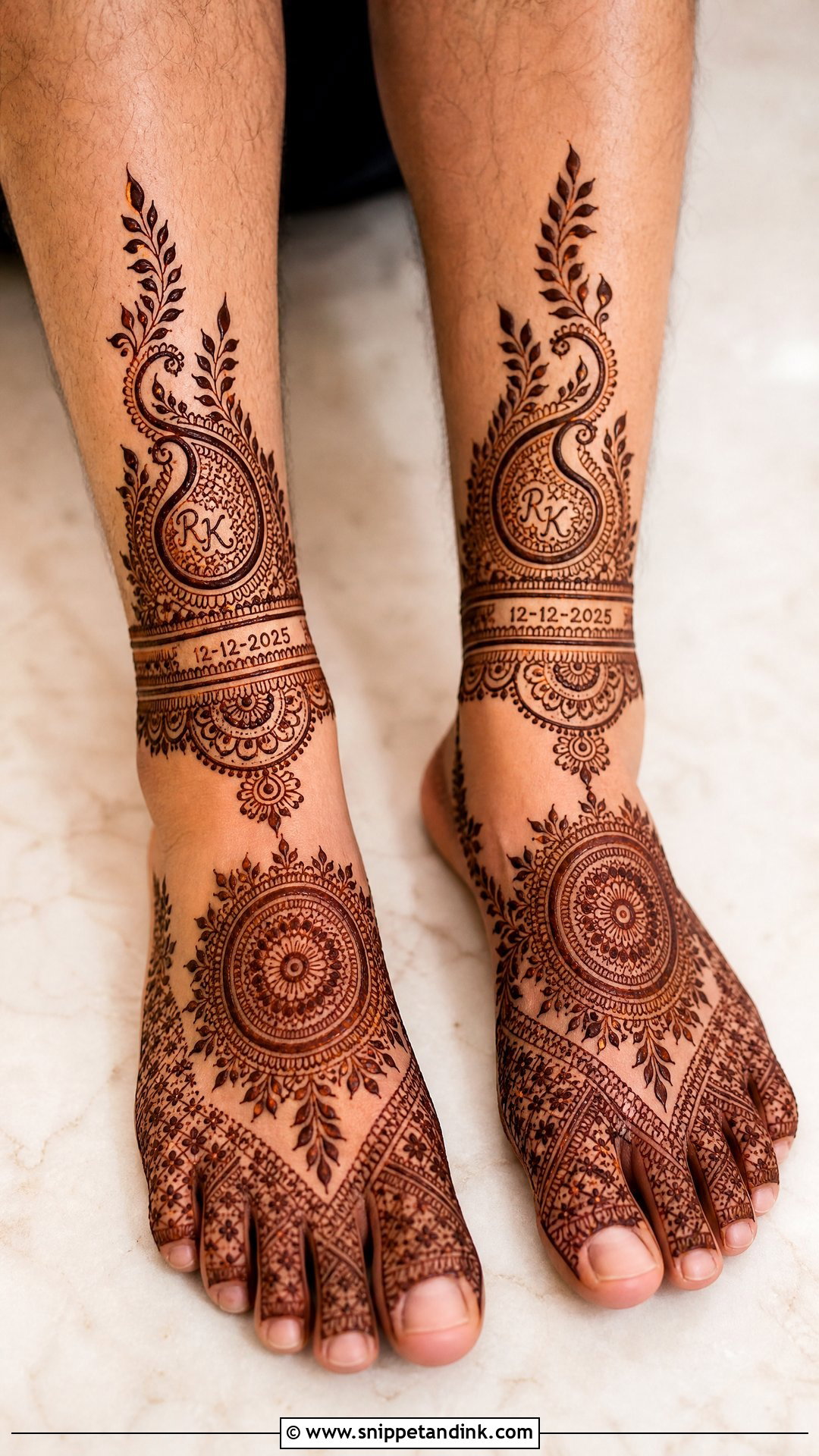
Name groom leg mehndi design adds a personal wedding detail without making the pattern too loud. The name, initials, or wedding date can be placed inside a mandala, paisley, ankle band, or shin panel. For a groom, subtle placement usually looks best. You can hide the bride’s initial near the ankle or blend the couple’s initials into a geometric border. This design feels meaningful and fun during the mehndi ceremony because family members often enjoy spotting the hidden detail. Keep the lettering clean and readable. Avoid oversized text, because it can take away from the overall elegance of the leg mehndi.
18. Portrait Groom Leg Mehndi Design
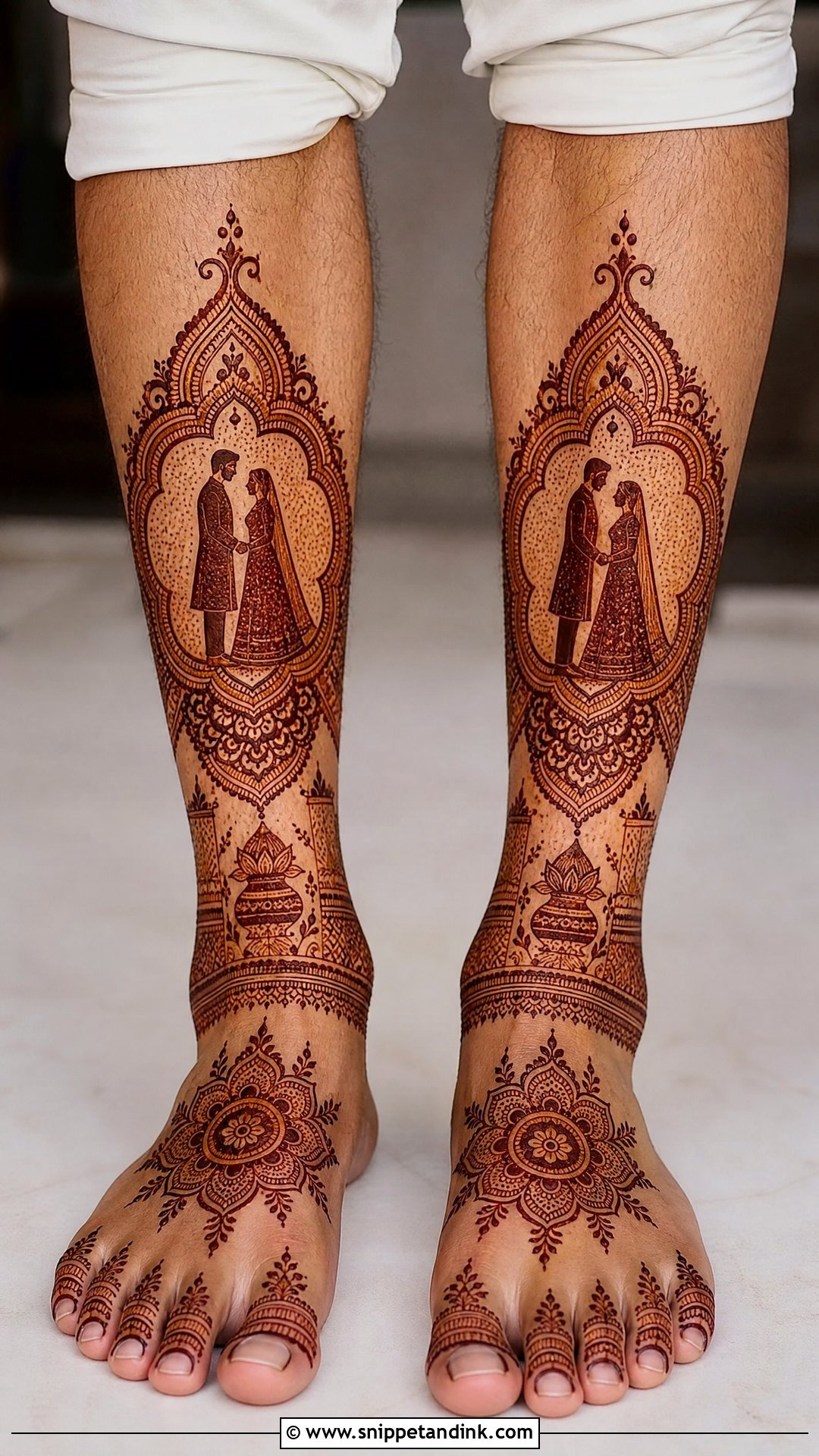
Portrait groom leg mehndi design is for grooms who want a custom and memorable wedding look. It can include a bride-groom silhouette, wedding symbol, turban detail, dhol motif, or a small couple scene. Since portrait work needs space, the shin or calf is usually the best placement. The artist should frame the portrait with clean borders, mandalas, or paisley accents so it feels like part of the design. This style is more detailed, so choose an experienced mehndi artist. It is especially good for wedding shoots and close-up ceremony photos. Keep the surrounding details lighter so the portrait remains the main focus.
19. Bracelet Anklet Groom Leg Mehndi Design
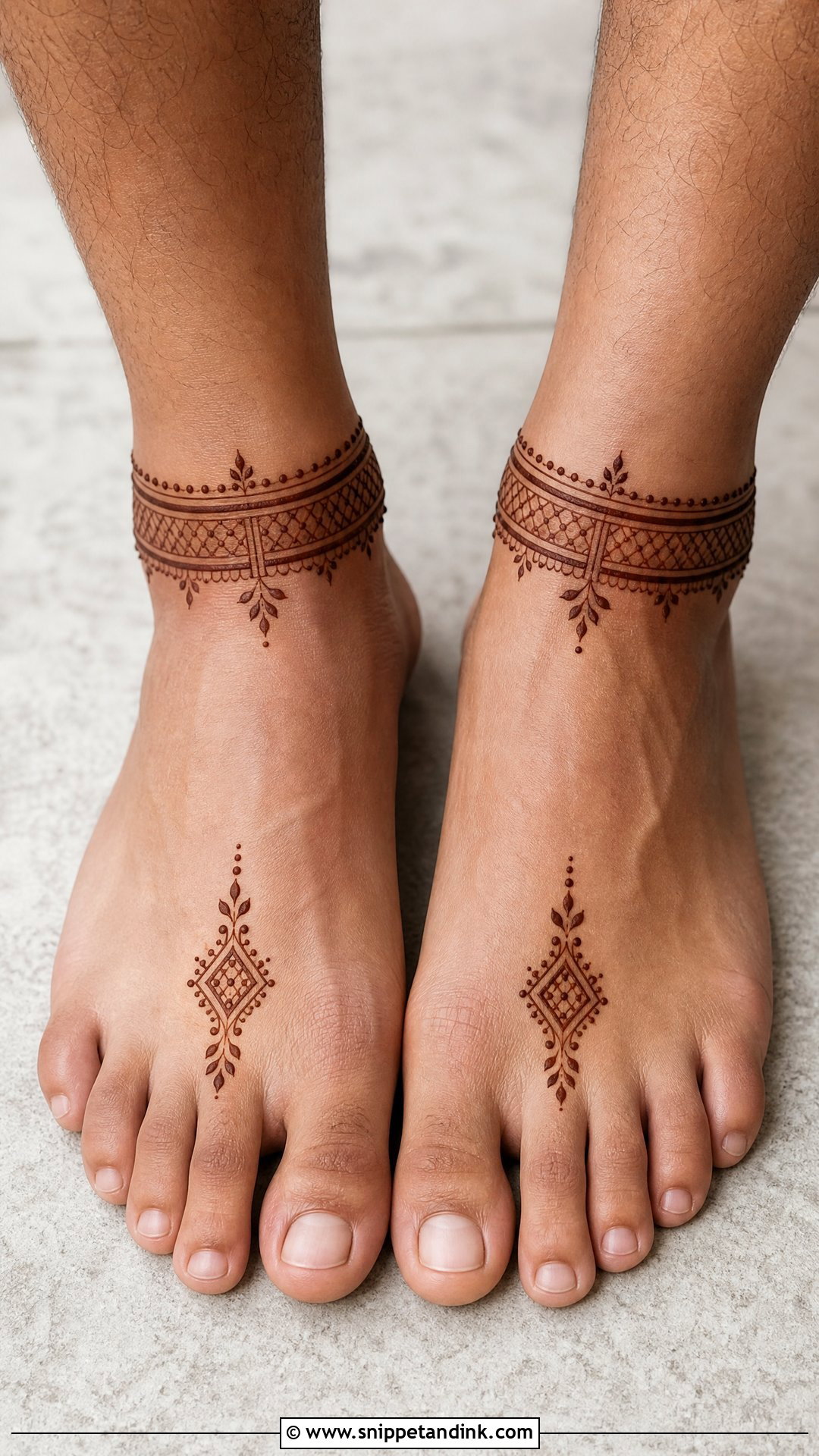
Bracelet anklet groom leg mehndi design gives the ankle a clean ornamental look. It wraps around like a band and can include geometric lines, dots, small leaves, or fine jaali details. This design is simple, stylish, and easy to wear with traditional footwear. It is also great for grooms who prefer hidden or semi-visible mehndi. You can keep it as one band or add a small hanging motif on the top of the foot. The key is symmetry. A neat ankle band looks sharp from every angle. This design works well for engagement ceremonies, nikah events, mehndi nights, and wedding day looks.
20. Modern Groom Leg Mehndi Design
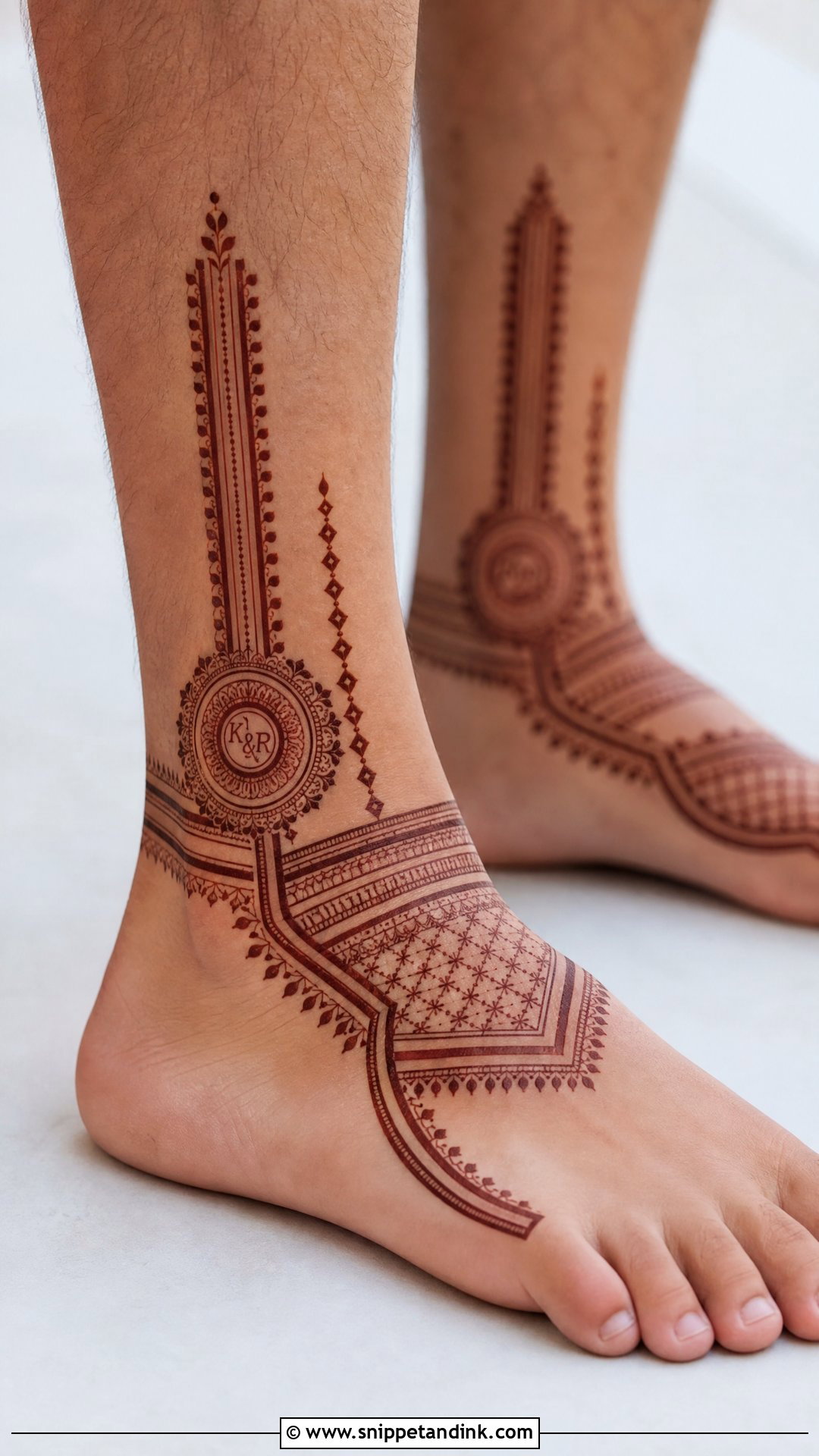
Modern groom leg mehndi design combines clean spacing, bold shapes, and personal details. It may include abstract lines, geometric borders, initials, small mandalas, or one side trail instead of full coverage. This look is ideal for grooms who want mehndi that feels current and easy to style. It pairs well with pastel kurtas, linen outfits, fusion jackets, and simple sherwanis. The best modern designs avoid clutter. They focus on one strong placement, such as the ankle, shin, or side foot. Ask your artist for crisp outlines and balanced negative space. The result feels fresh, masculine, and wedding-ready without looking overdone.
Conclusion:
Choosing the right groom leg mehndi comes down to comfort, outfit, ceremony style, and how visible you want the design to be. A minimal ankle band feels subtle, while a full leg Indian or royal pattern gives a grand wedding statement. Arabic, Indo-Arabic, Moroccan, and geometric designs are great for grooms who prefer cleaner spacing and stronger lines. Personal touches like initials, dates, or portrait details can make the look more memorable. Always test natural henna beforehand and plan enough drying time before the event. These 20 Groom Leg Mehndi Design Ideas can help every groom find a design that feels stylish, meaningful, and easy to wear.
You'll Like These Ideas:
Leave a Reply