
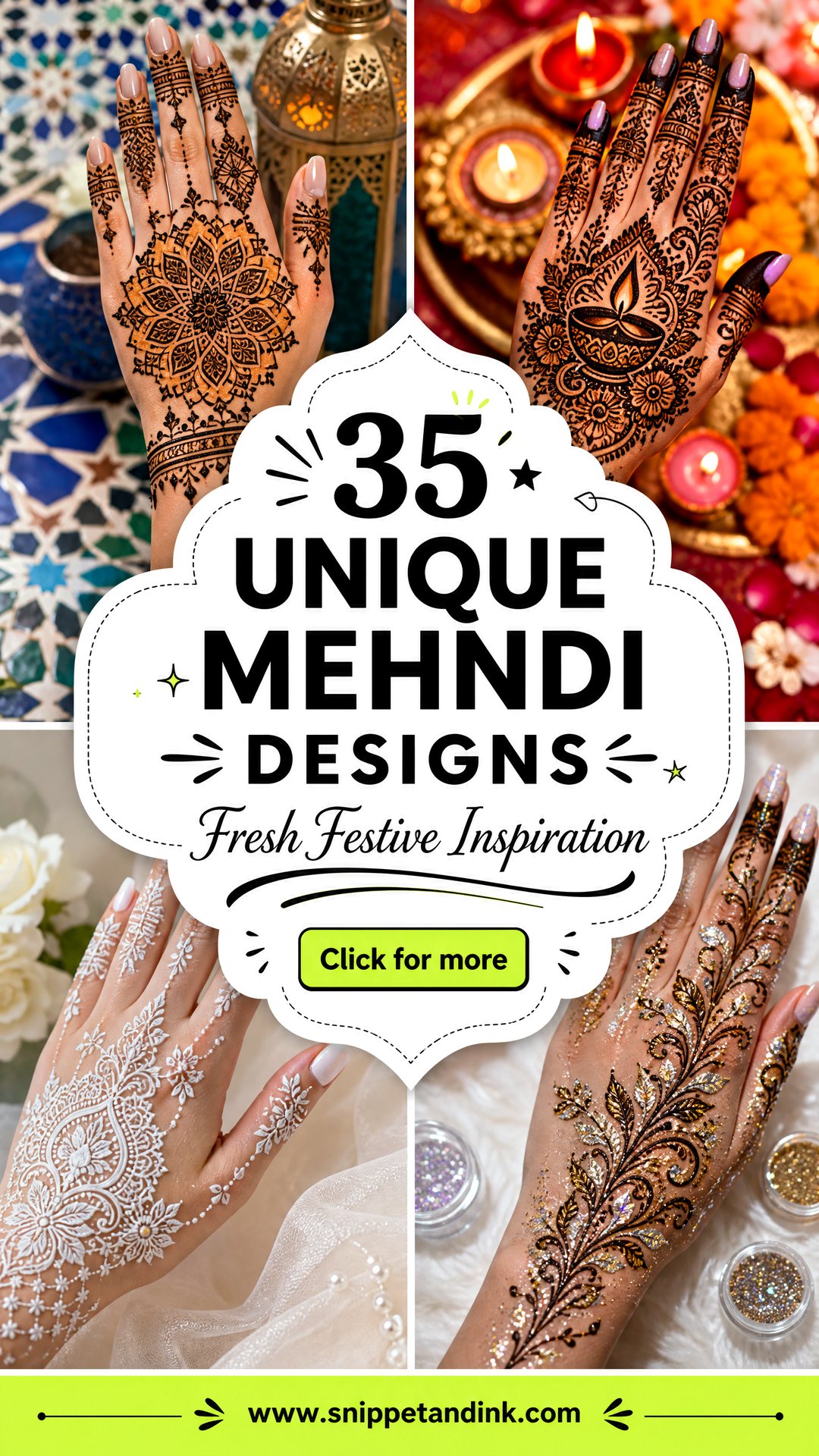
A few lines of henna are enough to make hands look ready for a celebration. Most of what people ask me for falls somewhere between bold Arabic trails and fine Indian bridal work: a full palm for a wedding, a clean back-hand pattern for Eid, a bracelet for a party or a small mandala for a family puja. Heavier is not automatically better. The design that looks right is the one that fits your hand, your outfit and the time you can sit. I have grouped traditional, modern, simple, bridal and fusion ideas together below, with notes from the cone side of things, as a fresh set of 35 Unique Mehndi Designs to take to your artist or try yourself.
An Hour or an Afternoon? Sizing the Design to Your Sitting
The first question I ask anyone who sits down in front of me isn’t about motifs. It’s how long they have, and what they need to do with their hands afterwards. Wet paste means no phone, no cooking, no washing, and dry paste still needs to stay on for hours if you want a deep stain.
Times vary a lot by artist and by hand size, but roughly:
- Fingers only, a bracelet or a kids’ motif: minutes, not hours.
- An Arabic or Khaleeji back-hand trail on both hands: usually well under an hour.
- A palm mandala with full fingers on both hands: plan on about an hour.
- Full bridal hands and arms, plus feet: a long session, often most of an afternoon or evening.
If you are booking a salon slot on Chand Raat or the night before Diwali, expect queues and pick a design from the quicker end. I’d rather give you a neat trail done calmly than a rushed full hand that smudges in the car home.
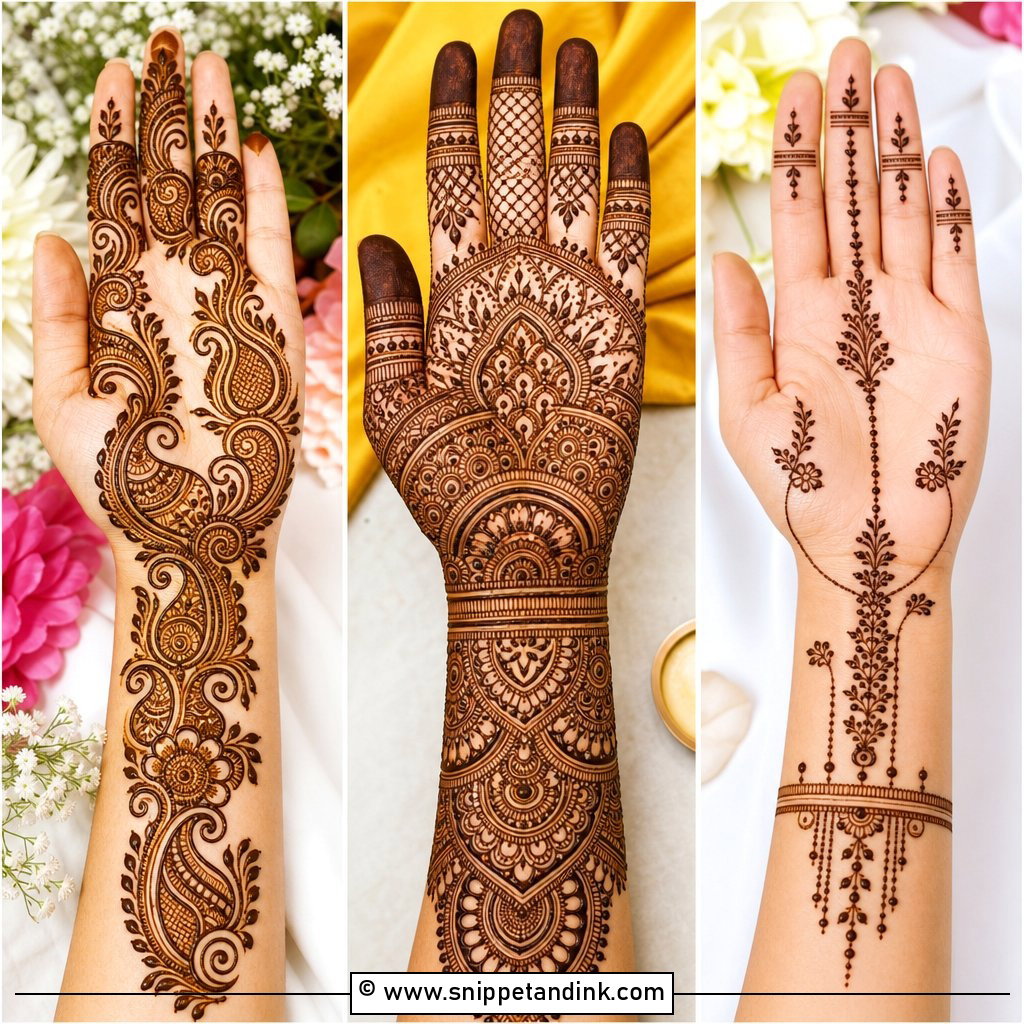
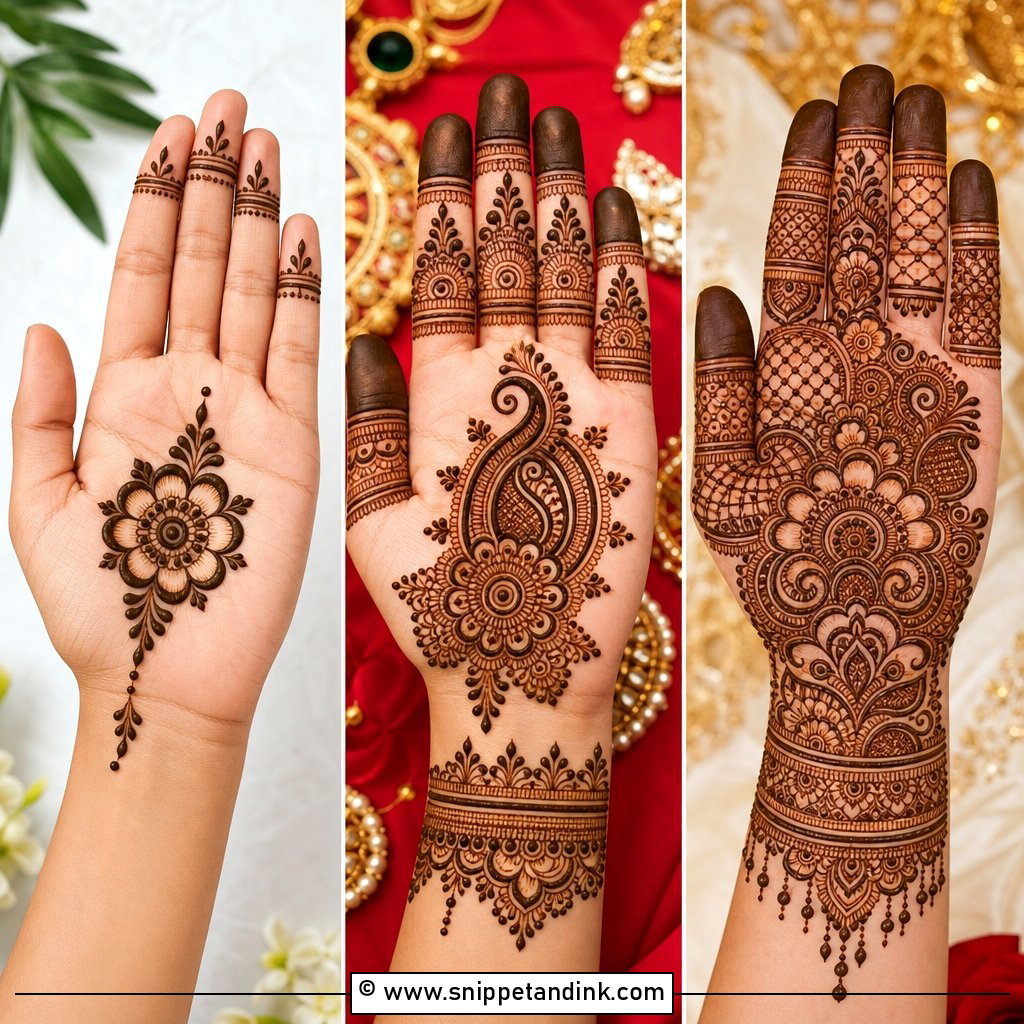
1. Simple Front Hand Mehndi Design
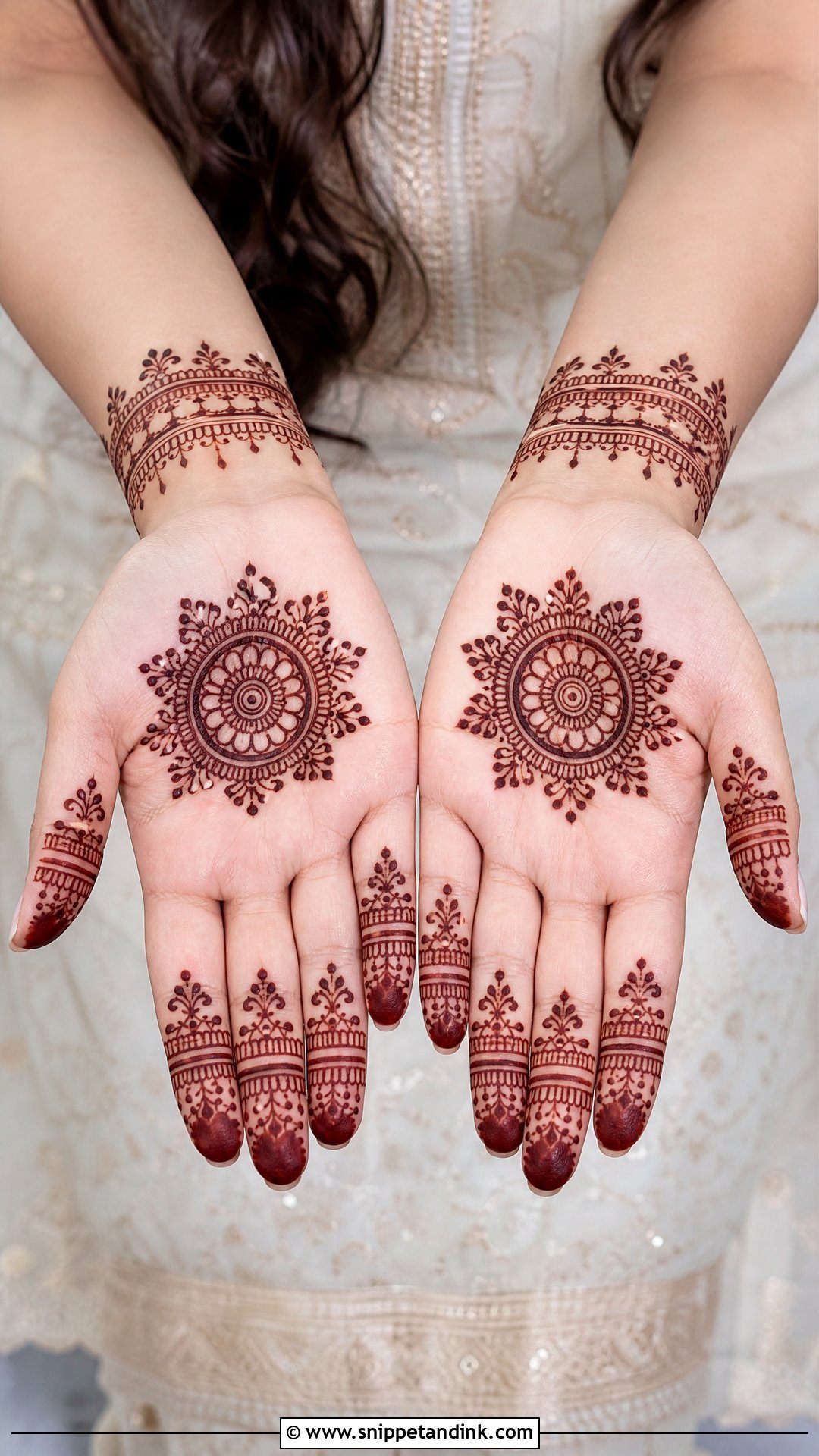
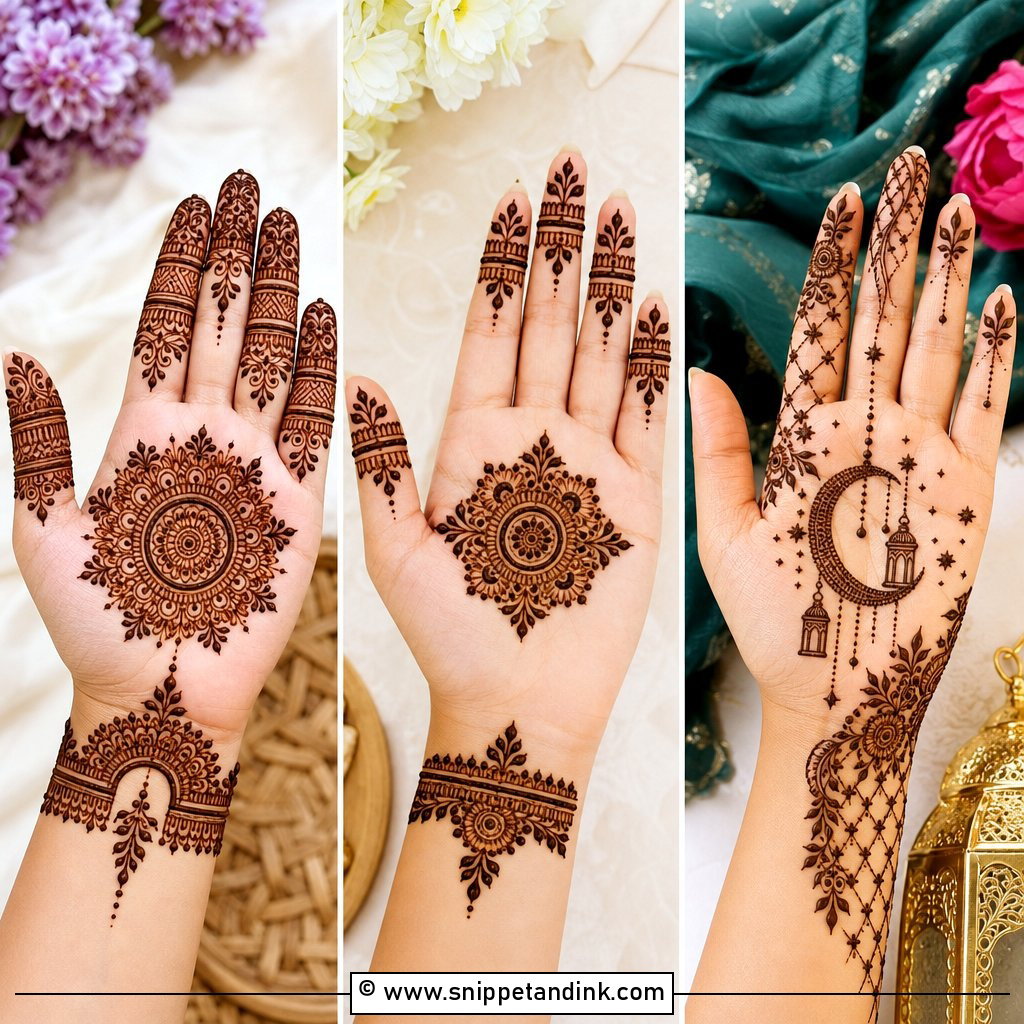
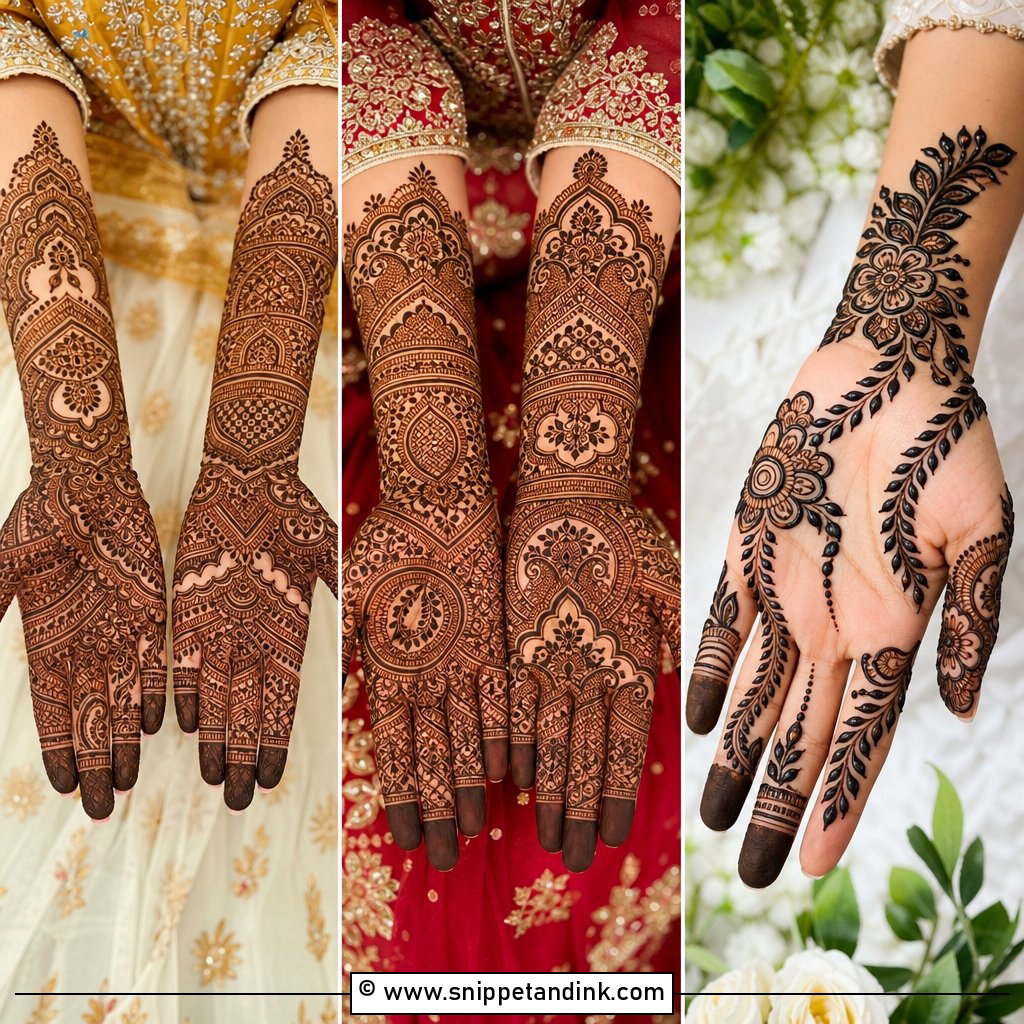
Start in the centre of the palm with a mandala, lotus or floral circle, then decorate the fingers with slim bands, dots and small leaves. The empty skin around the centre is what keeps it readable, so resist adding fillers there. Palms stain darker than anywhere else, and slightly bolder lines hold more paste, so thin spidery lines here are wasted. It is the design I suggest to first-timers doing their own hands, and it suits every age at a family gathering.
2. Arabic Back Hand Mehndi Design
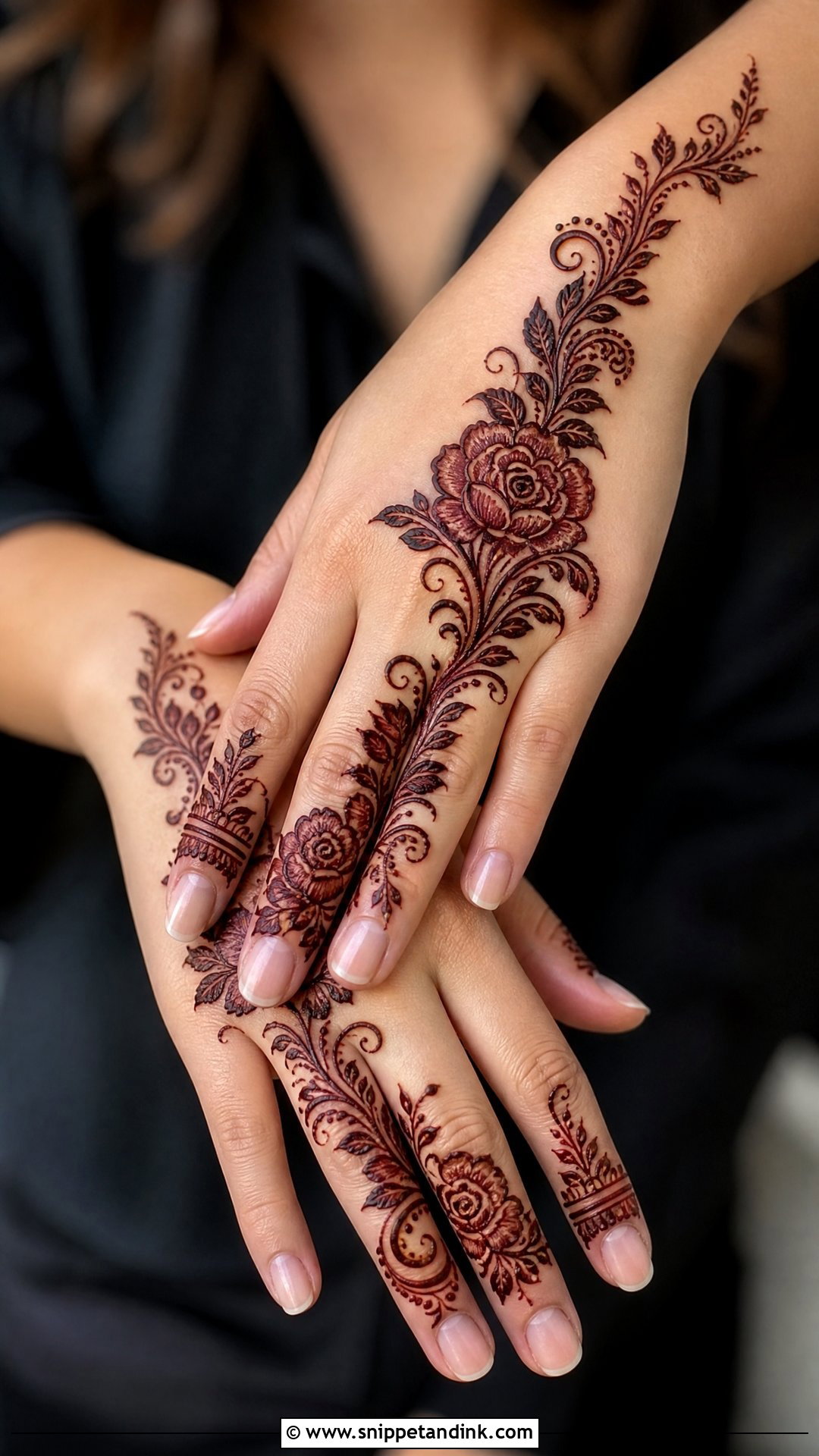
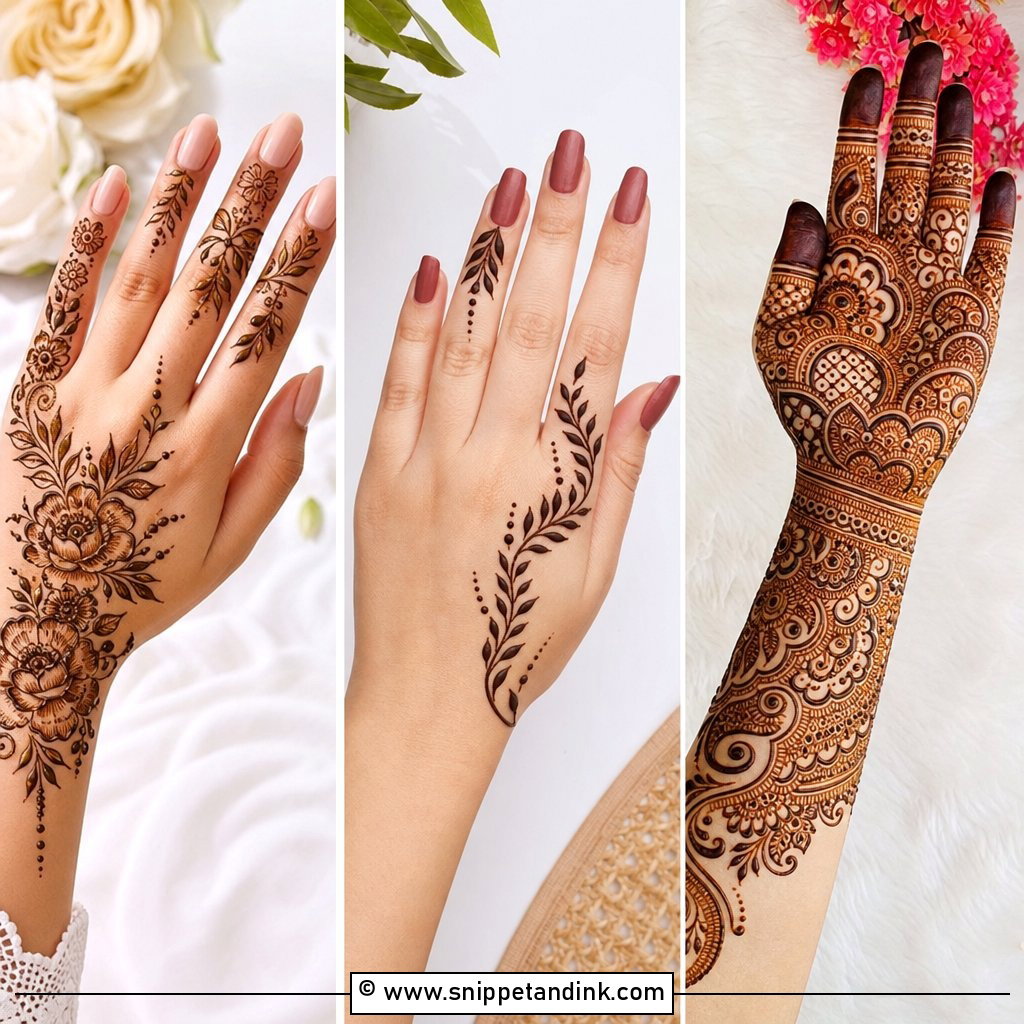
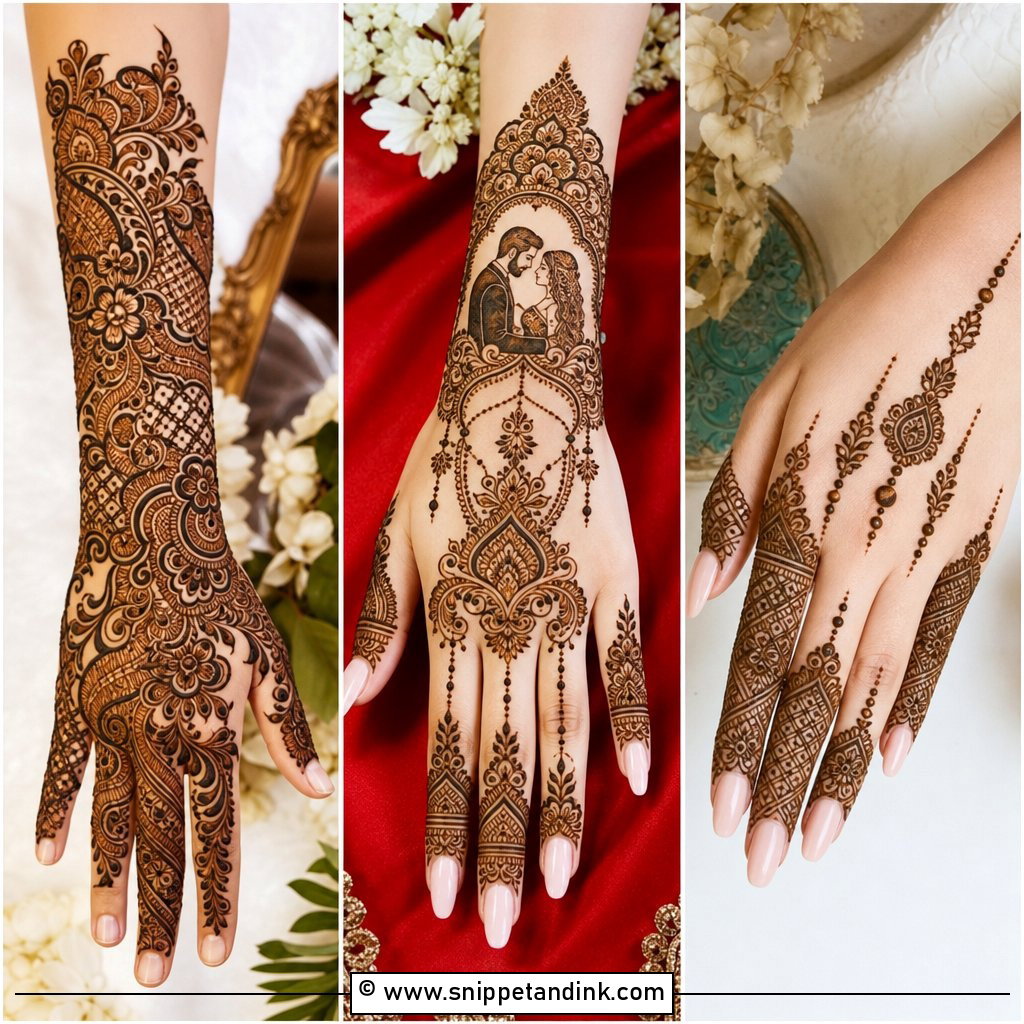
Arabic back-hand work runs diagonally from the wrist toward the index or ring finger, with big flowers, leafy vines and shaded petals, and leaves plenty of bare skin. That diagonal makes the hand look longer. It is also quick, often well under half an hour for a confident artist, which is why salons queue for it before Eid. The shading is done by dragging the cone tip lighter inside each petal; if you want a crisper modern finish, ask for bold outlines with that soft shading inside.
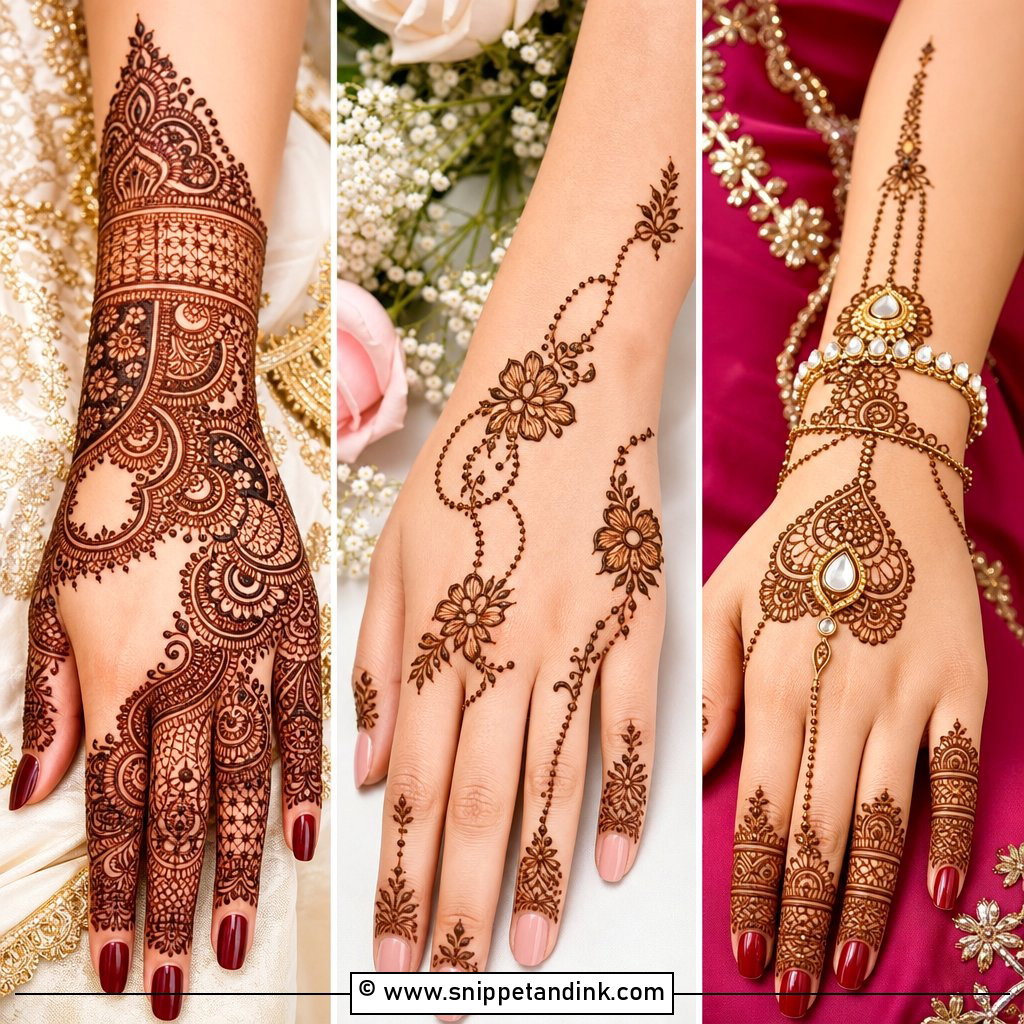
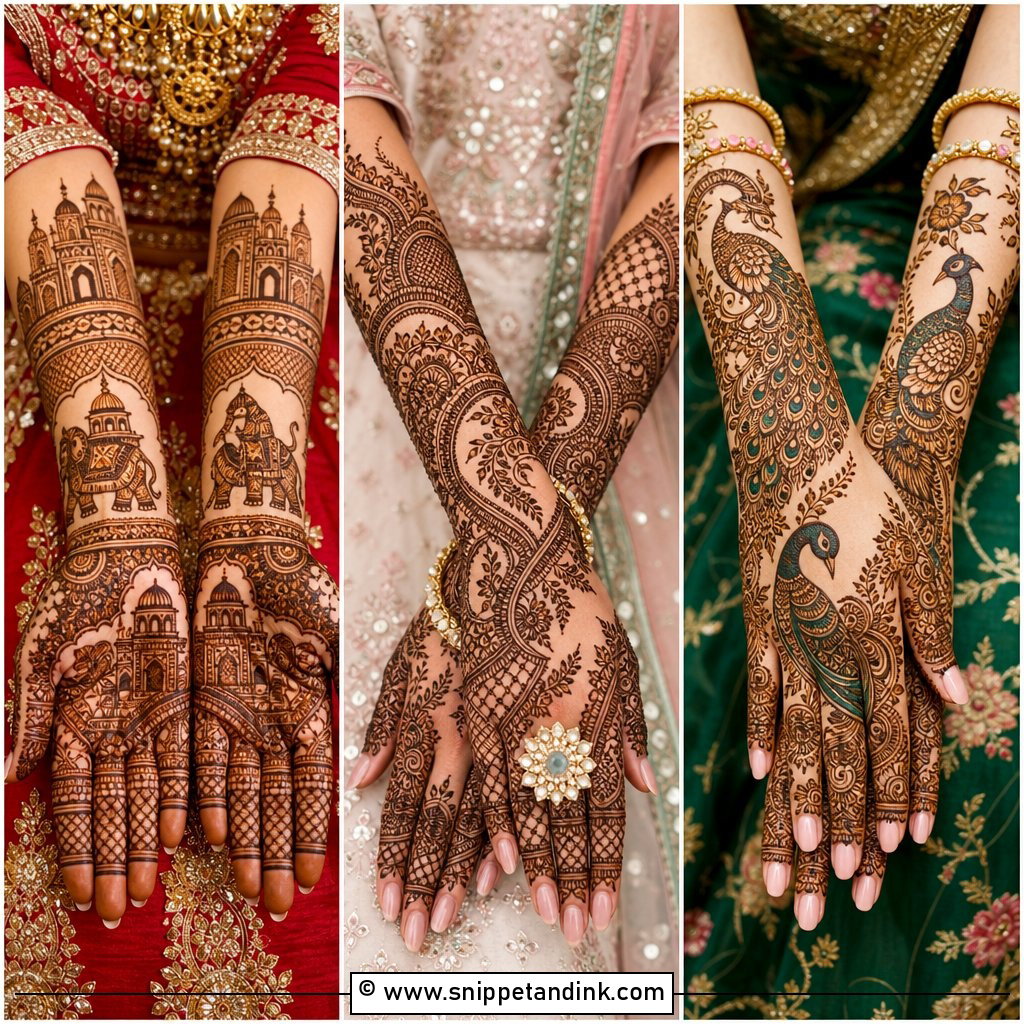
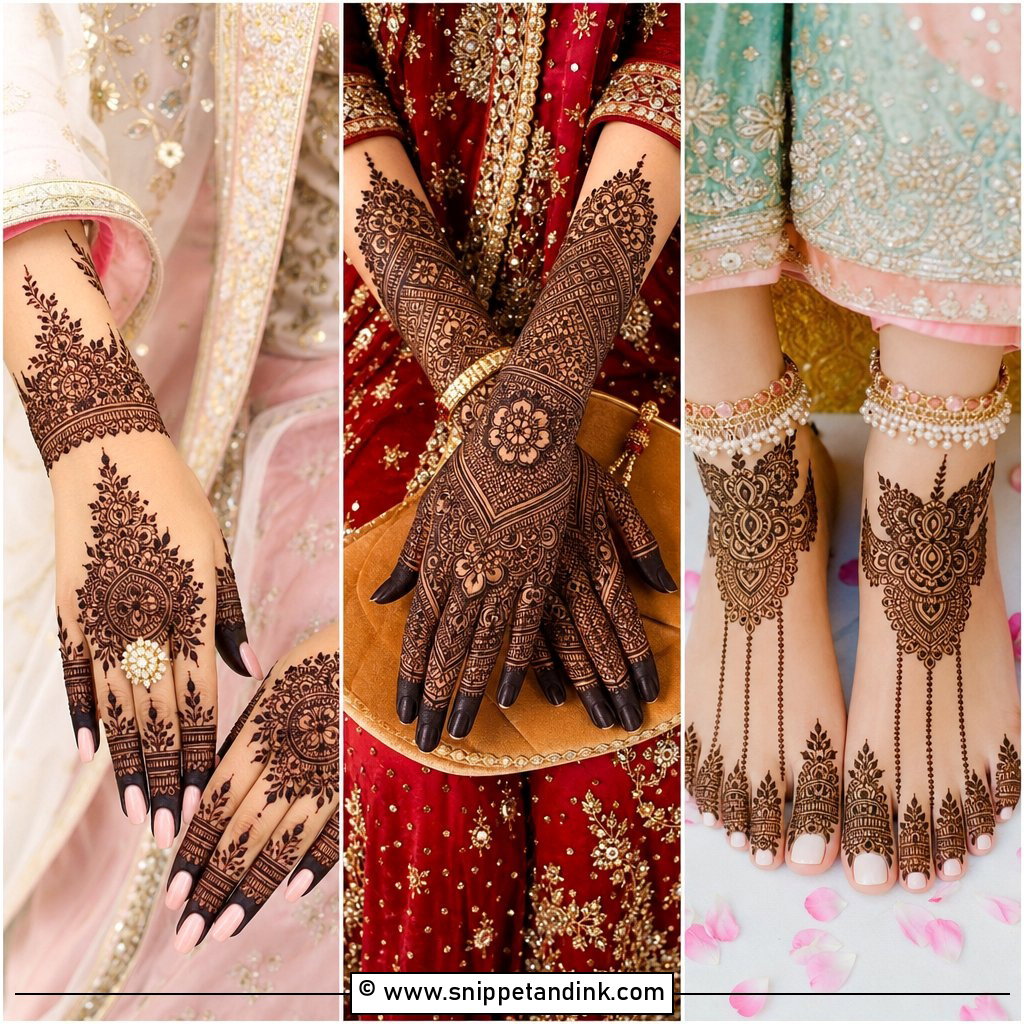
3. Full Hand Bridal Mehndi Design
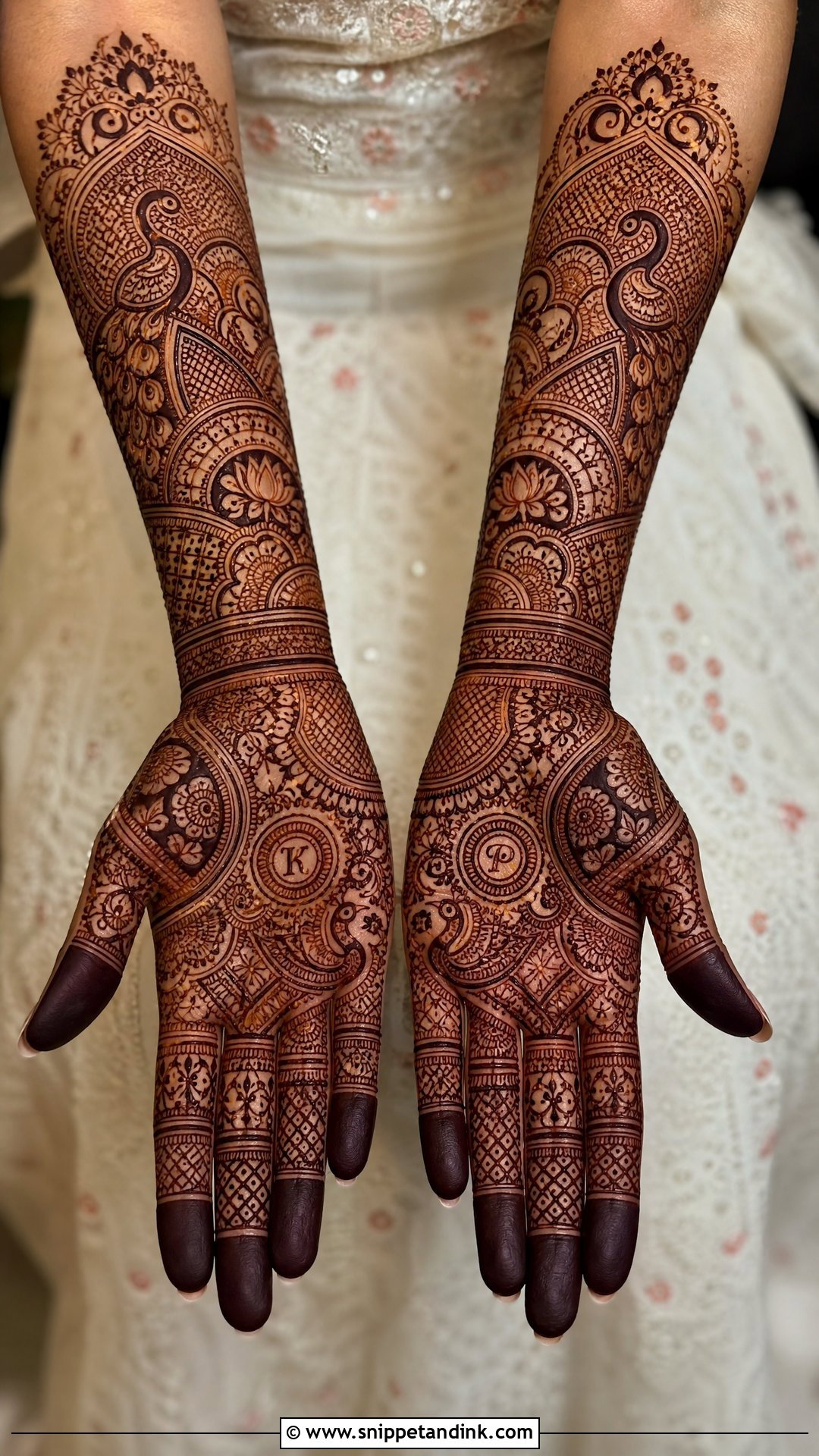
Full bridal coverage runs from fingertips to forearms with paisleys, mandalas, peacocks, jaali, lotus, bride and groom figures and hidden initials. Fingers are fully filled and the palm and arm carry layered panels. It is a long sitting, so this is not a same-day booking. What separates a rich design from a crowded one is layout: I place the large motifs first with space between them, then fill the gaps. Heavy embroidered outfits need this much henna to look balanced.
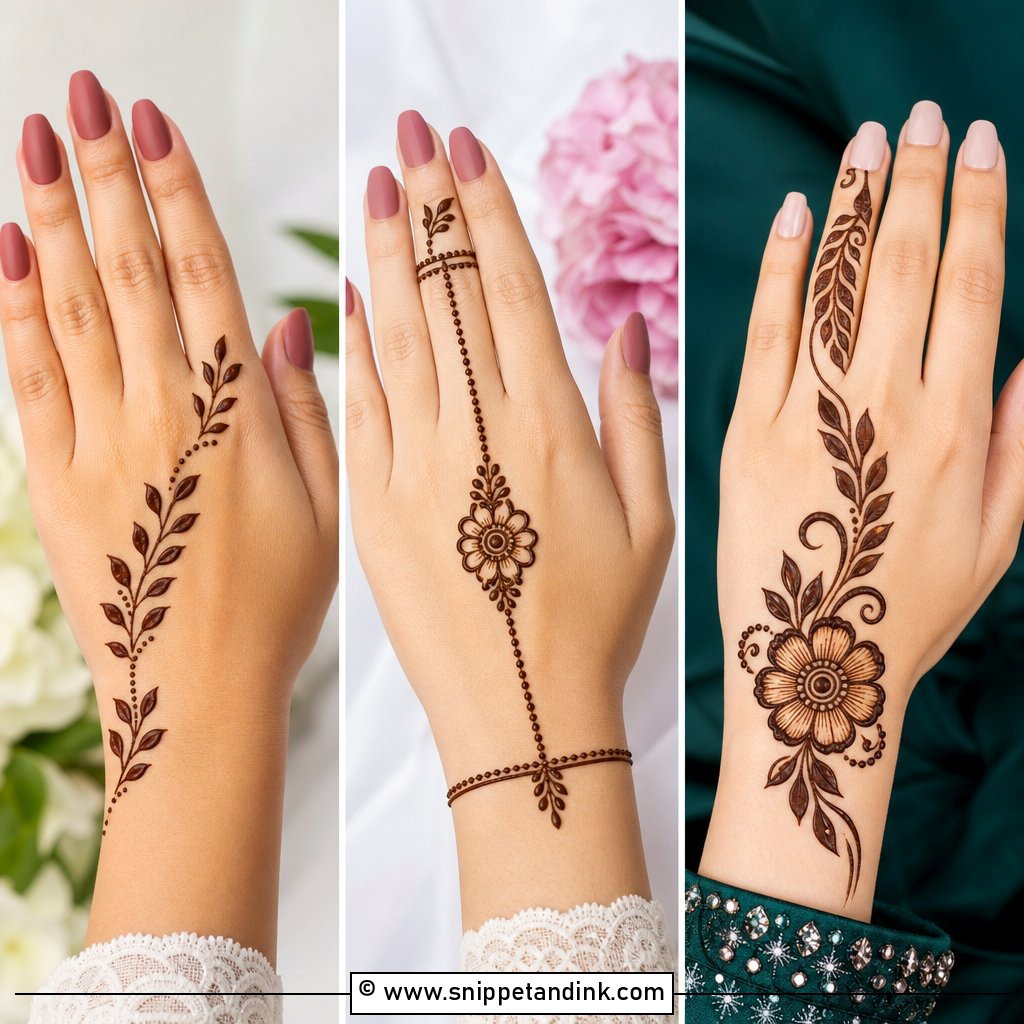
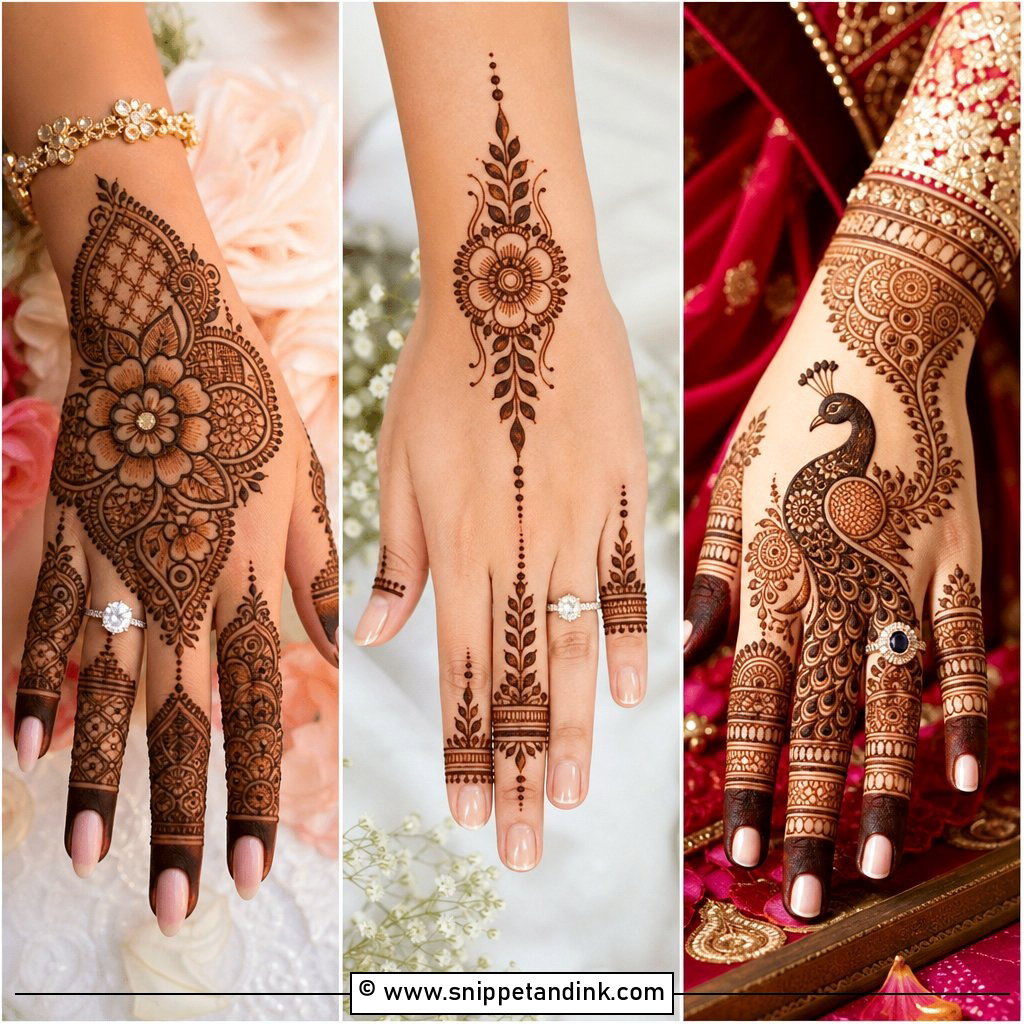
4. Minimal Back Hand Mehndi Design
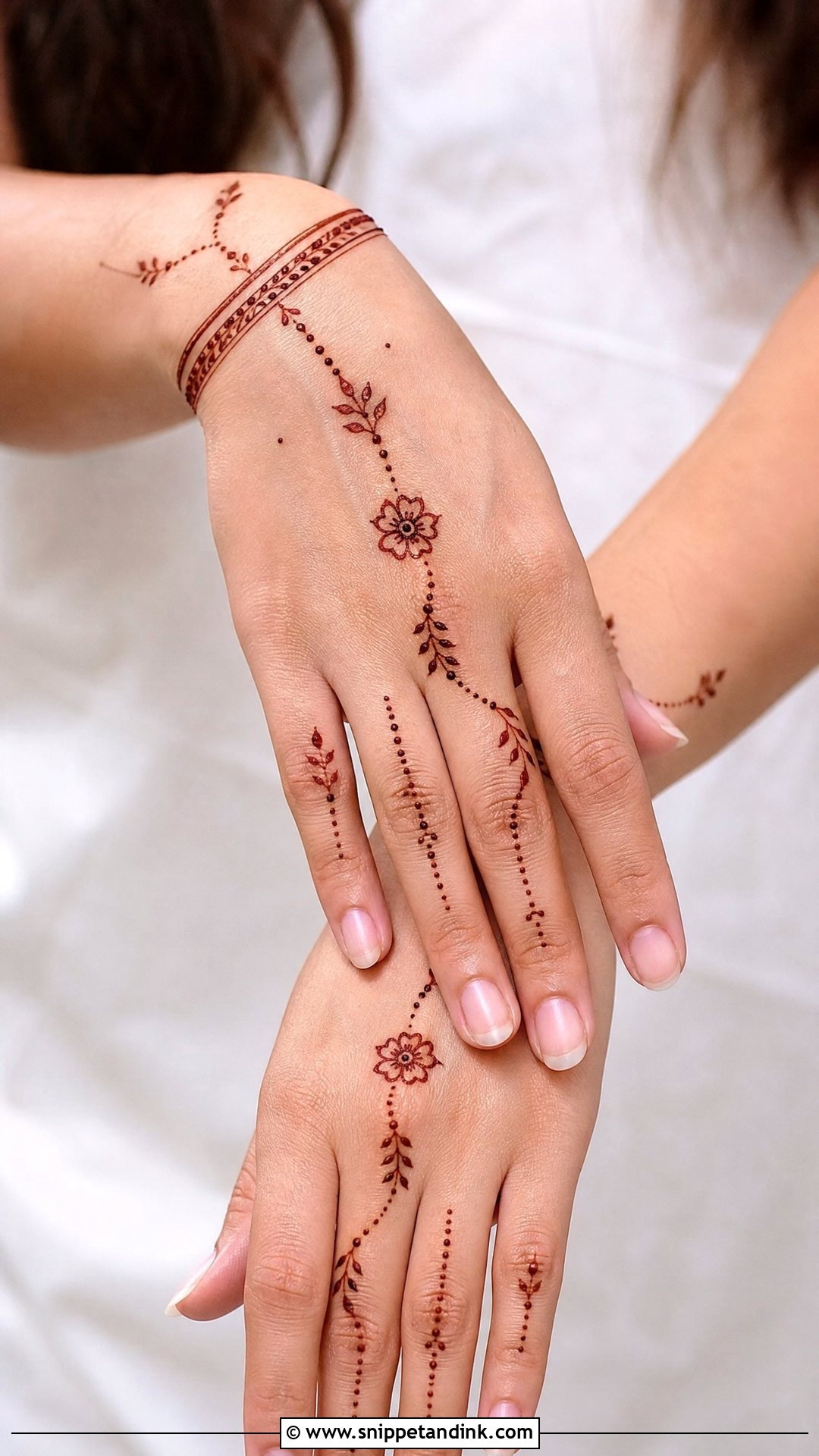
Thin lines, tiny leaves, a few dots, one central motif and a band around the wrist, sometimes connected to a finger by a fine chain. It sits easily with both ethnic and Indo-western outfits and with office or college events where heavy henna feels out of place. The difficulty is that every line is on show, so I slow down rather than speed up. Treat the empty skin as part of the design and keep spacing even between elements.
5. Mandala Palm Mehndi Design
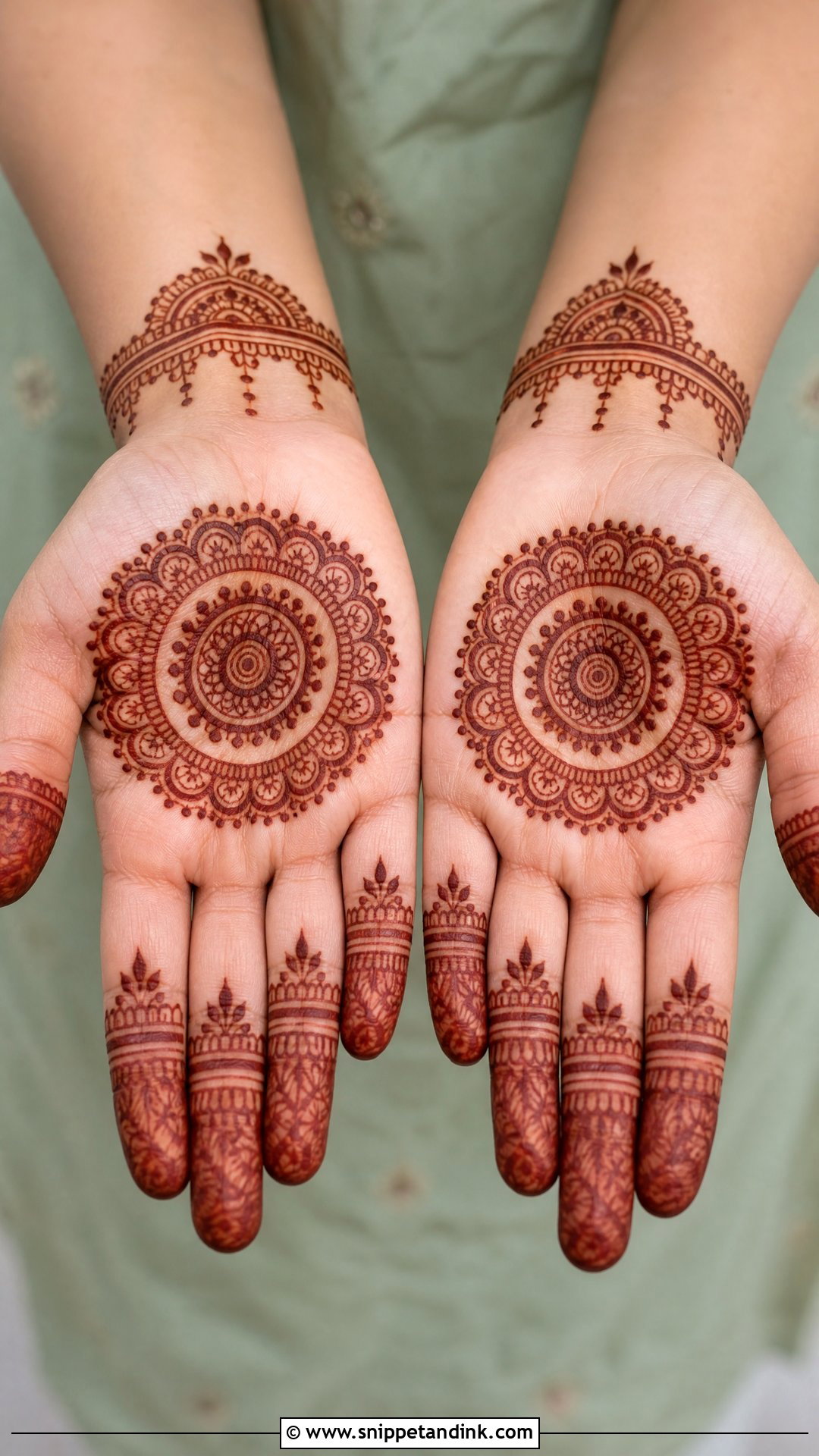
One circle in the palm, built outward in rings of petals, dots and borders, gives instant symmetry, so the rest of the hand can stay plain. Add decorated fingertips, a slim wrist band or a small side vine if you want more. The circle balances round, square and narrow palms equally well. My only rule is to keep the outermost ring crisp; a wobbly outer edge makes the whole mandala look off-centre. A good pick for pujas, festivals and bridesmaids.
6. Indo Arabic Mehndi Design
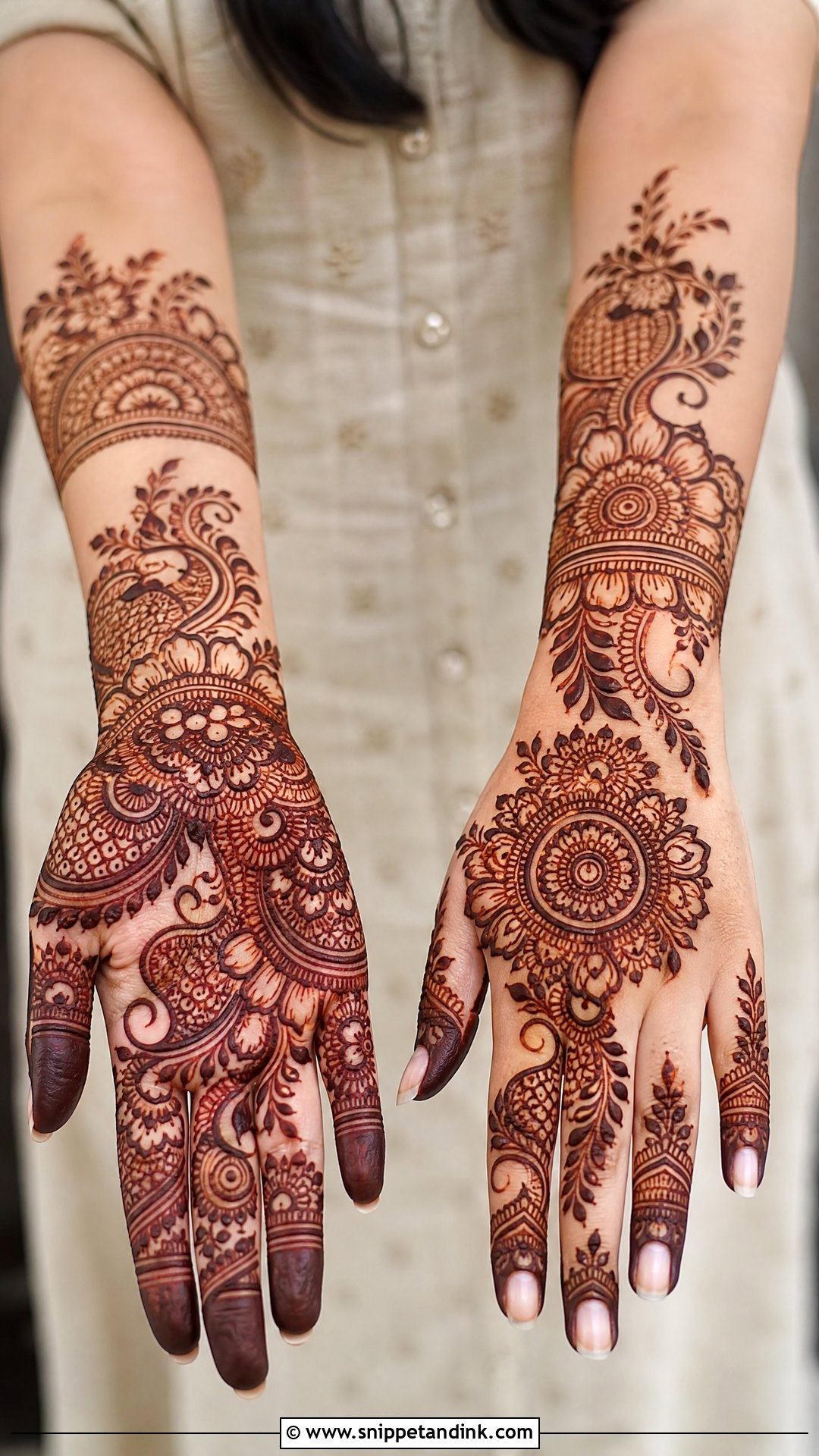
Indo-Arabic places big flowers and paisley trails along an Arabic path and then fills small patches with Indian detail, so you get movement and intricacy without full density. It suits both palm and back hand. I like it for wedding guests and the bride’s sisters, because it can be dialled up or down: more open skin for a quick sitting, more finger and wrist work if there is time.
7. Khafif Mehndi Design
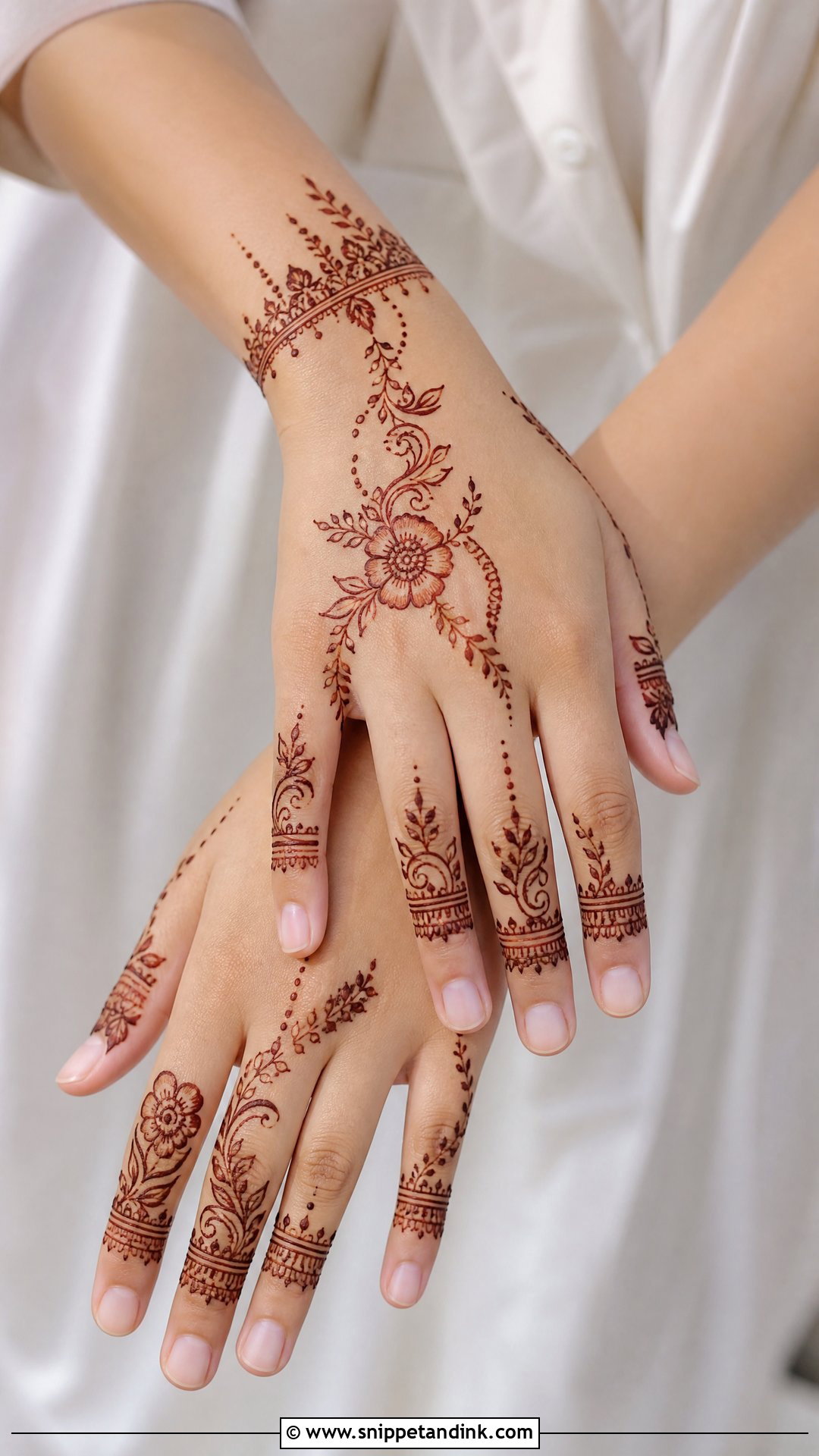
Khafif means light, and the style lives on very fine lines: tiny florals, thin vines, dots and small lace sections. On the back of the hand it reads almost like jewelry. Because the lines are so thin, the paste has to be smooth and the cone tip cut small, or the lines blob and merge. If you are doing it yourself, simplify the pattern rather than attempting dense detail. Neat spacing matters far more here than how much you fit on the hand.
8. Moroccan Mehndi Design
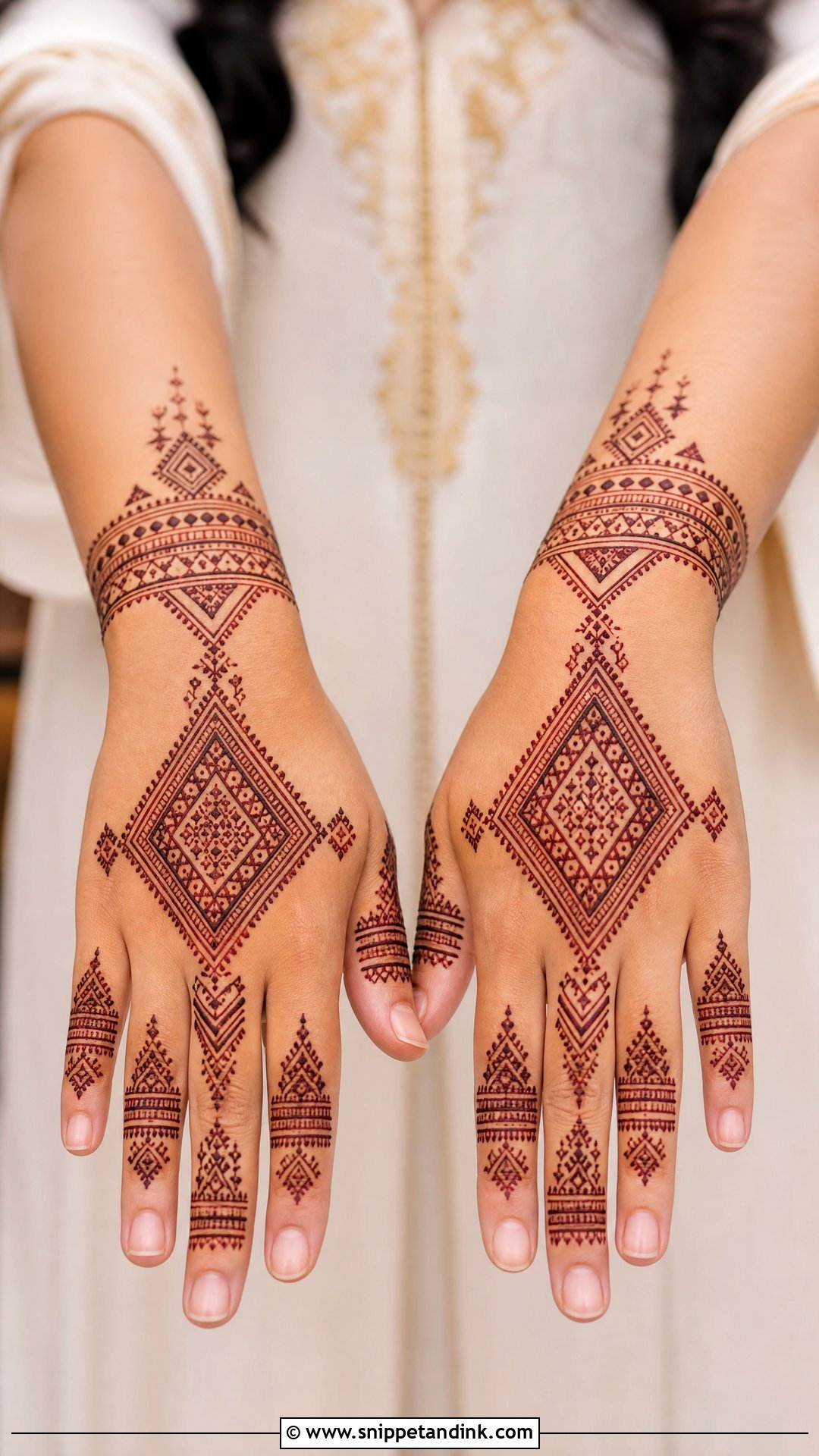
Moroccan henna swaps florals for diamonds, triangles, grids, straight lines and angular bands. The geometry follows the straight bones of the fingers and the back of the hand, which is why it looks so tidy there. It can be a few spaced bands or a full grid of repeated blocks. Straight lines are less forgiving than curves, so I draw them in short confident strokes rather than one long pull. The graphic effect sits well with solid-coloured outfits and bold jewelry.
9. Gulf Khaleeji Mehndi Design
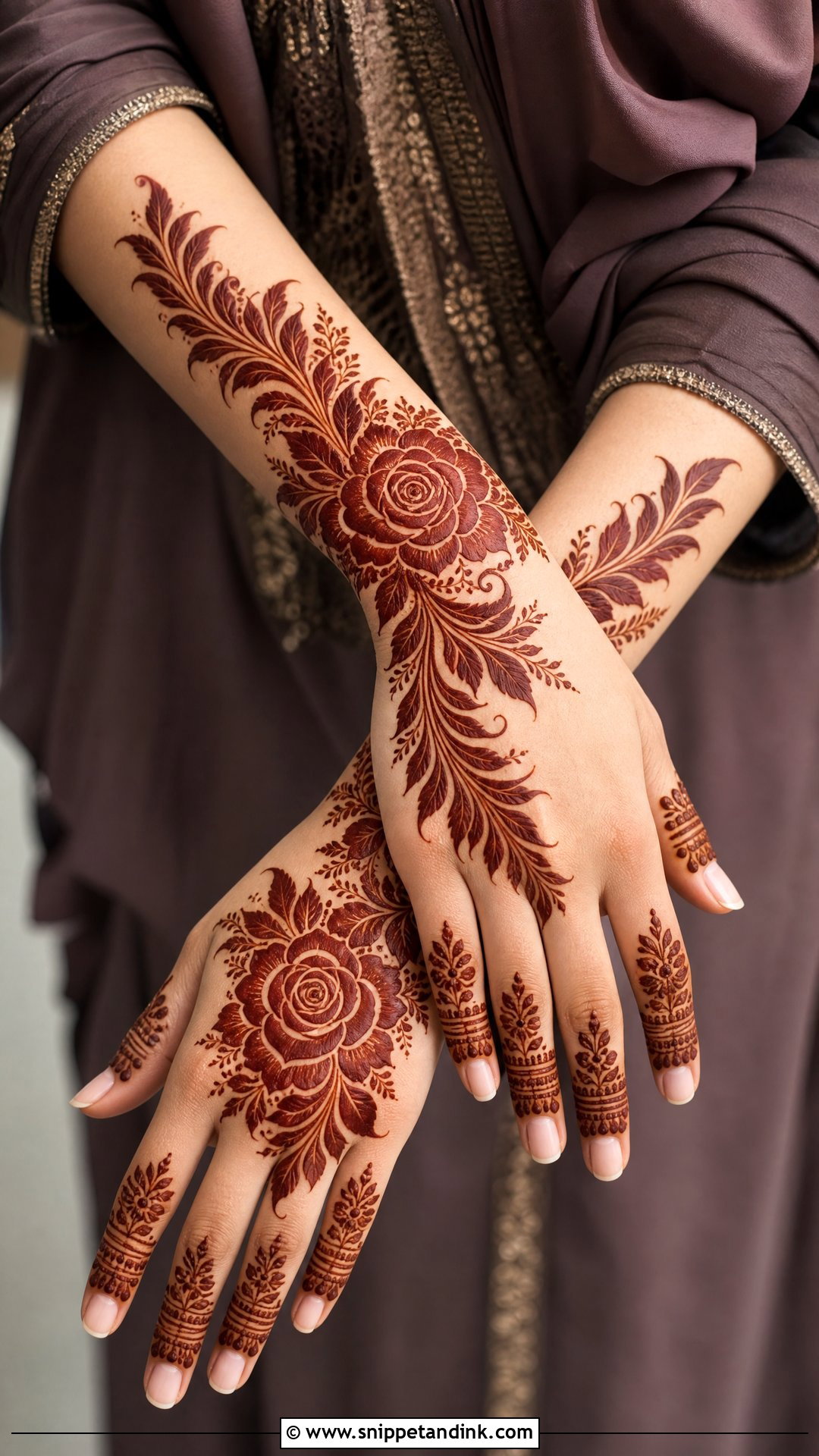
A Gulf Khaleeji mehndi design is built around one strong central motif, a large rose, a leafy spray or a medallion, with generous open skin around it. It flows across the back hand or palm in a dramatic but uncluttered way. Its strength is contrast: the big shape has to be confident and clean, and the smaller details only support it. If you love Arabic henna but want something that catches the eye at a henna night or Eid gathering, start here.
10. Peacock Mehndi Design
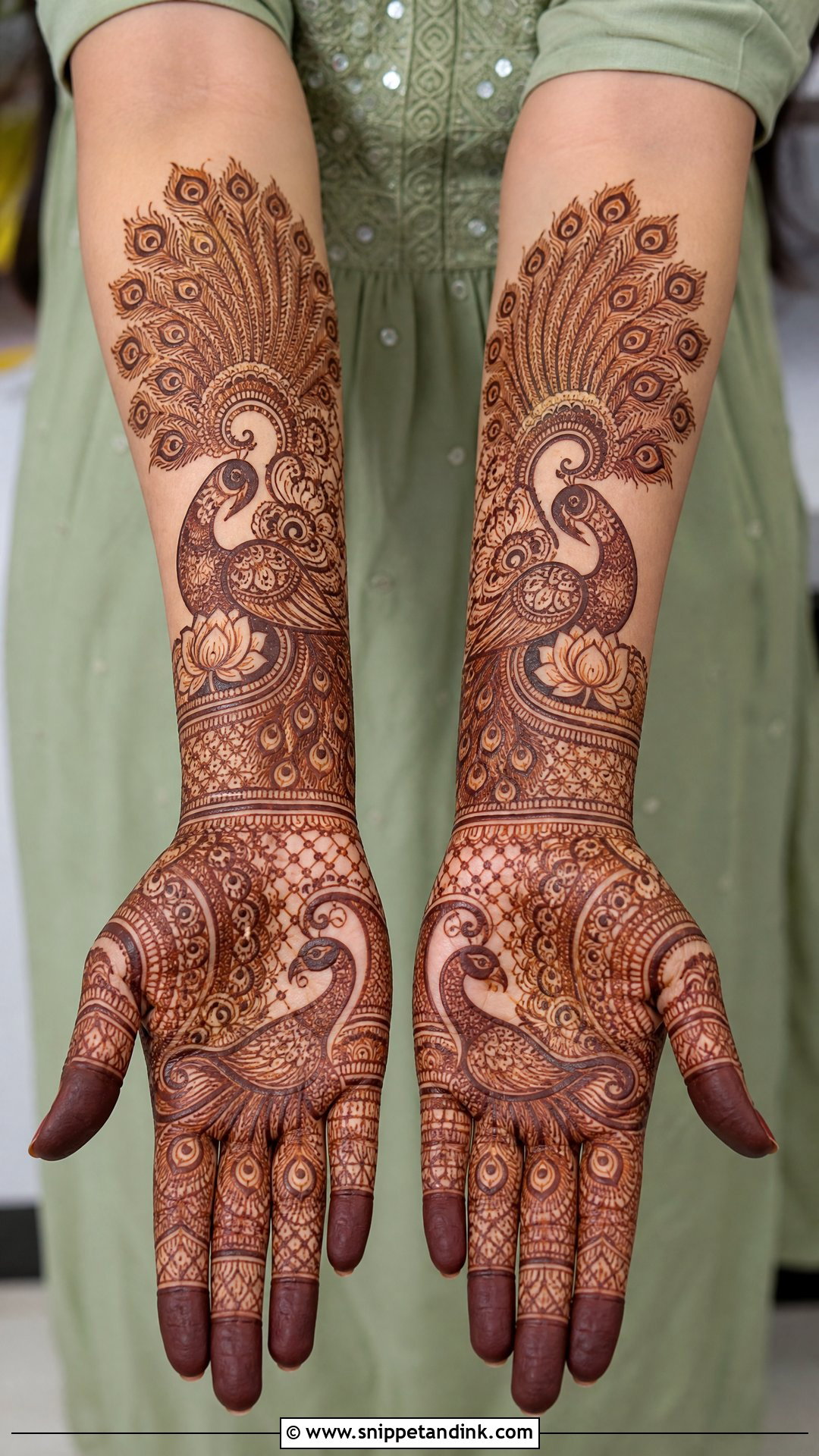
Peacocks sit in the palm, across the back hand or along the forearm as part of a bridal layout. The curved neck and paisley-shaped body slot into traditional patterns naturally, which is why the motif turns up at so many weddings. One large peacock with floral fillers or a mirrored pair both work. I keep the body bold and spend the detail on the feathers, adding jaali or lotus only where there is genuinely space.
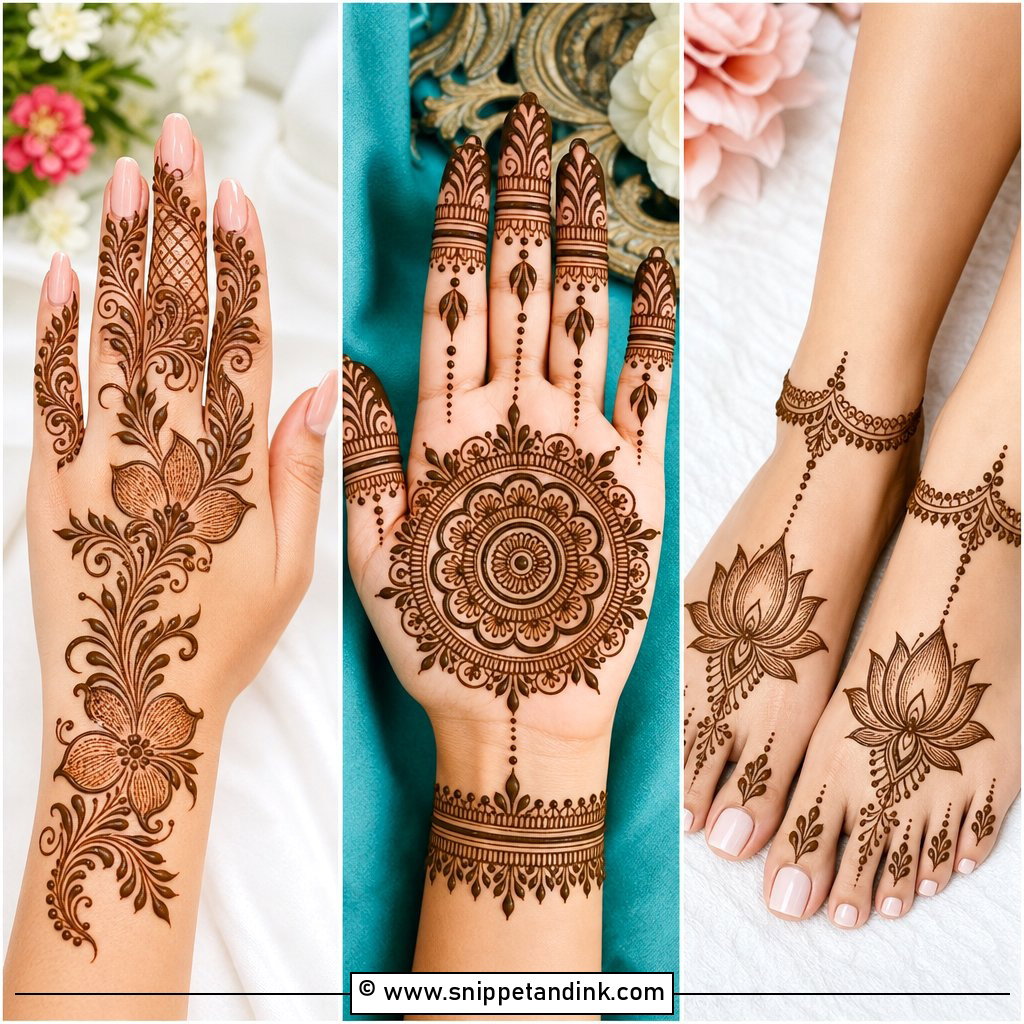
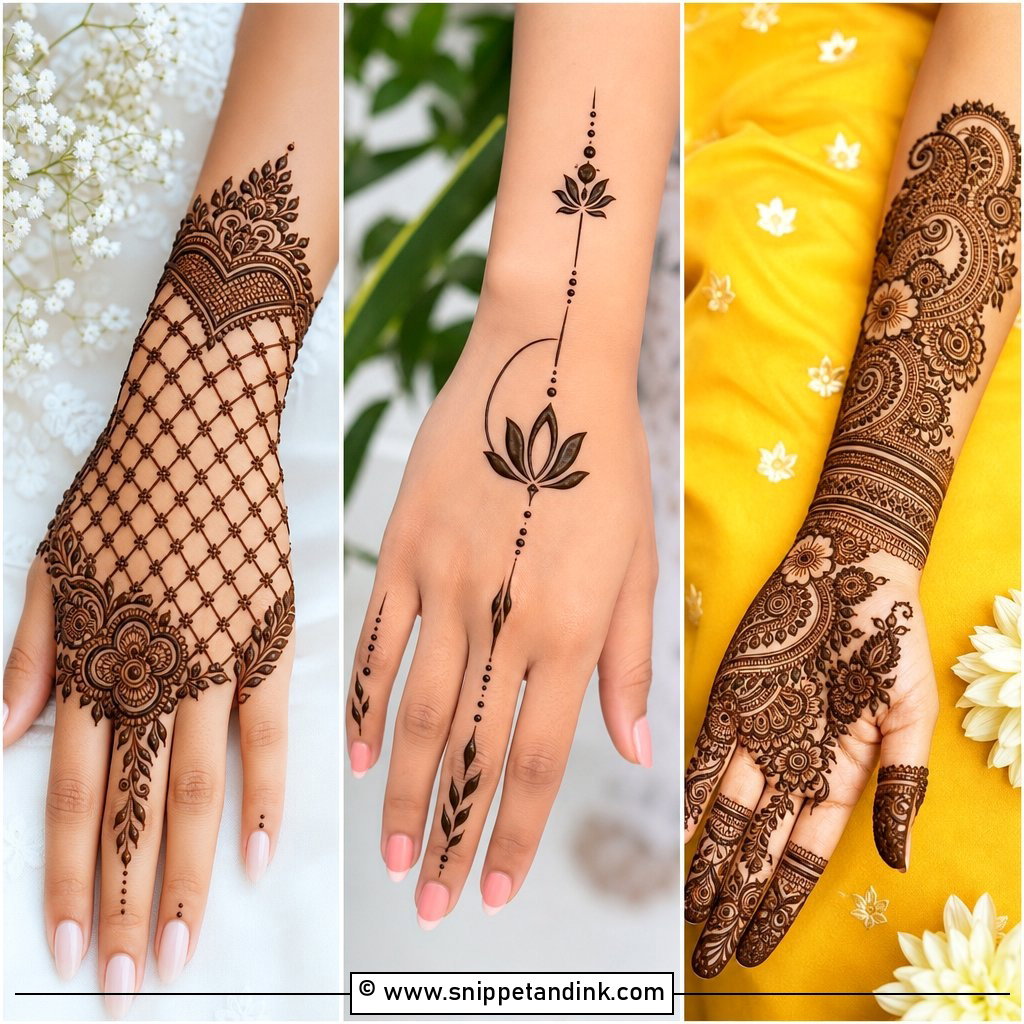
11. Lotus Mehndi Design
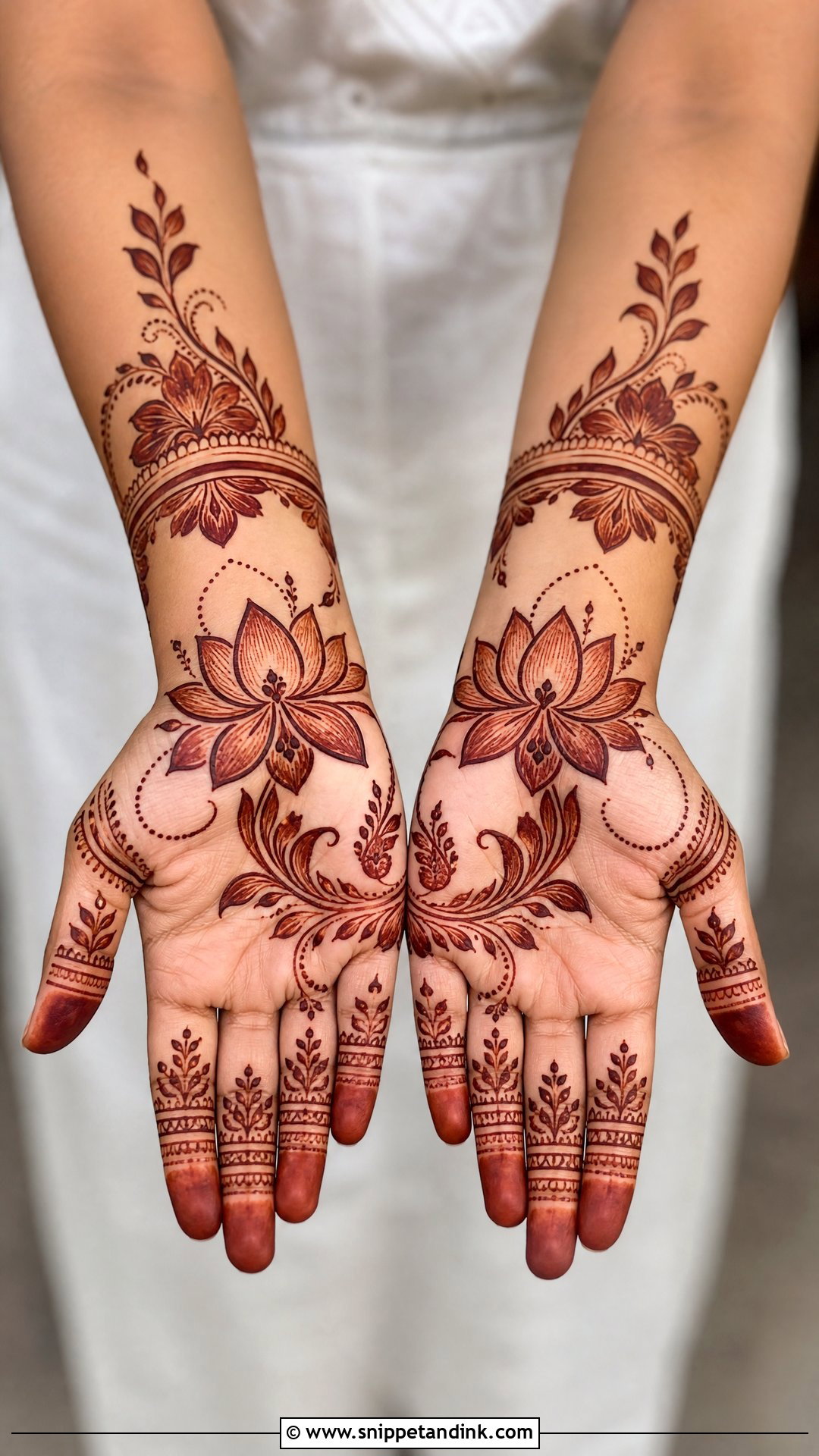
A lotus can sit in the centre of the palm, open across the wrist or anchor a trail on the back hand, and its layered petals give a focal point without many extra motifs. For a festive morning or a bridesmaid, I keep it bold with dots, leaves and open skin around it. For a bride, it gets paisleys and fine fillers. The petal tips are where wet paste tends to smudge, so let the outline set a minute before shading inside.
12. Paisley Mehndi Design
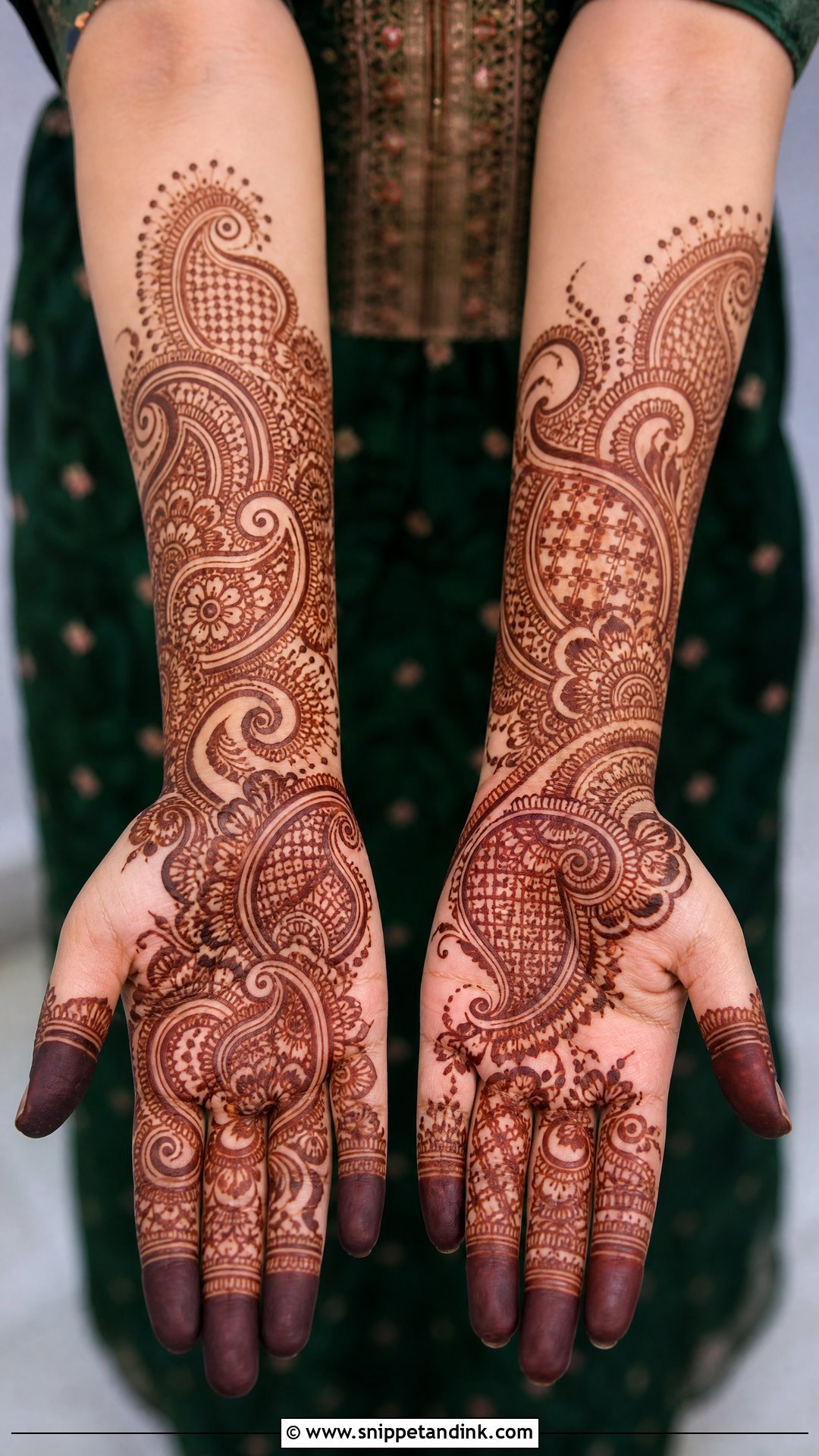
The mango-shaped paisley can be small and repeated or large with floral interiors, checks, swirls and shaded edges, on palms, wrists, fingers and forearms. Its practical gift is filling awkward spaces: a paisley bends into the gap between thumb and palm better than any flower. For something less predictable than rows of small repeats, try a few large paisleys with open skin between them.
13. Floral Trail Mehndi Design
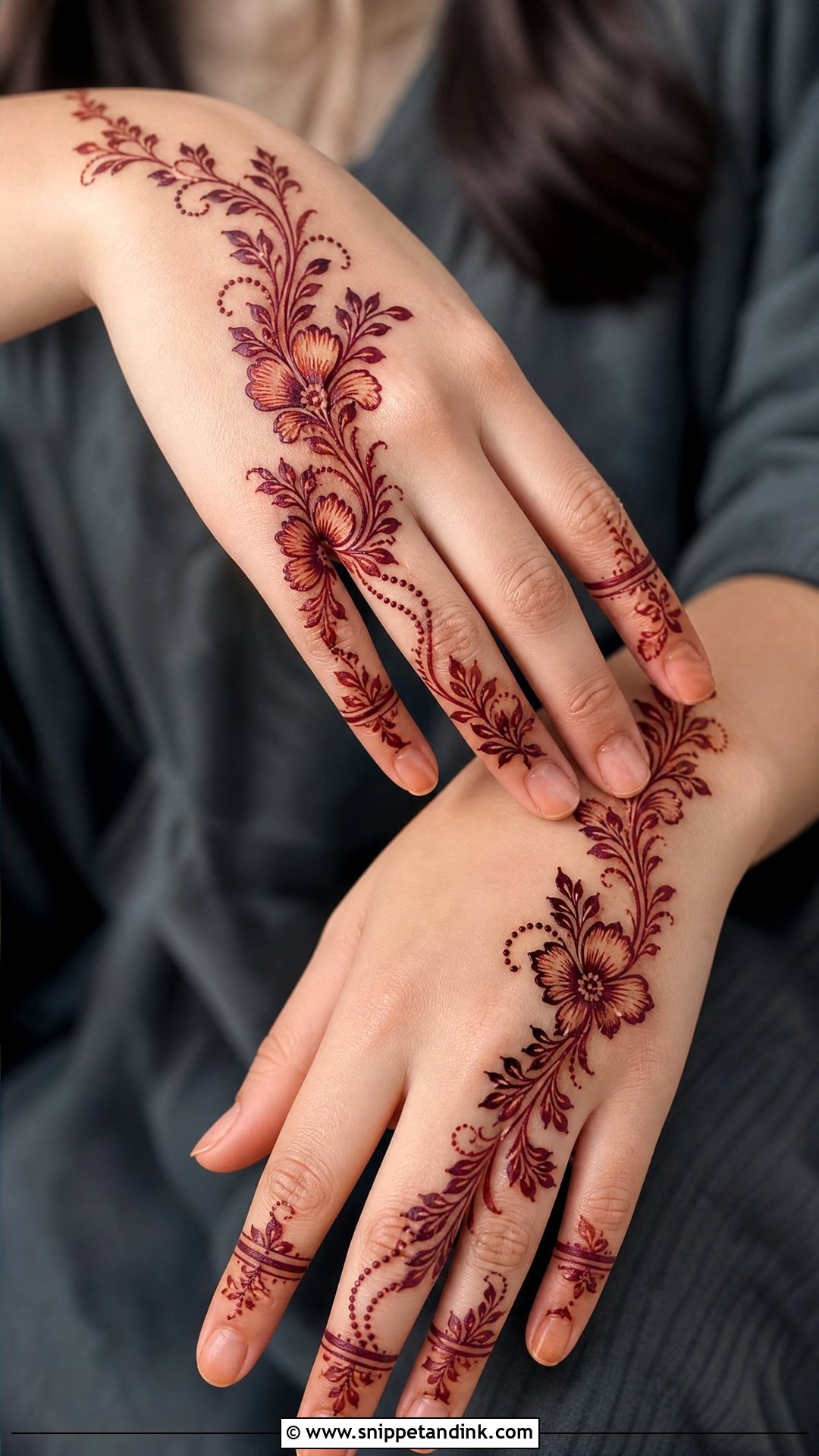
A floral trail starts at the wrist and travels diagonally across the back hand to the fingers, leaving plenty of skin showing. It suits almost every hand and is quick enough for a busy salon day before Eid. The detail I always mention: vary the flower sizes. A trail of identical flowers looks stamped, while mixing big and small blooms along a curved path gives it movement.
14. Bracelet Mehndi Design
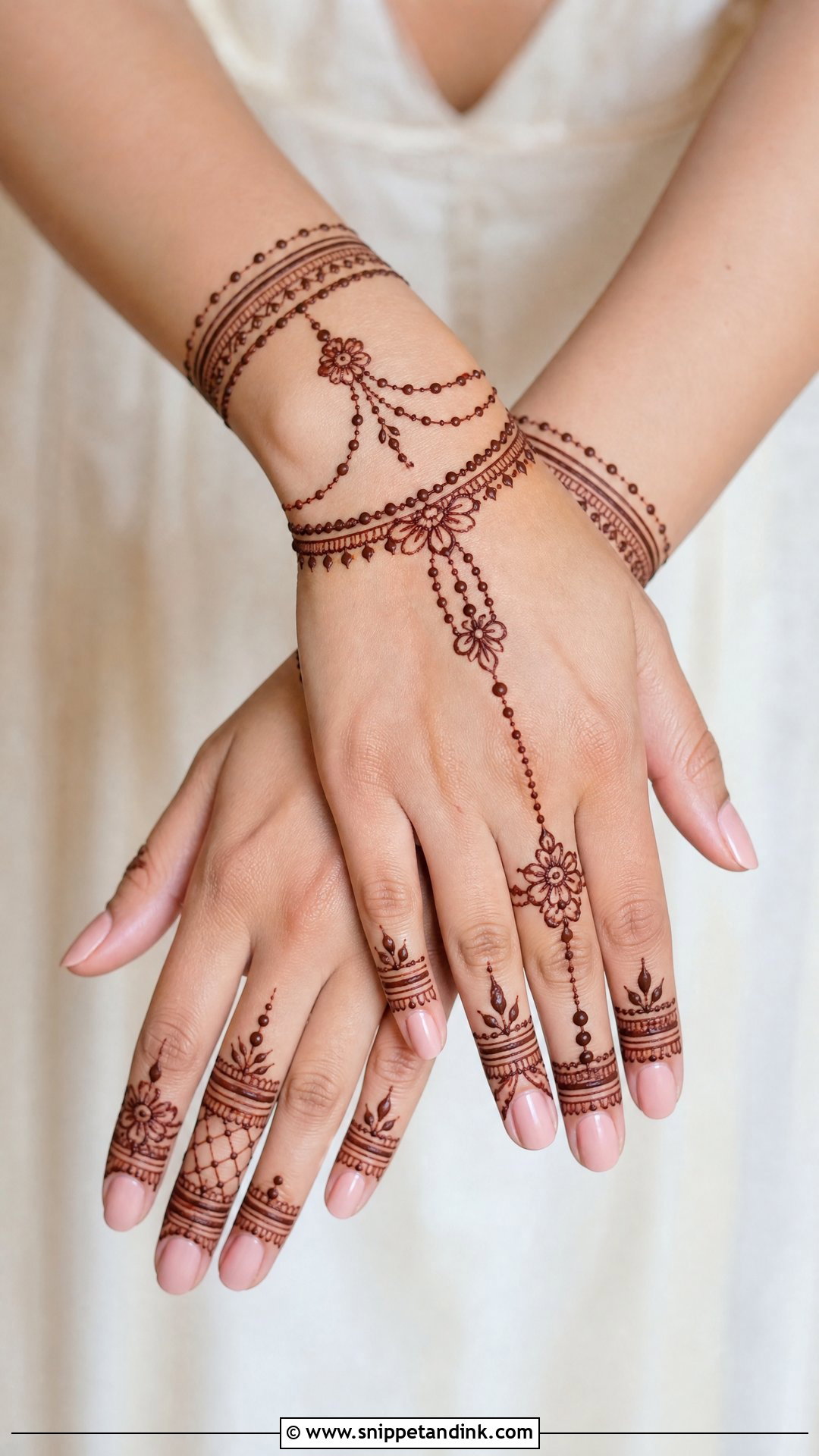
A bracelet design wraps the wrist in bands, chains, dots and small florals, sometimes with a fine line running to a finger to suggest a hand chain. It is fast and sits mostly on the back hand, which makes it easy for younger girls, guests and anyone short on time. Keep the band even all the way round. I draw it with the wrist turned slightly so the band does not slide visually toward the palm side when the hand relaxes.
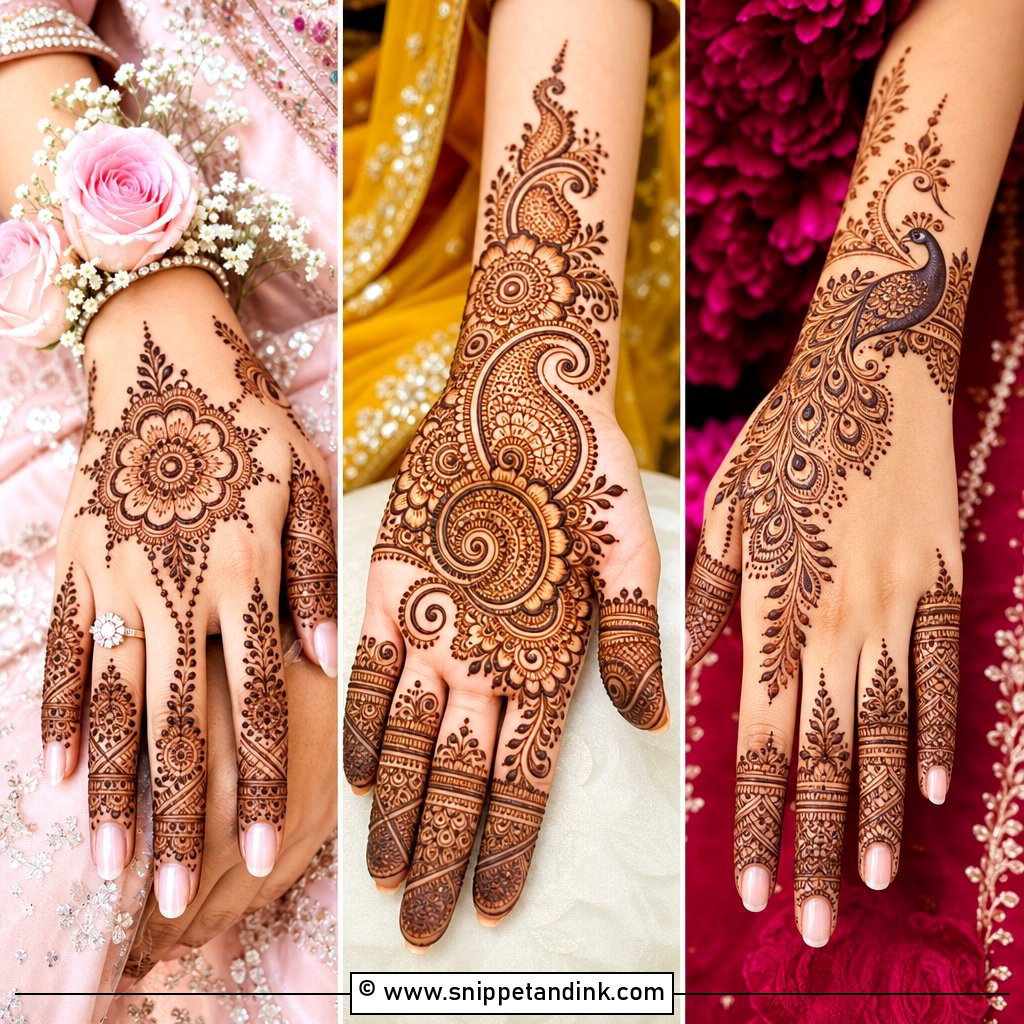
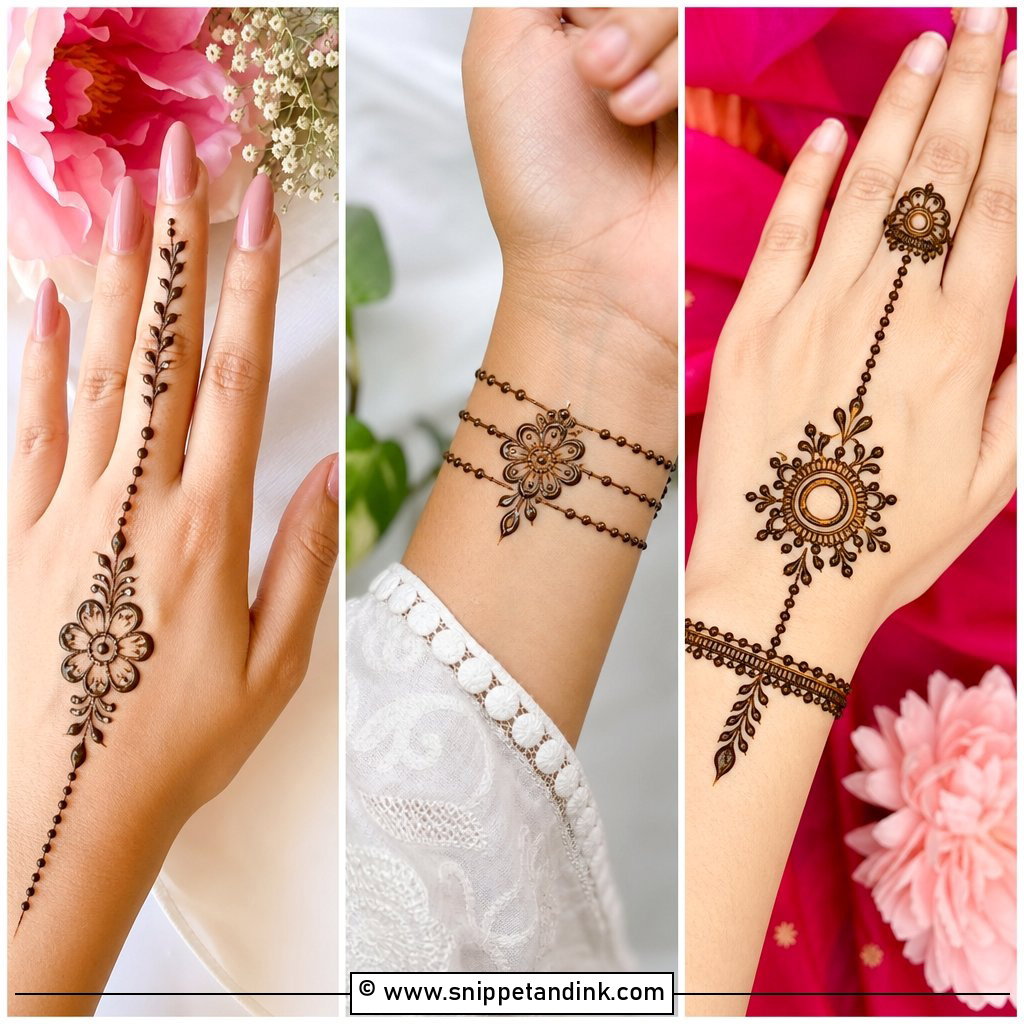
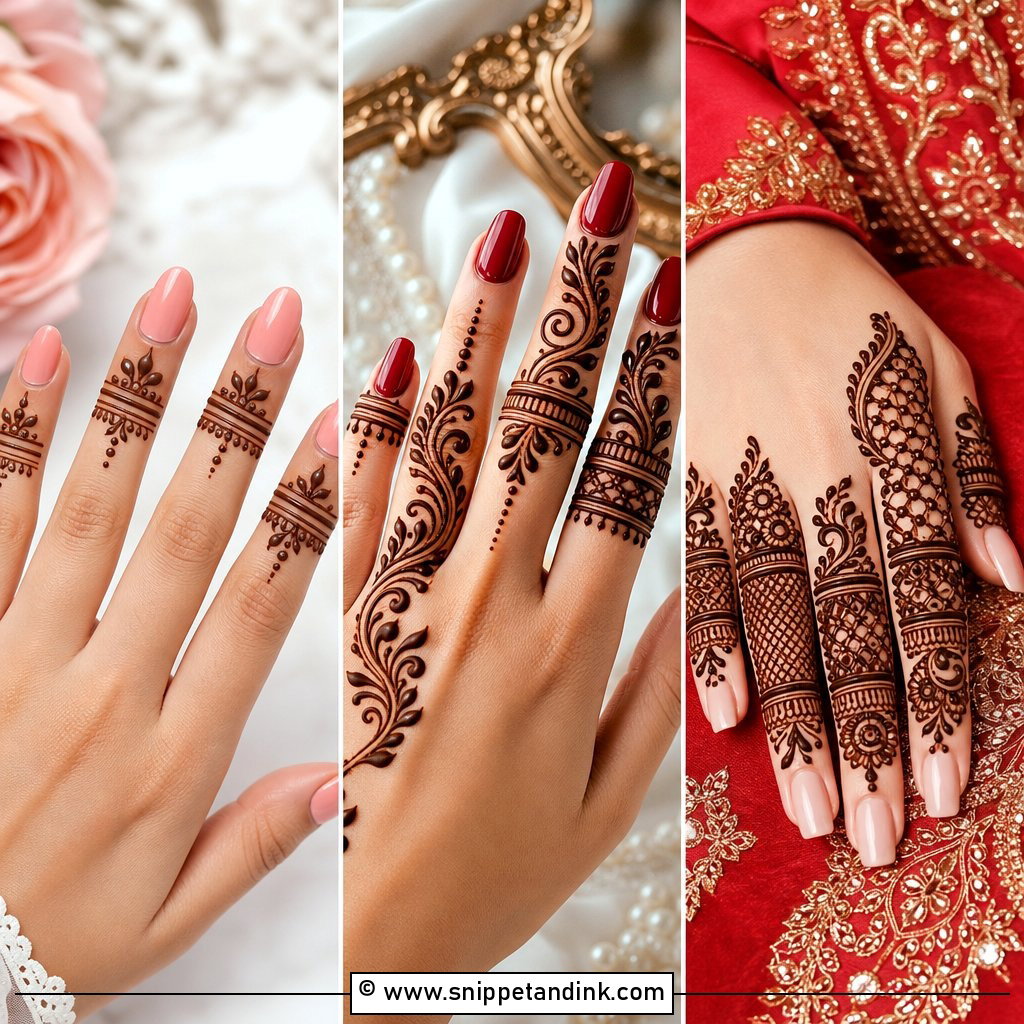
15. Finger Mehndi Design
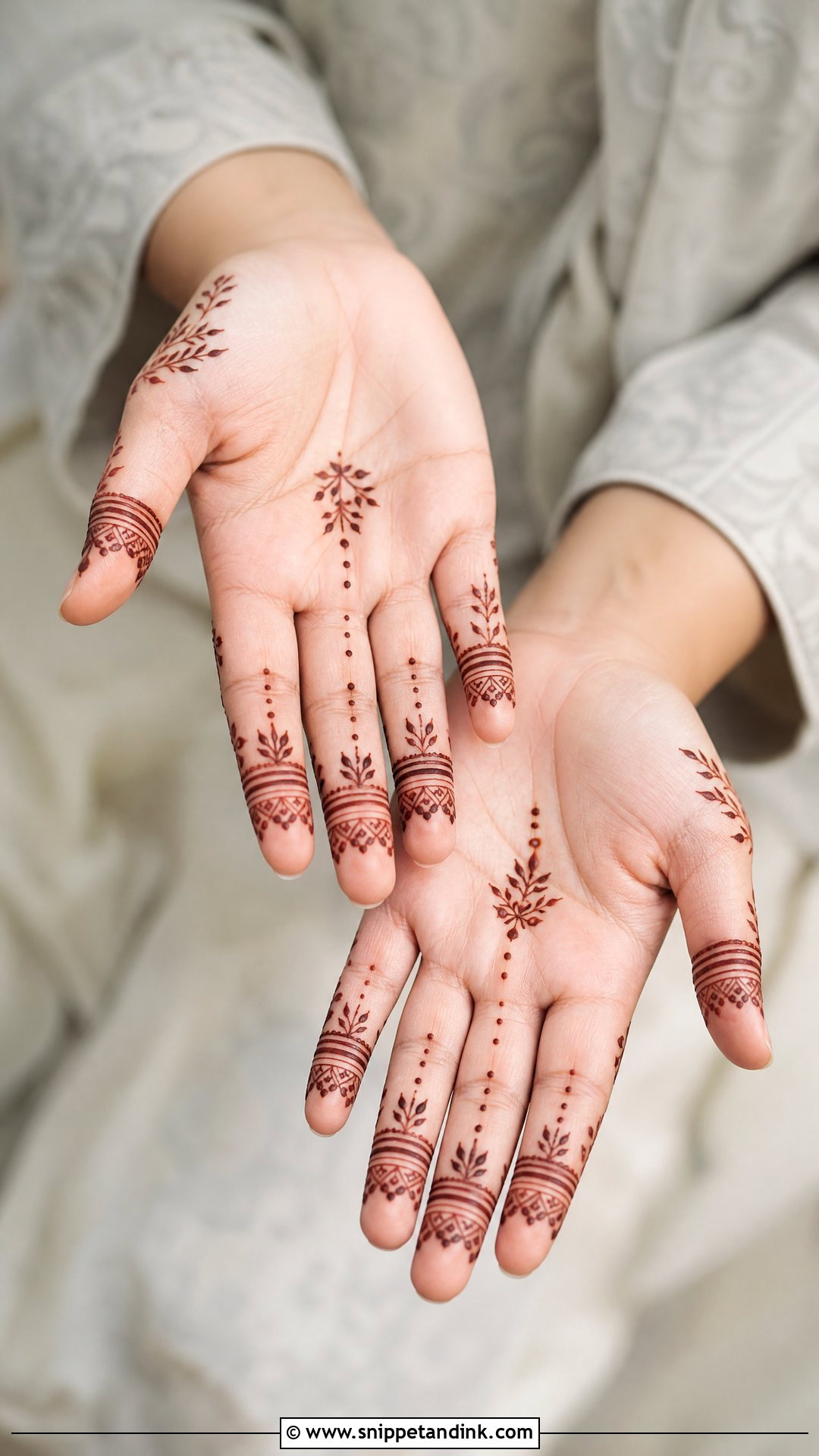
Here the fingers carry the design and the palm or back hand stays mostly open: bands, leaves, dots, tiny flowers, geometric lines or lace. It goes well with rings and bangles and takes very little time. A single detailed accent finger is a nice variation. Done carelessly, though, it can look half-finished, so I usually add a small wrist band or a dot motif in the centre to tie the hand together.
16. Jaali Mehndi Design
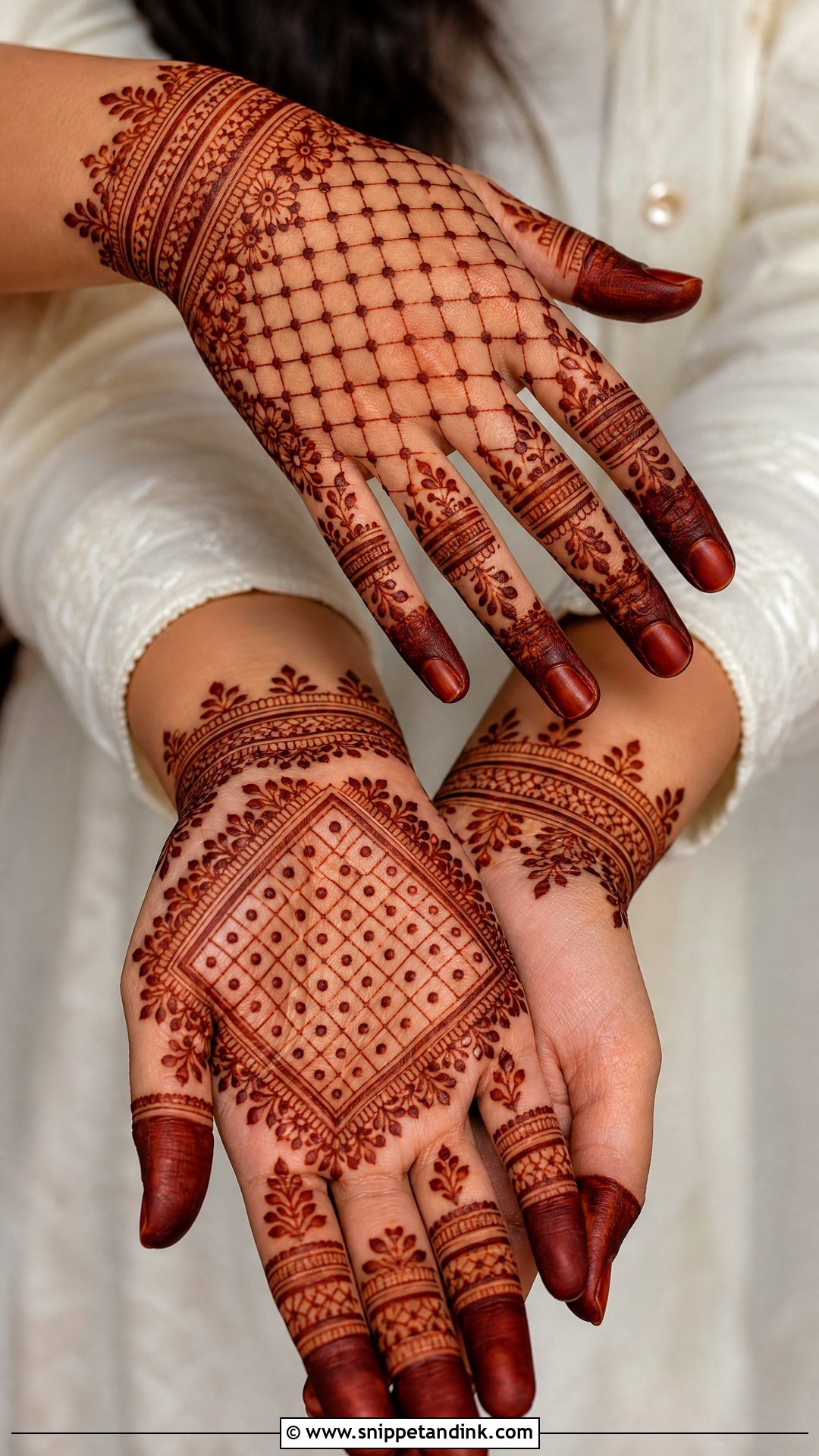
Jaali is the net pattern: diamonds, squares or curved grids with tiny dots in each cell, laid across the palm, back hand, fingers or wrist. It gives texture without relying only on flowers and pairs easily with paisleys, mandalas and Arabic trails. Consistency is everything. An uneven mesh looks rushed, so I mark a few guide lines first and frame the jaali with a bold border to hide the edges.
17. Jewelry Mehndi Design
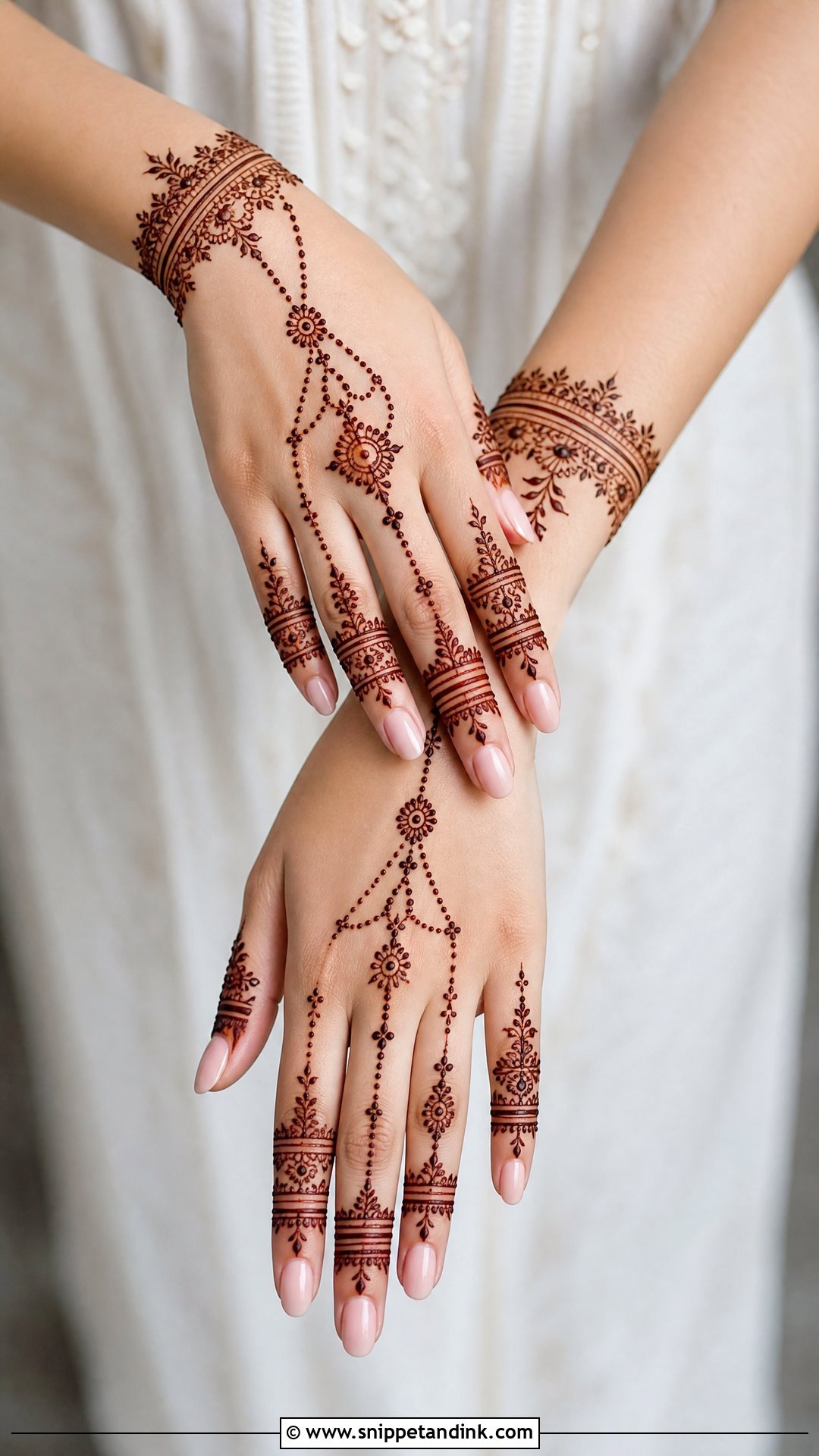
Drawn rings, hand chains and wrist cuffs sit on the back hand, where the jewelry effect is easiest to read, with fine chains running from the wrist to finger motifs and small dot or floral charms. It suits engagements, bridesmaids and festive events where you want polish without heavy coverage. If you will also wear real jewelry, plan the drawn pieces around it, so a real ring does not sit on top of a drawn one. Thin chains, a detailed cuff.
18. Modern Negative Space Mehndi Design
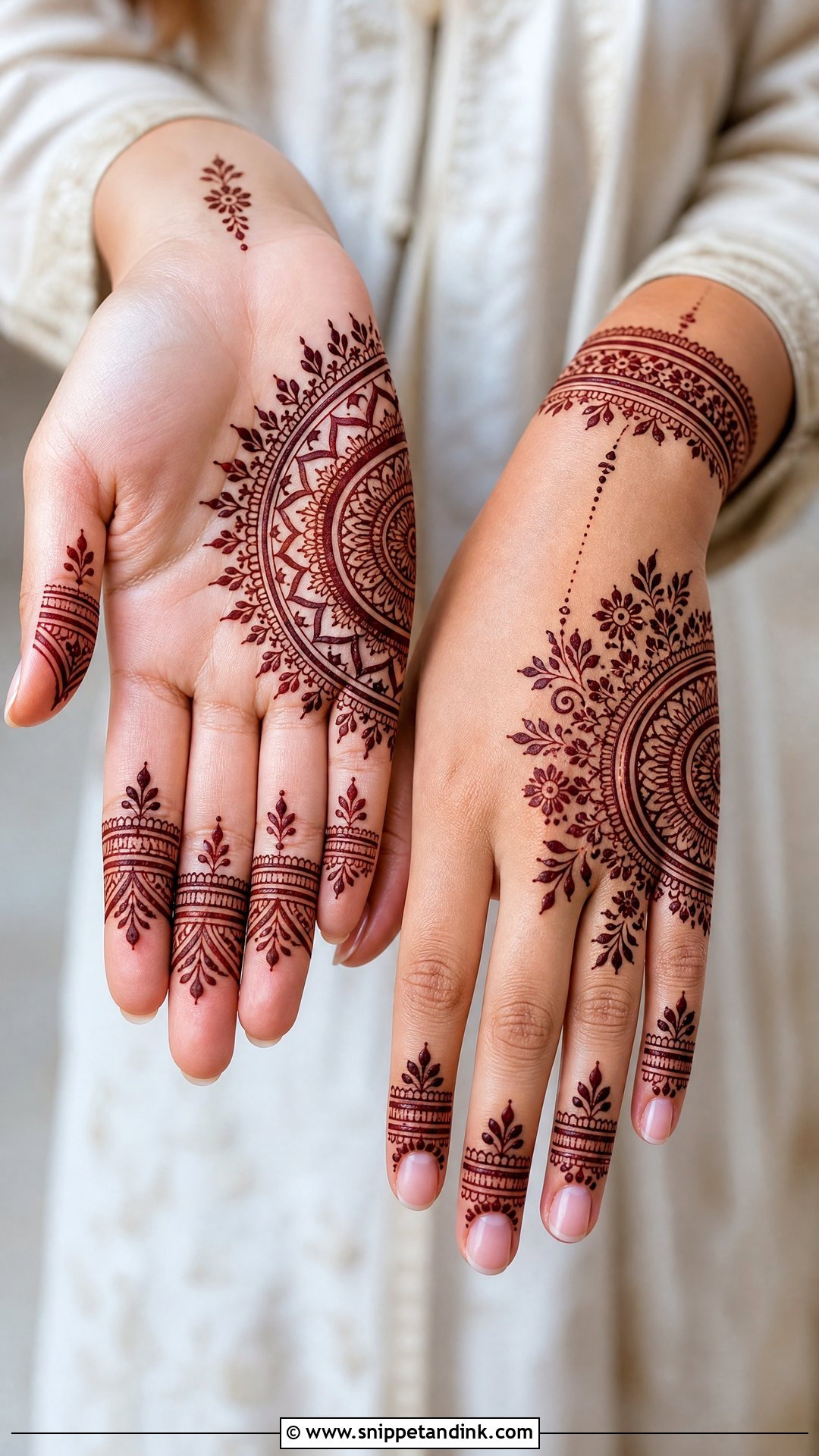
Negative-space designs treat bare skin as part of the layout. Bold flowers, mandalas or geometric shapes sit with clear gaps between them, so each one is easy to see. They work on palms and back hands and are faster than dense traditional work. Choose one strong focal point and keep fillers to a minimum; the instinct to fill an empty patch is exactly what spoils this style.
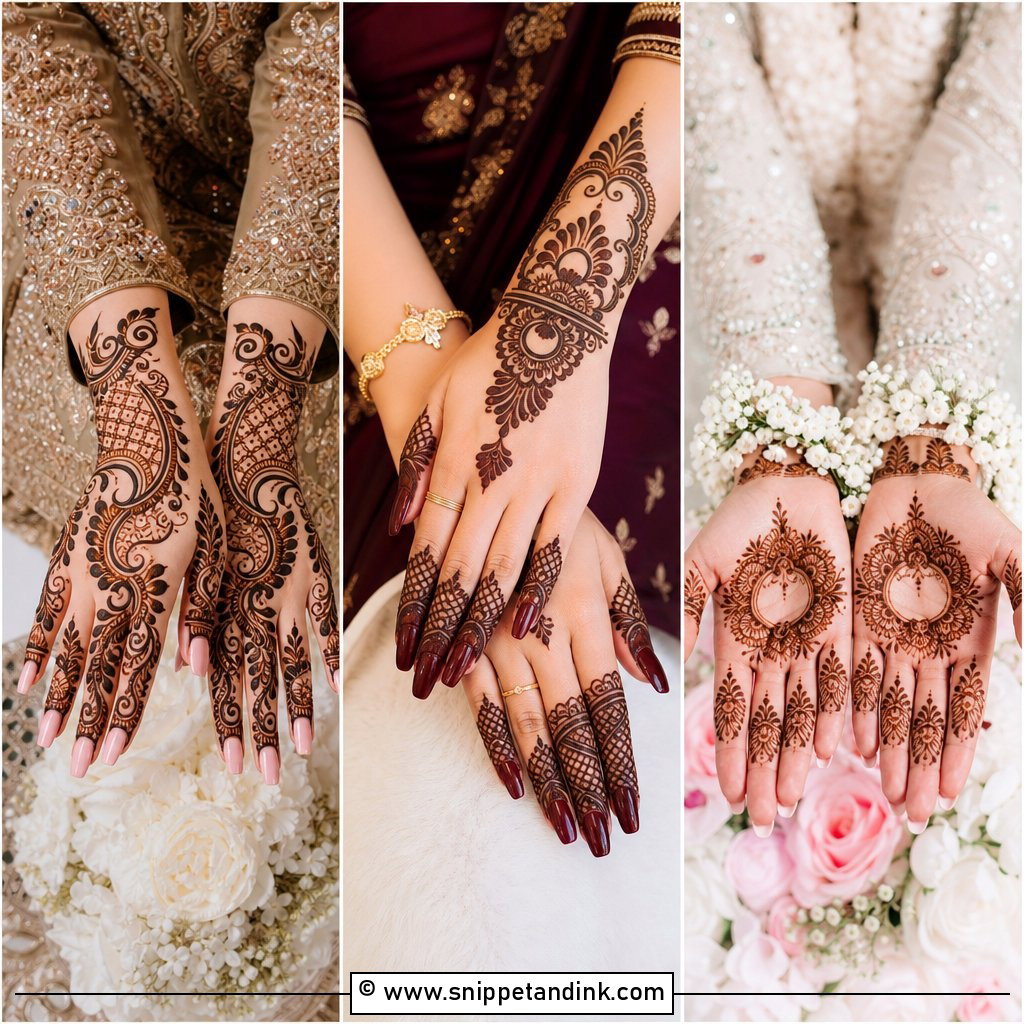
19. Rajasthani Bridal Mehndi Design
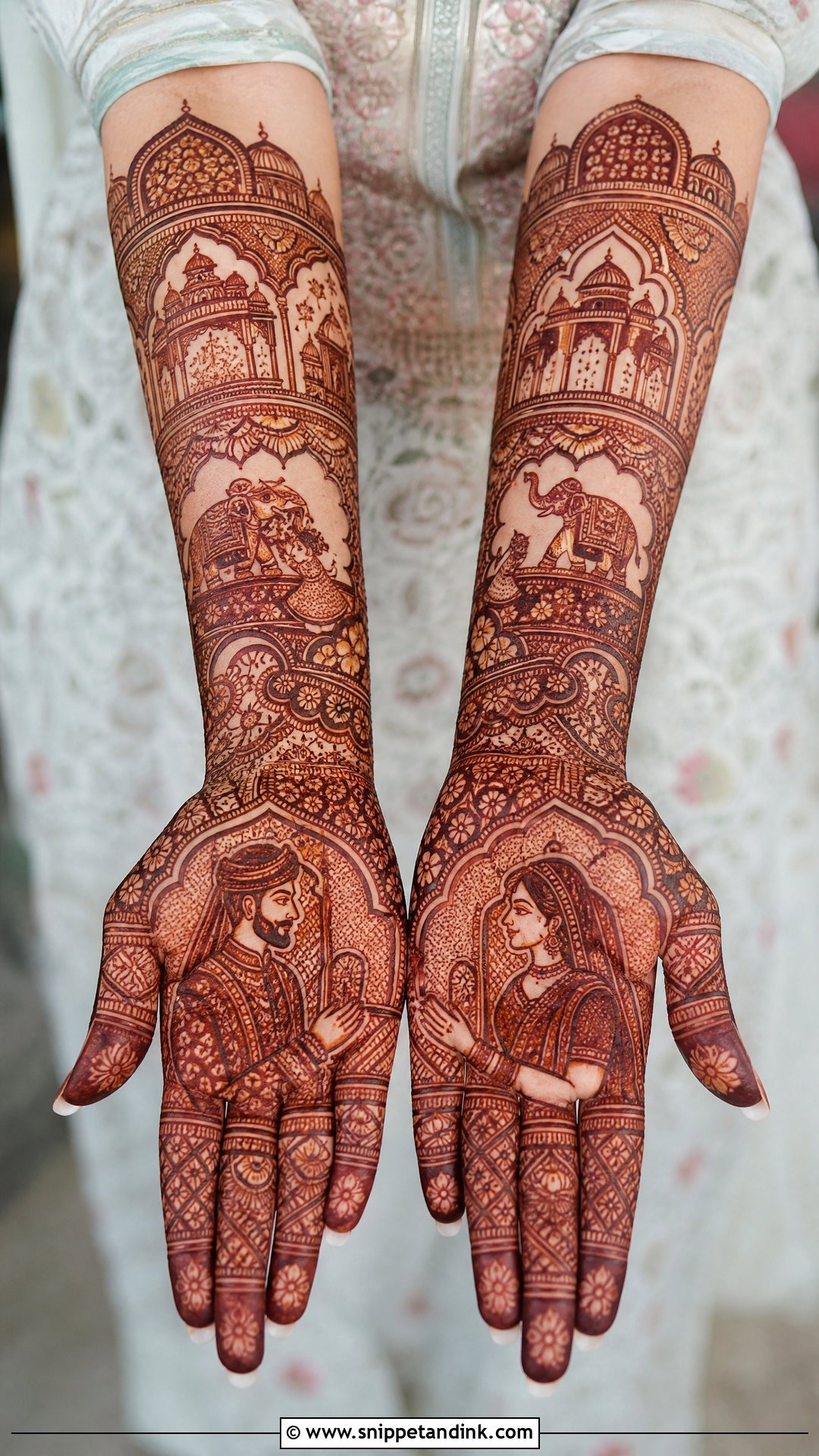
Rajasthani bridal henna is dense storytelling: bride and groom figures, elephants, palaces, peacocks, paisleys and mandalas, often fingertips to elbows. It needs clear motif placement so the large figures stay identifiable while finer patterns fill behind them. I outline the main figures first across the whole arm before filling anything. A hidden name or date fits naturally into an arch or border. Heritage-minded brides with a full day for application suit it best.
20. Pakistani Mehndi Design
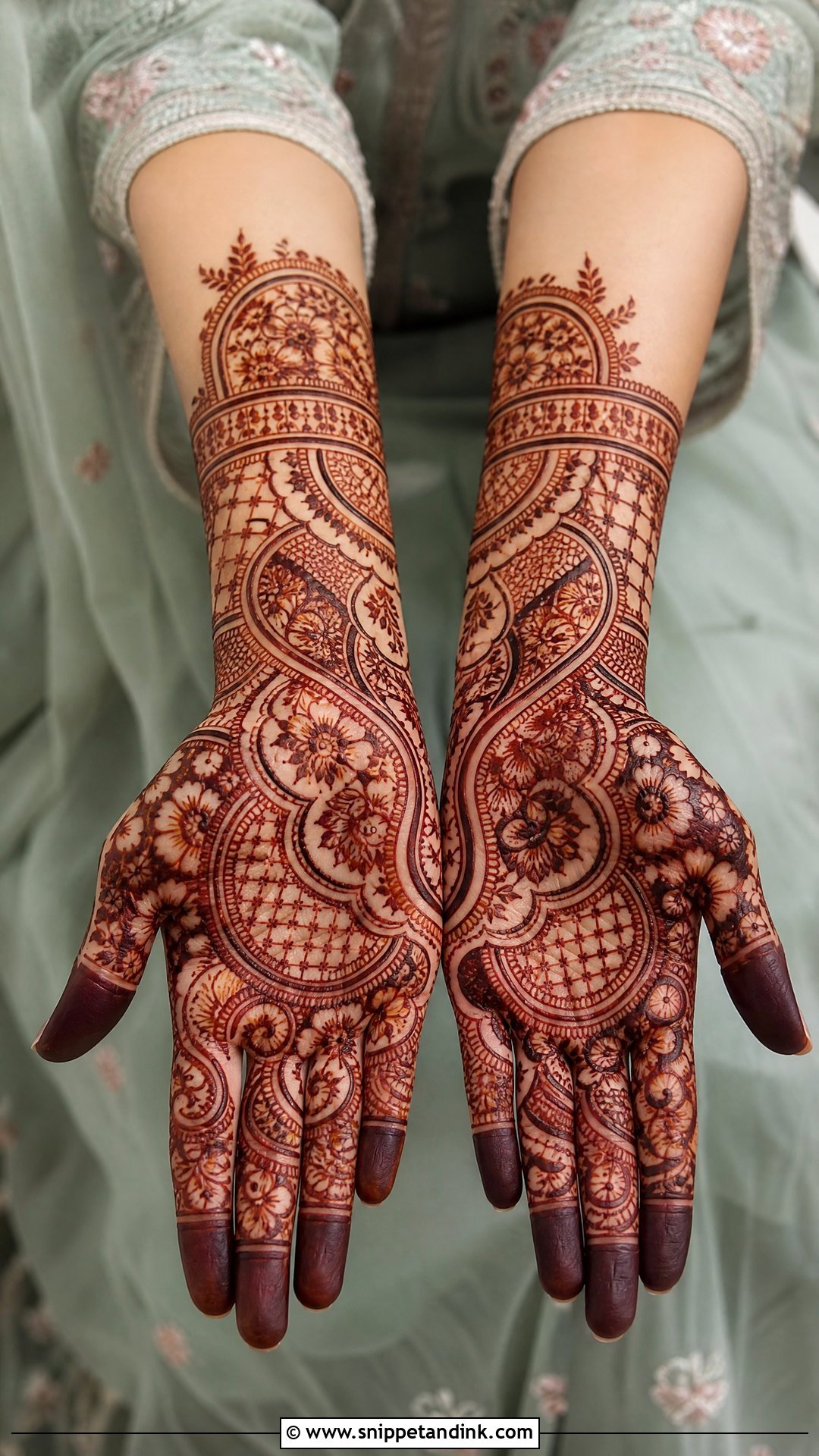
Pakistani mehndi combines Indian detail, Arabic flow and fine ornamental work, with domes, florals, paisleys, jaali, trails and elegant wrist patterns. It can be full, semi-heavy or minimal, which is why it turns up at weddings, Eid and engagements alike. Bold outlines with fine inner detail give it a finished look. Do not skimp on the fingers; in this style they complete the whole hand.
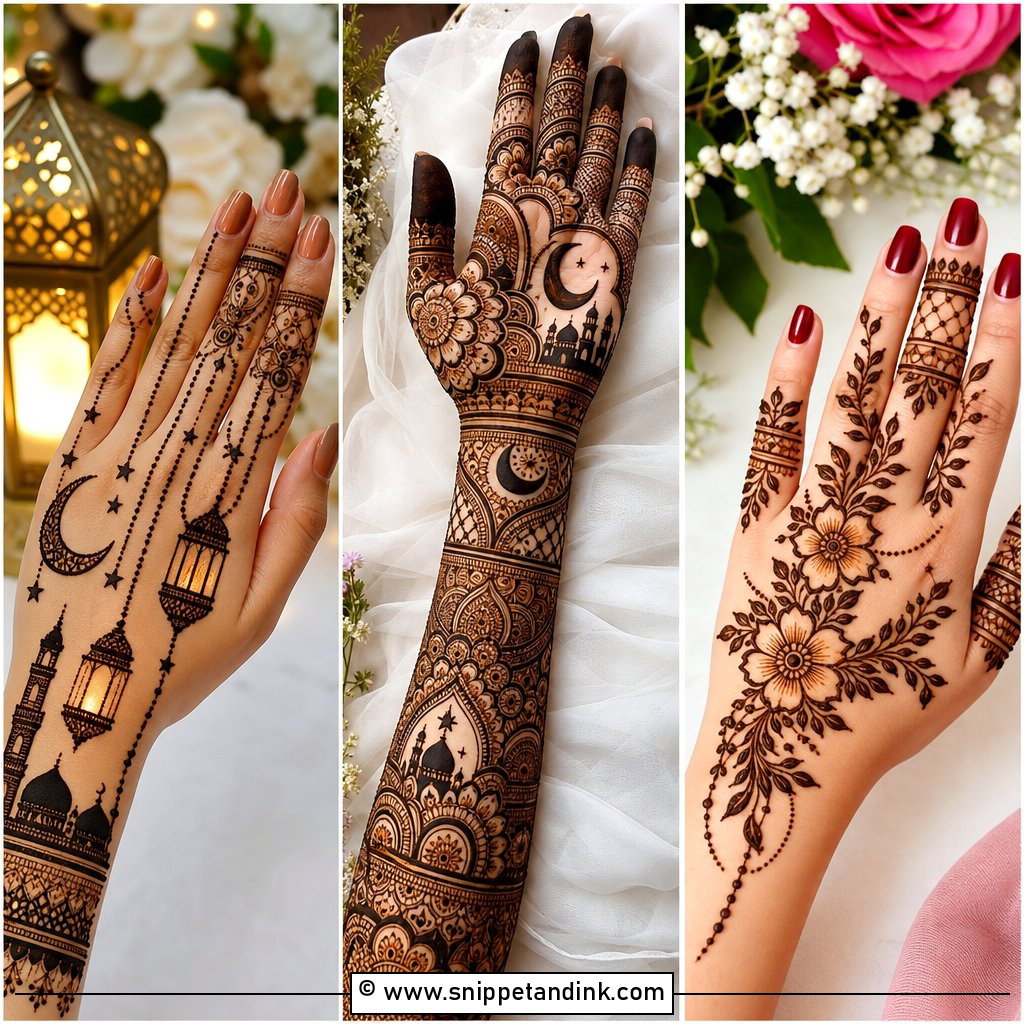
21. Eid Mehndi Design
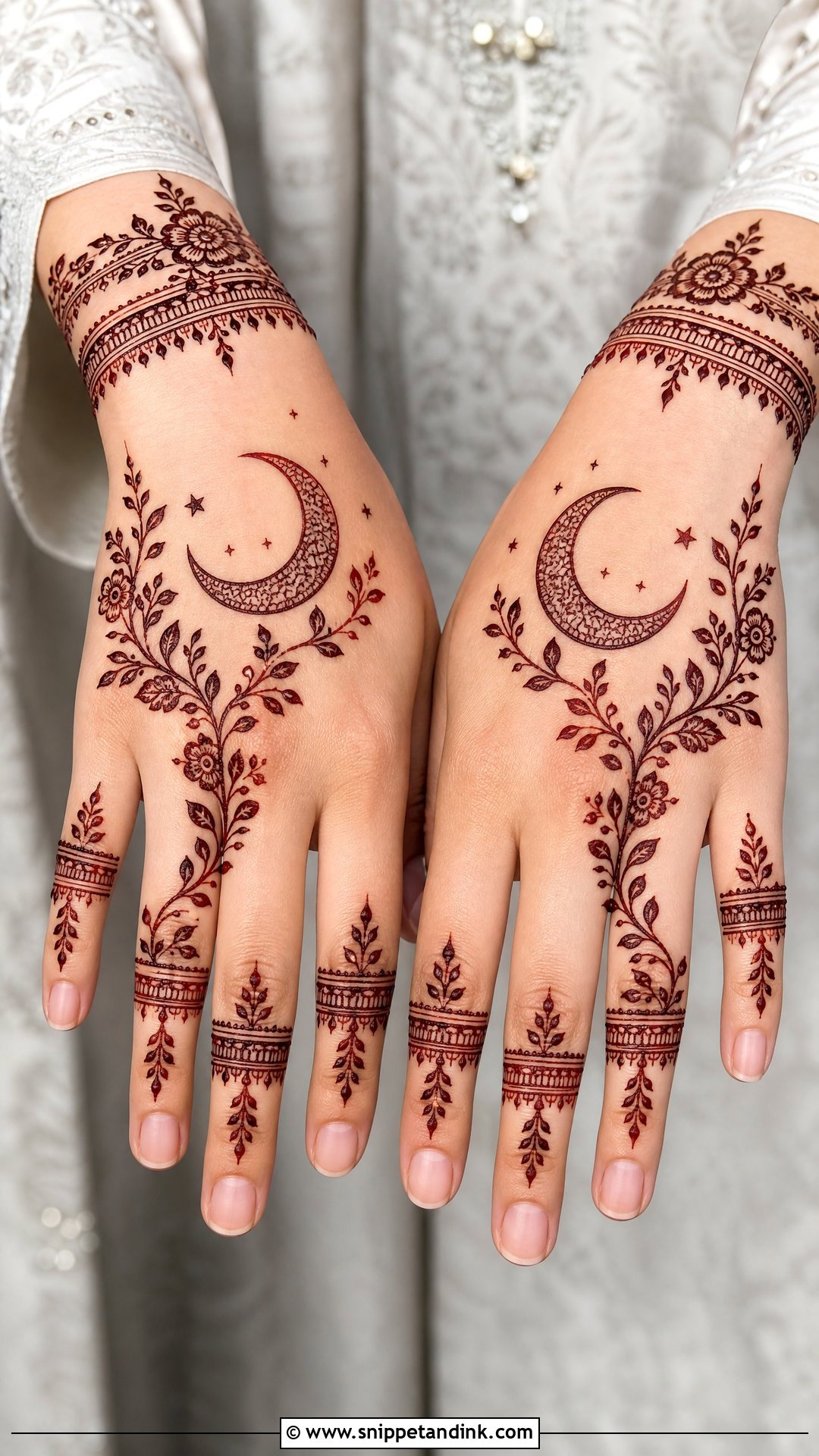
An Eid mehndi design has to last through long days of visiting and cooking, so comfort counts. Arabic floral trails, crescent moons and stars, bracelets, mandalas and khafif back-hand designs are all favourites. A neat trail with decorated fingers looks just as festive as full coverage. If you are applying it on Chand Raat, pick something quick that dries fast, because you will want to sleep with the paste on.
22. Diwali Mehndi Design
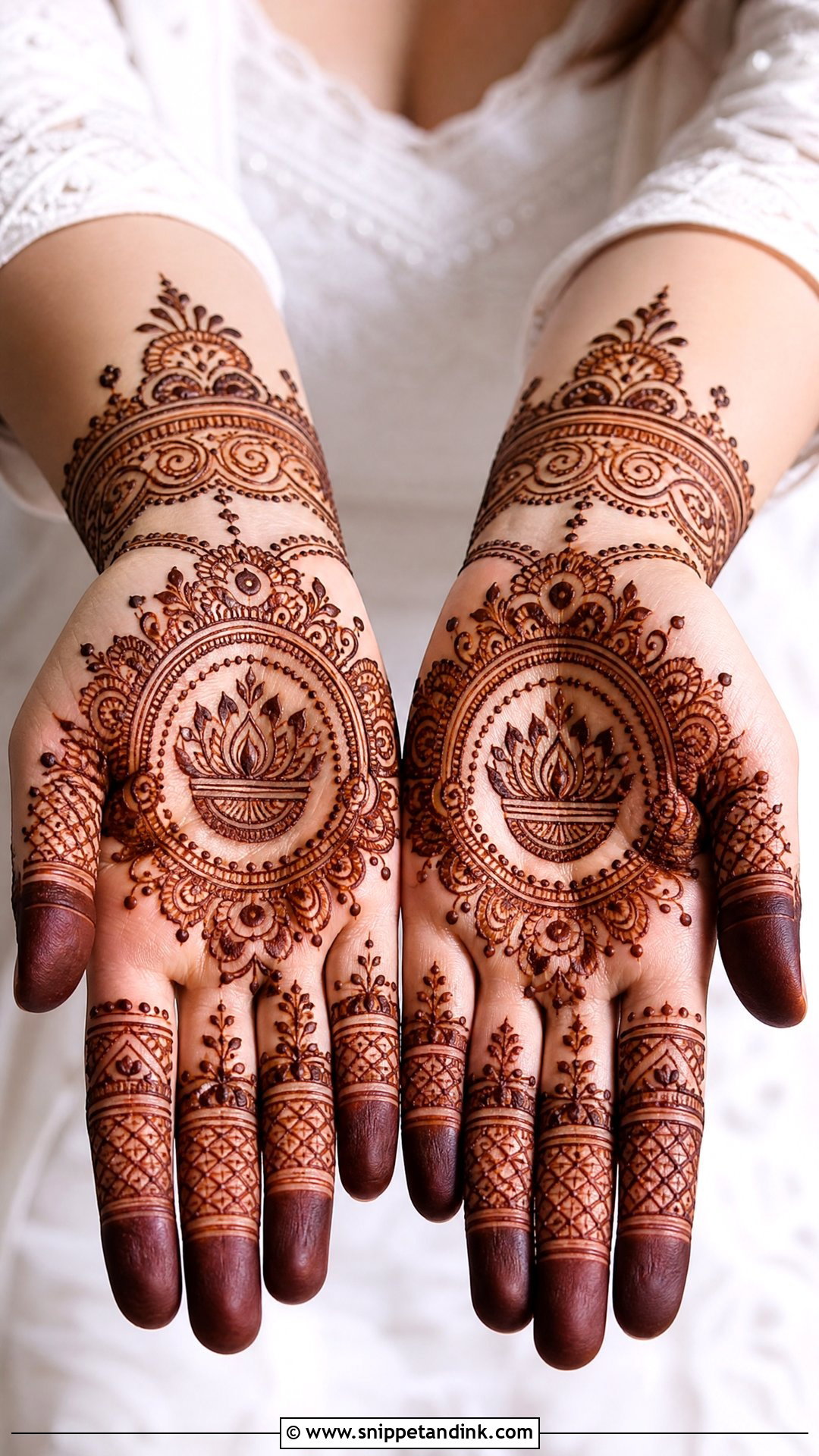
A Diwali mehndi design often features mandalas, lotus flowers, diya shapes, paisleys and detailed finger bands. Front-hand designs show during prayers, greetings and family photos. During the festival your hands are busy lighting lamps, cooking and handling sweets, so very fine lines tend to smudge before they set. A medium-bold symmetrical design with clean spacing gives a stronger stain and survives the rush.
23. Engagement Mehndi Design
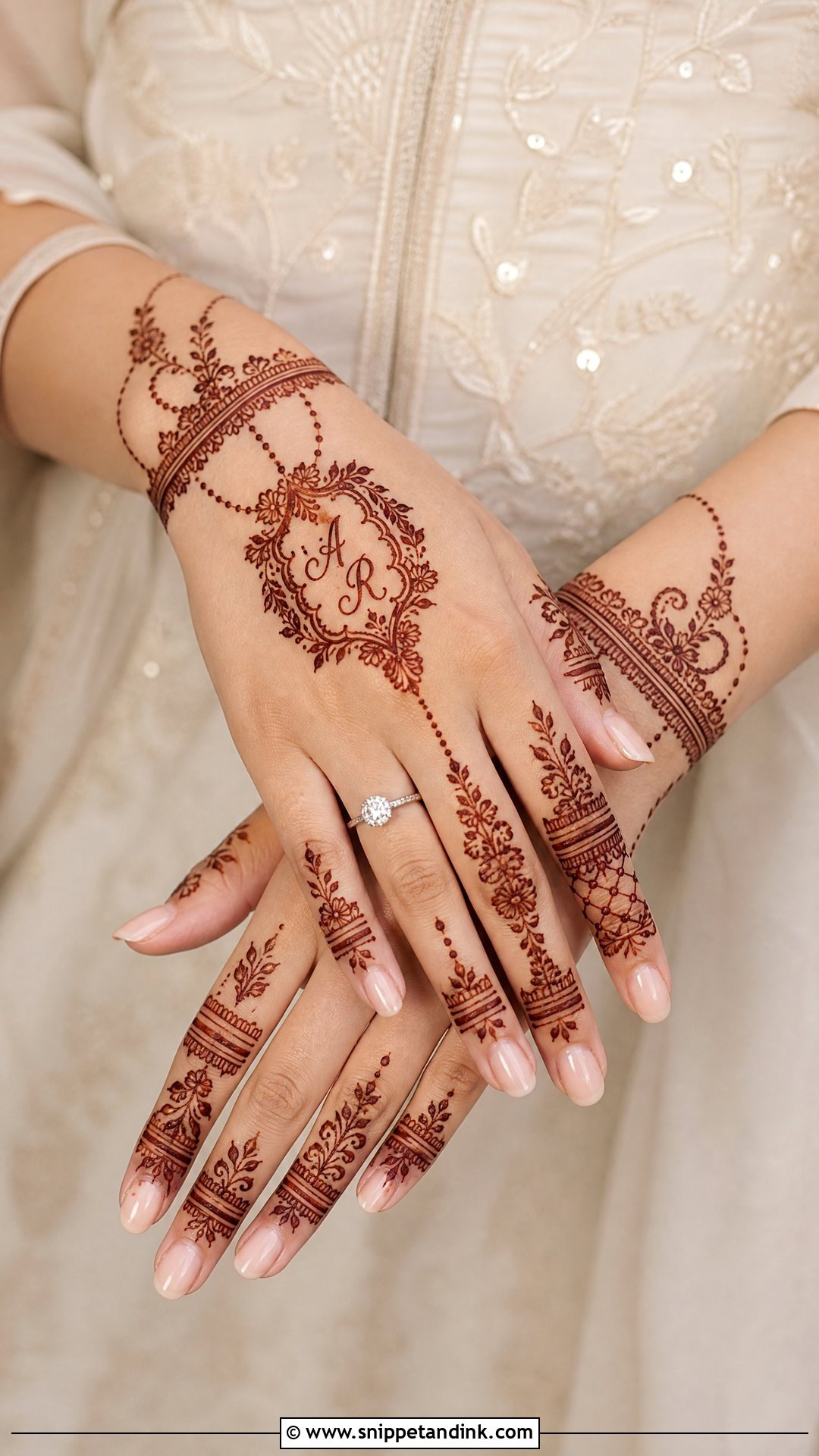
An Engagement mehndi design is usually lighter than bridal: back-hand jewelry patterns, floral trails, ring-finger highlights or a semi-bridal palm, sometimes with initials, a date or a small heart. Ring photos focus on the back of the hand, so that is where I put the attention. I keep the base of the ring finger decorated but uncluttered so the ring itself has room. Fine lines, a few florals and a bracelet band are usually plenty.
24. Baby Shower Mehndi Design
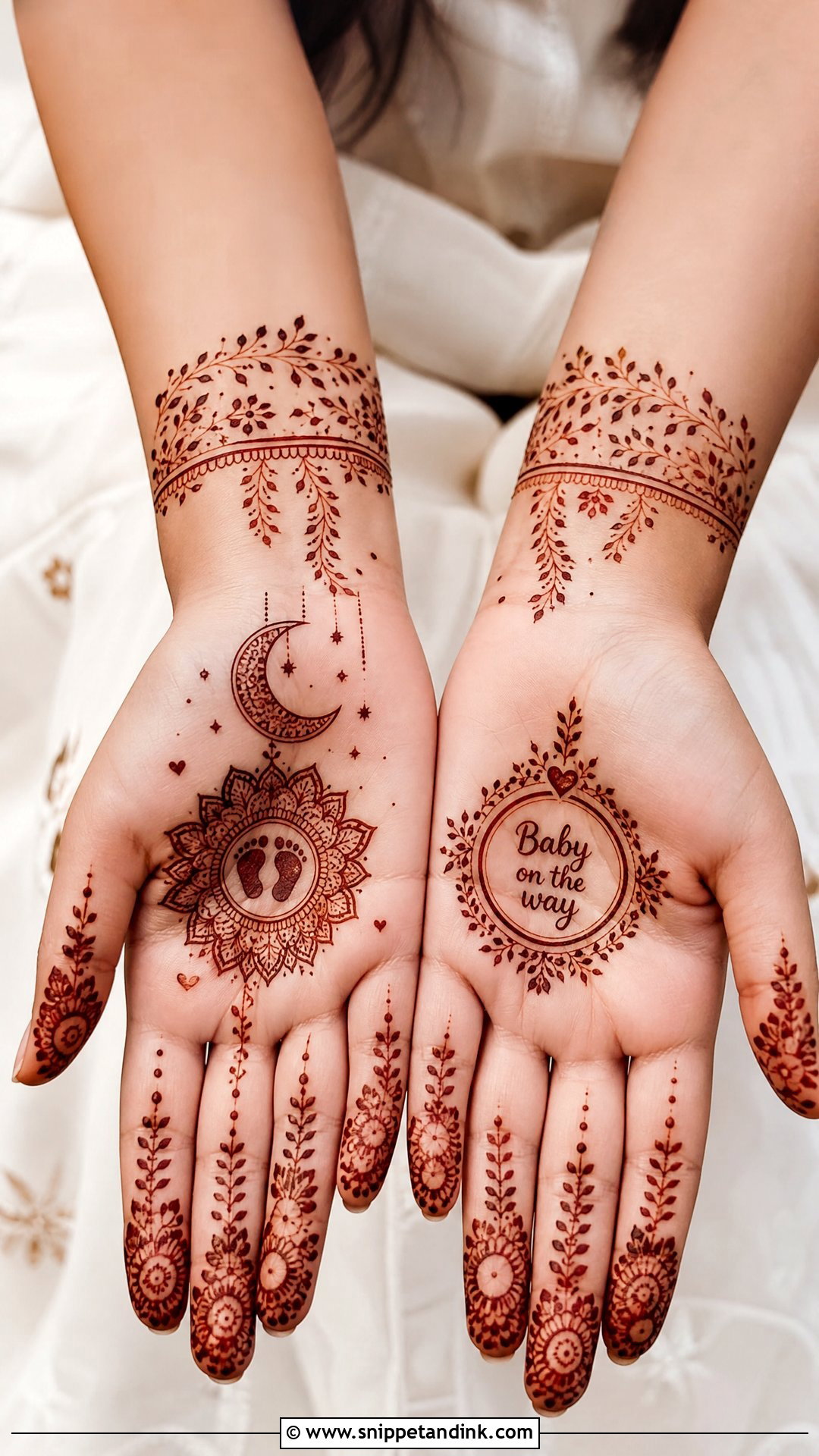
Henna for a baby shower is gentler than bridal work: florals, vines, small hearts, moons, a soft mandala or a few baby-themed details on the palm, back hand or lightly up the forearm. Sitting comfortably matters most, so keep it short. If you are pregnant, ask your artist which essential oils are in the paste; many artists mix a gentler batch with fewer or no strong oils for expectant mothers. A clean floral with one personal symbol blended in is usually enough.
25. Kids Mehndi Design
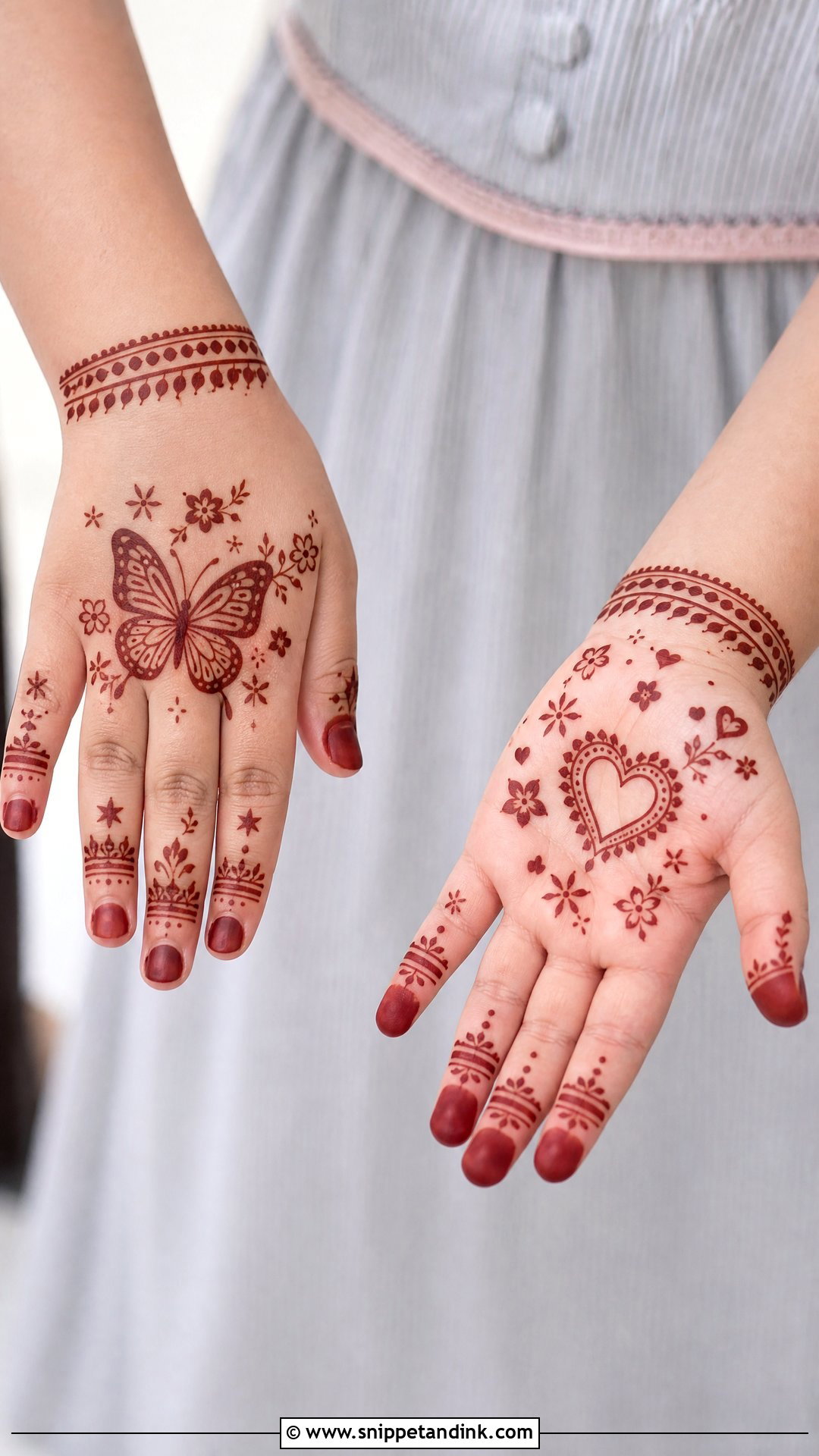
Children wriggle, so speed is the whole brief. A small palm motif with fingertip dots or a back-hand bracelet takes a few minutes. Hearts, butterflies, stars, small flowers and simple mandalas are the usual favourites. I use bold, simple lines so the stain still looks tidy if the child smudges it. Only use natural henna on children, never the “black” kind sold at stalls, and skip strong essential oils for very young skin.
26. Groom Mehndi Design
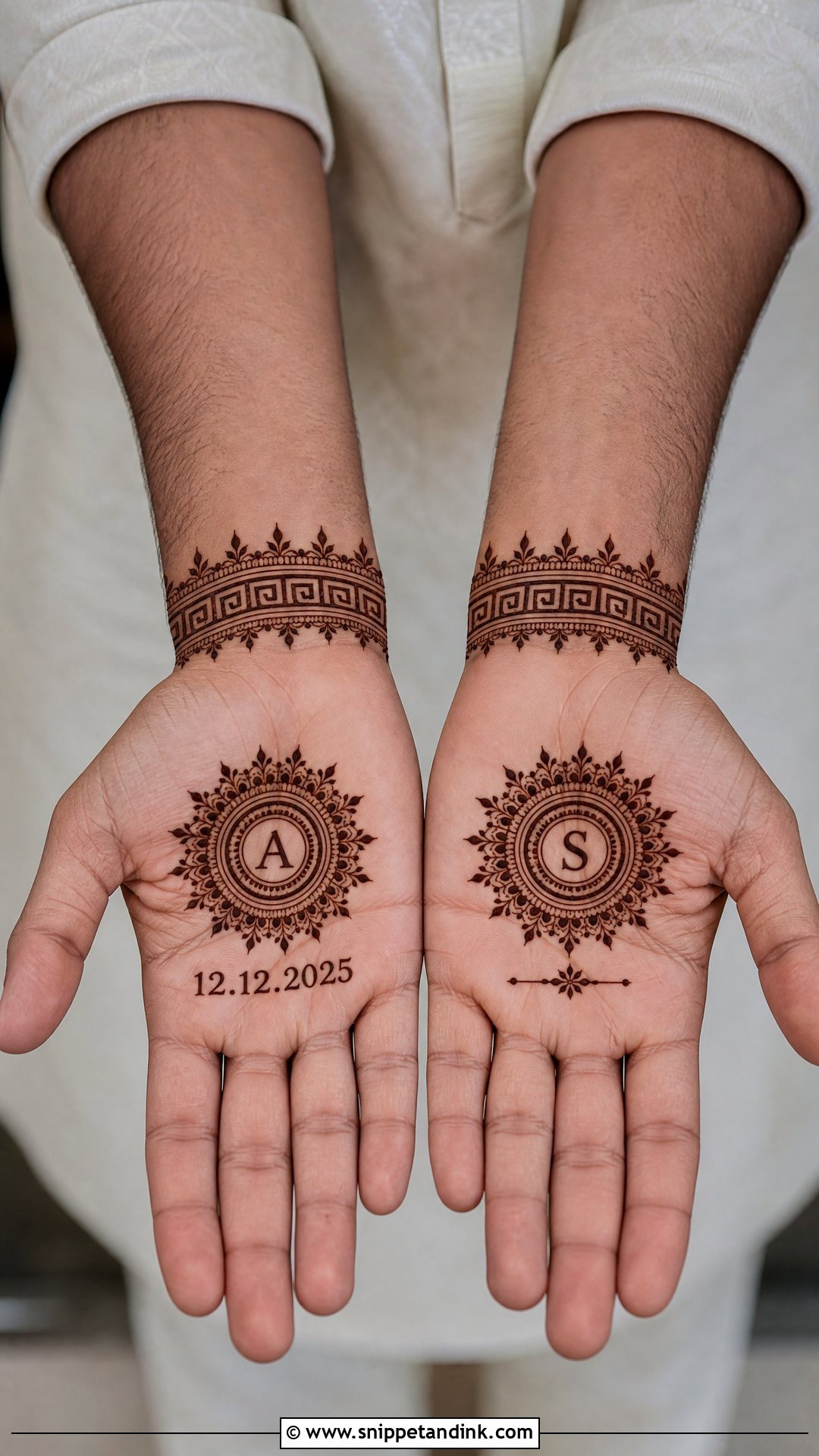
Most grooms want something small and bold: a palm mandala, initials, the wedding date, a geometric wrist band or a motif near the thumb. Some share a symbol or hidden name from the bride’s design. The palm is the usual spot because it shows during rituals. For a modern groom look, sharp lines, geometric borders and very few fillers. Placement and meaning carry this design more than detail does.
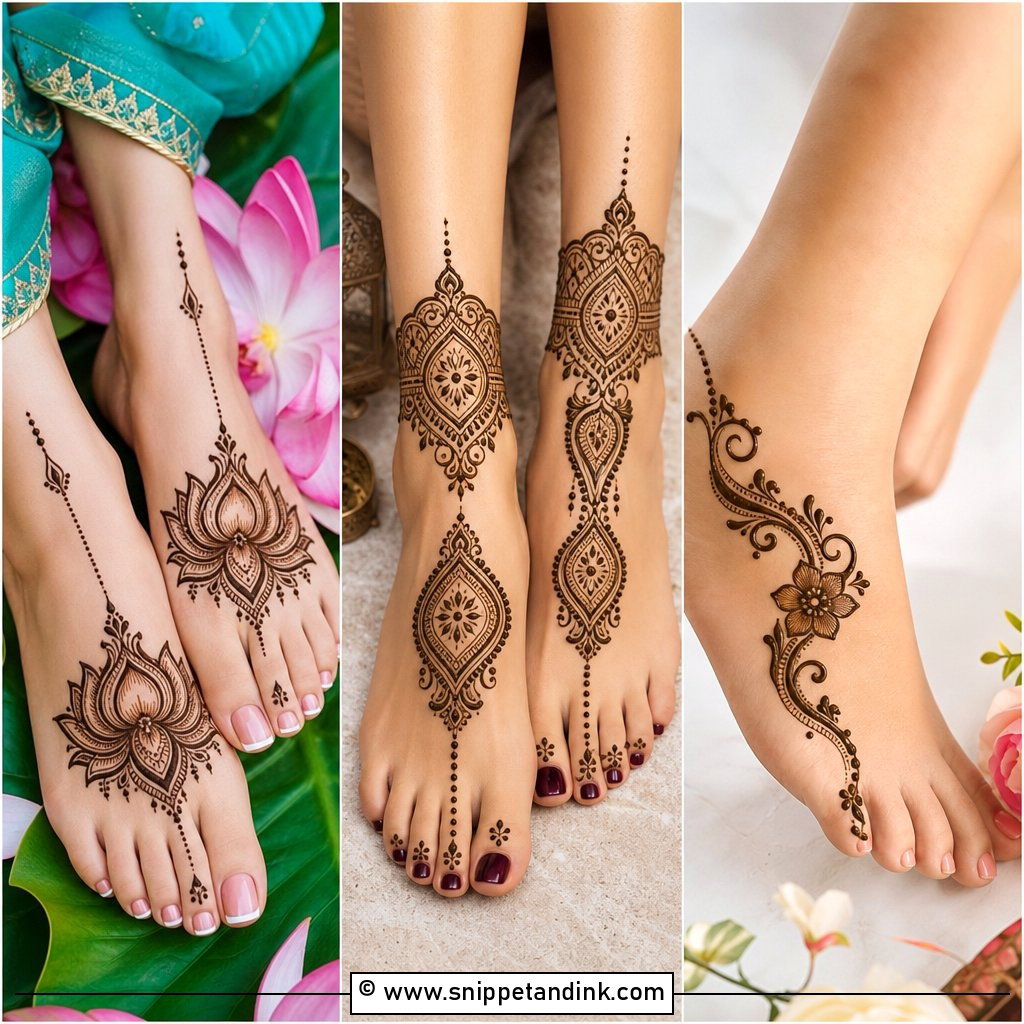
27. Foot Mehndi Design
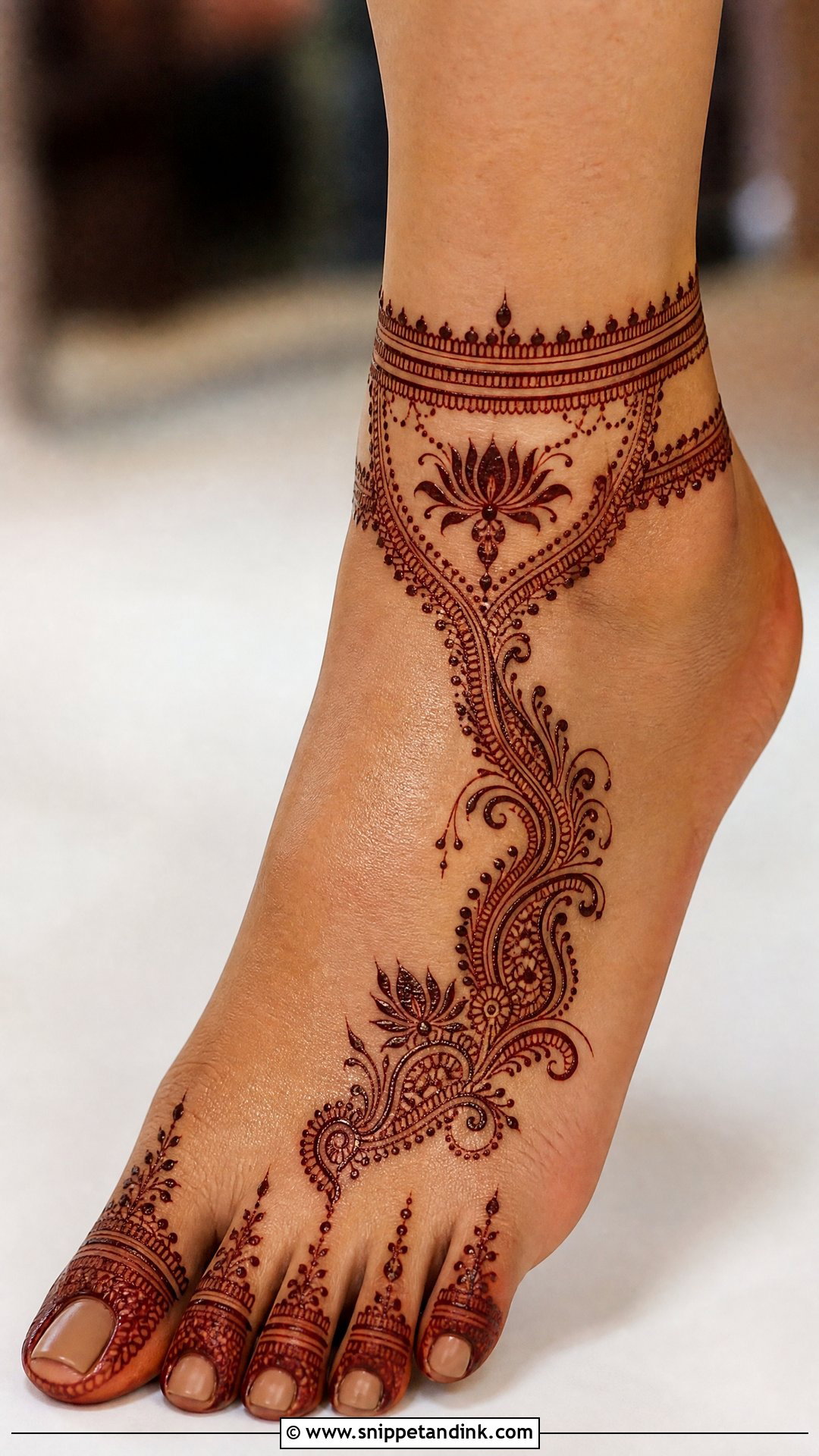
Foot designs cover the toes, the top of the foot and the ankle, sometimes the lower leg, with florals, mandalas, paisleys, anklet bands and leafy trails. Bridal feet can be dense; festive feet can be open. The skin on the feet stains well, but it has to stay up while the paste dries, so plan to sit with your feet raised and no sandals for a while. Decorate the toes neatly and let the pattern follow the arch of the foot, so it sits right with a payal.
28. Full Leg Bridal Mehndi Design
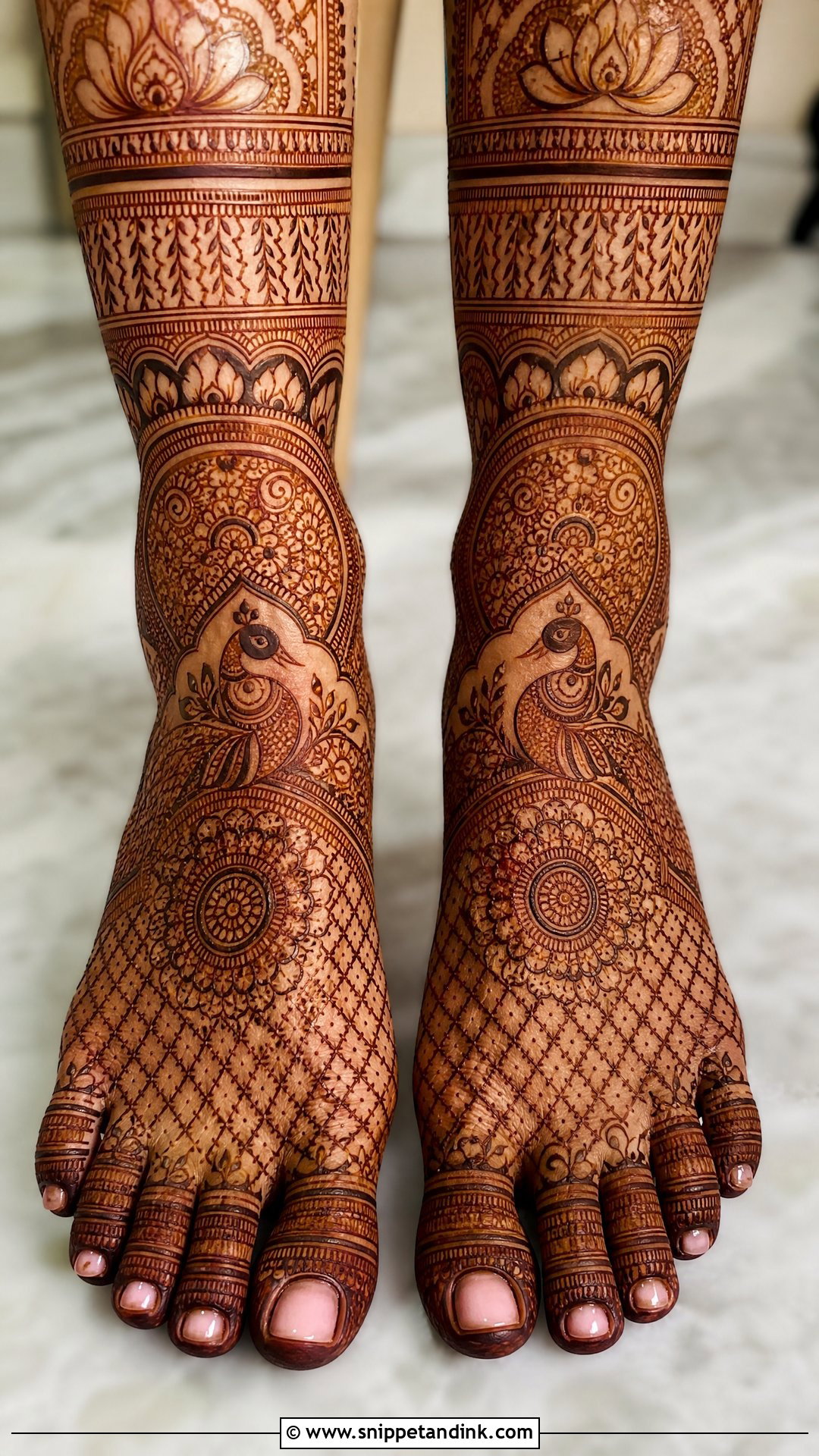
Full-leg bridal henna starts at the toes and climbs toward the calves with mandalas, peacocks, paisleys, lotus, jaali and ornamental bands. It shows in bridal portraits and in rituals where the feet are visible. The large area needs bold anchors spaced along it; too many tiny patterns make it look crowded from standing height. Only take this on if you can set aside real time for both application and drying, since you cannot walk until it sets.
29. Half Hand Mehndi Design
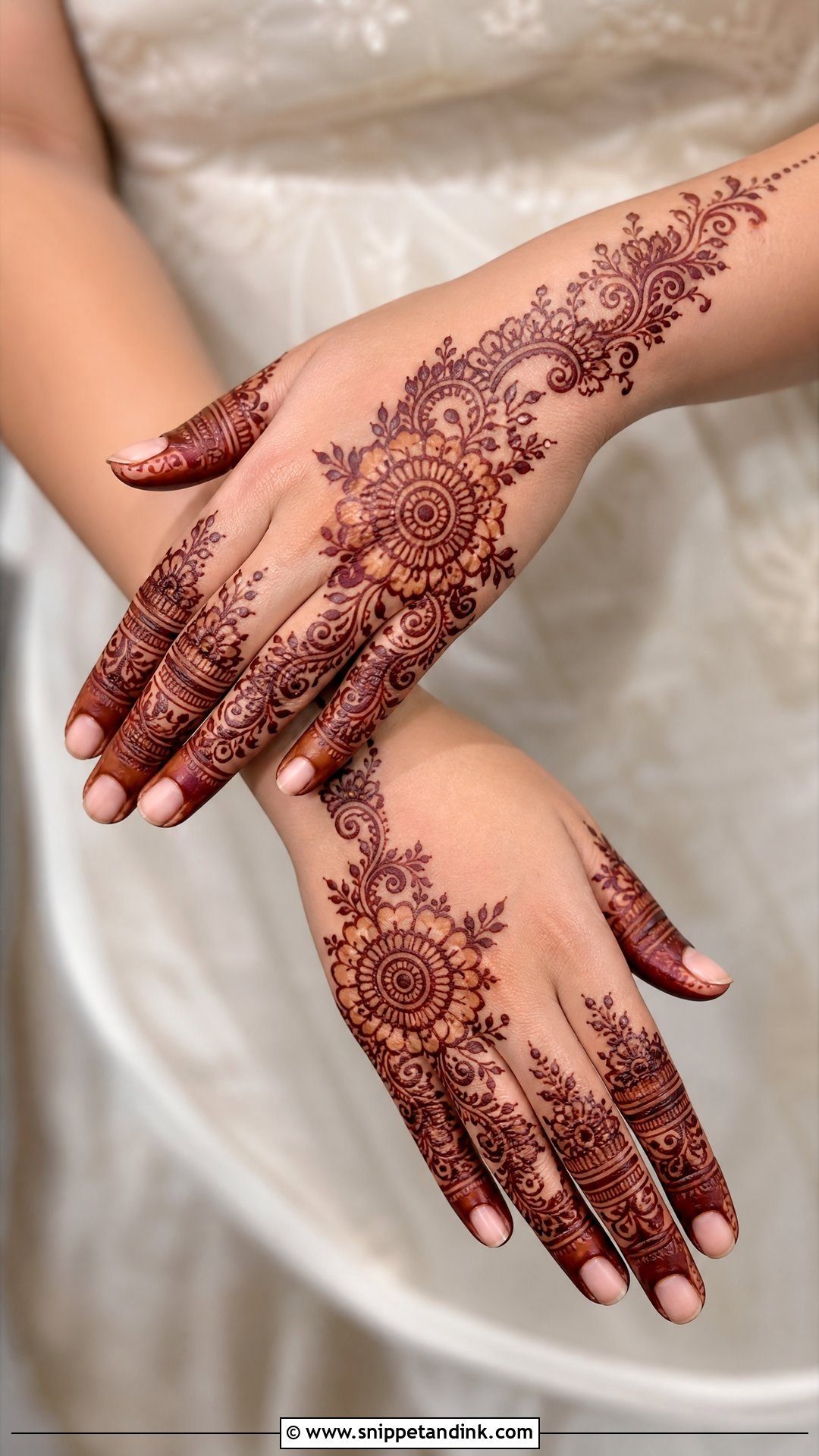
Half-hand designs stop partway, usually fingers to mid-palm or wrist to the centre of the back hand. It is the middle ground between minimal and full, with mandalas, Arabic flowers, paisleys or bracelet layouts. Bridesmaids and guests love it because it is noticeable without hours in the chair. The ending is what matters most: a curved border or decorative band makes it look complete. A pattern that just trails off looks like the artist ran out of time.
30. Full Arm Mehndi Design
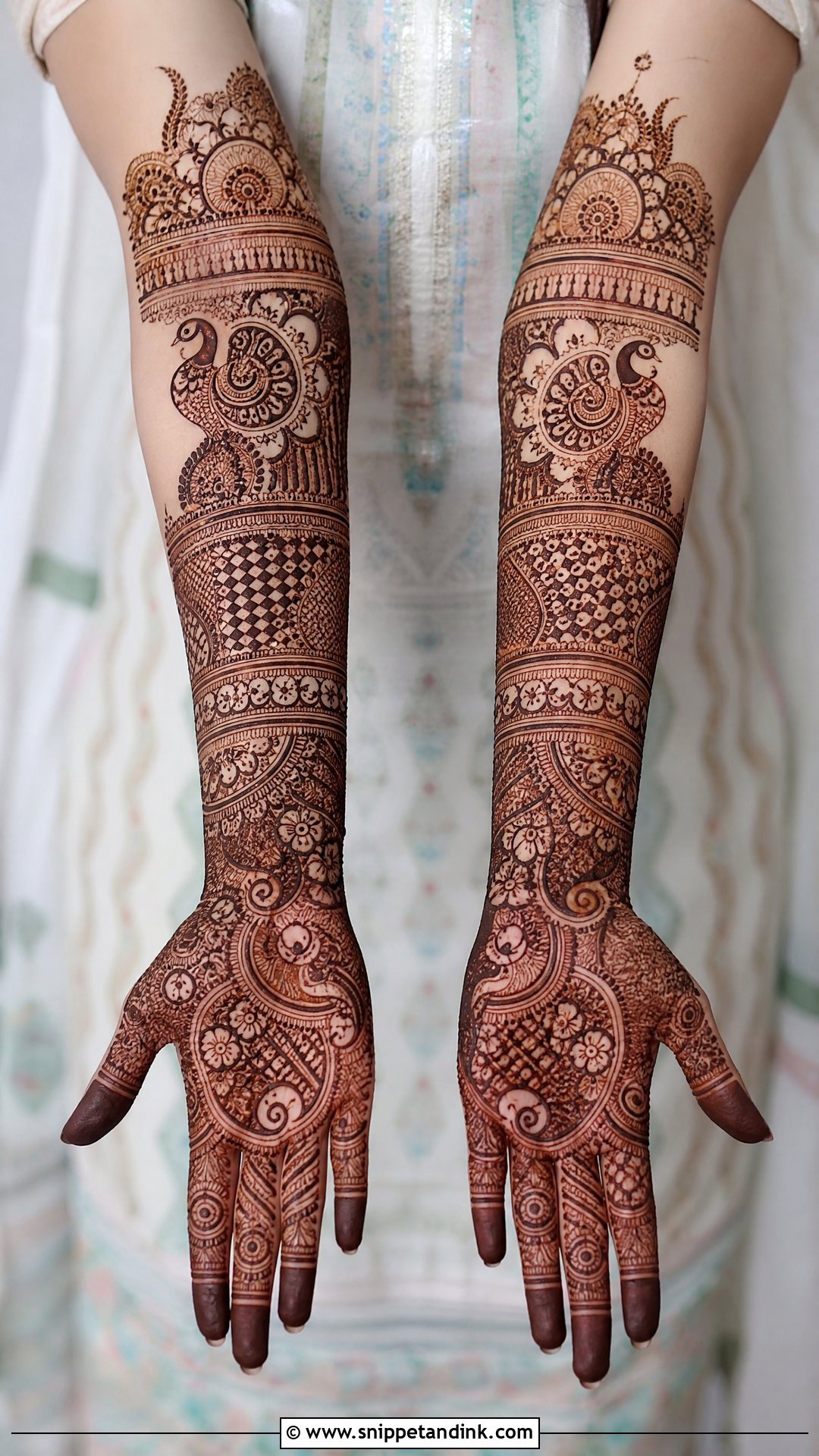
Full-arm henna runs from fingertips to the elbow or beyond, layered with florals, paisleys, mandalas, peacocks, jaali and personal details. Brides choose it for drama; dancers and performers like how it reads on stage. The arm is a long canvas, so the pattern must flow from hand to forearm with changing motif sizes. I place heavy motifs at intervals and never stack two big ones side by side, which is what makes arms look crowded.
31. Rose Mehndi Design
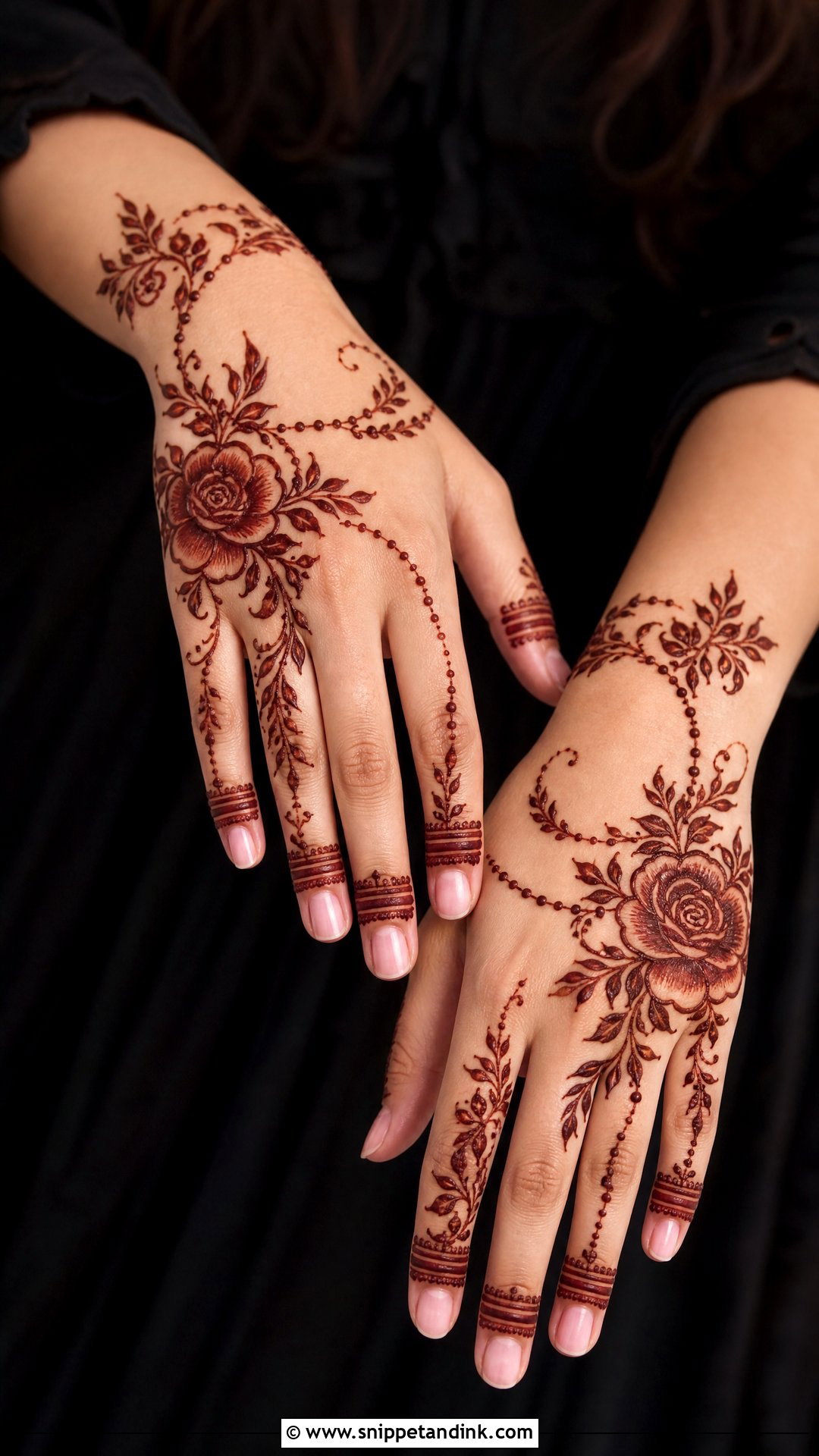
Large roses suit Arabic and Khaleeji layouts; small ones fit bracelets, fingers and back-hand trails. The petals can be shaded for depth, left outlined or mixed with leaves. A rose placed diagonally across the hand gives movement without needing much filler. For a less expected version, I pair a single large rose with fine dotted chains and plenty of open skin. Rose petals are layered from the centre out, so the first spiral needs to be tight.
32. Butterfly Mehndi Design
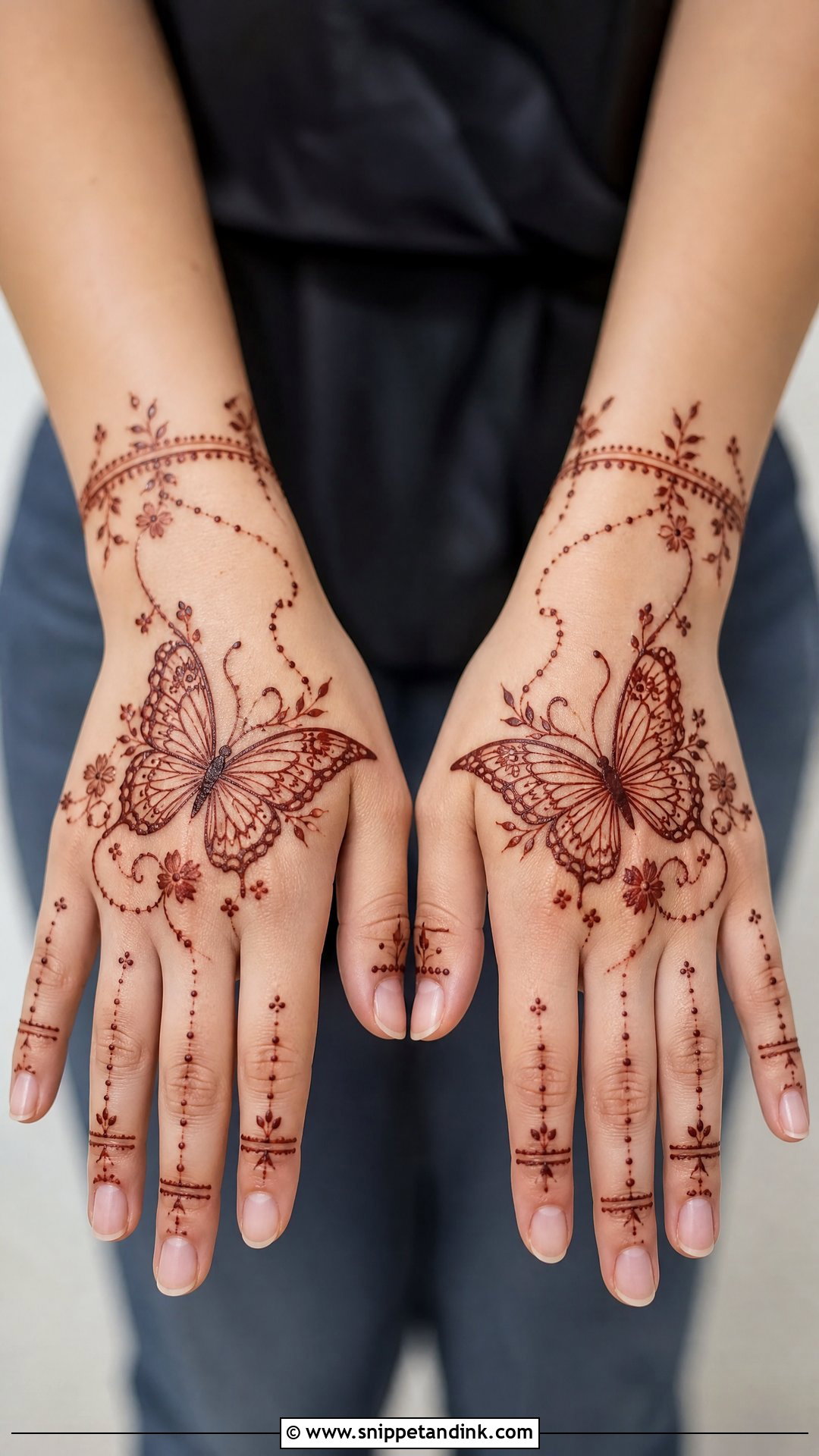
Butterflies are a break from flowers and paisleys, popular with younger girls and casual events. One can sit on the back hand, palm, wrist or near the thumb, with wings filled with dots, lines, tiny flowers or lace. Let it stay the main focus and add only small vines or finger accents. Fine line work makes it elegant; chunkier lines make it playful, which suits children better.
33. Heart Mehndi Design
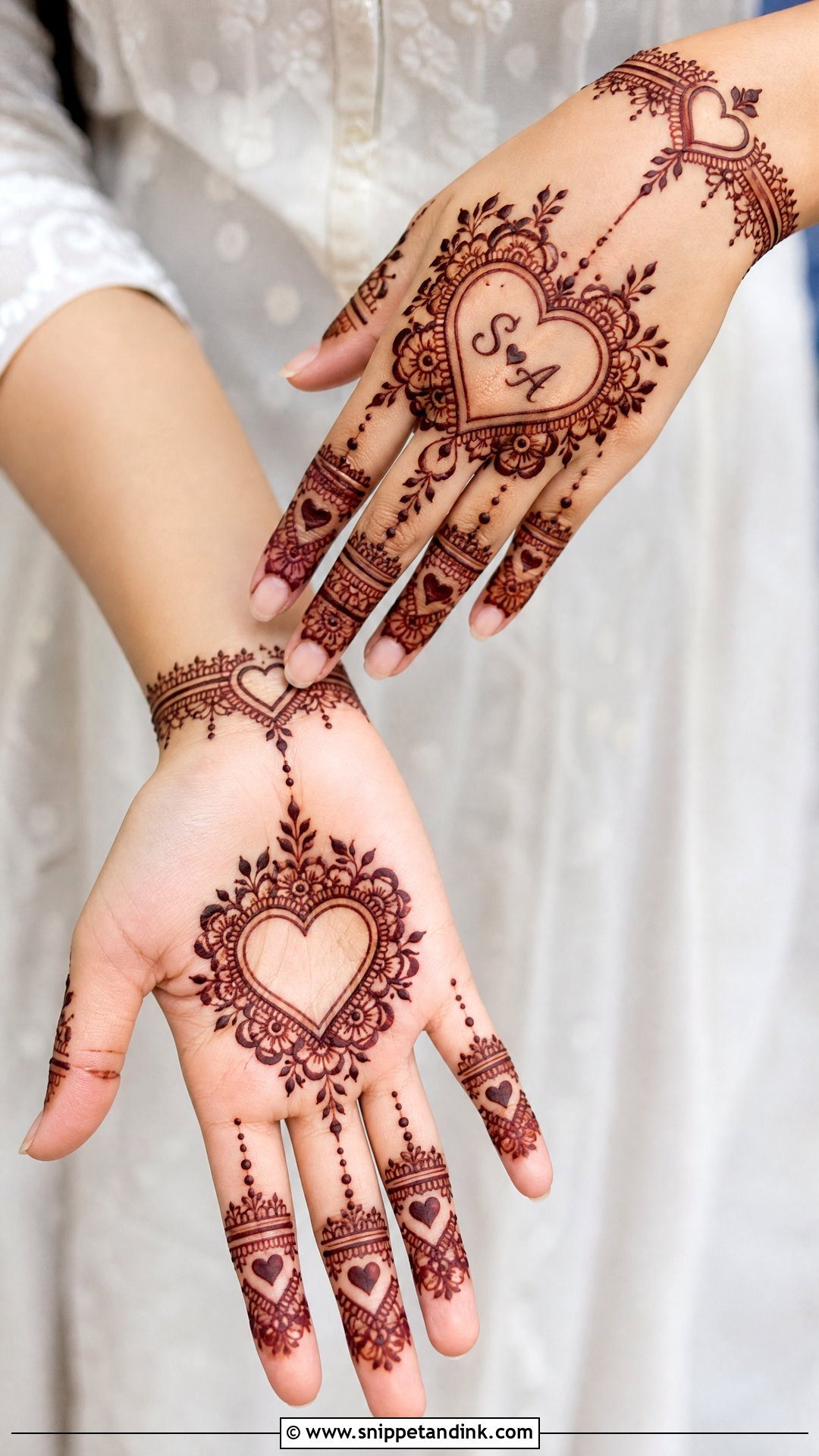
A heart can sit in the palm, hide inside a mandala, rest near the ring finger or join a bracelet band. It reads best small and tidy; a big heart in the middle of the palm tends to look cartoonish. Surround it with flowers, dots, leaves and fine borders to make it more grown-up. Couples often combine a heart with initials. Getting the two lobes even is the tricky part, so I draw both halves from the point upward.
34. White Mehndi Design
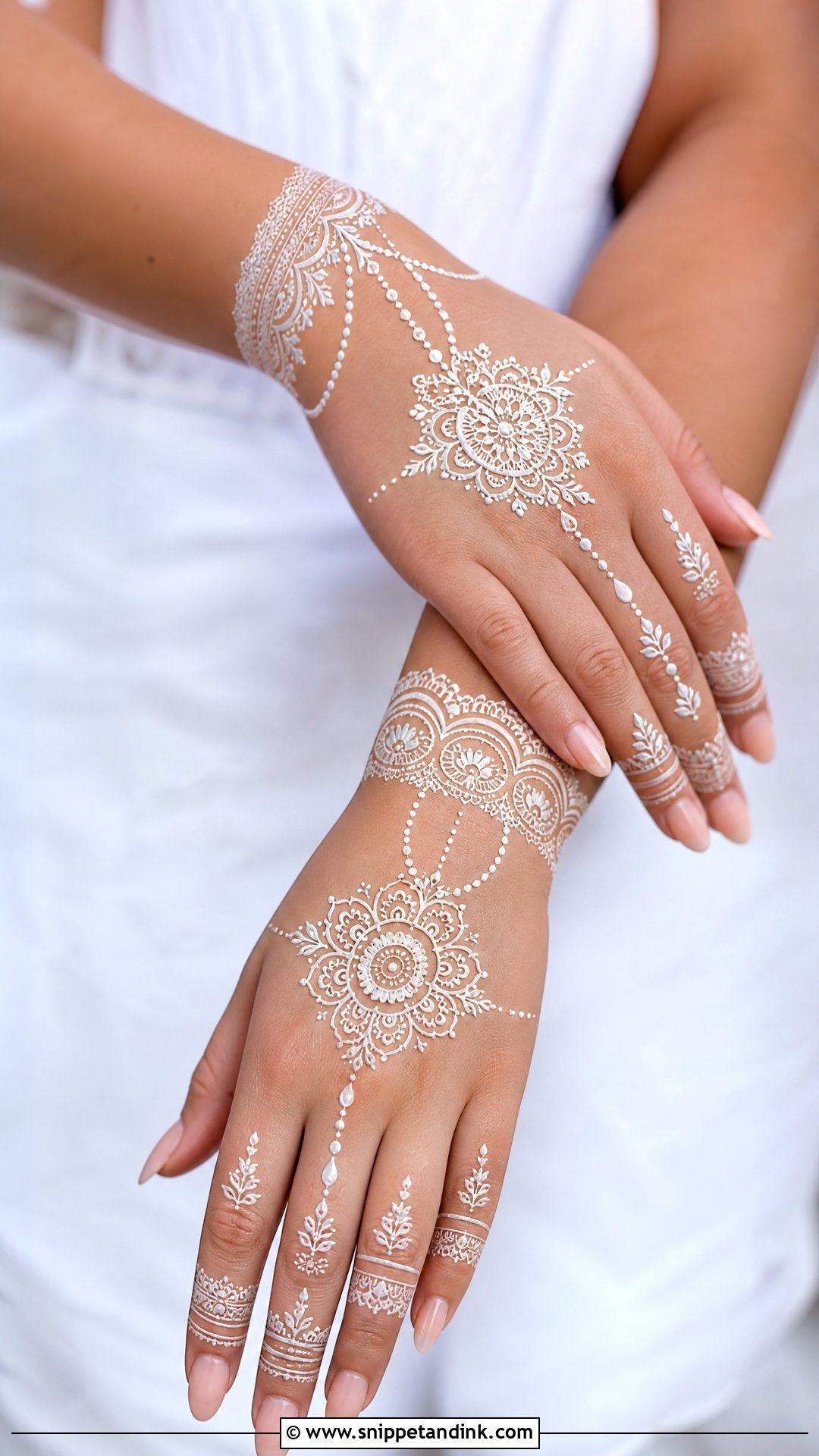
White mehndi is not henna at all. It is usually a cosmetic body paint or adhesive applied through a cone, which sits on top of the skin rather than staining it, and it lasts from a few hours to a day or so. Lace patterns, florals, mandalas, jewelry chains and fine finger detail are typical, and it shows up crisply on most skin tones. Since the ingredients vary, patch test it first. Save it for photos, parties and short events, not multi-day celebrations.
35. Glitter Mehndi Design
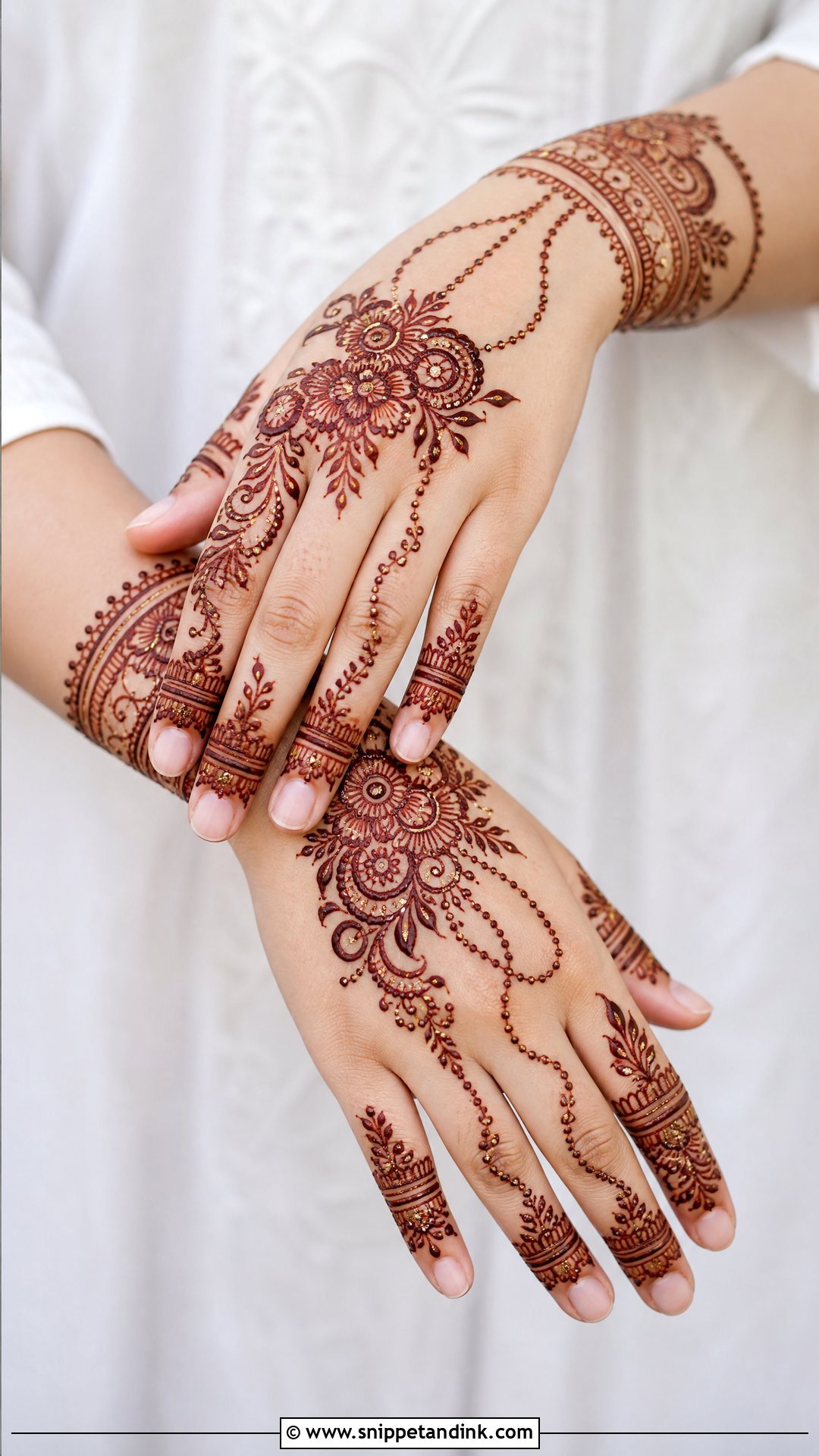
Glitter is added on top of a henna or paint design, highlighting petals, borders, dots and wrist bands. Parties, sangeet nights, kids’ events and photos are where it belongs. Use it sparingly: too much hides the line work and looks messy. Gold, bronze, maroon and soft silver sit naturally beside reddish-brown henna. Use cosmetic-grade glitter and gel only, and keep it off the palms if you will be eating with your hands.
Mixing and Using Your Own Cone the Night Before
Plenty of the simpler designs above are well within reach at home. The paste is where most home henna goes wrong, not the drawing.
How I prepare a batch
- Use fresh, finely sifted body-art-quality henna powder. Old or coarse powder stains weakly and clogs the cone.
- Mix it with lemon juice or water and a little sugar to a thick paste, then leave it covered somewhere warm for several hours to release the dye. Ready paste shows a slightly darker layer on top.
- Add a small amount of a skin-safe essential oil if you like, but less is more, and skip it for children and during pregnancy.
- Thin it gradually to the consistency of toothpaste, then strain it and roll it into a cone. Cut only a tiny tip; you can always cut more.
Practise on paper first to judge pressure. Once it is on your skin, seal it with a dab of lemon and sugar and leave it as long as you can. The stain starts orange and deepens over the next day or two, so don’t panic at the first colour you see.
Spare paste freezes well in sealed cones, which saves mixing again for the next celebration.
The Occasion Comes First, the Pattern Second
There is a design here for every kind of day. Something simple suits a quick celebration, something detailed suits a wedding, and something modern suits a fashion-forward look. Arabic trails, Indian bridal patterns, Moroccan geometry, Khaleeji florals, mandalas, bracelets and minimal fingers each set a different mood. Let the occasion, the outfit, your hand shape and your patience decide. If tradition pulls you, go for paisleys, peacocks and full-hand work; if modern appeals, try negative space, khafif, jewelry or white mehndi. Either way, a design planned around your real day will look best.
You'll Like These Ideas:


Leave a Reply