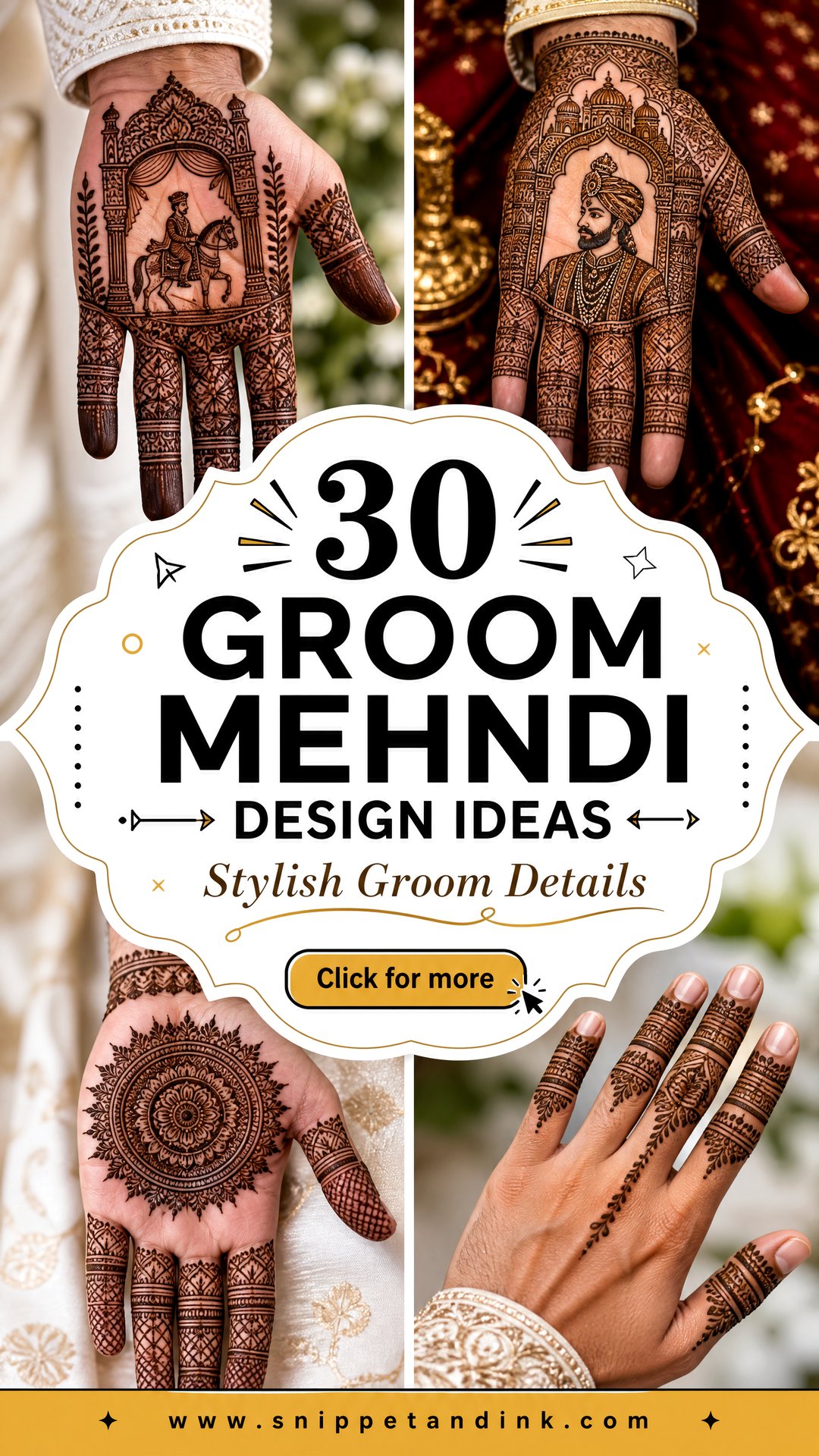
Groom mehndi is no longer just a small wedding ritual; it has become a polished part of the groom’s full wedding look. Today’s designs range from simple palm mandalas to royal forearm patterns, Arabic trails, initials, wedding dates, and coordinated dulha-dulhan artwork. The best choice depends on your outfit, ceremony type, comfort level, and how bold you want the photos to look. Some grooms prefer clean minimal henna, while others want detailed Indian mehndi with strong cultural meaning. A good groom design should feel masculine, balanced, personal, and easy to wear through every wedding event. Below, you’ll find 30 Groom Mehndi Design Ideas that cover traditional, modern, royal, simple, and personalized looks.
1. Simple Groom Mehndi Design
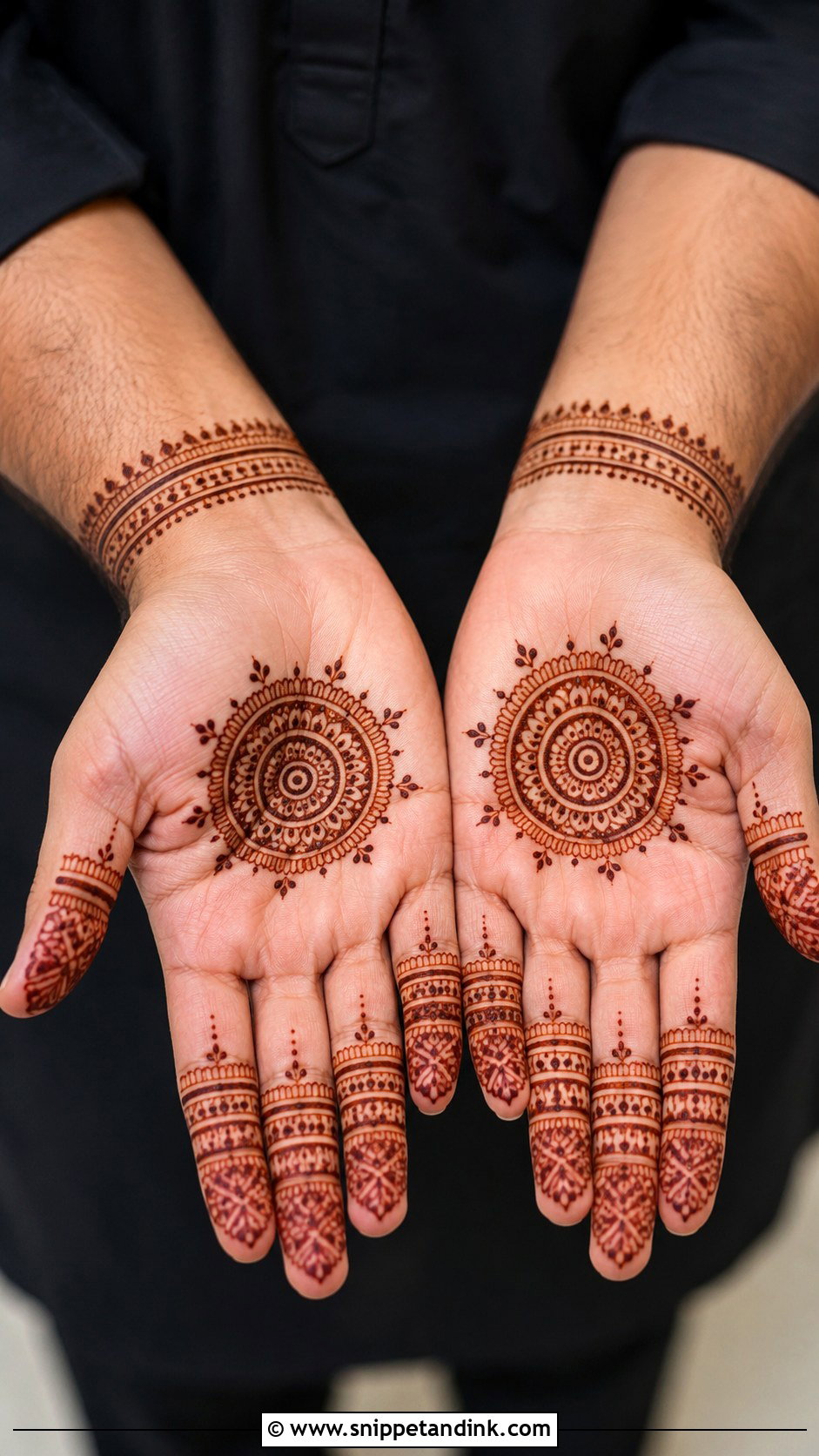
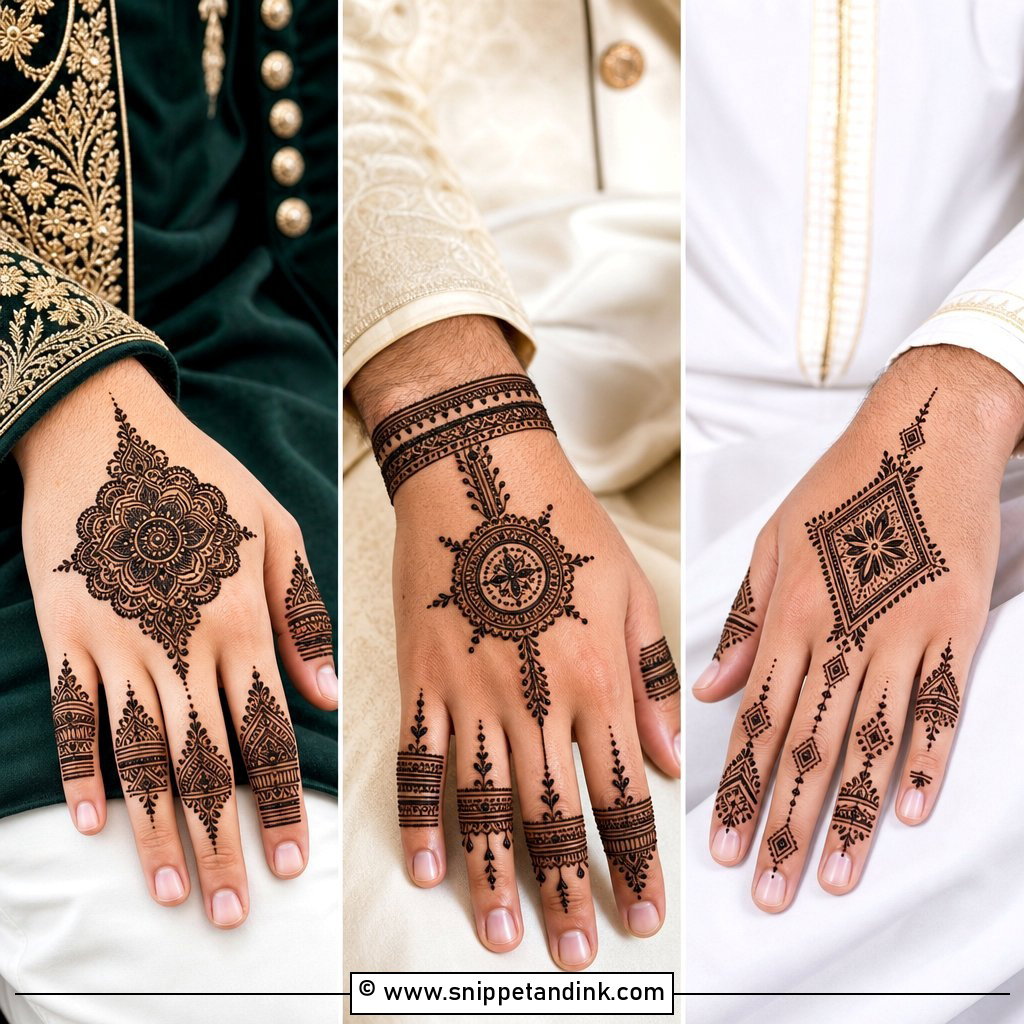
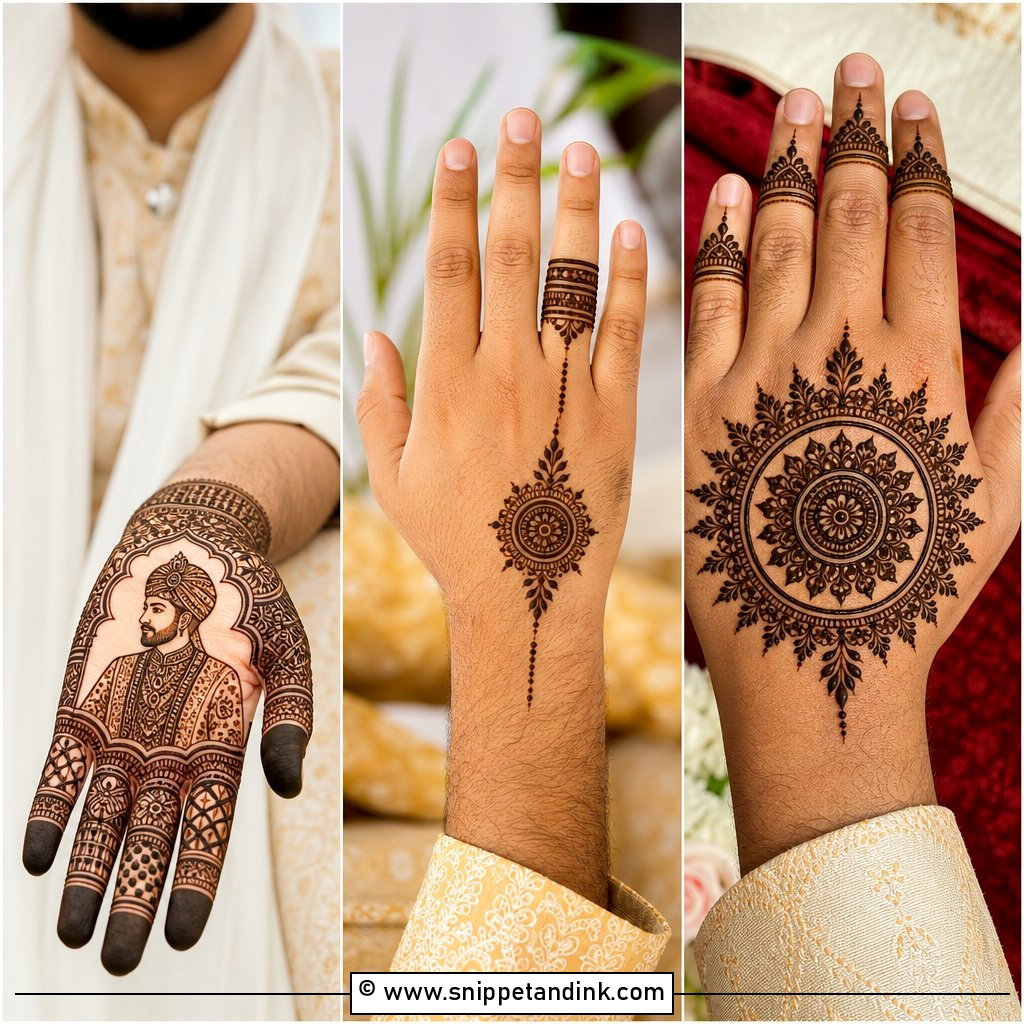
A simple groom mehndi design is perfect for men who want wedding henna without feeling overdone. This look usually focuses on the palm or back of the hand with one neat centerpiece, light finger detailing, and clean spacing. A small mandala, leaf circle, or geometric motif works well because it looks intentional but not too heavy. The design can stop at the wrist, making it easy to pair with a sherwani, kurta, or Indo-western outfit. Ask the artist to keep the lines bold and the fillers minimal so the stain shows clearly in photos. This is also a great option for grooms trying mehndi for the first time.
2. Groom Palm Mehndi Design
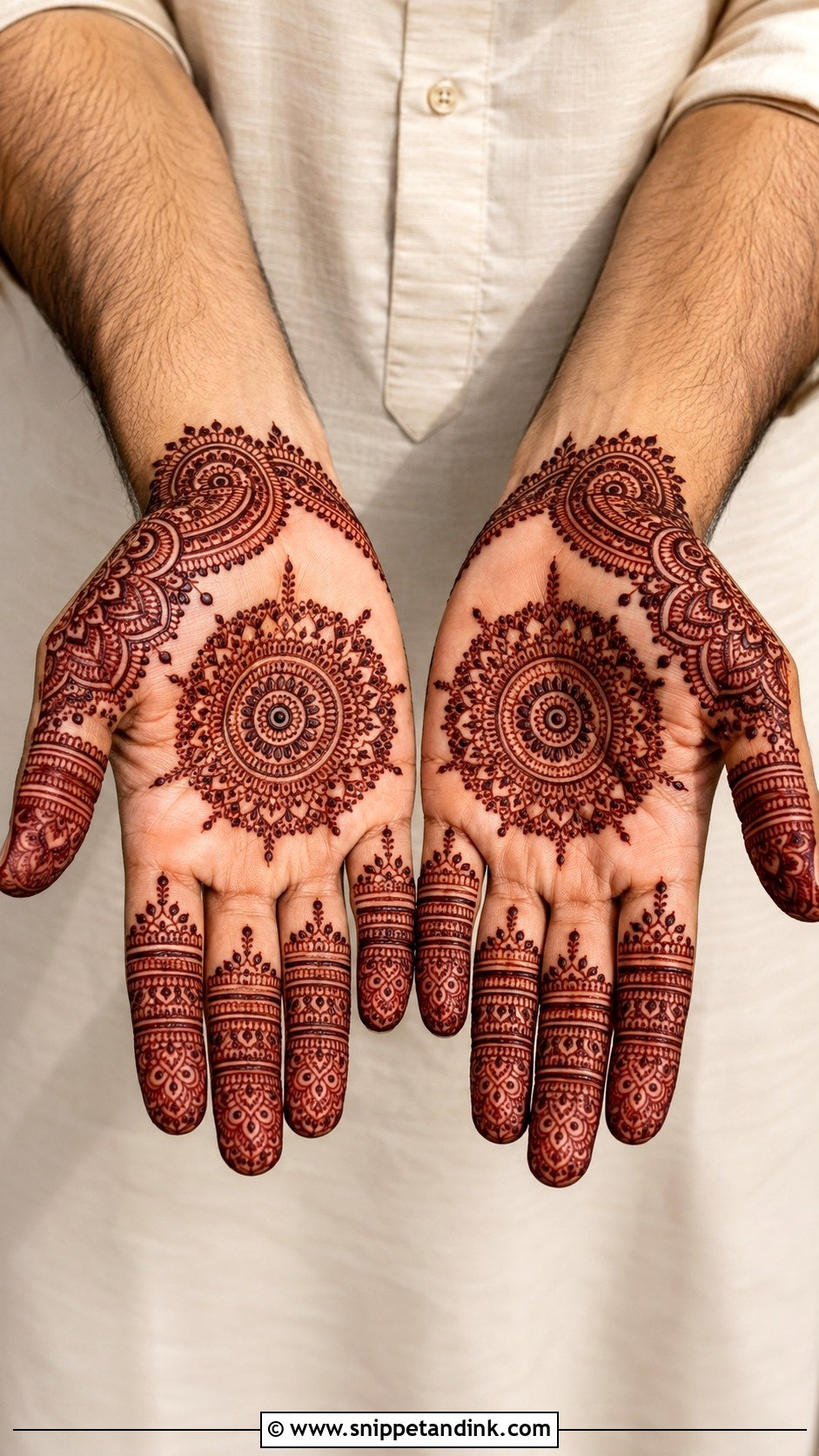
A groom palm mehndi design keeps the focus on the most traditional placement while still looking clean and stylish. The palm gives a rich stain because the skin takes henna color well, so even a small pattern can look strong. A centered mandala with paisley corners, dotted borders, and slim finger bands creates a complete look without covering the whole hand. This style is especially useful for wedding rituals where the hands are photographed during blessings, rings, or family ceremonies. It also works well for grooms who want the design to stay slightly hidden when the hand is relaxed but visible during key moments.
3. Groom Back Hand Mehndi Design
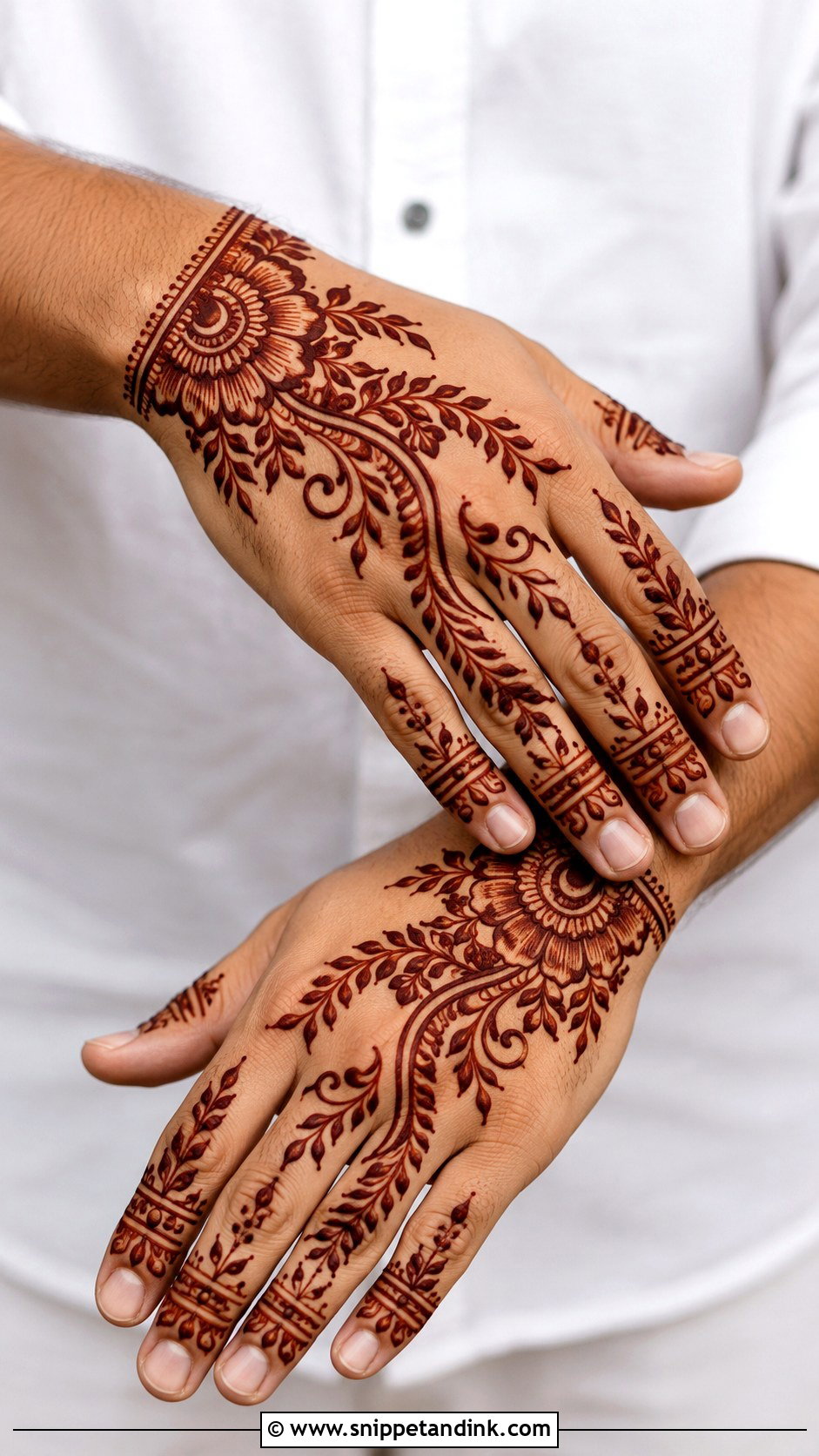
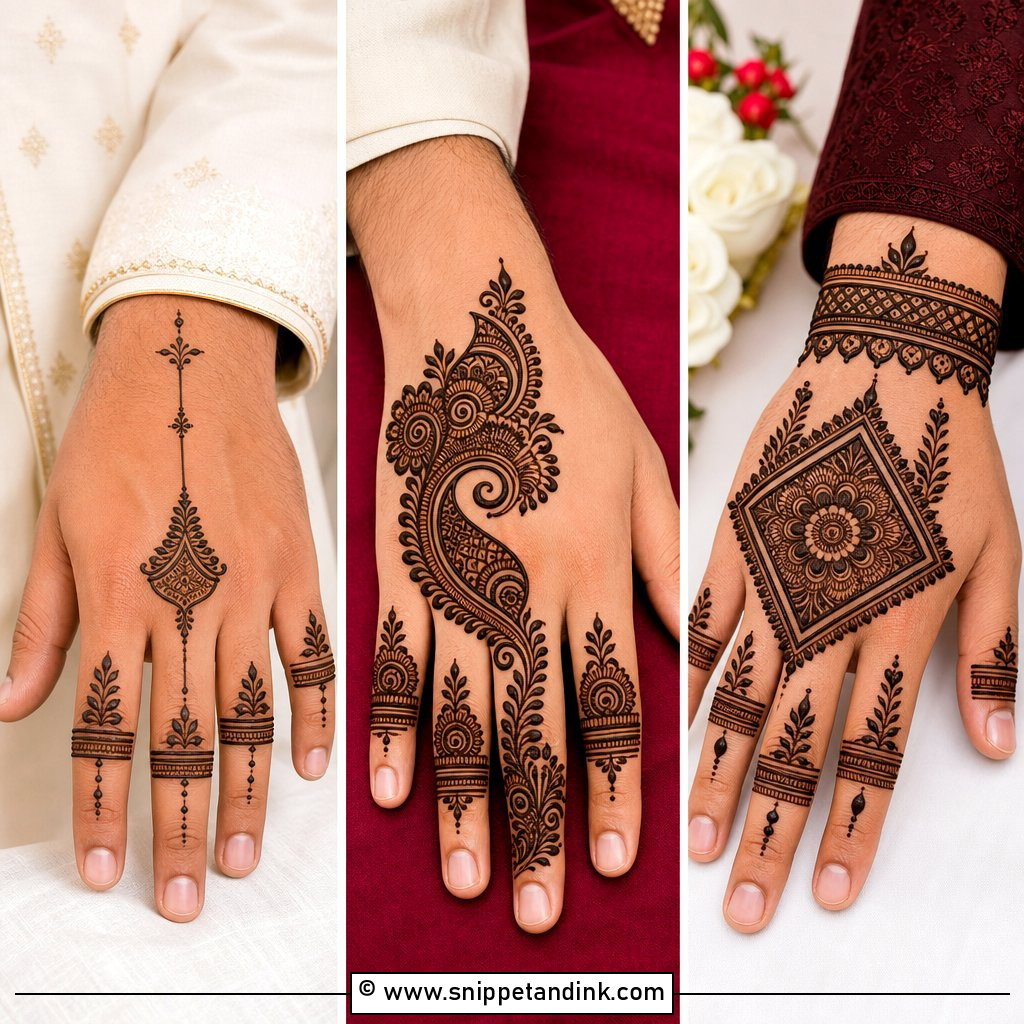
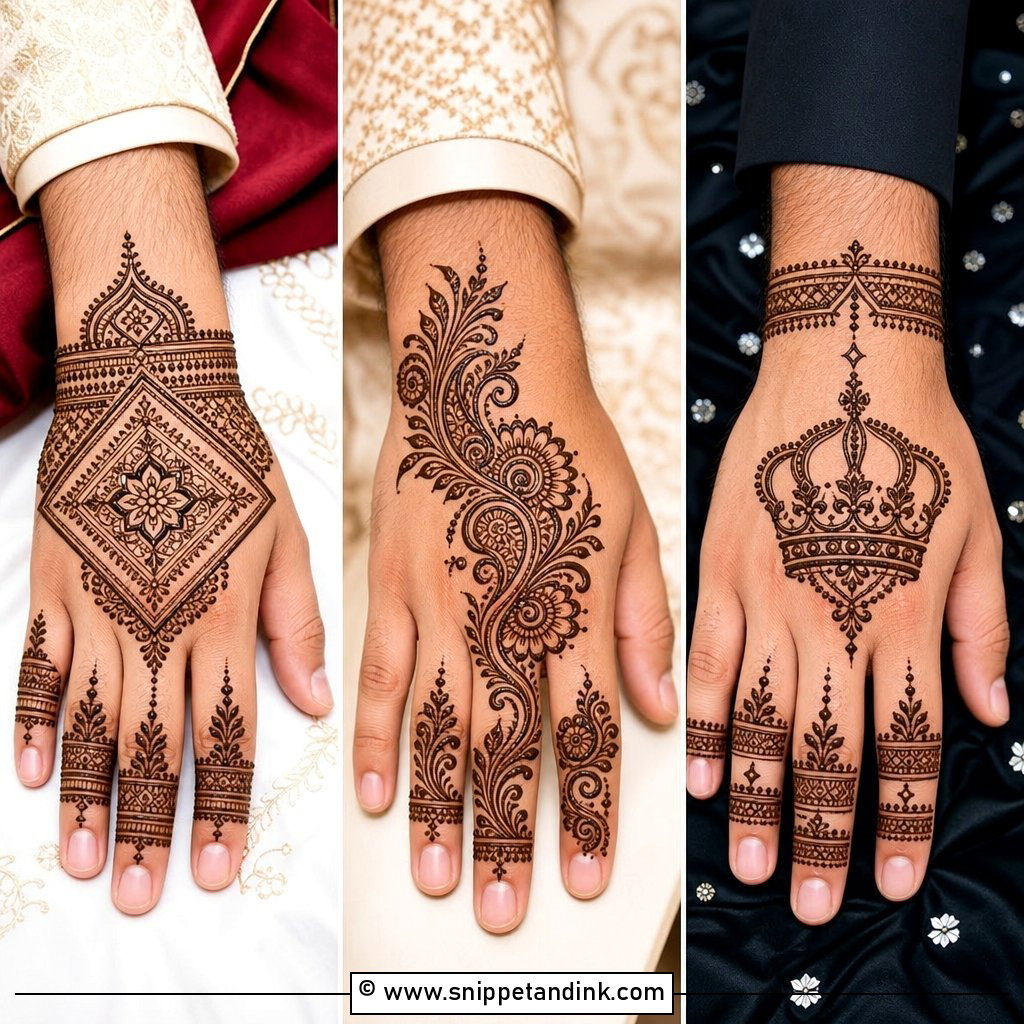
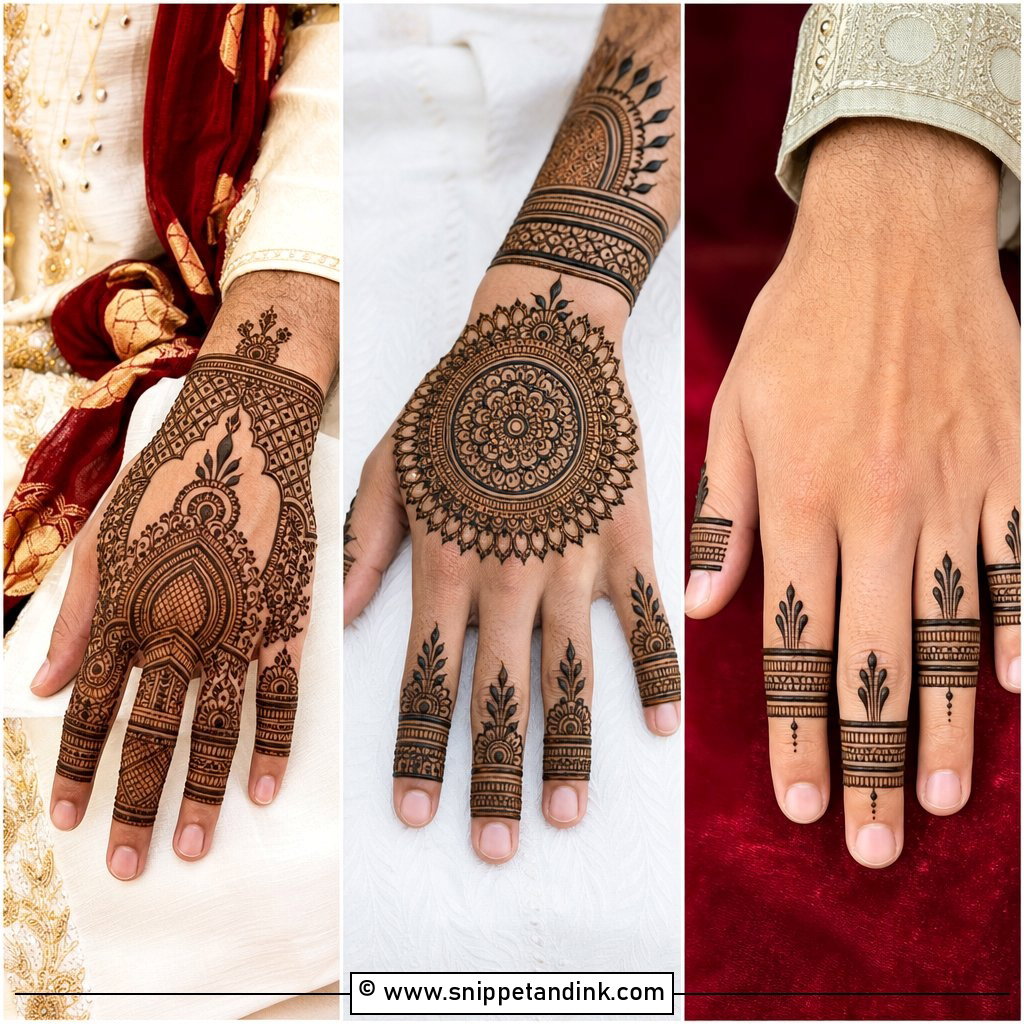
A back hand groom mehndi design is a smart choice if you want the henna to appear clearly in portraits and outfit shots. This look often starts with a central motif on the back of the hand and continues into finger details or a short wrist cuff. Arabic vines, bold florals, and geometric bands work especially well here because the back hand has a clean flat surface. Keep the spacing open if you want a modern look, or add small jaali patterns for a richer finish. This placement suits grooms who use hand gestures often during the event, as the design stays visible naturally.
4. Full Hand Groom Mehndi Design
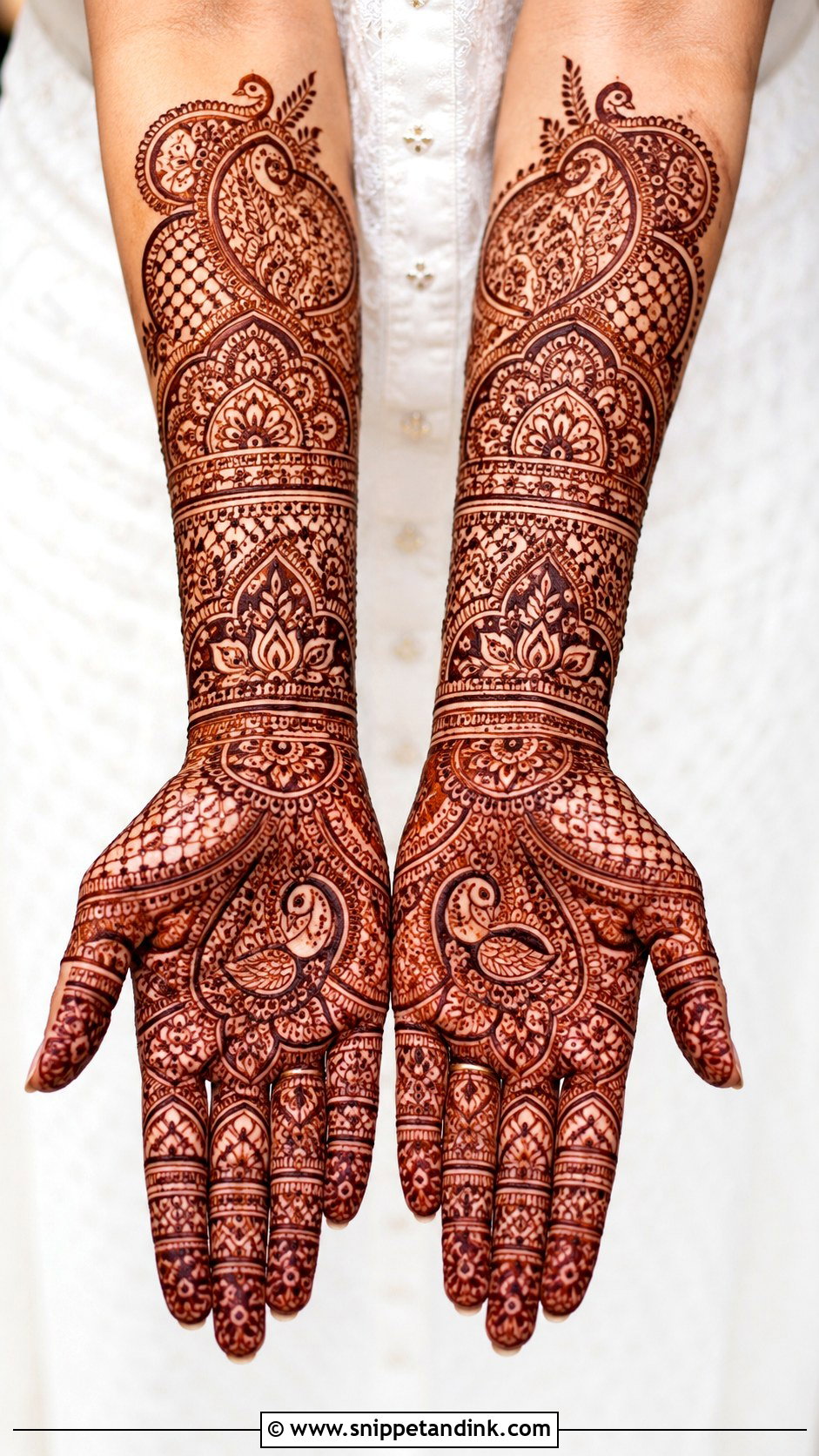
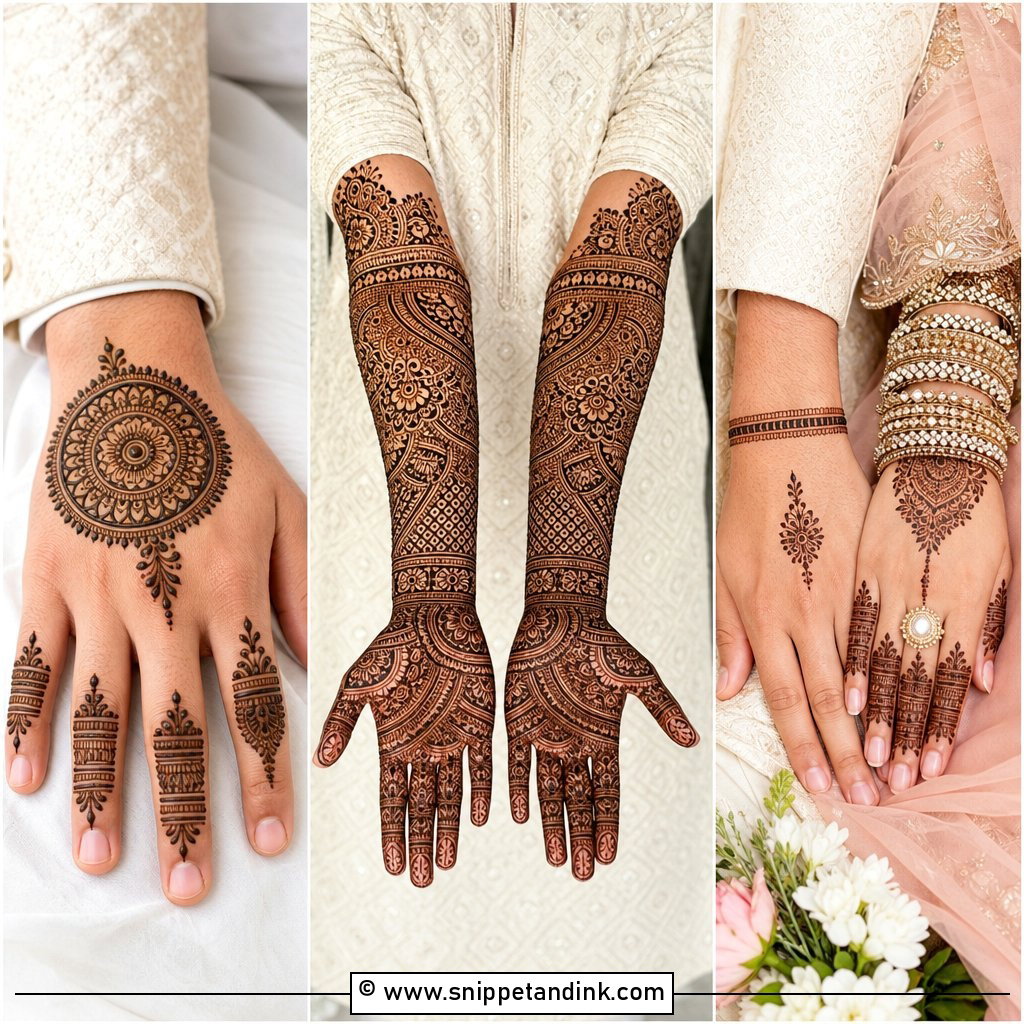
A full hand groom mehndi design gives the wedding look a more traditional and grand feel. It usually covers the palm, fingers, wrist, and part of the forearm with balanced motifs. Indian paisleys, mandalas, peacock details, and shaded floral panels can be arranged in a structured way so the design does not look too crowded. For grooms, the best full-hand patterns often use thicker outlines and cleaner empty spaces than bridal mehndi. This keeps the look bold and masculine. If your wedding has a classic theme or your outfit is heavily embroidered, full hand mehndi can tie the whole appearance together beautifully.
5. Minimal Groom Mehndi Design
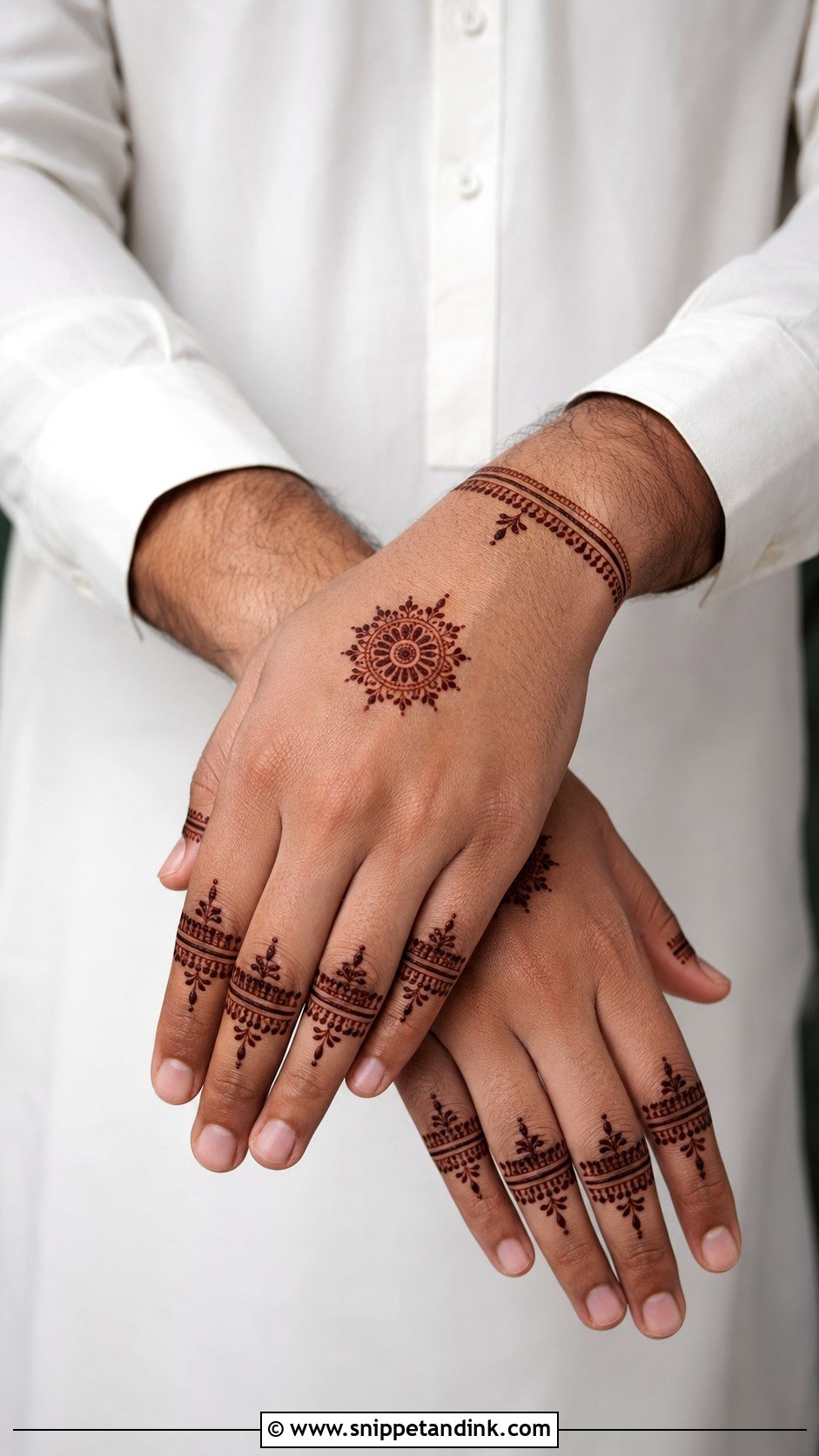
A minimal groom mehndi design feels modern, comfortable, and easy to carry. It is ideal for grooms who want a wedding detail but prefer a subtle finish. Instead of filling the hand, this look uses one focal design such as a small mandala, initial, bracelet band, or Arabic vine. The fingers can stay almost bare or have thin ring-like lines. Minimal mehndi photographs well because the skin space makes every line stand out. It also suits engagement ceremonies, court weddings, destination weddings, and smaller family functions. Choose this style if you like clean grooming, tailored outfits, and understated wedding details.
6. Indian Groom Mehndi Design
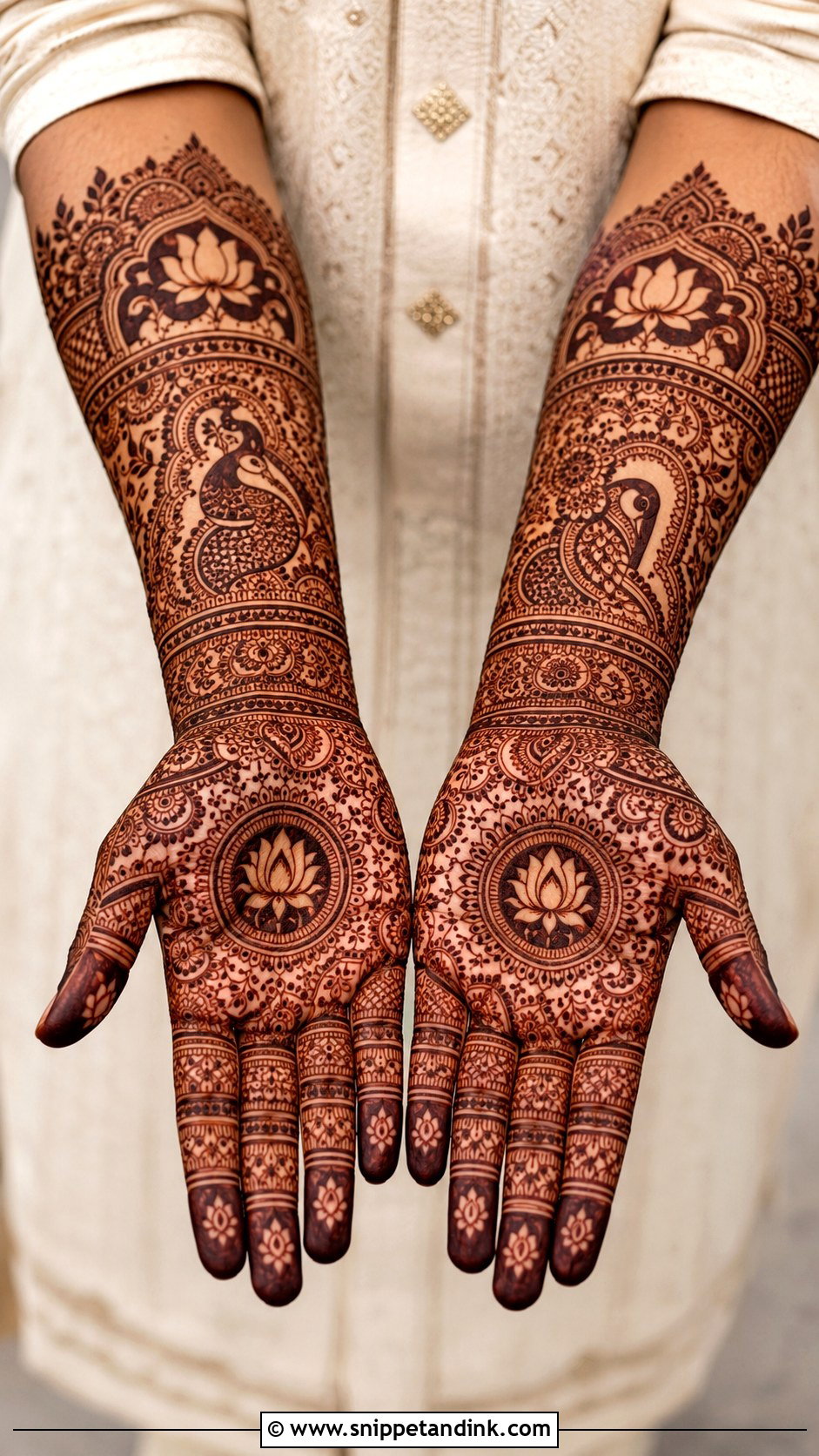
An Indian groom mehndi design brings together tradition, detail, and wedding symbolism. This look often includes paisleys, lotus motifs, peacocks, mandalas, and fine filler patterns arranged across the palm and wrist. Unlike bridal mehndi, the groom version can be kept less dense by using larger motifs and bolder outlines. A small wedding date, name initial, or sacred symbol can be added inside the design for a personal touch. This style works beautifully for haldi, mehndi night, and main wedding ceremonies. It pairs well with sherwanis, bandhgalas, and classic ethnic wear, especially when the groom wants a design rooted in cultural detail.
7. Arabic Groom Mehndi Design
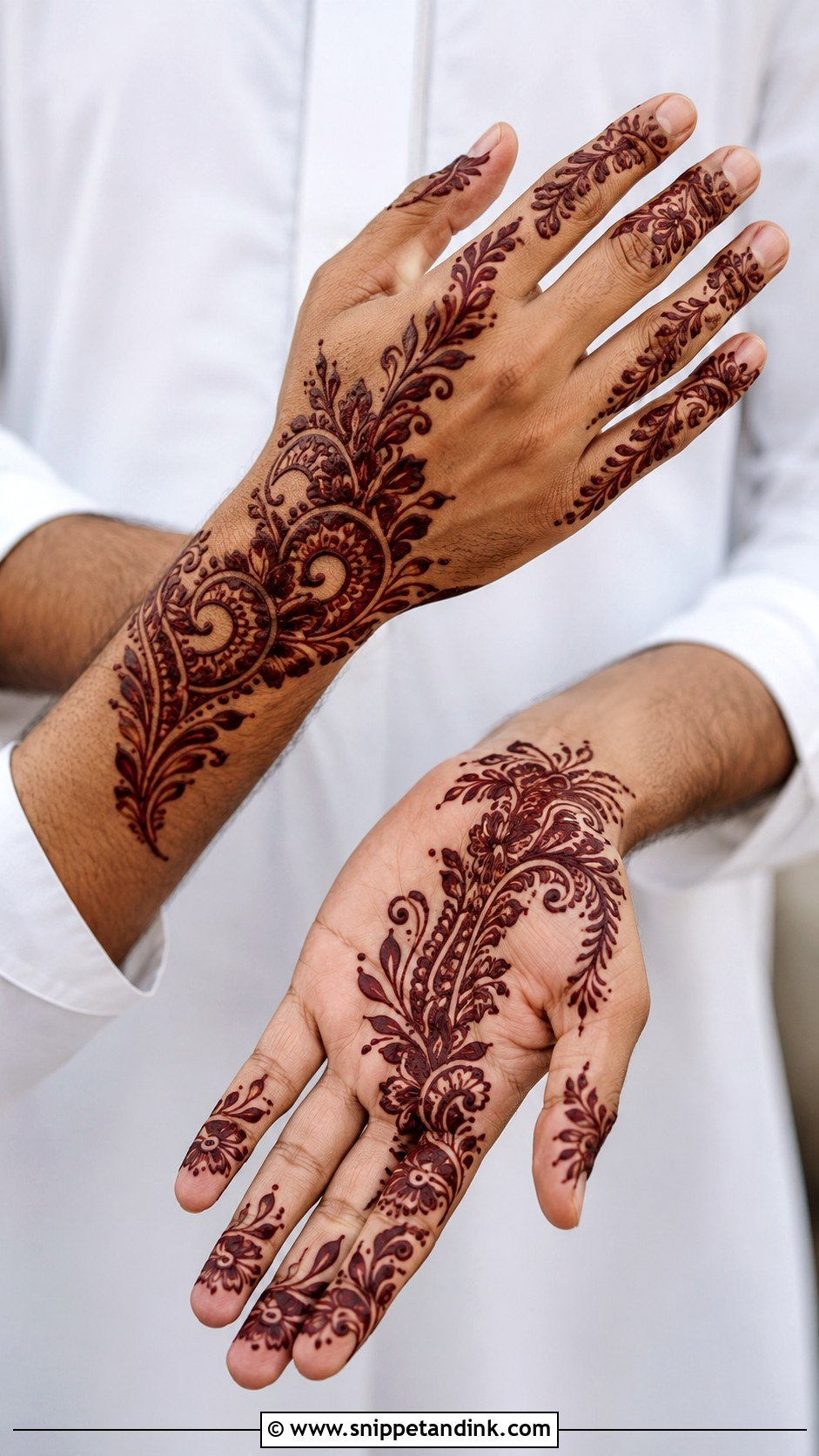
An Arabic groom mehndi design is known for bold flow, open spacing, and strong visual movement. Instead of covering the whole hand, it usually runs diagonally across the palm or back hand with flowers, leaves, paisleys, and curved vines. This makes it a great choice for grooms who want something stylish but not too filled. The negative space helps the design look neat and modern, while the thicker outlines make the pattern visible from a distance. Arabic mehndi also works well with both traditional and contemporary outfits. For a groom, ask for fewer soft petals and more structured curves to keep the design balanced.
8. Indo Arabic Groom Mehndi Design
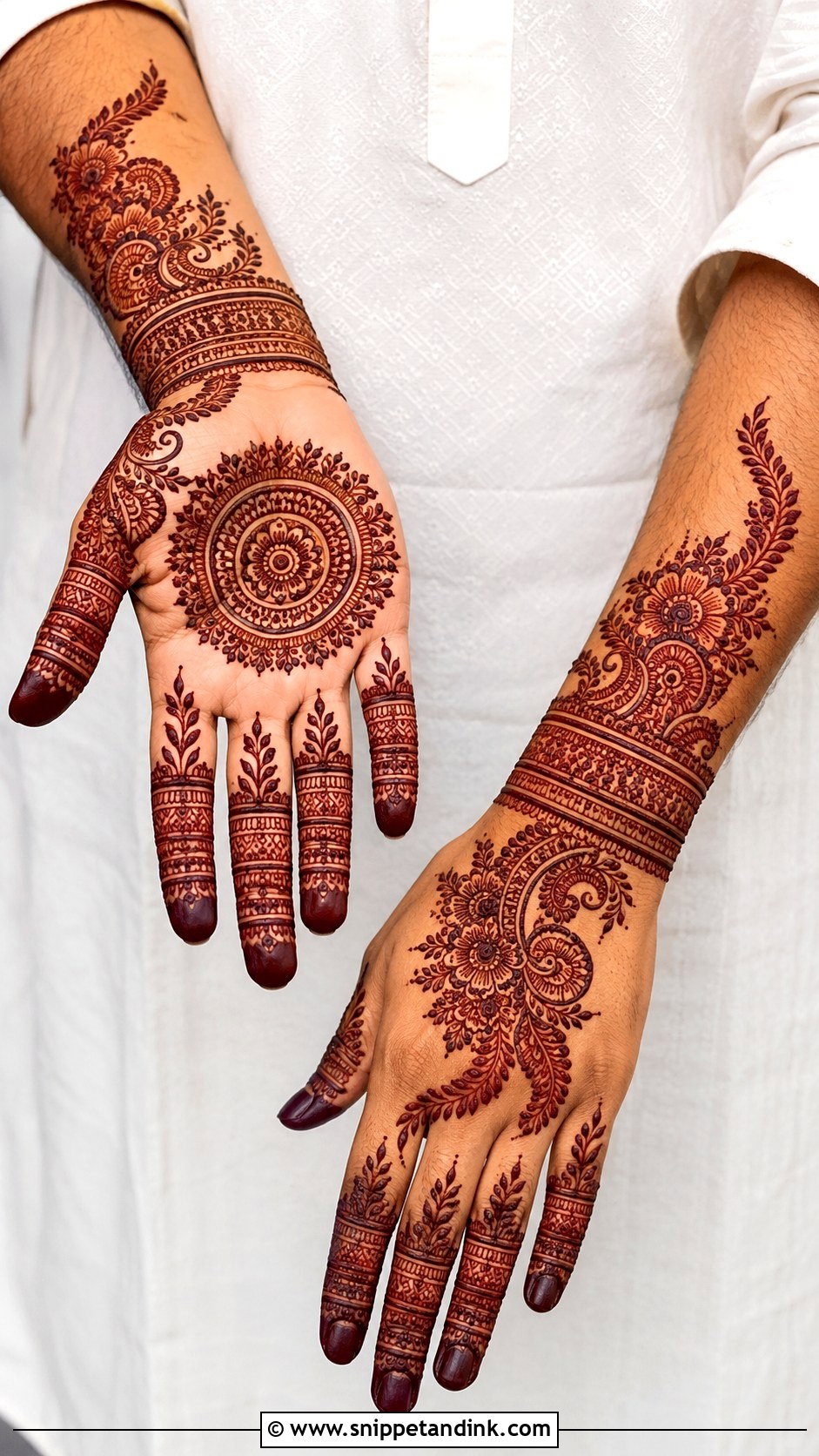
An Indo Arabic groom mehndi design blends the detailed beauty of Indian mehndi with the bold spacing of Arabic patterns. This combination is especially useful for grooms who want richness without a fully packed hand. The design may include a mandala or paisley base with Arabic floral trails and open skin gaps around it. Fingers can be decorated with simple bands, dots, or leafy extensions. This style looks excellent in wedding photos because it has contrast, detail, and breathing space. It is also flexible enough for the palm, back hand, or wrist-to-forearm placement. Choose it for a traditional look with a modern finish.
9. Royal Groom Mehndi Design
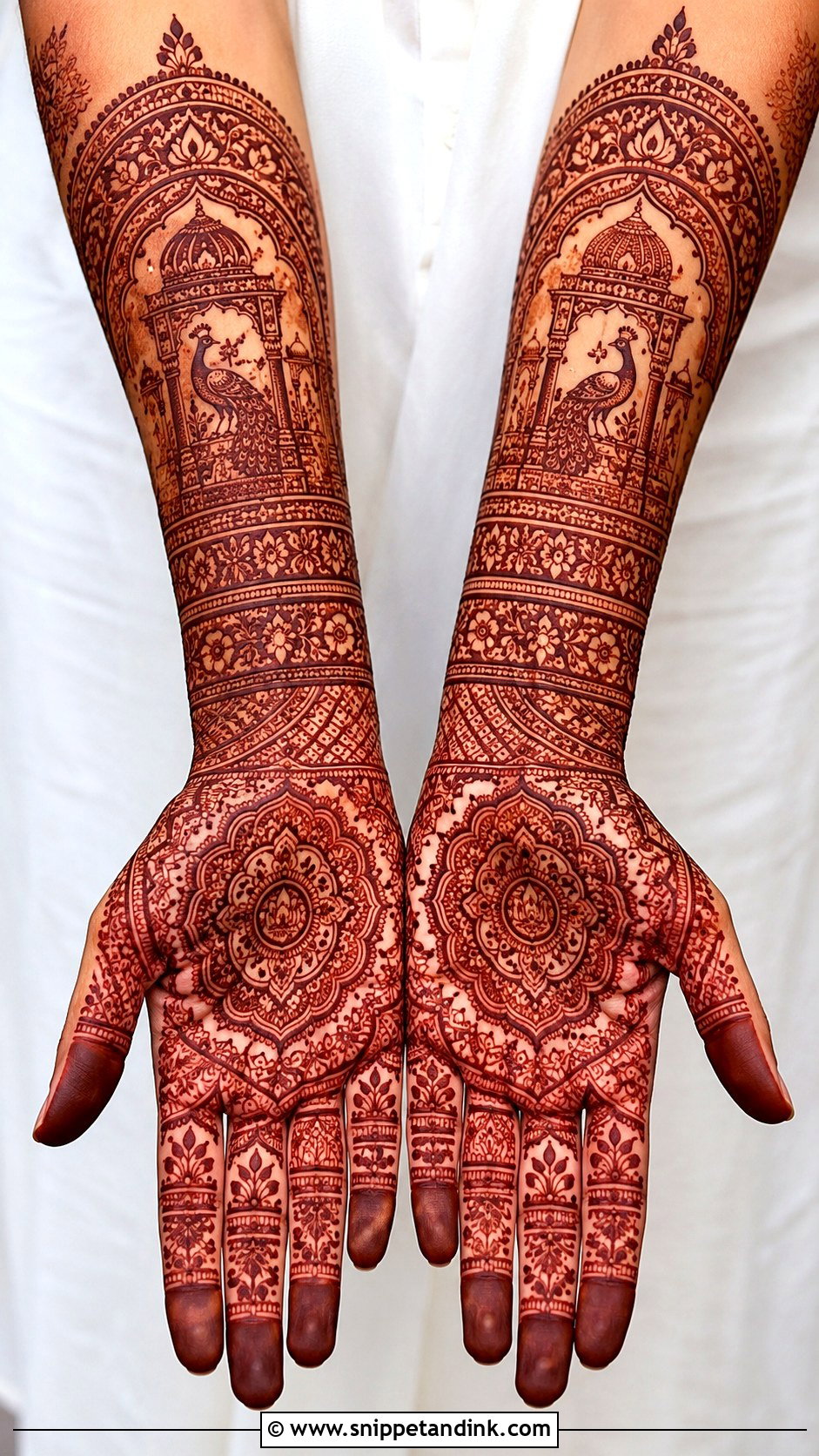
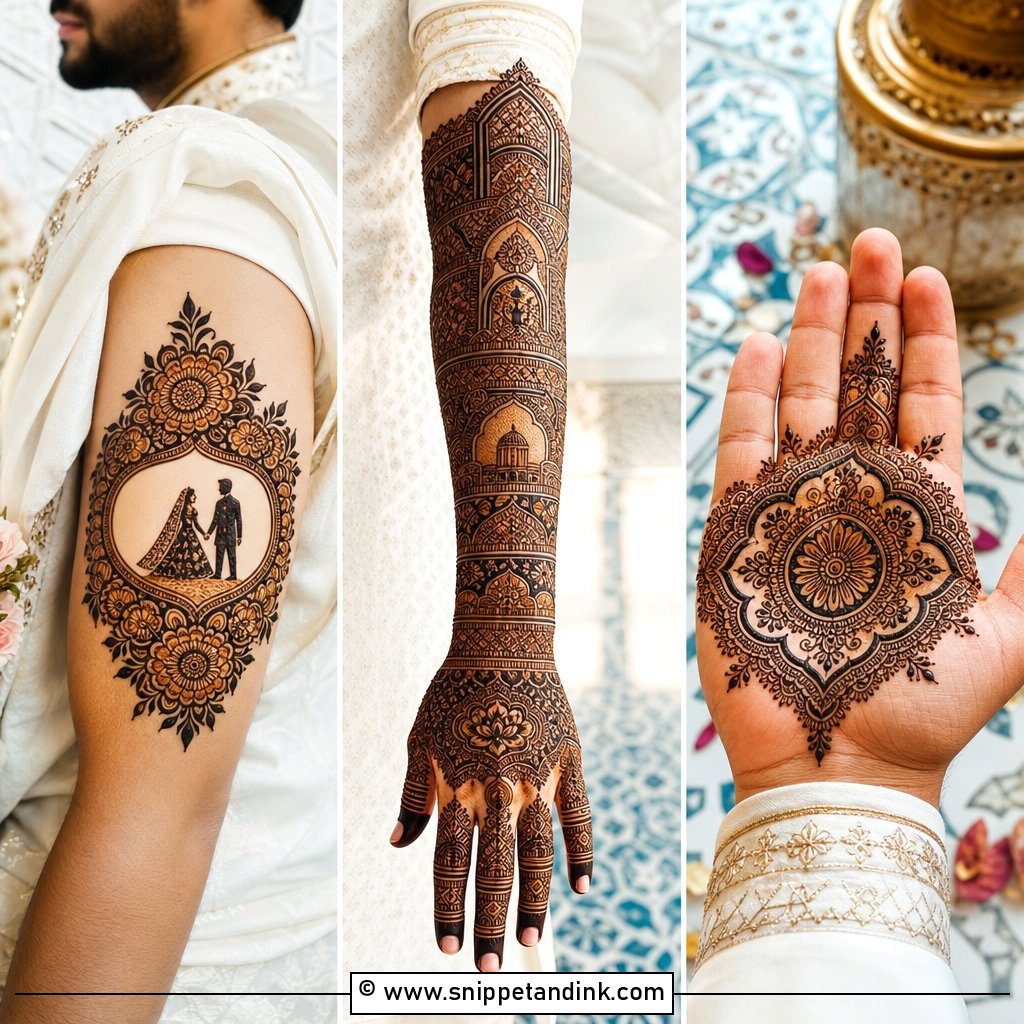
A royal groom mehndi design should feel bold, symmetrical, and ceremonial. This look often uses palace-inspired arches, mandalas, peacock elements, regal cuffs, and strong borders. The pattern can extend from the palm to the forearm, creating a groom version of a statement bridal design. Keep the layout structured, with larger motifs placed in panels, so the design looks powerful instead of overly delicate. This style suits grand weddings, embroidered sherwanis, turbans, and jewelry like kalgi or brooches. If you want a design that feels special for the main wedding day, royal mehndi gives the hands a rich and confident appearance.
10. Dulha Mehndi Design
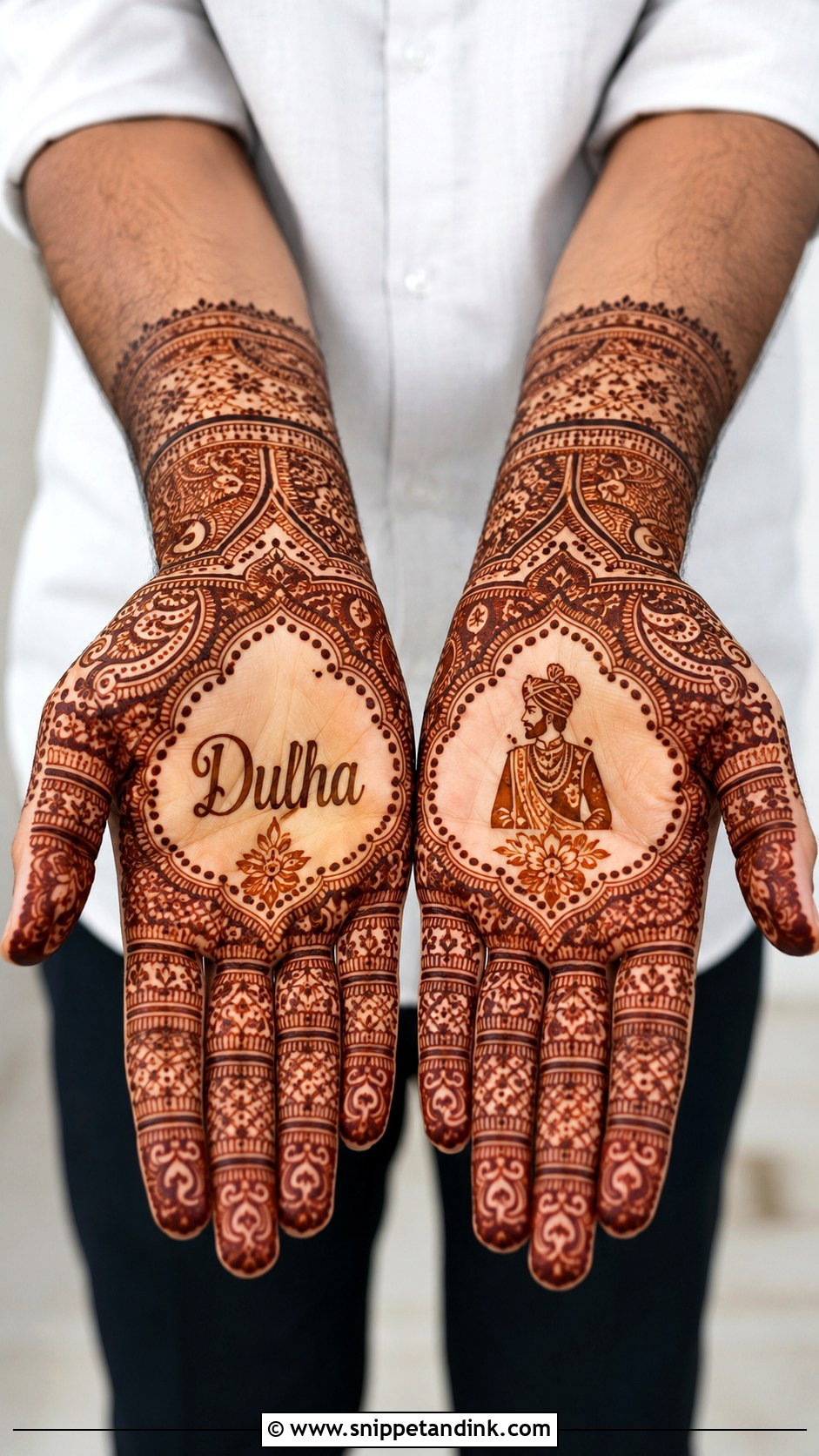
A dulha mehndi design is made specifically for the groom and usually includes wedding-focused details. It can feature the word “Dulha,” a groom figure, a wedding date, initials, or symbolic motifs like a dhol, sehra, kalash, or mandap outline. The best version keeps these details neat and readable rather than squeezing in too much. You can place the main element on the palm and add borders around the wrist and fingers. This look is fun, personal, and perfect for mehndi night photos. It also creates a matching moment if the bride has a dulha-dulhan scene hidden in her bridal mehndi.
11. Groom Mehndi With Initials
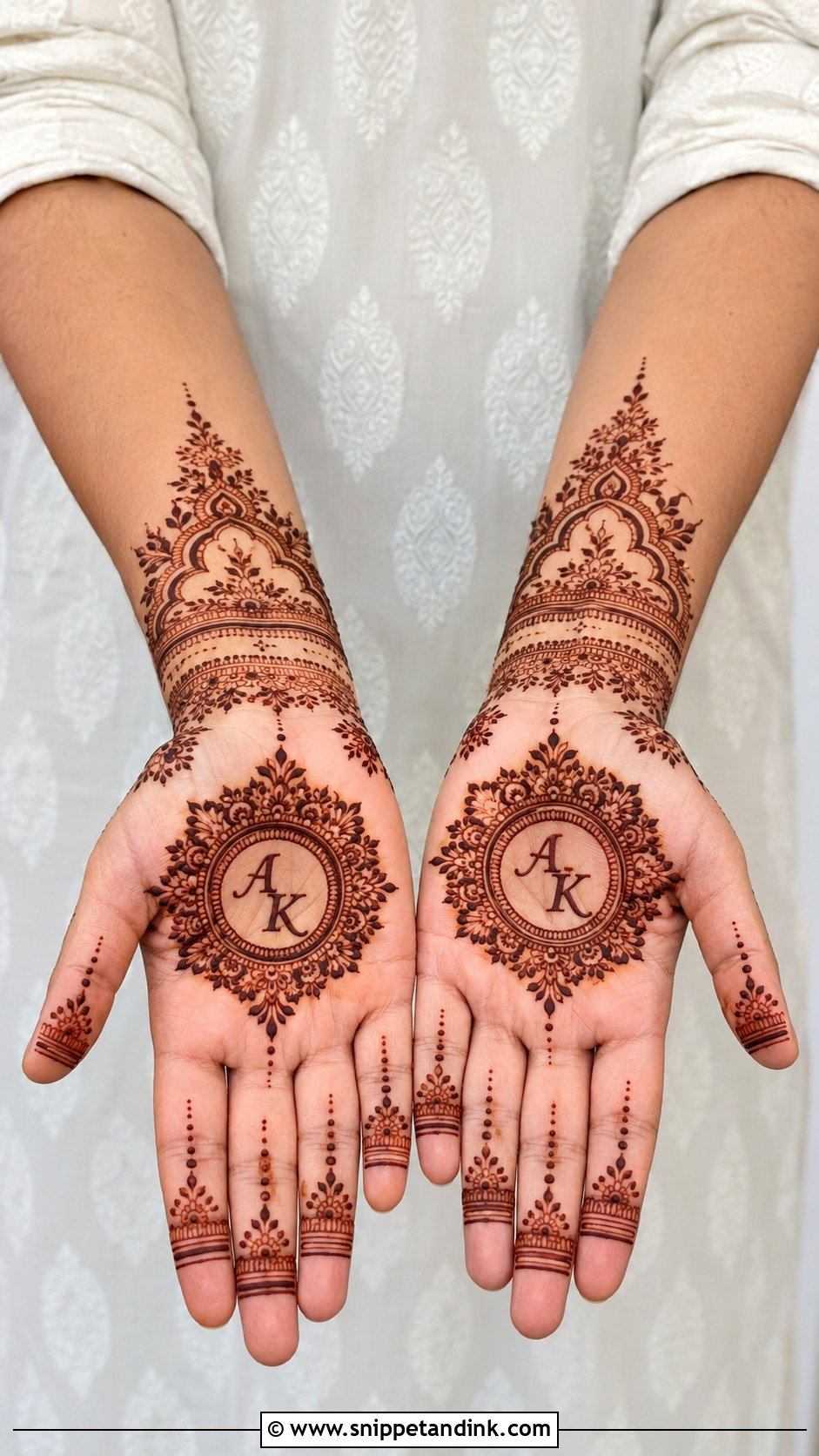
Groom mehndi with initials is one of the easiest ways to make the design personal. The initials can be placed inside a mandala, hidden in a paisley, written near the wrist, or framed inside a small heart-shaped or circular motif. For a groom, it usually looks best when the letters are bold and simple, not too decorative. You can use both partners’ initials, just the bride’s initial, or a monogram-style design. This look works with minimal, Indian, Arabic, or Indo-Arabic patterns. It is also great for close-up wedding photography because guests can quickly notice the personal detail.
12. Groom Mehndi With Wedding Date
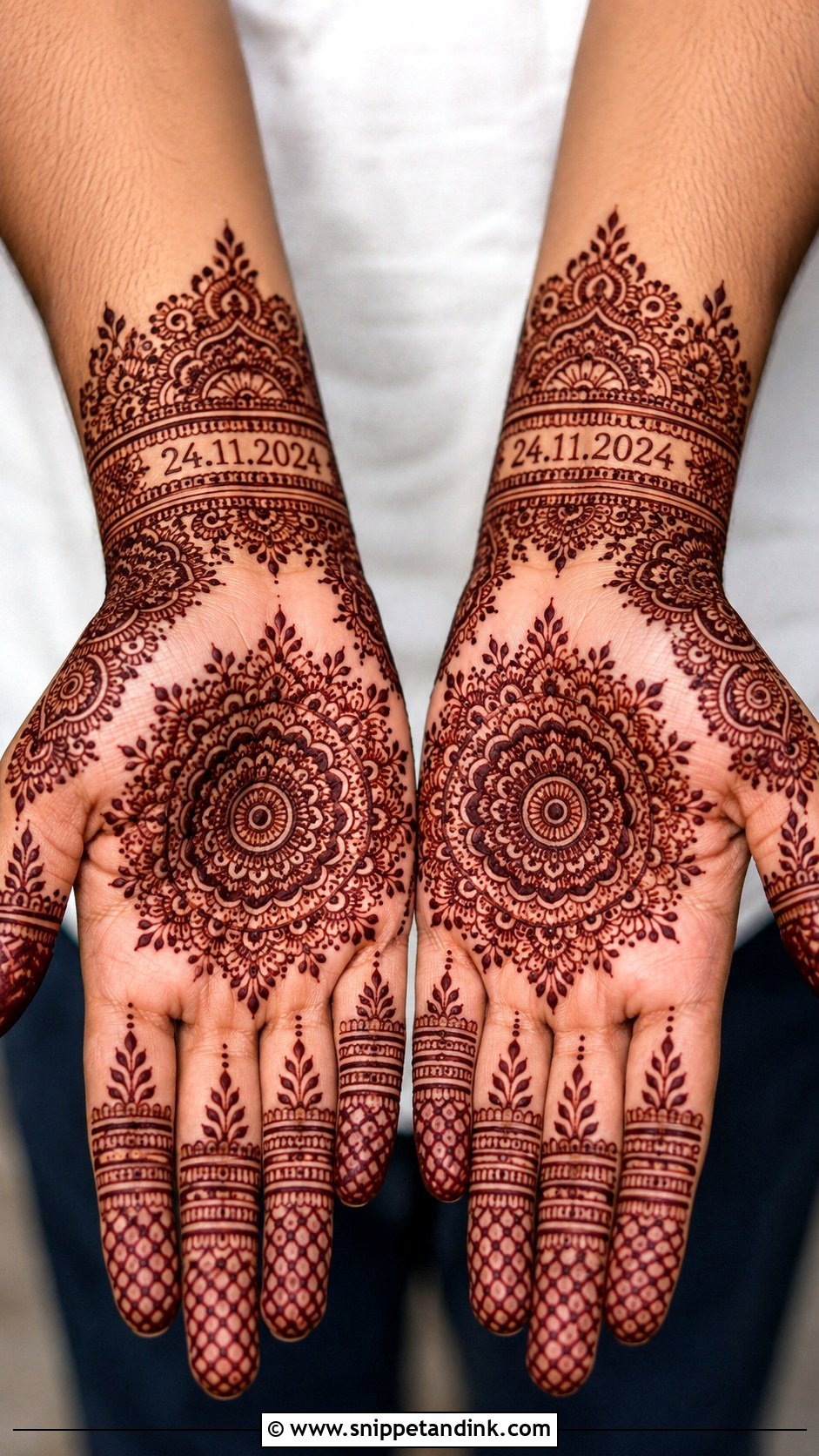
A groom mehndi with wedding date design turns the henna into a memory marker. The date can be written along the wrist like a bracelet, inside a mandala, or beneath a small couple motif on the palm. Roman numerals can make the date look sleek, while standard numbers are easier to read in photos. Keep the surrounding design simple so the date stays clear after the stain develops. This is a good choice for grooms who like meaningful details but do not want a very heavy pattern. It also works beautifully for engagement, nikah, sangeet, or wedding day mehndi.
13. Groom Name Mehndi Design
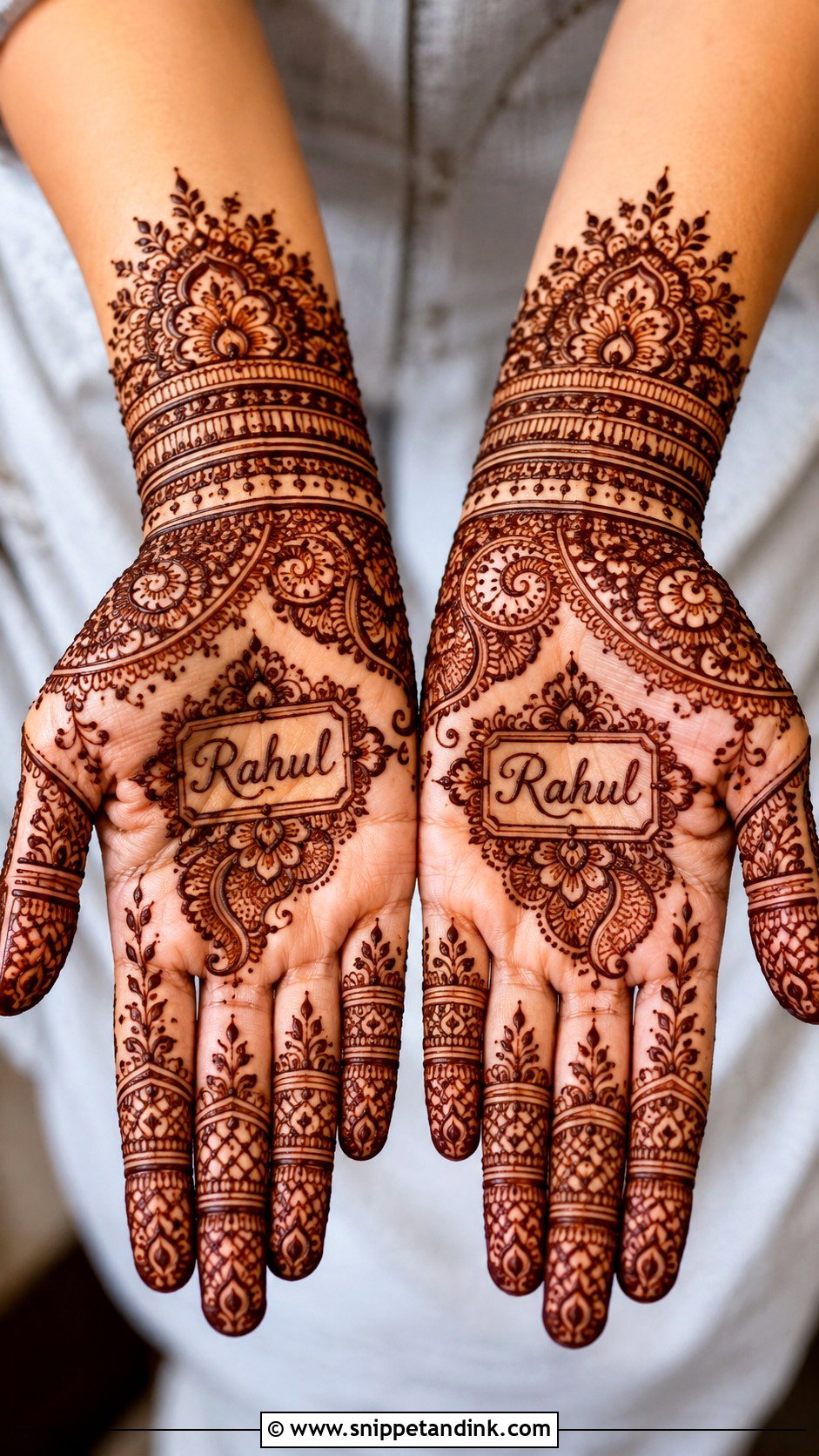
A groom name mehndi design can include the groom’s own name, the bride’s name, or both names in a balanced layout. For a clean look, the name can be placed across the palm in a framed banner, inside a circular mandala, or along the wrist cuff. The surrounding pattern should support the lettering, not hide it. Floral corners, dotted edges, and simple paisley work well around names. This style is popular because it feels personal and easy to customize. It also adds a playful element to the mehndi ceremony, especially when family members search for the hidden or highlighted name.
14. Mandala Groom Mehndi Design
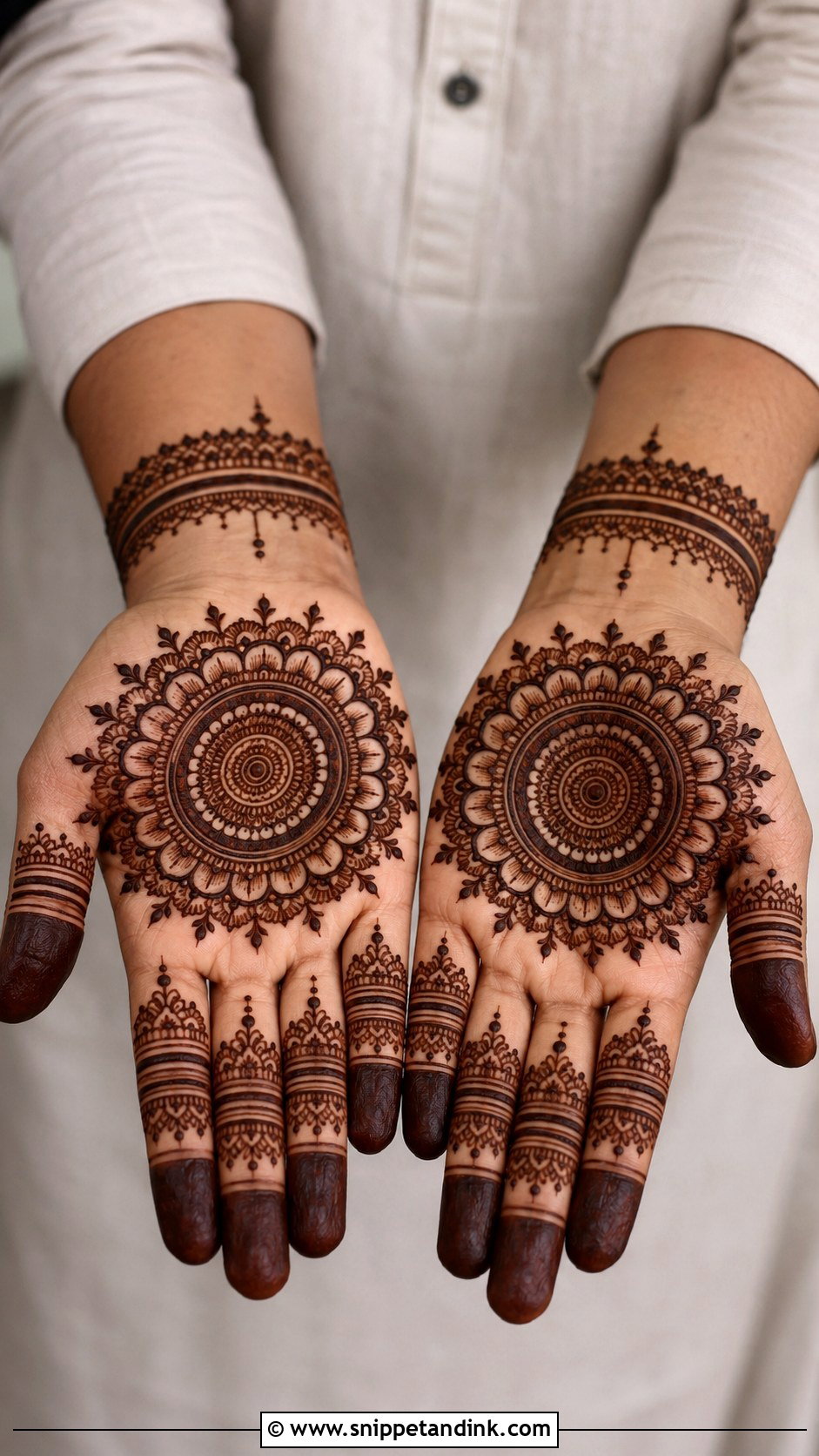
A mandala groom mehndi design is balanced, timeless, and easy to wear. The circular motif can sit in the center of the palm or back hand, with small details extending toward the fingers and wrist. For grooms, a mandala looks best when the rings are clean, the center is bold, and the outer dots are evenly spaced. You can keep it minimal with bare fingers or make it more festive with geometric finger bands. This design works for almost every wedding setting because it is traditional without being too elaborate. It also suits men who like symmetry and neat, centered artwork.
15. Peacock Groom Mehndi Design
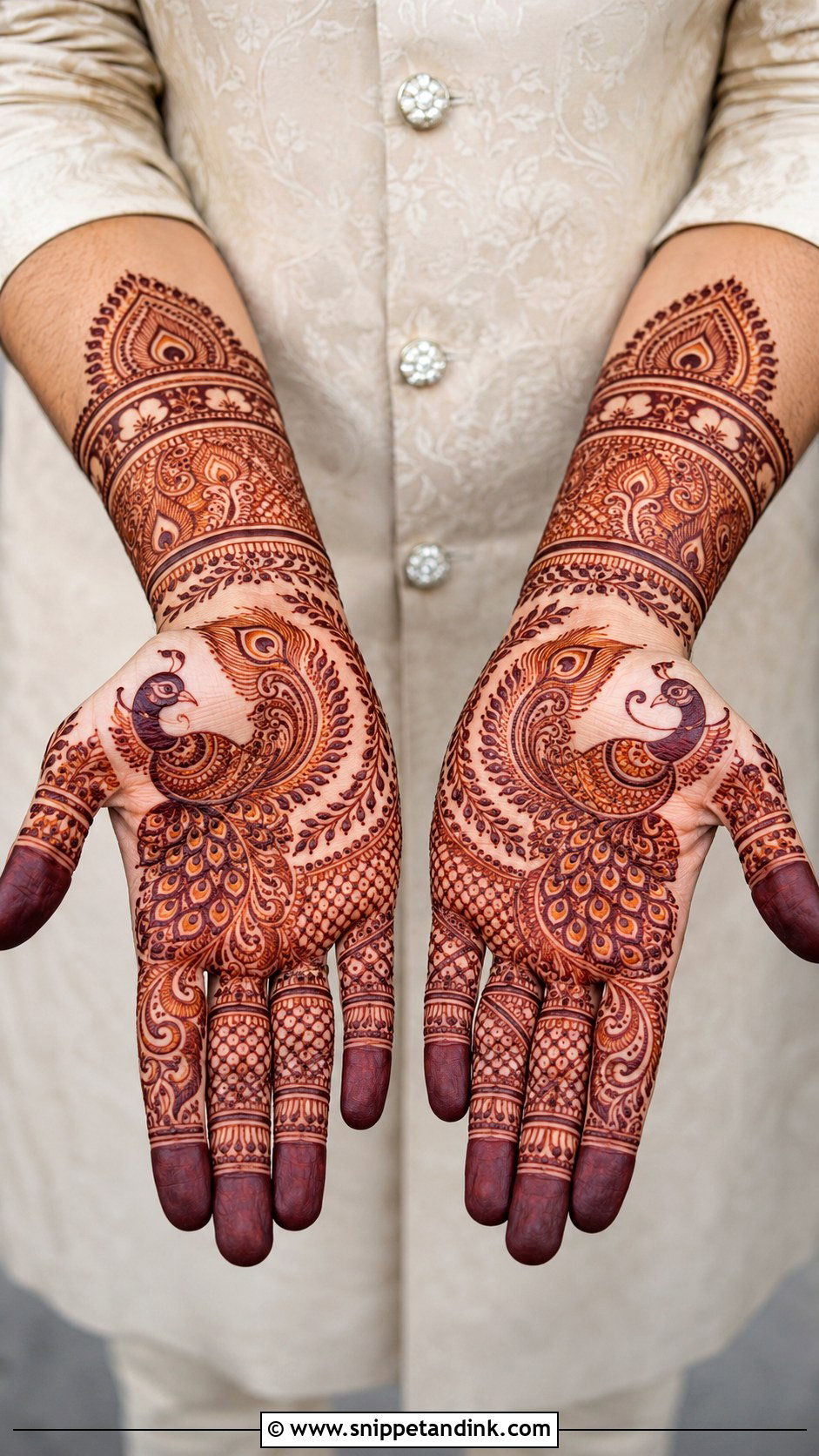
A peacock groom mehndi design brings a classic Indian wedding feel to the hands. The peacock can be placed on the palm with its feathers flowing toward the wrist, or it can sit on the back hand with paisley and floral support. For a groom, the peacock should be stylized with bold lines rather than extremely delicate feather filling. This keeps the pattern strong and wearable. Add small jaali sections, leaf borders, and dots to complete the look. Peacock mehndi pairs especially well with royal or traditional outfits. It is a strong choice for grooms who want cultural richness in their design.
16. Paisley Groom Mehndi Design
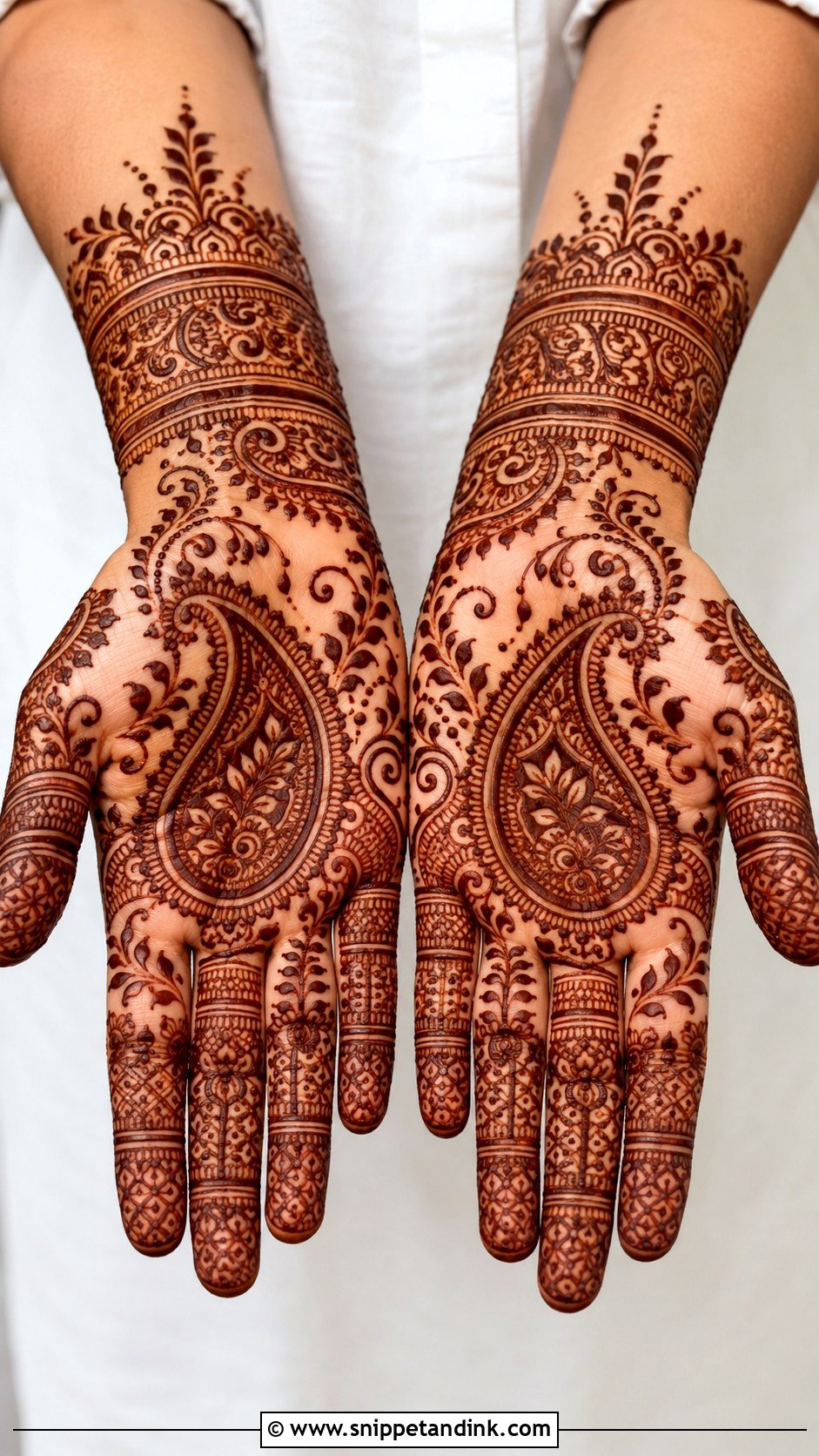
A paisley groom mehndi design feels traditional but can still look sharp and modern. Paisleys are versatile because they can be large and bold for a masculine finish or layered with fine details for a richer look. A single large paisley on the palm, framed by curved vines and finger bands, creates a clean complete design. For more coverage, multiple paisleys can flow from the wrist to the forearm. This style works well for Indian and Indo-Arabic groom mehndi because it allows both detail and spacing. Choose paisley if you want a classic wedding pattern that never looks out of place.
17. Floral Groom Mehndi Design
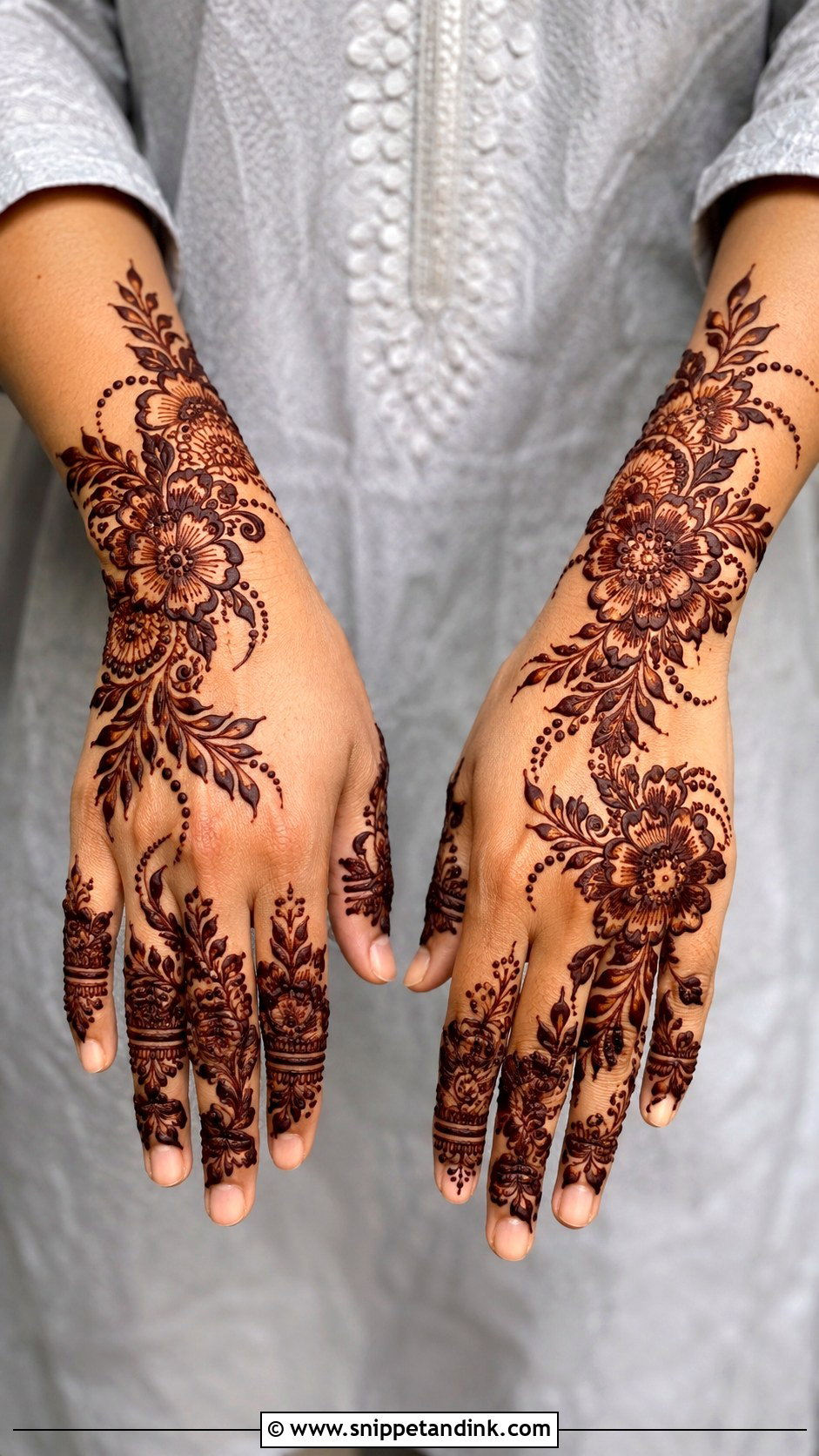
A floral groom mehndi design can look elegant without feeling too soft when the structure is kept bold. Large flowers, leafy vines, and thick outlines create a balanced groom-friendly version of floral henna. This look works beautifully on the back hand, where a flower can sit near the center and stretch toward the wrist with leaves and dots. For the palm, floral mandalas or lotus-inspired shapes look neat and meaningful. Avoid overcrowding the design with too many tiny petals. Instead, use open spacing and strong borders. Floral groom mehndi is ideal for outdoor weddings, daytime ceremonies, and coordinated couple mehndi looks.
18. Geometric Groom Mehndi Design
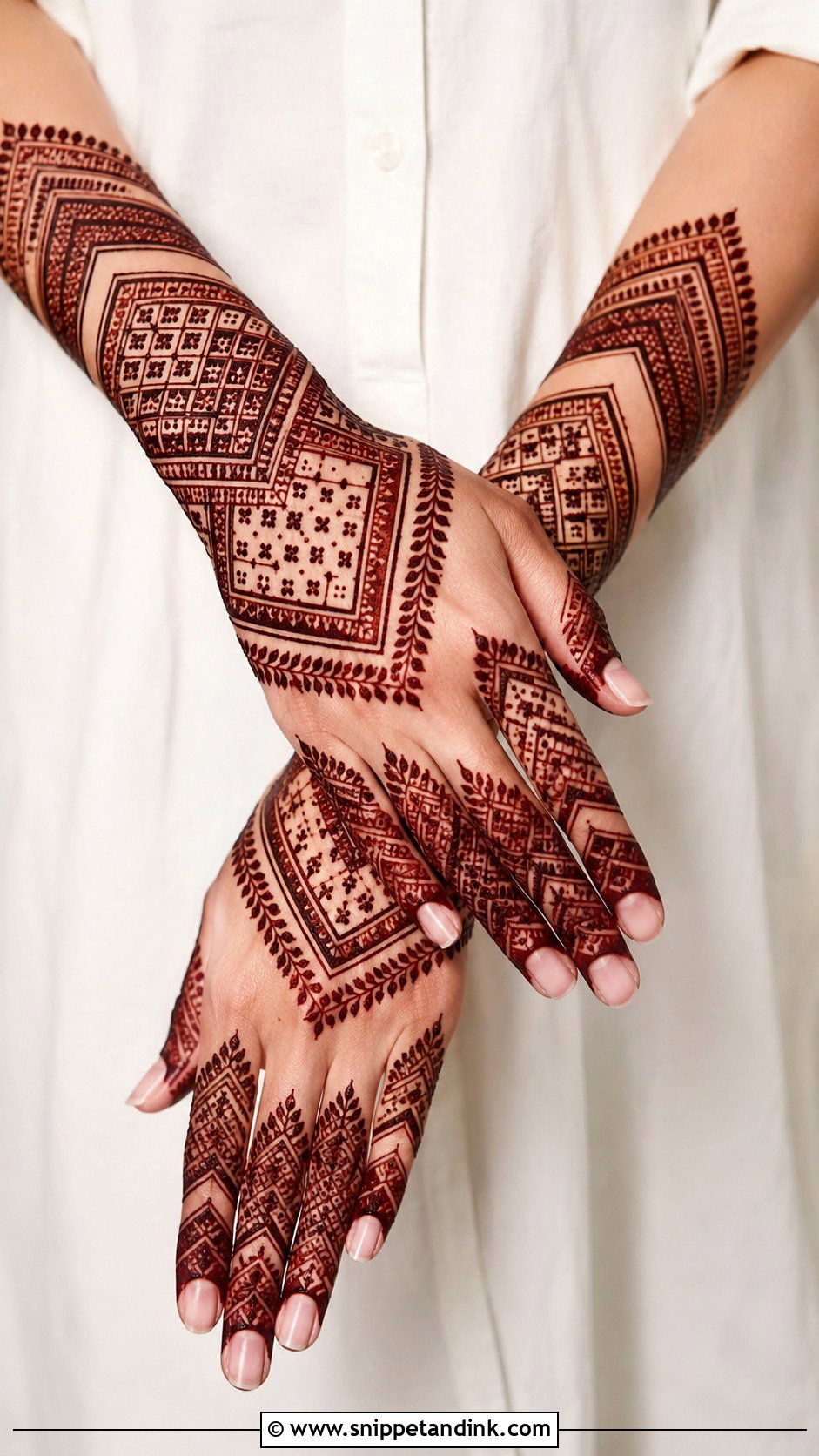
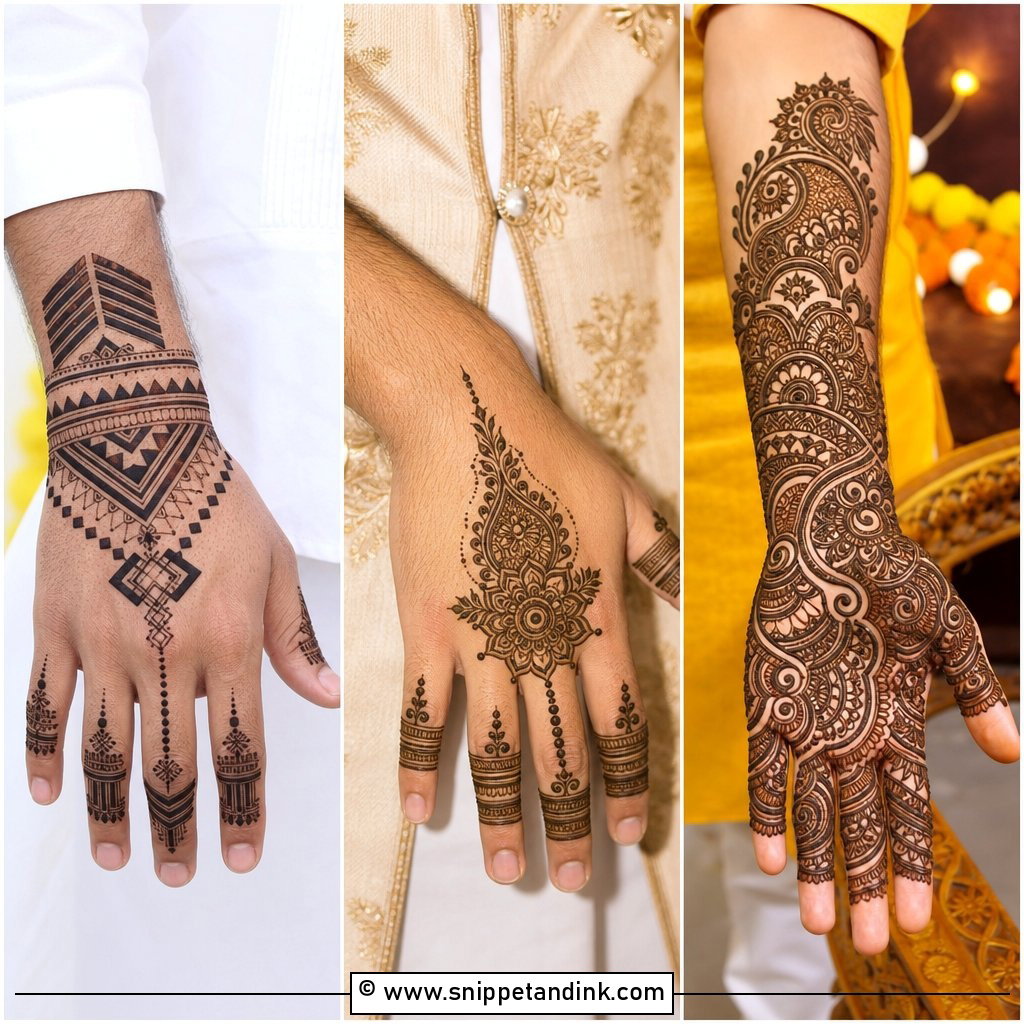
A geometric groom mehndi design is perfect for men who prefer clean lines over floral detail. This look uses triangles, squares, diamonds, grids, chevrons, and sharp wrist bands to create a structured pattern. It can be minimal on the back hand or extended into a forearm cuff for a stronger statement. Geometric designs also match modern sherwanis, solid kurtas, and Indo-western wedding outfits. The key is precision, so choose an artist who can draw straight lines and symmetrical spacing. Natural reddish-brown henna looks especially crisp in geometric layouts because every edge and negative space section becomes part of the design.
19. Moroccan Groom Mehndi Design
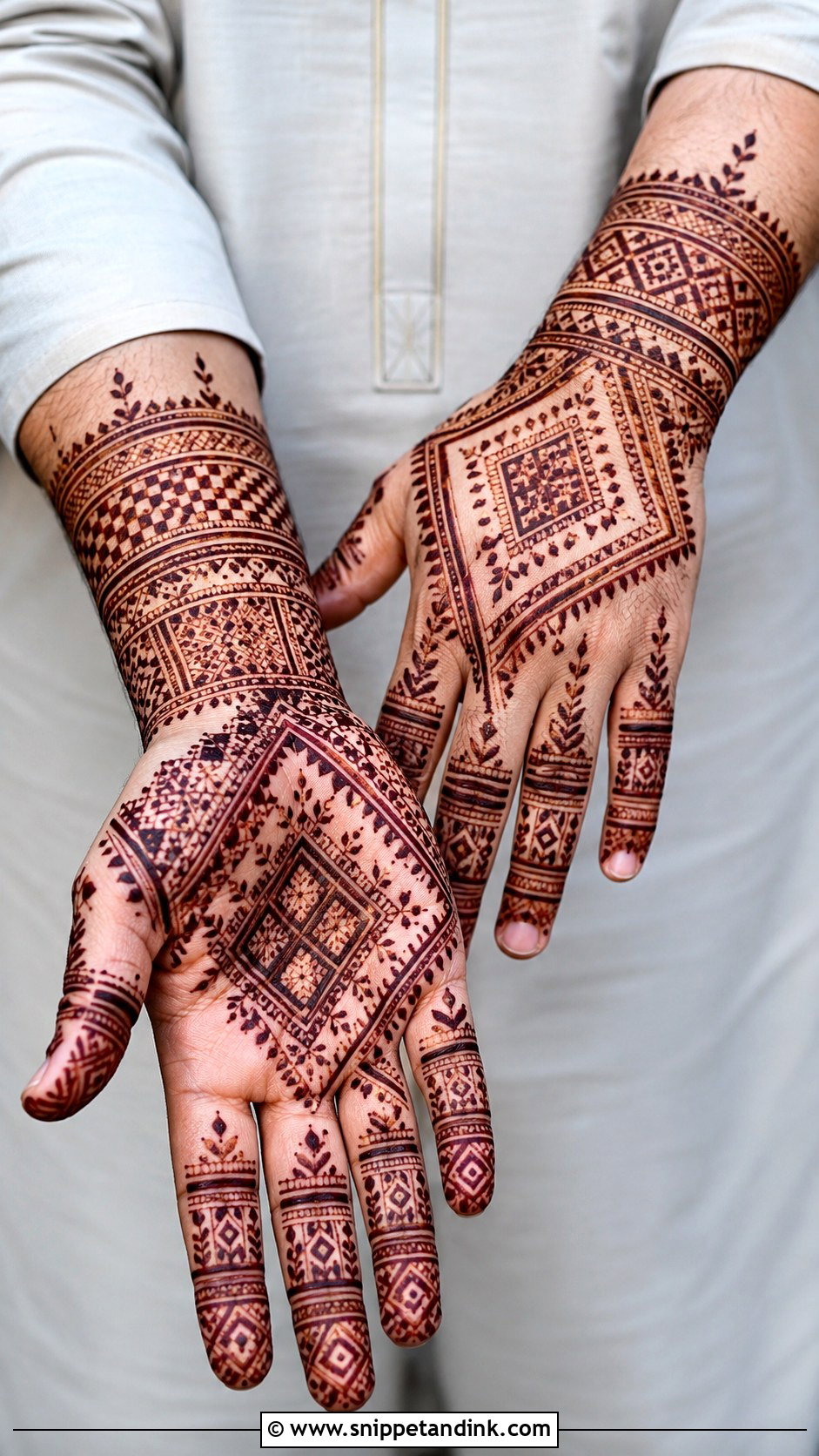
A Moroccan groom mehndi design is known for its bold geometry and tribal-inspired structure. It often includes diamonds, lines, checks, dots, and angular bands instead of soft floral patterns. This makes it a strong option for grooms who want something different from classic Indian or Arabic mehndi. The design can run across the back hand, circle the wrist, or cover the palm in neat sections. Moroccan henna looks best with clean spacing and repeated shapes, so the final stain appears sharp. It also works well for minimal grooms because even a small Moroccan pattern can look complete and stylish.
20. Wrist Band Groom Mehndi Design
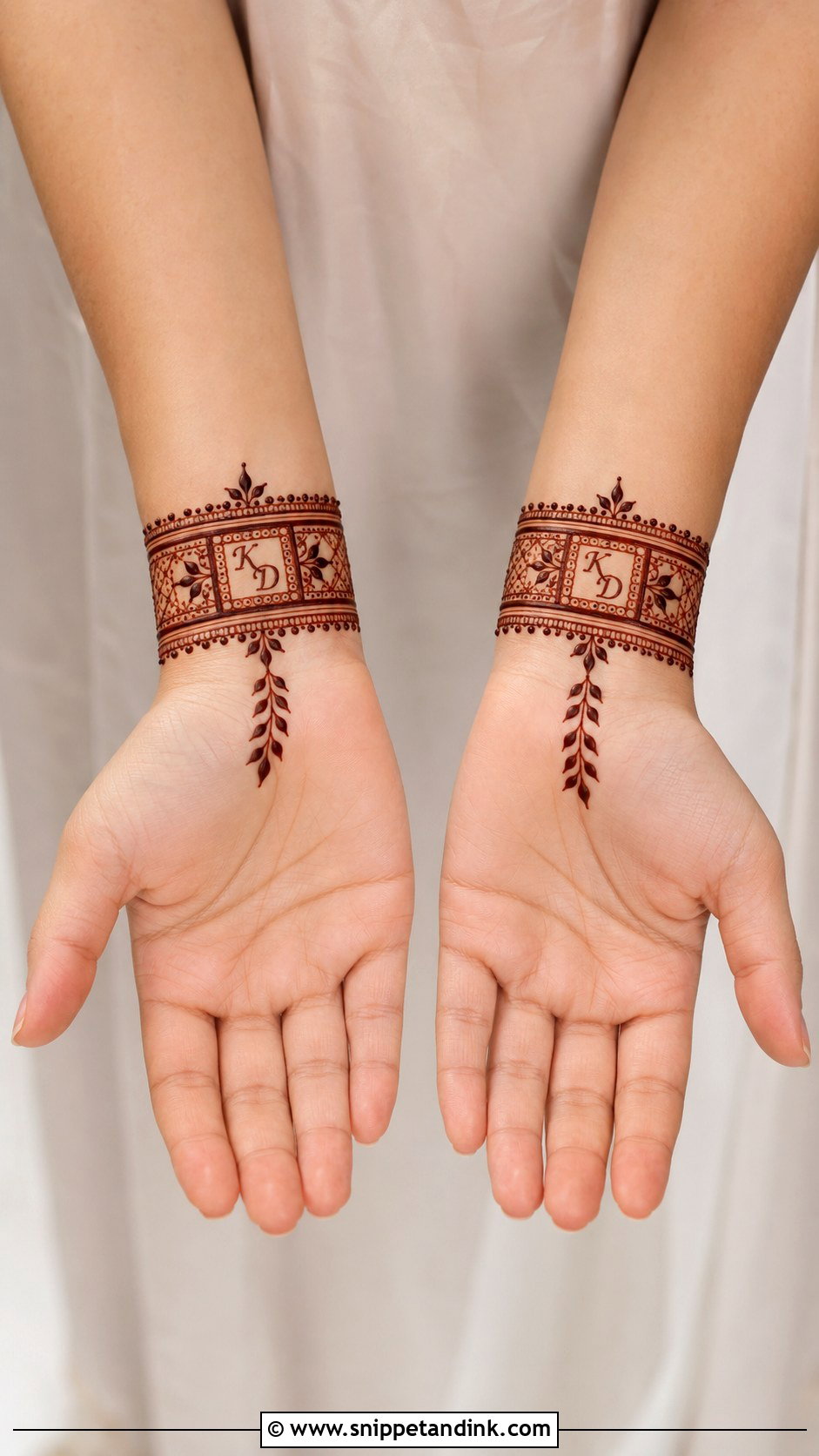
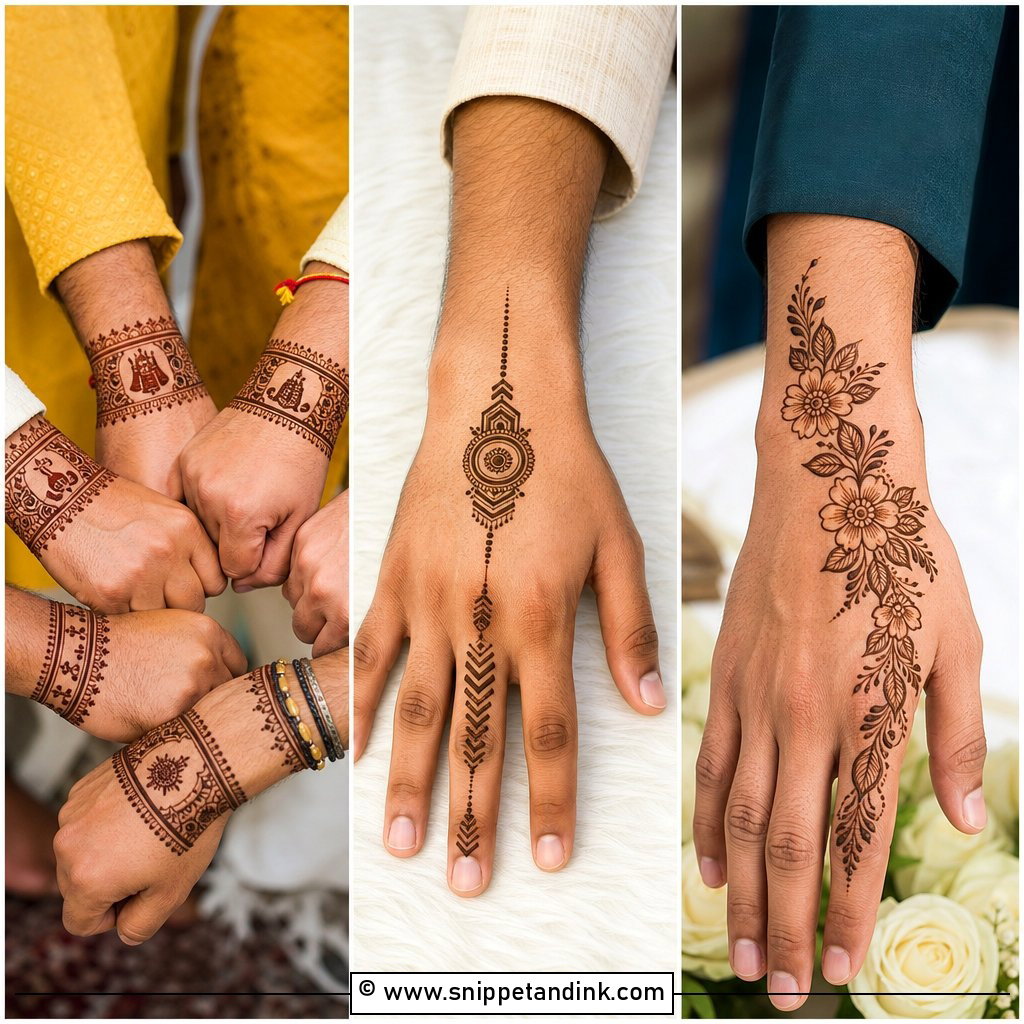
A wrist band groom mehndi design looks like a natural henna bracelet. It is a great choice if you want visible detail without covering the palm. The band can include geometric blocks, leafy vines, jaali patterns, initials, or a wedding date. Some grooms connect the wrist band to one finger with a thin chain-like line, while others keep it as a standalone cuff. This design works well with rolled sleeves, kurta cuffs, and watch-free wedding moments. It also feels comfortable because it does not affect the full hand. Choose this look for a neat, masculine, and easy-to-maintain mehndi style.
21. Forearm Groom Mehndi Design
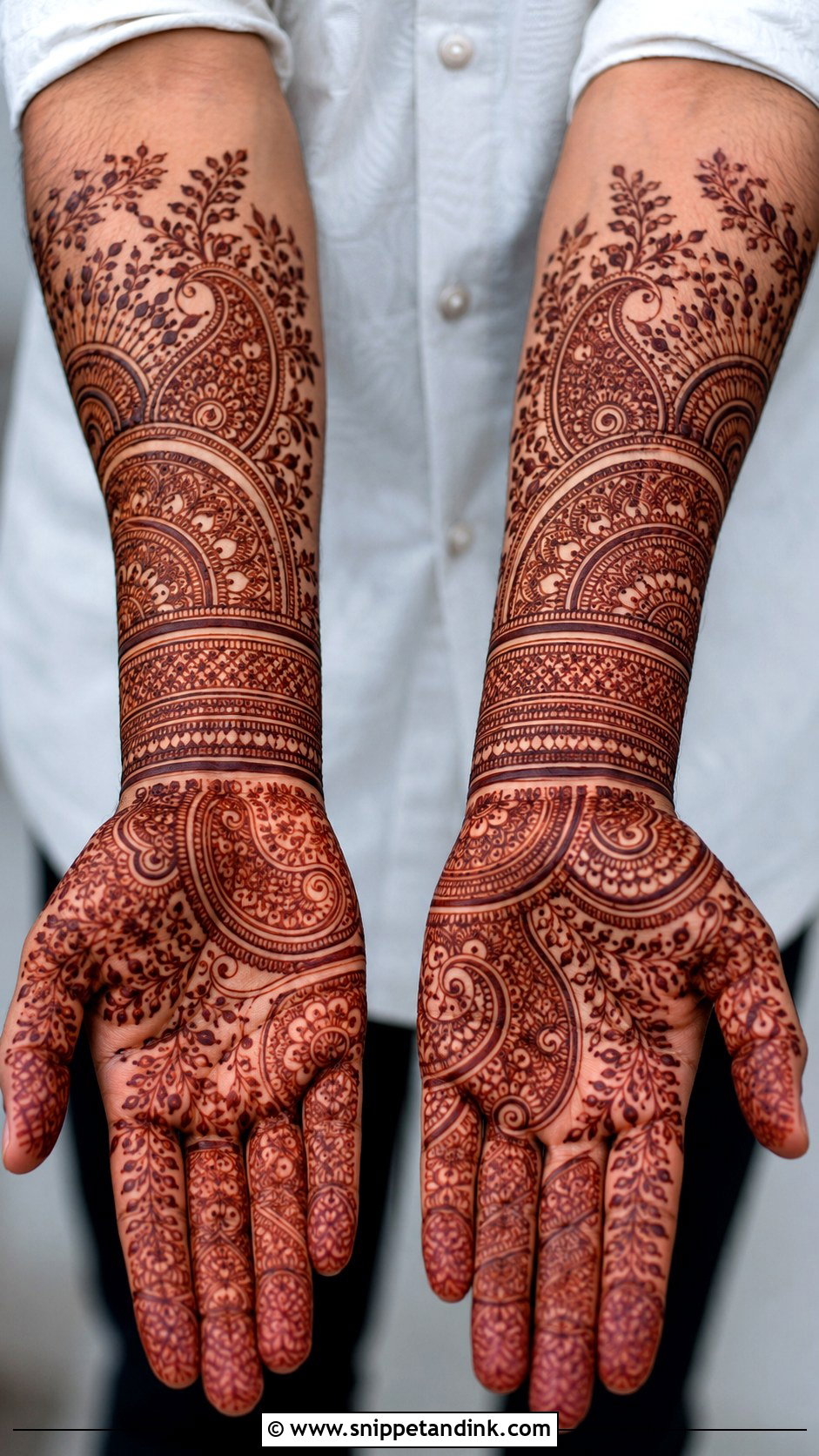
A forearm groom mehndi design creates a statement while keeping the palm less crowded. This look can start at the wrist and move upward with bands, paisleys, mandalas, or Arabic vines. It is especially useful when the groom’s outfit has shorter sleeves or when the mehndi ceremony includes detailed photography. For a balanced result, keep the forearm design slightly wider near the wrist and narrower as it moves upward. This creates a natural flow. Forearm mehndi can be traditional, royal, or modern depending on the motifs. It is also a strong option for grooms who want more coverage but less palm filling.
22. Finger Groom Mehndi Design
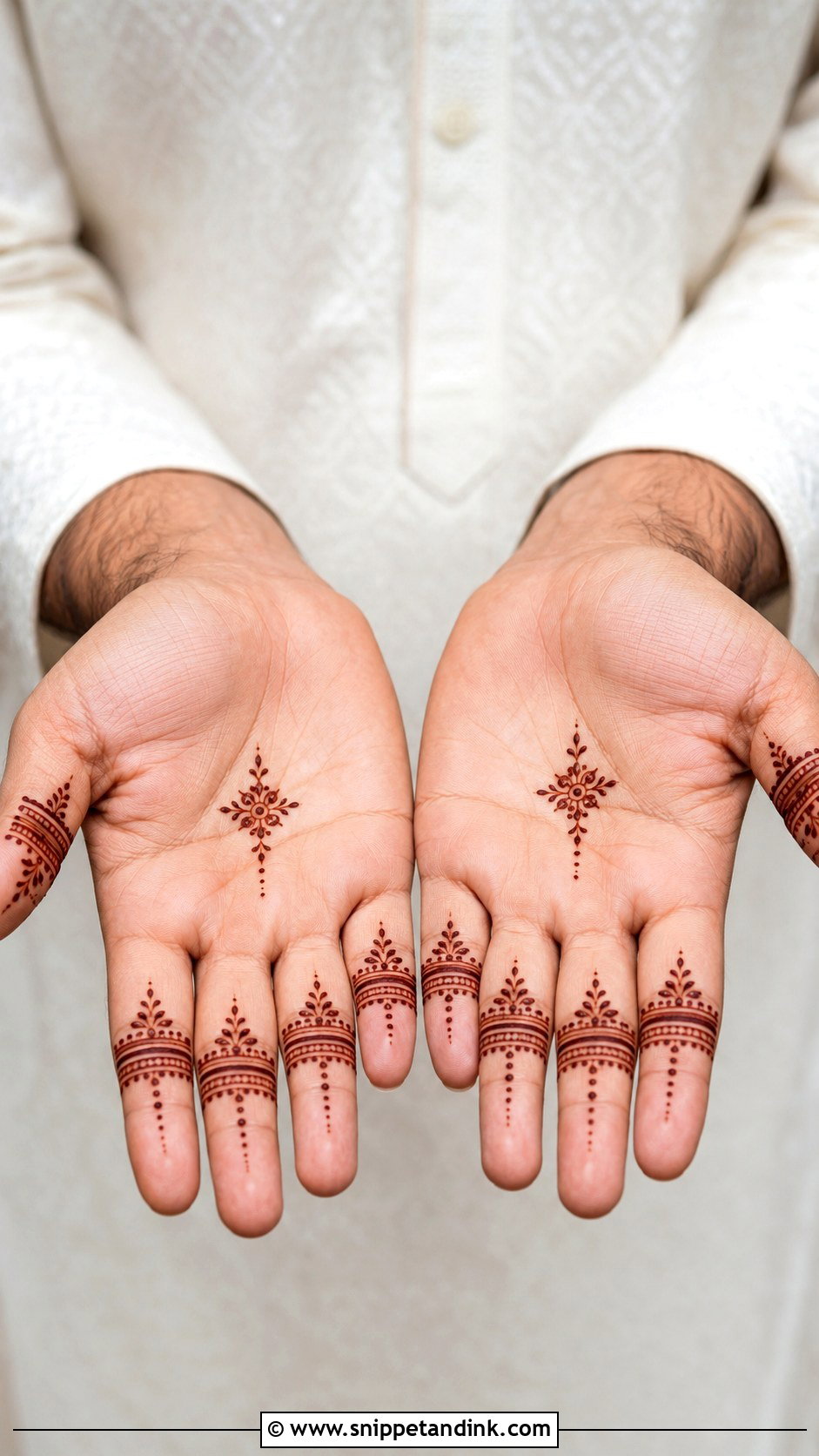
A finger groom mehndi design keeps the overall look very light while still adding wedding charm. The pattern can include ring bands, dotted lines, leafy tips, or small geometric marks on each finger. The palm or back hand may stay mostly bare, with only a small center motif if needed. This design is great for grooms who want henna but need a subtle, office-friendly, or low-maintenance option after the wedding. It also looks stylish in ring exchange and close-up hand photos. For the best finish, keep the finger details consistent and avoid making every finger too different from the others.
23. Ring Finger Groom Mehndi Design
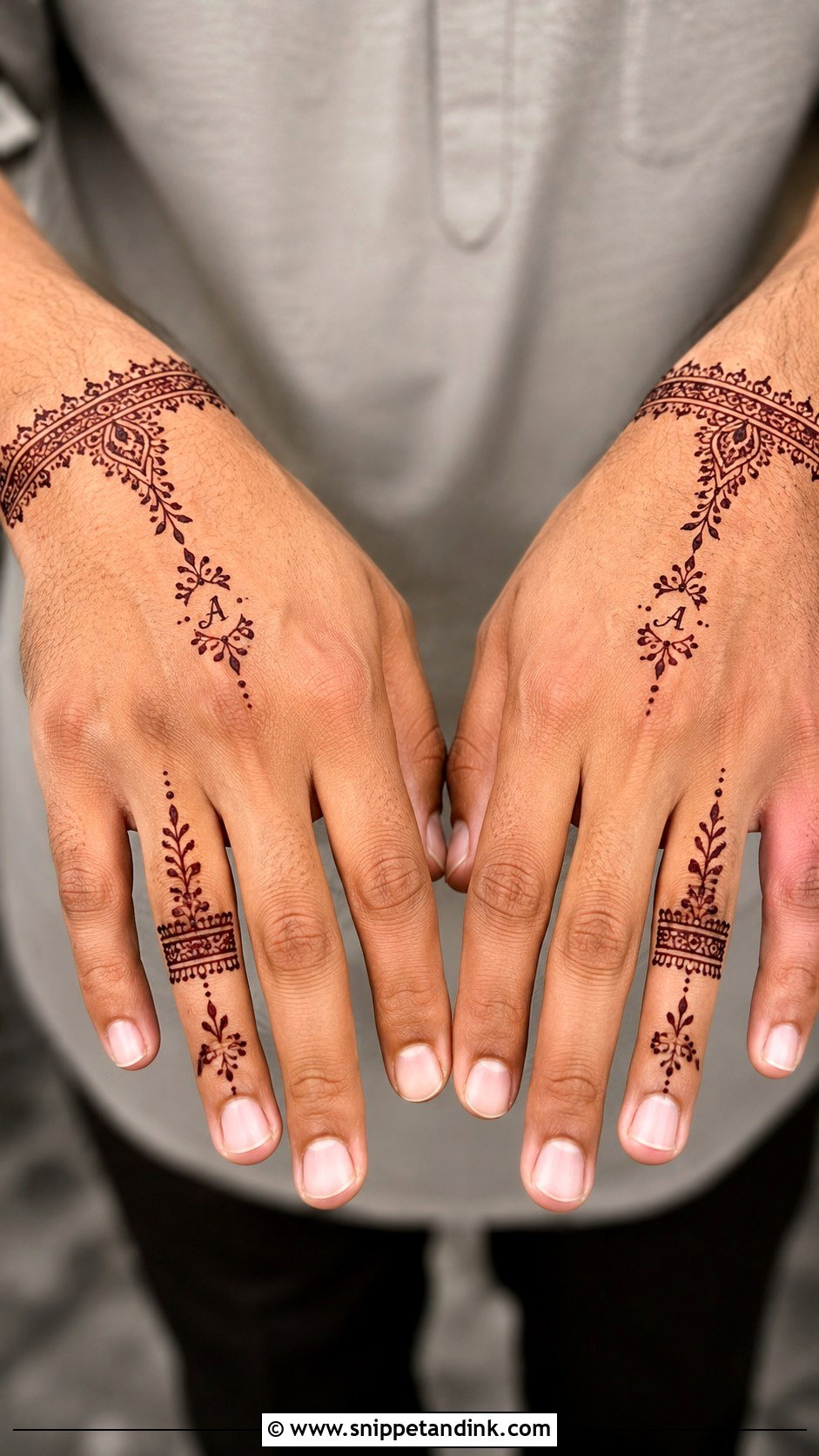
A ring finger groom mehndi design highlights the wedding ring area in a simple and meaningful way. The design may look like a henna ring, a small vine wrapping the finger, or a line that connects from the wrist to the ring finger. Some grooms add the bride’s initial near the finger base for a personal touch. This style is minimal but photographs beautifully during ring ceremonies and hand-holding shots. It also suits grooms who do not want full-hand mehndi. Keep the design clean and bold, because very tiny details on the finger can blur once the henna stain deepens.
24. Couple Groom Mehndi Design
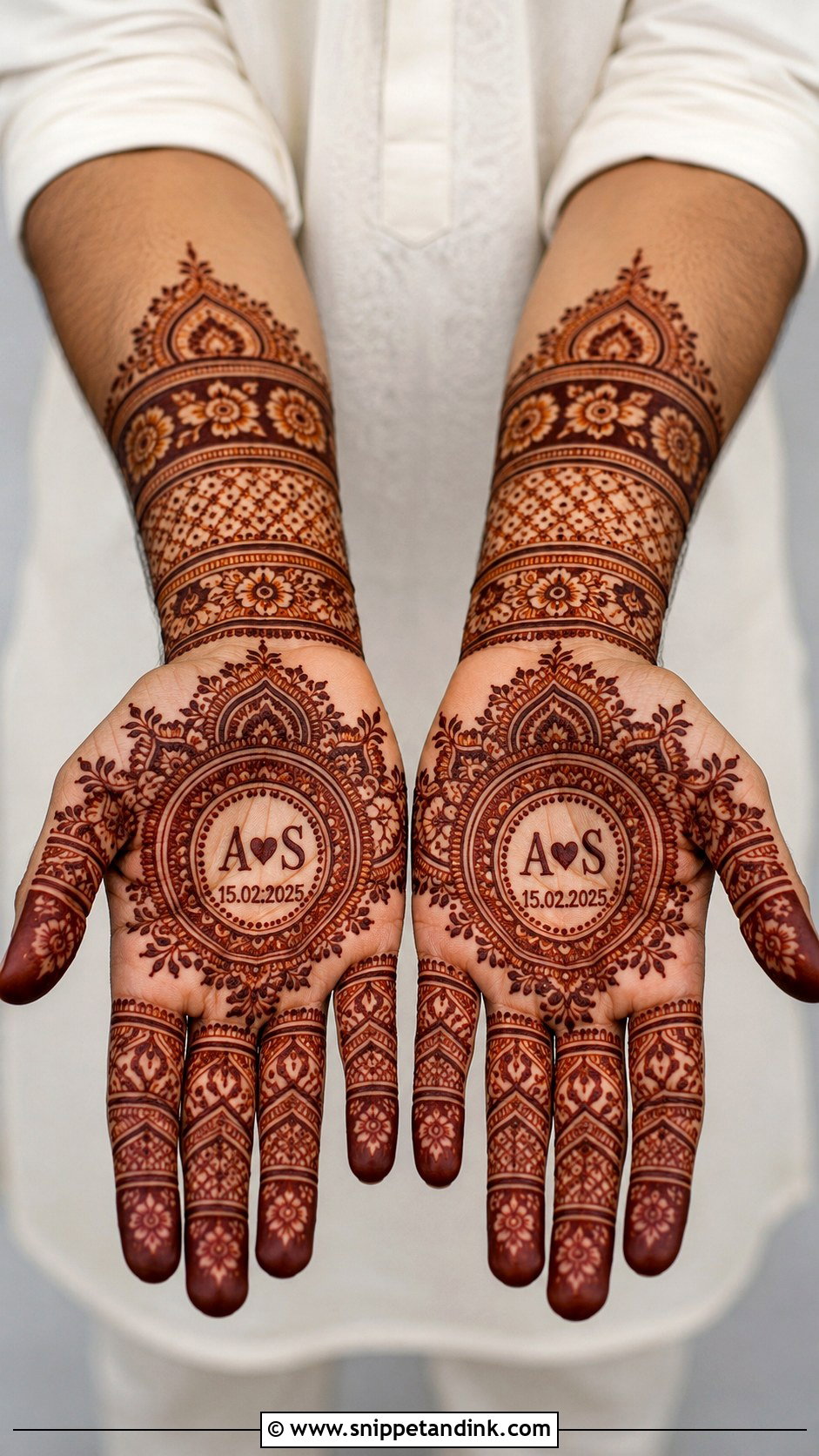
A couple groom mehndi design connects the groom’s henna to the bride’s design in a thoughtful way. It can include matching initials, half-and-half motifs, a shared wedding date, or small bride and groom figures. The groom’s hand may carry a simpler version of the bride’s main motif, such as a mandala, lotus, or paisley. This creates a coordinated look without copying the bridal design completely. Couple mehndi is especially meaningful for photo shoots where both hands are placed together. It also adds a sweet personal detail to the ceremony. Keep the artwork clear, balanced, and easy to recognize from close range.
25. Dulha Dulhan Groom Mehndi Design
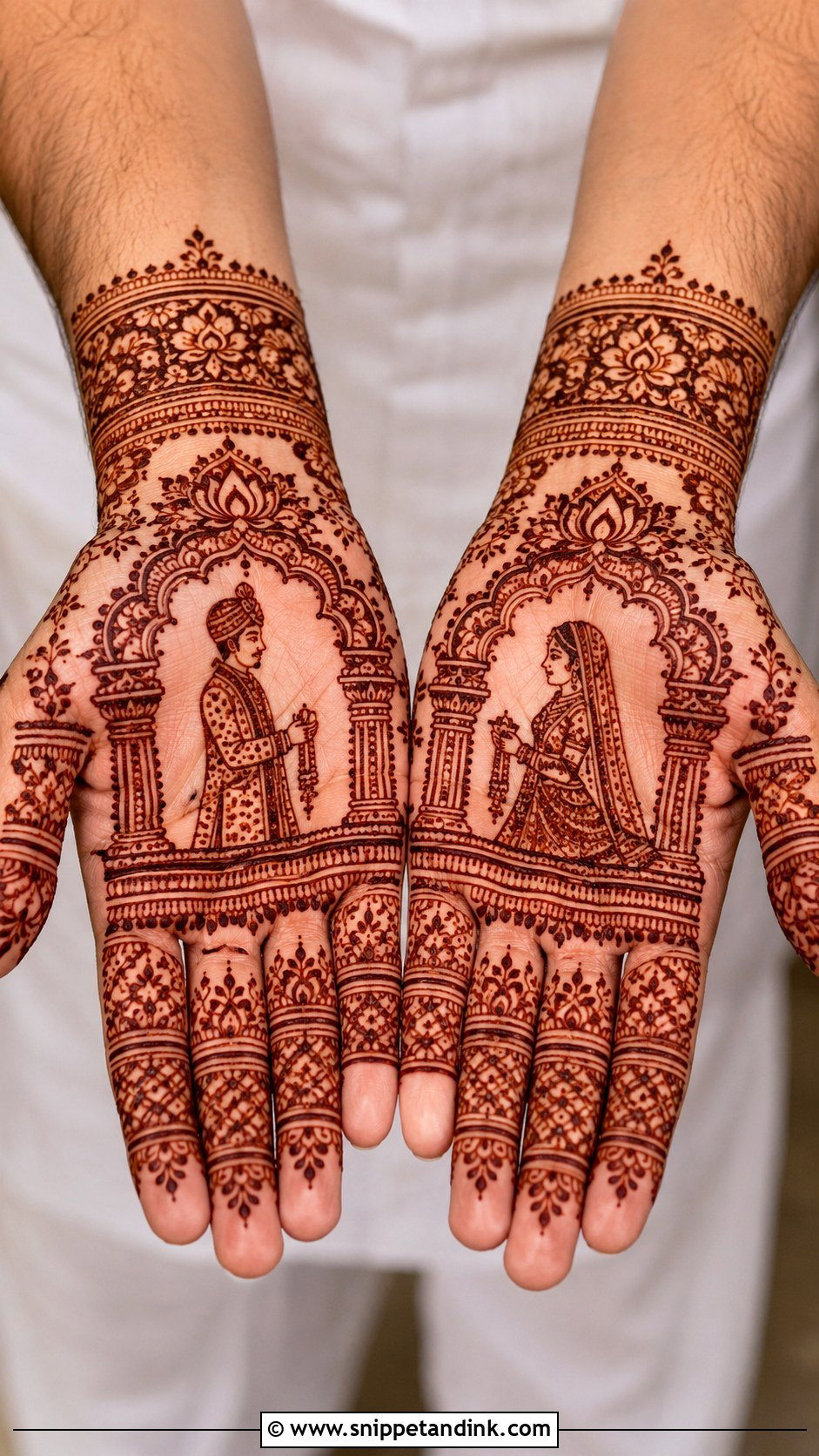
A dulha dulhan groom mehndi design tells a small wedding story on the hand. The palm can feature simplified bride and groom figures, a mandap scene, or two framed portraits facing each other. For grooms, this style works best when the figures are clean and not too detailed. Add borders, dots, and small floral panels around the scene to make it feel complete. This design is ideal for grooms who enjoy expressive, personalized mehndi and want something memorable for photos. It pairs beautifully with bridal mehndi that includes a matching couple scene, creating a charming connection between both wedding looks.
26. Religious Groom Mehndi Design
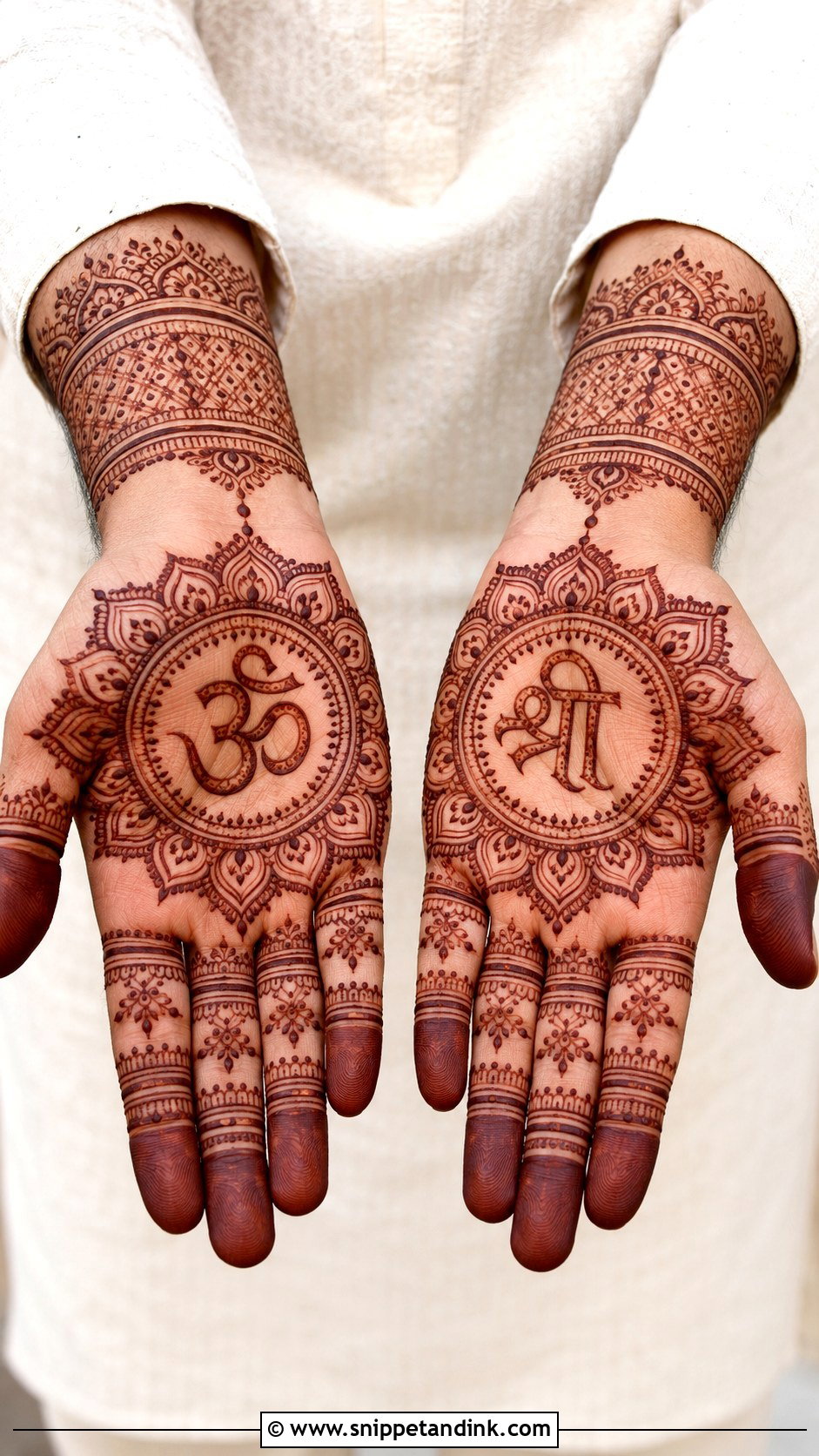
A religious groom mehndi design can include meaningful symbols chosen with respect and care. Depending on the ceremony and personal belief, grooms may request motifs like Om, lotus, kalash, swastik in its traditional auspicious meaning, or other sacred-inspired elements used in wedding culture. The design should stay clean, centered, and thoughtfully placed. Many grooms prefer placing the symbol on the palm with a mandala or border around it. Avoid overcrowding the sacred motif so it remains clear. This style suits traditional wedding rituals and family ceremonies where blessings and symbolism matter. Always discuss placement with elders or the artist if needed.
27. Modern Groom Mehndi Design
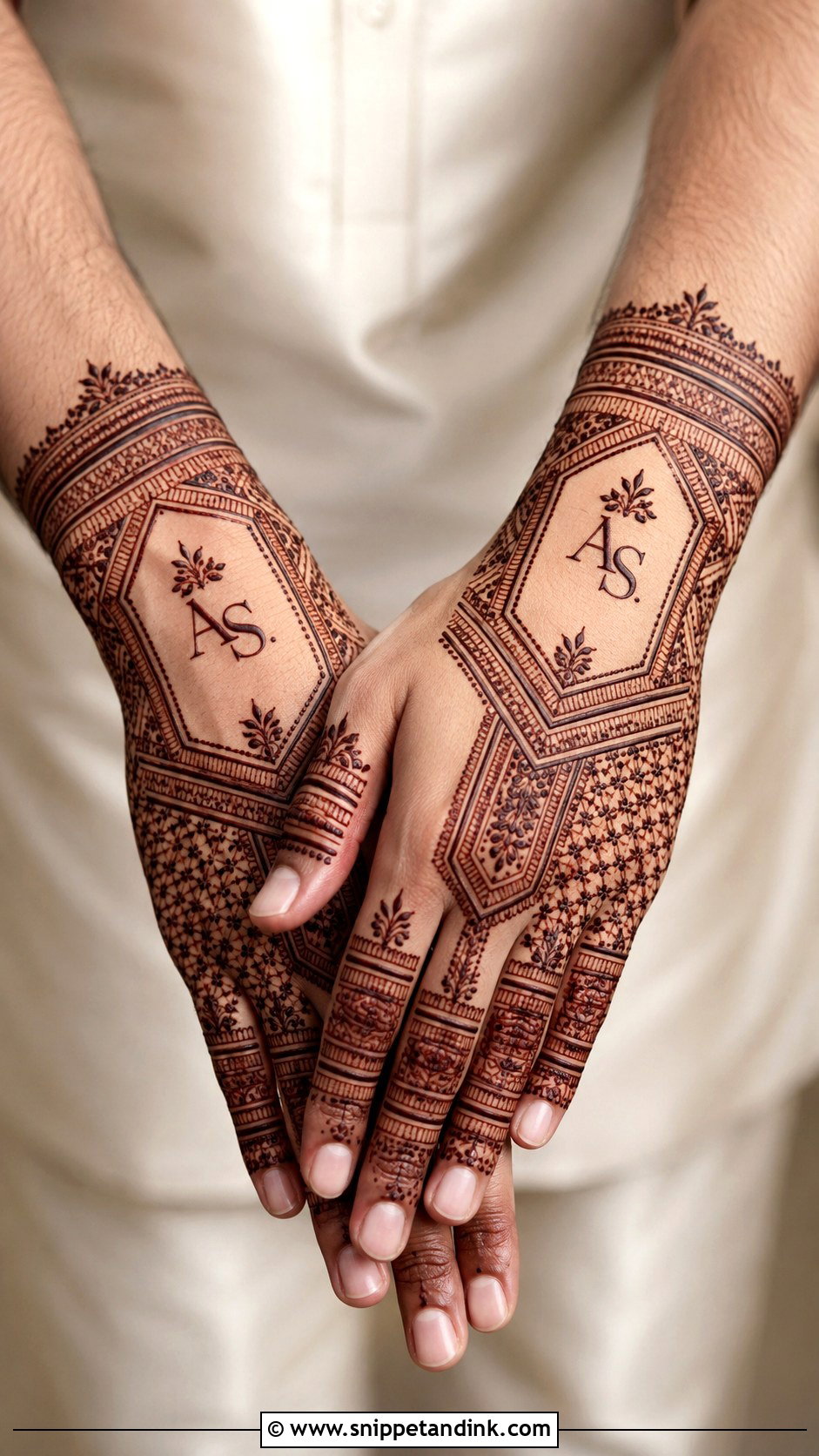
A modern groom mehndi design is clean, stylish, and less traditional in layout. It may use abstract lines, negative space, simple bands, geometric panels, or a sleek initial detail. Instead of filling the hand evenly, the design may sit on one side of the palm, run across the back hand, or form a sharp wrist cuff. This look suits grooms wearing minimalist sherwanis, tailored suits with ethnic details, or fusion outfits. The result feels fresh but still connected to the mehndi ritual. Choose natural henna and crisp linework, because modern designs depend heavily on neat spacing and confident shapes.
28. Pakistani Groom Mehndi Design
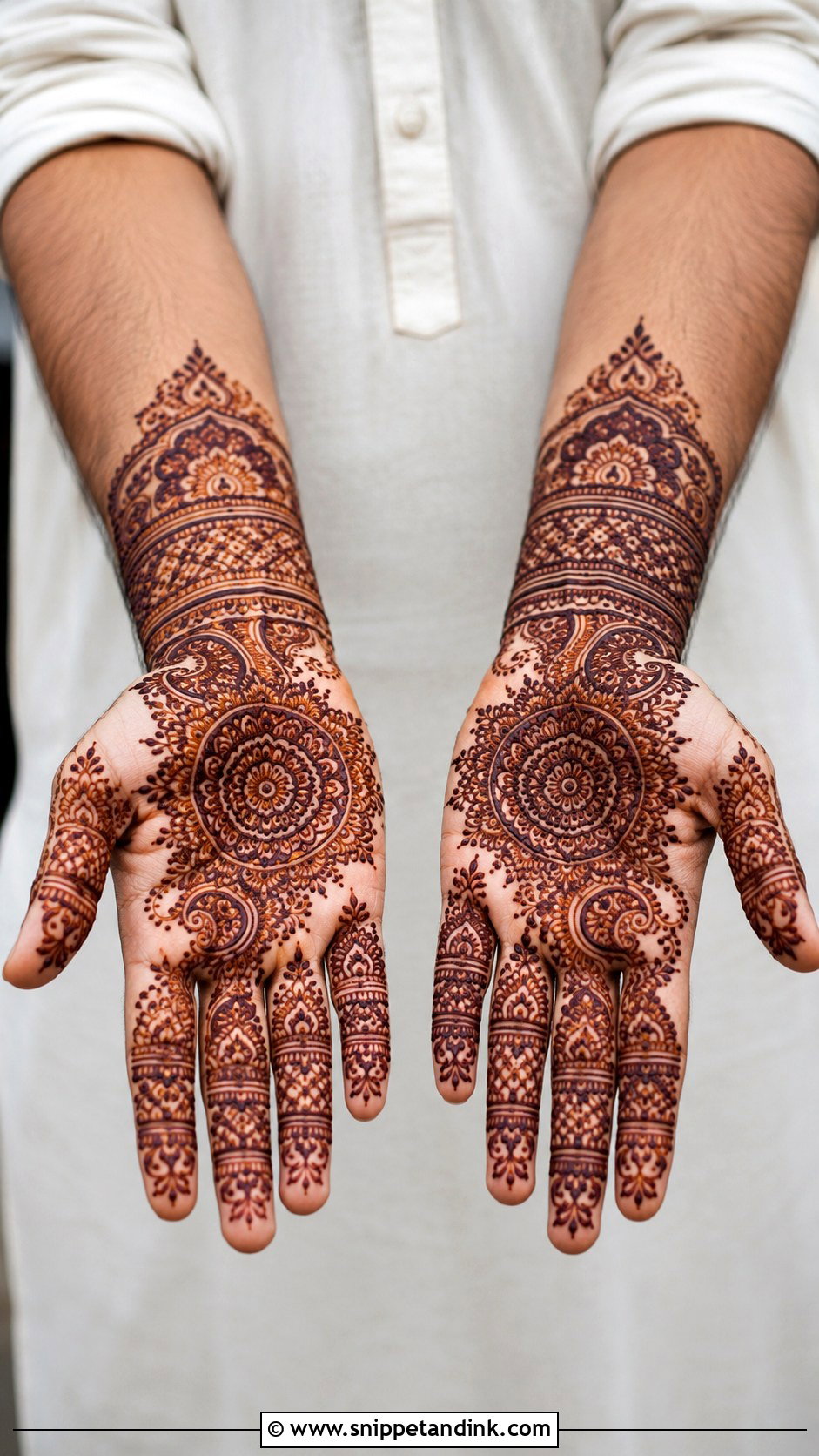
A Pakistani groom mehndi design often blends detailed Indian-style filling with Arabic flow and graceful spacing. This creates a rich but wearable look for the groom. Common elements include paisleys, floral trails, jaali sections, mandalas, and wrist bands arranged in a balanced layout. The palm may have a central design, while the fingers carry neat bands or leaf tips. This style works beautifully for nikah, mehndi night, baraat, and walima celebrations. For a groom, ask the artist to keep the outlines strong and the fillers controlled. That way, the design looks elegant, detailed, and masculine without becoming too dense.
29. Muslim Groom Mehndi Design
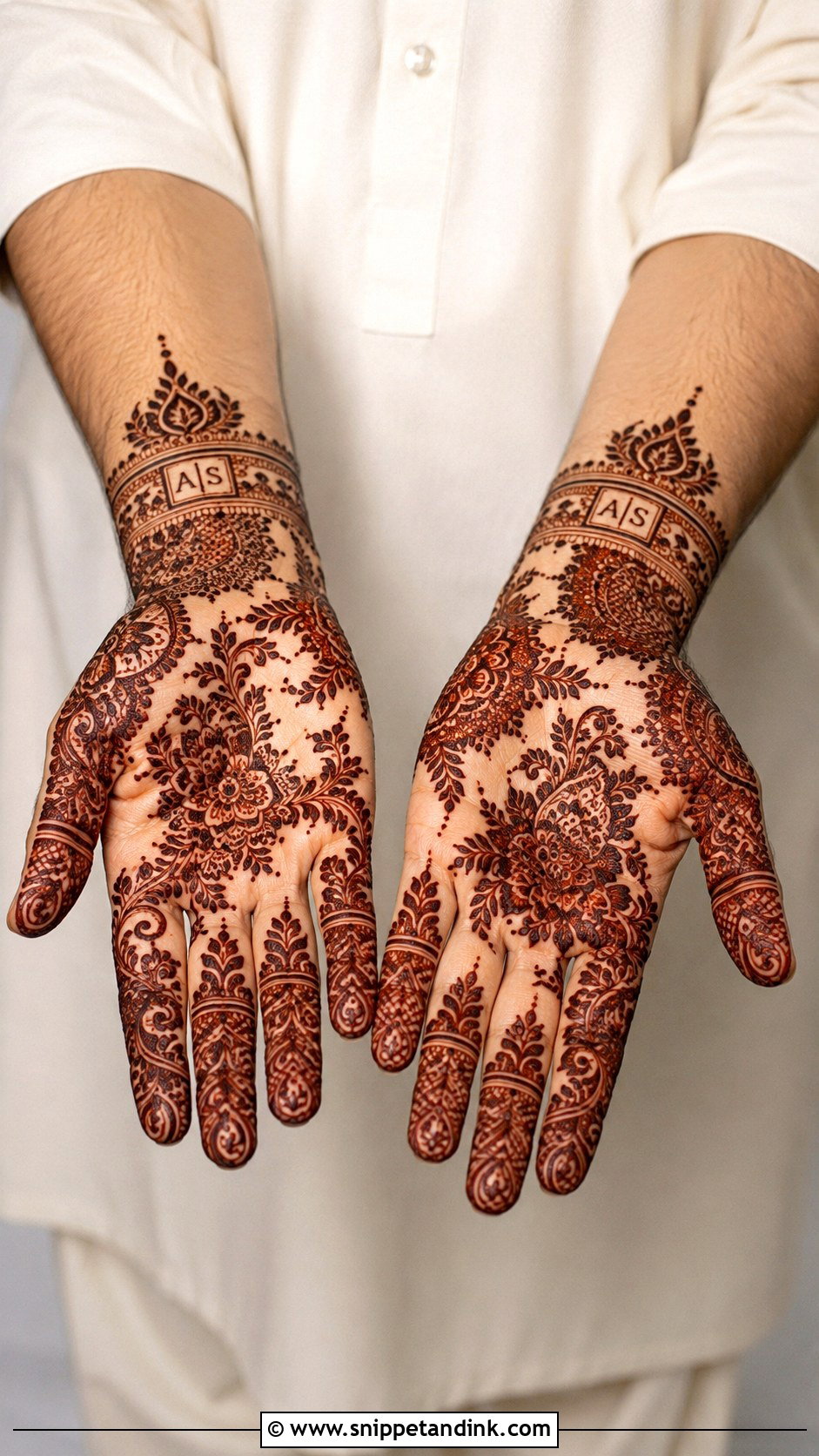
A Muslim groom mehndi design is often clean, elegant, and ceremony-friendly. Many grooms prefer simple palm designs, Arabic trails, wrist bands, or initials paired with floral or geometric details. For nikah or mehndi night, a minimal back hand design with a vine and finger accents can look refined. If you want a richer look, choose an Indo-Arabic layout with open spacing and bold motifs. Avoid overly crowded patterns if you prefer a modest, subtle finish. This style pairs well with sherwanis, kurtas, waistcoats, and traditional groom wear. The best design should feel respectful, polished, and comfortable throughout the celebration.
30. Engagement Groom Mehndi Design
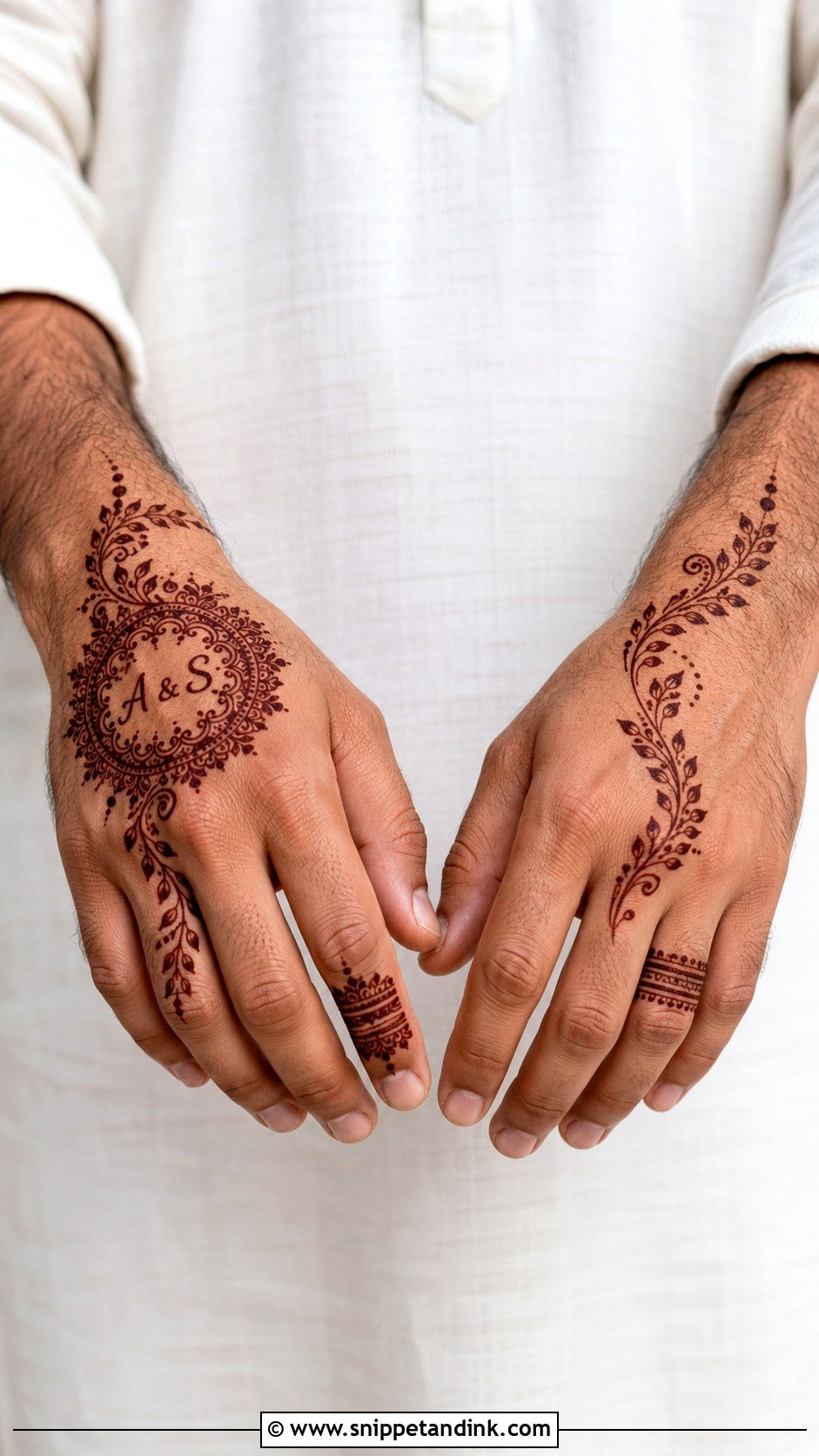
An engagement groom mehndi design should feel lighter than wedding day mehndi but still special. A ring finger pattern, initials, date detail, or small back hand mandala works beautifully for this event. Since engagement ceremonies often include ring close-ups, keep the design around the fingers neat and photogenic. You can also add a slim wrist band or a short Arabic vine for extra detail. This style is ideal for grooms who want something meaningful without committing to full-hand coverage. It also allows the wedding mehndi later to feel bigger and more detailed. Choose a clean layout that matches your outfit and event mood.
Conclusion:
The best groom mehndi should match your comfort level, outfit, ceremony, and personality. If you like a subtle look, choose minimal, finger, wrist band, or initials mehndi. If you want a traditional wedding feel, go for Indian, paisley, mandala, peacock, or full hand mehndi. For a stylish middle path, Arabic, Indo-Arabic, Pakistani, and modern geometric designs work beautifully. Personal touches like names, dates, and couple symbols make the design more memorable. Use these 30 Groom Mehndi Design Ideas as inspiration, then customize the placement, coverage, and details with your mehndi artist for a look that feels truly yours.
You'll Like These Ideas:
Leave a Reply