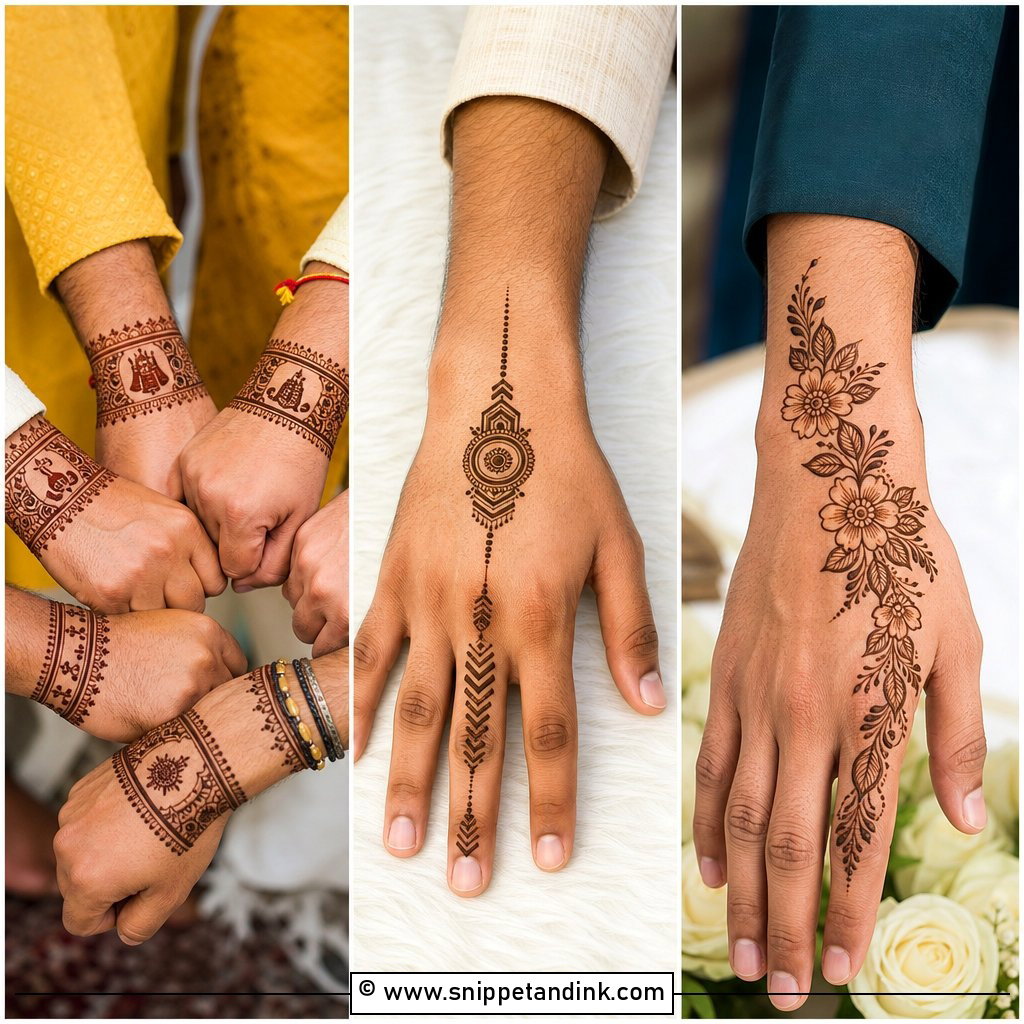
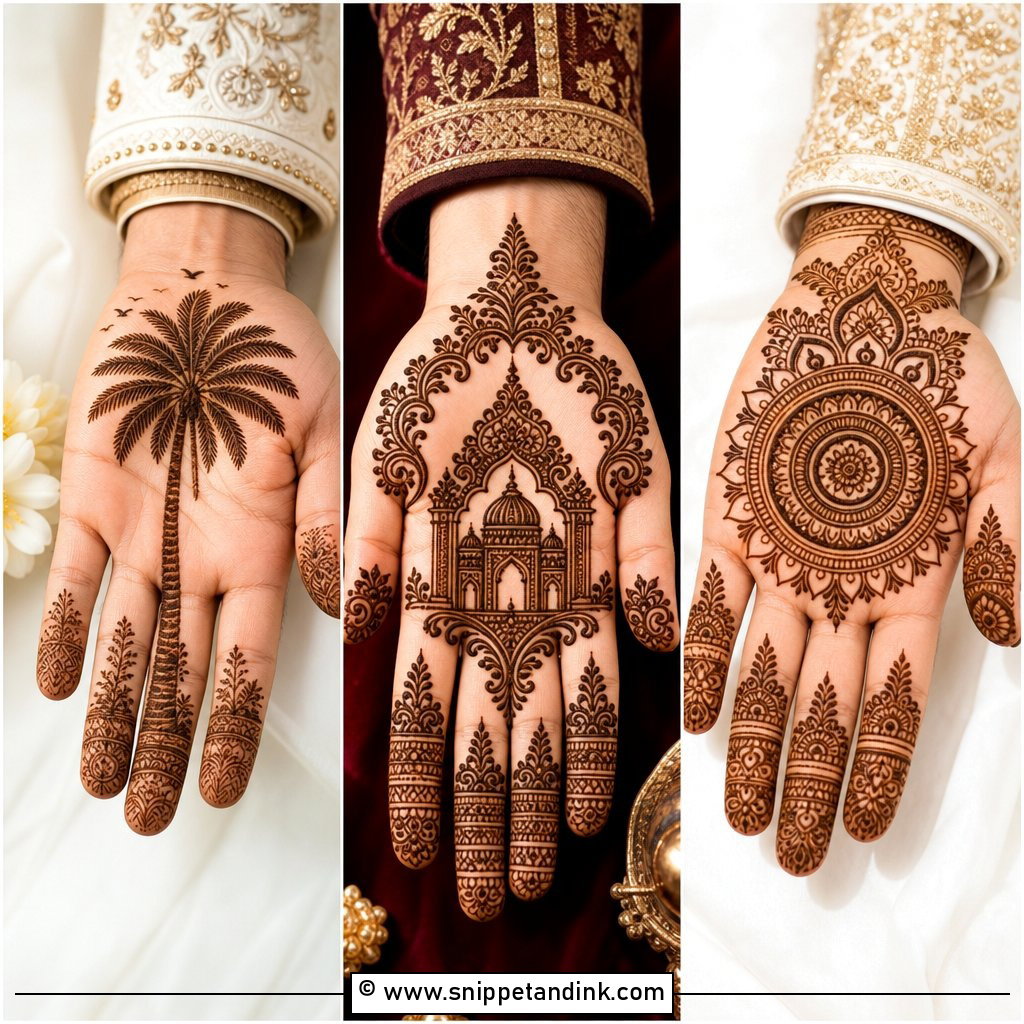
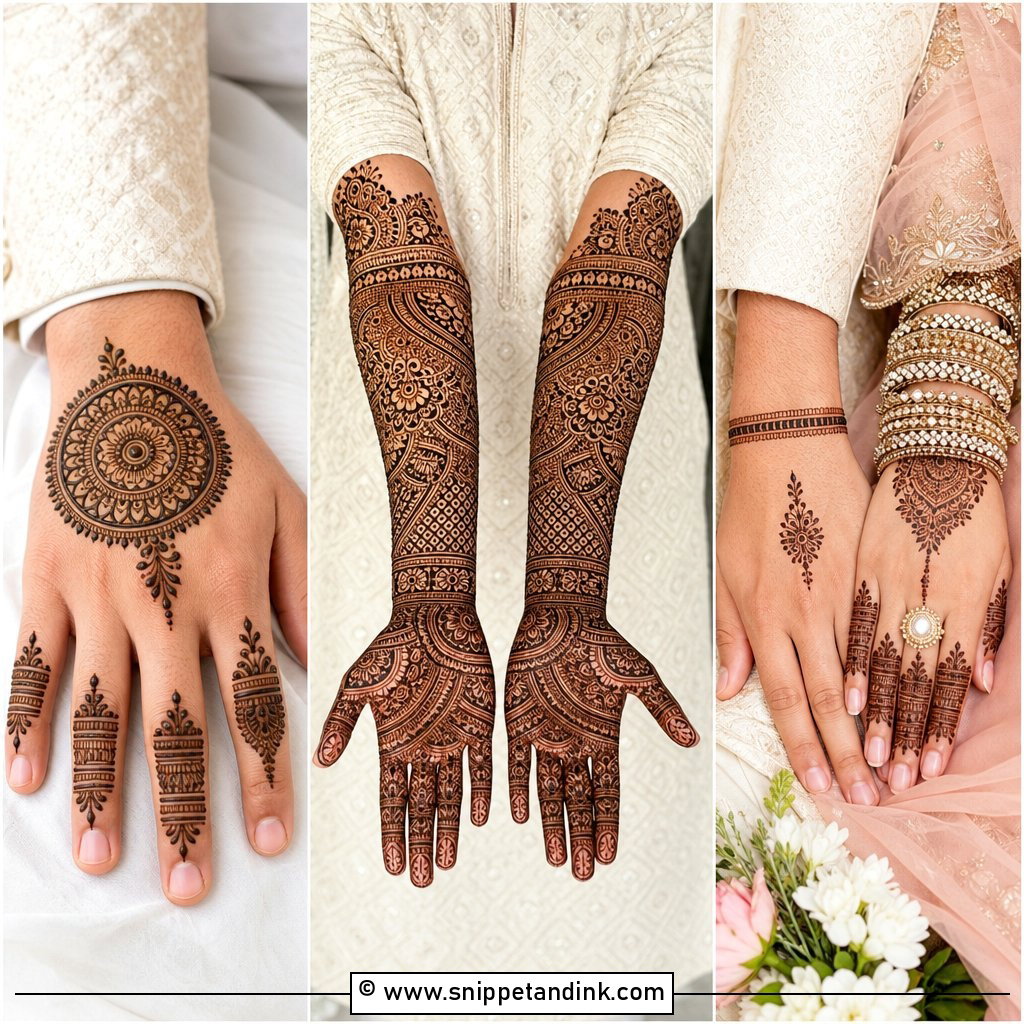
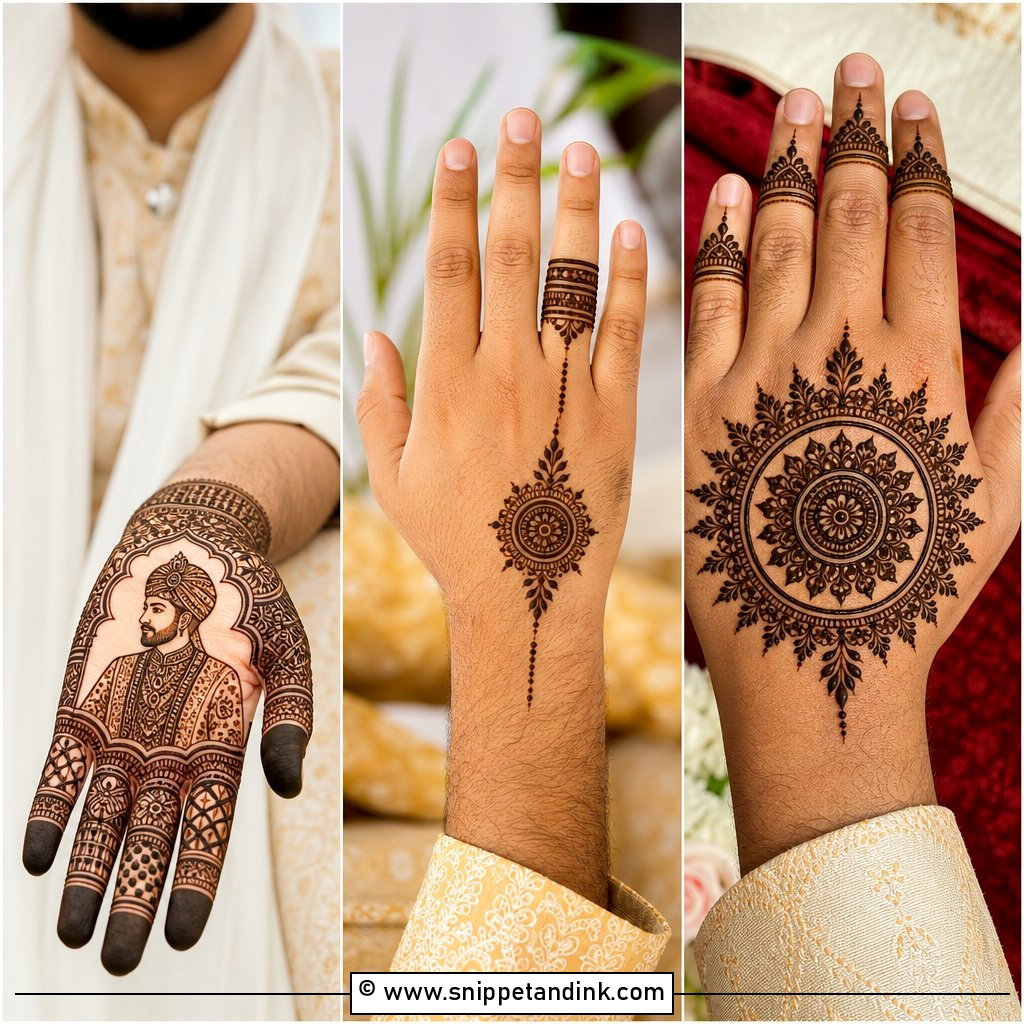
A groom’s mehndi is no longer just a tiny ceremonial mark on the palm. Today, it can be bold, personal, minimal, royal, or deeply traditional, depending on the wedding look. The best groom hand mehndi balances clean masculine detailing with meaningful motifs like initials, wedding dates, mandalas, jaali patterns, Arabic vines, paisleys, and couple art. Some grooms prefer a simple palm design, while others choose full-hand dulha mehndi that matches sherwani embroidery or wedding themes. The key is to pick a design that feels comfortable, photographs well, and suits the ceremony. If you want stylish inspiration with practical details, explore these 25 Mehndi Design for Groom Hand Ideas.
1. Simple Groom Mehndi Design
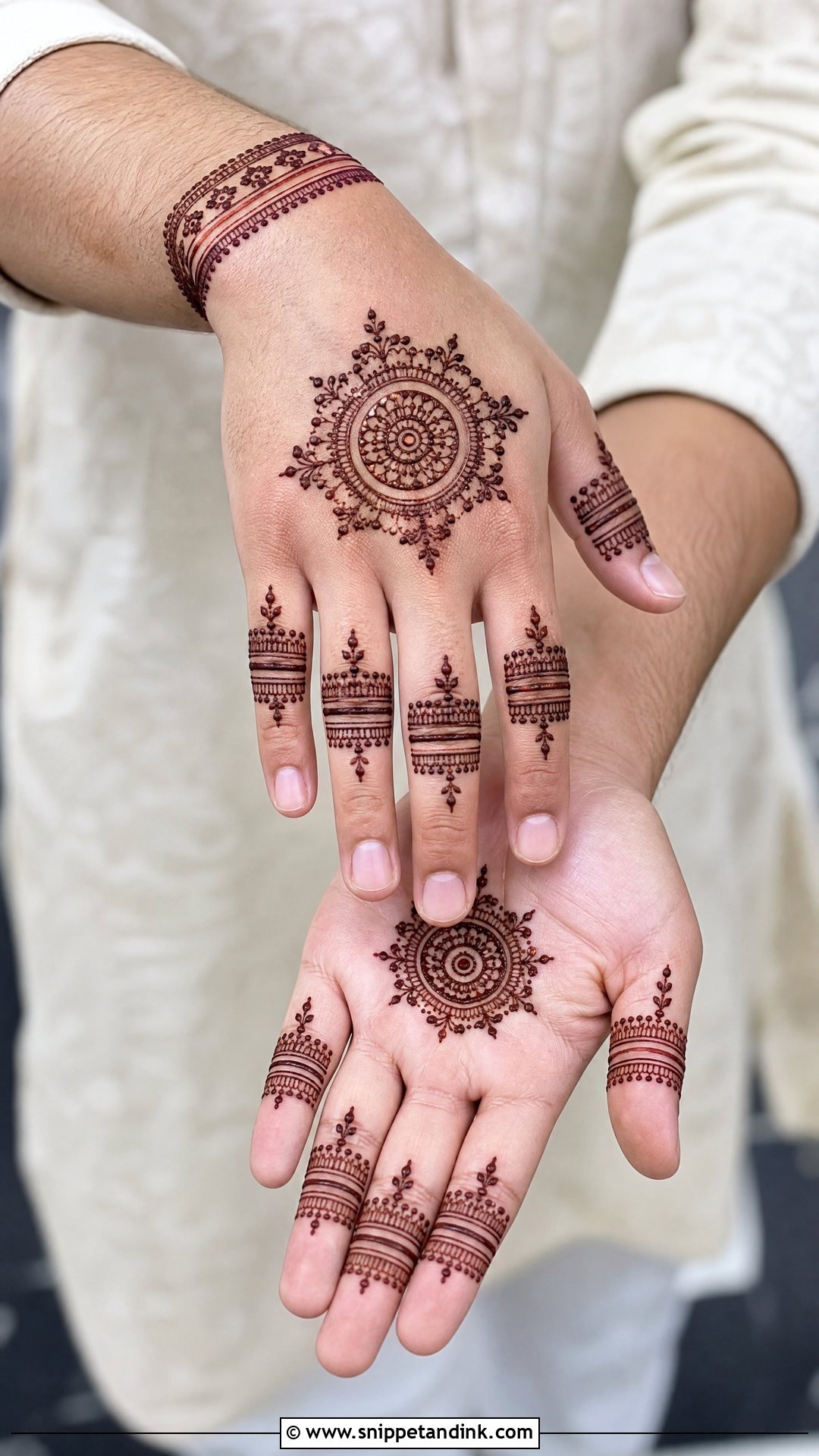
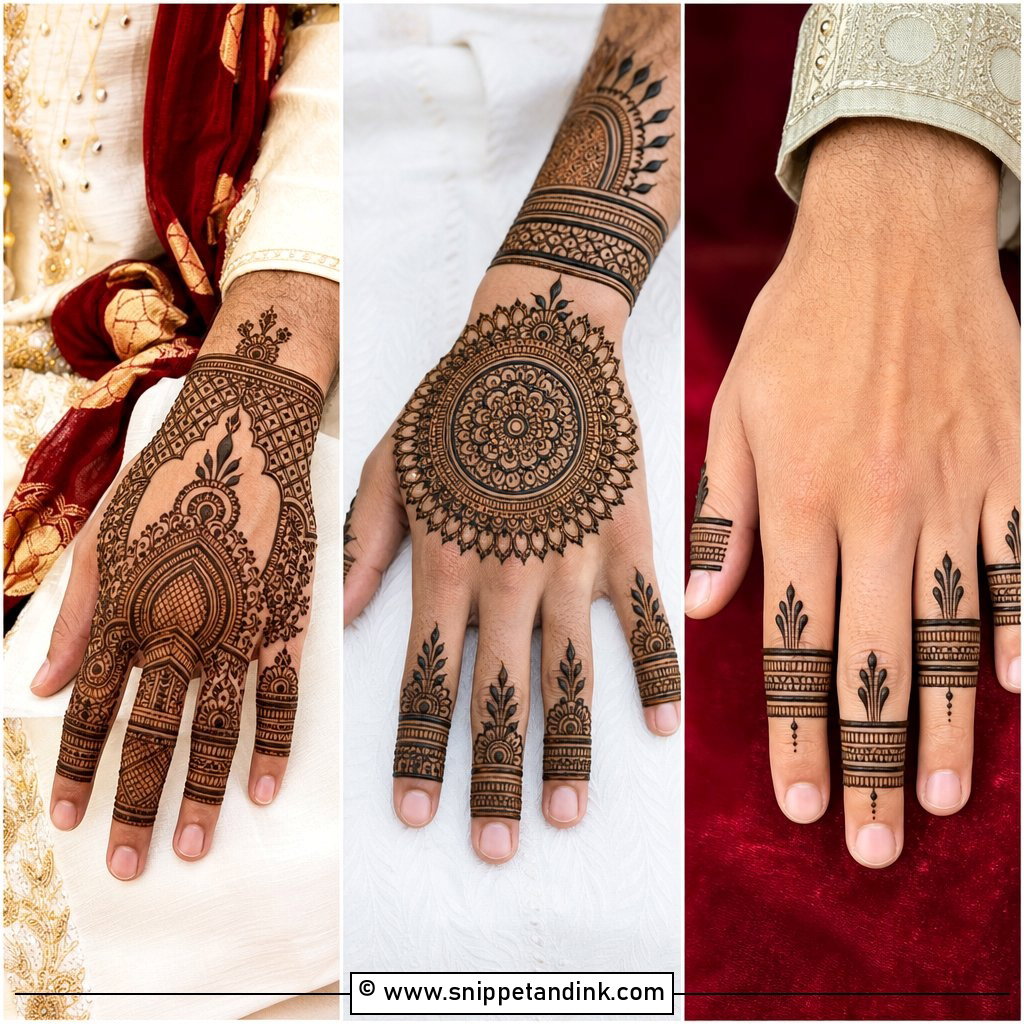
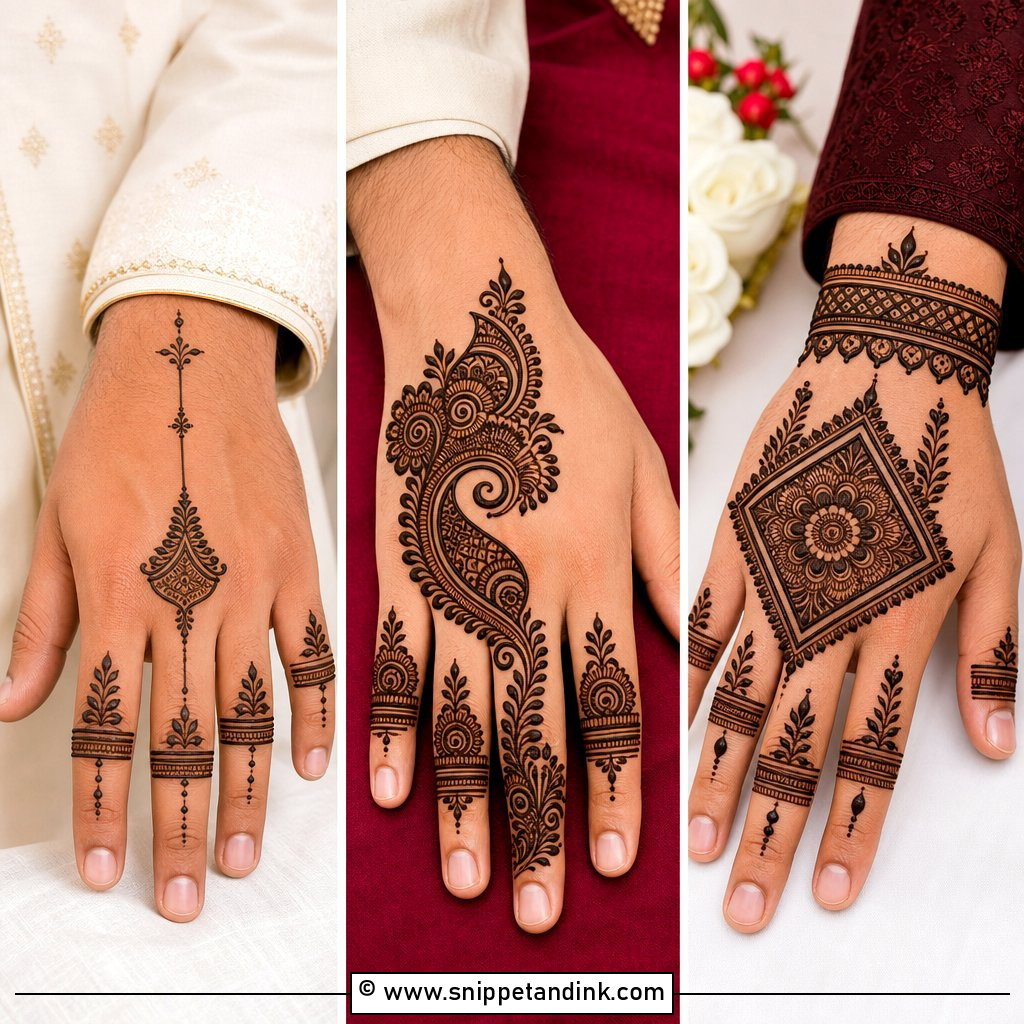
Simple groom mehndi design is perfect for dulhas who want tradition without a heavy look. This design usually stays on the palm or back of the hand with a neat mandala, small floral ring, thin finger bands, and a clean wrist border. The empty space around the pattern keeps it modern and easy to wear with a sherwani, kurta, or suit. It also works well for grooms who are trying mehndi for the first time. Ask the artist to keep the lines bold and balanced, because simple designs look best when every curve is sharp. A small initial in the center can make it personal without making it too decorative.
2. Full Hand Groom Mehndi Design
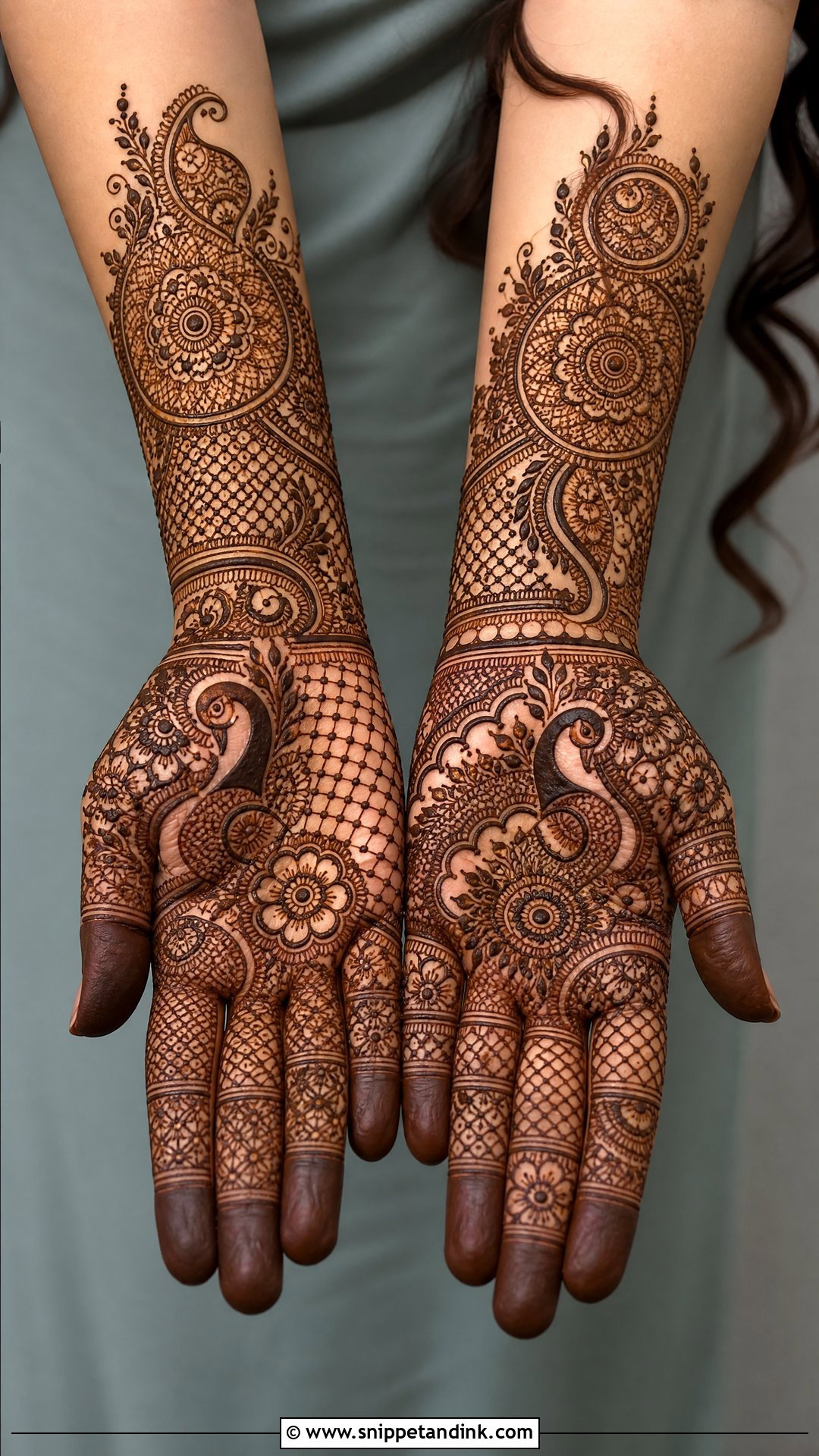
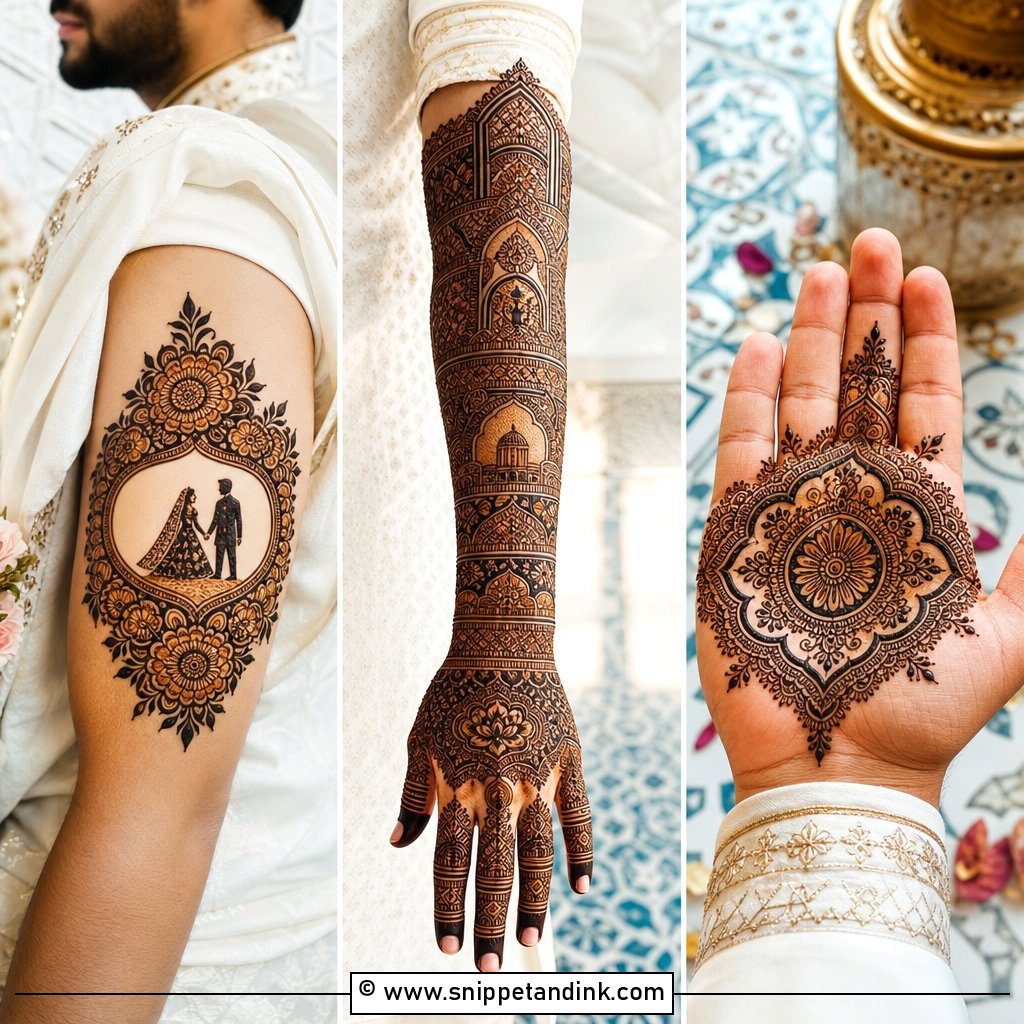
Full hand groom mehndi design is for the groom who wants a strong wedding statement. It covers the palm, fingers, wrist, and sometimes the lower forearm with detailed Indian or Indo-Arabic patterns. The layout can include paisleys, lotus motifs, jaali mesh, peacocks, and a hidden bride’s initial. This style looks rich in close-up wedding photos and pairs beautifully with embroidered sleeves. To keep it groom-friendly, choose wider gaps, structured borders, and stronger geometric sections instead of very delicate bridal filling everywhere. Full hand mehndi also needs more time to apply, so plan it before the main wedding rush. The final stain looks best after proper drying and aftercare.
3. Back Hand Groom Mehndi Design
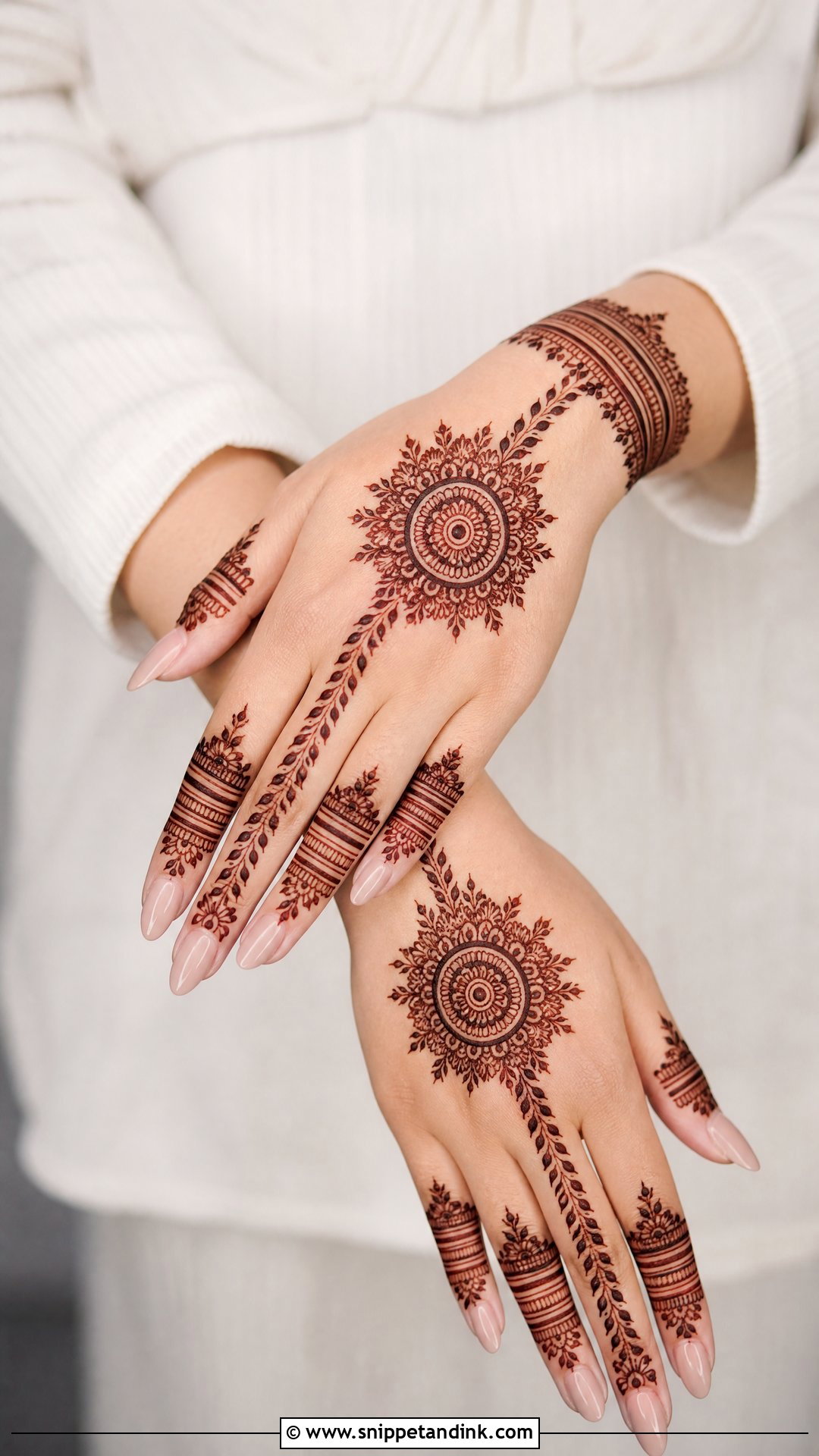
Back hand groom mehndi design gives a polished look while keeping the palm free and comfortable. It is a smart choice for grooms who want visible henna during ring shots, hand-holding photos, and stage moments. The pattern can start with a central mandala, crest, or floral medallion on the back of the hand, then continue into finger bands and a bracelet-style wrist cuff. Back hand designs look clean when the negative space is intentional. Avoid filling every corner if you want a modern finish. This style also works well with watches, rings, and cuffed sleeves because it frames the hand without feeling too heavy.
4. Front Hand Groom Mehndi Design
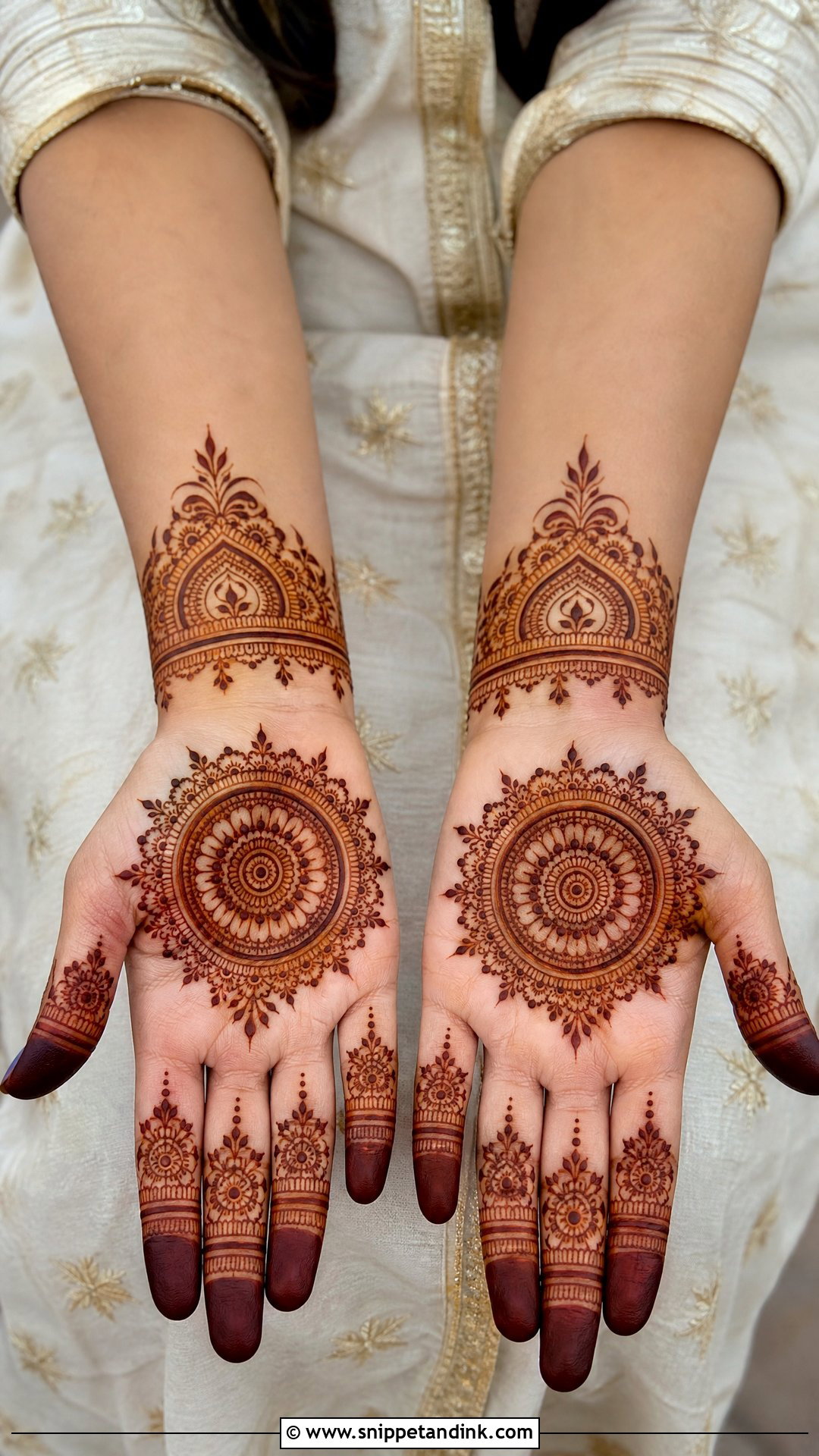
Front hand groom mehndi design is the most traditional option for wedding rituals. The palm is often the main focus because it shows clearly during ceremonies, blessings, and family photos. A groom can choose a circular mandala, dulha-dulhan symbol, peacock, paisley cluster, or personalized name detail in the center. Finger designs can stay simple with bands, dots, and leafy lines. This placement gives a deeper stain because the palm usually absorbs henna well. If you want a classic but not crowded look, keep one strong centerpiece and surround it with neat borders. It feels festive, meaningful, and easy to customize for any wedding culture.
5. Royal Groom Mehndi Design
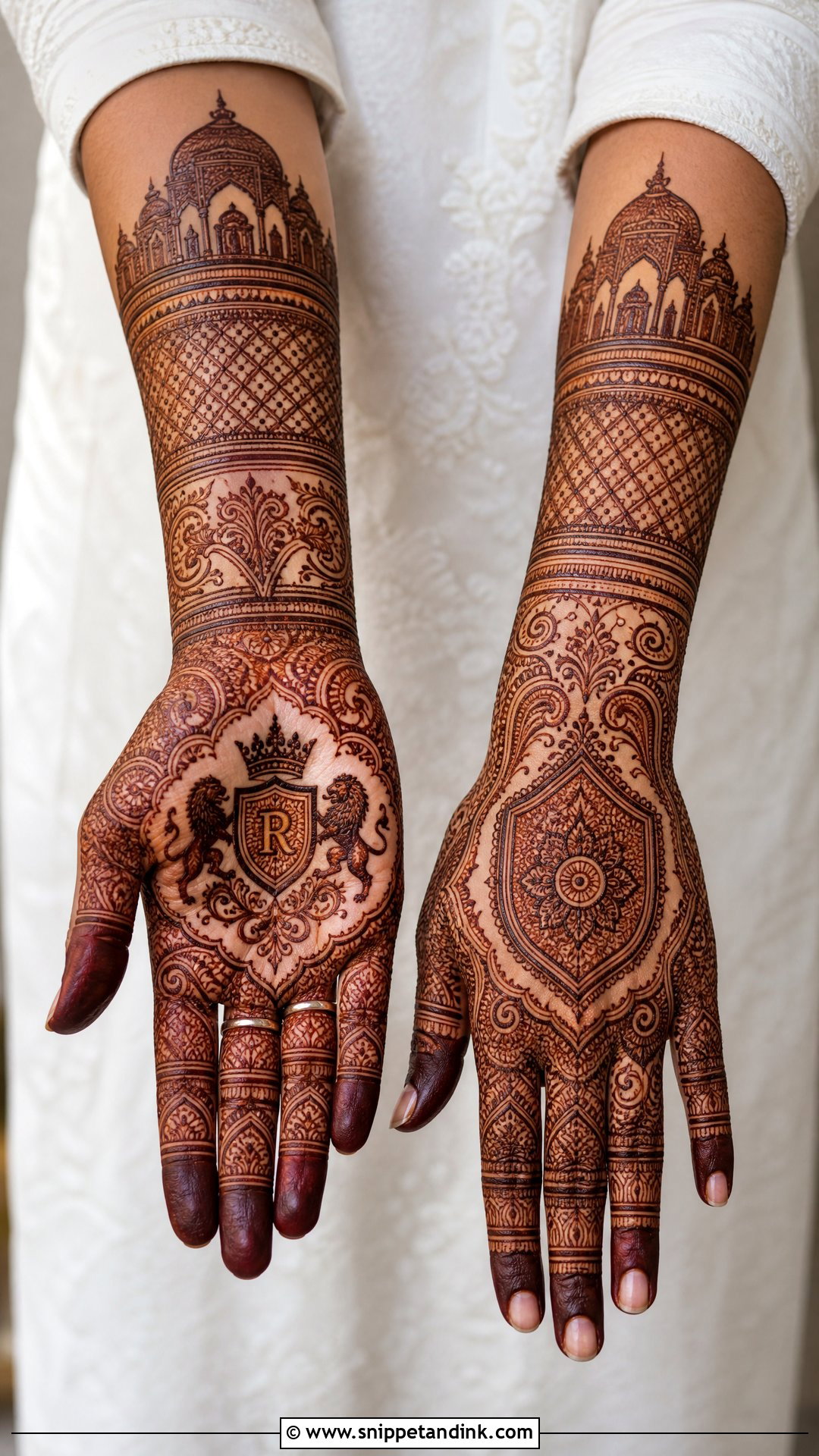
Royal groom mehndi design has a grand, regal feel without becoming too busy. Think of palace-inspired jaali, symmetrical borders, shield-like motifs, bold paisleys, and cuff-style wrist detailing. This design works especially well for grooms wearing sherwanis, bandhgalas, or embroidered jackets. The center of the hand can include a royal crest, initials, or a structured mandala that looks like a medallion. Keep the pattern sharp with clean outlines and balanced spacing, because royal mehndi should feel rich and controlled. Deep maroon stain makes this design stand out in wedding portraits. It is a great choice for traditional ceremonies, reception looks, and heritage-themed weddings.
6. Arabic Groom Mehndi Design
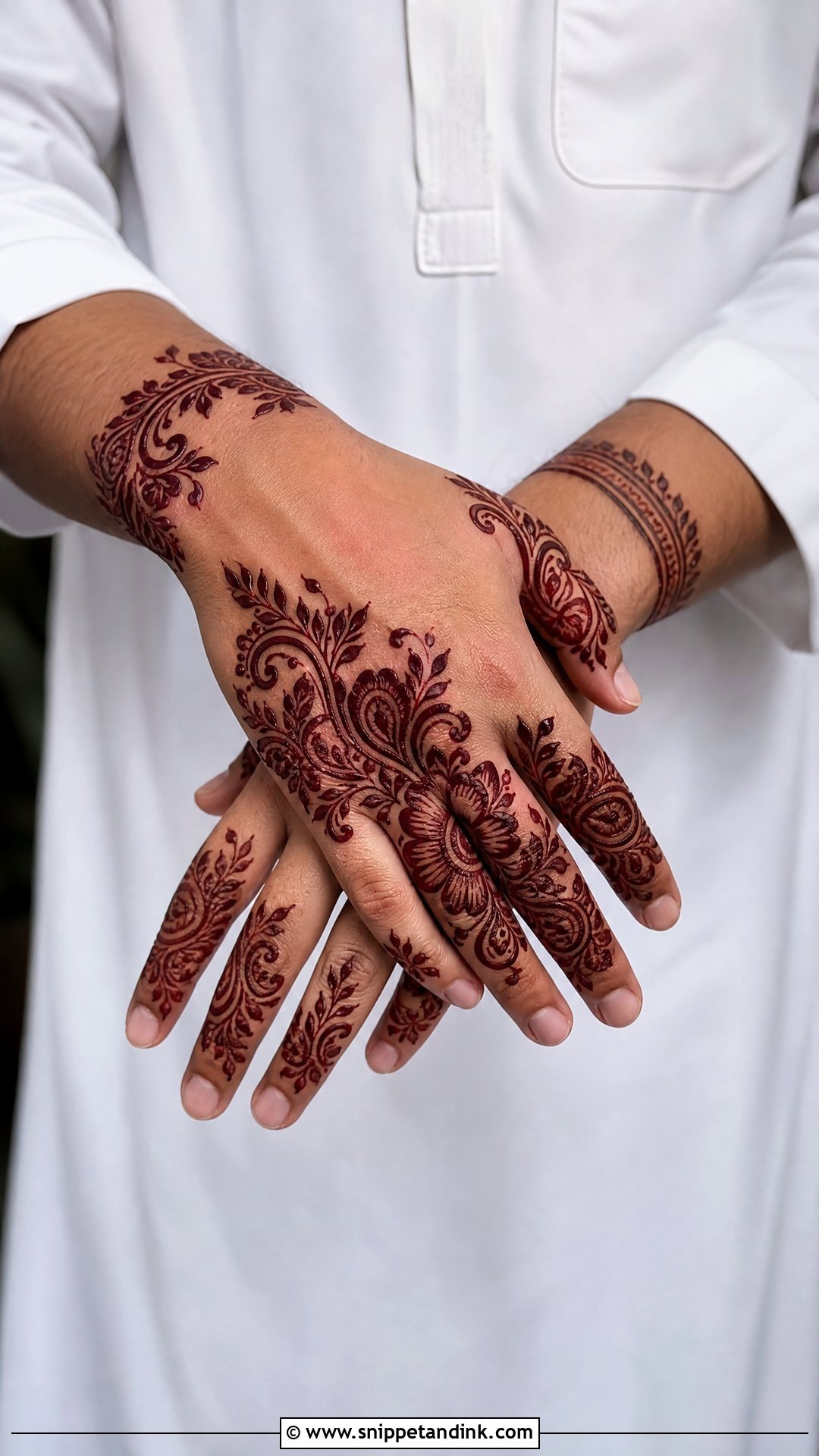
Arabic groom mehndi design is ideal if you like bold flow, open spacing, and clear motifs. Unlike dense Indian patterns, Arabic layouts often move diagonally across the hand with florals, leaves, vines, and curved borders. For grooms, the design can be simplified with thicker outlines, fewer tiny fillings, and more visible skin space. This makes the pattern look stylish rather than overly delicate. It works beautifully on the back of the hand, from one side of the wrist toward the index finger. Arabic groom mehndi is also quicker to apply than full detailed designs, which is helpful during busy wedding events. It gives a neat, elegant finish.
7. Indian Groom Mehndi Design
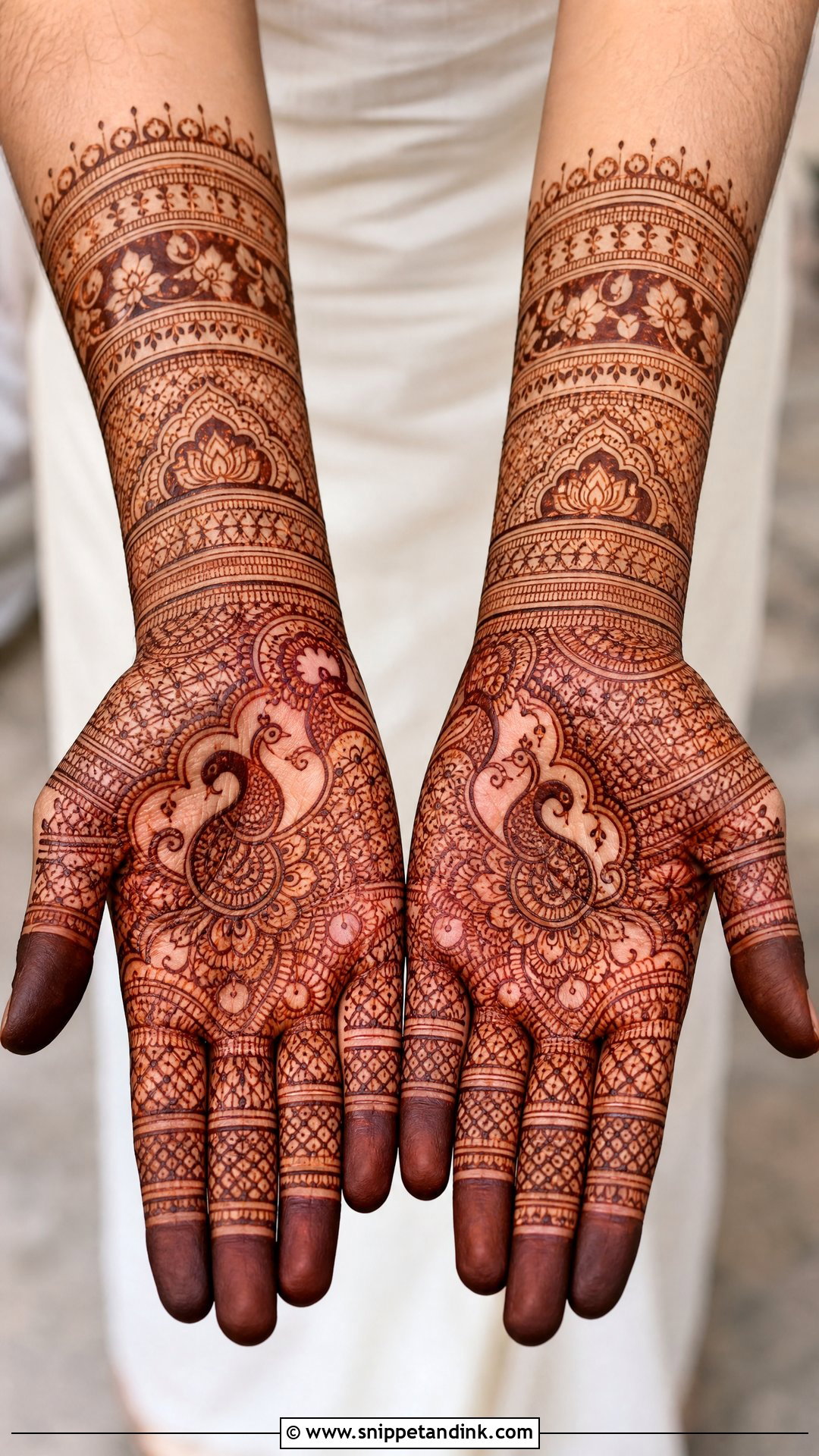
Indian groom mehndi design is detailed, symbolic, and rooted in wedding tradition. It often uses paisleys, peacocks, mandalas, lotus patterns, fine lines, and meaningful elements from the couple’s story. For a groom, the layout can be made less bridal by using stronger borders, larger motifs, and controlled filling. A palm design with a central mandala and paisley corners looks classic. A full-hand version can include bride initials, wedding date, or small baraat details. This style is perfect for grooms who want a ceremonial look with cultural depth. It also stains beautifully on the palm and fingers, making it a reliable choice for wedding photography.
8. Indo Arabic Groom Mehndi Design
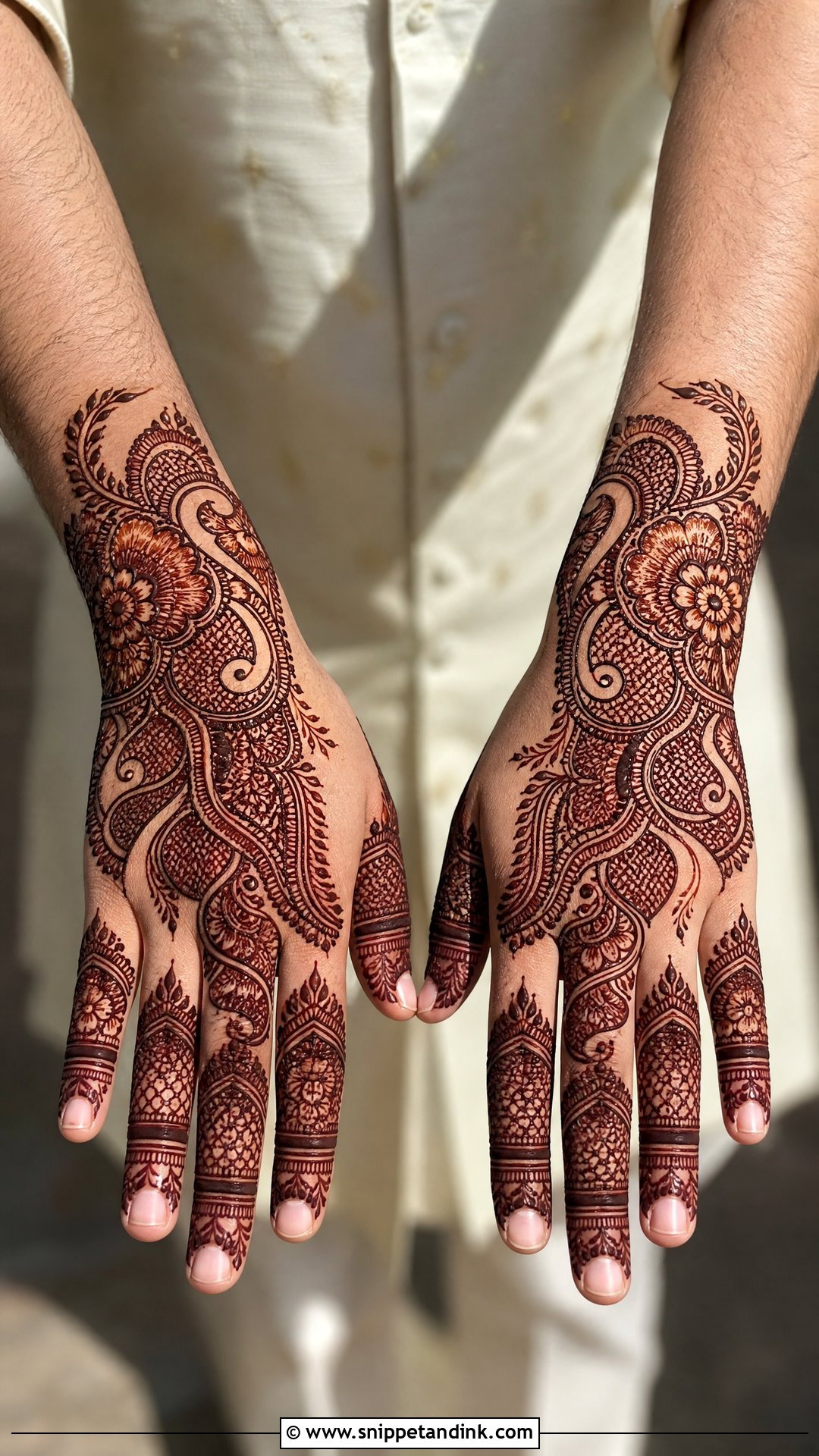
Indo Arabic groom mehndi design blends the bold flow of Arabic henna with the detail of Indian mehndi. It is a great middle choice if you want something stylish but still traditional. The design may include a diagonal floral trail, paisley outlines, shaded leaves, jaali patches, and clean finger bands. For grooms, the best version keeps the pattern structured with open gaps and bold edges. This makes the hand look decorated without feeling crowded. Indo-Arabic designs are also flexible for palm, back hand, or wrist-to-forearm coverage. They suit both daytime and evening wedding events, especially when the groom wants a refined but noticeable mehndi look.
9. Minimal Groom Mehndi Design
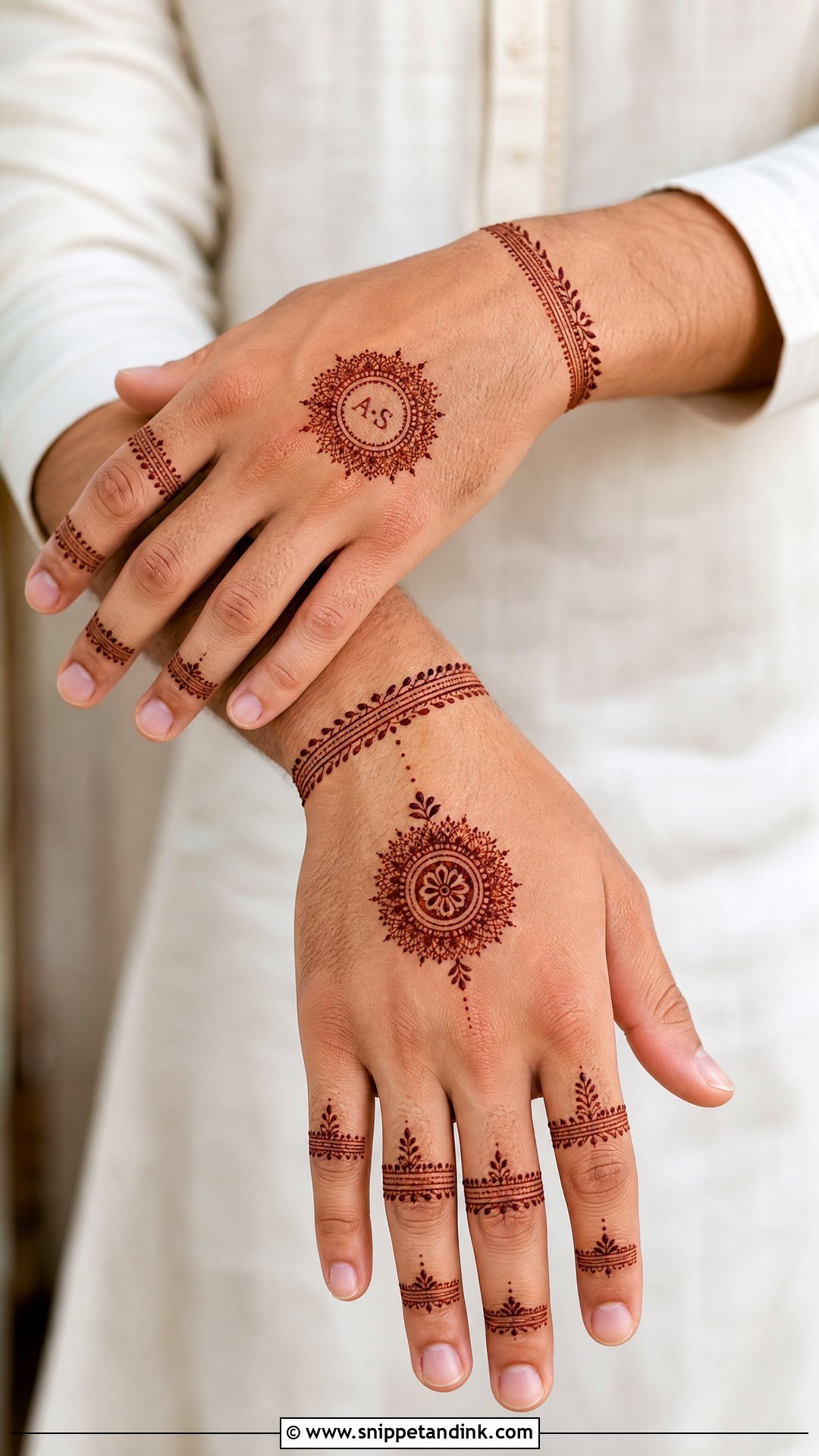
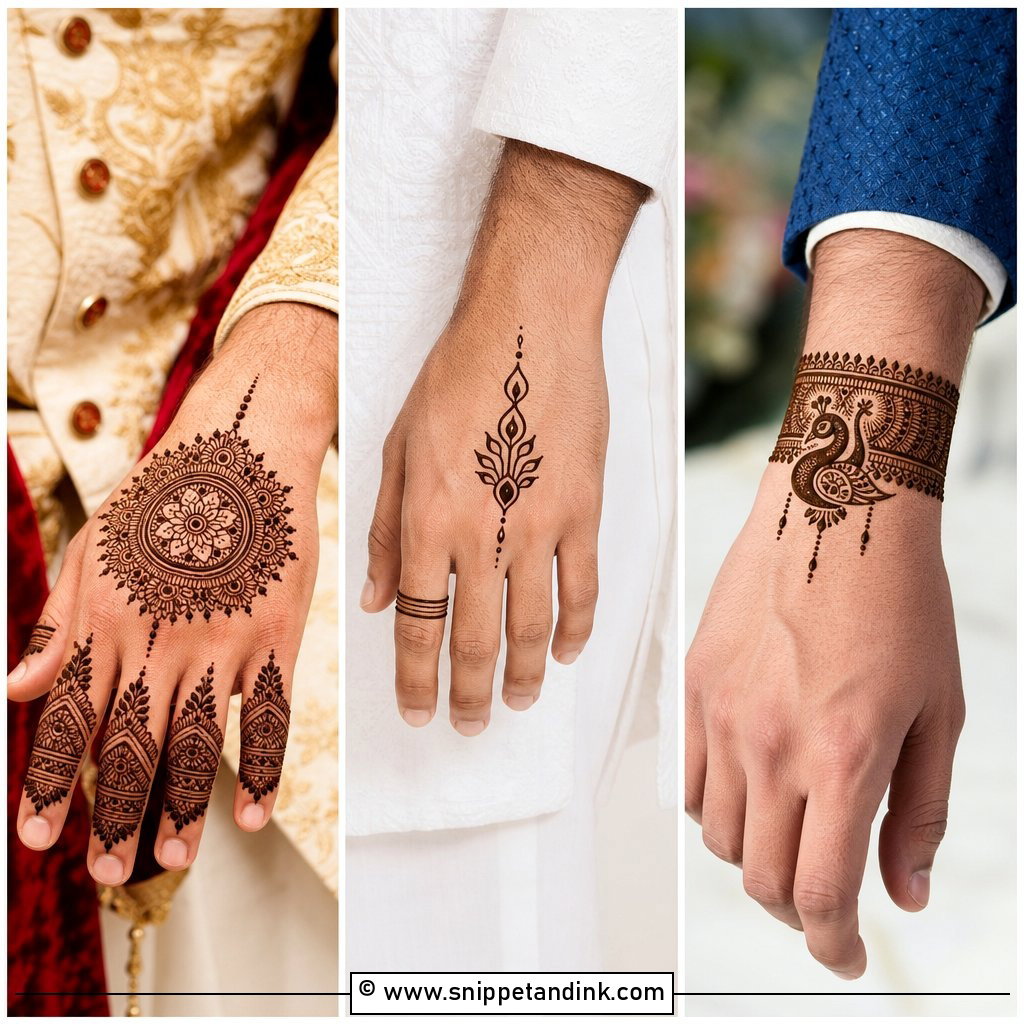
Minimal groom mehndi design is clean, modern, and easy to carry. It usually includes a small palm motif, simple wrist band, finger stripes, or a neat back-hand mandala. This look is popular with grooms who want a subtle nod to tradition rather than a full decorative hand. The beauty of minimal mehndi is in the spacing. Every dot, line, and curve should look intentional. You can add initials, a small date, or a tiny lotus for personal meaning. This design is also comfortable for office-friendly or destination wedding settings. It photographs well because the hand looks groomed, stylish, and uncluttered.
10. Mandala Groom Mehndi Design
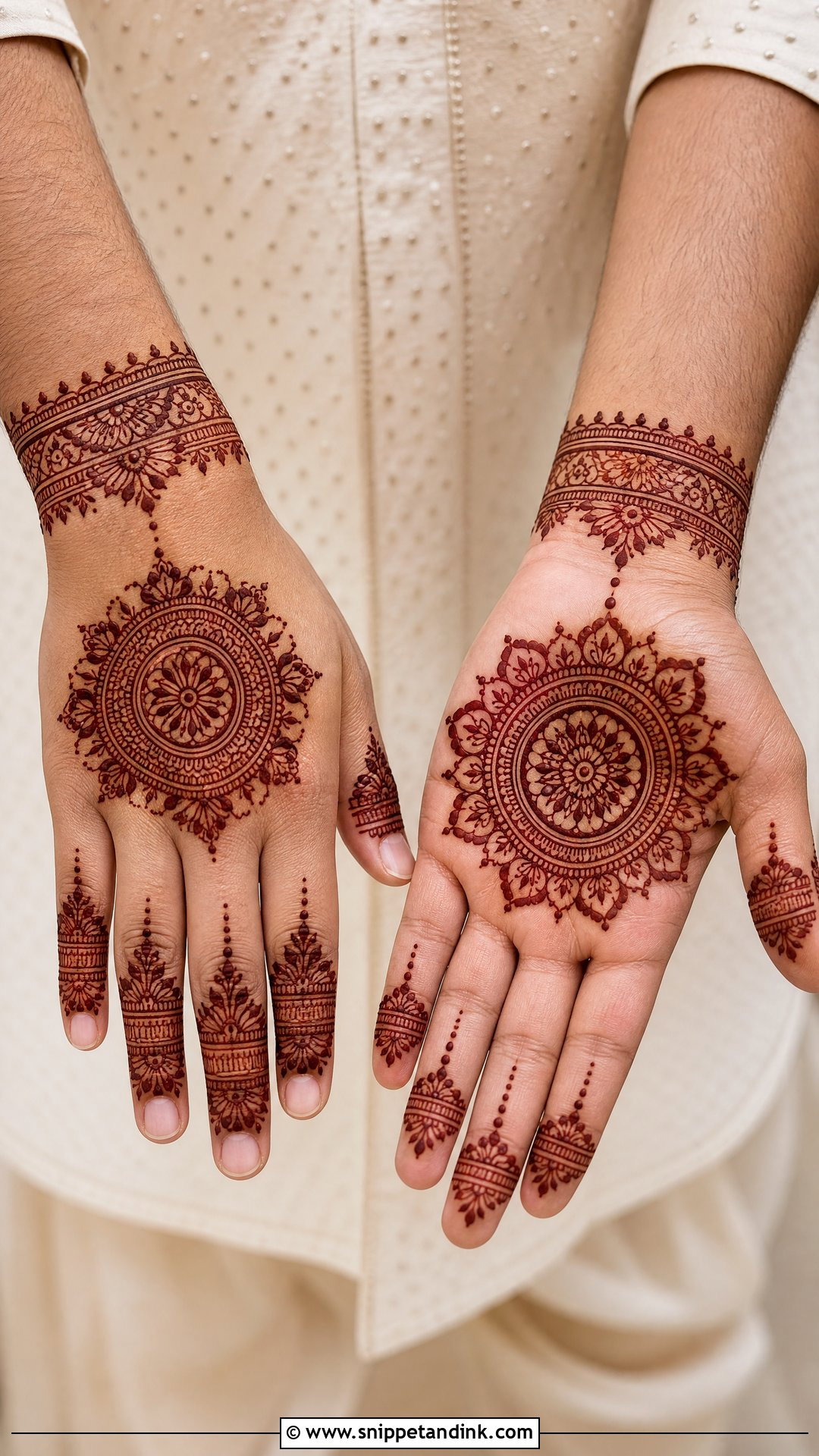
Mandala groom mehndi design is timeless and balanced. A circular mandala placed in the center of the palm or back of the hand creates a clean focal point. Around it, the artist can add dots, ring borders, finger bands, and a light wrist cuff. This design works for both simple and detailed preferences. For a traditional look, choose fine petals and small paisley fillers. For a modern groom look, choose bold circular lines and geometric detailing. Mandalas also suit many hand shapes because the round center creates symmetry. It is a safe choice if you want something meaningful, neat, and easy to match with wedding outfits.
11. Groom Mehndi Design With Initials
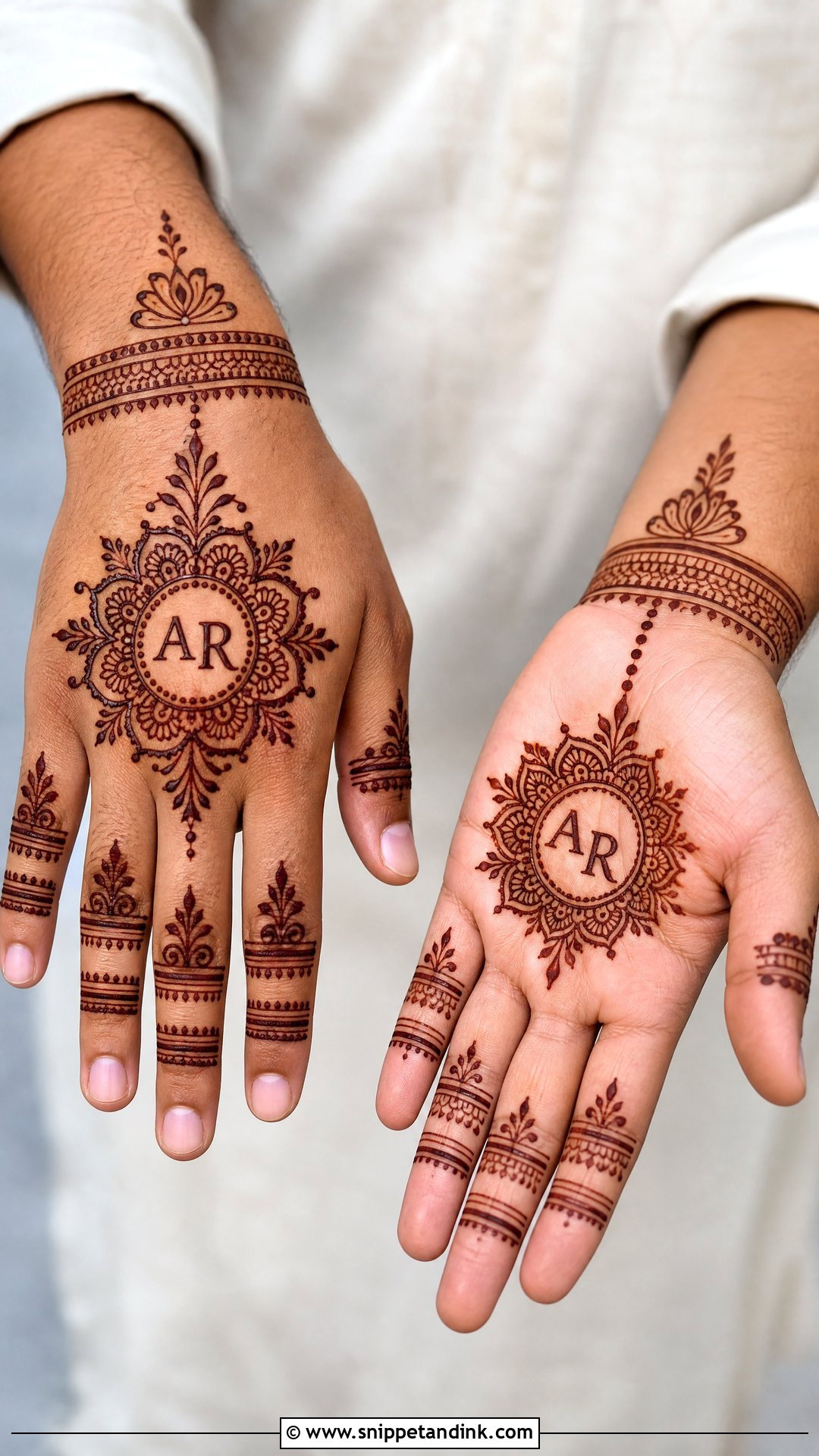
Groom mehndi design with initials adds a personal touch without making the hand too full. The bride’s initial, groom’s initial, or both letters can be placed inside a mandala, heart-shaped border, royal crest, or palm centerpiece. For a cleaner look, keep the initial small and blend it into the pattern instead of making it too obvious. This creates a fun detail for wedding photos and close-up shots. Finger bands, tiny florals, and wrist borders can complete the design. Initial mehndi works well for simple, Arabic, and Indo-Arabic layouts. It is meaningful, easy to customize, and perfect for grooms who like subtle romance.
12. Groom Mehndi Design With Wedding Date
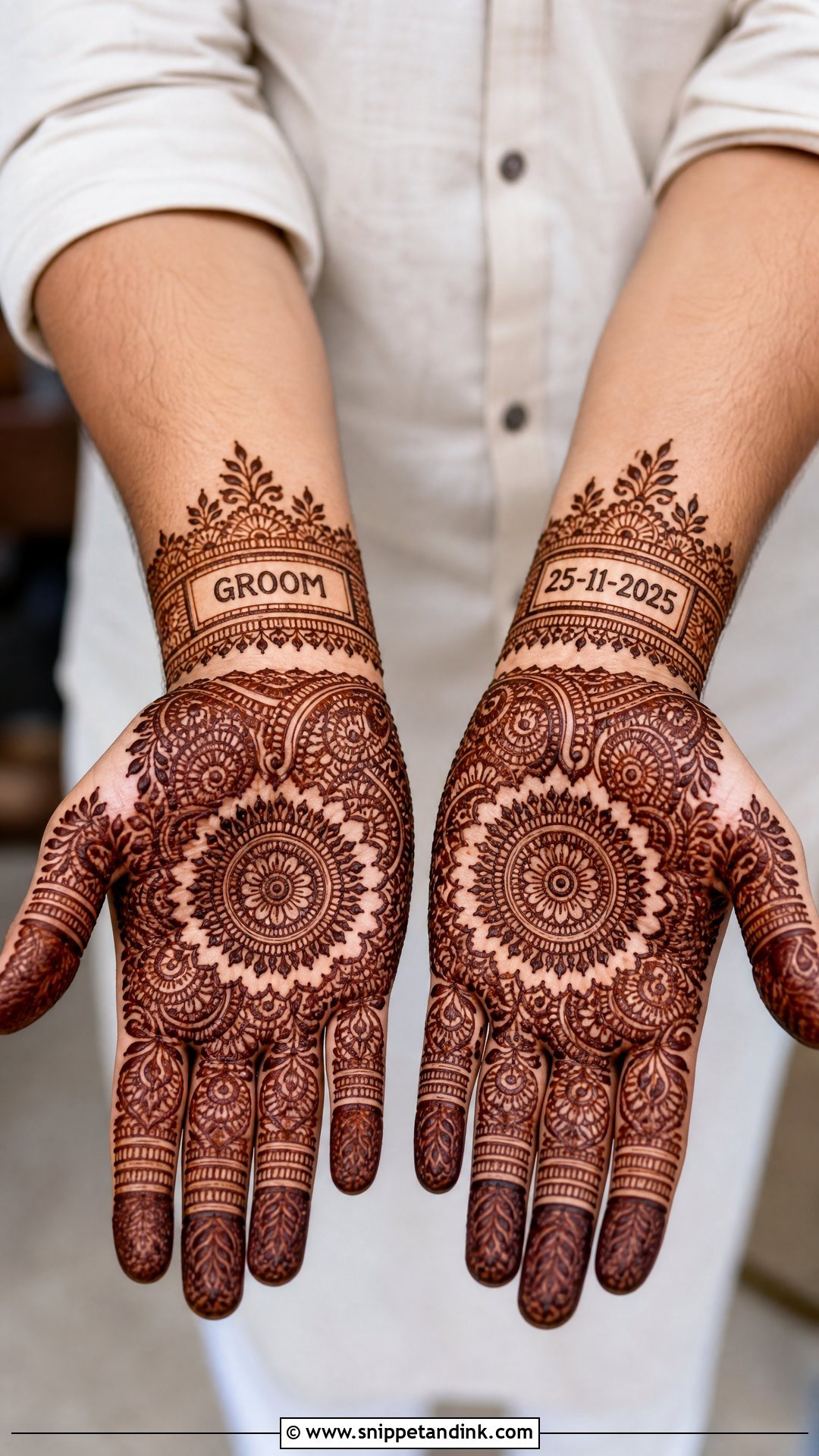
Groom mehndi design with wedding date is a memorable choice for modern dulhas. The date can be written in regular numbers, Roman numerals, or hidden inside a wrist band, palm border, or geometric strip. This design feels personal but still looks stylish when the date is placed carefully. A mandala or paisley centerpiece can frame the date so it does not look separate from the artwork. Keep the writing clear and not too tiny, because mehndi expands slightly as it dries. This look is especially nice for engagement, nikah, wedding day, or reception photos. It turns the hand design into a keepsake detail.
13. Groom Mehndi Design With Bride Name
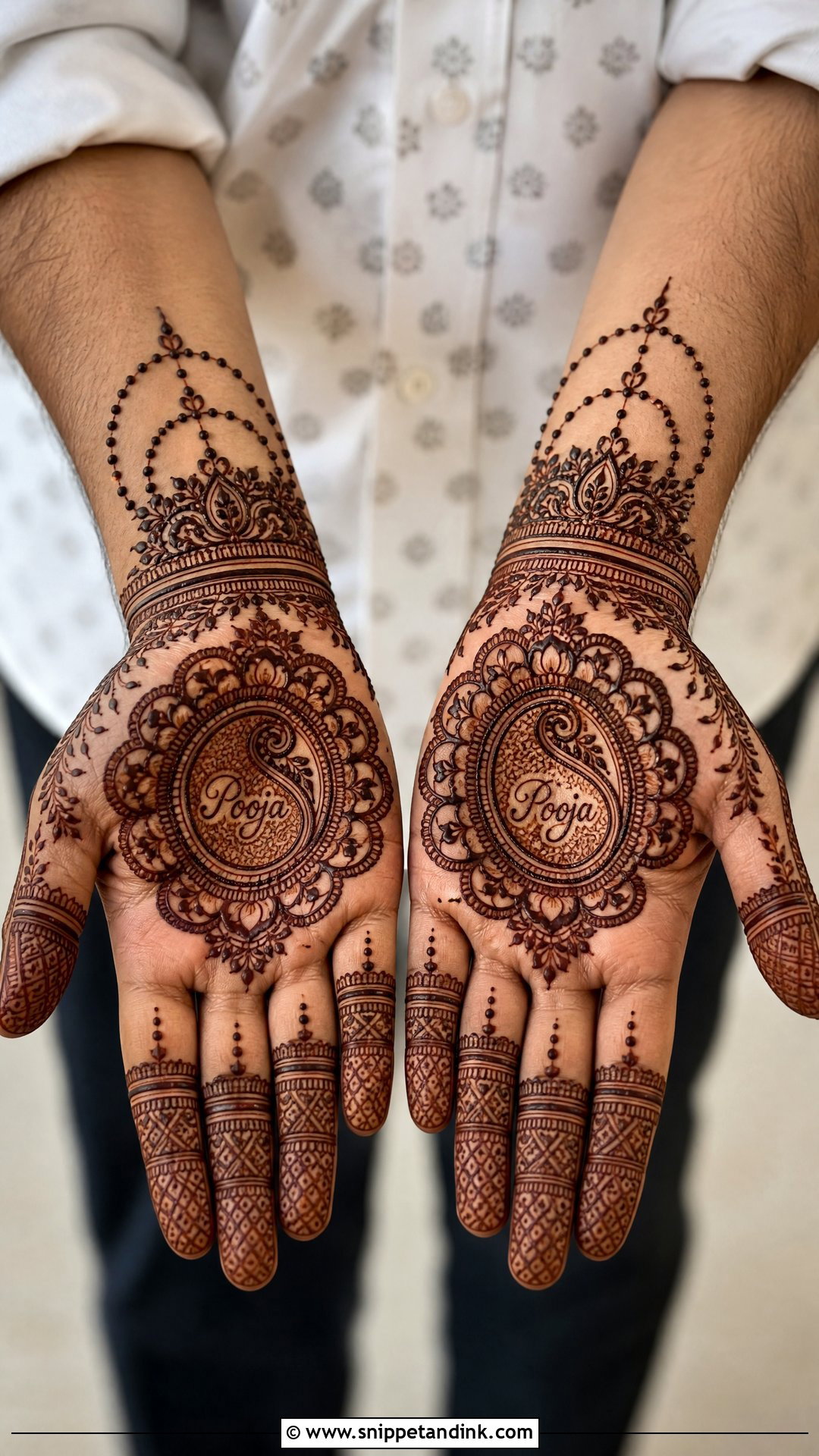
Groom mehndi design with bride name is a sweet and traditional way to personalize dulha henna. The name can be hidden in a paisley, wrapped inside a floral trail, written across the wrist cuff, or placed in the center of the palm. For a groom-friendly look, choose clean lettering and surround it with bold patterns instead of very fine bridal filling. This design can be playful too, especially if family members search for the name during the mehndi ceremony. It works best when the name is short or written in initials. The final look feels romantic, meaningful, and perfect for wedding storytelling.
14. Dulha Dulhan Groom Mehndi Design
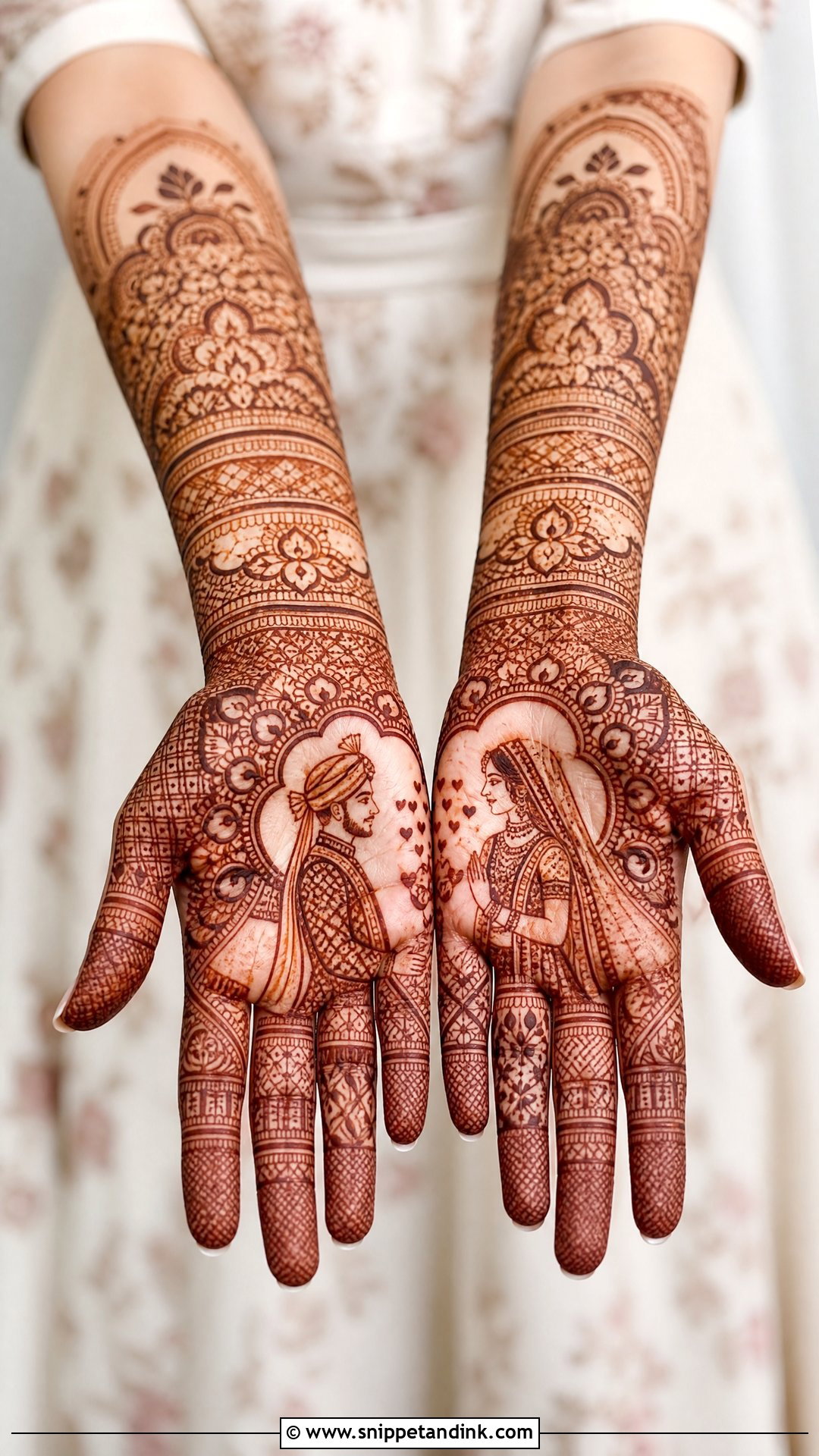
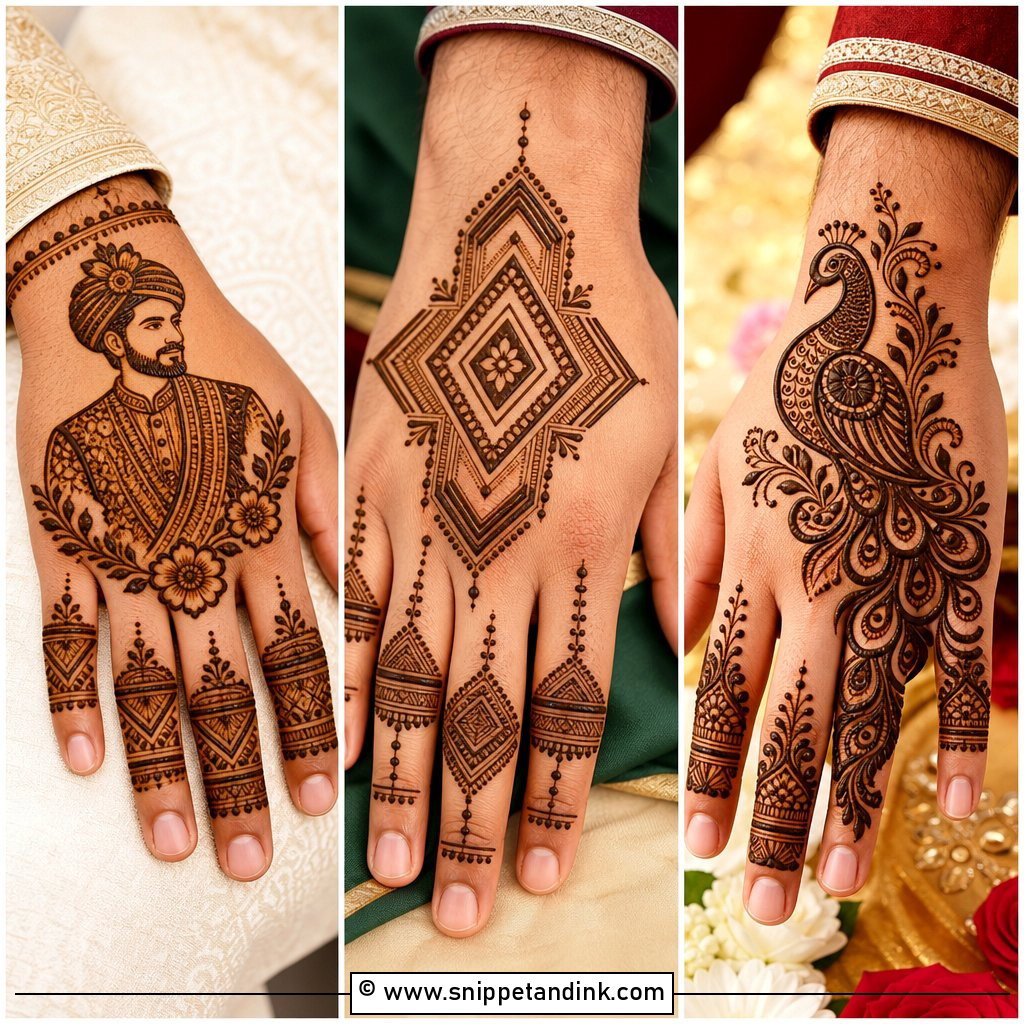
Dulha dulhan groom mehndi design features tiny bride and groom figures, portraits, or symbolic couple art. This design is usually placed on the palm because it gives the artist enough space to create clear details. The surrounding pattern can include mandalas, flowers, paisleys, and wedding borders. For a groom, it is better to keep the faces or silhouettes simple and graphic, so the design does not become too delicate. This style is perfect for grooms who enjoy traditional storytelling in mehndi. It also looks beautiful in close-up photography. Add initials or the wedding date near the wrist to make the design even more personal.
15. Peacock Groom Mehndi Design
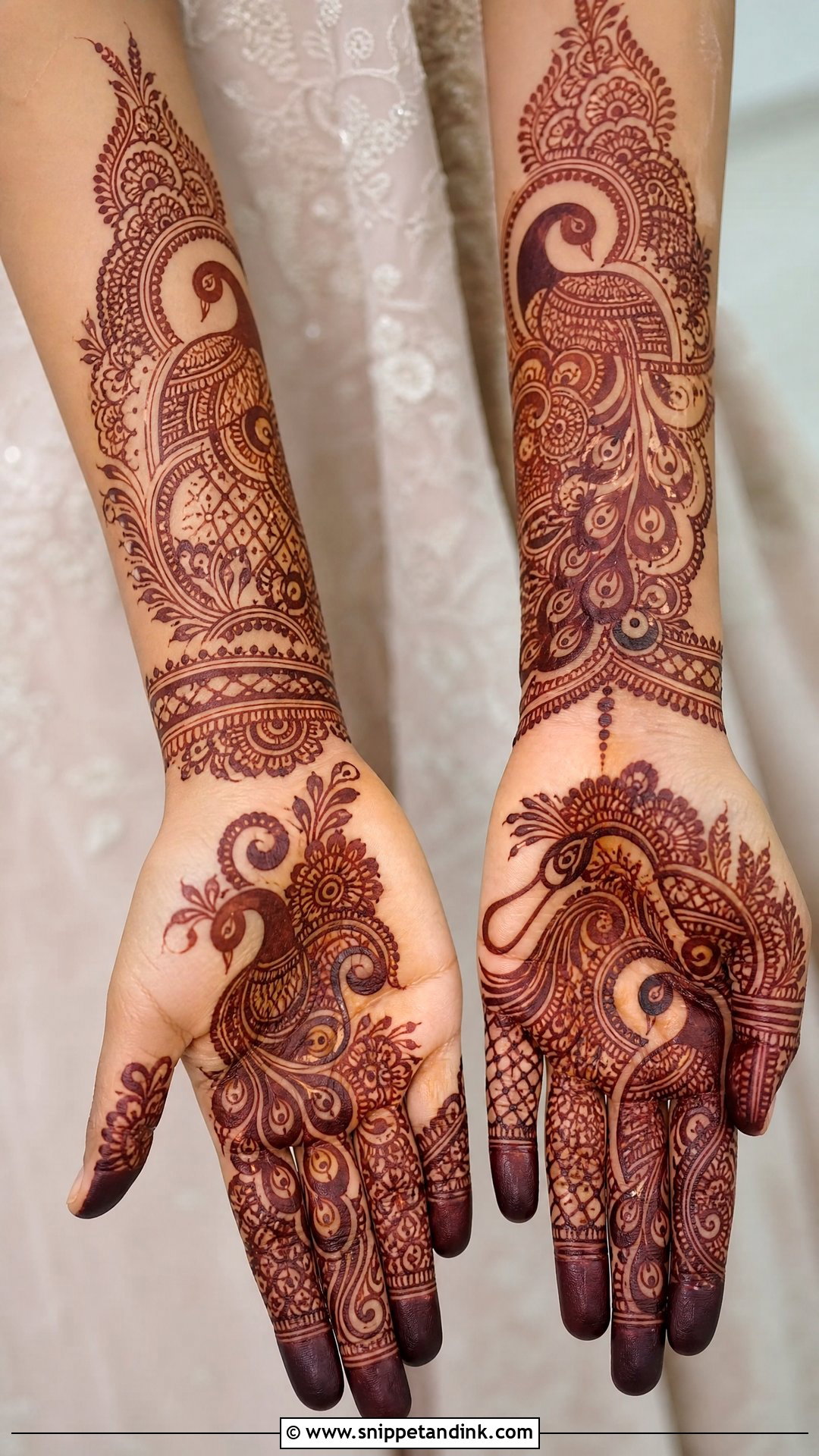
Peacock groom mehndi design brings a royal and festive touch to the hand. A peacock can be drawn on the palm, back of the hand, or as part of a wrist-to-finger trail. The feathers can be filled with paisleys, dots, jaali mesh, and curved lines. For grooms, the peacock should look bold and clean rather than overly delicate. Pair it with geometric borders or simple finger bands for balance. This design suits traditional Indian weddings, sangeet events, and grand sherwani looks. A deep maroon stain makes the peacock motif stand out beautifully. It is elegant, cultural, and strong enough for groom styling.
16. Paisley Groom Mehndi Design
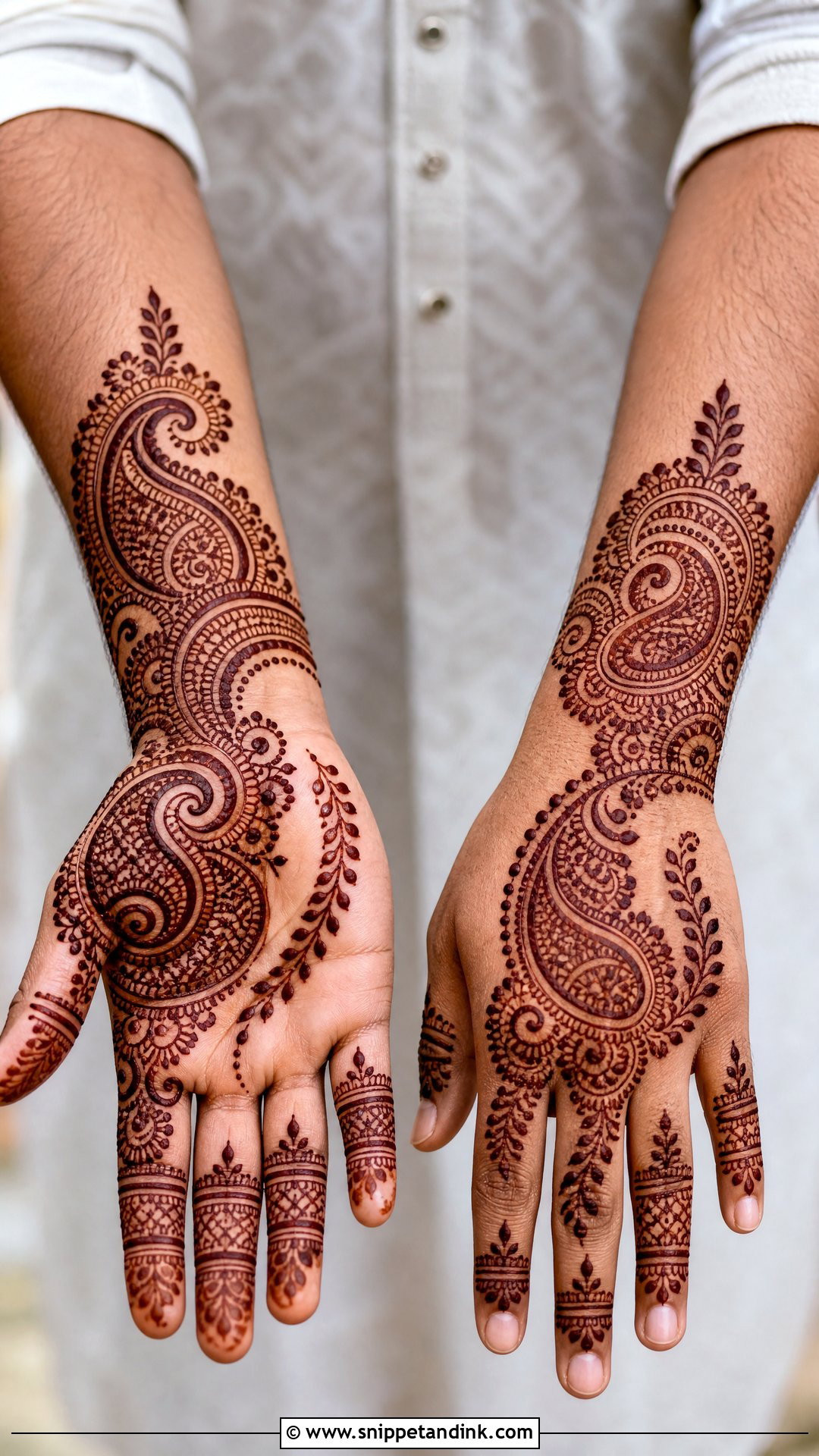
Paisley groom mehndi design is a classic option that always looks wedding-ready. Paisleys can be used as the main palm motif or arranged in a flowing pattern across the back of the hand. Their curved shape gives the design movement, while bold outlines keep it masculine and structured. Add small dots, leaf fillers, and simple shading for depth. If you want a fuller look, combine paisleys with mandalas and wrist borders. If you want a lighter look, use one large paisley with open space around it. This design works for almost every ceremony and outfit. It feels traditional, polished, and easy to customize.
17. Geometric Groom Mehndi Design
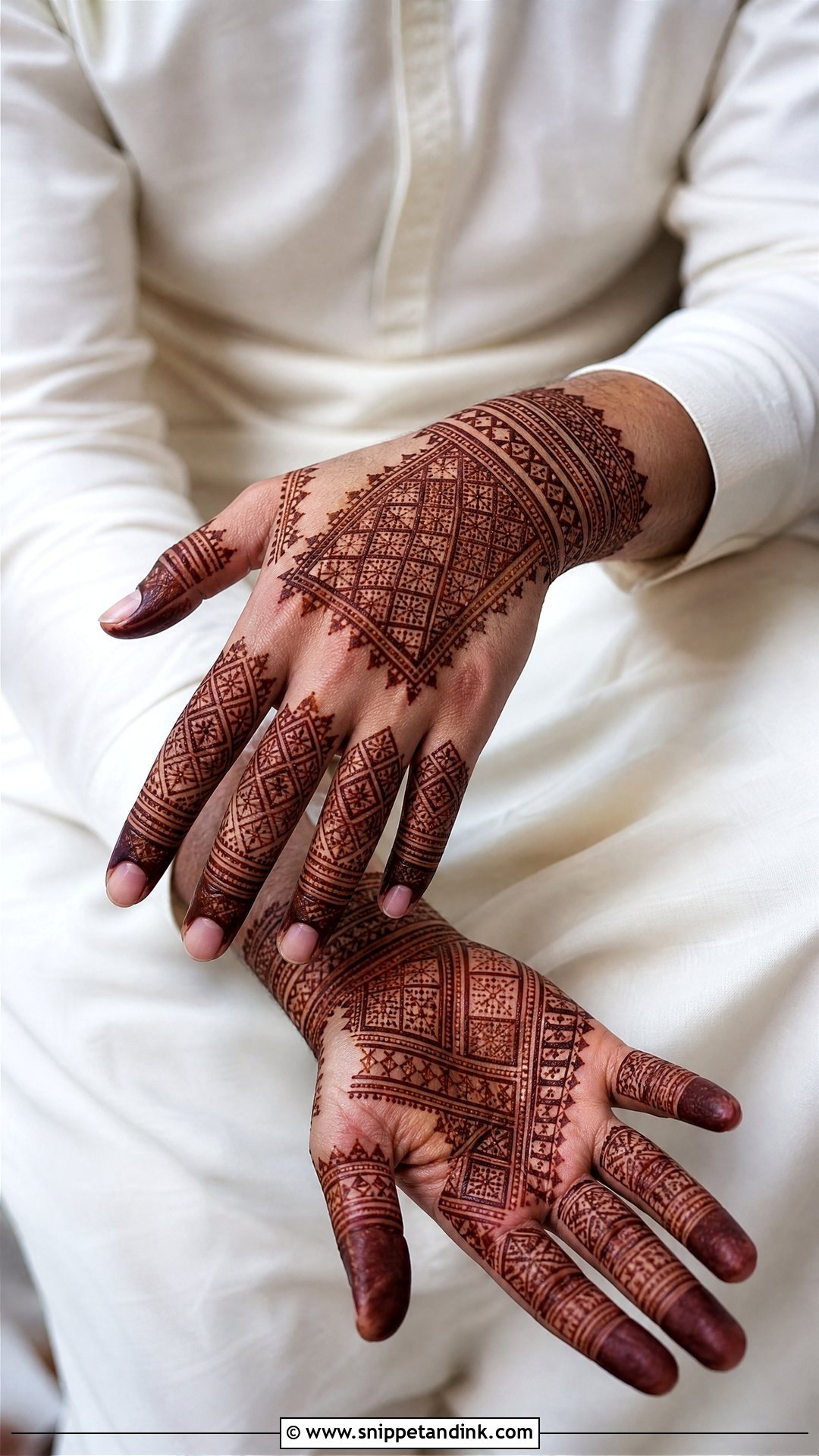
Geometric groom mehndi design is a strong choice for men who prefer clean lines over floral details. The pattern can include triangles, squares, diamond grids, parallel bands, and structured wrist cuffs. It looks especially sharp on the back of the hand or forearm. Geometric mehndi gives a modern, tailored feel and pairs well with suits, bandhgalas, and minimal sherwanis. To avoid a harsh look, add small dots or soft leaf accents around the edges. The best part is that geometric designs photograph clearly because the shapes are bold. This style is neat, masculine, and different from the usual groom mehndi patterns.
18. Jaali Groom Mehndi Design
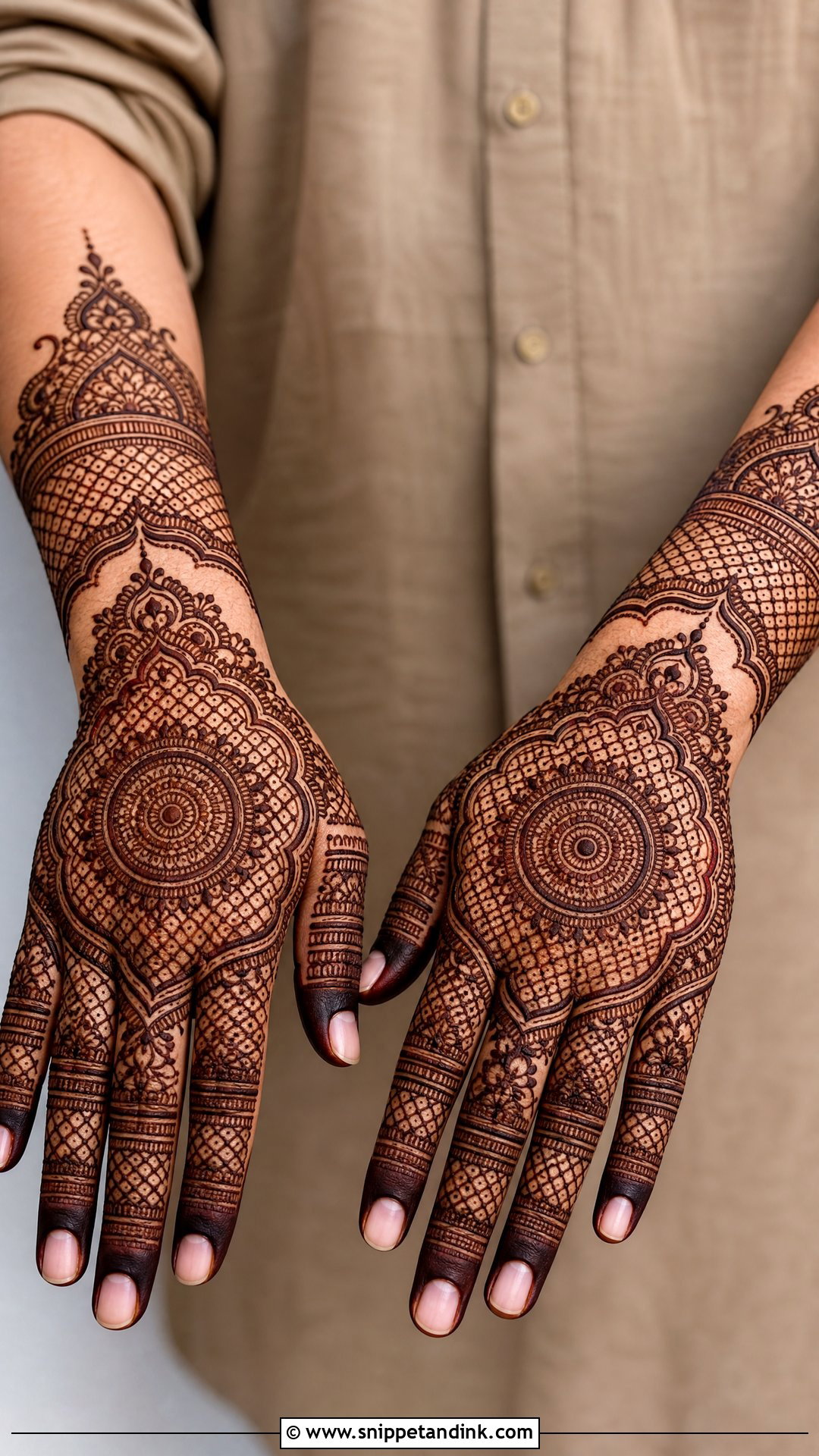
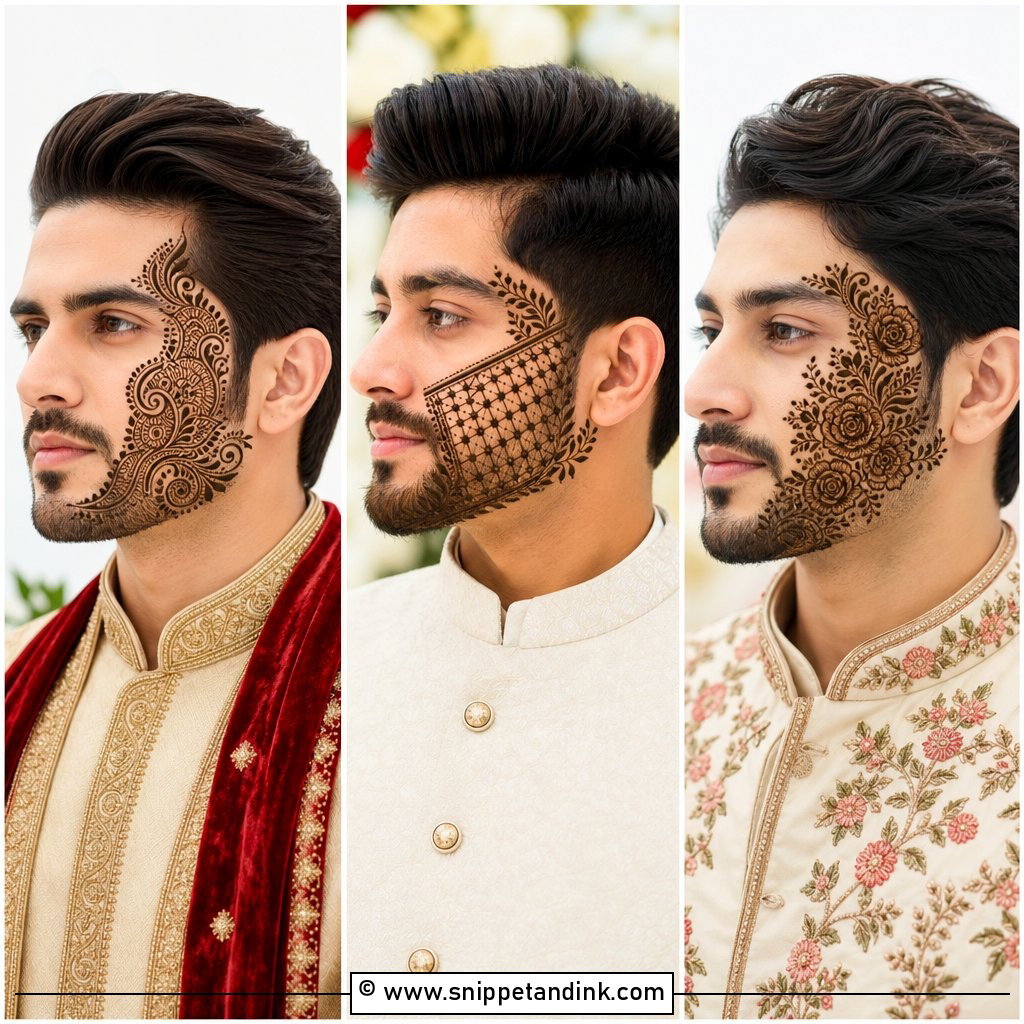
Jaali groom mehndi design uses mesh-like patterns that look refined and royal. The jaali can cover the back of the hand, fill palm corners, or sit inside a wrist cuff. It pairs well with mandalas, paisleys, and Arabic vines. For a groom, larger jaali spacing looks cleaner and more modern than very tiny bridal mesh. You can also add bold borders around the jaali to make the design stand out. This style is perfect if your wedding outfit has lattice embroidery, Mughal-inspired details, or rich fabric textures. Jaali mehndi adds depth without needing too many motifs. It feels elegant, detailed, and balanced.
19. Bracelet Groom Mehndi Design
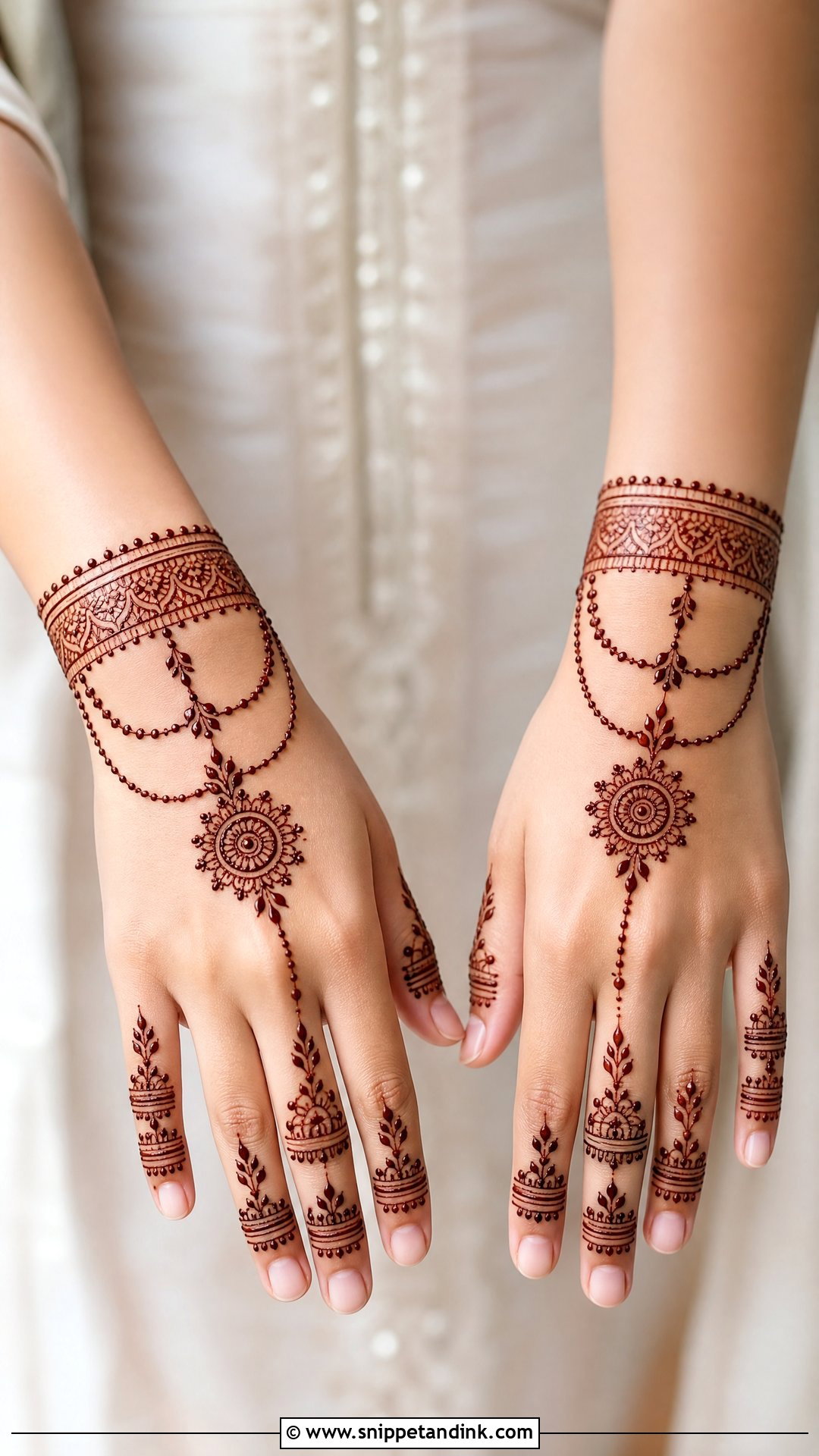
Bracelet groom mehndi design focuses on the wrist and back of the hand, creating the look of a henna cuff. The pattern may include bands, chains, small mandalas, leafy links, and ring-style finger details. It is a great option for grooms who want visible mehndi but not a full palm design. The wrist bracelet can also extend slightly toward the forearm for a more dressed-up finish. Keep the lines even and the spacing clean, because bracelet designs depend on symmetry. This style works well with rolled sleeves, watches removed for photos, and traditional wedding outfits. It is subtle, stylish, and very wearable.
20. Finger Groom Mehndi Design
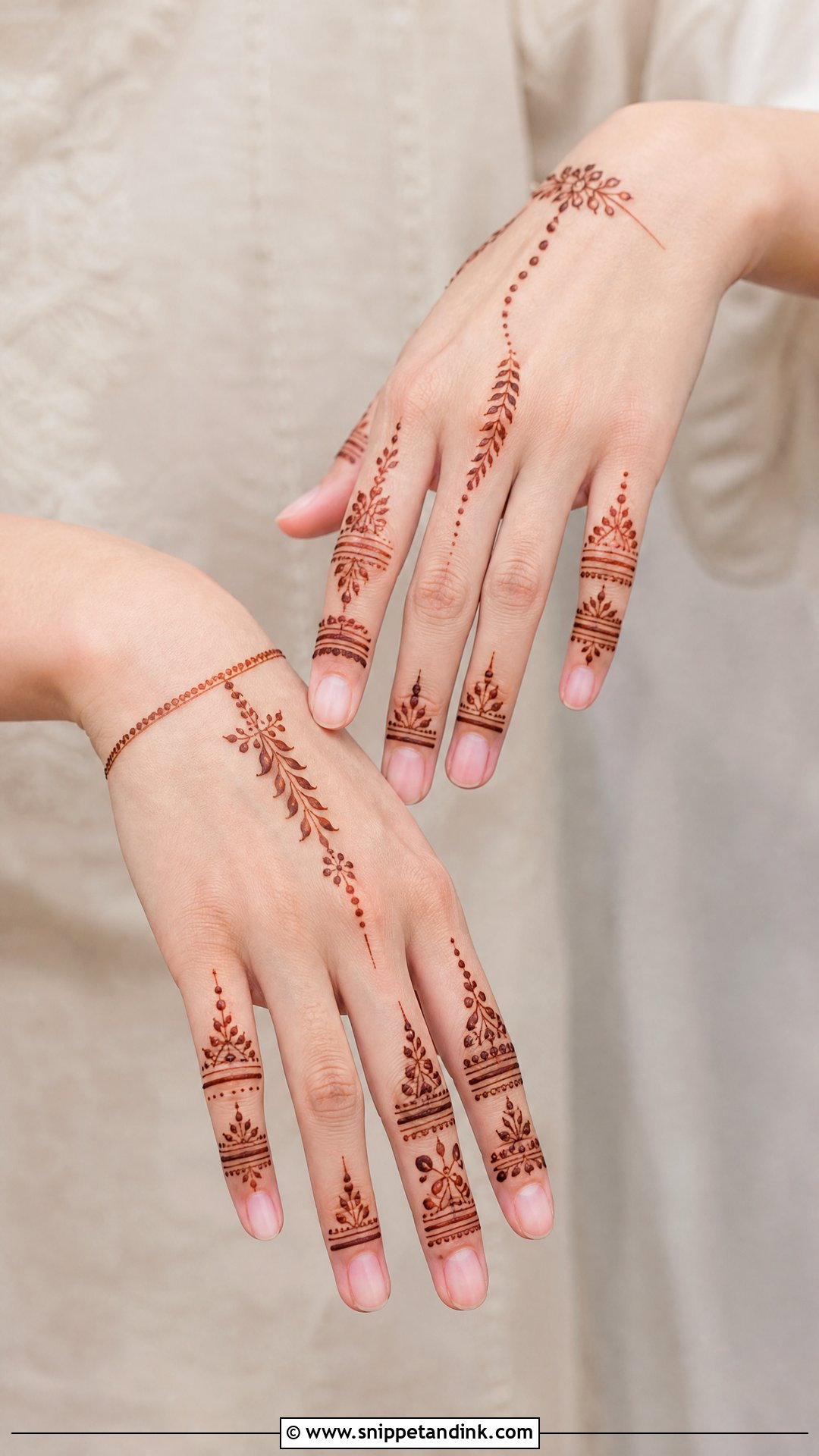
Finger groom mehndi design is simple, modern, and perfect for a subtle wedding look. The design usually covers two to five fingers with bands, dots, leafy strips, mini geometric details, or small Arabic curves. The palm or back of the hand can stay mostly empty, which makes the fingers the main focus. This style looks great in ring shots because it frames the hands without overpowering them. For a balanced design, keep all finger patterns related, even if each one has a slightly different detail. A thin wrist line or tiny center motif can complete the look. It is quick, clean, and easy to maintain.
21. Wrist To Forearm Groom Mehndi Design
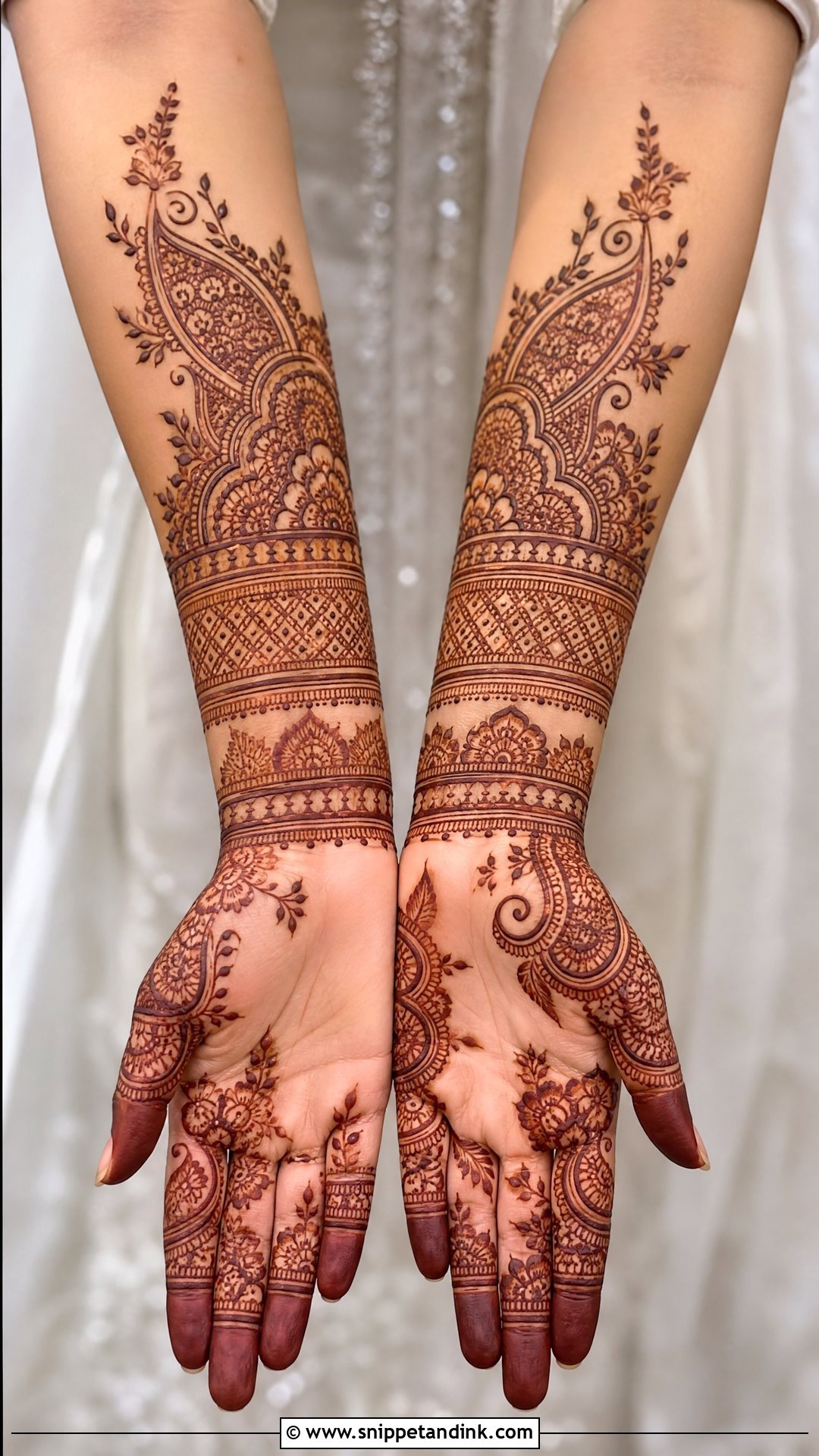
Wrist to forearm groom mehndi design gives a stylish extended look without covering the whole hand. The design can start with a bracelet band at the wrist and move upward with geometric strips, Arabic vines, paisley borders, or mandala links. This placement is perfect for grooms who want something visible under rolled sleeves or during candid photos. It also feels modern because the hand can stay light while the forearm carries the detail. Choose bold lines and medium-sized motifs so the design remains clear from a distance. This style works beautifully for engagement, mehndi night, and wedding portraits. It is fashionable but still traditional.
22. Moroccan Groom Mehndi Design
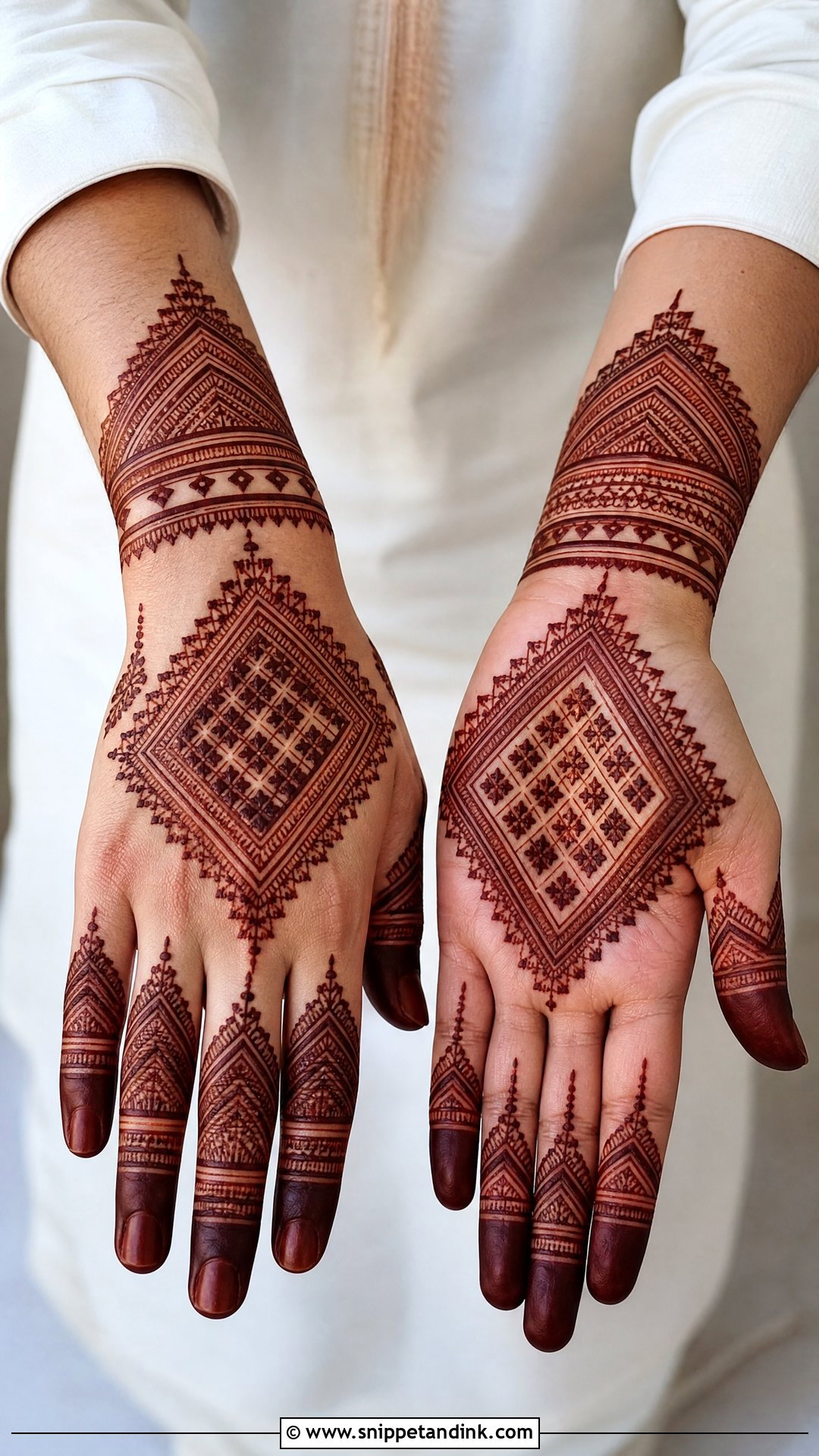
Moroccan groom mehndi design is built around sharp lines, diamonds, grids, and tribal-inspired geometry. It is less floral and more architectural, making it a great choice for grooms who want a bold, masculine pattern. The design can sit on the back of the hand, palm, wrist, or forearm. It often uses repeating shapes that create strong visual rhythm. For weddings, soften the look with small dots, fine borders, or a simple mandala center. Moroccan mehndi pairs well with minimal outfits and contemporary groom styling. It also looks crisp in photos because the pattern is clear and structured. This is a standout option for modern dulhas.
23. Gulf Groom Mehndi Design
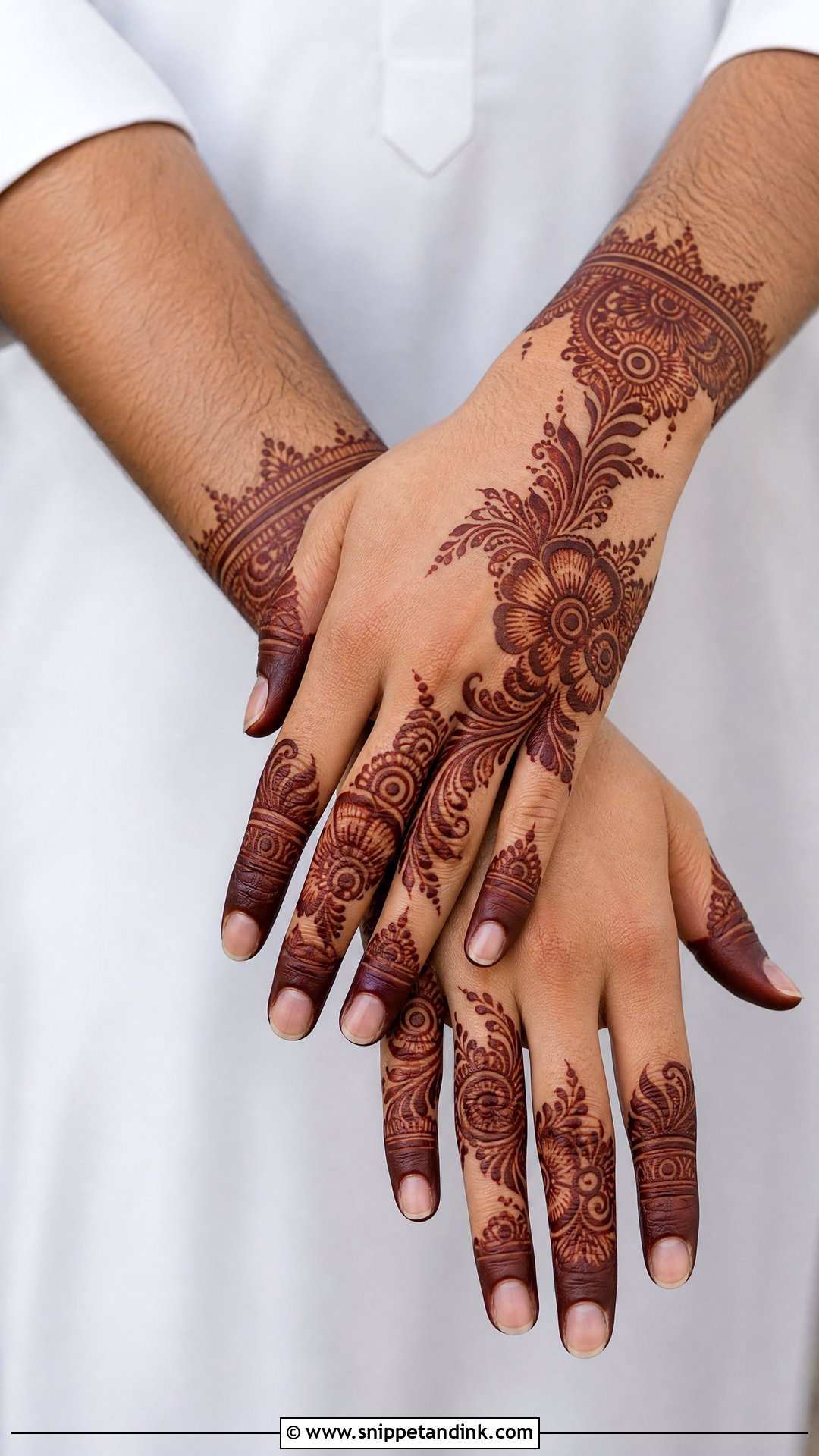
Gulf groom mehndi design has a clean, bold, and elegant feel. It often uses strong outlines, open spacing, flowing florals, leafy trails, and neat wrist details. For grooms, Gulf-Khaleeji patterns can be adapted into a simple back-hand trail or a half-hand design with confident curves. The design should not look too crowded. Let the negative space highlight the bold henna lines. This style is especially good for grooms who like Arabic mehndi but want a slightly richer and more polished finish. It works well for wedding ceremonies, family celebrations, and formal photos. The result feels graceful, refined, and easy to wear.
24. Spiritual Groom Mehndi Design
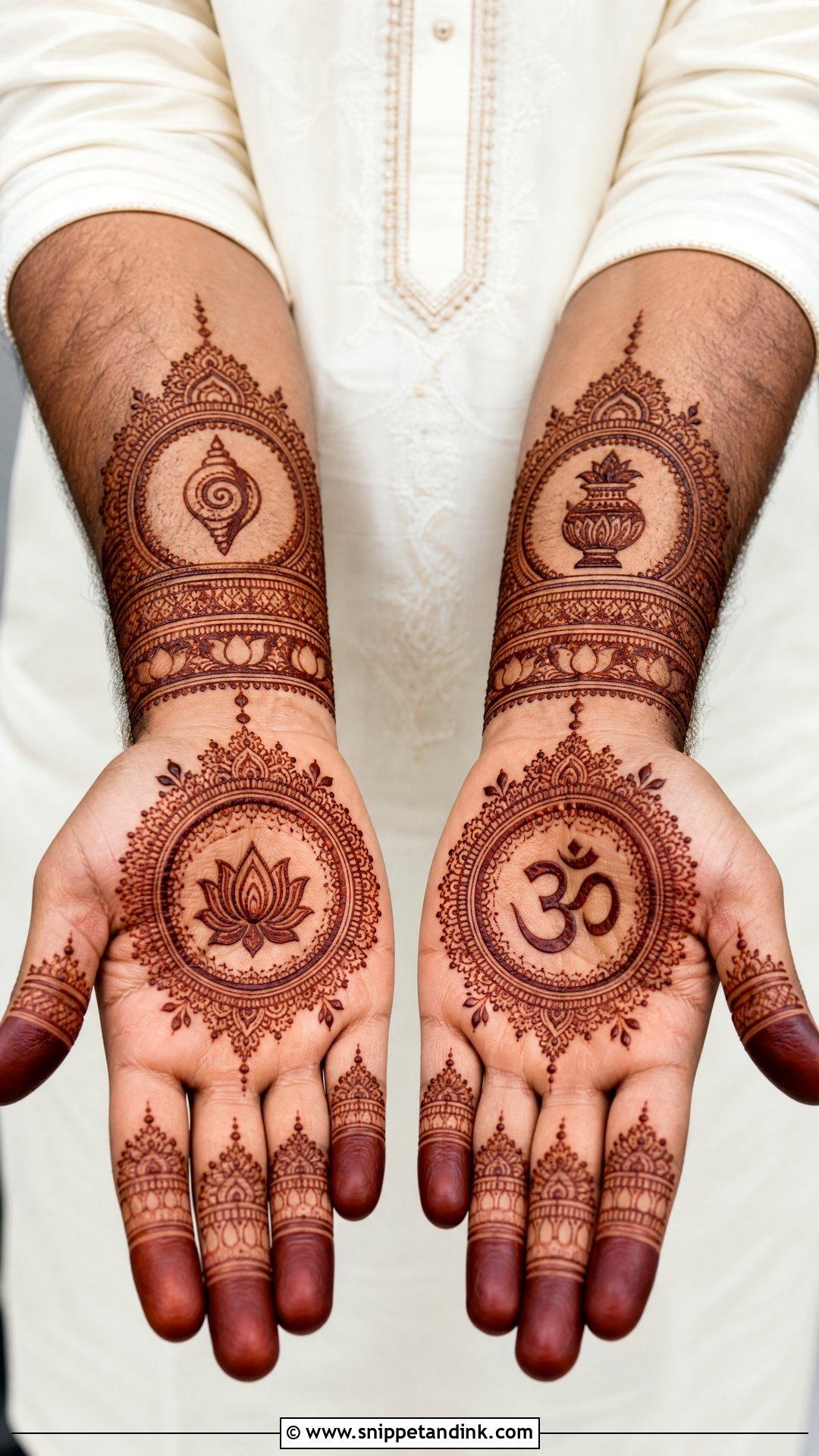
Spiritual groom mehndi design can include meaningful symbols, sacred words, or blessing-inspired motifs based on the groom’s cultural and family traditions. The design may feature an Om, kalash, lotus, crescent-inspired pattern, or simple prayer-like text, depending on what feels appropriate. Keep the symbol respectful, clear, and placed where it will not look distorted. The palm is usually a good location because it provides a flat surface. Surround the symbol with mandalas, dots, and borders to create a complete wedding design. This style is best for grooms who want mehndi with deeper meaning. It feels personal, ceremonial, and connected to the wedding’s blessings.
25. Modern Groom Mehndi Design
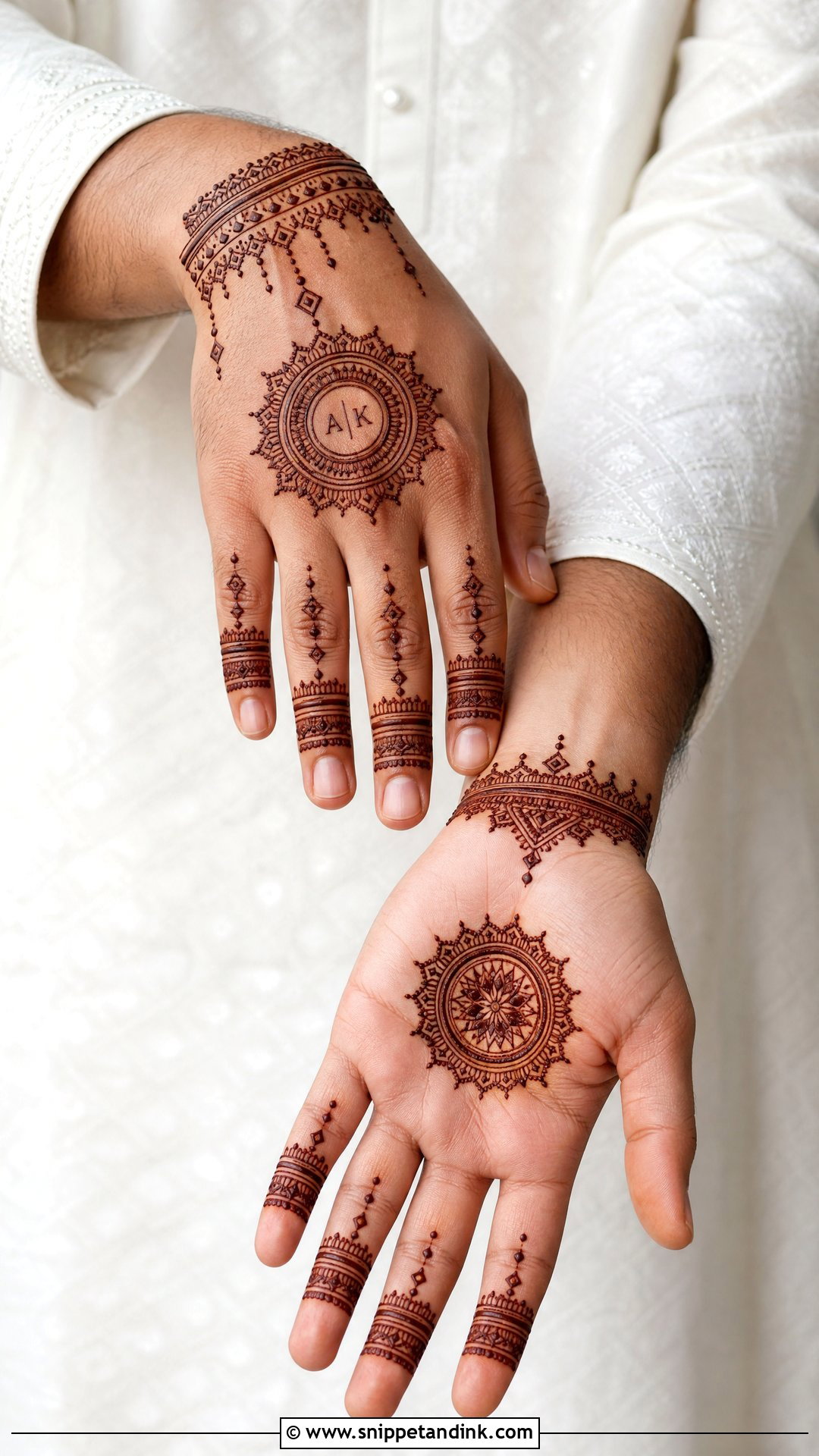
Modern groom mehndi design is all about clean placement, personal details, and stylish restraint. It can mix geometric lines, small initials, negative space, wrist cuffs, and minimal mandalas. Instead of filling the entire hand, the design focuses on one strong layout that feels fresh and intentional. A back-hand pattern with a central emblem and finger bands looks especially current. You can also add a wedding date, coordinate, or simple symbol that matters to the couple. Modern designs work well for destination weddings, engagement shoots, and grooms who prefer understated fashion. The final look is sharp, personal, and easy to pair with any wedding outfit.
Conclusion:
Choosing the right groom mehndi comes down to comfort, wedding style, and personal meaning. Some grooms love full hand Indian detailing, while others prefer simple Arabic trails, initials, dates, or bracelet-style wrist patterns. The best design should feel festive but not forced. It should also suit your outfit, hand shape, and ceremony schedule. If you want a darker stain, apply mehndi early enough and follow proper aftercare. Keep your design clear, balanced, and meaningful, especially for close-up wedding photos. Whether you like royal, minimal, geometric, or traditional dulha henna, these 25 Mehndi Design for Groom Hand Ideas offer plenty of inspiration.
You'll Like These Ideas:
Leave a Reply