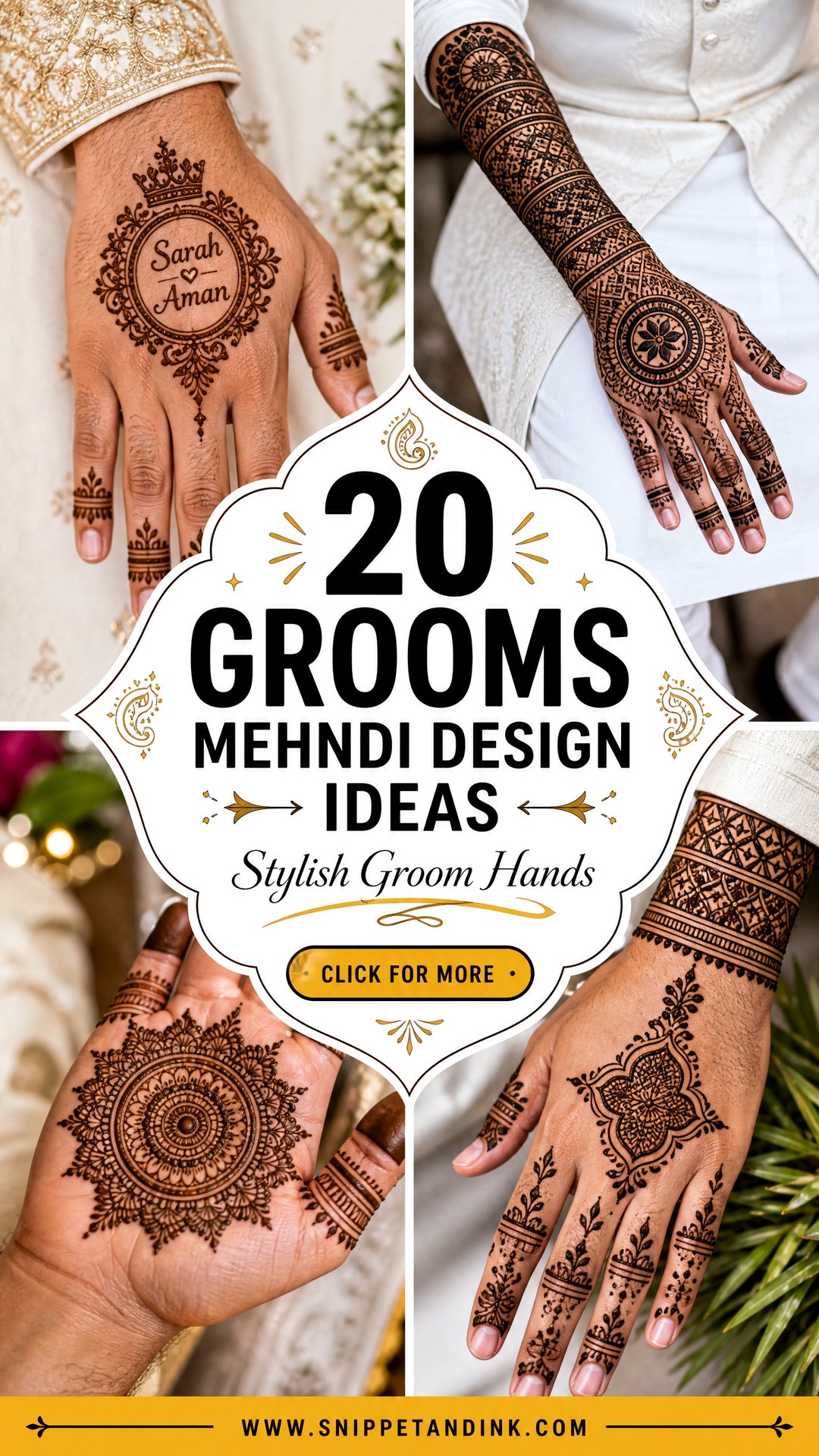
Grooms today are choosing mehndi with the same care they give to sherwanis, watches, shoes, and wedding portraits. The best groom mehndi design feels personal, masculine, and camera-ready without needing to be overly heavy. Some grooms like a simple mandala on the palm. Others prefer initials, wedding dates, Arabic trails, royal full-hand patterns, or symbolic motifs that match the bride’s mehndi. The right design also depends on comfort, ceremony length, outfit style, and how much stain you want showing in photos. This guide covers minimal, traditional, modern, and statement looks for every kind of groom. Use these sections to find the best fit among these 20 Grooms Mehndi Design Ideas.
1. Simple Groom Mehndi Design
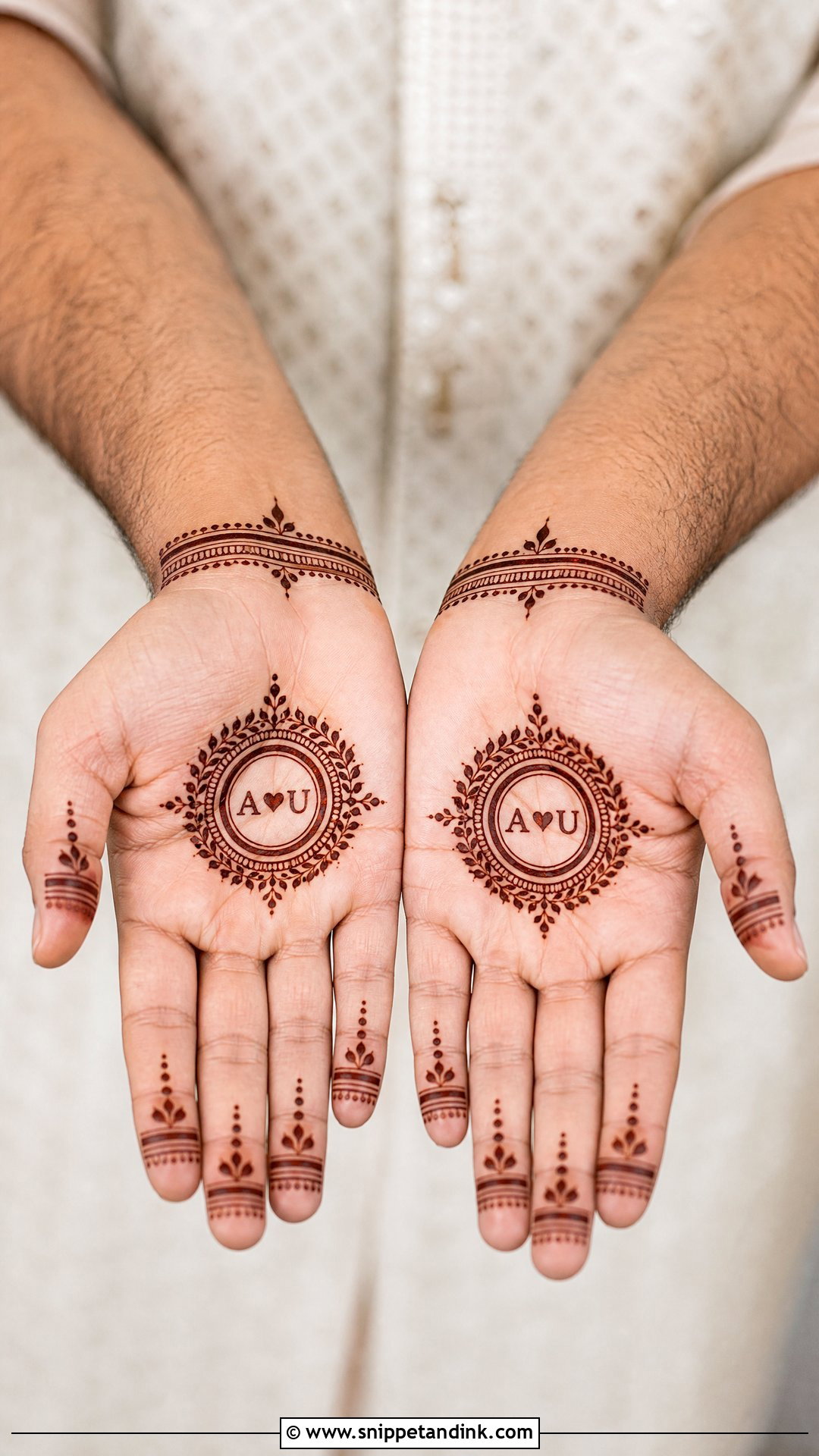
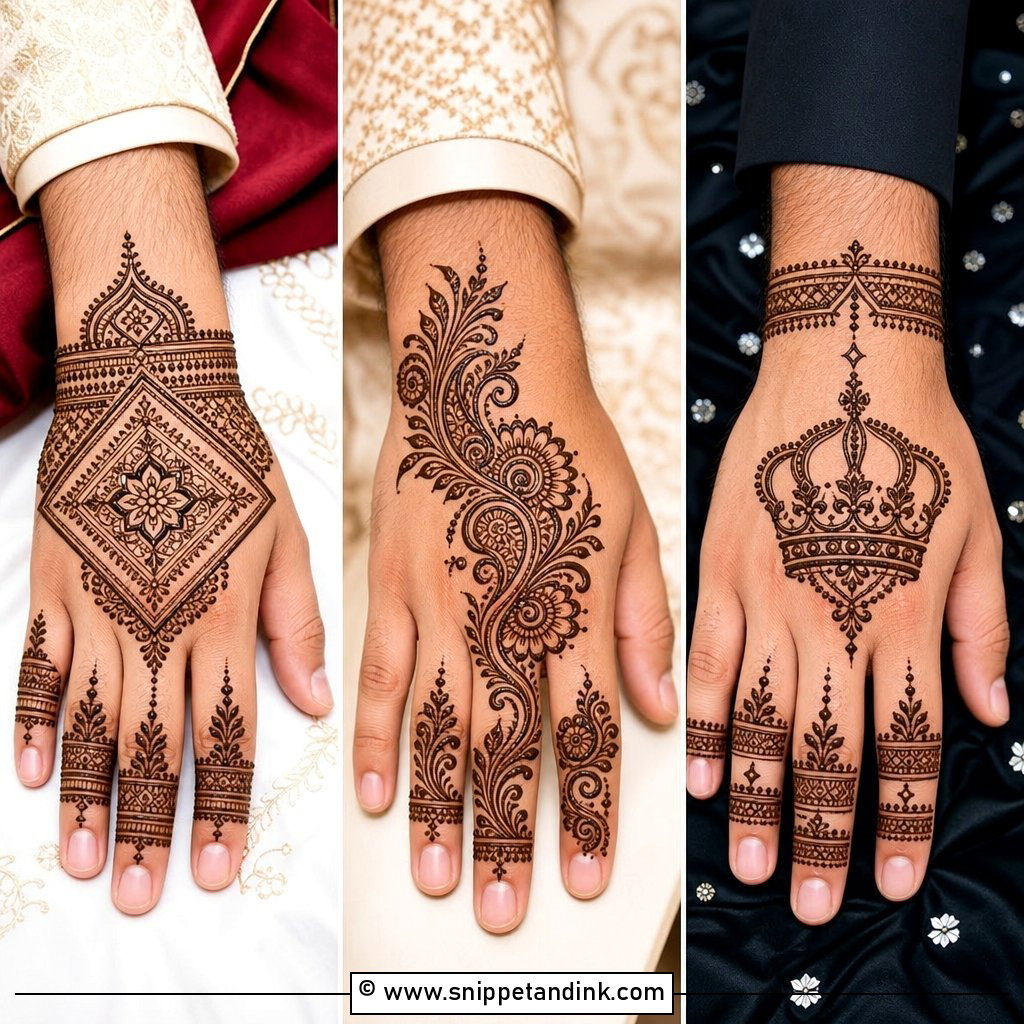
A simple groom mehndi design is perfect if you want the wedding tradition without a heavy look. This design usually covers the center of the palm with a clean motif, then adds small dots, thin borders, and light finger accents. It works well for grooms who are trying mehndi for the first time or prefer a neat, understated finish. The best version keeps enough empty space so the design looks sharp after staining. You can add a small initial, wedding date, or tiny sacred symbol near the wrist for a personal touch. It pairs nicely with classic sherwanis, kurtas, and Indo-Western outfits because it looks intentional without feeling too decorative.
2. Mandala Groom Mehndi Design
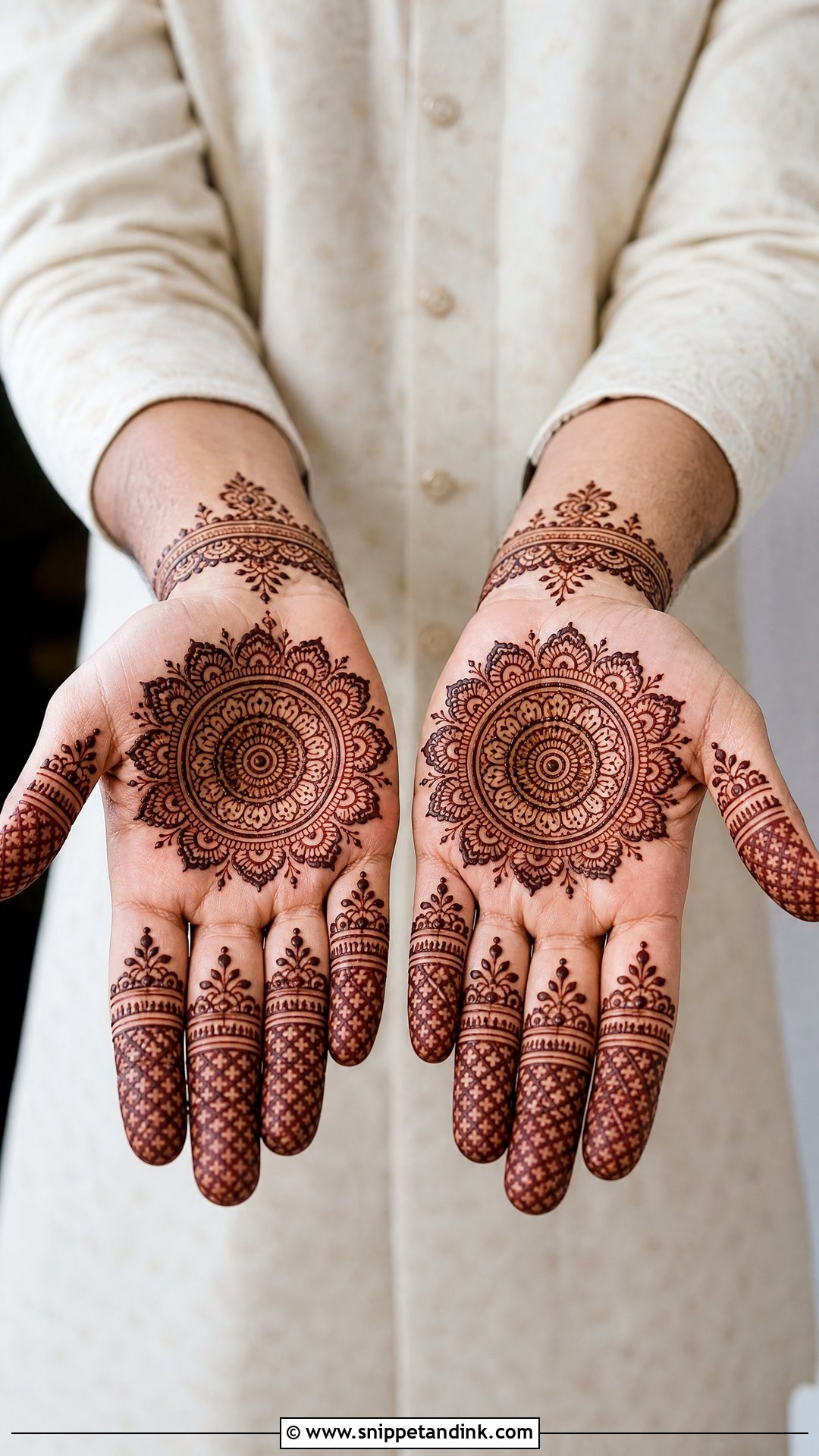
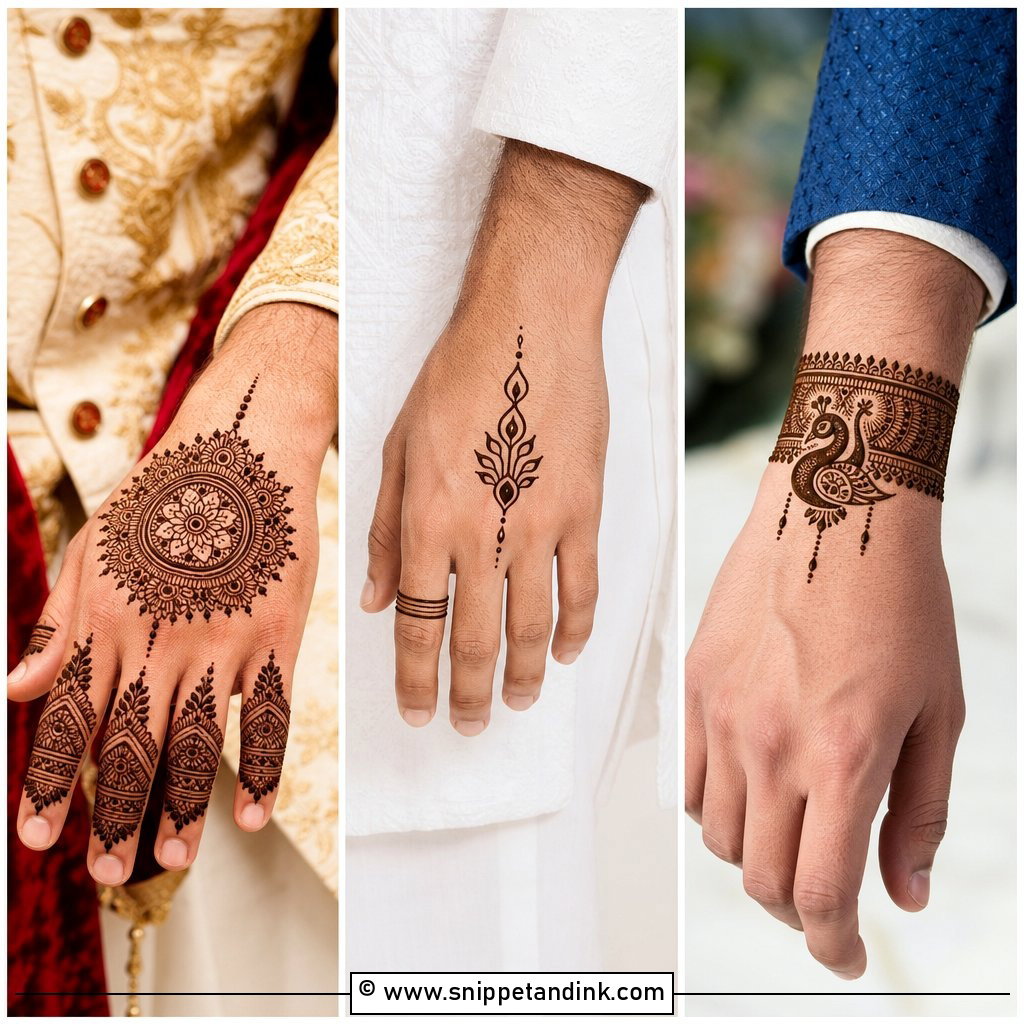
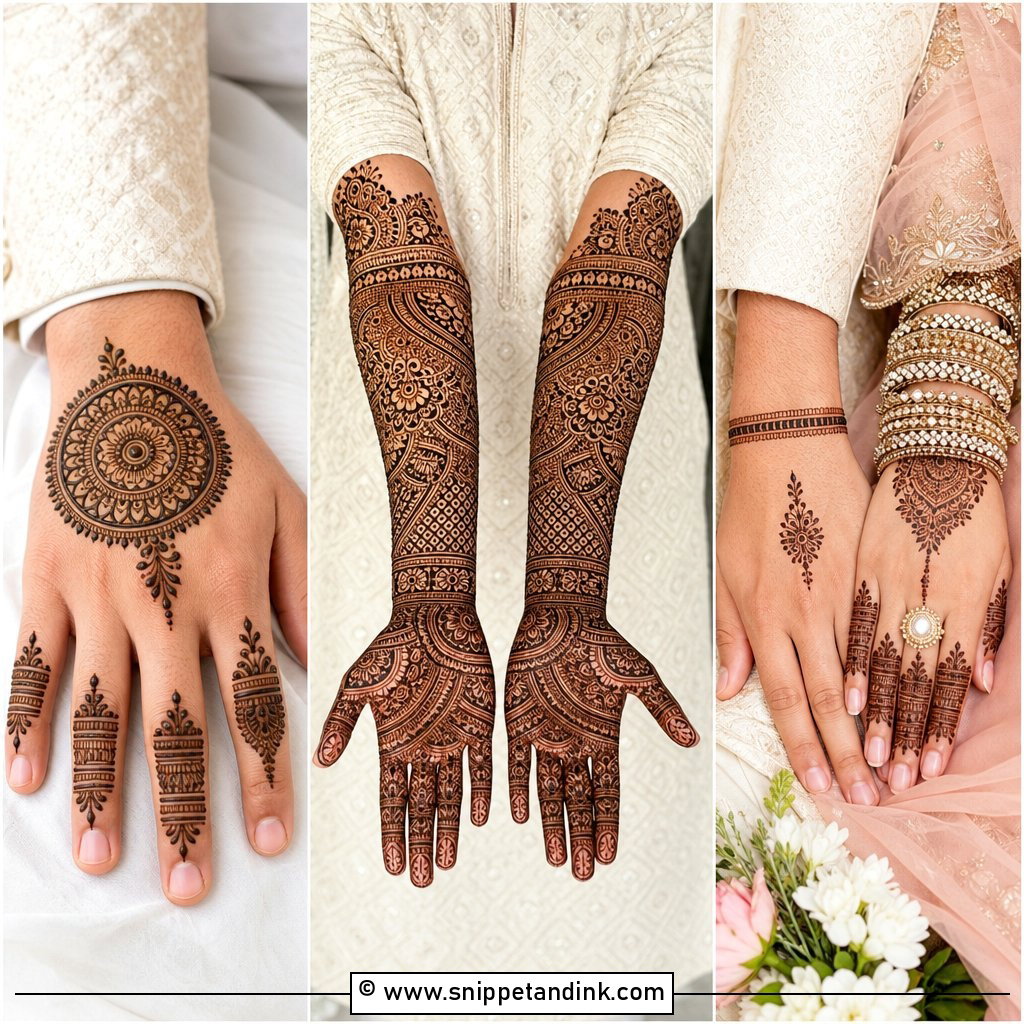
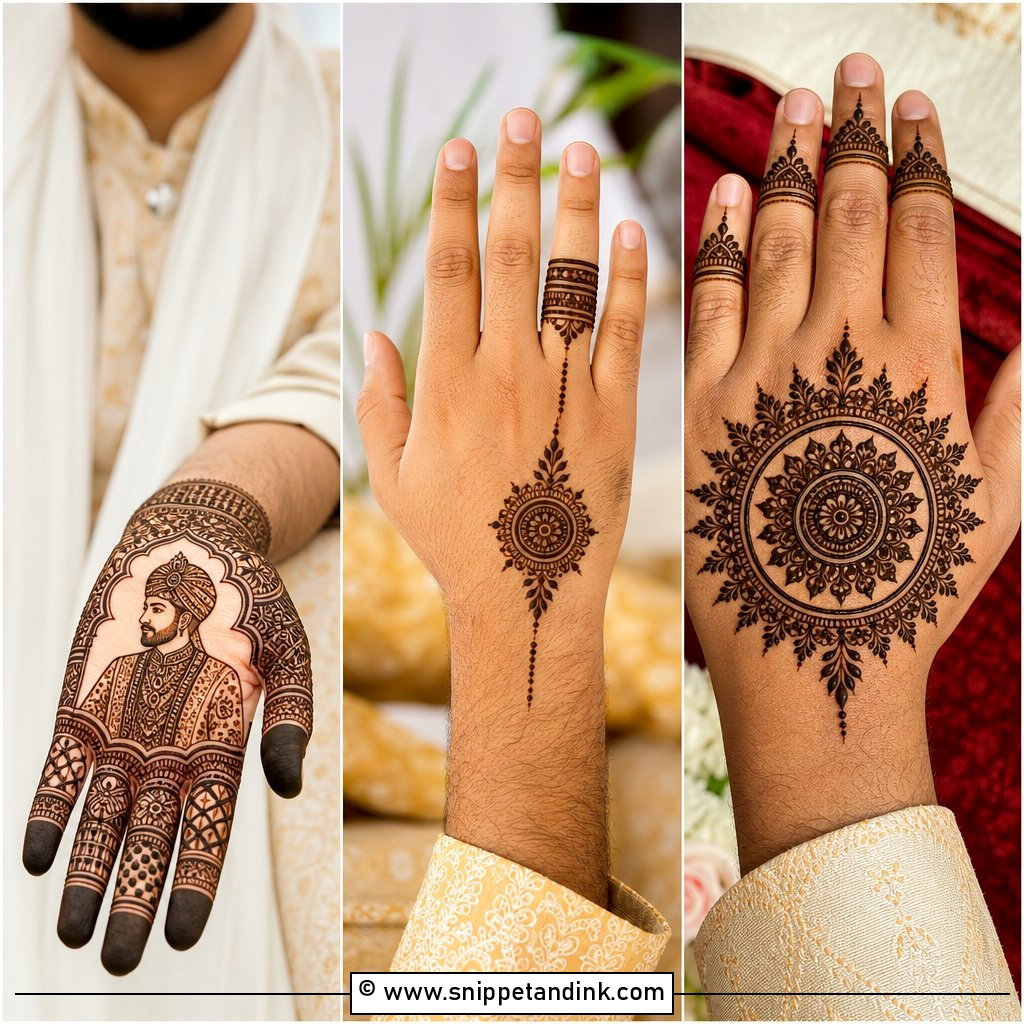
A mandala groom mehndi design gives the hand a balanced and traditional look with very little clutter. The main circle sits in the center of the palm or back hand, making it easy to photograph during ring, haldi, or mehndi ceremony moments. For a groom, the mandala should be bold enough to stand out but not too fine or bridal-heavy. A clean outer ring, small petals, dots, and geometric fillers create a strong finish. Fingers can stay almost bare or have simple bands near the tips. This design is also practical because it stains evenly and does not take too long to apply, making it a reliable wedding-day choice.
3. Bride Name Groom Mehndi Design
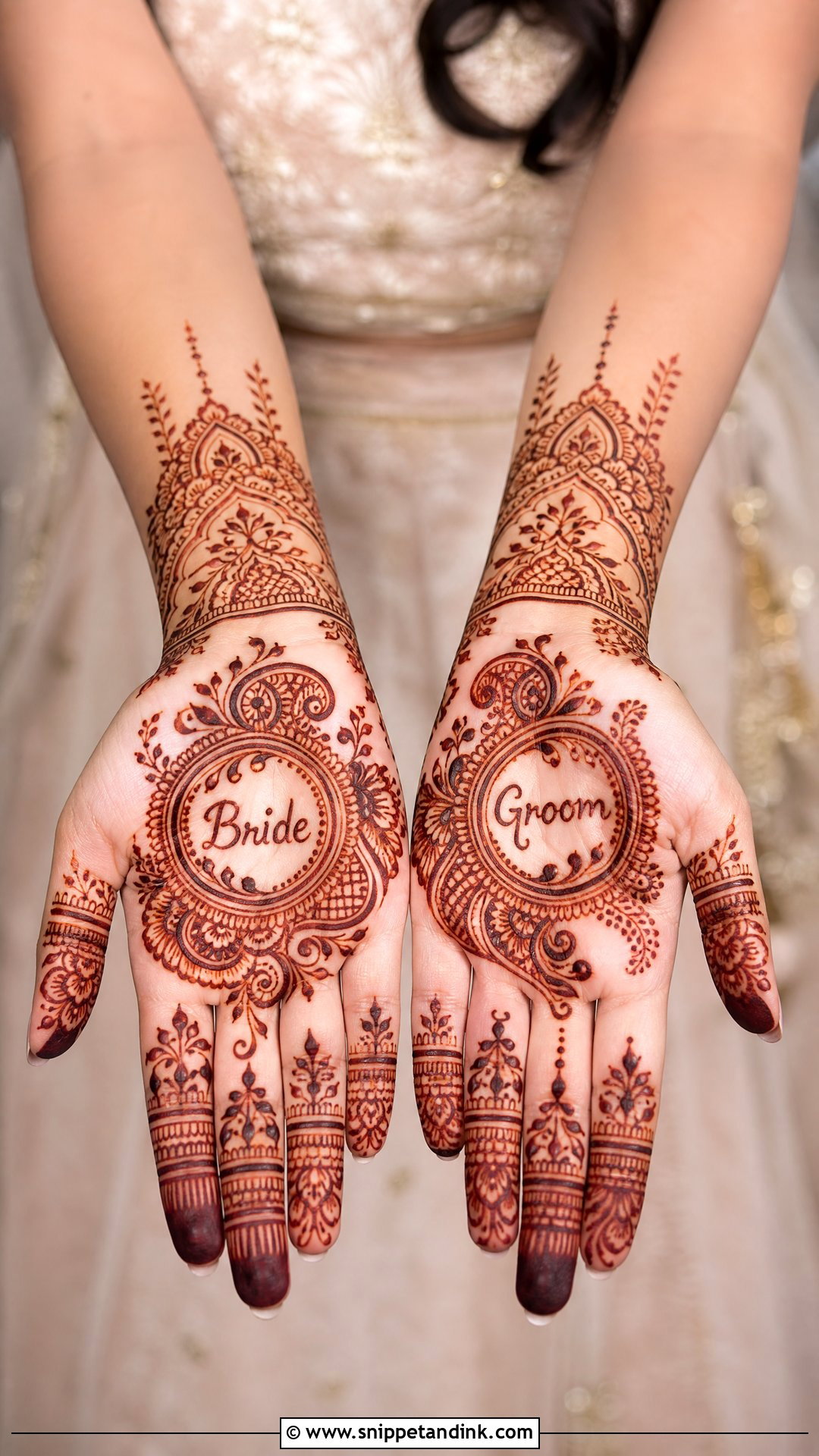
The bride name groom mehndi design is one of the most personal choices for the wedding. Instead of covering the entire hand, the artist can place the bride’s name inside a circle, leaf frame, paisley shape, or small heart-inspired border. The name should be readable but still blended into the pattern so it feels elegant. Many grooms choose the palm because it creates a sweet reveal during photos and wedding rituals. You can keep the rest of the hand simple with wrist bands, dots, and light finger lines. This look is meaningful, easy to customize, and ideal for grooms who want their mehndi to tell a small love story.
4. Wedding Date Groom Mehndi Design
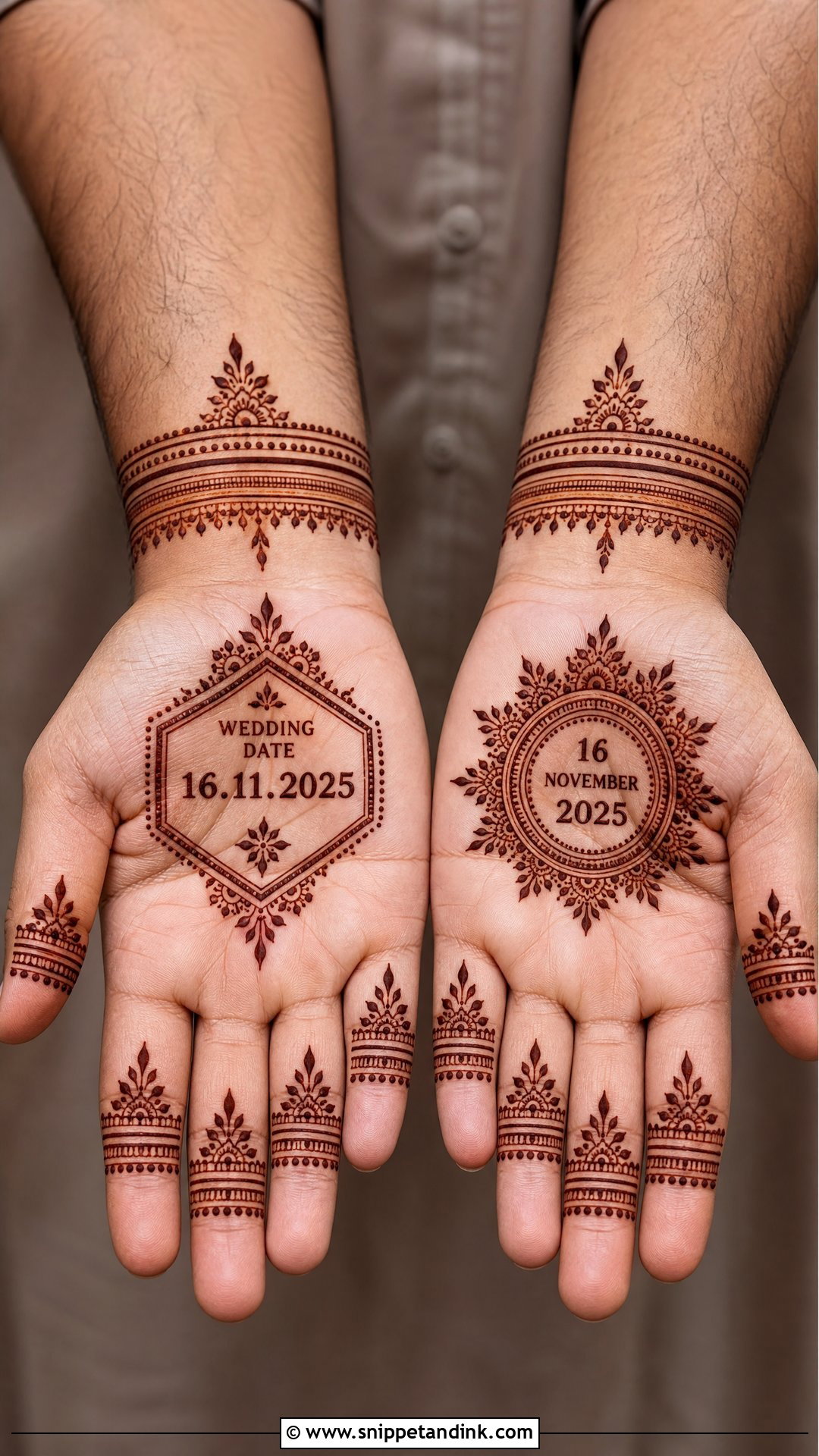
A wedding date groom mehndi design turns a simple pattern into a lasting memory from the big day. The date can be written in numbers, Roman numerals, or a small framed layout near the wrist or center palm. To keep it stylish, surround the date with minimal geometric borders, dotted curves, or a small mandala outline. This design works especially well for engagement, nikah, sangeet, or wedding morning photos. It also suits grooms who do not want too many florals or dense fillings. Ask the artist to keep the date clear and bold, because tiny writing can blur when the henna stain deepens over time.
5. Arabic Groom Mehndi Design
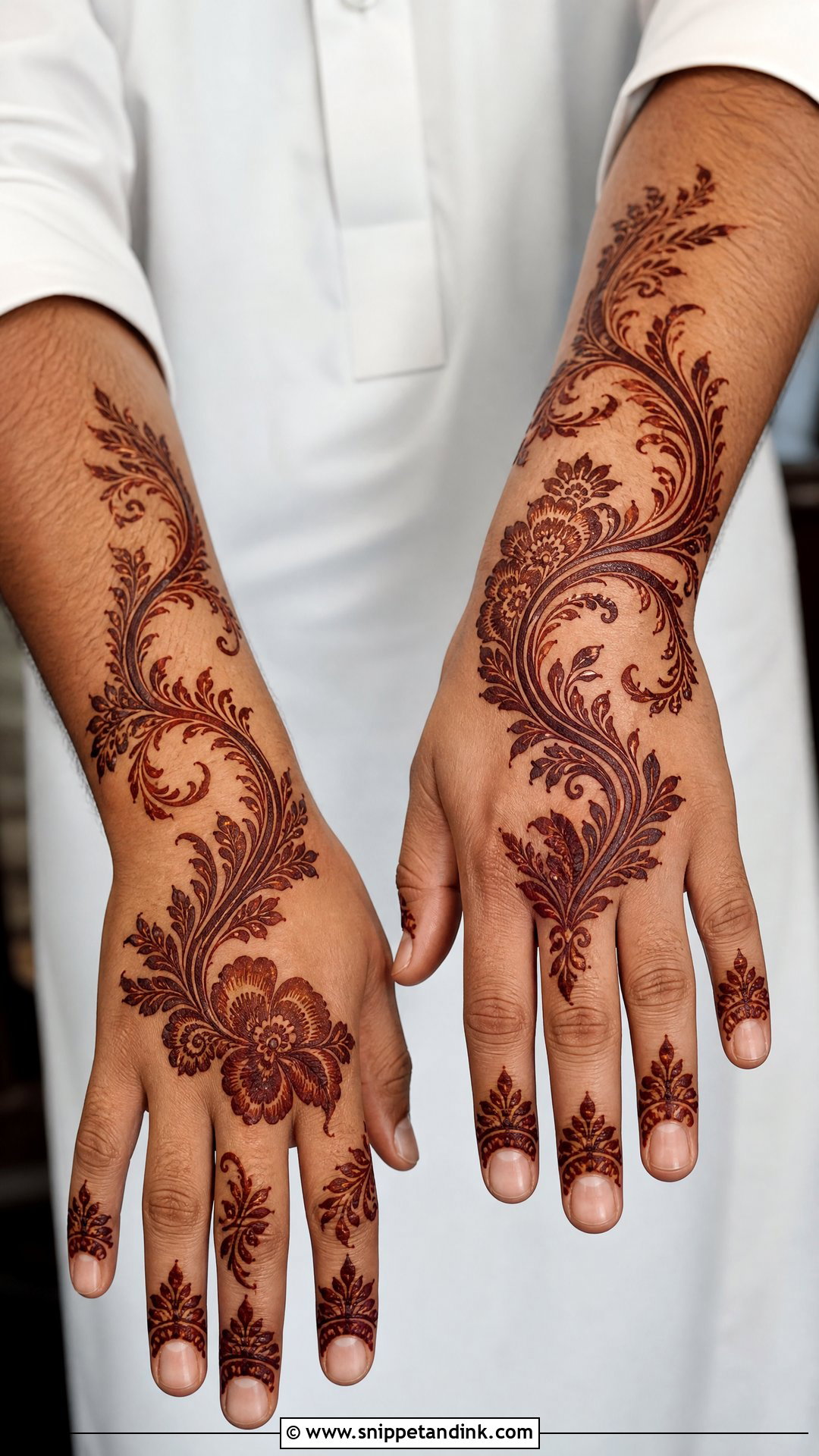
Arabic groom mehndi design is a great choice for grooms who like bold lines and open space. Unlike dense Indian mehndi, Arabic patterns often move in a flowing trail across the palm, back hand, or wrist. For a groom, the design can include leafy vines, shaded flowers, curved strokes, and simple finger bands. The open skin around the pattern helps the stain look cleaner and more modern. It also works beautifully for outdoor ceremonies because the design reads well in photos. If you want a stylish but not overly traditional look, ask for thicker outlines, minimal shading, and a diagonal layout that follows the natural shape of the hand.
6. Indian Groom Mehndi Design
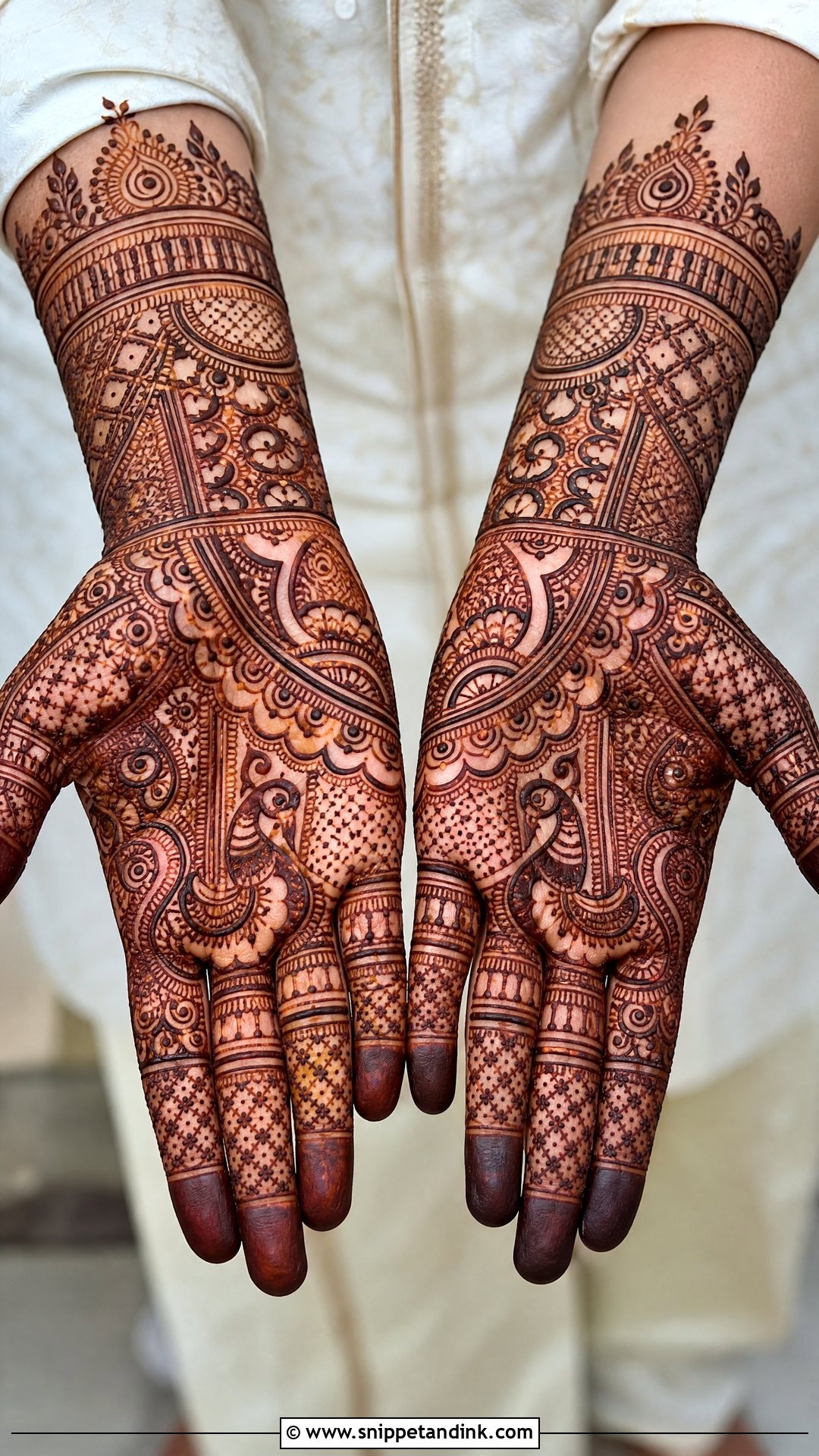
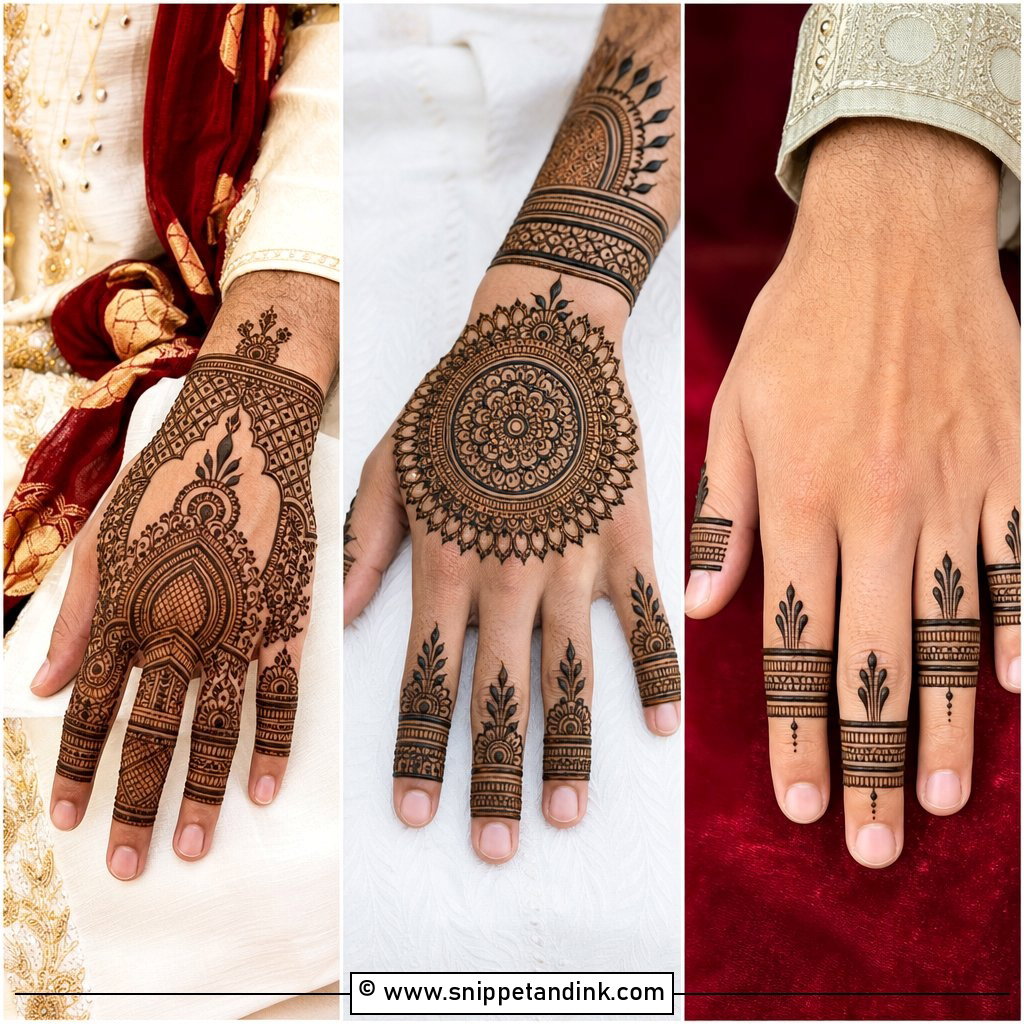
An Indian groom mehndi design is ideal for a traditional wedding where the groom wants a richer ceremonial look. This style can include paisleys, mandalas, peacock-inspired details, jaali patterns, and small symbolic elements. The design may cover the full palm, fingers, and wrist, but it can still be tailored to look masculine with thicker lines and balanced spacing. Indian mehndi looks especially good with sherwanis, saafas, and royal wedding outfits because it feels detailed and festive. To avoid making it too busy, choose one strong centerpiece and let the surrounding elements support it. This creates a polished design that honors tradition while still feeling groom-friendly.
7. Minimal Groom Mehndi Design
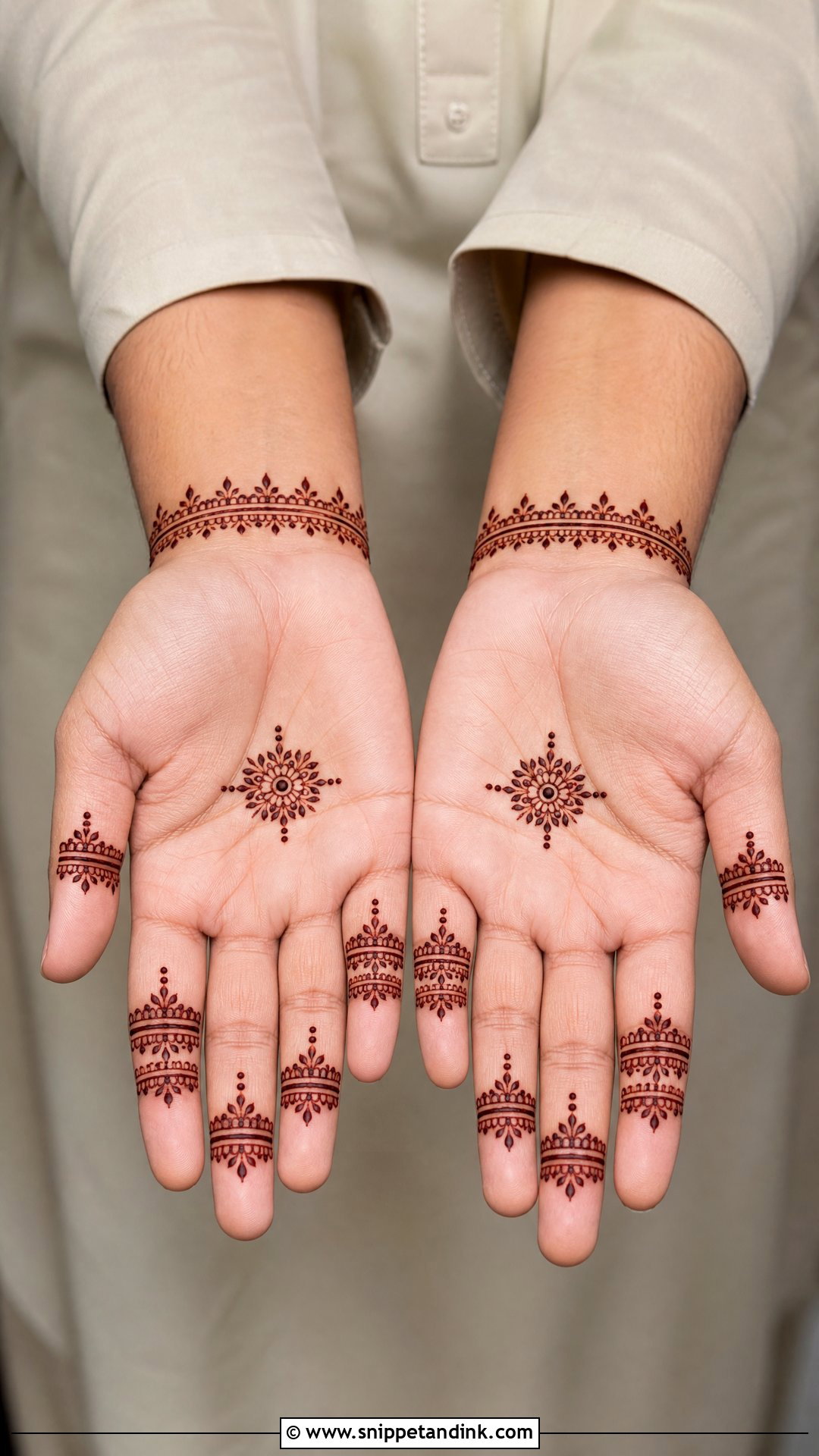
Not every groom wants a full hand covered in henna, and that is where minimal groom mehndi design works best. This look uses small motifs, slim lines, and clean spacing for a calm, modern finish. A small palm circle, one wrist cuff, or a few finger bands can be enough. It is also a smart choice for grooms who need to return to work soon after the wedding or prefer a subtle stain. Minimal mehndi looks sharp in close-up photos because the pattern is easy to see. For a refined result, keep the design symmetrical and avoid too many scattered elements. Simple spacing makes it look expensive and neat.
8. Full Hand Groom Mehndi Design
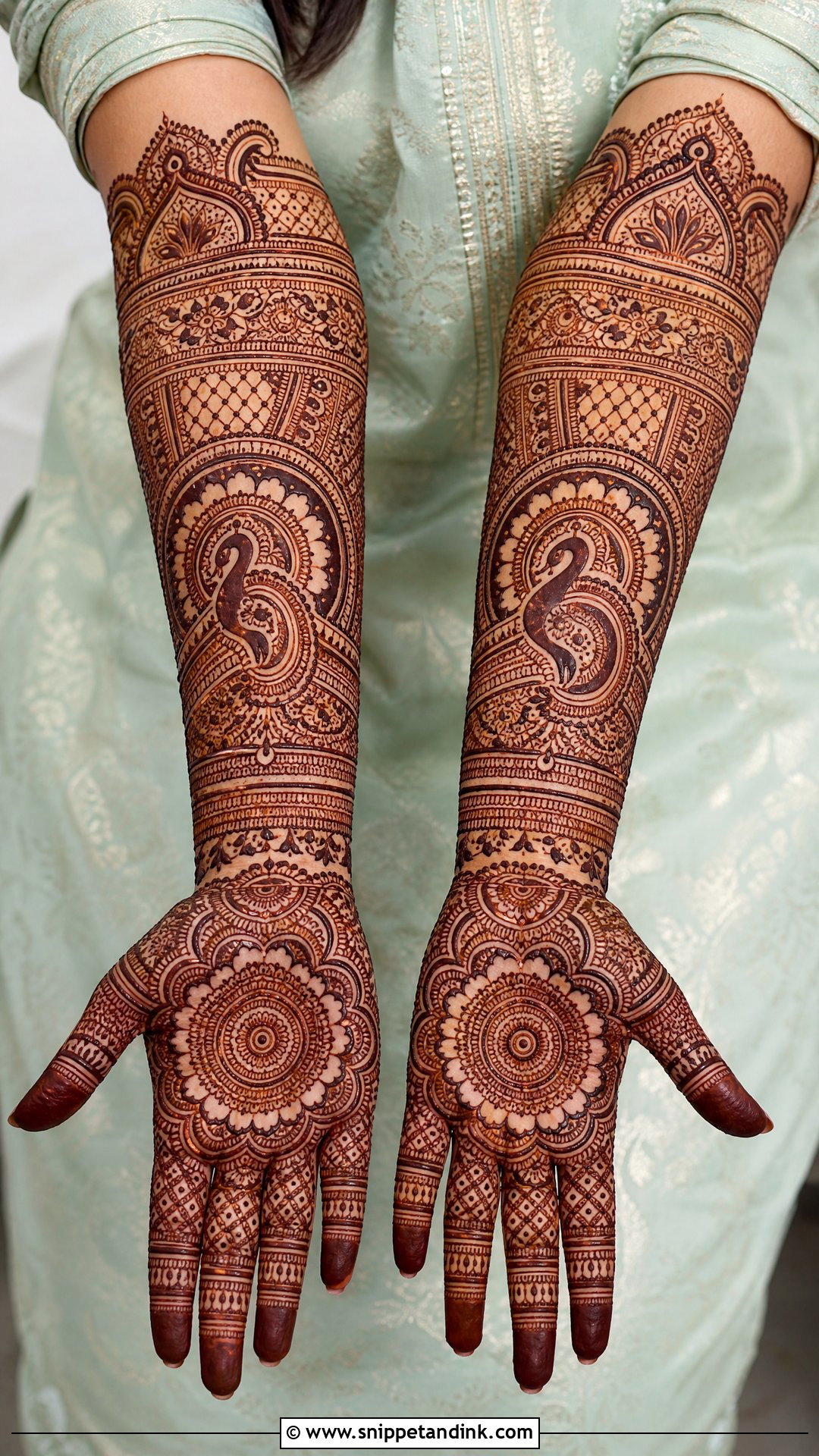
A full hand groom mehndi design is made for grooms who want a grand wedding look. It can cover the palm, fingers, wrist, and sometimes extend toward the forearm. The best groom version uses strong structure instead of soft, overly delicate filling. Think bold paisleys, mandalas, geometric borders, peacock details, and neat negative space. This look works well for traditional Indian, Pakistani, and royal wedding themes. It also pairs beautifully with detailed bridal mehndi in couple portraits. Since full-hand mehndi takes more time, plan the application early and keep the hand still while drying. A clean layout will make the heavy coverage look elegant rather than crowded.
9. Back Hand Groom Mehndi Design
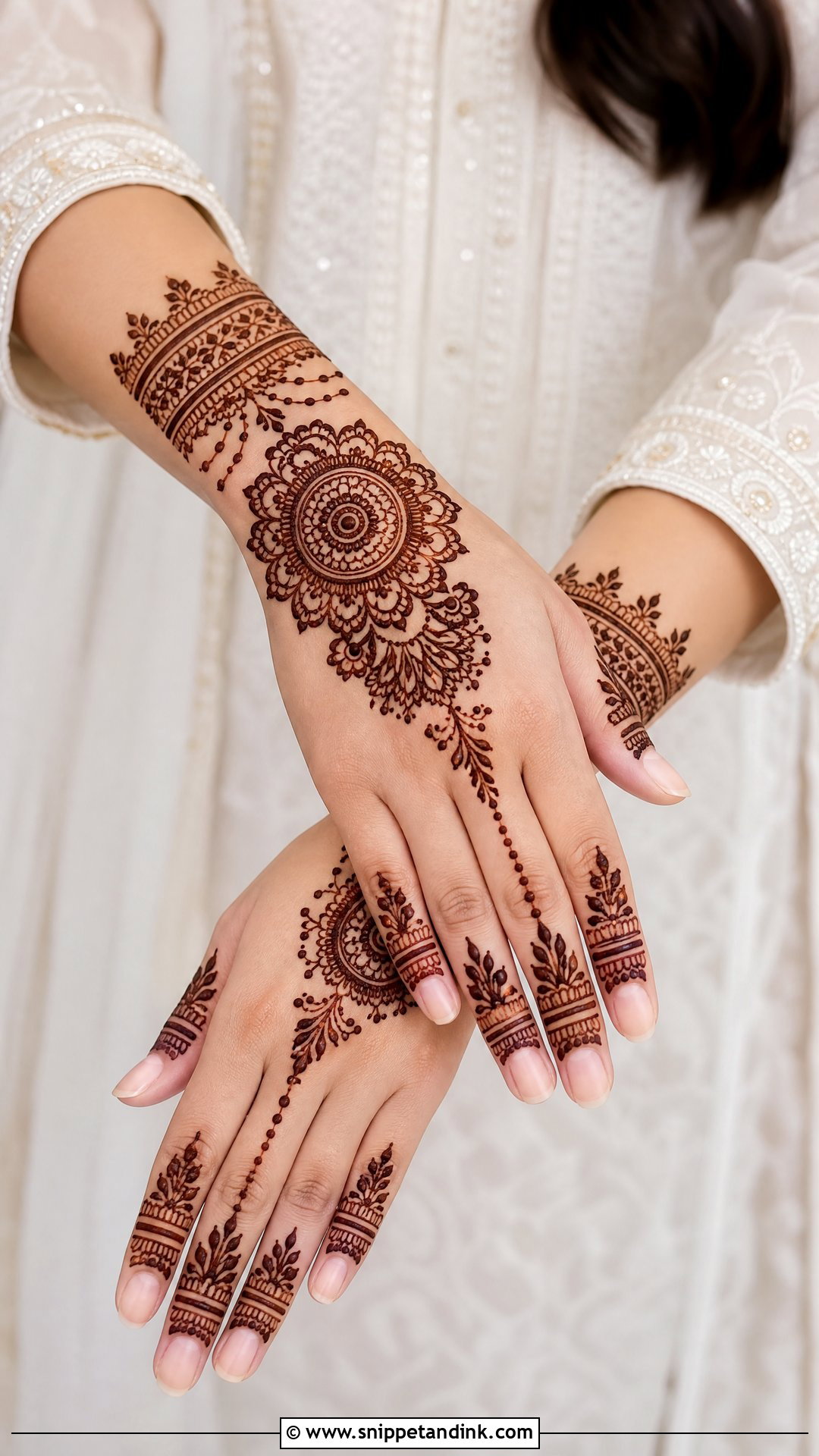
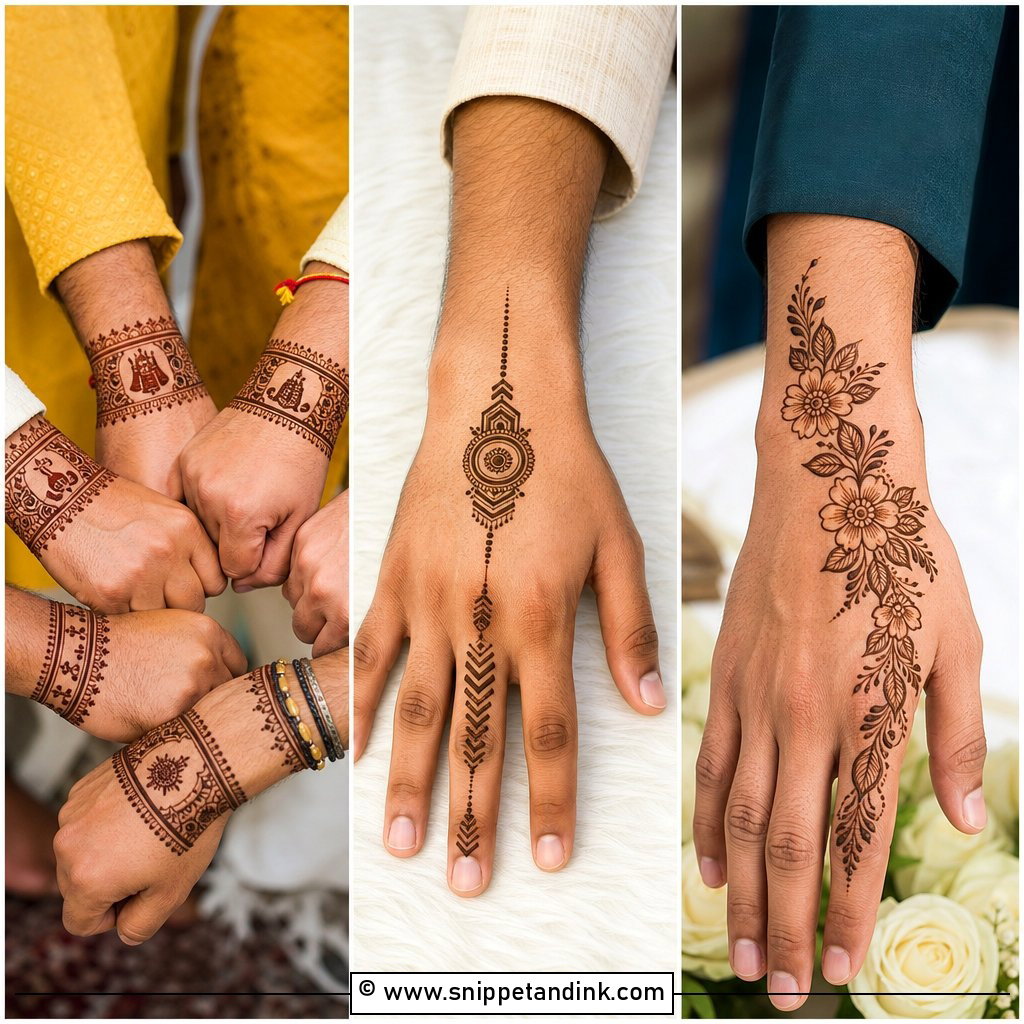
A back hand groom mehndi design is perfect for ring photos, handshake moments, and wedding entry shots. This placement looks stylish because it stays visible even when the palm is not facing the camera. Popular groom patterns include a central mandala, haathphool-style chains, bracelet cuffs, and finger bands. Keep the design slightly bold so it stands out against watches, rings, and embroidered sleeves. Back hand mehndi can be minimal or detailed, depending on the outfit and ceremony. For a balanced look, connect the wrist to the fingers with clean lines instead of filling every space. It gives the hand a groomed, festive, and photo-ready finish.
10. Palm Groom Mehndi Design
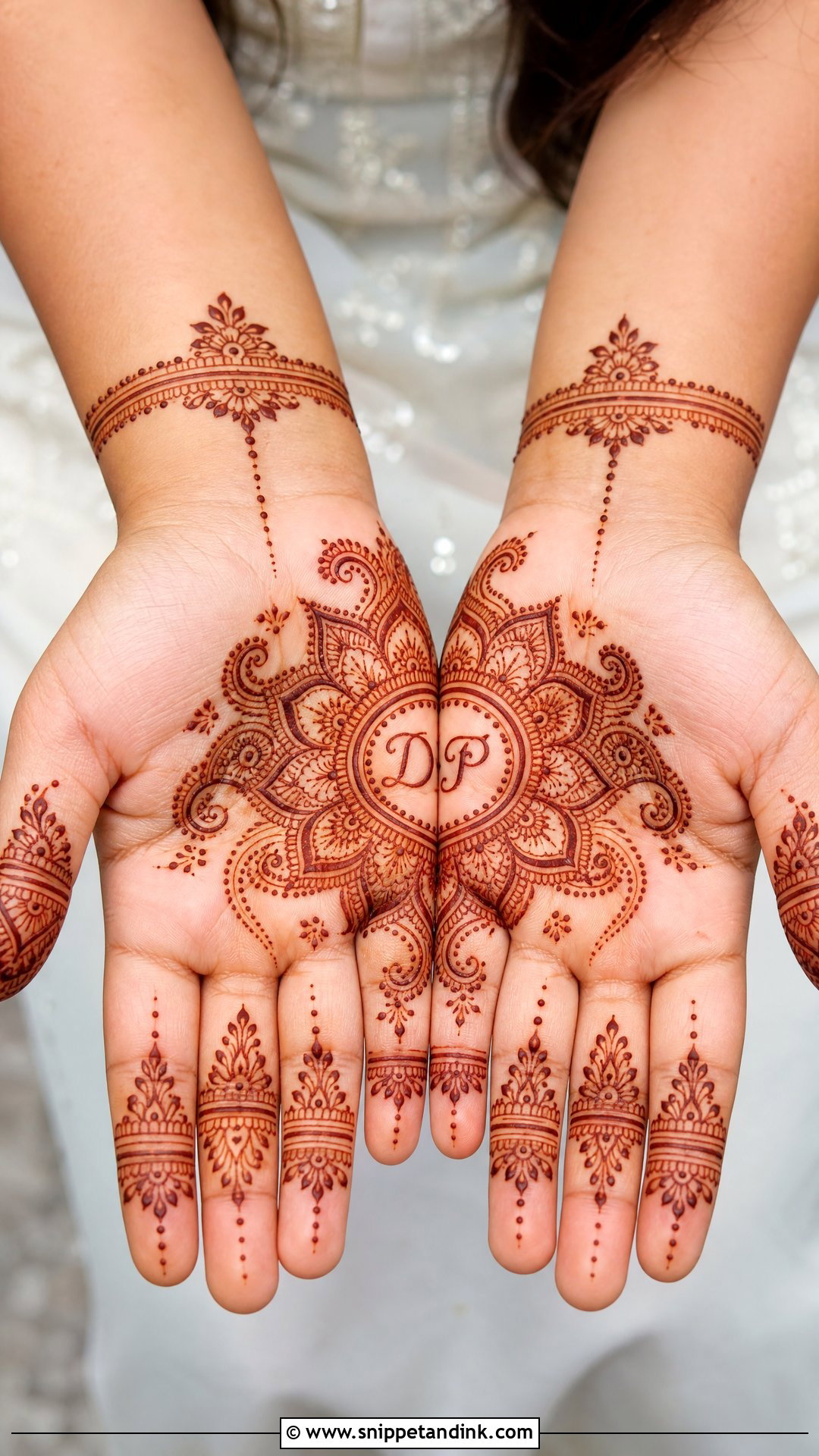
A palm groom mehndi design keeps the artwork focused and meaningful. Since the palm stains deeply, it is one of the best places for names, dates, mandalas, religious symbols, or couple initials. This design can be very simple, with one strong centerpiece and light decoration around it. It can also be more traditional with paisleys, dots, and small filler patterns. The key is to leave clean space around the main motif so it does not look messy after staining. Palm designs are easy to hide when needed but still create a beautiful moment during ceremonies. They are also practical for grooms who want tradition with limited coverage.
11. Wrist Band Groom Mehndi Design
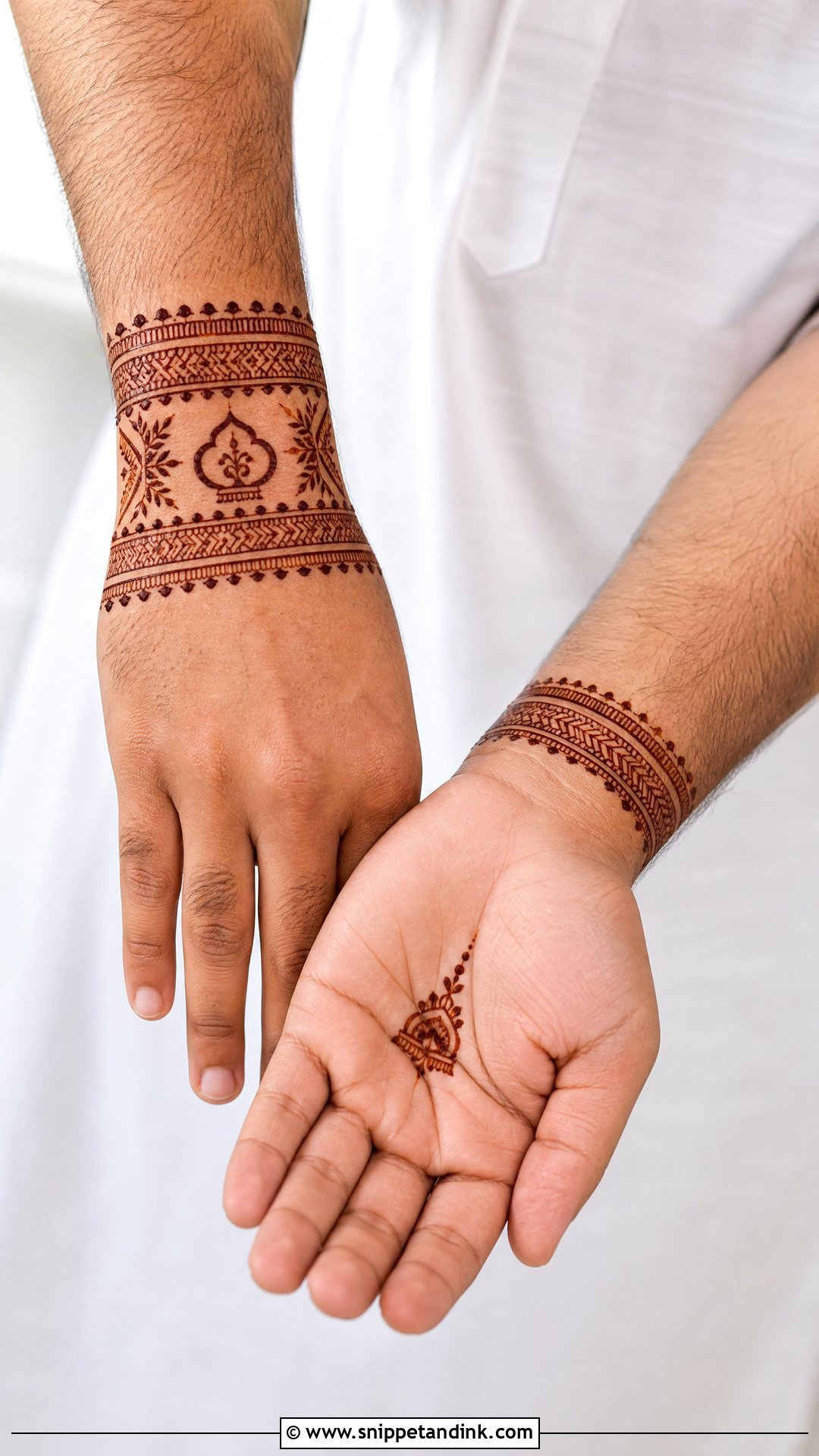
A wrist band groom mehndi design looks modern, clean, and masculine. It works like a henna bracelet, wrapping around the wrist with geometric lines, dots, leaves, or small cultural symbols. Some grooms pair it with a tiny palm motif, while others keep only the wrist design for a very subtle look. This is a great option if you wear a watch or bracelet because the mehndi can complement the accessory instead of competing with it. Keep the band width even and avoid overly tiny details. A bold cuff with a small gap, central symbol, or initial gives the design a sharp wedding finish without covering the full hand.
12. Finger Groom Mehndi Design
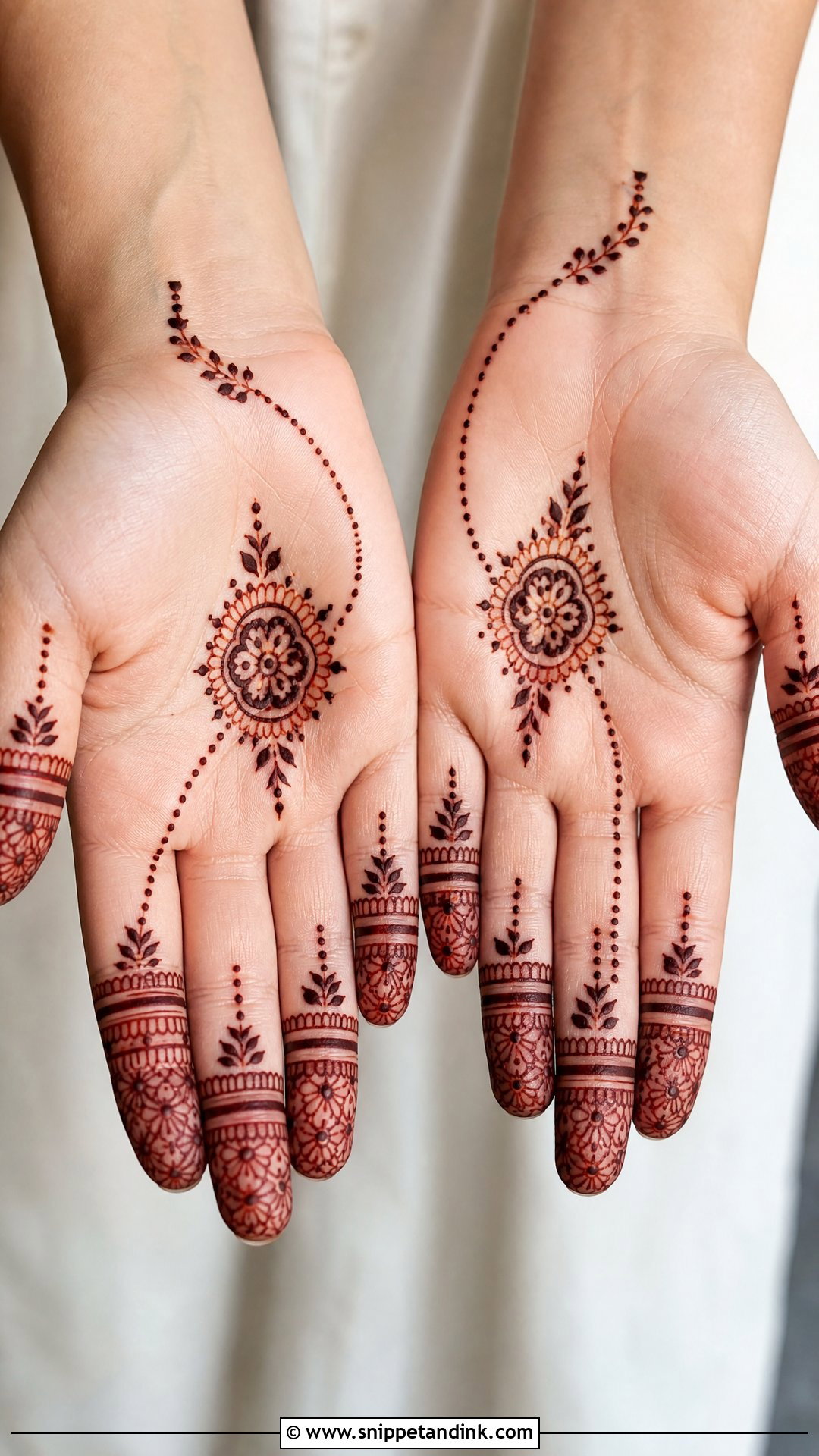
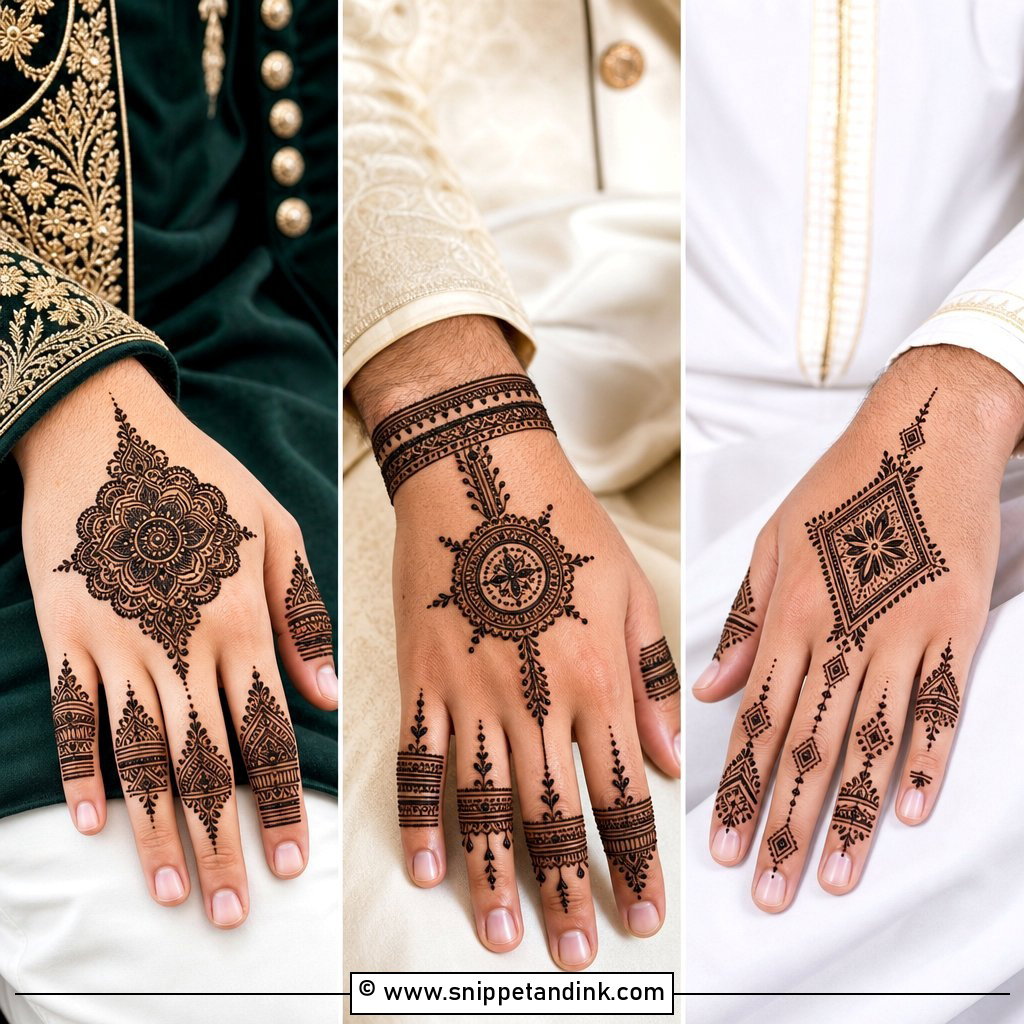
A finger groom mehndi design is a strong choice for grooms who want something light but noticeable. The design focuses on finger bands, knuckle details, tips, and small connecting lines. It can be paired with a plain palm or a tiny center motif for more balance. This look photographs well during ring exchange because the design naturally frames the fingers. For a groom, the best finger mehndi uses straight bands, dots, small leaves, and geometric shapes instead of very delicate bridal lacework. Keep the fingers consistent, but not identical, for a more natural hand-drawn feel. It is simple, quick to apply, and easy to carry with any wedding outfit.
13. Indo Arabic Groom Mehndi Design
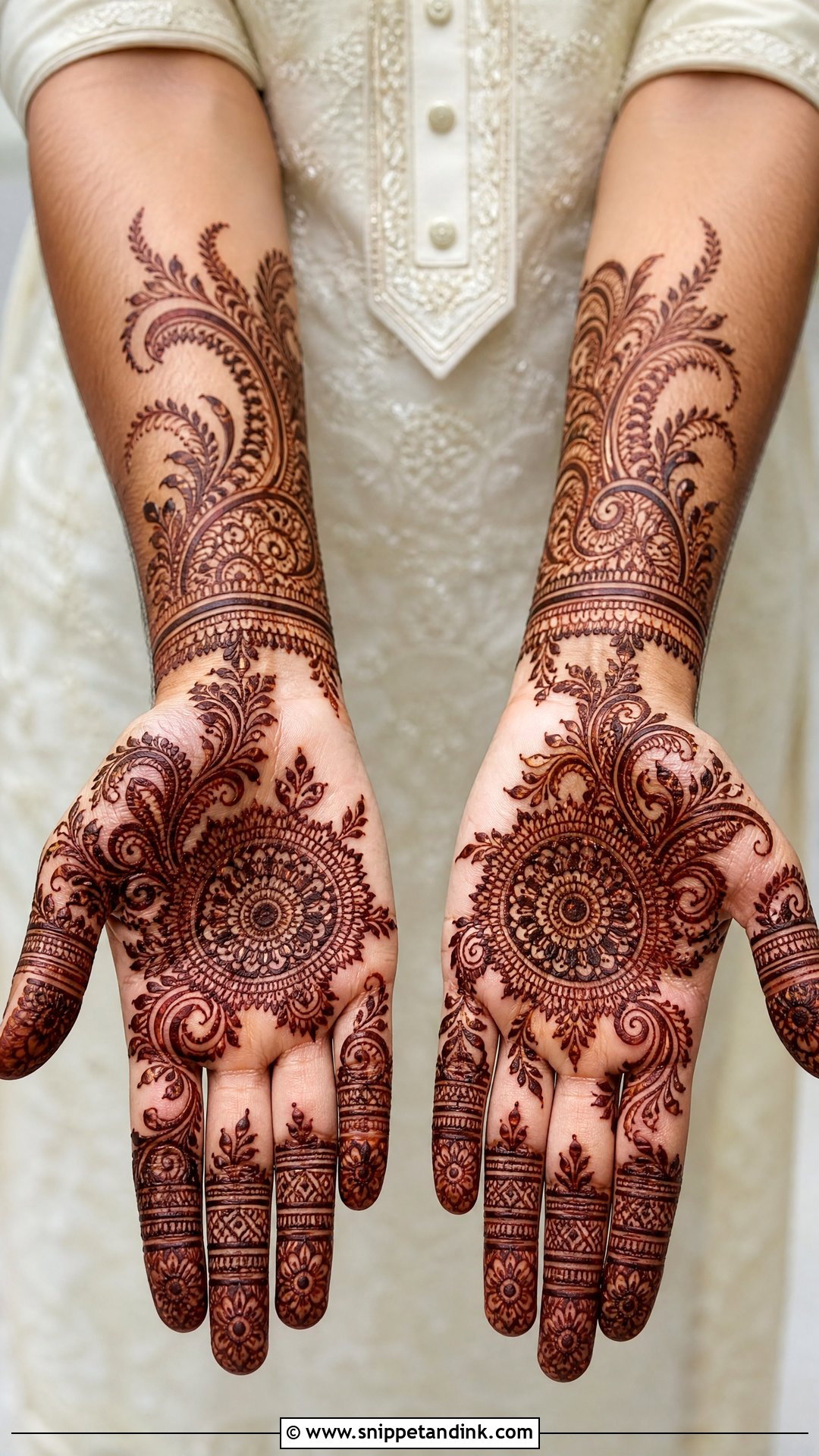
Indo Arabic groom mehndi design blends the bold flow of Arabic henna with the detail of Indian patterns. This makes it a strong middle option for grooms who want something festive but not too dense. The design can start with a mandala or paisley on the palm, then move into Arabic vines, shaded leaves, and open spaces. Fingers may have Indian-style bands while the wrist stays more flowing and modern. This combination works well for multicultural weddings and outfits that mix traditional and contemporary elements. Ask the artist to keep the main shapes bold and the fillers controlled. That way, the design looks rich without becoming too bridal.
14. Royal Groom Mehndi Design
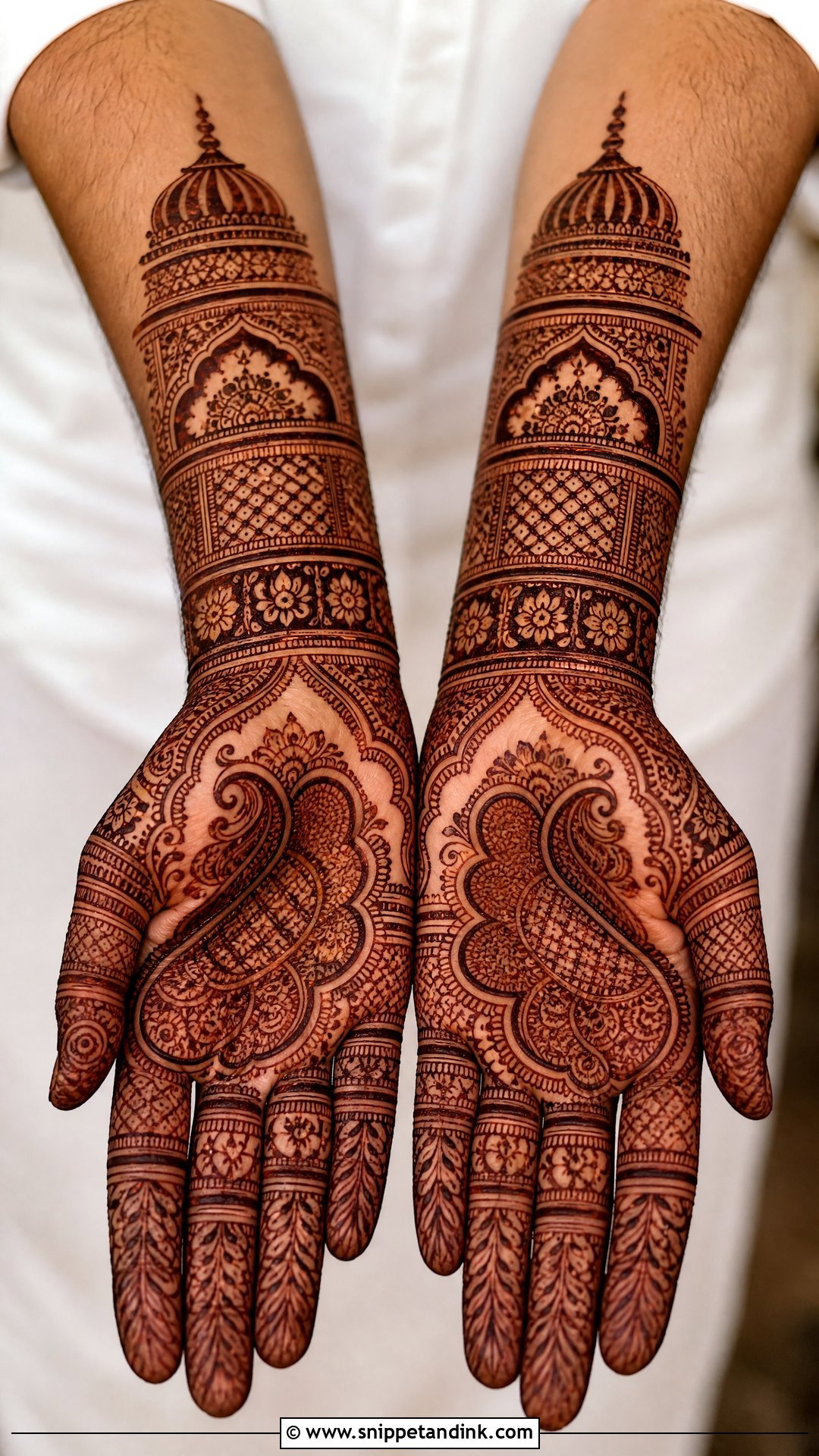
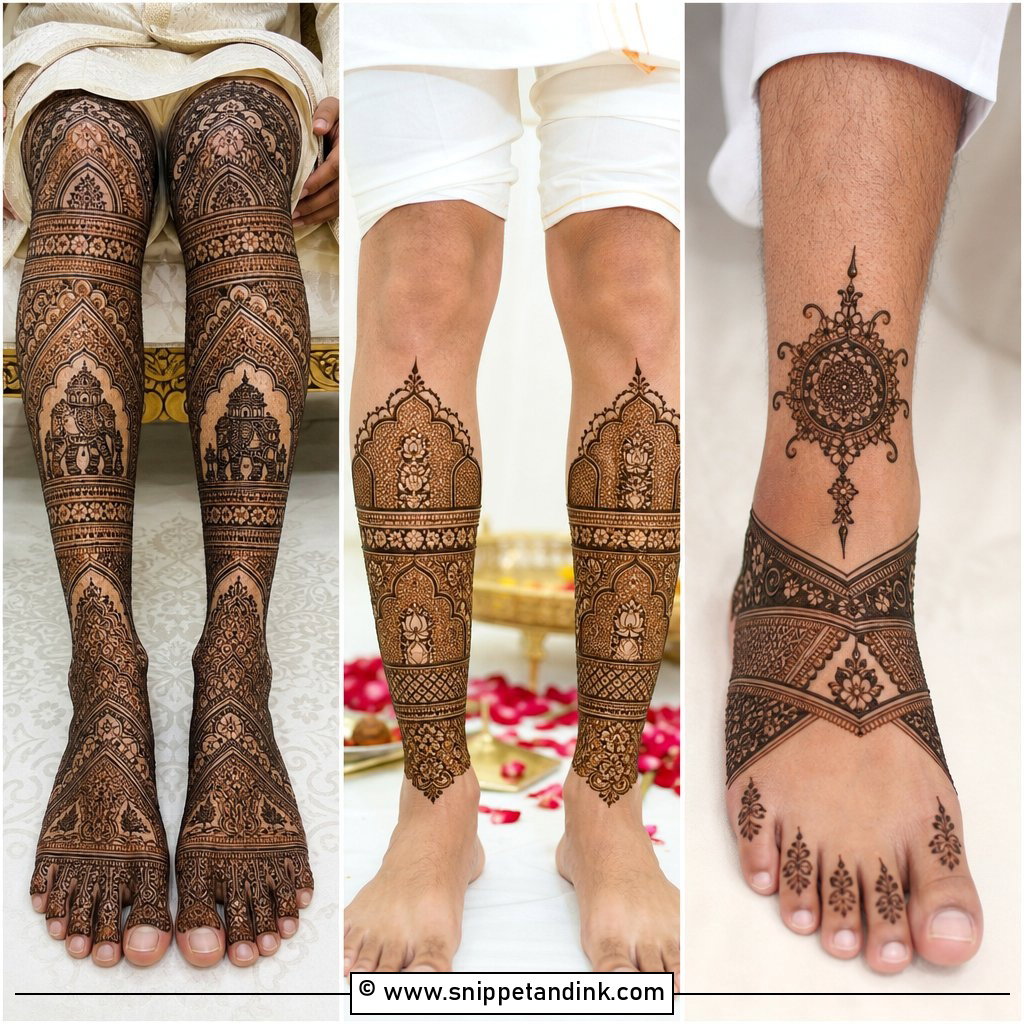
A royal groom mehndi design is all about structure, symmetry, and heritage-inspired detail. This look often includes Mughal-style paisleys, jaali mesh, bold borders, dome shapes, and strong wrist cuffs. It suits grooms wearing heavily embroidered sherwanis, turbans, or regal wedding accessories. The design can cover the palm and back hand, or extend slightly toward the forearm for a grander effect. To keep it groom-appropriate, choose thicker outlines and avoid overly soft floral clutter. Royal mehndi looks best when the design has a clear center, balanced sides, and clean negative space. It feels ceremonial, powerful, and elegant, making it ideal for big wedding functions and formal portraits.
15. Groom Portrait Mehndi Design
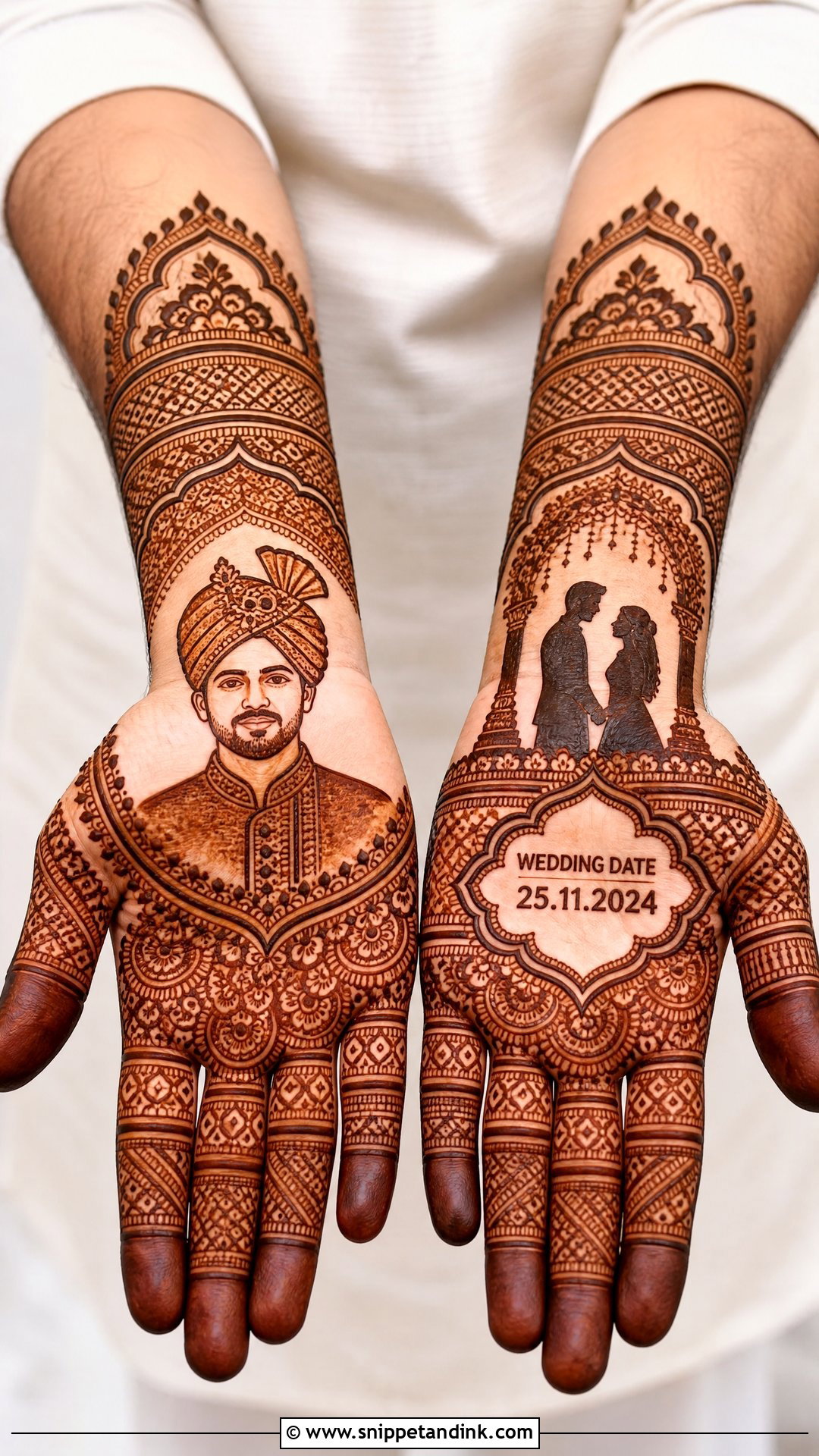
A groom portrait mehndi design is a statement option for grooms who want truly custom artwork. Instead of a basic motif, the design can include a stylized groom face, couple silhouette, wedding turban, or baraat-inspired scene. This look usually works best on the palm or forearm because the artist needs enough space for clear detailing. Since portraits can blur if drawn too small, choose a clean outline style rather than too much shading. You can pair the portrait with initials, wedding date, or simple borders. This design is great for creative grooms who enjoy personalized details and want their mehndi to become a talking point during the ceremony.
16. Peacock Groom Mehndi Design
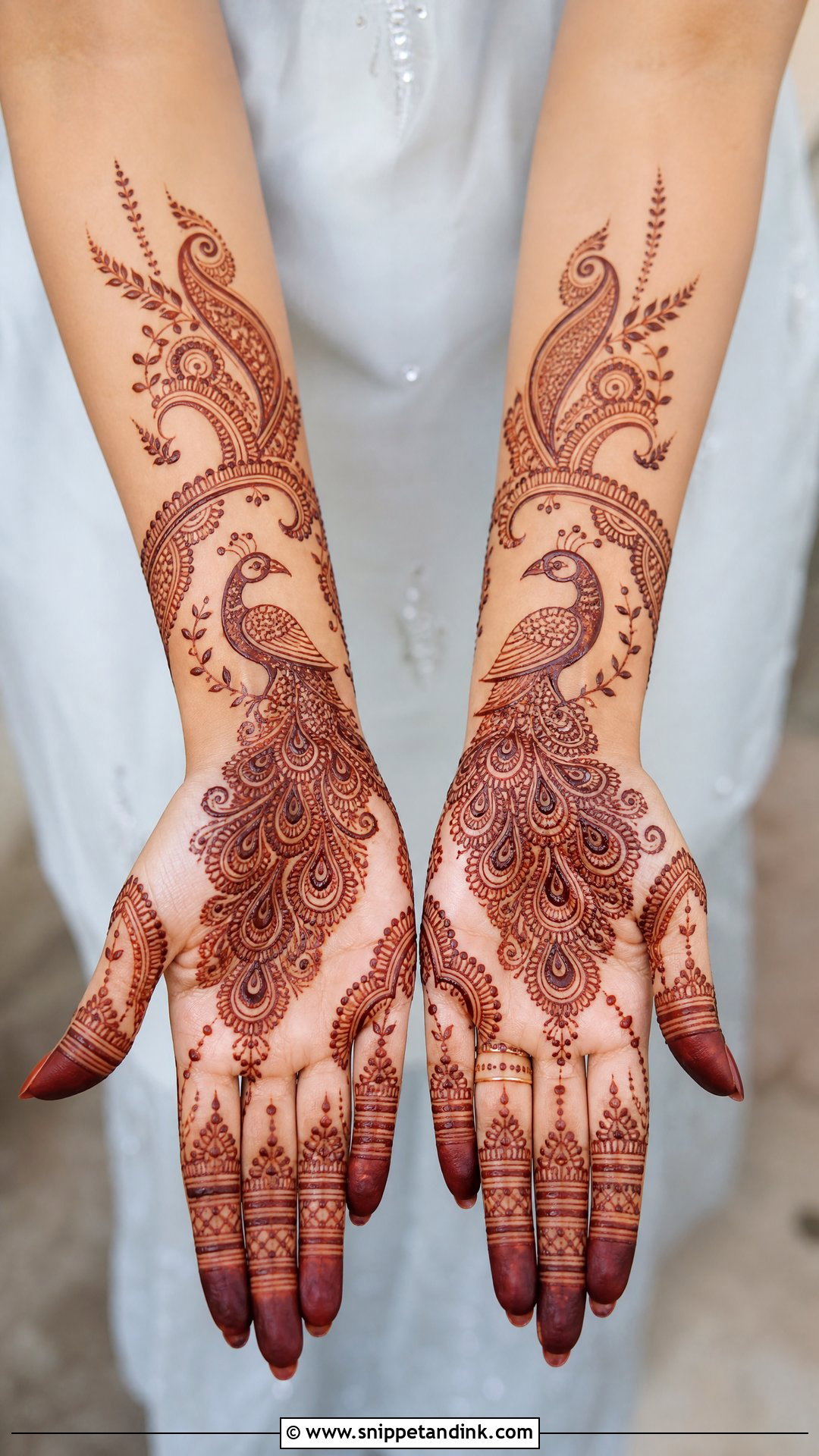
A peacock groom mehndi design brings a traditional Indian feel while still looking bold and stylish. The peacock can sit on the palm, wrist, or back hand, surrounded by paisleys, feathers, dots, and curved borders. For grooms, the best version uses one main peacock rather than many small ones. This keeps the design strong and clean. The feather details can spread toward the fingers or wrist to create movement without making the hand too crowded. Peacock motifs pair beautifully with royal blue, gold, ivory, and maroon wedding outfits. If you want a classic symbol with visual impact, this design gives your hand a festive and culturally rich finish.
17. Geometric Groom Mehndi Design
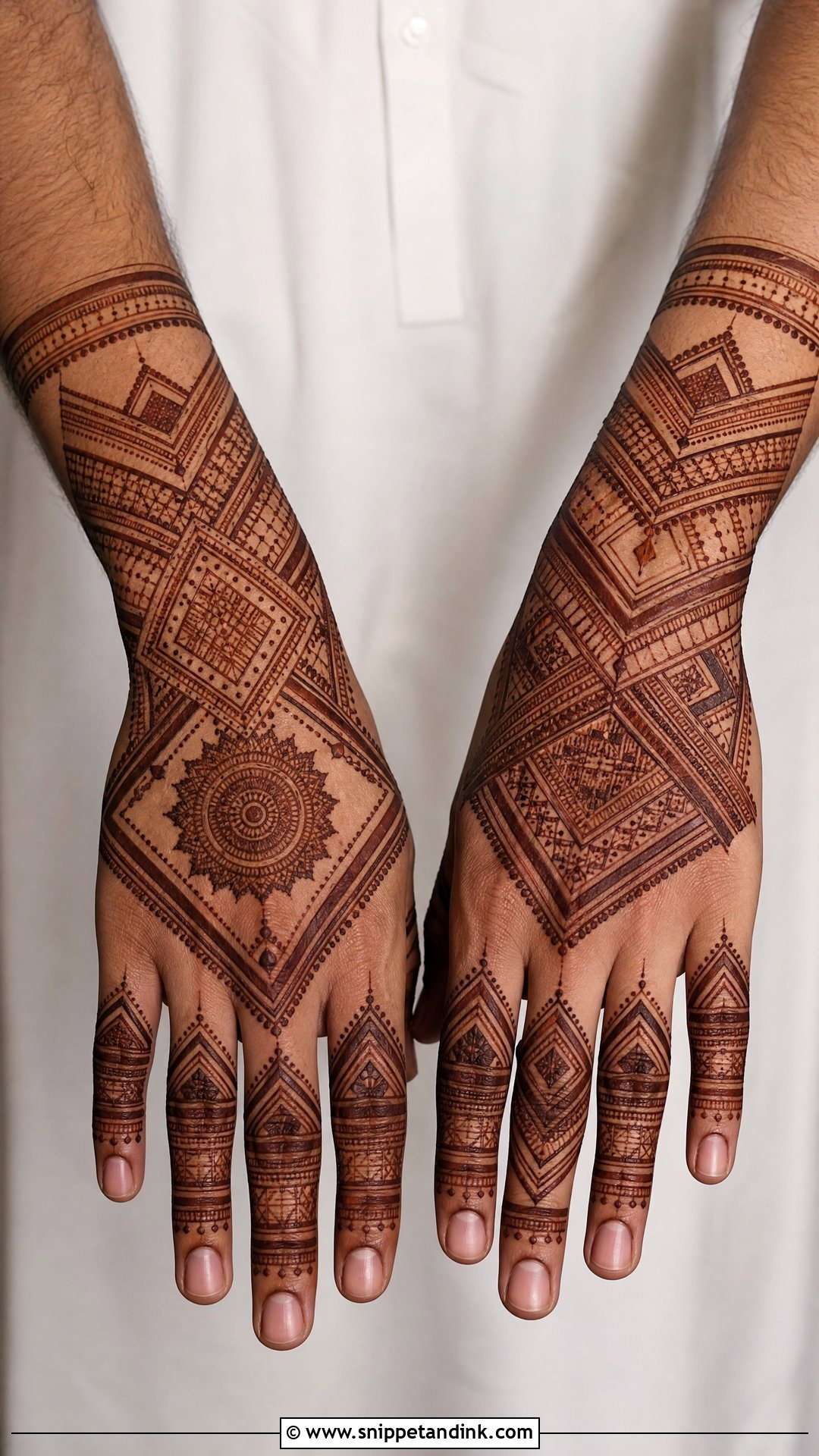
A geometric groom mehndi design feels modern, sharp, and easy to wear. It uses lines, triangles, squares, grids, chevrons, and structured bands instead of soft floral patterns. This makes it popular with grooms who prefer a cleaner or more masculine look. The design can be placed on the palm, back hand, wrist, or fingers. It also pairs well with Indo-Western outfits and minimalist wedding styling. To make it wedding-ready, add one small cultural detail like a mandala center, initial, or date. Keep the linework even and the spacing crisp. When done well, geometric mehndi looks stylish, contemporary, and very strong in close-up photography.
18. Moroccan Groom Mehndi Design
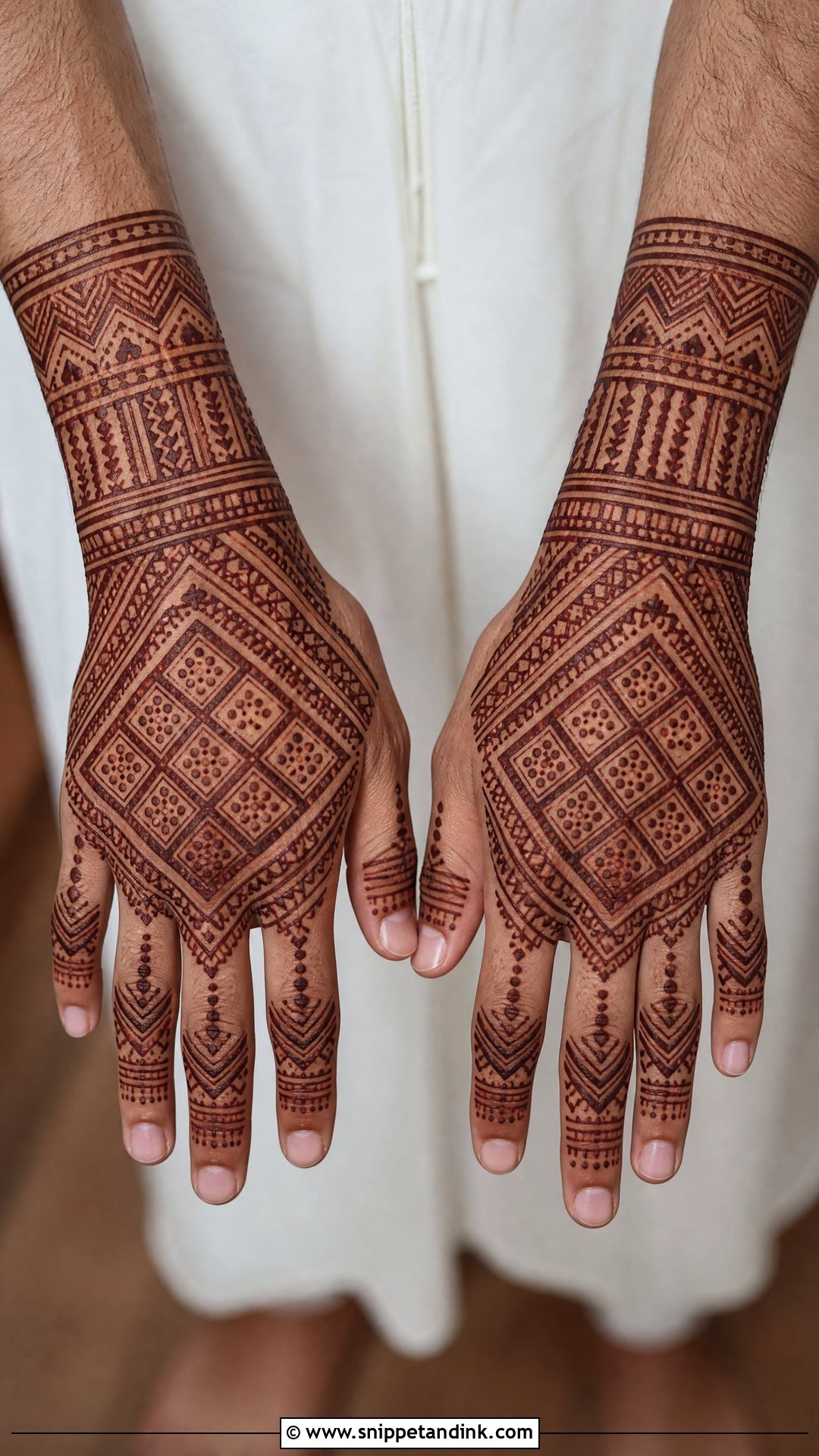
Moroccan groom mehndi design is a great choice if you like bold patterns with a less floral look. This style often uses diamonds, grids, angular borders, dots, and tribal-inspired symmetry. It looks especially good on the back hand, wrist, and forearm because the shapes can follow the arm naturally. For a groom, Moroccan mehndi gives a confident and modern finish while still feeling rooted in henna tradition. The design can be light with just a wrist cuff and finger details, or fuller with connected geometric panels. Keep the stain natural reddish-brown or deep maroon for the most classic result. This look is clean, strong, and different from common wedding patterns.
19. Forearm Groom Mehndi Design
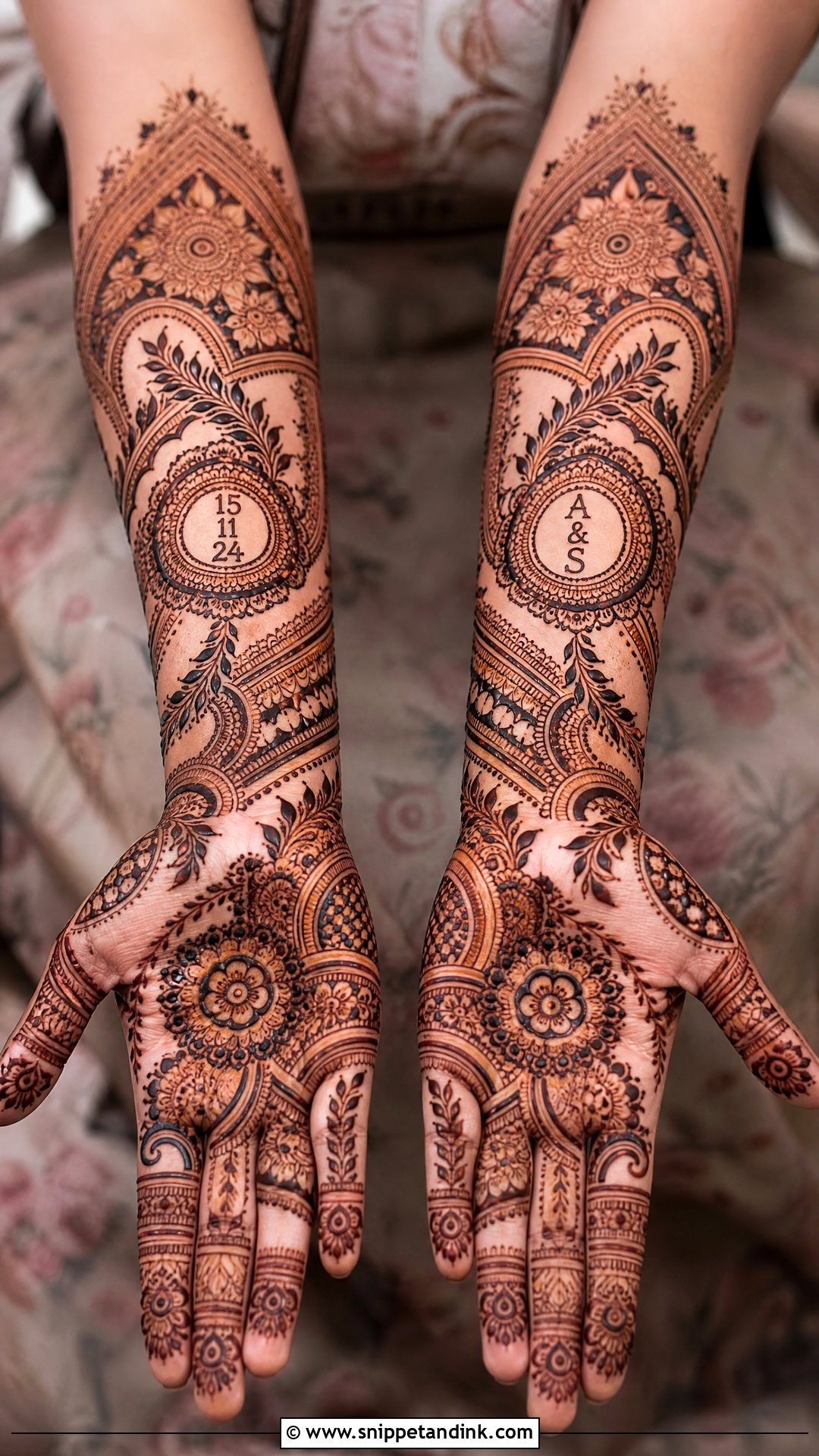
A forearm groom mehndi design gives extra visibility and works well for grooms wearing rolled sleeves, short kurtas, or open-cuff sherwanis. The design can start at the wrist and extend upward with bands, vines, mandalas, geometric panels, or symbolic motifs. It is also a good placement for portraits, wedding dates, or names because there is more space than the palm. For a refined wedding look, avoid making the forearm too crowded. Use one clear direction, such as a vertical trail or cuff-to-arm layout. This keeps the mehndi clean in photos. A forearm design feels bold and modern while still respecting the ceremonial beauty of henna.
20. Couple Initial Groom Mehndi Design
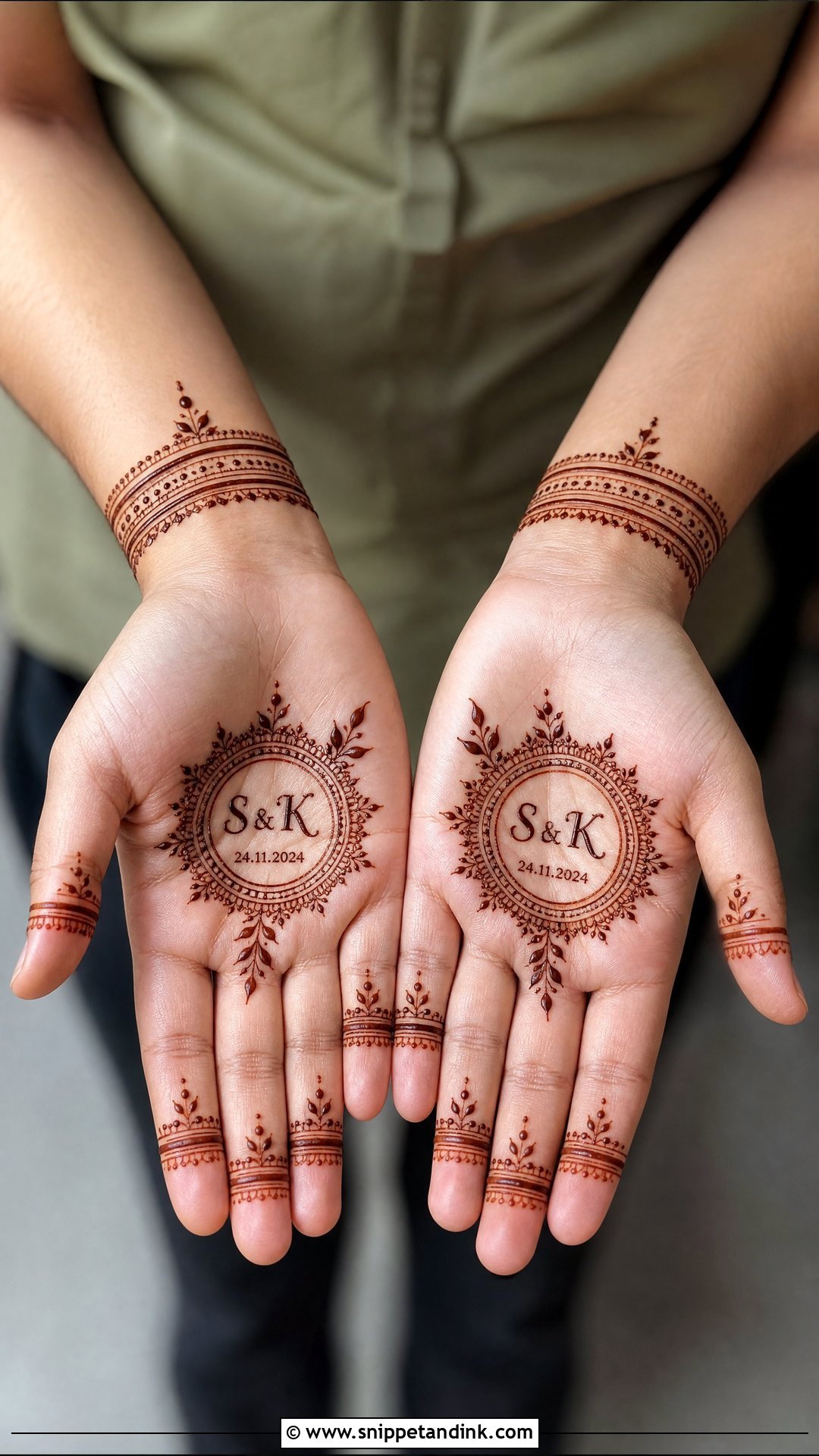
A couple initial groom mehndi design is simple, sweet, and easy to personalize. The initials can be placed inside a mandala, geometric frame, paisley, wrist cuff, or small palm centerpiece. Many grooms prefer this over a full name because it looks cleaner and more subtle. You can also add a tiny wedding date below the initials for extra meaning. This design works beautifully for engagement, mehndi night, and wedding-day portraits. Keep the letters bold enough to remain clear after the stain develops. Surround them with light dots, lines, or leaves so the design feels complete. It is a thoughtful choice for grooms who want romance without heavy coverage.
Conclusion:
Choosing the right groom mehndi comes down to comfort, meaning, and the wedding look you want to create. If you like subtle details, go for minimal, wrist band, finger, or couple initial designs. If you want something traditional, Indian, mandala, peacock, or royal patterns are stronger choices. For a modern finish, Arabic, Indo-Arabic, Moroccan, geometric, and forearm designs look clean and stylish. The best design should match your outfit, skin tone, hand shape, and personal story. Save your favorite references early and discuss placement with your artist before the ceremony. These 20 Grooms Mehndi Design Ideas can help you choose a confident, memorable wedding look.
You'll Like These Ideas:
Leave a Reply