
At an Indian wedding, the bride’s mehndi carries meaning as well as decoration: family customs, a hidden name, sometimes the whole wedding drawn in miniature. The requests I get range from full-hand traditional work to airy Arabic trails, portraits, mandala palms, jaali, lotus borders and customized wedding story designs. Some brides want fingertips to forearms; others want bold motifs with clean bare skin between them. Your outfit, jewellery, ceremony traditions and comfort all decide which is right. Below are the bridal designs I draw for Indian weddings, classic to modern, with what I watch for in each.
Sketching a Story Design Before the Cone Comes Out
Story and portrait mehndi is the work I plan most carefully, because nothing can be erased once the paste is down. If you want scenes, figures or a wedding journey on your hands, we map it together first.
- List the moments you want, then cut the list to four or five. Each scene needs room to be recognisable.
- Decide where each one lives. The palms take the main figures because they’re flattest and stain darkest; the forearms suit processions, borders and smaller scenes.
- Agree the reading order. Most brides like the story to flow from one hand to the other when the palms are held side by side.
- Settle names, dates and spellings in writing before the appointment.
A quick pencil or eyeliner sketch on paper, or a rough outline on one hand at a trial, shows whether the scenes fit your hand size. Small hands sometimes need one scene fewer, and it’s far better to find that out a few weeks ahead than halfway through the evening.
1. Full Hand Indian Bridal Mehndi Design
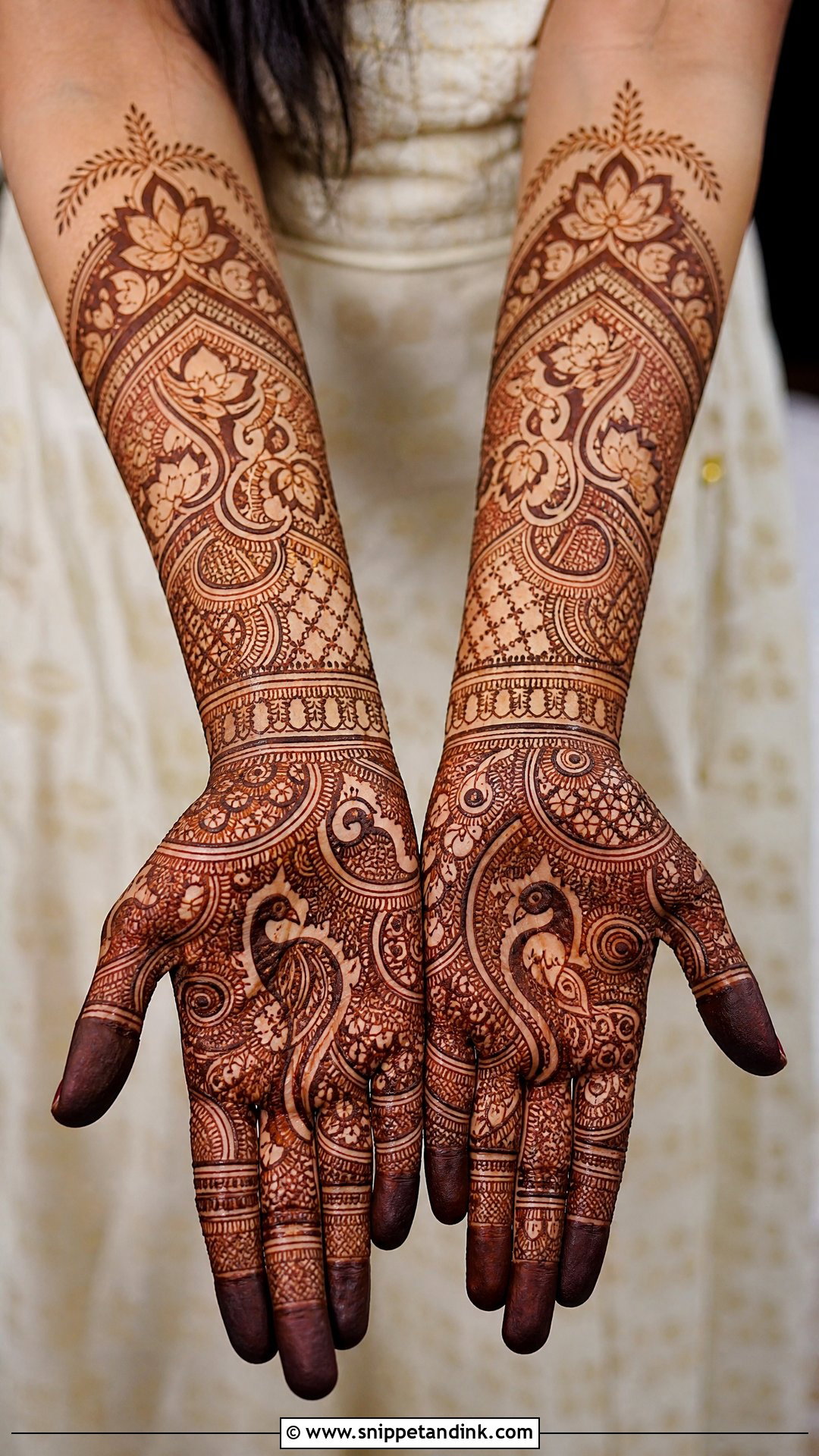
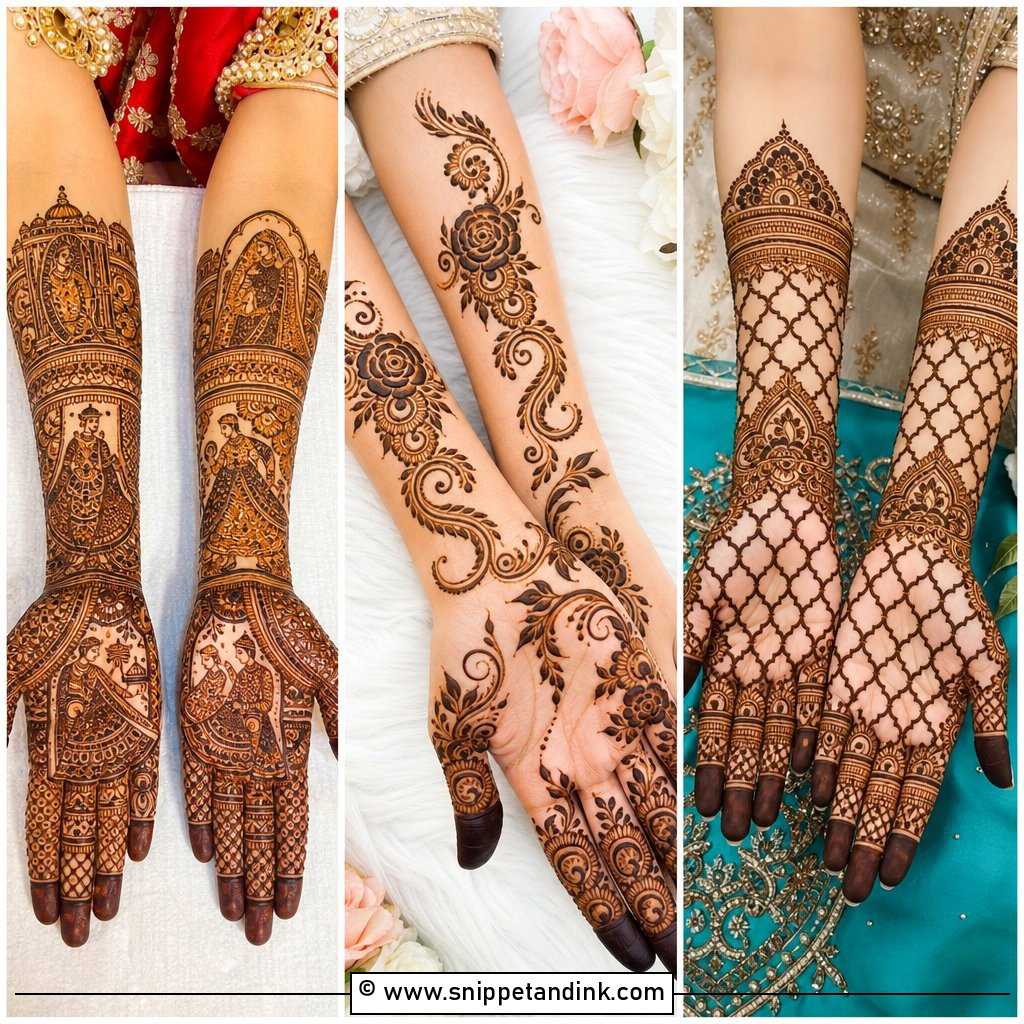
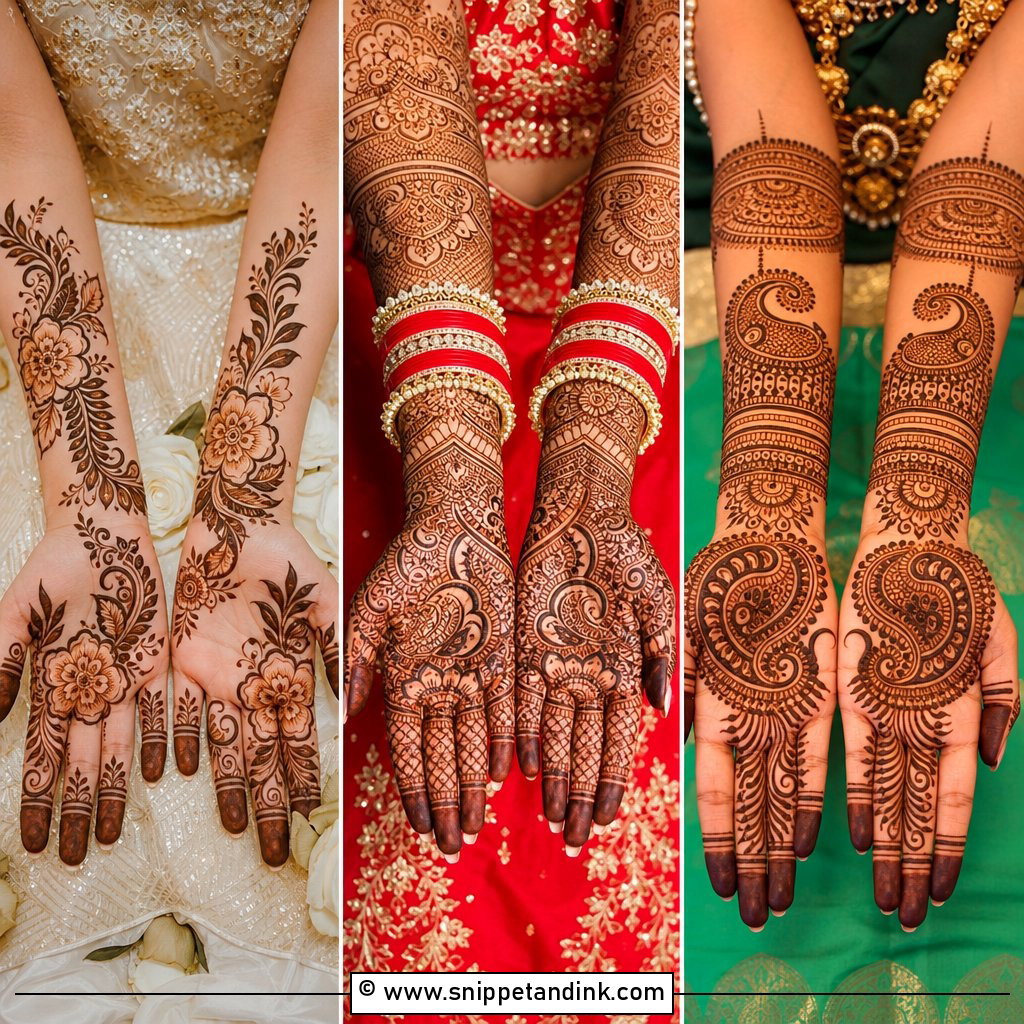
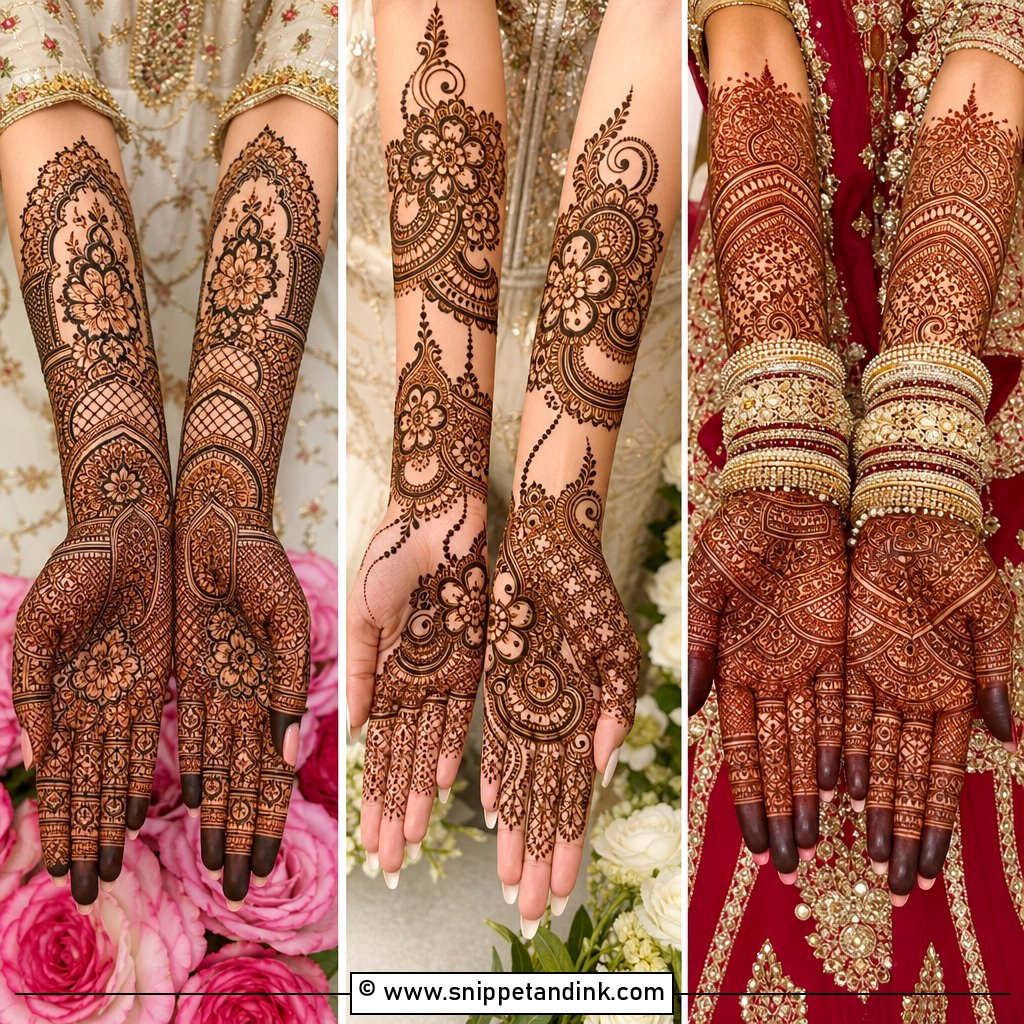
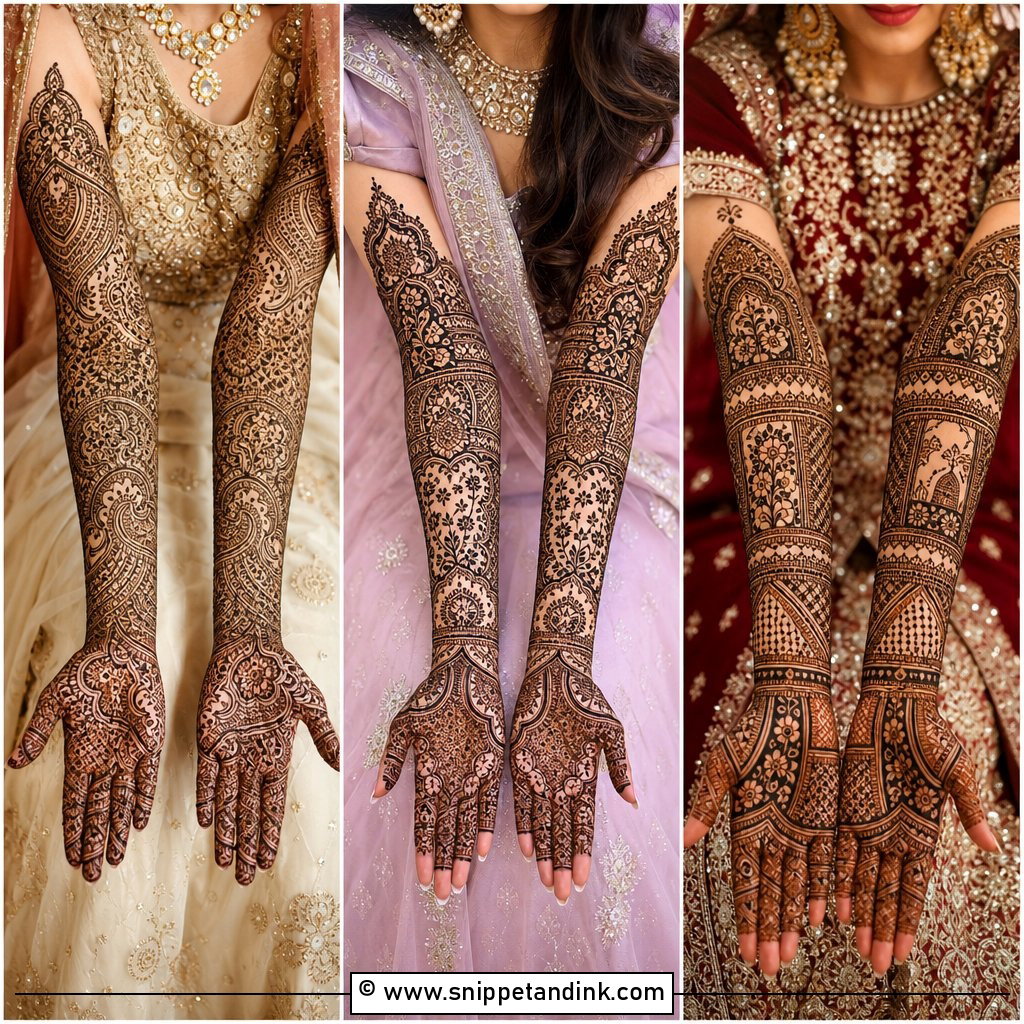
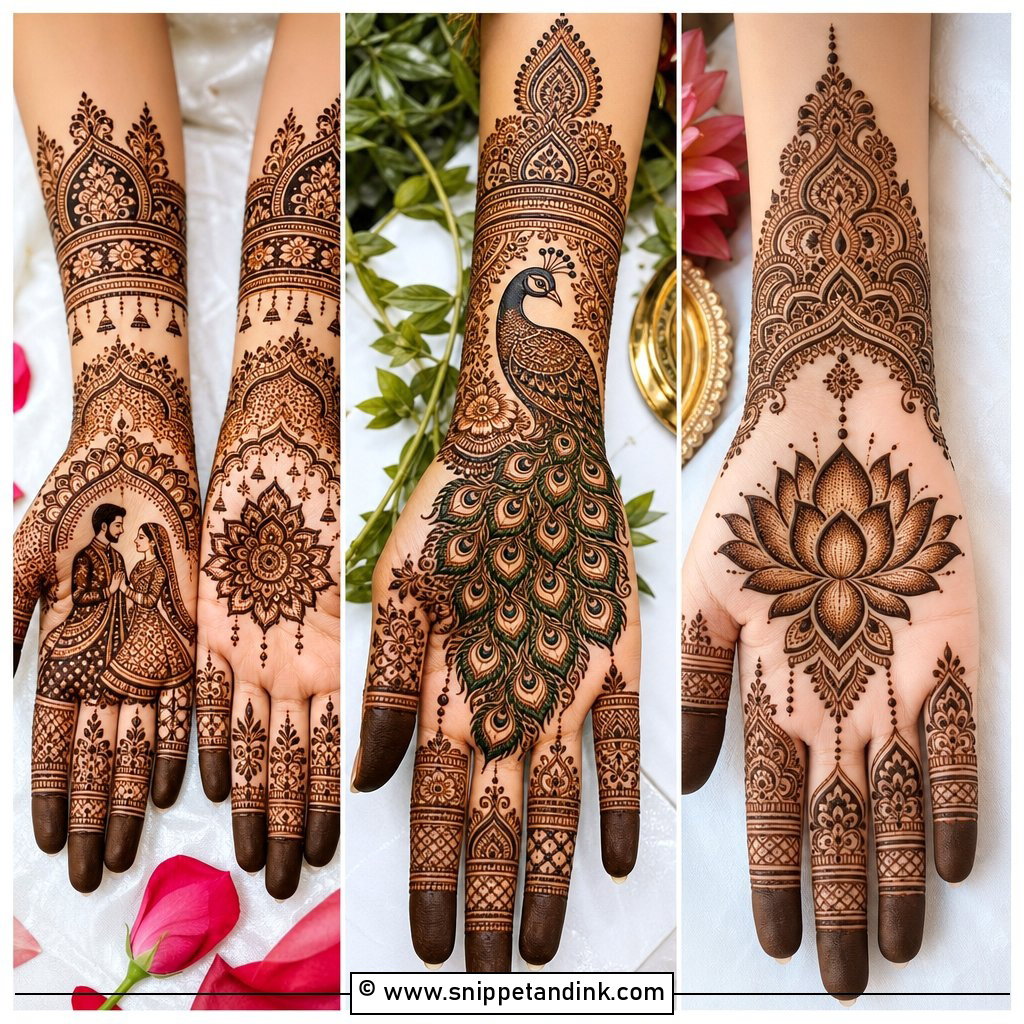
Full hand coverage is the classic Indian bridal look: filled fingertips, detailed palms and heavy wrist-to-forearm work, built from paisleys, florals, peacocks, small leaves and lace-like fillers. Both hands can mirror each other, or each can carry its own part of a story in the same style. It suits red, maroon, gold, green and ivory outfits. The detail only reads in photos if the big motifs have strong outlines and the small fillers stay in the background, so that’s how I build it, large shapes first and filler last.
2. Traditional Dulhan Mehndi Design
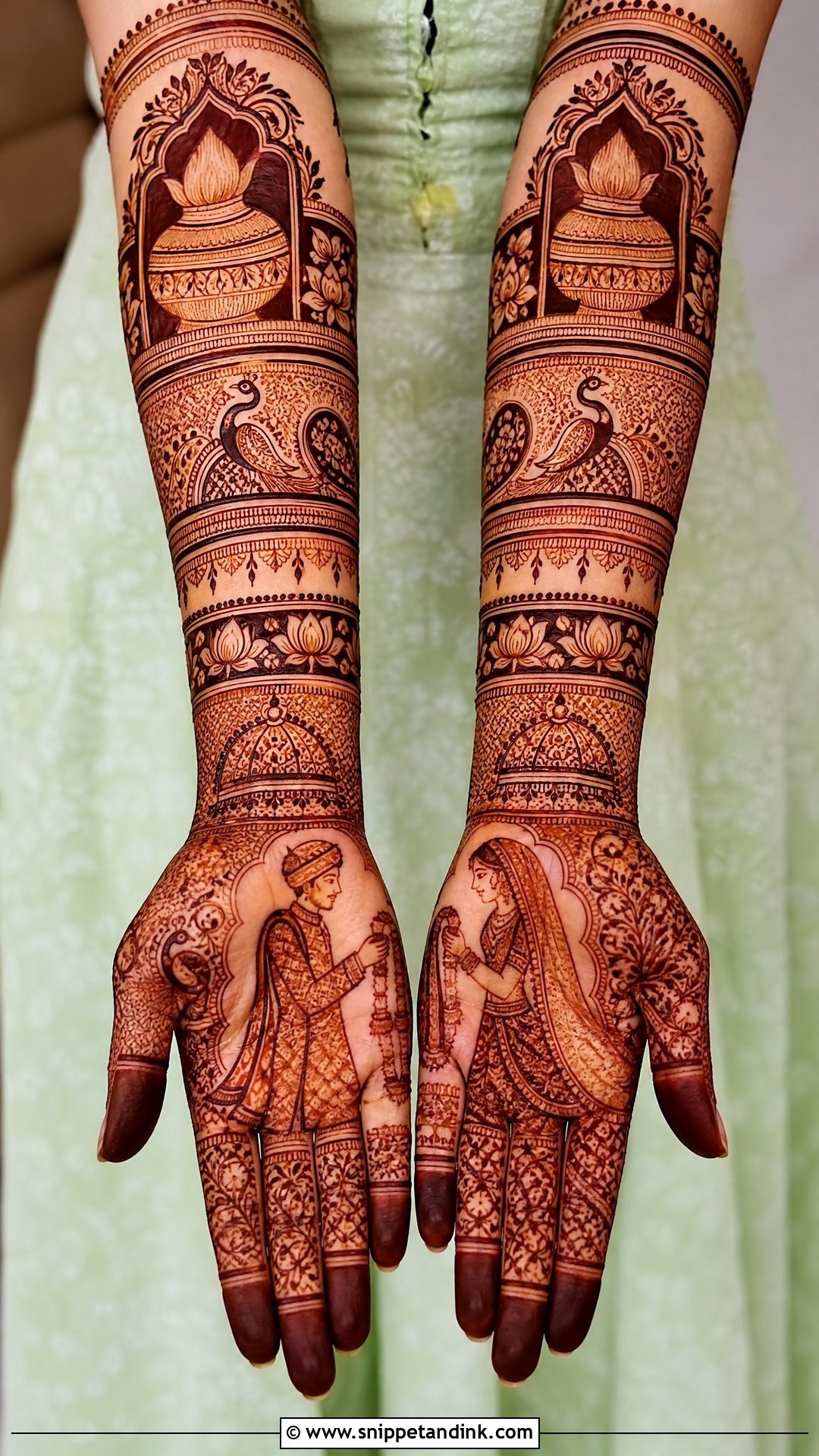
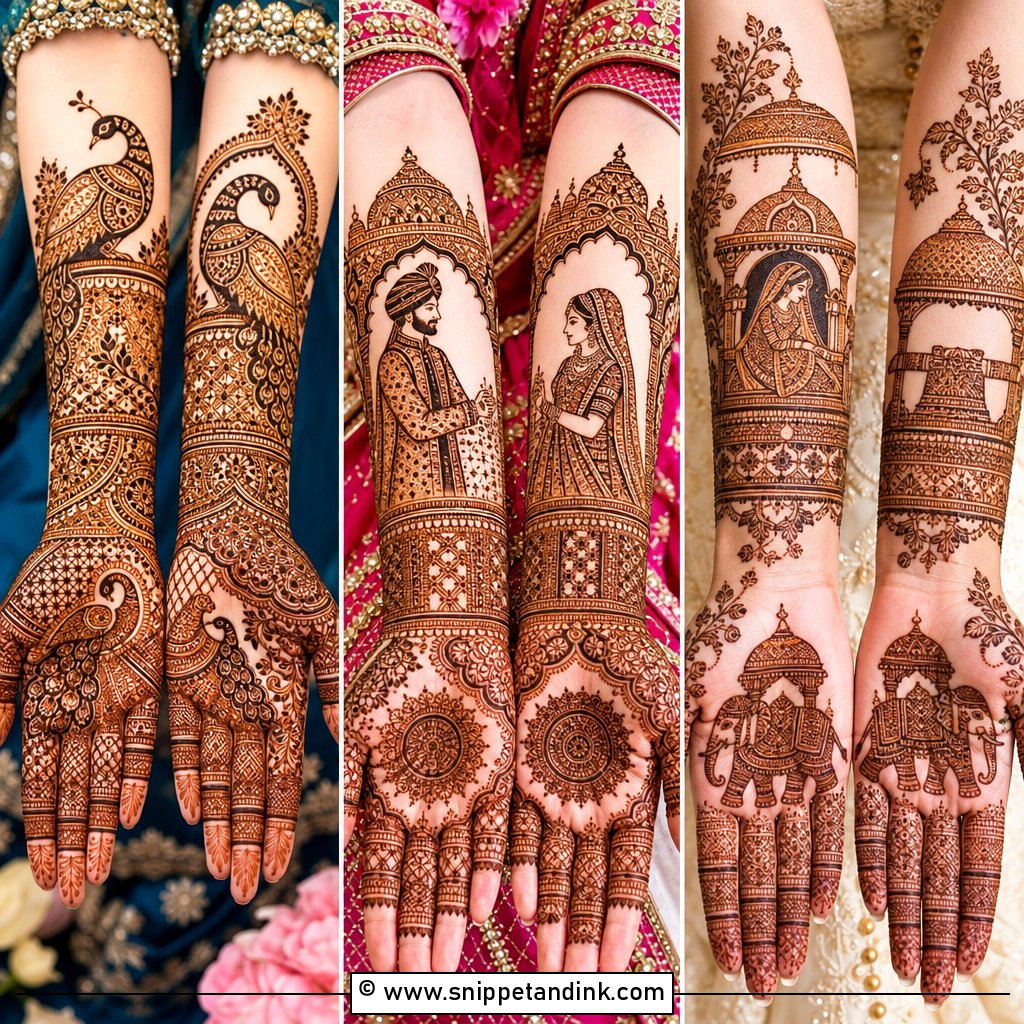
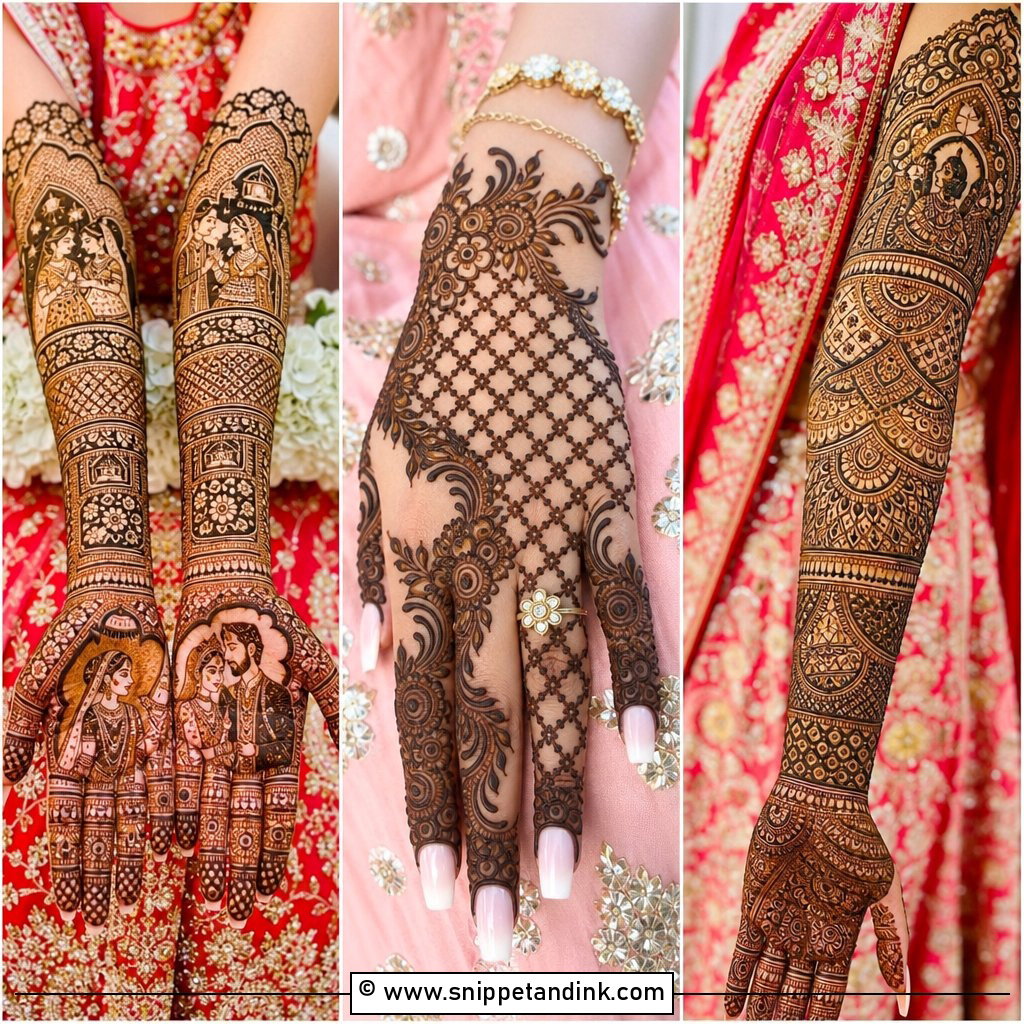
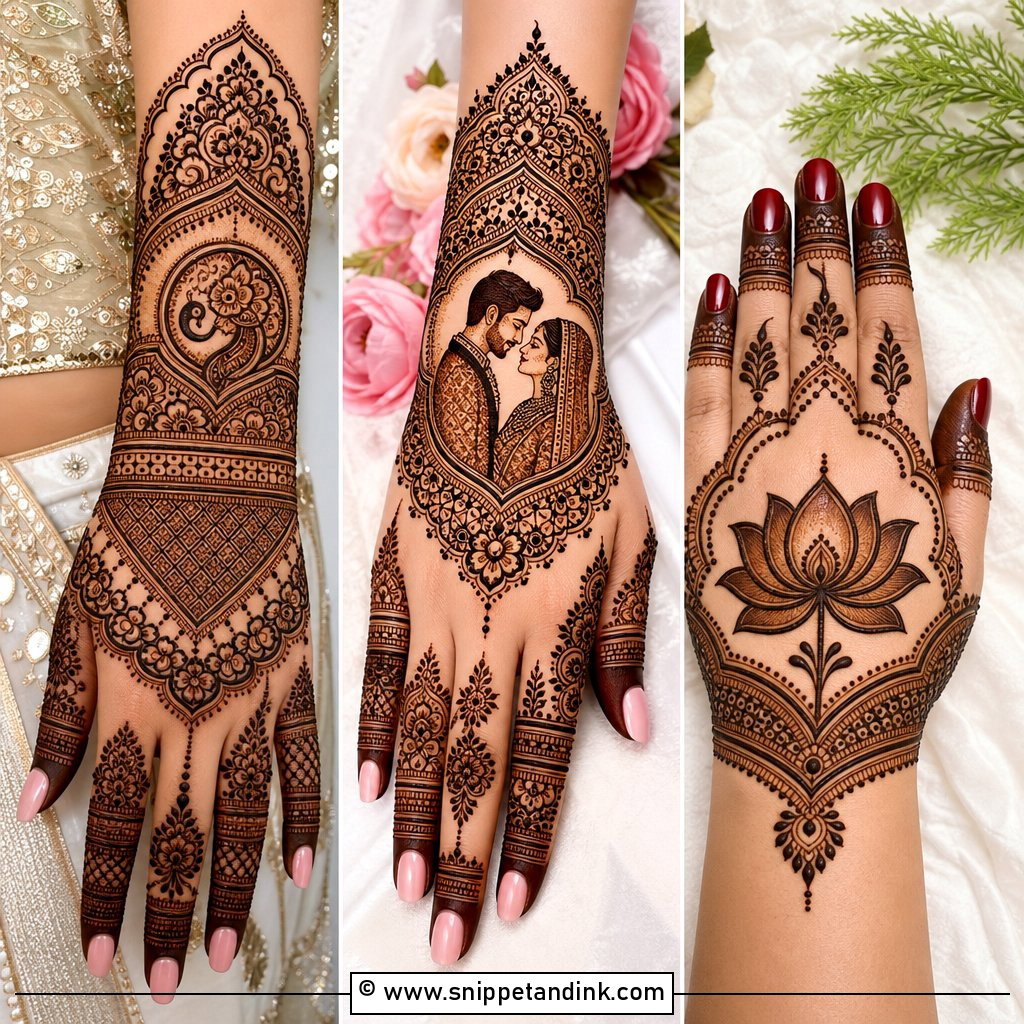
A traditional dulhan mehndi design ties the hands to the rituals. Bride and groom figures, kalash motifs, lotus patterns, peacocks, paisley bands and shaded florals cover the palms, backs, wrists and forearms. I usually put the dulhan on one palm and the dulha on the other so the pair balances. The surrounding detail stays fine and uncrowded, because the stain deepens and slightly thickens every line over the next two days, and crowded figures lose their faces.
3. Bride And Groom Mehndi Design
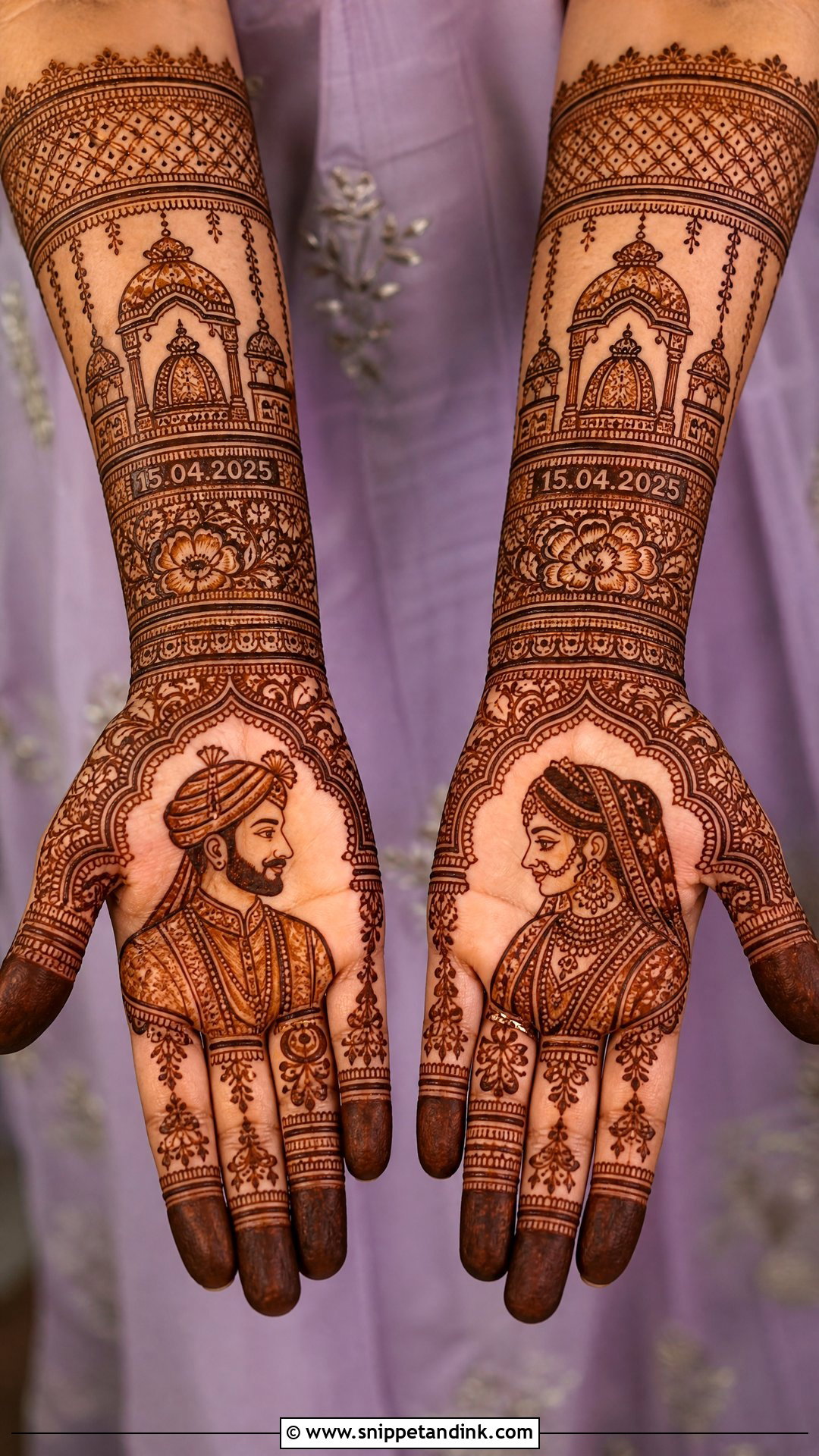
Here the palms become portraits: the bride in her veil on one, the groom in wedding attire on the other, with mandap arches, floral borders, paisley vines, jewellery chains and small symbols around them. Bring both hands together and they make a single scene, which is why photographers love it. It needs full palm and forearm coverage to give the figures room. I outline faces and outfits boldly so they’re readable from a step back, not only in a macro shot. Expect it to be drawn as a stylised portrait rather than a likeness.
4. Royal Rajasthani Bridal Mehndi Design
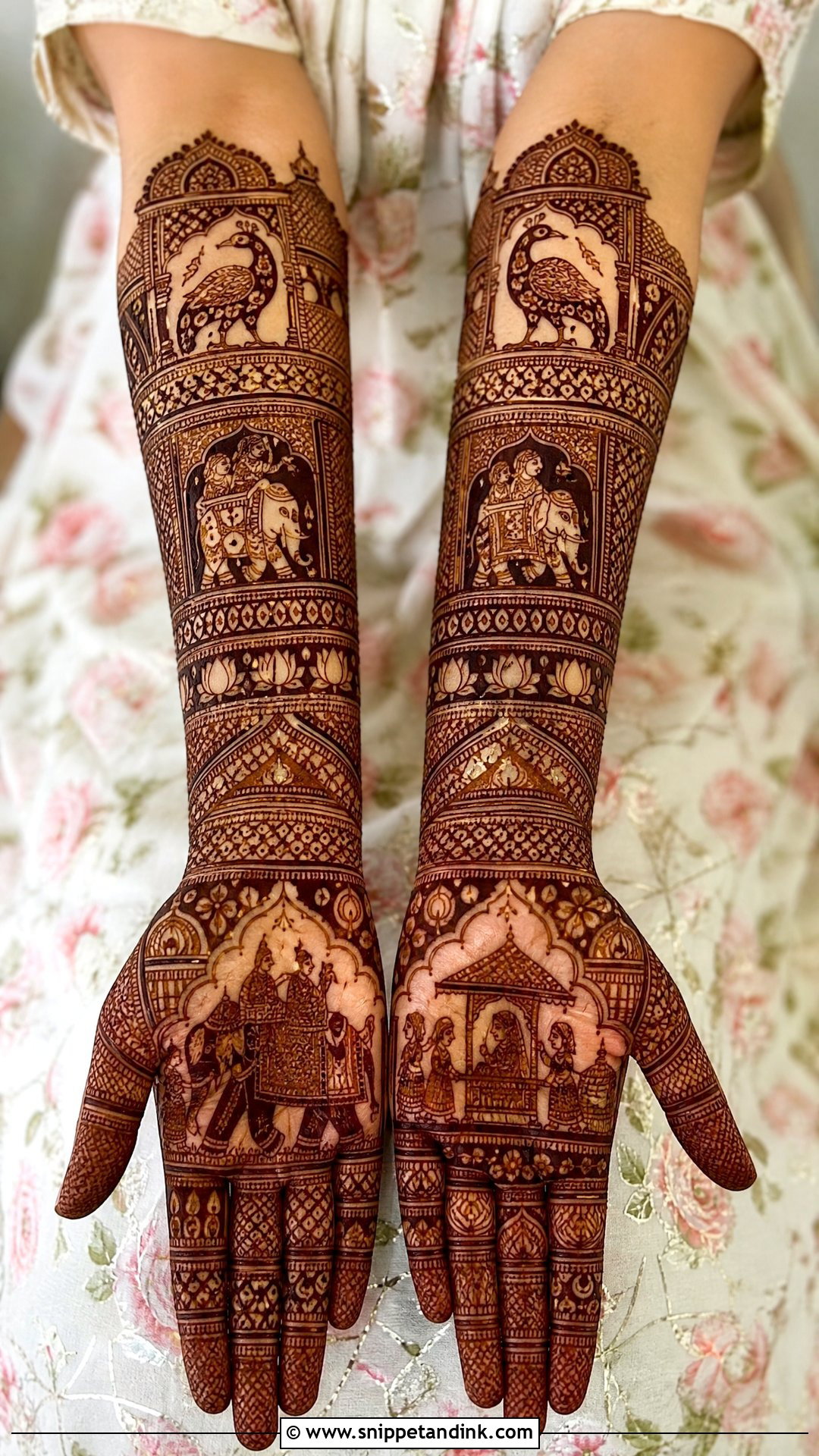
Rajasthani royal work is palace art on skin: elephants, arches, peacocks, doli scenes, mirrored symmetry and miniature-style panels. The palms take the central wedding artwork; the forearms fill with architectural jaali, lotus bands and curving paisley borders. Heavy embroidery, gota work, kundan and red-and-gold palettes all sit naturally beside it. It’s dense, but it has to be organised. I keep the main motifs large and push the fine filler into the background, which is what makes it look regal instead of busy.
5. Arabic Bridal Mehndi Design
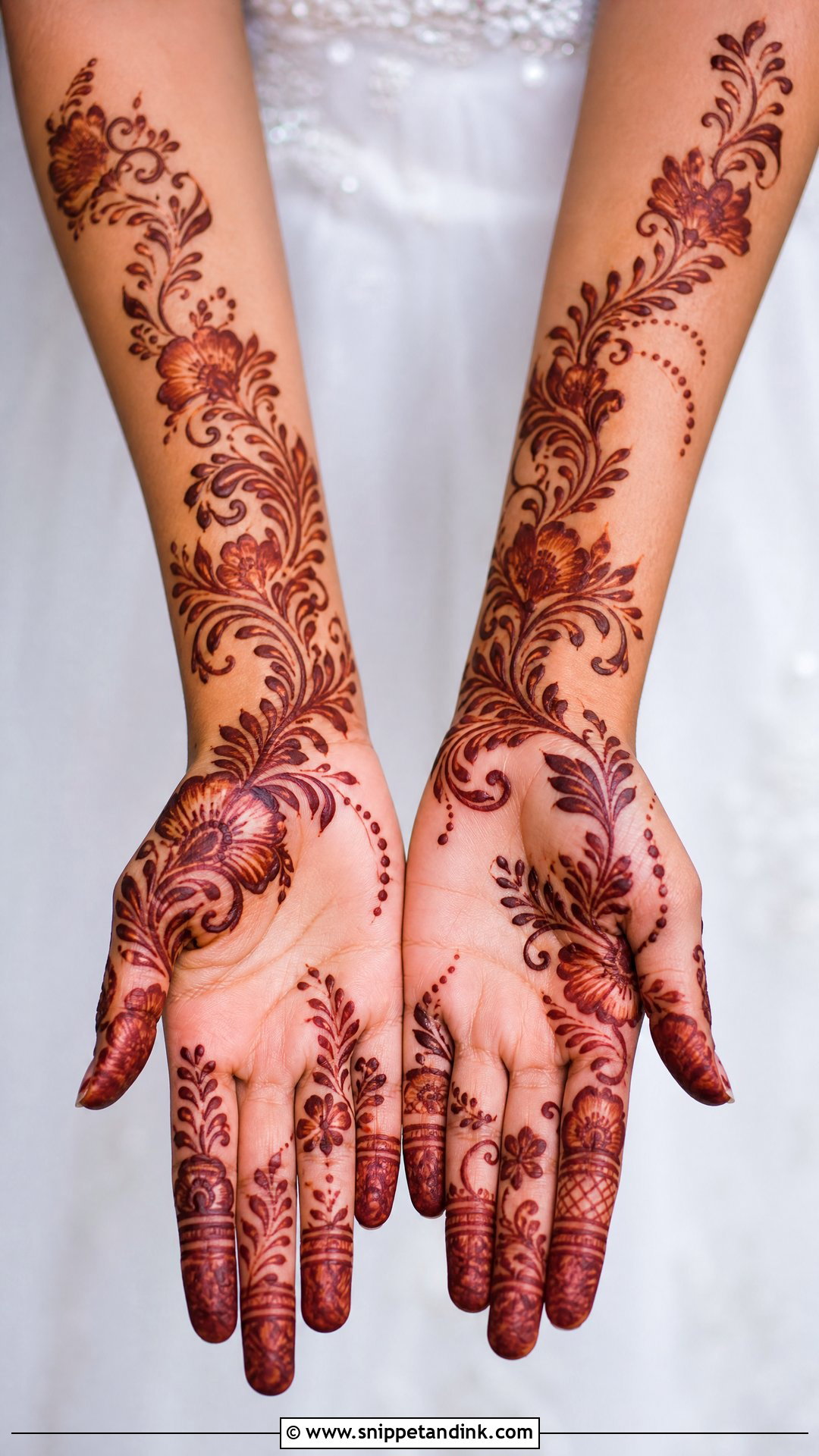
Arabic designs leave skin showing. Bold florals, leafy vines and shaded petals move diagonally across the hand, often from the wrist to the index finger on the back, with a matching floral arrangement on the palm. The larger motifs read easily in photos, and application is quicker than dense Indian work. For a wedding I add fuller fingertips and a wrist cuff so it doesn’t look like a festival design. It’s a good fit if you find long sittings hard.
6. Indo Arabic Bridal Mehndi Design
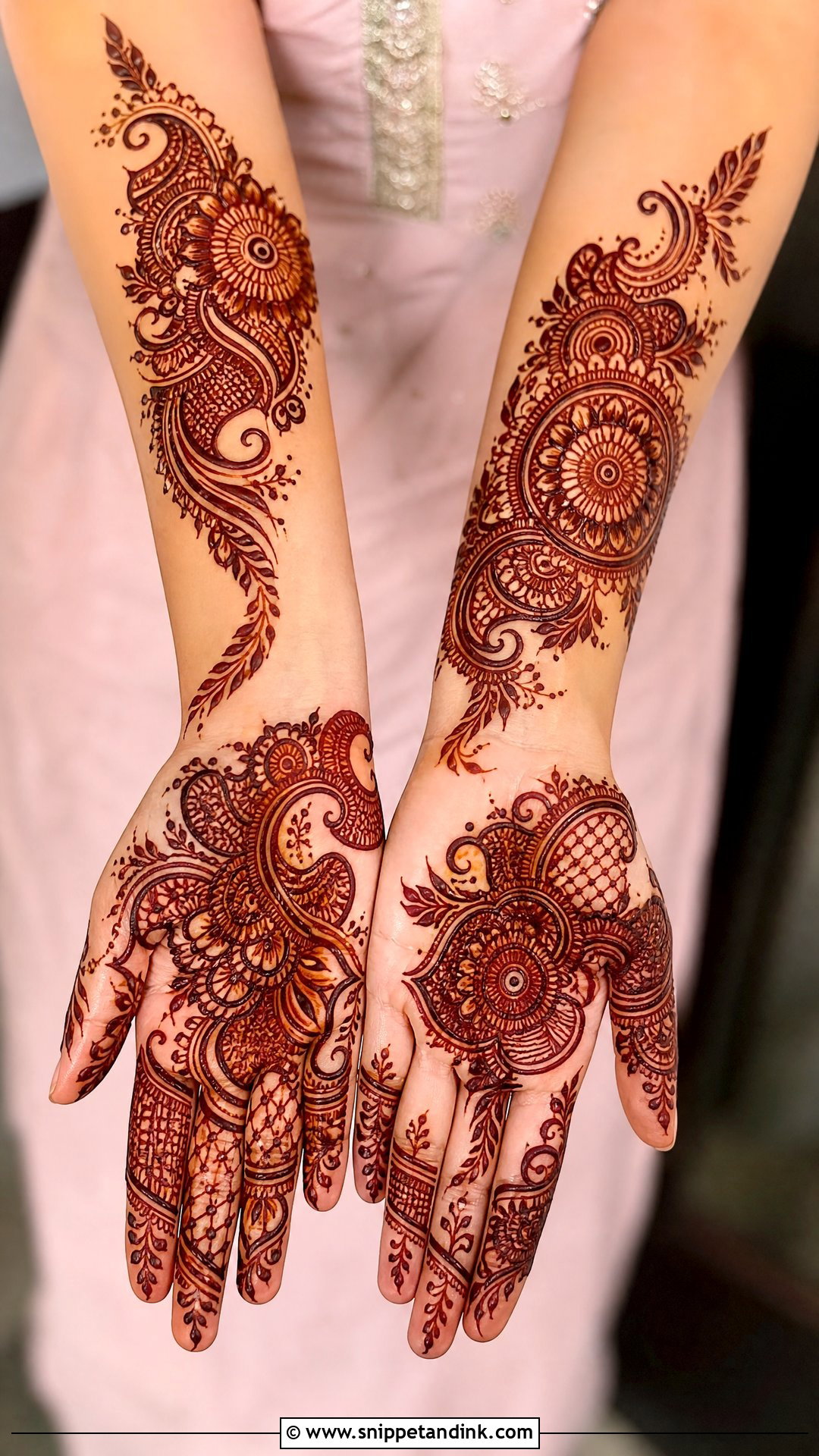
An Indo Arabic bridal mehndi design gives you the flow of Arabic henna with Indian richness inside it: floral trails, paisley clusters, mandala accents and fine inner filling. It’s noticeable without packing the hand. A layout I draw often puts bold flowers on the palm, fine jaali at the wrist and leafy trails across the fingers, and it works in full or half hand. Engagement ceremonies, nikkah events and modern Indian weddings all suit it.
7. Mandala Bridal Mehndi Design
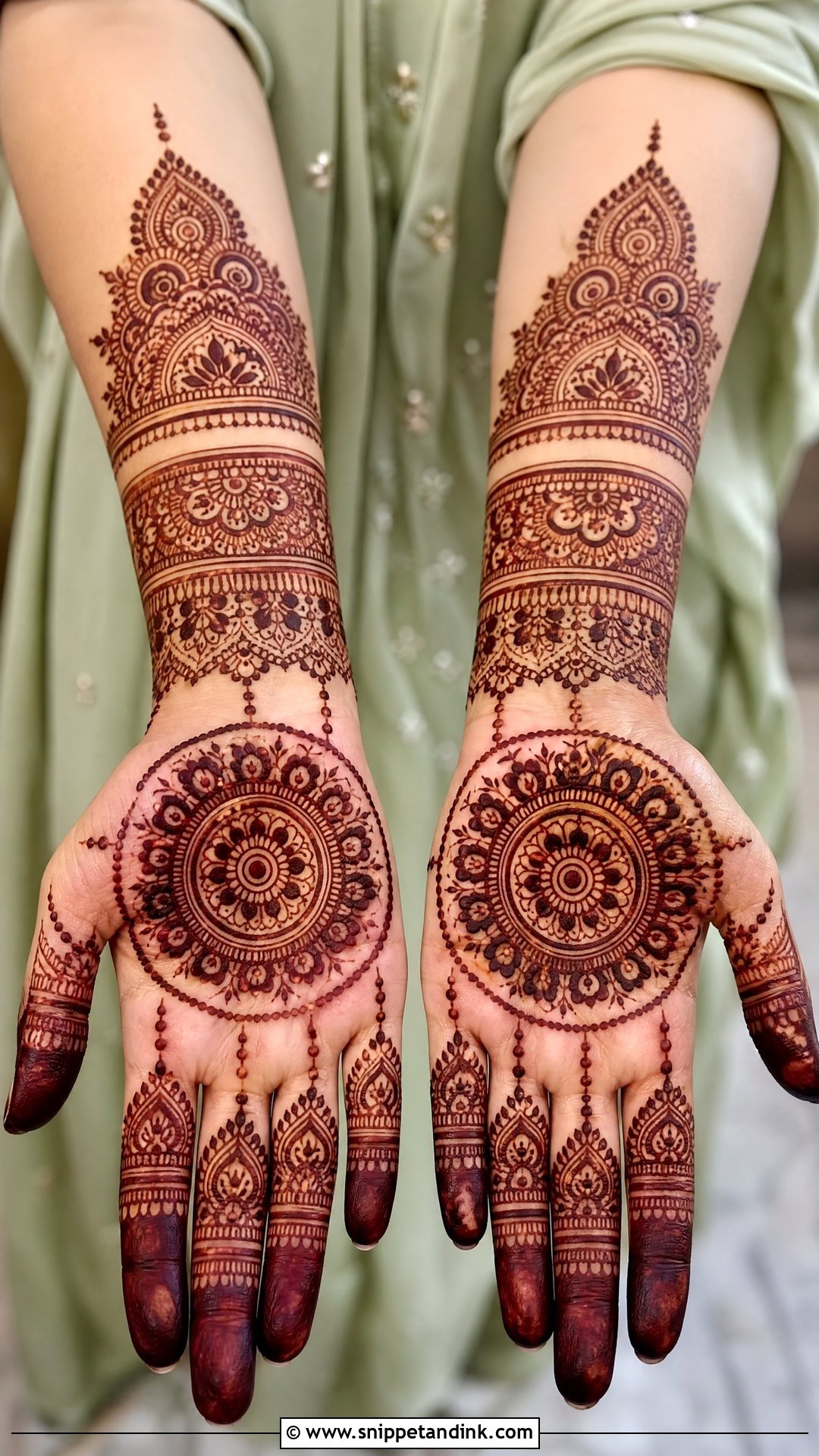
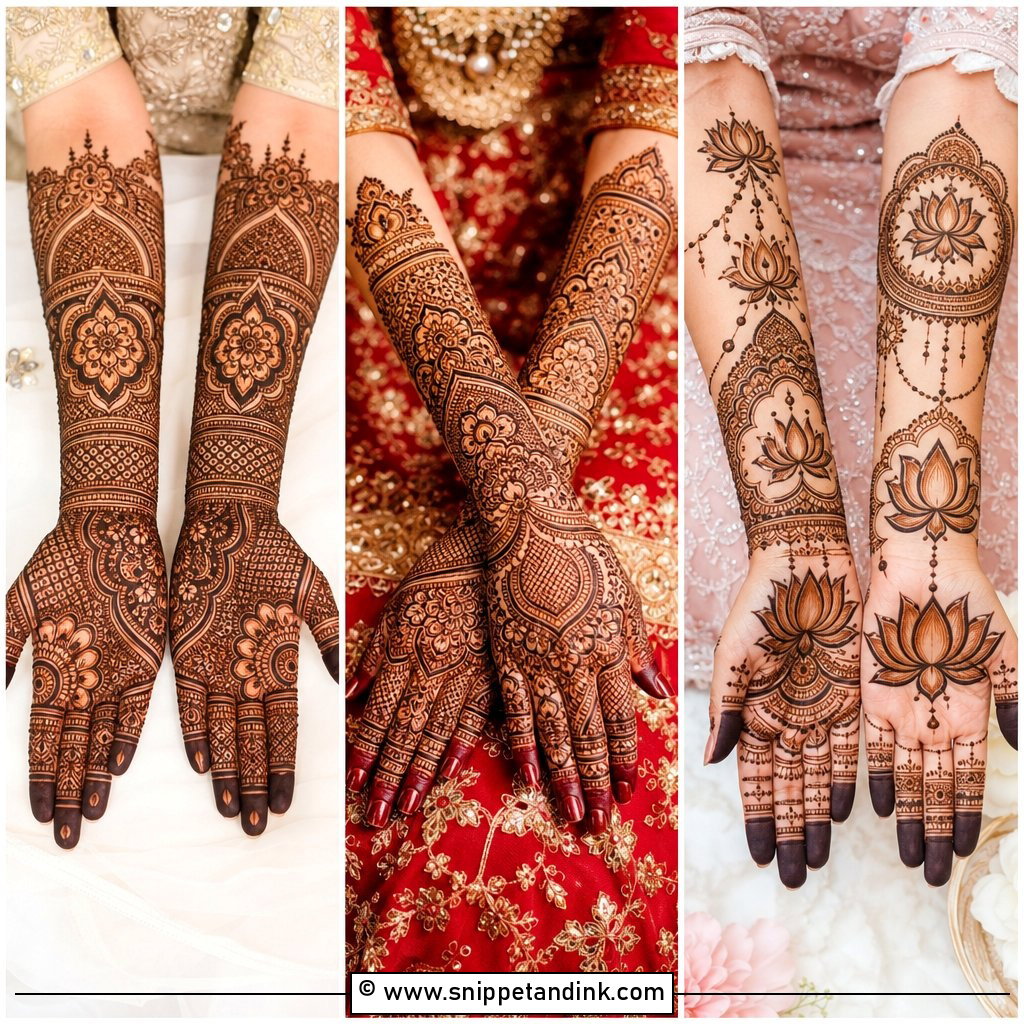
A mandala palm is structure without storytelling. The large circle sits in the centre, ringed by floral bands, dot chains and fine petals, with bracelet patterns at the wrist and coordinated bands, leafy tips and small geometric details on the fingers. With minimal jewellery the mandala becomes the main feature. Precision is the whole craft here. I mark the centre point and a few guide dots before drawing any ring, since even spacing is what separates a polished mandala from a lopsided one. For a fuller look, repeat circular motifs up the forearm.
8. Back Hand Bridal Mehndi Design
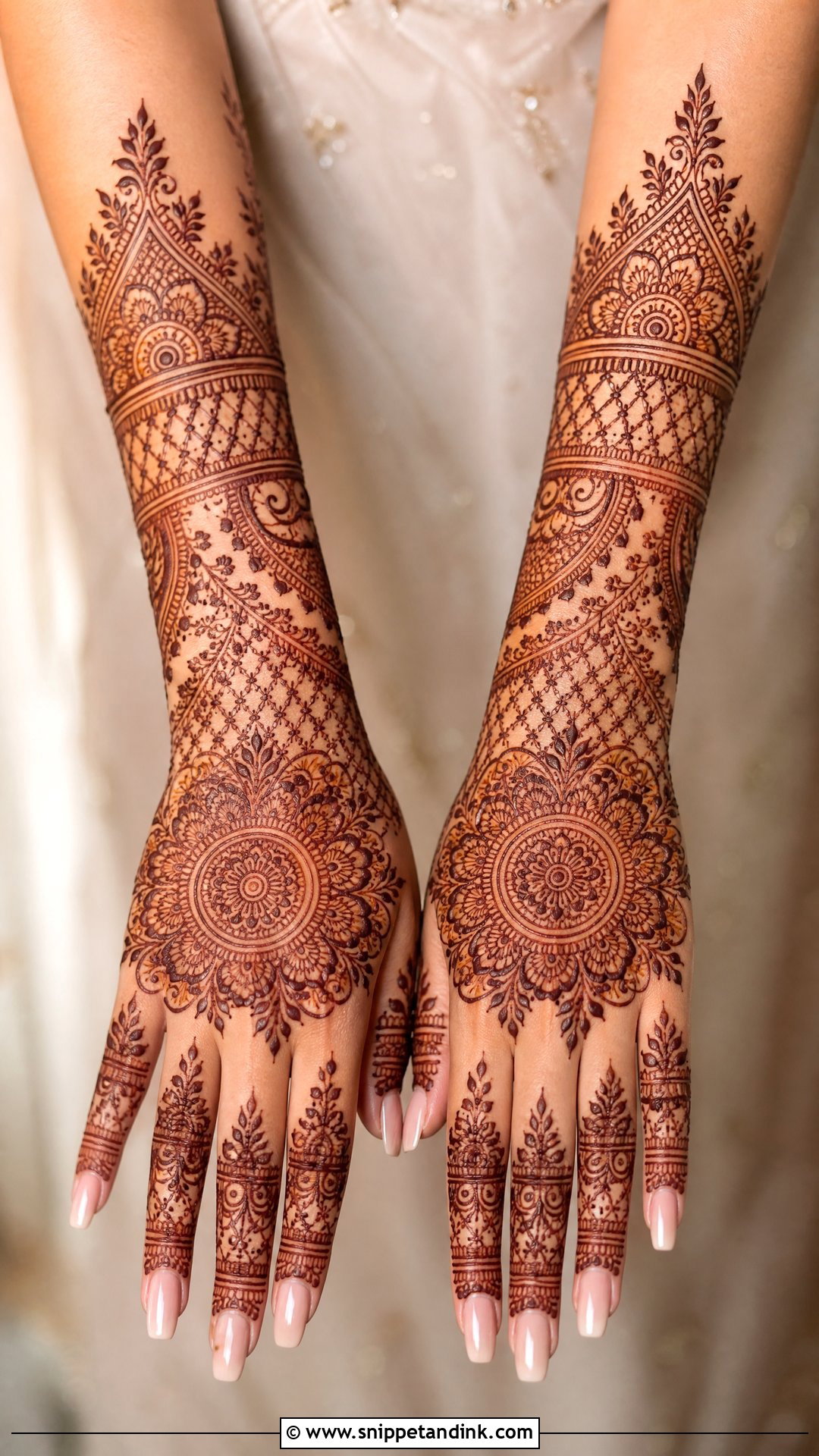
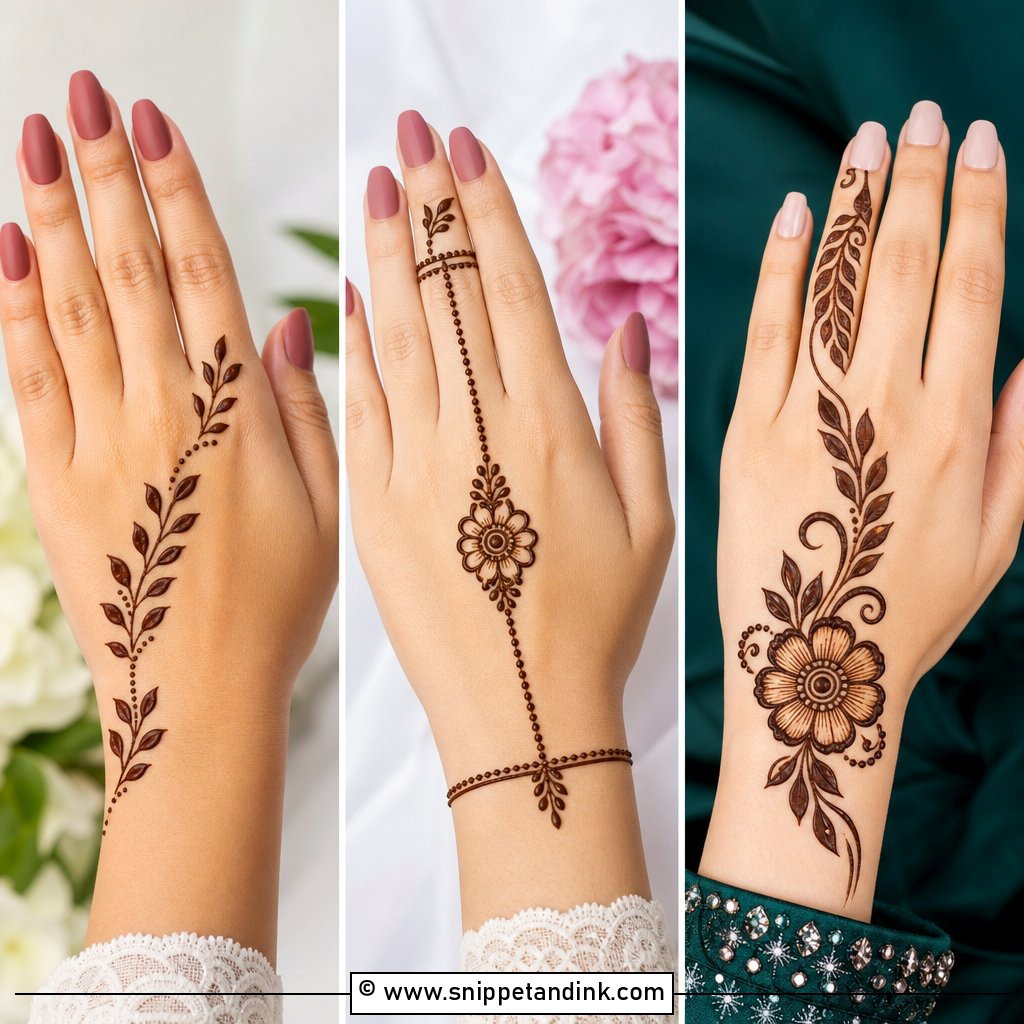
The back hand has to work with bangles, rings, kaleere and dozens of photos. I usually build from the centre of the back of the hand outward to the fingers and wrist, like jewellery, using mandalas, floral vines, jaali, leafy trails and bracelet cuffs. Dense fingers and wrist give a traditional look; a bold centre with lighter surroundings feels modern. Keep in mind that the back of the hand stains lighter than the palm, so slightly bolder lines here pay off.
9. Front Hand Bridal Mehndi Design
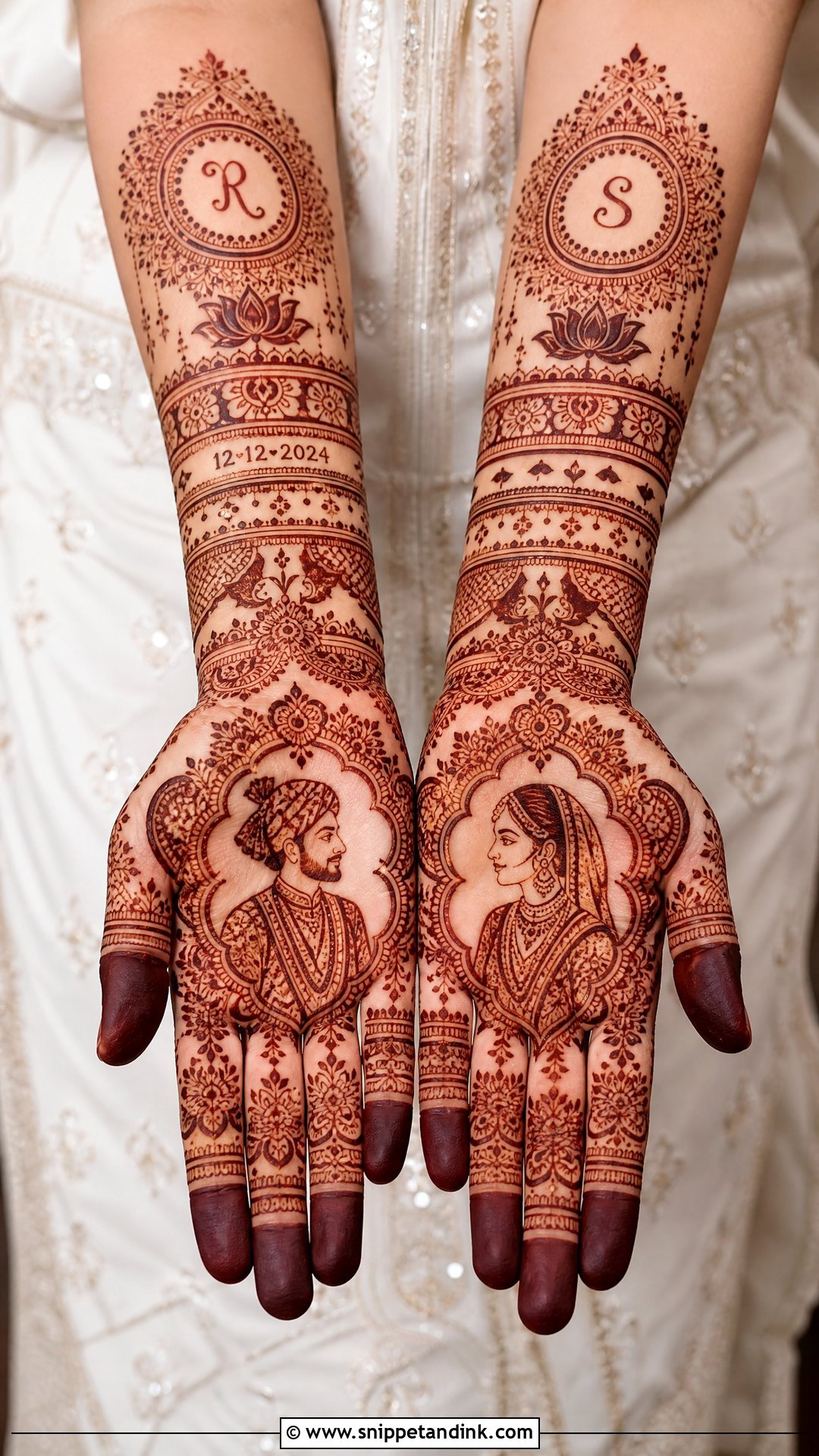
Palms hold the meaning: portraits, mandalas, initials, dates, lotus motifs, paisleys and sacred symbols. A strong front-hand layout connects from fingertips to wrist instead of sitting in separate blocks. Dense fingertips stain deepest, while the palm carries the larger artwork, and choodi-style bands or floral cuffs finish the wrist. The palm is also where tiny filler causes the most trouble; the thick skin stains so dark that cramped gaps simply fill in, so I keep palm motifs open and clear.
10. Minimal Bridal Mehndi Design
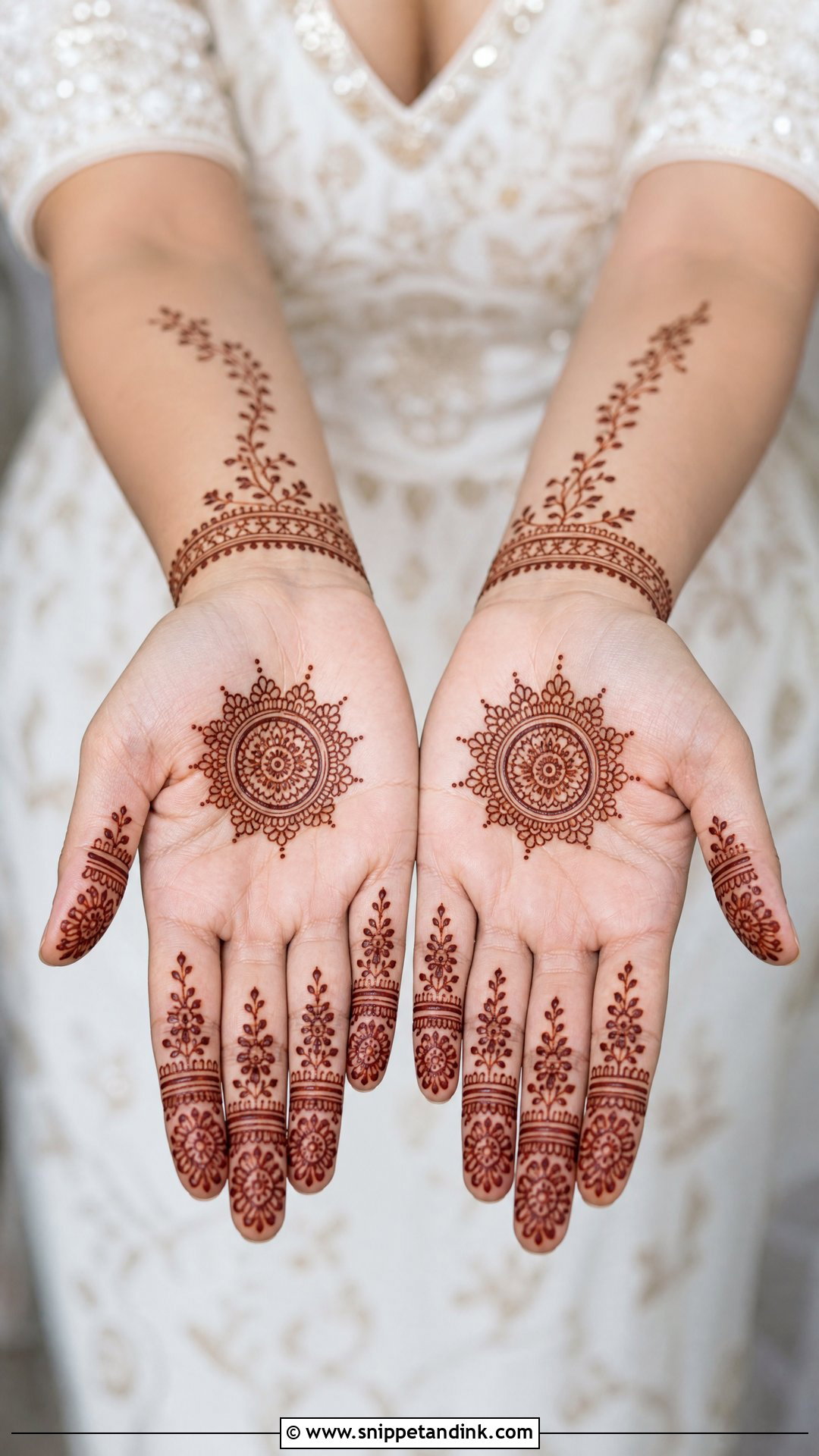
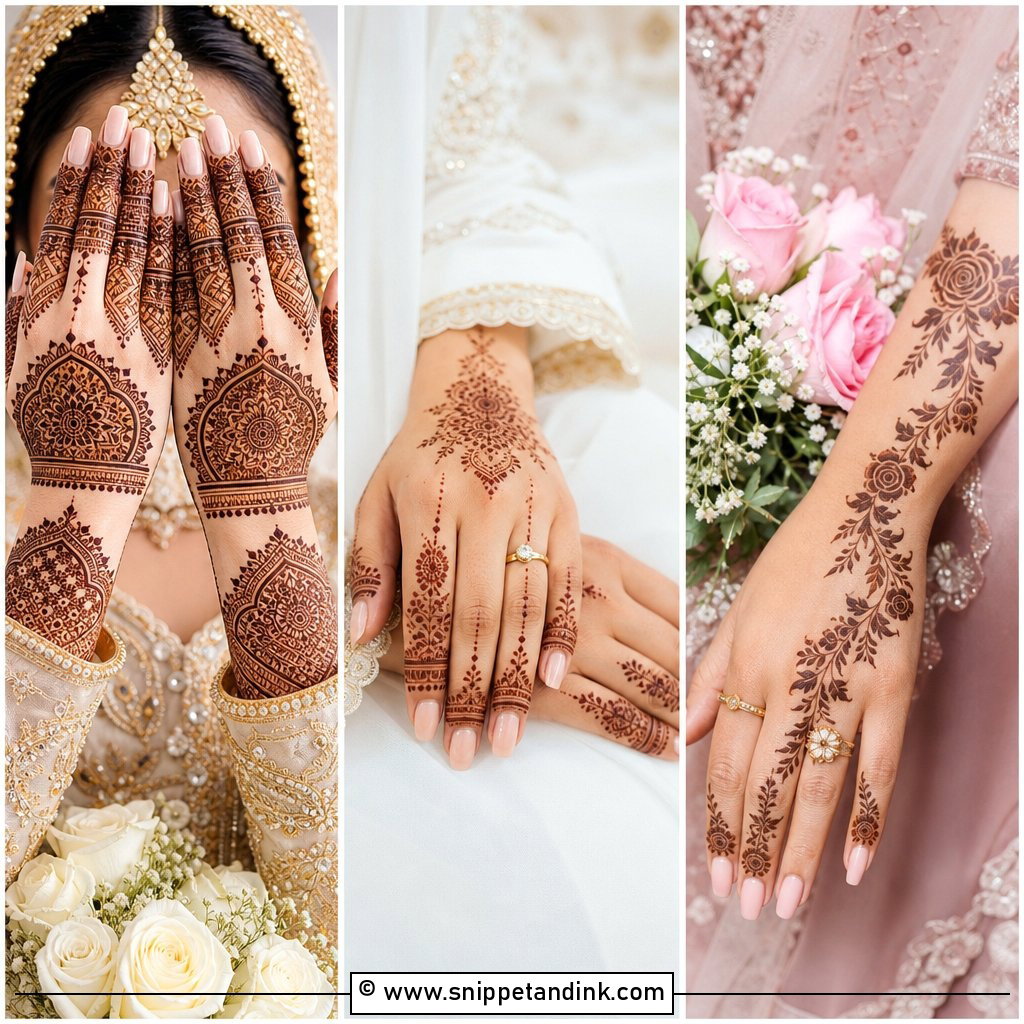
Minimal bridal mehndi is about breathing room, not plainness: a small palm mandala, fine finger detail, delicate wrist bands and simple floral trails. It suits intimate weddings, registry ceremonies, destination weddings and brides whose jewellery or nail art should lead. It’s also kinder to a long wedding schedule, since it takes less time to apply and dry. One strong focal point per hand, crisp lines and balanced empty space are what make it bridal.
11. Heavy Bridal Mehndi Design
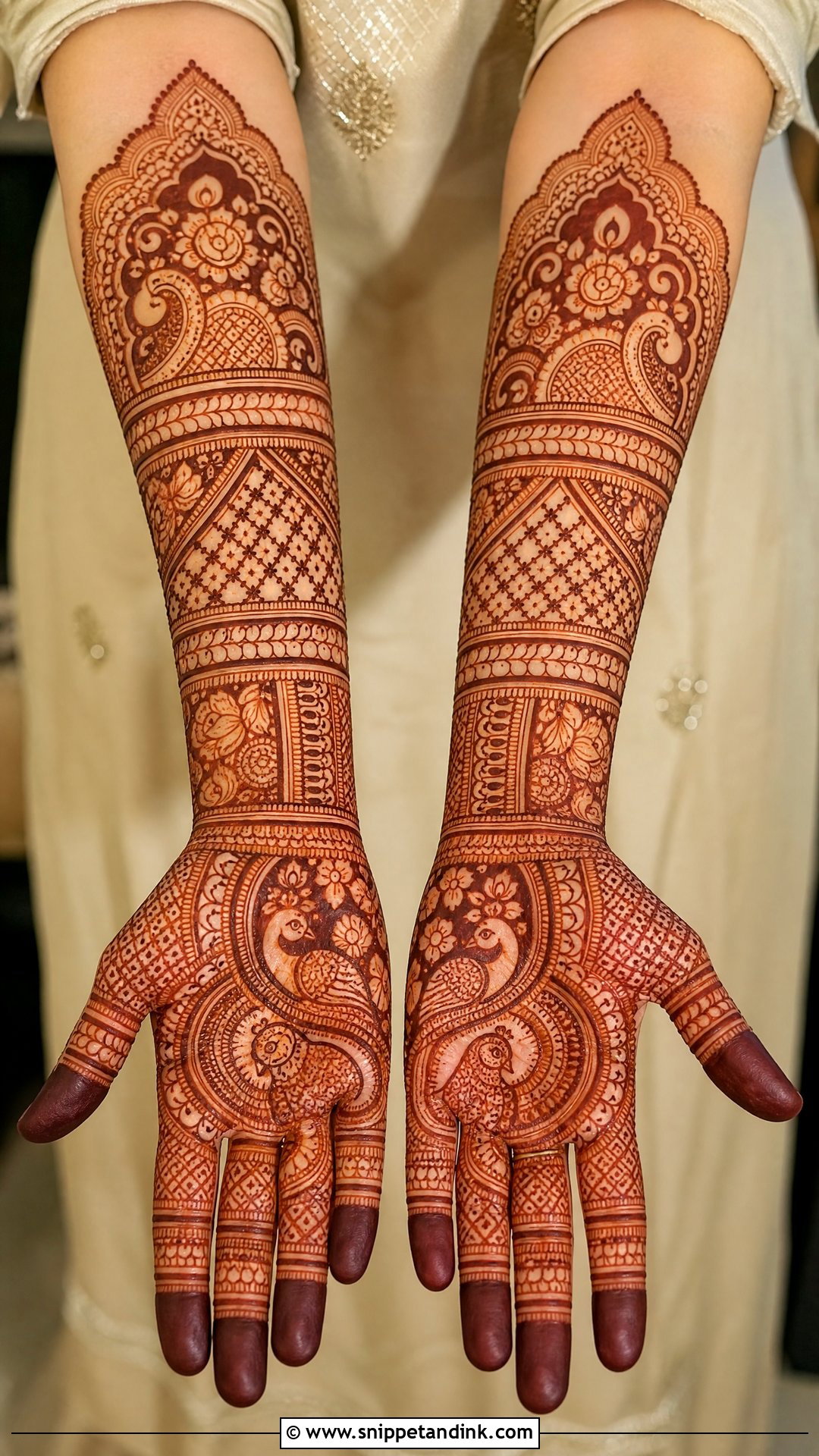
Heavy mehndi is packed from fingertips to forearms with dense florals, peacocks, paisleys, jaali panels, leaf fillers, mandala layers and traditional borders. It still needs a layout. I divide the hand into sections before drawing so each area has its own job, and I put bigger central motifs among the fine detail rather than spreading the detail evenly everywhere. More paste on the skin gives a very dramatic overall stain, which suits heavy lehengas, layered jewellery and traditional ceremonies.
12. Simple Bridal Mehndi Design
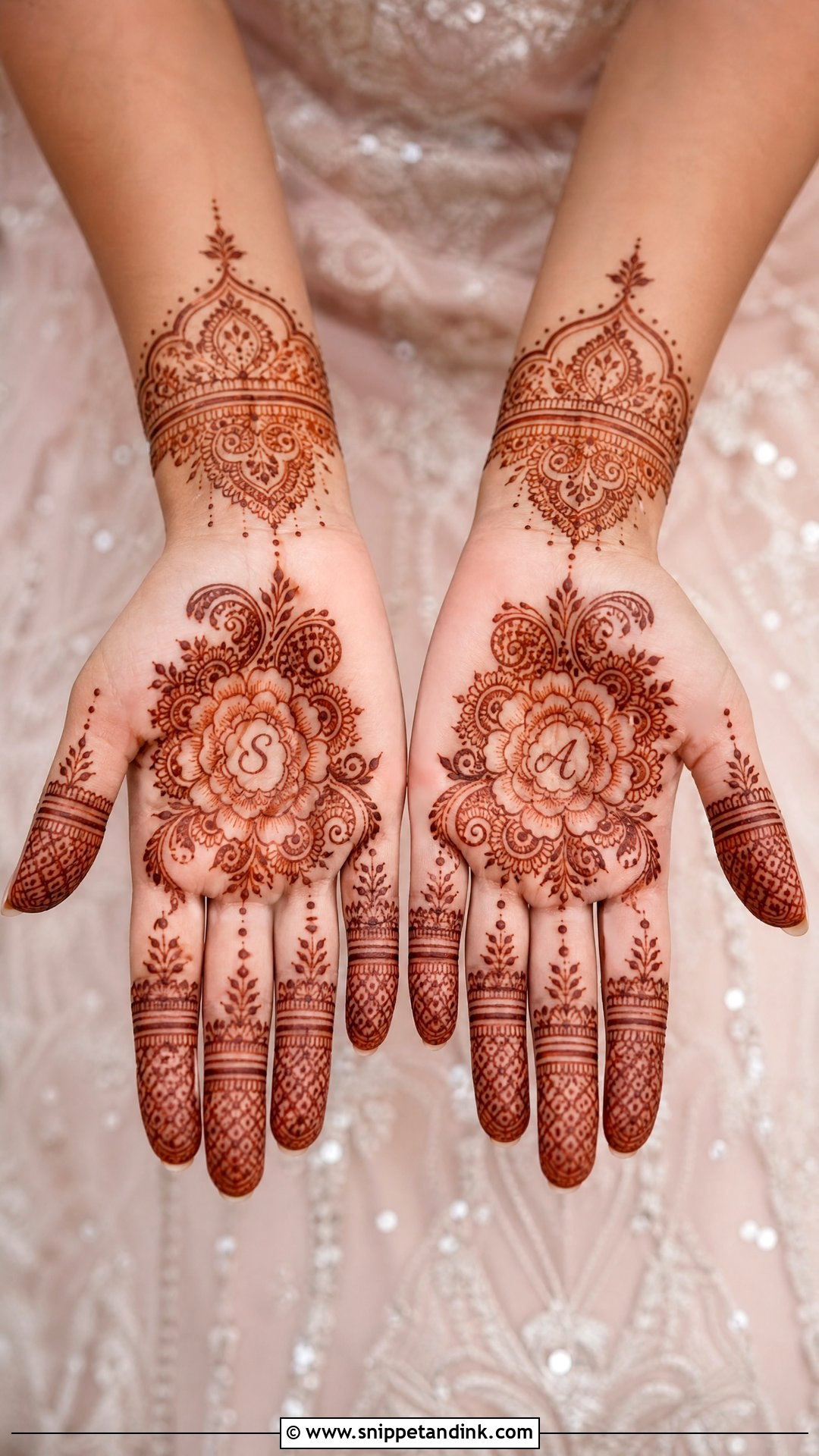
Simple doesn’t have to mean sparse coverage. A central palm motif, floral borders, clean finger patterns and a soft wrist cuff can still cover both hands; the spacing is what keeps it light. It’s a sensible pick if heavy patterns feel overwhelming or your application time is short, and it suits pre-wedding functions and small ceremonies. One personal detail, such as initials, a tiny date or a small lotus near the wrist, lifts it from everyday to bridal.
13. Peacock Bridal Mehndi Design
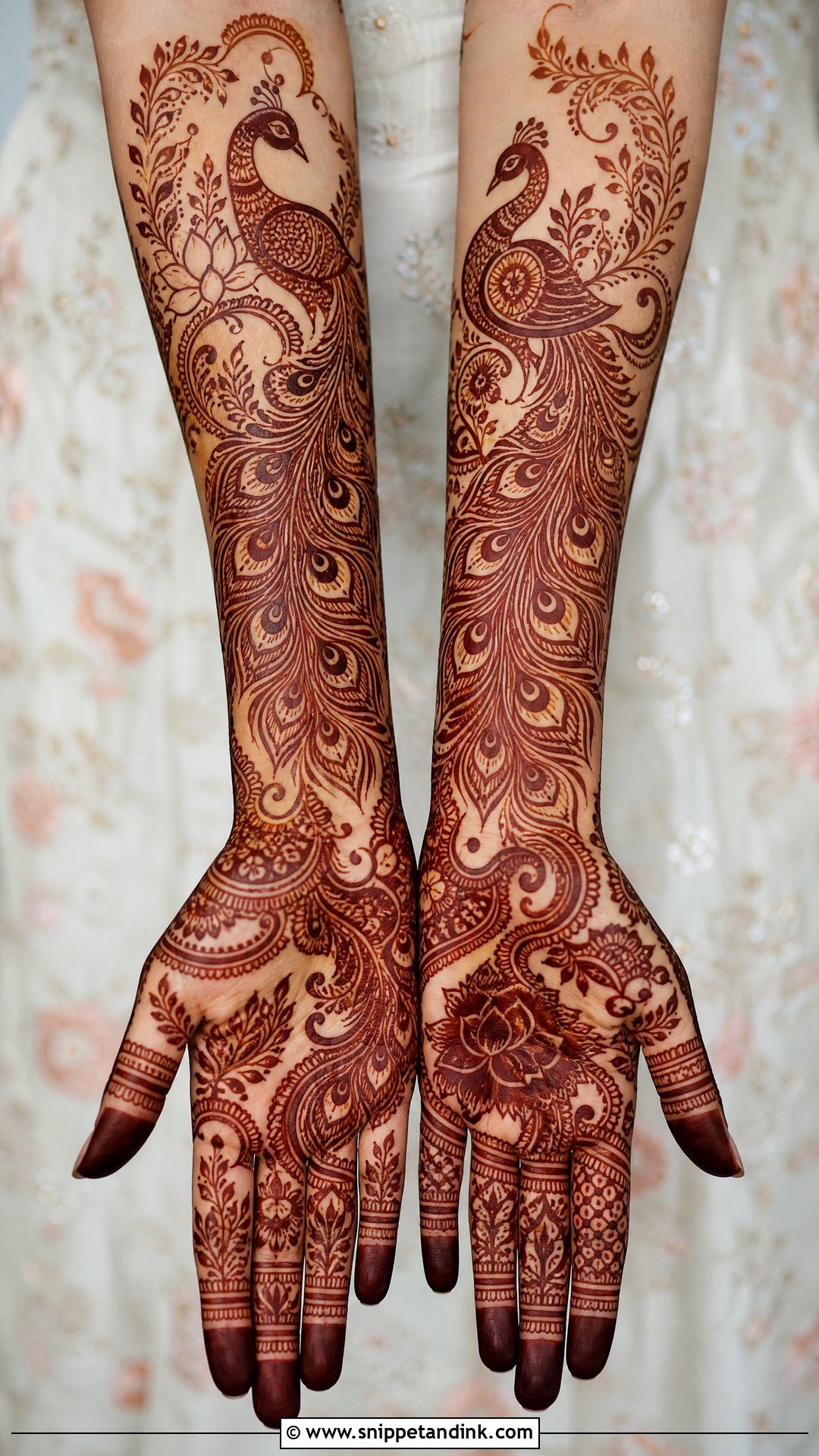
A peacock bridal mehndi design brings movement and a royal feel without needing portraits. The bird can sit on the palm, wrist or forearm, its feathers flowing into paisleys, vines and curved borders; in a full-hand version, one large peacock rides each arm with feather-like details on the fingers. Pair it with lotus flowers and open space for a softer look, or fill the feathers with fine lines and dots for a heavier one. Everything depends on the neck curve. If that line is hesitant, the peacock looks like a duck, so I draw it in one confident stroke.
14. Lotus Bridal Mehndi Design
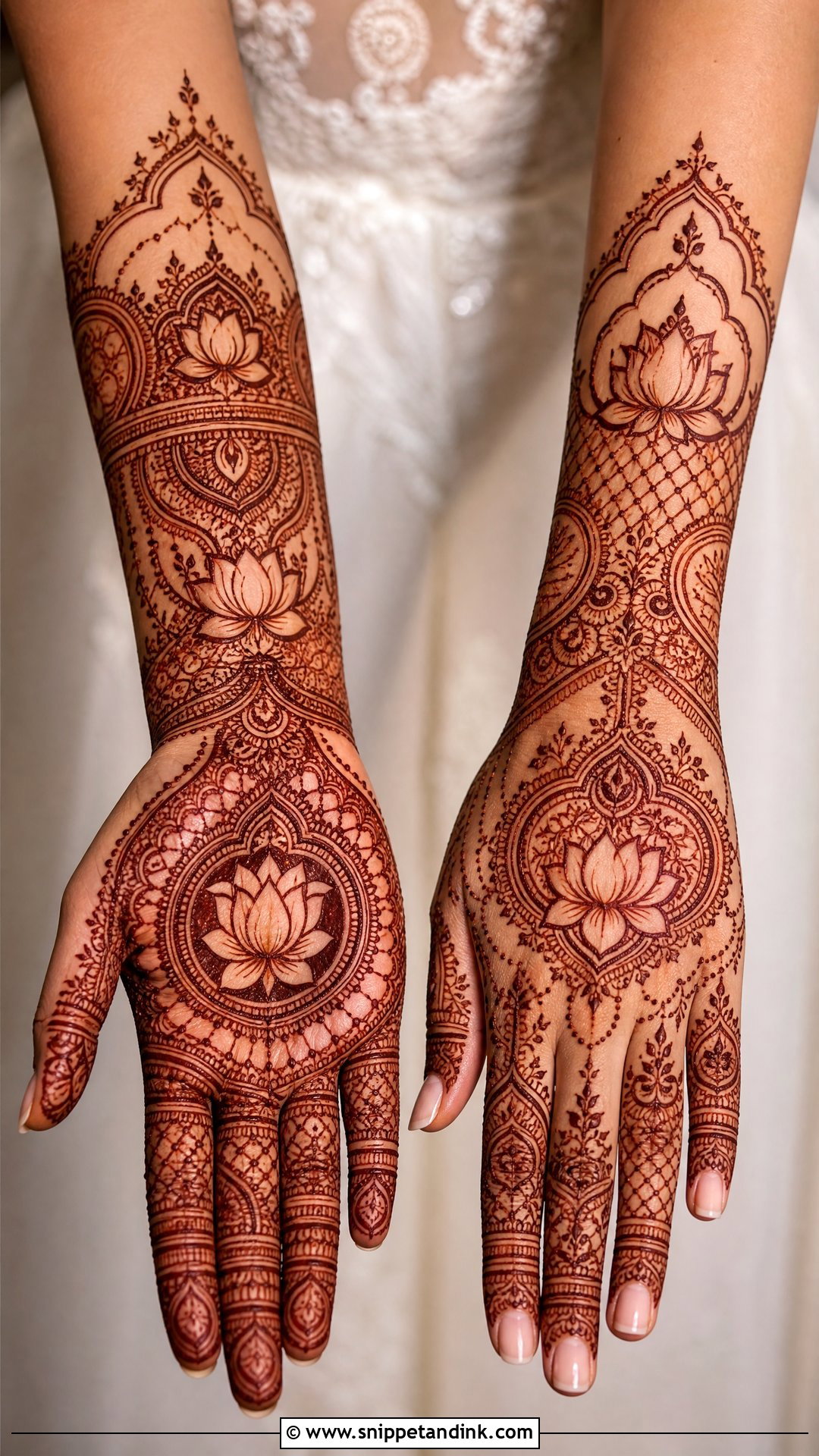
The lotus has a strong, simple shape, so it works in heavy and minimal layouts alike. It can sit in the centre of the palm, along the wrist border or across the forearm as layered floral bands, and matching lotus mandalas on both palms look balanced. For bridal work I combine open petals with paisleys, jaali, dotted chains and fine leafy fillers. Temple jewellery, silk sarees, embroidered lehengas and pastels suit it. Outline the petals boldly; thin petal lines tend to fade into the filler once the stain develops.
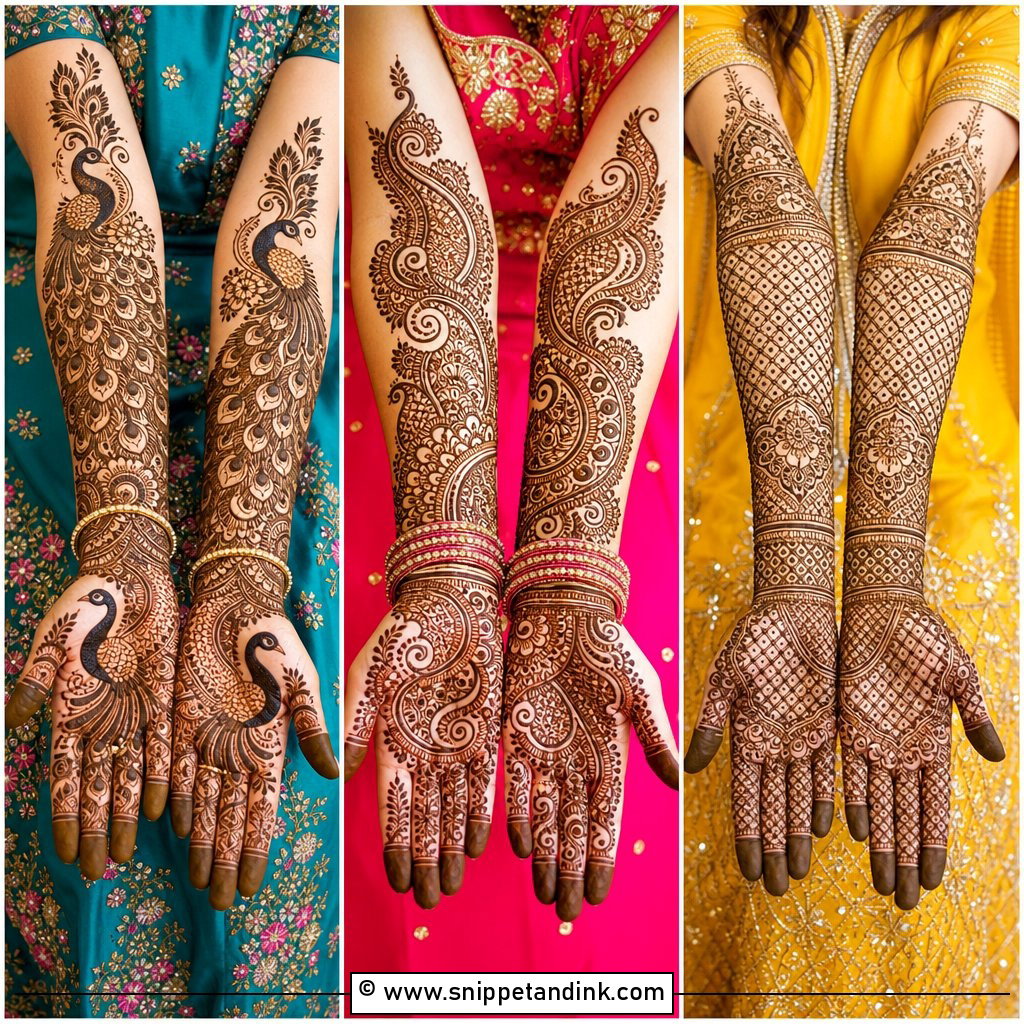
15. Paisley Bridal Mehndi Design
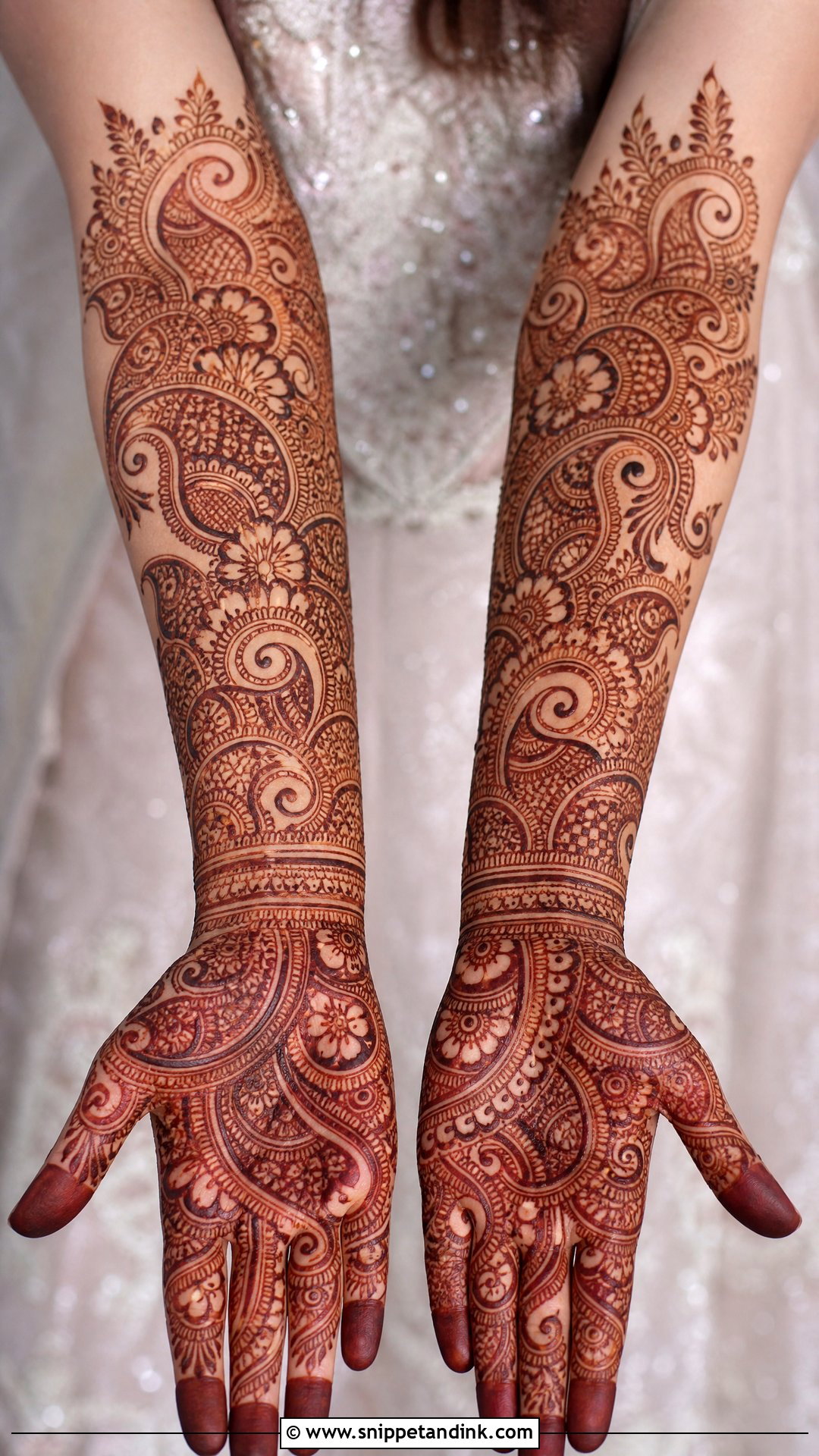
Paisleys curve across the palm, wrap the wrist and run into the forearm like a woven textile. They’re traditional without being portrait-based, and they can be filled with tiny flowers, leaf veins, dots, spirals and fine mesh. Dense paisley work belongs with classic red bridal wear, while a spaced version suits modern outfits. I always use several sizes so the pattern layers, and I put small floral borders between them to soften the overall look.
16. Jaali Bridal Mehndi Design
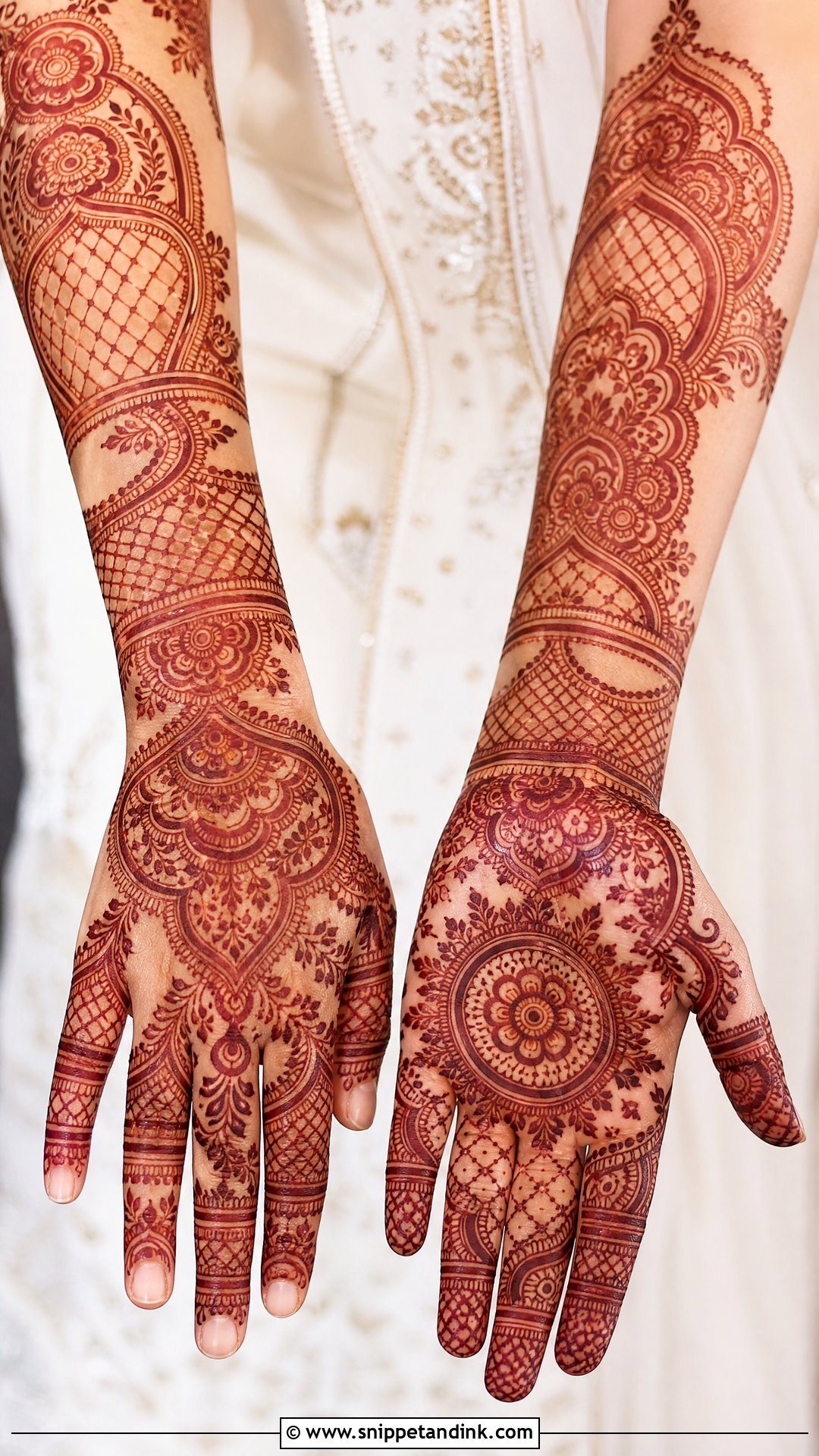
Jaali, the lace effect, puts mesh panels on palms, backs, wrists or forearms, framed by flowers, paisleys and mandalas. It catches the eye in close-ups because the repeated lines create texture, and on the back hand it reads almost like jewellery. It shouldn’t run across the whole hand unbroken, though; larger motifs give it depth. Diamond mesh, curved netting and fine lattice are all options. The lines have to be evenly spaced and the same thickness, which is why good jaali is never fast.
17. Floral Bridal Mehndi Design
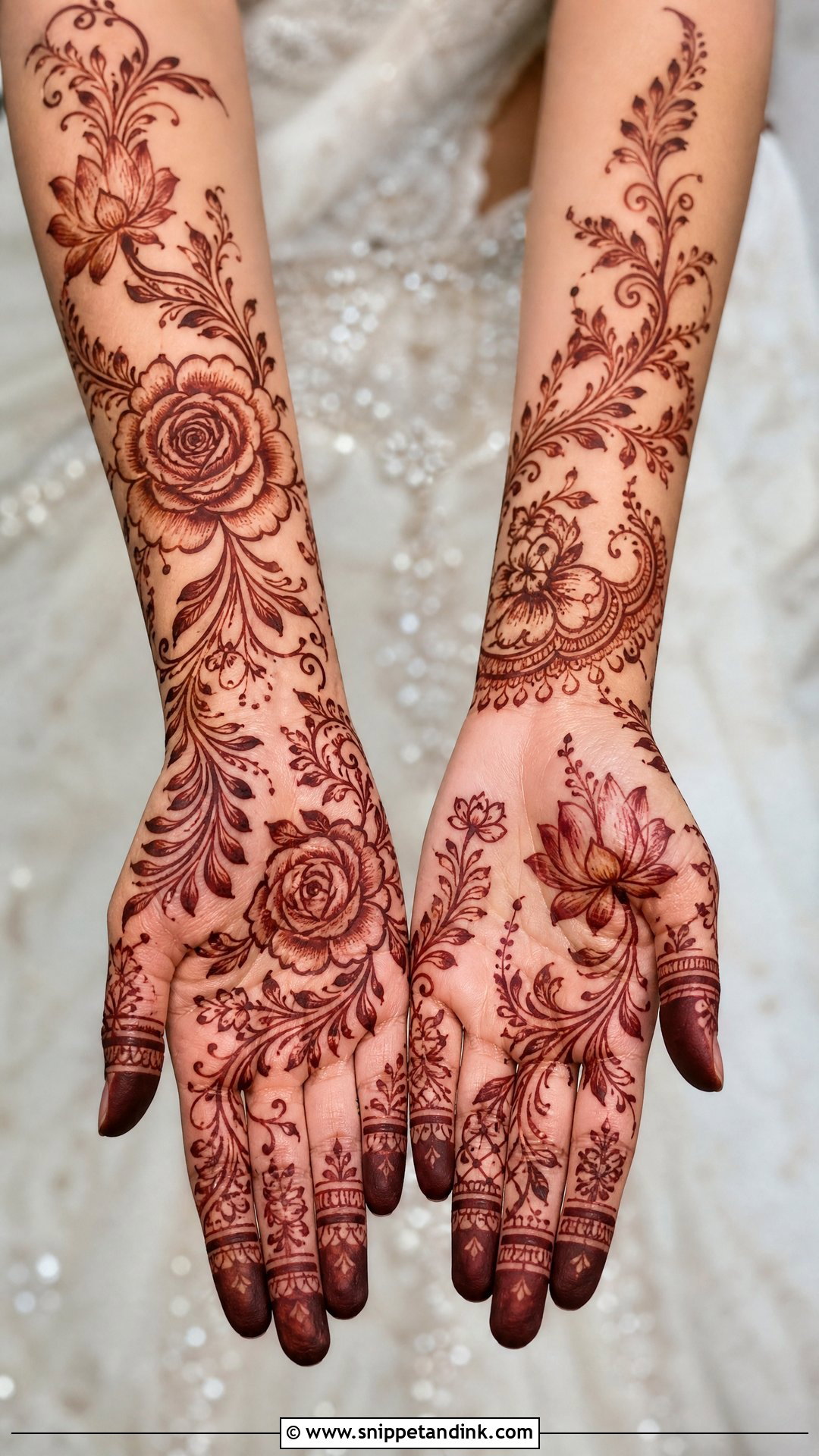
Florals adapt to Arabic, Indo-Arabic and Indian layouts and suit brides who’d rather skip symbolic scenes. Roses, lotus flowers, small blossoms, leafy vines and shaded petals can cover the palms and forearms. A full-hand version starts with bold flowers near the wrist and carries into detailed finger patterns; a lighter one keeps the flowers bigger with open skin around them. Pastel outfits, garden themes and delicate jewellery all work alongside it.
18. Jewelry Bridal Mehndi Design
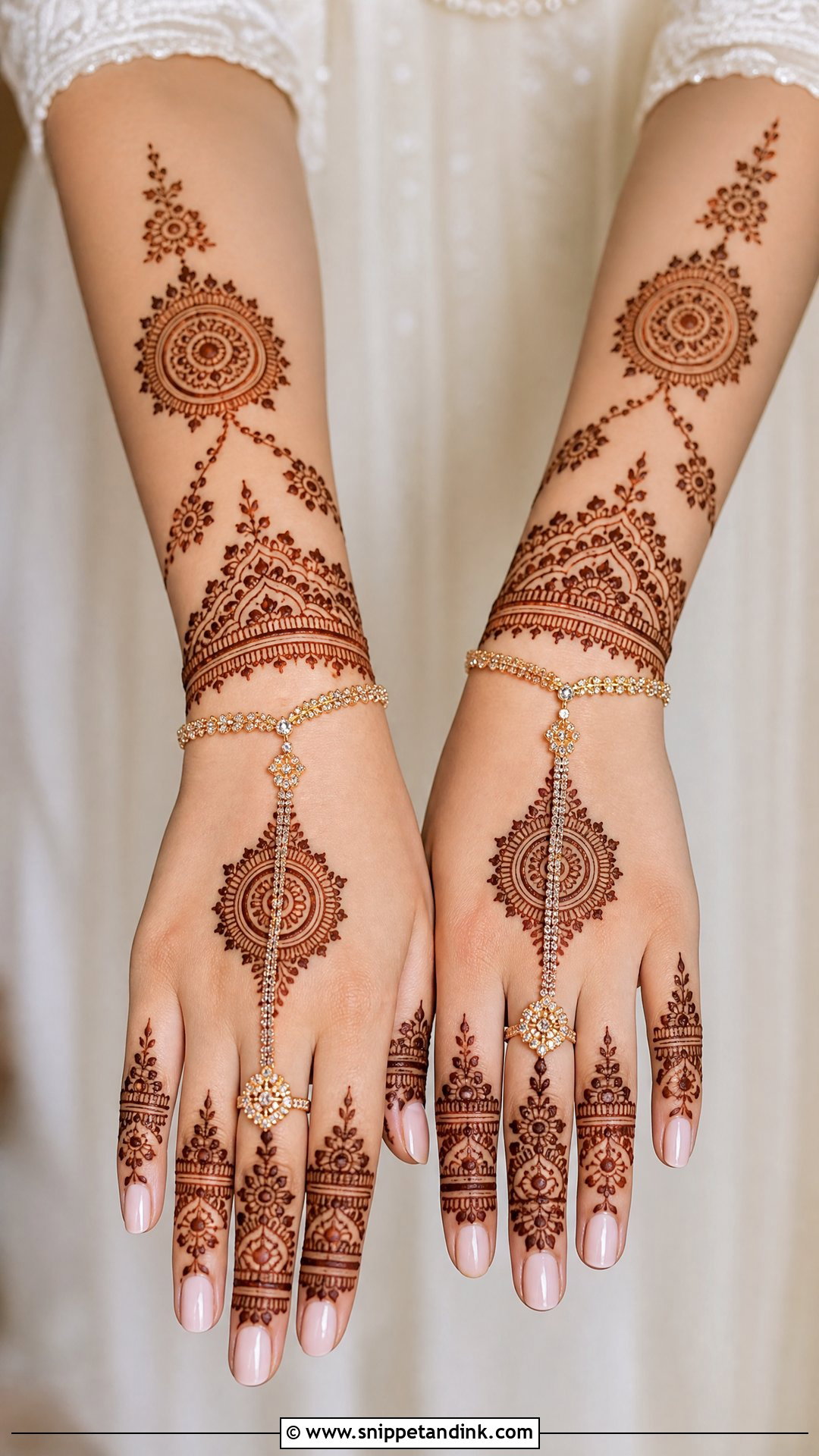
Jewellery mehndi decorates the hands before the real ornaments go on: hathphool-inspired chains, ring patterns, bracelet cuffs, finger bands and pendant-like mandalas on the back hand. It works with rings, bangles and kaleere, and the palm can stay simpler while the back carries the effect. Tiny florals, dots and fine leaf chains make it bridal. Symmetry is non-negotiable here. Uneven chains are obvious in ring shots and dupatta poses, so I draw the left and right sides of each chain alternately rather than finishing one side first.
19. Personalized Bridal Mehndi Design
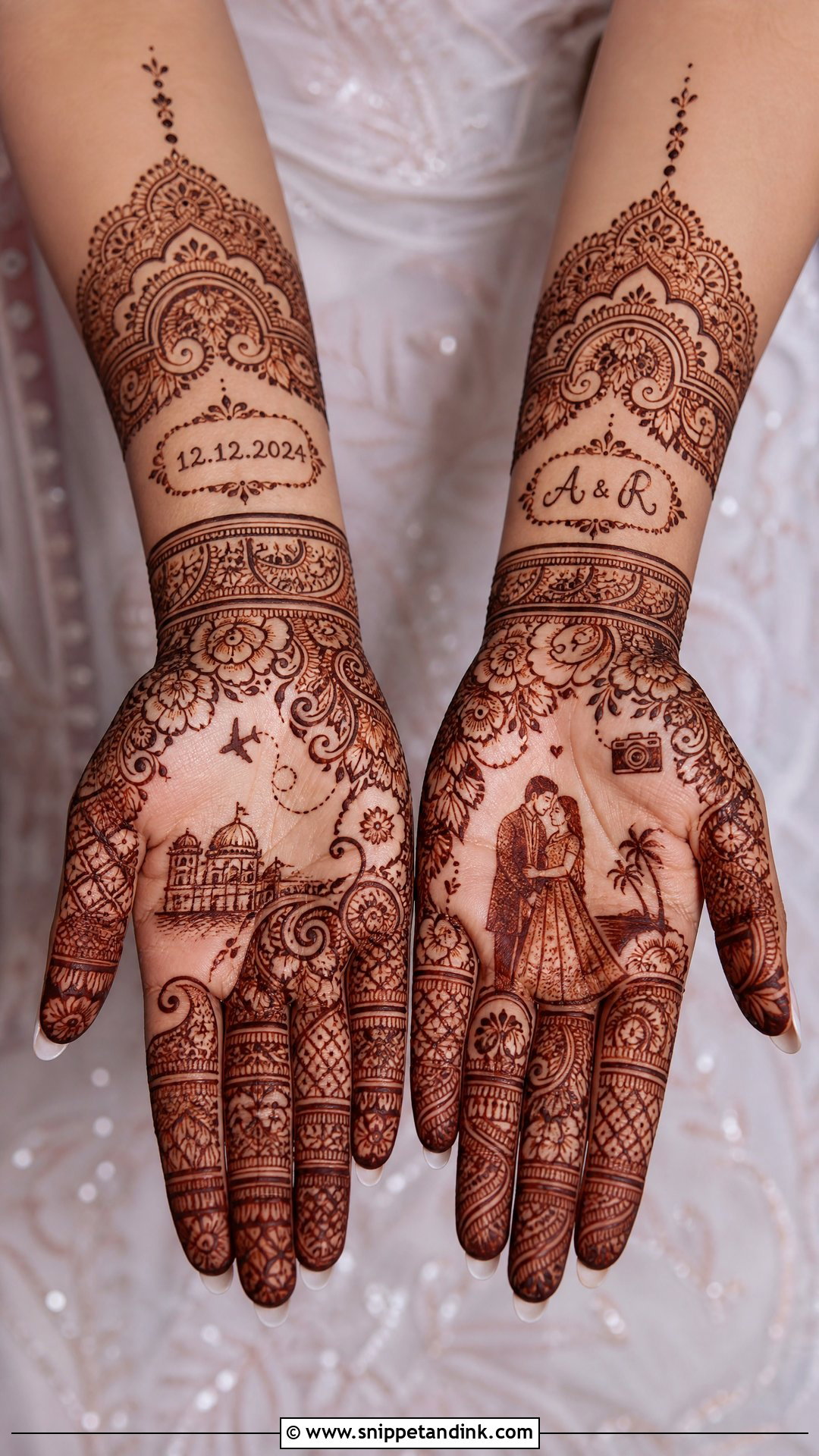
Personal details turn the hands into a keepsake: initials, the date, proposal symbols, favourite flowers, a city skyline, a pet or travel references. Placed inside paisley frames, mandala borders or floral panels, they still look traditional. Plan them before the appointment, not in the chair. Two or three meaningful elements read well; more than that and the hand starts to look like a scrapbook. If you want the groom to hunt for his initials, tell me, and I’ll hide them properly.
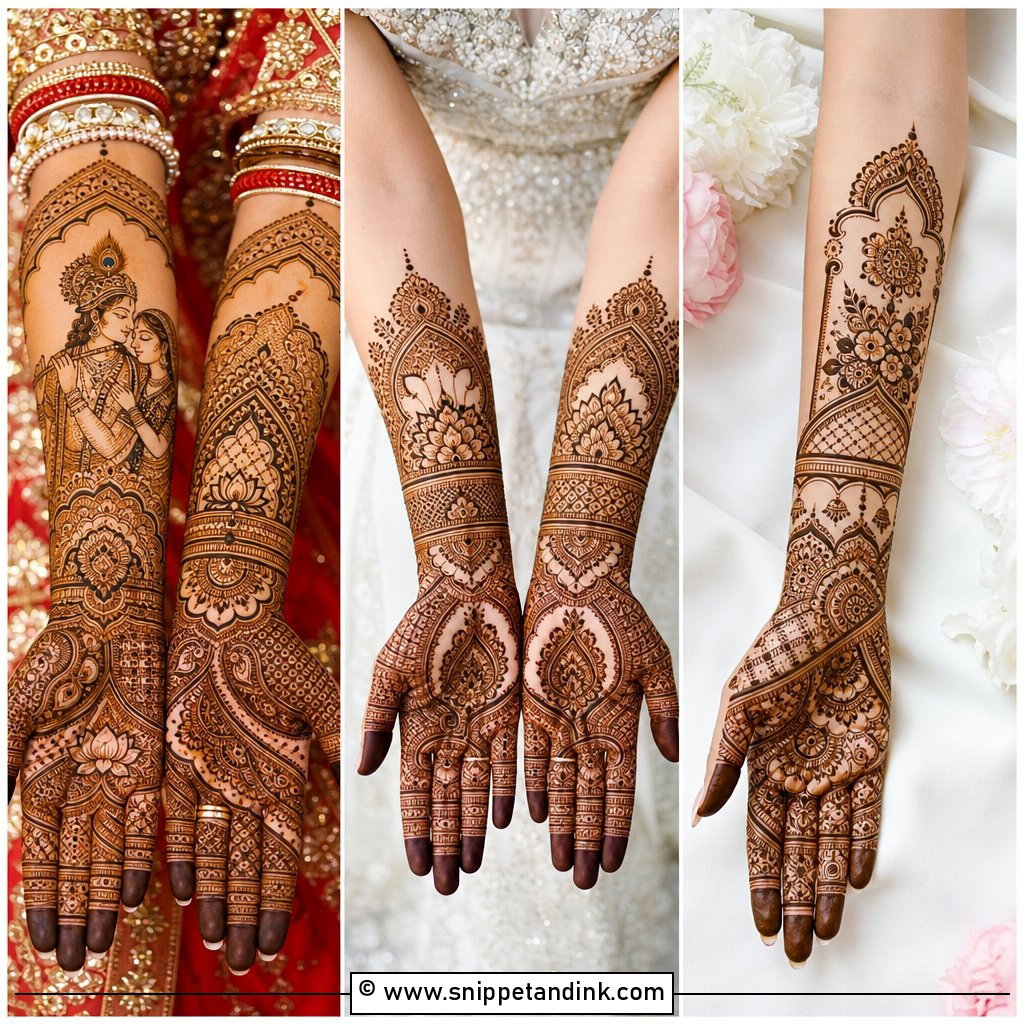
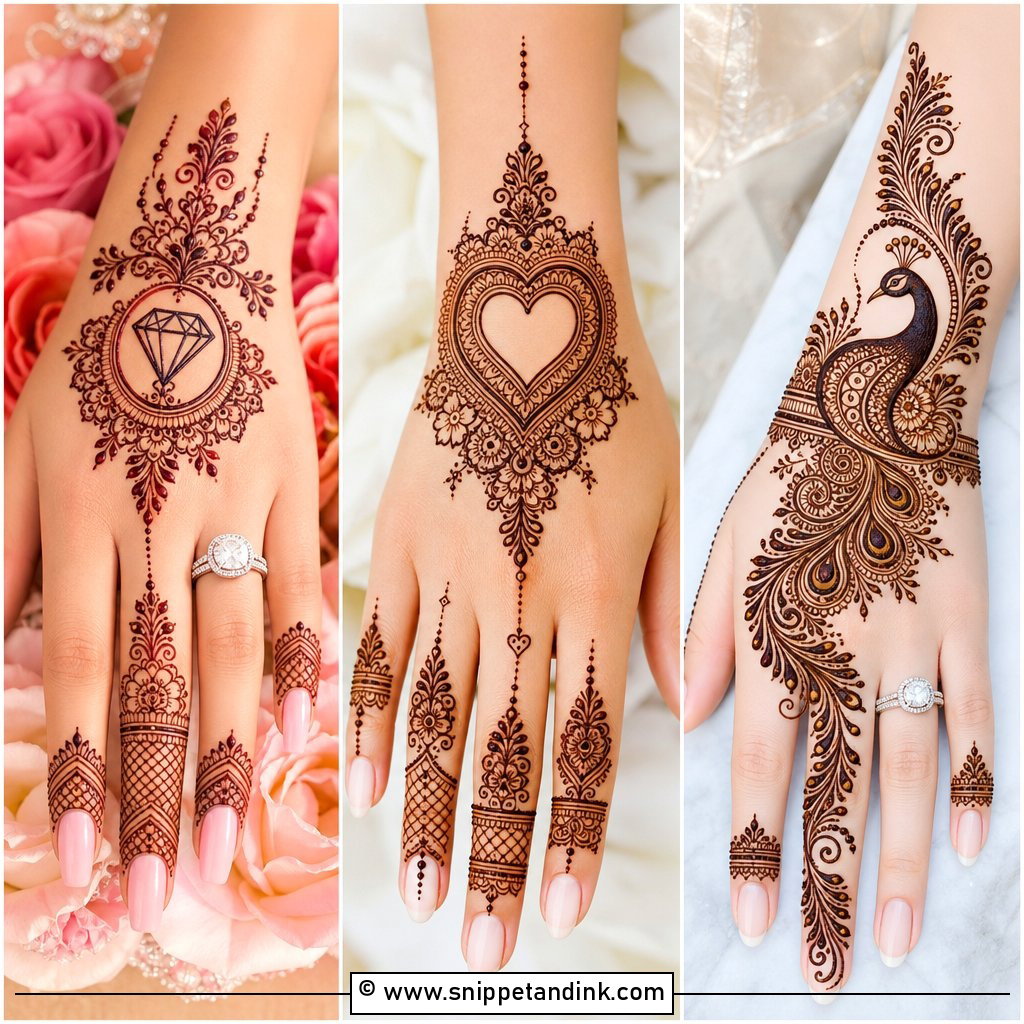
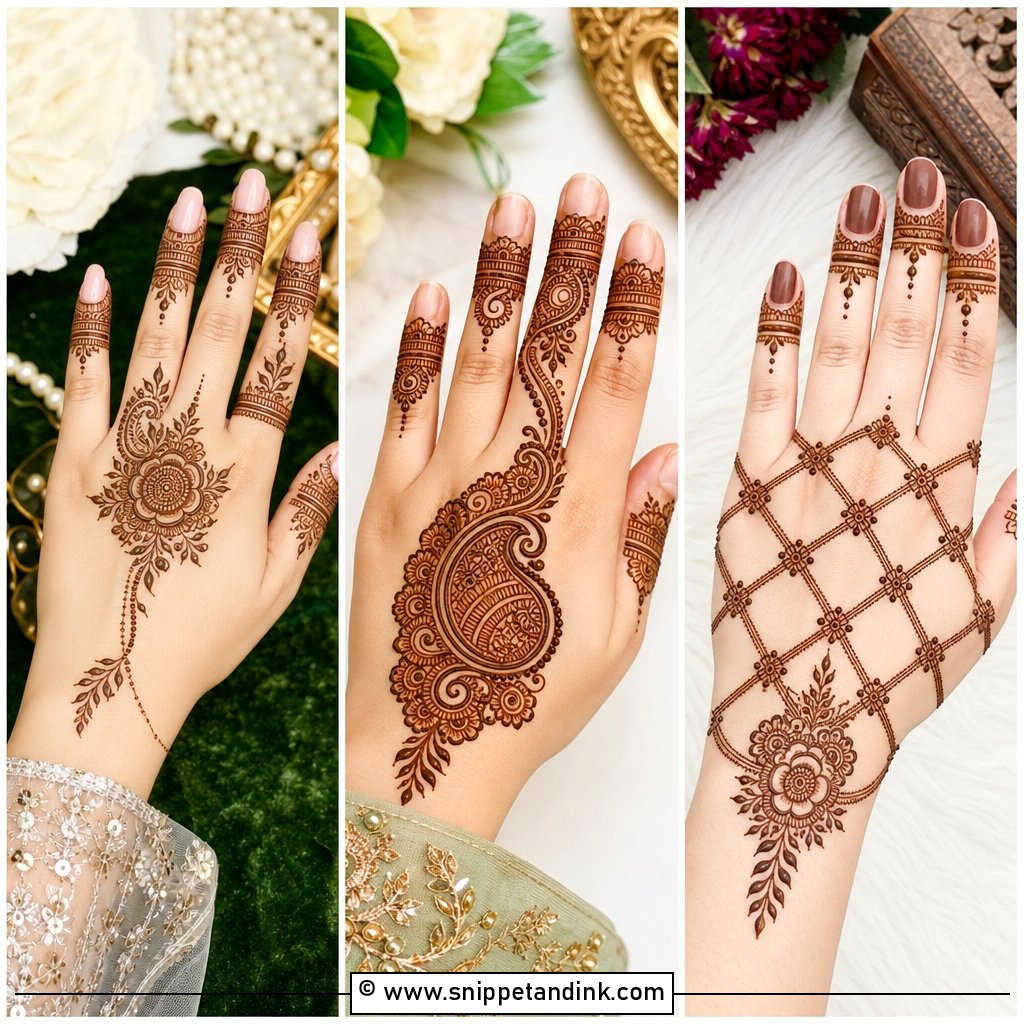
20. Wedding Story Mehndi Design
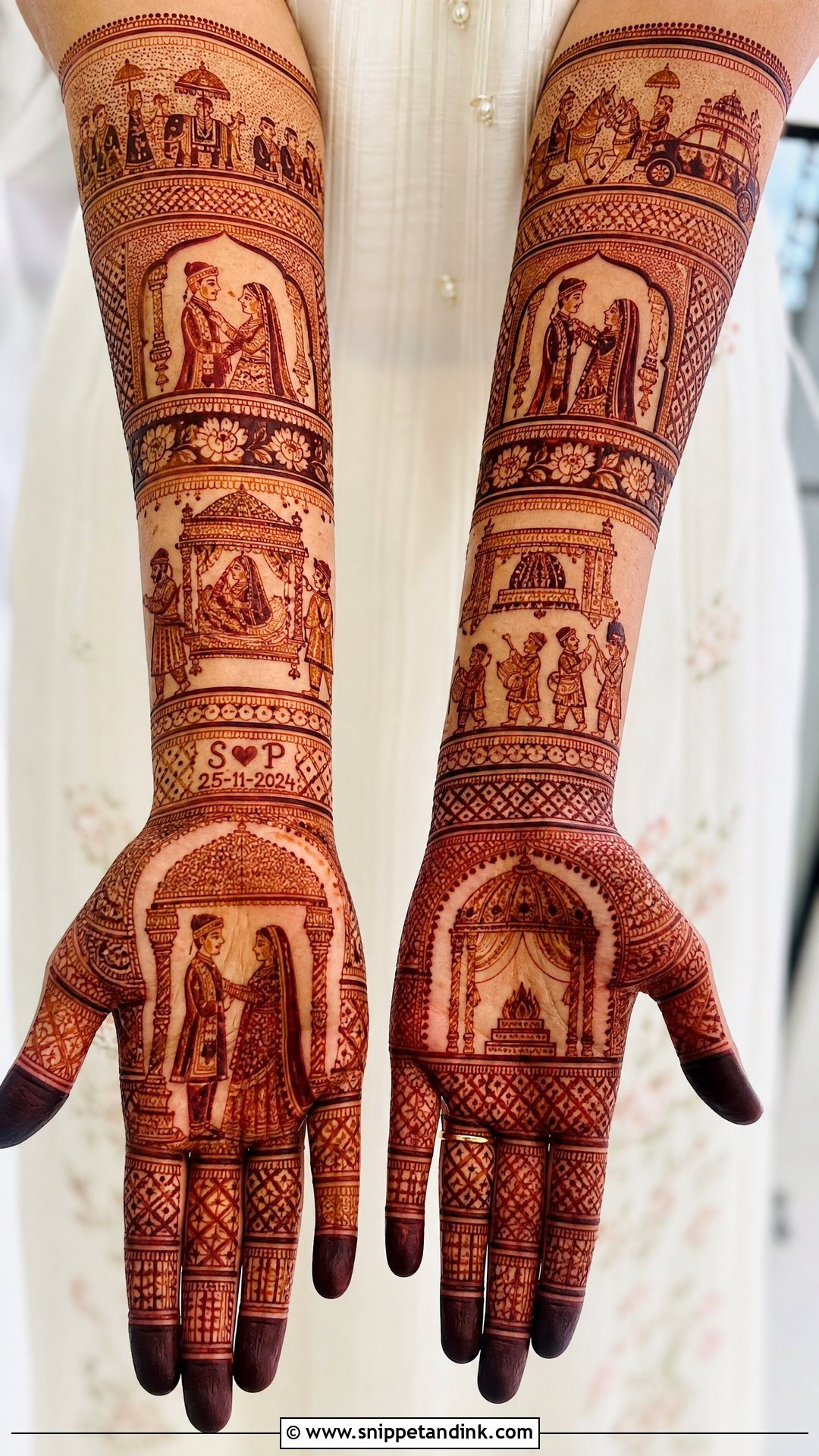
A wedding story design runs the whole journey across the hands: engagement, the mehndi ceremony, mandap scenes, the varmala, doli, baraat and the date. Every scene needs space, so I usually give the palms the main moments and the forearms decorative borders and supporting motifs. Choose an experienced bridal artist for this; it’s planning as much as drawing. Floral bands, jaali and simple fillers between the panels keep it wearable rather than overwhelming.
21. Half Hand Bridal Mehndi Design
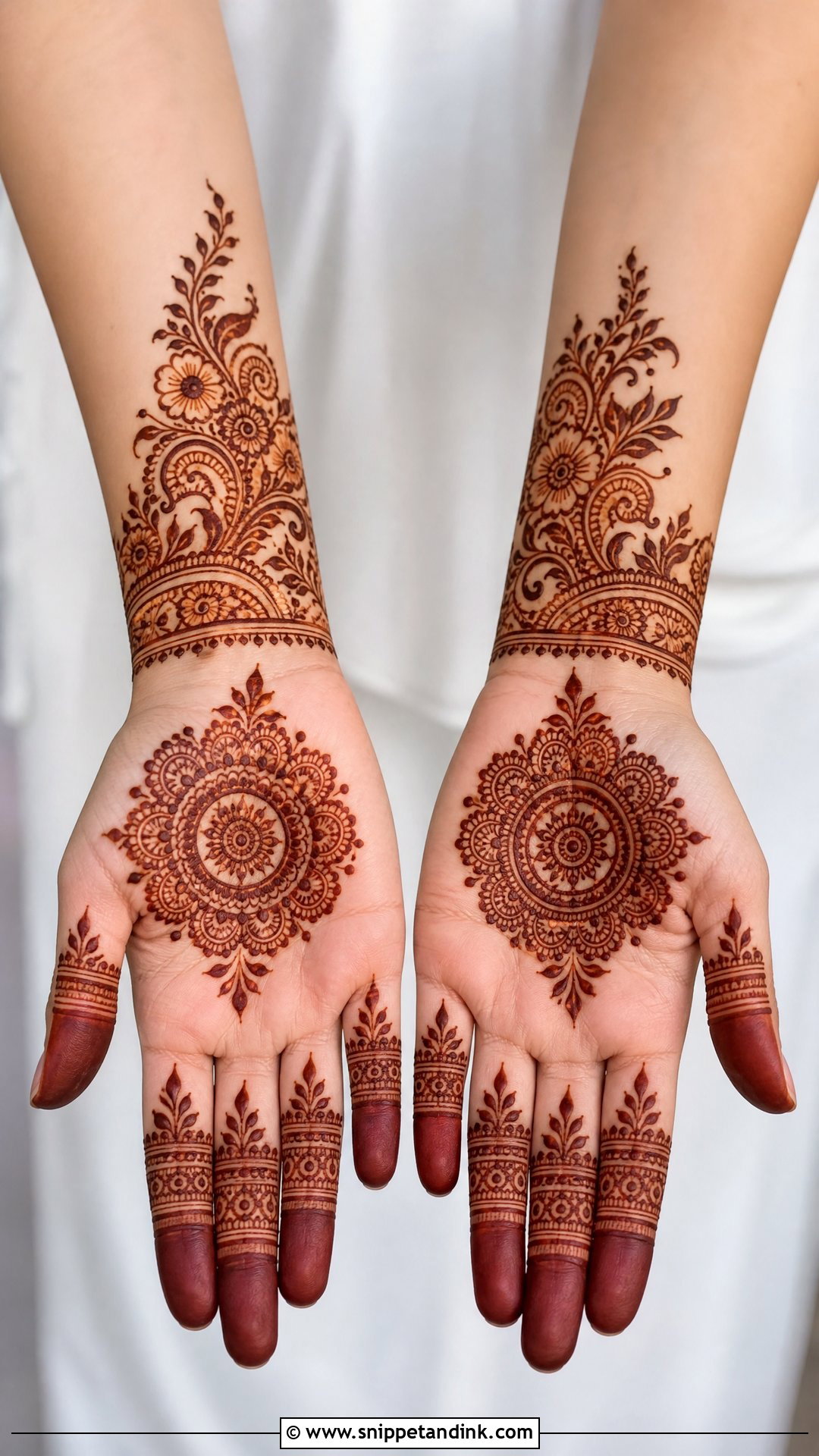
A half hand bridal mehndi design covers the fingers, palm, wrist and a little of the forearm, in Indian, Arabic or Indo-Arabic style. It feels lighter while still looking special, and it suits engagements, second-day events, courthouse ceremonies and destination weddings. It’s also a practical answer if your bangles or embroidered sleeves are meant to stand out. Pick one strong focal area, a palm mandala or a floral wrist trail, and keep the rest neat.
22. Forearm Bridal Mehndi Design
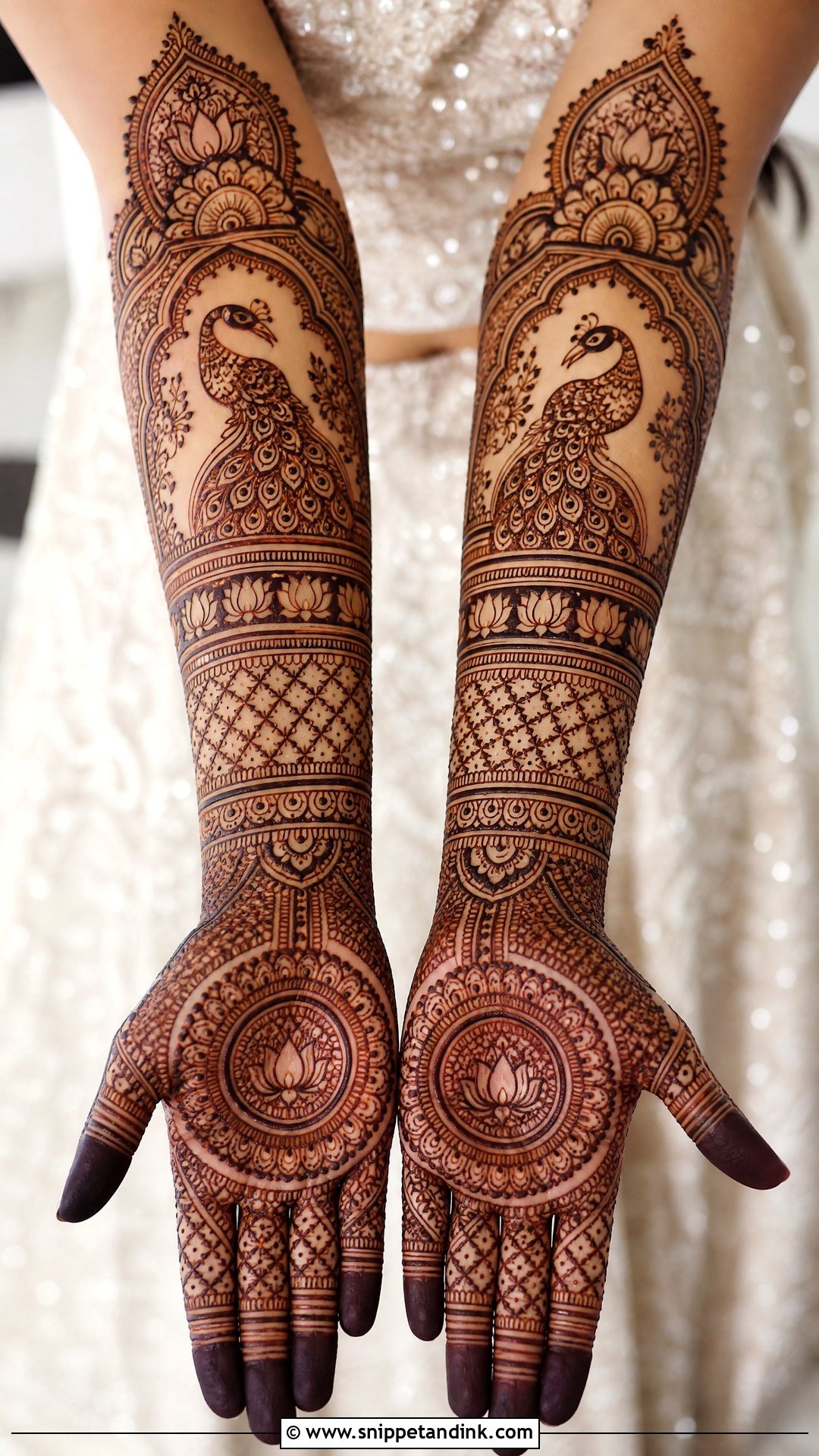
A forearm bridal mehndi design carries the work beyond the wrist, which matters with sleeveless, short or sheer sleeves. The palm design flows into layered cuffs, peacock trails, lotus bands, jaali panels and paisleys, and the extra space lets the palm stay uncrowded. The forearm can hold larger motifs, dates, initials or royal scenes. A good forearm layout tapers as it climbs. I use bracelet-style transitions at the wrist and place larger motifs higher up, so it doesn’t end in a hard straight line.
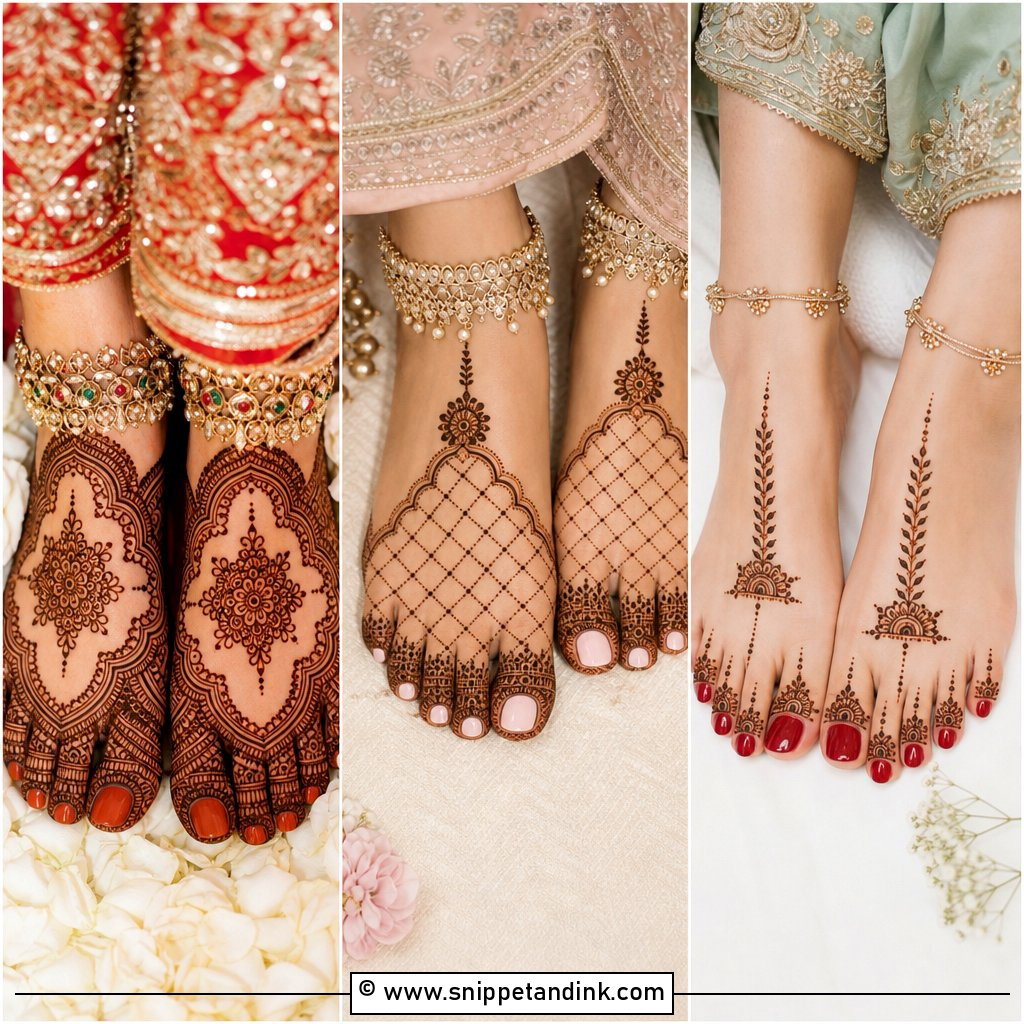
23. Bridal Feet Mehndi Design
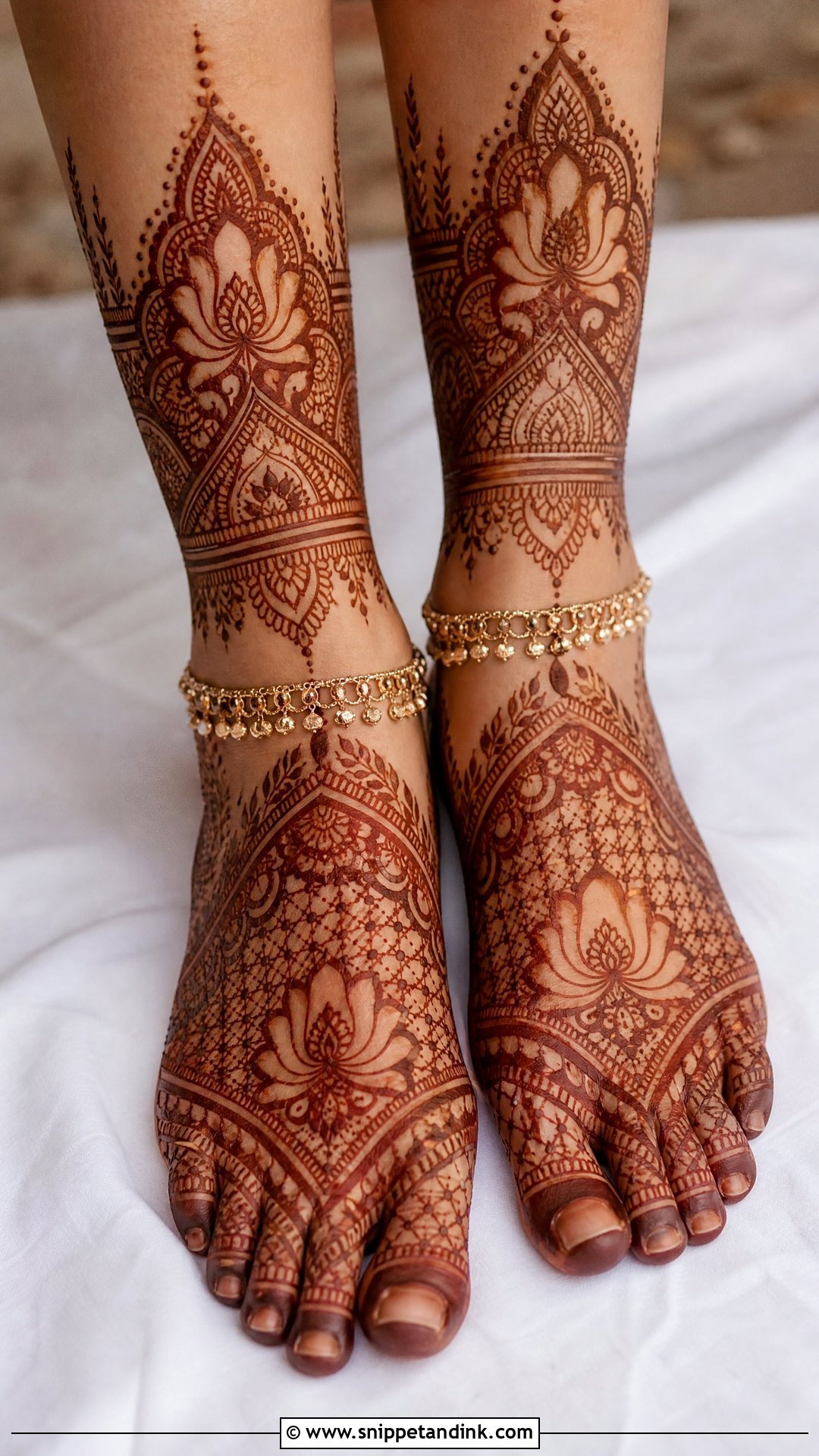
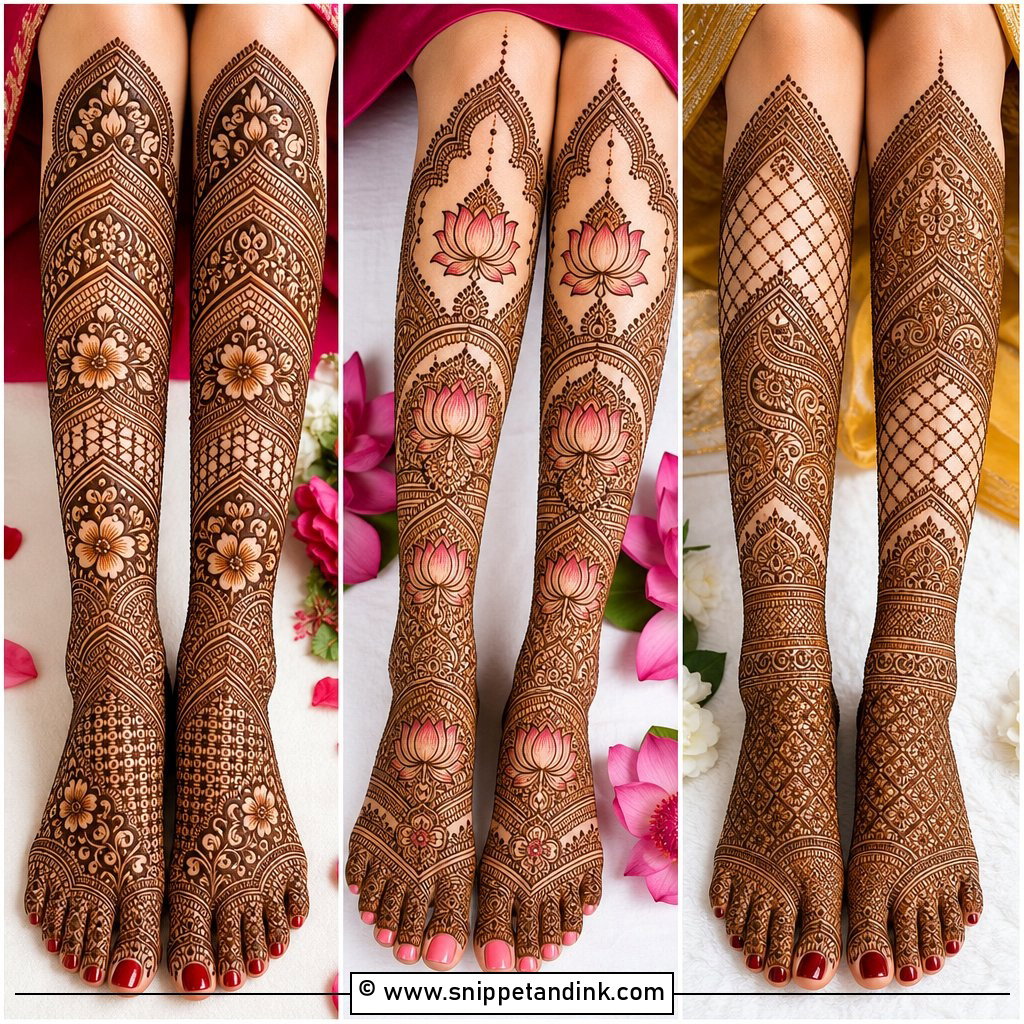
Feet complete the bridal look from head to toe. A design usually covers the toes, the top of the feet and the ankles, sometimes a little higher, with anklet chains, lotus flowers, mandalas, paisleys, jaali and leafy borders. It sits well with bridal sandals and alta-inspired styling. Stain varies a lot across the foot, darkest on the soles and toes and lighter on the top, so I avoid very tiny detail there. Repeat a few motifs from your hands, lotus or jaali for example, in a lighter form to tie the look together.
24. Moroccan Bridal Mehndi Design
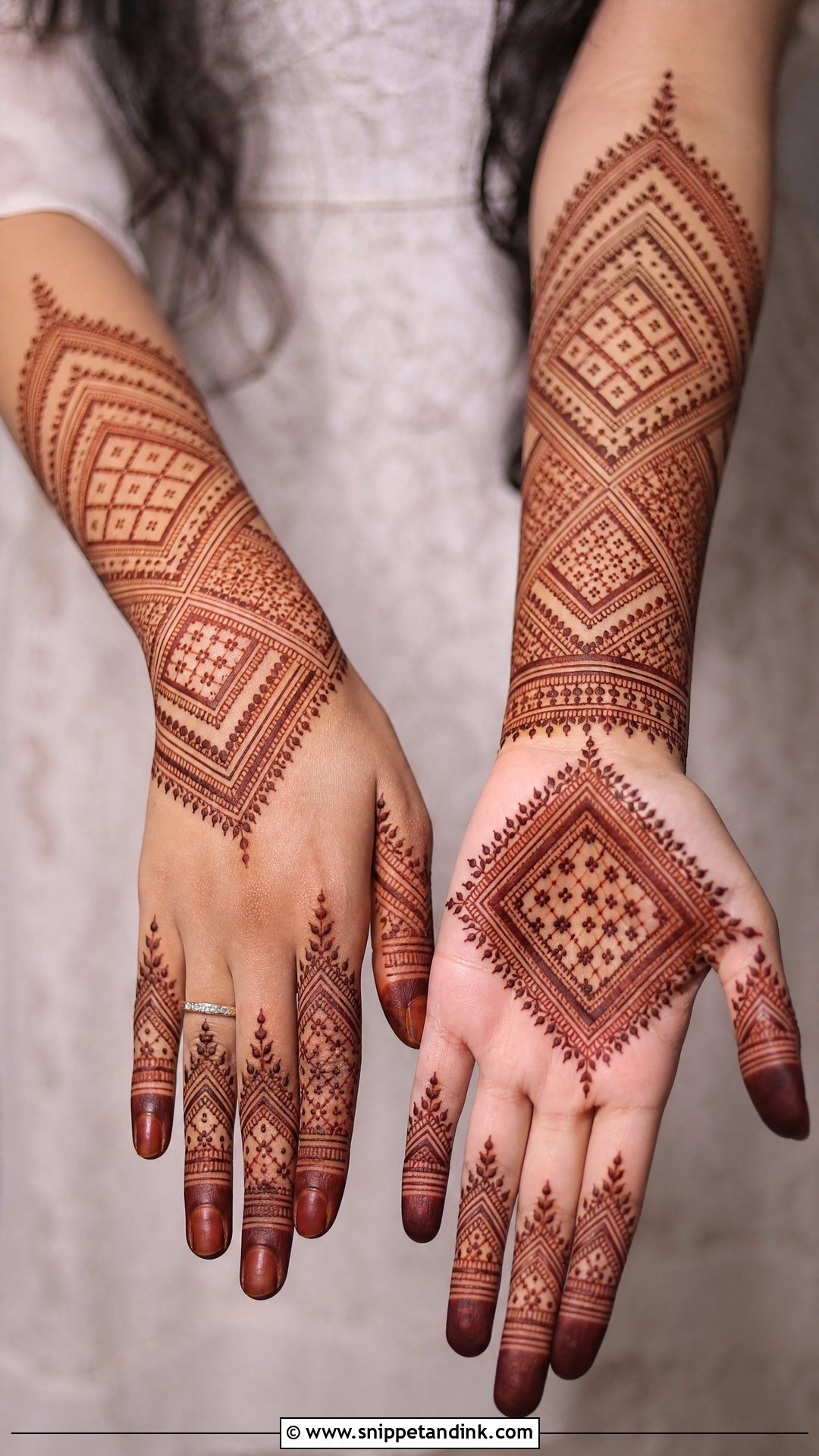
Moroccan geometry, with diamonds, triangles, straight lines, grids and repeating shapes, is bold and graphic. It gives a bride something different from classic Indian patterns while staying artistic. It can go on the back of the hand, palm, wrist or forearm. For an Indian wedding I soften it with small floral accents or a mandala centre so it sits comfortably next to traditional jewellery. Balanced spacing and strong outlines keep the shapes sharp after staining.
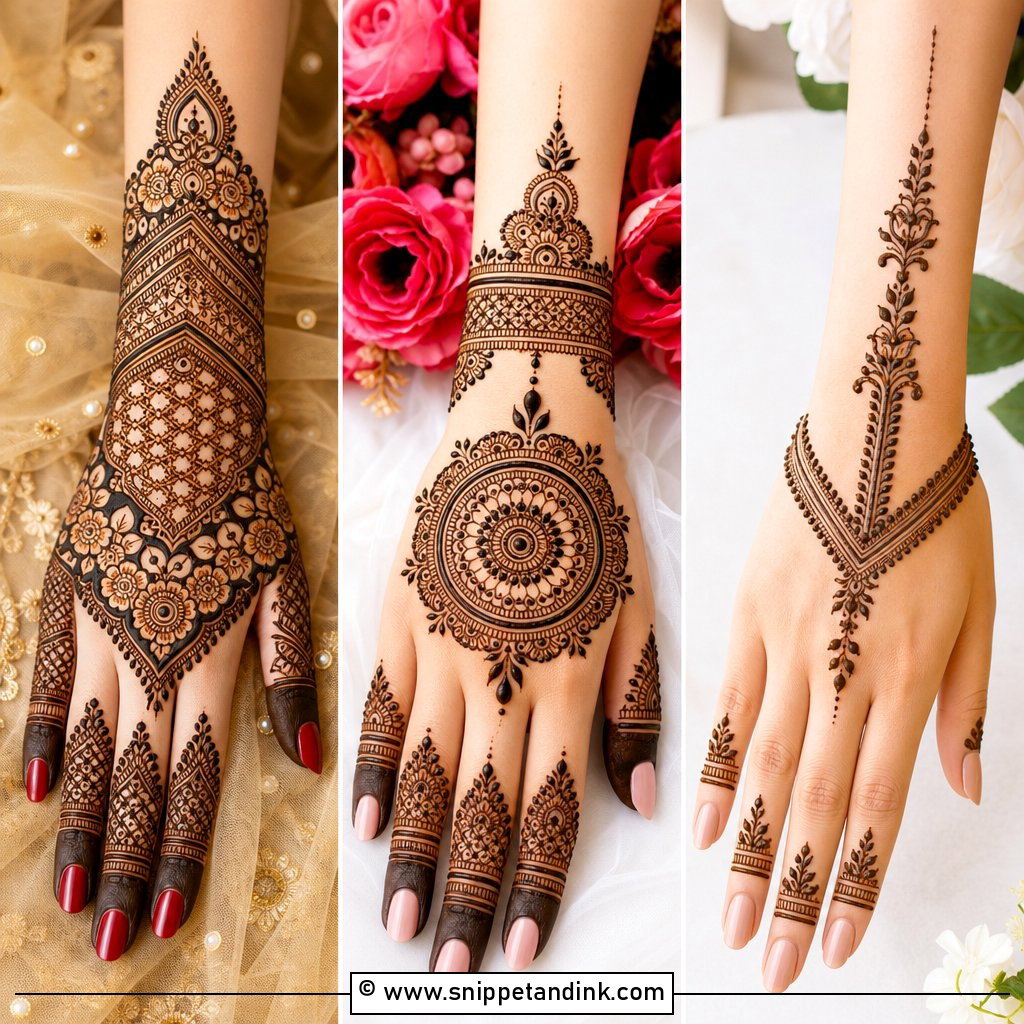
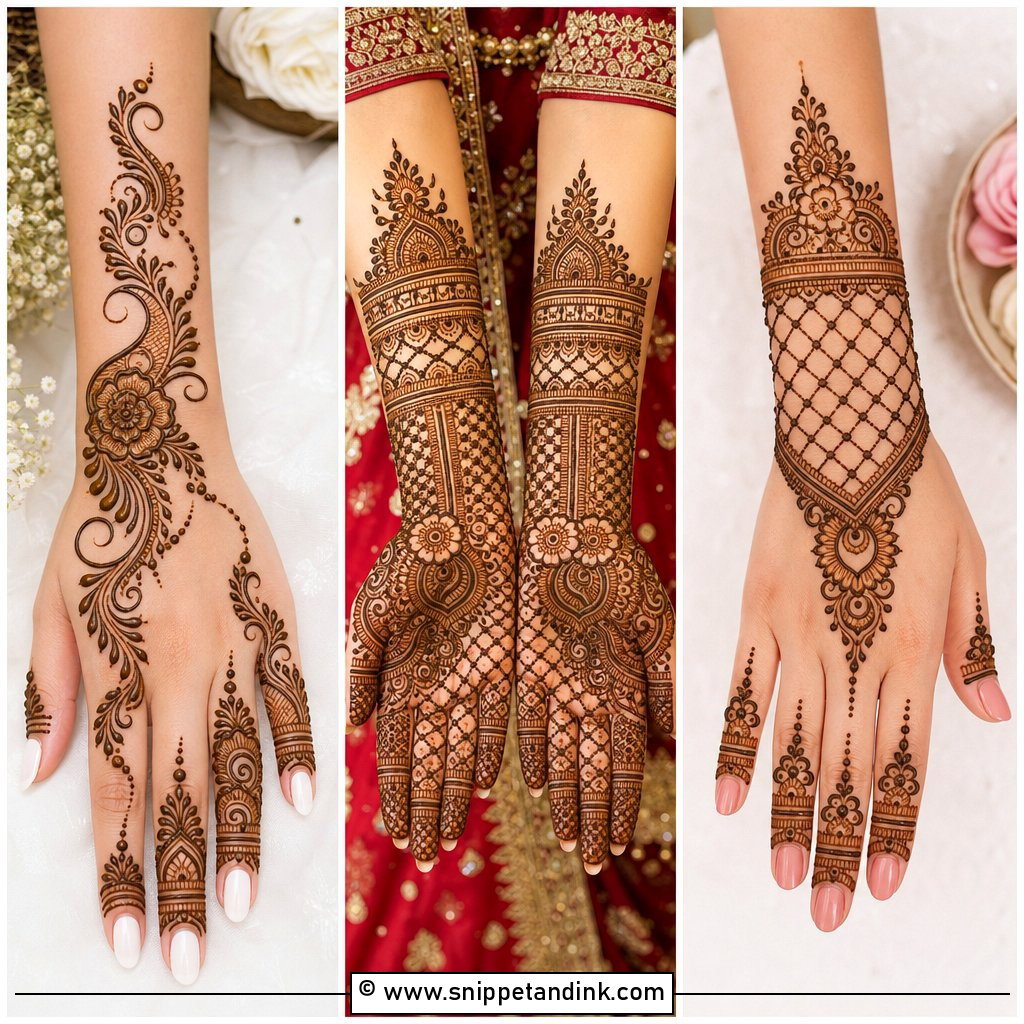
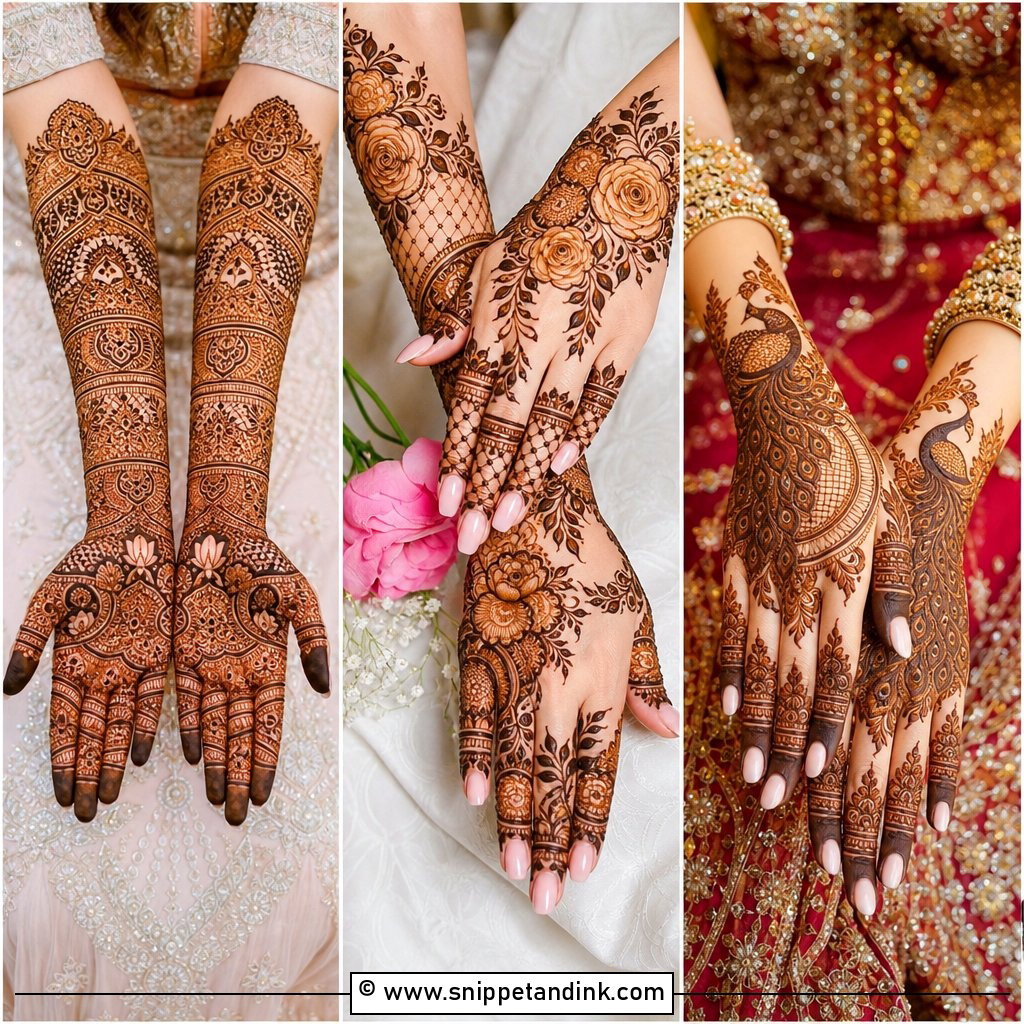
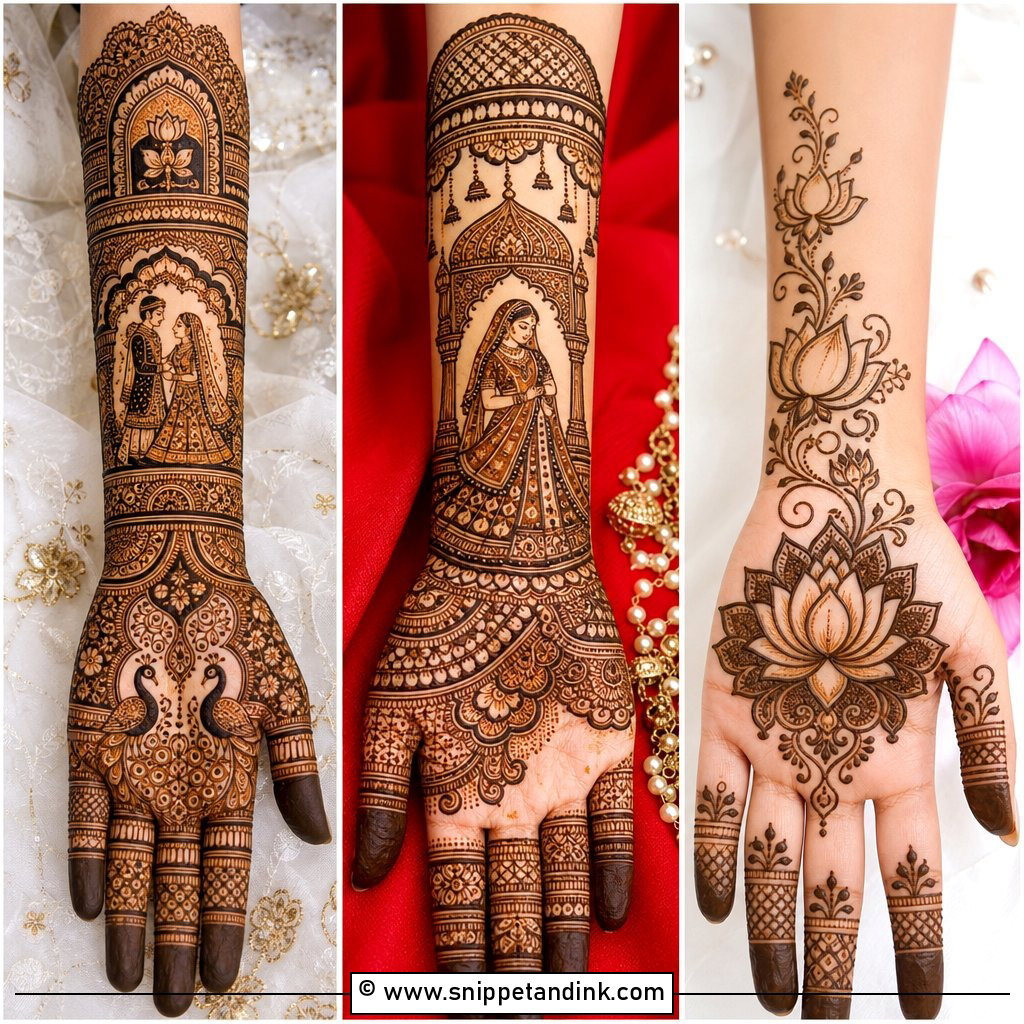
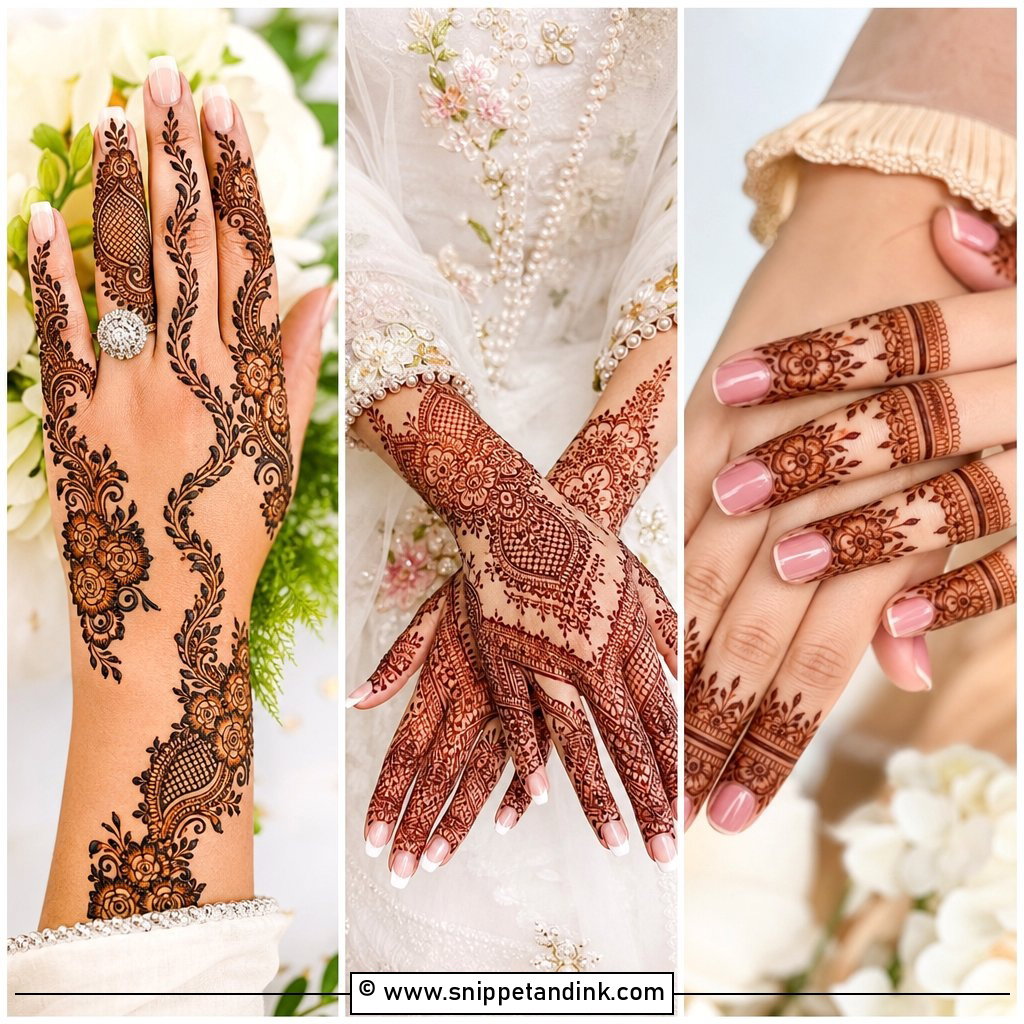
25. Modern Bridal Mehndi Design
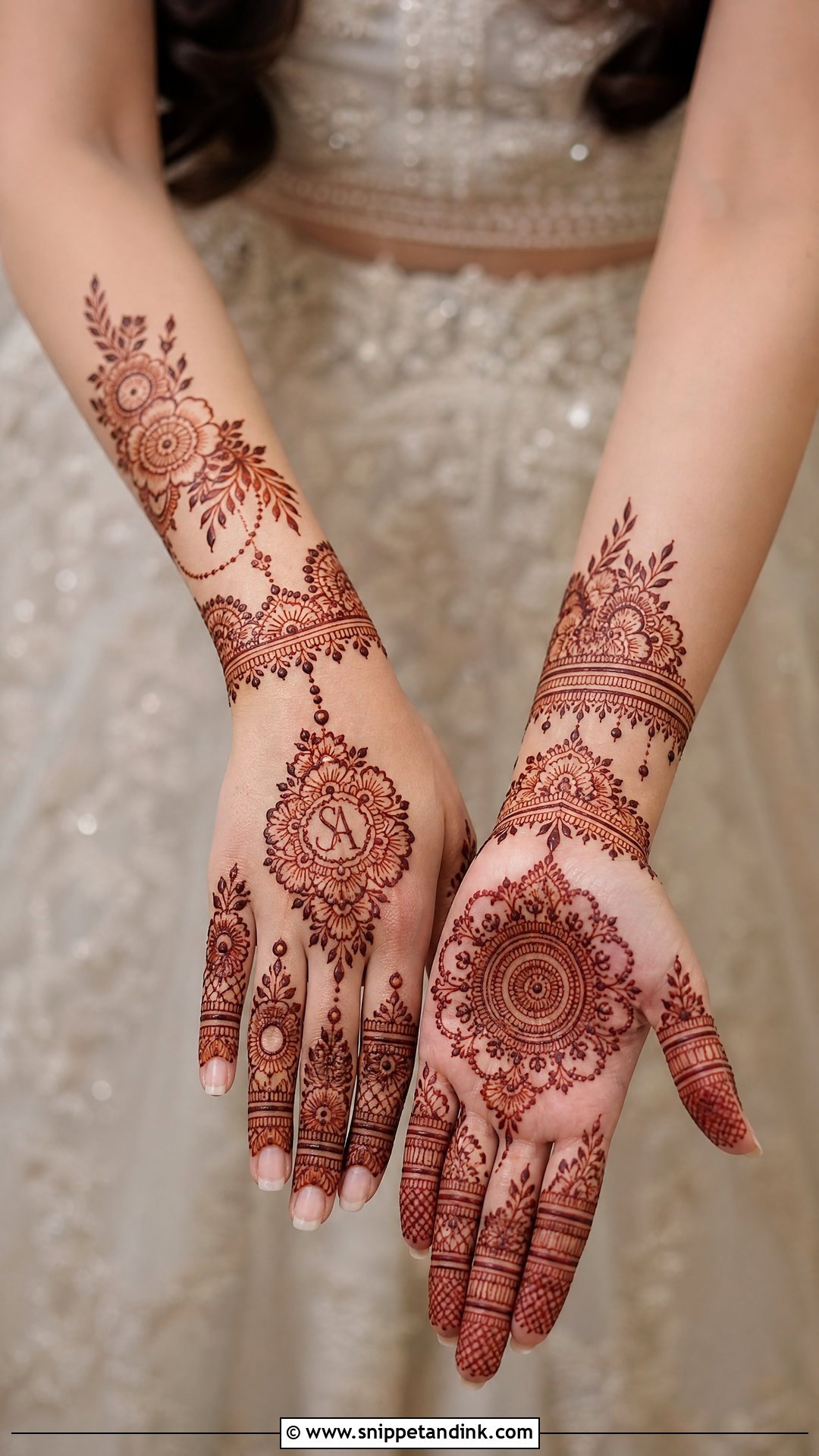
Modern bridal mehndi isn’t about removing tradition. It mixes negative space, bold florals, clean mandalas, fine jaali, initials, minimal portraits and bracelet cuffs in a way that suits the bride’s personality. It sits naturally with pastel lehengas, fusion ceremonies and destination weddings. A detailed palm with an airy back hand is one route; bold trails with light finger work is another. Without clutter, it reads clearly in photos, so the main job is keeping each element connected from palm to wrist.
How Family Customs Change Where the Henna Goes
Indian weddings vary hugely by region and community, and the customs around mehndi affect the design as much as personal taste does. These are the patterns I plan around most often, though every family has its own version.
- Brides who wear a chooda from the wedding morning have most of the forearm covered by red and ivory bangles, so I put the detail on the hands and the stretch just below the elbow, where it actually shows.
- Many Rajasthani and Marwari families expect coverage well past the wrist, often to the elbow, with figures and scenes.
- Bengali brides often wear alta on the feet, sometimes the hands too, so the foot design is kept lighter or left to the alta altogether.
- In many South Indian families, simple dots, circles and filled fingertips are traditional, sometimes in fresh leaf paste, and dense north Indian coverage isn’t expected.
Some customs shape the session itself: a relative may place the first dot of henna, the groom’s name is hidden for him to find, and in many families a dark stain is read as a good sign for the marriage. Ask the elders in your family what they expect before the mehndi night, so the design honours it rather than discovering it on the day.
The Henna You’ll Recognise in Your Photos Years From Now
Bridal mehndi is more than a pretty pattern. It should feel right for your wedding, your outfit, your comfort and your story. Some brides will always want full Indian coverage with peacocks, paisleys and portraits; others will lean toward Arabic trails, mandala palms, jewellery patterns or quiet modern details. Pick the designs above that speak to you, then work through them with your artist so the final hands look like yours, in person on the day and in the album later.
You'll Like These Ideas:


Leave a Reply