
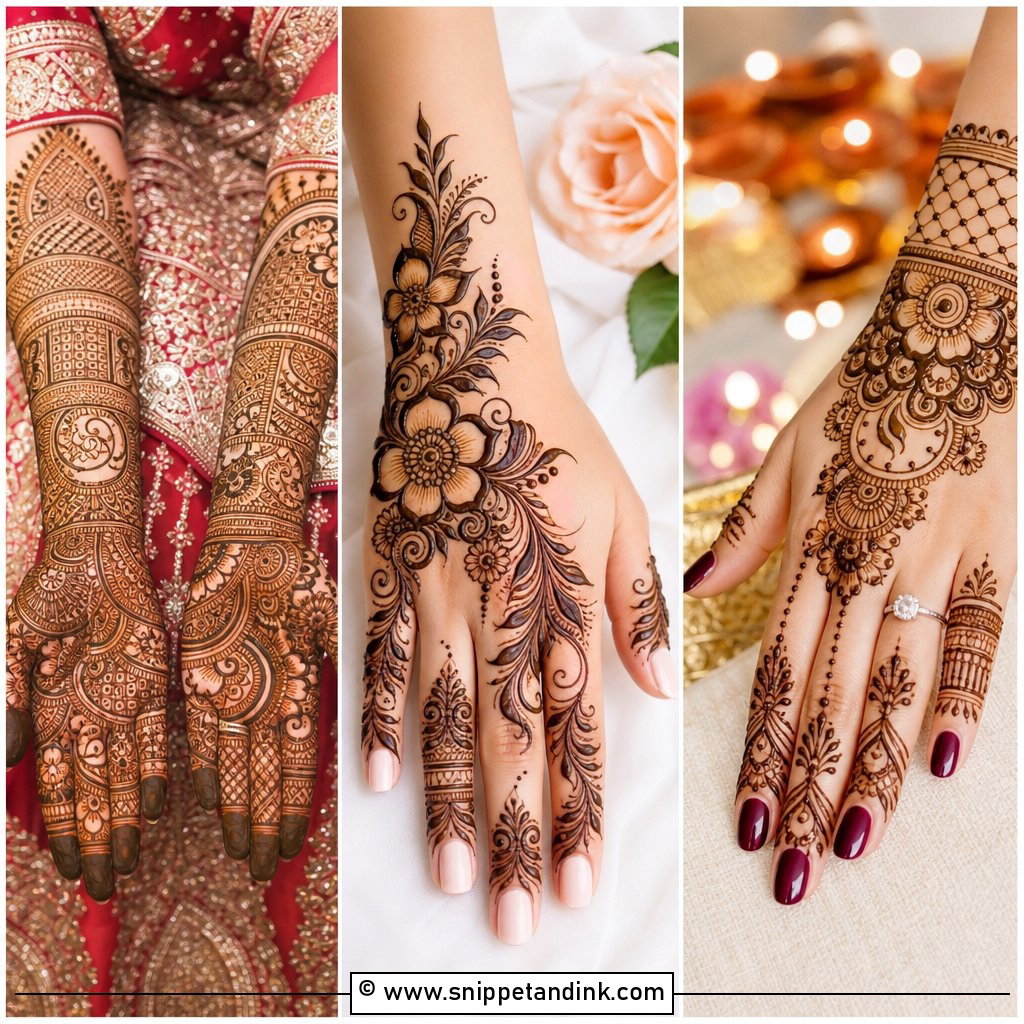
In 2025 the request I hear most is for balance: enough detail to feel festive, enough clean skin to read clearly in photos, and a design that suits a wedding as easily as Eid, Diwali, Karwa Chauth or a family dinner. Clients bring me screenshots that mix Indian bridal detailing, Arabic floral trails, bold Khaleeji leaves, Moroccan geometry, mandalas, jaali and bracelet cuffs. Brides still sit for full storytelling hands. Guests and younger women mostly want something quick with open spaces and crisp outlines. Here are 35 designs I’d happily draw this year, from simple to full bridal, each with a note on what it takes to get right.
Is the Paste in Your Artist’s Cone Actually Henna?
Before any of these designs matter, the paste does. Natural henna is a plant dye that stains skin orange first and darkens over a day or two. Some ready-made cones contain chemical dyes that stain dark within minutes, and those can cause burns, blistering and allergies that stay with you for life. These are the checks I tell clients to make.
- Smell it. Fresh natural paste smells earthy, often with essential oils such as eucalyptus, tea tree or lavender mixed in to help the dye release. A sharp chemical or kerosene smell is a warning.
- Watch the color when it comes off. Natural henna is bright orange at removal. If the skin is already dark brown or black within the hour, the paste wasn’t henna alone.
- Ask how it’s stored. Natural paste is perishable, so artists keep it frozen or refrigerated. Cones that sit on an open shop shelf for months usually rely on preservatives or added dyes.
- Ask what’s in it. A good artist will tell you exactly what her paste is made from. If she won’t, book someone else.
A patch test before the bridal sitting
Even with natural paste, a bride with sensitive skin or known allergies should have a small patch applied inside the wrist a week or two before the wedding. It takes a few minutes, shows how her skin takes the stain, and sets realistic expectations about the final color.
1. Front Hand Simple Mehndi Design
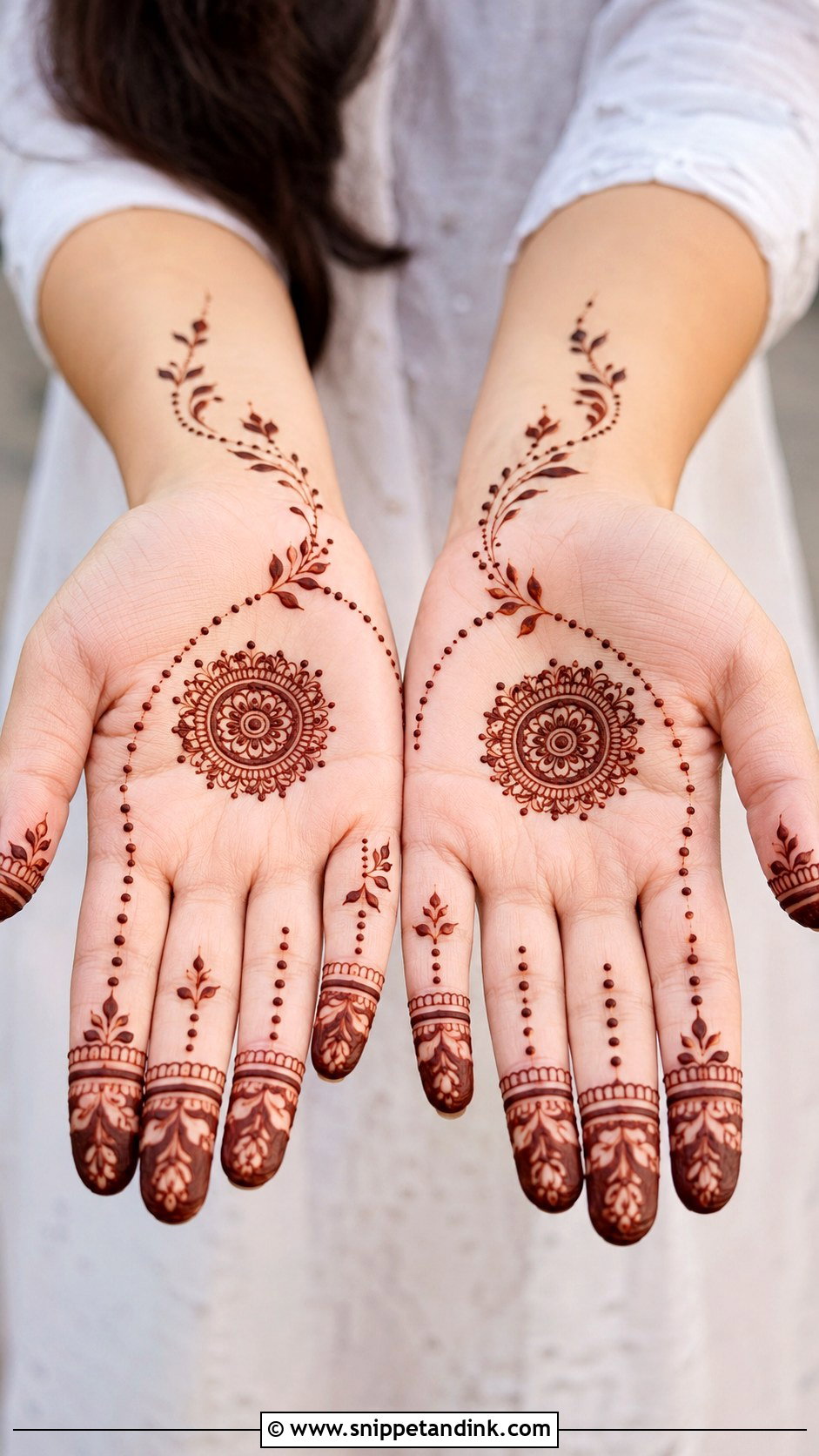
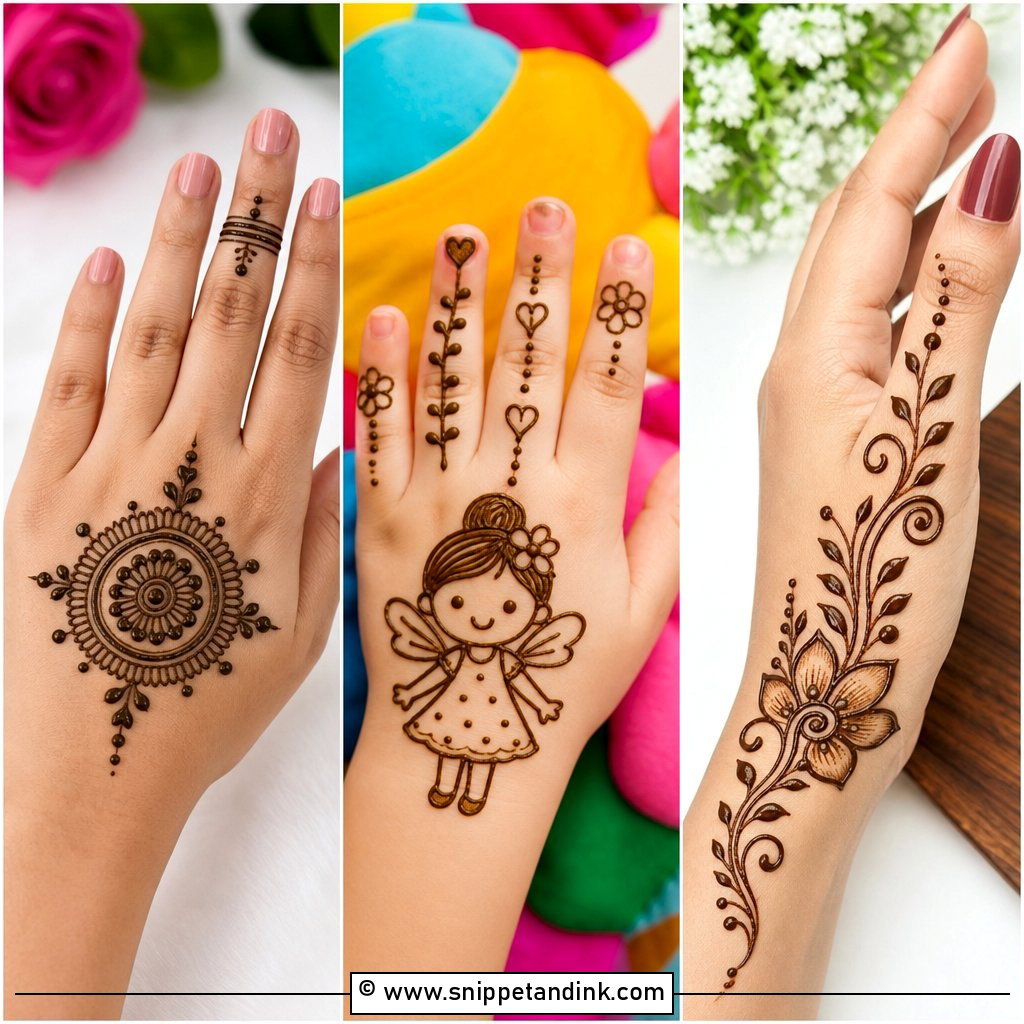
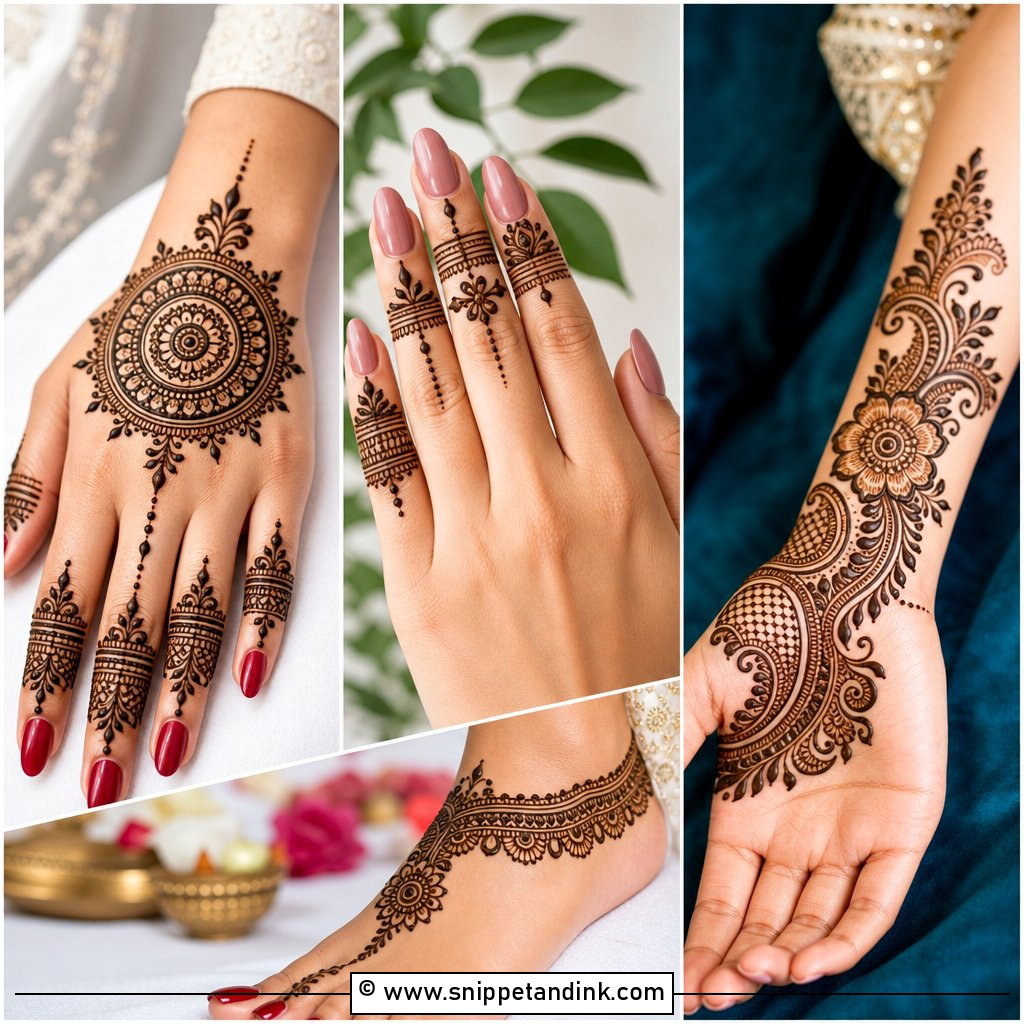
Most people underestimate how much the fingers carry a simple front-hand design. The palm gets a small mandala or floral circle with a few vines, dots and curves around it, and that’s all; the fingers then get slightly more detail than the palm, which is how a light design looks finished in 2025. I keep the gaps between elements even, since uneven spacing is the first thing you notice once the paste is gone. It’s a good first design for beginners and a sensible one for school events or anyone with a working week ahead.
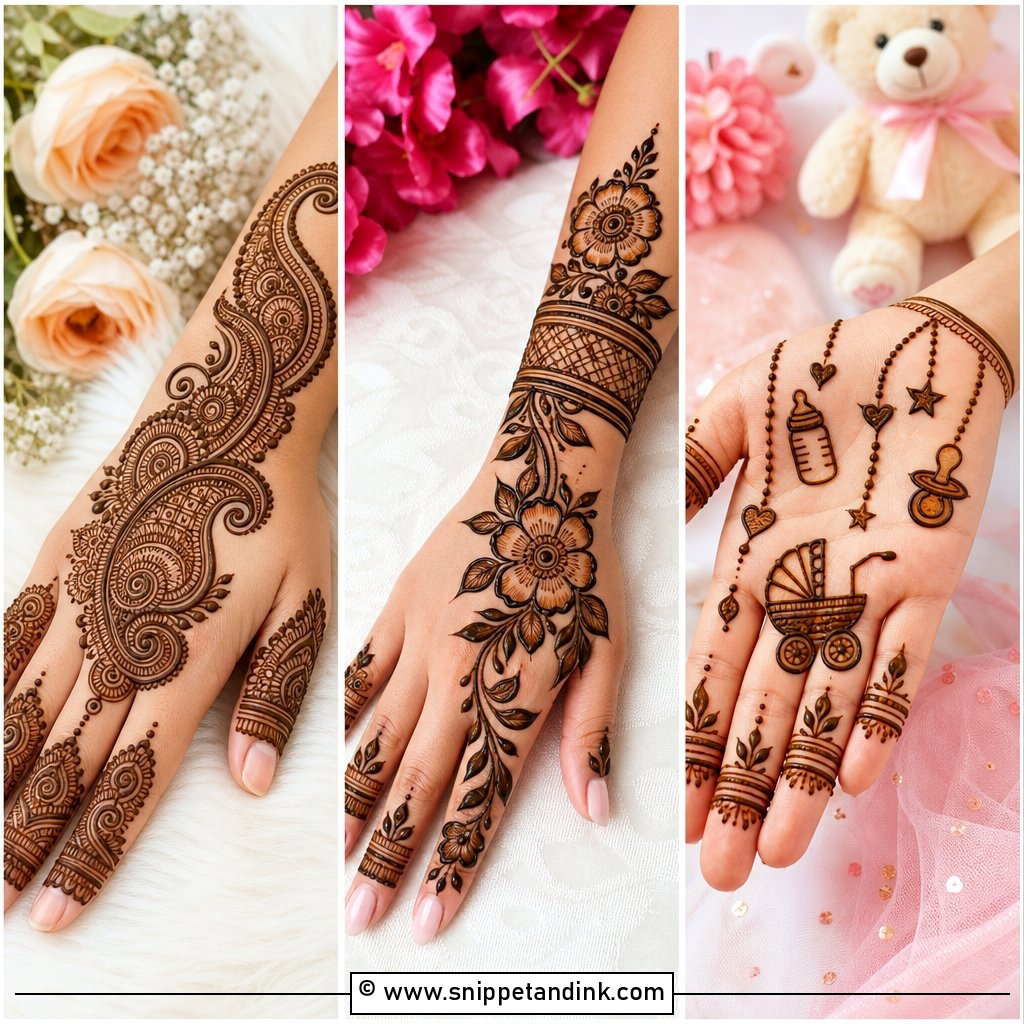
2. Back Hand Arabic Mehndi Design
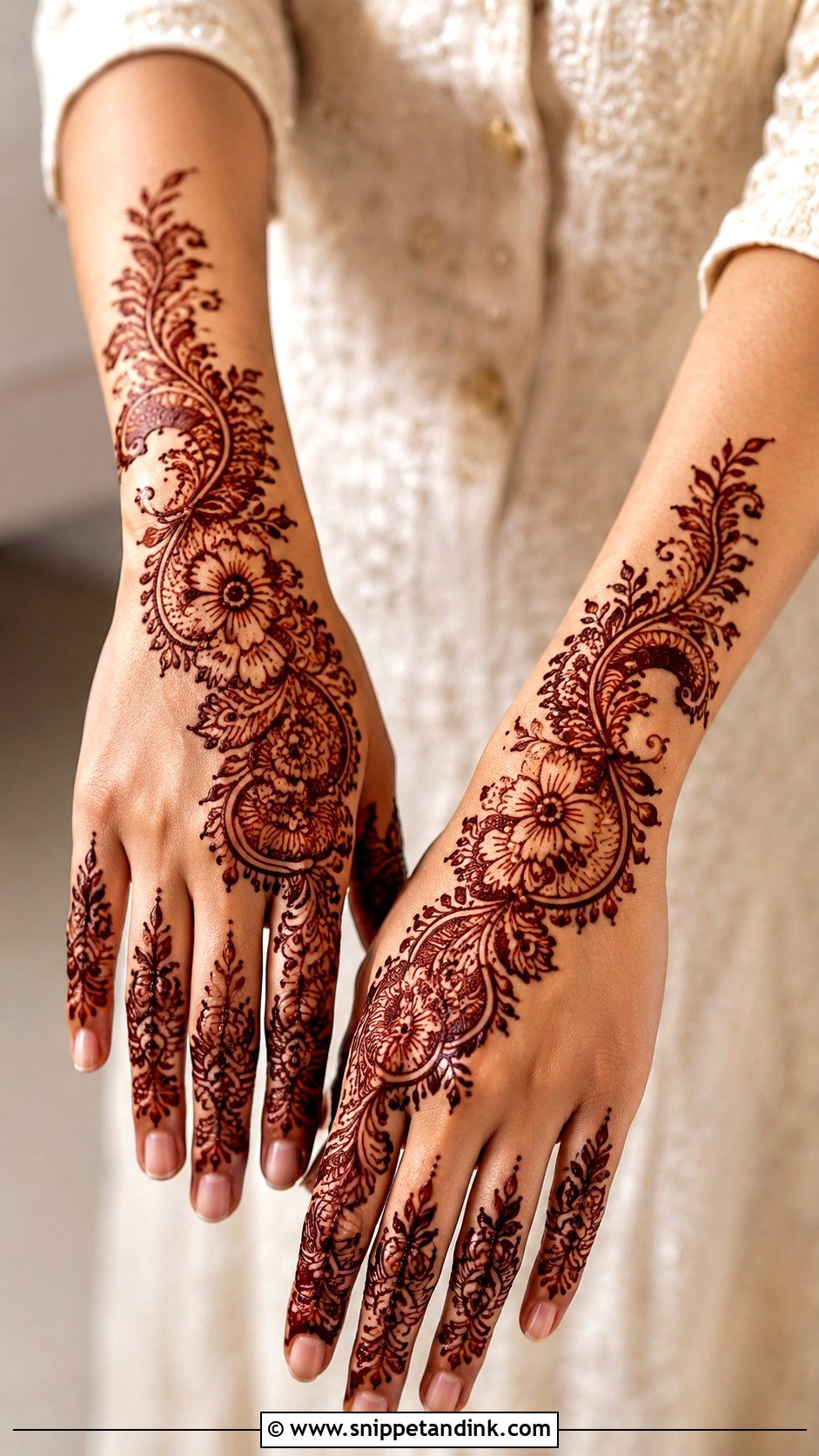
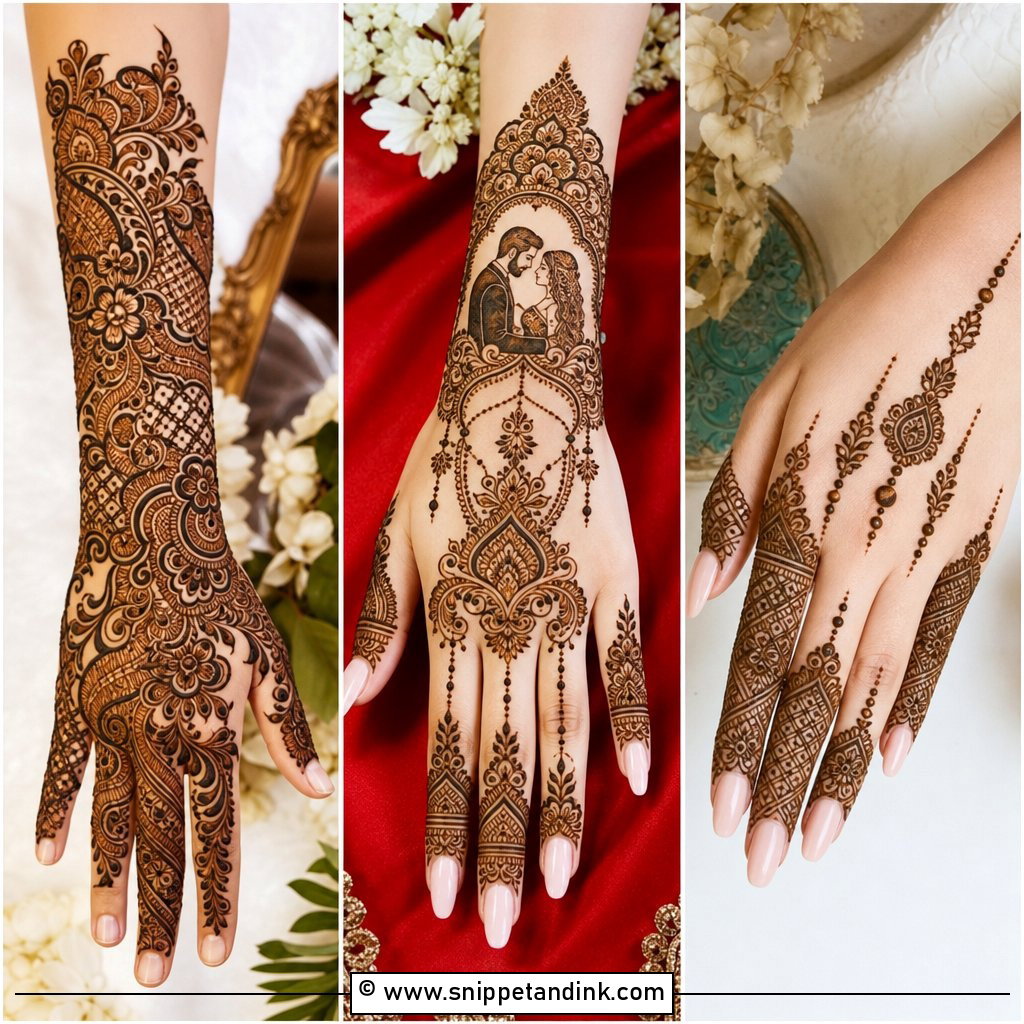
The appeal of a back hand Arabic mehndi design is the diagonal: large flowers, leafy vines and paisley curves sweep from the wrist toward the index finger and leave the rest of the hand open. This year’s version has thicker main strokes and softer shading inside the petals. Long fingers give the trail room to run. On a small hand I scale the flowers down rather than shortening the trail, because a stubby diagonal loses the movement that makes the style work. Party guests, Eid and bridesmaids keep it in constant demand.
3. Full Hand Bridal Mehndi Design
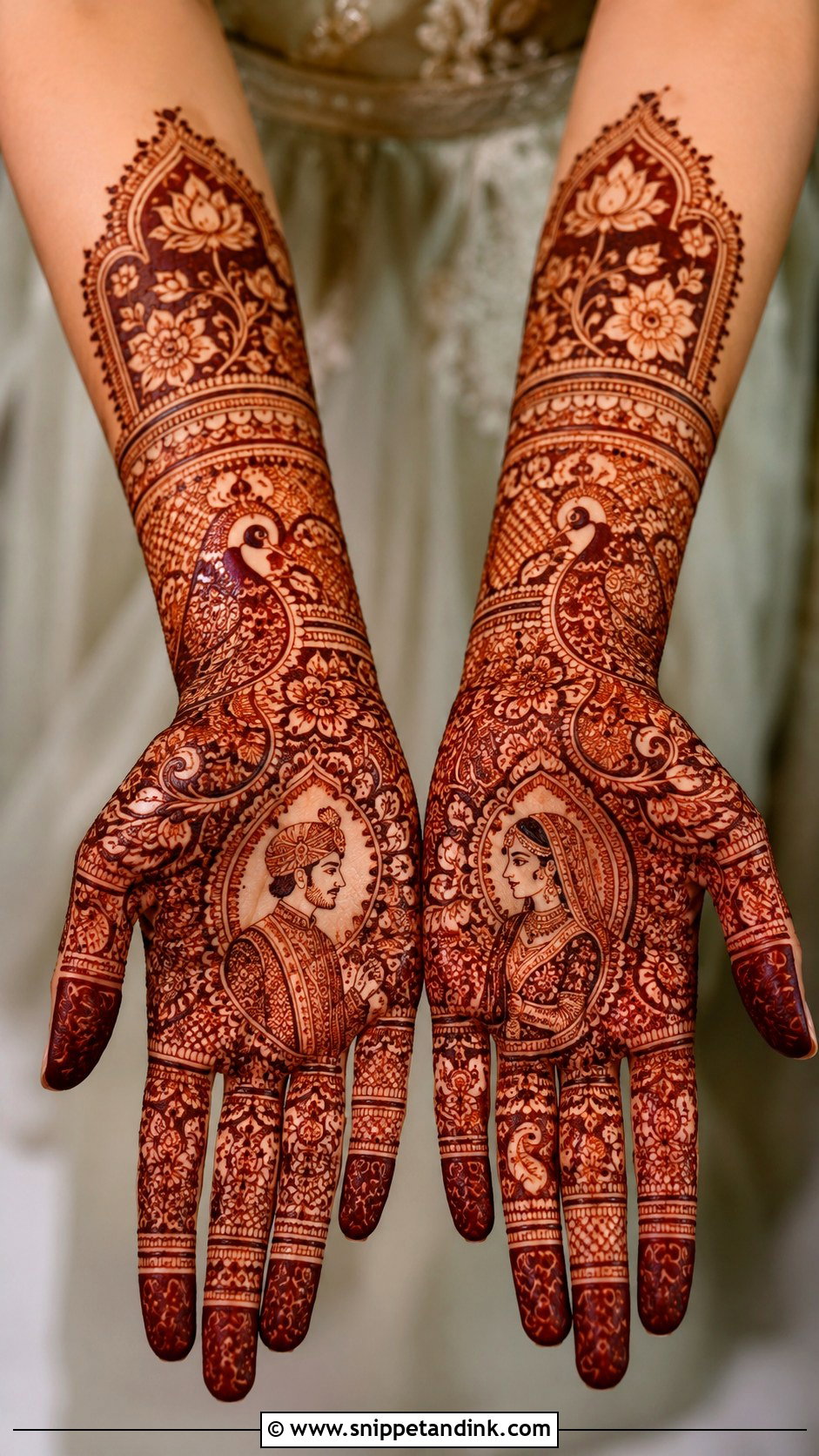
Full bridal coverage runs from the fingertips over palm, back hand and wrist up to the forearm, with paisleys, lotus flowers, peacocks, jaali, mandalas and often the bride and groom themselves. Density is the hard part. When every section is equally packed, the eye has nowhere to rest and the stain reads as a brown glove, so I deliberately alternate dense panels with lighter borders. Many brides now ask for initials, the wedding date, ceremony symbols or tiny portraits worked in. Expect a long sitting, and expect the stain to keep deepening for a day or two afterwards.
4. Indo Arabic Mehndi Design Front Hand
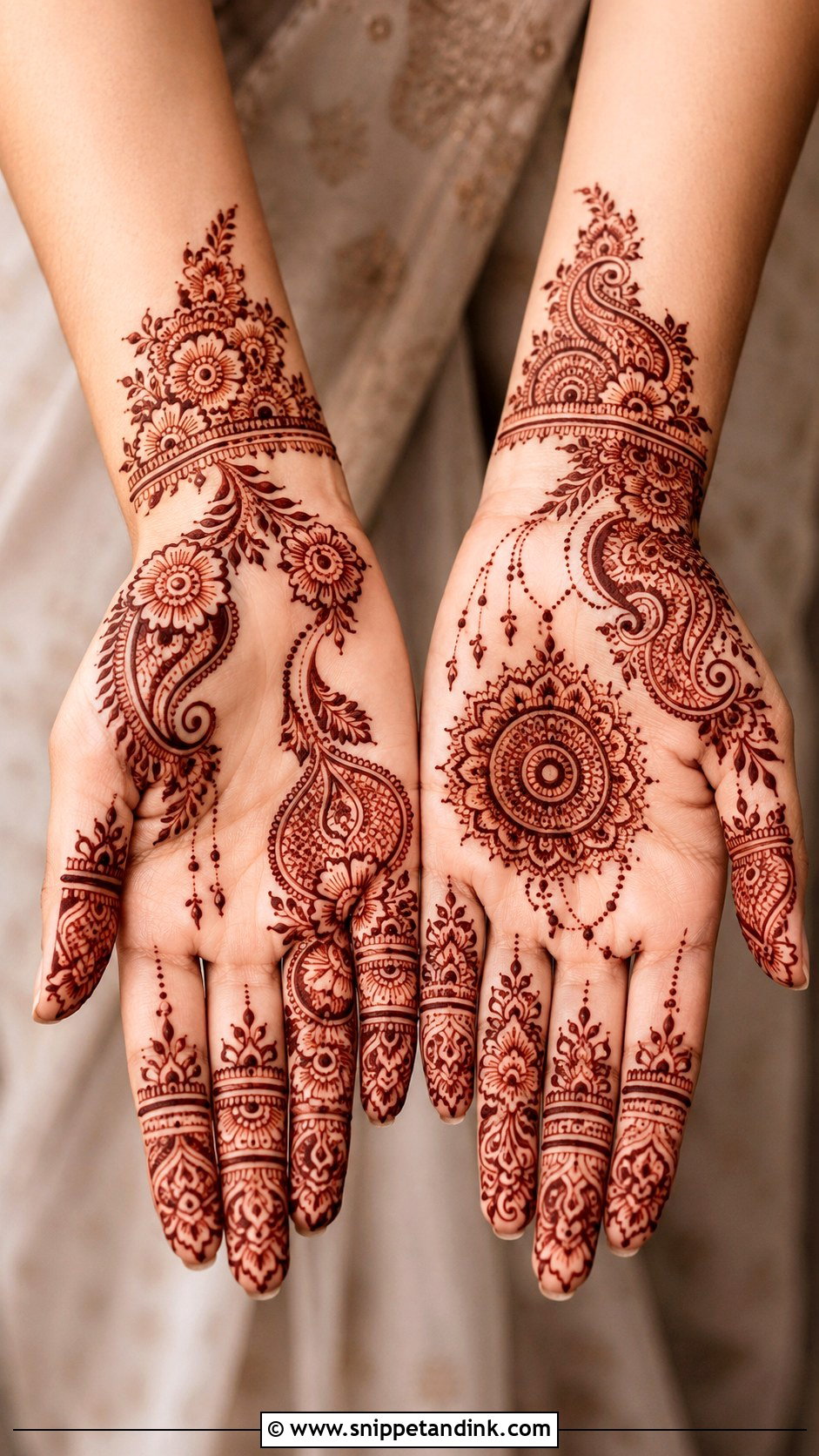
This fusion takes Arabic movement and fills it with Indian detail: floral trails and paisleys carrying fine shading, dotted chains and small checks inside them. On the palm I usually start near the wrist and travel toward the fingers, with a mandala or flower at the center. The negative space is what makes each motif readable, so I resist filling the background. It’s festive without being heavy, which is why it gets booked for sangeet, Eid and engagement functions as often as for weddings.
5. Modern Back Hand Mehndi Design
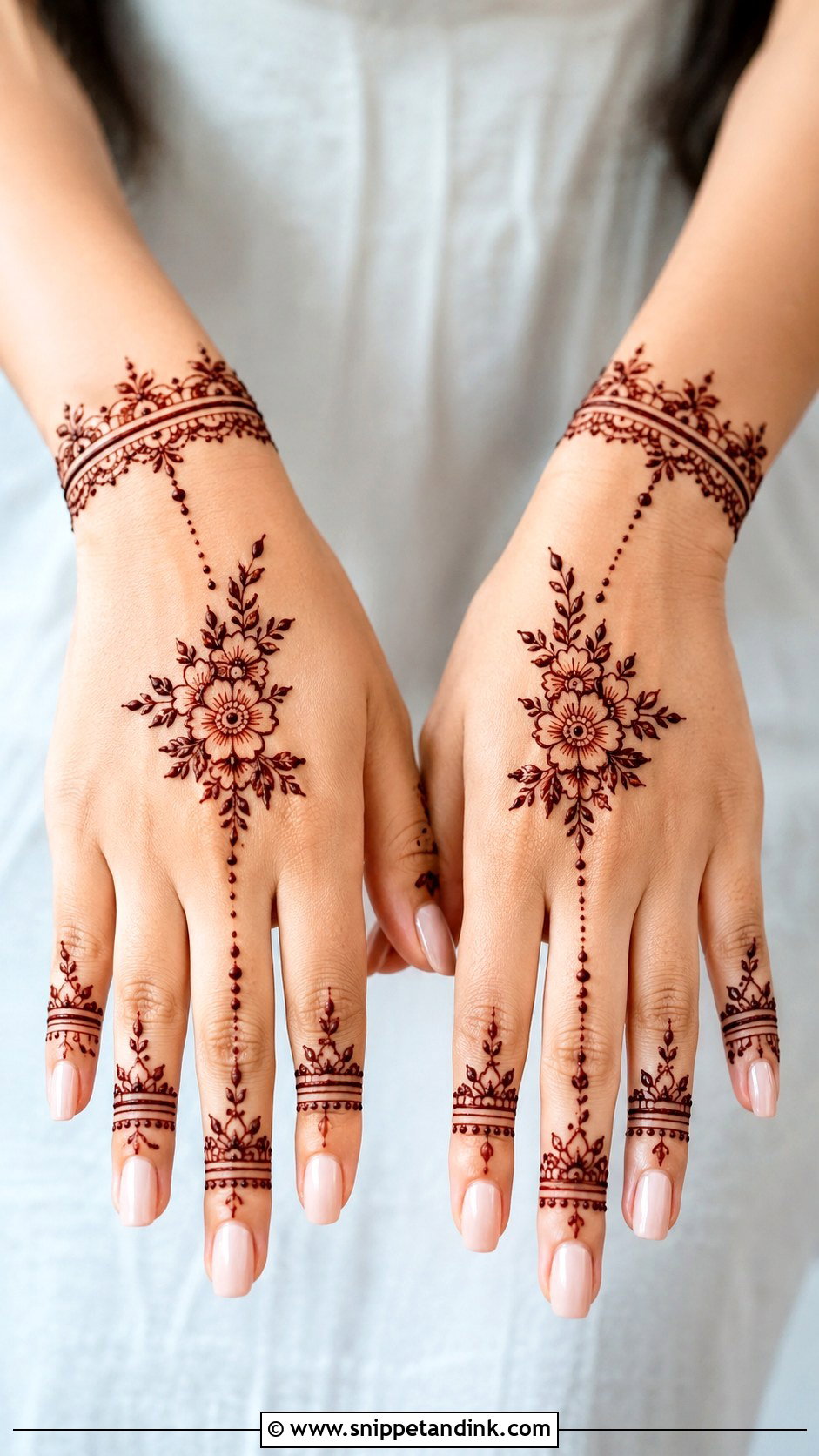
Placement does most of the work here. A bracelet cuff at the wrist, a central floral cluster and ring-style patterns on the fingers are held together with thin lines, small leaves and generous empty skin. Clients who like tradition but dislike heavy coverage gravitate to it. This year I’m drawing more chain lines and finger rings, so the hand reads as if it’s wearing jewelry. Keep the cuff narrow if you’ll wear real bangles, or the two will crowd each other.
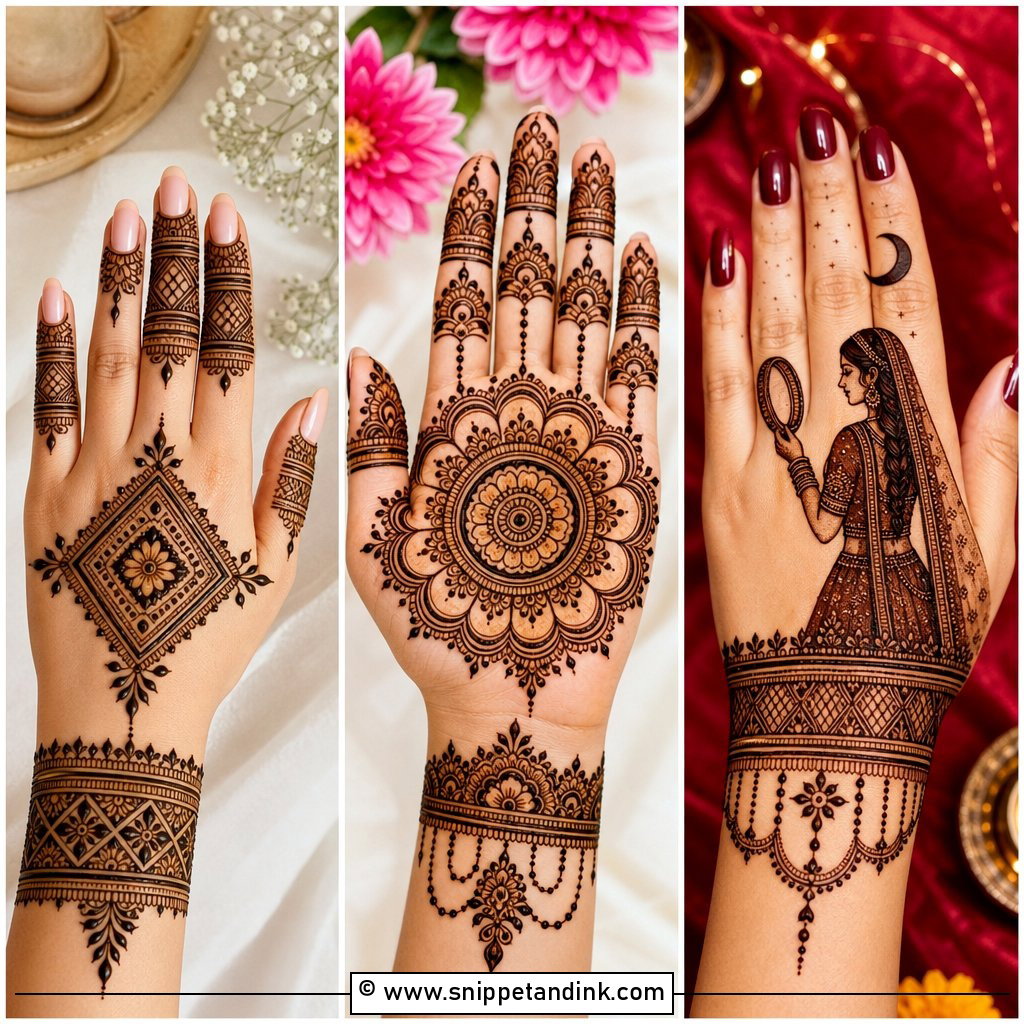
6. Bridal Portrait Mehndi Design
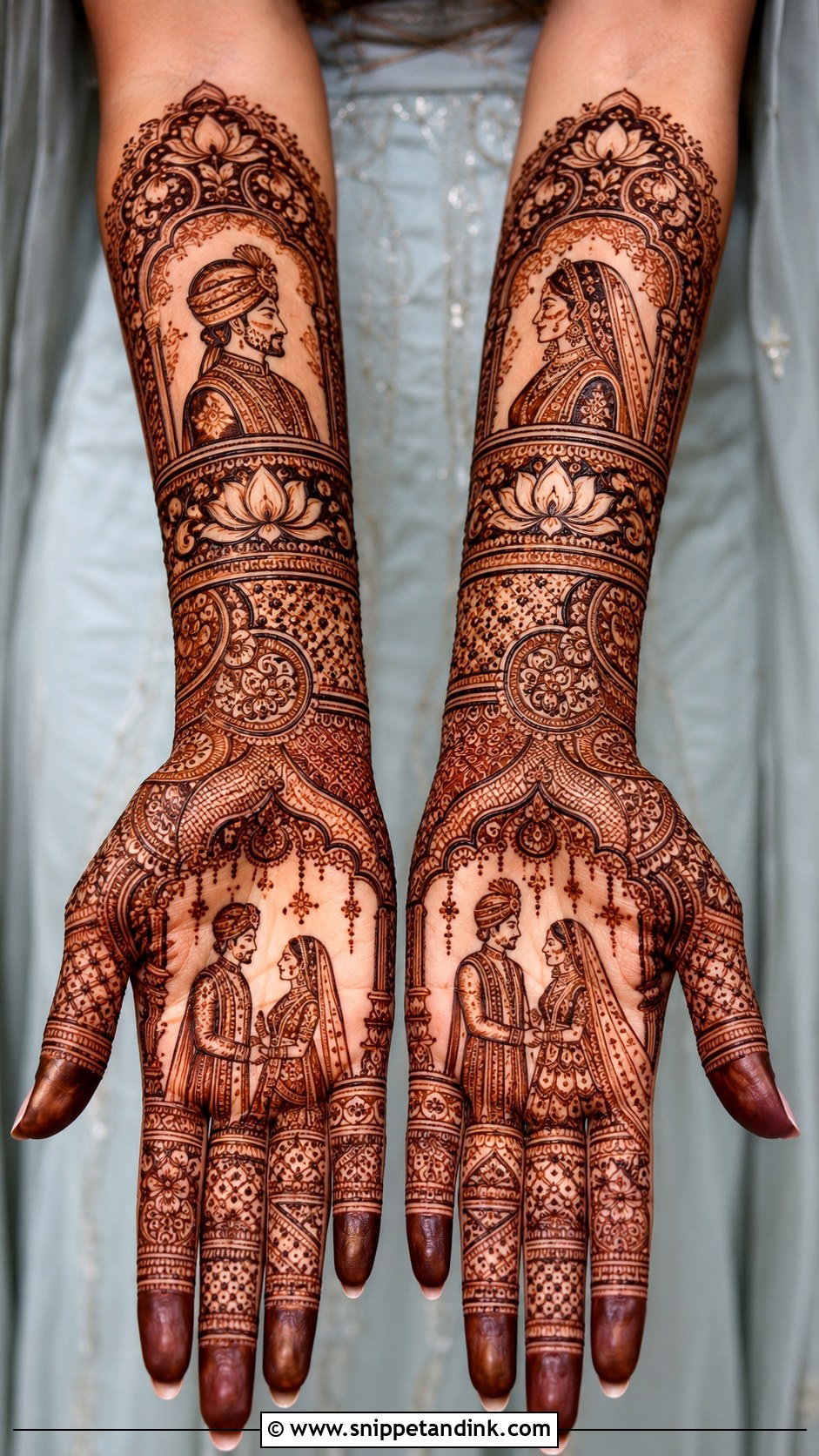
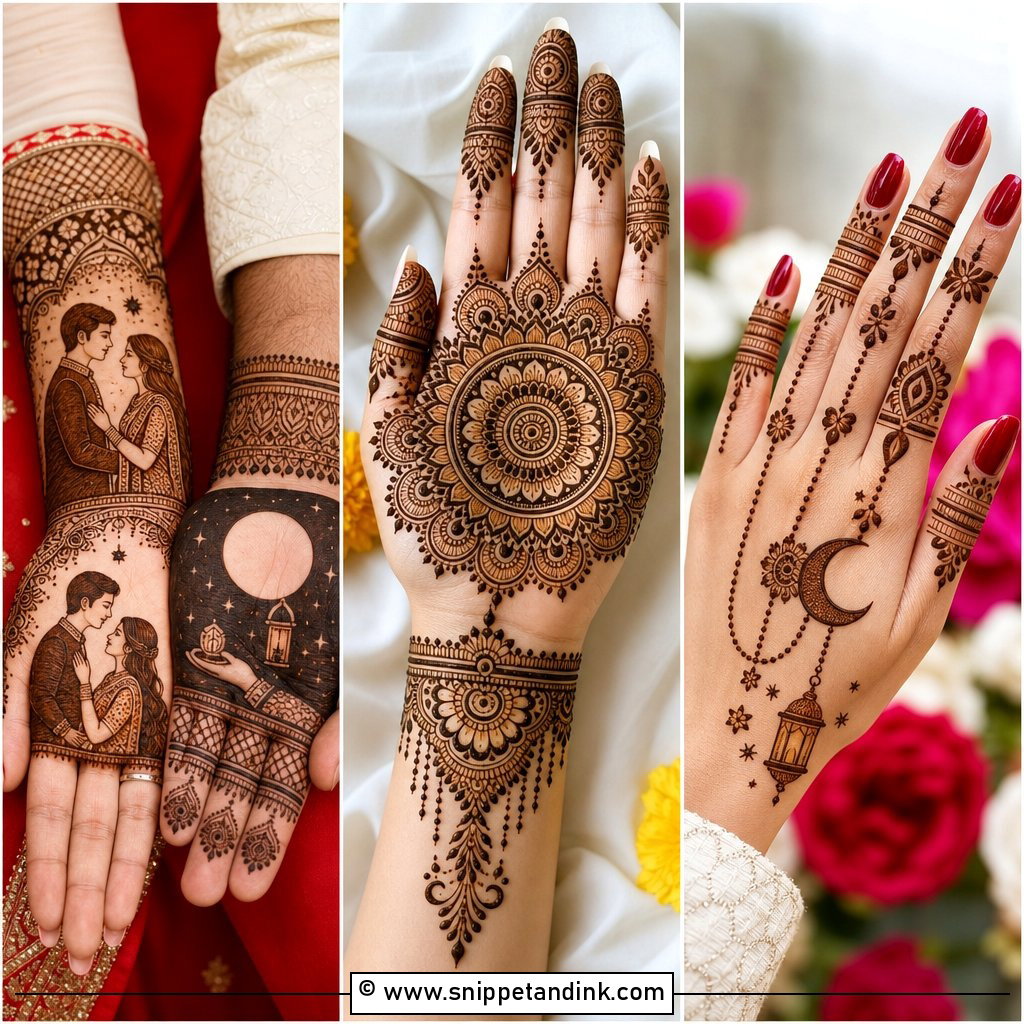
Portrait work is the most demanding thing I draw. Bride and groom faces, a doli, the varmala moment, palace windows: each needs a fine, steady line and paste that flows without blobbing, and a face smaller than a coin will blur slightly as the stain develops. I tell brides to keep portraits large and on the palms, where the color is deepest. The surrounding jaali, lotus borders and paisley frames should support the figures, not fight them. Many brides this year put the portrait on one palm and symbolic motifs on the other, which keeps both readable in photos.
7. Minimal Finger Mehndi Design
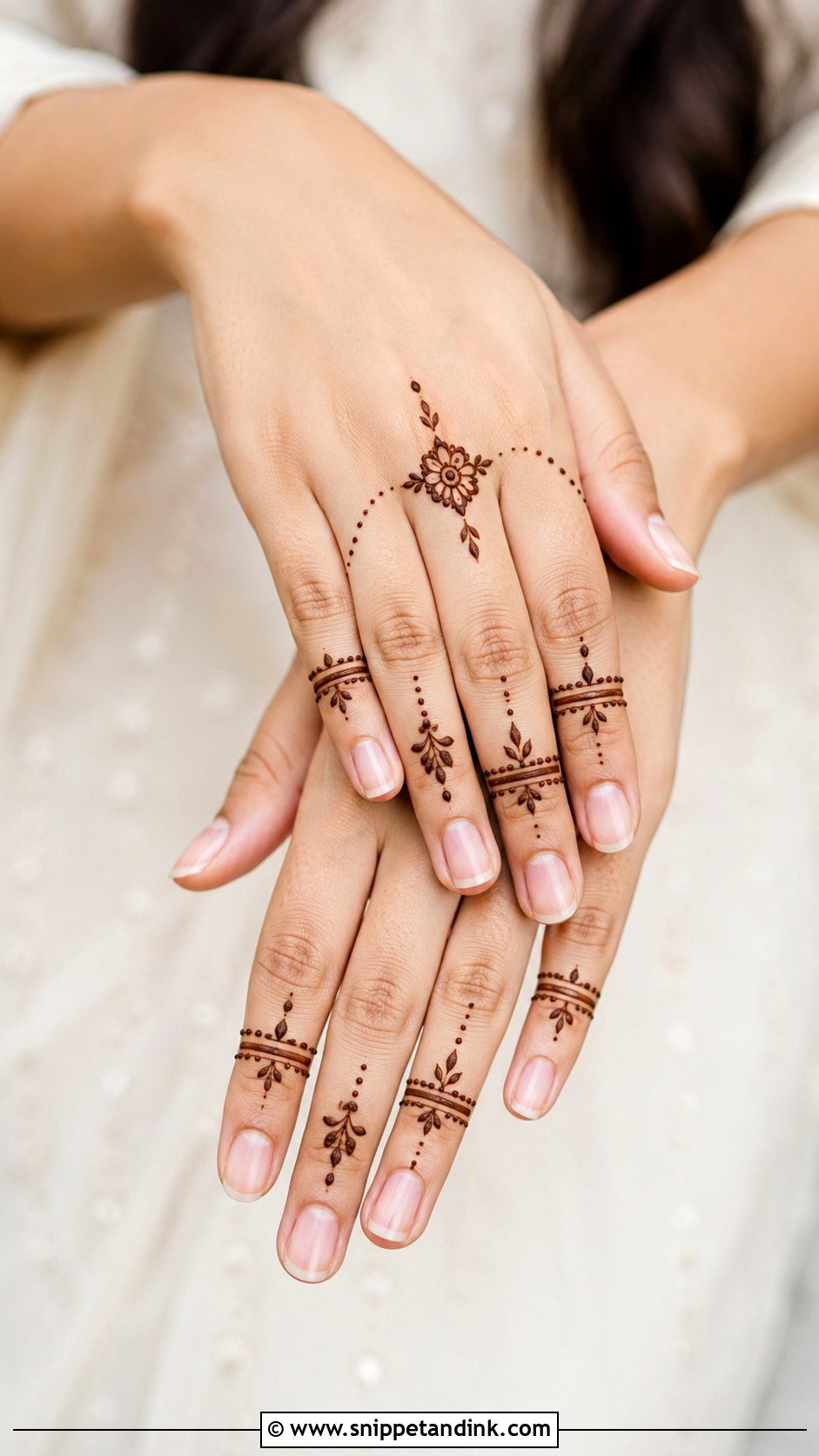
Ring bands, tiny leaves, dots, slim vines and fingertip caps, with the palm and back hand left bare or given one small motif. That’s the whole design, and it can be done in minutes for college events, office-friendly festivals or a last-minute Eid. One thing to know: the stain sits right beside your nails, so a warm polish shade looks better against it than a cool grey or blue. Natural nails and simple rings suit it best.
8. Mandala Mehndi Design Front Hand
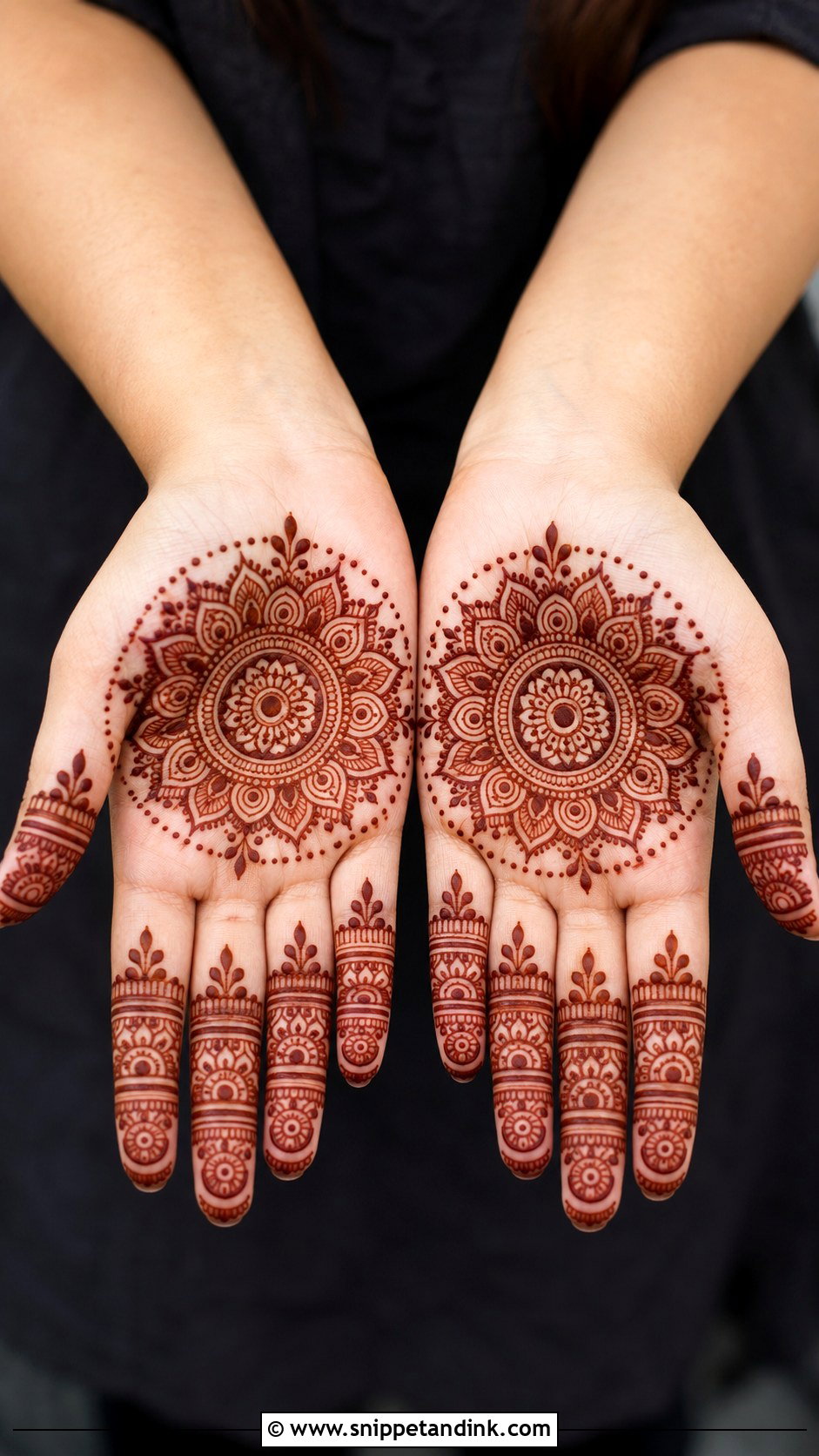
A palm mandala is the design I teach first, and the one I still check most carefully. The center circle can stay bold and plain or carry petals, dots, fine rings and tiny leaves, and the fingers get matching bands. This year’s version has cleaner outlines and more open space around the circle. If the hand will be photographed from an angle, I place the mandala a touch below true center, because relaxed fingers curl and hide the top of the palm. Pujas, festivals and lighter bridal functions all suit it.
9. Full Back Hand Mehndi Design
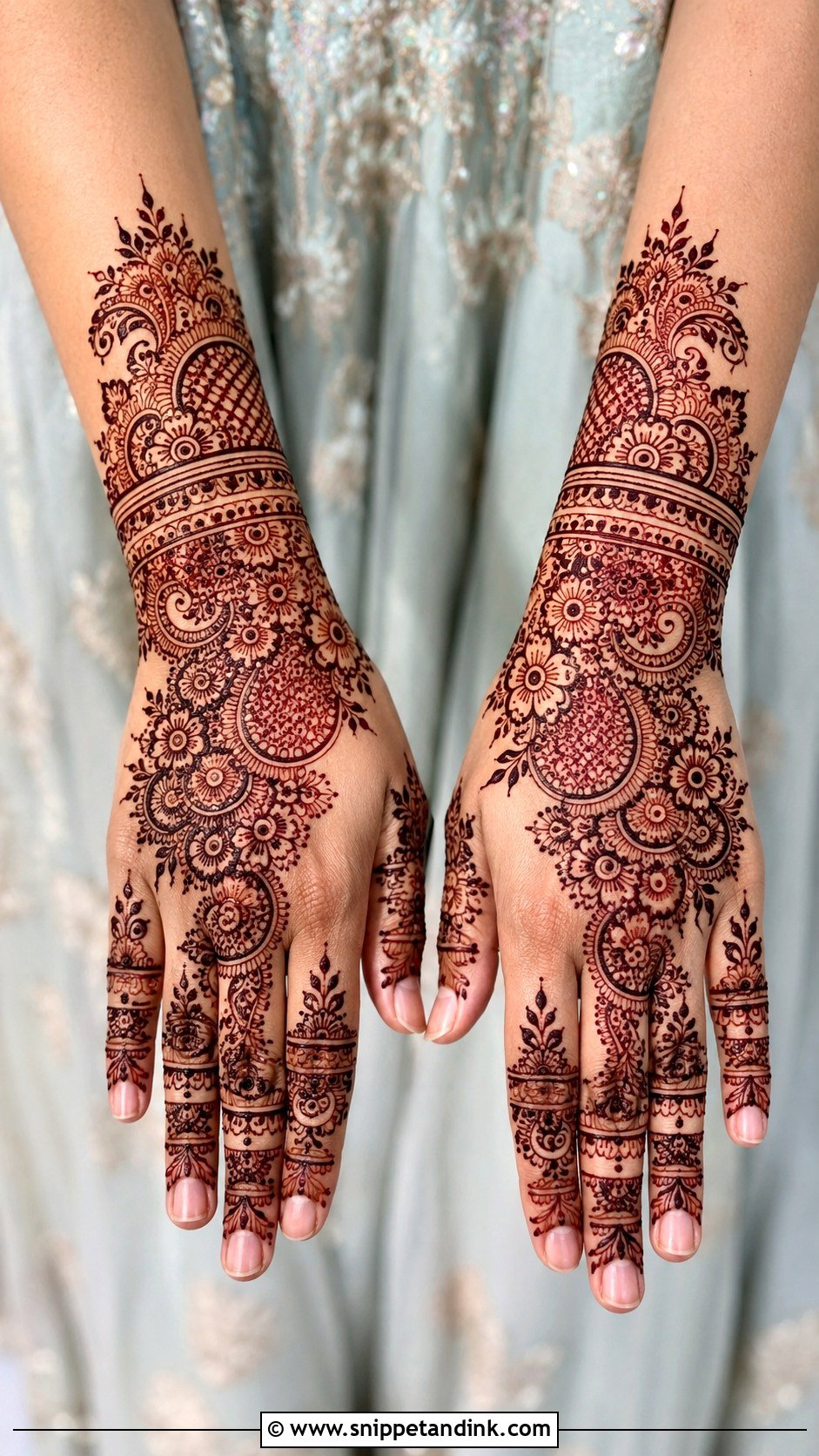
Covering most of the back hand without it turning into a pattern sheet needs one clear focal point, usually a large flower or mandala near the center. Floral clusters, paisley curves, jaali sections, bracelet bands and detailed fingers build out from there. The 2025 approach is structured, with heavy and light sections separated by neat gaps instead of blending. Remember that the back of the hand stains lighter than the palm, so outlines should be firm. Sisters of the bride and bridesmaids book this one most.
10. Royal Bridal Mehndi Design
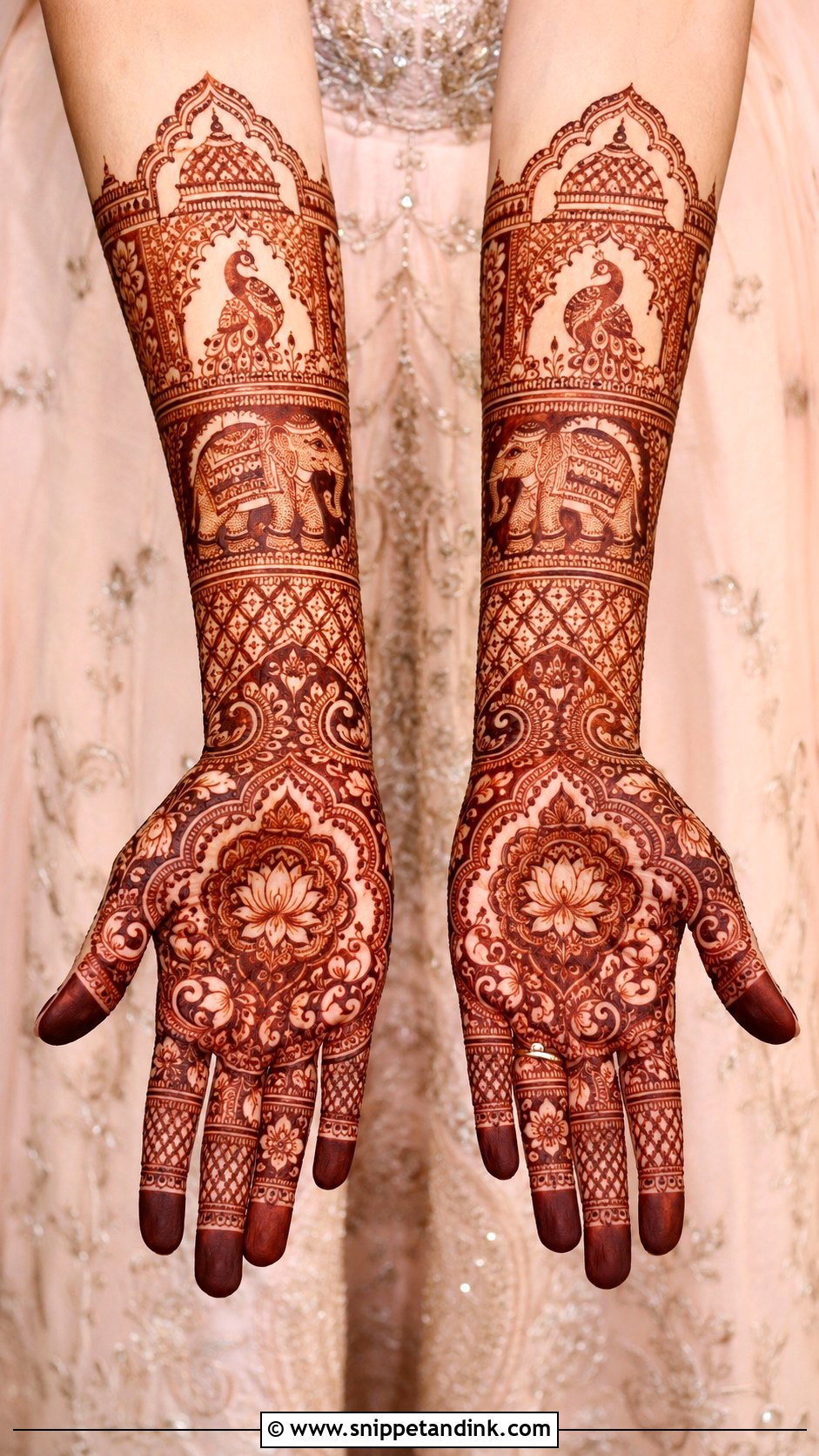
Peacocks, elephants, lotus motifs, palace arches, paisleys and mandalas running from the wrist up the forearm: royal bridal mehndi is the heavy end of the spectrum. Each motif needs its own clear place, or the grandeur collapses into clutter. I plan both hands as a pair, so the palms mirror each other and the back hands share a border. This year brides want sharper line work, deliberate negative space and personal symbols hidden in the pattern for the groom to hunt for. It’s a long sitting, so bring snacks and someone willing to feed you.
11. Arabic Floral Mehndi Design
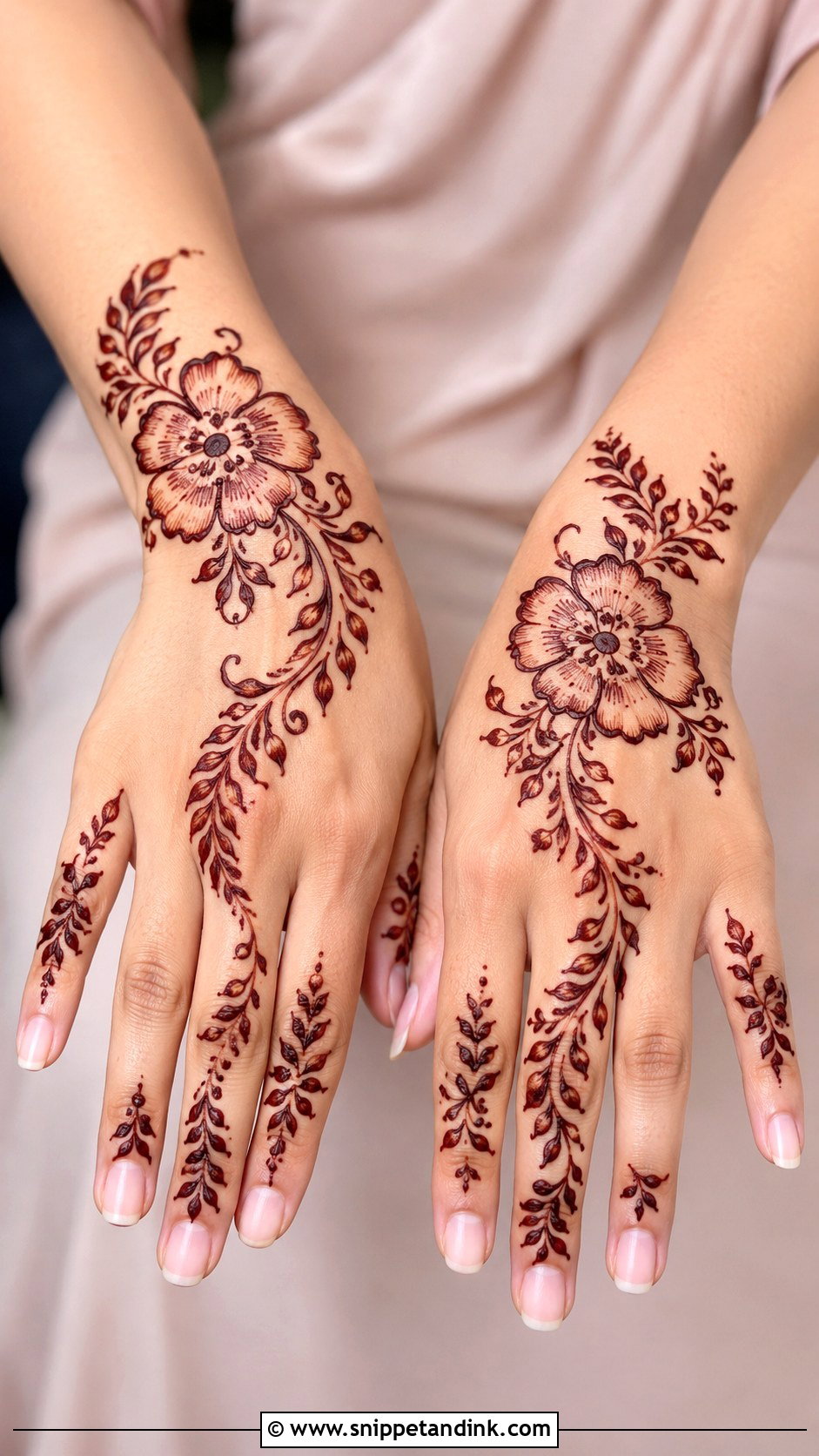
An Arabic floral mehndi design is built from large flowers, leafy trails, curved stems and bold outlines moving across the hand. It can sit on the palm or the back hand, or run from wrist to finger. The flowers only look defined if there’s open skin around them. In 2025 I’m drawing bigger petals, cleaner shading and fewer fillers, which gives a bolder stain. The mistake I see in home attempts is shading every petal solid; leave a thin gap inside the outline and the flower keeps its shape.
12. Jaali Mehndi Design Back Hand
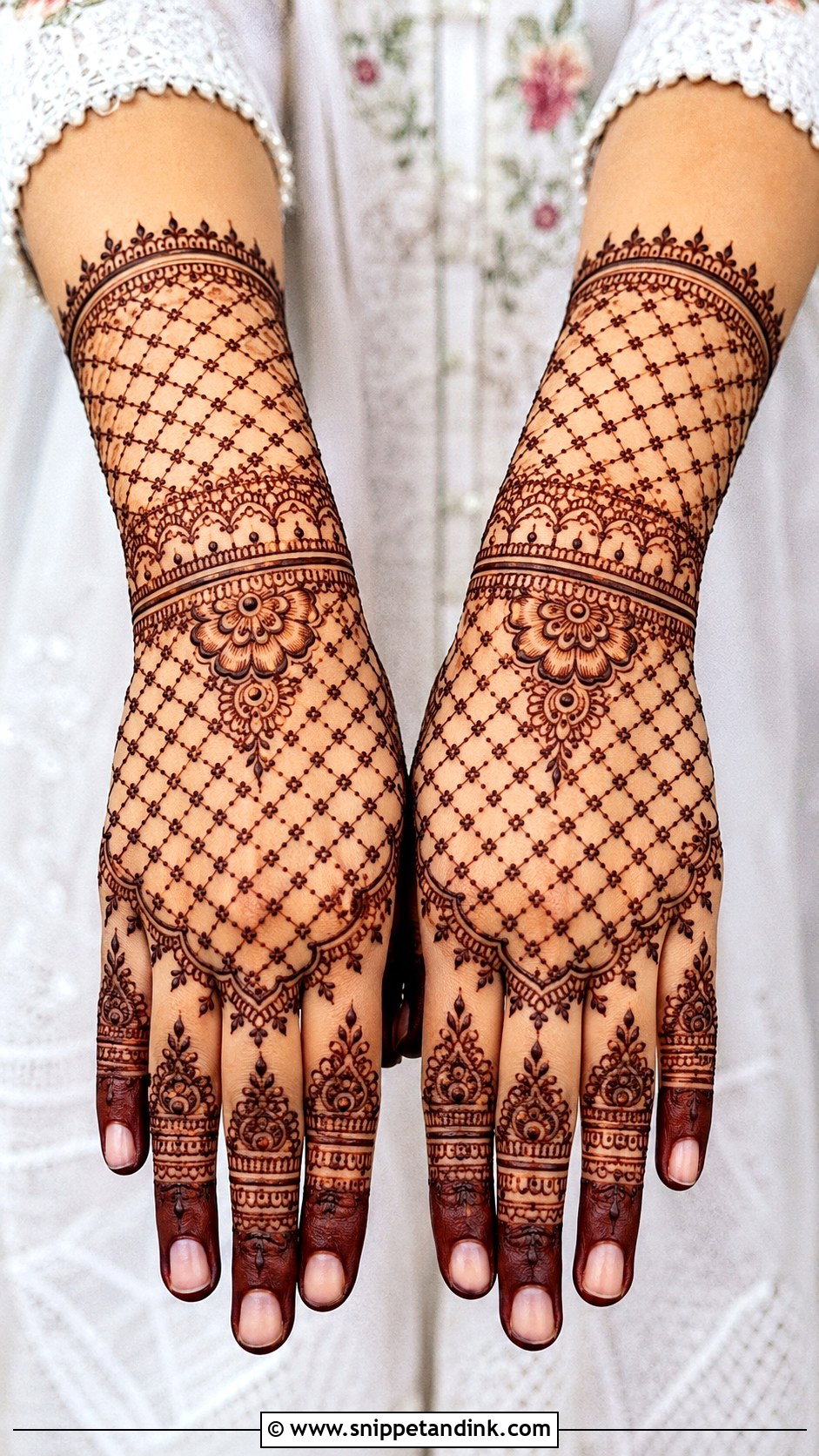
Jaali gives the back of the hand a lace effect, with mesh grids, tiny dots, flowers, leaves and borders framing it. Large mesh sections read modern; tight, dense ones read bridal. This year’s grids are cleaner diamonds broken up by flowers so the hand doesn’t look busy. Drawing jaali is slow work, because one wandering line throws off every diamond after it, so I mark a few guide dots before starting the grid. Done evenly, it holds up well in close-up photos.
13. Peacock Mehndi Design Front Hand
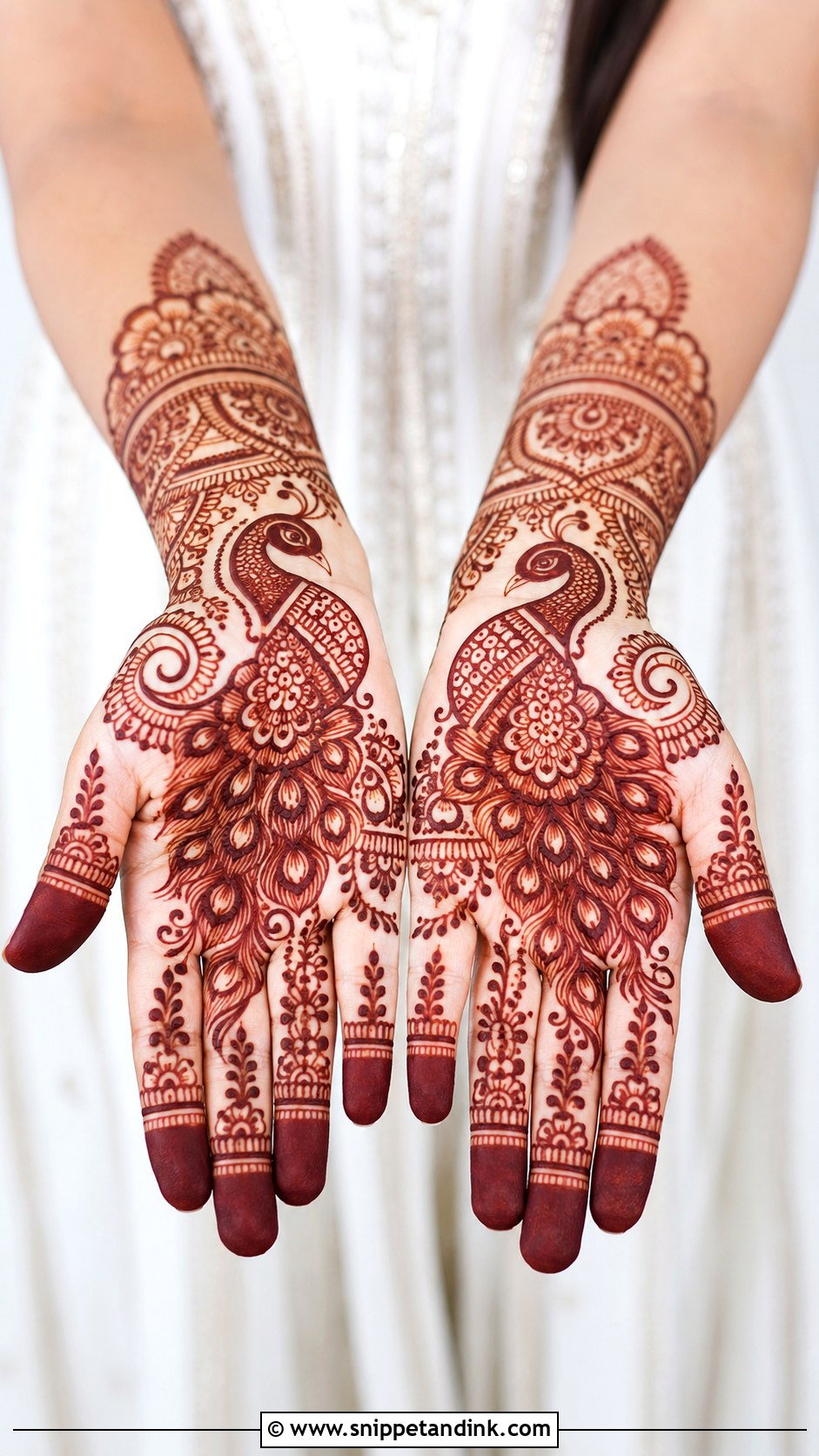
The feathers are where a peacock succeeds or fails. I draw them with careful lines, dots and curved shading, keeping the eye of each feather open enough that it won’t fill in as the paste settles. The bird itself can sit near the palm center, curve along the side of the palm or melt into paisley and floral work. Peacocks in 2025 are smaller and more refined, with fewer crowded fills. Add decorated fingers and a wrist cuff and the hand is complete for a wedding or a major festival.
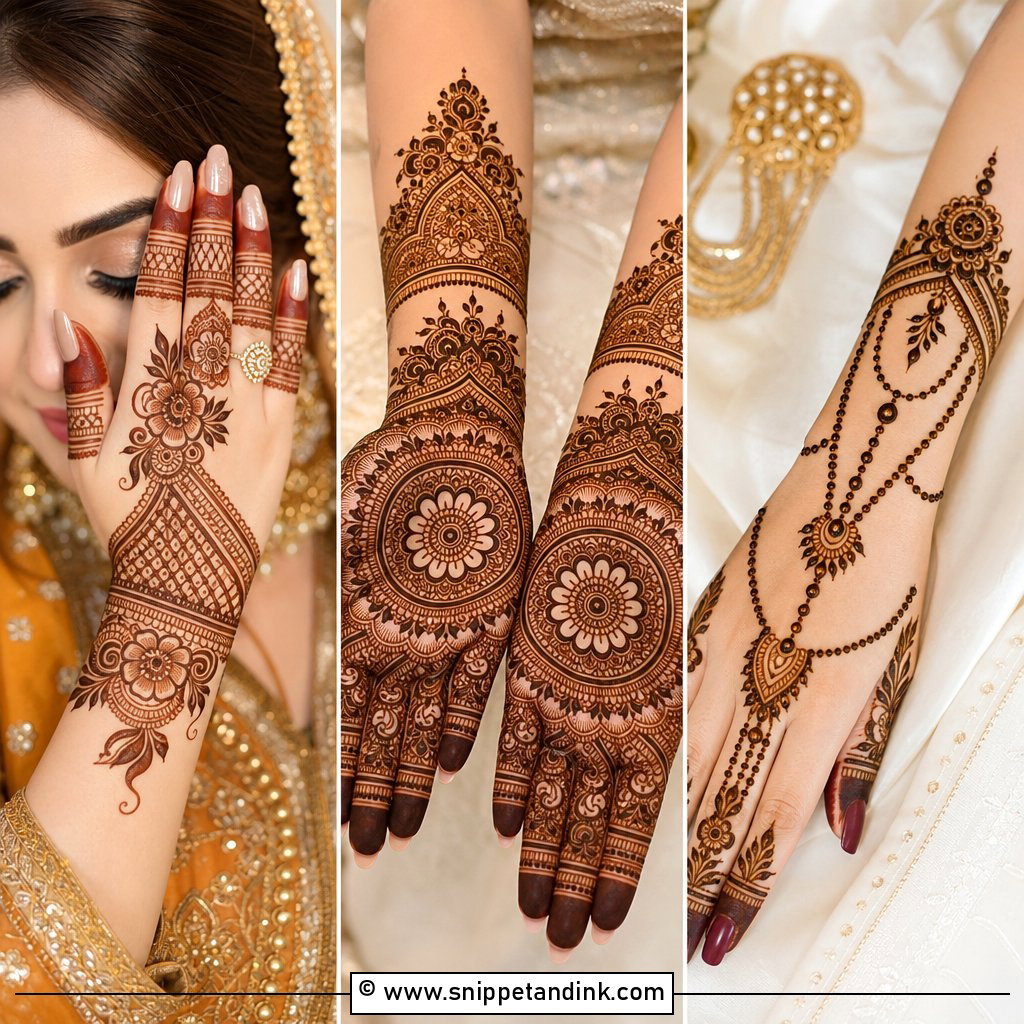
14. Bracelet Mehndi Design Back Hand
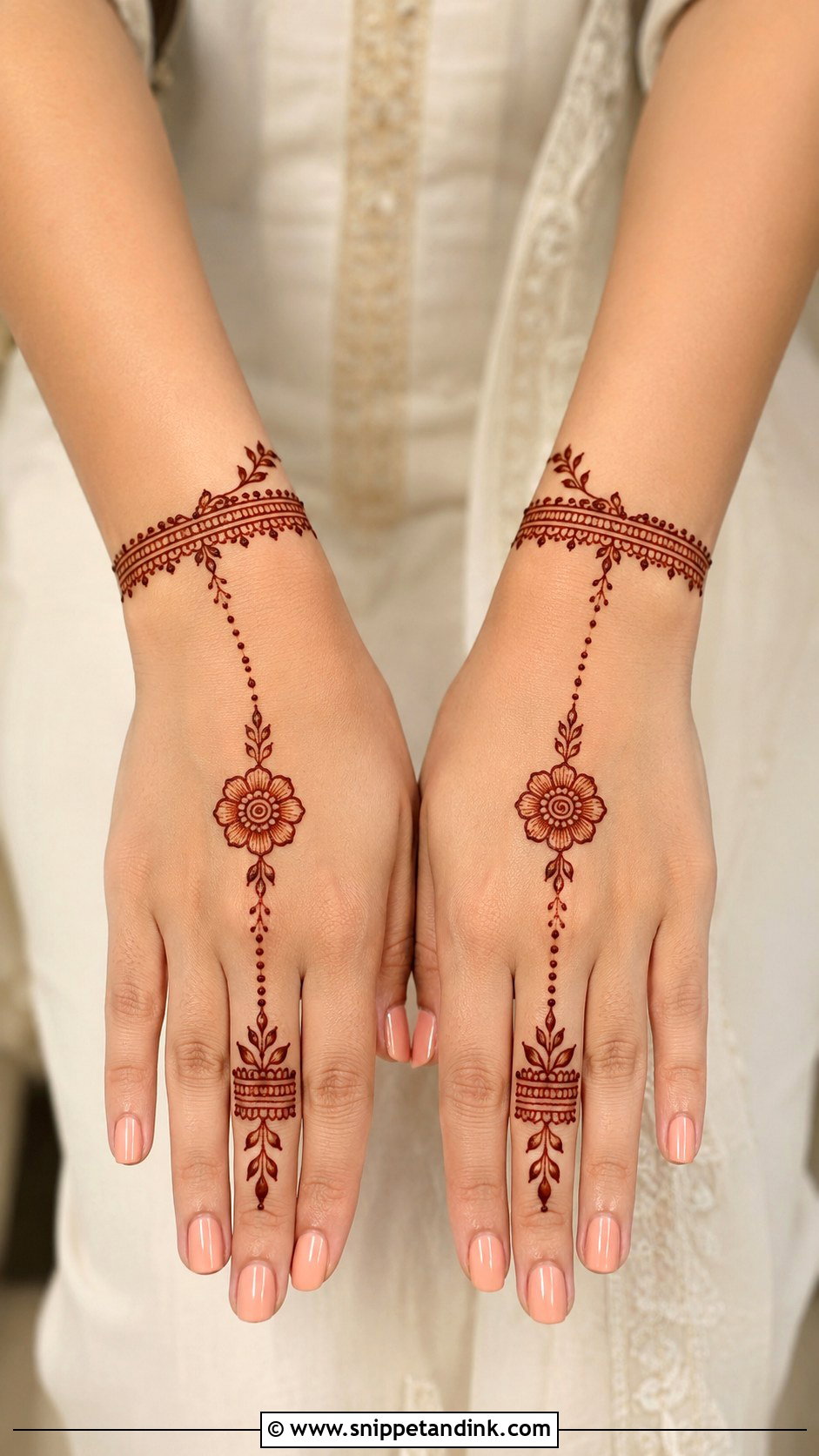
This is henna imitating a haathphool: a wrist band, chain lines, ring patterns on the fingers and a central motif linking them across the back of the hand. I suggest it to anyone who wants a modern, minimal look but still wants the hand to feel dressed. Clean chains, tiny florals, slim leaves and neat rings are this year’s version. The chains must be evenly spaced and actually reach the rings they connect to, or the illusion breaks.

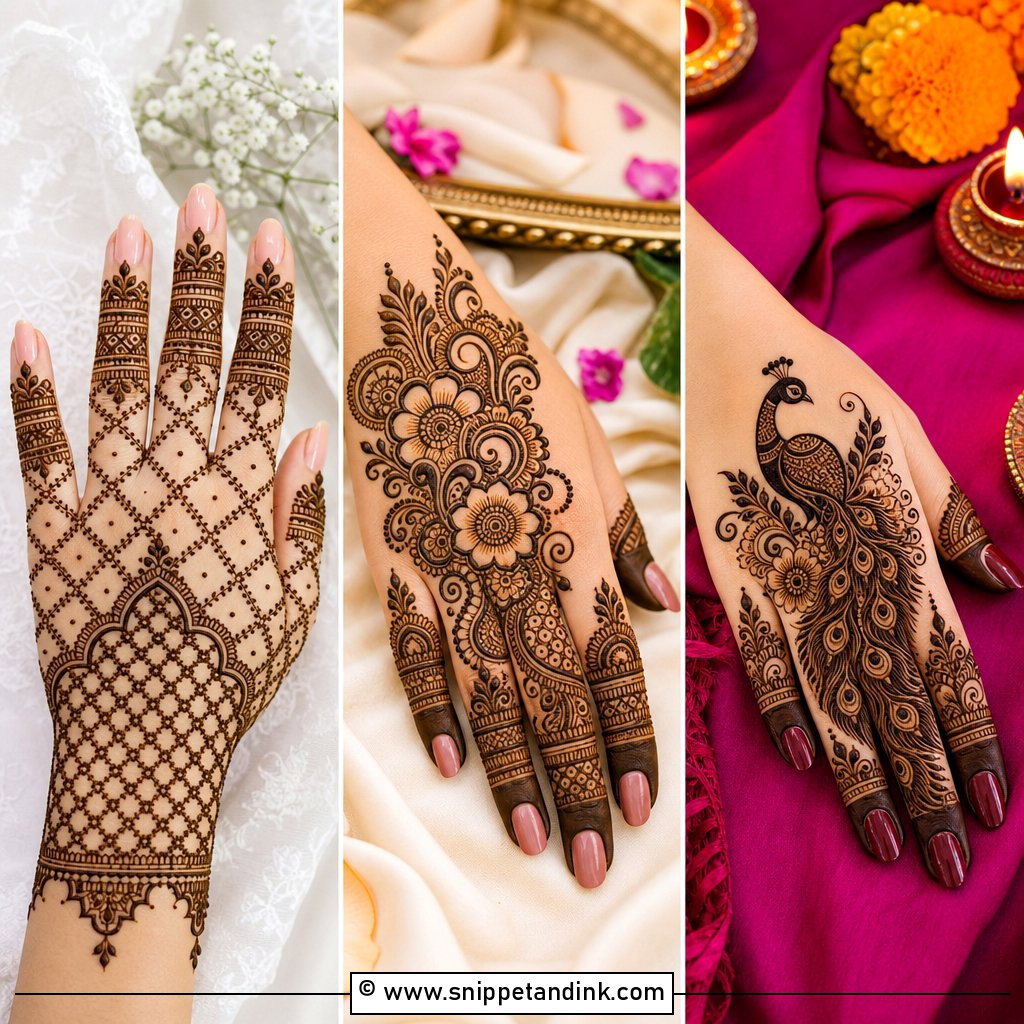
15. Moroccan Mehndi Design
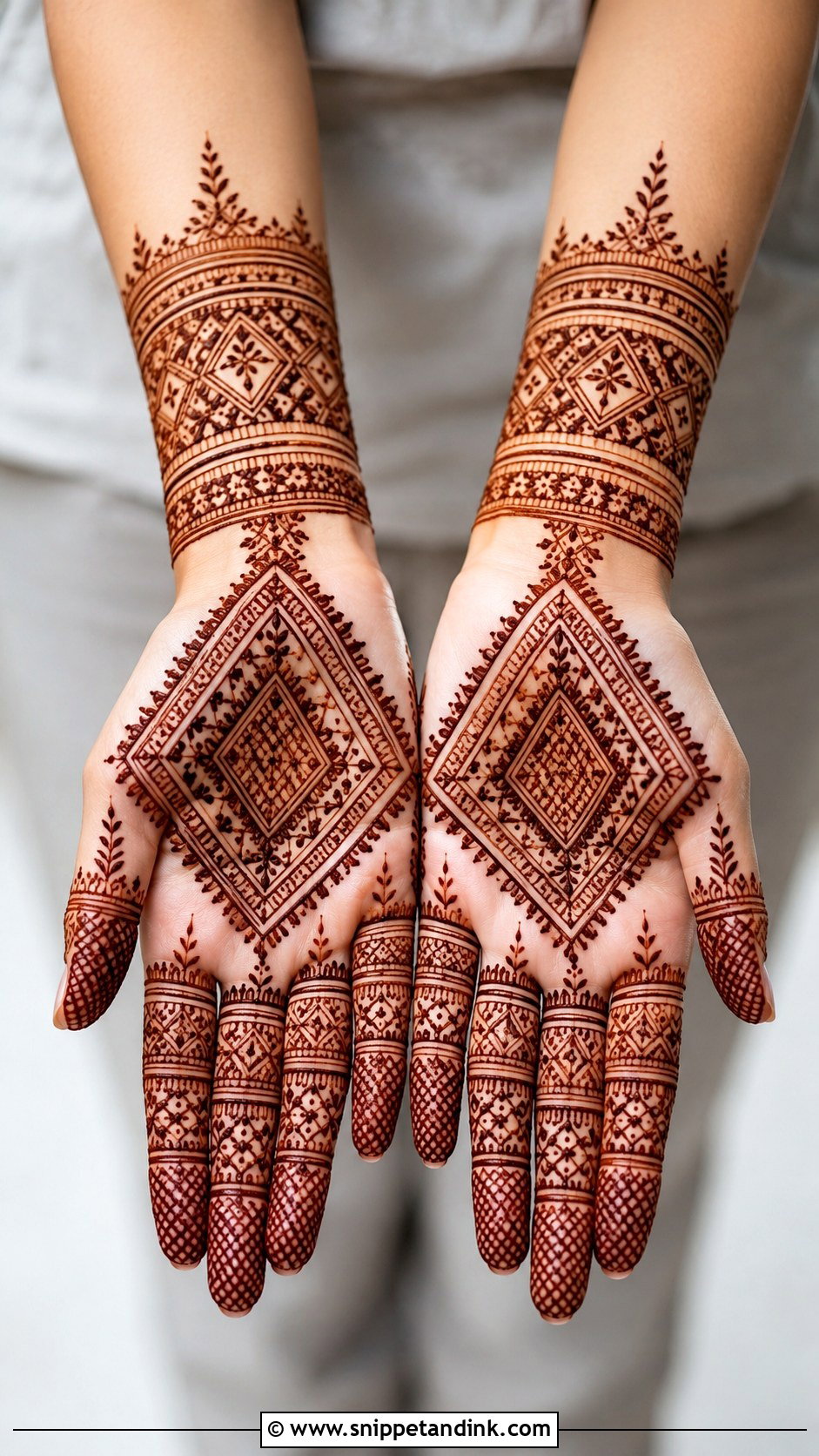
Moroccan henna trades floral flow for geometry: diamonds, triangles, straight lines, grids, sharp borders and repeated shapes. It looks bold and a little edgy, and works on front or back hands when kept symmetrical. People tired of flowers and paisleys ask for it, and it’s a natural fit for men’s henna too. Precision matters more than fill here. I draw it slower than any floral design, turning the client’s hand so every line is pulled toward me rather than pushed away.
16. Gulf Khaleeji Mehndi Design
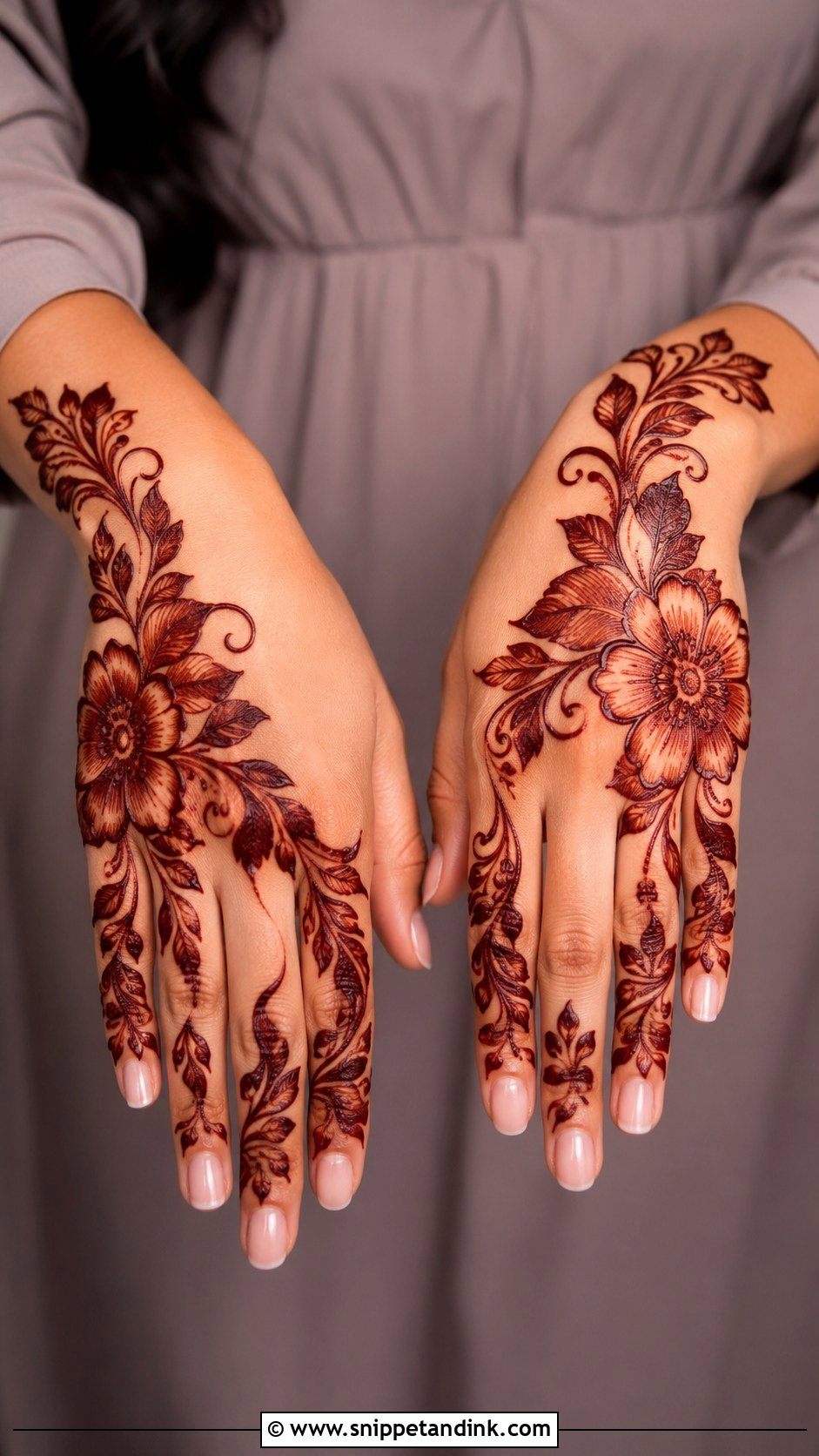
Khaleeji work is bold florals, thick leaves, dark outlines and dramatic spacing, sweeping across the hand in one movement. Because it relies on a few large shapes, it gives a lot of impact quickly, which makes it a favorite for Eid and busy wedding nights. This year it’s oversized flowers, leafy vines and shaded petals on the back hand and wrist. The outlines carry the whole design, so I keep them thick and unbroken; a gap in the outline of a Gulf flower is obvious once the stain develops.
17. Engagement Mehndi Design
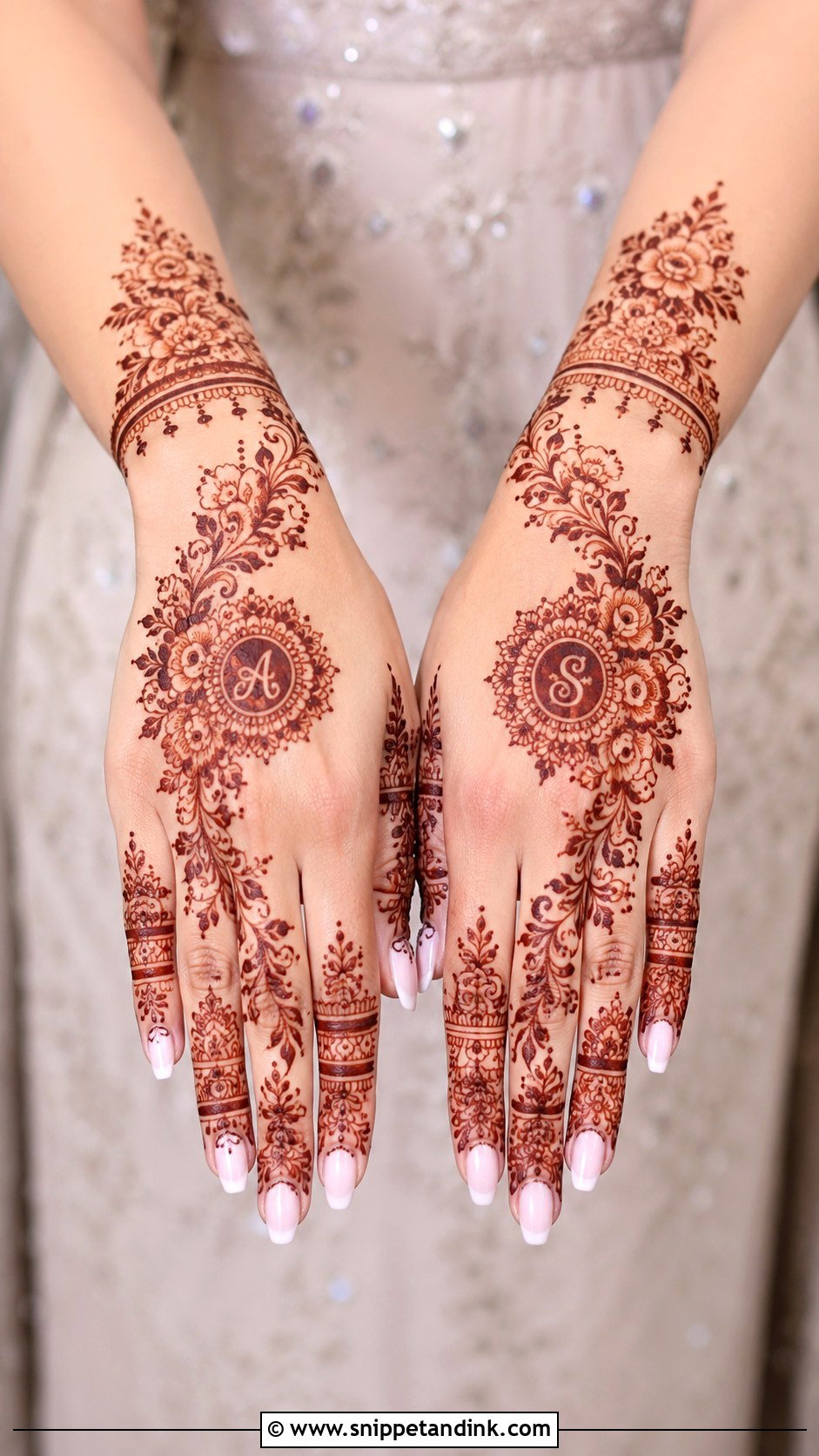
Engagement mehndi should feel like an occasion without the hours of bridal work. Floral trails, ring motifs, initials, mandalas and bracelet-style wrists, front and back coordinated, with coverage to the wrist or mid-forearm. The ring finger gets extra thought from me because it ends up in every close-up. I keep the skin just below the ring lighter so the stone isn’t swallowed by dark lines. A touch of romance is welcome, as long as there’s space for jewelry and nails to show.
18. Eid Mehndi Design Front Hand
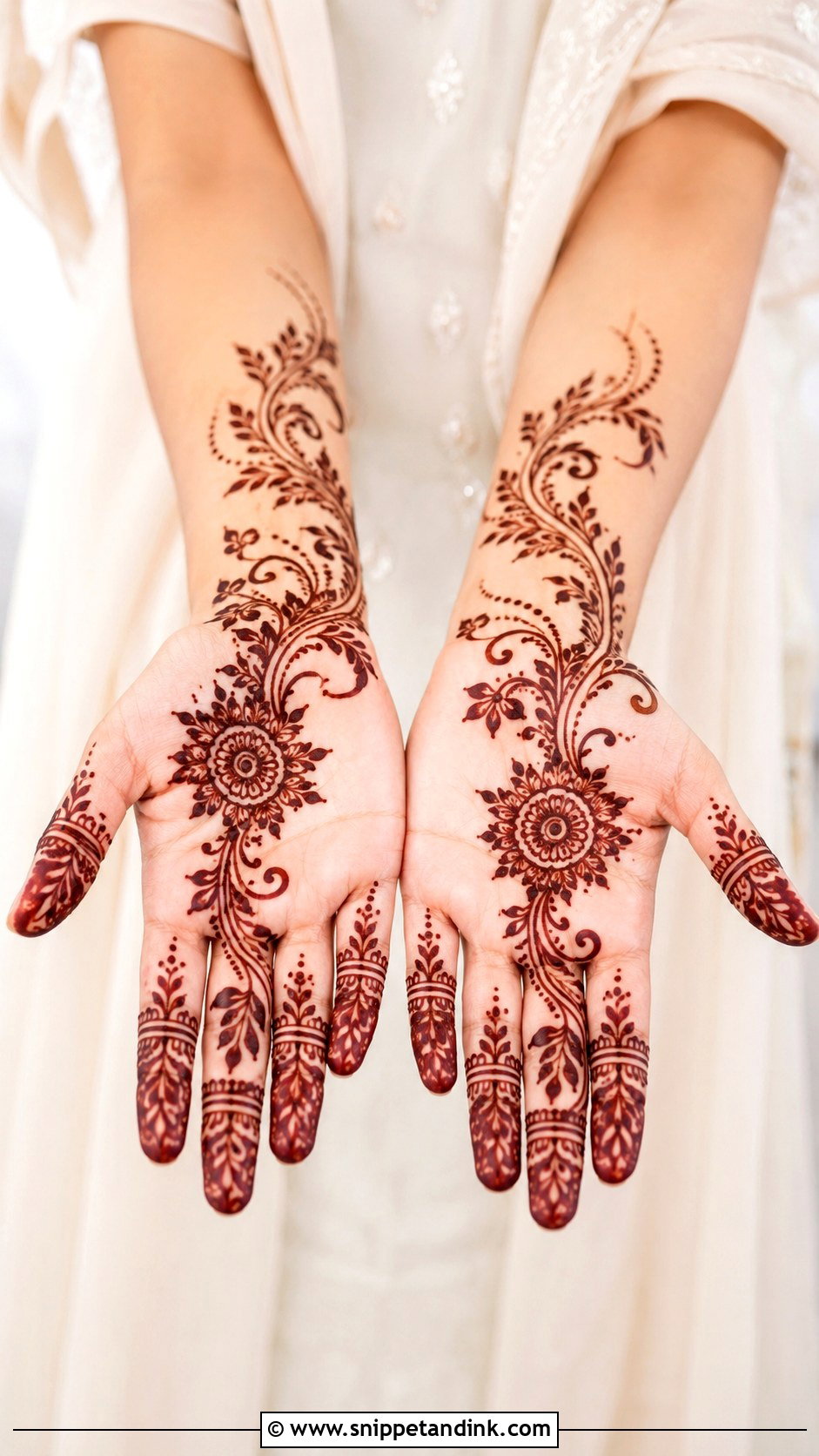
Eid mehndi usually goes on the night before, often in a crowded room with everyone taking turns, so speed matters. Arabic vines, small mandalas, leafy side trails and decorated fingers are what I draw most. Clean Arabic and Indo-Arabic layouts stain well overnight, which is exactly the window you have. A half-hand layout keeps it light, and wrist details add coverage if you can sit a little longer. Sleep with the paste on, hands loosely wrapped, and the color will keep darkening through the day of Eid.
19. Diwali Mehndi Design
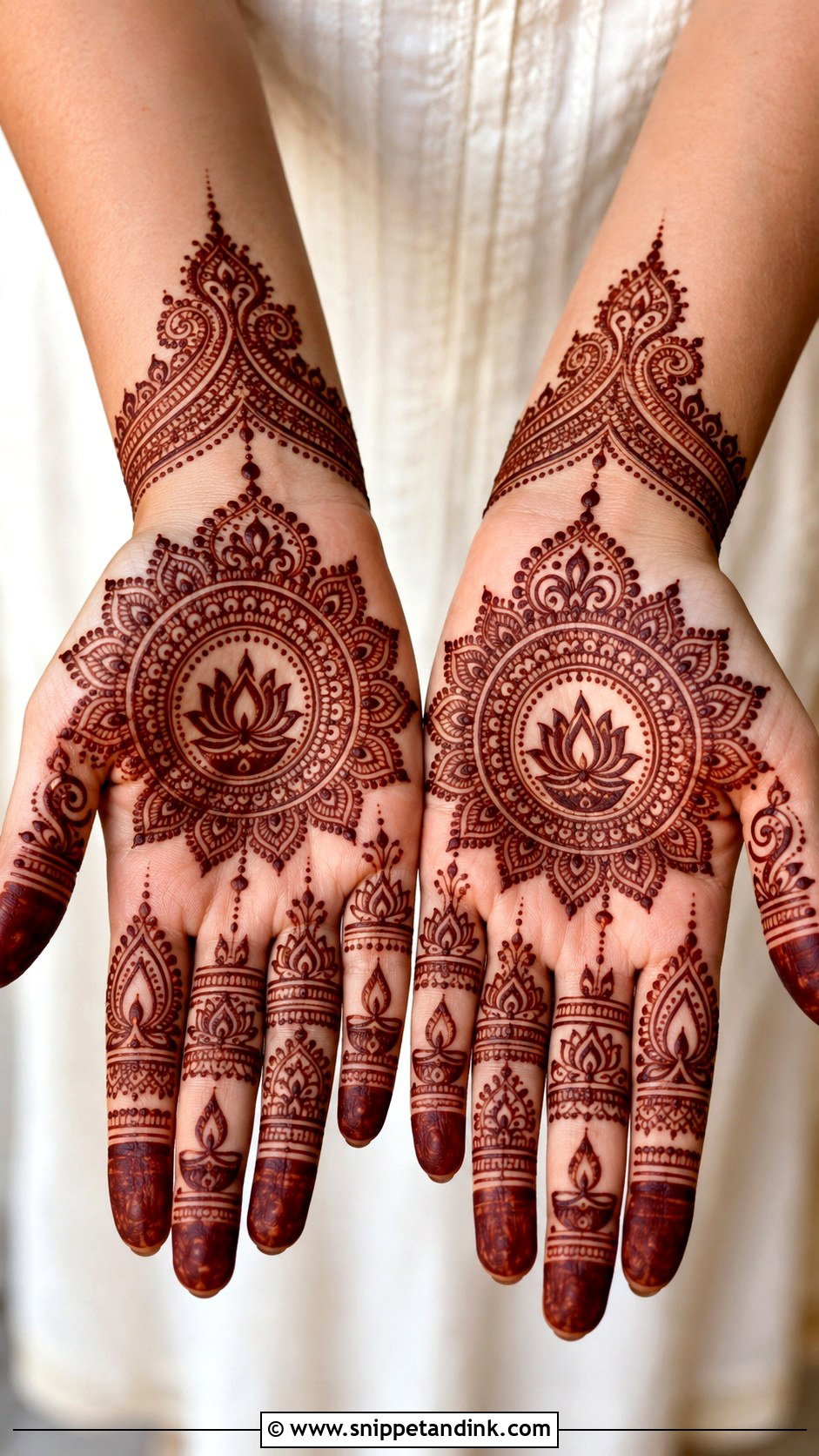
Symmetry tends to define Diwali designs: mandalas, lotus flowers, diya shapes, paisleys and decorative wrist bands. The aim is something celebratory that doesn’t get in the way, since you’ll be cooking, lighting lamps and handling rangoli powder. Palm mandalas, floral back hands and finely dotted fingers are what clients want this year. For a fuller look I add jaali near the wrist or a lotus border around the palm. Book it a day or two ahead so the stain has darkened before puja.
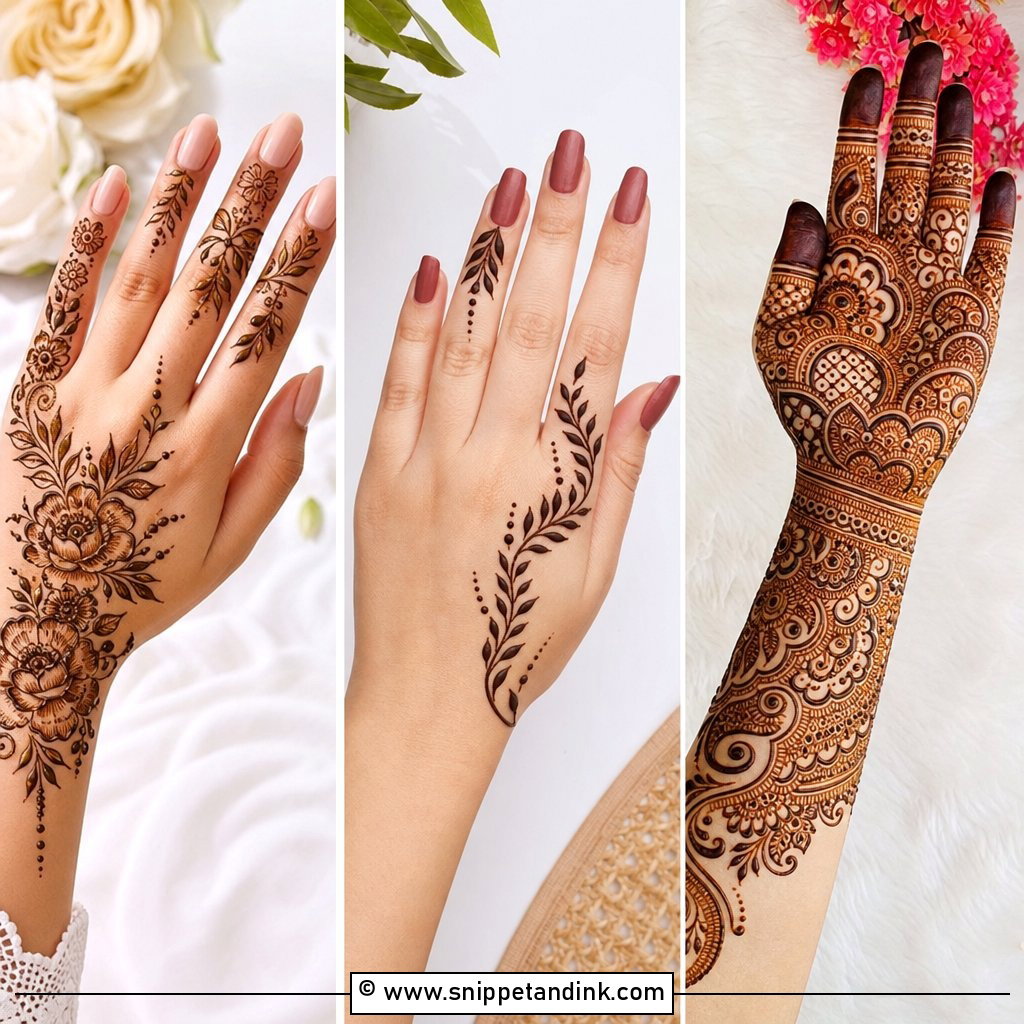

20. Karwa Chauth Mehndi Design
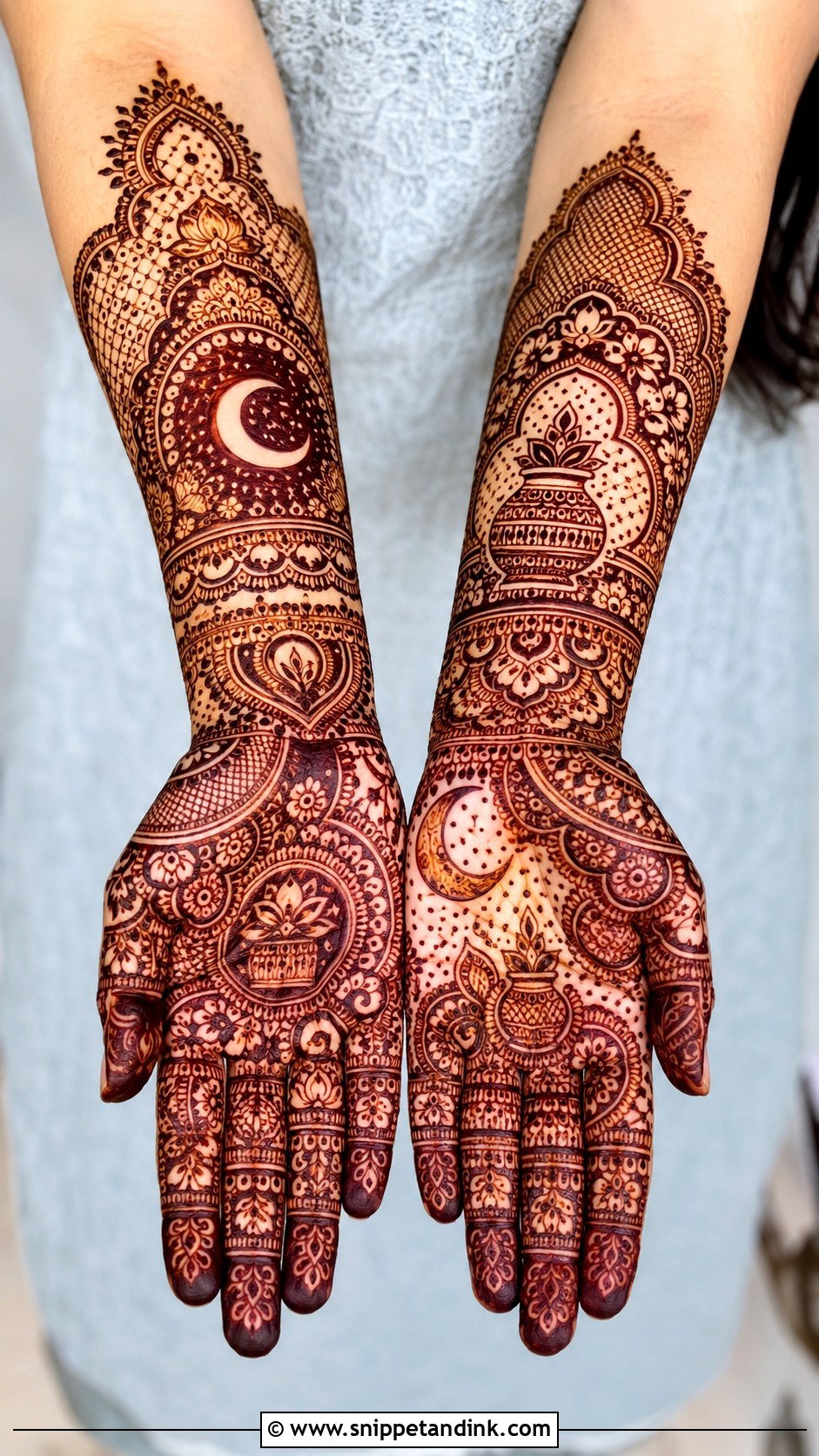
A Karwa Chauth mehndi design is usually more detailed than ordinary festival work, with bridal-style motifs, moon curves, kalash elements, paisleys, florals and decorated wrists. Many women want full palms with matching back hands, and this year that means elegant mandalas, fine jaali and initials. A deep maroon stain is part of the tradition, and the surest way to get it is to apply the day before, keep the paste on overnight and avoid water the next morning. Wrist-length or mid-forearm coverage stays comfortable through a long fasting day.
21. Rajasthani Bridal Mehndi Design
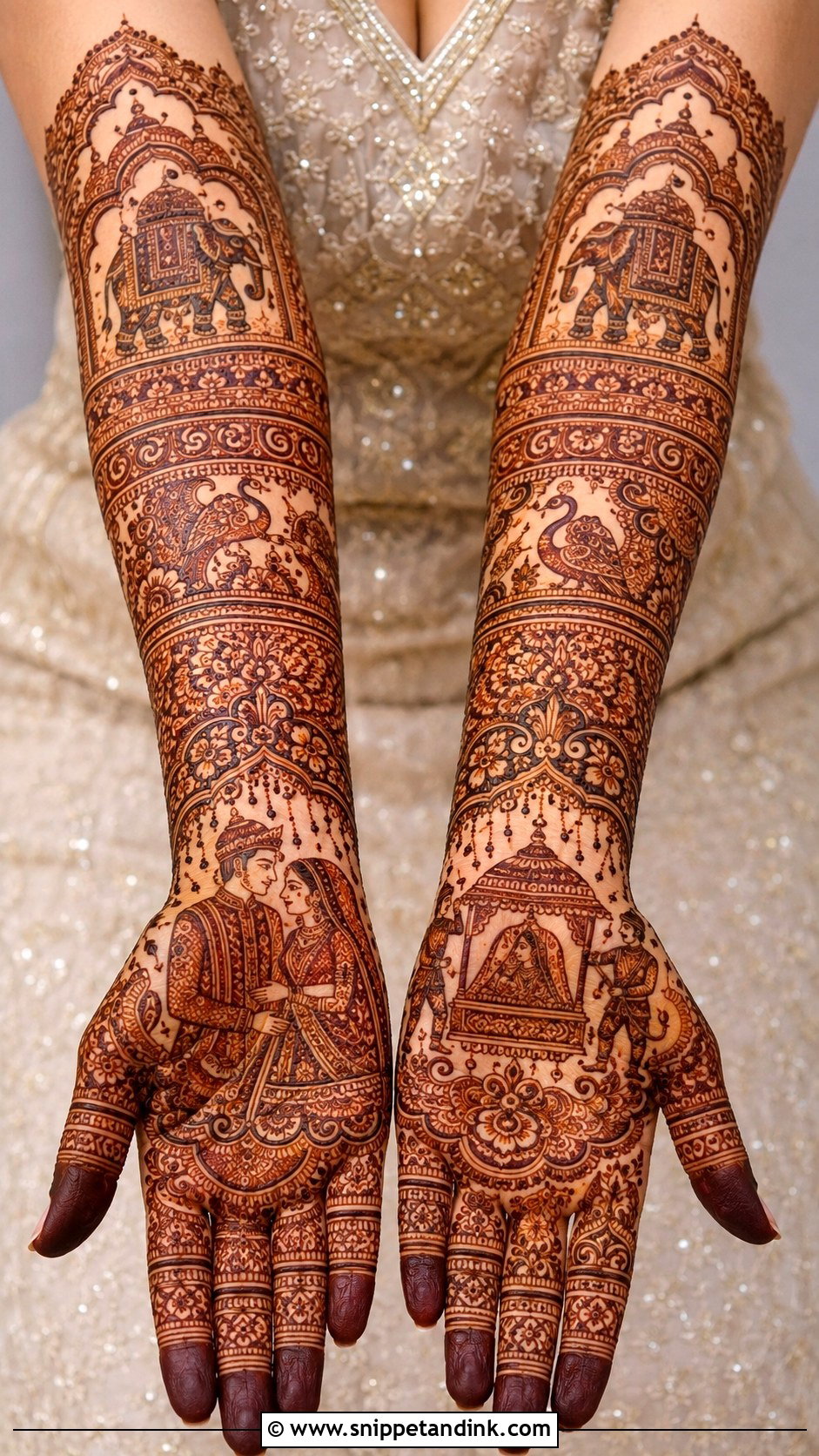
Rajasthani bridal work tells a story across both hands and arms: bride and groom figures, peacocks, elephants, doli scenes, paisleys, royal arches and dense fine-line fill, with very little empty skin. It needs an artist who works in clear sections, because without them the tiny details bleed into a single dark mass. It also needs a bride who can sit for a very long time. Done well, it is the most detailed henna there is, and brides drawn to heritage and full coverage keep choosing it in 2025.
22. Pakistani Bridal Mehndi Design
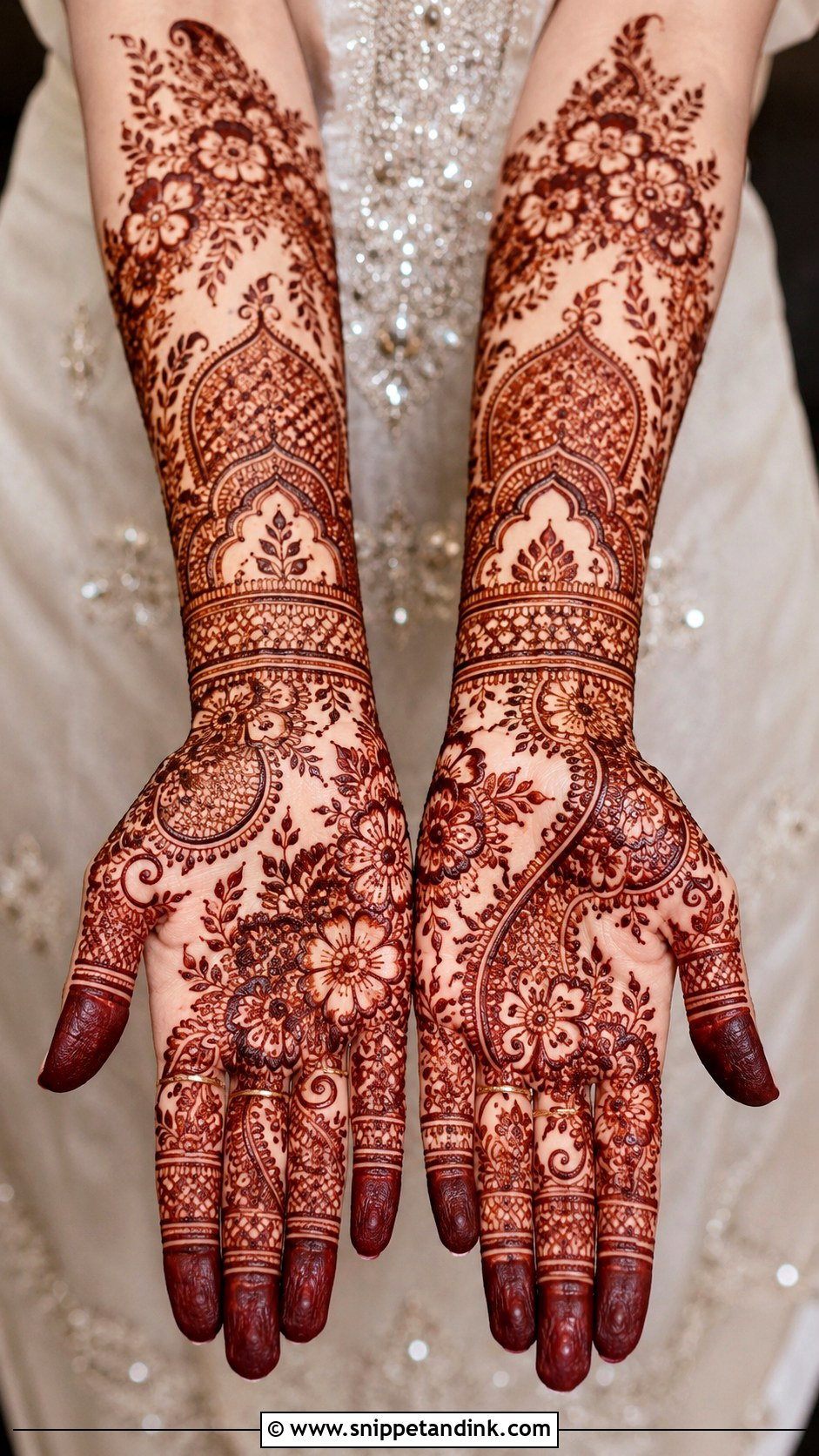
A Pakistani bridal mehndi design combines fine Indian detailing with Arabic flow: florals, paisleys, domes, mandalas, jaali and soft negative spaces. It can cover the full hand and forearm, yet it keeps a rhythm rather than packing every gap. This year brides want front and back coordinated, wrist cuffs and very detailed fingers. I draw the domes first, because their arches set the spacing for everything below them. The finished hands sit naturally with lehengas, ghararas and shararas.
23. Indian Full Hand Mehndi Design
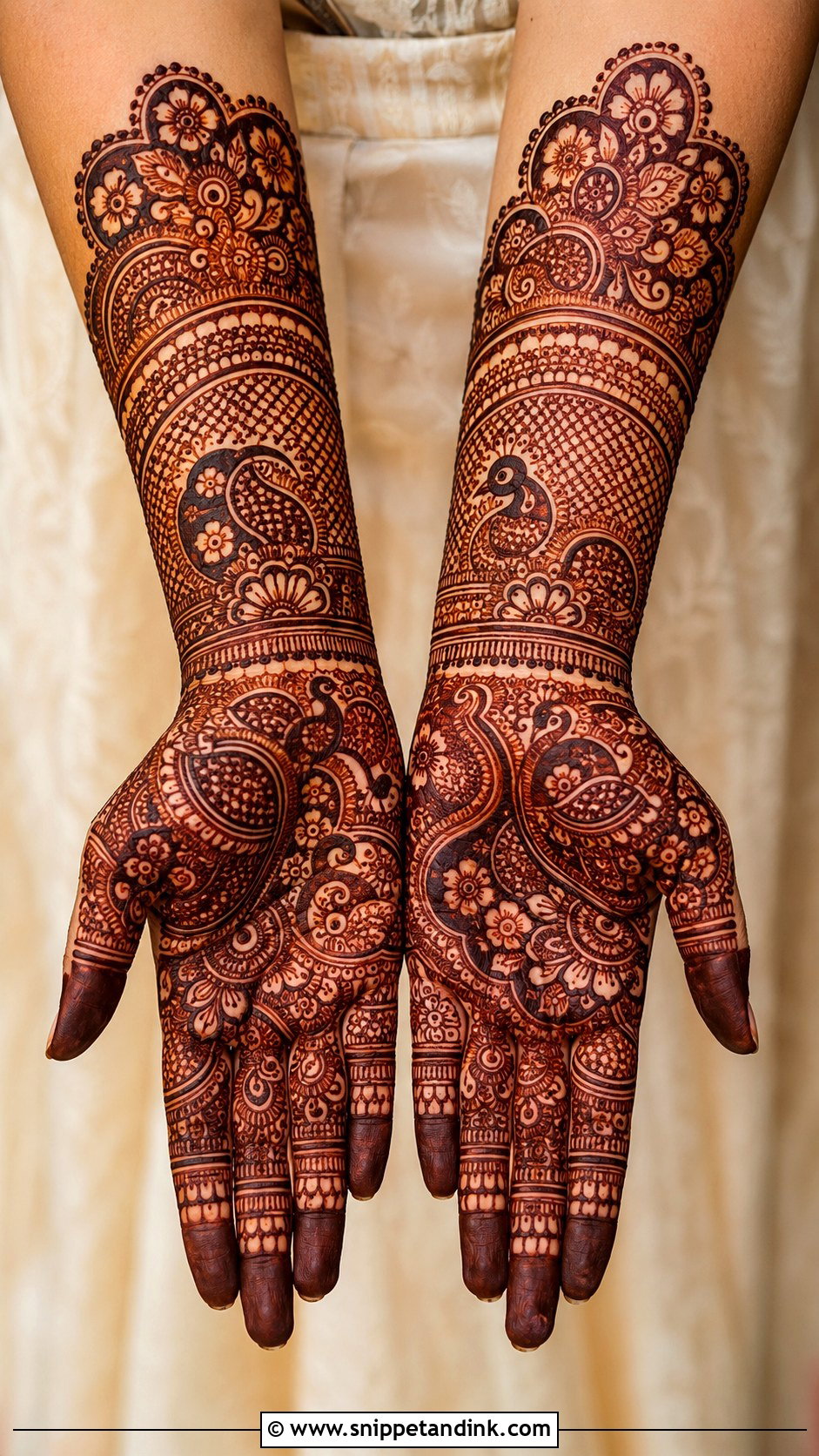
Indian full-hand mehndi covers palm, fingers, wrist and forearm with paisleys, flowers, peacocks, mandalas, jaali and layered borders. Each section carries its own pattern, yet the hand has to read as one piece. The 2025 shift I’ve noticed is fewer solid dark blocks and clearer separation between motifs, which gives a more defined stain. Large filled areas also tend to crack and flake as they dry, so fine lines usually stain more evenly than solid blocks. Brides and close family wear it for weddings and major ceremonies.
24. Half Hand Mehndi Design
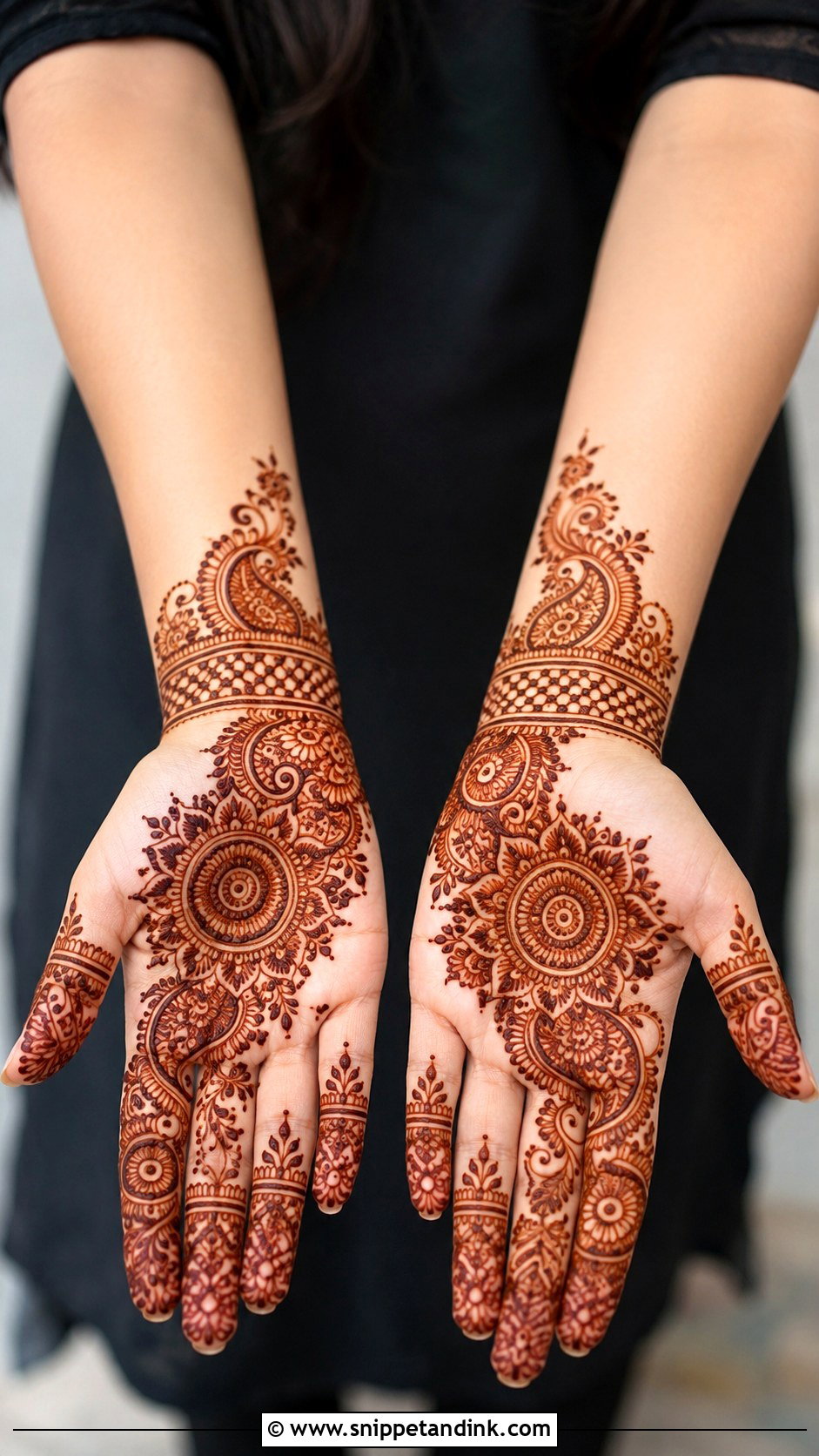
Half-hand coverage stops before the forearm: either palm and fingers, or back hand and wrist. Mandalas, Arabic trails, florals, paisleys and bracelet cuffs all fit. It’s the sensible middle ground for guests, teenagers and anyone short on time. What makes it look complete rather than abandoned is a strong focal motif and fingers that match it. For small functions and parties, I’d pick this over a rushed full-hand design every time.
25. Palm Mehndi Design
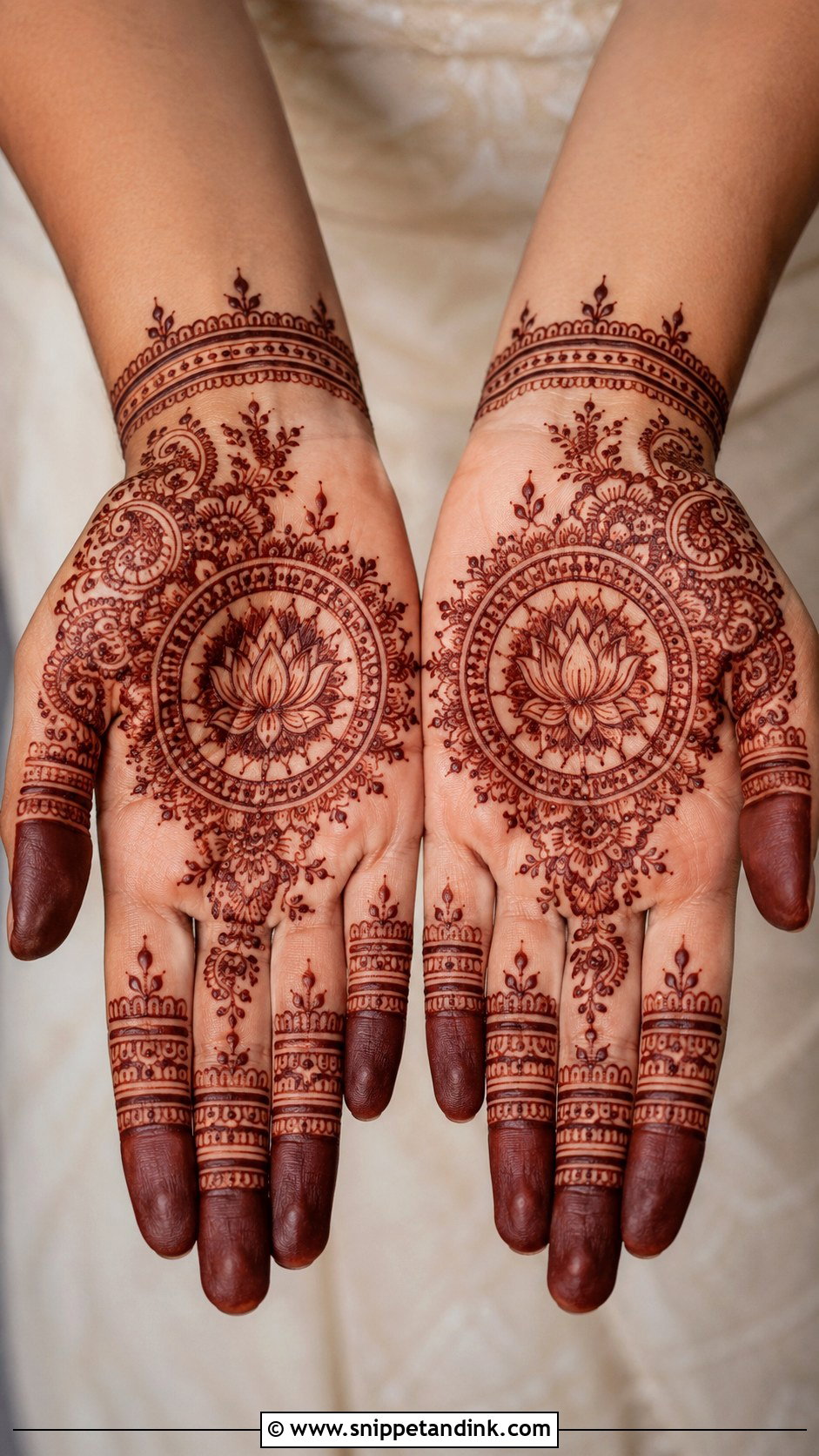
The palm is the best canvas on the body for henna, because the skin there takes a deep stain. A palm design centers on a mandala, lotus, paisley cluster, peacock or symmetrical floral, with matching fingers and perhaps a small wrist border. This year’s trend is a bold center with clean empty space around it, which reads clearly even from across a room. It’s a good practice design because the surface is flat and stable. Festivals and traditional events suit it without needing full coverage.
26. Wrist To Forearm Mehndi Design
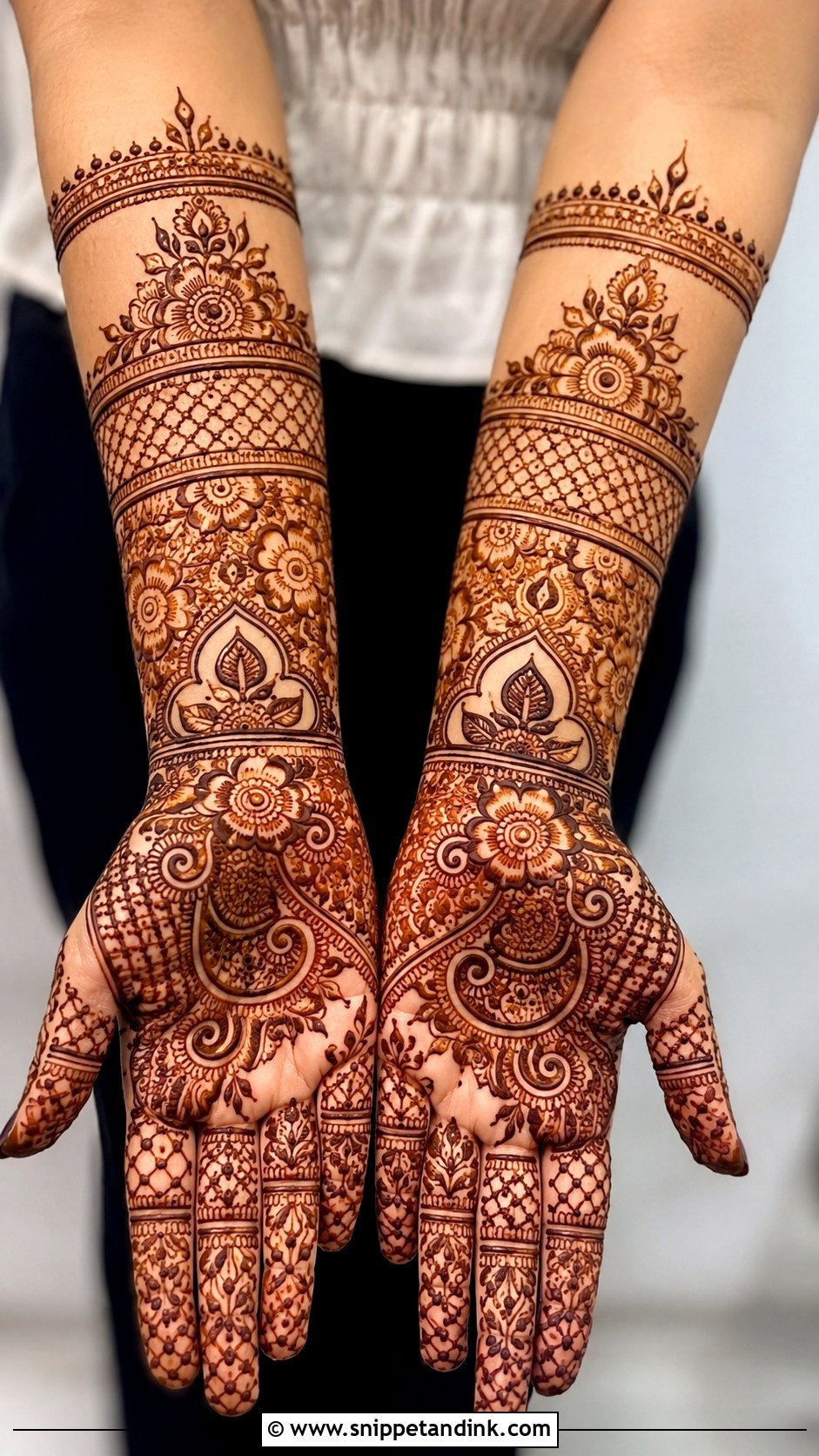
Extending past the wrist only makes sense if your sleeves let it show, so I ask about the outfit before I start. The design usually begins as a bracelet cuff and climbs with florals, vines, jaali, paisleys or bridal bands. In 2025 the preference is spaced bands rather than one heavy block, giving the arm a jewelry feel. Forearm skin stains lighter than the hand, so the bands should be bold. The wrist, hand and forearm patterns need to read as connected, not as three separate pieces.
27. Back Hand Mandala Mehndi Design
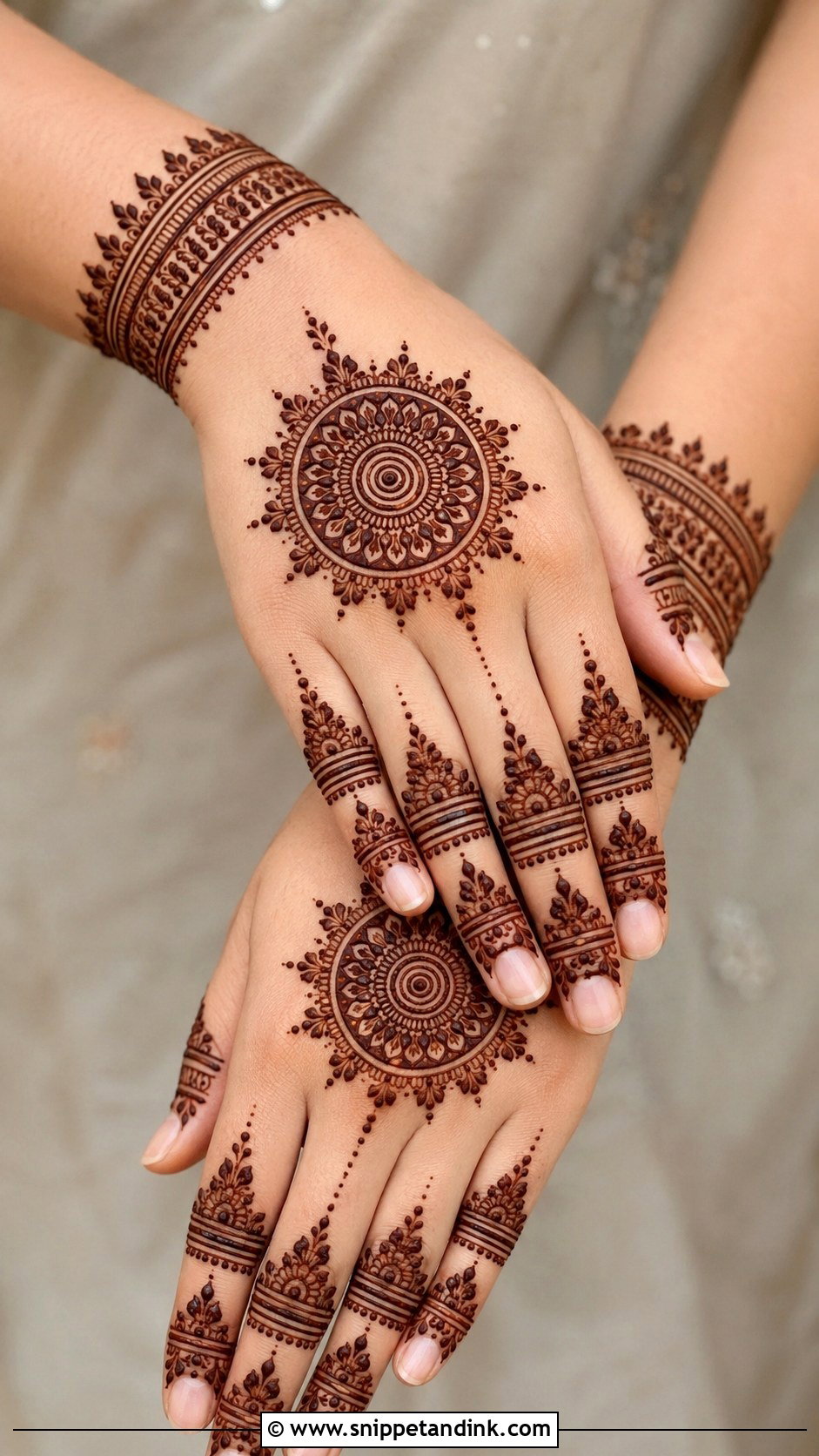
One round motif in the center of the back hand, finger patterns and a wrist detail. It’s balanced and simple, and it flatters almost any hand shape because the symmetry gives the eye a clear center. Bold and clean reads modern; tiny petals and dots read traditional. This year it’s often paired with a bracelet cuff and ring-style fingers. I line the mandala up with the middle finger rather than the exact middle of the hand, which looks right when the hand is relaxed.
28. Leafy Trail Mehndi Design
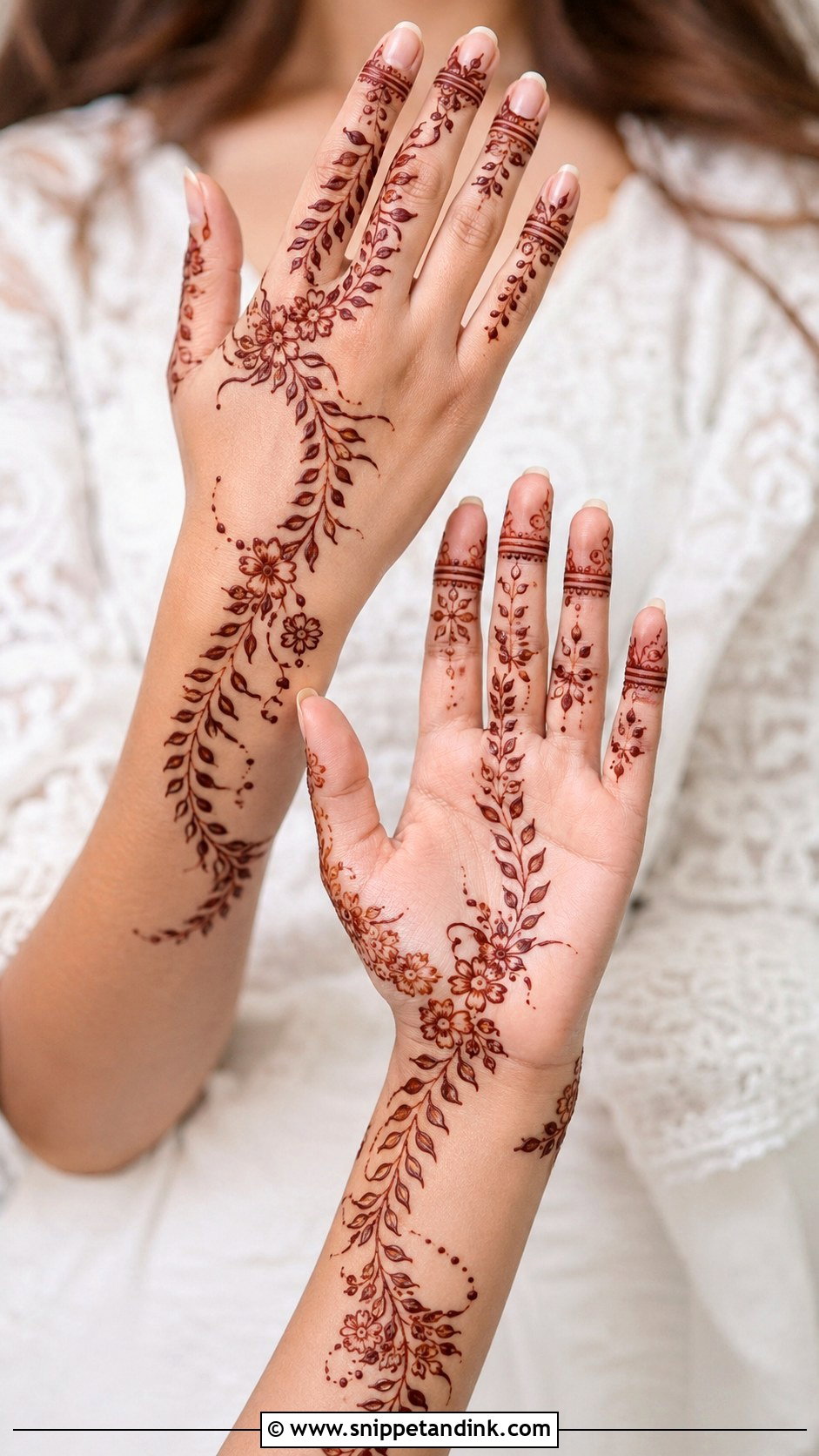
A trail of leaves, small flowers, dots and curved stems runs diagonally across the palm, the back hand or the side of the hand. It’s quick to apply and suits every hand size, provided you scale it. On a small hand I keep the leaves tiny and spaced; on a long hand the trail can run from wrist to fingertip. The common error is drawing every leaf the same size, which looks stamped, so I vary them along the stem. Eid, casual events and simple weddings all suit it.
29. Paisley Mehndi Design
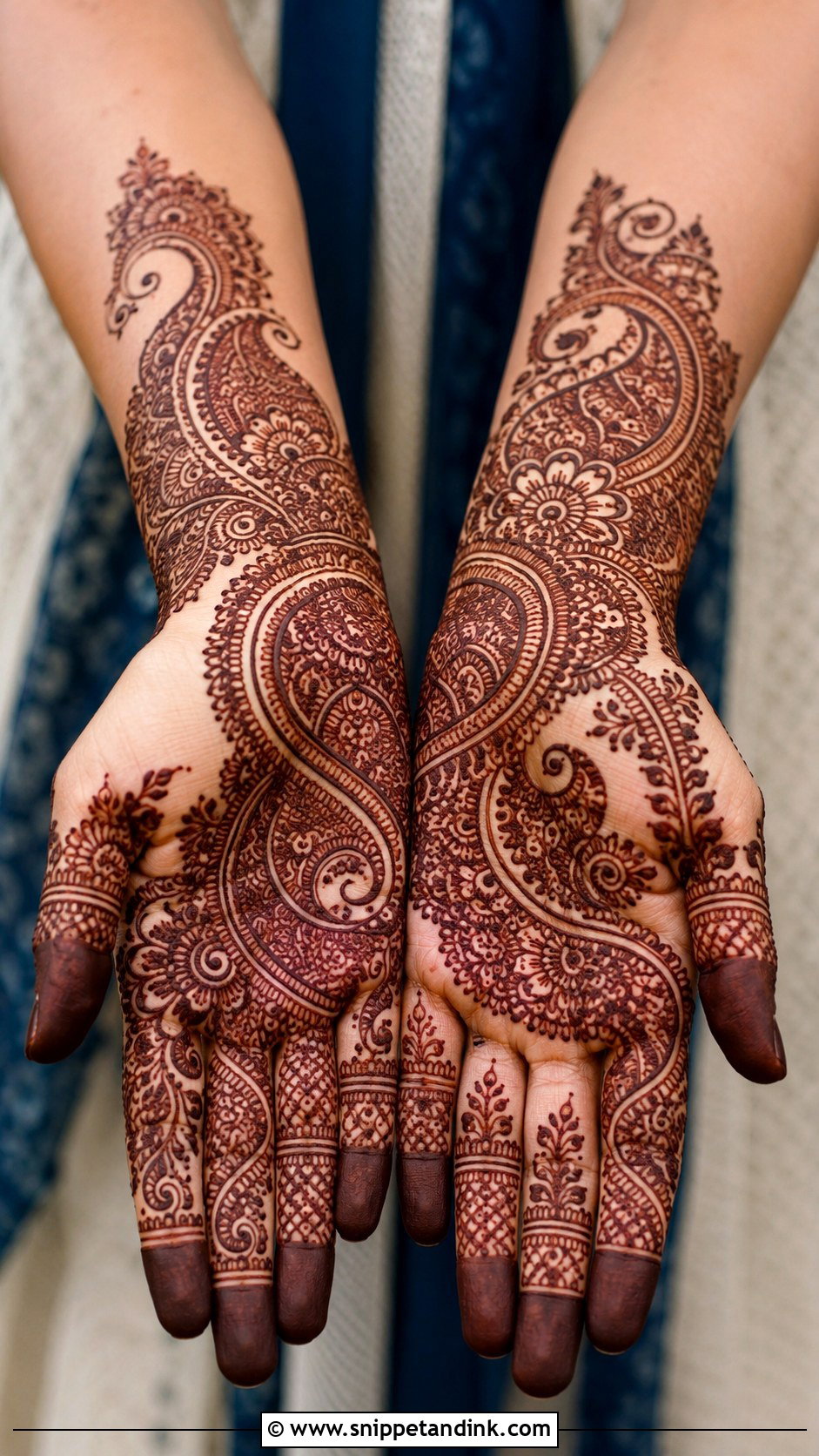
Paisleys flex to fit any occasion: big and bold for a guest, small and intricate for a bride. They pair with flowers, dots, leaves, jaali and curved borders, and can fill the palm, run along the back hand or slot into a bridal layout. This year’s paisleys have cleaner outlines and lighter inner detail. For anyone learning, the paisley is forgiving, since its curve hides small wobbles that would show in a circle or a straight line.
30. Lotus Mehndi Design
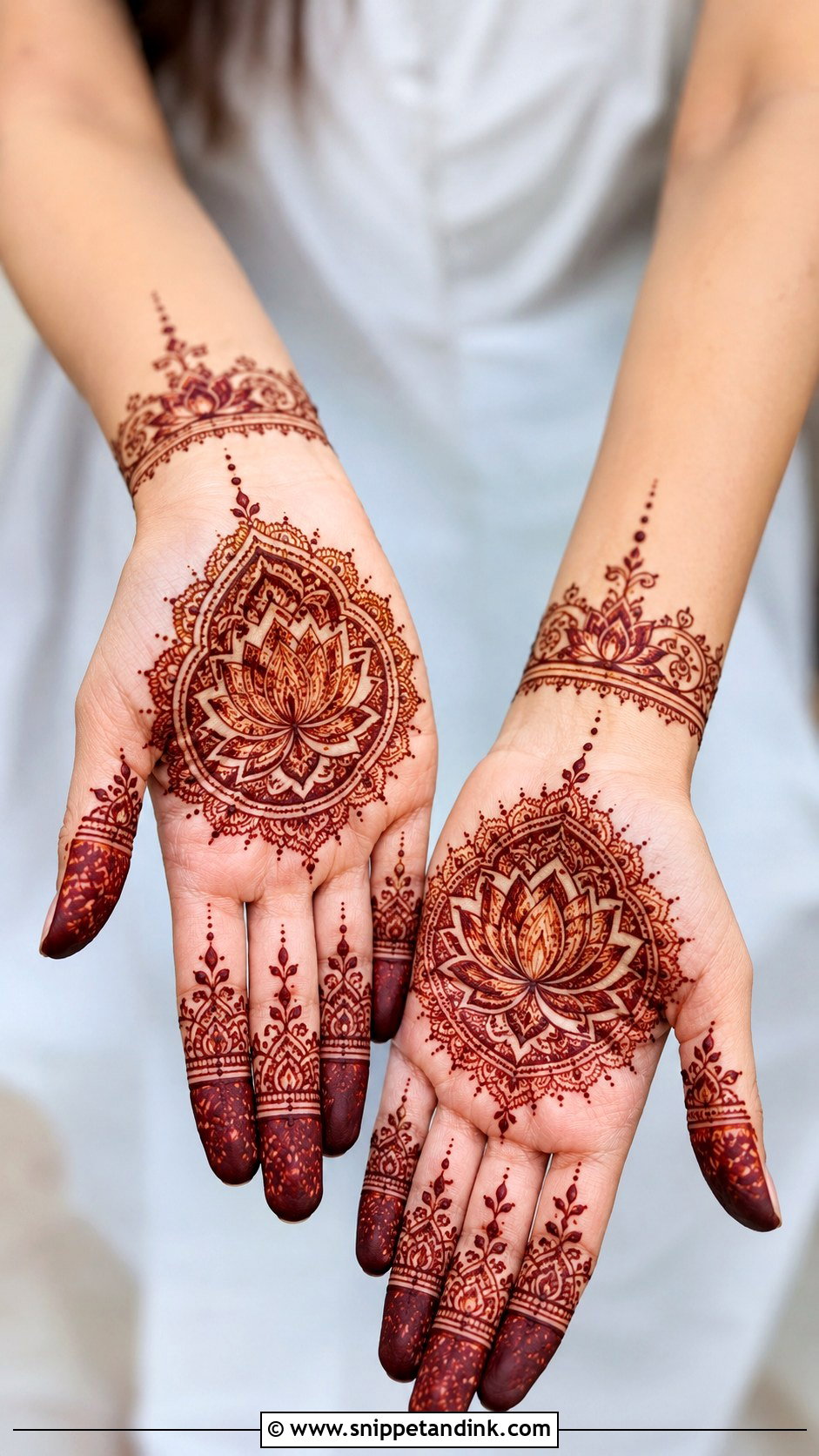
A lotus can sit at the palm center, on the back hand or near the wrist inside a larger pattern, and it pairs naturally with mandalas, paisleys, dots and fine shading. Large petals make a bold focal point; small lotus borders make a design more delicate. Brides and festival clients like it this year because it carries meaning without needing extra motifs. Keep the petals even. I draw them in opposite pairs, left then right, so the flower doesn’t lean.
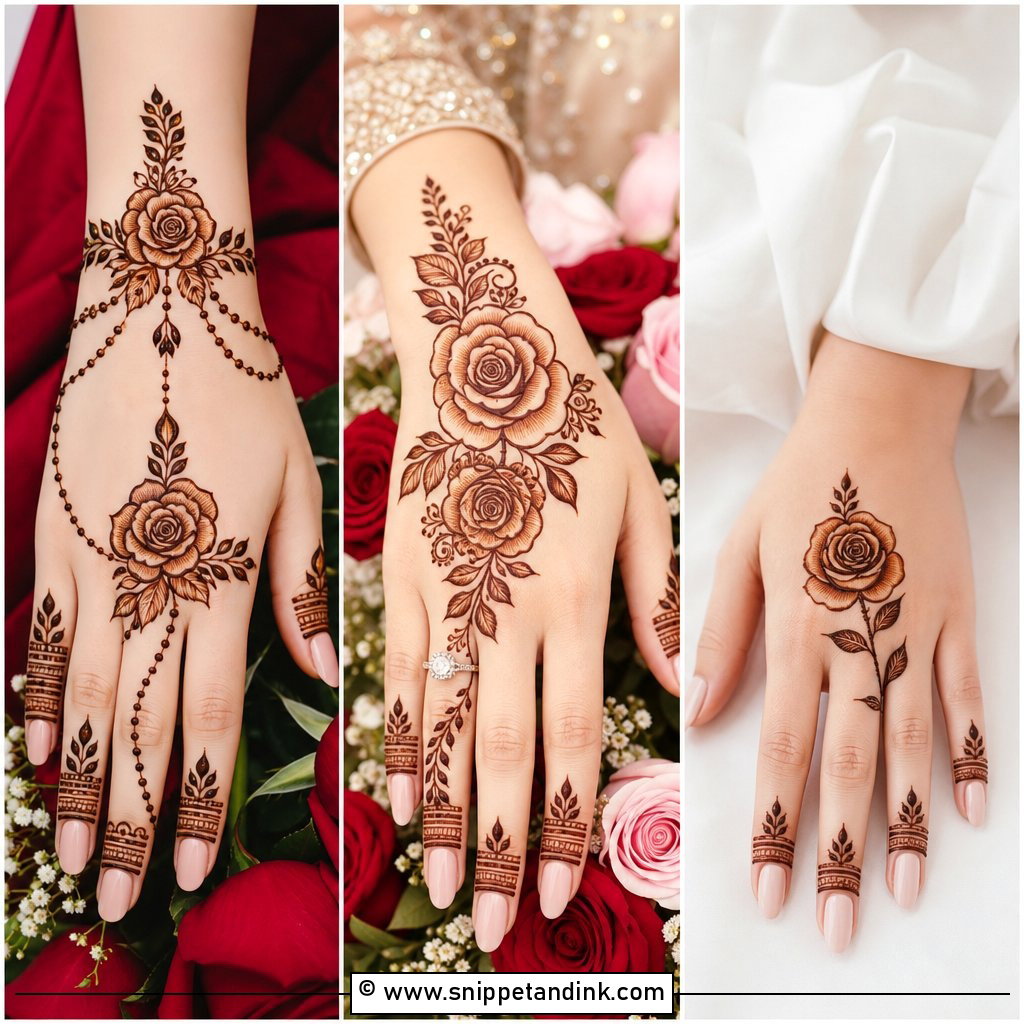
31. Rose Mehndi Design
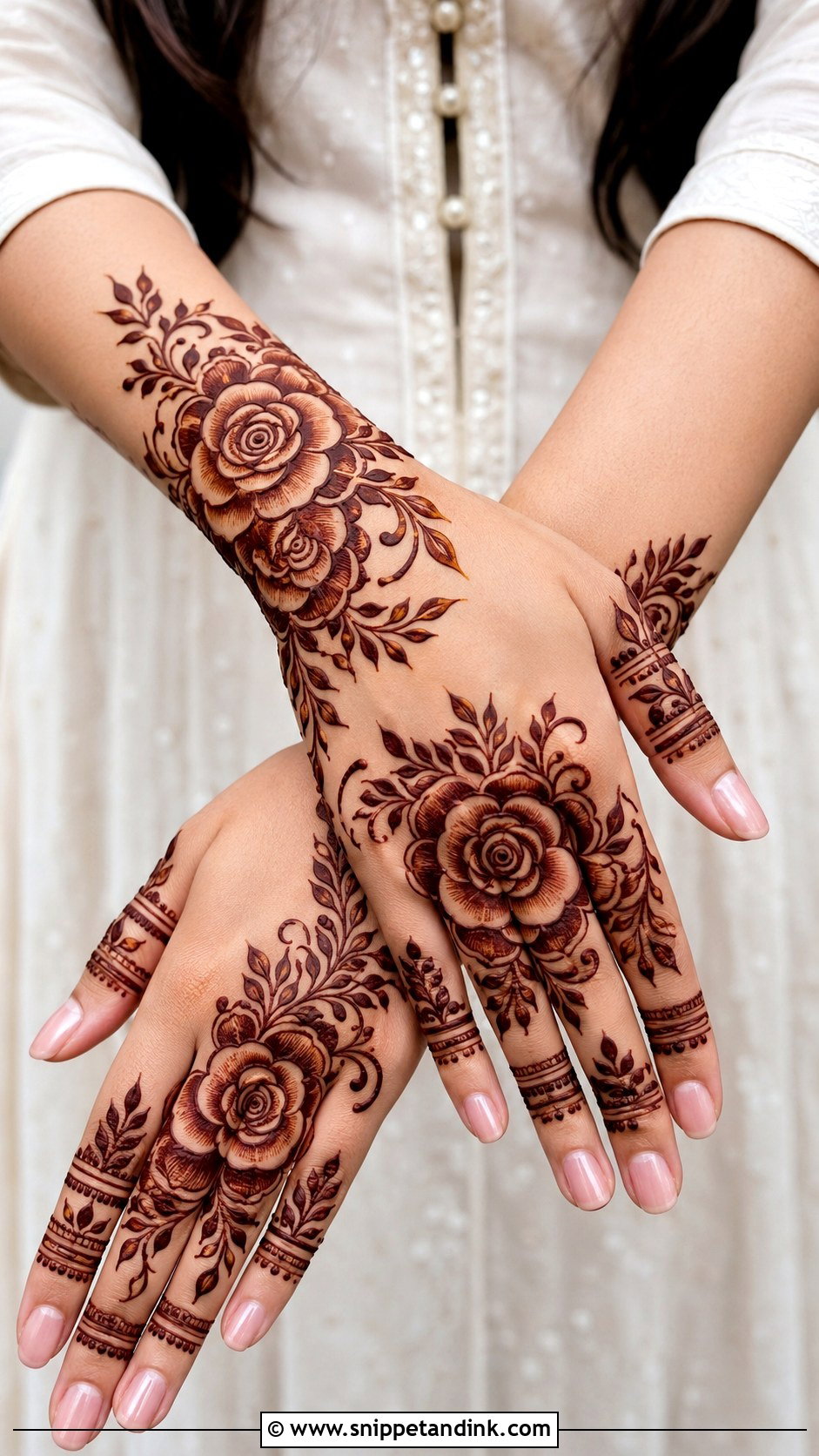
Roses get their depth from layered petals and curved shading, which is what separates them from the round flowers of traditional mehndi. They can be Arabic, Indo-Arabic or minimal depending on placement. This year they’re mostly on back hands with open spacing and leafy trails, though a palm rose with decorated fingers and a slim wrist band works too. Draw the petals bold. Very fine inner petals tend to merge as the stain spreads, and the rose turns into a dark smudge.
32. Geometric Mehndi Design
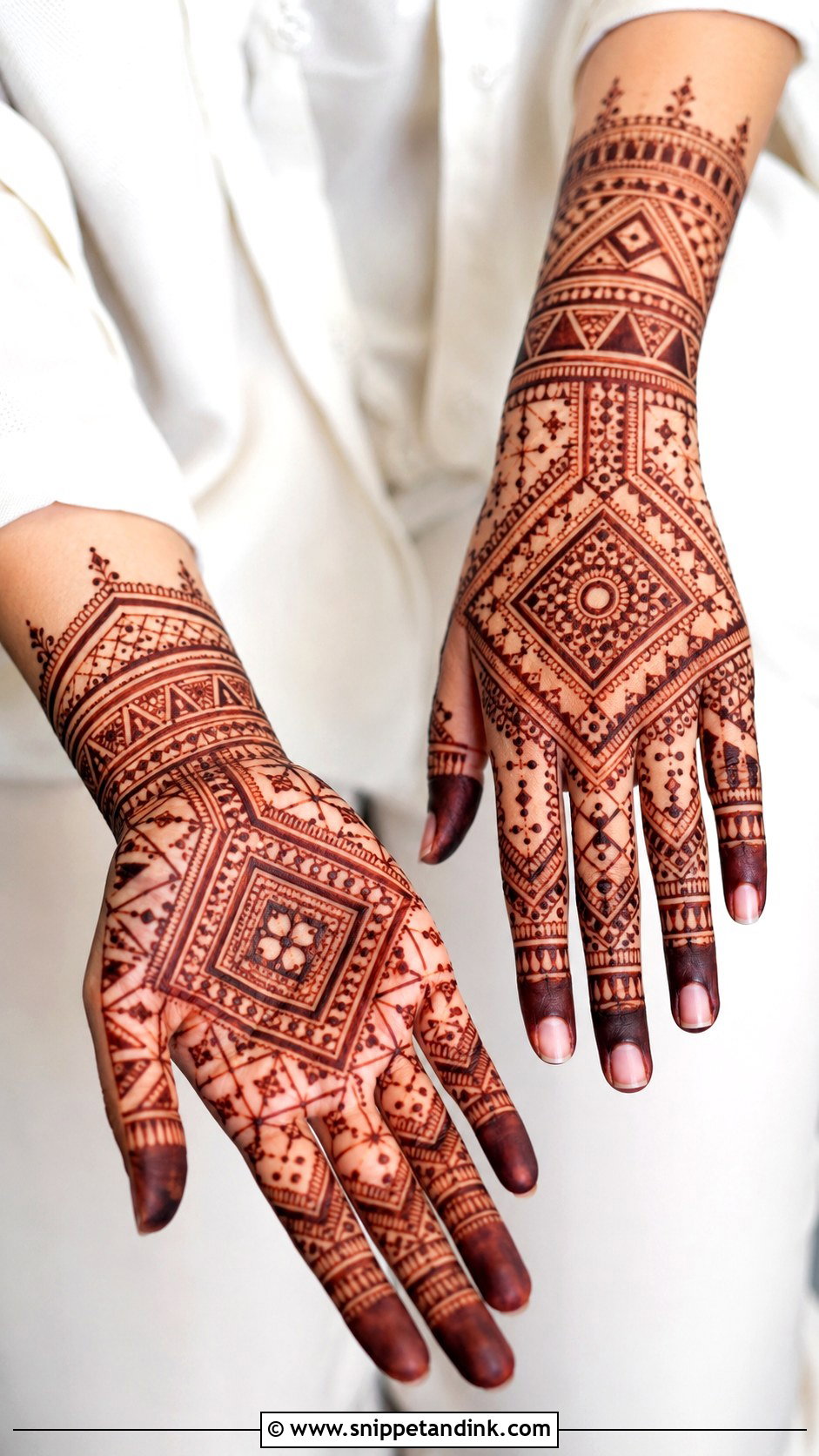
Triangles, diamonds, grids, straight lines, circles and repetition replace floral flow in a geometric design. It can be minimal on the back hand or fuller across palm and wrist, and this year it’s often mixed with Moroccan layouts or Indo-Arabic details. Uneven lines make it look messy instantly, so if your artist hesitates on straight lines, choose a floral design instead. It sits well with contemporary outfits and simple jewelry, and a small geometric band makes a sharp accent on a bridal set.
33. Kids Mehndi Design
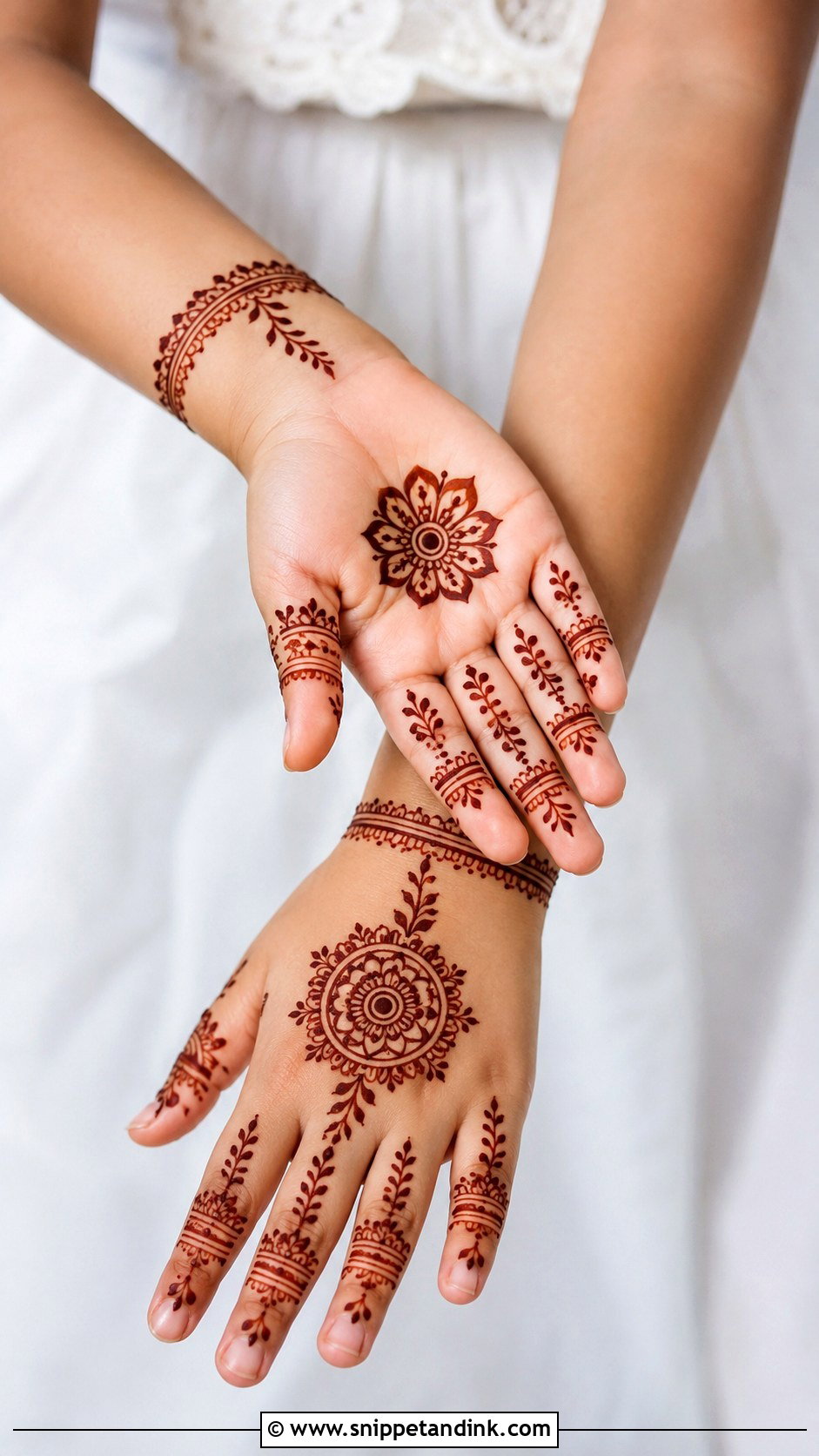
Children don’t sit still, so the design has to be finished before their patience runs out: a tiny floral palm with decorated fingers, a small back-hand mandala, a bracelet or a short leafy trail. Fewer dense fills means faster drying and less smudging. I use a slightly thicker line on children so the design survives being bumped. Use only natural henna paste on kids and skip any cone promising a black stain, since those dyes can cause serious skin reactions.
34. Bridesmaid Mehndi Design
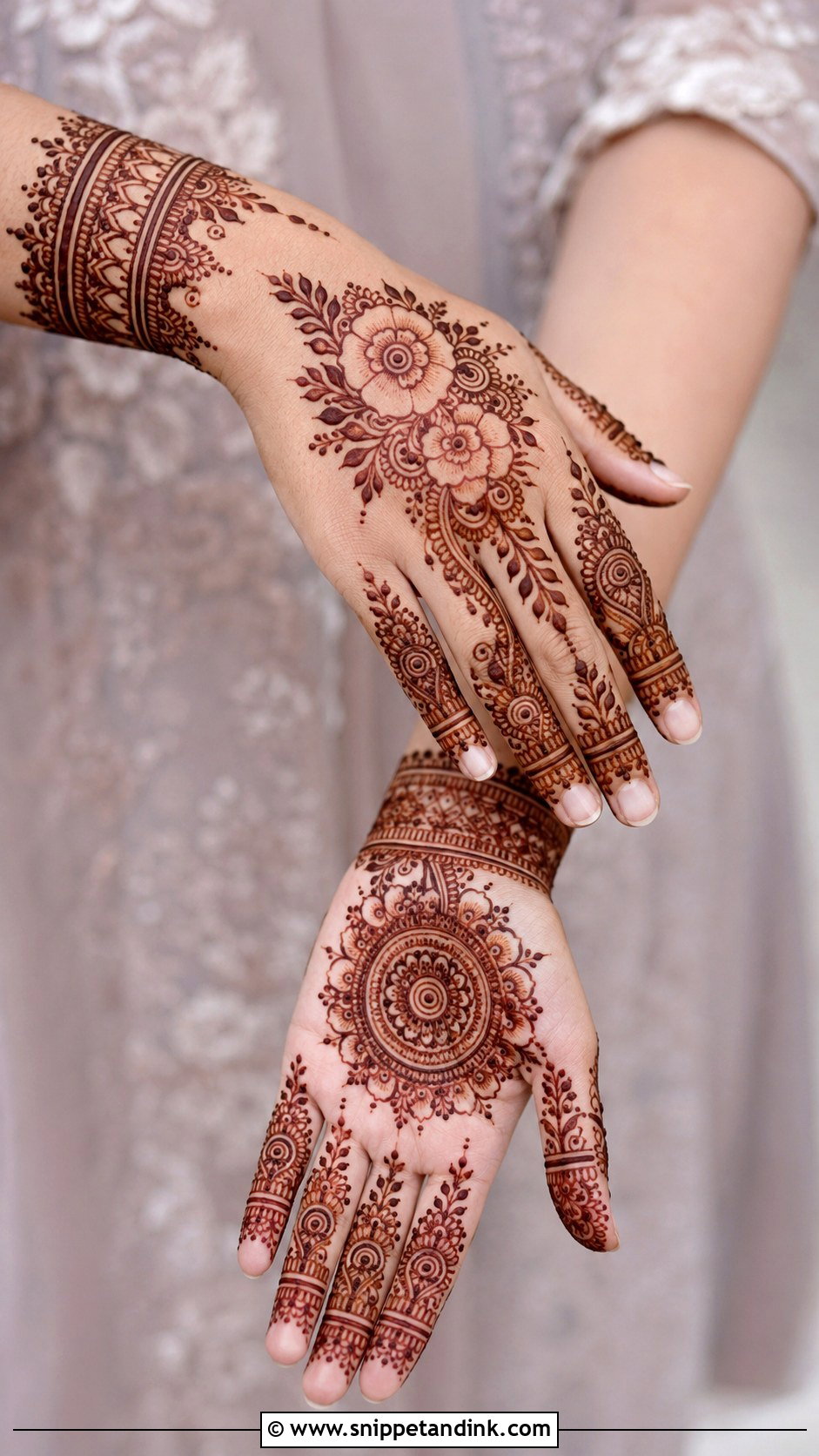
A bridesmaid’s mehndi should never outweigh the bride’s. Indo-Arabic trails, floral back hands, mandala palms, bracelet cuffs and half-hand layouts all fit. This year bridesmaids coordinate with the wedding theme while keeping each hand slightly different, which looks polished in group photos without a copy-paste effect. A design ending at the wrist or mid-hand is usually enough, with delicate fingers and a clean central motif. Sisters, cousins and close friends can all be done in one evening.
35. Party Mehndi Design
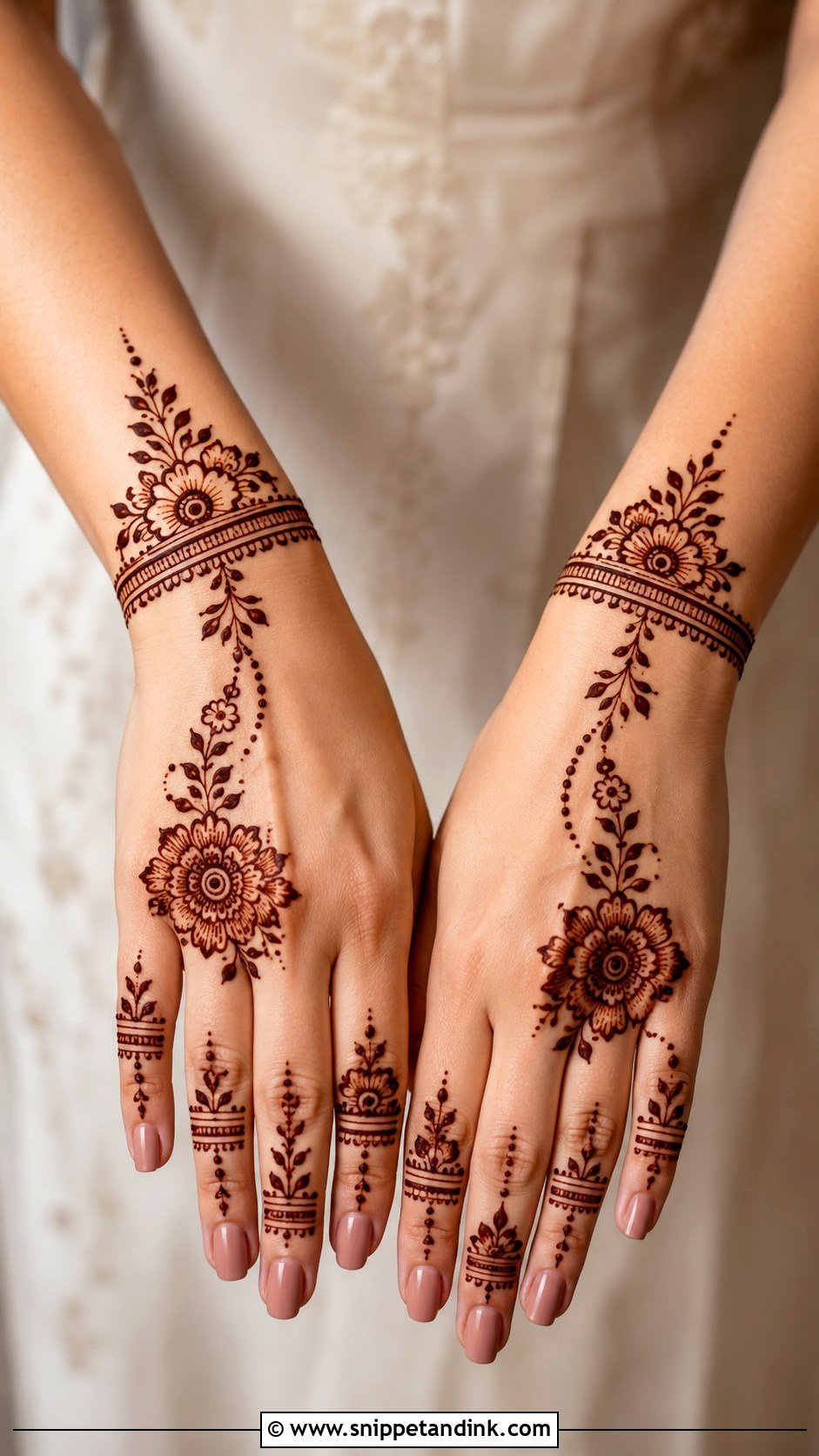
Party mehndi is quick and placed with intent: back-hand floral trails, finger designs, bracelet cuffs, roses or a minimal Indo-Arabic layout. It needs to go on fast, dry fast and still be bold enough to show in photos. Open spacing keeps it current. Pick one focal point, a flower or mandala, and keep everything else light. If the party is the same evening, remember a fresh stain is bright orange for the first hours, so either book a day ahead or enjoy the color as it is.
Running a Mehndi Night When Every Cousin Wants a Turn
The bride’s mehndi and the guests’ mehndi are two different jobs, and the evening runs far more smoothly when they’re planned that way.
- Do the bride separately. Full bridal hands and feet take hours, so many brides have theirs done a day or two before the party and simply show it off at the function.
- Give guests a short menu. Three or four quick options, such as an Arabic back hand, a palm mandala, finger bands and a wrist cuff, keep the queue moving.
- Count hands, not people. Most guests want both hands done. Ask how many hands each artist can comfortably manage in the time you have, and book an extra artist if the numbers don’t fit.
- Set up a proper station: bright light, a low table, cushions, tissues, and a bowl of lemon-sugar mix with cotton balls for sealing.
- Start with children and elders, who tire first, and leave bridesmaids for later in the evening when they can sit through the music.
Tell guests the drying rules too: no hand washing for the first several hours and no reaching for plates with wet paste. A volunteer who serves food to people with drying hands is the most useful person in the room.
From a Fingertip Band to a Full Rajasthani Arm
The right design depends on the occasion, the outfit, how long you can sit and what you enjoy looking at on your own hands. This year’s strongest threads are clean spacing, bold florals, personal bridal details, modern finger work, bracelet layouts and fusion styles that borrow from Indian, Arabic, Moroccan and Gulf traditions. For something light, mandalas, leafy trails and minimal fingers are quick and easy to wear. For something grand, there are bridal portraits, Rajasthani full-hand work and royal Indian designs. Bring the photo to your artist and ask her honestly whether it fits your hand and your timeline.
You'll Like These Ideas:







Leave a Reply