
Wearing your hair down for the wedding sounds like the easy option, and it’s actually the harder one to make last. An updo is held by pins; loose hair is held only by how well it was prepped and set, and it has to survive hugs, a veil, a warm room and hours of dancing. When a bride tells me she wants it down, my first questions are about her texture and the neckline of her dress, because those two things decide which version will still look right at the end of the night. Short or long, straight or coily, every hair type can wear one of the looks below. The trick is matching the style to how your hair already behaves.
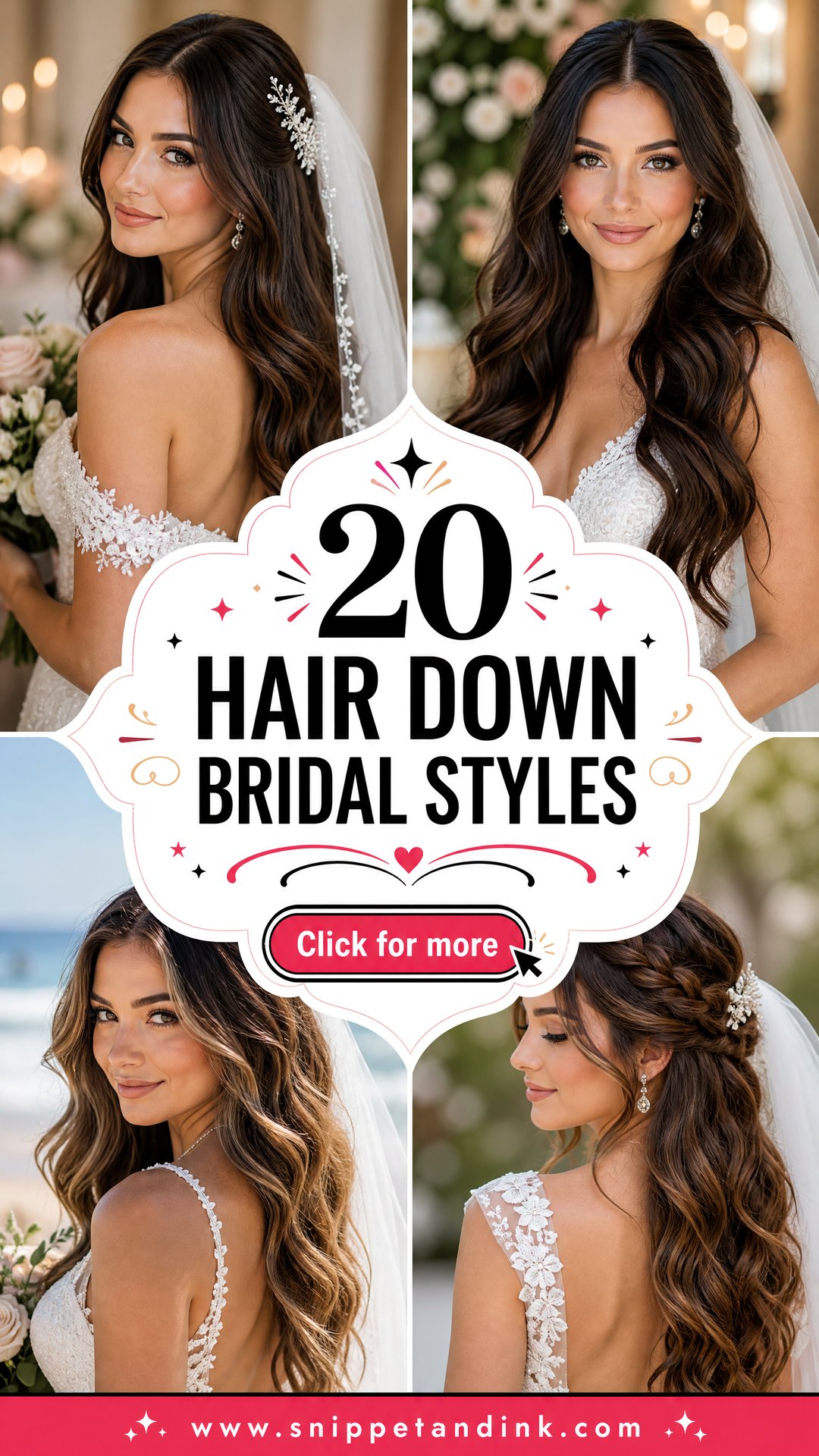
Why Down Styles Drop by the First Dance, and How I Prevent It
Curls fall for predictable reasons: the hair was too clean and slippery, it was touched before it cooled, it was too heavy for the product used, or the room was humid. Most of that is fixed in the prep, long before the curling iron comes out.
- Wash the evening before or the morning of, not two days earlier, unless your stylist says your hair holds better with a day of natural oil. Many fine-haired brides do better on second-day hair; very thick hair usually styles better fresh.
- Skip conditioner on the roots and avoid heavy masks that week. Slick hair is the main reason a set slides out.
- Let your stylist build grip with mousse or a texturizing spray before heat. Curl, pin and cool. The cooling is what locks the shape.
- Expect waves to relax by about a third over the day. A good stylist curls slightly tighter than the final look for that reason.
If your hair has never held a curl, tell me at the trial. Curly, coily and very straight hair all behave differently, and the honest answer is sometimes a half-up version so part of the style is pinned.
1. Soft Wave Hair Down Bridal Look
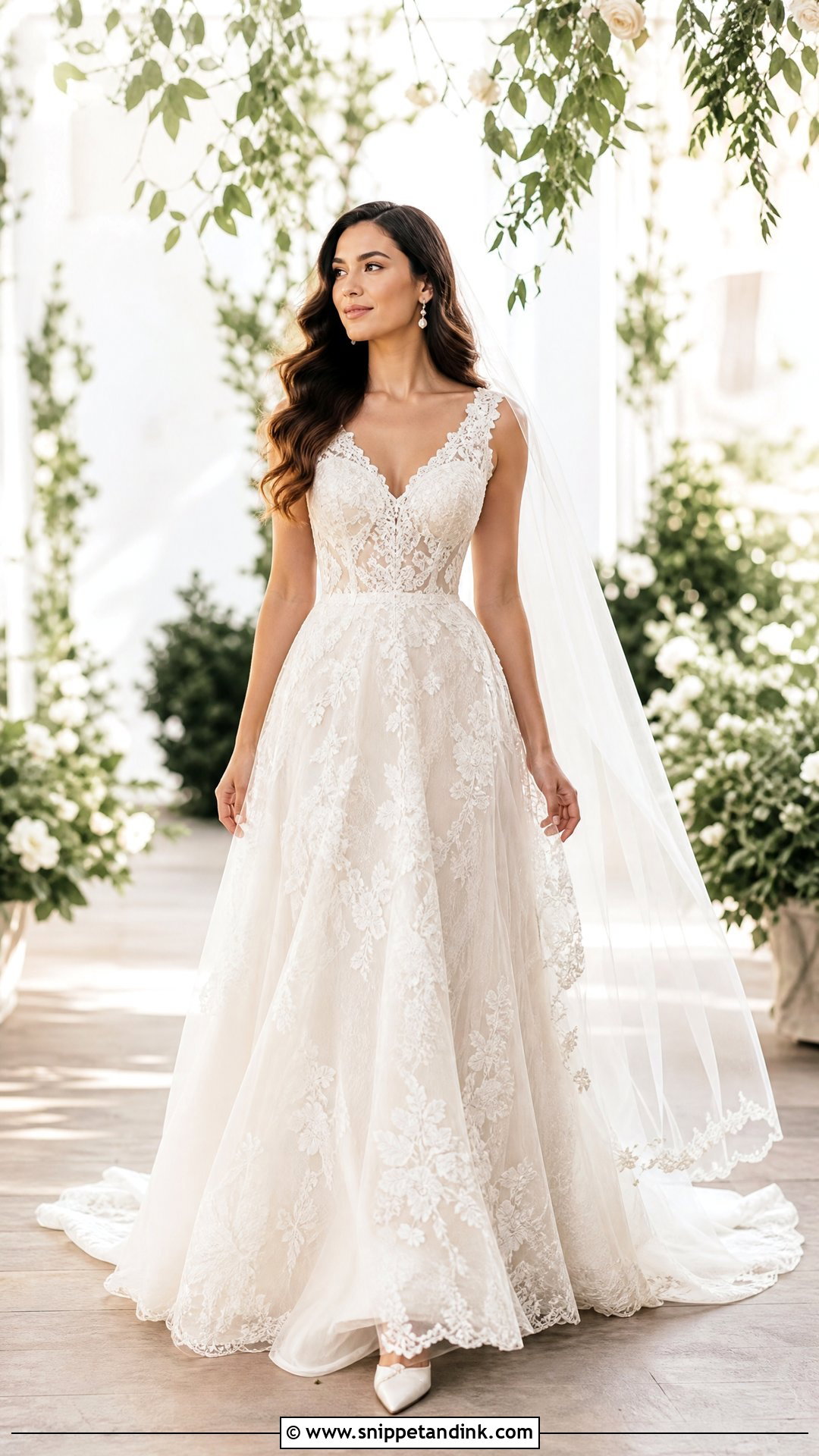
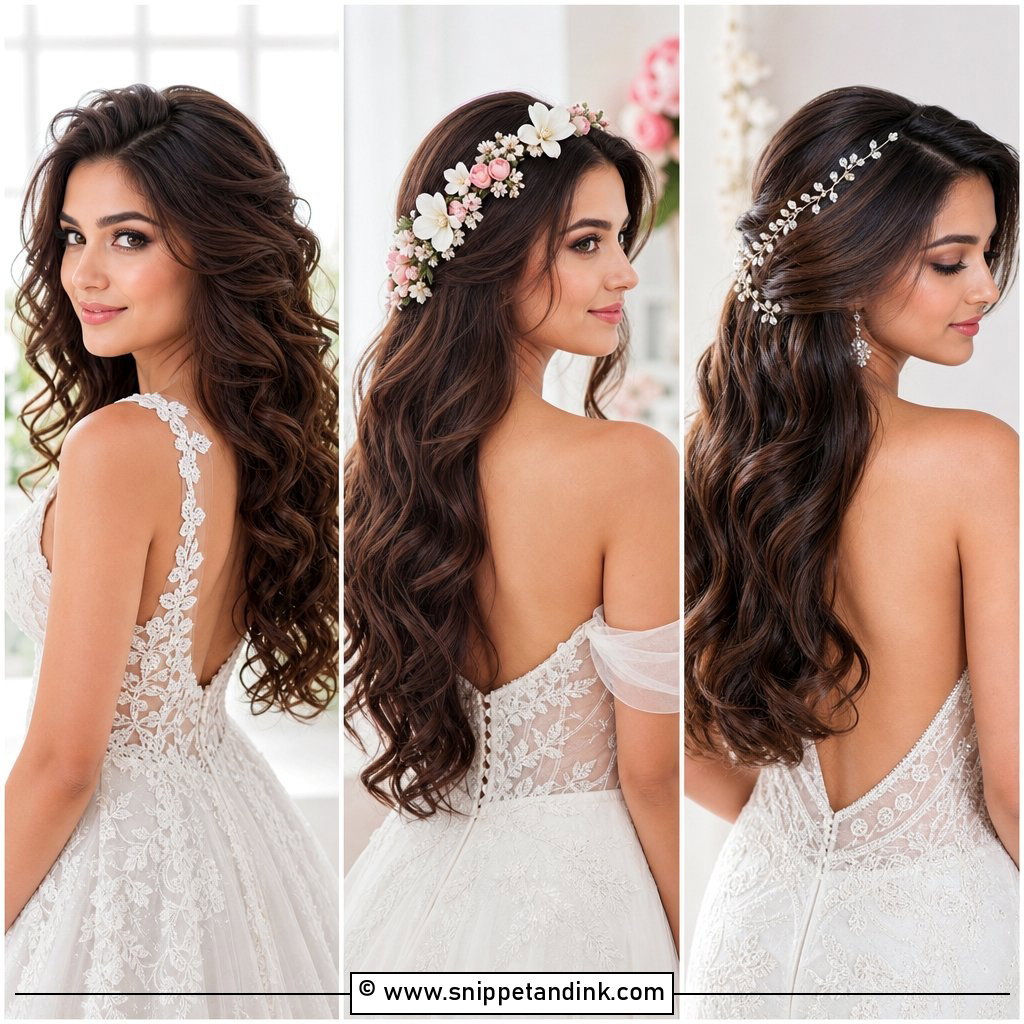
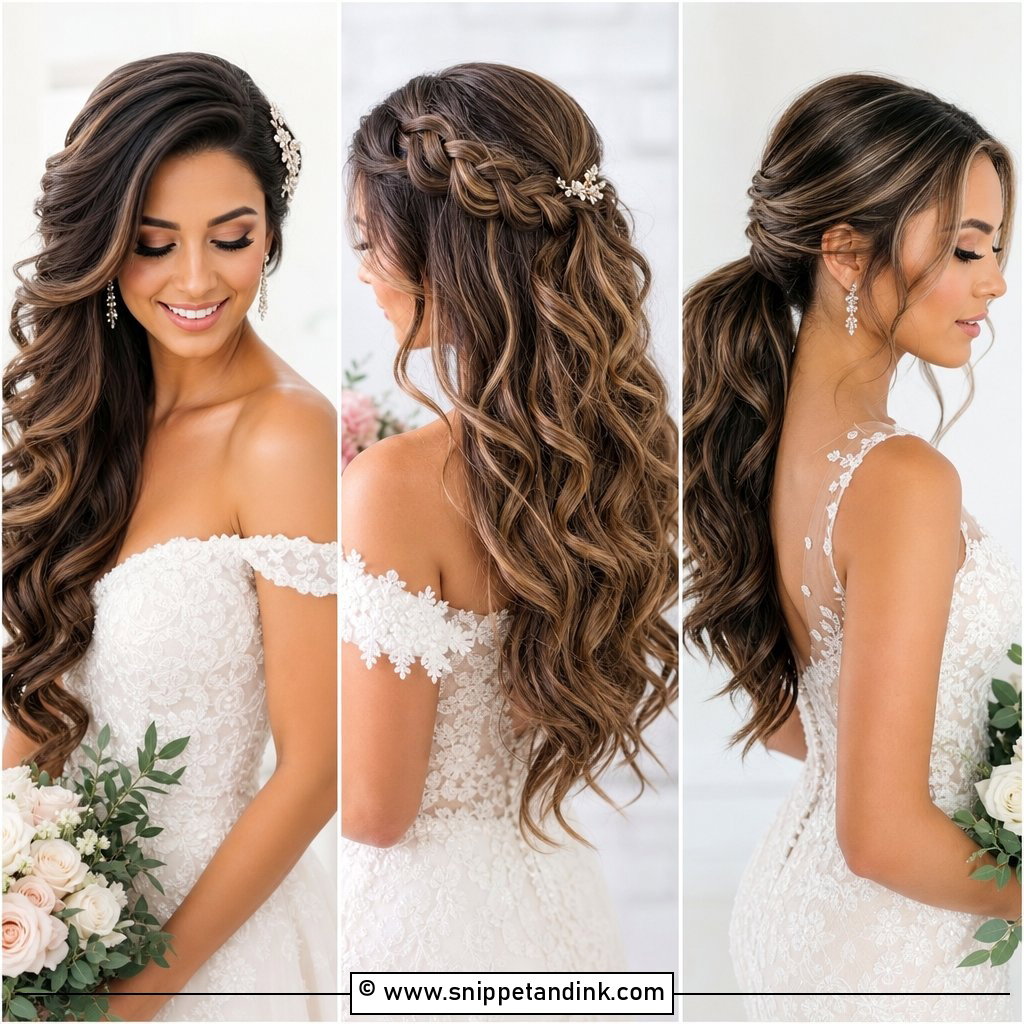
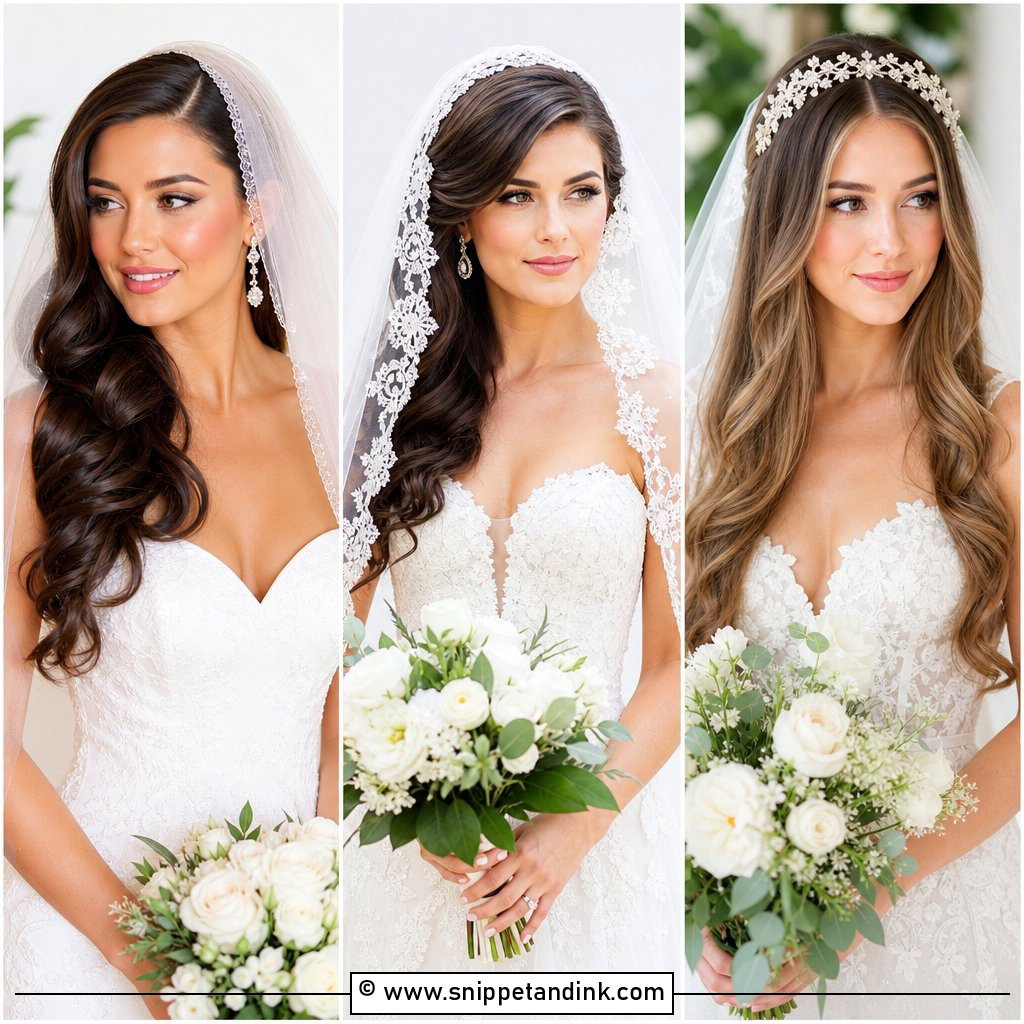
Soft waves are the down style I’m asked for most, and the one most likely to fall flat by dinner if they’re rushed. I curl in medium sections over a light mousse, pin each curl in a coil while it’s still warm, and leave the pins in until the hair has cooled completely. Brushing out too early is what turns waves into frizz. Ask for a smooth crown with a little lift at the face and bends that start around the mid-lengths. A center part feels modern; slightly off-center gives the front more lift. It pairs easily with lace or plain satin, small pearl earrings and a light veil, and a flexible spray keeps the waves soft to the touch.
2. Hollywood Wave Hair Down Bridal Look
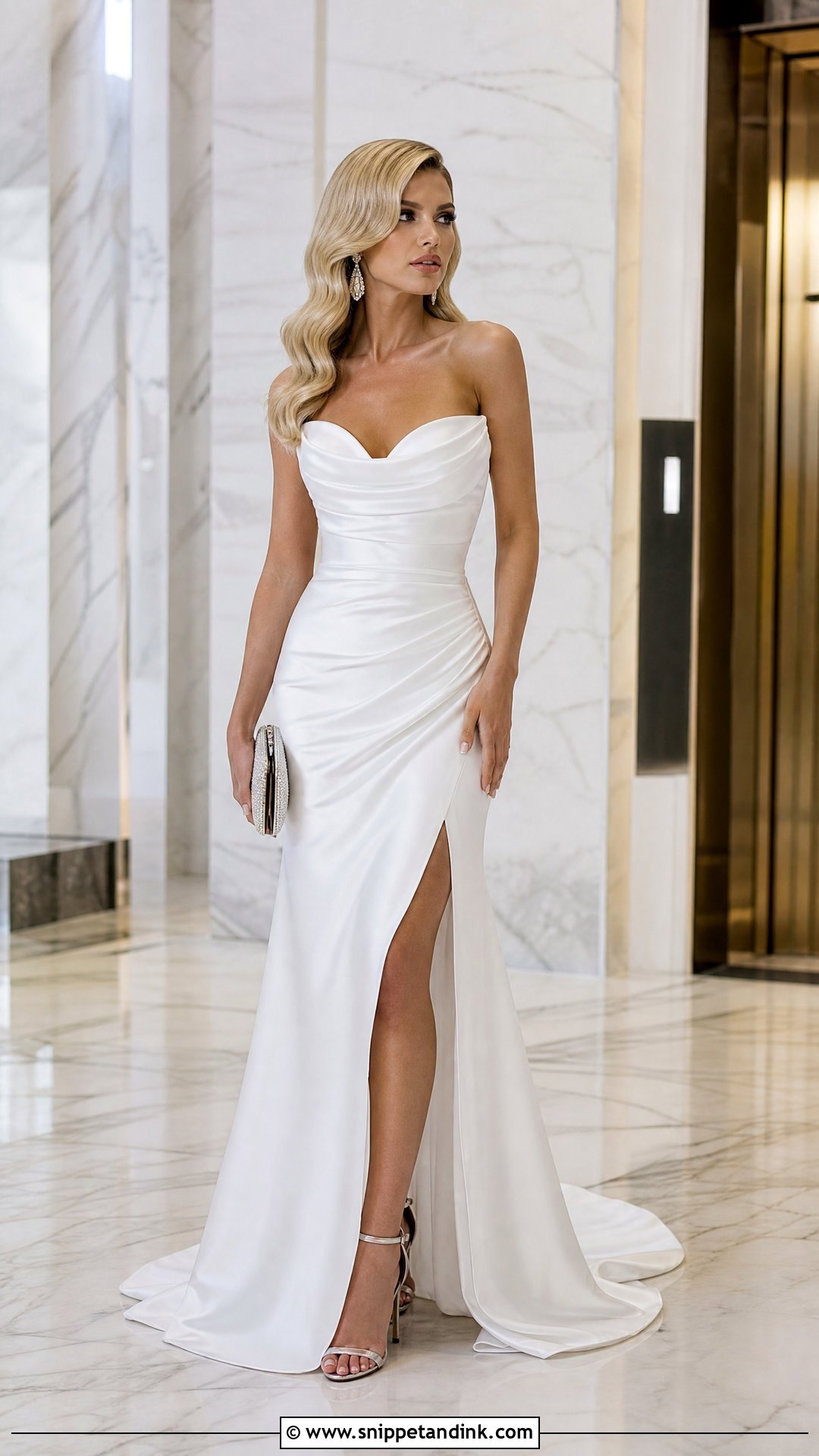
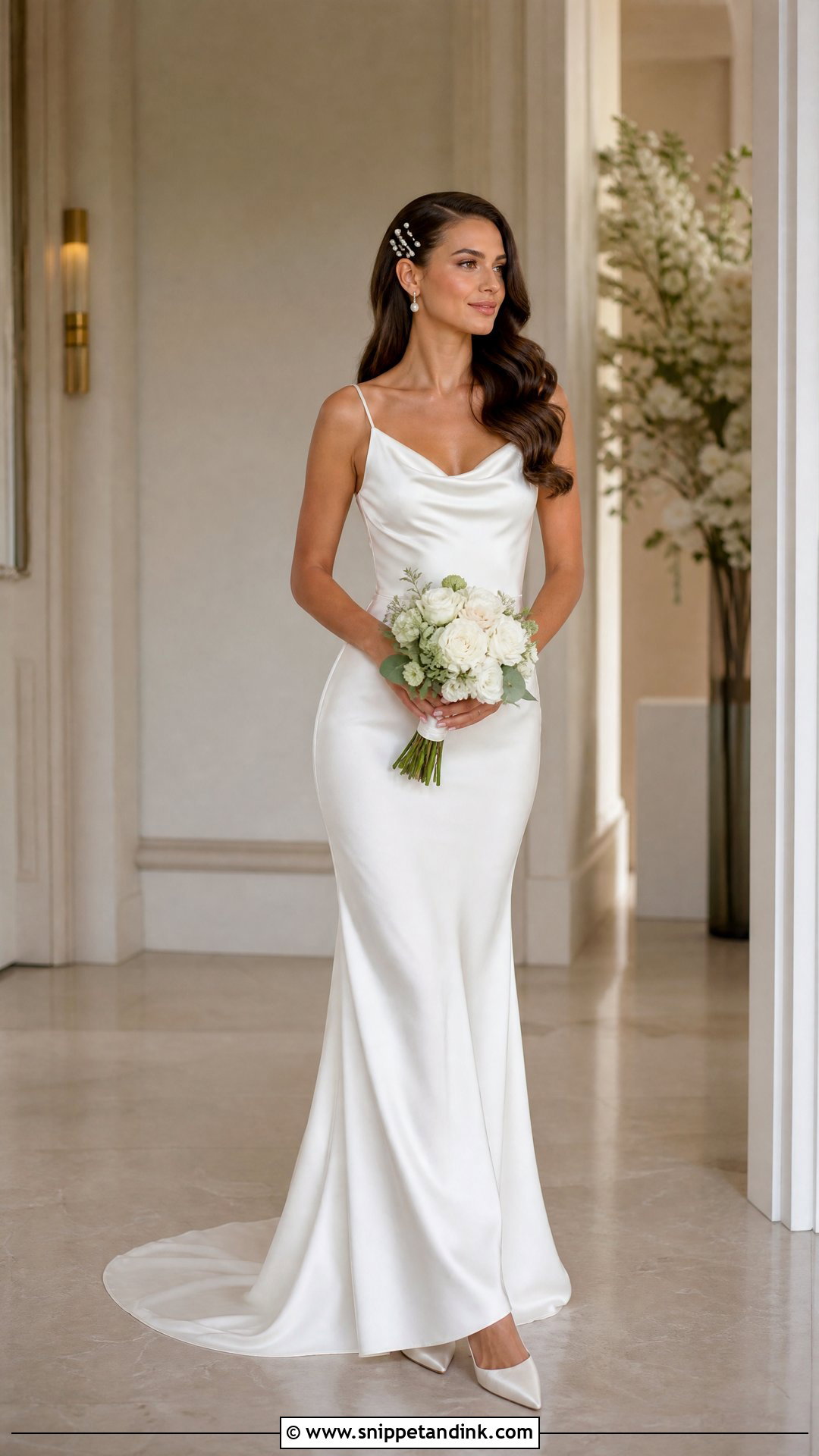
Glossy Hollywood waves are a set, not a curl. Every section is curled in the same direction, pinned, cooled, then brushed together until the curls merge into one S-shaped ribbon, usually swept over one shoulder from a deep side part. That brushing stage is where the skill sits, and it takes longer than brides expect, so build the time in. The finish suits a fitted satin gown or an off-the-shoulder neckline and makes statement earrings the obvious accessory. Keep the crown controlled rather than high. Shine spray helps, sparingly; on fine hair too much of it weighs the wave down until the S shape collapses.
3. Side Swept Curl Hair Down Bridal Look
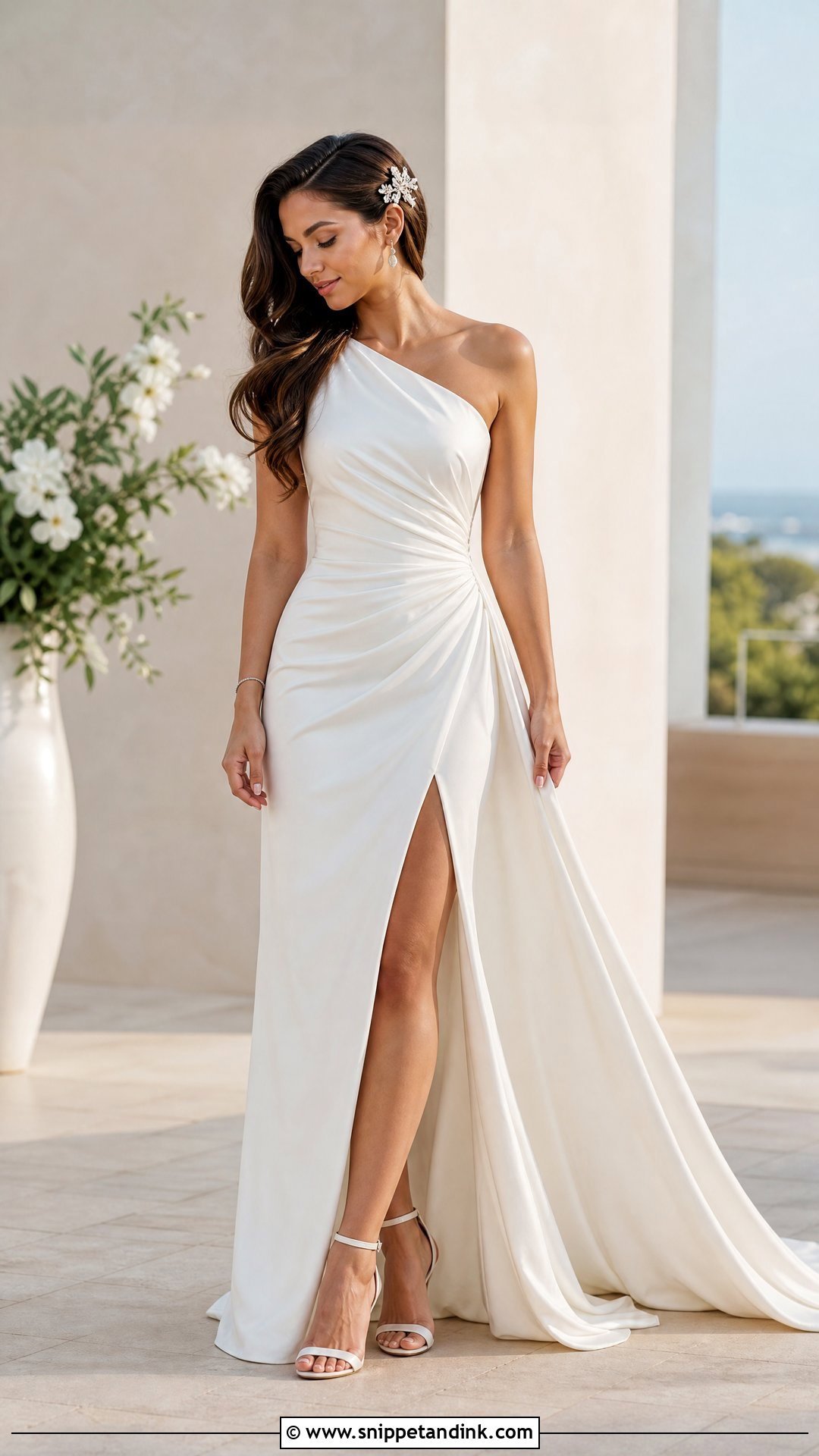
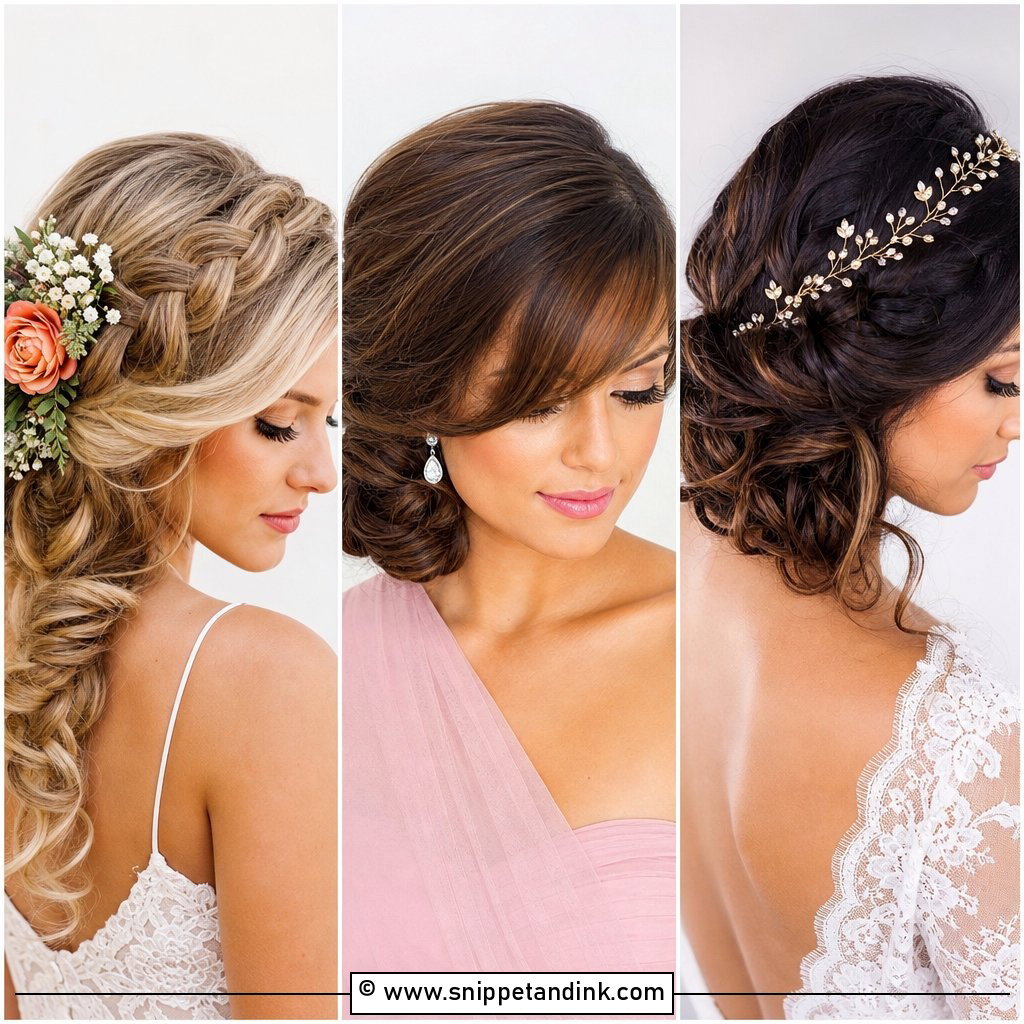
Side-swept curls solve a common problem: you want hair down, but you don’t want it covering both sides of the dress. I pin one side behind the ear or at the nape with crossed bobby pins, which grip far better than a single pin, and let the curls fall over the opposite shoulder. That reveals an earring and shows off a one-shoulder or strapless neckline. The mistake is leaving the pinned side flat, so ask for a little lift above the ear to balance the heavier side. A jeweled comb can sit over the pins, or you can keep them hidden. Outdoors, a humidity-resistant spray stops the swept side creeping back toward your face.
4. Center Part Wave Hair Down Bridal Look
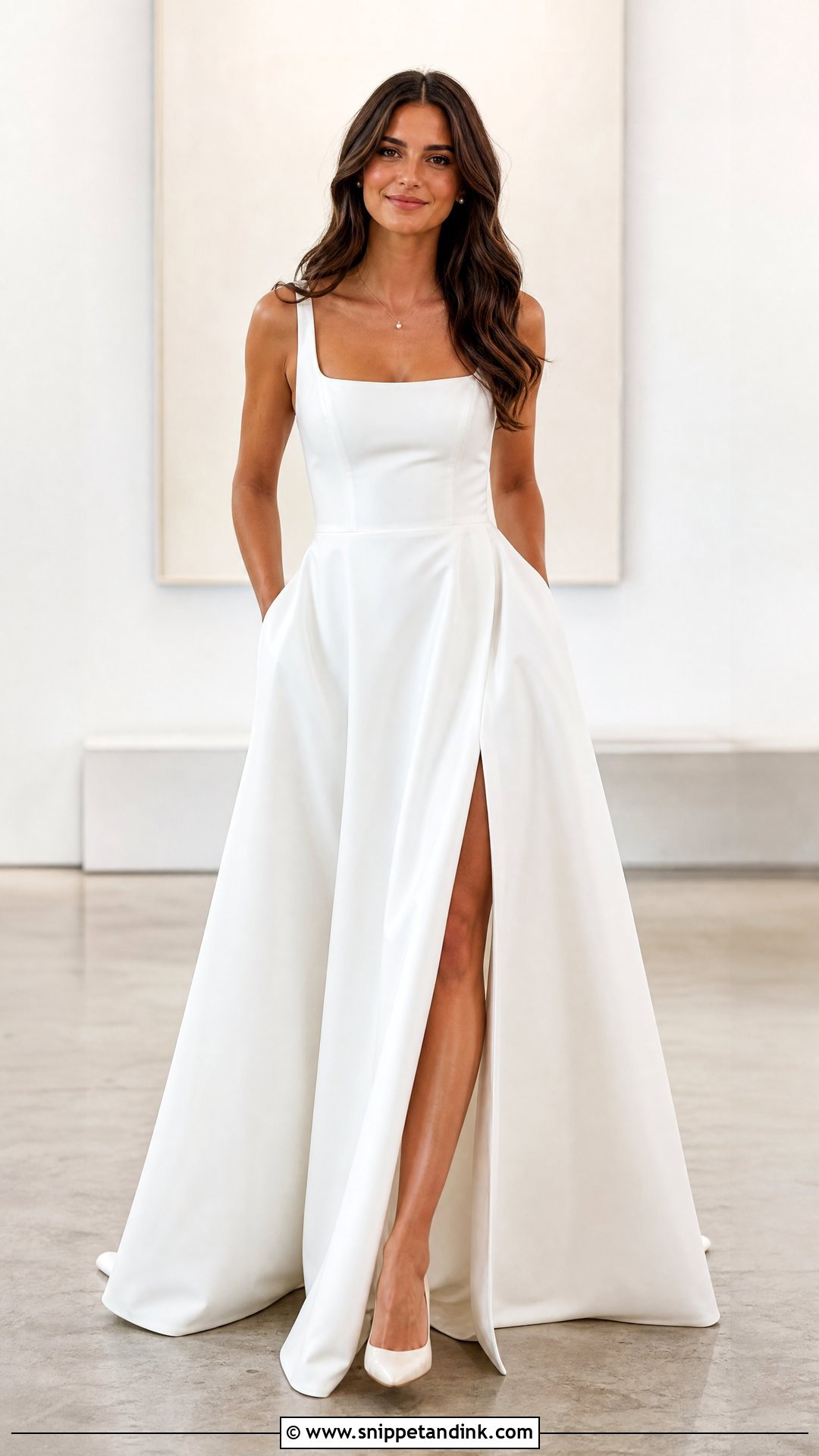
A center part with flowing bridal waves frames the face evenly, which is why it suits square or sculpted necklines. The risk is severity. If the roots are pressed flat, a center part can read harsh in photos, so I keep a little lift at the scalp. Waves can start near the cheekbones for softness or lower down for a looser feel. If you have face-framing layers, curl them away from the face so they don’t cover your eyes. Simple studs, a fine necklace and a plain veil keep it uncluttered. At the trial, check the back as well, since a center part that isn’t straight behind the crown is obvious once the veil comes off.
5. Sleek Straight Hair Down Bridal Look
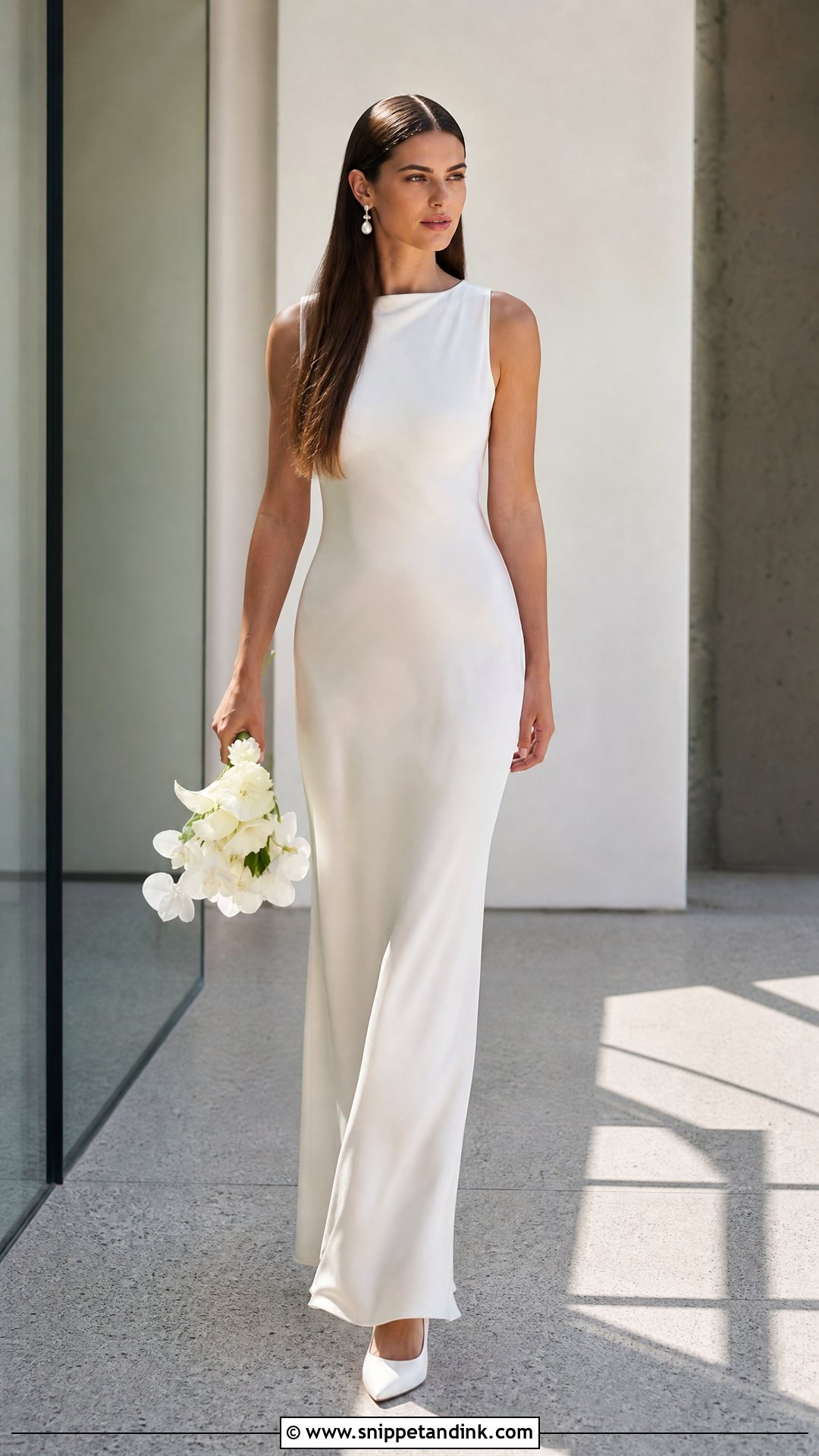
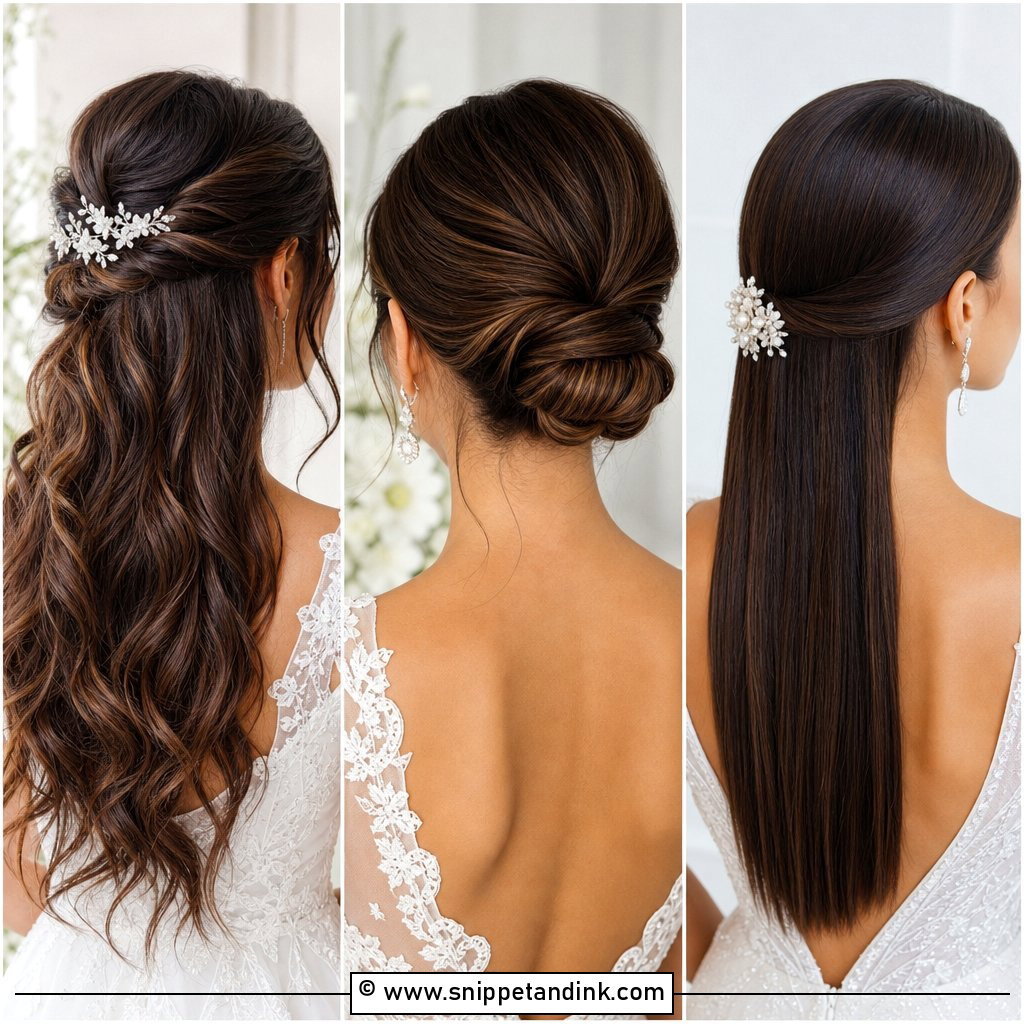
Straight hair needs more prep than people assume, not less. Any frizz or kink shows immediately, so I start with heat protectant, blow-dry smooth with a paddle brush, then flat-iron in small sections. I still leave a bit of root lift and a slight bend at the ends, because poker-straight hair can look limp next to a structured gown. A sharp center part suits minimalist satin; a side part adds movement. Tuck one side behind an ear to show a pearl drop or a small ear cuff. A drop of anti-frizz serum on the ends handles flyaways. For brides who wear their hair straight every day, it’s the version that will feel most like you.
6. Bouncy Blowout Hair Down Bridal Look
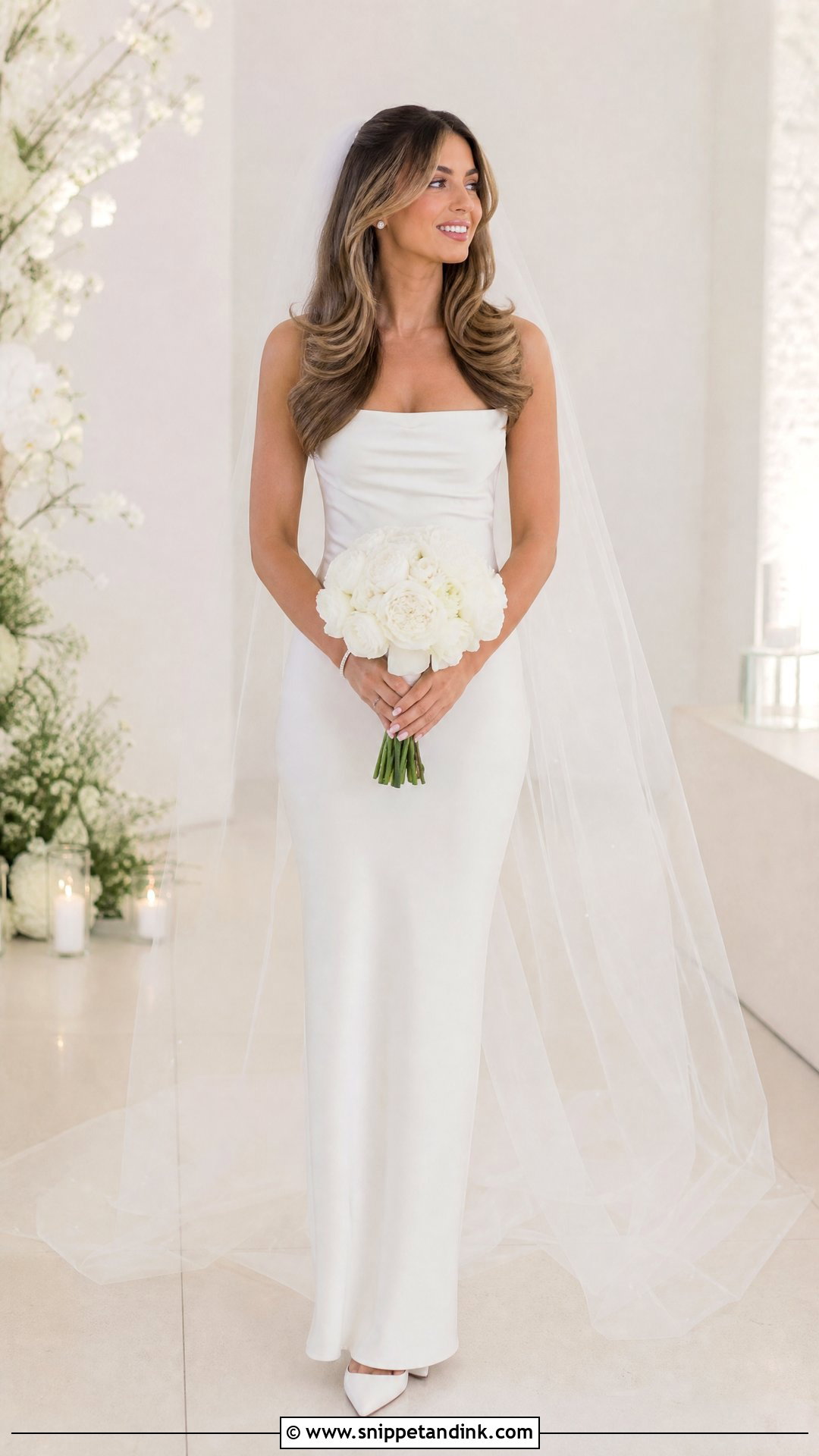
A bouncy blowout gets its volume from the drying, not from curling afterward. I dry in sections over a round brush, then set the crown and front pieces in large Velcro rollers while makeup is done, which gives lift that lasts longer than hot tools alone. Fine hair needs a root-lifting mousse; thick hair needs a smoothing cream through the ends so the bounce doesn’t turn into bulk. Skip heavy oils, which kill the movement within an hour. It adds welcome volume above a column dress or strapless gown. Place a fingertip veil under the crown so the shape isn’t flattened.
7. Natural Curl Hair Down Bridal Look
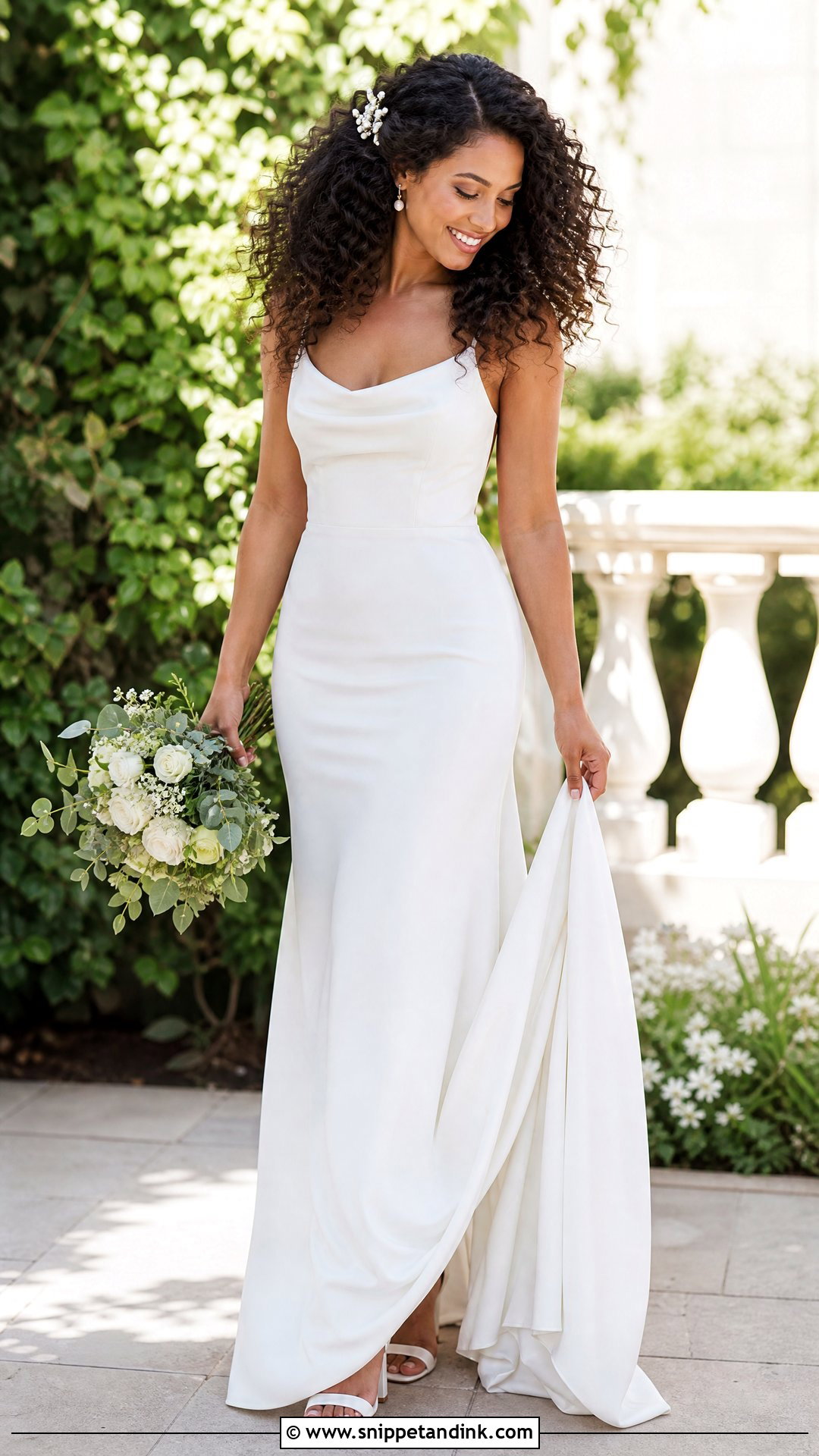
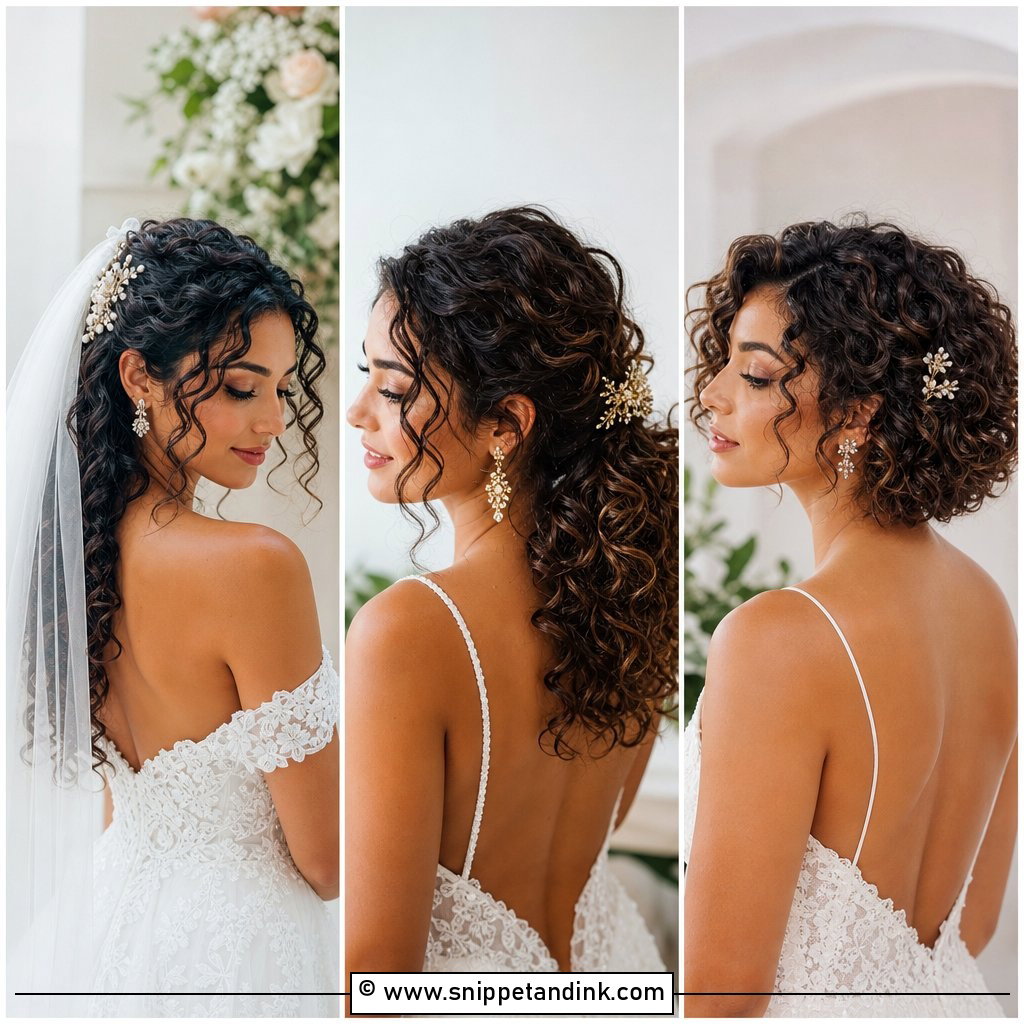
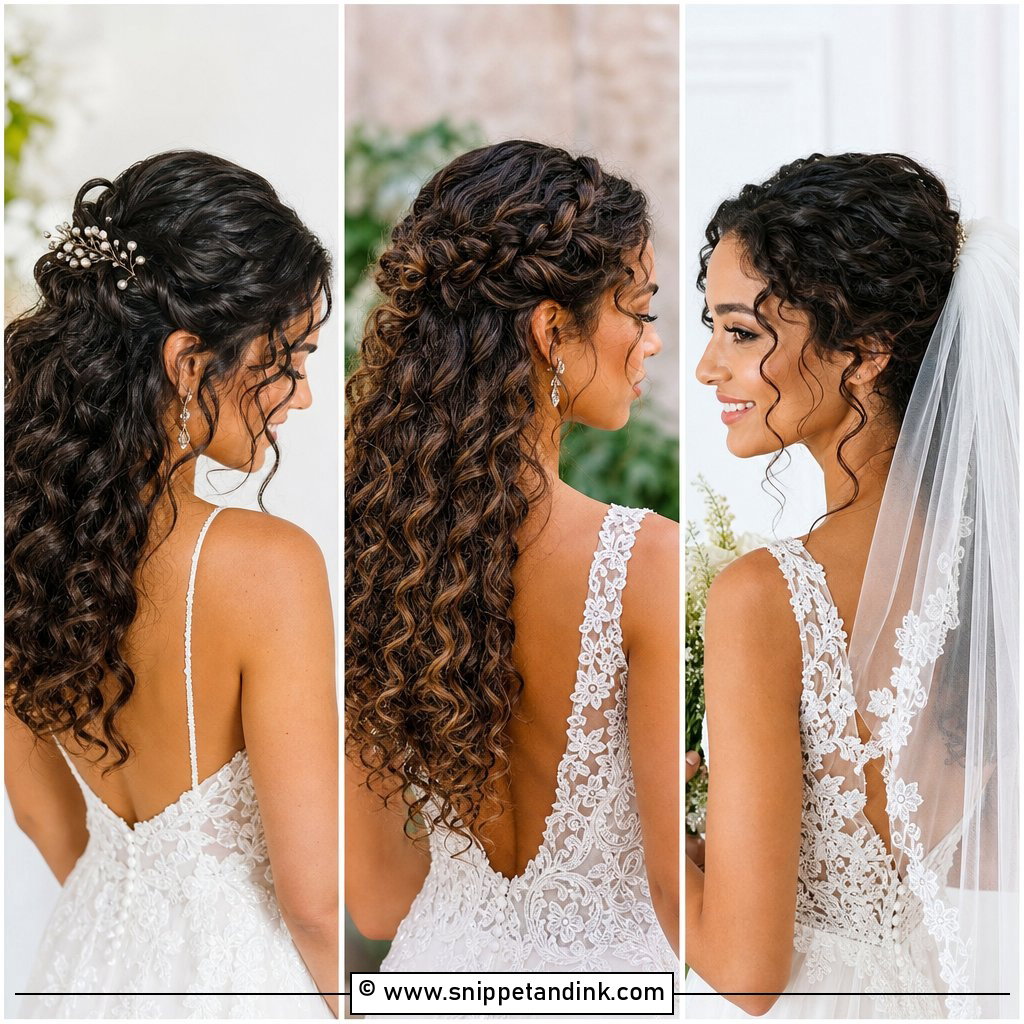
With natural curls, my job is to define what’s already there, not reshape it. Most curly clients know their routine better than any stylist, so I ask them to bring their own leave-in, cream and gel to the trial and to wash the way they would on the morning. New products the week of the wedding are the most common cause of a bad curl day. A side part gives height; a center part gives a rounder shape. A clean-neckline gown lets the curls do the talking. Small pearl pins or a side comb add a bridal note, and I’d keep accessories few so the curl pattern stays visible.
8. Defined Coil Hair Down Bridal Look
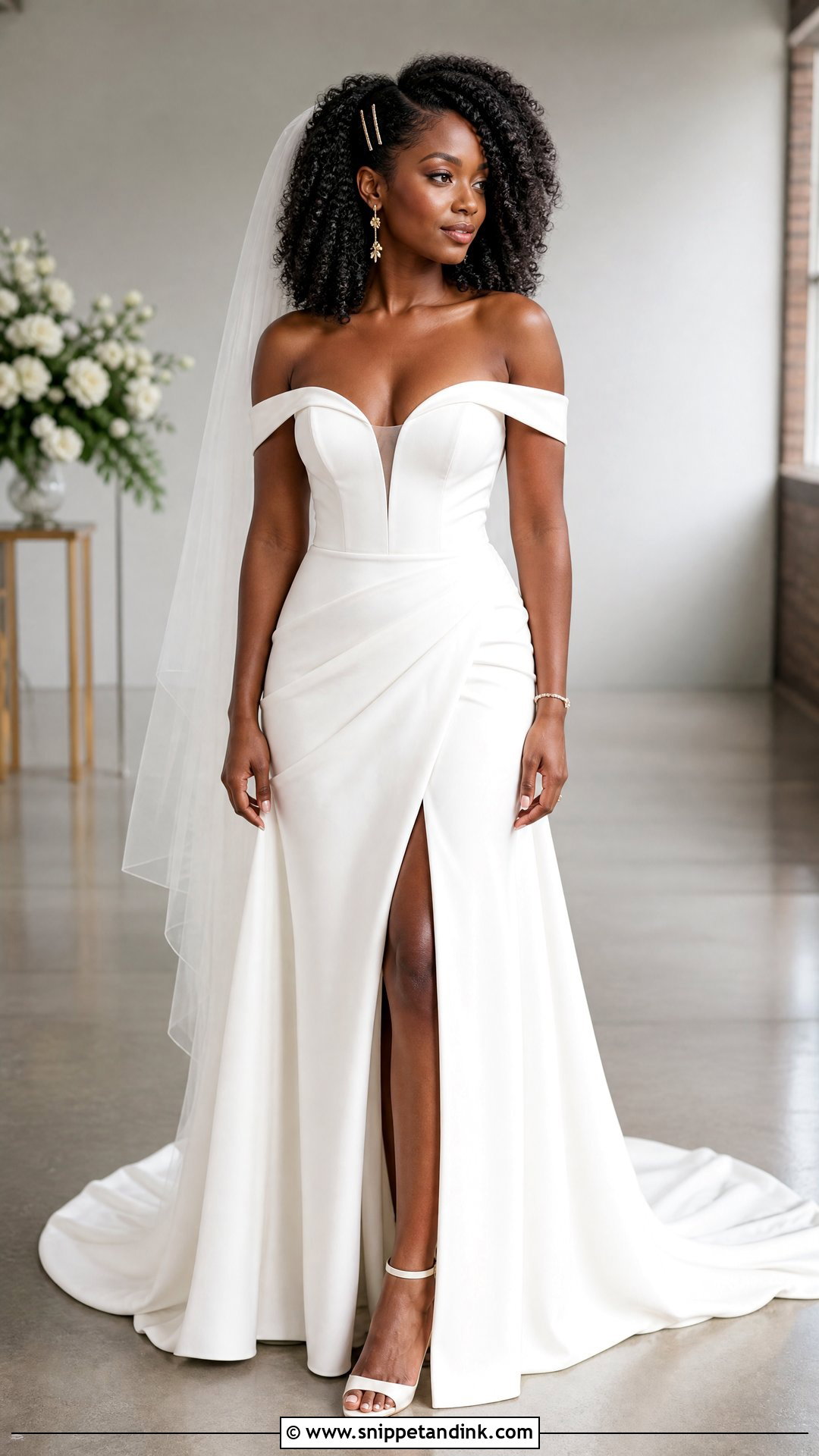
Coils deserve the same approach: shape the natural pattern, don’t fight it. Wear them rounded, with a deep side part or gently stretched, whatever matches how you like your hair to look. Talk honestly at the trial about shrinkage, because coils set the night before can look shorter by the morning, especially if the air turns humid. Veil attachment needs planning too; a comb slides out of coils, so I usually make a small flat braided anchor under the top layer and set the comb into that. A clean-necked, structured gown contrasts well with the volume. Bring the exact veil and pins to test the weight.
9. Beach Wave Hair Down Bridal Look
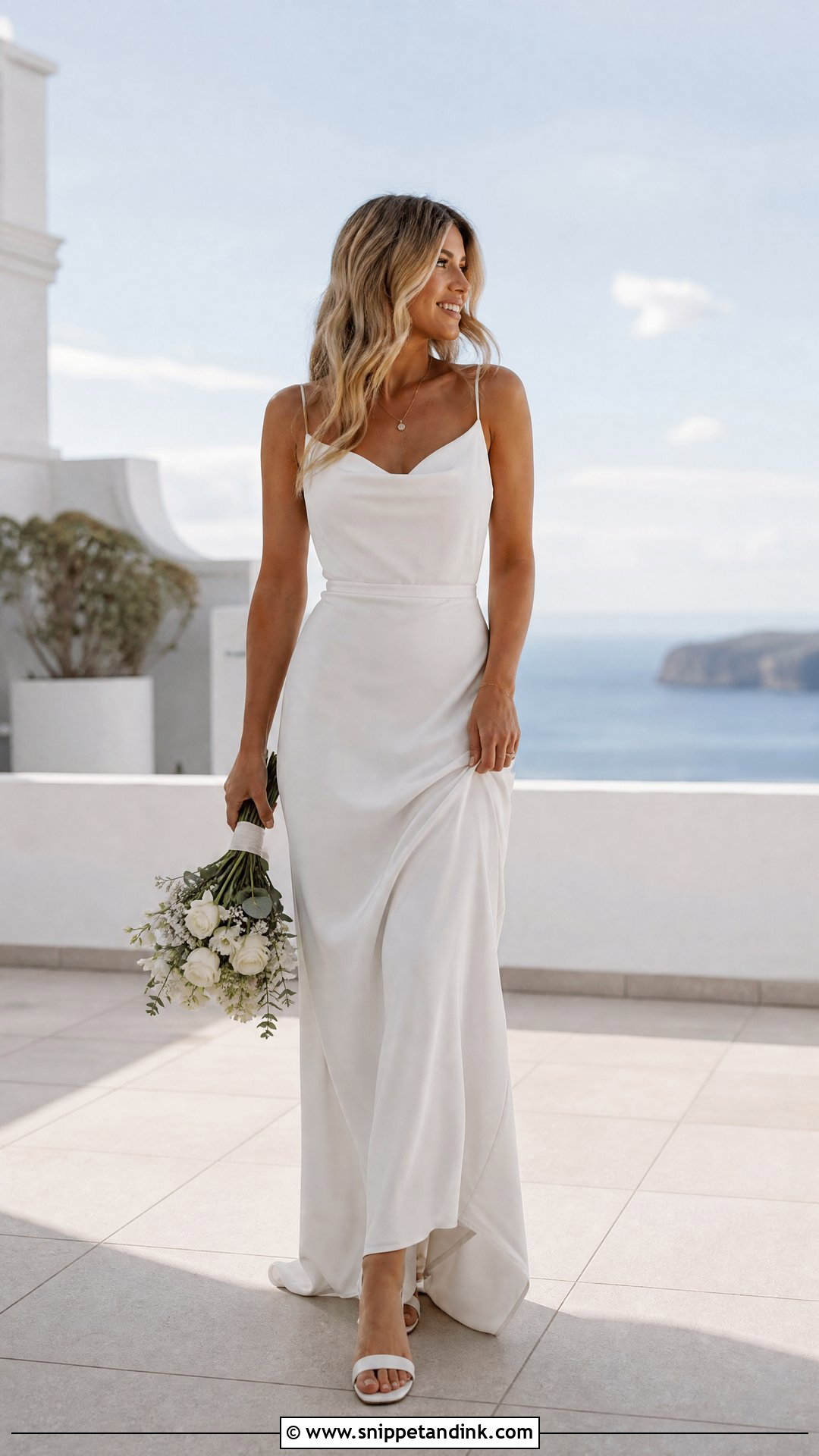
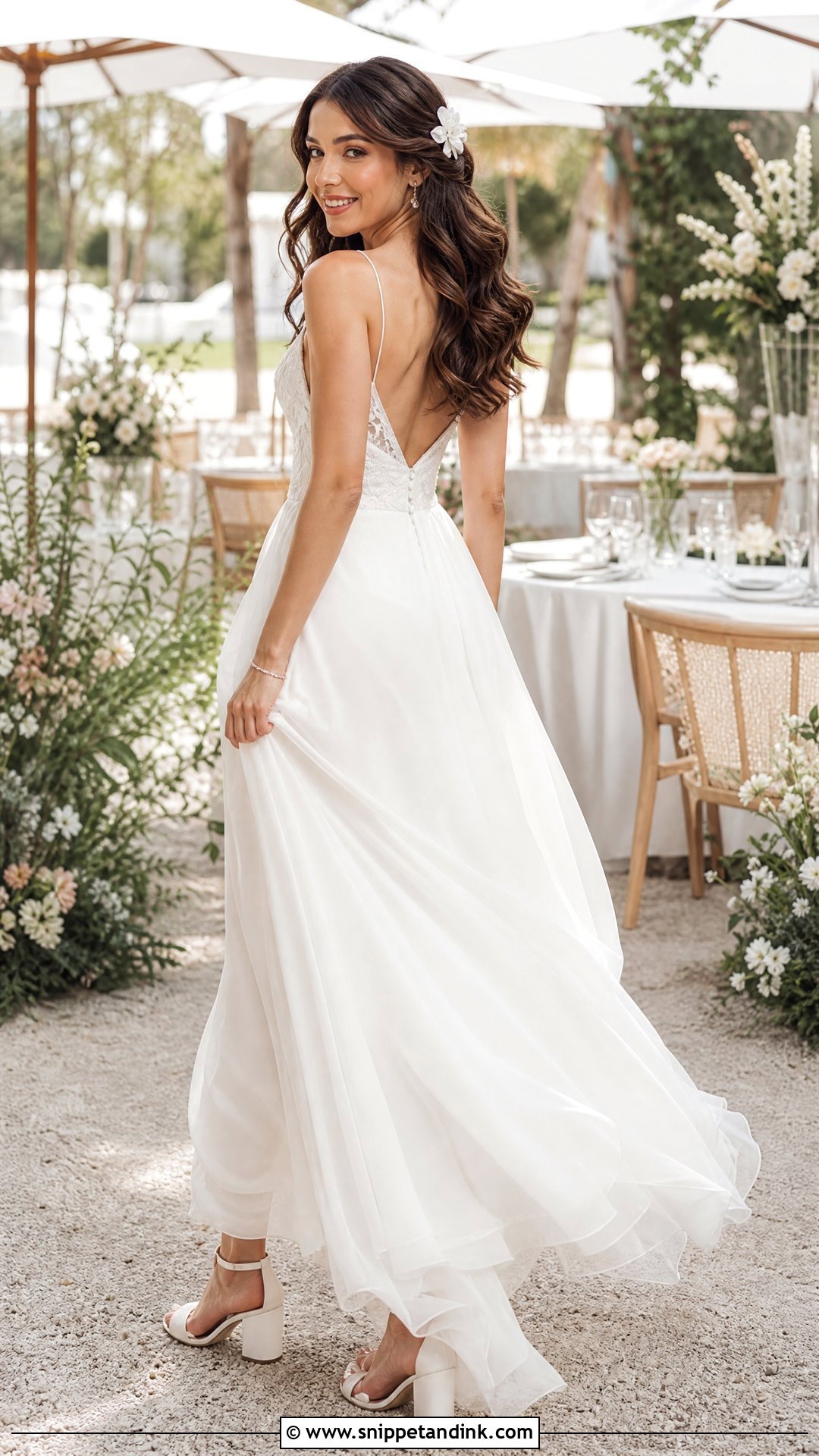
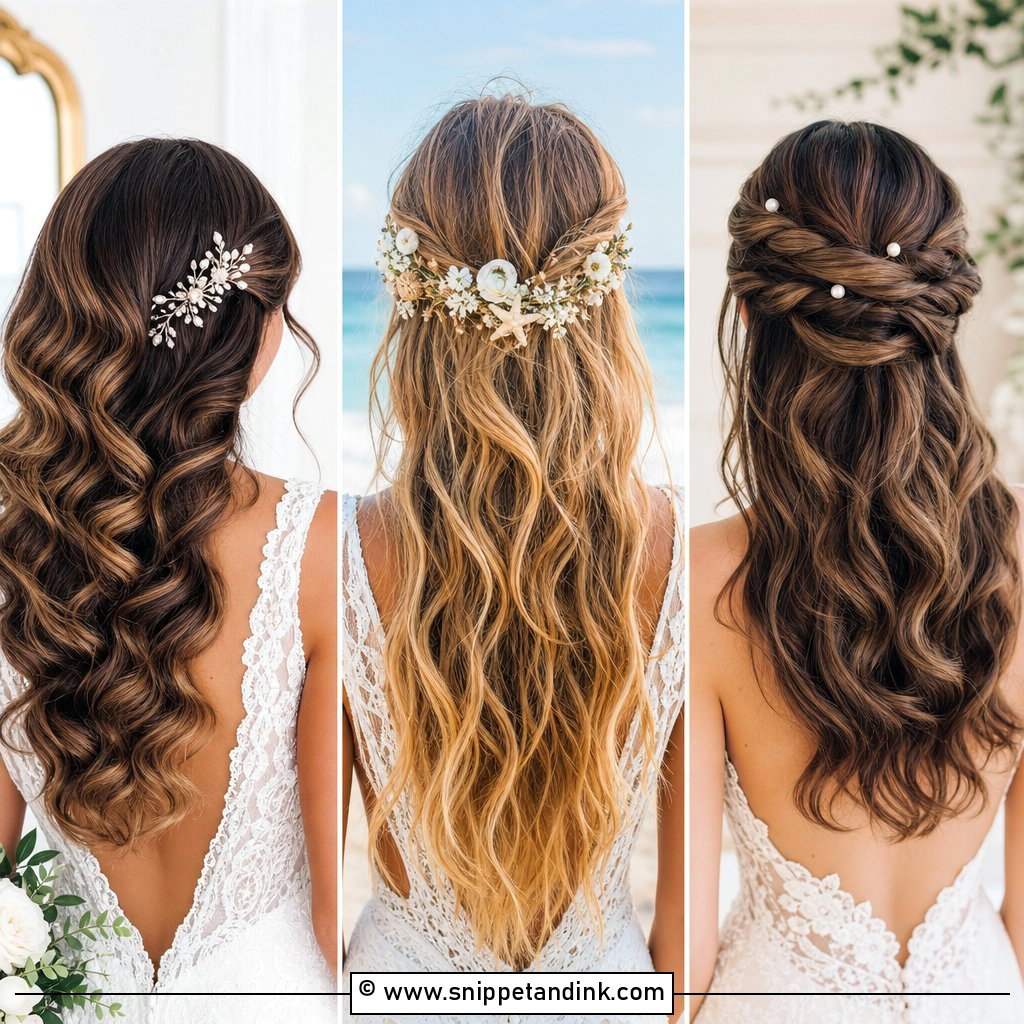
Beach waves look casual, but they’re built carefully. I curl with a flat iron or wand and leave the last inch or two straight, then break the bends apart with my fingers and a texturizing spray so they look separated rather than uniform. Light root volume keeps it from looking flat in photos. Sea air is the enemy. Salt and humidity make loose texture swell and frizz, so a light grip product and flexible spray go in before you leave. For the ceremony, pin the front pieces behind your ears so they don’t blow across your face, then let them loose for the reception. It suits a slip gown or lightweight lace.
10. Twisted Half Up Hair Down Bridal Look
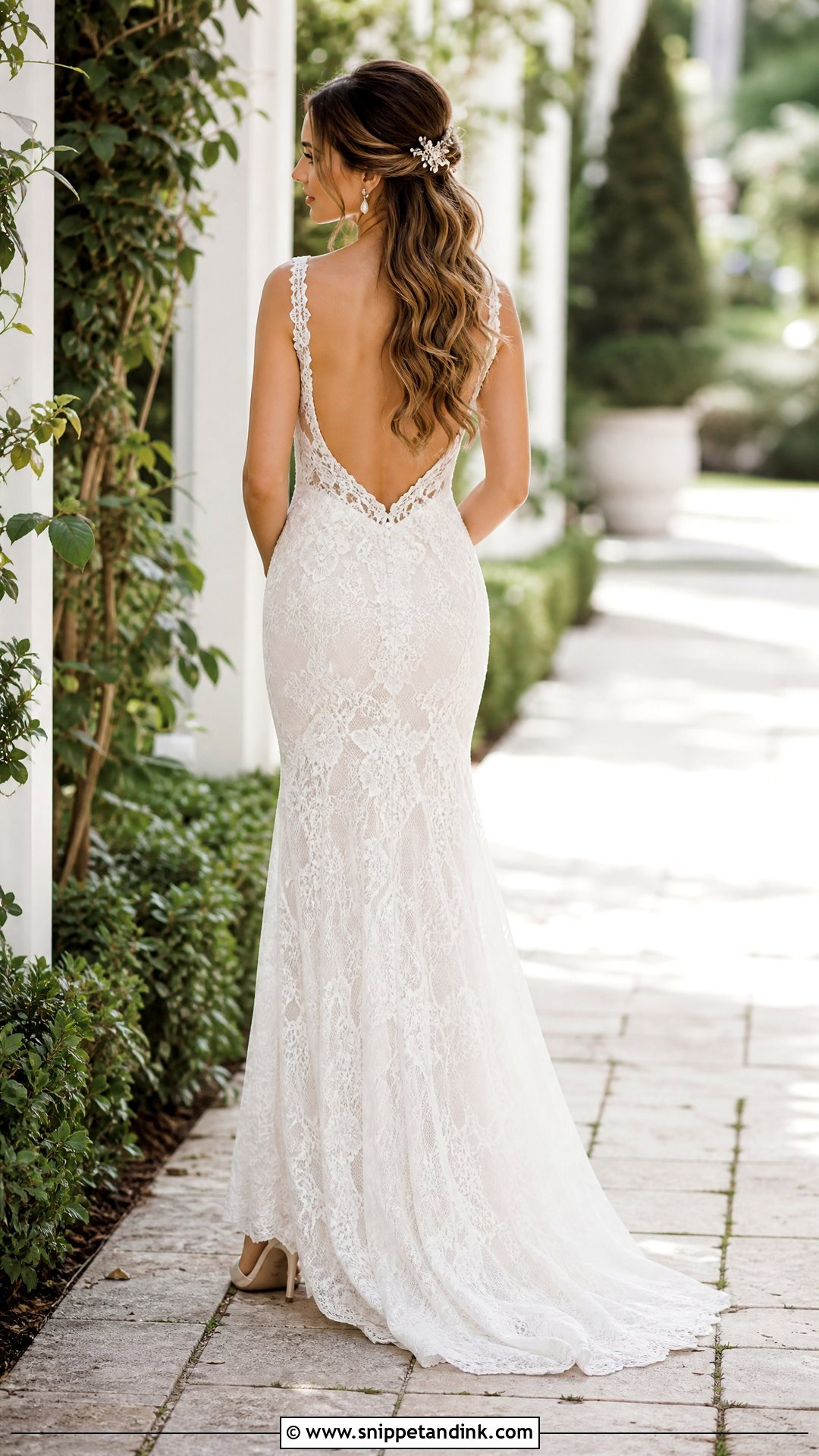
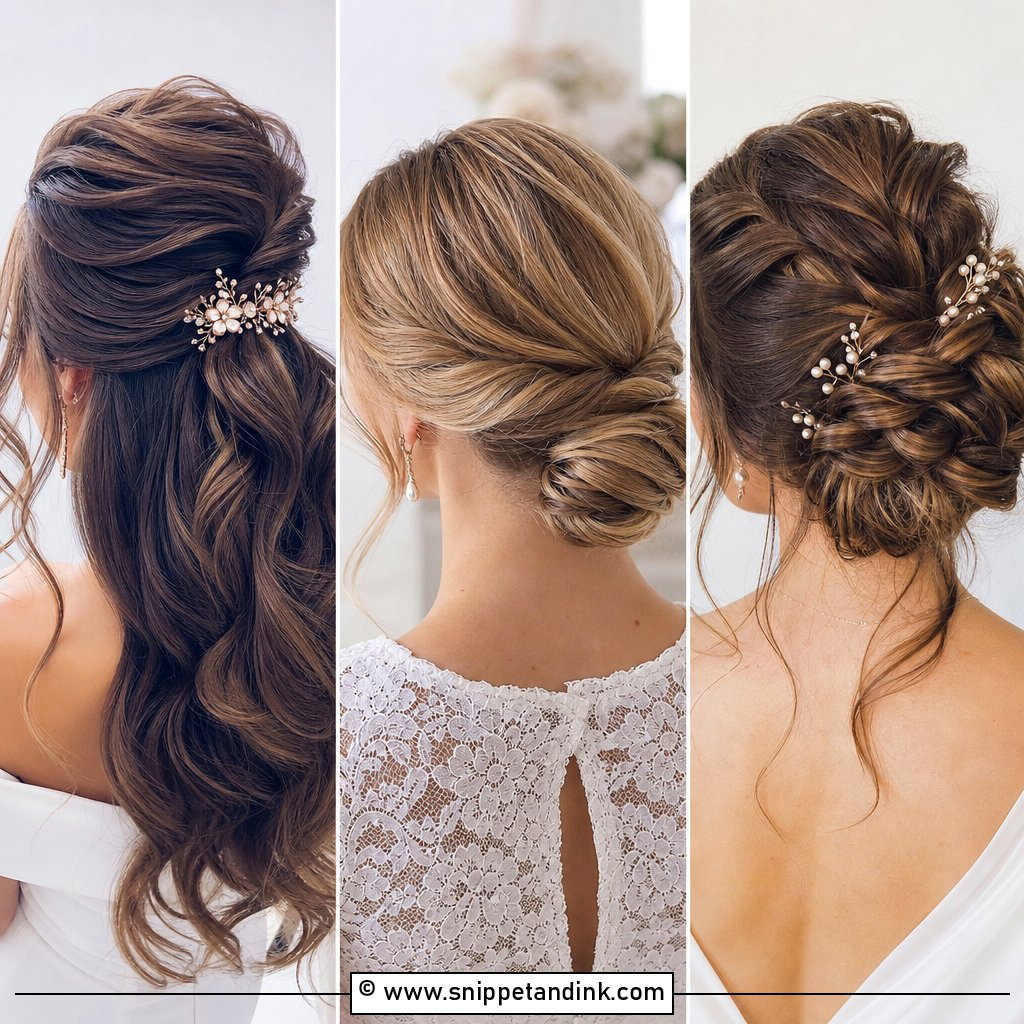
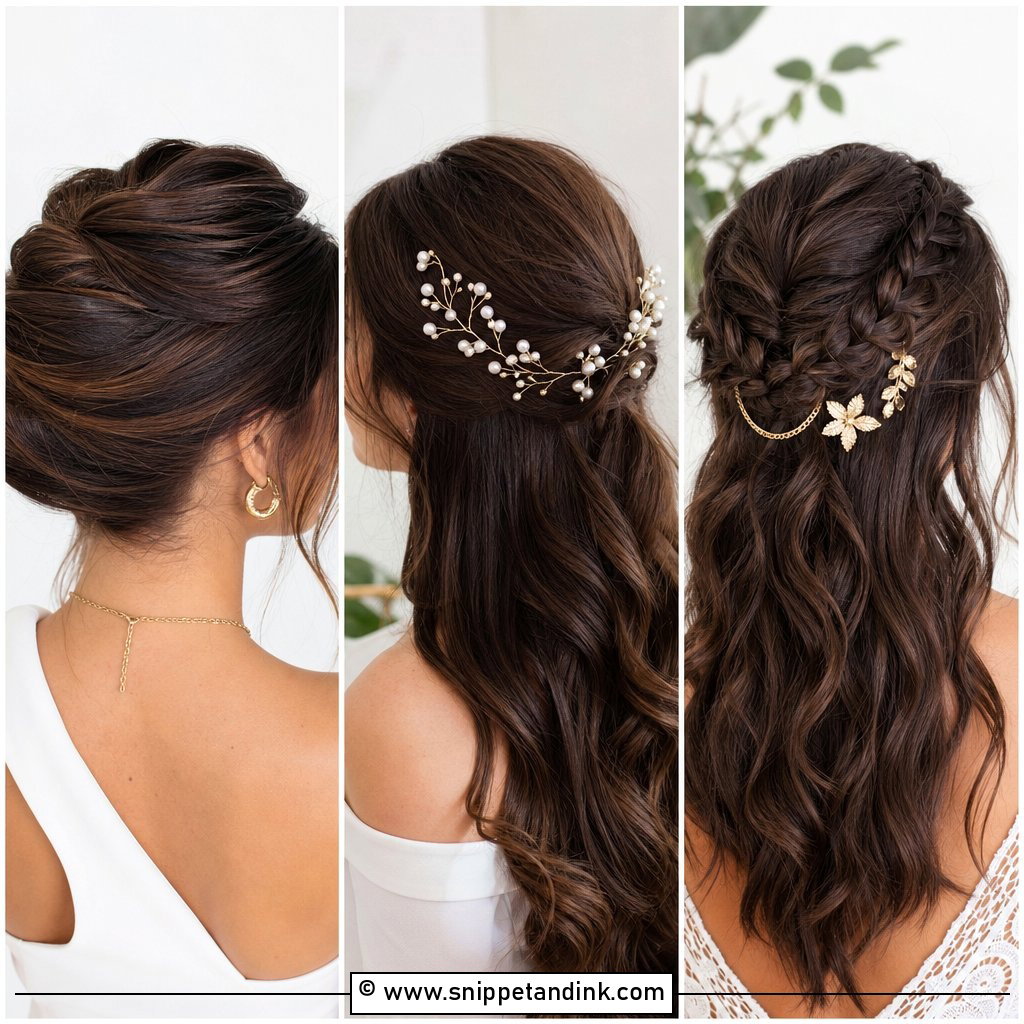
Half-up twists give a down style somewhere to anchor. I twist a section from each side toward the back and pin them where they meet, crossing the pins so they lock. That join is a stable base for a veil comb, and it keeps hair off the face for the vows. Ask for a little lift on top so the twists don’t pull flat against the scalp, which can look severe. A pearl comb covers the pins neatly. At the trial, wear it for at least an hour. If it pulls at the temples now, it’ll give you a headache by the speeches. It sits well with lace, sweetheart necklines and open backs.
11. Braided Half Up Hair Down Bridal Look
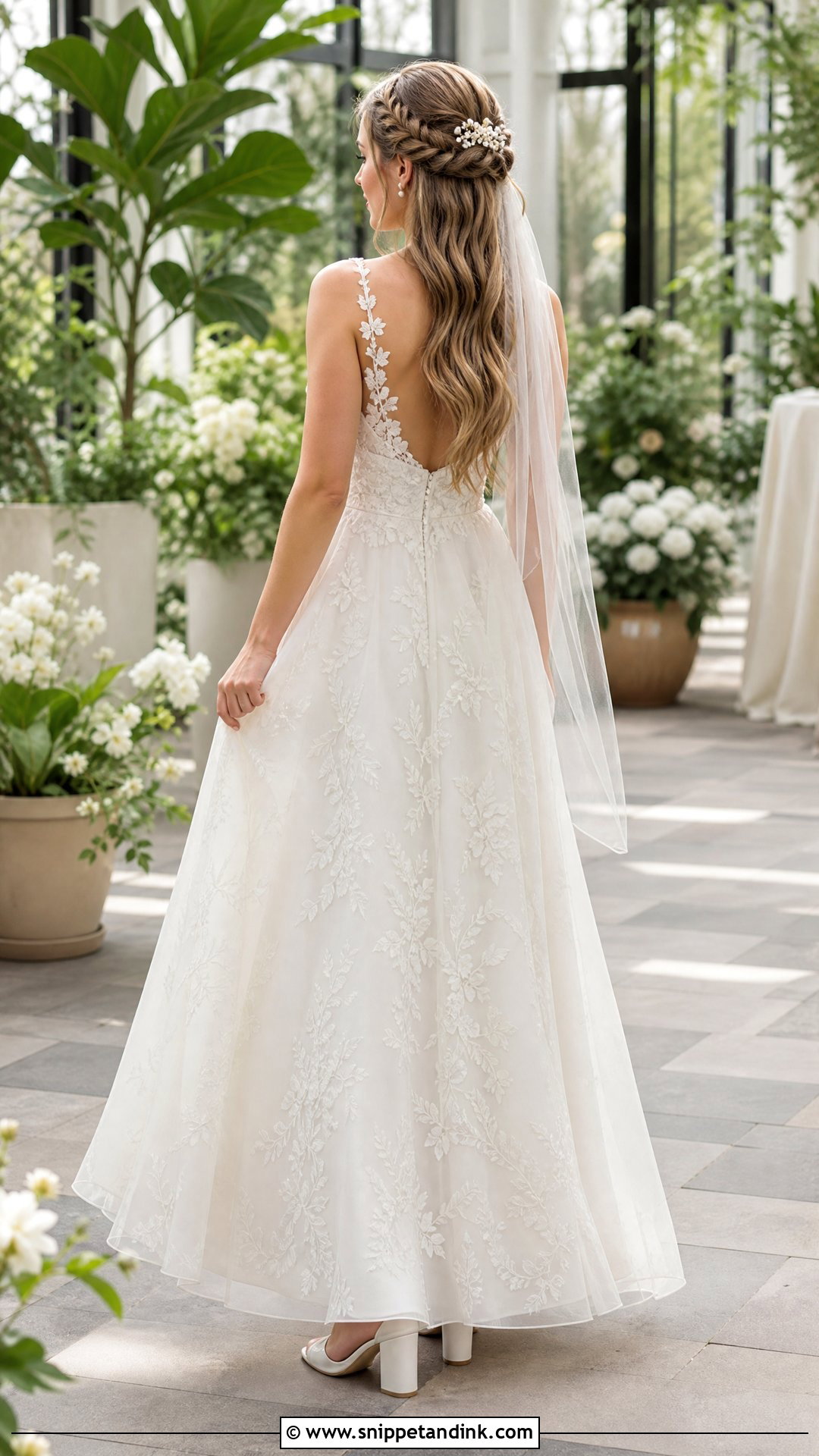
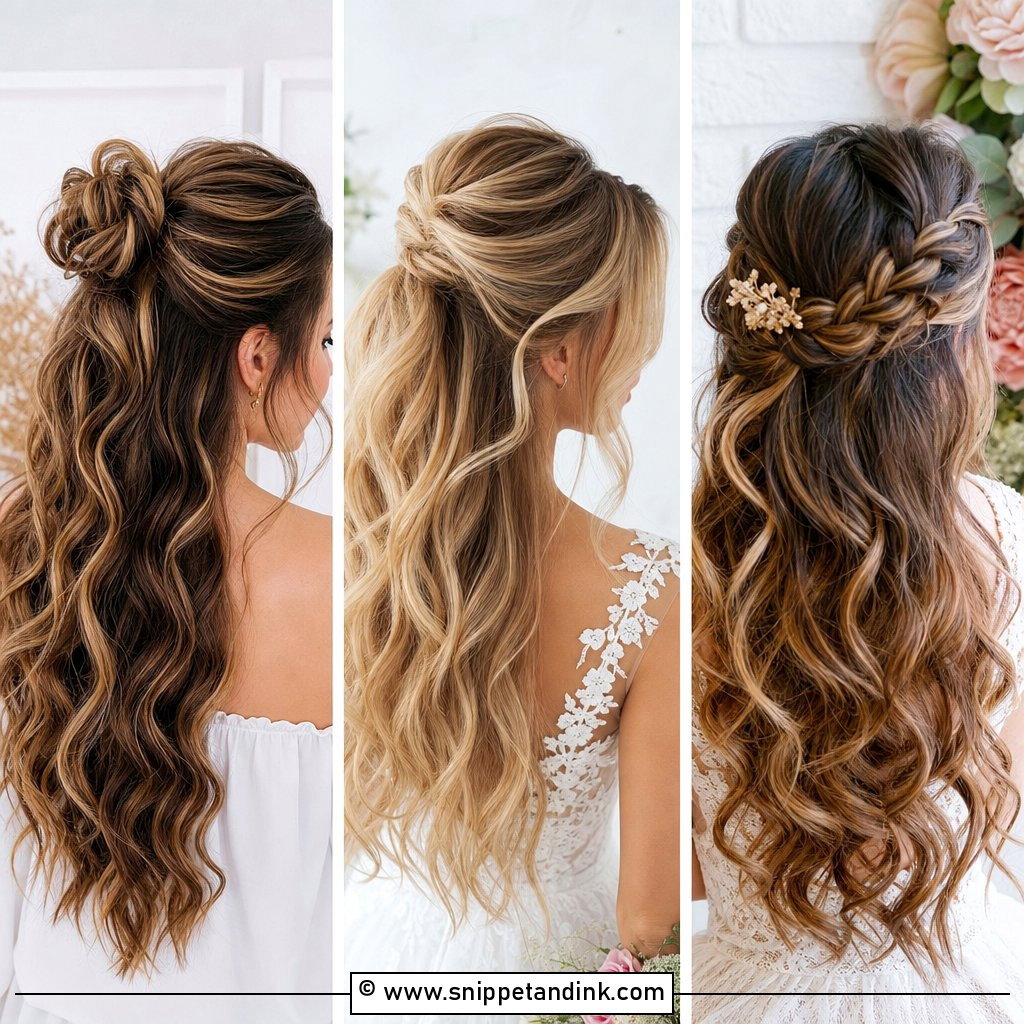
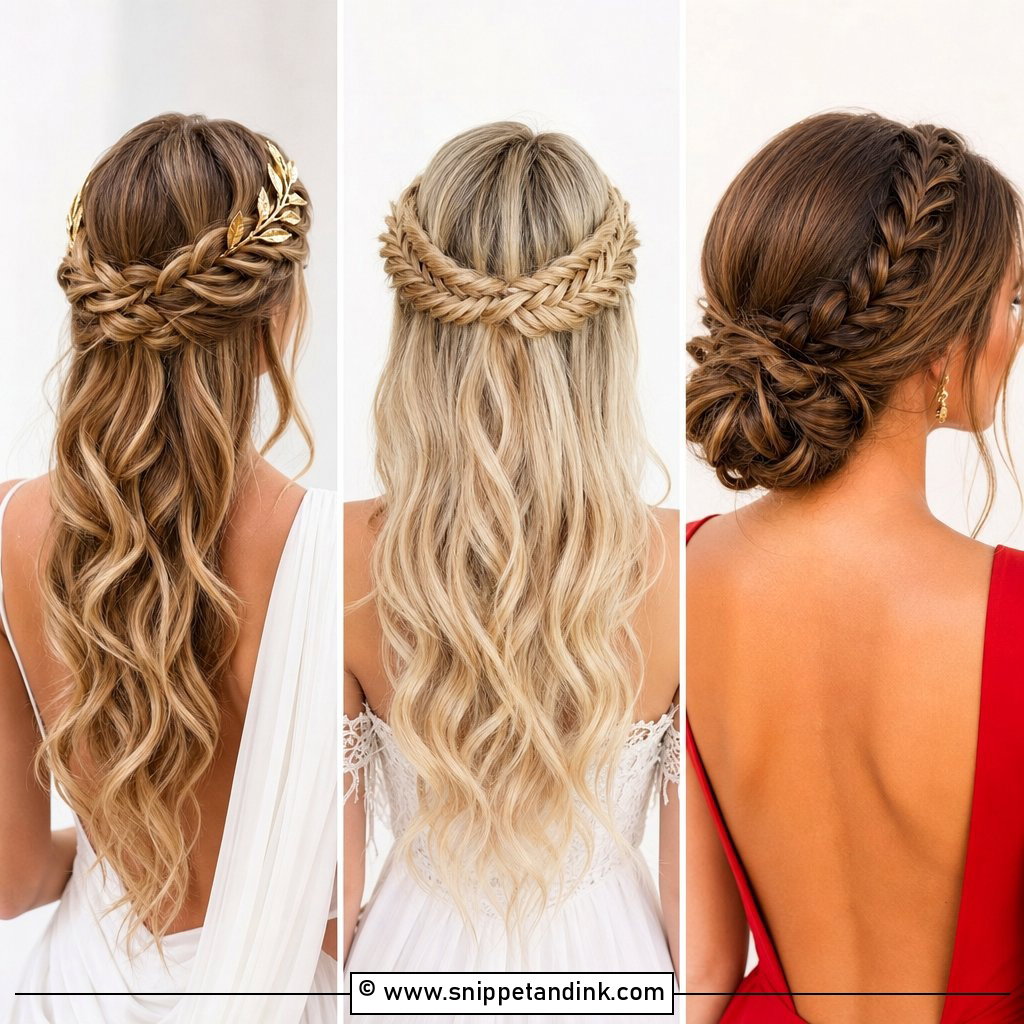
Braids add texture and grip, and grip matters with a half-up look. Two slim braids meeting at the back, or one wider braid across the crown, hold far better than loose sections on silky hair. Once the braid is done I pull the edges gently outward, which makes it look softer and hides how tightly it was plaited at the core. Fine hair needs texture spray before braiding, or the strands slip and the braid loosens by evening. A small comb or a few flowers where the braids meet suit a garden setting. Keep the back simple if your veil is heavily embroidered, otherwise the two compete.
12. Waterfall Braid Hair Down Bridal Look
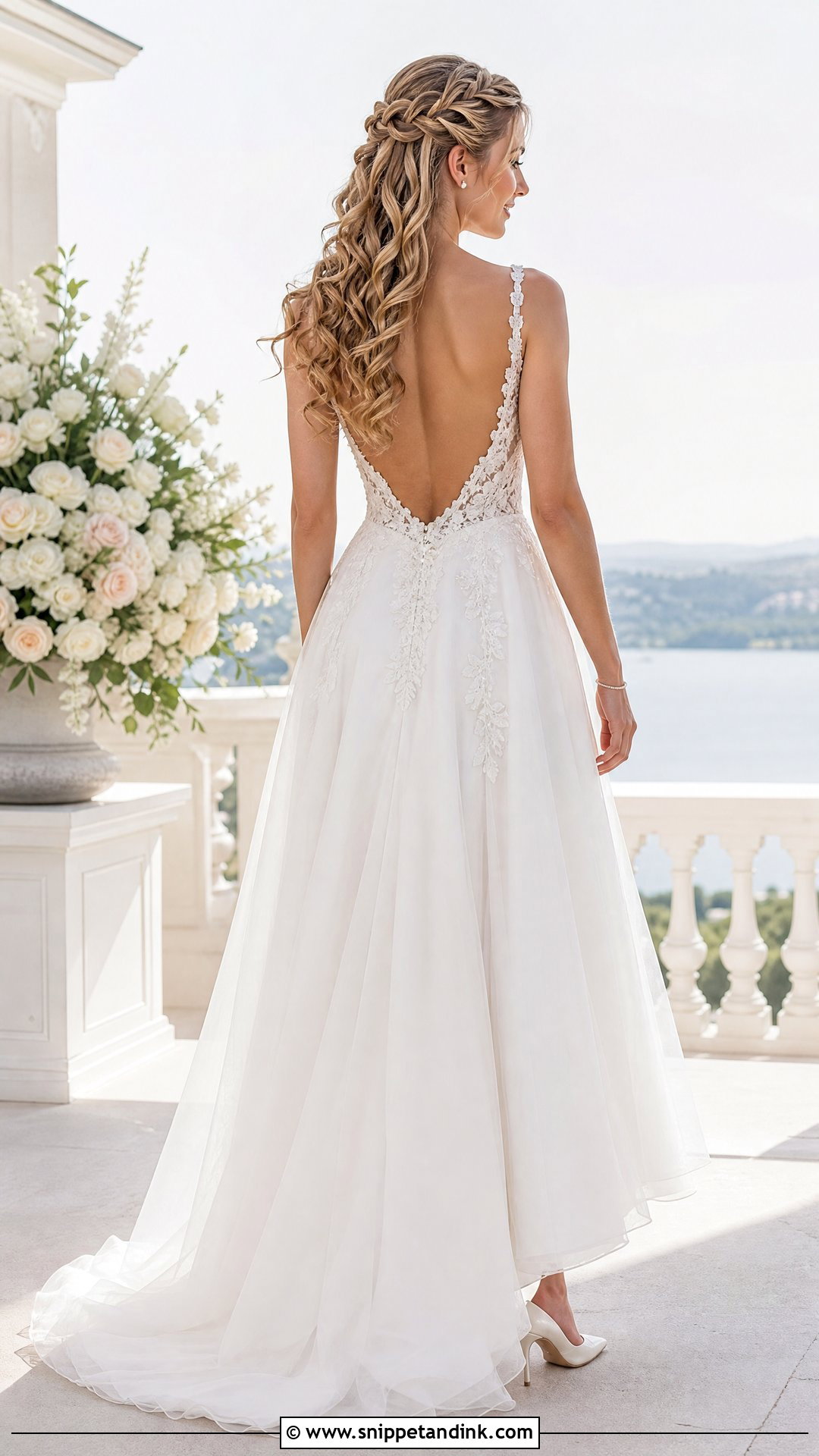
A waterfall braid drops a strand out of each crossover, so pieces fall through the woven line into the curls below. It’s delicate and it needs a firm hand. Plaited too loosely, it sags after a few hours; too tight, and it looks flat. Highlights or dimensional color make the pattern much easier to see, while very dark solid color can hide it in photos. On sleek hair, texture spray gives the strands something to grip. I tuck the end of the braid under a curled section so there’s no visible elastic. It’s lovely from the back with an open-back gown, and a few pearls along the braid are optional.
13. Pearl Pin Hair Down Bridal Look
Pearl pins turn simple waves bridal without a big headpiece. I place them slightly off-center, above one ear or scattered through a twist, and I’d keep to two pearl sizes at most so it looks deliberate rather than busy. The weight matters more than people think. A pin with a large pearl will slide out of smooth hair unless it’s anchored into a pinned section or a hidden bobby pin. Soft waves with a side part make a good base. Bring every pin to your trial, along with the veil, so we can check nothing shifts when the veil goes on or comes off.
14. Floral Comb Hair Down Bridal Look
A floral comb needs something to bite into. Smooth, freshly washed hair gives it nothing, so I’ll often hide a small braid or a pair of crossed pins underneath and set the comb into that. Above one ear, or at the back where two side sections meet, are the most secure spots. Pick a design that nods to the dress rather than matching it exactly. Porcelain flowers suit refined gowns, botanical pieces suit outdoor settings. Keep the other accessories quiet, with a soft side part and brushed curls around it. Shake your head and hug someone at the trial to make sure the comb stays put.
15. Veil With Hair Down Bridal Look
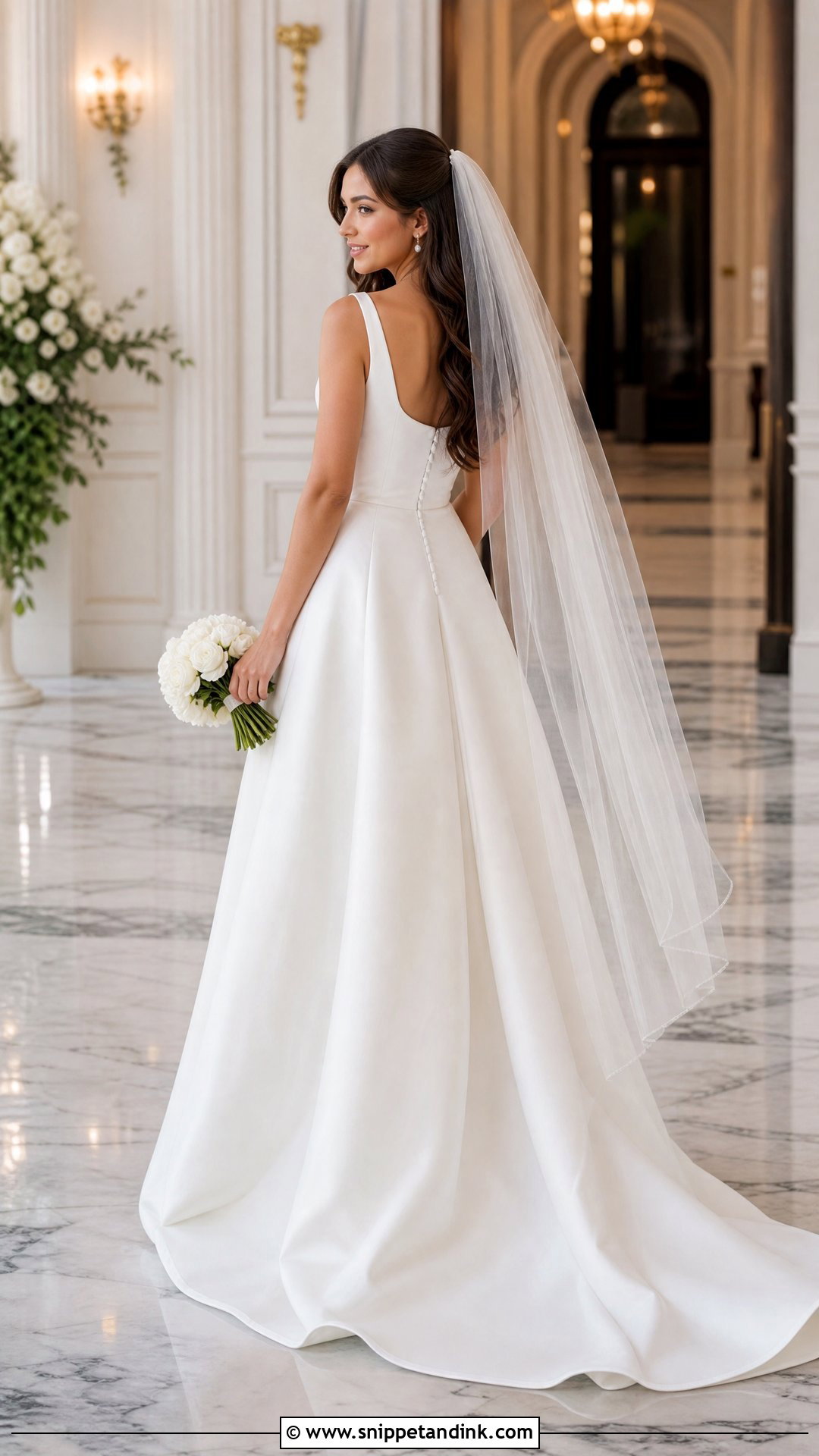
A veil with loose hair needs an anchor the guests won’t see. My usual method is a tiny braid or a set of crossed pins just under the crown, then the comb slides in against that; with a half-up style the comb goes into the pinned section instead. Without an anchor, a heavy veil drags backward and pulls the waves flat. Wear it high for a traditional effect or lower, beneath a twist, for something relaxed. Bring the actual veil to the trial, because comb size and fabric weight change everything. Then practice taking it out, and show a bridesmaid where to hold the comb so she doesn’t drag it through your curls.
16. Tiara Hair Down Bridal Look
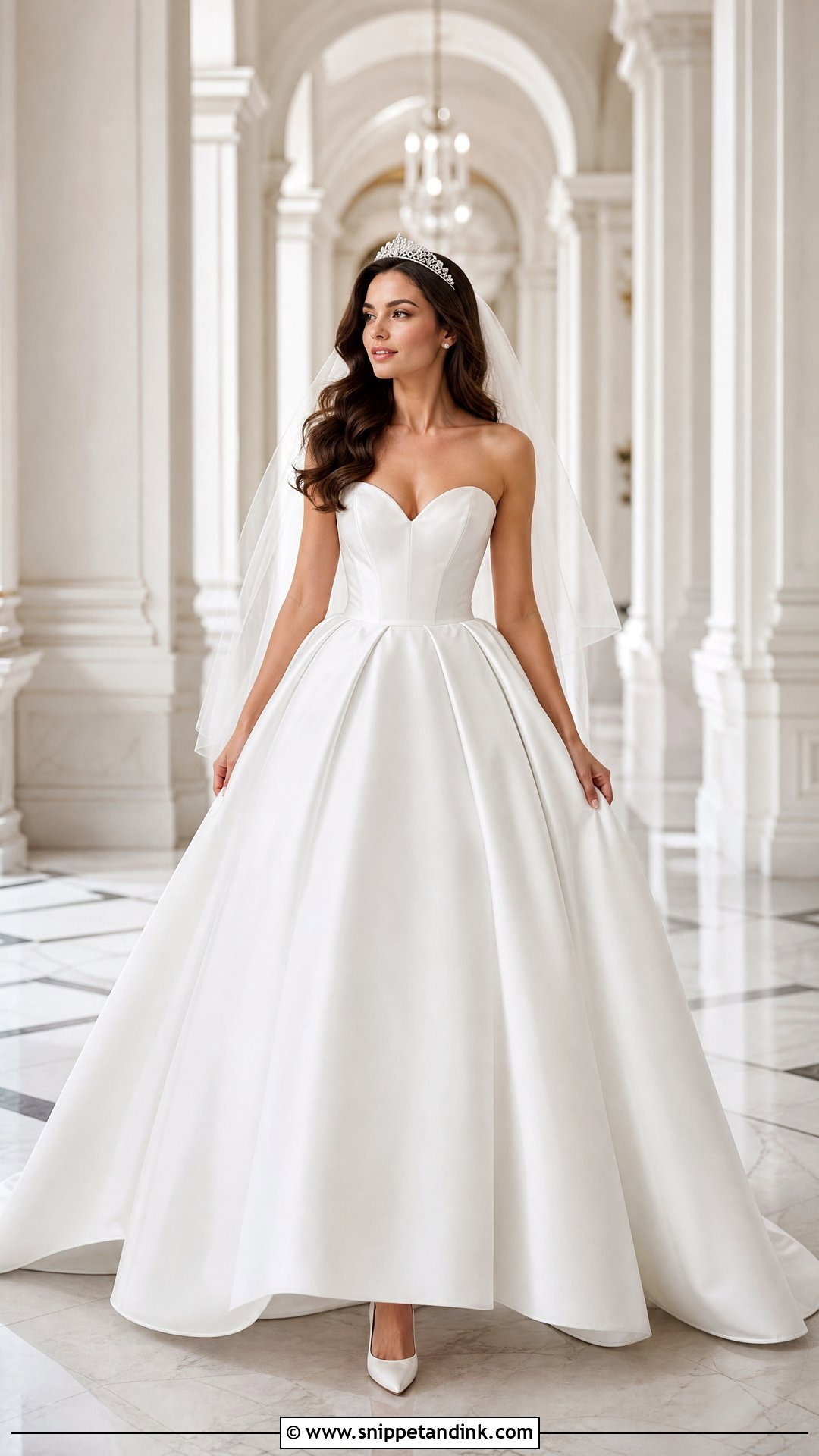
A tiara on loose hair can look disconnected unless the hair has enough body to support it. Soft curls or a full blowout give it volume to sit into. I set it a little behind the hairline, not on the forehead, and build a slight lift at the crown so the band disappears into the hair. Hidden anchors are essential: I pin through the tiara’s side loops into small secured sections so it doesn’t rock when you turn. Scale the piece to your features and your gown rather than buying the biggest one. Pressure behind the ears builds over hours, so wear it for a while at the trial.
17. Bridal Bow Hair Down Look
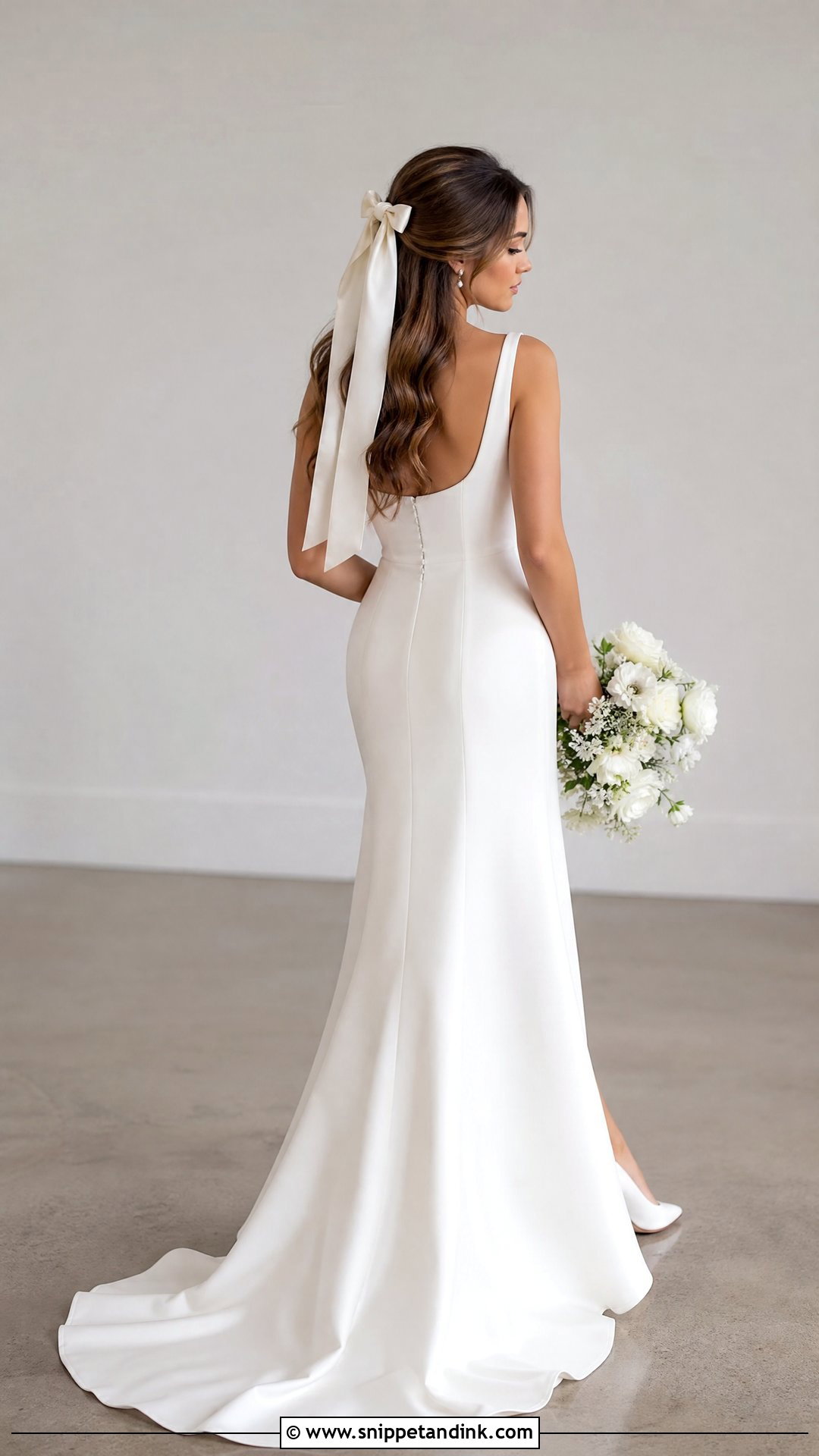
A bow is the most modern accessory on this list, and it works best covering the join of a half-up section. Fabric follows the season: silk or satin in summer, velvet for winter. Long ribbon tails look graceful over smooth waves, while a smaller structured bow suits shoulder-length hair. Keep the crown clean and slightly lifted, because a big bow on a flat head of hair can look young. I pin a bow through its center knot, not just at the edges, so it can’t twist sideways. Check at the trial that the tails don’t tangle with your veil or catch on beaded sleeves.
18. Short Bob Hair Down Bridal Look
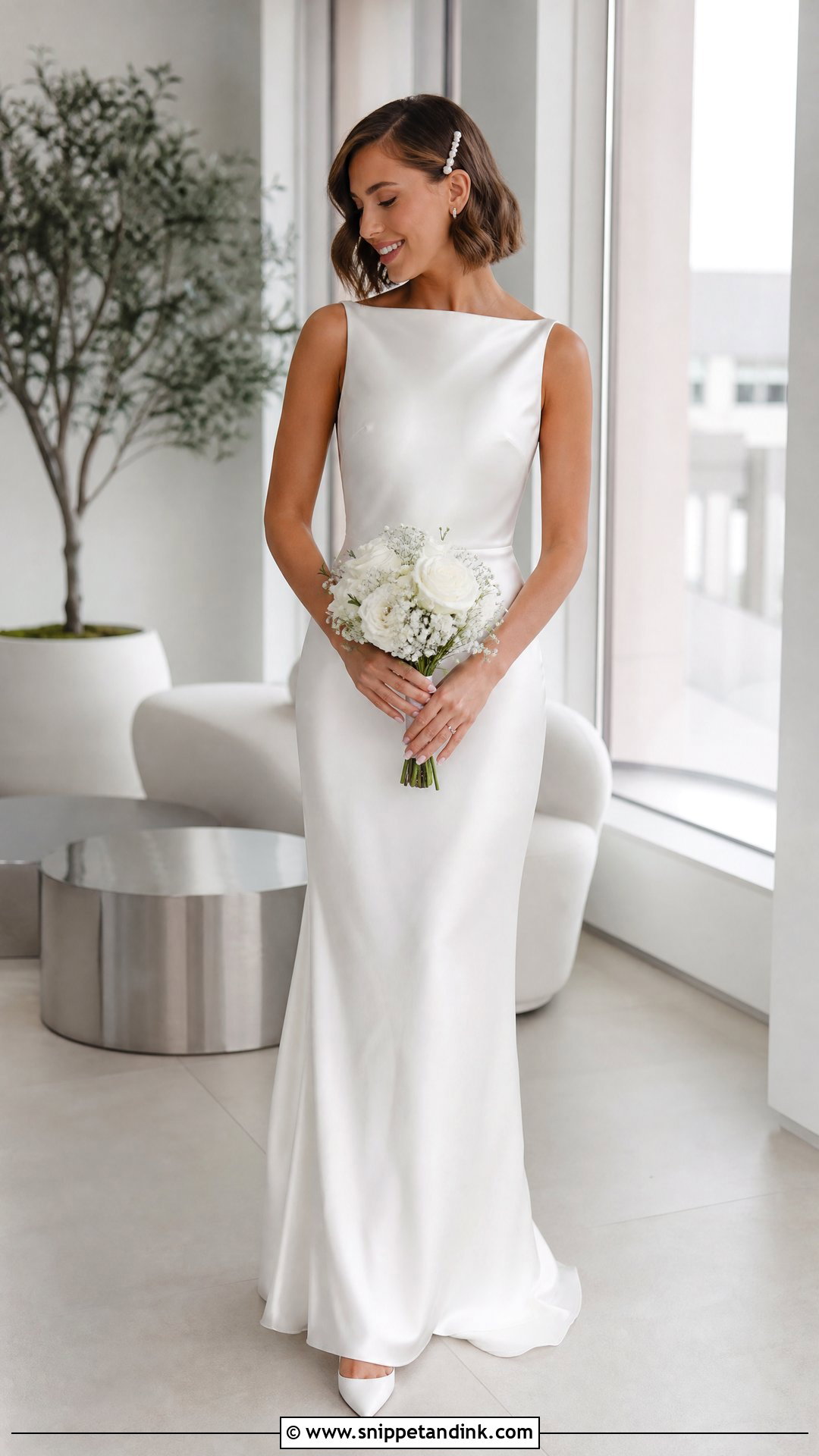
A short bob has less length to hide a mistake, so precision matters. I’d book a trim about a week or two before, not the day before, so the ends settle. For the day, use soft bends rather than full curls and add separation at the ends, as tight curls on a chin-length cut tend to look dated. A deep side part with one side tucked behind the ear and a pearl clip gives it shape. It works with high or strapless necklines because nothing covers the dress. A headband veil is easier than a comb on short hair. Finish with flexible spray and a touch of shine product.
19. Long Layered Curl Hair Down Bridal Look
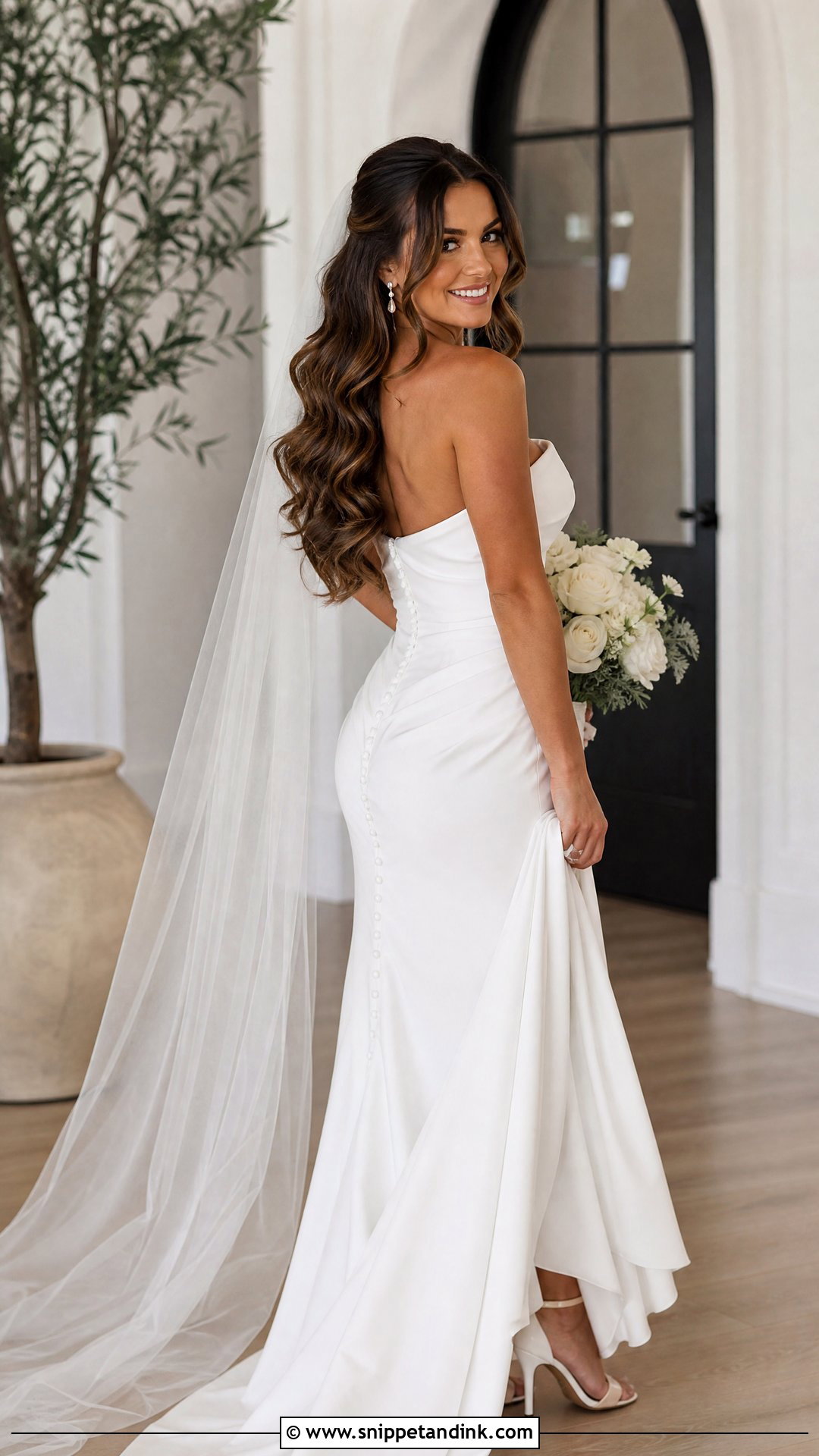
Long, thick, layered hair takes the longest to style, often well over an hour, so give your stylist that time. Layers help here, since they let the curls move instead of forming one heavy block. I alternate the curl direction section by section for a natural look, then blend gently. Long hair is heavy, and weight pulls curls out, so each section needs to cool fully before it’s touched. Extensions can add length or fullness, but match the color and density to your own hair and wear them at the trial. Face-framing pieces can sweep back off the cheeks. A light veil or a small back comb keeps the layers on show.
20. Bangs With Wave Hair Down Bridal Look
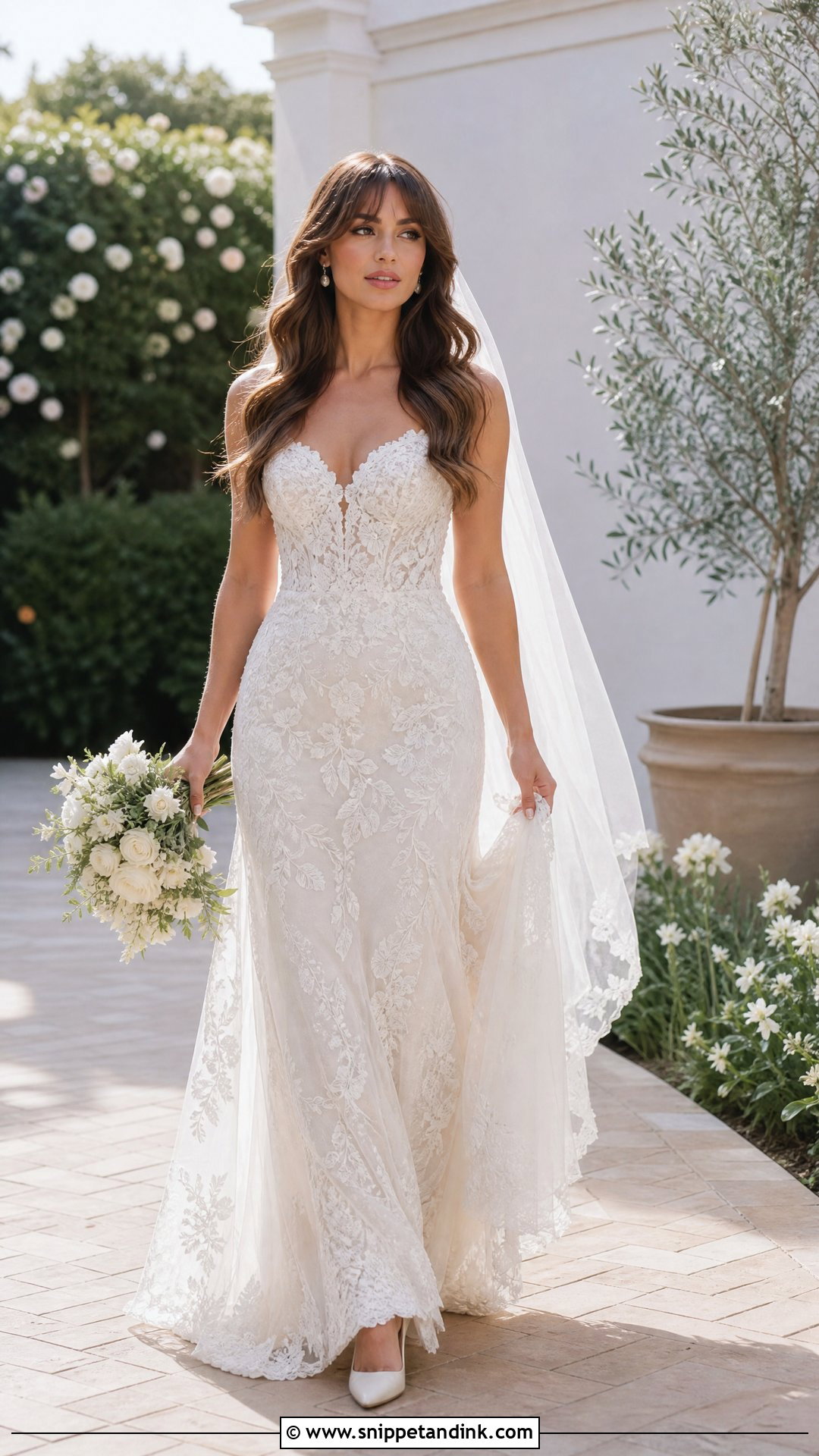
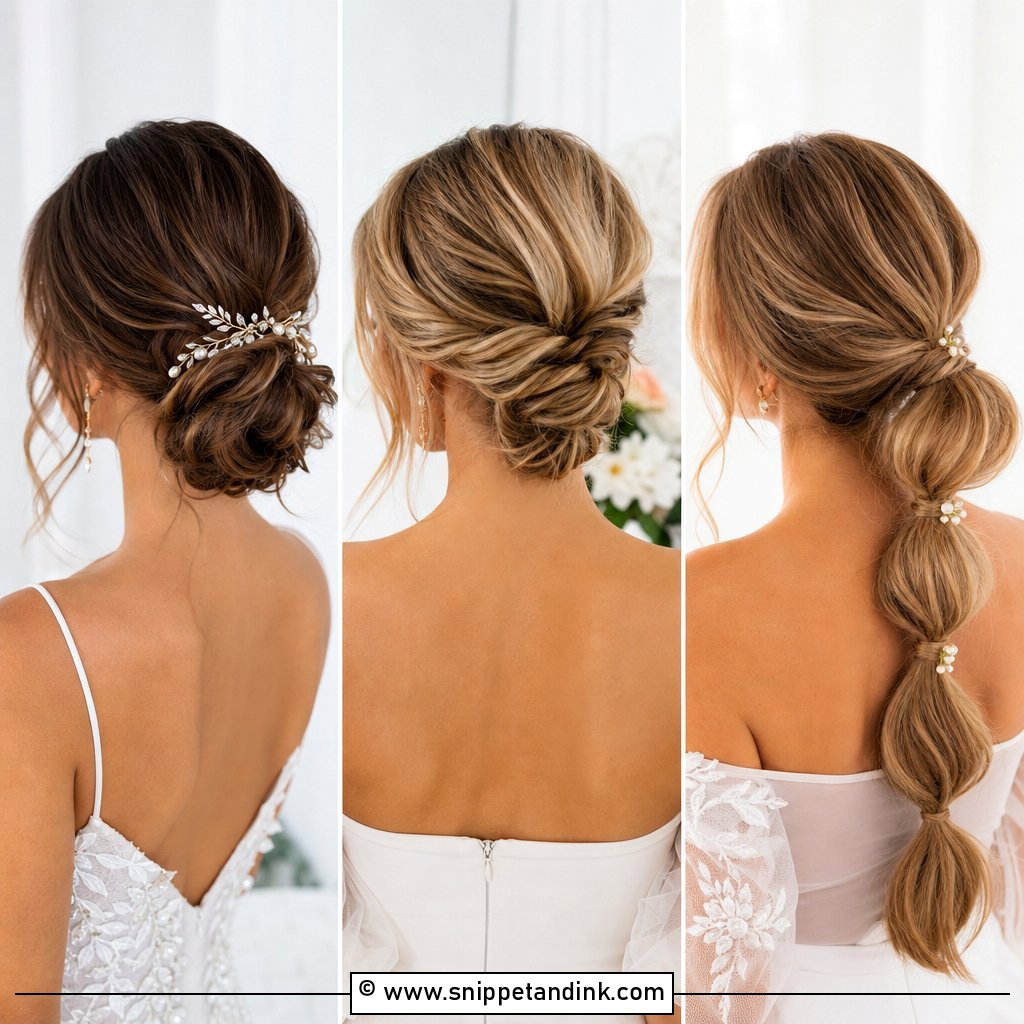
Bangs and loose waves feel personal, and they need their own plan. I style the fringe first, before anything else is curled, so I can balance the waves around it. Curtain bangs blend into face-framing curls; full or wispy bangs put the focus on your eyes. Never cut a new fringe in the final weeks. Give a new cut at least a month so you know how it falls and how to style it. Bangs pick up oil from the forehead and separate in humidity, so keep blotting papers and a small comb handy for touch-ups. A low-set veil keeps them visible.
Hair Down in Wind, Humidity and a Long Hug Line
Loose hair is exposed to everything the day throws at it. Here’s what I plan for:
Outdoor or seaside ceremony
Wind doesn’t ruin waves so much as blow them across your face during the vows. Pin the front sections back for the ceremony, or wear a half-up version, and release them later. A finishing spray with humidity resistance helps on damp days.
Receiving line and hugs
Every hug flattens one side and tangles the ends with earrings and lace. Ask a bridesmaid to carry a wide-tooth comb and a small spray for a check after the receiving line and again before the first dance. Use fingers or a wide comb on curls, never a brush.
Taking the veil out
Removing a comb drags hair with it. Slide it out in the direction it went in, then shake the crown gently and reshape with your fingers. Ten minutes of fresh air before the reception helps sweaty roots more than more spray.
Is Loose Hair Right for Your Dress and Your Day?
Pick a down style that suits your texture and the neckline of your dress first, then add the accessories. Waves are the most forgiving, while straight hair and blowouts look sleeker. Braids, twists and pinned sections give loose hair structure and a place to hold a veil, tiara or bow. Book a full trial with your real accessories, photograph it from every angle and wear it for a couple of hours. Tell your stylist how you normally wear your hair, because a style that feels familiar is the one you’ll forget about and enjoy.
You'll Like These Ideas:


Leave a Reply