
Wearing your hair down for the wedding shows off length, texture and movement, and it’s the request I hear most from brides who never wear an updo in daily life. It is also the style that asks the most of the prep, because loose hair has nothing holding its shape except how well each curl was set. Down styles sit happily under a veil and suit most seasons, though heat and humidity change how I build them. Some brides arrive wanting soft Hollywood waves, some want beach texture, and some want a sleek middle-parted look. Below are 20 down do ideas, with notes on how each one is made and how it tends to hold from the first look to the last dance.
What Makes Loose Hair Hold Its Shape Until Evening
Updos have pins doing the work. Down styles only have the set, so most of my effort happens before a single wave is brushed out. These are the things I check before I pick up an iron.
Wash timing depends on your texture
If your hair is fine or silky, wash it the day before. Second-day hair takes curl better than freshly washed hair, which is often too slippery to grip. Skip conditioner at the roots and leave out heavy oils. Very curly or coarse hair is the exception: wash on the morning, because day-old curls lose their definition.
Every curl cools before it is touched
Hair sets its shape as it cools, not while it’s hot. I pin each curl in place, or hold it in my palm for a few seconds before dropping it. Brushing curls out while they’re still warm is the most common reason a down style has fallen flat by the speeches.
Humid venues change the menu
For a summer marquee or a coastal venue, I use a lighter curl cream and a firmer finishing spray, and I steer brides away from poker-straight styles. Small bends like crimps and braids tolerate moisture far better than big smooth waves, which loosen as soon as the air turns damp.
Fine and thick hair need opposite approaches
Fine hair needs a smaller barrel and texture spray at the root so the curl has something to grip. Thick hair takes longer to heat through, so I work in thinner sections. A thick section curled too quickly looks done on the outside and is straight again inside an hour.
1. Hollywood Waves Wedding Hair
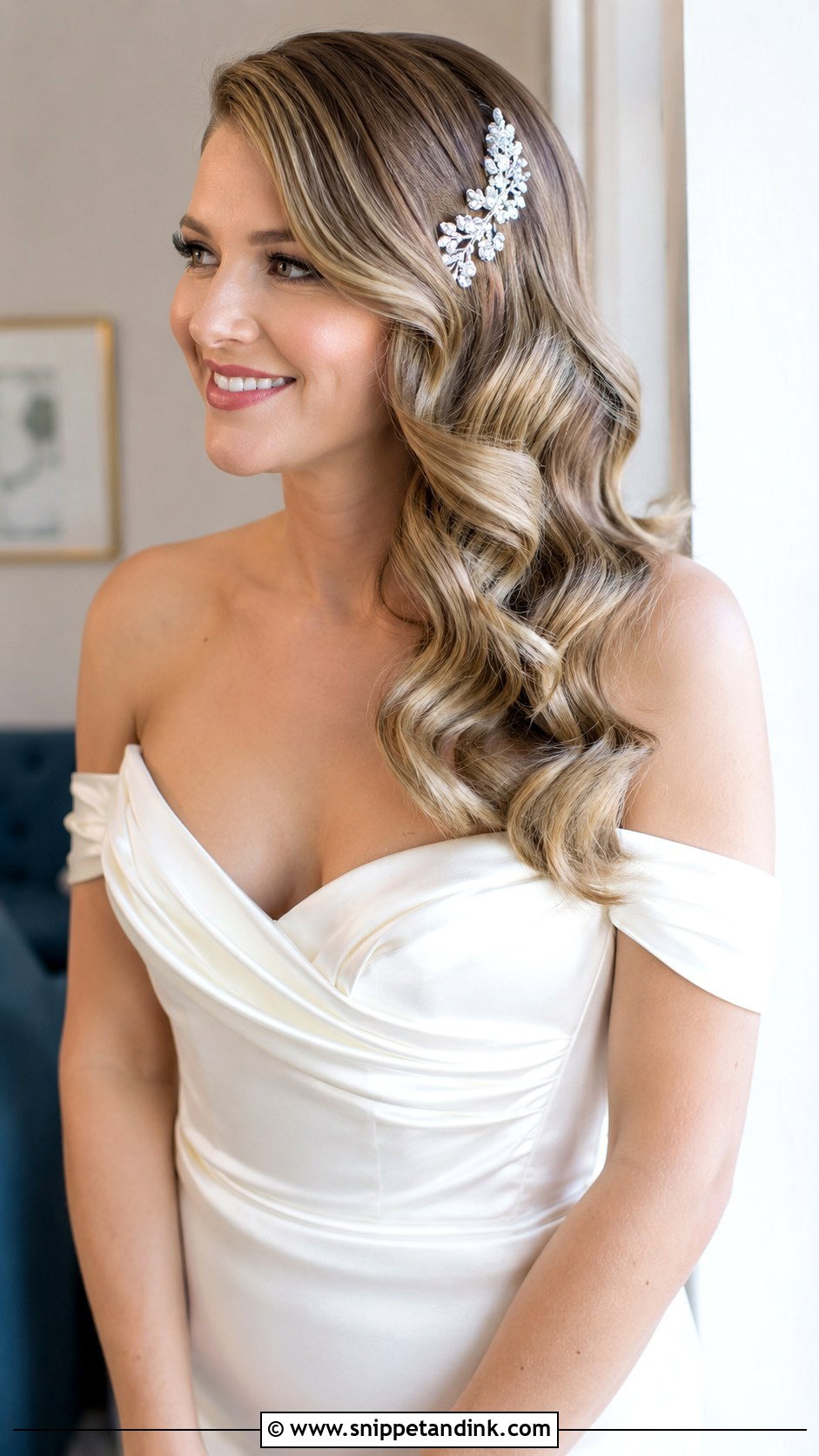
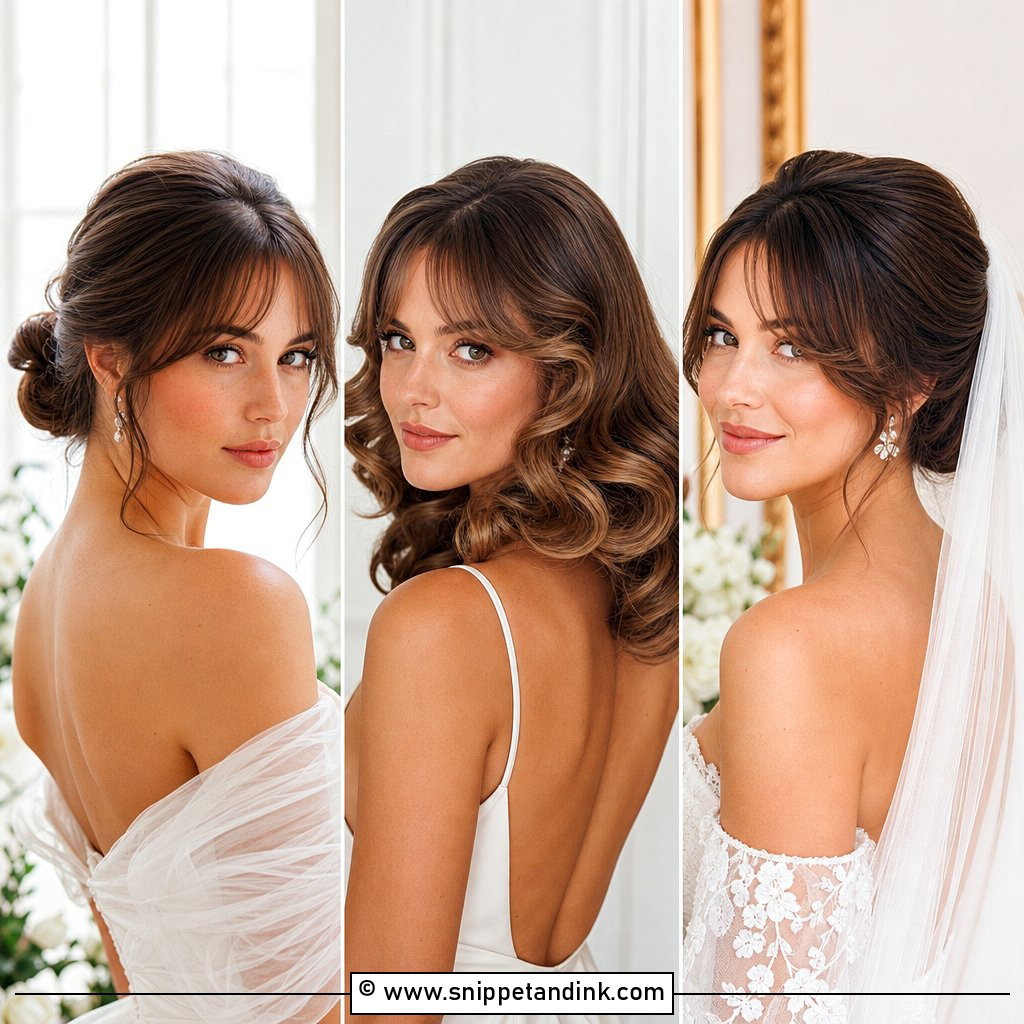
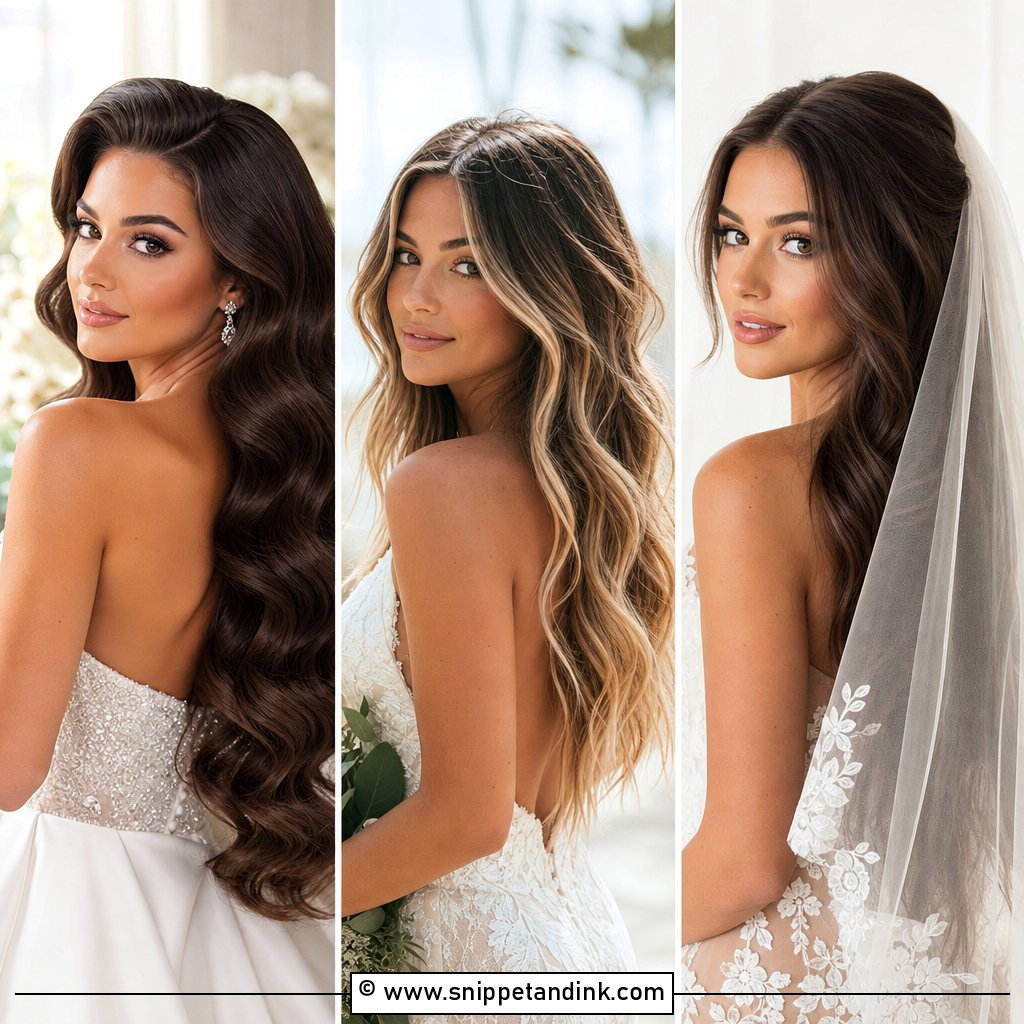
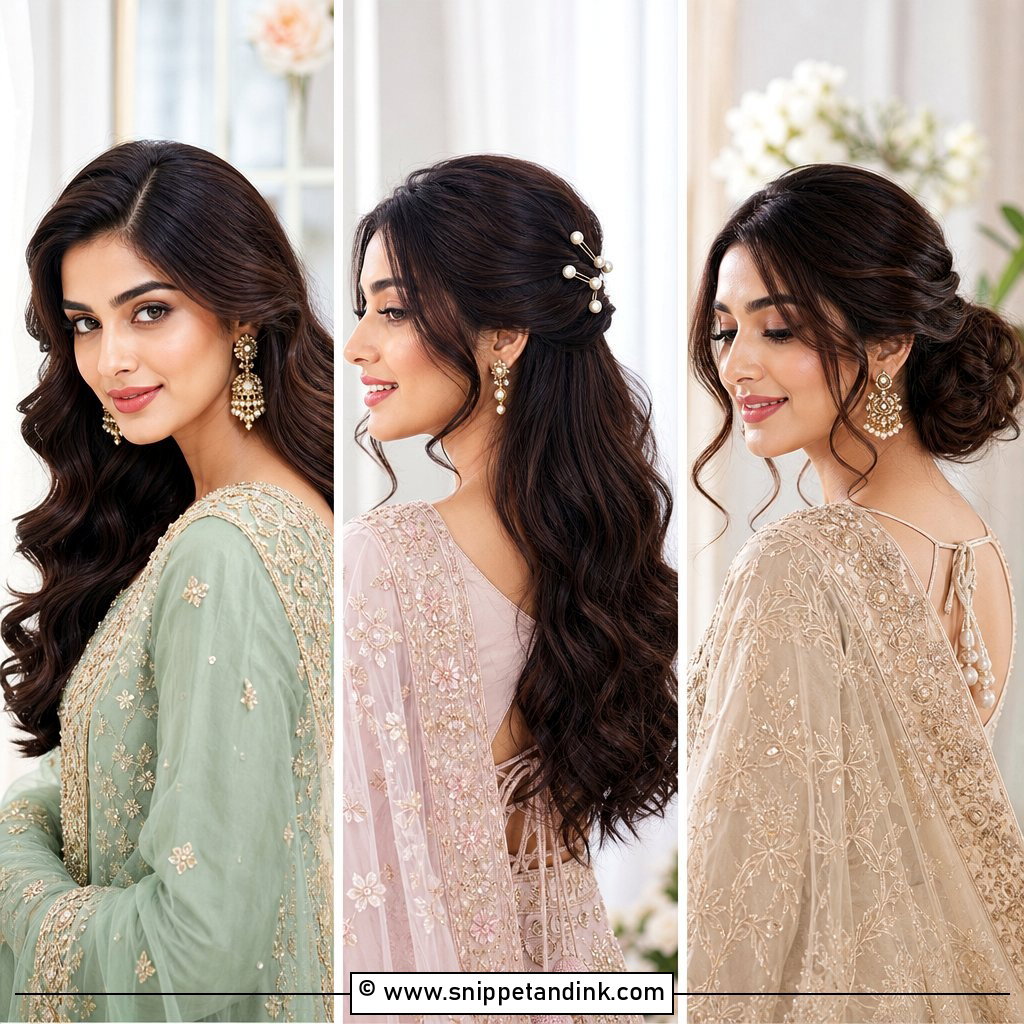
Classic Hollywood waves are the most technical down style on this list, and the one that rewards patience most. I curl every section in the same direction with the same barrel, pin each curl flat against the head to cool, and only then brush it out and press the S-shapes into place with a wide comb and duckbill clips. Skip the cooling and the waves collapse into loose frizz within an hour. Because they fall over one shoulder, I ask which side the groom will stand on before I choose the part. A fitted gown or a structured ballgown both carry them, and a single sparkling comb or drop earrings are plenty.
2. Loose Boho Waves Wedding Hair
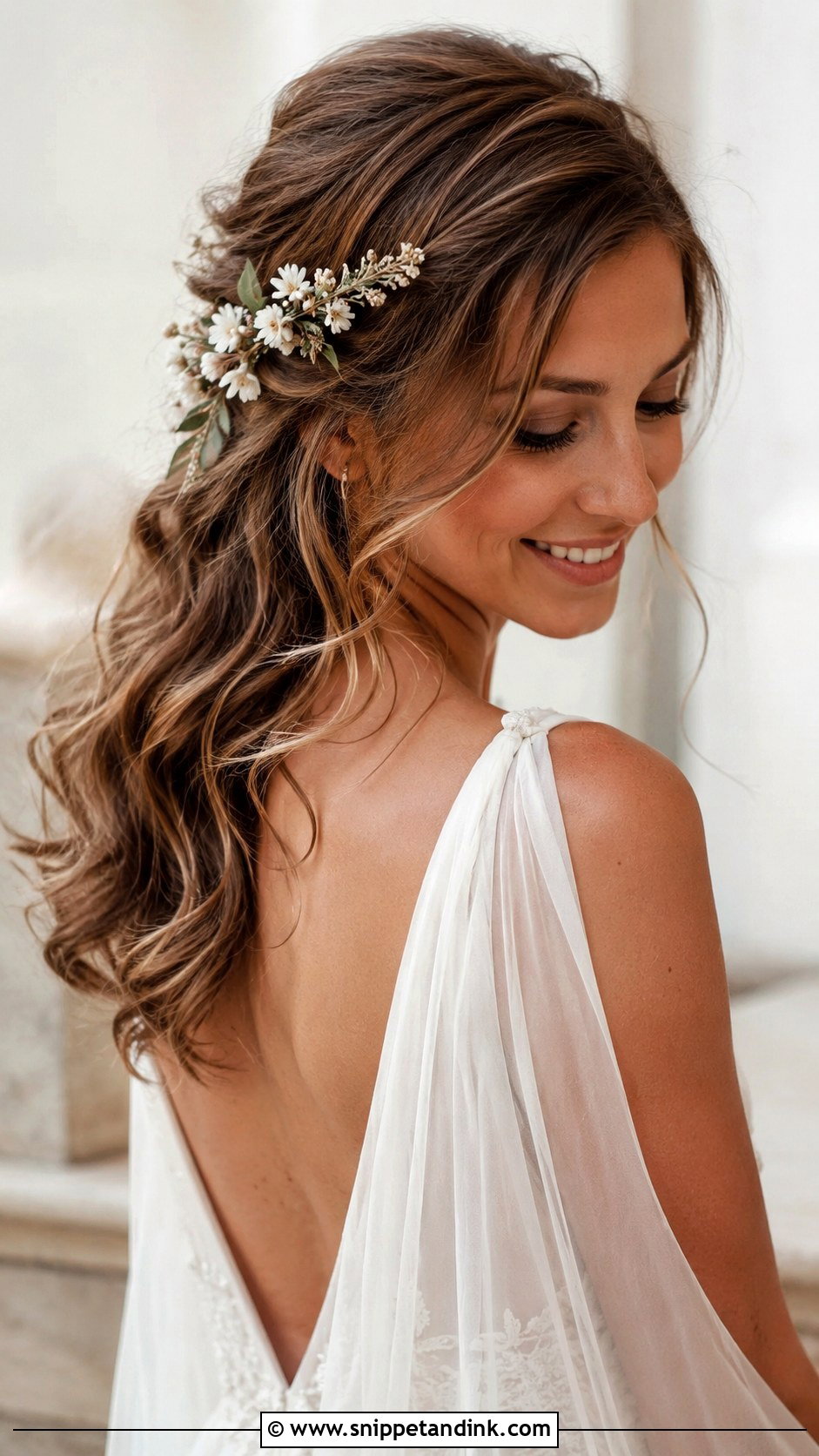
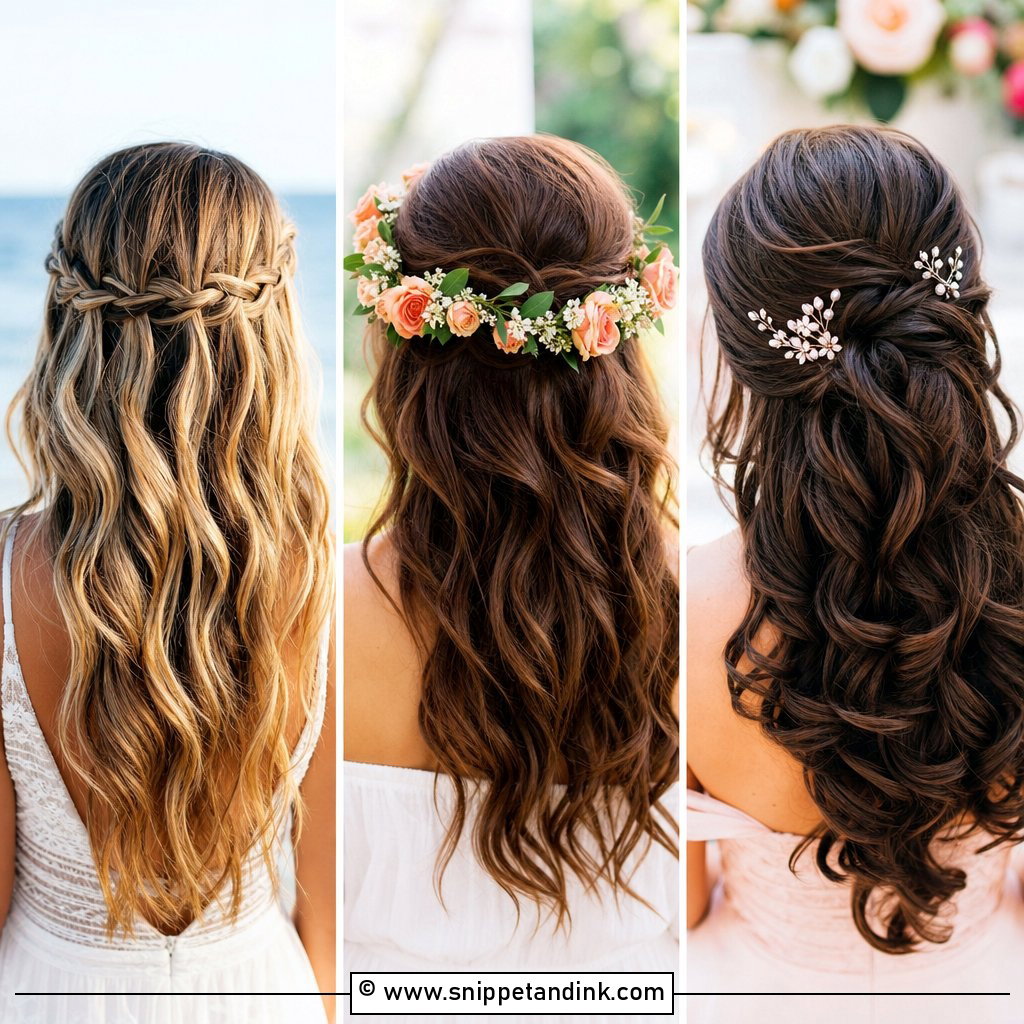
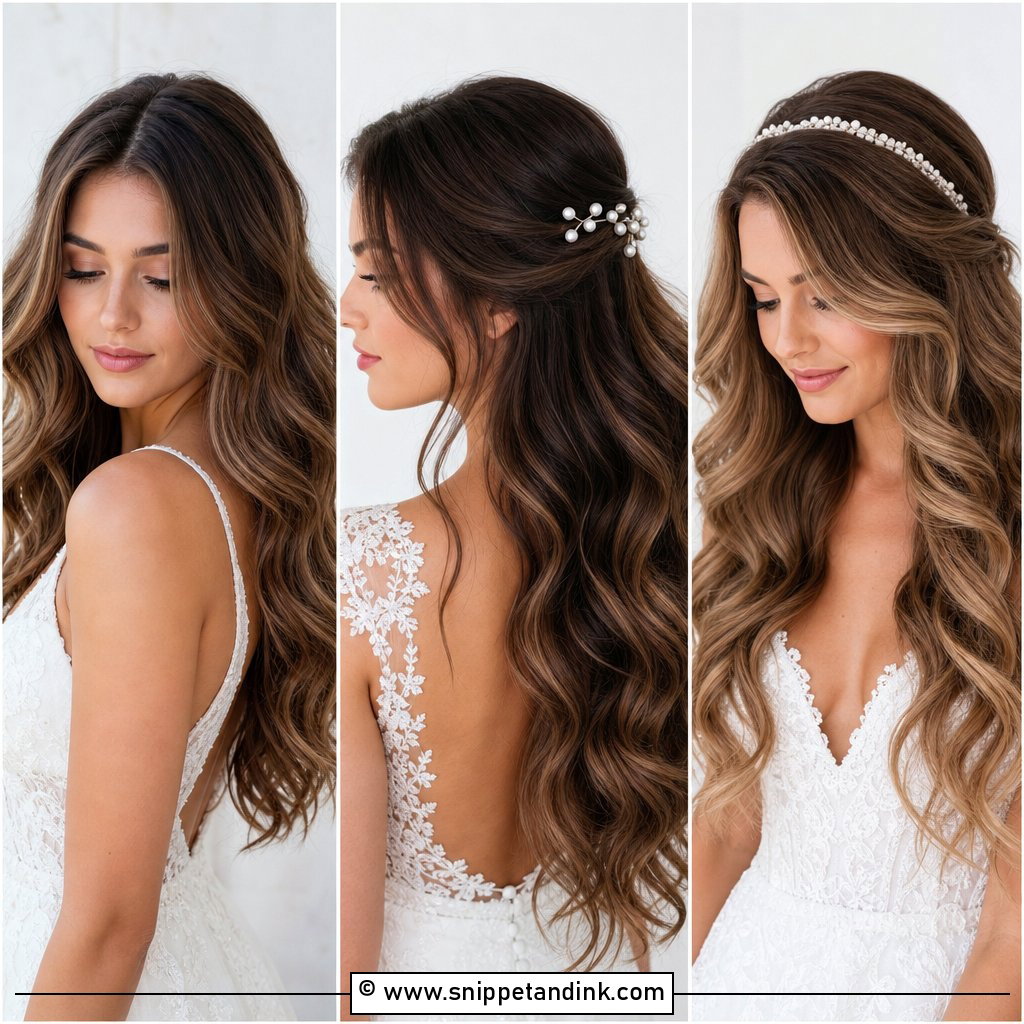
Dreaming of a barefoot beach ceremony or a relaxed garden party? Loose boho waves start with sea salt spray on damp lengths and a light bend through the mid-lengths and ends, with the root left uncurled. The catch is that salt spray dries hair out, so on coarse or bleached hair I swap it for a dry texture spray. Longer hair suits this best; on a collarbone cut the same waves can read as unfinished rather than undone. A few small flowers or pins tucked along one side are enough.
3. Half Up Half Down Wedding Hair
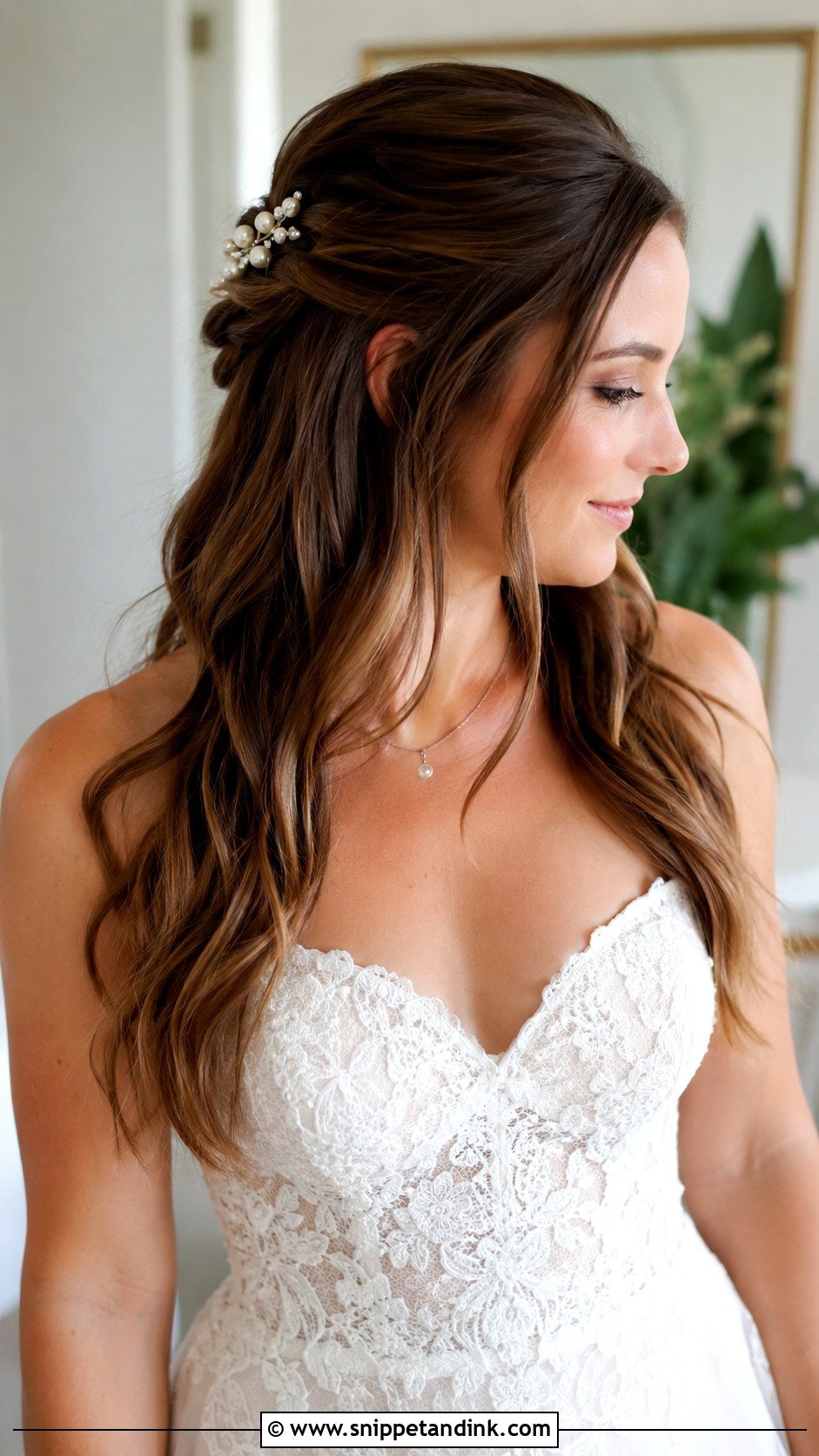
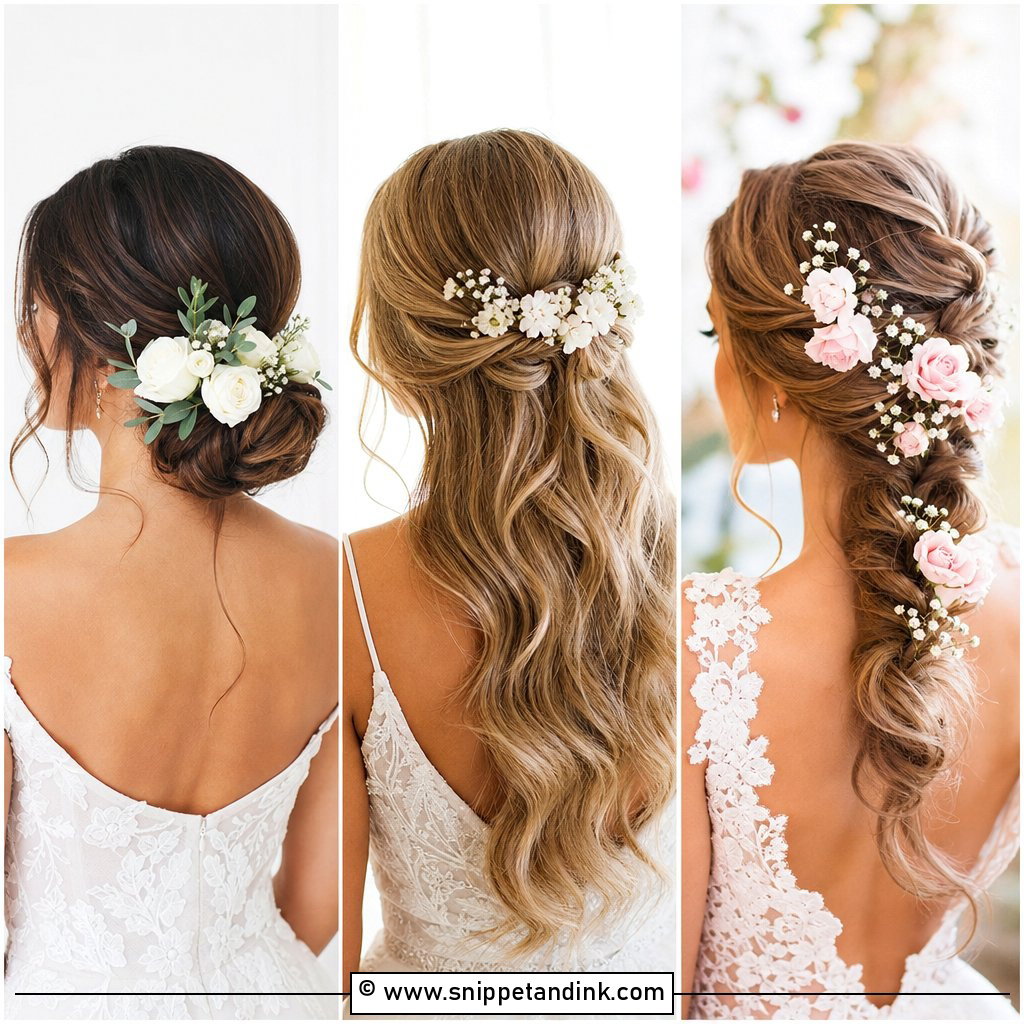
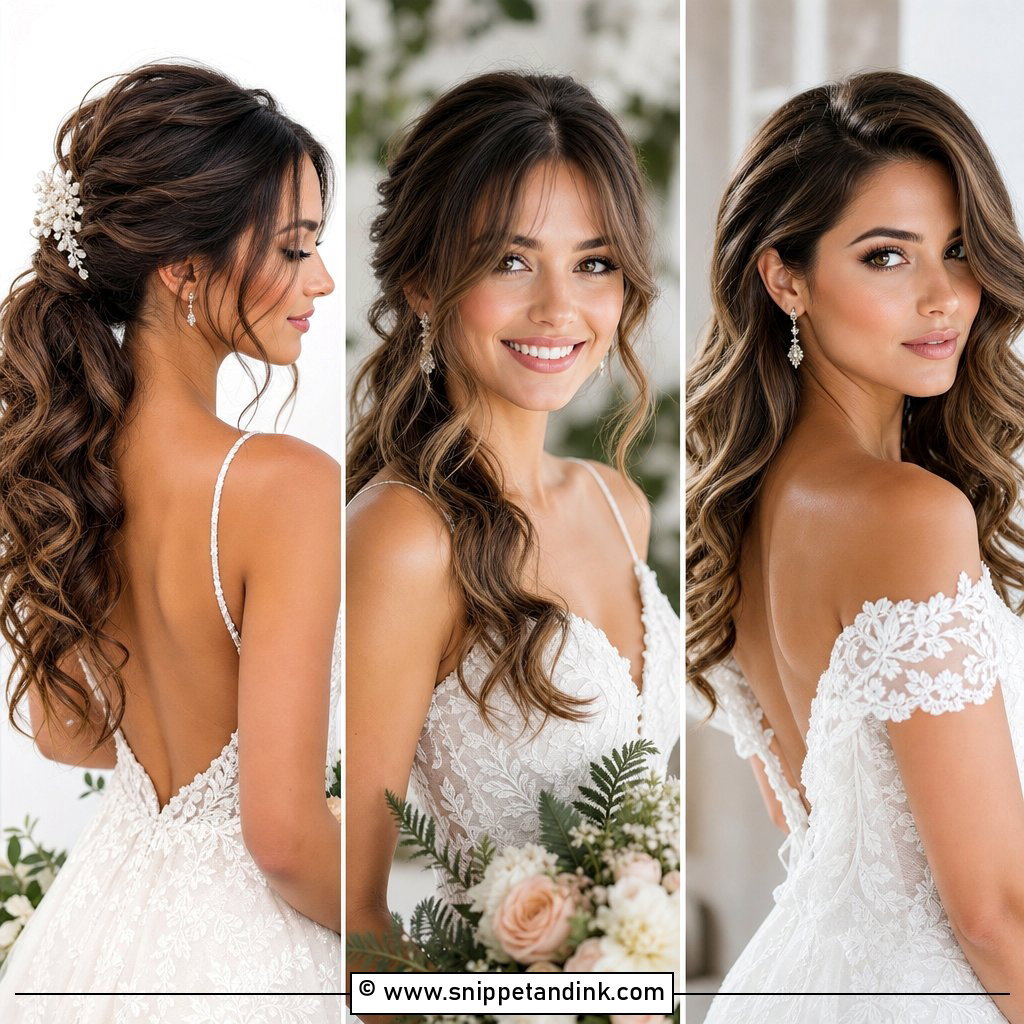
The half up half down look is still one of my most booked styles, and the reason is practical: it keeps hair off your face while your length stays on show. The top section is gathered into a twist, braid or small bun, and I build that anchor with crossed bobby pins before anything else, because later it has to carry a veil or a barrette. Fine hair needs a little backcombing under the crown section, otherwise the pins show through and the top lies flat by the reception. Pearl clips or a jeweled barrette suit it.
4. Vintage Curls Swept To One Side
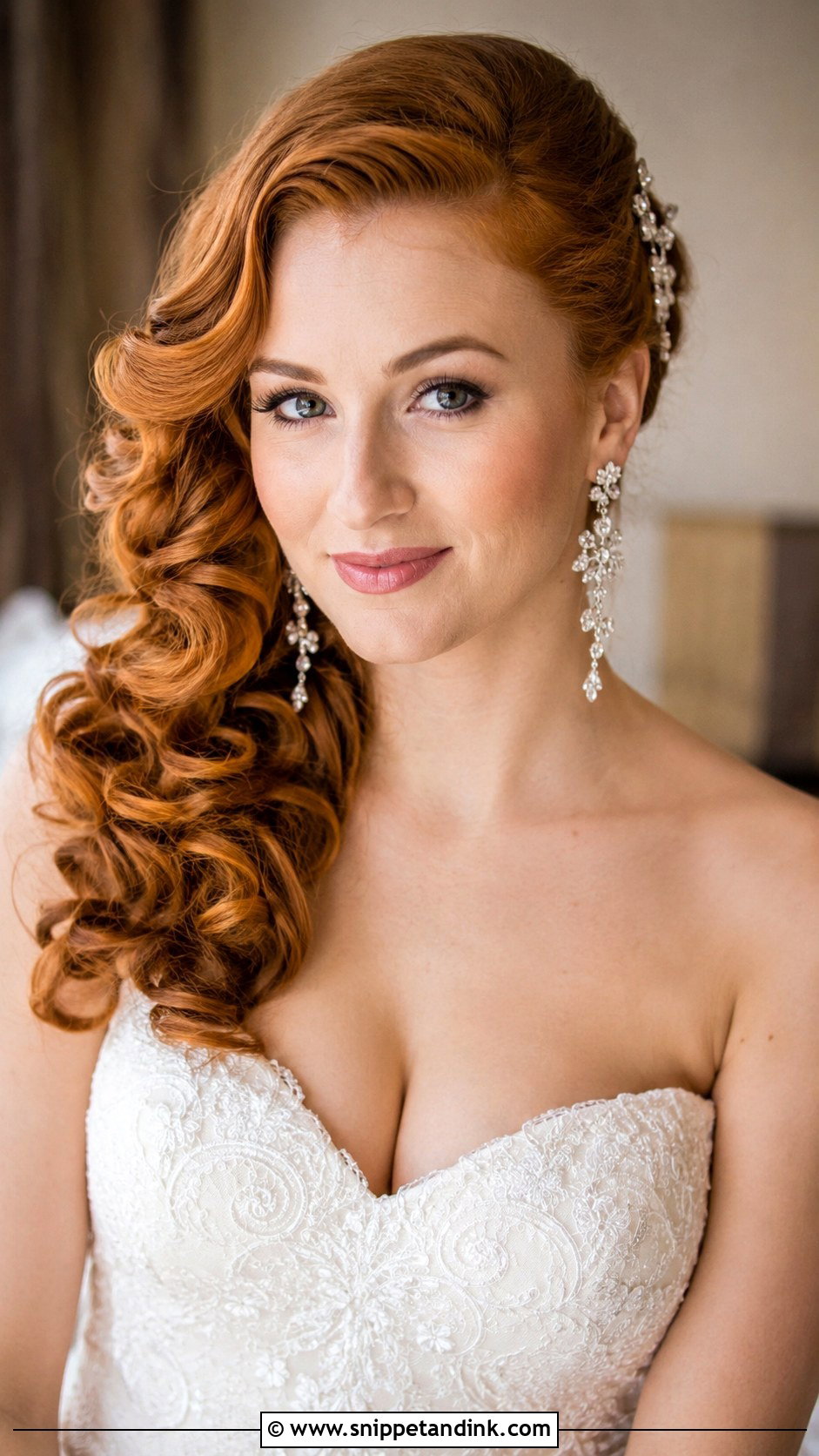
A cascade of vintage curls swept over one shoulder is pure nostalgia. Each curl is set with a pin and left to cool completely before I brush it out, and that is what gives the full, bouncy finish instead of separate ringlets. To keep everything on one side I hide two or three crossed pins behind the opposite ear; without them the hair creeps back to the middle the first time you hug someone. Statement earrings and a sweetheart neckline sit well with it, especially in ballrooms and evening venues with warm lighting.
5. Sleek Straight Middle Part Wedding Hair
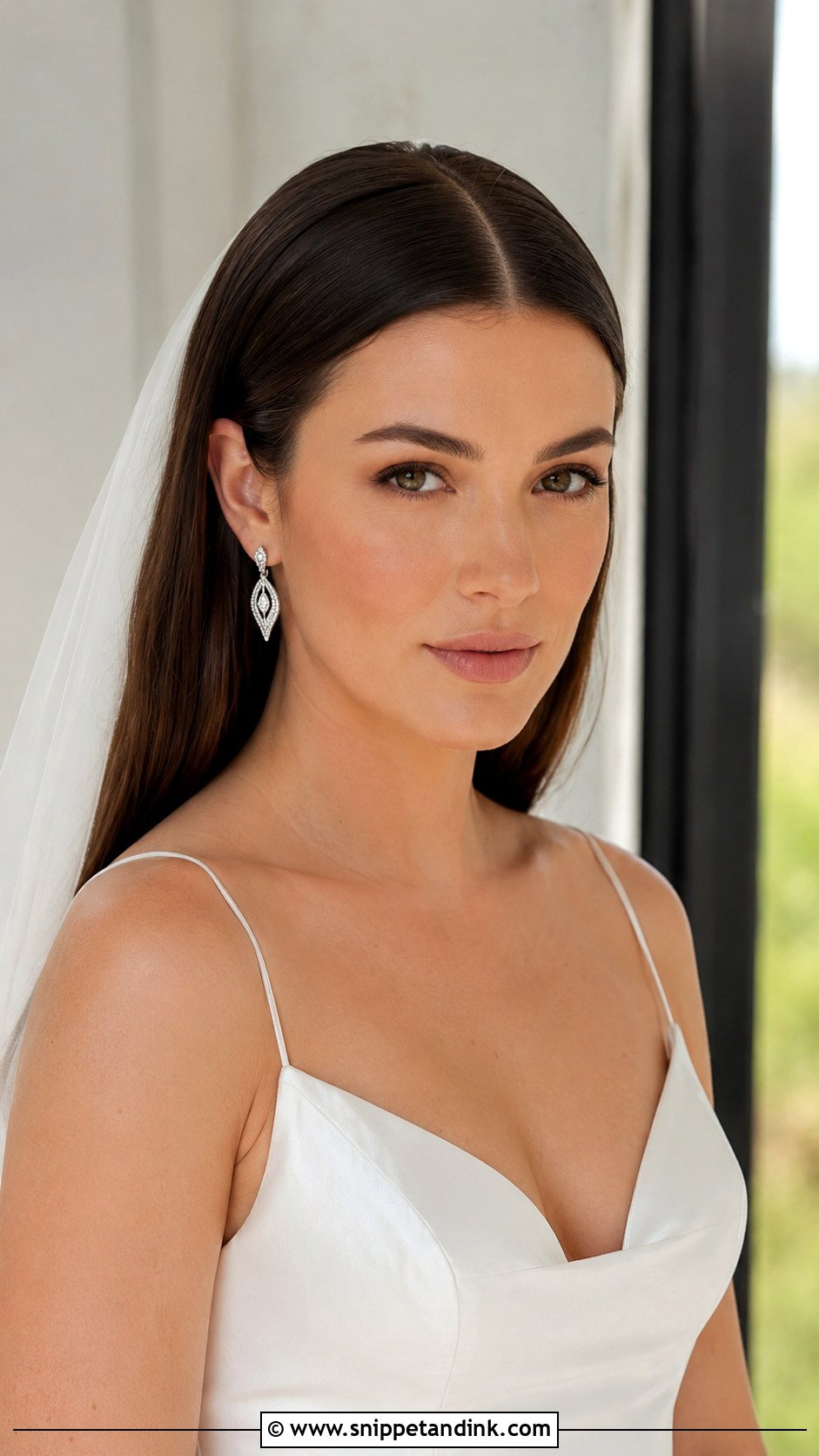
Sleek straight hair with a center part is the most minimal look here, and the least forgiving. Every kink and flyaway shows, so I flat iron in thin sections and finish with a light smoothing serum rather than heavy spray, which makes straight hair look stiff and separated. With nothing to distract from your face and gown, the part has to be exact, and I check it with you standing, not seated. Satin dresses and modern jewelry suit it, and tucking the hair slightly behind the ears refines it further. One honest caveat: in high humidity, poker-straight hair is usually the first style to puff up.
6. Fishtail Braid Down Wedding Hair
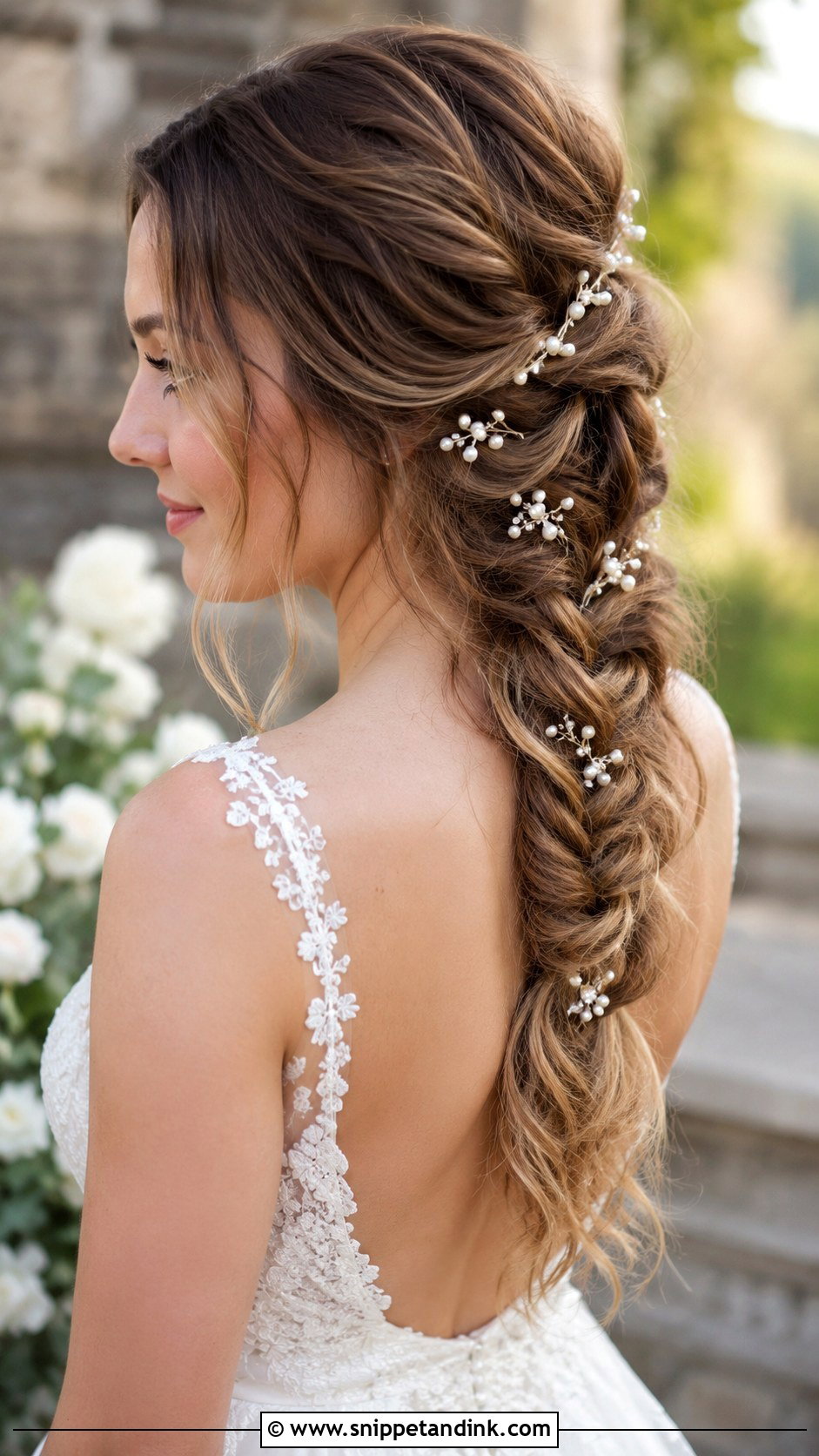
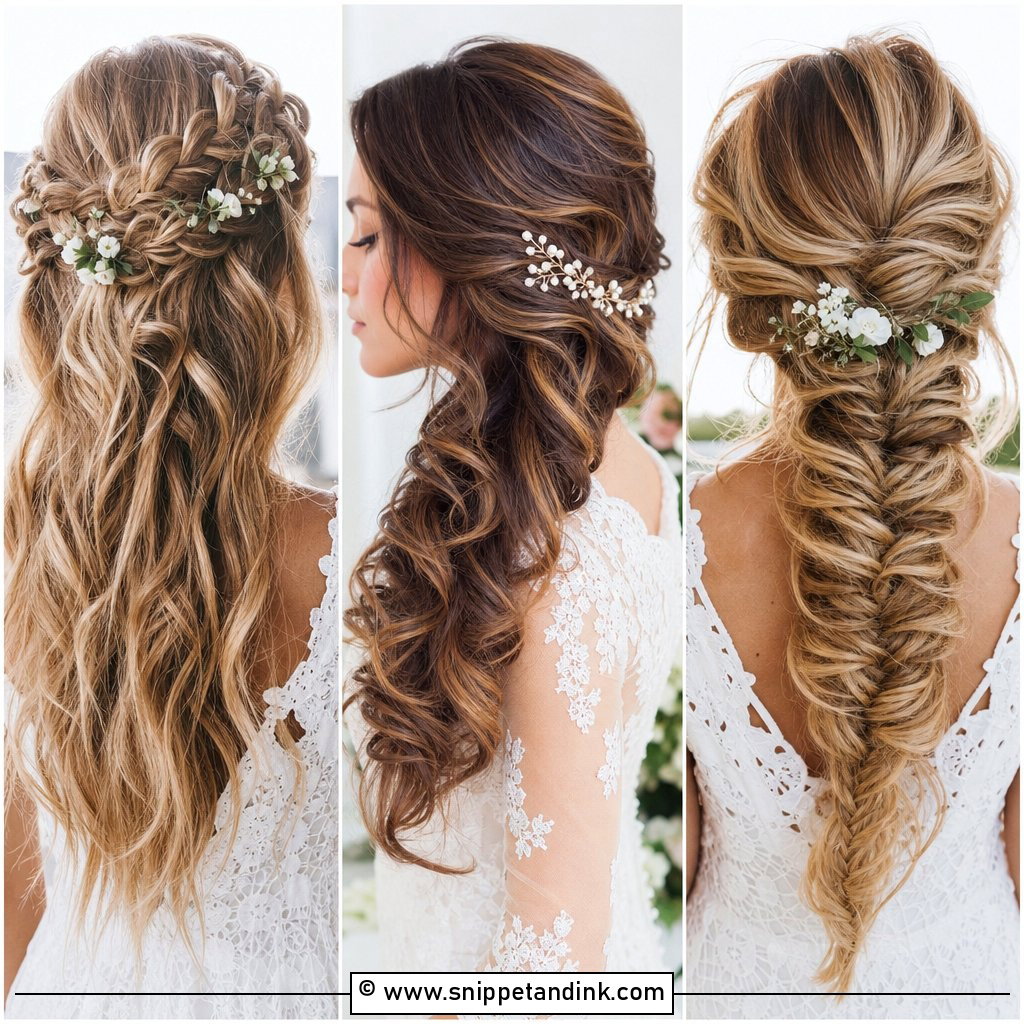
A fishtail braid running through loose hair adds texture without committing you to an updo. It can trail along one side or run down the back. I braid it fairly tight, secure it with a clear elastic, and only then pull the edges apart to widen it; if you loosen as you go, the pattern gets lost. Small flowers or pearl pins sit well in the gaps. Heavily layered hair is the problem here, since short pieces poke out of a fishtail, so do a trial before you fall for this one.
7. Soft Romantic Curls Wedding Hair
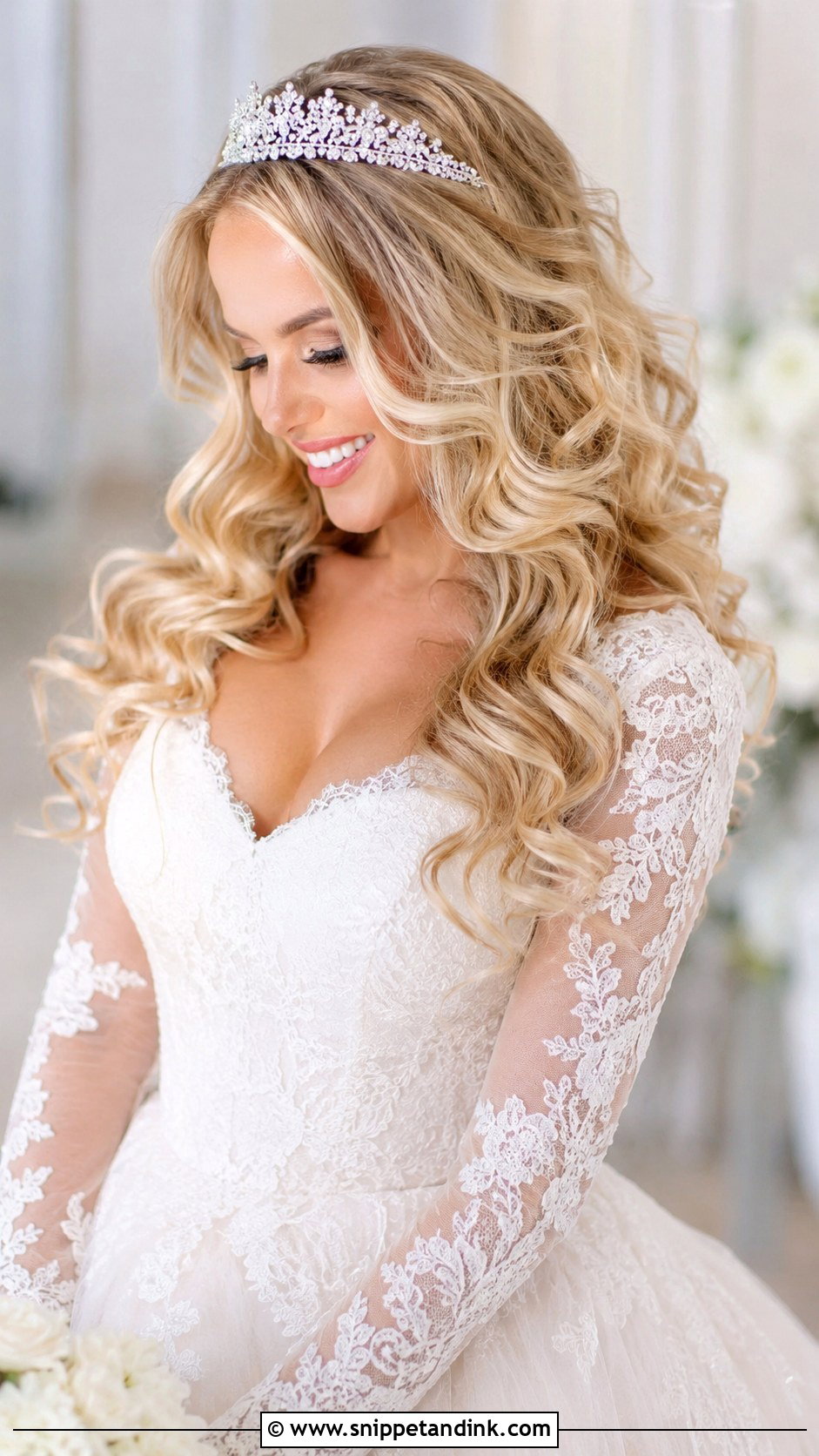
Soft, bouncy curls are what most brides with medium to long hair picture when they say hair down. They are loose and airy rather than tight, so I curl with a larger barrel and break each curl up with my fingers once it has cooled. That cooling step decides whether they last until the cake cutting. Lace ballgowns and flowing chiffon both suit them, and a delicate tiara or floral crown fits the mood. Very silky, heavy hair will relax by evening, so I curl it a little tighter than the look we’re aiming for and let gravity finish the job.
8. Beach Waves With Flower Crown
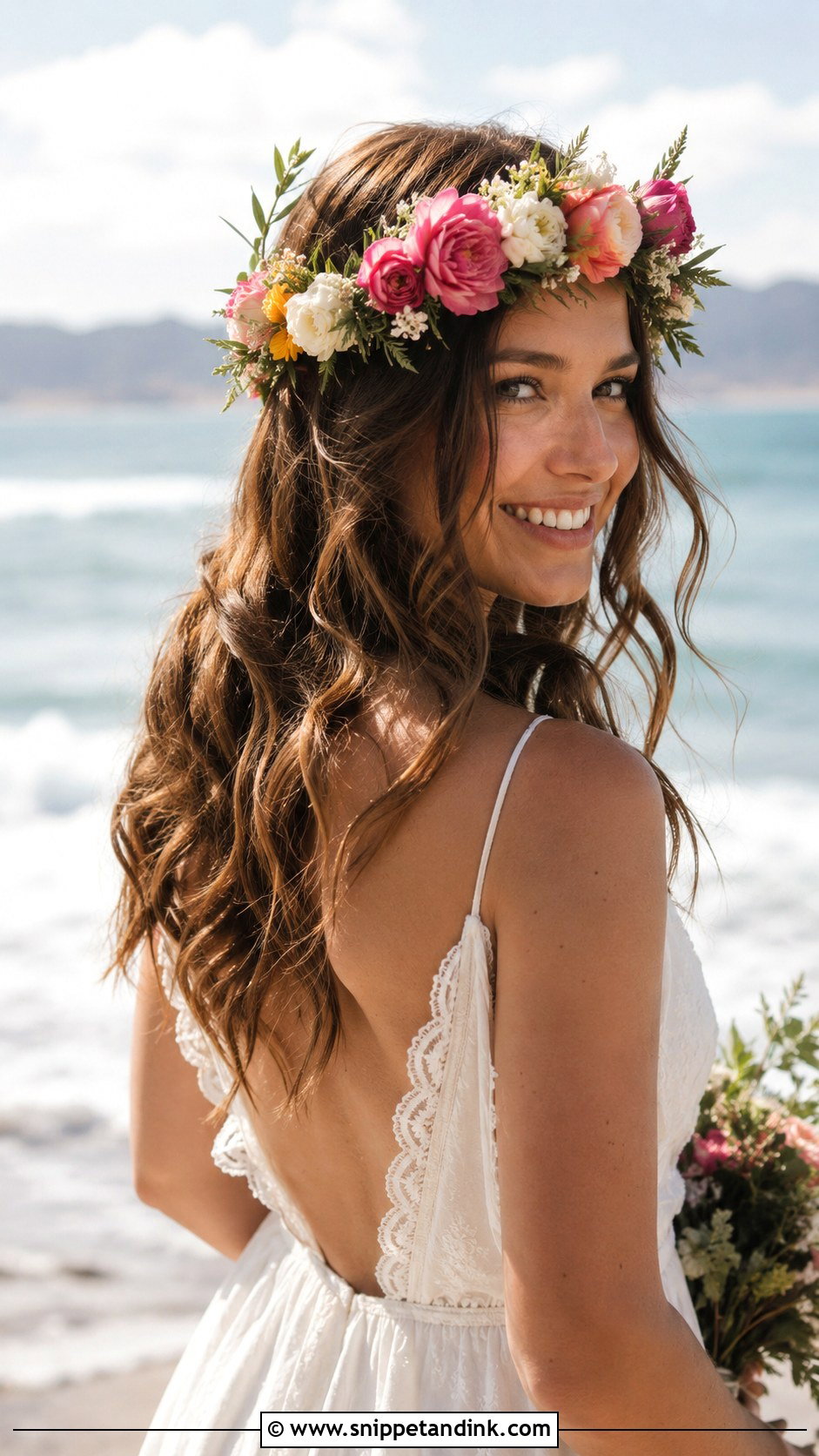
Beach waves under a flower crown belong at a seaside or garden ceremony where nothing should look fussy. The waves are loose and tousled, and the crown brings color and texture. I secure a crown with bobby pins hooked through its wire at the sides and back, crossing into a small twist hidden underneath; resting it on loose waves alone means it slides every time you turn your head. Match the blooms to your bouquet, and ask your florist for sturdier flowers, because delicate petals wilt against warm hair by mid-afternoon.
9. Dutch Braid Down Wedding Hair
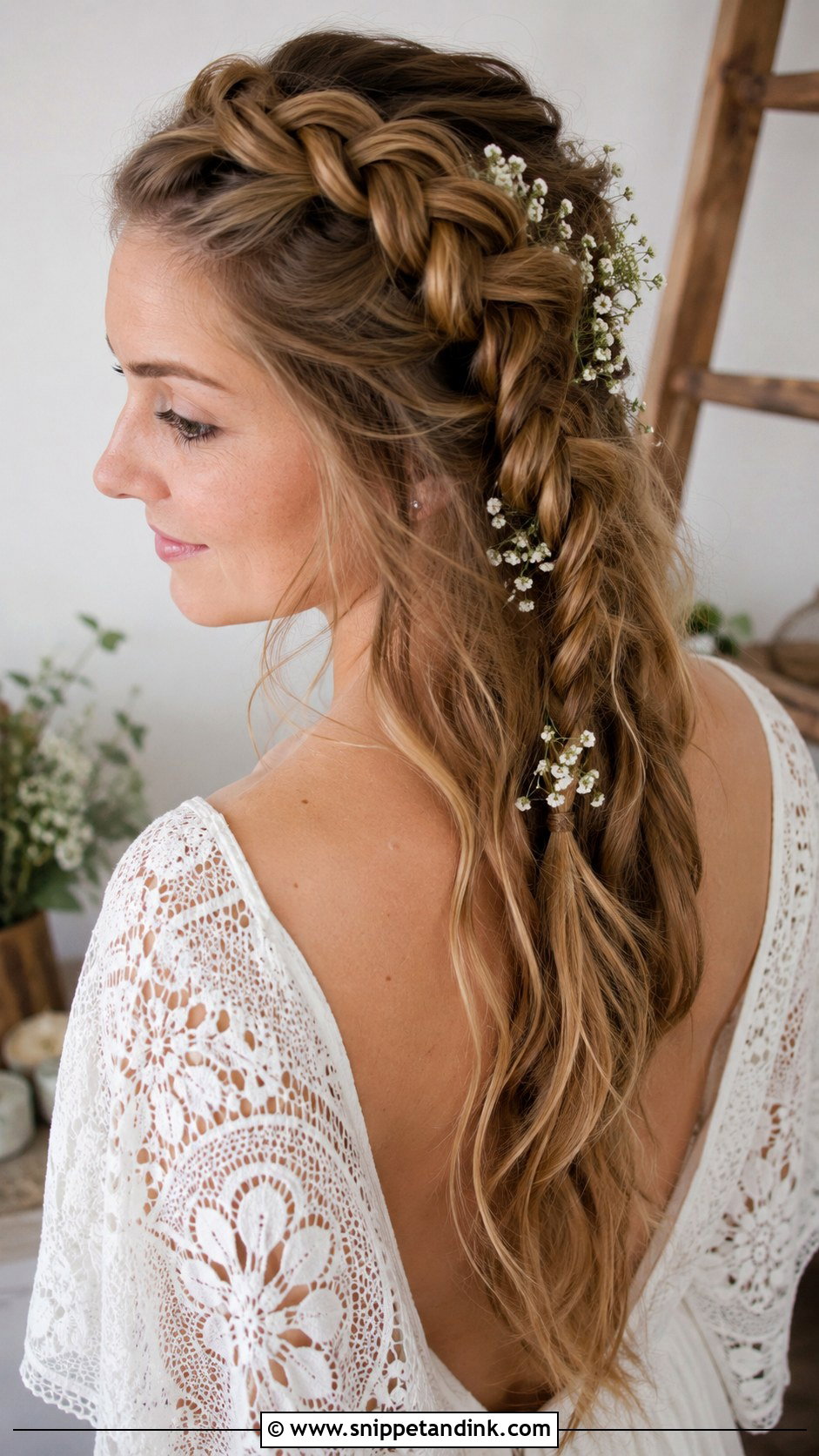
A Dutch braid is plaited under rather than over, so it sits raised on the surface and gives real dimension. It can frame one side of the face or run from the crown down the back while the rest of the hair stays loose. I pancake it slightly afterward to soften it. I often suggest this braid for slippery or very fine hair, because the raised plait grips better than a flat French braid and keeps its shape through hugging and dancing. It suits boho and rustic weddings, and a few tiny flowers tucked into the pattern finish it.
10. Hair Down With Veil Wedding Hair
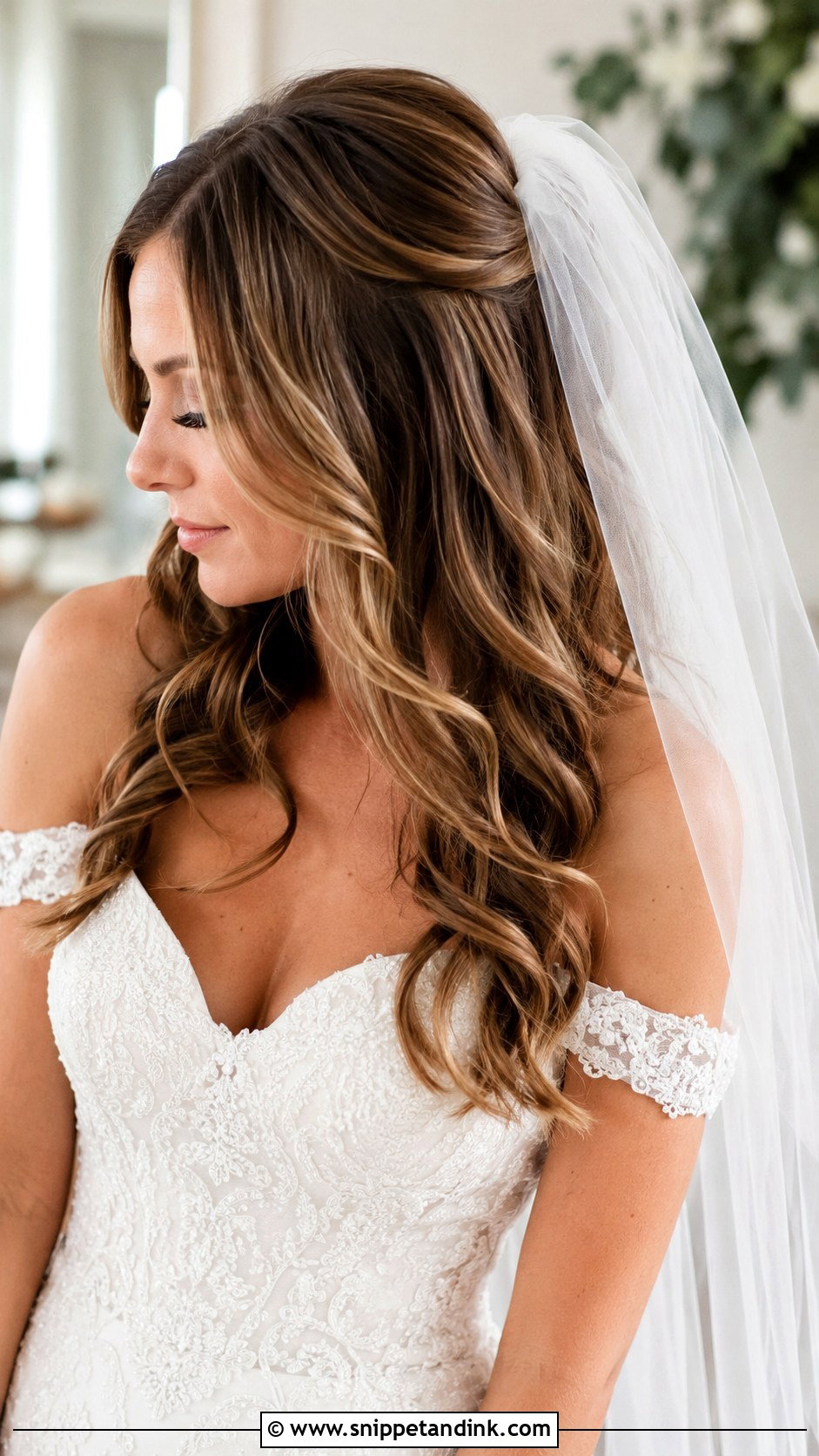
Can you wear your hair down with a veil? Yes, and it’s one of the simplest combinations to get right. I secure the veil comb underneath the top layer of hair, into a small hidden anchor of crossed pins, so the veil holds while your hair still shows. Soft waves layer nicely under sheer tulle. The real advantage comes after the ceremony: when the veil comes off, your hair still looks complete, with no gap where an updo was built around a comb. Cathedral or garden, it works in both.
11. Curly Hair Down Wedding Style
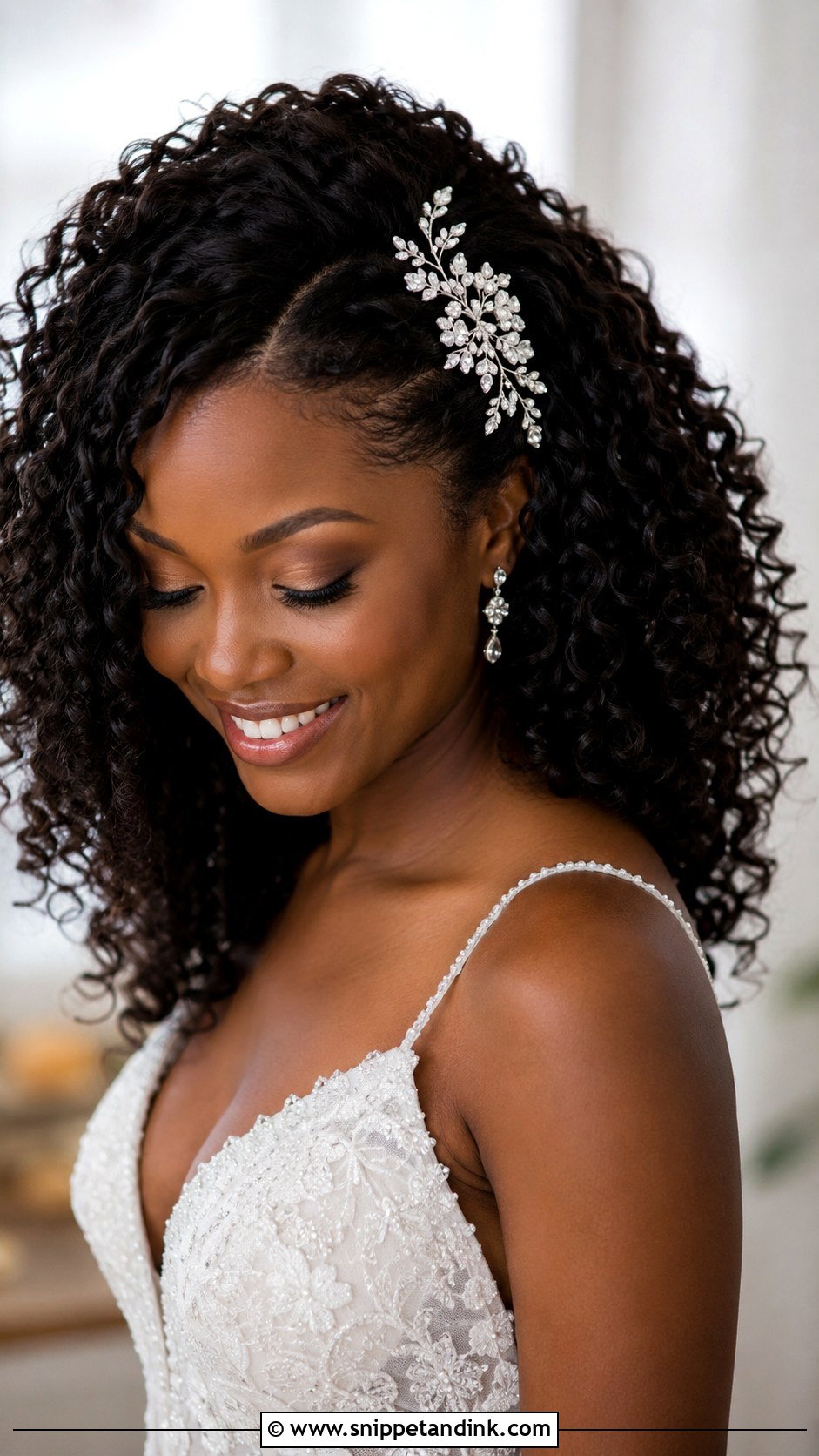
Naturally curly hair worn down is one of my favorite styles to do, because the work is about enhancing the curl you already have instead of fighting it. I style on damp hair with a hydrating cream and a gel for hold, let it dry untouched, then scrunch out the cast. Disturbing curls before they’re fully dry is what causes frizz. Pin back one side or add a jeweled comb or fresh flowers. If you usually wash on a set schedule, plan it so your curls are fresh on the morning rather than on day three.
12. Side Swept Waves Wedding Hair
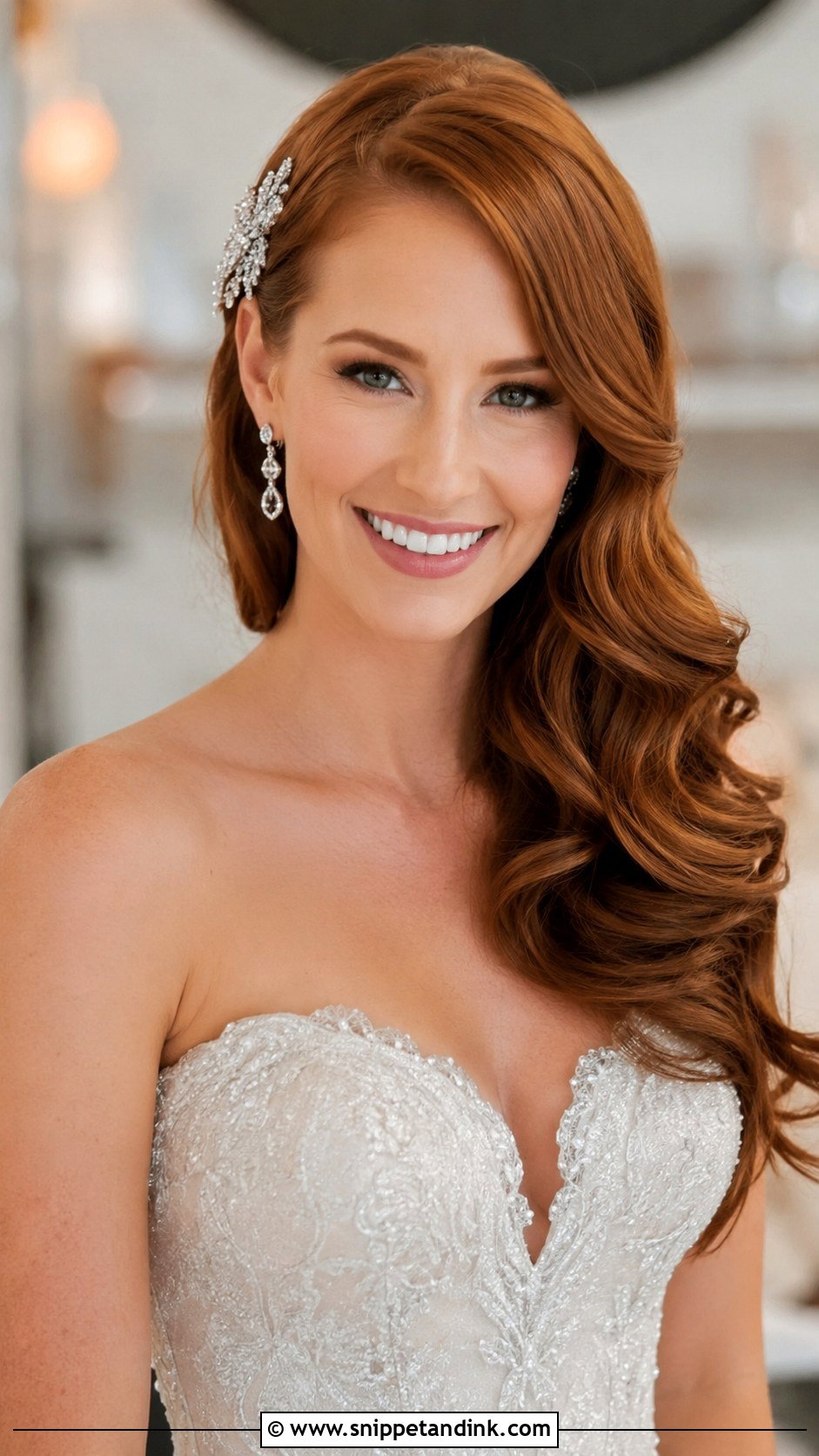
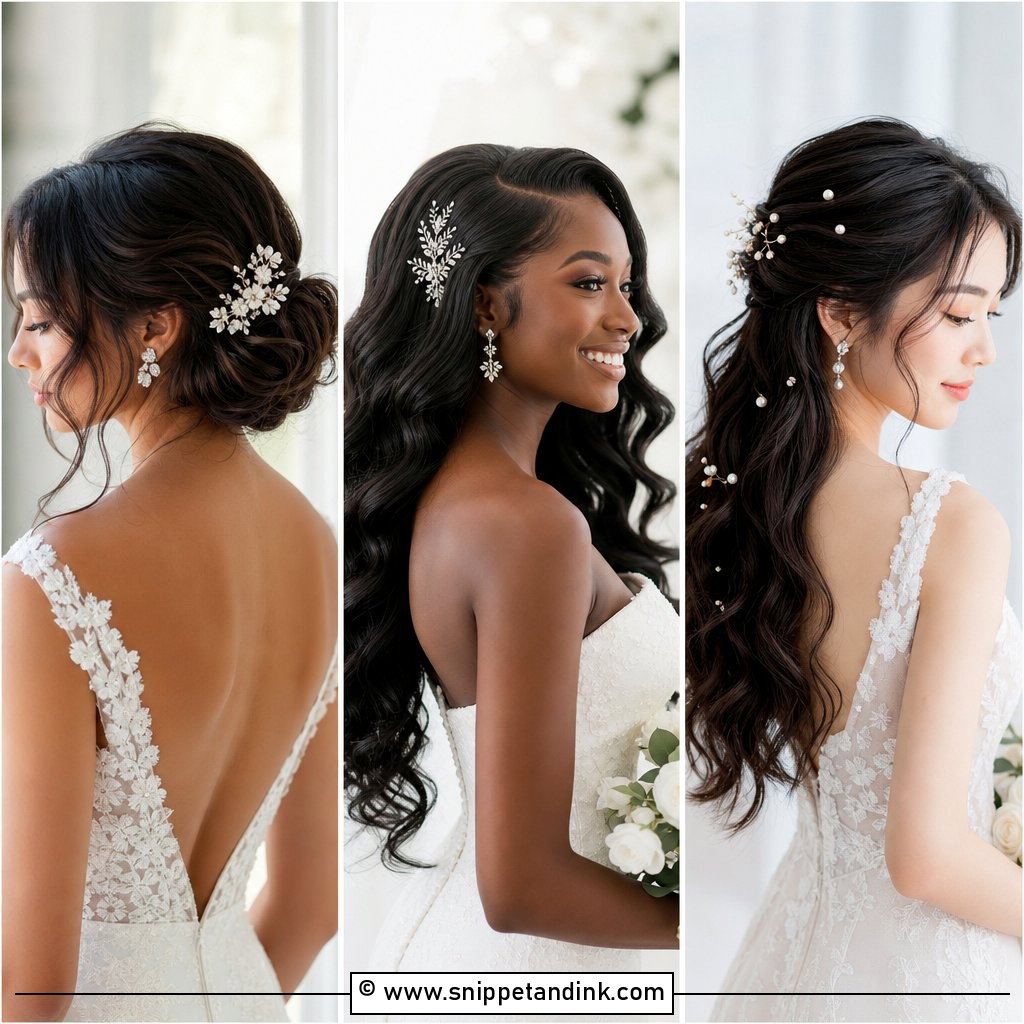
Side swept waves drape over one shoulder and leave the other bare, which shows off earrings and an off-shoulder or one-shoulder neckline. They can be loose or polished and structured. The hidden problem is weight: all that hair on one side pulls toward the back over a long day, so I anchor the sweep with pins behind the ear and under the nape. A sparkling clip near the part balances the asymmetry. If you have a side you prefer in photos, say so early, because the sweep should fall away from it.
13. Loose Waves With Pearl Pins
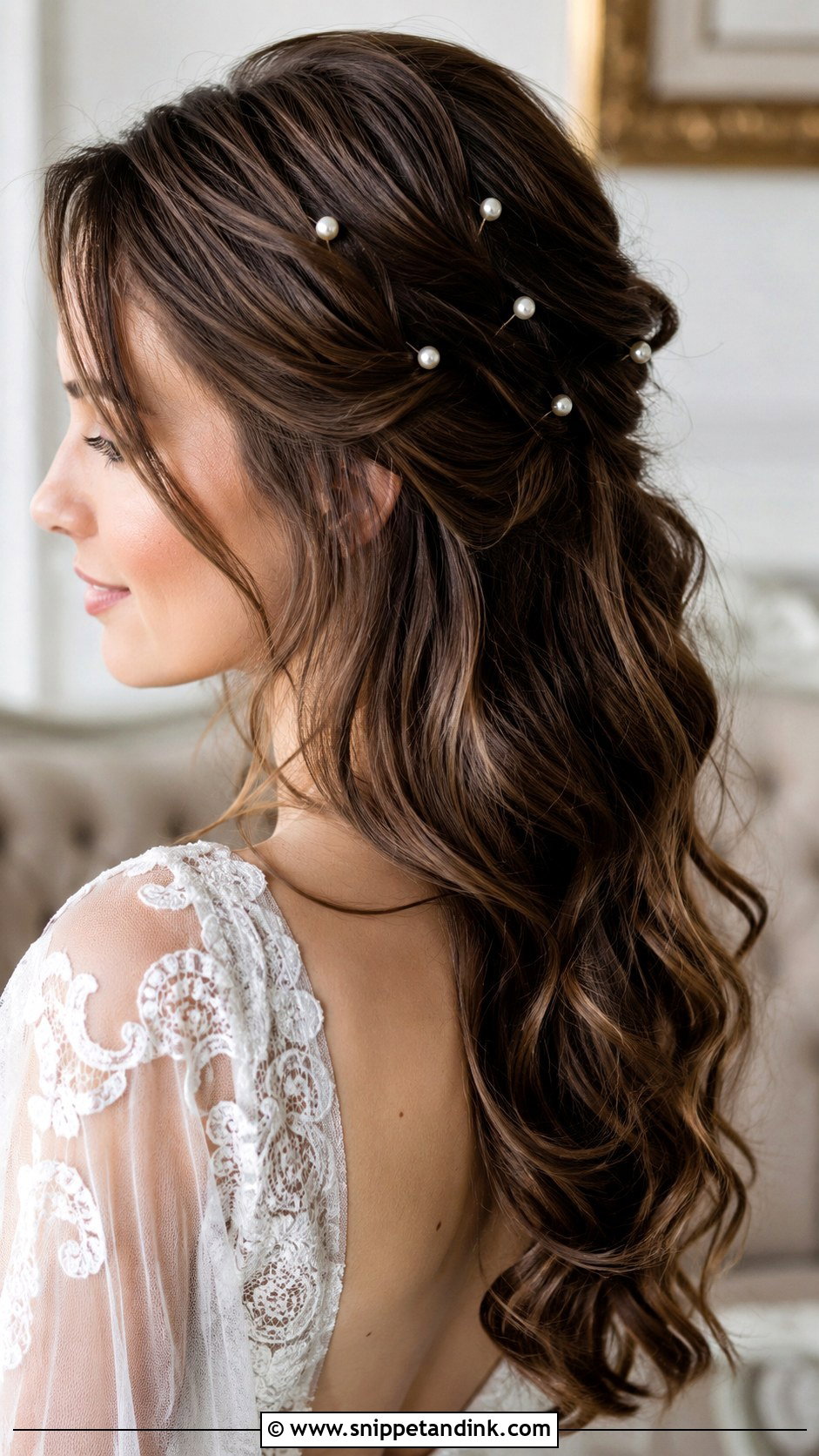
Loose waves dotted with pearl pins are about restraint. The pearls catch the light and suit classic gowns and vintage themes. I place them where the hair is densest, usually along one side or around the crown, because on thin sections the pins slip and the metal shows. Somewhere between five and nine pins tends to look deliberate; more starts to look scattered. It’s a simple way to lift plain waves, and the detail is noticed up close at evening receptions.
14. Boho Braid And Waves Wedding Hair
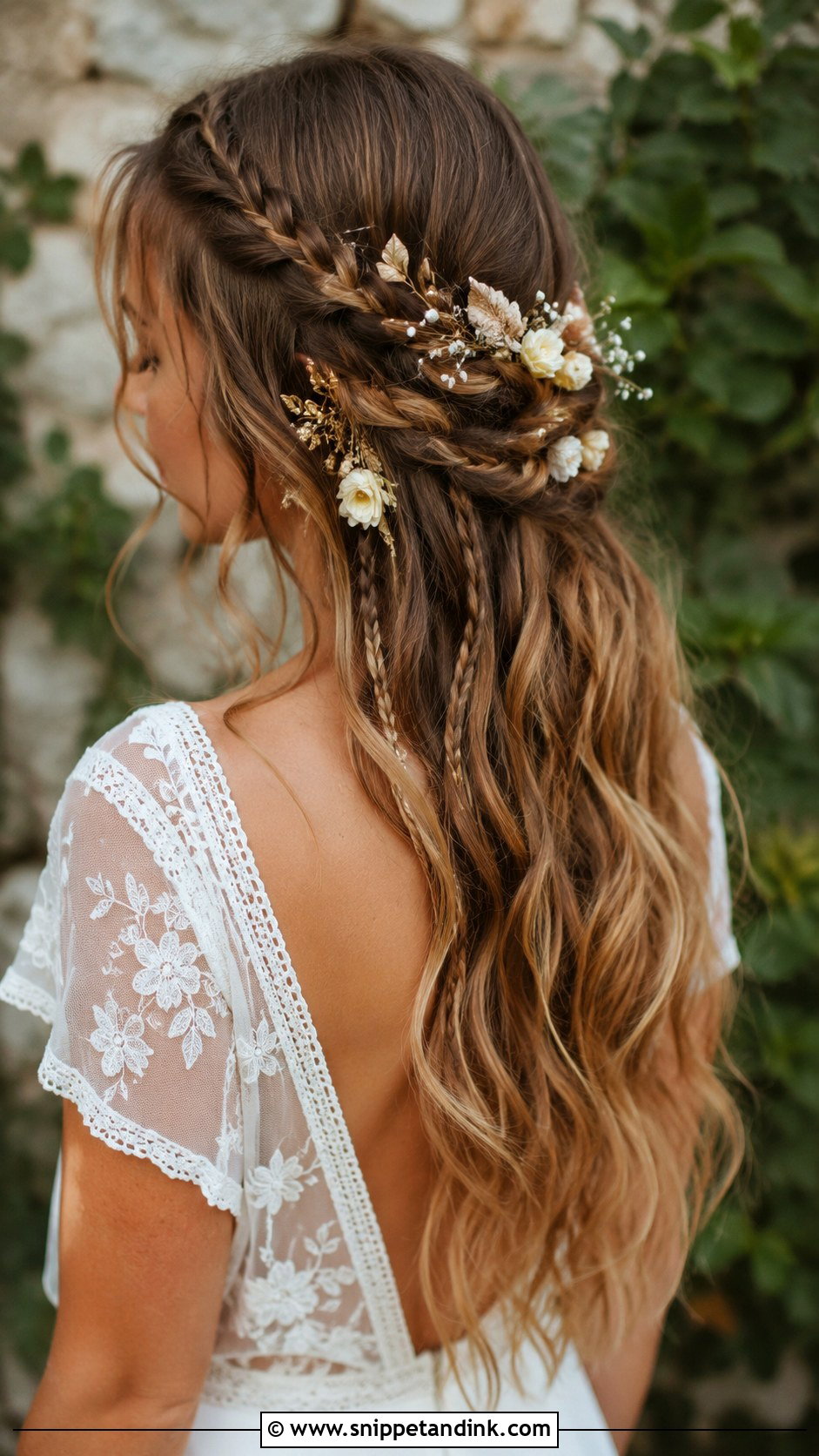
This mix weaves one or two small braids into loose, tousled waves, so the braids add detail while the waves keep everything soft. I braid before curling, so the iron can’t flatten the plait, then wave the rest around it. Fresh flowers or thin gold accessories fit a boho, garden or festival-style wedding, and medium to long hair works best. One warning: braids in freshly washed hair fall apart quickly, so I prefer hair washed the day before, or prepped with a dry texture spray.

15. Sleek Tucked Behind Ears Wedding Hair
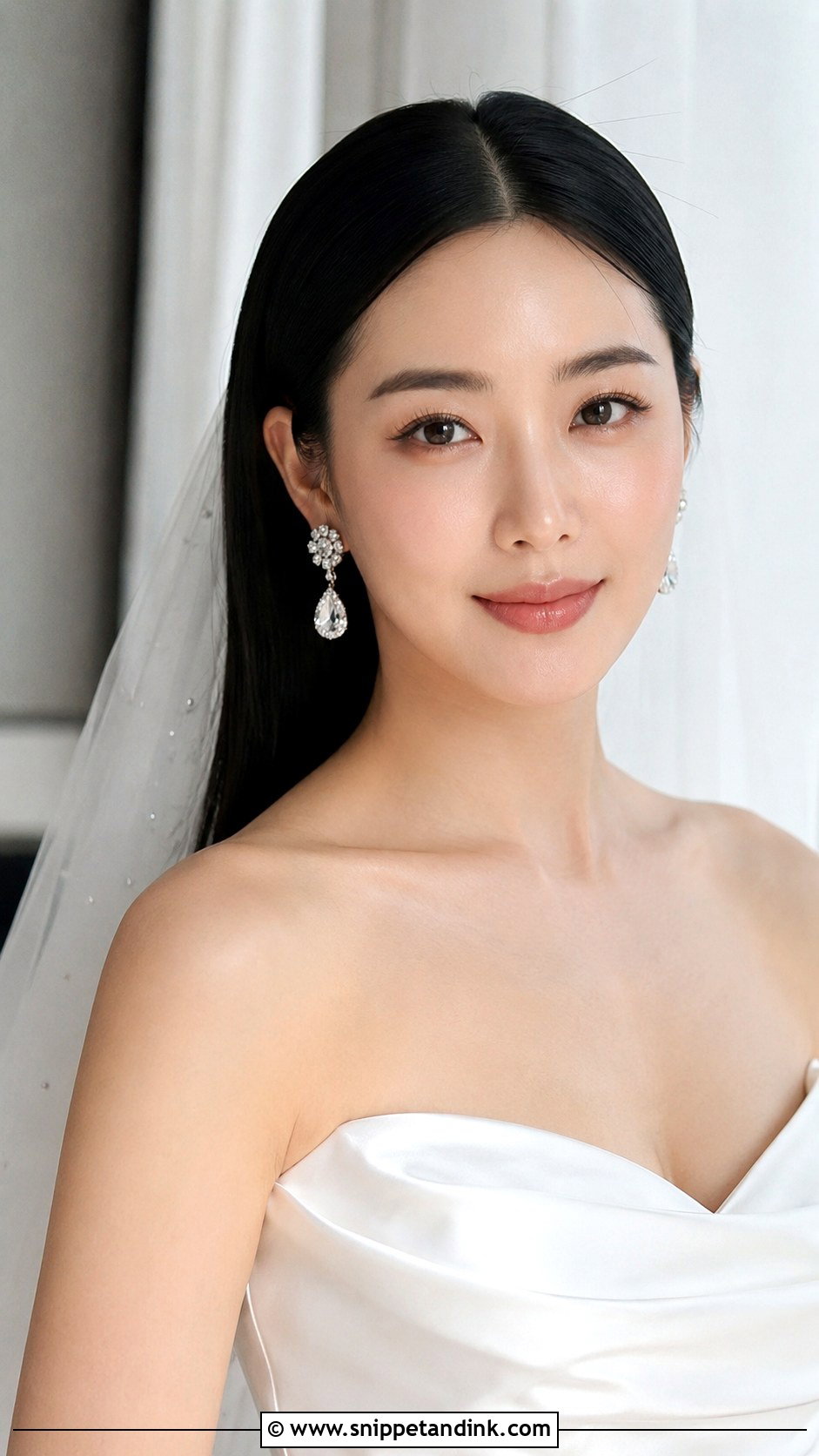
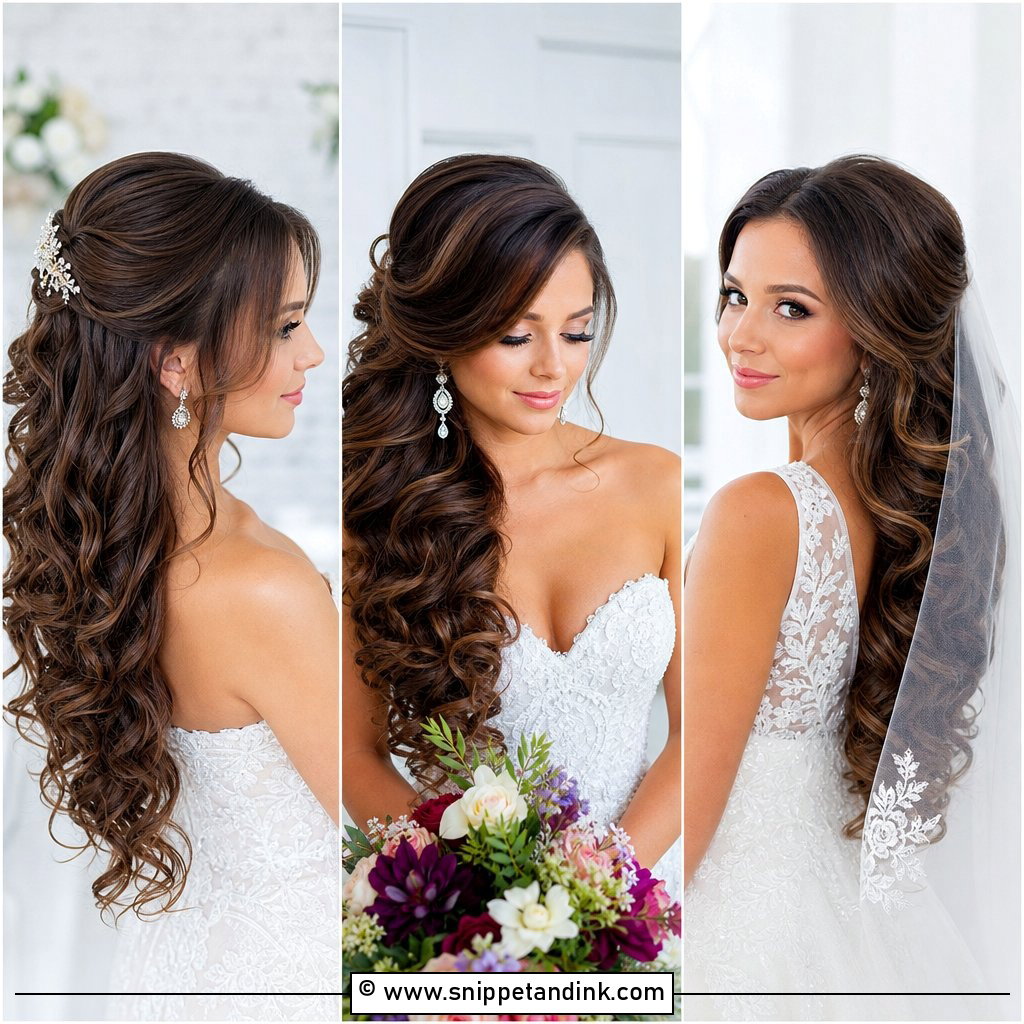
The sleek tucked-behind-the-ears look is one of the newer bridal requests, and it’s pared right back: smooth straight hair, a center part, both sides tucked neatly behind the ears. That makes your earrings and neckline the focus, and it suits modern venues and sleek satin dresses. The tuck sounds simple but rarely stays put unaided. I use small matte pins hidden behind each ear and a little smoothing balm, otherwise the hair slides forward the first time you lean down to sign the register. If you don’t like your ears on show, skip this one.
16. Voluminous Blowout Wedding Hair
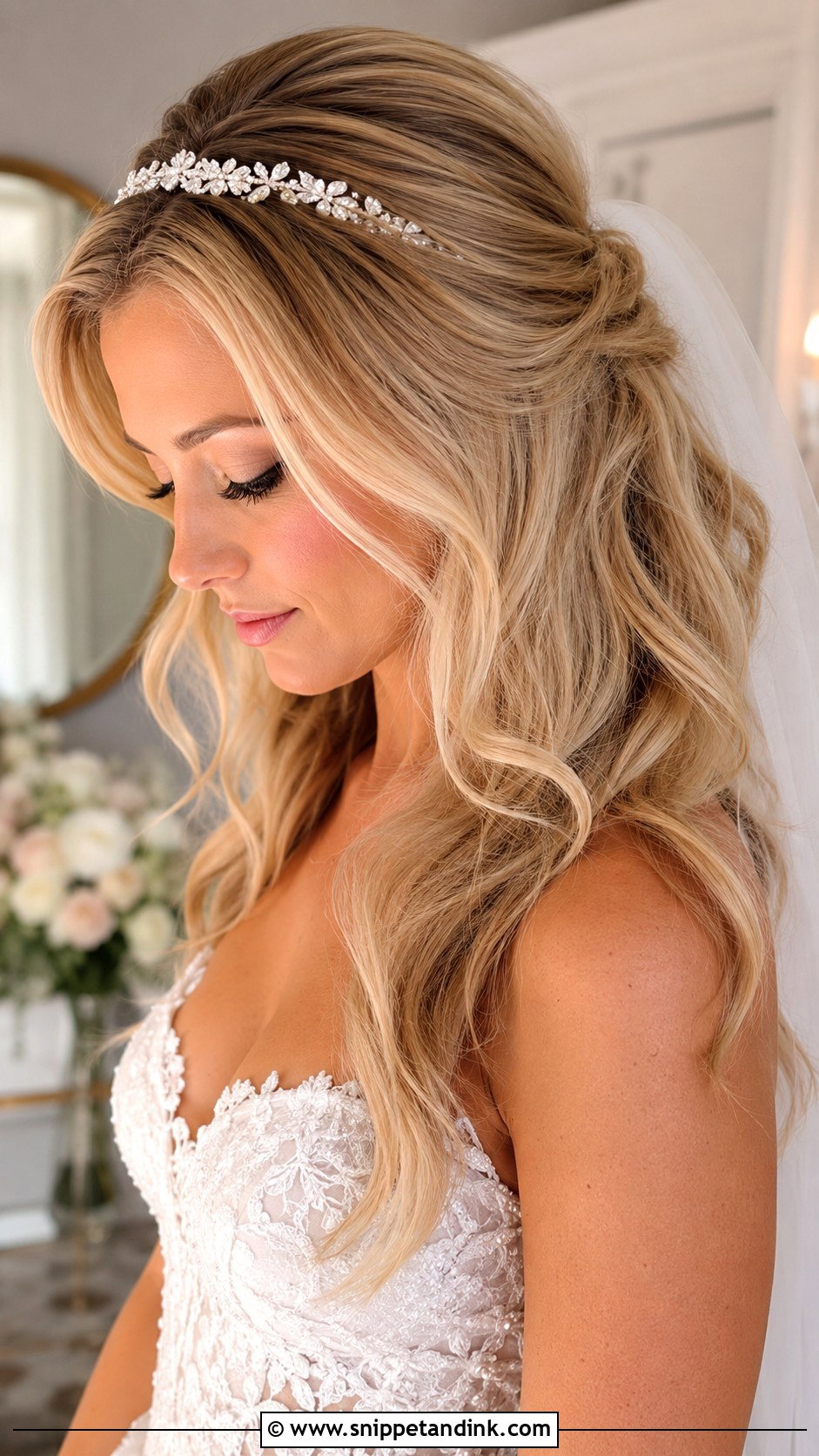
A voluminous blowout gives real body: lift at the root, smooth glossy lengths and soft bends at the ends. I build the volume with a round brush, then set the root sections in velcro rollers while makeup is being done, because a blowout without a set usually flattens by mid-afternoon. The fuller shape frames the face and sits equally well with a formal gown or a relaxed dress. A delicate headband or simple pins add polish. Thick and medium hair carry it best; very fine hair may need clip-in volume to keep this shape all day.
17. Crimped Boho Waves Wedding Hair
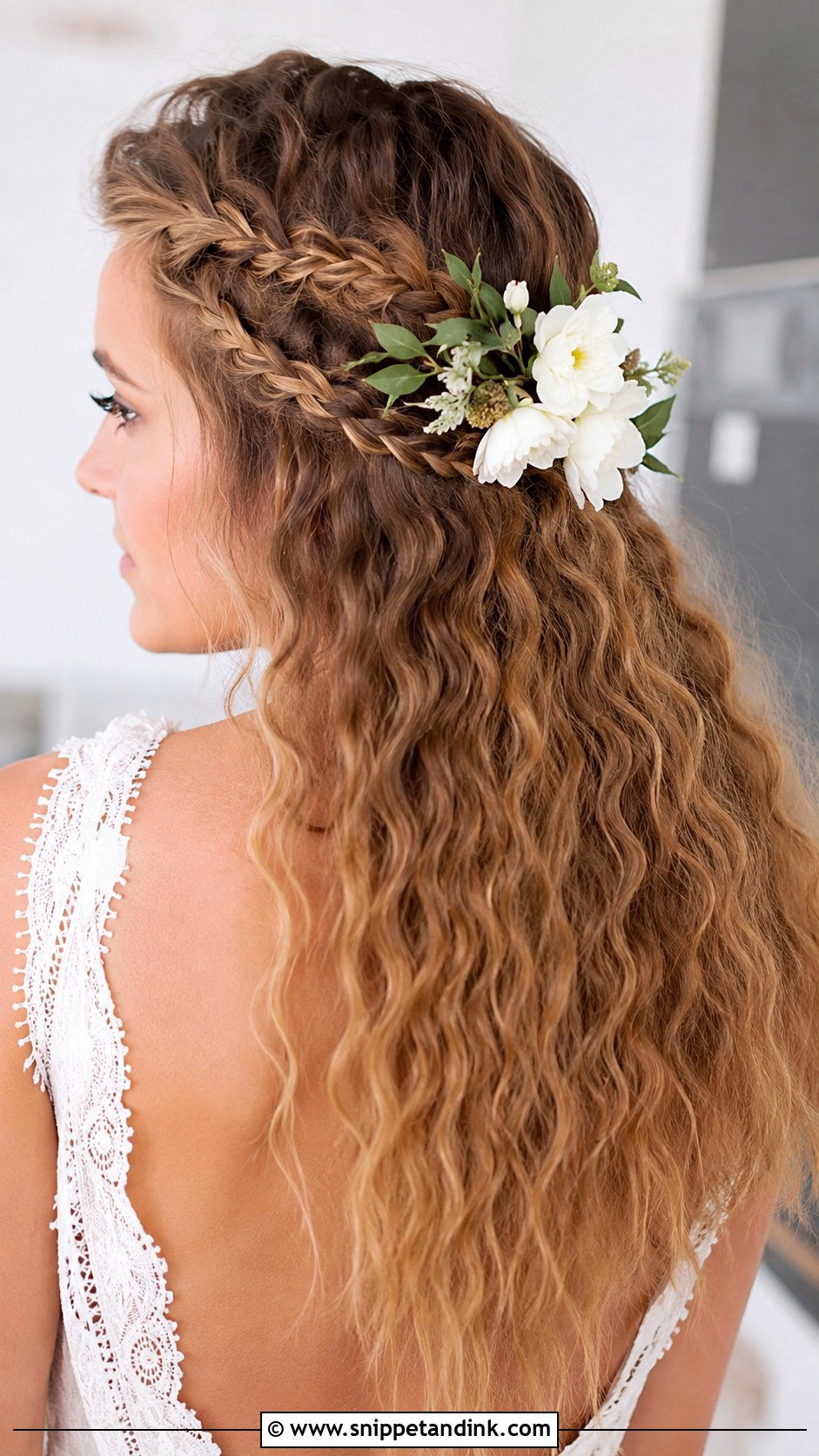
Crimped boho waves suit the bride who likes a little rebellion. The zigzag texture adds volume and dimension, nostalgic without looking dated. Crimping is one of the most durable textures I can give hair, since small bends hold far longer than a large curl, which makes it a good bet for humid outdoor and festival-style weddings. I keep the crimp off the first inch at the root and away from the face-framing pieces so it still reads soft. A thin braid or fresh flowers add interest.
18. Twisted Half Up Wedding Hair
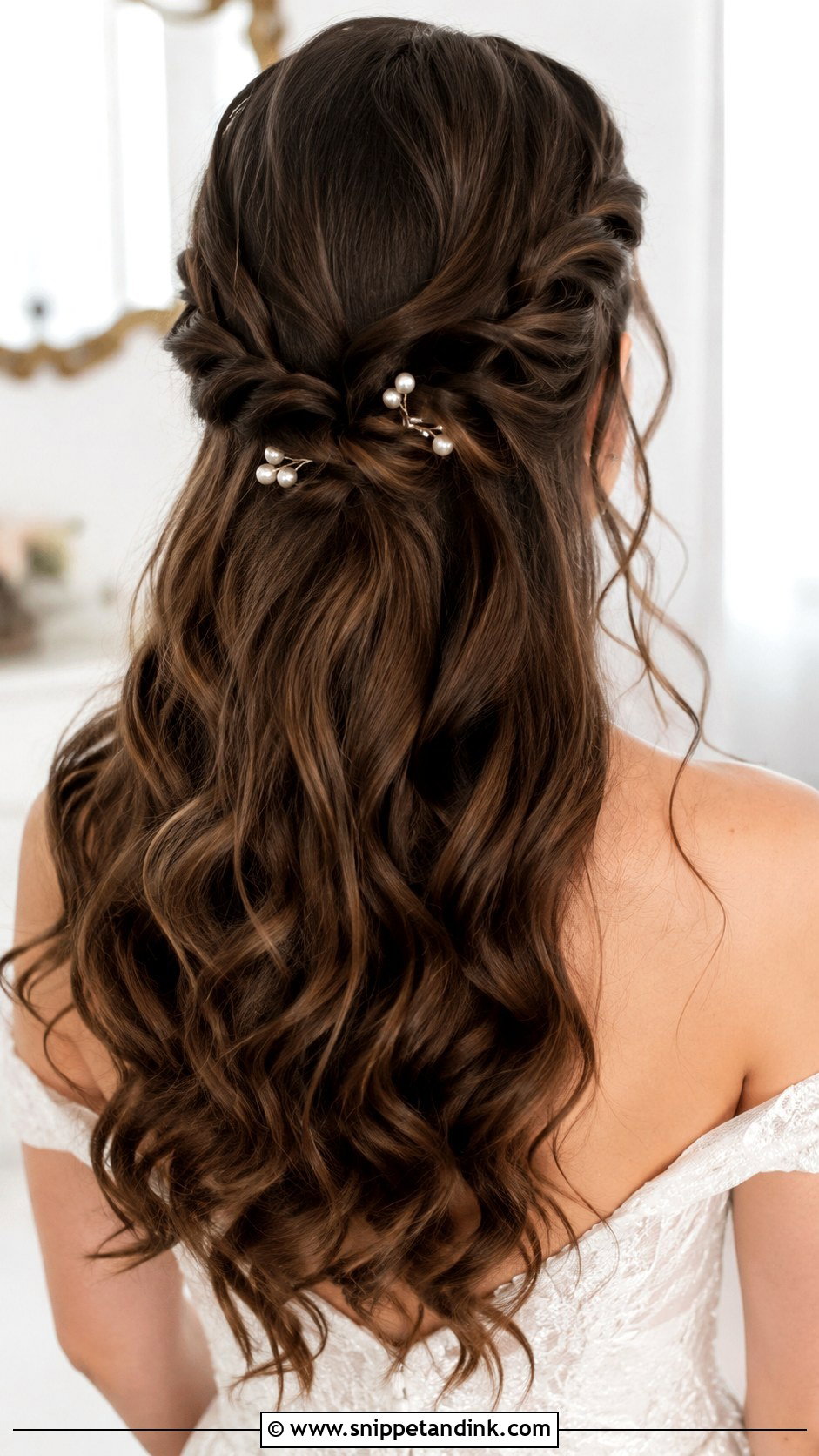
Small sections from each side are twisted back and secured at the crown, while the rest stays loose in waves or curls. The twists frame your face neatly and give a veil comb something solid to sit on. I twist away from the face and pin each twist with a crossed pair, which holds far better than a single pin. Pearl pins or a jeweled clip where the twists meet hides the join. It’s dependable for nearly every face shape and setting.
19. Wavy Hair With Hair Vine
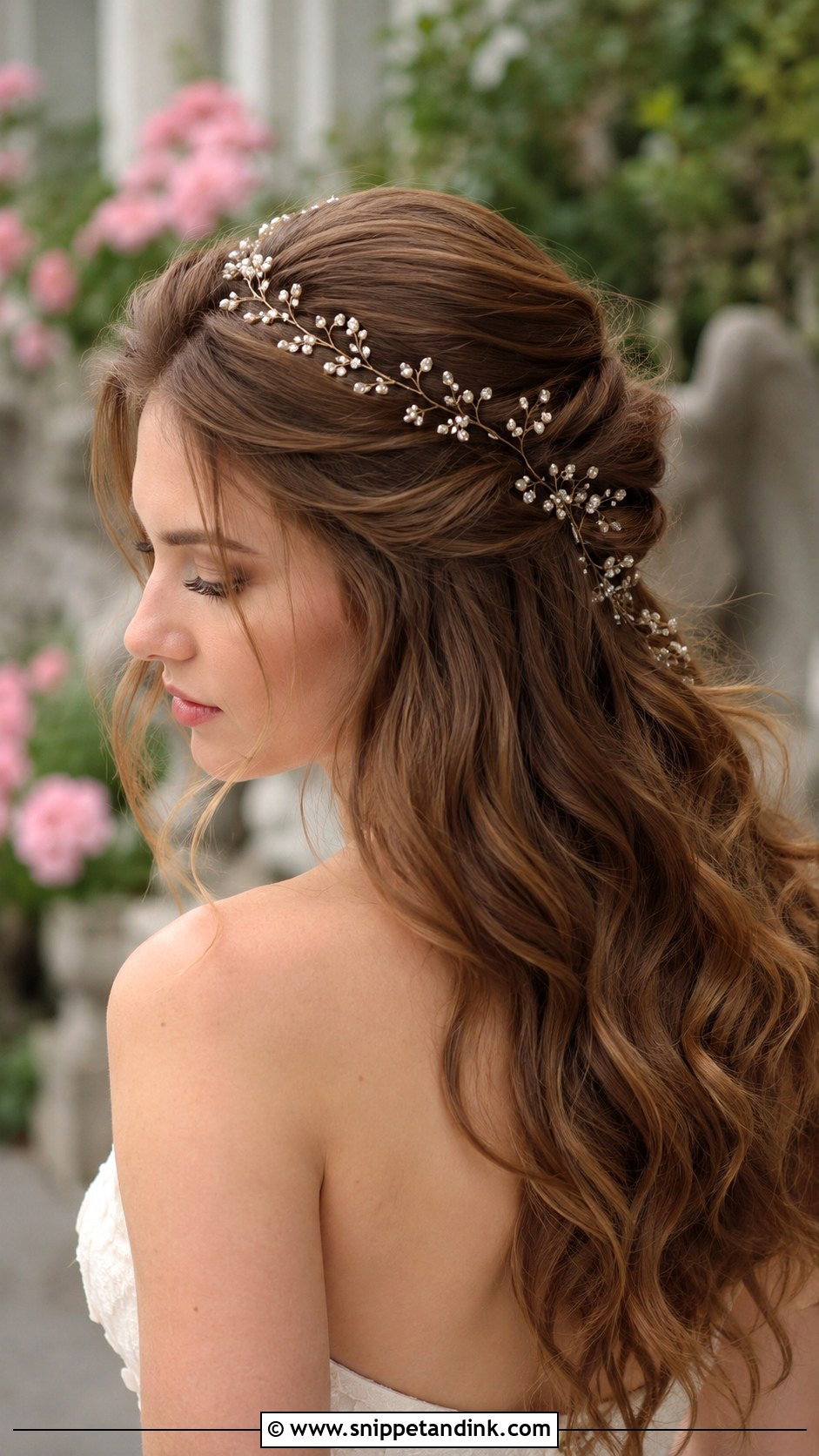
A hair vine wound through soft waves adds shimmer for an ethereal bridal look. Vines carry tiny pearls, crystals or leaves on a fine wire and can run along one side, across the crown, or trail down the back. Loose hair gives the wire little to hold, so I sew it in with small pins every few inches; otherwise it sags by the first dance. Bend the vine to the curve of your head a day ahead so it doesn’t spring away. Garden weddings and formal ceremonies both suit it.
20. Long Layered Waves Wedding Hair
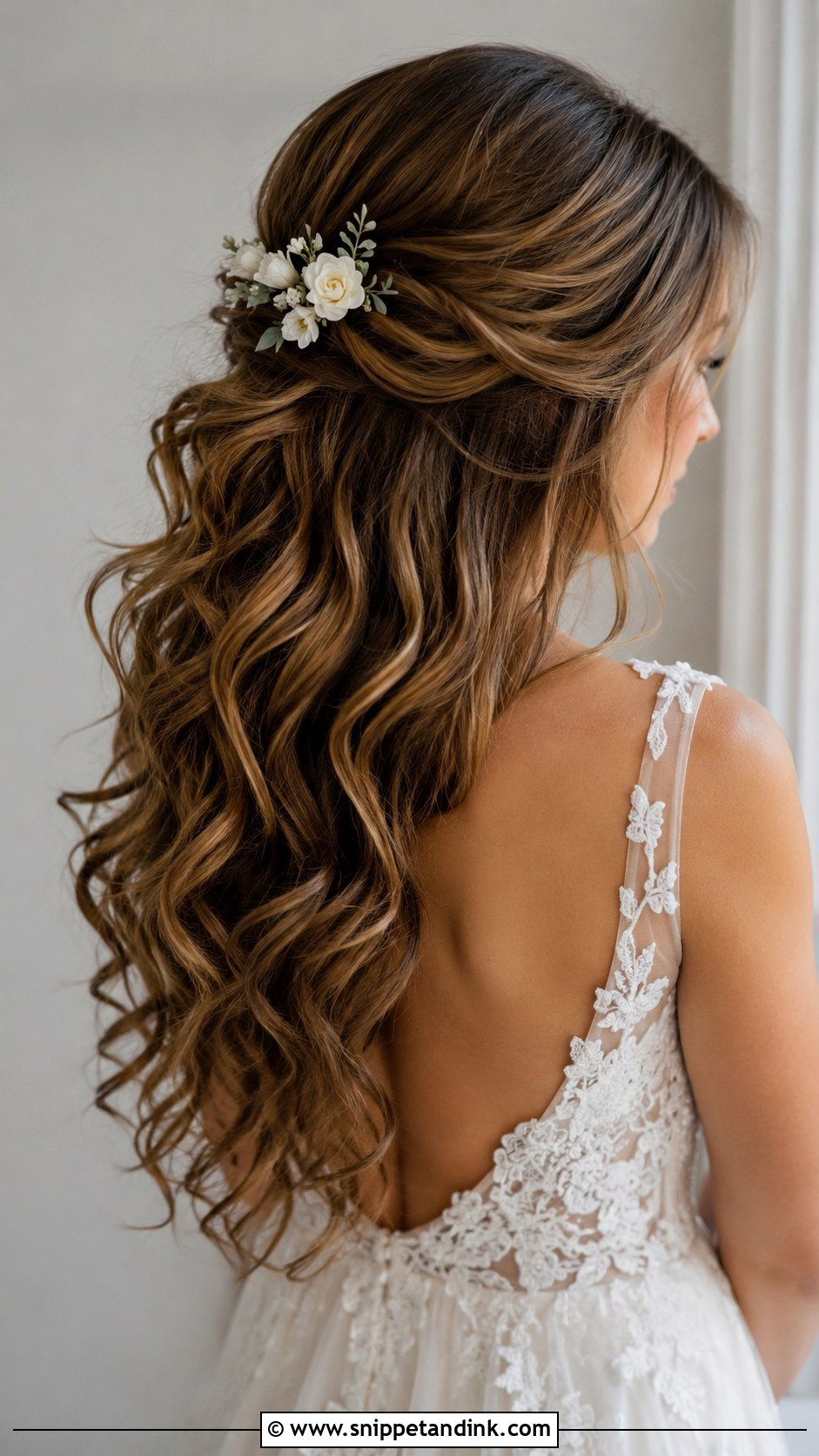
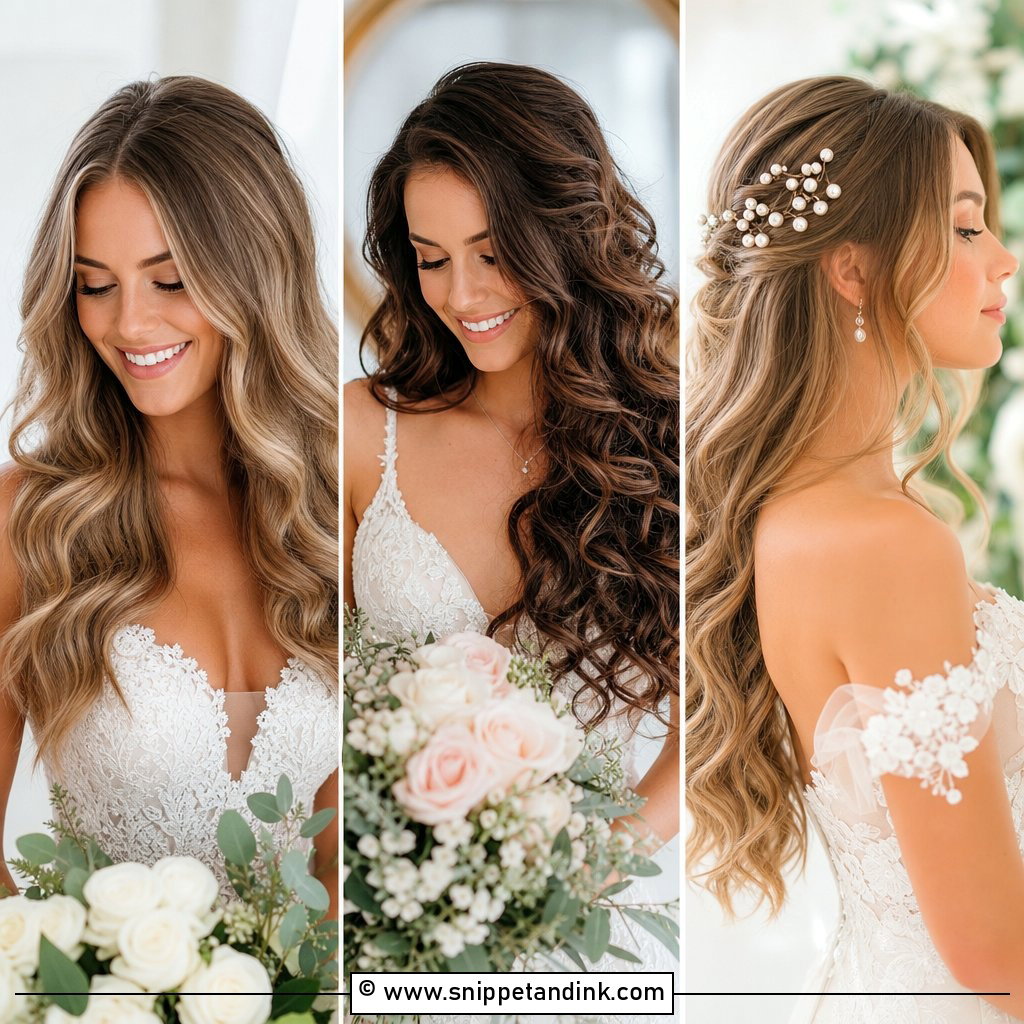
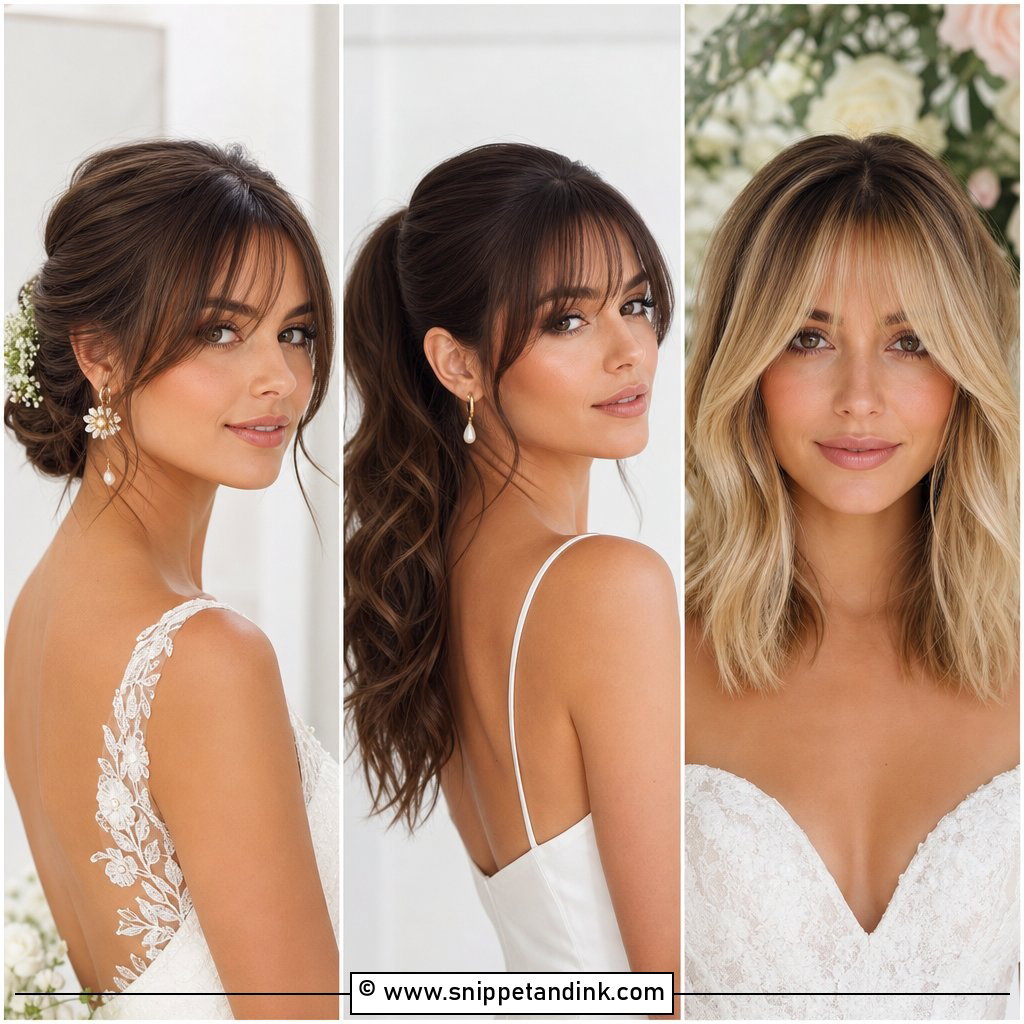
Long, layered waves move a lot because each layer falls at a different length, which gives body without piling on product. The layers frame your face and put volume where it’s wanted. I curl the shorter face-framing pieces away from the face so they don’t fall into your eyes during the vows. Flowing gowns and romantic themes pair naturally with it, and a small accessory or fresh flowers finish it. Layered ends look frayed if a cut is overdue, so book a trim about two to three weeks before the wedding.
Rescuing a Down Style Between the Ceremony and the Reception
Loose hair changes shape through the day, and that’s normal. What matters is having a quick fix ready for the problems I see most often.
- Curls dropping: twist a section into a loose coil and pin it flat for twenty minutes while you eat, then let it out before the dancing starts.
- Frizz at the hairline: a little smoothing balm on clean fingertips works better than more spray, which only makes frizz crunchy.
- Flat roots: flip your part to the opposite side for a moment, mist dry shampoo at the roots, and flip it back. You get lift without a brush.
- Tangles under the veil or against lace: I brush out the underside and spray the back sections lightly before the veil goes on, which stops hair knotting into the tulle.
Hand the kit to a bridesmaid rather than carrying it yourself: a few pins, a small comb, travel spray, blotting papers and a clear elastic. If your stylist is staying on, ask for a five-minute check just before the couple portraits. That is when small slips show the most, and when they’re easiest to fix.
Down Hair That Still Looks Finished at the Last Dance
Wearing your hair down is a good way to feel like yourself, and with the right prep it lasts as long as an updo. Start with your gown’s neckline, your venue’s humidity and your natural texture, then shortlist from there. Bring two or three photos you love to your trial, plus one you dislike; the one you dislike often tells me more. Your hair should frame the day without you having to think about it once.
You'll Like These Ideas:




Leave a Reply