
Plenty of brides tell me in the first five minutes that they don’t want an updo. They want to feel their hair on their shoulders, see it move in the aisle photos and still recognise themselves in the mirror. Worn down, bridal hair can be soft waves, glossy curls, a sweep over one shoulder or a half-up shape that gives a veil somewhere to sit. It’s also the version that asks the most of the prep, because loose hair has nothing holding it except the set. Below, each idea comes with the necklines and textures it suits and what I’d ask for so the shape still looks deliberate by the speeches.
Honest Reasons Some Brides Should Pin It Up
Loose hair is the least forgiving bridal option over a long day. That doesn’t make it wrong for you, but I’d always check a few things before you fall for a reference photo.
- A humid or very hot day outdoors. Straight and blowout styles puff out first, and fine waves can relax almost straight by the cocktail hour. Hair on the back of the neck also gets uncomfortable fast in summer heat.
- Very fine or slippery hair. Without extensions or a firm set, curls may barely last through the ceremony. If your curls fall out on an ordinary night out, expect the same on the day.
- A dress whose best feature is the back. Long hair covers a low back, buttons or an illusion panel in nearly every photo taken from behind.
- A lot of dancing. Loose hair sticks to a damp neck and face. Some of my brides plan to switch to a ponytail later for exactly this reason.
If two or more of these sound like your wedding, a half up style or a side sweep is a good compromise. You keep the length and the softness, and the hair has a pinned anchor that stops it falling apart.
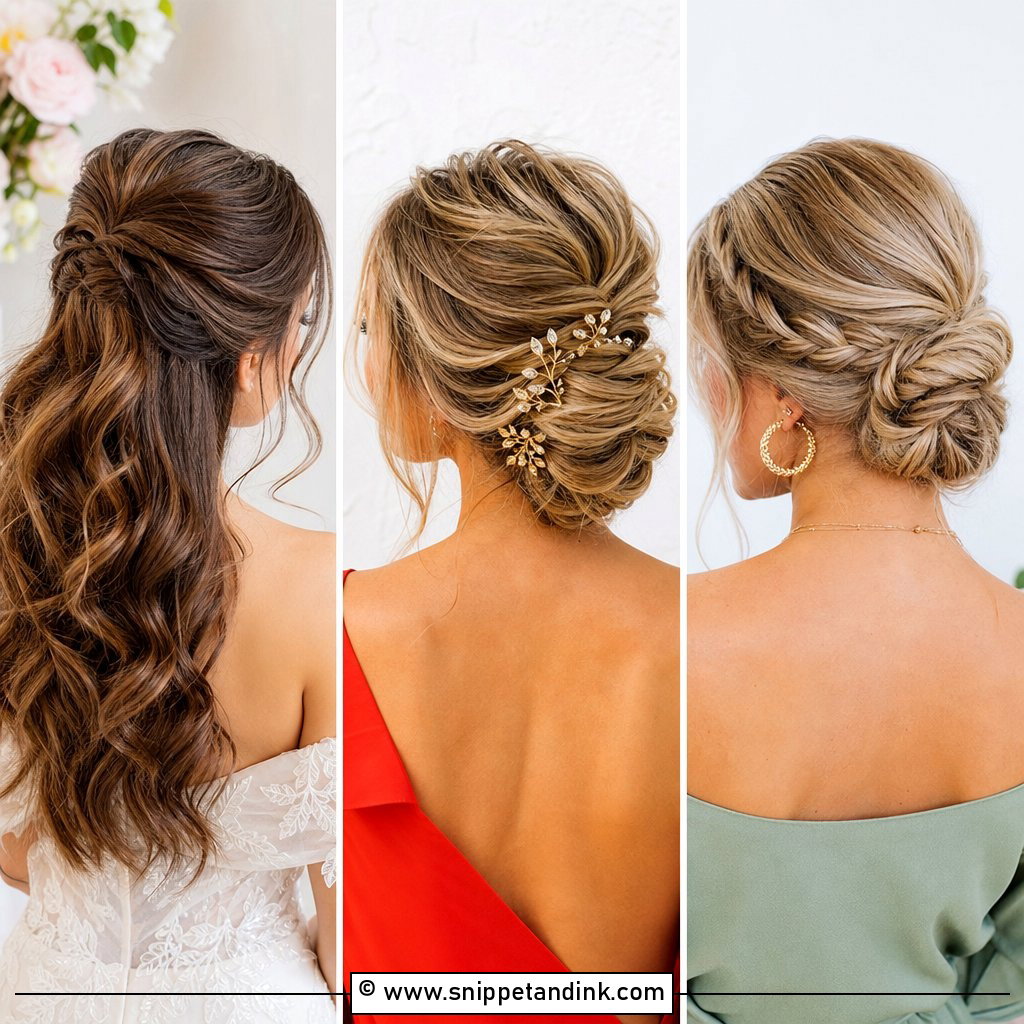
1. Soft Wave Wedding Hair Down
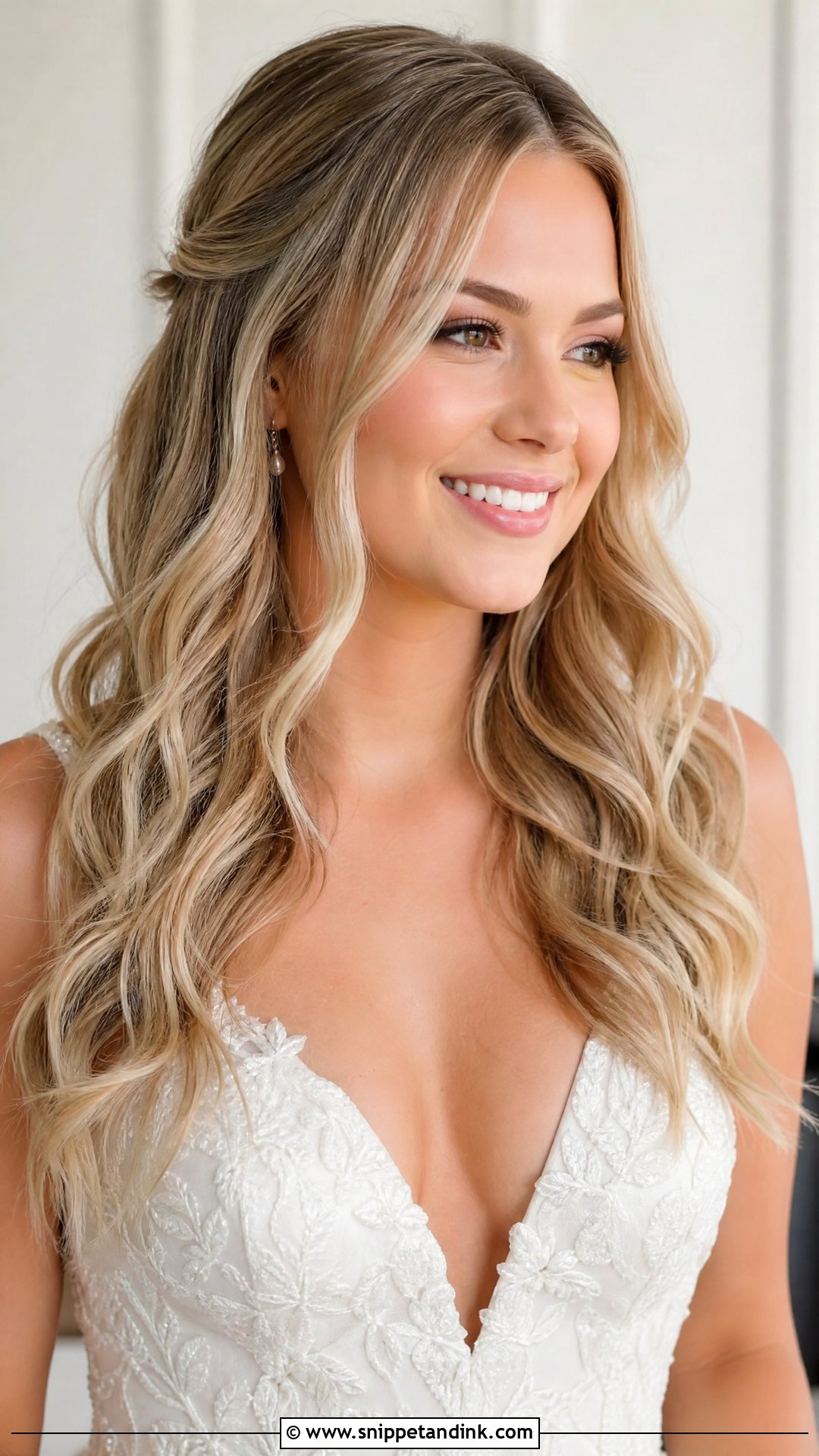
Waves bend; curls coil. That distinction is what I clarify first, because a bride asking for waves usually doesn’t want ringlets starting at the root. I curl from about the mid-lengths down, let each curl cool completely while pinned, then brush through until the curls open into soft bends. It suits medium to long hair and goes with strapless, sweetheart, square and off-the-shoulder gowns. A face-framing layer near the cheekbones helps a lot. Finish with a flexible spray, never a firm one, or the waves stop moving.
2. Hollywood Wave Wedding Hair Down
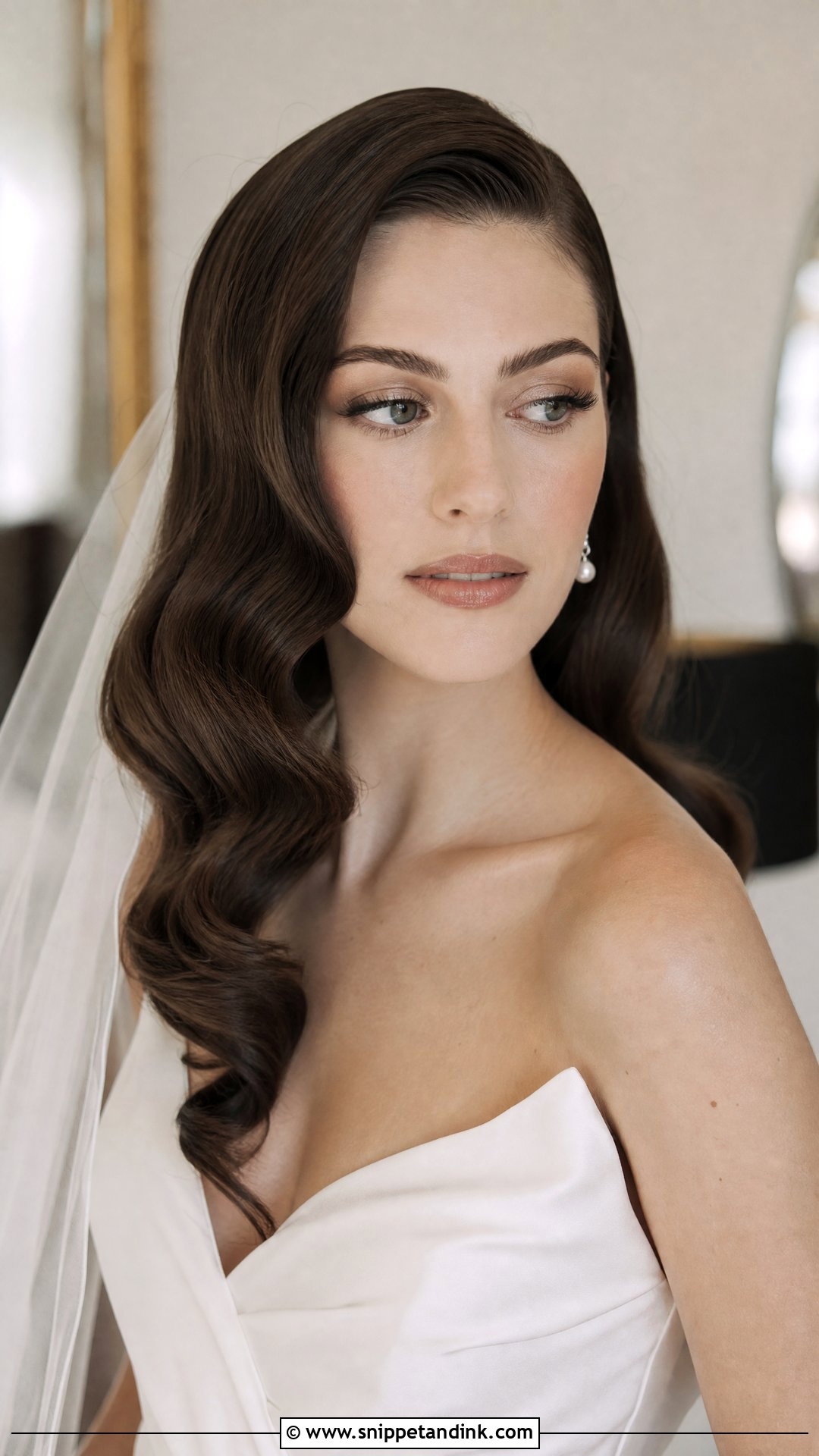
Hollywood waves are sculpted, which is why they hold up in formal portraits where everyday curls can look a bit fuzzy. They need a defined side part, very smooth prep and careful sectioning: every curl rolled the same direction, set, then brushed together into one flowing shape. Satin gowns, fitted silhouettes and pearl earrings suit them. I’d add one caution. Because the waves are brushed into a single ripple, a long veil worn over them will flatten the pattern underneath, so many of my brides wear the veil for the ceremony only and take it off before portraits.
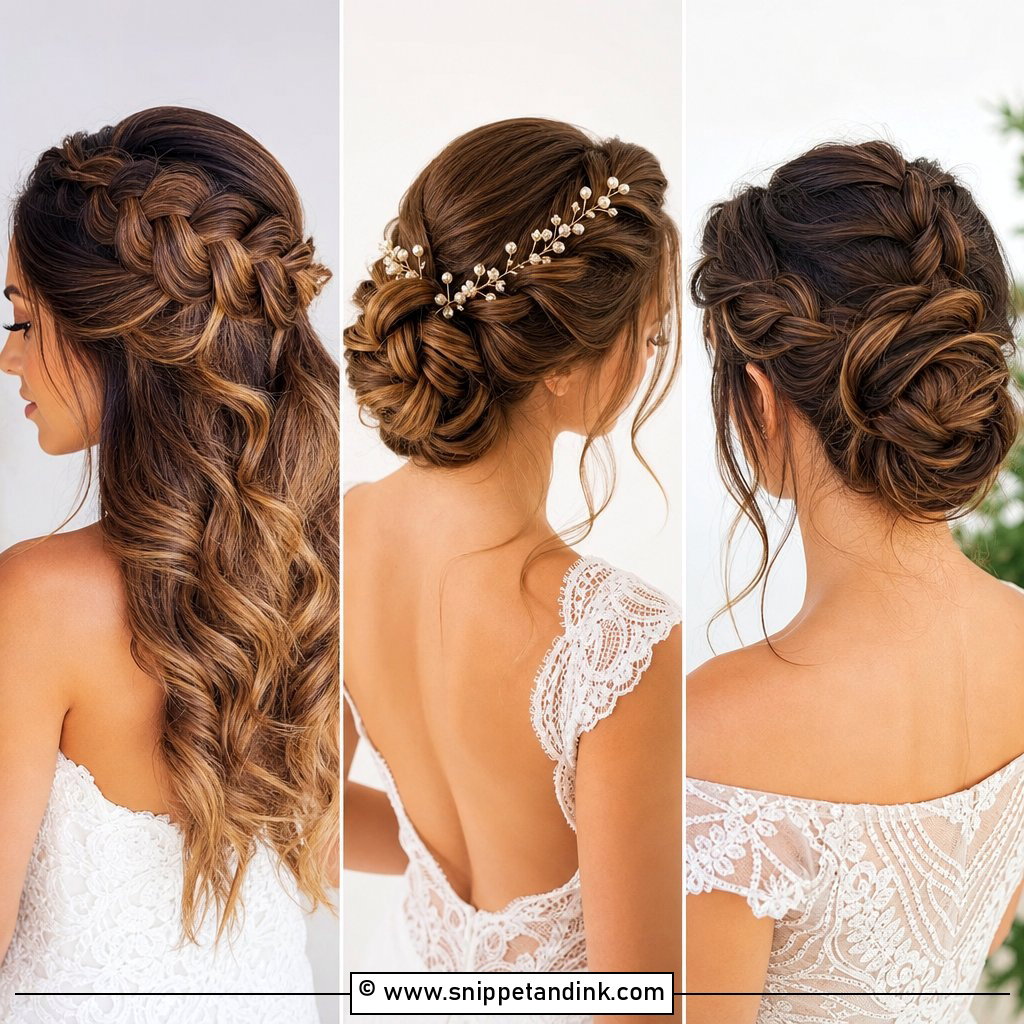
3. Half Up Wedding Hair Down
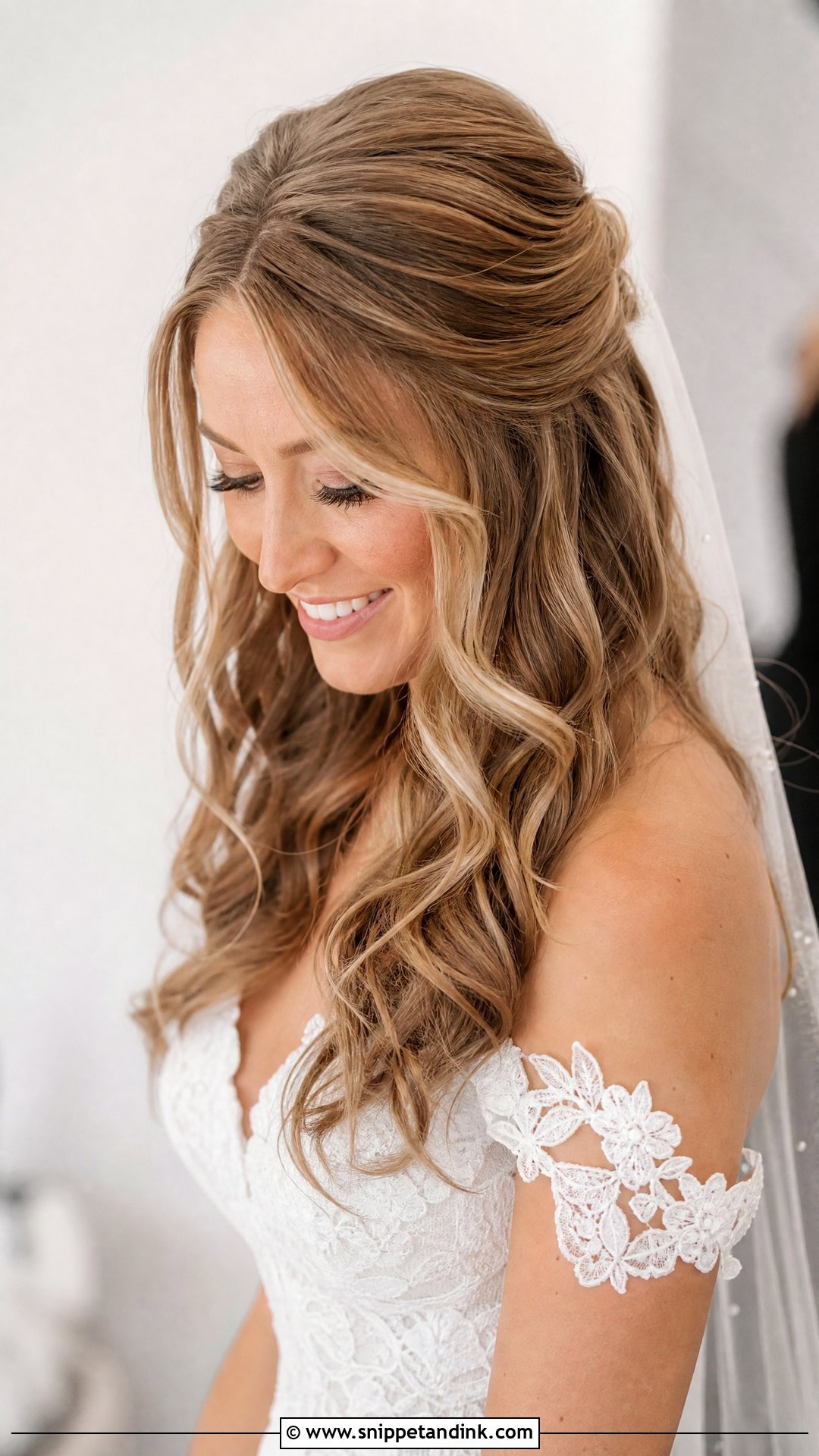
If you’re torn between up and down, this is usually where we end up. The crown is lifted and pinned back, keeping hair off your face, while the lengths fall over your shoulders. Waves, curls, natural texture and smooth blowouts all work underneath. The pinned section also gives a veil, comb, bow, or pins a secure base. I keep the top section soft rather than pulled tight; a little volume at the crown stops the half up shape from looking like a school hairstyle.
4. Side Swept Wedding Hair Down
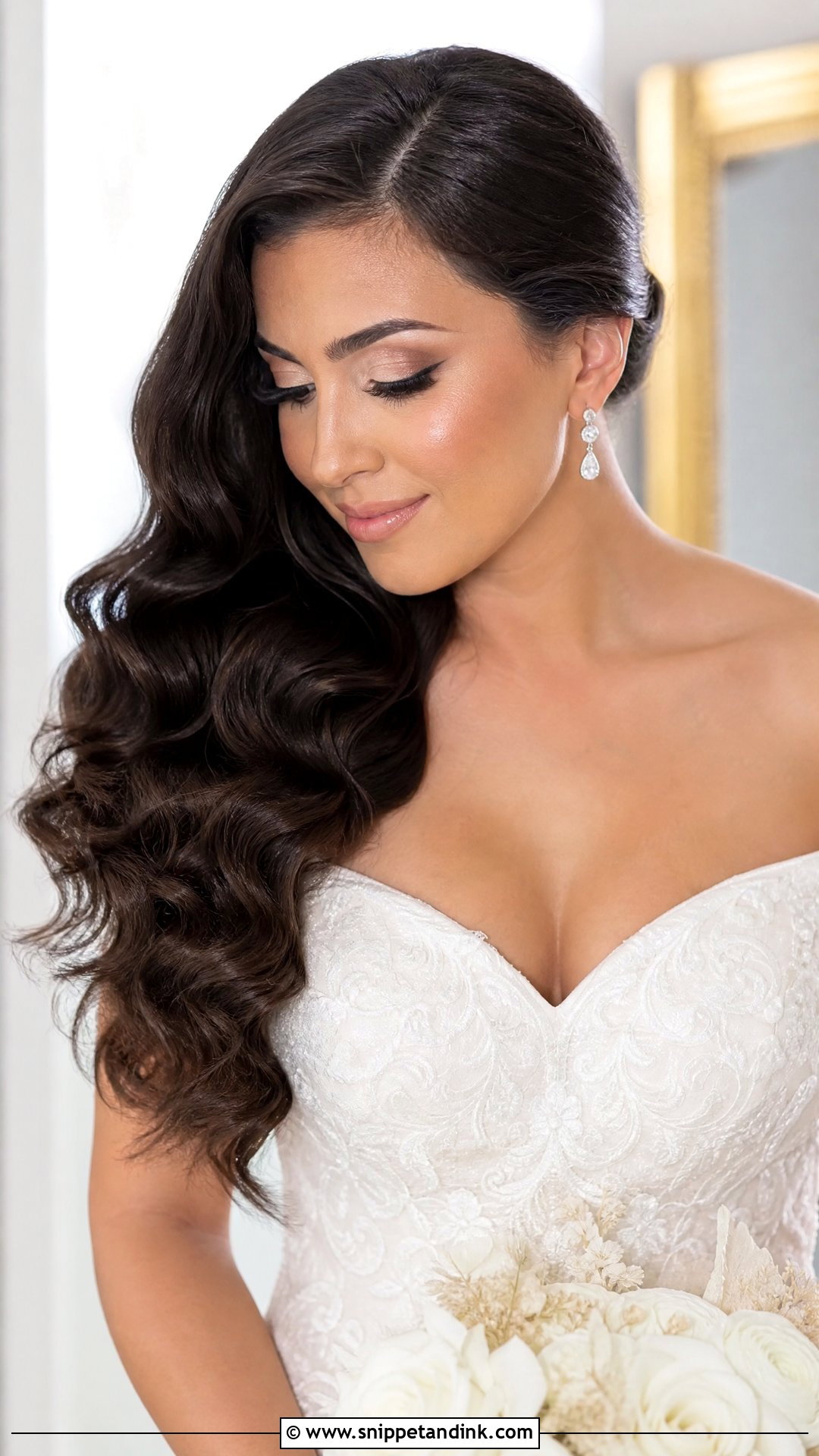
Sweeping the hair over one shoulder shows off the neckline and earrings on the open side while keeping your length in view. Curls, waves and layered cuts behave best here, since the placement adds shape. I pin the bare side discreetly behind the ear with crossed grips and, on thick hair, add a comb over them because the weight on one side pulls more than you’d think. It pairs with one-shoulder gowns, deep V necklines and vintage-inspired dresses. Ask for volume at the crown so the head doesn’t look lopsided.
5. Loose Curl Wedding Hair Down
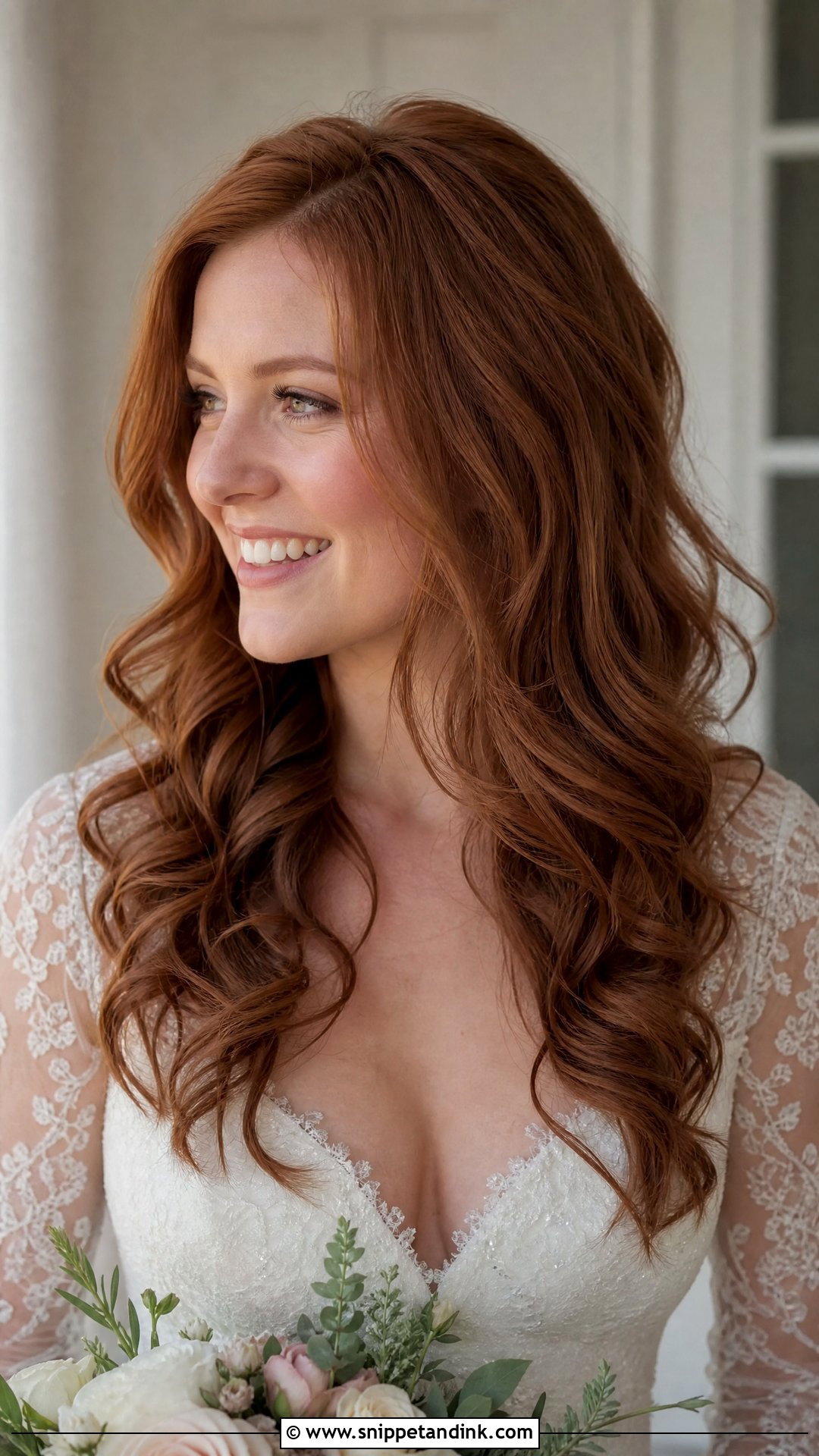
Loose curls sit between waves and ringlets: more defined than waves, still separated enough to avoid a stiff ringlet effect. They give fullness and bounce at the ends as you walk. Layered cuts show them off well. On fine hair I often suggest clip-in extensions, not only for density but because extension hair tends to hold a curl longer than very fine natural hair. Thick hair can turn into a triangle shape when curled, so I’d have the layers checked a few weeks ahead.
6. Long Layered Wedding Hair Down
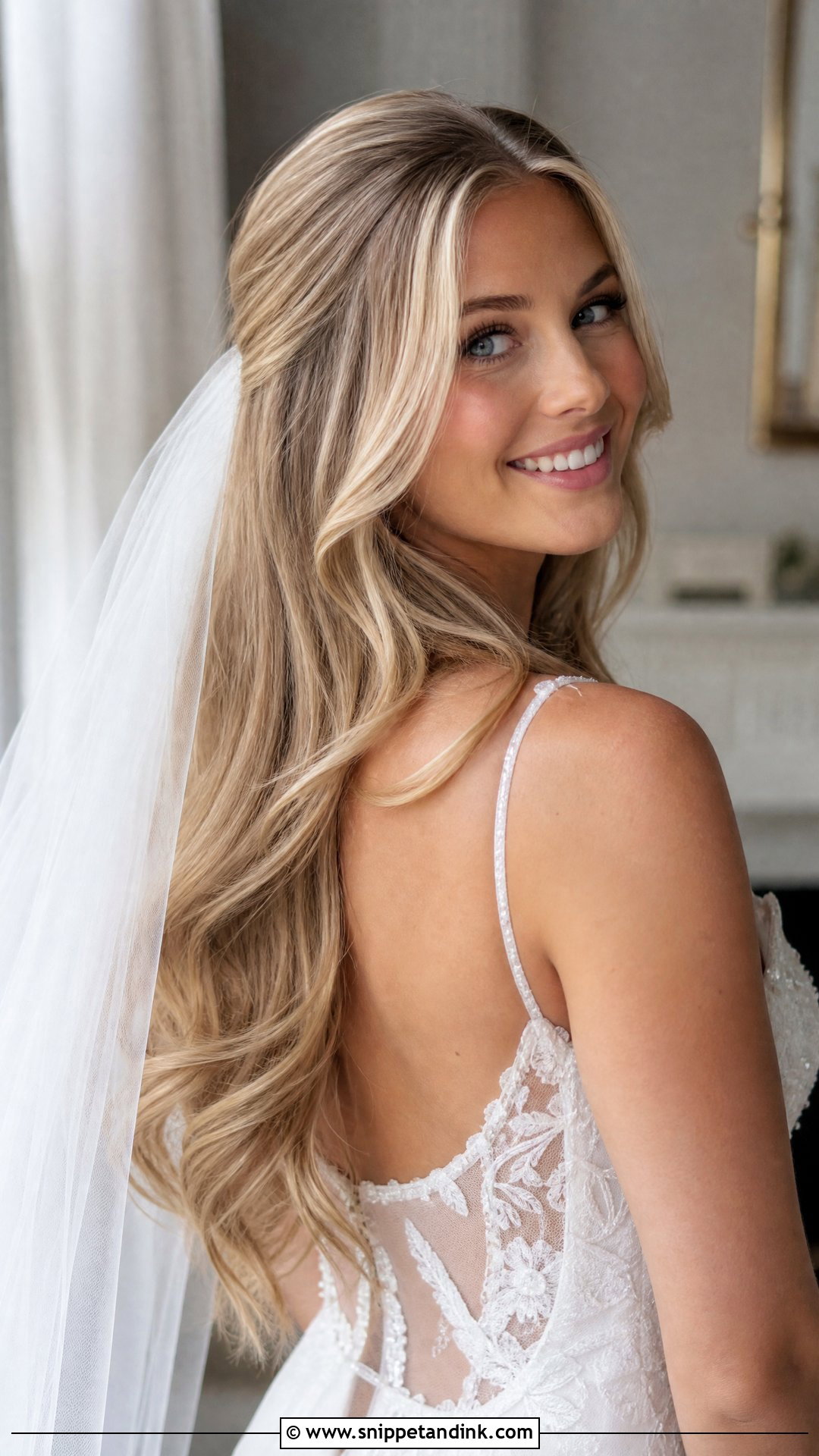
Layers are the difference between long hair that looks styled and long hair that hangs. The shortest face-framing pieces open up the face, and the longer layers carry movement through the back. Under a veil, layered hair still shows shape through the tulle, while one-length hair can look flat. I smooth the roots, lift the crown and curl each layer away from the face. It sits well with simple gowns, lace and garden settings. Get layers cut at least four weeks before; fresh layers can be choppy and need time to grow in softly.
7. Middle Part Wedding Hair Down
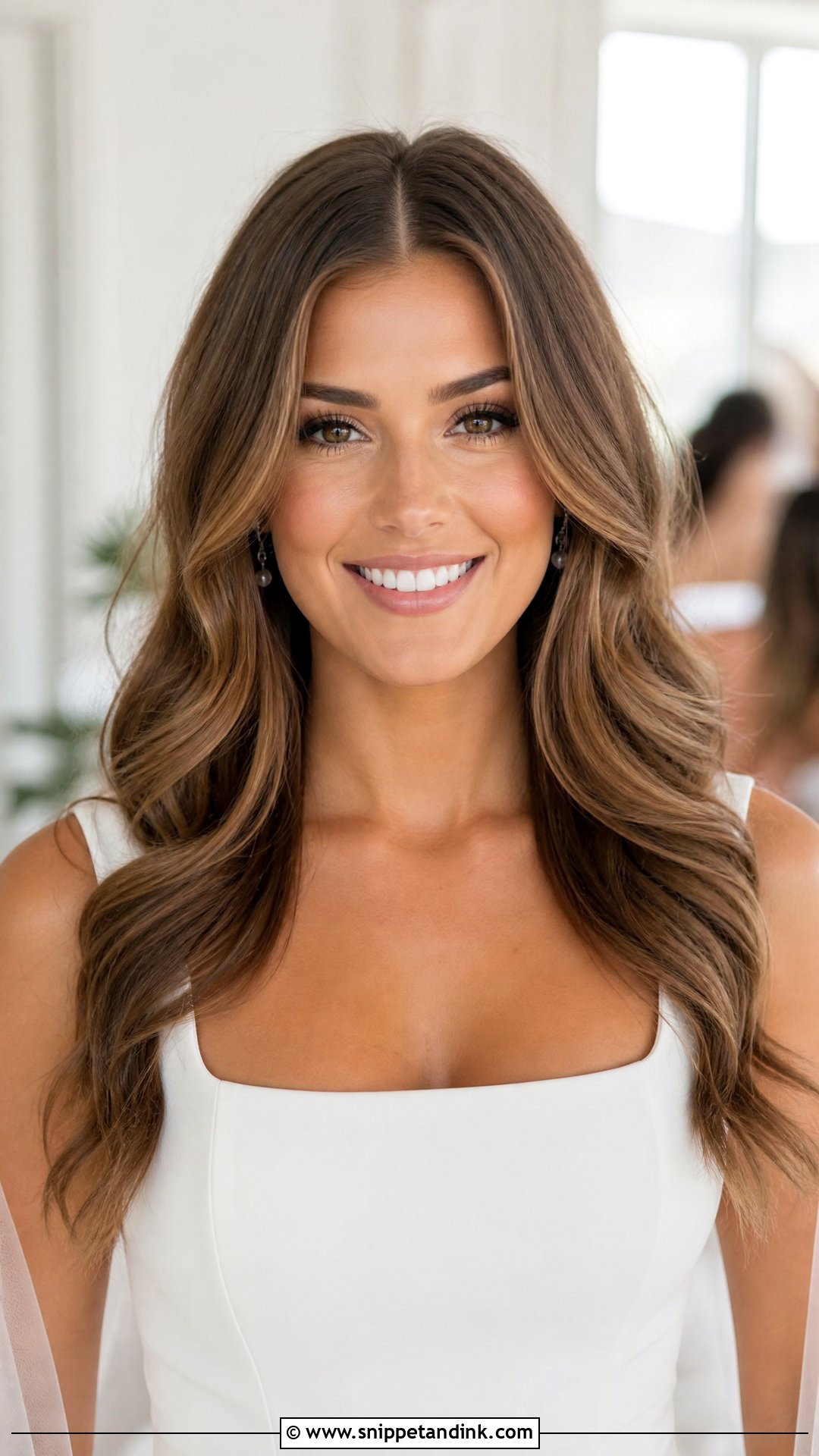
A center part is balanced and modern, but it shows everything, so it needs more polish than a side part. It suits soft waves, smooth curls and sleek blowouts, and frames fresh makeup, statement earrings and symmetrical necklines. I always lift the roots slightly either side of the part; otherwise the hair lies flat against the scalp and the look turns casual. Face-framing layers soften it. If you’re adding a veil, set the comb behind the crown so the part stays clean from the front.
8. Deep Side Part Wedding Hair Down
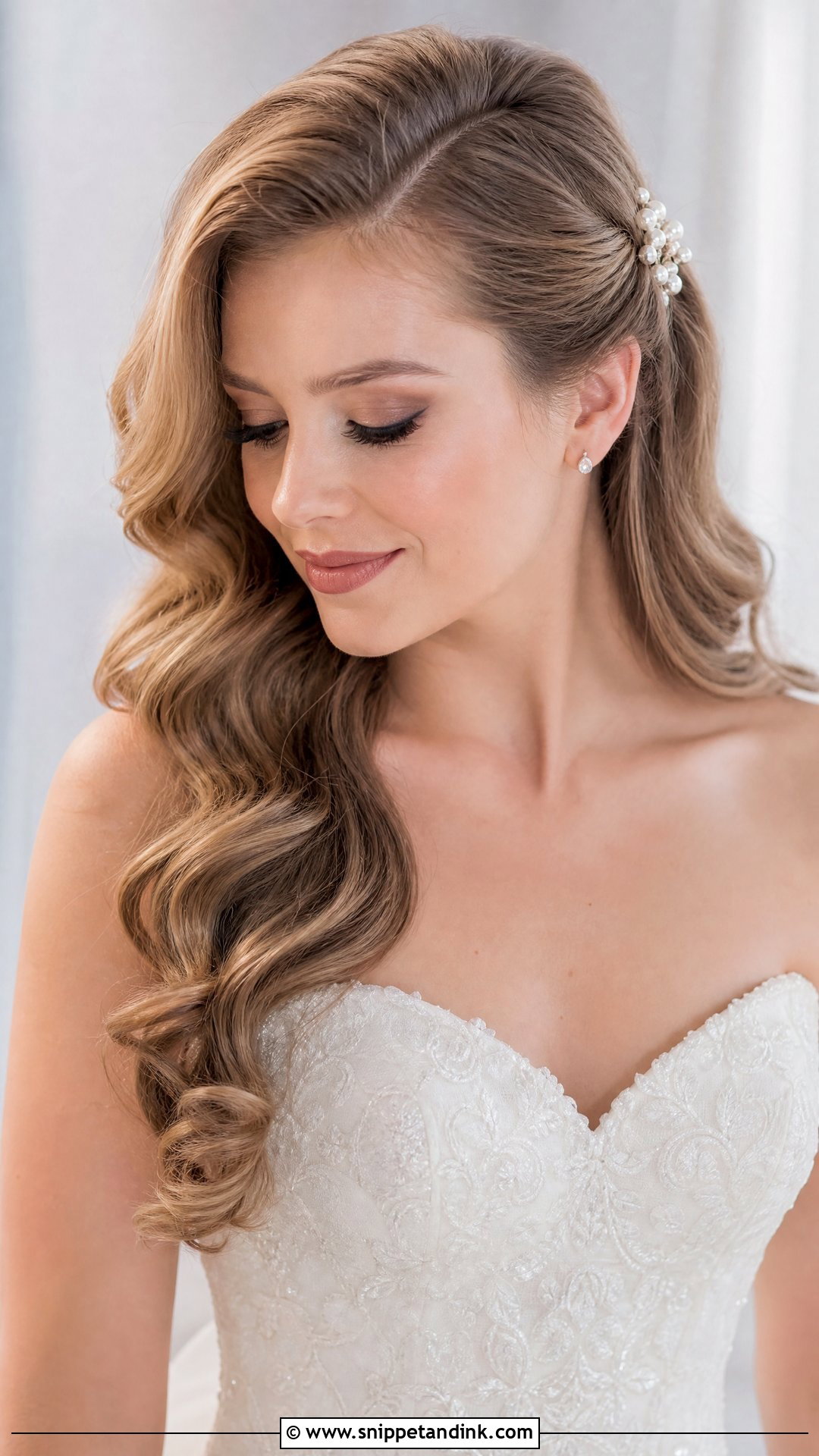
A deep side part adds instant volume, because flipping the heavier section across lifts it at the root. That’s why I use it on brides with fine or flat hair who want more fullness without teasing. It works with Hollywood waves, loose curls and brushed-out waves, and makes one side look fuller in photos. Behind the opposite ear, a sparkly clip, pearl comb or hidden pins hold the lighter side. Keep the part clean and the top smooth, and expect to pin the heavy side lightly if you’ll be dancing.
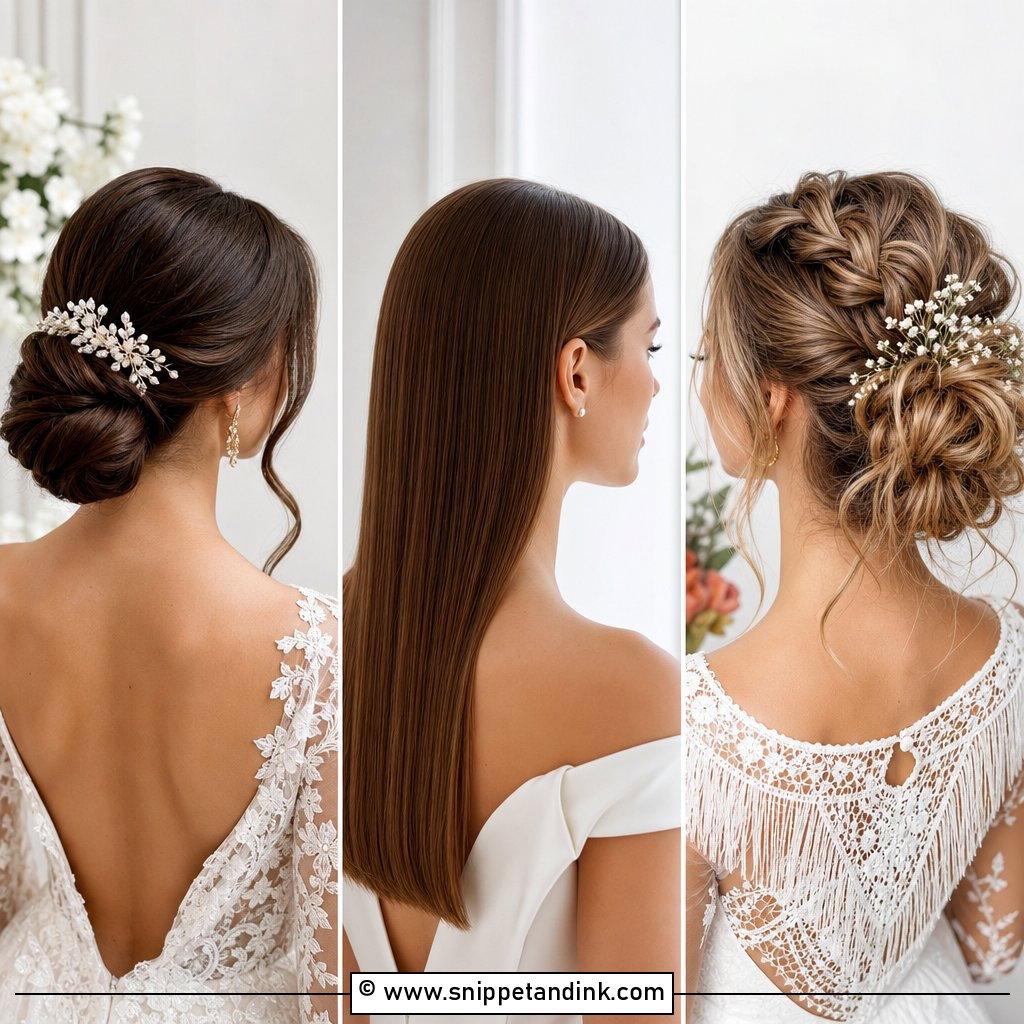
9. Sleek Straight Wedding Hair Down
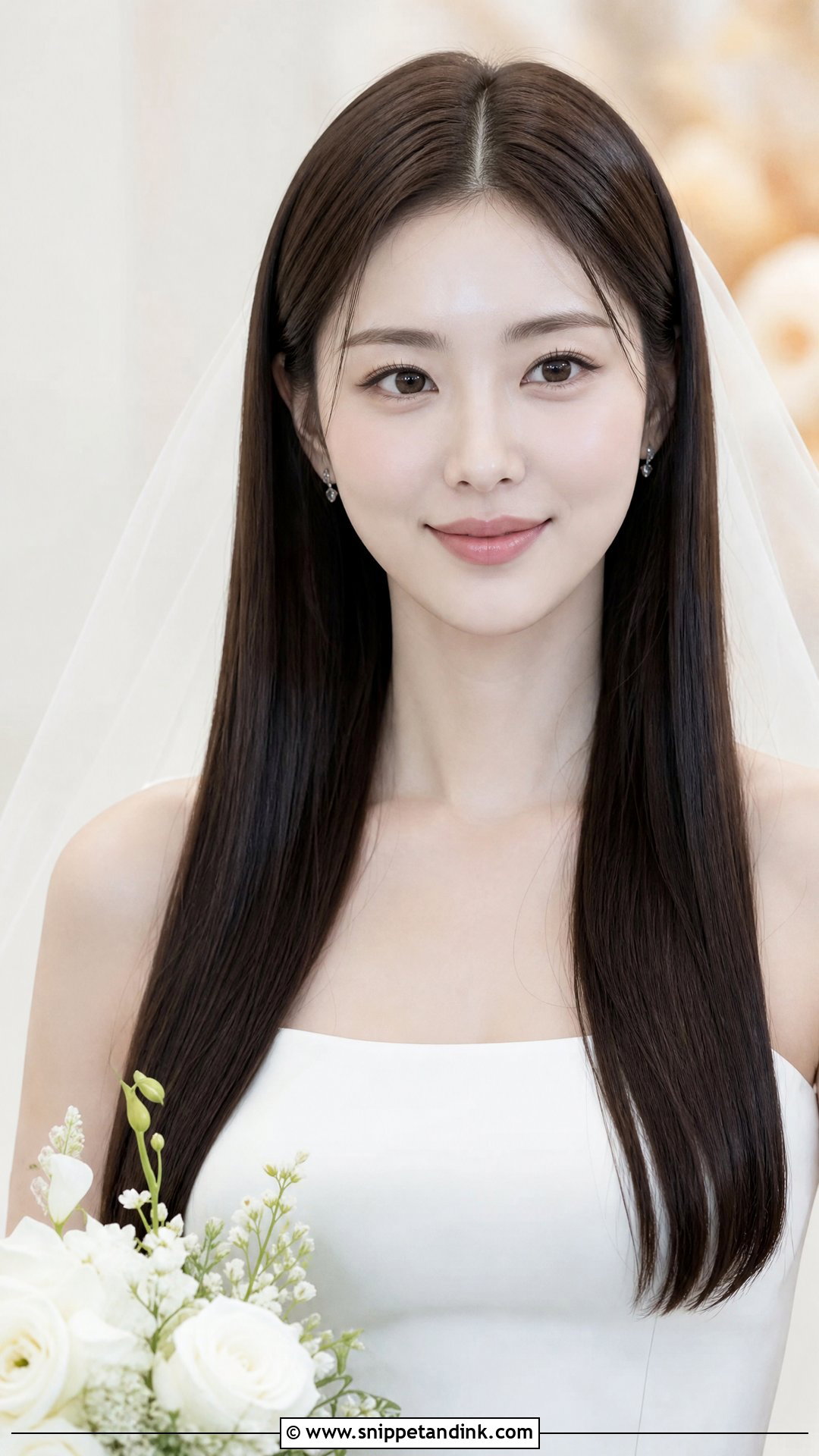
Sleek straight hair hides nothing. Every split end and every uneven layer shows, so I’d want a trim a week or so beforehand and a careful look at the condition of the lengths at your trial. Done right, it’s clean and elegant with minimalist gowns, high necks and square necklines. The finish should shine, not lie limp. A slight bend at the ends softens it. I prep with anti-frizz cream and heat protection, then finish with a lightweight shine product. In humid weather, I’d honestly suggest a different style, since straight hair puffs up faster than any other.
10. Bridal Blowout Wedding Hair Down
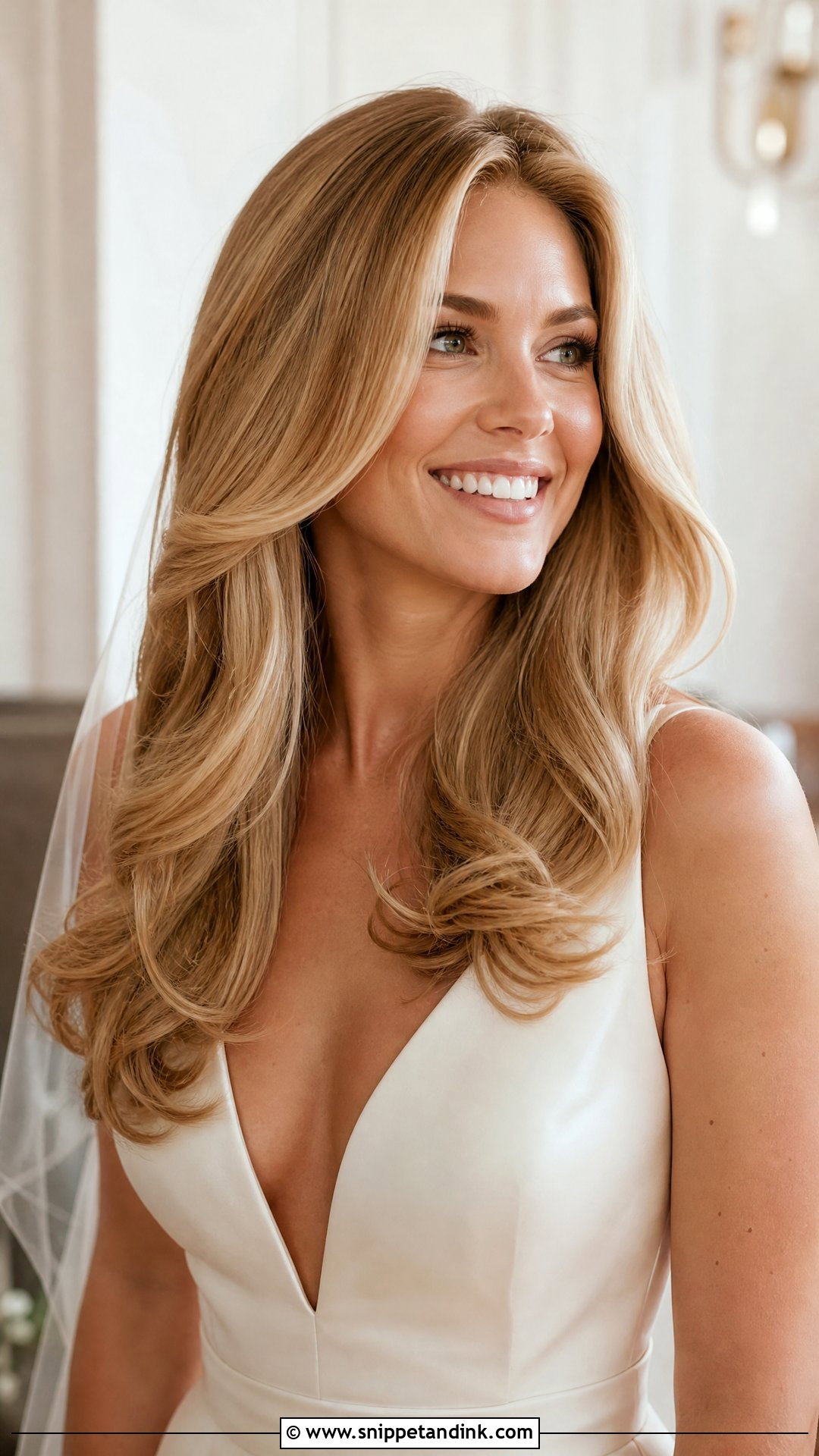
Bridal blowout wedding hair worn down gives volume and bounce without defined curls. The roots have lift, the mid-lengths are smooth, and the ends turn under or away from the face. It suits brides who wear their hair down most days and want a dressier version of that familiar look, on medium or long cuts, especially layered ones. My trick is to set the blowout in Velcro rollers while you do your makeup. A blowout that cools in rollers holds its shape far longer than one brushed out hot.
11. Pearl Pin Wedding Hair Down
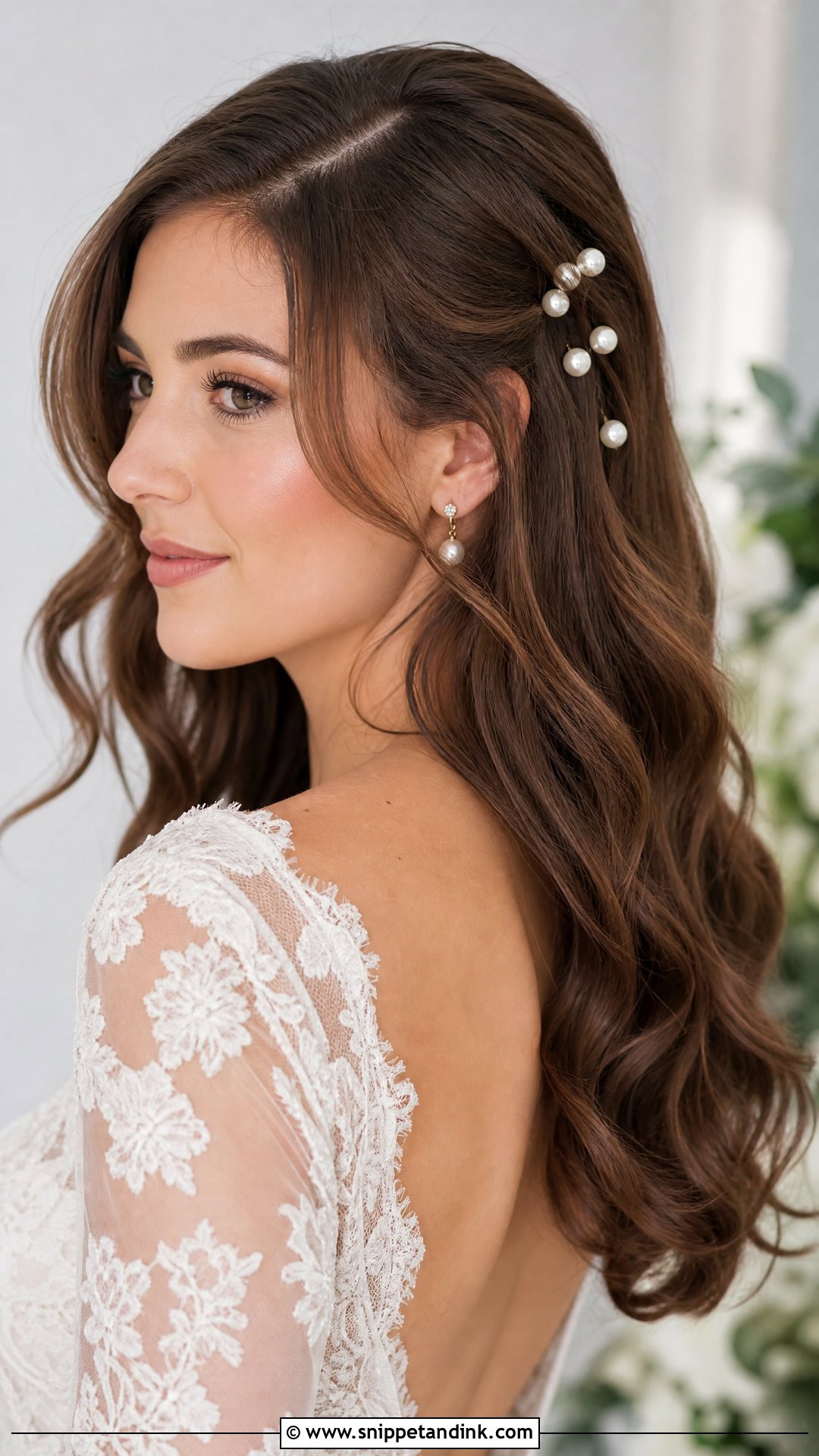
Pearl pins add light without stealing focus from the hair. The base can be waves, loose curls or a half-up shape. I place them with a plan: tucked along one side, scattered lightly near the crown, or holding a small twisted section. Too many and the look turns busy, so I usually start with fewer than you’d expect and add one at a time in the mirror. Pearl pins slide out of silky hair easily, so I always slip each one into a hidden crossed grip. They’re especially pretty with lace and pearl jewelry.
12. Veil Wedding Hair Down
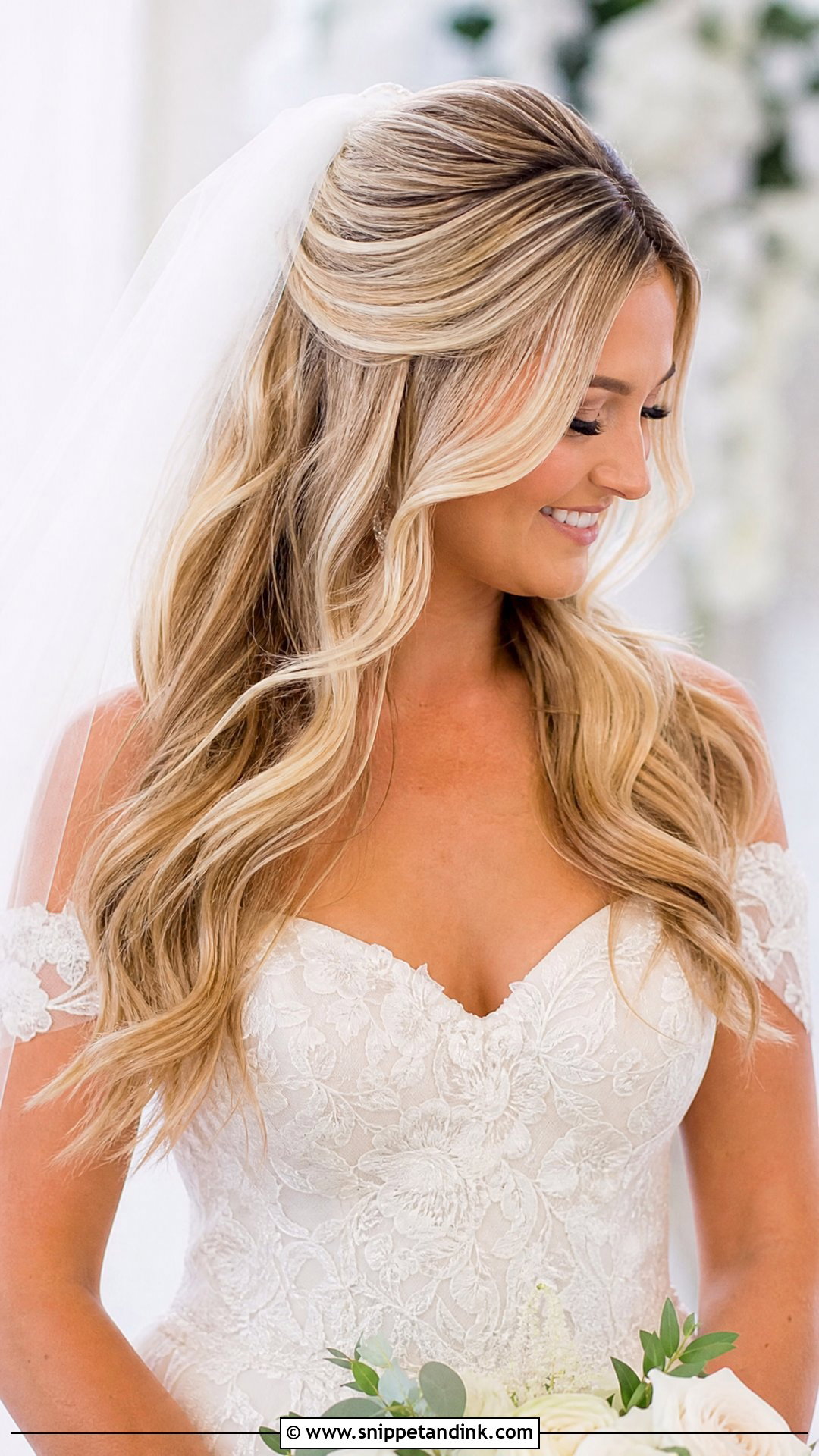
A veil on fully loose hair needs a plan, because there’s nothing for the comb to grip. I build a small backcombed section or a set of crossed hidden pins at the crown before the veil goes in. A half-up detail gives even more support while still reading as hair down. Cathedral, fingertip and simple tulle veils all work on this base. Please bring the actual veil to your trial; combs vary in width and tooth length, and placement can’t really be tested with a substitute.
13. Floral Wedding Hair Down
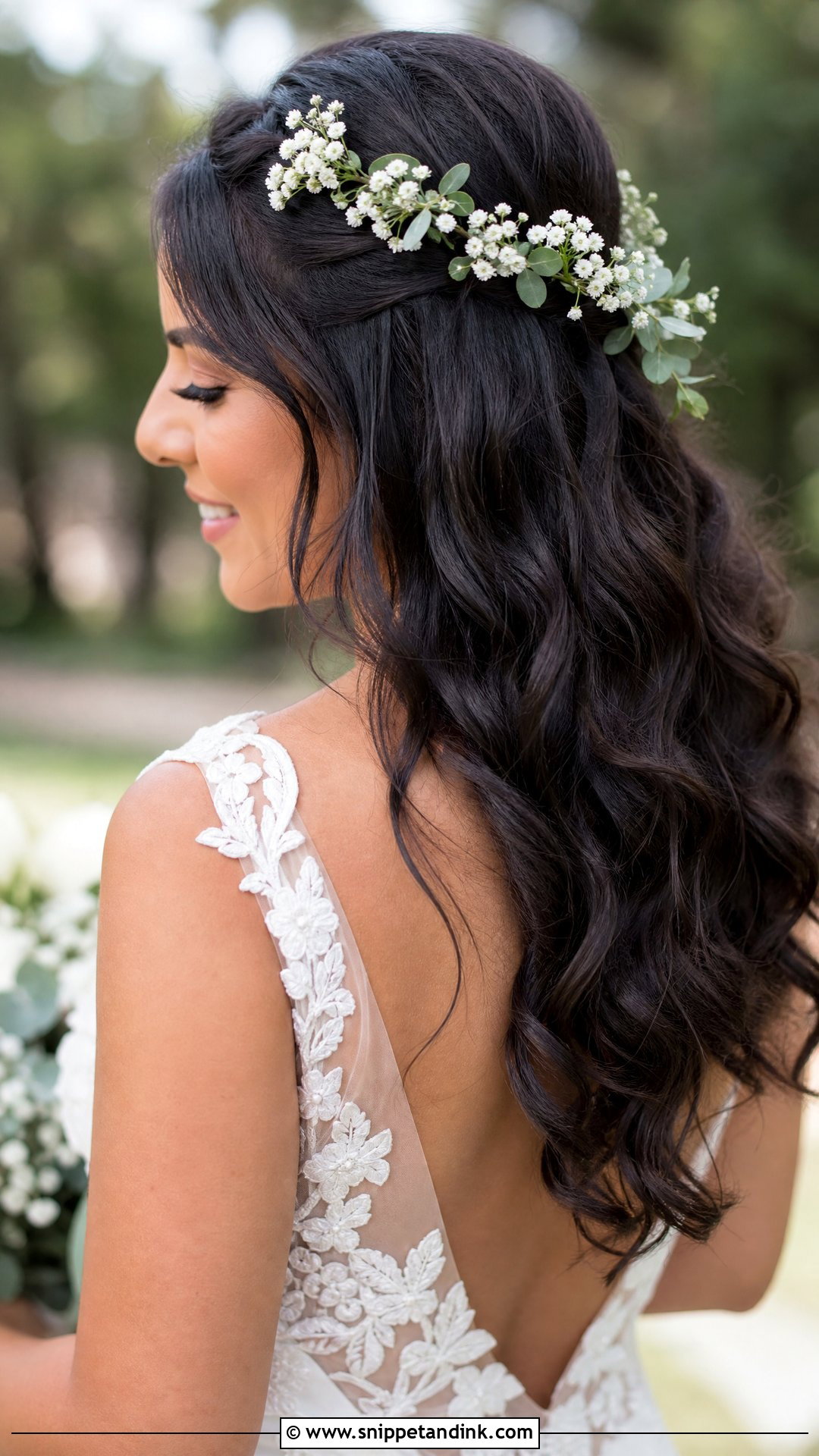
Flowers in loose hair should look tucked in, not stacked on top. Loose waves, natural curls or a half-up shape give them a secure place to sit. Small white blooms, soft greenery or dried flowers suit garden, beach and outdoor weddings. Keep them in proportion with your bouquet. Fresh stems should be wired and prepared by your florist so they don’t wilt against warm hair. I place flowers last, after all the spray, because hairspray can spot petals and dull them in photos.
14. Curly Wedding Hair Down
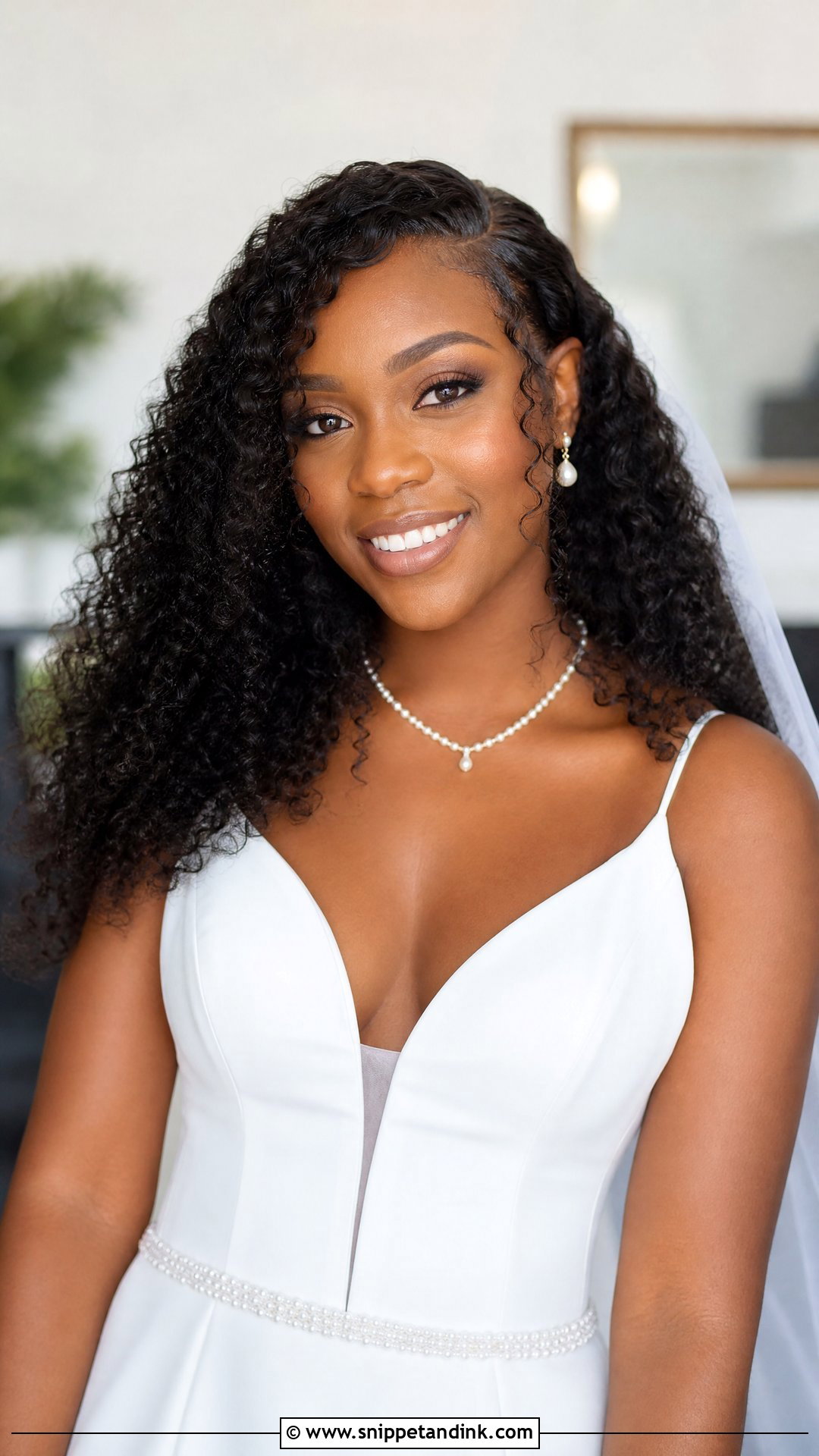
Natural curls don’t need to be hidden to look bridal; they need definition and frizz control. Curls can be worn with a side part, center part, one side pinned or a half-up crown. I choose the product by texture: curl cream for looser patterns, gel for tighter coils, mousse for fine curly hair. Then the hair has to dry completely before I touch the final shape, because shaping damp curls breaks them up. Layers help curls sit evenly around the face and shoulders.
15. Short Wedding Hair Down
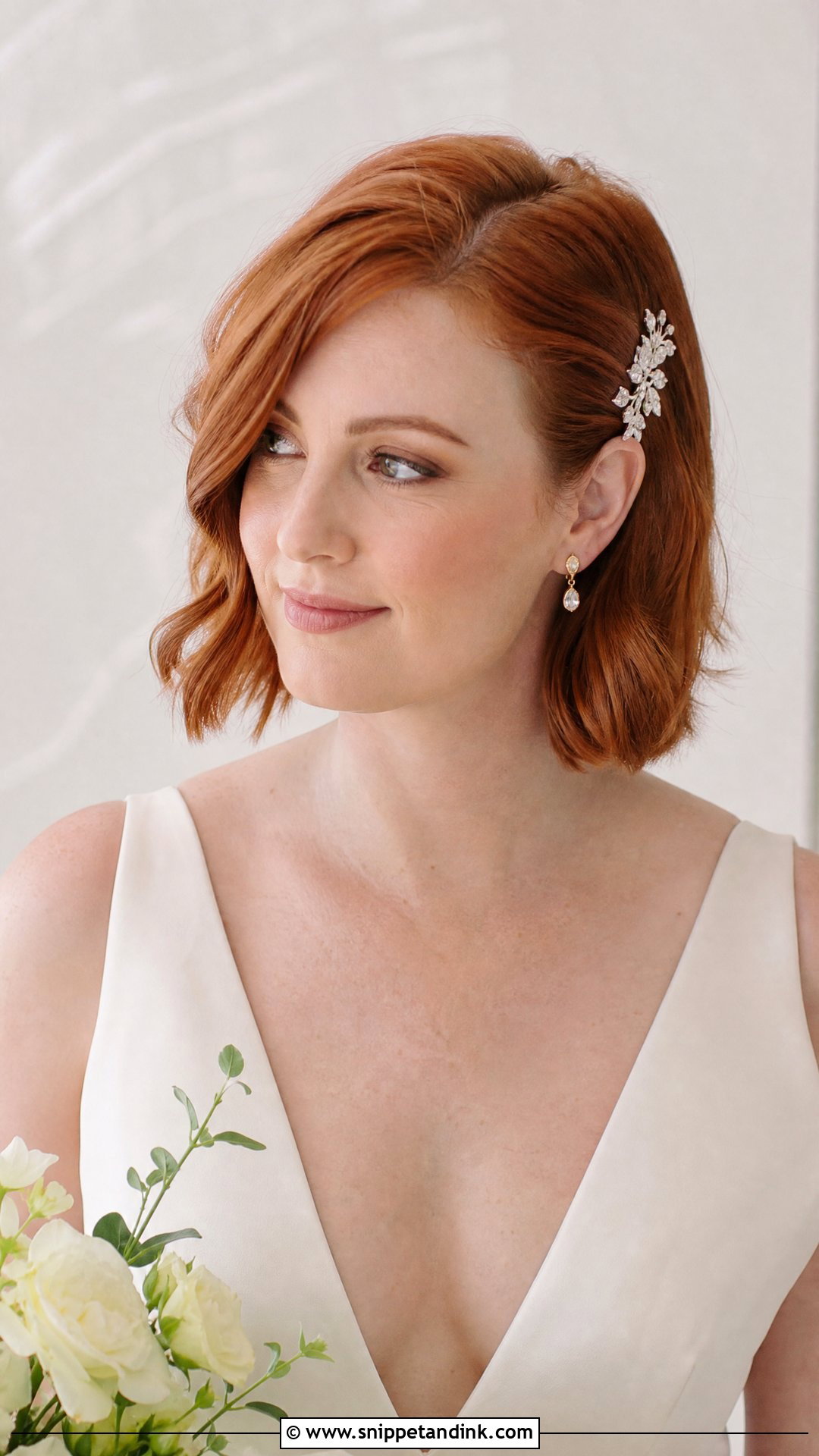
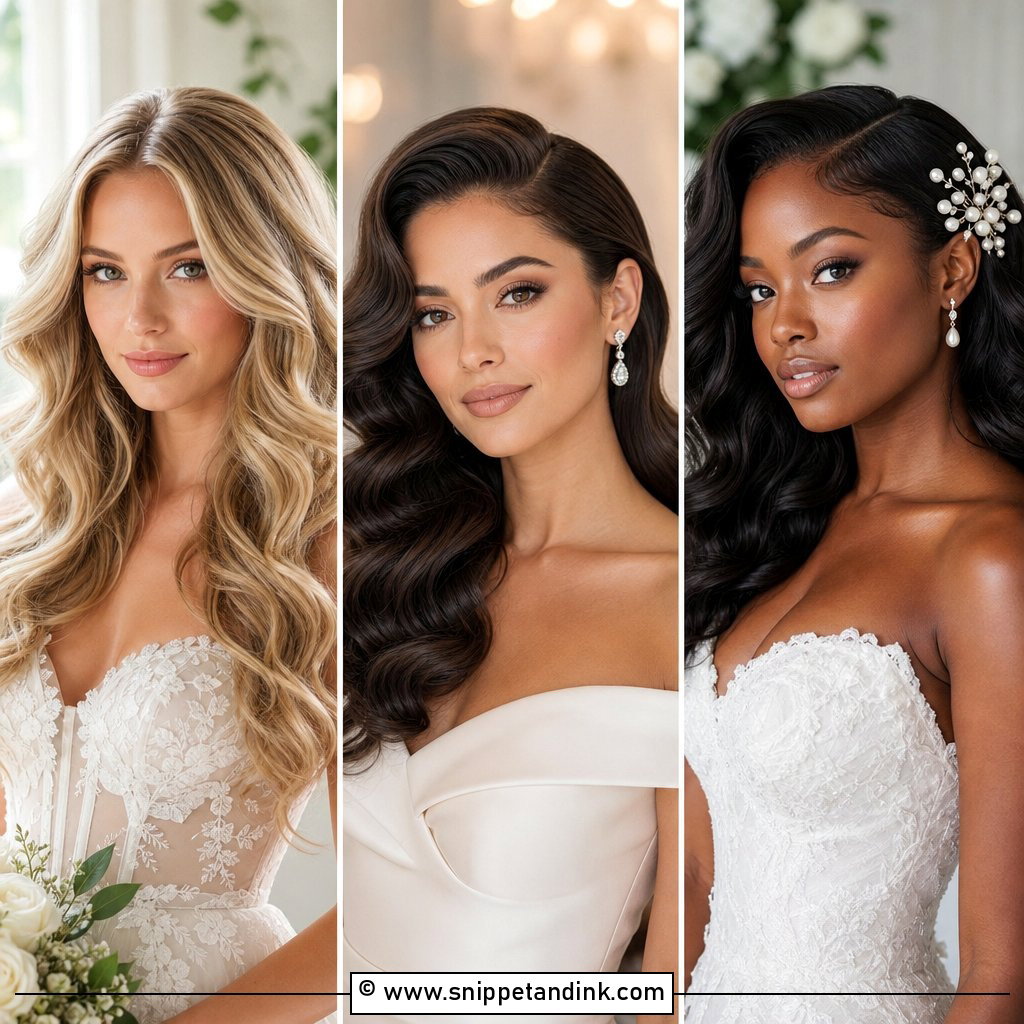
A bob, lob or shoulder-length cut worn down can look just as classic as long hair if the shape is polished. Soft waves, sleek ends or brushed curls all work. The common mistake is forcing a long-hair style onto short hair, which tends to look puffy at the sides. I style for the cut instead. A side part adds glamour; a center part looks clean. Add pearl pins, a small comb or a short veil. Ask for volume at the crown, smooth ends and a shape that keeps your face clearly framed.
Beaded Bodices, Satin Static and Long Loose Hair
Something I mention at every trial: loose hair sits on the dress all day, and some fabrics fight back.
Beading, sequins and lace
Strands snag on raised beadwork and open lace, especially at the shoulders. You feel a small pull each time you turn your head, and over hours it roughs up the curls on that side. A smoothing serum on the lengths helps hair glide. On a heavily embellished bodice, a side sweep that keeps hair on one shoulder is kinder to both.
Satin, silk and crepe
Smooth fabrics in an air-conditioned room can build static, and fine hair will cling or float. A drop of hair oil through the ends calms it. Keep oil, spray and bronzer well away from pale silk while you dress, since marks show and are hard to lift.
Getting into the dress
Step into the gown rather than pulling it over your head, and have someone hold your hair up and to one side while the back is fastened. Buttons and hooks grab loose strands, and nobody wants a curl caught in a zip five minutes before the car arrives.
Do One Test Day in Real Weather
Hair down feels personal in a way an updo rarely does, which is why so many brides won’t give it up. Soft waves, sleek lengths, sculpted Hollywood waves and natural curls can all work, as long as the finish suits your neckline, your density and the air on the day. After your trial, wear the style home and live in it for an afternoon. Notice whether you keep pushing it behind your ears, whether it frizzes by the door, whether it catches on anything. I’d ask for photos from the back and both sides too. If it still looks like you at the end of that day, you have your answer.
You'll Like These Ideas:


Leave a Reply