
Loose hair and a veil is the pairing I’m asked about most, and the honest answer is that almost any veil works with hair down, as long as the hair underneath gives the comb something to grip. Waves, curls and sleek straight hair each sit differently under tulle, and the veil’s length changes how much of the style anyone sees. Below are 25 combinations I’d happily send down the aisle, with notes on how each veil attaches and what the hair needs to hold it.
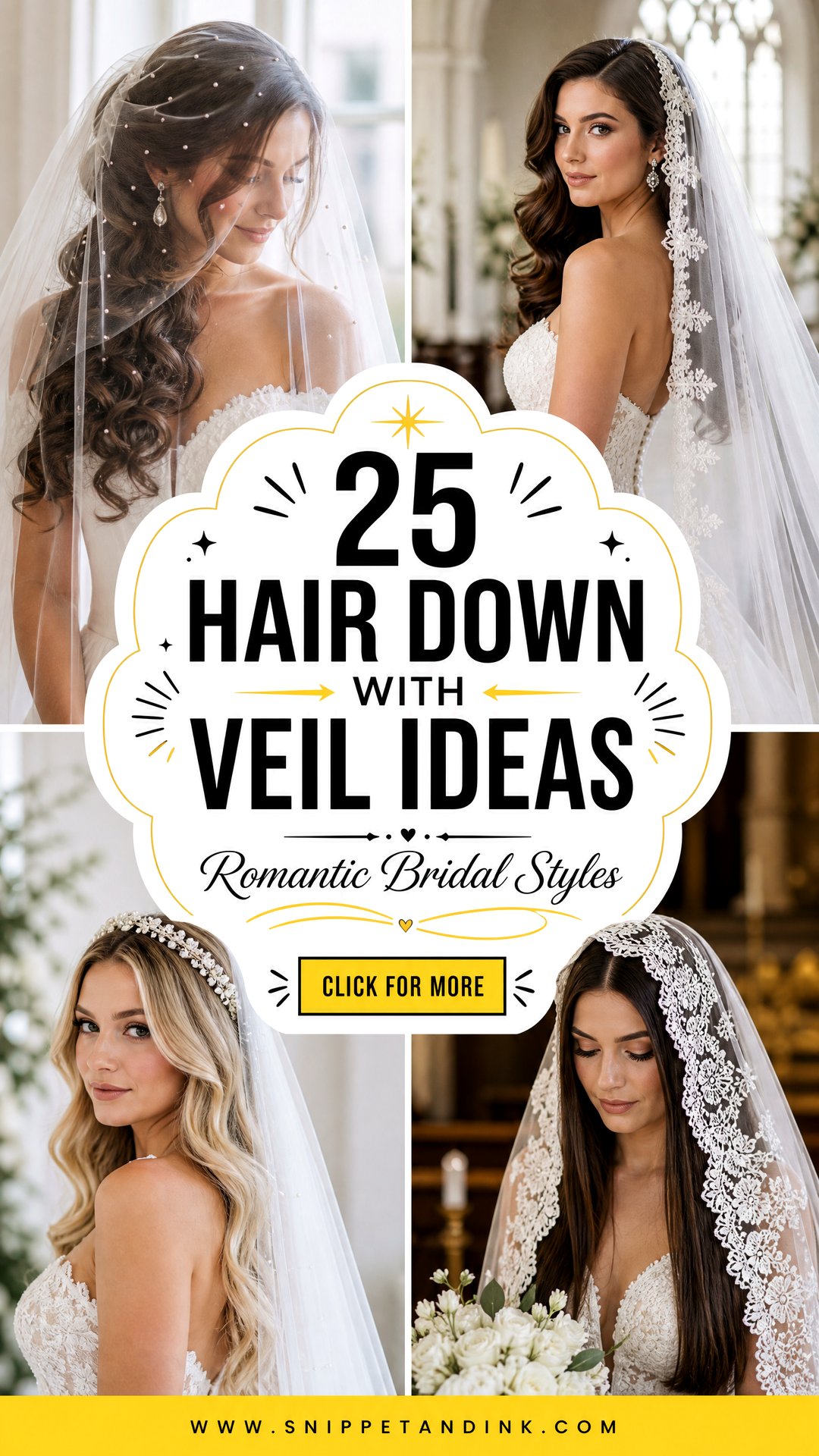
Veil Lengths Measured Against Loose Hair
Length decides how much of your hair anyone actually sees, and how hard the veil pulls on its comb. These are rough figures, since makers measure differently.
- Birdcage, a few inches of netting: covers part of the face, leaves all the hair on show, almost no weight.
- Elbow, around 25 to 30 inches: ends near mid-back on most brides, so waves below it stay visible.
- Blusher, around 30 inches: the face layer; worn alone it hides very little hair.
- Fingertip, around 36 to 40 inches: the most common choice, covering most of long hair at the back.
- Chapel, around 90 inches: reaches the floor, and from behind your hair shows only through the tulle.
- Cathedral, roughly 108 inches or longer: real weight, a real train, and the firmest anchor of all.
If your hair is the reason you’re wearing it down, go short enough that the waves show below or beside the tulle, or choose a soft single layer of sheer tulle that lets them show through. A heavily gathered, multi-layer veil hides even long curls at the back.
1. Long Loose Waves With Cathedral Veil
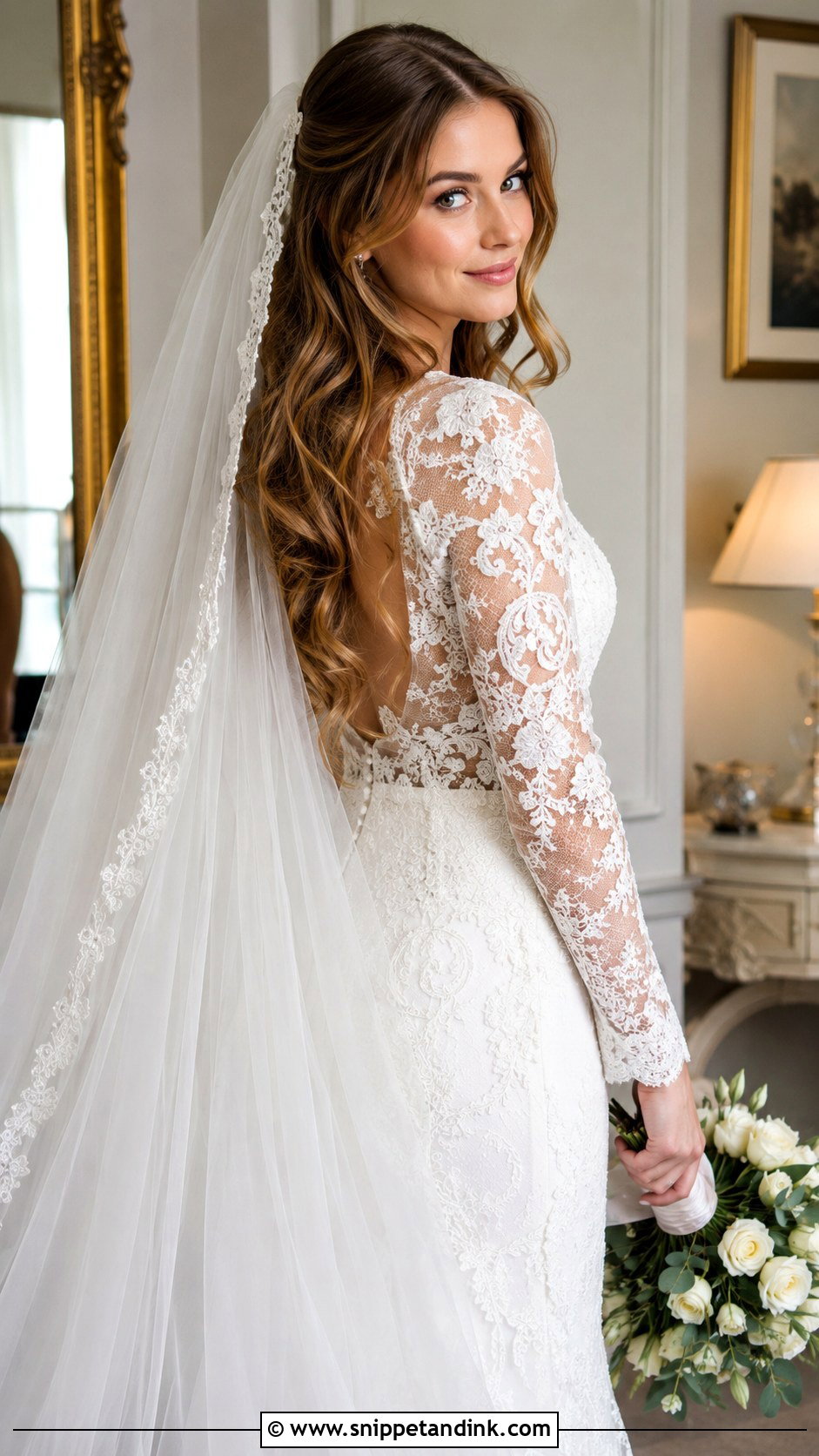
A cathedral veil over long loose waves is the biggest entrance you can make, and the weight comes with it. Several feet of tulle pull backwards on the comb with every step, so before the veil clips in at the crown I build a small pinned twist for it to bite into. Keep the waves soft and wide, since tight curls get flattened under the tulle at the back anyway. Save it for a grand venue with an aisle long enough to let the train show.
2. Beach Waves With Fingertip Veil
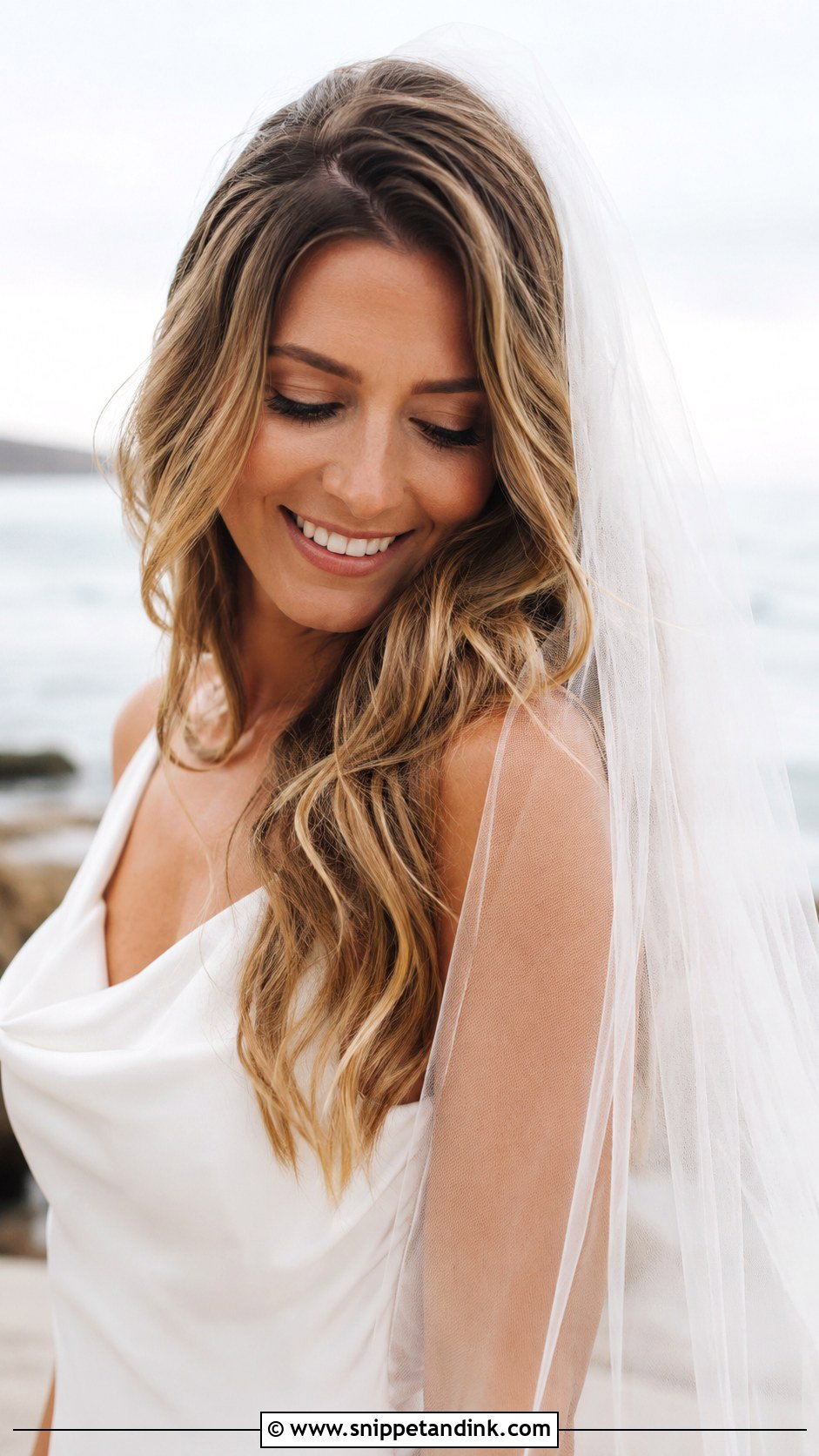
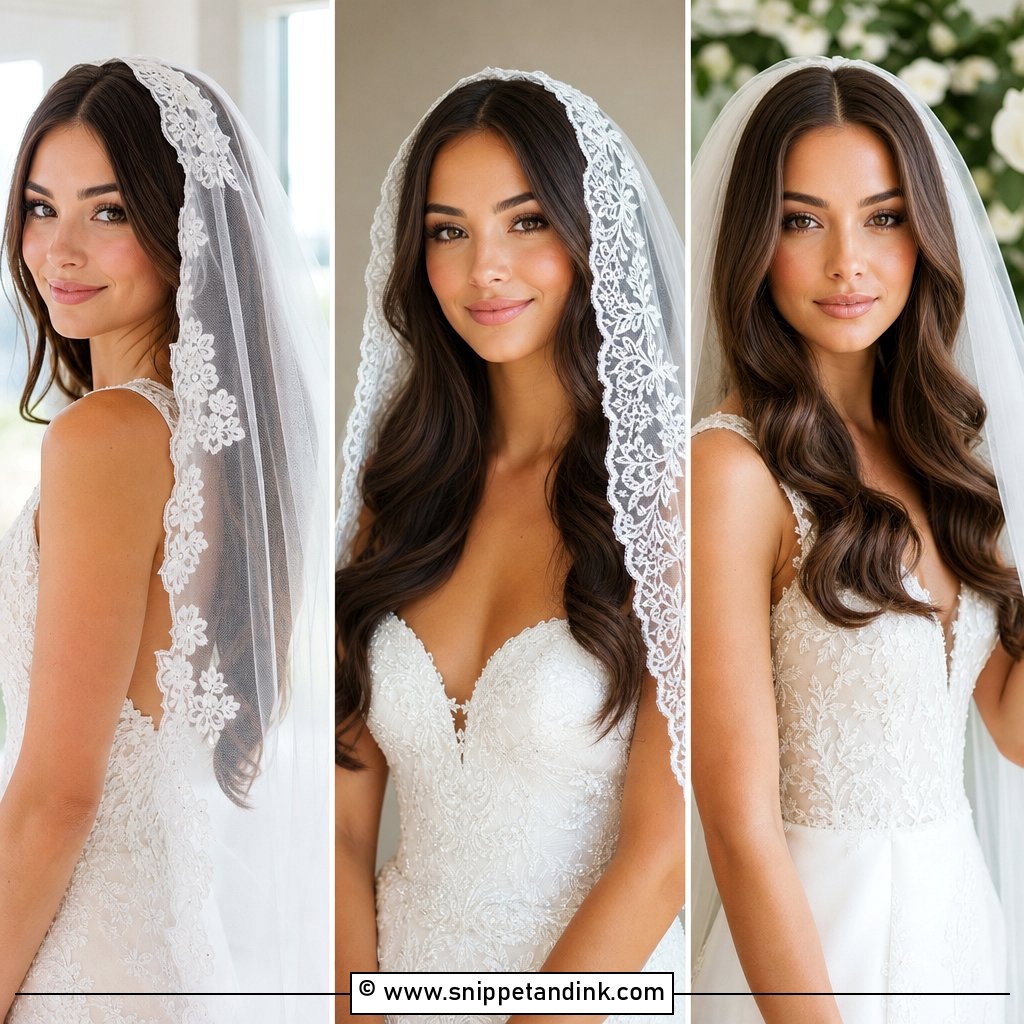
Beach waves under a fingertip veil, which falls roughly where your fingertips sit with your arms relaxed, is the pairing I suggest most for coastal and garden weddings. The tulle stops above your hands, so it never snags on the bouquet. Outside, though, a fingertip veil lifts in the slightest breeze and lands in the waves, and texture spray leaves hair slightly tacky, which tulle grabs. I go lighter on texture spray around the comb for that reason. A deep side part adds a little glamour.
3. Sleek Straight Hair With Drop Veil
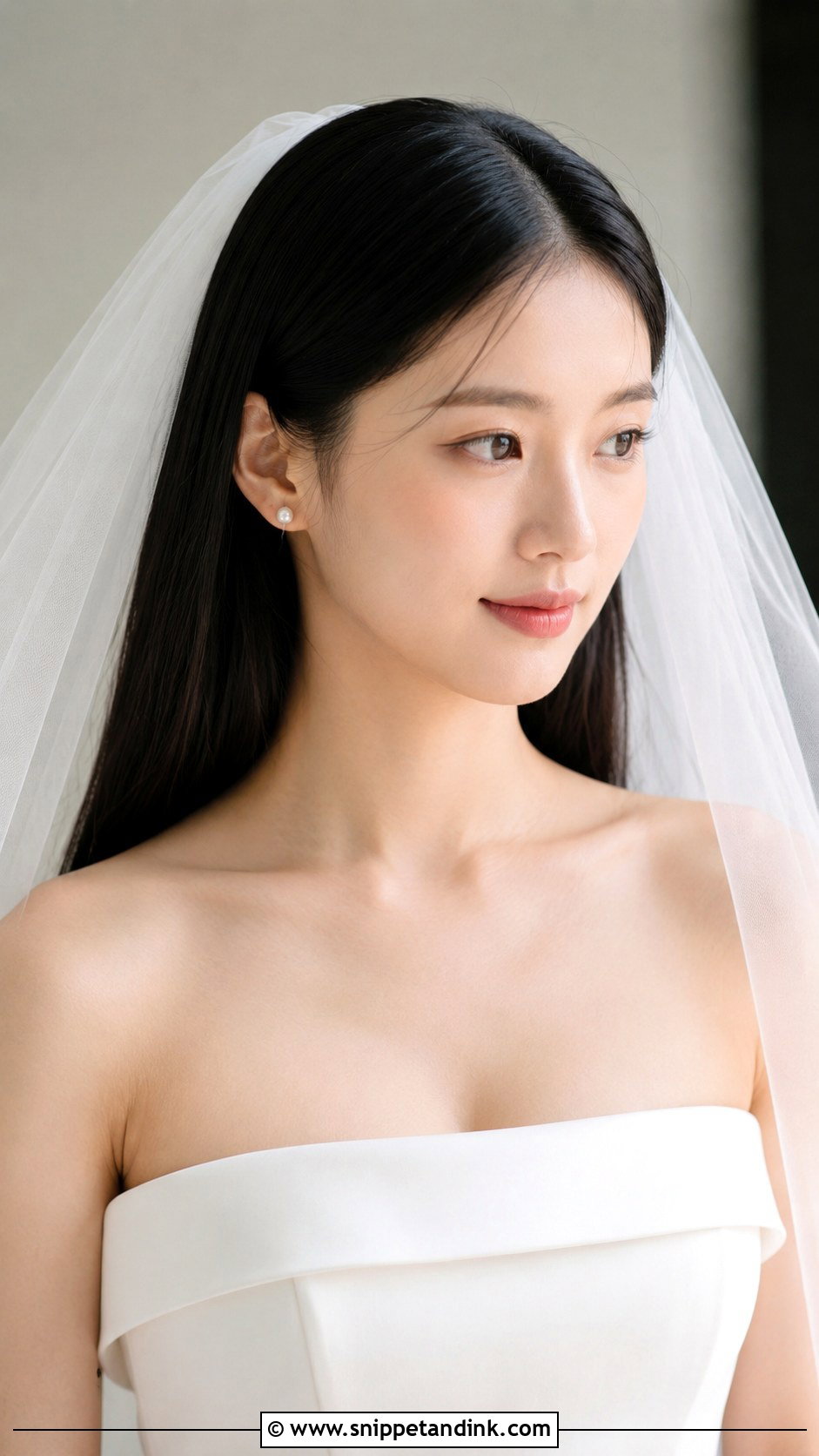
A drop veil is a circle of fabric laid over the head with no gathered comb, so the hair underneath has to be smooth for the fabric to drape evenly. That’s why sleek straight hair suits it so well. I hold it with small clear combs or pins at each side, out of sight above the ears. A center part keeps everything symmetrical under the fabric. Flat iron, a little shine serum on the lengths only, and nothing tacky on top, or the veil drags as you move.
4. Half-Up Half-Down With Mantilla Veil
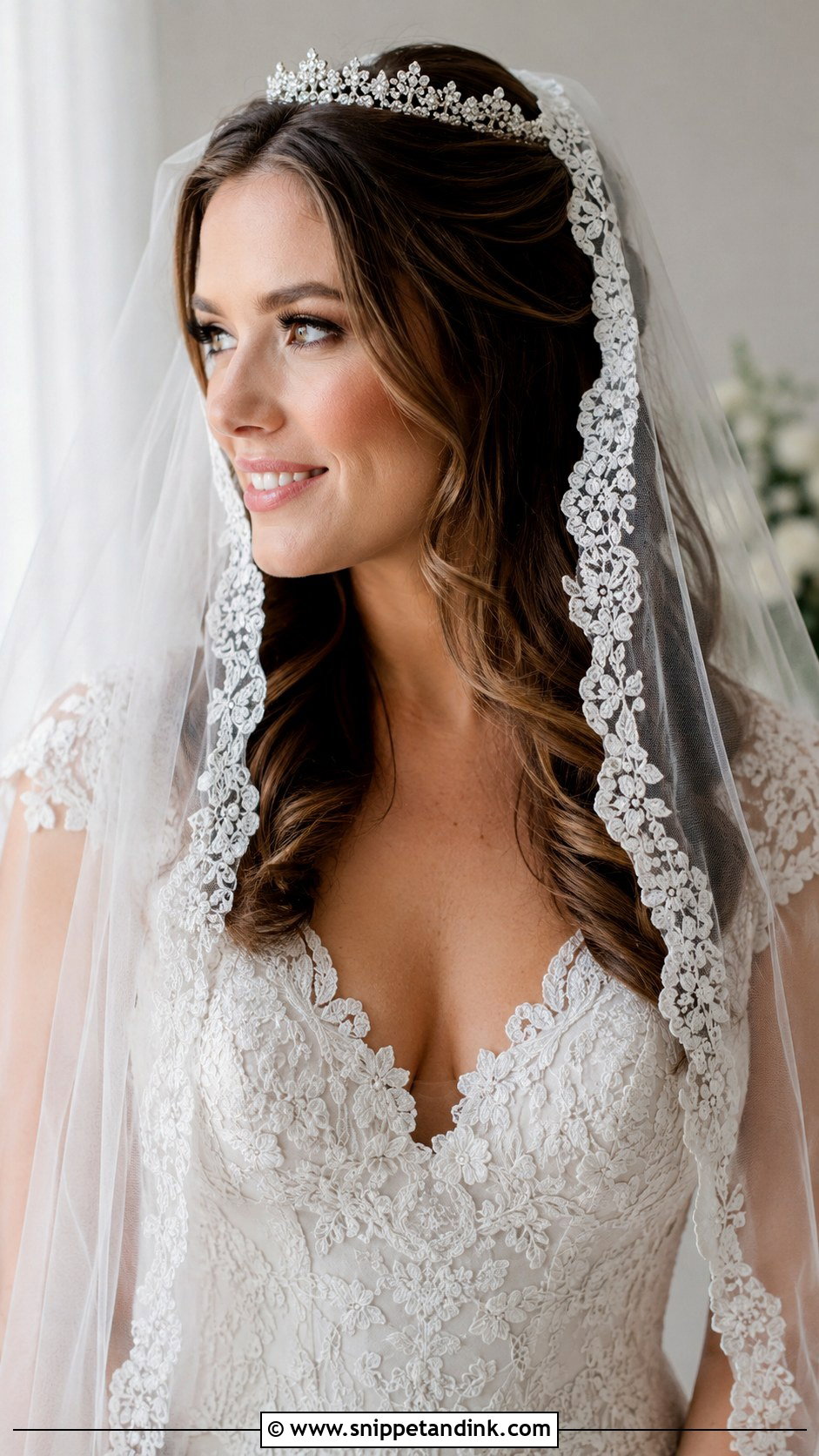
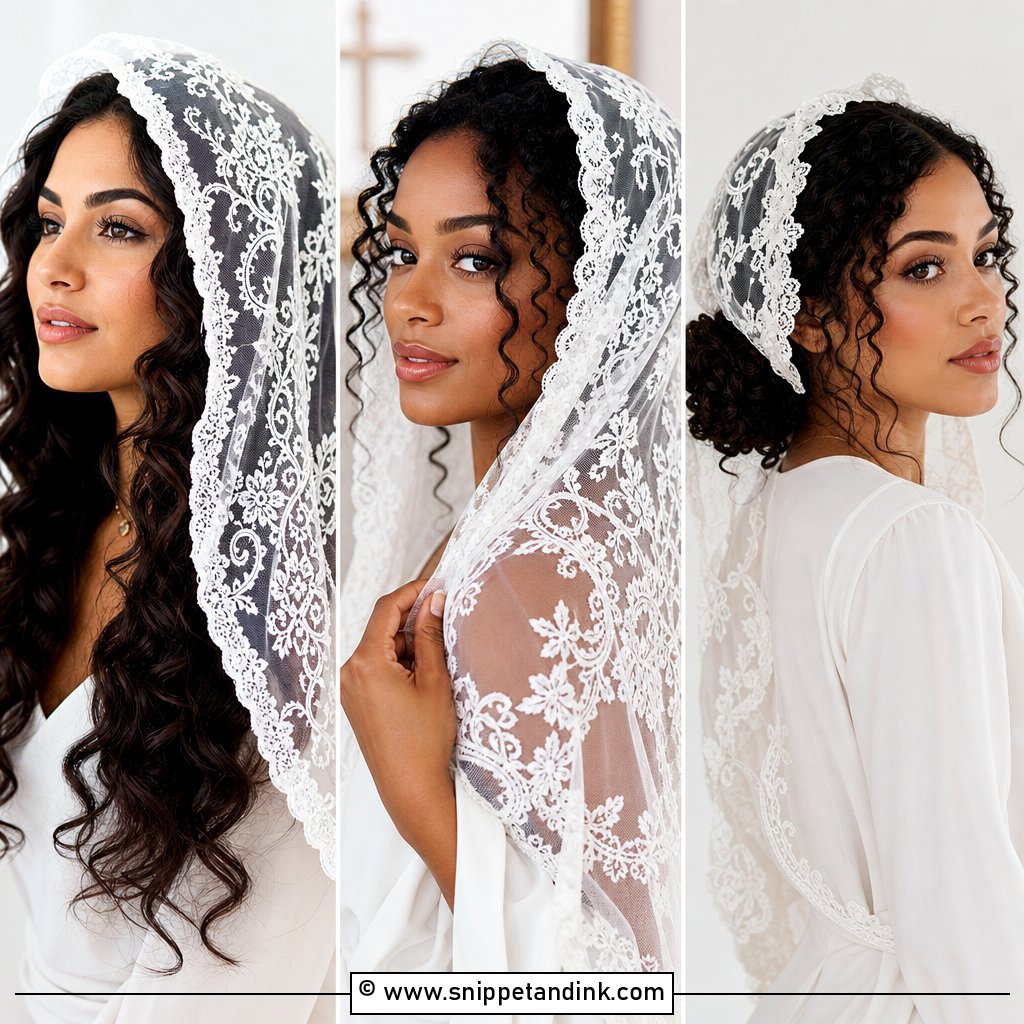
Half-up and a mantilla are made for each other. A mantilla usually sits further back on the head than a gathered veil, with its lace edge framing the face, and the pinned half-up section gives its comb a solid base. The lower hair stays in soft curls under the lace. Nearly every face shape suits it. At the reception, the comb lifts out of the pinned section cleanly, and the half-up style underneath still looks deliberate.
5. Loose Curls With Birdcage Veil
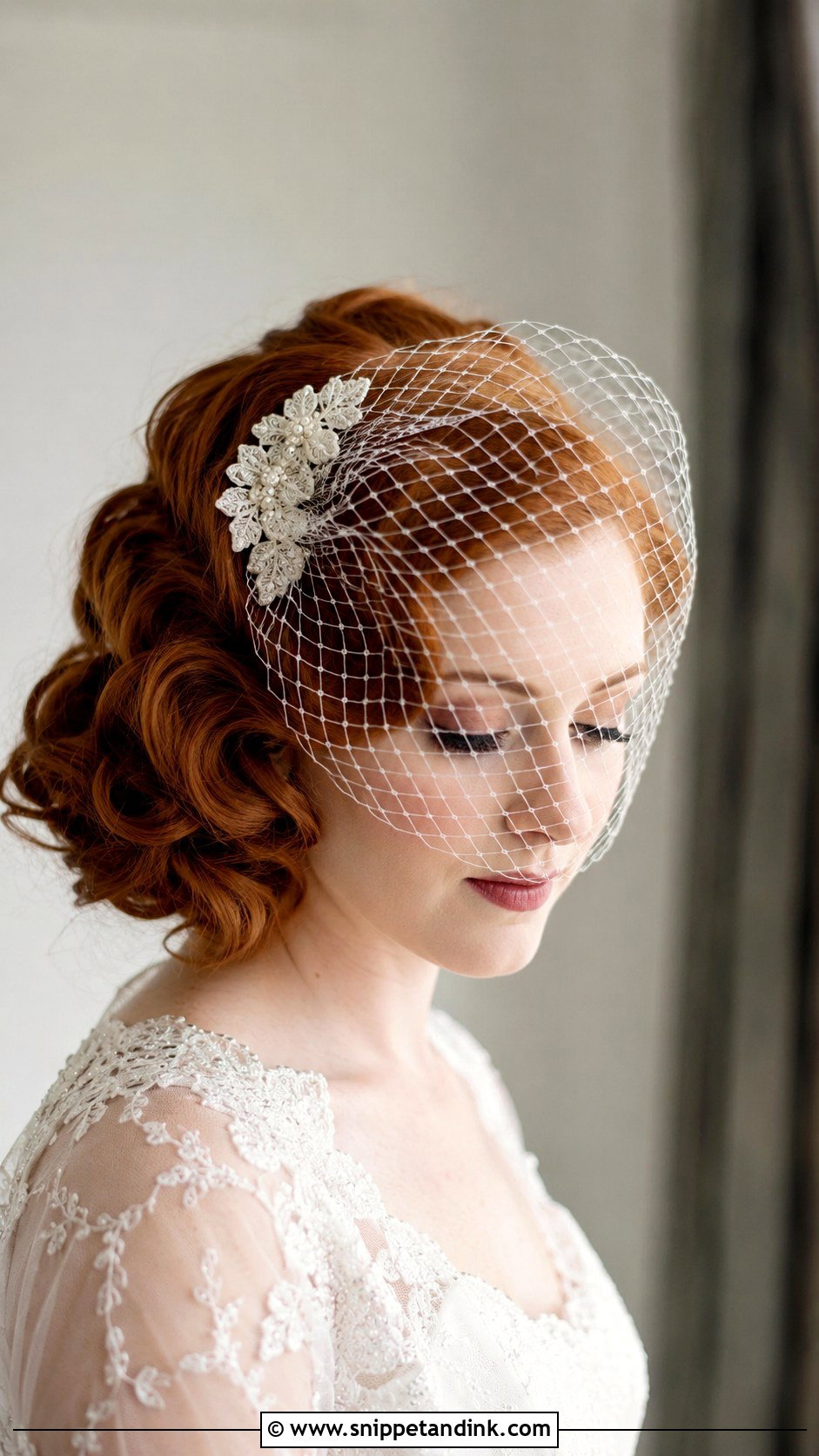
A birdcage veil is short netting over part of the face, attached with small combs or pins at the side or crown, so it never touches the length of your hair. That leaves loose curls fully on show, which is the whole appeal. The netting does flatten the few curls directly beneath it, so I set those sections a little tighter. It belongs with a smaller wedding and a retro dress. Sweep the curls away from the netting side so the two don’t fight.
6. Center Part Waves With Juliet Cap Veil
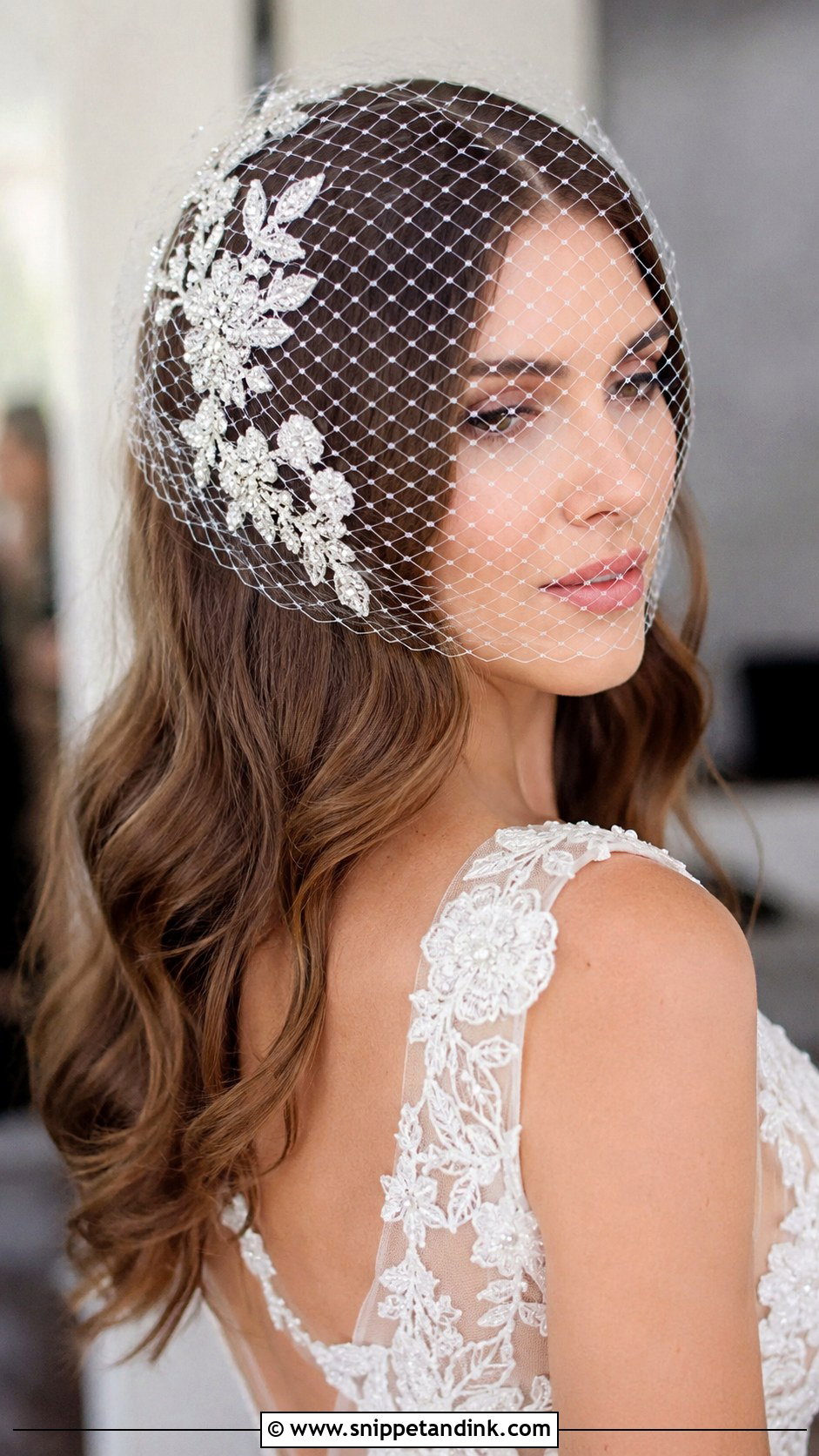
A Juliet cap veil fits snugly over the crown like a cap, then falls into tulle behind, which gives it that slightly art deco feel. Because it hugs the head, volume at the crown works against it. I keep the top smooth on a center part and put all the wave below ear level. Lace gowns and outdoor venues suit it. The cap needs pins along its edge, since it has no single comb to carry its weight.
7. Side-Swept Curls With Blusher Veil
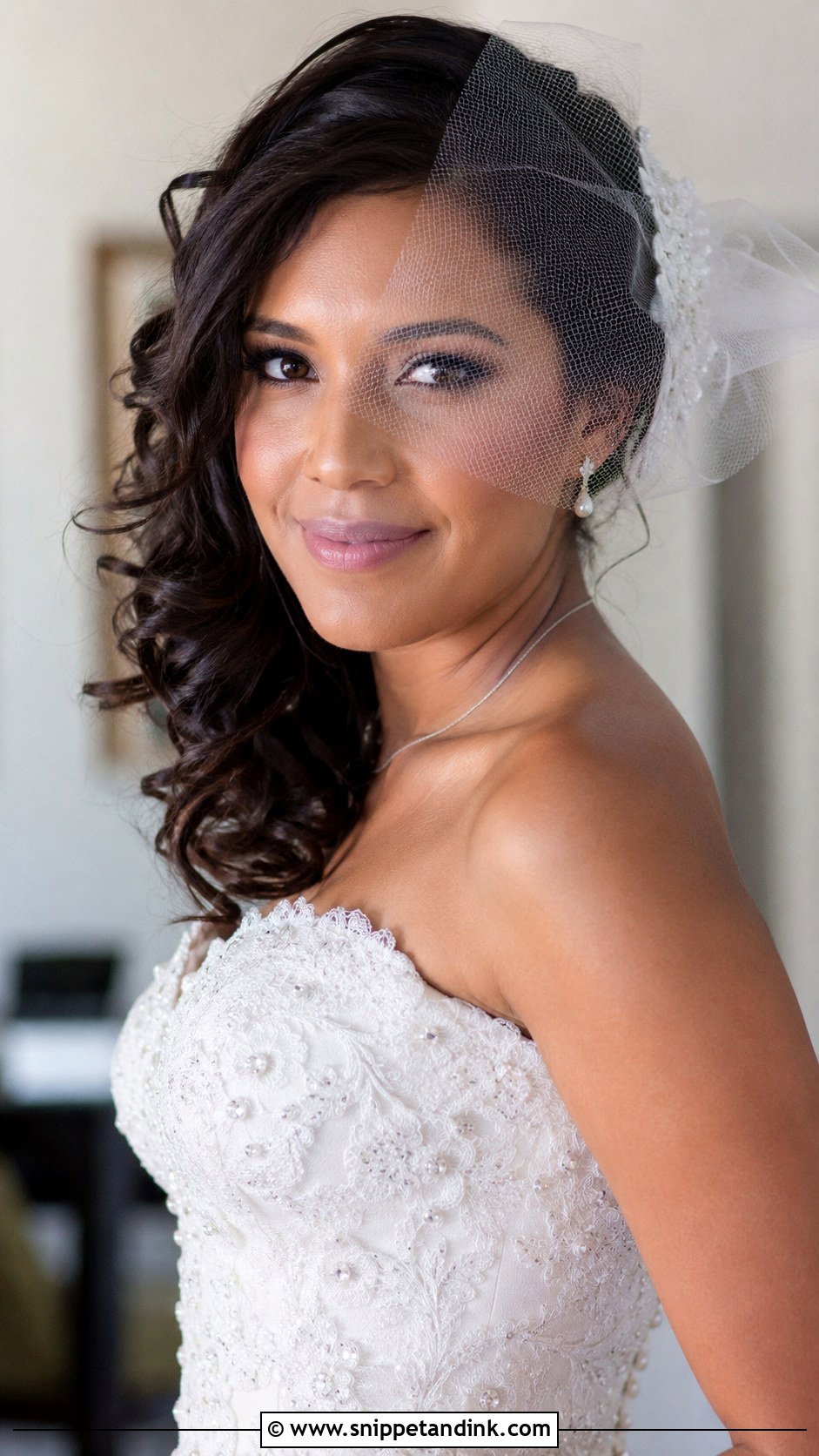
Side-swept curls with a blusher veil give you the reveal: the front layer covers your face down the aisle and lifts back at the altar. That lift is where I see hair go wrong. Flipped over, the blusher lands on top of the curls and can drag the front flat, so I pin the face-framing pieces slightly back. With the curls swept to one side, the open side frames your face once the blusher is up. A flexible texture spray keeps them defined.
8. Long Straight Hair With Chapel Veil
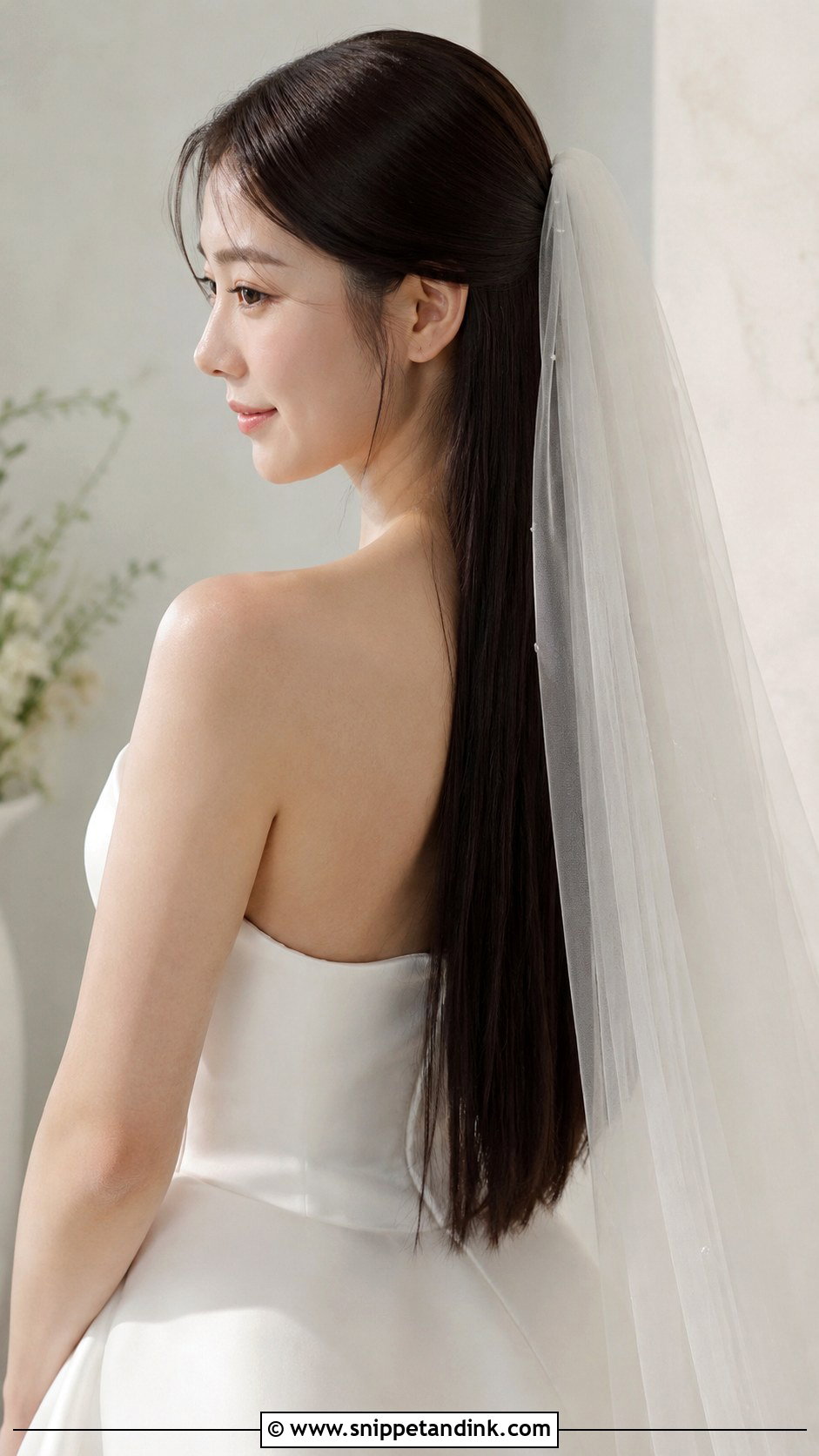
Straight hair and a chapel veil, which reaches the floor and trails slightly, make one long, clean line. Straight hair shows every comb, so I hide it under a small section lifted from the crown and smoothed back over. A center part keeps the line symmetrical. Put the smoothing serum on the ends, never the roots, or the comb slips on the oil by mid-ceremony.
9. Voluminous Curls With Lace Trim Veil
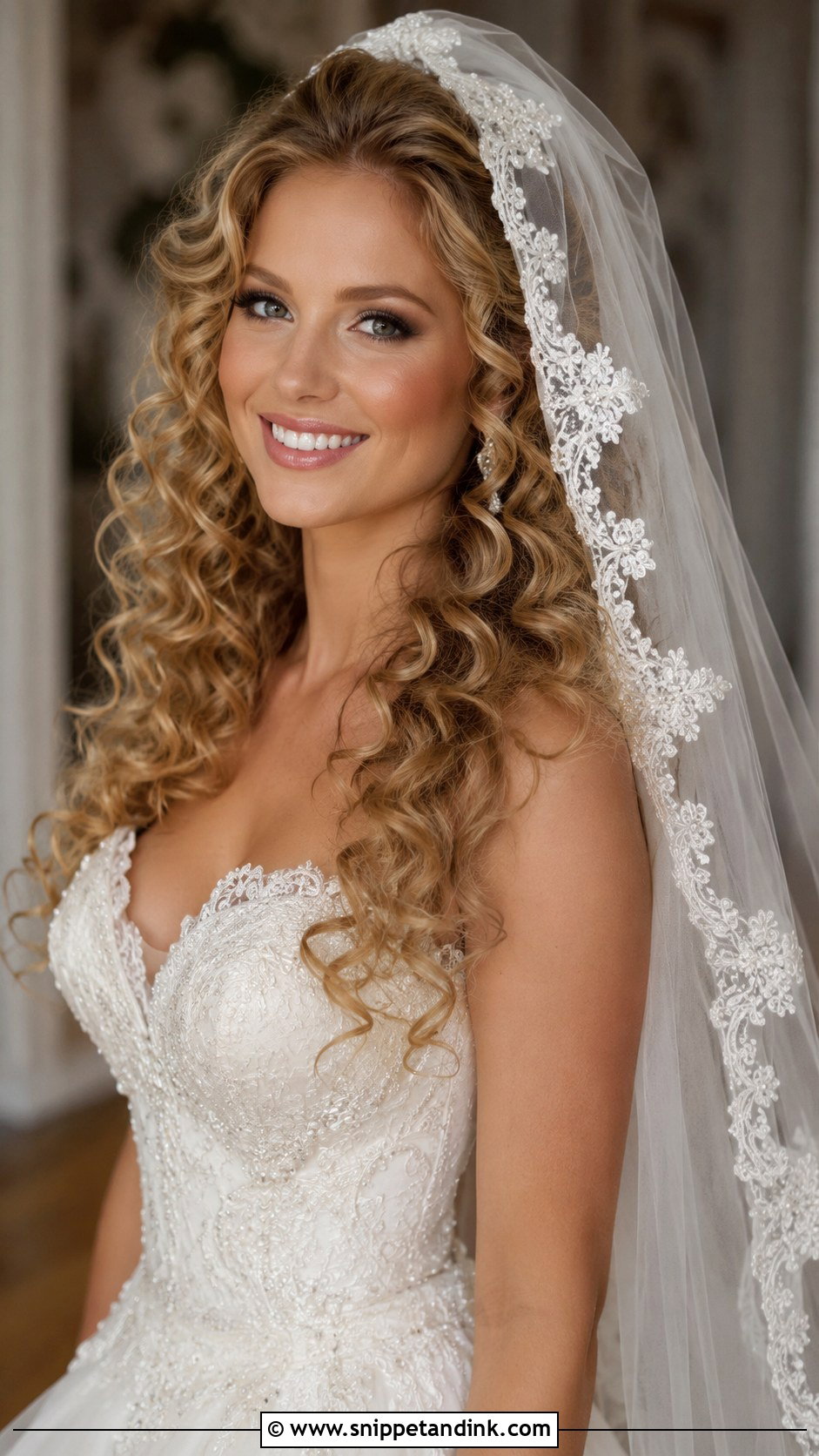
Big curls and a lace-trimmed veil are both statements, so the curls carry the volume and the lace stays on the edge. A lace border is heavier than plain tulle, and it rests on the curls around shoulder level; I set those lower curls firmly so they don’t flatten under the trim. A deep side part adds more height. Ballrooms suit it. With curls pinned to cool and a strong-hold spray, the body lasts from ceremony to last dance.
10. Boho Waves With Flower Crown And Veil
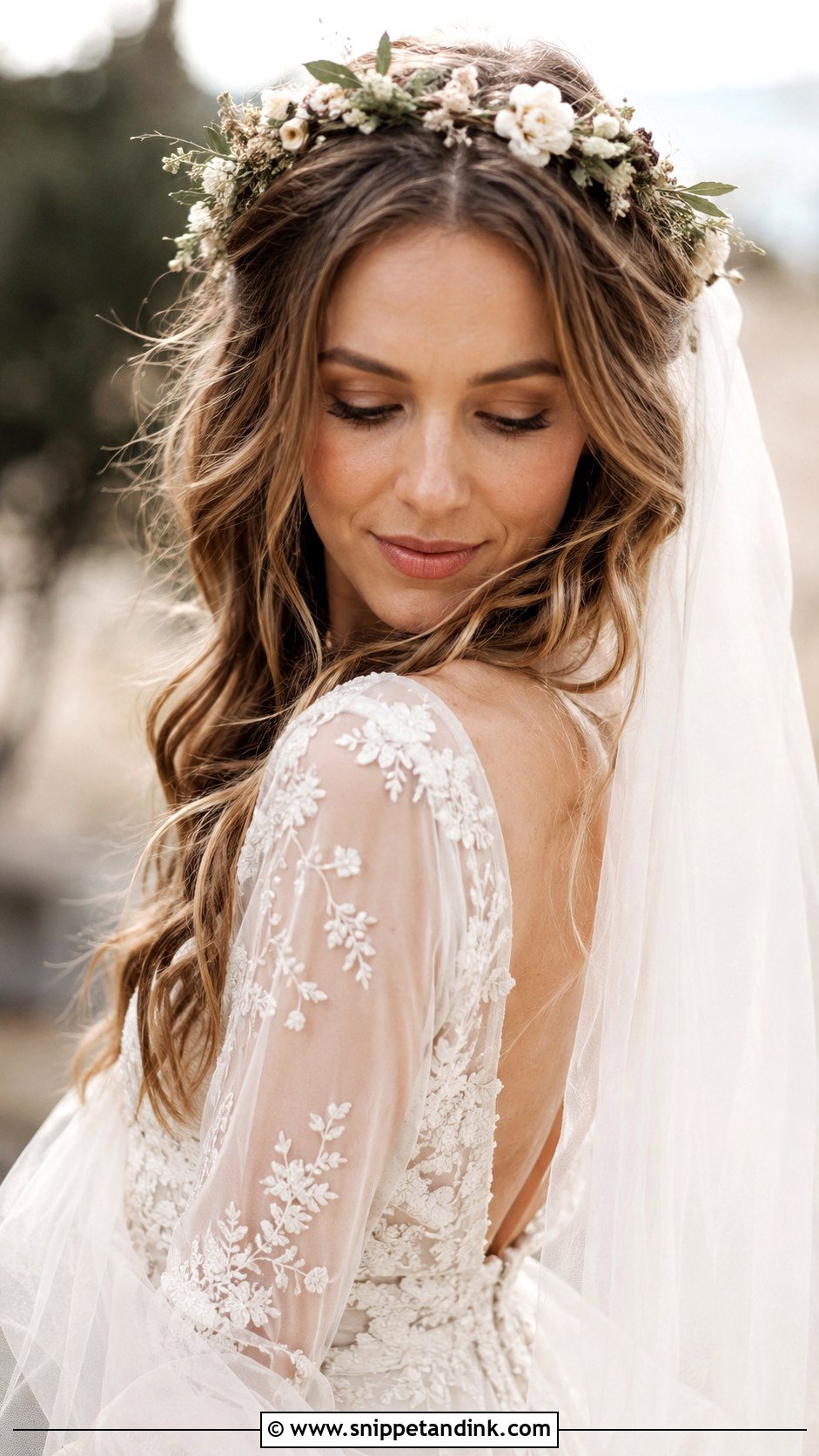
Boho waves with a flower crown and a veil tucked behind it is a garden or woodland look, and it’s a layering job. I anchor the veil comb first at the back of the crown, then lay the flower crown in front so it hides the comb’s edge. Dried flowers are lighter and won’t wilt; fresh ones look softer but droop in heat. Keep the waves loose. Two accessories on one head is a lot of weight, so with a long, heavy veil I’d skip the crown.
11. Deep Side Part Waves With Cathedral Veil
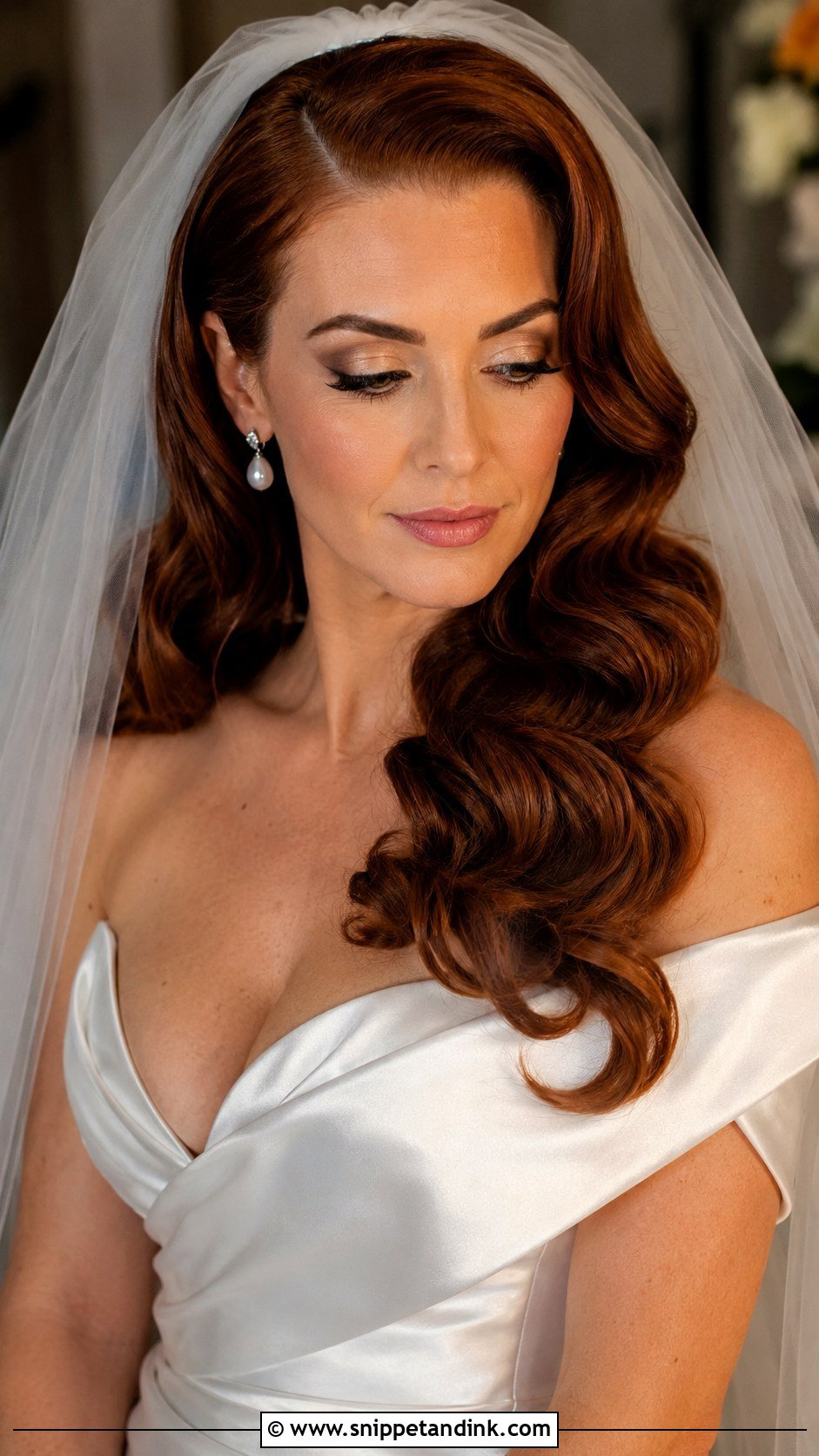
A deep side part with sculpted waves under a cathedral veil is old Hollywood with a train. Placement is the hard part. The veil has to sit behind the volume of the part, not on top of it, or it crushes the wave you spent an hour on, so I set the comb just below the crown at the back. Shine spray goes on before the veil, not after, so the tulle doesn’t pick it up. A formal venue makes sense of the drama.
12. Natural Curls With Soft Veil
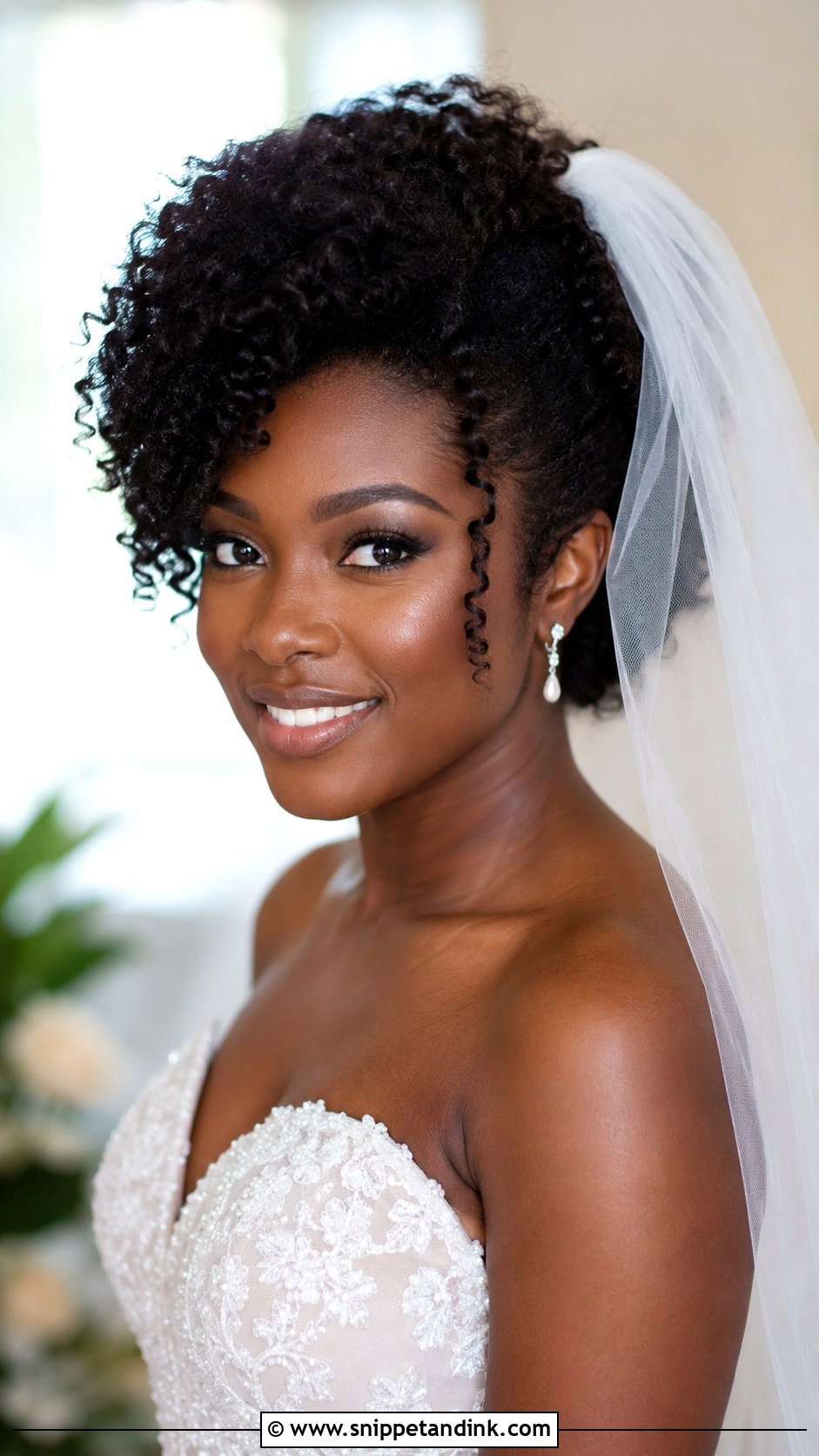
Natural curls keep their shape best under soft tulle rather than stiff netting, which can crush the curls at the back. I define them with a light cream, let them dry completely, then clip the comb in at the crown, where curly hair actually gives better grip than straight hair does. One request: don’t scrunch or twist the curls once the veil is on, because tulle and curls tangle quickly.
13. Half-Up Braided Crown With Veil
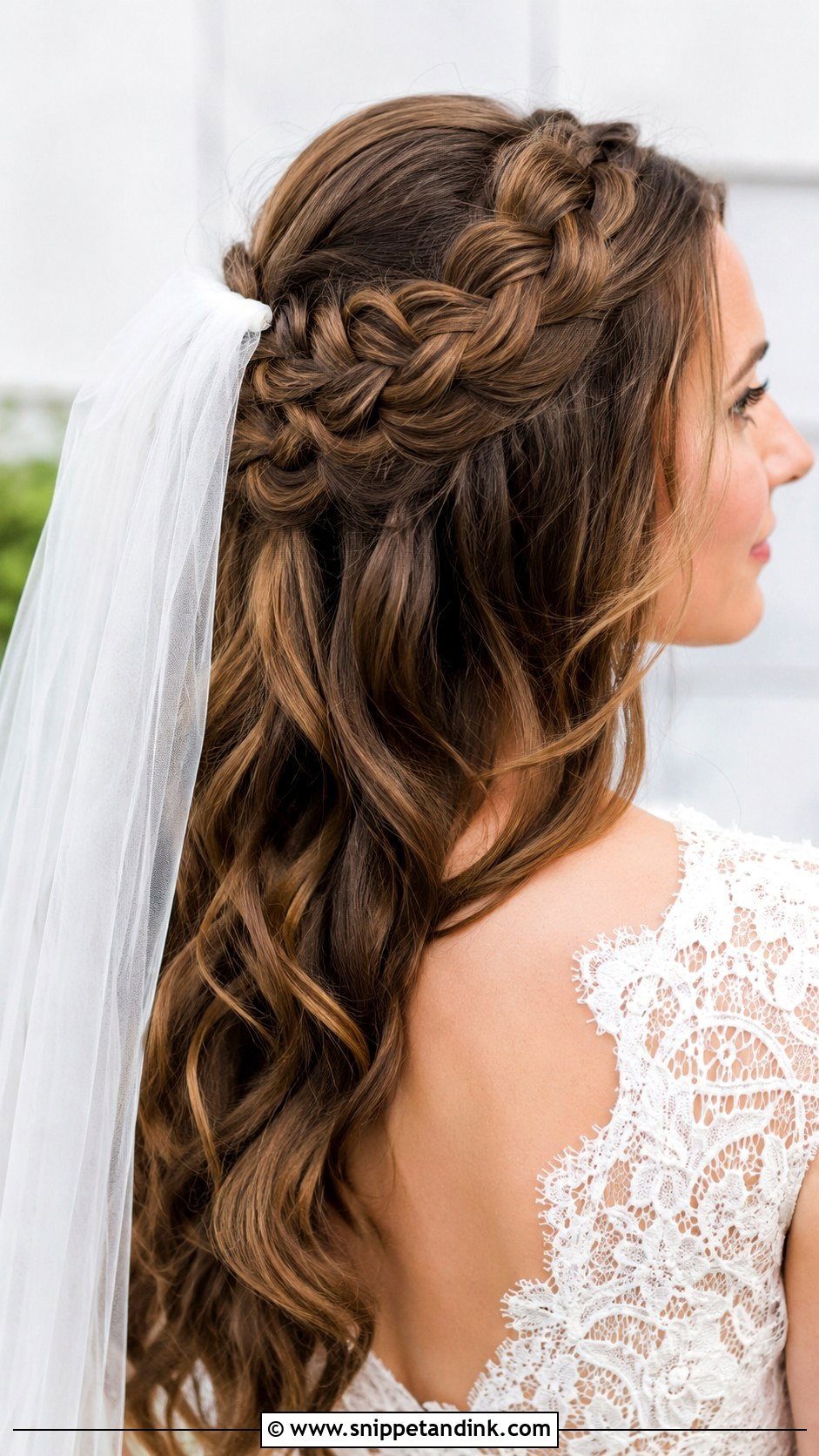
A braided crown at half-up height is the strongest base a down style can give a veil. I braid around the head, pin the braid in several places, and slide the comb in right behind it, so the braid takes the weight instead of the loose hair. From the front, the braid also hides the comb. Soft waves fall below. It suits boho and rustic weddings, and it survives the veil coming off with nothing to fix.
14. Long Layered Waves With Fingertip Veil
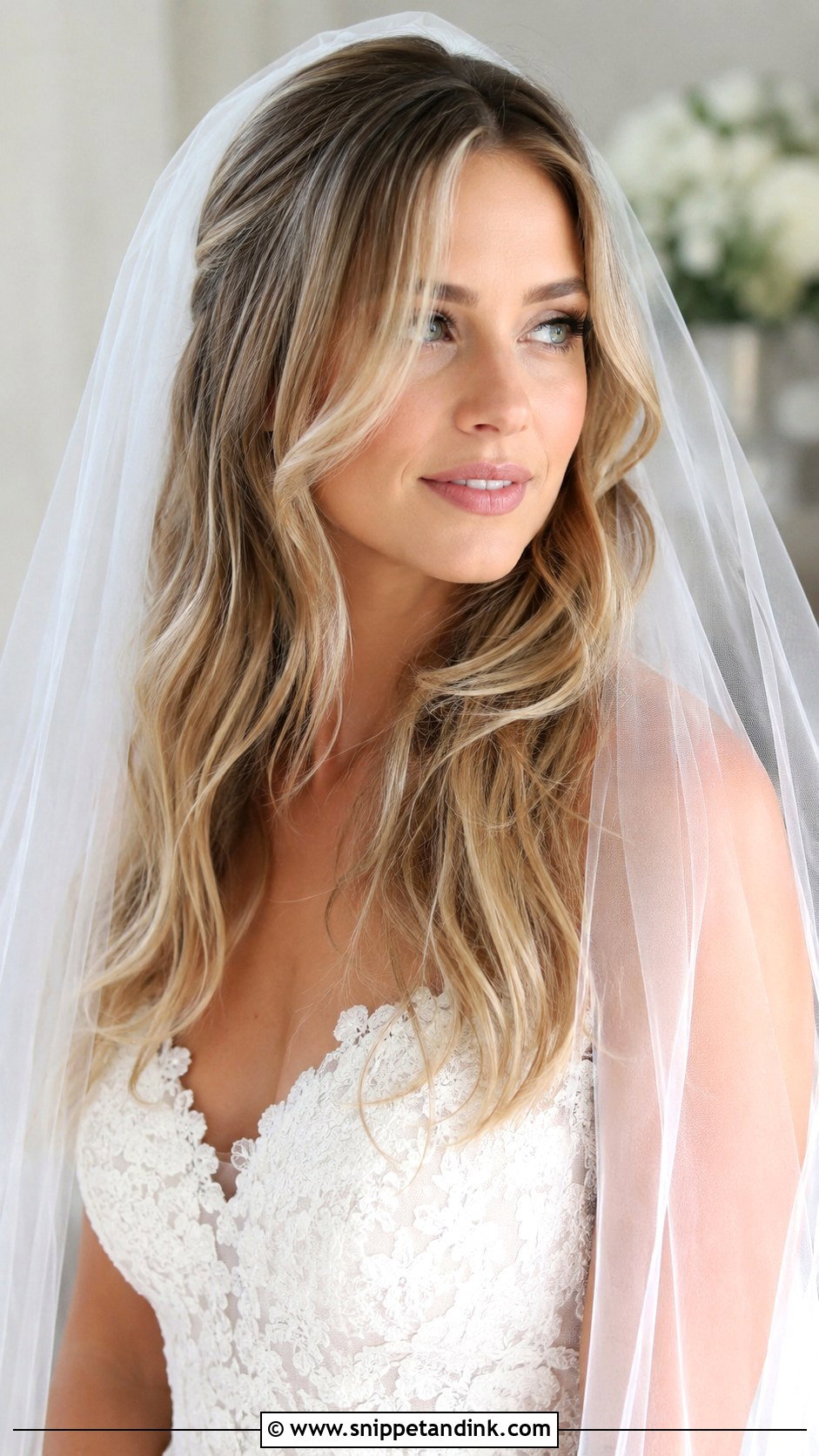
Long layered waves and a fingertip veil make a relaxed pairing, and the layers matter more than you’d think. The veil ends roughly where the longest layers do, so the waves show through the tulle without disappearing under it. I curl the shortest layers away from the face, and either part works. It’s a sensible pick when you want classic veil formality without a train to manage.
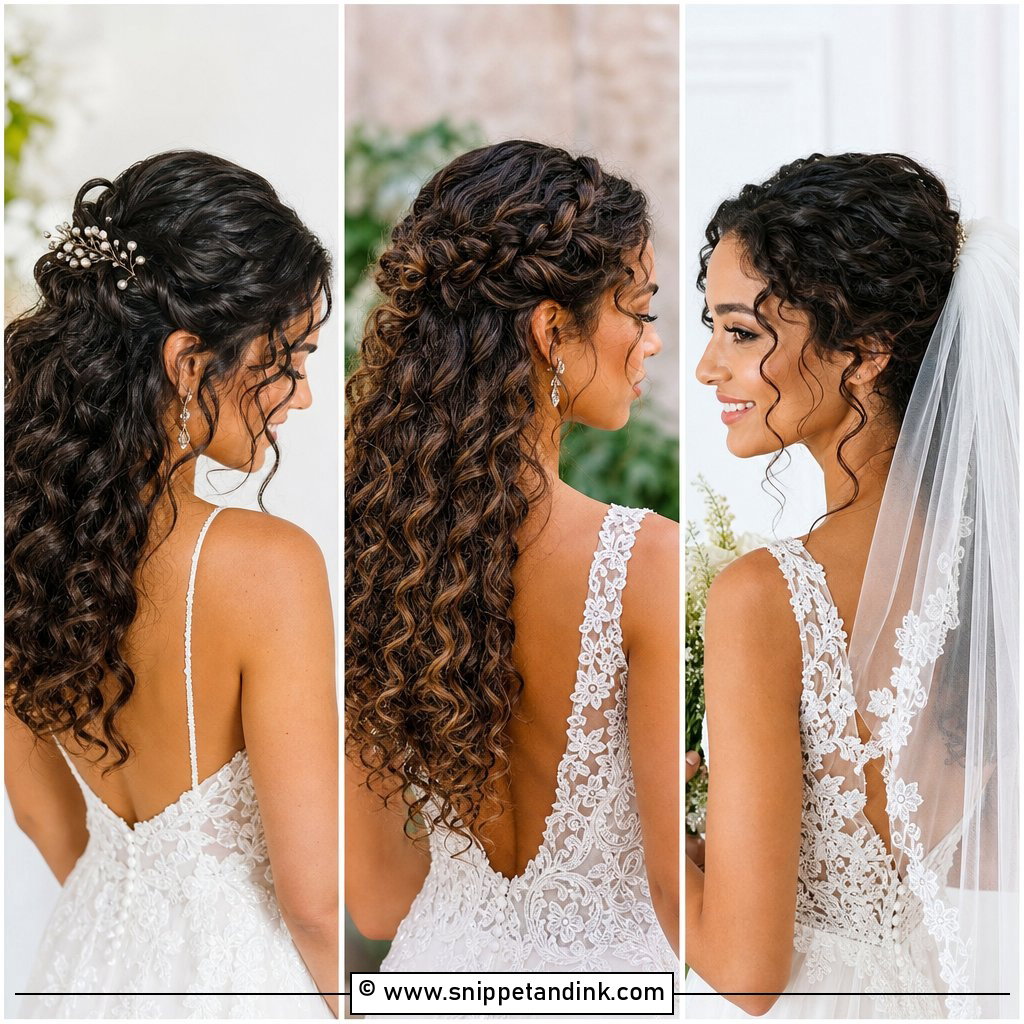
15. Sleek Low Center Part With Drop Veil
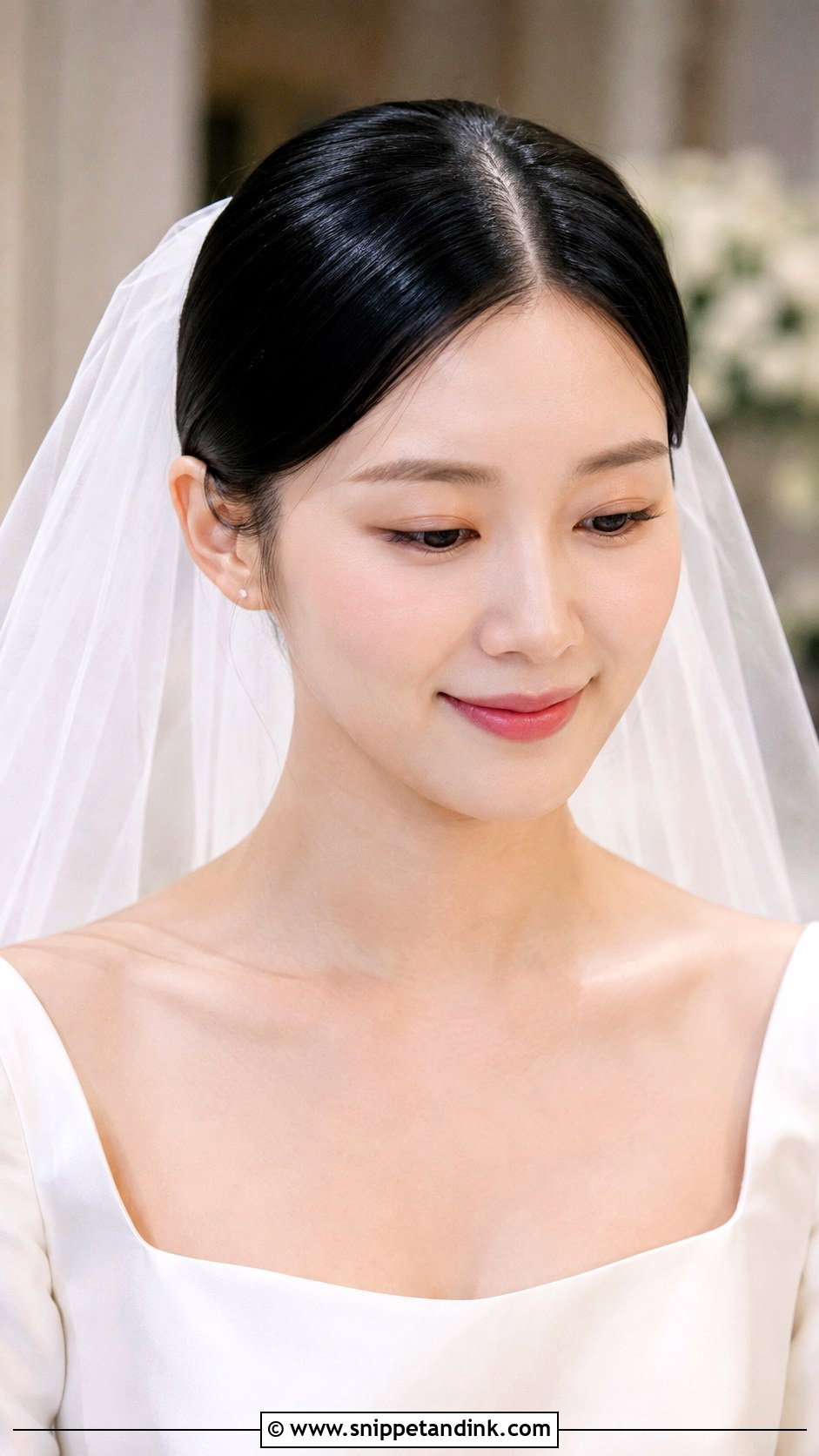
A sleek low center part under a drop veil is the most pared-back option here. The hair is smoothed flat and tucked low behind the ears, so your face and hairline are completely exposed, and that’s where humidity shows first: baby hairs at the temples frizz long before the lengths do. I smooth the hairline with a little gel on a toothbrush and set it before the veil goes on. Contemporary and city weddings suit it. Check the part from above as well as the front, since an off-center line is obvious on a style this simple.
16. Tousled Waves With Mantilla Veil
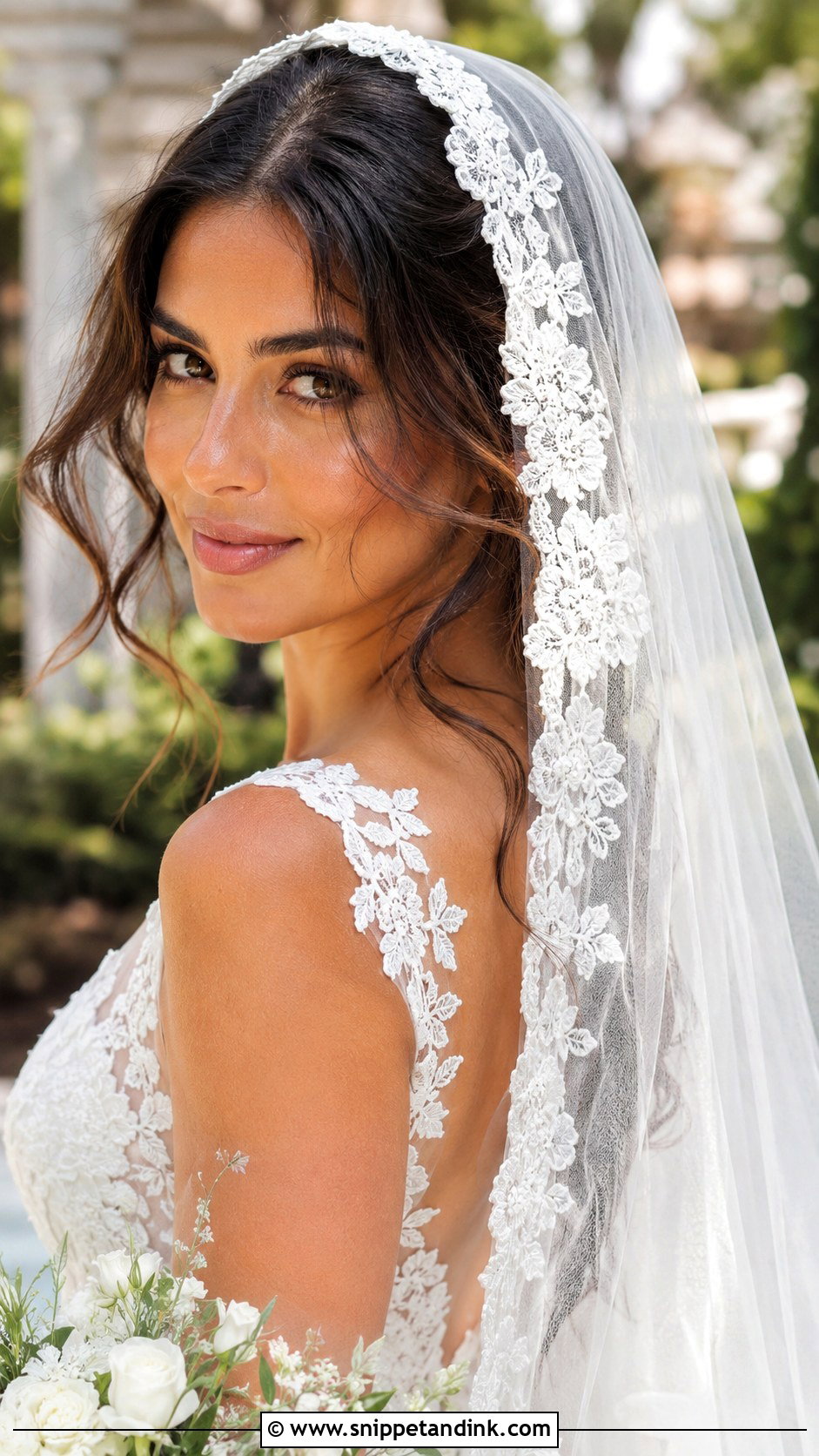
Hair finished as tousled waves with a mantilla veil belongs at garden, vineyard and coastal weddings, where polished hair would feel out of place. The lace edge frames the face and drapes over the shoulders, so the waves underneath should be piecey but not dry, or the lace catches on the texture. I use texture spray on the lengths and keep it off the area under the comb. A mantilla sits further back than a gathered veil, so its comb goes behind the crown.
17. Curly Hair With Blusher Veil
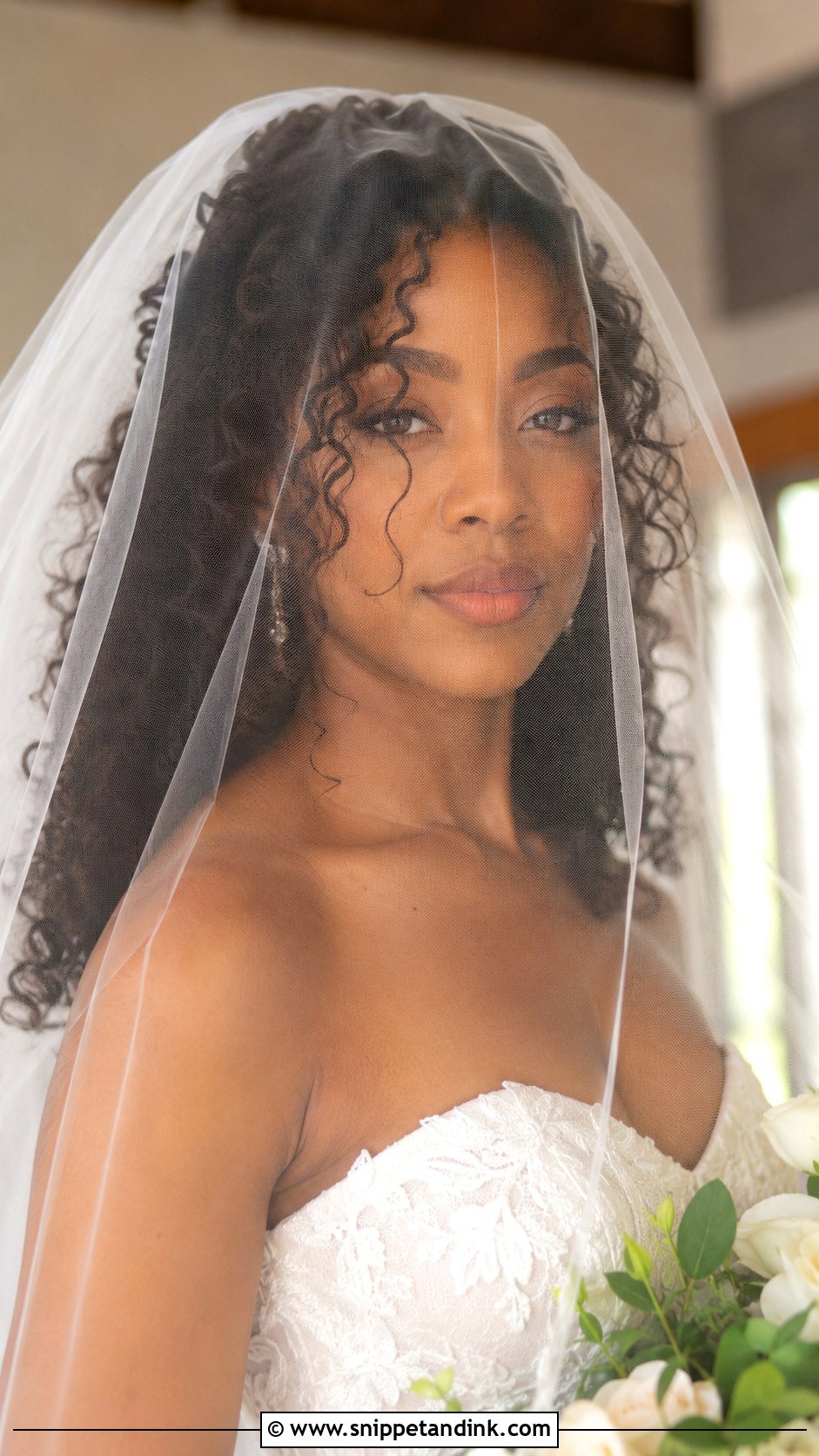
A blusher over curly hair needs one thing more than over straight hair: room. The front layer drapes over your face, then lifts back over the crown, and full curls at the front can push it forward. I define the curls with a lightweight gel and keep the front ones slightly smaller. The curls carry the volume, the short blusher keeps them in view, and the reveal still works without flattening anything.
18. Long Waves With Embellished Headband And Veil
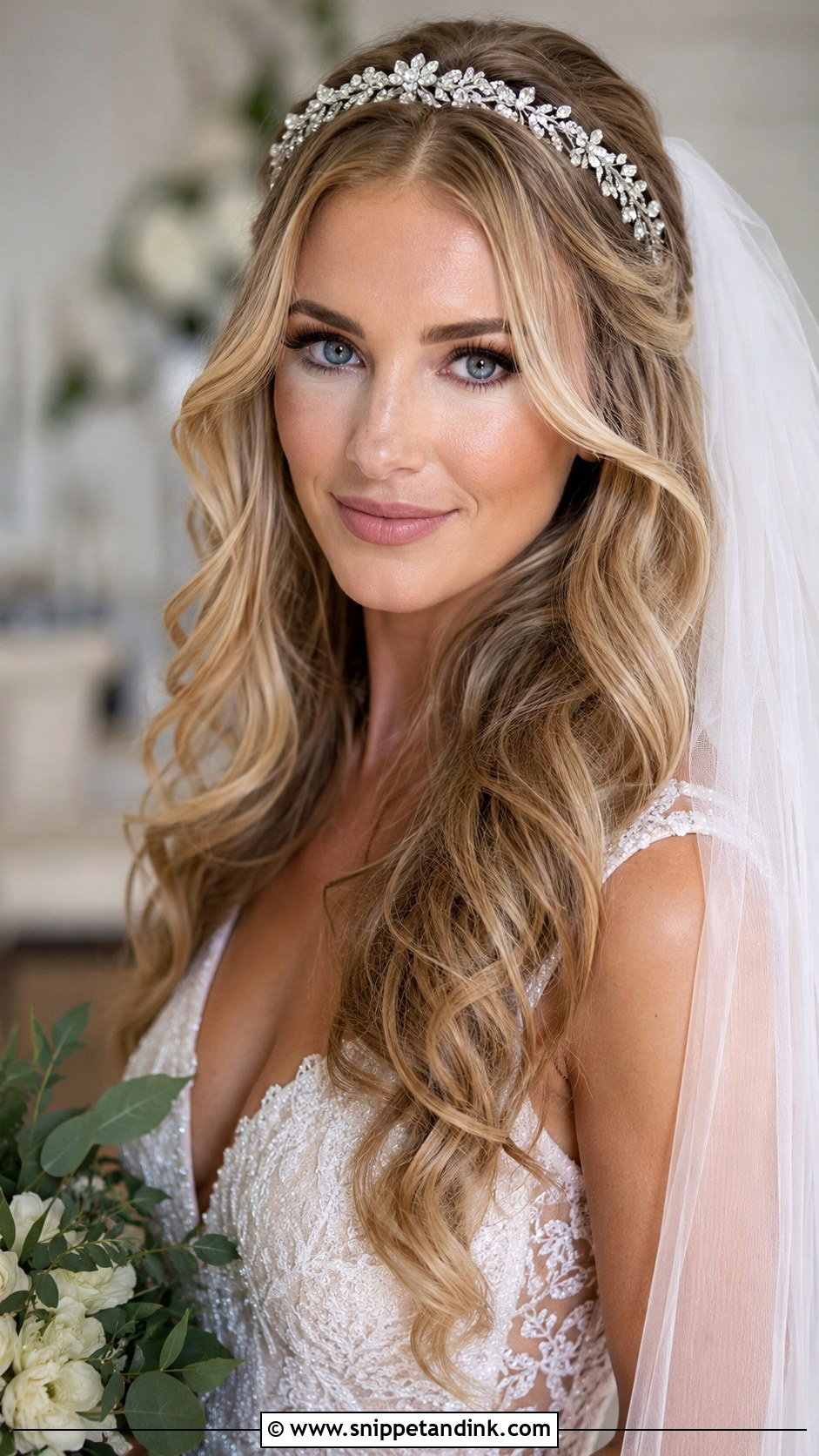
An embellished headband in front with a veil clipped behind it is a layered look, and the order matters. The veil comb goes in first, then the headband, which hides where the comb meets the hair. Crystal or pearl detail catches light in photos. Pressure is the catch: a headband plus a veil’s pull gives some brides a headache within a couple of hours, so wear both together at your trial for longer than ten minutes. Formal weddings suit it.
19. Soft Romantic Curls With Cathedral Veil
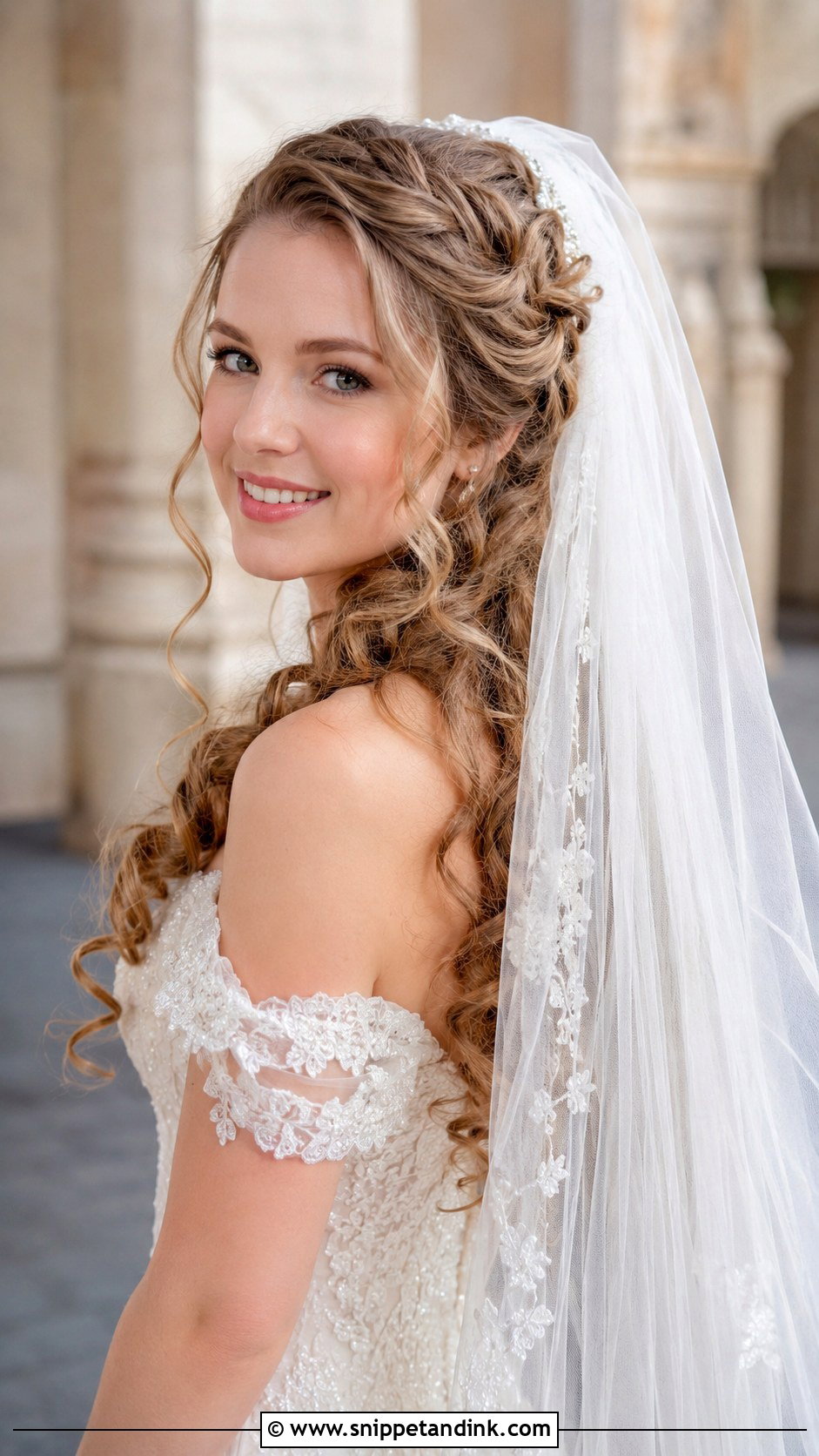
Soft brushed-out curls under a cathedral veil read classic and traditional. That length gets stepped on, tugged and rearranged by other people all day, and every tug travels to the comb. So I pin the comb into a backcombed base and push a hidden bobby pin through each end of it. Brushing the curls out keeps them romantic under the tulle rather than ringlet-shaped. For portraits, have someone ready to spread the train before each shot.
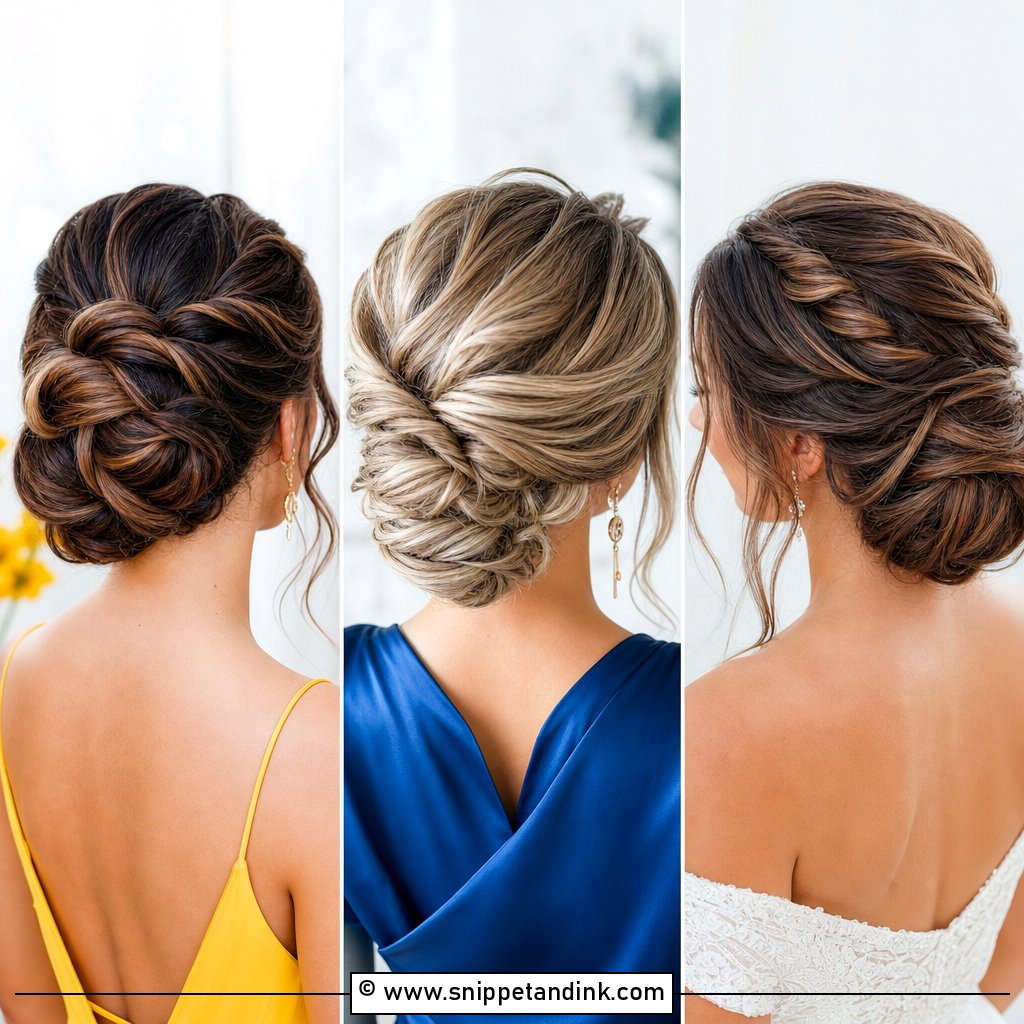
20. Straight Hair With Birdcage Veil
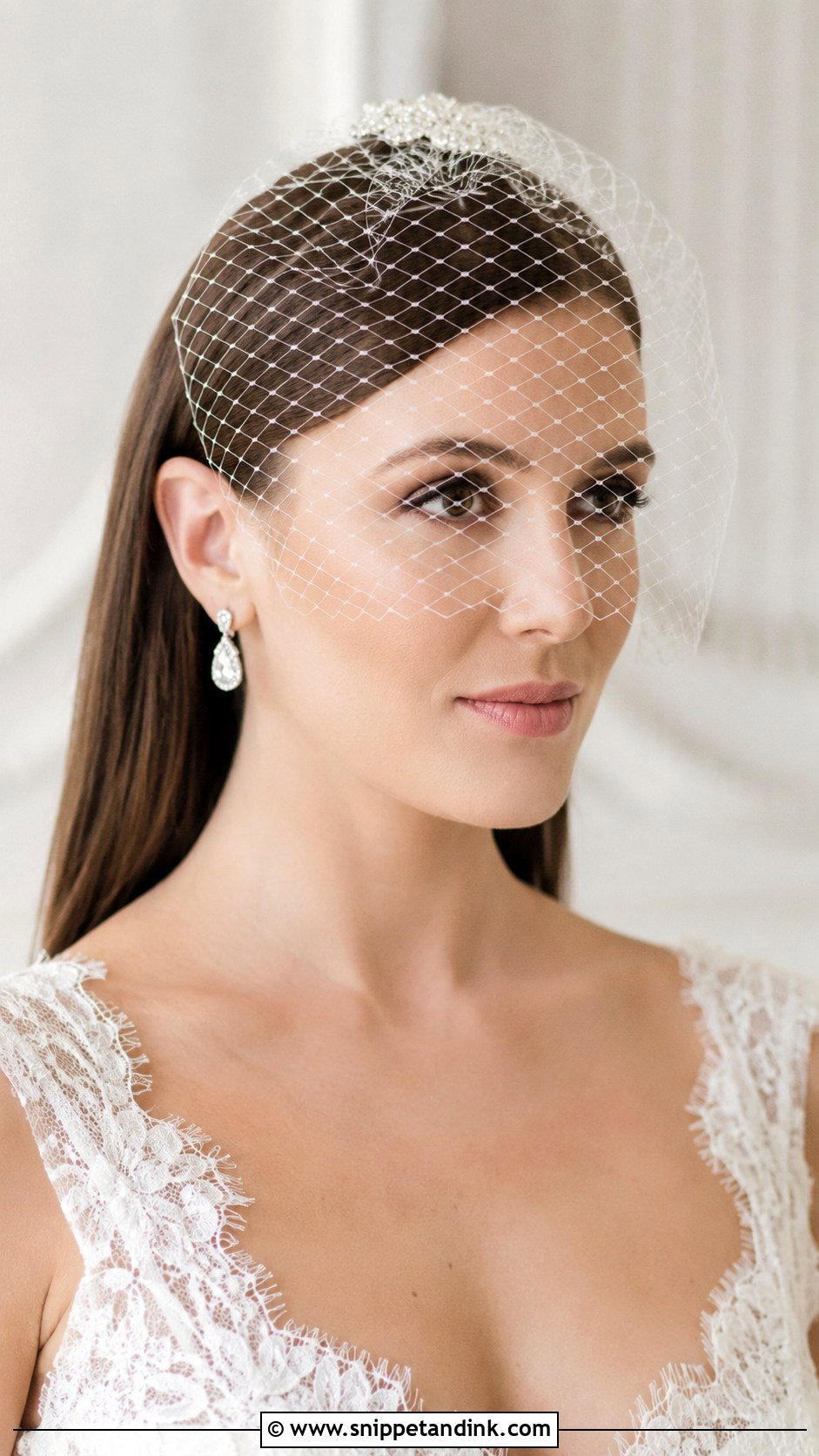
Straight hair with a birdcage veil is a vintage piece on a modern base. The netting attaches at the side or top with small combs, and those slide straight down silky hair unless there’s a pinned anchor beneath. A center part keeps it symmetrical; tilting the birdcage to one side looks more playful. I add shine serum only once the birdcage is secured. A smaller wedding and a sleek dress suit it.
21. Half-Up Twisted Style With Veil
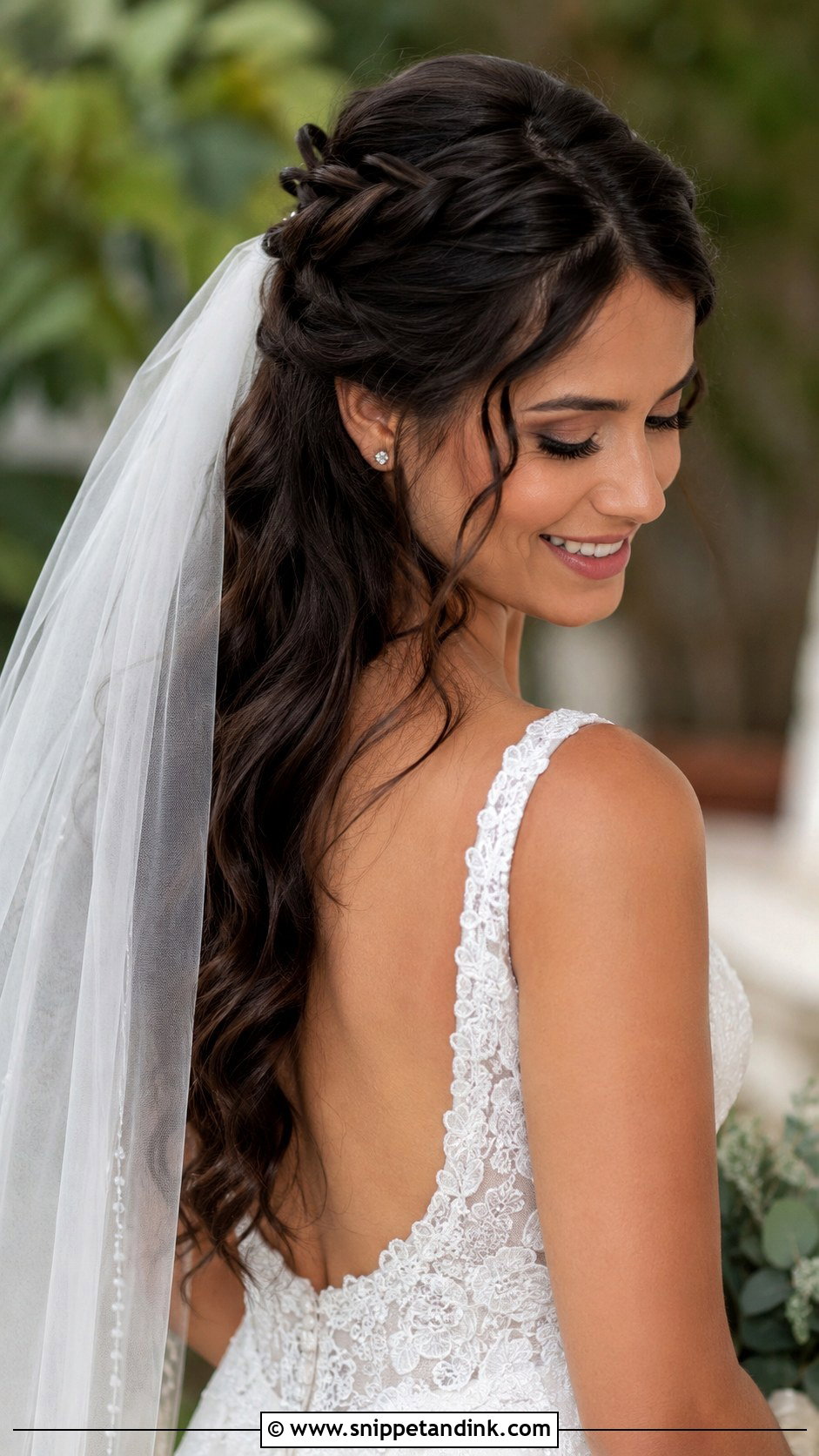
Twists are the quieter cousin of the braided crown. Two twisted sections meet at the back and are pinned together, and the veil comb slides in just under that join. They add texture and keep hair off your face while the lengths below stay in soft waves. On very slippery hair, twists loosen during the day, so I prep those sections with a little texture powder first.
22. Long Waves With Two-Tier Veil
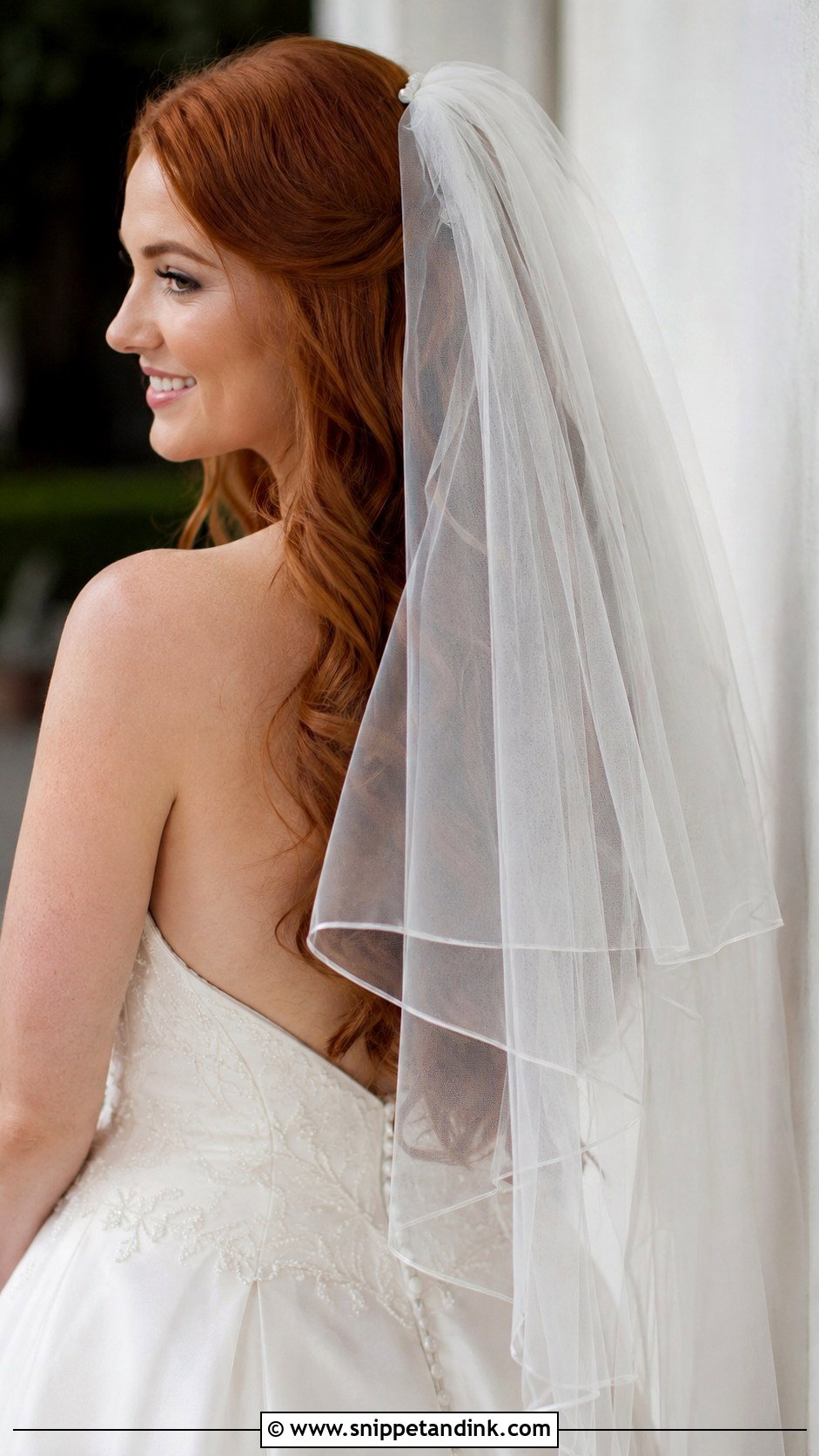
A two-tier veil has a shorter top layer over a longer one, which adds fullness at the back and often doubles as a blusher. That fullness means extra weight, sitting over long waves like a curtain. I part the hair to the side for some lift and set the comb into a pinned base. Traditional and formal weddings suit it, and with the top tier down, the extra tulle frames the face softly.
23. Wavy Hair With Lace Cathedral Veil
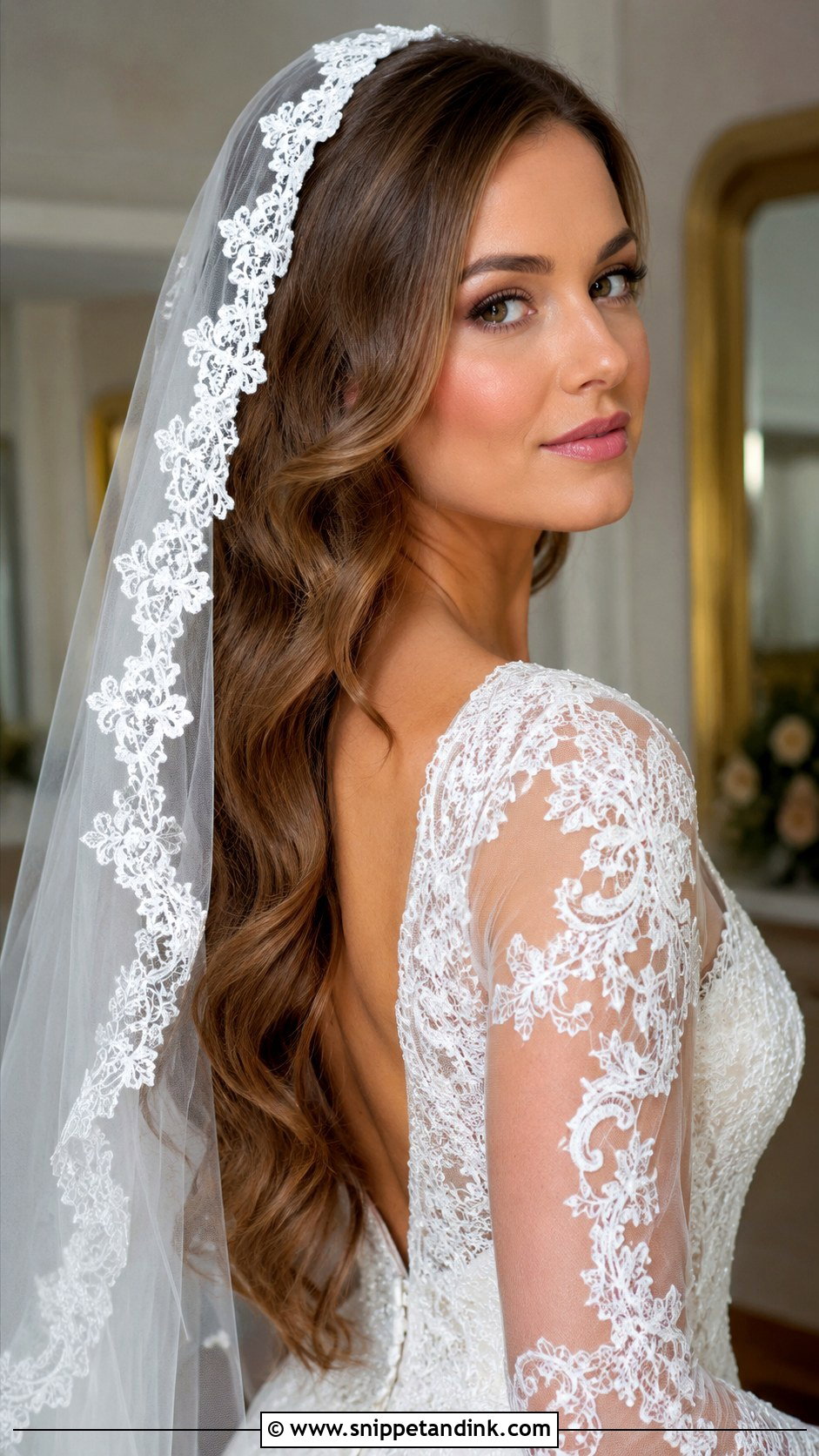
Lace cathedral veils are among the heaviest you can wear, because the lace border runs the full length. Brushed-out waves sit nicely under one, but the comb needs a solid anchor, and I add bobby pins through both ends of it. The lace edge frames everything delicately. Paired with a ball gown, it gives a fairytale-worthy bridal look, and either part works. Practice walking in it at a fitting, because lace catches on carpet edges and chair legs in a way plain tulle doesn’t.
24. Middle Part Straight Hair With Mantilla Veil
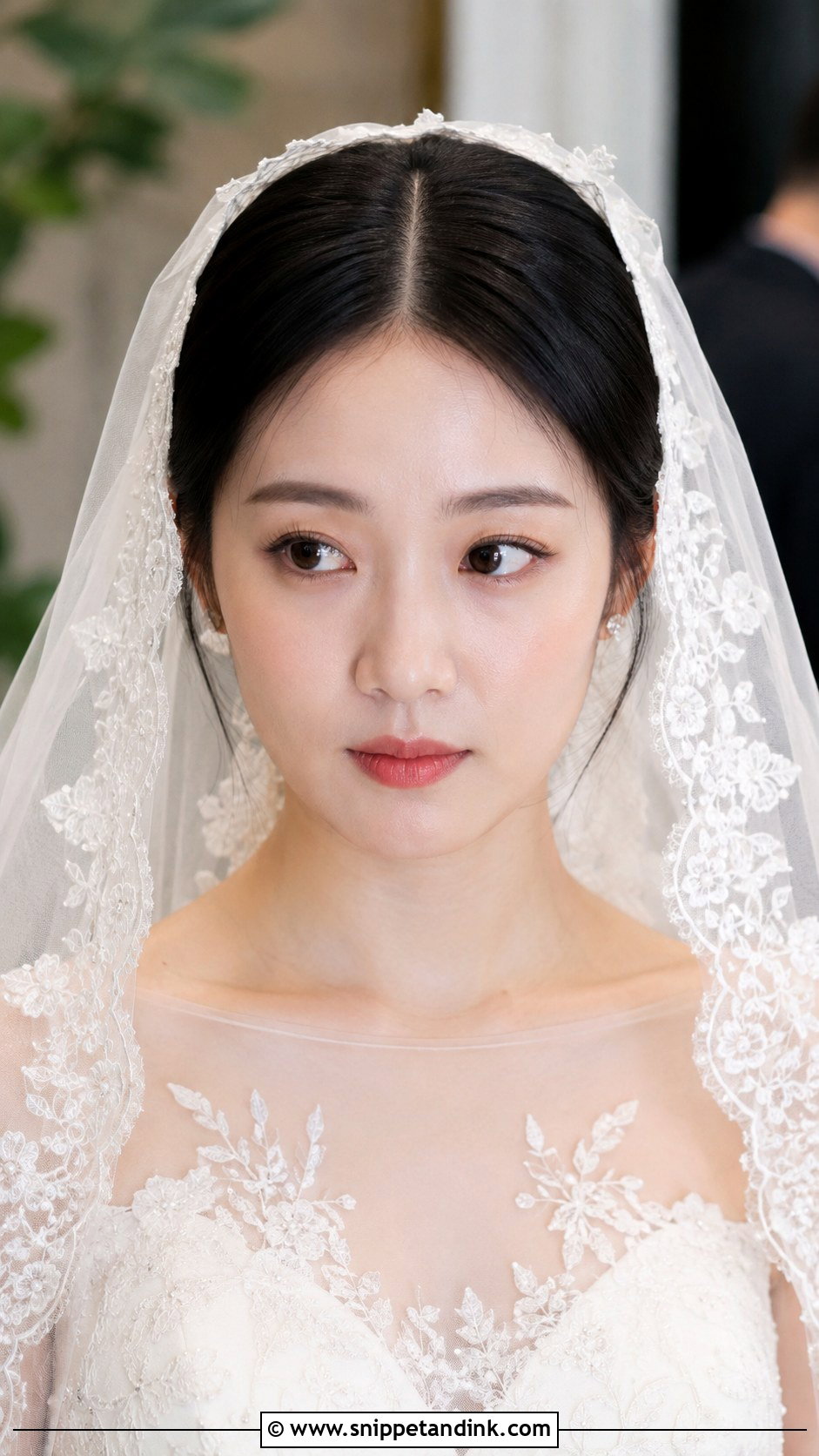
A middle-part straight style and a mantilla balance each other: the hair is simple and the lace is the detail. The mantilla drapes around the shoulders, so the straight lengths show through the tulle in clean lines. I tuck the hair slightly behind the ears so the lace can sit close to the face, and apply smoothing serum before the mantilla goes on. It suits modern ceremonies and church weddings, where the mantilla has a long tradition of its own.
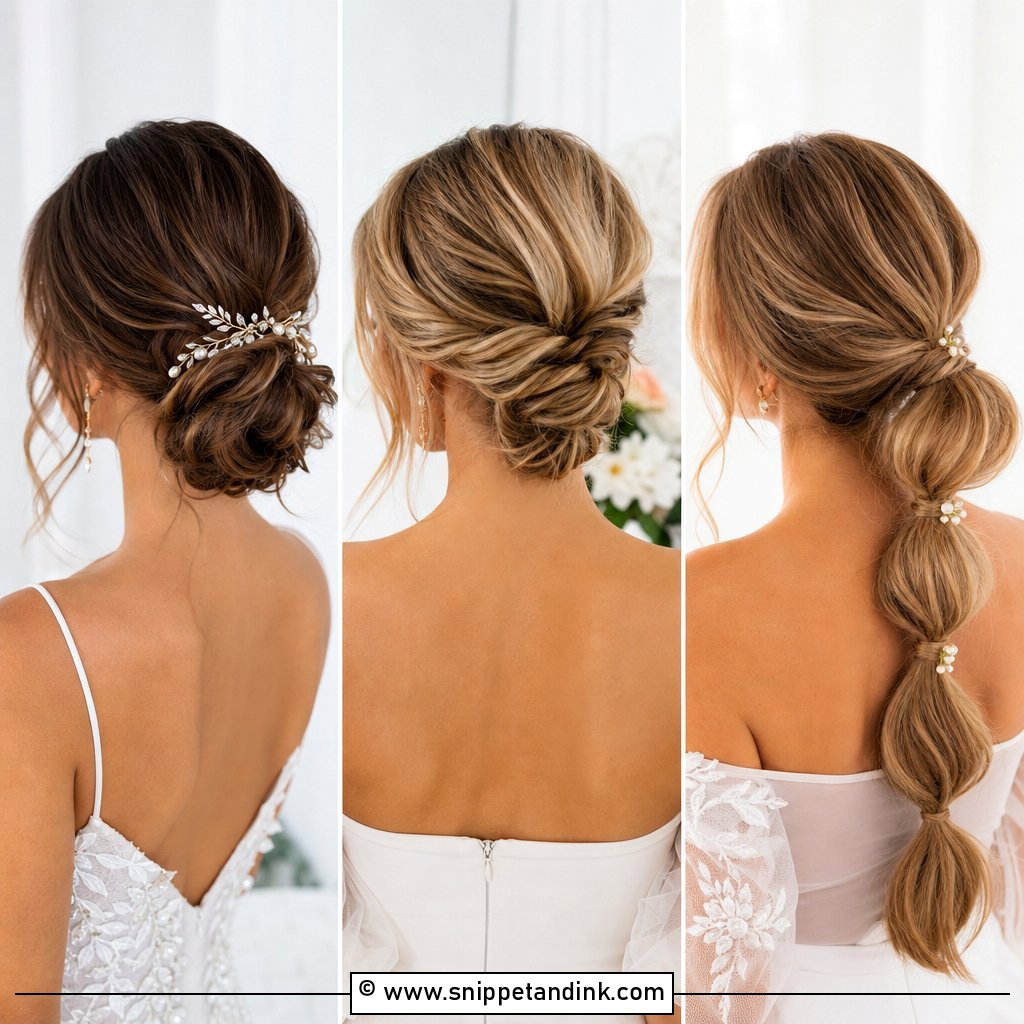
25. Loose Waves With Pearl-Trimmed Veil
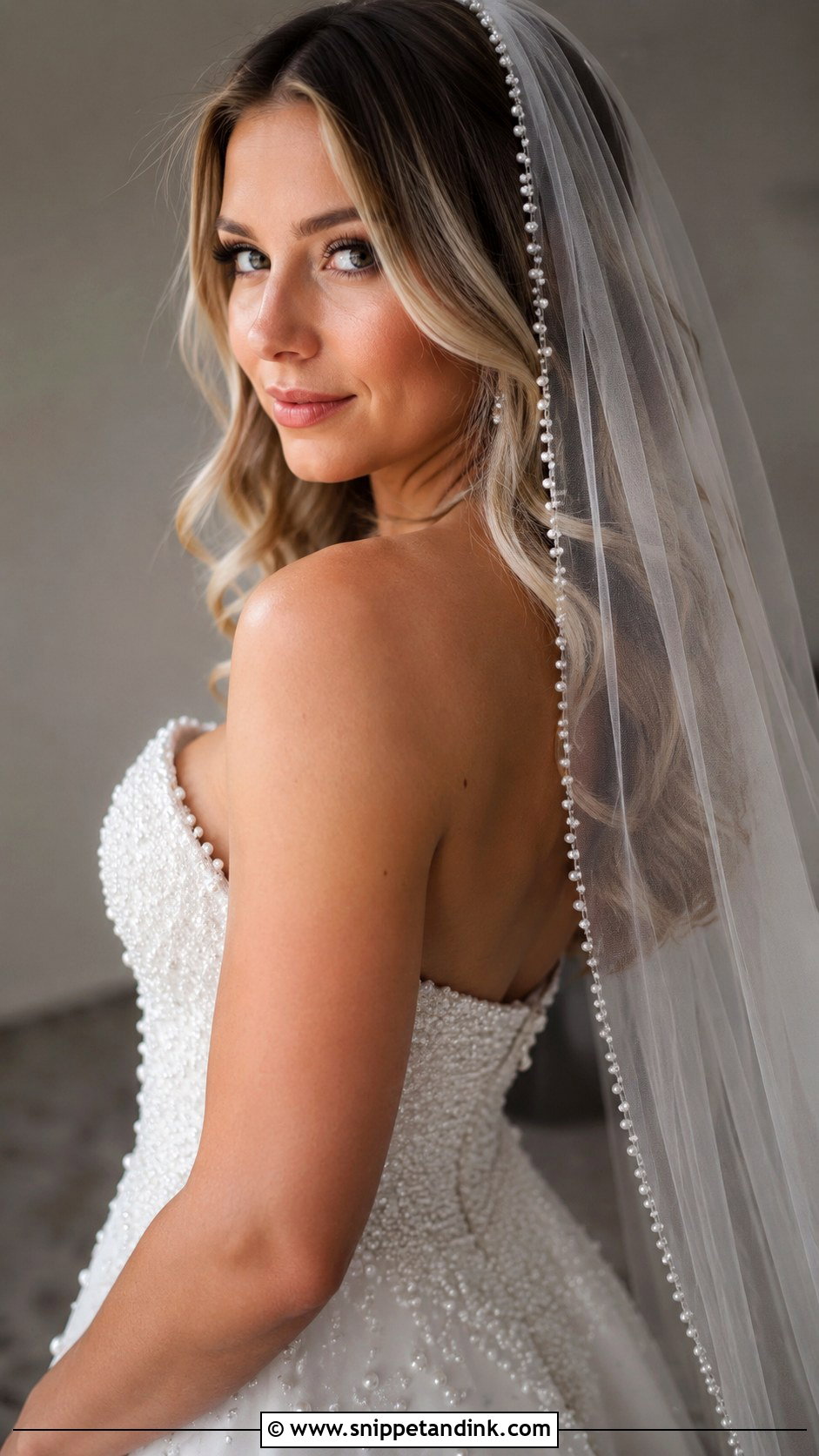
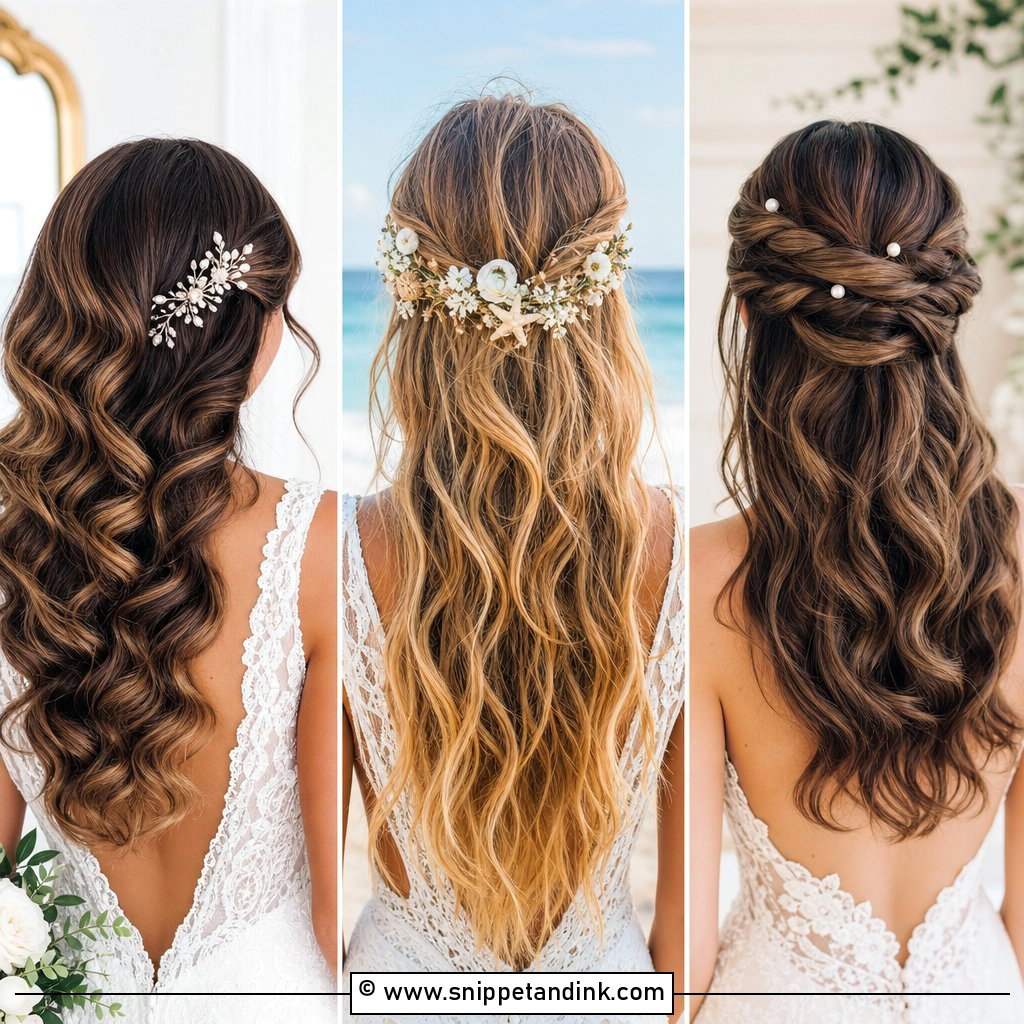
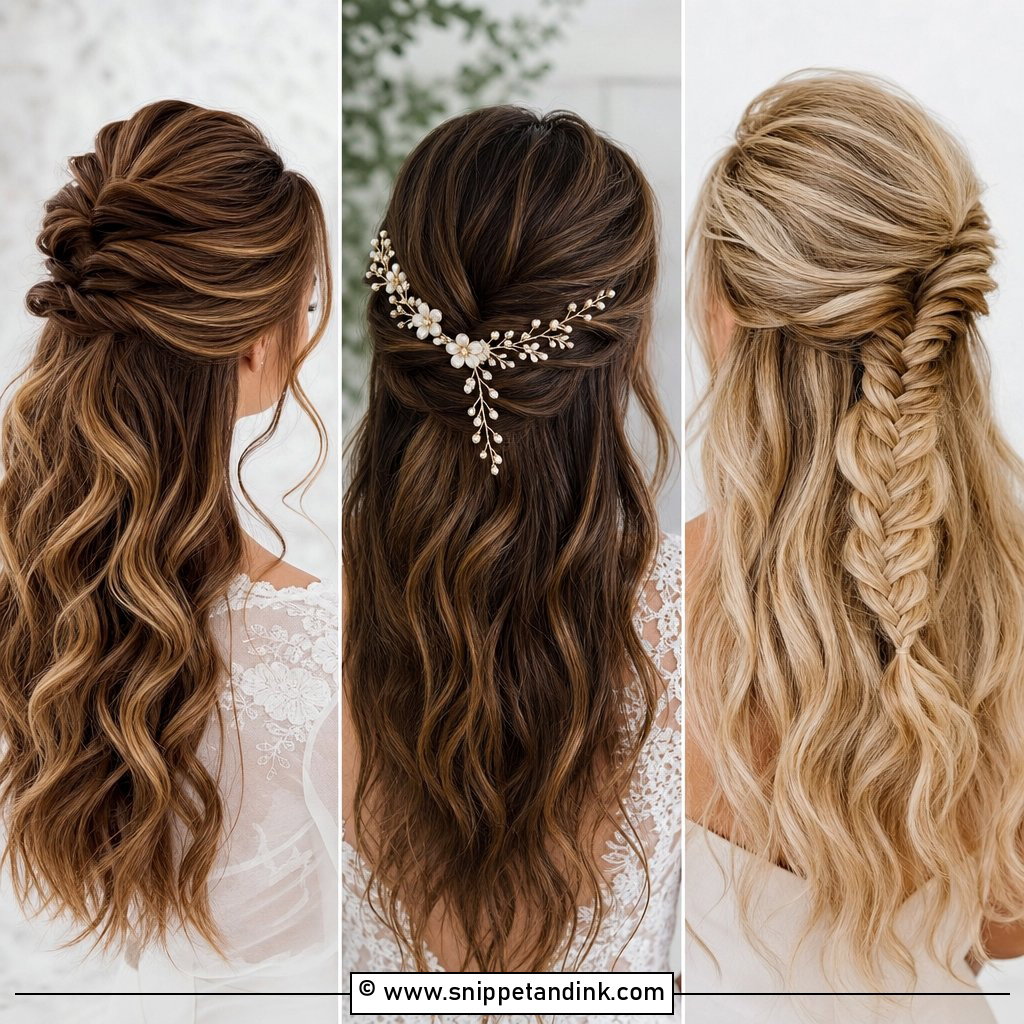
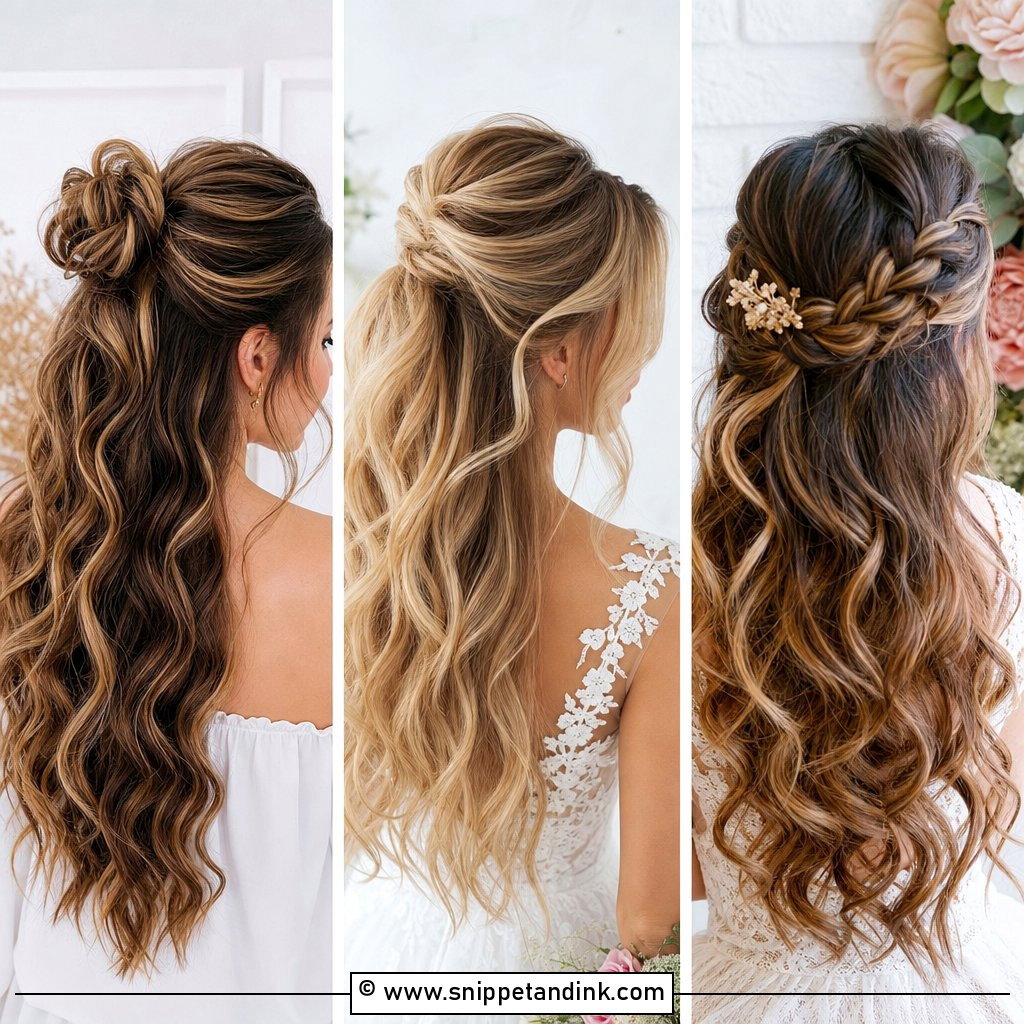
Pearl-trimmed veils are heavier than they look, since every pearl adds weight along the edge. Loose waves on a side part suit them, and the pearls catch light at the hem. I clip the comb in at the crown over a pinned base. Before the day, check that the pearls don’t hook on any beading or sequins on your dress, because pearl trim and a beaded bodice can catch on each other.
Wind, Static and Tulle That Clings to Curls
Most veil problems I fix on a wedding morning have nothing to do with the comb. They come from fabric meeting hair.
Static in air-conditioned rooms
Synthetic tulle and freshly blow-dried hair in a dry room build static, and the veil sticks to the back of your head. A light mist of hairspray on the inside of the veil, from a good distance, calms it. Try that on a hidden corner first, because a few fabrics spot.
A long veil outdoors
Outside, a long light veil behaves like a sail. On a windy site I set the comb lower, closer to the nape than the crown, so the wind has less leverage, and I add an extra bobby pin through each end. Keep someone ready to settle the veil between photos, and agree in advance that if the wind is strong, it comes off after the ceremony portraits.
The minute after it comes out
Every comb leaves a slightly flattened patch where it sat. Once the veil is out, I lift that spot with my fingers and a puff of dry texture spray, and it takes about a minute. Decide who removes it and when, so it doesn’t happen in a rush on the dance floor.
Try the Veil On at Your Hair Trial, Not After
With a veil, hair worn down is about the comb, the weight and the fabric as much as the hairstyle. Sleek straight strands, bouncy curls and relaxed beach waves all work, from dramatic cathedral lengths to playful birdcage styles, once the hair has a hidden anchor and the veil’s weight suits it. Bring the actual veil to your hair trial and wear it for a while. If it still sits right after a few hugs and a walk around the room, it’s ready for the aisle.
You'll Like These Ideas:


Leave a Reply