
A bow on a half-up style is a small accessory with a big job: it has to hide the anchor point, survive a day of hugs, and still look intentional from the back of the aisle. I get asked about wedding hair with a bow more than almost any other accessory now, and the answer always depends on the fabric, the size and how it’s fixed in. Below are twenty versions, from pearl-trimmed bows to long satin tails, with notes on which hair each one suits, how it sits with a veil, and where it tends to go wrong.
Tied Ribbon or a Bow on a Clip?
Before you fall for a picture, know how the bow in it is attached. There are really two kinds, and they behave very differently on the day.
Ribbon tied in the hair
This gives you long, soft tails and a knot that looks natural. It needs enough hair to tie around, so it suits medium and long hair. Ribbon tied straight onto hair loosens as you move. I tie it over an elastic and then push a pin through the knot into the base, which stops it sliding and spinning.
A pre-made bow on a clip or barrette
These hold their shape all day and suit short or fine hair, but the clip needs something solid to bite into. Clip it over pinned hair or an elastic, never onto loose strands, or it will slip within an hour. A heavy pearl or beaded bow on a weak spring clip is the most common failure I see, so open and close the clip in the shop and choose one that resists.
Some brides wear both: a tied ribbon for the ceremony and a sturdier clip-on bow swapped in for dancing. If you plan that, ask your stylist to leave the elastic base in place so the swap takes seconds.
1. Half Up Half Down Wedding Hair With Satin Bow
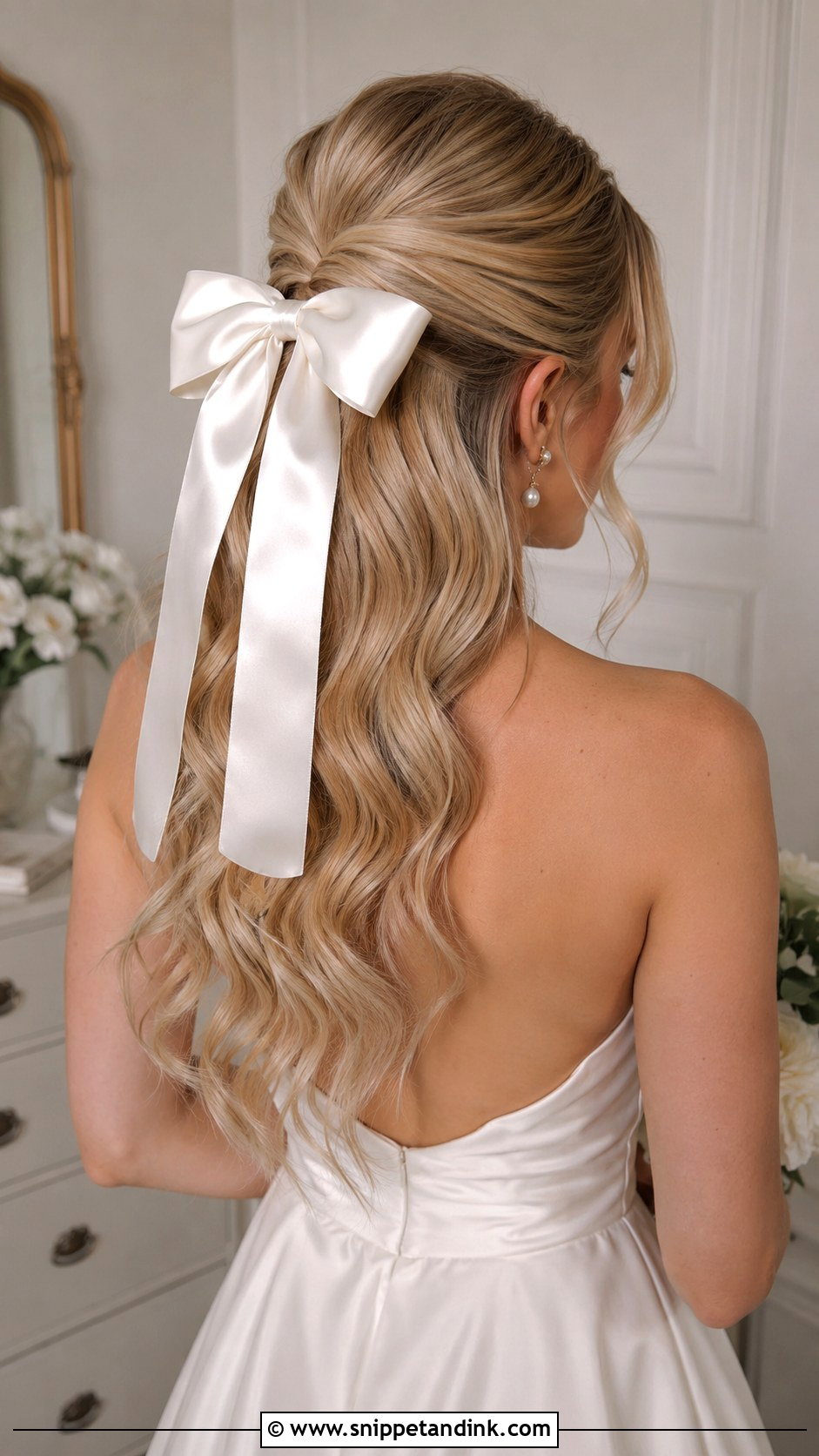
Satin is where most brides start, and for good reason. It drapes over waves instead of standing stiffly, and the sheen reads well in ceremony photos taken from behind. I gather the top into a small ponytail or loose twist, then tie the bow just at or below the crown so the tails fall with the hair. It suits strapless, off-the-shoulder and simple crepe gowns, where there’s no other detail at the back competing with it. Match the ribbon to your dress in daylight before the day. Ivory satin next to a bright white gown looks yellow, and vice versa.
2. Half Up Half Down Wedding Hair With Pearl Bow
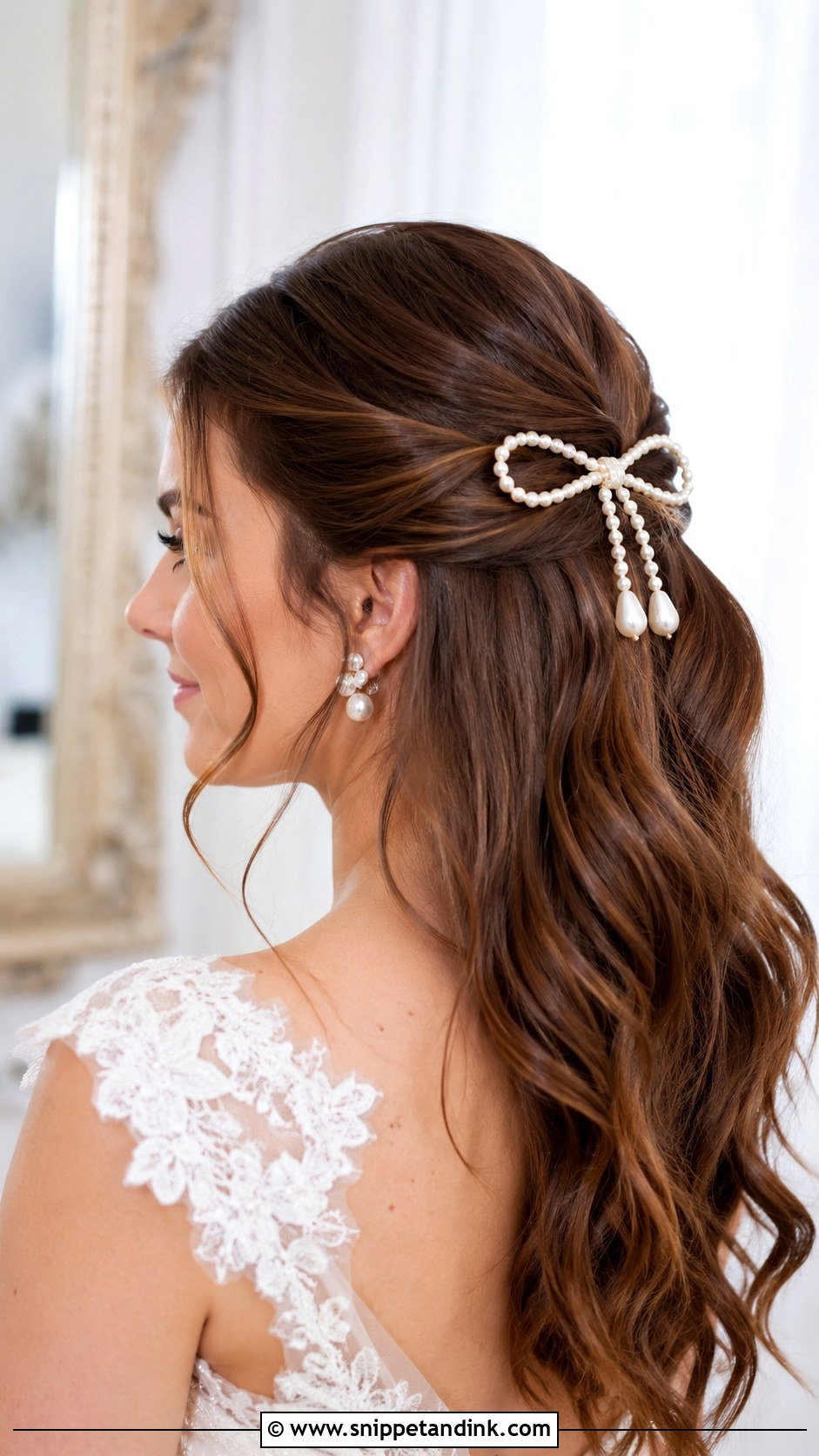
A pearl-trimmed bow is usually built on a clip or barrette, which is good news: it’s far more secure than tied ribbon. I always hide a small elastic under it so the clip grips a solid base rather than loose hair. Pearls echo pearl buttons or beading on a gown nicely, but they get heavy, so I keep the crown softly lifted instead of heavily teased. Teasing under a weighty accessory compresses within hours. Curl the lengths in wide sections and brush them out.
3. Half Up Half Down Wedding Hair With Velvet Bow
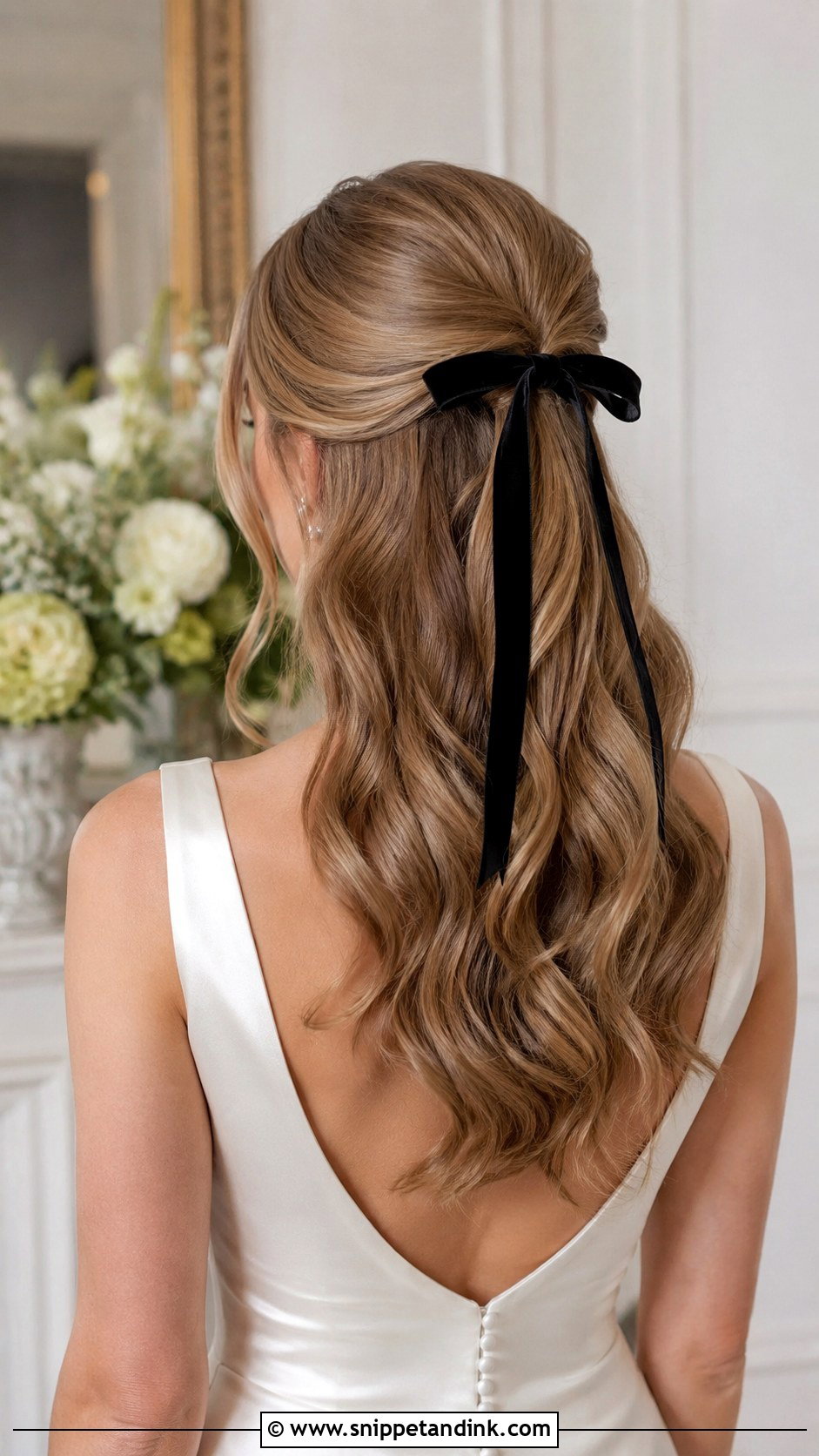
Velvet is the most seasonal fabric here. In autumn or winter, or at a formal indoor reception, it adds texture that a plain gown needs. In July sun it looks heavy and traps heat at the back of the neck. A slim black velvet bow gives sharp contrast on blonde, red or silver hair; ivory velvet is the softer option. Velvet also shows every crease and pin mark, so I steam it the morning of and pin through the knot rather than the loops. Polished waves and a smooth crown suit it best.
4. Half Up Half Down Wedding Hair With Long Ribbon Bow
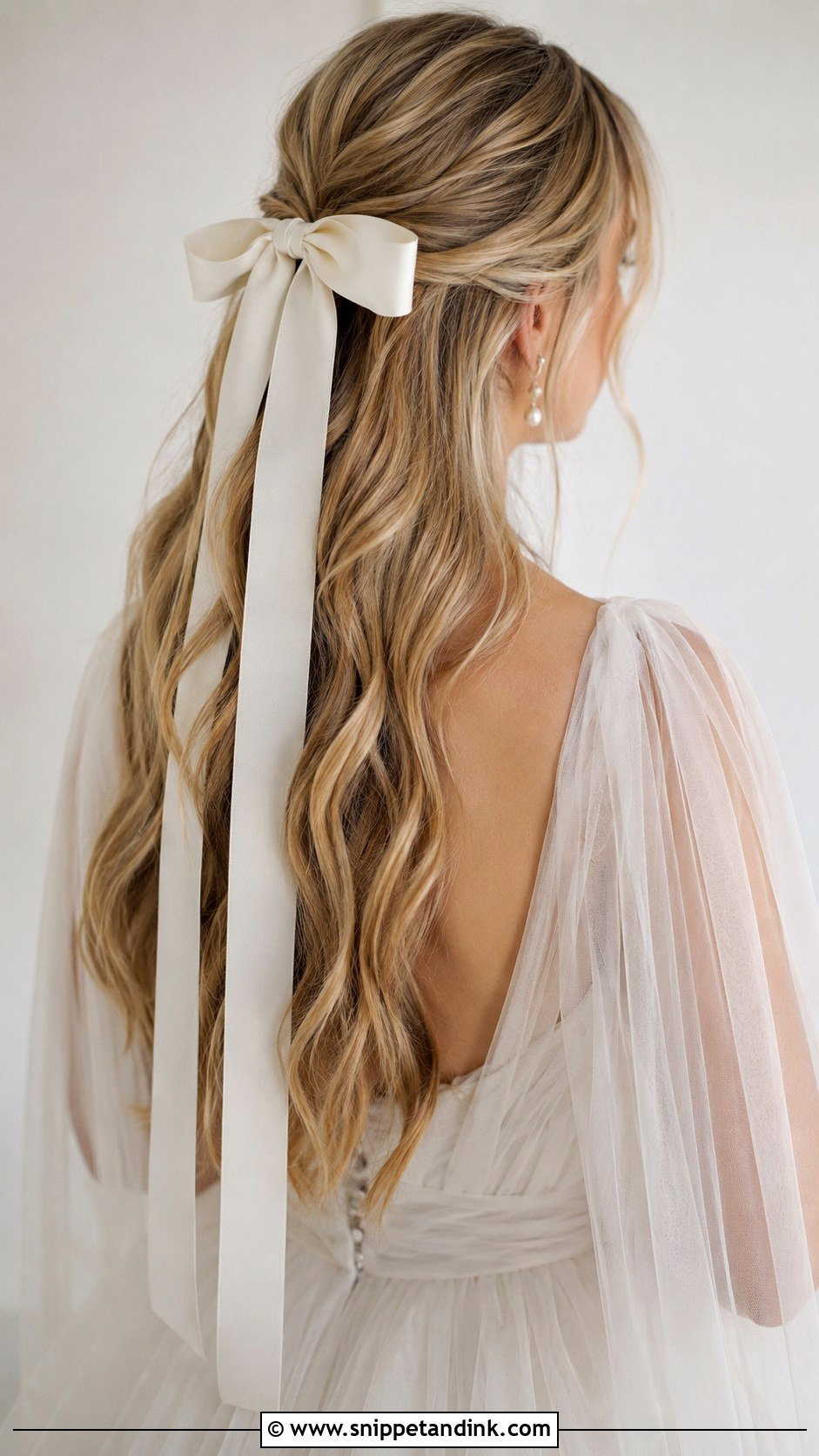
Long ribbon tails are all about movement, so they come alive in walking shots and when the breeze catches the veil. Twist both sides back, secure them at the centre and tie a narrow ribbon over the join. The tails should lie on the curls, not stick out, which is why I choose a soft, thin ribbon over stiff grosgrain for this. Cut the tails to end around mid-back or just above your curl ends. Longer than your hair and they tangle in the veil and get sat on.
5. Half Up Half Down Wedding Hair With Bow And Curls
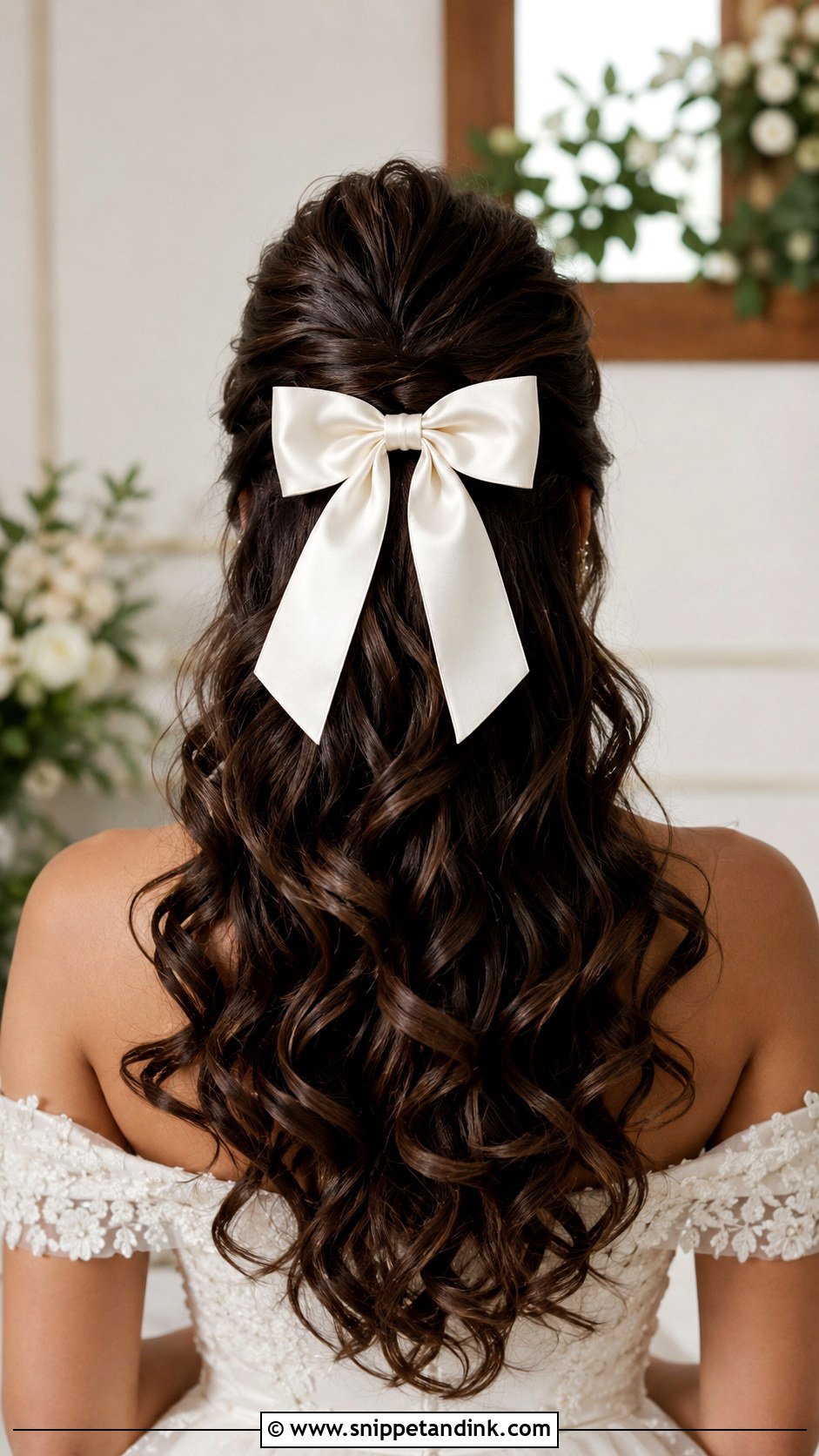
Volume and a bow need to be in proportion. With big curls I lift the crown slightly, pin the half-up shape, and only then add a medium bow; a tiny one disappears in the curls, an oversized one hides them. Curls should be separated by hand, not brushed into frizz, so each one reads in photos. This is the version I’d suggest when you want fullness but feel swamped by a full updo. A bow also makes a handy marker: the veil comb slides in just beneath it.
6. Half Up Half Down Wedding Hair With Bow And Waves
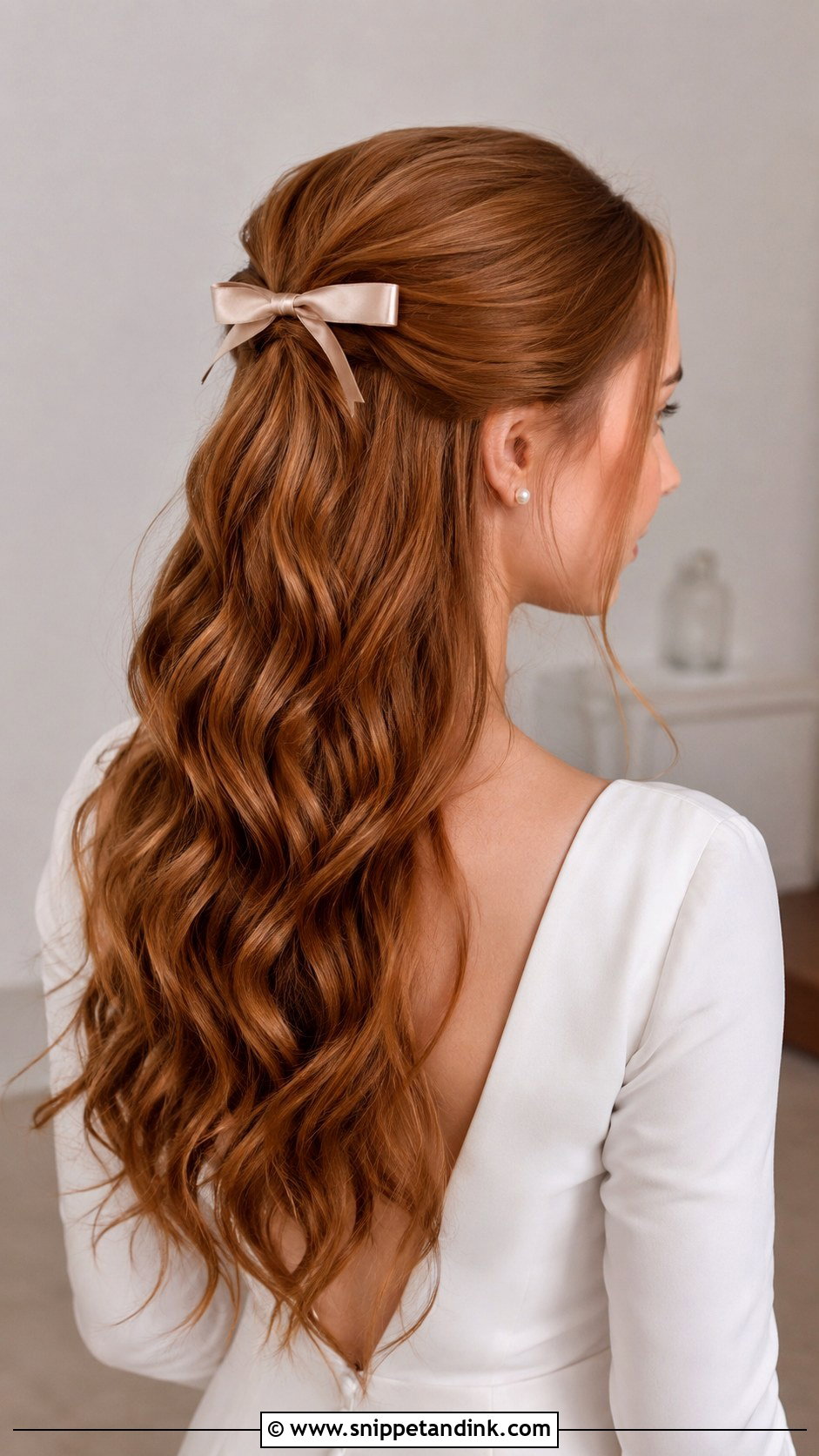
Waves keep the bow from looking too sweet. Bends rather than ringlets make the whole style feel closer to how many brides already wear their hair, which matters if you don’t want to look like a different person in the photos. Pull the top back from the temples, smooth or lightly twist it, and centre the bow. It’s an easy match for simple gowns, lace sleeves and pearl studs. The thing to watch is placement: centred bows on a twisted half-up drift sideways if only one side was pinned firmly, so I cross pins from both sides.
7. Half Up Half Down Wedding Hair With Bow And Braid
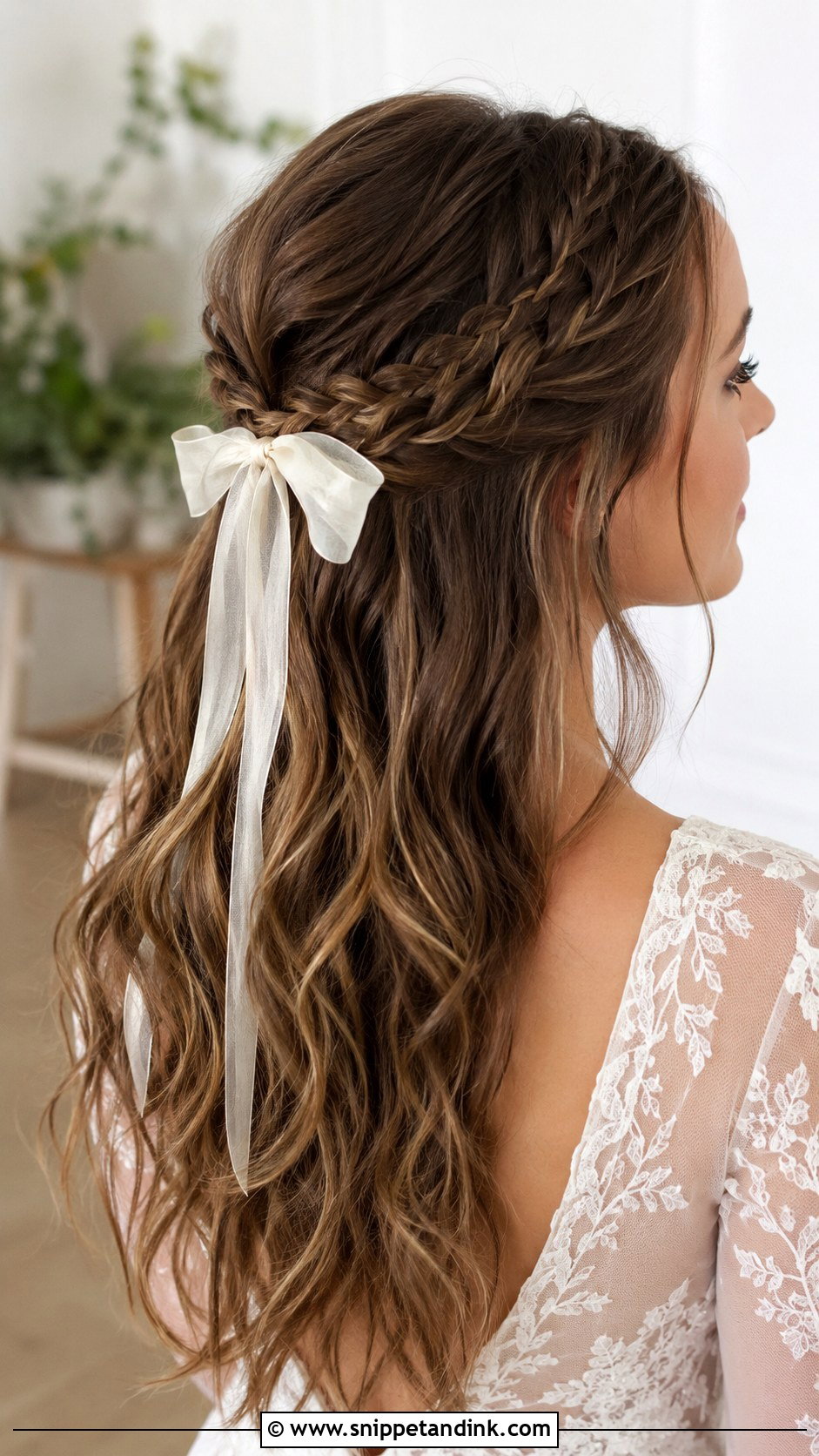
Braids give the bow something to sit on. Two small side braids meeting at the back, or one loose braid across the crown, create a natural end point where the ribbon covers the join neatly. I like this one for outdoor ceremonies because the braids lock down the front hair that wind usually pulls loose first. Braid firmly at the root and loosen only after pinning. Curls or waves below keep it bridal.
8. Half Up Half Down Wedding Hair With Bow And Twists
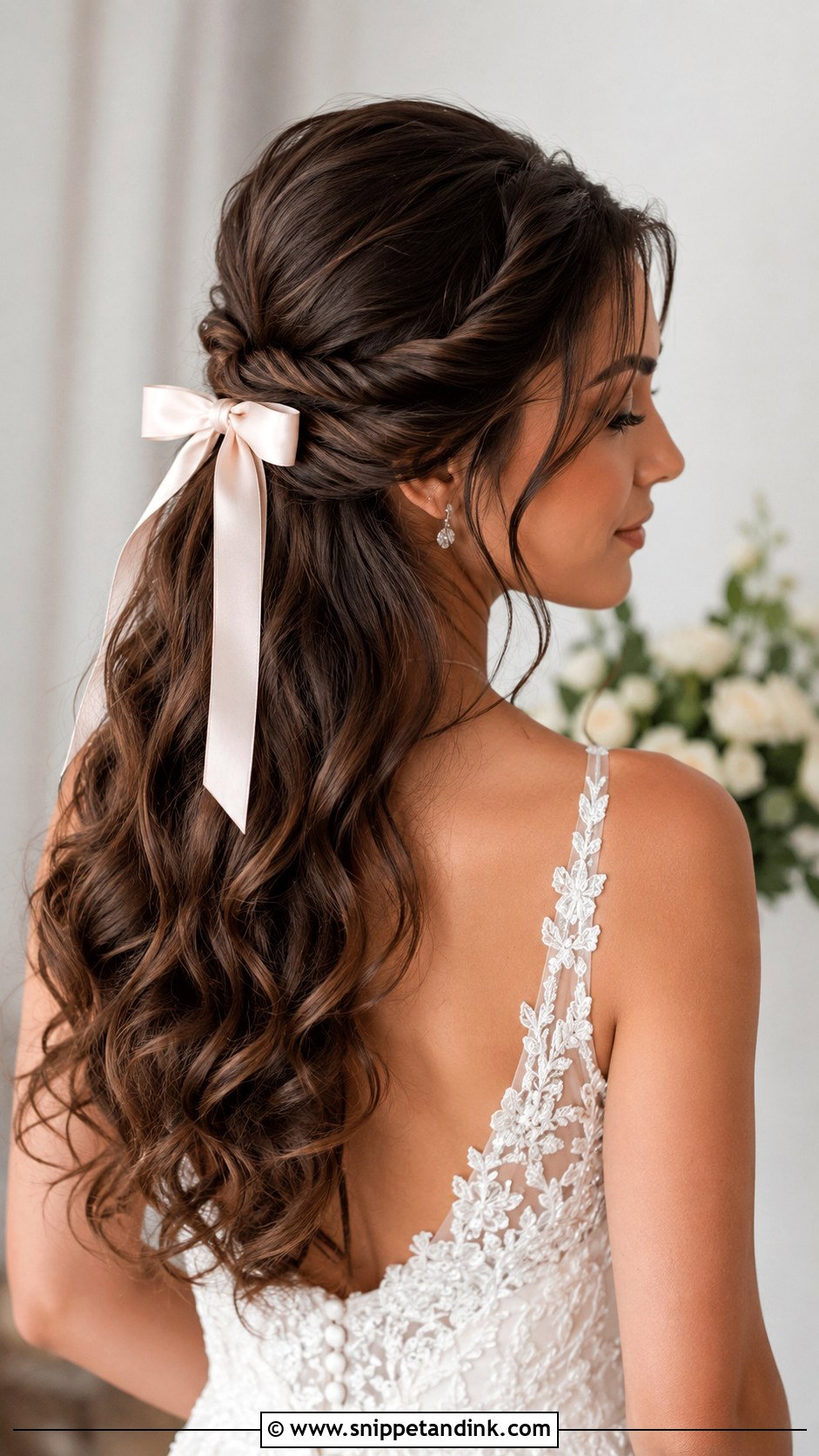
Twists are kinder to fine hair than a tight pull-back. Two front sections rolled away from the face and pinned together at the back can be loosened with your fingertips afterwards, adding visible volume at the crown. Highlighted hair shows its colour dimension through the twists, which is a nice bonus. Bow width changes the mood quite a bit: slim satin keeps it refined, a wide bow reads younger and more playful. Ask yourself which suits your dress before you shop.
9. Half Up Half Down Wedding Hair With Bow And Veil
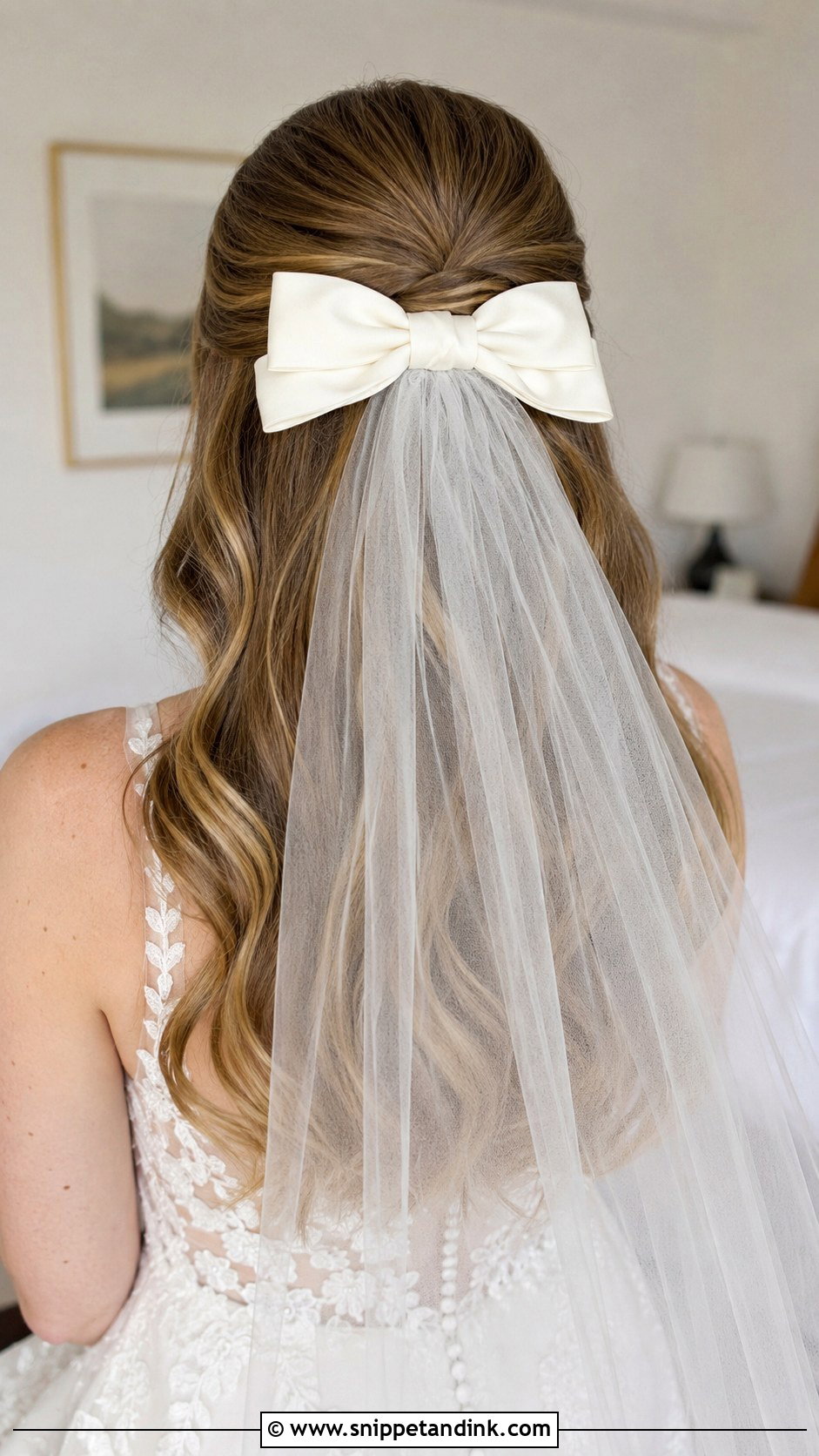
Veil and bow can share the back of the head, but only with a plan made at the trial. I slide the veil comb in below the half-up section and let the bow sit above it, so neither covers the other. Comb teeth pushed downward into the base of the twist grip far better than teeth pushed into loose hair. A plain satin or pearl bow avoids clashing with lace edging or embroidery on the veil. When the veil comes off for the reception, the bow is still there, and the style doesn’t look like something is missing.
10. Half Up Half Down Wedding Hair With Bow For Long Hair
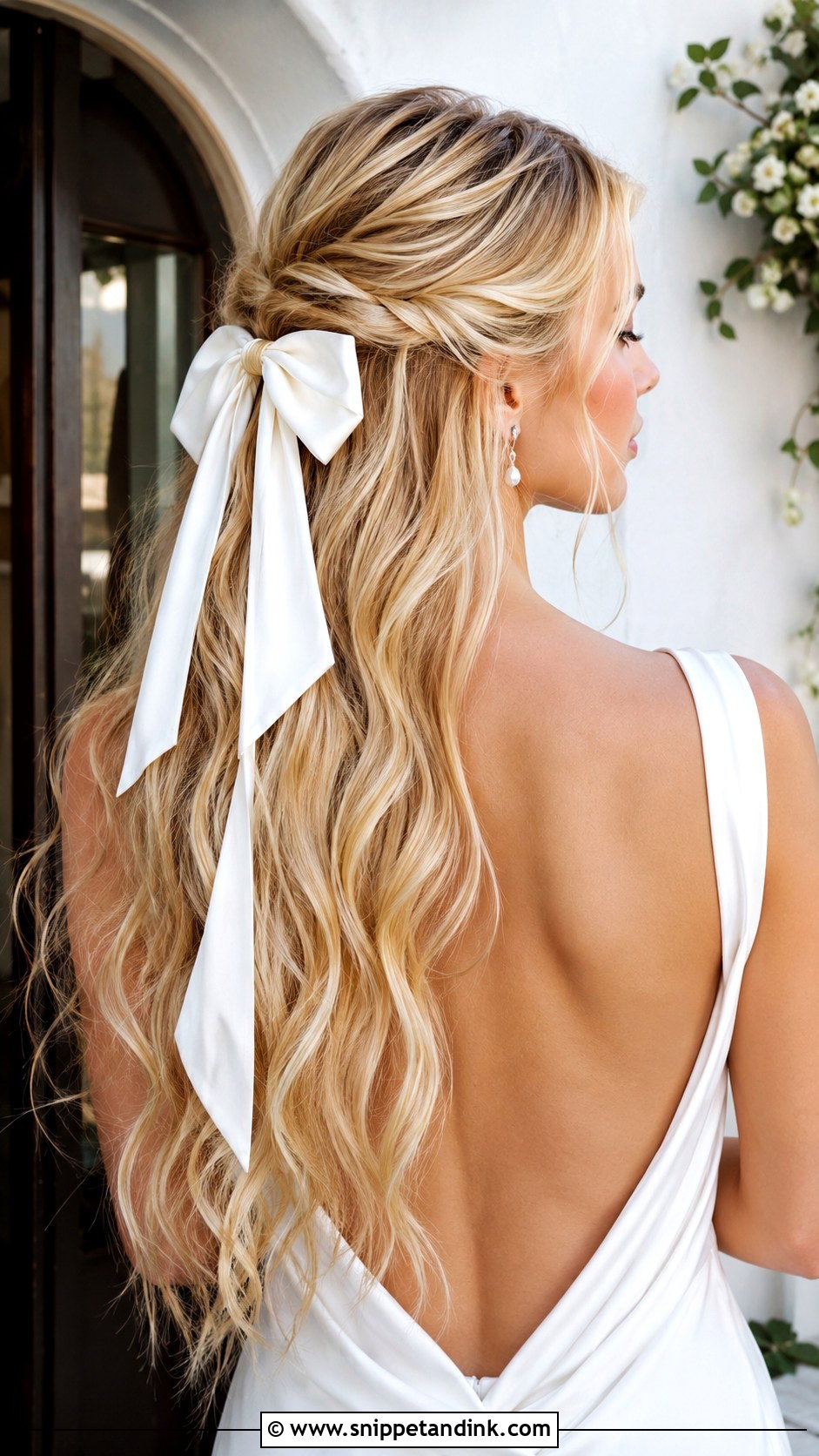
Long hair can carry a larger bow without the bow overpowering the shape, and long tails blend into the ends. The trade-off is weight. Long, heavy lengths gradually pull the half-up section down, so I always anchor with an elastic under the bow and cross pins over it. A little crown volume stops the top from flattening by evening. Brushed waves, soft curls or a glossy blowout all work underneath. Open-back gowns suit this best, because the hair and ribbon together fill the bare space.
11. Half Up Half Down Wedding Hair With Bow For Medium Hair
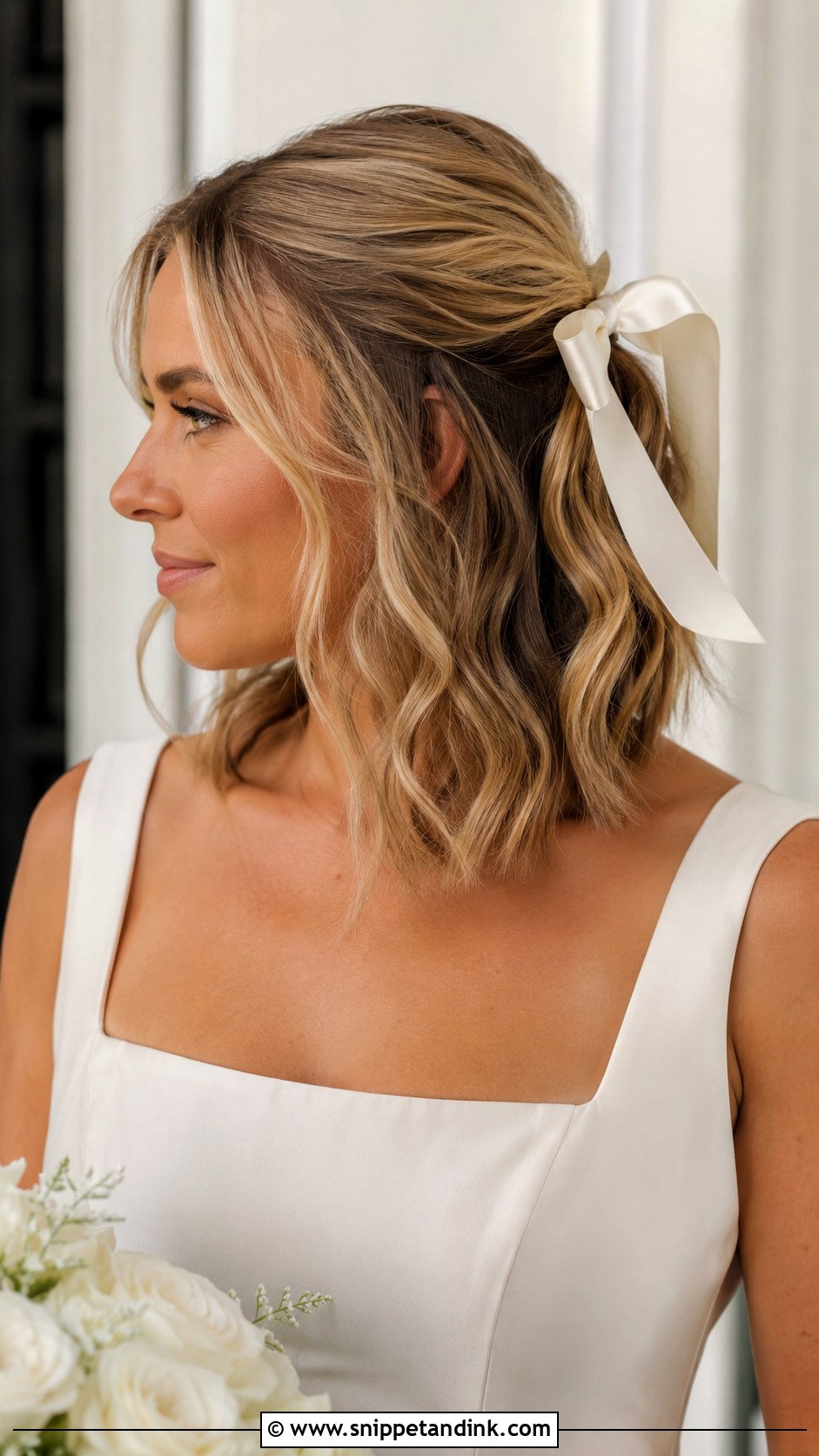
Medium hair has just enough length to swing without much weight dragging on the pins, which makes this one of the easiest bow styles to wear for a full day. Curl with a medium barrel and brush the waves out so they sit around the shoulders. Don’t take too much hair up; on a lob or collarbone cut a big top section leaves the lower part thin and see-through. Small to medium bows keep the proportions right. Bridesmaids and guests can wear the same shape.
12. Half Up Half Down Wedding Hair With Bow For Short Hair
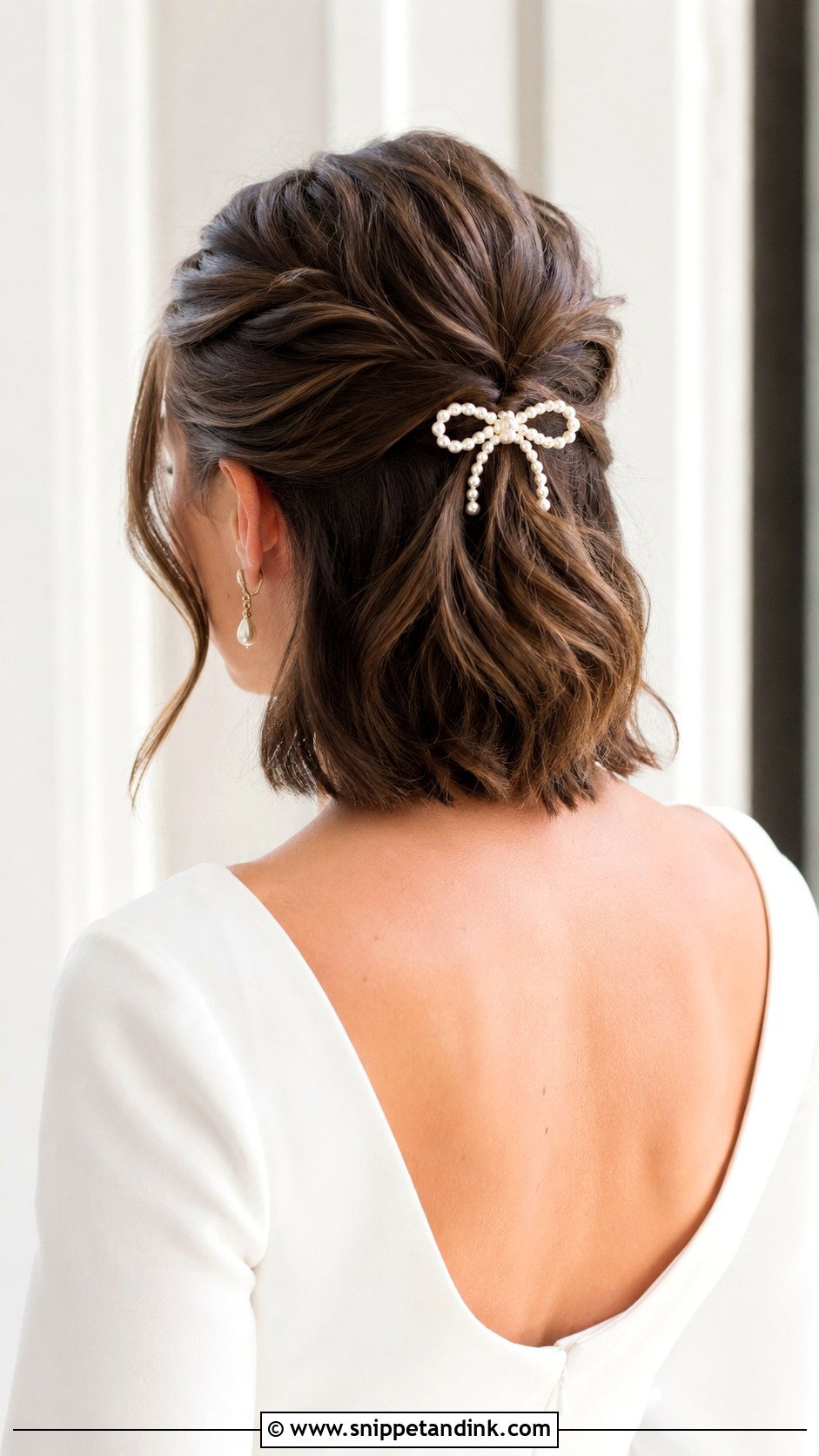
Short hair can wear a bow if you scale everything down. On a bob, long bob or grown-out crop I take narrow sections from the front, pin them flat at the back of the crown and clip a lightweight bow over the pins. Tied ribbon rarely works on short hair because there isn’t enough of a ponytail to tie around. Soft bends add texture so it doesn’t look flat. Choose a small satin, pearl or organza bow. It suits courthouse weddings and small ceremonies where a fuller style would feel out of place.
13. Half Up Half Down Wedding Hair With Bow For Thin Hair
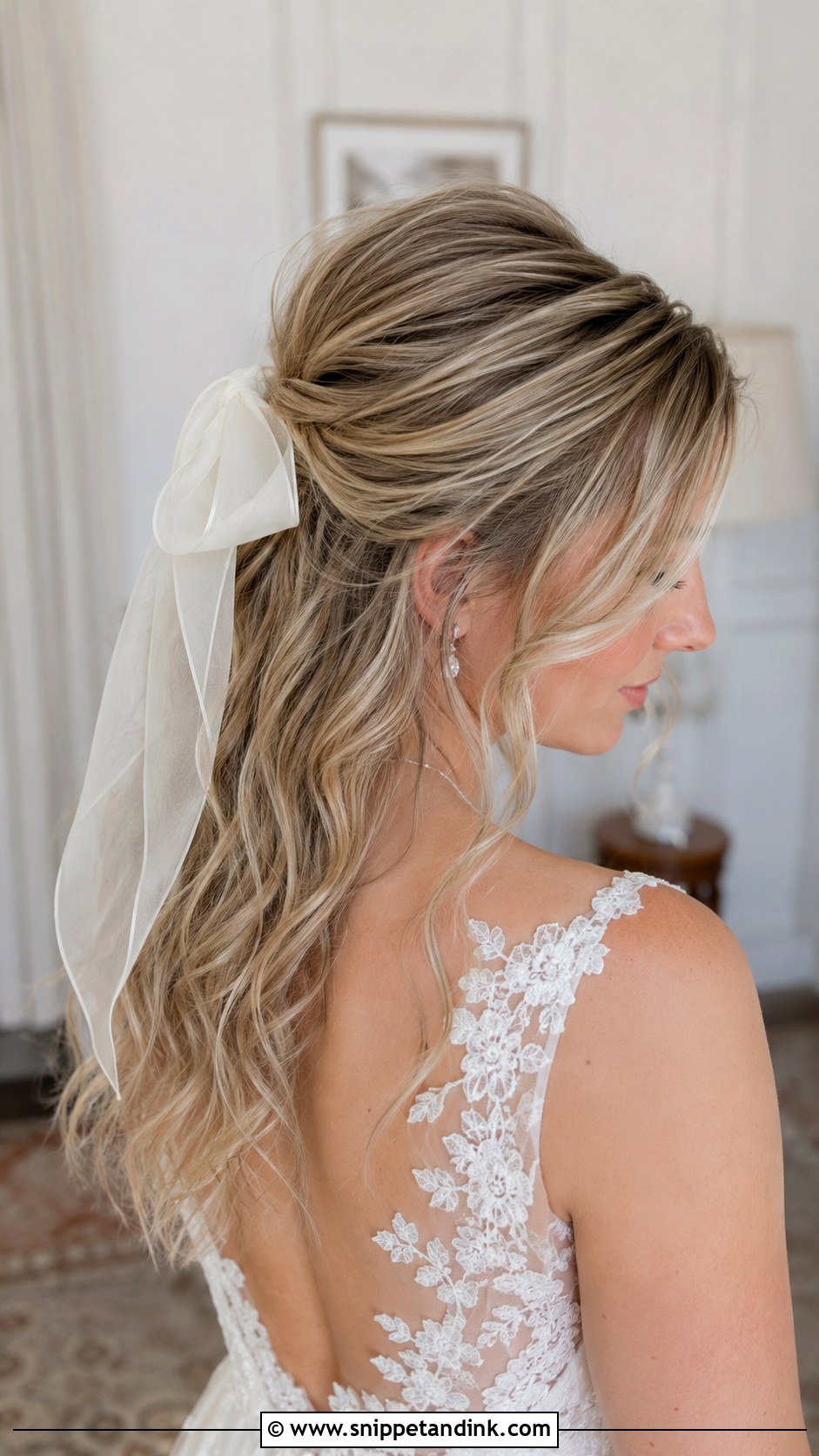
Fine hair needs the bow to be light, because the accessory is fighting gravity with very little hair to grip. I’d choose silk or organza over thick velvet every time. Wave the lengths first so they look denser, gather only a small top section, and add gentle crown lift with texture spray rather than heavy teasing. A couple of face-framing pieces soften the front. It’s comfortable to wear and easy to refresh, since you can re-pin a light bow in a minute.
14. Half Up Half Down Wedding Hair With Bow For Thick Hair
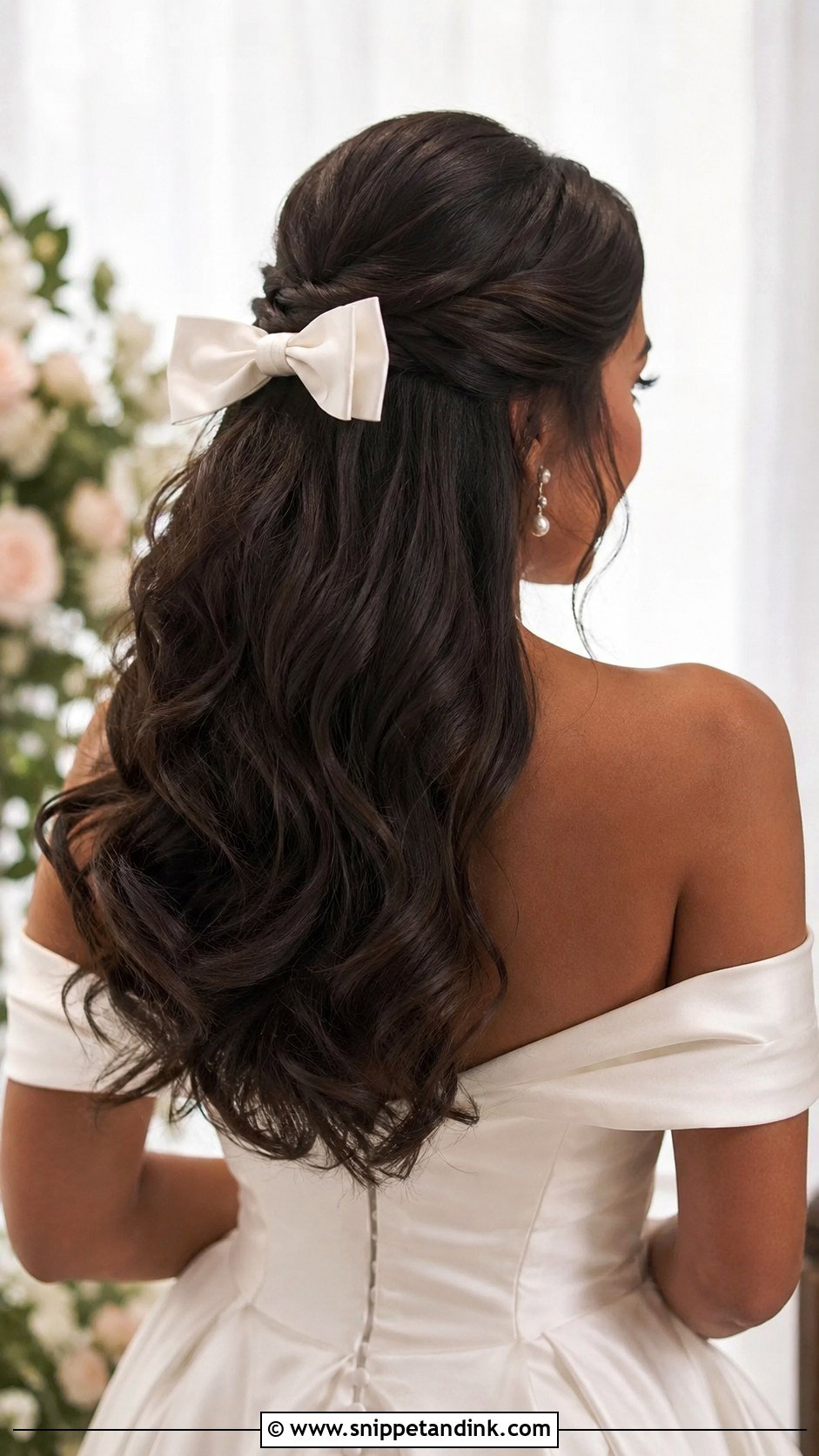
Thick hair holds a bow well but punishes weak fastenings. Divide the top into twists, braids or a smooth half pony and pin each firmly before the bow goes on; a single elastic around a thick section can roll down over the day. I use a sturdy bow clip or ribbon tied over a hidden elastic. Loose waves take some bulk out of the lengths. A medium to large bow is in proportion here, where a small one would look lost.
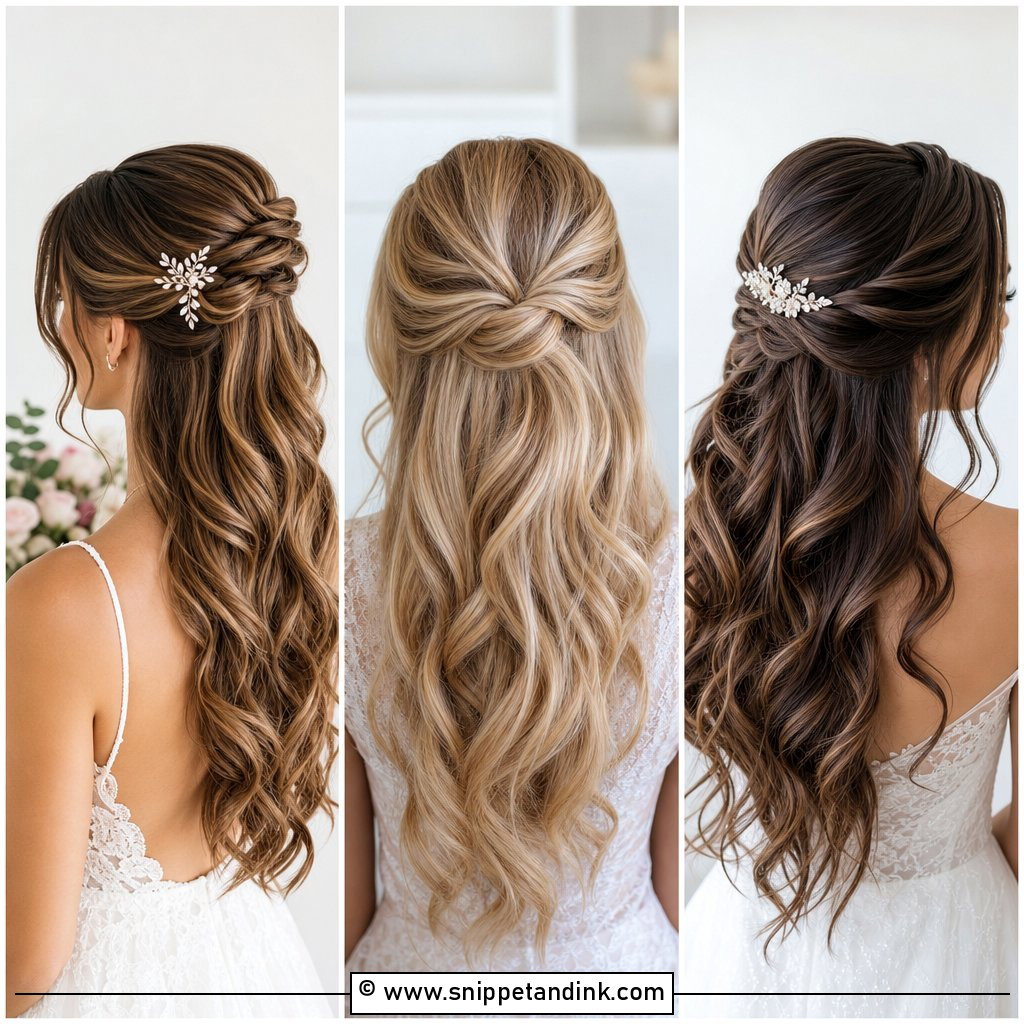
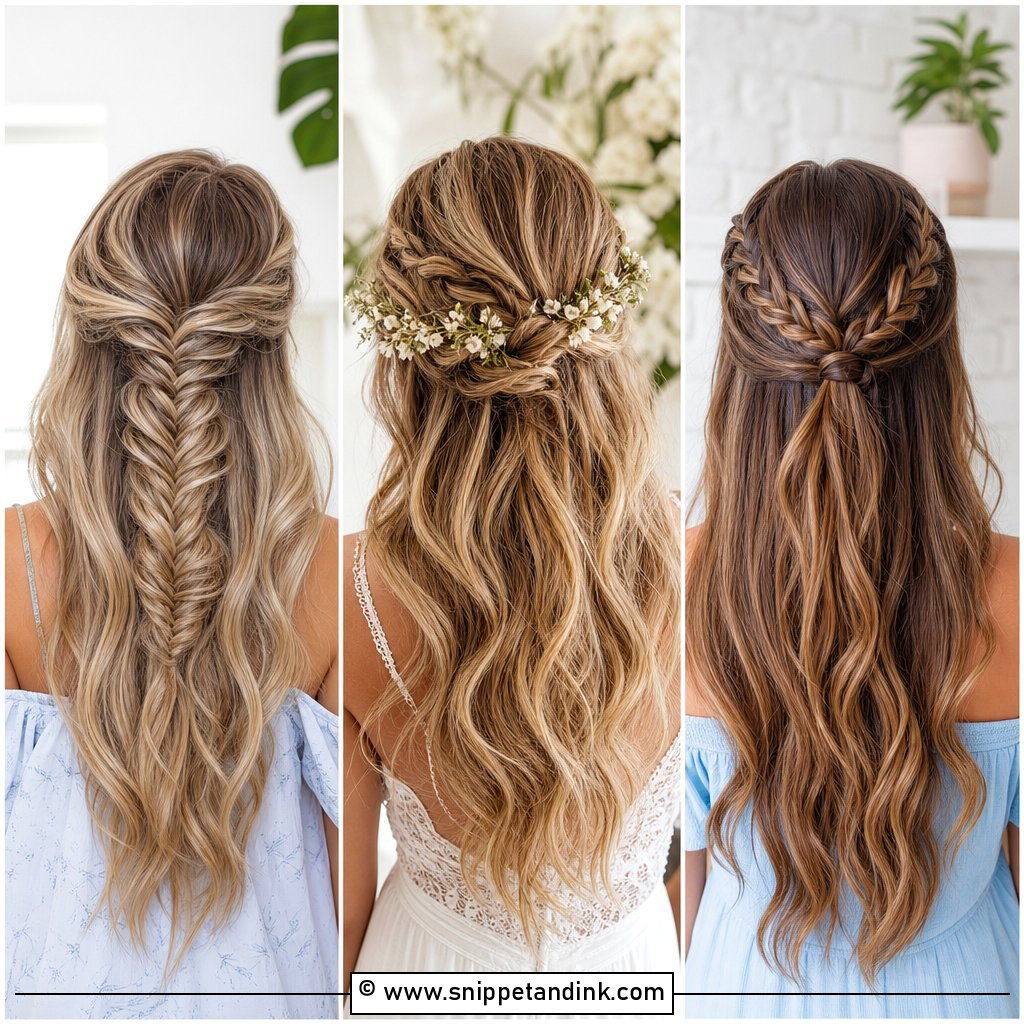
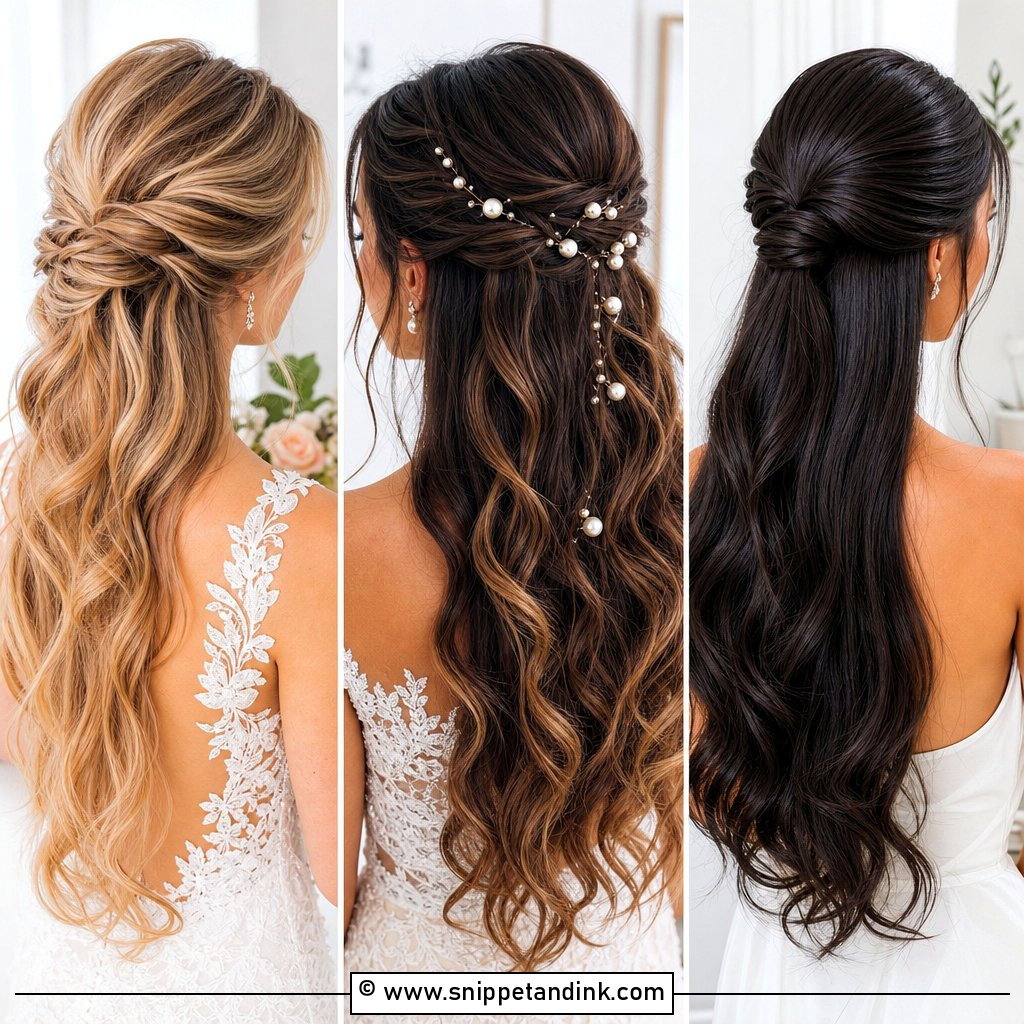
15. Half Up Half Down Wedding Hair With Bow For Curly Hair
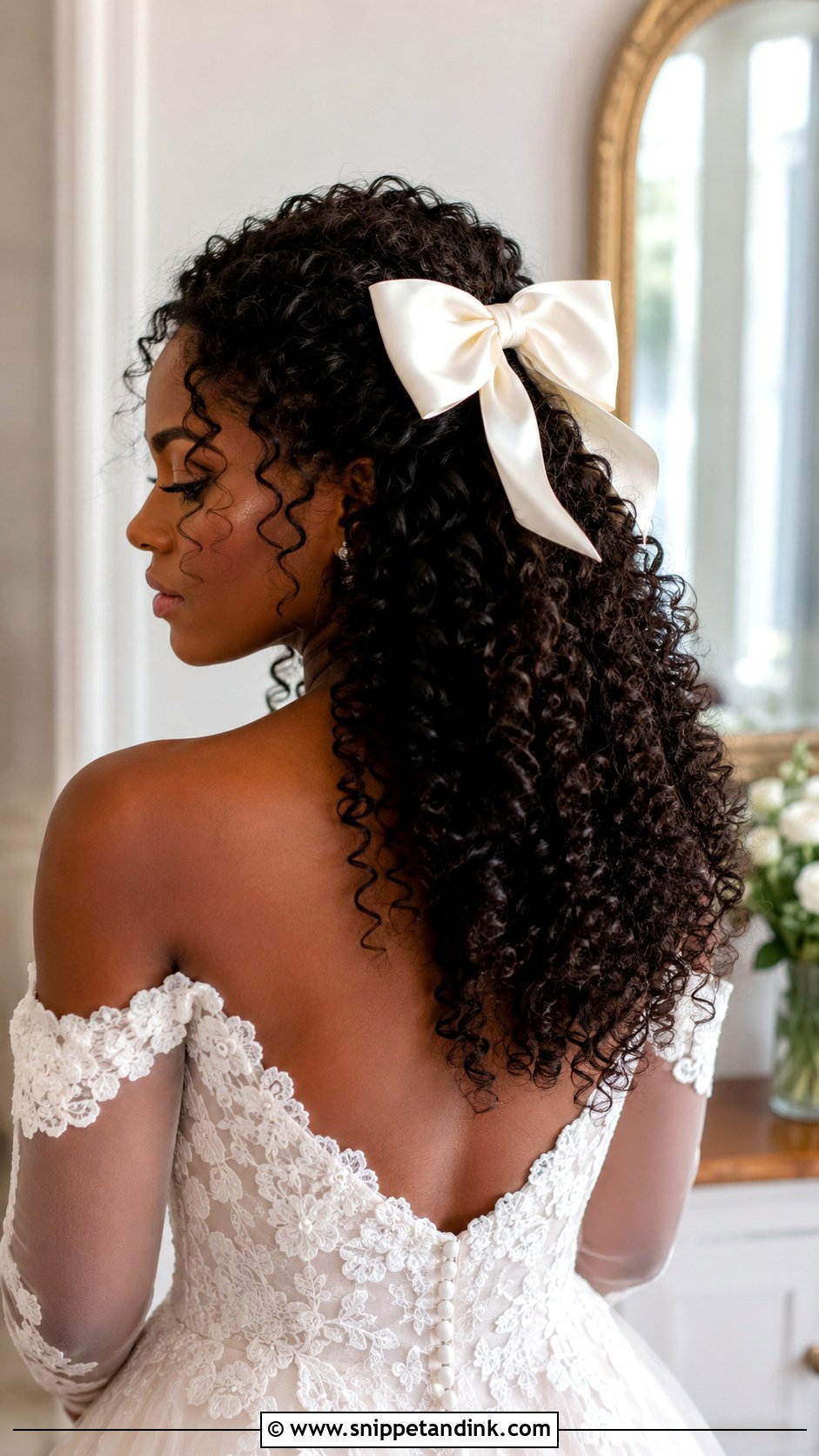
Natural curls give a bow a soft cloud to sit on. Gather the top curls gently; pulling tight stretches the curl pattern at the hairline and invites frizz. I usually pin the bow onto a loose elastic rather than tying ribbon directly around curls, since tying and re-tying can rough up the texture. Satin and organza are both kind to curls, and satin snags less. Leave a few curls around the face. Define them with your usual cream or gel the day before rather than reworking them on the morning.
16. Half Up Half Down Wedding Hair With Bow For Straight Hair
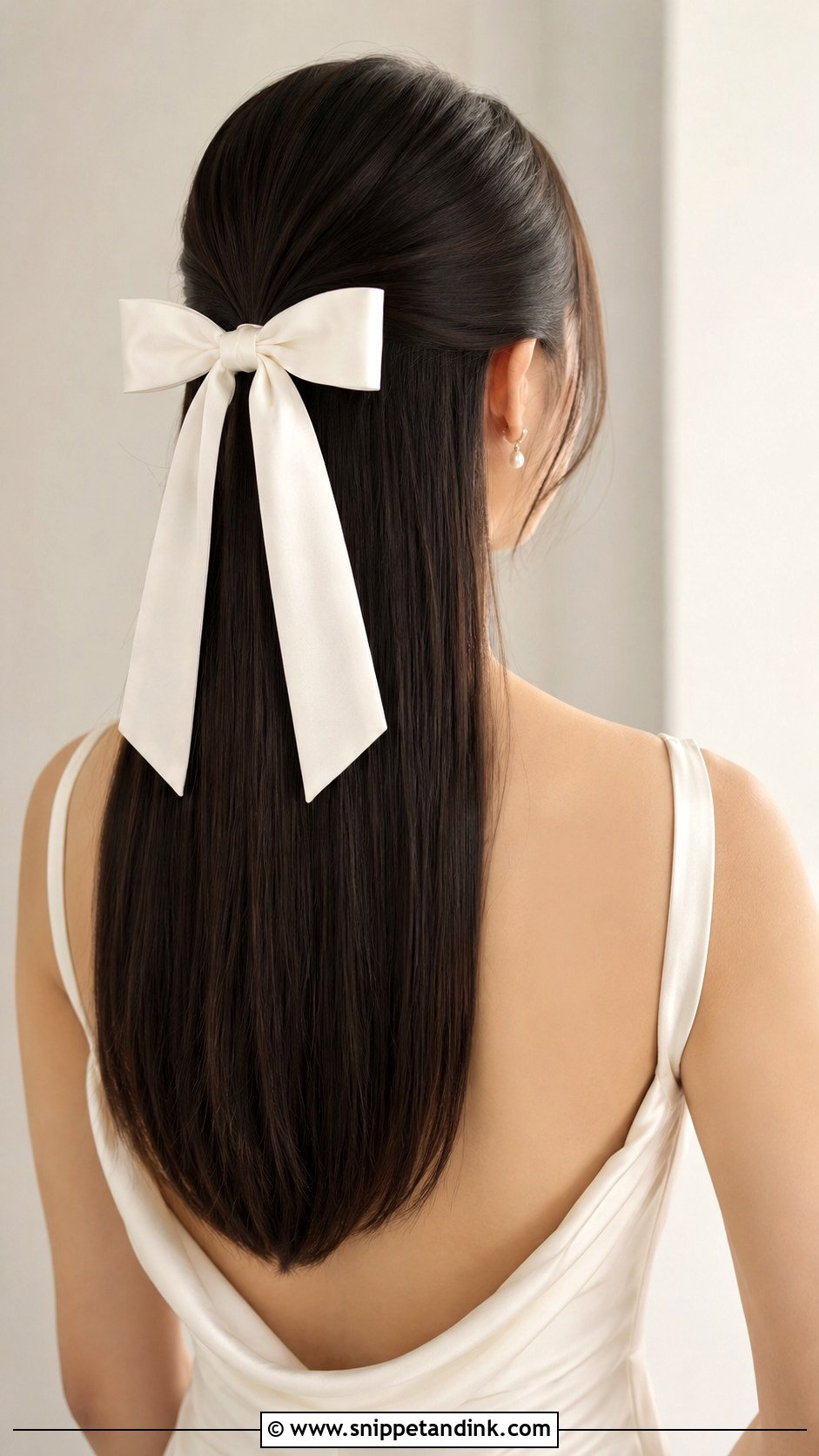
Straight hair turns a bow into a clean focal point, but the risk is a flat finish. I add lift at the crown with a round brush, set a precise part and smooth the top section before placing the bow. The lengths can stay straight with slightly beveled ends or take a gentle bend. Satin and velvet both show up well against straight hair because there’s no texture competing with them. Square necklines and pearl accessories suit this version, and shine spray through the ends finishes it.
17. Half Up Half Down Wedding Hair With Bow For Blonde Hair
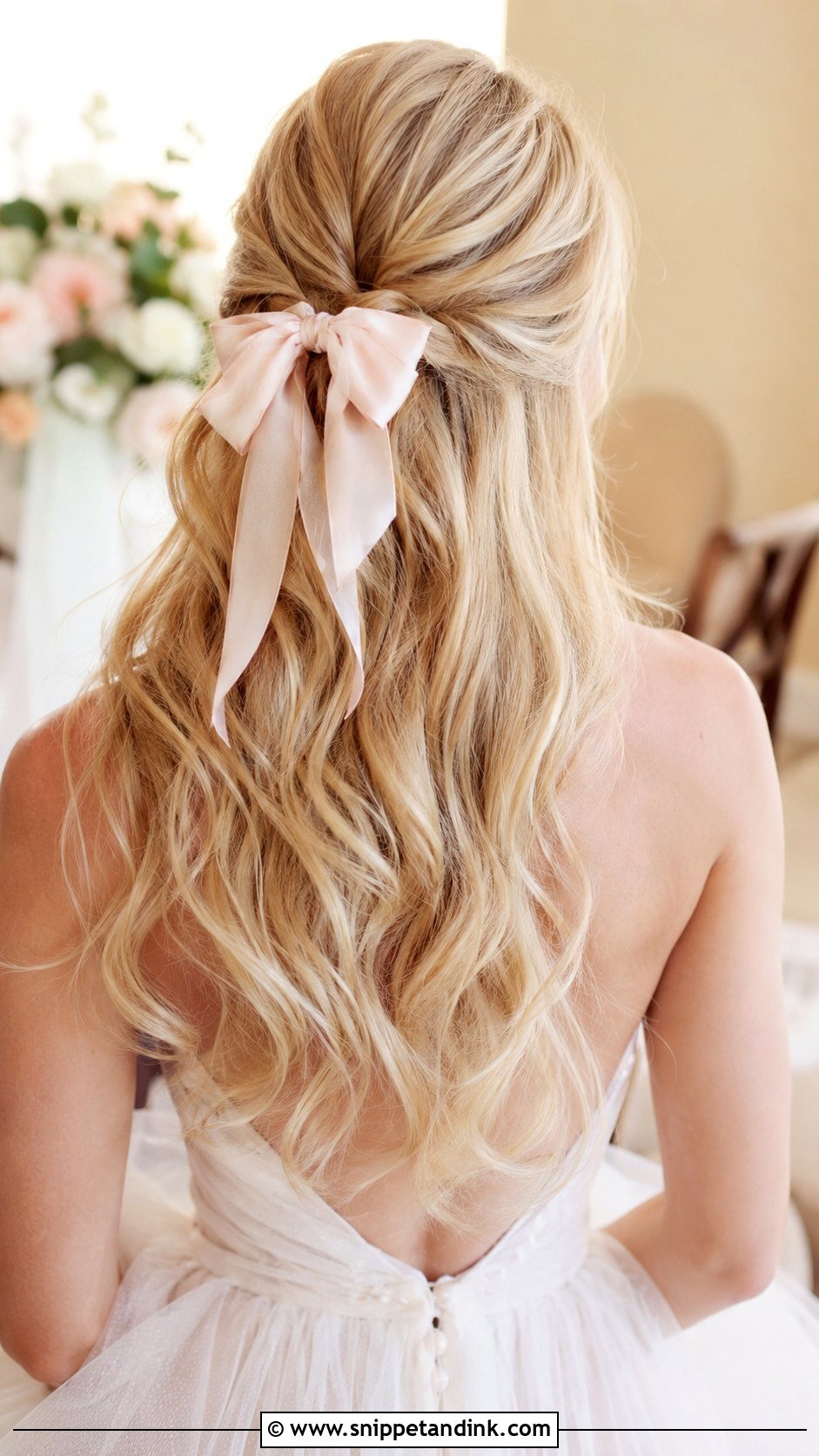
On blonde hair, a bow in exactly the same tone as your hair vanishes, so I go one step warmer or cooler. Champagne on ash blonde, ivory or soft blue on golden blonde. Twist or lightly braid the top section to show highlights, and curl the lengths so the lighter pieces catch daylight in outdoor photos. Let the gown decide the bow’s scale: detailed dresses want a simple, soft bow, while a clean modern gown can take something larger.
18. Half Up Half Down Wedding Hair With Bow For Brunette Hair
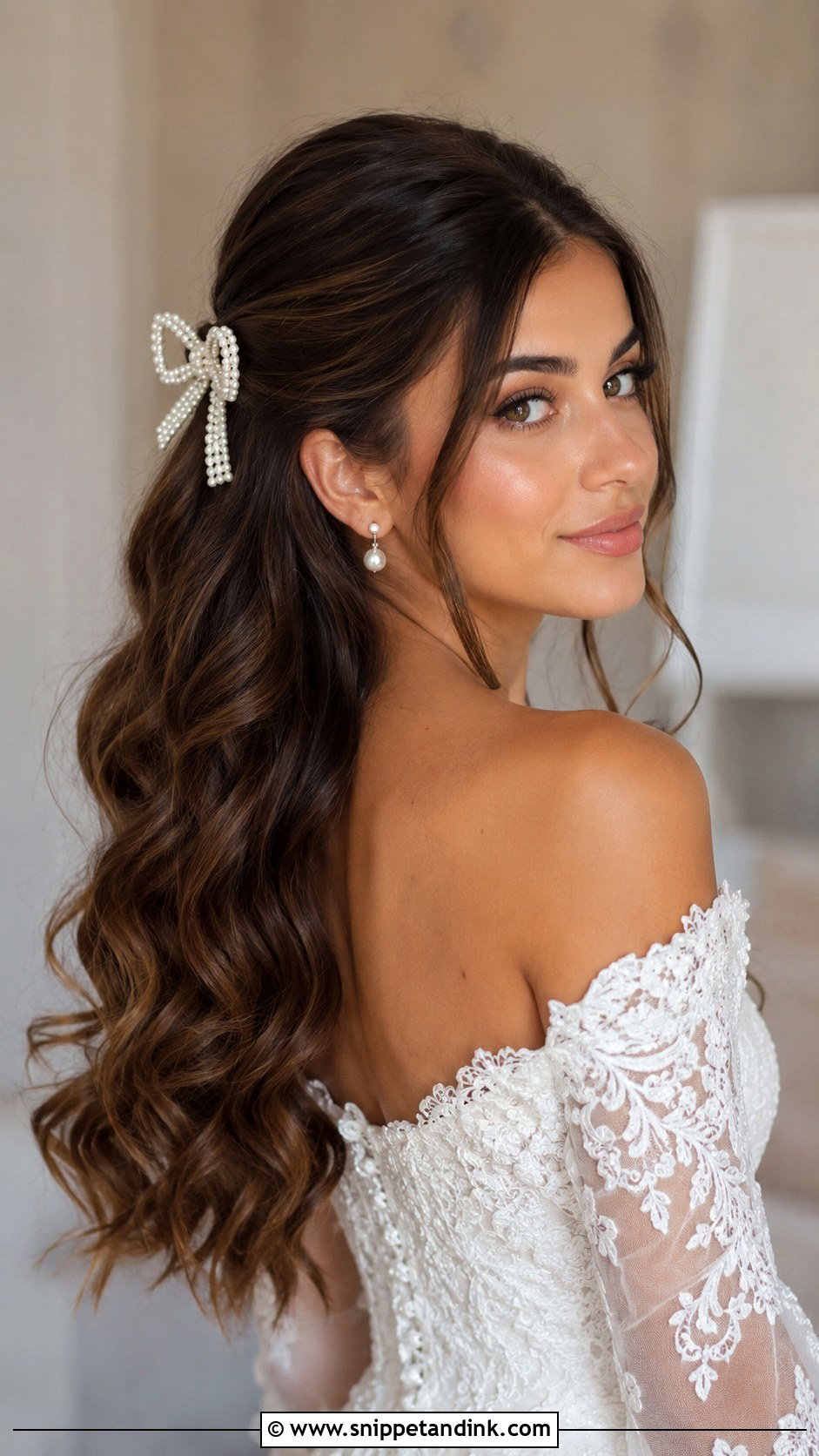
Brunette hair gives a pale bow strong contrast, so even a narrow ribbon reads clearly from the back of the room. Ivory satin, pearl trim, champagne silk and blush all work. Underneath, smooth waves, a twisted crown or a small half pony are all fine. Caramel balayage or chocolate highlights add movement through the loose lengths. Centre the bow carefully: on dark hair any tilt is obvious in photos, so I check it in a hand mirror from behind before you leave the room.
19. Half Up Half Down Wedding Hair With Bow For Red Hair
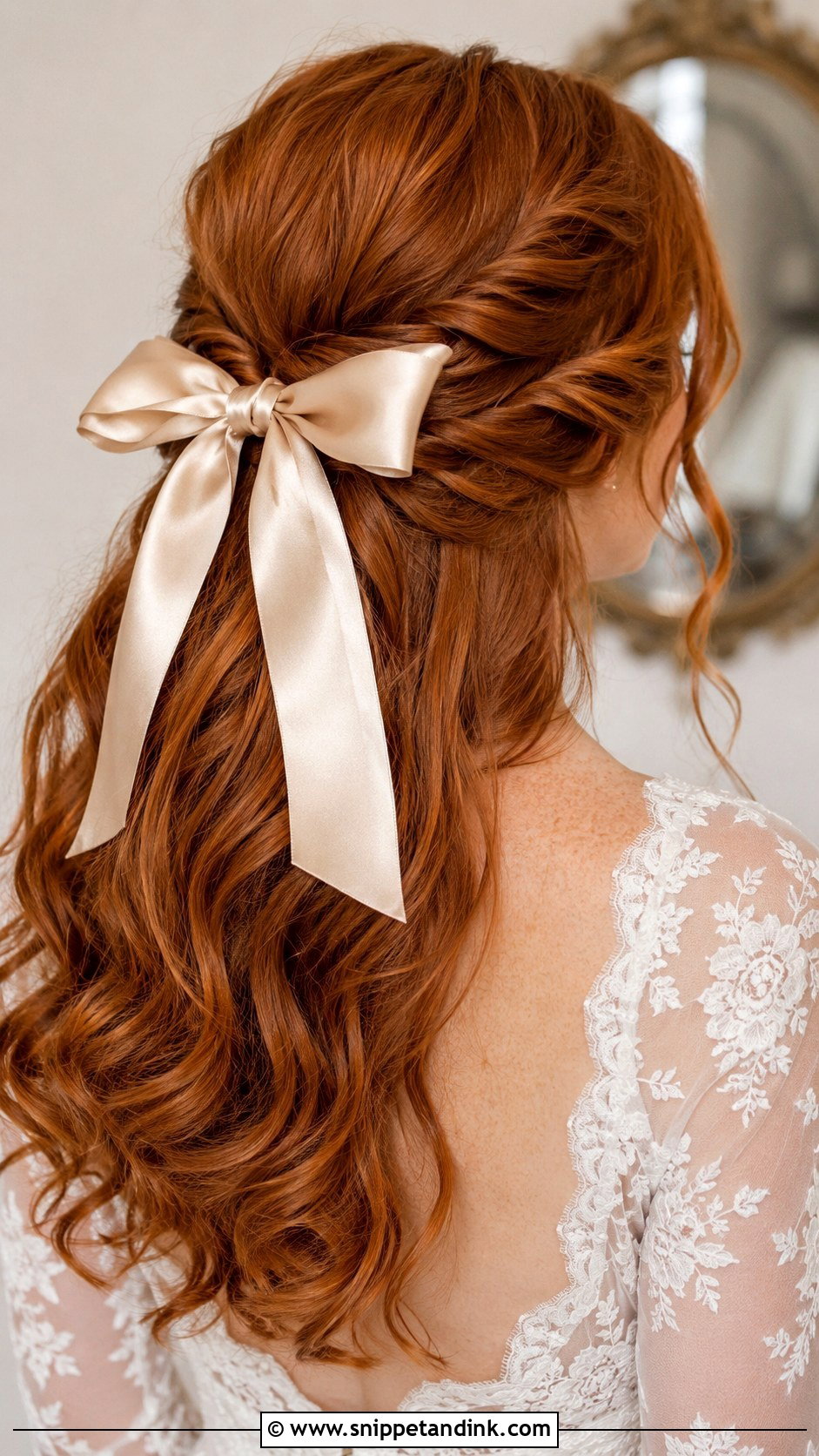
Copper, auburn and strawberry tones look warmest next to cream, gold, champagne or soft sage ribbon. Bright white can look harsh against warm hair, and I usually talk brides out of it in favour of a softer shade. Twist the half-up section loosely so the colour shows through, then wave the lengths for depth. Vintage-inspired gowns and floral lace suit this version. If your red is a dyed shade, try the ribbon against it after your last colour appointment, not before, since the tone shifts.
20. Half Up Half Down Wedding Hair With Bow For Bridesmaids
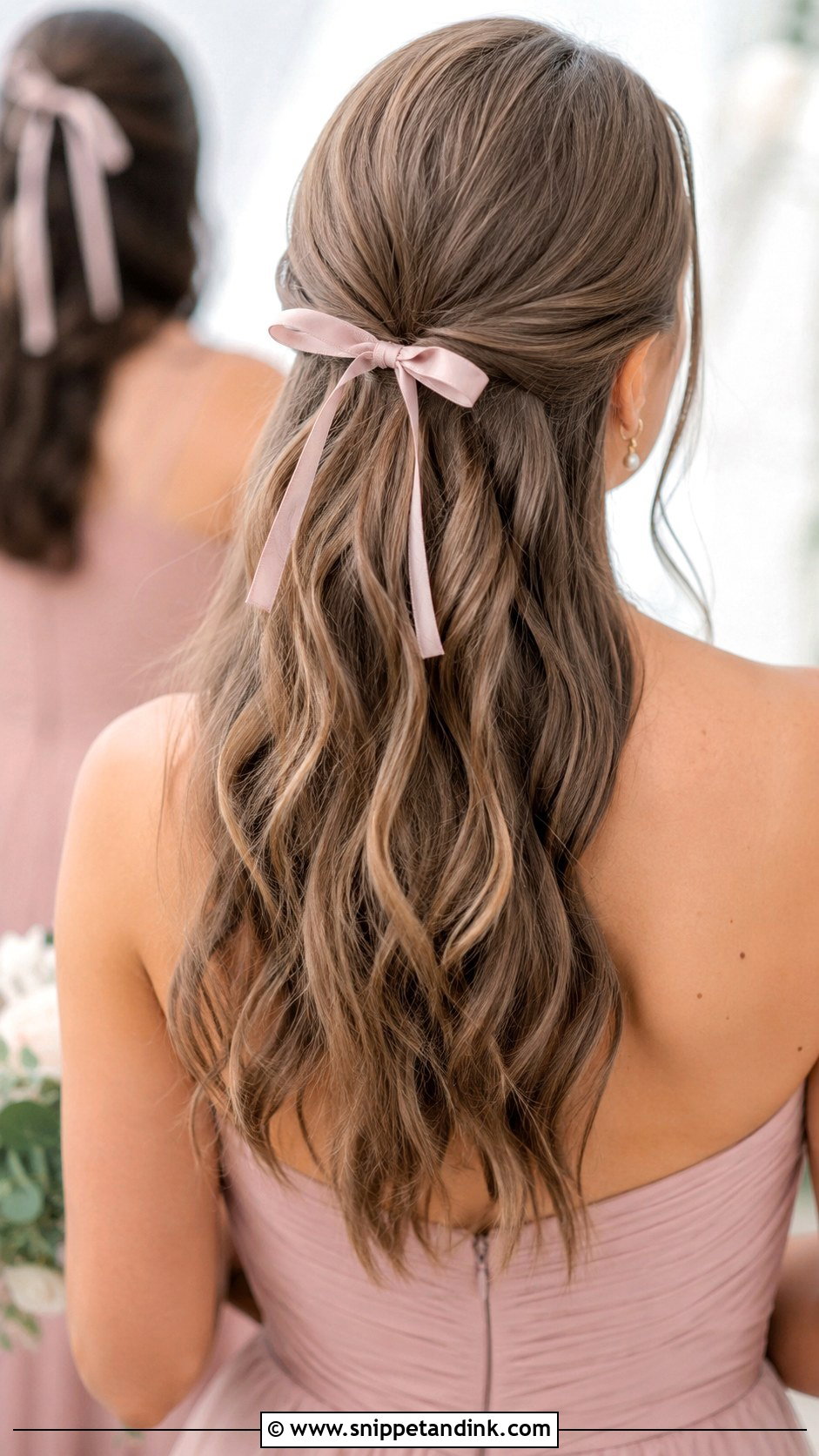
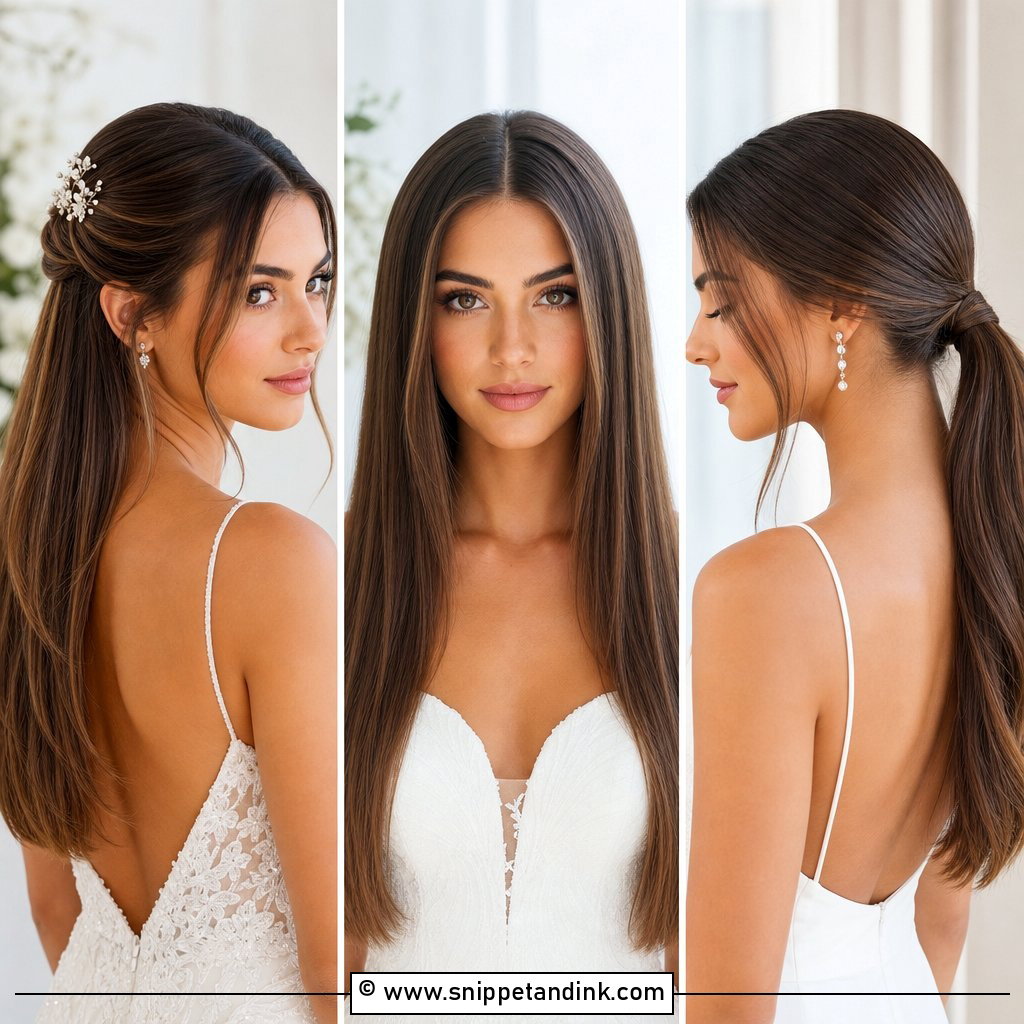
Bridesmaids can wear the same idea in a supporting role. I’d keep their bows smaller than the bride’s and match the colour to the dresses or the palette. Give everyone the same ribbon but let each person wear her own texture: straight, wavy or curly hair under one ribbon looks coordinated without forcing everyone into one style that only suits half of them. A small half pony with soft waves and a ribbon tied at the back is quick for a stylist to repeat across several people.
Ribbon Prep in the Week Before the Wedding
A bow straight out of its packaging rarely looks its best. A little preparation keeps it crisp in photos.
- Steam out fold lines from a distance with a garment steamer, or press satin on a low iron through a cloth. Velvet should only be steamed, never pressed flat.
- Cut the tails on a slant or into a small V. Straight-cut ends fray fastest.
- Seal the cut edges with a clear fray-stop liquid or a thin coat of clear nail polish, and let it dry overnight.
- Hold the ribbon against the dress fabric by a window. Ivories and whites vary a lot, and artificial light hides the mismatch.
- Buy a spare length. Ribbon gets stepped on, sat on and caught in veils, and a spare costs very little.
On the morning, the bow should go on last, after the dress, so it isn’t knocked or crushed as the gown goes over your head.
A Bow Should Survive the Hug Line
Fabric, size and fastening matter more than the hairstyle underneath. Pick the fabric for the season, scale the bow to your hair, and fix it to a solid base rather than loose strands. Bring the actual bow to your trial along with your veil and earrings, and have someone hug you, turn your head and sit back in a chair while you watch it in the mirror. If it’s still centred after that, it’ll hold through the day.
You'll Like These Ideas:


Leave a Reply