
A braid is the part of a bridal half-up that does the real holding. It pulls the front back so nothing falls across your face during the vows, and it gives the photographer texture to catch from behind, which is the angle guests see for most of the ceremony. These 25 braided half-up ideas run from a single thin accent plait to full crowns. With each one I’ve noted the hair it needs, how it behaves under a veil, and where it tends to go wrong.
Fine Hair Makes Thin Braids Unless You Plan Ahead
Most of the braids in bridal inspiration photos are built on a lot of hair, often more than the bride naturally has. Braiding uses up length and bulk; a braid made from a modest section of fine hair will look like a narrow cord in photos. I talk this through at the consultation, not on the morning.
Adding hair where the braid sits
A row or two of clip-in extensions placed under the top section, matched to your colour, gives a braid real thickness without anyone noticing. They need to be matched at your trial, in daylight, and brought on the day. Tape-ins can work too, but put them in a couple of weeks before so they’ve settled.
Giving the hair grip
Freshly washed, conditioned hair is slippery. I’d ask you to wash the day before, skip heavy conditioner on the roots, and avoid oils. On the morning I add dry shampoo or a texture spray before braiding. This gives the stitches grip so the braid doesn’t loosen or slide by the reception.
Planning around layers
Short face-framing layers will escape a braid as it gets lower down. If you’re planning a haircut before the wedding, ask to keep the layers long, and have the cut at least a month ahead so you can test the braid on it.
1. French Braid Half-Up Wedding Hair
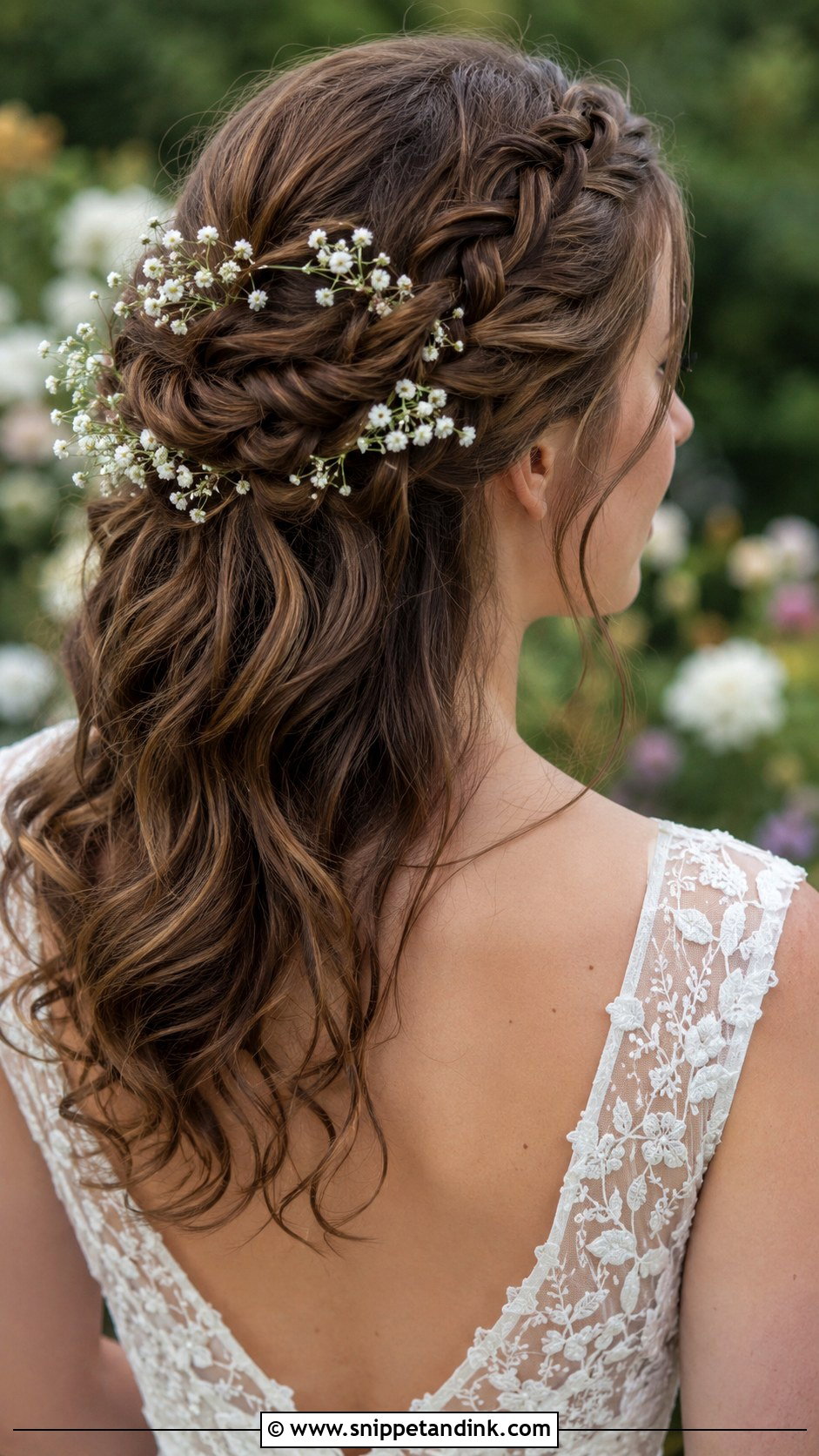
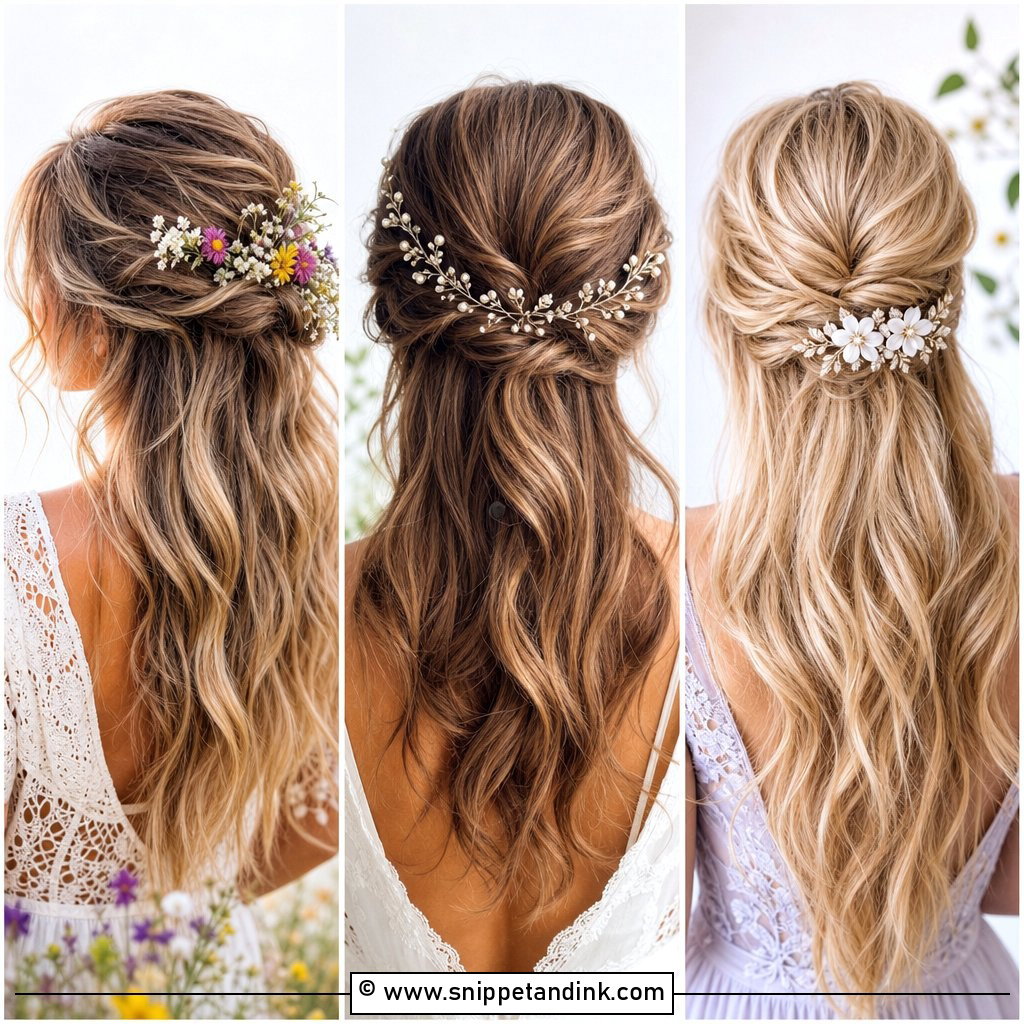
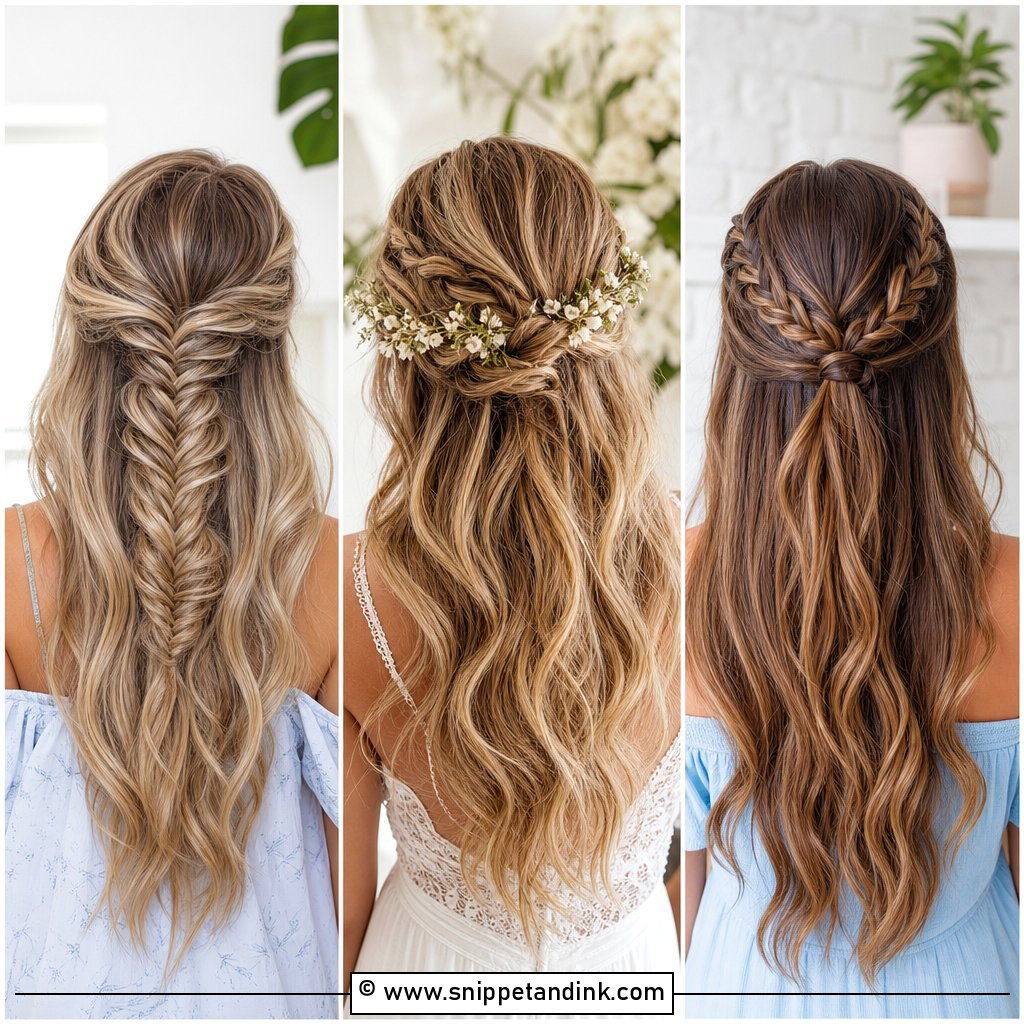
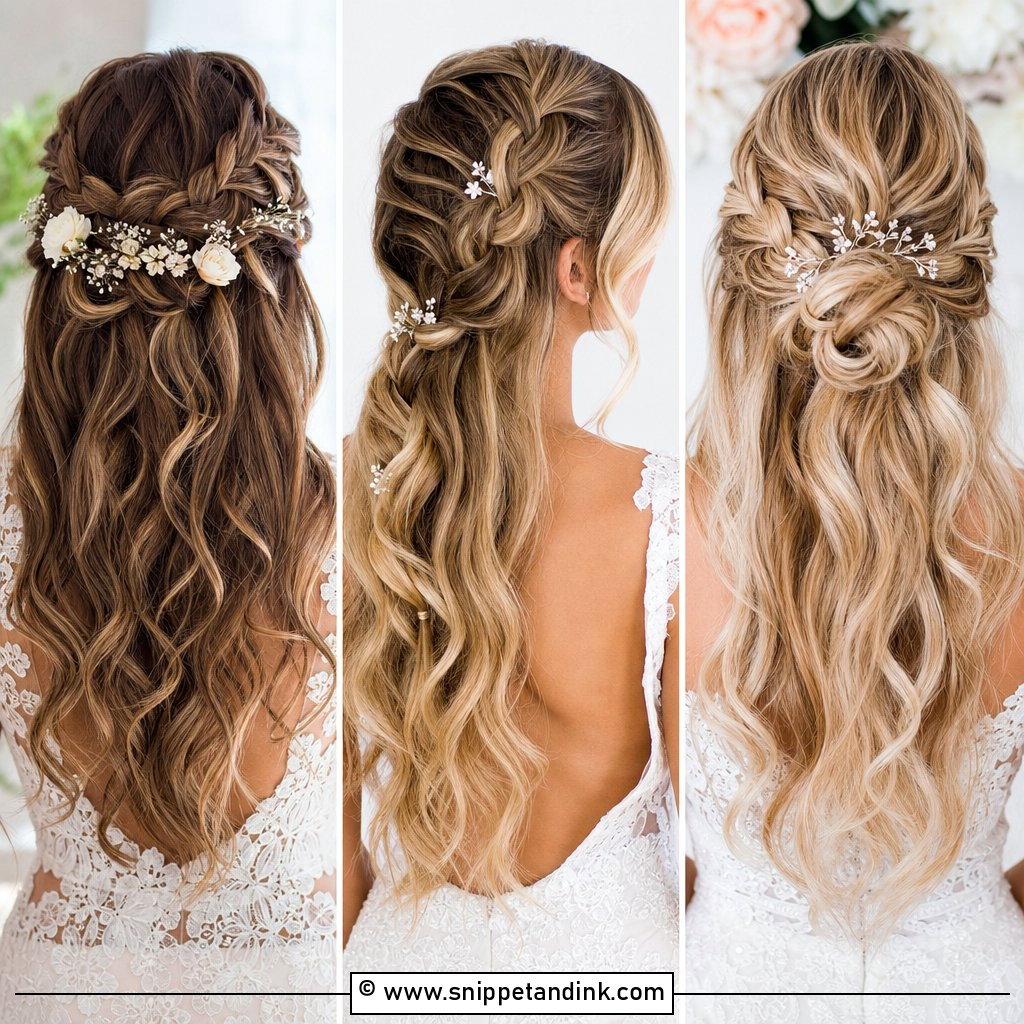
This is the braid I’d call the safest bet in the whole list. I French braid from the front hairline back along the crown, pick up small sections so the stitches stay neat, and stop at the back of the head where the loose waves begin. Long and medium hair both work. If you want baby’s breath sprigs in it, slide the stems along the braid in the same direction as the stitches so they sit flat instead of sticking out.
2. Fishtail Braid Half-Up Half-Down
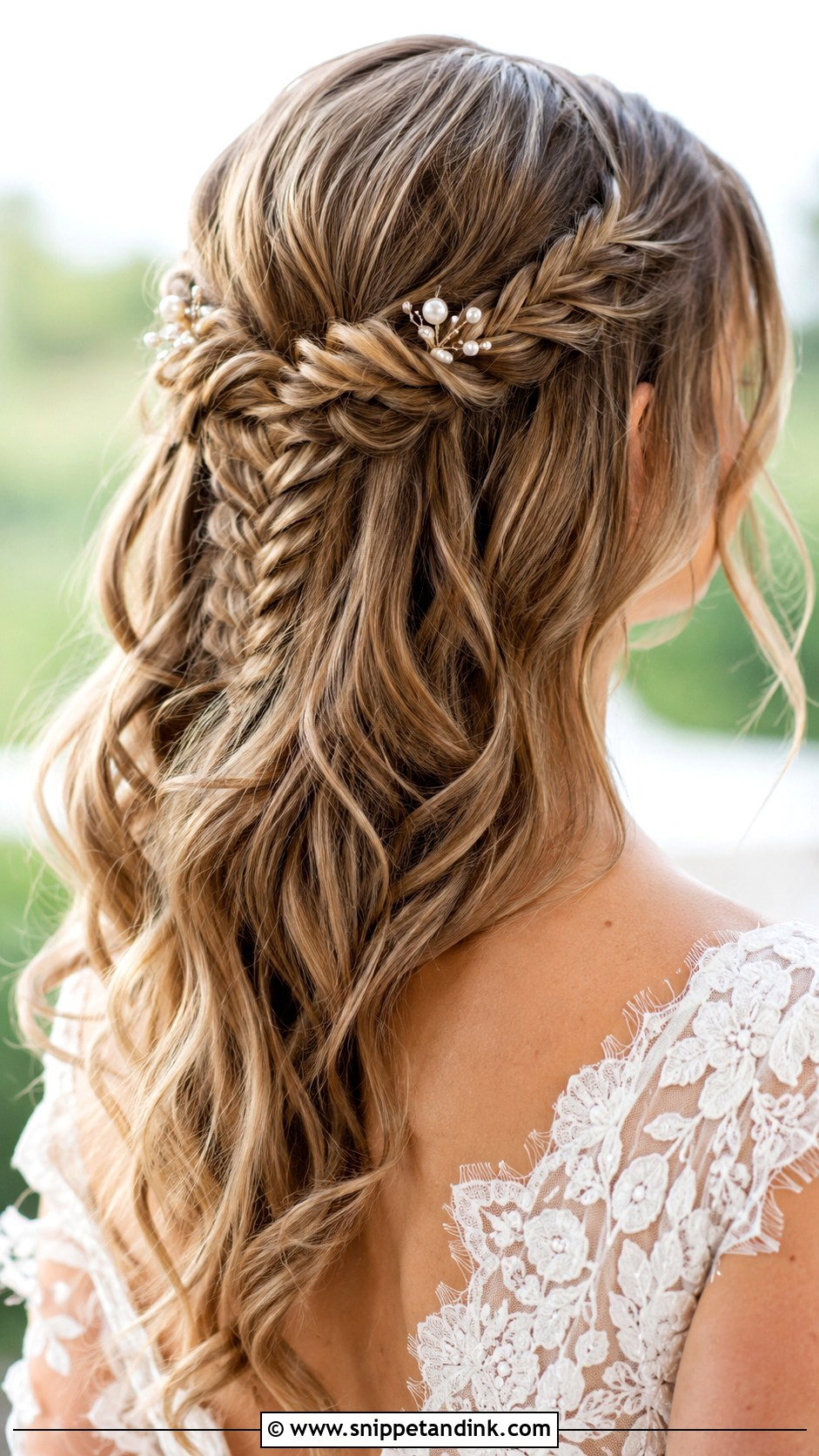
Fishtails need patience more than skill. Because you only cross two strands, taking very fine pieces each time, it takes about three times as long as a standard braid on the same hair. I braid it tight, secure it, then pull the outer edge of each stitch out a little; that turns a narrow cord into the lace pattern that shows in close-ups. A pearl pin or two at the top hides where the braid starts. Garden ceremonies suit it well.
3. Dutch Braid Half-Up Bridal Style
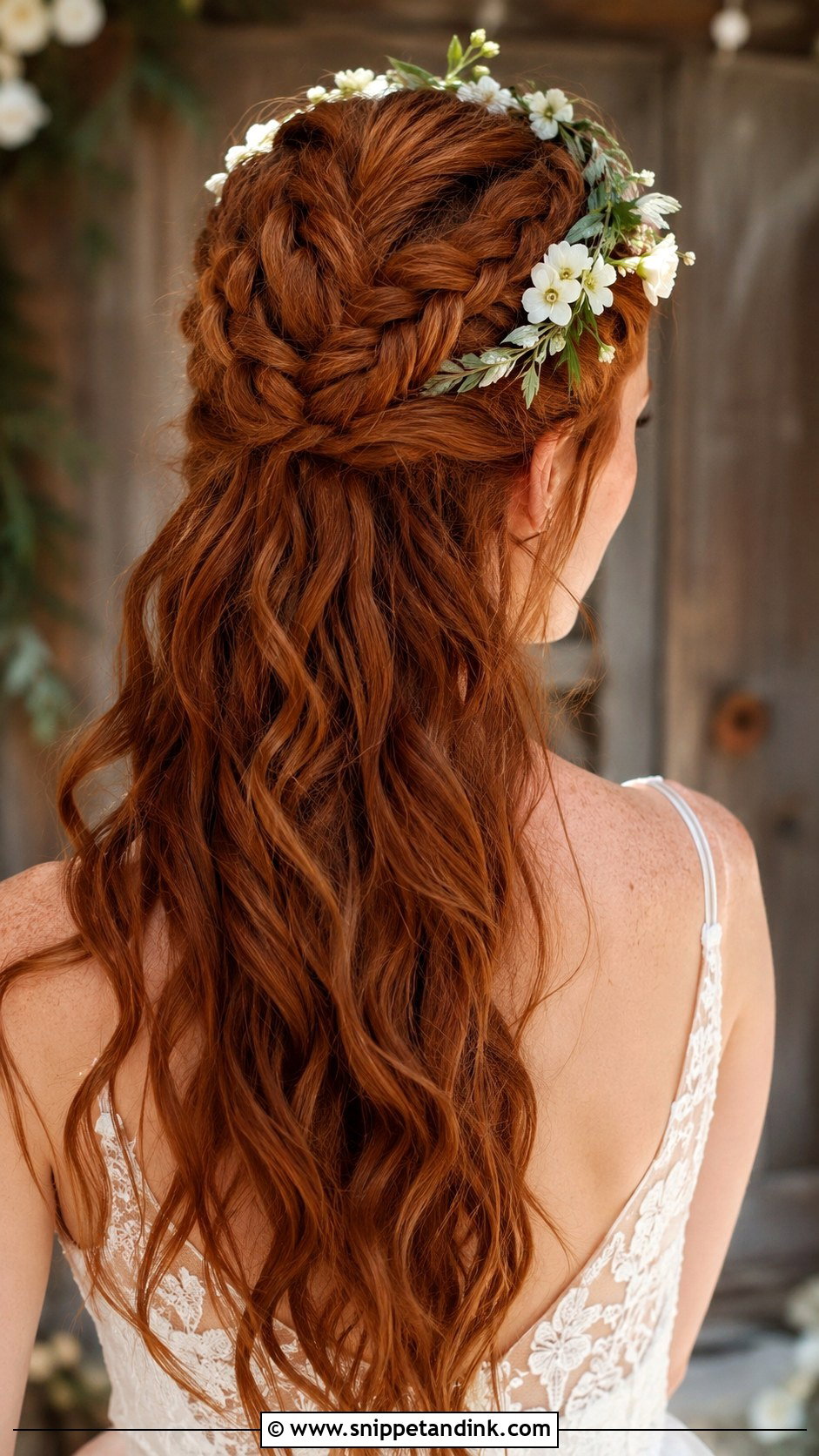
Here the strands cross under rather than over, so the braid stands up off the head. I start two Dutch braids at the temples and join them at the back, with the loose hair waved underneath. They are one of the most secure styles I do; wind at an outdoor ceremony barely moves them. The raised edge also gives you a ledge to tuck wildflowers into. If your hairline has a lot of short baby hairs, expect a few to escape at the front.
4. Waterfall Braid Half-Up Wedding Look
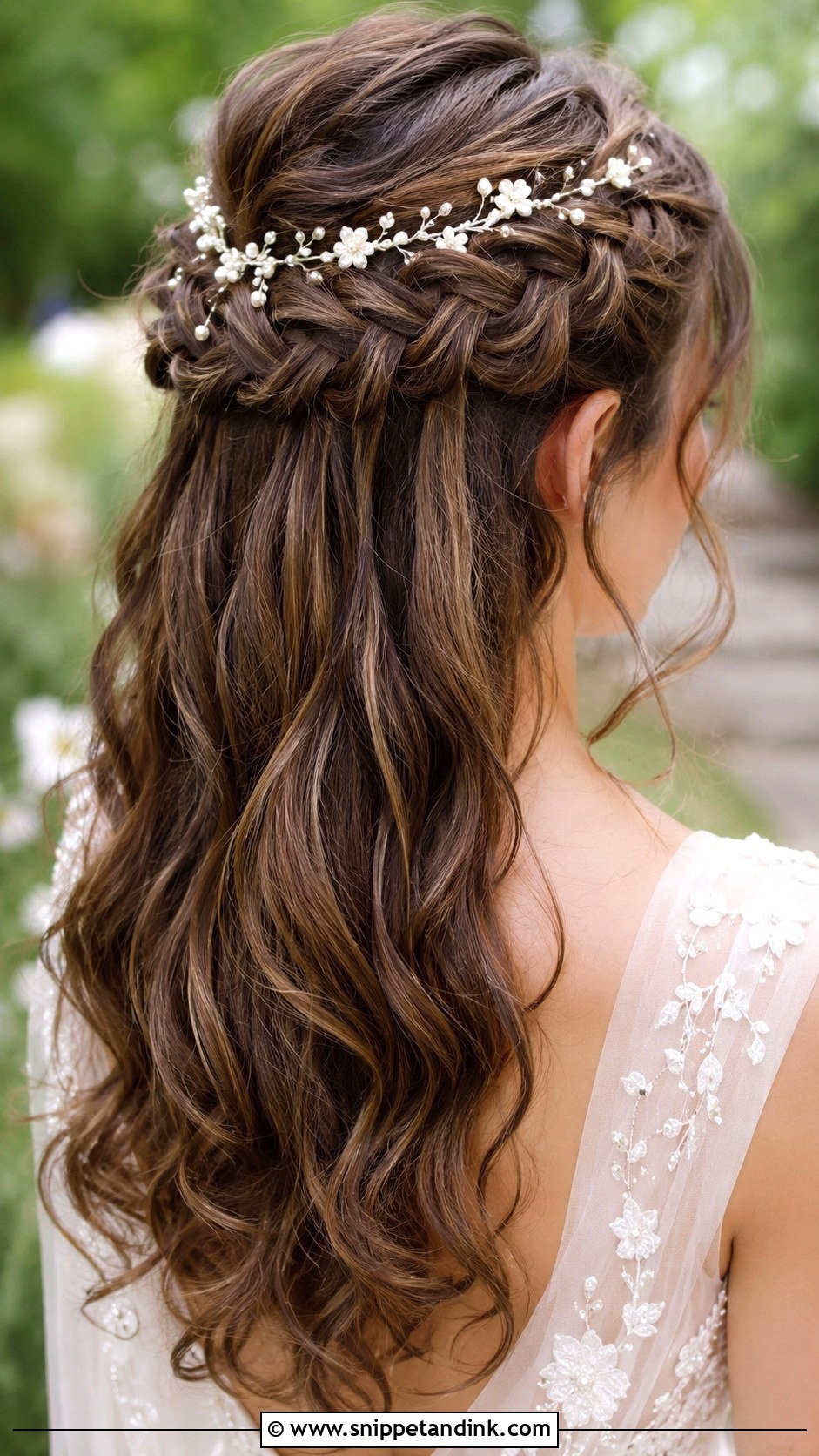
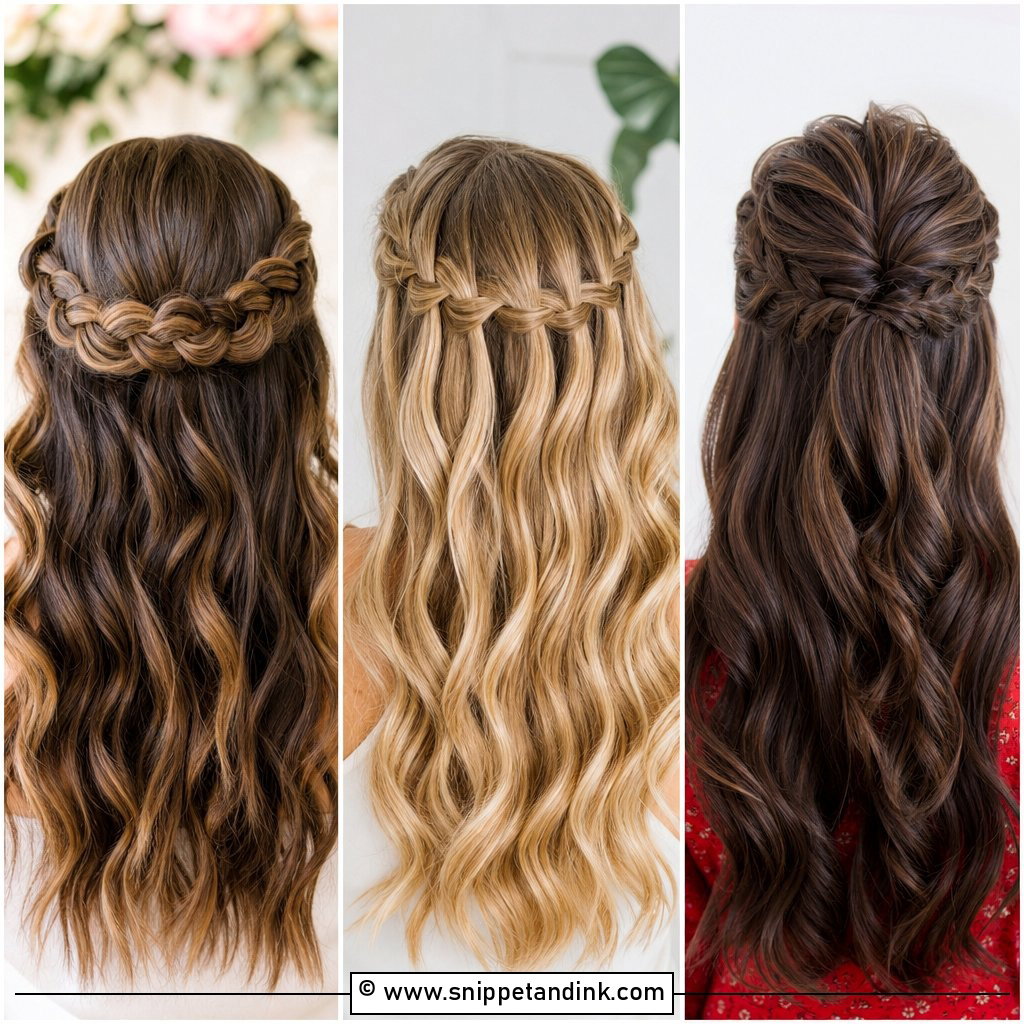
In the waterfall braid, you drop the top strand after each cross and pick up a new one, so the hair falls through like water. It runs sideways across the back of the head. The dropped pieces need to be curled or they vanish into the rest of the hair, and they need length, so long and wavy hair suits it best. It’s the braid that photographs best from directly behind, which matters during the ceremony.
5. Crown Braid Half-Up Half-Down
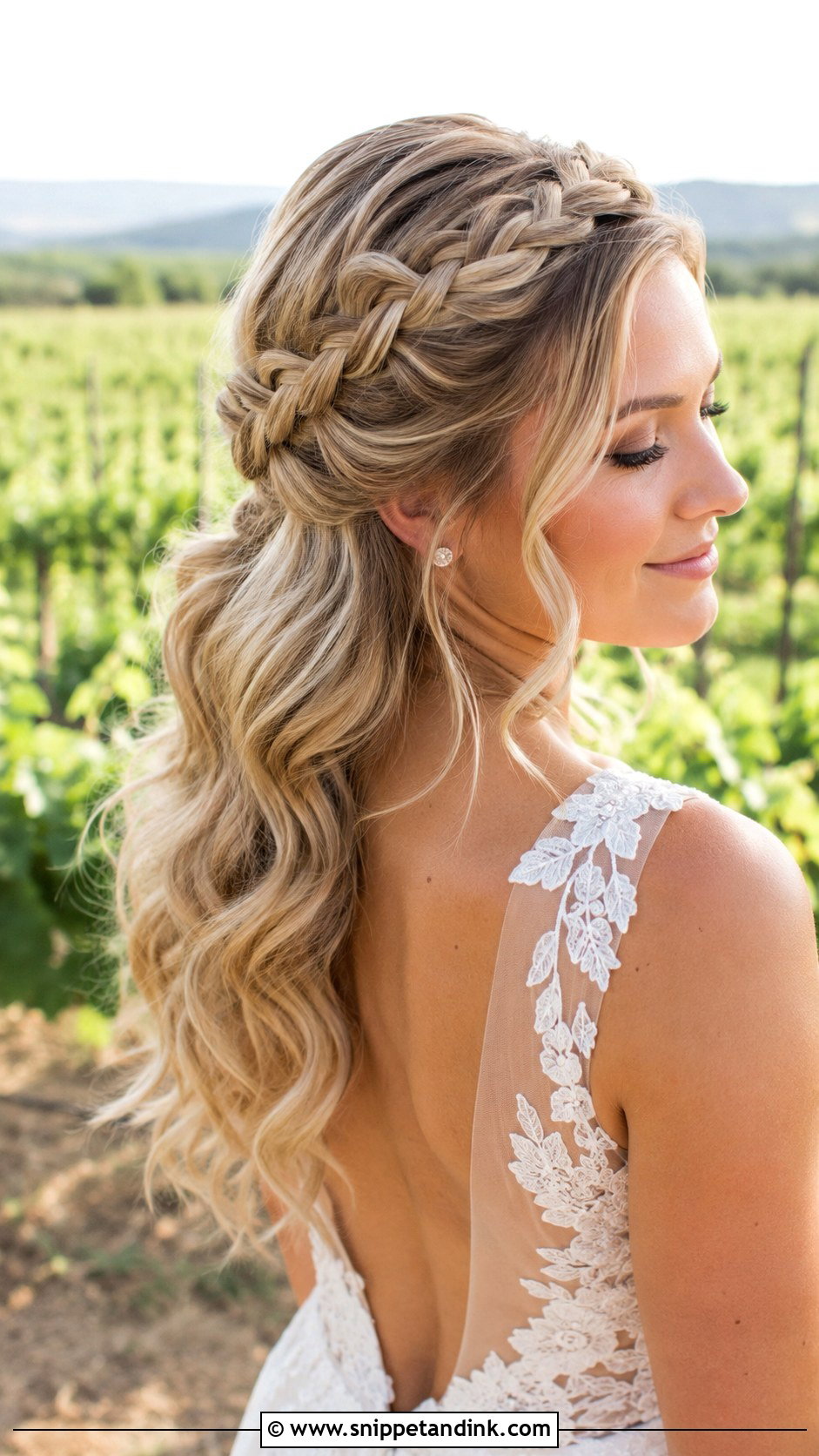
A half crown braid wraps from one ear over the top to the other, so it frames the face like a halo. Tight looks polished; loose looks more relaxed. A few soft tendrils at the temples stop it from looking severe. The question I always ask first is where your veil or headpiece will go, because a crown braid occupies the space a comb or band would normally sit in. Usually I place the veil comb just behind the braid.
6. Boho Braid Half-Up Bridal Hair
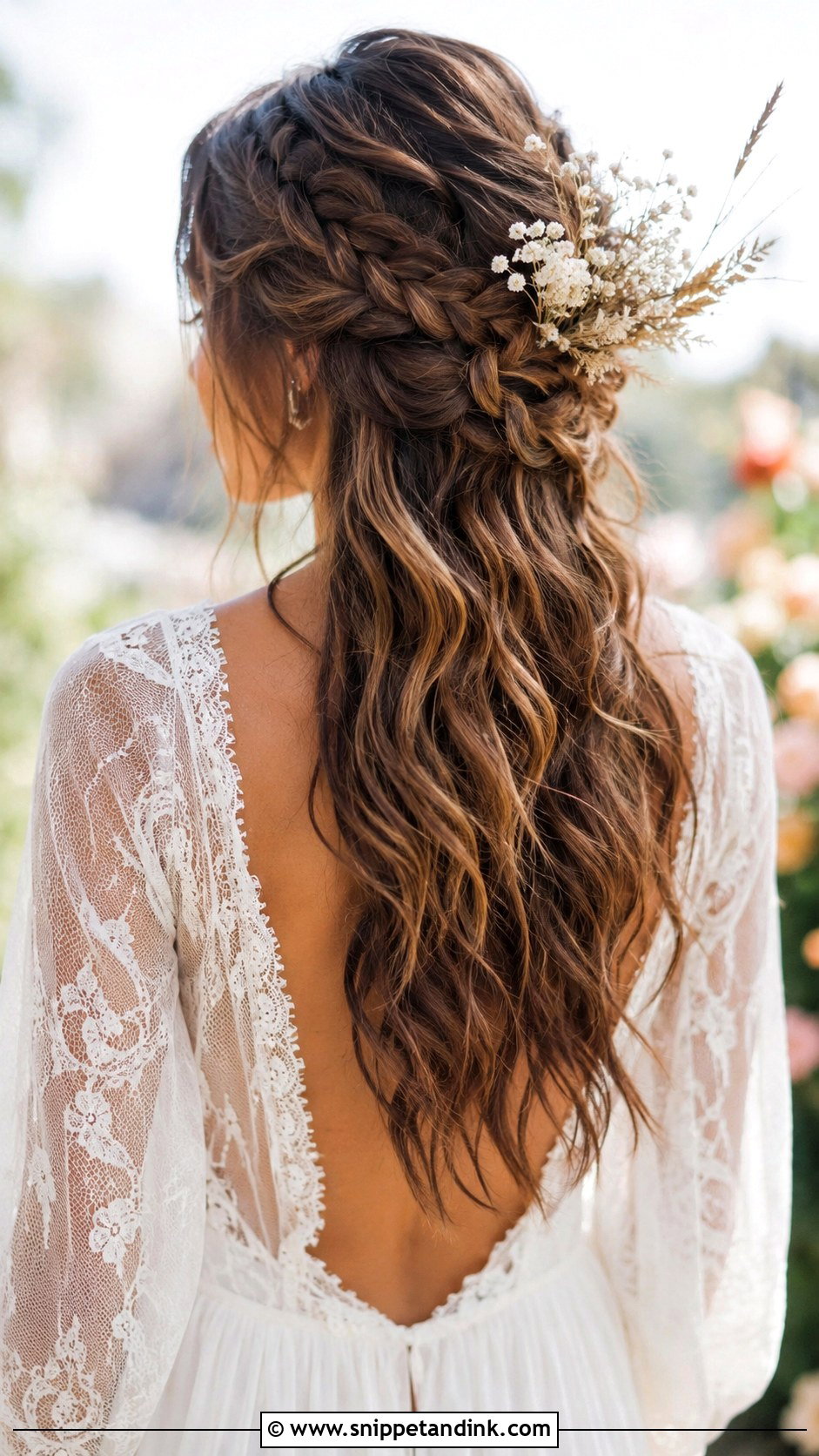
Boho braids are deliberately loose, but they still need grip to stay in. I use a texture spray before braiding so the strands hold, then tug and loosen once it’s secured. Dried flowers or tiny wildflowers suit it. Outdoor, beach and garden weddings are its natural home. The trade-off is that very silky hair will slip out of a loose braid by evening; on that hair I braid tighter first and loosen less.
7. Side Braid Half-Up Wedding Style
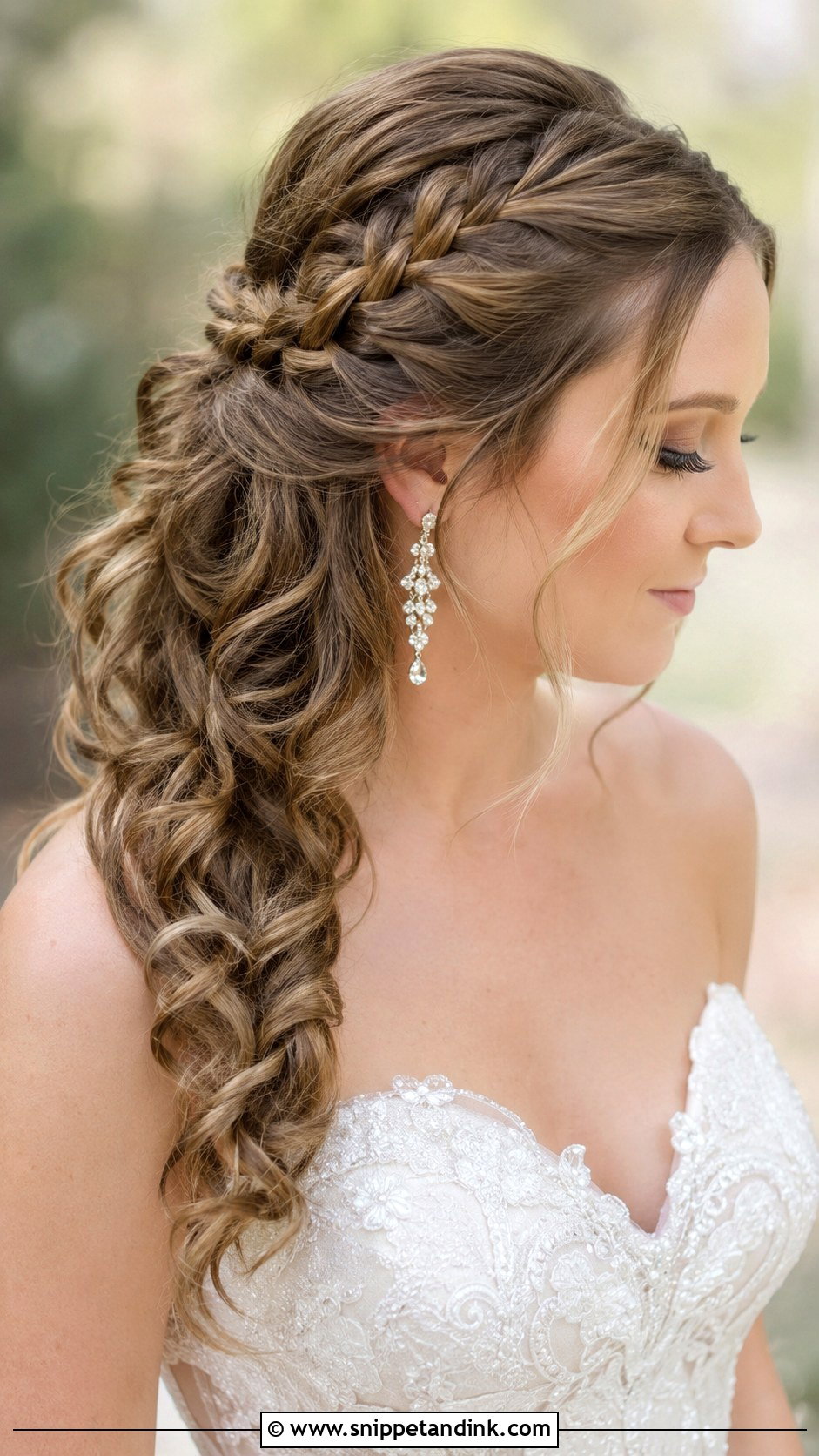
Starting a braid at one temple and running it diagonally toward the back is the most common way I add a braid to a half-up. The diagonal shape flatters most faces because it breaks up a round outline. I start on the side opposite the parting so the volume isn’t all on one side. Side-swept veils pair well with it. Leave curls below for balance.
8. Twisted Half-Up Braid for Brides
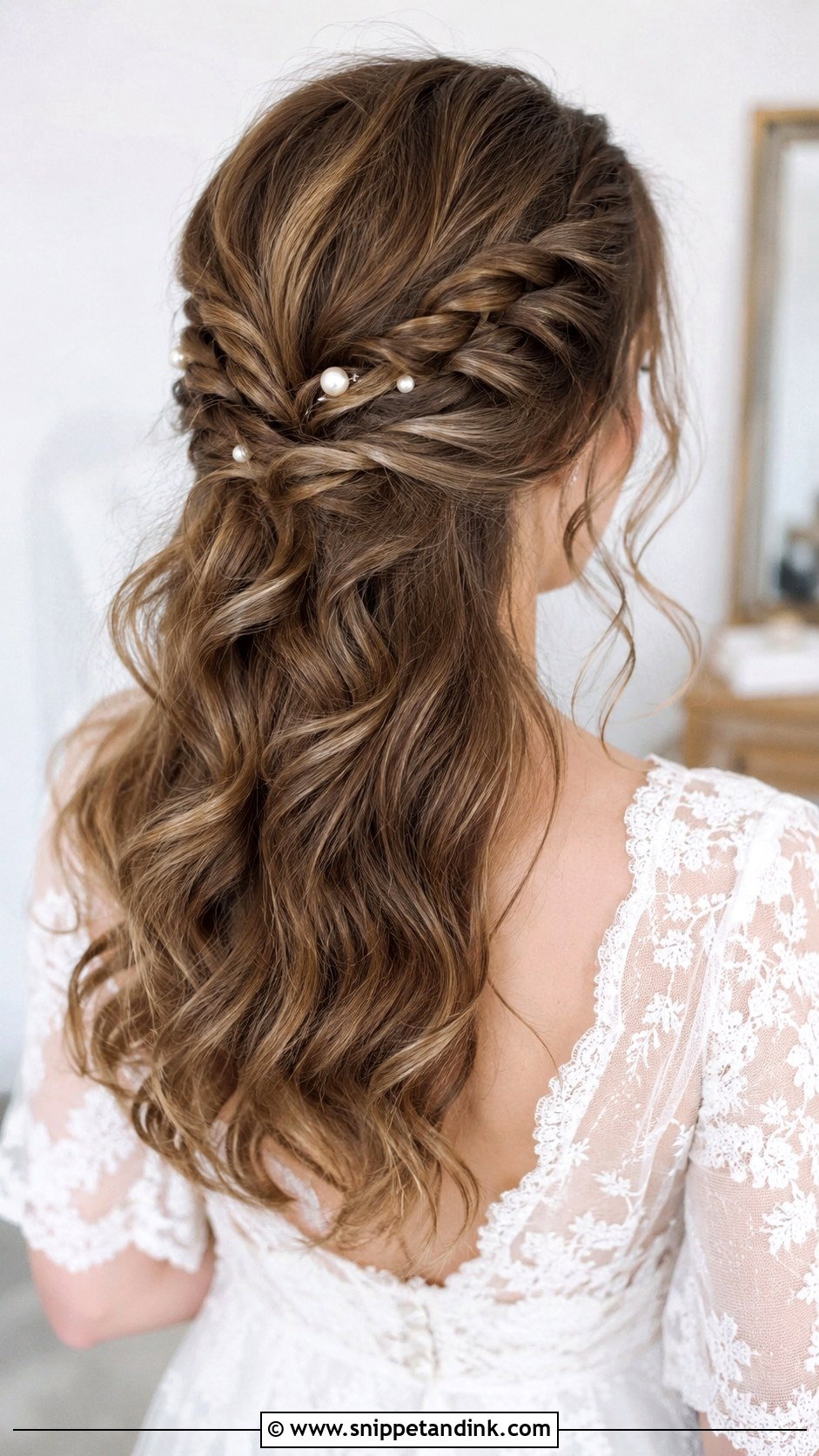
Twists give you texture without a braid’s stitch pattern, which suits brides who find braids too busy. Two sections from each side, twisted gently and pinned at the back. The soft rope shape reads quieter in photos. The thing to watch is direction: twist both sides away from the face, or one side will unwind and look uneven by the evening. Most hair types can wear it, and I’d suggest it if you want something simple and classic.
9. Braided Crown With Loose Curls
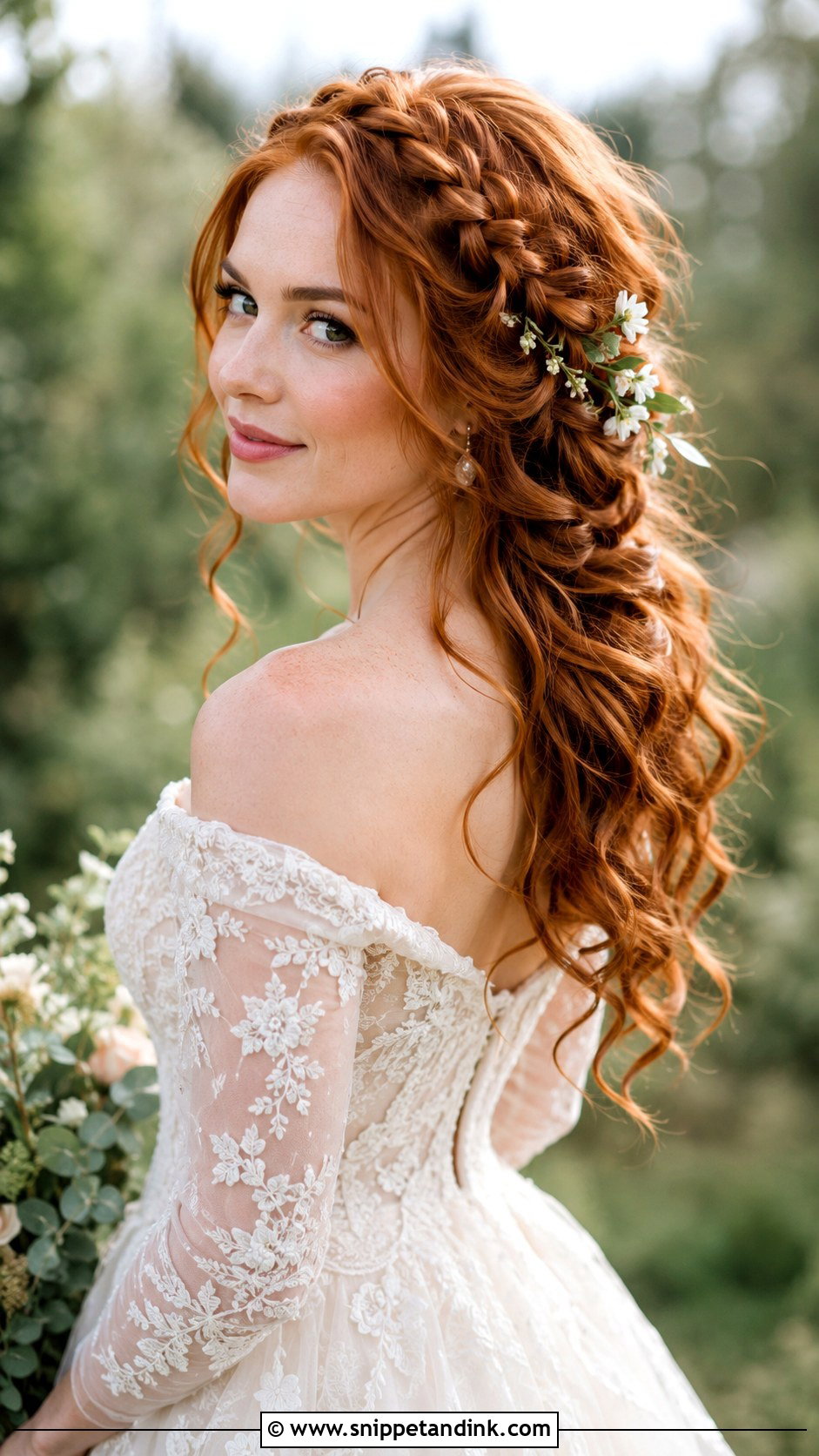
Pairing a braided crown with loose curls is mostly about timing. I curl first, pin the curls up to cool, braid the crown, and only then release the curls, so the braid isn’t disturbed by the iron. The crown keeps the front pieces off your face for the ceremony. It needs long, full hair; on thinner hair, the curls below look sparse next to a thick braid. Pearl pins along the braid finish it well.
10. Double Braid Half-Up Half-Down
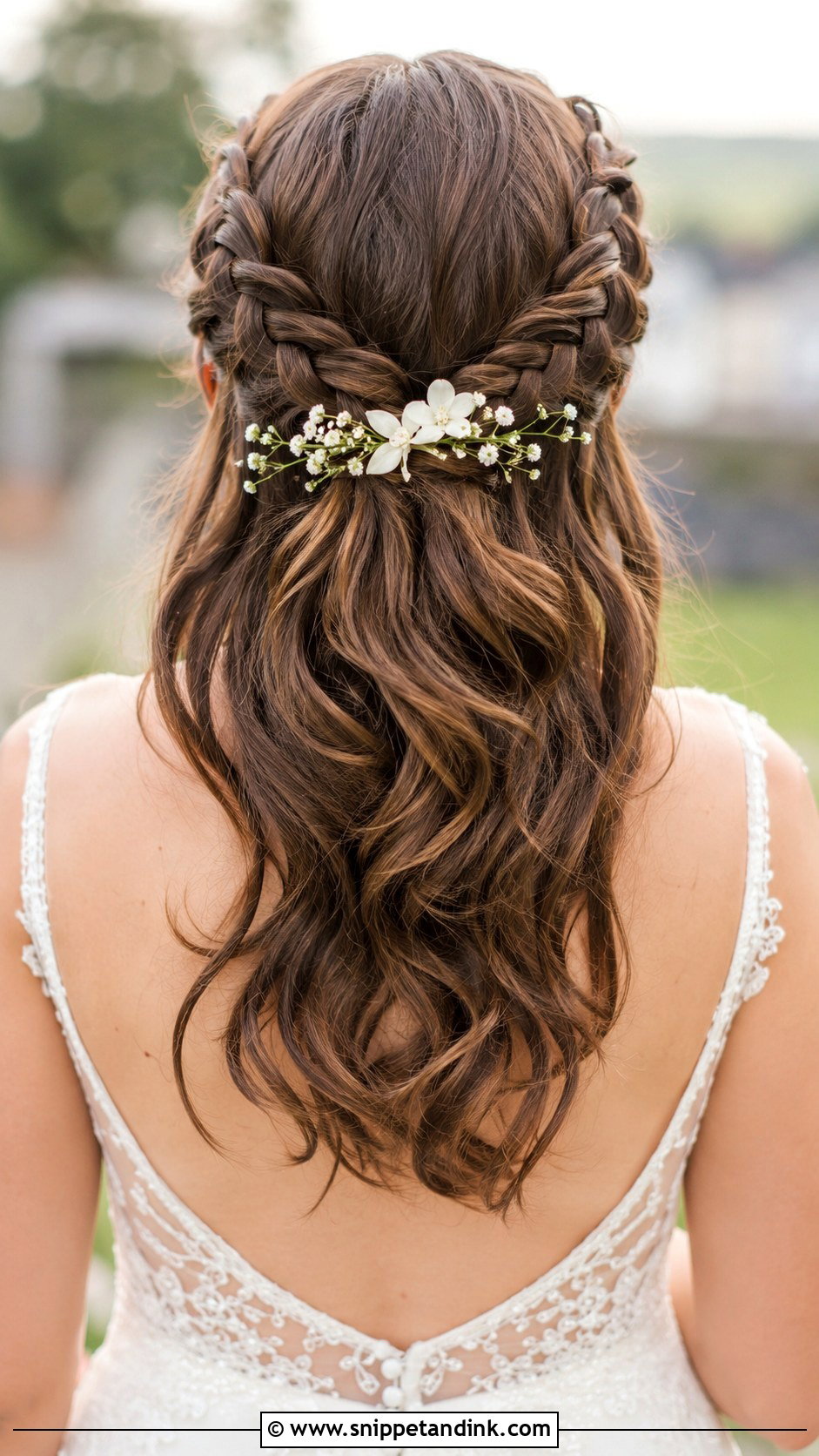
Double braids start at each side and meet at the back, giving more texture than one. I’d suggest them for thick or long hair, where they come out chunky and even. On fine hair, two braids split an already small amount of hair, so each one looks thin. Where the braids join is the weak spot, so I cover it with flowers or a small pin. Tight or loose, both work for boho and classic weddings.
11. Bubble Braid Half-Up Wedding Hair
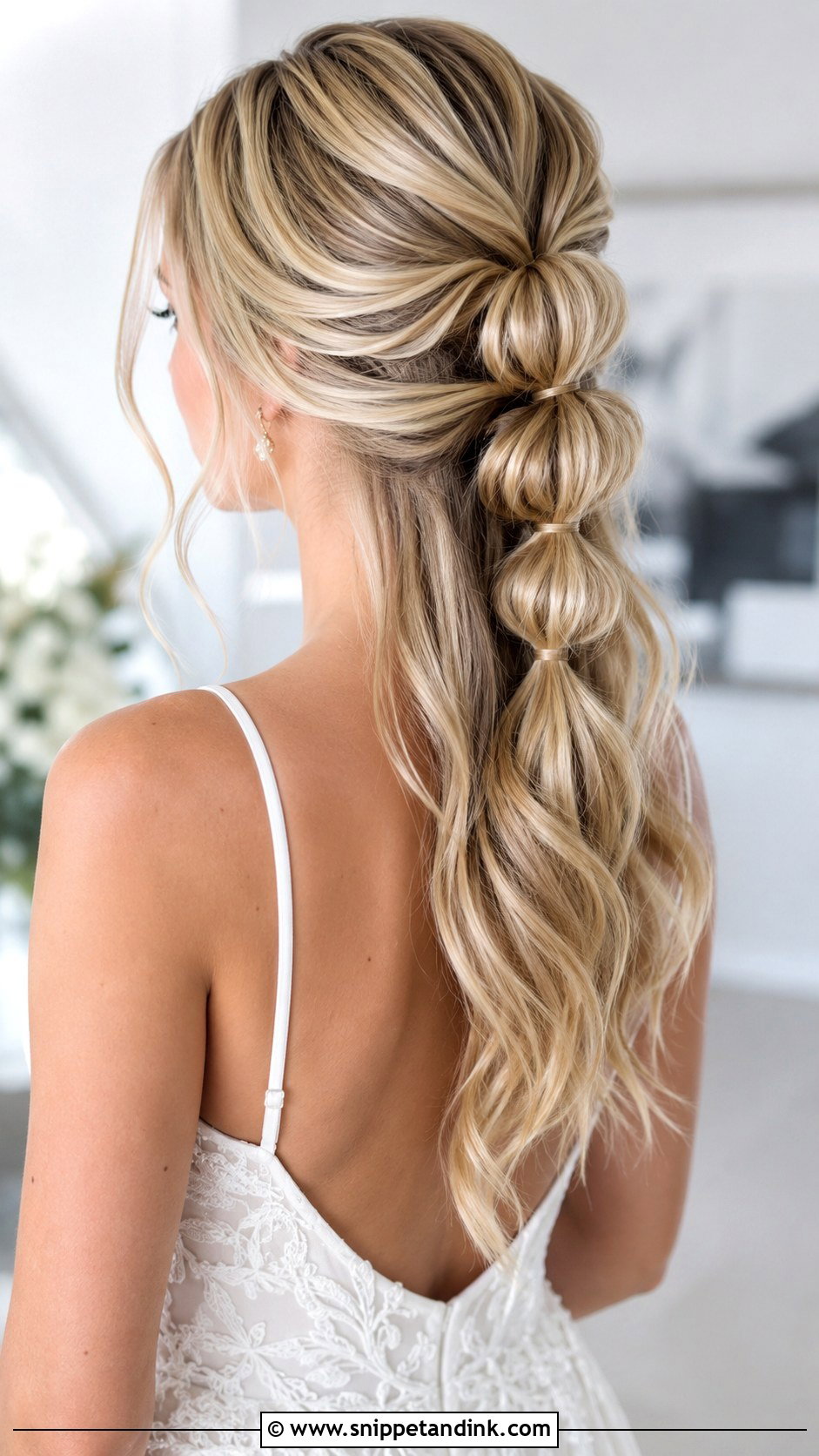
Bubble braids aren’t woven at all. You section with small elastics and pull each segment wider. I wrap a strand of hair around each elastic to hide it, which takes extra time but makes it look finished in close-ups. It’s the most modern option here, and it suits brides who want something different from the usual. Pair it with sleek waves underneath. Most lengths work, though it shows off best in long hair.
12. Loose French Braid Half-Up Style
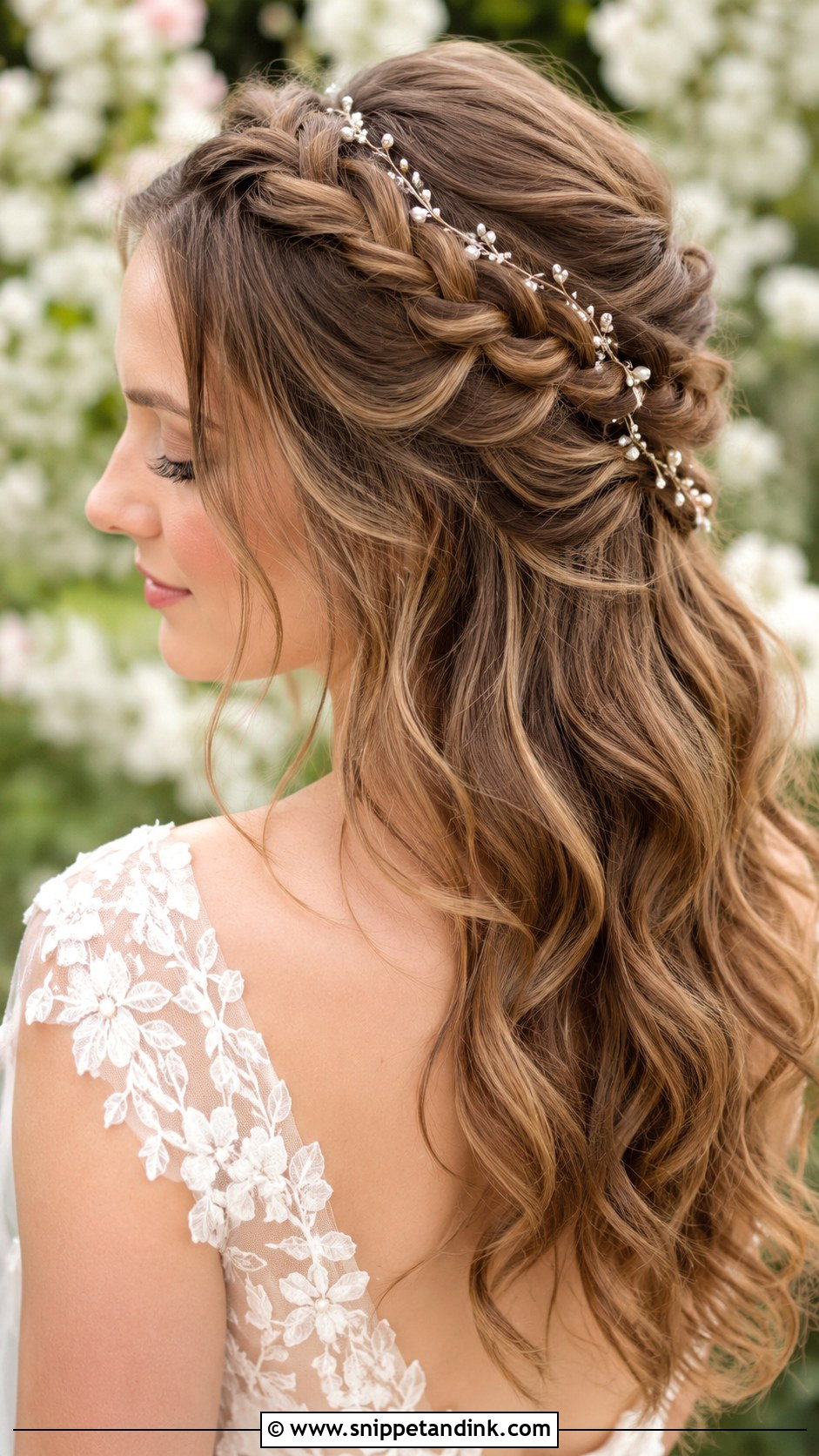
A French braid that’s been loosened after braiding looks softer and fuller. I braid it tight first and then pull at the edges, working from the bottom up so the top stays anchored. Loosening before it’s secured just makes it fall apart. It works with round and oval faces, and baby’s breath or a hair vine suits it. If you’re torn between a polished and a relaxed look, this sits in the middle.
13. Halo Braid Half-Up Bridal Look
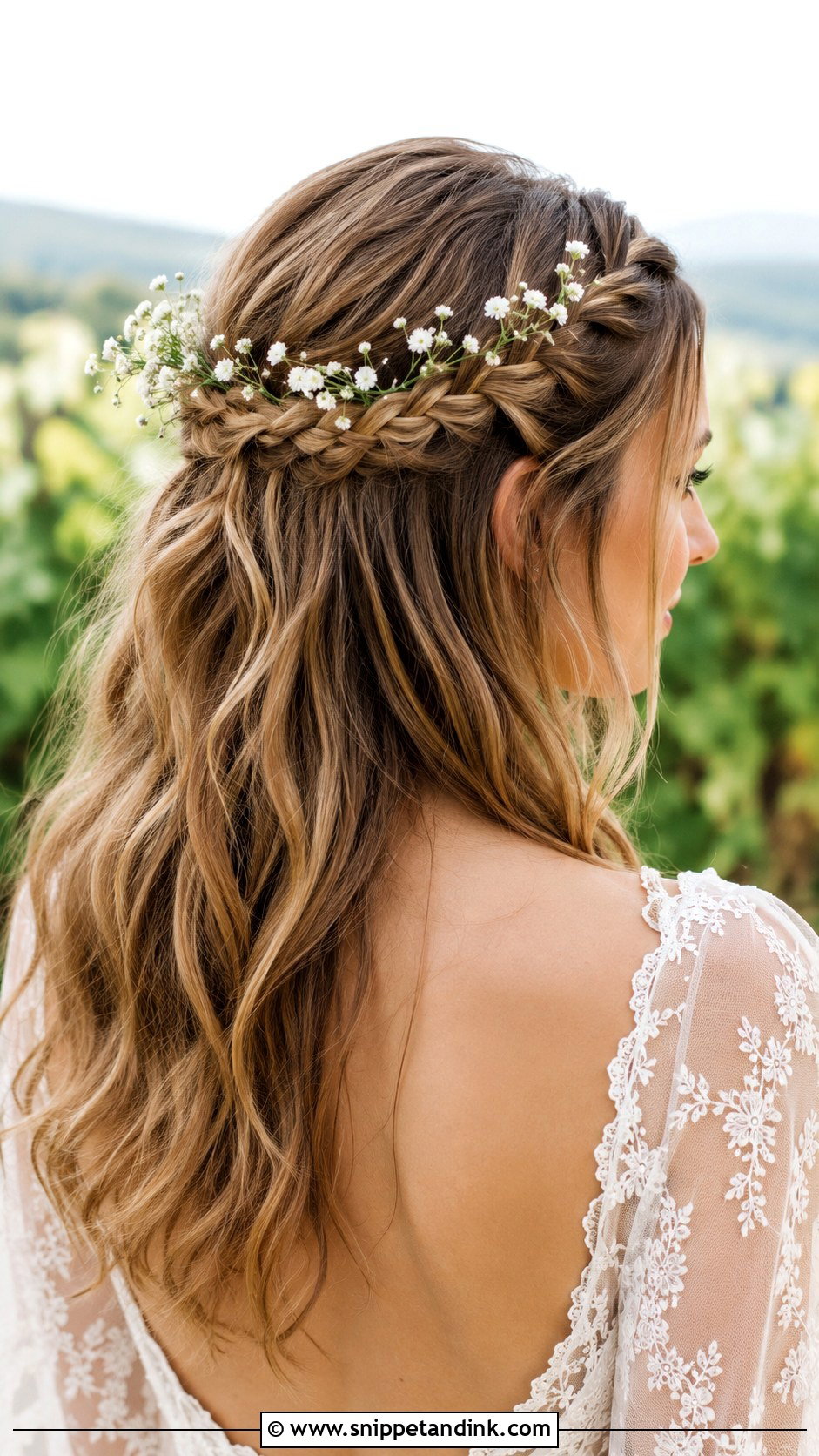
A partial halo runs across the upper crown and leaves the back loose. I braid it slightly back from the hairline so it doesn’t look like a headband. It’s soft enough for vineyard and garden weddings and keeps face-framing pieces tucked away, which helps if you get warm outdoors. In natural light the woven texture shows clearly. Tiny flowers or pearl pins sit nicely along it.
14. Braided Half-Up With Flowers
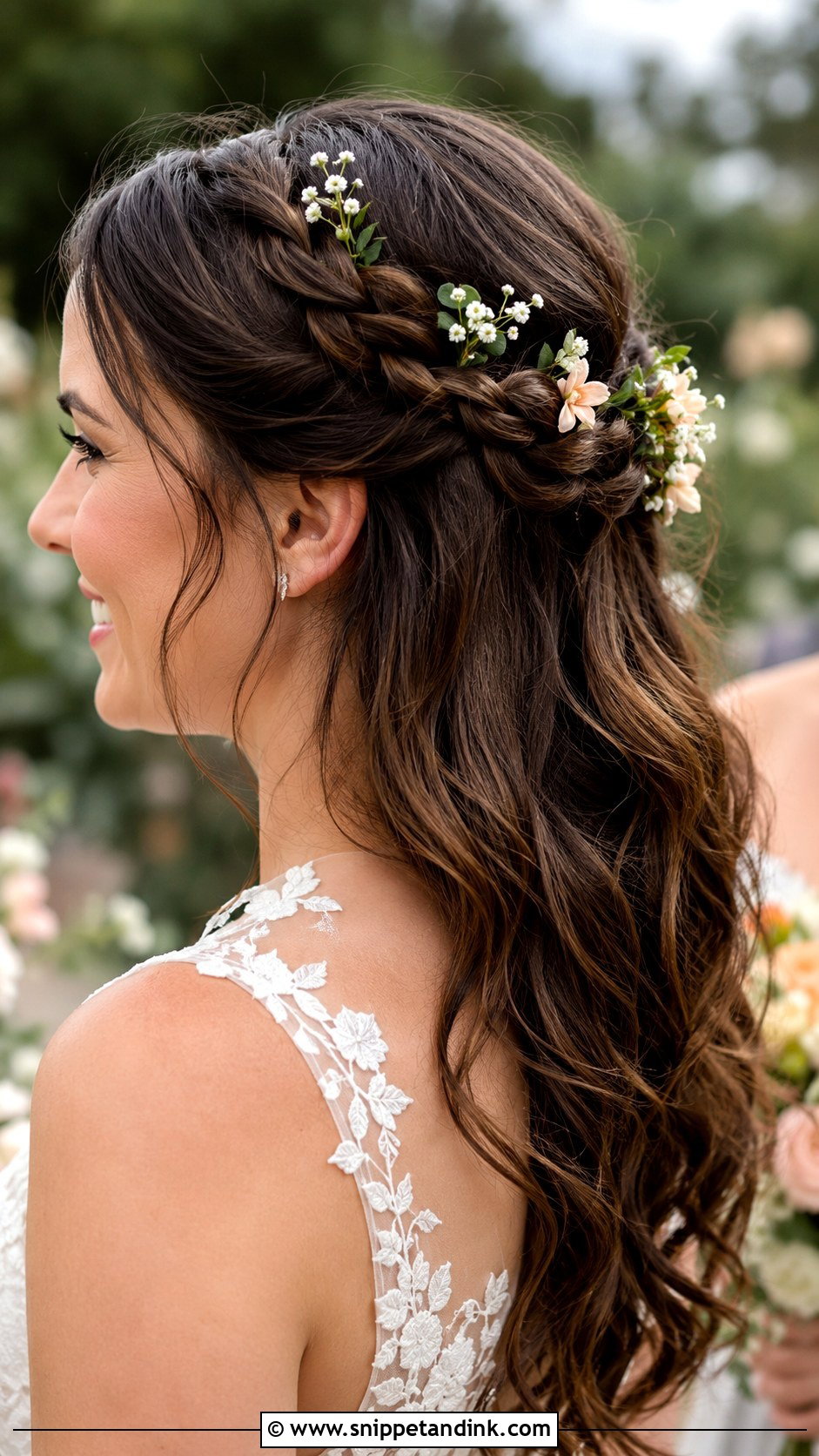
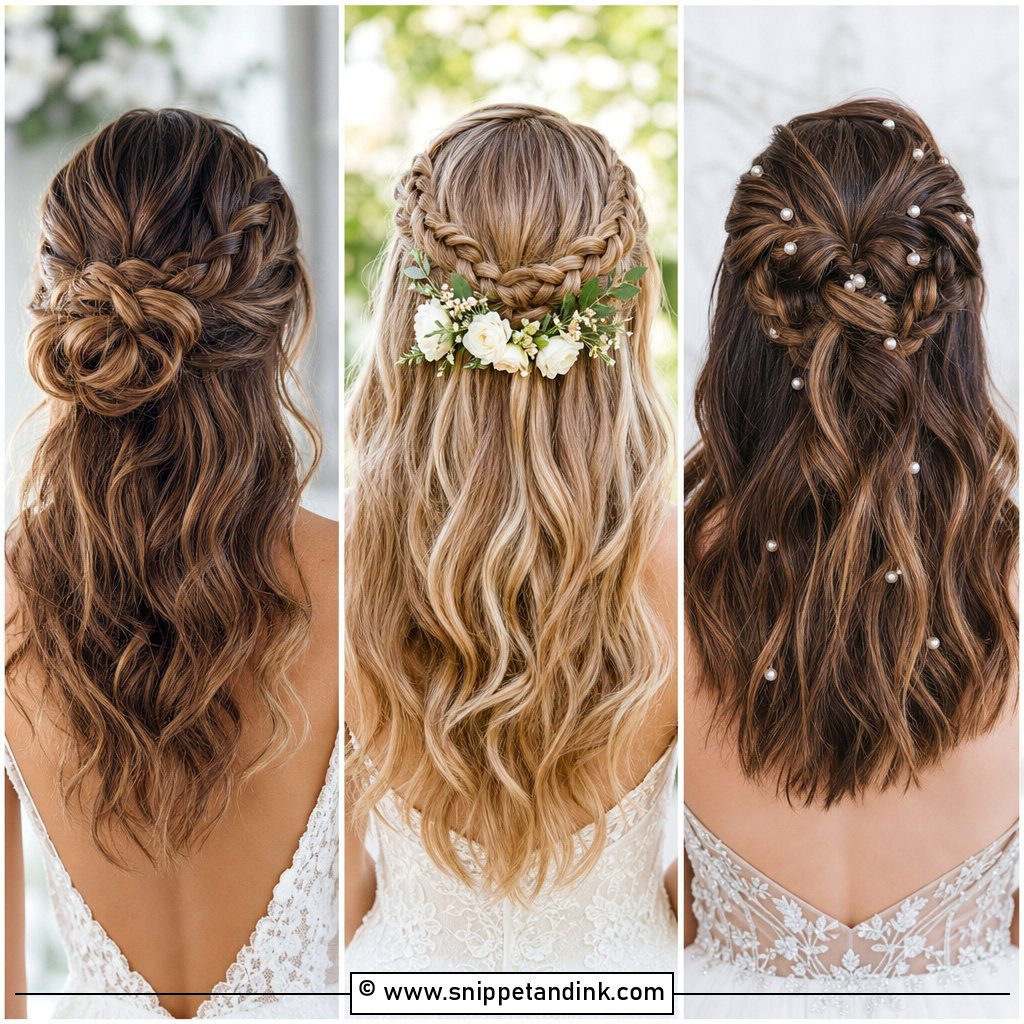
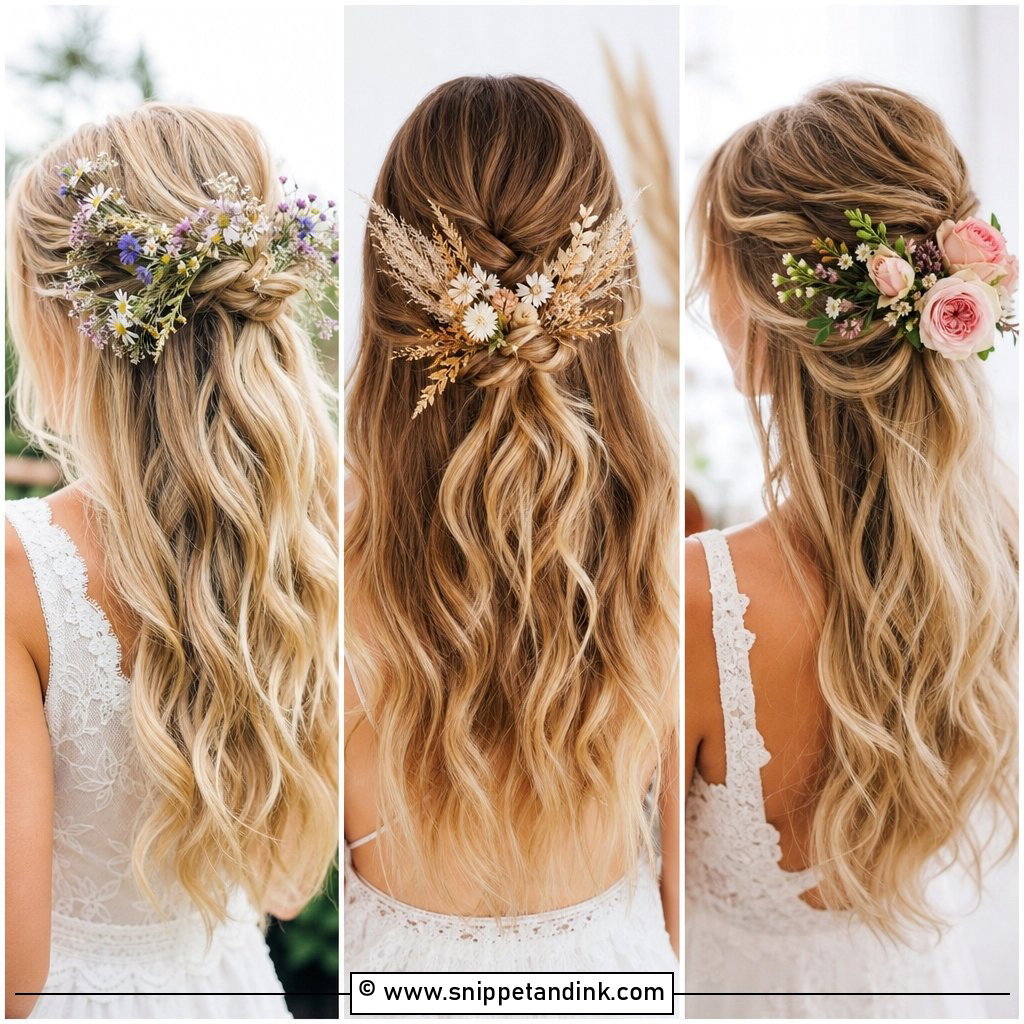
Real flowers in a braid wilt faster than people expect, because they’ve been cut and are sitting against warm skin and hair. I choose sturdy blooms like spray roses or waxflower, wire the stems short and add them last. Baby’s breath holds well. Match them to your bouquet so the two read as one look. Spring and summer weddings suit it, and the braid itself holds the flowers well through the day.
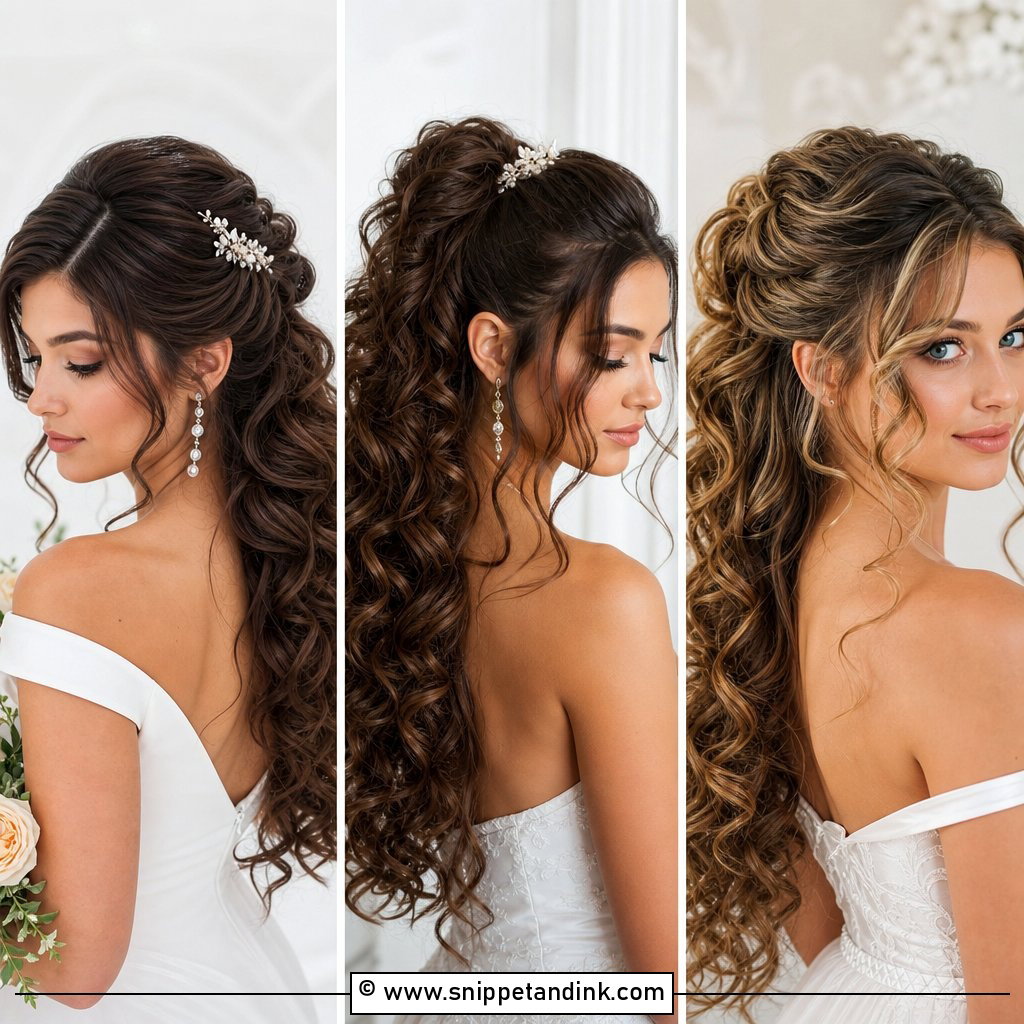
15. Fishtail Braid Crown for Weddings
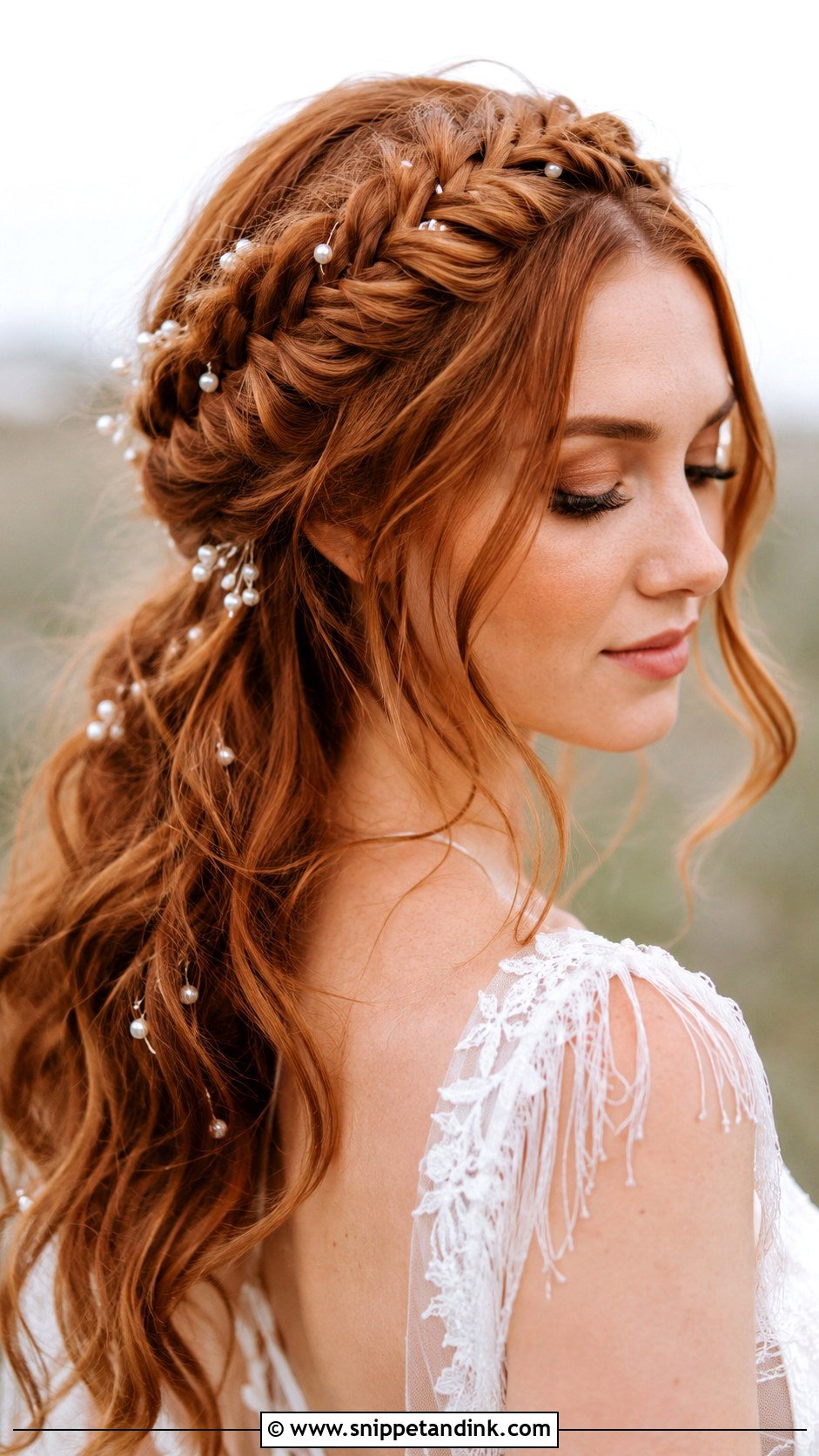
A fishtail worked into a crown is the most detailed braid here and takes the longest to do. Left a little undone, it sits on relaxed and boho weddings well, and the crown shape keeps hair off your face. I pull the stitches out gently once it’s secured. The loose length below stays in waves. Accent it with small florals or pearls, and allow enough time for it at your trial.
16. Messy Braid Half-Up Half-Down
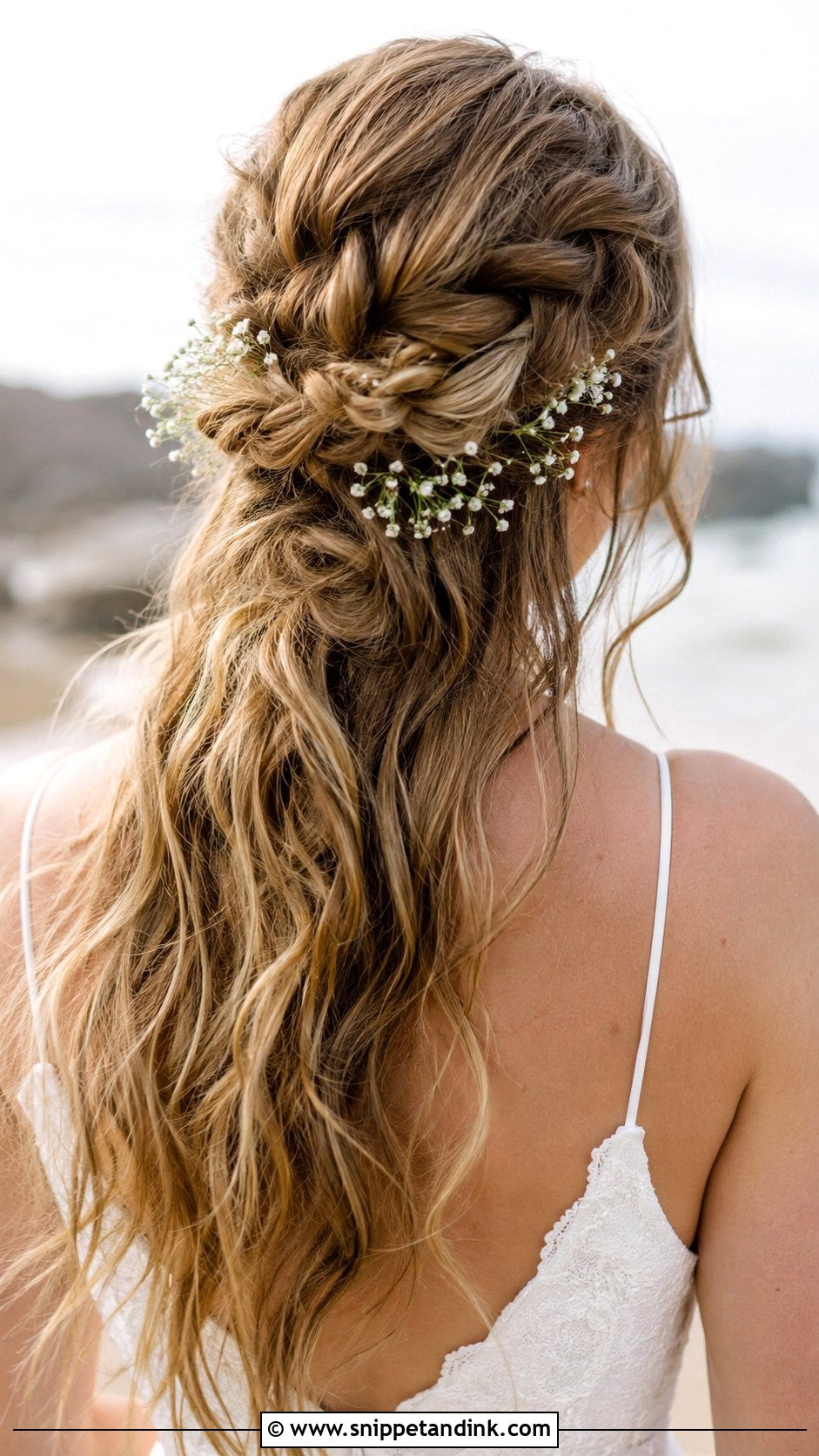
Messy braids look unplanned, but there’s a method: secure the braid first, loosen it generously, then pull out a few face-framing strands. Beach waves underneath suit it. It works on most hair types and lengths and suits casual, outdoor and bohemian weddings. A sprinkle of baby’s breath or a small clip adds a bridal touch. I’d steer a bride away from it if her venue is very formal; it can look unfinished in a ballroom.
17. Braided Half-Up With Veil
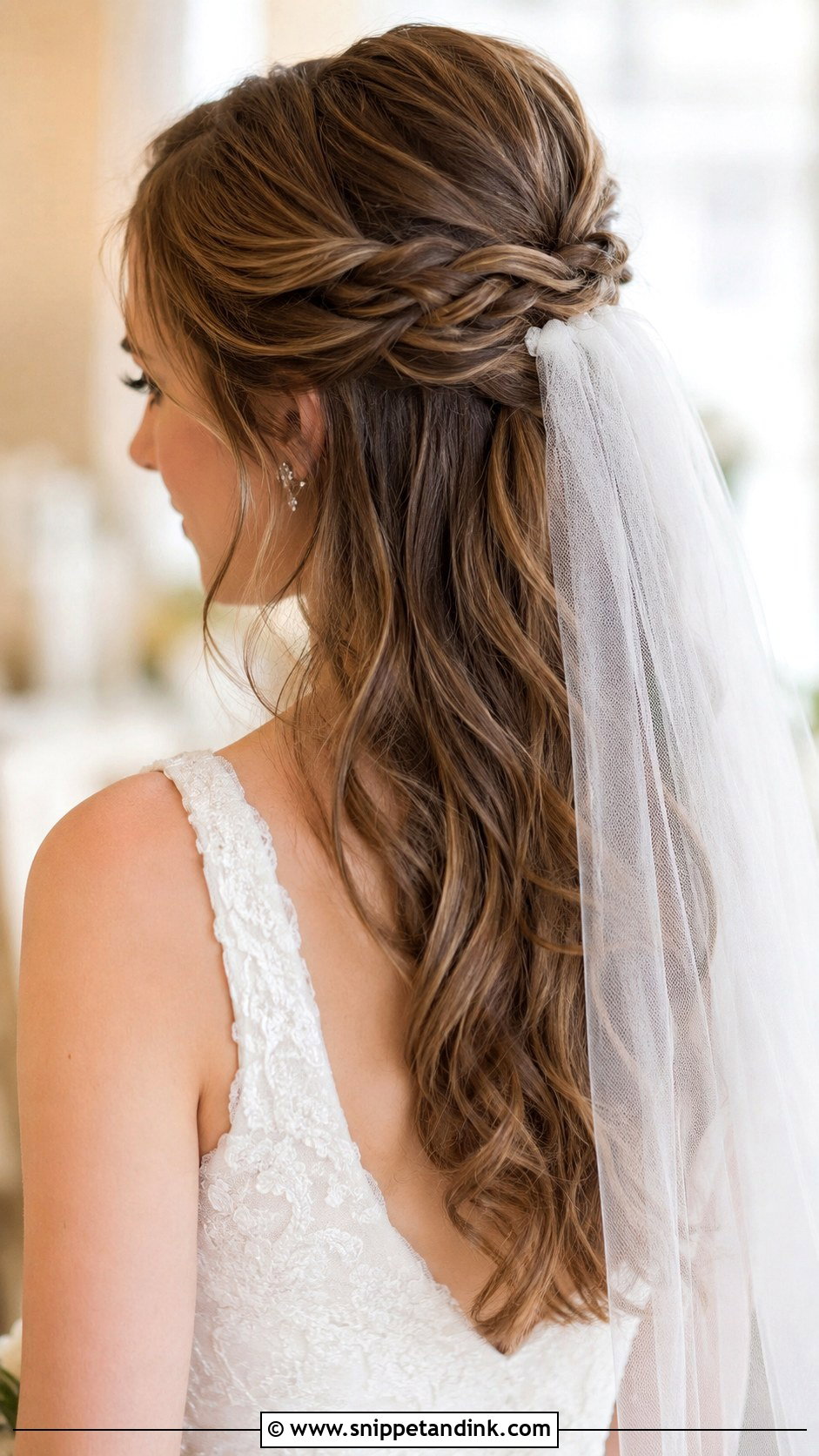
A braid is one of the best anchors for a veil. I place the veil comb just beneath the braided section, teeth facing into the braid, so it grips the woven hair rather than loose strands. The texture shows through sheer tulle. Then at the reception, the veil comes out and the braid still works on its own. French or fishtail braids give the most structure for this, and soft waves stay below.
18. Rope Braid Half-Up Bridal Style
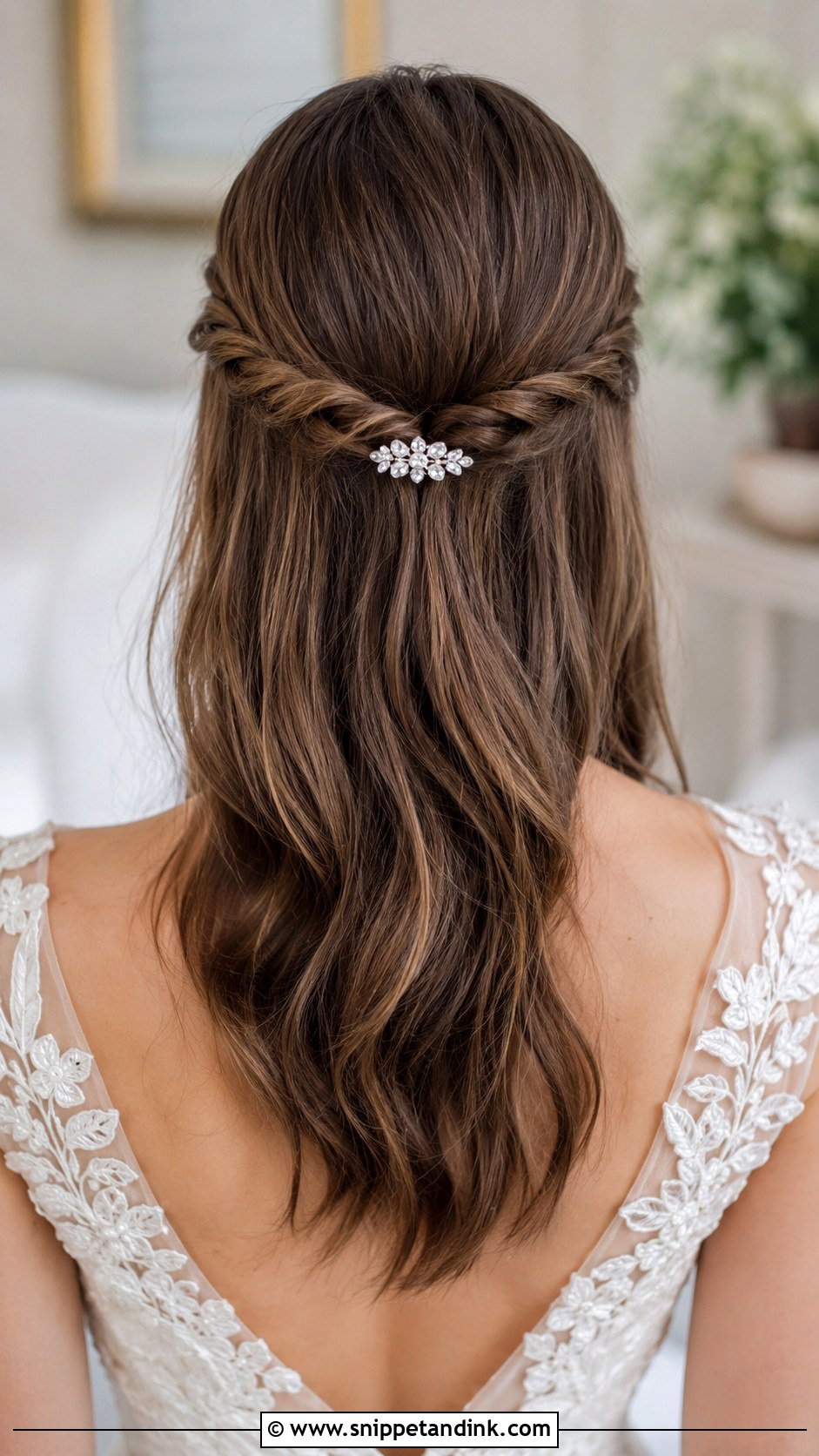
A rope braid is two twists wound around each other, which gives a defined, rope-like strand that suits a polished indoor wedding. The trick is twisting each section one way and wrapping them the other, so the tension holds them together. Pull the front sections into a rope braid and secure them at the back. Smooth waves below and a jewelled pin finish the look. It’s a good middle ground between a braid and a twist.
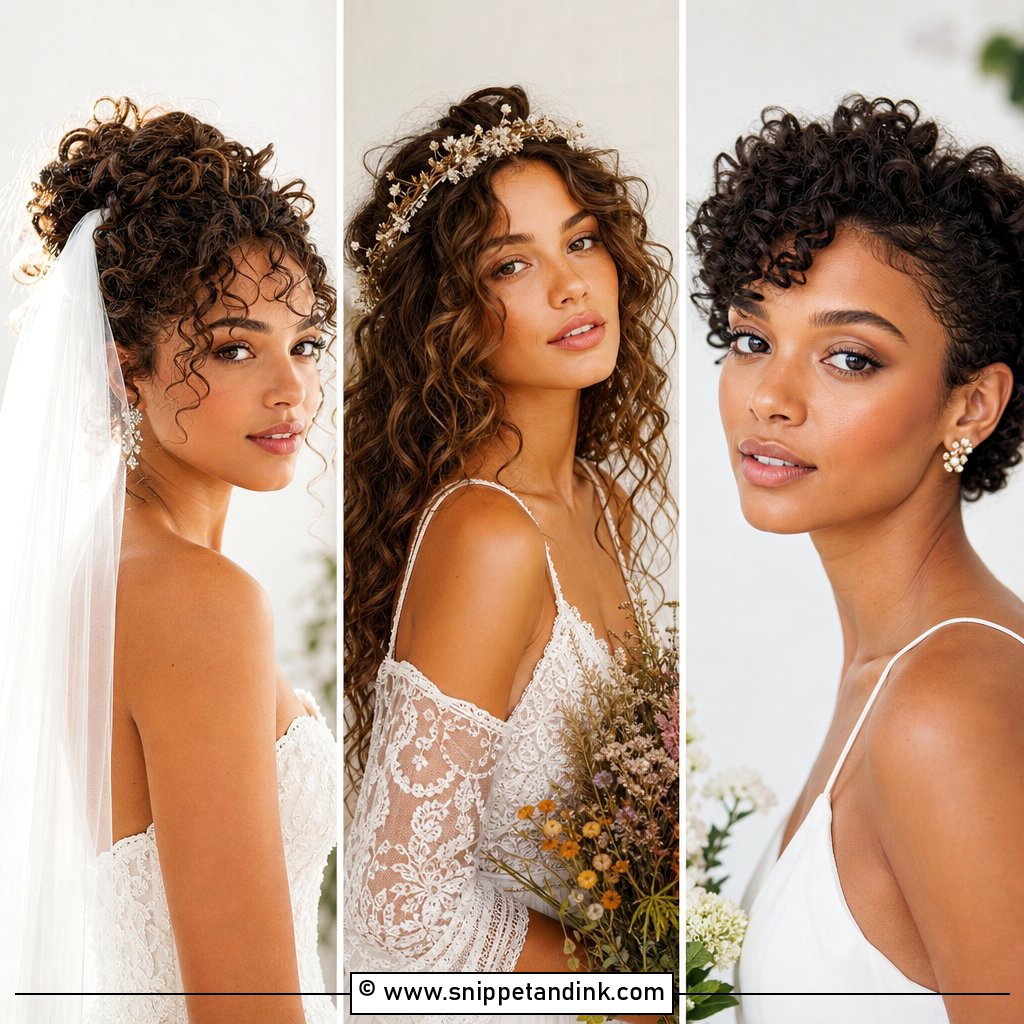
19. Braided Half-Up for Curly Hair
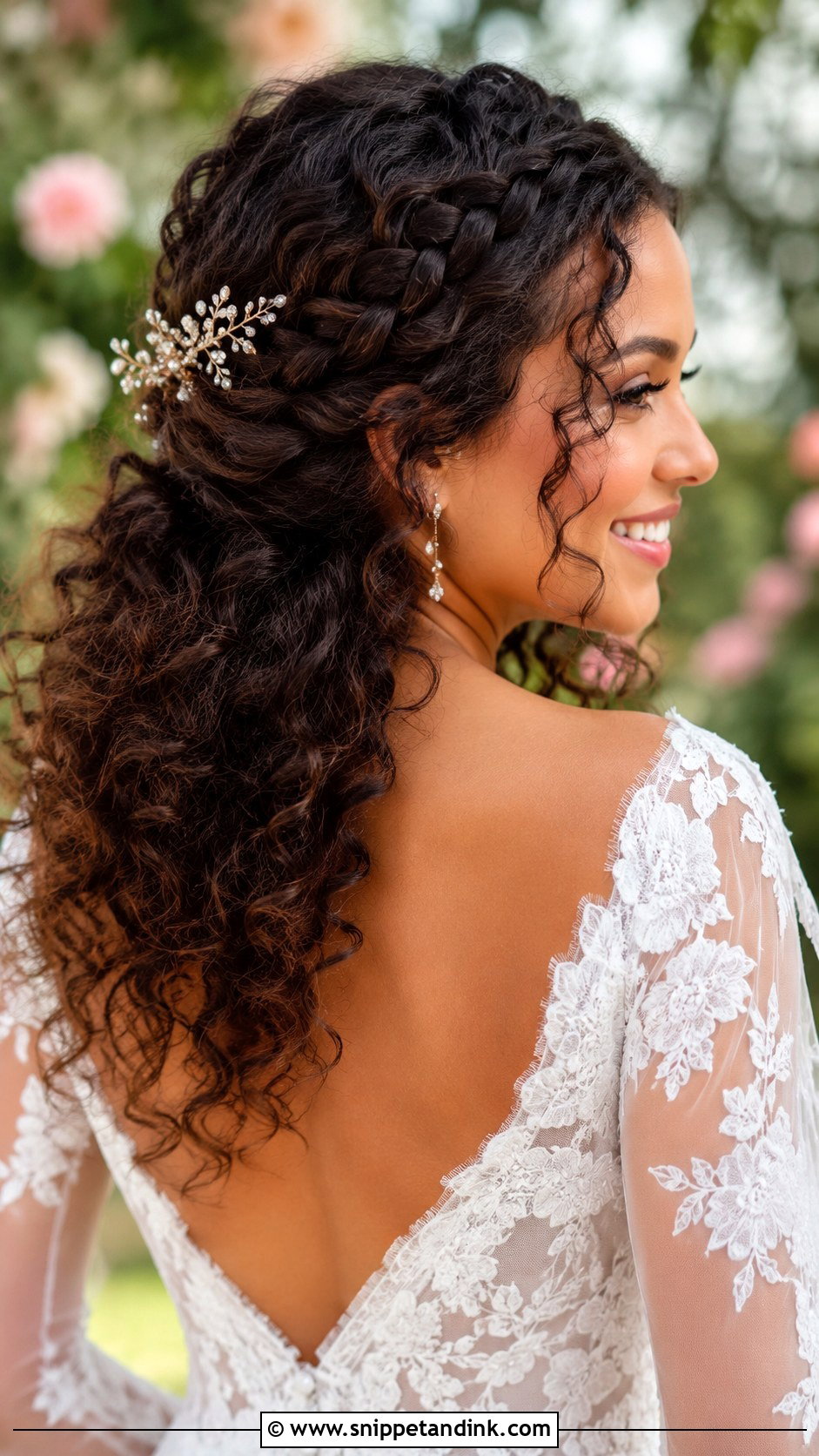
Curly hair braids differently. I braid it on dry, defined curls rather than wet hair, and keep the braid loose so it doesn’t stretch the curl pattern near the roots. The top section is braided and the rest of the curls are left loose below. A little curl cream on the ends keeps them defined. A few flowers or a decorative pin add a bridal touch. The contrast between the braid and natural curls shows up well in photos.
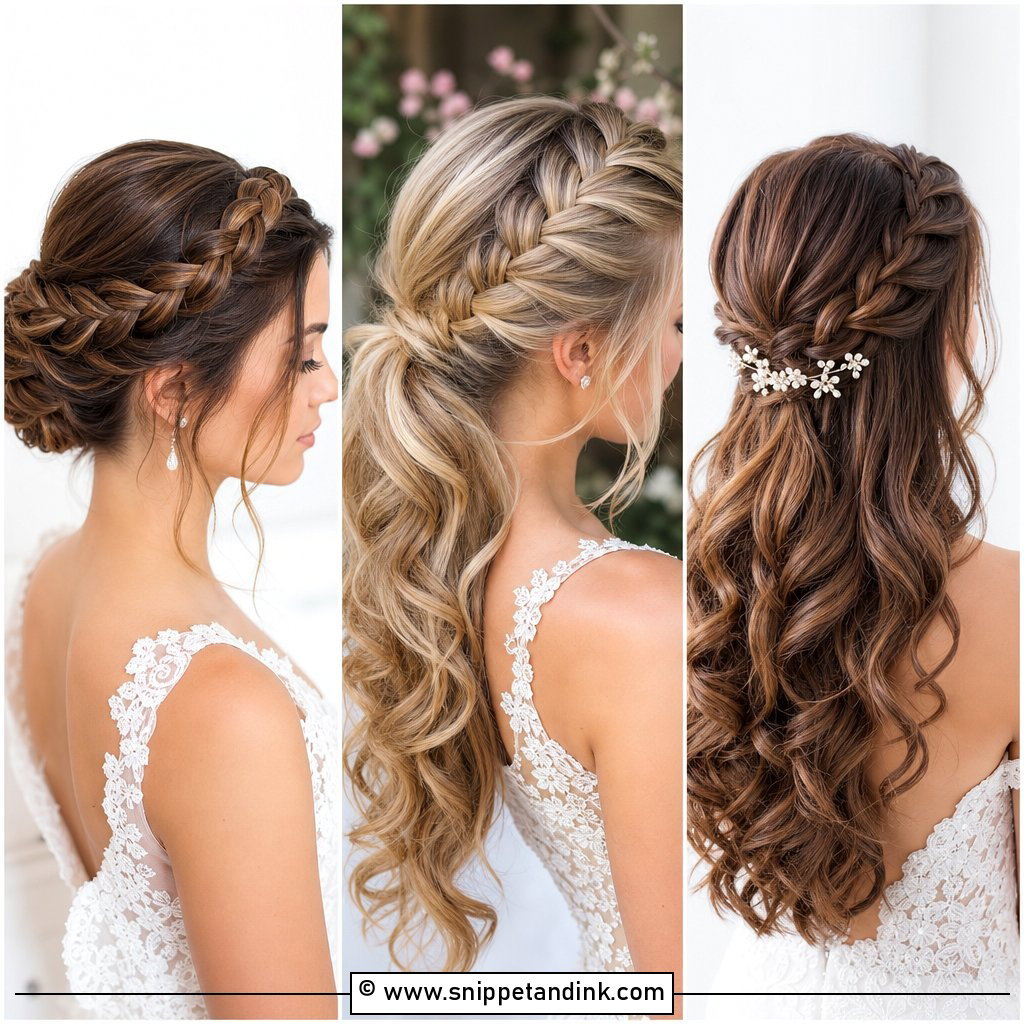
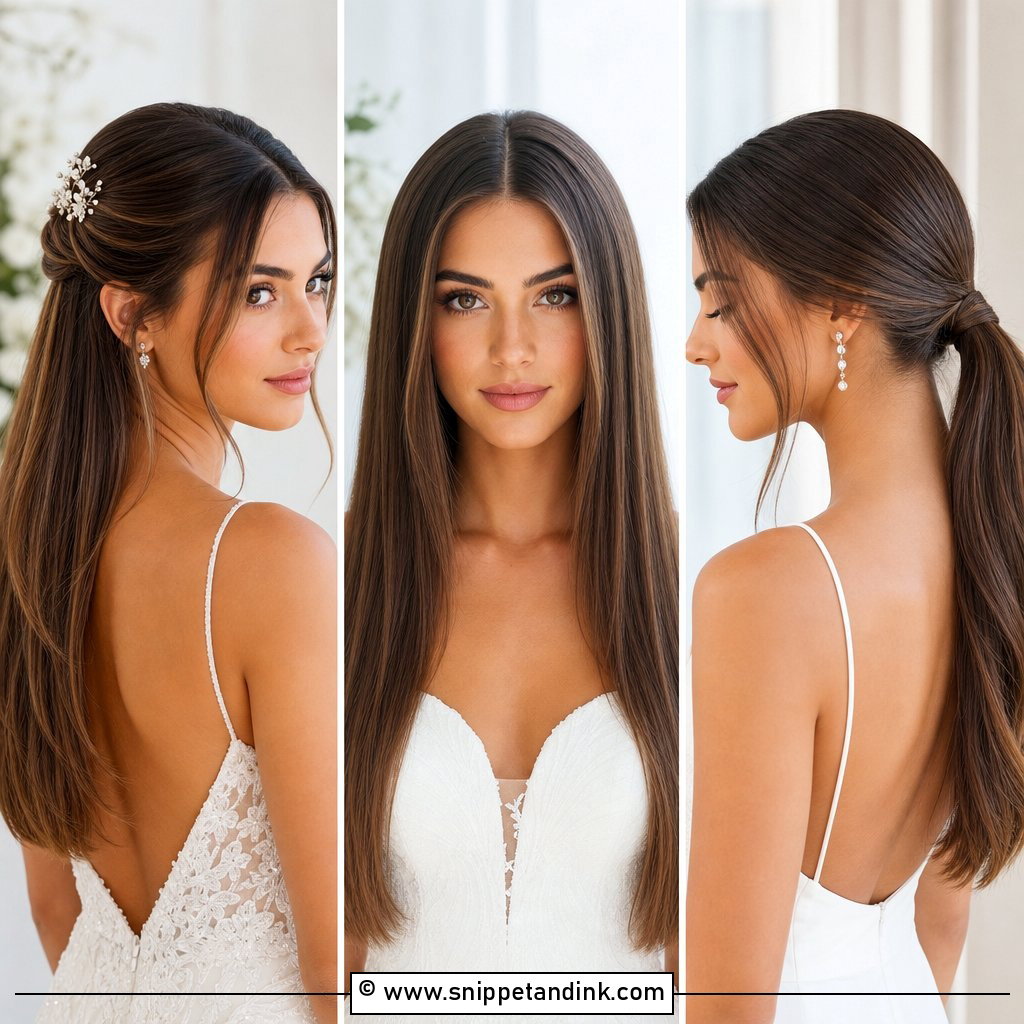
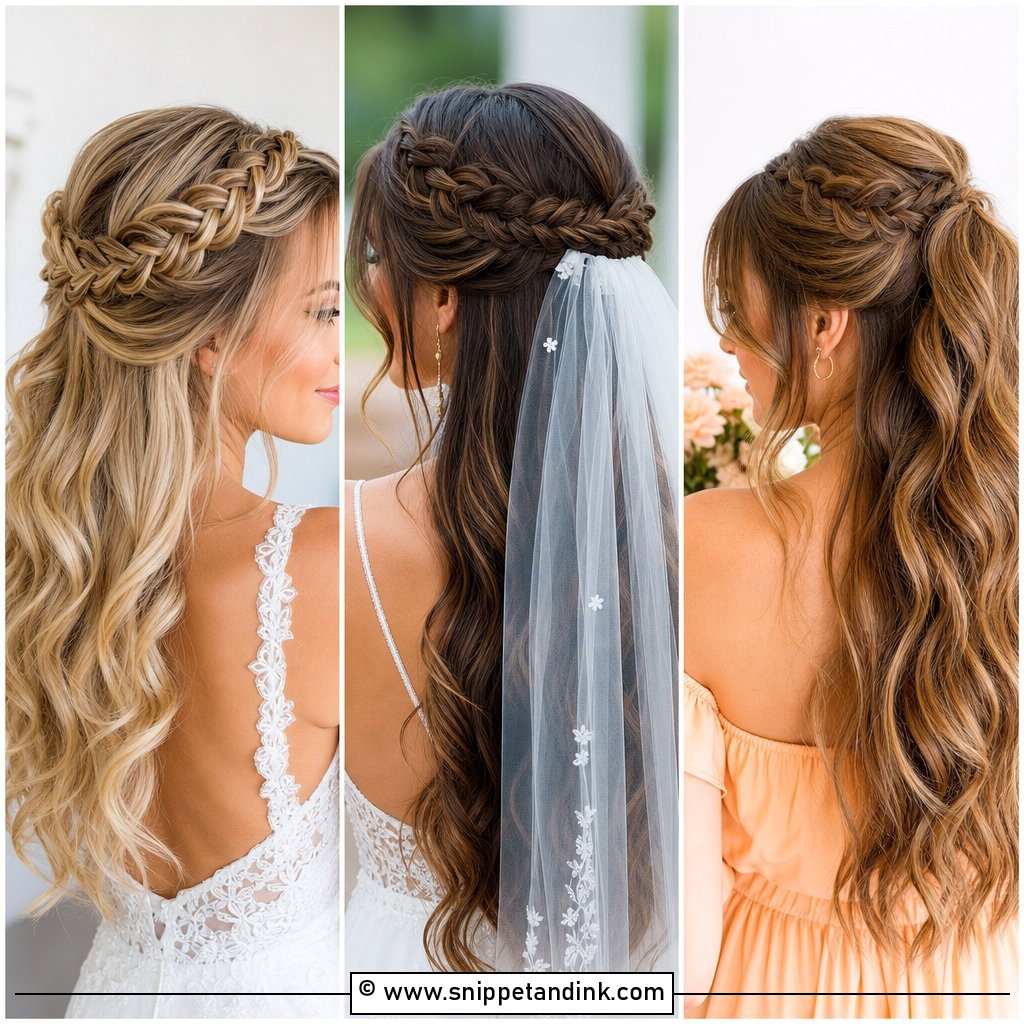
20. Accent Braid Half-Up Wedding Hair
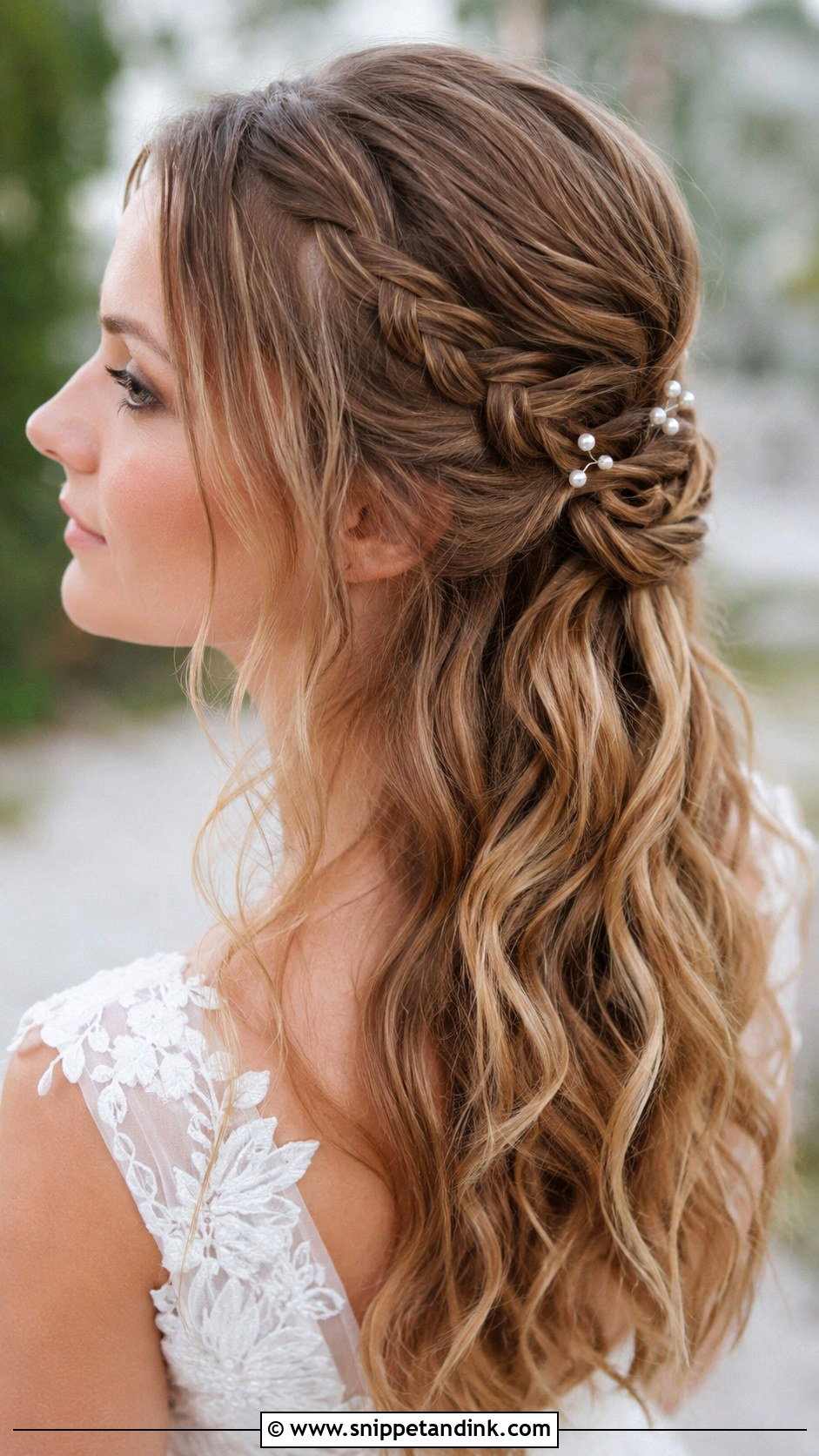
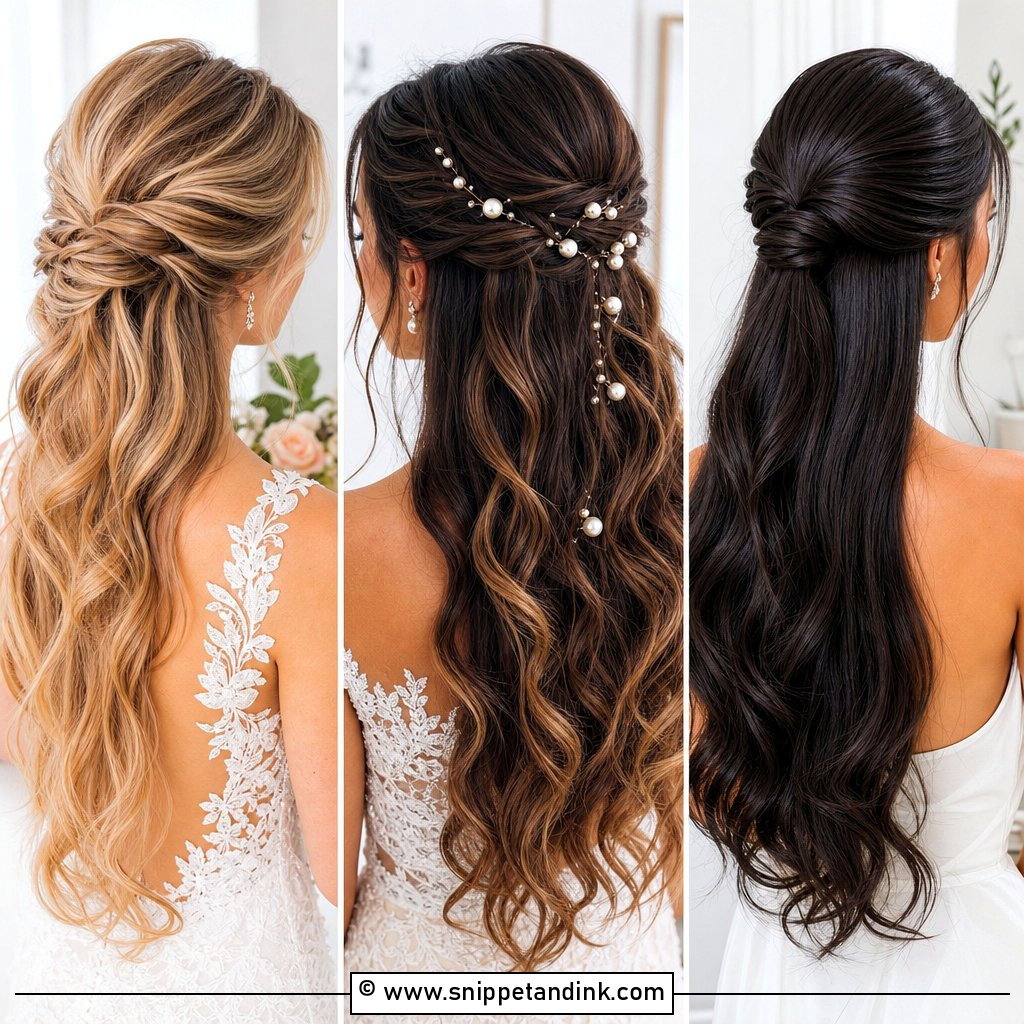
An accent braid is a thin plait added into a larger half-up, just one or two along the side. I suggest it when a bride wants only a hint of braiding. It needs very little hair, which makes it a good choice for finer hair. Leave the rest in soft waves. It suits any theme from classic to boho, and pearl pins or small flowers can sit along it. It’s a small detail that gives a simple half-up more interest.
21. Braided Half-Up With Curls and Twists
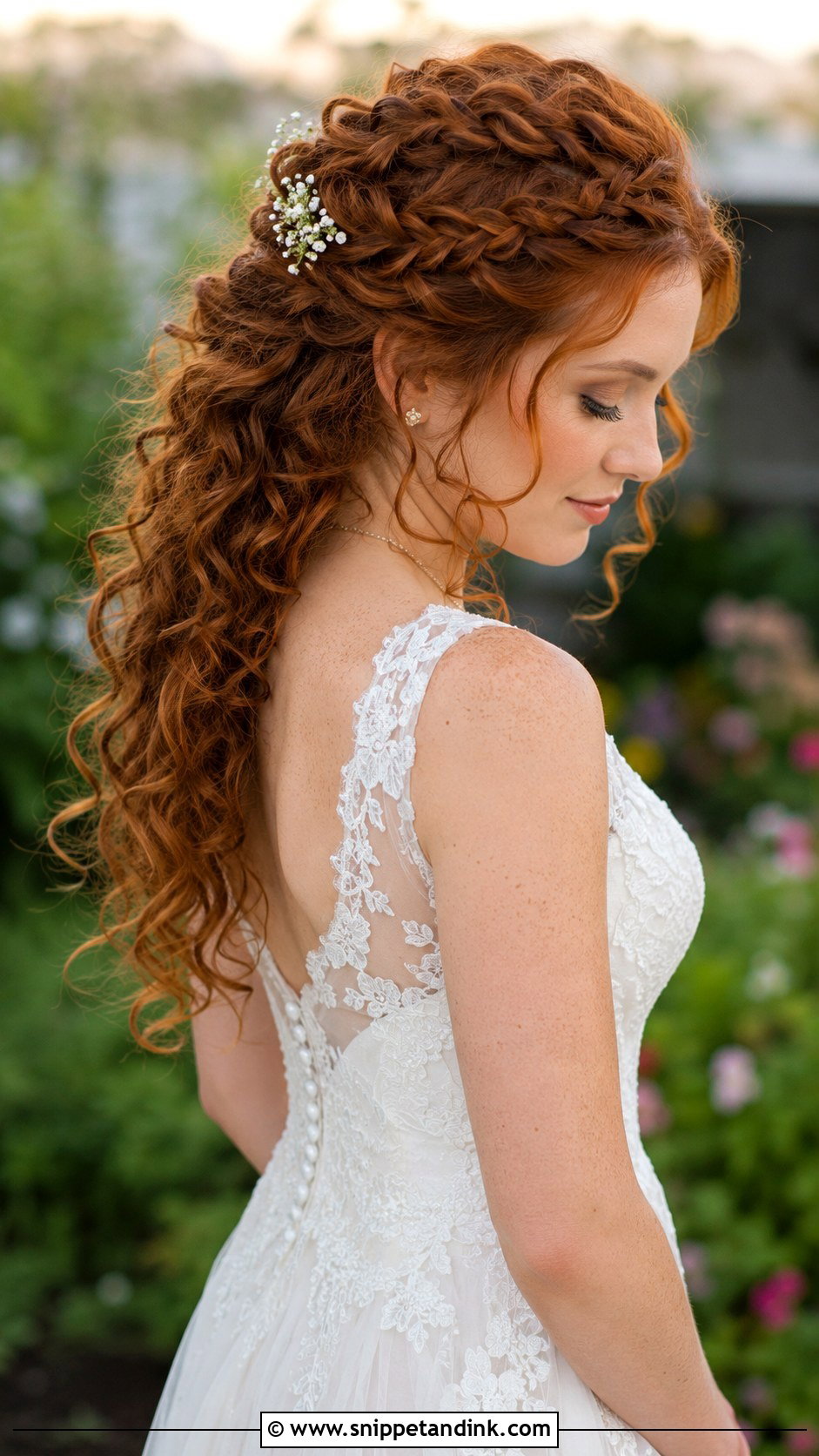
Mixing a braid on one side with a twist on the other gives a lot of texture, but it needs a steady hand to look balanced rather than random. I match the thickness of the two so they read as a pair. Voluminous curls flow below. Pearls or small blooms can cover the point where they meet. If you want your hair to look like it took real work, this is the one.
22. Milkmaid Braid Half-Up Style
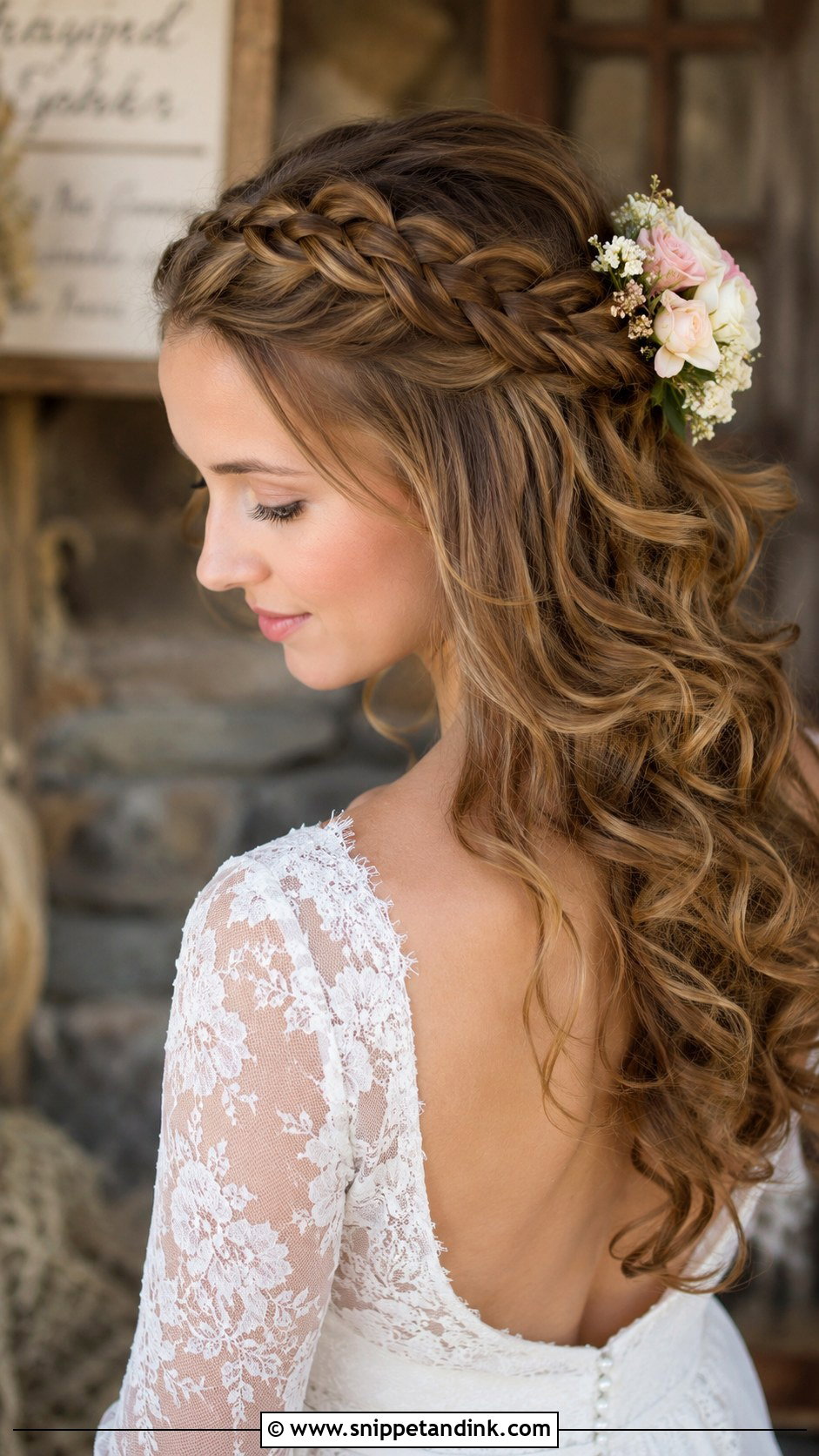
Milkmaid braids are two plaits pinned across the top of the head, and in a half-up version the back stays loose. I pin each plait with U-pins rather than bobby pins, because they hold the braid without flattening it. Loosen them a little for softness. Garden and rustic weddings suit it. Tiny flowers tucked between the braids add a vintage feel, and it pairs nicely with delicate jewellery.
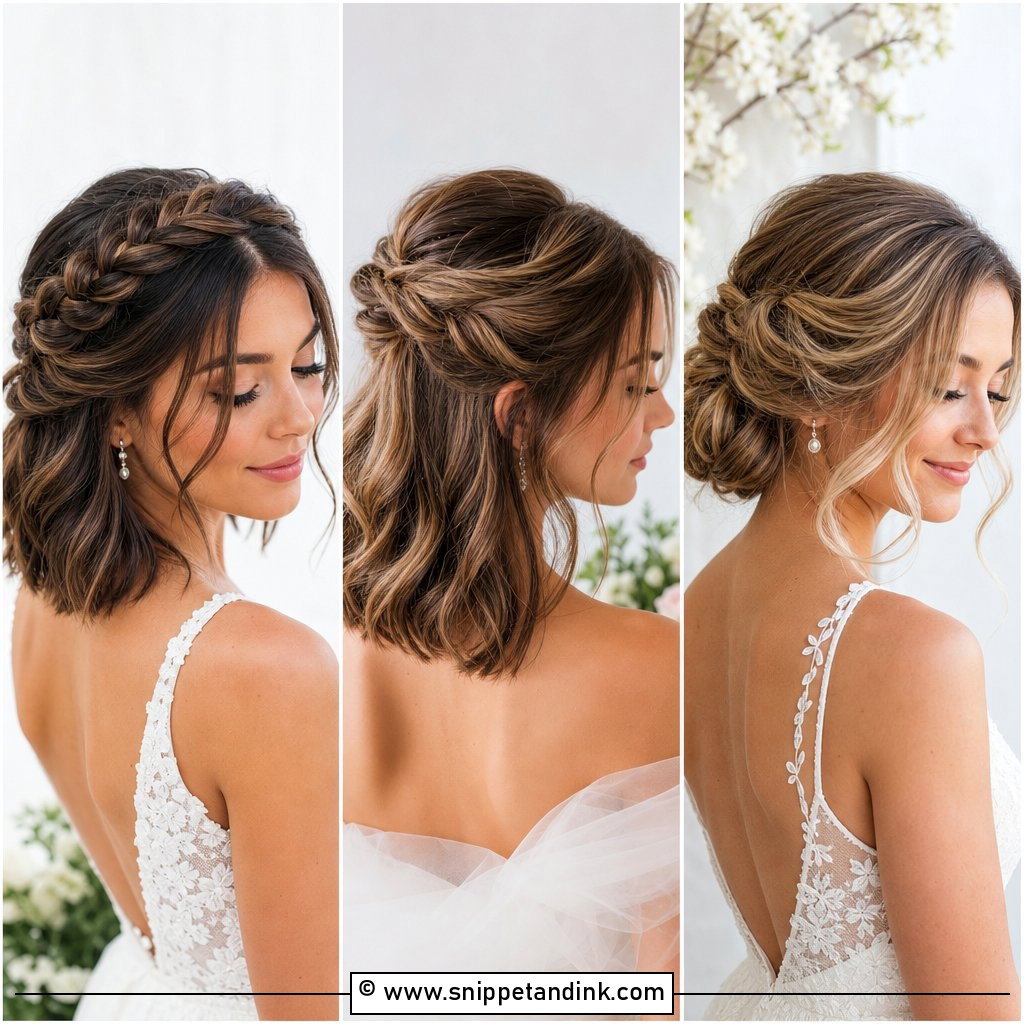
23. Braided Half-Up for Short Hair
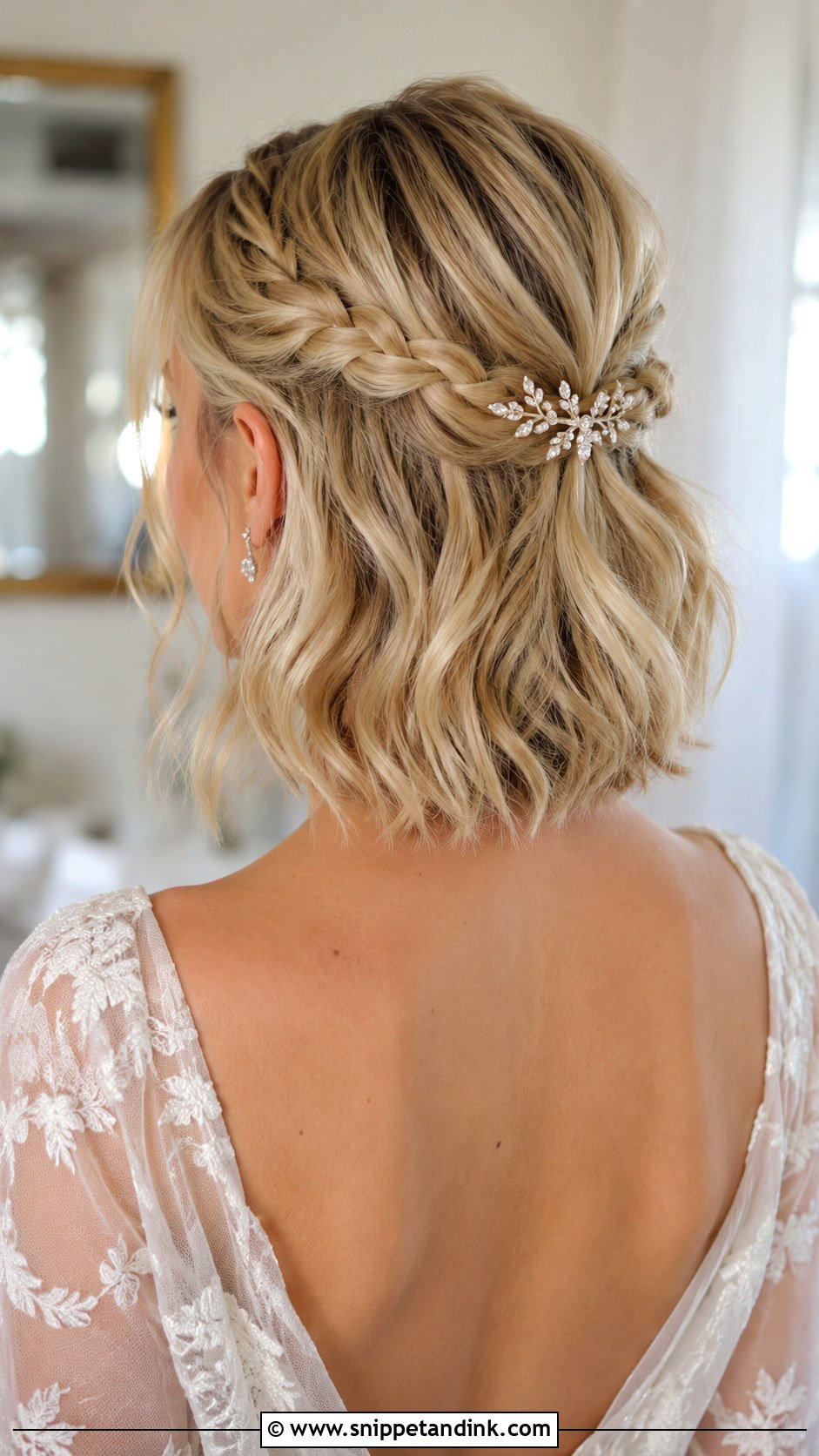
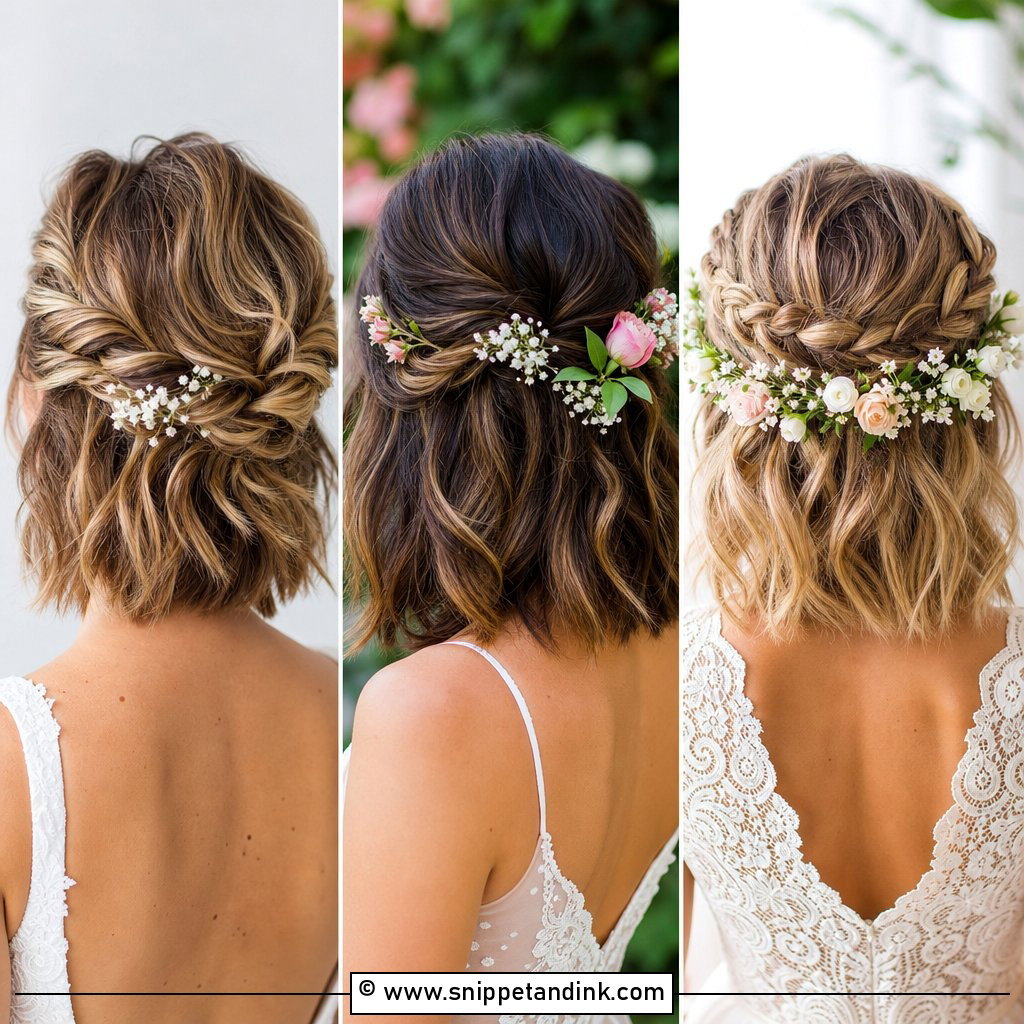
Short hair can hold a braid, but it has to be small. I braid thin sections along the sides of a bob or lob, starting at the hairline where the hair is longest, and secure them at the back. Short layers poke out, so a little pomade on the fingers helps smooth them in. Leave the rest in soft waves or natural texture. A sparkly pin finishes it. It shows that braids don’t need long hair.
24. Asymmetric Braid Half-Up Wedding Look
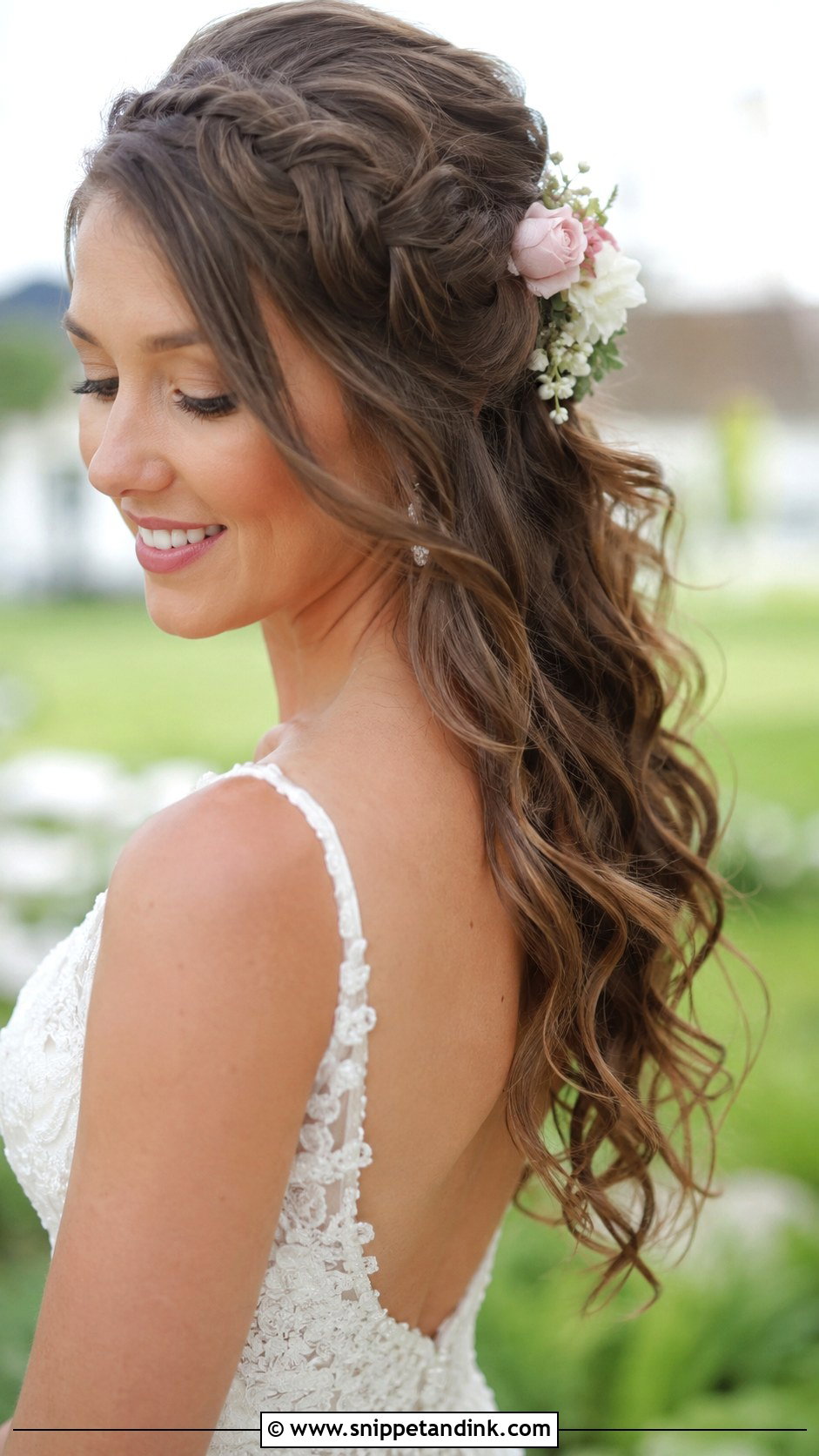
An asymmetric braid starts thick on one side and blends into curls on the other. It’s the most fashion-forward option here, and I’d suggest it to a bride who likes a modern look rather than a classic one. The braid side needs plenty of hair to build up thickness. Small pins or florals can accent it. Indoor or outdoor, it holds well, and it looks good from many angles in photos.
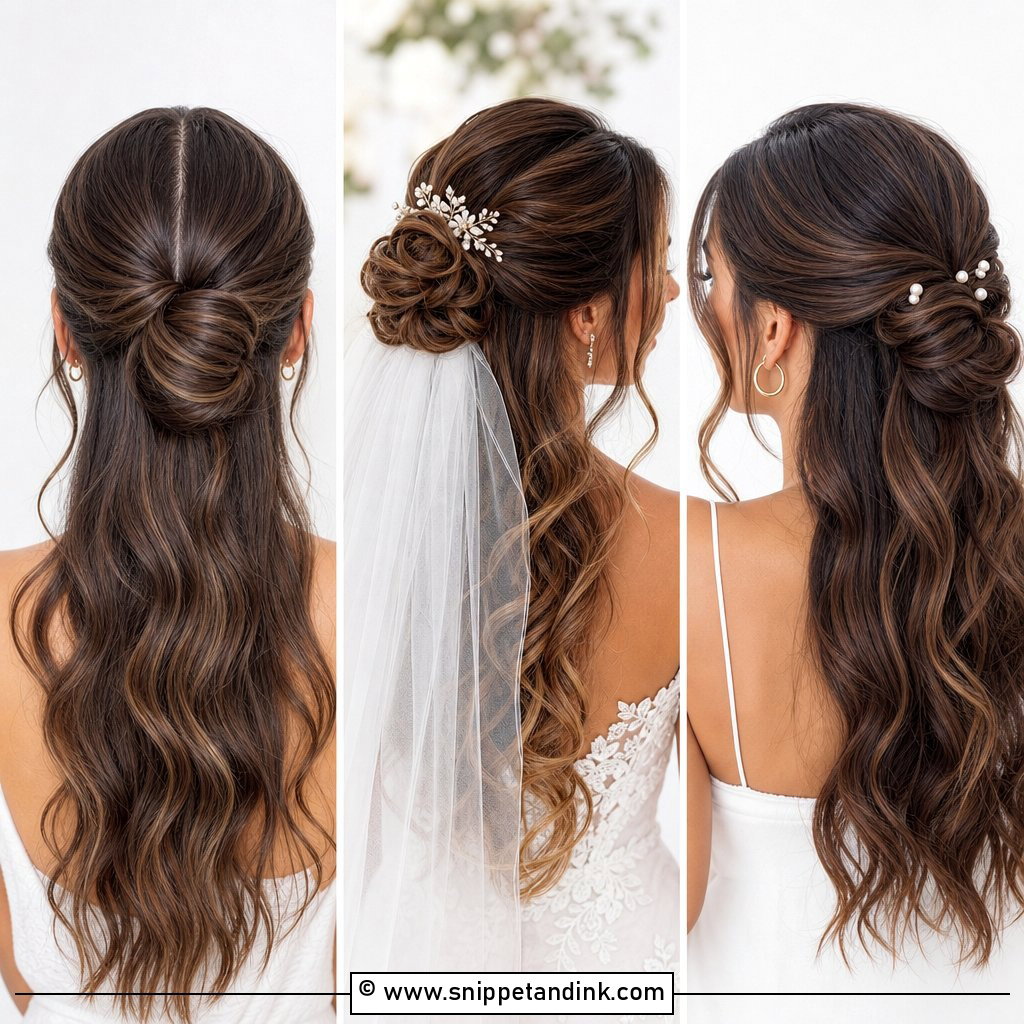
25. Braided Half-Up With Pearls
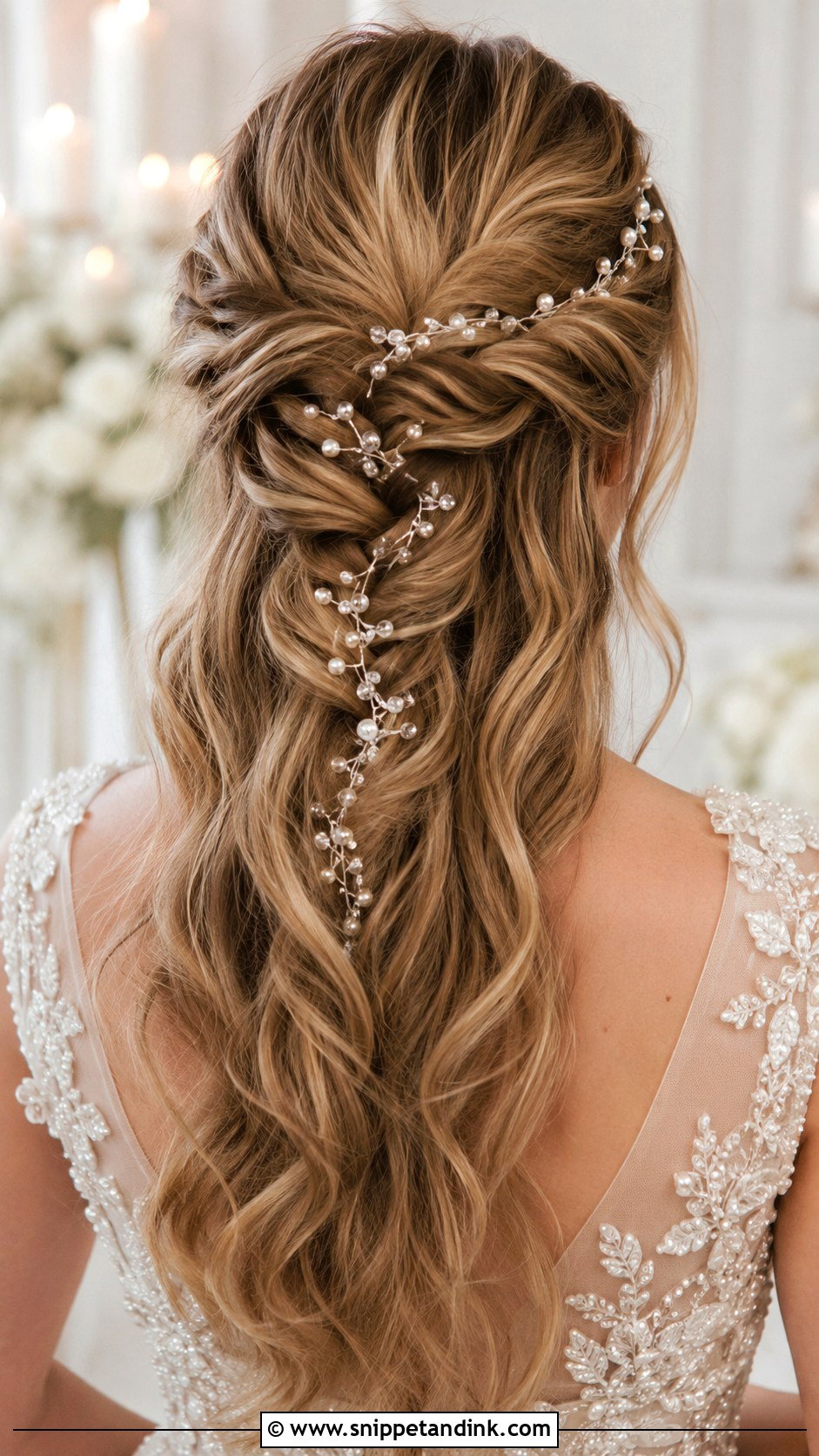
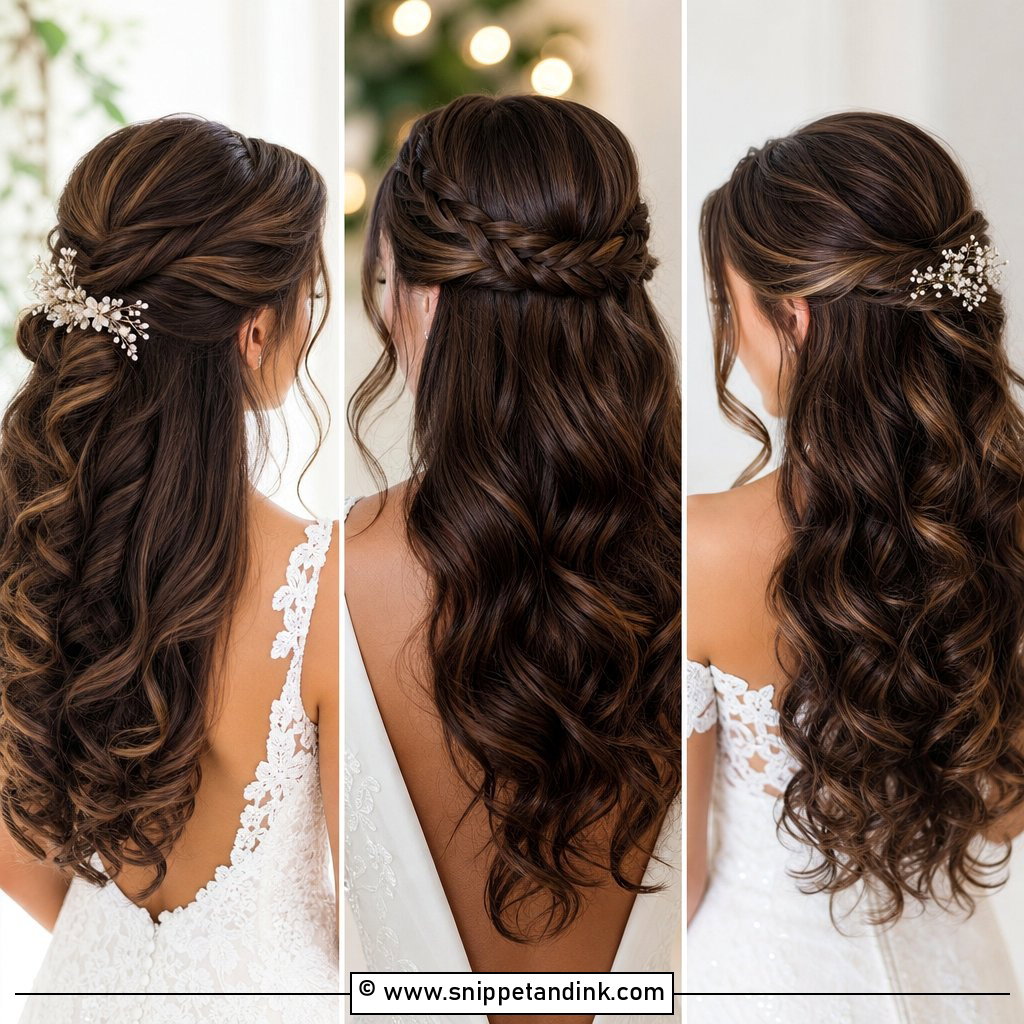
Pearls and braids are a classic pairing. I slide pearl pins in along the stitch line, angled against the direction of the hair so they catch. Strands of pearls woven through need a French or fishtail base for structure. Soft waves below balance it. It’s my suggestion for formal and classic weddings, and it suits traditional or vintage gowns. In soft lighting the pearls give a gentle shimmer.
Unpinning at Midnight Without Ripping Out Hair
No one tells brides how to get a braided style out, and a lot of breakage happens at this point. A braid that has been sprayed and pinned for twelve hours is tangled at the stitches, and pulling at it tired and in the dark does damage.
- Take out every pin first. Feel along the braid with your fingertips; they hide in the stitches. Count them in the morning if you can, so you know how many to find.
- Undo the elastic by cutting it with small scissors rather than pulling it, especially clear elastics, which grip and snap hair.
- Unbraid from the end upward, loosening a few stitches at a time.
- Work a little conditioner or detangling spray through the loosened hair before brushing. Hairspray softens with it.
- Brush from the ends up with a wide-tooth comb, and leave the full wash for the morning if you’re tired.
If you’re leaving for a honeymoon the next day, pack a detangling spray and a wide-tooth comb in your overnight bag. It saves your hair from a rushed brush-out.
Matching the Braid to Your Dress, Veil and Texture
Start with what’s fixed: your hair’s thickness and texture, your neckline, and the veil, if there is one. Thick hair can carry Dutch or double braids; fine hair looks better with a loosened French braid, an accent plait or twists. A high neckline balances well with a crown braid; a low back suits a braid that runs down toward it. Then book a trial and wear something with a similar neckline to it. Bring the veil or a pin of the same weight, so we can test the braid holding it.
You'll Like These Ideas:


Leave a Reply