
Straight hair has a reputation for being hard to style for weddings, and it’s half deserved. It’s slippery, it drops curl quickly and it shows every bump and pin. It’s also the texture that makes sleek shapes look their sharpest, because nothing interrupts the line. I’d rather build a style around that smoothness than spend an hour forcing waves that are flat by the speeches. The twenty looks below lean into clean lines, glossy lengths, braids and neat buns, and I’ve added notes on prep and pinning for each, since with straight hair the foundation decides whether a style lasts.
Making Curls Last on Hair That Won’t Hold a Bend
Many brides with straight hair want waves, and many have tried them before and watched them disappear by lunch. It can be done, but it takes a different approach from curling textured hair. The curl sets as the hair cools, not while it’s hot, and that’s the step most people skip.
- Start with a setting mousse or heat-activated spray on damp hair, then blow-dry fully. Curling hair with any moisture left in it doesn’t hold.
- Curl in small sections, smaller than you’d do at home.
- Pin each curl in a loop against the head while it cools, for at least ten to fifteen minutes.
- Release and brush out only once every section is cold.
- Expect the waves to relax by about a third over the day, so start tighter than the look you want in photos.
Even with all this, very fine straight hair can lose curl in humidity. If you’re getting married somewhere hot and damp, I’d suggest an updo or half-up style where the curl matters less.
1. Sleek Low Bun Wedding Hair For Straight Hair
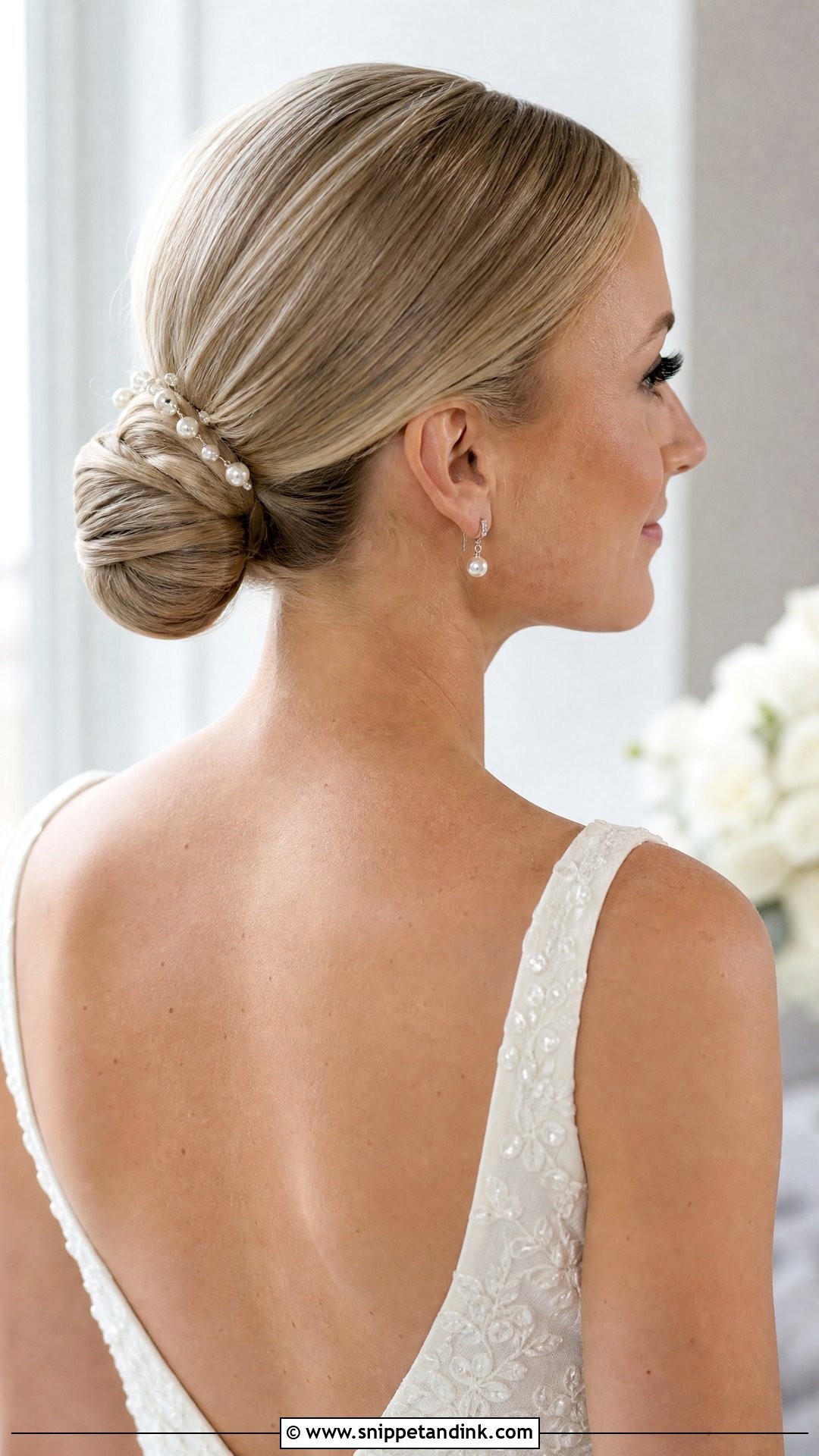
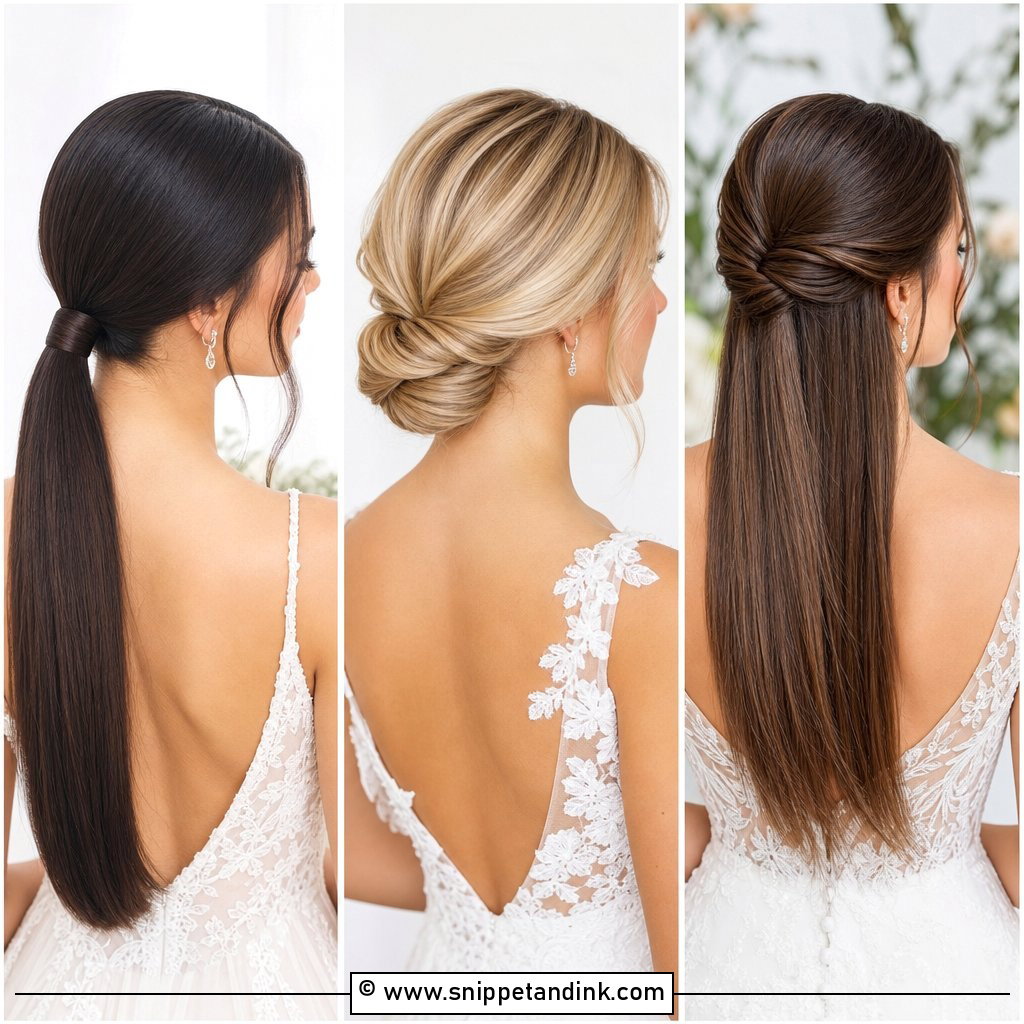
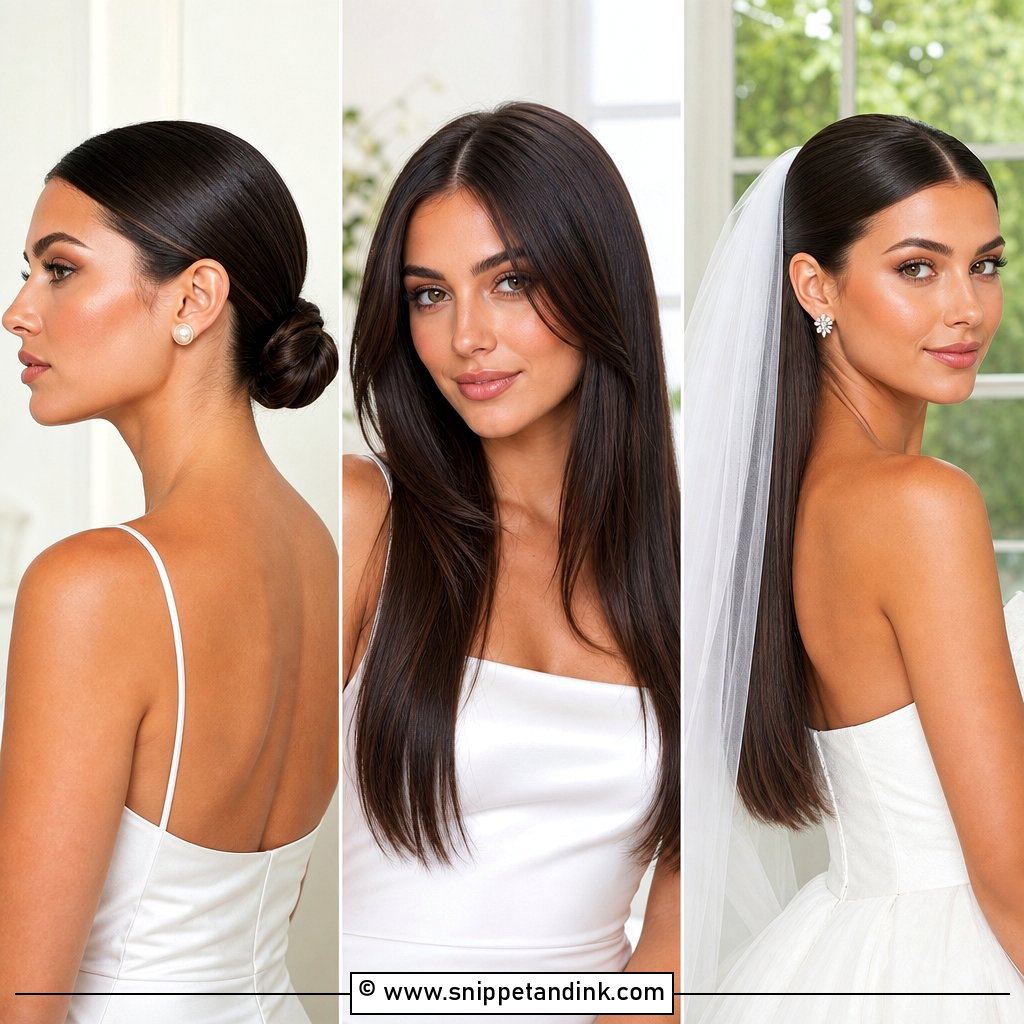
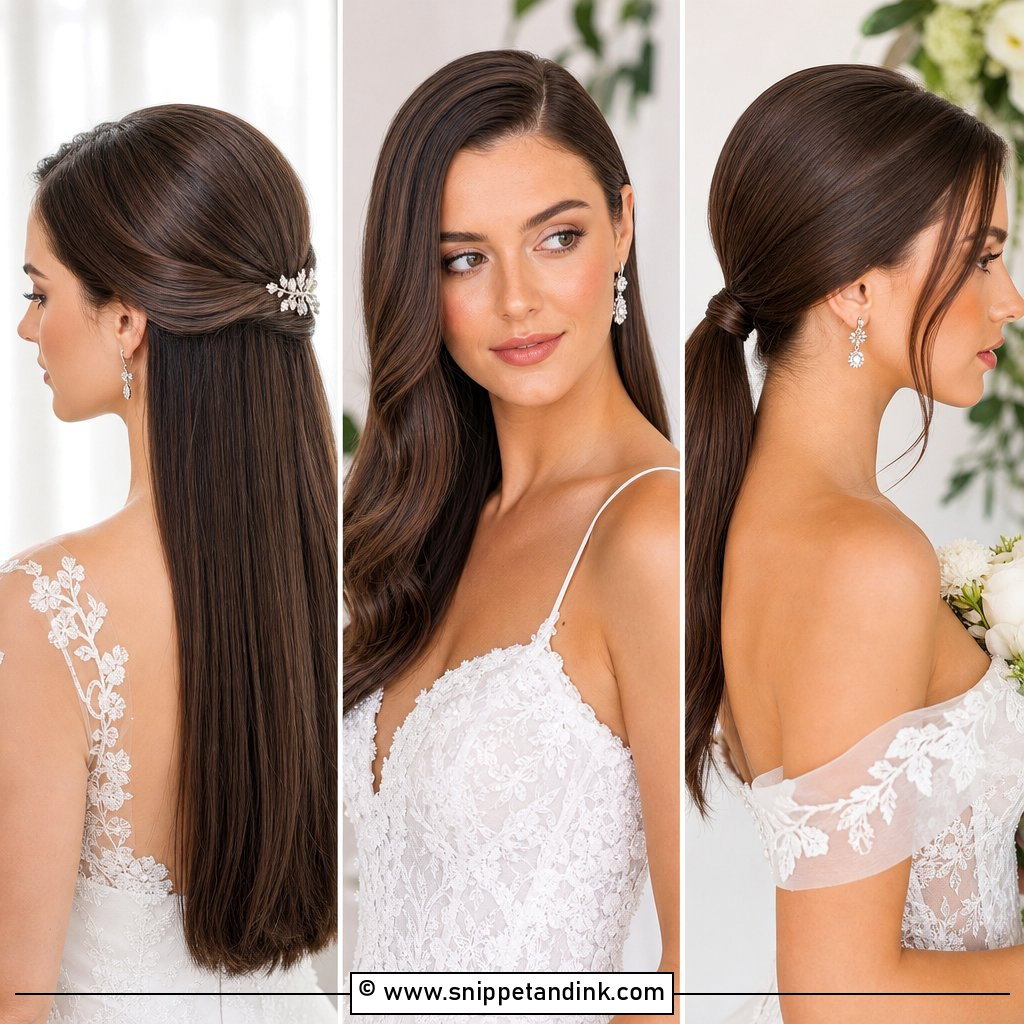
If I had to pick one style for straight hair, it would be the sleek low bun. Smoothness is the whole point, so there’s nothing to drop. I part cleanly, brush the hair close to the head and gather it at the nape, then pin through the base of the bun into the elastic so it can’t swivel. It suits veils, pearl pins, simple clips and big earrings, and it’s my usual answer for fine hair that won’t hold a curl. A drop of serum on the surface and a flexible spray keep it from looking lacquered.
2. Straight Hair Half Up Half Down Wedding Hair
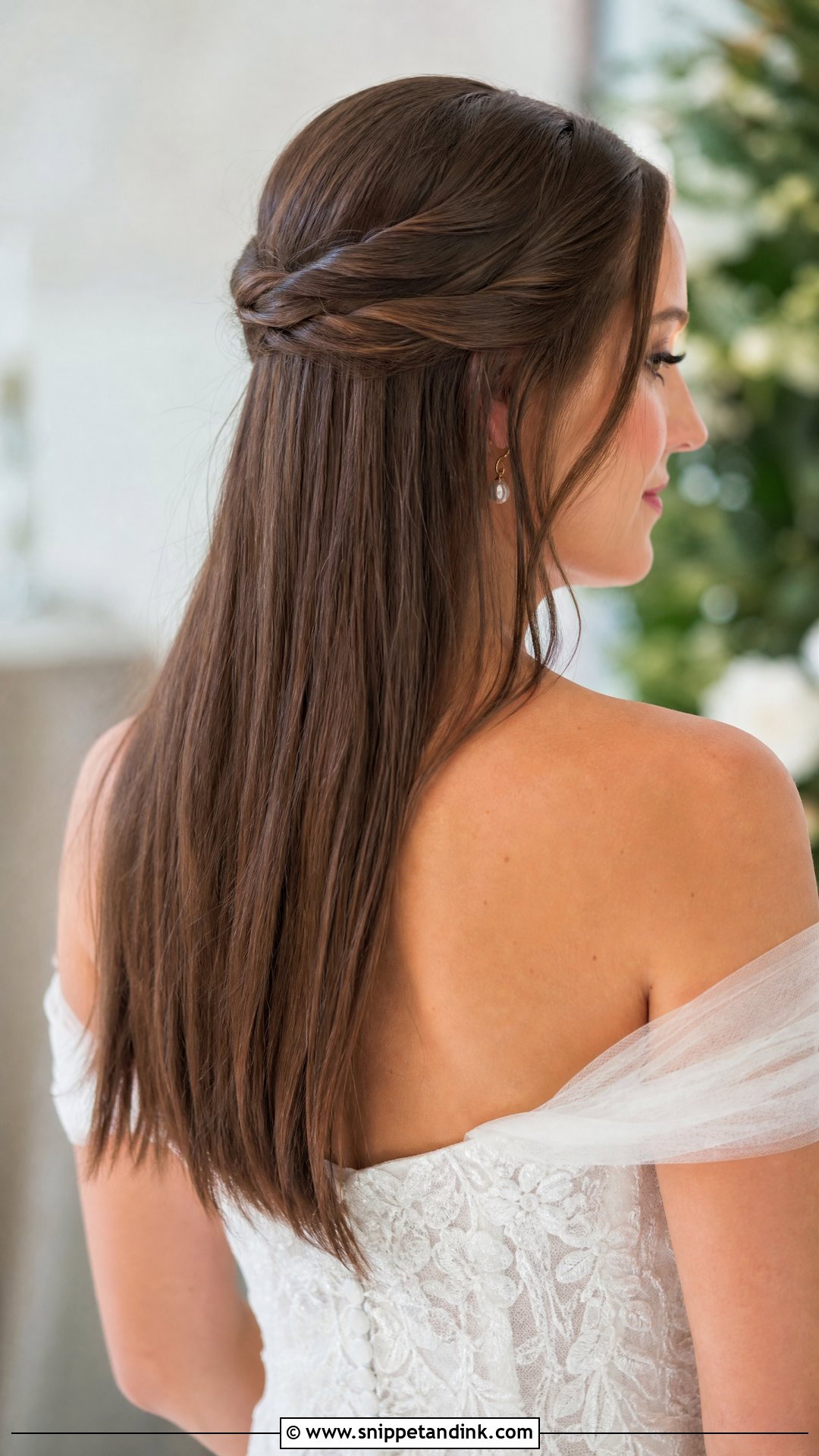
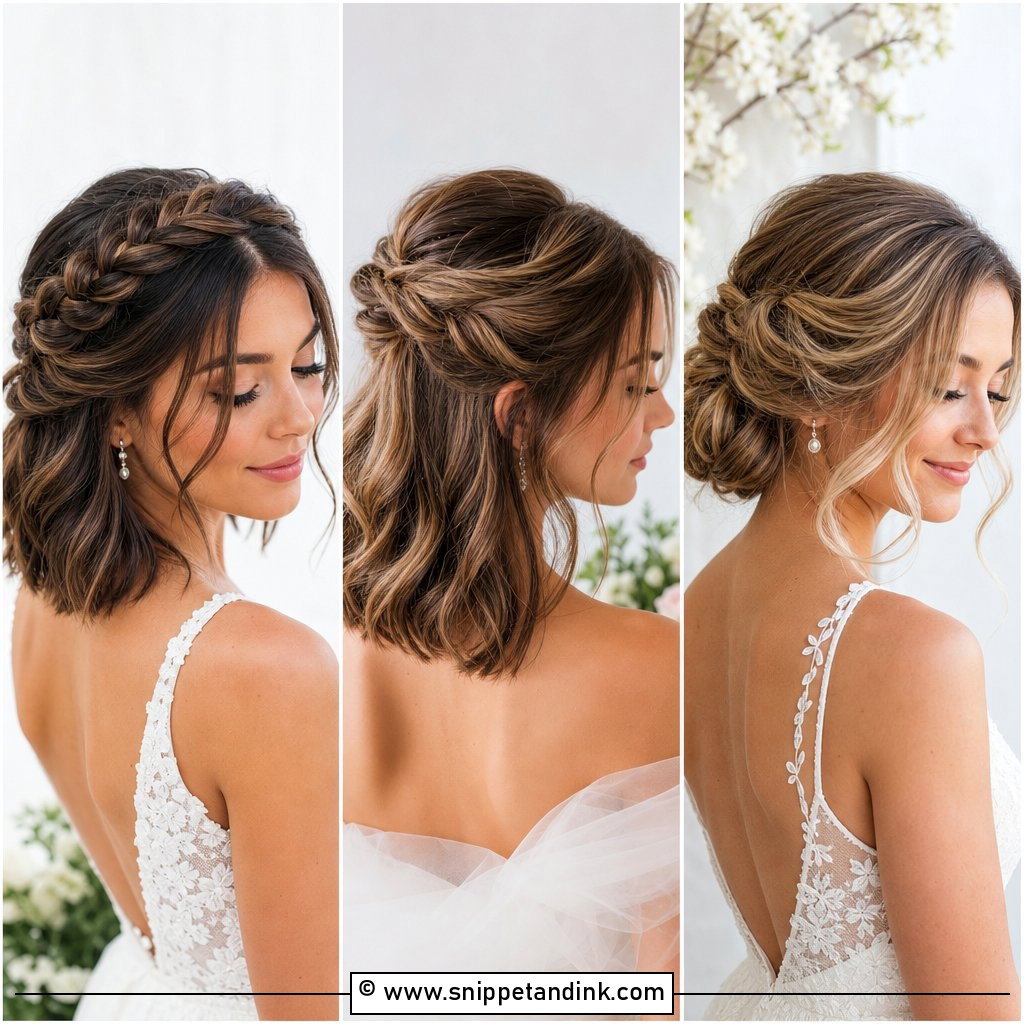
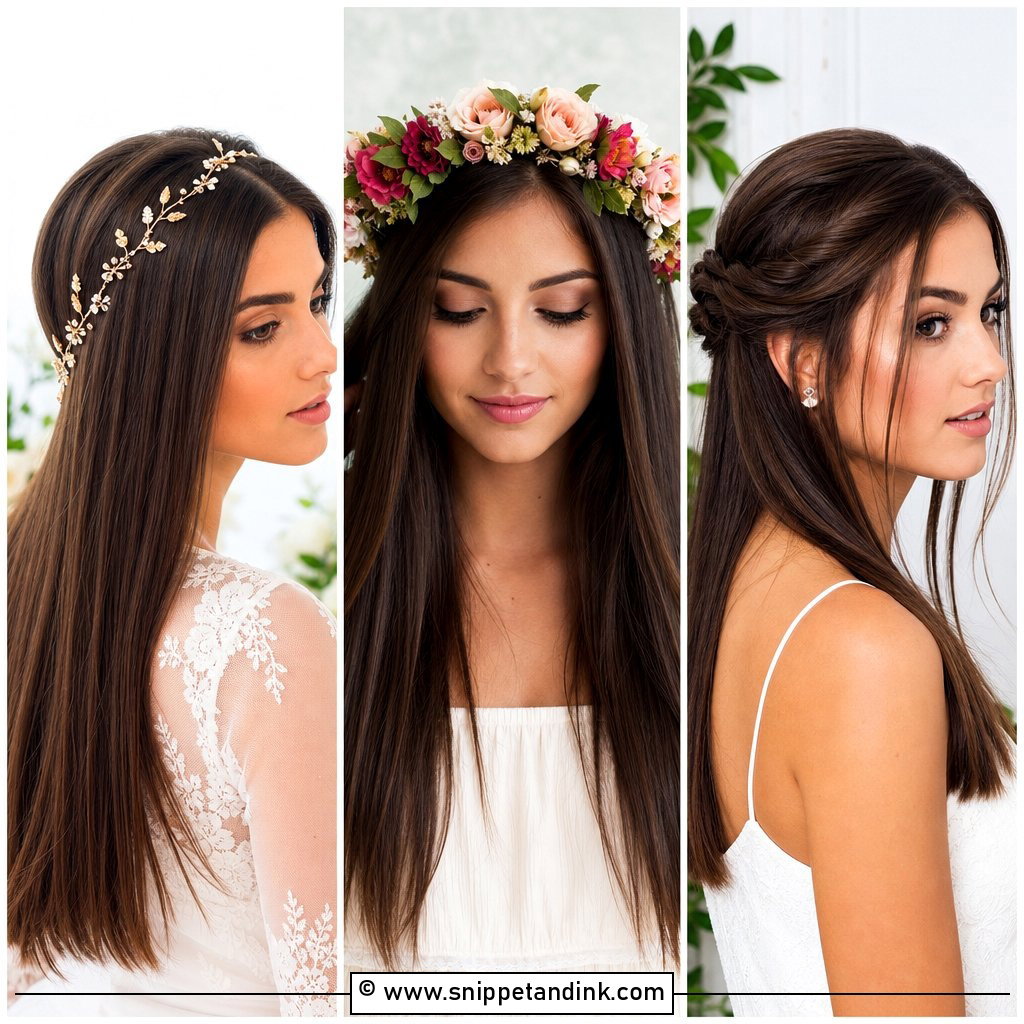
Half up, half down on straight hair can look flat if the down section is left poker-straight. I give the ends a soft inward bend with a round brush or a flat iron so they curve toward the body. The top section can be lifted at the crown, twisted, braided or secured with a bridal comb. The real risk is the top section sliding loose, because straight hair doesn’t hold a twist on its own; I back-comb a little at the anchor point and cross the pins. It suits medium and long hair best, and keeps the face open for photos.
3. Straight Hair Wedding Ponytail
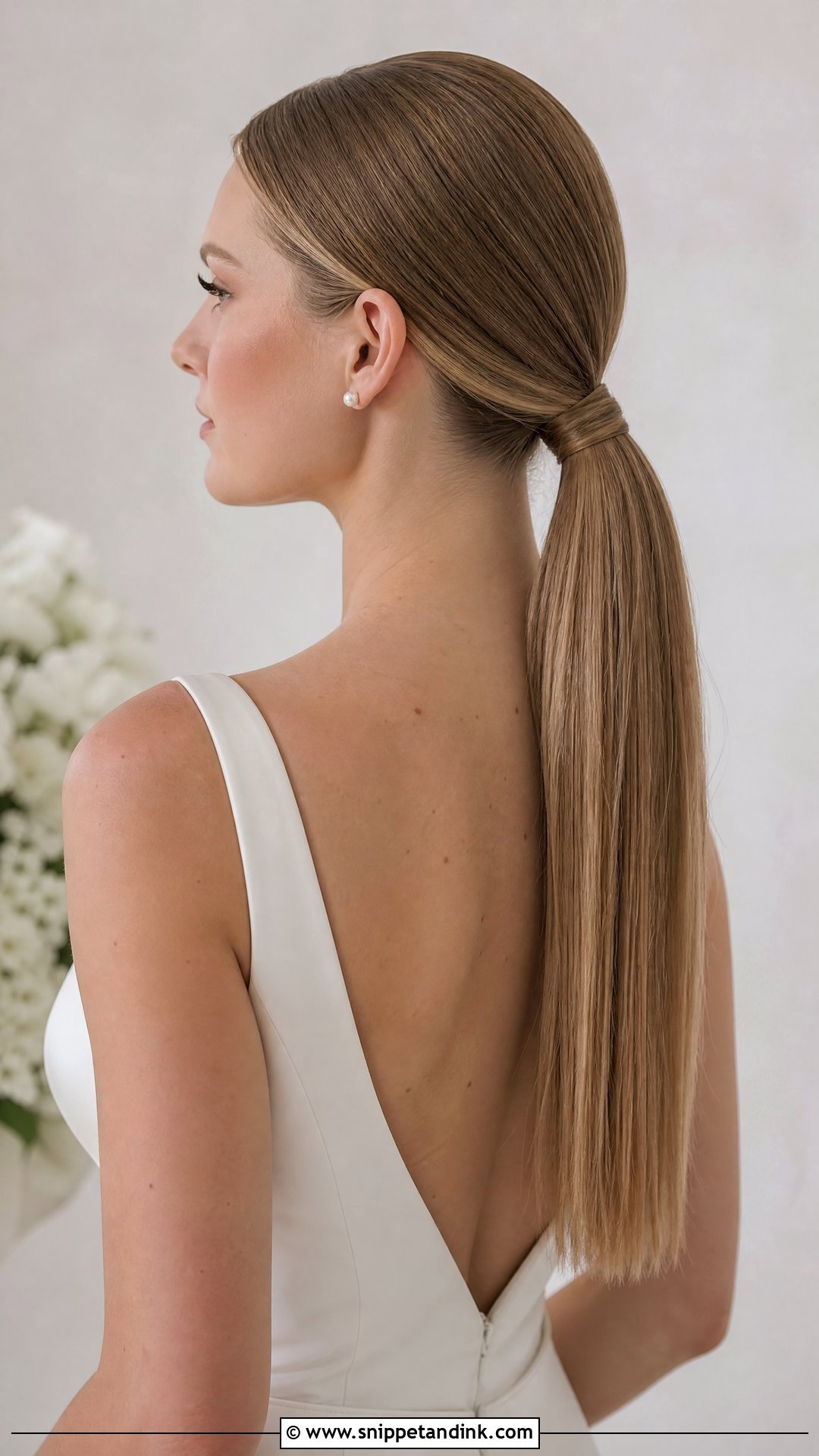
A wedding ponytail looks formal once the elastic is wrapped with a section of hair and pinned underneath. Set it low for something classic or higher for a lifted, modern shape. Straight hair looks glossy along the full length of the tail, which is why this style suits it. High ponytails get heavy over a long day, though, and can give you a headache by evening. If you have a lot of hair, I’d go low or mid. Choose a middle or side part, or add face-framing pieces, depending on your neckline.
4. Straight Hair Wedding Chignon
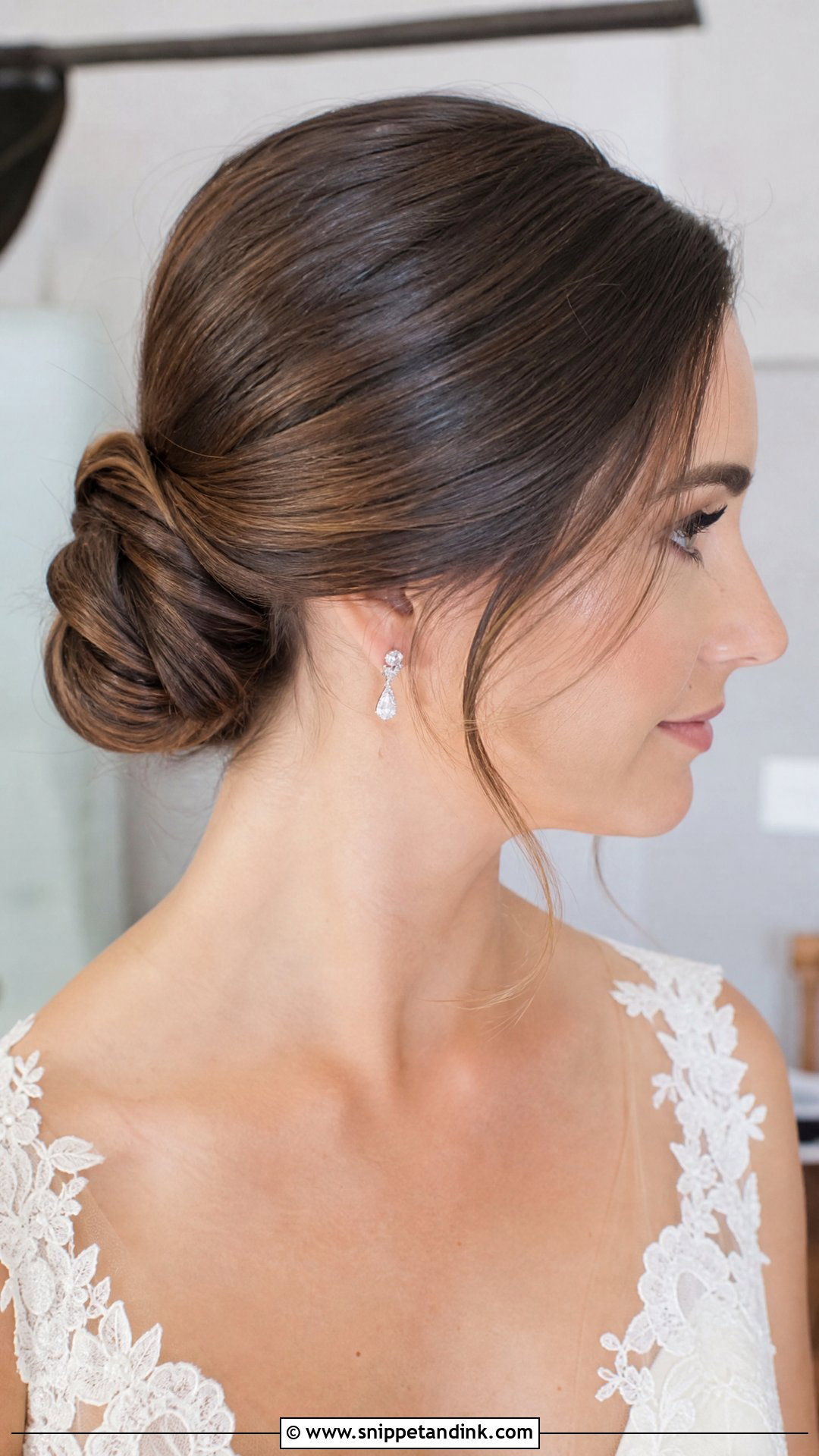
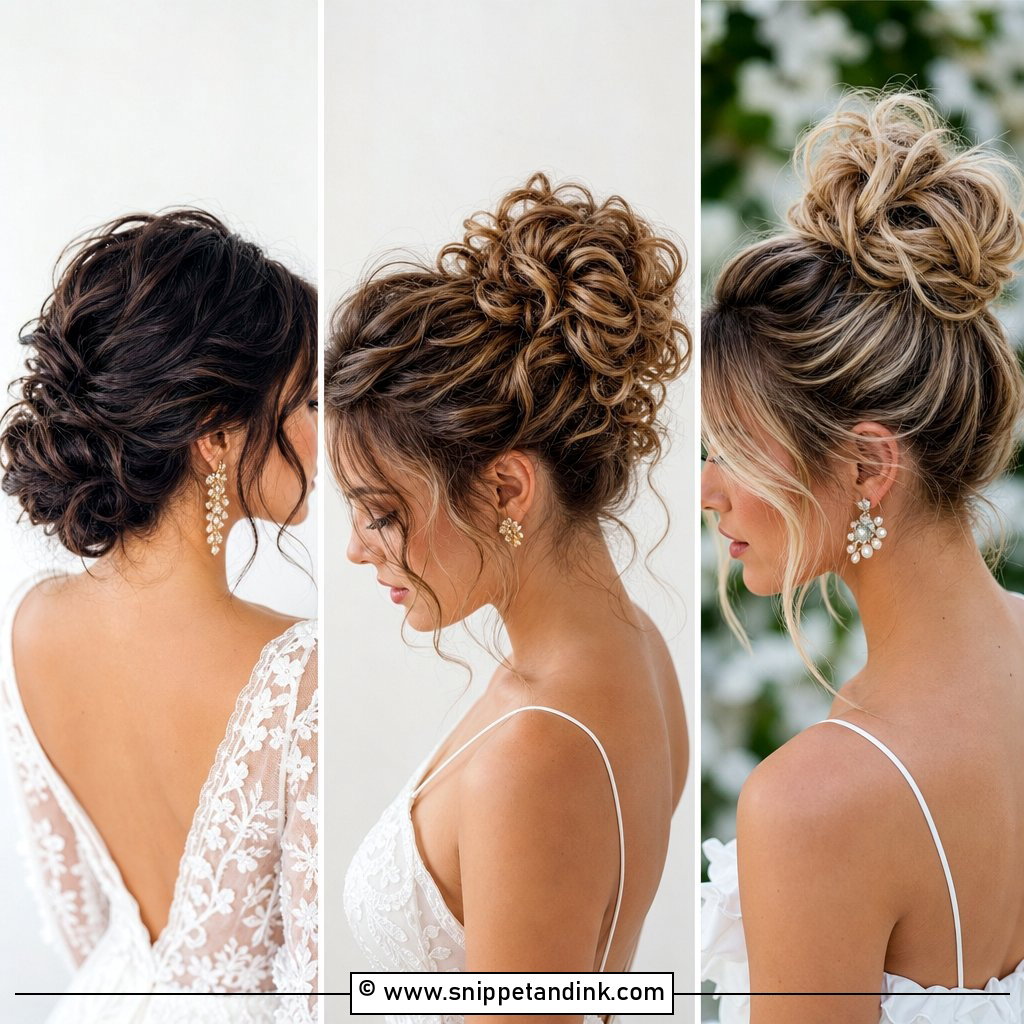
A chignon sits closer to the nape than a full bun, with a softer tucked shape, and straight hair helps the folds look smooth. It suits backless dresses, lace gowns, high necklines and delicate veils. With fine hair I add a little teasing or a small padding piece inside the shape so the chignon doesn’t look thin from the side. Keep the surface smooth but not tight; scraped-back sides pull at the temples and become uncomfortable after a few hours.
5. Straight Hair Bridal Crown Braid
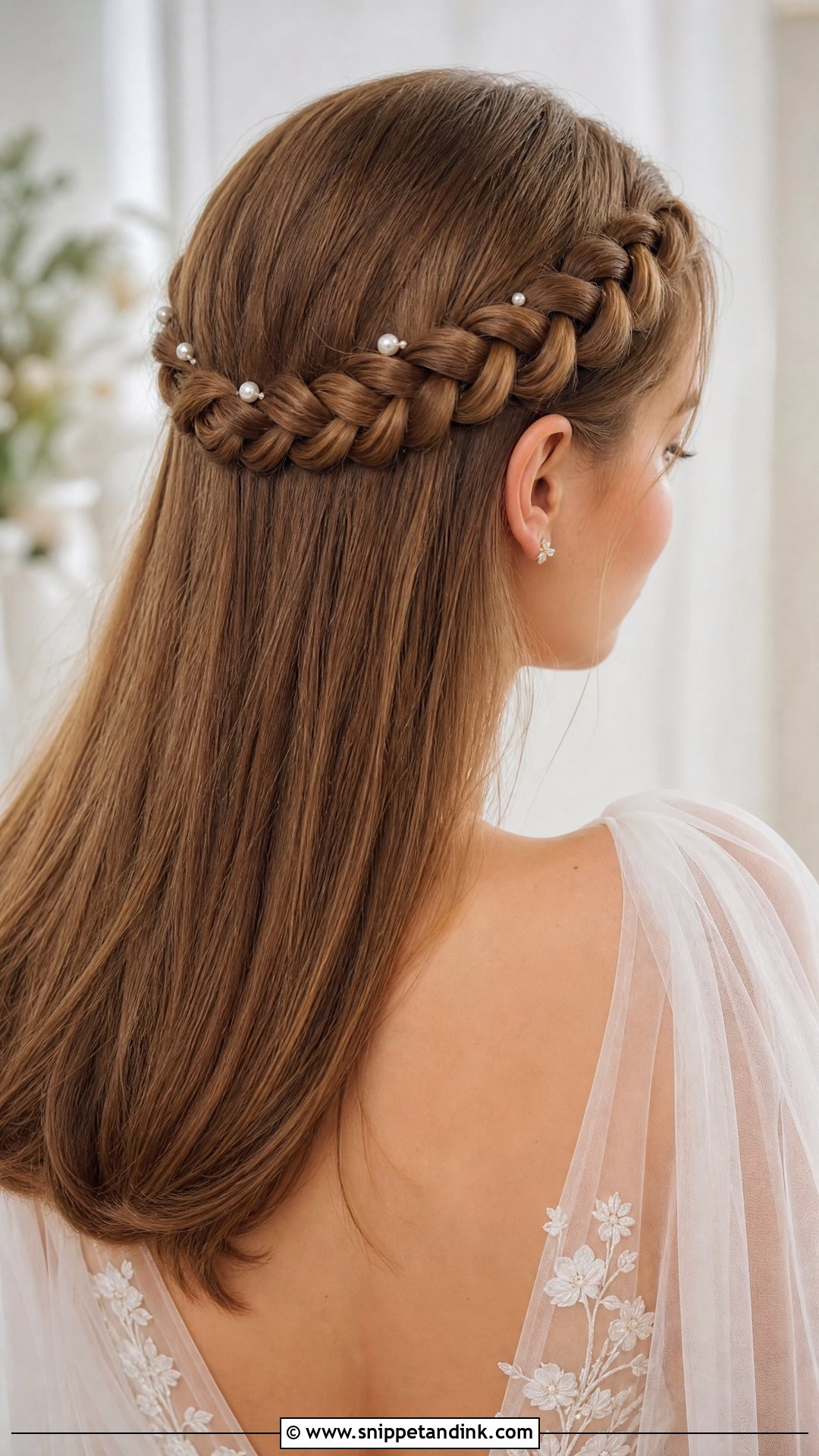
Crown braids give a romantic look without curls, which is good news for hair that won’t curl. The braid can wrap across the top of the head, frame one side or run into a low bun at the back, and on straight hair the pattern reads clearly. I spray texture through first so the strands grip each other; without it, straight hair braids slip loose within the hour. Once it’s pinned, I gently pull out a few loops for fullness. Medium to long hair works best, and a sheer veil sits neatly just behind the braid.
6. Straight Hair Wedding Bob
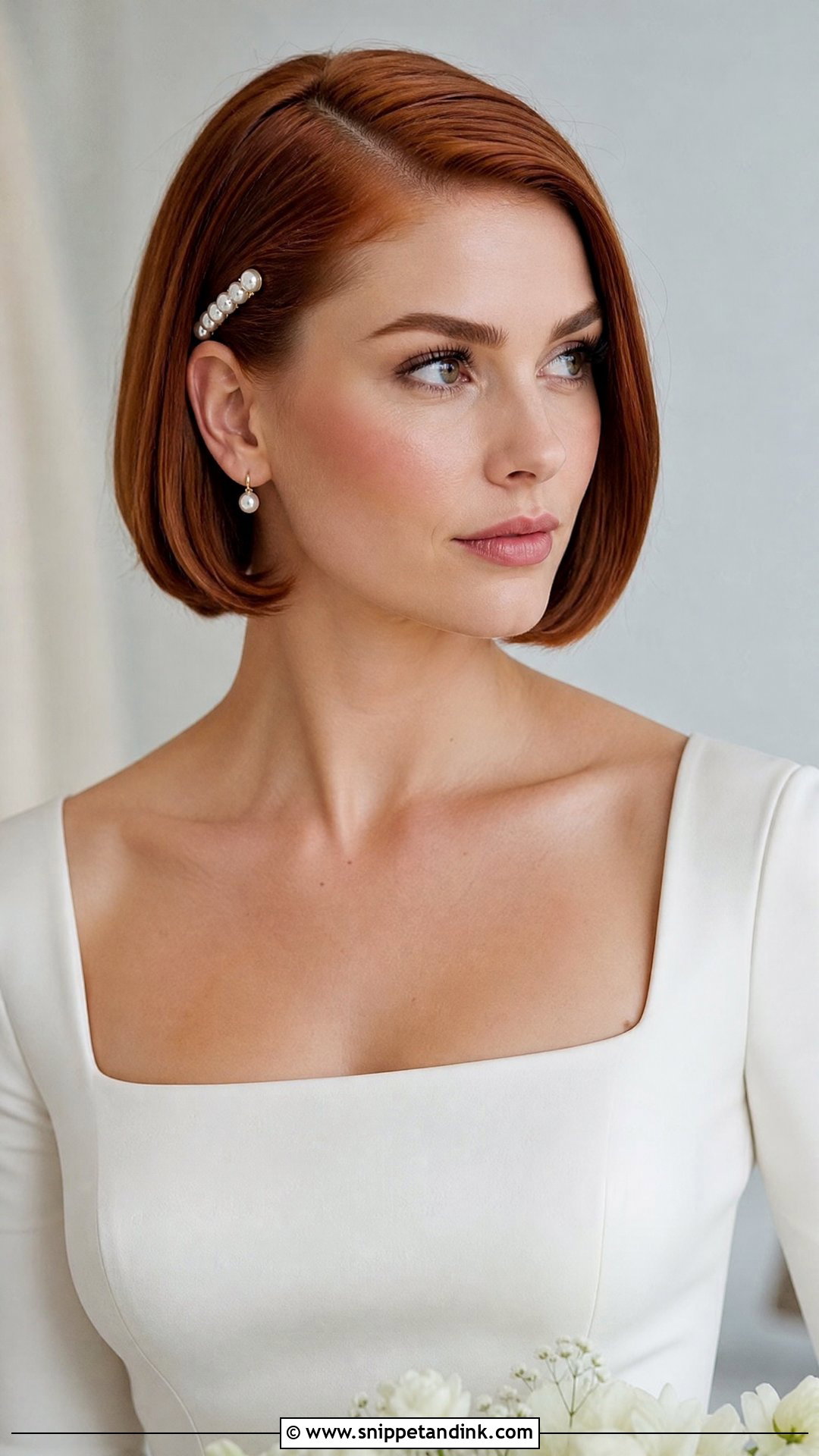
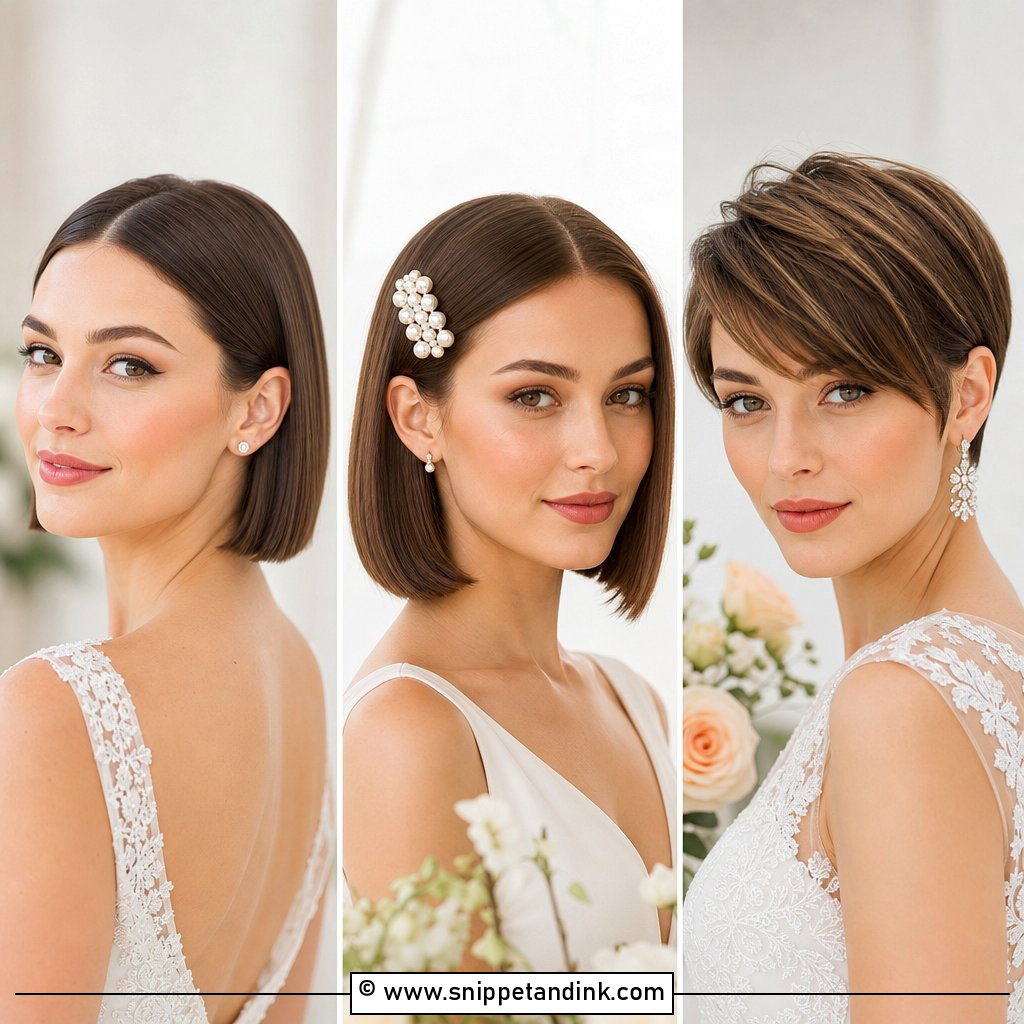
Short brides shouldn’t feel they need extensions to look bridal. A straight hair wedding bob with tucked ends, a deep side part or one small accessory can be just as finished. The cut becomes the main feature, so precision matters: book a trim about a week out so the line is crisp but not freshly blunt. I smooth the ends with a flat iron or round brush so they curve slightly under. A pearl barrette, slim headband or short veil is enough.
7. Straight Hair Wedding Lob
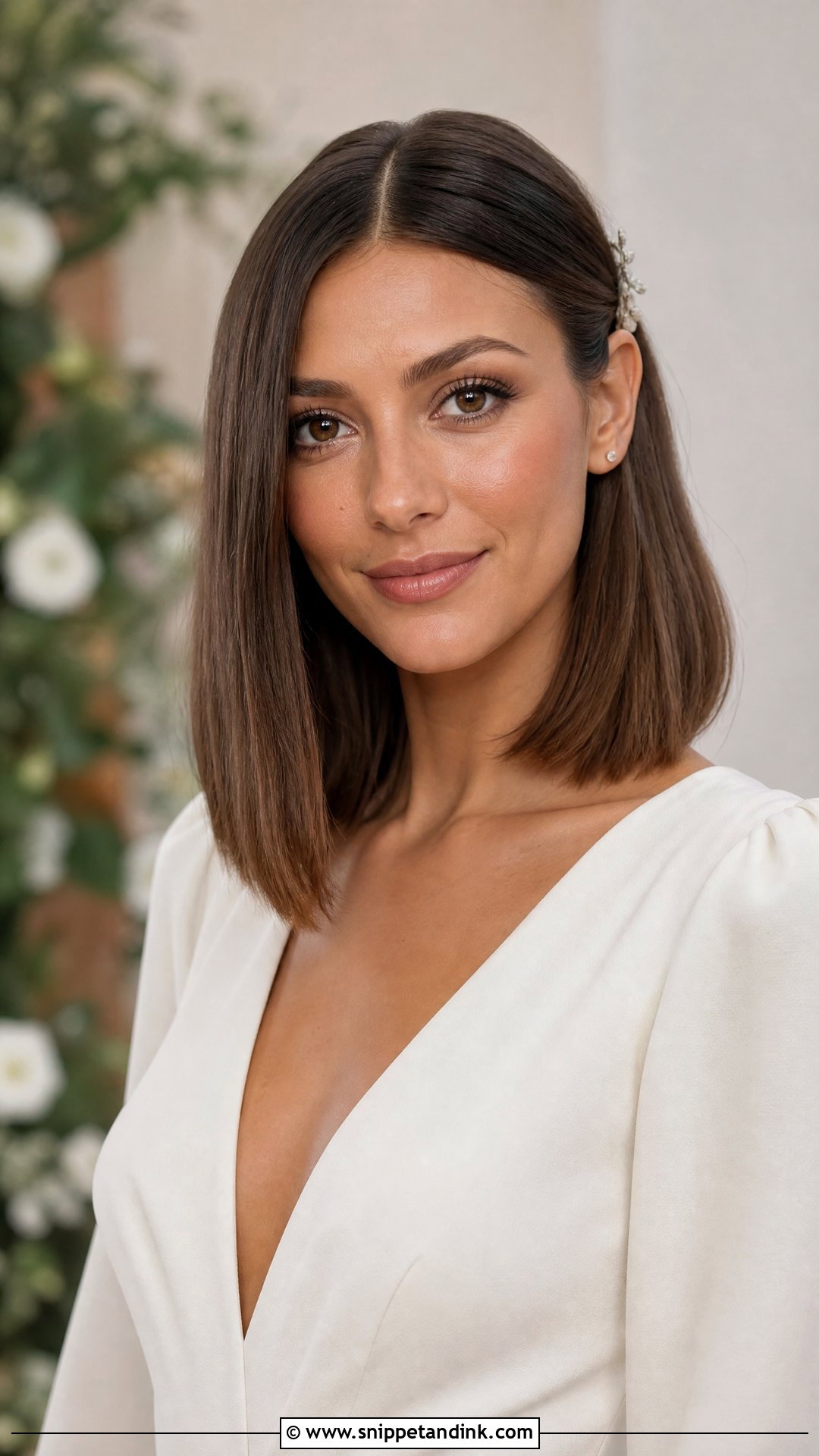
Lobs give you just enough length for a half-up twist, a side clip, a small braid or a tuck behind the ear. On a straight hair wedding lob, I bevel the ends under slightly so the clean line of the cut shows. A center part looks current; a side part softens the face. It suits minimalist gowns and city weddings. Pick one accessory and let the cut do the rest; two or three compete on hair this short.
8. Straight Hair With Pearl Pins Wedding Hair
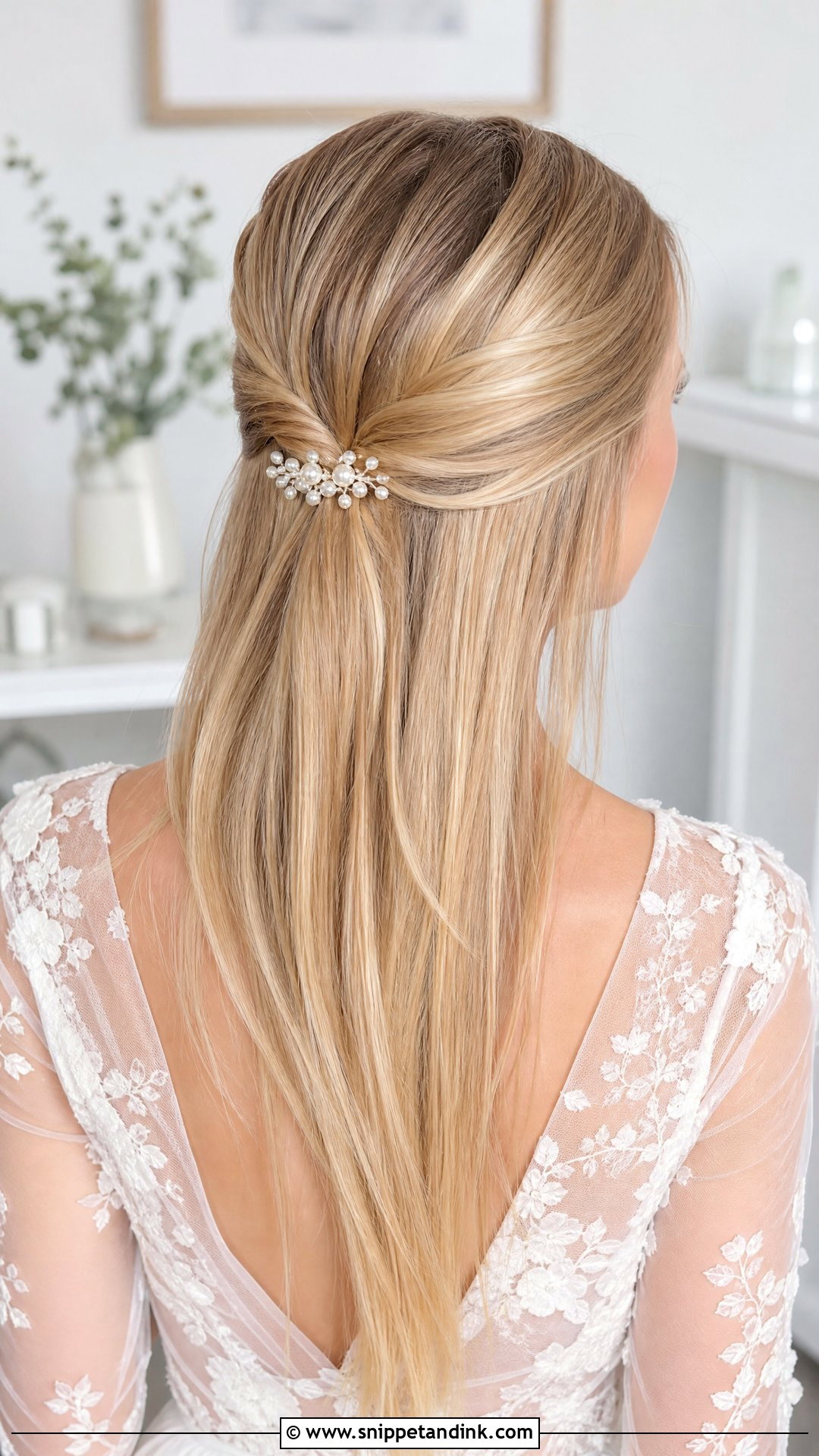
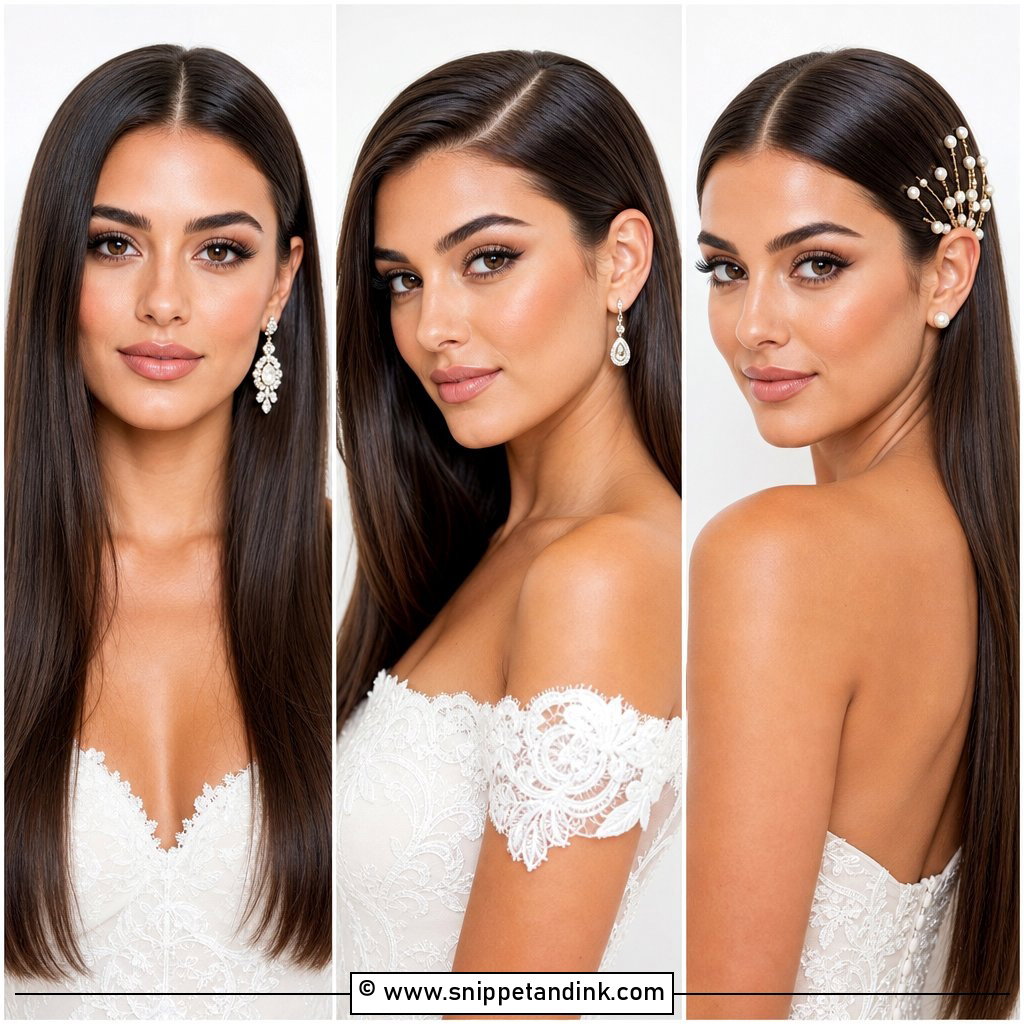
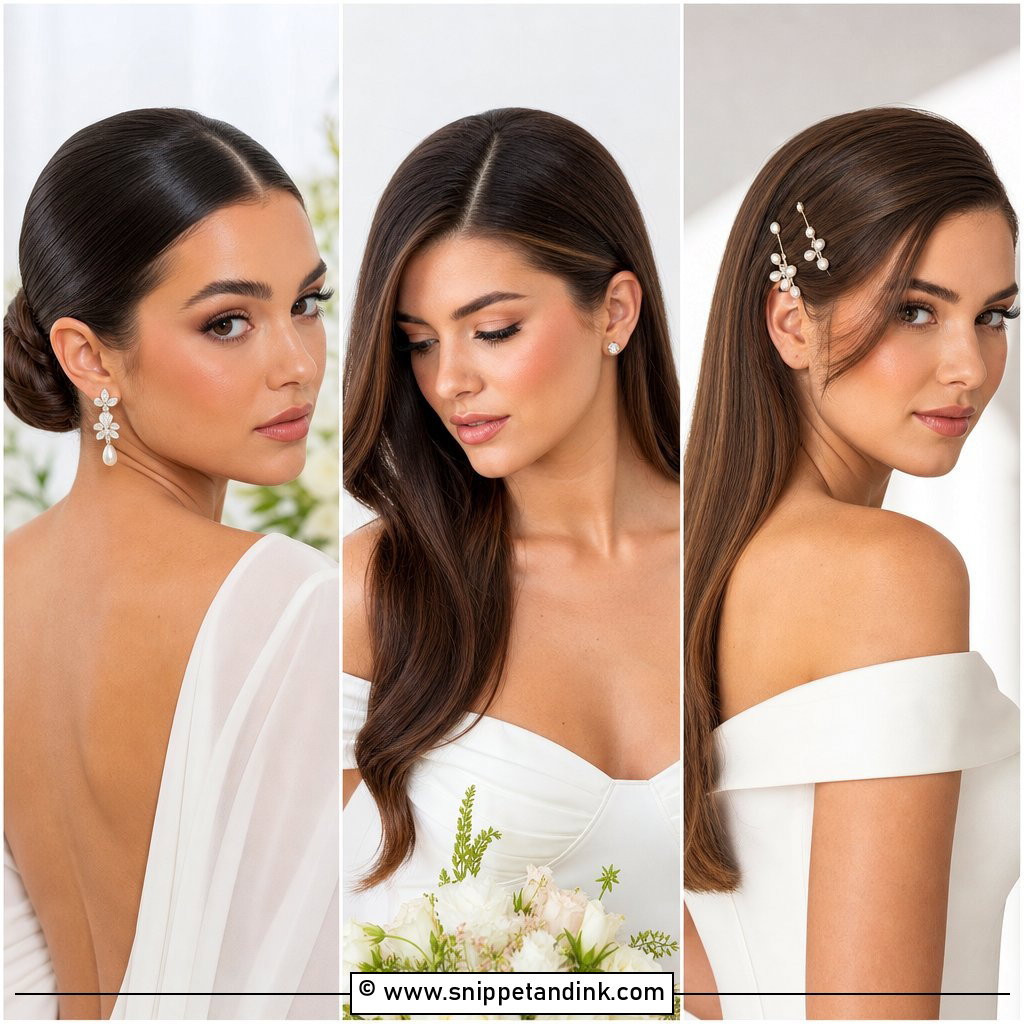
Pearl pins are the simplest way to make straight hair look bridal. You can wear the hair down, half-up, in a low bun or tucked behind one ear, and the pearls add detail while the texture stays clean. Placement is everything. I cluster three to five pins near a twist or at the side of a bun rather than scattering them, because scattered pins on straight hair look like they’ve fallen out. They show well against every hair color. Pins with a spiral or bendable base grip slippery hair far better than straight ones.
9. Straight Hair With Veil Wedding Hair
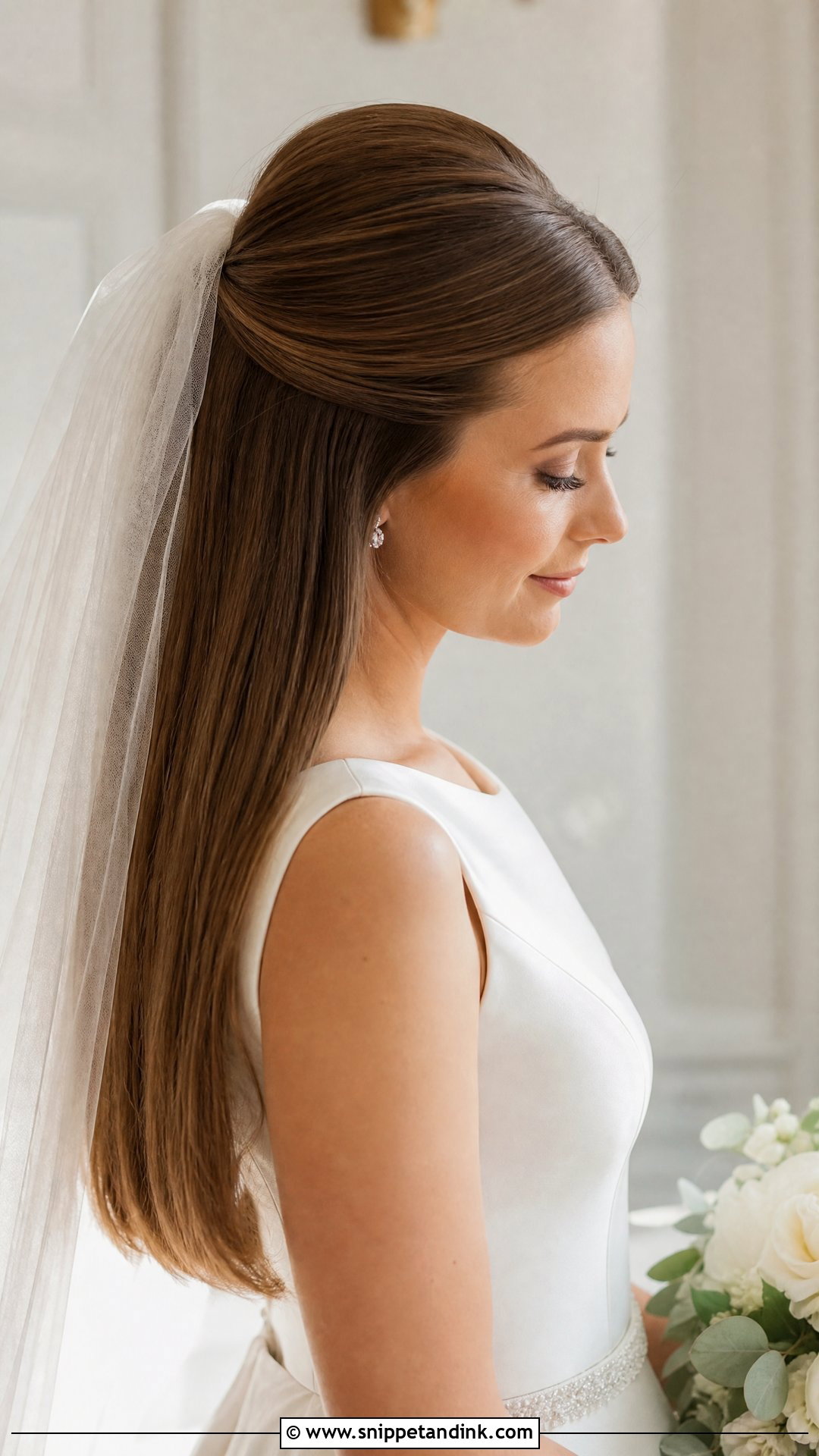
Plan the veil before you plan the hair. With hair down, the veil sits at the crown on a hidden comb; with a low bun or chignon, it goes above or below the updo depending on the dress back. Straight hair gives a smooth base, but a comb pushed into slippery hair slides out, so I build a small anchor of crossed bobby pins first and slide the comb behind them. A little root lift at the crown helps the veil sit well. Keep products light; heavy ones look greasy under bright reception lighting.
10. Straight Hair Wedding Side Part
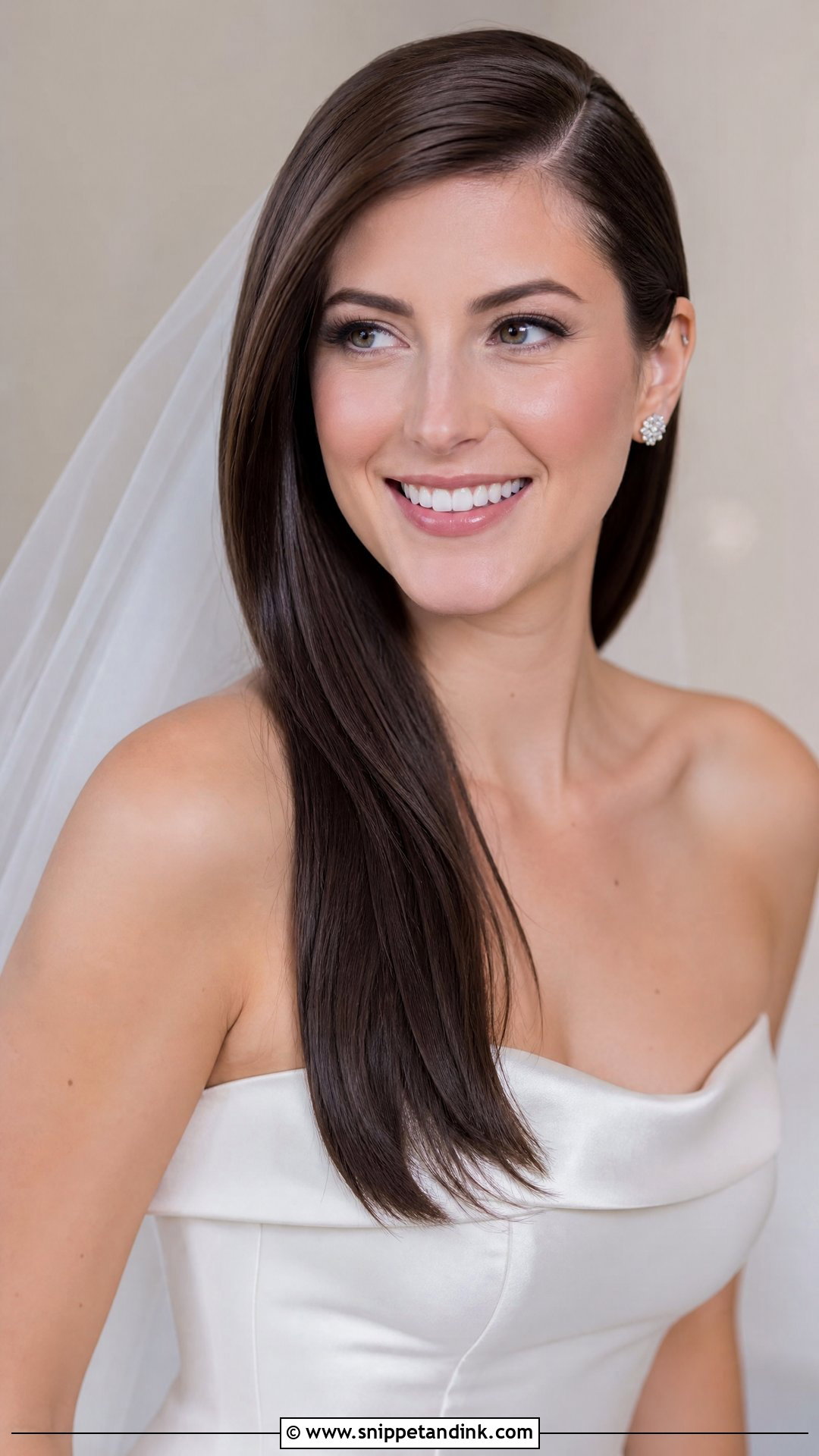
Moving the part is the cheapest change you can make. A deep side part adds shape around the face and looks best with one side tucked behind the ear, and it works with loose lengths, a low ponytail, a bob or a sleek bun. Straight hair tends to fall forward from a deep part during the day, especially as you look down to sign the register. A hidden pin behind the ear, or a decorative clip, keeps it in place. Smooth the roots and put shine only through the mid-lengths and ends.
11. Straight Hair Wedding Middle Part
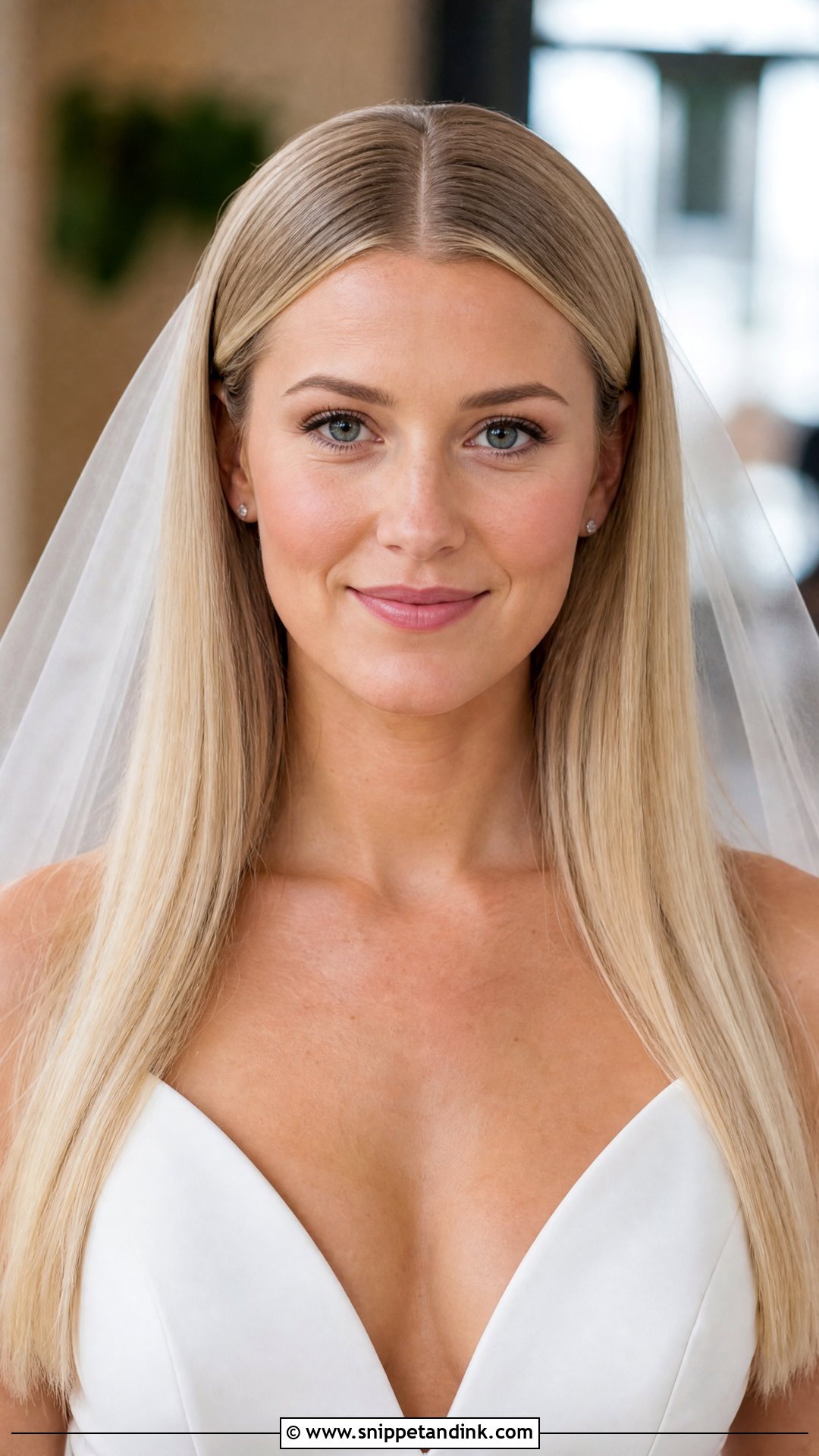
A center part gives symmetry and a sleek, editorial feel. It pairs with low buns, long straight hair, tucked lobs and ponytails. I’d steer you away from it if your face is noticeably asymmetric or your hairline has a strong cowlick at the front, because the center part draws the eye straight to both. I smooth the hairline and keep the front pieces close to the face, then add a little lift at the crown so it doesn’t look flat. Simple veils, pearls and modern dresses suit it.
12. Straight Hair Wedding Bun With Face Framing Pieces
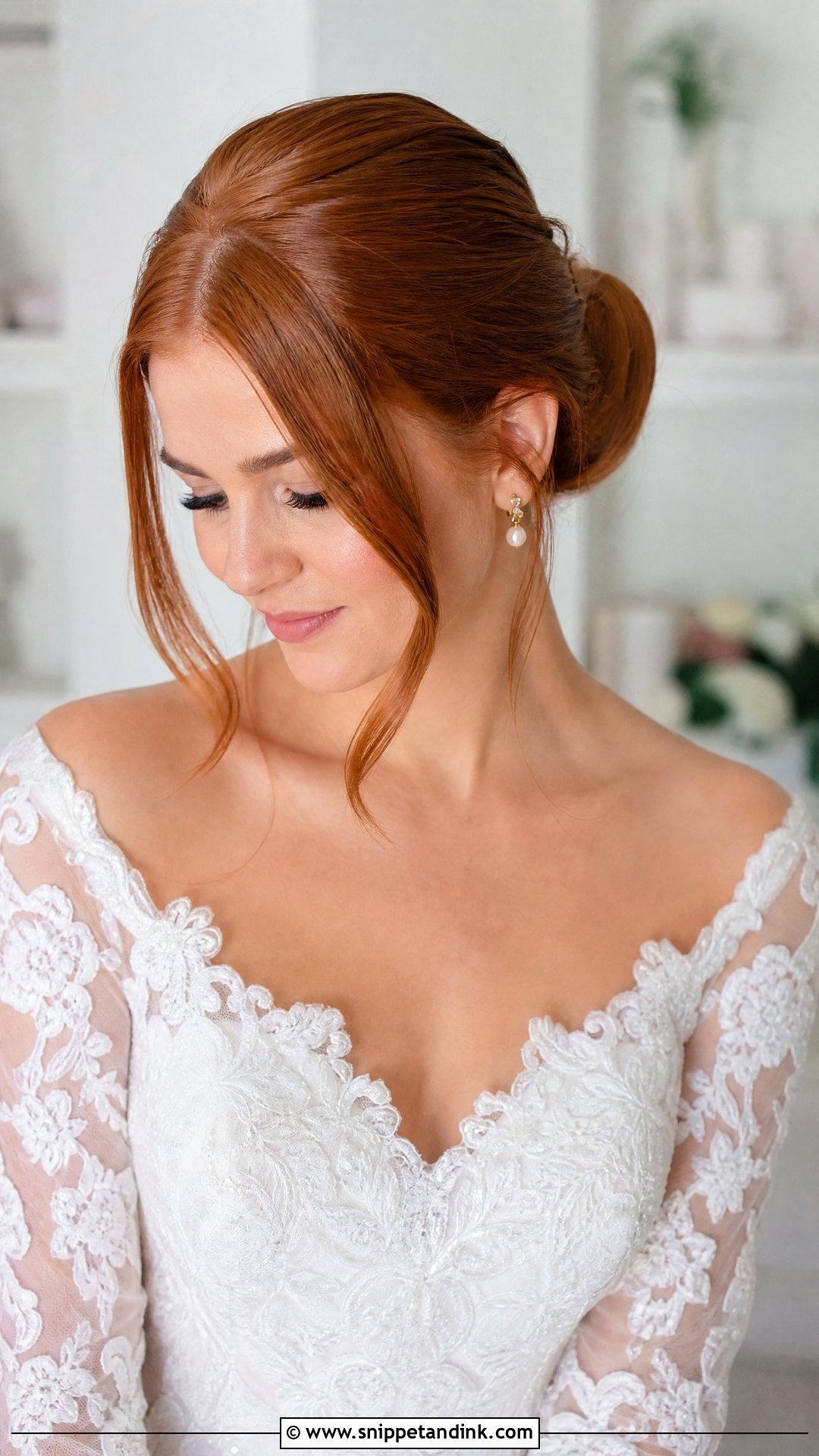
Adding face-framing pieces to a bun gives structure and softness at once, and they’re the cure for an updo that feels severe. On straight hair the pieces can be smoothed, slightly bent or tucked near the cheekbones. The bun can sit low, centered or slightly off to one side. Front pieces on straight hair go limp and stringy by evening, so I bend them with a flat iron and use only a light spray; heavy product makes them clump. Choose your pieces at the trial so they’re the right length.
13. Straight Hair Wedding Hair With Headband
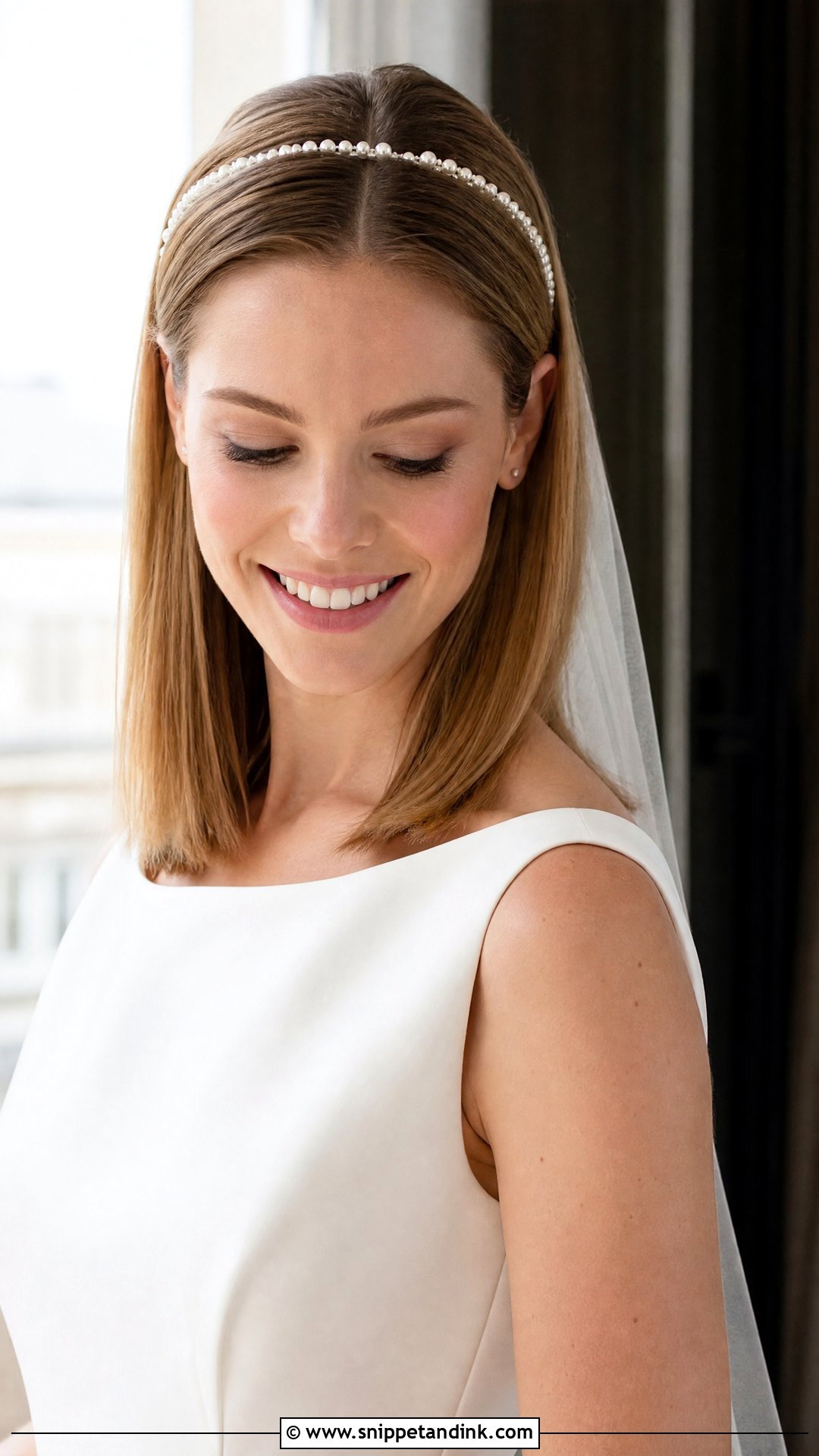
Headbands make straight hair look styled with almost no work. A slim pearl, satin, crystal or metallic headband works with long hair, bobs, lobs and sleek updos. Many headbands slide back on straight hair, so I tease a little crown volume behind where the band sits; it gives the band something to rest against. Match the headband to your dress details rather than competing with them, and keep the rest of the hair simple.
14. Straight Hair Wedding Low Ponytail
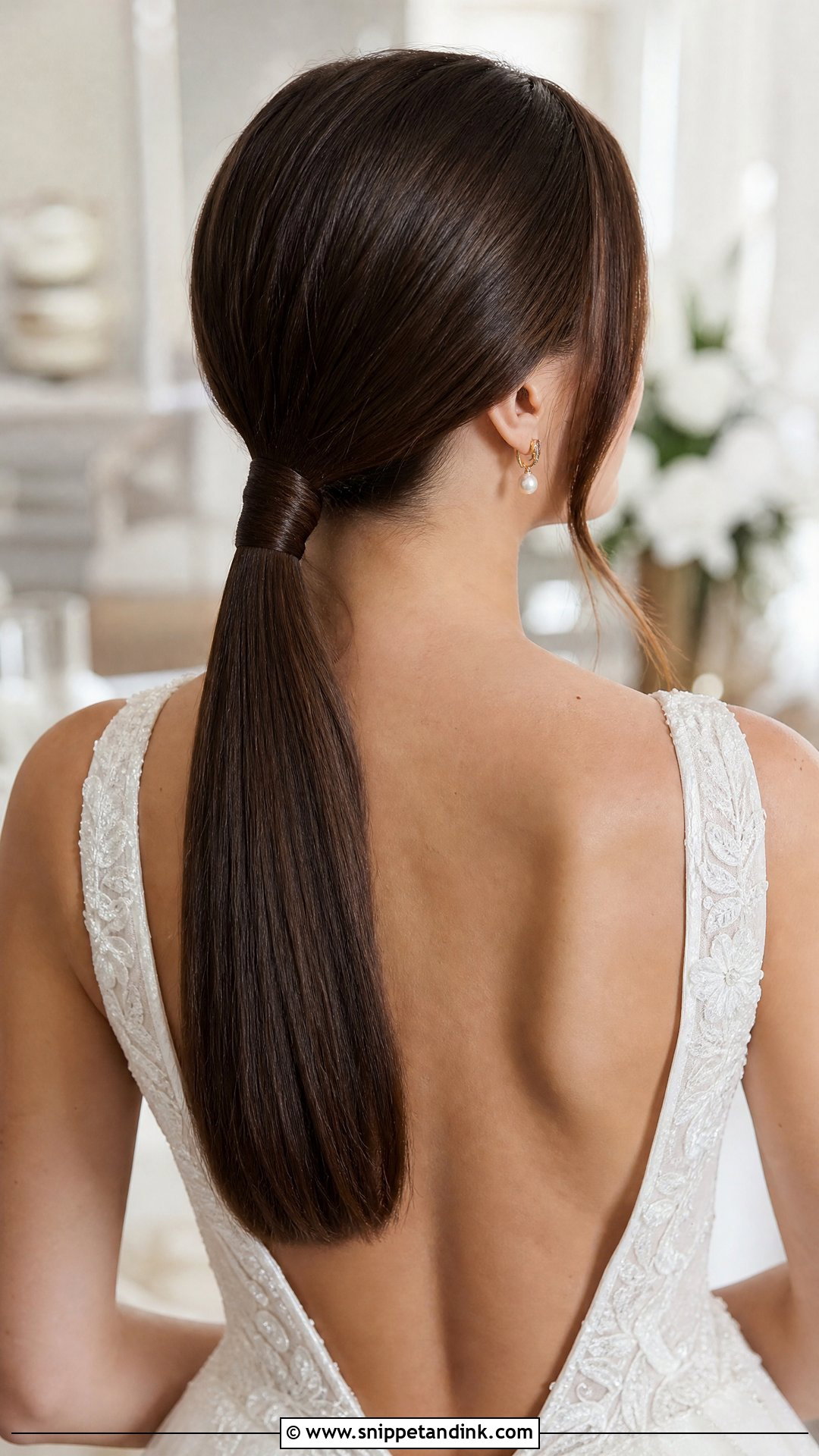
A low ponytail is comfortable for a long day because the weight sits at the nape, out of the way of veils, back details and earrings. It can be sleek and tight, softly gathered or wrapped with a ribbon that matches the gown. Straight hair lets the tail fall smooth and shiny. Add a little teasing inside the crown for a softer profile. Outdoors it’s one of the most practical choices, because the wind can’t do much to it.
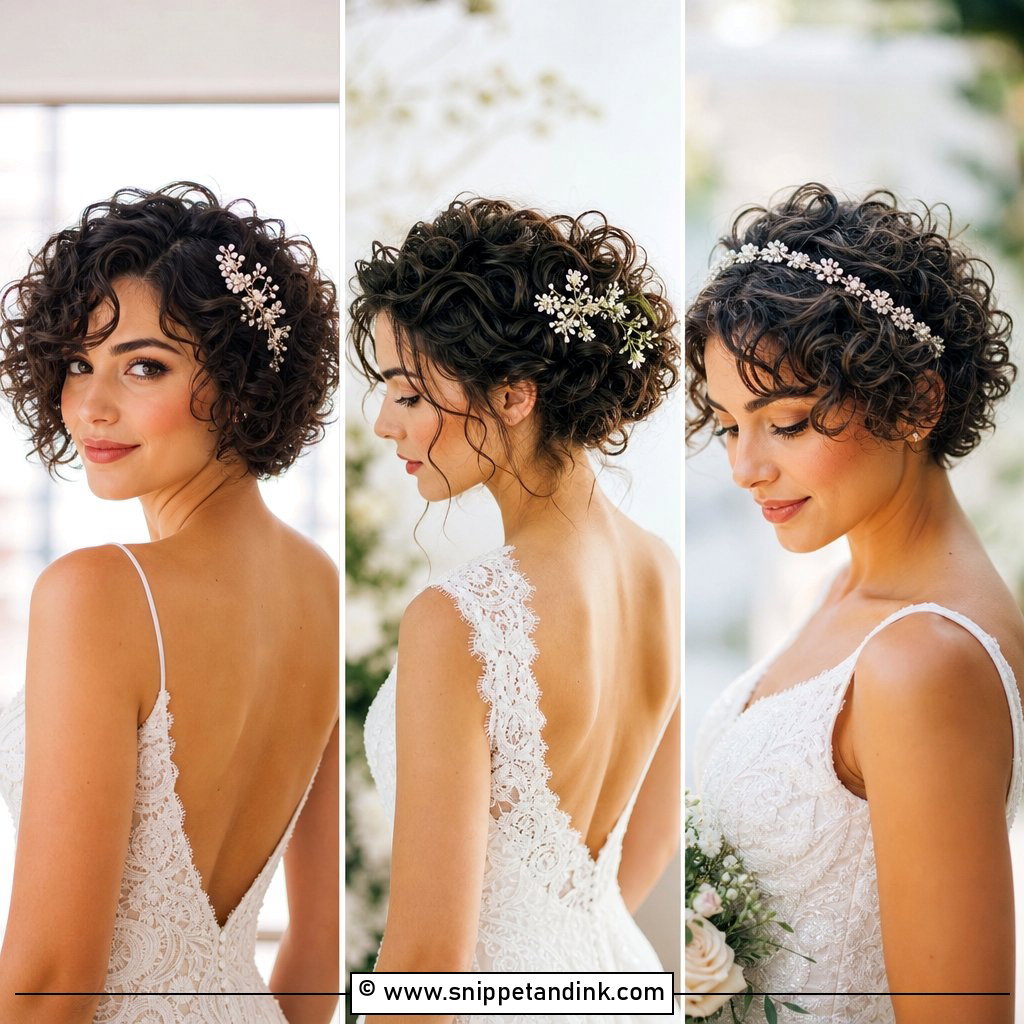
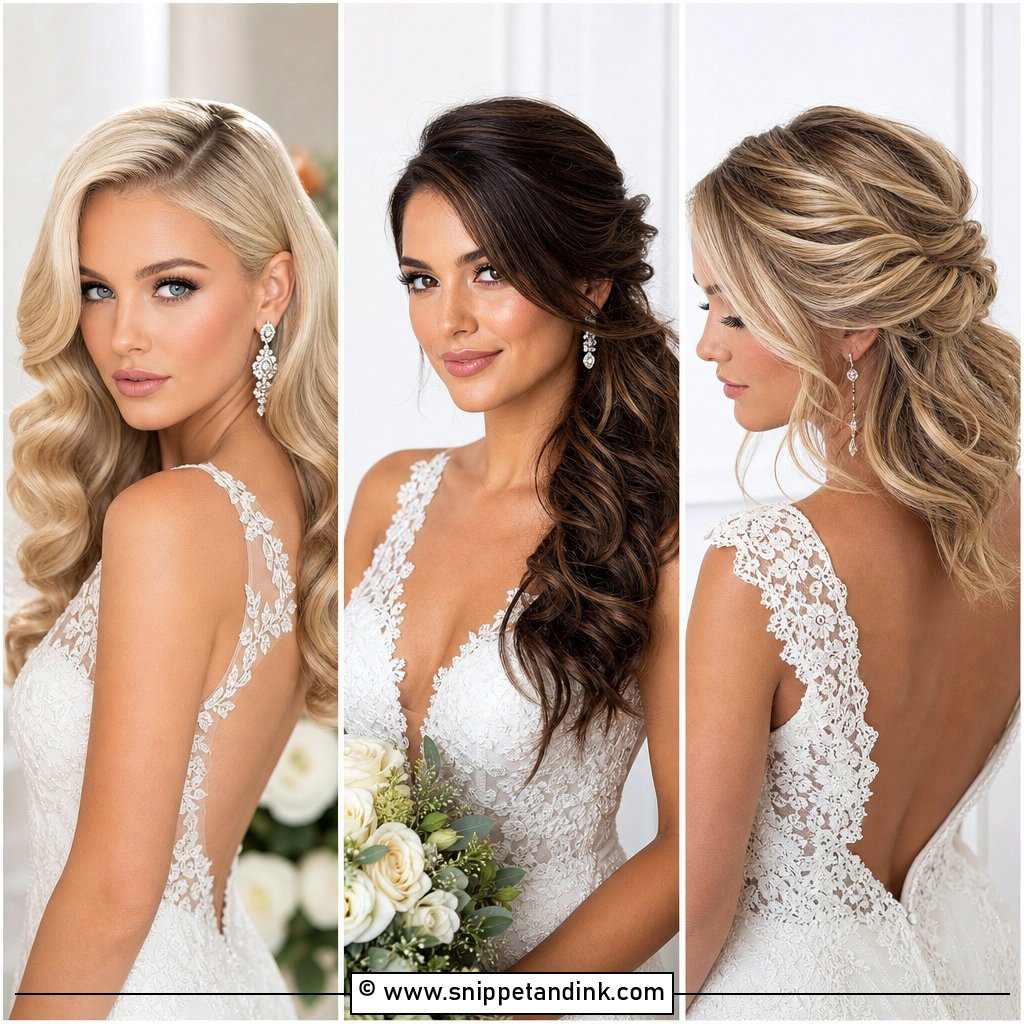
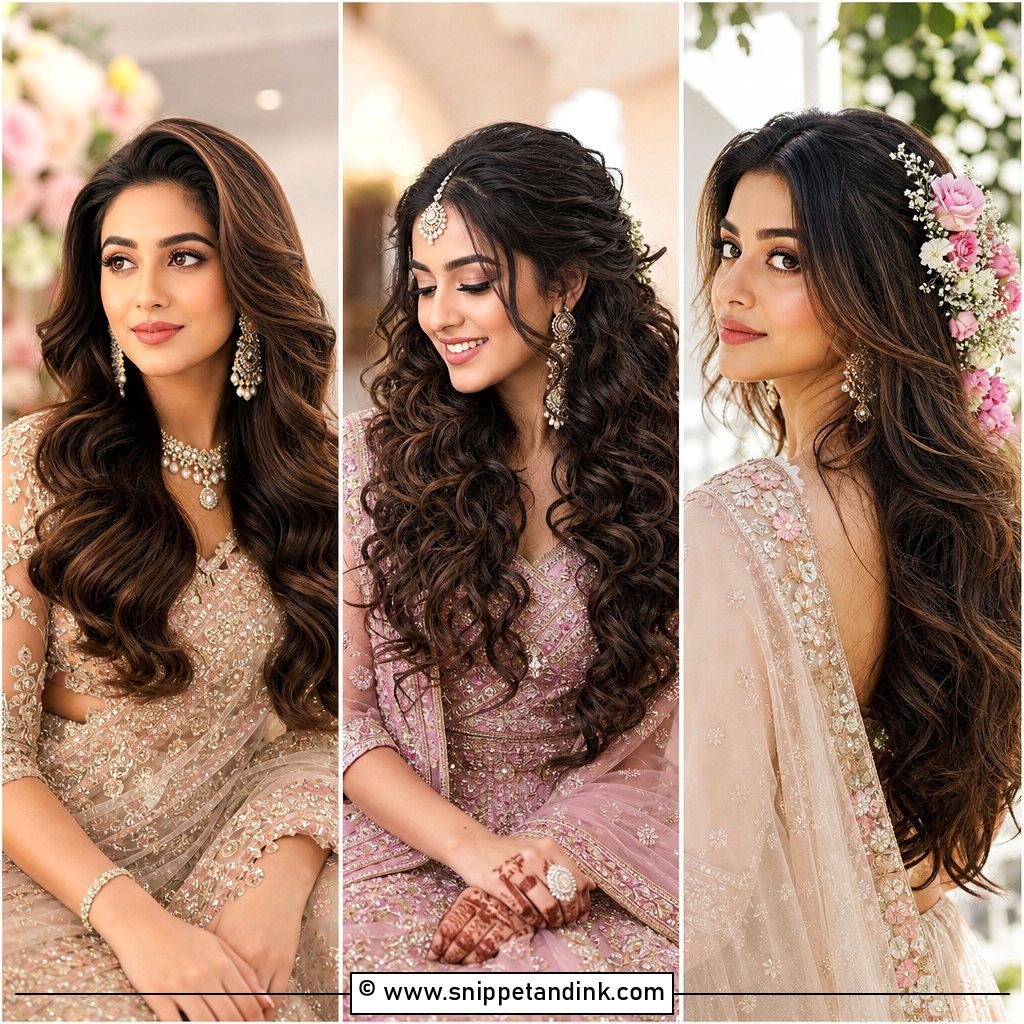
15. Straight Hair Wedding Updo
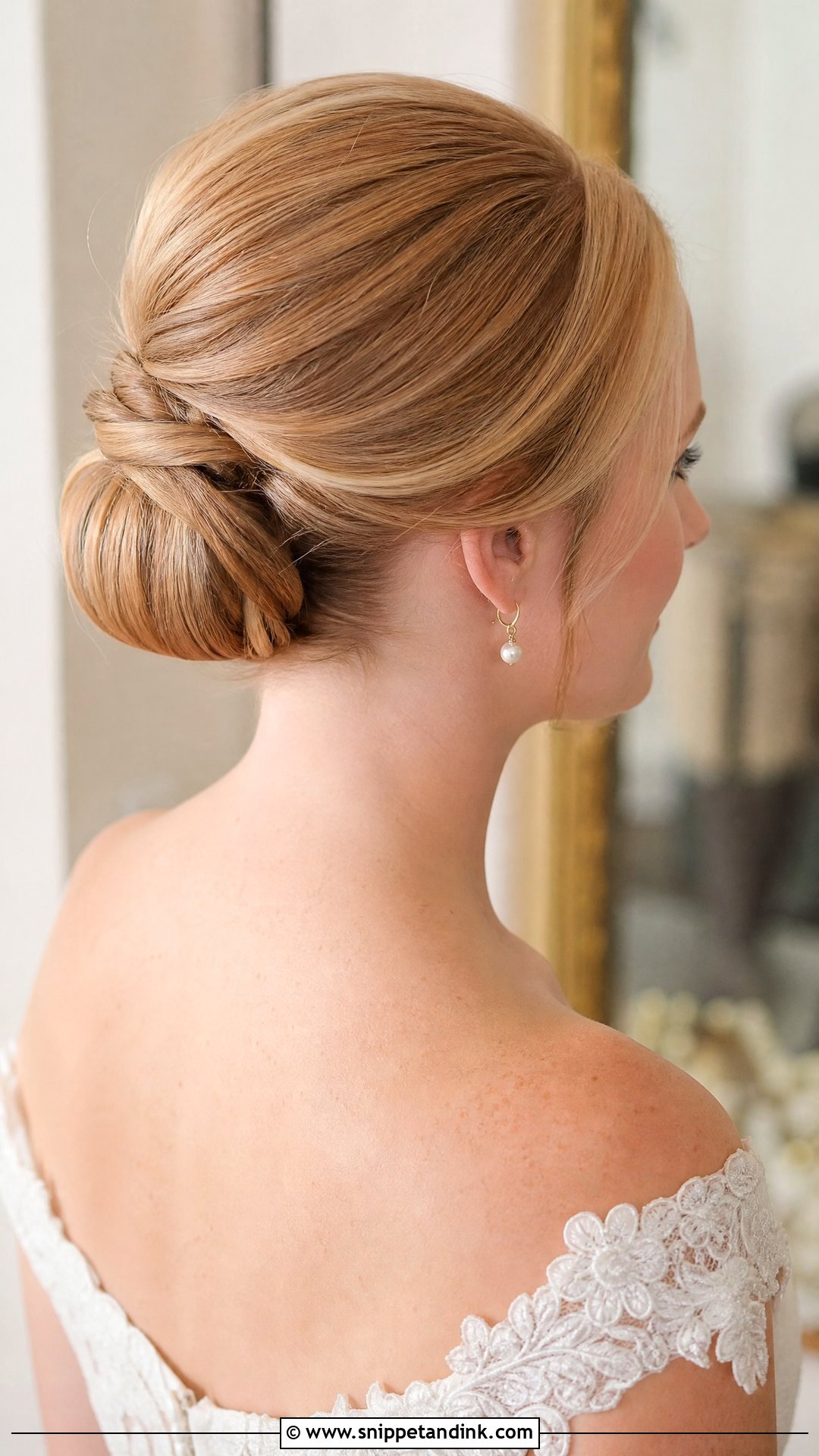
The main advantage of an updo on straight hair is staying power. Loosely styled straight hair slips, so a well-built updo is the most secure option for a long day. I prep with texture spray before pinning, even when the finished style looks smooth; it adds grip without making the hair look rough. A low updo looks classic, while a higher pinned shape reads more formal. Add accessories only where they support the shape.
16. Straight Hair Wedding Hair Down
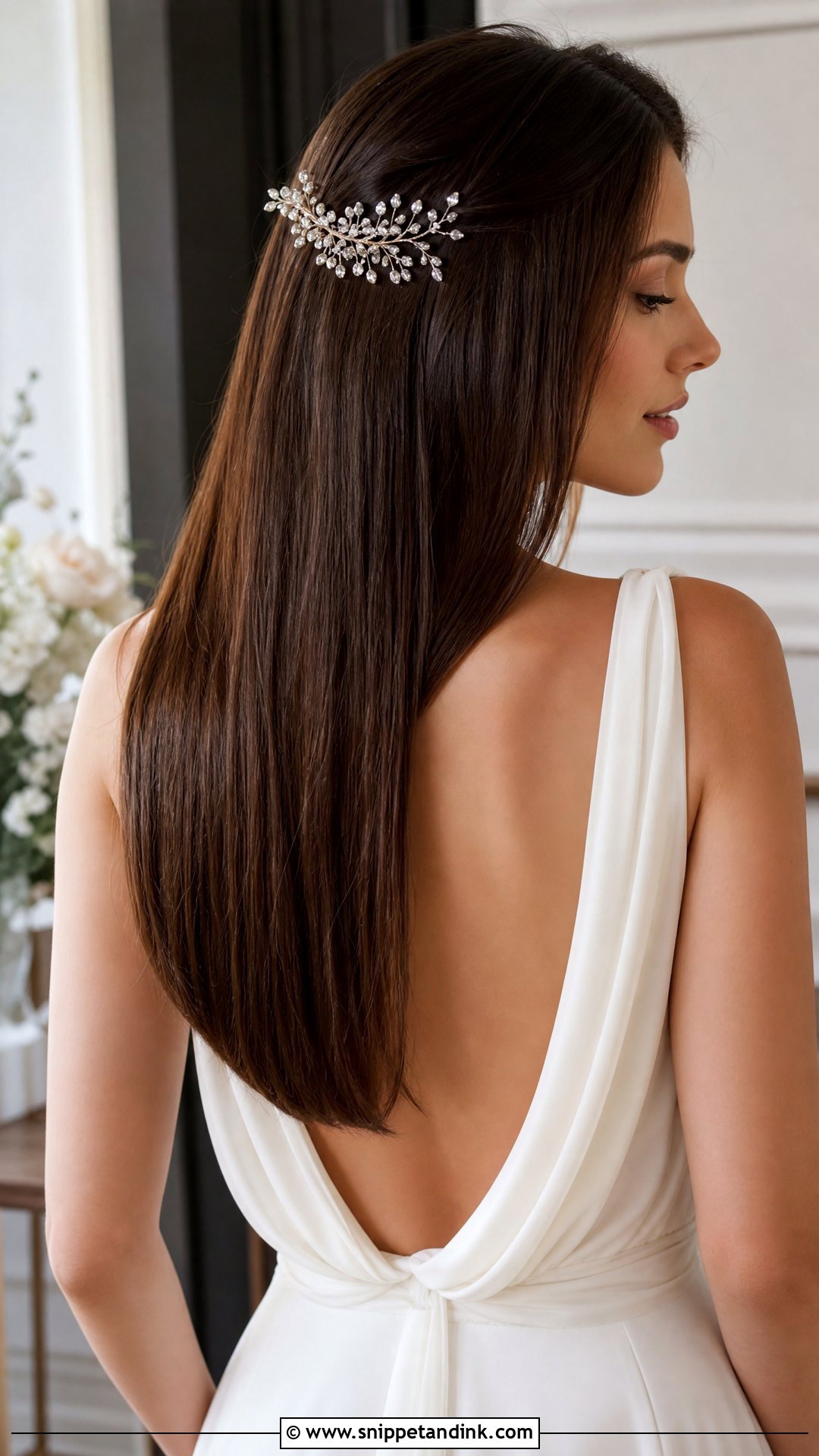
Wearing straight hair down works when the finish looks deliberate. I focus on shine and movement at the ends: a clean blowout, a soft bend, or a tucked front section. It suits brides who always wear their hair down and want to feel like themselves. Loose hair moves, frizzes and flattens through the day, so prep with an anti-frizz product and finish with flexible spray. A veil, comb, barrette or a few tiny pins add bridal detail.
17. Straight Hair Wedding Braid Into Bun
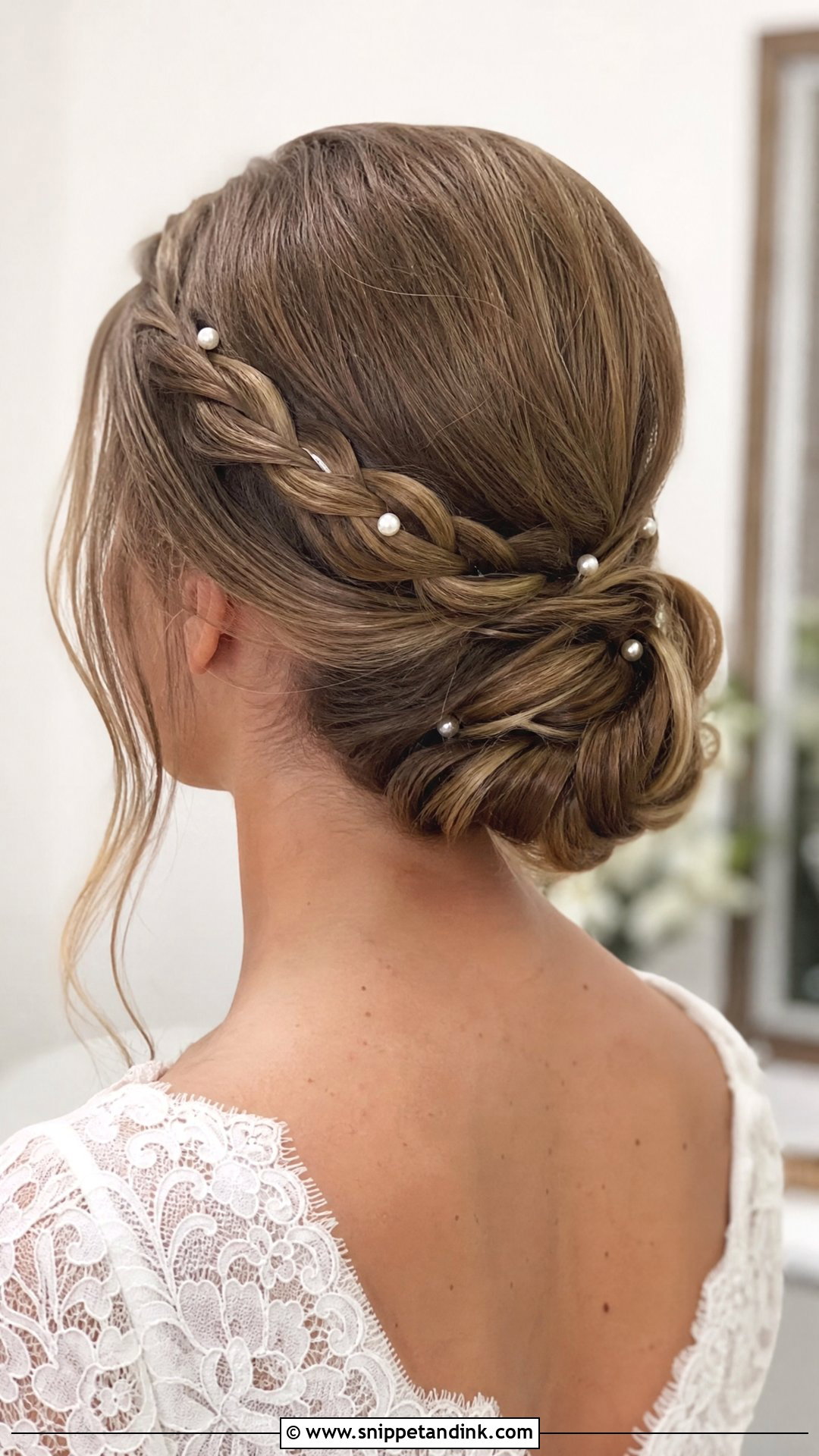
A braid that starts at the front hairline, sweeps along the side and blends into a low bun adds detail to an updo without needing curls. Straight hair makes the braid look crisp. It suits romantic, garden and classic weddings. It’s also my fix for face-framing layers that won’t stay in a bun, because the braid catches the shorter pieces as it travels back. A few pearl pins or tiny flowers along the braid finish it.
18. Straight Hair Wedding Hair With Bow
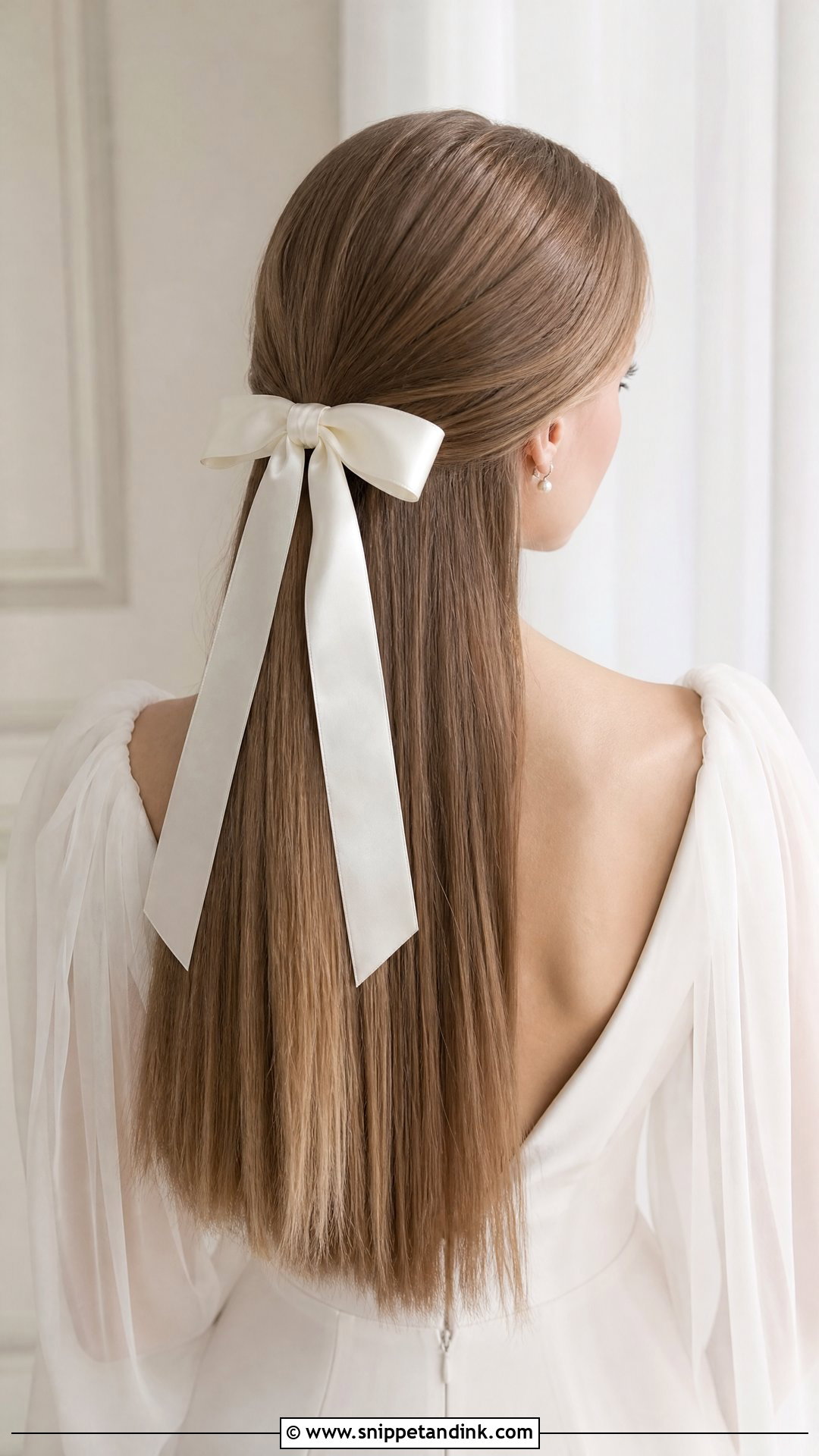
A bow has to be chosen carefully or it looks young. A satin bow can sit above a low ponytail, behind a half-up style or at the base of a sleek bun. Straight hair gives the ribbon a clean background, so the shape stands out. Match the bow’s size to your dress and your hair length; a small bow reads delicate, a longer tail more romantic. Clip it on over a pinned anchor so it doesn’t slide down during the evening.
19. Straight Hair Wedding Pixie
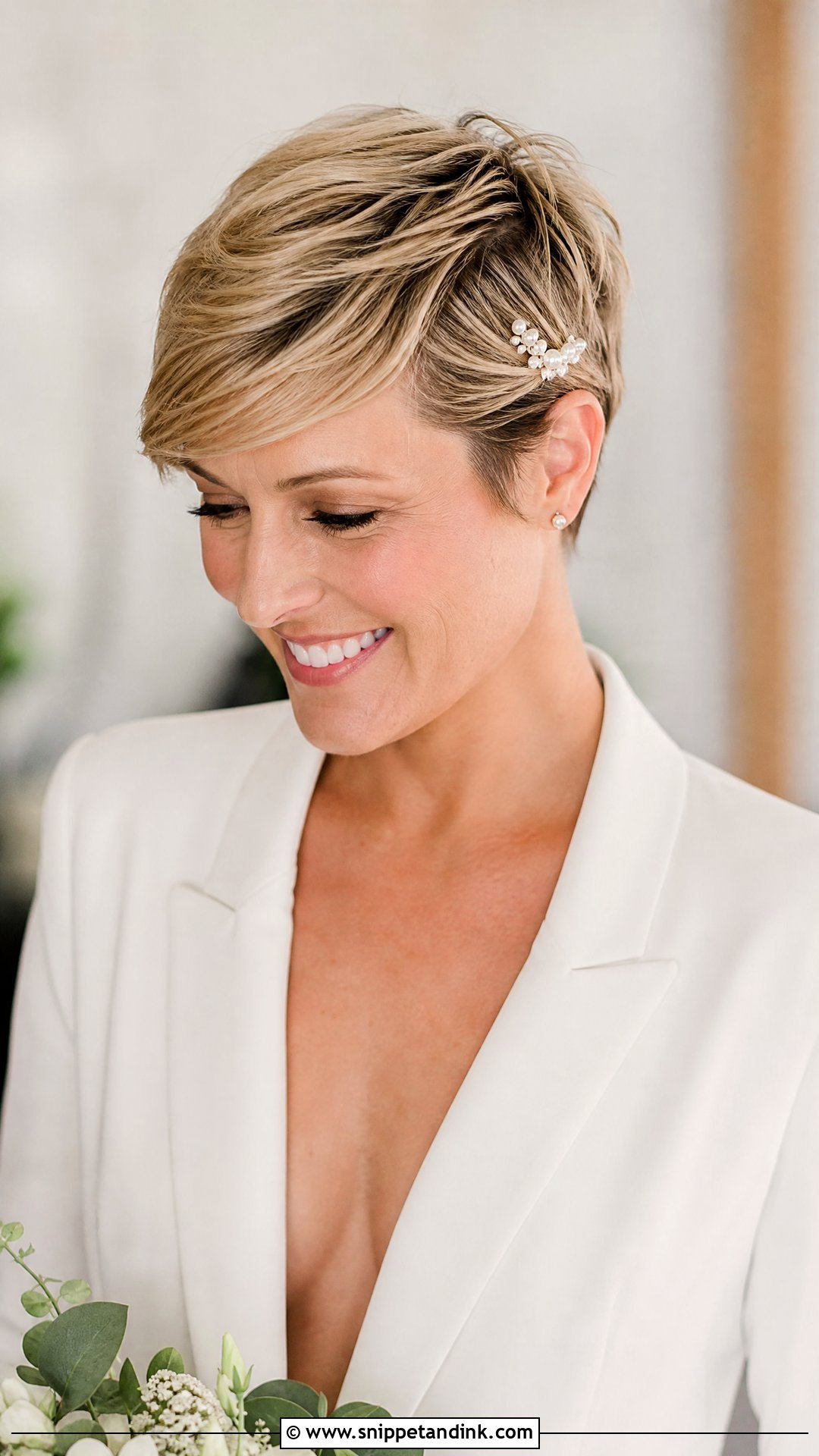
Straight hair wedding pixie cuts put the focus on your face, earrings, makeup and neckline. The hair can be smoothed close, swept to the side, lifted at the crown or given soft texture. A tiny pearl clip, crystal comb or slim headband changes the mood completely. I use a lightweight cream for control and shine, and very little of it; short straight hair looks heavy and greasy fast if overdone.
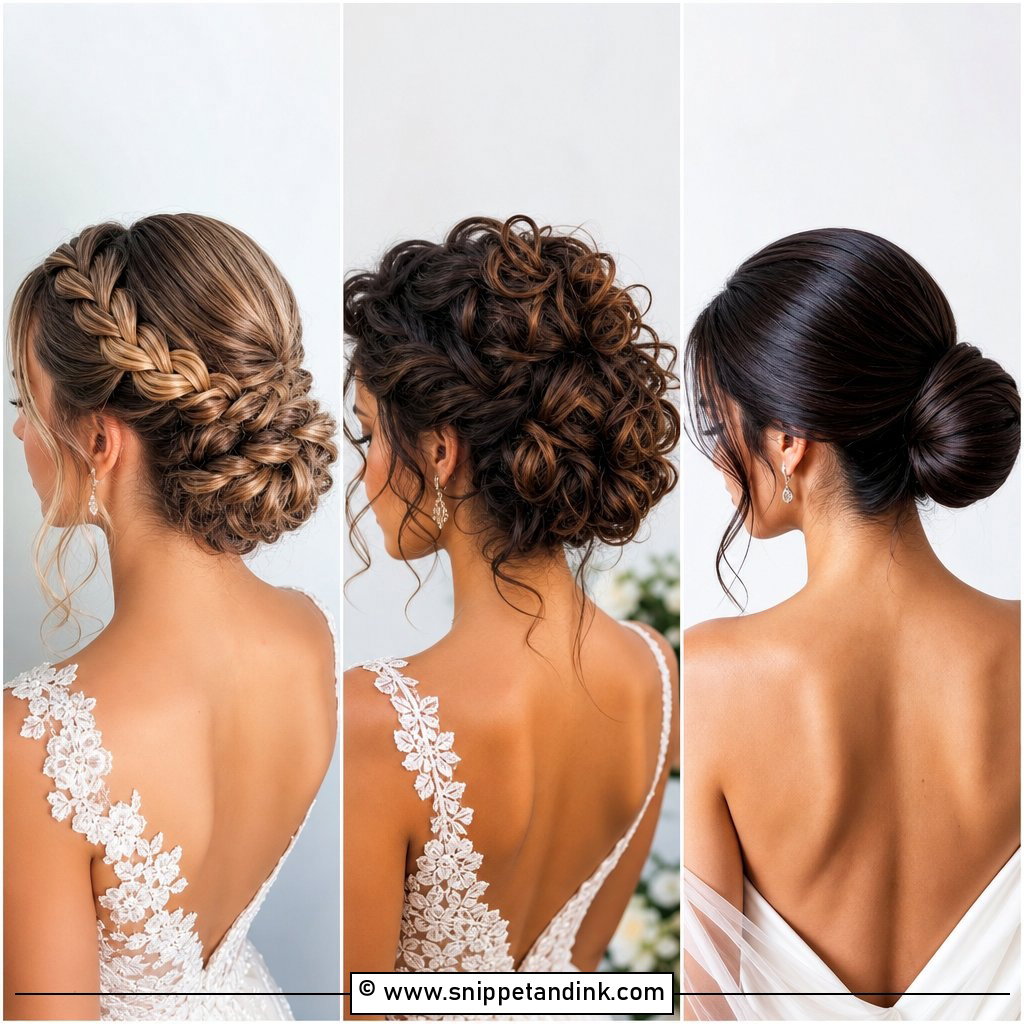
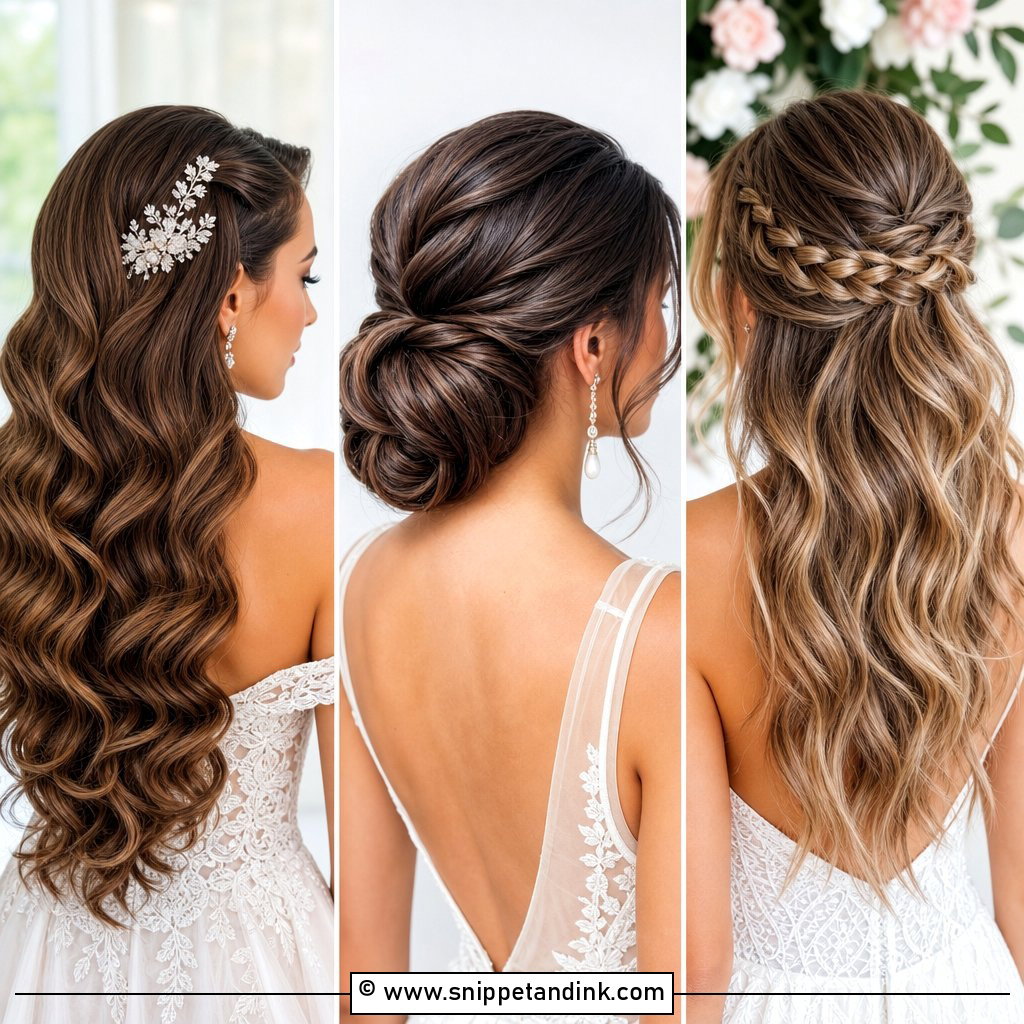
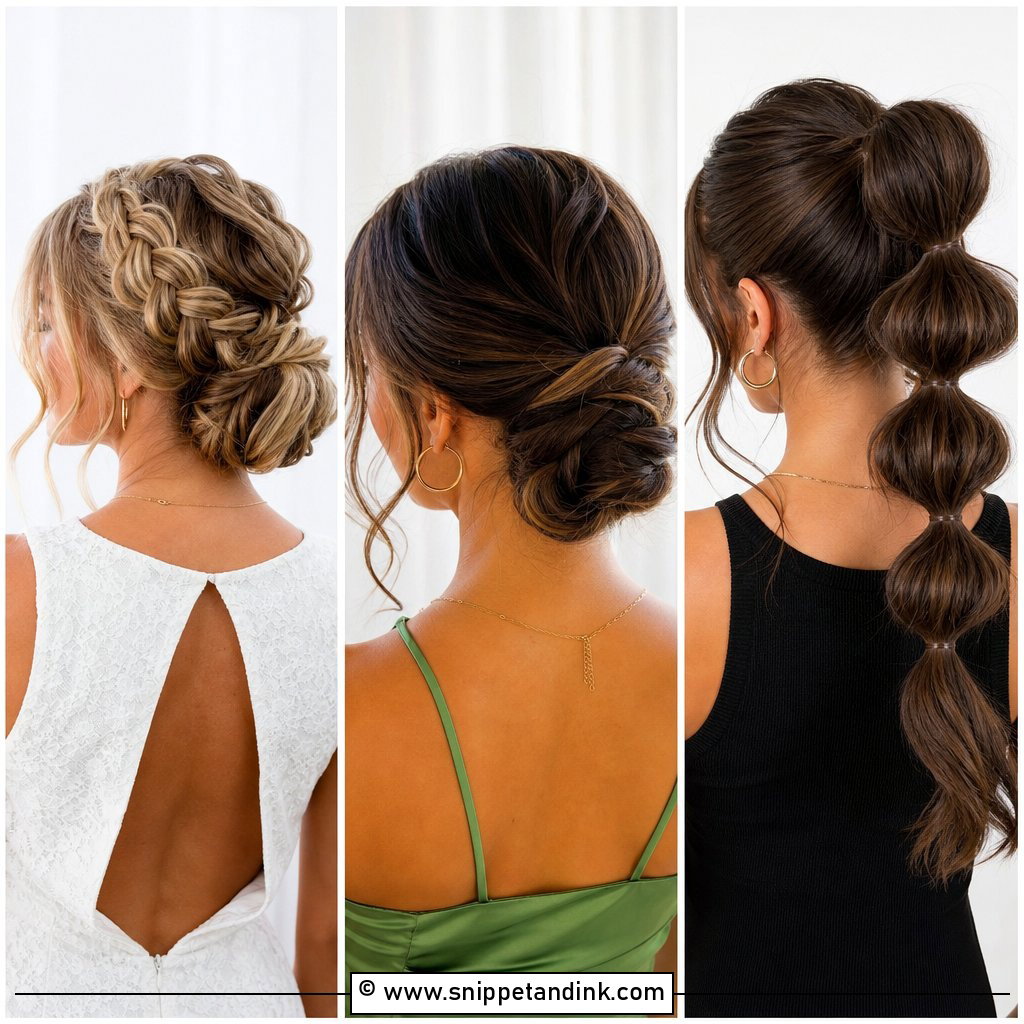
20. Straight Hair Wedding Hair With Side Clip
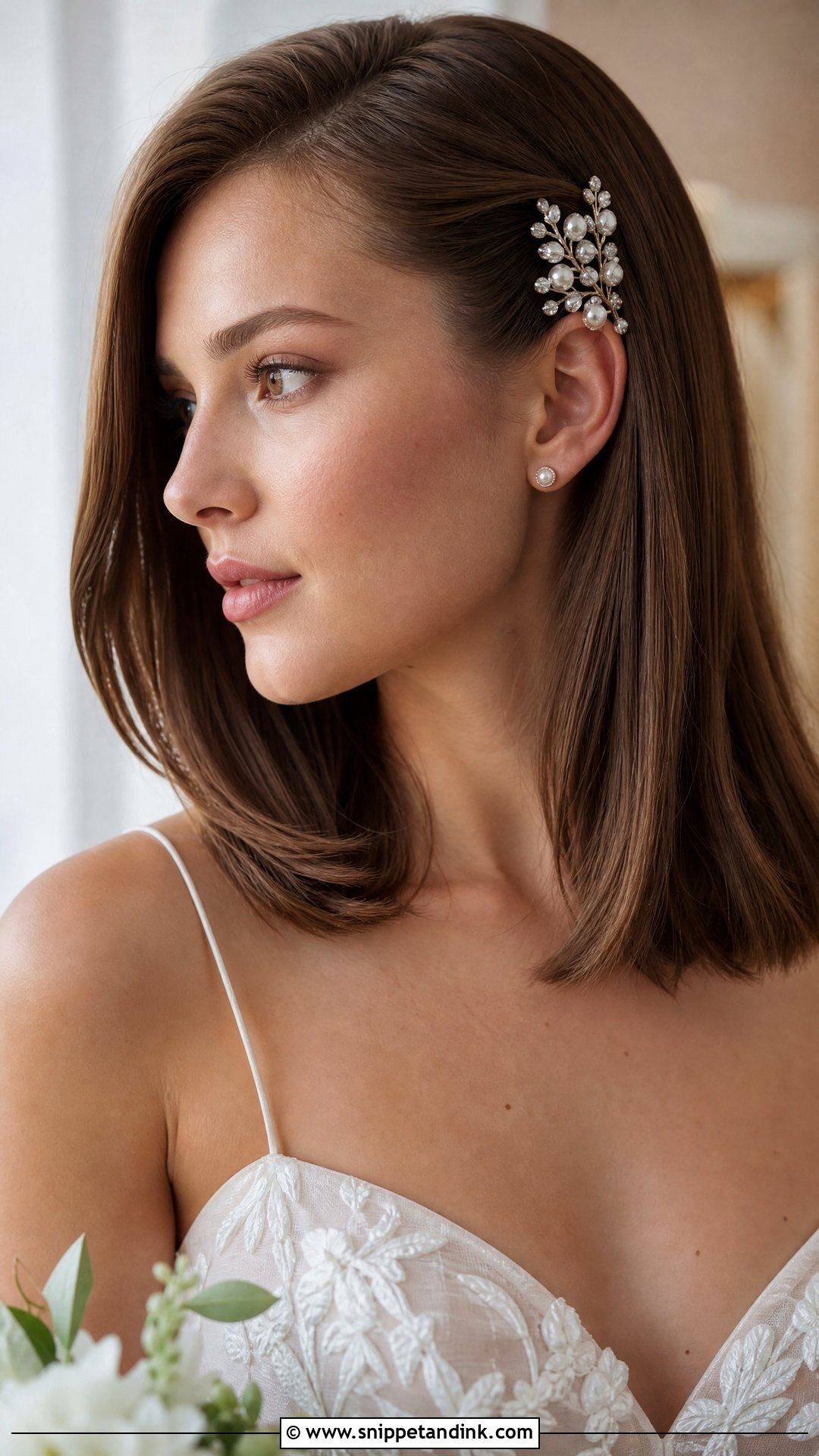
One decorative clip near the temple keeps the face open and adds interest. Wear the hair down, half-up, in a lob or in a low ponytail with the clip at one side. Straight hair lets the clip stand out, but it also lets it slide, so I place it over a pair of crossed bobby pins. Pearls feel soft, crystals sparkle, metal looks modern. Keep the opposite side sleek so the style looks balanced.
Oil, Static and Flat Roots Show Up First on Straight Hair
Straight hair has a particular problem across a long wedding day: there’s no texture to hide anything. Scalp oil travels down a straight strand faster than a curly one, so roots that looked fresh at noon can look flat by the first dance. Static is the other issue, especially in dry winter air or when a veil rubs the hair.
Washing and prep
Wash the evening before or the morning of; straight hair usually needs it fresher than curly hair. Skip heavy conditioner at the roots. I add a little dry shampoo to the roots before styling, as a preventive, rather than waiting until they’re oily.
For the evening
Give someone a small dry shampoo and a couple of blotting sheets. Before the reception photos, a light puff of dry shampoo at the crown brings back lift. For static, a dryer sheet smoothed lightly over the surface works, or a tiny amount of hand cream rubbed between the palms and patted over the flyaways.
Smooth Hair Is the Canvas, Not the Problem
Straight texture makes bridal styles look clean and shiny because every line is visible. That’s a strength, not a limitation. The right choice comes down to your length, neckline, veil, accessories and how much hold you need. If your hair slips easily, prep products and careful pinning matter as much as the style itself. Bring photos to your trial, test the look with the veil or accessories in, and leave it in for a few hours to see what moves. A sleek bun, a glossy ponytail, a half-up style, a bob or a braid can all hold up for the whole day.
You'll Like These Ideas:


Leave a Reply