
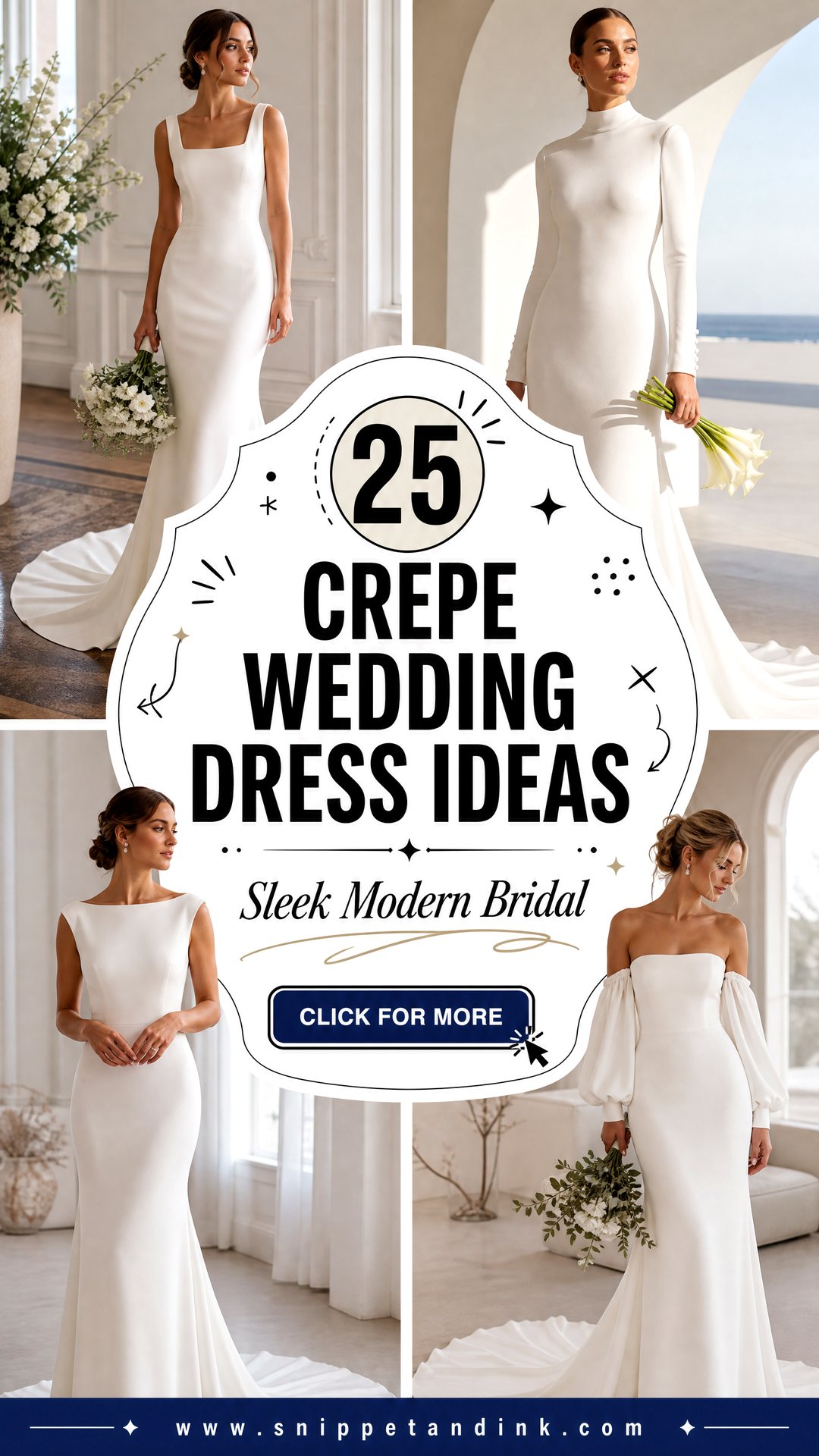
Crepe is the fabric I hand to brides who say they want something clean. It has a fine, matte, slightly pebbled surface and a heavy drape, so it falls close to the body and lets the cut do all the talking. There is no shine to distract the eye and no lace to hide a seam, which is both its charm and its challenge. From strict columns to off-shoulder gowns and soft slips, it can look minimal, romantic or sharp depending on the neckline and the tailoring. Here is how each shape behaves in crepe, and what I watch for at fittings.
Not All Crepe Is the Same Cloth
Crepe is a finish rather than a single fiber. The tightly twisted yarns are what give it that grainy, matte surface, and the same name covers fabrics that behave very differently on the body.
- Silk crepe drapes softly and breathes well, though it marks with water and creases more than you might expect.
- Heavier polyester and blended crepes hold a sharp tailored line, wrinkle less and are easier to care for.
- Stretch crepe has a little give woven in, which helps with fitted sheaths and sleeves.
- Crepe-back satin is shiny on one face and matte on the other, so some gowns use both sides for contrast.
When I assess a crepe at a bridal shop, I drape it over my hand to check how it falls, hold it to the window to check it isn’t see-through, and crush a corner in my fist for a few seconds to see how quickly it recovers. A good crepe lets the creases fall out with no help.
1. Simple Crepe Wedding Dress
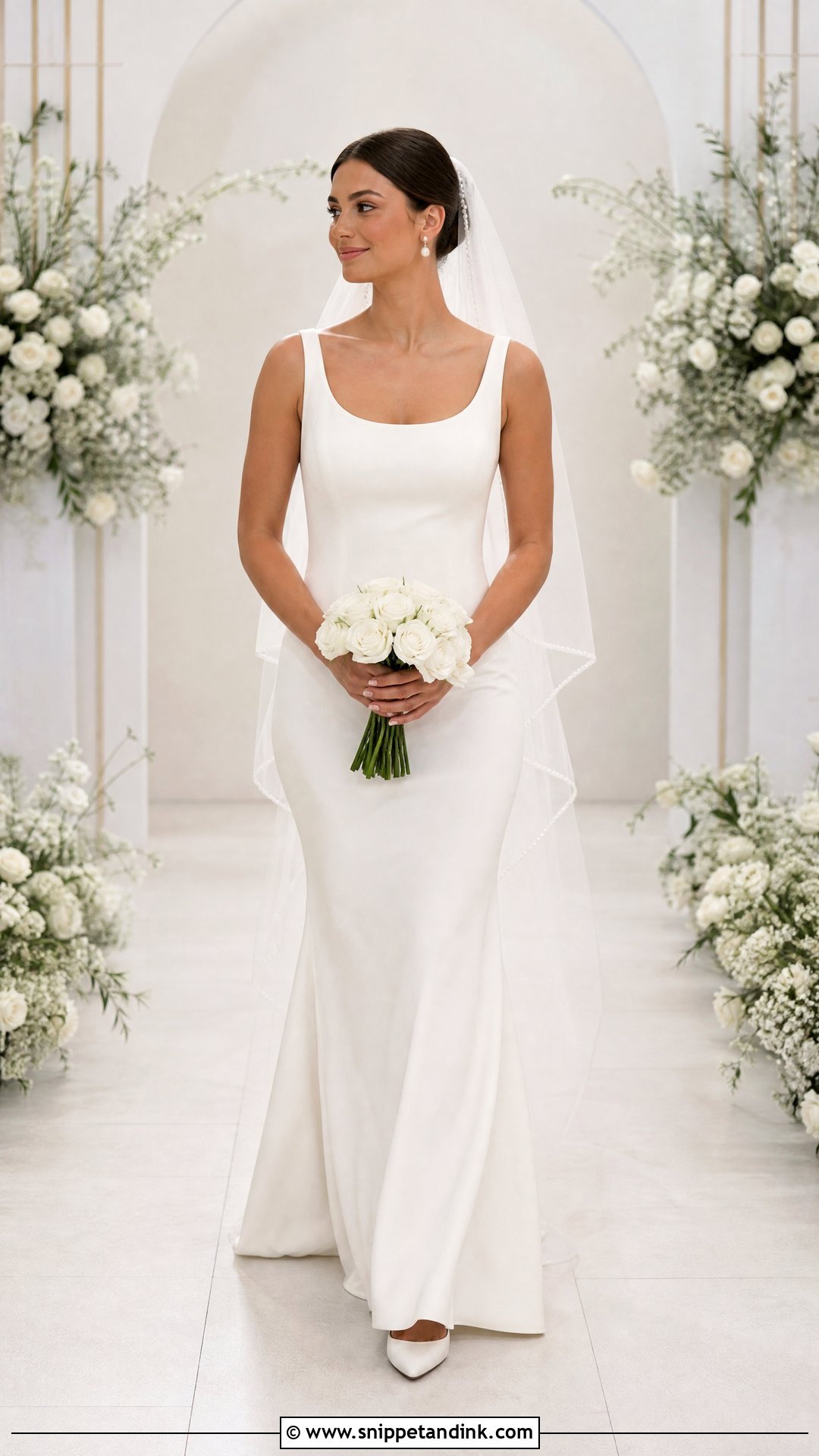
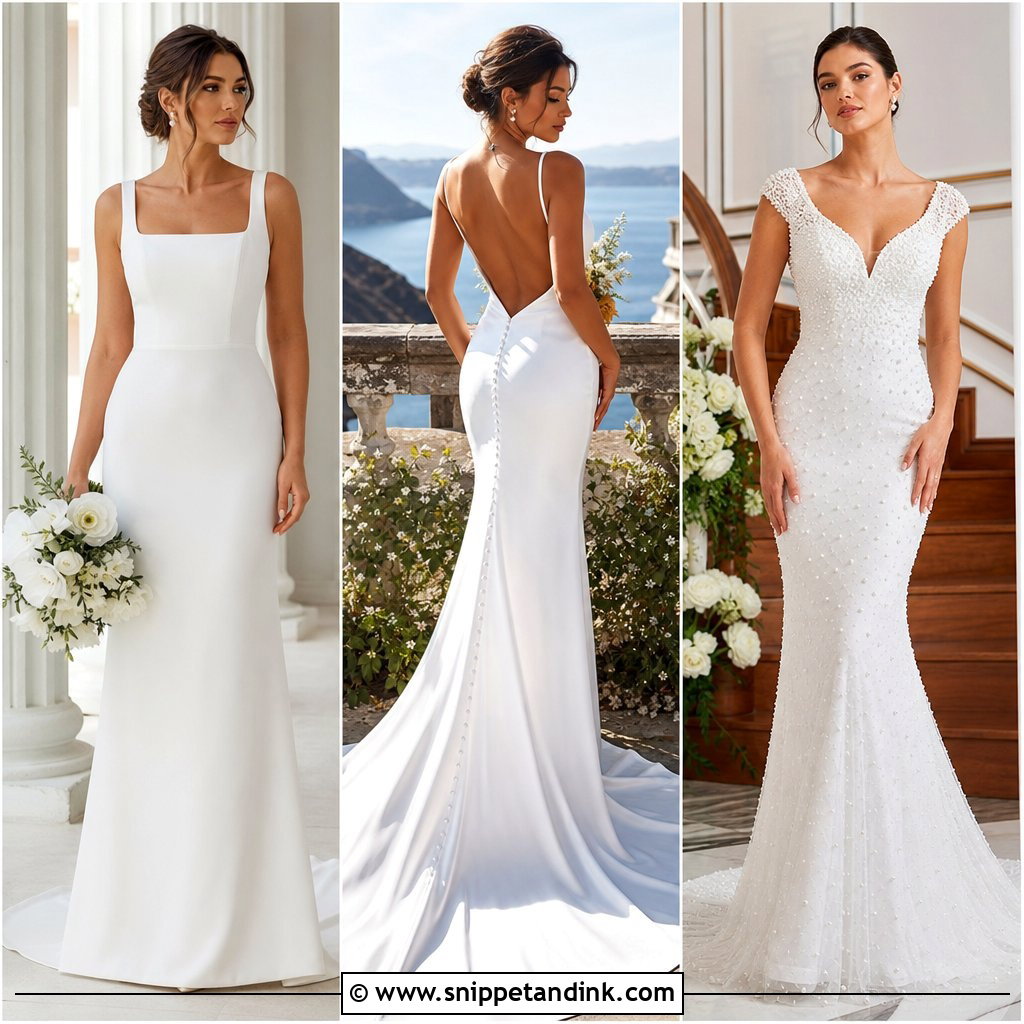
Plain crepe gowns live or die on the fit at three points: waist, bust and hem. A fitted ivory gown with a soft scoop neck and a straight or lightly flared skirt is about as pared back as bridal gets, so I add the softness through accessories, pearl drops, a low bun and a sheer fingertip veil. Keep the bouquet just as clean; white roses, orchids or calla lilies. Have the waist taken in by eye in the mirror, not just by tape, because crepe shows a quarter inch of looseness as a ripple.
2. Strapless Crepe Wedding Dress
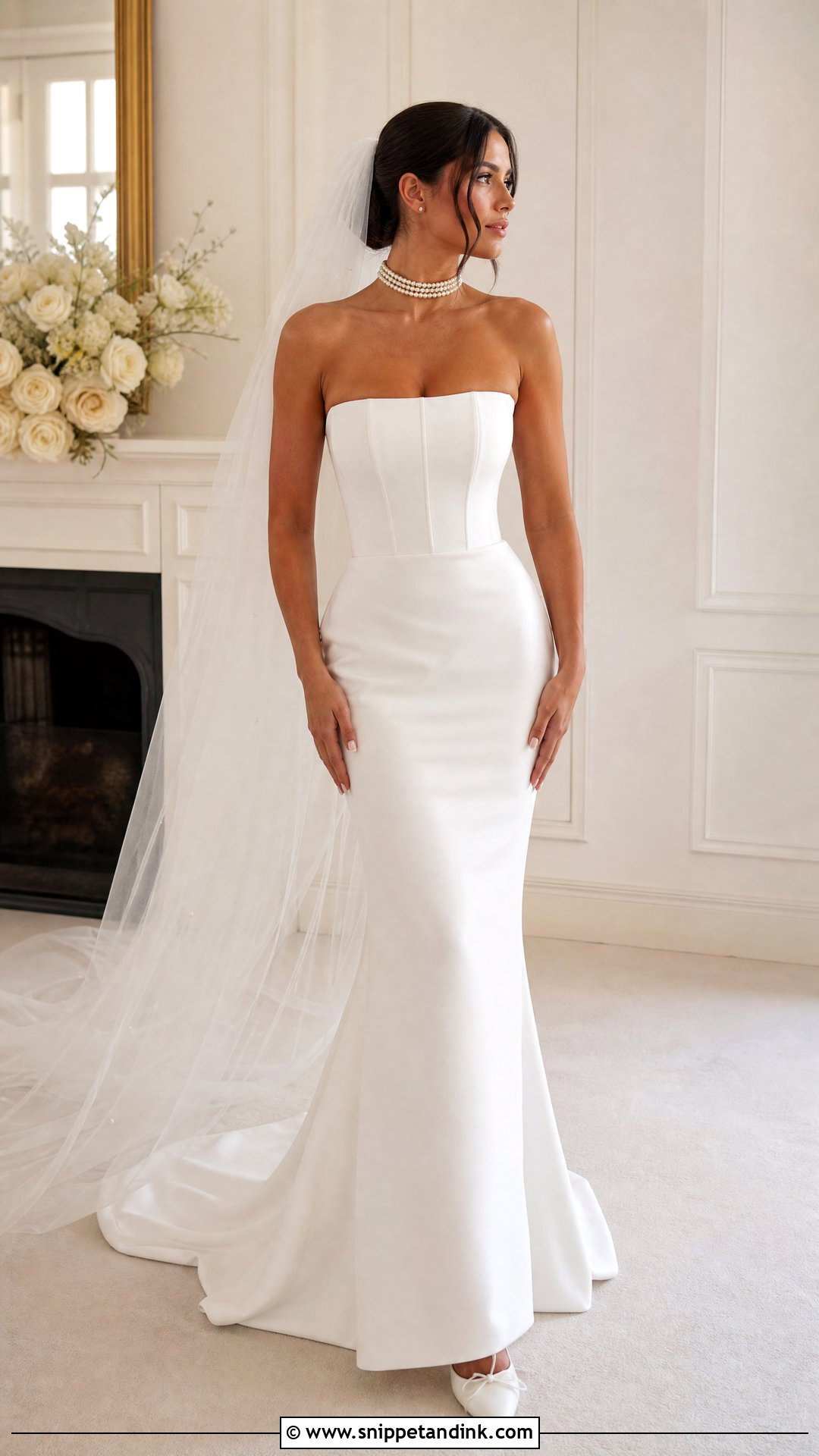
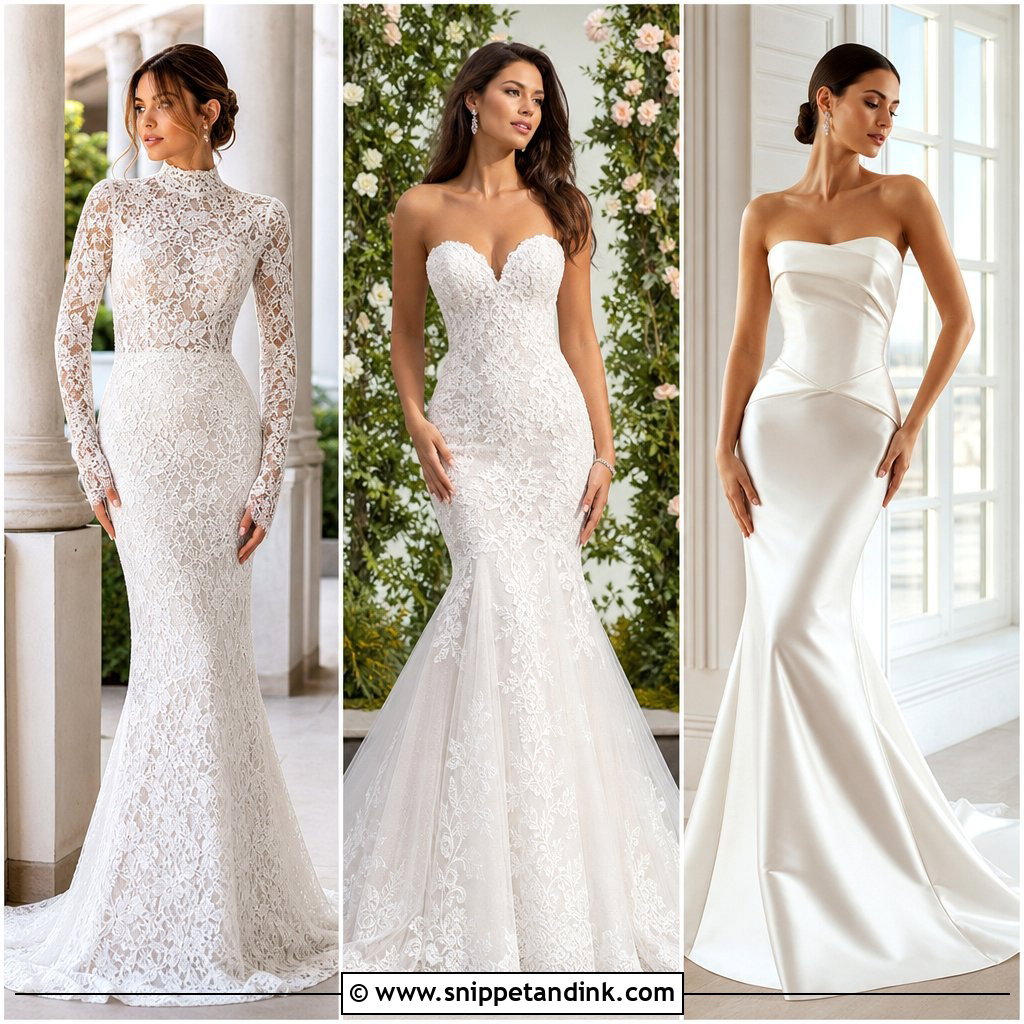
Strapless crepe needs a well-built bodice underneath, because the fabric itself is too soft to hold a neckline up. What you see is smooth; what you don’t see is boning and a waist stay doing the work. Once that is right, the open neckline becomes the space where accessories set the mood: a pearl choker for classic, bold earrings for modern. A long veil adds ceremony drama; a short veil or bow keeps it lighter. Crepe-covered heels tie the look together.
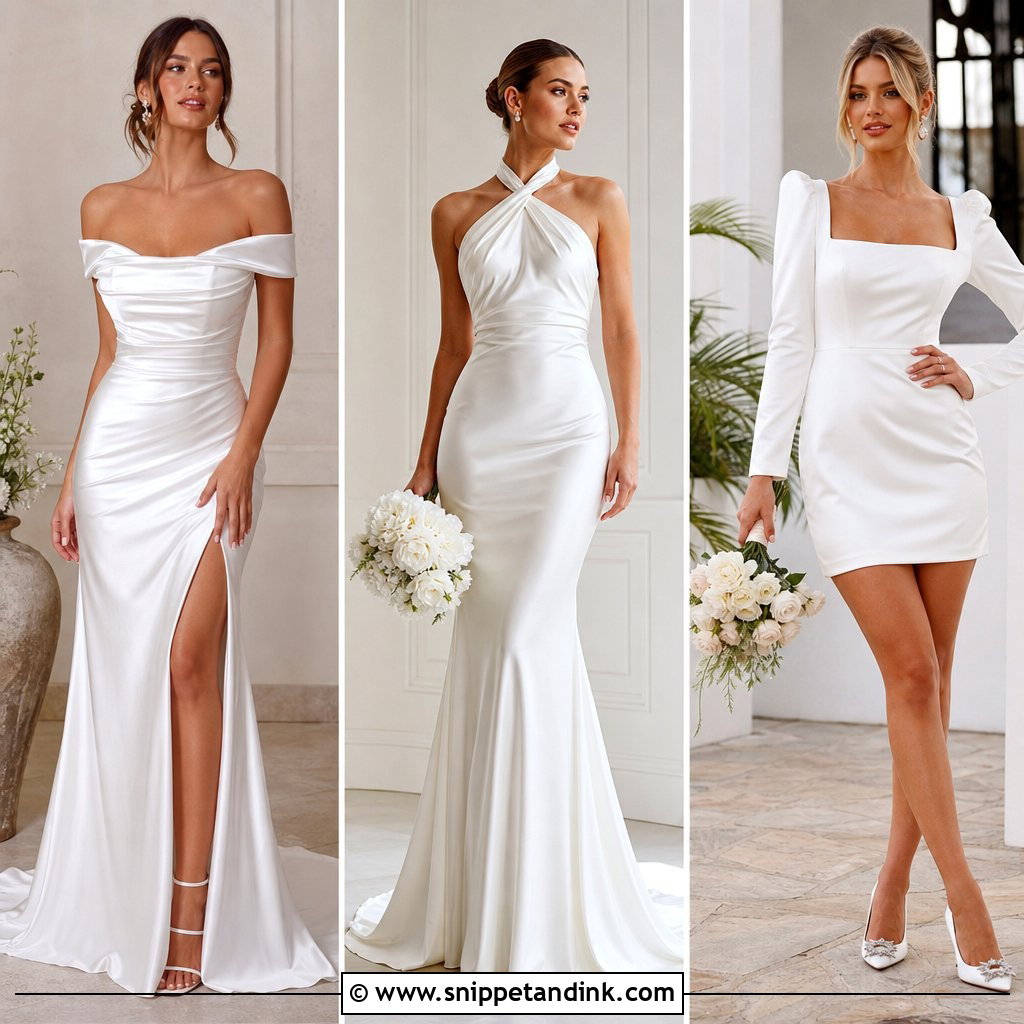
3. Off The Shoulder Crepe Wedding Dress
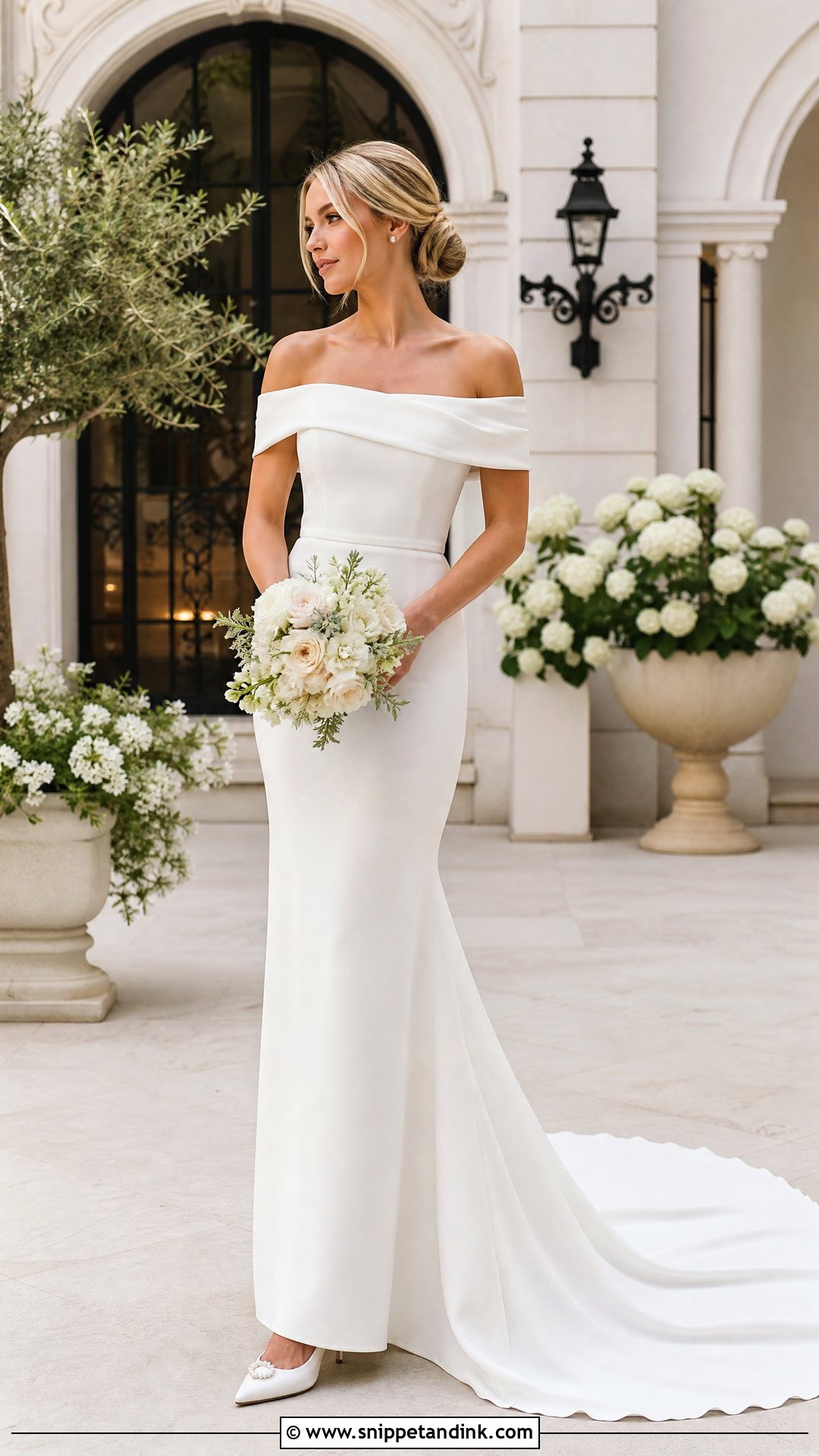
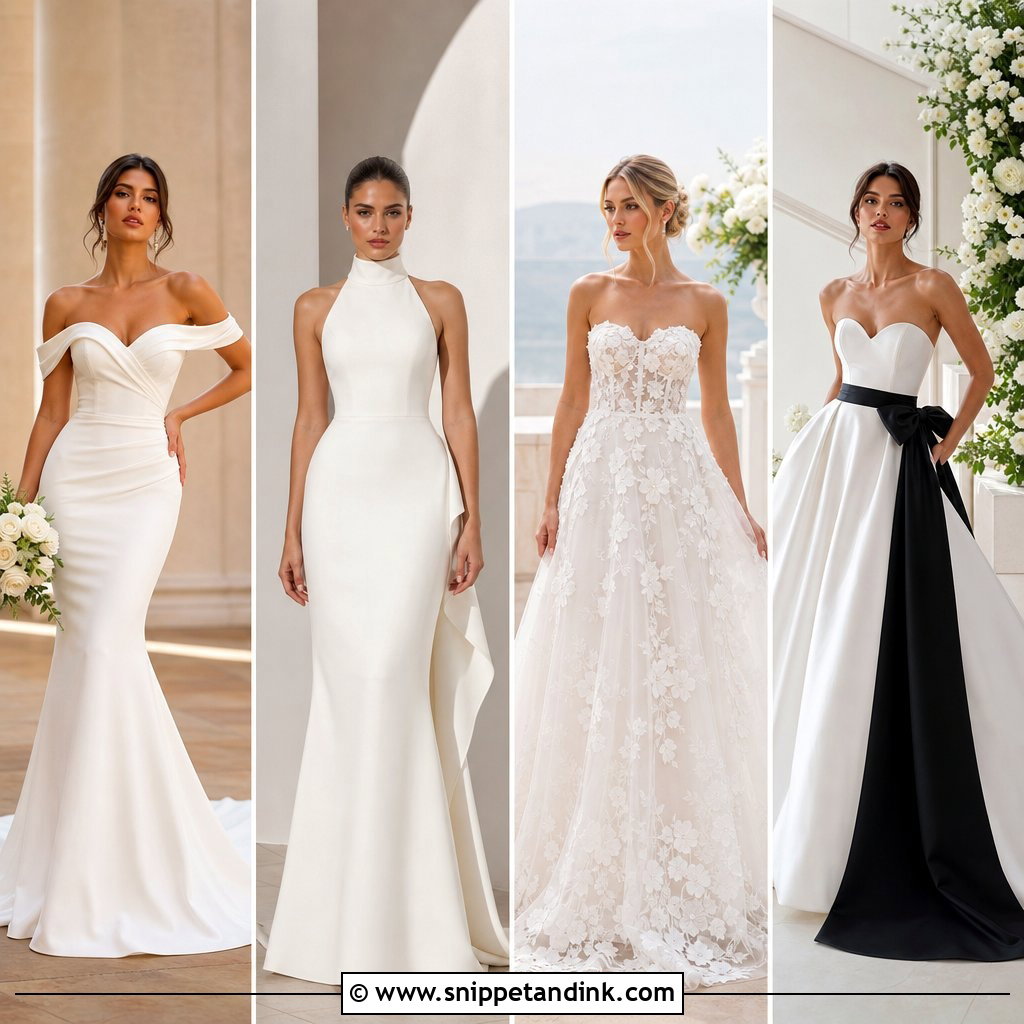
Off-the-shoulder is my favorite way to soften crepe. The neckline frames the collarbones without lace or beading, and a folded band or soft sleeve gives it gentle structure. I ask for a low chignon and pearl studs so nothing competes at the neck. With a long train, keep everything else minimal and let the shoulders and silhouette carry it. Formal and coastal venues both suit it, and you will want an inner grip at the band so it stays put through the first hug.
4. Long Sleeve Crepe Wedding Dress
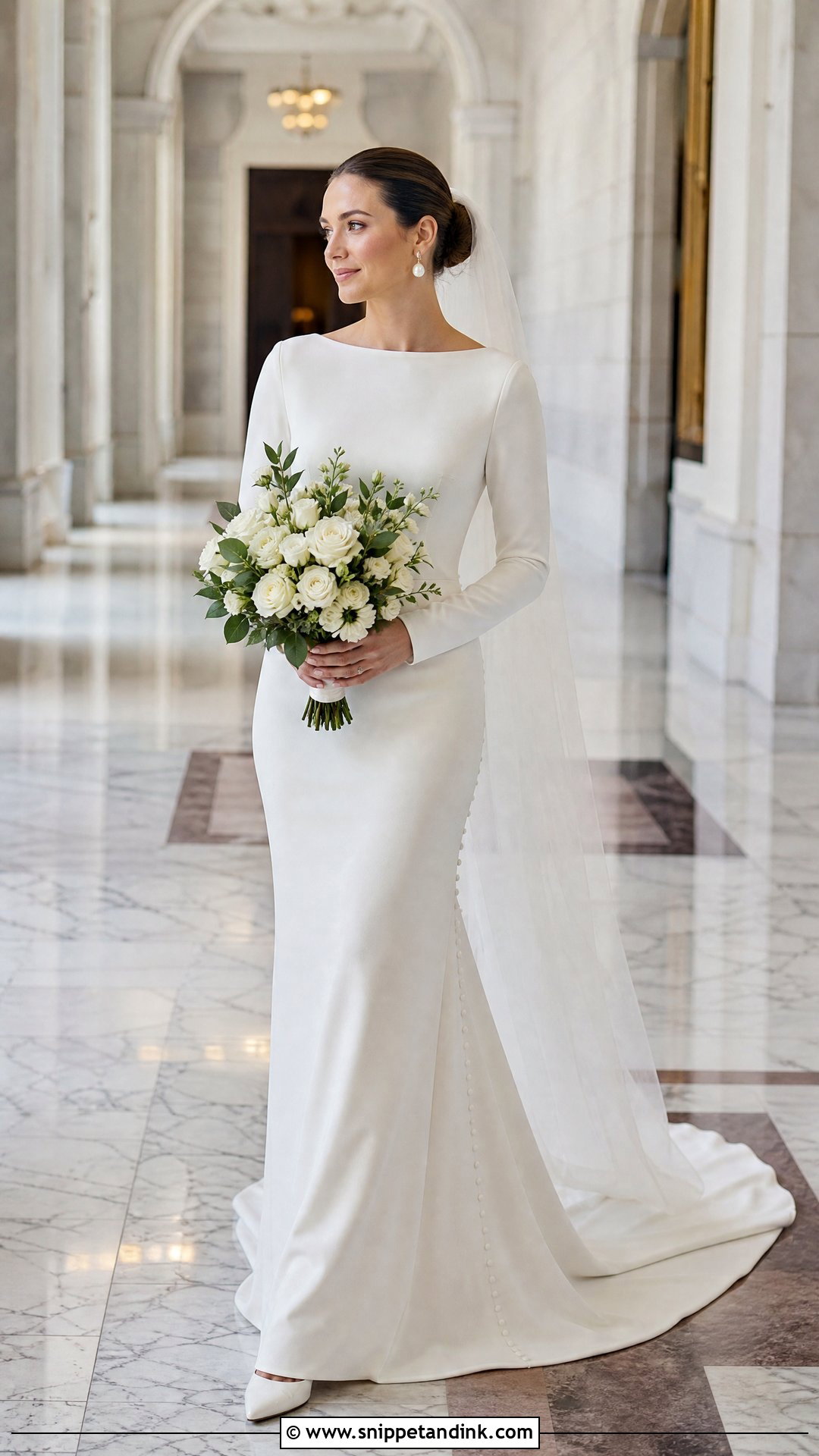
Crepe sleeves look clean in a way lace sleeves never quite do, since there is no pattern breaking up the line of the arm. With a fitted bodice and a column or fit-and-flare skirt, they read modest and modern at once. Covered buttons at the wrist or down the back are the classic finishing detail. I always check a fitted crepe sleeve with the arm bent; the fabric has little give unless it has stretch woven in. A smooth bun and closed-toe heels suit cooler seasons.
5. Crepe Mermaid Wedding Dress
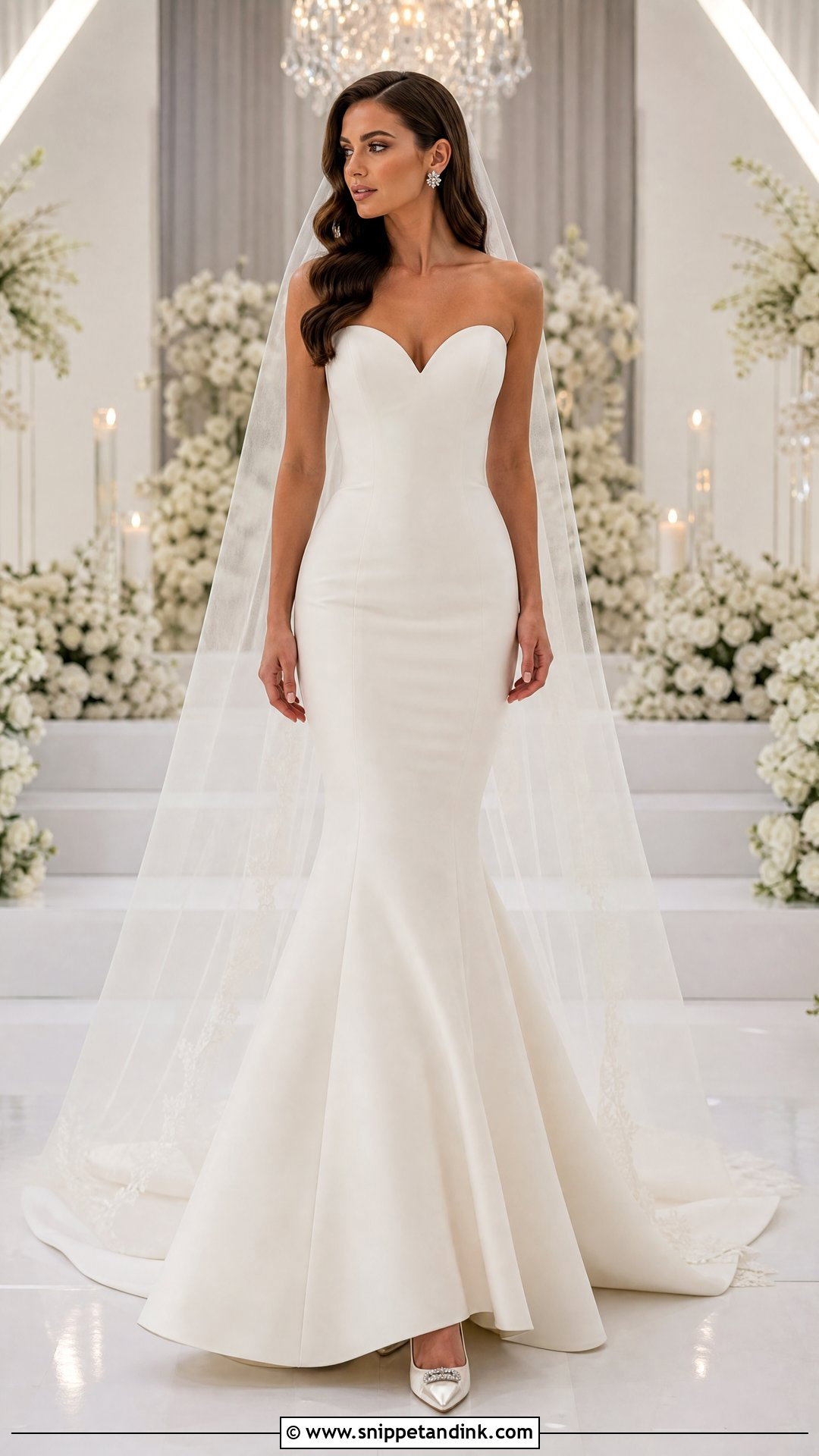
Crepe is a smart fabric for a mermaid because it gives a sculpted shape without the visual bulk that satin or heavy lace adds at the hip. The gown fits through the bodice, waist and hips, then flares near the knee. Any unevenness in the hip seam shows, so I spend most of the fittings there. Crystal studs, a long veil and slim heels lengthen the line, and a sleek ponytail feels fresh. Ballrooms and rooftops both suit it.
6. Crepe Fit And Flare Wedding Dress
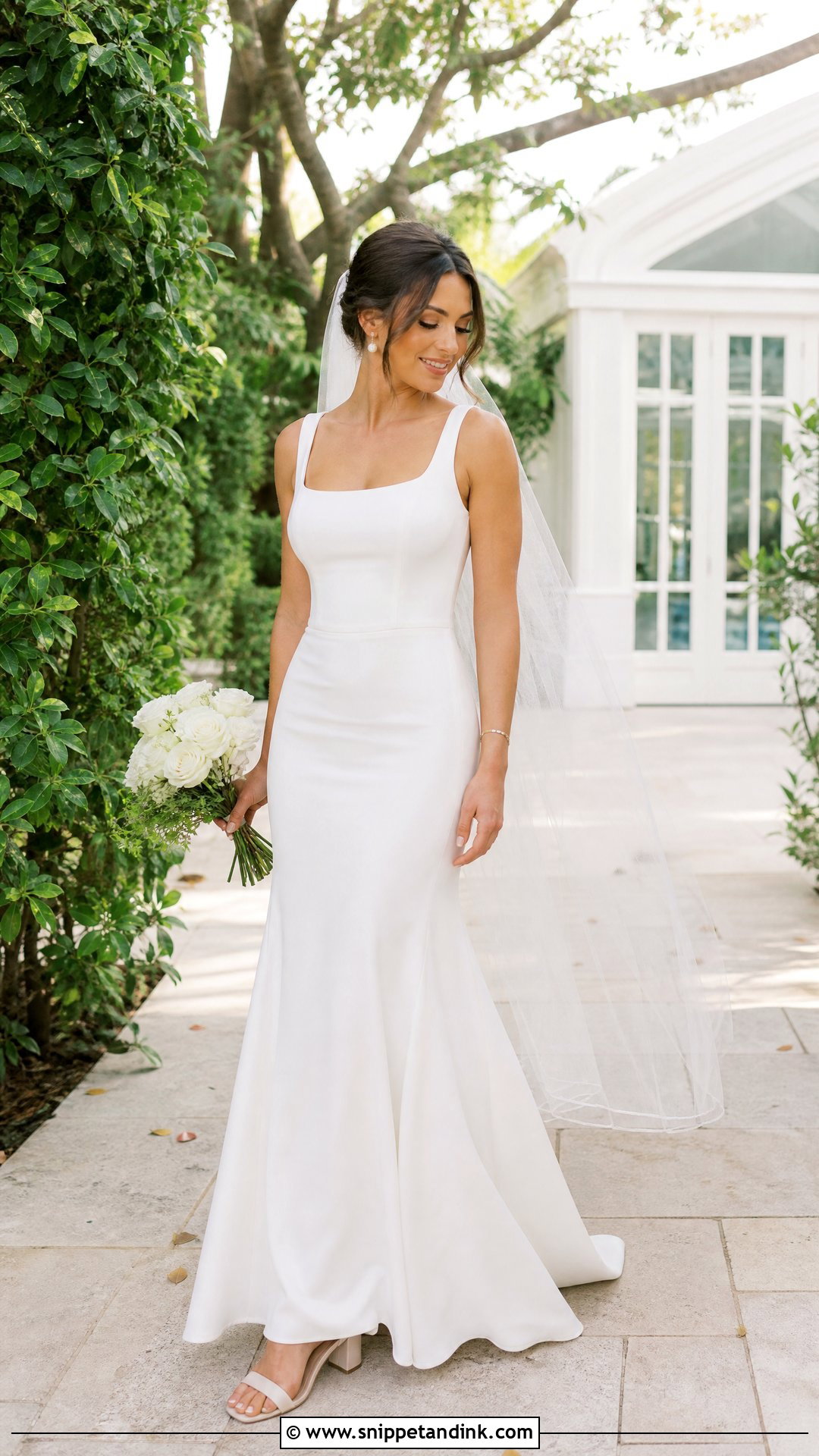
A crepe fit and flare wedding dress releases the skirt higher than a mermaid does, usually mid-thigh, which is why it is so much easier to sit and dance in. It defines the waist and balances the hips, and it suits a sweetheart, square or bateau neckline. I suggest block heels here if you will be on your feet for hours, since the shape doesn’t need the extra height. A soft veil and pearl earrings are plenty.
7. Crepe Sheath Wedding Dress
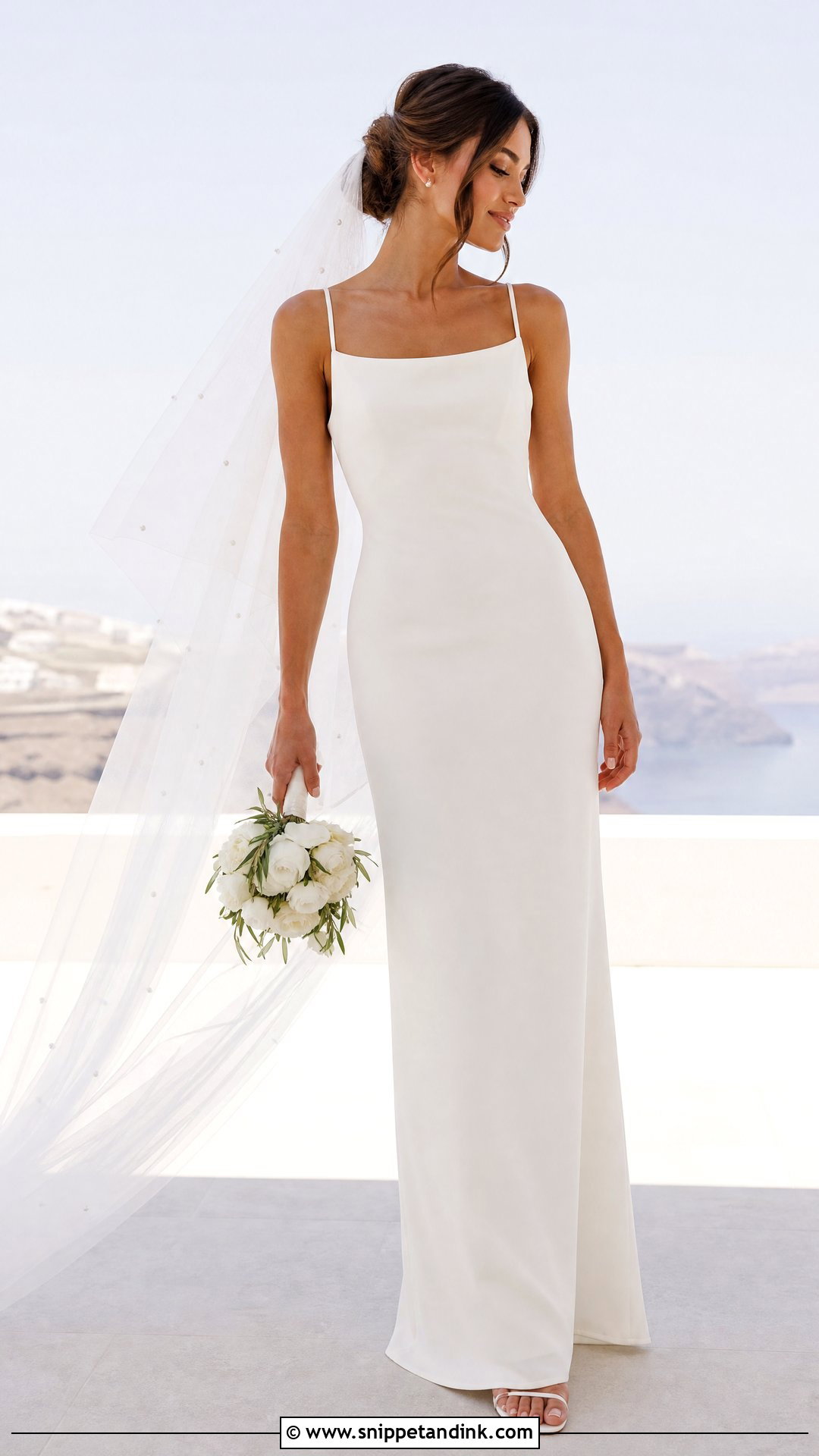
Sheaths fall straight from the body instead of hugging it, which gives a relaxed, lean line. A soft V-neck, square neck or simple straps are enough detail. With so little shaping, the fabric weight decides how it looks: thin crepe clings at the stomach and hip, while a heavier crepe skims past. I always ask brides to sit in a sheath at the fitting and check for seat creasing. A low bun, slim sandals and a small bouquet keep it right for beaches and courthouses.
8. Crepe A Line Wedding Dress
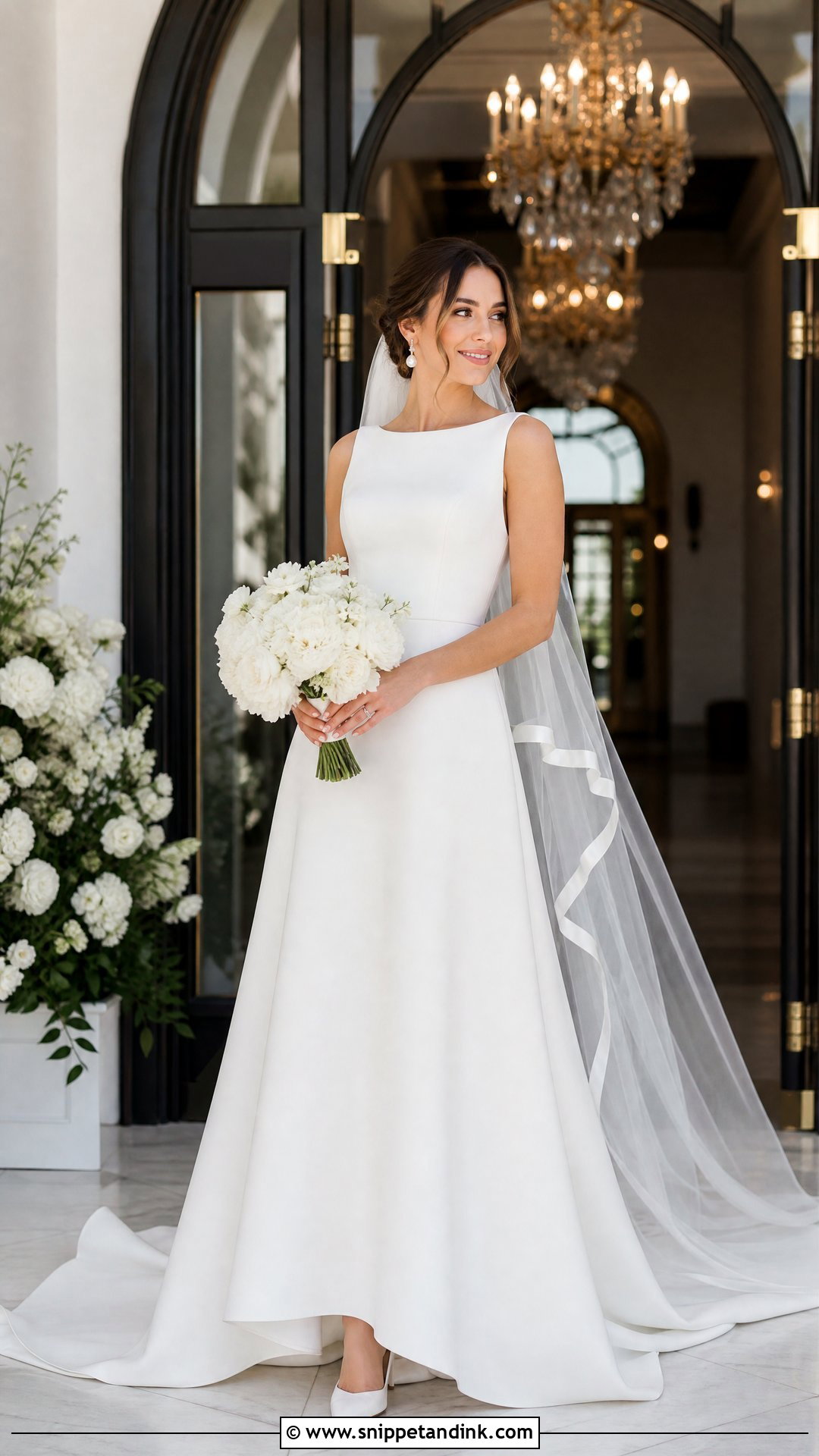
If you want structure without anything tight, an A-line in crepe gives a smooth fitted bodice and a skirt that widens gently from the waist. Crepe keeps the lines crisp, so the shape reads classic but never fussy. A square, bateau or off-shoulder bodice all suit it. I like a satin ribbon-edged veil with it, since the satin edge gives the matte fabric a little light. It is about as easy to wear as any gown in this list.
9. Crepe Ball Gown Wedding Dress
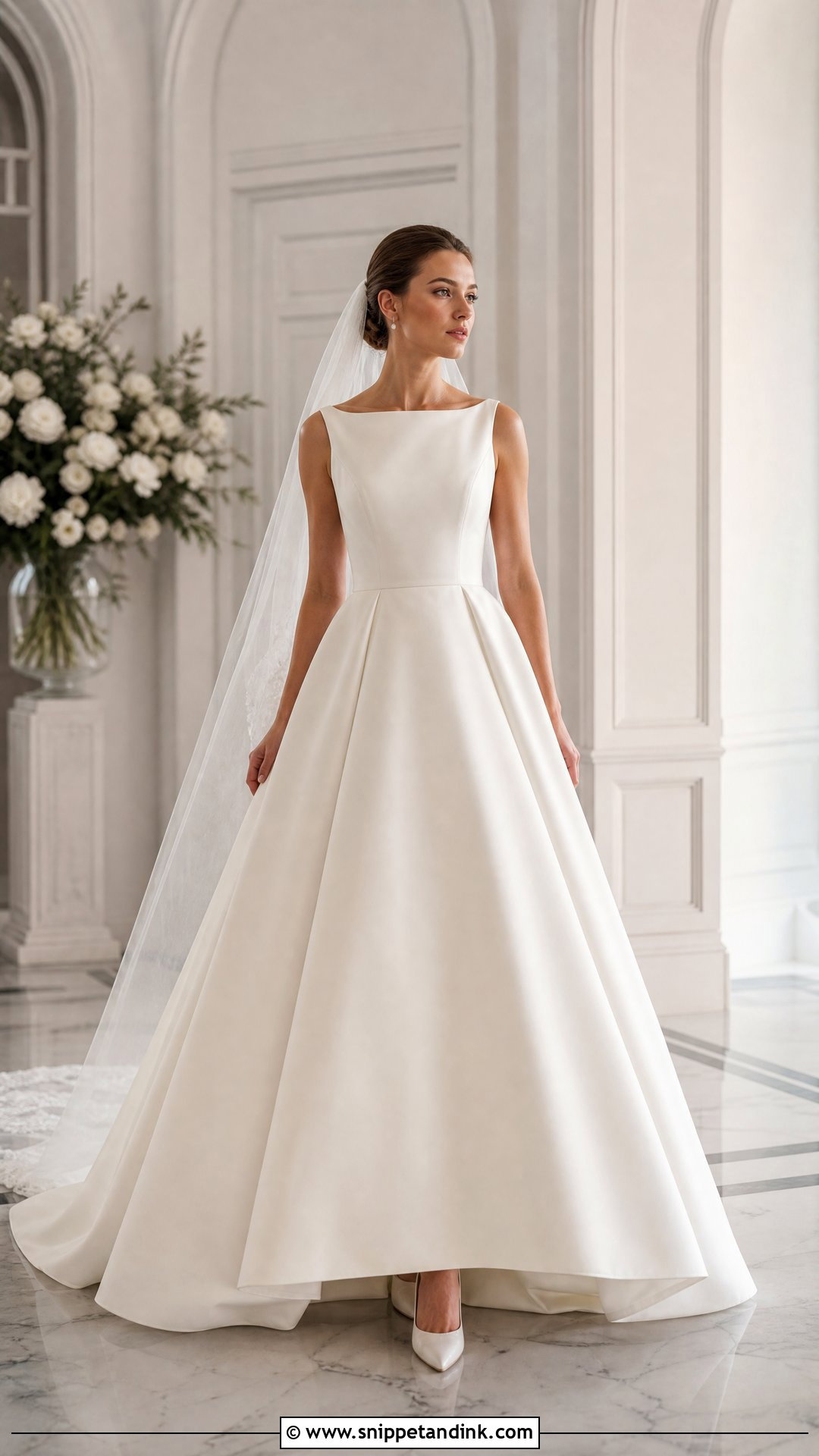
Volume in crepe looks sculptural rather than frothy. A full skirt needs a crepe with real weight and often an underlayer of stiffer tulle or horsehair braid at the hem to keep the shape from collapsing. A structured bodice and defined waist complete it. Honestly, this one is heavy, so ask how much the finished gown weighs. A long veil, simple earrings and a sleek updo keep it balanced in grand halls.
10. Crepe Column Wedding Dress
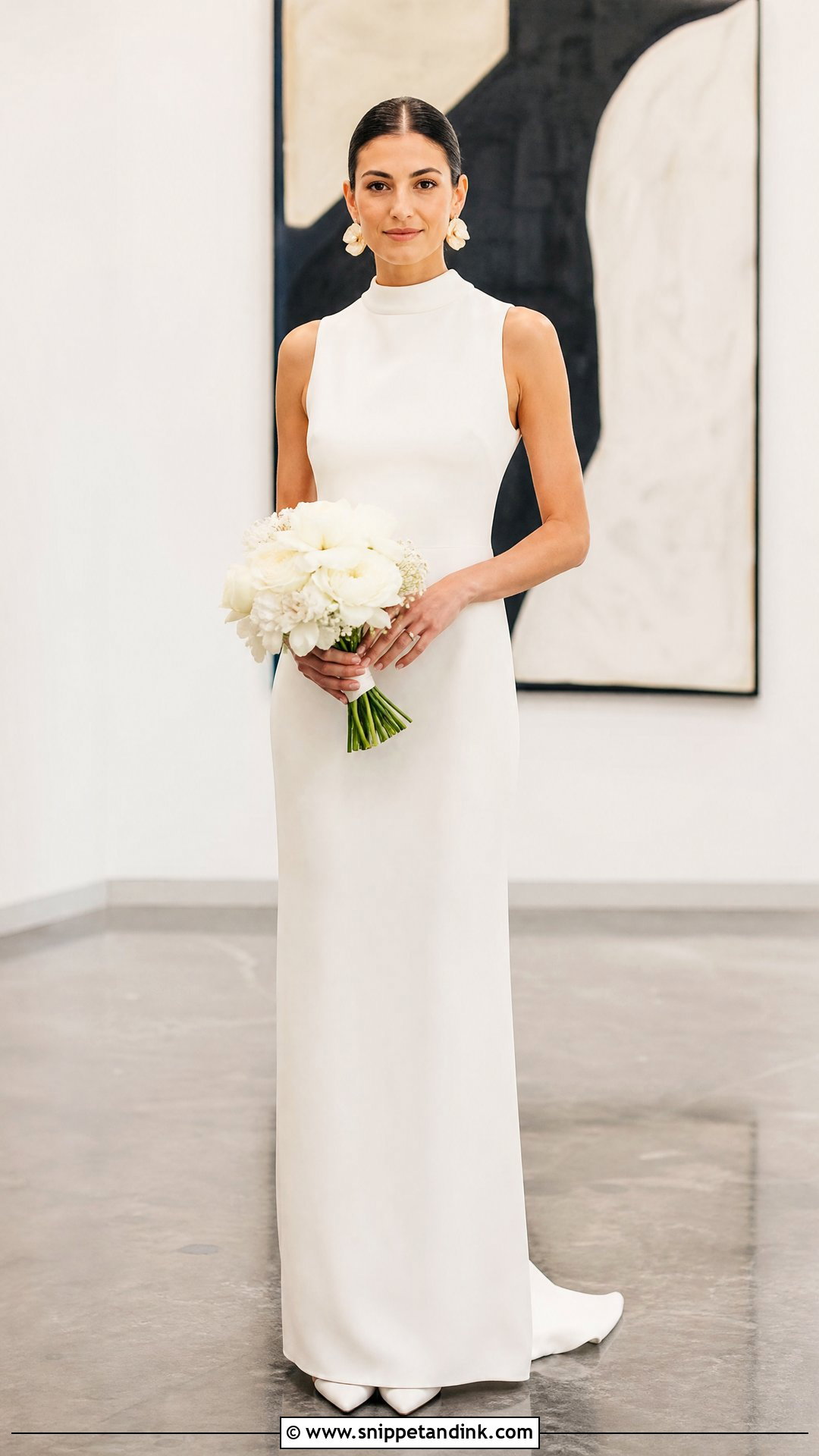
Columns are where sharp tailoring shows most. The small things, seams, darts and fabric weight, decide whether the dress hangs as a single clean line. A high neck, square neck or strapless bodice all work. There is no shine, lace or volume to hide behind, which gives it a quiet luxury feeling when the fit is right. Sculptural earrings, a smooth veil and pointed heels finish it. I look for a walking slit or kick pleat, or you will take short steps all day.
11. Crepe Slip Wedding Dress
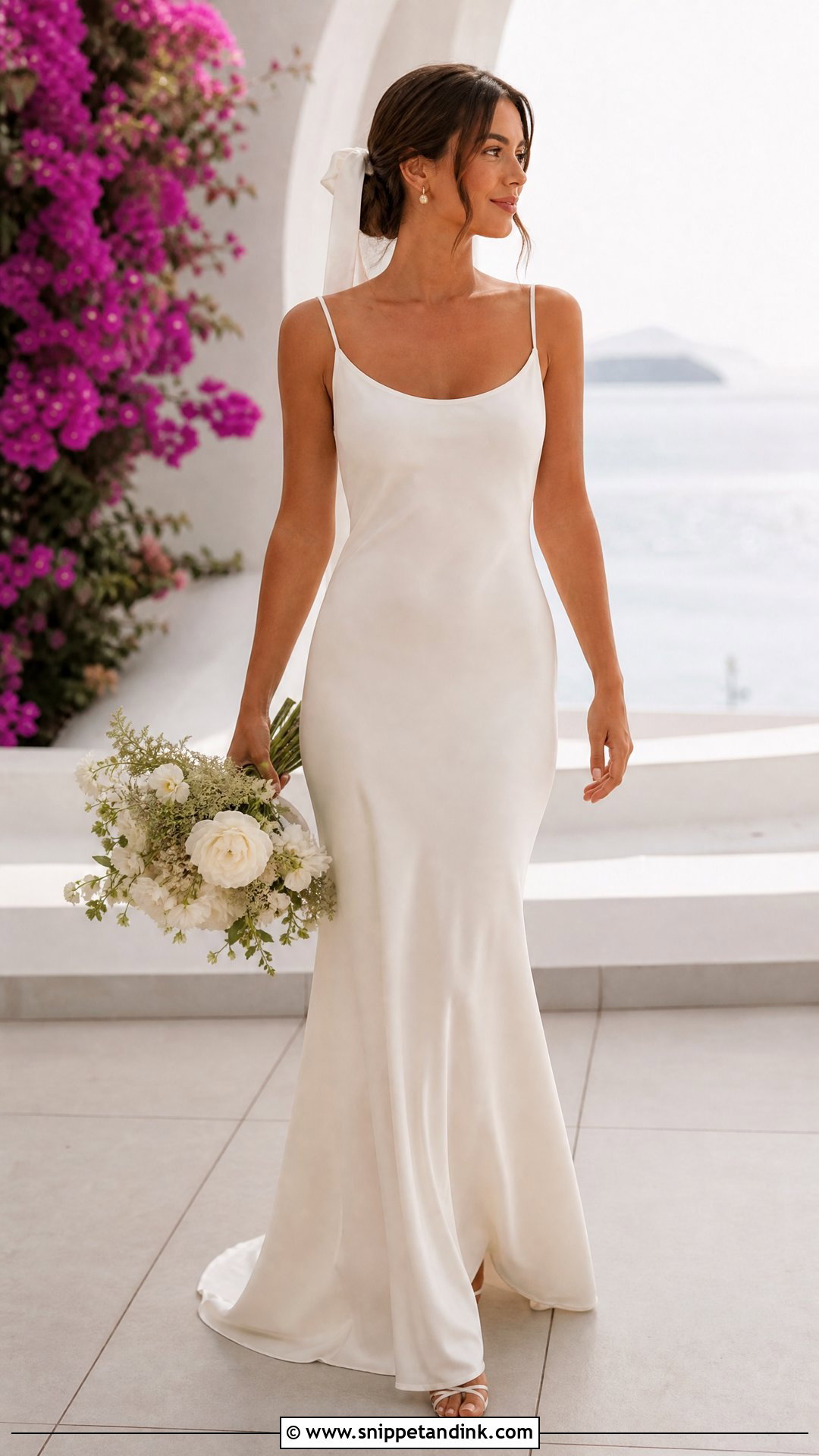
A crepe slip wedding dress cut on the bias skims instead of clinging, but only if the crepe has enough weight. Too light and it reveals everything underneath. Thin straps, a cowl neck or a low back keep it relaxed. Strappy heels, a silk ribbon in the hair and pearl studs suit the nineties mood. I fit slips over the exact smooth, edge-free underwear the bride will wear on the day, never anything else.
12. Crepe Wedding Dress With Lace
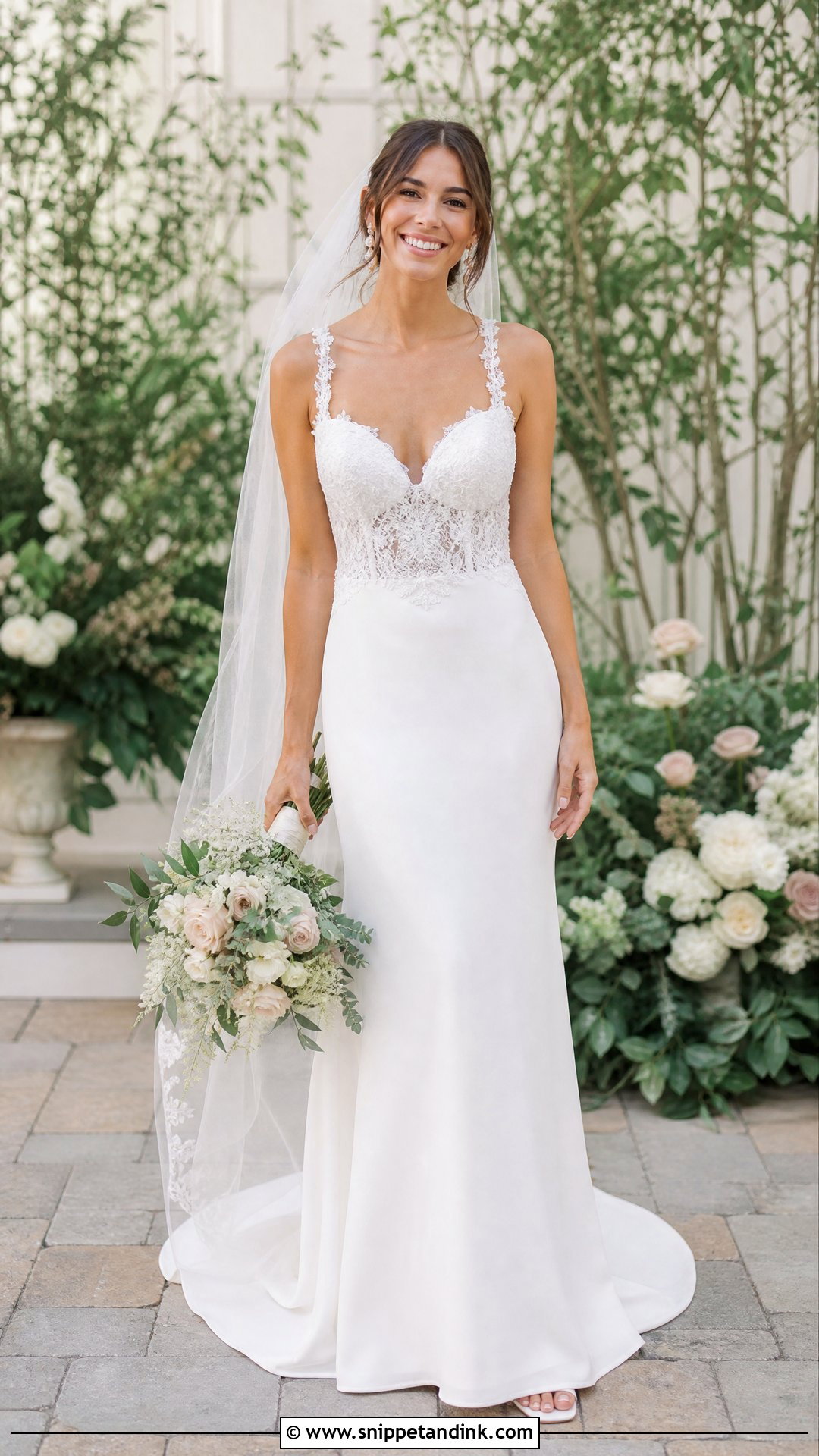
Lace on a crepe base gives you texture exactly where you want it and nowhere else. It can sit on the bodice, sleeves, back or train while the skirt stays smooth. Soft floral lace reads romantic; geometric lace reads modern. The key is matching tones; ivory lace on a whiter crepe looks grubby in daylight, so I hold both fabrics together by a window. Pearl earrings and a delicate veil are enough.
13. Crepe Wedding Dress With Bow
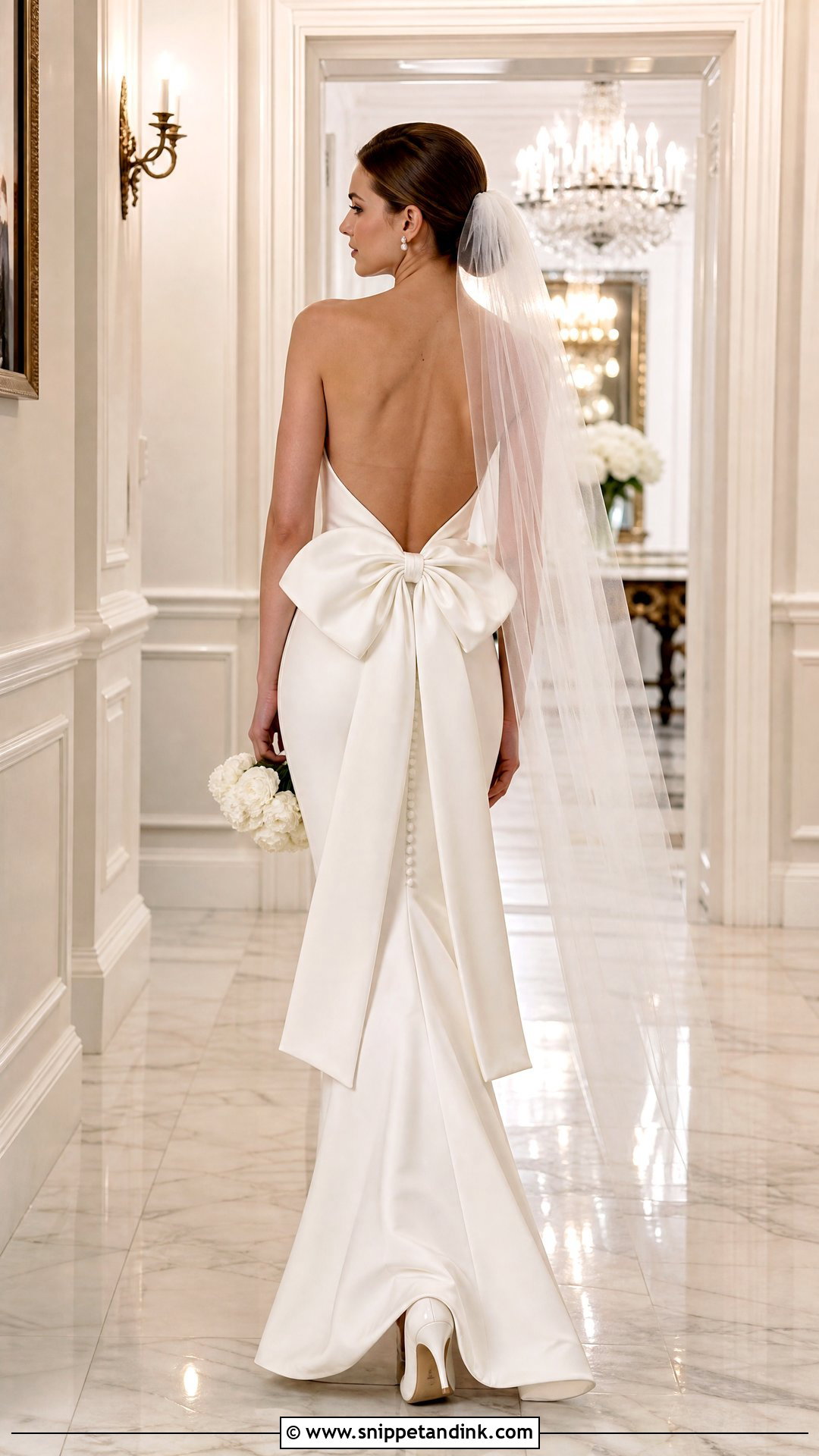
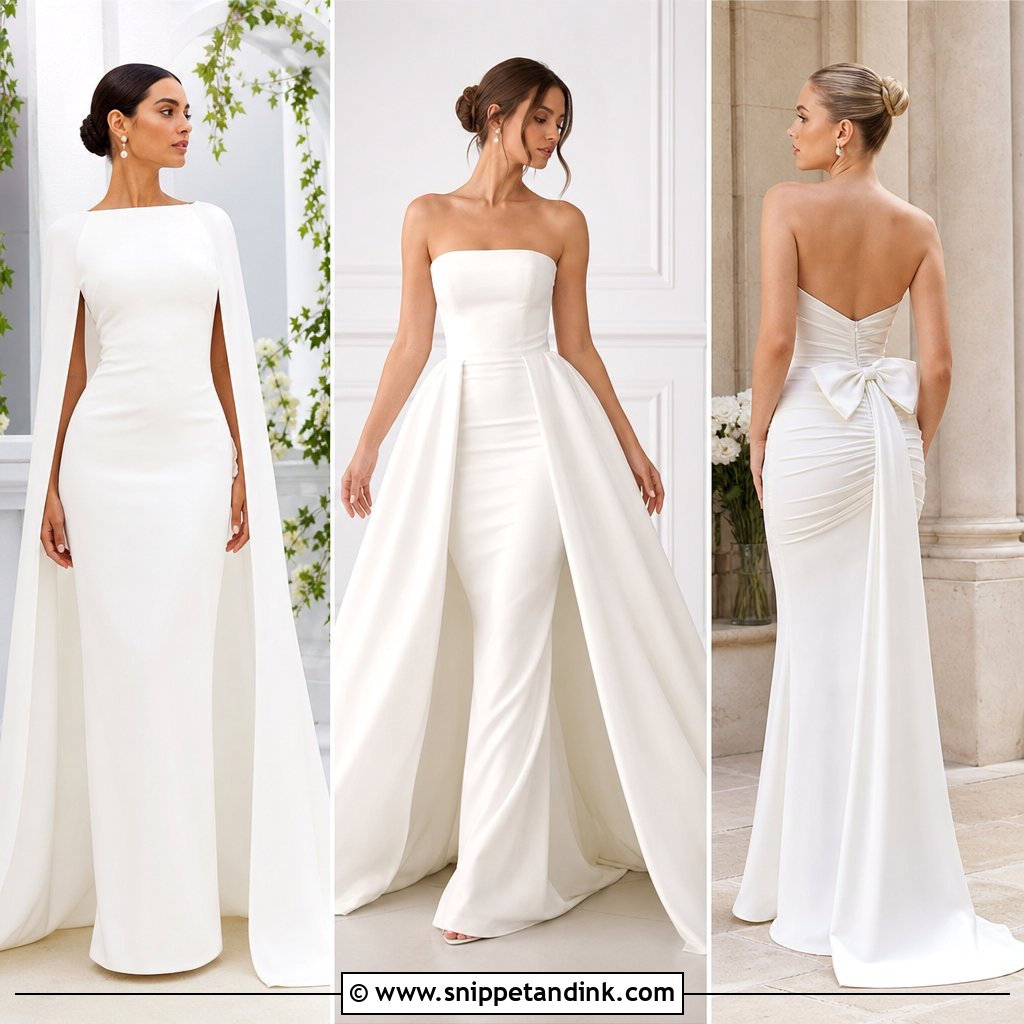
One bow is a detail; three bows are a theme. On crepe, I prefer a single large, clean bow at the back, shoulder or waist, built from the same crepe or a stiffer silk so it holds its shape instead of sagging after an hour. Sleek hair and pearl studs keep the rest calm. A back bow over a smooth train gives guests something to look at during the vows.
14. Crepe Wedding Dress With Train
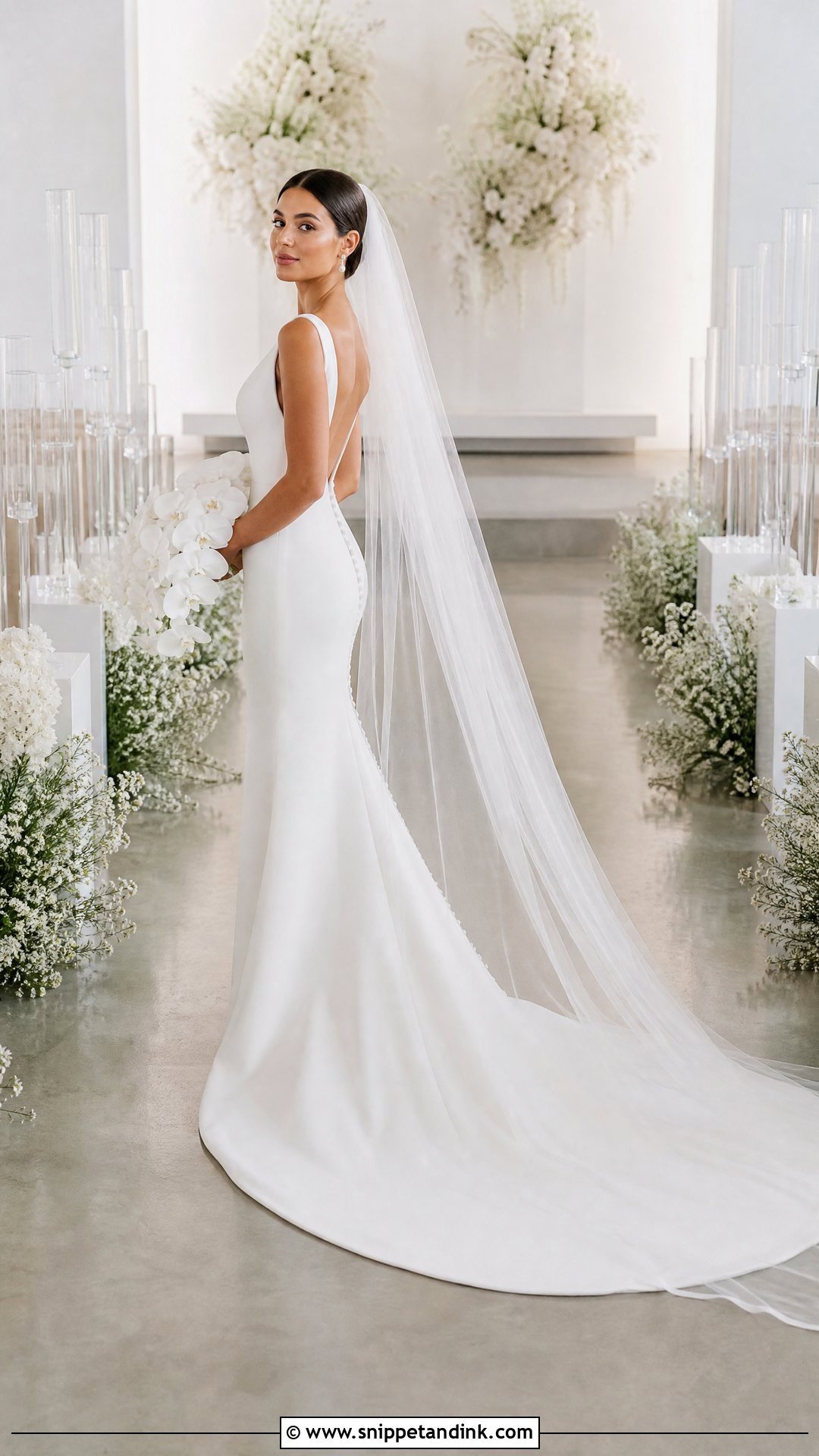
Crepe trains lie flat and smooth, so they look sculptural from behind. A fitted sheath, mermaid or A-line with a chapel or cathedral train suits a long aisle or a grand staircase. Crepe is weighty, so a cathedral length pulls on the shoulders; ask your seamstress to add a wrist loop or plan a sturdy bustle. A long veil and classic heels finish it.
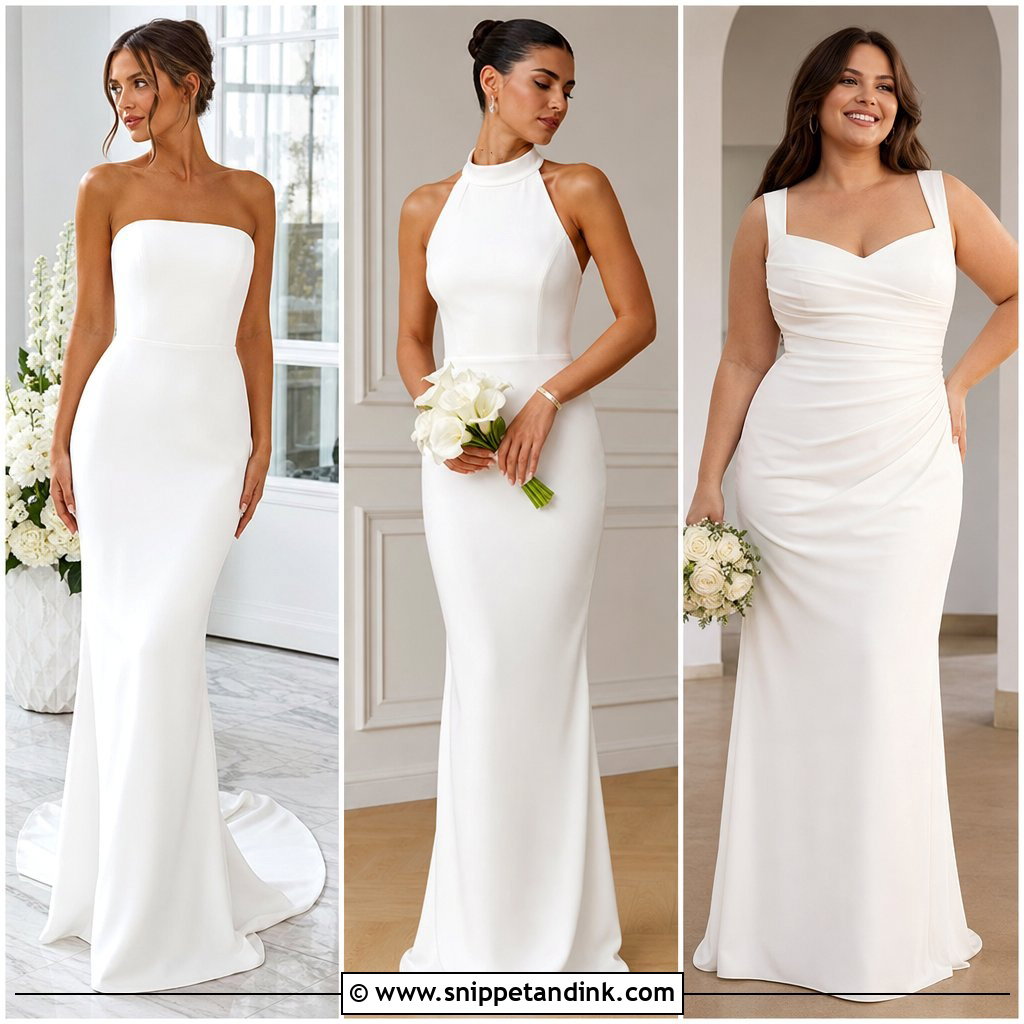


15. Crepe Wedding Dress With Open Back
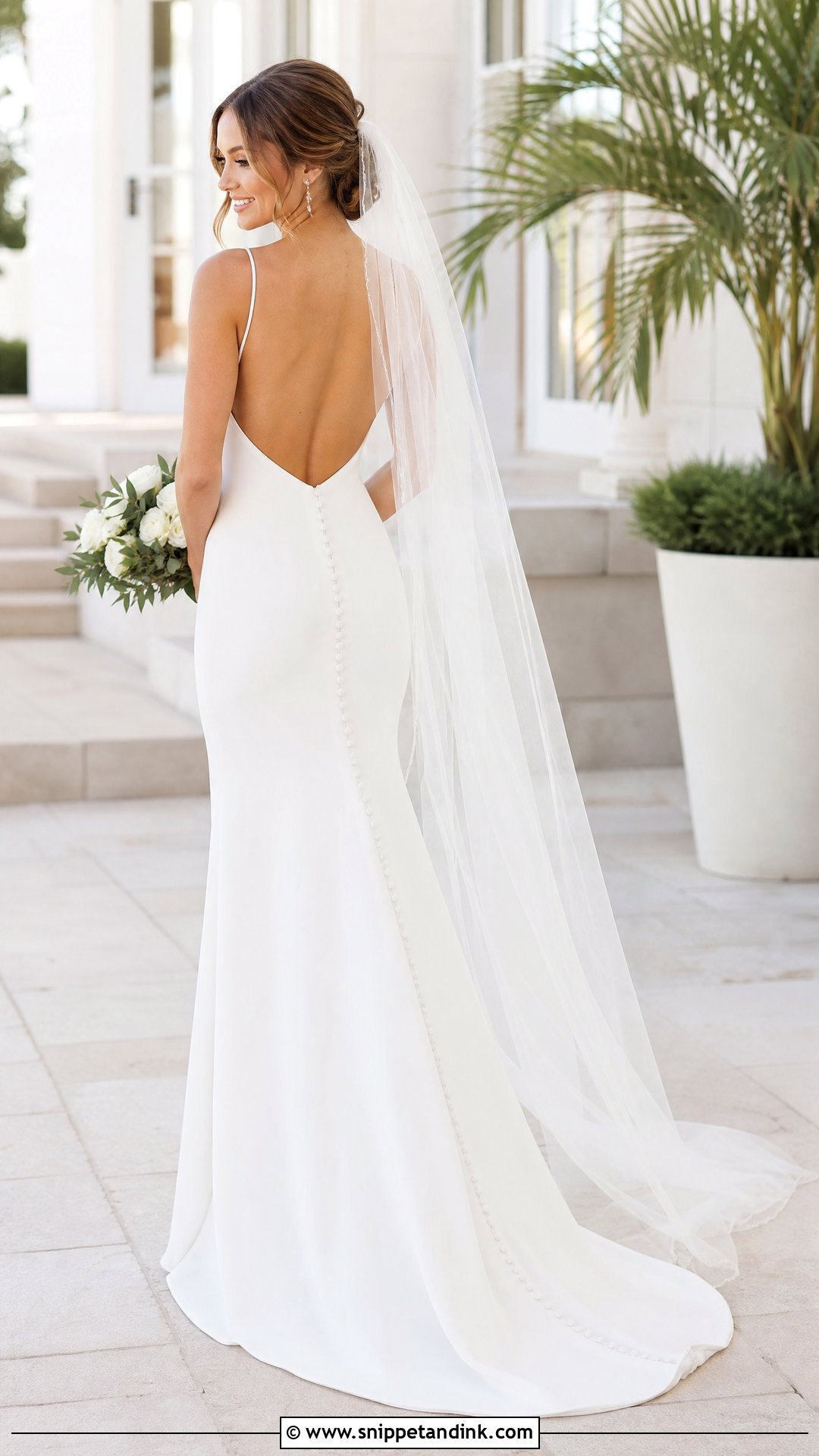
Open backs suit crepe because the fabric lies flat against the skin and doesn’t gape when cut well. The front can stay high and plain, while covered buttons, fine straps or a low scoop give the surprise at the back. The real work is underneath: a low-back bra, adhesive cups or support built into the bodice. I check it with the bride bending forward, which is when a poorly fitted back pulls away. Back-drop earrings echo the shape.
16. Crepe Wedding Dress With Square Neck
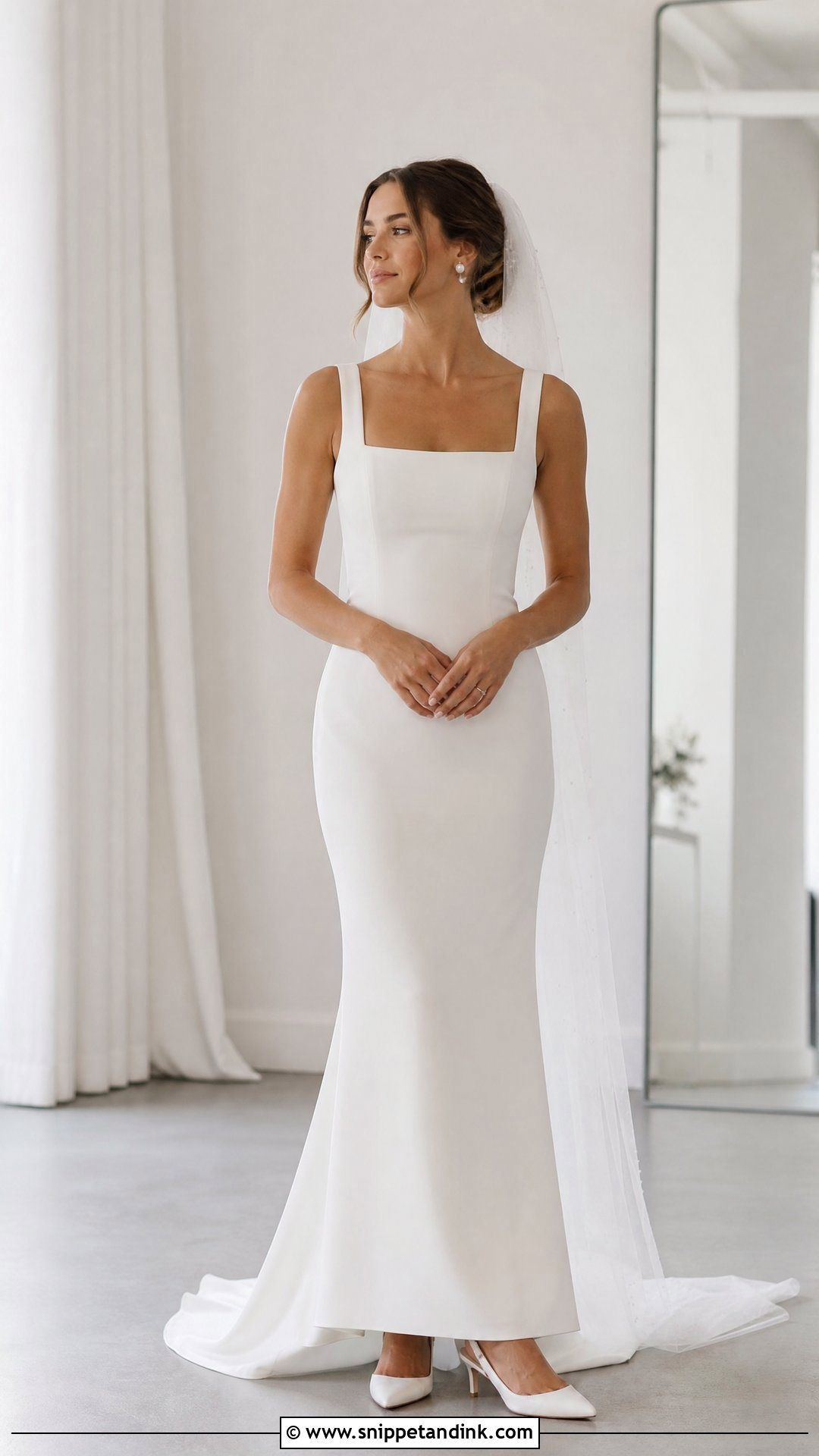
Square necklines balance the shoulders and frame the collarbone without much skin. Wide straps, cap sleeves or a fitted bodice all suit it. A slim skirt keeps it modern; an A-line softens it. It also takes jewelry easily, from a fine pendant to nothing at all. I find it the easiest neckline to wear if strapless makes you nervous but you still want structure.
17. Crepe Wedding Dress With V Neck
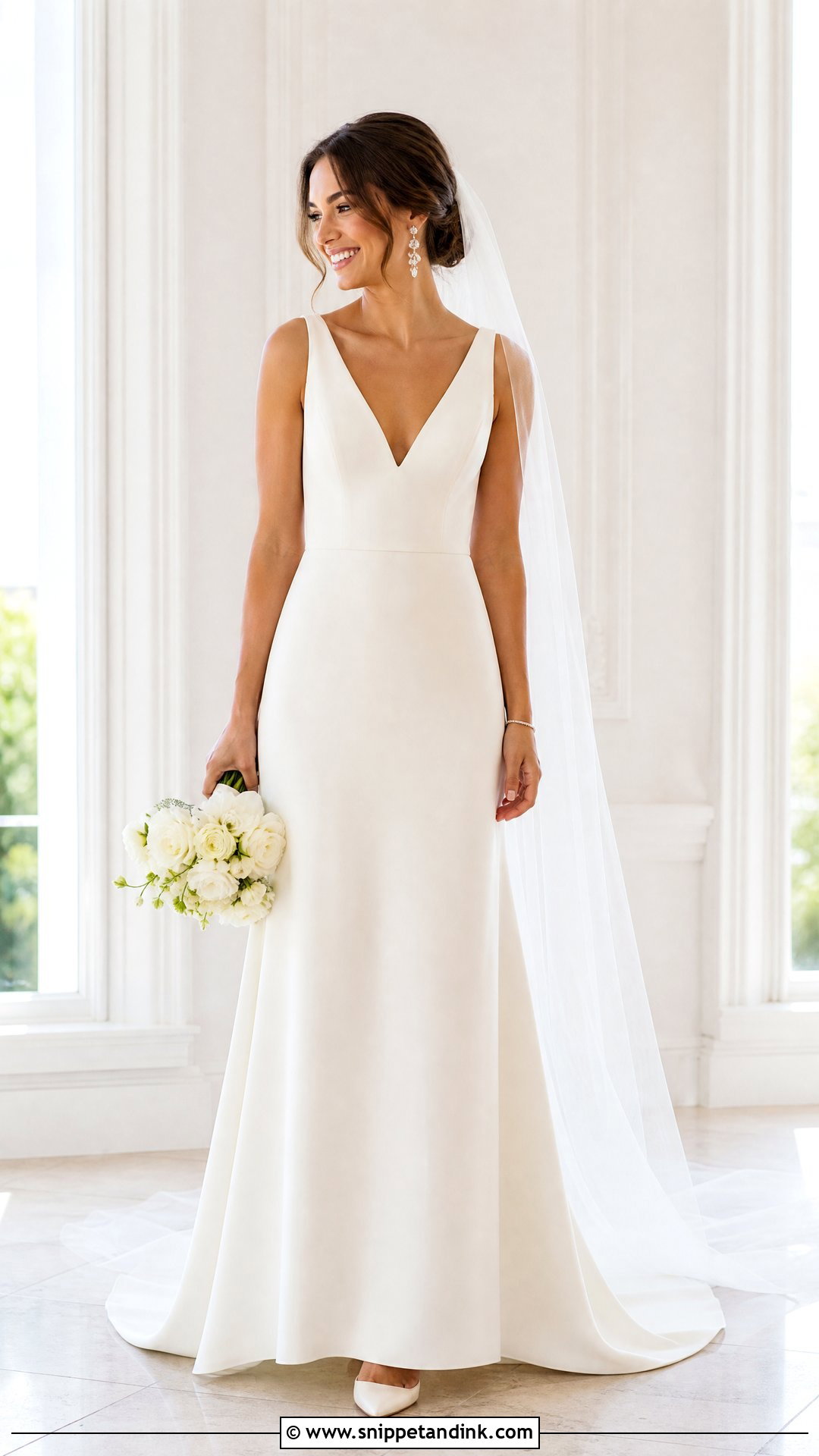
A V-neck lengthens the upper body and draws the eye vertically, which suits many figures. A modest V reads classic; a deeper V needs illusion mesh or built-in support to stay in place, since crepe will not hold a plunging edge on its own. Drop earrings and a slim bracelet suit it. A fitted skirt keeps it sleek; an A-line relaxes it. Keep the bouquet refined so it doesn’t cover the neckline.
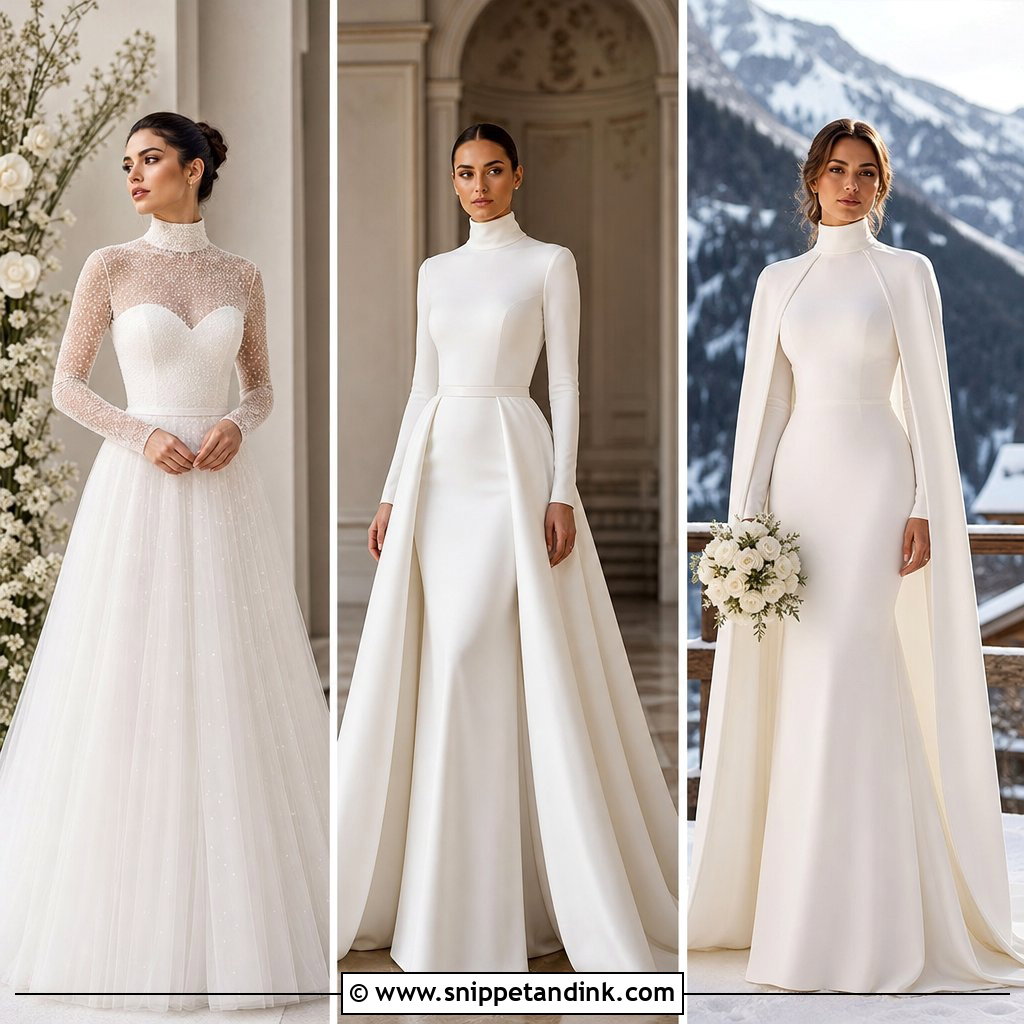
18. Crepe Wedding Dress With High Neck
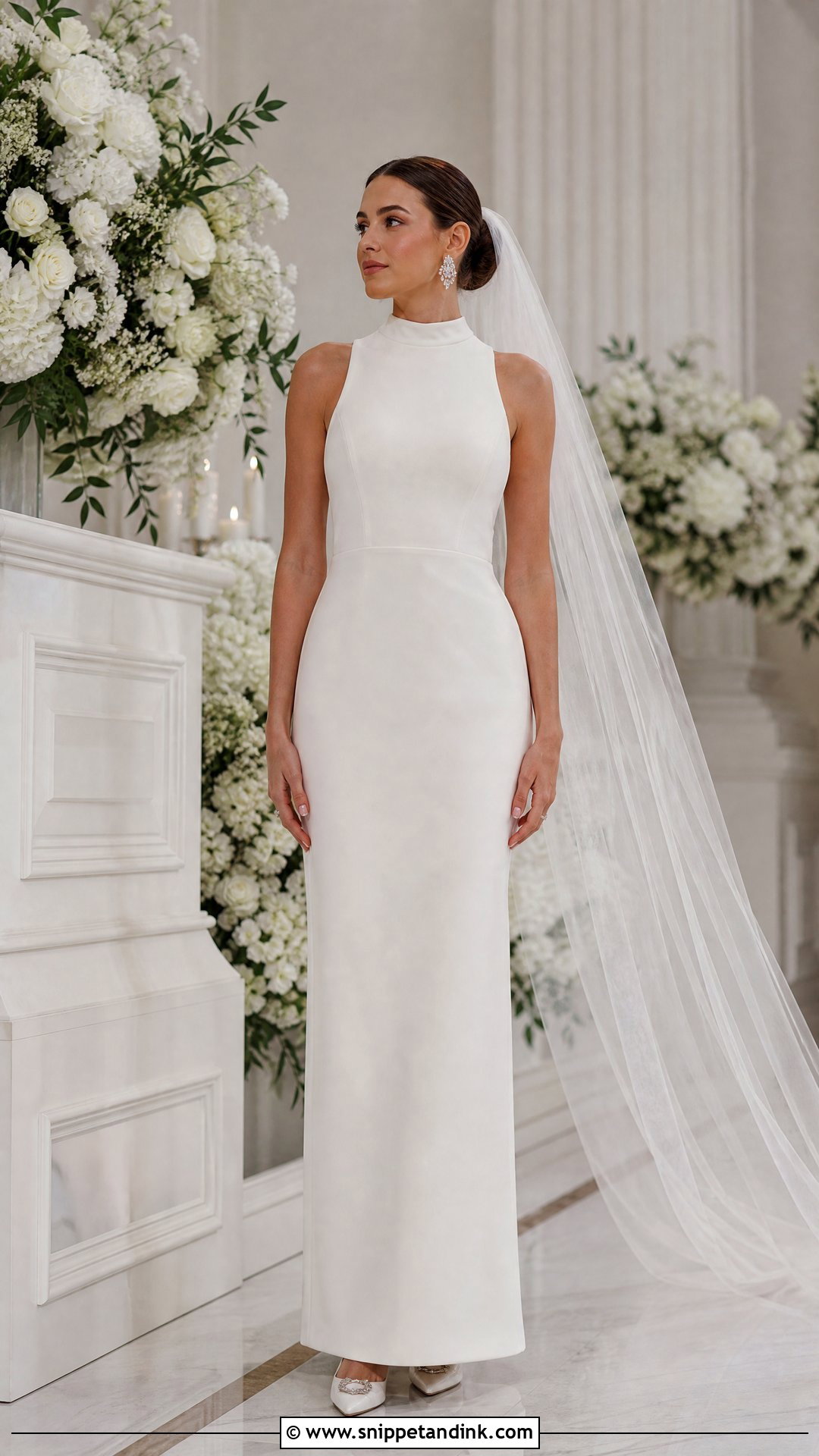
High necks look most modern in crepe, because the fabric drapes smoothly up to the jaw without the fussiness of lace. They pair well with a sleeveless bodice, long sleeves or an open back. Skip the necklace and choose statement earrings instead. A sleek bun keeps the line clear. I check the collar with the bride turning her head, since a snug high neck in a firm crepe can push foundation onto the fabric by the evening.
19. Crepe Wedding Dress With Bateau Neck
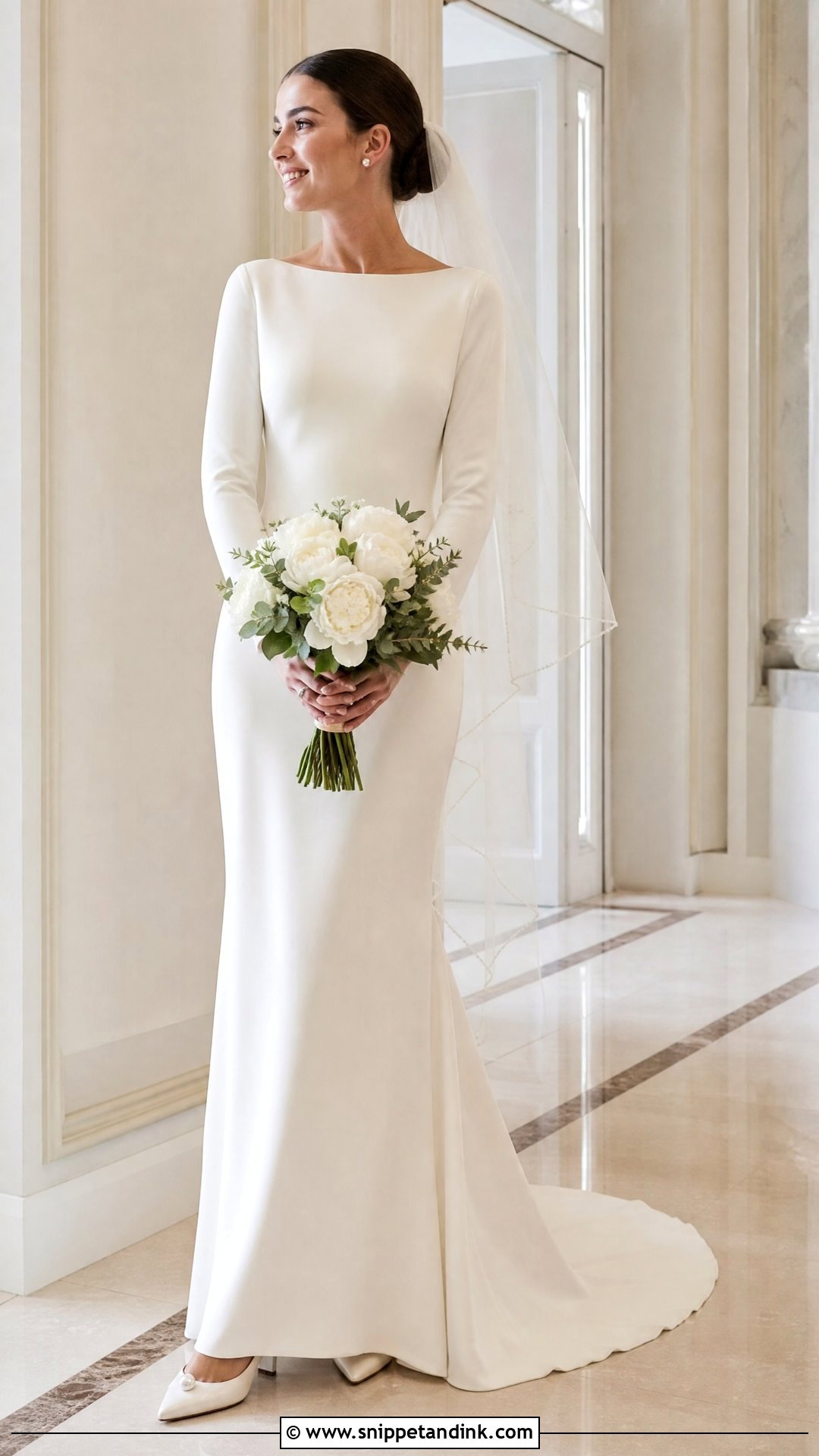
A bateau neck runs straight across from shoulder to shoulder, just above the collarbone. It is modest, graceful and rarely shifts during the day. It suits long sleeves, cap sleeves or a fitted sleeveless bodice. Pearl studs, a smooth updo and a long veil feel right, and a small train adds a little ceremony drama. Ivory or soft white crepe shows off the neckline best.

20. Crepe Wedding Dress With Cap Sleeves
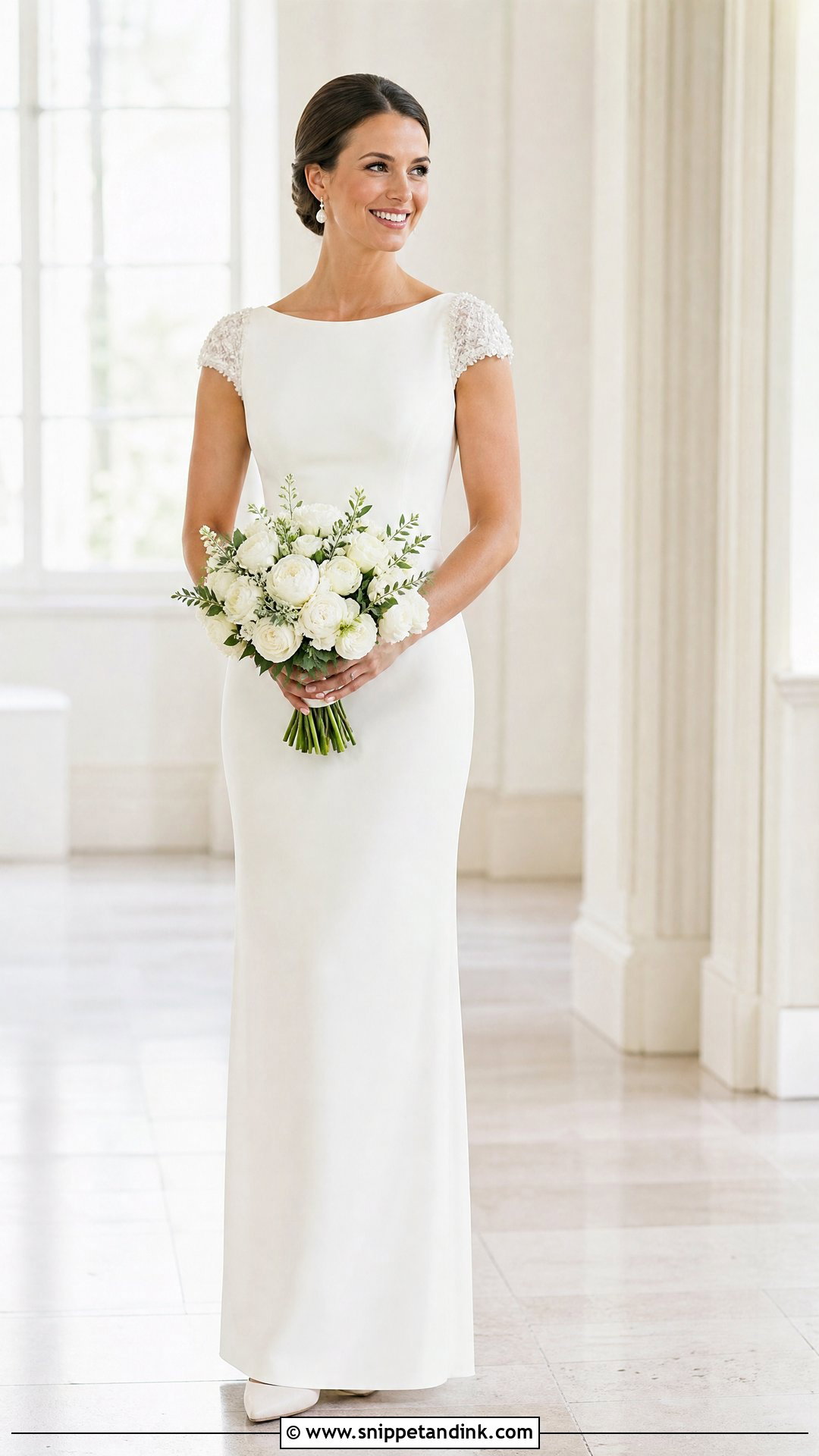
Cap sleeves sit right on the edge of the shoulder, which makes their placement fussy. Too far in and they look narrow; too far out and they flatten the arm. When they land right, they give shape and comfort without much coverage. A fitted bodice, slim skirt and small train work well, and they soften square, bateau or V necklines. Pearl earrings and ivory pumps finish it.
21. Crepe Wedding Dress With Detachable Sleeves
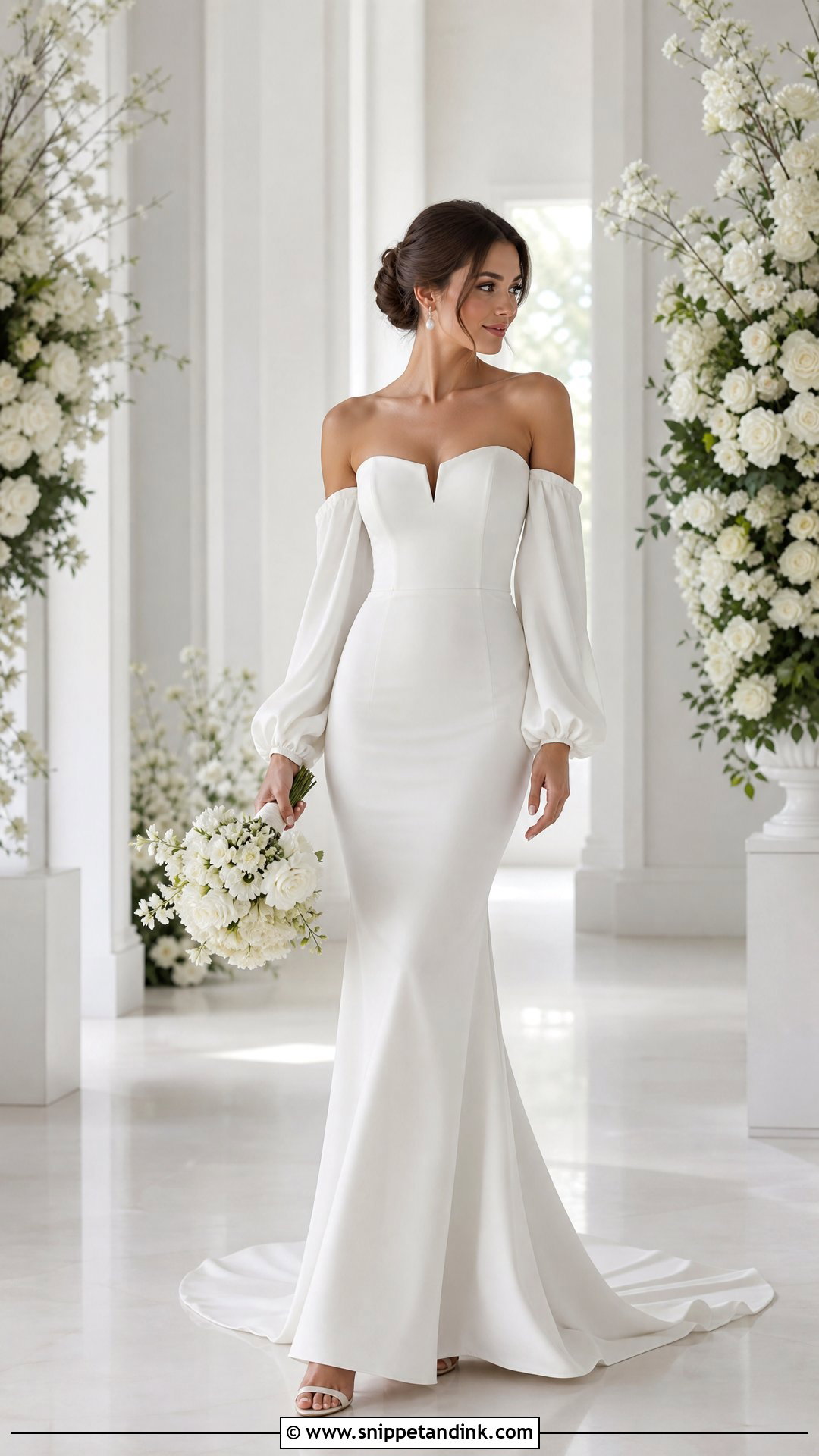
Detachable sleeves change a gown’s mood in a minute. Wear off-shoulder, puff, fitted or draped crepe sleeves for the vows, then remove them for dancing. Because both versions are crepe, they stay cohesive. Ask how they attach; snaps under the arm or loops at the shoulder are easier to remove alone than fiddly hooks at the back. A soft updo and pearl earrings suit both looks.
22. Crepe Wedding Dress With Cape
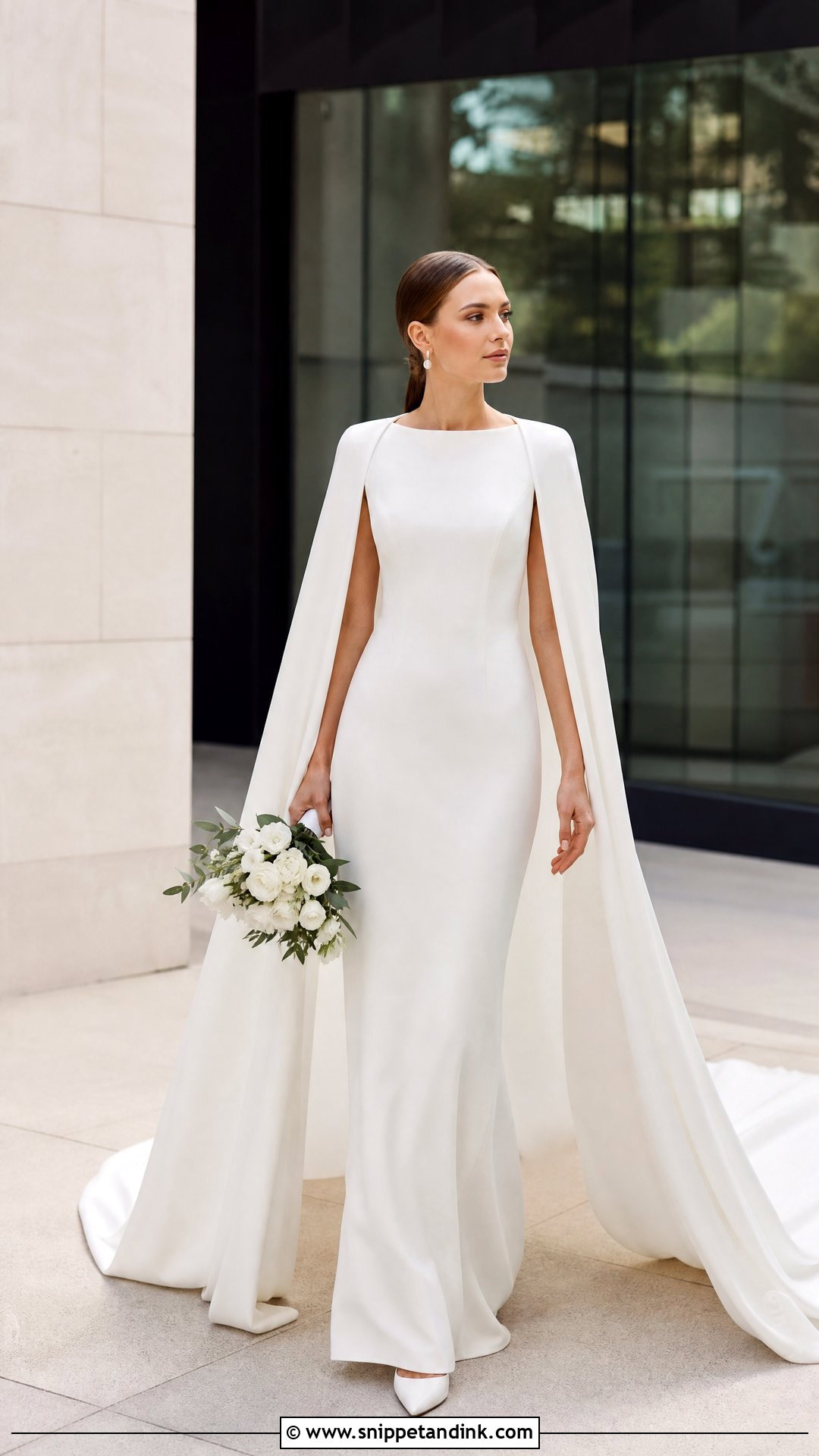
Capes and crepe are a natural pairing because neither needs embellishment. A sheer cape, crepe capelet or long detachable cape can replace a veil and adds movement to a column or sheath. I like it for city weddings and indoor venues where a long veil would catch on doors. Make sure the clasp sits flat against the neck, since a heavy crepe cape pulls back on the throat. Simple earrings and smooth hair finish it.
23. Crepe Wedding Dress With Pearl Veil
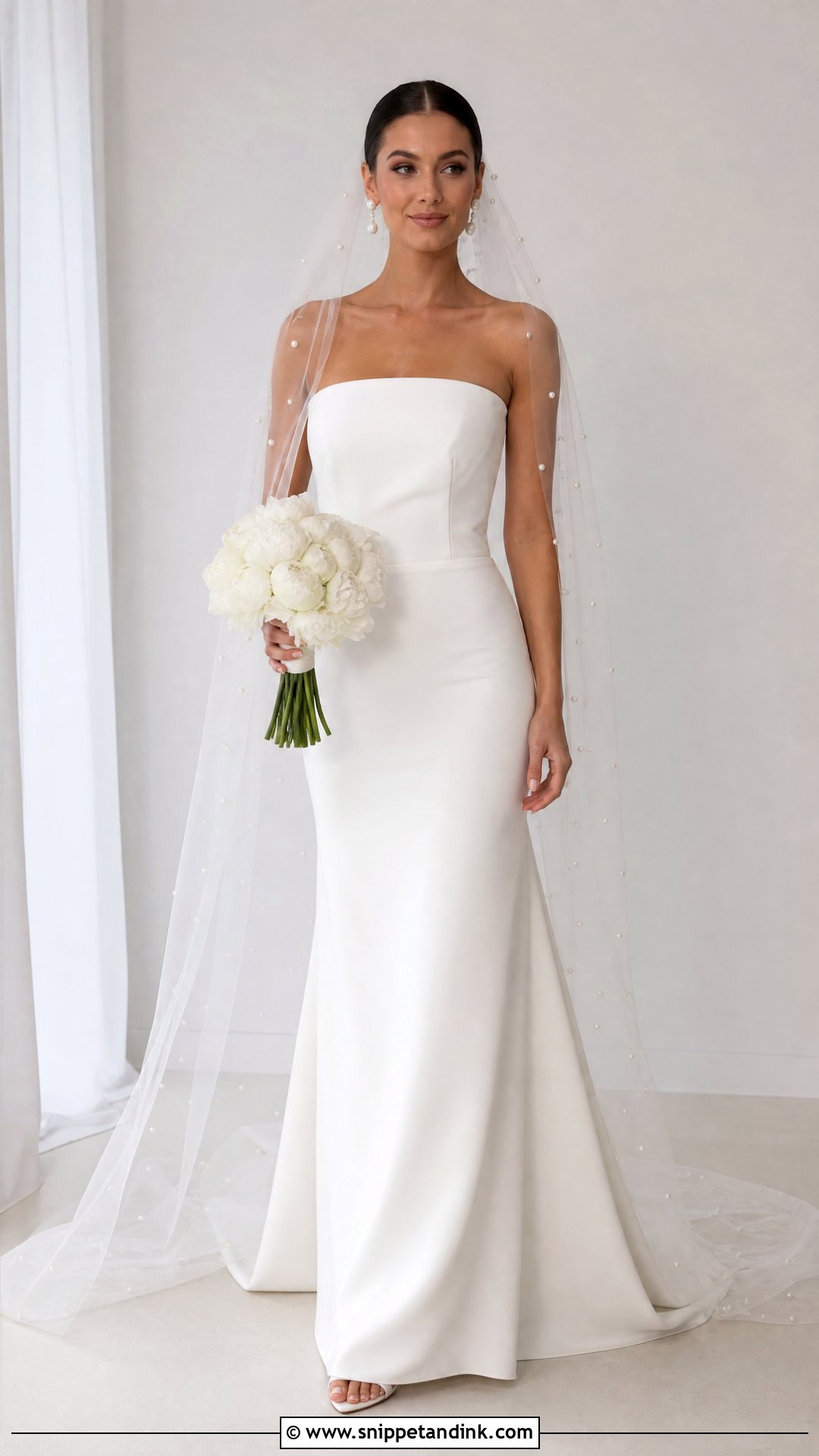
A pearl veil gives a plain crepe dress the texture it lacks. Scattered pearls look delicate; a pearl-edged veil looks more defined. Strapless, square neck, sheath or fit-and-flare all suit it. Because crepe is matte, pearls stand out without looking busy. Be aware that pearls add weight to the veil, so it needs a sturdier comb and more pins in the hair. Pearl earrings and satin heels tie it together.
24. Crepe Wedding Dress With Overskirt
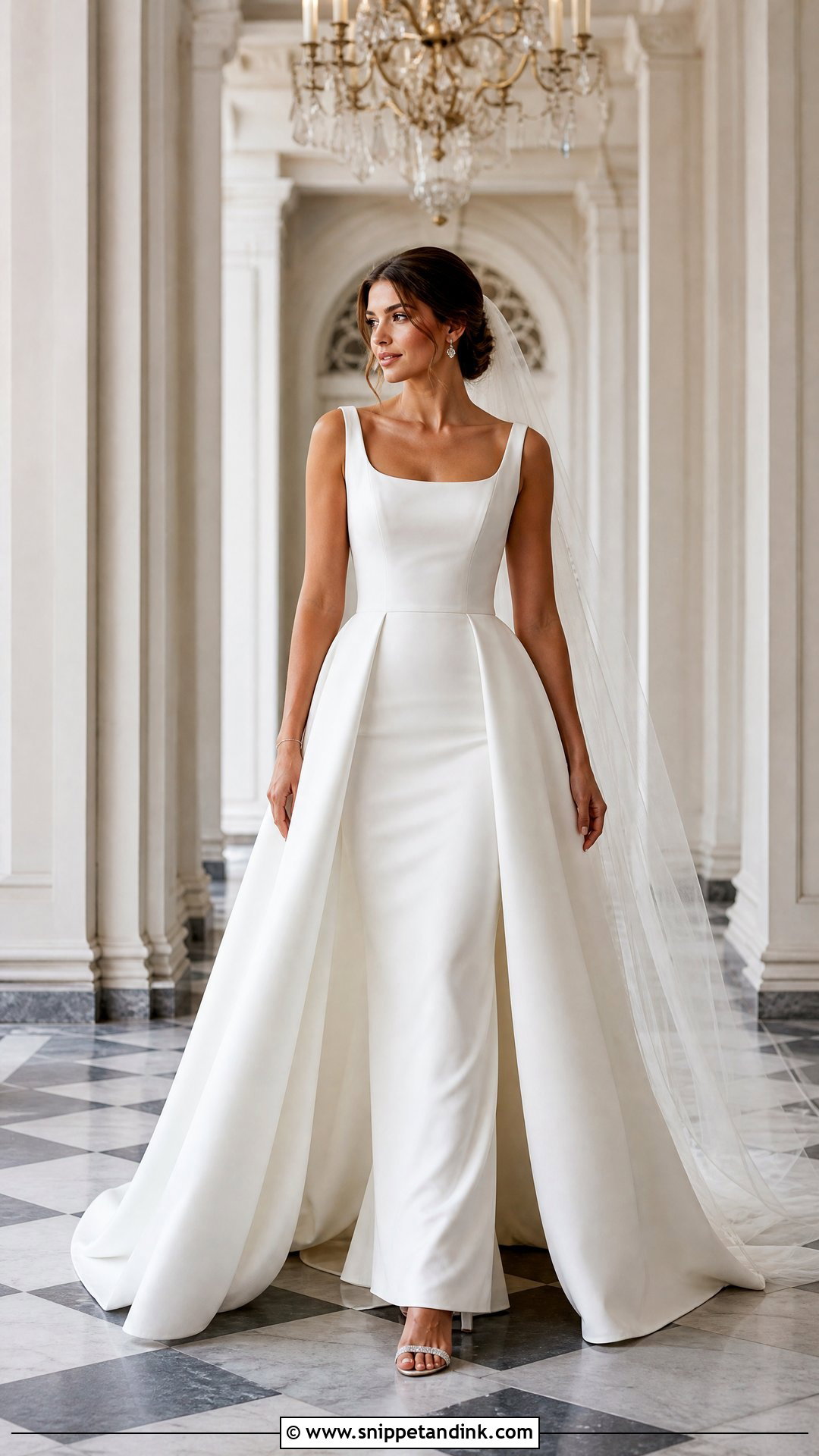
Pairing a sleek crepe gown with a detachable overskirt lets you have a big aisle moment and then dance freely. The base can be a sheath, mermaid or column. Crepe overskirts are heavier than tulle ones, so the waistband needs to sit firmly and close securely. Keep the overskirt smooth and matched to the dress so it reads as one piece. A long veil and simple jewelry complete it.


25. Crepe Wedding Dress With Bridal Blazer
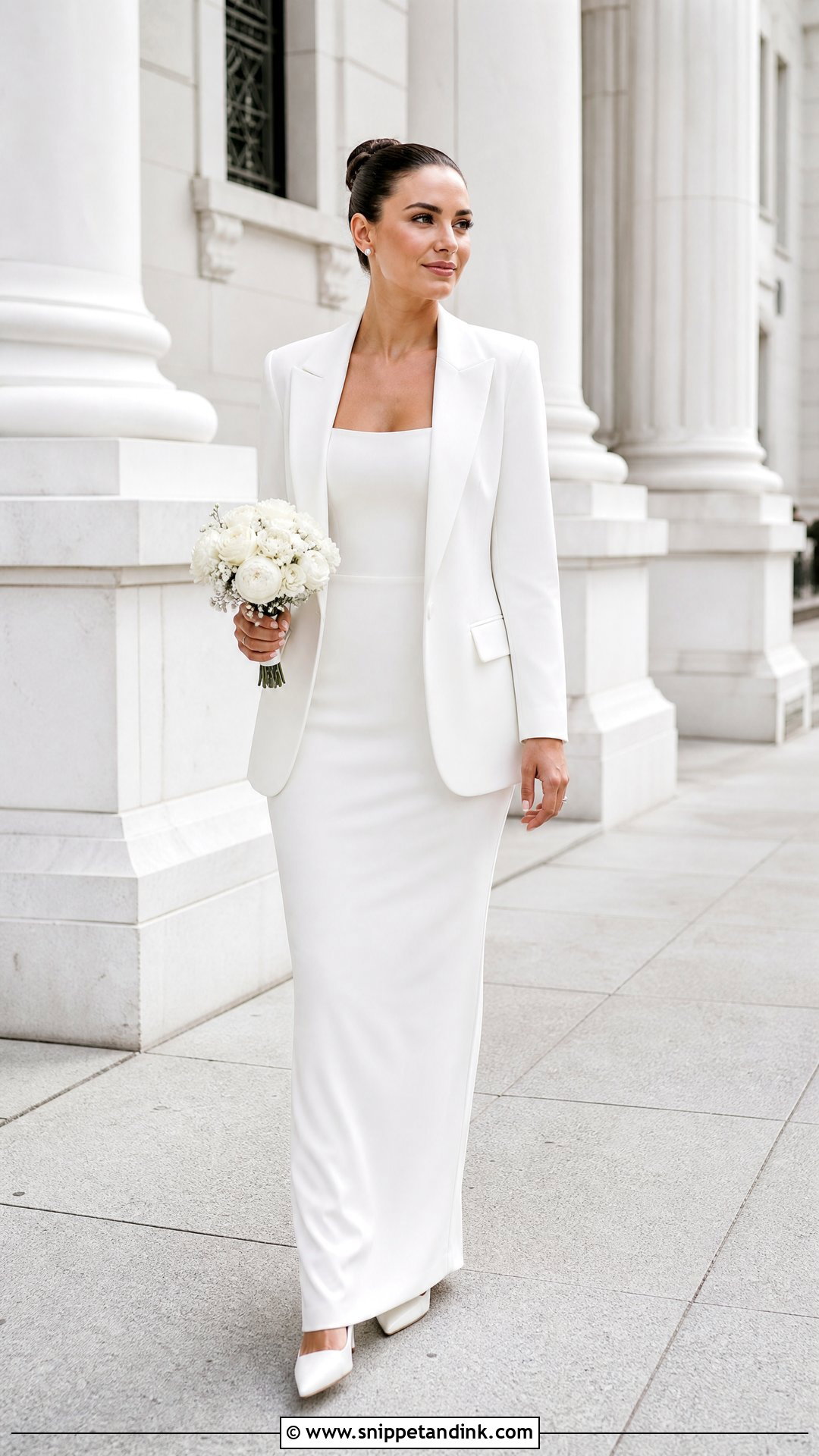
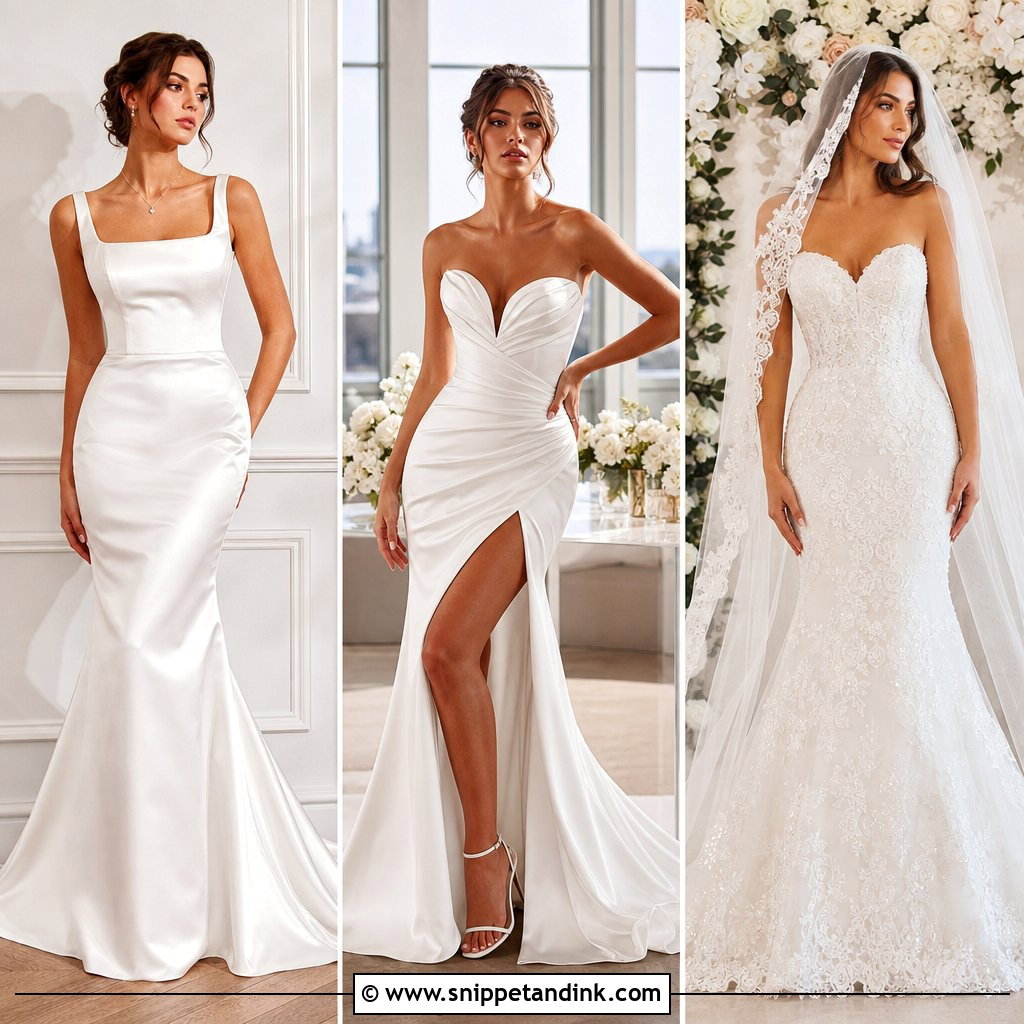
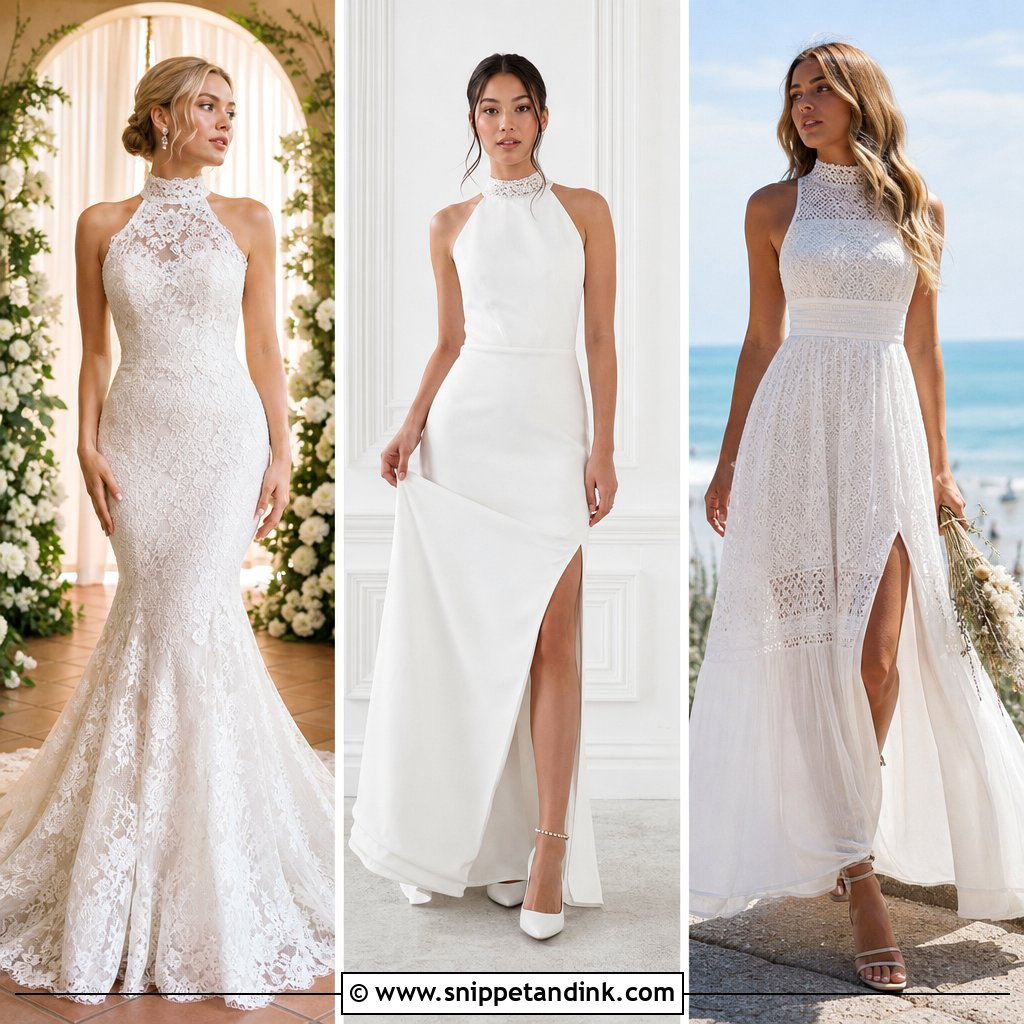
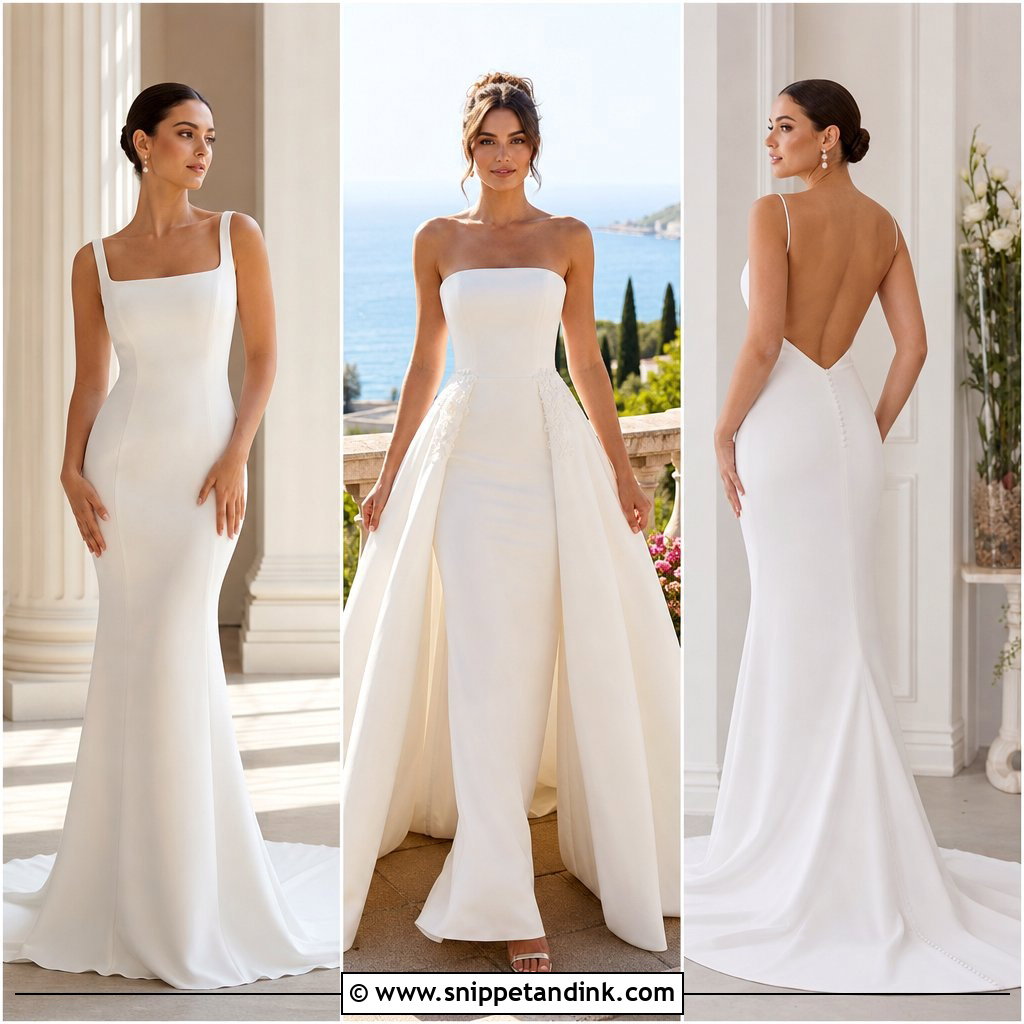
A bridal blazer over crepe gives structure and coverage for the colder parts of the day. A simple column, slip or sheath under a white or ivory blazer looks sharp for portraits or a civil ceremony, then comes off for a softer evening look. I match the whites carefully; an off-white blazer beside a bright white dress looks like a mismatch rather than a choice. Pointed heels, pearl studs and a sleek bun suit it, especially for city weddings.
Smooth Fabric Shows Everything Underneath
Crepe tells the truth about what is under it. Seams in underwear, bra straps, and the edges of shapewear all show as faint lines once the light hits the gown from the side. I advise brides to buy smooth, skin-toned underwear with bonded edges before the first fitting and to wear exactly that to every appointment.
A slip or built-in lining also helps a lighter crepe hang properly. If your gown is unlined and feels slightly clingy, ask your seamstress about adding one; it changes the drape more than almost any other alteration.
Steaming Crepe Without Puckering It
Some crepes, particularly silk and rayon types, can shrink or pucker if they get too wet or too hot. Hang the gown in a steamy bathroom first, then use a handheld steamer on a gentle setting, held several inches away and kept moving. Test on the inside of the hem first.
Never press crepe straight from the face with a hot iron, which can leave shiny patches. If a crease won’t drop, press from the inside through a cotton cloth, and leave the gown hanging overnight so the fibers can settle.
Plain Fabric, Precise Tailoring
Crepe gives you a quiet base for any shape, from strapless to sleeves, open back to blazer. It can read classic, modern, romantic or bold depending on the cut and the details you add. Whichever silhouette you go for, put the budget into tailoring and a good weight of fabric, because those are what make crepe look expensive. Look at it in daylight, sit in it, move in it, and then decide.
You'll Like These Ideas:






Leave a Reply