
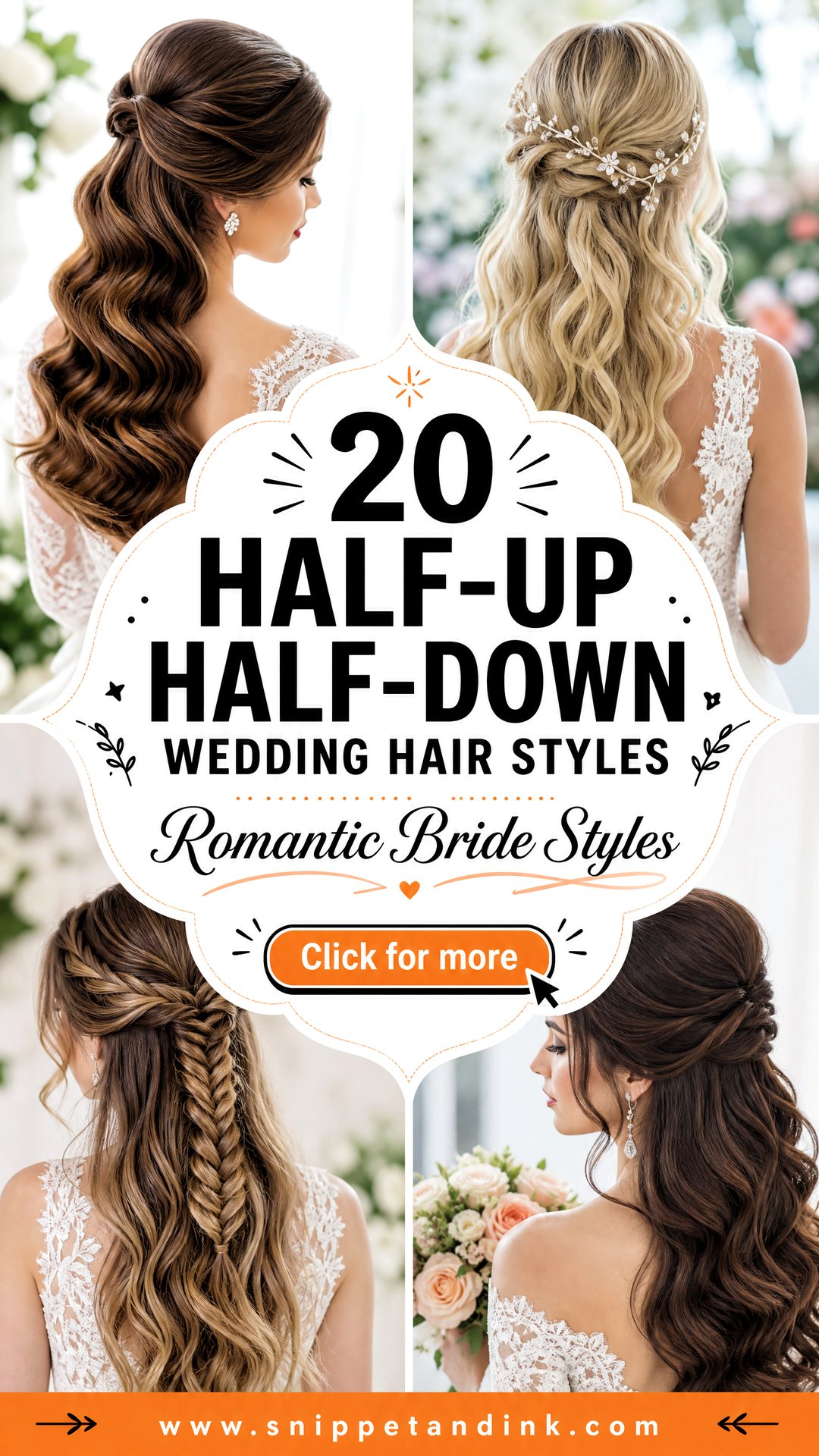
Half-up, half-down hair is the style I’m asked for most by brides who don’t feel like themselves in a full updo. It keeps your face clear for the vows and the kiss, while the length stays down where you’re used to seeing it. The catch is that it’s really two styles sharing one head: the pinned crown needs structure, and the loose lengths have to hold a curl for ten or more hours with nothing supporting them. Below are 20 versions I’d happily put on a bride, with notes on which hair each one suits and where each tends to give up, so you can walk into your trial knowing what to ask for.
Anchoring the Crown So It Holds Through the Last Dance
Most half-up styles fail at the pin line, not in the curls. When the top section is held back by a single barrette, all its weight hangs on one point, and by evening the section slides down and the crown goes flat. I build a small hidden base first, either a tiny ponytail or two crossed pairs of bobby pins under the crown, and everything else gets pinned into that.
Second-day hair grips better
Freshly washed hair is slippery, and pins slide straight out of it. I ask brides to wash the day before rather than the morning of, and to keep conditioner off the roots. If your hair is very fine or gets oily quickly, a little dry shampoo or texture powder at the crown gives the pins something to bite.
- Matte bobby pins in your hair colour, wavy side facing the scalp
- A clear mini elastic for the hidden base
- A flexible spray for the crown and a firmer one for the curls only
- A few spare pins in your clutch for the evening
How much hair goes up
The split matters more than any accessory. Take too much back and the down section looks thin and the curls fall faster; take too little and the crown looks flat in profile. On thick hair I usually take roughly the top third. On fine hair I take less and tease lightly underneath, so the top looks fuller without robbing the lengths.
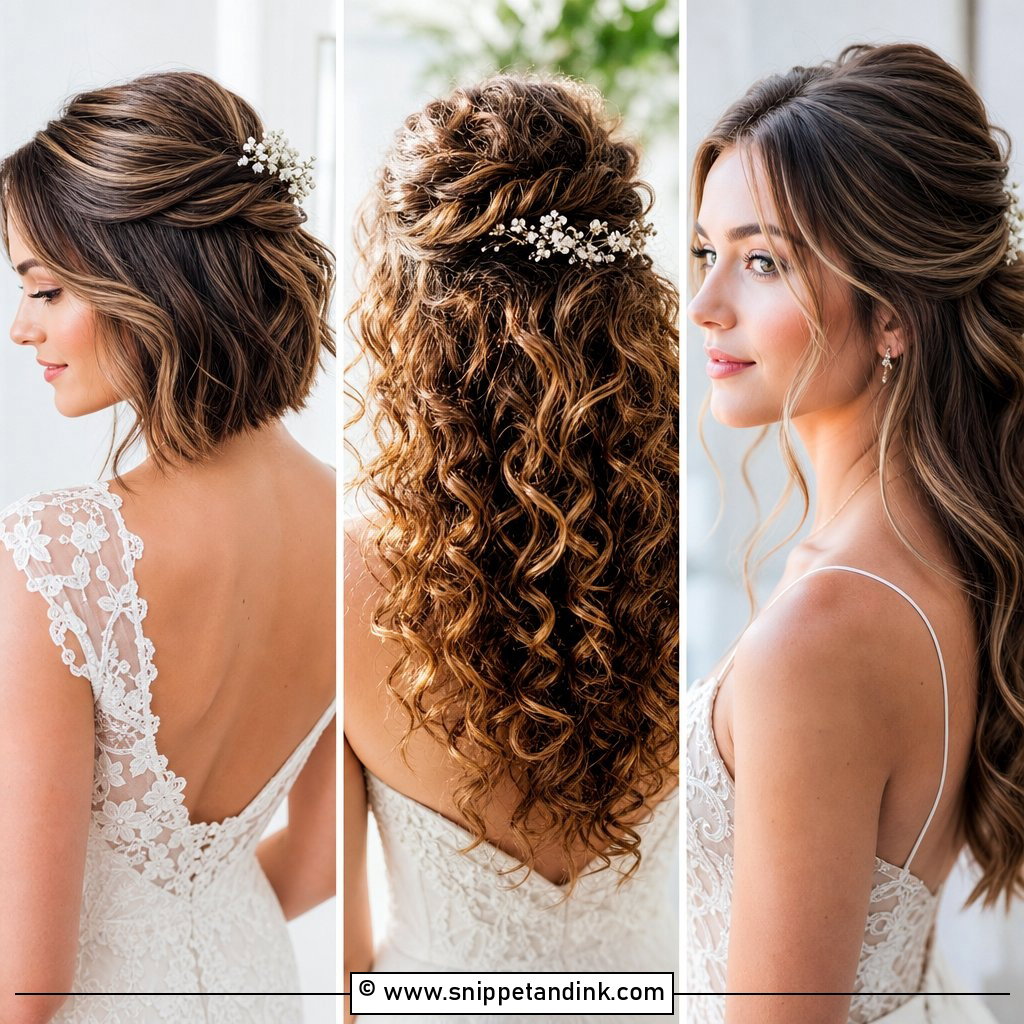
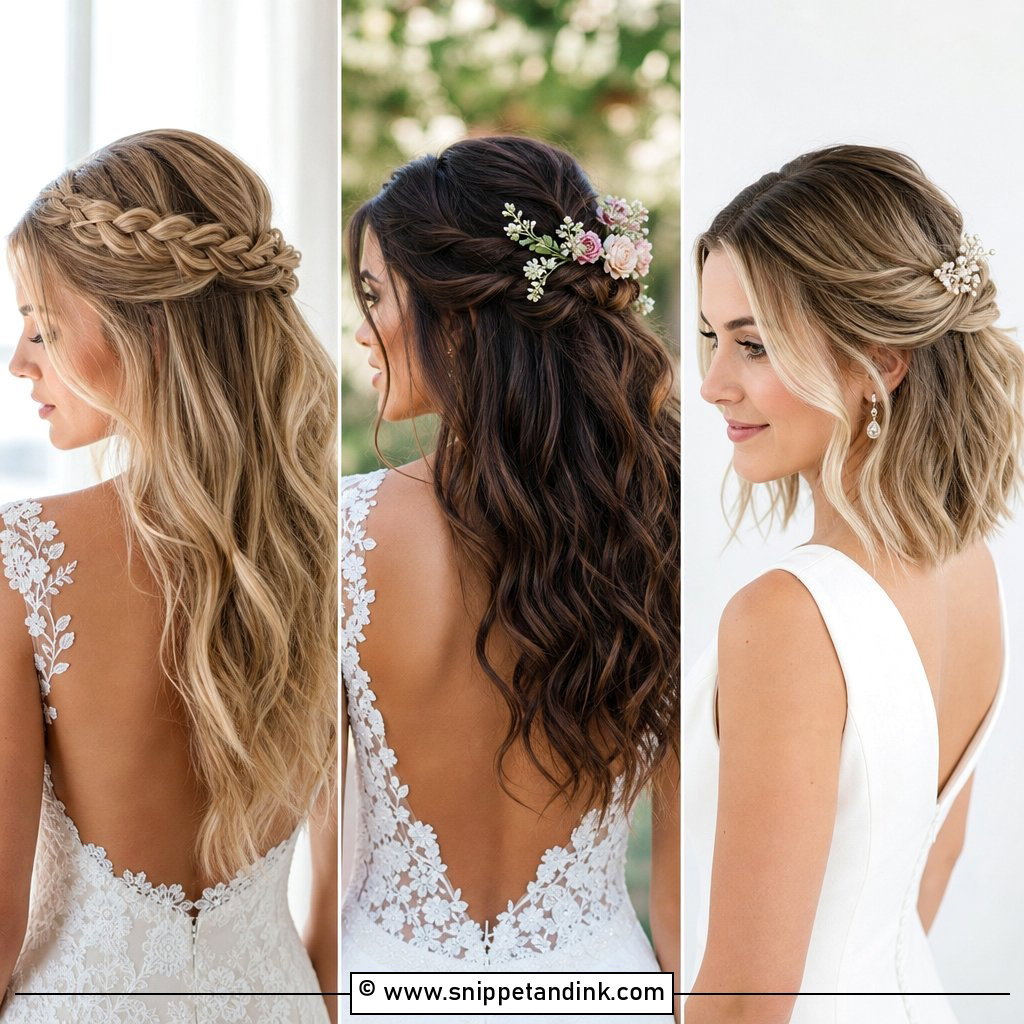
1. Half-Up Half-Down With Loose Curls
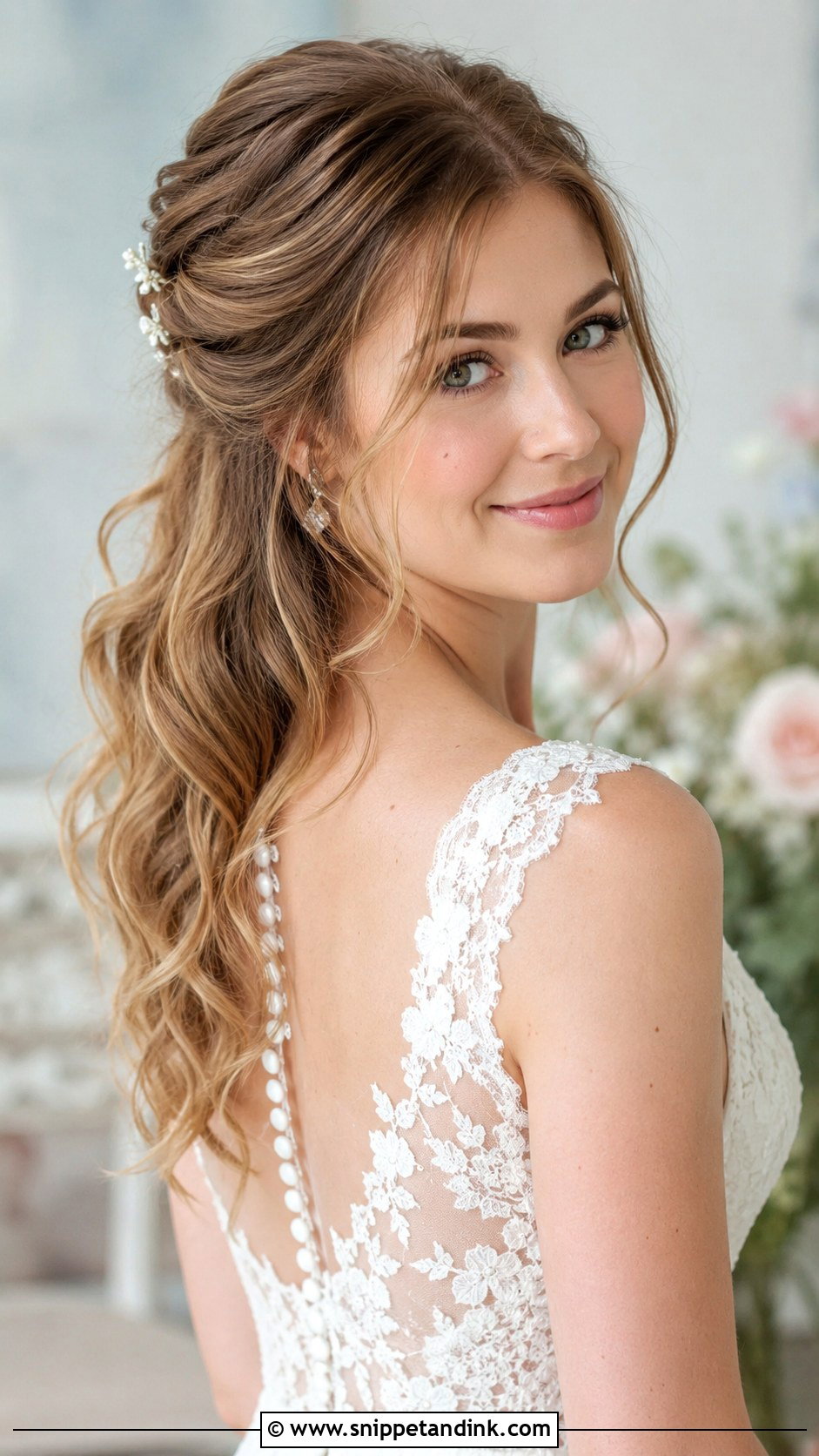
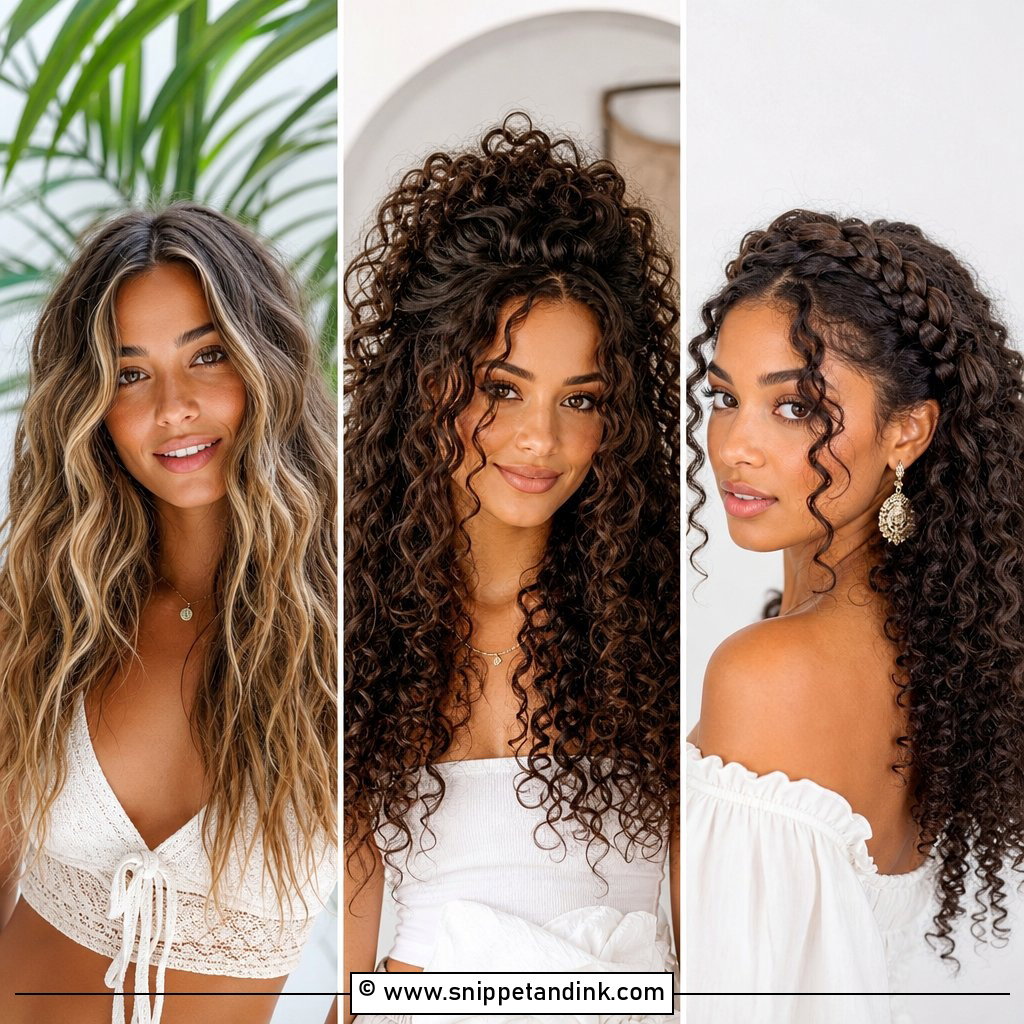
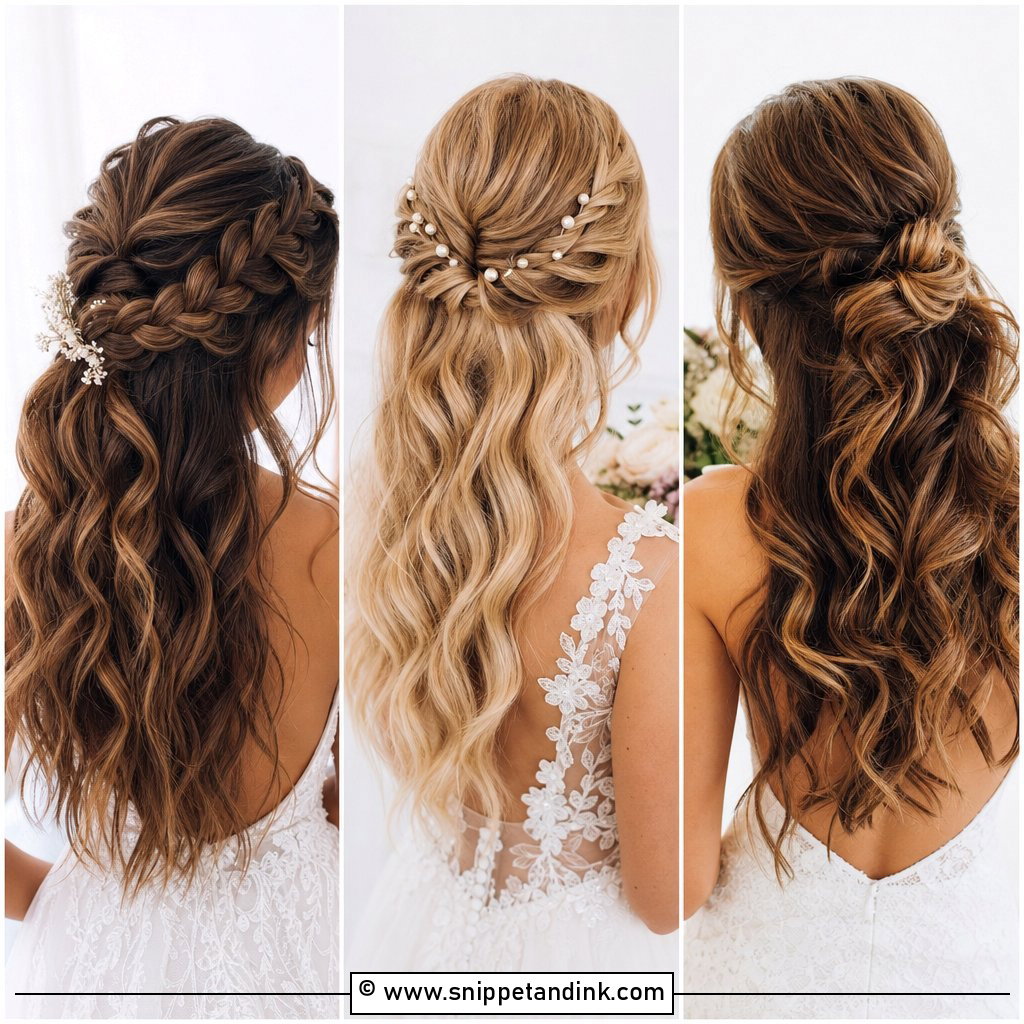
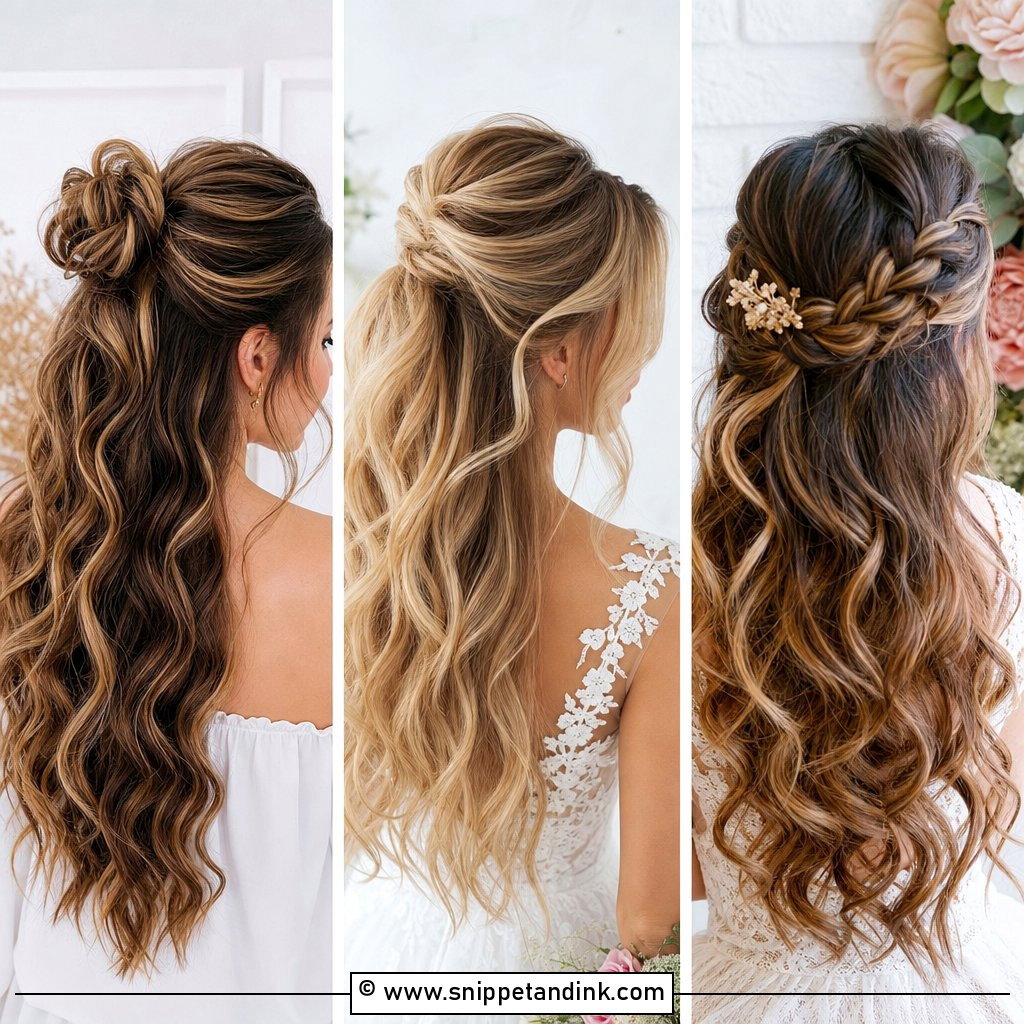
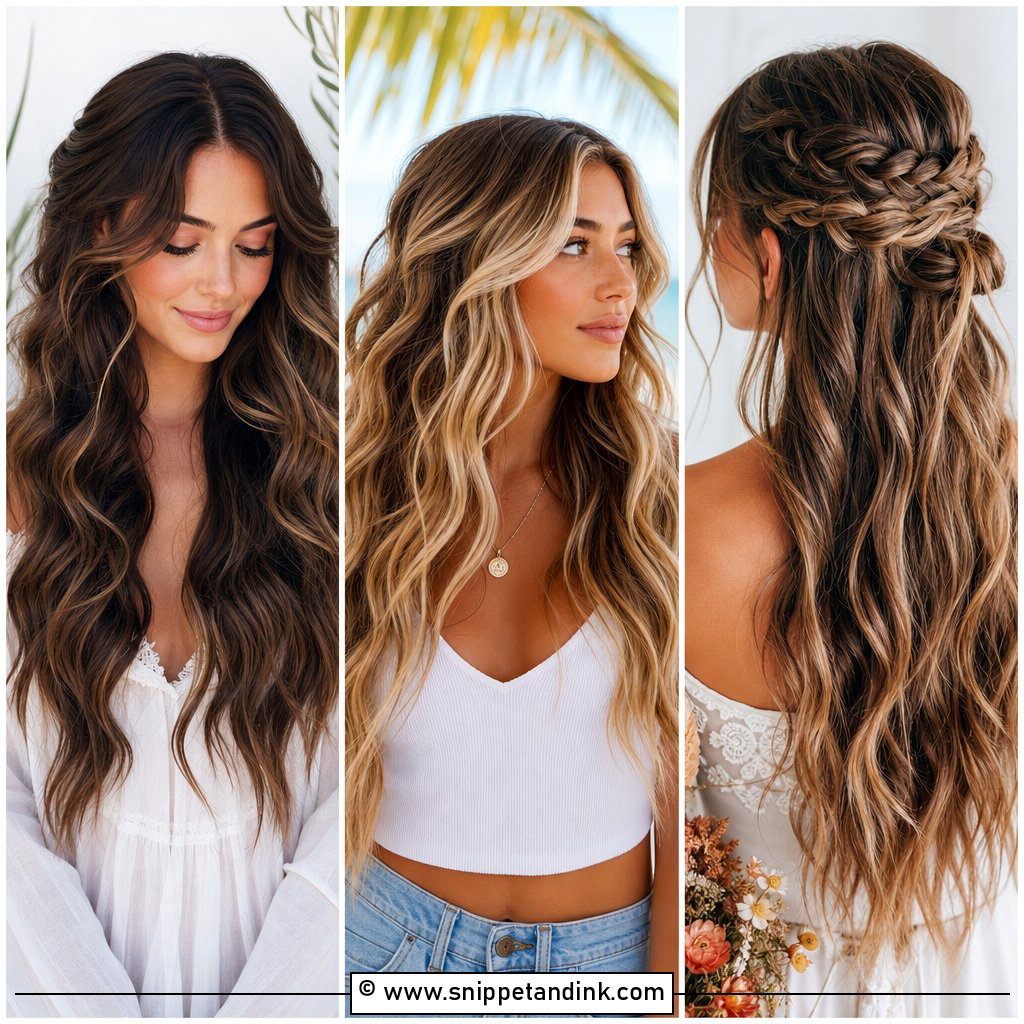
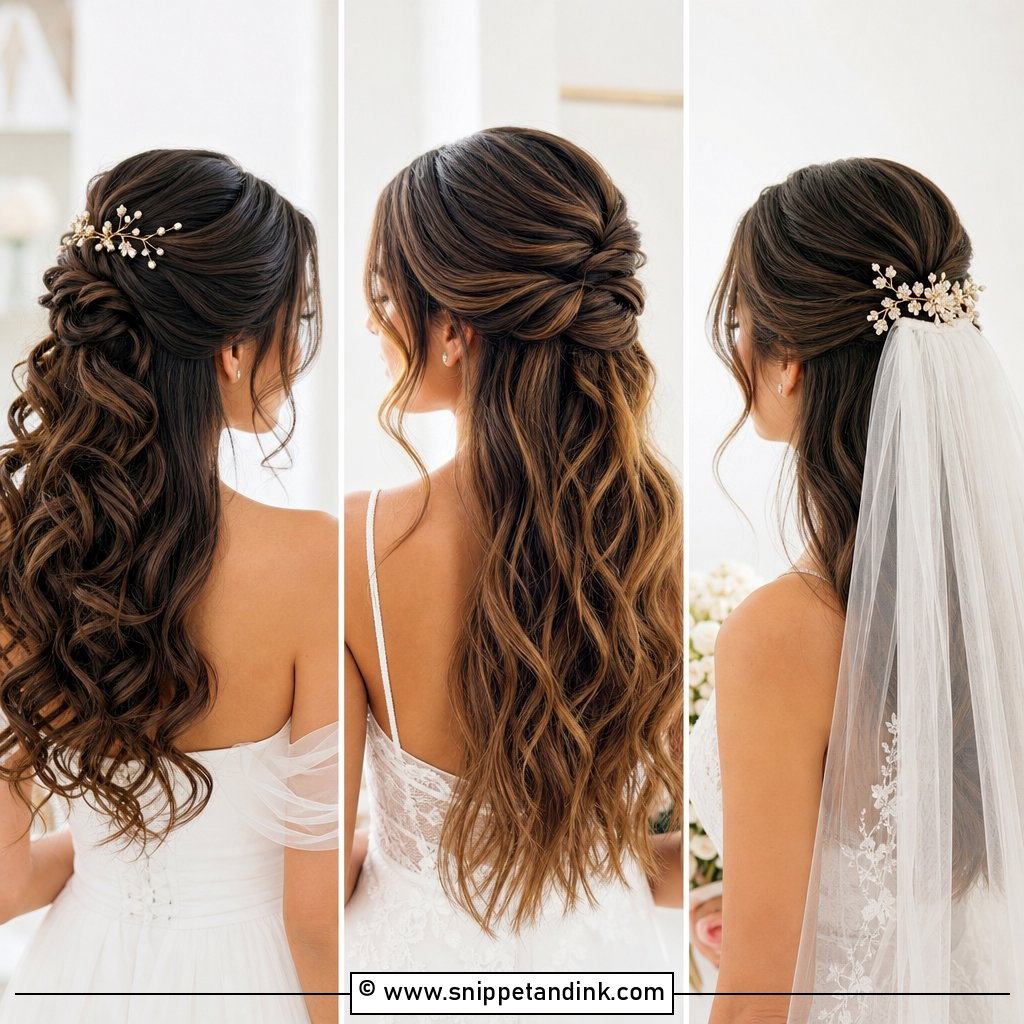
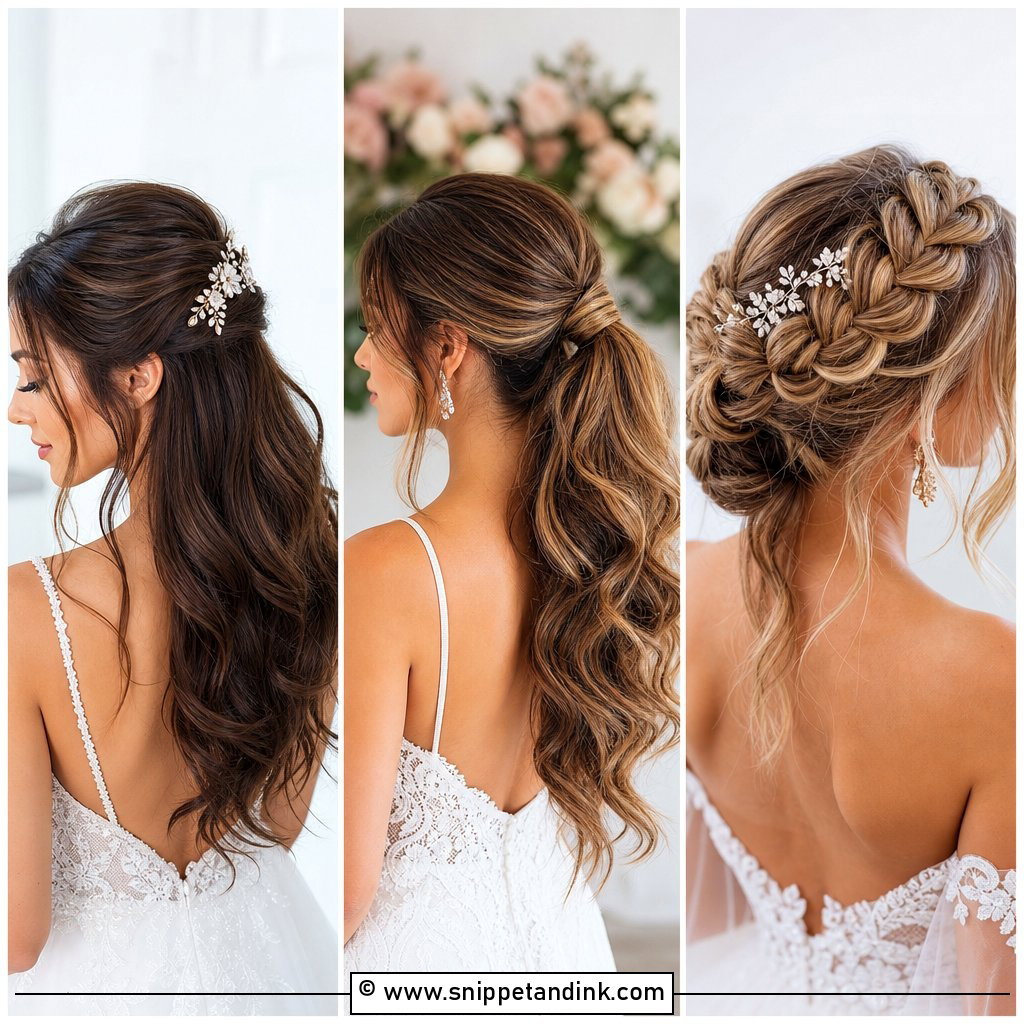
This is the base most of the other nineteen are built on, so it’s worth getting right. I curl with a large barrel, pin every curl while it cools, and only brush out once the hair is completely cold, because a warm curl brushed loose drops within the hour. The crown section gets anchored with two crisscrossed bobby pins rather than an elastic, which can leave a dent in the lengths underneath. Face-framing tendrils should be curled away from the face; curled toward it, they end up in your eyes by the first dance. A sparkly comb or a few pearl pins sit well where the curls meet. On hair above the shoulders the curls tend to look stacked rather than flowing, so I’d save this one for medium to long lengths.
2. Twisted Half-Up Wedding Hairstyle
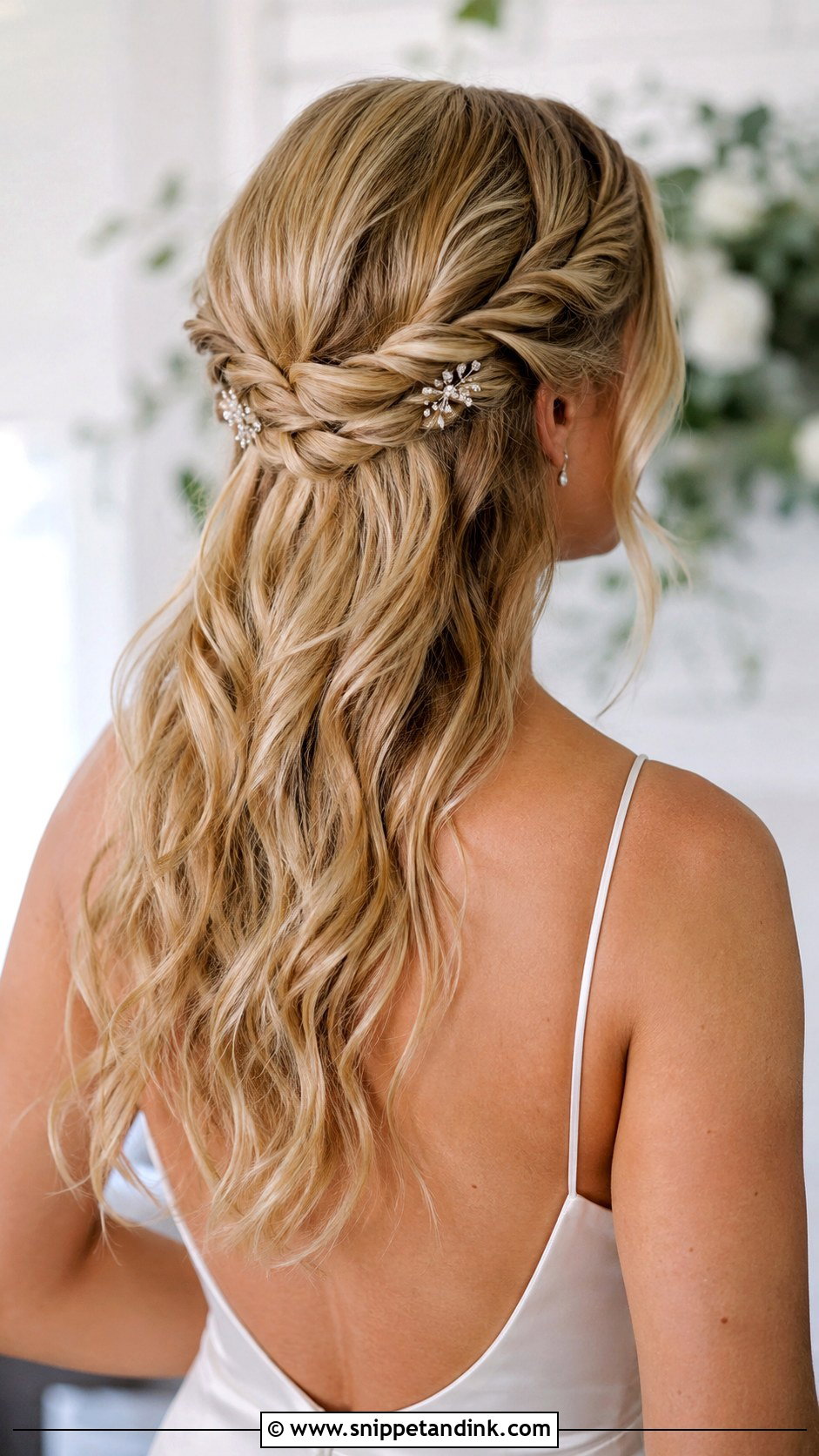
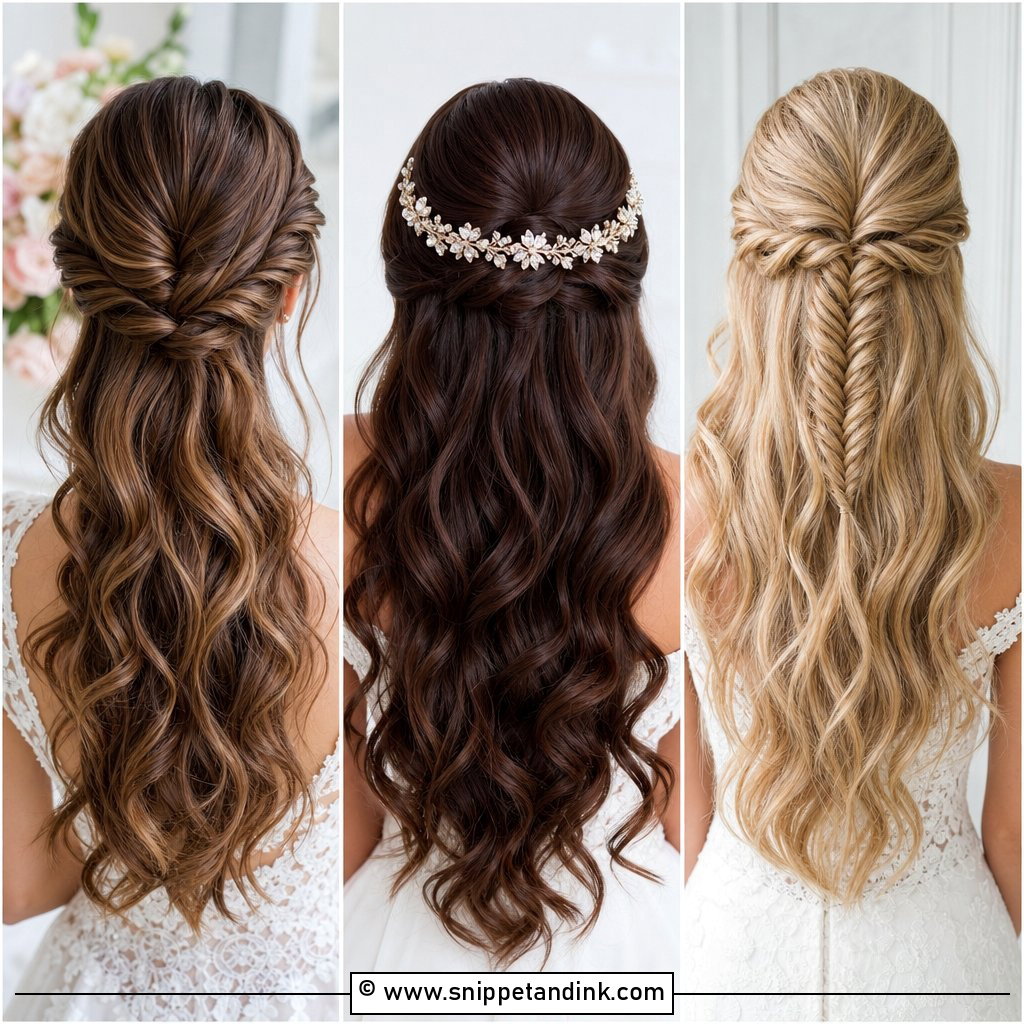
Twists give you the hold of a braid without the visible pattern, which makes them forgiving on layered hair where short pieces would poke out of a plait. I take a section above each temple, twist it away from the face and pin the two twists together just below the crown. Twist both sides in the same direction relative to the face, or they unwind toward each other as the day goes on. Loose waves underneath keep it relaxed; sleek lengths make it read more polished. Fresh flowers or jeweled pins slot straight into the twists, which already act as a grip.
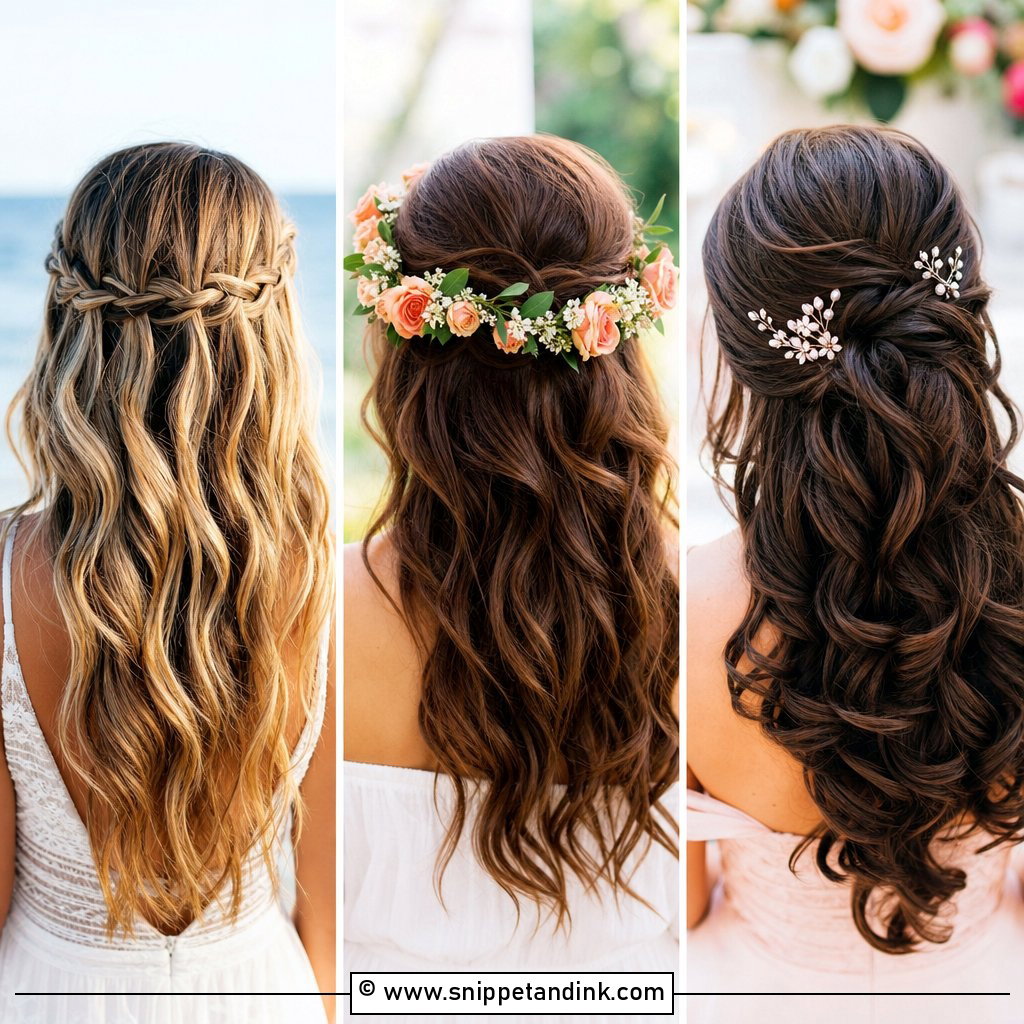
3. Braided Half-Up Half-Down Style
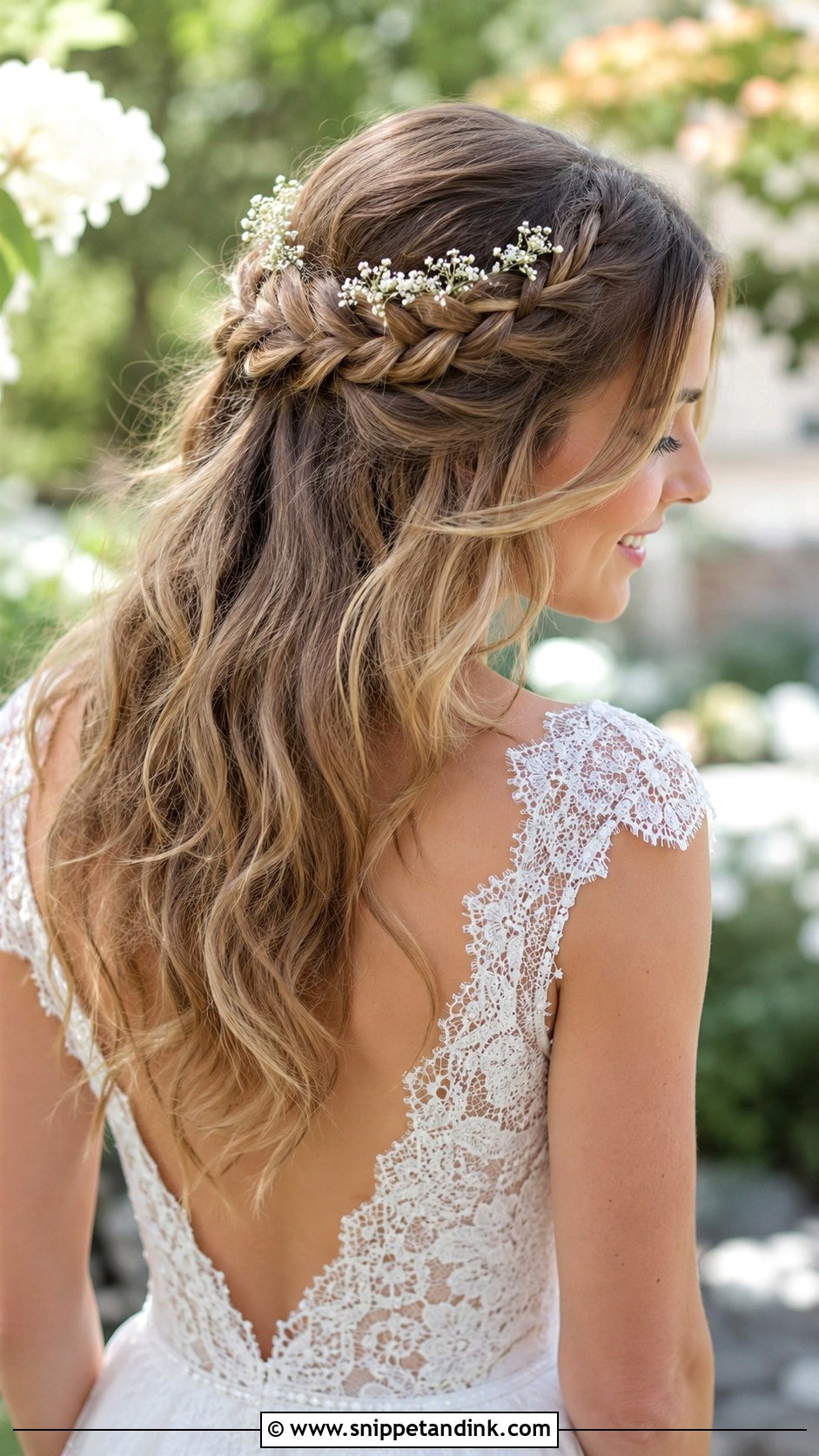
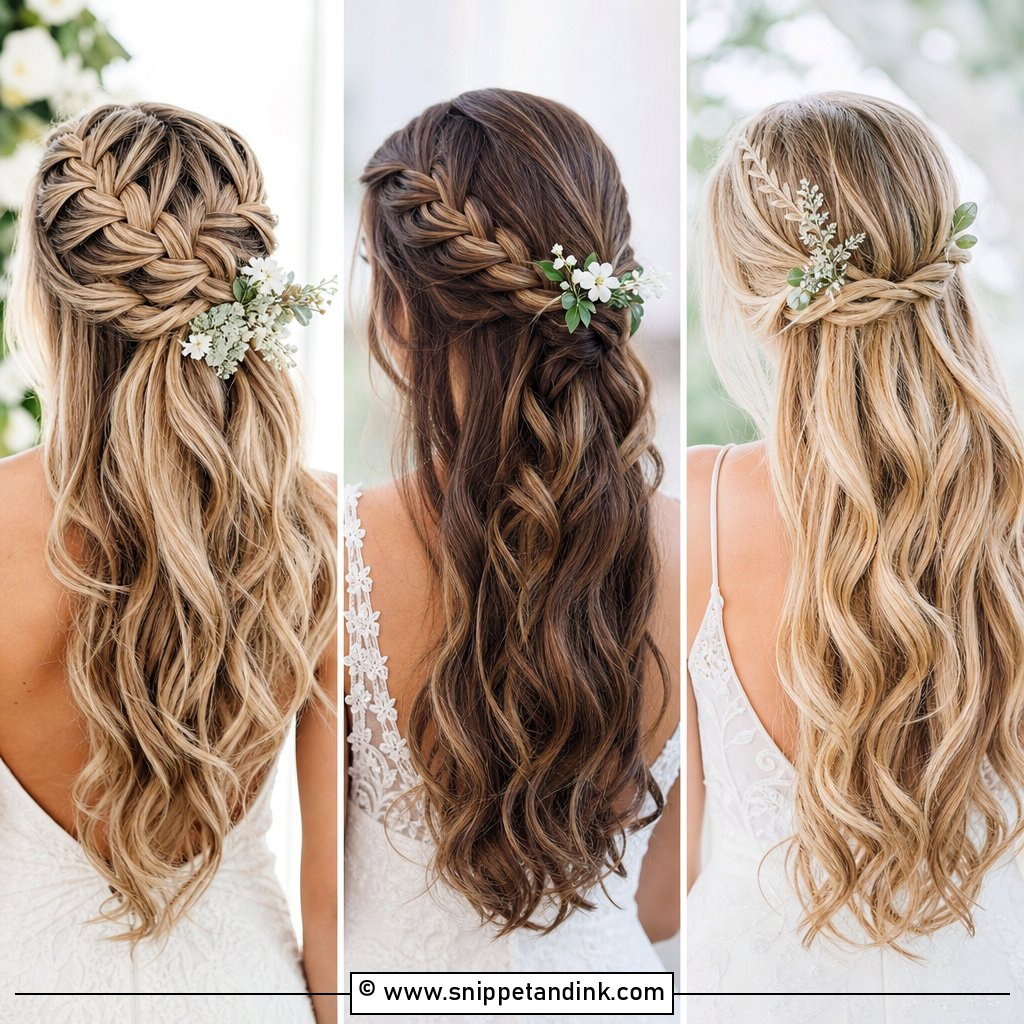
A braid at the crown brings structure and a bit of bohemian charm to the half-up shape. I weave one or two braids from the hairline back and secure them where they meet, leaving everything below soft. Tight braids look polished and last longest. Loose ones look relaxed but need a light hold spray before I pull them apart, or the opened loops collapse by the reception. On fine hair I braid first and sometimes add a couple of hidden clip-in wefts underneath, so the plait doesn’t look thin against the lengths. Sprigs of baby’s breath tucked along the braid cope with heat better than most fresh blooms.
4. Half-Up Half-Down With Flowers
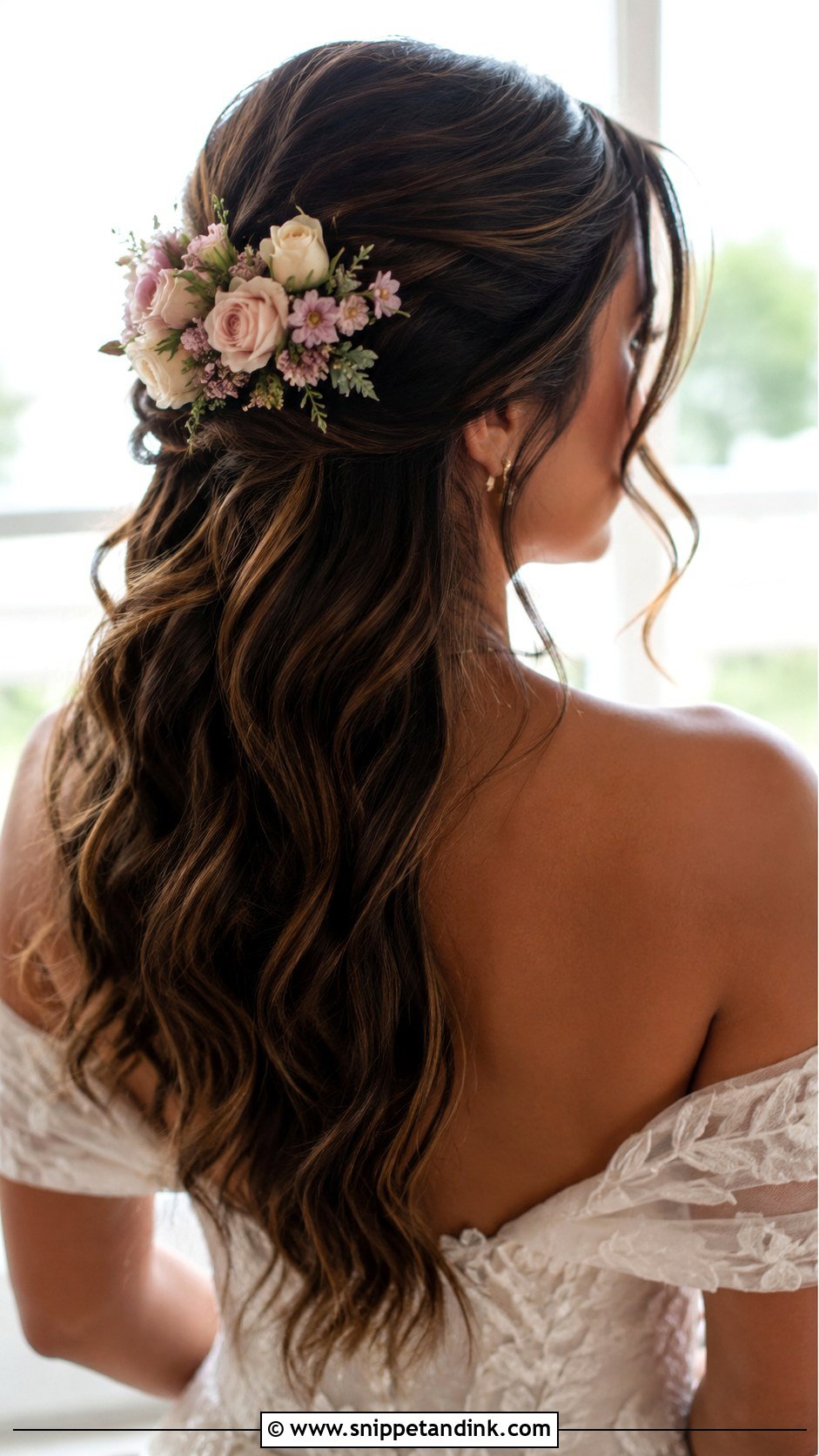
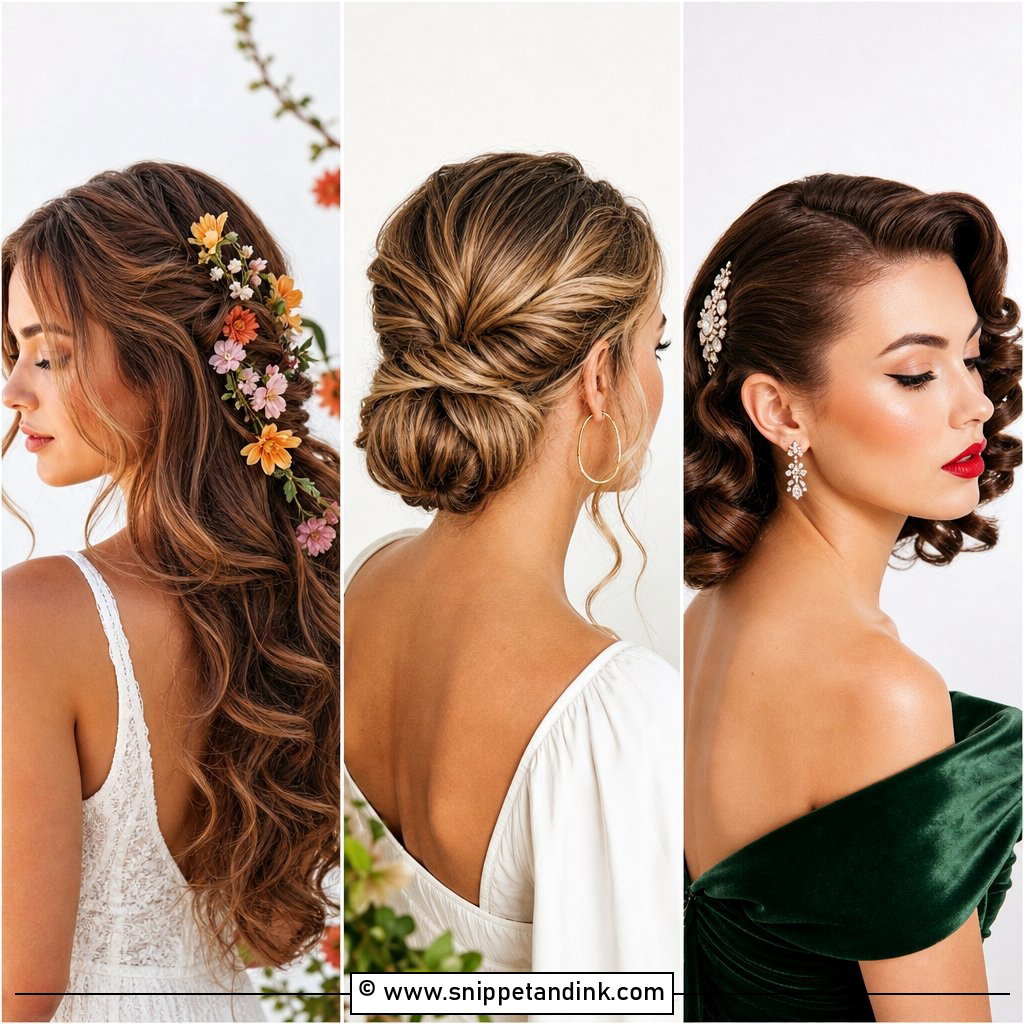
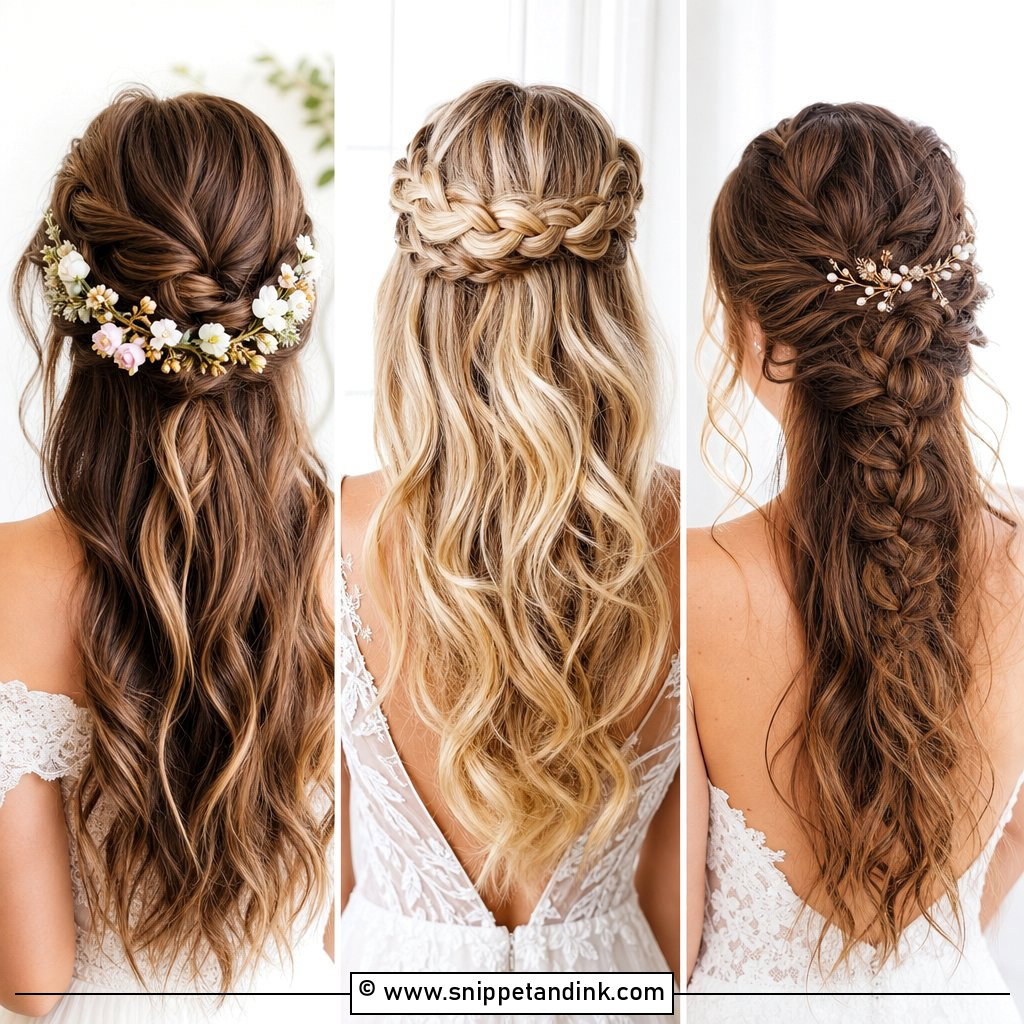
Real flowers bring the bouquet up into your hair, and they’re the part of this style I plan most carefully. Baby’s breath, spray roses and waxflower last for hours out of water; gardenias bruise and brown at the edges with the slightest handling. I wire small blooms onto bobby pins and push them into the pinned-back section rather than resting them on top, so the hair carries the stems. Ask your florist to make the hair pieces alongside the bouquet so the colours match, and to deliver them in a cool box. Beachy waves or loose curls underneath keep it soft, with a few tendrils left out at the face. Spring and summer garden weddings are where I’d use it most.
5. Vintage Half-Up Half-Down Waves
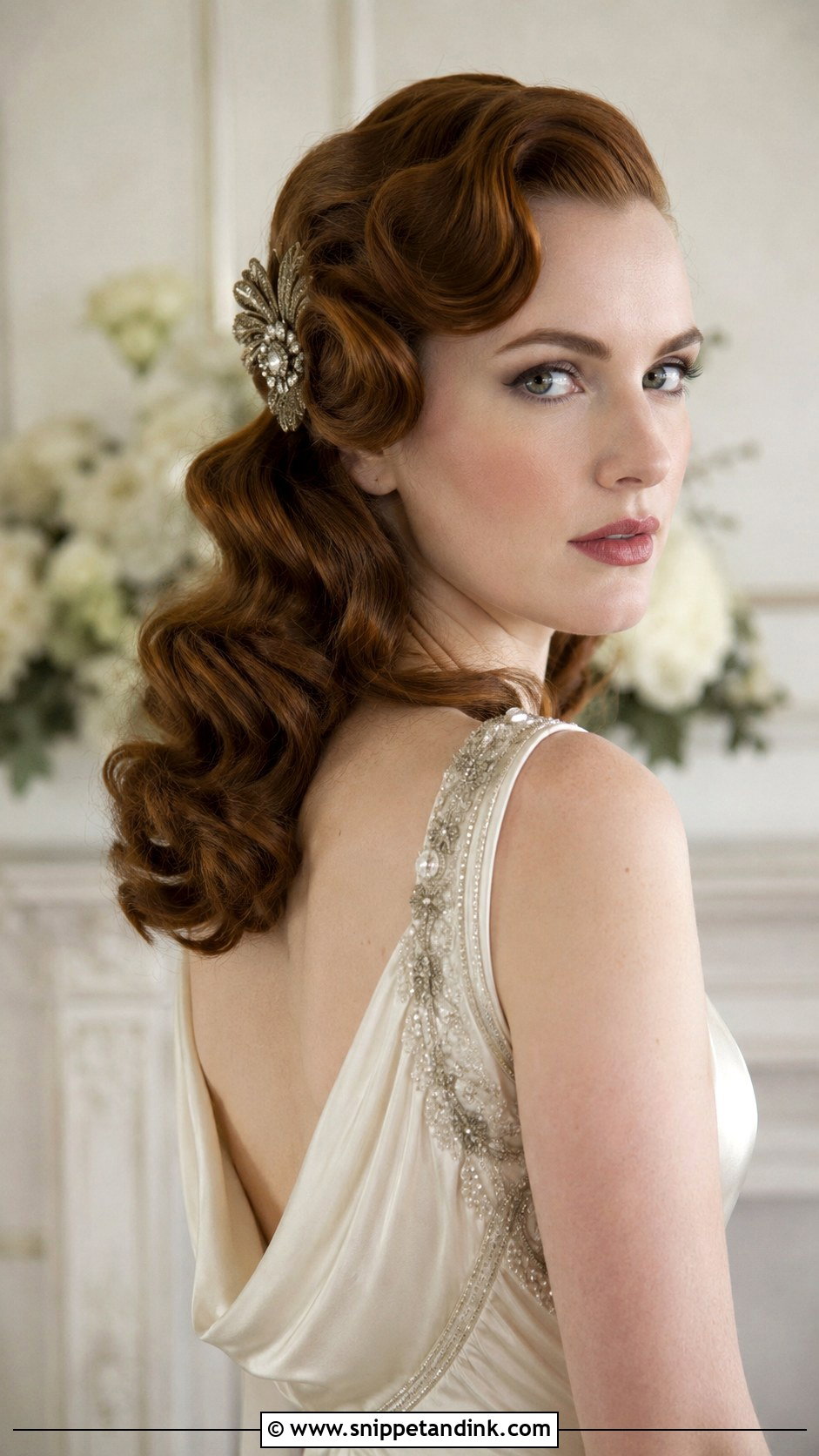
Sculpted waves with a pinned crown are precise work, and I wouldn’t attempt them on hair that frizzes in humidity unless the venue is air conditioned. I set the waves with a fine-tooth comb and firm gel, or curl the hair, brush it out and press it into ridges with clips while it sets. Once the top is pinned back, the S-shape has to line up from one side to the other, which is where most of the trial time goes. Smooth, sleek hair holds the ridges best; very coarse or curly hair usually needs a silk press first. A vintage comb or jeweled clip at the pin line suits art deco themes and formal ballroom weddings.
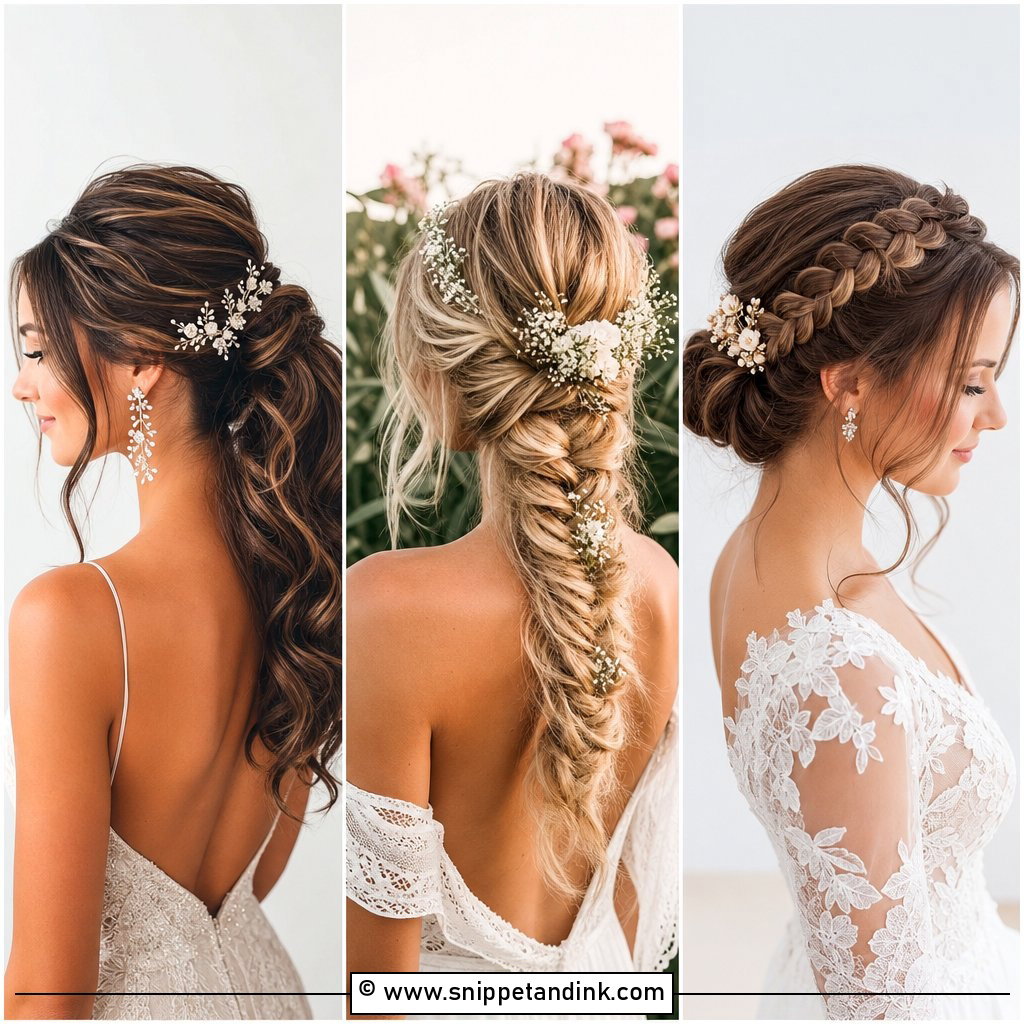
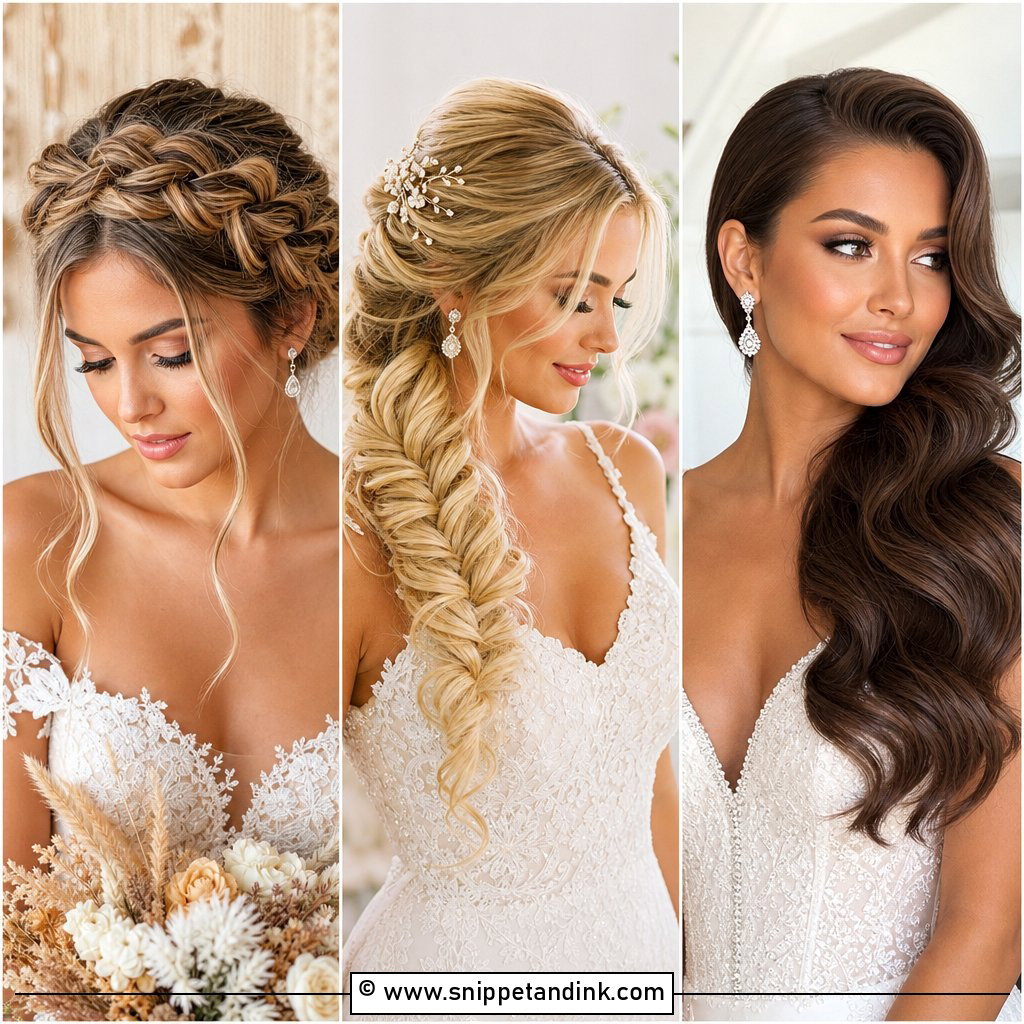
6. Half-Up Half-Down With Braided Crown
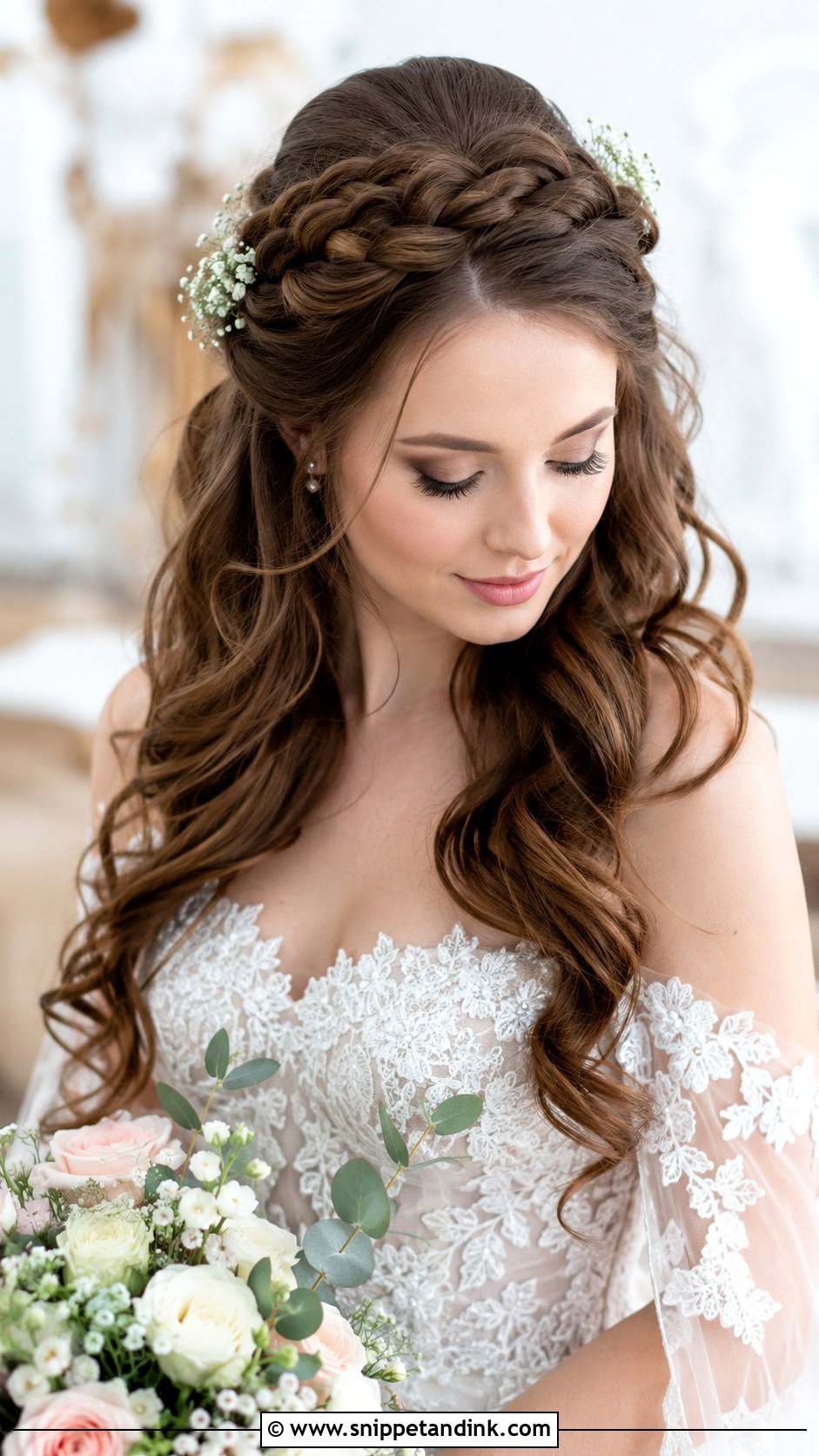
A braid circling the upper head like a halo, with waves left down below, is the most secure half-up option I do. A Dutch braid sits on top of the hair and looks fuller; a French braid lies flatter and quieter. I pin the braid every couple of inches along its length so it can’t slide down the back while you dance. Pulling the edges out gives it a softer, lived-in texture, but I only do that after it’s pinned. On shoulder-length hair the braid often can’t travel all the way around, so I finish it as a partial crown on one side instead. Small flowers or pearl pins along the plait add sparkle without much weight.
7. Half-Up Half-Down With Curtain Bangs
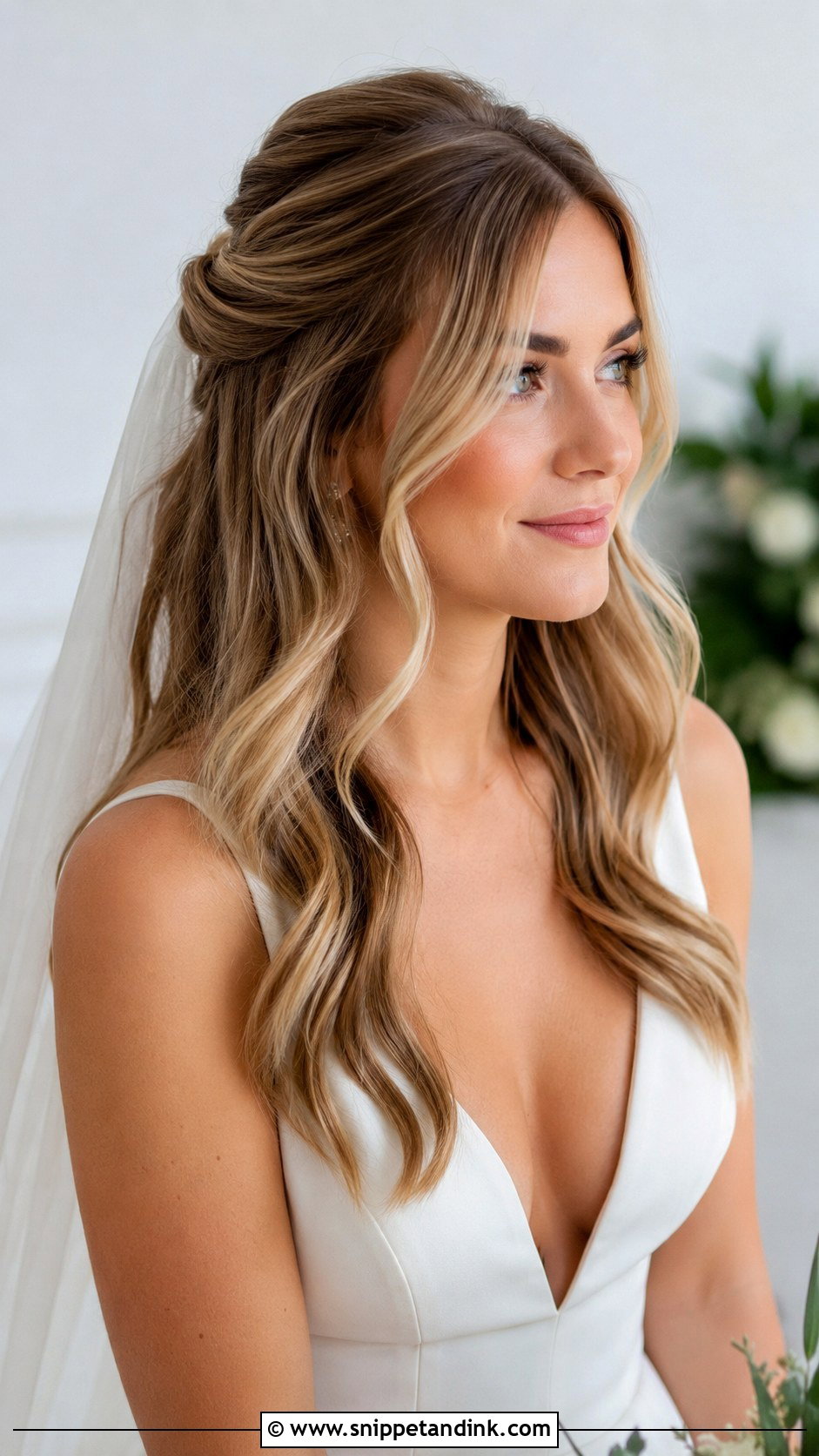
Curtain bangs change the whole half-up shape because they break up the forehead and soften the pulled-back crown. They flatter most face shapes, but they behave best when they’re trimmed a week or two before the wedding so they’ve settled. I round-brush them away from the face, then pin the crown section back behind them. Bangs are the first thing to separate when a room gets warm, so I set them in a small velcro roller while makeup goes on and finish with a light spray rather than a heavy one that makes them stiff. A thin headband or a couple of sparkly pins behind the bangs stops them drifting forward.
8. Sleek Half-Up Half-Down Style
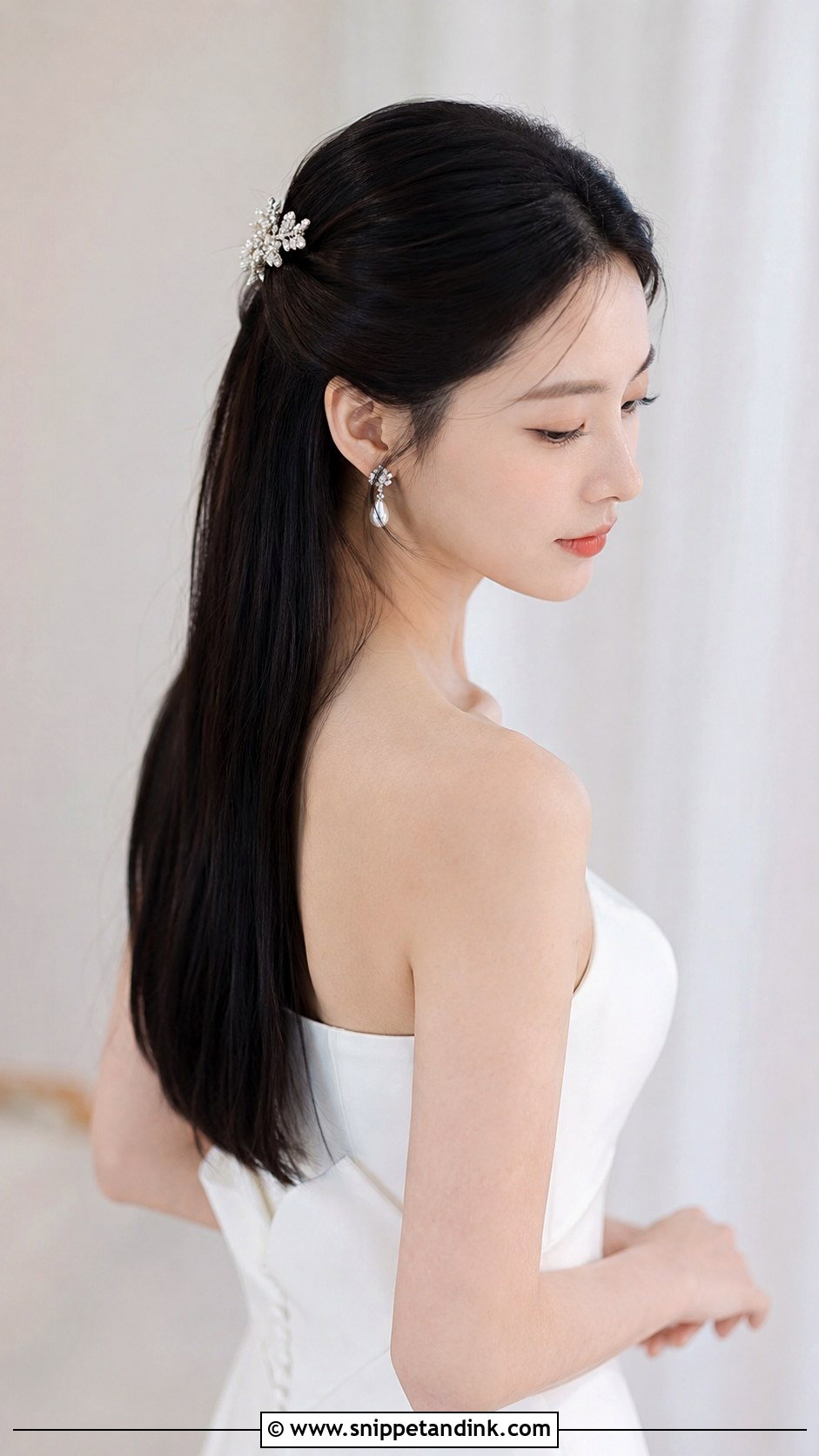
Sleek styles look simple and are the least forgiving thing I do. Every bump in the pulled-back section shows, so I smooth the crown with a boar bristle brush before pinning and flat iron the lengths with a little smoothing serum for shine. Fine, straight hair is the natural fit and often looks fuller than you’d expect once it’s glossy. Very thick or curly hair can get there too, but it needs a blowout the day before and a humidity-resistant finish. One statement clip or a slim hair vine is plenty against a structured ballroom gown.
9. Half-Up Half-Down With Pearl Accessories
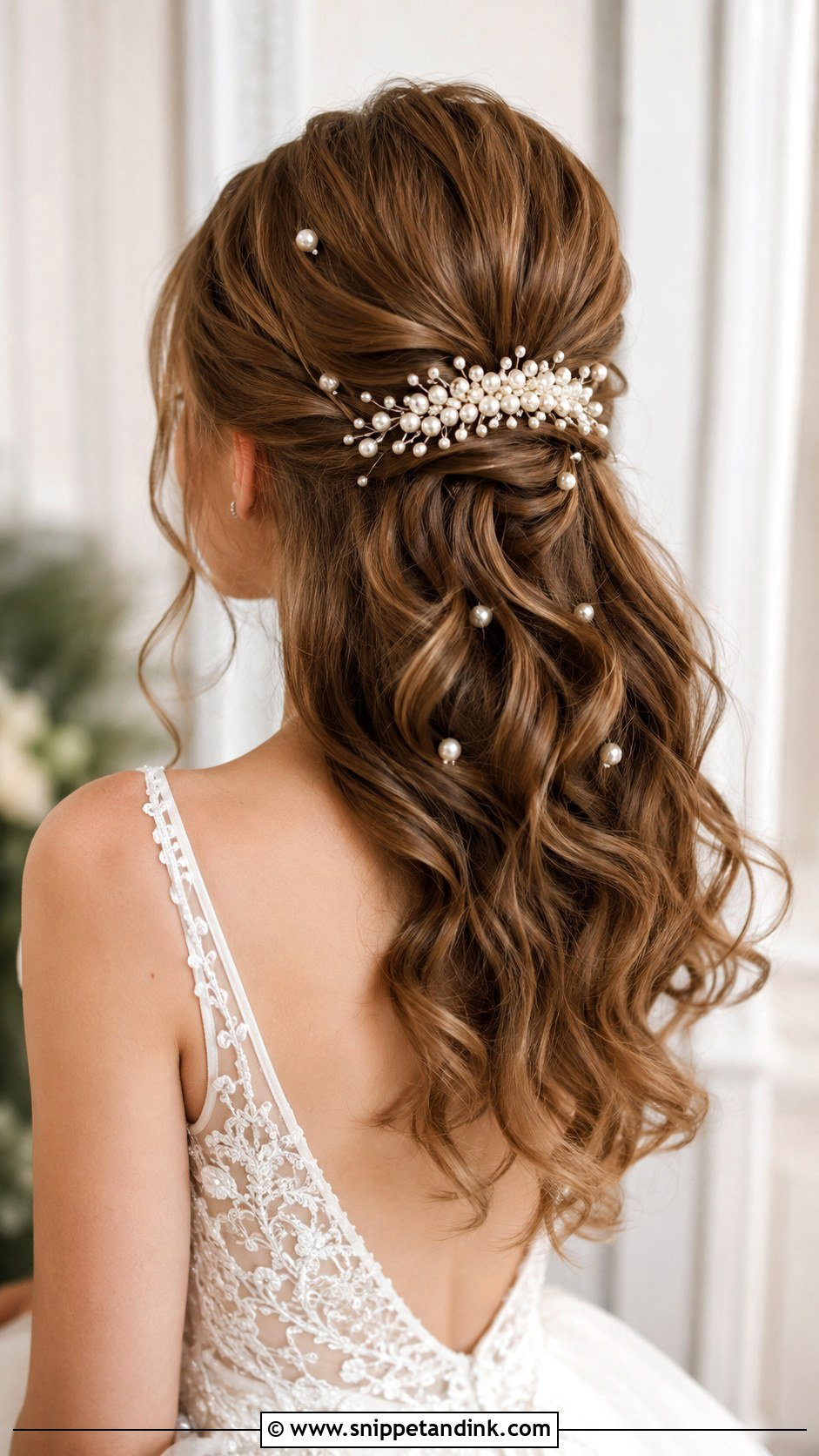
Pearls are the accessory brides most often keep and wear again. Here the half-up base carries delicate pearl pins or a pearl-studded comb, either scattered across the pinned section or clustered where the two halves meet. Scattered pins look best on curls, because the texture hides the pin legs; on sleek hair a single comb sits cleaner. Ivory pearls flatter most gowns, while bright white ones can look grey beside an ivory dress. I push each pin in against the direction the hair falls so it grips instead of sliding out.
10. Boho Half-Up Half-Down Hairstyle
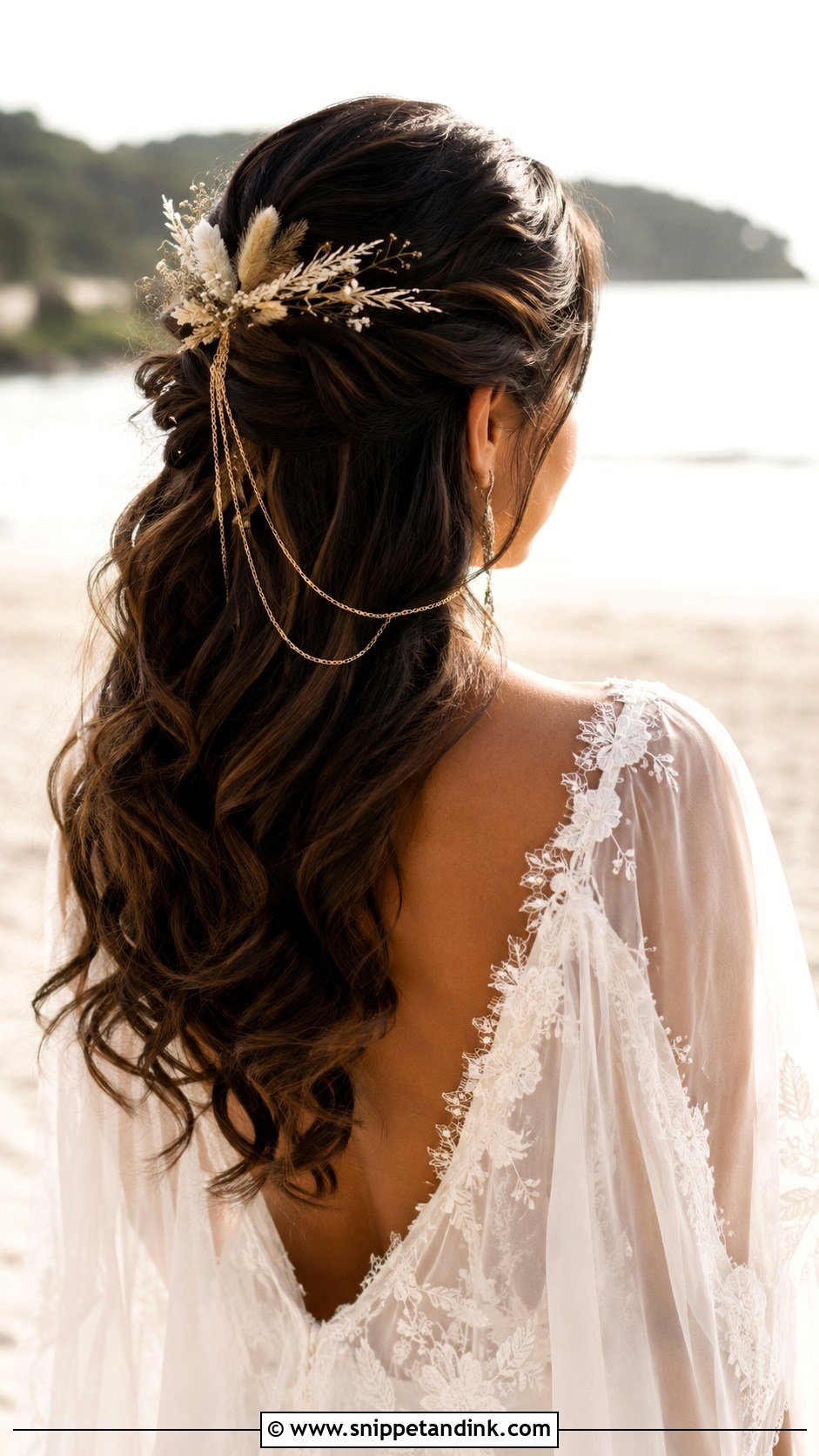
Boho half-up is less a single style than a mix of textures: loose waves, small twists and undone braids layered together. It sits best on hair that already has some natural wave, at garden, beach and festival-style weddings. Sea salt spray adds grit, but on dry or very curly hair it leaves the ends crunchy, so I switch to a dry texture spray. Dried flowers, small leaves or a fine hair chain can be tucked into the twists. Loose pieces around the face are part of the look, though I’d keep them longer than chin length so they don’t stick to lip gloss.
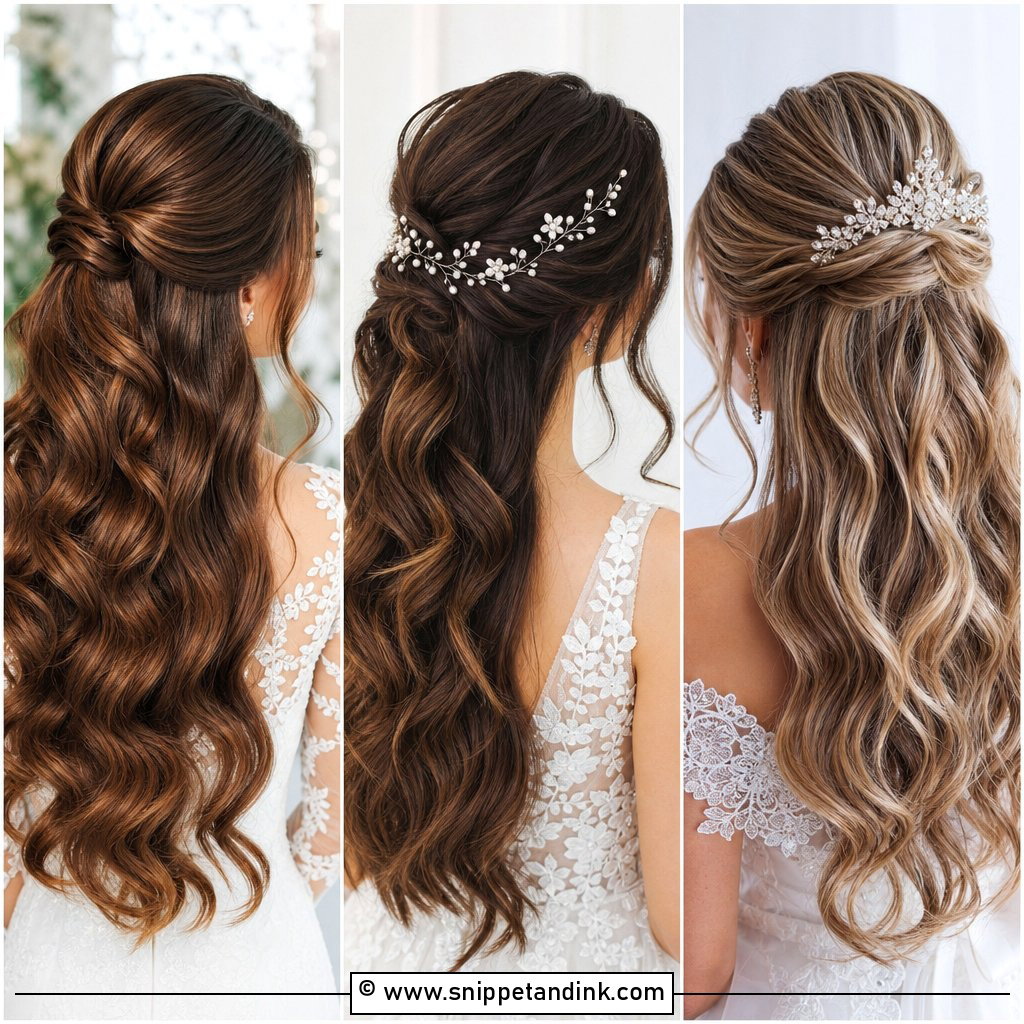
11. Half-Up Half-Down With Hair Vine
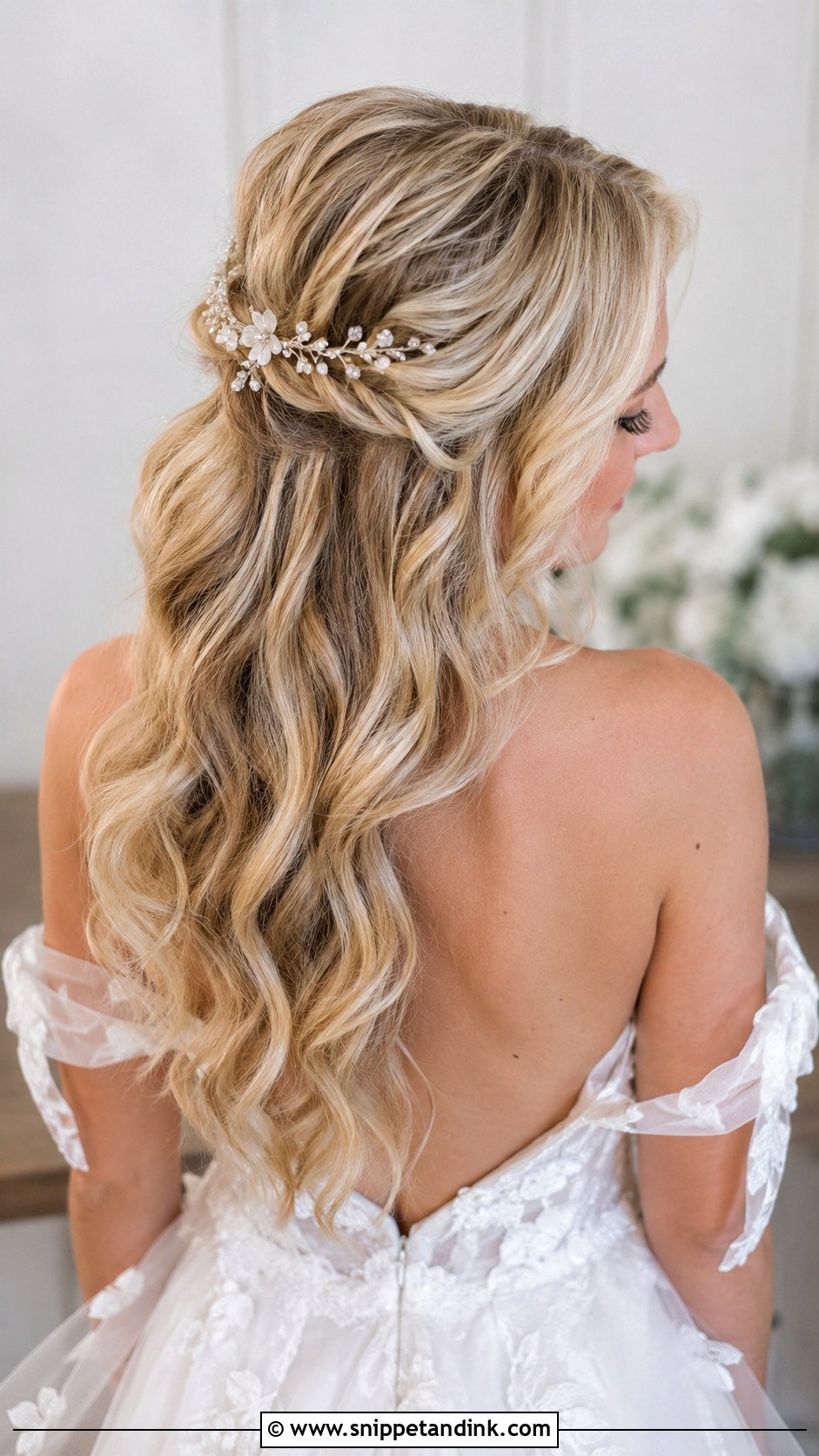
A hair vine is a fine wire strand set with crystals, pearls or tiny flowers, and how it’s attached decides whether it stays put all night. I thread it through the pinned-back section, catching it with small pins at each loop, right where the half-up section meets the loose hair. Bending the wire to the curve of your head before it goes in stops the ends from springing up. It works on curls, waves or sleek lengths, and it gives a bride who’s skipping a veil some detail at the back for the processional photos. Match the finish to your gown’s beading or embroidery.
12. Half-Up Half-Down Bun Style
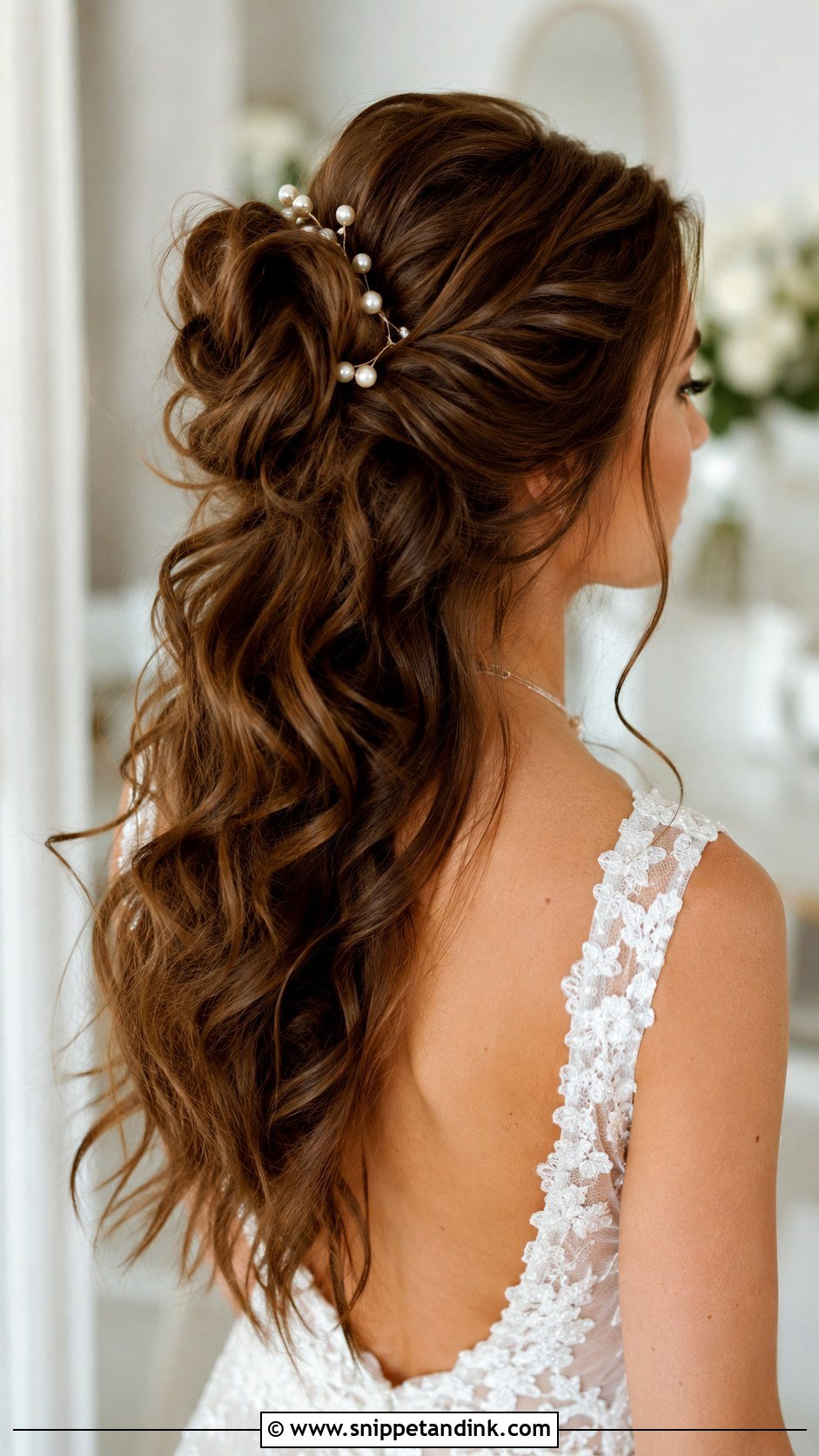
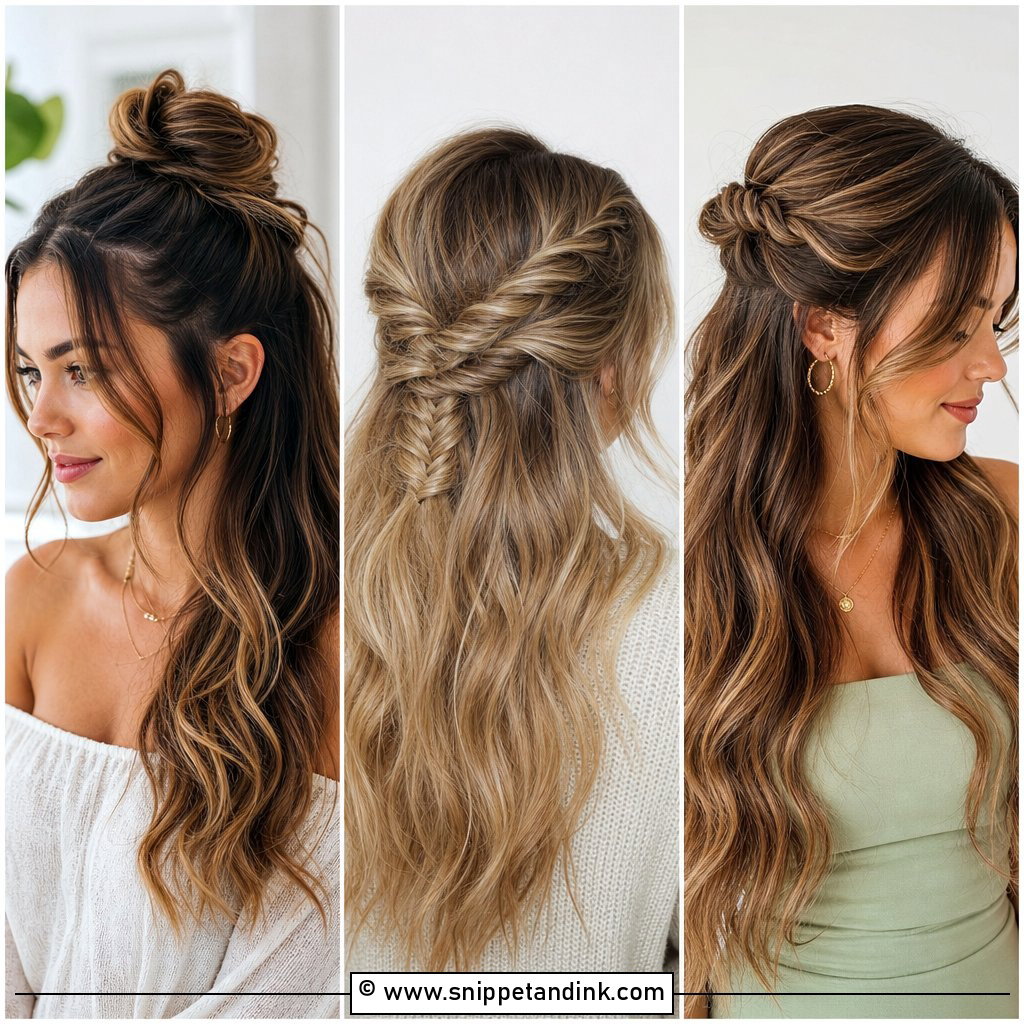
Turning the top section into a soft bun gives a half-up style more height and a clear anchor point. A bun high on the crown reads younger and more playful; set lower at the back it feels more formal. I make a small ponytail first, wrap it loosely, pin it, then pull the edges apart so it looks full rather than tight. If your hair sits above the shoulders, the top section usually isn’t long enough for a proper bun, and a small filler or clip-in piece helps. Pearl pins or a few flowers can wrap around the base, with loose curls or smooth waves underneath.
13. Half-Up Half-Down With Tiara
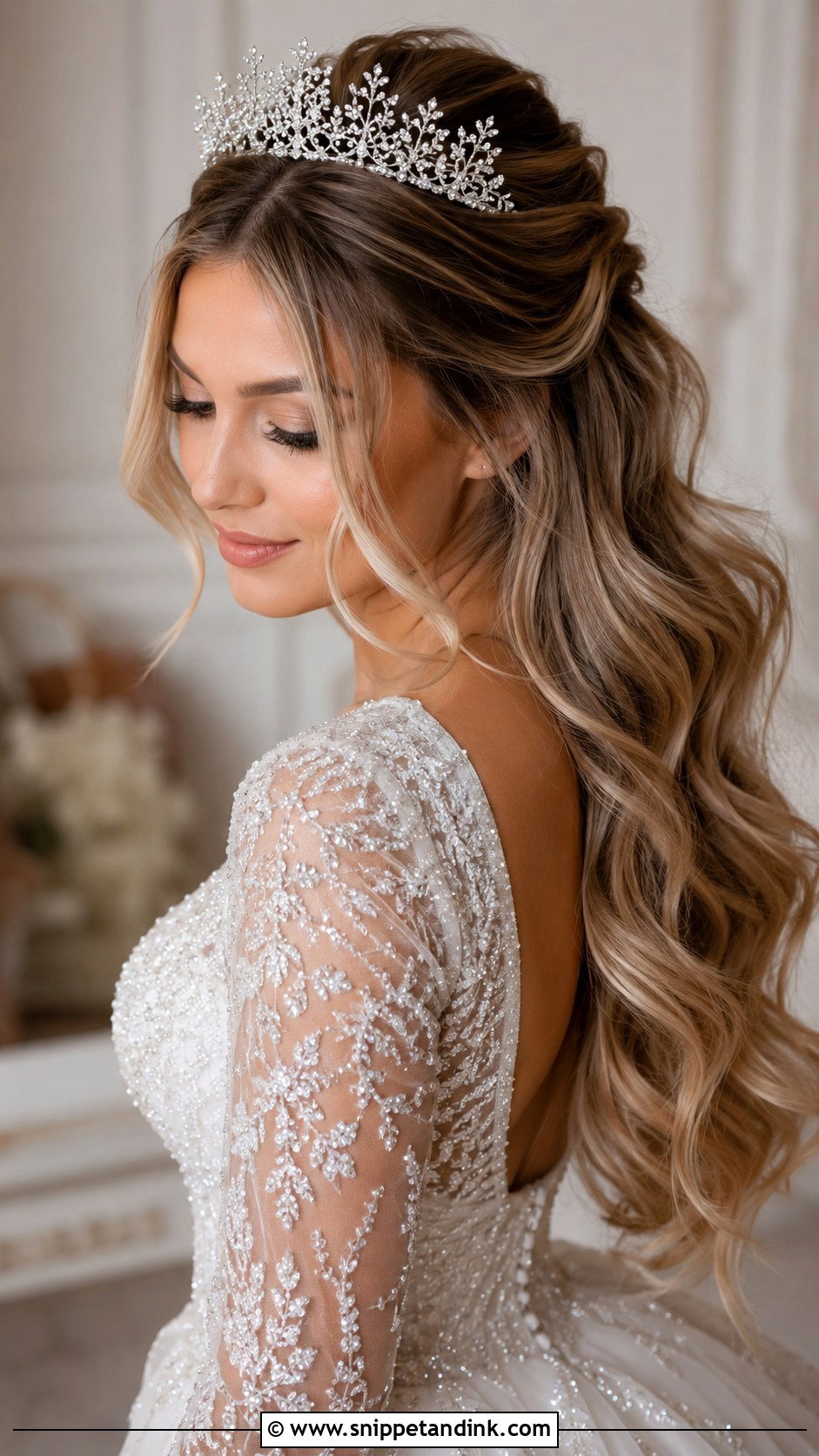
A tiara needs a firm foundation, and a half-up style gives it one. I backcomb lightly behind the hairline, pin the crown section, then slide the tiara’s combs into that pinned section so the weight rests on structure, not on loose hair. A delicate crystal tiara suits a simple gown; a bolder piece balances a heavily embellished dress. Set it just in front of the half-up section, angled to follow your hairline, with loose curls or polished waves below. If your tiara has no combs, I loop bobby pins through the frame on both sides to lock it down.
14. Messy Half-Up Half-Down Hairstyle
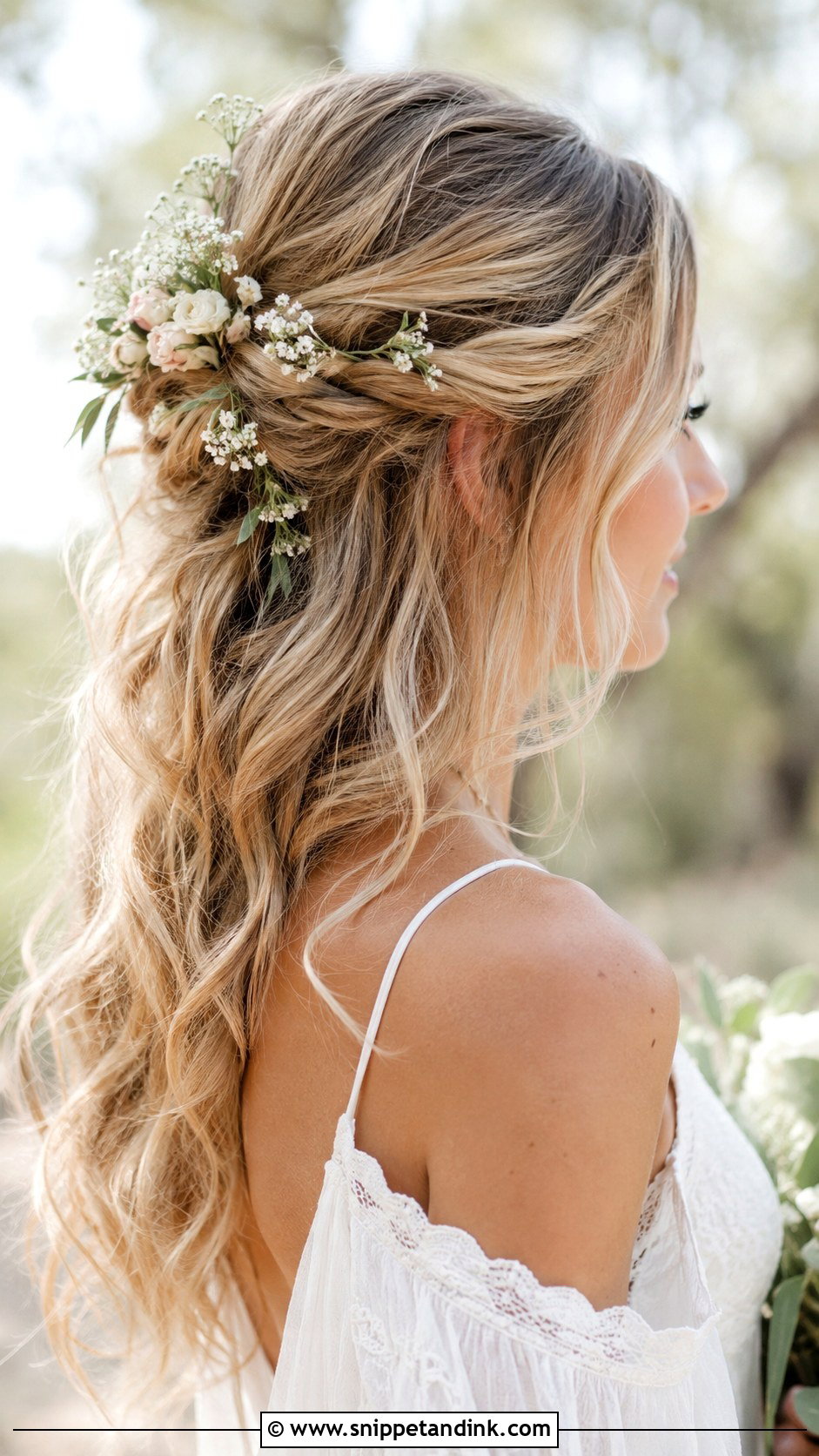
Undone texture is harder to keep looking intentional than most people expect. The top is loosely pinned, leaving soft, tousled waves below, but each wave is still curled with an iron first and then broken up with fingers; skip that and loose hair just looks flat by the speeches. Texture spray goes on before the tousling, not after. I pull out a few pieces around the face and leave the rest alone. Small flowers or simple pins finish it. Outdoor and beach weddings suit it, and it forgives a gust of wind in a way a sleek style never will.
15. Half-Up Half-Down With Fishtail Braid
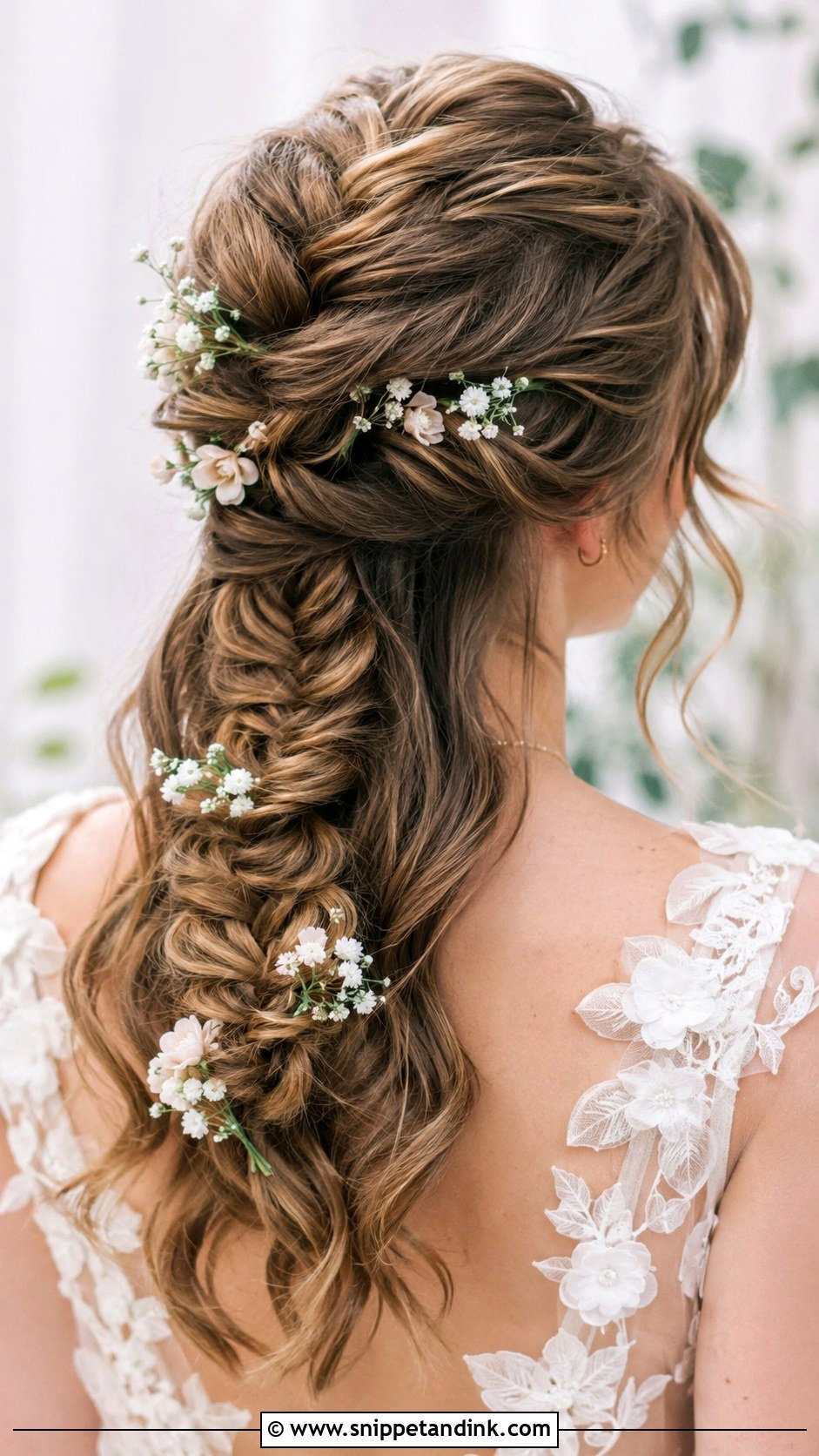
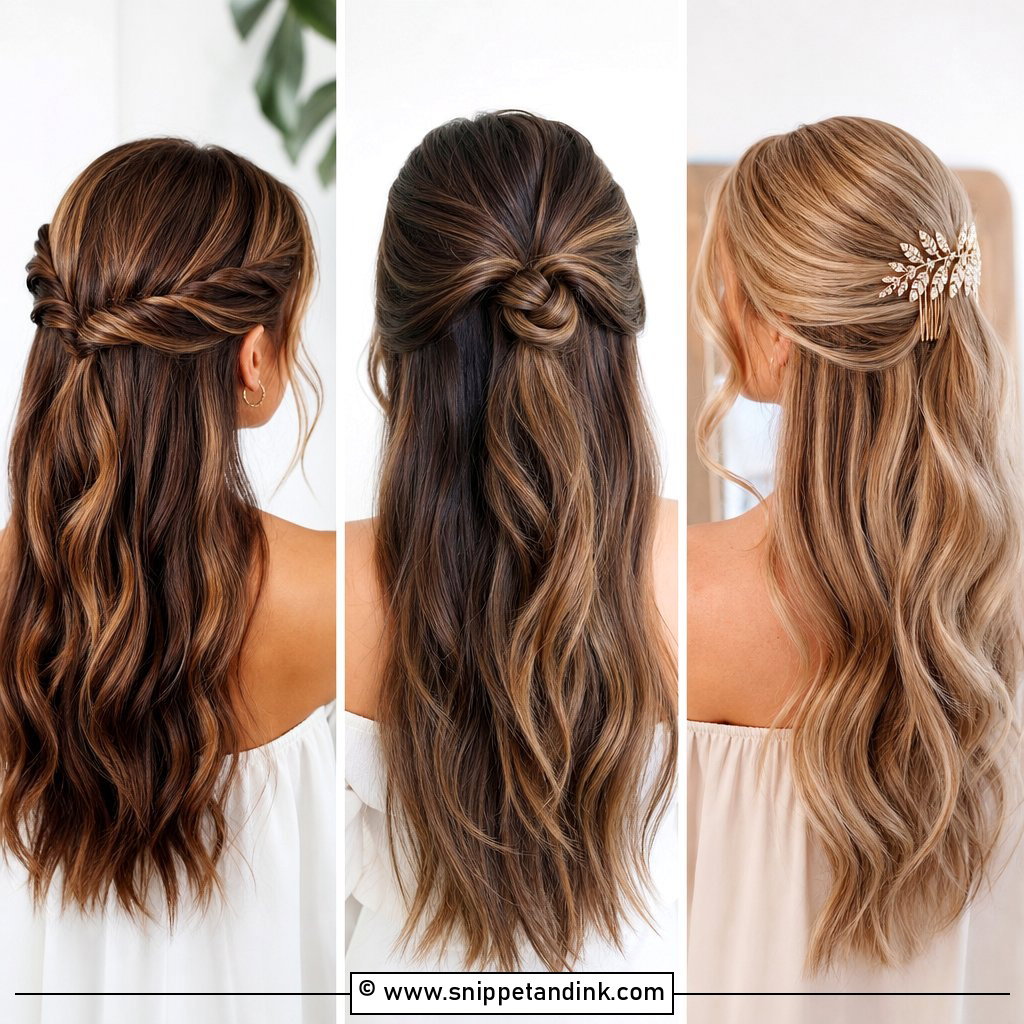
A fishtail takes longer to plait than a three-strand braid but gives a much finer woven texture. I braid it into the half-up section and secure it at the back, leaving the rest in soft waves. Pulling the outer edges apart makes it look fuller; I work from the bottom up so the top of the braid doesn’t loosen. Long, thick hair shows the pattern most clearly. Heavily layered hair leaks short pieces out of a fishtail, so I run a little wax over the strands before braiding. Small flowers or pearl pins look right tucked along the plait.
16. Half-Up Half-Down With Veil
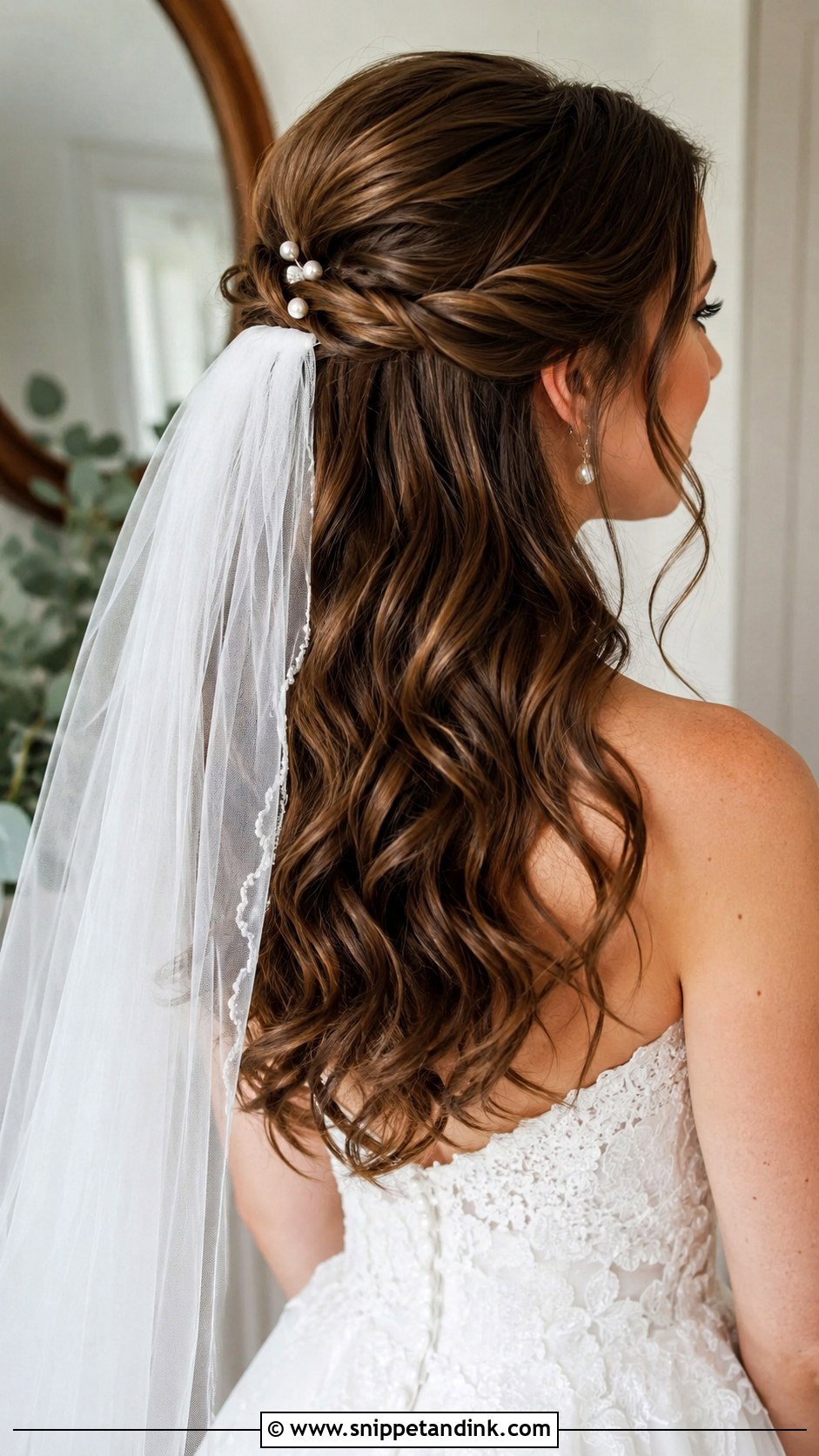
If you’re wearing a veil, half-up is one of the easiest bases to attach it to. I slide the comb in underneath the pinned section, teeth pointing up first and then flipped down, so it grips against the pins rather than the loose hair. A heavy cathedral veil needs a couple of extra bobby pins crossed through the comb. After the ceremony the veil can come out without disturbing the style, which is the main reason brides choose this pairing. Soft curls or smooth waves sit underneath, and a few pearl pins or a small comb can cover the empty spot at the reception.
17. Half-Up Half-Down With Twisted Rope Braid
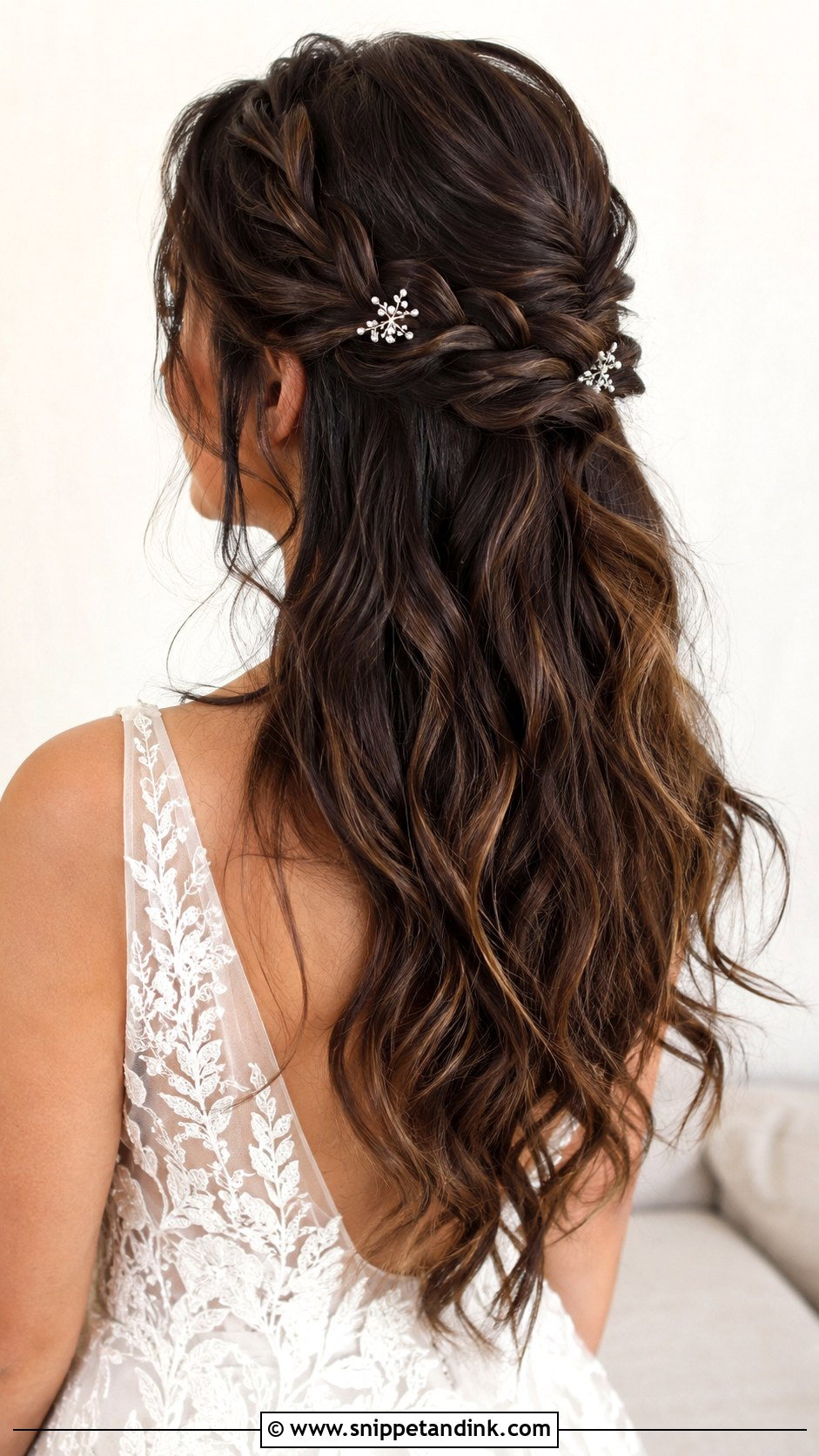
A rope braid is two sections twisted around each other, which makes it quicker than a plait and a good pick if you’re doing your own hair. The rule is to twist each strand one way and wrap them around each other the opposite way; get that backwards and it unravels within the hour. I secure it at the back and loosen it slightly for fullness. Loose curls or beachy waves underneath keep it soft. Small flowers or jeweled pins add detail, and a few face-framing pieces finish it.
18. Half-Up Half-Down With Bouffant
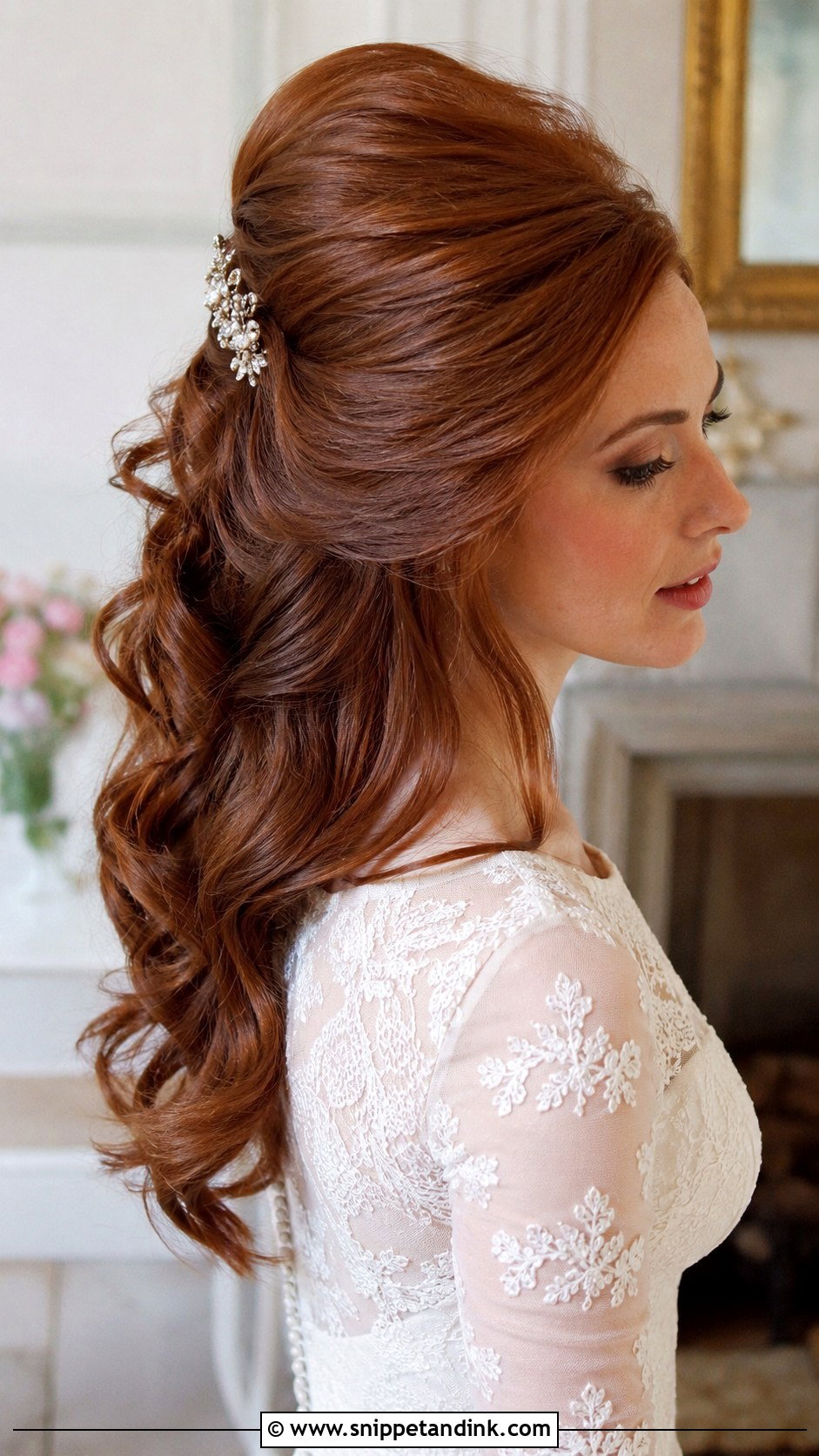
A teased crown gives the half-up shape height and a retro outline. I backcomb the roots in small sections, smooth only the top layer so the teasing never shows, and pin it back with crisscrossed bobby pins. Fine hair lifts well but drops quickly, so I add a little volumising powder at the roots before teasing. Soft curls underneath give it a romantic, voluminous feel and stop it looking dated. A sparkly clip or hair vine can sit at the pin line. One thing to plan for: backcombed hair needs a slow brush-out with plenty of conditioner the next day.
19. Half-Up Half-Down With Side Braid
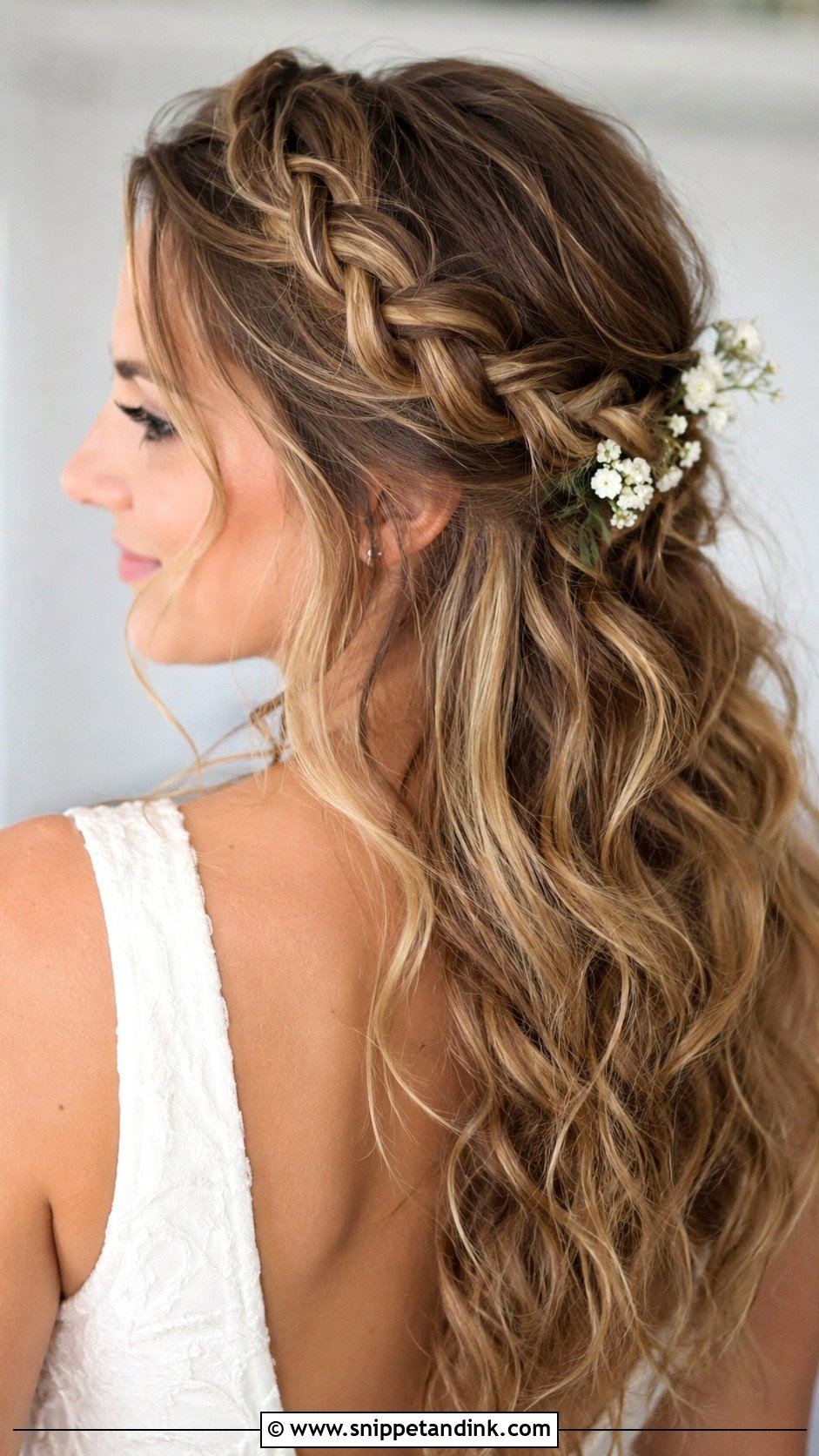
Moving the braid to one side makes the style asymmetric, which I like on brides with a strong side part. The braid starts at the parting and runs back along one side before joining the pinned section. It also pairs well with a one-shoulder or off-shoulder neckline, since the braid draws the eye toward the open side. Keep the braid loose and let natural texture do the work underneath. Small flowers or pearl pins can sit along the plait.
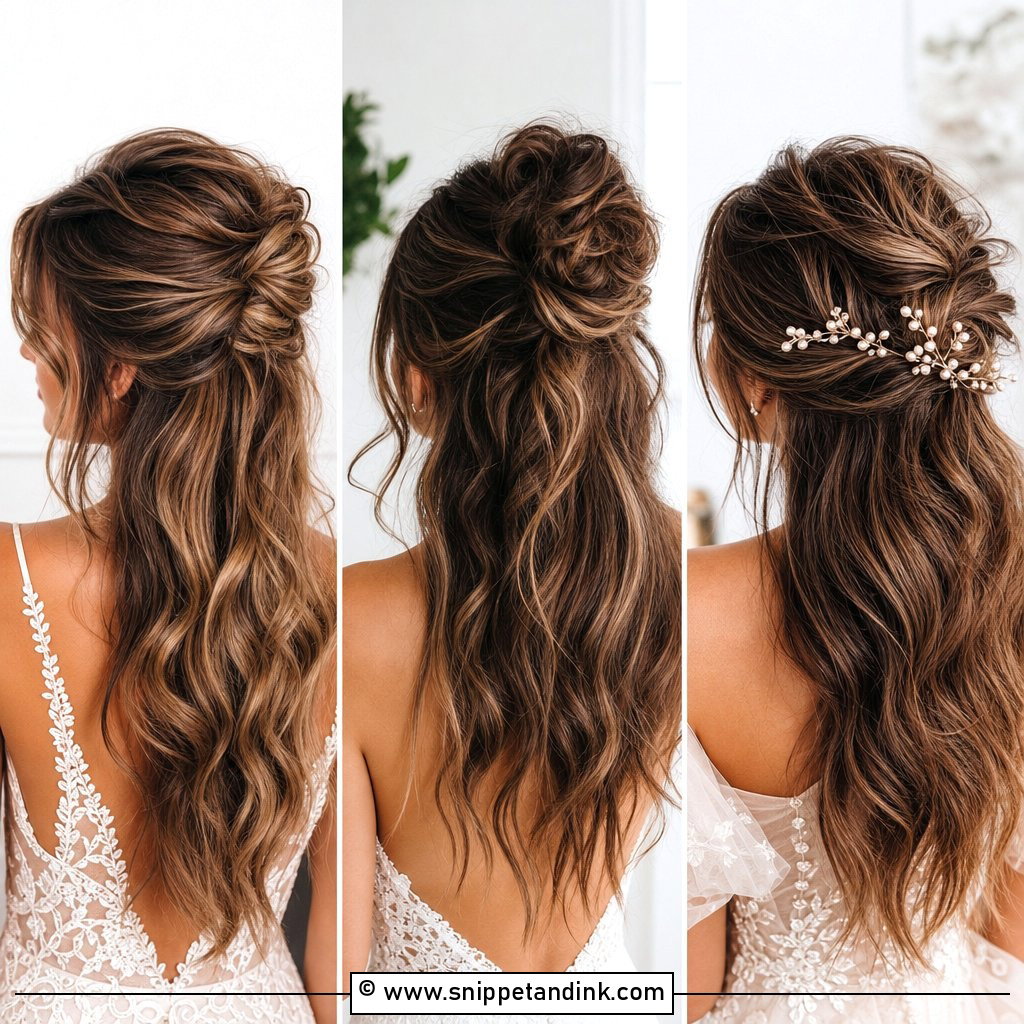
20. Half-Up Half-Down With Crystal Pins
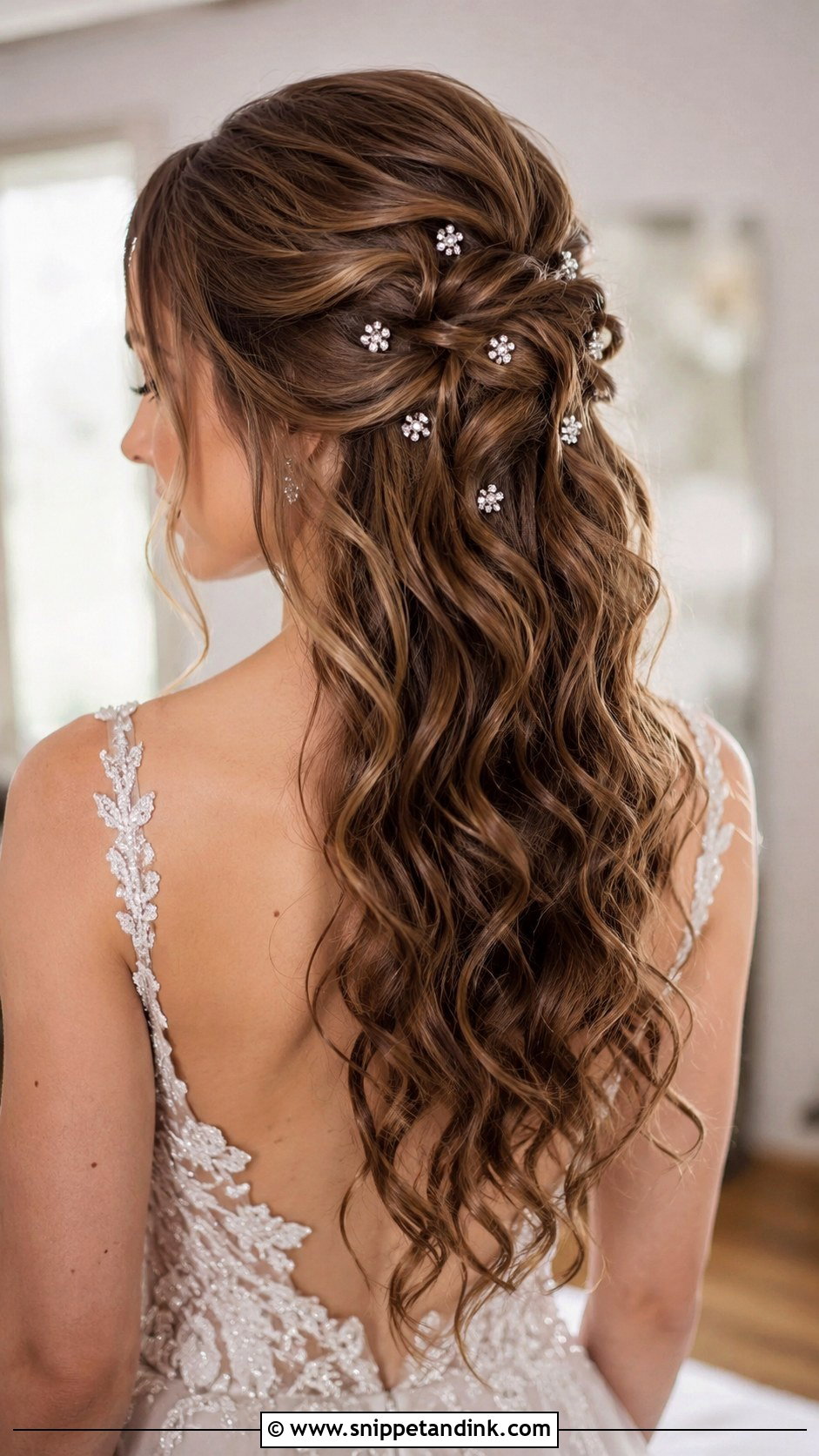
Crystal pins are the easiest accessory to adjust at a trial because you can keep moving them until the placement feels right. Scattered pins look relaxed and catch light as you move; a tight cluster near the back reads more formal. I match the metal tone to the gown’s embellishments, since silver-set crystals next to gold beading look off in close-ups. On sleek hair, mist the section with texture spray first or the pins slide out. A few loose tendrils at the front keep it from looking too neat.
Why Loose Curls Drop by the Reception, and How I Slow It Down
The pinned crown usually survives the whole day. The down section is what I watch, because it carries its own weight with nothing holding it up. Straight, fine hair can lose much of its curl within a couple of hours, especially outdoors in humid air, and heat from the dance floor plus a long line of hugs flattens the back.
So I set curls a size tighter than the finished look you want, letting them relax into it rather than past it. Each curl is pinned while it cools and brushed out only once it’s cold. For an outdoor summer wedding I use a humidity-resistant spray and tell the bride honestly that soft waves will look looser by the evening. That’s normal, and it still looks good in photos.
If your hair is naturally curly
Natural curls hold far better than ironed ones, so I don’t straighten and re-curl them. I define the pattern with a cream, diffuse it dry, then pin the crown. You keep your own texture, avoid a morning of heat, and the curls stay springy long after an ironed set would have dropped.
A small kit for your maid of honour
- Bobby pins and a mini hairspray
- A wide-tooth comb for curls, never a brush
- A clear elastic in case the crown needs re-anchoring
- A travel curling iron, if the venue lets you plug one in
Two Halves, One Plan for the Whole Day
A half-up style works when both halves are planned: a crown that’s anchored properly and lengths curled to last. Pick the version that suits your hair as it is now, not the one in a photo built on extensions. Bring the comb, vine or pins you plan to wear to your trial, along with your veil, so I can place them on your actual hair. Braids, pearls or fresh flowers are easy to add or remove once you’ve seen the trial photos, so leave a few weeks between the trial and the wedding in case you change your mind.
You'll Like These Ideas:


Leave a Reply