
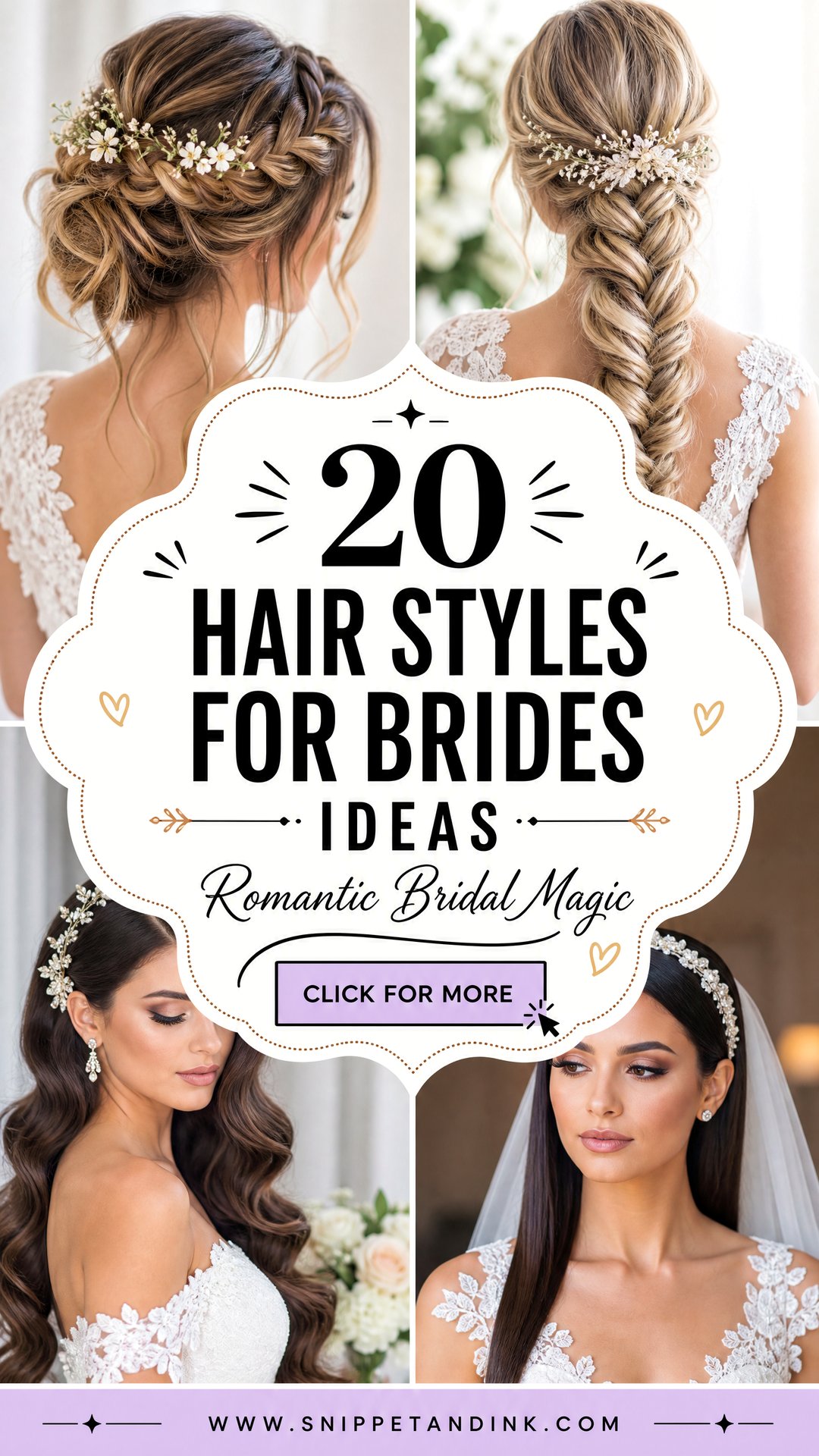
The question I hear most at a first consultation isn’t which style is prettiest. It’s which one will still look like the photo at eleven at night. That depends far more on your hair than on the picture you saved. Below are twenty bridal styles I’m asked for again and again, from half-up waves to sleek buns, braided crowns and short-hair looks, each with a note on how it actually behaves on the day, who it suits, and where it tends to go wrong.
Your Texture Decides More Than the Inspiration Photo
Most saved pictures were taken on thick, long, freshly styled hair, often with extensions. Before you choose, it helps to know how your own hair behaves, because the same style holds very differently from one head to the next.
Fine or slippery hair
Fine hair struggles to hold curl and lets pins slide. I prefer it washed the day before, never with heavy conditioner at the roots, and I build grip with texture spray before I start. Updos and half-up styles hold better than all-down waves, and a few hidden clip-ins can give a bun real size.
Thick or heavy hair
Thick hair holds curl well but pulls updos down with its weight. Low buns, chignons and braided styles that secure the hair with an elastic first suit it best. Ask for a trial that lasts long enough to feel the weight on your scalp, because a heavy updo can start to ache after a few hours.
Curly and coily hair
Natural curls and coils already have the texture many straight-haired brides pay for. Work with your pattern rather than against it: defined curls in a half-up style, a curly low bun, or a sculpted updo. If you plan a silk press or a straightened look, test it in similar weather, since humidity can revert it within hours.
Layered cuts
Short layers poke out of braids and buns. If you’re growing out a cut, tell your stylist early. We can choose styles that use the layers as soft framing pieces instead of trying to hide them.
1. Half Up Half Down Bridal Hairstyle
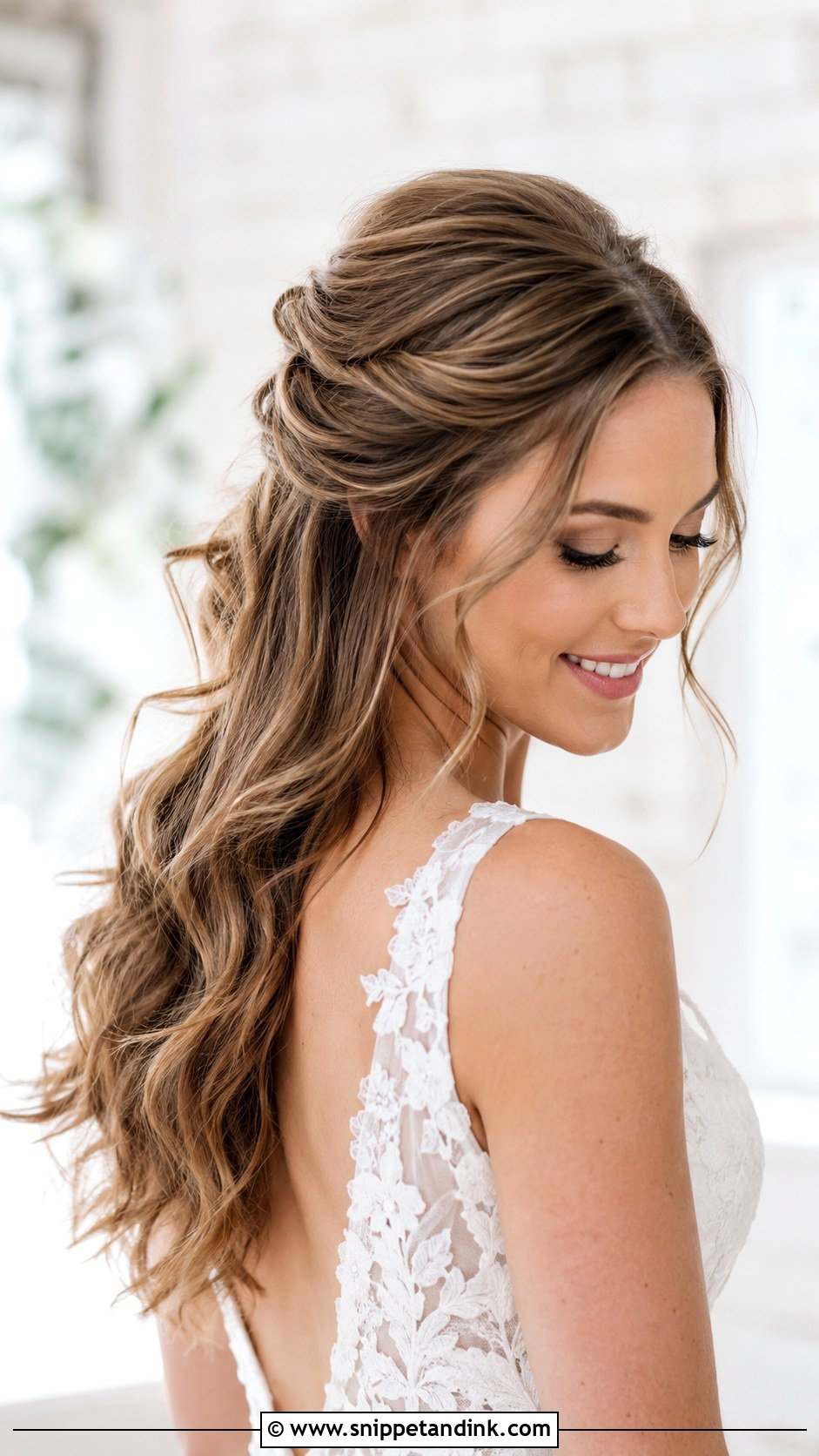
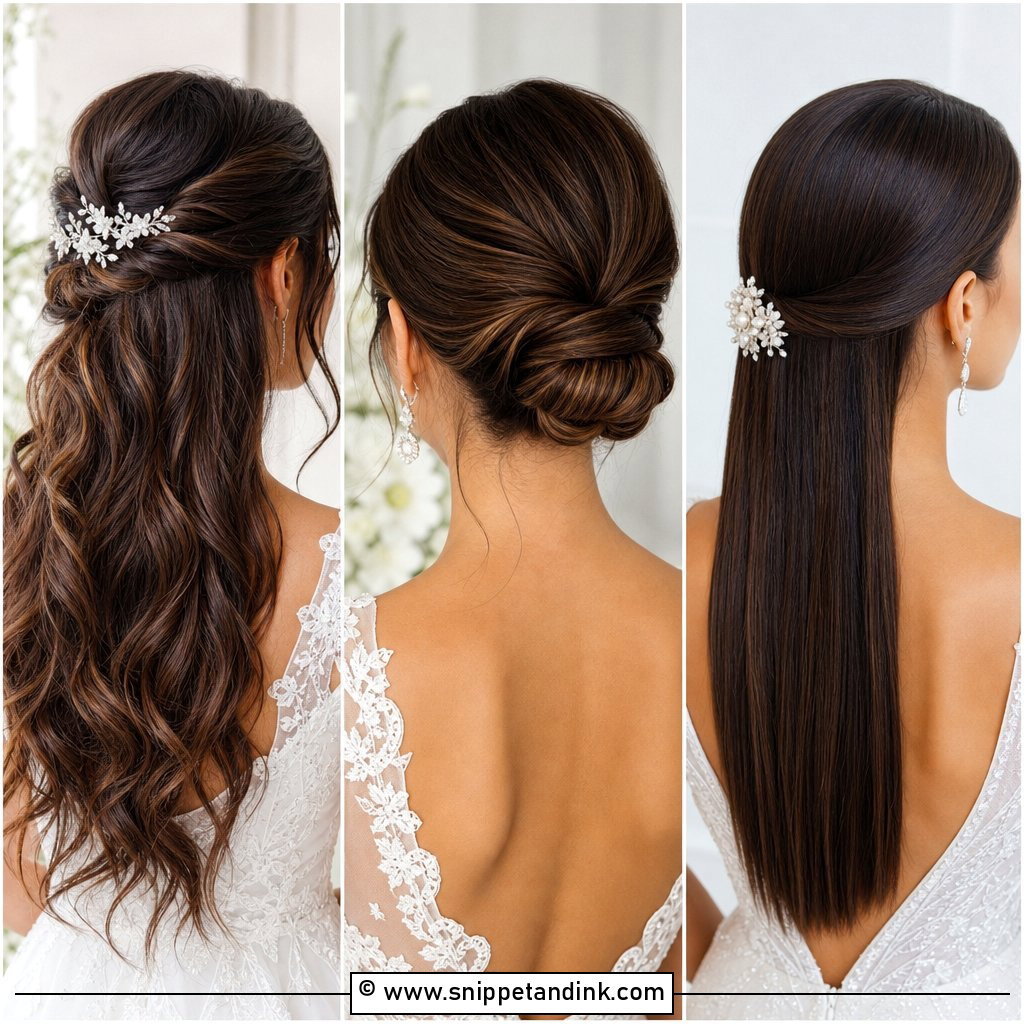
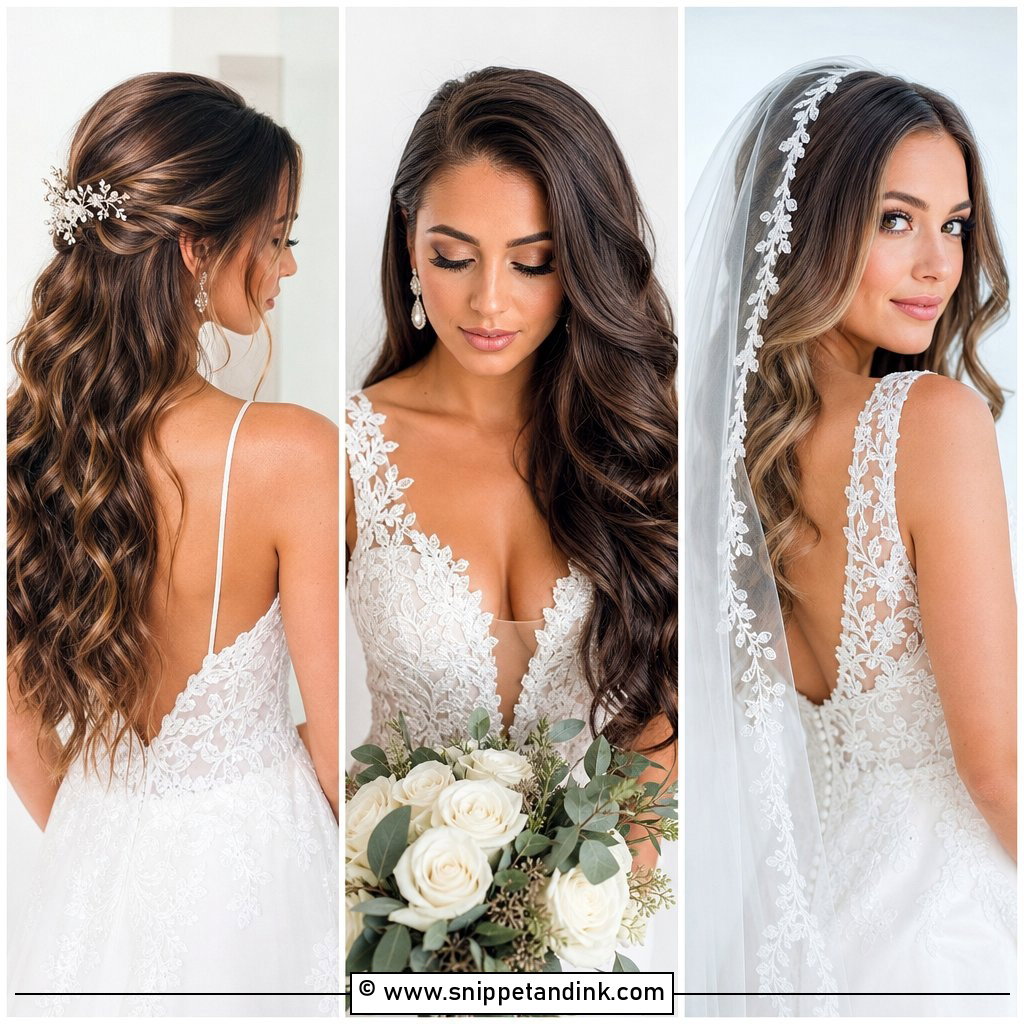
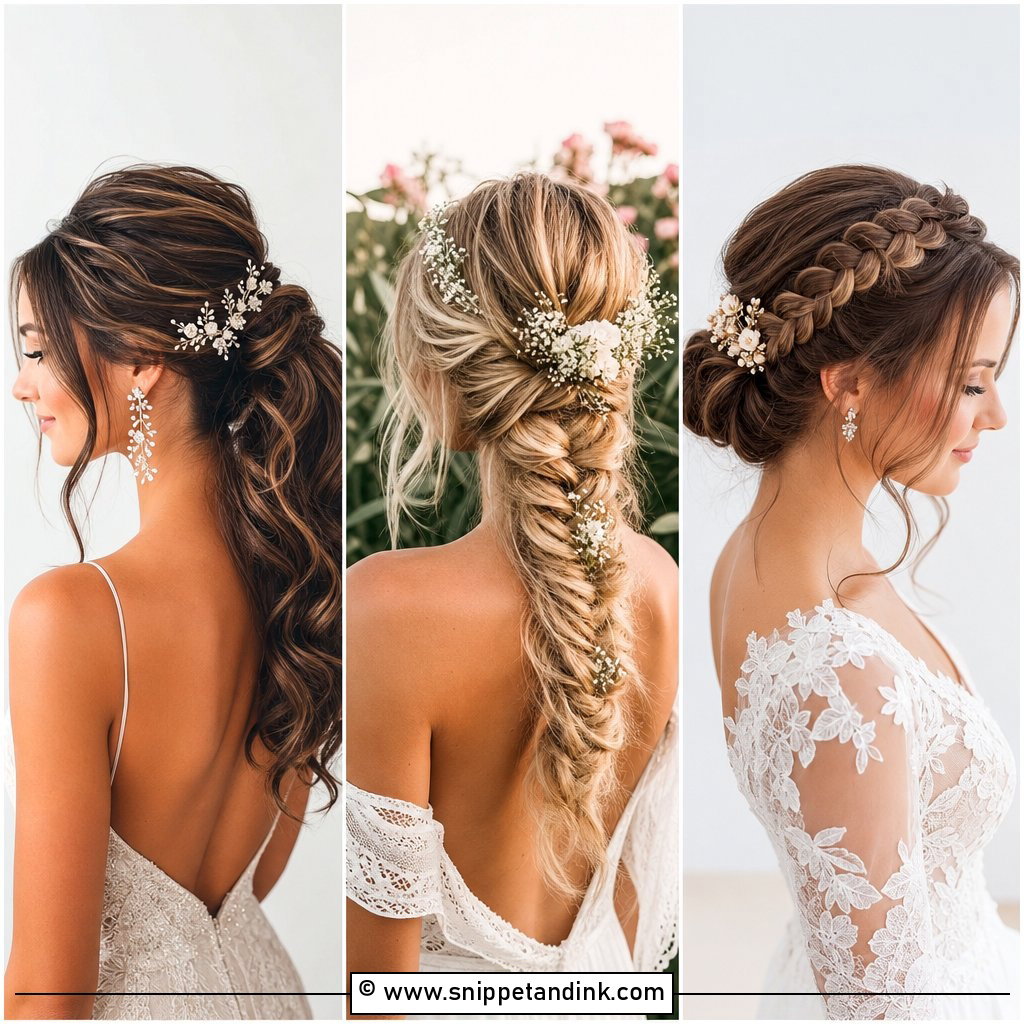
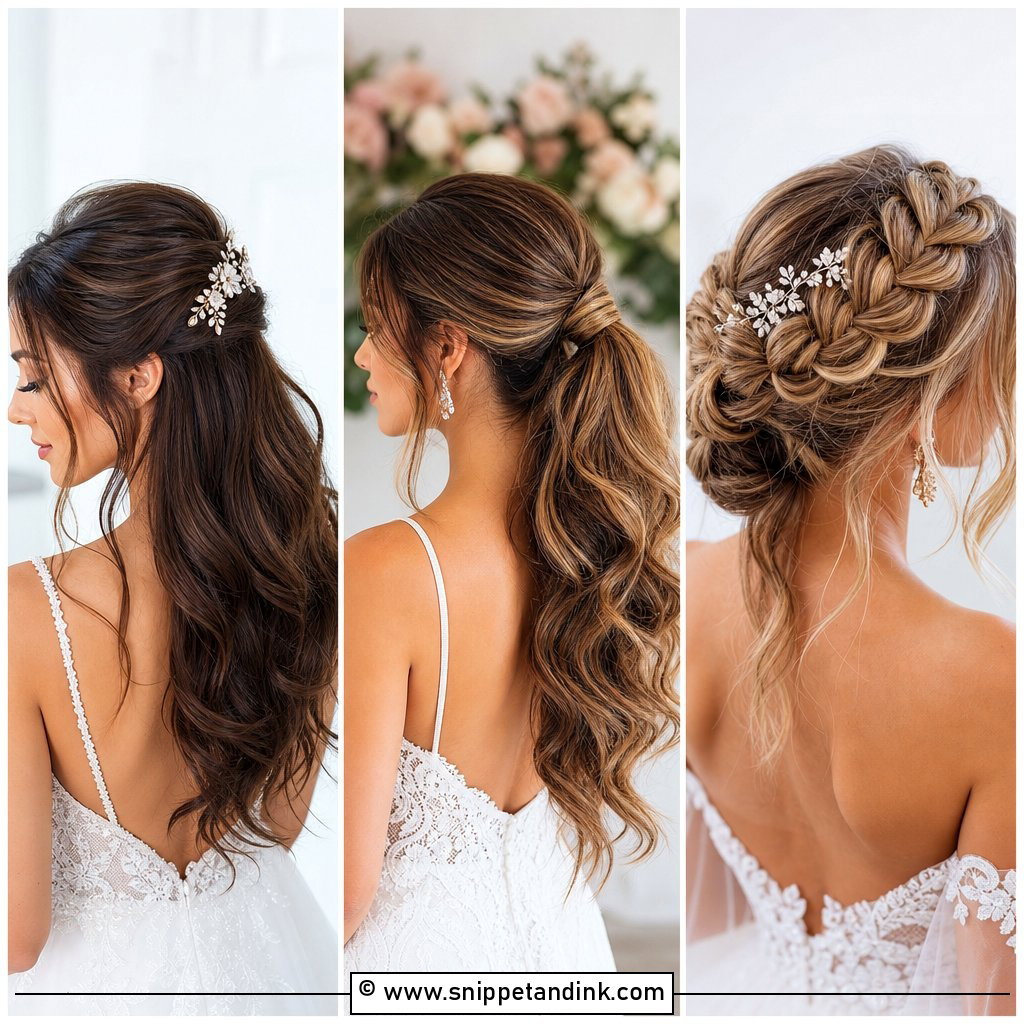
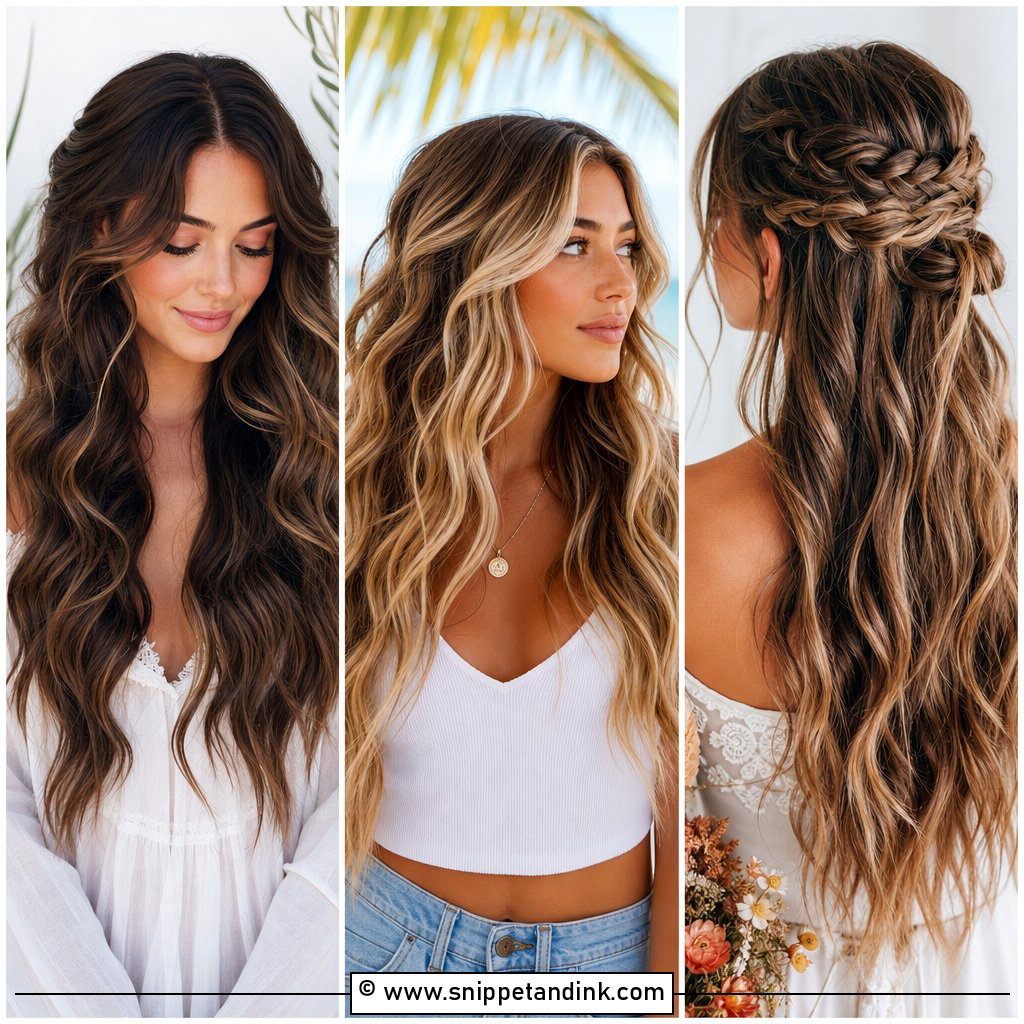
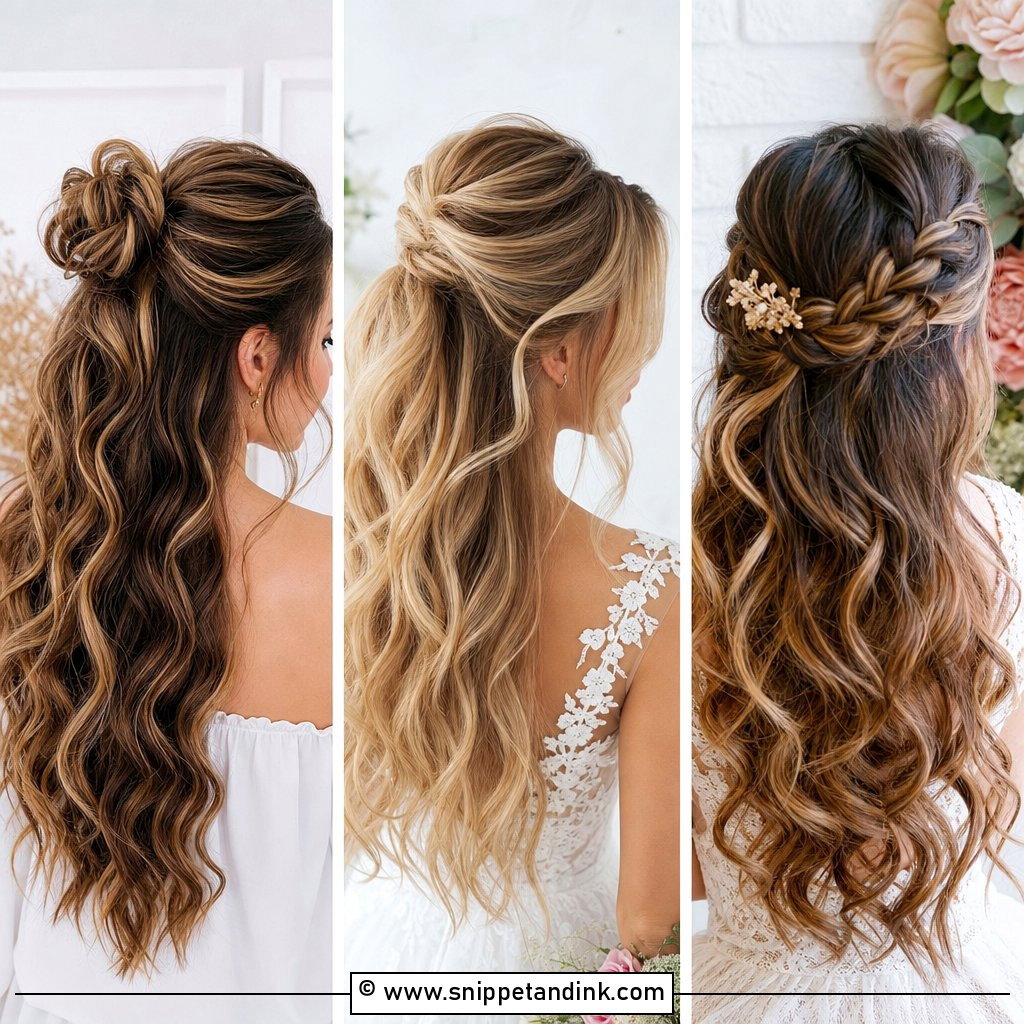
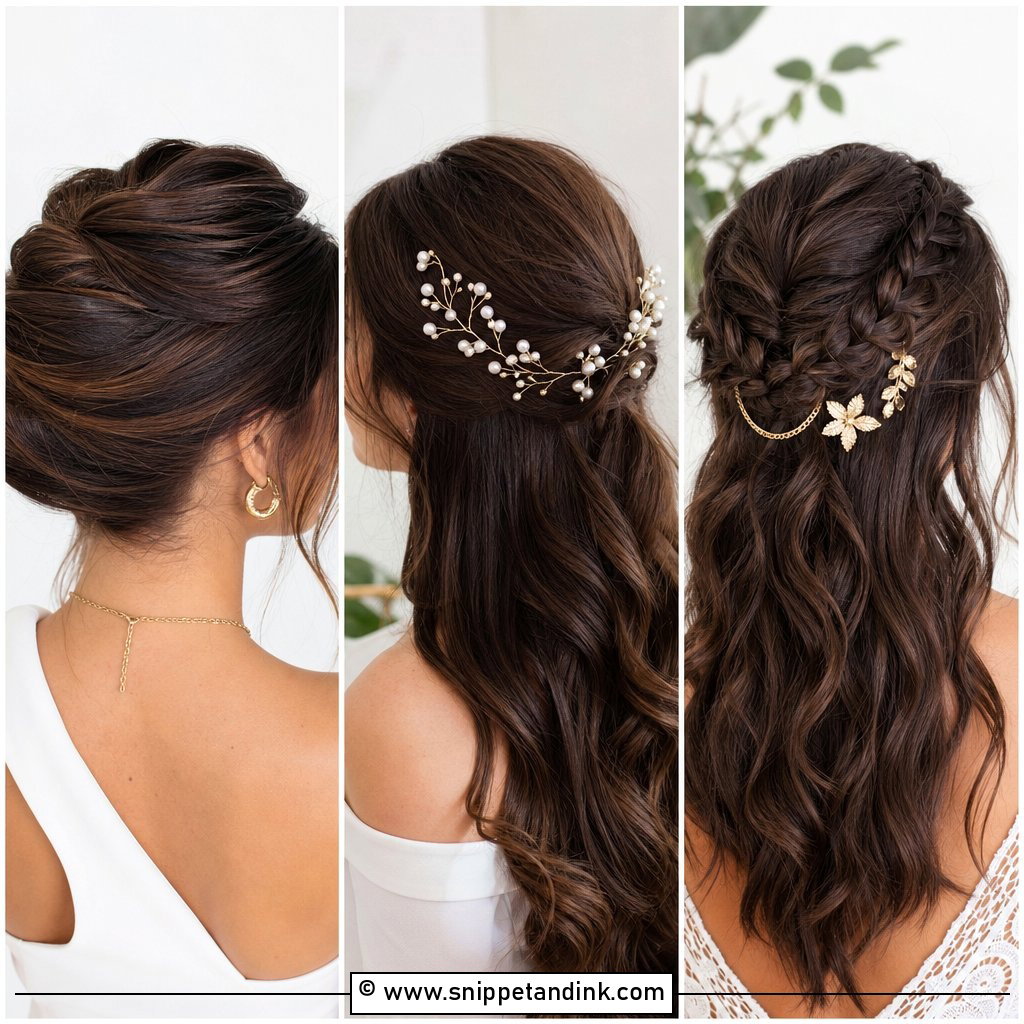
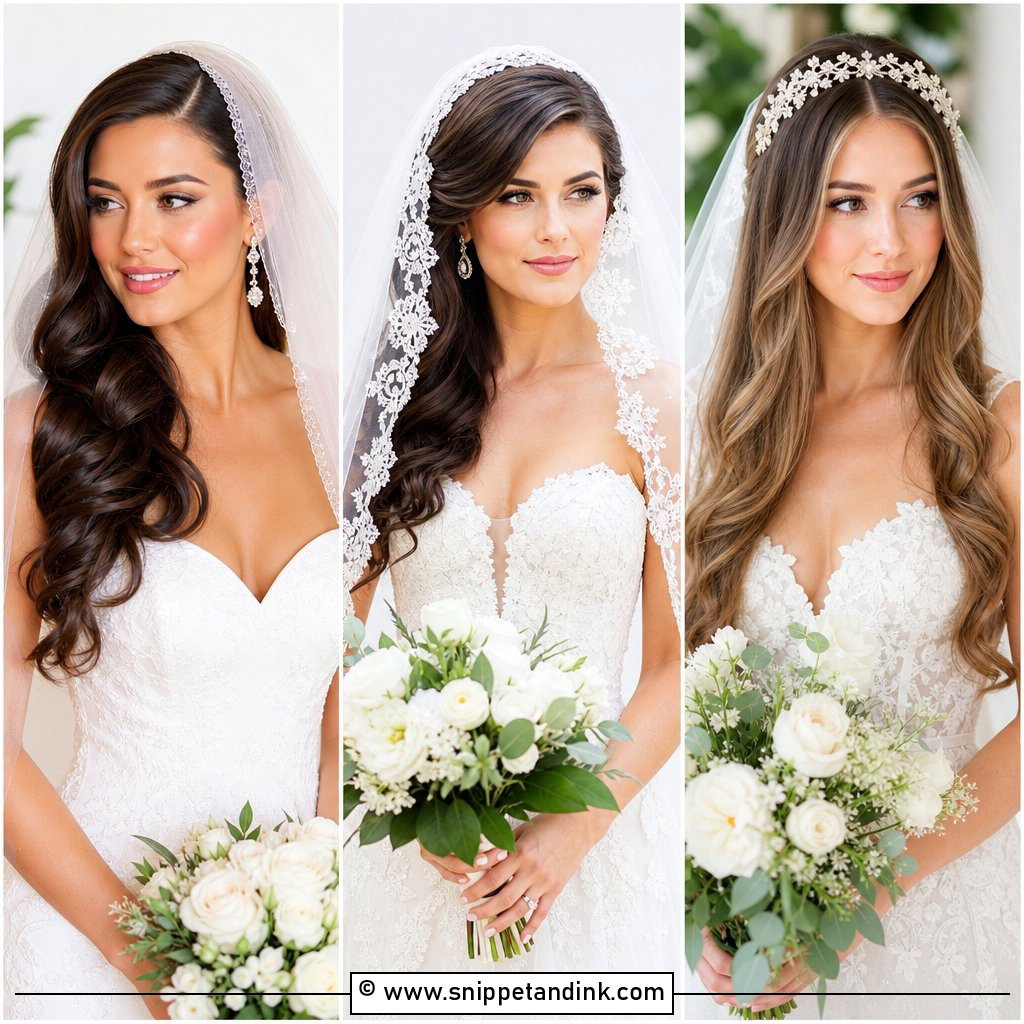
Half up, half down is the style I book most, and it’s also the one that relaxes fastest. The top section is pinned back at the crown while the lengths stay loose in waves or curls. The pinned part is the anchor: I backcomb lightly underneath and cross two bobby pins into an X so a veil comb has something solid to grip. The loose lengths are what drop, so on fine hair I curl tighter than the finished look and let it fall. A few tendrils at the temples soften it, but keep them few. Too many and by the reception they read as flyaways.
2. Sleek Low Bun for Brides
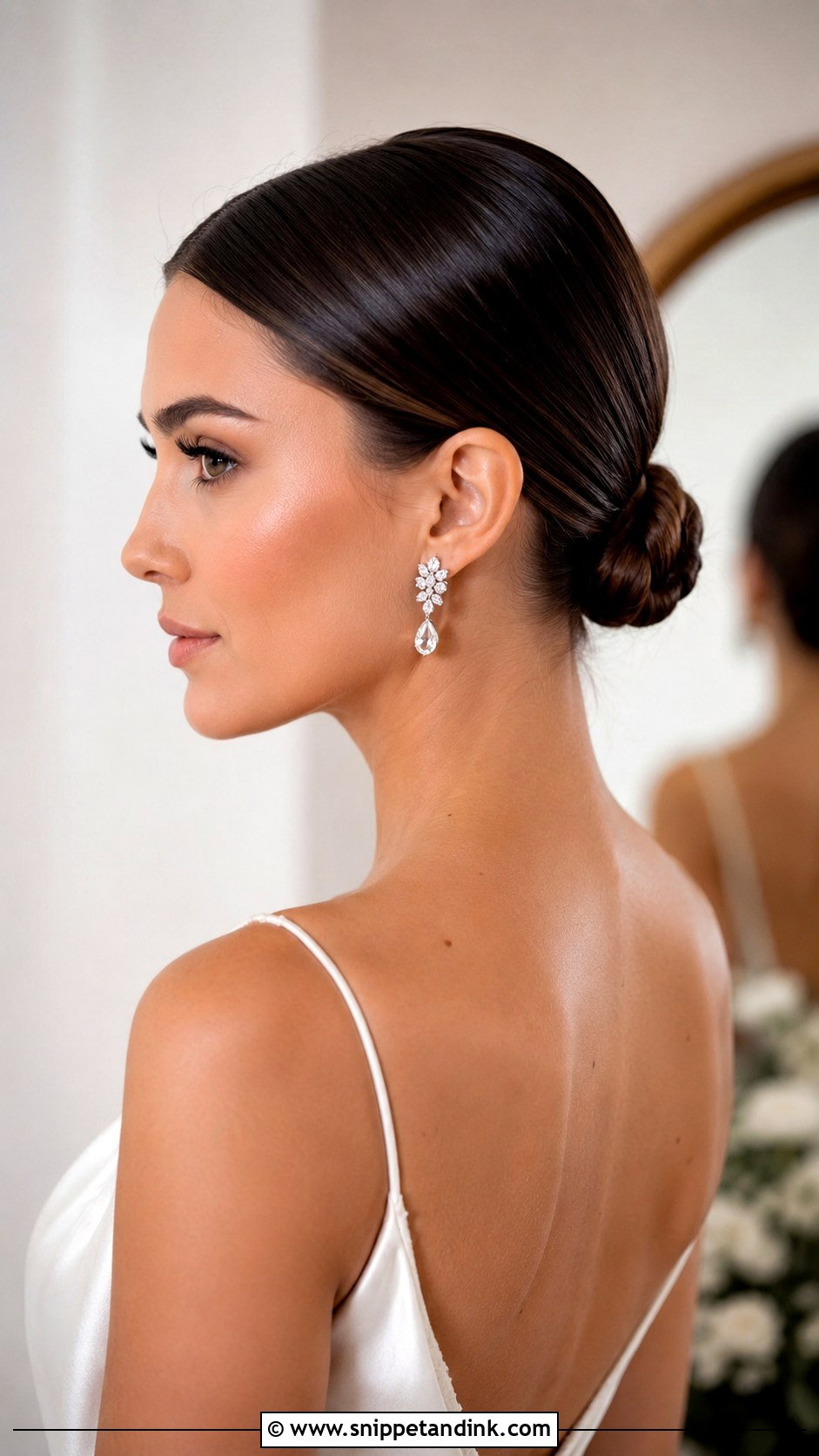
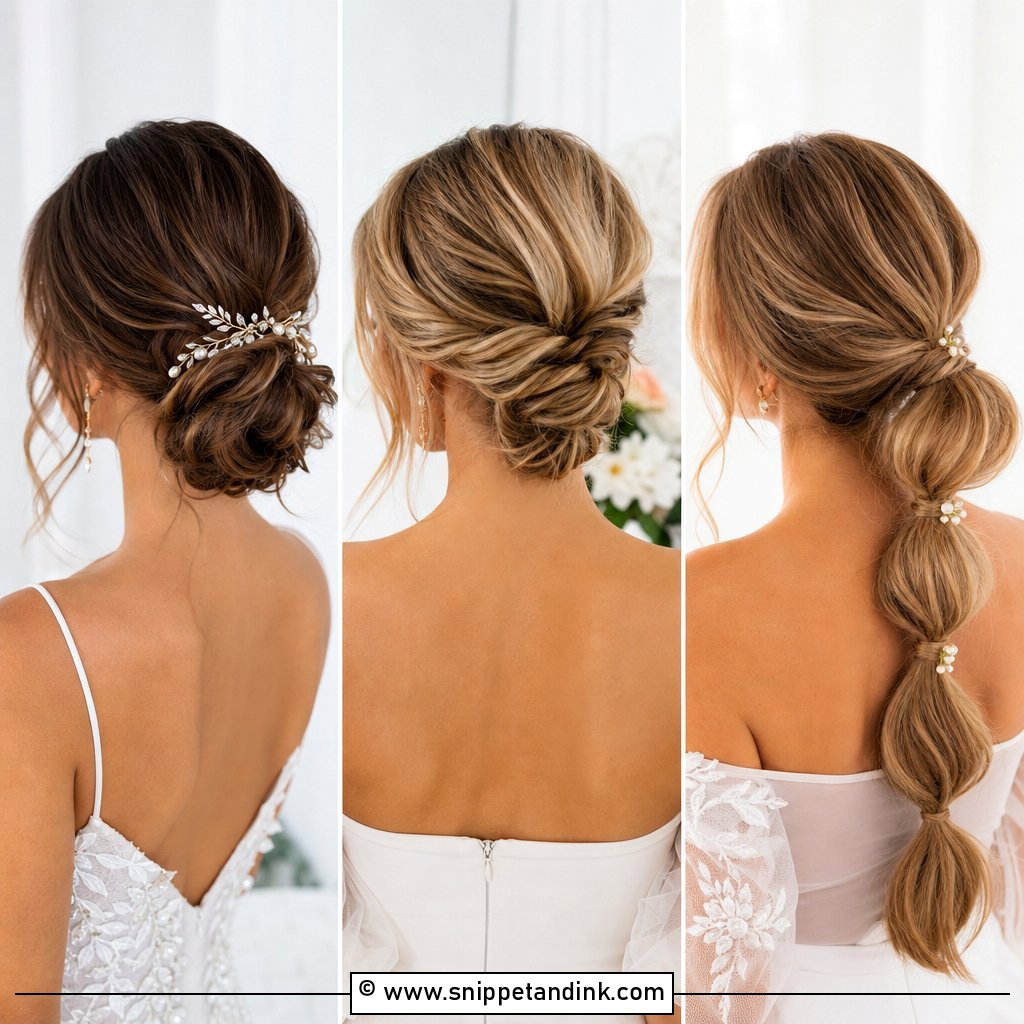
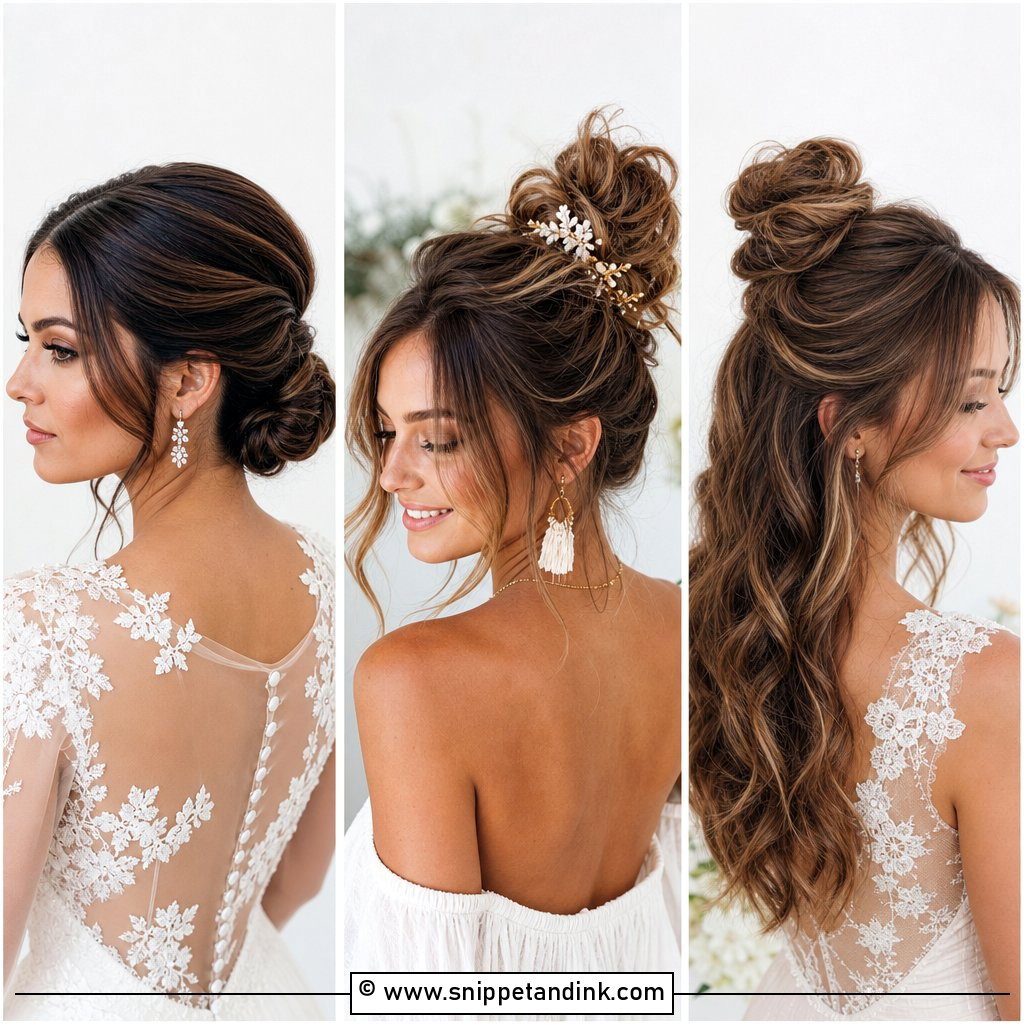
A sleek low bun lives or dies on the smoothing, not the bun itself. I blow-dry the hair completely straight first, because any kink left at the nape shows as a bump once everything is pulled back. A center part keeps it modern and leaves room for big earrings. It holds better than almost anything on this list, which is why I suggest it for long, formal days. The honest caution: it shows every bit of frizz, so in damp weather or on very curly hair you need a strong smoothing cream and a fine-tooth comb in the touch-up kit.
3. Glamorous Hollywood Waves
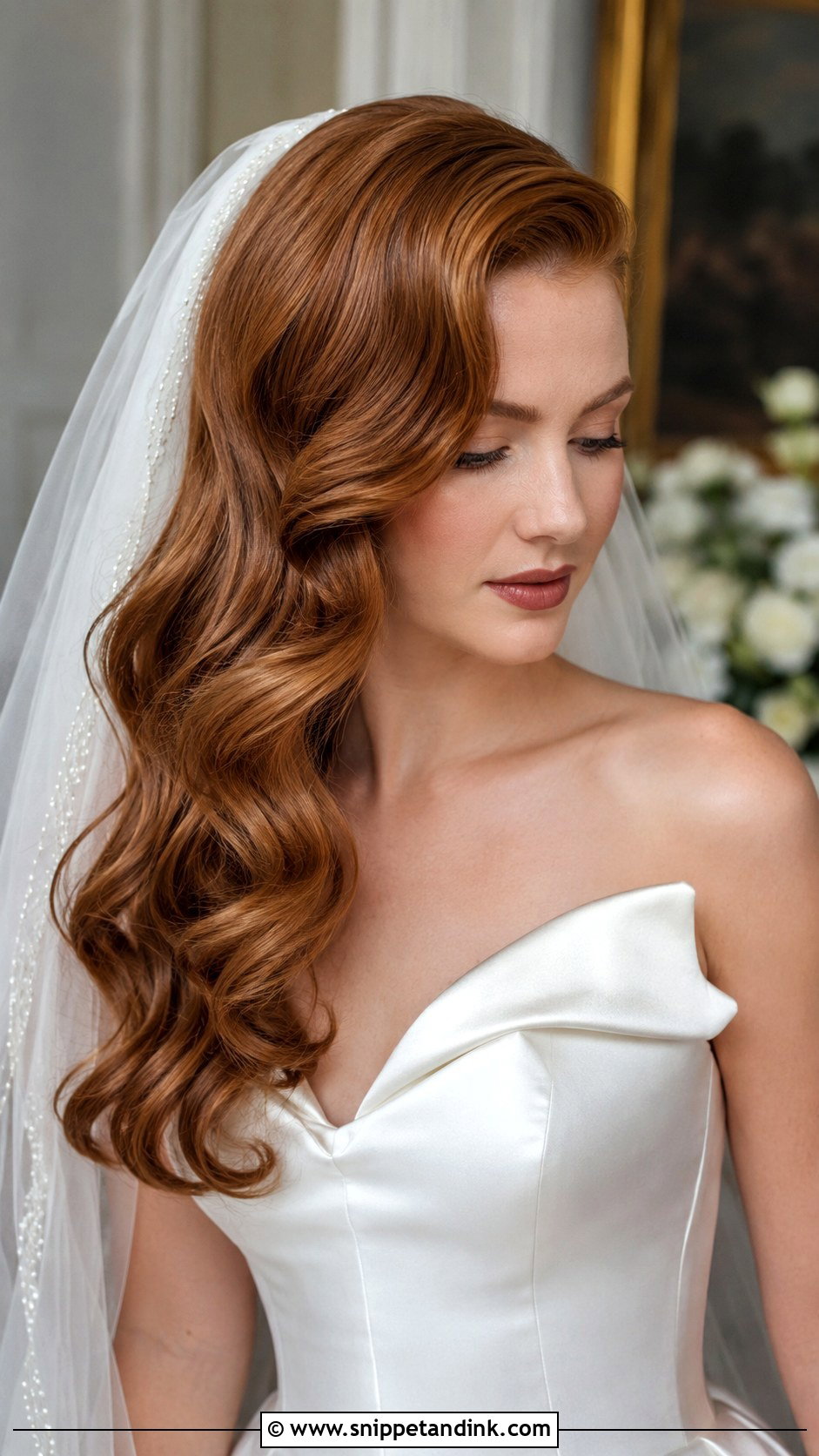
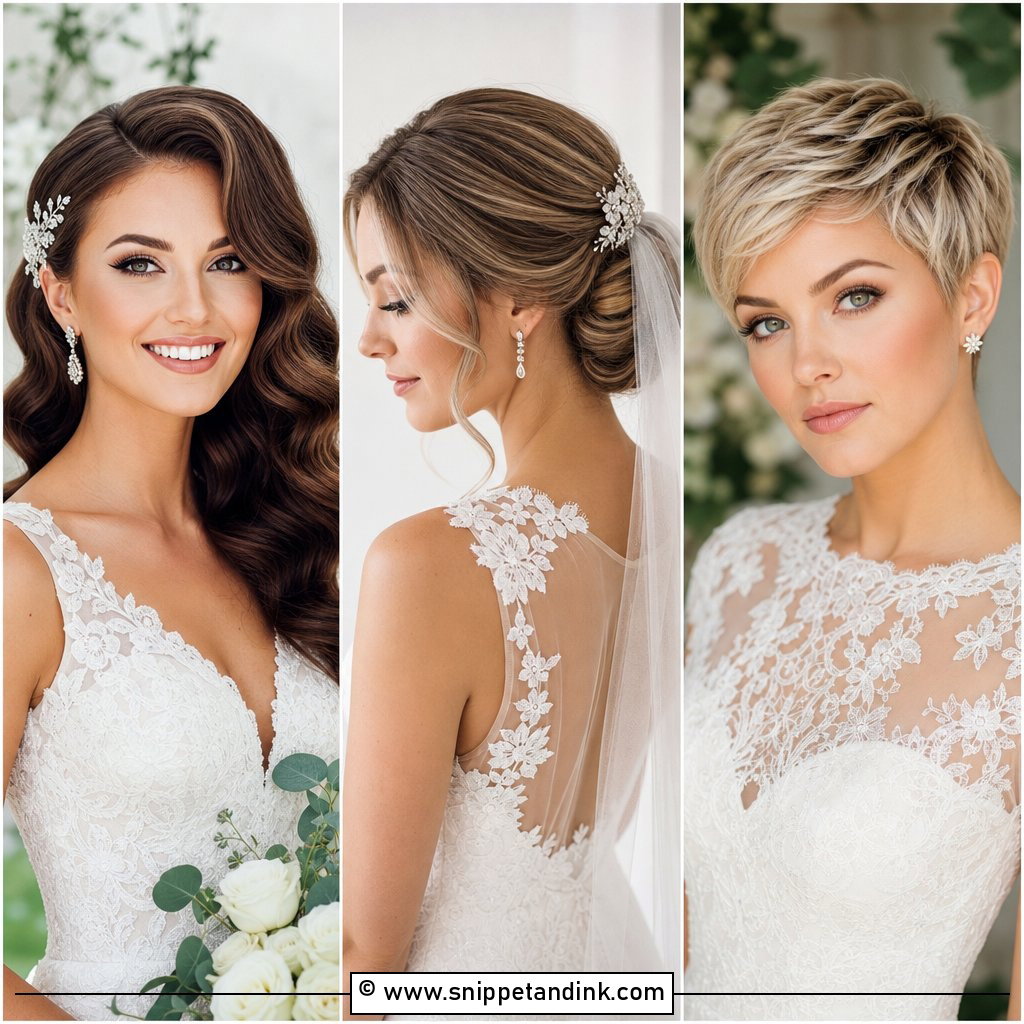
Hollywood waves are a set, not a curl. I wrap every section in the same direction, pin each curl while it cools, then brush the whole lot out with a boar bristle brush until the waves join into one ripple. Skip the brush-out and you get ringlets, not glamour. They’re best on medium to long hair with some weight, since layers break the pattern. You can wear them fully down or tuck one side behind the ear with a hidden pin. Keep shine spray for the end, held at arm’s length, or the waves go limp and greasy.
4. Messy High Bun With Tendrils
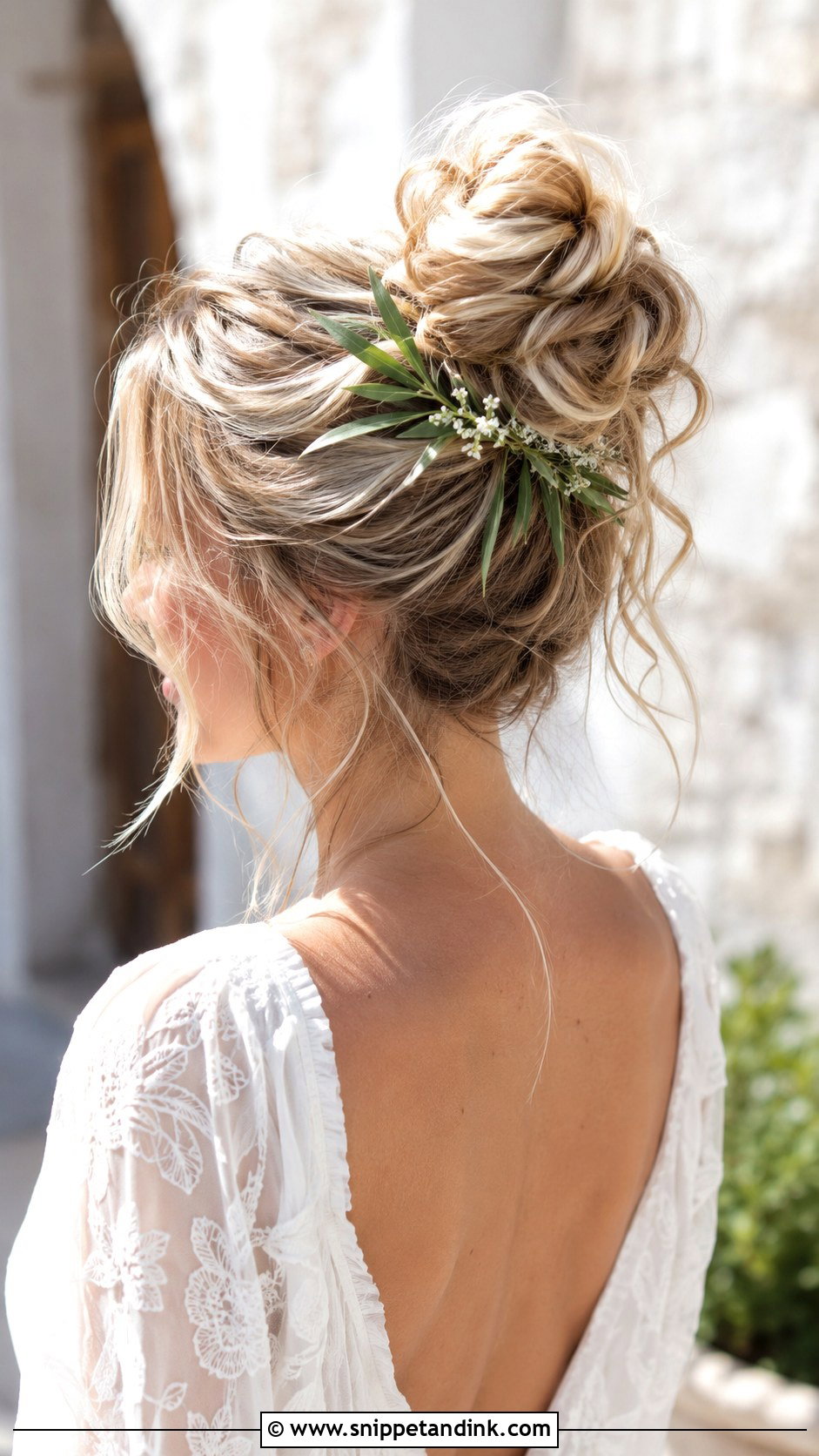
The messy high bun only looks careless. Behind the loose finish is a tight ponytail base, a doughnut of backcombed hair and a lot of pins hidden in the twists. I pull out the tendrils last, after the bun is secure, so they fall where the face needs them rather than where they happened to land. It keeps the neck cool, which matters at an outdoor summer ceremony. It’s not my first suggestion for very fine or short layered hair, because the shorter pieces escape and the bun can look thin from the back.
5. Classic French Twist Updo
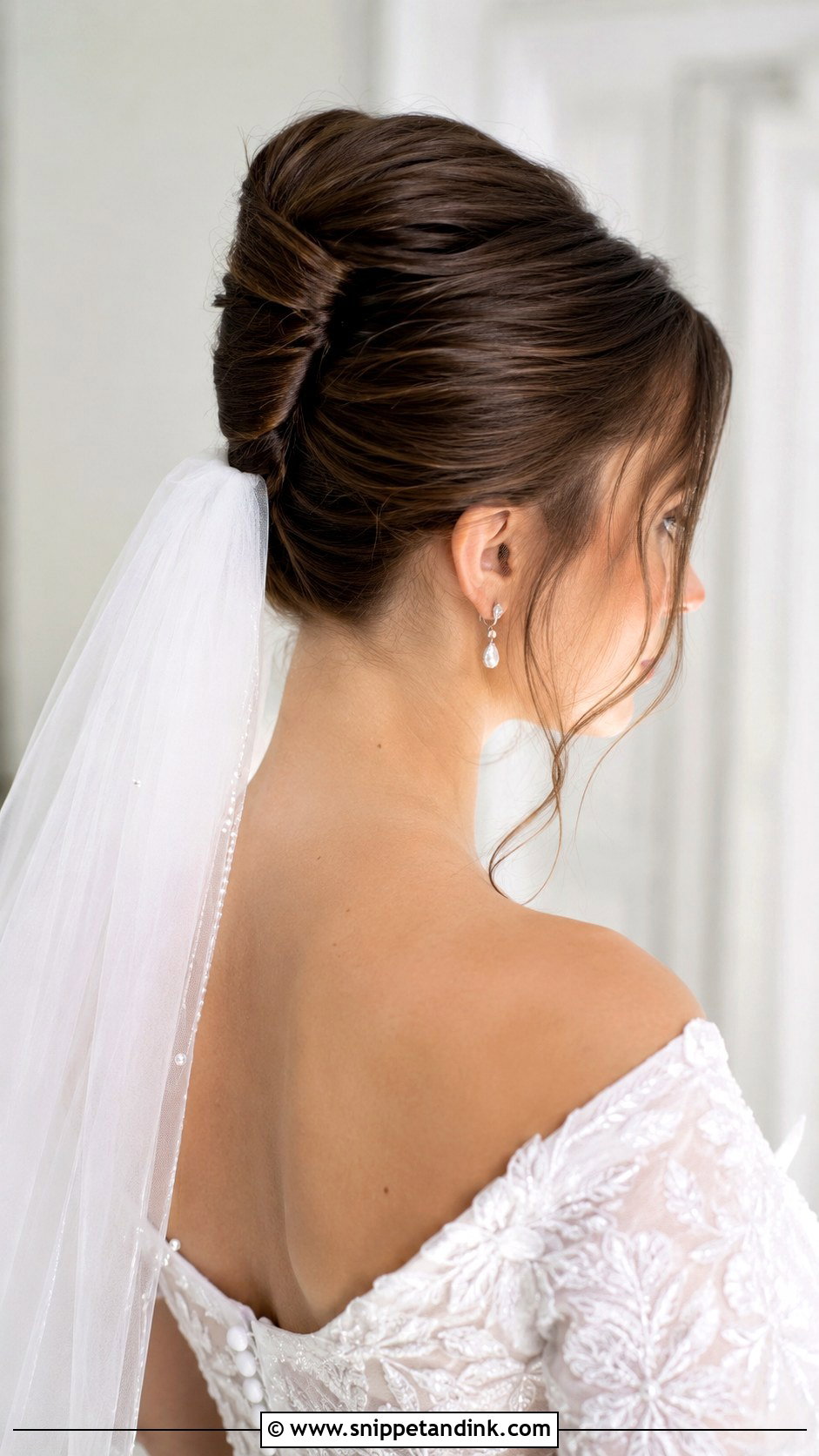
I like a French twist for brides wearing a tiara or a heavy cathedral veil, because the vertical roll gives the comb a long, firm seam to slide into. The hair is gathered to one side, twisted up the back of the head and pinned along the fold, with pins hidden inside the roll. It needs reasonable length, roughly to the shoulder blades, and it struggles on thick, heavy hair unless I thin the twist with a small padding. Leaving a couple of wisps loose stops it from looking too formal for a relaxed reception.
6. Boho Braided Crown
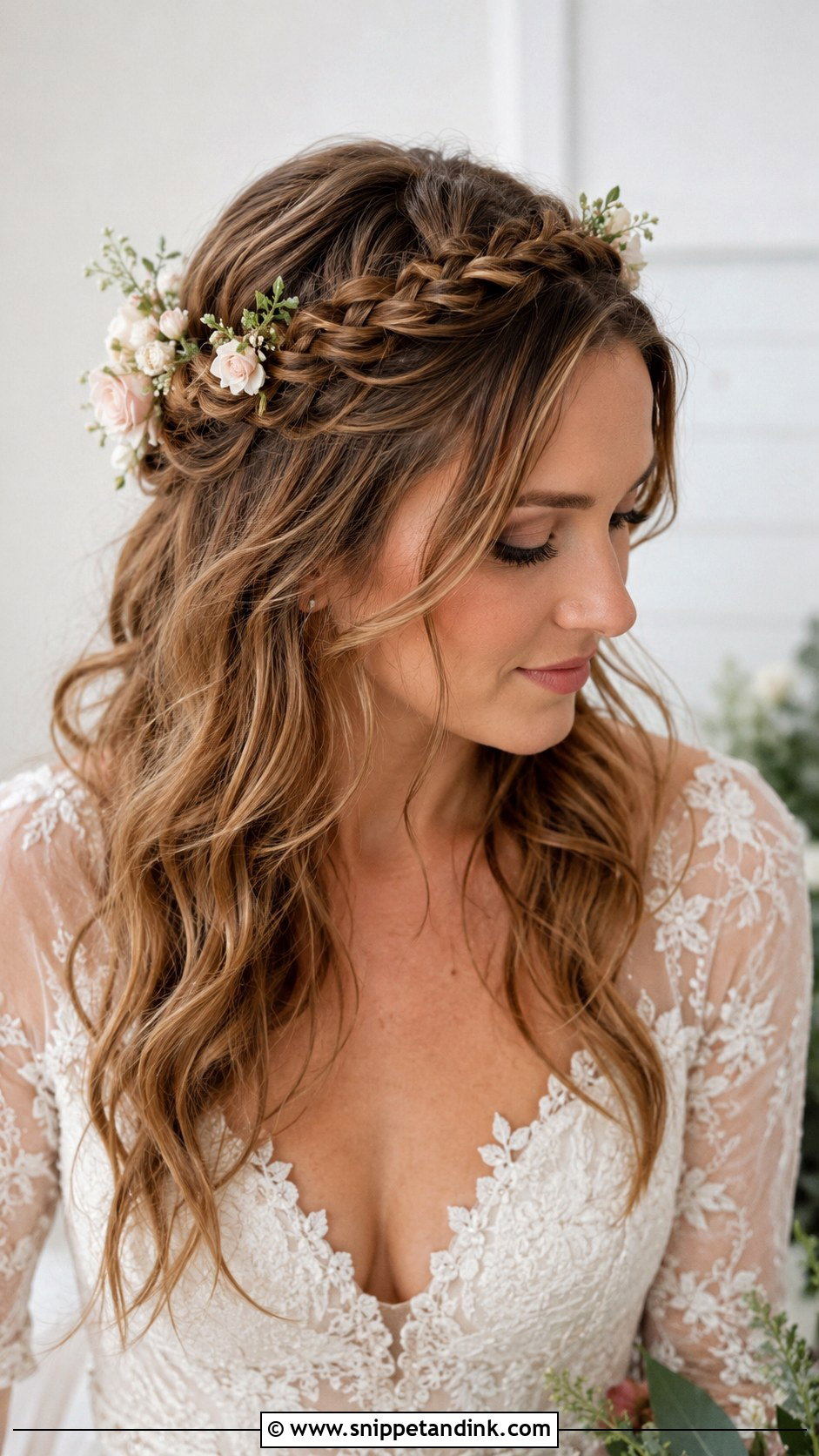
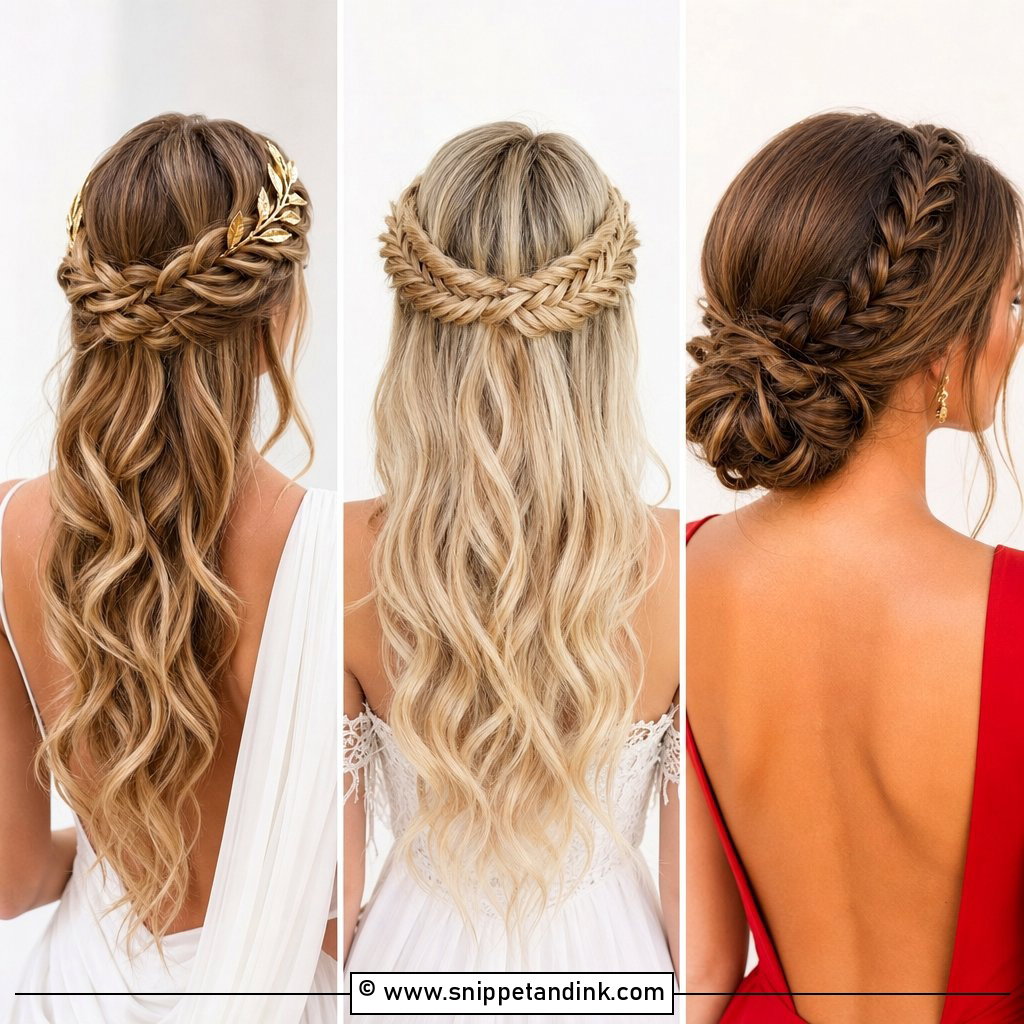
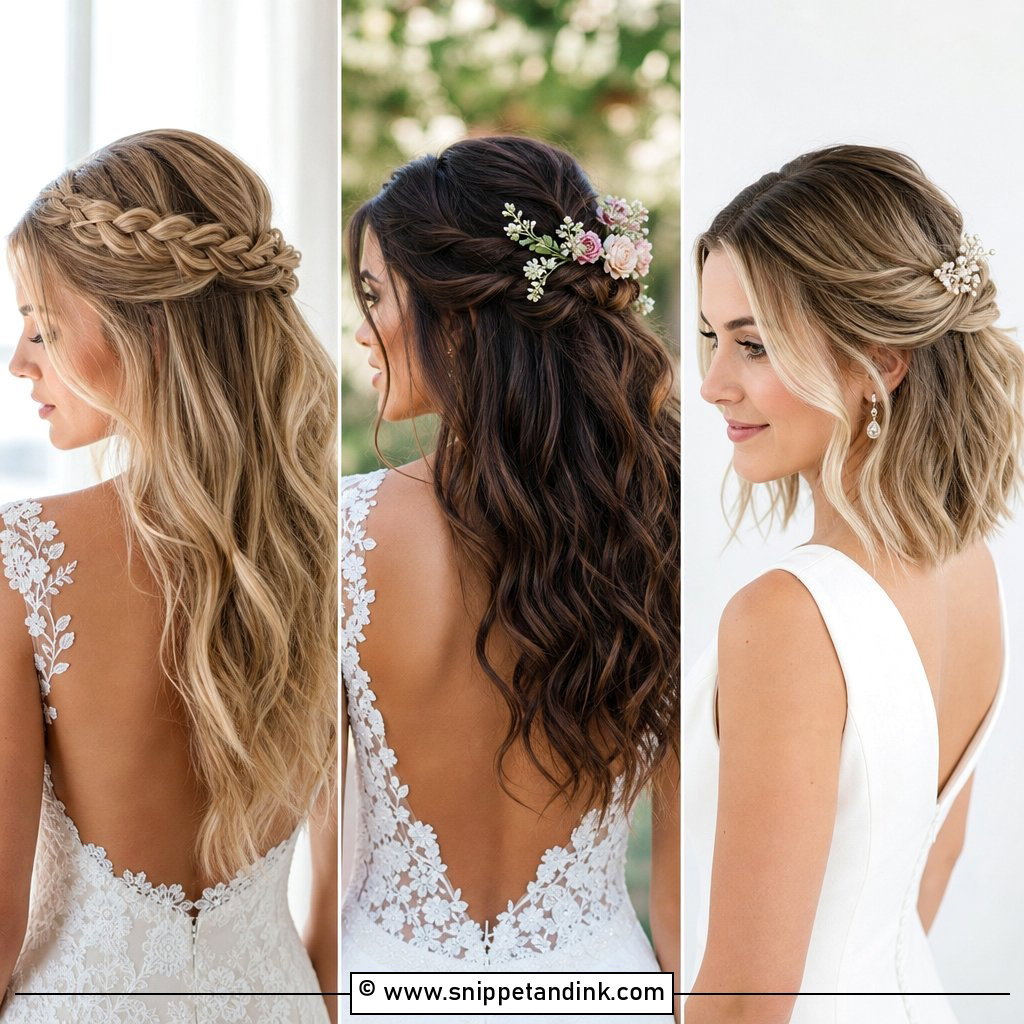
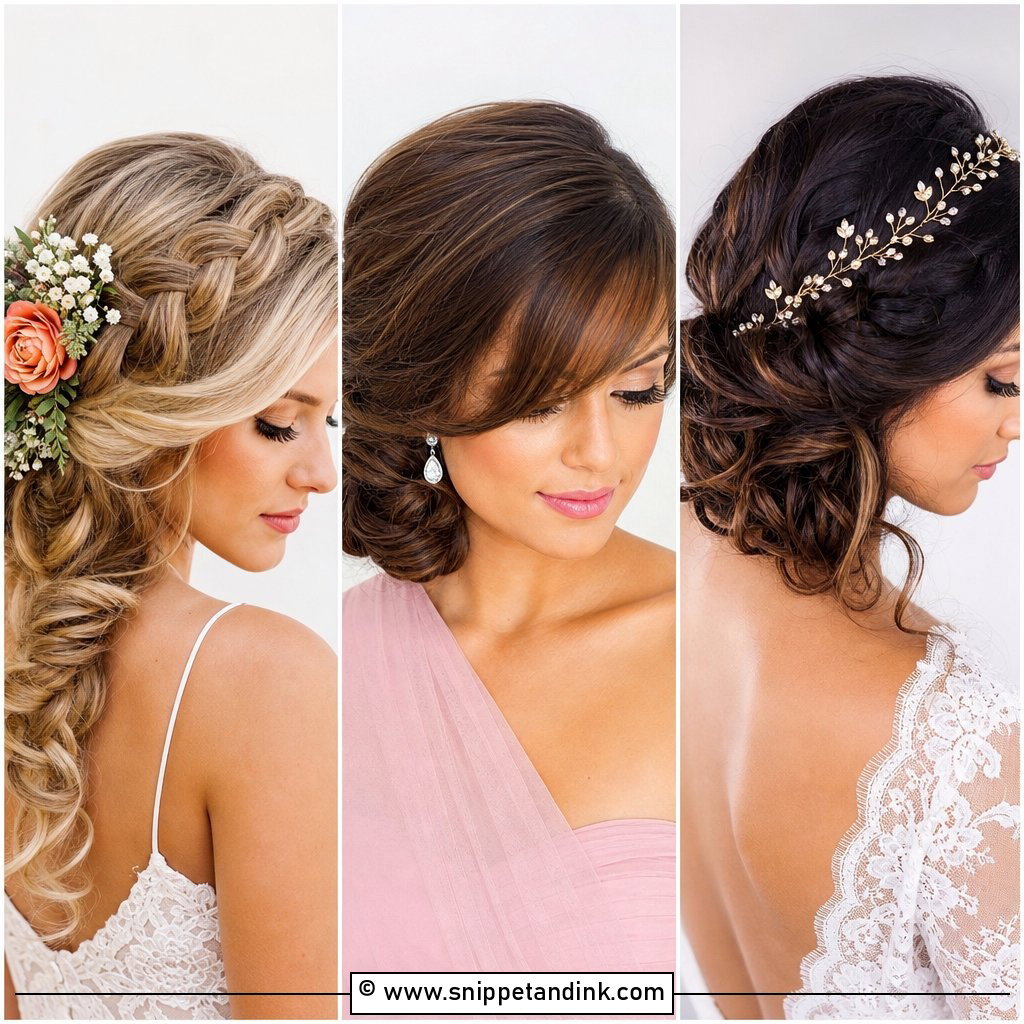
A braided crown wraps a Dutch or French braid around the head like a halo, with the rest left loose or gently pinned. I braid it slightly tighter than you’d expect, then pancake the edges, because a loosely braided crown sags at the temples after a few hours. It suits garden and outdoor weddings, and small flowers slot neatly into the gaps of the weave. Medium hair can manage it with a few hidden clip-in extensions. Very short layers poke out of the braid and are the main reason this one fails.
7. Low Twisted Chignon With Waves
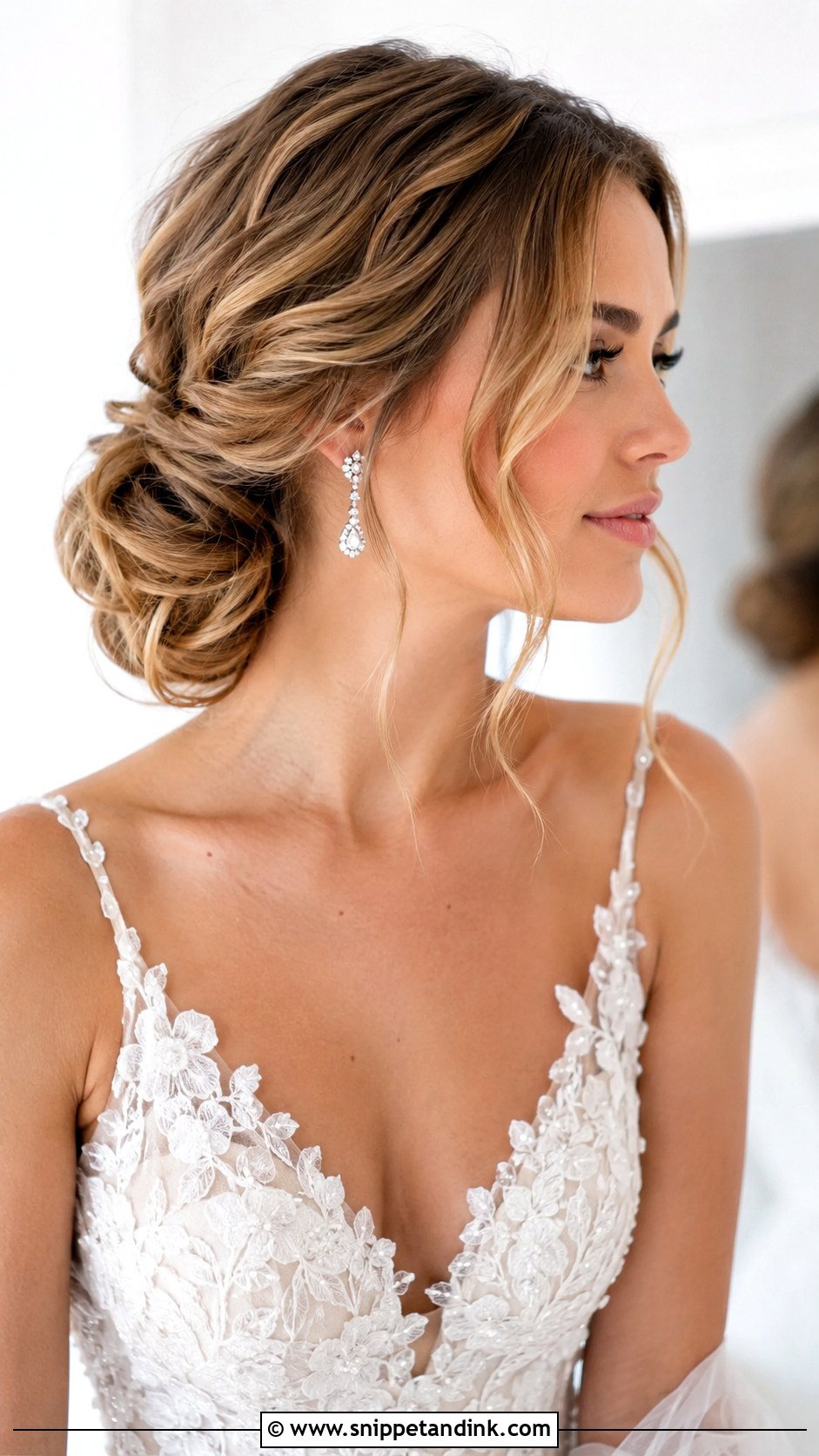
The low twisted chignon is what I reach for when a bride asks for an updo that still looks soft. I split the hair into two or three sections, twist each one loosely and coil them together at the nape, leaving a few waves around the face. Because it sits low, it works with high necklines and with veils that attach underneath. Add a sparkling pin or delicate vine along one side of the knot if you’d like detail. If your hair is very thick, ask for the twists to be secured with a small elastic first. Pins alone can slide under that weight.
8. Cascading Curls Half Updo
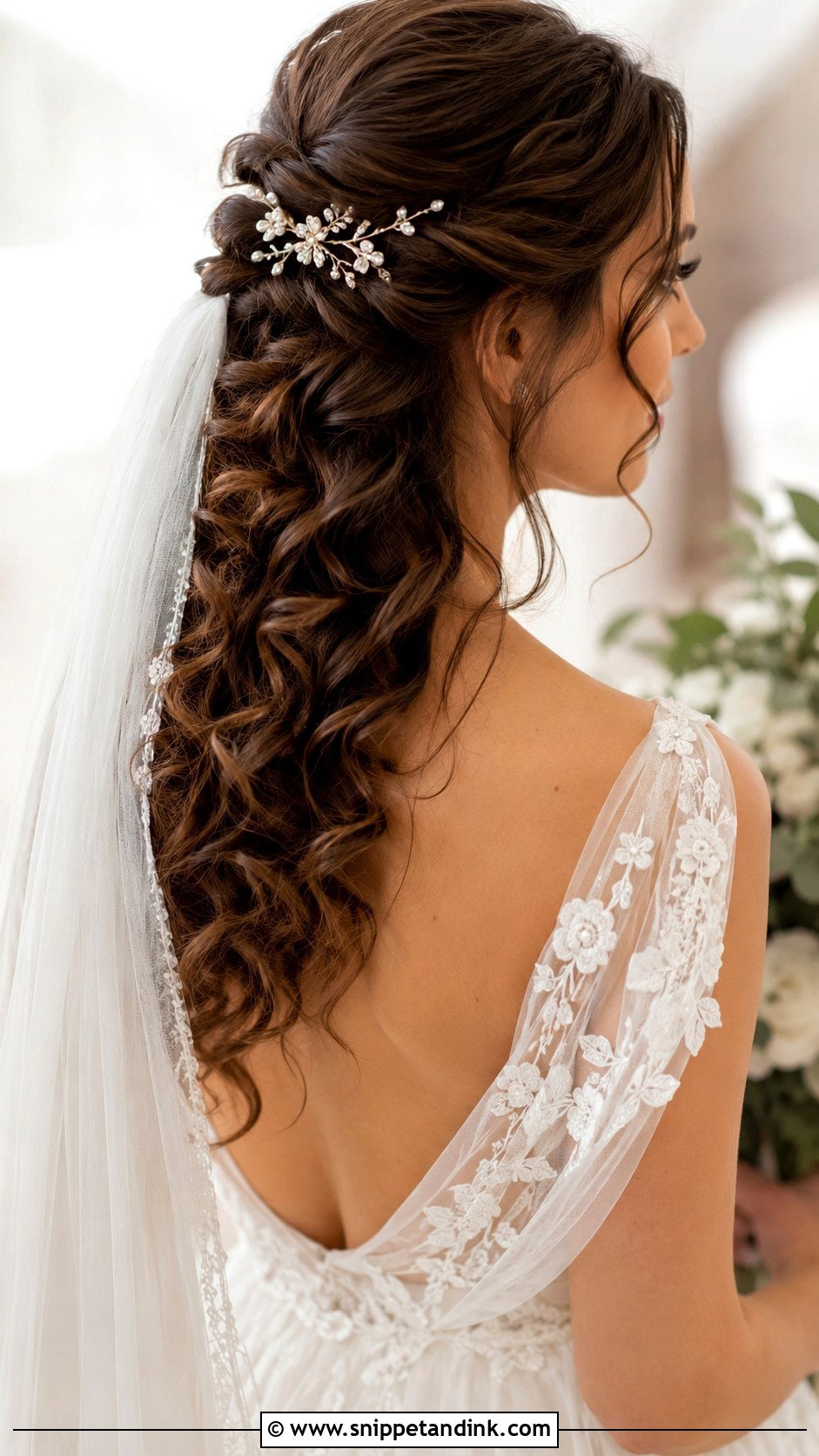
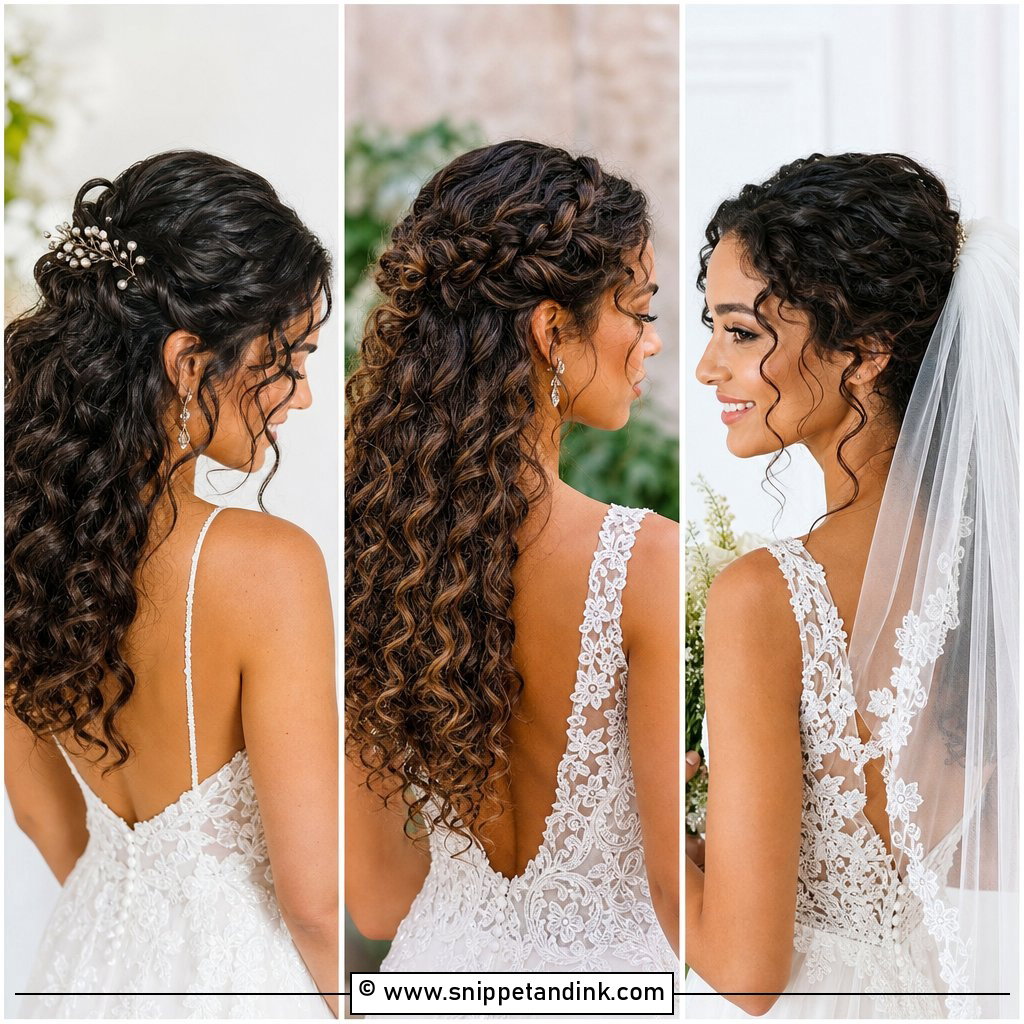
With the cascading curls half updo, the top sections are pinned back and the curls are left to move. It gives you volume and length at once, and a veil anchors well in the pinned area. Naturally curly or wavy hair is the easy case here; I define your own curl rather than replacing it. On straight hair, I curl with a wand and pin each curl to set while I work through the head. The thing to watch is drop. Straight, fine hair can lose half its curl within a few hours, so set firmly and plan a quick spritz before the reception.
9. Sleek Ballerina Bun
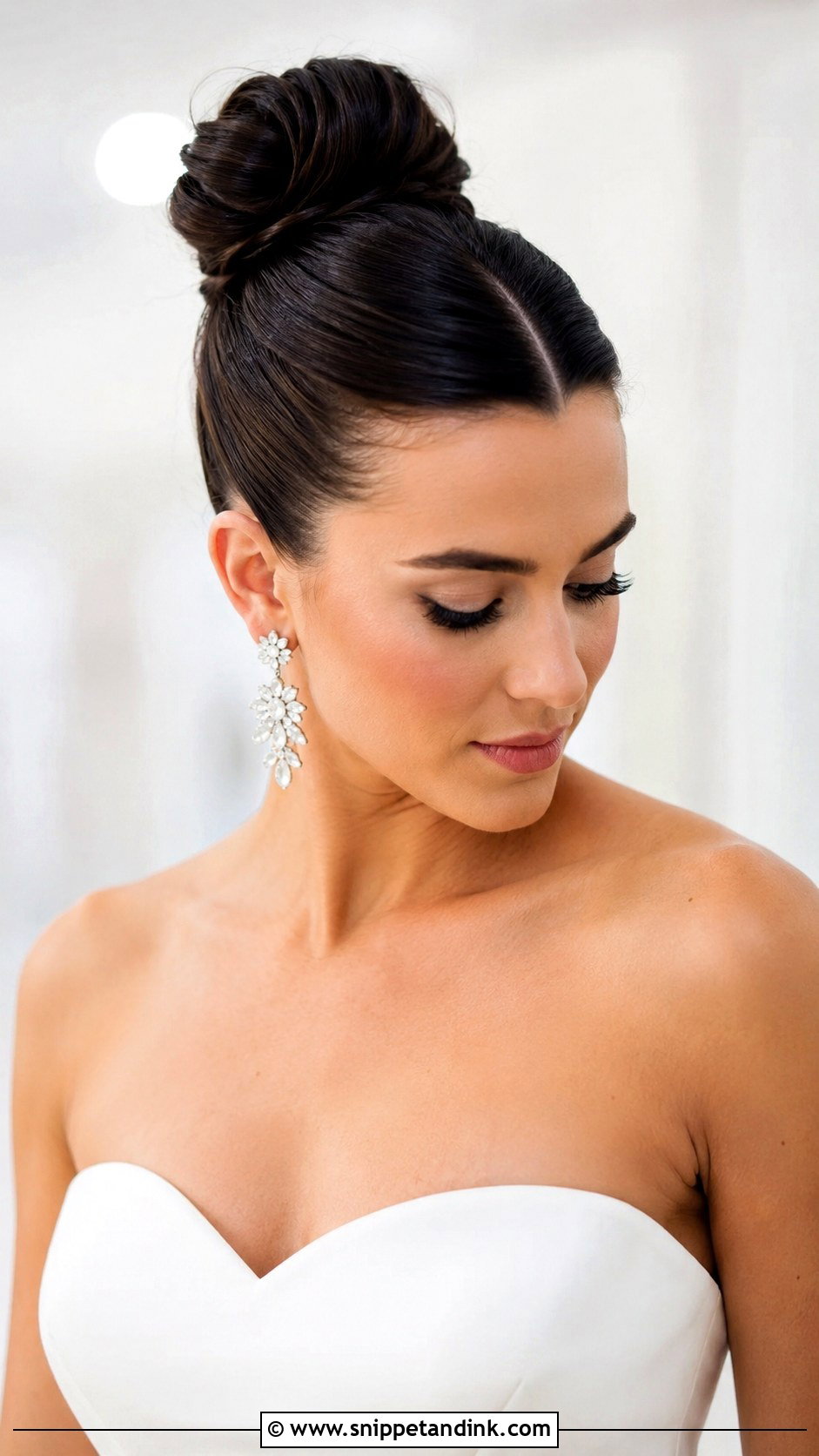
The sleek ballerina bun sits higher than a low bun, usually at the crown or just below it, with a sharp center part. Placement is the whole style. Too high and it fights a veil; too low and it loses the dancer shape. I always check it from the side in a mirror before pinning. It shows off strong earrings and open necklines, and it keeps the neck cool. It is unforgiving with a cowlick at the front hairline, so tell me about any at the trial and I’ll plan the part around it.
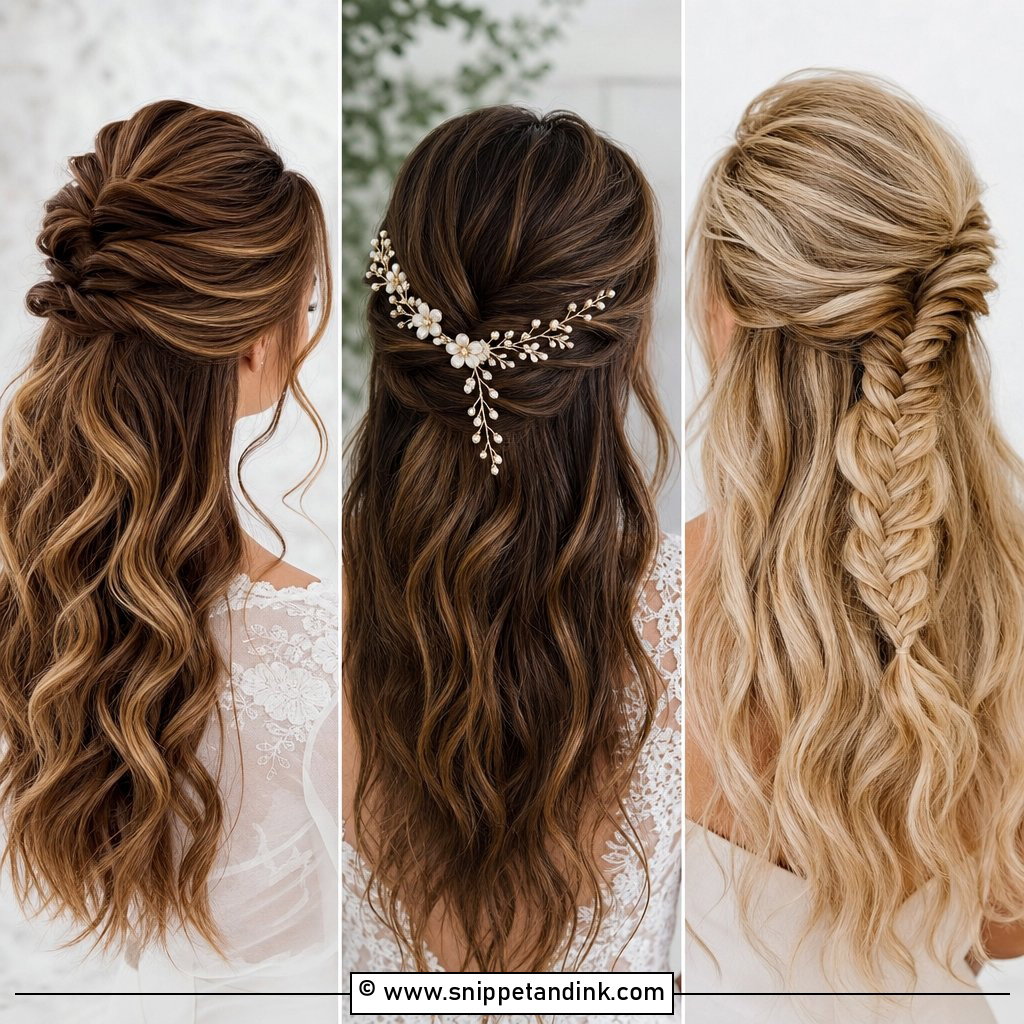
10. Fishtail Braid for Brides
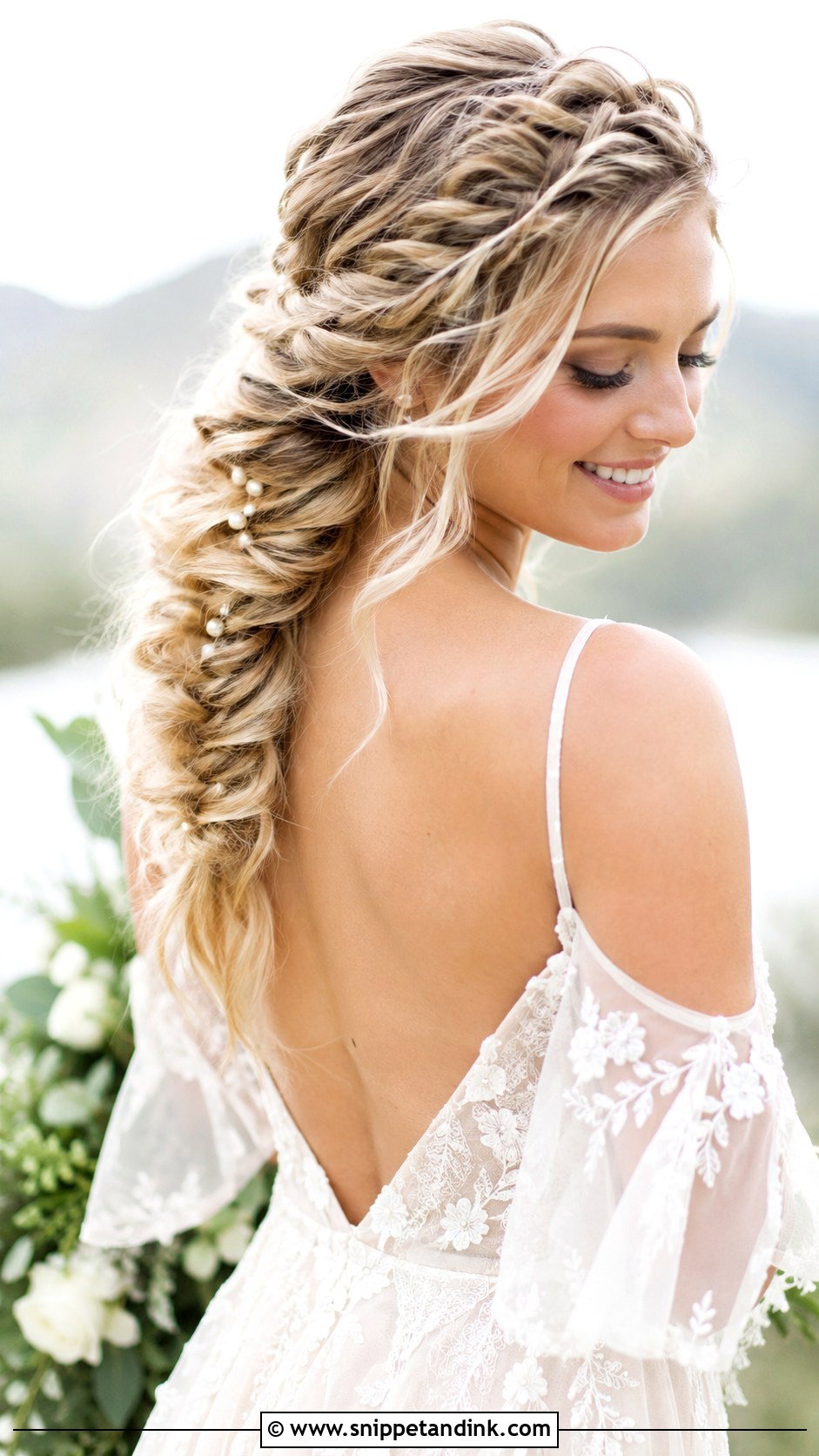
A fishtail looks complicated, but it’s just two sections with small pieces crossed from the outside in. The smaller the pieces, the finer the weave, and the longer it takes. I can work it as a side braid, down the back or wrapped into an updo. It needs long hair to show the pattern, ideally past the shoulders. I pull the edges slightly loose for softness, though not so loose that it unravels on a dance floor. Tiny pearl pins along the plait catch the light without weighing it down.
11. Textured Updo With Curls
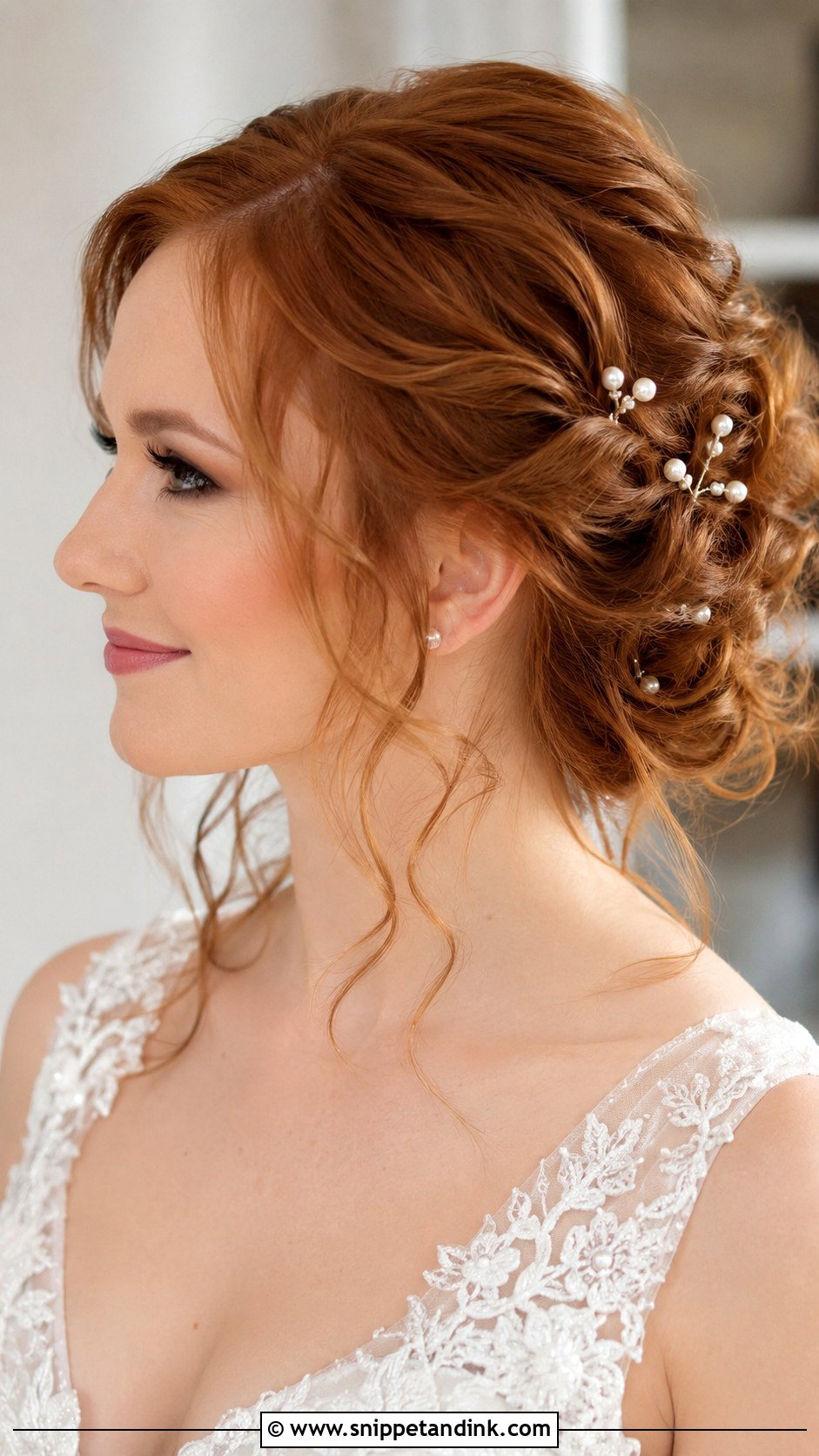
A textured updo mixes curls, twists and pinned waves so it looks built up rather than slicked. Prep matters most here. I add texture spray or dry shampoo through clean hair first, because freshly washed, silky hair won’t grip a pin. Done well, it holds through a long day on most hair types and leaves room for pearls, pins or a few sprigs of flowers. I’d steer you away from it only if you want a very sharp, minimal finish. The undone pieces are deliberate, and they’ll keep moving all evening.
12. Side Swept Waves
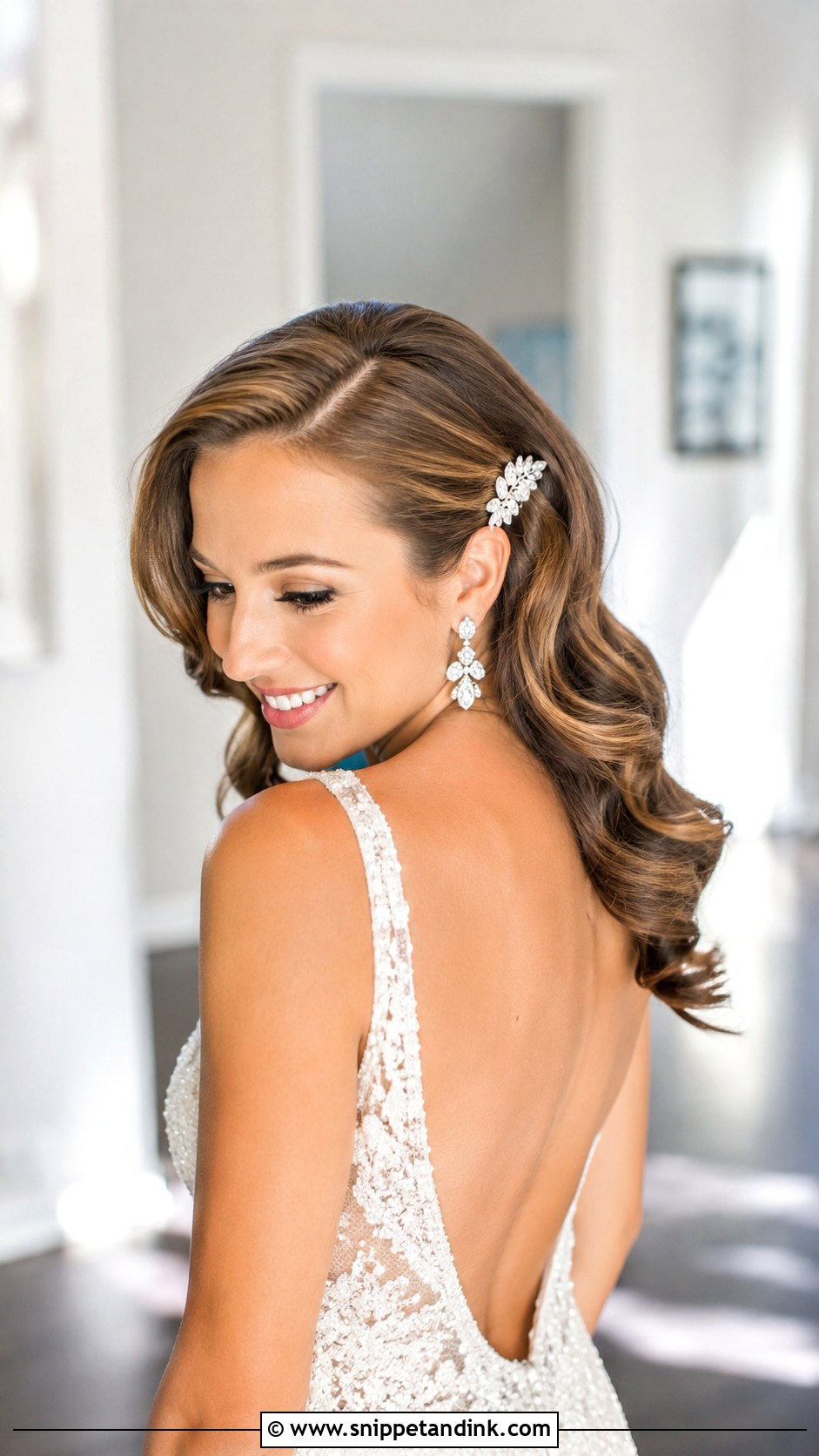
Side swept waves move all the hair over one shoulder, which shows off an open back and one statement earring. The secret is a row of crossed pins hidden behind the ear on the far side, so the hair stays put instead of creeping back to center. Medium to long hair works best. Think about where your partner will stand at the ceremony. I usually sweep the hair toward the guests, so your face stays clear for the camera during the vows. A jeweled pin on the swept side is a nice finish.
13. Sleek Straight Bridal Hair
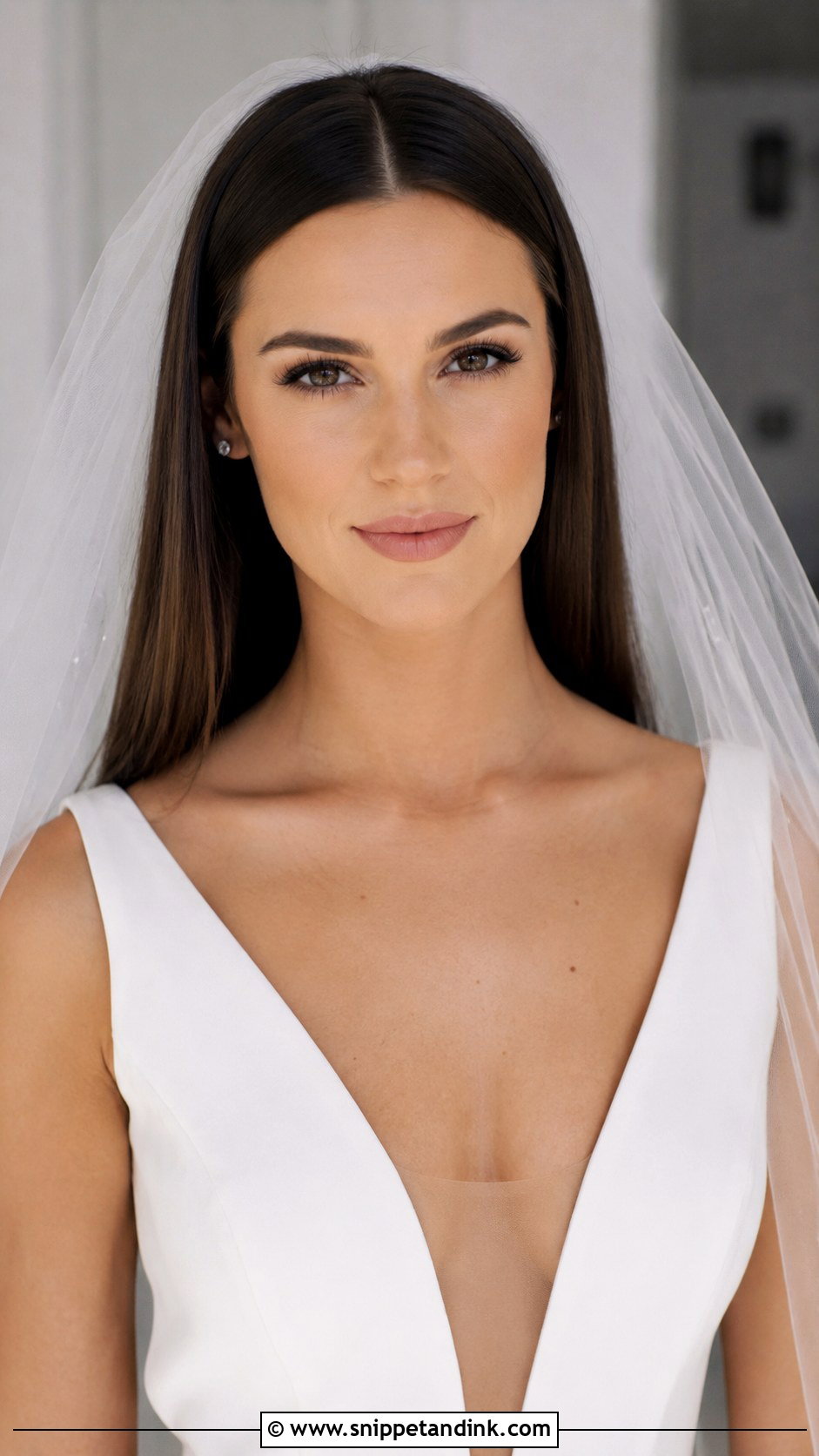
Straight, glossy hair worn down sounds like the easy option, but it’s the one most affected by weather. Humidity puffs it up and a long day flattens the roots. I blow-dry with a round brush for body at the crown, finish with a flat iron on low heat and add a light serum only to the ends. A center or deep side part both work. Keep a small anti-frizz balm in your bag. It suits a sharp modern gown or a dramatic veil, where you want the hair to be quiet and smooth.
14. Dutch Braid Updo
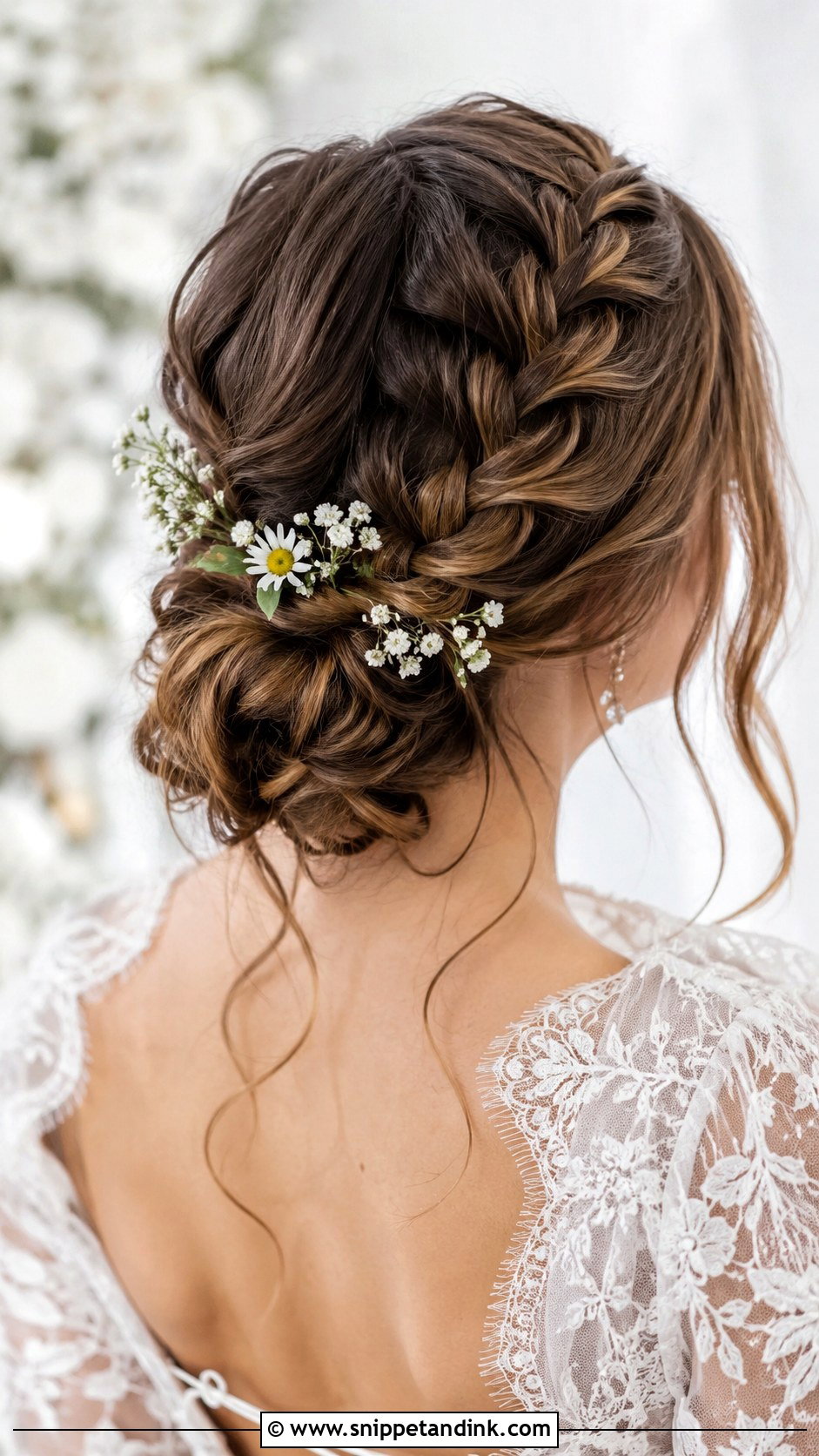
The Dutch braid is braided underhand, so the plait sits raised on top of the hair instead of tucked into it. That raised pattern gives the updo real structure, and it can sweep into a low bun or wrap fully around. It holds very well, which makes it a good pick if you’re planning a lively reception. I ask brides to come with second-day hair for this one, since a little grip keeps the braid from slipping. Pull the edges loose for softness, and add small flowers or pearls along the braid if you like.
15. Romantic Loose Waves Down
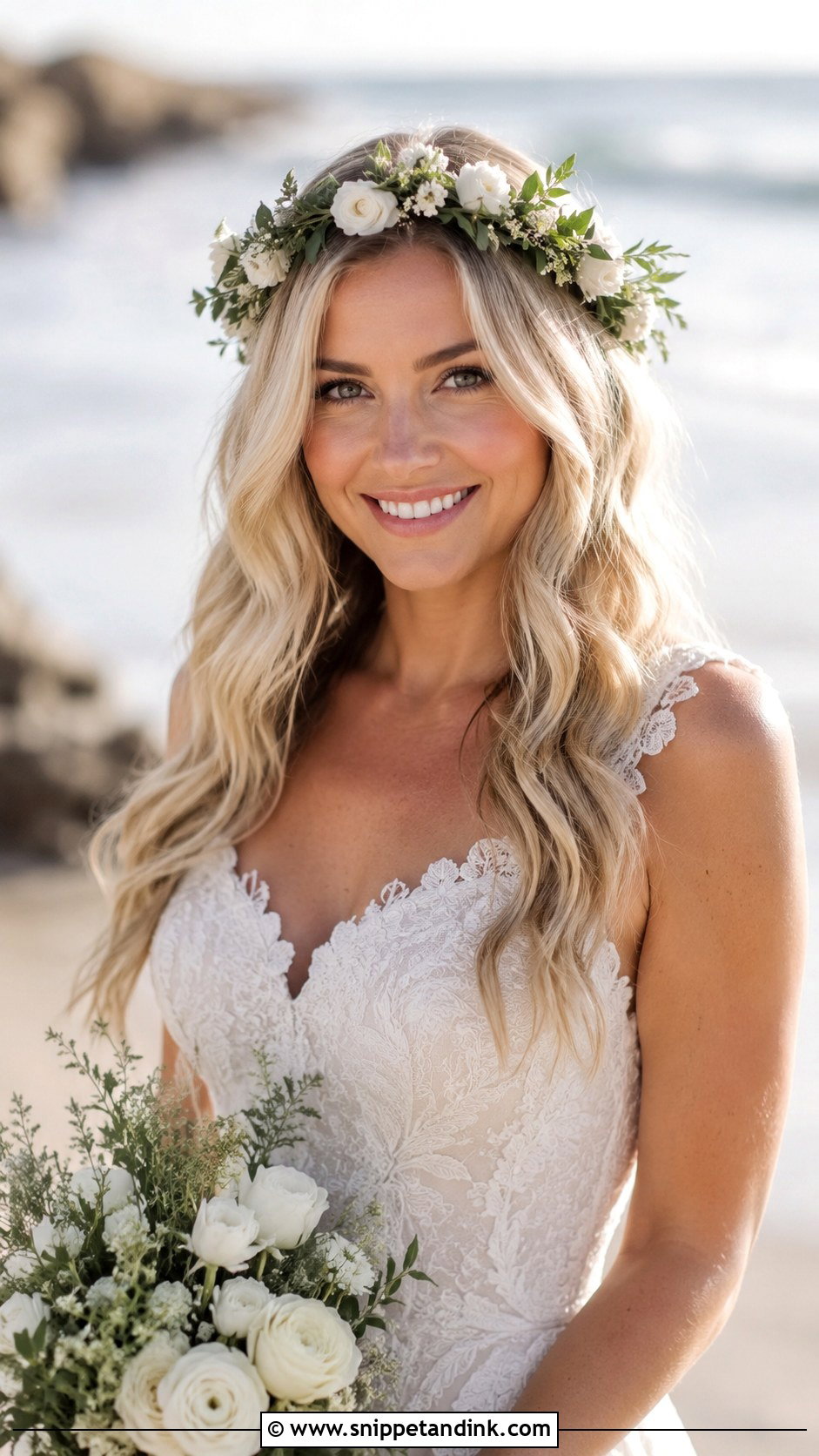
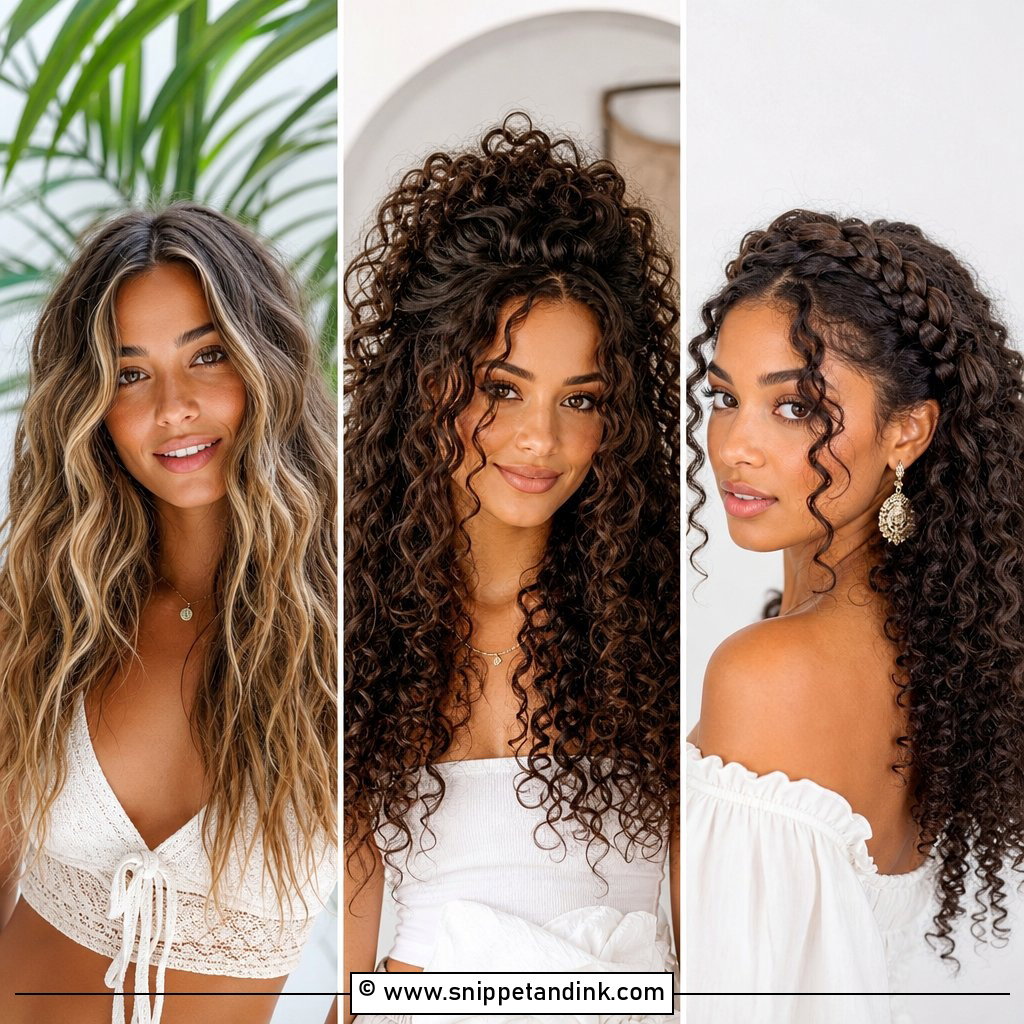
Loose waves worn down are what most brides picture first, and they’re the hardest style to keep. Gravity, heat and hugging all pull them straight. I curl in alternating directions so the waves don’t clump, let them cool fully, then break them apart with my fingers. Medium to long hair suits it, and so do flower crowns or a couple of small pins. For beach or garden weddings in humid weather, I’d honestly consider the half-up version instead, so the front at least stays put.
16. Low Bun With Braided Detail
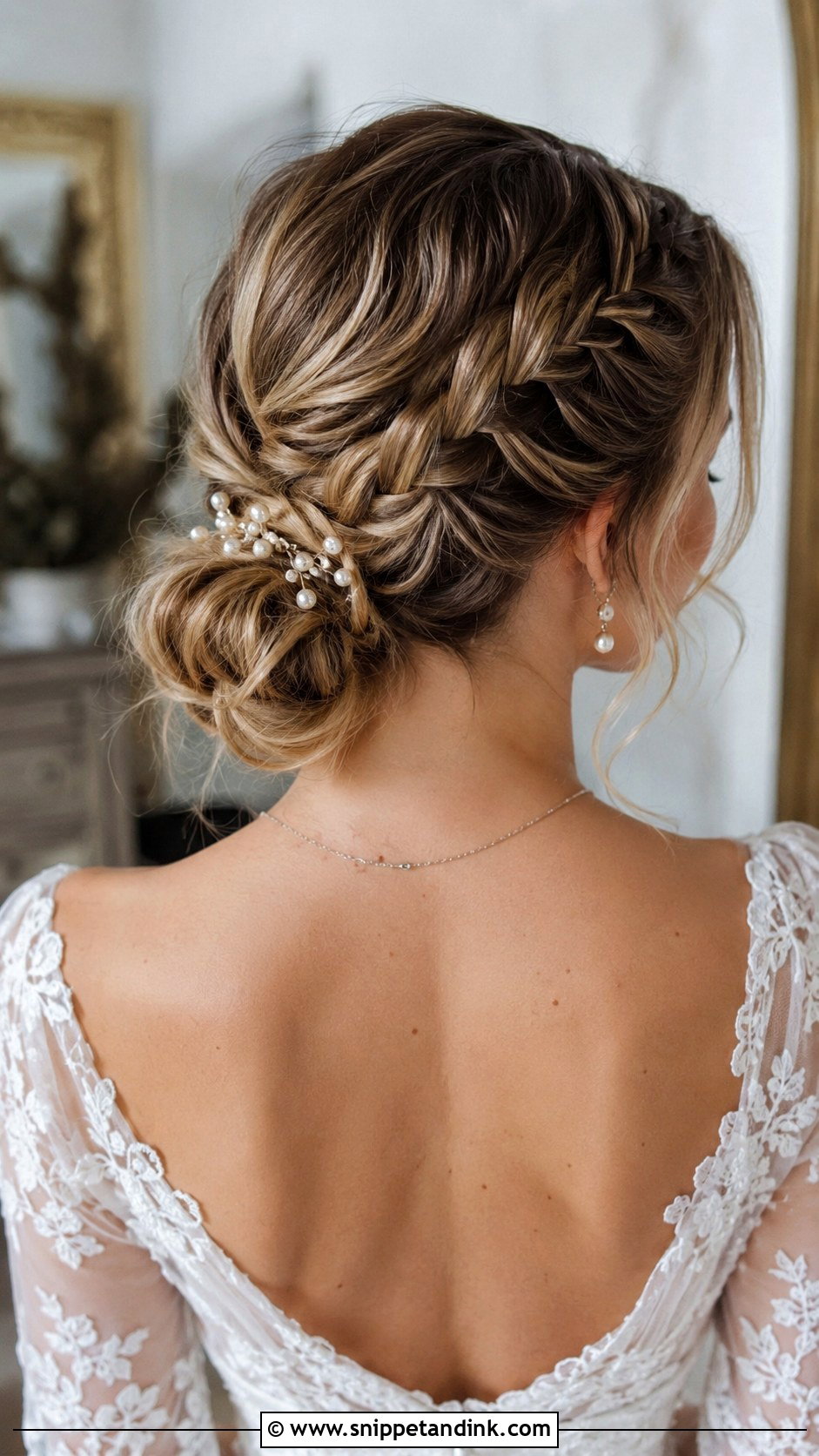
A low bun with braided detail is a simple low knot accented by one or two thin braids that wrap the base or run from the temple. The braids do two jobs: they add interest and they hide pins. It sits low enough to flatter most necklines and stays secure through hours of dancing. I’ll often tuck pearls into the braid rather than around the bun, so they don’t press into your head when you lean back in a chair. It works for both formal and relaxed weddings.
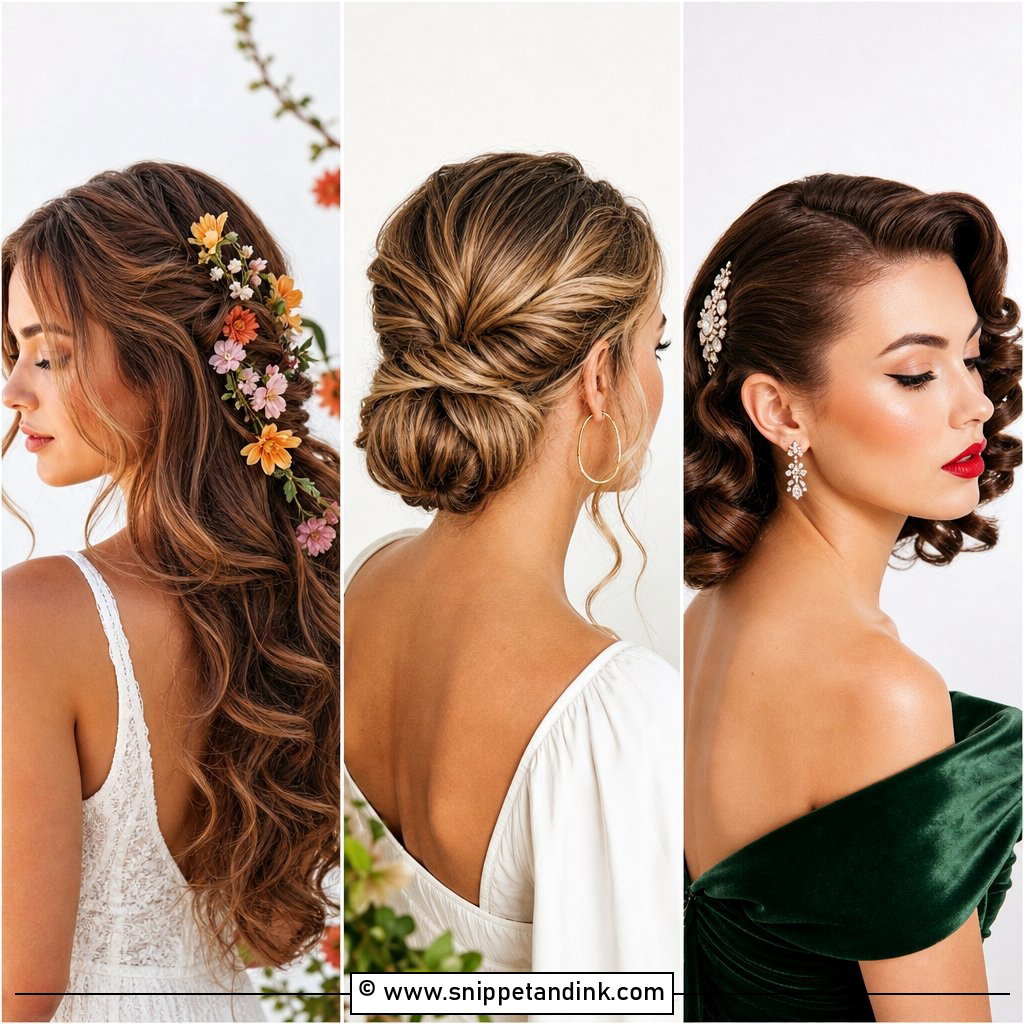
17. Bridal Updo With Flowers
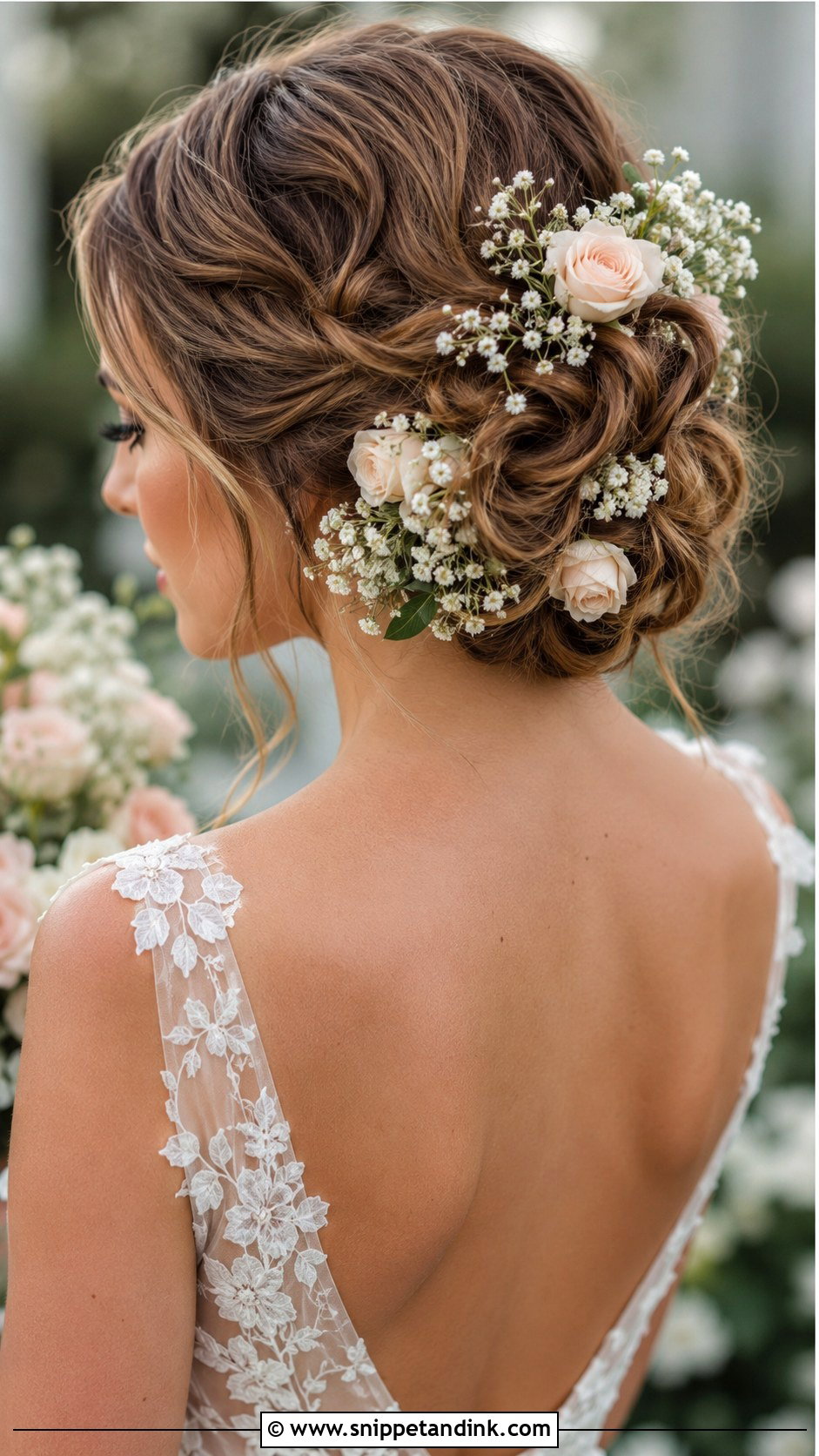
A floral updo is half my job and half your florist’s. Fresh flowers in hair wilt fastest in heat, so I ask for hardy blooms such as spray roses, waxflower or small orchids, wired and taped, rather than loose stems. Baby’s breath is light and holds up well. Delicate garden flowers like sweet peas can droop before the reception. I build the updo first and add flowers last, pinned into the twists. Keep the scale in proportion to your bouquet, so the two read as a set in photos.
18. Short Bridal Hairstyle With Accessories
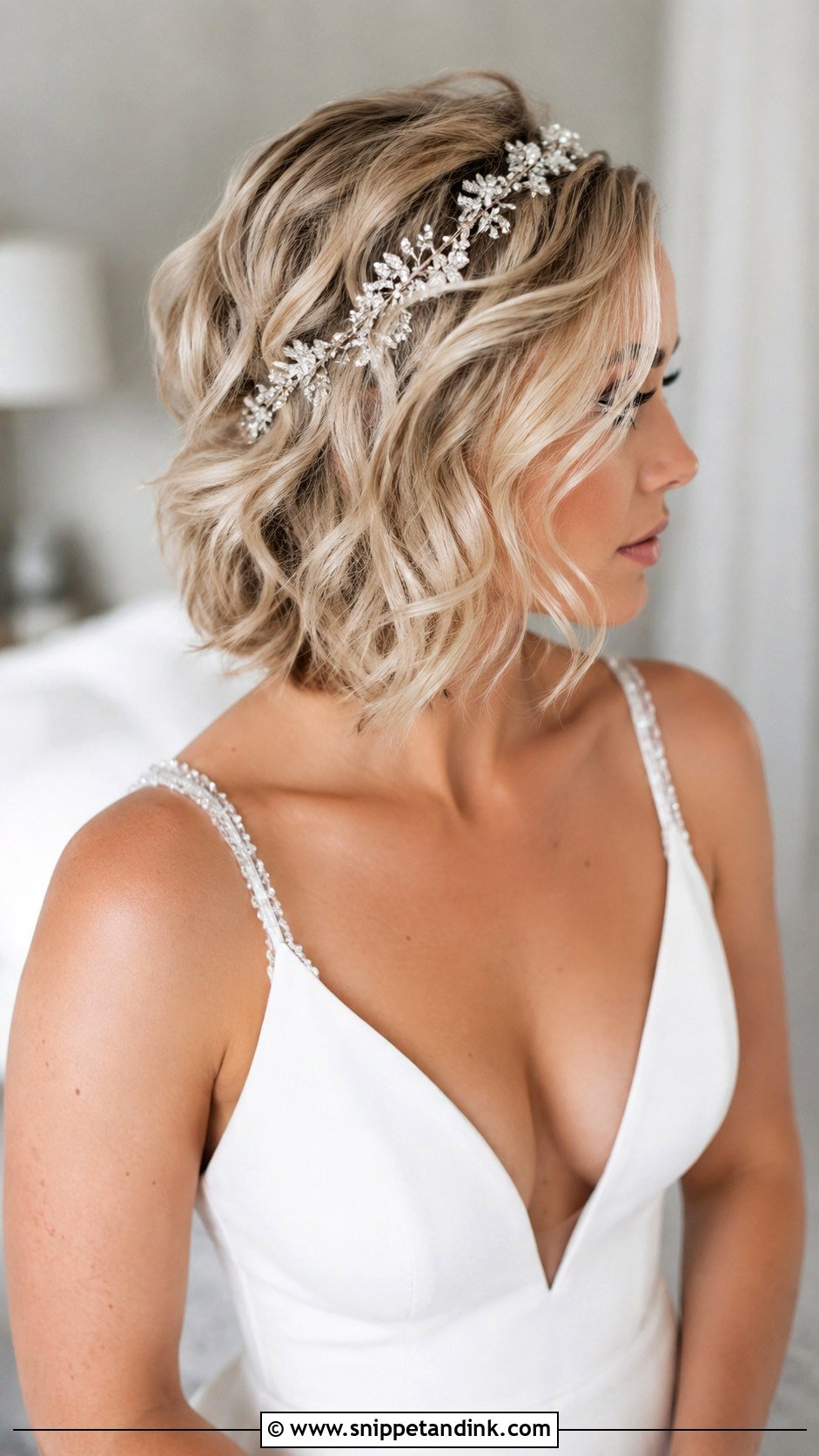
Short hair has fewer options for pinning but plenty for detail. A bob can take soft waves, a pixie can be textured and swept, and the accessories do the bridal work: a jeweled clip above one ear, a headband or a small comb. I find accessories placement matters more than the styling here. Lay them all out at the trial and test each one against your veil. Short-haired brides should get any trim two to three weeks before the wedding so the cut has a chance to settle.
19. Vintage Inspired Bridal Updo
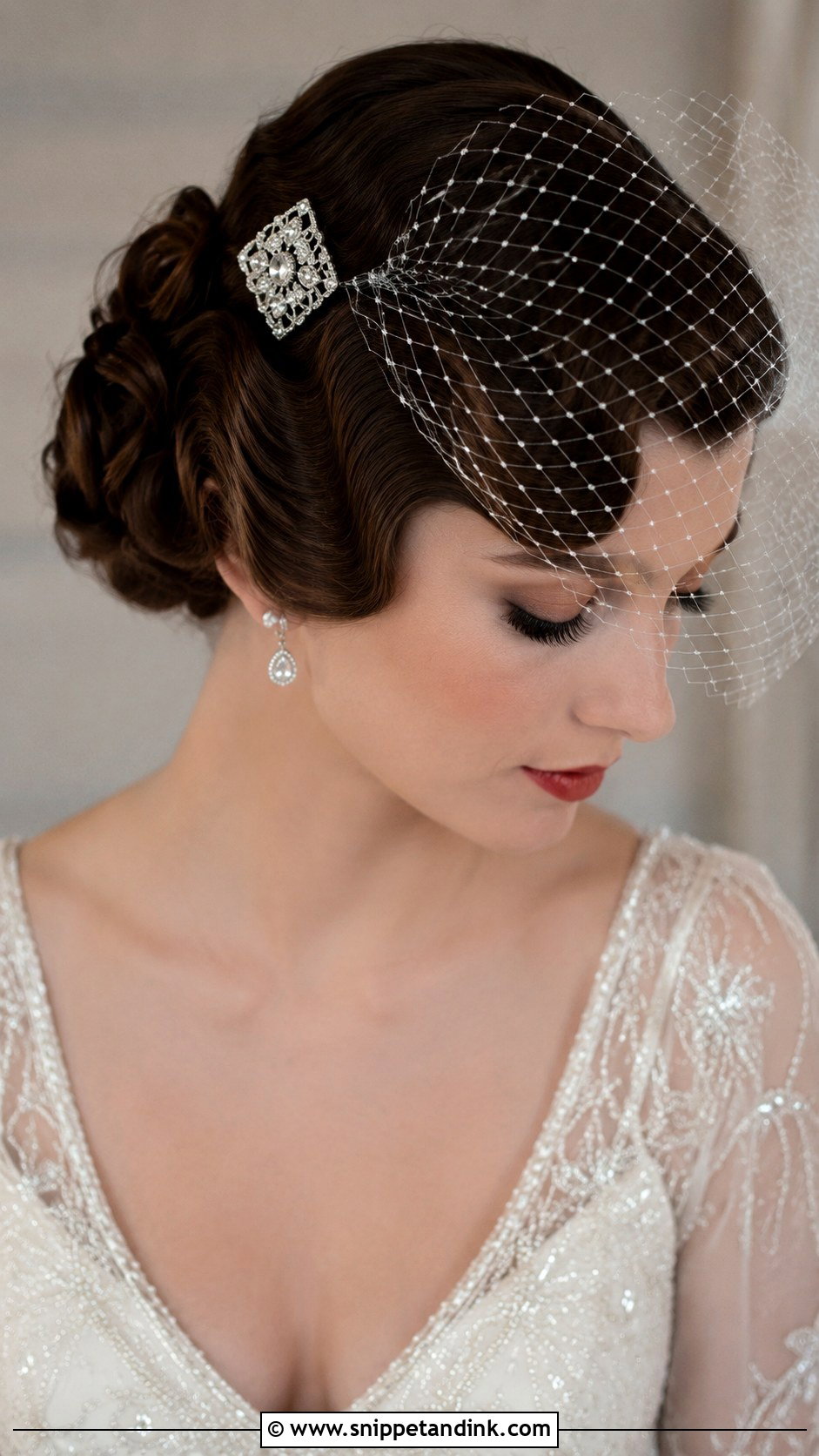
A vintage updo borrows from the 1920s to 1950s: finger waves, pin curls or a structured roll at the back. These styles depend on a proper wet or heat set, which takes longer than most modern looks, so budget extra chair time. They pair naturally with a birdcage veil or an art deco pin. The detail shows best at close range, so they suit an intimate wedding or a vintage-themed day. If your gown is very modern, the mix can look like a costume, and I’d say so at the trial.
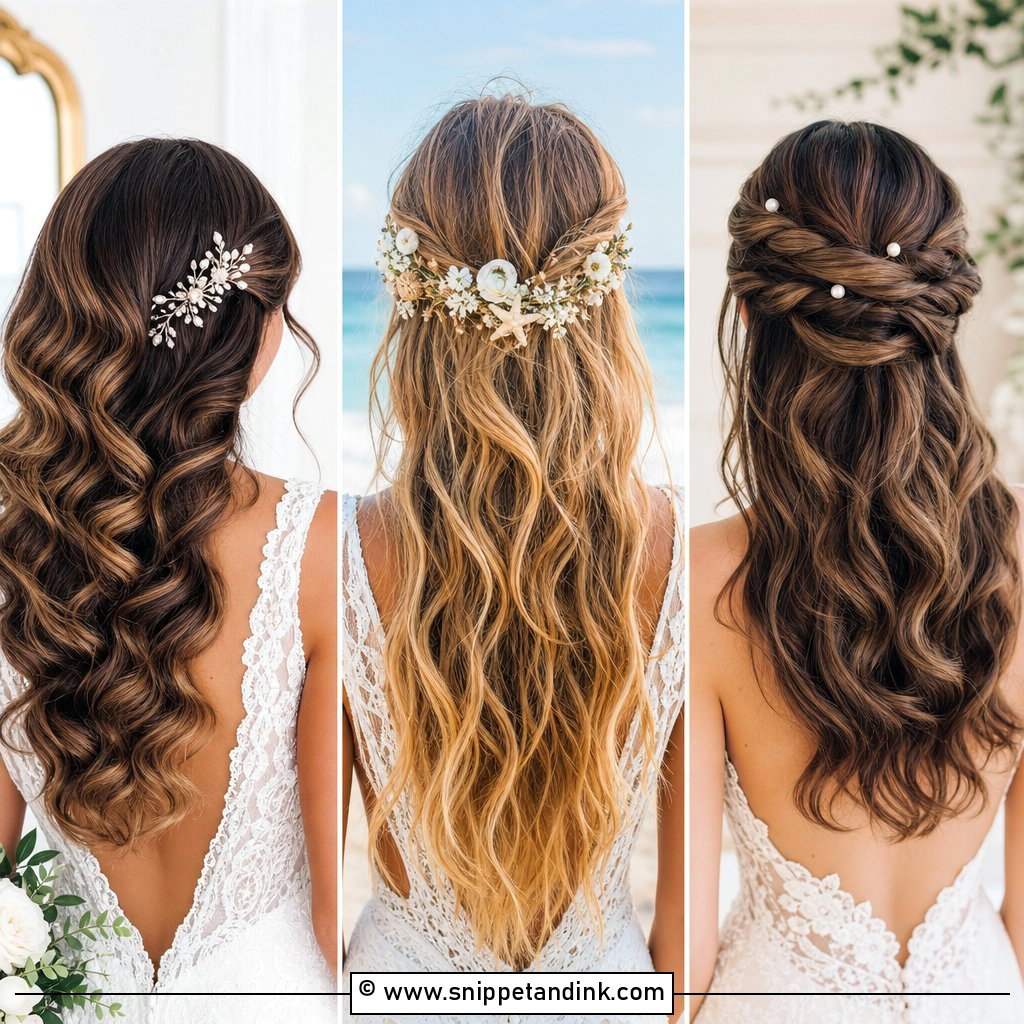
20. Boho Braided Half Updo
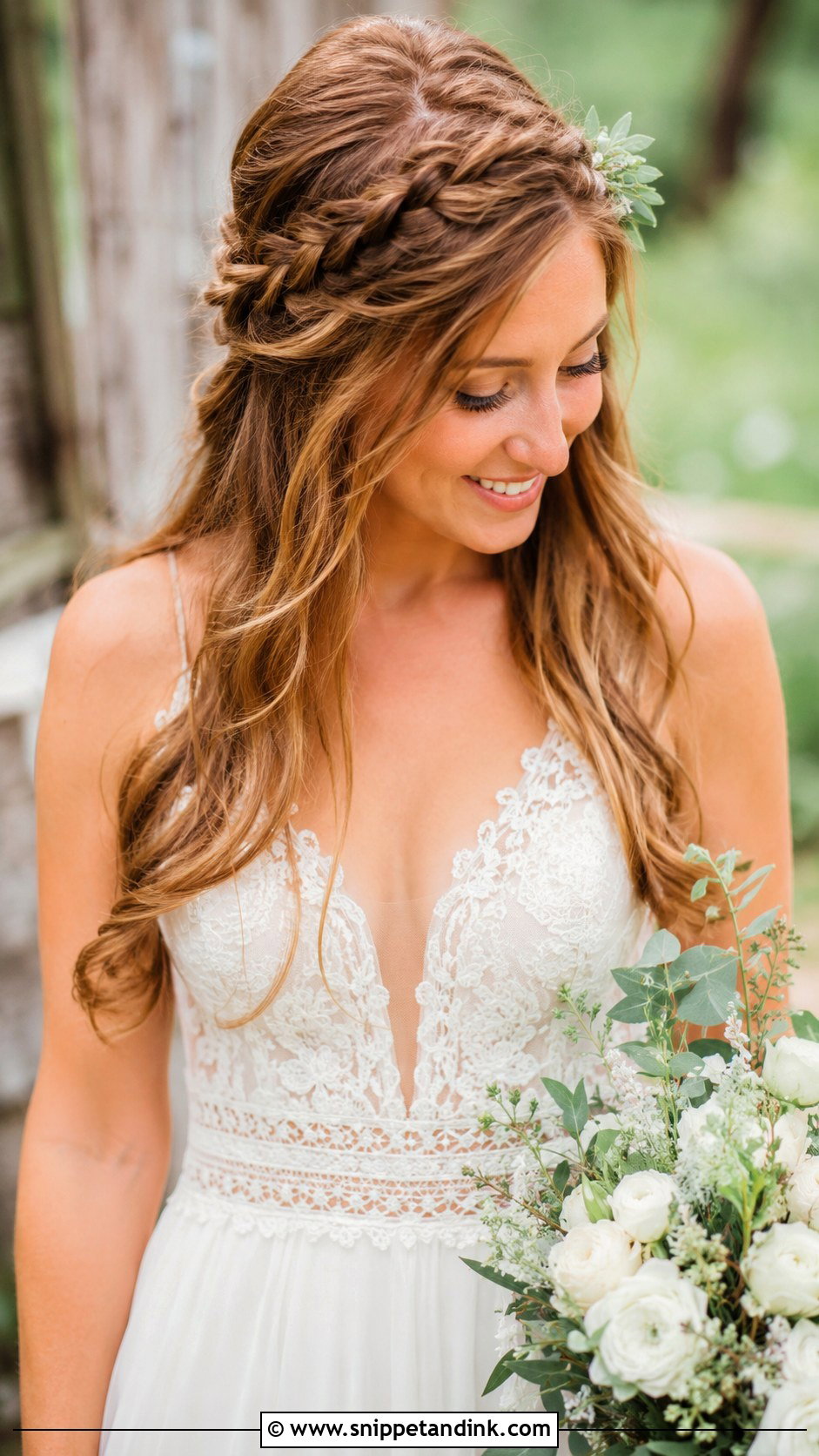
The boho braided half updo braids the front sections back and leaves the rest in loose waves. It keeps hair out of your face in wind without the commitment of a full updo. I join the braids at the back with a small elastic hidden under a pin or a few flowers, because two braids pinned only with bobby pins tend to separate by evening. Hair with natural texture does best. Very straight hair can work too, with texture spray added before braiding.
What Holds and What Drops by the Last Dance
After a long wedding day, some styles look almost unchanged and others are a different shape entirely. Here’s roughly how these twenty age over ten or more hours, so nothing surprises you in the late photos.
- Hold best: sleek low buns, French twists, Dutch braid updos and braided low buns. They’re secured at the base and barely move.
- Hold well with a touch-up: chignons, textured updos and half-up styles. The pinned sections stay put; the loose lengths relax.
- Change the most: loose waves, Hollywood waves and sleek straight hair worn down. Heat, humidity and hugging flatten them, so they look softer by evening.
- Depends on the flowers: floral updos only last as long as the blooms, so hardy, wired stems are worth the extra cost.
Ask your stylist for a small kit for whoever is keeping an eye on you: a few matching bobby pins, a travel hairspray, a comb and an anti-frizz balm. Five minutes before the reception entrance usually fixes most of what the day has done.
Bring These to Your Hair Trial
A trial is only useful if it copies the real day. I ask brides to bring:
- The veil and any hair accessories, so we can test where they sit and how much they weigh.
- A top with a similar neckline to the gown, or a photo of the dress from the back.
- Two or three photos you like and one you don’t, which often tells me more.
- Hair prepped the way it will be on the wedding day, washed at the same time with the same products.
Book the trial far enough ahead to change your mind, ideally two to three months out, and take photos in daylight before you leave.
Two Favorites, One Trial, Then You Decide
Save two or three of these and bring them, with your venue and gown in mind, to a trial on hair prepped the way it will be on the day. A garden ceremony and a ballroom reception ask different things of a style, and your texture will tell us which ones are realistic. Wear the trial look for the rest of the afternoon and see how it feels by dinner. That test tells you more than any photo can.
You'll Like These Ideas:


Leave a Reply