
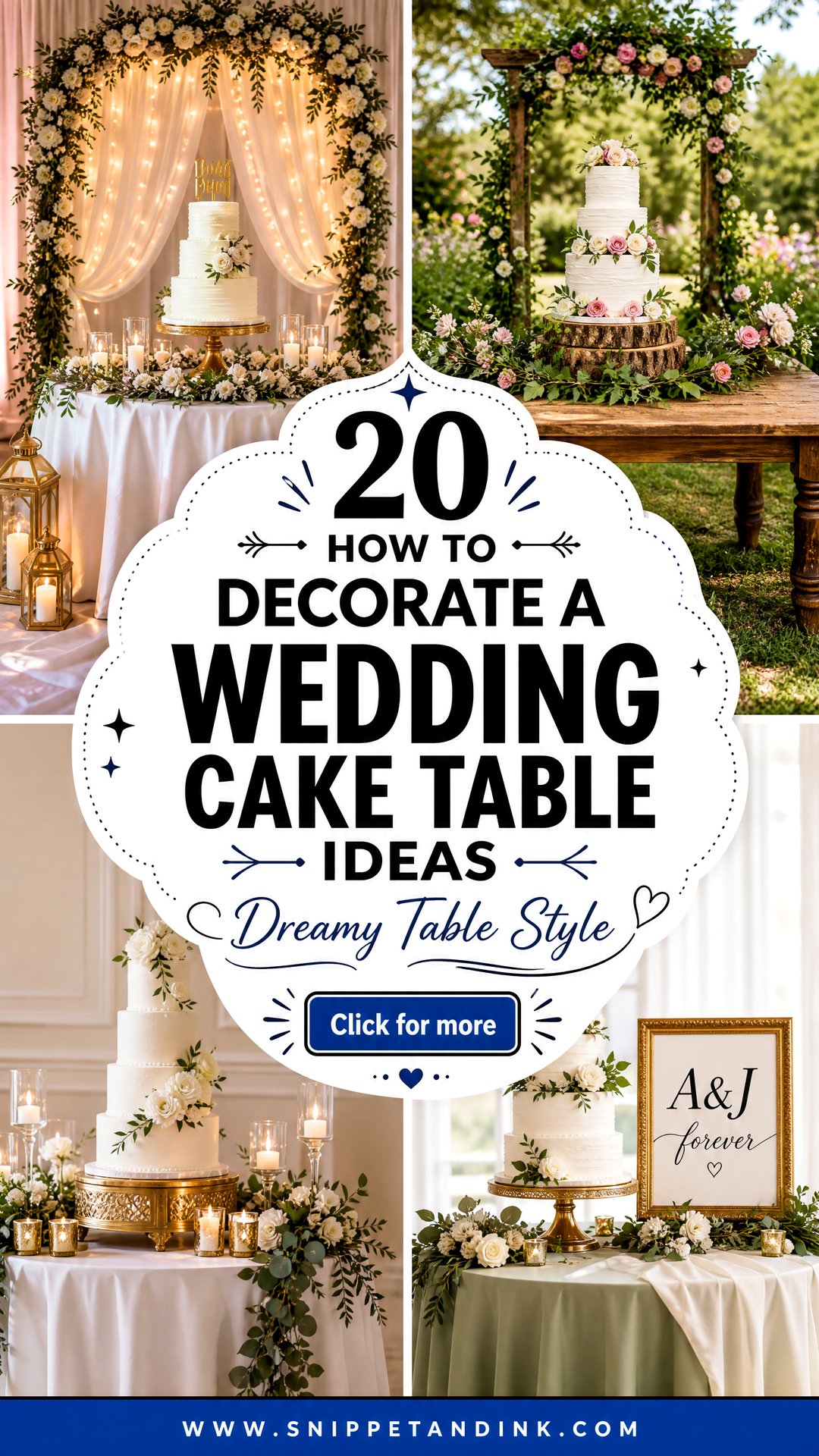
The cake table gets more camera time than almost any other surface at a reception: the reveal when guests walk in, the cutting, the close-ups of the piping. Even a modest cake can look important when the table around it is planned. When I design one, I work through height, color, texture, light and the space around it, in roughly that order, and I keep one practical question in mind the whole time: can someone cut and serve this cake without moving half the decor? Below are twenty table setups I’ve found work across classic, rustic, modern and garden receptions, with what each needs to be done well.
Placing the Table Before Dressing It
Where the cake table stands decides more about how it looks than anything you put on it. I settle the spot with the venue before choosing a single flower.
- Away from heat: windows with afternoon sun, radiators, heaters, kitchen doors and stage lights all soften buttercream.
- Away from traffic: not beside the bar, the main door or the route servers use, where one bump is enough.
- Not beside the speakers. Bass vibration travels through floors and table legs.
- On level, solid ground. On grass or old floorboards, check with a spirit level and shim the legs.
- With a good background. Look at what will be behind the couple during the cutting photos, then turn the table if needed.
Size the table to the cake, not the room. A small round table is usually right for a single tiered cake, and a long table only makes sense if desserts, a sign or candles will fill it. A big table with one small cake in the middle looks empty, however well it’s dressed.
1. Wedding Cake Table With Fresh Flowers
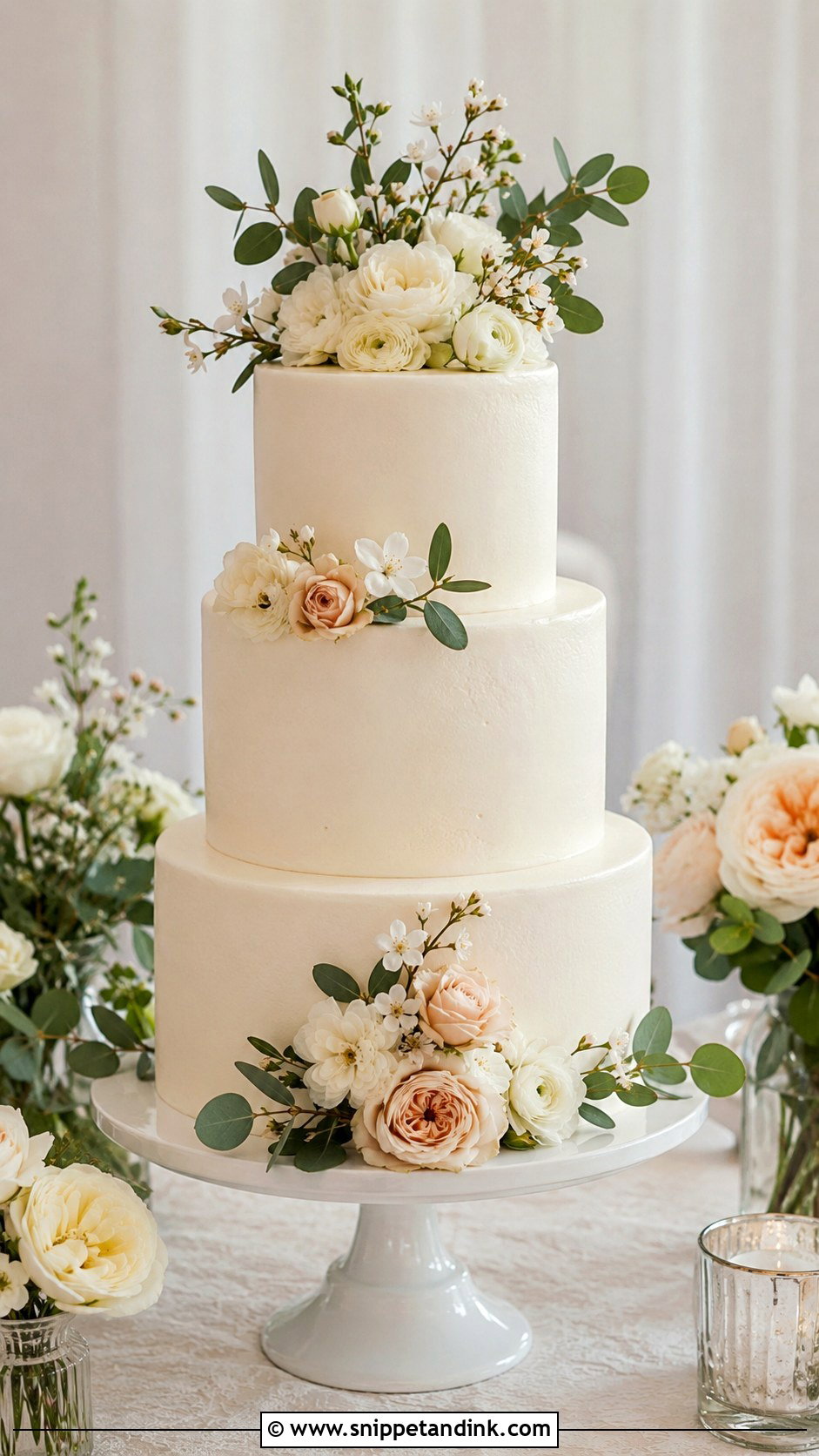
Echoing the bouquet or the centerpieces makes the cake table look like part of the room instead of a separate project. I start with a clean cloth, put the cake on a sturdy stand for height, then set flowers loosely around the base, mixing sizes like roses, ranunculus, lisianthus and small fillers, with some greenery trailing over the table edge. Loose beats packed; tight rings of flowers look like a funeral wreath around a cake. Flowers stay off the cake itself unless the florist and baker have agreed which are food safe and how the stems are wrapped.
2. Wedding Cake Table With Candles
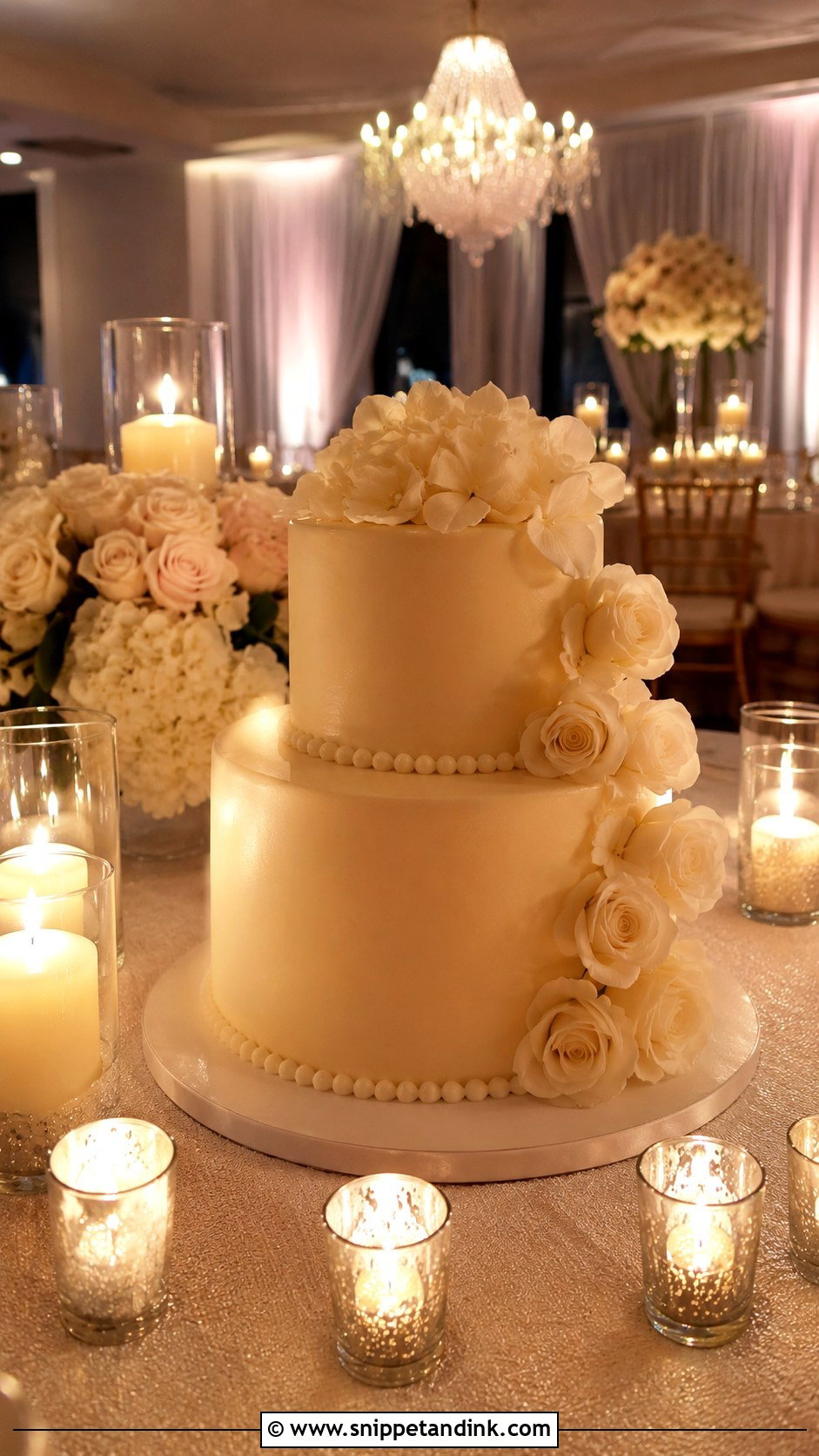
Candles do more for a cake table than almost any prop, because they put warm light exactly where the photographer needs it. I mix pillars, votives and glass hurricanes, taller at the back and smaller at the front so the cake stays in charge. Check the venue’s rules early; many don’t allow open flame, and good flameless candles with a soft flicker are close enough in photos. Keep every flame well clear of frosting, flowers and fabric, and remember the person cutting will lean over the table.
3. Wedding Cake Table With Greenery
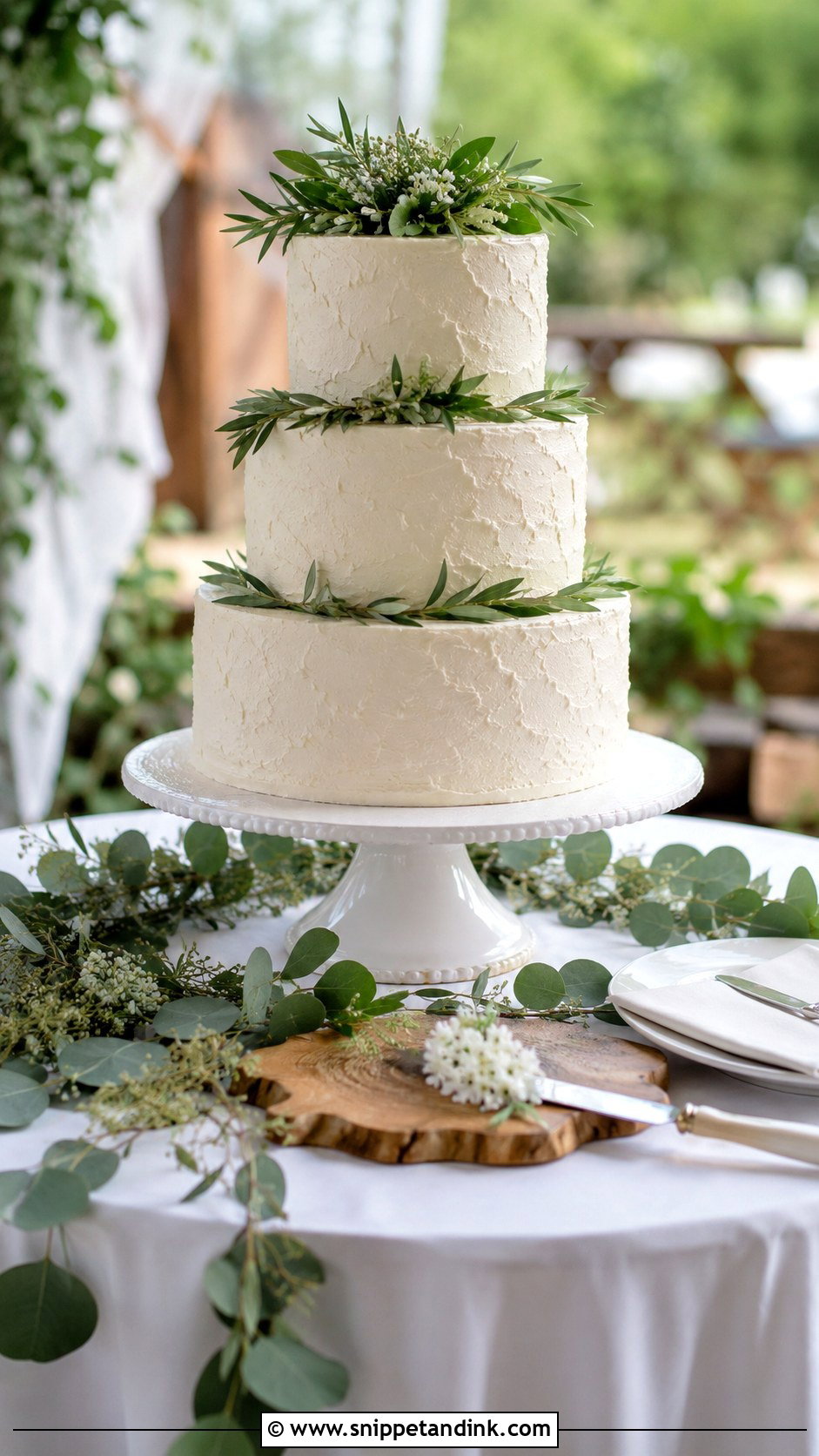
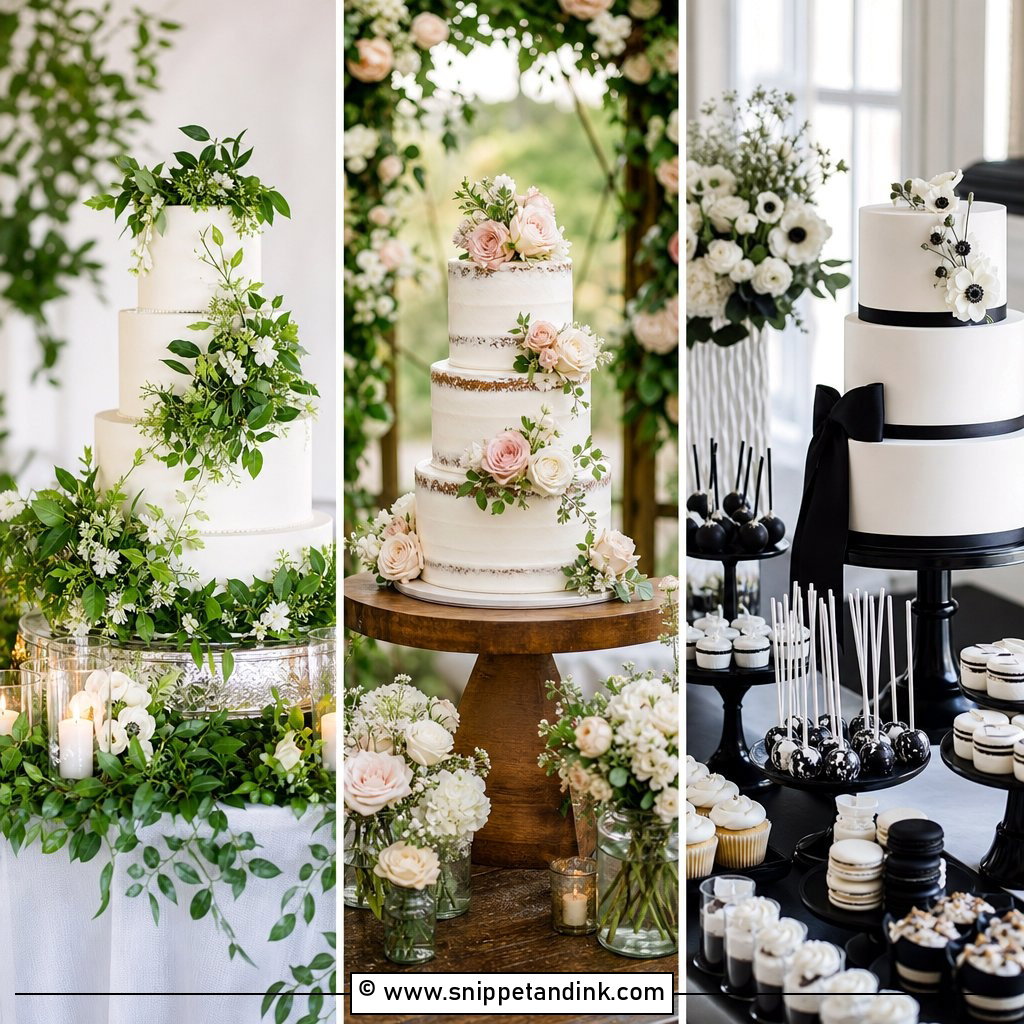
Greenery is the most forgiving decor on this list: it suits almost any theme and survives a long day better than most blooms. Eucalyptus, olive, ivy, ruscus and fern all work, laid in a loose garland with a few pieces spilling over the front edge. A white or ivory cake looks clean against it. Eucalyptus and some other foliage aren’t food safe, so it stays on the table, not the cake board. Wood, ceramic or clear glass stands all suit it; the venue’s style picks which.
4. Wedding Cake Table With Draped Fabric
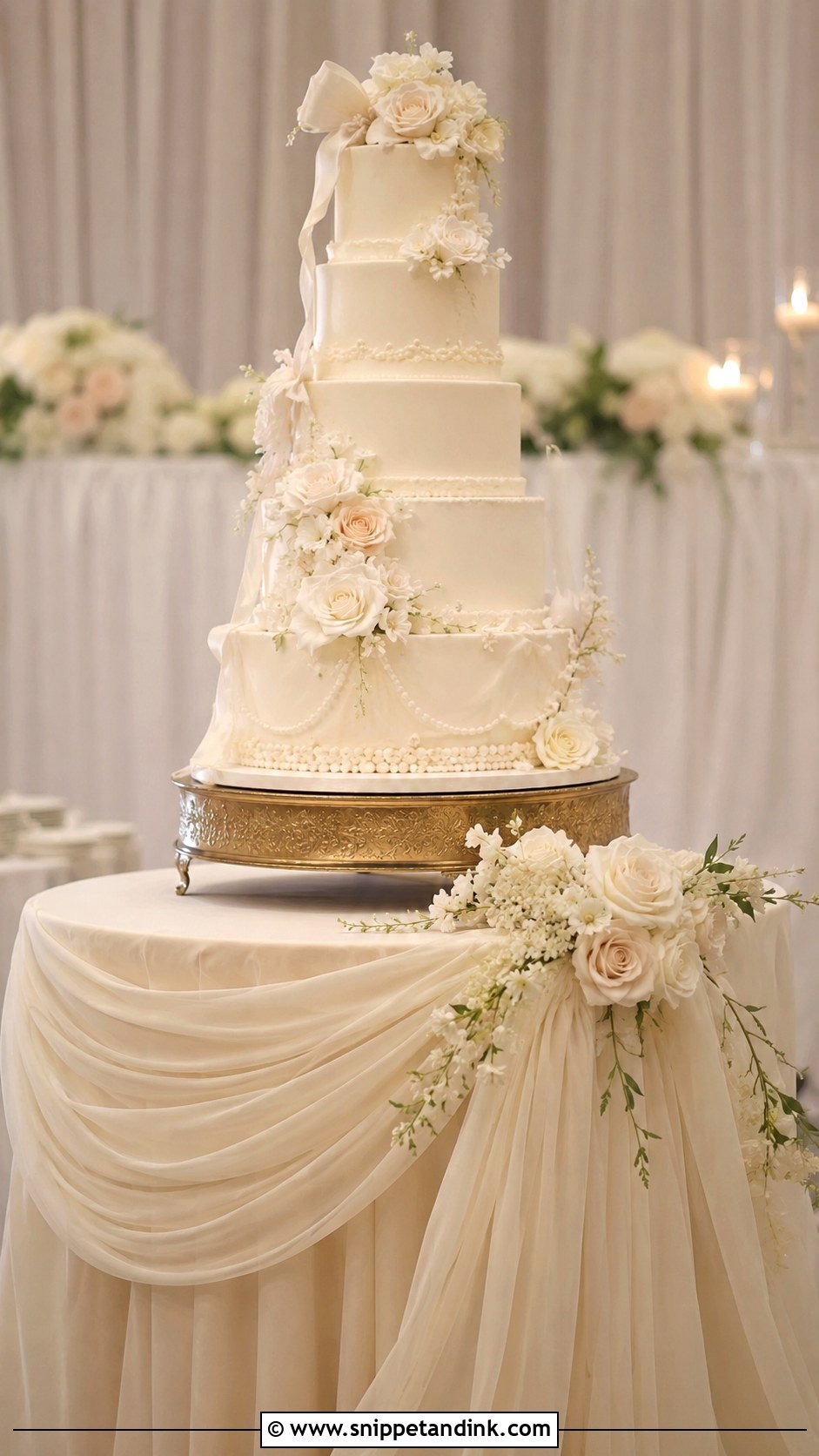
Fabric is my fix for a venue table that looks tired, and it can make a plain cake table look finished. Chiffon and organza feel airy; satin and velvet feel formal; linen relaxed. I let it fall to the floor, gather it a little to one side, and sometimes add a sheer second layer for movement. The stand has to be tall enough that the cake doesn’t sink into the folds. Pin or tape the drape underneath the tabletop, because loose fabric near a cake is a trip and pull risk once guests start milling around.
5. Wedding Cake Table With Backdrop
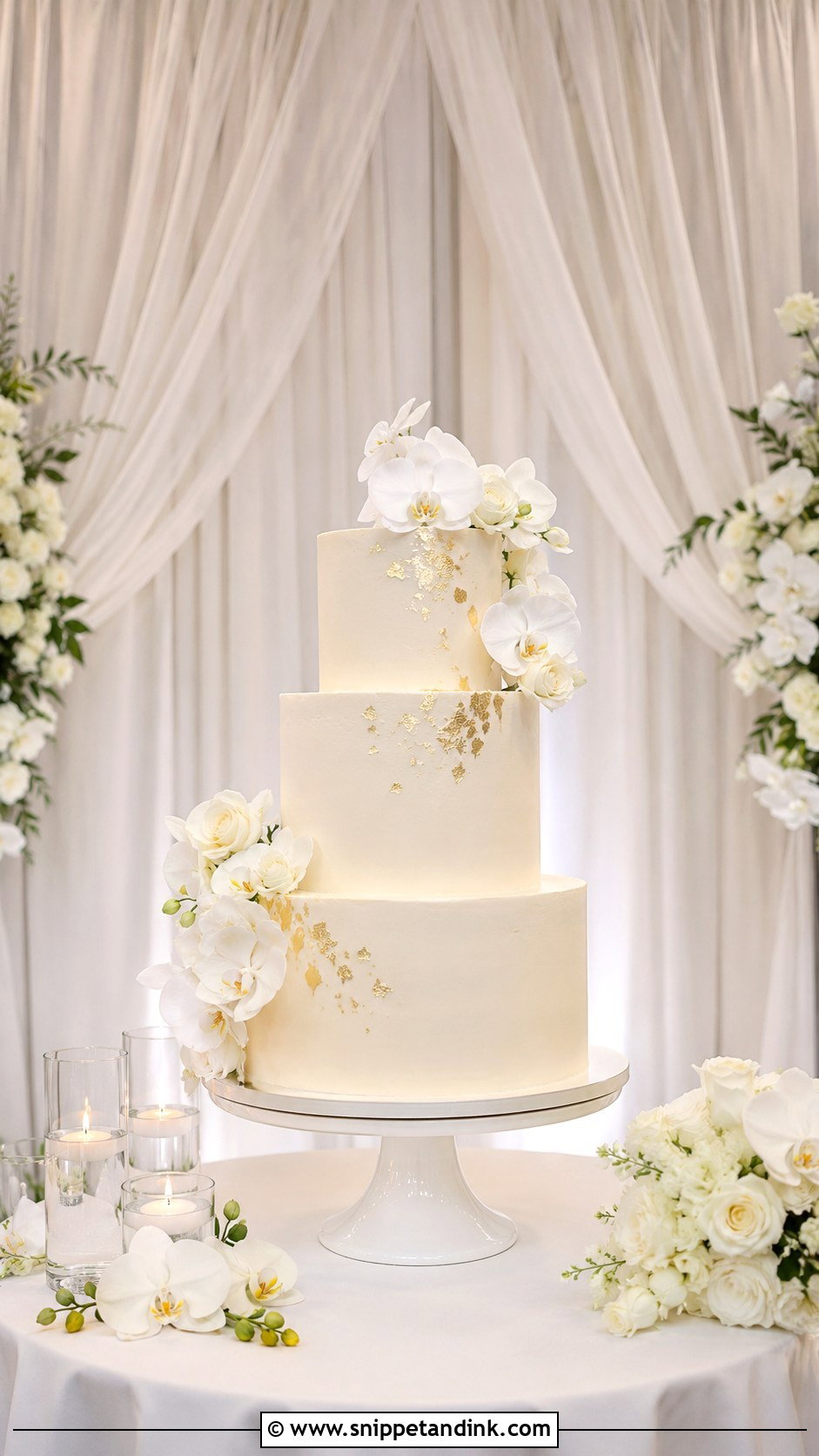
A backdrop finishes the photo. Fabric panels, flower walls, arches, painted boards, curtains or a simple greenery frame all work, as long as the backdrop is wider than the table so the cake sits centered. My rule of contrast: a detailed cake gets a calm background, and a simple cake can take more texture behind it. Busy prints directly behind delicate piping make both look worse. Leave clear space between cake and backdrop so the photographer can light the cake without lighting the wall.
6. Wedding Cake Table With Gold Accents
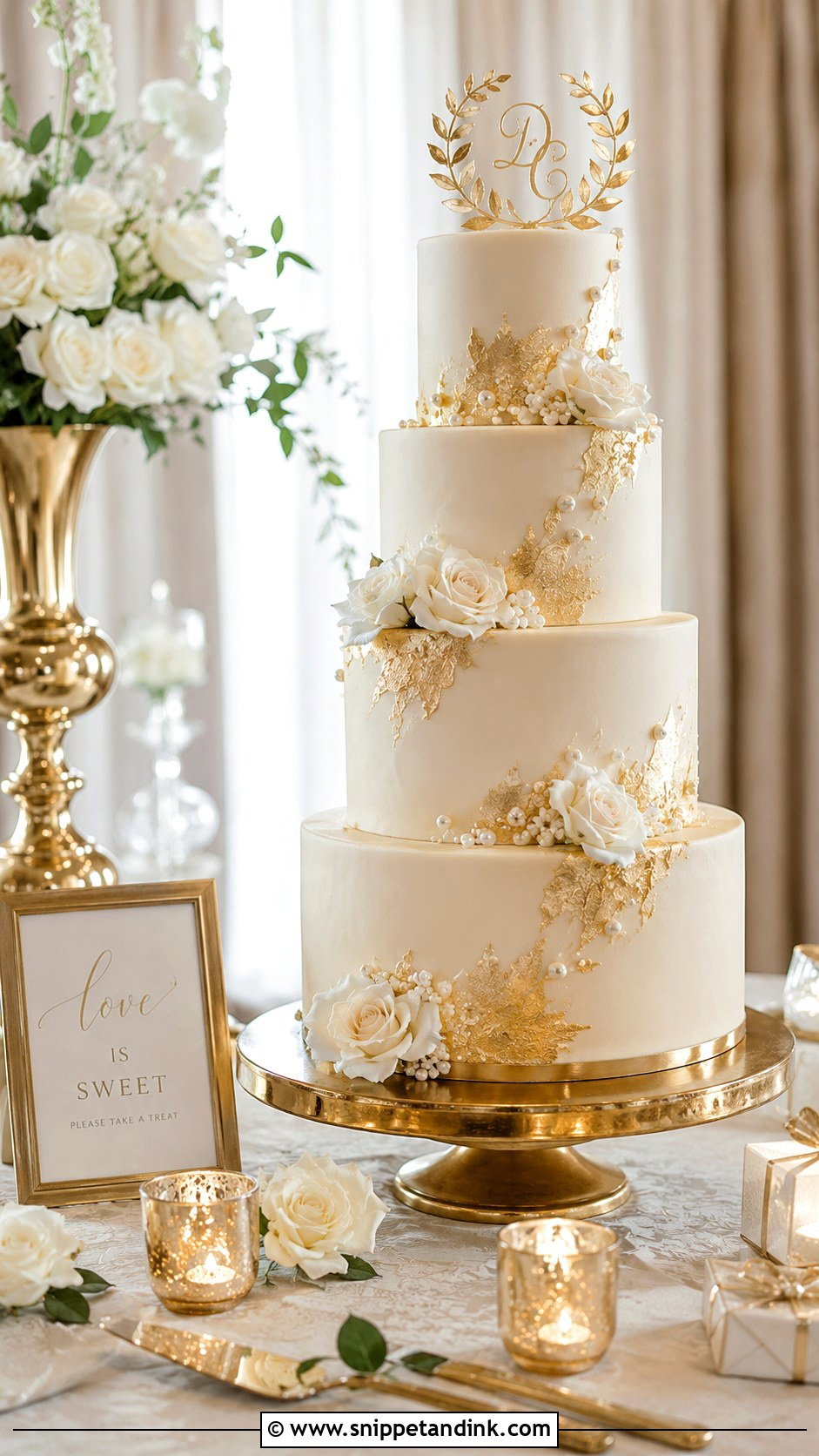
Gold works best as one strong detail repeated quietly. I start with a single anchor, whether that’s the stand, a framed sign, candle holders or a charger under the cake, and then echo it in two or three small pieces. Mixing finishes is the common mistake; brushed gold next to shiny gold next to rose gold looks accidental, so commit to one. Ivory, blush, champagne and soft green all sit well with it. Restraint reads as expensive here.
7. Wedding Cake Table With Rustic Wood
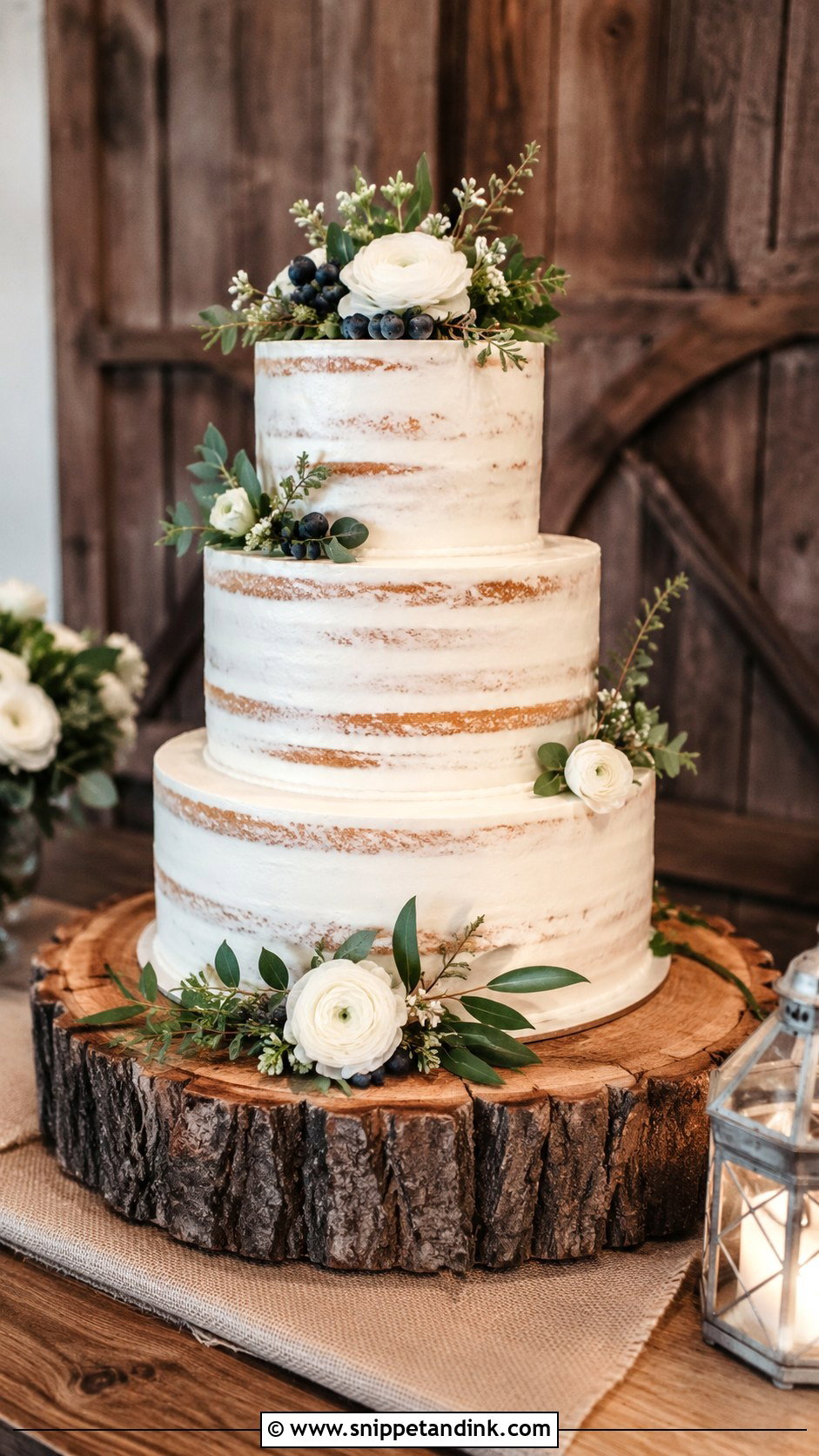
Wood brings warmth on its own, so linens can go minimal or disappear entirely if the table is good. A farmhouse table, a wine barrel base, a wood slab stand or stacked crates all build a rustic display. Barrels and crates need checking with a level before the cake arrives; a slight tilt is invisible to you and very visible to a tiered cake. Greenery, small flowers, lanterns and neutral candles finish it, and a textured or semi-naked buttercream cake suits the setting. Rustic still needs editing.
8. Wedding Cake Table With Minimal Decor
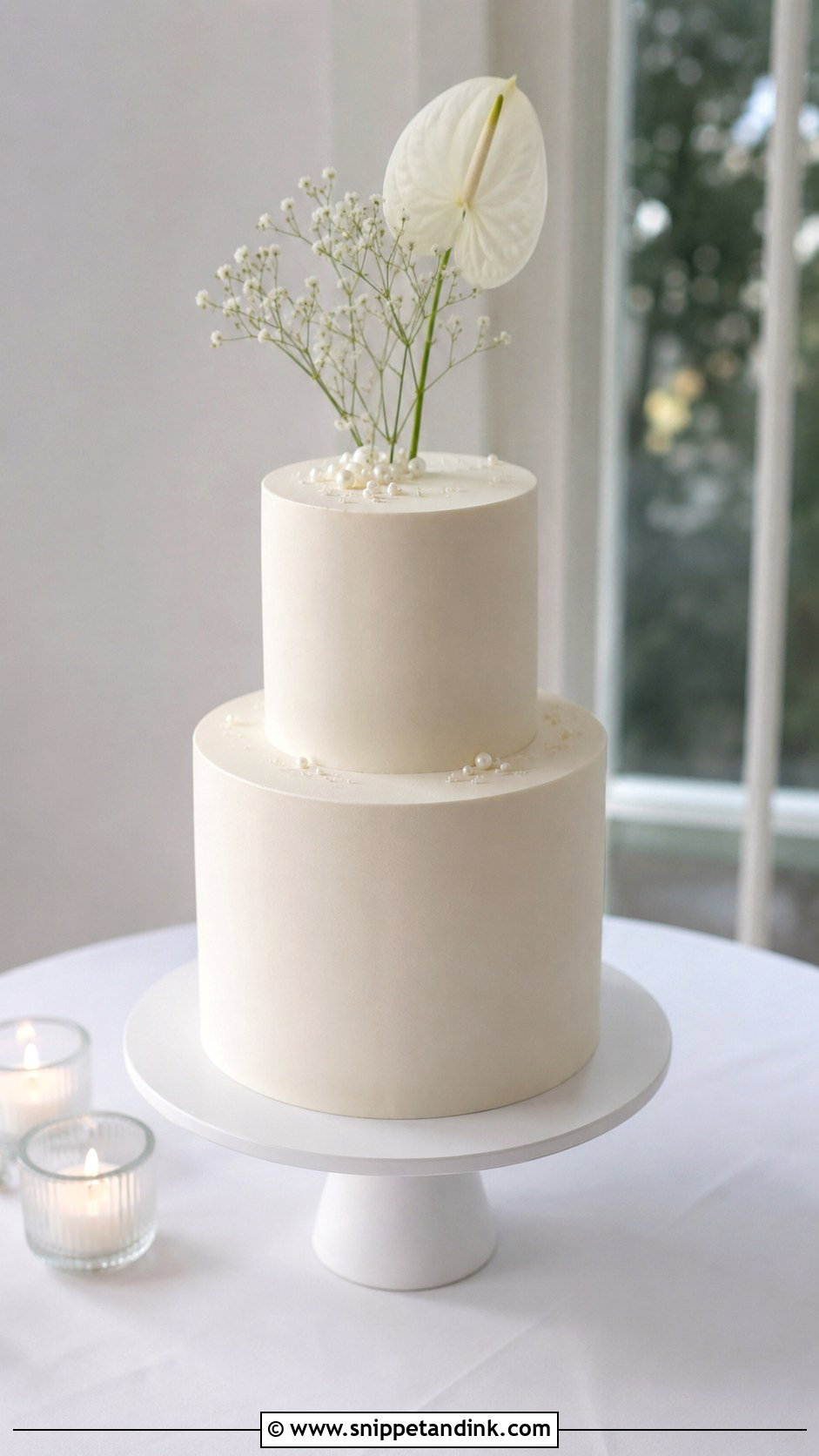
Minimal tables only work when every object has a reason. A crisp white linen, a clean stand and one or two accents, such as a single arrangement or a pair of candles, leave space around the cake, and that space is what makes it look valuable. Calm palettes suit it: white, ivory, beige, black, soft green. I’d only recommend this if the cake has a strong shape or a striking finish, because a plain cake on a plain table can look forgotten.
9. Wedding Cake Table With Dessert Display
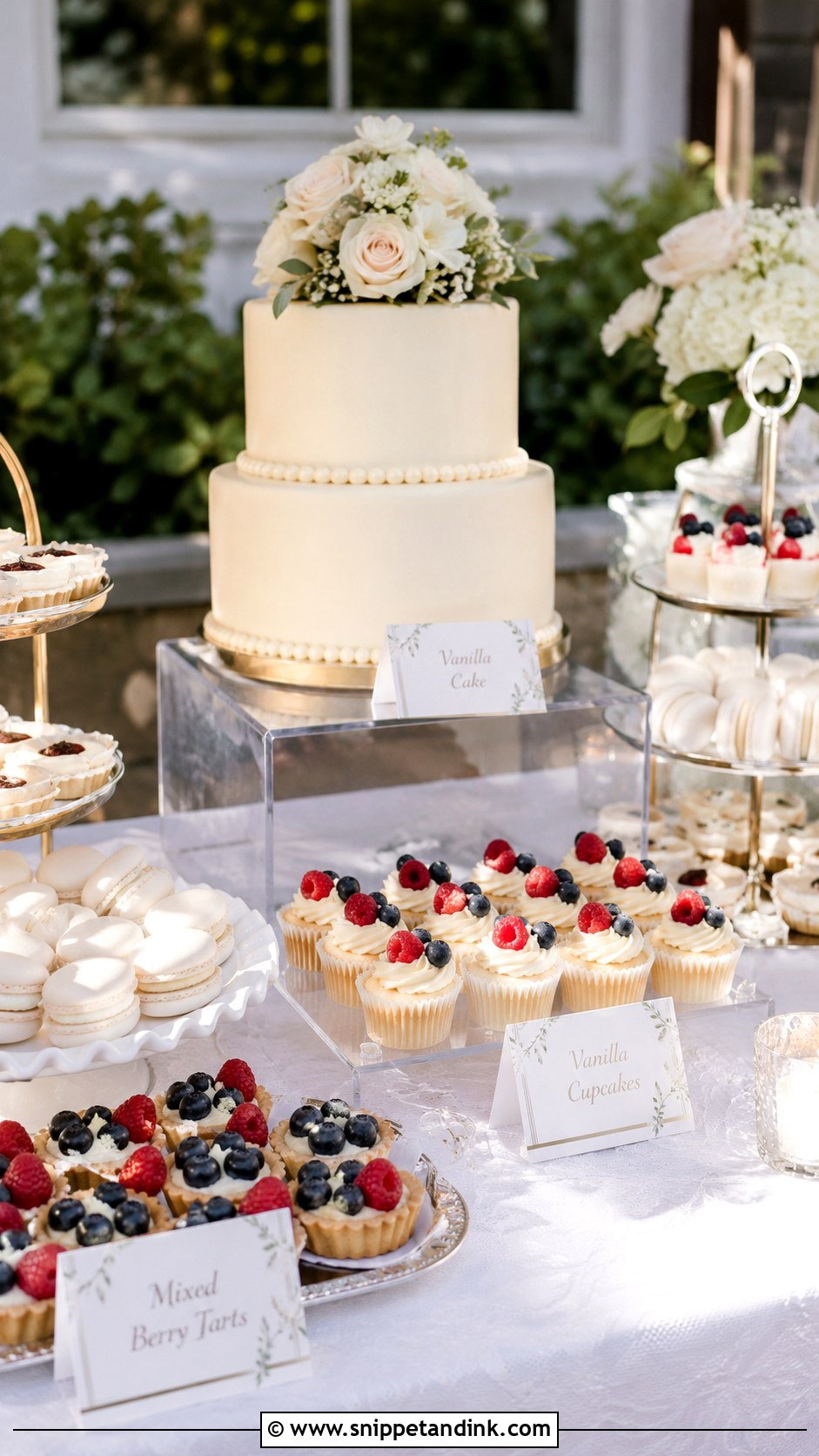
Mixed dessert tables need structure or they turn into a buffet. A wedding cake table with desserts keeps the cake raised in the center or at the back, with cupcakes, macarons, cookies, tarts or mini cheesecakes arranged in layers around it. Risers and trays in matching materials make it look planned. Group by type and keep labels small but readable. Leave clear room in front of the cake for plates, servers and the cutting, which I mark out before anything else goes down.
10. Wedding Cake Table With Photo Frame
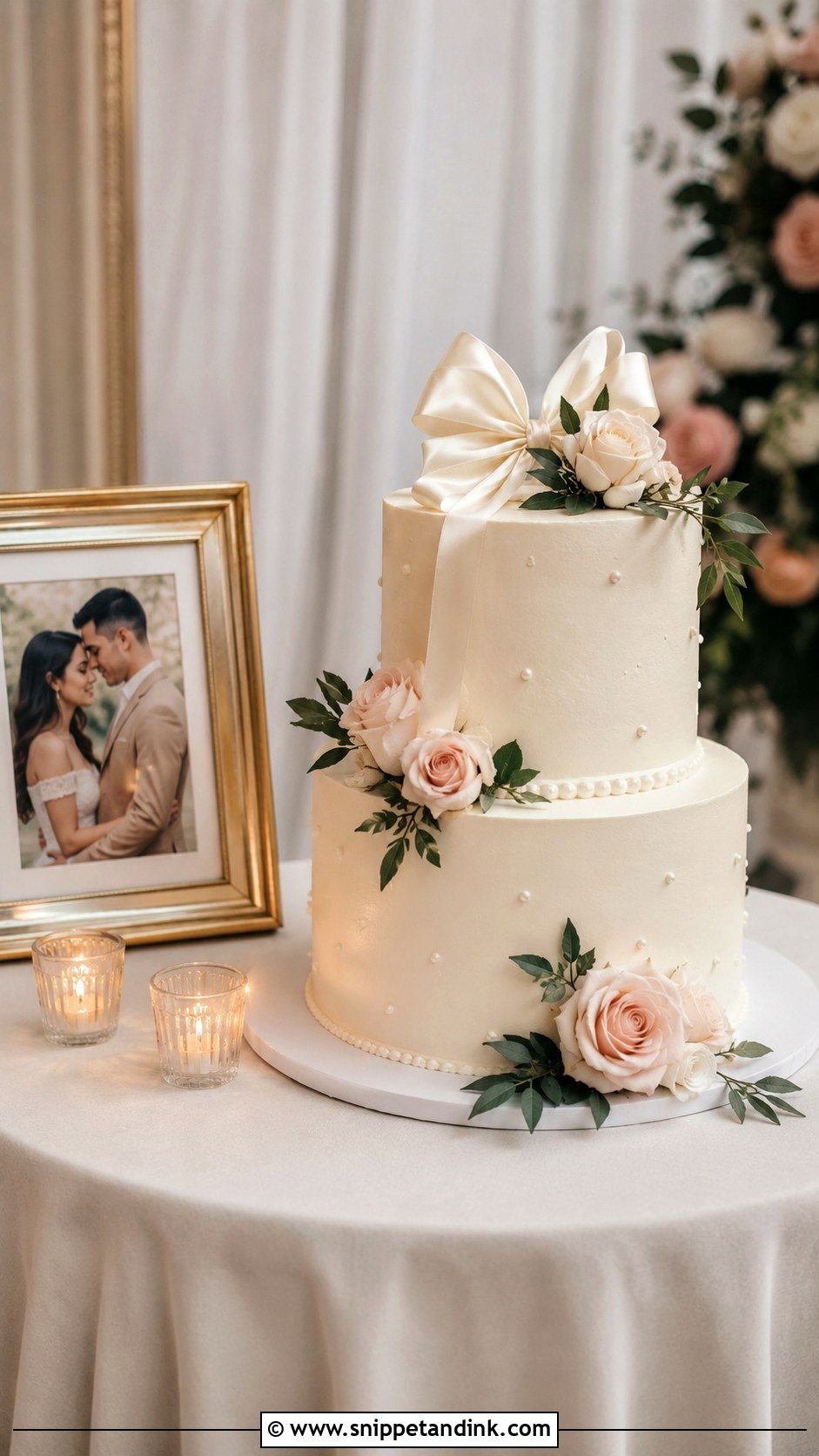
One photo is enough. An engagement picture, a parents’ wedding portrait or a small tribute to someone missed brings the table a personal note without upstaging the cake. I set the frame to one side, never in front, so it doesn’t block cutting photos. Match the frame to the room: gold for classic, wood for rustic, black for modern. A few flowers around it connect it to the rest of the display.
11. Wedding Cake Table With Neon Sign
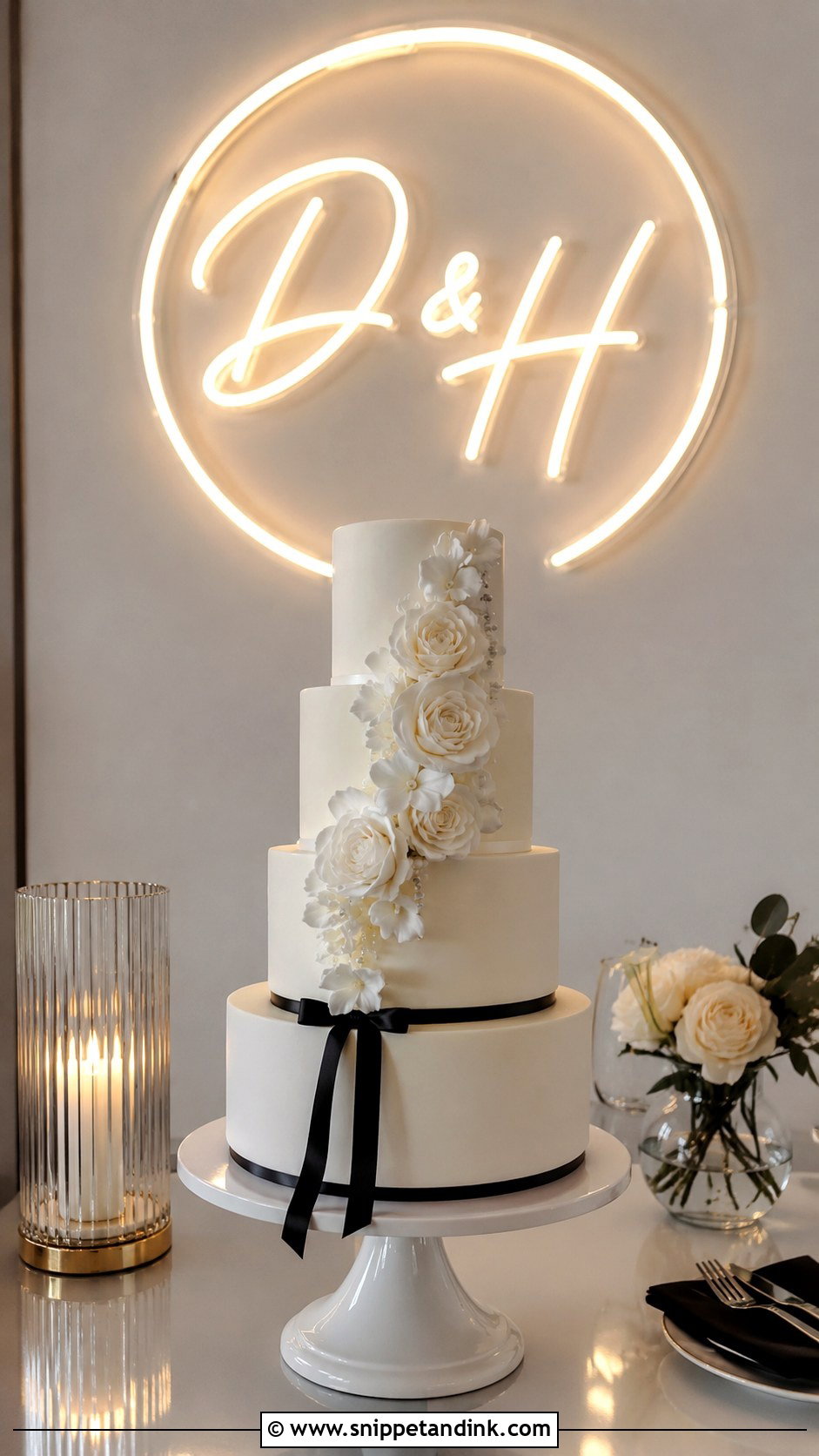
A neon sign does a lot of the decorating for you, which means everything else should step back. Short phrases, surnames, initials or a small heart are easiest to read. I mount it on the wall or backdrop behind the cake, never on the table, so cords aren’t tangled near food and the sign’s glow doesn’t turn white frosting pink in photos. Warm white is the most forgiving color. Evening receptions in modern venues show neon at its best.
12. Wedding Cake Table With Floral Arch
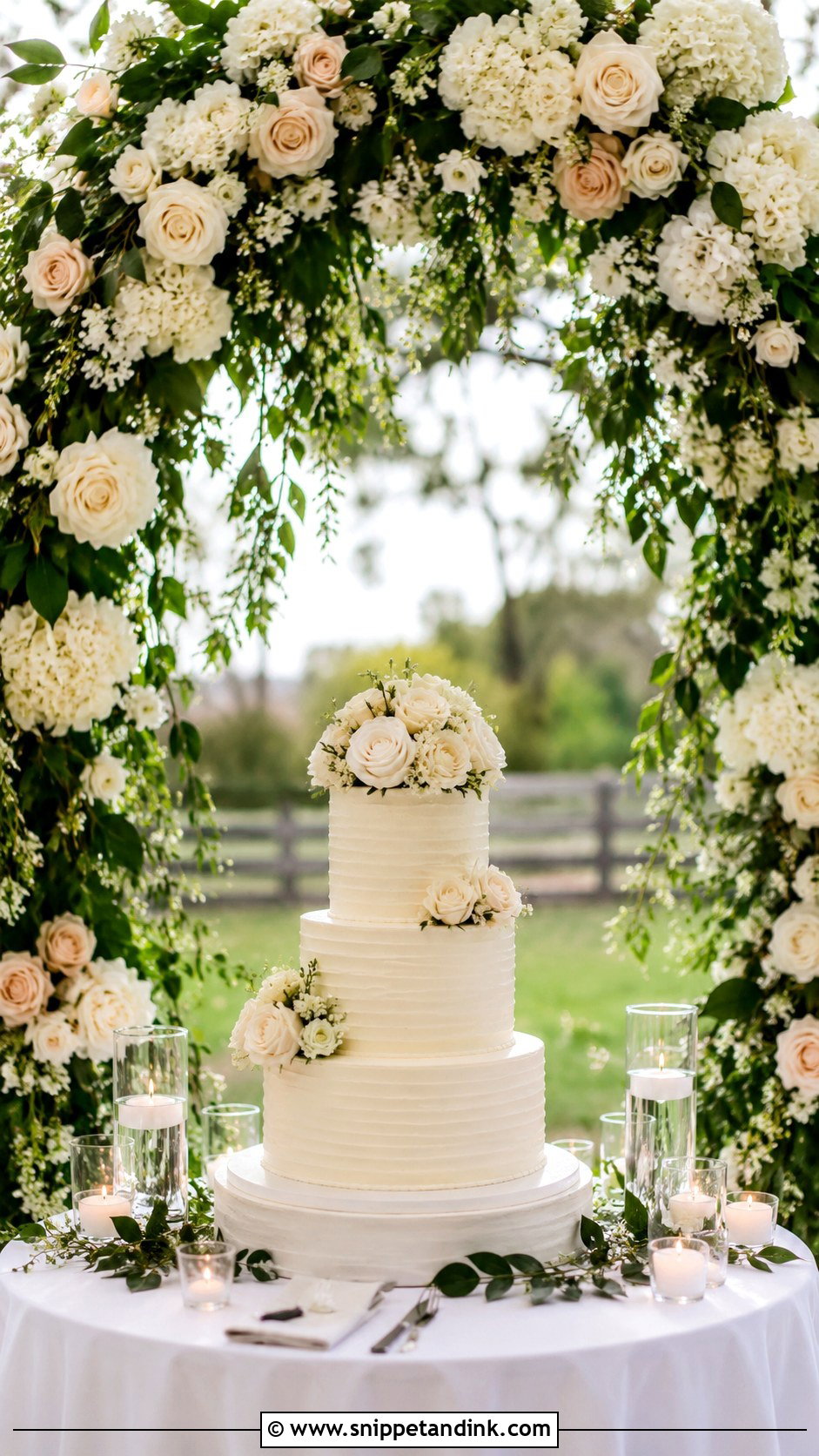
An arch turns the cake table into a destination. It can stand behind the table or curve around it, and if it repeats flowers from the ceremony arch, the whole day ties together; sometimes it’s literally the same arch, moved during cocktail hour. Center the cake under the highest point. If the arch is full and dramatic, keep the table low and simple. Make sure it’s weighted and free-standing, with no flowers touching the cake.
13. Wedding Cake Table With Vintage Decor
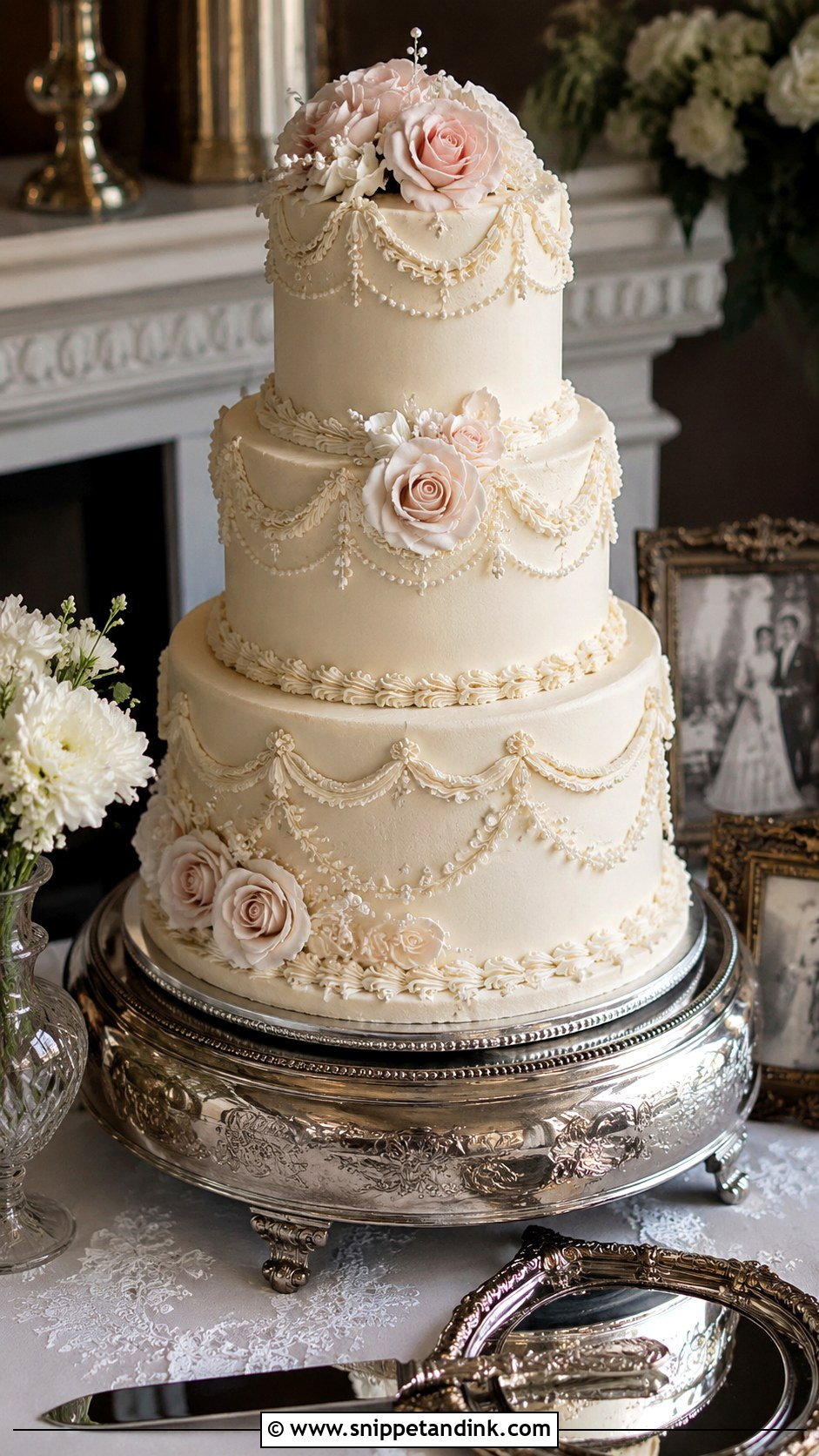
Vintage tables look charming when pieces feel collected, and cluttered when they’re simply many. An antique table, lace runner, silver tray, pearl accents, an old mirror or a period cake stand are the usual building blocks; pick a few. Muted colors suit it, from ivory and blush to dusty blue, sage and champagne. A piped buttercream cake with scallops or bows belongs here. One meaningful piece, such as a family cake knife or heirloom topper, does more than five shop-bought props.
14. Wedding Cake Table With Modern Black Details
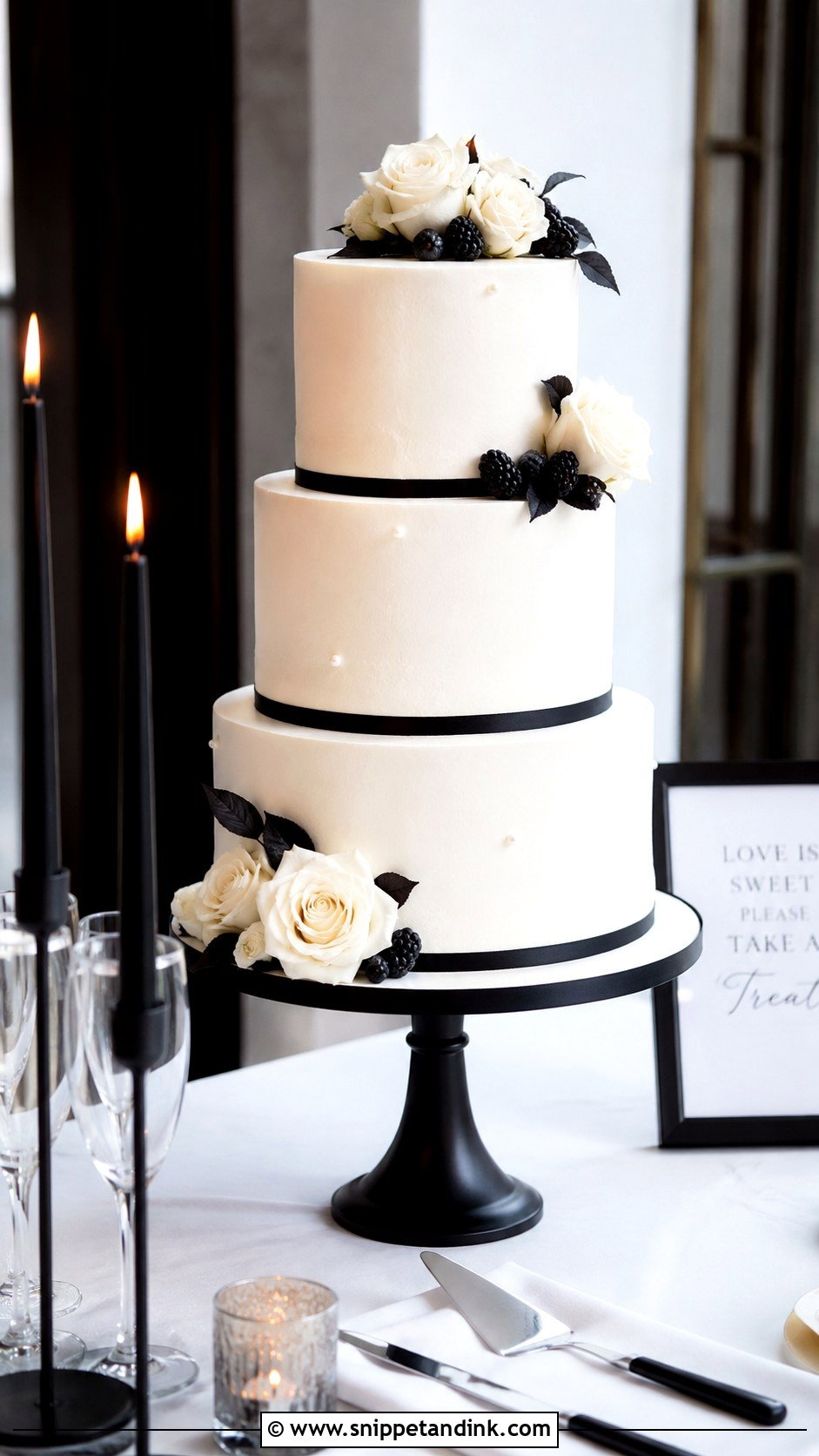
Black looks sharp and modern, and it disappears in a dark room. That’s the thing I check first: if the reception space is dim, black details need lighting or they’re invisible in photos. Black candle holders, a black stand, black-framed signs or a thin black runner pair with white, ivory, gold or greenery. A smooth white cake with black ribbon or a few black sugar flowers ties the cake to the table. Clean lines, few objects. City and gallery venues suit it.
15. Wedding Cake Table With Boho Decor
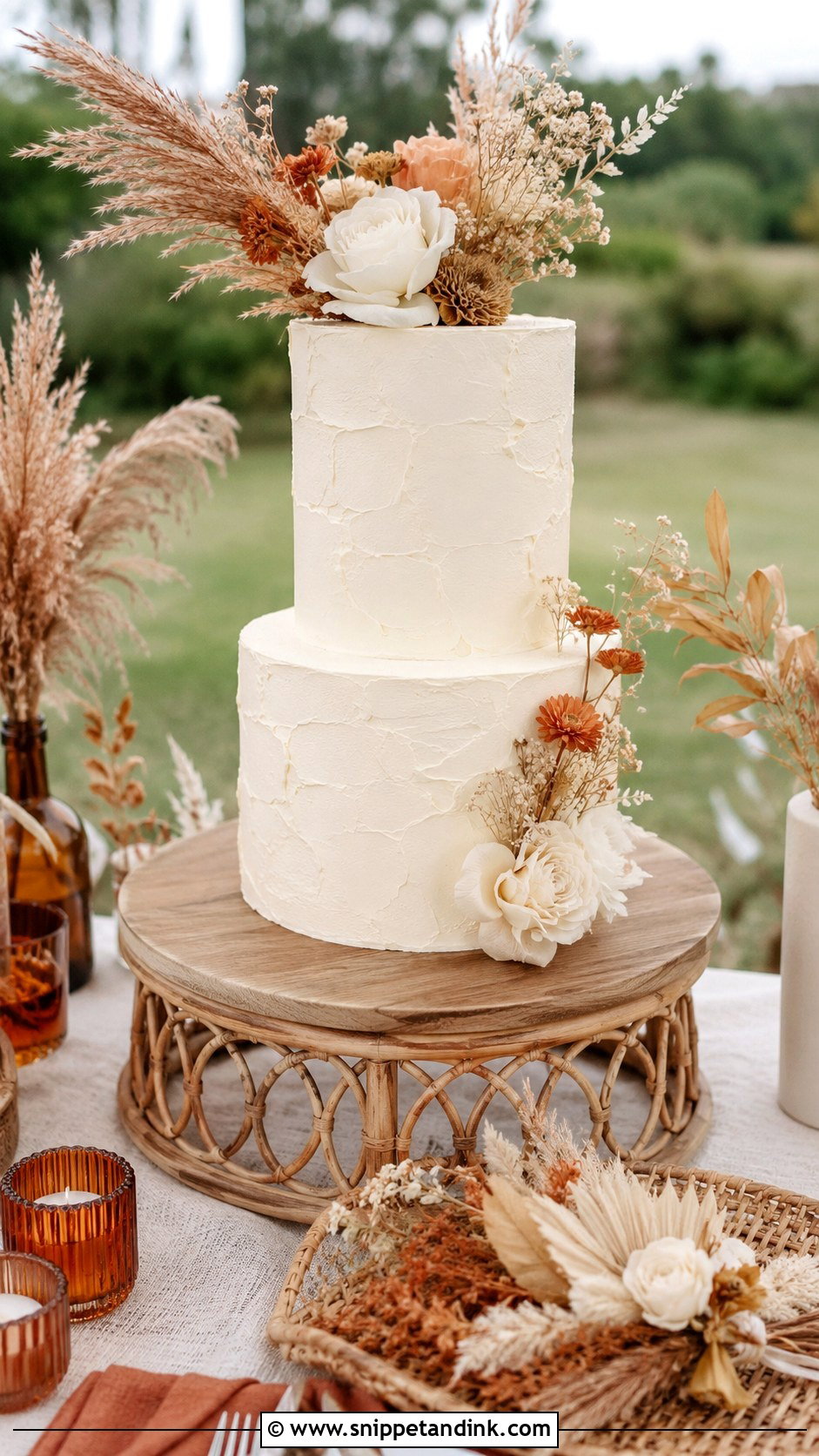
Texture carries this style more than color. A boho wedding cake table builds on a linen or macrame runner, with pampas grass, dried flowers, rattan trays or woven baskets in cream, tan, terracotta and rust. Keep it low and airy; heaped dried flowers start looking dusty very quickly. Dried grasses also shed, so I keep them away from the cake itself. Candles in amber glass add a warm glow for outdoor, desert and backyard receptions.
16. Wedding Cake Table With Garden Style
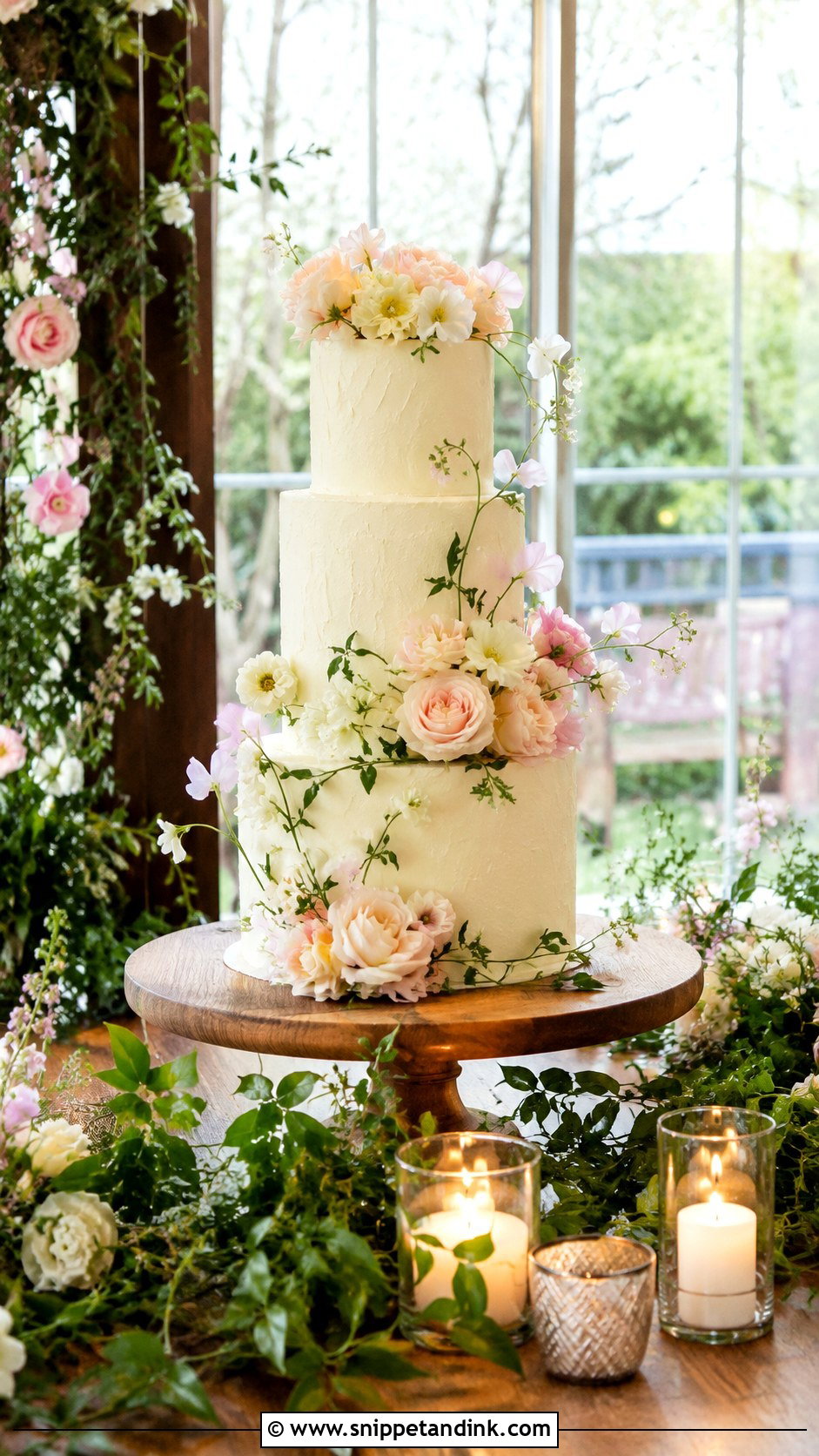
Garden tables should look gathered rather than arranged. I use flowers in loose, growing shapes, such as roses, sweet peas, hydrangeas and cosmos with trailing vines, placed around the stand rather than in rings. A pale cake with buttercream texture or pressed flowers suits it. Natural light is ideal, but direct sun on buttercream is not; find a spot with bright shade. Hydrangeas wilt fast without water, so ask the florist to keep them in hidden water sources.
17. Wedding Cake Table With Coastal Decor
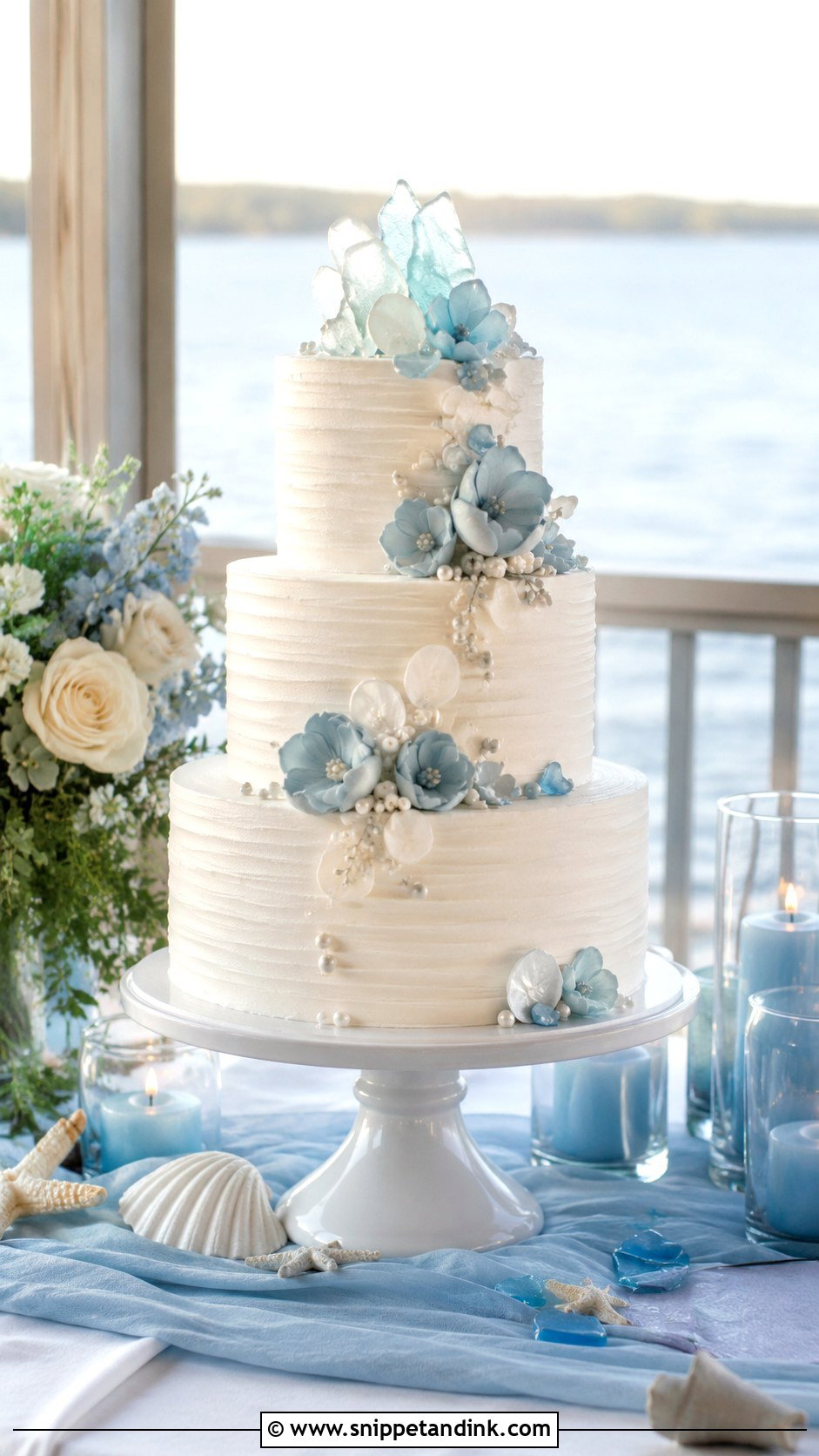
Seaside styling works best when it whispers. A coastal wedding cake table leans on soft blue, ivory, sand, pearl and sea-glass tones, a linen cloth, a white stand and a few subtle touches like capiz shells, driftwood or textured glass. Skip real sand near food; it blows, sticks to frosting and gets everywhere. At a beach venue, wind is the real problem, so I anchor runners and avoid tall, light pieces that could tip.
18. Wedding Cake Table With Tall Cake Stand
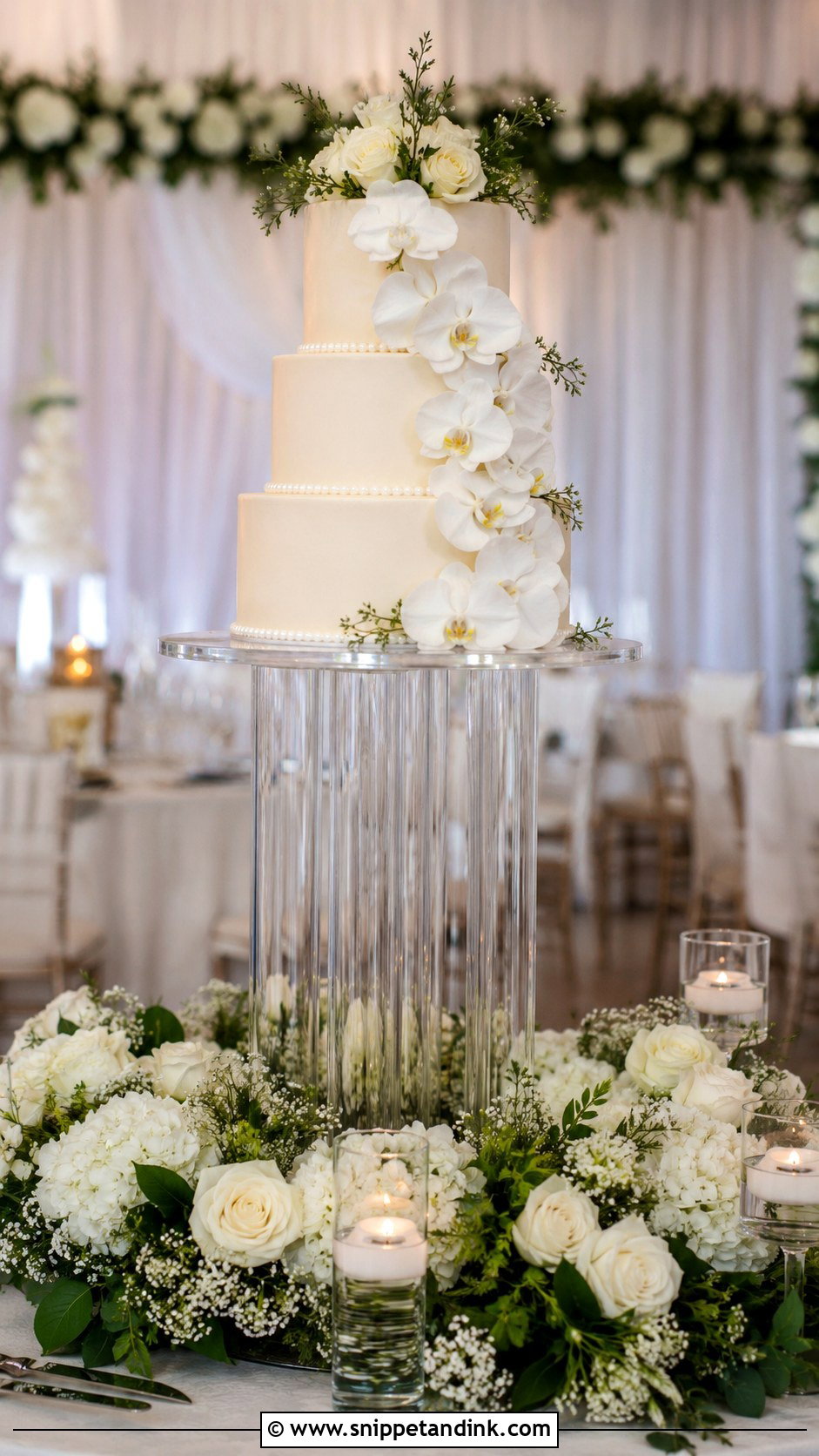
Height gives a smaller cake presence in a big room. The stand must be strong, level and wider than the cake board, and pedestal, acrylic, metal or ceramic stands can all work if they suit the style. Test it with the real weight before the day; a stand that’s fine with an empty plate can wobble under a three-tier cake. Keep decor low at the base, placed around the stand rather than in front of it.
19. Wedding Cake Table With Personalized Sign
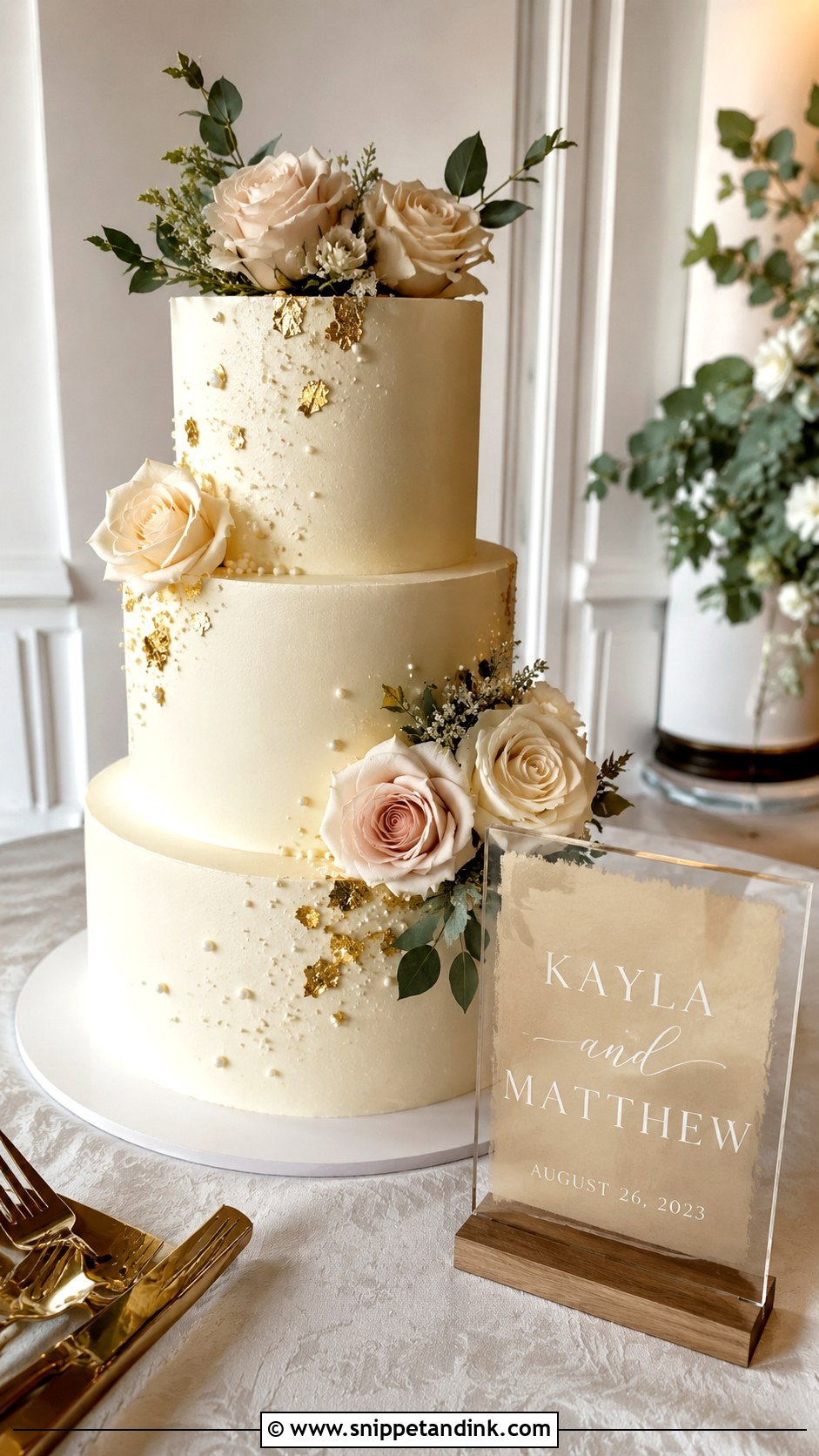
A sign tells guests what they’re looking at and adds a personal line. Names, the date, a favorite saying or a short flavor menu all work. I place it beside or slightly behind the cake so the front stays clear. Acrylic, wood, mirror and framed paper signs suit different rooms. Test the font from a few steps back. A detailed cake gets a simple sign; a plain cake can take a more decorative one.
20. Wedding Cake Table With Soft Lighting
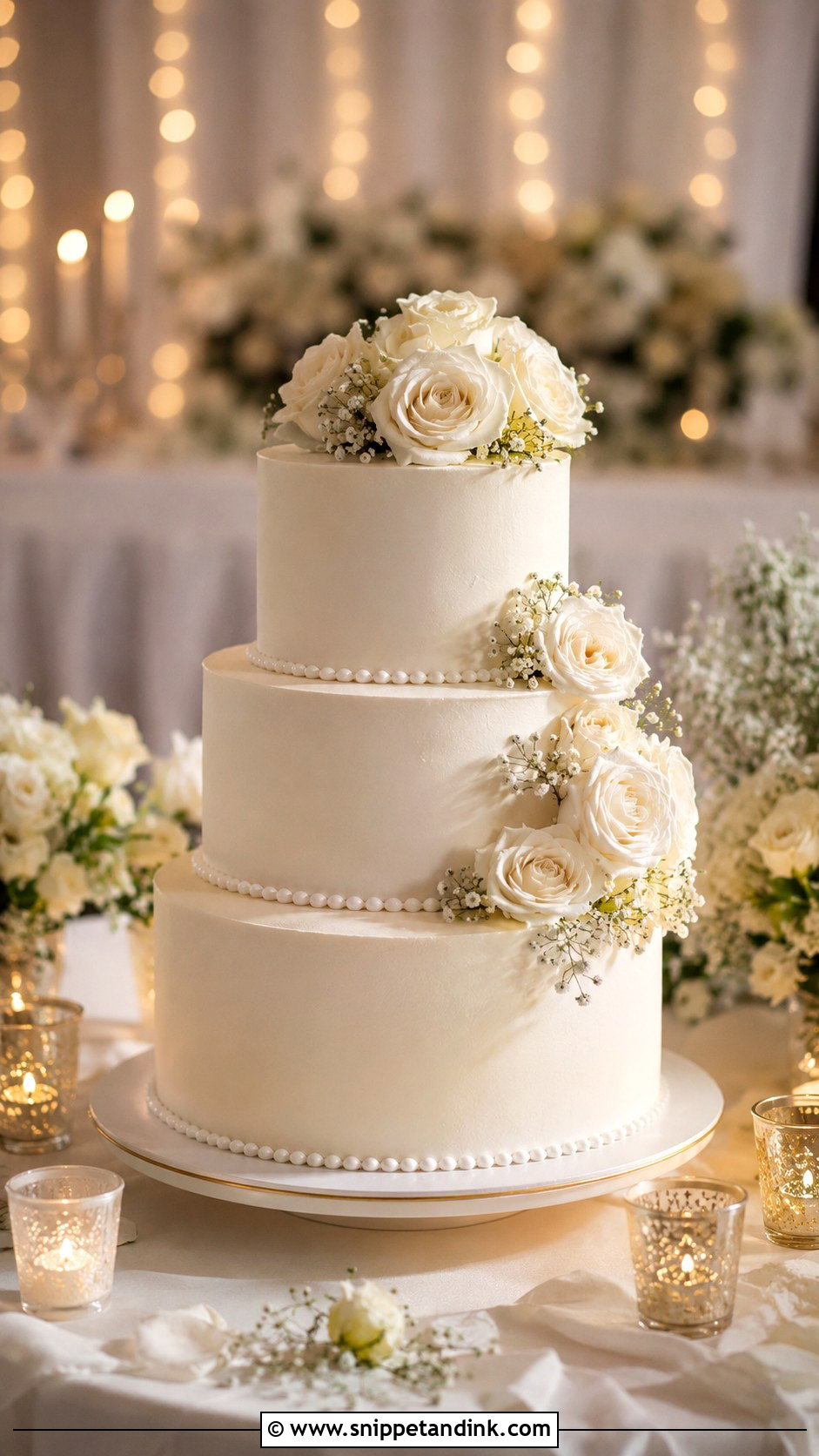
Light changes everything about how a cake table photographs. A pin spot aimed at the cake is the tool I’d choose if the budget allows only one; candles, small lamps, fairy lights and uplighting fill in around it. Warm light flatters frosting, while cool or blue light makes white cakes look gray. Ask the venue or lighting team to have the cake lit before guests enter, and keep every cord taped down and away from the serving area.
The Last Hour, and Who Does What
Cake tables go wrong in the handover between vendors. The baker arrives to find flowers piled where the cake should go, or the florist leaves before the cake is in place. Agreeing the order in advance avoids most of it.
- Table, linen, backdrop and lighting go in first, finished and level.
- The cake is delivered and set on its stand by the baker, who checks it’s level.
- Flowers and greenery are placed around the base afterwards, by the florist or decor team.
- Candles go in last and are lit shortly before guests arrive.
For an outdoor reception, add one more step to that list: a covered fallback spot agreed with the venue. If rain or hard sun arrives, the table can move as a whole before the cake goes on, which is far easier than carrying a finished tiered cake across a lawn.
Then plan the cutting. Someone, usually the caterer, needs to remove toppers, flowers and any wired or non-edible pieces before the cake is sliced, and to know where the knife, server, plates and napkins are. Put that person’s name on the timeline. And keep a small box under the table for the topper so it goes home with you instead of in the bin.
Build Outward From the Cake
A good cake table is mostly about restraint. The cake stays at the center, and the table, backdrop, flowers, light and small details support it. Start from your wedding’s style, choose one main feature, add height with a solid stand, and keep the front view open for photos. Protect the cake from heat, keep serving tools within reach, and walk past the table once as a guest would before the doors open. If your eye goes straight to the cake, it’s done.


Leave a Reply