
After the ceremony backdrop and the head table, the cake table is the spot photographers return to most, and it’s often the one planned last. I see the same problem again and again at setup: a gorgeous cake parked on a bare banquet table in the corner by the fire exit. A good cake table frames the cake, makes it easy to cut and serve, and looks like it belongs to the same wedding as everything else. The tools are simple, mostly height, fabric, light and a few flowers, and you can find more on lighting, flowers, linens, candles as you plan. What follows are the table styles I build most, with what makes each one work in a real room.
Here are the setups, from shape and style through to season and color.
Where the Cake Table Goes in the Room
I decide the table’s position before I think about decor, because a well-placed plain table beats a styled one in the wrong spot. Walk the room with your floor plan and check these.
- Heat. Away from windows that get sun later in the day, radiators, fireplaces, kitchen doors and stage lights.
- Traffic. Not on the route to the bar, the bathrooms or the dance floor, where people bump tables while carrying drinks.
- Background. Look at what’s behind the table from where the photographer will stand. An exit sign or a stack of chairs ends up in every cutting photo.
- Light. Close enough to a light source, or to a spot where the lighting team can aim one, so the cake doesn’t vanish once the room dims.
- Access. The baker needs a clear path from the door to the table, and the caterer needs one from the table to the kitchen.
Once the table is set and the cake is on it, it shouldn’t move. Agree on the spot with the venue in advance so nobody shifts it during the room change.
1. Round Wedding Cake Table
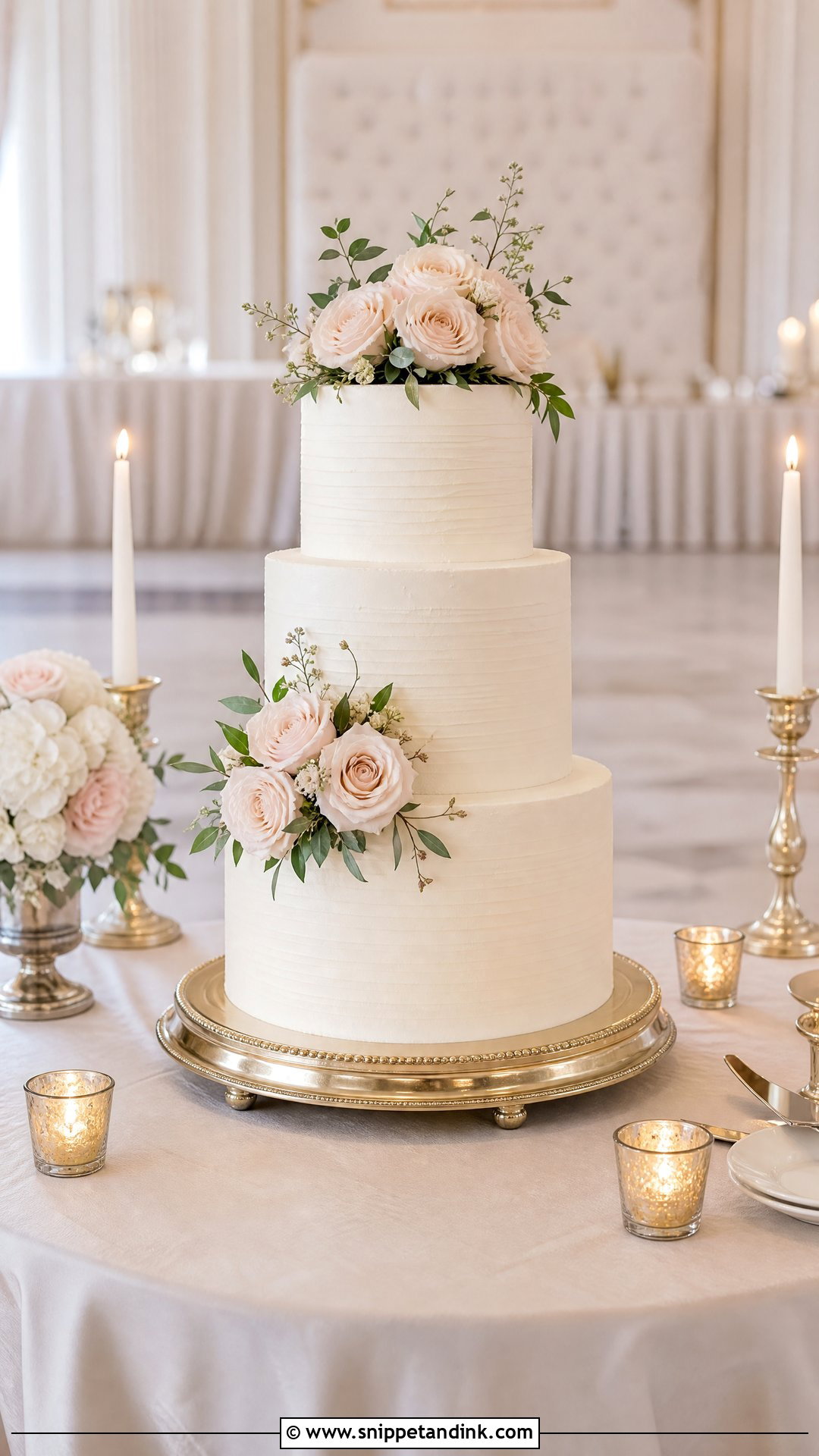
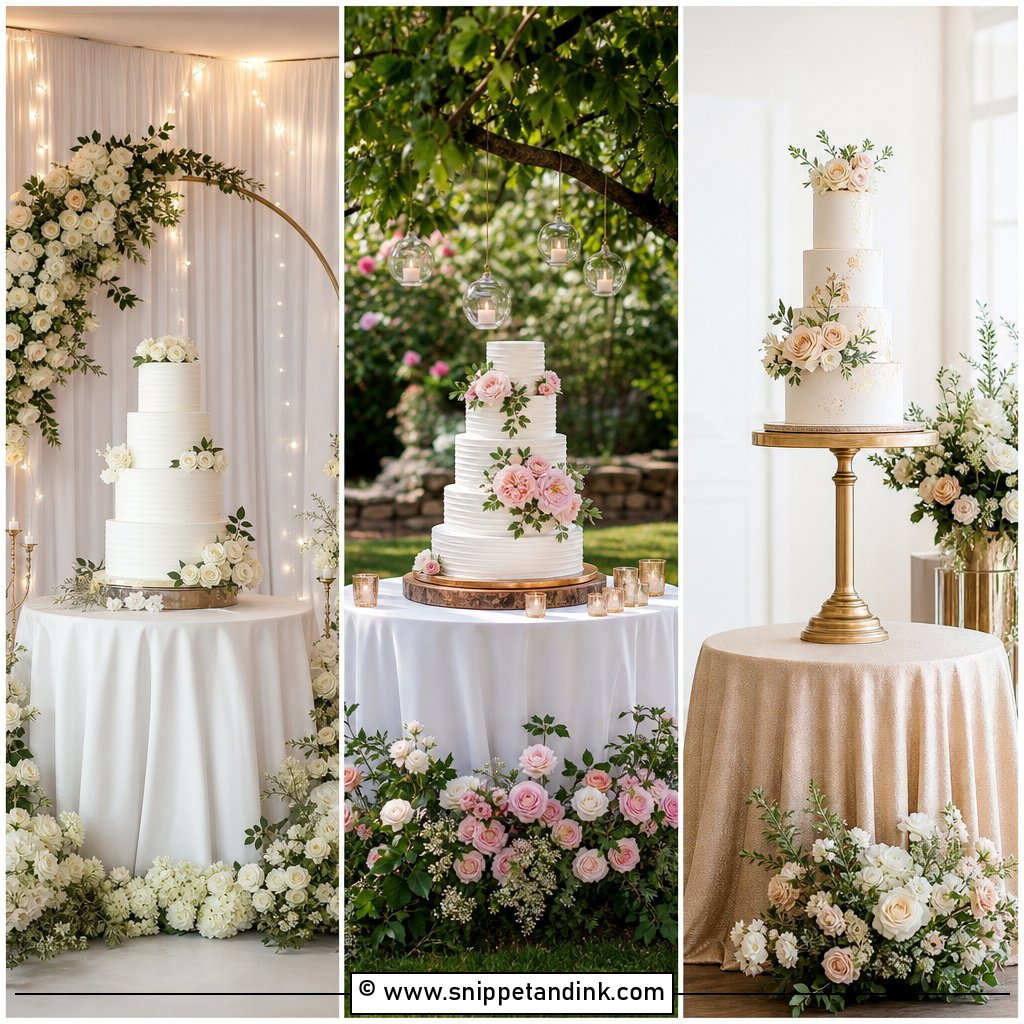
Round tables are my default because they look good from every angle, and guests do walk all the way round. A 30- to 36-inch round suits most tiered cakes; larger tables make the cake look small unless you add desserts. Floor-length linen is a must, since table legs and a stack of spare chairs underneath ruin photos. Keep anything tall off the front third so the couple has room to stand and cut. Low flowers and a few votives at the base are plenty.
2. Rustic Wedding Cake Table
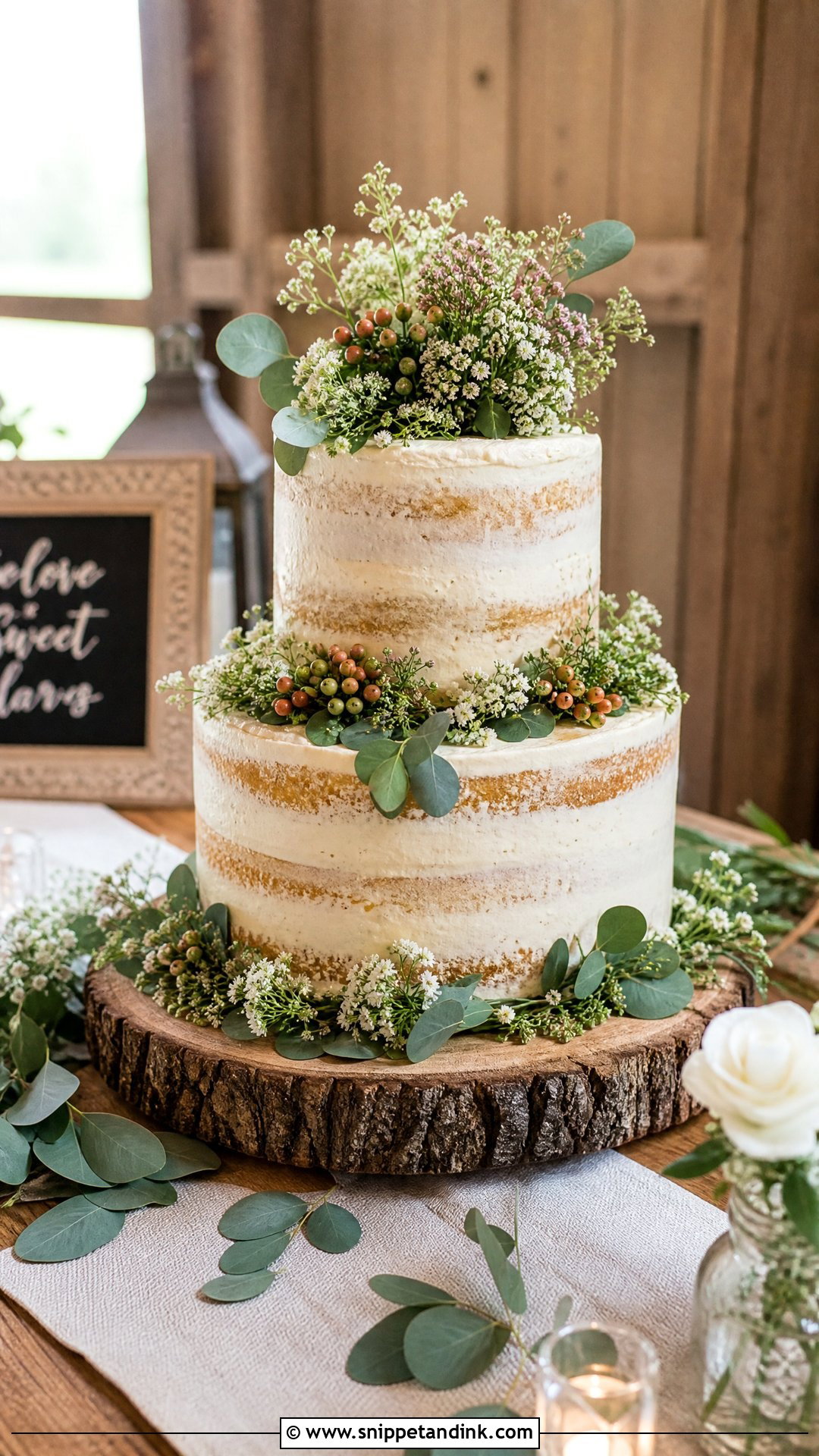
Rustic tables depend on real materials, so I lean on wood, linen and a stone or ceramic stand rather than burlap and mason jars. The trap is layering too much: a wood slab, a runner, lanterns, bud vases and loose greenery quickly becomes clutter. Pick the stand and one natural texture, then add a few bud vases. Semi-naked or textured buttercream cakes sit comfortably here. In a barn or pavilion, the building is already doing most of the styling.
3. Elegant Wedding Cake Table
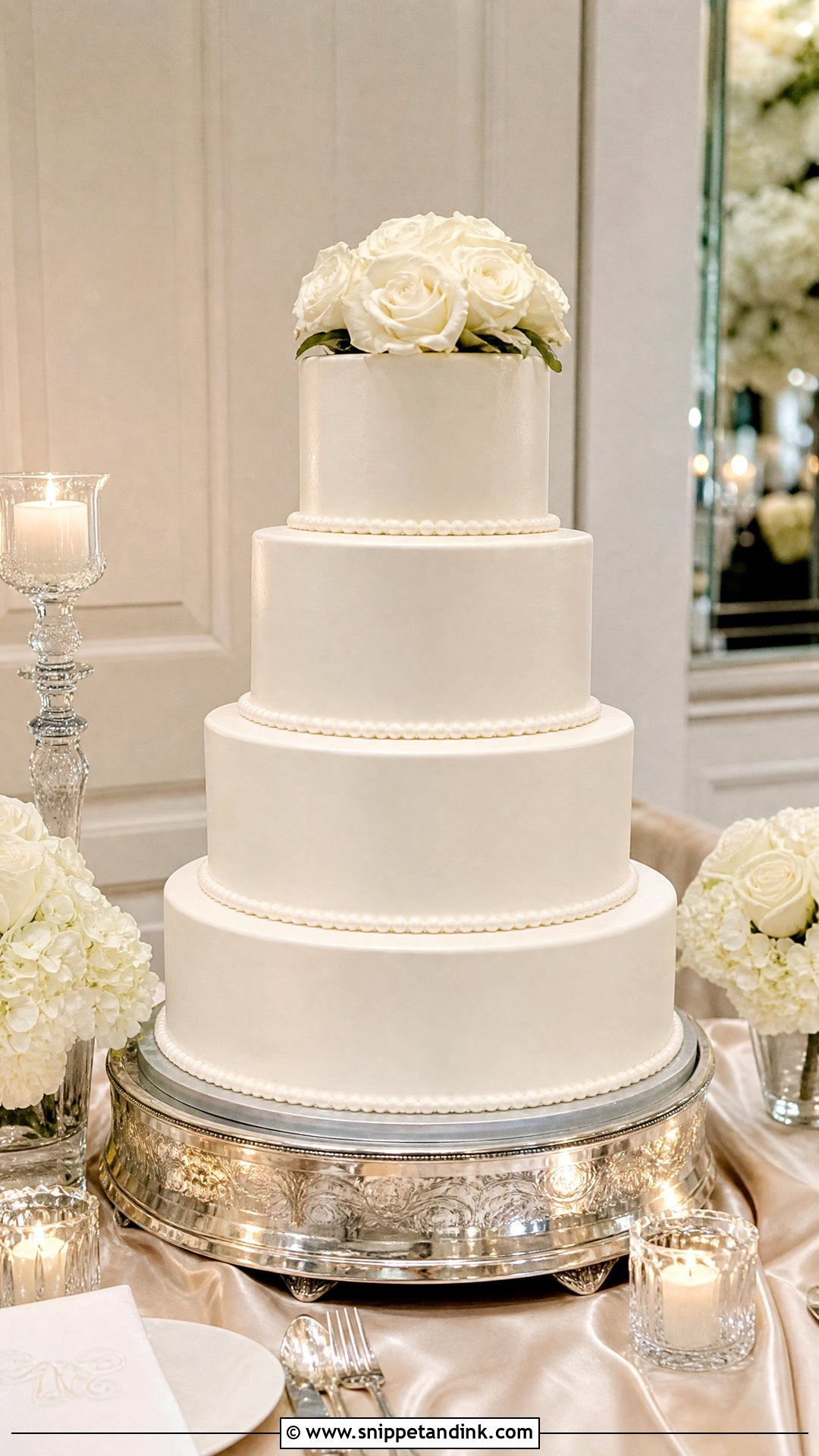
Formal tables are about what you leave out. Start with a pressed white, ivory or champagne linen, since wrinkles show badly in flash photos, then one good stand in glass, metal or marble. Flowers arranged as a low crescent at the base, or two matching arrangements either side, keep things symmetrical. Ballrooms and hotels suit this approach, and so do smooth fondant or pearl-detailed cakes. When a table looks unfinished, the answer is usually better lighting, not more props.
4. Modern Wedding Cake Table
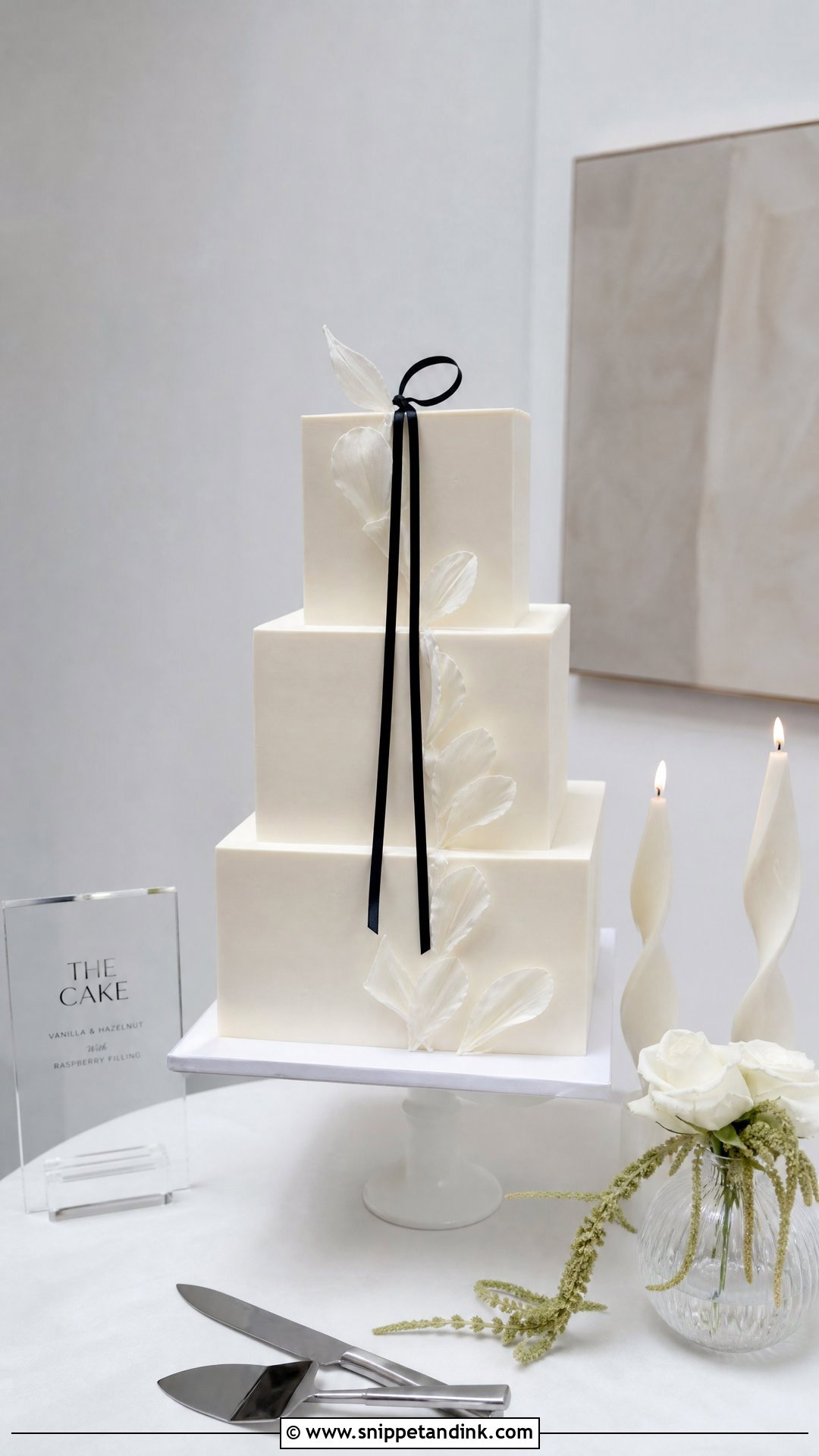
A modern table often skips the tablecloth altogether: a plinth, a sculptural pedestal or a sleek bare table. That only works if the surface itself is clean and level, so check rental pieces for scuffs before the day. Stick to two or three tones, such as white, black and soft green. Sharp-edged cakes and square tiers suit it. One sculptural flower stem or a minimal acrylic sign is enough to finish it.
5. Vintage Wedding Cake Table
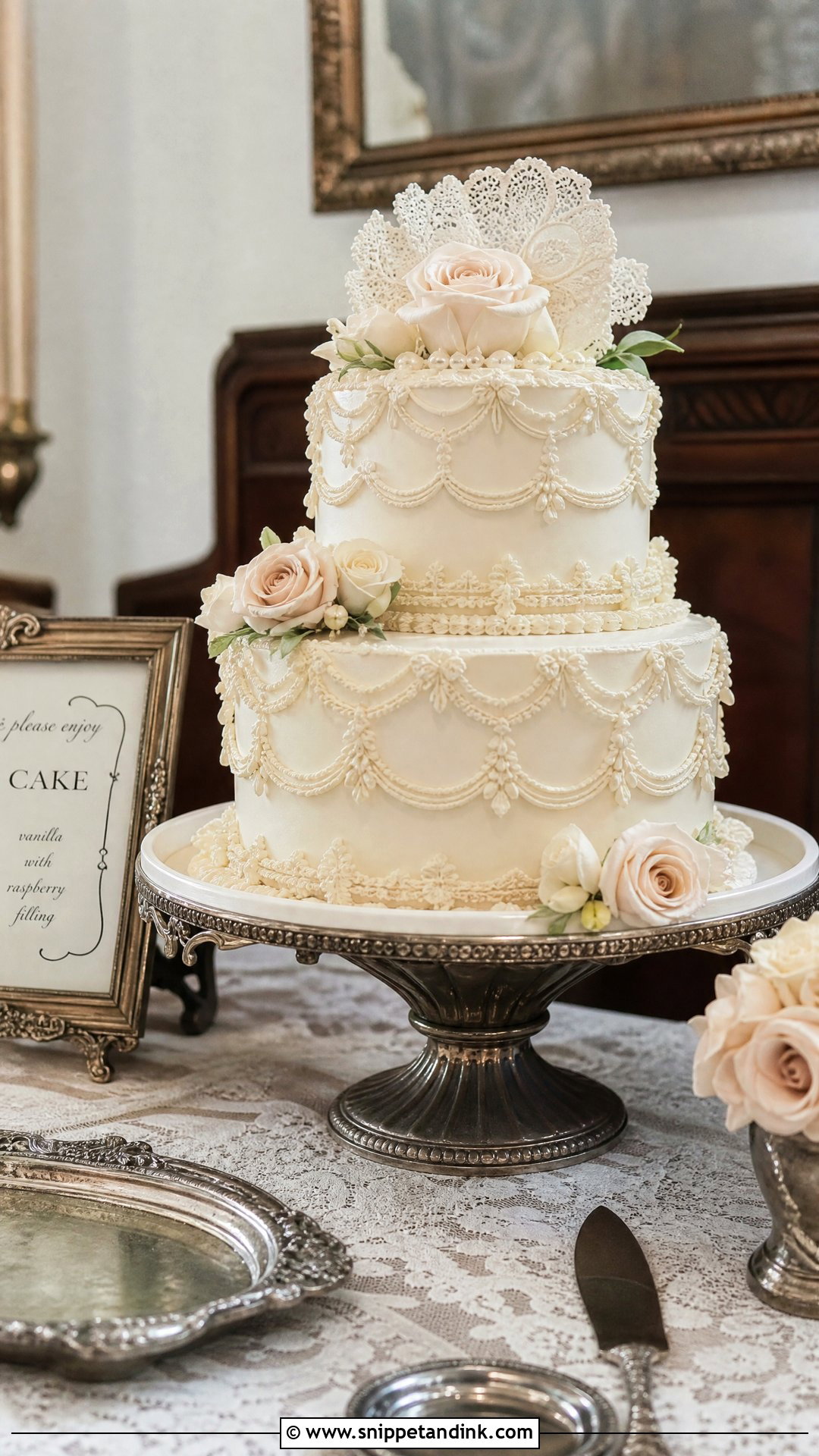
Vintage tables look collected, as if pieces came from different homes. Lace linens, a silver tray, an antique cake plate or a framed sign all help, but I limit them to three or four pieces so it doesn’t turn into a display cabinet. Real antique lace is delicate, so keep candles away from it. Garden roses, sweet peas and ranunculus suit the mood, and a piped or Lambeth-style cake belongs here more than anywhere else.
6. Floral Wedding Cake Table
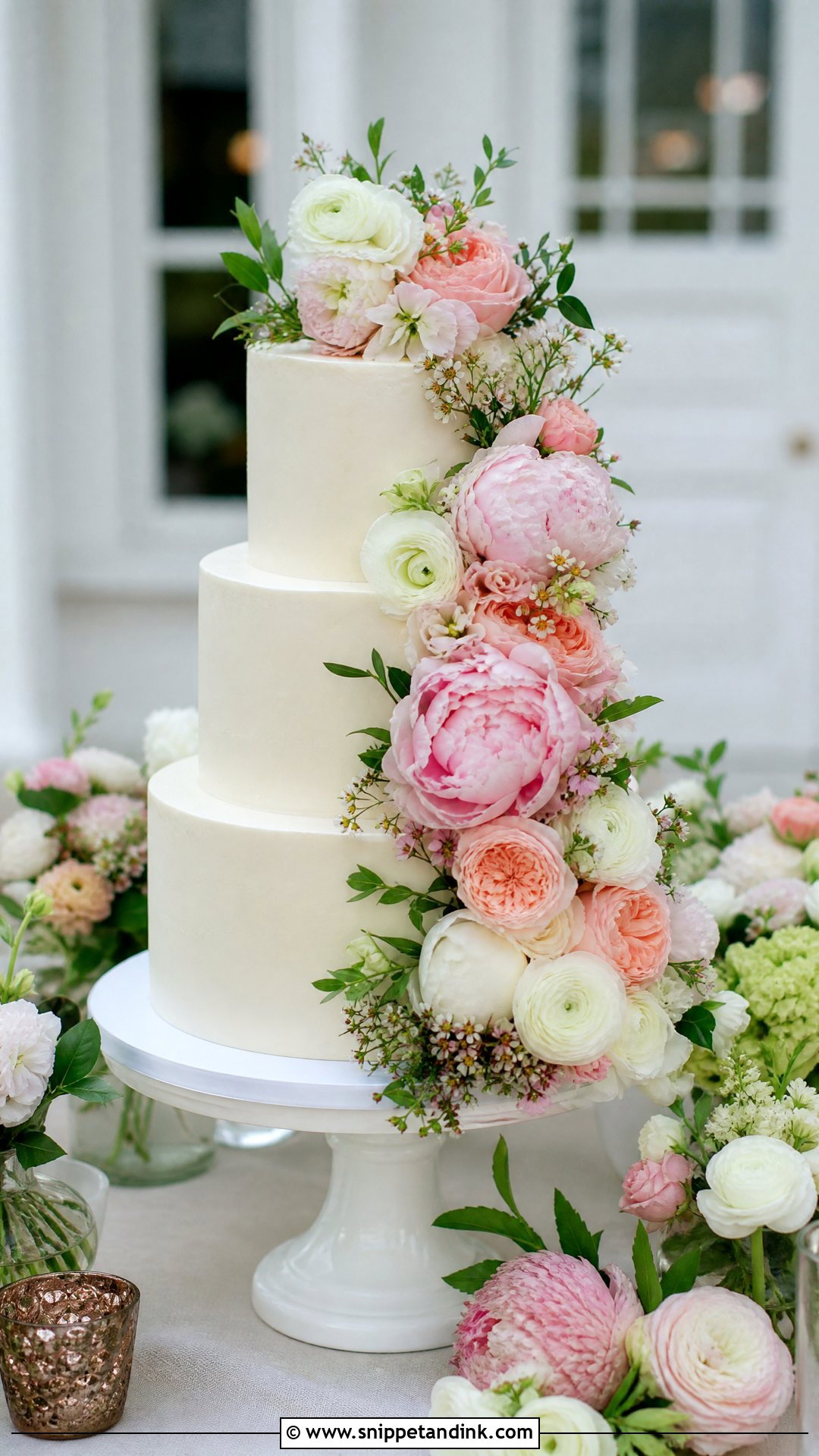
The easiest way to make a cake table look planned is to repeat the ceremony or centerpiece flowers. Ask your florist to hold back a few stems for it, or to move an arrangement from the ceremony once guests have left. Flowers belong at the base and the sides, not piled on every surface, so the cake stays visible. One caution I give every couple: lilies drop pollen that stains linens and frosting, so have the stamens removed or leave them off this table.
7. Greenery Wedding Cake Table
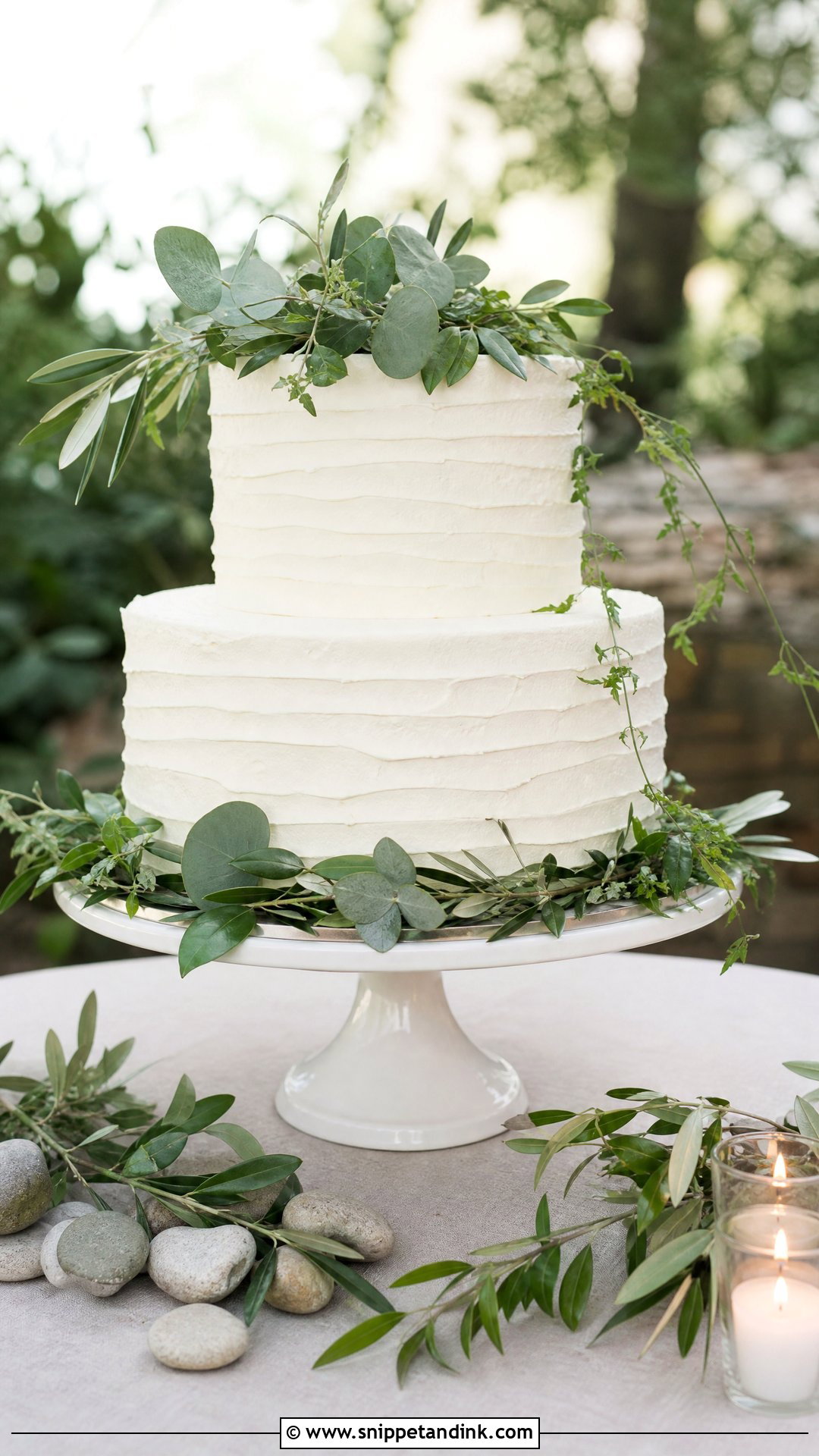
Greenery stretches a smaller flower budget further than almost anything. Eucalyptus, ruscus and olive hold up for hours without water, which matters on a table that’s set early and photographed late. Fern and delicate vines can wilt or curl in warm rooms, so I add those last. Keep the garland low and loose around the stand. A white or textured cake against green looks crisp, especially on a wood or stone surface.
8. Garden Wedding Cake Table
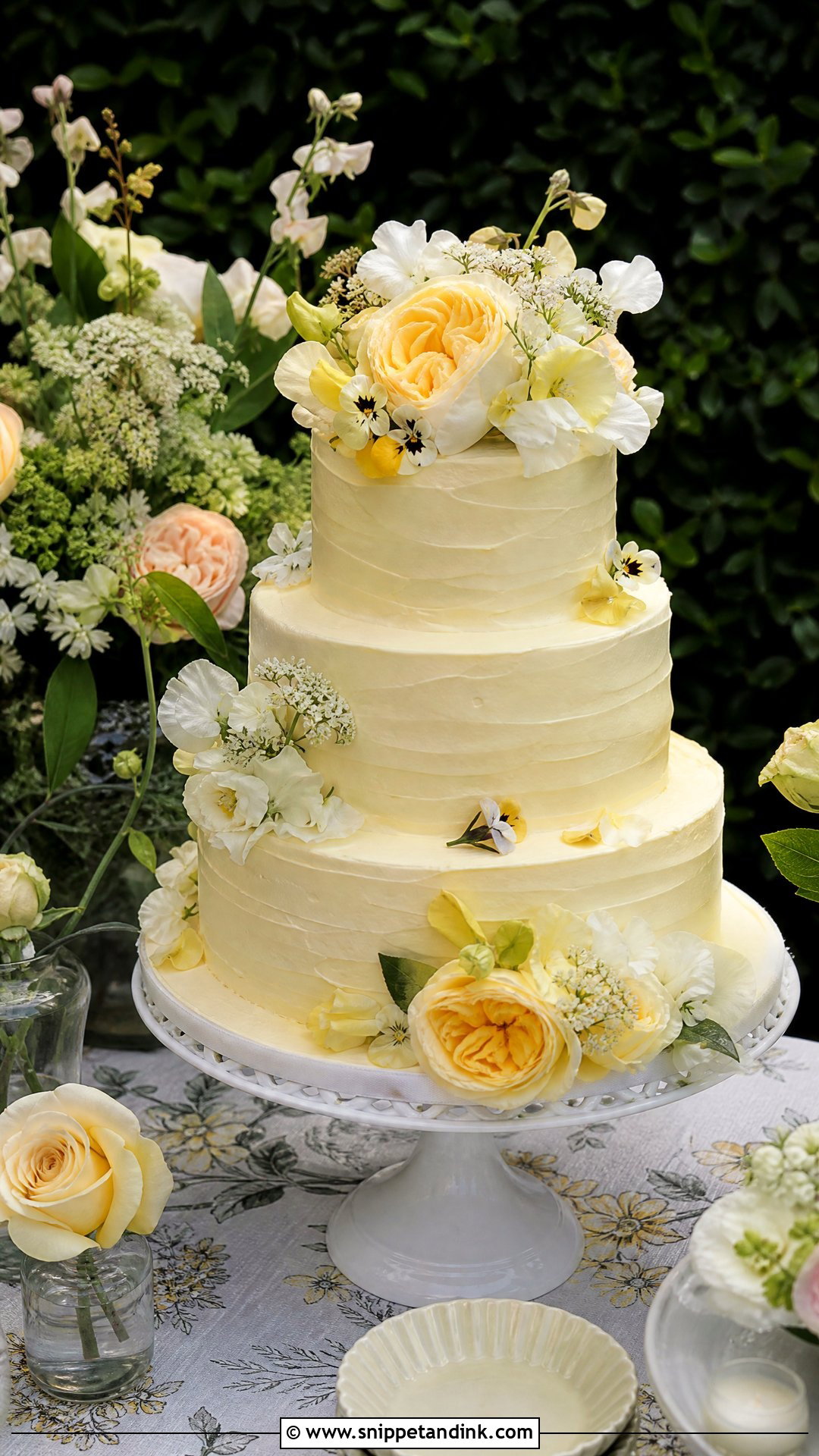
A garden cake table should look like it was set down among the plants. I place it in front of a hedge, arbor or floral installation so the background is already full; that saves building a backdrop. A floral linen can work, but only if the cake is plain, because pattern behind pattern gets busy. Watch the sun: what’s shaded at noon may be in direct light by dessert, and buttercream won’t forgive that.
9. Boho Wedding Cake Table
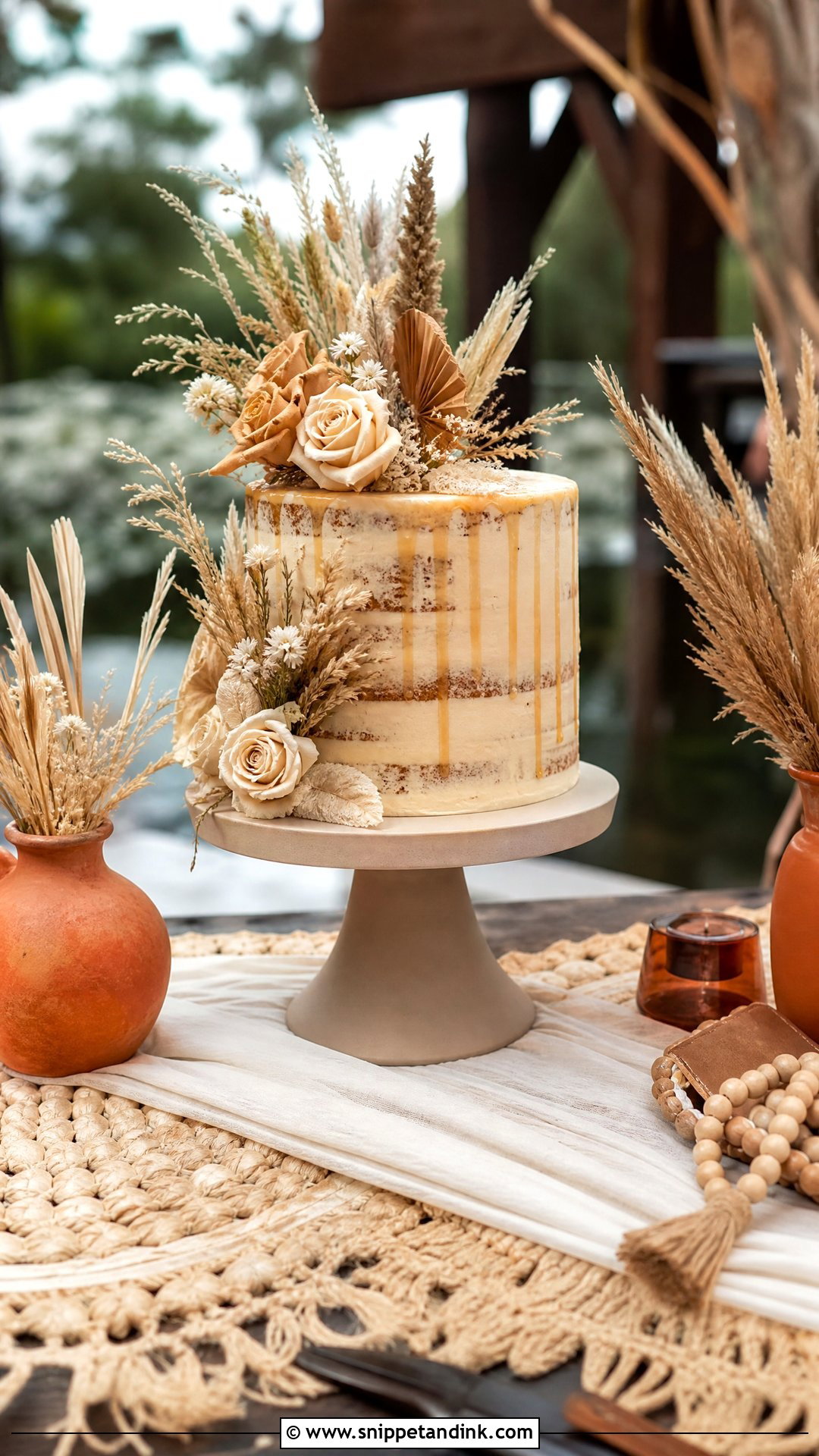
Boho styling works because of texture, not because of a long list of props. Rattan, woven runners, ceramic and dried flowers carry the look. Use pampas grass with care: it sheds, and the fibers end up on frosting and plates, so I keep it behind and away from the cake. A small rug under the table helps on grass or concrete. Low candles finish it in the evening.
10. Minimalist Wedding Cake Table
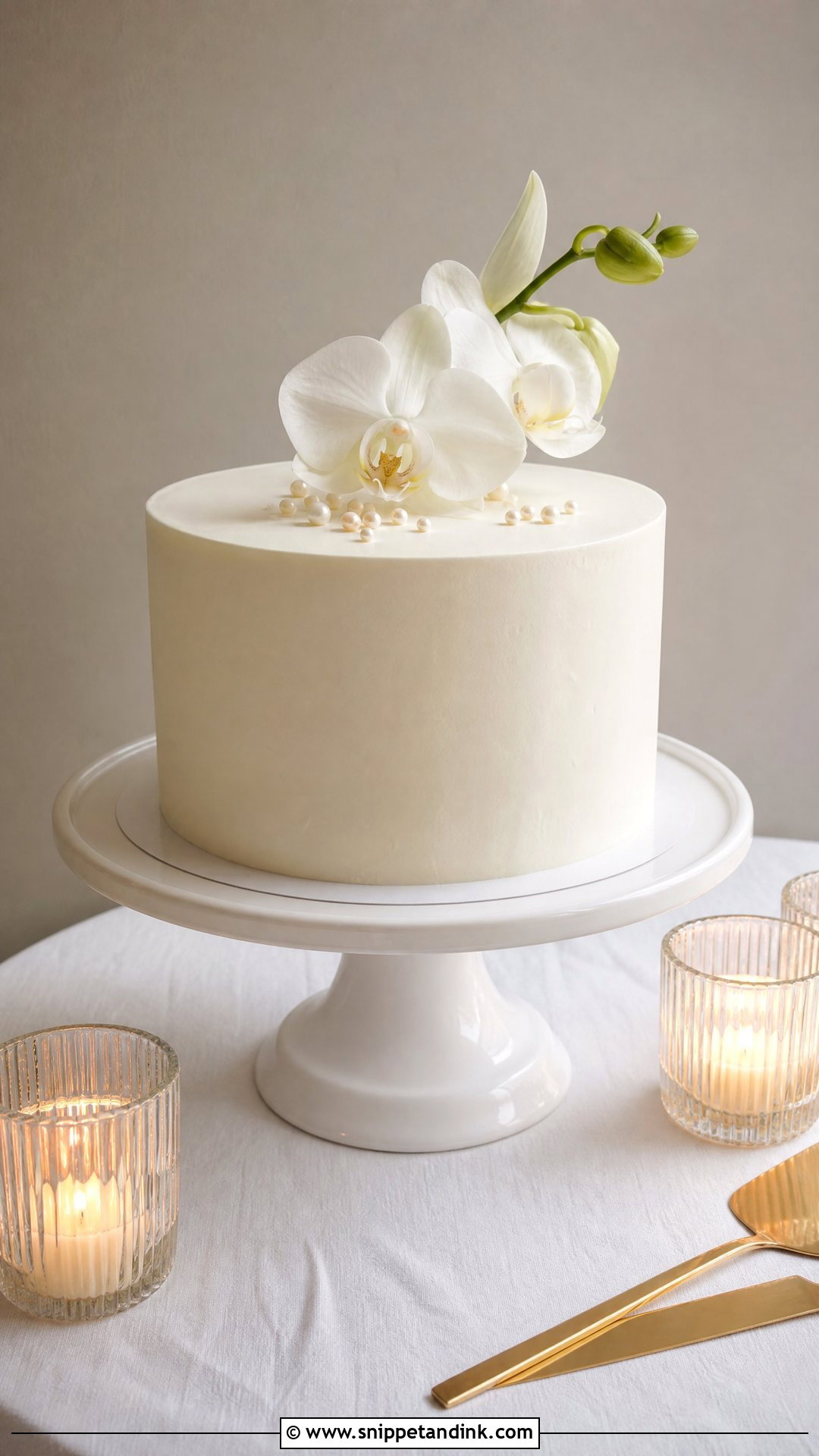
Minimal tables are unforgiving, because one wrong piece stands out. The stand needs to be exactly level and the linen pressed. I’d choose one supporting element only, either a small arrangement or a candle cluster, and leave the rest of the surface empty on purpose. White, ivory or soft gray keeps it calm. It suits a single tier or a very smooth cake, and it looks best with soft directional light.
11. Luxury Wedding Cake Table
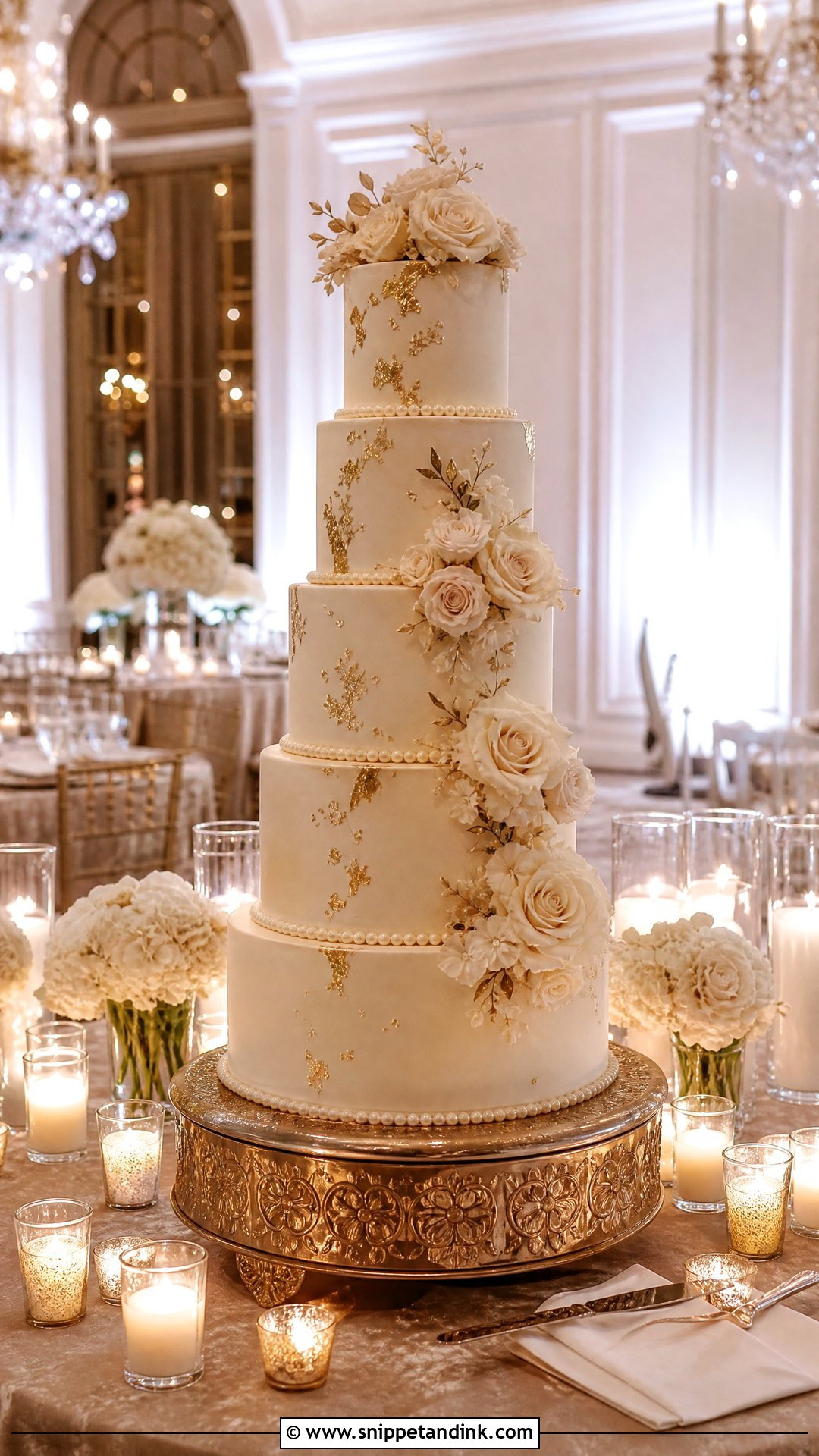
Luxury tables use rich fabric and height: satin, velvet or layered chiffon on the table, a tall cake and an ornate stand. Velvet looks rich on camera but shows crushing, so steam it on site. Mirror trays add sparkle under candles, though they also reflect every crumb and drip. Fewer, heavier pieces look grander than lots of small ones. Gold accents and lush flowers suit a ballroom where the cake is meant to be a centerpiece.
12. Small Wedding Cake Table
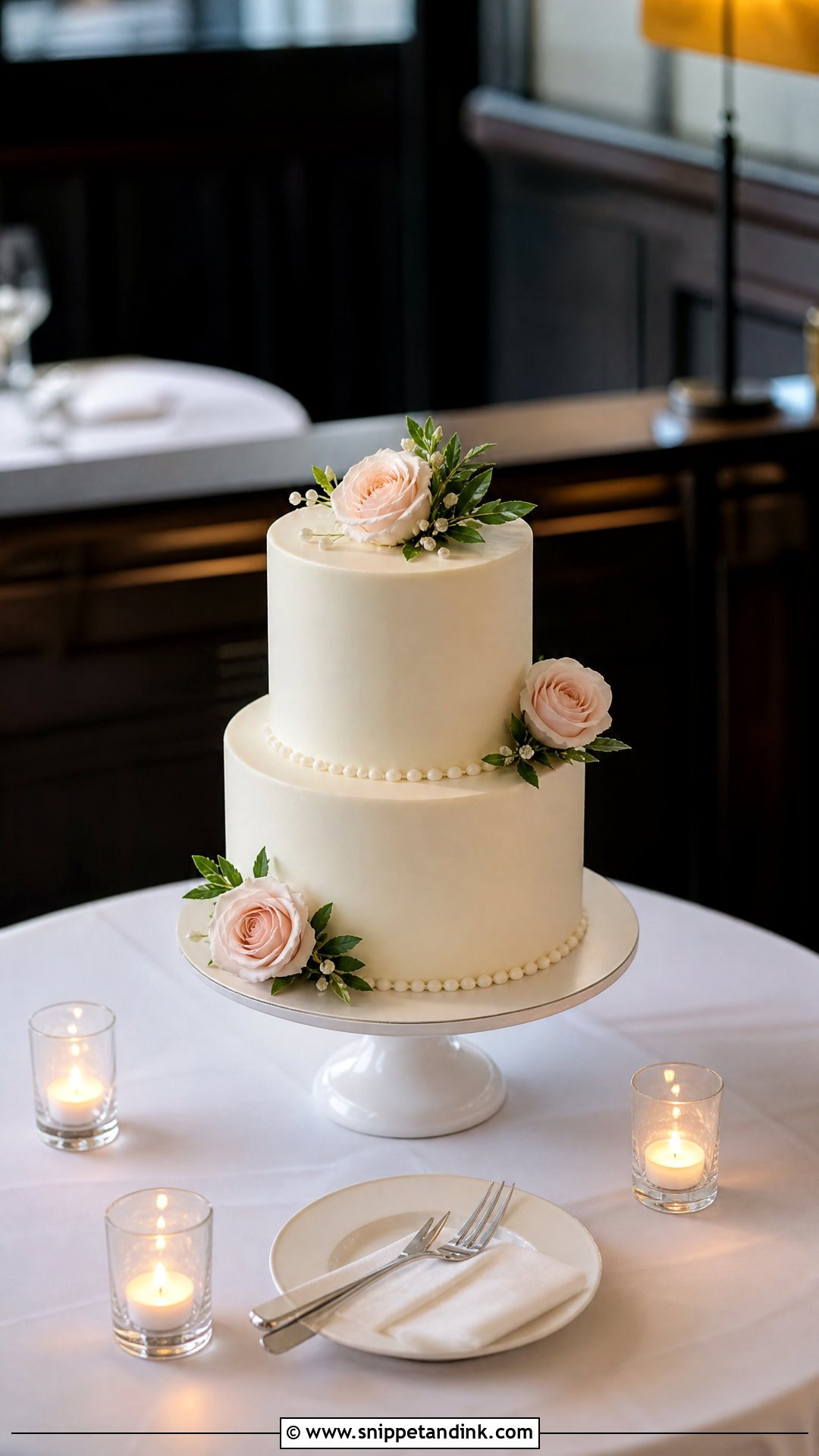
The biggest mistake with a small cake is putting it on a big table. A one- or two-tier cake on a six-foot banquet table looks stranded. A petite round, a pedestal or a side table gives it the right scale, and a raised stand adds the height the cake lacks. Add a small arrangement and a cake knife set, nothing more. This is the setup I use for elopements and restaurant receptions where dessert comes from the kitchen.
13. Dessert Wedding Cake Table
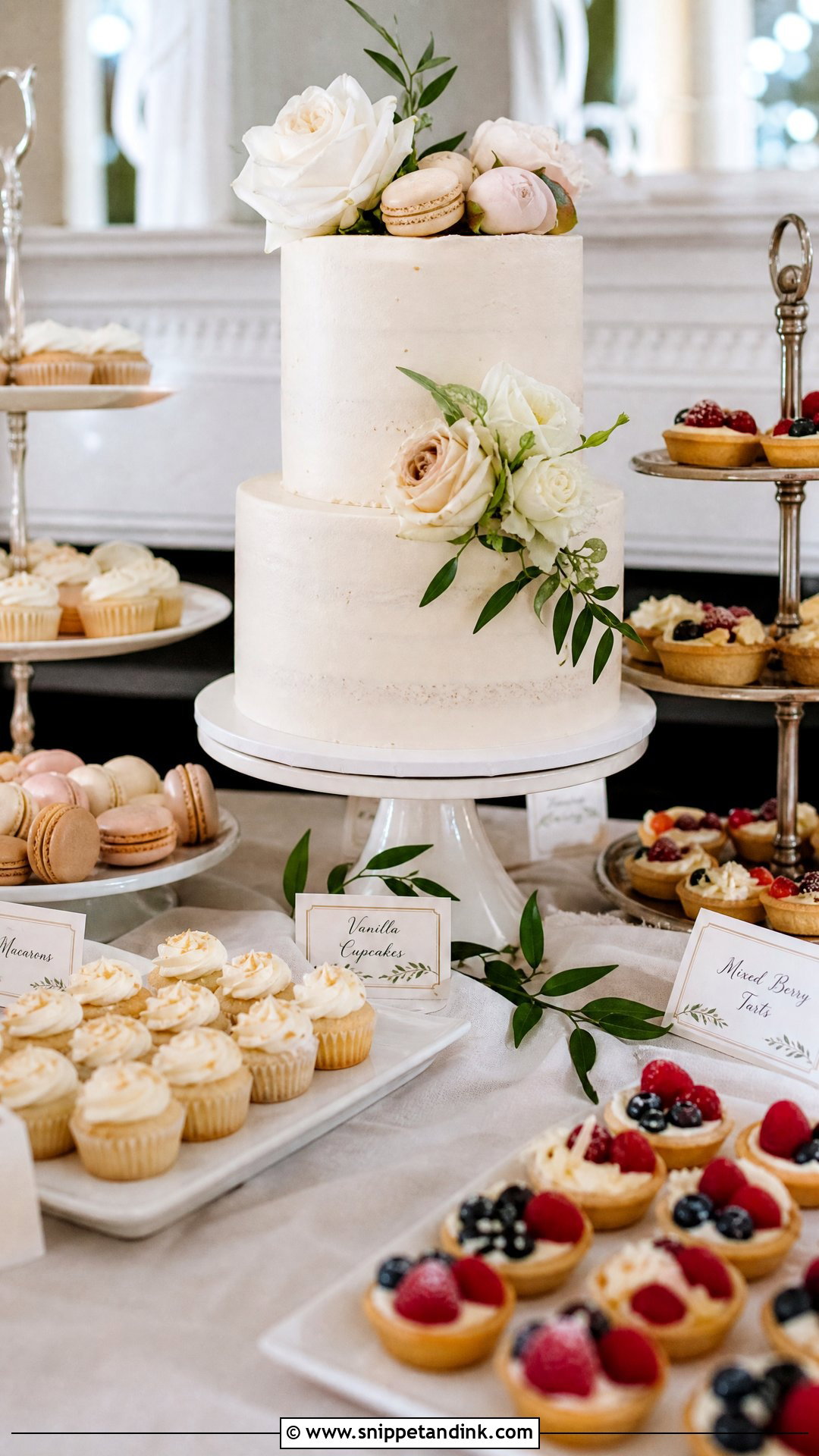
When cake and desserts share a table, the cake needs to be the tallest thing on it. I place it centrally or slightly raised at the back, then work out from it with stands of different heights so the table steps down toward the guests. Cookies, macarons and mini pies fill the front. Matching liners, trays and labels hold it together visually. Allow room for guests to reach without leaning over the cake.
14. Cupcake Wedding Cake Table
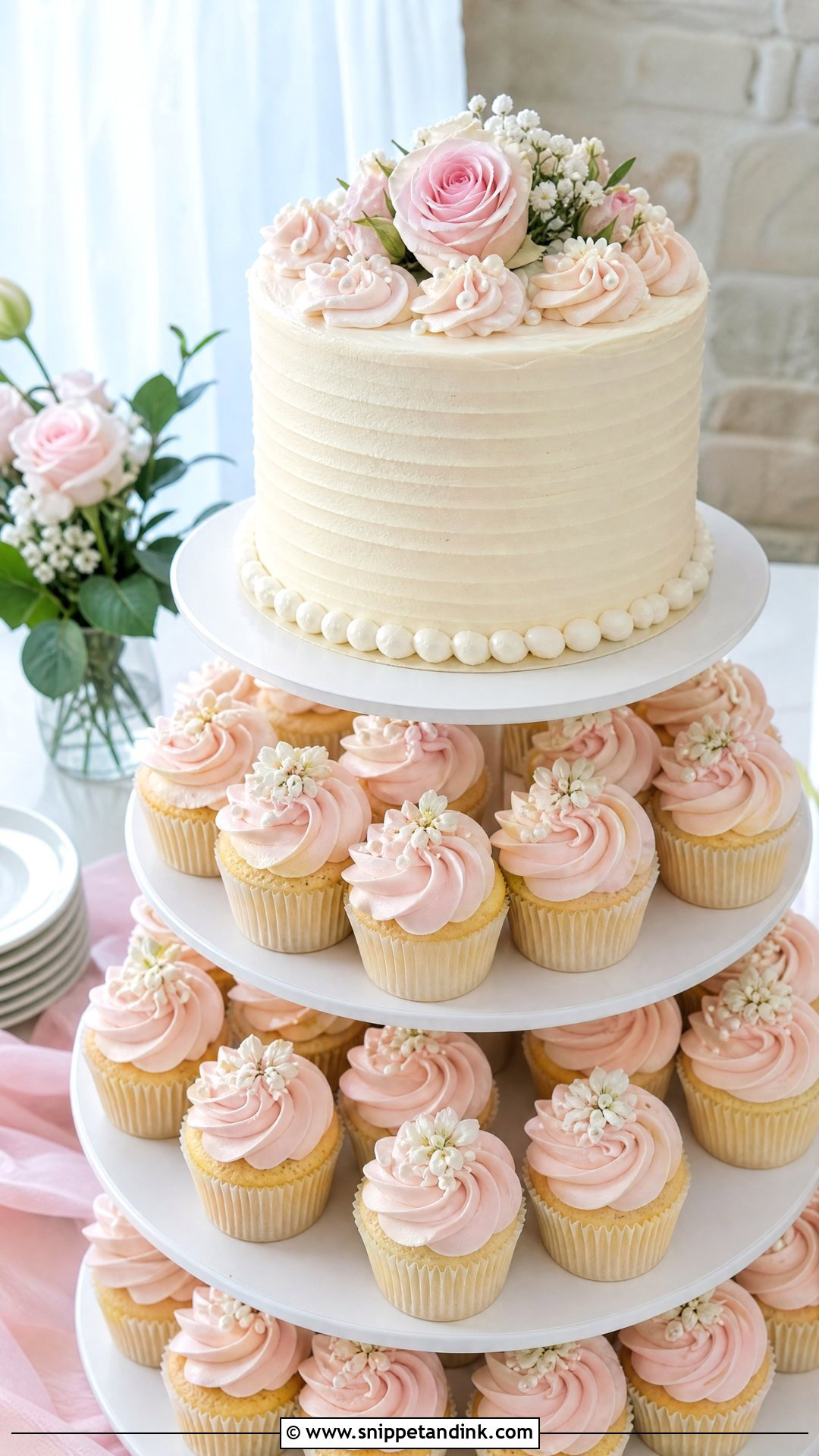
Cupcakes need far more table space than a tiered cake, so plan the footprint early. A small cutting cake on top of the tower or in the center keeps the classic photo. Matching the frosting colors to the main cake ties everything together, and labels should list allergens when there are several flavors. Put the tower where guests can reach it from more than one side, or a queue forms quickly.
15. Macaron Wedding Cake Table
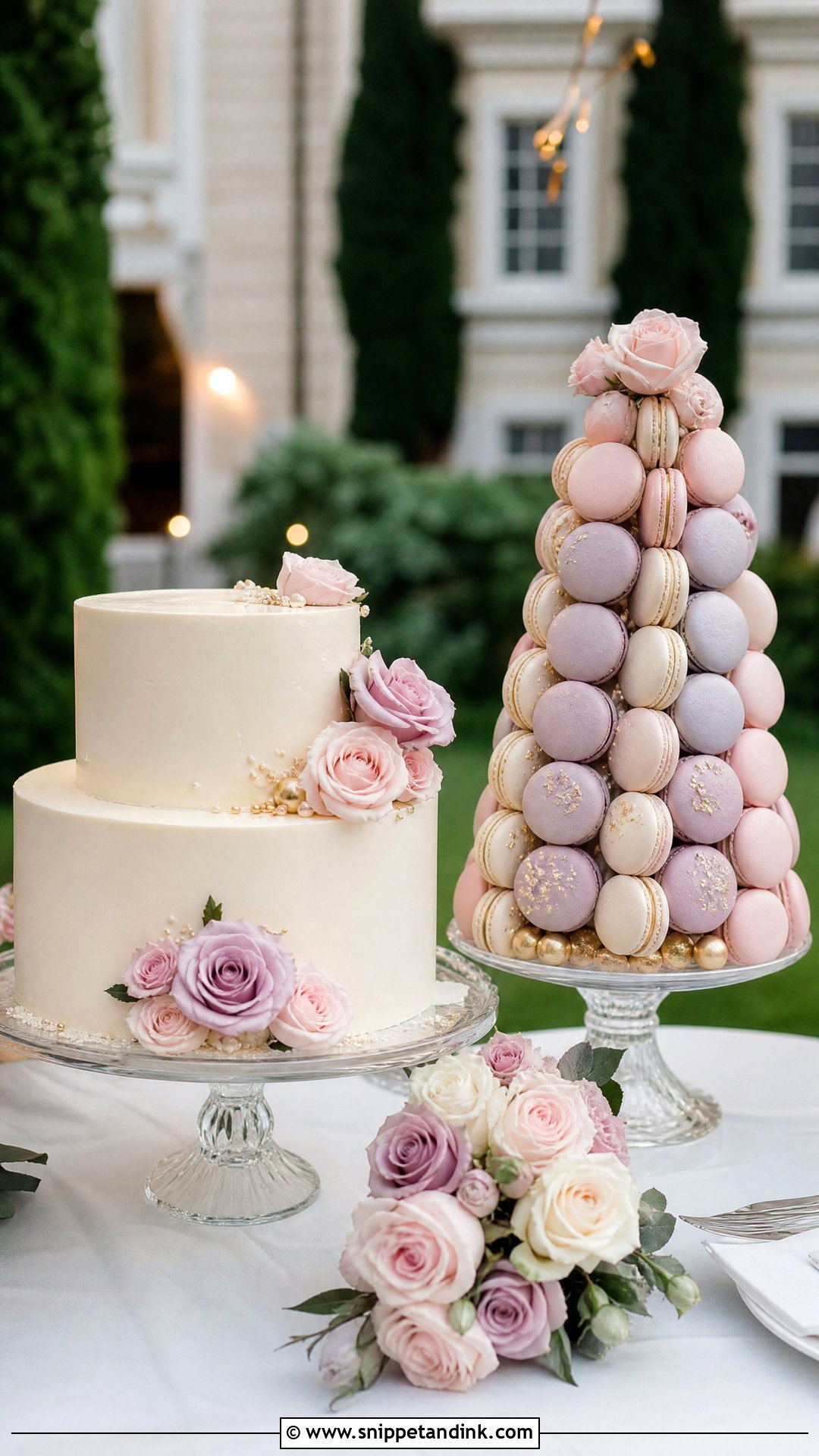
Macarons add color and a pâtisserie feel, and they look best with a quiet cake beside them. A tower, flat trays or stacked glass stands all work, but humidity softens the shells, so this table belongs indoors or under cover. Soft palettes such as blush, lavender, sage and pale blue suit most weddings. Clear stands keep the focus on the color rather than the display pieces.
16. Donut Wedding Cake Table
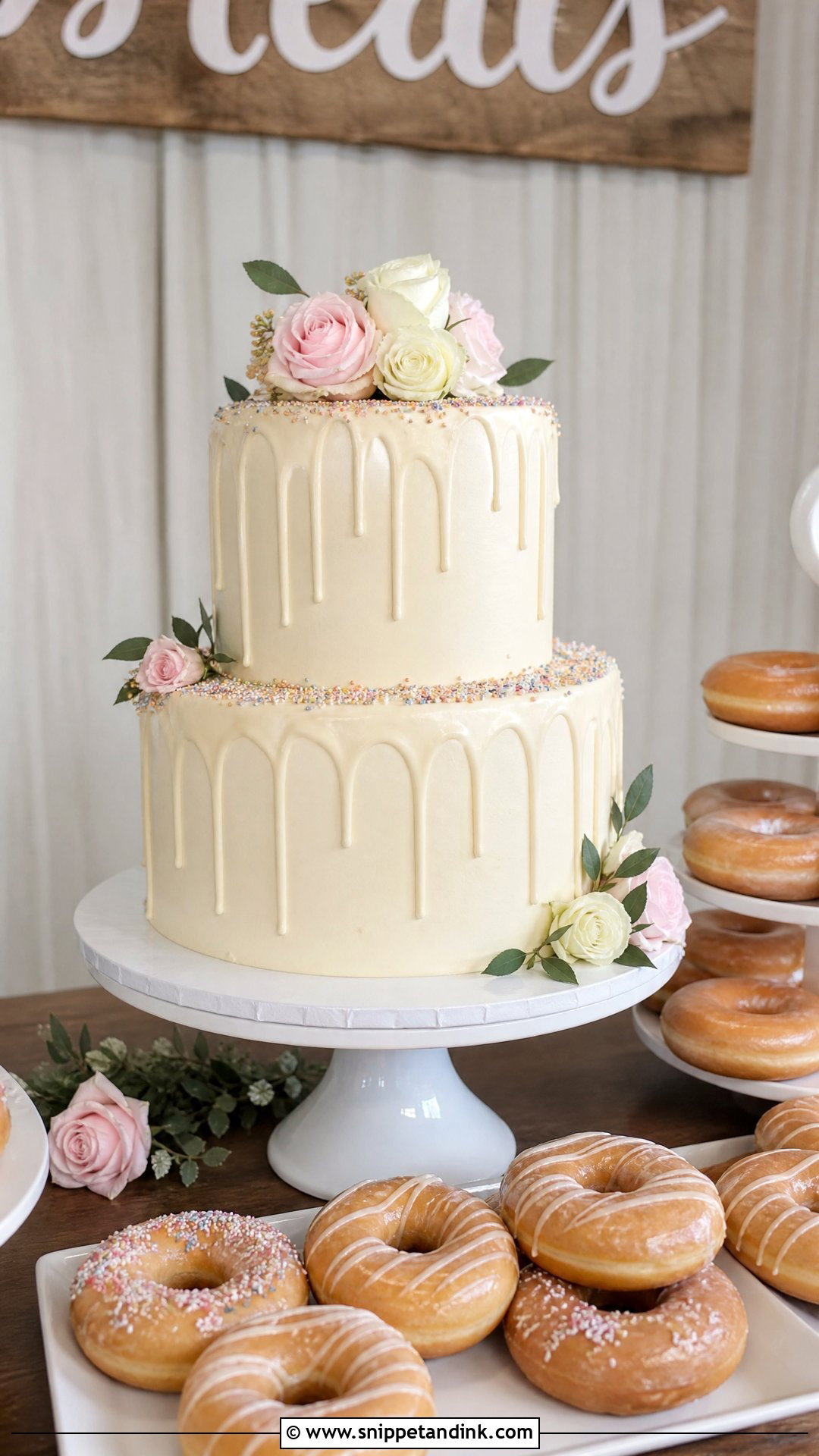
A donut wedding cake table looks polished when the icing colors stay inside your palette; a random rainbow of shop donuts reads as a break-room treat. A small tiered cake anchors the display and keeps the photo moment. If you add a donut wall, give it its own space nearby rather than squeezing it onto the cake table. Tongs and napkins stop guests handling every donut.
17. Backyard Wedding Cake Table
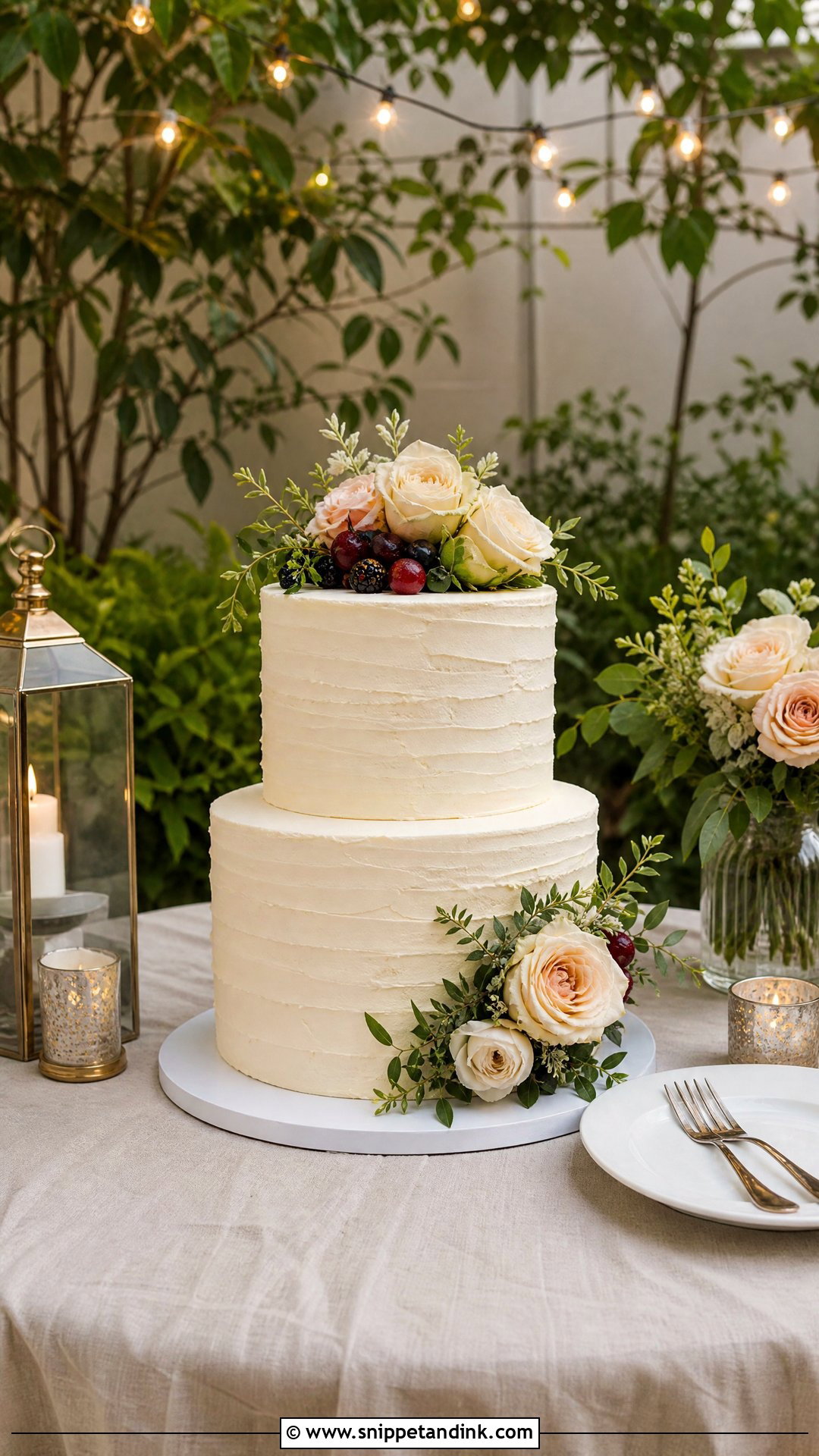
At home, the table usually has to be borrowed or rented, and folding tables can wobble on grass. Level it with shims before the linen goes on, and never use a card table for a tiered cake. Shade is non-negotiable; find where the shadow will be at dessert time, not at setup. String lights or lanterns overhead help the cake show up in evening photos. Keep the table away from the path to the bathroom and the bar.
18. Beach Wedding Cake Table
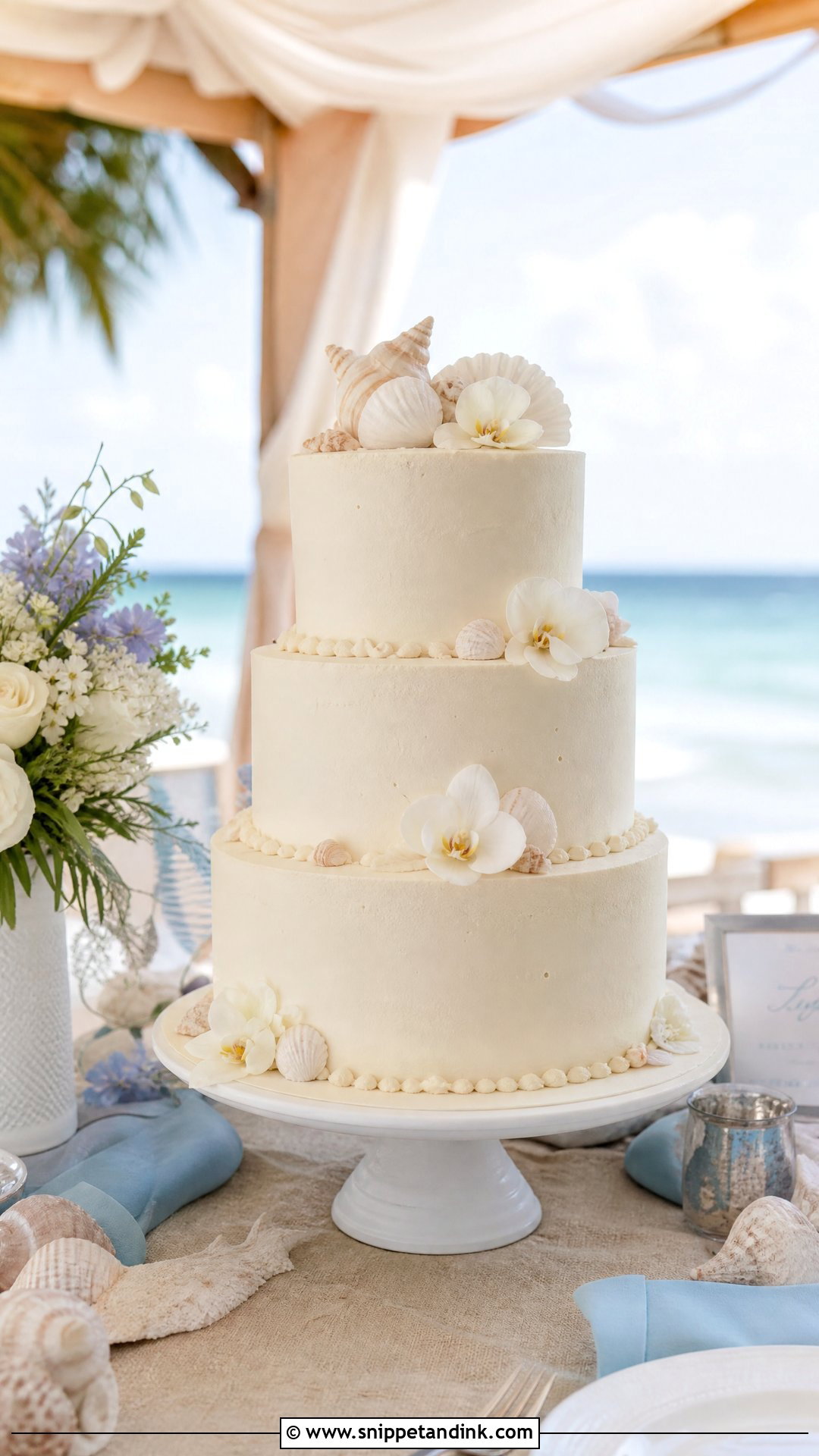
On a beach, wind is the first problem and sand the second. I clip or weight the linen at every corner, choose a heavy table, and keep the cake under a canopy or inside until just before cutting. Real shells should be cleaned and kept off the frosting. A soft palette of blues, ivory and sand tones suits the setting, and greenery holds up better than delicate flowers in salt air.
19. Fall Wedding Cake Table
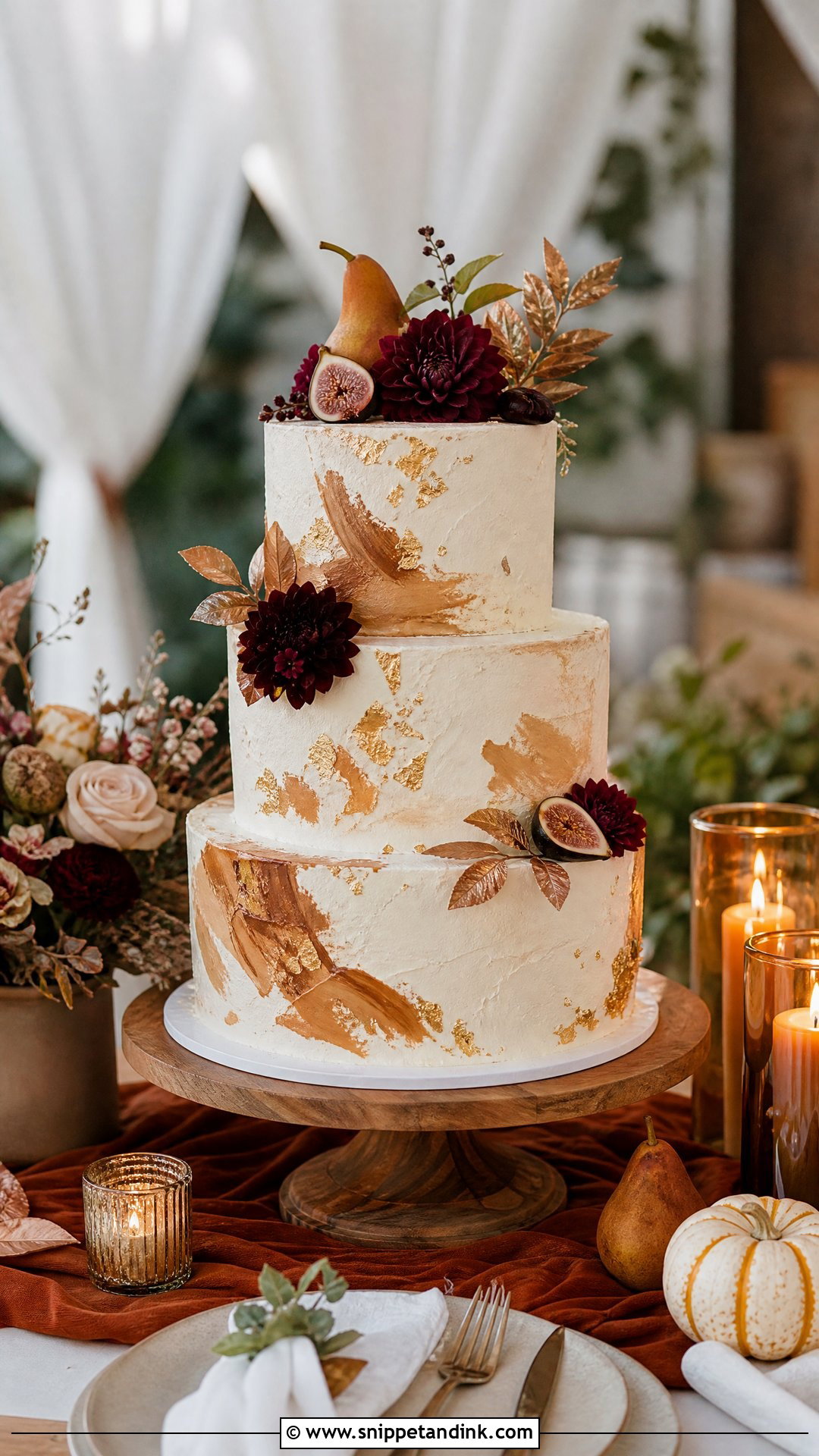
Autumn tables come together easily because the season brings color and texture. Rust, caramel, burgundy and deep green linens and flowers carry the look, with a spice cake, caramel cake or textured buttercream at the center. Pears, figs and small pumpkins add shape around the base. Keep anything unwashed or non-food-safe off the cake itself. Candlelight and a wood or bronze tray finish it.
20. Spring Wedding Cake Table
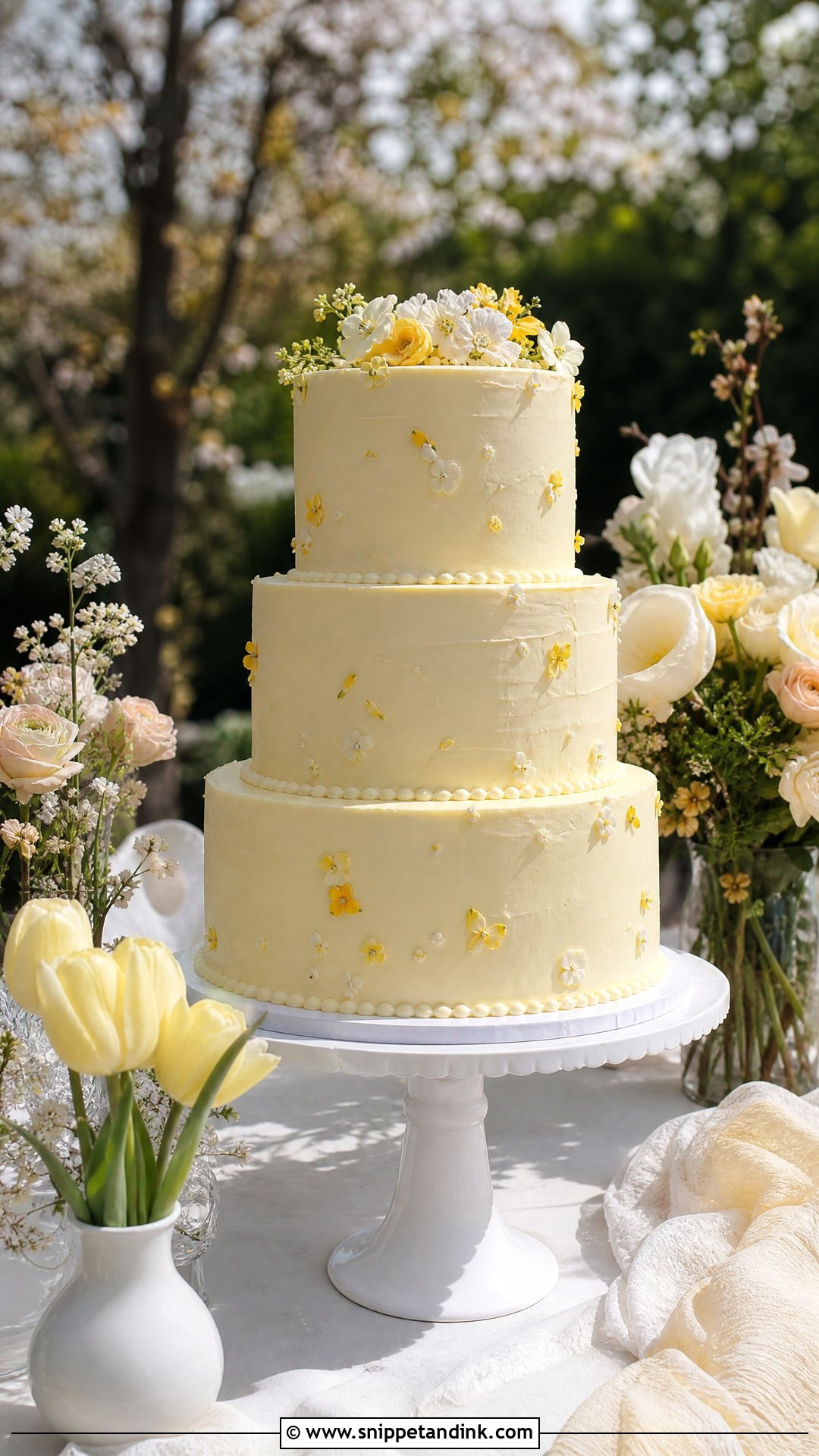
Spring tables need light, both literal and visual. I keep linens pale and airy and choose a stand that isn’t too heavy-looking. Tulips are worth a warning: they keep growing and bending after they’re cut, so an arrangement set in the morning can look quite different by evening. Ranunculus, sweet peas and garden roses are more predictable. A lemon or vanilla cake fits the season, and a bright position near natural light suits it best.
21. Summer Wedding Cake Table
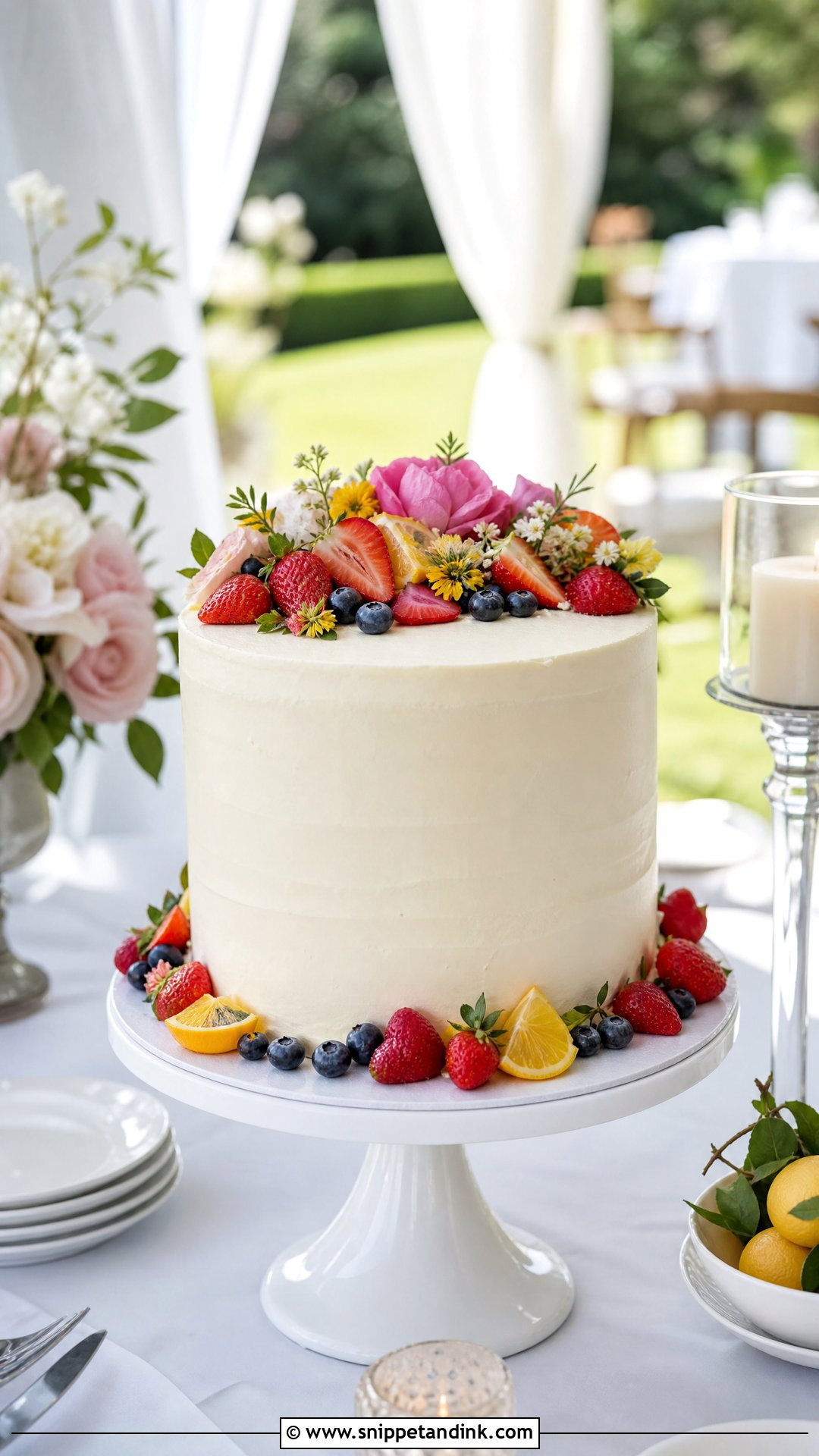
Summer is the season where the table’s position matters more than its decoration. Shade first, then a stable stand, then a frosting that suits the temperature, which is worth discussing with your baker. Fresh fruit and bright flowers look cheerful against white linen. Skip candles outdoors in daylight; they barely show and add heat. Tented receptions are hotter than people expect by late afternoon, so ask about fans or air conditioning near the cake.
22. Winter Wedding Cake Table
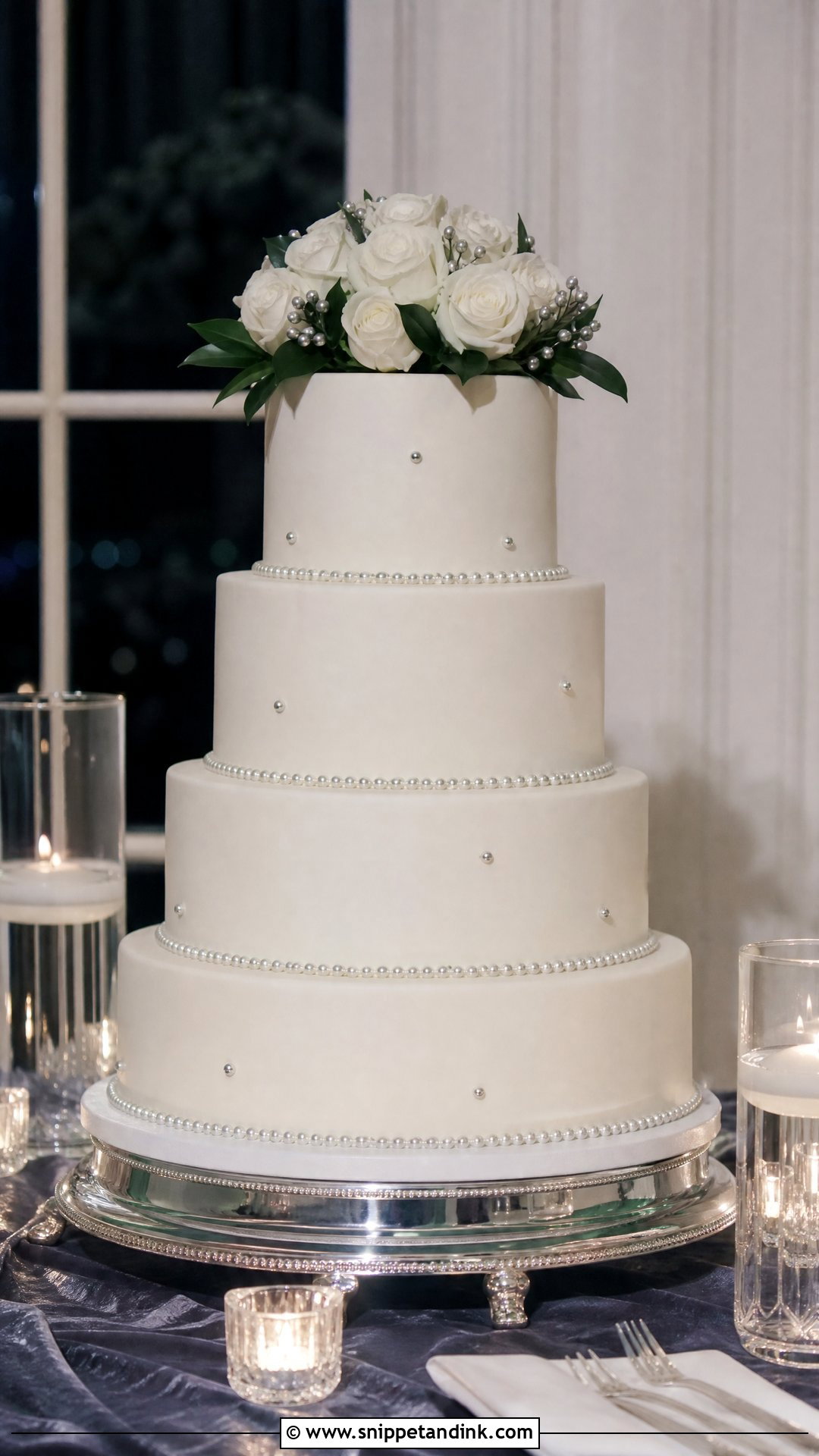
Winter tables can look seasonal without a single ornament. Velvet or satin linens, candlelight and glass candle holders give warmth and glow. Mirror trays and metallic accents catch the light in a dark room. White roses, anemones and deep greenery work well. Radiators and fireplaces are the hidden risk in winter venues, so I check where the heating is before choosing the cake’s spot.
23. Black And White Wedding Cake Table
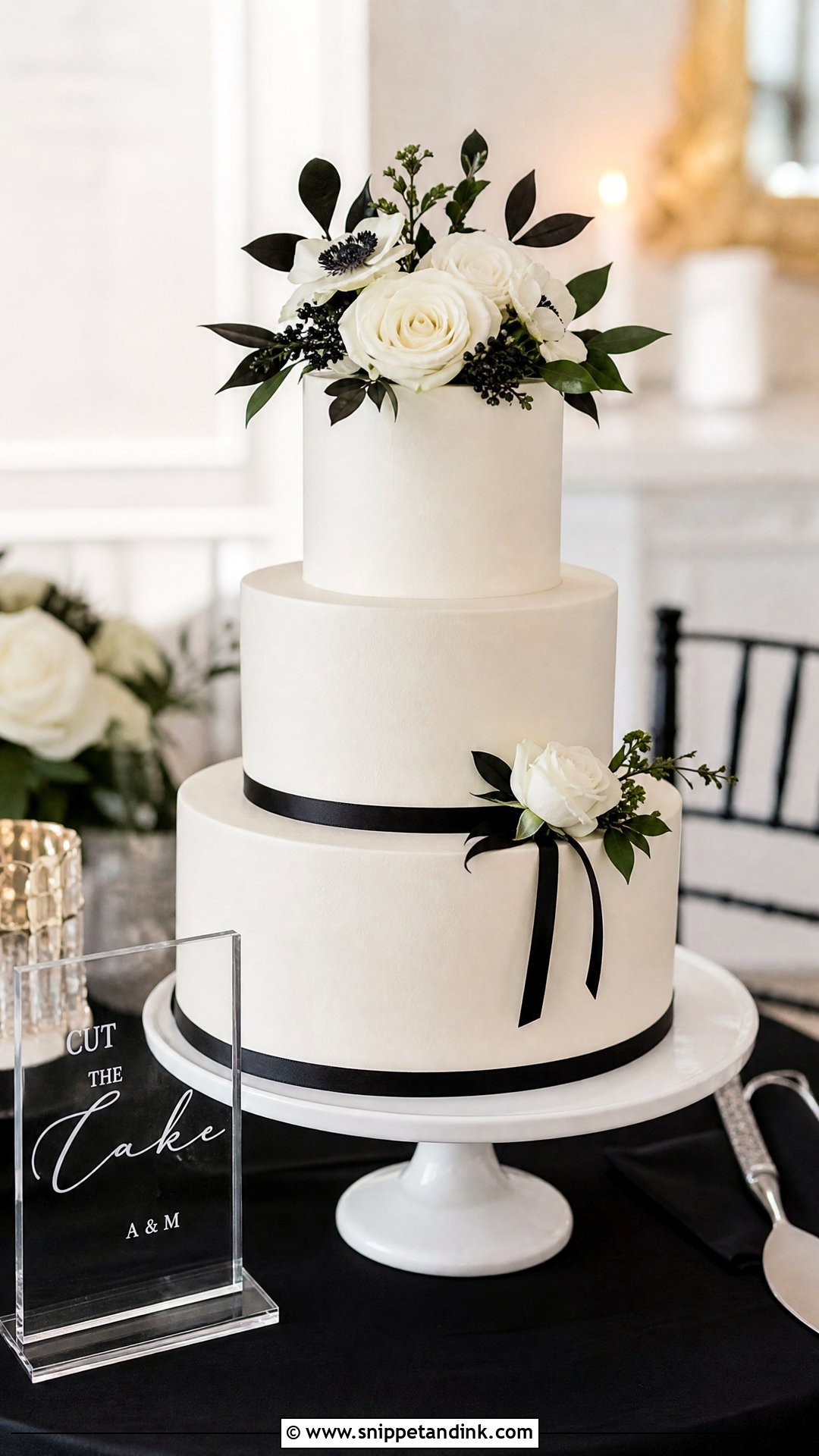
Black and white tables depend on one strong contrast, not five. A white cake on a black linen, or a black-and-white tiered cake on a white pedestal, makes the point. Black linens show lint and crumbs under flash, so bring a lint roller to setup. White roses, anemones with their dark centers and deep greenery keep the flowers in the palette. City venues and formal receptions suit it.
24. Gold Wedding Cake Table
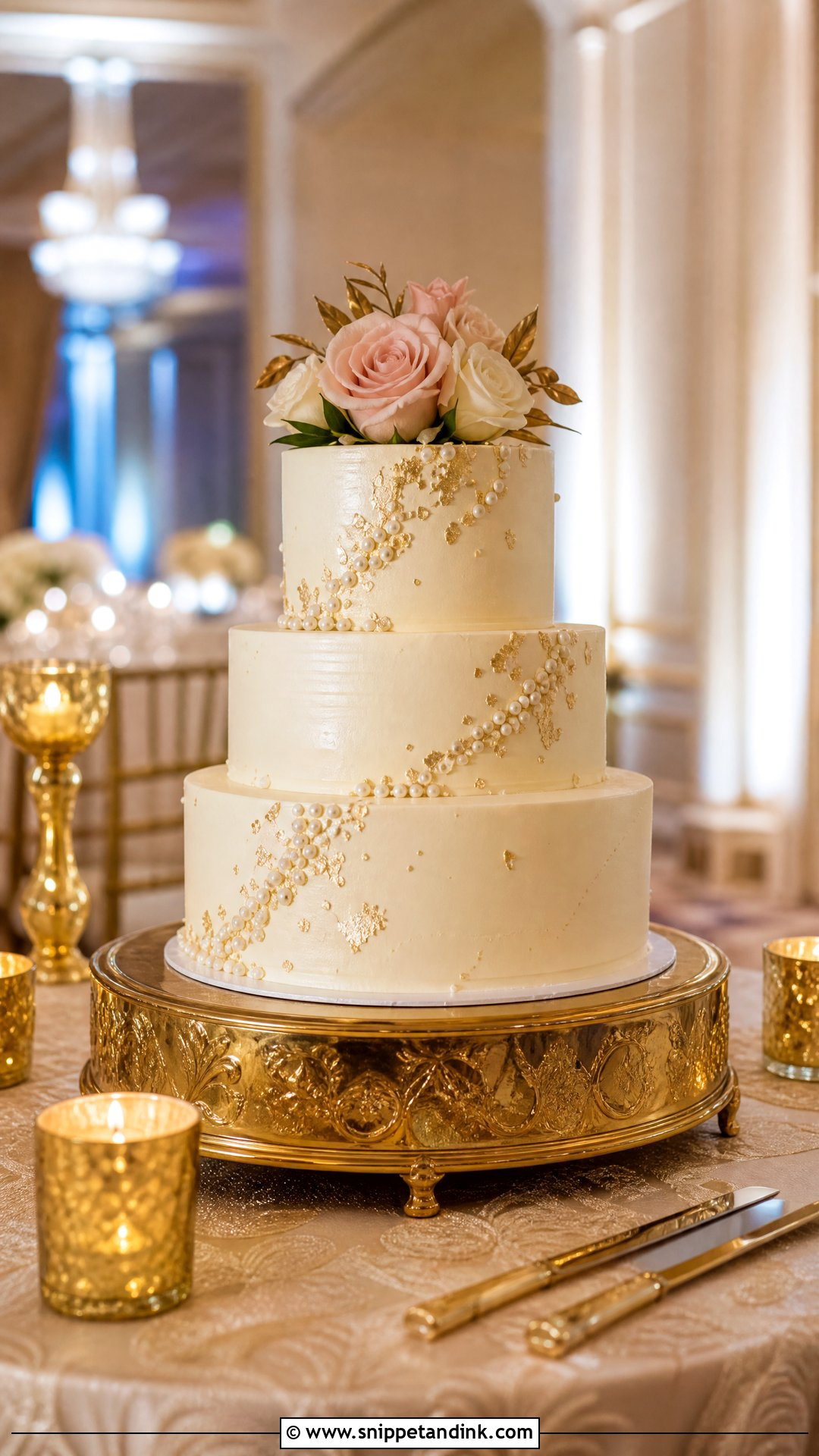
Gold works best in a few places at once: the stand, the cake server and maybe the candle holders. Mixing finishes is where it goes wrong; yellow gold beside rose gold and brushed brass looks accidental. Pair gold with ivory, blush or deep green. A white cake with a little gold leaf picks up the theme without repeating it everywhere. Warm candlelight brings gold to life, while cool daylight can flatten it.
25. Single Tier Wedding Cake Table
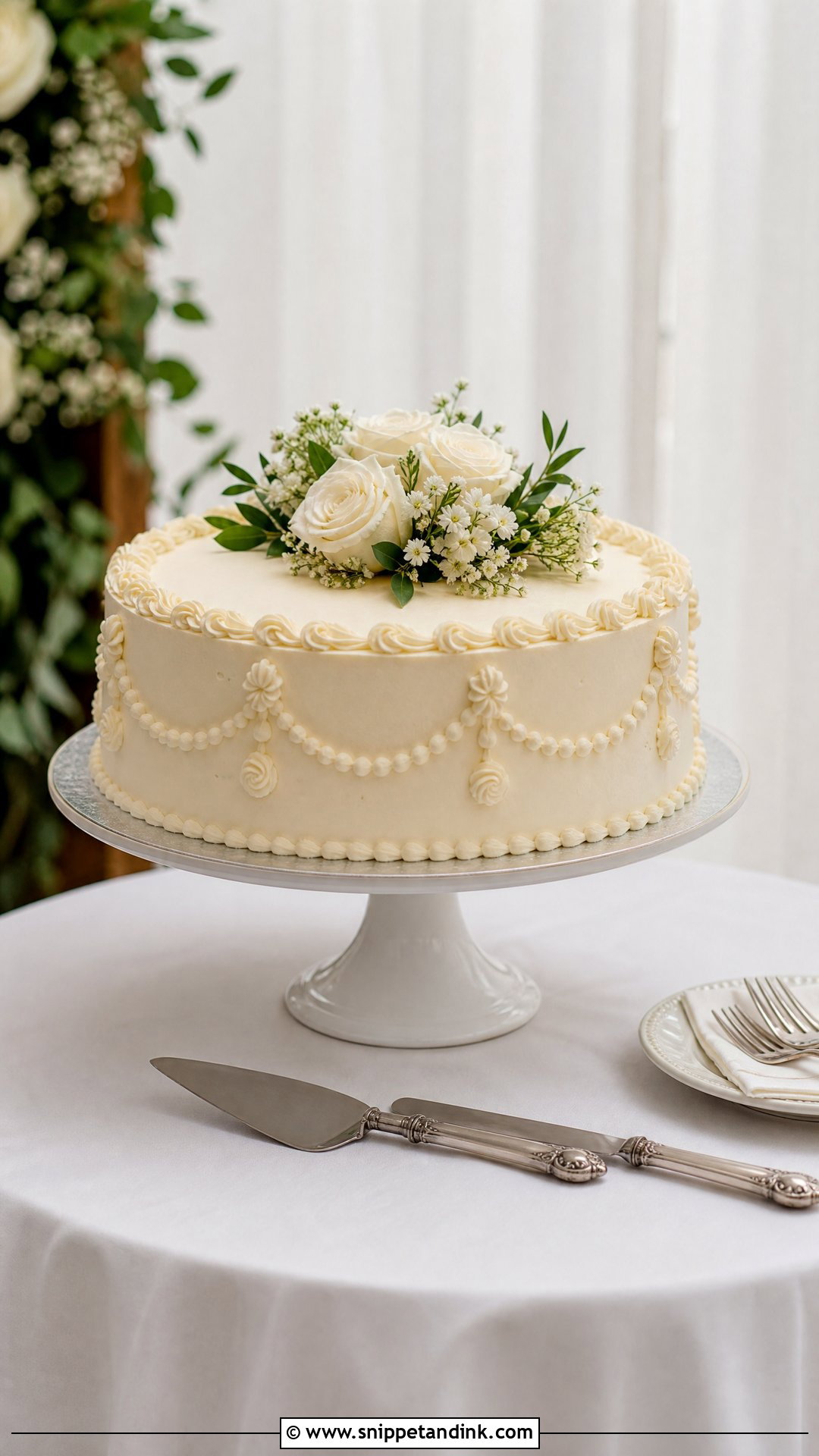
A single tier can hold its own if the table is scaled to it. A small cutting cake on a tall pedestal and a small round table looks deliberate; the same cake on a long table looks forgotten. I add one arrangement and a few candles, or a tray of desserts nearby. A wide single tier or a vintage piped design has enough presence for photos. Micro weddings and elopements are the natural fit.
Table Size, Stand Height and What Sits Near the Frosting
Scale is the detail I fix most often on site. A single cake usually looks best on a round of roughly 30 to 48 inches, depending on the number of tiers. Add desserts and you’ll need a larger round or a rectangle. Leave clear space at the front for the knife, plates and the two of you.
A cake stand adds height, but it also adds a point of failure. Check that it’s rated for the cake’s weight and sits flat; pedestal stands with a narrow base can wobble on a soft or uneven table. For a heavy cake, your baker may prefer to use their own stand.
Candles, flowers and frosting
- Keep open flames several inches from the cake. A cluster of votives gives off more heat than you’d think, and buttercream softens near it.
- Use enclosed holders or LED candles if the venue requires them or if the table sits near a draft.
- Remove lily stamens and avoid flowers that drop petals or pollen onto the cake.
- Treated or painted props, dried grasses and anything dusty stay off the cake’s surface entirely.
Set the table, step back to where the photographer will stand and look once before guests arrive. Anything that distracts from the cake from there can usually just come off.
Set the Light Before You Add Another Prop
Most cake tables need fewer things, placed better. Choose one focal point, the cake, and make sure the stand, linen, flowers and light all point toward it. Think about where the table sits in the room and where the photographer will stand before you buy anything. A small cake looks right with a pedestal and good light; a large tiered cake may only need a pressed linen and a little candlelight. Spending more rarely fixes a cake table. A good position and simple styling almost always do.


Leave a Reply