
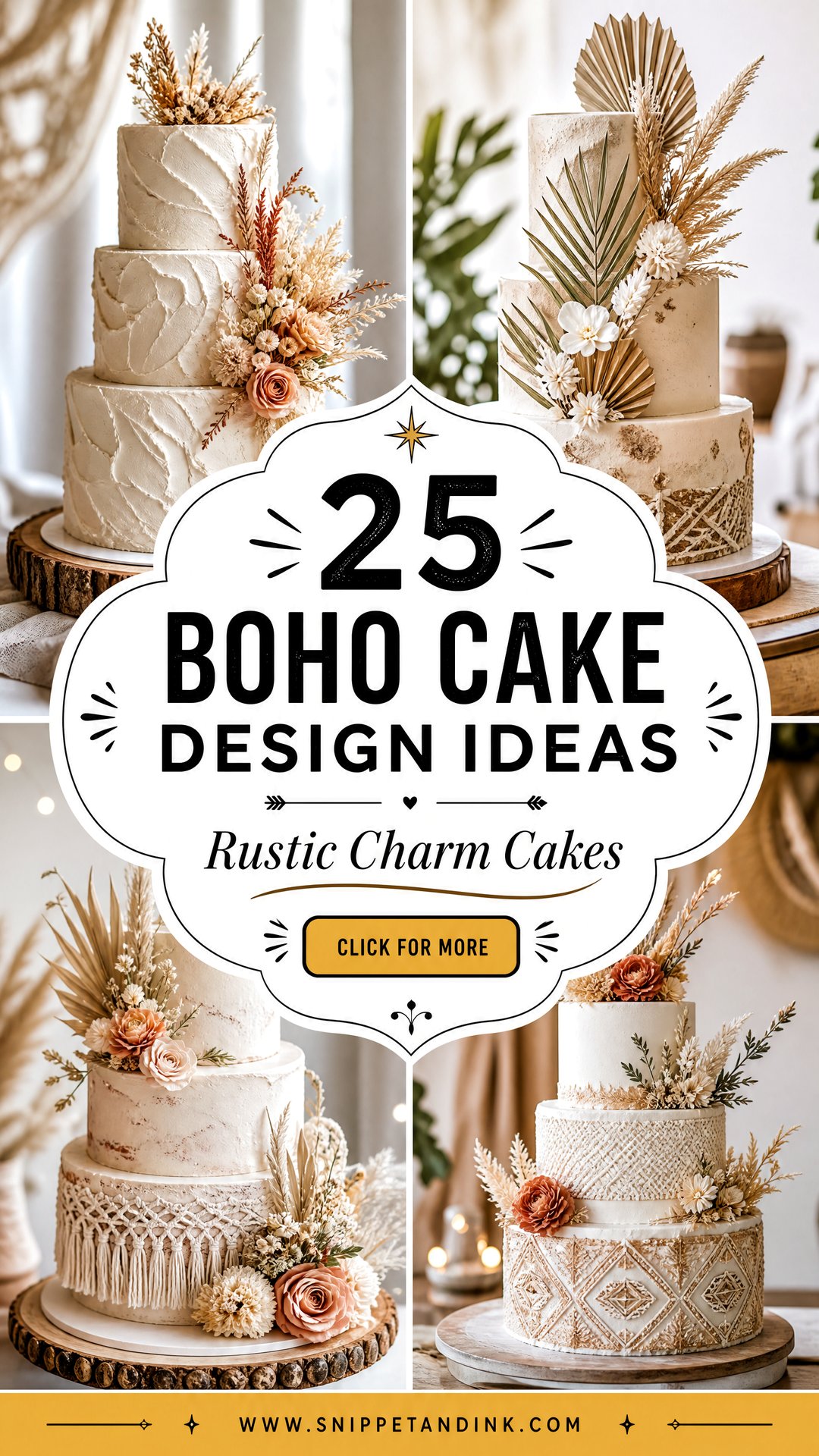
A boho wedding cake usually looks simple from across the room: soft frosting, a few dried stems, a warm colour or two. Up close, it’s one of the trickier briefs I take on, because the textures and decorations that make it boho are often the least stable or least edible things you can put on a cake. Pampas sheds, naked sponge dries out, and painted buttercream softens in a warm barn. Below are 25 designs that suit barns, deserts, gardens and beaches, and for each one I’ve added what I’d think about as the baker, from finish and flavour to how it handles a long afternoon on display.
Pampas, Dried Stems and the Food Safety Problem Nobody Mentions
Almost every boho cake design leans on decorations that were never meant to touch food. Pampas, bunny tails, preserved roses and dried palms are often bleached, dyed or sprayed with fixatives. Many popular fresh flowers, such as hydrangea, lily of the valley, foxglove and sweet pea, are toxic. None of that rules out the look, but it changes how a cake designer puts it together.
- No raw stem goes into the sponge. Each stem is taped and pushed into a food-safe pick or a straw.
- Large dried pieces sit on a barrier, such as a thin disc of fondant or a small piece of parchment.
- Pampas plumes are shaken out and lightly fixed a day or two ahead, so they don’t drop fluff onto the frosting.
- All non-edible decoration is removed before the cake is sliced, and someone at the venue knows that’s their job.
If you want something on the cake that can actually be eaten, ask for sugar flowers, edible pressed flowers or herbs like rosemary and thyme. They look just as natural and nobody has to pick them off at the cutting.
1. Boho Pampas Grass Wedding Cake
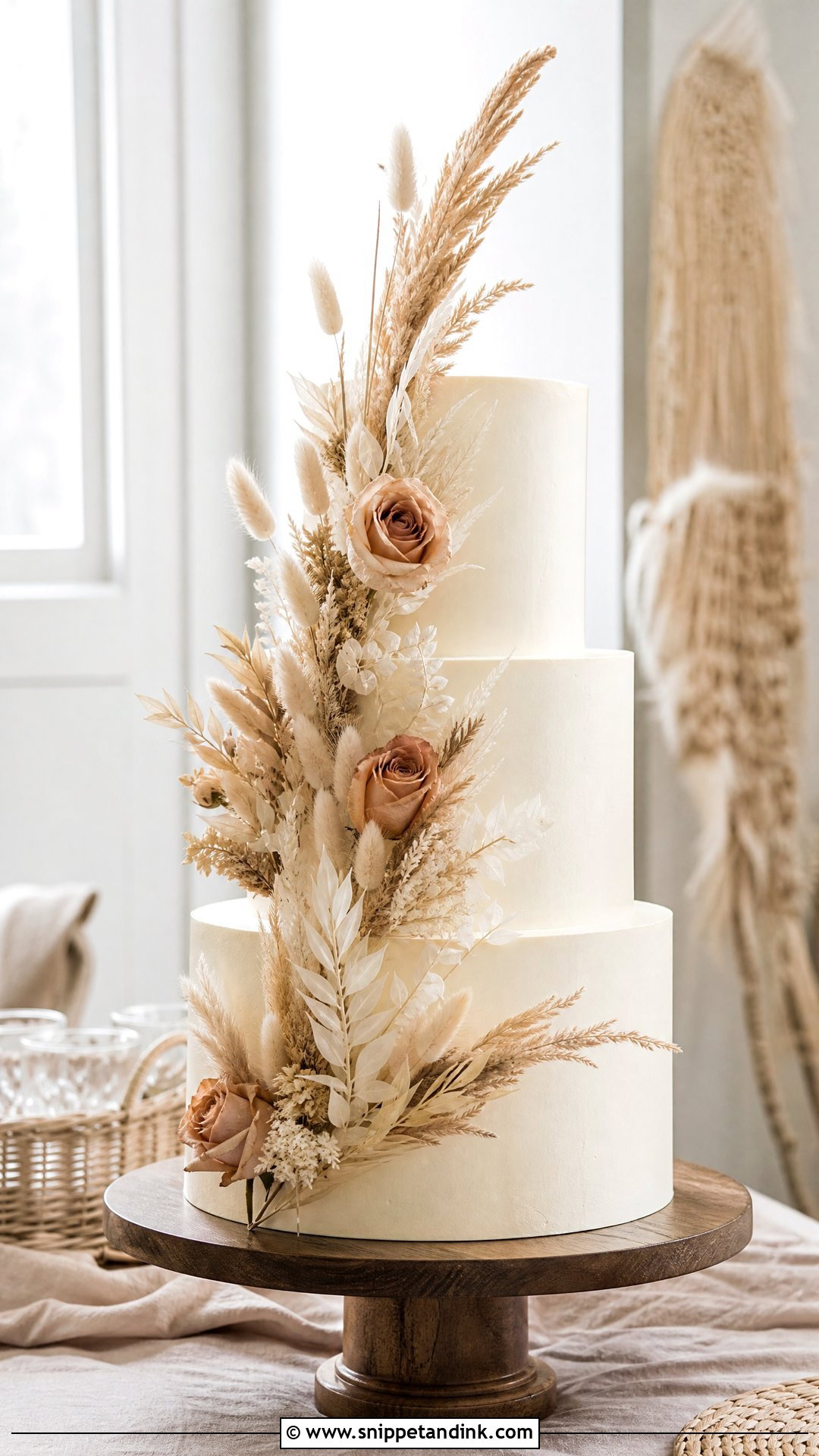
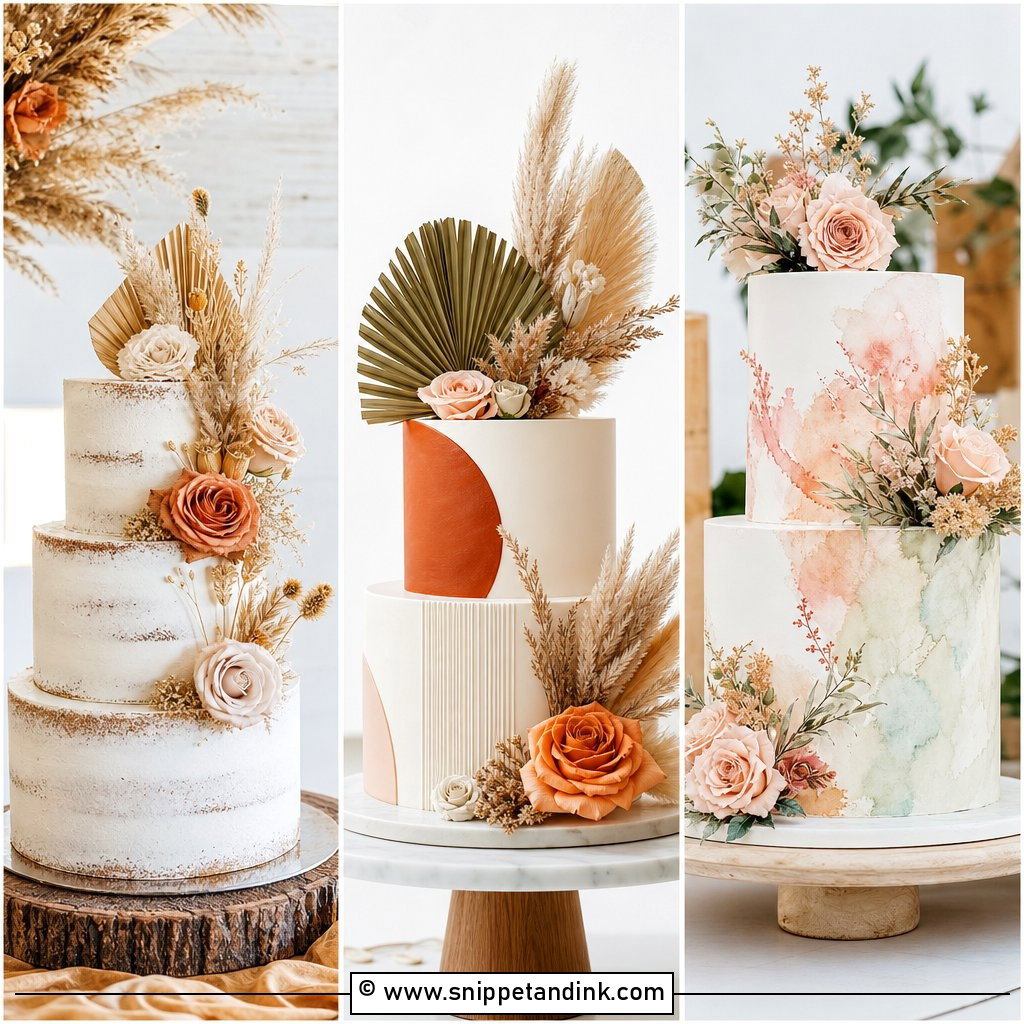
Pampas is the decoration I’m asked about most for boho cakes, and the one I’m most careful with. It gives instant height and softness, especially against ivory buttercream, beige fondant or a semi-naked finish. I wrap every stem end in floral tape and set it in a food-safe pick so nothing raw goes into the cake, and I always shake and spray the plumes with a little hairspray well before delivery so they shed less. Keep the cake itself in warm neutrals and add dried roses, bunny tails or bleached ruscus for depth. A wooden stand or linen-covered table finishes it.
2. Boho Naked Wedding Cake
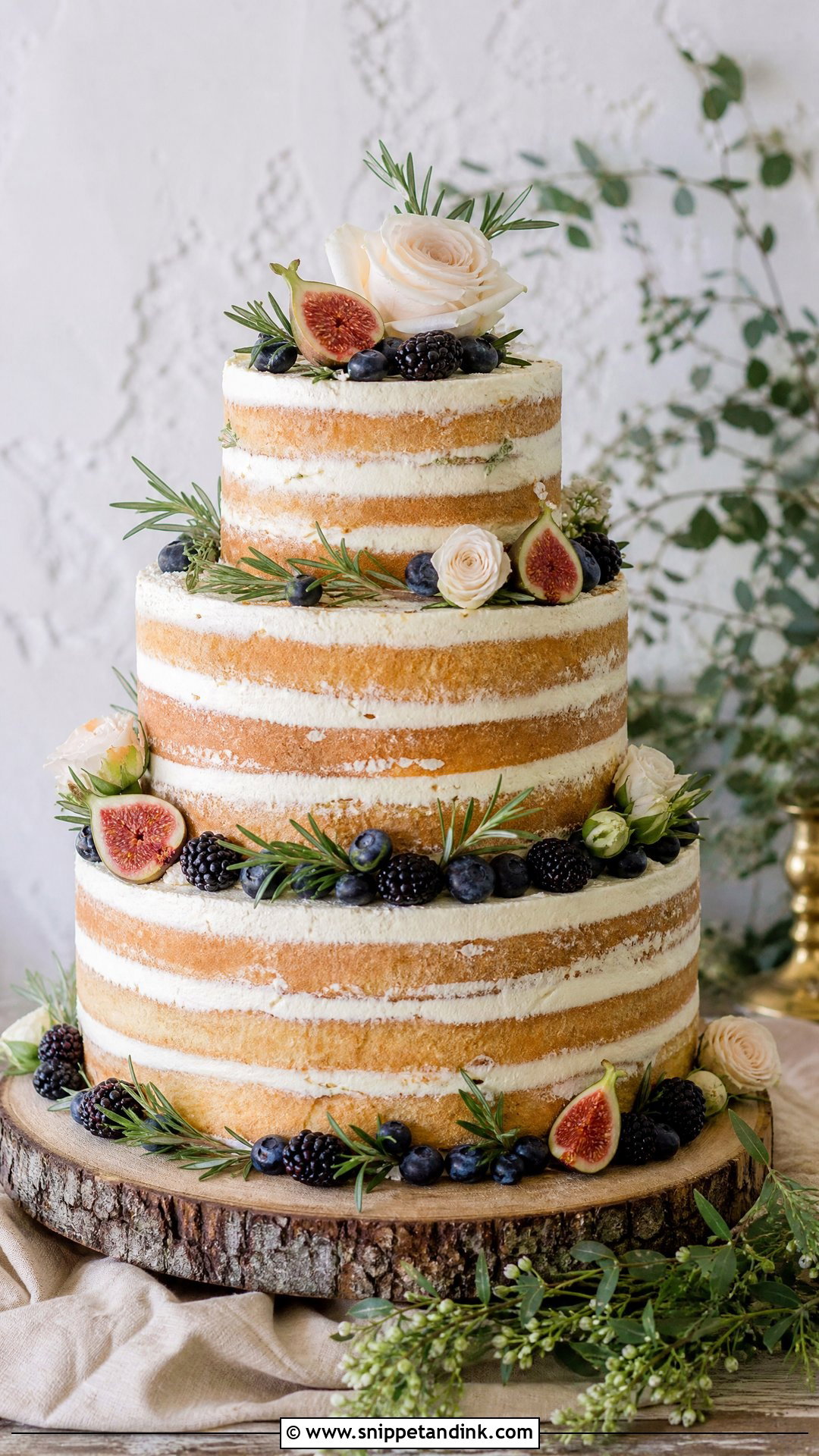
A naked cake shows the sponge between thin layers of filling, with almost no frosting on the outside. That’s lovely at a barn or garden wedding, and it’s also the finish that dries out fastest, because the sides of the sponge are exposed to air. I brush every layer with a light syrup and assemble as close to the event as I can, and I’d never leave one out uncovered on a dessert table for hours before cutting. Vanilla, almond, spice and lemon all have a warm crumb that suits the look. Figs, berries, herbs and small roses finish it.
3. Boho Semi Naked Wedding Cake
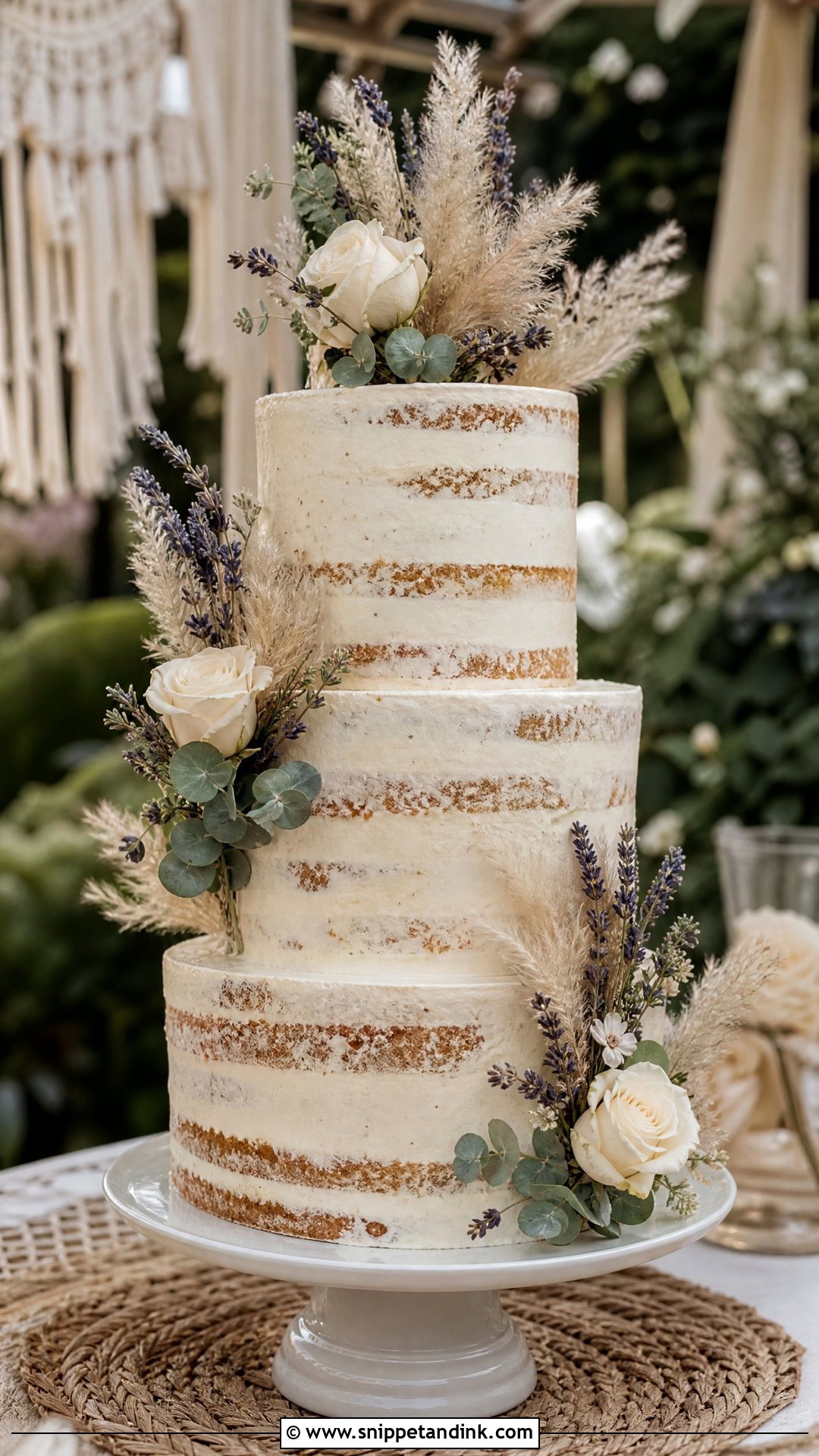
Semi-naked means a crumb coat of buttercream scraped back so the sponge shows faintly through. It looks more finished than fully naked, and the thin coat seals the sponge, so it stays moist longer on a display table. That alone is why I often steer couples here when they ask for naked. Dried lavender, tan pampas, ivory roses and soft greenery suit it. All-white works, or choose warm vanilla, honey or cinnamon sponge so the crumb tone shows through the frosting.
4. Boho Macrame Wedding Cake
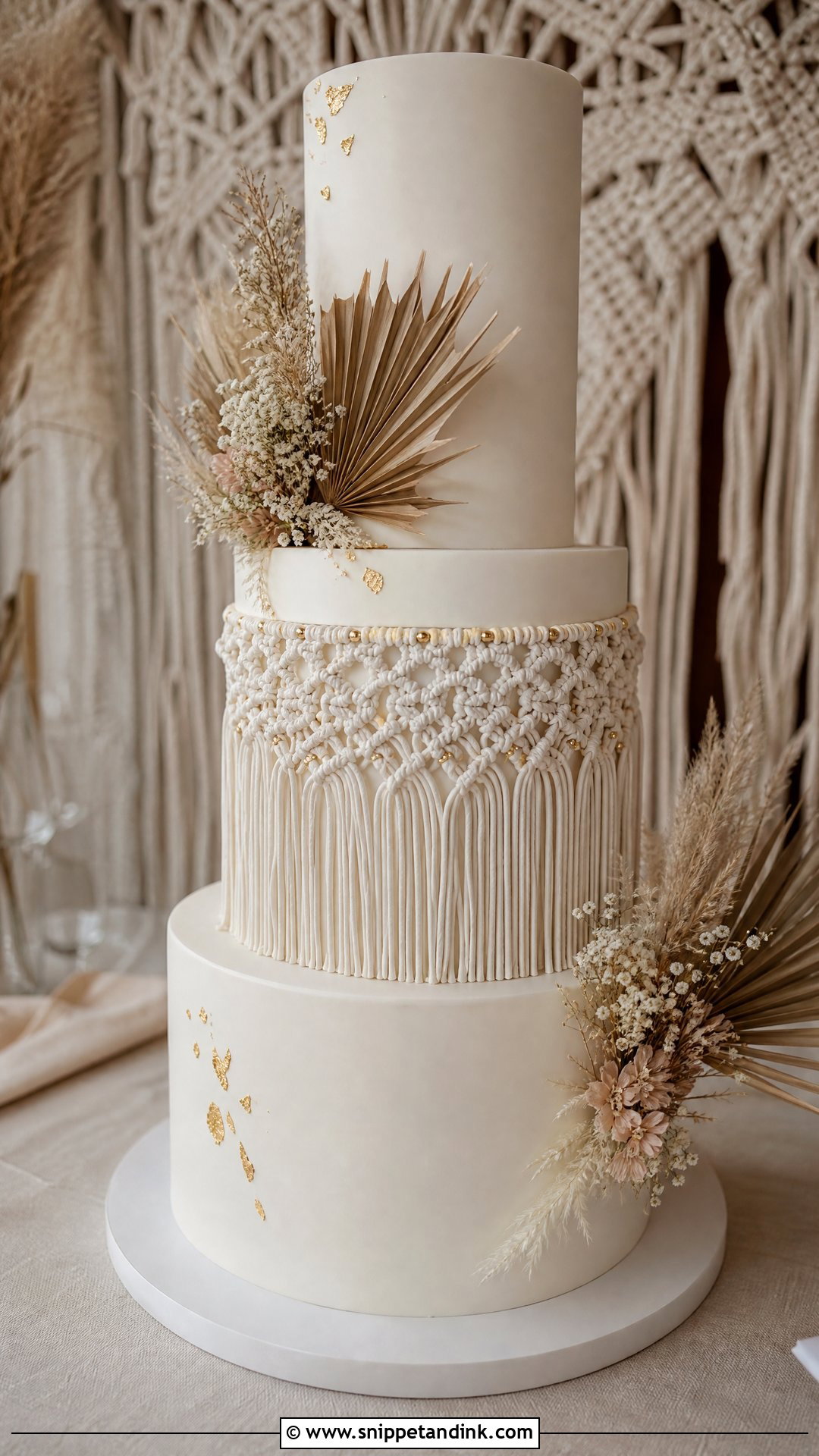
Macrame on a cake is made from sugar, not cord. I pipe it in buttercream or cut it in fondant strips, knot by knot, and it can wrap around one tier, hang like fringe or frame the front like a woven wall hanging. It’s time-consuming, so expect it to add to the price. Fondant macrame holds its shape much better in heat than piped work. White, ivory or sand bases show the pattern best, and dried palms with gold accents give it a more polished finish. It ties in well if your ceremony has macrame backdrops or rattan chairs.
5. Boho Terracotta Wedding Cake
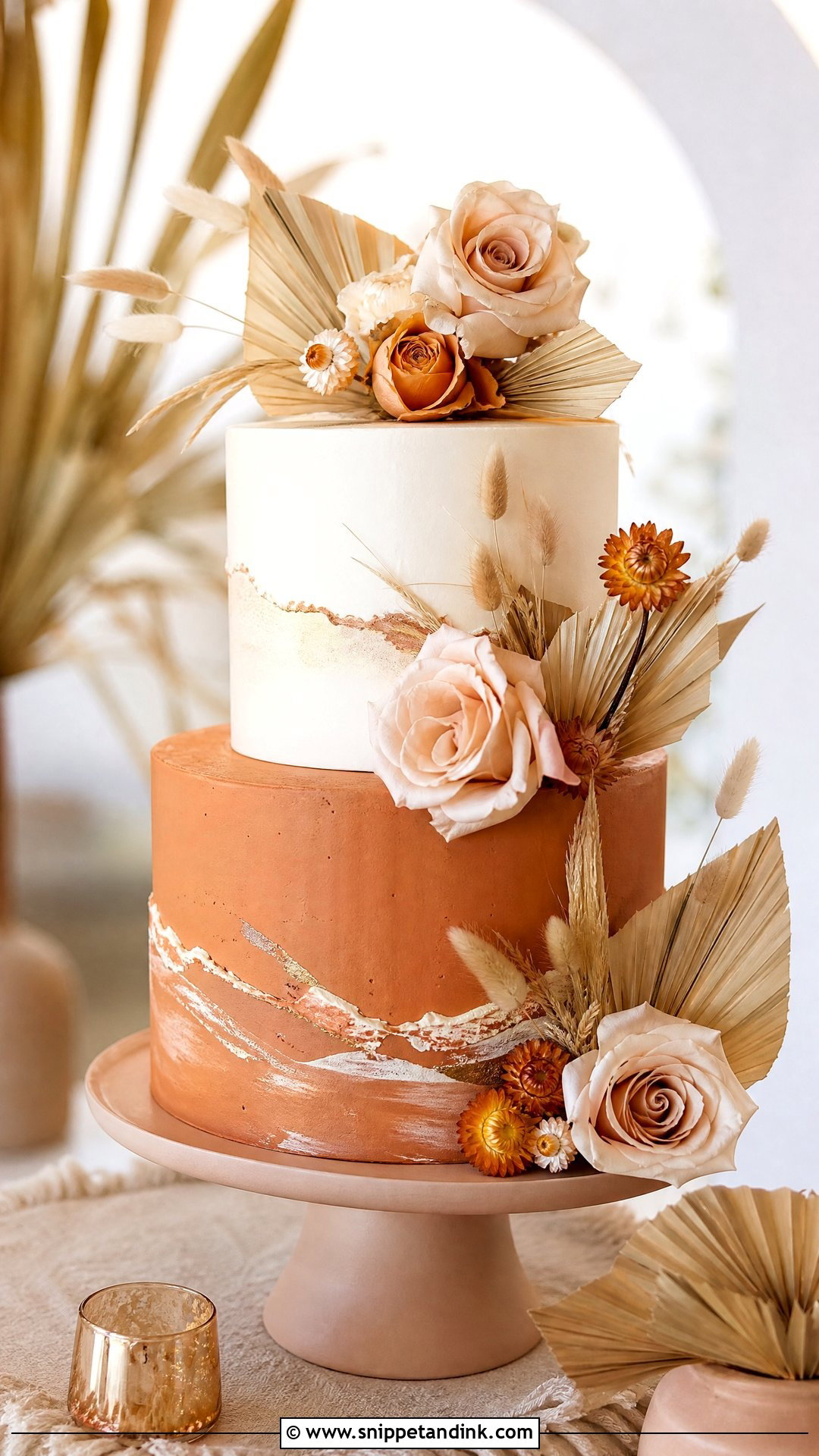
Terracotta is a hard colour to mix in buttercream. Getting it warm without turning brown takes several colours and time, and the shade usually deepens as it sits, so I tint it a little lighter than the sample. A boho terracotta wedding cake can use painted buttercream, fondant or a watercolour wash. It sits well with ivory, clay, rust, blush and muted peach. Dried grasses, tiny roses and palm spears finish it. One terracotta tier with one ivory tier is my usual suggestion, because a full cake of strong colour can look heavy.
6. Boho Sage Green Wedding Cake
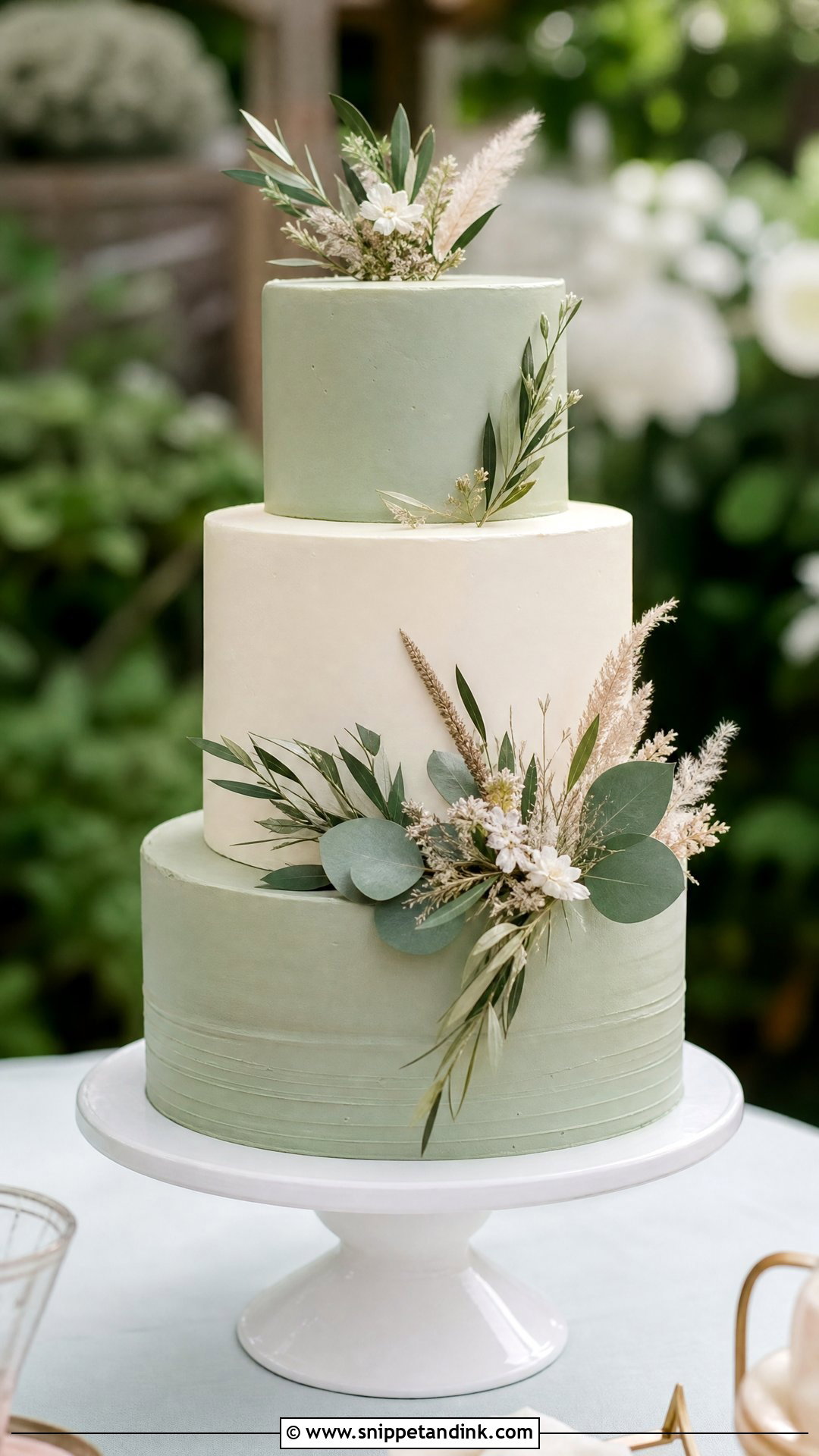
A boho sage green wedding cake is calm and pairs with ivory, champagne, soft blush and warm brown. Sage is a muted colour that can easily tip grey or minty under different lights, so I always send couples a photo of the sample in daylight and under warm bulbs. Smooth buttercream, fondant or a watercolour effect all work. Eucalyptus and olive branches suit it, but eucalyptus is not food safe, so I keep it on a barrier or wrapped. Skip glitter and keep the botanicals loose.
7. Boho Rust Orange Wedding Cake
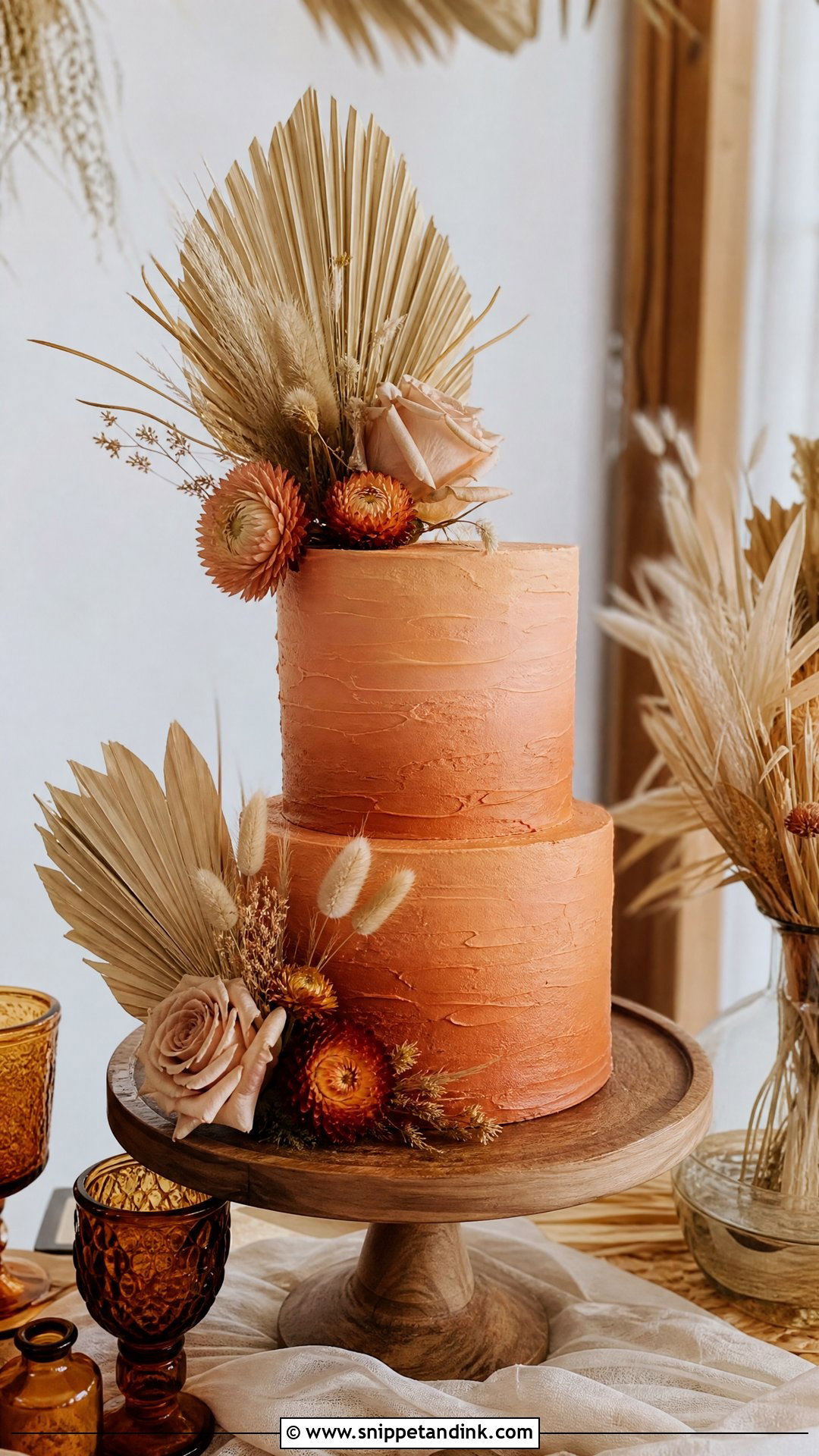
Rust orange is bold, and it reads natural next to cream, caramel, mocha and dried floral tones. I use it on one tier, in painted brushstrokes or as a soft ombre fade from rust to cream. Dark colours in buttercream take a lot of colouring, which can taste bitter and stain mouths, so for large rust areas I’d use fondant or keep the colour to accents. Strawflowers, cappuccino roses, bunny tails and dried palms make it feel seasonal. It’s a natural fit for autumn and desert palettes.
8. Boho Blush Wedding Cake
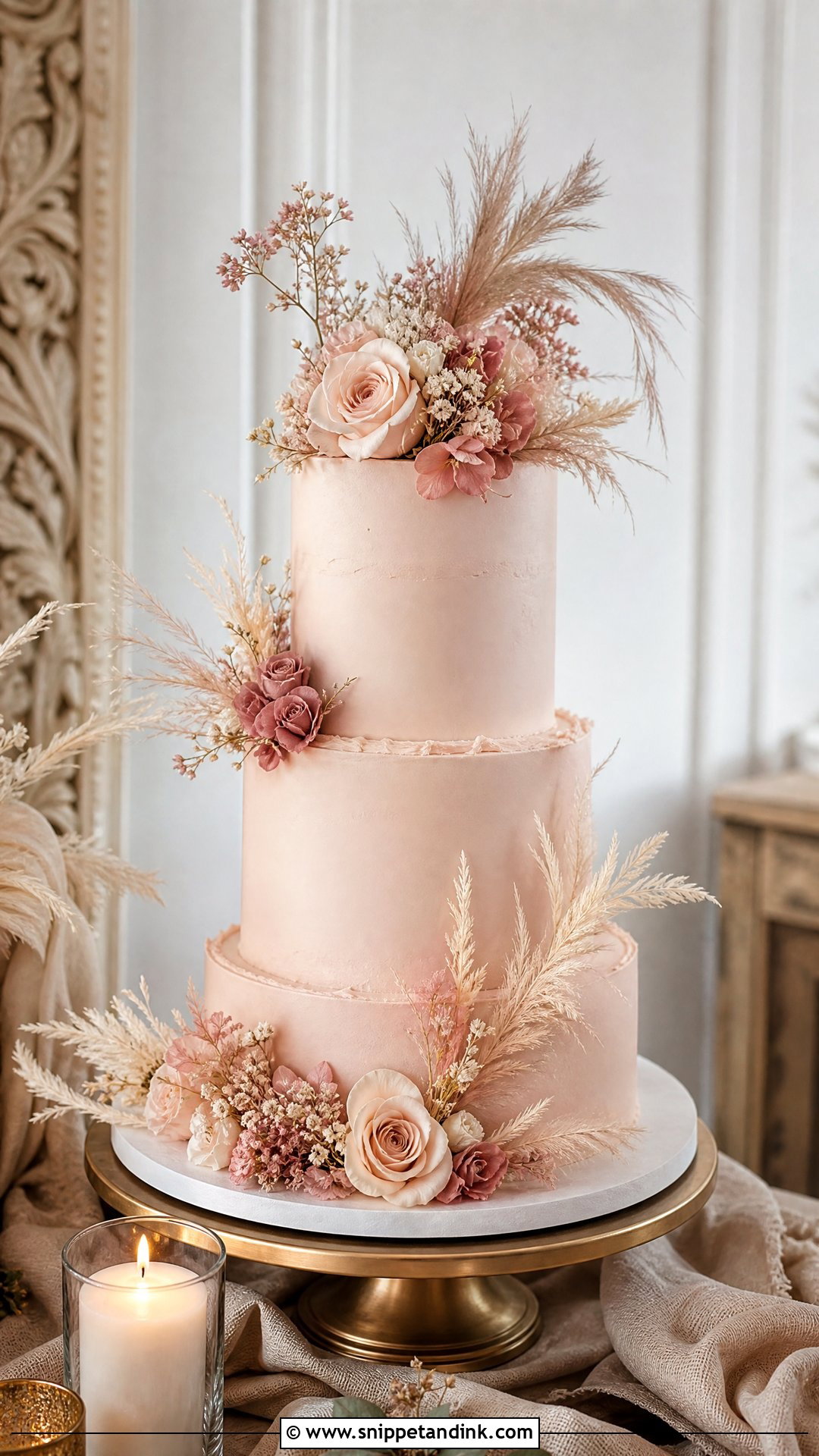
Blush adds just a touch of colour while staying soft. I’d keep it as a pale wash, because pink buttercream can photograph more saturated than it looks in person. It works on smooth buttercream, painted tiers or lightly textured fondant. Ivory, nude, taupe, dried rose and champagne make a gentle palette around it. Dried pink blooms, preserved baby’s breath and a little pampas suit it. A gold stand or textured linen cloth below makes a pale cake look finished.
9. Boho White Wedding Cake
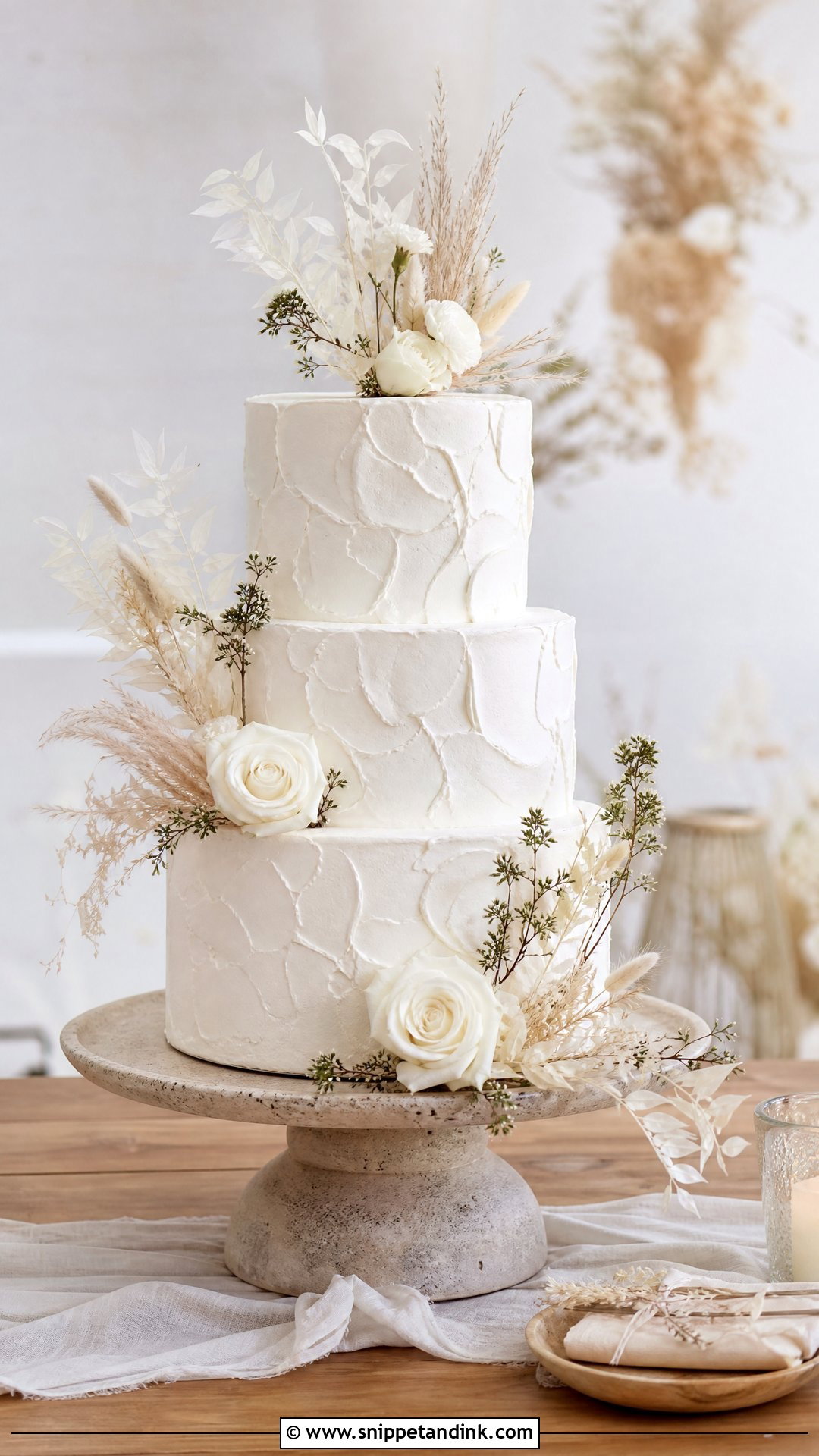
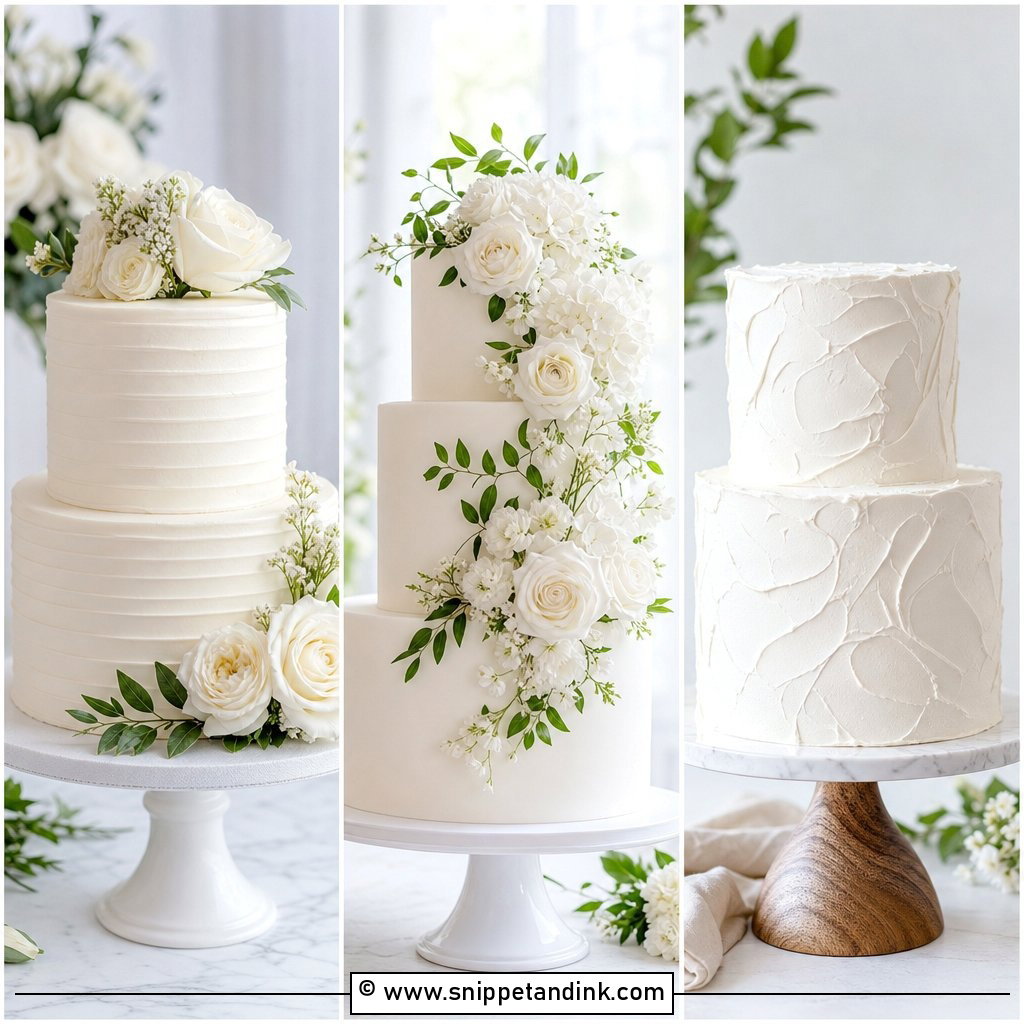
White cakes depend entirely on texture and shape for interest. I’ll use rough buttercream, smooth fondant, edible lace, pressed flowers or a little piping, and then add dried grasses, ivory florals or bleached leaves. White fits almost any boho venue, from wood and linen to rattan and candles. It’s also the easiest cake to keep looking clean through a long event, as long as the room isn’t hot. Clean tiers with decoration that moves across them diagonally keeps it modern.
10. Boho Textured Buttercream Wedding Cake
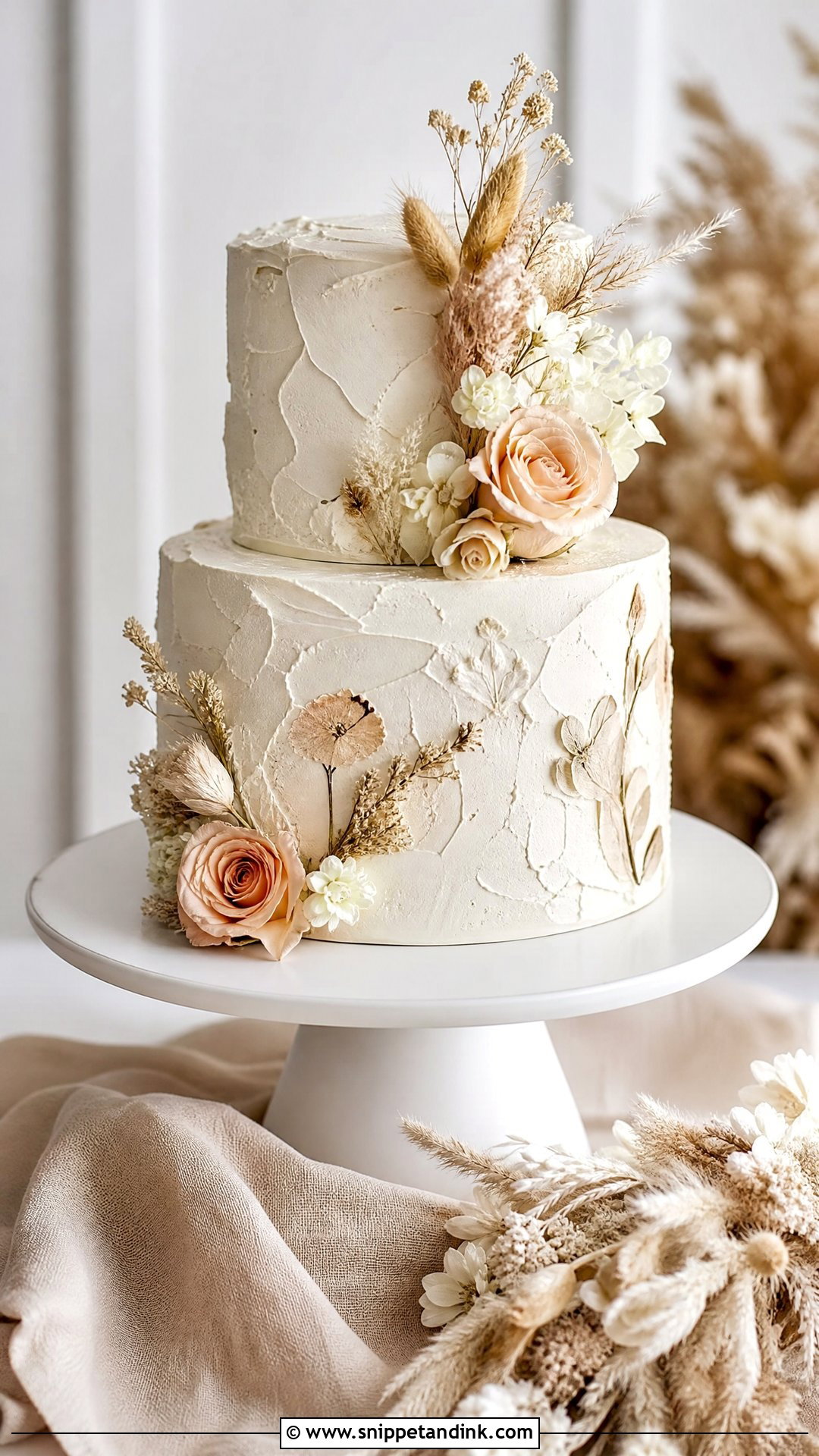
Textured buttercream is made with spatulas, palette knives and combs, giving brushed, plastered, ridged or swirled surfaces. I like it for boho because small imperfections look deliberate rather than accidental. Ivory, sand, cream, taupe and pale blush are the safest colours. The catch is that heavily textured buttercream softens and slumps in warm rooms more than smooth fondant does, so for a summer barn, I’ll use a firmer buttercream recipe or keep the cake cool until close to serving. Add dried flowers or pampas sparingly.
11. Boho Pressed Flower Wedding Cake
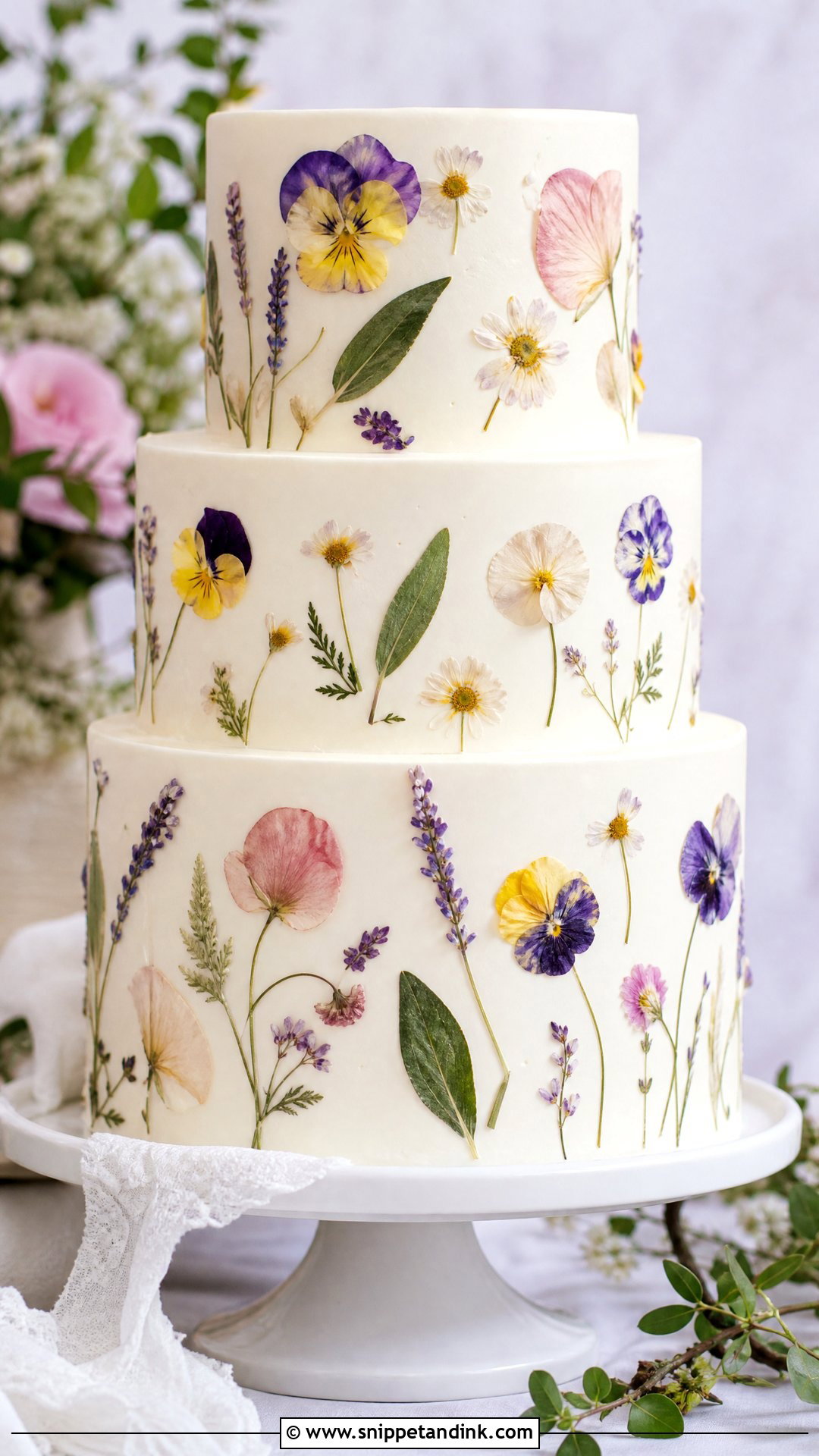
Pressed flowers have to be edible varieties, grown without pesticides and pressed specifically for food. Pansies, violas, cornflowers and some herbs are common. Laid across smooth buttercream or fondant, they give a meadow look, and muted shades like cream, dusty pink, lavender, pale yellow and sage feel right for a wedding. They can lose colour if they sit on damp buttercream for hours, so I apply them on the day where I can. Keep the cake plain so the flowers show.
12. Boho Dried Flower Wedding Cake
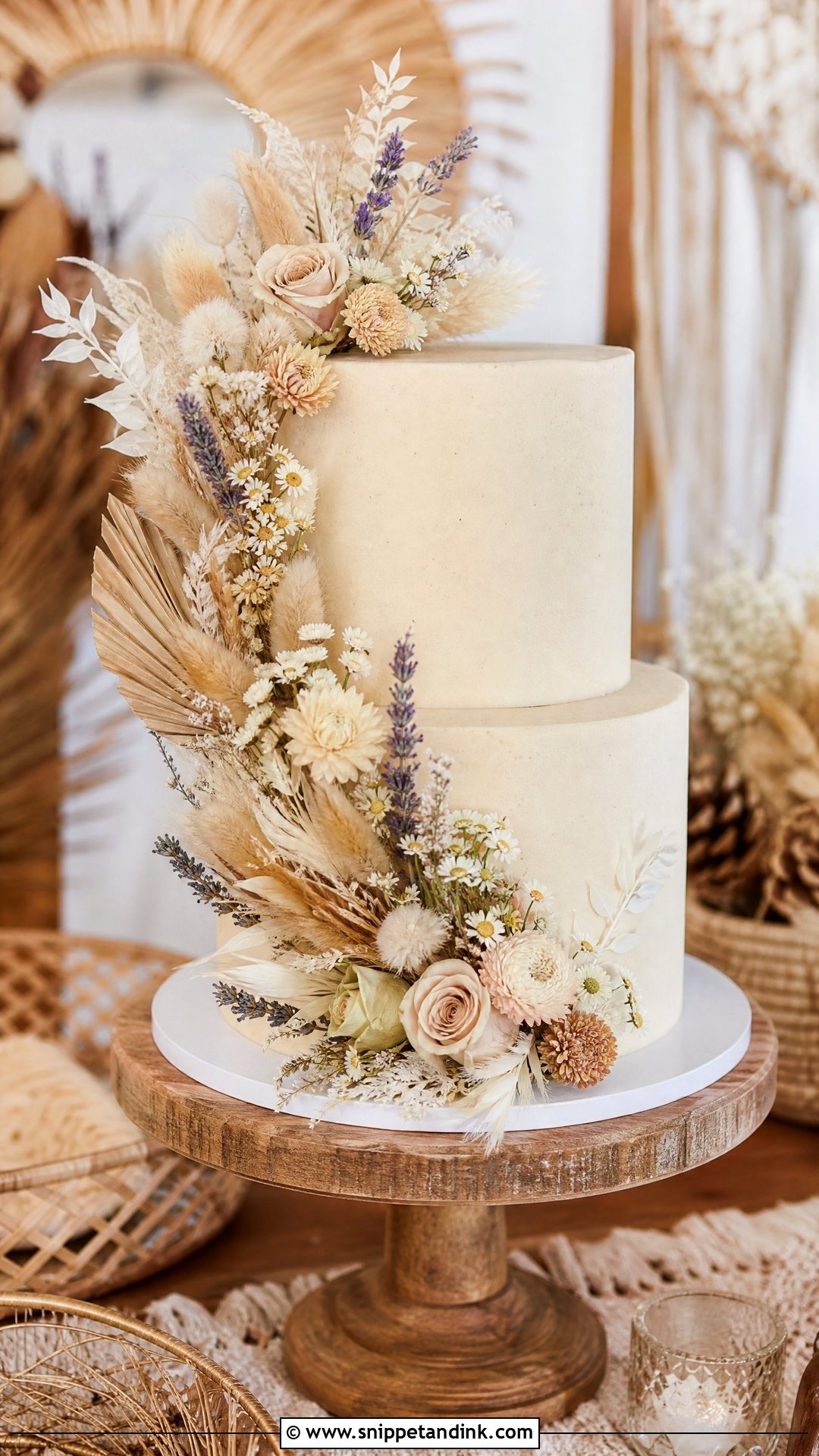
Dried flowers look the part for an earthy wedding, but most are not edible, and some are sprayed or dyed. Strawflowers, bunny tails, lavender, preserved roses and bleached foliage are popular choices. I place them only on wrapped stems or on a thin barrier like a disc of fondant, and remove them before slicing. A crescent along the side, a cluster on top or tucked between tiers all work. Keep the base simple and match the colours to the bouquet.
13. Boho Palm Leaf Wedding Cake
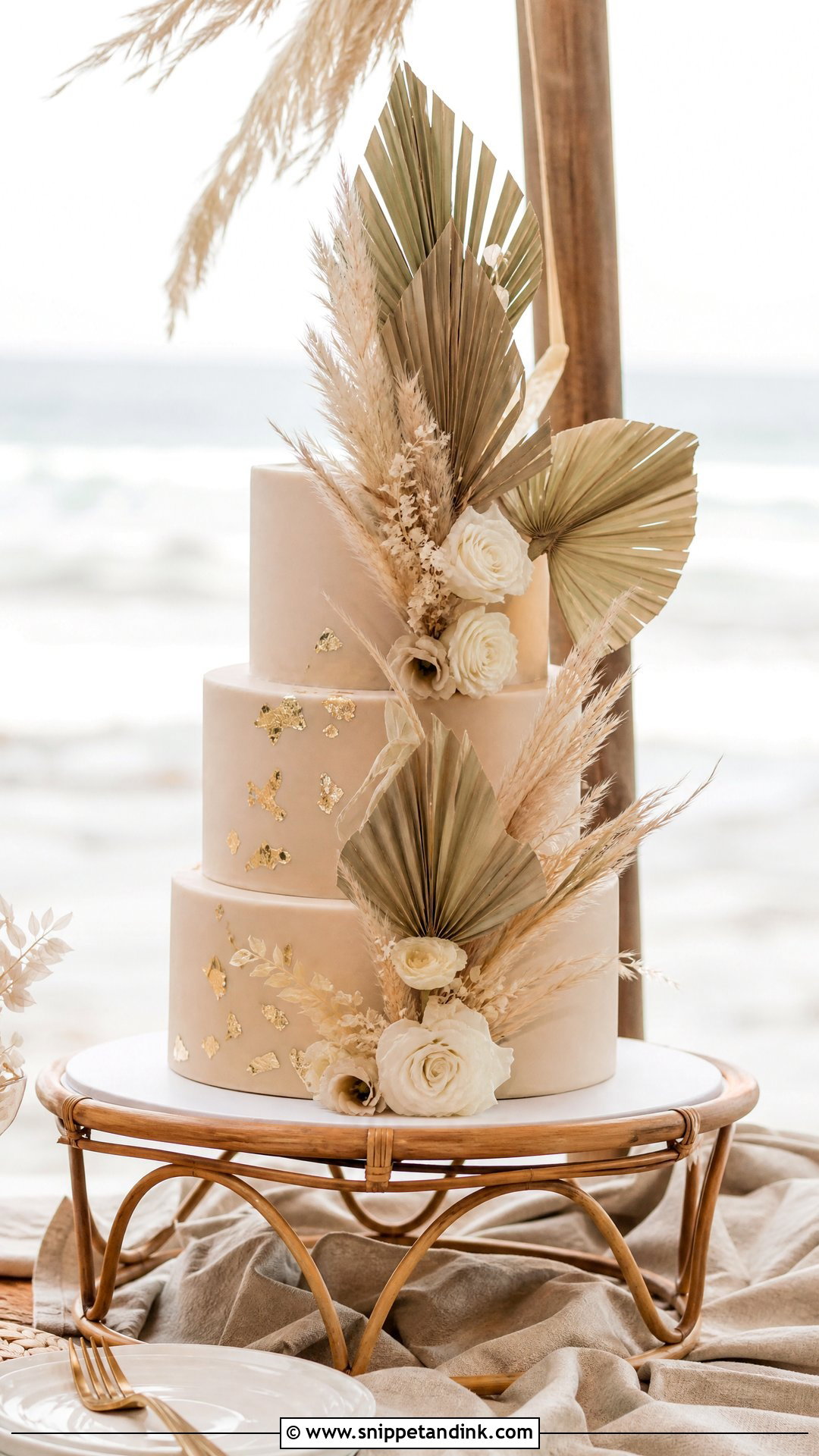
Dried palm spears and fan palms add sculptural height around the cake. They’re large and fairly heavy, so I anchor them in a piece of fondant or into a food-safe holder rather than into the cake itself, and on tall arrangements I’ll add support down through the tiers. Neutral frosting, terracotta or sandy beige suits it, with small blooms, pampas and gold leaf. Keep the tiers clean and plain, because the palms are already the focus. Beach, desert and tropical boho venues suit it.
14. Boho Desert Wedding Cake
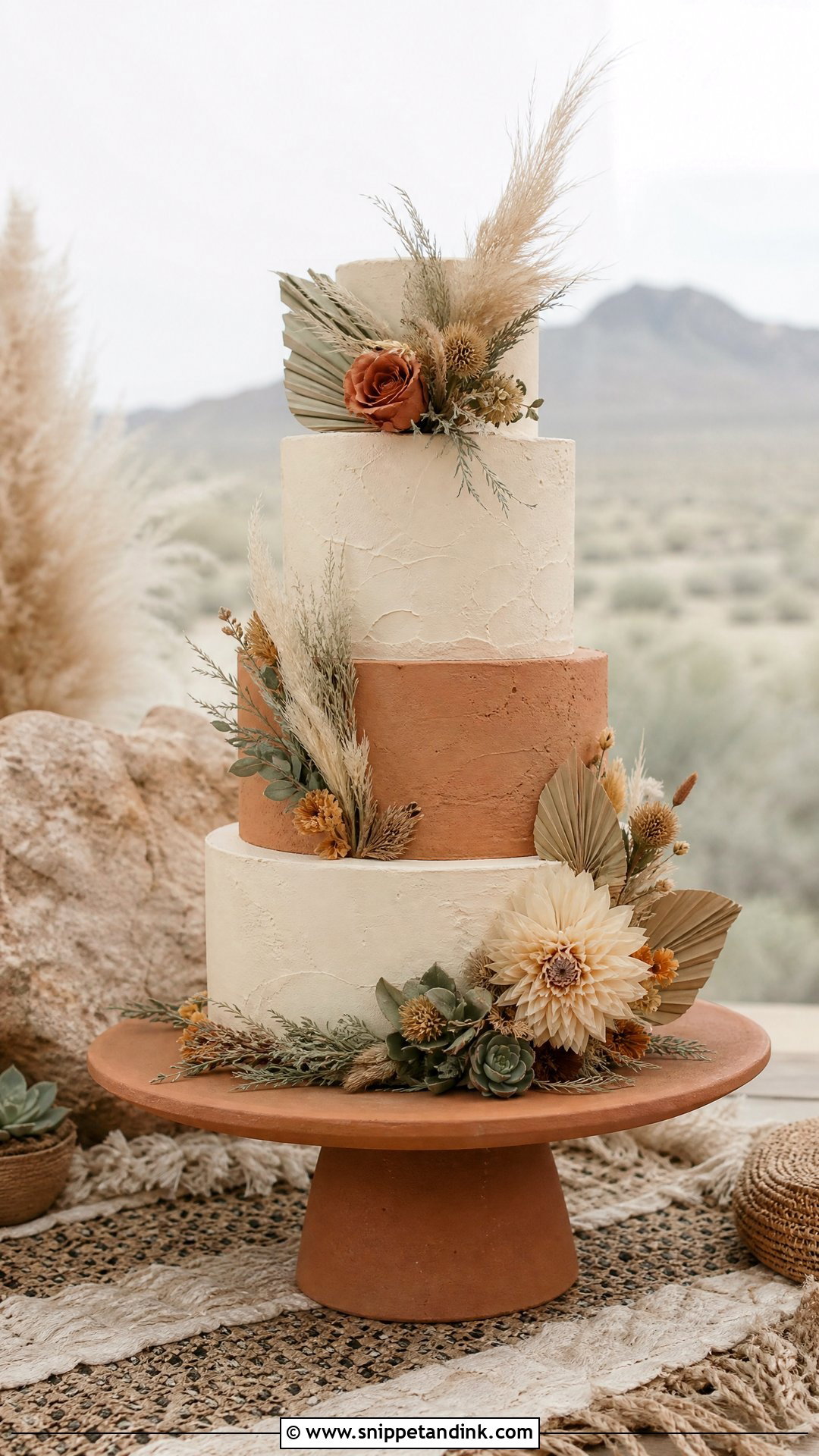
Desert cakes use dusty, sun-washed tones: ivory buttercream, sandy beige, terracotta, dried grasses, small succulents and muted orange flowers. Succulents are a common request, but most aren’t edible, and I’d usually make them from sugar or use wrapped real ones on a barrier. Desert venues are also hot and dry, which is hard on buttercream, so a fondant finish or a cake kept in shade until the last moment is wise. A wooden stand, clay vases and woven chargers complete the table.

15. Boho Rustic Wedding Cake
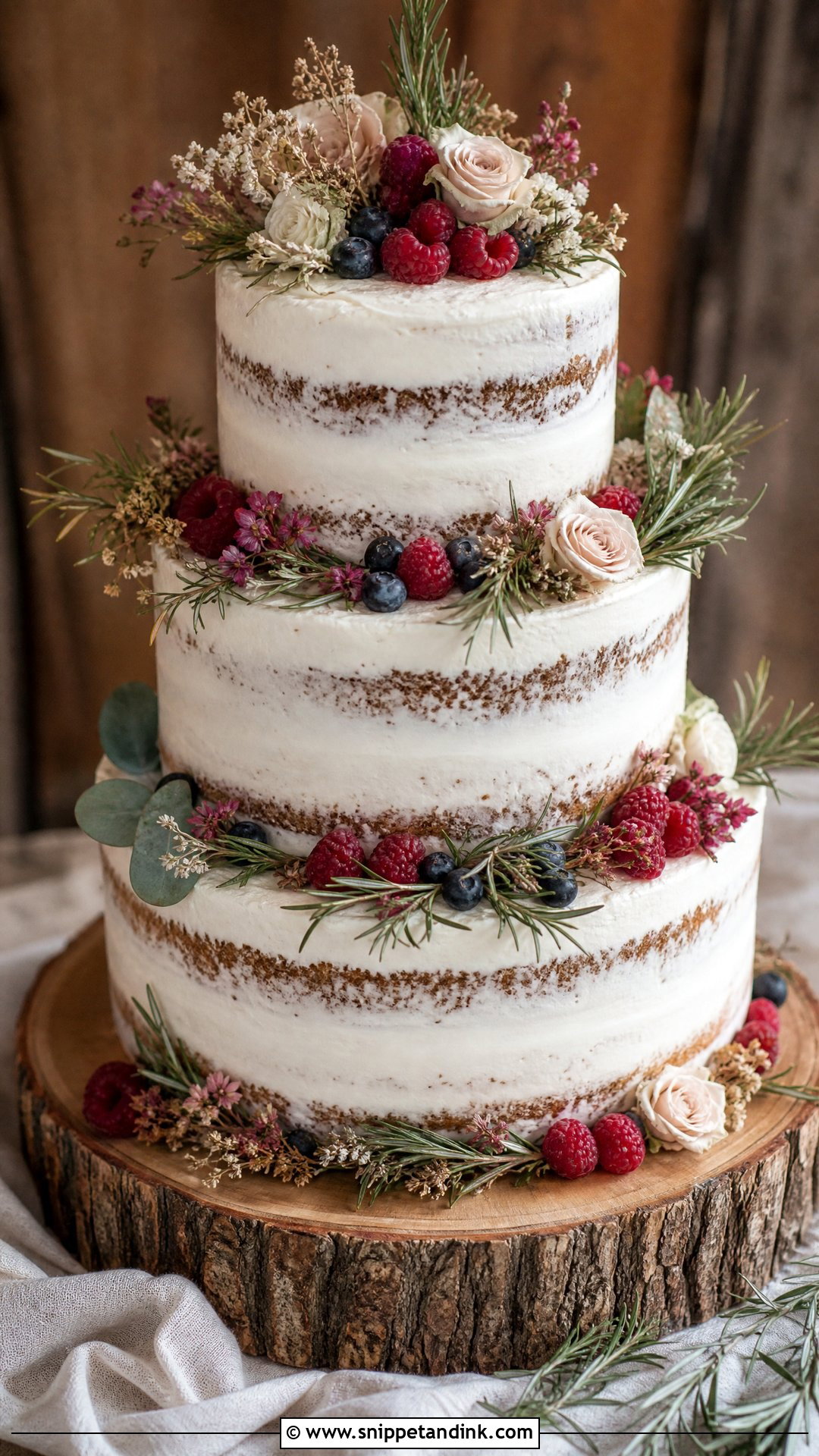
A boho rustic wedding cake is countryside with a bohemian twist: naked or semi-naked frosting, natural florals, wood and warm neutrals. Vanilla, spice, carrot and almond sponge give a cosy crumb, and carrot in particular holds moisture well if the cake will sit out. Dried flowers, fresh berries, rosemary and small roses are typical decorations. Fresh berries weep juice into the sponge after a few hours, so I add them as late as possible. A wooden slice or farmhouse table suits it.
16. Boho Minimal Wedding Cake
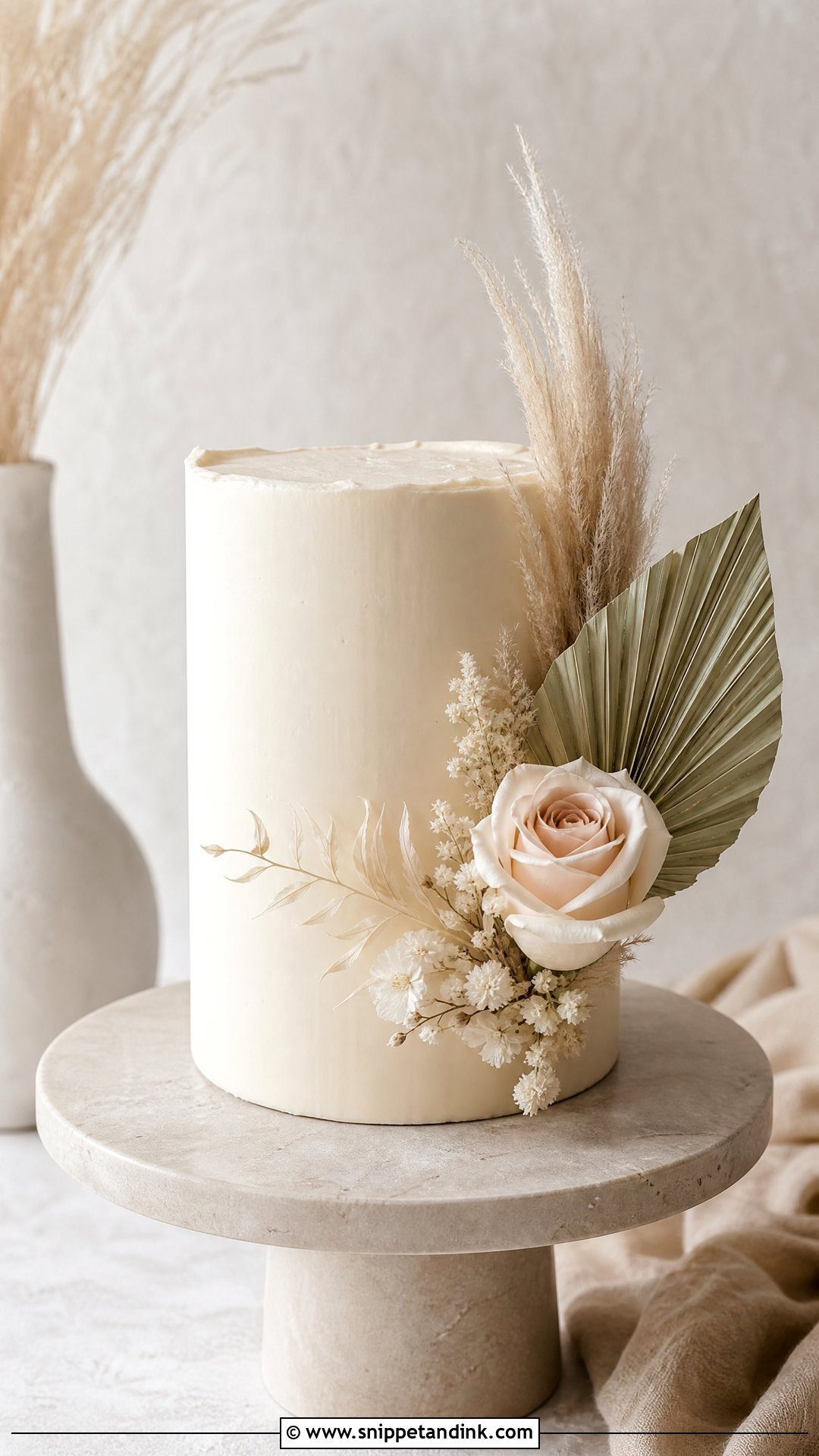
Minimal boho cakes use one strong detail on a smooth ivory, cream, beige or taupe cake: one dried floral spray, a small pampas topper or a single palm leaf. They’re the easiest to keep tidy through a long reception, and they’re often more affordable because fewer hours go into decoration. A small flaw shows more on a plain cake, so the finish has to be very clean. It suits modern boho weddings with neutral colours and organic textures.
17. Boho Two Tier Wedding Cake
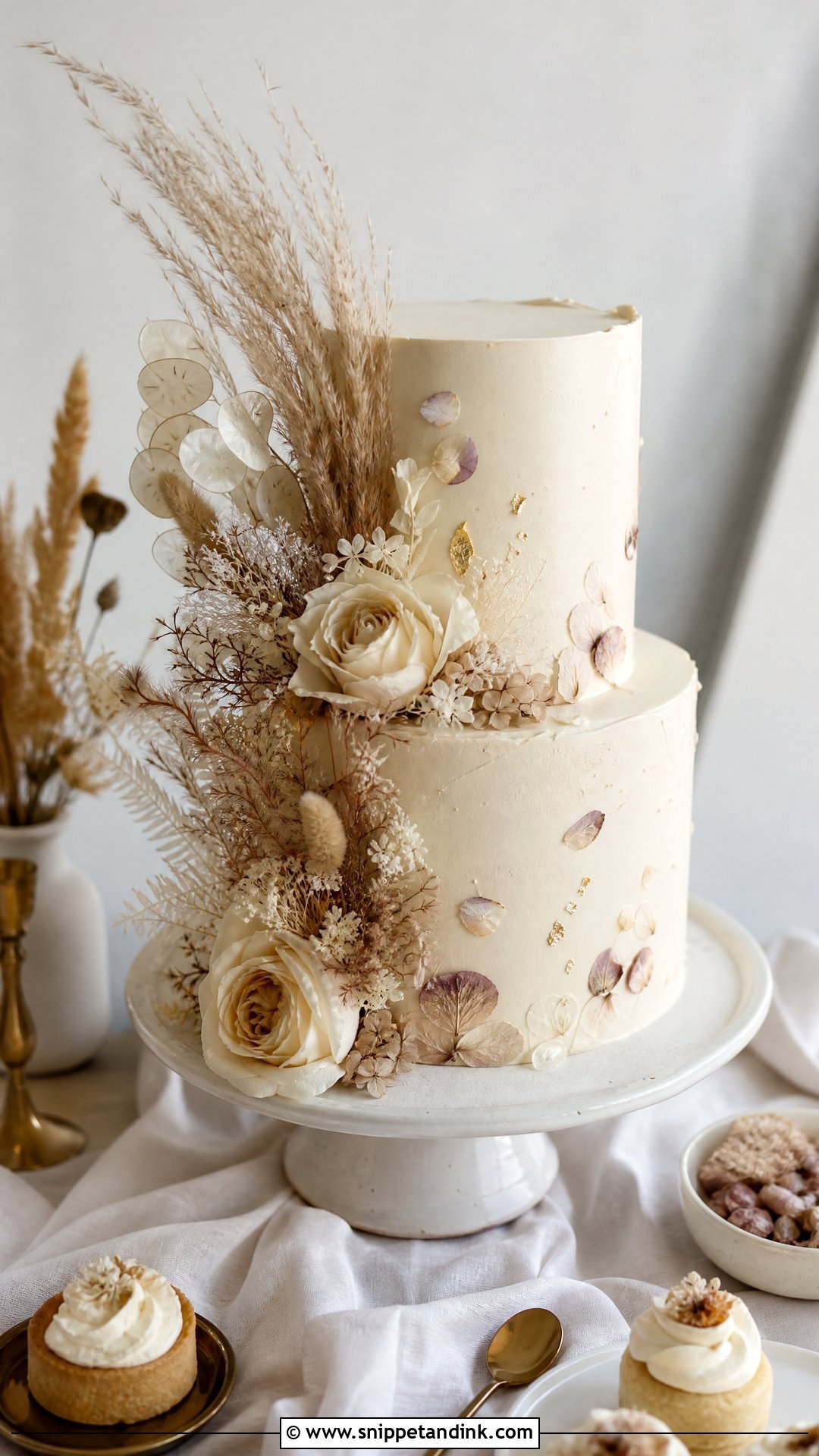
Two tiers suit small weddings, elopements and intimate receptions. It’s enough height to look like a wedding cake without towering over a small table. You can mix two finishes, such as smooth buttercream on top and semi-naked below, and let florals climb from the lower tier to the top. A two-tier cake usually serves fewer guests than couples expect, so I’d pair it with cupcakes, mini desserts or a small cutting cake display and a kitchen sheet cake if numbers are higher. A raised stand gives it extra presence.
18. Boho Three Tier Wedding Cake
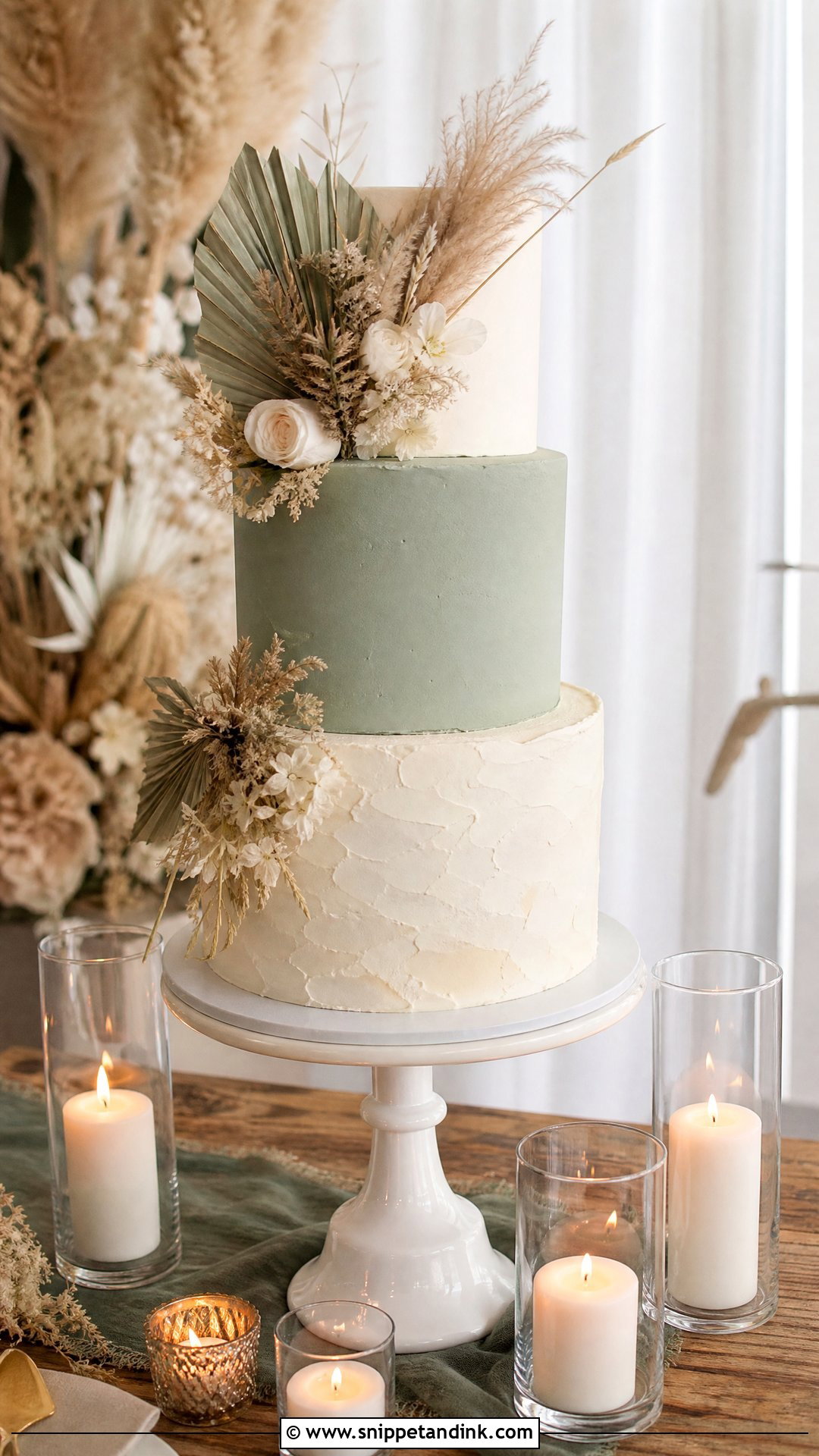
Three tiers give room for colour blocking: one smooth ivory tier, one terracotta or sage, and one textured buttercream. Each tier needs internal supports and a cake board, and stacking is best done at the venue for anything that has to travel any distance. Dried grasses, palms and neutral flowers in an asymmetric arrangement keep it modern. It’s a good focal point for medium and large weddings. Match the colours to the florals so it looks planned with the rest of the room.
19. Boho Single Tier Wedding Cake
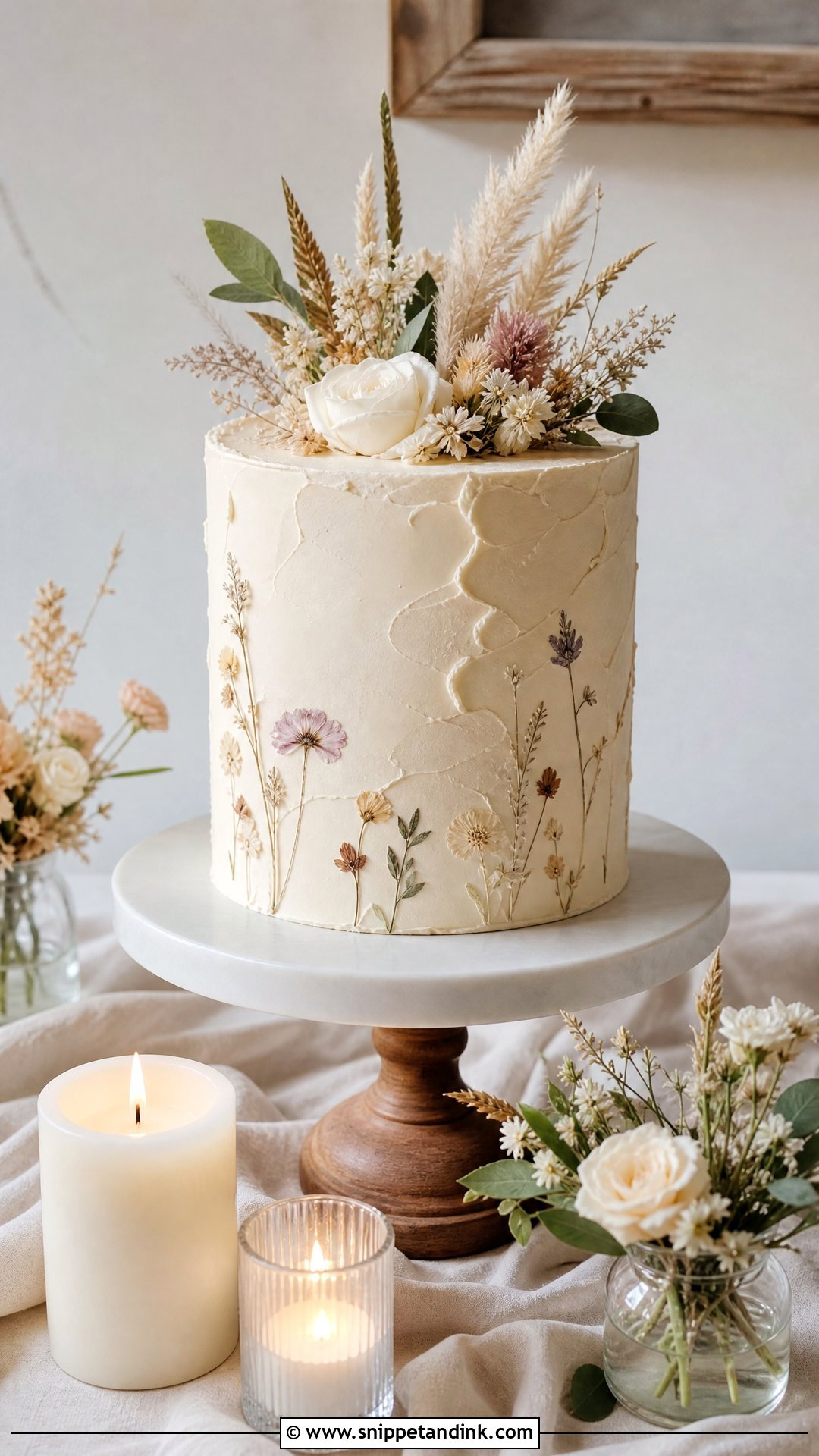
A single tier still looks like a wedding cake if it’s tall. I’ll make it extra tall with more layers, supported with a board in the middle, so it has presence on the table. It suits elopements, micro weddings and dessert bars. Textured buttercream, dried florals, fresh blooms or pressed petals all work, with pampas or palms for the boho note. The table does a lot of the work here, so dress it with linen, candles and small arrangements.


20. Boho Floral Wedding Cake
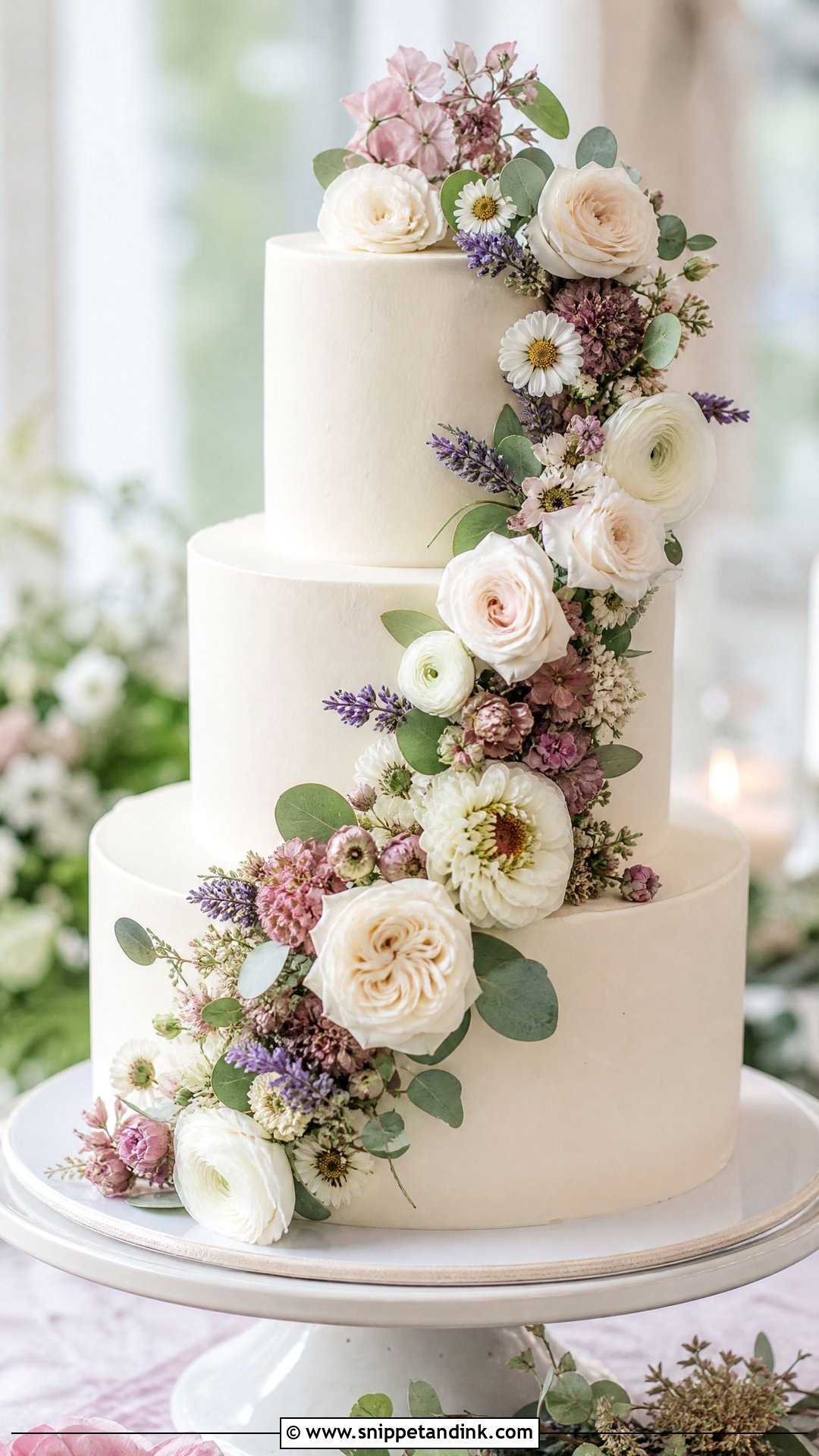
Loose florals are the boho version of a floral cake. Fresh, dried and preserved flowers can all mix. Soft roses, ranunculus, daisies, lavender, eucalyptus and strawflowers suit the style, in cream, blush, mauve, sage, rust and caramel. Fresh flowers should come from a florist who knows they’re going on a cake, unsprayed if possible, with stems wrapped or in picks. Arrange them as a crescent, a cascade or a gathered topper. Flowers can change with the season, so this one fits almost any venue.
21. Boho Greenery Wedding Cake
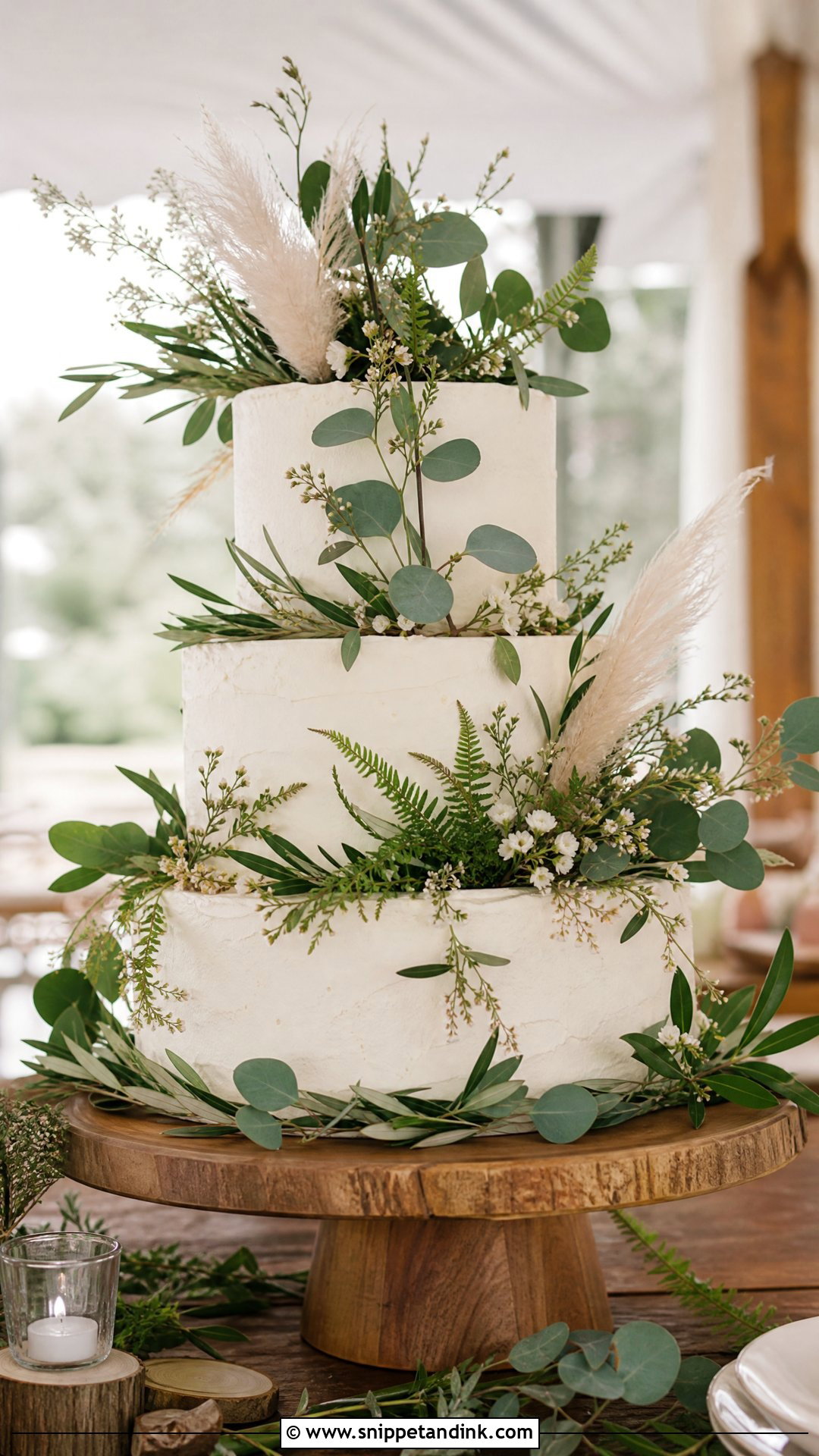
Greenery cakes use leaves, herbs, vines, eucalyptus, olive branches or fern instead of flowers. Herbs like rosemary and thyme are edible and smell good; eucalyptus and ivy are not, so they stay wrapped or on a barrier. Greenery wilts quickly out of water, especially in warm rooms, so I add it on site. It looks right on white buttercream, semi-naked frosting or soft sage fondant, wrapping around tiers or climbing one side. Beige pampas or dried seed pods warm it up.
22. Boho Gold Leaf Wedding Cake
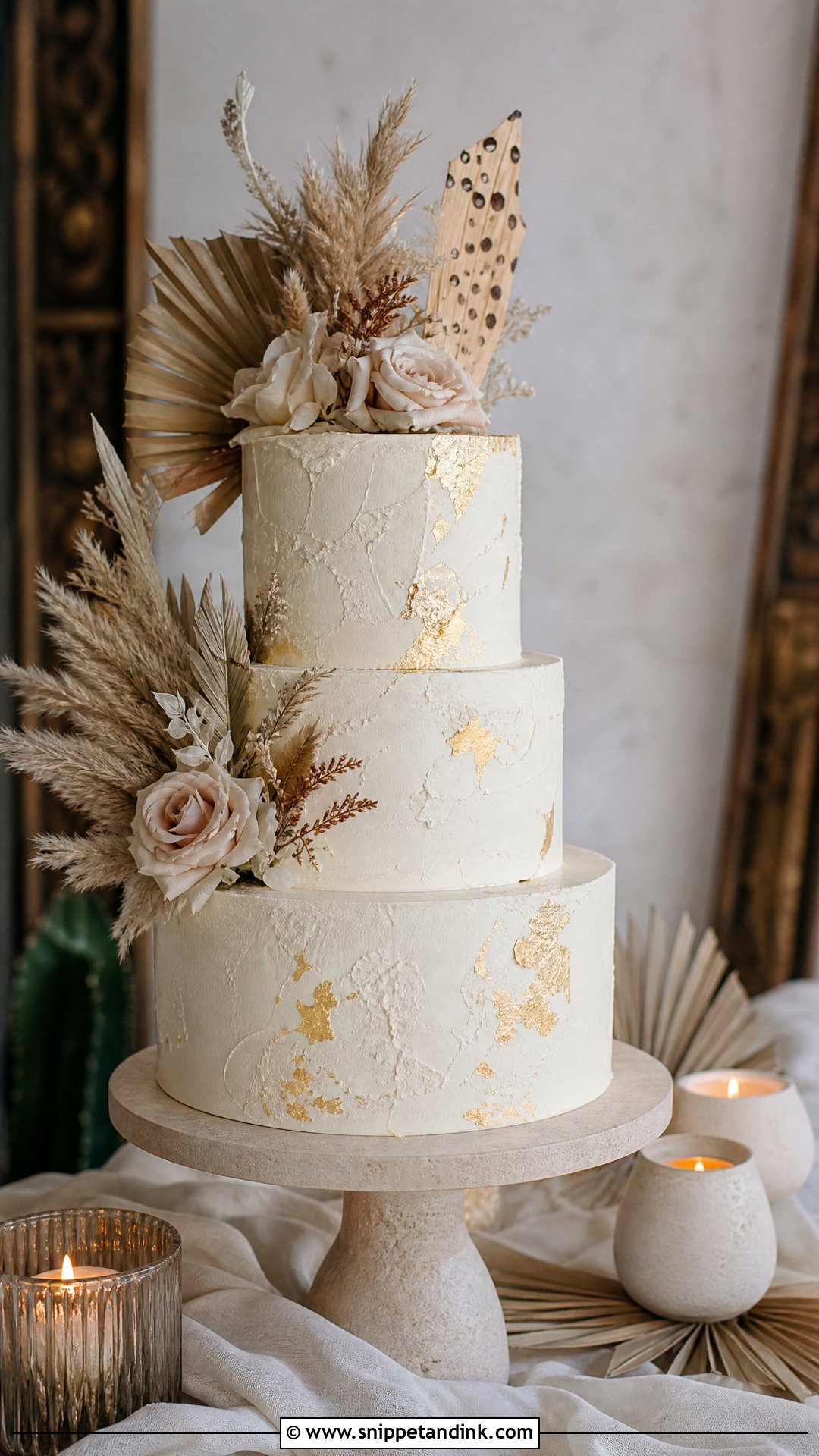
Gold leaf is edible and very thin, and it works best used sparingly. Small patches on ivory buttercream, terracotta fondant or textured beige frosting give a little glow. It sticks better to fondant or chilled buttercream than to soft frosting, and it can’t be fixed once it’s touched, so I apply it last with tweezers and a dry brush. Pair it with dried florals, pampas or palms. It’s especially nice at candlelit evening receptions, where it picks up the light.
23. Boho Watercolor Wedding Cake
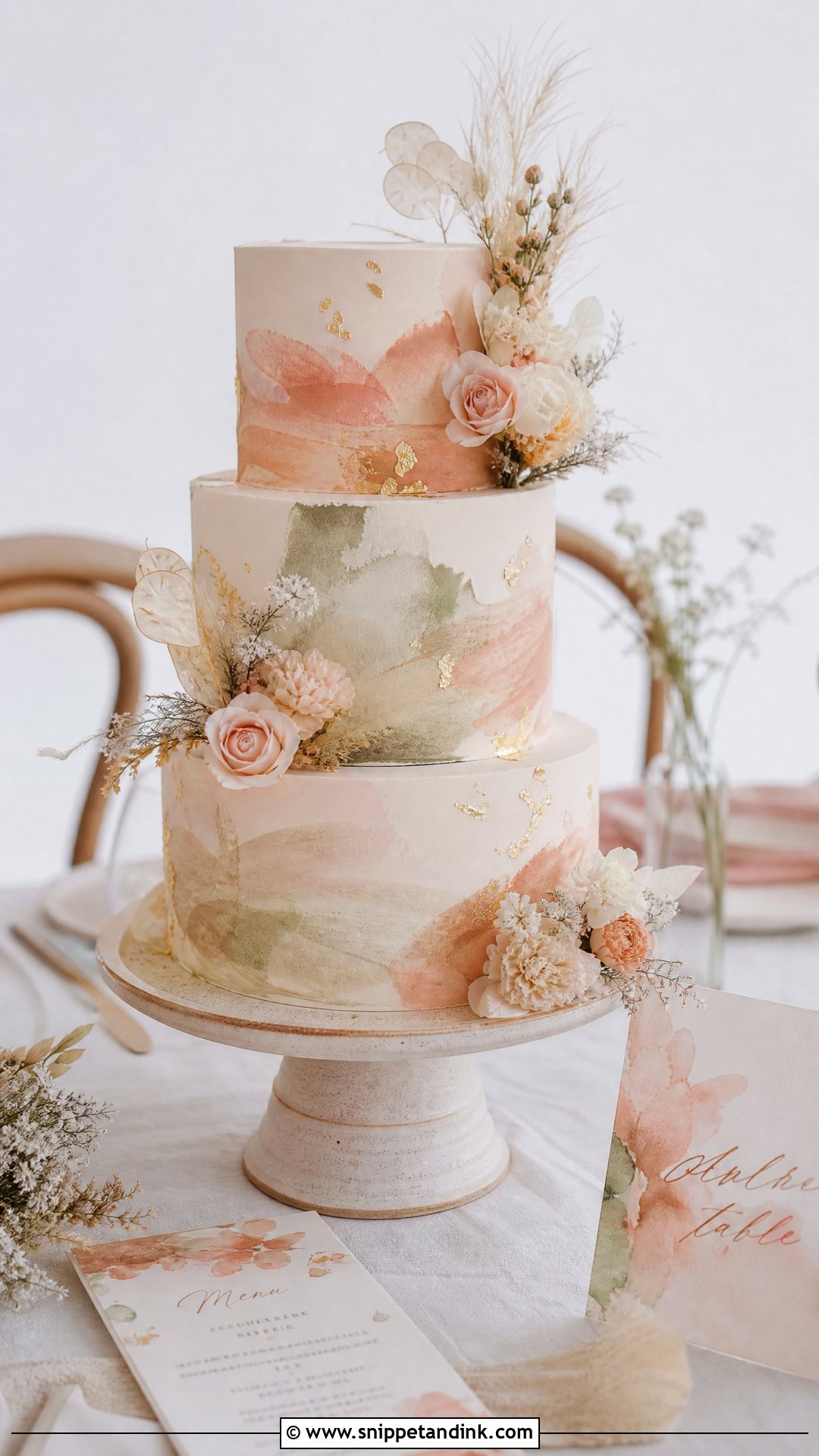
Watercolour cakes are painted with diluted food colouring onto chilled buttercream or fondant, in washed blush, terracotta, sage, mauve, honey or dusty blue. Colours that blend gently look better than sharp contrasts. On buttercream the technique can smear if the cake warms up while painting, so it needs to be well chilled. A few dried flowers or a single pampas stem finish it. It suits couples with hand-painted invitations or loose floral arrangements.
24. Boho Lace Wedding Cake
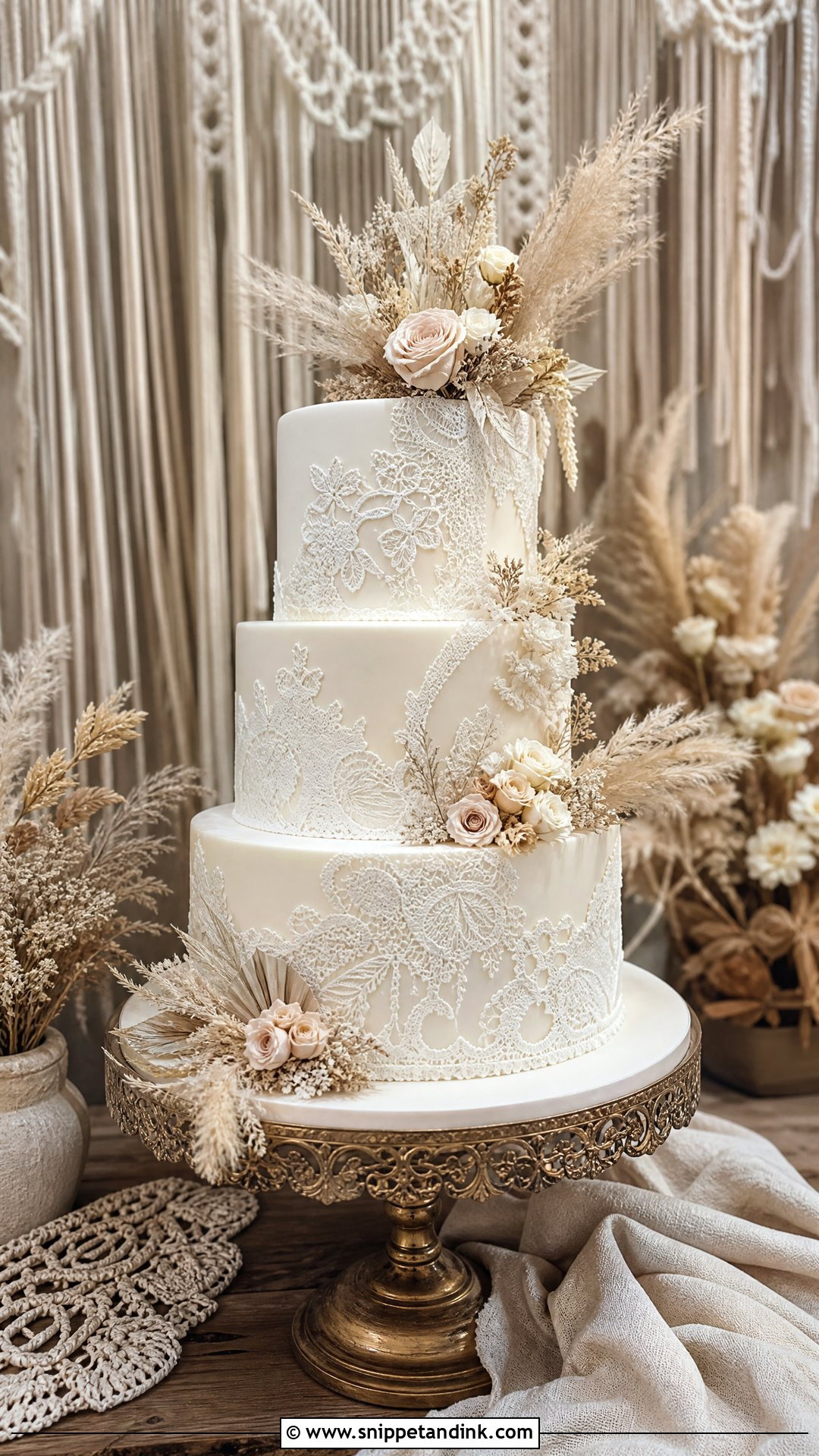
Edible lace is made from a set mixture pressed into a mat and dried, then lifted onto the cake. It can also be piped or cut from fondant. Ivory, cream, beige or blush keep it boho rather than traditional, especially next to dried flowers or pampas. Edible lace softens if it’s applied to buttercream long before the event, so I attach it the day of delivery. One lace tier between smooth tiers is my usual suggestion. It suits barn weddings, garden ceremonies and receptions with macrame, linen and antique-style decor.

25. Boho Rattan Wedding Cake
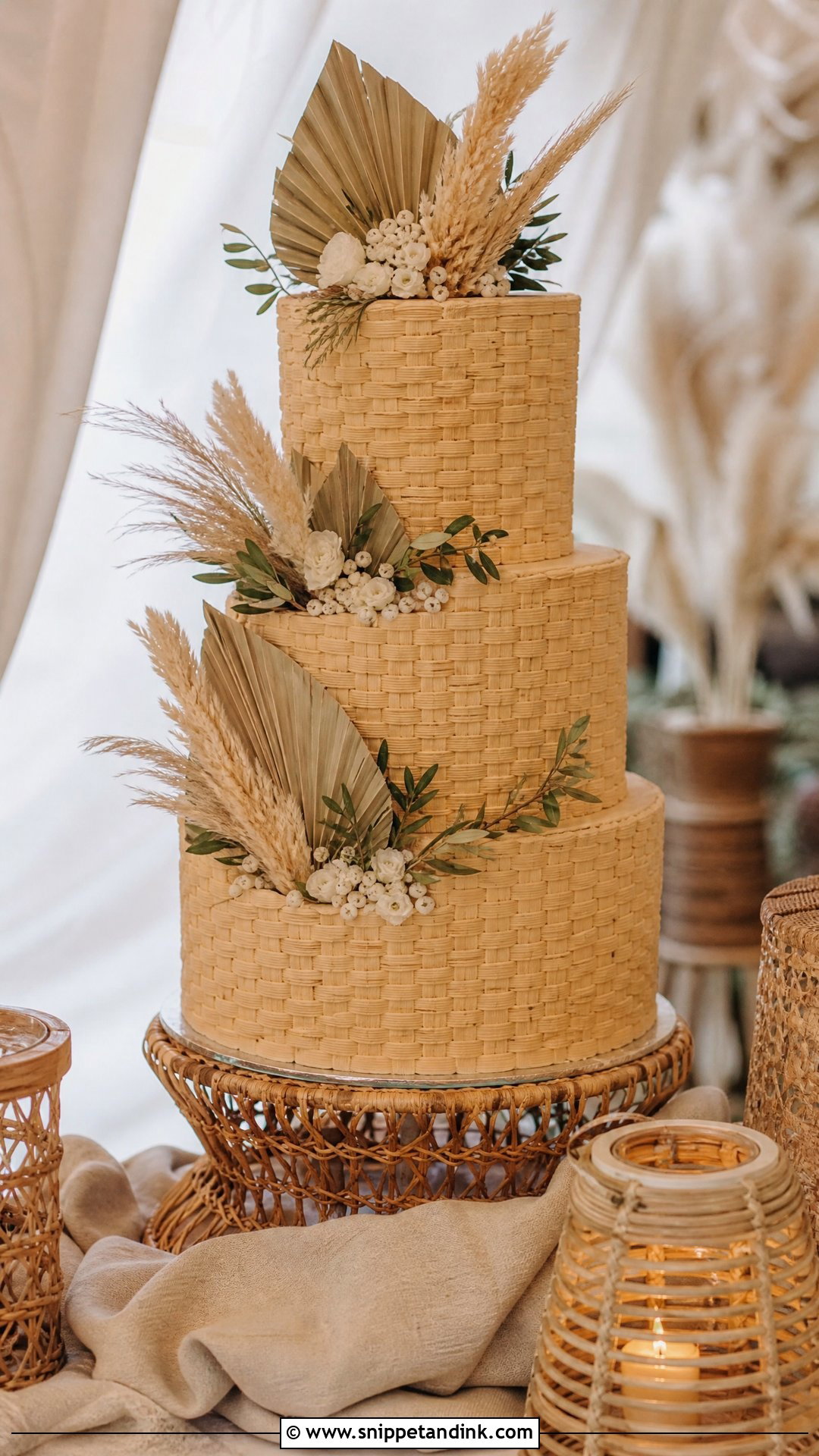
Rattan texture can be piped in buttercream as a basket weave or impressed into fondant, and either way, it’s slow work. The cake table can also carry the theme with rattan stands and woven trays. Warm ivory, tan, caramel or a beige color palette looks natural. Dried palms, pampas, tiny cream flowers and greenery finish it. If the cake will be outside in heat, a fondant weave keeps its definition far better than a piped buttercream one. It looks right with wicker chairs, lanterns and linen.
A Naked Cake in a Warm Barn Won’t Wait for the Speeches
Barns, tents and desert venues are where boho cakes are most popular, and they’re often the hardest rooms for cake. Buttercream starts to soften once a room gets warm, and direct sun or a spot next to a heater speeds that up. Exposed sponge on a naked cake starts drying from the outside as soon as it’s uncovered.
So I plan around the room, not just the photo. A few things I’d talk through with any couple booking a boho cake for a warm or outdoor venue:
- Where the cake table will be, and whether it gets sun at any time of day.
- How long between delivery and cutting. The shorter the better for naked and semi-naked finishes.
- Whether there’s a fridge or a cool room on site to hold the cake until it’s needed.
- Whether fondant or a firmer buttercream would suit the design and the season better.
What Your Baker Needs in the First Email
Many cake designers book months ahead for peak season dates, so it’s worth getting in touch early, once your venue and rough guest count are fixed. A useful first enquiry includes the date, the venue, the number of guests the cake needs to serve, and two or three photos of designs you like, plus one you don’t. A photo of your florals or colour palette helps too. If you have dietary needs, such as gluten-free tiers or a nut allergy among guests, mention them now, as some bakers can’t guarantee an allergen-free kitchen.
Where the Cake Will Sit Matters as Much as How It Looks
Most boho cakes share a few traits: natural textures, earthy colours and decoration that echoes the venue and the bouquet. Pick the finish that suits your room temperature and how long the cake will be on display, then build the decoration around it. Share your florist’s details with your baker early, because they’ll need to agree on which stems are safe and who places them. A single tier for an elopement or a tall three-tier centrepiece can both feel like this style, so long as the cake is still fresh and standing straight when you cut it.
You'll Like These Ideas:







Leave a Reply