
A cake for the beach has a harder job than a ballroom cake. It has to look like it belongs next to the water, and it has to survive sun, salt air and a table that may sit on sand. When I design one, I start with the venue and the time the cake will be cut, then work back to the finish, the decoration and the flavor. Some of the ideas below are quiet, like plain white tiers with a few pearls. Others lean into shell details, wave textures, hibiscus or coconut. All thirty can be built to hold up outdoors if you plan the structure first and the pretty part second.
What Sun, Salt Air and Sand Do to a Wedding Cake
The first question I ask a beach couple is not about colors. It’s where the cake will sit and for how long. A cake in direct sun at the edge of the sand is under real stress: buttercream softens, fresh flowers wilt, sugar decorations go tacky in humid air and fine sand blows onto anything sticky.
Frosting choice matters more outdoors than anywhere else. Swiss and Italian meringue buttercreams taste wonderful but start to slip in heat. An American-style crusting buttercream holds its shape a little longer, and a firm ganache under fondant is the most stable of all. For a hot afternoon, I often use ganache on the display tiers and keep a lighter frosting for kitchen sheet cakes that guests are actually served.
Where I’d put the cake table
- Under a tent, umbrella or indoor alcove, never in full sun and never on the sand itself.
- On a stable, level table, since a beach floor can shift under weight.
- Away from the dance floor speakers and the main walkway, so nobody knocks it.
- Delivered as close to the reveal as the venue allows, ideally within an hour or two.
If your venue cannot offer shade, scale down the display cake and plan the dessert around something that can stay cold until serving. That’s not a compromise. It’s how you avoid a leaning cake in your photos.
1. Seashell Beach Wedding Cake
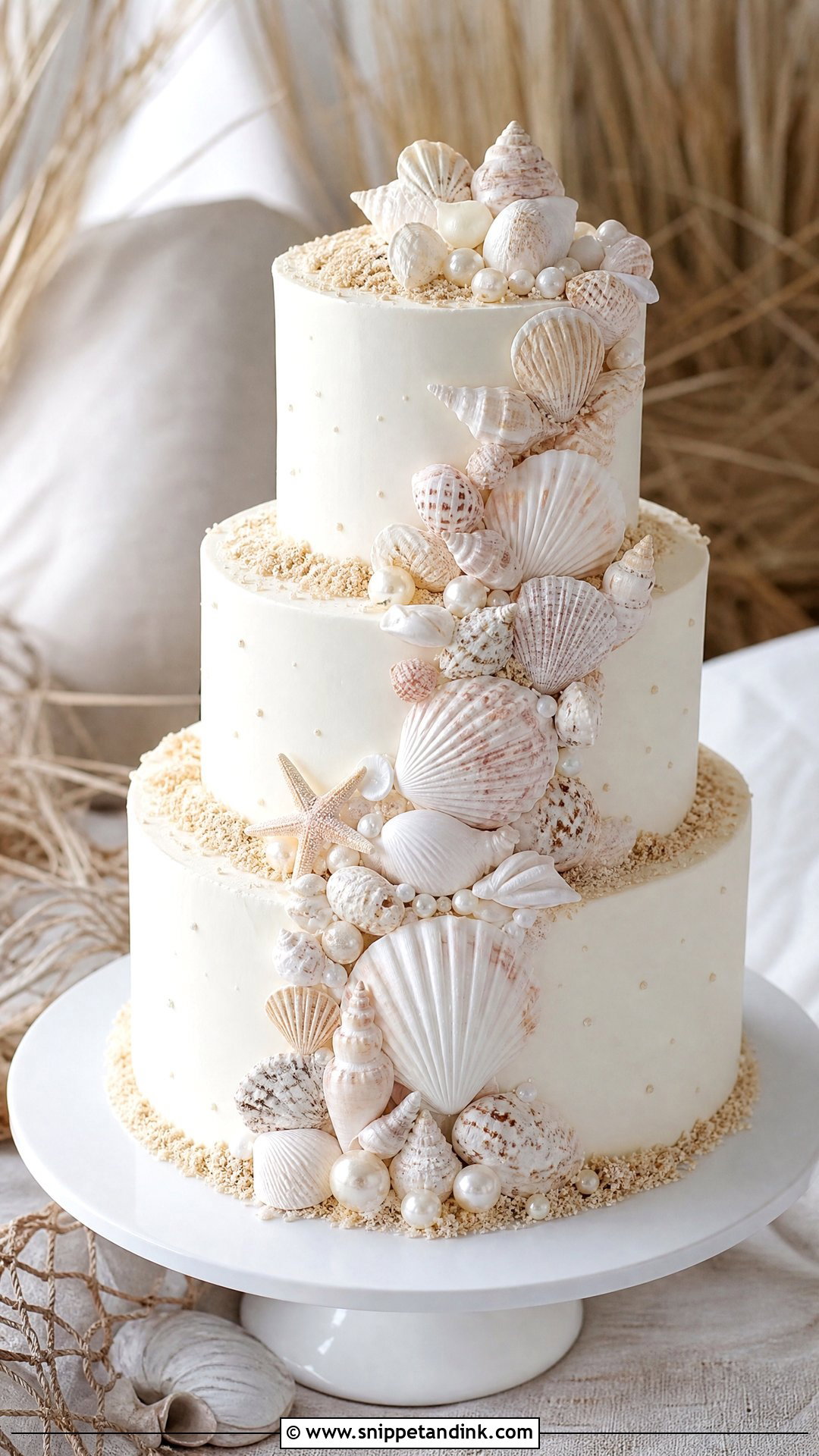
Shells are the safest coastal cue I know, because they read as beach even on a plain ivory cake. I mold mine in white chocolate or a firm modeling paste rather than soft fondant, since chocolate shells keep their ridges sharp while fondant ones slump slightly in humid air. A cluster at the base and a small cascade up one side is usually enough. Brushed champagne dust on the shell edges warms them up in evening light. Underneath, vanilla or lemon layers keep the flavor as clean as the look.
2. Starfish Beach Wedding Cake
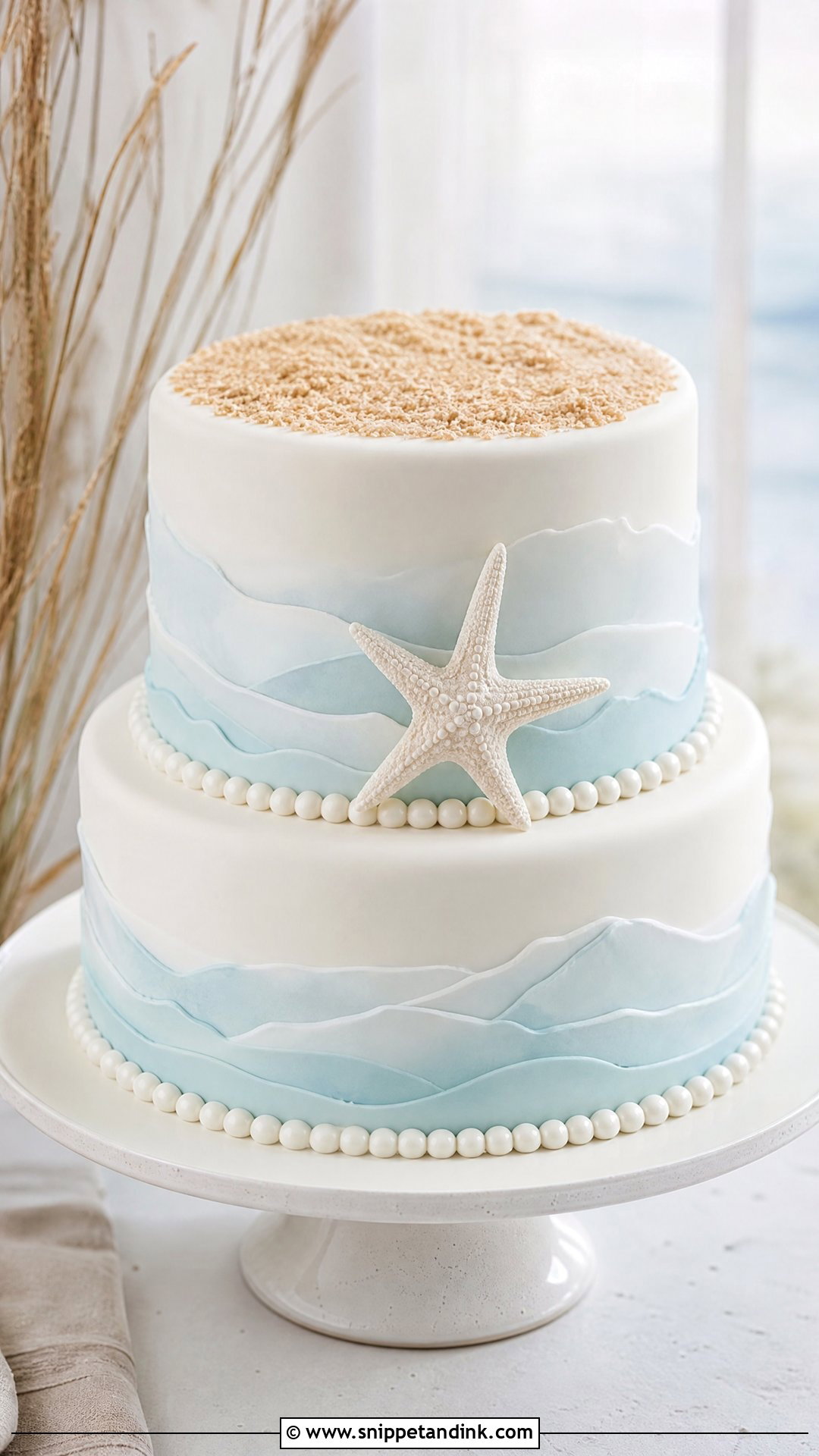
One or two sugar starfish look deliberate; a dozen start to look like a gift shop. I dry starfish for several days before the wedding so the arms don’t droop, and I attach them with a dab of royal icing instead of pressing them into buttercream, where they slide as the frosting warms. A pale sand-colored cake with a fine pearl border gives them room to stand out. Coconut sponge with pineapple filling suits this design and the casual receptions it tends to appear at.
3. Ocean Wave Beach Wedding Cake
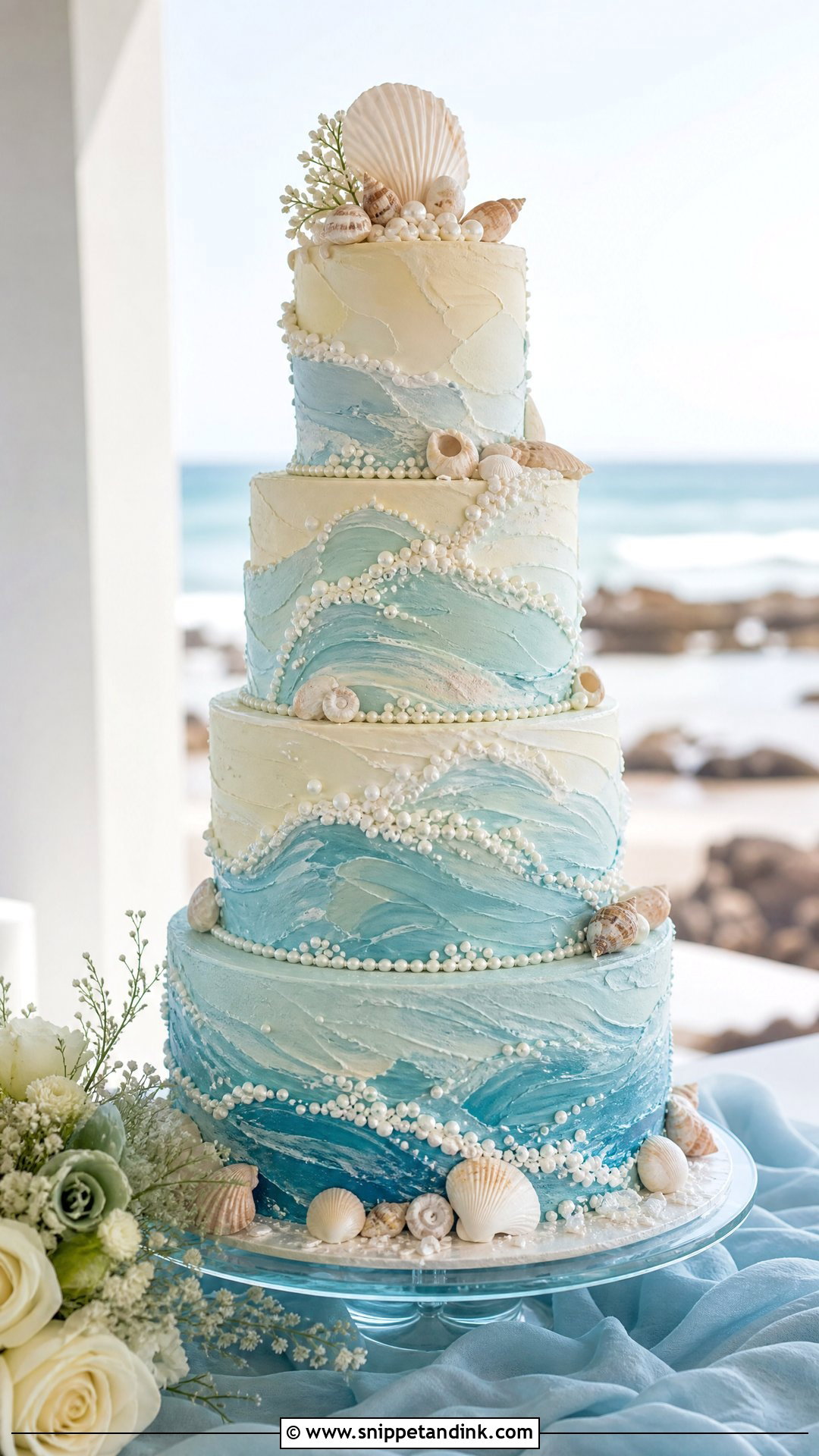
Waves need texture, and texture is where buttercream earns its place. I build the blues with a palette knife, darkest at the base, then pipe a little white foam along each crest. The thing couples rarely expect is fading: strong blue colorings can shift or bleed if the cake sits in bright sun for an hour, so I keep wave cakes shaded until the cutting. Pale aqua strokes are more forgiving than deep navy. Lemon or blueberry sponge underneath tastes fresh at a warm reception.
4. Tropical Flower Beach Wedding Cake
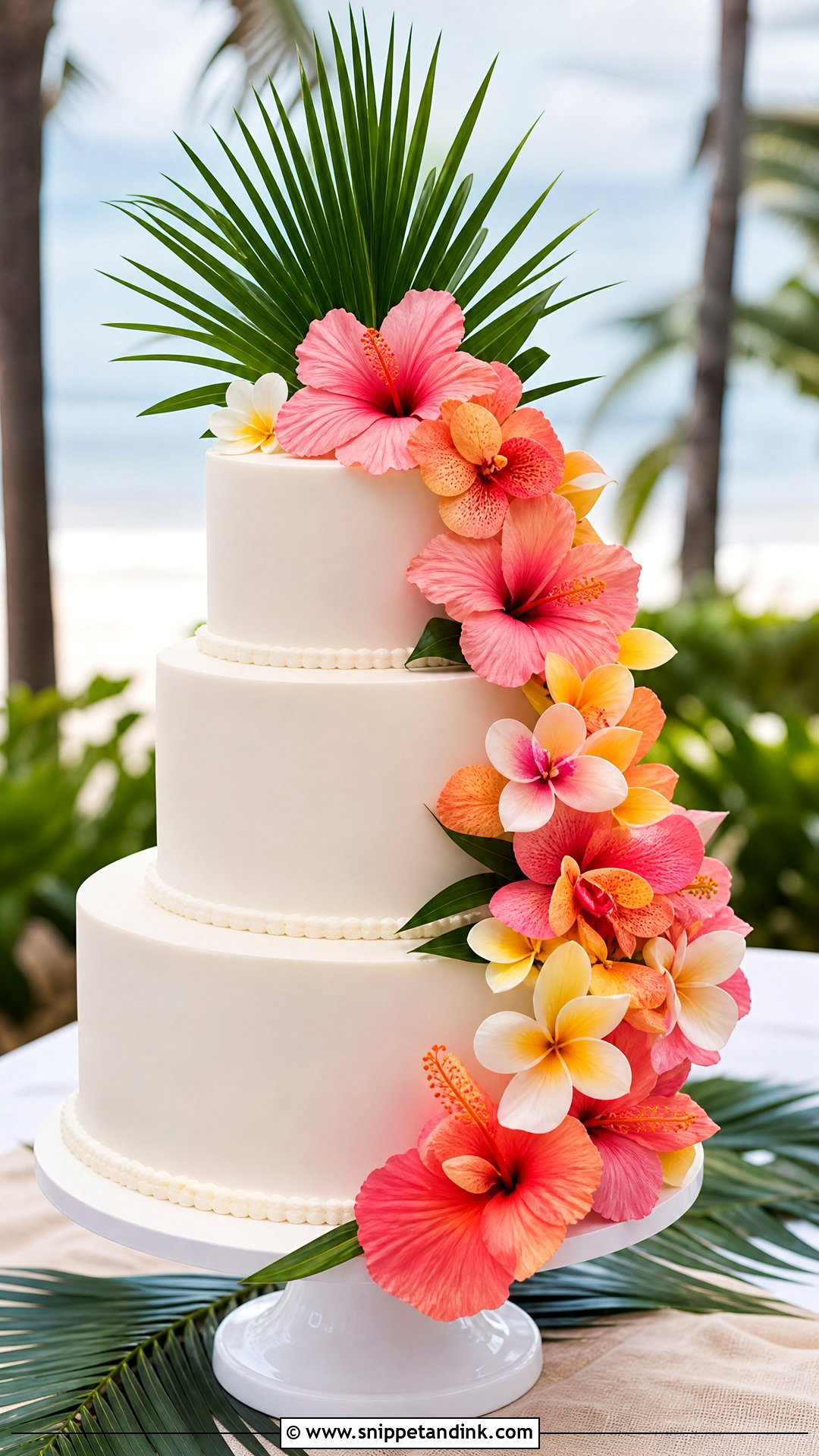
Hibiscus, orchids, plumeria and anthurium can turn a plain tiered cake into the brightest object at a resort reception. I keep the base white or blush so the flowers do all the talking. Fresh blooms have to be pesticide-free, with stems wrapped and kept off the frosting, and even then a fresh hibiscus can wilt within a few hours in heat. If your cake will sit out for most of the evening, I’d pay for sugar flowers. Mango or passion fruit filling matches the color story.
5. Palm Leaf Beach Wedding Cake
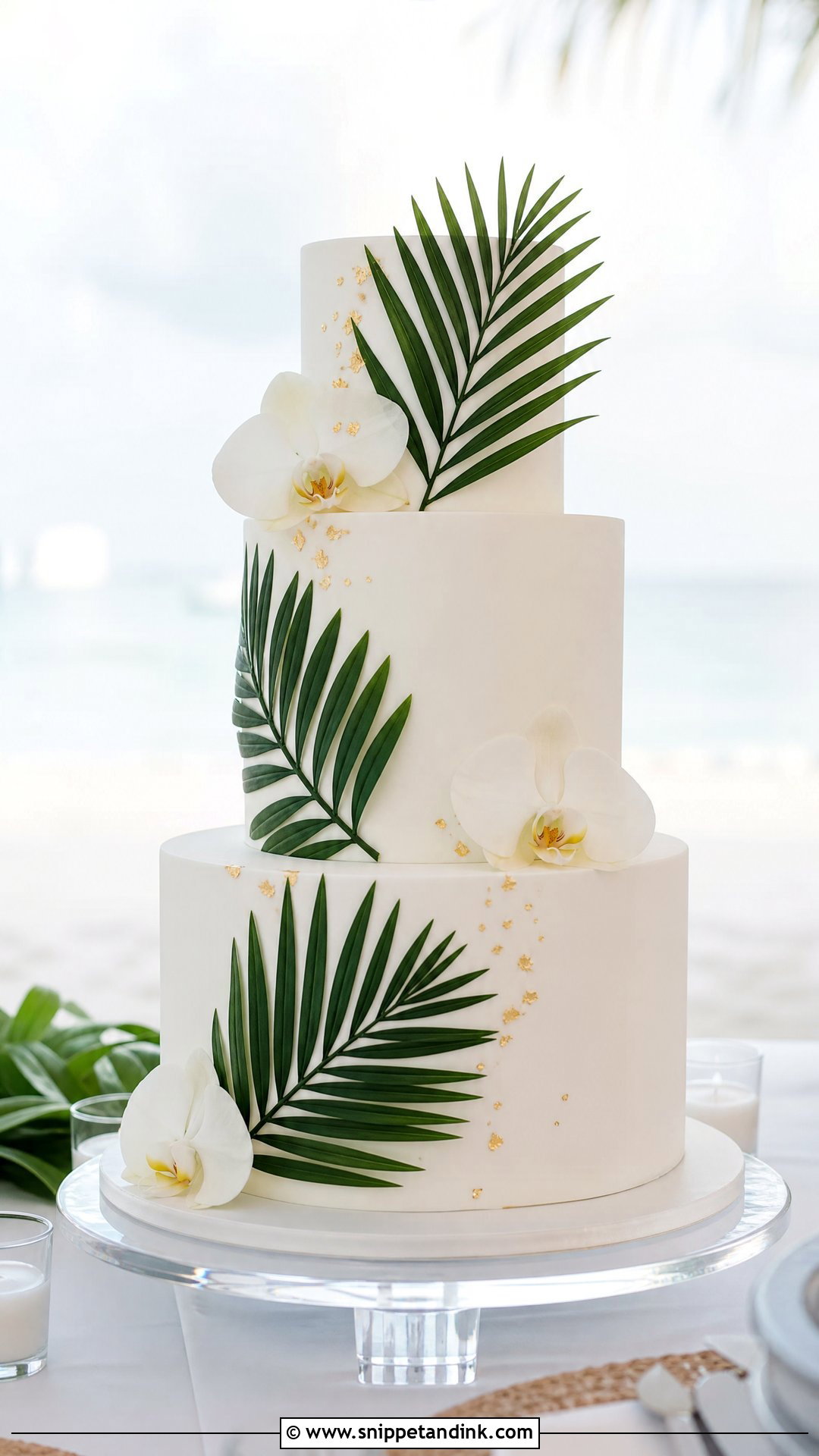
Big palm fronds against smooth white icing is about as graphic as a beach cake gets, and that contrast is why it photographs so cleanly. The leaves can be sugar, wafer paper or real fronds that have been washed and kept on a barrier. Real leaves are cheaper but curl as they dry, so I add them at the venue, not the kitchen. A couple of white orchids or a thin gold line will push it toward formal. It suits two tiers or five equally well, with key lime or coconut inside.
6. Blue Ombre Beach Wedding Cake
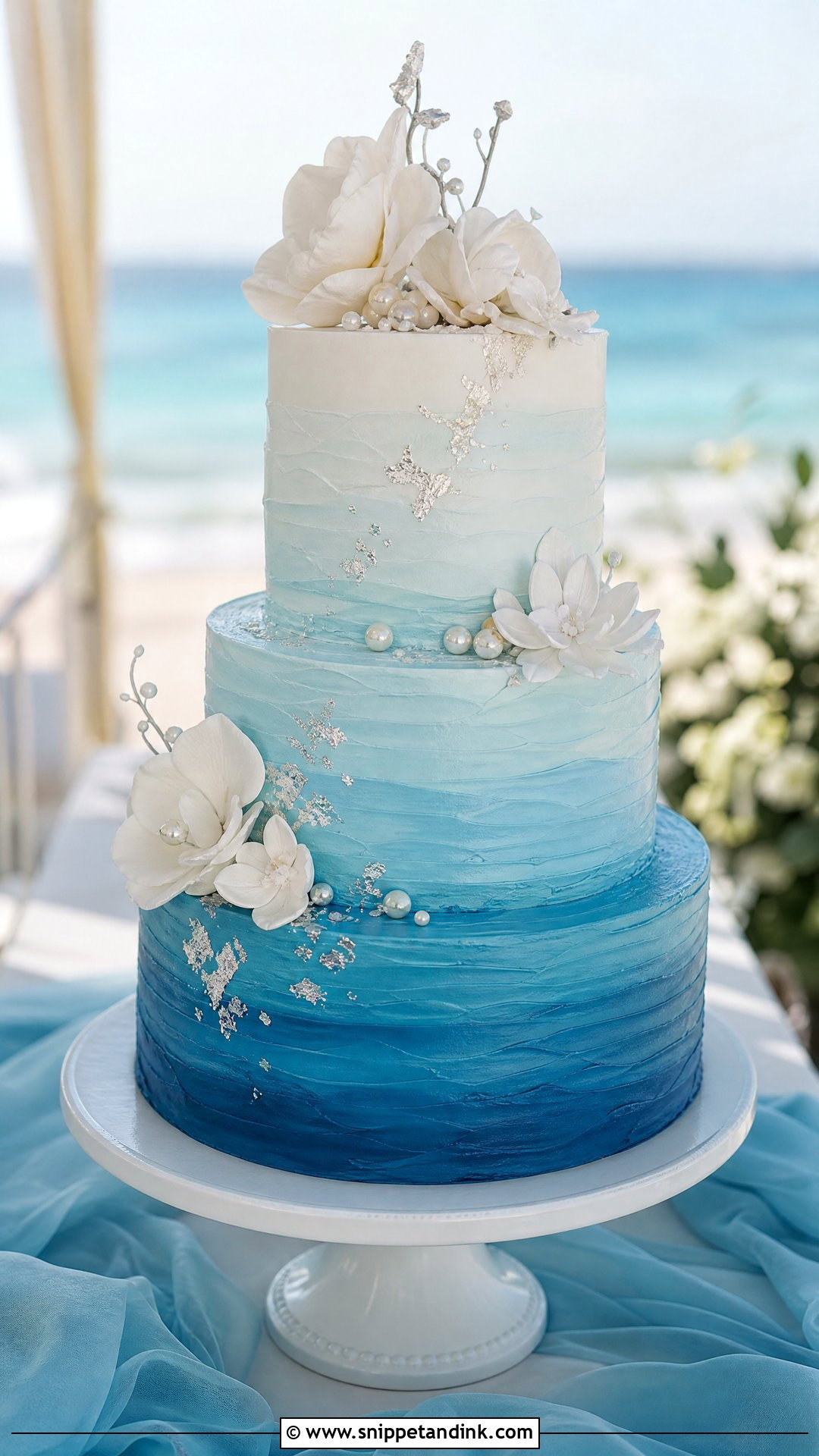
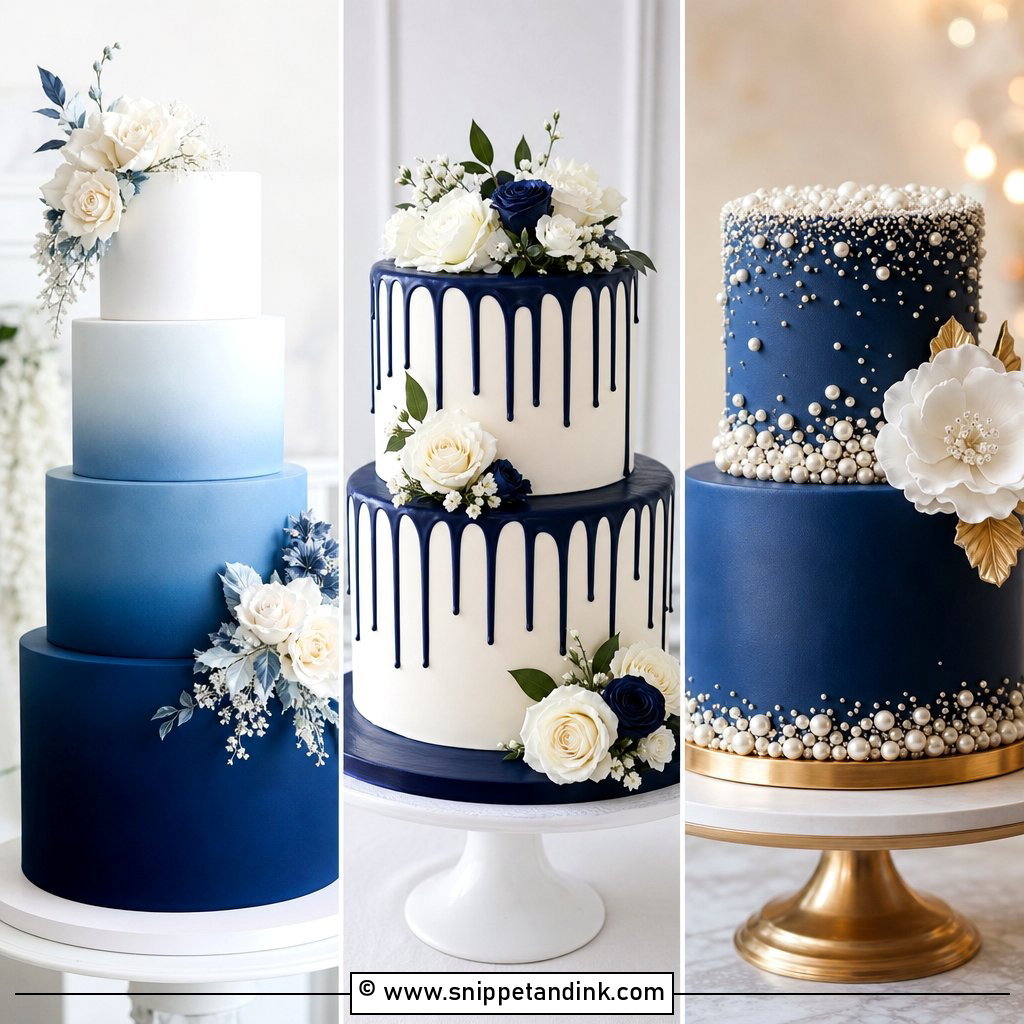
An ombré that runs from deep ocean blue at the base to almost white at the top needs no shells at all. I blend the shades in buttercream while it is still soft, which gives a smoother transition than layering colored fondant. The risk is a dark base color that tastes bitter or stains teeth, so I build depth gradually rather than loading one tier with dye. Silver leaf or a few white flowers on top add polish. Almond or lemon sponge keeps the inside as light as the outside.
7. Sand Texture Beach Wedding Cake
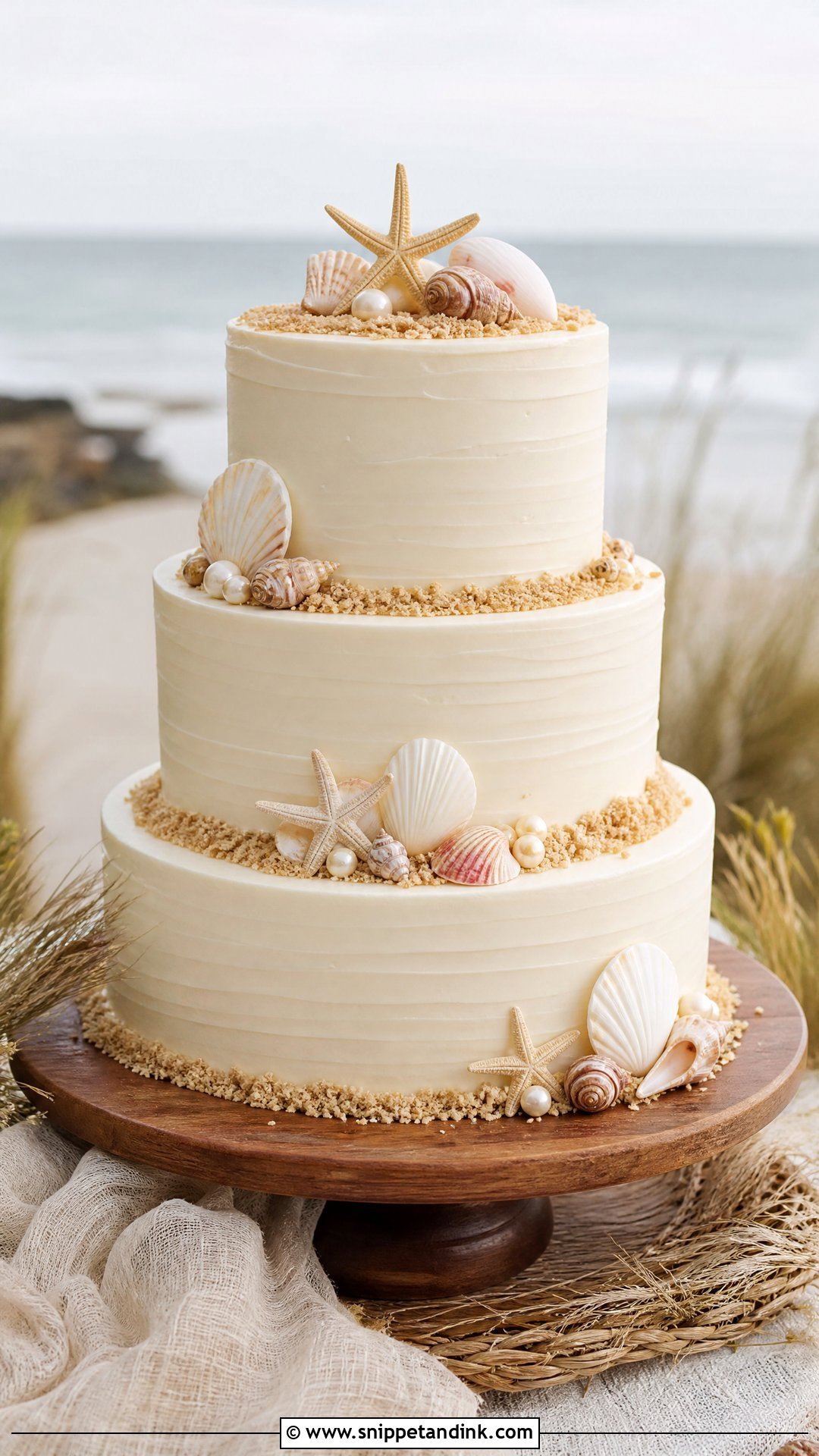
Edible sand is the detail guests lean in to look at. I make it from crushed graham crackers, light brown sugar or blitzed shortbread, and I press it on only around the base of a tier or across one statement tier. Here’s the catch: crumb sand soaks up moisture, so in sea air it softens and darkens if it goes on too early. I apply it close to delivery. A couple of sugar shells or a tiny starfish finish it, and caramel or coconut cake suits the warm color.
8. Coral Reef Beach Wedding Cake
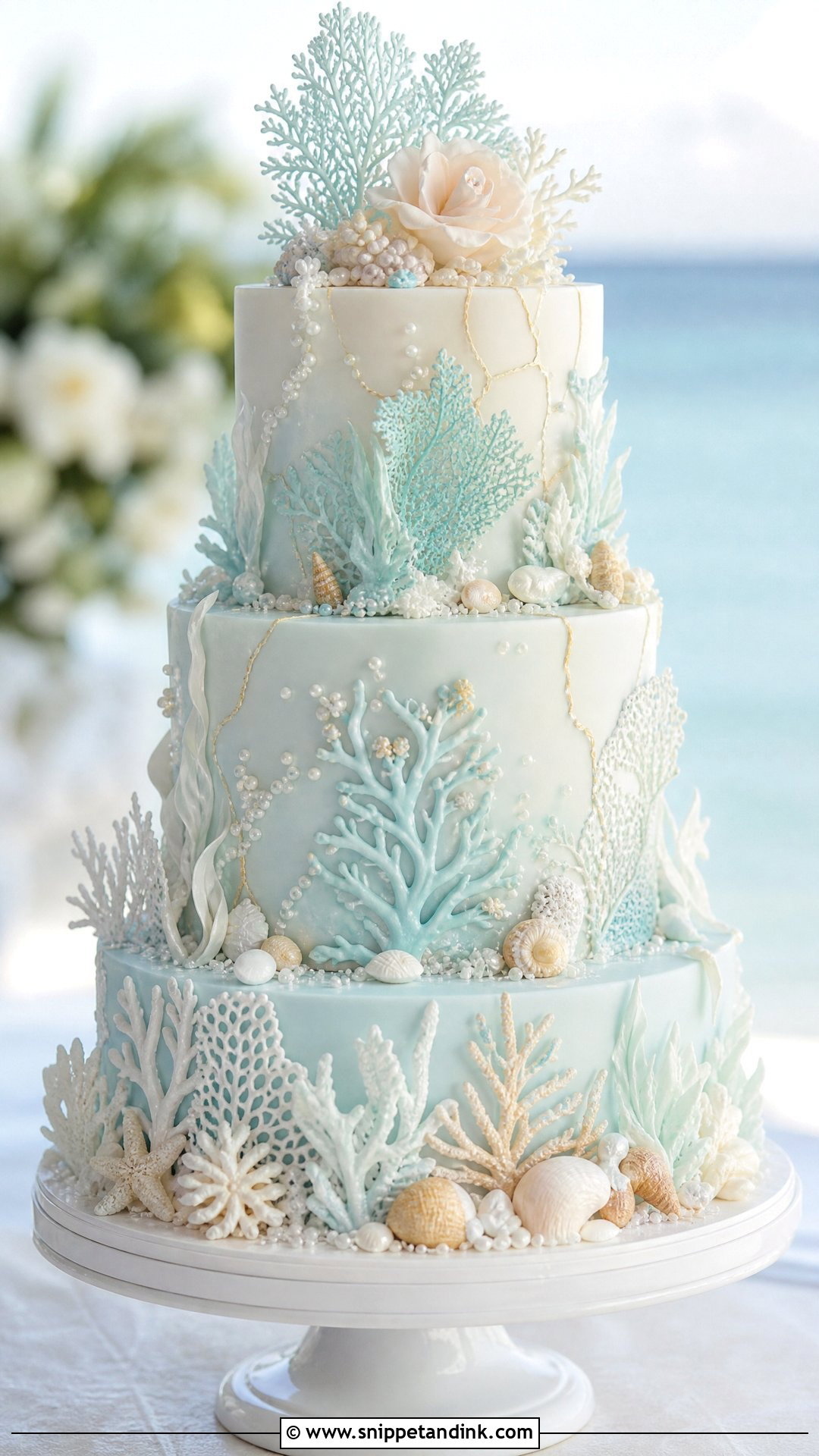
Coral reef cakes are detail-heavy, so they reward a restrained base. I sculpt the coral pieces and sea fans from modeling chocolate or isomalt, then keep the tiers pale aqua or white so the structure stays legible from across the room. Too many colors and it starts to look like an aquarium display rather than a wedding cake. Isomalt does not love humidity, so I seal it and keep it away from direct sun. Strawberry or citrus layers sit well with the coral-pink accents, and it suits ocean lovers who want something sculptural.
9. Minimal Beach Wedding Cake
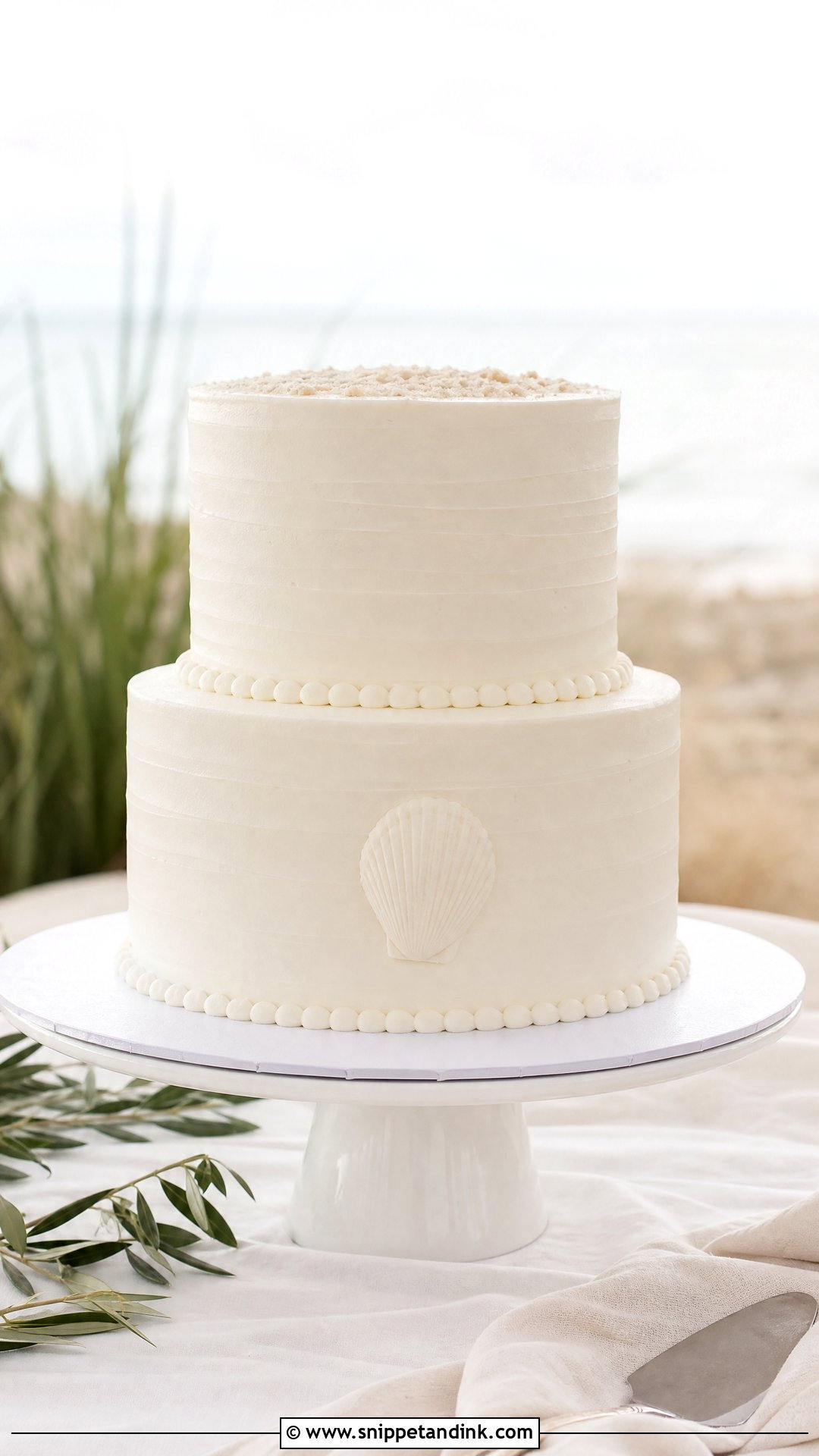
Restraint is the whole design here: smooth white buttercream, sharp edges and one coastal mark, maybe a single shell or a short pearl border. Sharp edges are harder to keep on a beach than people think, because buttercream softens in heat and the corners round off. I chill a minimalist cake hard before transport and set it up last. It lets the ocean be the view rather than competing with it. Vanilla bean with a thin lemon curd is the classic pairing.
10. Rustic Beach Wedding Cake
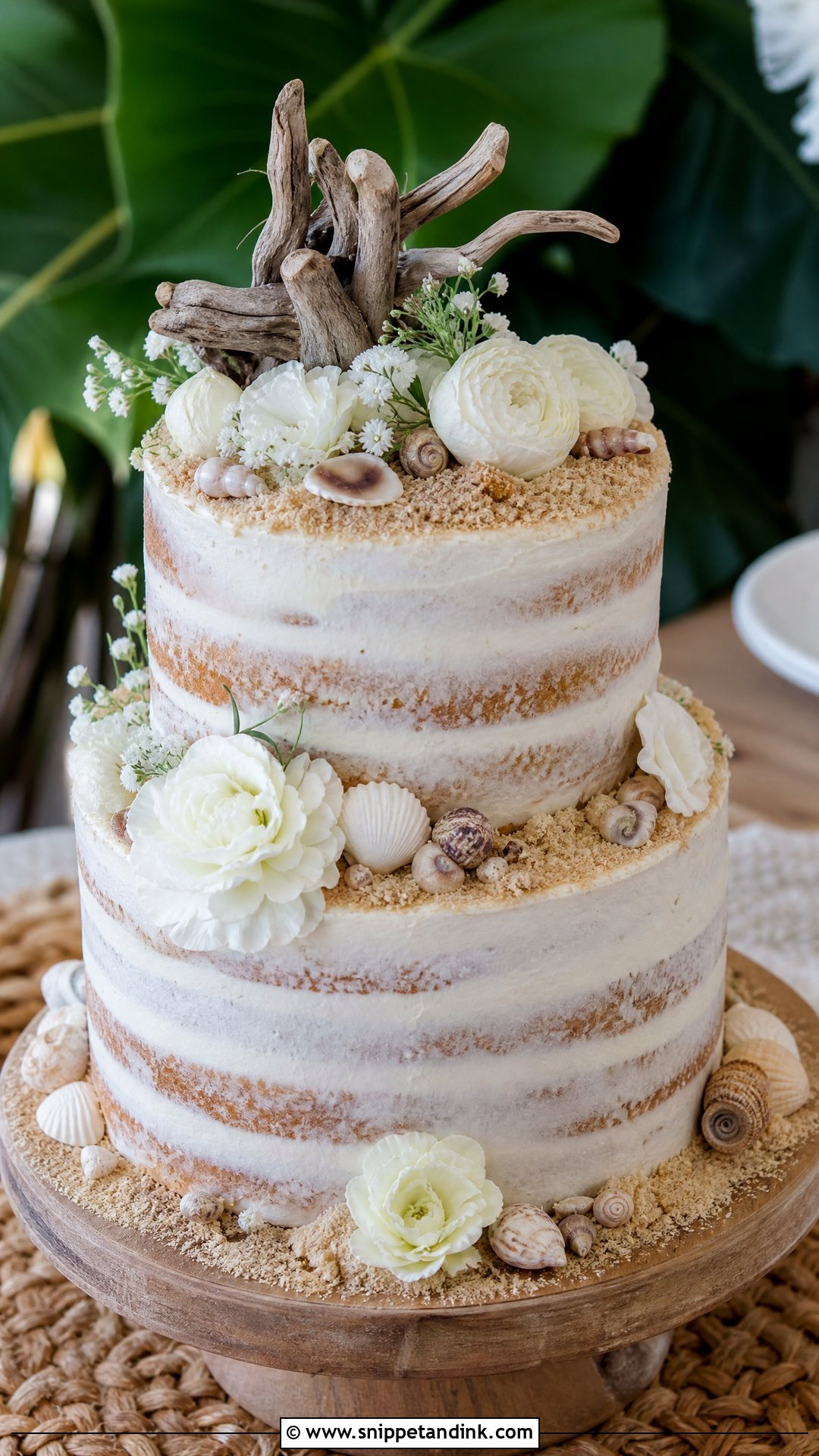
Rough buttercream, a semi-naked finish, a driftwood topper and some greenery give a rustic cake its relaxed look. It sits best on a wooden slab or a rattan stand. My one warning: rustic should look intentional, so I still level every layer and keep the crumb coat even, then add fresh white flowers or a few shells to make it read as a wedding cake. Spice, banana or carrot cake fit the warmth of this finish. It is a strong match for barn-style coastal venues and elopements.
11. Naked Beach Wedding Cake
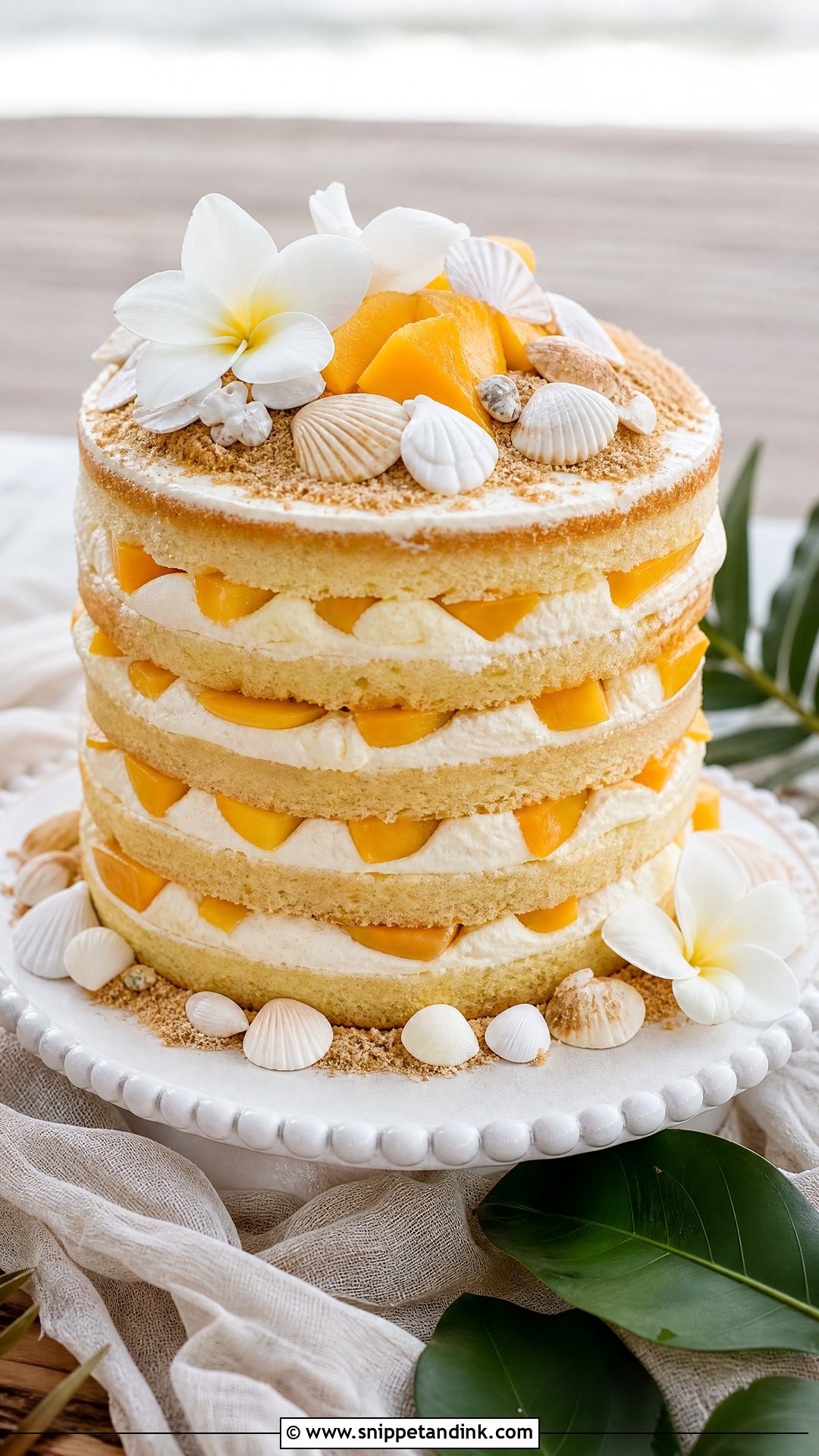
A naked cake is the most heat-friendly design in this list, because there’s very little frosting to soften. The tradeoff is drying: exposed sponge loses moisture in sun and wind, so I brush every layer with syrup and assemble as late as possible. Tropical fruit, a few white flowers and a line of edible sand around the base give it a coastal finish. Neat, even filling lines matter more here than on any frosted cake, since everyone can see them. Lemon or almond layers hold up well.
12. White Beach Wedding Cake
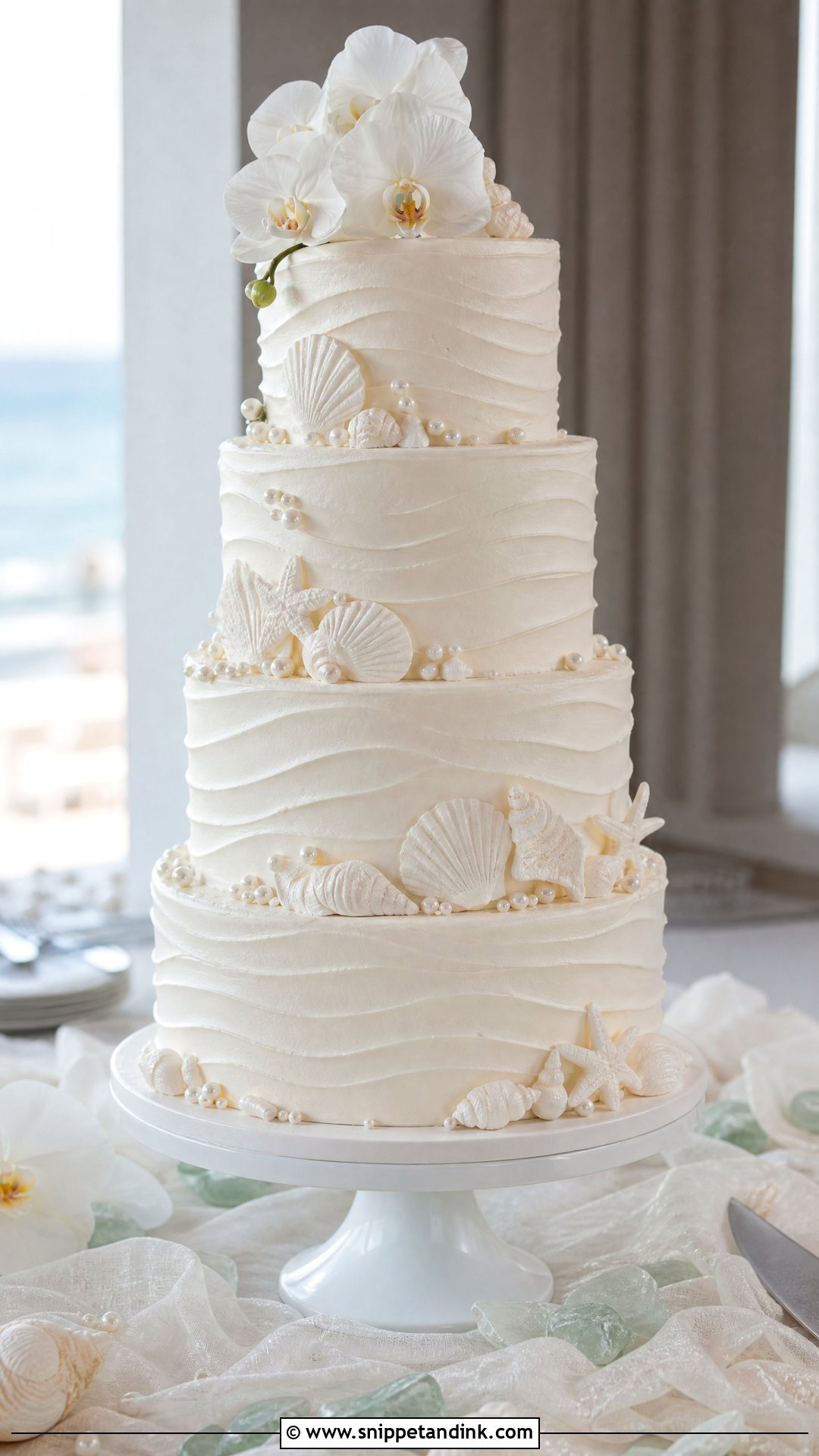
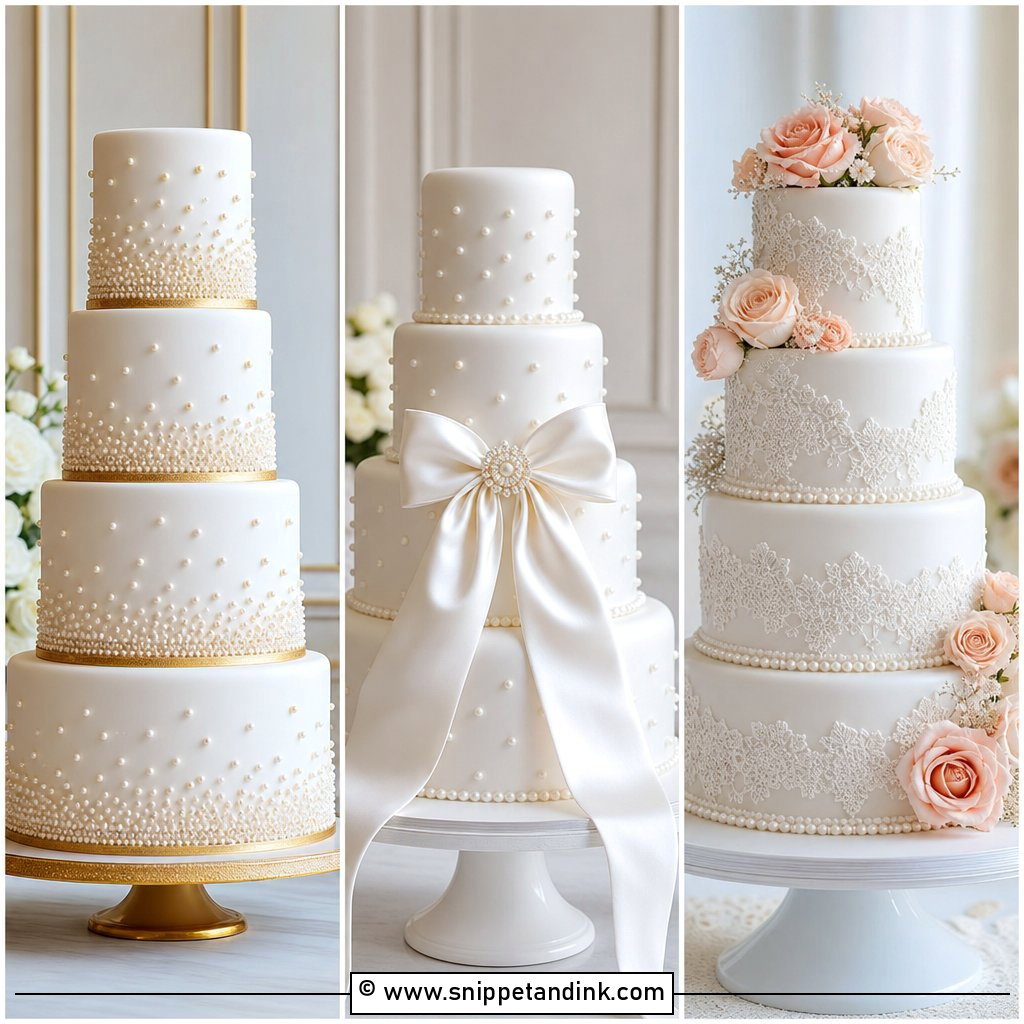
White on white works with almost any coastal style, from a formal seaside dinner to a candlelit sunset reception. The depth comes from texture rather than color: lace piping, raised wave patterns, white orchids and pearls all catch the light differently. In bright sun, plain white can flatten in photos, so I add at least one textured tier to give the camera some shadow to read. A coconut cream or passion fruit filling stops the flavor from feeling as plain as the palette.
13. Gold Beach Wedding Cake
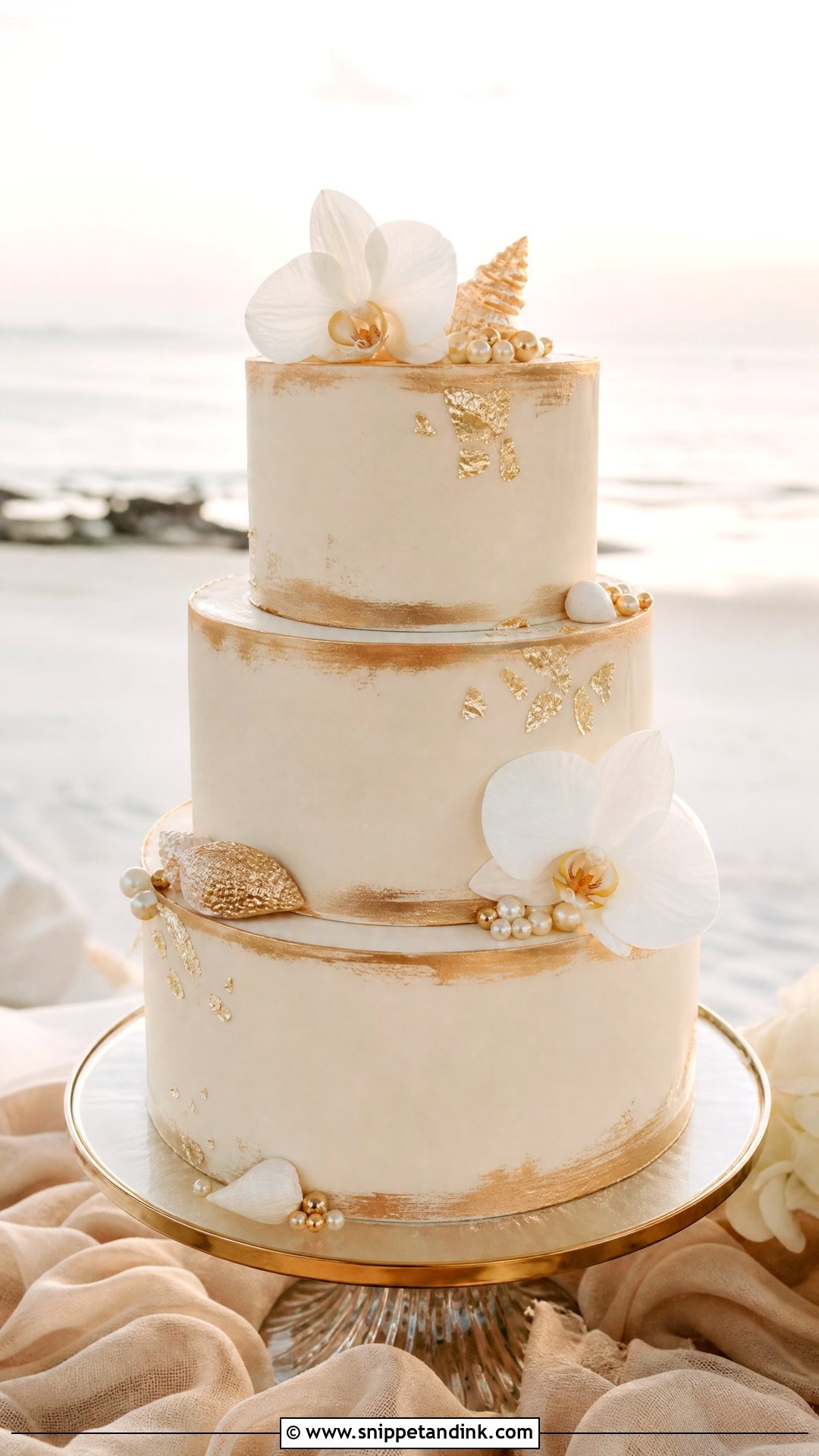
Gold catches light the way sunset catches the water, which is why it pairs so naturally with ivory frosting and pearl accents, sugar shells or coral details. I use it sparingly: a brushed tier, a thin metallic edge or scattered leaf looks far richer than a fully gilded cake. Make sure the metallic product is genuinely edible, not just labeled non-toxic. White orchids or a sand-textured tier balance the shine, and caramel or vanilla layers suit the warm finish at a resort reception.
14. Pearl Beach Wedding Cake
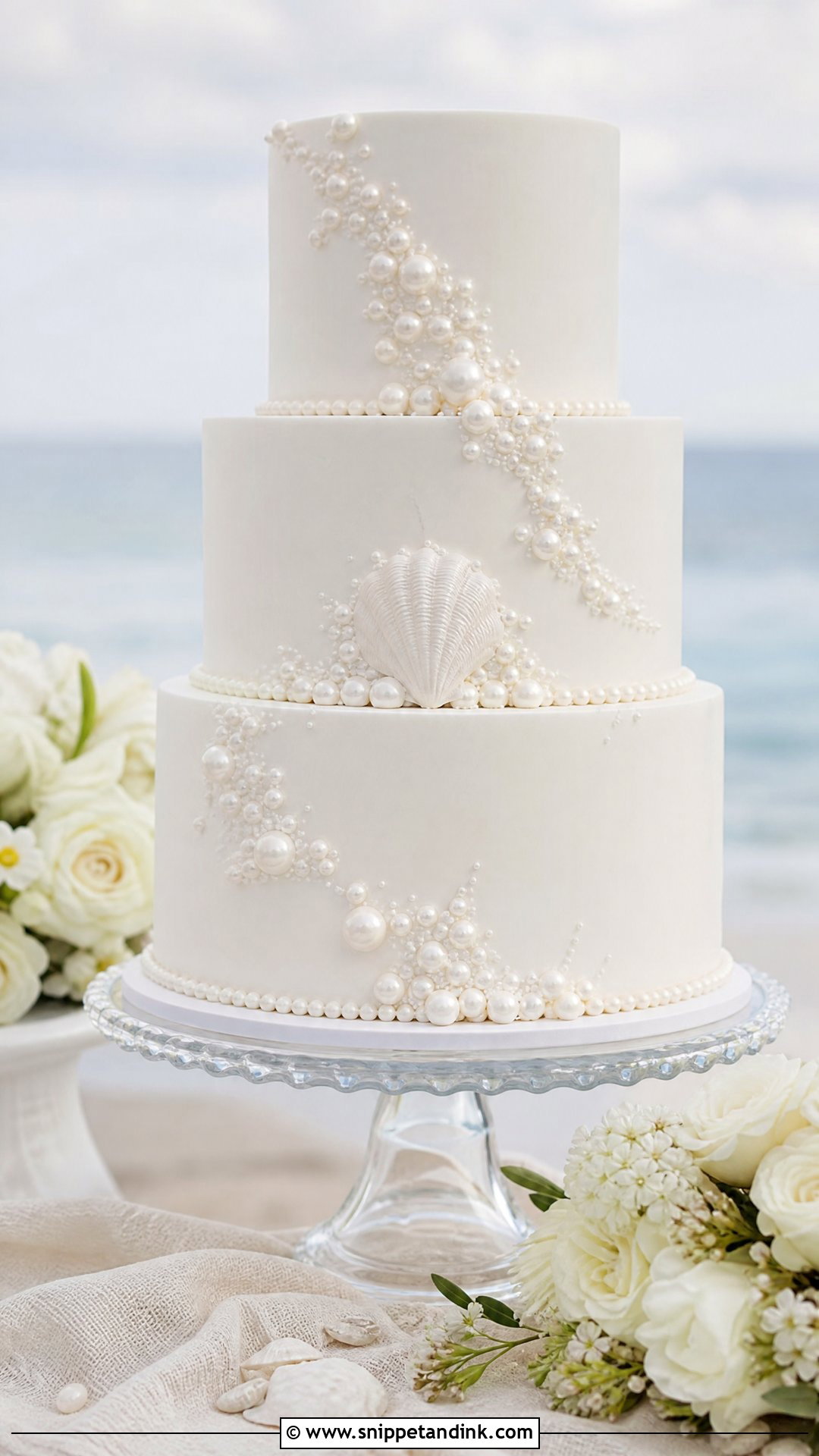
Pearls say sea without any obvious beach props. I pipe pearl borders by hand or use sugar dragées, and I keep them to one tier or a few clusters so the cake looks modern rather than busy. Dragées are hard on teeth, so I warn couples and often swap in soft fondant pearls on the tiers that will actually be served. A sugar shell or two adds a hint of coast. Champagne-flavored sponge with vanilla buttercream suits a formal beach wedding or a ballroom overlooking the water.


15. Driftwood Beach Wedding Cake
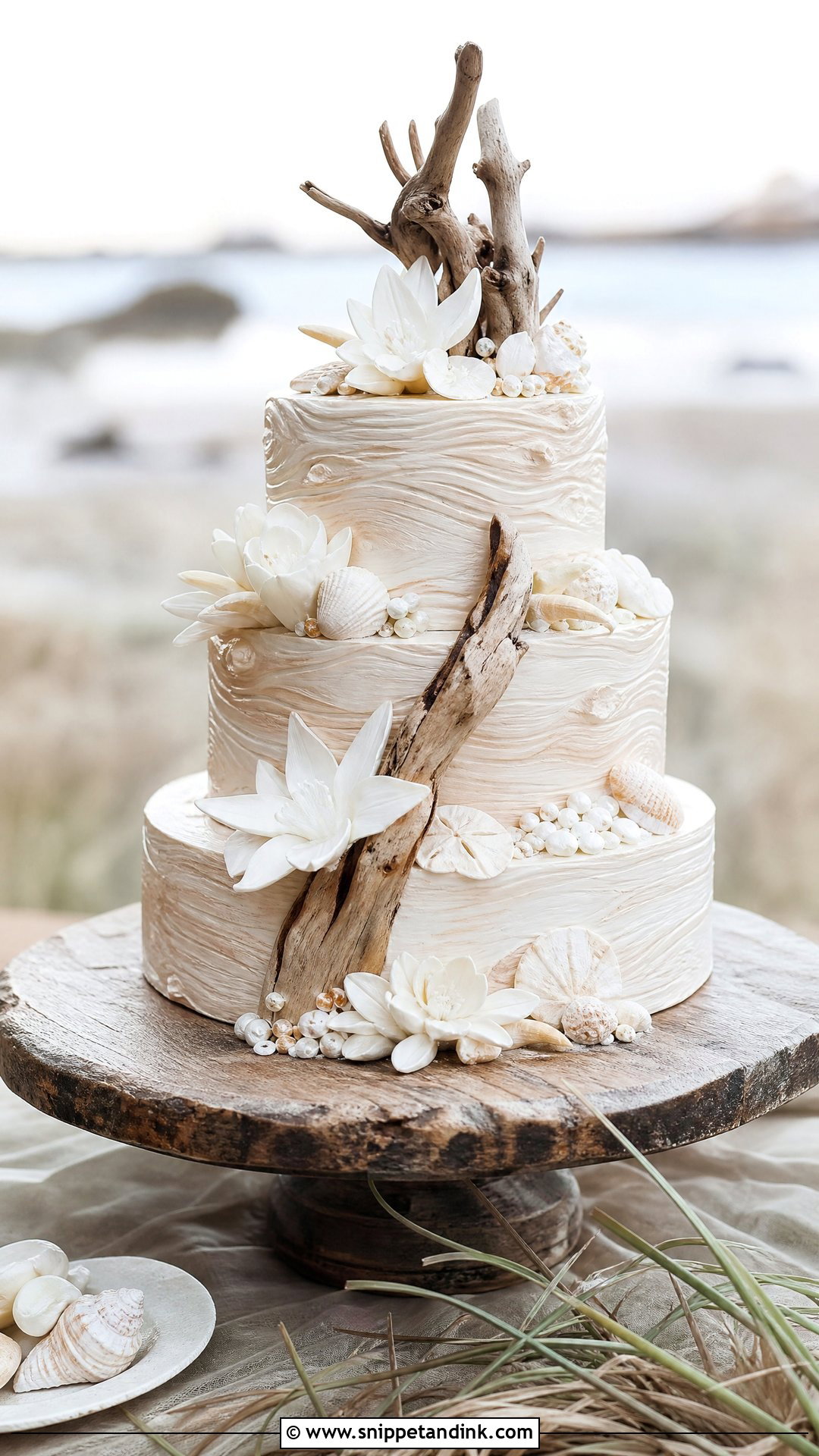
A woodgrain finish in buttercream, a driftwood topper or a stand that looks weathered gives this cake its earthy feel. Real driftwood needs a thorough clean and a food-safe barrier before it touches anything edible, which is why I usually carve the texture in chocolate instead. Keeping the frosting ivory with white flowers and small shells stops it from feeling too rugged. Caramel or spice sponge echoes the neutral palette, and it sits naturally among linen, rattan and dried grasses.
16. Boho Beach Wedding Cake
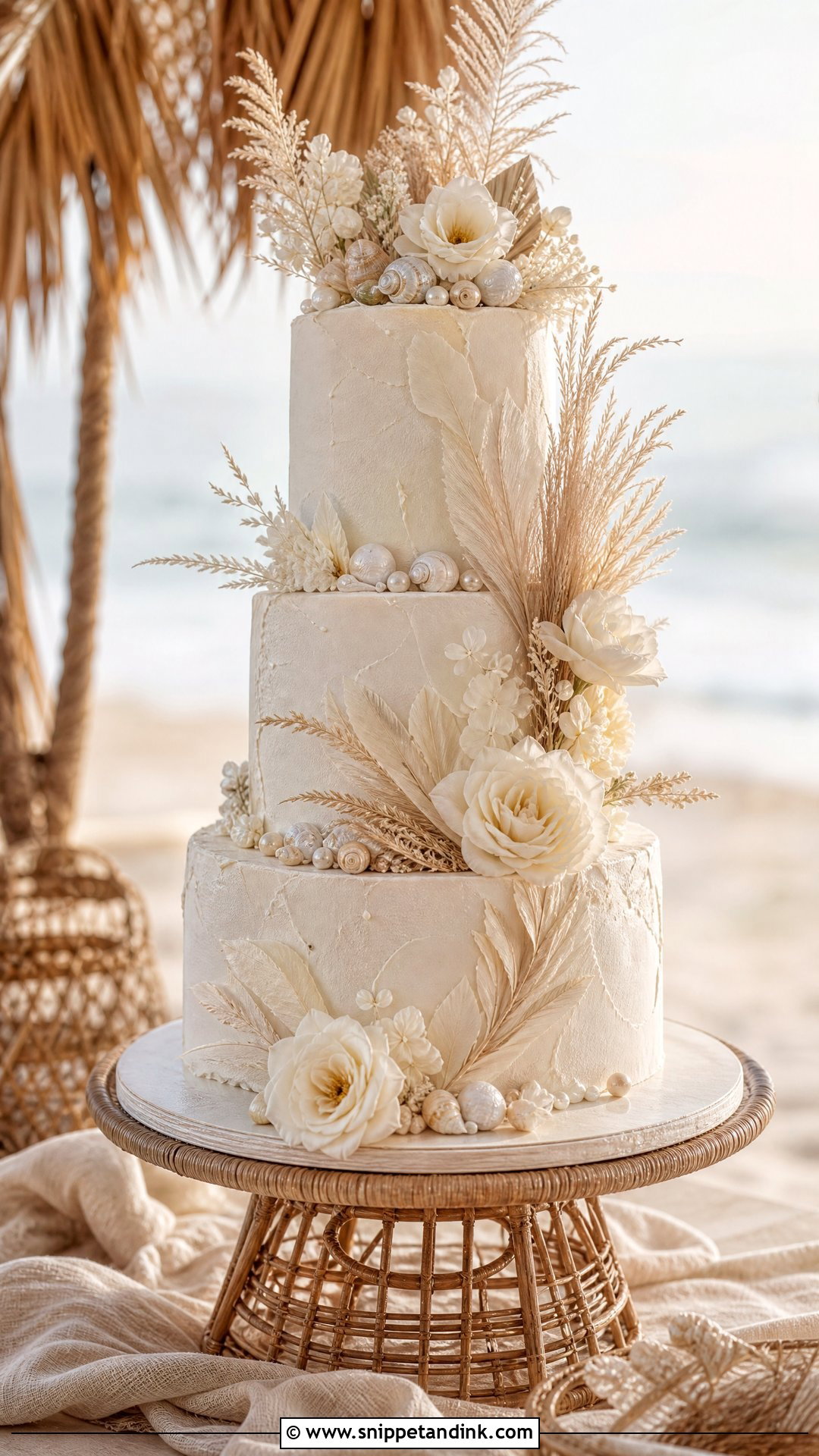
Boho beach cakes live in warm neutrals: ivory, sand, tan and a touch of blush, with textured buttercream and dried grasses or pampas. Pampas sheds, so I tuck it into a wrapped bundle or use sugar versions and keep loose fibers away from the cake surface. A ceramic or wooden stand finishes the look. Honey or almond cake carries the same mellow mood as the palette. It belongs at small barefoot weddings with macramé and airy fabric, where a glossy formal cake would feel stiff.
17. Watercolor Beach Wedding Cake
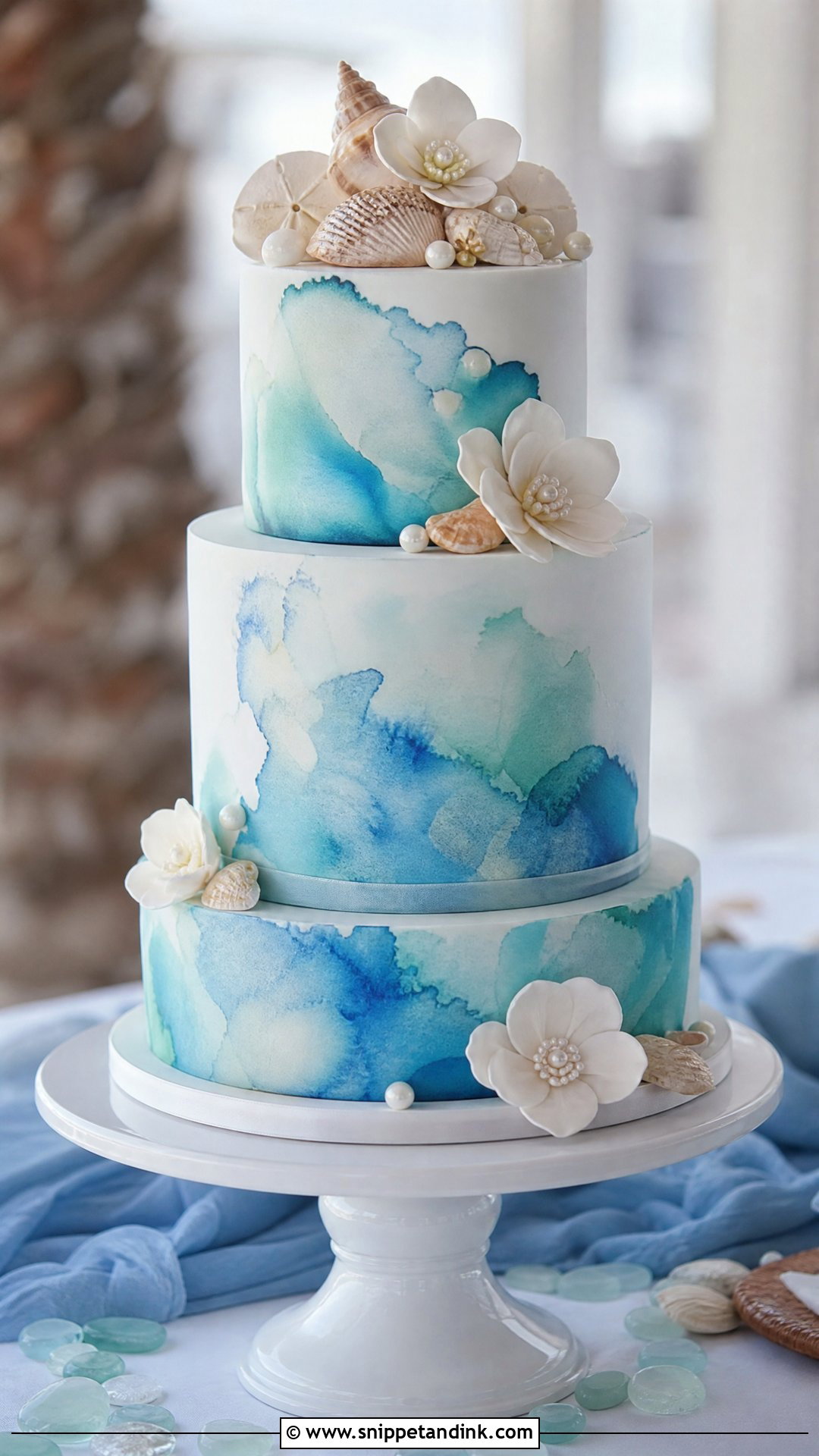
Watercolor is the softest way to bring the ocean onto a cake. I brush thinned colors of aqua and turquoise over chilled buttercream, or paint them directly onto fondant, and leave plenty of white so the strokes stay airy. Taller tiers give the color more room to move. A few white sugar flowers or a little shell cluster keep it bridal rather than abstract. Blueberry or lemon layers suit it, and the color movement shows best in natural daylight.
18. Sunset Beach Wedding Cake
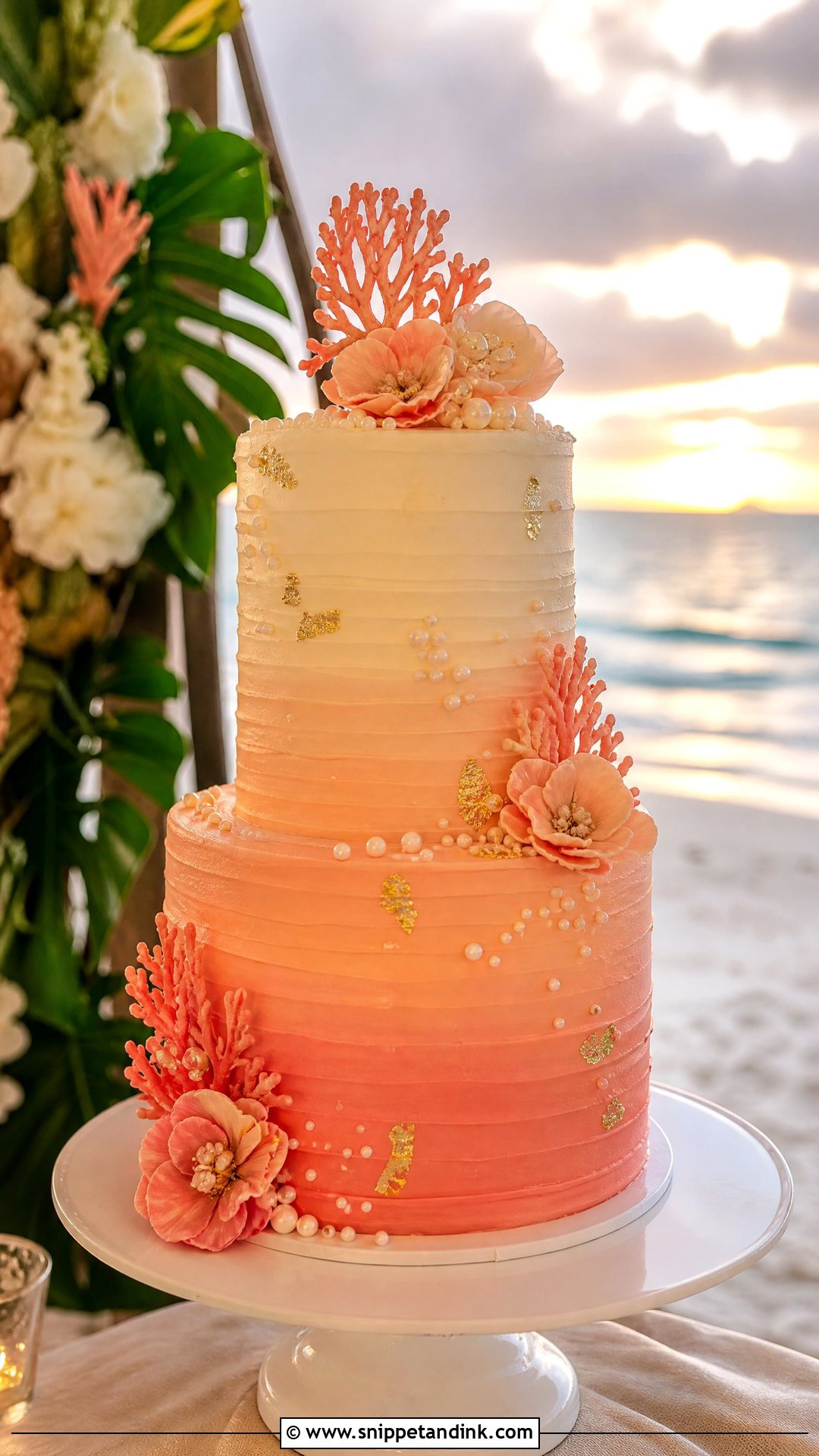
Peach, coral and pink tones are this cake’s answer to the classic beach blue. I blend them as an ombré or arrange sugar flowers in a loose sunset gradient, and a little gold leaf adds glow if the evening is formal. Warm colors need checking under the actual reception light, since a coral that looks right at noon can go muddy under warm string lights. Mango or blood orange filling matches the palette. It fits late-afternoon ceremonies that run straight into a beach dinner.
19. Beach Wedding Cake With Orchids
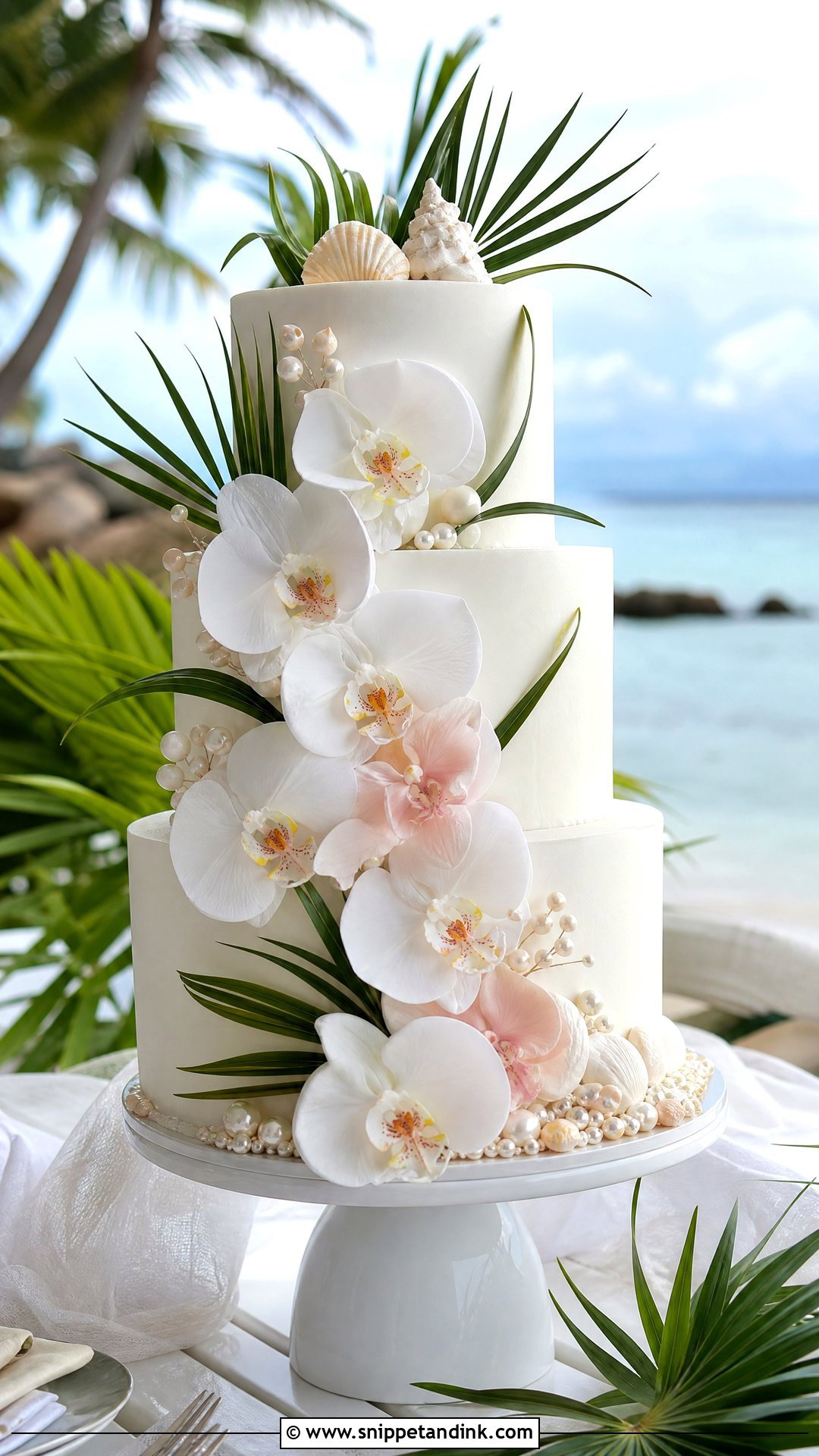
Orchids are my favorite fresh flower for a destination cake because they’re sturdier than most tropical blooms and hold their shape longer in warm air. A cascade down a white tiered cake feels formal; three stems on a small semi-naked cake feels relaxed. Match the orchid color to your palette, and keep their stems wrapped and off the frosting. Palm leaves push it more tropical, while pearls and smooth buttercream keep it classic. Guava or coconut inside suits either version.



20. Beach Wedding Cake With Hibiscus
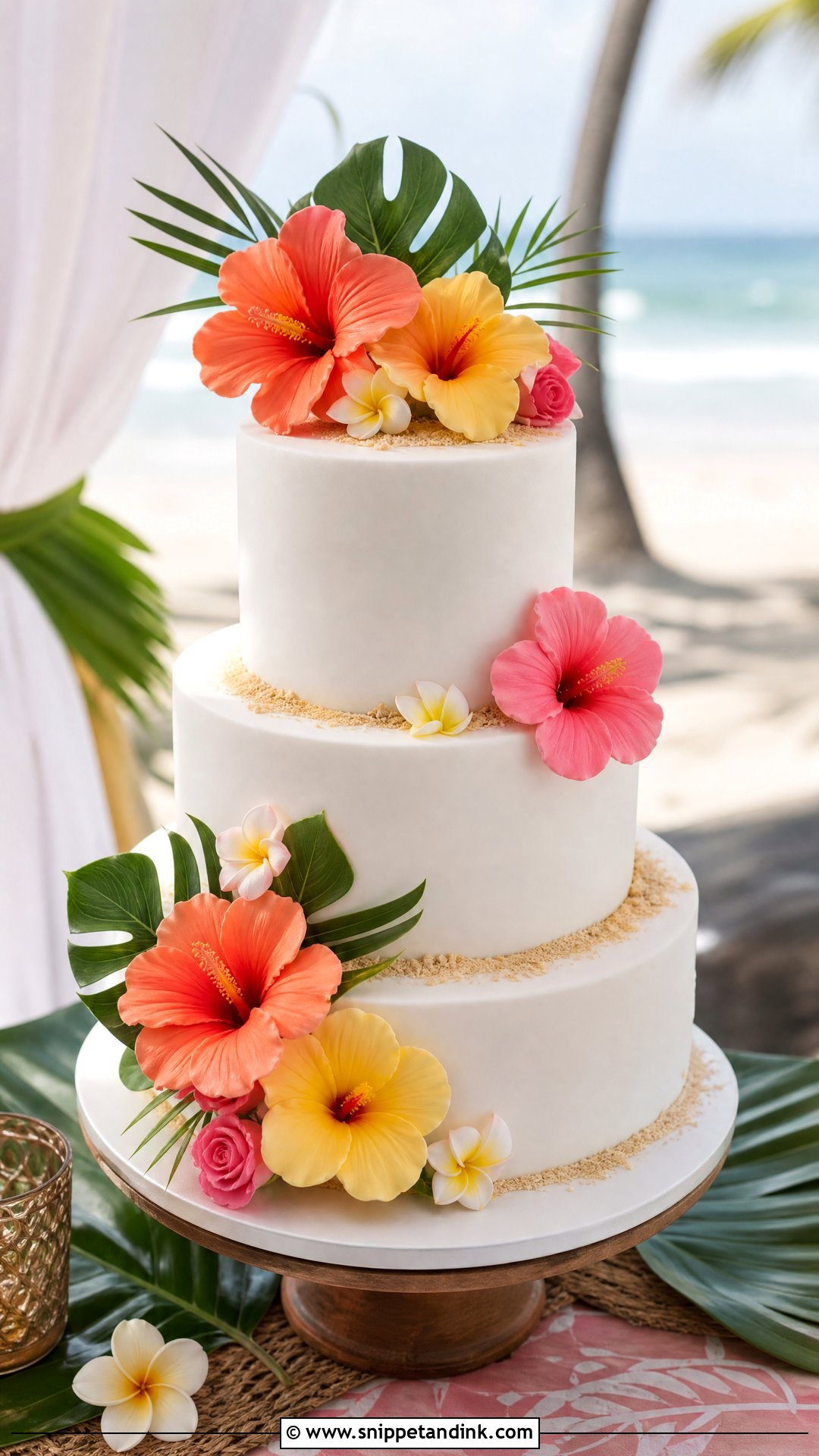
Hibiscus brings instant island color in red, coral or yellow, and it needs a clean white base so the flowers carry the design. Real hibiscus blooms last about a day, often less in full sun, so for any cake displayed through a long reception I’d use sugar hibiscus and save fresh ones for the cake table around it. A few plumeria or palm leaves fill out the arrangement. Pineapple or lime sponge fits the bright, cheerful mood of a resort wedding.
21. Beach Wedding Cake With Sea Glass
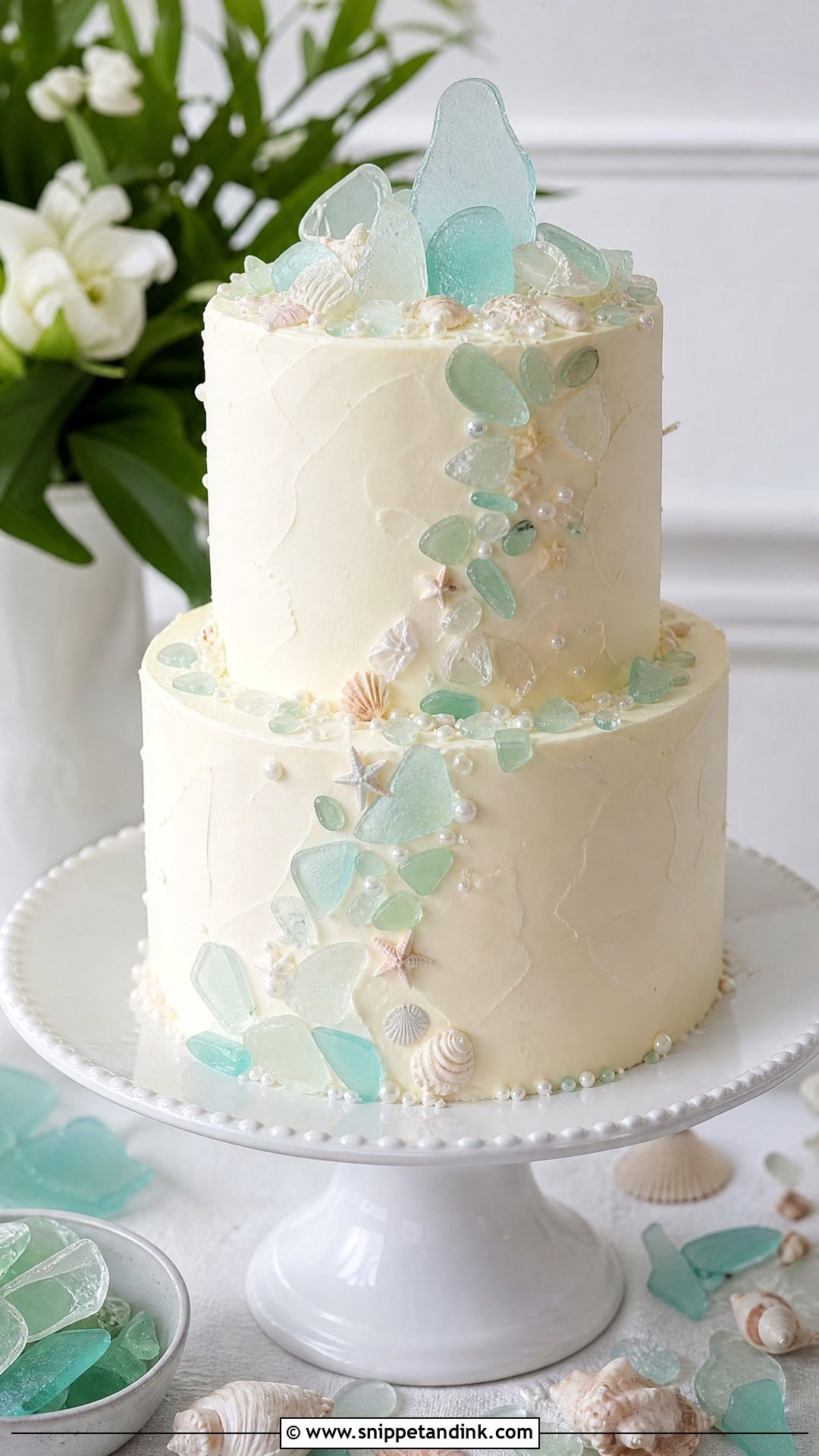
Edible sea glass is one of the less expected beach details, and it’s simpler than it looks. I make it from isomalt or boiled sugar tinted pale aqua, mint and clear, then break and frost the pieces so they look sea-worn. Isomalt holds up better than plain sugar, which goes sticky in humidity. Scattered around the tiers of a white or sand-toned cake with a few pearls, it reads coastal without a single shell. Key lime or coconut layers suit the cool colors.
22. Nautical Beach Wedding Cake
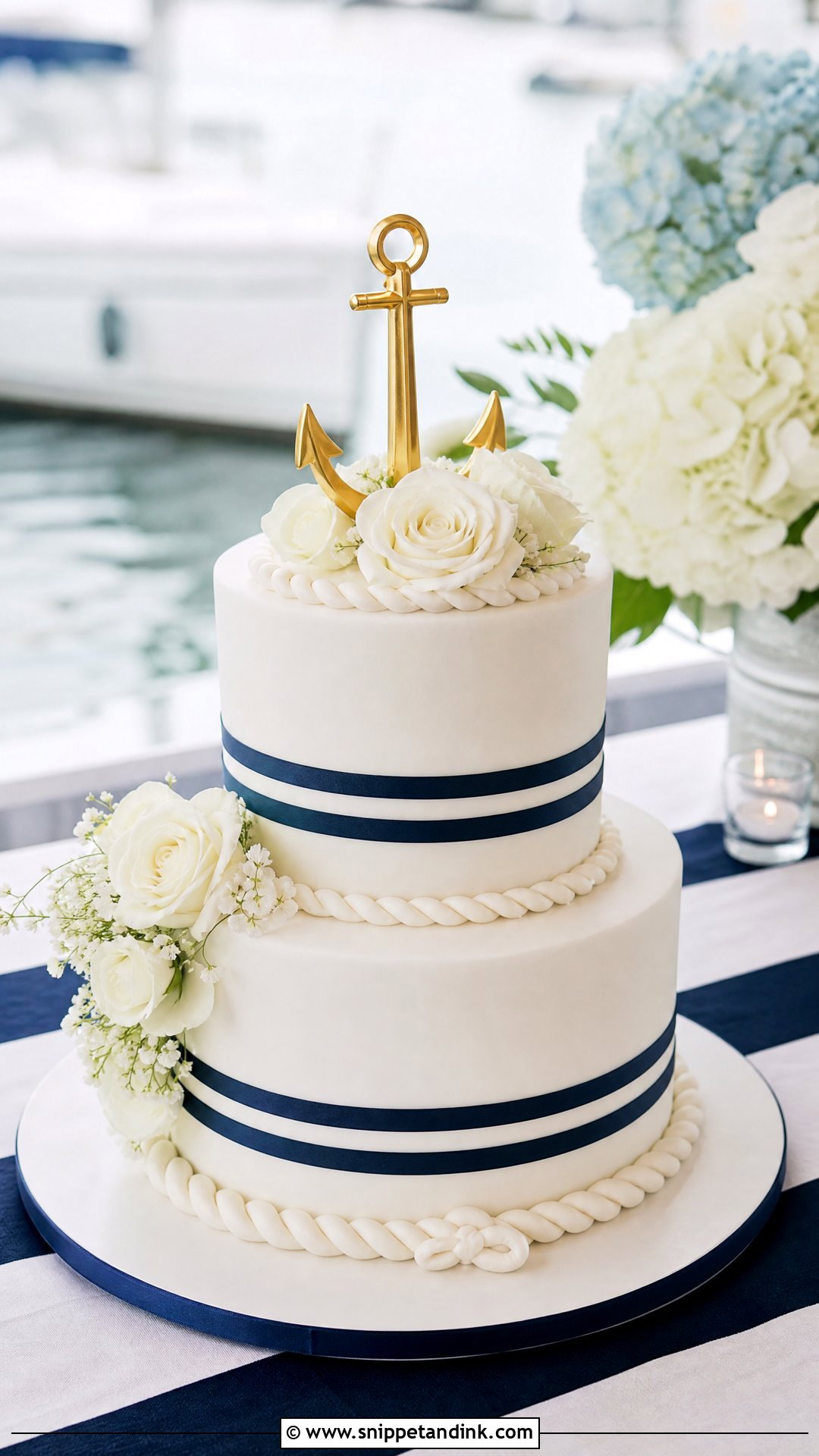
Navy and white stripes, rope piping and a small anchor topper make a nautical cake, but the line between polished and costume is thin. I keep the nautical motif to one tier and let smooth white do the rest, then soften the whole thing with fresh white flowers or greenery. Navy coloring is very concentrated, so on a beach cake I use it in fondant panels rather than tinting a whole tier of buttercream. Blueberry or almond sponge fits the crisp palette at a yacht club or marina reception.
23. Coconut Beach Wedding Cake
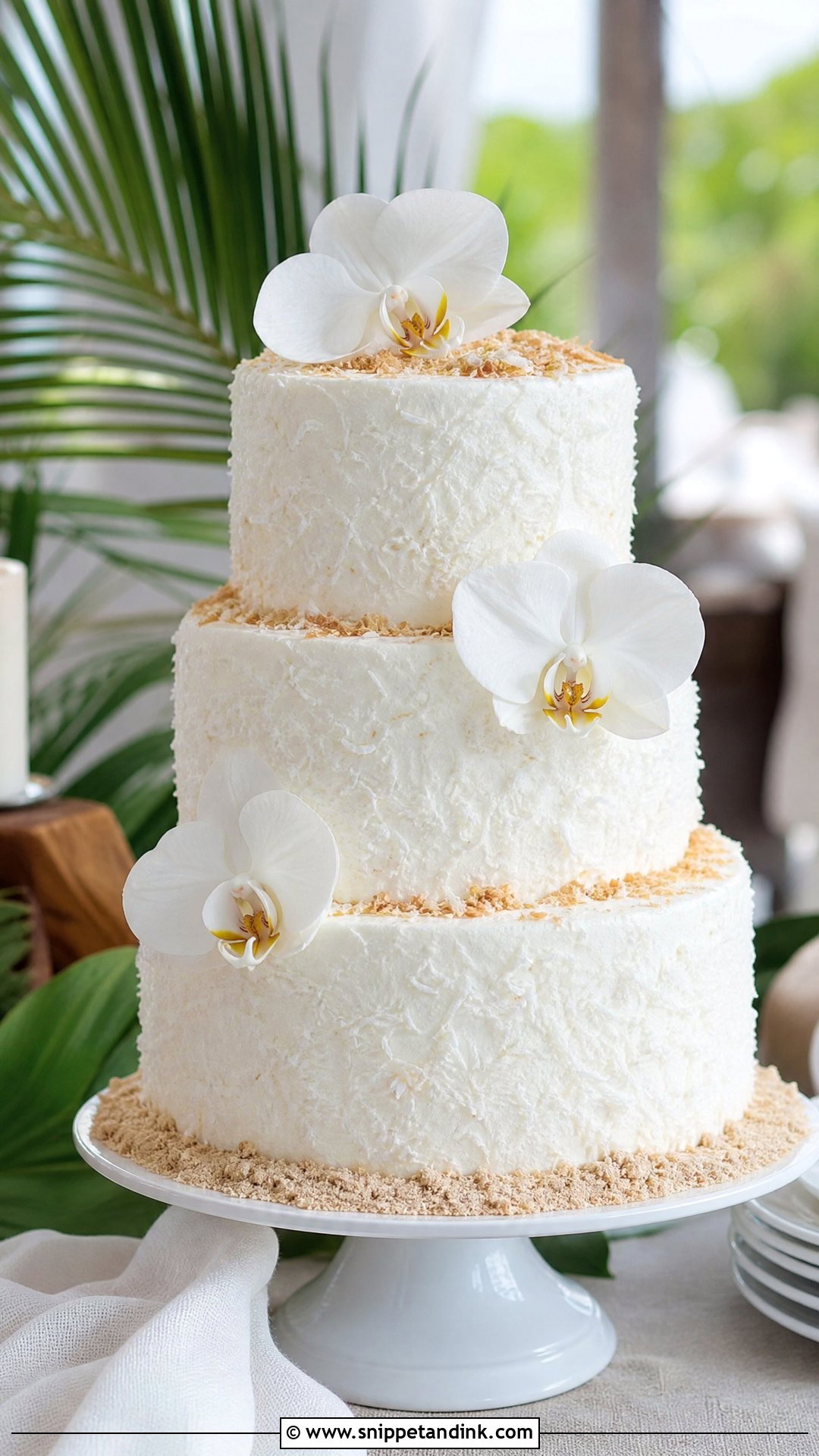
A coconut beach wedding cake works as both the flavor and the finish. I press white flakes into soft buttercream, which hides small imperfections and looks like fine sand, and toast a band around the base for contrast. For a more formal version, keep coconut to one tier and leave the rest smooth with orchids or palm leaves. Pineapple or lime filling cuts through the richness. Coconut is also forgiving outdoors, since the flakes mask any softening of the frosting underneath.
24. Key Lime Beach Wedding Cake
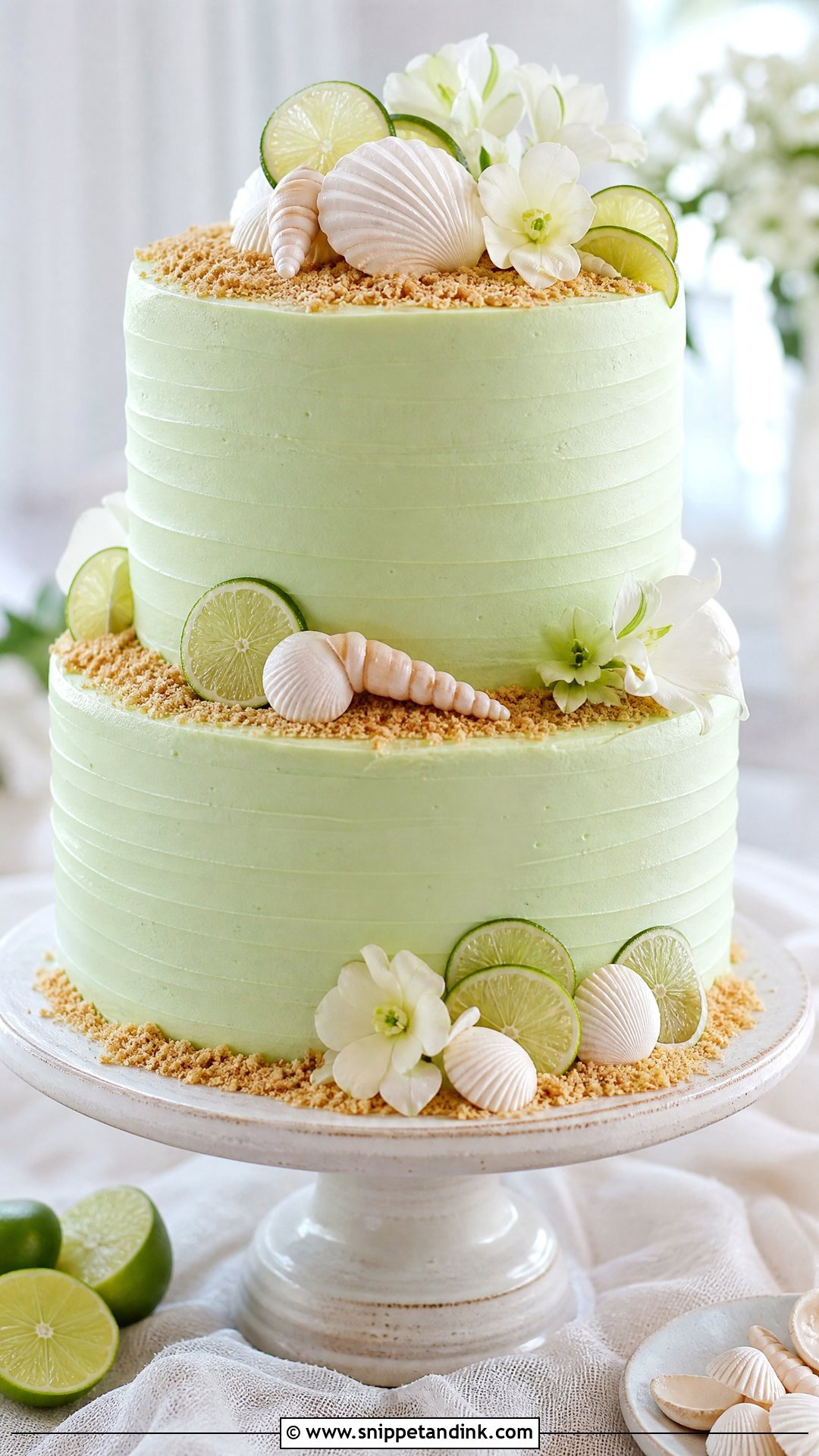
Key lime gives you a citrus flavor and a pale green palette that suits coastal colors. I prefer to show the lime in the filling, between clean white layers, rather than tint the outside too green, which can look artificial in photos. Thin lime slices, white flowers or a graham-cracker sand border decorate it simply. Cut citrus weeps once it’s out of the fridge, so I add the slices just before guests see the cake. It suits Florida-style beach weddings and summer receptions after a warm dinner.

25. Pineapple Beach Wedding Cake
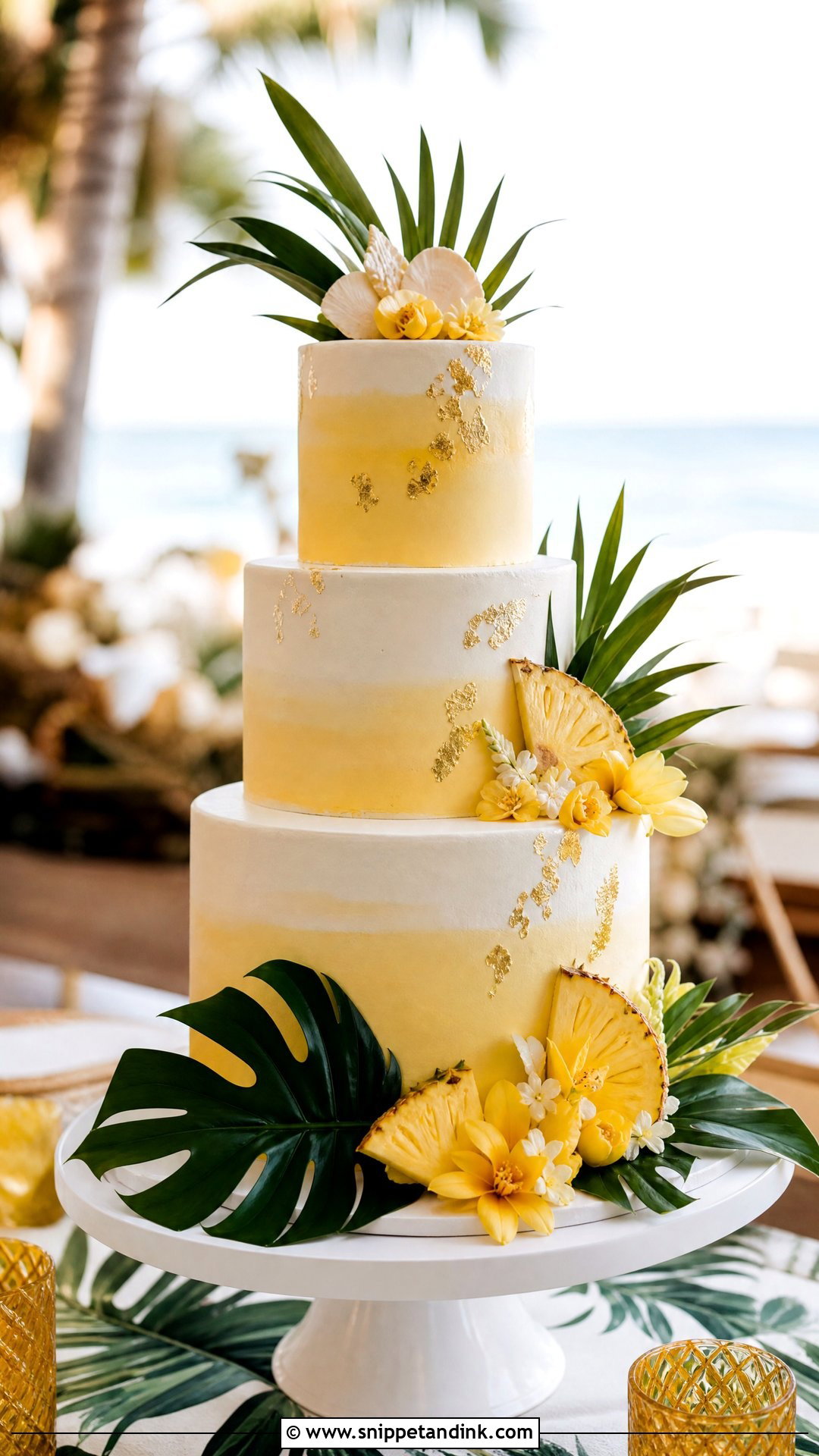
The pineapple comes through in the filling: pineapple filling, pineapple curd or pineapple-coconut layers. Outside, ivory buttercream with dried pineapple flowers, a few palm leaves or a pale yellow ombré keeps it refined. Fresh pineapple contains an enzyme that can break down gelatin and dairy-based fillings, so I always cook it into a curd or compote first. Skip oversized pineapple props unless the wedding is playful. Mango or vanilla layers round it out for a destination-feel dessert.
26. Mango Beach Wedding Cake
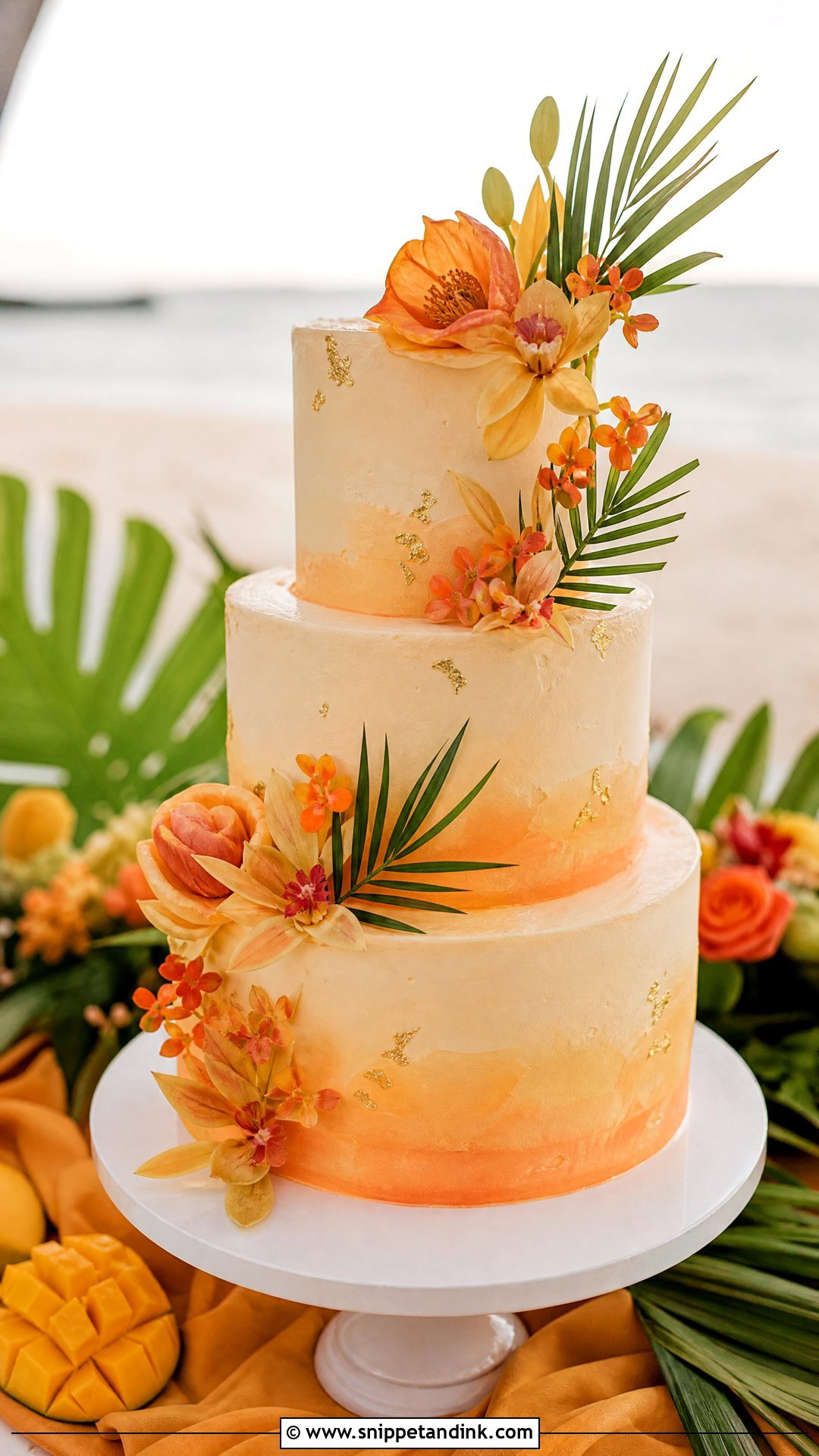
Mango brings a warm color that sits naturally beside sunset, sand and tropical flowers. I like a clean ivory exterior with mango-colored sugar flowers and a slice that reveals a golden filling, which surprises guests at the cutting. Fresh mango filling is soft, so I pair it with a firmer mousse or curd and a sturdy sponge to stop tiers from sliding in heat. Coconut or passion fruit balances its sweetness. Orchids or a touch of edible gold finish the outside.
27. Passion Fruit Beach Wedding Cake
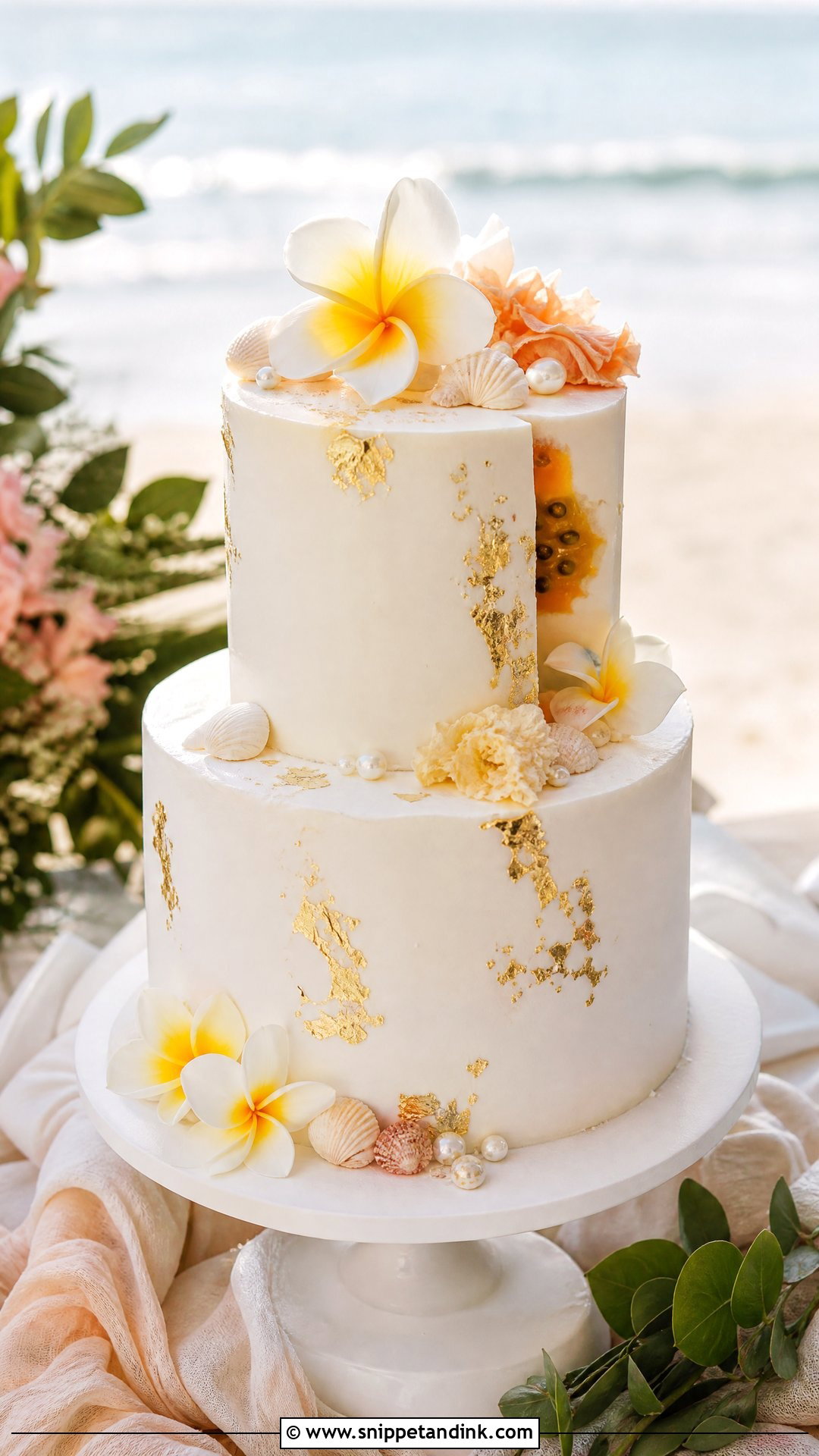
Passion fruit is the flavor guests ask about afterward. Its sharp, tropical taste lifts a plain sponge, and the outside can stay smooth white buttercream with yellow-orange floral accents, gold leaf or a hint of sea glass. I strain the seeds for most of the filling and keep a few for visual texture, since a mouthful of seeds is not what most guests expect from wedding cake. Coconut or almond layers balance the acidity at a destination reception.
28. Small Beach Wedding Cake
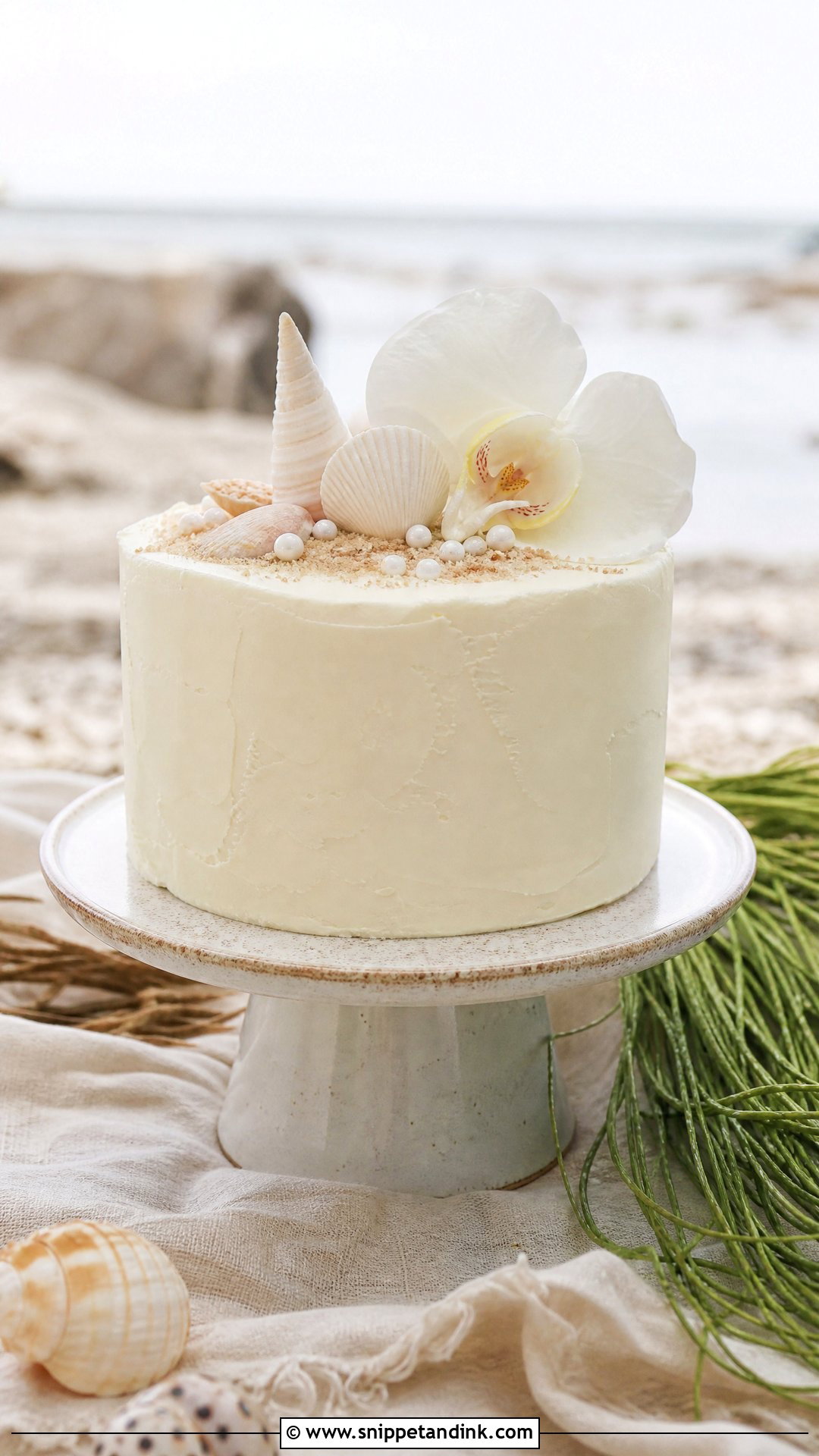
One or two tiers is plenty for an elopement or a micro wedding, and a small cake has a practical advantage on the beach: it can stay chilled until the last minute and travel easily. Because the surface is smaller, I can afford more detail per inch, so a few sugar shells, edible sand and one tropical flower look complete. Set it on a simple stand with linen and greenery. Lemon or key lime keeps it light for a seaside dinner.
29. Three Tier Beach Wedding Cake
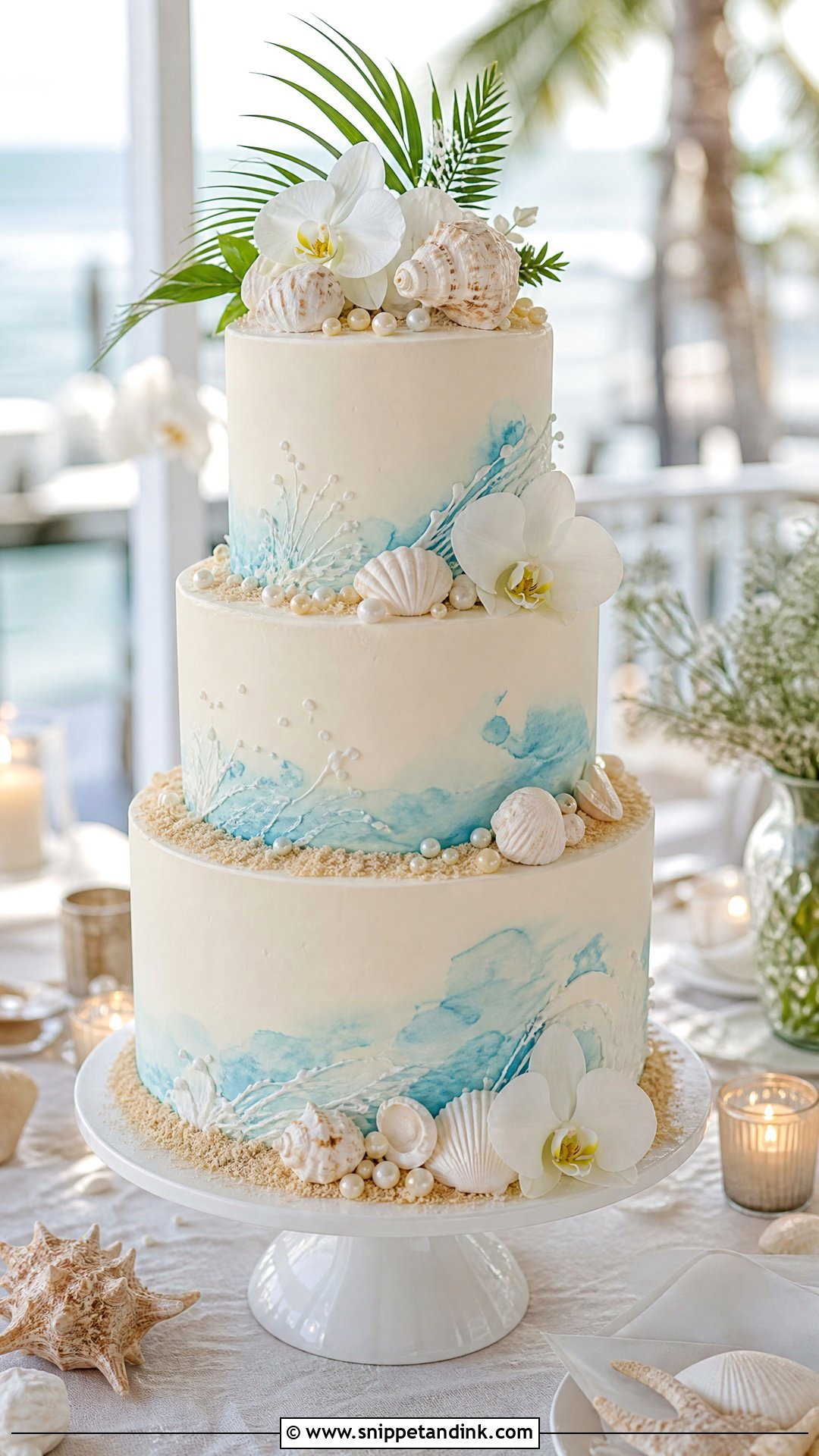
Three tiers is the traditional centerpiece, and on a beach it means internal support matters. I dowel and board every tier, and for an outdoor setup I’d rather assemble on site than drive a stacked cake over bumpy roads. Each tier can carry a related detail, say smooth ivory on top, watercolor in the middle and edible sand at the base, as long as one shell or flower cascade connects them. Different flavors per tier, such as coconut, lemon and vanilla, keep guests happy at a medium or large reception.
30. Beach Wedding Cake With Cupcakes
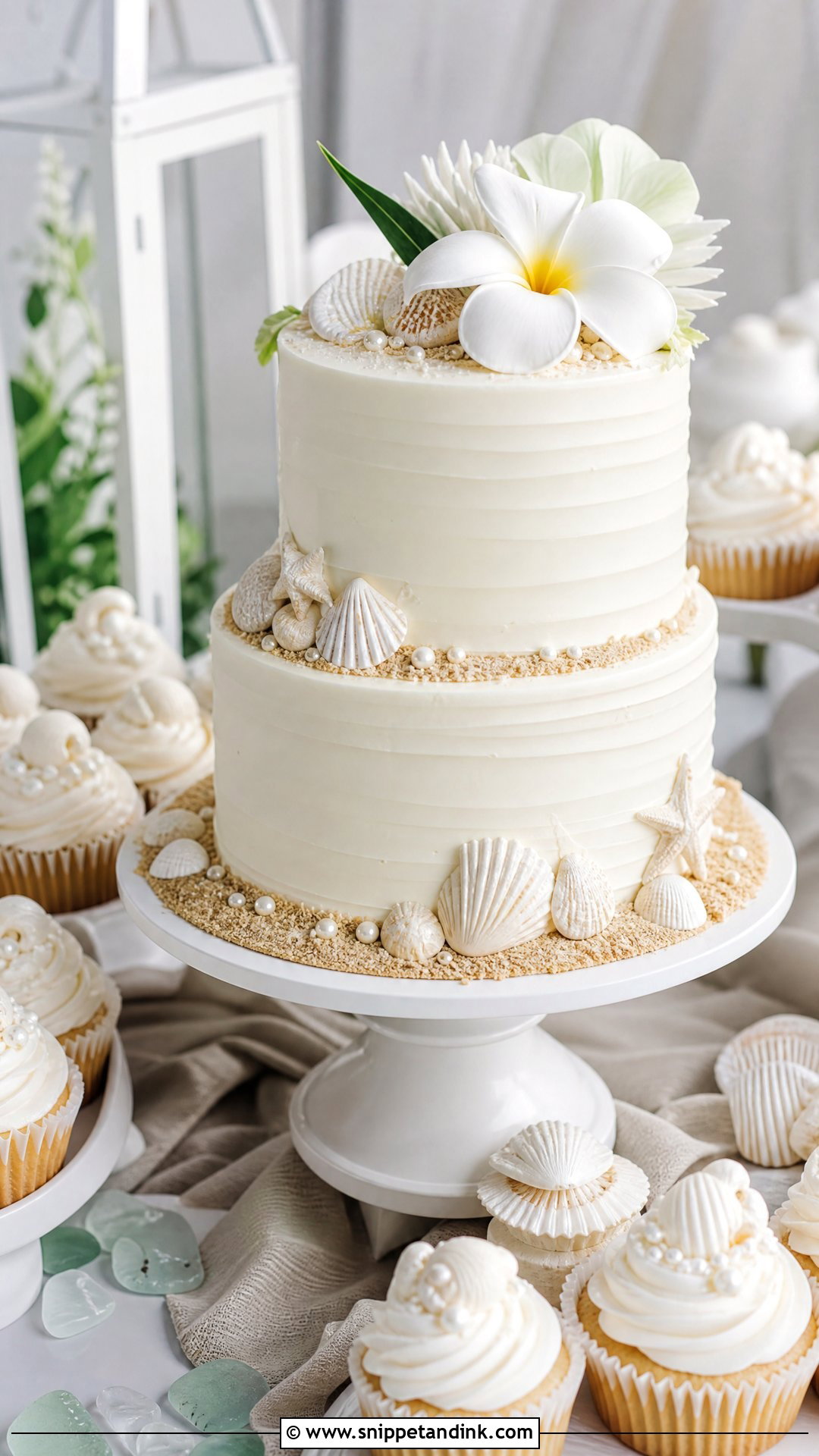
A small two-tier cake surrounded by matching cupcakes is the most practical setup I can recommend for an outdoor reception. Serving is fast, nobody waits for a cake to be cut in the sun, and cupcakes can stay in a cooler until they’re plated. I repeat the same colors, frosting texture and decorations across both, so the table reads as one design. It also gives you room to offer more than one flavor, from coconut to key lime or pineapple.
Ordering a Coastal Cake When You Live Far From the Venue
Many beach weddings are destination weddings, which means you may never meet your baker in person. I’d start the conversation three to six months out, earlier in peak season, because good local bakers in resort areas book up quickly and sugar flowers or shells take days to make and dry.
Send your designer the venue name, the exact setup location, the time of the ceremony and the time the cake will be cut. Ask how they handle heat in that specific spot, whether they deliver assembled or stack on site, and who sets it up. A local baker usually knows things you can’t learn online, like which terrace bakes in the afternoon sun.
Questions worth asking before you sign
- Which frosting would you use for this location and time of day?
- Are the shells, starfish and flowers sugar, chocolate or fresh, and how long will each hold?
- If fresh flowers are used, who sources them and are they safe for food contact?
- Do you stay to check the cake after setup, or leave it with the venue?
- How are leftovers boxed if the reception runs late?
Serving Without a Melted Last Slice
Cutting is where beach cakes most often go wrong. The couple cuts a ceremonial slice, the photos are taken, and then the cake sits while everyone dances. I’d ask the venue or caterer to take it back to a cool kitchen for slicing right after the photos, so plates come out firm and clean.
If you’re saving the top tier, have a box and a cooler ready before the night starts. A tier that has been in the heat for hours does not freeze well, so it is worth pulling it before the long dance set begins.
Matching the Cake to the Hour It Will Be Cut
Every design here can work on a beach, but not every design suits every beach wedding. A formal evening reception gives you room for pearls, orchids, gold and smooth white tiers, because the heat has dropped and the cake will be indoors or shaded. A midday barefoot party is kinder to coconut texture, naked layers, edible sand and fruit flavors, which forgive a little softening. Watercolor, ombré and sea glass sit somewhere in between. Tell your cake designer where and when the cake will be cut, and let that guide the finish before you fall for a photo.
You'll Like These Ideas:





Leave a Reply