
Editorial bridal looks get their impact from proportion, fabric and restraint, not from piling on details. The 20 outfits below borrow runway ideas and make them wearable: sculptural gowns, lace, sharp tailoring, statement veils and separates you can split between ceremony and party. I’ve included the shoes, jewelry, hair and accessories for each, because a gown only reads as a fashion moment when everything around it is edited. My advice is to start with a silhouette your body is comfortable in all day, then let one texture or one proportion do the talking. Minimalist, glamorous, vintage or offbeat, there’s a head-to-toe look here to borrow from.
Editorial Photos Hide the Clips Behind the Gown
Fashion images are styled for one angle. Sample gowns are clipped at the back to look fitted, models stand still under controlled light, and nobody has to sit through dinner. When a bride brings me a magazine-style reference, I try to pull out the one thing she actually responds to, because it’s almost never the whole picture.
- Save images that show the silhouette from the side or back, not just the front
- Note what you love in a single phrase: the neckline, the sheen, the length of the veil
- Bring one image of a look you dislike; it narrows choices faster than ten you like
- Wear the underwear and shoe height you expect to wear on the day to the appointment
Ordering Timeline for Structured Gowns
Made-to-order gowns usually take several months to arrive, and structured satin or corseted pieces need two or three fittings after that. I plan on ordering around eight to ten months ahead and starting alterations roughly two to three months before the wedding. Timelines vary a lot by designer and season, so ask the shop for the delivery estimate in writing and whether rush options exist.
1. Dropped Waist Wedding Dress
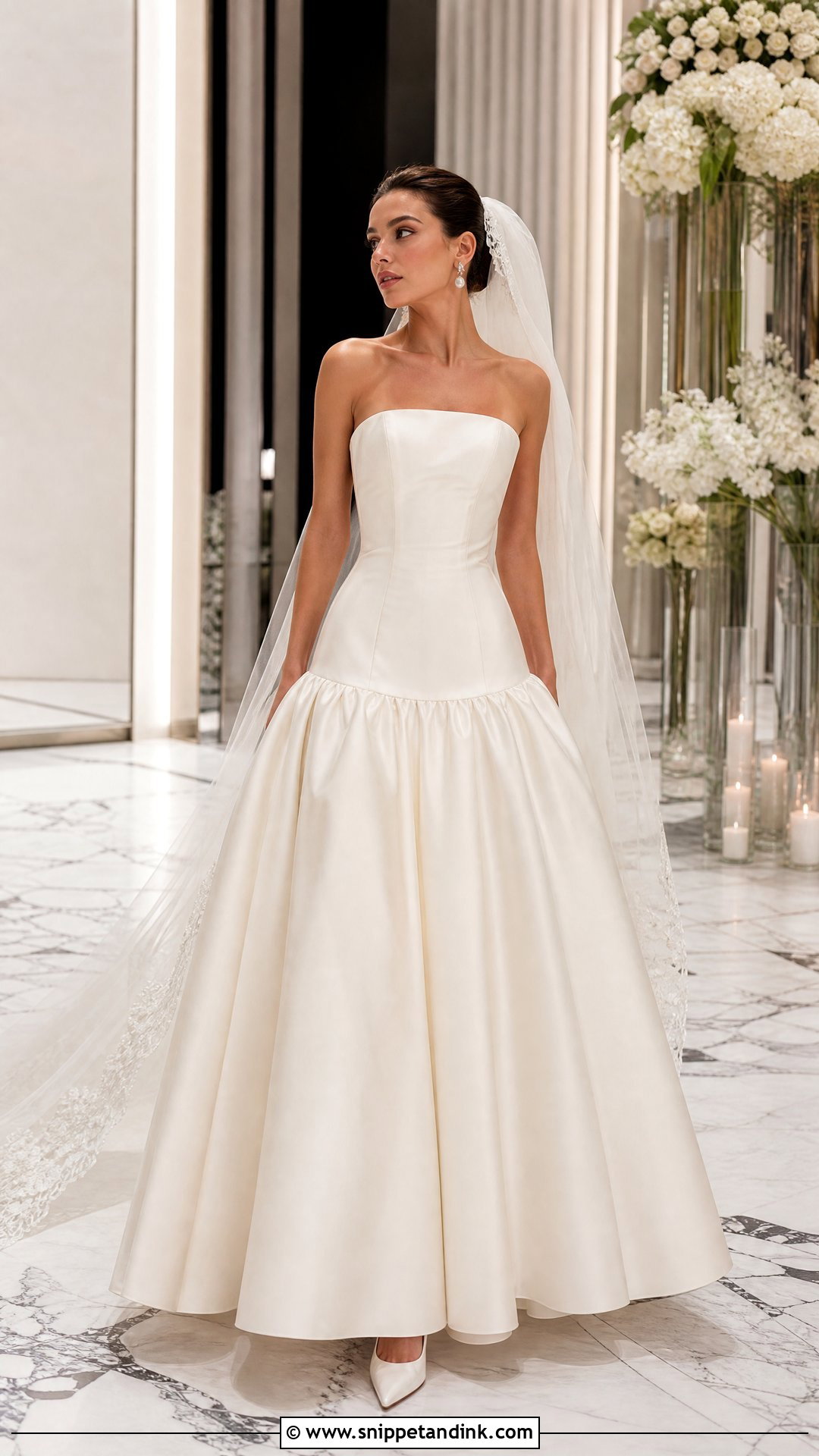
The dropped waist draws a long line through the torso before the skirt opens out, and in structured satin with a full skirt it’s one of the most fashion-led shapes a bride can wear. An A-line version moves more easily if a full skirt feels like too much. Pointed ivory pumps, pearl drops and a cathedral veil balance that extended bodice, and the bouquet should stay compact so it doesn’t cover the seam that makes the dress. A smooth bun, softly defined eyes and a rosy lip finish it. Fit is unforgiving here. If the seam lands even slightly wrong on your hip, the bodice wrinkles every time you sit, so I’d allow for an extra fitting.
2. Lace Long Sleeve Wedding Dress
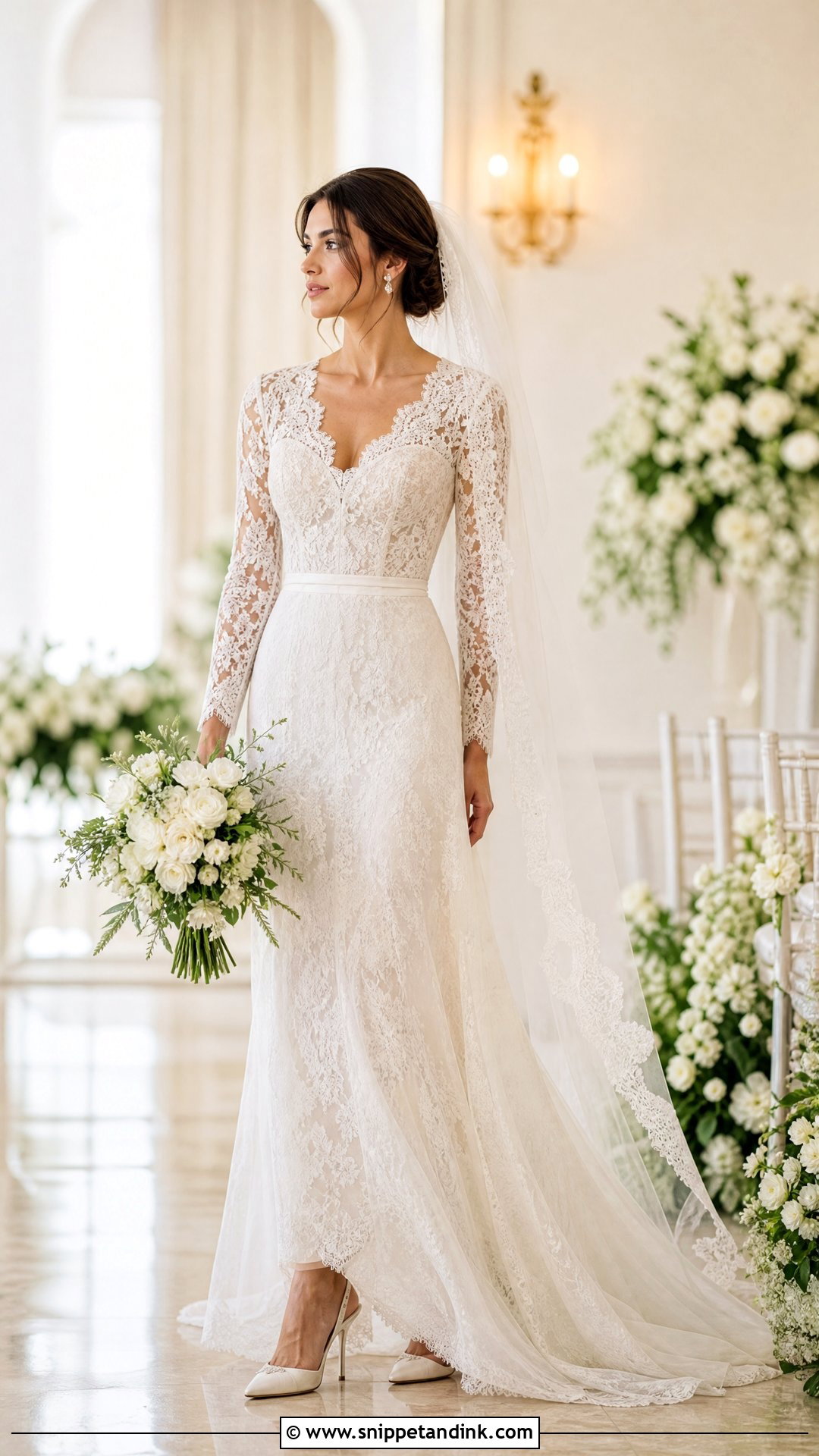
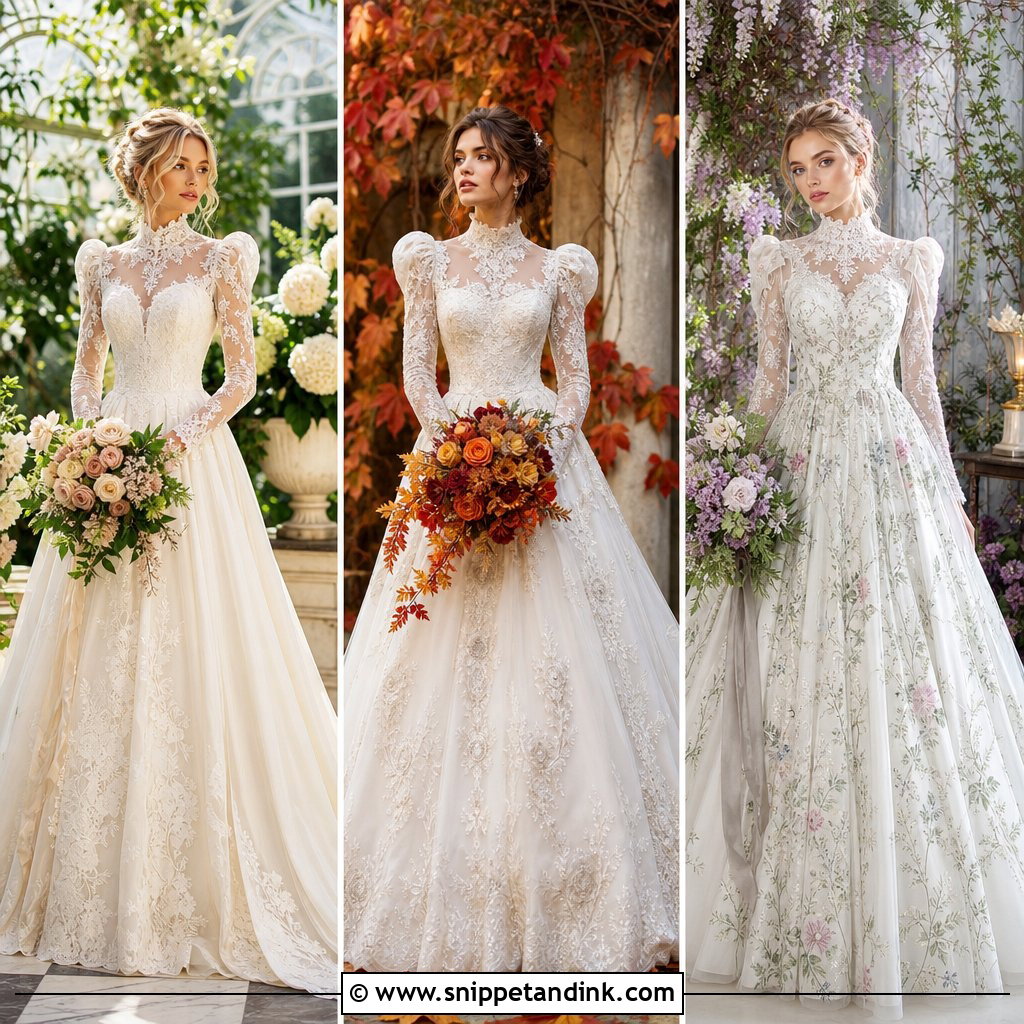
Lace carries a look on its own, so a long-sleeve lace gown needs very little help. Pick a lined bodice, a defined waist and a soft skirt; floral lace reads classic, geometric patterns read modern. Ivory slingbacks, a fingertip veil with a narrow lace edge, small studs and a low chignon keep everything quiet around it. One thing I check on every lace sleeve is the elbow. Unlined lace can feel scratchy once you’re hugging guests for hours, so ask whether the sleeves can be lined or set on a soft tulle base. A loose bouquet of white garden flowers adds depth without fighting the pattern.
3. Sculptural Satin Wedding Dress
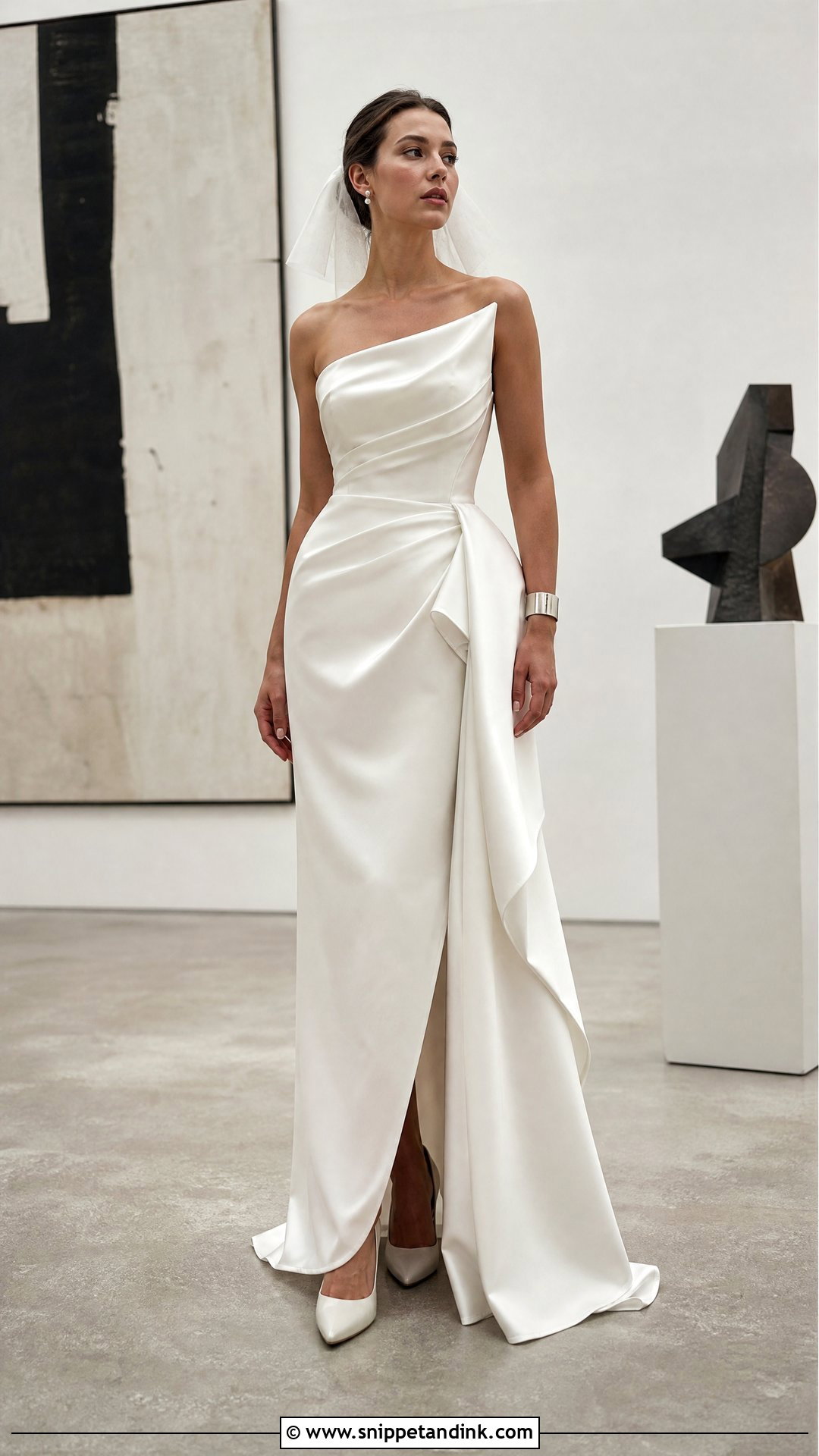
Clean satin with architectural shaping makes a strong statement before you add a single accessory. Look for a folded neckline, asymmetric draping or a sharply defined hip, then keep everything else controlled: sleek pumps, one cuff, small earrings, a short tulle veil and a center-parted bun. Satin is reflective, which means it shows every line underneath it. I fit sculptural satin with laser-cut, no-line underwear or a built-in corselet, because a visible strap line under a sheen fabric ruins the clean shape in photos. A few calla lilies suit galleries and modern hotels.
4. Basque Waist Ball Gown
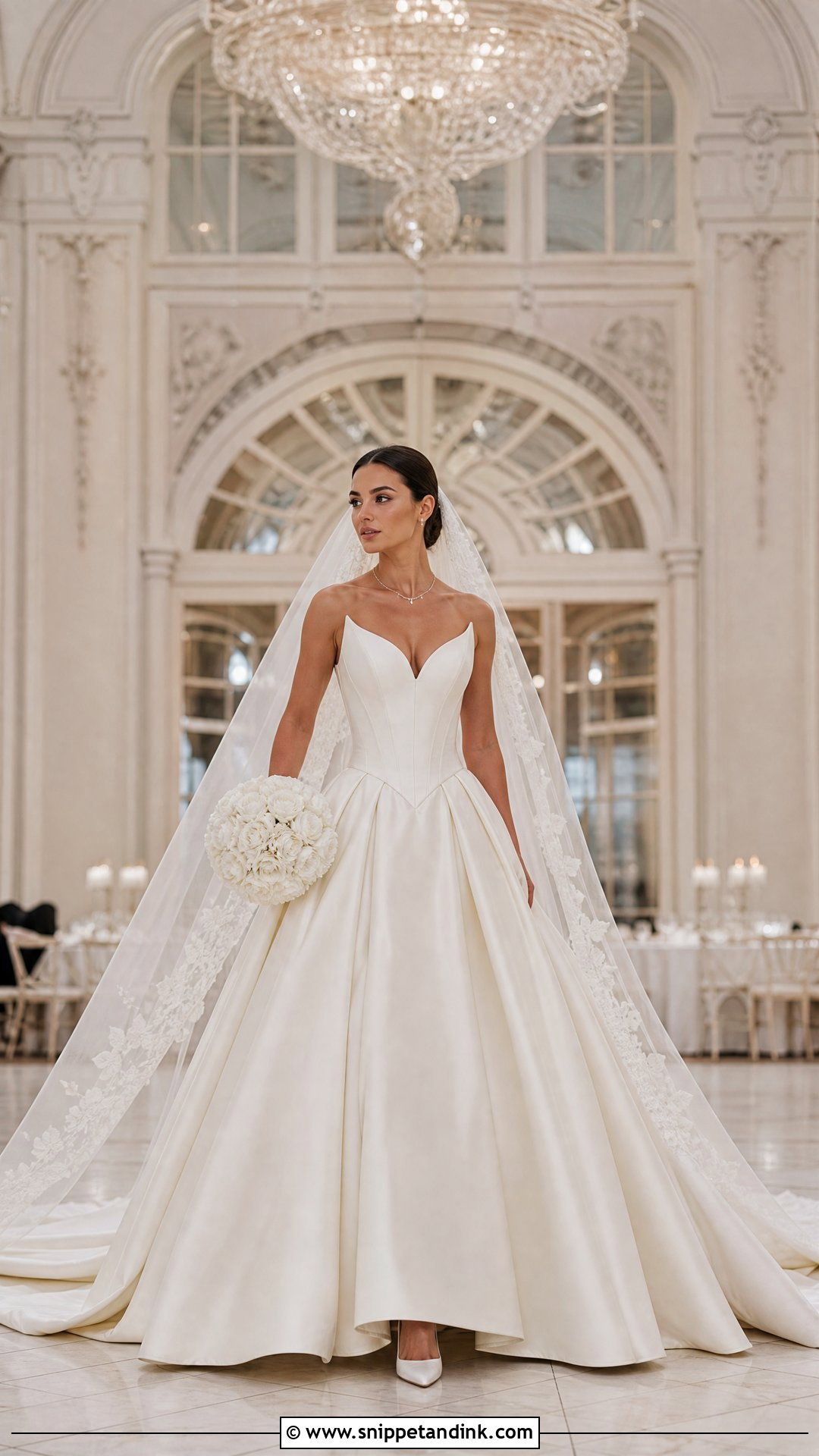
The pointed basque waist lengthens the torso and sets up a full skirt with real ceremony. It needs a fabric with body, silk mikado or structured satin, or the skirt collapses by the reception. Classic pumps, a cathedral veil anchored beneath a polished bun and a fine tennis necklace on an open neckline are enough. Strapless versions take statement earrings well. The V point sits low on the abdomen, so practice sitting in it at fittings; on a long torso it’s comfortable, on a short one it can dig in. Grand indoor venues give the skirt and train the room they need.
5. Floral Applique Wedding Dress
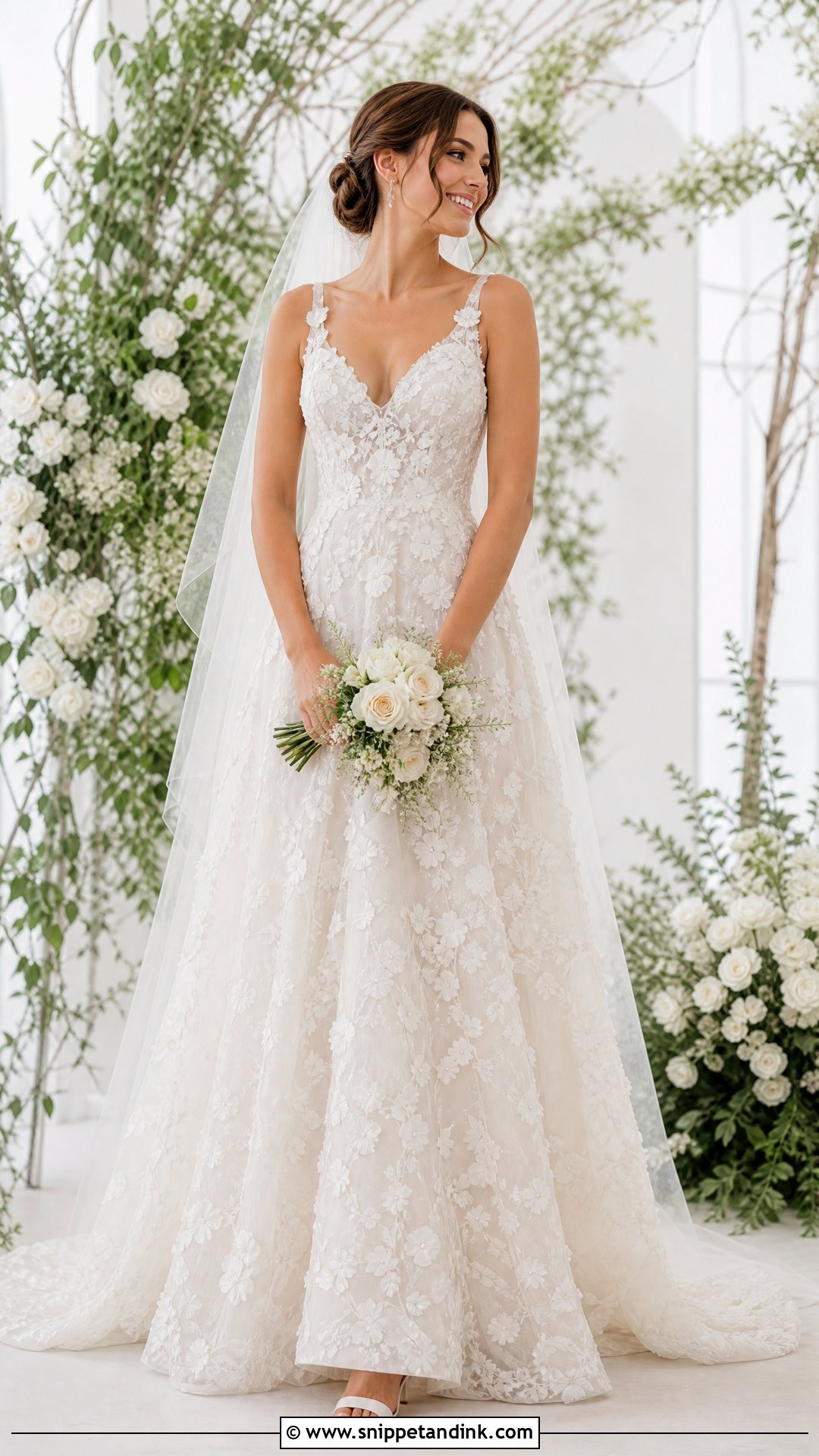
Three-dimensional appliqués turn a classic gown into texture you can see across a room. A lightly decorated bodice over a cleaner skirt feels balanced; all-over flowers go further. Satin sandals and crystal earrings work better than floral accessories competing with the dress, and a sheer, plain veil keeps the appliqués visible. Wear loose waves or a relaxed bun depending on the neckline. Watch the bouquet: real flowers in the same tones as the appliqués blur into the bodice in photos, so I’d pick a single color family that contrasts slightly with the gown.
6. Off Shoulder A Line Wedding Dress
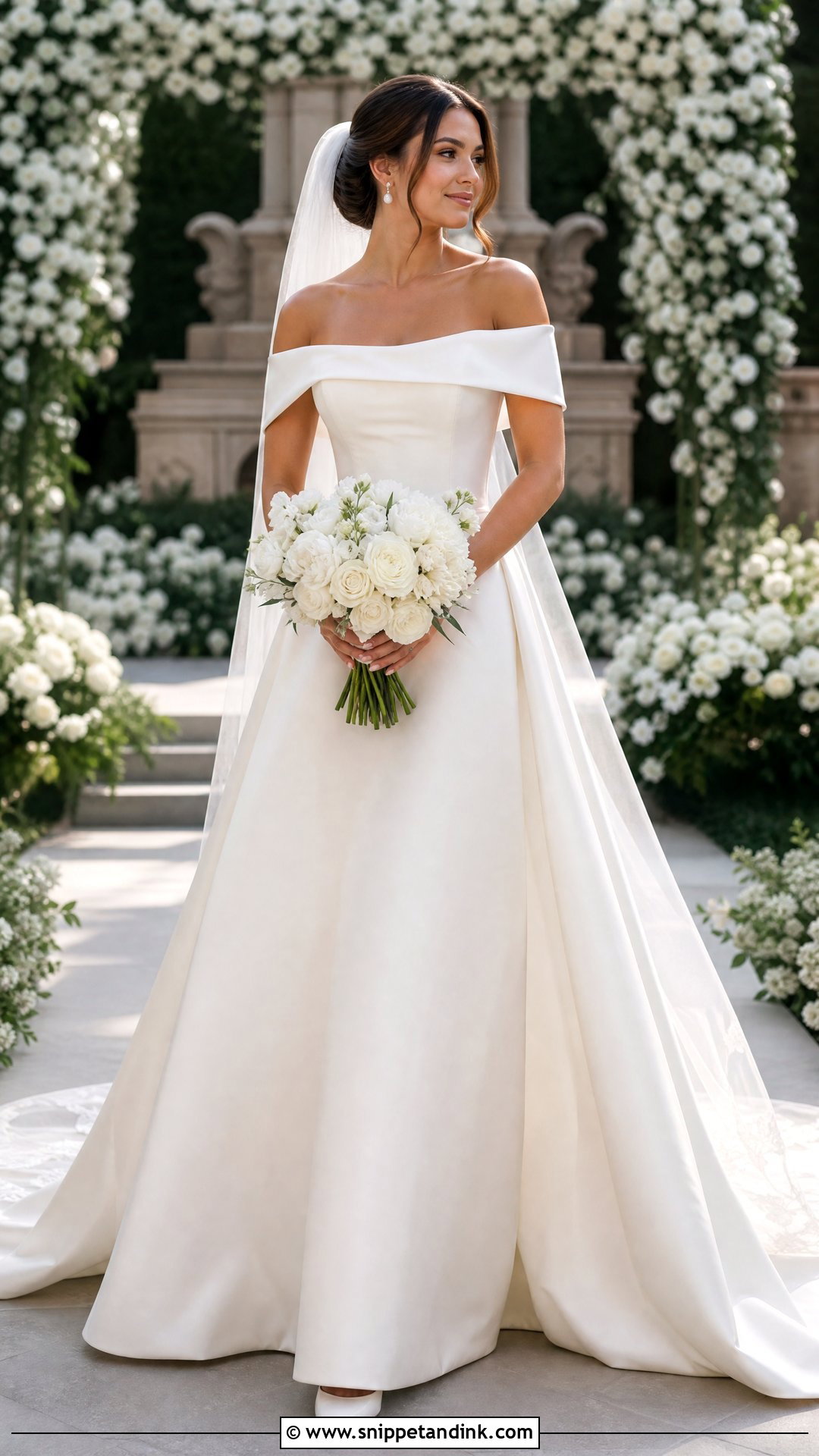
Off-the-shoulder A-lines get their ease from what you can’t see. Folded satin bands or draped tulle sleeves need to rest securely on the upper arm, and the bodice underneath has to be built to hold. On a fuller bust, I ask the seamstress for internal boning and clear or tone-matched straps hidden under the shoulder detail, otherwise you’ll be hitching the dress up all night. The skirt should widen gradually from the waist so you can walk and dance. Closed-toe heels, pearl earrings, a chapel veil and a low bun or side-swept waves keep the neckline on show.
7. High Neck Wedding Dress
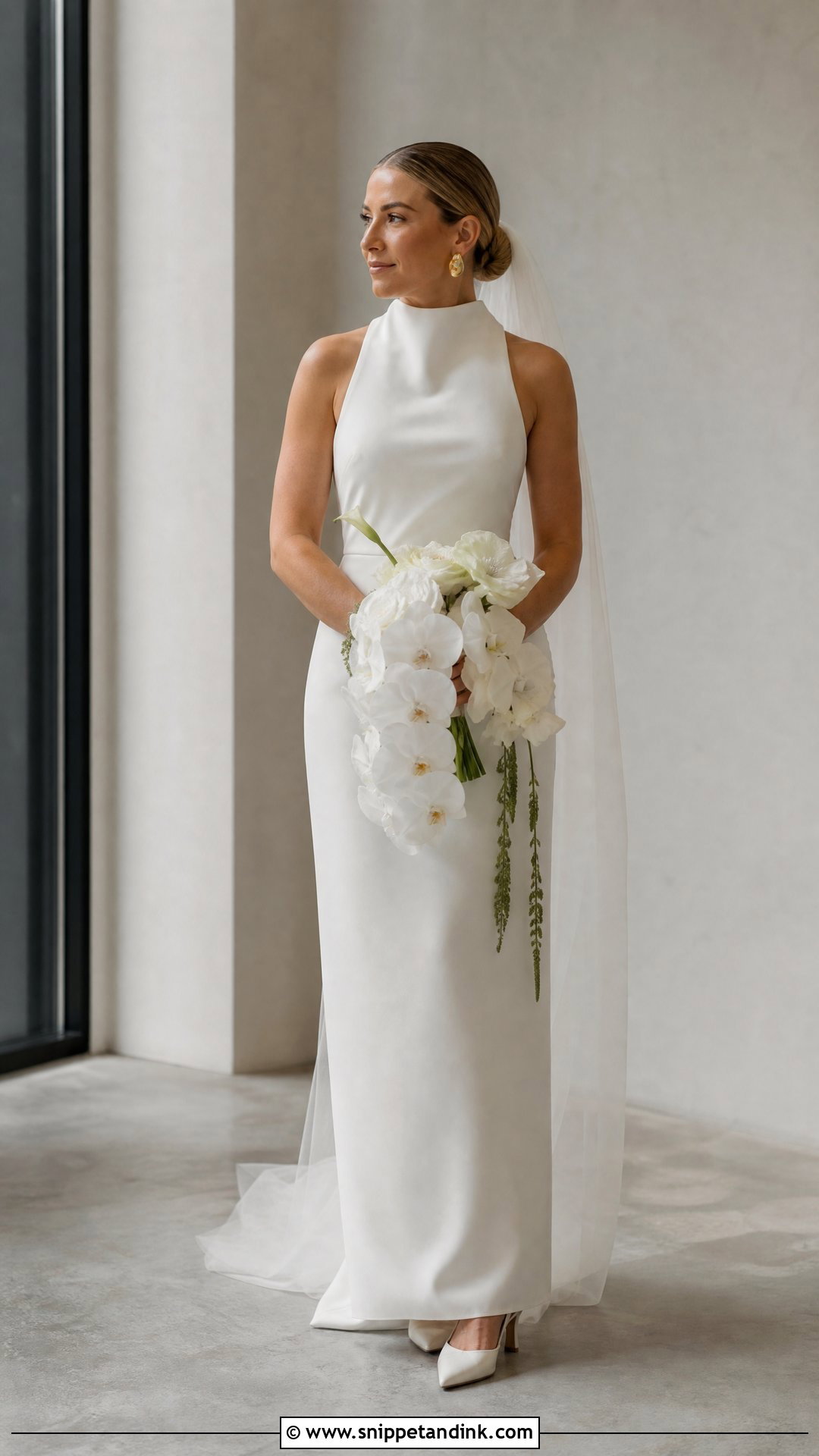
A high neck looks sophisticated only when it doesn’t feel tight. A crepe column with a clean mock neck or a lined lace bodice both work; long sleeves streamline, sleeveless suits warm months. Skip the necklace and wear sculptural earrings instead, with pointed slingbacks and a low, narrow bun. Pin the veil below the bun so it doesn’t interrupt the neckline. At alterations, I have brides turn their head fully left and right and look down at their bouquet. A neckline that’s fine standing still can press on the throat during the vows.
8. Grecian Draped Wedding Dress
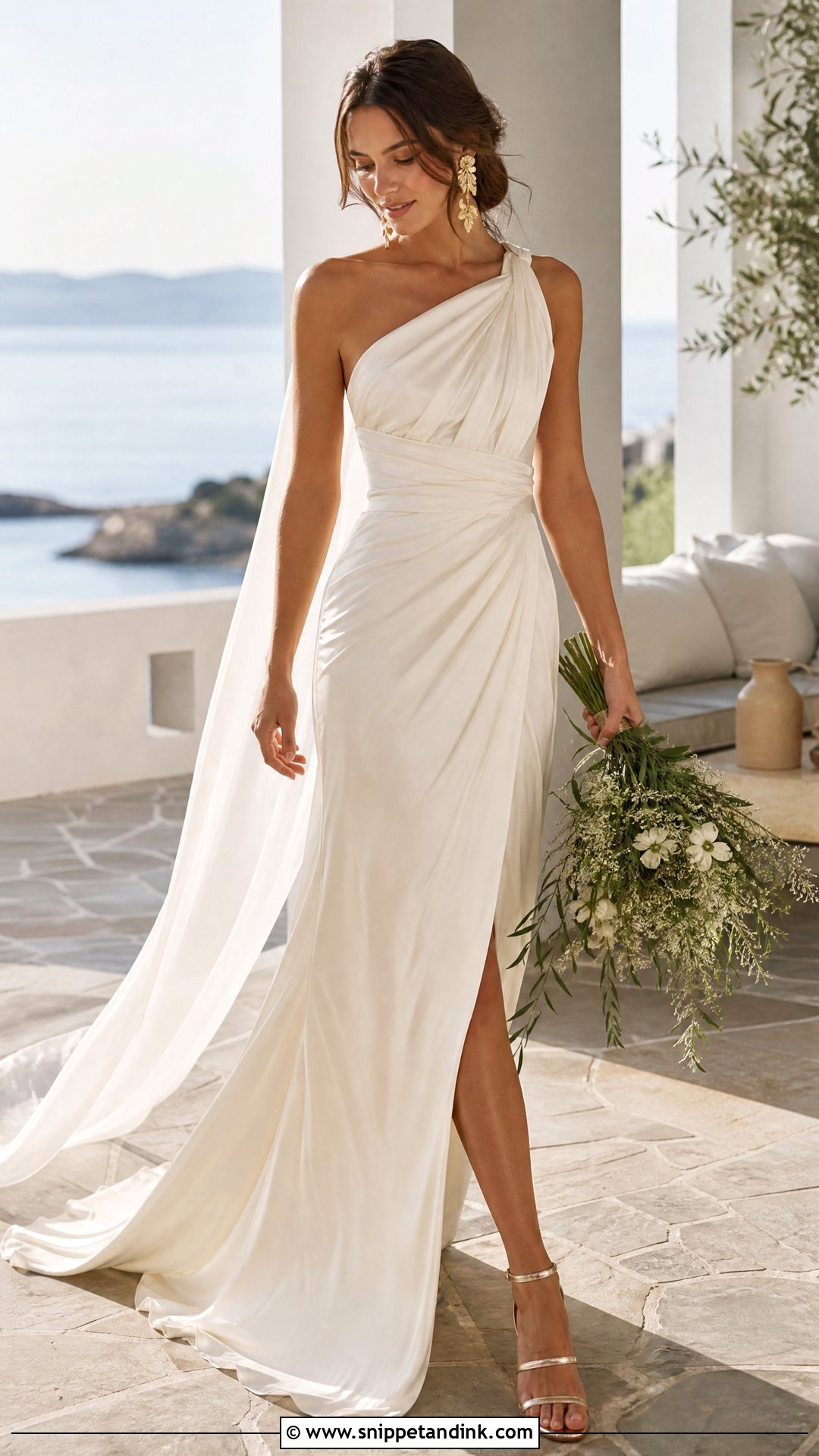
Draped gowns follow the body rather than holding it, which is why they flatter so many shapes: gathering defines the waist and leaves the hips free. Lightweight crepe and silk jersey give the most fluid fall. Metallic or ivory strappy sandals, gold drops, a plain chapel veil or sheer shoulder cape and a softly twisted updo continue the mood. Carry long, loose stems. Silk jersey does have a weakness. In heat it clings and shows perspiration at the back, so for a hot outdoor ceremony I’d lean toward crepe.
9. Bridal Pantsuit With Veil
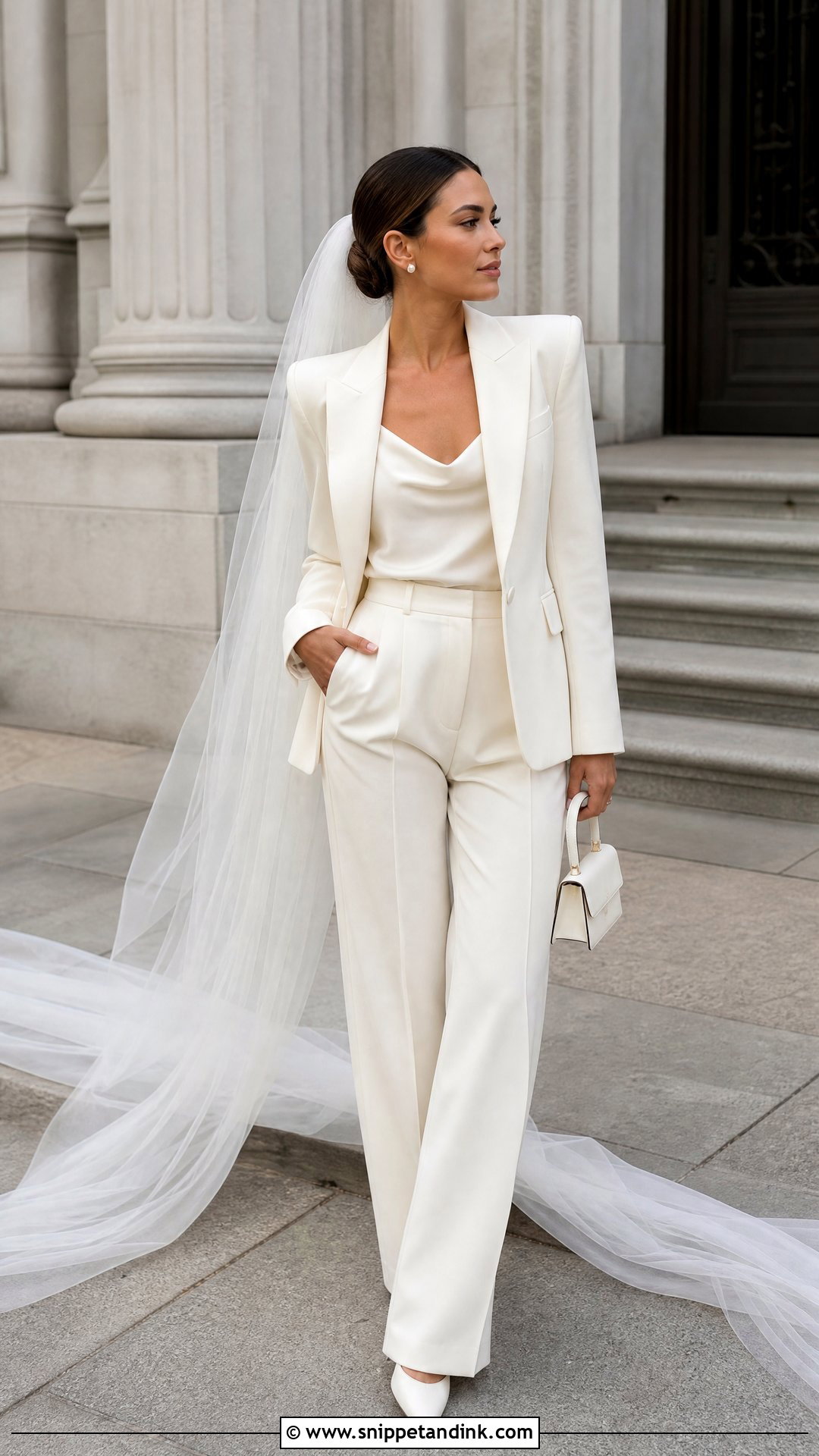
A tailored bridal pantsuit is the most editorial choice on this list, and the one where fit matters most. Look for a single-breasted blazer with a defined waist and high-rise trousers in ivory crepe or lightweight wool, over a silk camisole, bodysuit or buttoned waistcoat. Pointed pumps lengthen the leg; a long, plain veil makes dramatic contrast with the tailoring. Keep jewelry to pearl studs or bold metal earrings and wear a smooth bun or glossy bob. Budget for a tailor who knows suiting, since shoulders, sleeves, waist and hem all need adjusting, and the shoulder is the hardest of those to fix later.
10. Bridal Jumpsuit With Cape
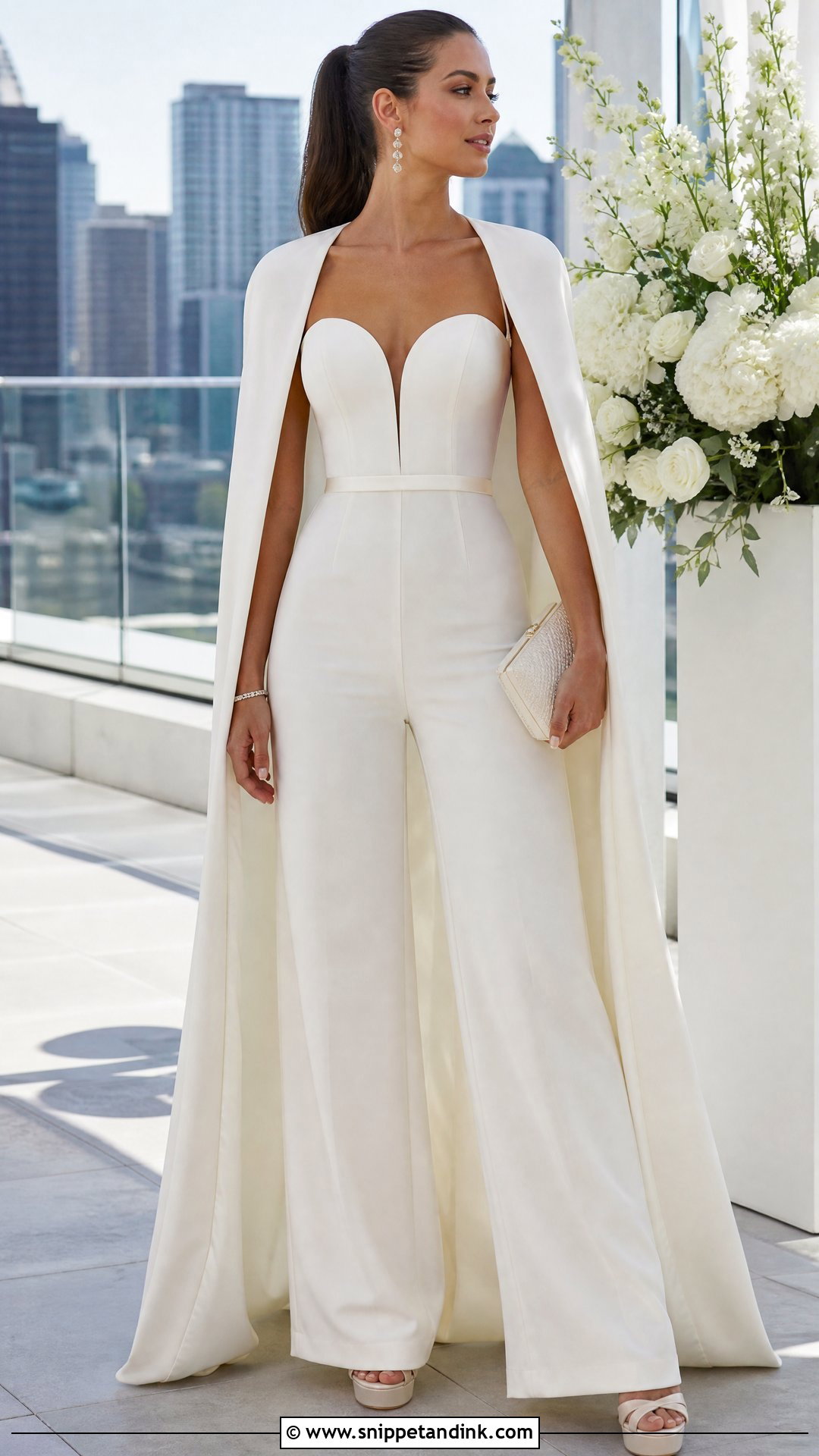
Pick a bridal jumpsuit with a defined waist and wide or straight legs, a structured bodice and crepe for a smooth line. A detachable cape falling from the shoulders brings movement to the aisle and portraits, then comes off for dancing; it can stand in for a veil. Shoes depend on the hem, so buy them before the hemming appointment. Add statement earrings, a compact clutch, a sleek ponytail and a narrow satin belt if you want more waist. The torso length is the measurement I care about most. Too short and it pulls every time you sit, and there’s no way to fix that on the day.
11. Tea Length Wedding Dress
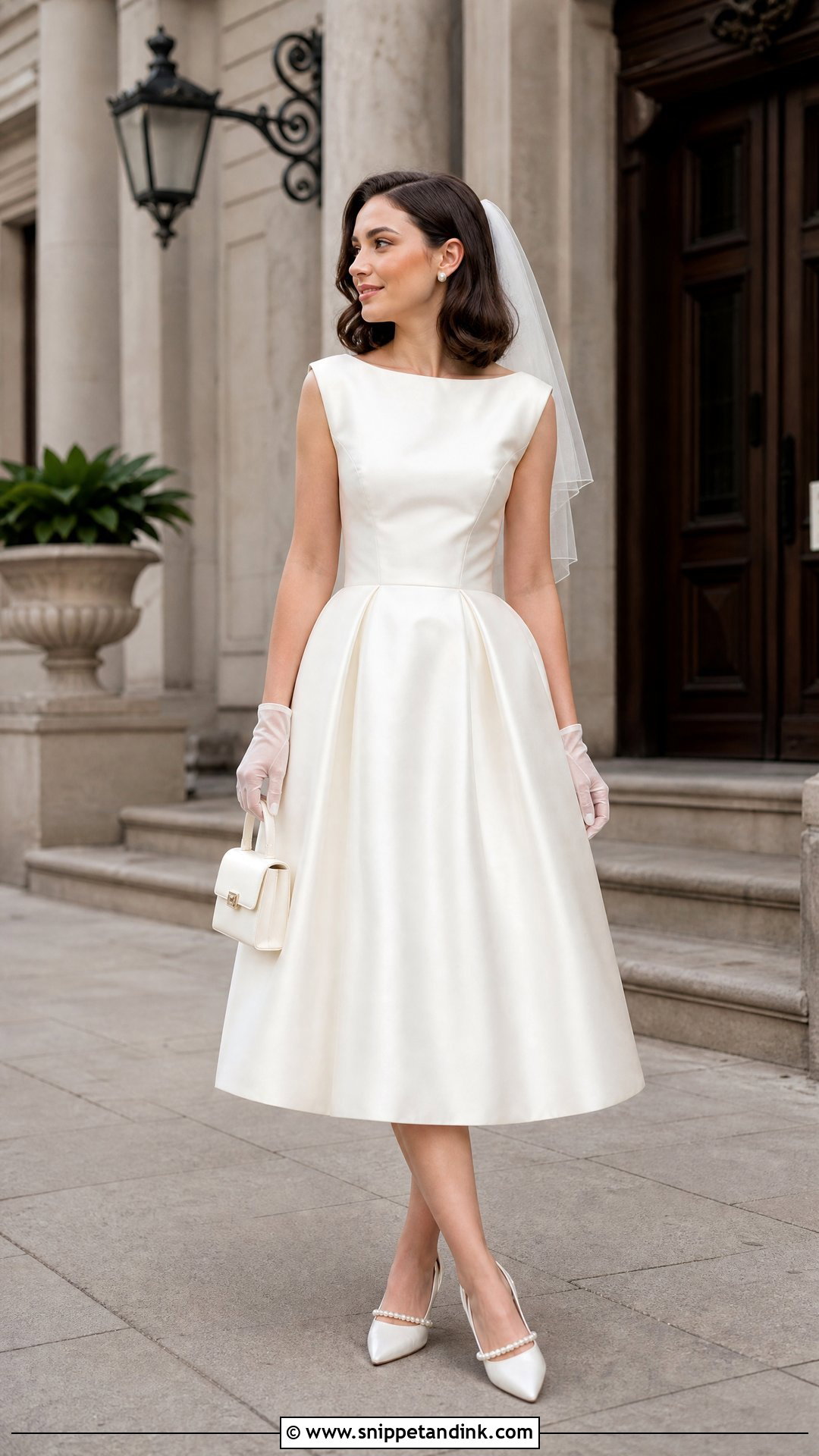
Tea length gives you vintage character and a hem you can dance in. Pick a fitted bodice with a skirt ending between knee and ankle, structured satin for crisp volume or lace and tulle for something softer. Shoes are on show, so slingback pumps, embellished flats or low block heels all need to be ones you love. A birdcage veil leans retro; a shoulder-length veil feels newer. Pearl studs, short gloves and a small structured bag with a polished bob complete it. I’d set the hem just below the fullest part of the calf rather than across it, which is where tea length goes unflattering.
12. Bridal Mini Dress With Veil
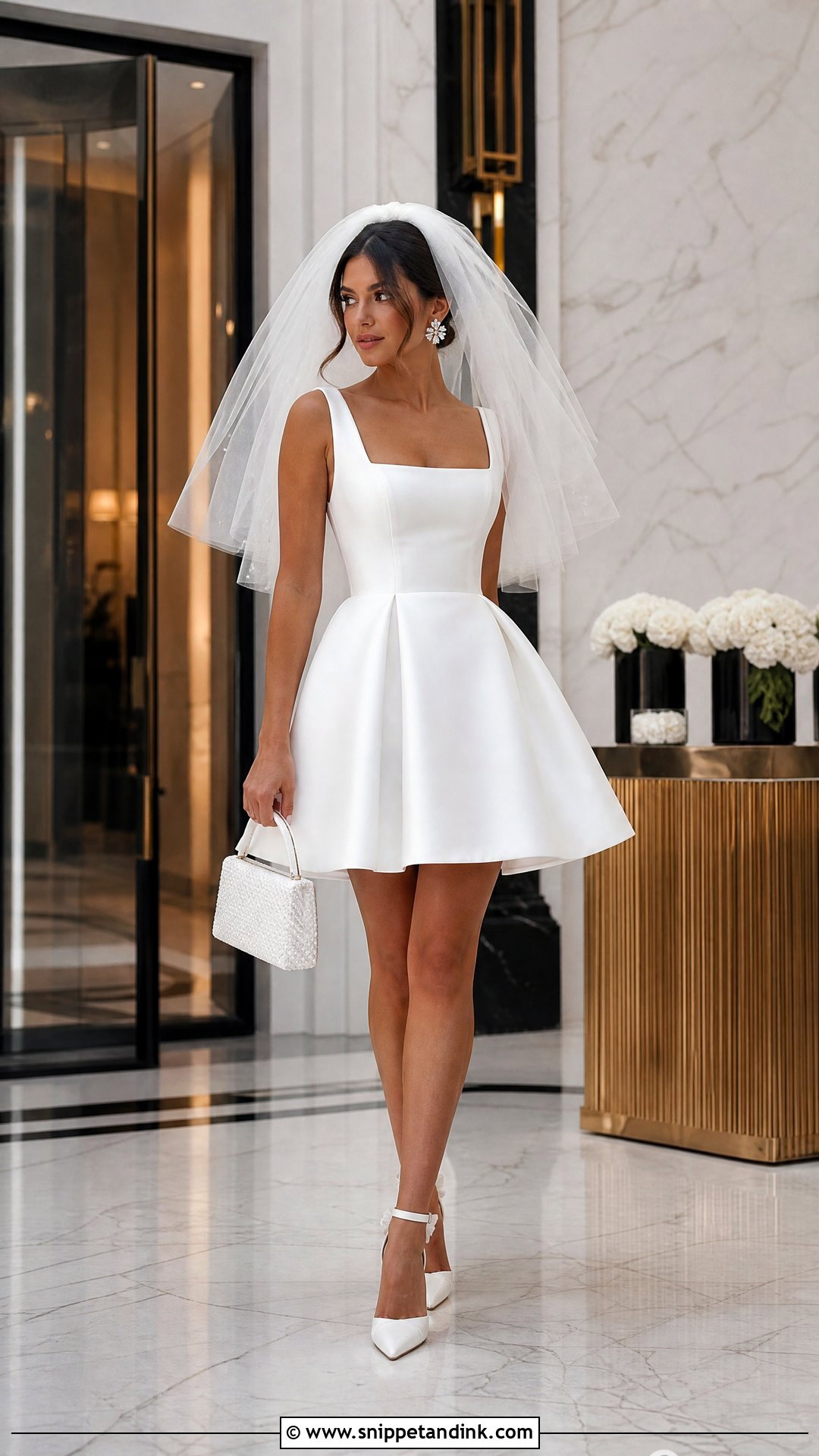
A mini works for a reception, a civil ceremony or a second look, and the veil is what makes it bridal. Choose a structured design with a clean neckline and a bodice that stays put; A-line is easy to wear, fitted is sharper. Pointed pumps or ankle straps lengthen the leg, with sheer tights for cooler seasons. A dramatic shoulder-length veil, crystal earrings and a small top-handle bag finish it. Before the day, I have brides sit, cross their legs and dance in it. Short hems ride up more than you’d think on a low reception chair.
13. Pearl Embellished Wedding Dress
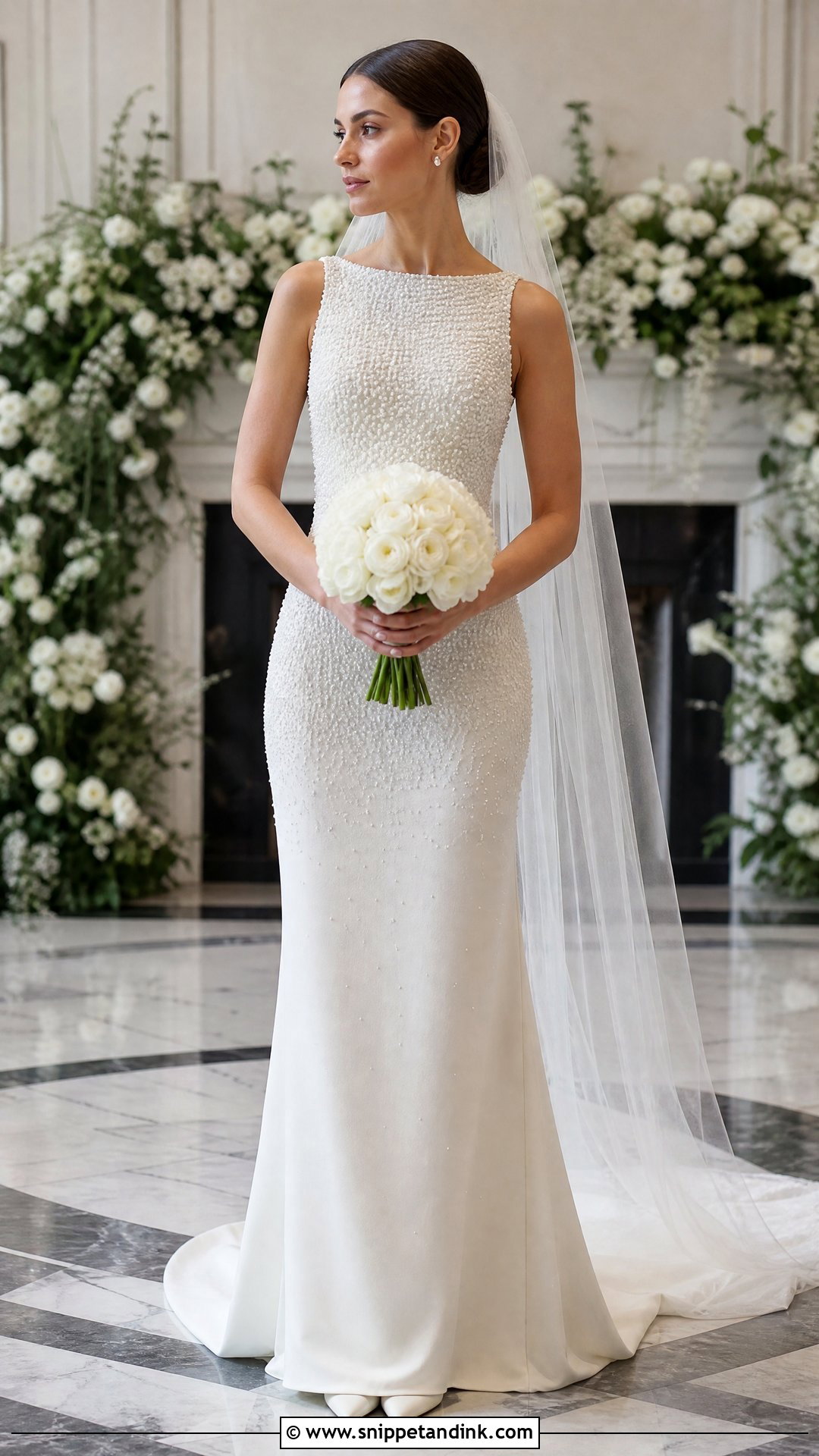
Pearls catch ceremony lighting softly instead of sparkling, which suits close-up portraits. Concentrate them in one area, neckline, bodice or sleeves, on a column, A-line or simple ball gown. Satin pumps, small pearl earrings and a plain veil keep it from tipping into overly matched; skip a jeweled bag or large necklace. A neat chignon and luminous makeup are enough. At every fitting, I run a hand along the inside of a beaded bodice. Loose threads and rough bead backs scratch skin and snag lining, and a good maker will cover them.
14. Bubble Hem Wedding Dress
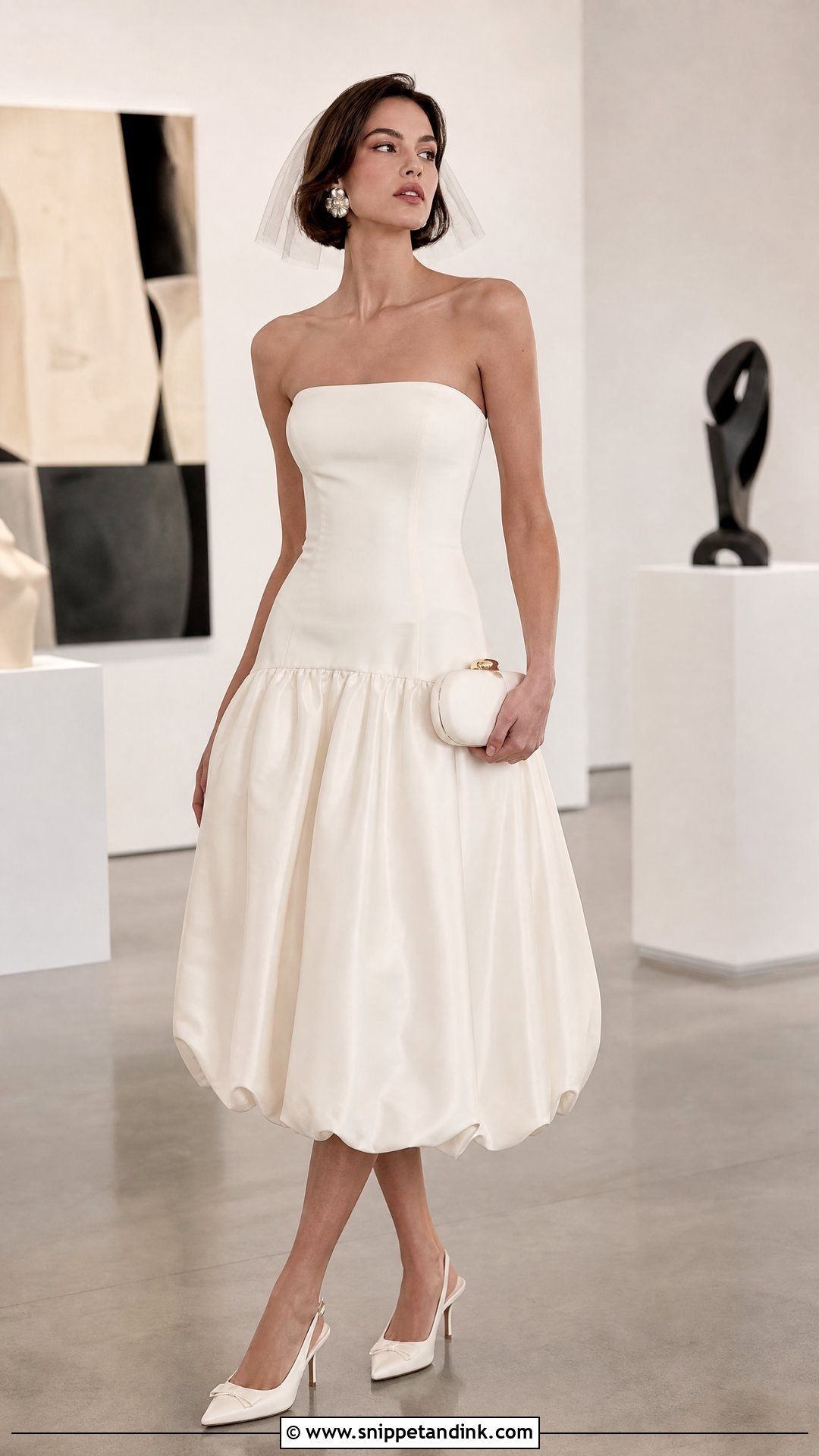
Bubble hems are the most fashion-forward shape here, and they only work with a fabric stiff enough to hold the curve. Crisp taffeta or structured satin keeps it defined; softer fabrics just sag. Go midi or ankle length with a fitted bodice, then balance the volume with slender slingbacks, sculptural earrings and a compact clutch. A short veil and smooth hair close to the head keep the proportions clean. It suits civil ceremonies and reception changes better than a long church aisle. A sheer-sleeve top made for the gown adds coverage if you’d like it.
15. Corset Wedding Dress With Overskirt
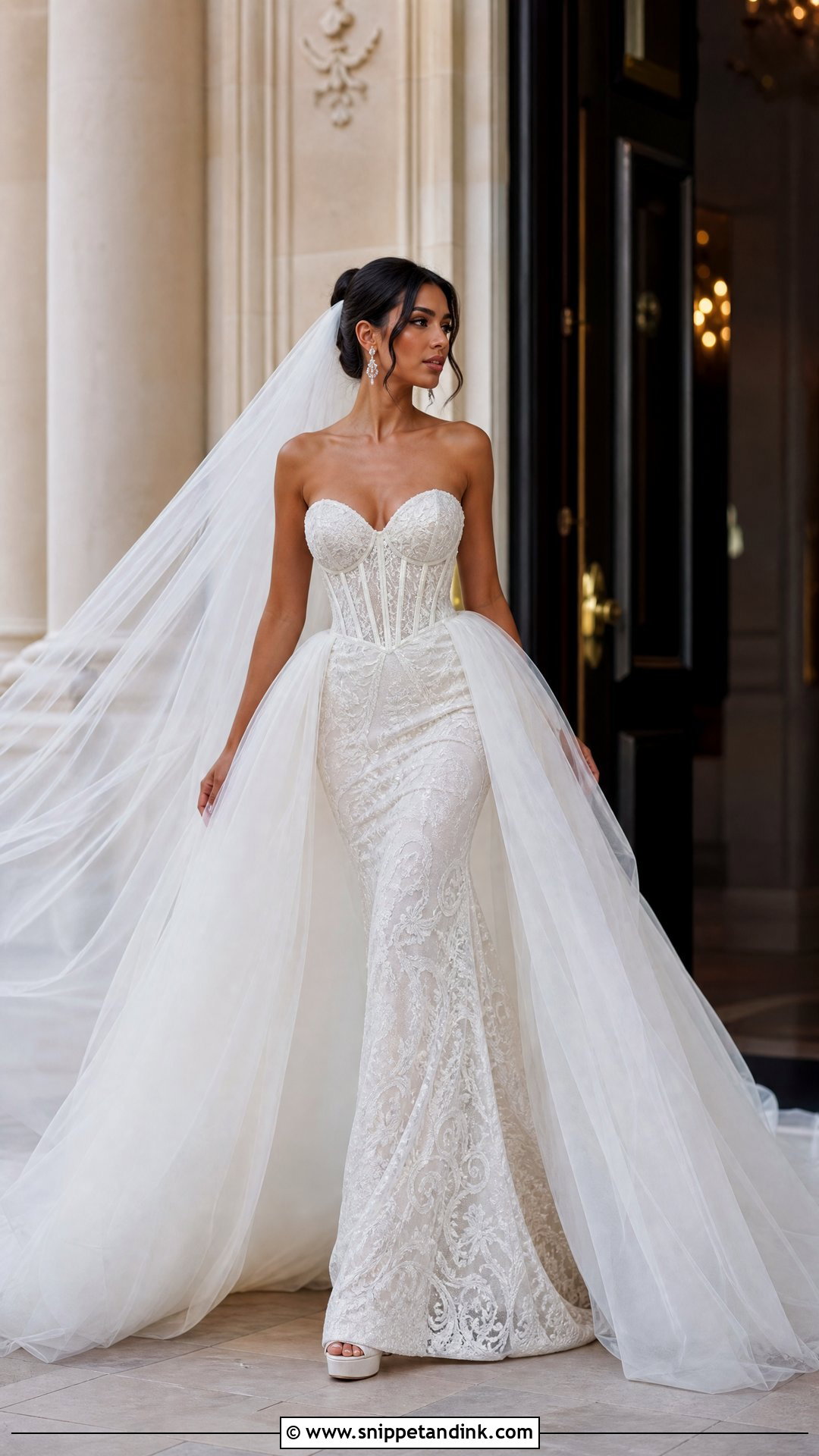
Two outfits from one gown: a fitted corset column or trumpet for the party, with a full satin or tulle overskirt for the ceremony. Platform heels hidden under both lengths give you stability for a long day. A cathedral veil matches the ceremony volume, and statement earrings take over once it’s off. Wear a secure updo that survives both changes. The corset should support without limiting breath, so I ask brides to take a deep breath and sit down at the final fitting. Rehearse taking the overskirt off with whoever will help you, since hidden hooks and snaps are fiddly under pressure.
16. Bridal Two Piece Skirt Set
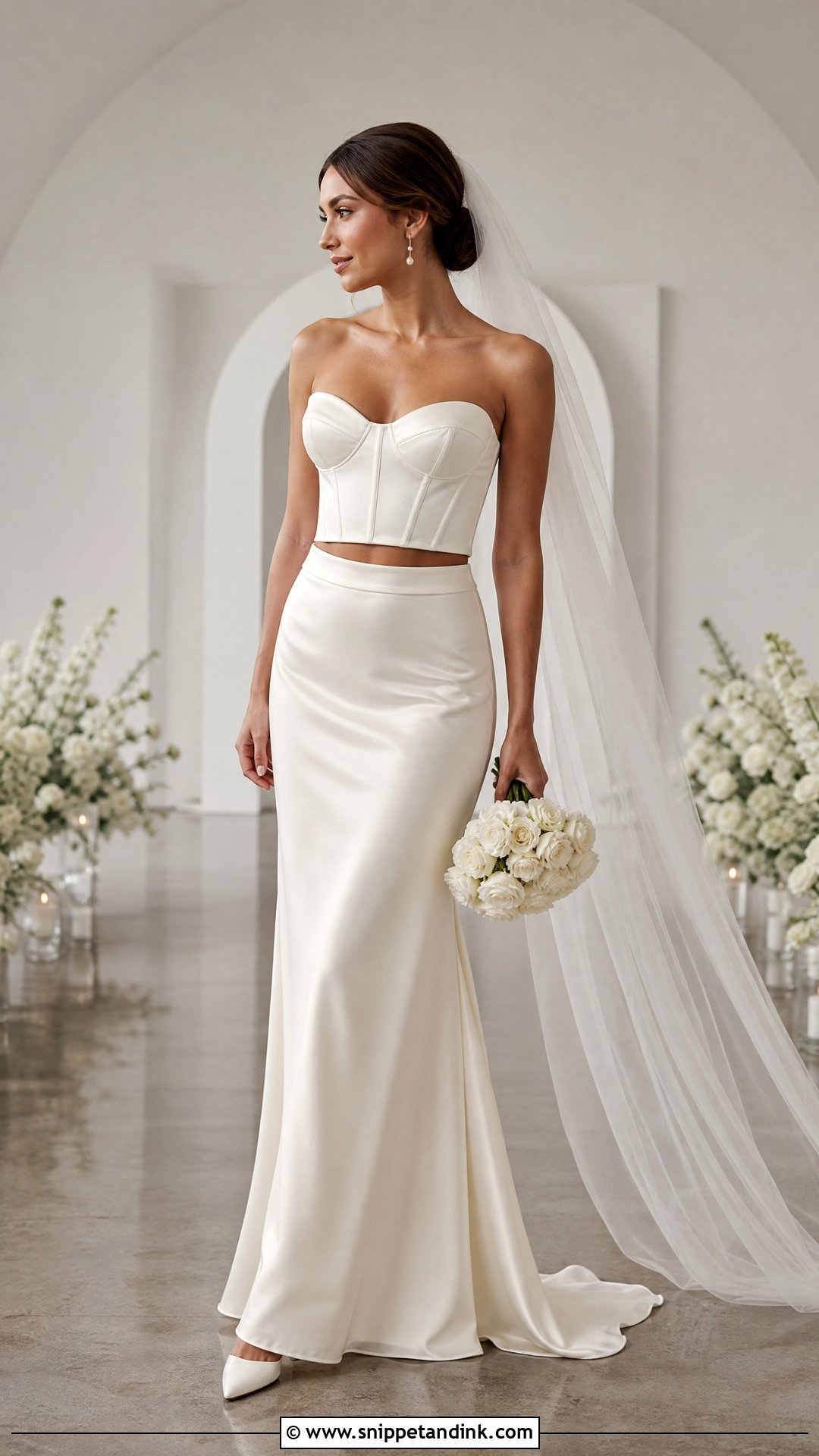
Separates give you freedom to move, but they only look like a wedding outfit when the fabrics match exactly. A structured crop top, fitted blouse or corset bodice goes with a high-waisted skirt in the same cloth, ideally cut from the same bolt, because two ivories from different dye lots never quite agree in photos. A narrow strip of skin looks modern; overlapping pieces give full coverage. Pointed heels, fine drops and a long plain veil tie them together, with a low bun. Raise your arms at fittings to make sure the top doesn’t lift. A cropped jacket that stops at the waistline covers cooler days.
17. Bridal Cape Wedding Dress
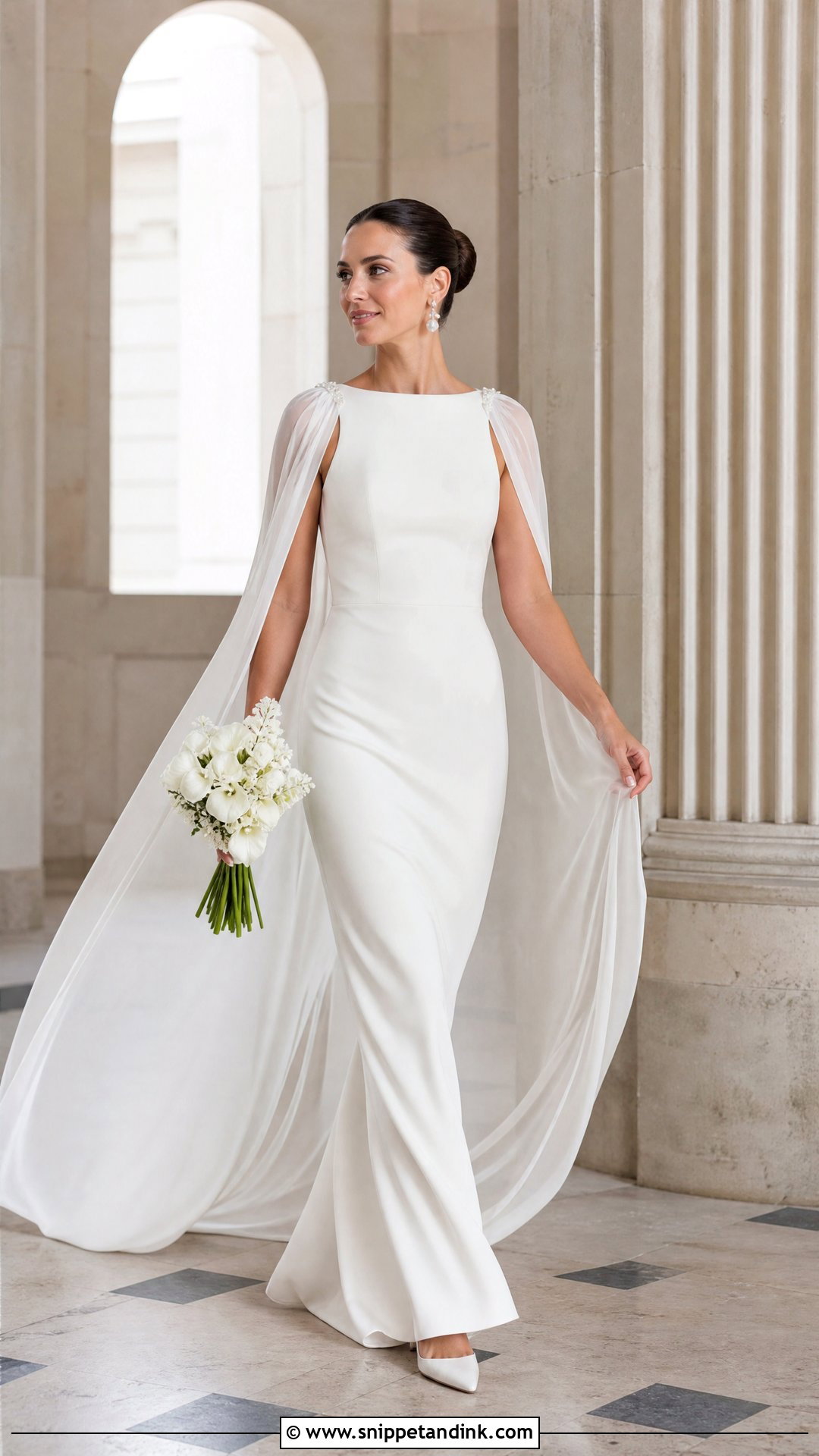
A floor-length cape turns a simple column or A-line in crepe, silk or satin into a full ceremony look. Sheer tulle floats; opaque fabric gives structure and warmth. Keep earrings understated, wear pointed pumps and skip the veil unless the two were designed to layer. A sleek bun stops the fabric catching at the shoulders. The attachment point is what I test hardest. Walk, turn and sit in the full outfit, because a cape attached at the neck can pull backward when you sit on it, and a long train of tulle will be stepped on during hugs.
18. Blush Pink Wedding Gown
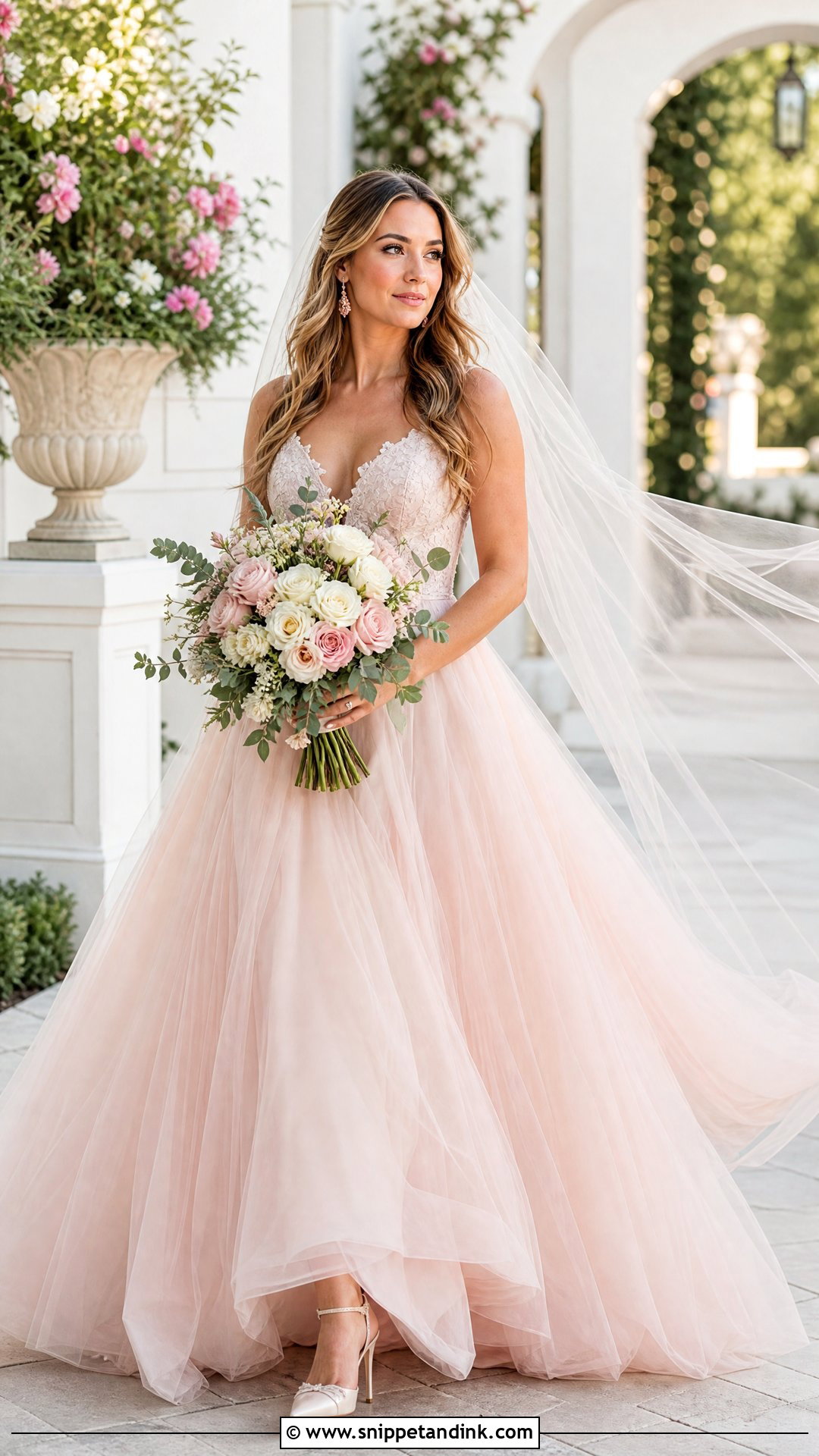
Blush reads unmistakably bridal while giving you something other than white. Rose, shell pink and barely-there peach suit different skin tones, so try several against your face in daylight. Tulle ball gowns feel airy in pink, satin columns feel modern. Ivory or pale blush heels work better than an exact match, with rose-gold earrings and a sheer ivory veil for contrast. Keep flowers to cream, pink and green. I always ask brides to see the fabric in venue lighting too, because pale pink can turn grey under cool light and peachy under warm.
19. Minimalist Slip Wedding Dress
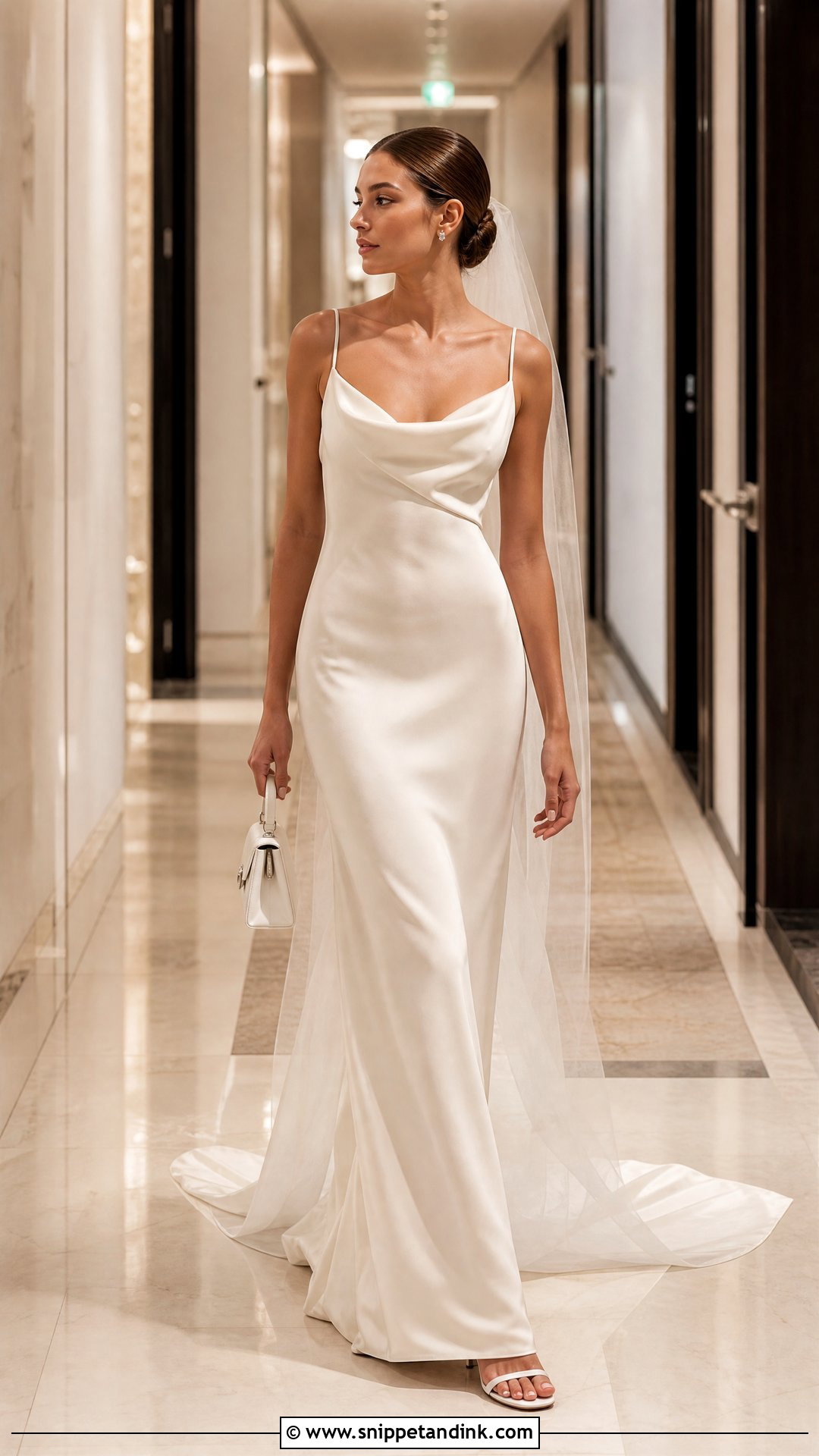
The slip dress is the hardest simple dress to get right. Silk satin cut on the bias moves with the body and shows everything beneath it, so no-line underwear and careful alterations matter more here than on any gown with structure. A cowl neck softens; a straight neckline sharpens. Pair it with sleek sandals, diamond studs, a mini bag and a long sheer veil you remove later to show the back. I’d walk, sit and reach in it at the final fitting, since bias cuts can twist slightly on one side and need small corrections.
20. Reception Dress With Statement Heels
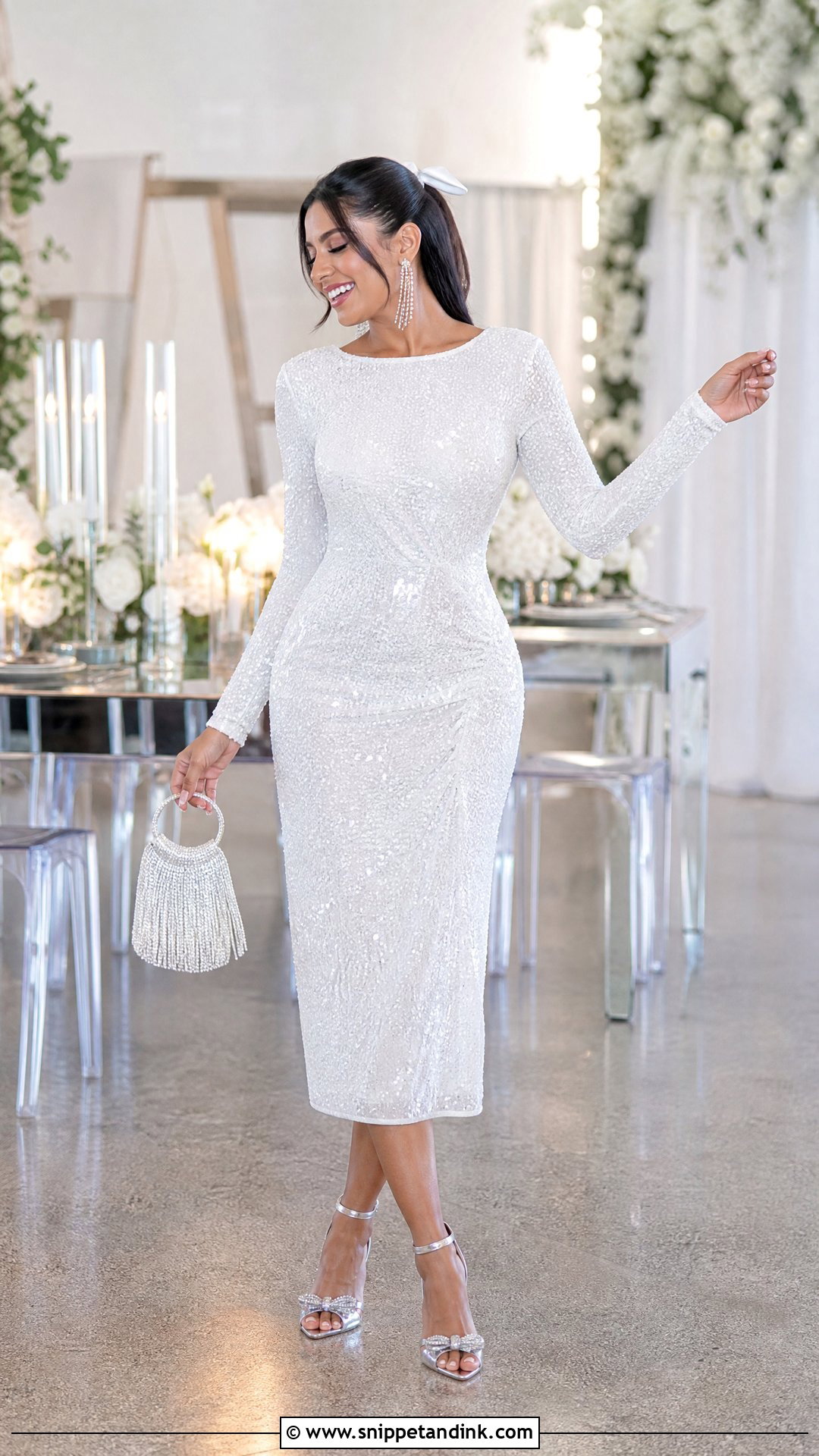
A second outfit lets you dance freely and gives the evening photos a change. A white midi, sequined column, feather-trimmed mini or fluid slip should still feel connected to the ceremony gown in tone. Statement heels in silver, crystal or a personal accent color, bold earrings and a small wrist bag take it into party territory; swap the veil for a bow or a polished ponytail. Sparkle on the dress means quieter makeup and jewelry. My rule is that comfort decides the shoes, so supportive block heels or embellished flats are a fair choice if you plan to dance for hours.
Satin, Crepe and Taffeta After Eight Hours of Wear
Every fabric above looks perfect on a hanger. What separates them is how they behave by the first dance.
- Satin creases across the lap after the ceremony and dinner. Heavier duchess or mikado recovers better than thin, shiny satins.
- Crepe barely wrinkles and drapes cleanly, which is why I steer suits and columns toward it.
- Taffeta holds sculptural shapes but rustles audibly and can crush where you sit.
- Silk jersey and bias-cut silk show perspiration and cling in heat.
- Tulle snags on jewelry, Velcro and rough chair backs, and it compresses on the drive to the venue.
Ask your stylist or seamstress to show you how to steam the gown on the morning, and have a handheld steamer packed with the getting-ready kit. A short steam after you arrive at the venue lifts most travel creases from satin and tulle. Keep it off pearls, sequins and glued embellishment, and test on an inside seam first.
Put On Every Piece at Once Before the Wedding
Strong bridal outfits come from proportion, comfort and a few finishing details chosen on purpose. Use these gowns, suits, colors and second looks as starting points, not formulas. Veils can be shortened, necklines raised and most silhouettes altered for support or coverage. Before the wedding, put on the whole outfit at once, shoes, underwear, jewelry and any outer layer, then move, sit and have someone photograph you from several angles. That one session tells me more about whether a look works than any number of single-piece fittings.
You'll Like These Ideas:


Leave a Reply