
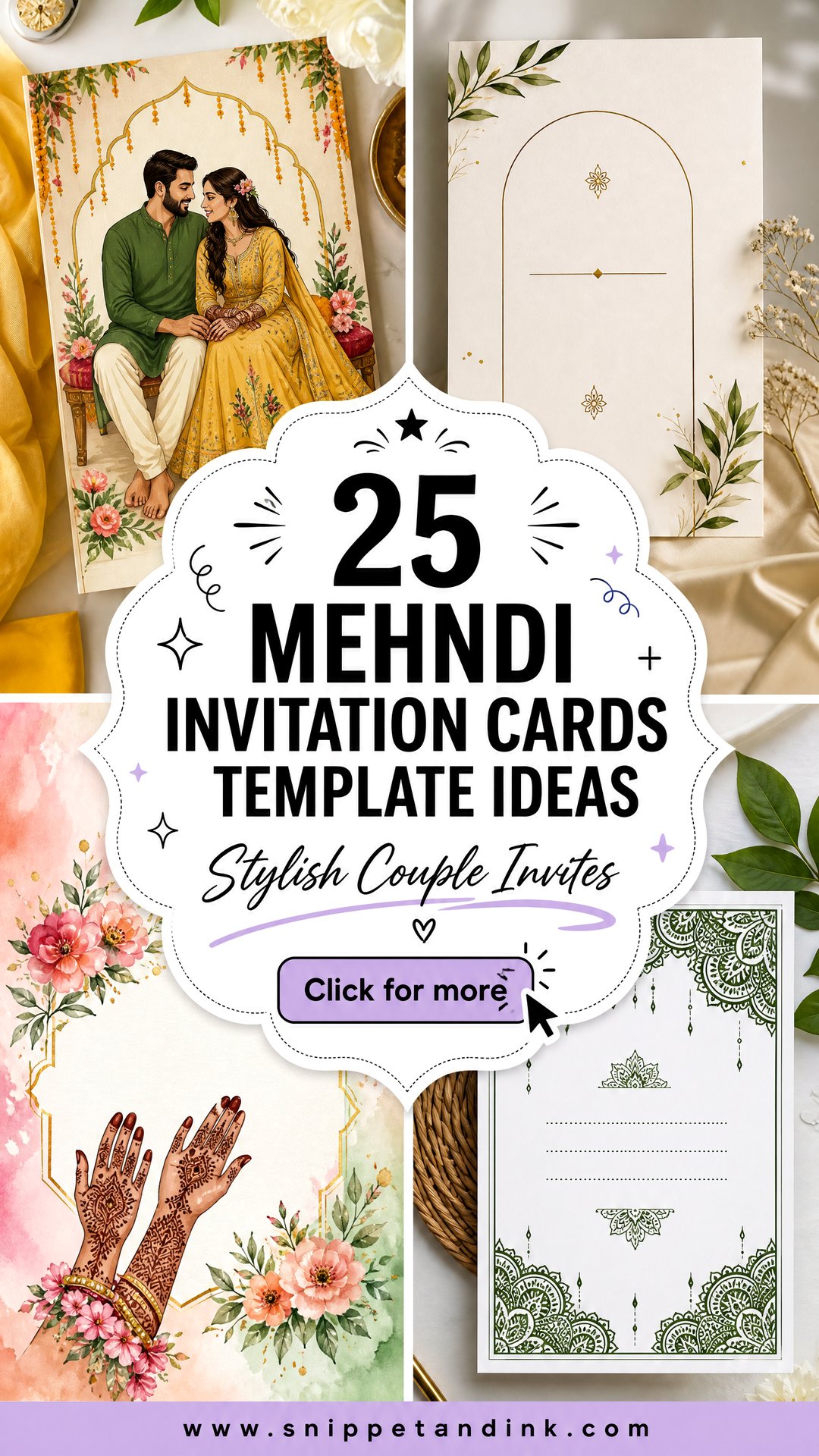
A mehndi invite is the first piece of the celebration your guests hold, whether in their hand or on their phone, and it has to do two jobs at once: feel like a party and tell people exactly where to be. The designs couples ask me for most often use marigold borders, green and yellow palettes, paisleys, henna line art, bride illustrations, arches and floral frames, in editable layouts for print or WhatsApp. Which one suits you comes down to the event itself: a formal family card for an evening at a hall reads differently from a casual invite to a terrace dholki. I’ve grouped 25 template ideas below, with notes on where each one works and where it tends to trip people up.
Wording Order on a Mehndi Card
Before I touch colour or artwork, I write out every line the card needs and put them in order of importance. Guests scan a card from the top, and the things they’ll look for again later should be the easiest to find.
- Who is hosting, usually the bride’s or groom’s family
- The event name: mehndi, dholki, mayoun or a combined function
- The couple’s names
- Day and date, written out in full
- Time, plus a dinner time if guests usually arrive late
- Venue name and full address, or a map link on a digital card
- Dress code or colour theme, if there is one
- RSVP contact and deadline
Writing it out first shows you how much space the text really needs. That’s when you can tell whether an ornate template will work or whether the decoration needs to give way.
Keep the wording consistent with the rest of the wedding stationery, too. If the wedding card spells a name one way and the mehndi card another, someone in the family will notice, and it’s an easy fix before printing and an expensive one after.
1. Green Mehndi Invitation Card Template
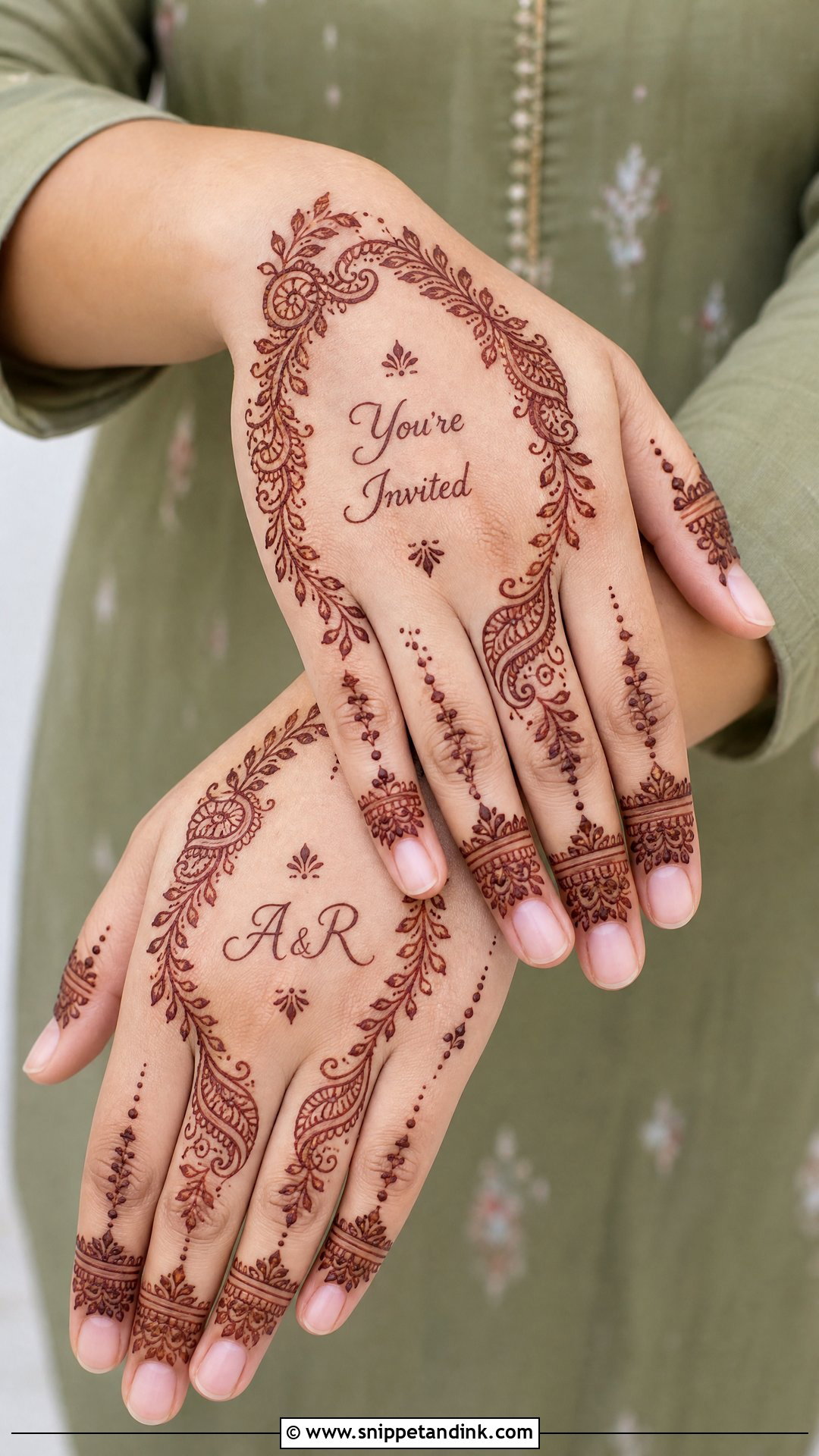
Green is the colour guests instantly link with henna, which makes it the safest starting point. I like it with gold borders, leaf accents, small paisley corners and a clean center panel for the details. Dark green suits an evening function; sage reads softer for daytime. For text, cream, mustard or antique gold all sit well on green, but check the contrast: gold lettering on mid-green can blur together on a phone, so I usually darken the panel behind the wording a shade.
2. Yellow Mehndi Invitation Card Template
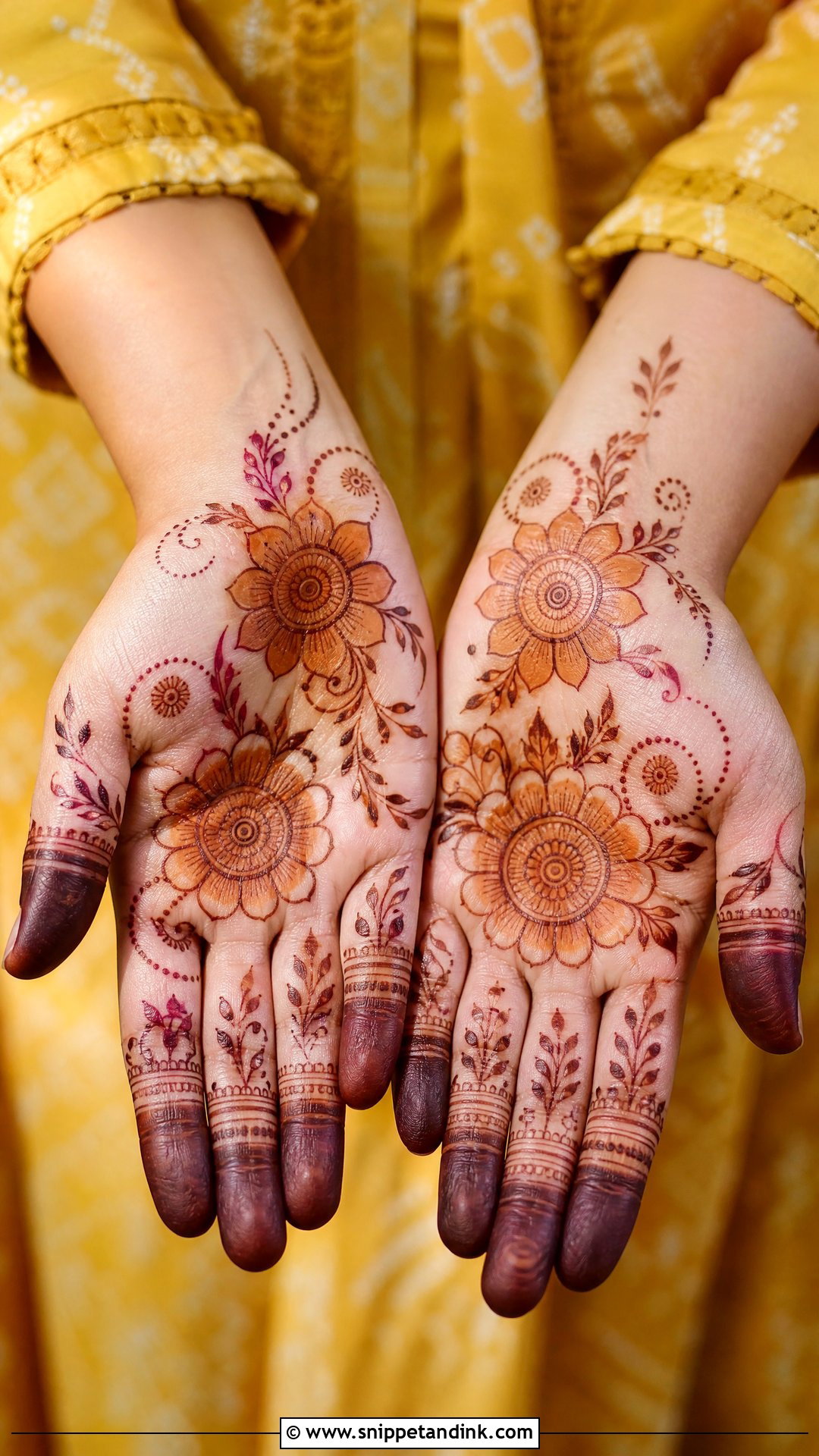
Yellow feels like a daytime mehndi straight away, and it sits naturally with marigold garlands, turmeric tones and festive outfits. A watercolor wash, an orange flower border or a soft golden background with dark green text all work. Yellow is the colour I check most carefully in print, because pale yellow on cream paper can almost disappear, so keep the names bold and the details sparse. It’s especially handy for combined haldi and mehndi events, since one palette covers both.
3. Floral Mehndi Invitation Card Template
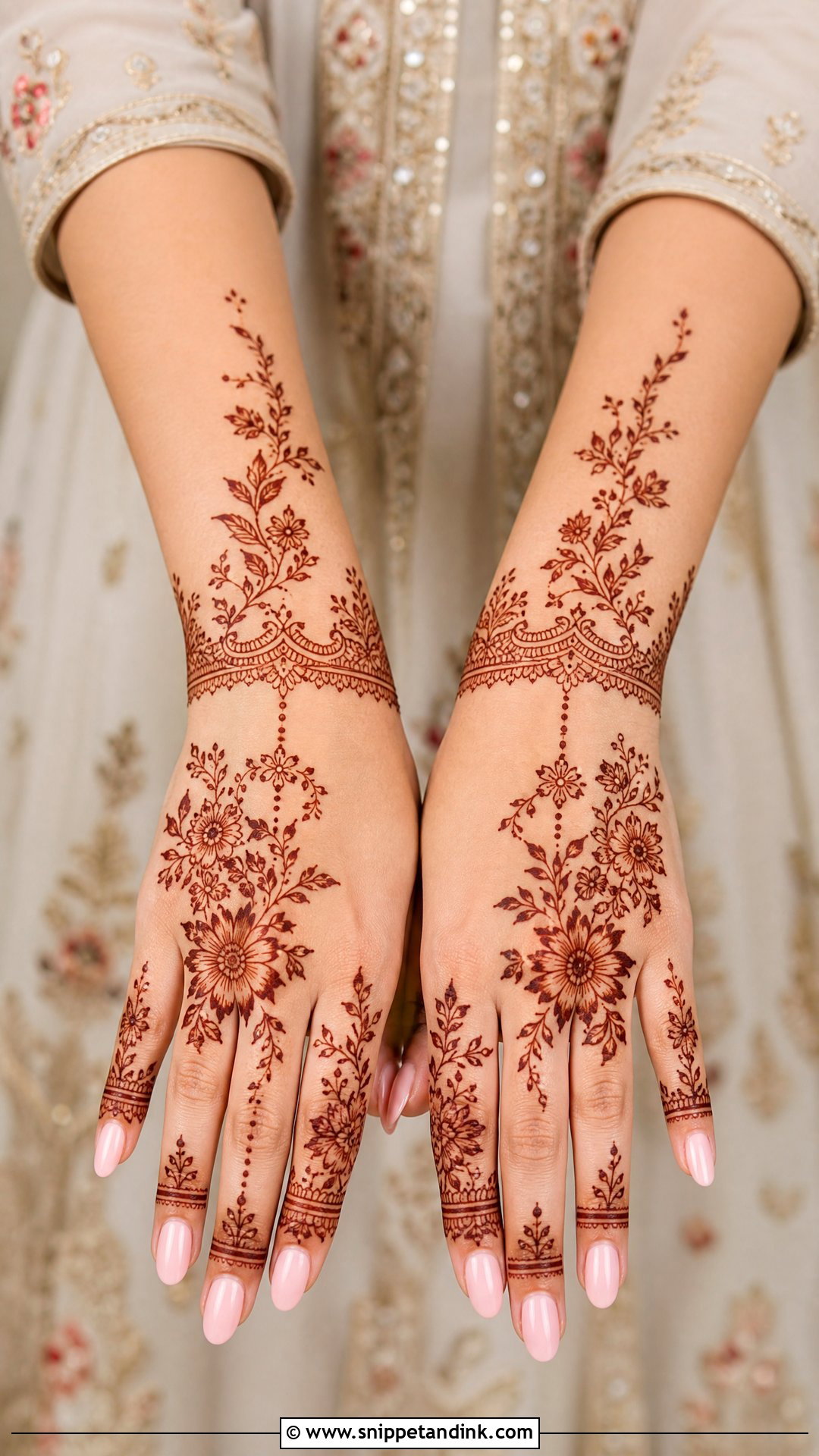
Florals are the broadest-appeal option, and the flower you pick sets the tone: marigolds and roses read traditional, jasmine strings feel delicate, watercolor blooms lean modern. A floral frame around the wording gives a finished card while leaving white space for the details. For something classic, use orange, yellow and green; for a softer, modern card, blush, ivory and sage. The one thing I watch is flowers creeping behind the text. Keep the frame on the edges so every word sits on a clean background.
4. Marigold Mehndi Invitation Card Template
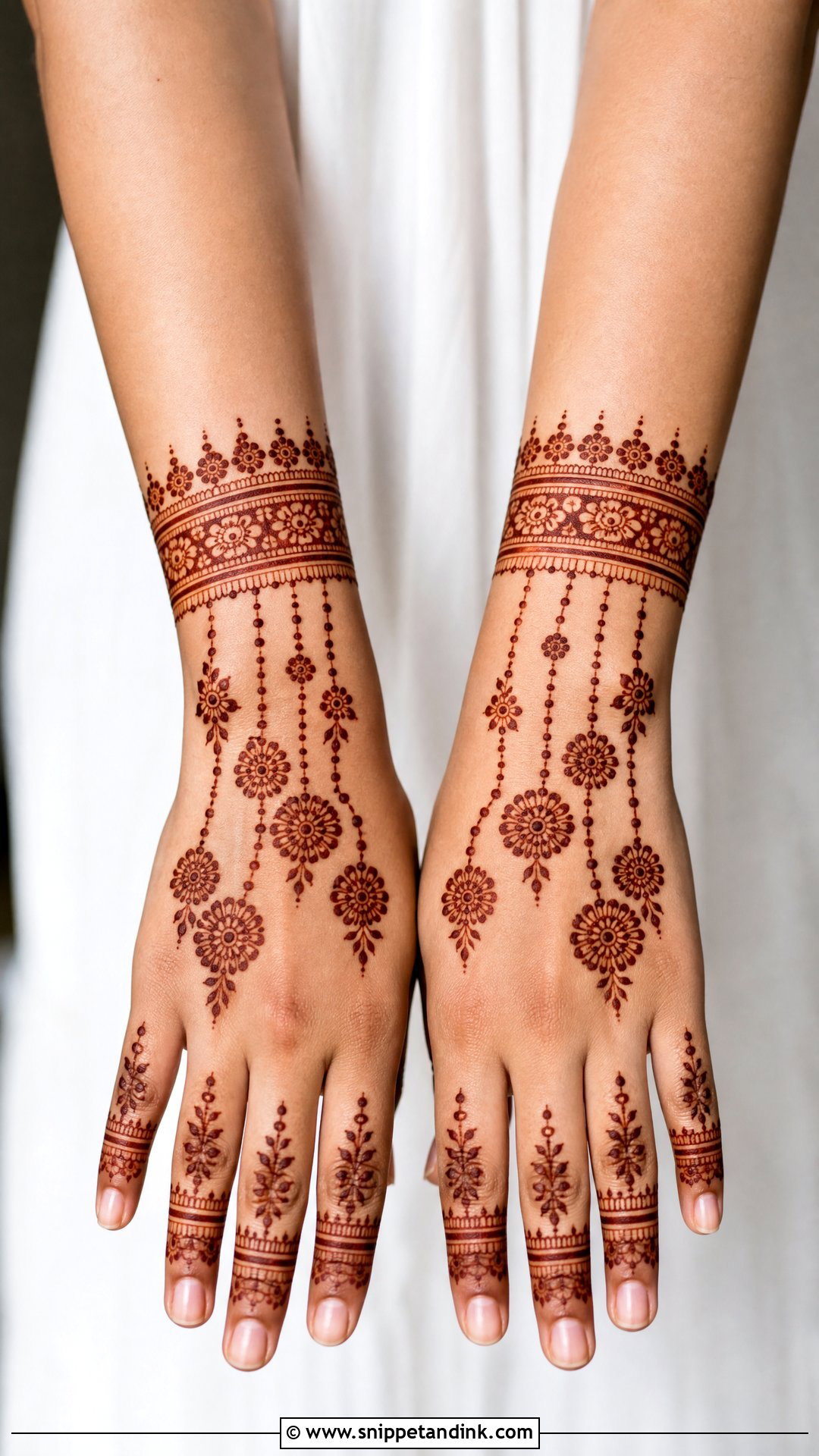
Marigolds make a card feel festive before anyone reads a word. Hanging garlands, flower clusters and border strings in yellow and orange suit garden functions, terraces and home ceremonies. A deep green, ivory or mustard background supports the artwork. Because the flowers carry so much energy, I keep the typography plain, and a short line like “Join us for the mehndi ceremony” at the top is enough. Busy flowers plus a busy script font is the combination that makes a card unreadable.
5. Paisley Mehndi Invitation Card Template
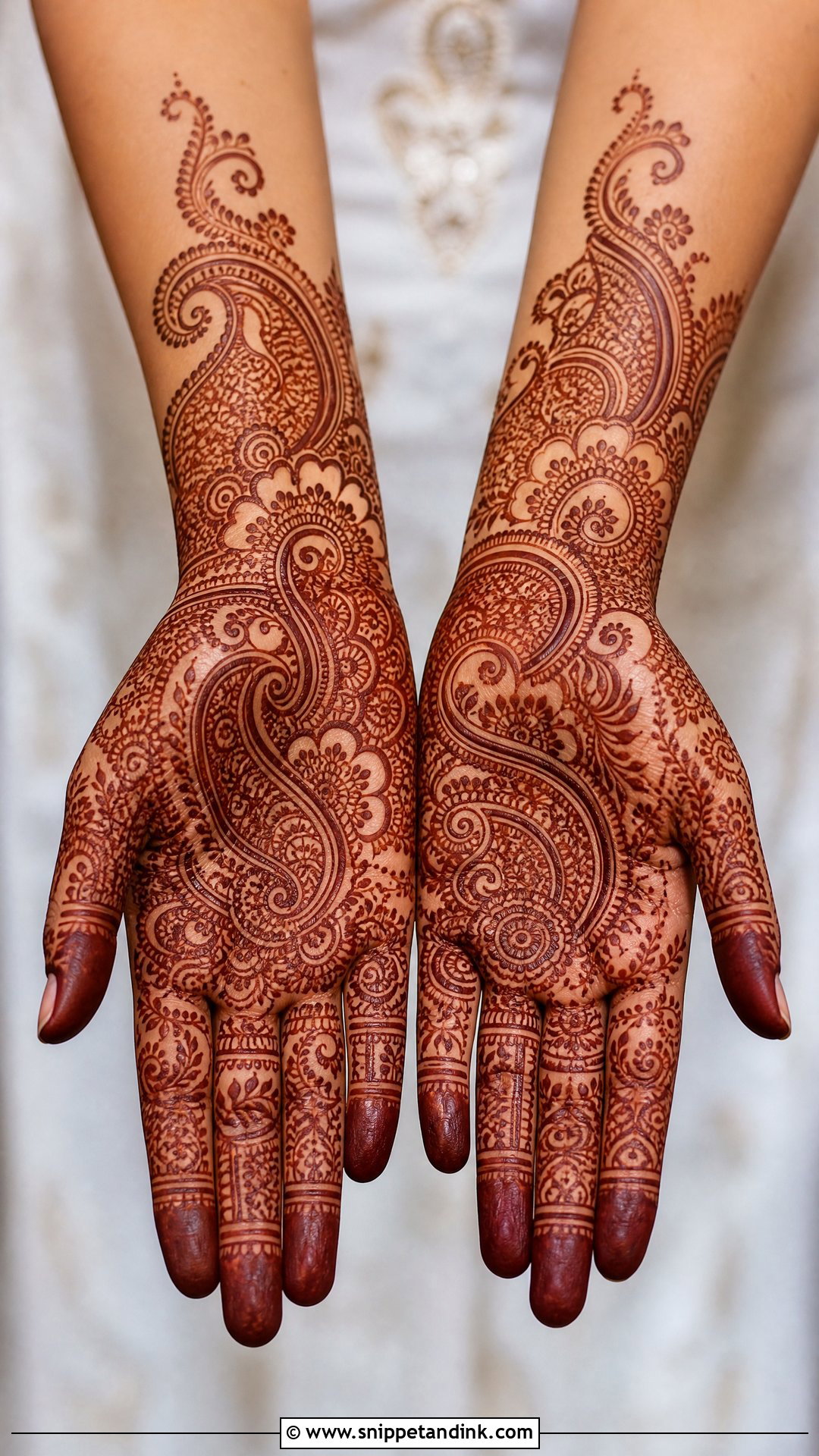
Paisleys bring the henna itself onto the card. Large ones work in the corners; smaller ones make good borders. They look richest in gold, brown, green, burgundy or ivory. My advice is to let the paisleys frame the wording rather than compete with it, keeping the center calm. This design fits naturally into a printed stationery suite, since the same paisley can repeat across the wedding card, the menu and the place cards.
6. Henna Pattern Mehndi Invitation Card Template
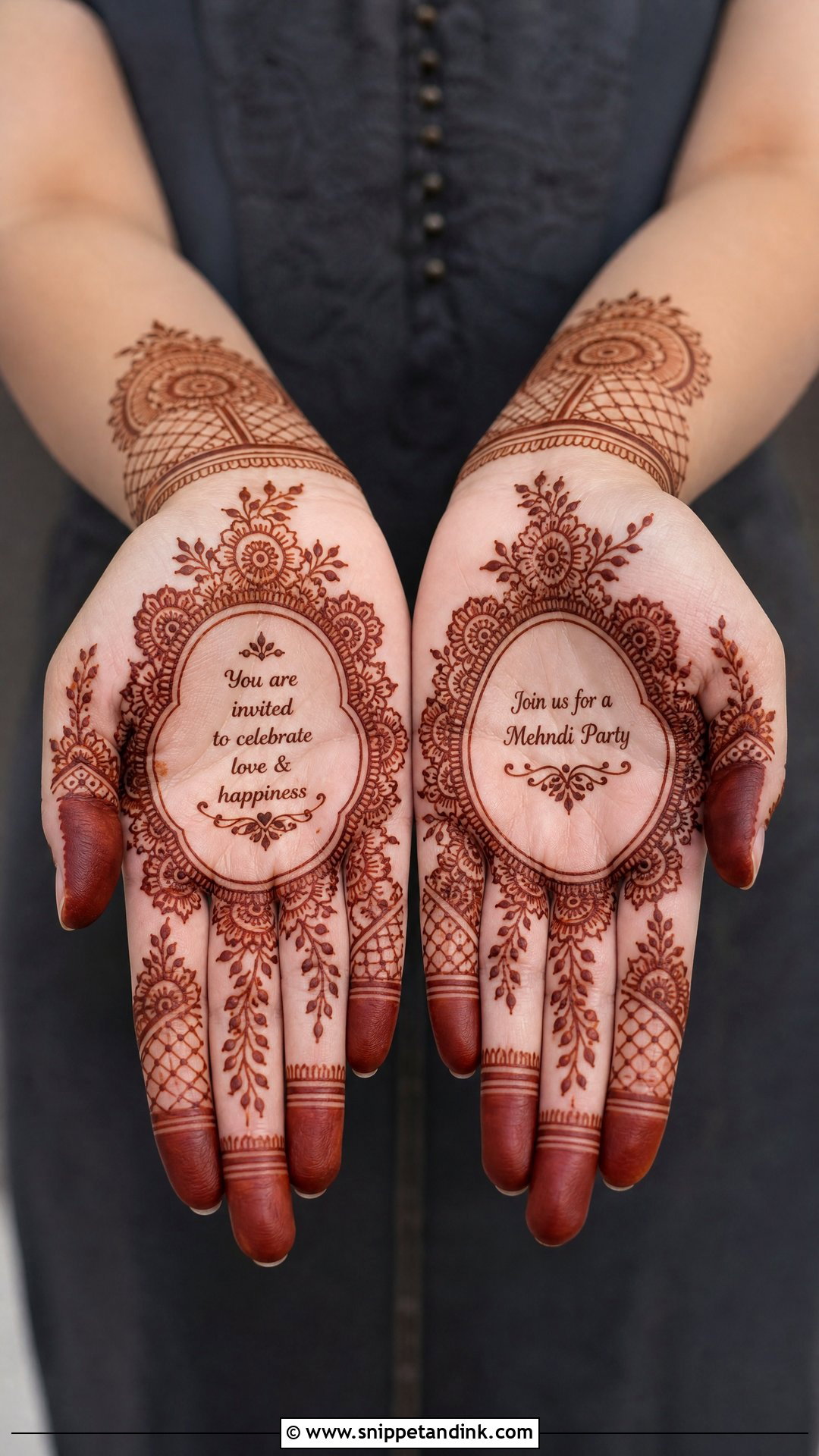
A henna-pattern card mirrors the ceremony itself, with fine-line mandalas, vines, dots, jaali and fingertip-style borders taken from real mehndi designs. Brown line art on beige or ivory is the classic pairing; white line art on deep green or maroon gives a more dramatic card. The detail should be dense around the edges and thin out behind the text. Fine lines are also where cheap printing fails first, so if you’re printing at home or with a budget printer, choose a pattern with slightly thicker lines.
7. Bride Illustration Mehndi Invitation Card Template
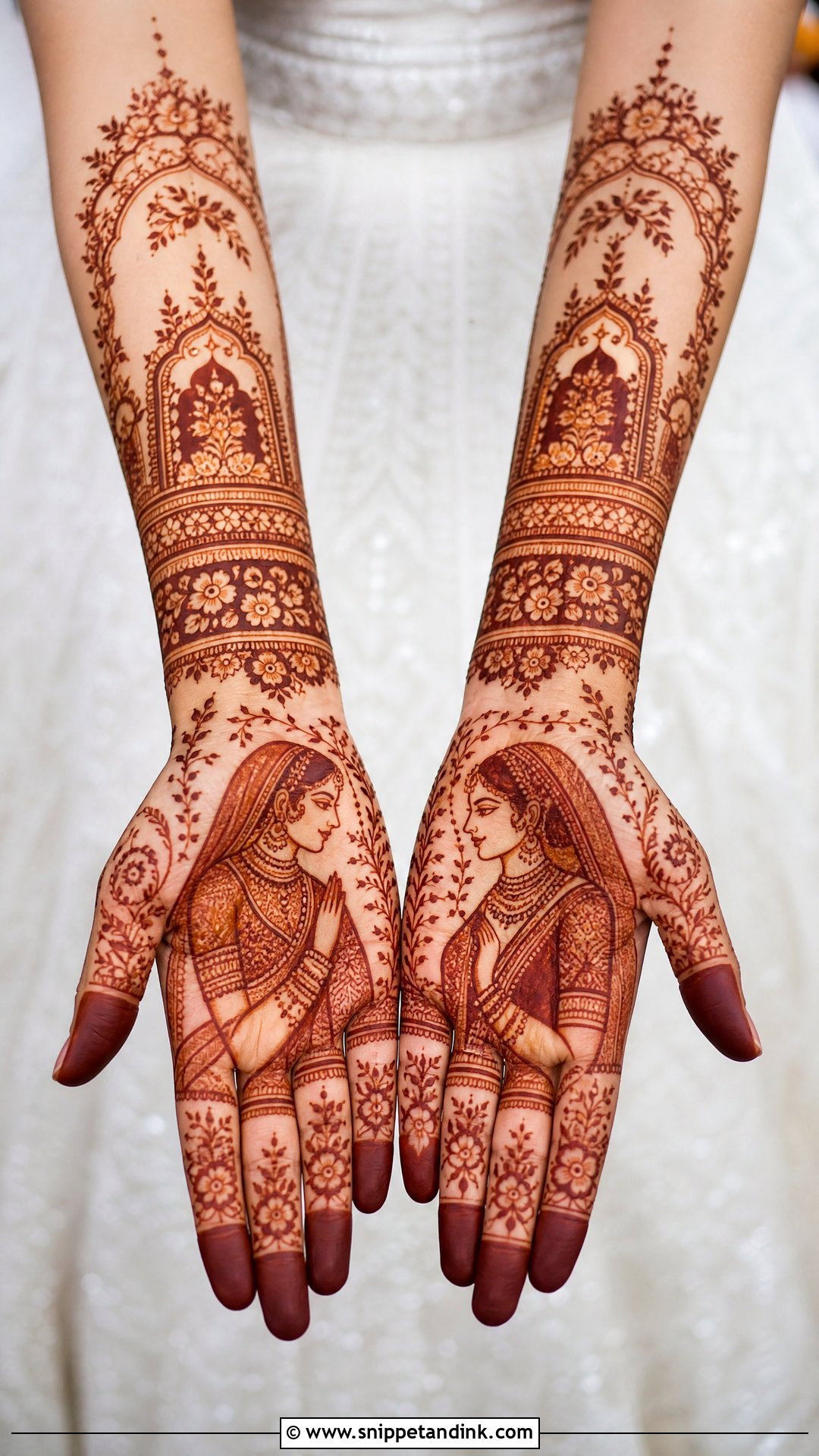
A bride illustration gives the invite personality: a bride in a lehenga, seated for henna, showing her hands or surrounded by flowers. It suits a bride-focused evening with a fun feel. Match the illustration to the mood: watercolor for elegance, bold cartoon art for something playful, fashion-style drawing for a modern card. I place the text to one side or below the figure rather than over it. If you’re commissioning a custom drawing of yourself, allow extra time for revisions; faces rarely come out right on the first sketch.
8. Couple Mehndi Invitation Card Template
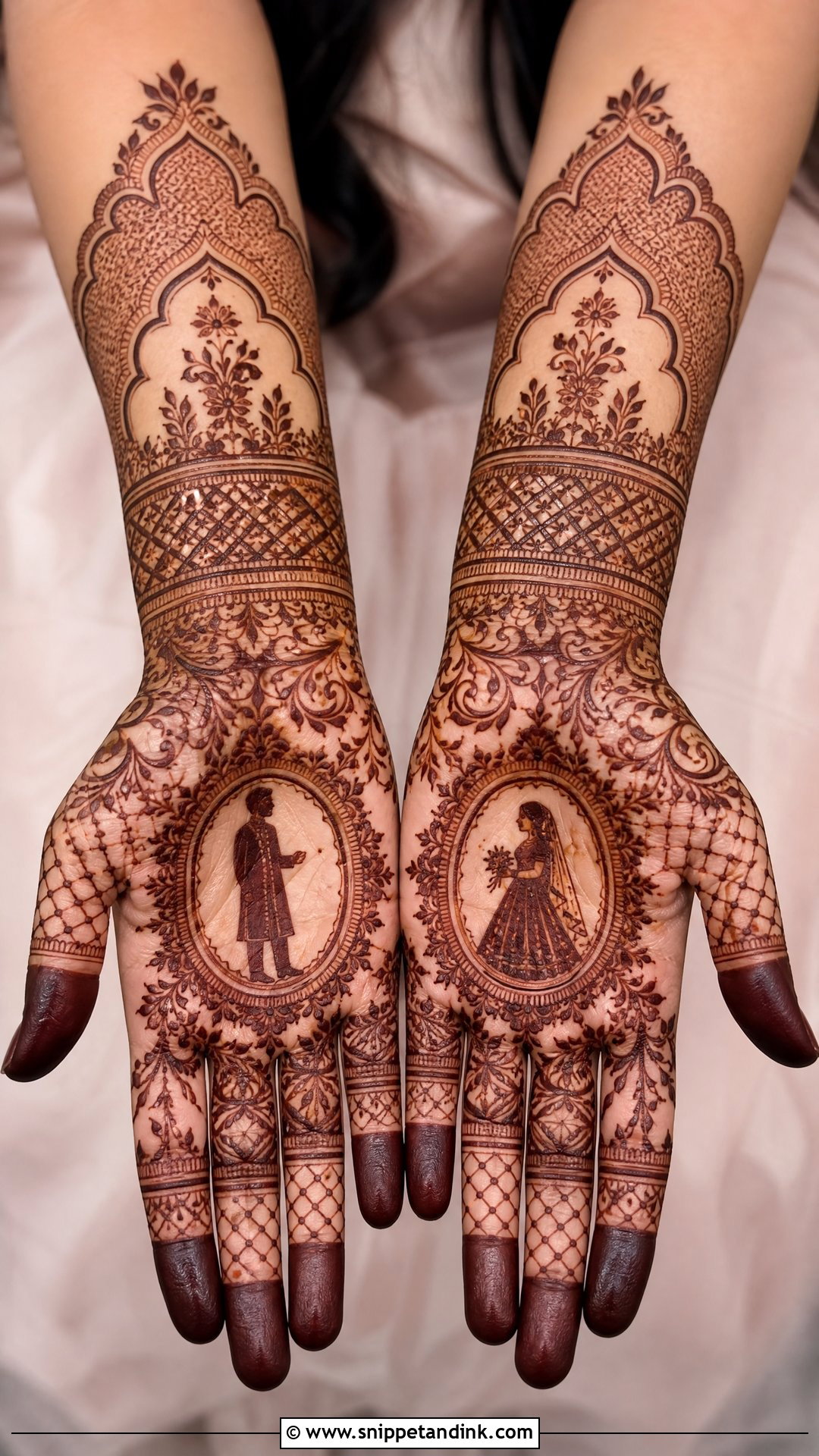
A couple illustration fits a mehndi that celebrates both partners, showing the two of you sitting together, dancing or playing the dhol. It feels inclusive, especially for joint mehndi and sangeet nights or mixed-family events. I set the illustration at the top and the details below, with green, yellow, coral and gold for the background. Guests understand at a glance who it’s for, which helps when the card gets forwarded to people who don’t know both families.
9. Dholki Mehndi Invitation Card Template
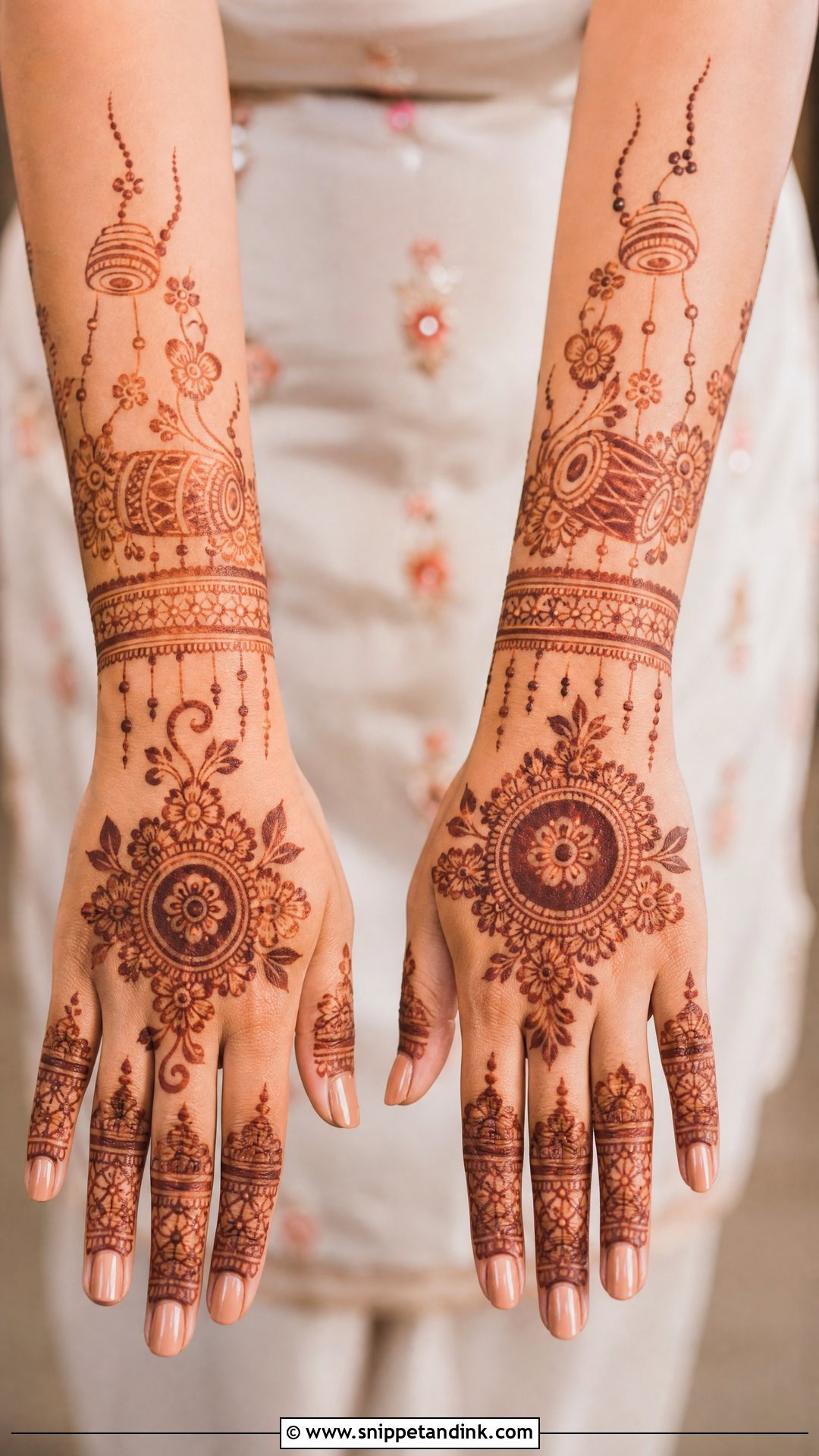
A dholki mehndi invitation card sets up a music-filled night with dhol artwork, musical notes, bright flowers and festive patterns. It’s popular for Pakistani, North Indian and fusion events where singing and family performances are the heart of the evening. Fuchsia, orange, emerald and mustard give it energy. The wording can be playful, but I never let the playfulness reach the date, time and address. Those stay plain and easy to find.
10. Arabic Mehndi Invitation Card Template
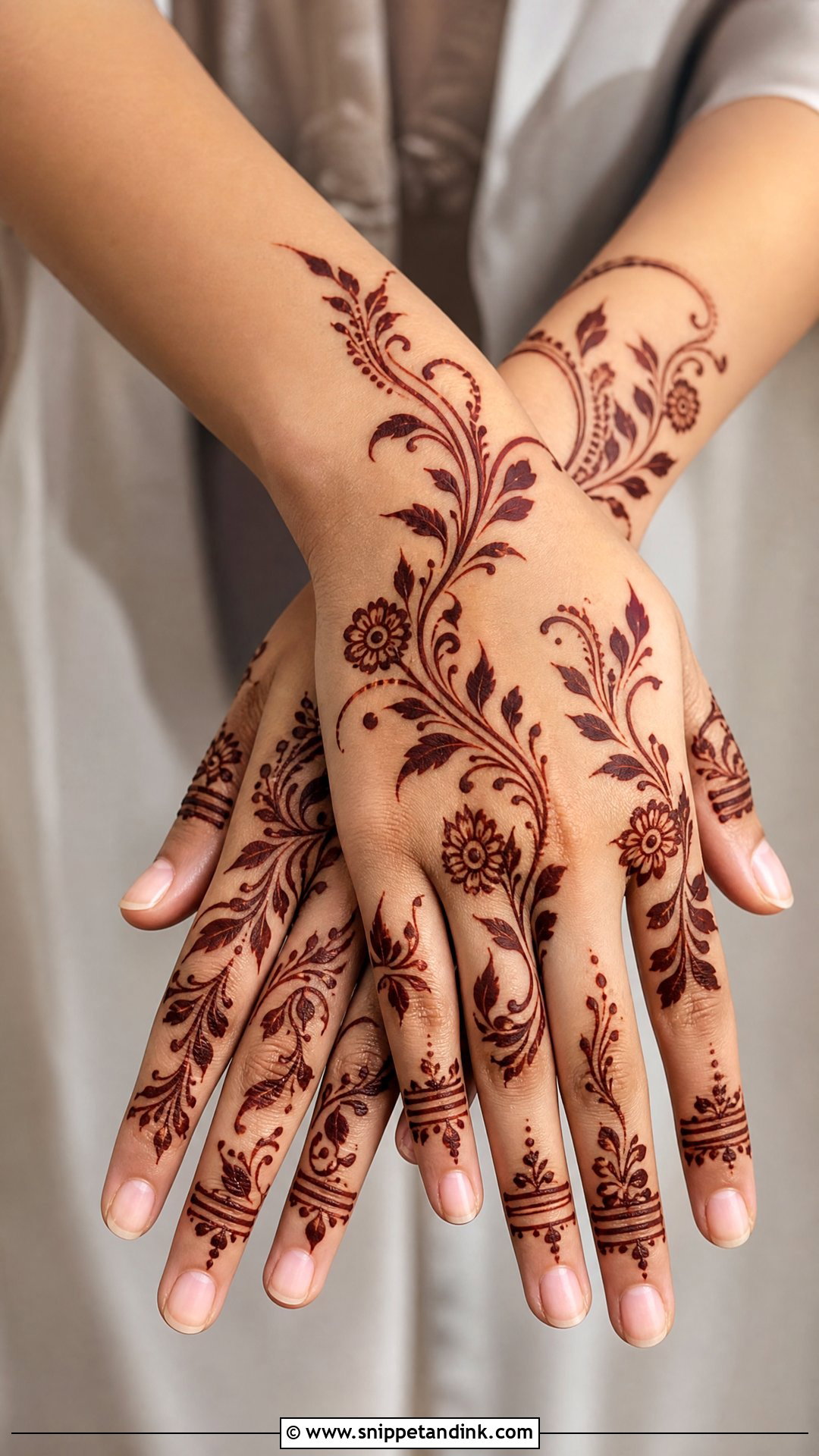
An Arabic-style card borrows the flowing trails, curved vines and bold leaves of Arabic henna, with lots of open space. It suits families who want a cultural card that isn’t crowded. White, cream or soft gold backgrounds keep it airy; emerald or navy make it feel richer. I’d use one clean font for details and, at most, one decorative script for the names. Two scripts on one card is where readability starts to suffer.
11. Indian Mehndi Invitation Card Template
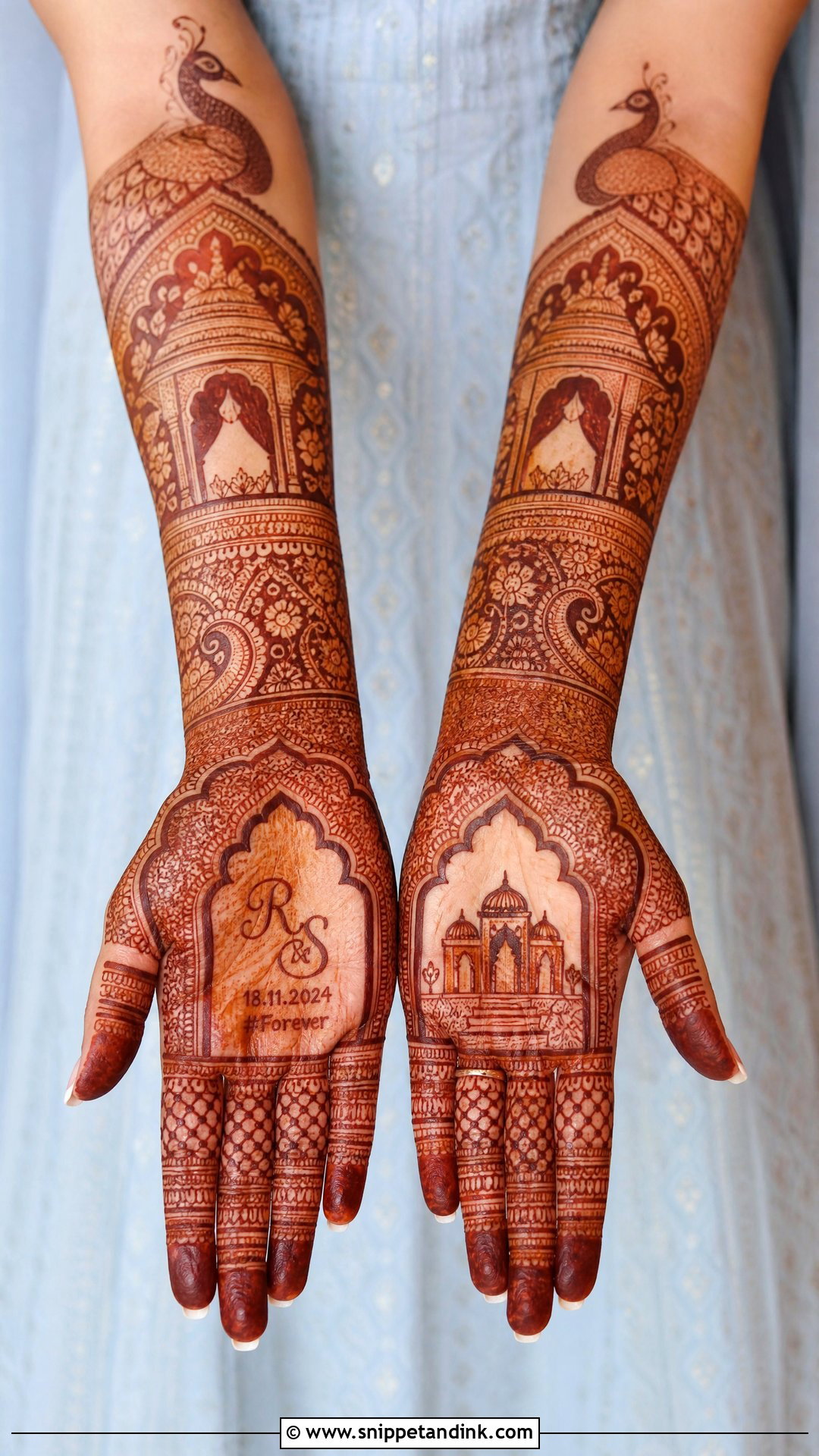
An Indian mehndi card tends to be the fullest design on this list: paisley borders, mandalas, peacocks, palace arches, marigolds, lamps and ornate gold frames. It pairs well with matching haldi, sangeet, wedding and reception cards in one suite. Pick deep green, royal blue, red, yellow or gold to suit the wedding palette. The challenge is balance, and I solve it by deciding the text area first and only then filling the decoration around it. A well-designed Indian mehndi invite should feel festive and still be readable in a few seconds.
12. Pakistani Mehndi Invitation Card Template
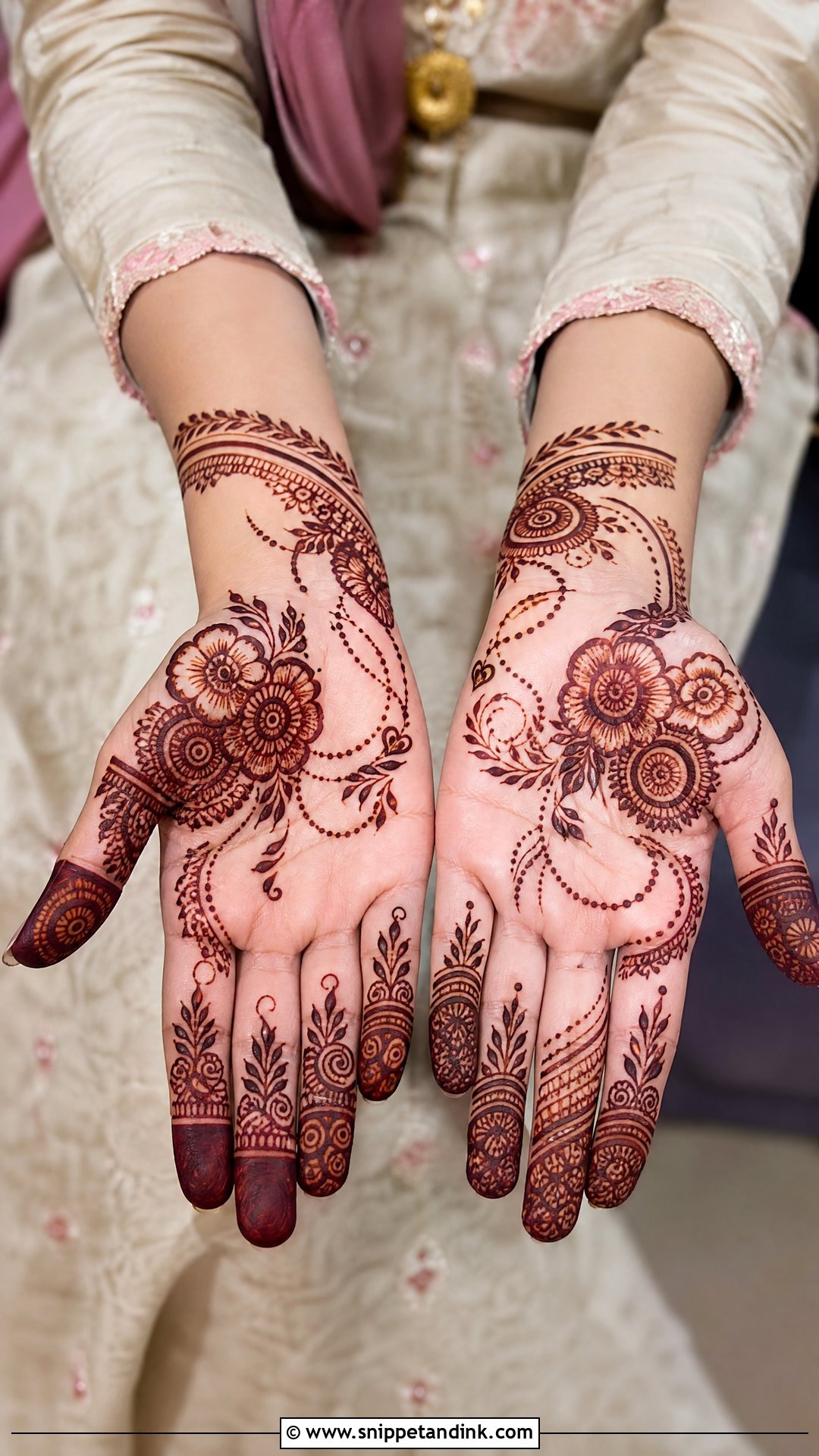
A Pakistani mehndi card often combines bright colour, dholki details, floral decor and calligraphy-style text, mixing green, yellow, orange, pink and gold in one lively palette. It works for mayoun, dholki, mehndi or combined events. Hanging flower strings, jhumar-inspired borders or a bride-and-dhol illustration tie it together. Bright palettes like this look vivid on phone screens, which suits digital sending, but expect the print version to look a little duller, since printers can’t reproduce the most saturated screen colours.
13. Muslim Mehndi Invitation Card Template
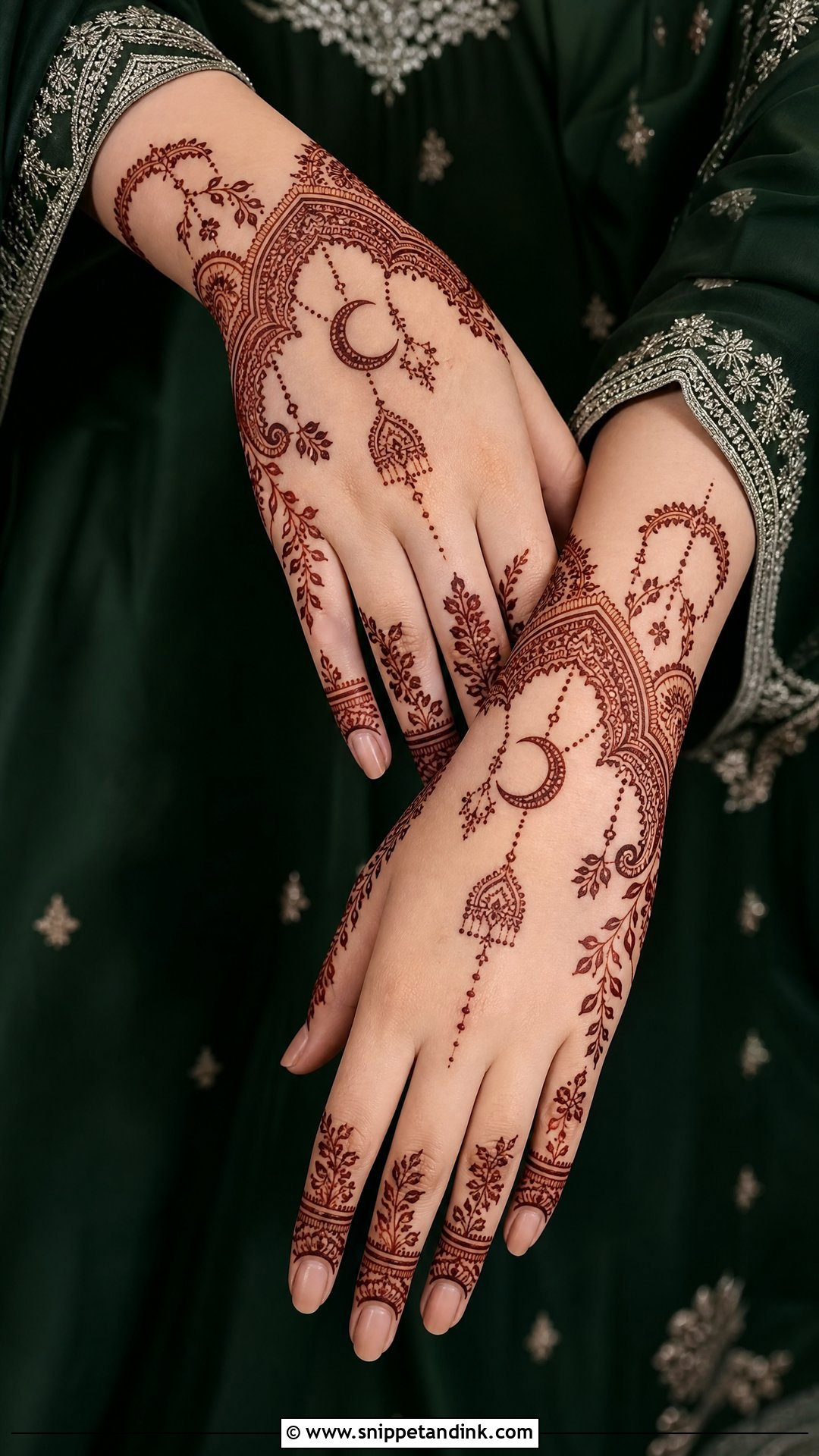
A Muslim mehndi invitation card usually carries soft floral borders, arches, crescents, lantern accents and a green-gold palette. The layout can hold the couple’s names, family names, the ceremony title, date, time, venue and RSVP. If the mehndi is part of a nikkah and walima weekend, I match colours across all three cards so they read as one family of stationery. A cream, sage, emerald or blush background with one pattern, used with restraint, keeps it graceful.
14. Sikh Mehndi Invitation Card Template
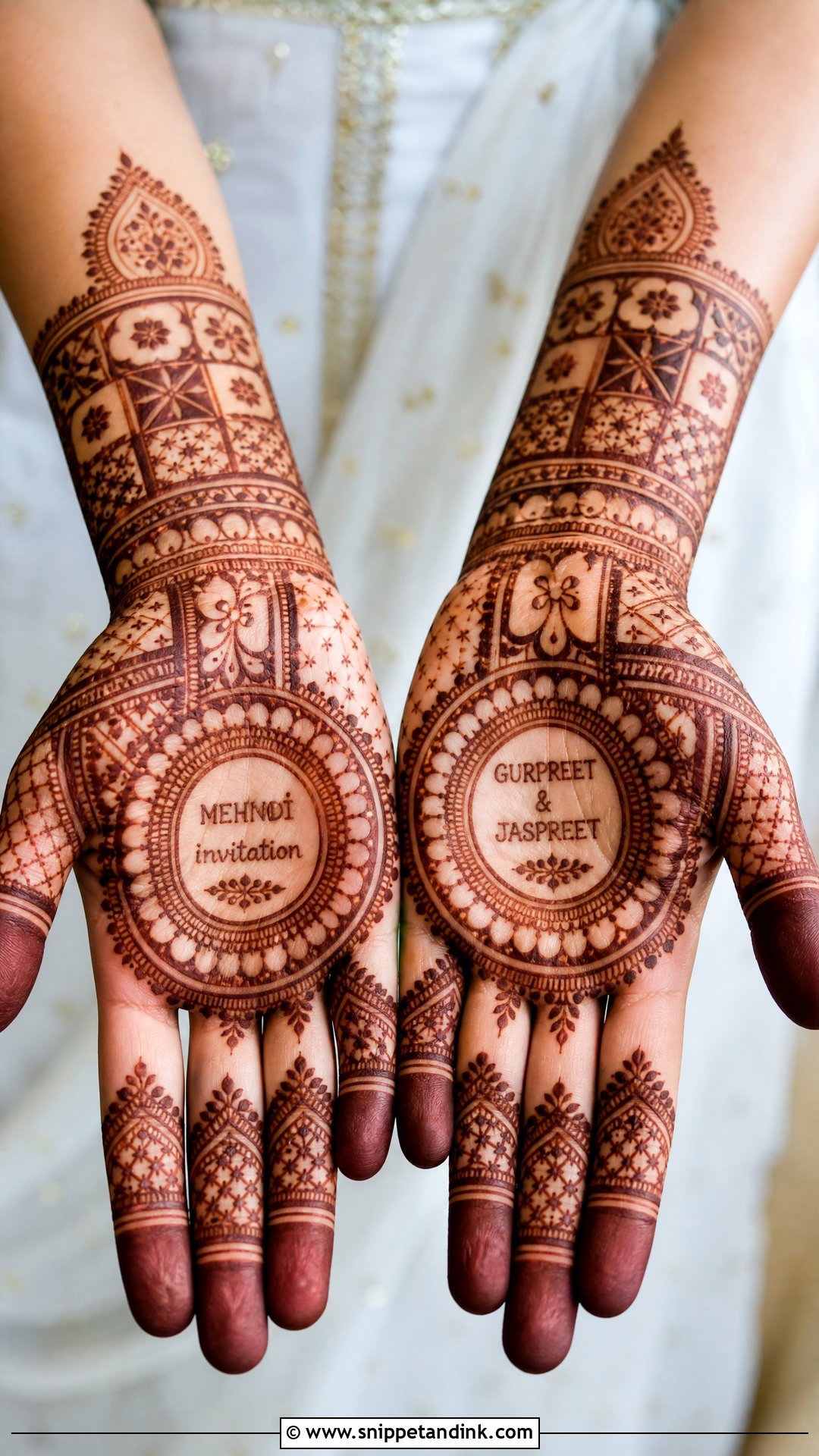
A Sikh mehndi card can be colourful and joyful while staying tasteful, with phulkari-inspired patterns, marigold borders, dhol artwork and bright Punjabi colours. It suits mehndi, jaggo, sangeet or combined celebrations. Orange, pink, yellow, green and gold give a lively card; ivory with phulkari corners and simple gold text gives a softer one. Phulkari embroidery is dense, so I use it as a border only and keep the names, ceremony and venue on plain ground.
15. South Indian Mehndi Invitation Card Template
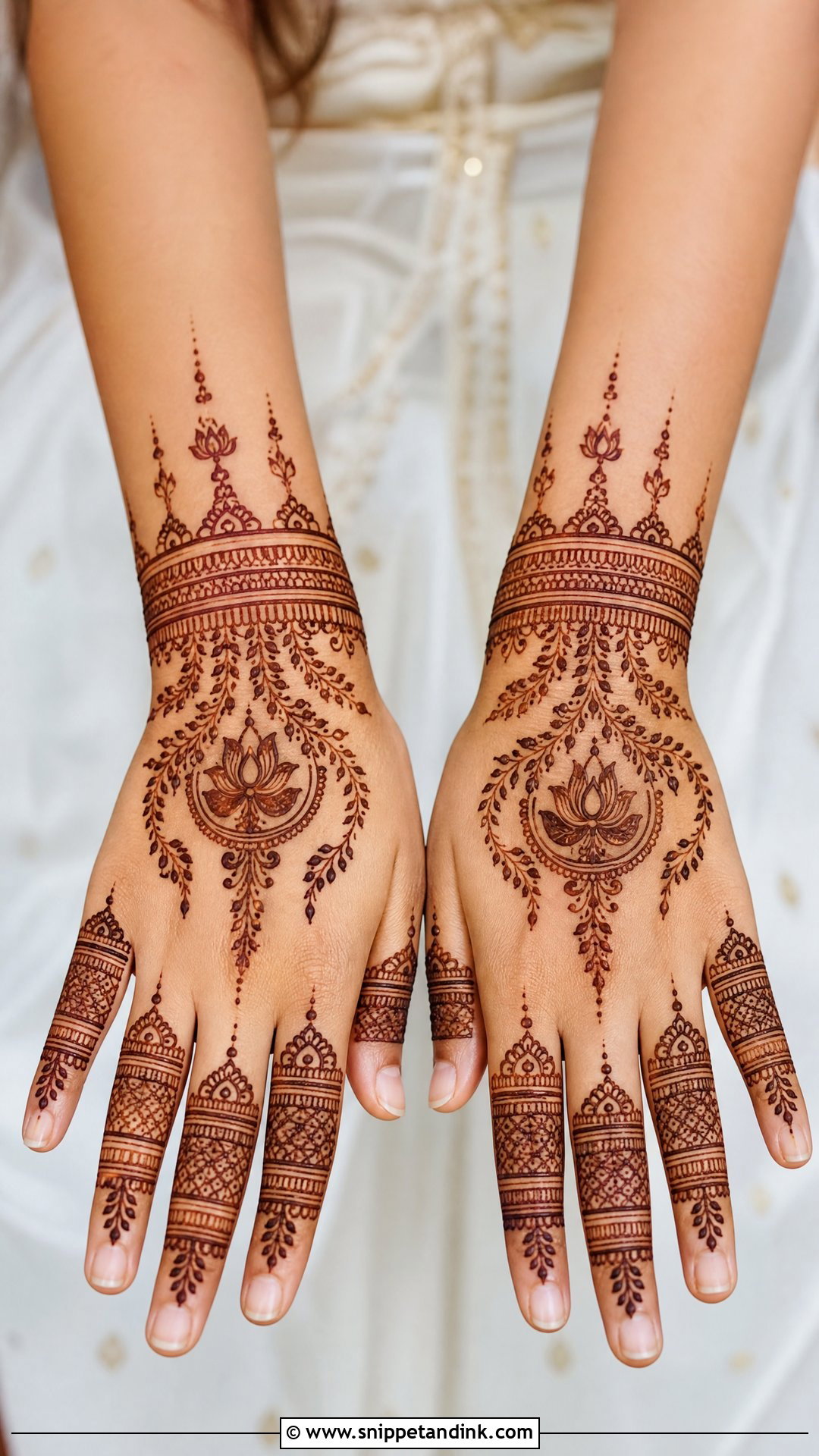
A South Indian card leans on temple borders, jasmine garlands, banana-leaf green, gold accents and traditional florals. Mehndi customs vary across South Indian communities, so I ask the family how they actually celebrate before choosing motifs. Warm ivory, turmeric yellow, deep green and antique gold make a refined palette. A simple mandap arch, a lotus or a light henna border connects the mehndi to the wider wedding, which helps when the suite also covers nalangu, sangeet and the reception.
16. Royal Mehndi Invitation Card Template
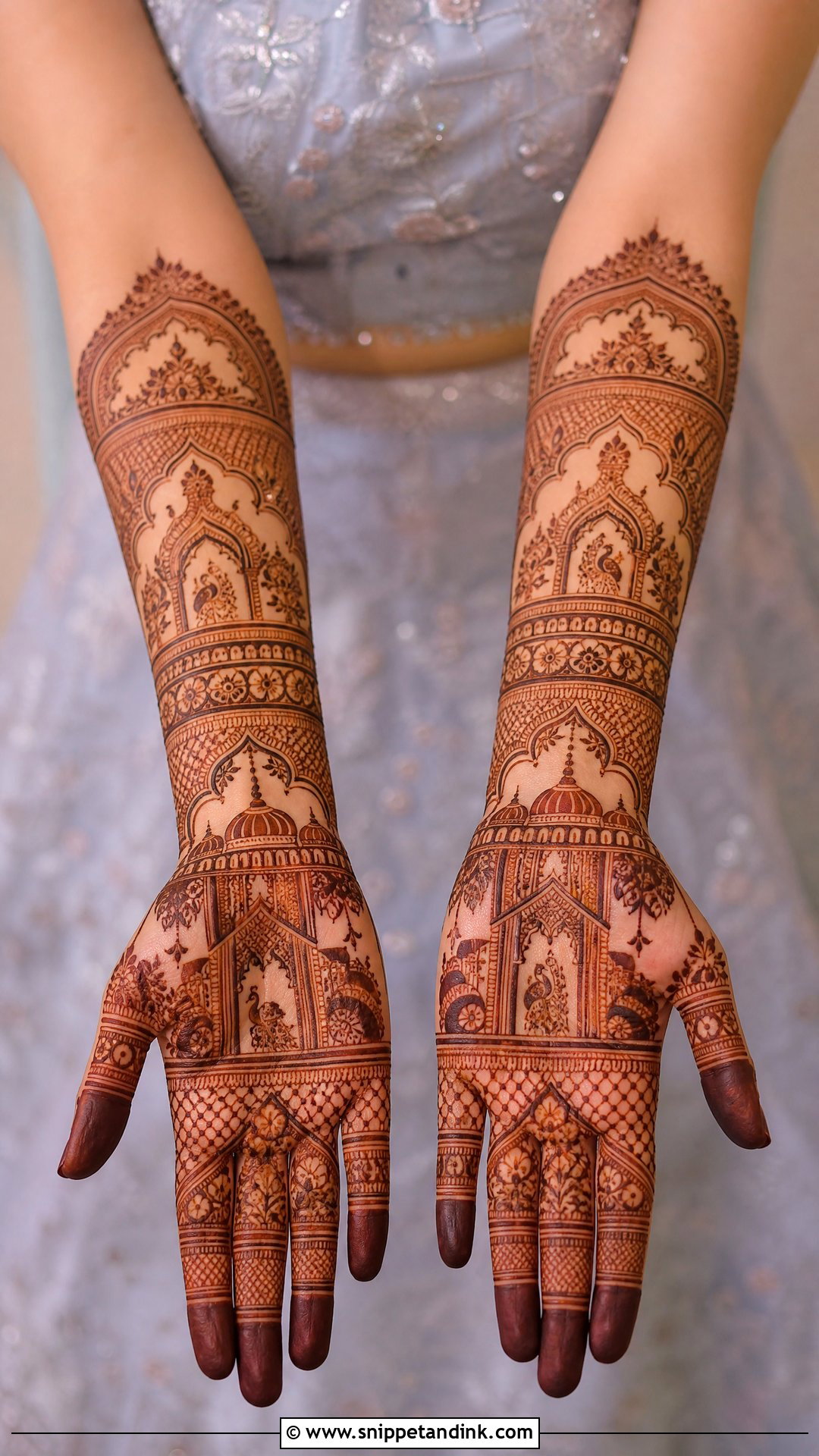
A royal card suits grand celebrations, hotels and formal wedding weekends: palace arches, Mughal frames, deep jewel tones, gold foil effects and elegant type. Emerald, maroon, navy and antique gold make it feel rich. I center the names inside an arch and align everything else neatly below. One practical note: printed gold ink and real foil are very different. Gold ink prints as a flat mustard-brown; only foil stamping gives the metallic shine you see in a template preview.
17. Minimal Mehndi Invitation Card Template
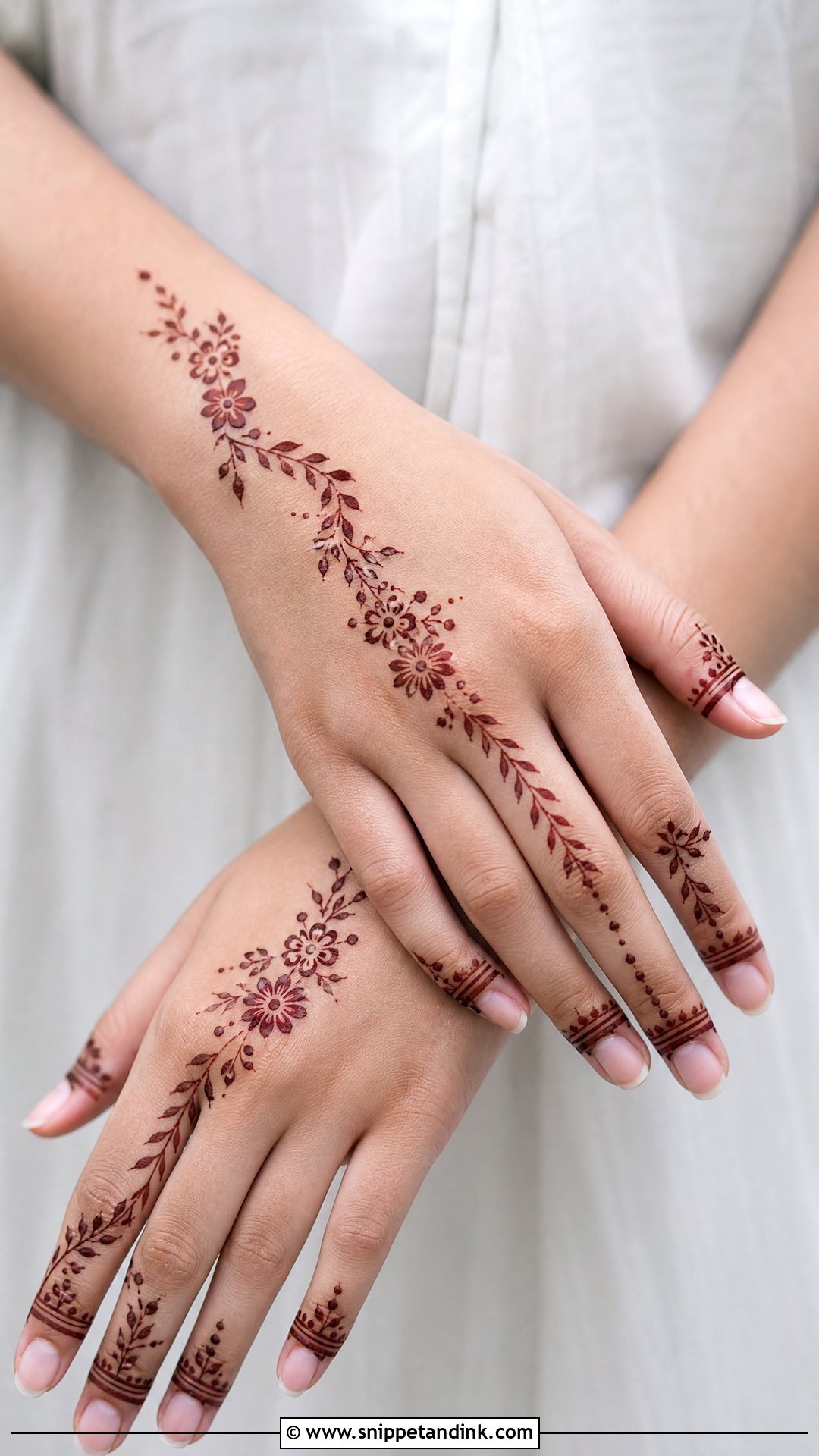
A minimal card uses a plain background, light henna line art, one floral corner and neat type. Sage, ivory, beige, dusty rose and muted gold are good colour choices. It suits small gatherings, home functions and digital invites where reading speed matters. Minimal doesn’t mean empty. Each element gets space, so the type and spacing have to be perfect, because there’s no decoration to hide a crooked line.
18. Modern Mehndi Invitation Card Template
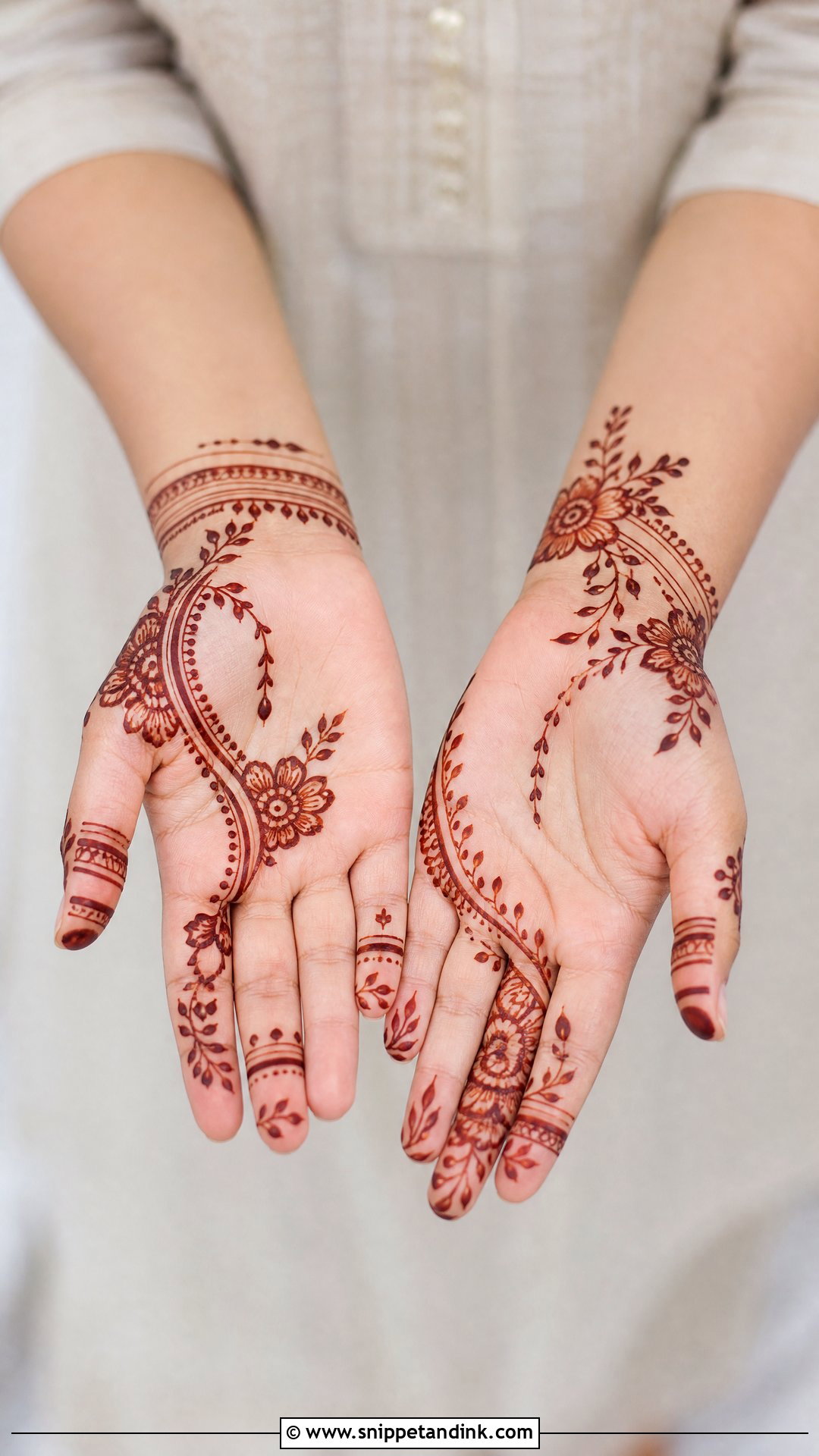
A modern card mixes cultural artwork with current design: bold type, asymmetrical layouts, colour blocking, abstract florals and light henna accents. Olive with cream, terracotta with blush or mustard with white all feel current. A QR code, wedding website or RSVP link fits naturally here. Asymmetry is harder than it looks, so I’d still line everything up to an invisible grid; random placement reads as a mistake, not a style.
19. Watercolor Mehndi Invitation Card Template
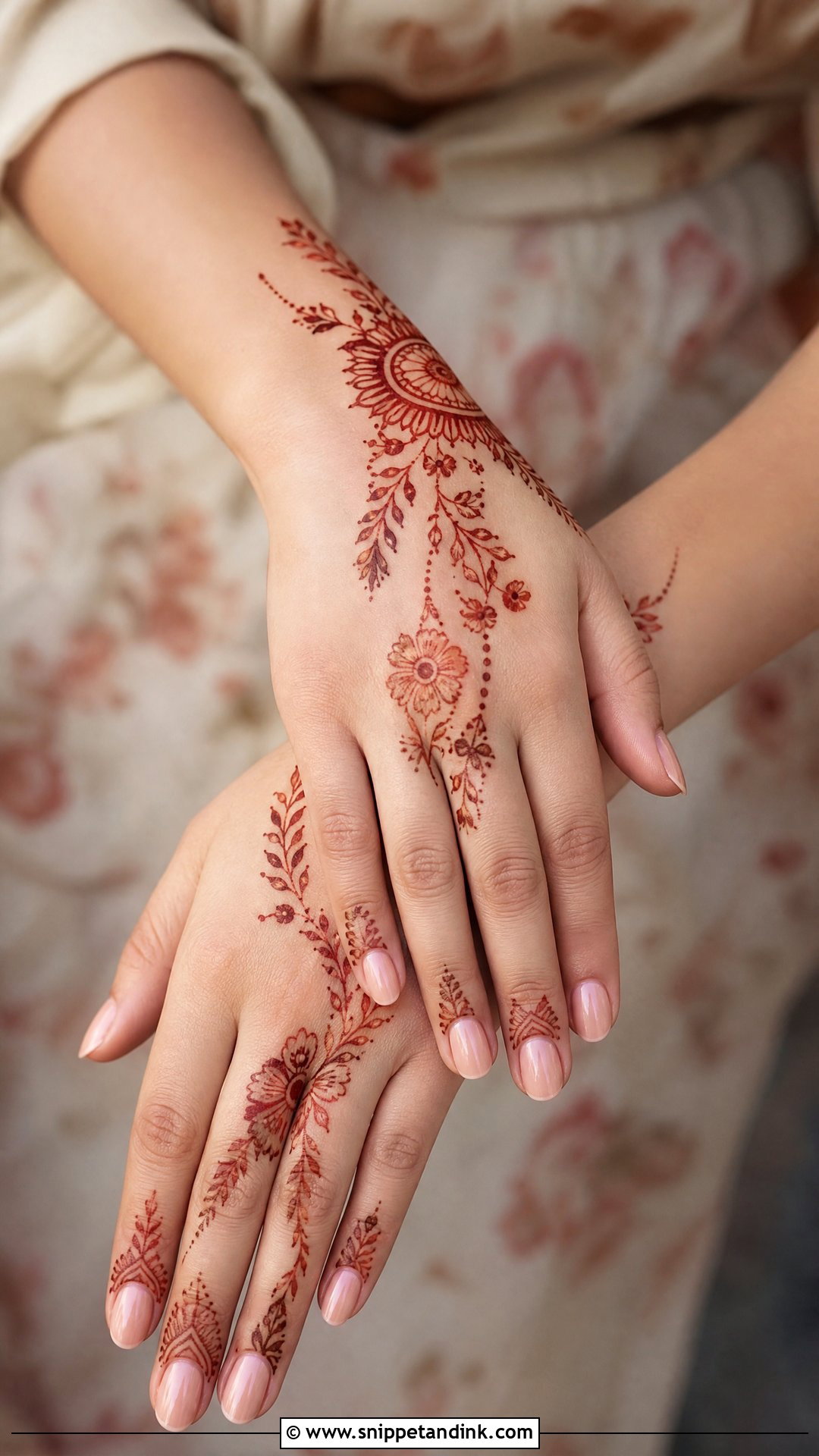
Watercolor gives a soft, painted card with washes of yellow, green, orange, pink or peach under floral accents. It suits outdoor functions, brunches and garden parties. The wording needs dark text, because thin pale letters vanish over painted texture. Hand-drawn leaves, marigold clusters or delicate henna borders pair well. Keep the washes light behind the text; the card should look airy, not muddy.
20. Digital Mehndi Invitation Card Template
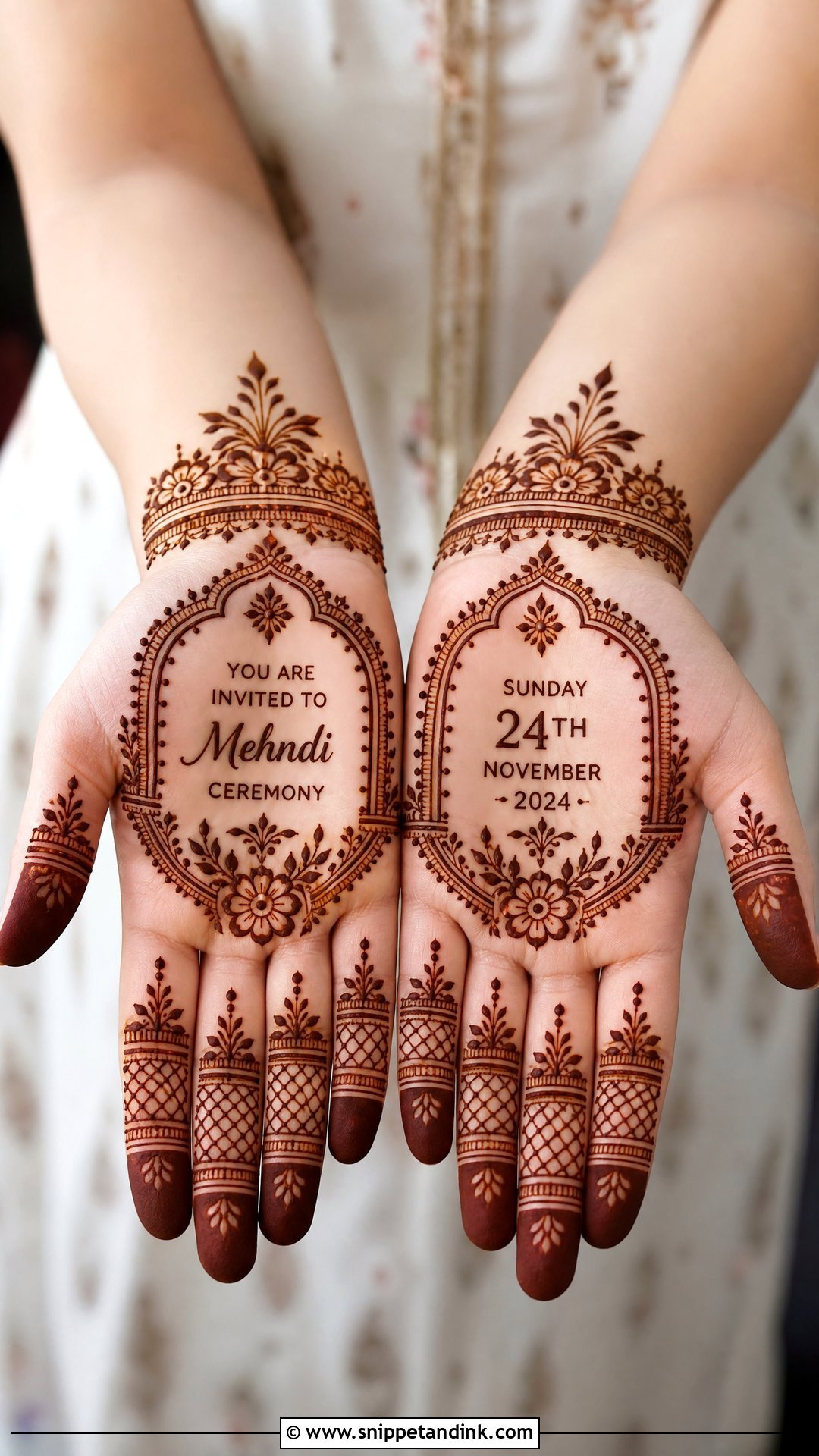
A digital card has to read well on a phone. That means clear text, strong contrast, generous size and a vertical layout for WhatsApp, email or social sharing. Bright colours work, but tiny details vanish on a small screen. Stick to essentials: names, ceremony, date, time, venue, dress code and RSVP. I check every digital design by viewing it at actual phone size before sending, not zoomed in on a laptop.
21. WhatsApp Mehndi Invitation Card Template
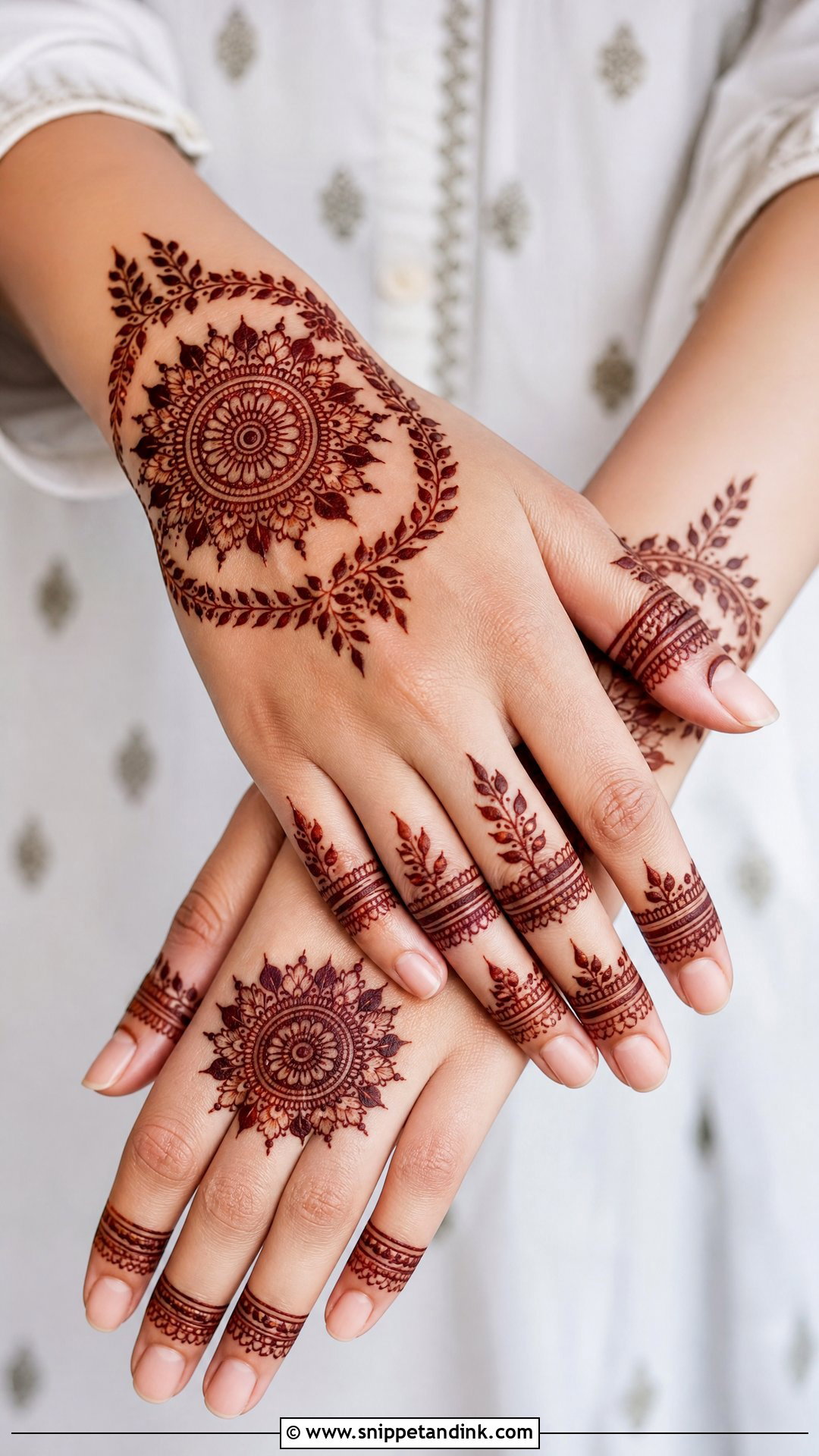
A WhatsApp invite has seconds to make its point, so I lay it out vertically: ceremony name at the top, names in the center, details below. The background should be festive without distracting. Green, yellow, cream and orange are reliable. One strong visual, such as a floral arch, a dholki, a bride or a henna border, is enough. WhatsApp compresses photos, so send the card as a document or a high-resolution file if fine text gets blurry.
22. Printable Mehndi Invitation Card Template
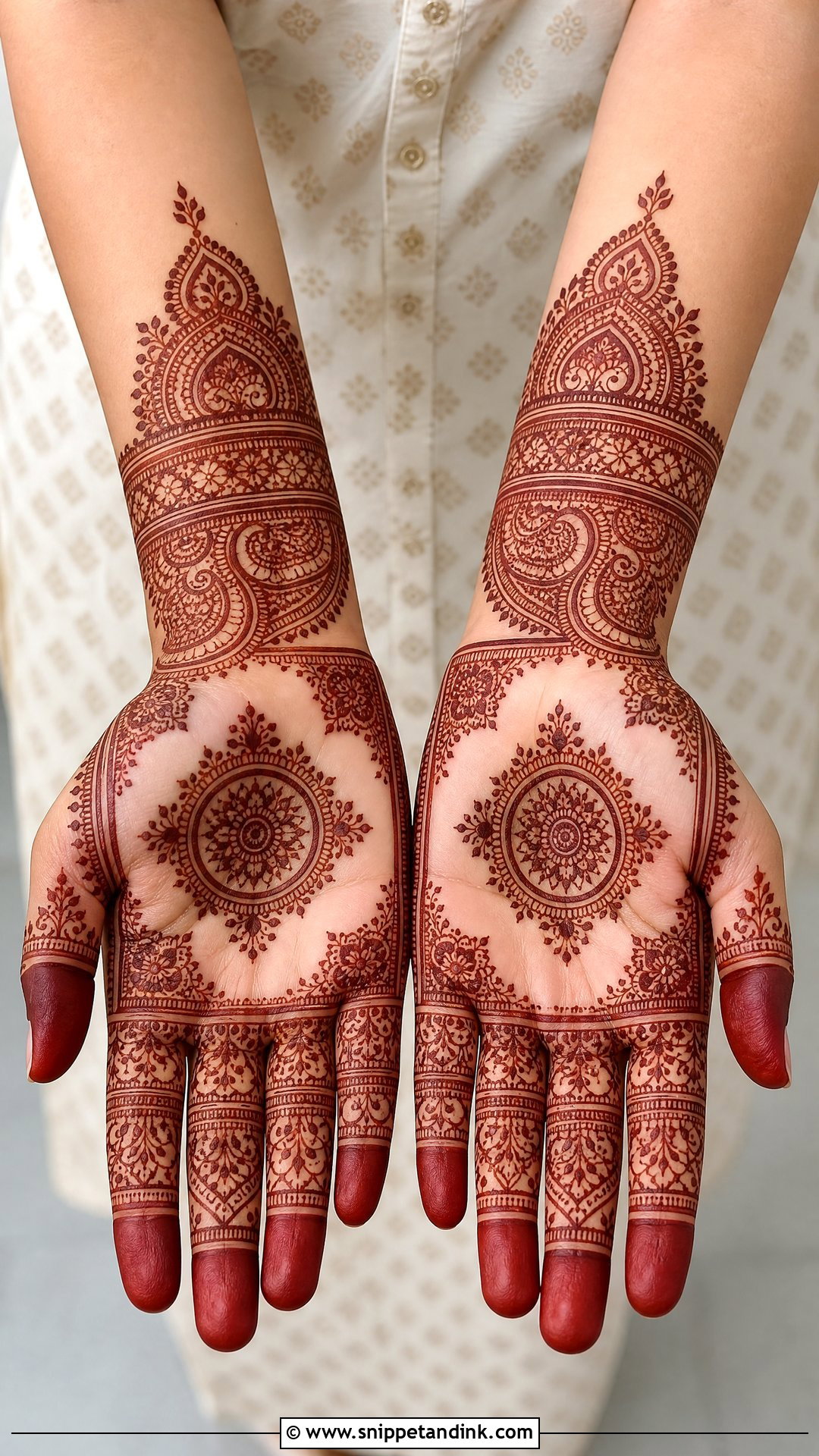
A printable card needs margins and colour planned for paper. Common sizes include 5×7 inches, A5 or square cards. Keep important text well inside the edges, because trimming can wander slightly. Rich emerald, mustard, maroon and gold look good, but always print one test copy before the full run; screen colours rarely match paper exactly. Matte paper feels traditional; gloss makes colours pop but shows fingerprints.
23. Editable Canva Mehndi Invitation Card Template
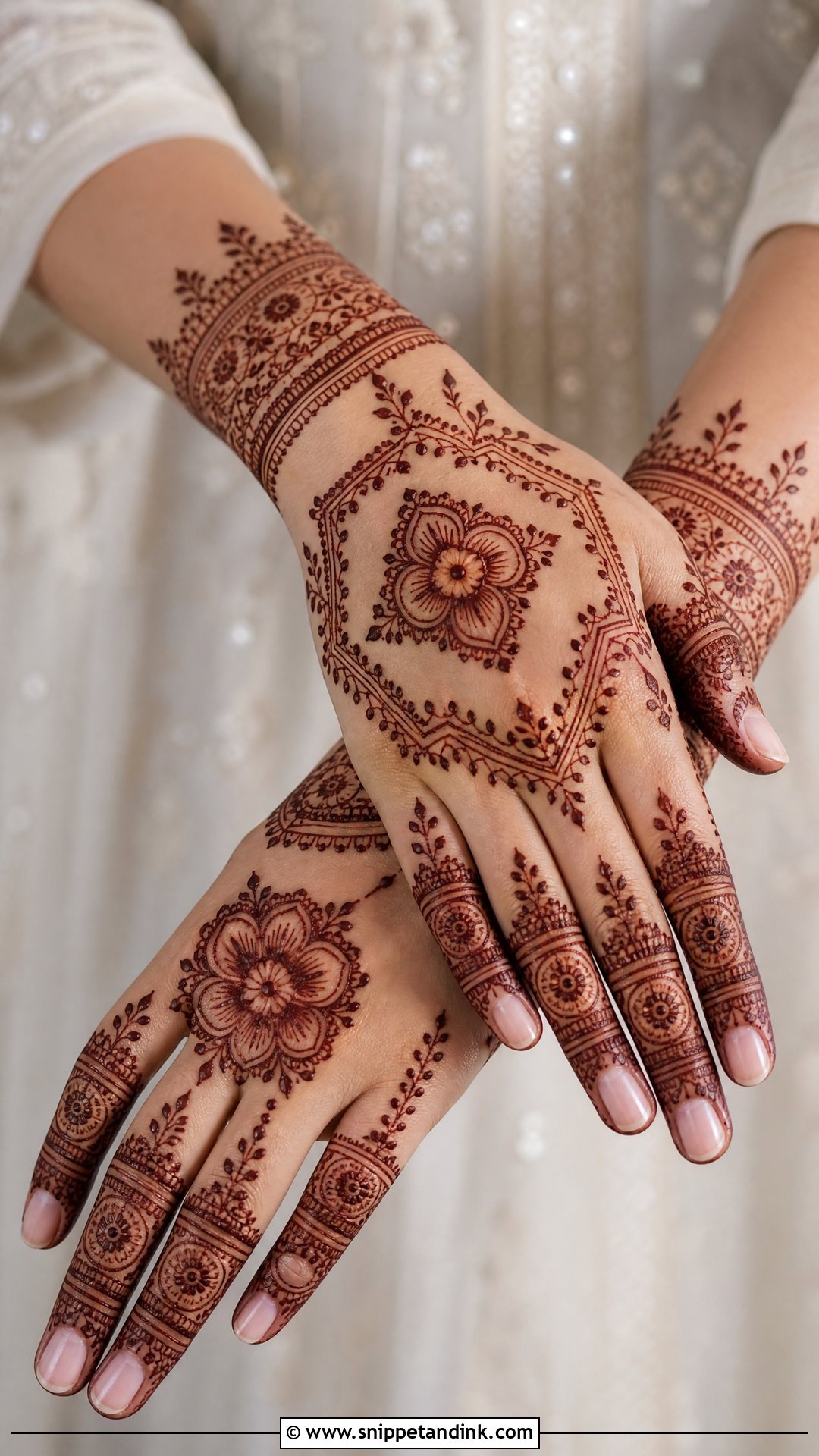
An editable Canva template gives you control without paying a designer for every change: names, dates, venue, RSVP, colours, fonts and sometimes the artwork. That’s helpful when plans shift or different family groups want different wording. Pick a template with organised text boxes and plenty of space around the words. If the wording sits tight against the artwork, every edit becomes a fight. Export separately for print and for phone; the print file needs higher resolution.
24. Video Mehndi Invitation Card Template
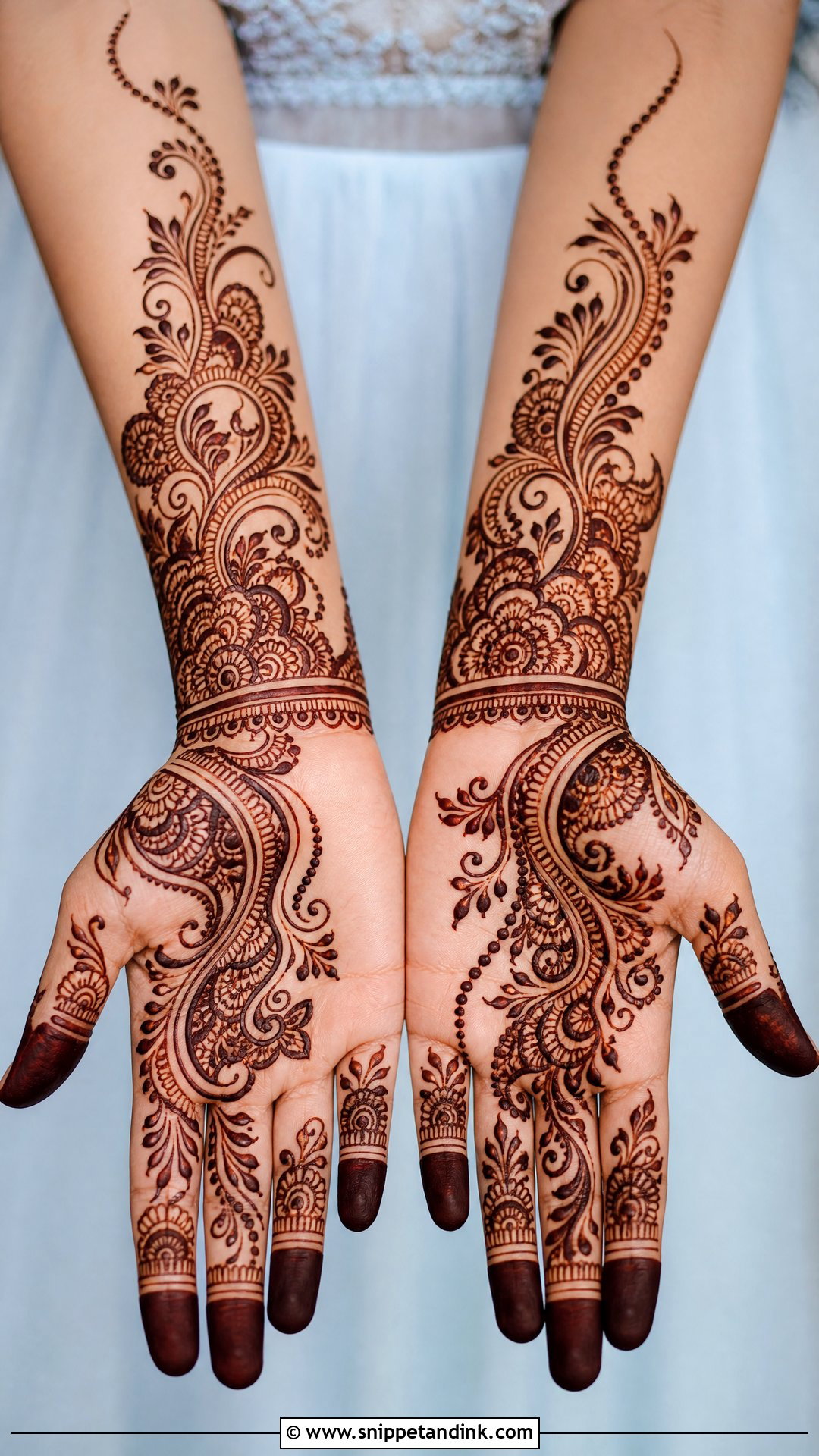
A video invite builds excitement with animated florals, music-inspired graphics, henna patterns, couple illustrations and moving text. It’s made for WhatsApp and social sharing. I keep it short, usually under 30 seconds, and put the ceremony and names on screen in the first few seconds before anything else. Then the date, time, venue and RSVP get clear slides, held long enough to read. A video template suits lively mehndi nights, destination weddings and younger guest lists; send a still card too, for relatives who won’t press play.
25. Mehndi Invitation Card Template With RSVP
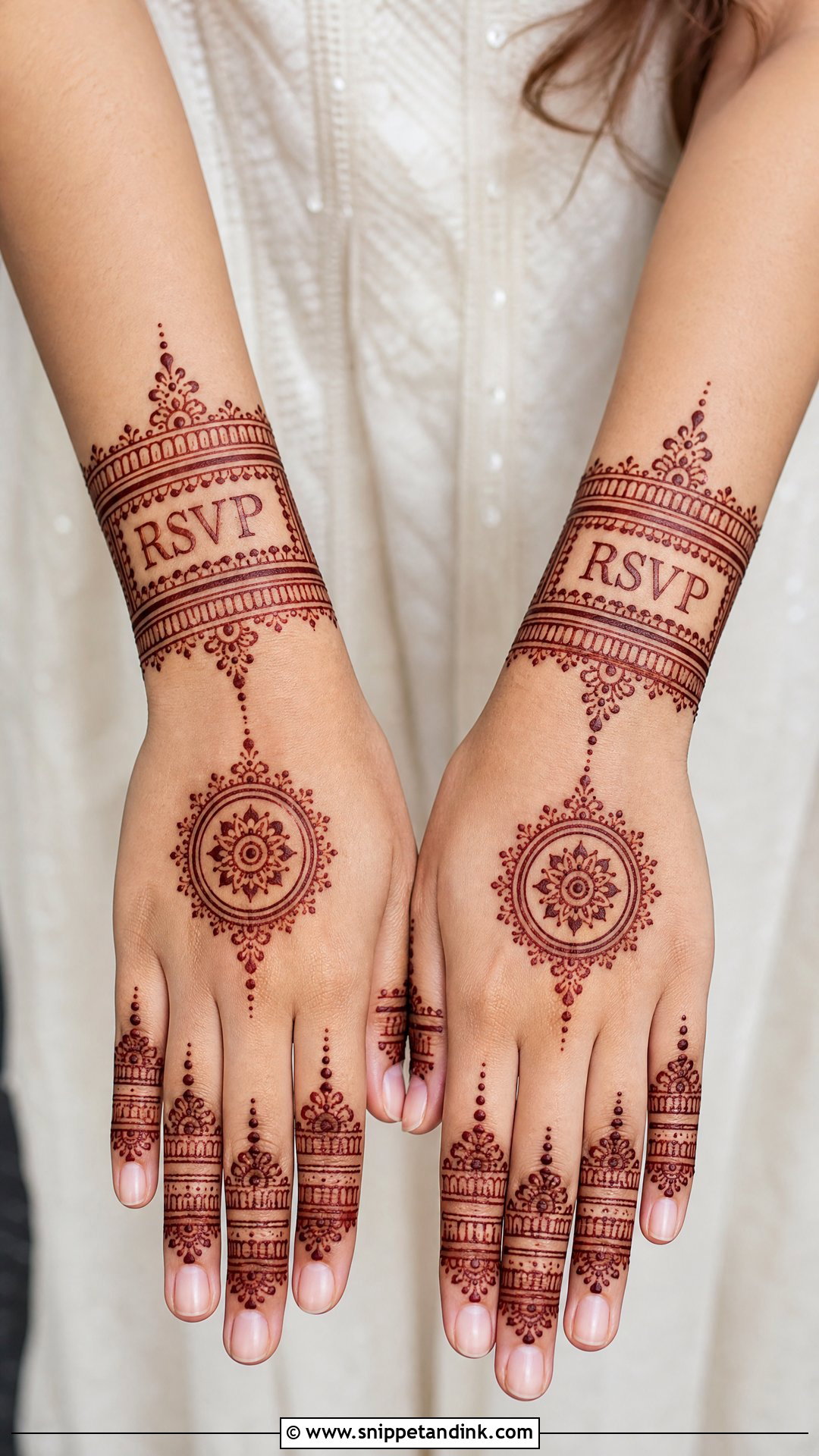
An RSVP card matters when you need numbers for food, seating, transport or favours. The RSVP can be a phone number, email, website or QR code, placed at the bottom where it’s visible but out of the artwork’s way. Organisation is the priority: clear sections for names, date, location, dress code and response deadline. A simple floral or henna border keeps it festive. Always include the deadline; without one, replies trickle in until the day before.
Urdu, Hindi and Gurmukhi Text That Breaks in Templates
Many mehndi cards carry a line or two in a second script, and this is where templates fail most often. Some editors don’t join Urdu letters properly or flip right-to-left text, and Hindi or Gurmukhi characters can lose their vowel marks if the font doesn’t support them. The card looks fine to the person who made it and wrong to every relative who reads that language.
My rule is simple: someone who reads the script fluently checks the final file, not the draft. If the template’s font can’t render it, set that line as an image made in a tool that can, and drop it in.
Sending Dates for Print and for Phones
Printed cards need time for proofs, printing and delivery, so I start the design well before the guests need them. Local guests usually get printed cards several weeks ahead; anyone travelling needs more notice. Digital invites can go out later, but they work best as a follow-up too. A short reminder a day or two before, with the map link again, saves the family a lot of phone calls.
Readable First, Festive Second
A mehndi invite gives guests their first glimpse of your celebration’s colour and mood, but it only succeeds if they can find the date and address in a few seconds. A green floral card, a royal arch, a dholki theme, a minimal digital layout or a printed family card can all work, as long as the wording is clear. Get the names, timing, venue and RSVP right first, then let the artwork carry the mood. Match the design to where the event is happening and what people should wear, and send it with enough time for guests to plan.


Leave a Reply