
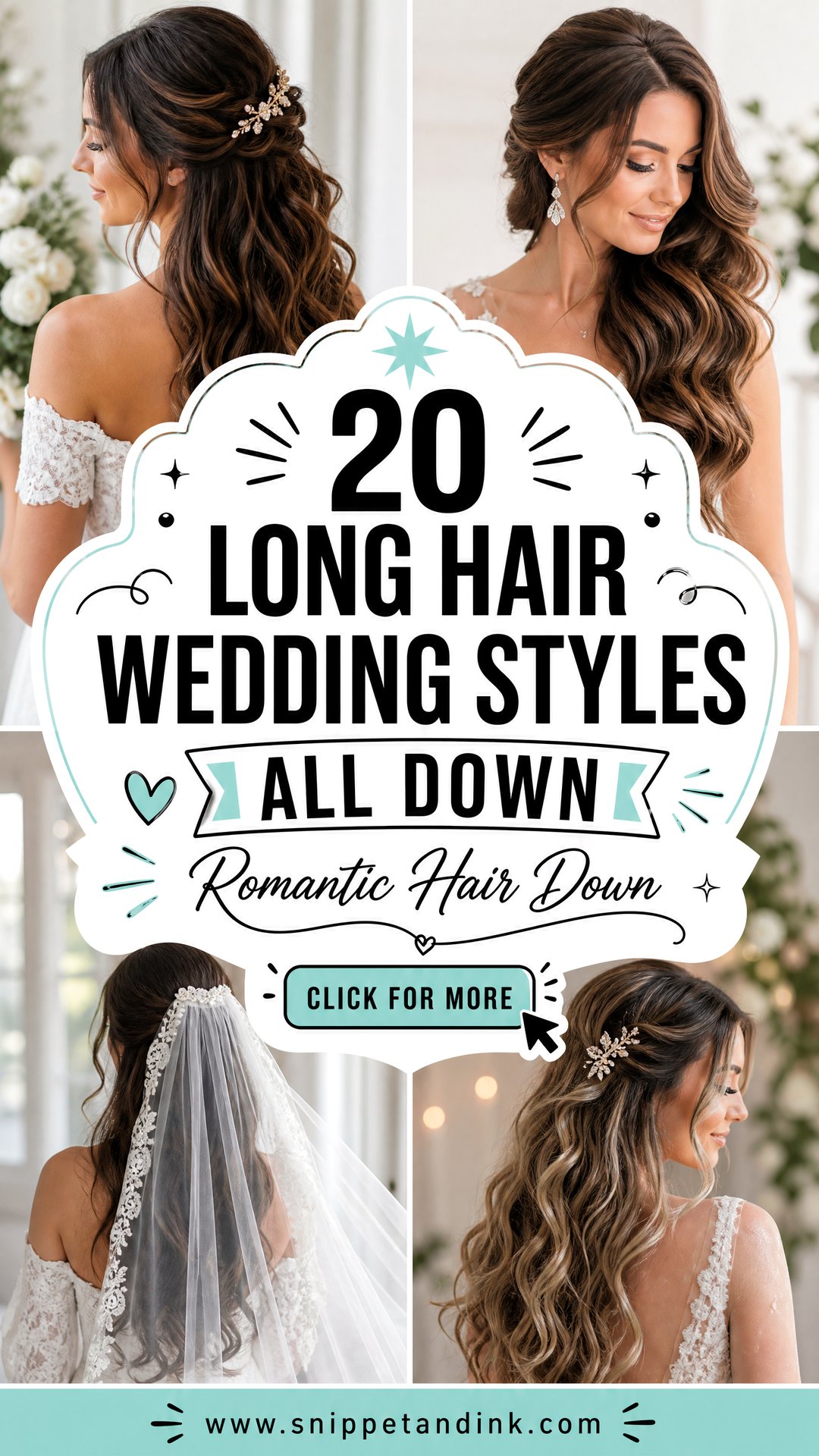
Hair worn completely down looks like the simplest bridal option, and from behind the chair it is the one I plan most carefully. Nothing is pinned, so nothing is holding the shape except the way the curl was set and the product underneath it. Get that right and long hair moves when you walk, sits softly under a veil and still has shape at the first dance. Below are 20 all-down styles I’d happily put on a bride, with notes on how each one is built and who it suits. They run from beachy textures to sculpted vintage waves, so read them with your own hair texture in mind.
Loose Styles Fall Faster Than Updos, So I Build Them Differently
An updo is held by pins. A down style is held only by the curl itself, so the work happens in the prep and the setting. When a bride asks me why her down curls were gone by dinner, the answer is almost always one of three things: hair washed that morning with a conditioner that left it too slippery, curls brushed out while still warm, or no hold product on the hair before heat touched it.
Here is the order I work in on the morning:
- Wash the day before, not the morning of, unless your hair gets oily fast. A little natural grip helps curl hold.
- Blow-dry with a mousse or volumising spray at the roots and a light heat protectant on the lengths.
- Curl in small sections and pin each one in a loop while it cools. This step is the one people skip.
- Release and brush out only after the last pins have been in for at least fifteen minutes.
- Finish with a flexible hairspray, sprayed from a distance so the hair still moves.
Expect a down style to relax by around a third over a long day. That’s normal and it often looks better in the evening photos. What you don’t want is the bend gone completely, which is why I set it firmer than the inspiration photo.
1. Loose Beach Waves for Wedding
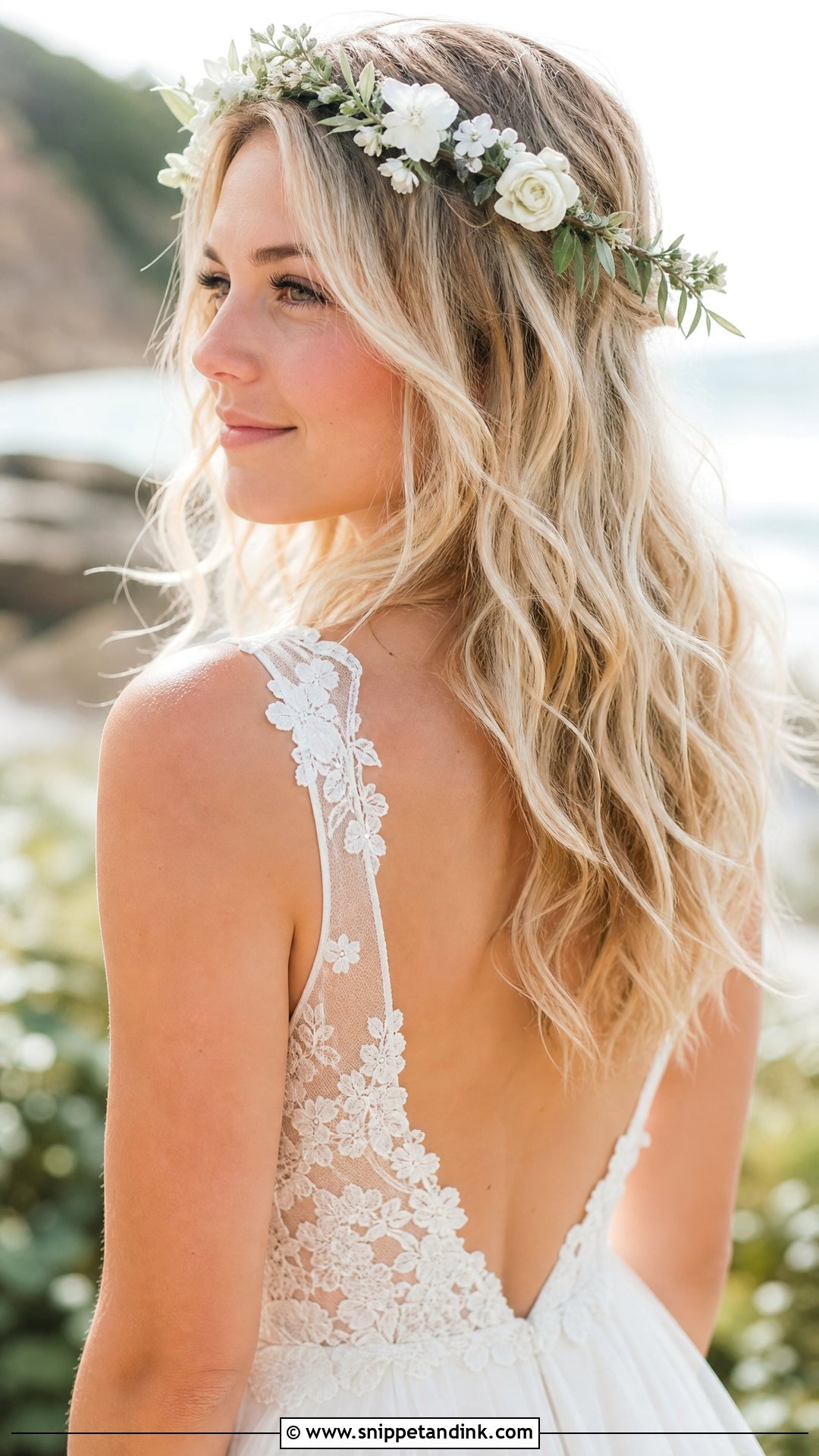
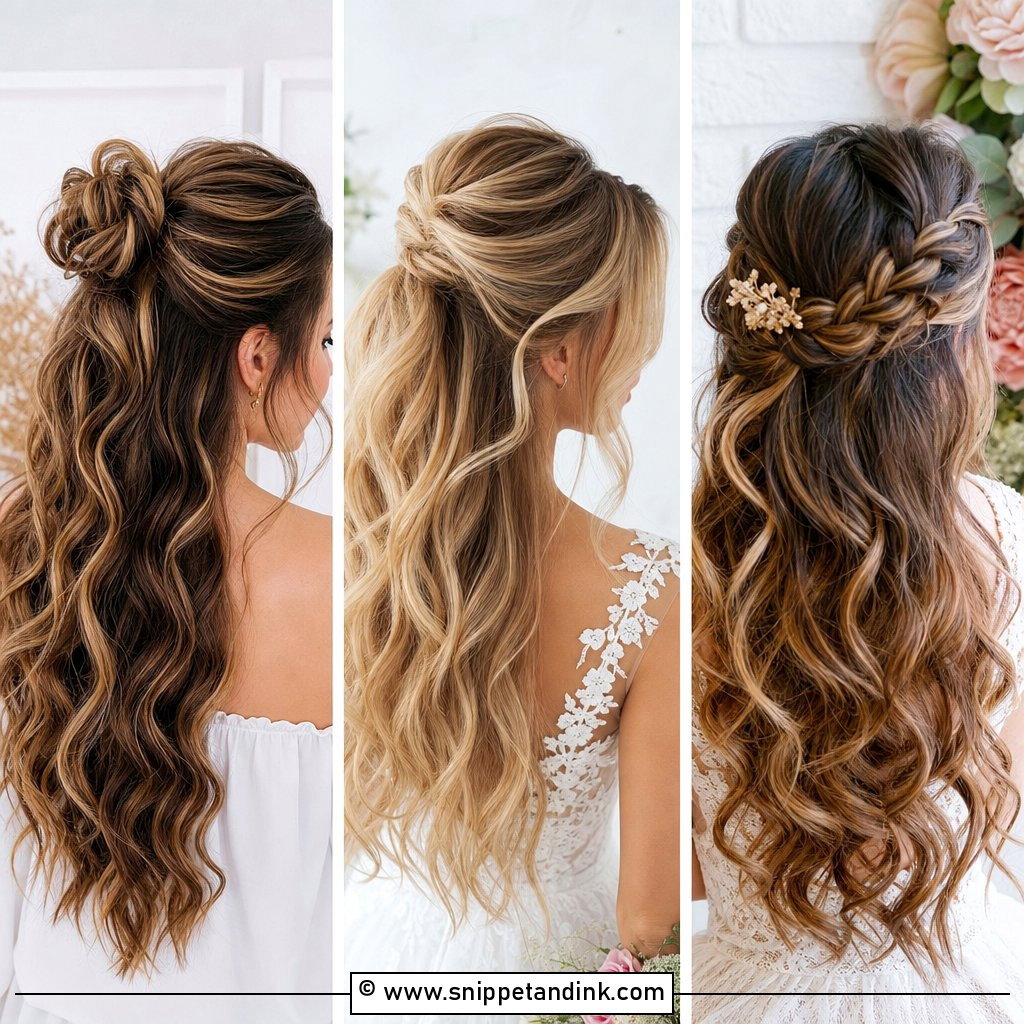
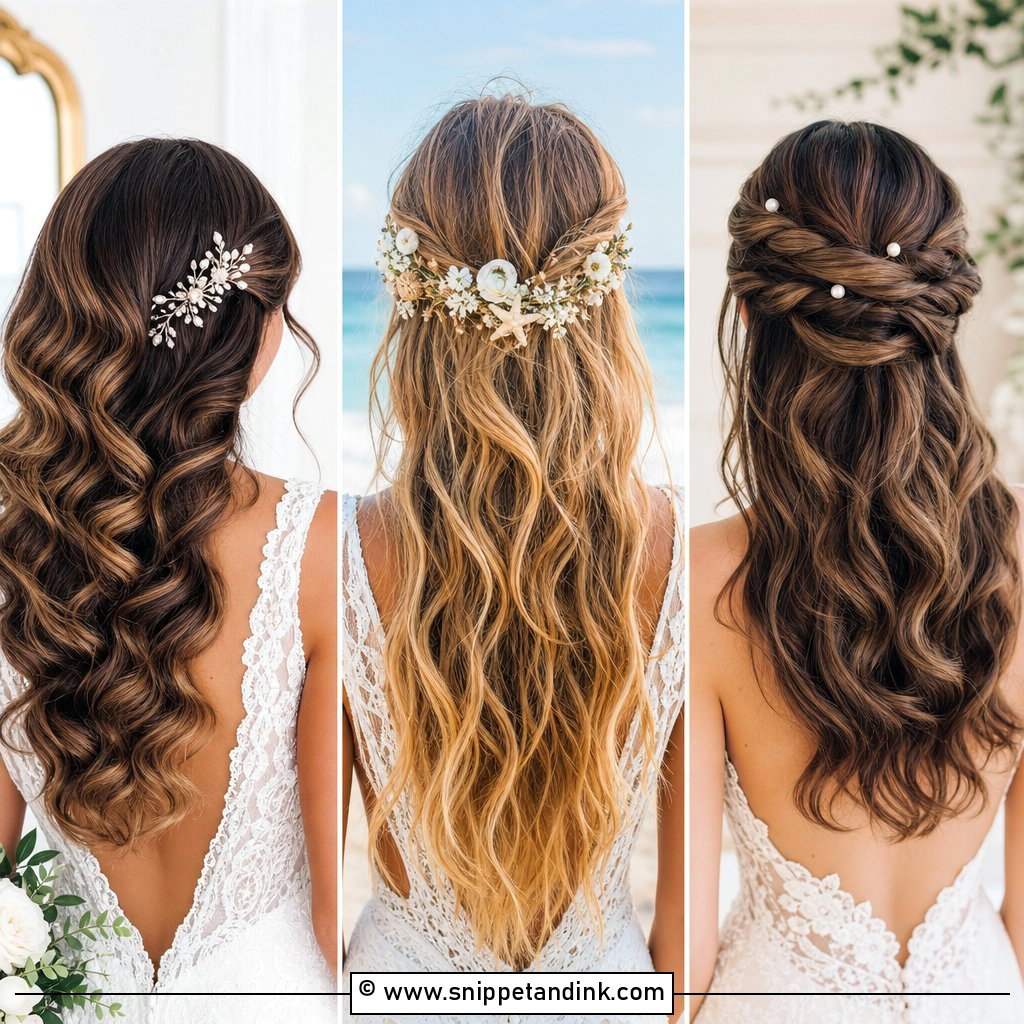
That soft, tousled texture you get after a day at the sea is what loose beach waves copy. I wrap the mid-lengths around a wand and leave the last two inches straight, because curled ends look like a prom set rather than a beach. Once the waves cool, I break them up with my fingers and mist sea salt spray through for grip. On very fine hair, salt spray alone won’t hold the bend past lunch, so I add a light texturising spray underneath. These sit best at outdoor and barefoot weddings, with a flowing dress and maybe a thin floral crown.
2. Old Hollywood Waves Wedding Hair
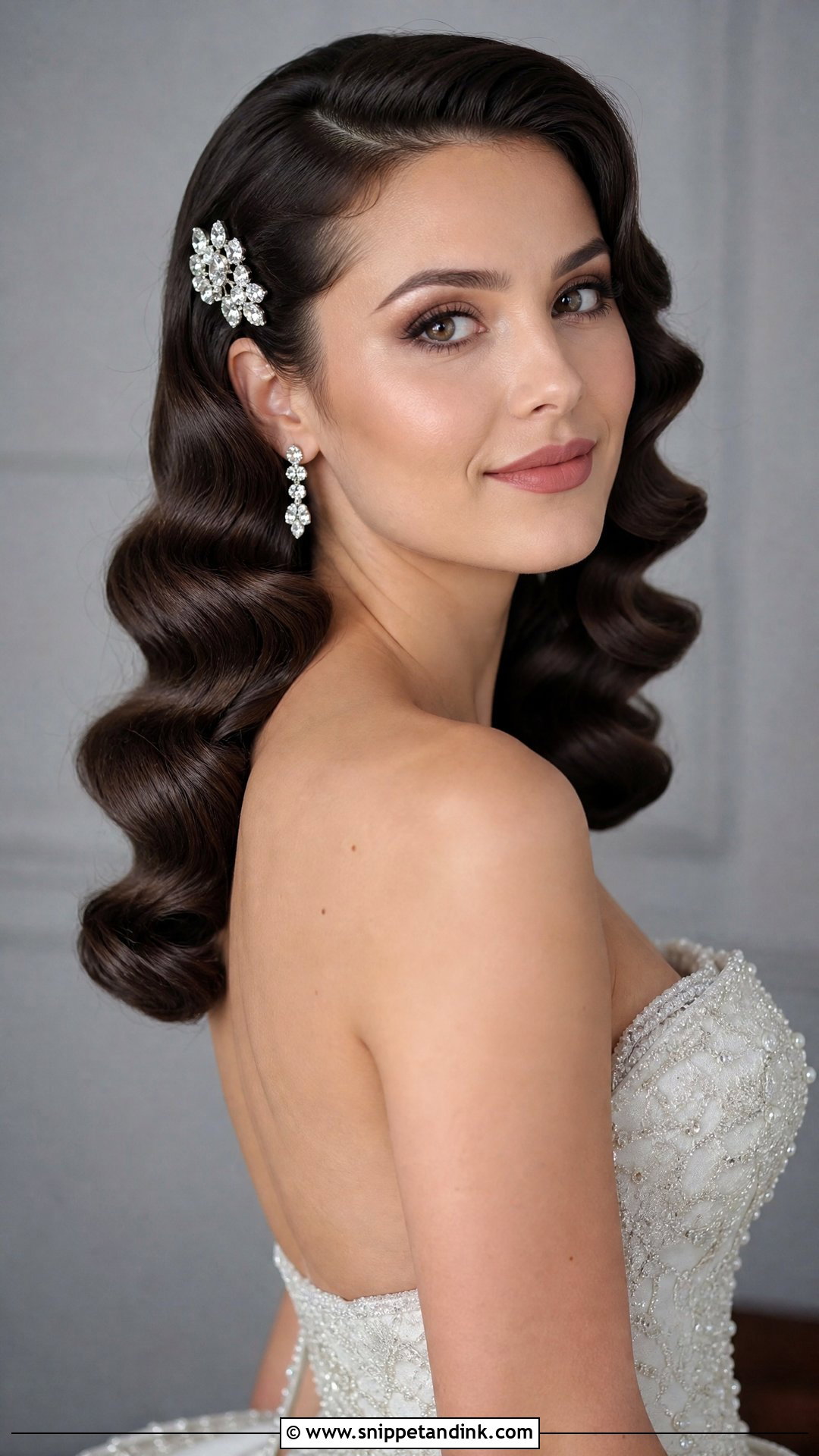
Old Hollywood waves are a set, not a curl. Every section is wound in the same direction, pinned to cool, then brushed out until the ripples join into one sculpted S down the side of the head. The deep side part is what makes it read as vintage. I finish by pressing the crest of each wave with clips and a fine comb, then removing them once the spray dries. Be warned that this look shows every frizzy strand, so it suits smooth or relaxed hair far better than naturally coarse texture. A jeweled clip at the part and a classic ballgown are all it needs.
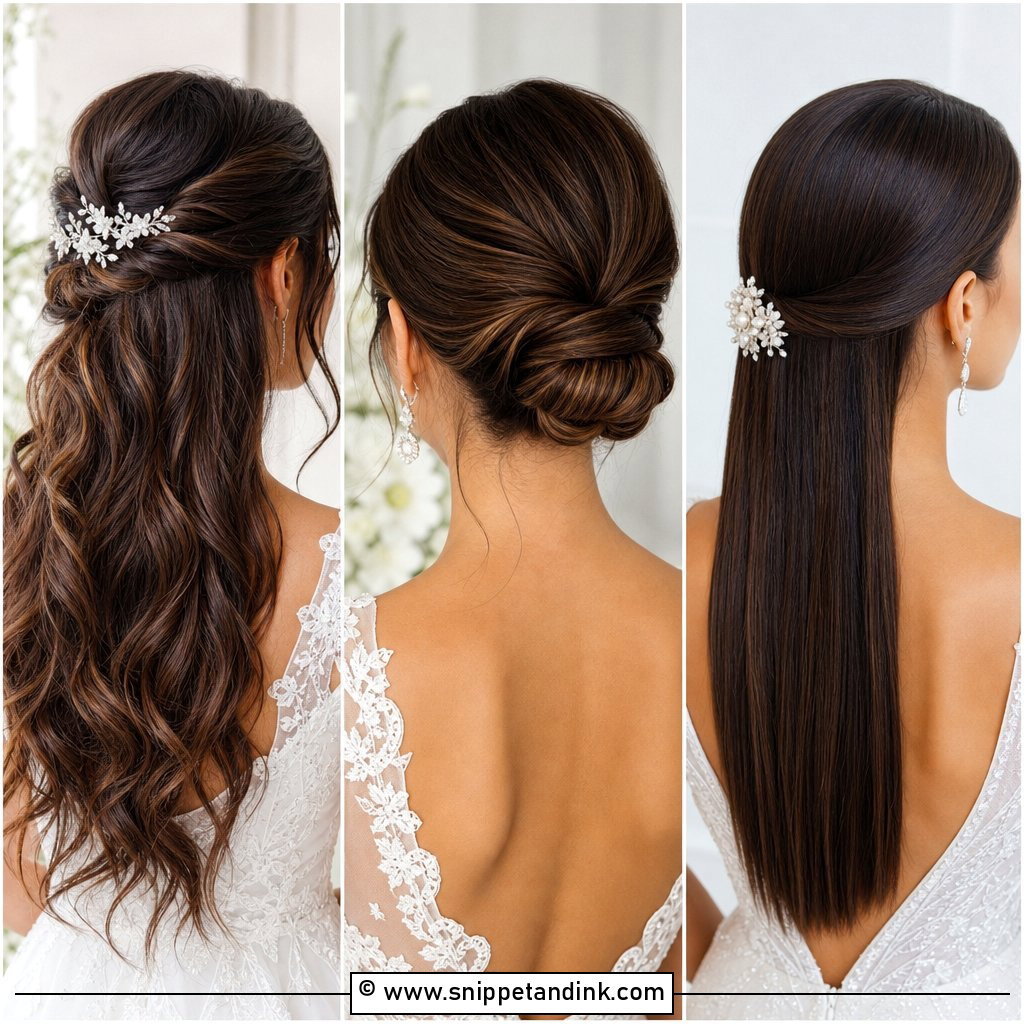
3. Sleek Straight Wedding Hair Down
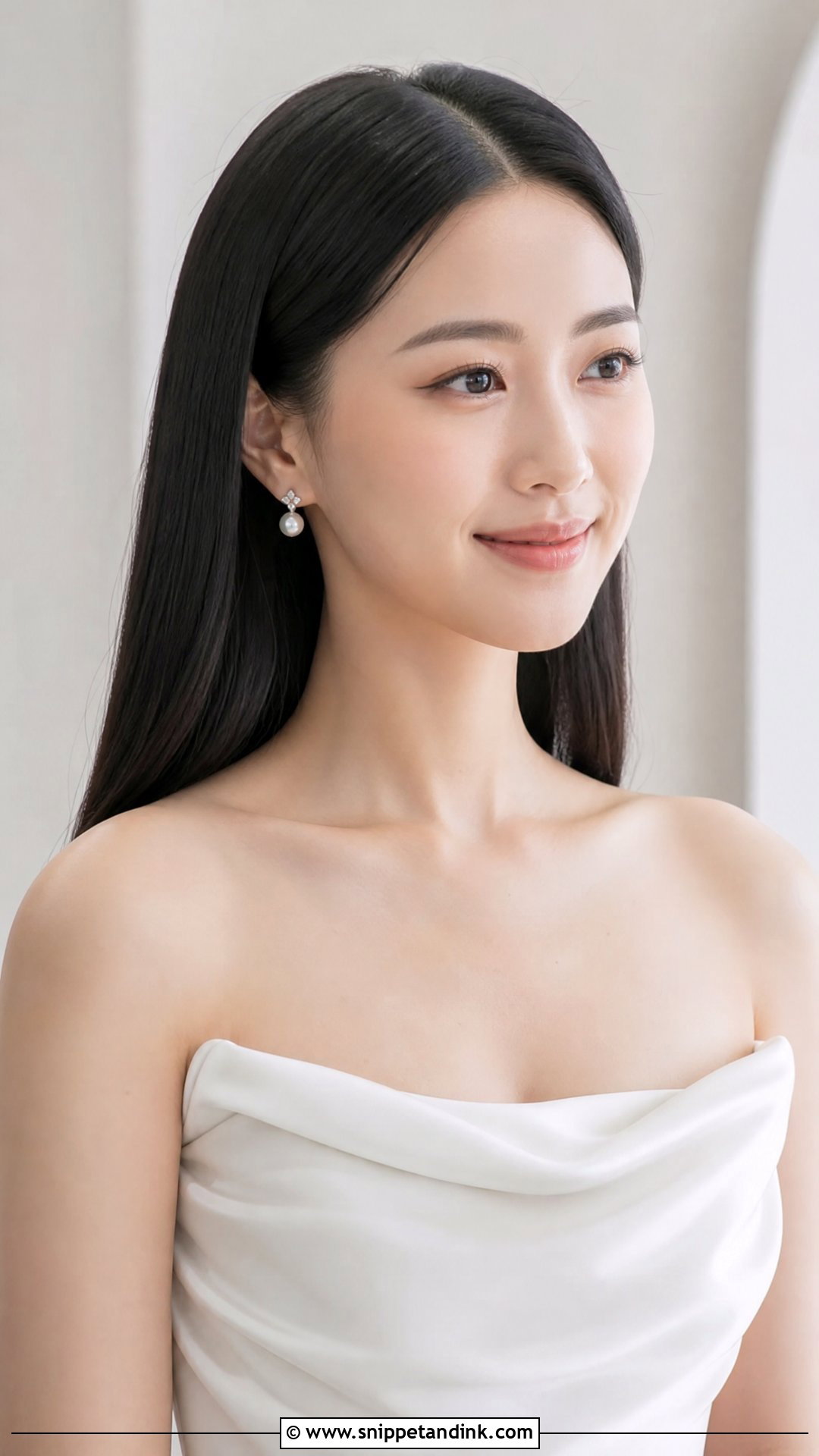
Sleek, straight hair looks minimal, but it’s the least forgiving style on this list. Any kink from a hair tie or a bad night’s sleep shows up, so I ask brides to arrive with hair washed and blow-dried smooth. I press small sections with a flat iron at a moderate heat, add a drop of serum only on the lengths, and keep it off the roots so the middle part doesn’t go flat and oily by evening. It lets a detailed dress or a sleek veil do the talking. I’d steer you away from this one if your hair puffs up the moment it meets humidity.
4. Boho Waves Wedding Hairstyle
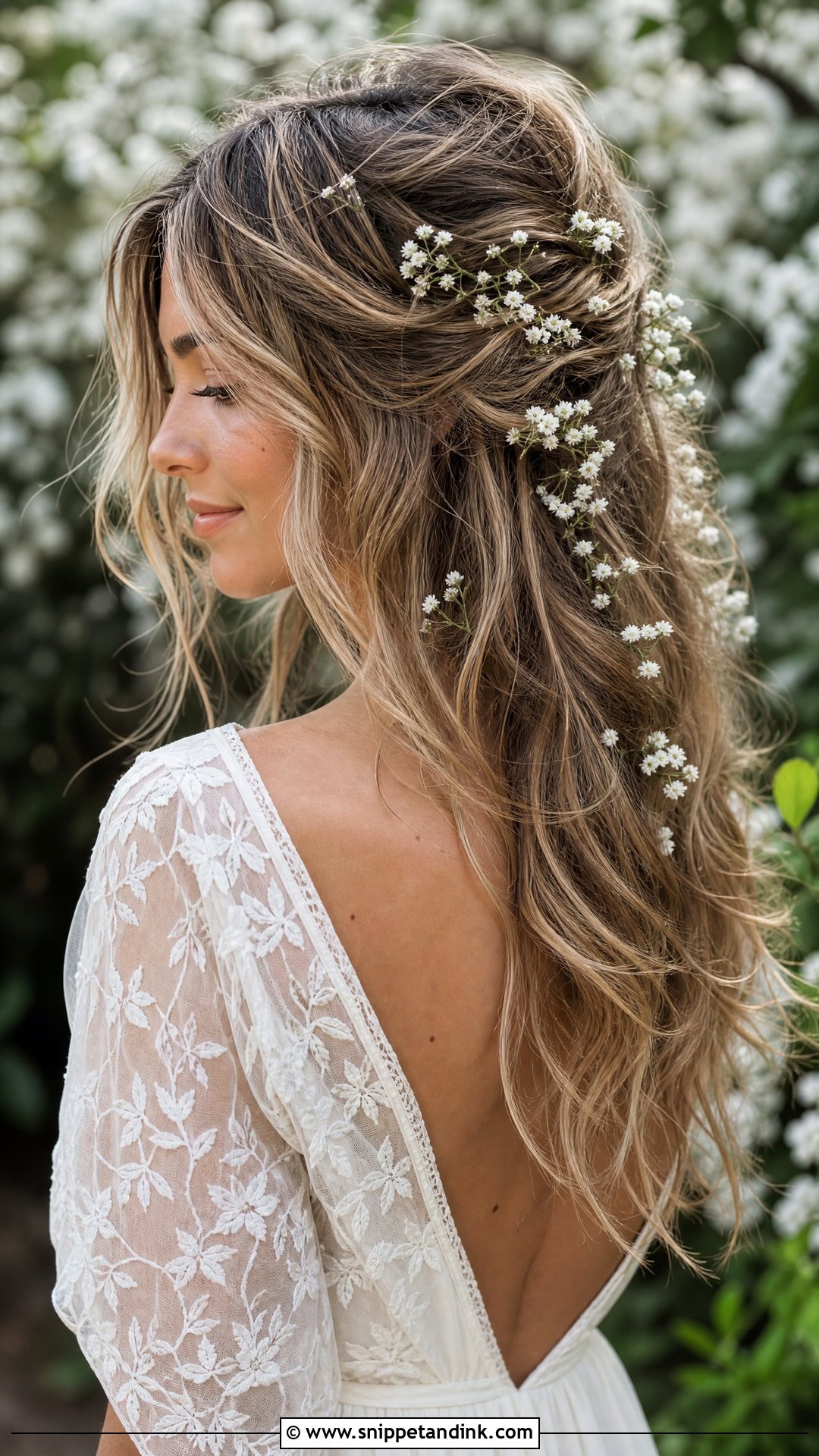
Boho waves are messier and airier than beach waves, and the mess has to be built on purpose. I alternate the direction of each curl so they don’t lock together into ringlets, then shake them out with sea salt spray and a little dry texture spray at the roots. Flower crowns, baby’s breath and hair vines grip this texture far better than they grip smooth hair. Garden and festival-style weddings are its natural home. The trade-off is that it softens through the day, so it should look a touch too done when you leave the chair.
5. Voluminous Curls Wedding Hair
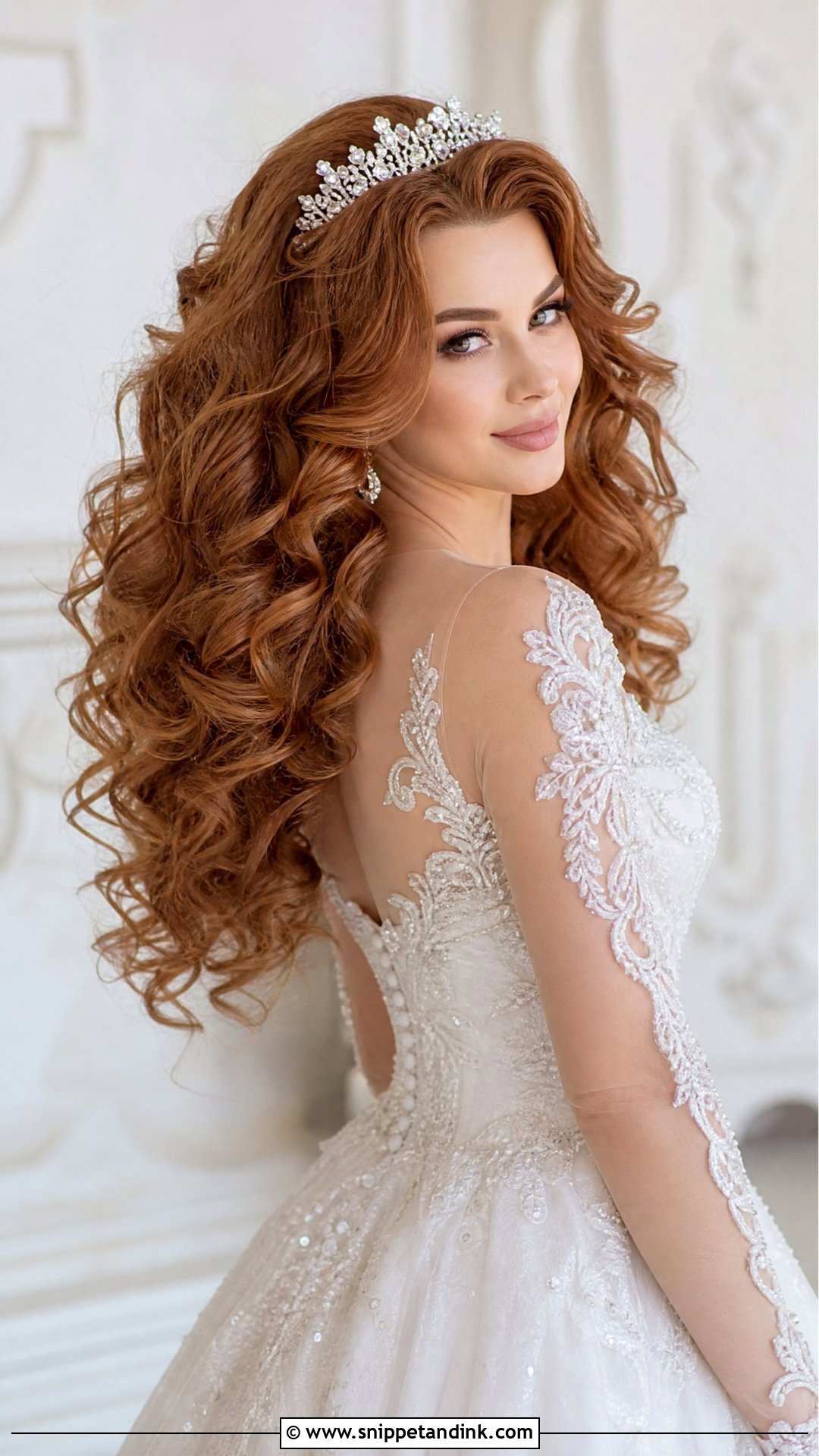
Big curls need volume built at the root before a single curl goes in, otherwise the weight of long hair drags everything flat by the reception. I set the crown with velcro rollers while I curl the lengths, then let every curl cool fully before brushing it into soft, full waves. The result moves a lot, which I love in walking photos. A tiara or a few floral pins sit comfortably in this much body, and it holds up to both fitted gowns and full ballgowns. If your hair is very heavy, expect the bottom third to relax by evening and plan a quick touch-up.
6. Half Up Half Down Wedding Hair
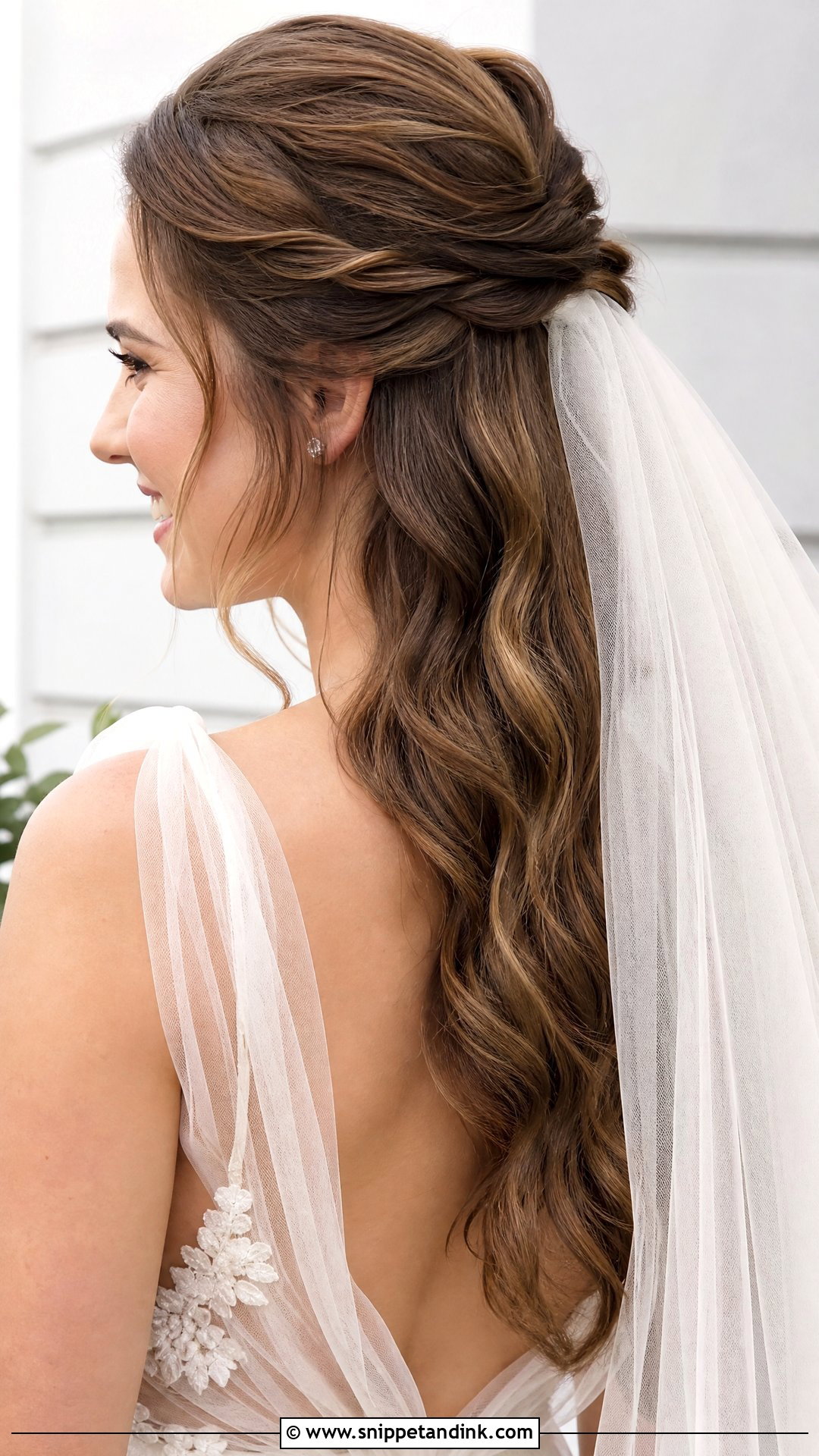
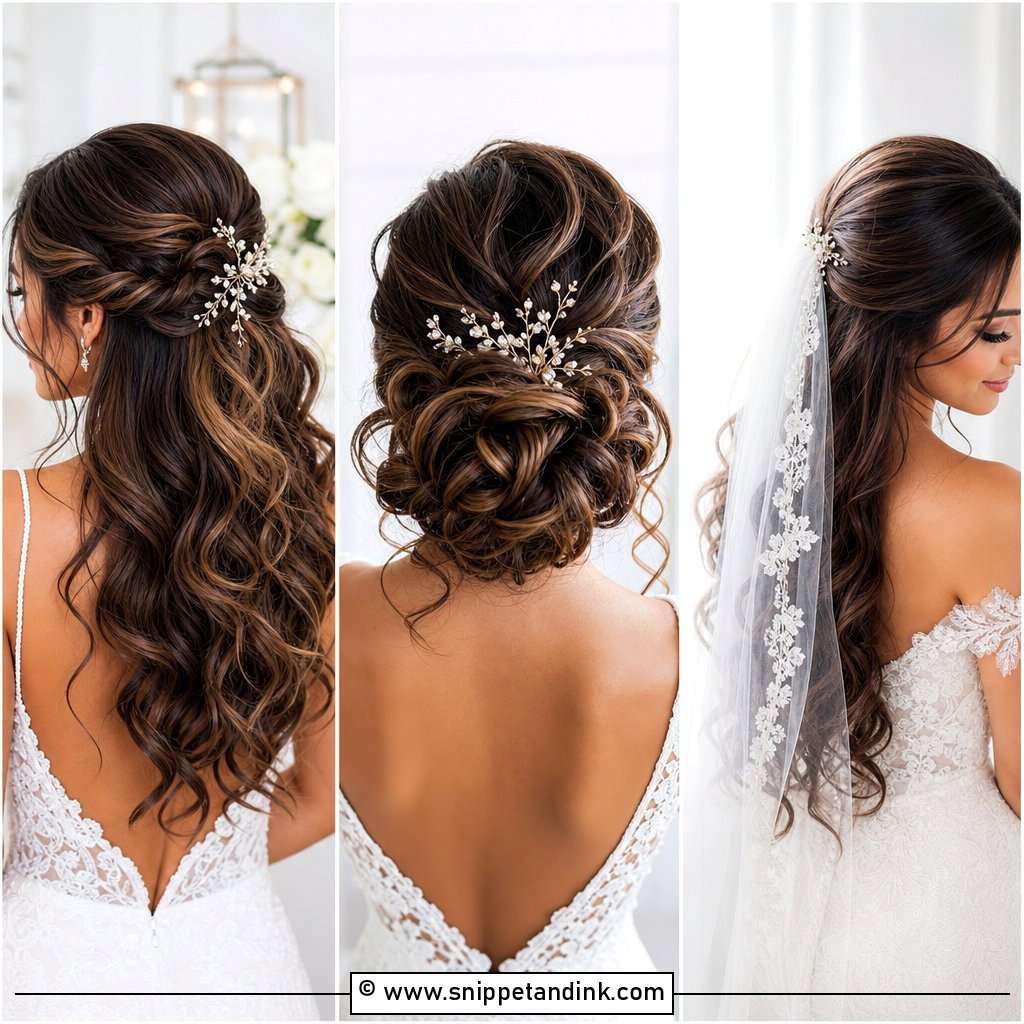
Half up, half down is my usual answer for the bride who can’t decide. The top section comes back, the lengths stay loose, and you get both your face clear and your length on show. I often add a small bump or two twists at the crown, which gives the veil comb something solid to grip. That anchor is the real advantage: a comb pushed into loose hair slides, while a comb pushed under a pinned section stays put. It flatters most face shapes and suits formal and relaxed weddings alike.
7. Side Swept Wedding Hair Down
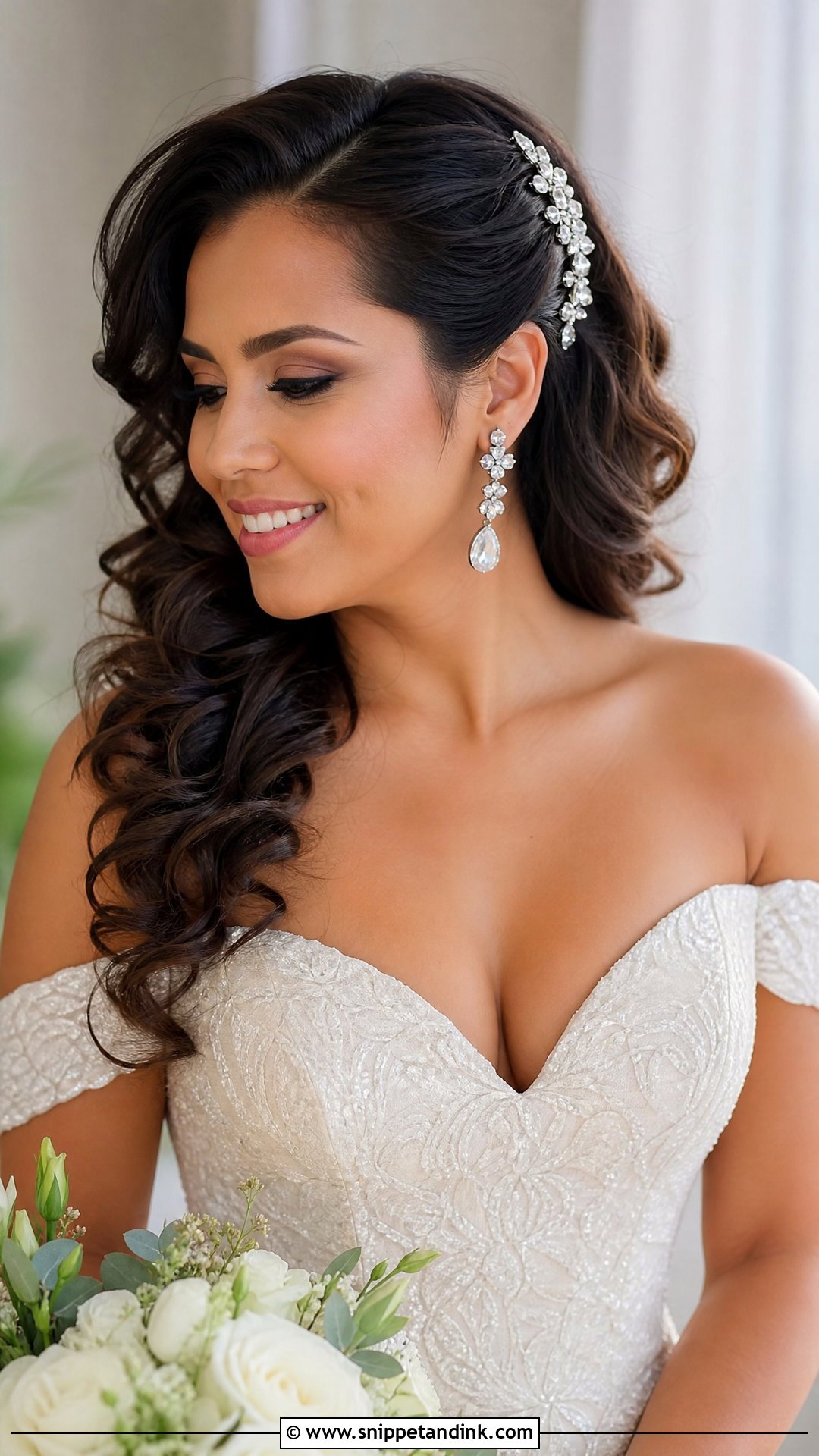
Sweeping all of your waves over one shoulder throws the whole look to one side and opens up the other ear and neckline. To stop the hair drifting back to centre, I pin a hidden row of crossed bobby pins behind the ear on the bare side, then lay the curls over the opposite shoulder. Statement earrings get the attention here. Off-shoulder and one-shoulder gowns pair especially well with it, as long as the swept hair falls on the side the strap does not. A few jeweled clips along the pinned side hide the anchoring.
8. Curly Hair Wedding Style Down
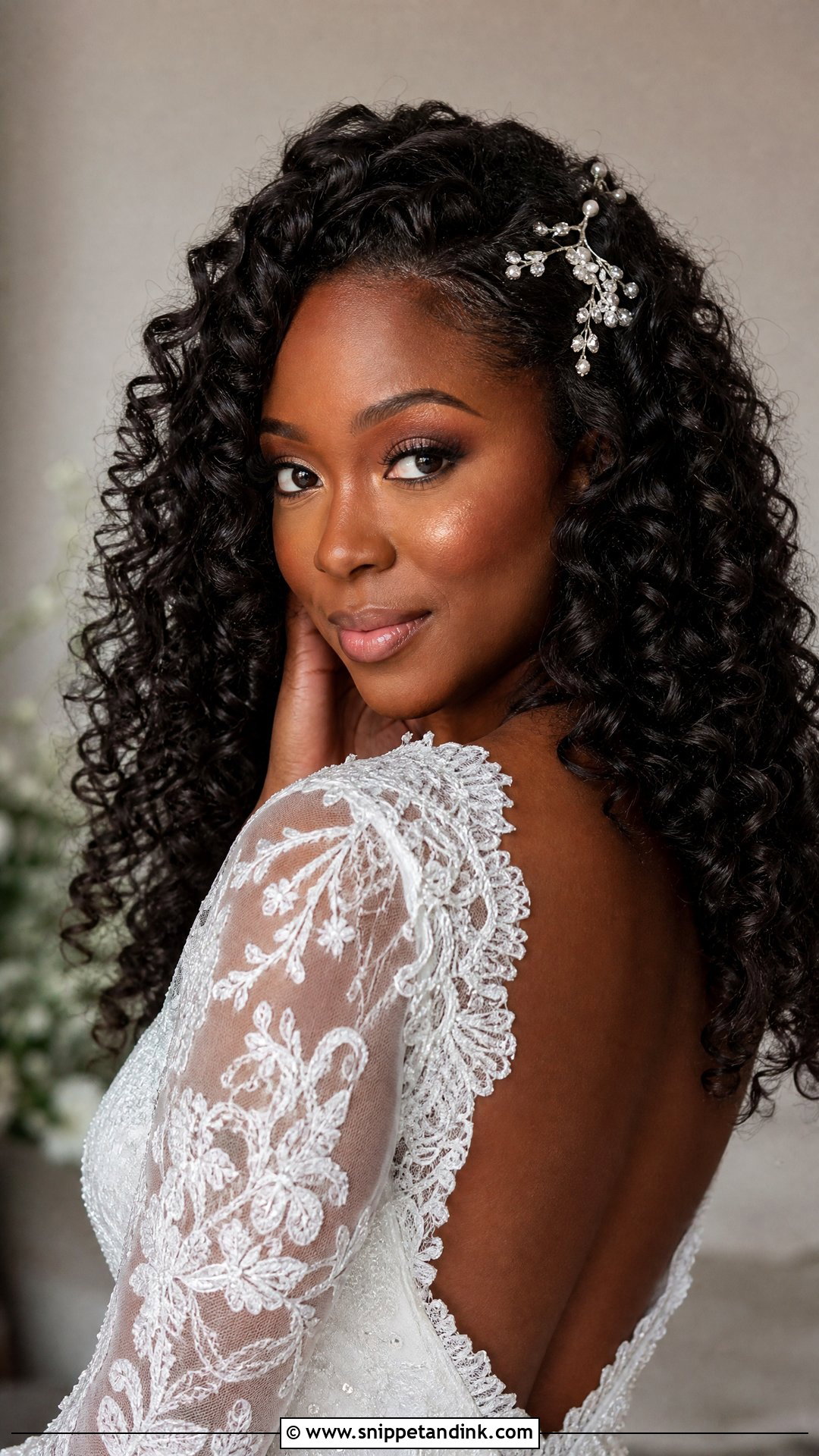
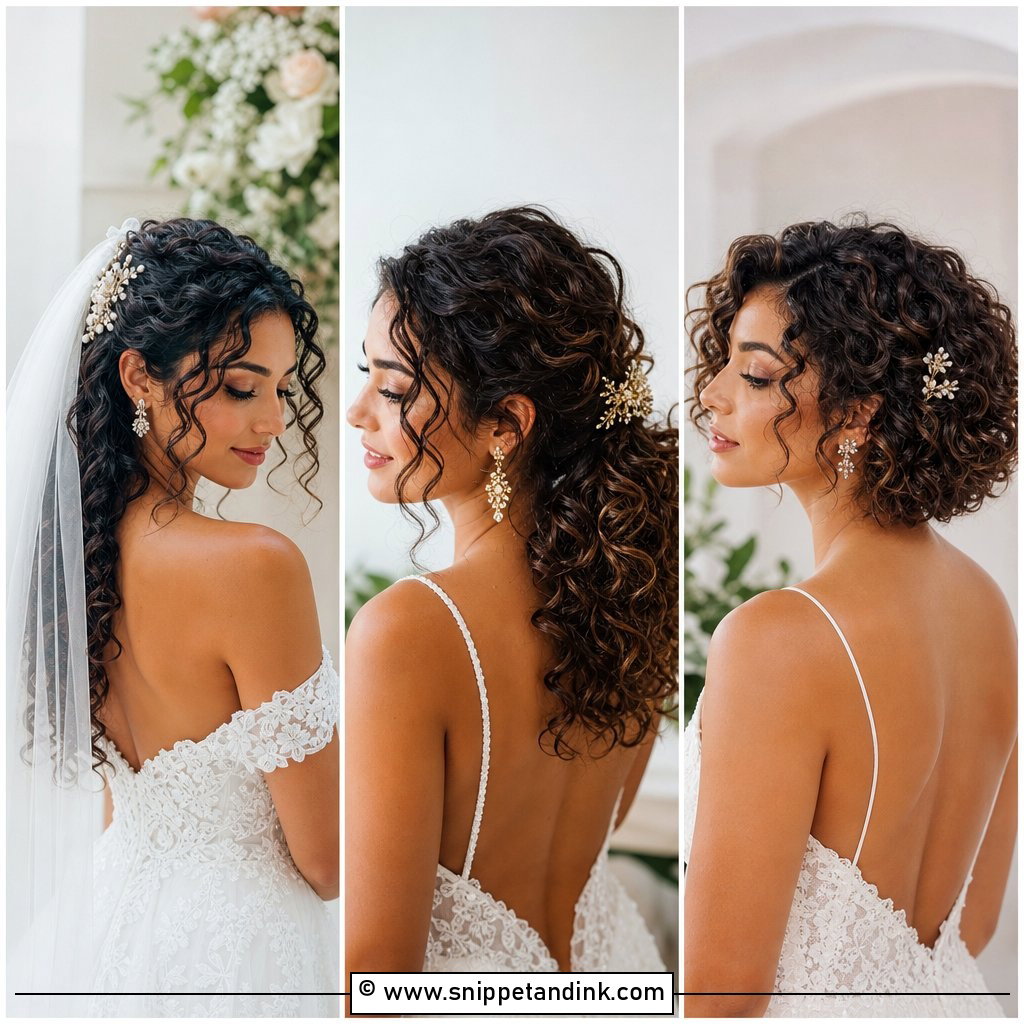
Curly-haired brides, I’d rather define your curls than fight them. I start with hair that has been washed and styled the way you normally wear it, then refine individual curls with a gel or cream and leave them to dry without touching. Brushing natural curls on the morning turns them to frizz, so finger-shaping only. Frizz control depends on the product being in while the hair is still wet. From tight coils to soft ringlets, worn-down curls photograph full of life, and floral pins or a light veil sit well in them.
9. Wedding Hair Down With Veil
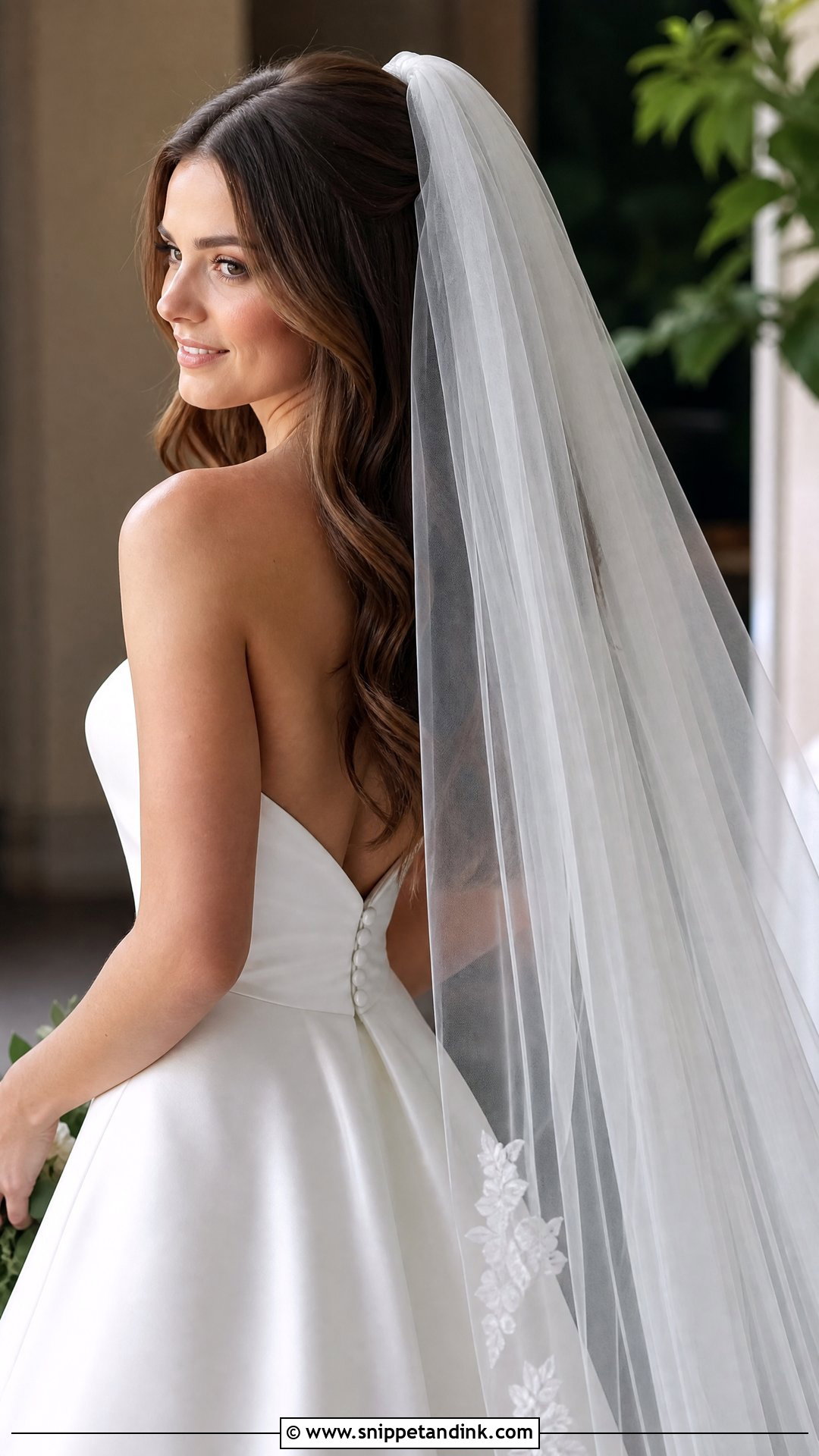
A veil over loose hair is the classic picture, but loose hair is slippery, so placement matters. I tease a small base at the crown or just below, set the comb into that, then cross two bobby pins over its teeth for security. A cathedral veil pulls back with real weight; a fingertip veil barely tugs at all. When the veil comes off after the ceremony, the hair underneath should still look finished, which is why I curl first and place the comb last. You get two looks from one appointment.
10. Wedding Hair Down With Braid
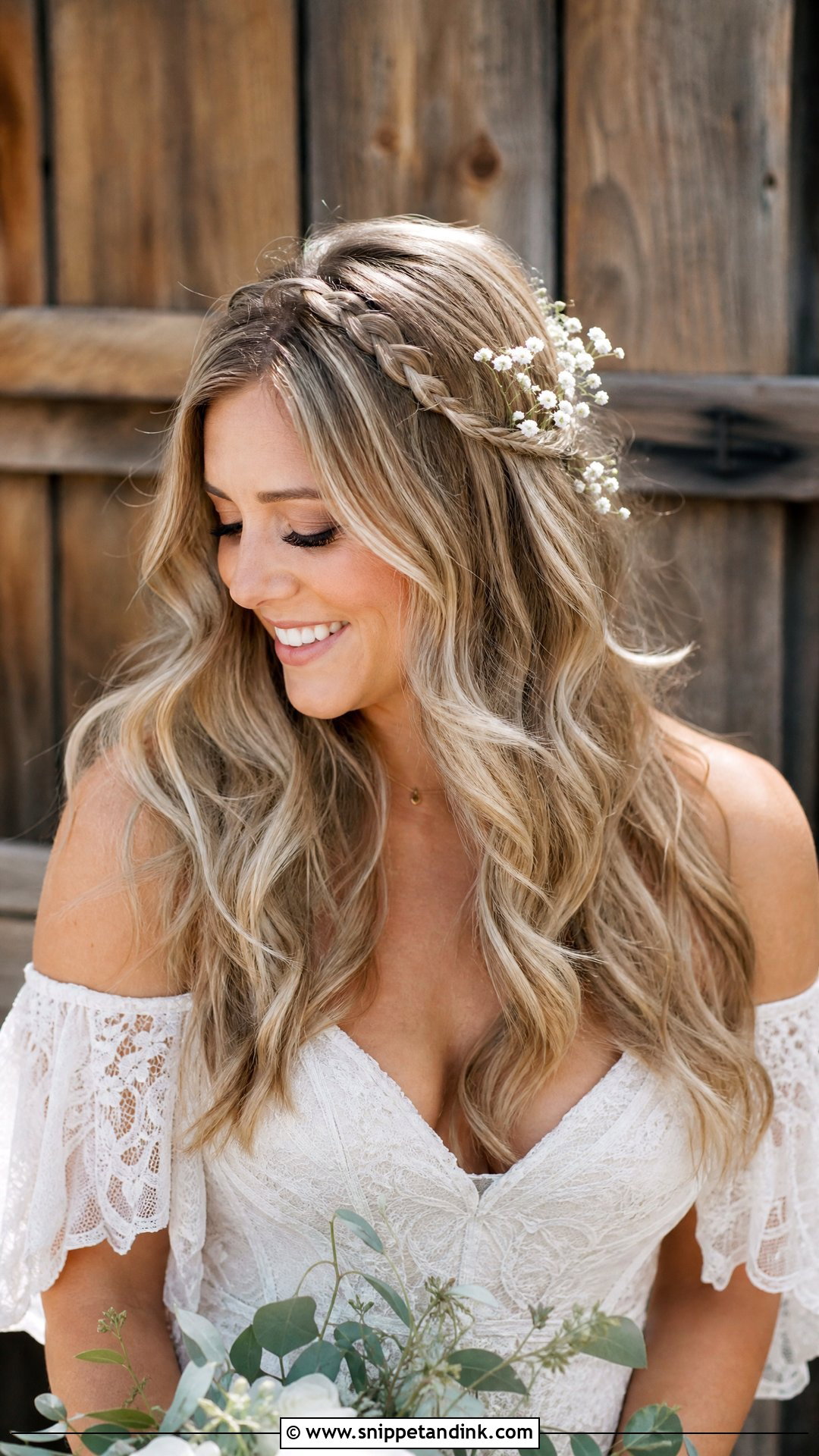
A single braid through loose hair gives the eye something to stop on. I keep it thin and loosely pancaked, run along the hairline, round the side or across the crown, and leave everything else in waves. Braids hold best on second-day hair; freshly washed, silky hair lets the braid slip within hours. Tucking small flowers or baby’s breath into the braid holds them better than placing them in loose waves. It reads at home at rustic and garden weddings.
11. Wedding Hair Down With Flowers
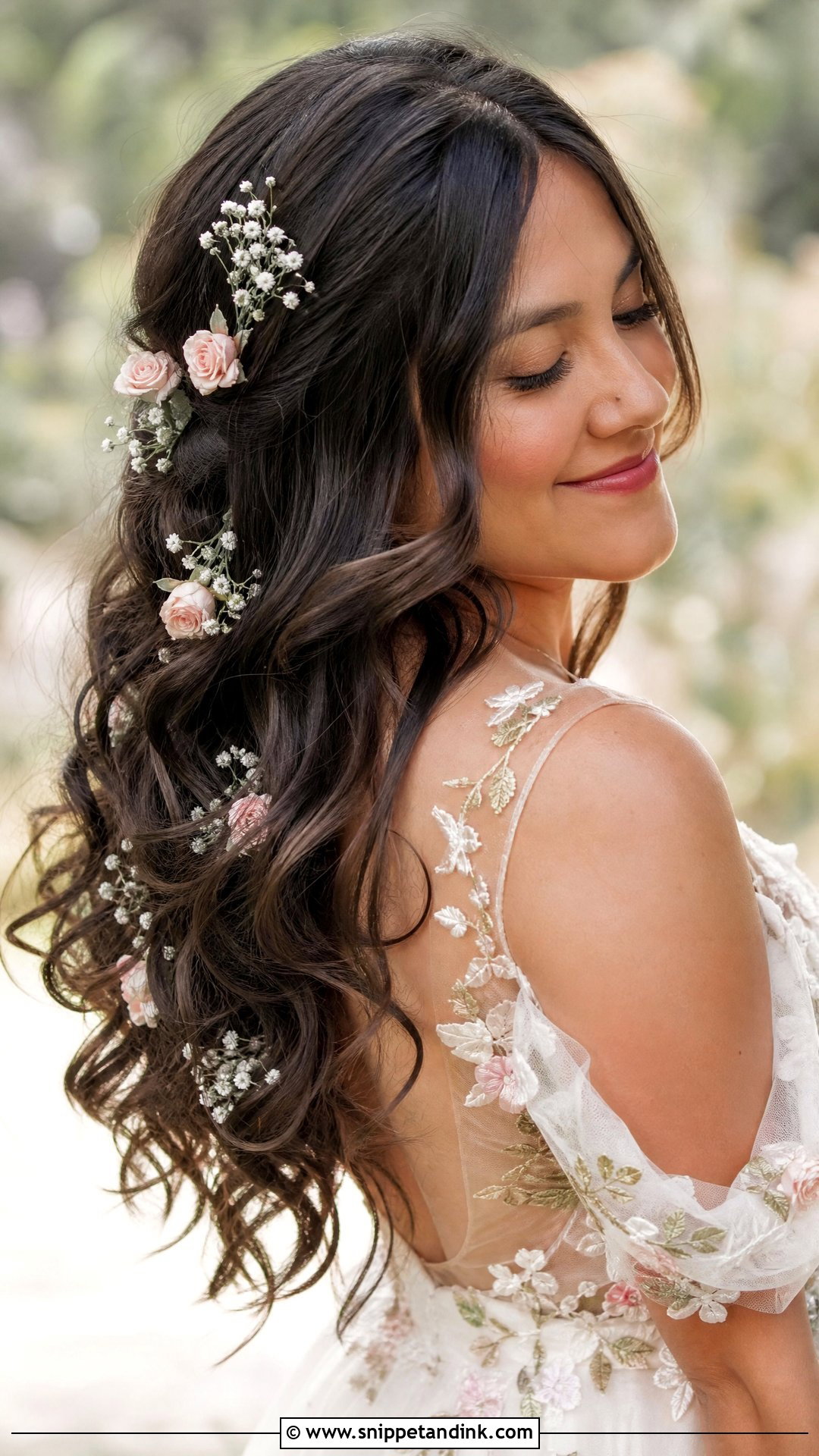
Fresh flowers in loose hair are lovely, but they have to survive a whole day out of water. Hardy small stems such as baby’s breath, roses, or wildflowers last well once the florist has conditioned them, and I wire or pin each one into a small braid or twisted section so it has something to hold. Soft petals like gardenia bruise and brown quickly. Matching the bouquet ties the look together. For an outdoor summer wedding, I’d ask the florist about silk or dried backups for the reception.
12. Middle Part Wedding Hair Down
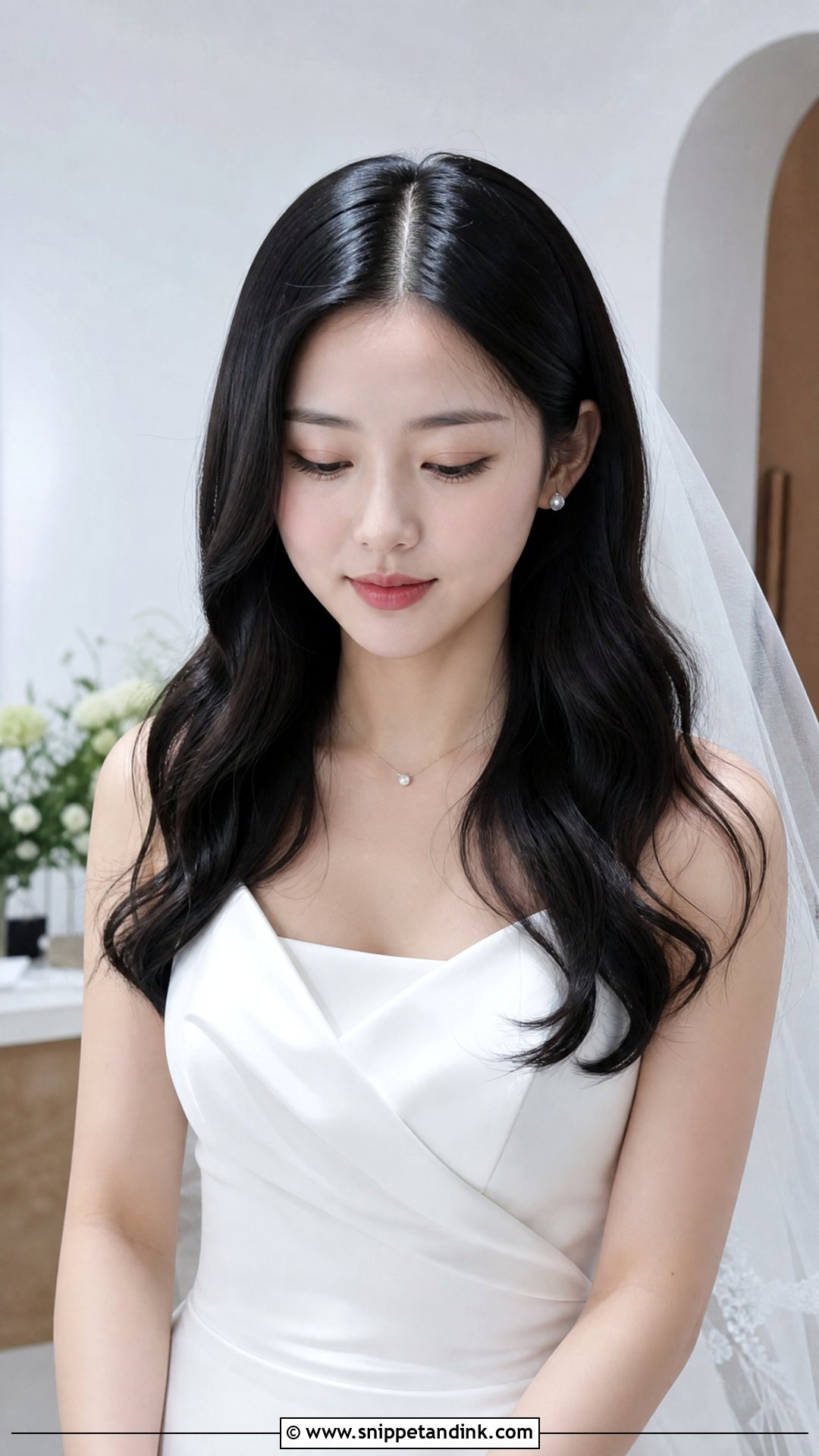
A middle part is honest: it shows any asymmetry in your face and any unevenness in your cut. That’s why I check it at the trial with the camera rather than the mirror. When the part is crisp and the two sides fall at the same length, the effect is calm and modern, and it frames oval and heart-shaped faces neatly. I keep the roots smooth with a little cream so the part doesn’t fuzz by the speeches. Pair it with straight hair or soft waves and minimal jewelry.
13. Side Part Wedding Hair Down
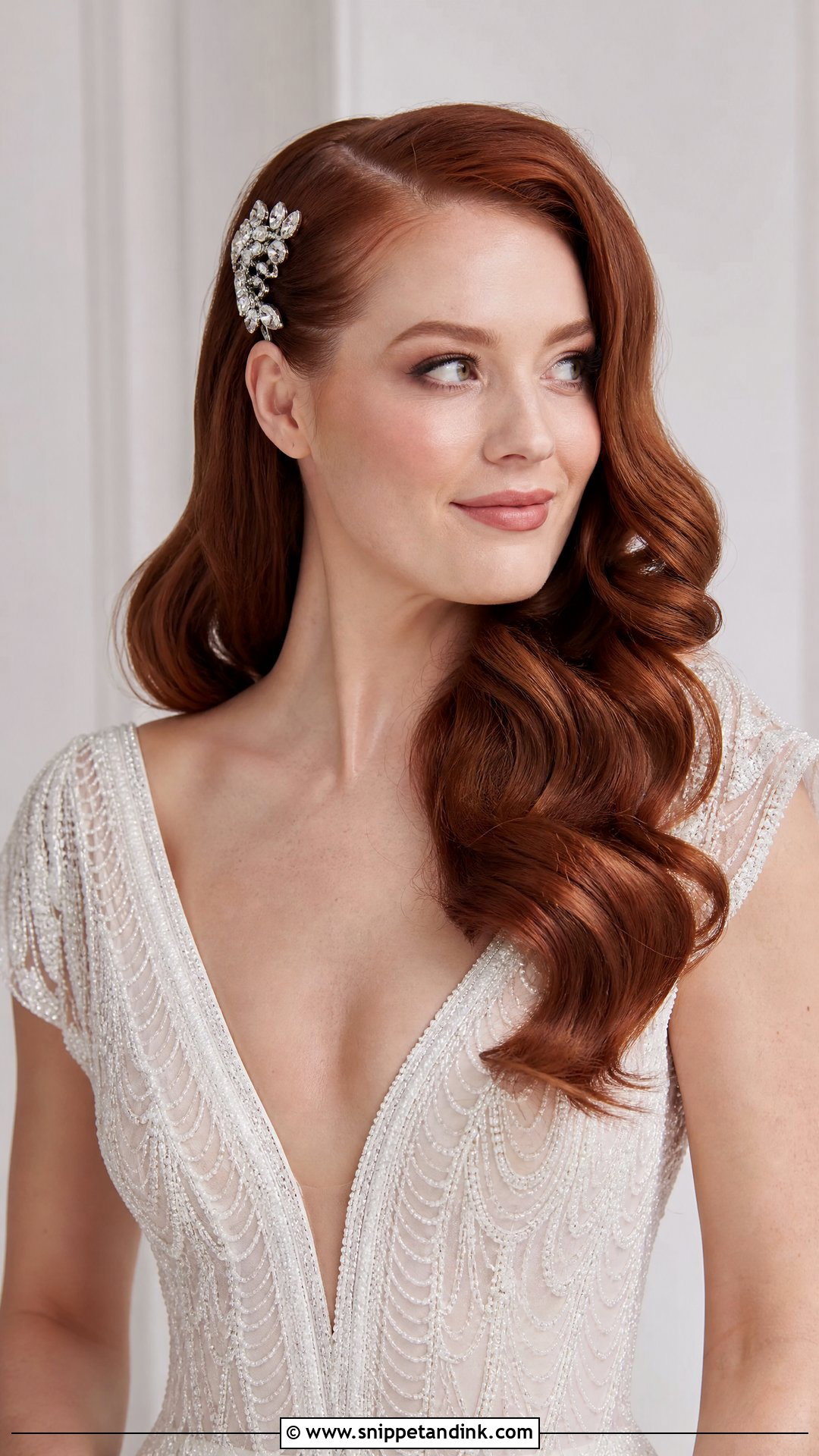
Moving the part deep to one side adds instant volume on the heavier side and a vintage feel overall. I usually flip the part the night before the trial so the hair has already started to fall that way. It suits Hollywood waves and soft curls, and it flatters most face shapes because it breaks up width. The weak spot is the lighter side, which tends to fall forward into your face during a long day. A sparkling clip there is decoration, and it also does a job by holding that side back.
14. Wedding Hair Down With Tiara
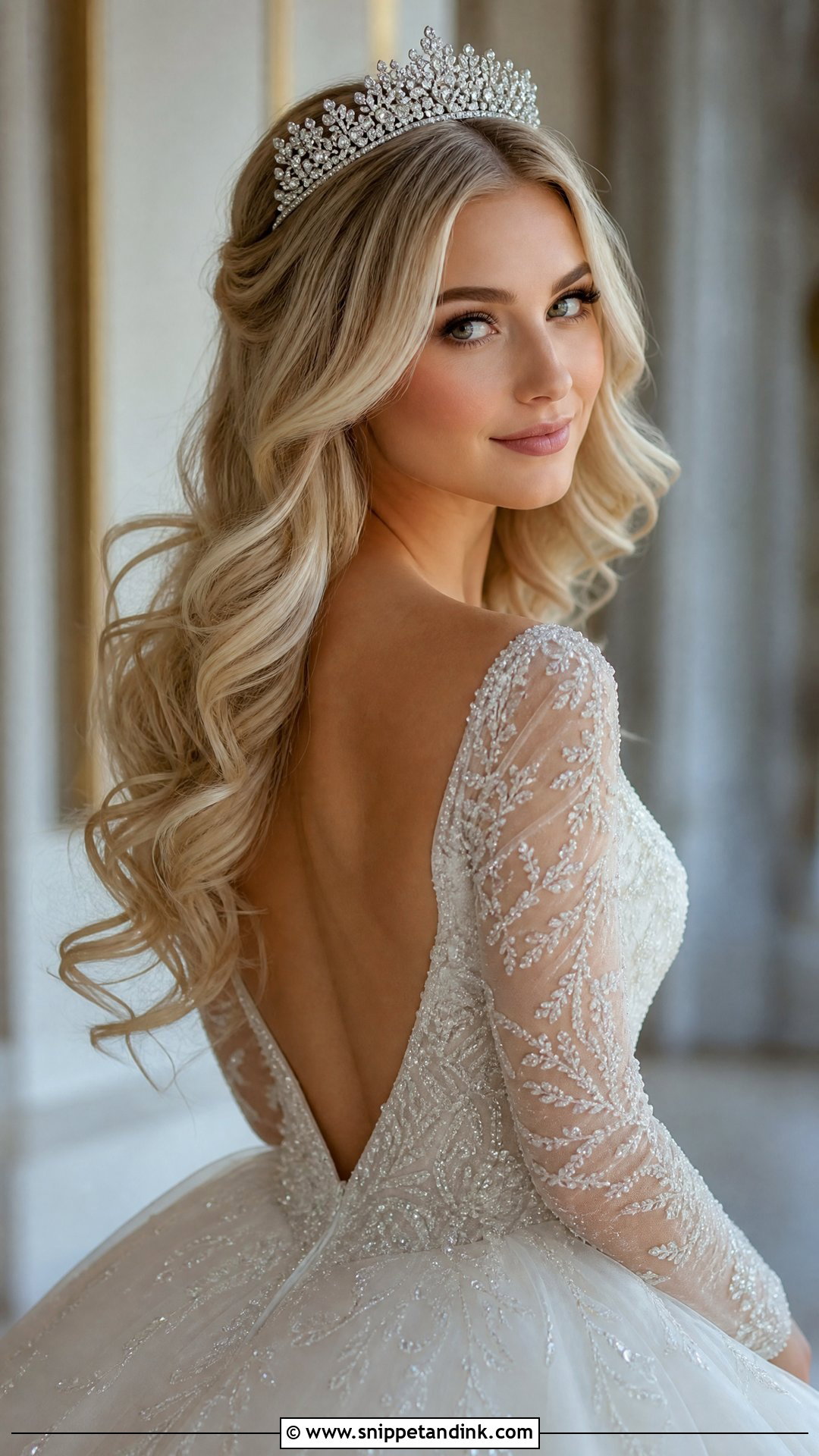
A tiara over loose hair needs something to sit on. On down styles, I build a small teased base just behind where the tiara will rest, then pin through its side loops into that base so it doesn’t tip forward when you bow your head. The added height and sparkle suit formal and fairytale weddings, and it works on straight and curly hair alike. Test the weight at your trial; a heavy metal piece can start pressing after a few hours. Done well, it makes a down style look properly fit for a princess.
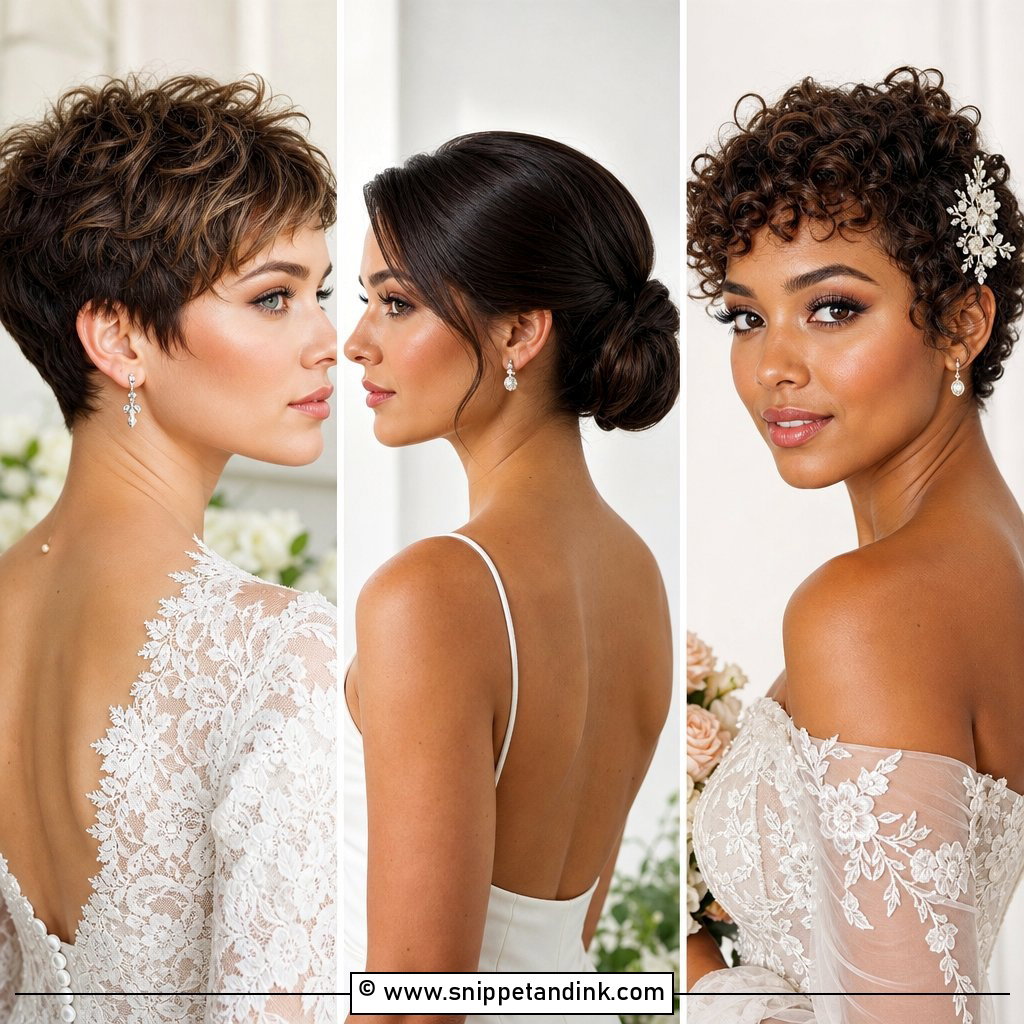
15. Soft Curls Wedding Hair Down
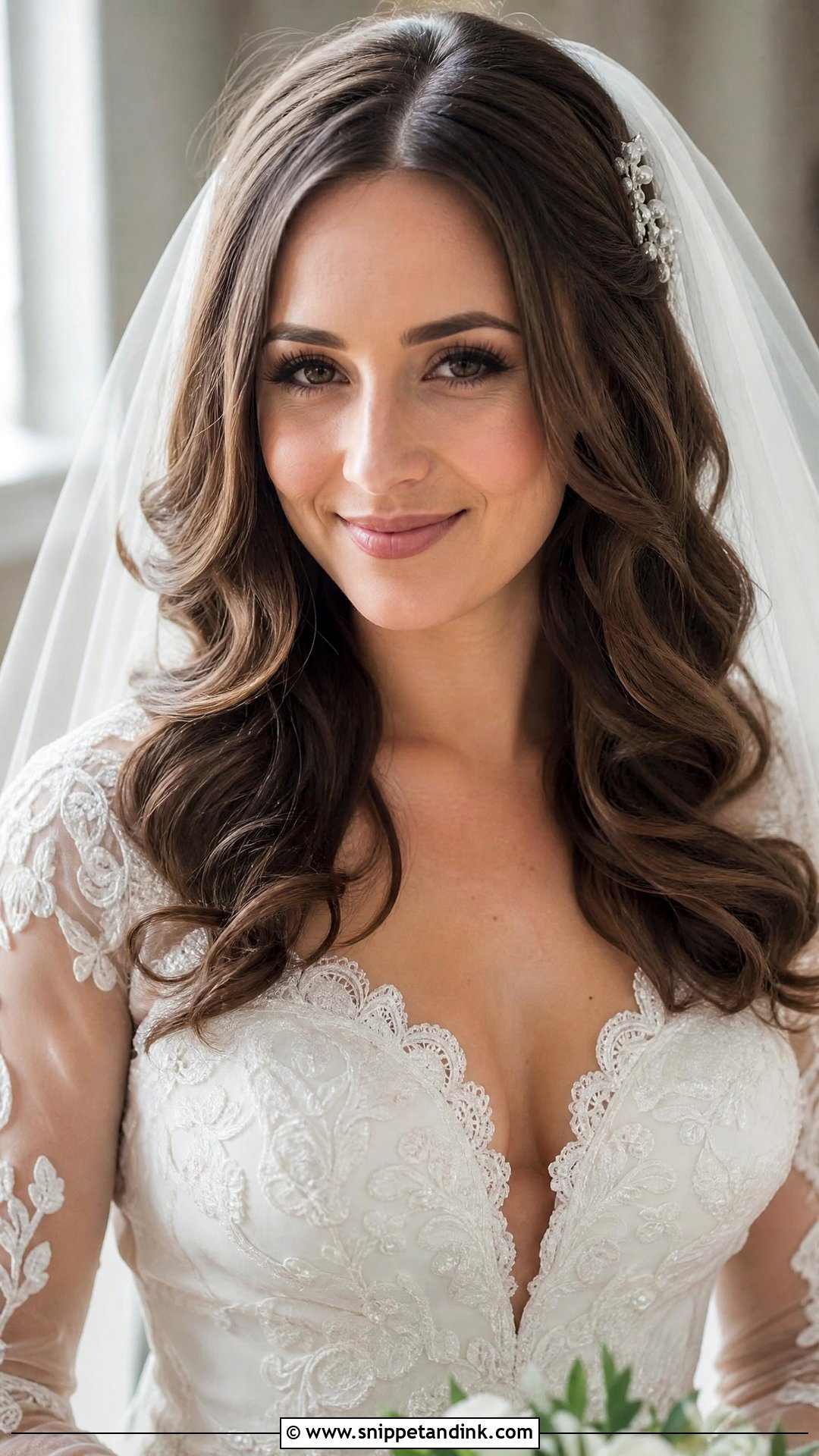
Soft curls sit between ringlets and beach waves, and the large barrel is what gets you there. I curl with a large iron, pin each curl in a loop to cool, then brush through gently once everything has set. That brush-out joins the curls into smooth, blended movement around the shoulders. Skipping the cooling stage is the most common reason soft curls fall flat before the ceremony. This style forgives most dress shapes and accessories, which is why I suggest it to brides who are still unsure.
16. Wedding Hair Down With Headband
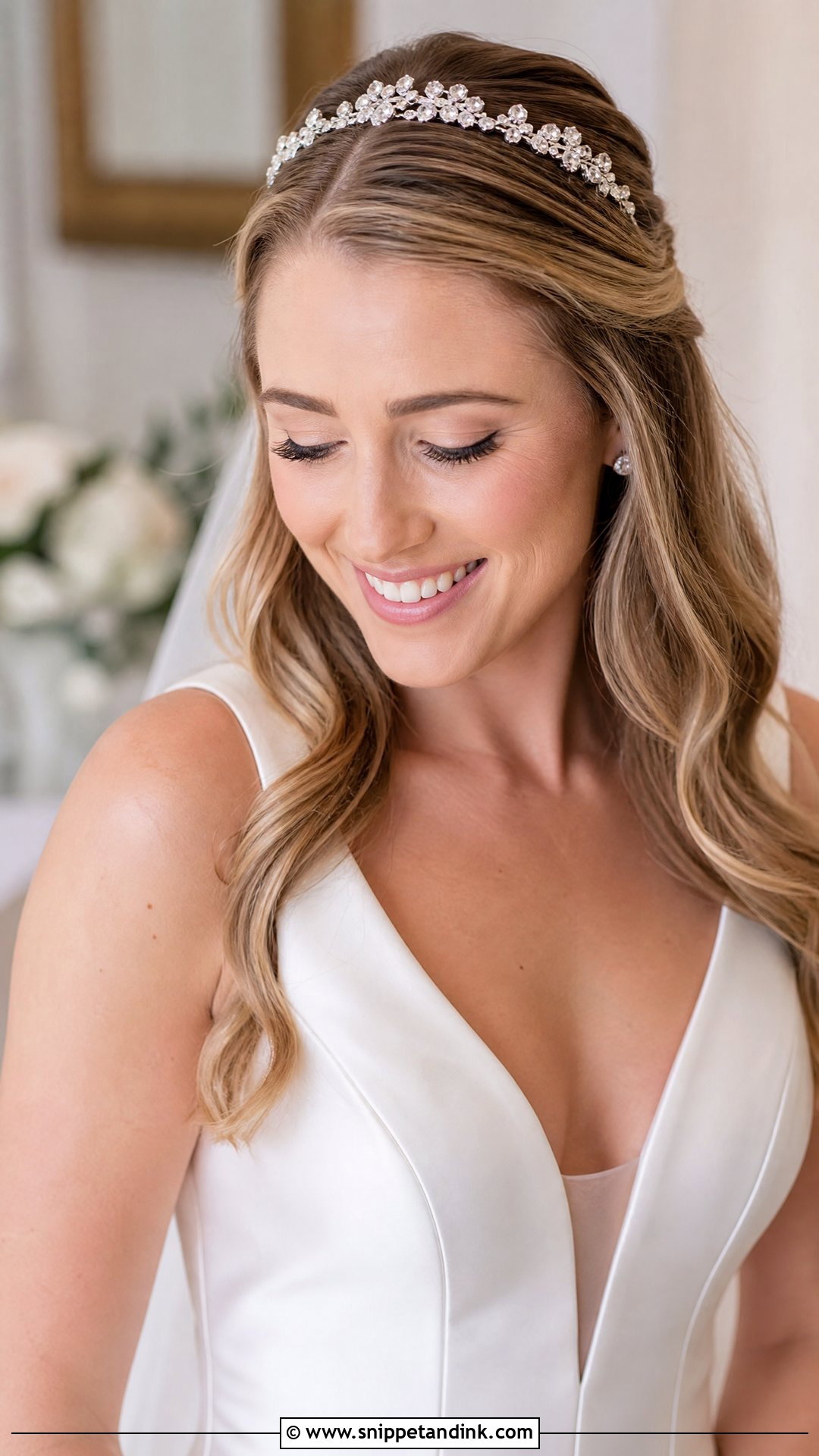
A headband sweeps hair off the face while the lengths stay loose, and it also hides flyaways at the hairline. I slide it on before the final curl brush-out and anchor it behind each ear with a pin crossed through the band. Rigid metal bands can pinch behind the ears by evening, so I prefer ones with a little flex or padded ends. Crystal bands suit polished, glamorous styling; floral ones lean towards boho. It looks considered over waves, curls or sleek straight hair.
17. Long Layered Wedding Hair Down
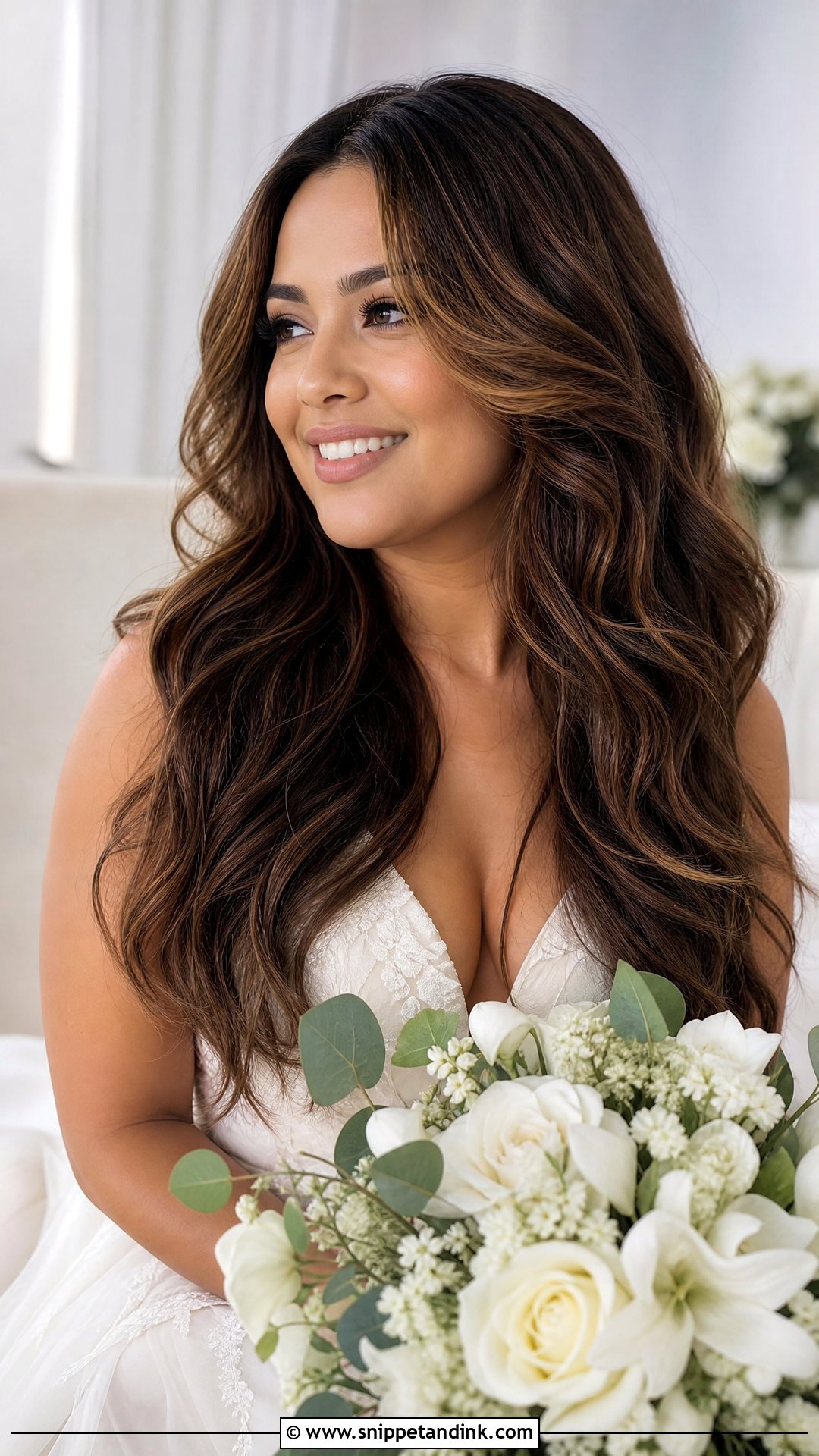
Long layers already give hair movement, so curling them makes the most of what your cut does. Face-framing pieces flatter your features when I curl them away from the face rather than towards it. Each layer curls a little differently, which gives the hair bounce rather than a uniform set. If you’re planning a pre-wedding cut, have layers done at least four weeks ahead so the ends settle. This suits formal gowns and relaxed boho dresses equally well.
18. Wedding Hair Down With Hair Vine
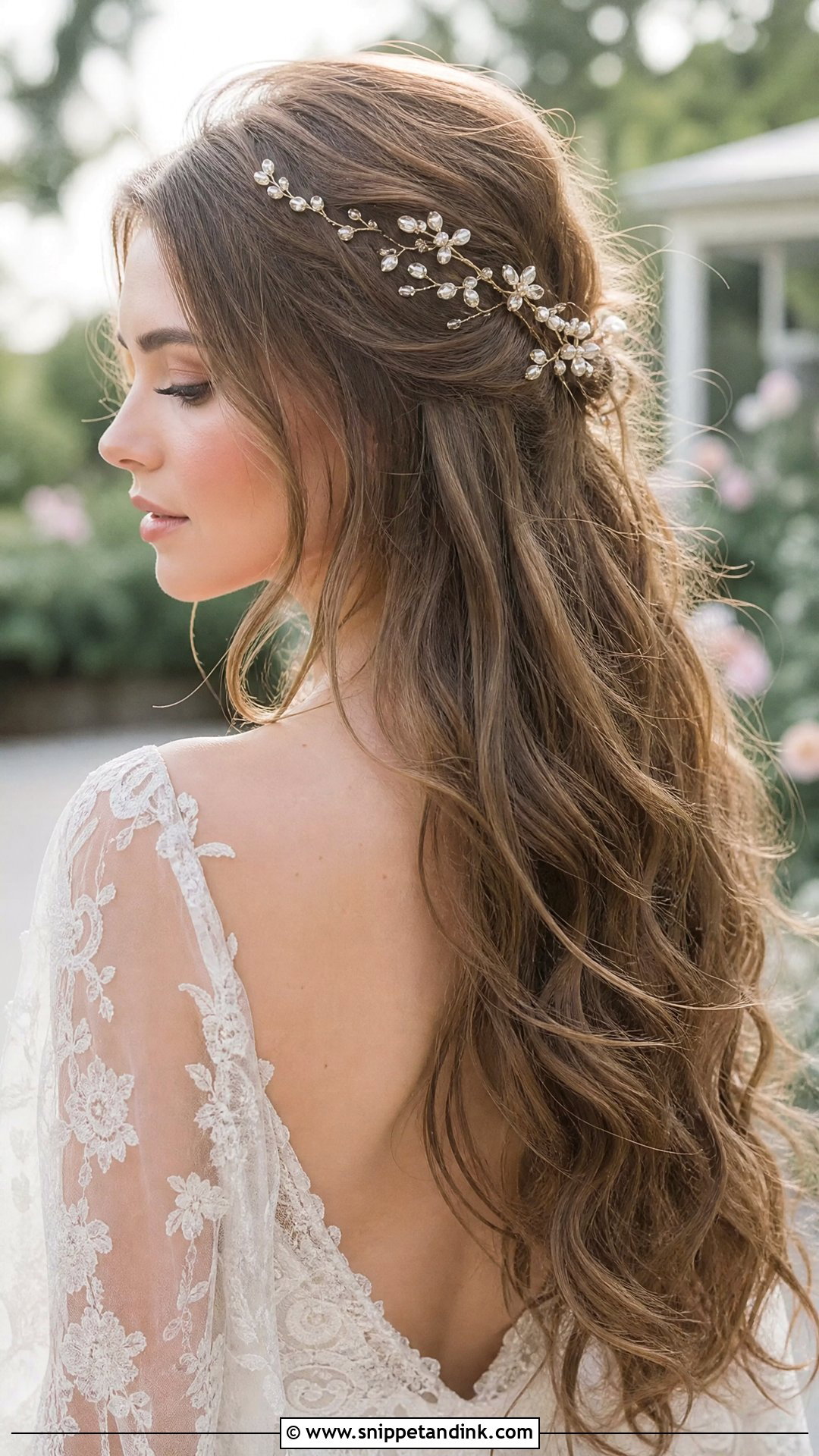
A hair vine is flexible wire wrapped with crystals, pearls or small leaves, and I weave it through the hair rather than placing it on top. I’ll run it along the crown, around a half-up section or scatter it loosely through the lengths, pinning it every few inches so it doesn’t sag. On straight hair it shows every pin, so I prefer it over waves or curls. It adds detail without the formality of a tiara. Boho, outdoor and fairytale weddings suit it best.
19. Wavy Wedding Hair With Side Tuck
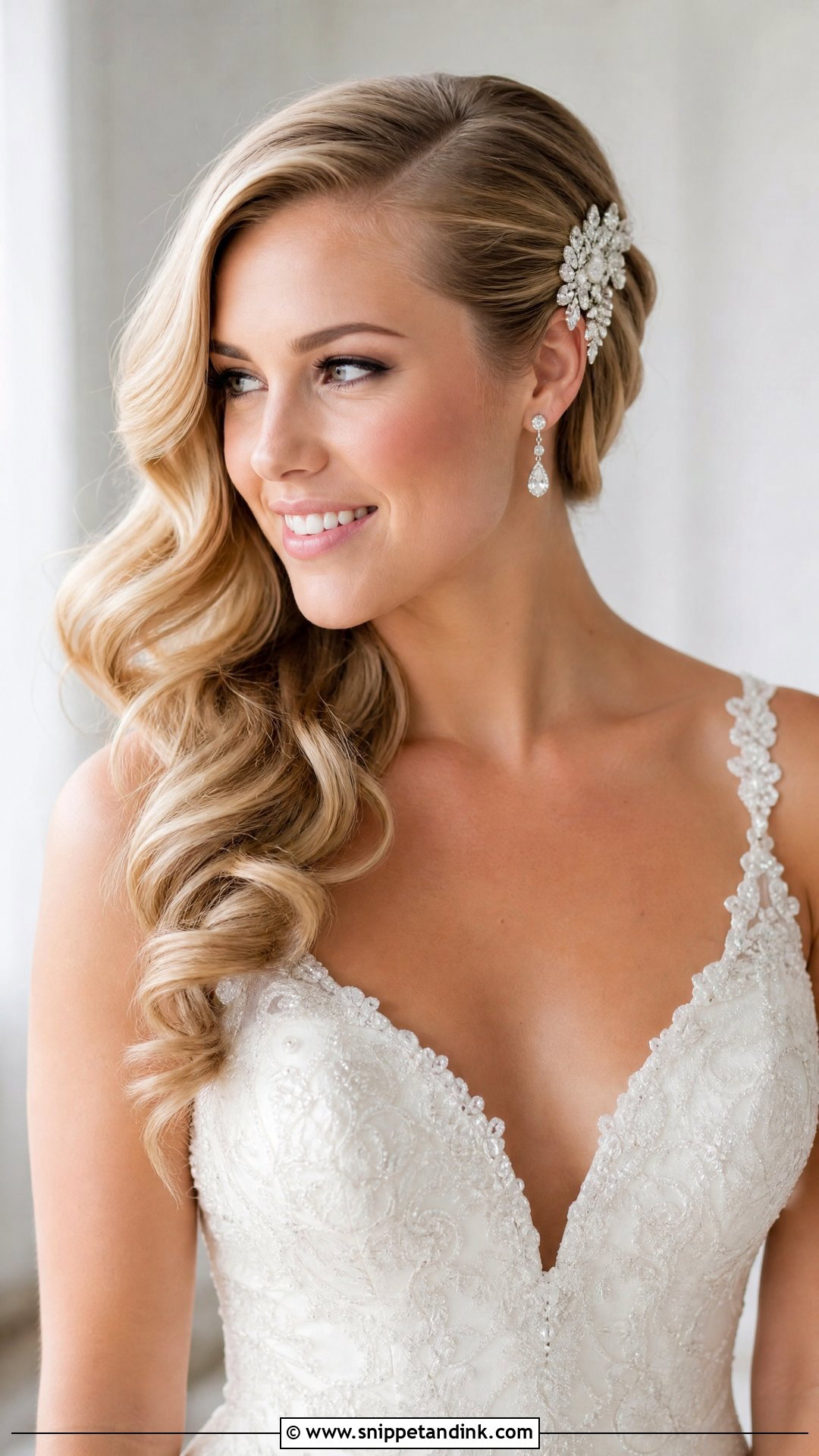
Tucking one side of wavy hair behind the ear is a small move with a big effect. I curl everything first, then tuck one side back and secure it with two crossed pins hidden under a decorative clip. That asymmetry shows off an earring and the neckline. On thick hair, the tucked side can push forward again within an hour, so I tease a little at the root before pinning. Add a jeweled or floral clip at the tuck and it works for formal and relaxed weddings alike.
20. Wedding Hair Down With Crown Braid
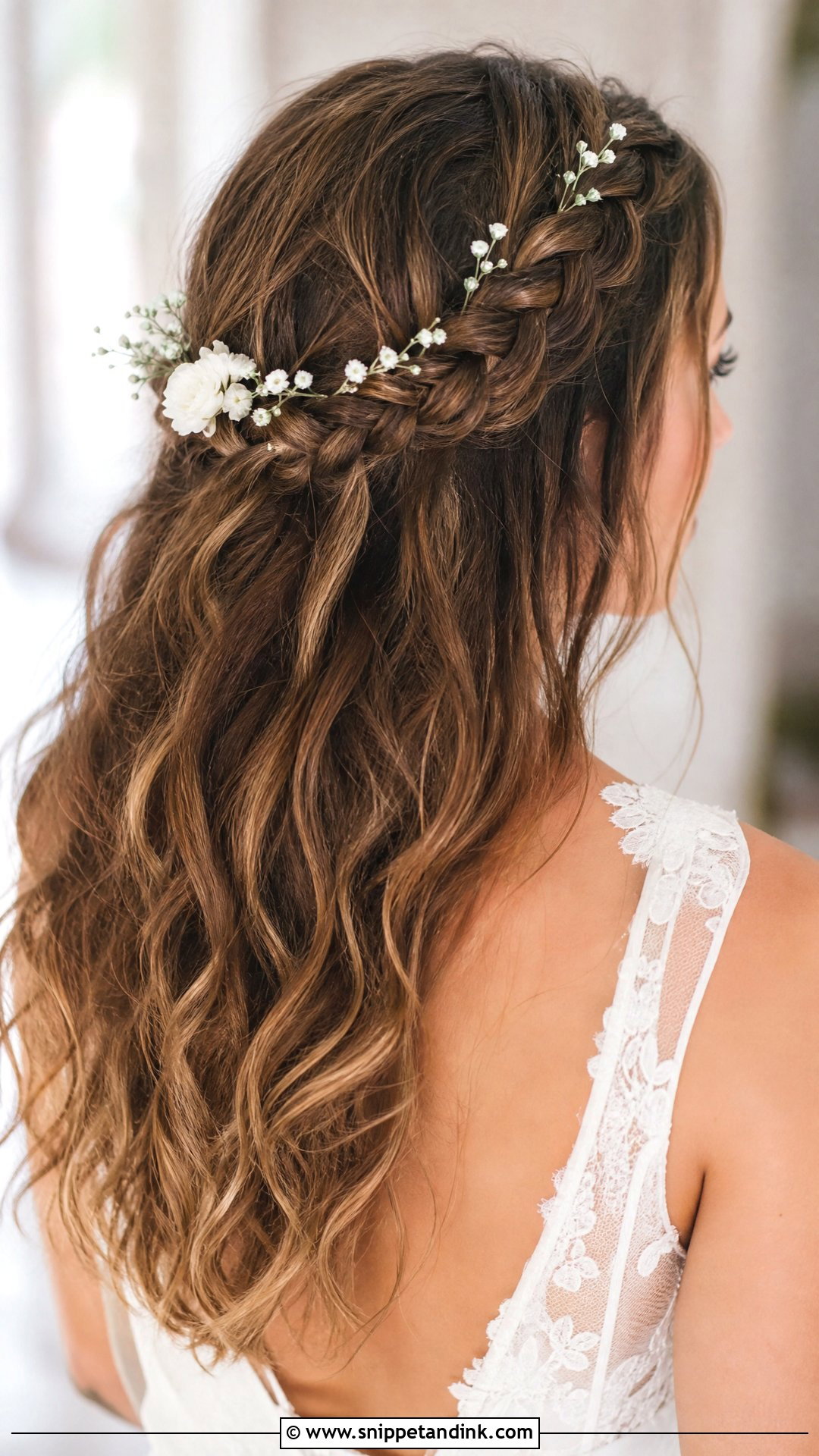
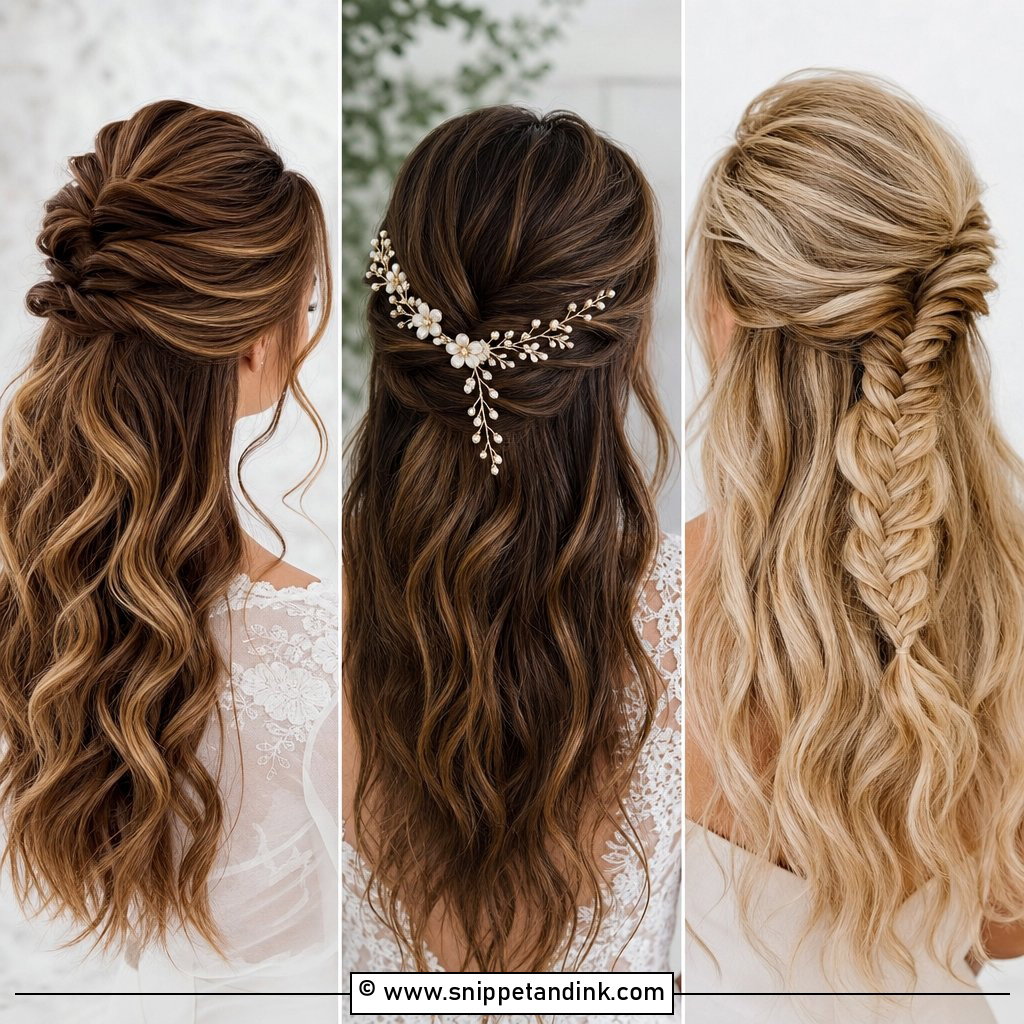
A crown braid around the head with the rest left flowing gives you the structure of an updo without putting your length away. I braid from one temple, around the back of the crown and finish at the other side, pinning the tail under the start so the join disappears. The lengths stay in waves or curls below it. Small flowers tucked into the braid hold well because the plait grips the stems. Fine hair often needs a thin clip-in piece to make the braid look full.
Fine Strands, Heavy Lengths and Coils Each Need Their Own Plan
The photos above show hair at its best. Your hair will behave in its own way, and I adjust the plan for that rather than forcing a look onto the wrong texture.
Fine or Slippery Hair
Fine hair loses curl fastest. I use a smaller barrel than the look calls for, because the curl will open up, and I add volume powder at the roots. Clip-in extensions also help: they give the curl more hair to hold and add the fullness most down styles in photos are relying on. Have them colour-matched well before the wedding.
Very Thick or Waist-Length Hair
Weight is the problem here. Long, heavy curls pull themselves straight within hours. I curl in more, smaller sections, let each cool longer, and keep the heaviest styles like Old Hollywood waves for hair that is shoulder-blade length or shorter. Half-up options take some of the weight off the crown and keep a veil steady.
Natural Curls and Coils
Natural texture doesn’t need a curling iron. It needs a wash-and-style a day or two ahead, the routine you already trust, and a stylist who knows that brushing dry curls creates frizz. Bring your own products to the trial if they work for you. In humid weather, a gel cast left to dry completely and then scrunched out gives the most reliable definition.
Outdoor and Humid Weddings
Damp air undoes heat-set curls on straight hair and puffs up smooth styles on wavy hair. If your ceremony is outside in summer, I’d lean towards beach waves, half-up styles or a braid, which look fine as they loosen. Sleek straight hair and sculpted waves are the two I’d avoid in heat. Keep a small kit with pins, a mini hairspray and a comb with whoever is holding your bag.
Bring These Photos to Your Trial With Your Neckline in Mind
Wearing long hair down is a great way to feel like yourself on the day, as long as the style matches your texture and your dress. Look at where your neckline sits, how your hair behaves in damp weather and what you’ll put on your head. Those three things will narrow these 20 looks down quickly. Save your favourites and show them to your stylist at the trial, then wear the style for a few hours afterwards to see how it settles.
You'll Like These Ideas:


Leave a Reply