
Real flowers in hair look easy in a photo and take more planning than most brides expect. A stem pulled out of water starts losing moisture straight away, so the bloom you pin at nine in the morning has to survive photos, a ceremony, dinner and a hot dance floor. I build every floral style below around two questions: how much weight can this hair hold, and how long will this particular flower look fresh without a vase? The 25 ideas range from a single gardenia on a chignon to a full crown, and for each one I’ve noted the hair it suits and where it tends to go wrong.
Flowers That Survive Eight Hours Out of Water
Before you fall for a style, check the flower. Some stems are made for hair and some only hold up in a vase. I sort them roughly into three groups when I’m planning with a bride and her florist.
- Hardy all day: baby’s breath, spray roses, ranunculus, dendrobium orchids, calla lilies, wax flower, eucalyptus and olive.
- Fine for a few hours: standard roses, anemones, daisies and most wildflowers. Keep spares for the reception.
- Fragile out of water: gardenias, hydrangeas, hibiscus, plumeria and fully open peonies. Wear them for the ceremony or swap them partway.
Heat and sun shorten every one of these timings. An August garden ceremony will wear a flower out far faster than an air-conditioned ballroom, so I always tell the florist the venue and the hours the bride will be outdoors.
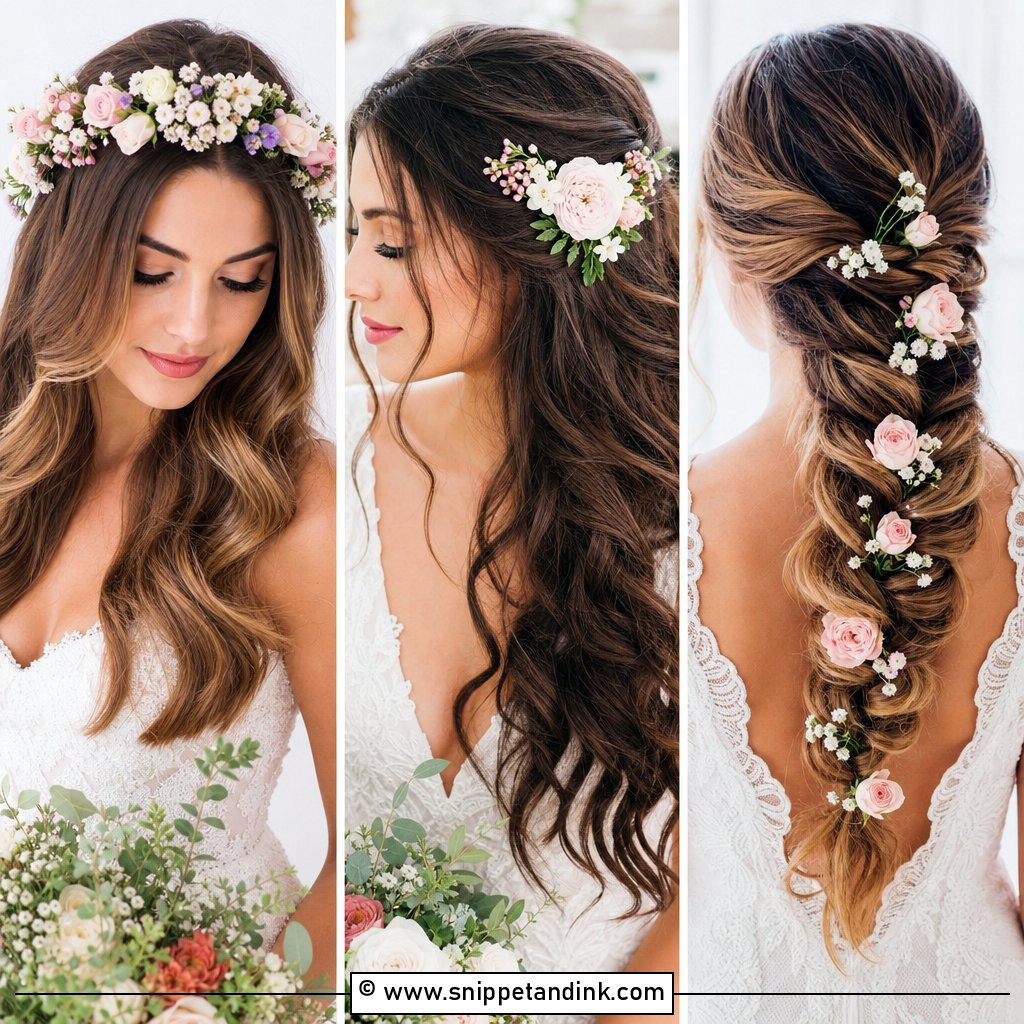
1. Baby’s Breath Flower Crown
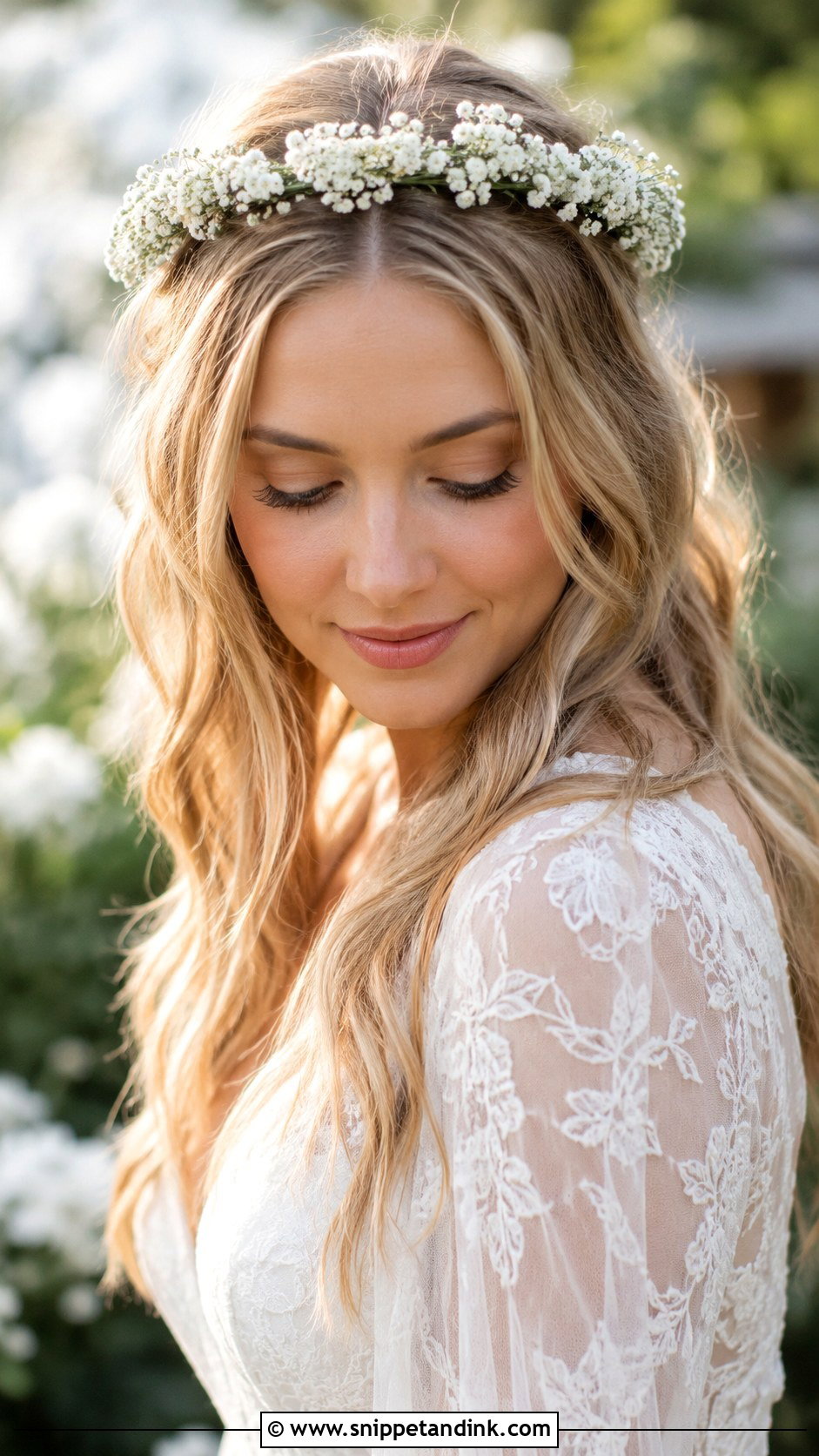
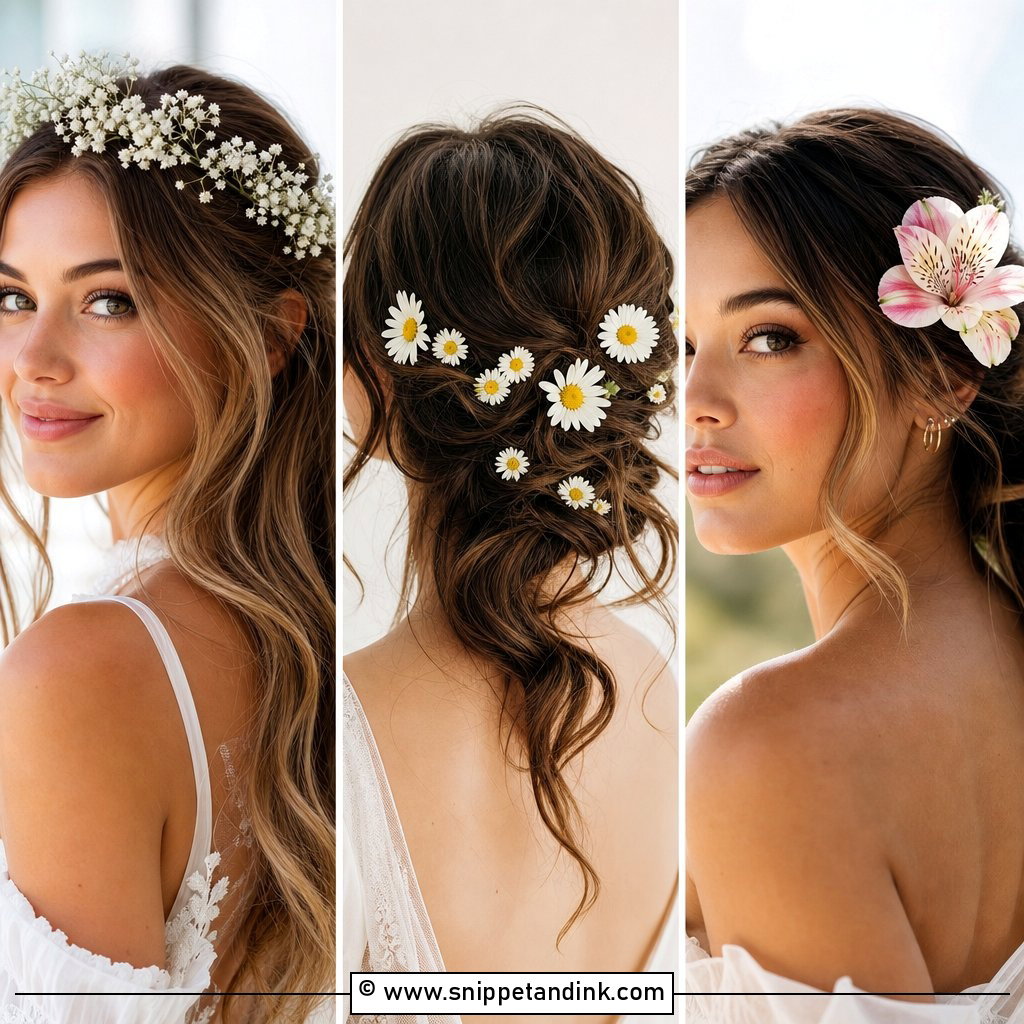
Baby’s breath is the flower I trust most out of water, because the tiny heads hold their shape for hours and dry rather than collapse. A crown of it weighs almost nothing, which matters if you’re wearing it with loose waves that have no pinned base to grip. The one thing I warn brides about is the smell: fresh gypsophila has a faintly sour scent up close, and a few people notice it all day. Ask your florist to condition it well and mist it before it goes on. It’s also one of the cheapest stems a florist carries, so a full halo rarely blows a budget.
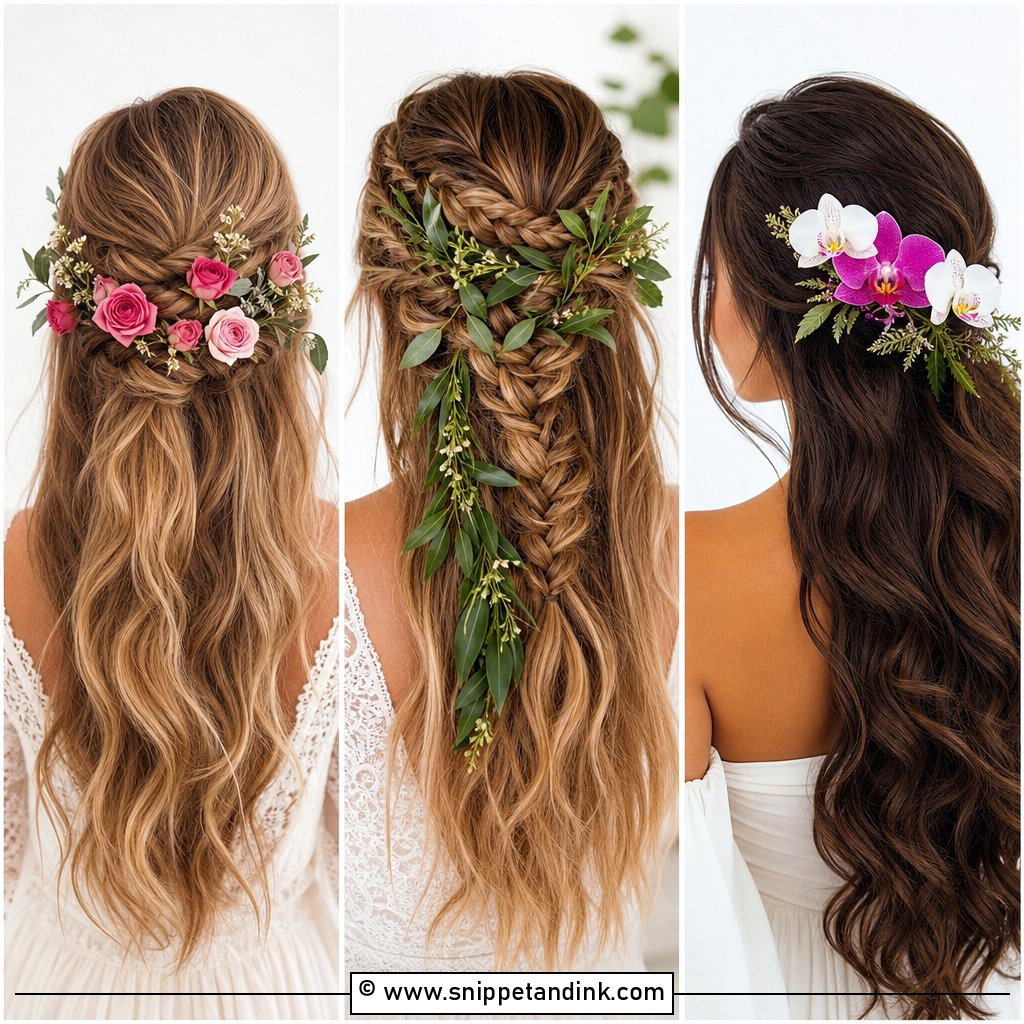
2. Loose Waves With Scattered Roses
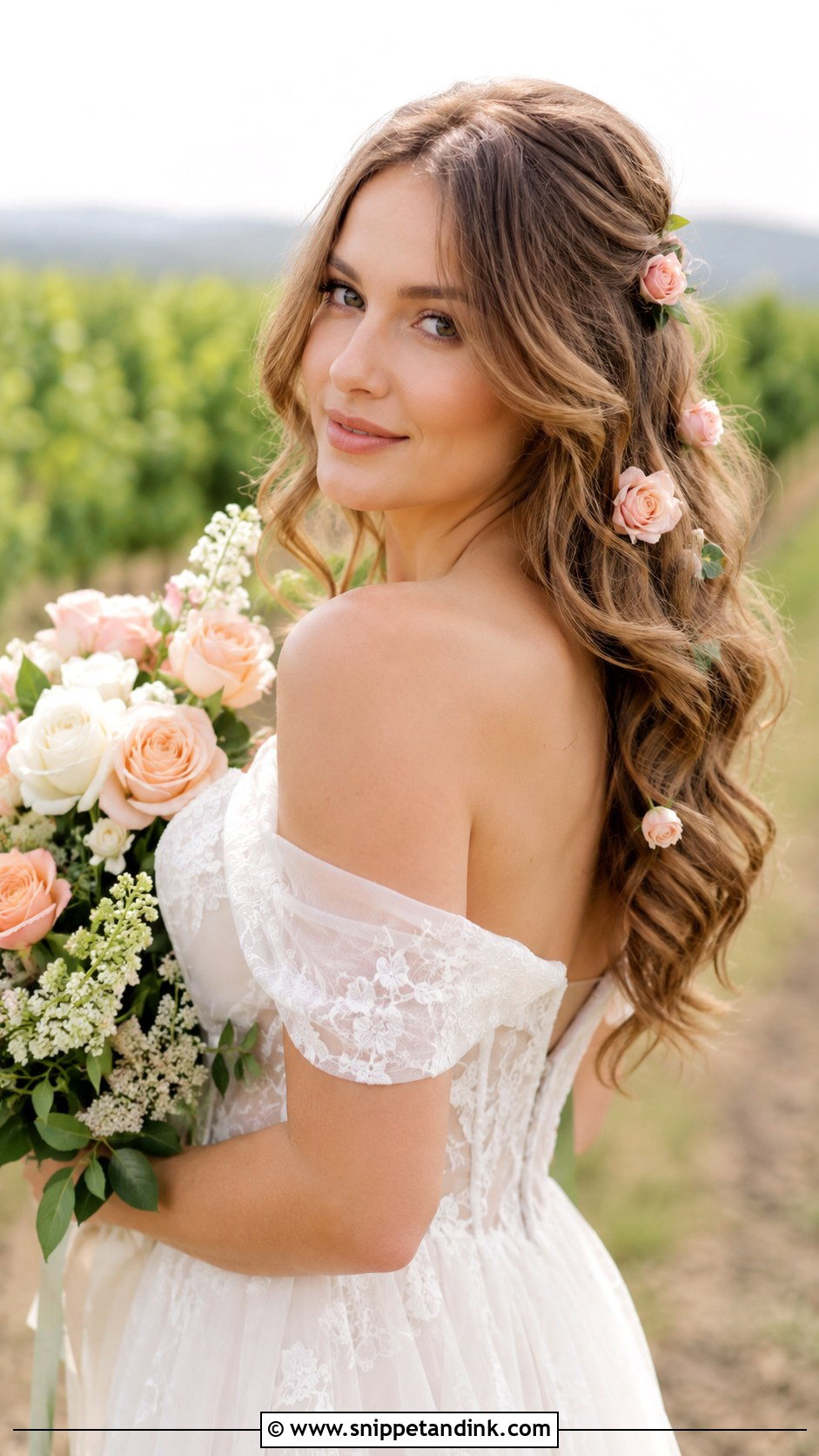
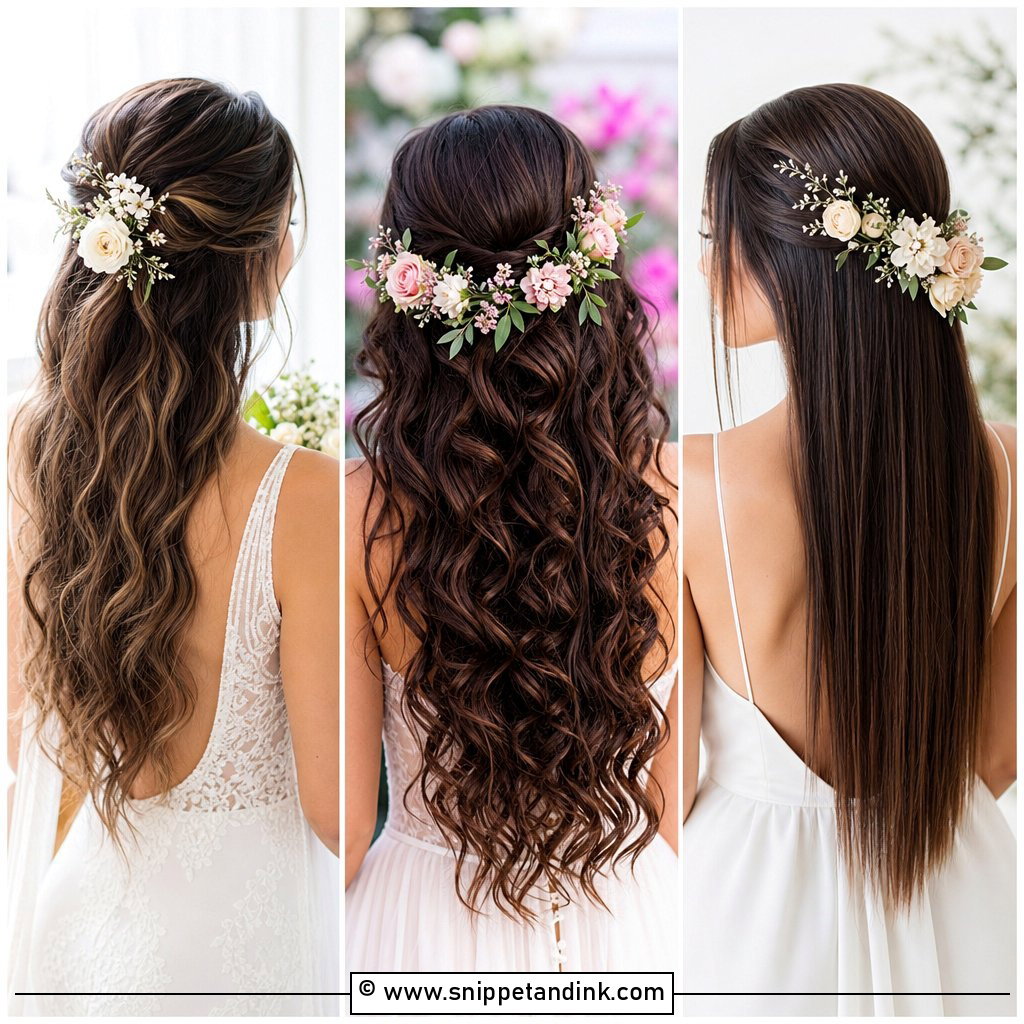
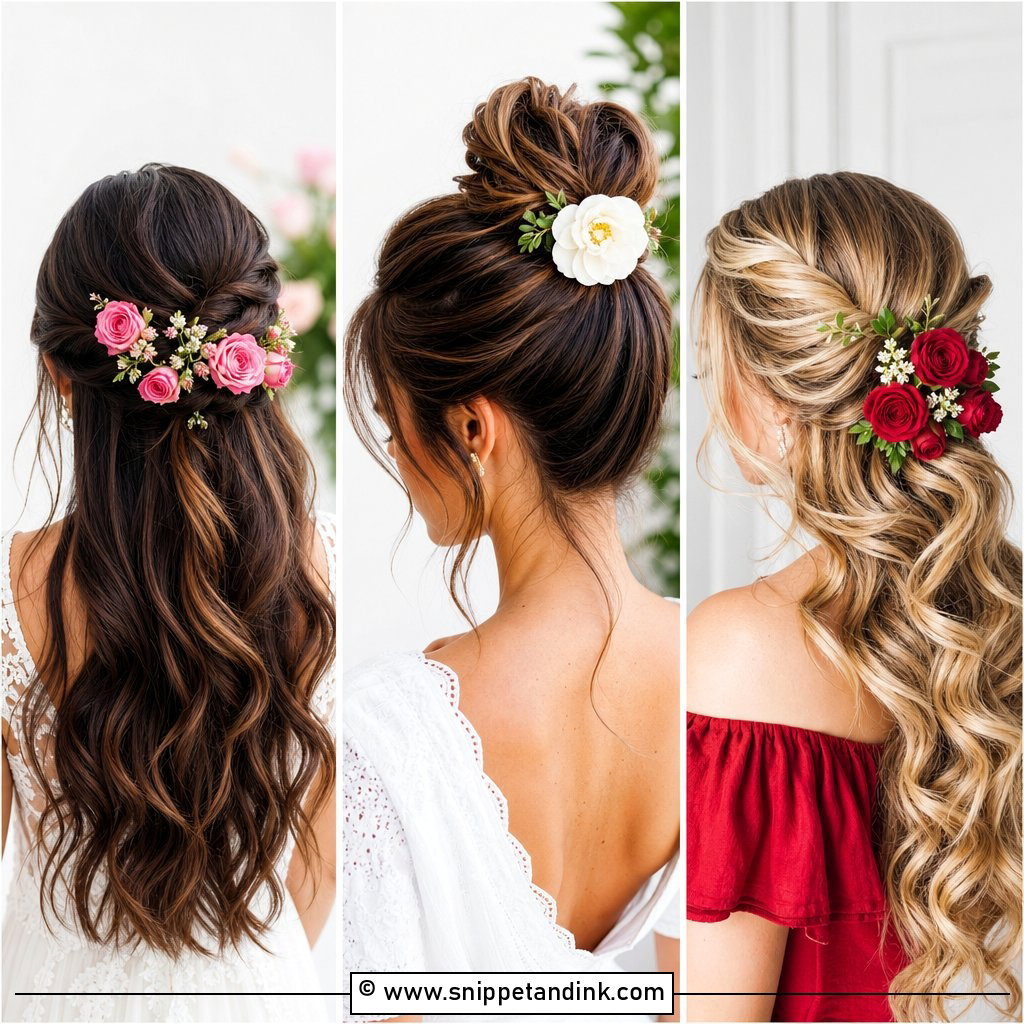
Spray roses are small enough to tuck between waves without dragging a curl flat. I set the waves first, let them cool completely, then slide each rose in on a short wired pick angled toward the scalp so it hides in the hair rather than sitting on top. Five to seven blooms is usually plenty; past that it starts to look like a crown that slipped. On a breezy beach, loose waves will move and some roses will work their way loose, so I keep two spares in the kit.
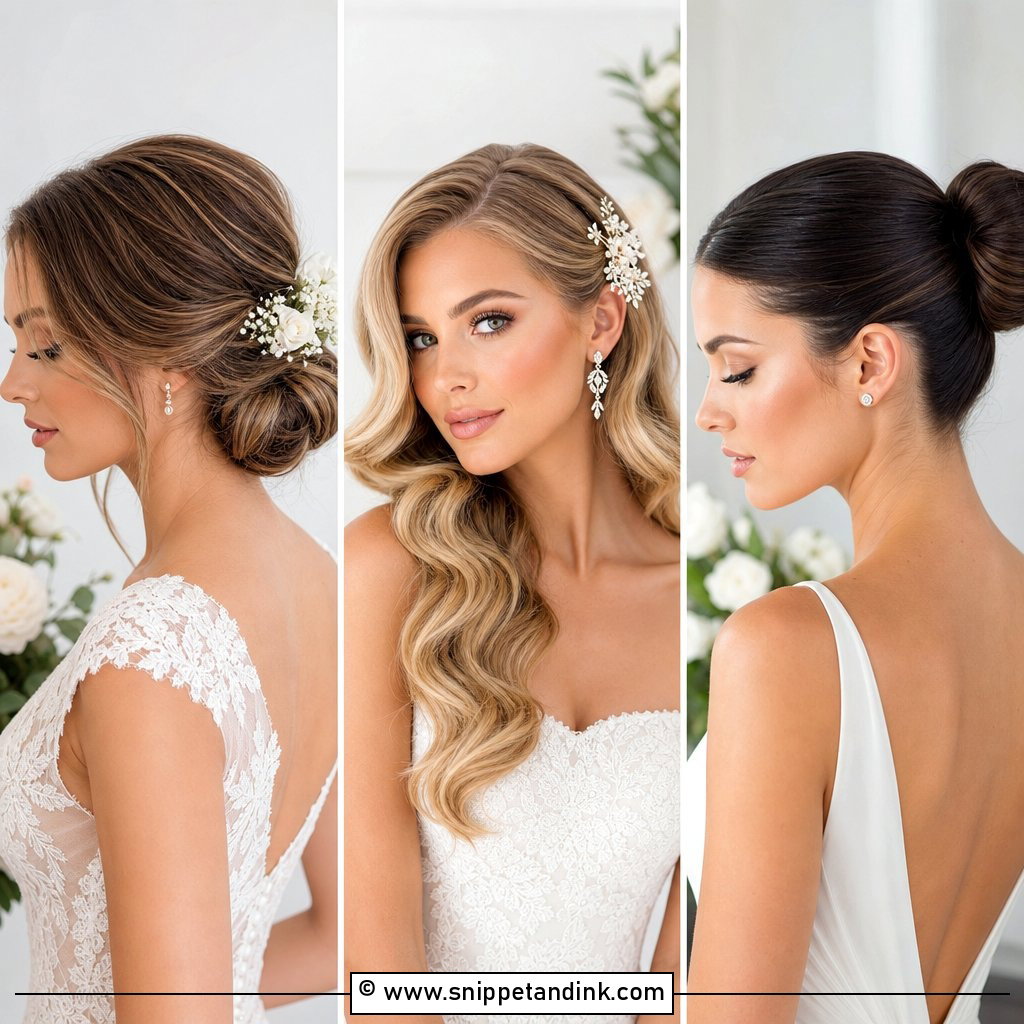
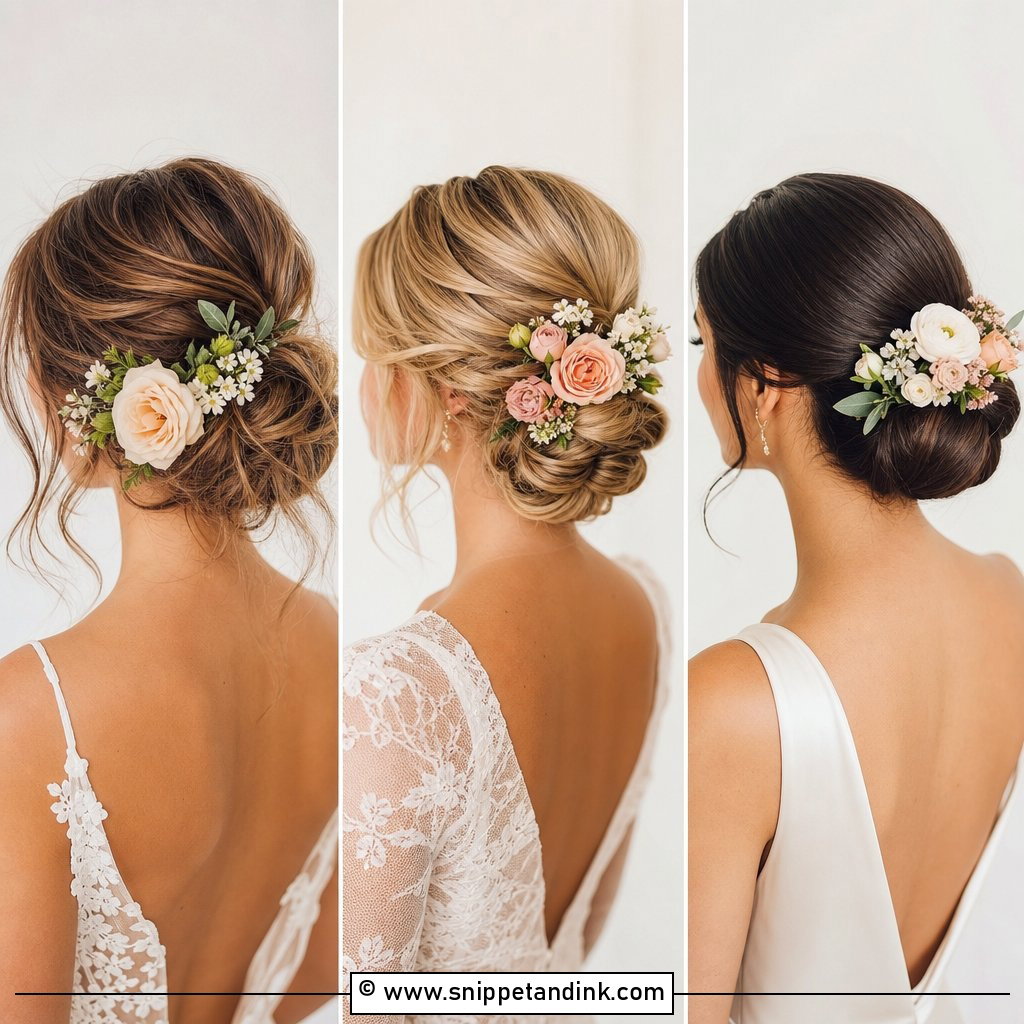
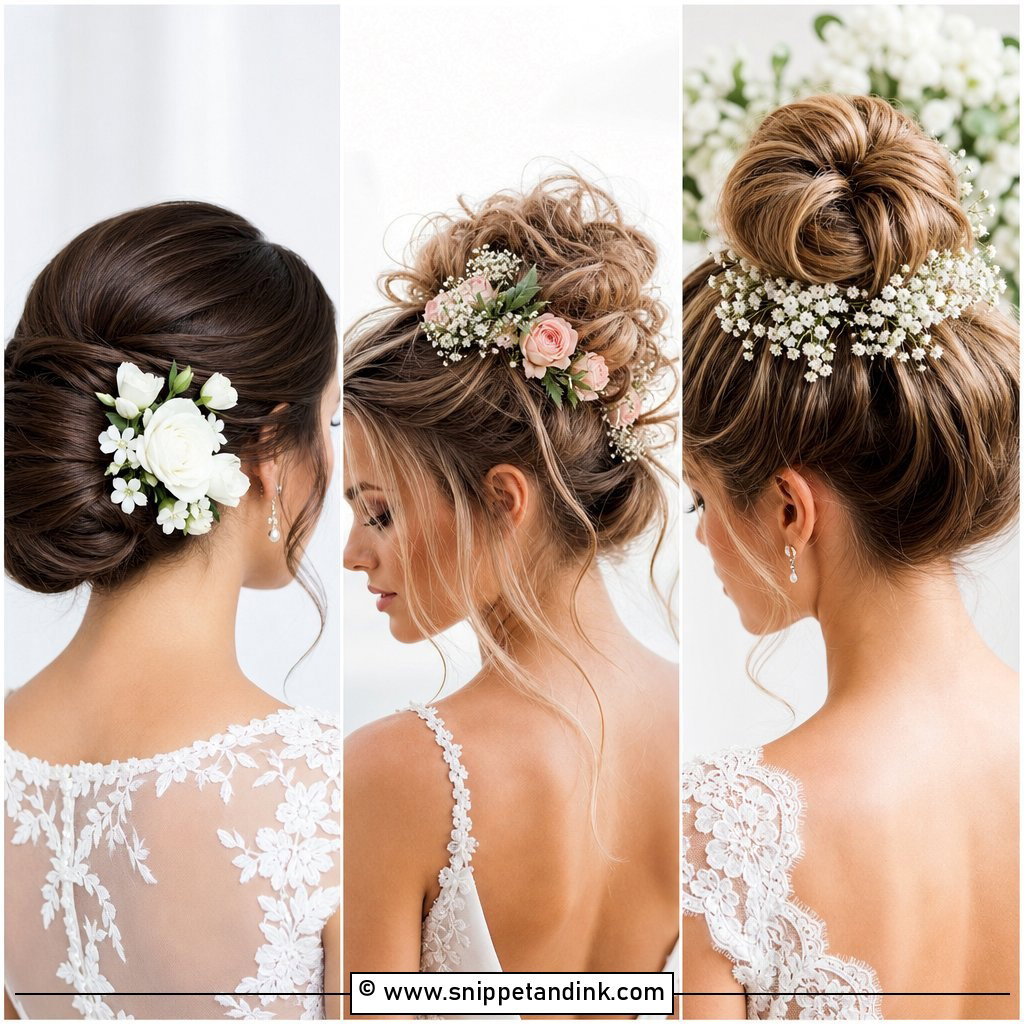
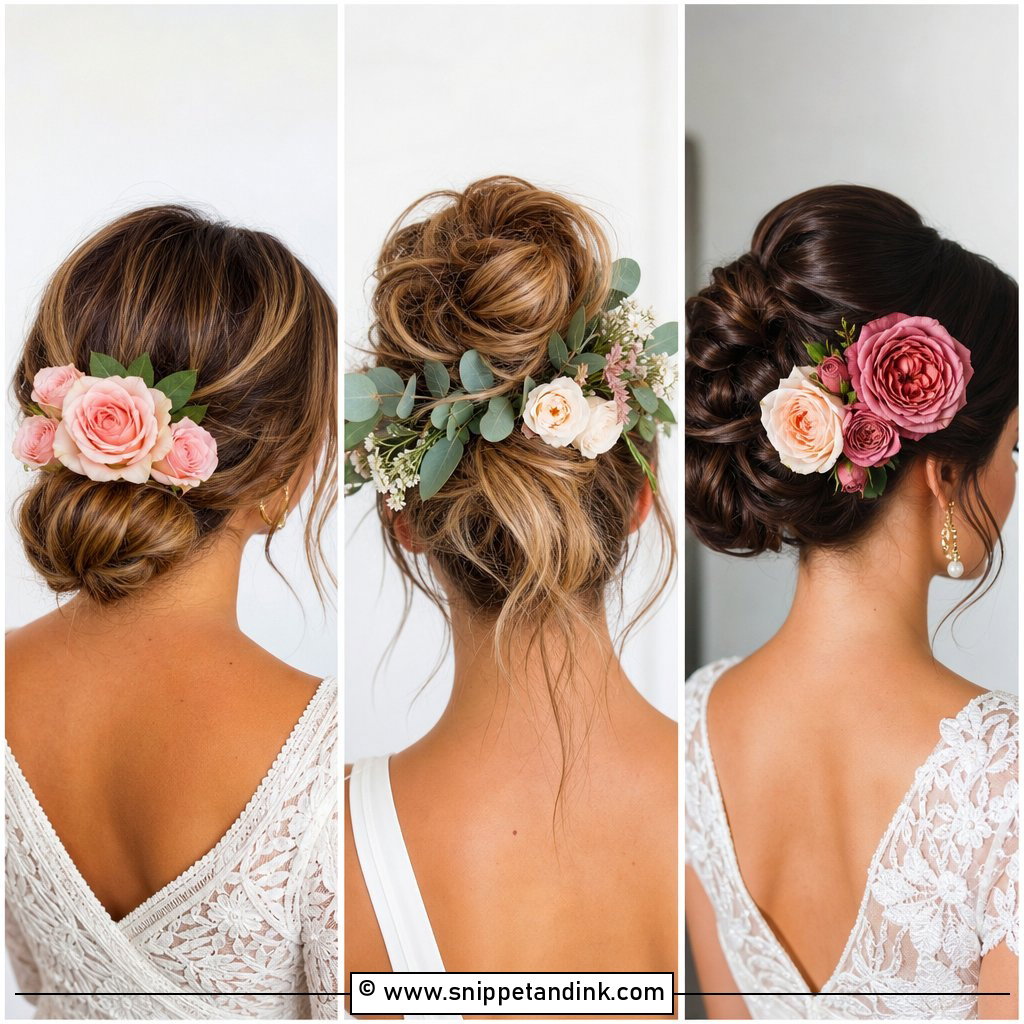
3. Low Bun With Single Bloom
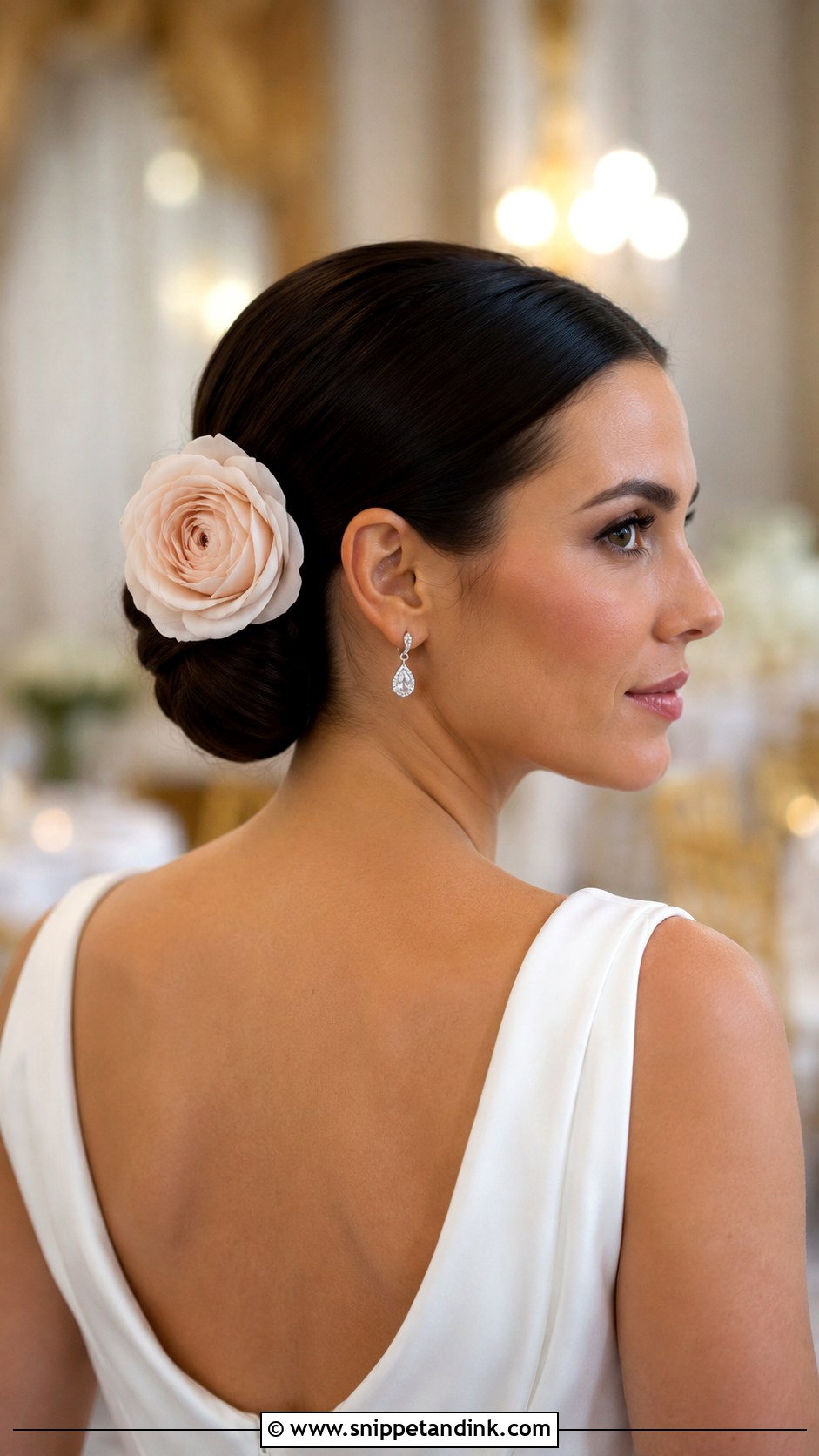
One large bloom on a sleek low bun is the easiest floral style to get right and the hardest to hide mistakes in. Because there’s nothing else on the head, the flower has to sit at exactly the right angle, usually just behind the ear so it shows in profile and from the front. Peonies and garden roses are heavy, so I anchor the bun with crossed pins first and then pin the flower to the bun itself, never to loose hair. Magnolia is tempting but browns at the slightest touch, so I’d only use it if the florist sends a backup. Leave a couple of strands out at the temples if a fully slicked shape feels too severe on you.
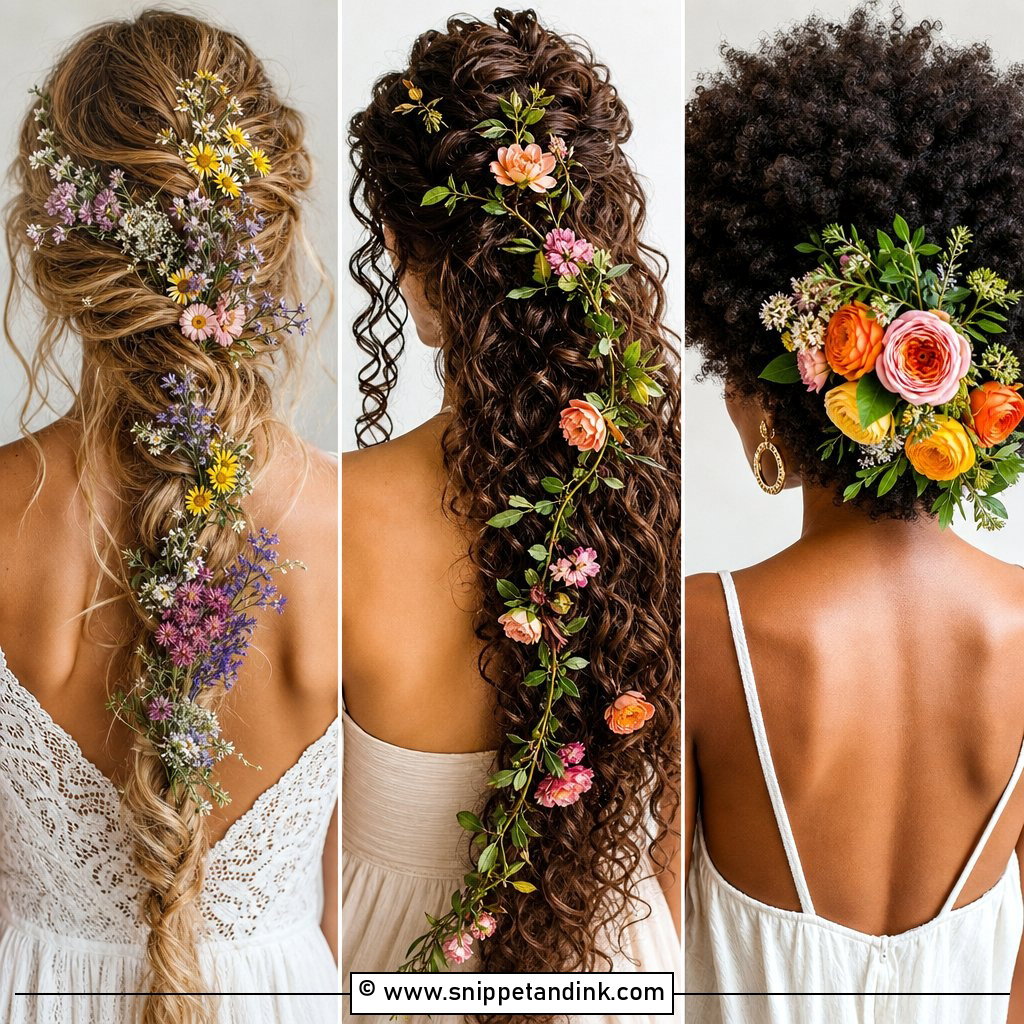
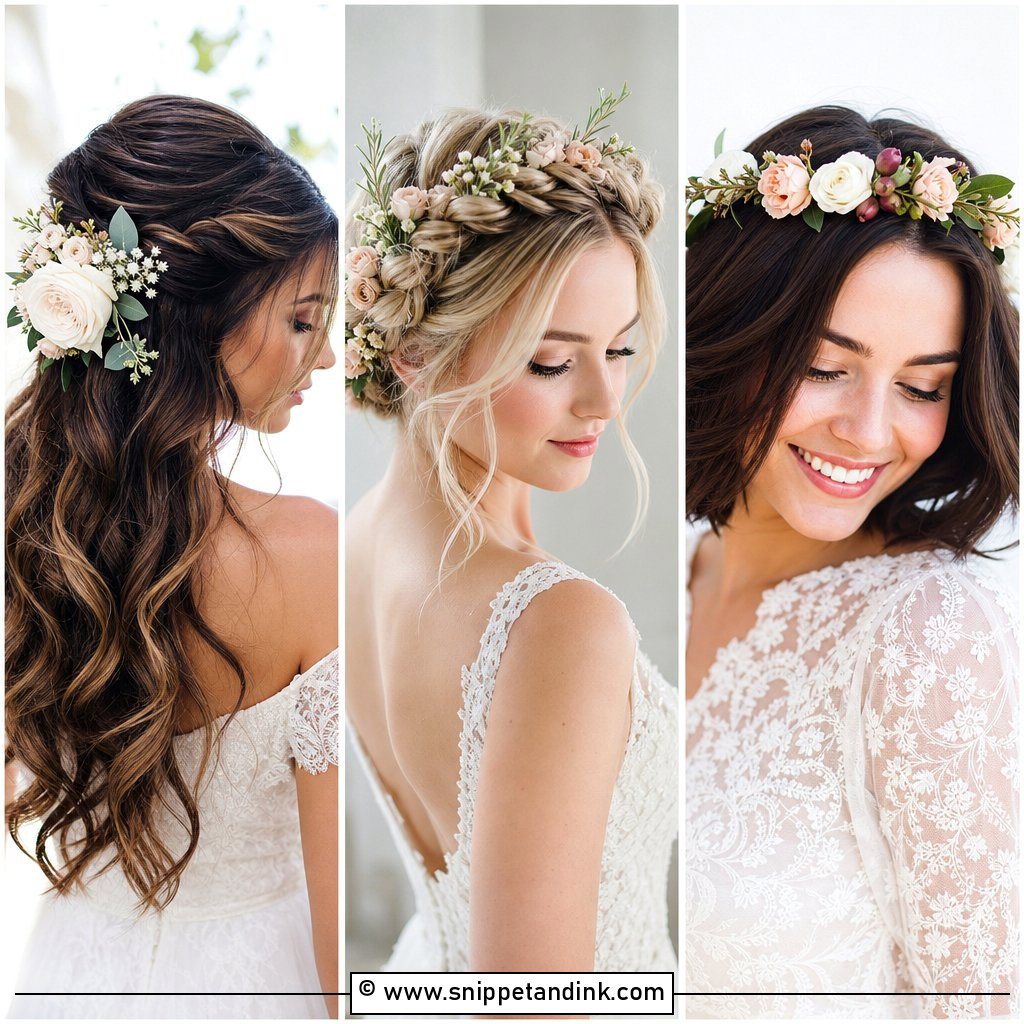
4. Braided Crown With Wildflowers
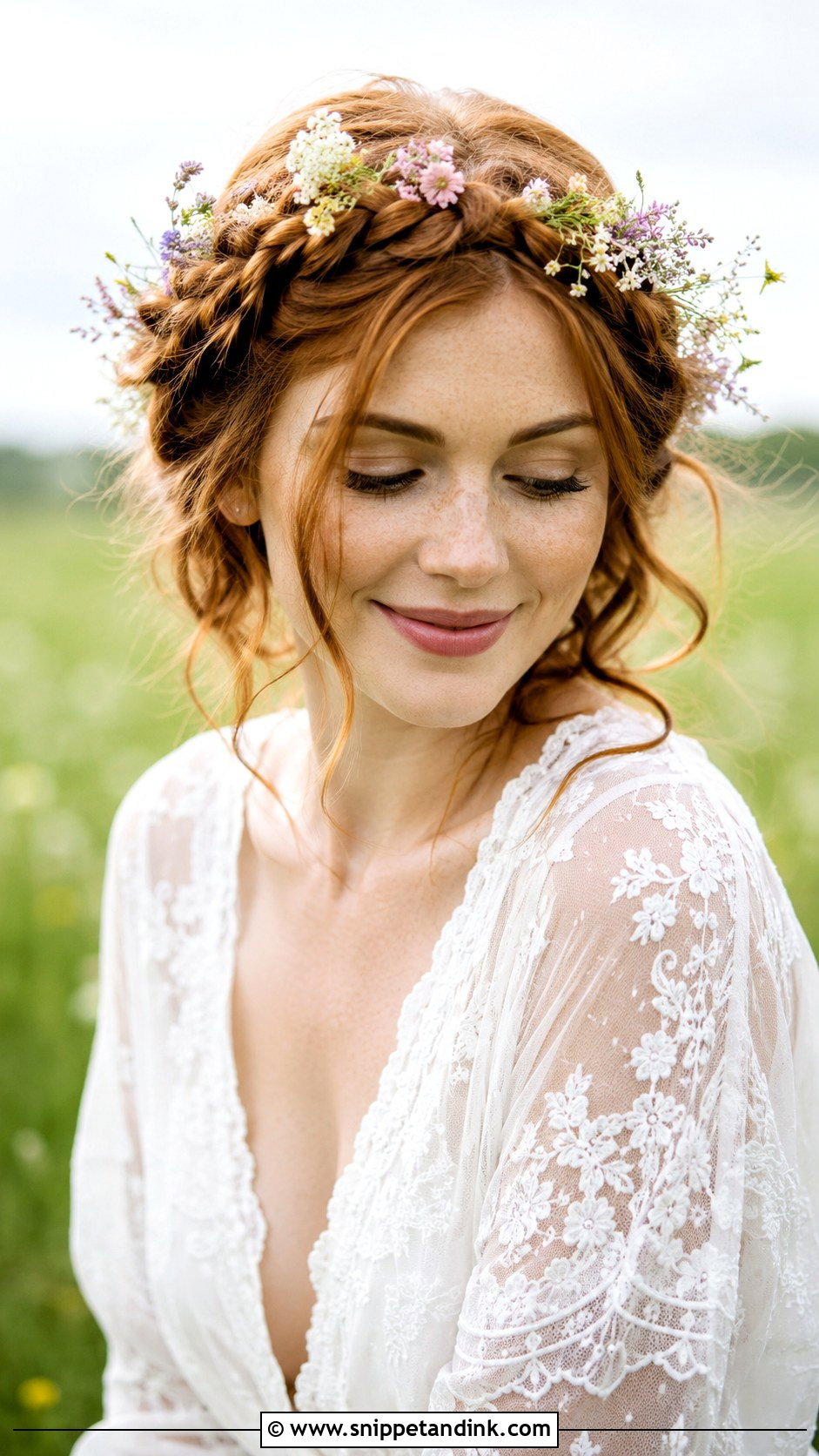
A braided crown is a working base as much as a style: once the braid is pinned around the head, every wildflower has something firm to push into. I braid slightly loose, pancake it a little, then feed the short stems in between the plaits so the braid holds them. It needs length, roughly past the shoulder, or a clip-in braid matched to your colour. Wildflowers vary wildly in how long they last, so I ask the florist which stems in the bucket are the tough ones and leave anything floppy out.
5. Half-Up Half-Down With Eucalyptus
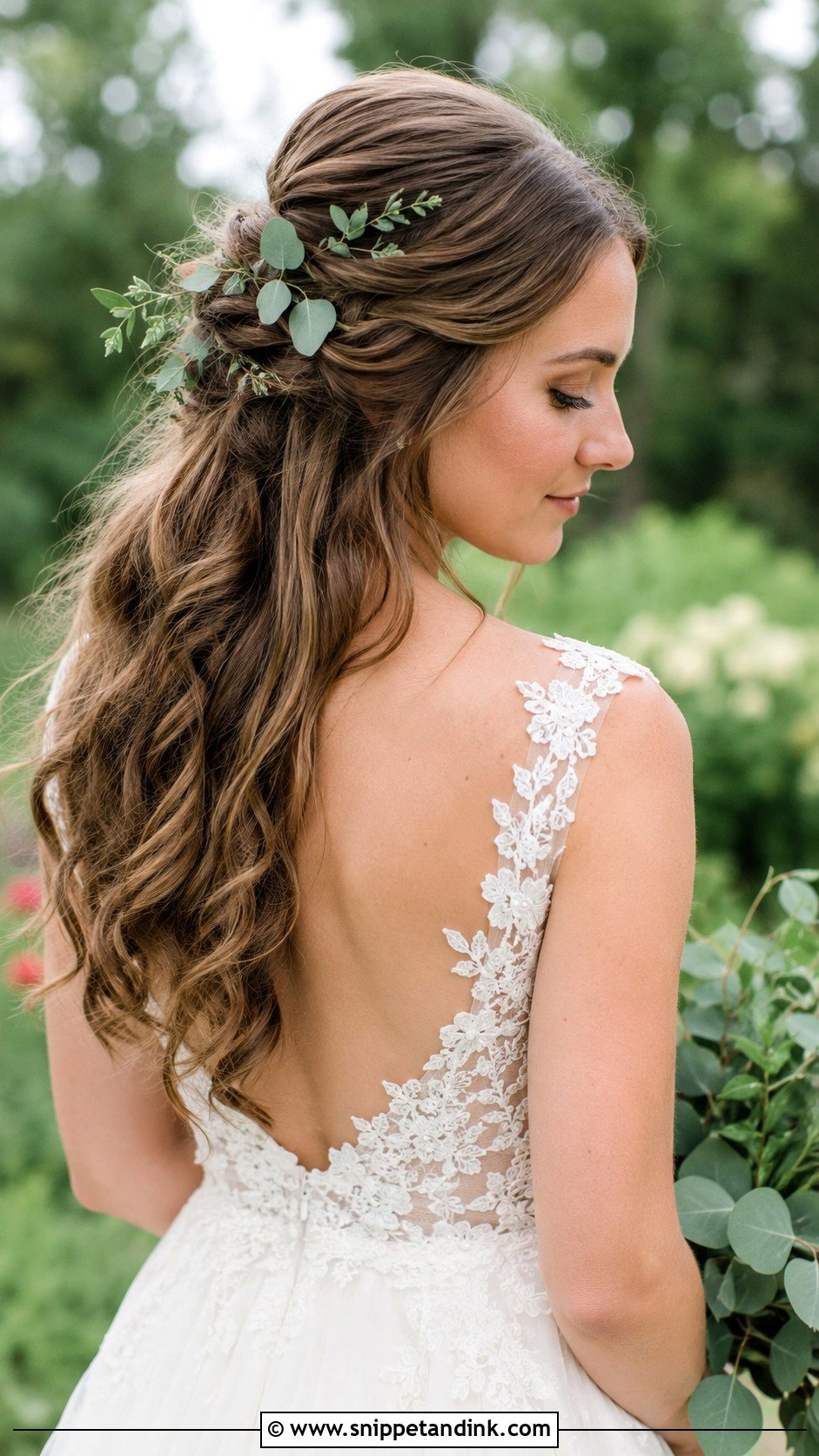
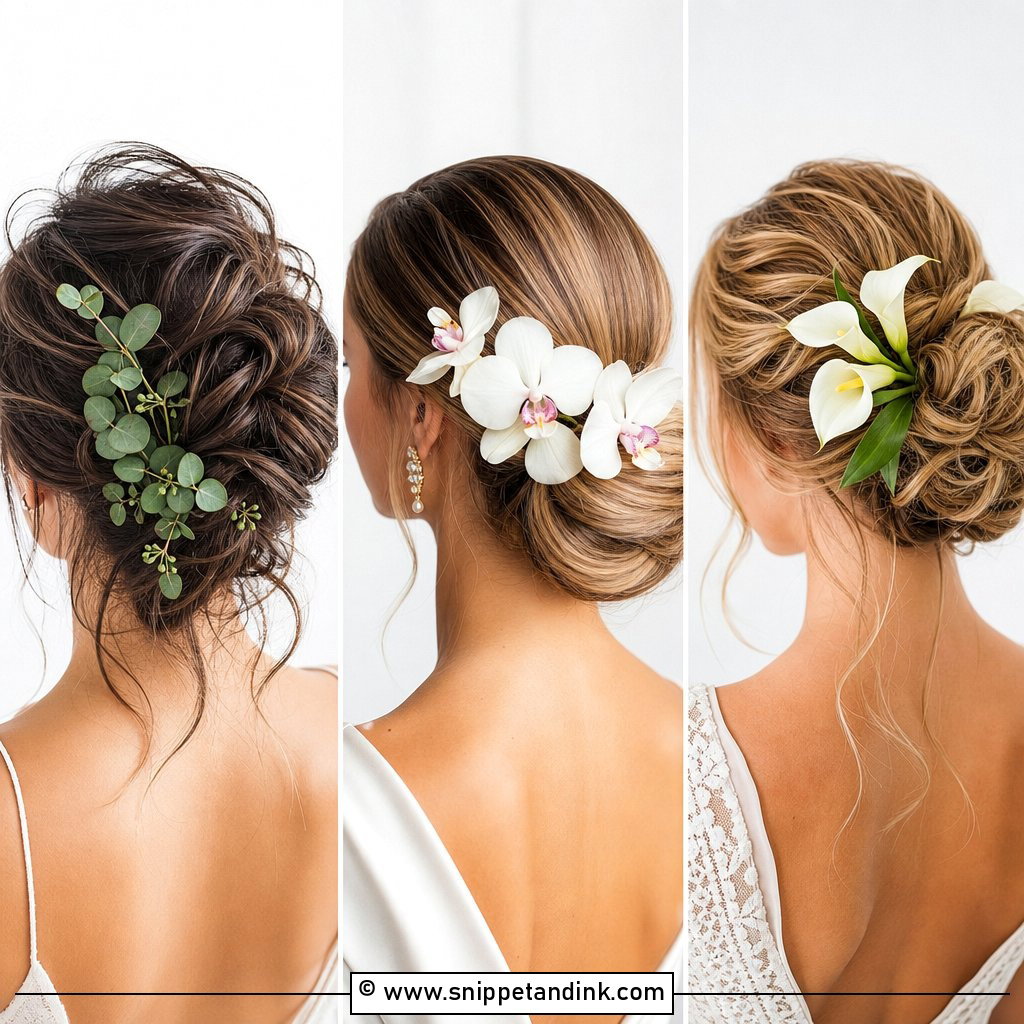
Eucalyptus is nearly bulletproof in hair. It’s leathery, it doesn’t bruise, and the silver dollar variety still looks fresh at the end of the night. In a half-up style I lay the sprigs along the line where the top section is pinned, which covers the pins as well as decorating. If you add white or blush blooms beside it, keep them to one side so the greenery does the framing. The scent is strong at close range, and a bride who gets headaches from fragrance should sniff a sprig at the trial before committing.
6. Boho Floral Updo
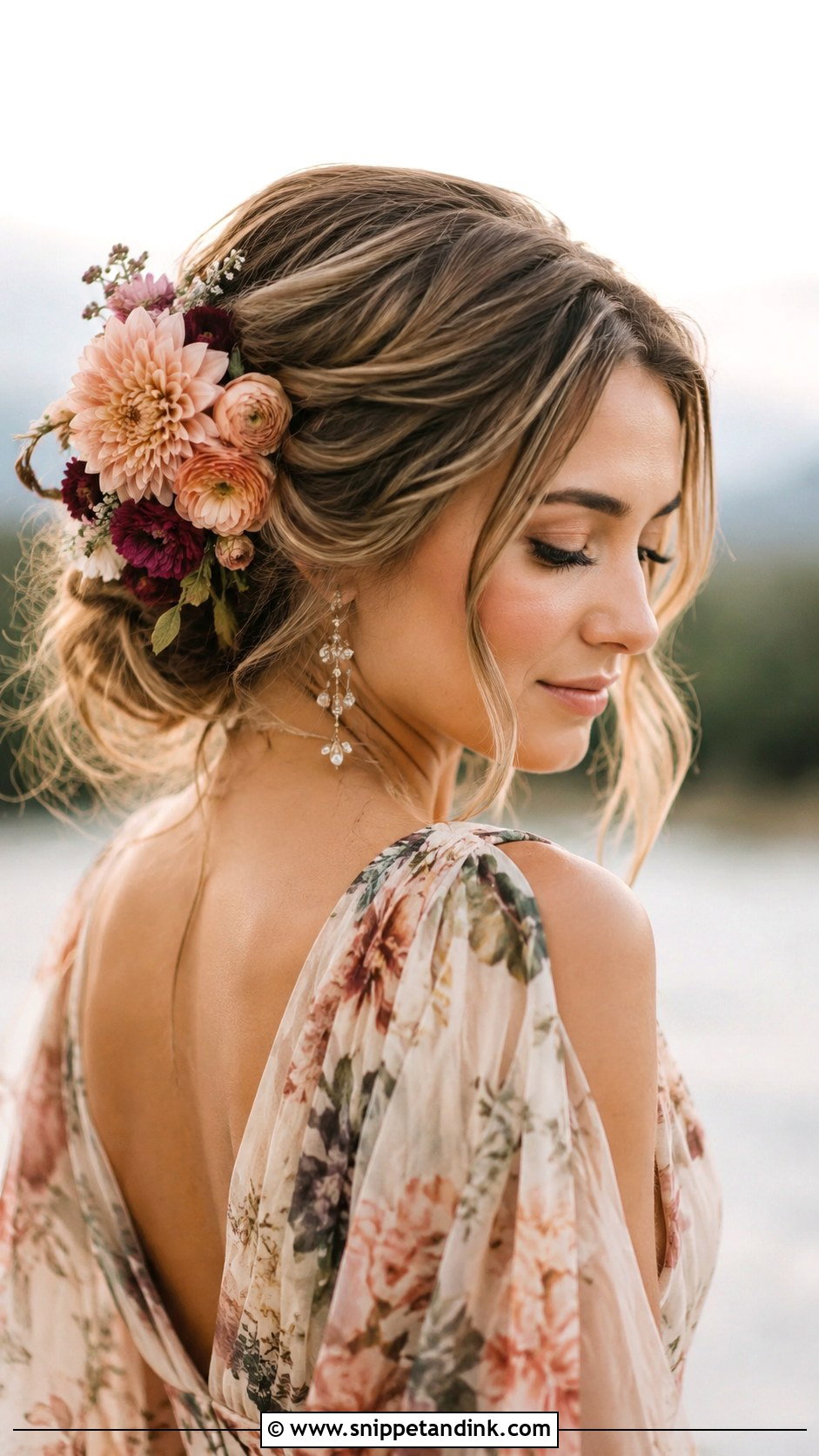
A boho floral updo looks thrown together, and it only stays that way if the structure underneath is tight. I build it on a few hidden anchor points, small pinned twists or a padded base, and every dahlia or ranunculus goes into one of those rather than into loose texture. Dahlias are thirsty and can droop after a few hours in summer heat, so I prefer ranunculus as the main bloom for long days. This one needs medium to long hair with some grit; freshly washed, silky hair lets the whole thing slide.
7. Side-Swept Curls With Orchids
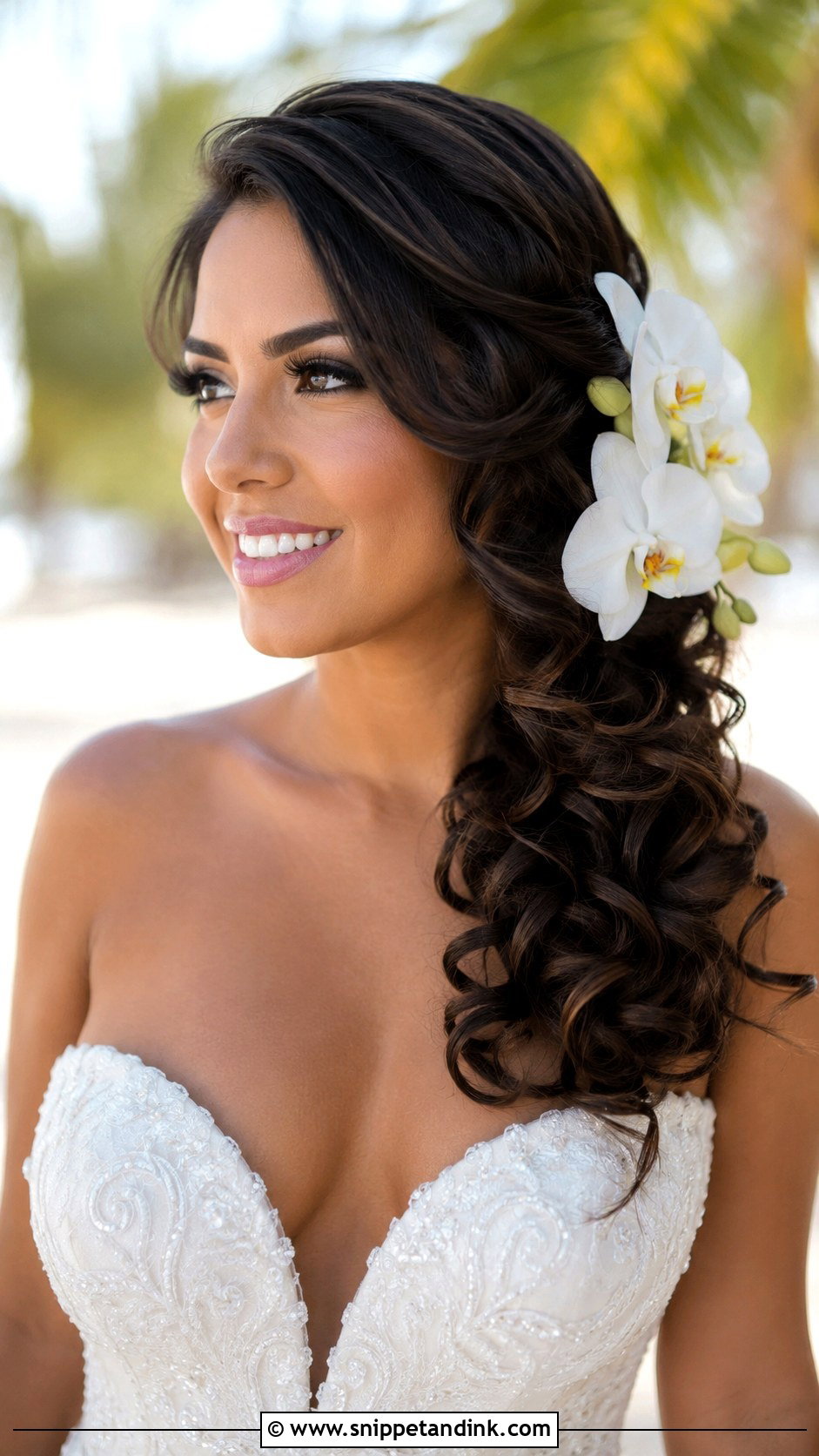
Side-swept curls put all the weight on one side of the head, so the anchoring matters more than the flowers. I pin a hidden row of crossed pins behind the ear the hair is swept away from, then set the orchids near the part on that anchor. Dendrobium orchids are some of the longest-lasting flowers I work with out of water; phalaenopsis look elegant but are heavier and easier to crease. Thick hair holds the curl and the sweep best. Fine hair can do it too if I use a hot tool with more set time and a little more pinning at the nape.
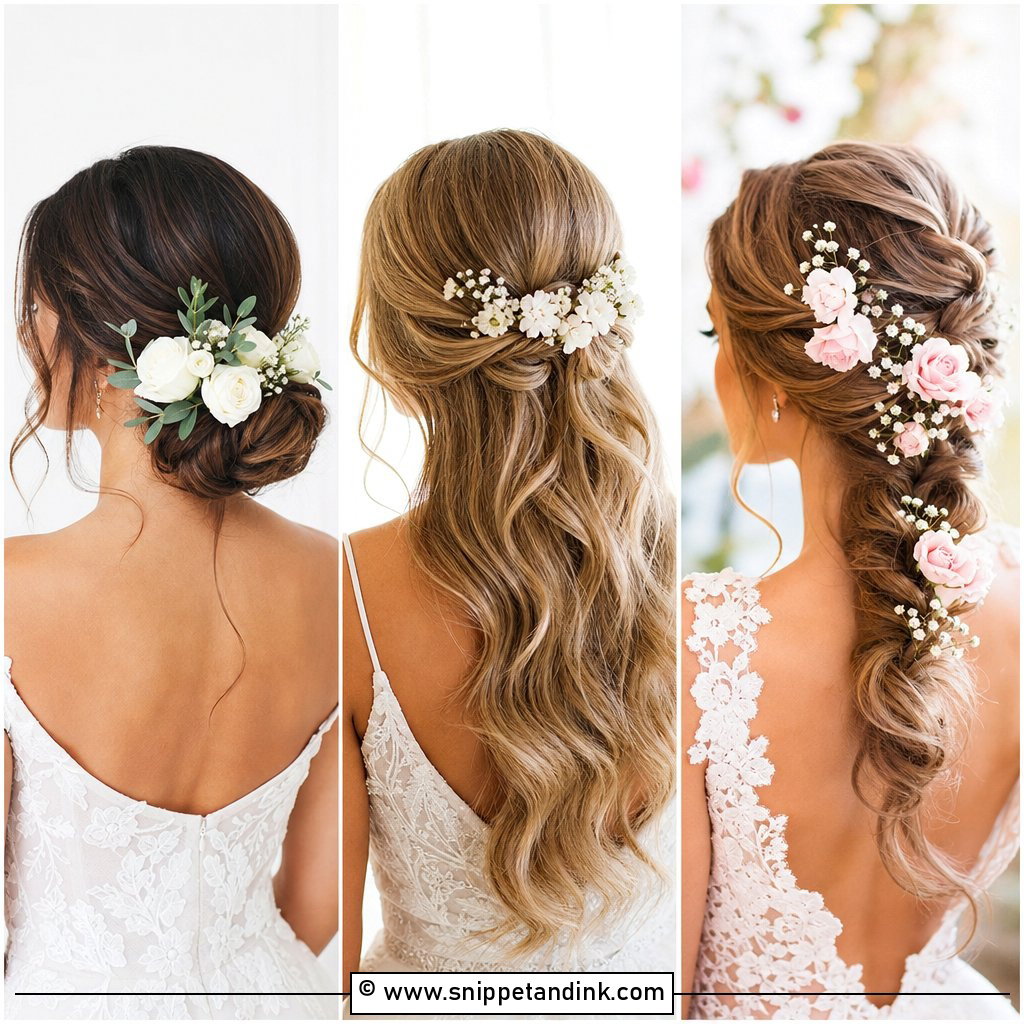
8. Fishtail Braid With Baby’s Breath
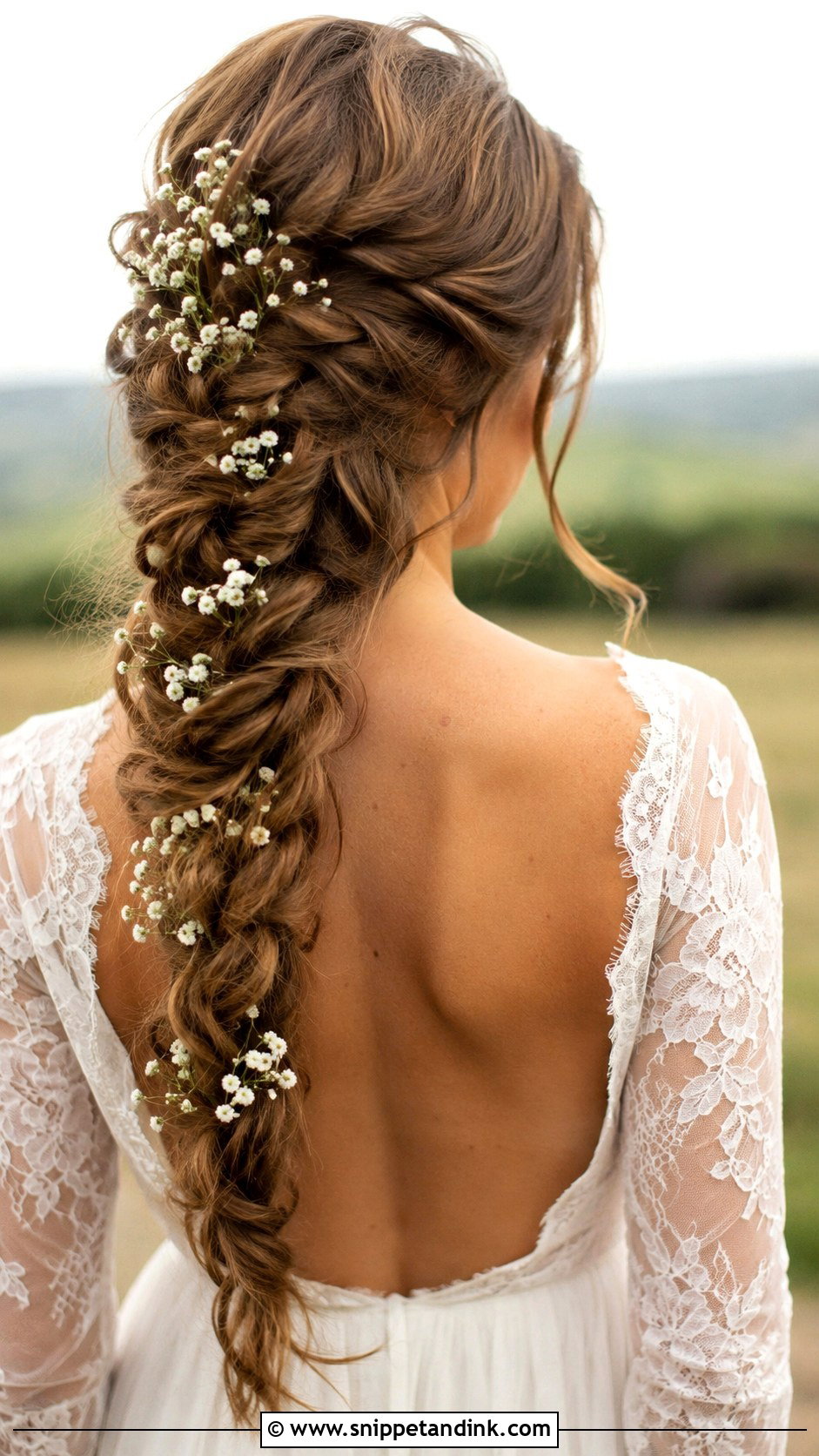
With a fishtail, the flowers go in after the braid is finished, not while braiding, or the plait pulls uneven. I gently pull at the edges of each section, then press small sprigs of baby’s breath into the gaps that opens. The tight weave holds them well, which is why this style travels from ceremony to reception without much touching up. It does need long hair, and on layered cuts the shorter pieces poke out of a fishtail faster than a regular three-strand braid.
9. Classic Chignon With Gardenias
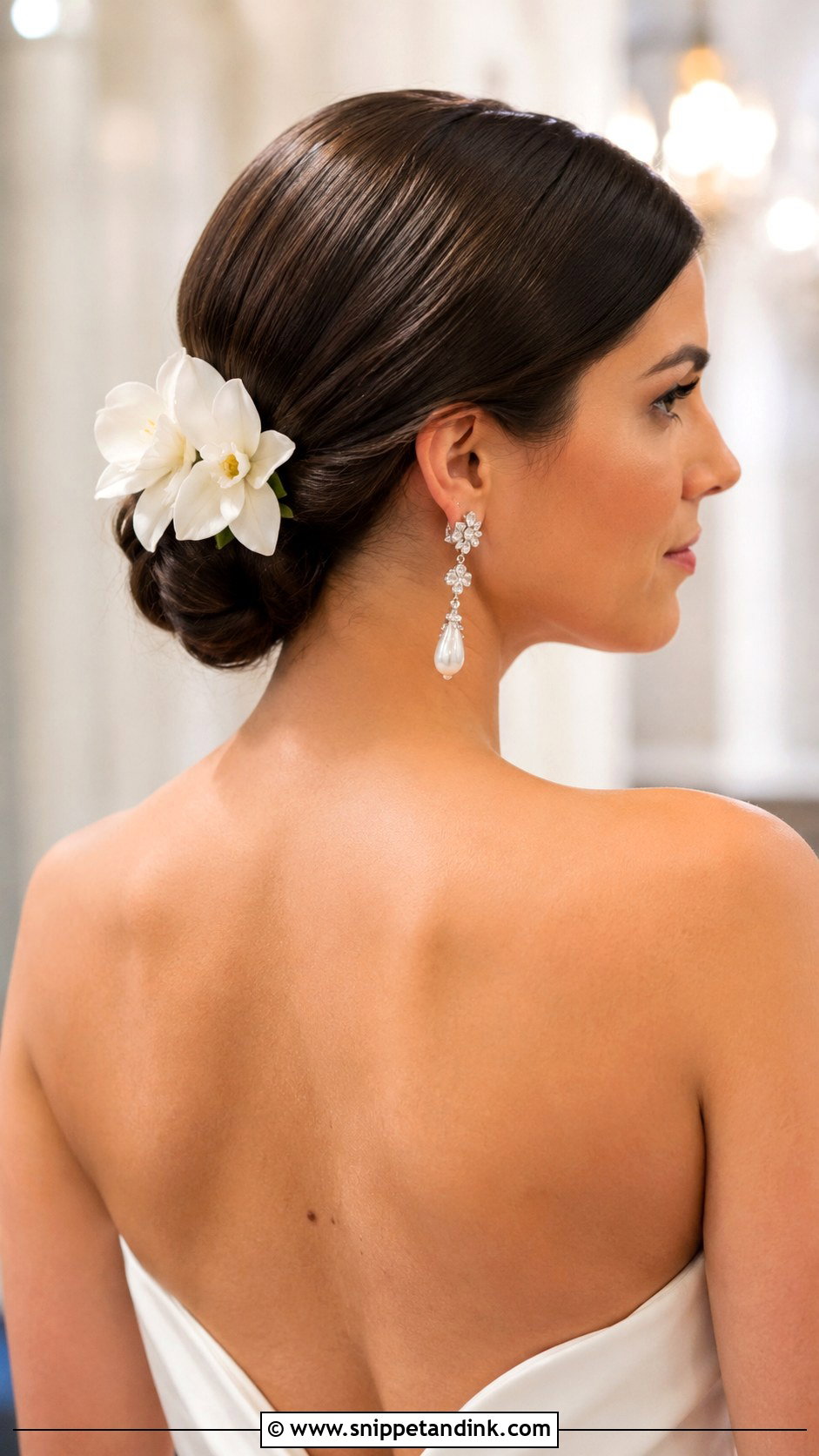
Gardenias smell incredible and bruise if you so much as look at them. On a chignon I place fragrant gardenias last, by the stem only, and ask everyone not to touch the petals, because a fingertip leaves a brown mark that grows over the next hour. The low knot at the nape gives a firm base and keeps the flower clear of a veil comb placed above it. Expect the creamy petals to start yellowing by late evening; I always ask the florist for one spare bloom to swap in before the reception photos.
10. Flower Crown With Loose Curls
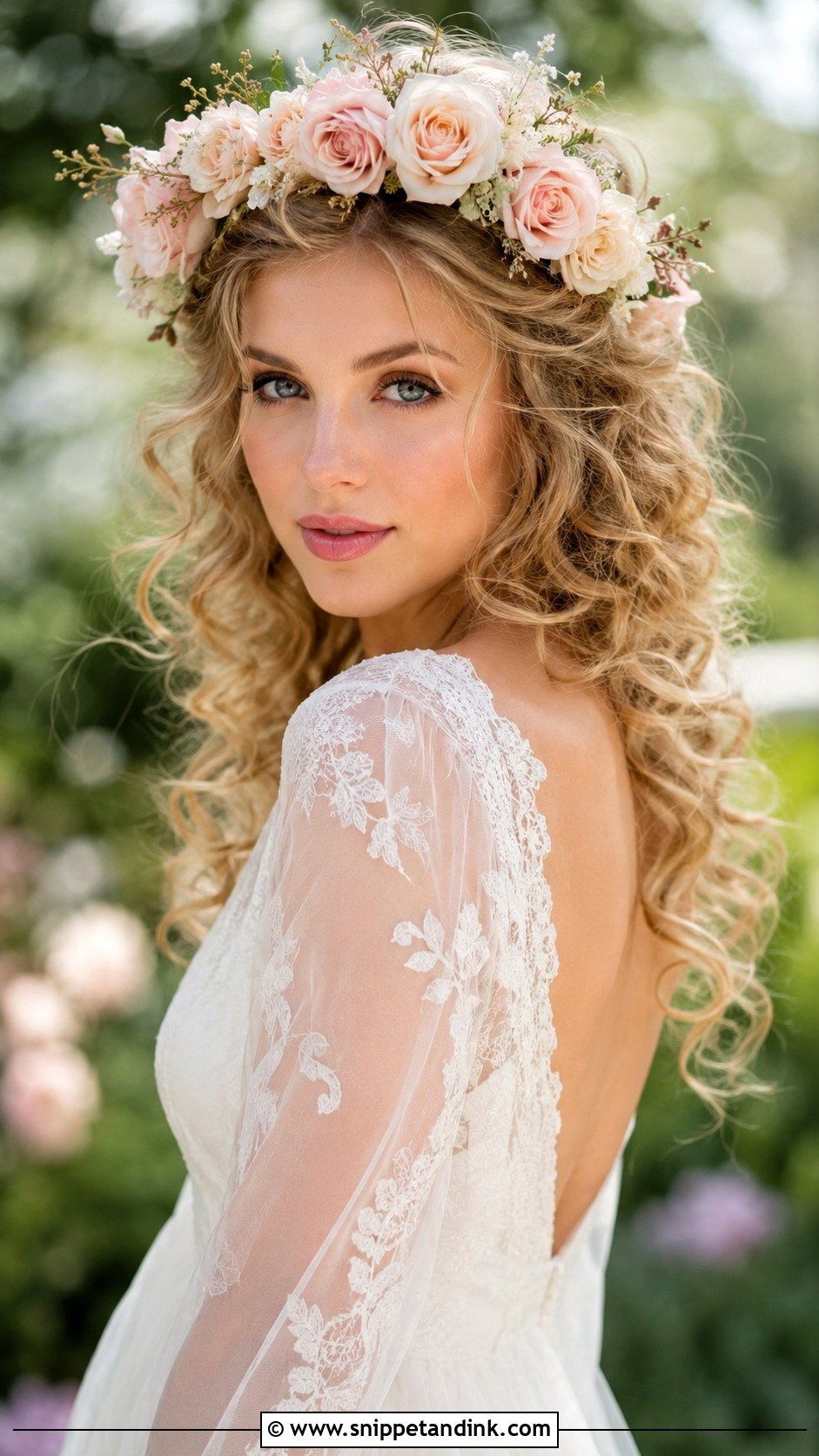
A full crown sitting on loose curls has nothing to grip, so I pin it through the crown to a couple of small hidden braids or twists rather than relying on the curls. I also measure the crown at the trial with the hair already styled, since volume can make a fitted crown sit too high and look like a headband. Curly and wavy textures hold it naturally. On straight hair I set the curls with a firm-hold spray and accept that they will relax a little through the day, which actually suits this look.
11. Sleek Ponytail With Floral Accent
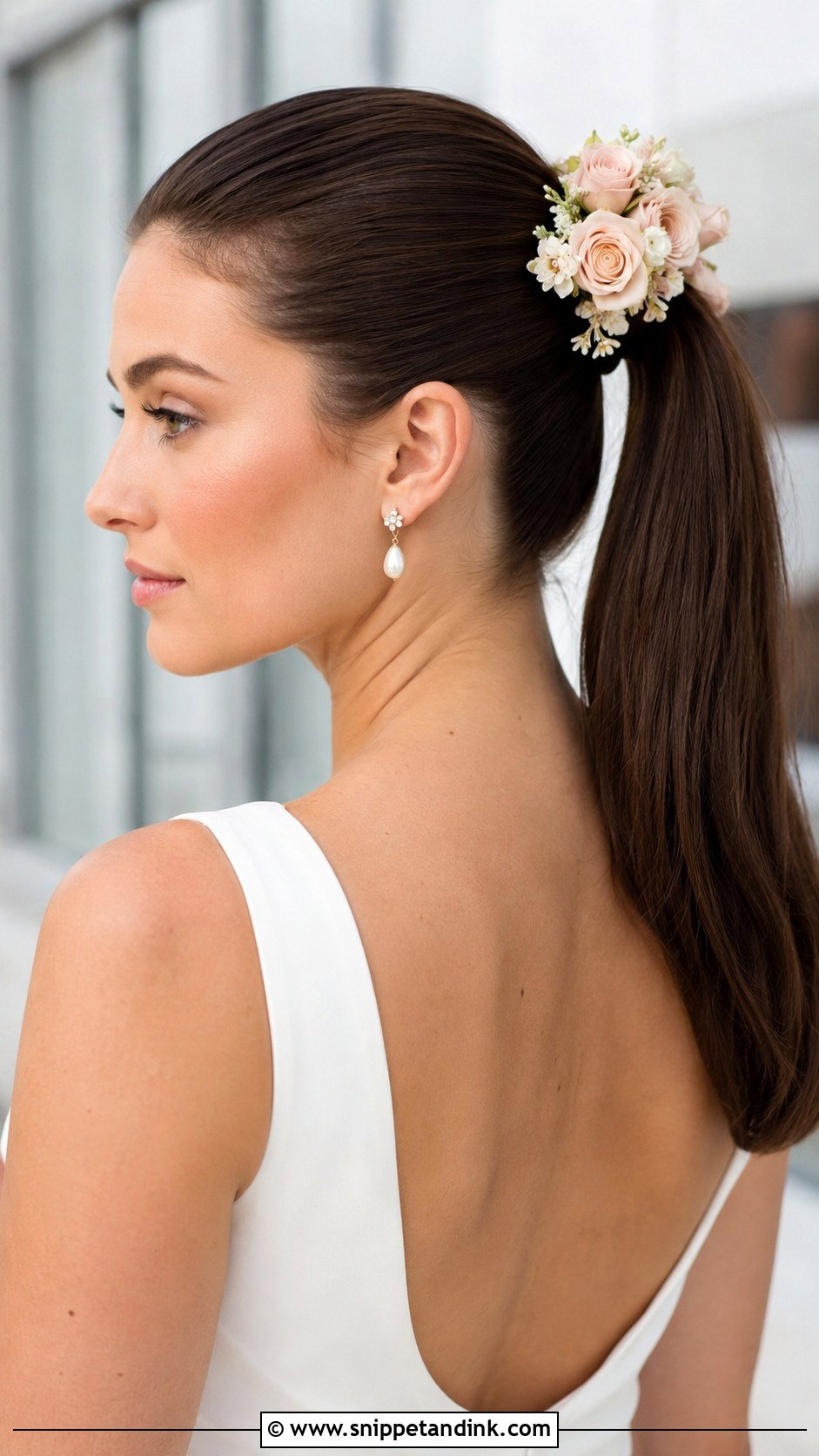
A sleek ponytail with a cluster of blooms at the base reads modern, and it is less forgiving than it looks. The ponytail has to be smoothed and secured before any flower goes near it, because you can’t re-tighten an elastic once the blooms are wired around it. I build the cluster on a small comb or a wired bundle from the florist and slide it in over the hair tie. It keeps hair off the neck in summer heat. Hair under shoulder length will make a stubby tail here, so I’d suggest a clip-in ponytail if you want this shape.
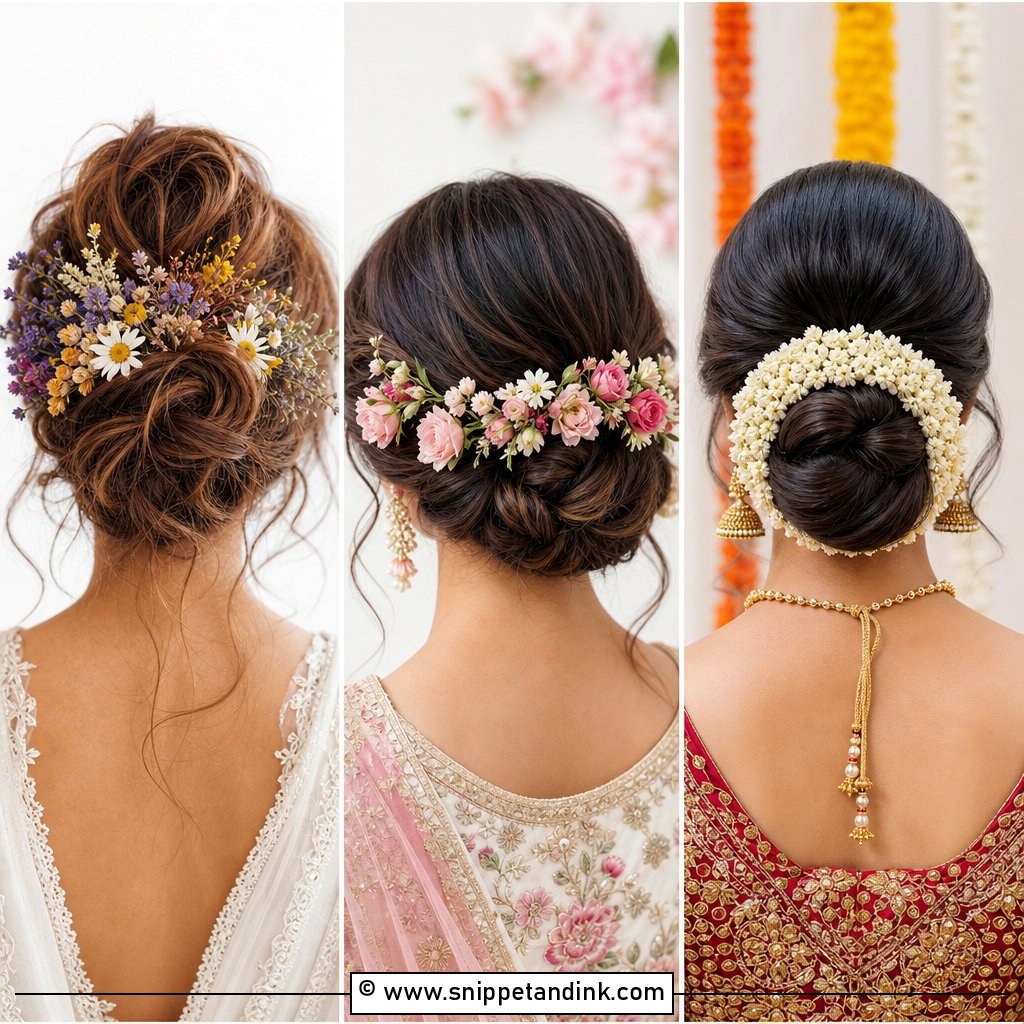
12. Messy Bun With Wildflowers
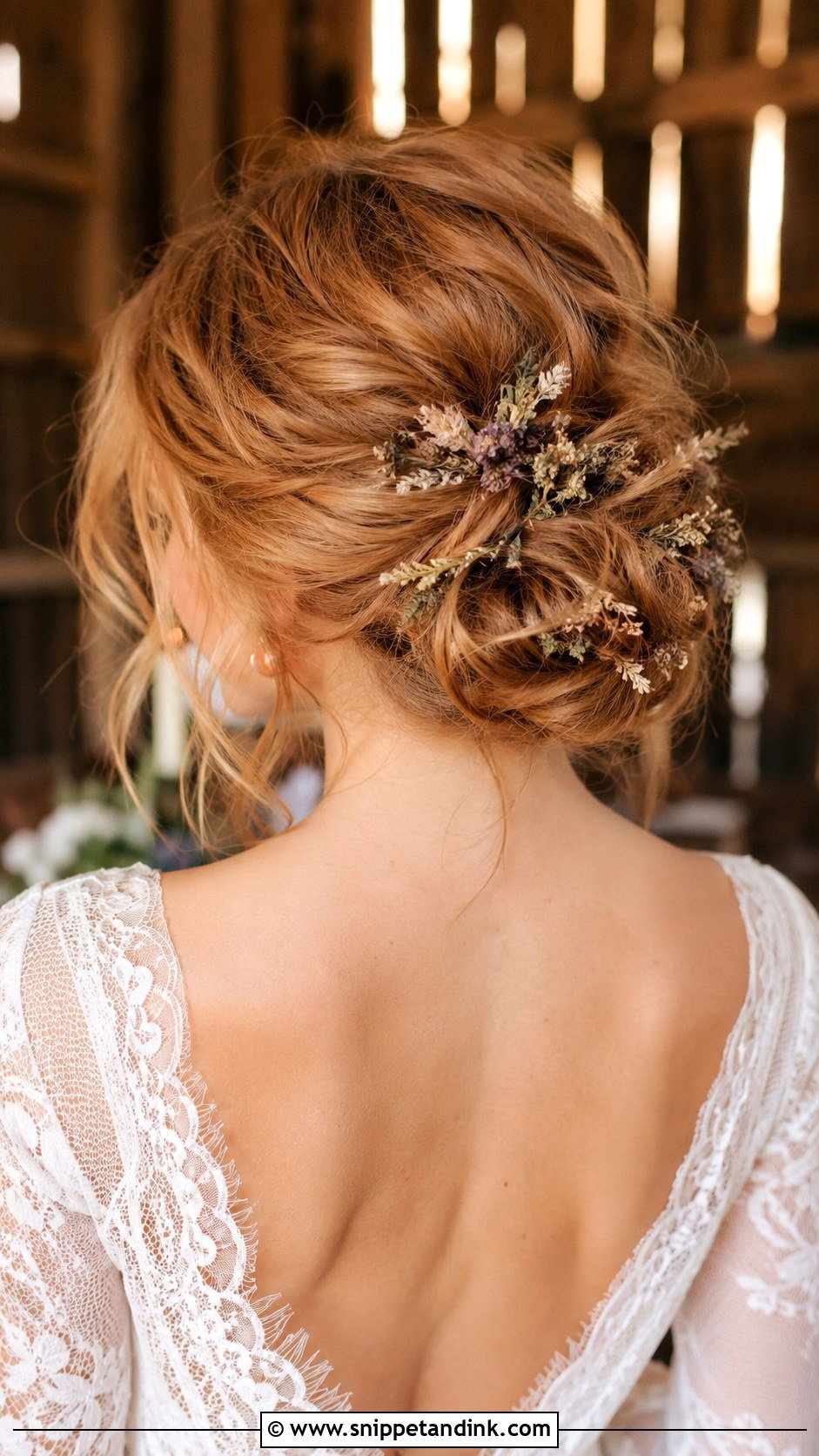
A messy bun is only messy on the surface. I start with a secure base bun, then pull pieces out and pin them loosely over it, which gives the wildflowers lots of small pockets to sit in. Muted, small-headed stems suit it far better than one big bloom, which would look perched on top. It’s comfortable to wear for hours and works on most hair types, though very short layers may need a few extra pins around the nape. Loosen a couple of strands at the face once the flowers are in, not before, so they fall over the stems naturally.
13. Crown Braid With Roses
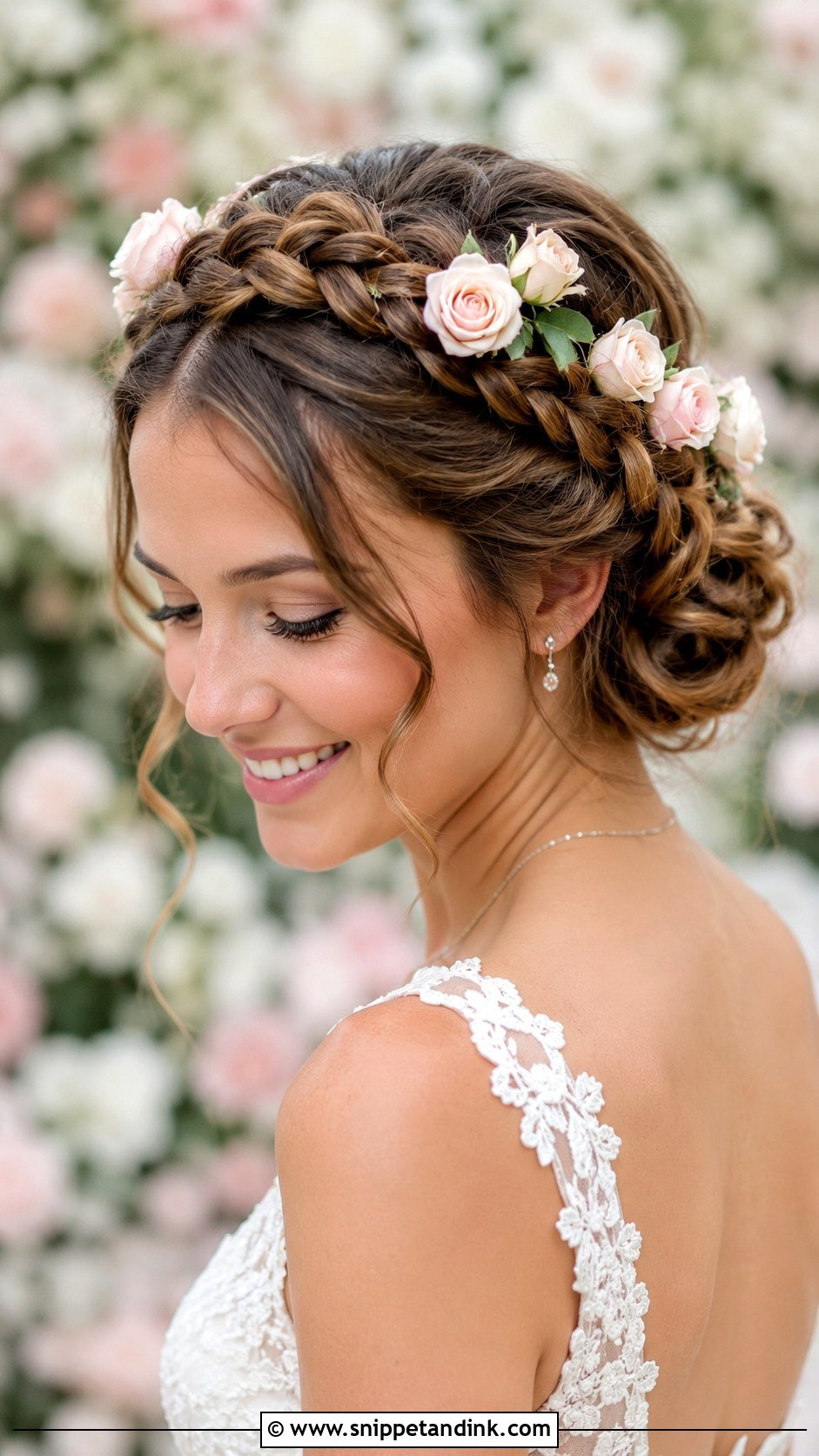
Roses in a crown braid need to be small; a full-size garden rose is too heavy to sit in braid gaps without sliding. Spray roses or tight standard rosebuds are what I ask for. The braid itself does the holding, and once it’s pinned I rarely have to touch it again until the end of the night. Deep red roses can look almost black in low reception light, so if you want the colour to read in evening photos, choose a brighter red or a blush. This style needs hair past the shoulders, or a clip-in braid blended at the sides.
14. Romantic Updo With Peonies
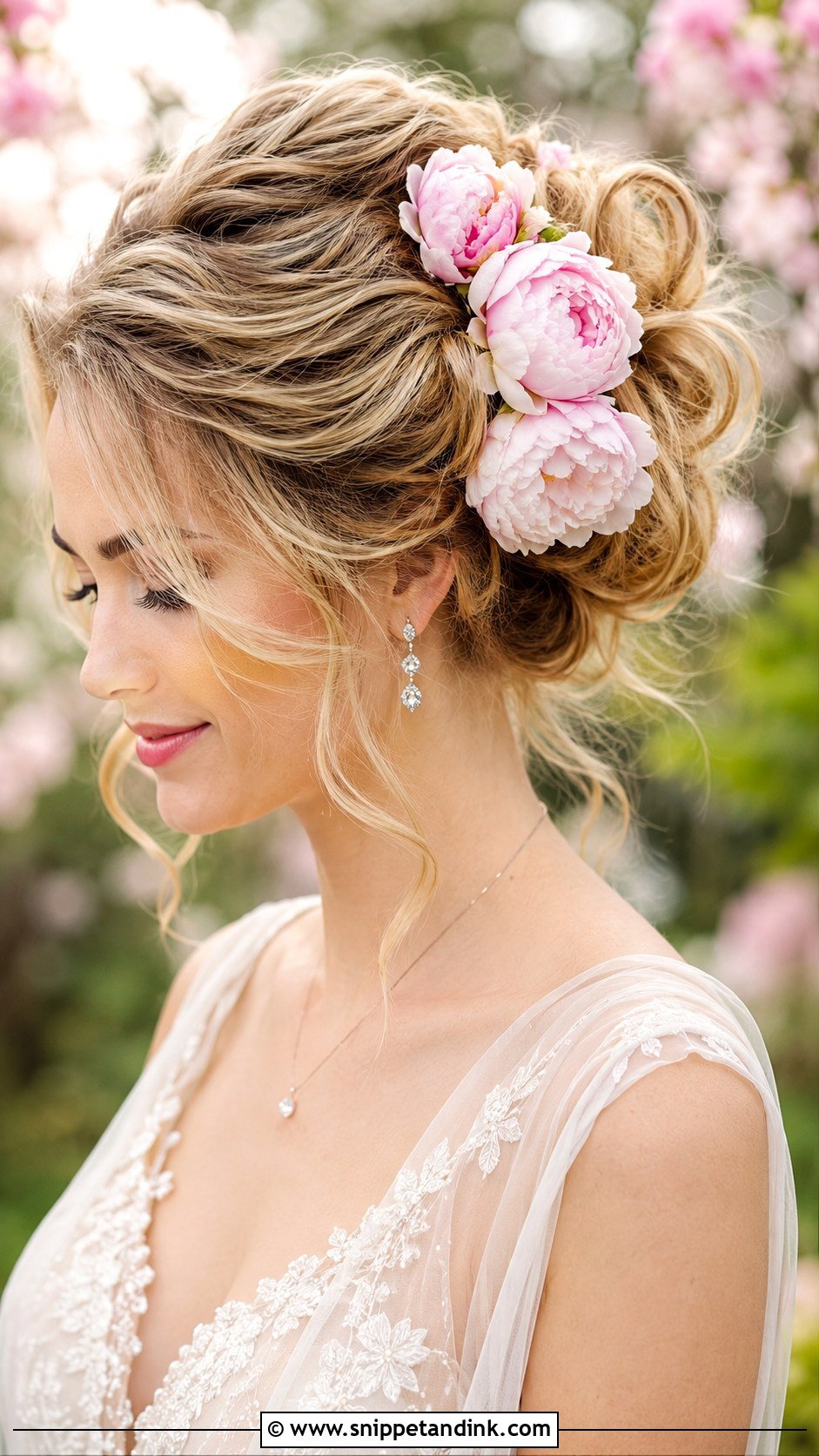
Peonies are heavy, wide and prone to shedding petals once they open fully, which is exactly why I limit a romantic updo to one or two. I ask the florist for blooms that are opened but not blown, and I place them low on the updo where the most hair supports them. Peony season runs late spring into early summer in most places, so outside that window you’re paying for imports or substituting a garden rose. The updo itself needs body, so I prep with a volumising product and backcomb the base before pinning.
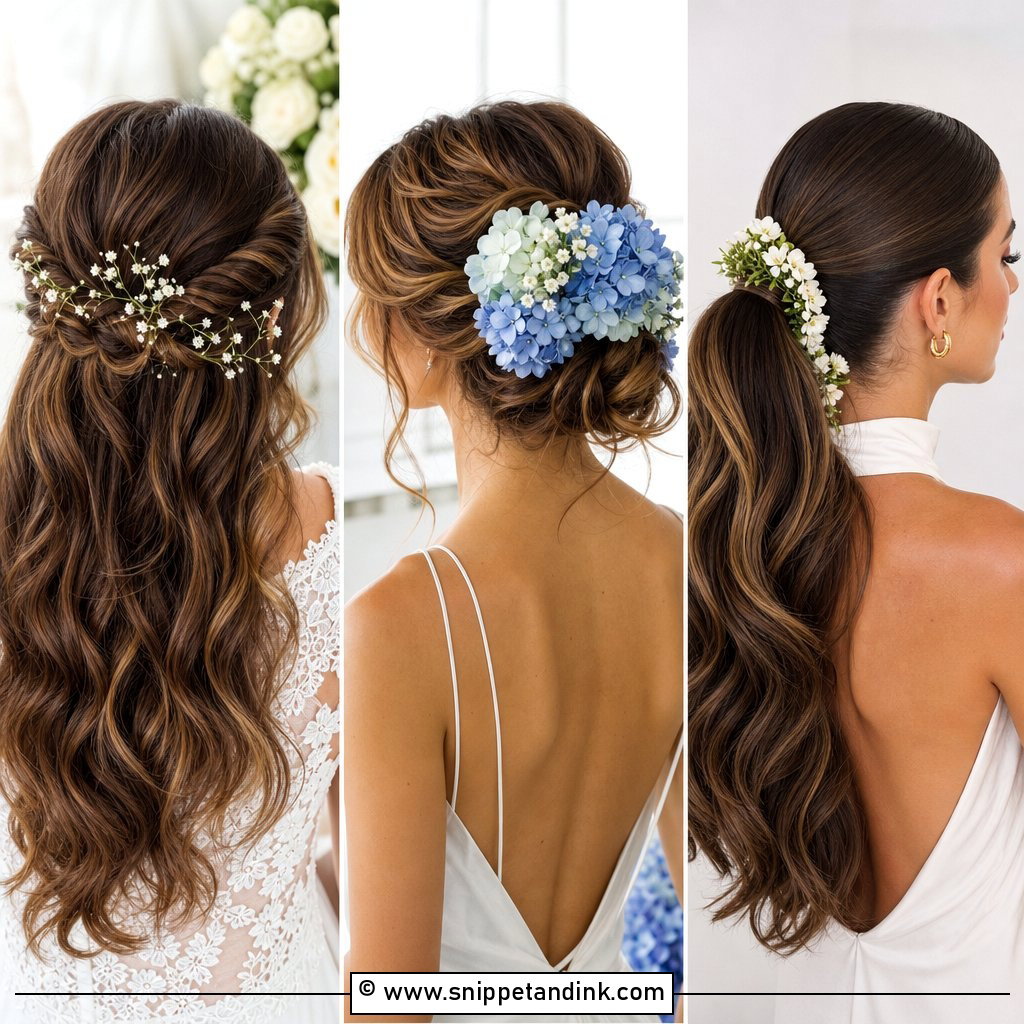
15. Beach Waves With Tropical Flowers
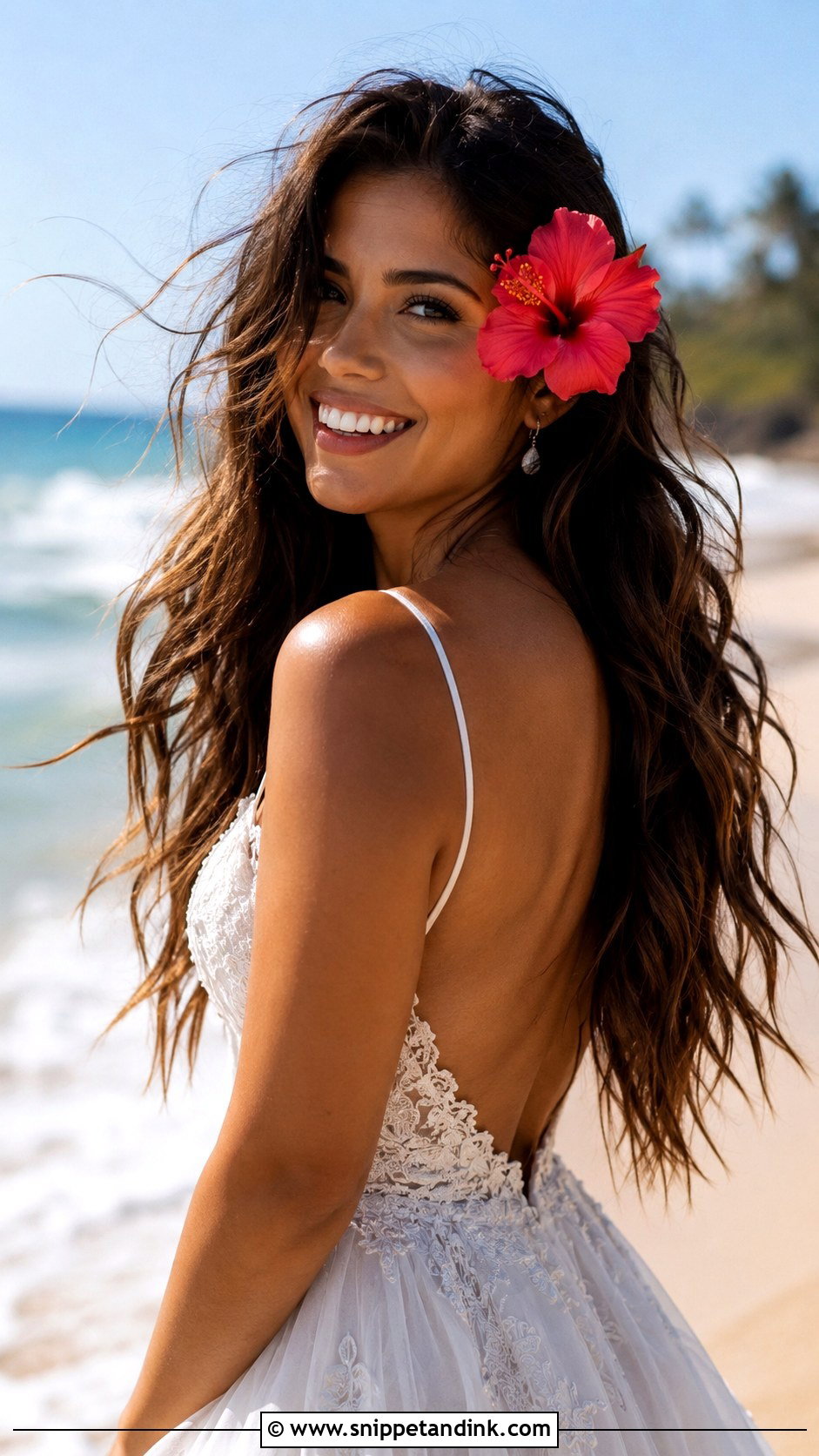
Tropical flowers vary hugely in stamina. Orchids last; hibiscus is the one I’d skip for anything longer than a ceremony, since each flower naturally closes within a day and looks tired fast in heat. For an island-inspired look, a single bloom behind one ear is traditional, and the side matters in some island cultures, so check before you choose. Beach waves frizz in salt air, so I set them with a light hold and let the texture loosen rather than fighting it with heavy product.
16. Vintage Finger Waves With Blooms
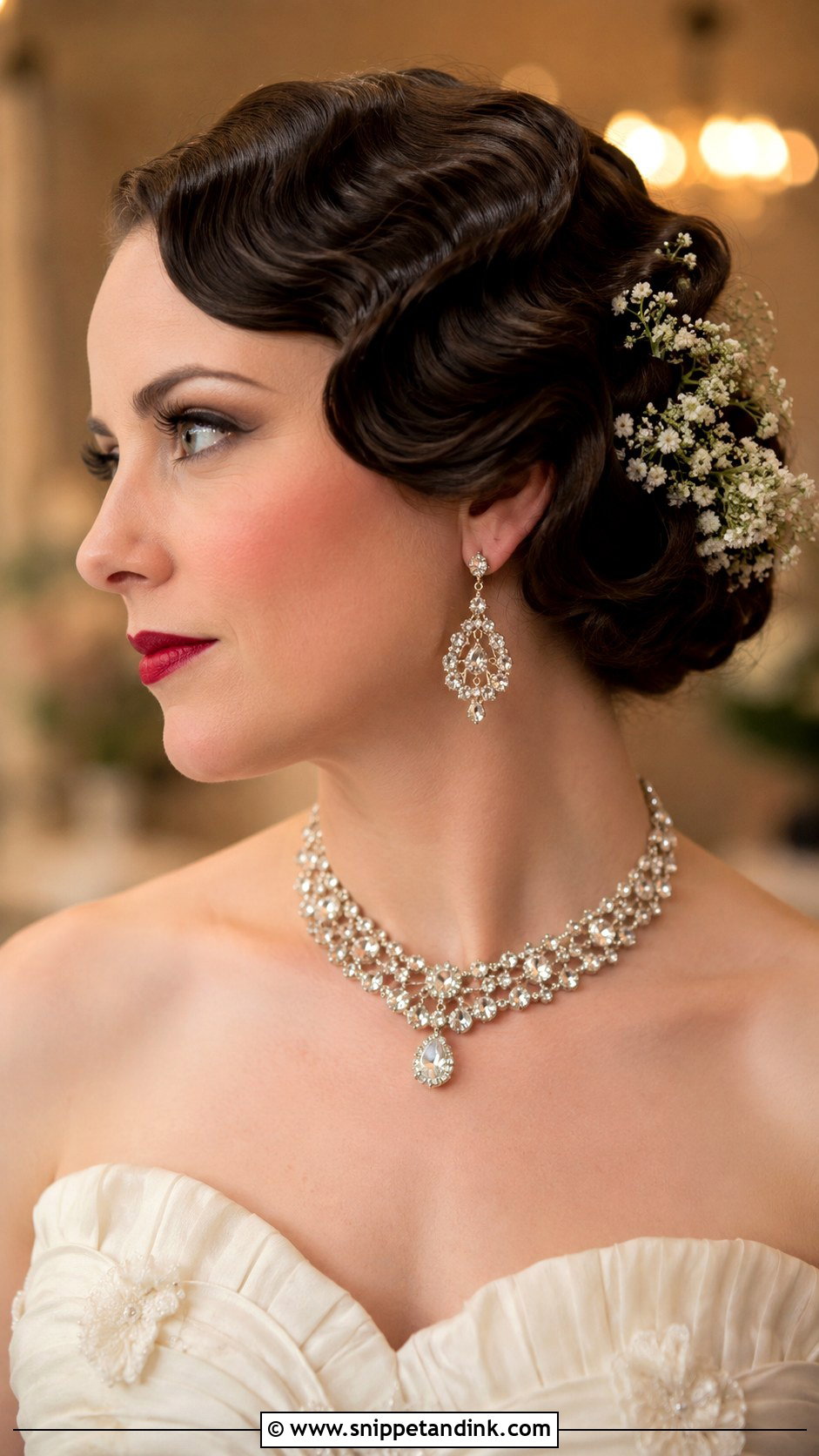
Finger waves are sculpted close to the head, so any flower placed on them has to be small and flat. I set the waves completely, often with clips while they dry, and only then add tiny roses or sprigs of baby’s breath along one side, pinned under the ridge of a wave so the pins hide. Anything bulky breaks the line that makes the style worth doing. This suits shorter and medium hair best, and it takes real time, so I build an extra half hour into the morning schedule for it.
17. Twisted Half-Up With Ranunculus
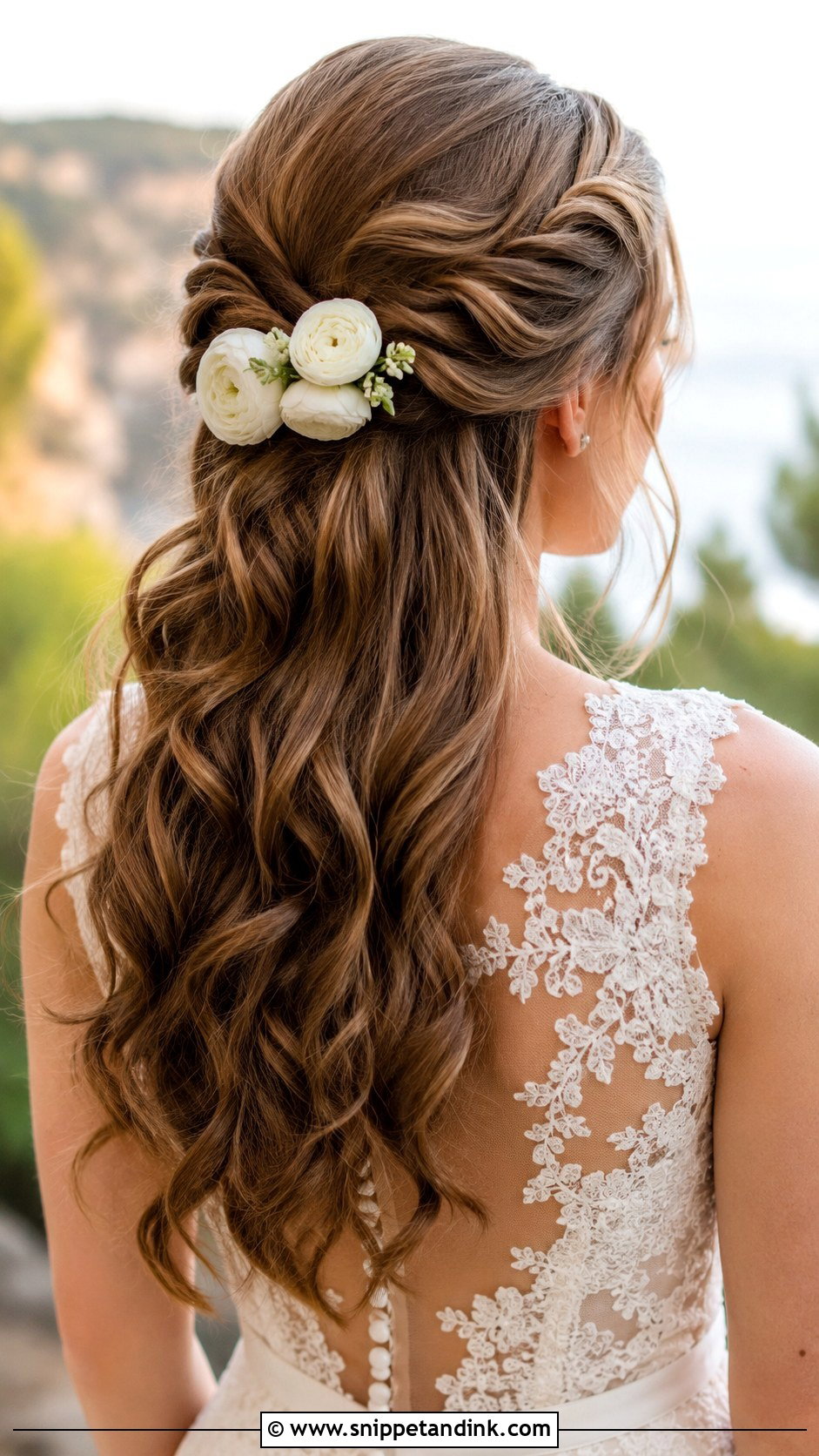
Ranunculus are my favourite all-rounder for hair: small, light, many-petalled and far tougher than they look. In a twisted half-up, I twist each side back, cross the twists at the back of the head and pin them, then use the ranunculus to cover the meeting point. That placement means the flowers hide hardware instead of adding weight to loose hair. The style suits most lengths from the collarbone down, and it’s an easy one to adapt for bridesmaids with shorter hair.
18. Dutch Braid With Daisies
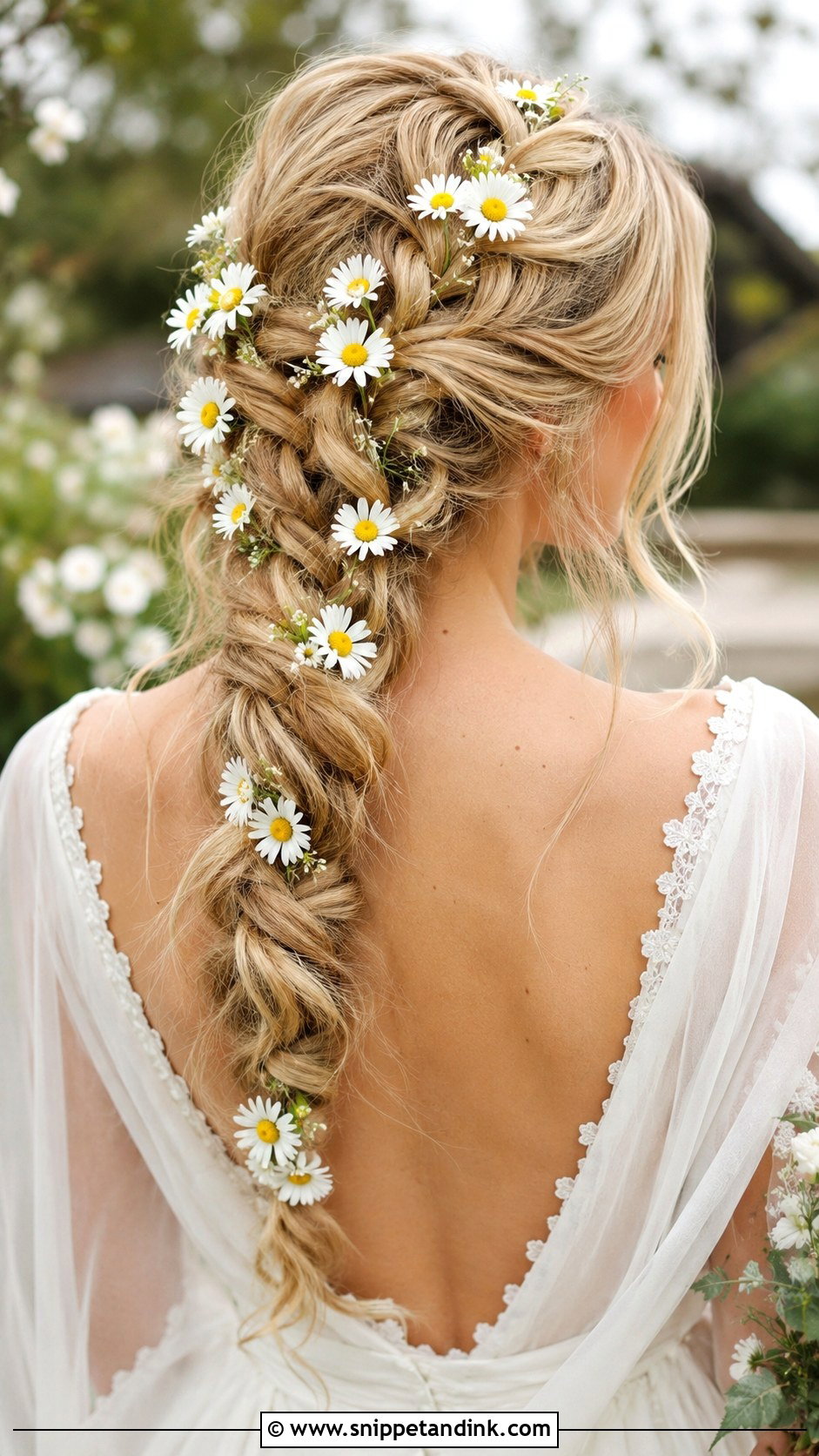
Daisies are cheerful and a little fragile, so I treat them as the last touch rather than the structure. A Dutch braid sits on top of the hair, which leaves ridges where short daisy stems can be pressed in and held firmly. I mist them before they go in and keep a few spares, because the thin petals curl in direct sun after a few hours. Long hair braids most cleanly here. If your hair is layered, expect a few pieces to escape, and pull a couple of strands loose on purpose so the escapes look intended.
19. Elegant French Twist With Calla Lilies
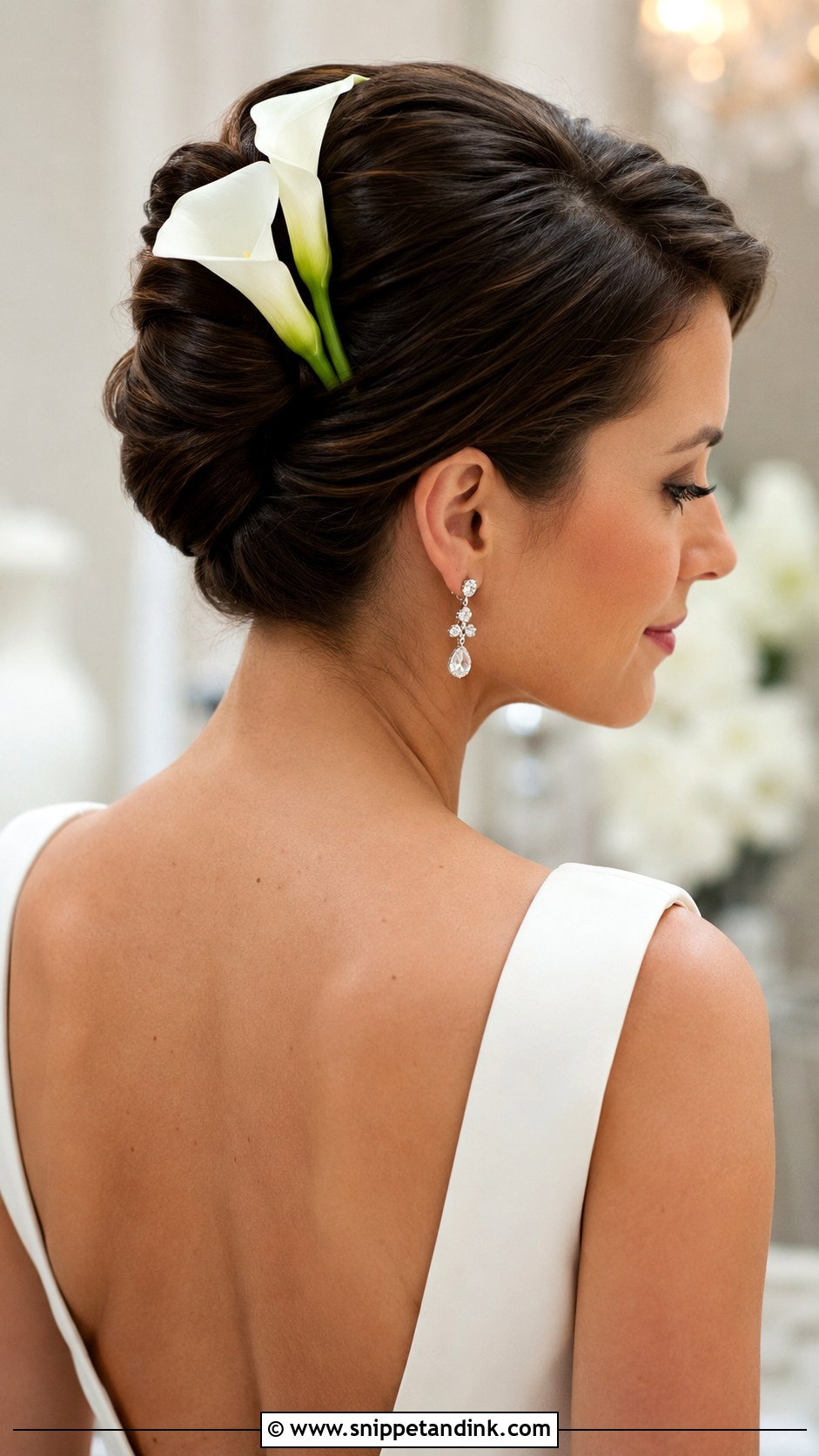
A French twist has strong vertical lines, and calla lilies echo that shape, which is why the pairing works. I pin the callas along the seam of the twist so their stems point the same way the hair rolls. They’re tough flowers that cope with handling, but the stems are fleshy, so the florist should cut them short and seal or wrap the ends to stop sap marking the hair. For a black-tie evening this is one of the most secure floral styles on the list. Very short or blunt bobs can’t hold a full twist, so I’d suggest a sleek low bun instead.
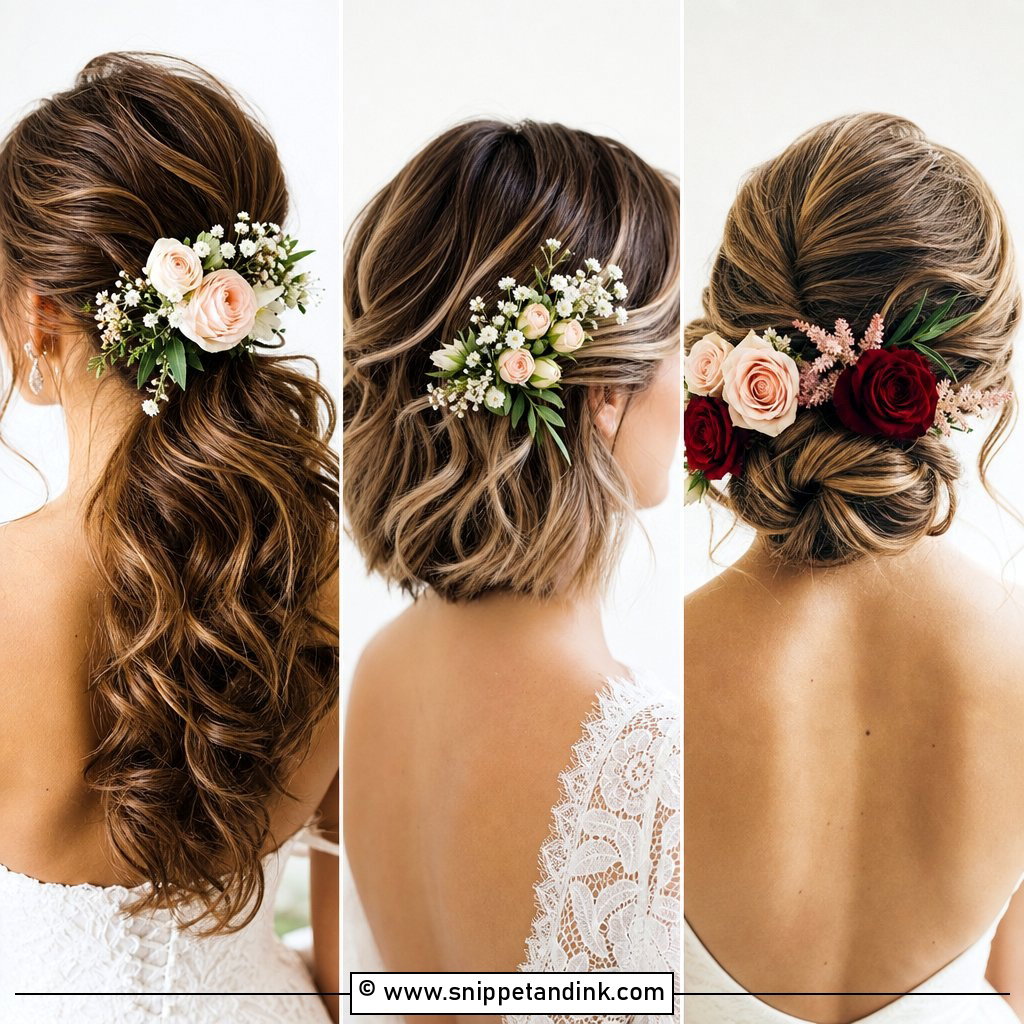

20. Boho Braids With Mixed Flowers
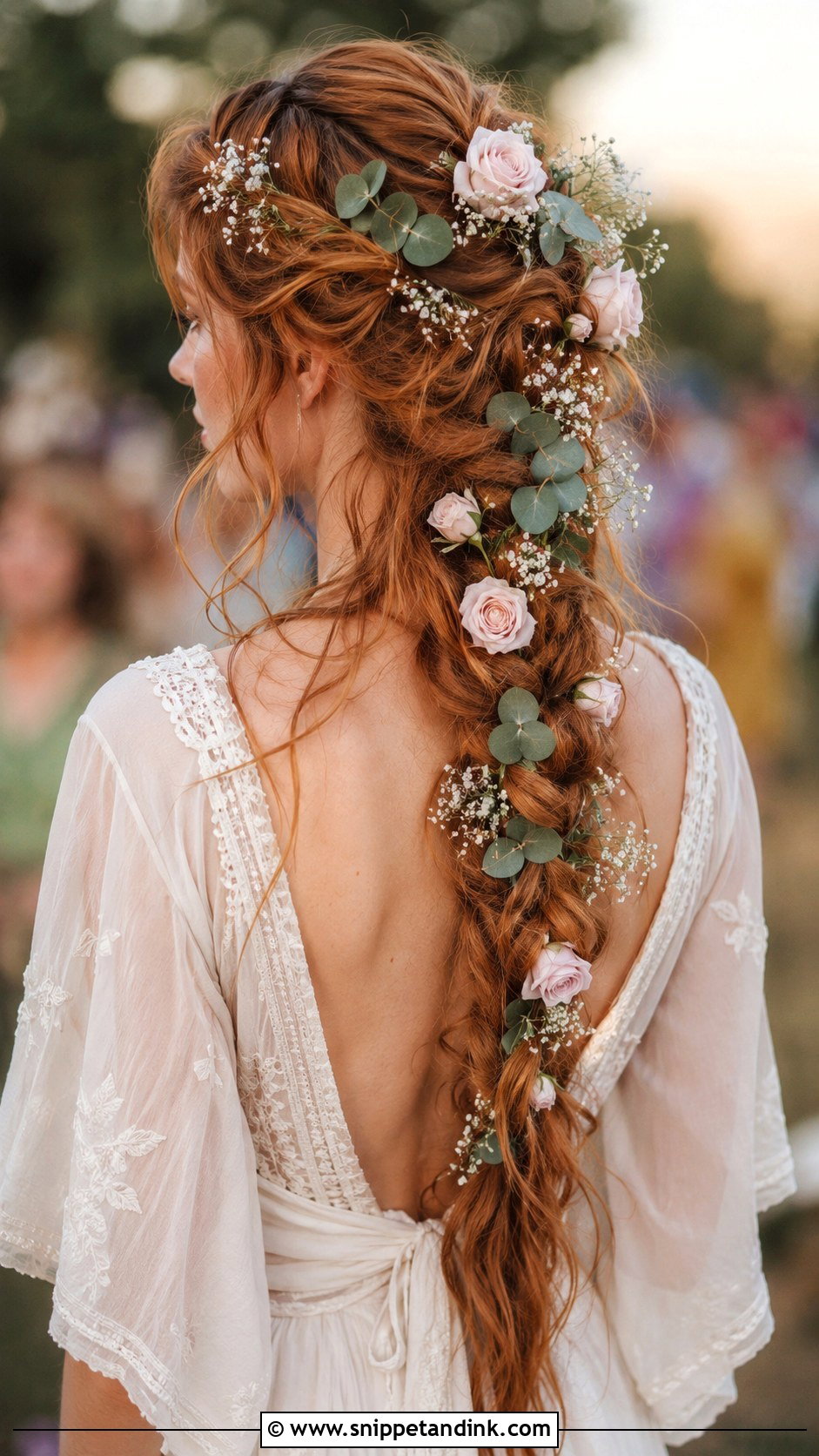
Several loose braids with mixed blooms woven through give the most garden-picked result here, and also the most work. I braid first, loosen, and then place the stems in a loose pattern so the colour is spread rather than clumped on one side. Mixing roses, baby’s breath, ranunculus, and eucalyptus means some stems are much tougher than others, so the delicate ones go where they’re least likely to be crushed by a hug. Long, thick hair carries it best. Fine hair can work with clip-in volume underneath.
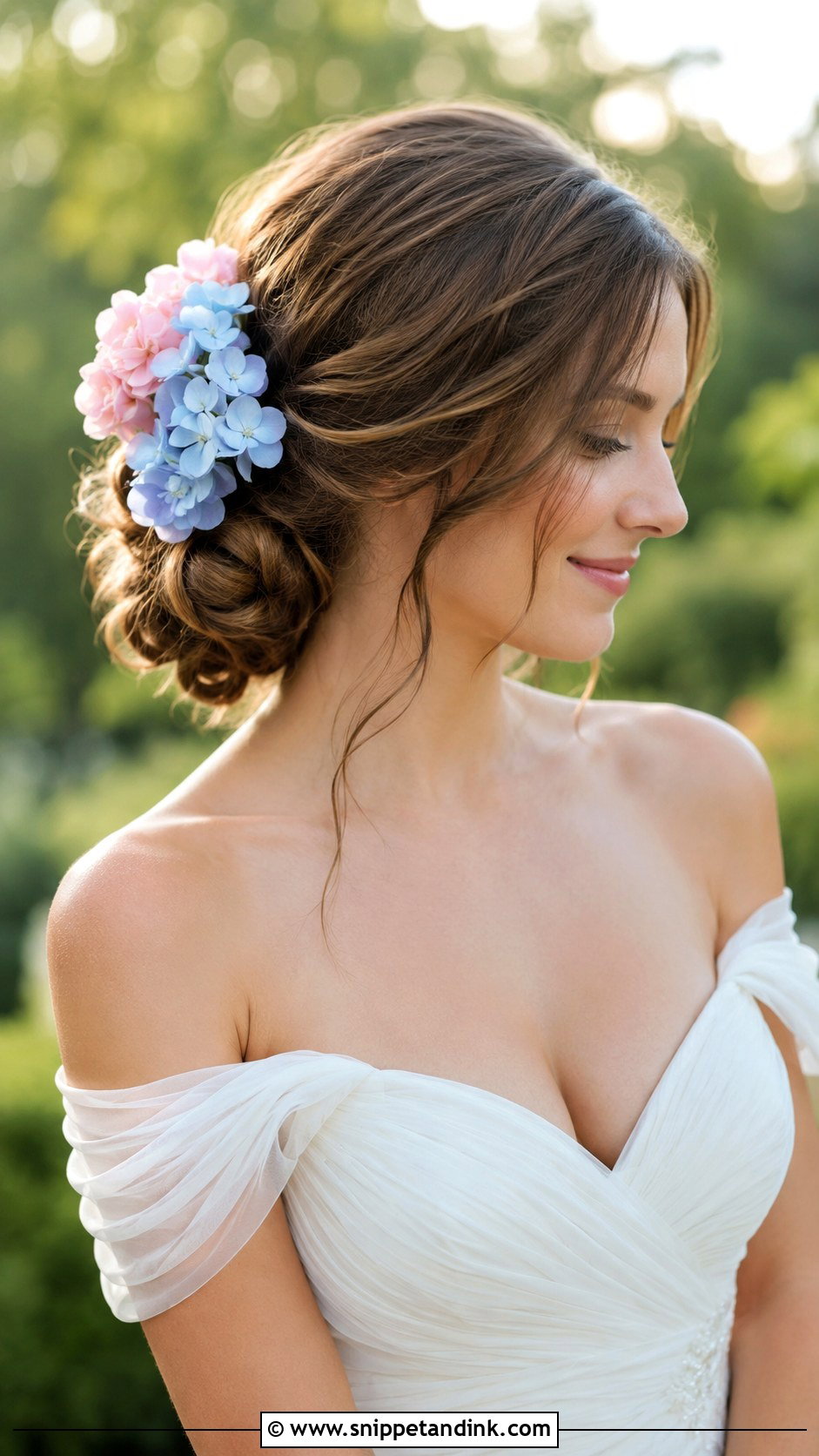
21. Low Side Bun With Hydrangeas
Hydrangeas look lush, but they’re the thirstiest bloom on this list and can wilt within a couple of hours out of water in heat. I ask the florist for small florets cut from the head rather than one big ball, conditioned overnight and misted before placement. The side bun gives them a firm resting point at the neck, where they sit naturally in profile. Blue hydrangeas can shift towards grey in some lighting, so check colour at your trial. For a hot outdoor wedding, I’d swap to a sturdier flower in the same shade.
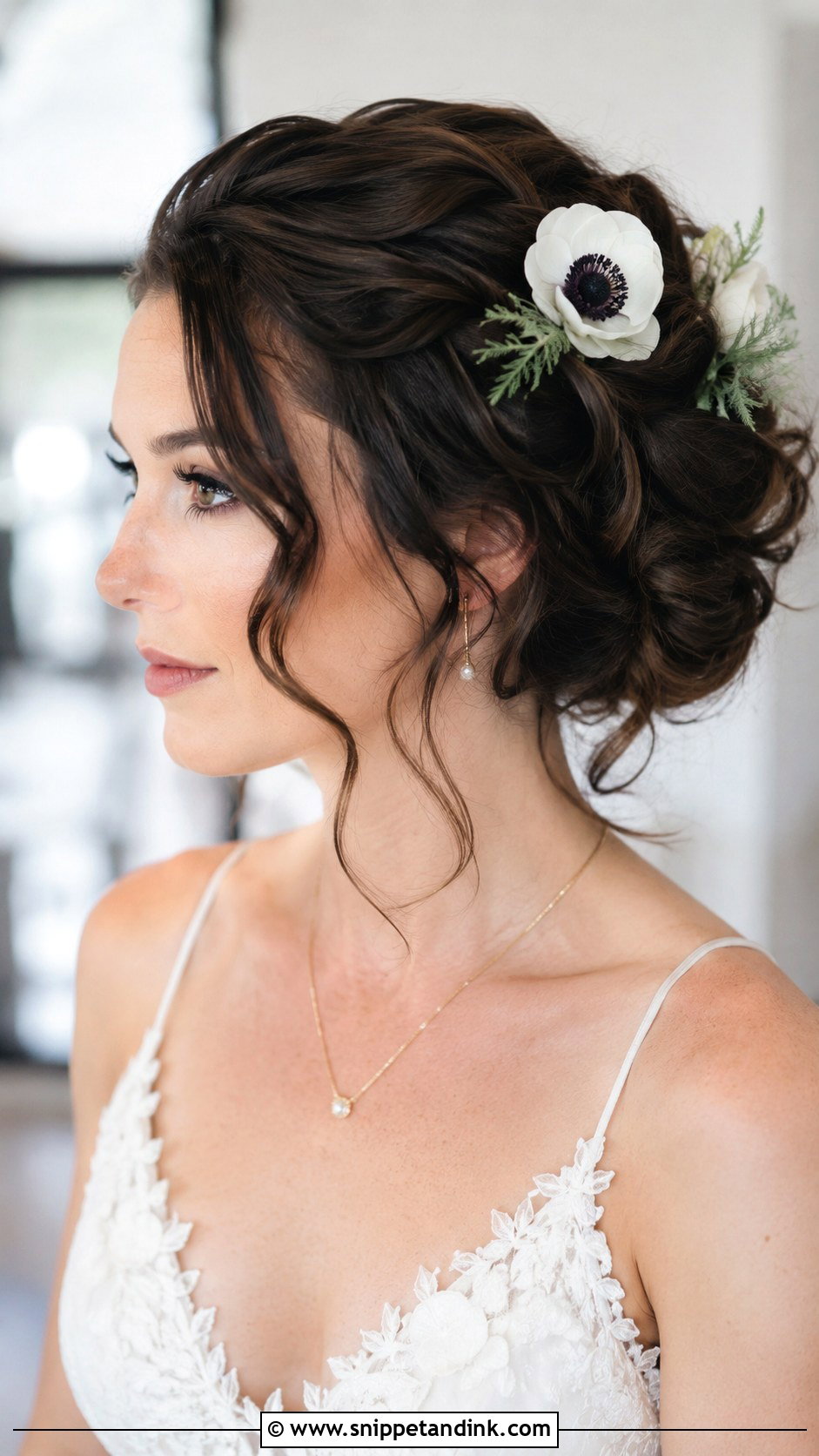
22. Pinned Curls With Anemones
Anemones have that dark centre that draws the eye, and they photograph with real contrast against pinned curls. They are also delicate: the petals bruise and they can close up when cold, so I keep them in the florist’s cooler box until the last minute. I set the pinned curls first and place two or three anemones off-centre so the dark centres don’t line up like buttons. A simple earring keeps the attention where it belongs. Thick or medium hair holds the curls best through the evening.
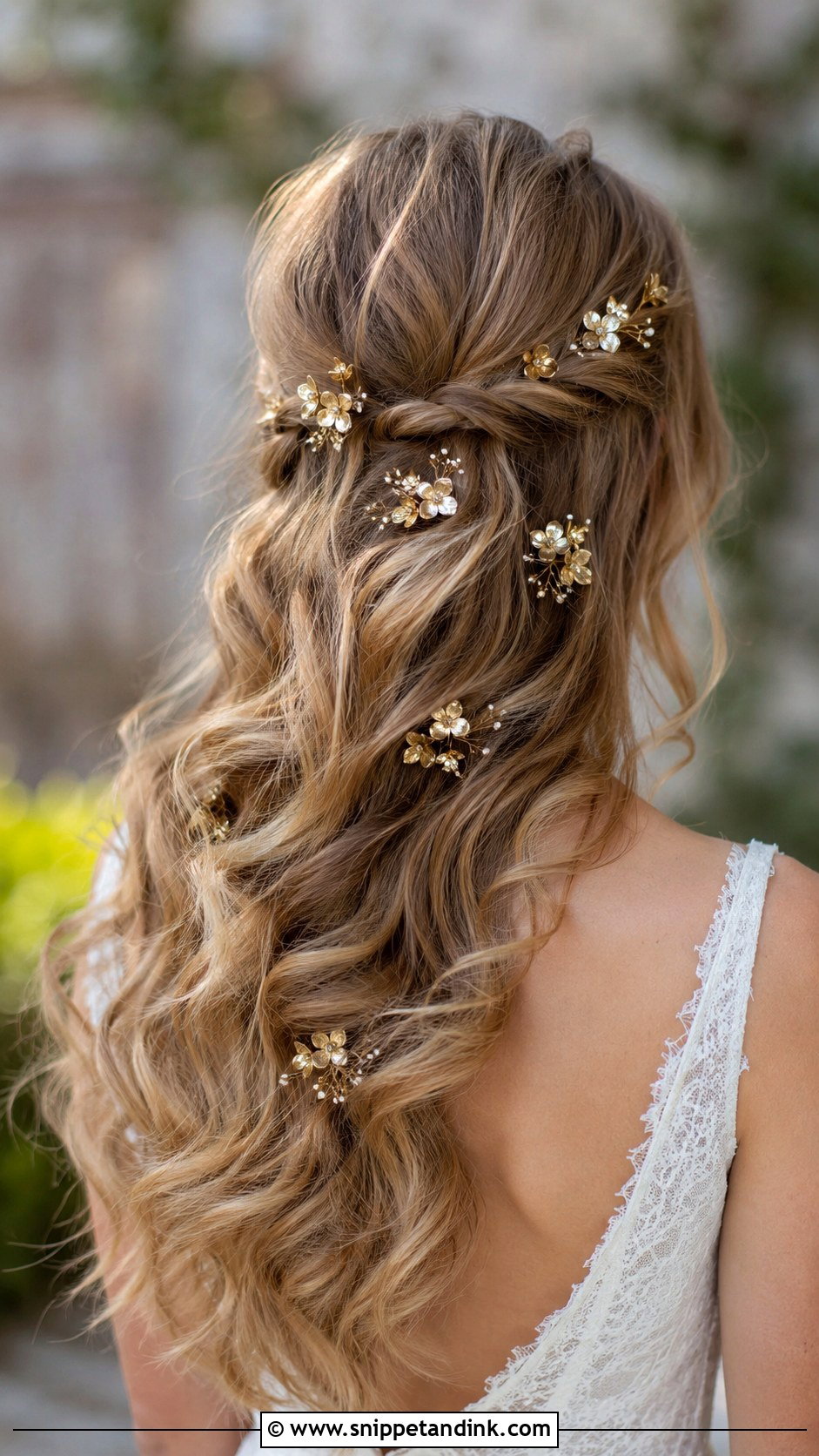
23. Flowing Hair With Floral Hairpins
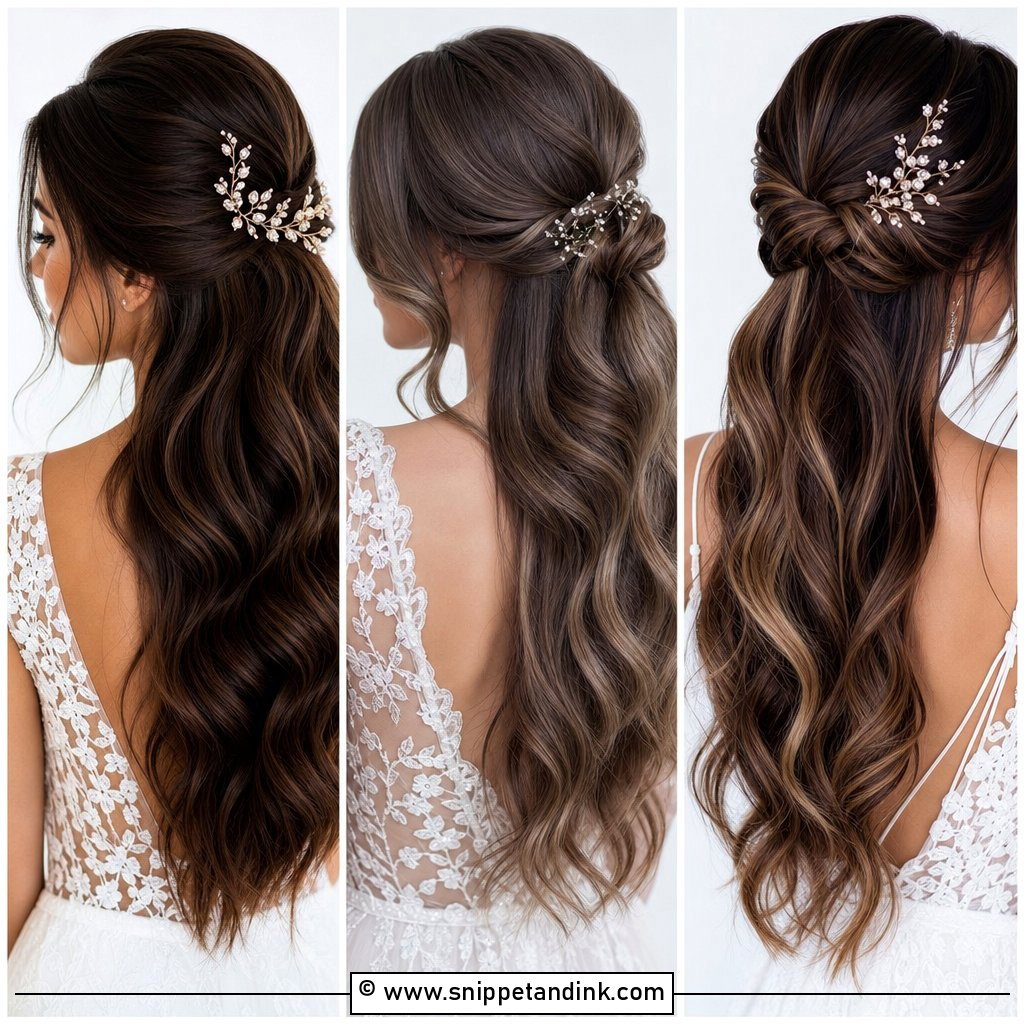
Floral pins are the gentlest way to wear flowers with hair down. Each pin carries one small bloom, so there’s no weight dragging the waves flat. I slide them in at an angle under a wave so the pin catches some hair behind it; straight in, they tend to slip out in loose hair. Good silk or faux pins are worth considering here, since they last all night and can be kept afterwards. This works with any theme, and it’s what I’d point you to if you love long hair down but are worried about real stems drooping.
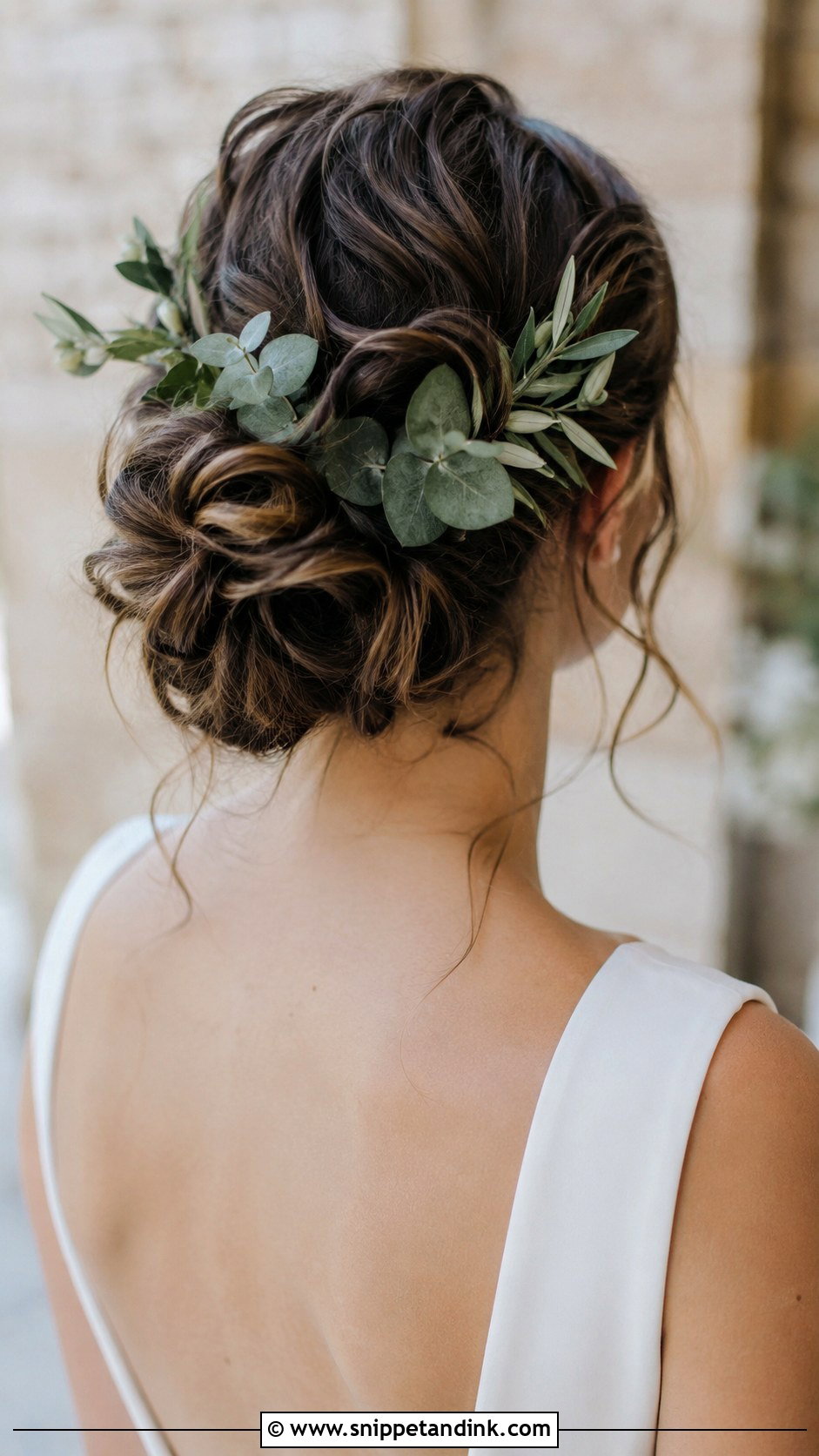
24. Textured Bun With Greenery
Greenery on a textured bun gives you a natural feel with no wilting worries. Olive and sprigs of eucalyptus are the hardiest choices; ferns look fresh at first but can curl as they dry, so I’d keep them as an accent. I tuck the stems into the bun’s twists rather than wrapping them around, which keeps the shape soft and unforced. The bun needs texture to hold, so I prep with a texture spray rather than starting on just-washed hair. Less colour also means the hair itself does more of the work.
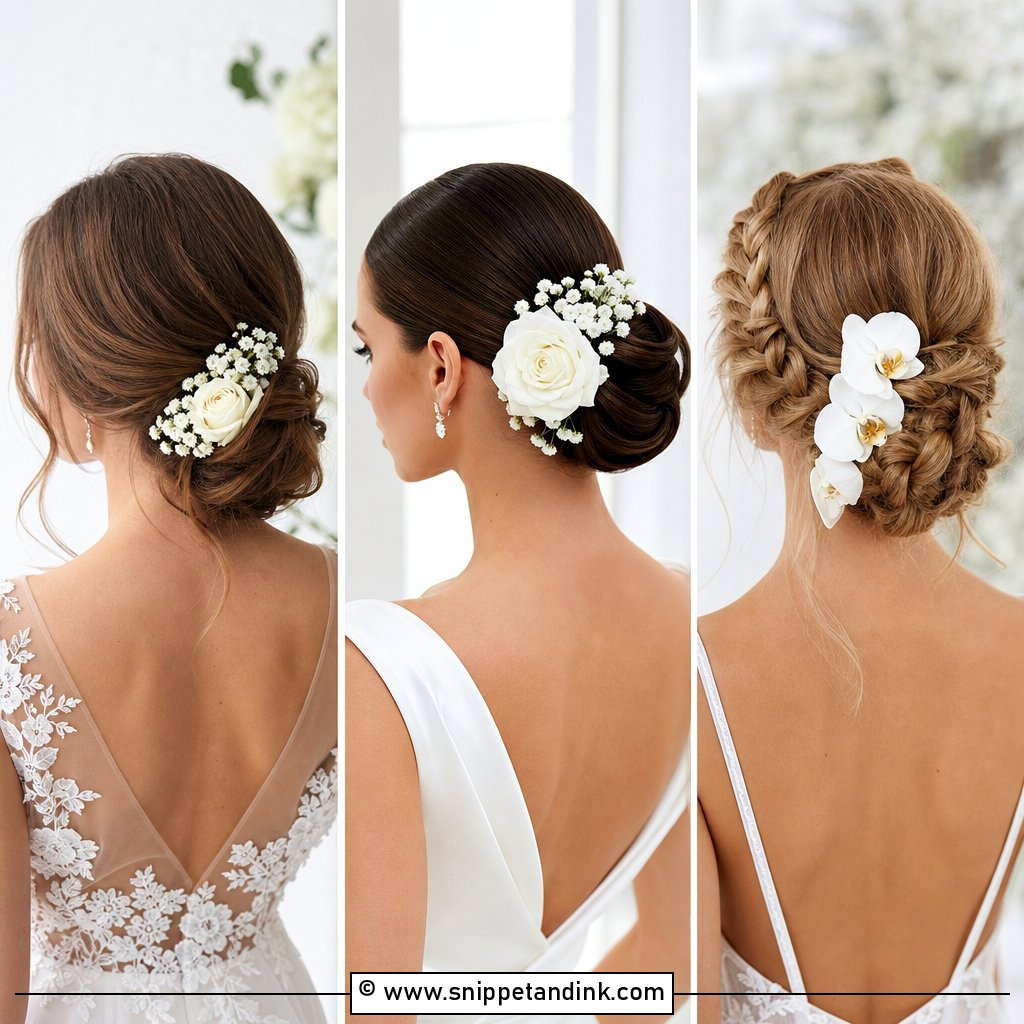
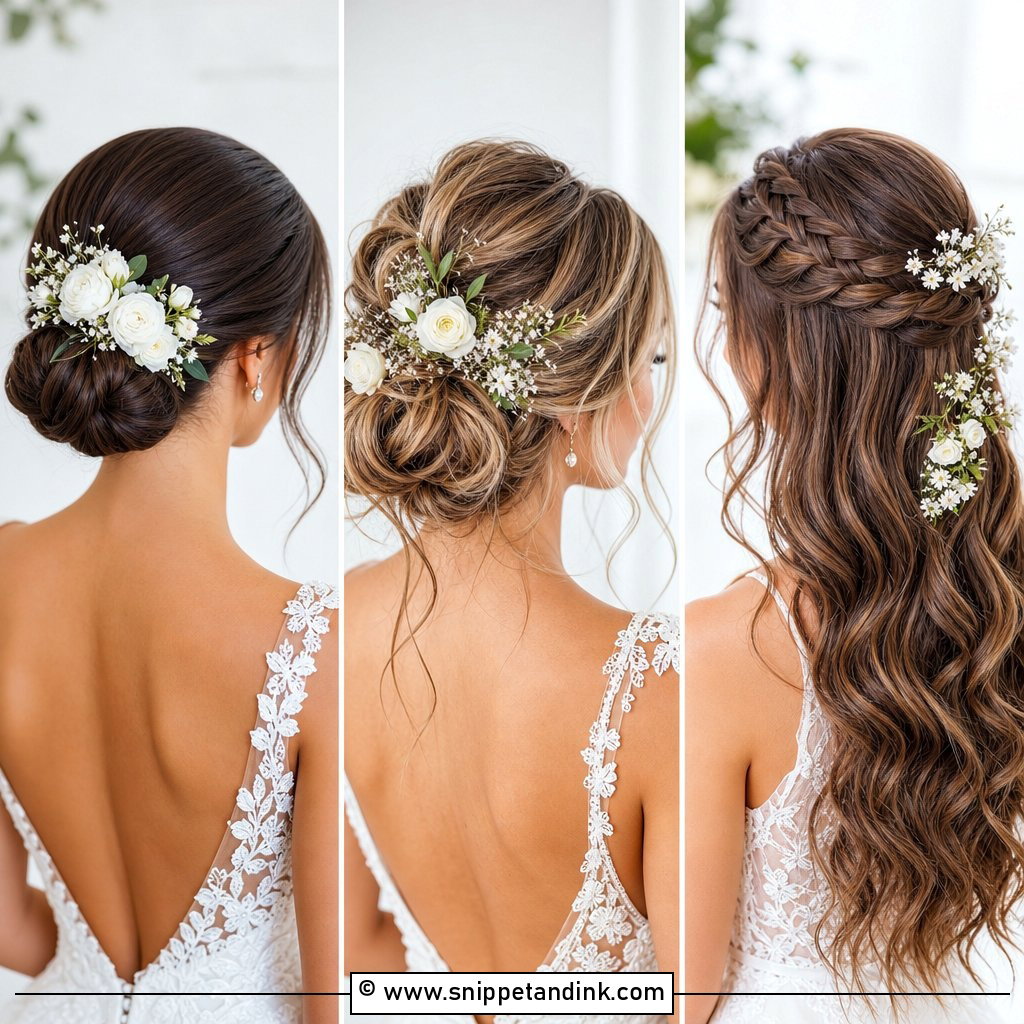
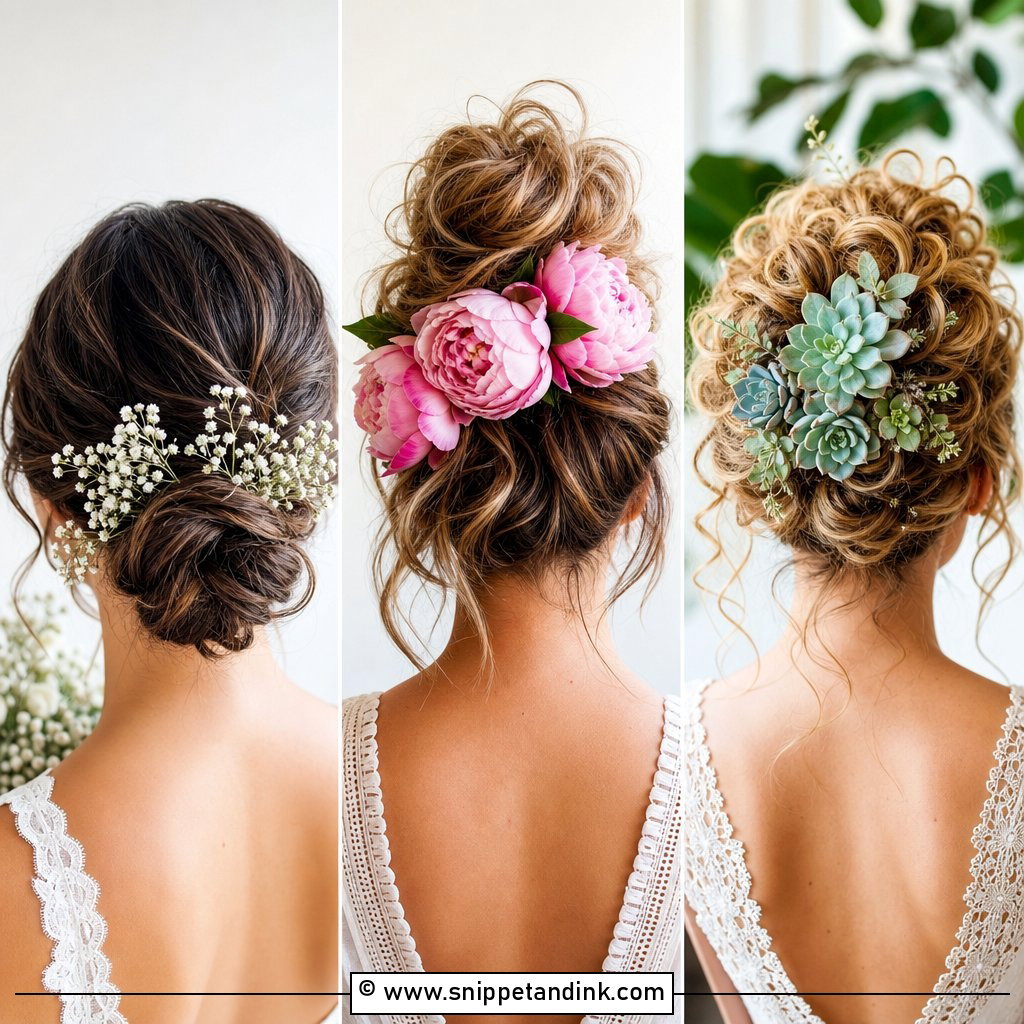
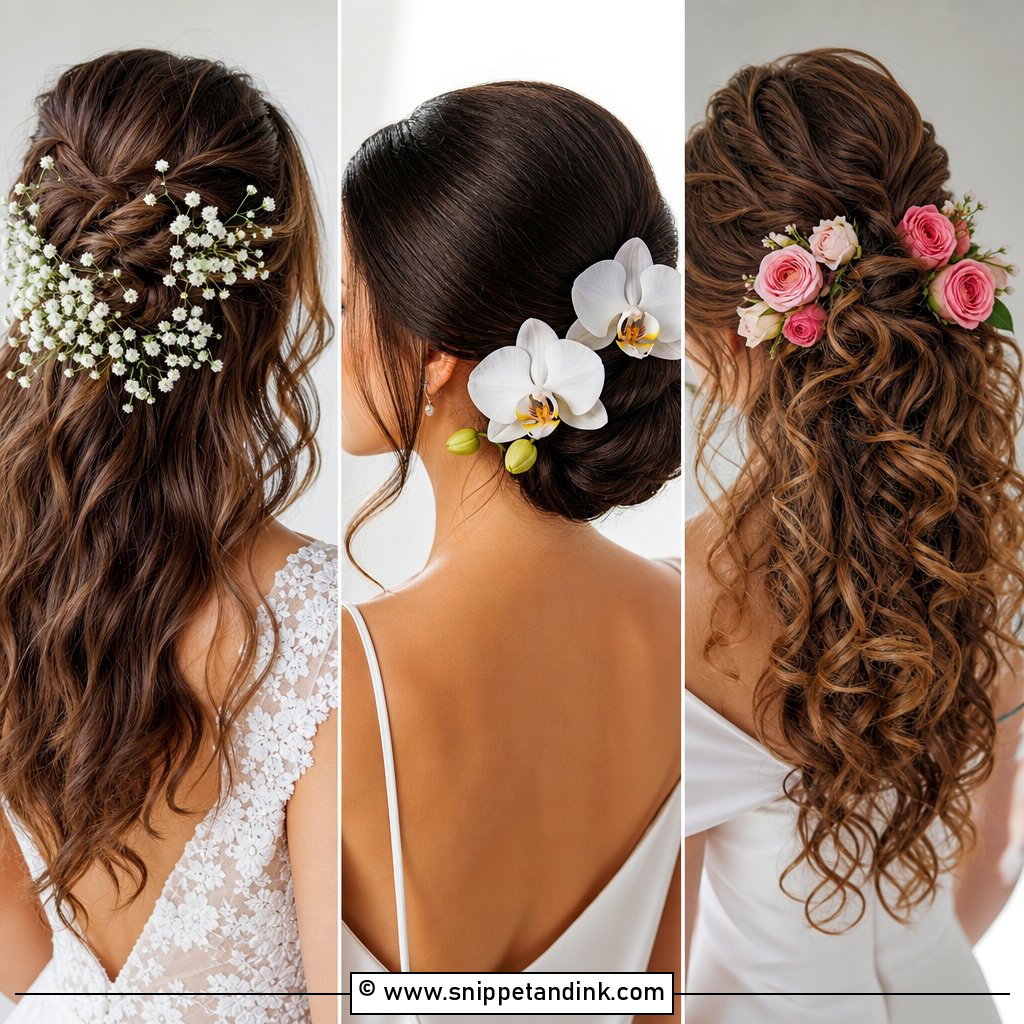
25. Half-Up Crown With Roses and Baby’s Breath
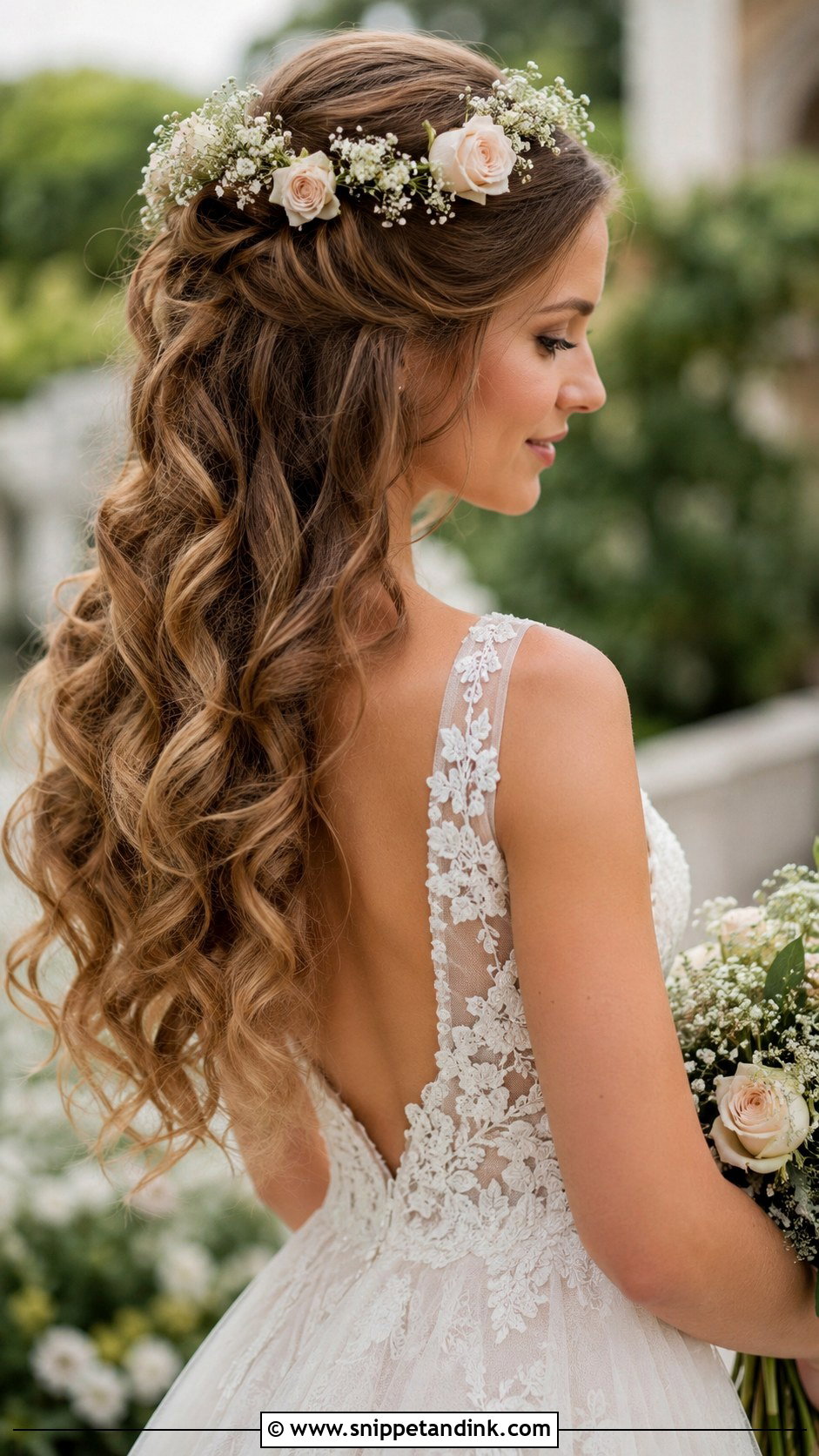
A half-up crown with roses and baby’s breath mixes a large bloom with a light filler, which helps hide pins and gives the arrangement depth. I pin the top section back first, then wire the roses to the pinned section and fill gaps with small baby’s breath sprigs. Keep the roses close to the head; tall roses on a half-up style tend to tilt forward when you look down at the ring exchange. It suits most lengths from the collarbone down, and the loose waves underneath are the part I’d refresh with a little hairspray before the reception.
Pinning Fresh Stems So They Stay Put Through the Dancing
Flowers fall out of hair for one of three reasons: the stem is too long, the bloom is too heavy for where it sits, or it was pinned to loose hair instead of to the structure. Here is how I avoid all three.
- Ask the florist to cut stems to about an inch and wire or tape them. A wired stem bends to follow the head and takes a pin through it.
- Pin every flower to something firm: a braid, a twist, a bun or a hidden row of crossed bobby pins. Loose waves can’t hold anything heavier than a single small bloom.
- Use two pins in an X for anything larger than a ranunculus, and match the pin colour to your hair rather than the flower.
- Put the heaviest bloom lowest, where the most hair is gathered, and the smallest pieces at the edges.
A Morning Plan Between Your Florist and Your Stylist
Hair flowers usually arrive with the bouquets, and I like them delivered in a sealed box or bag, kept in a cool room away from the window. Not the fridge next to fruit, since ripening fruit gives off a gas that ages flowers. I pin them in after the hair is fully finished and sprayed, because hairspray can spot petals and the heat of styling tools wilts them. That means the flowers go in about half an hour before you leave.
Bring the exact stems, or close substitutes, to your trial so you can feel the weight and see how they sit with your veil. If you have pollen allergies, mention it early; lilies and some wildflowers shed pollen that stains and irritates. And if you’d rather not worry at all, a few silk blooms mixed with fresh ones look natural in photos and won’t droop by the first dance.
Fresh Blooms Go In Last, After the Hair Is Set
If you remember one thing from all 25 styles, make it this: build a secure hairstyle first, and add the flowers last. Pick blooms that suit the length of your day, test them at your trial with real stems if you can, and keep a few spares in a cool place. Ask your florist and your stylist to talk before the wedding, because the best floral hair comes from those two working together on stem length, weight and timing. Then let yourself enjoy how the flowers feel once they’re in.
You'll Like These Ideas:



Leave a Reply