
Fine and thinning hair can carry a full wedding style; it just needs more groundwork than thick hair does. Most of the fullness you see in bridal photos of fine hair was built at the root before a single curl went in, then protected with light products that don’t drag it flat. The shapes that work best are the ones that let air into the hair: loose waves, soft buns, lifted crowns and braids pulled wide. Book a trial, because thinner hair reacts to product and humidity in ways nobody can predict from a photo.
Fine Hair Gets Its Fullness Before the First Curl
When a bride with thin hair tells me her curls never last, the problem is almost always the hour before curling. Here’s the order I work in.
Wash Timing
Fine hair gets oily quickly, and oil makes it collapse. I’d wash it the morning of the wedding, or the night before at the latest, with a volumizing shampoo and conditioner on the ends only.
Root Lift
A small amount of mousse or root-lift spray at the scalp, then a blow-dry with the hair flipped against its natural direction. Velcro rollers in the crown while I do the rest of the prep lock that lift in.
Grip
Dry texture spray through the lengths gives each strand some tooth so pins and curls hold. Light backcombing at the root, smoothed over, is the scaffolding under most updos in this list. Done gently and brushed out from the ends at night, it doesn’t damage hair.
Skip anything oily: heavy serums, oil-based shine sprays and rich masks in the days before. They’ll undo everything above.
1. Half Up Wedding Hair For Thin Hair
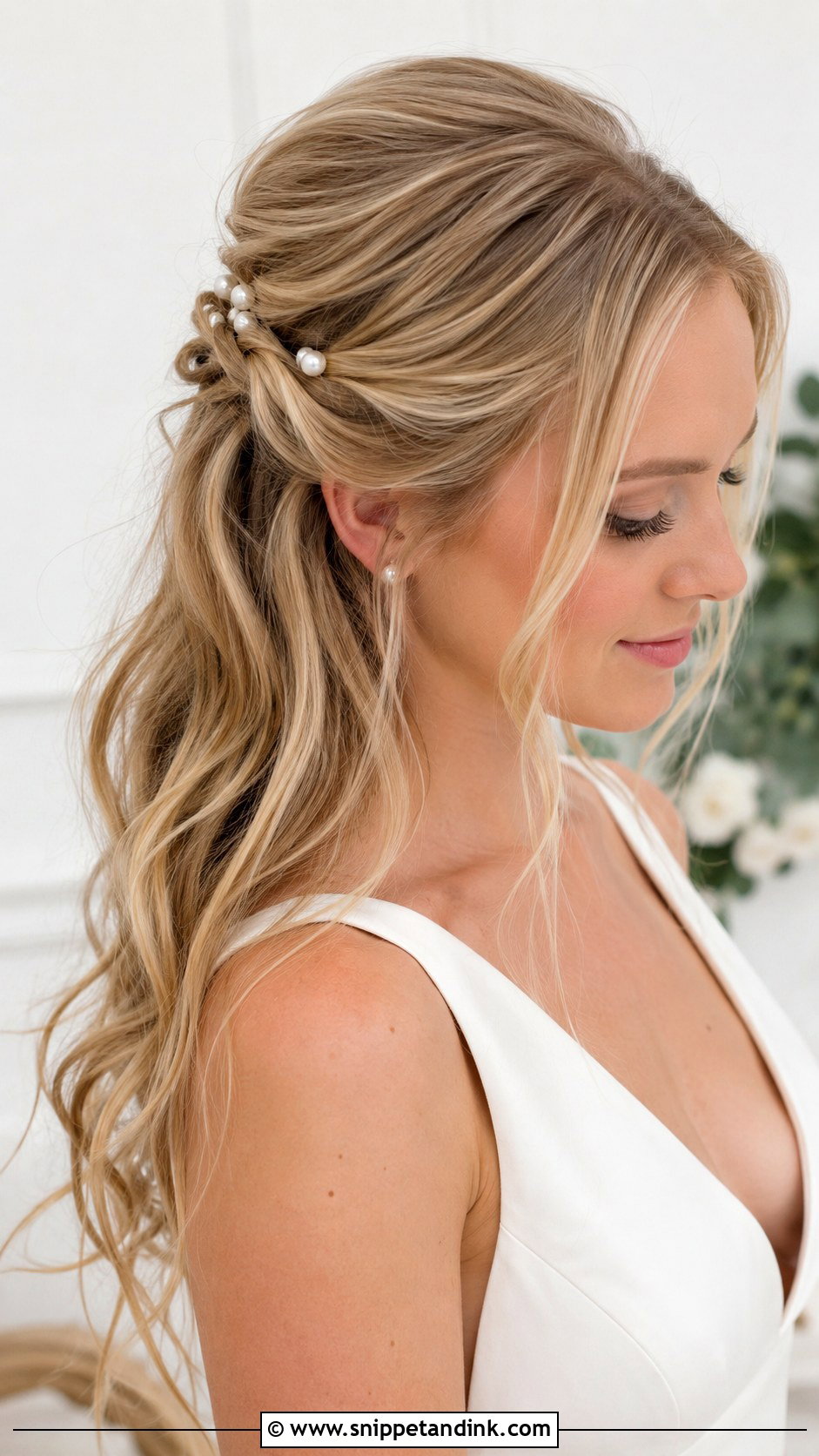
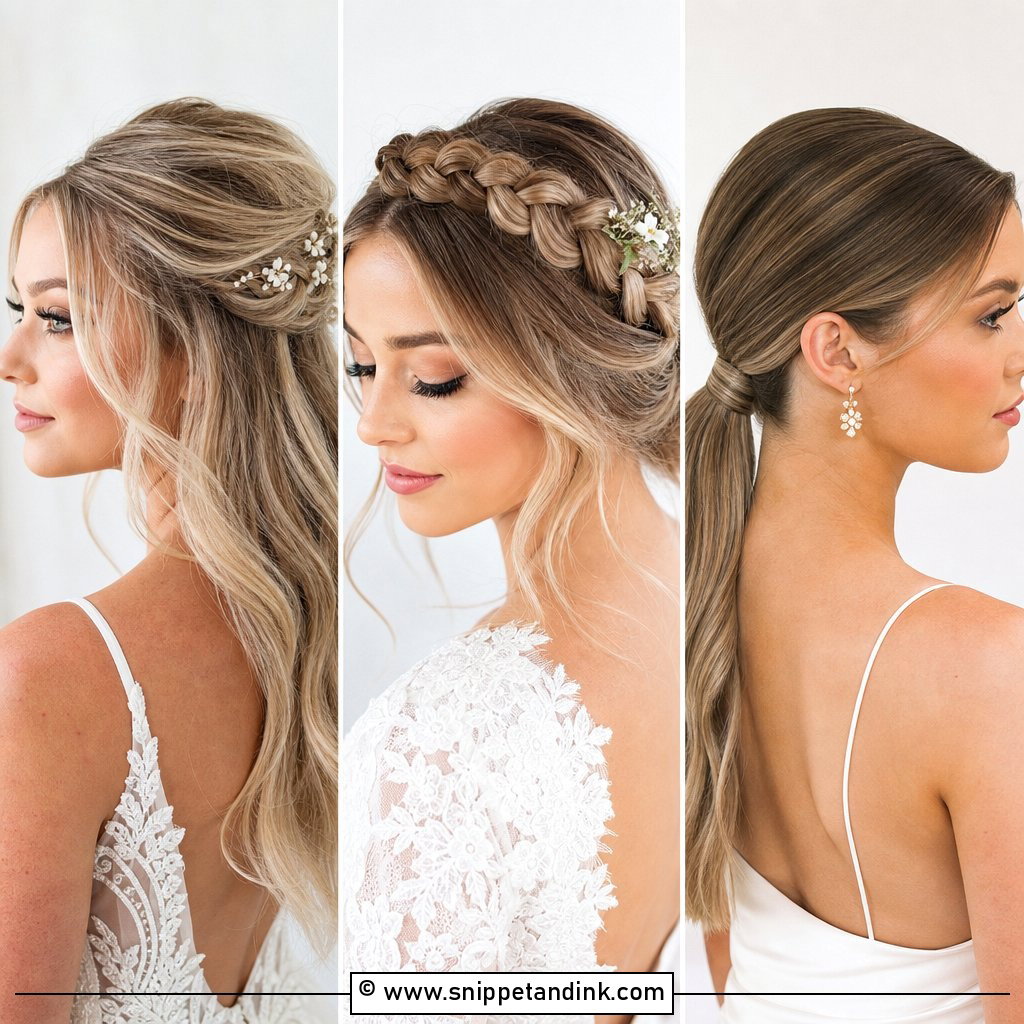
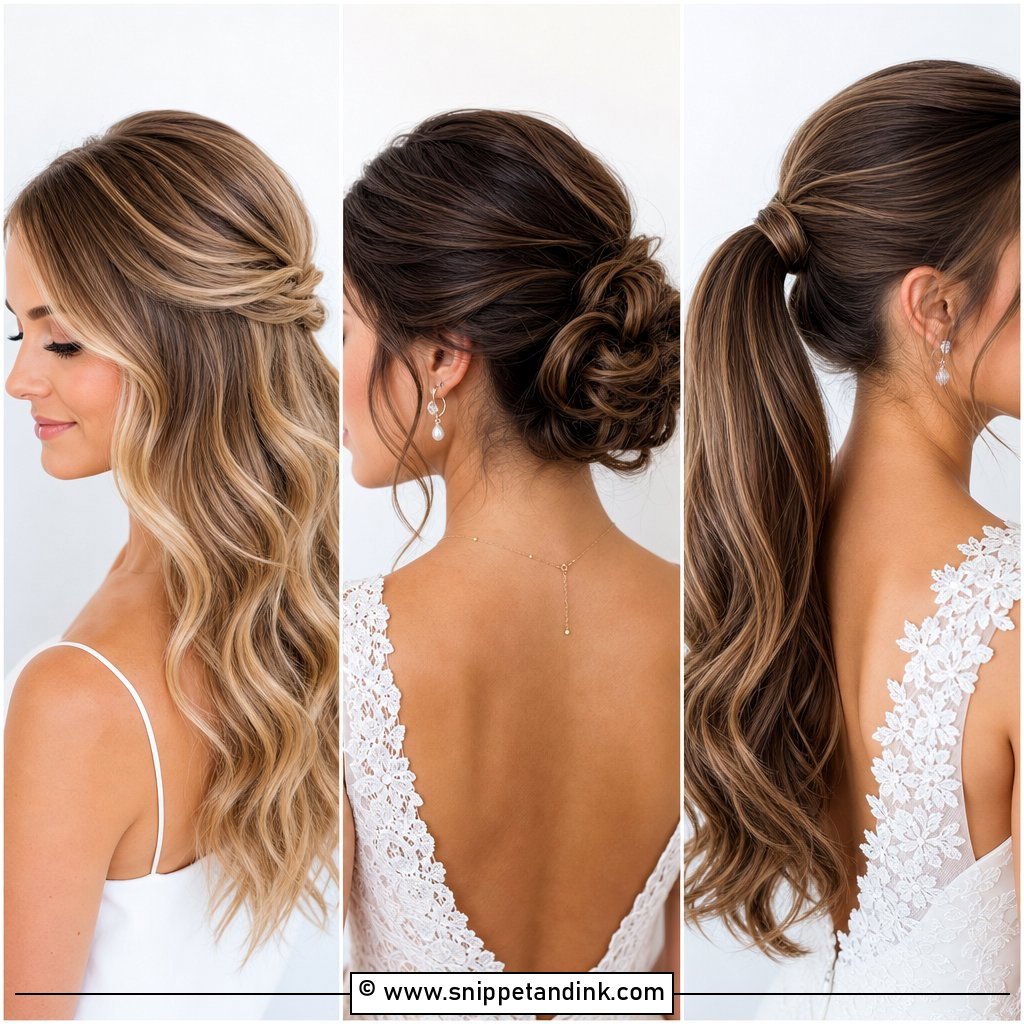
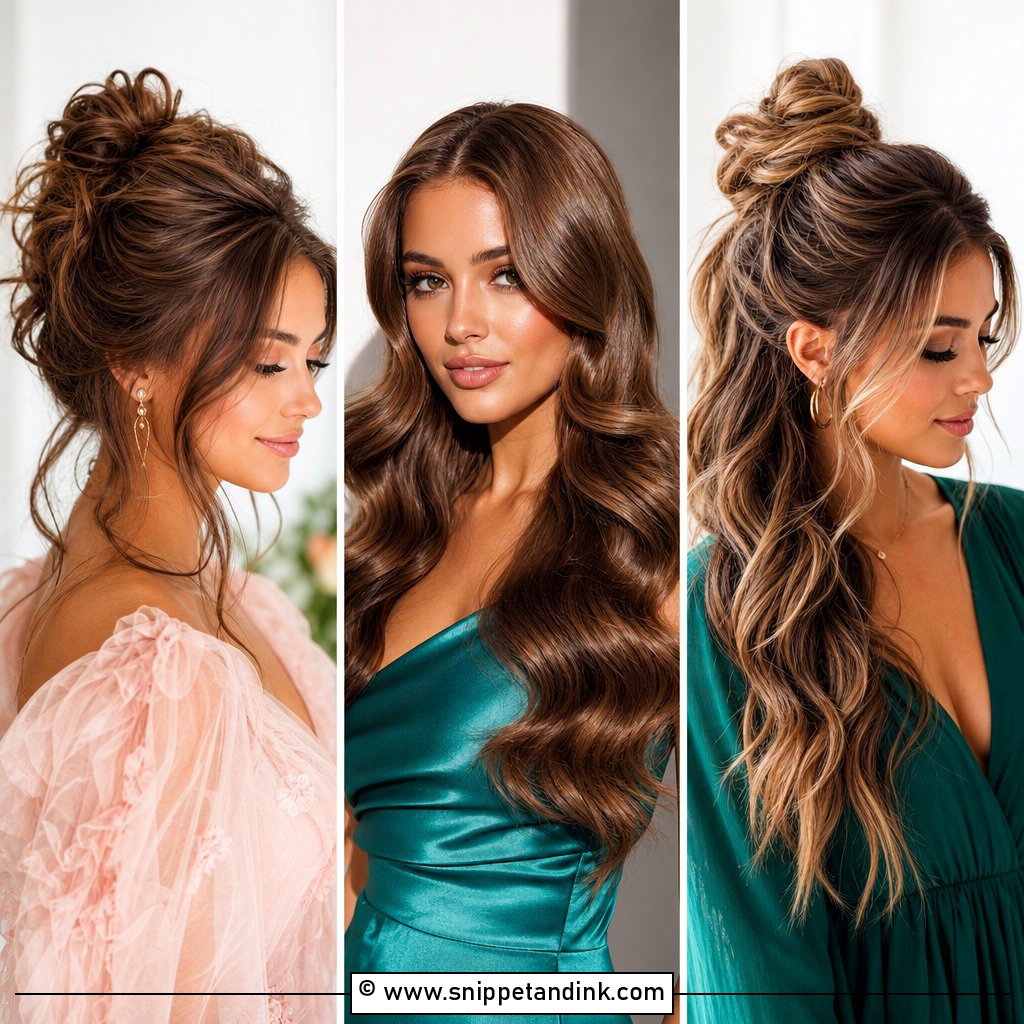
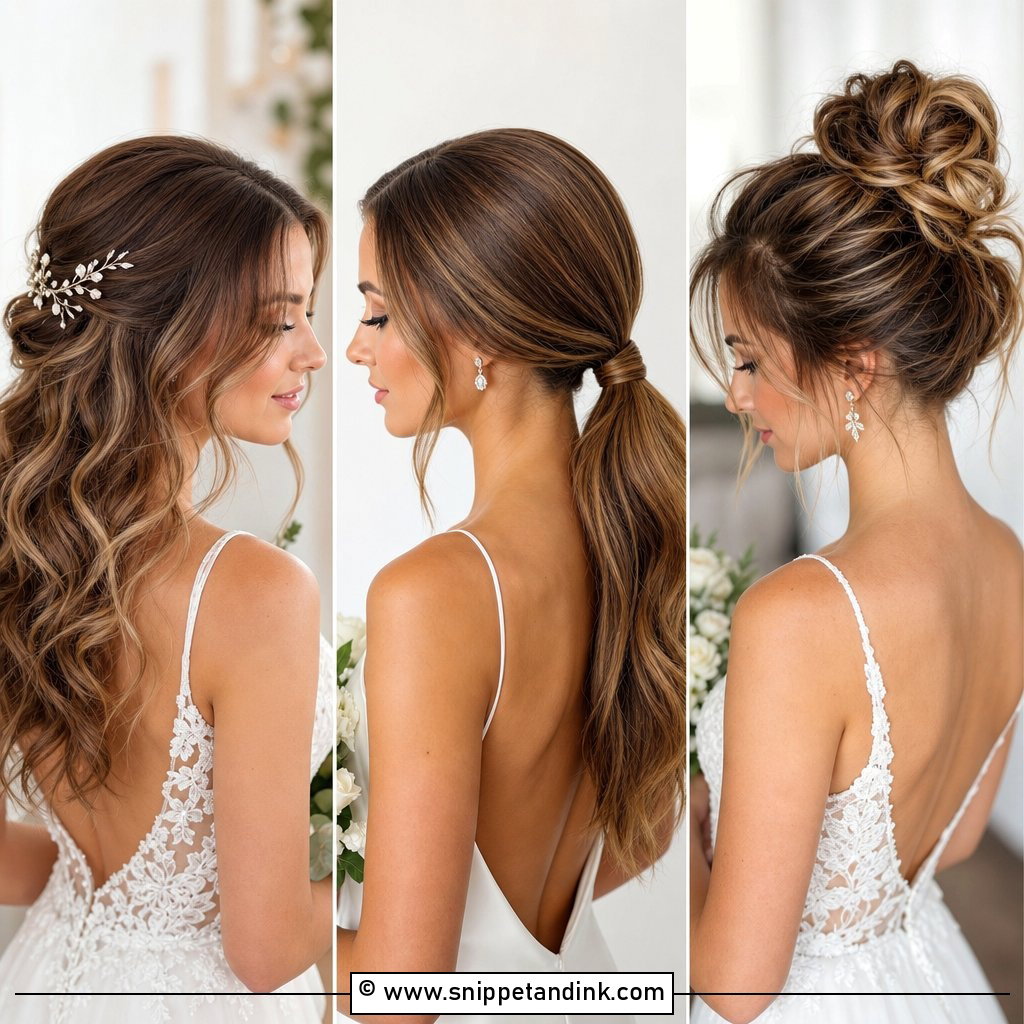
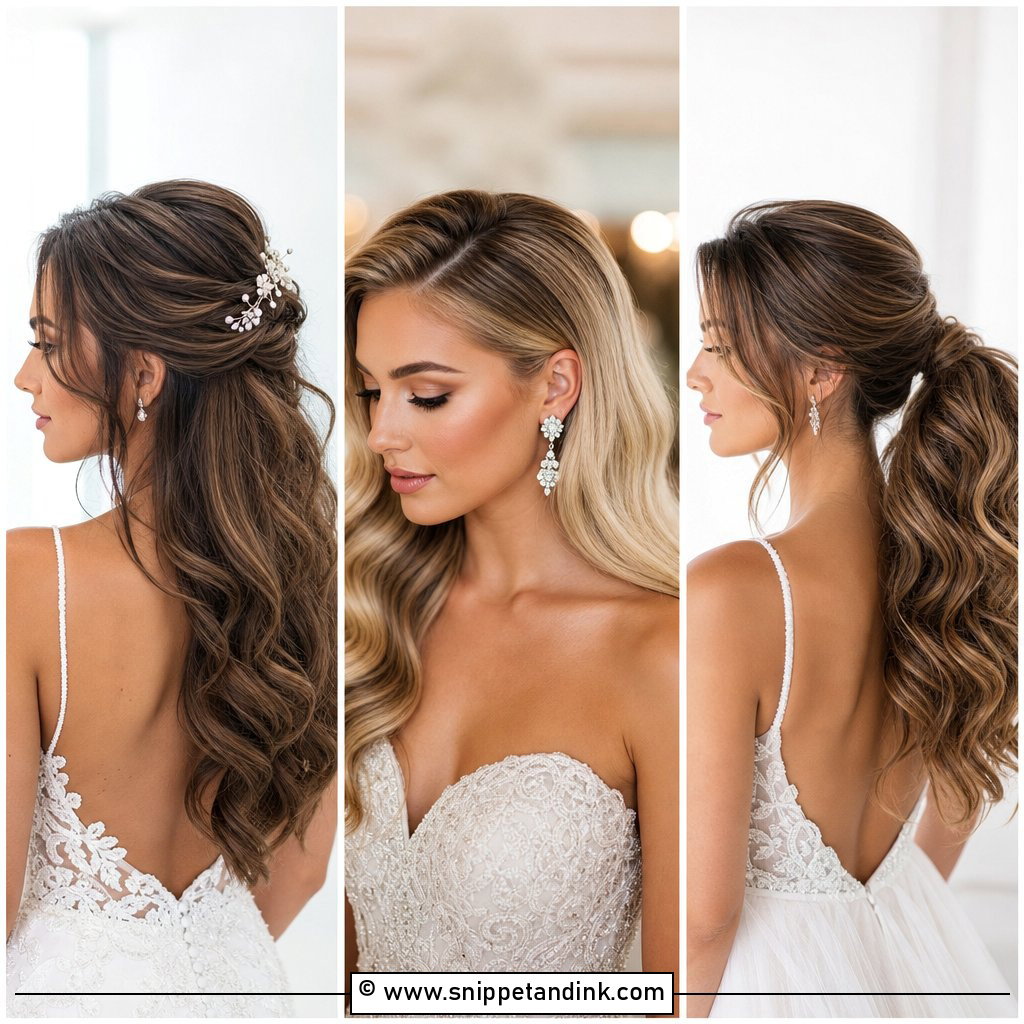
Half up is my first suggestion for most fine-haired brides who want their hair down. Taking the top section back creates height at the crown, which is exactly where thin hair tends to look flattest, and the waves underneath fill out the shoulders. I backcomb a small panel at the crown first, smooth the top layer over it, then pin the section loosely so it doesn’t compress. A comb or a few pearl pins above the twist hides the pins and gives a veil something to hold.
2. Low Bun Wedding Hair For Thin Hair
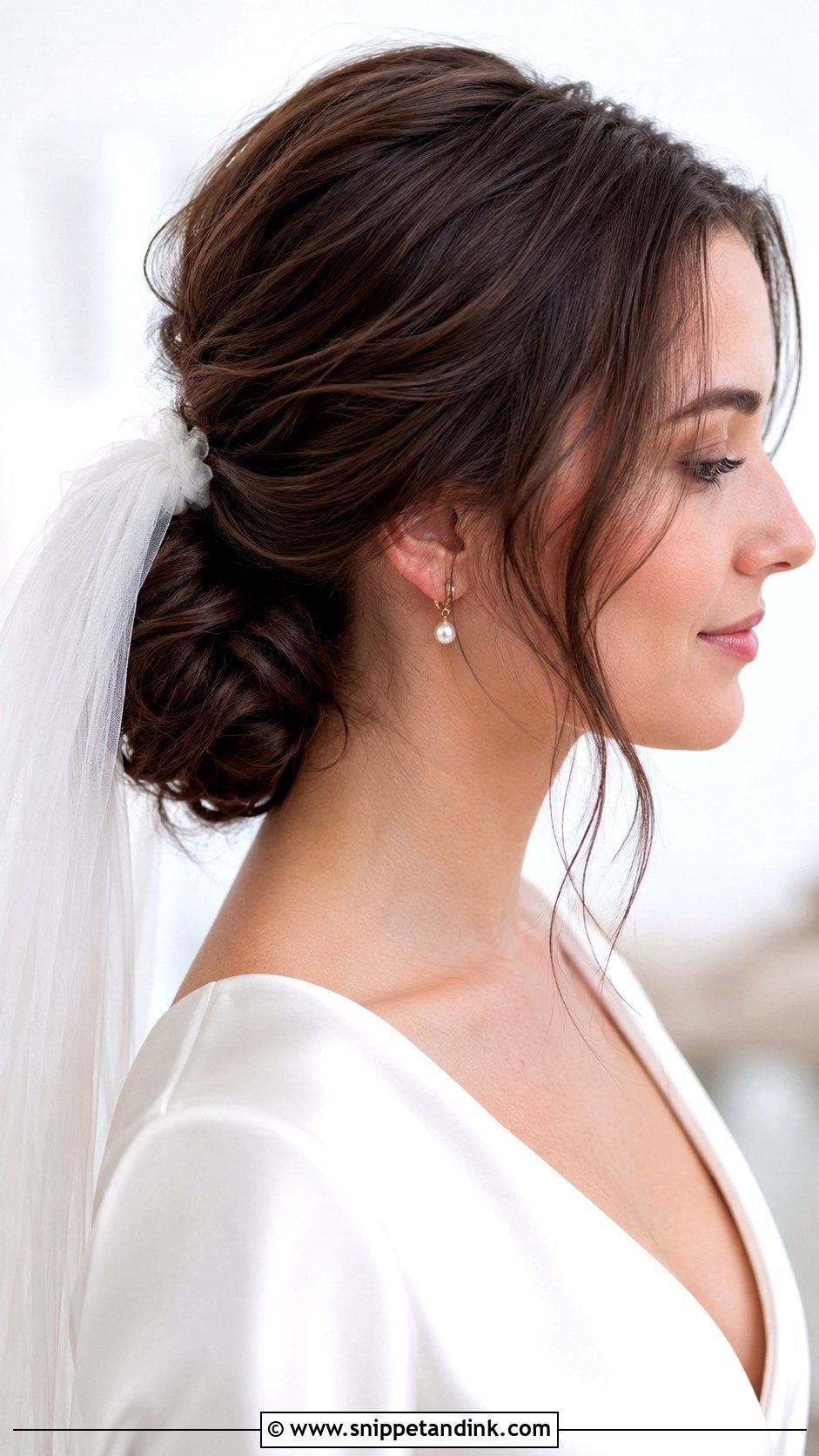
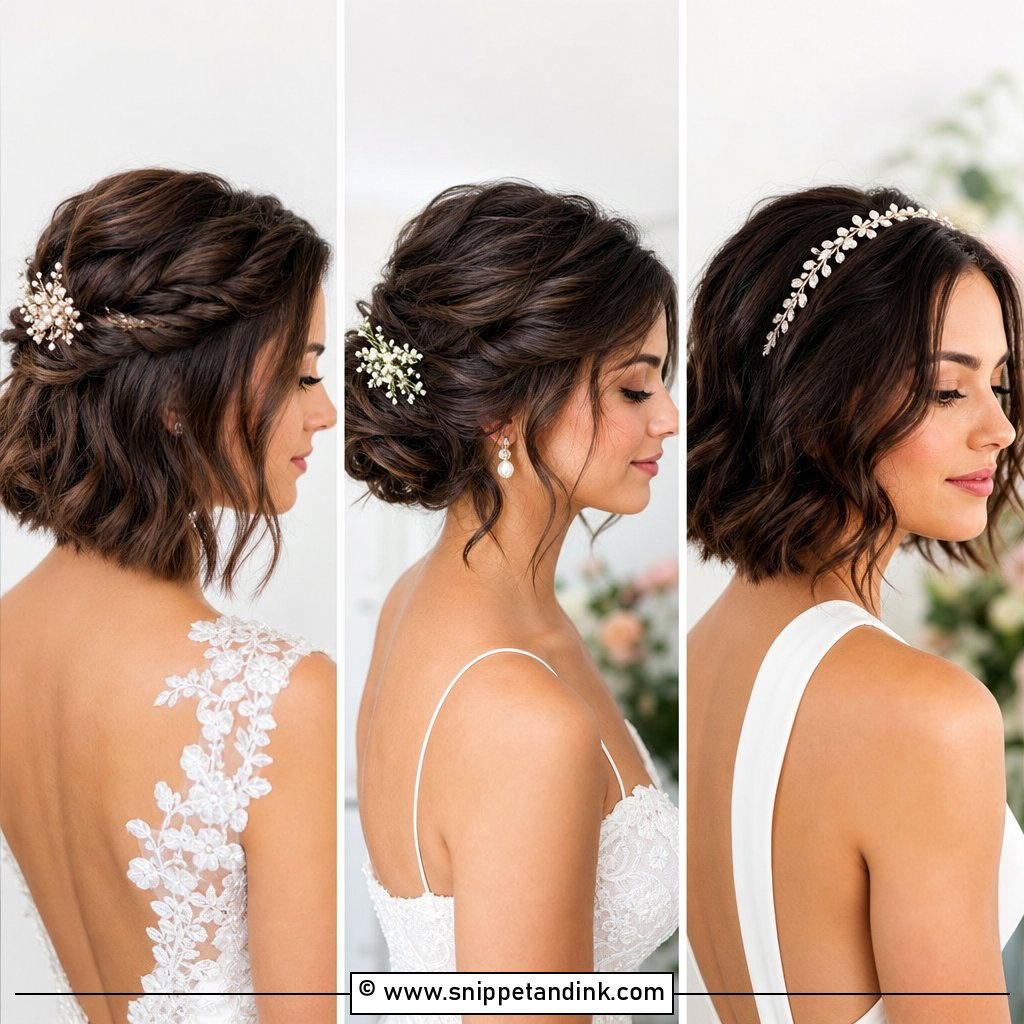
A tight low bun shows every gap in fine hair, so I build this one soft. I curl the lengths first, then gather them loosely at the nape and pin the bun out wider than it wants to sit. Gently pulling the edges loosens the shape and makes it look like more hair. If the bun still looks small, discreet padding or extensions fix it quietly. It’s a good fit for a high neckline or detailed back, since the neck stays clear.
3. Messy Bun Wedding Hair For Thin Hair
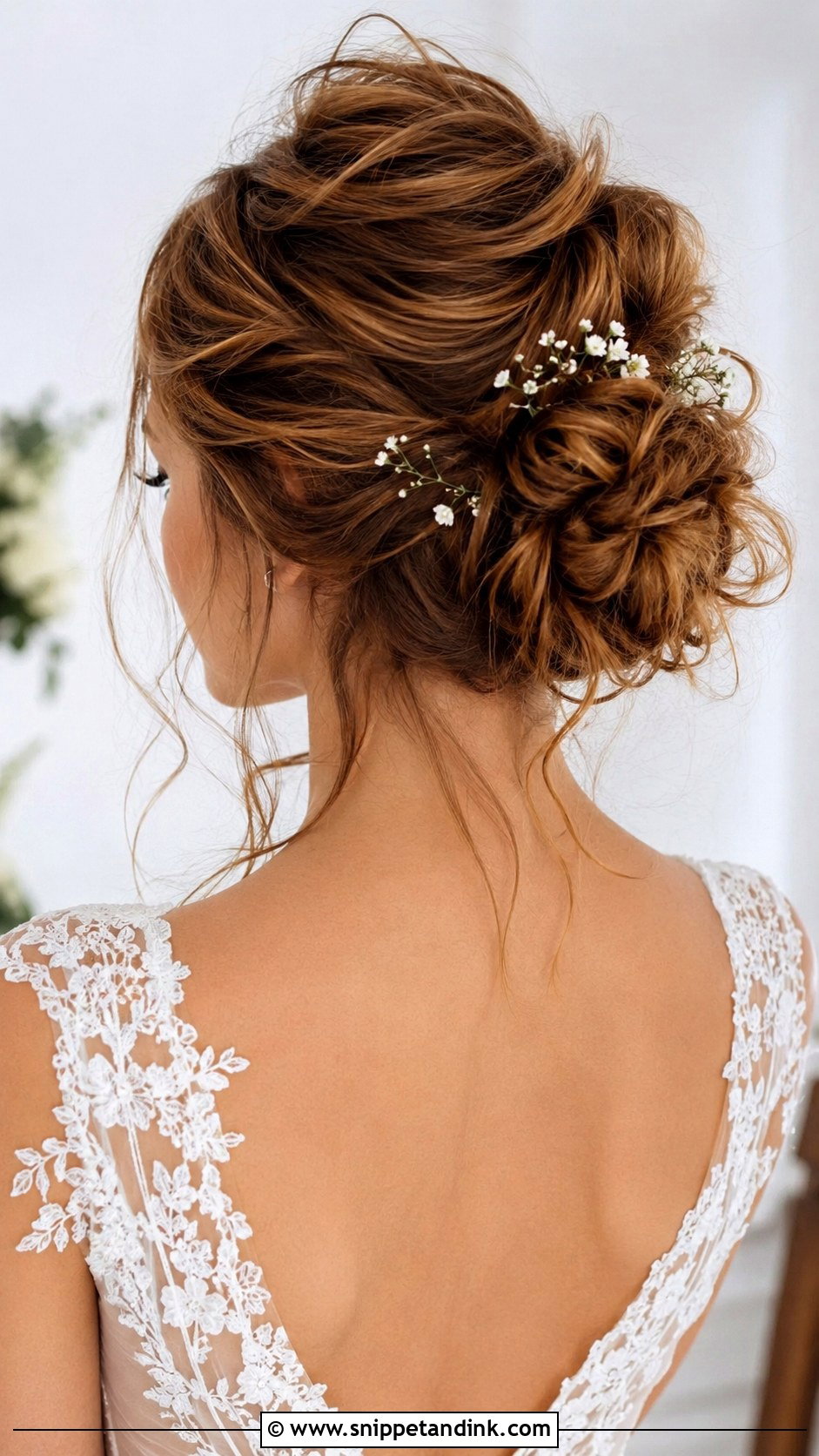
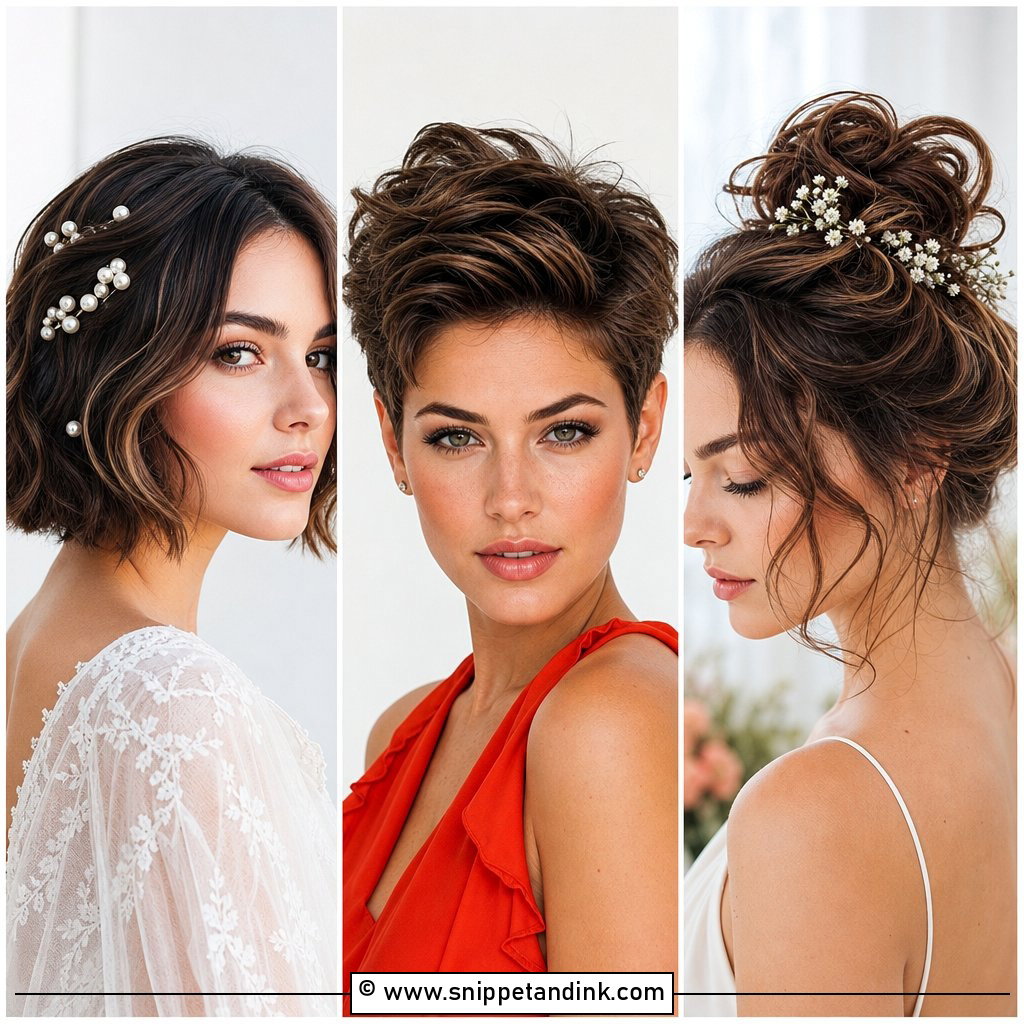
A messy bun hides thin patches better than nearly any other updo, because the texture breaks up the surface. I curl all of the hair, pin it in loose loops rather than wrapping it, and pull small pieces free around the hairline. On fine hair that won’t hold a sleek shape, this is often the most reliable option. Stay low or mid-height. A high messy bun on thin hair tends to show the scalp at the nape.
4. Loose Waves Wedding Hair For Thin Hair
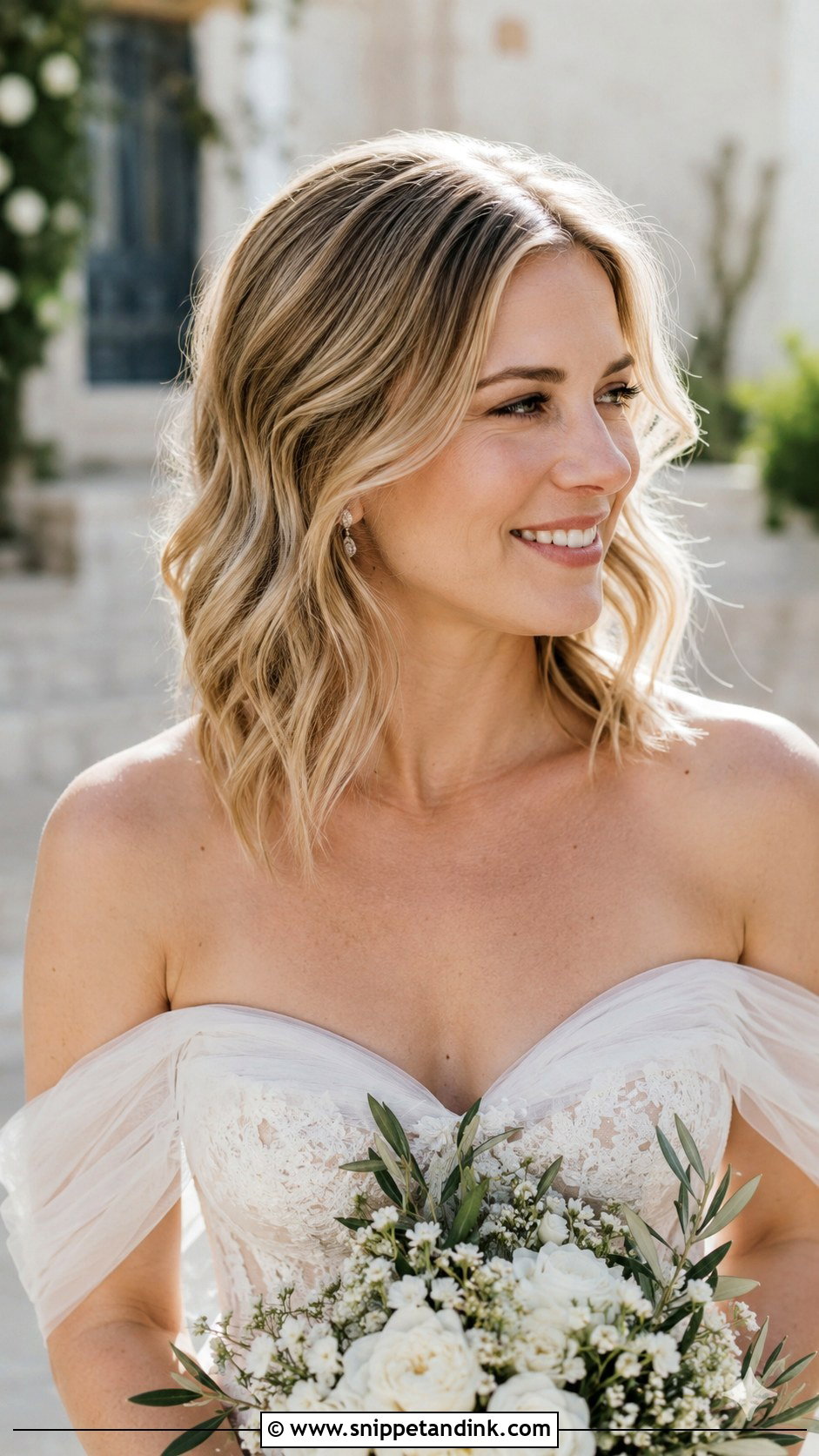
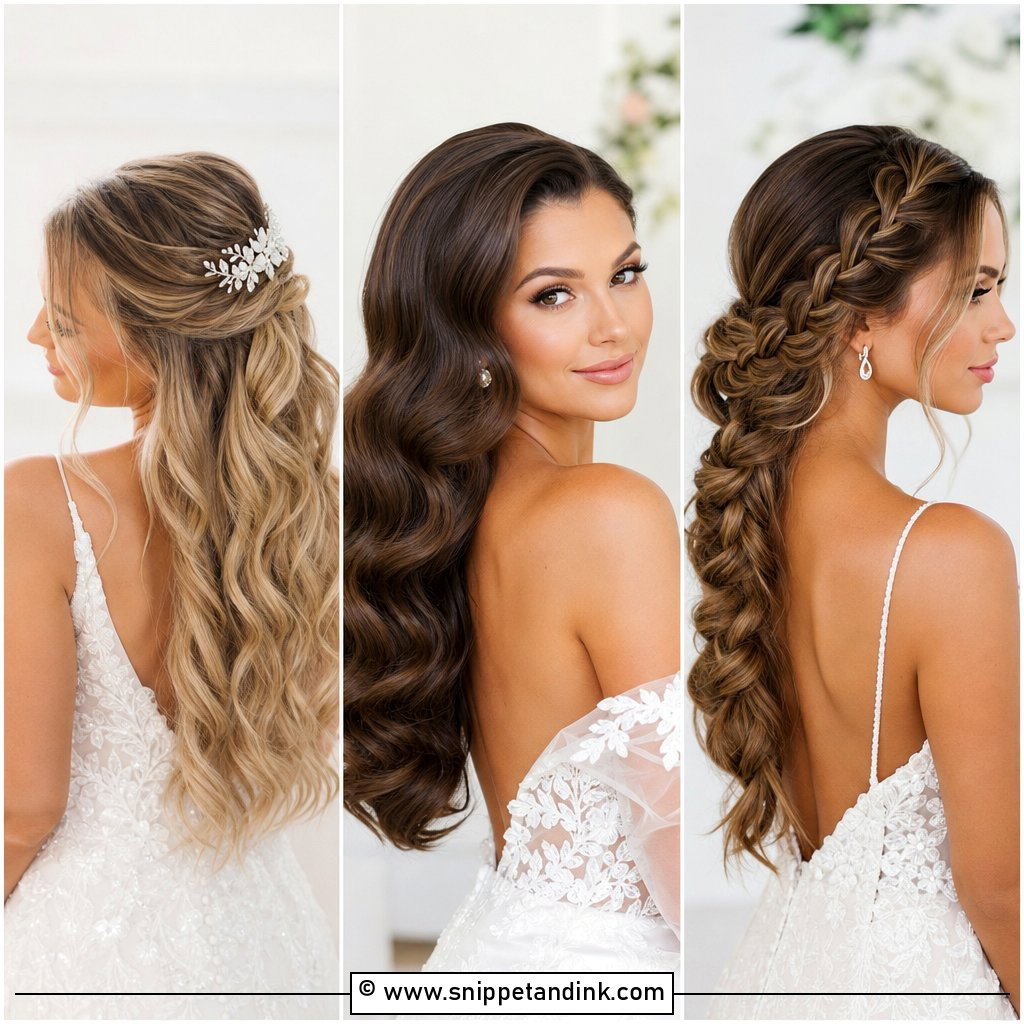
Loose waves widen fine hair, but only if they’re set properly. I spray a light mousse into damp roots, blow-dry with a round brush lifting at the scalp, then curl in medium sections and pin each curl to cool before brushing. Brushing hot curls on fine hair loses most of their volume within an hour. A side part adds instant lift at the front. Outdoors or on a beach, expect the waves to relax, so I curl slightly tighter than the final look.
5. Hollywood Waves Wedding Hair For Thin Hair
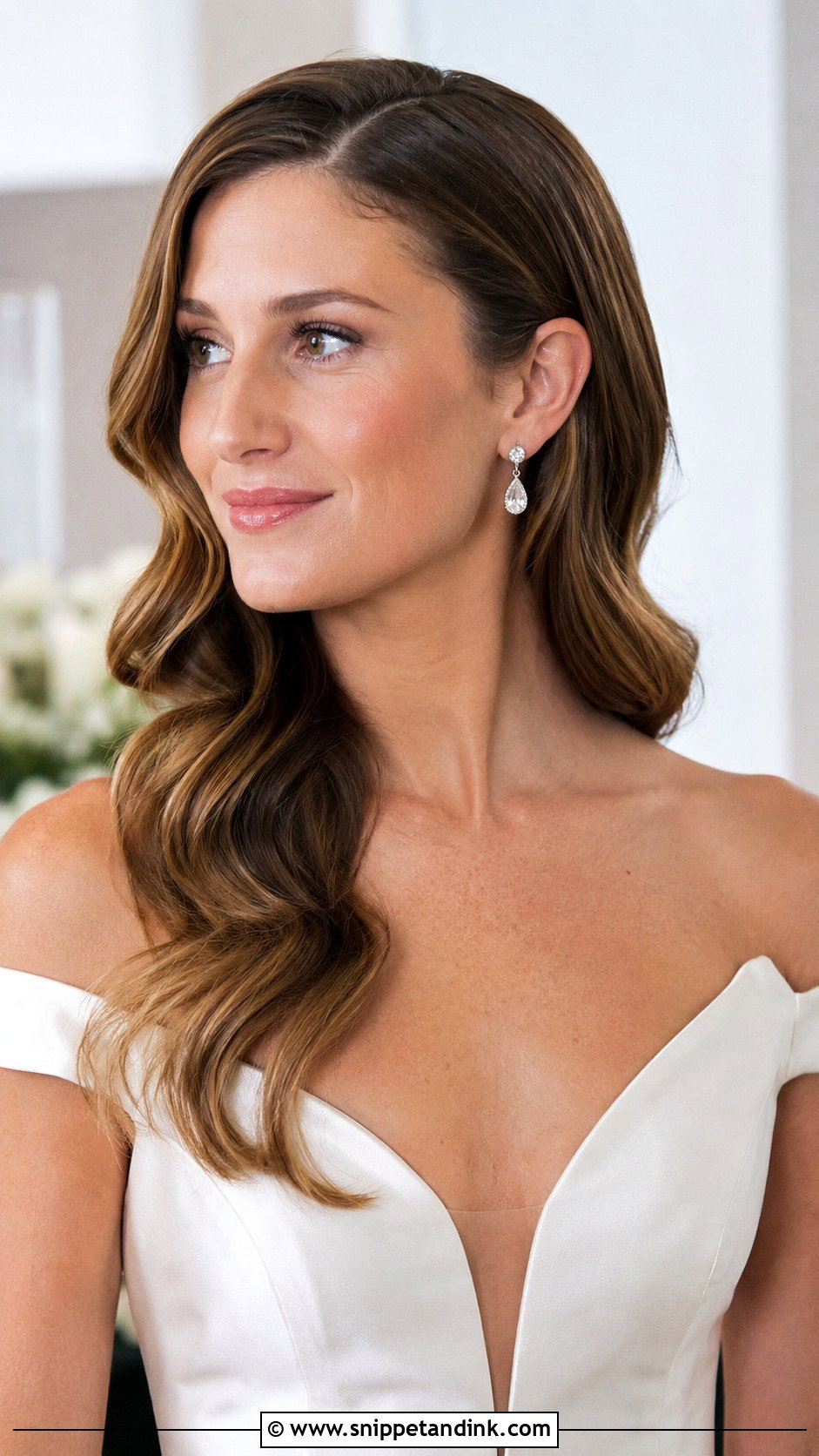
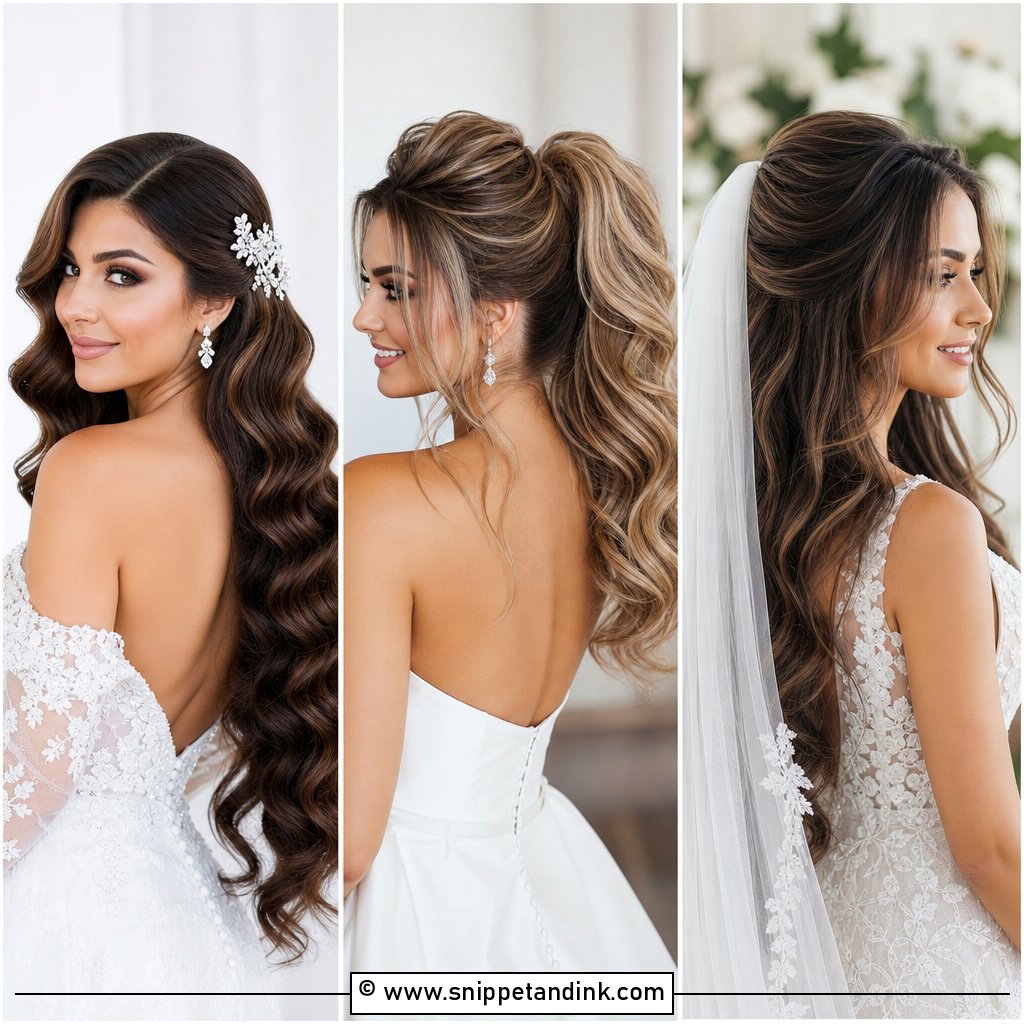
Hollywood waves sound like a thick-hair style, yet fine hair is often easier to smooth into that continuous S shape. What it lacks is width. At shoulder length or longer, I set the curls in the same direction, brush them into one wave and press the ridges with clips. If your ends are see-through, a few clip-in wefts below the occipital bone give the bottom of the wave its weight back. Fitted gowns and statement earrings suit it.
6. Side Braid Wedding Hair For Thin Hair
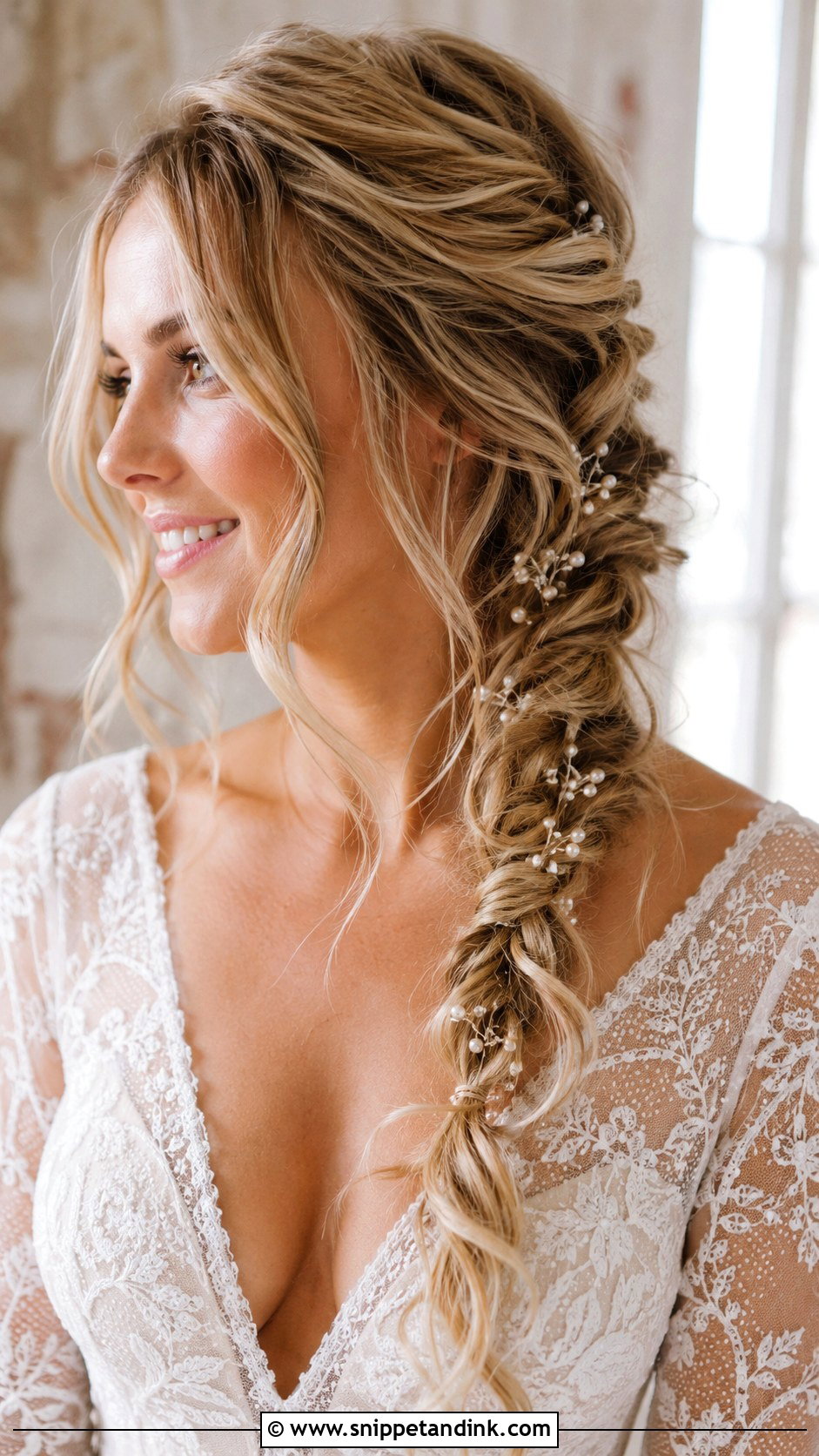
A tight braid on thin hair looks skinny, which is why I curl the hair first and braid loosely over one shoulder. Once it’s tied, I pull each loop outward, a little at a time, working from the top down. That pancaking can almost double the width of the braid. Texture spray before braiding gives slippery strands enough grip. It’s a natural pick for garden and rustic weddings; a few small flowers or pearl pins finish it.
7. Braided Crown Wedding Hair For Thin Hair
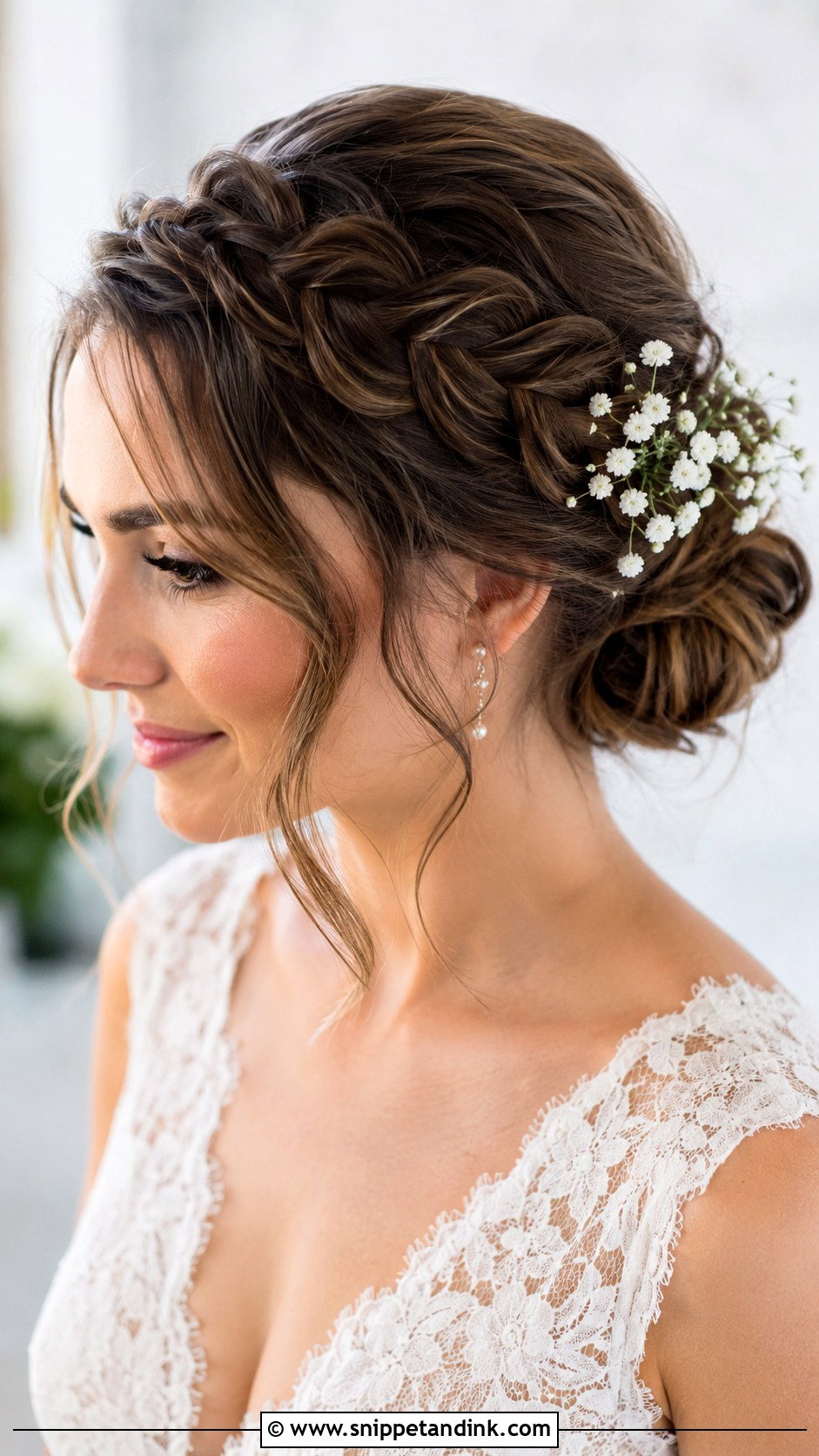
A braided crown moves attention onto pattern and away from density. On fine hair, I braid each side, pin it over the head, and only then loosen the loops, because loosening before pinning makes the braid fall apart. Bobby pins should go in along the inside edge of the braid, where they disappear. The remaining length can be tucked into a small bun or left in waves. Lace dresses and short veils pair well with it.
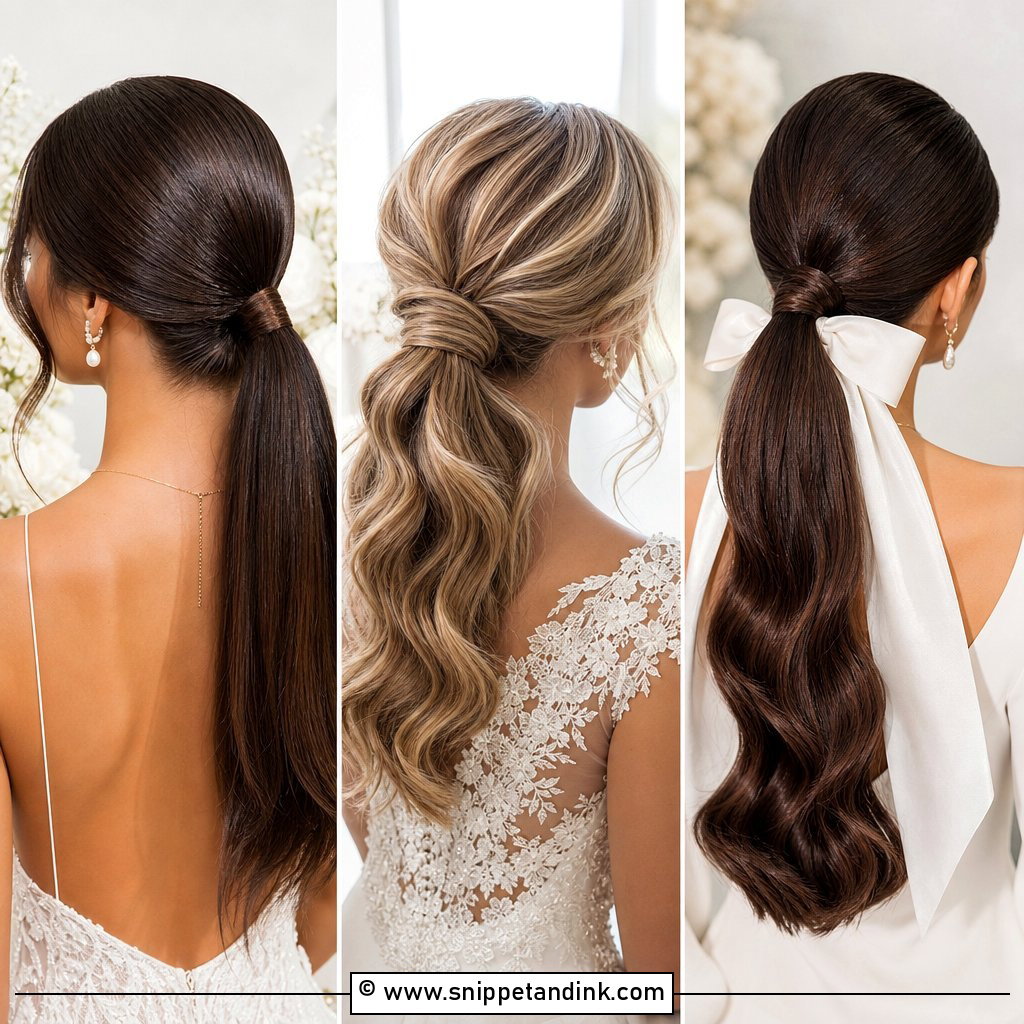
8. Textured Ponytail Wedding Hair For Thin Hair
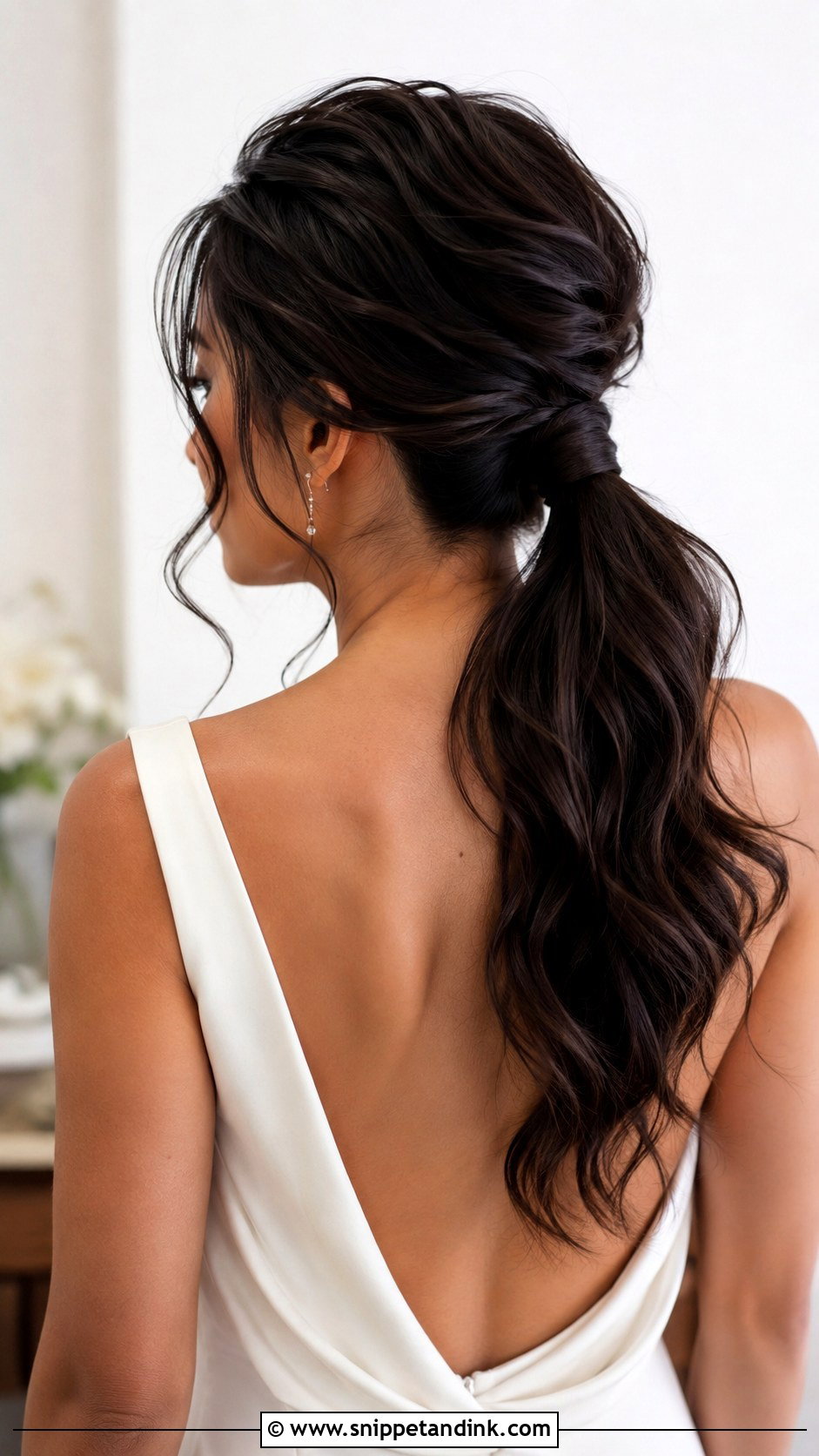
A ponytail is honest about density, so this one needs some help. I tease the crown, tie the ponytail mid-height or low, and finish with a wrapped section of hair around the base. Then I curl the length and gently pull each curl apart with my fingers so the tail widens. If it still looks slim, two or three clip-in pieces placed under the elastic add weight. Minimalist dresses and high necklines look right with it.
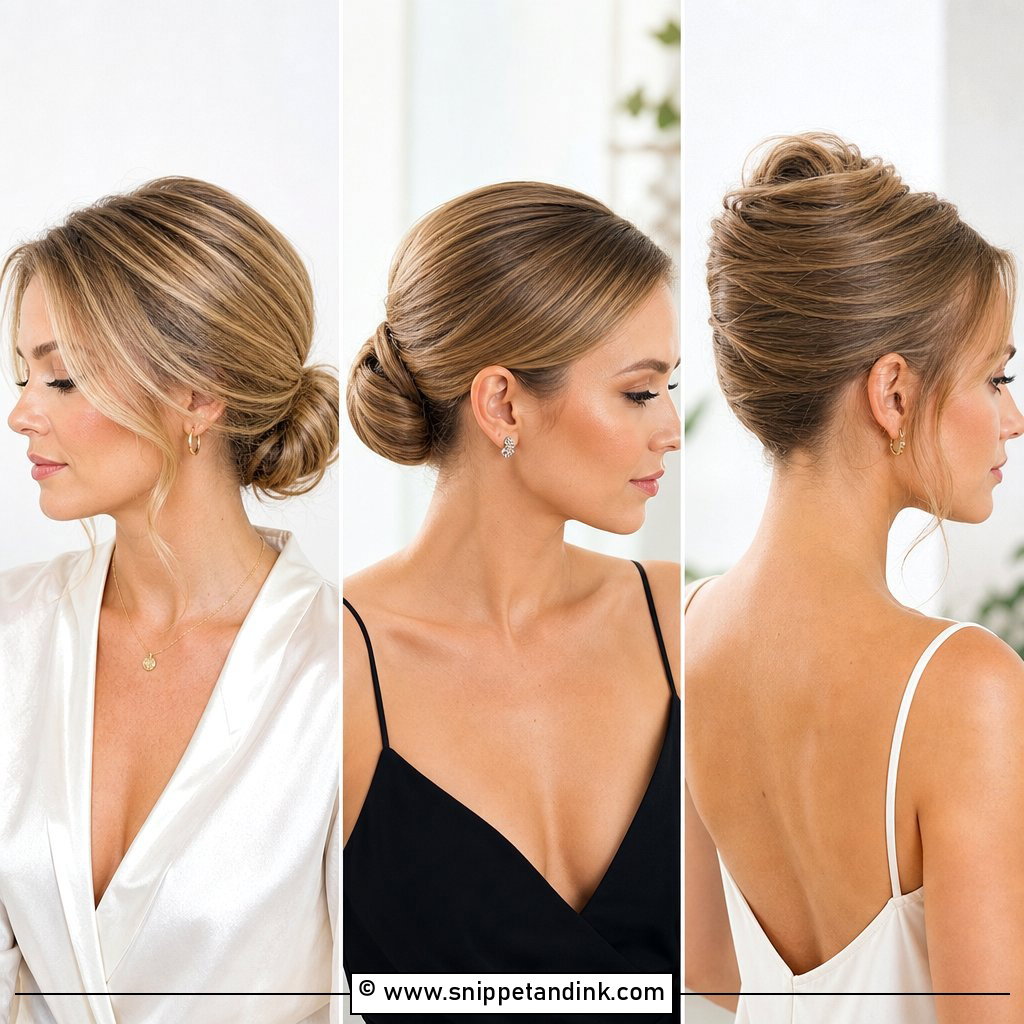
9. Low Chignon Wedding Hair For Thin Hair
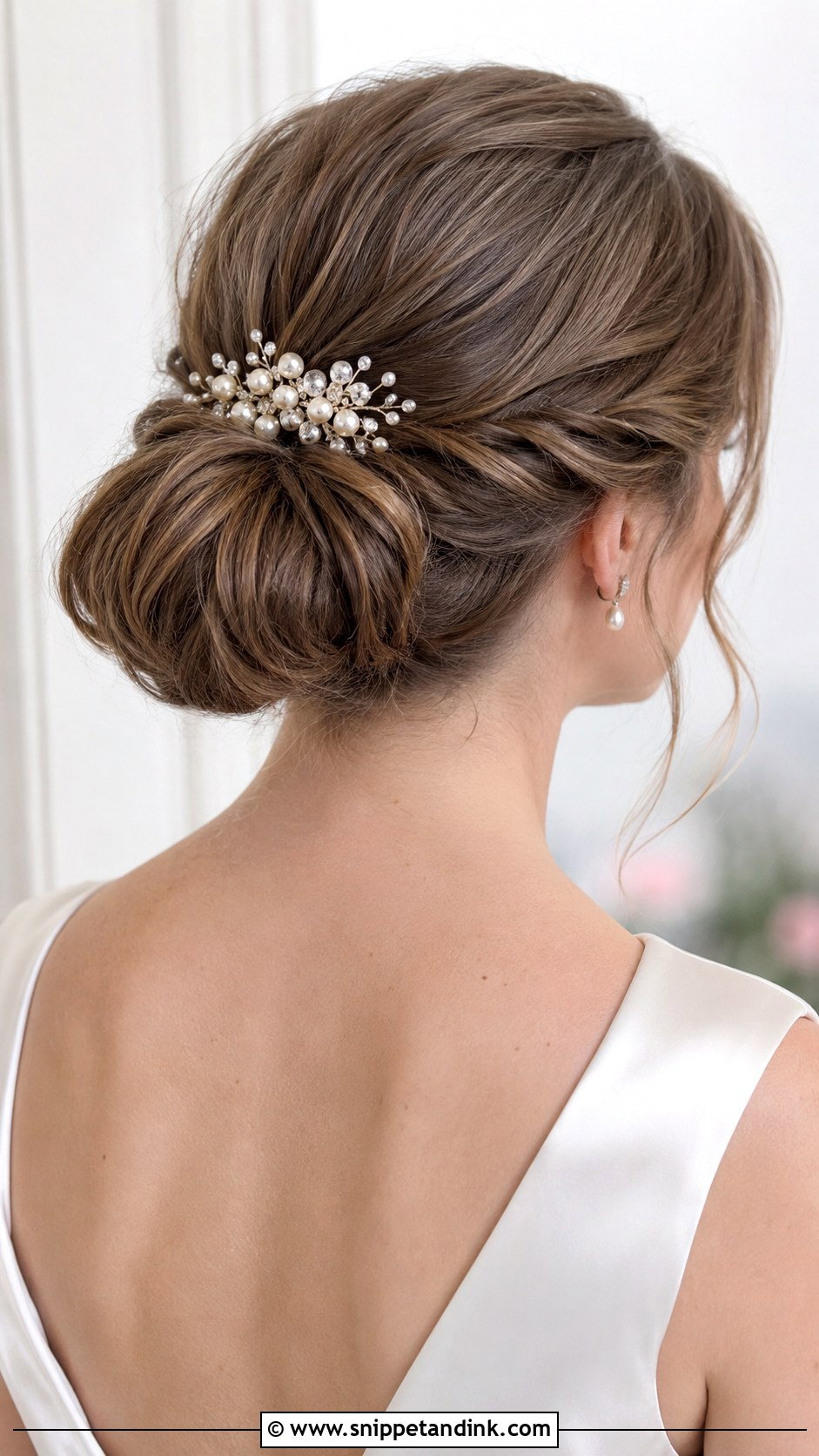
For a fine-haired bride, a chignon is more forgiving than it looks, because the bun sits at the nape where hair is often densest. I build it wide rather than tall and add a soft twist on each side, which fills in the area behind the ears. The front stays lifted. Slicking it back flat would expose the scalp along the part. Choose this if your hair holds pins well; very silky fine hair may need a texture spray first.
10. French Twist Wedding Hair For Thin Hair
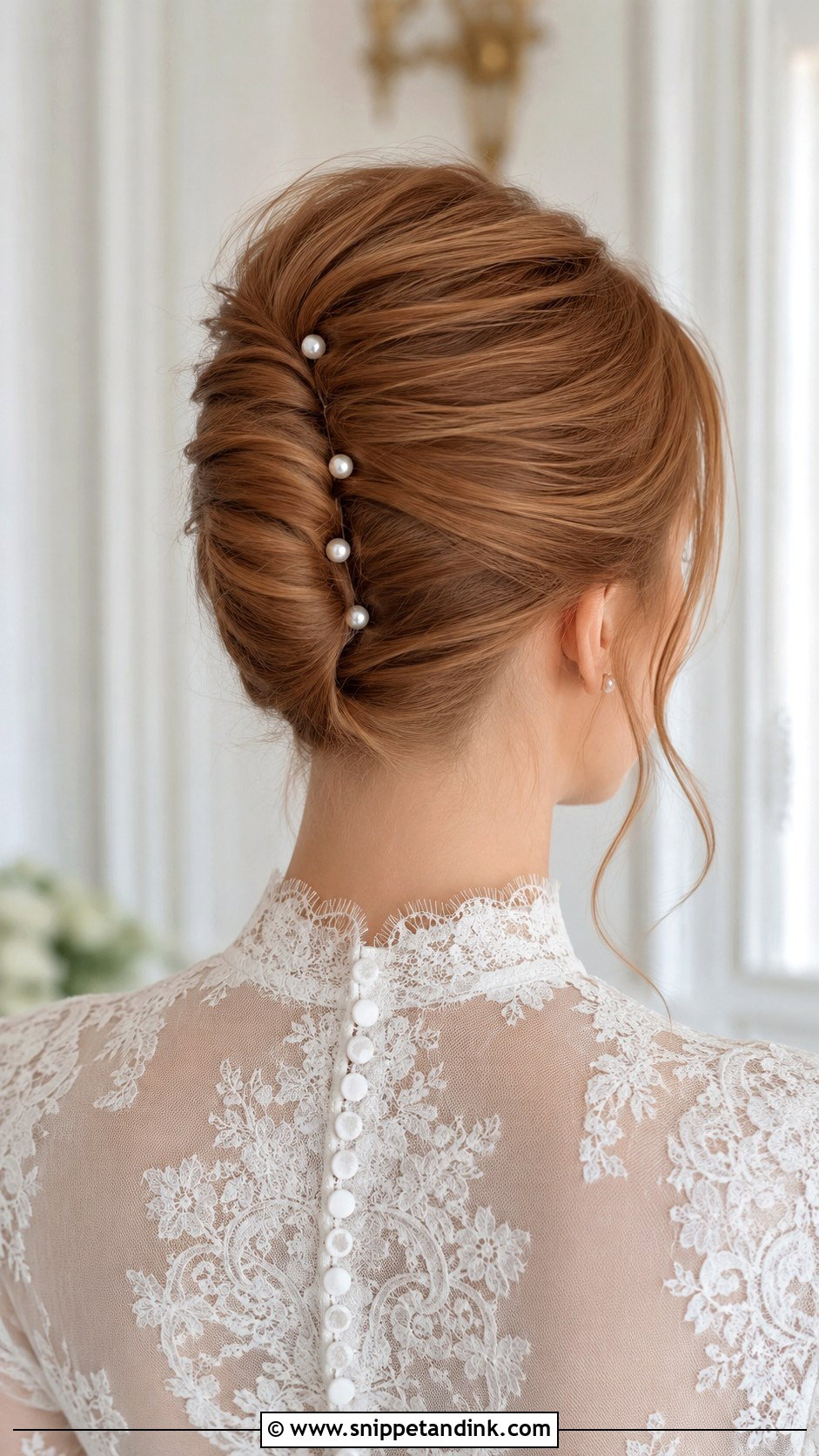
Fine hair suits a French twist more than people think, because it smooths easily and doesn’t bulk up the roll. The challenge is the opposite: making it look substantial. I backcomb along the back of the head before twisting, which pads the roll from inside, then pin it along the seam with long pins that cross into the twist. A little lift at the crown and a few loose pieces at the temples stop it looking strict.
11. Short Bob Wedding Hair For Thin Hair
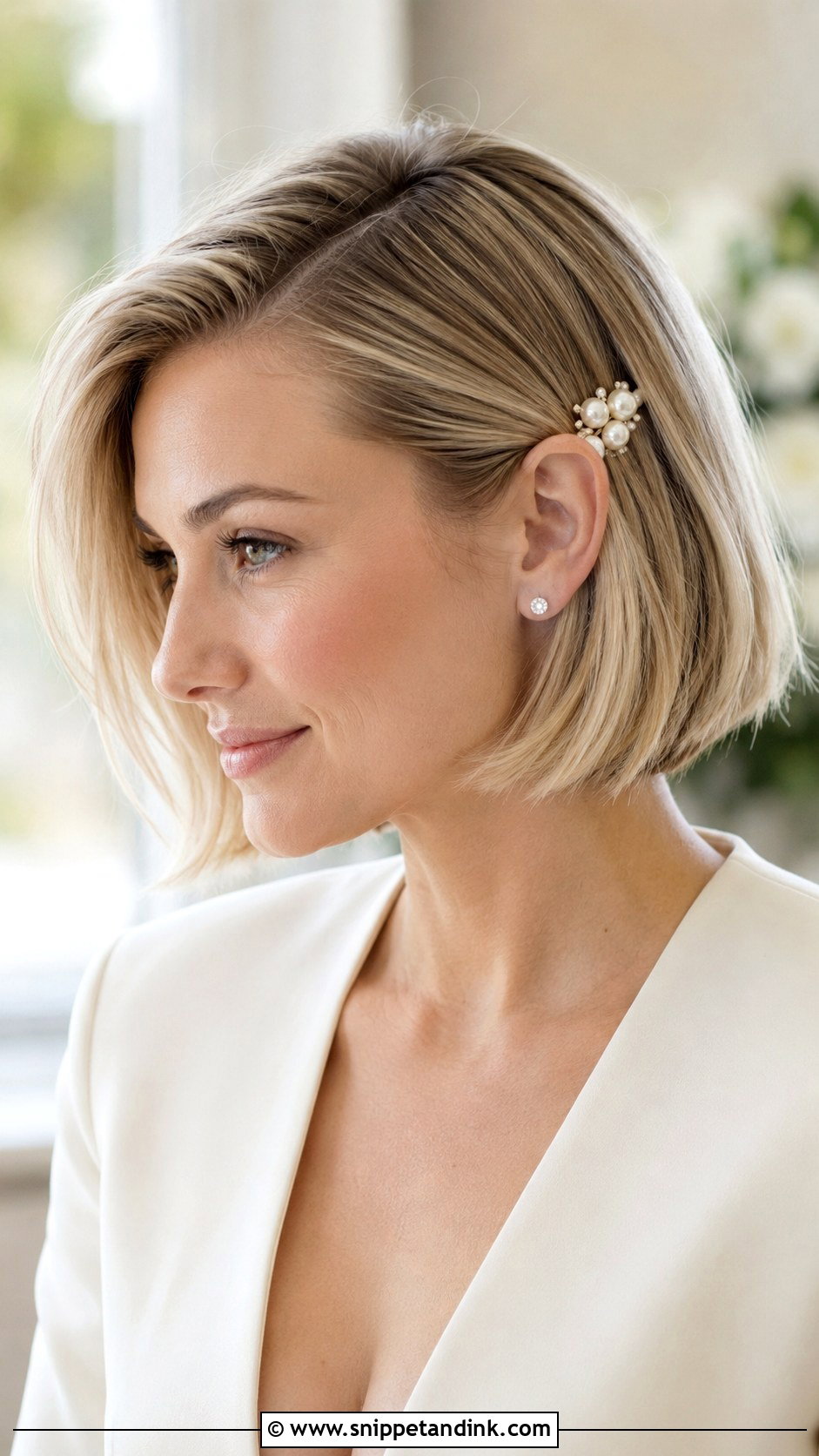
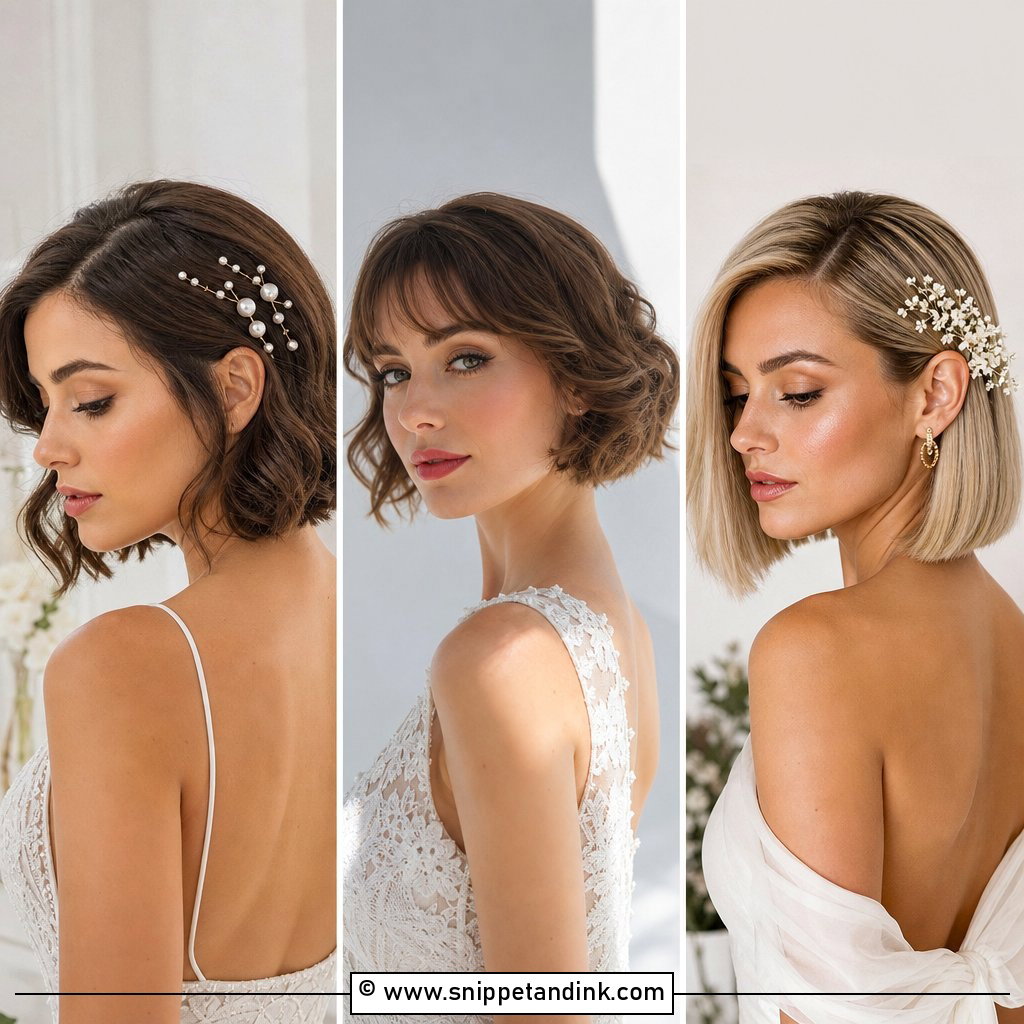
If you’re open to a cut before the wedding, a blunt bob is the best thing you can do for thin hair, because a solid edge makes the ends look dense. Feathered layers do the opposite. For the day, I bend the middle lengths slightly and leave the ends smooth, then add lift at the part with a round brush. A small clip, headband or veil all sit easily on it.
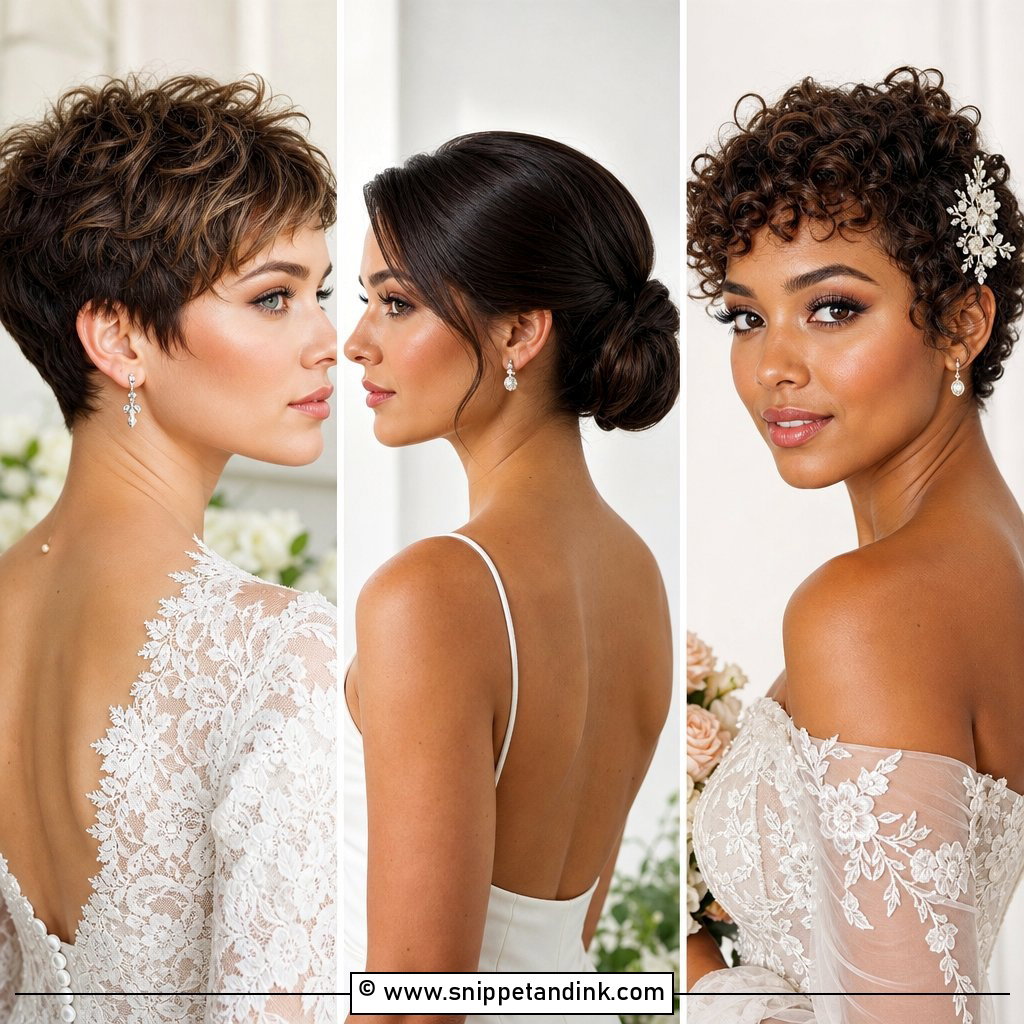
12. Pixie Wedding Hair For Thin Hair
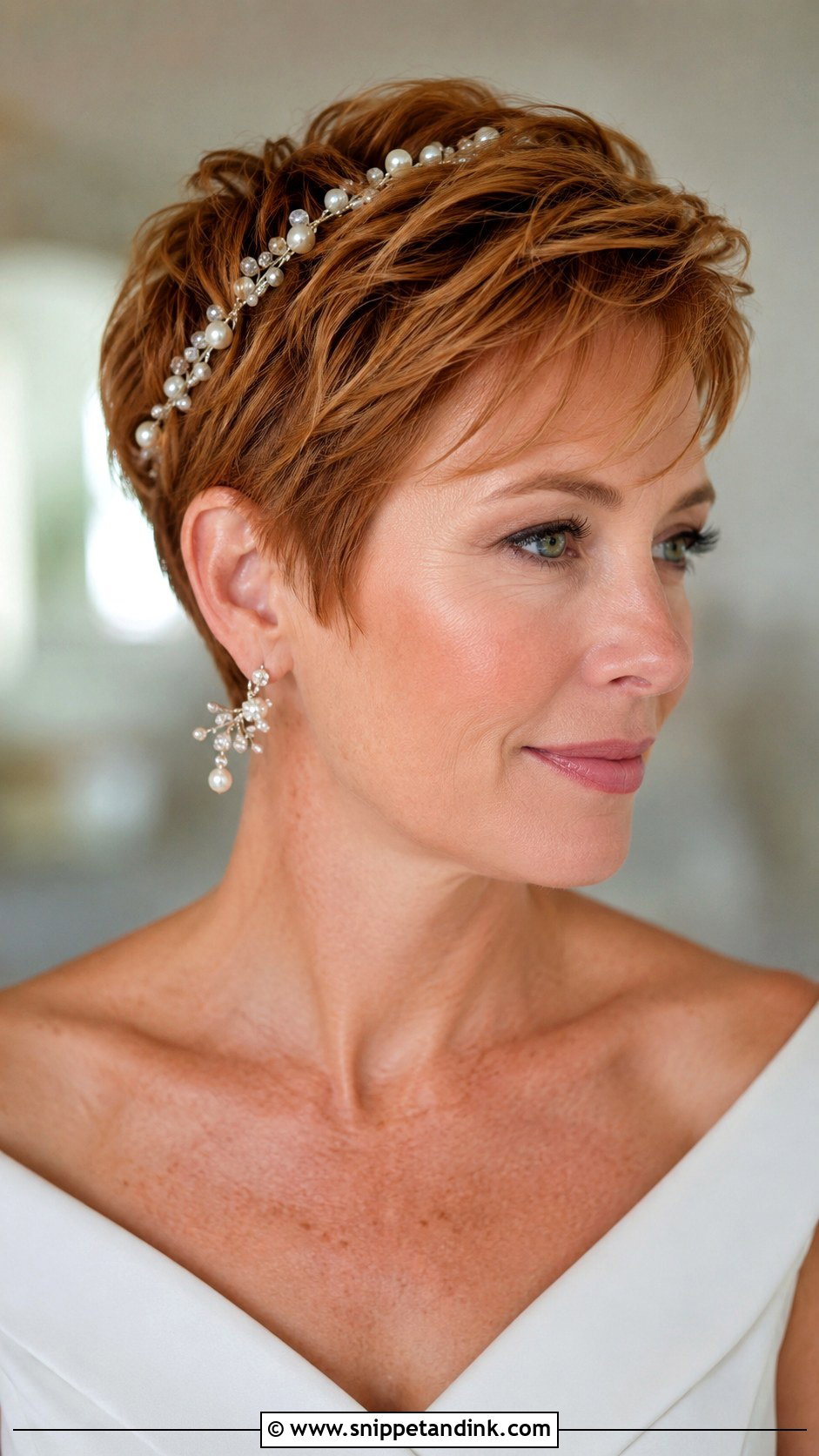
A pixie cut is one of the kindest shapes for thinning hair, since nothing has to be stretched to cover length. The focus is on lift and texture at the top. I blow-dry the top forward with a vent brush and work in a dry texture spray rather than paste, which can separate fine pixies into strands. A slim headband or small veil adds detail without flattening the crown.
13. Side Part Wedding Hair For Thin Hair
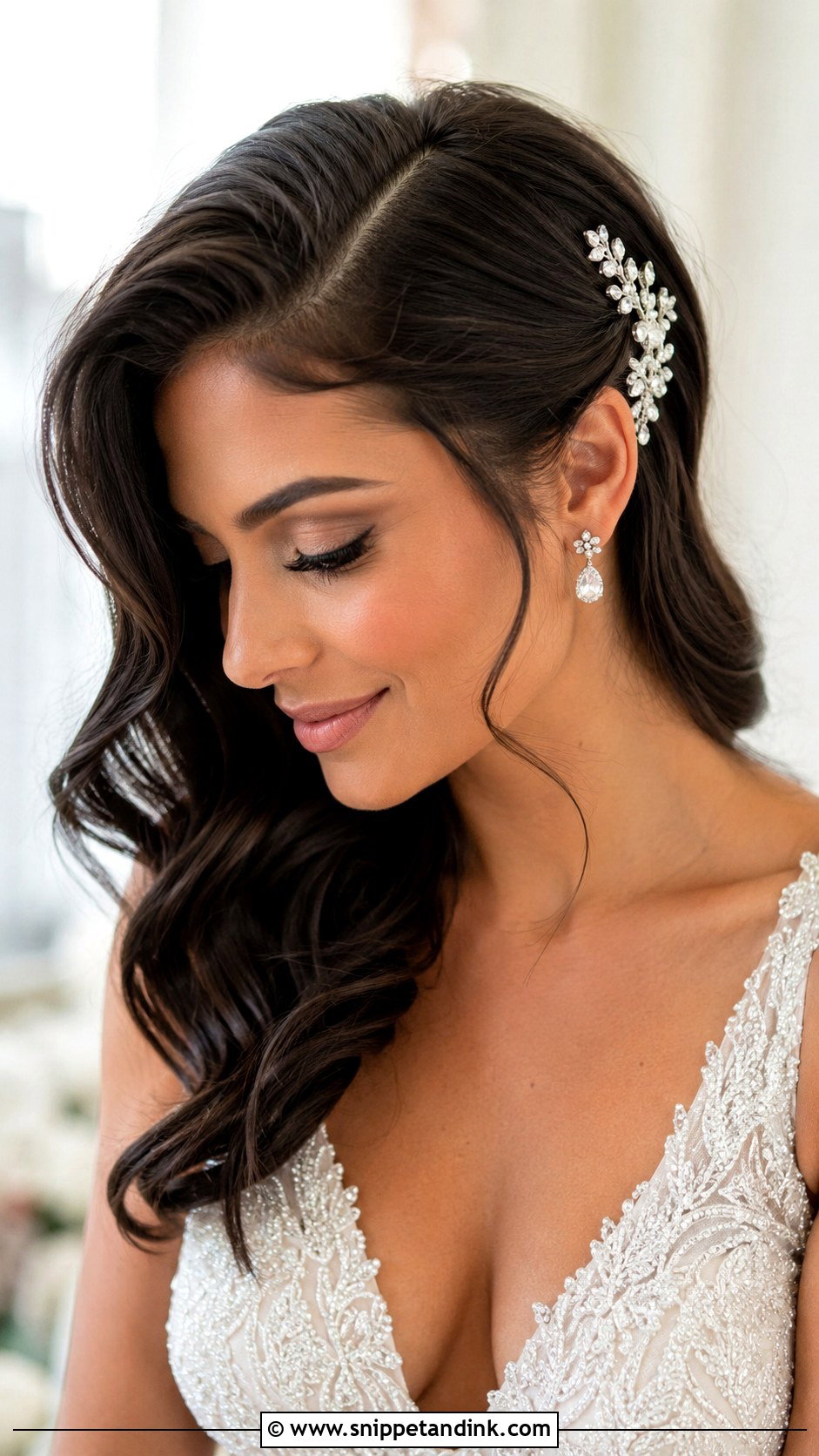
Moving your part is the easiest change on this list. Hair lifts naturally where it’s been flipped against its usual direction, so a side part placed on the opposite side of your normal one gives more root volume for free. I dry the root against the new direction first, then flip it back. Avoid a perfectly flat part pressed to the scalp; a slight zigzag hides the line better. The lighter side can be tucked behind the ear with a pin.
14. Curtain Bangs Wedding Hair For Thin Hair
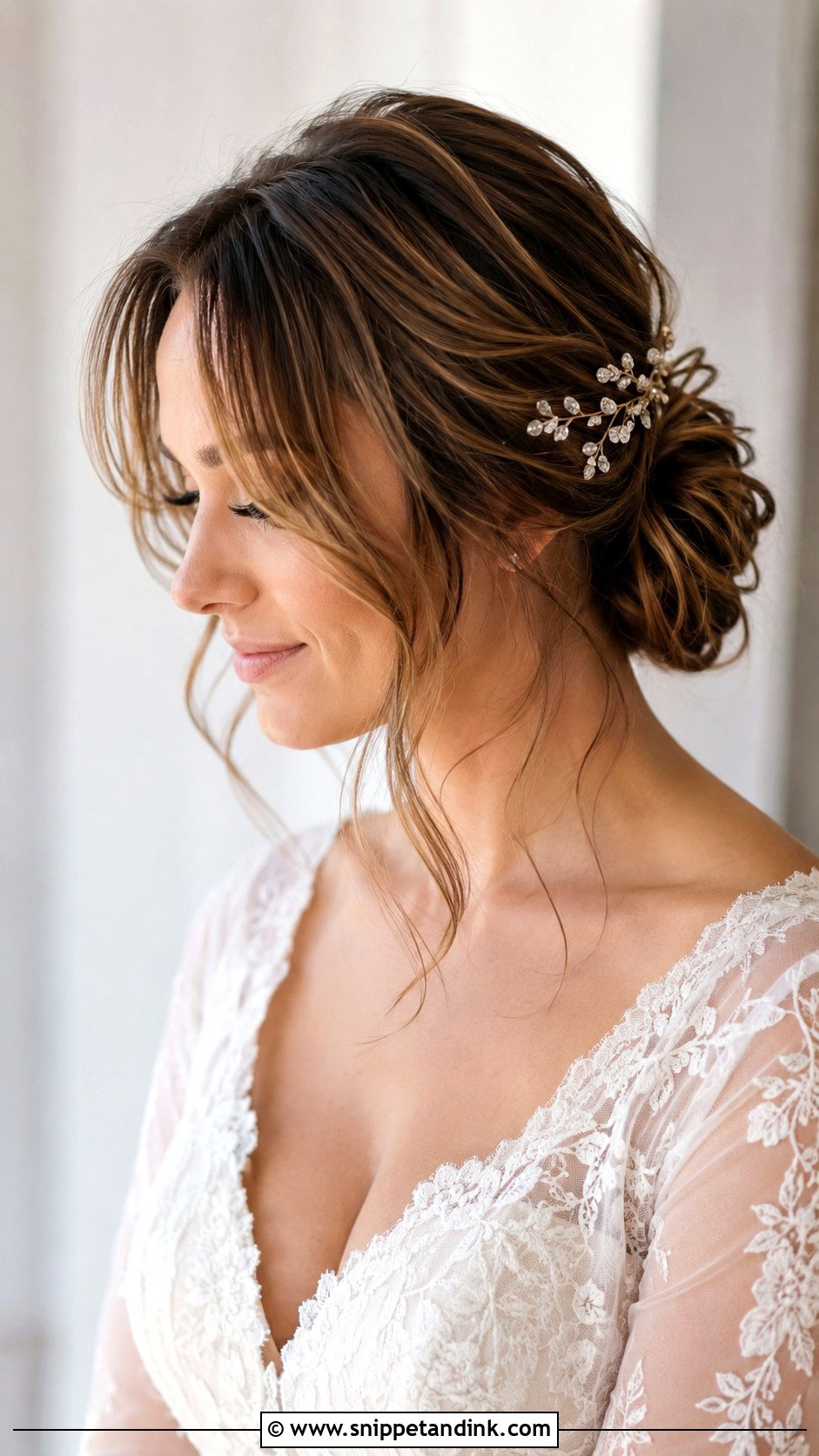
Curtain bangs soften the face and suggest volume at the front, where fine hair looks thinnest. The catch is that they take hair from the top, so I’d never cut them for the first time in the last two months. Get them cut early if you’re curious. On the day, I round-brush them away from the face and set them with a light spray. They balance a veil nicely by giving the front some movement.
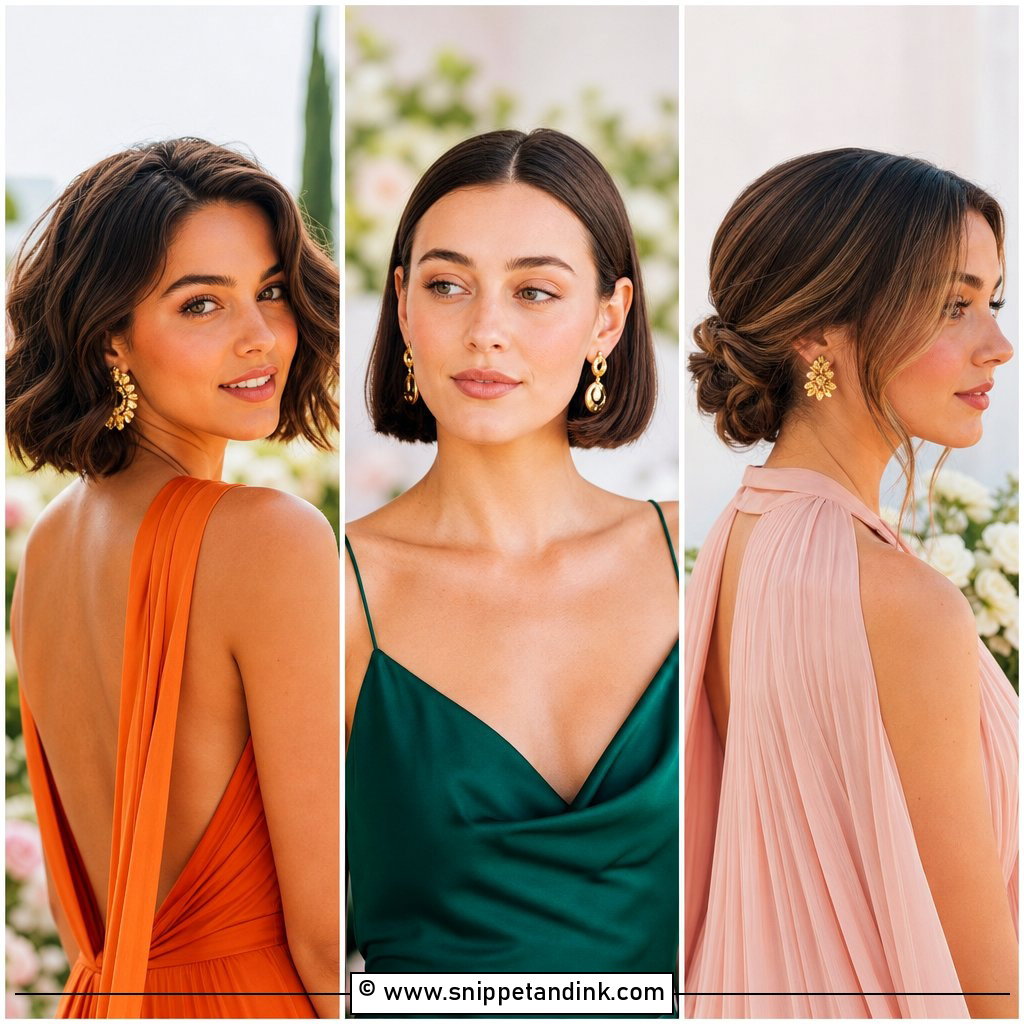
15. Pearl Headband Wedding Hair For Thin Hair
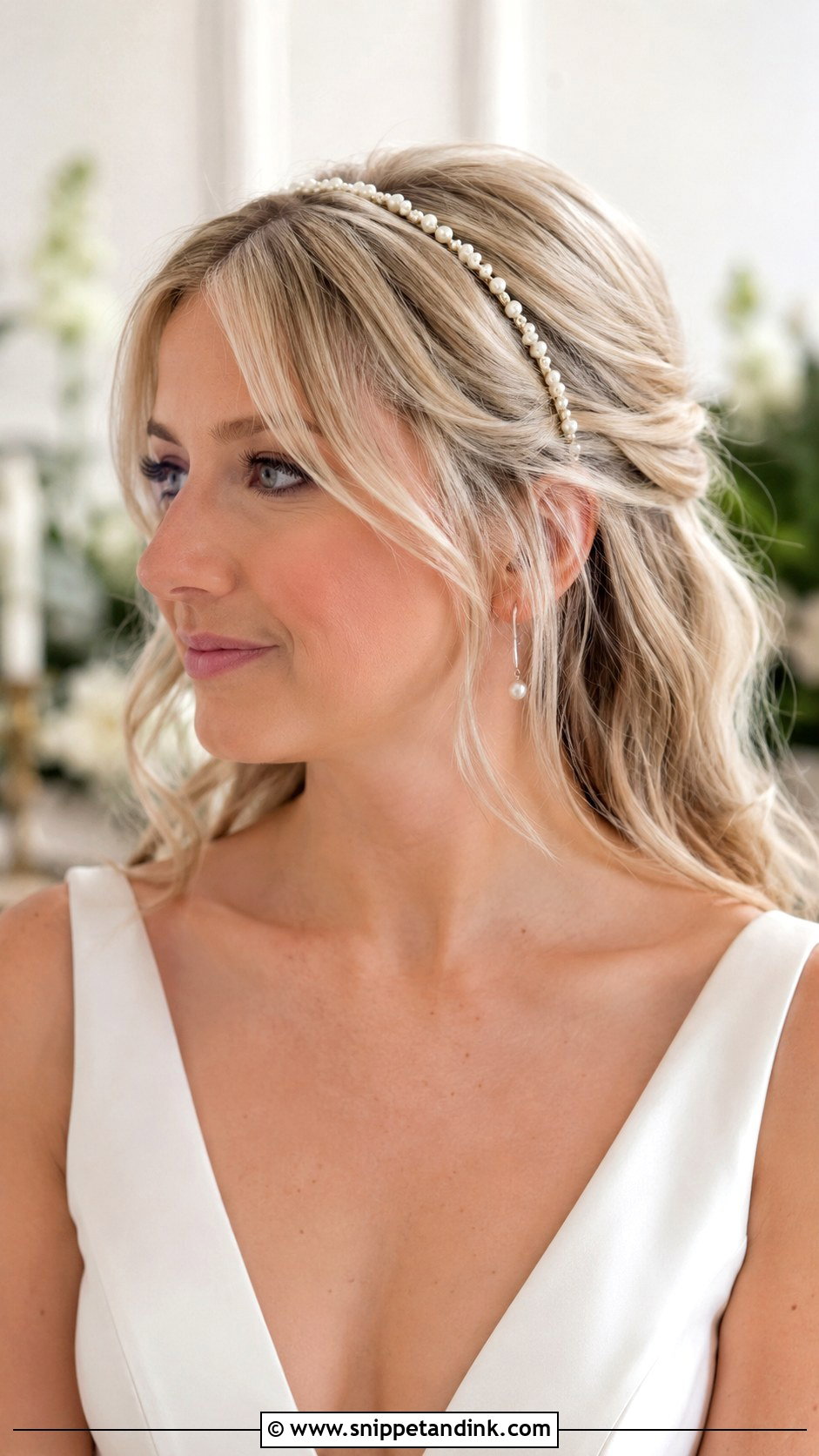
A pearl headband draws the eye up and adds detail where fine hair is weakest. The risk is pressure. A tight band flattens fine hair within an hour, so I tease beneath it, then set it a little further back from the hairline than you’d think. Pick a slim or medium band, nothing heavy. It sits well with waves, a low bun, a short bob or a simple ponytail, and it suits courthouse weddings particularly well.
Scalp Showing Through Under Flash and Overhead Lights
Daylight is kind to thin hair. Camera flash and downlights in reception rooms are not, and they’re where brides most often see their part or crown look see-through in photos. A few things help: a root powder or hair fibers matched to your color, dusted along the part and crown; a zigzag part rather than a sharp line; and matte rather than glossy finishing spray, since shine reflects light straight off the scalp. Ask your photographer to take a couple of test frames with flash during the trial photos or the morning, and check the crown.
Clip-Ins, Tapes or a Halo Piece for One Day
Added hair is common in bridal work and nobody needs to know. Clip-in wefts are the simplest for a single day; I place them below the crown, where the top layer hides the clips. On very fine hair, though, the clips themselves can show or pull, and a halo piece sitting on a clear wire, or a small number of tape-ins fitted a week or two before by a trained stylist, can be a better option. Whatever you use, match the color in daylight, buy it before your trial and have it cut into your style, since uncut extensions look bulky at the ends.
Support Matters More Than Density
Fine hair is held back far more by flat roots and heavy product than by how many strands you have. Half-up hair, soft buns, loosened braids, textured ponytails, chignons and blunt bobs all give the impression of fullness when the base is prepped properly. Bring photos to your trial, but listen if your stylist suggests a different shape; they can feel how your hair holds pins, and that matters more than any picture.
You'll Like These Ideas:


Leave a Reply