
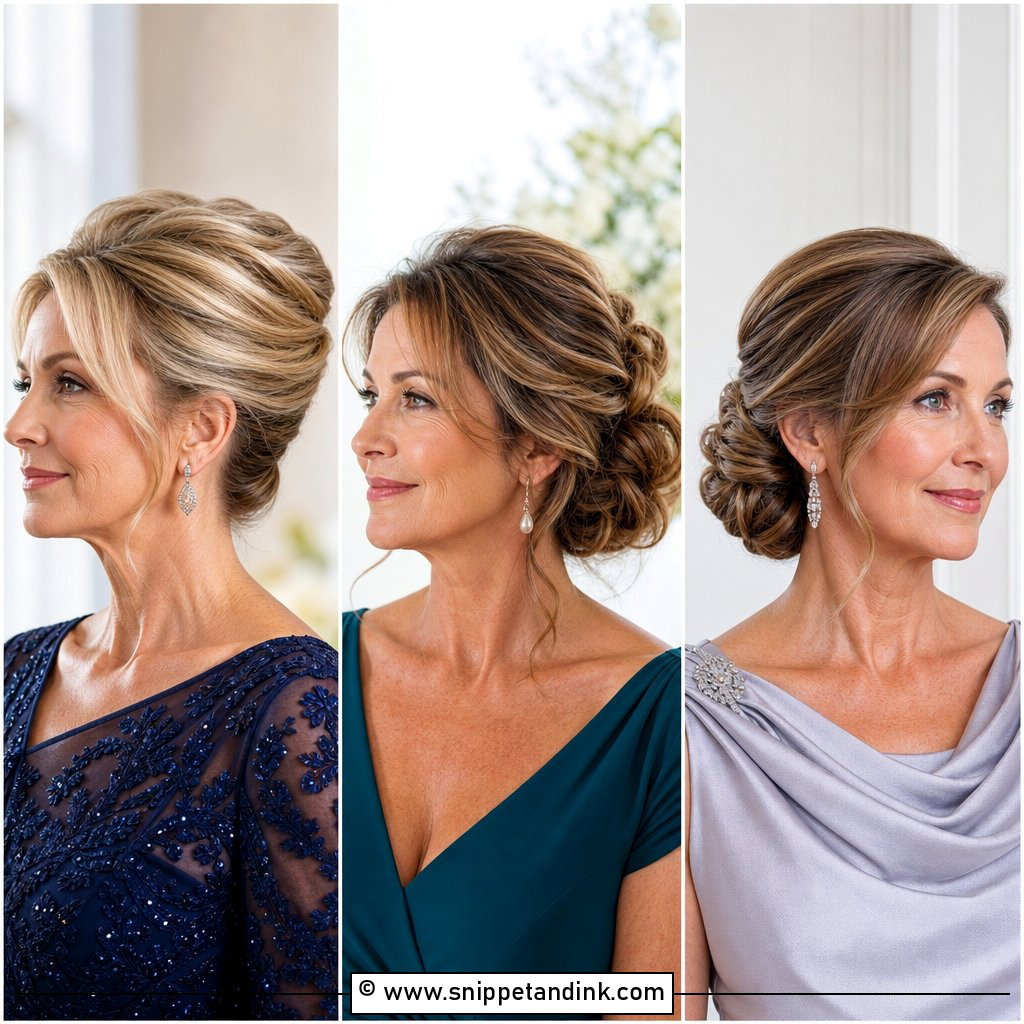
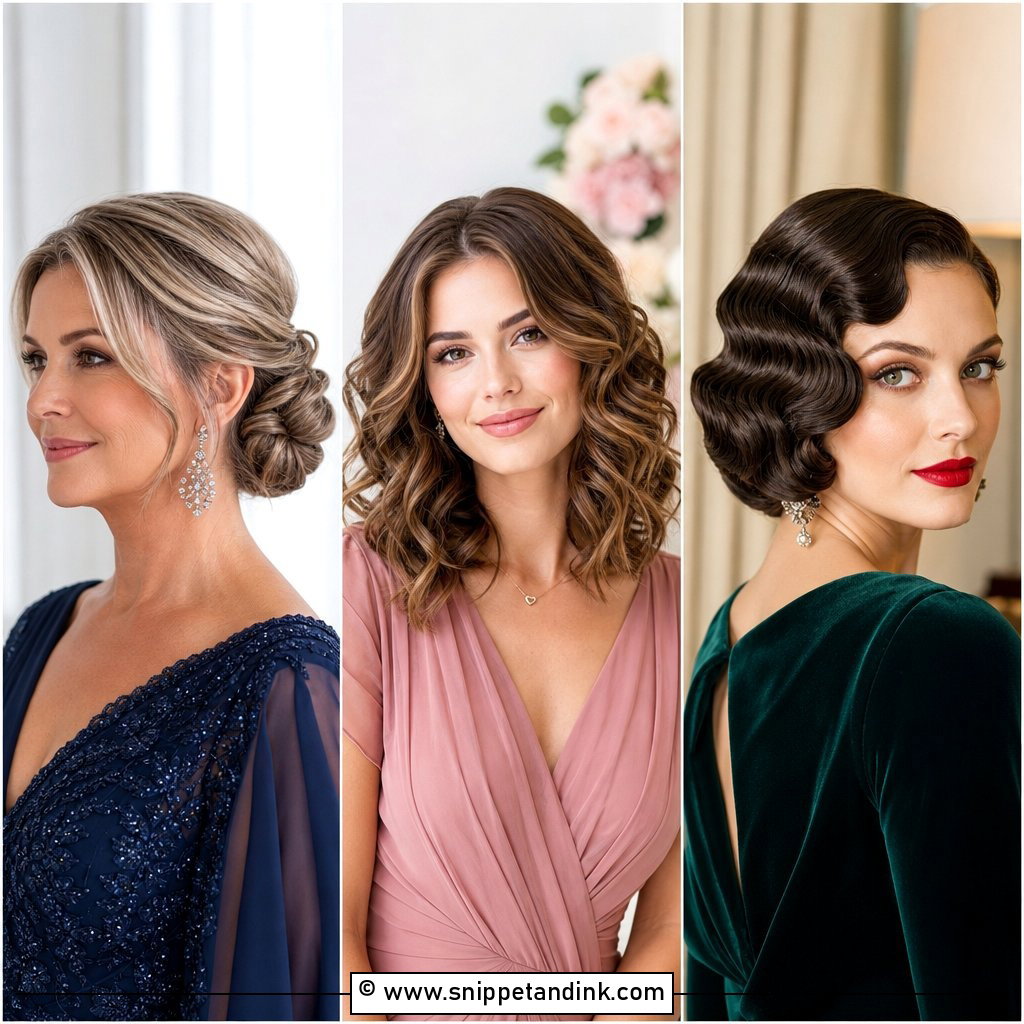
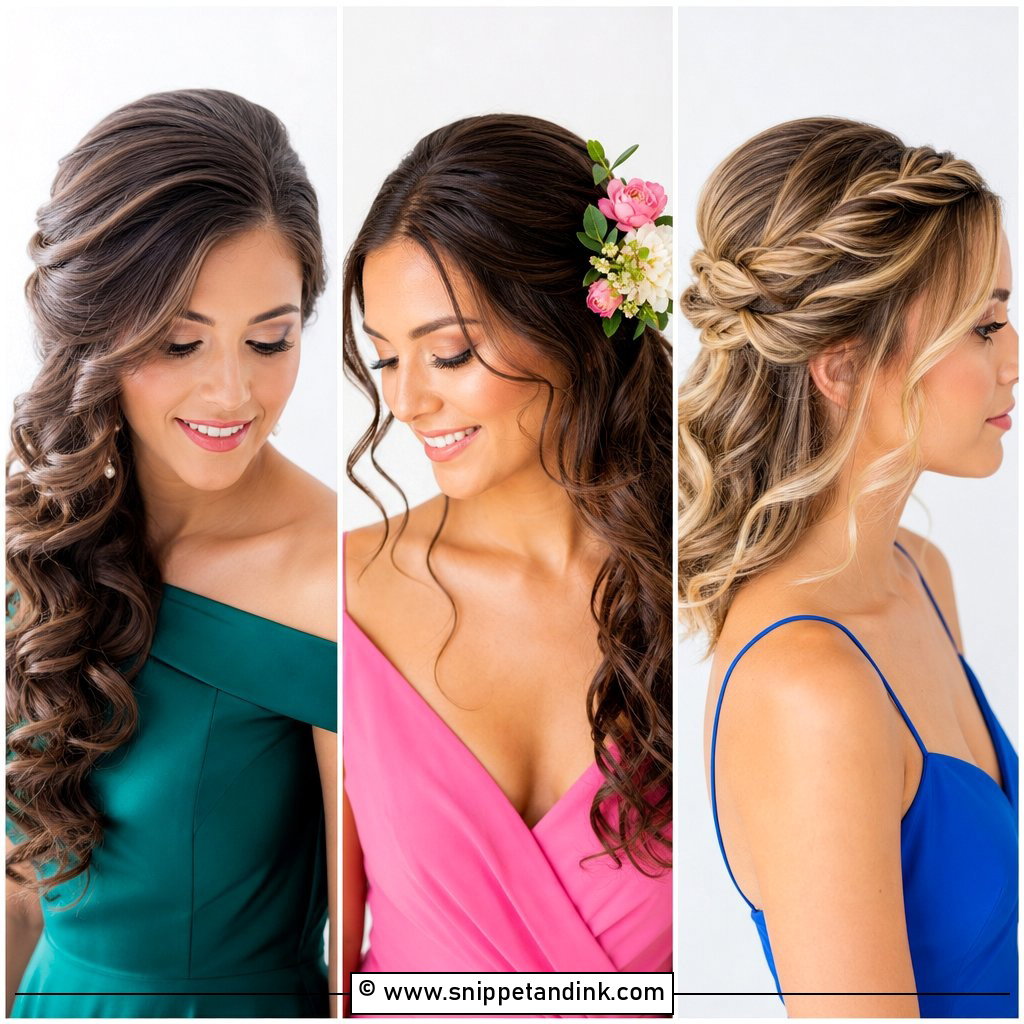
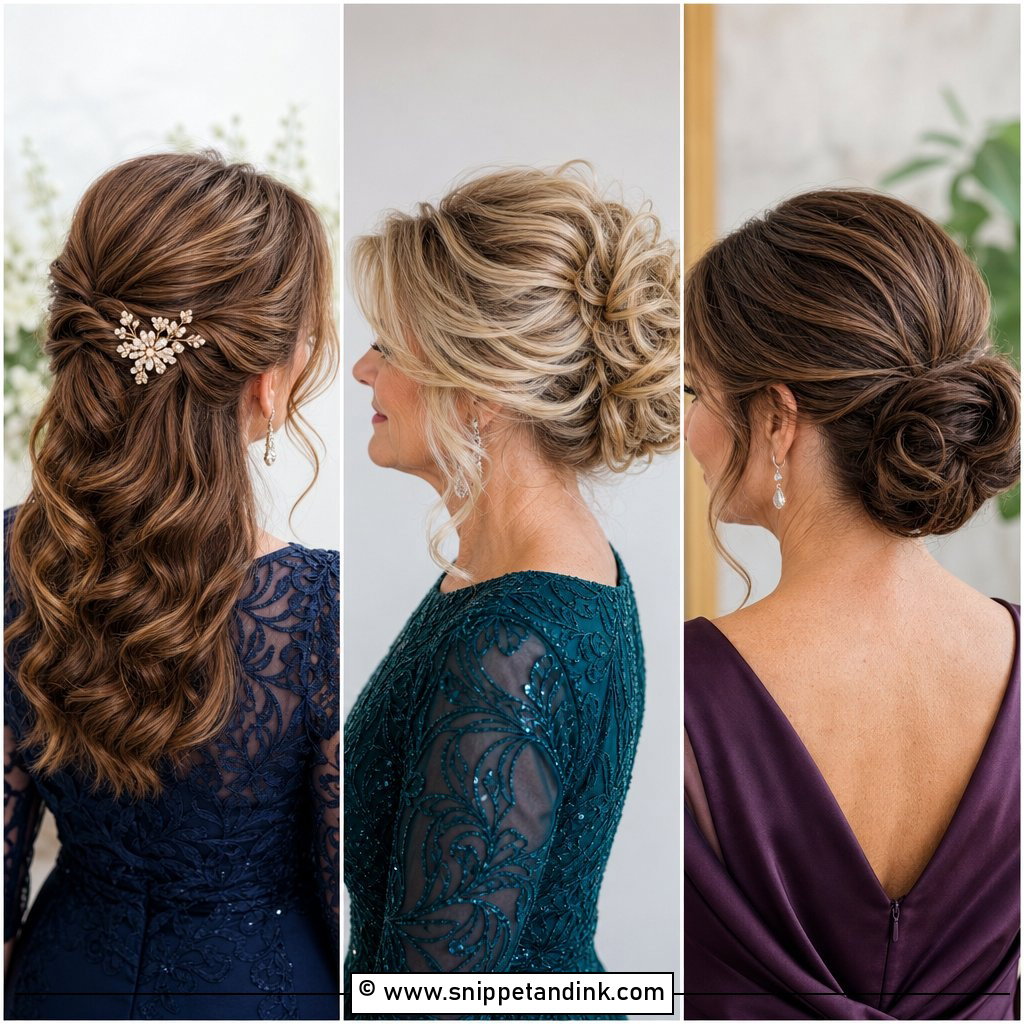
An updo is the safest bet for a mother of the bride who will be hugging, crying, dancing and standing in a dozen group photos. Hair off the face can’t blow into your lipstick, and a well-pinned shape looks the same at the last dance as it did at the ceremony. The trick is matching the updo to the hair you actually have. Fine hair, thick hair, a short bob and long layers all need different structures underneath, and that’s what decides whether a style holds. Below are 20 mother of the bride updo hairstyles, from French twists to braided crowns, with notes on how I build each one and who it suits.
Day-Old Hair Holds Pins Better Than Clean Hair
The most common reason an updo slips is hair that’s too clean. Freshly washed, conditioned hair is silky, and bobby pins slide straight out of it. For most updos I ask mothers to wash the day before, skip heavy conditioner on the roots, and come to the appointment with hair completely dry.
- Wash and dry the day before; very oily hair can wash the morning of with no conditioner at the root
- Skip oils, serums and leave-in creams; I add product where it’s needed
- Wear a button-front or zip top, so nothing has to come off over your head afterwards
- Bring the hair accessories and earrings you plan to wear
There are exceptions. Very fine hair can look stringy on day two, and very curly hair often needs moisture, so mention your hair type when you book and I’ll adjust. Dry shampoo is my usual fix for slippery or limp hair; it adds grip almost instantly.
1. Classic French Twist Updo
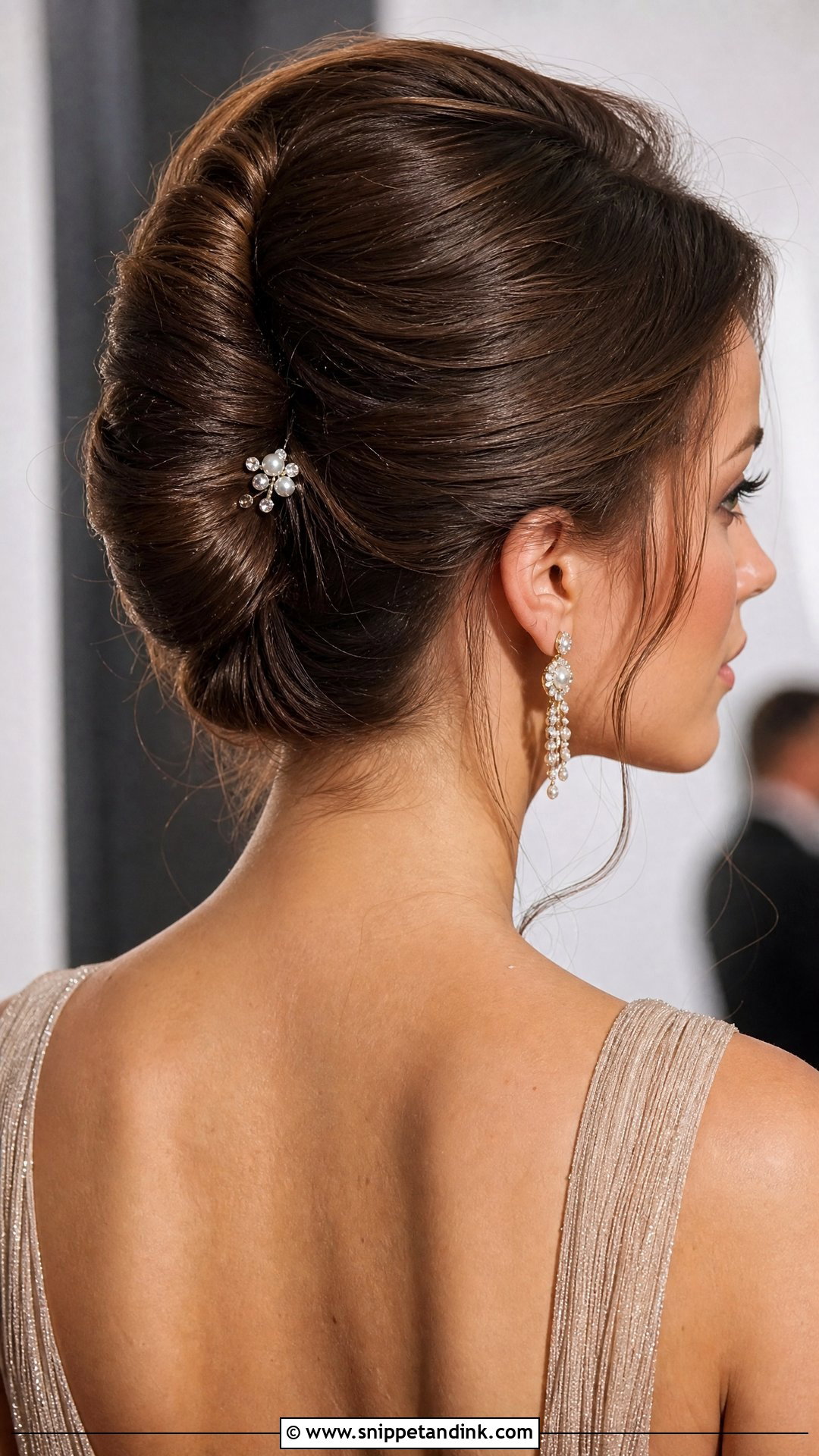
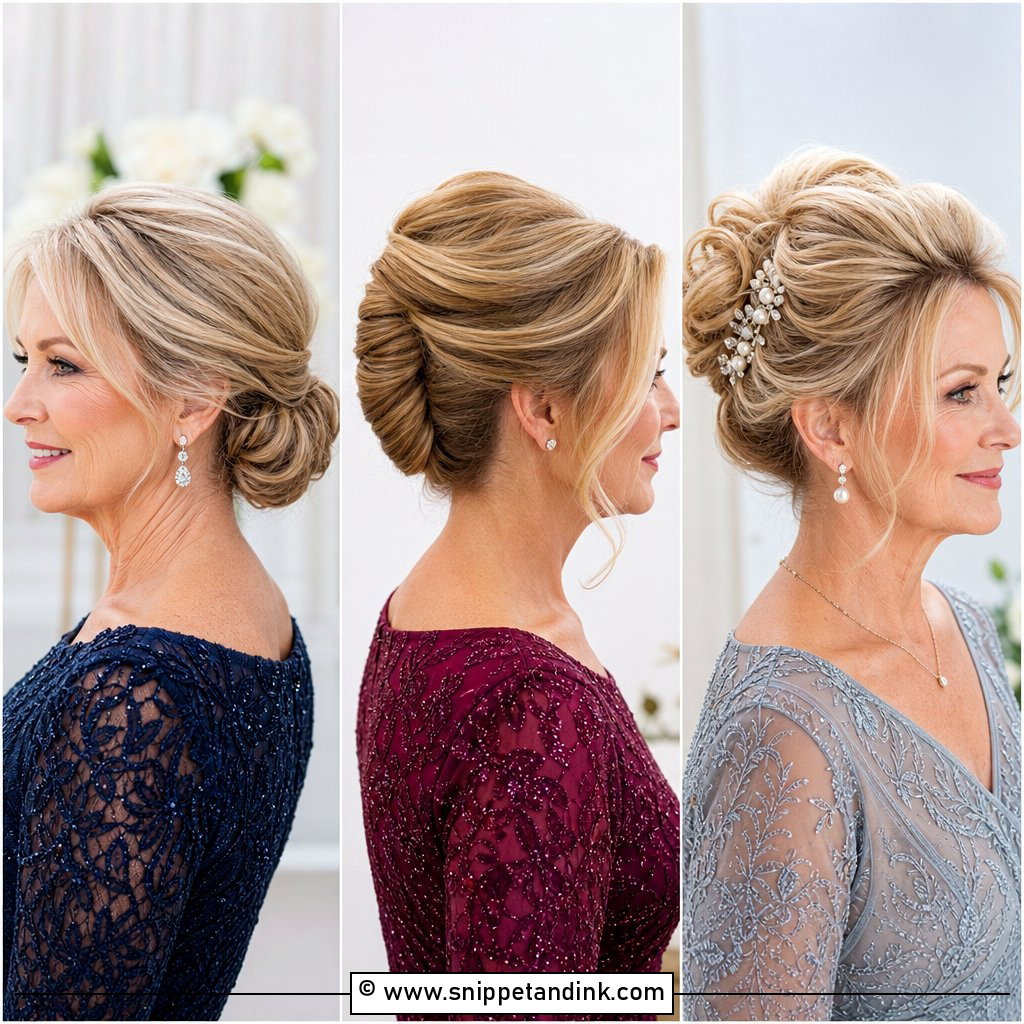
The French twist has lasted for decades because it’s clean and quick to wear. Hair is swept up and rolled into a vertical fold at the back of the head. The hold comes from a row of crisscrossed bobby pins along the center line before the roll goes over them, so the twist has something to lock onto. It needs medium to long hair, at least past the shoulders. I leave out one or two face-framing pieces for a softer version, or keep it sleek for black tie. A small jeweled pin at the top of the fold covers the spot where the roll ends.
2. Low Chignon Bun
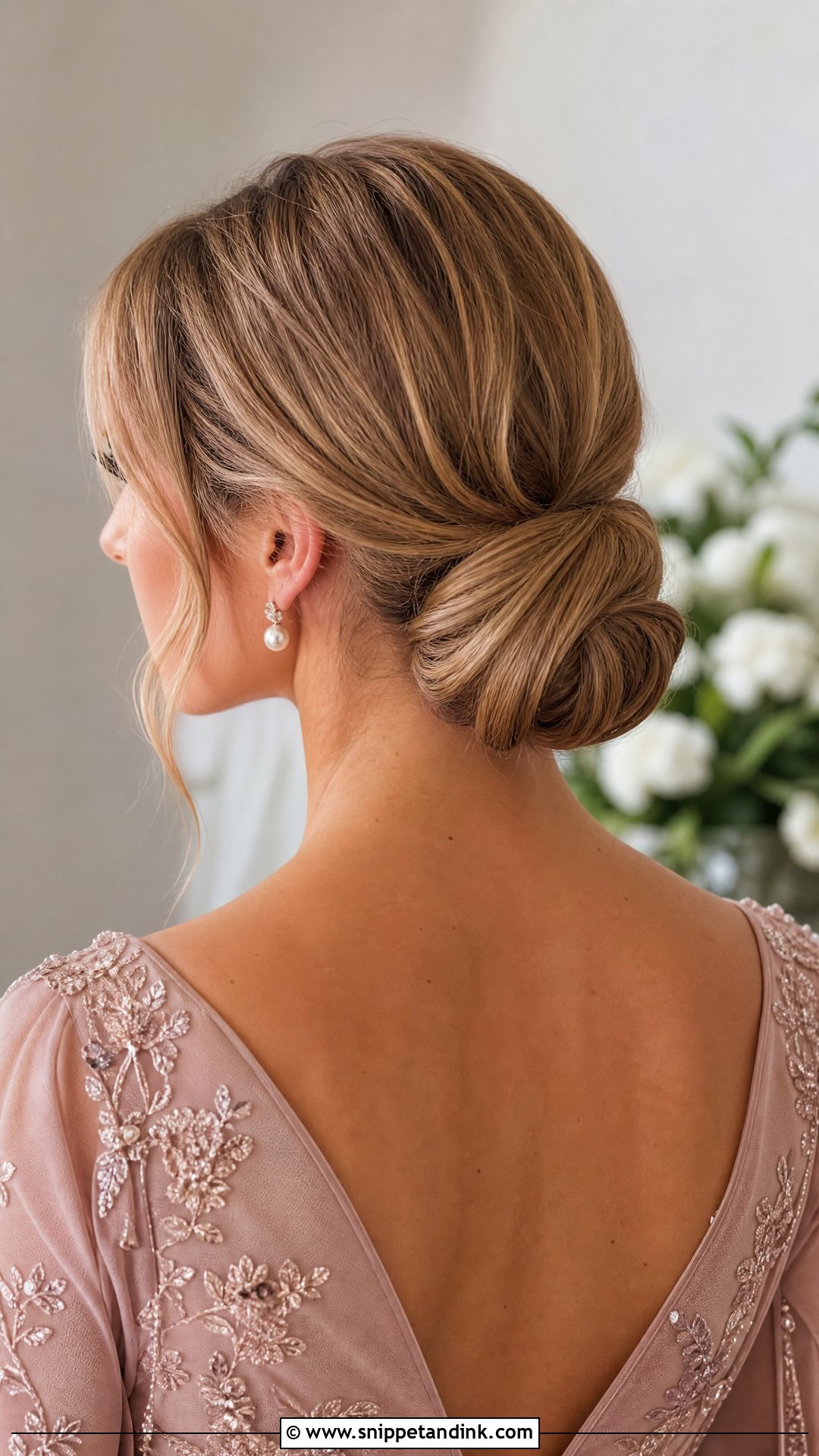
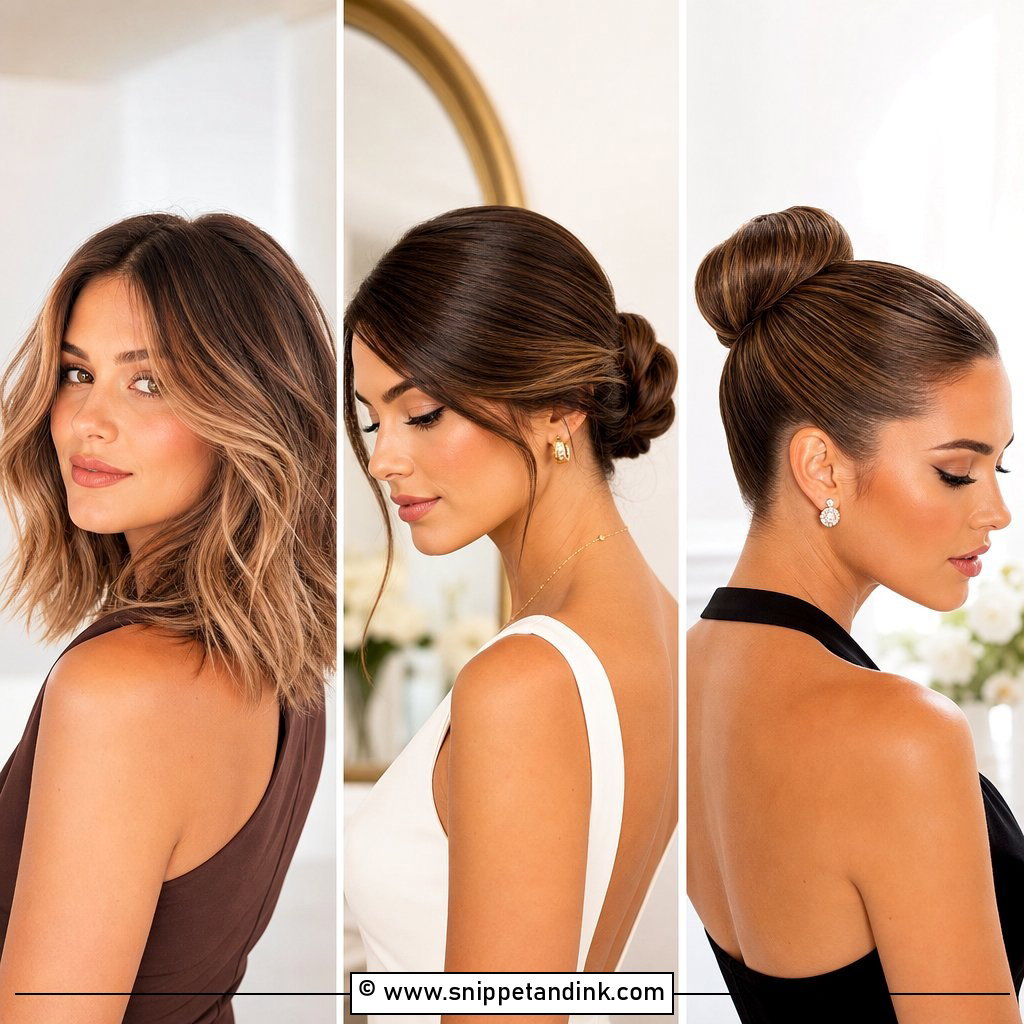
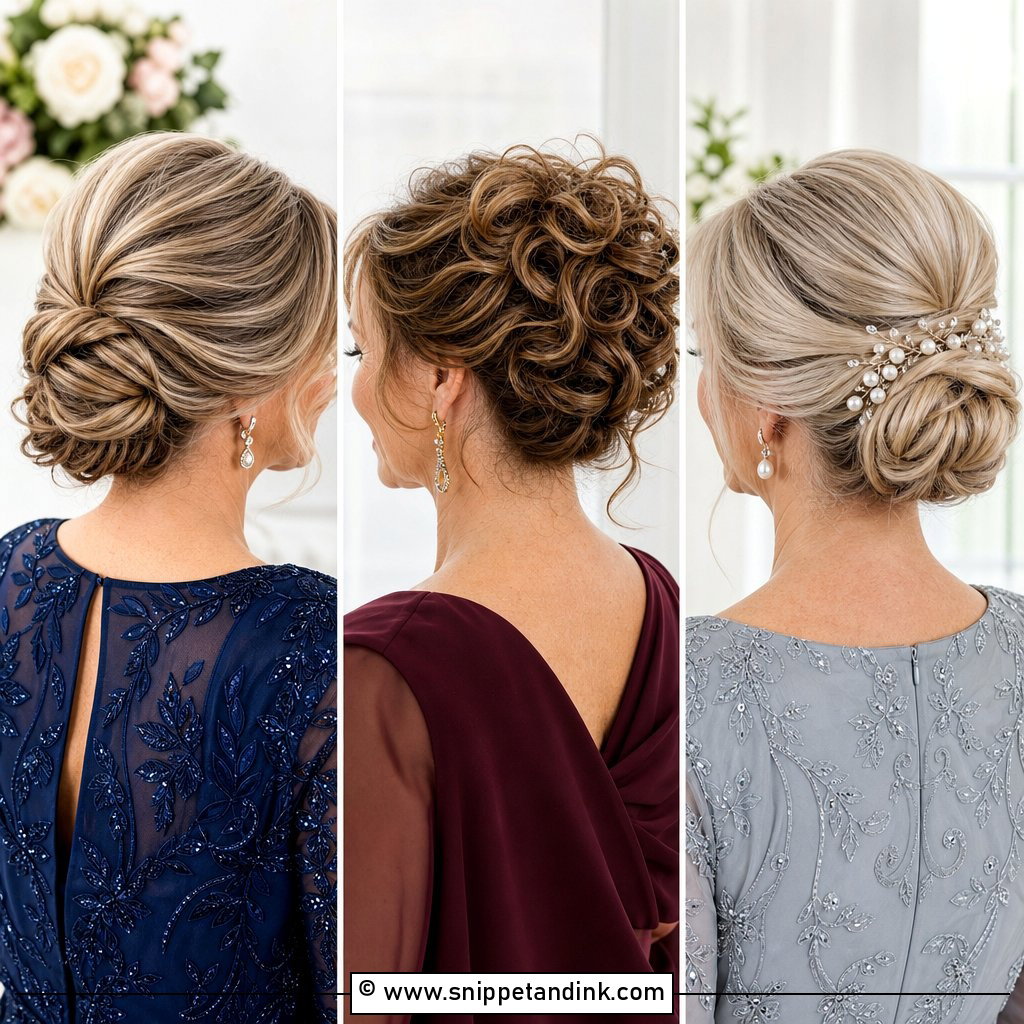
A low chignon sits at the nape and leaves the jawline, earrings and necklace all on show. It’s my go-to for mothers who don’t want height or volume. I gather the hair into a low ponytail first, then coil or loosely gather it and pin it flat against the head so it doesn’t stick out when you lean back in a chair. Pull a few strands loose at the temples if you want it softer. It’s worth thinking about the back view, too: during the ceremony, more guests see the back of your head than your face.
3. Braided Crown Updo
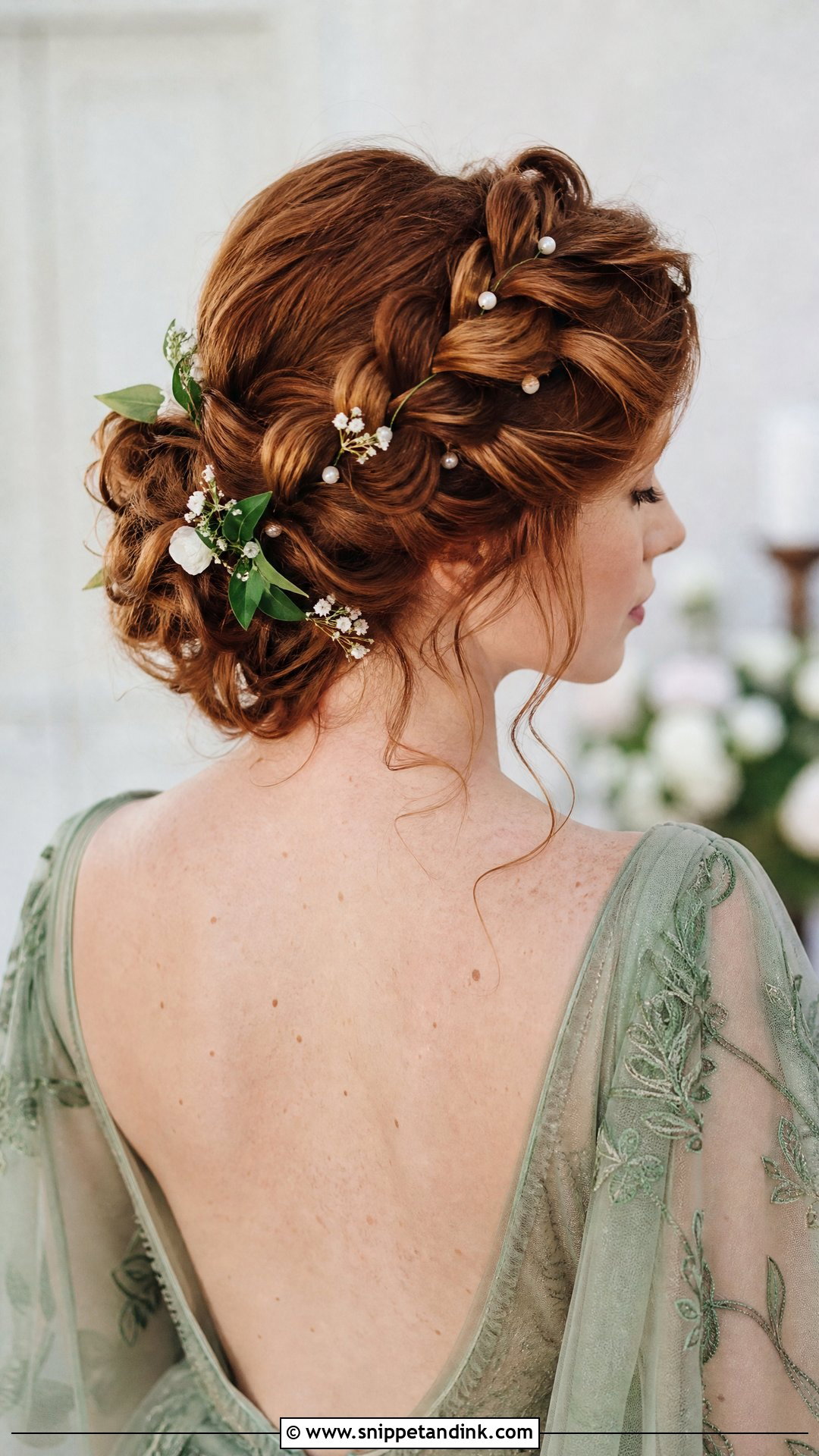
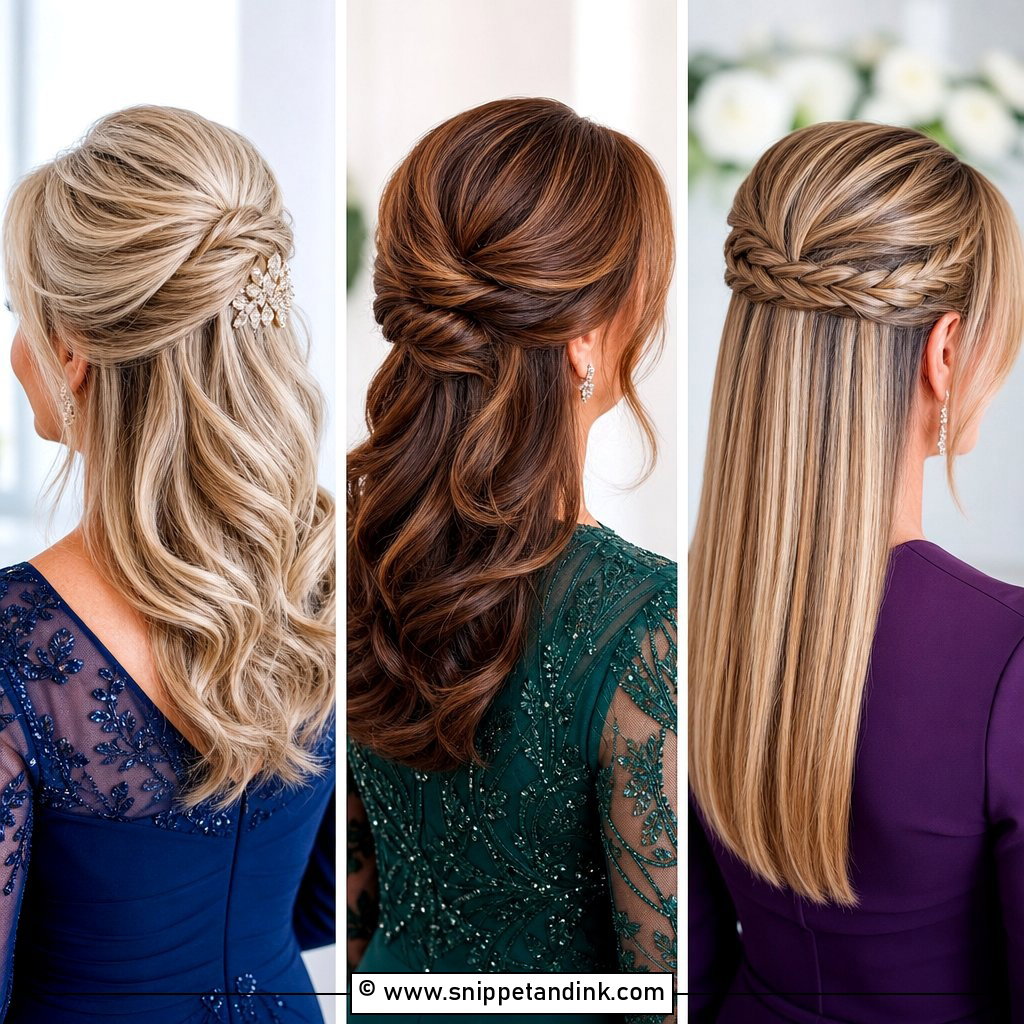
A braided crown wraps a braid around the head like a halo, then the ends are tucked and pinned out of sight. It needs hair at least past the shoulders to go all the way round; shorter hair can do a half crown pinned at the back. I pancake the braid, gently pulling each loop wider, so it looks fuller than the hair really is. Small flowers or pearl pins slot easily into the braid’s gaps. It keeps everything off your face and suits outdoor and garden weddings, though on very slippery hair I prep with texture spray first or it loosens by evening.
4. Twisted Updo for Fine Hair
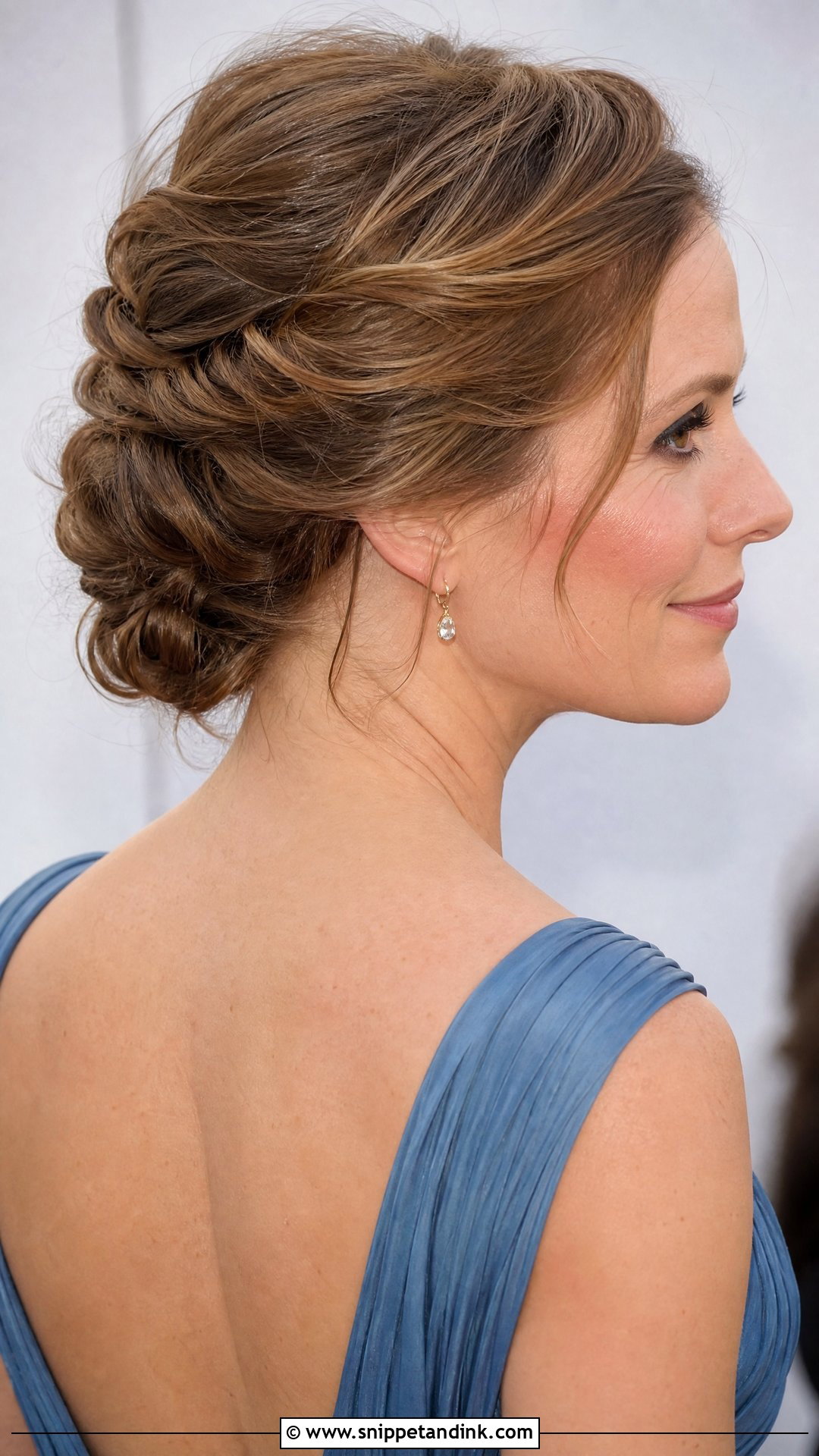
Fine or thin hair often looks flat in a classic bun, which is why I build updos for it out of twists instead. Each small twist adds visible texture, and pinning several together at the back gives the impression of more hair. Light backcombing at the roots before twisting gives the pins something to grip. I use a flexible-hold spray rather than a stiff one, because a crunchy finish on fine hair shows the scalp through it. Don’t let anyone talk you into a sleek style if your hair is very fine; texture is your friend here.
5. Curly Half-Up Updo
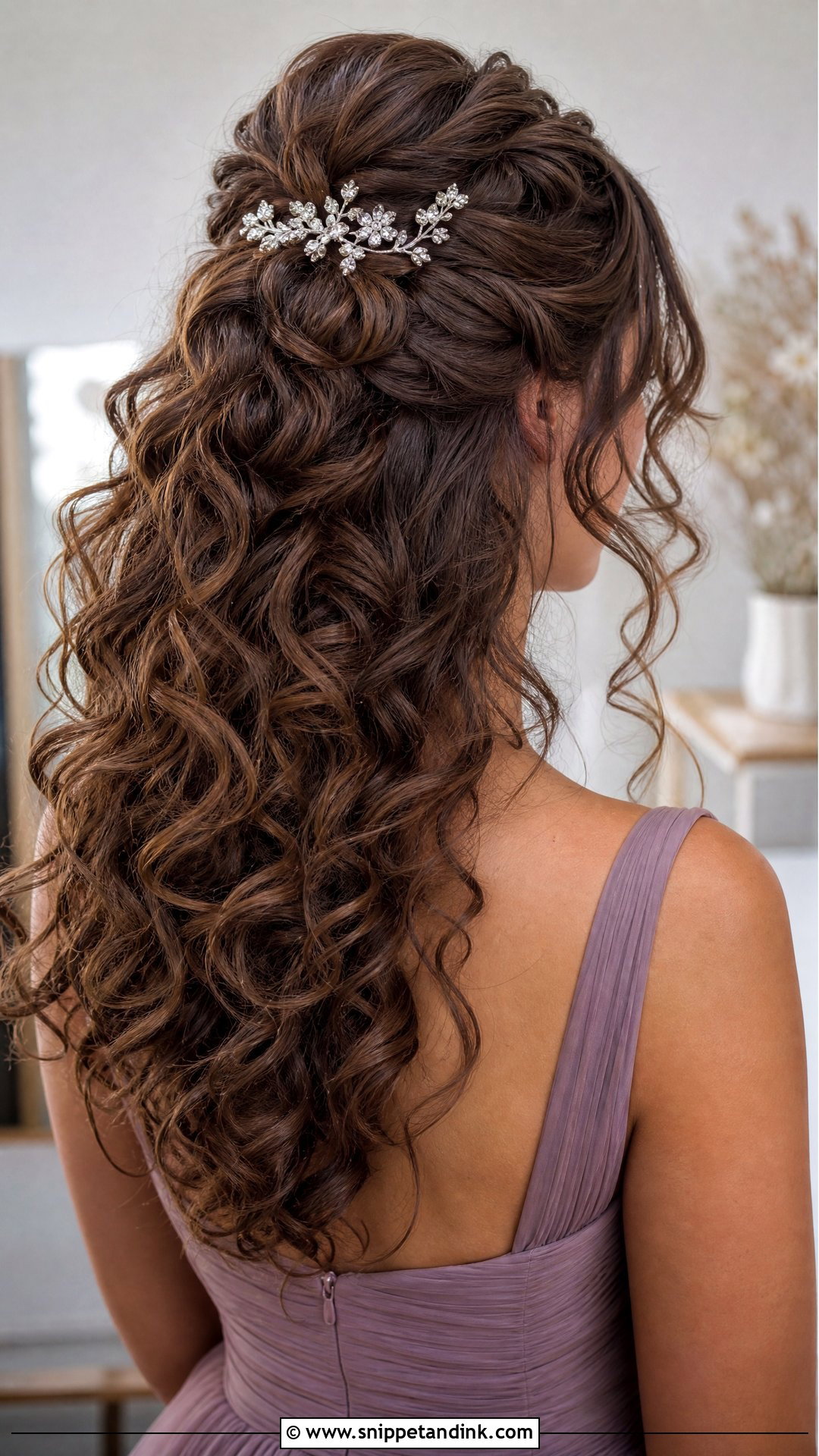
A half-up style is the middle ground for mothers who feel exposed with all their hair pulled back. The top section is gathered and secured at the crown while curls fall over the shoulders. The gathered part needs a solid base, so I make a small hidden ponytail or two crossed pins before adding a decorative comb, otherwise the comb slides out. Curl the lengths with a wand and let them cool before separating. It works best on medium to long hair; on humid days the loose curls are what drops first, so set them well.
6. Sleek Bun with Side Part
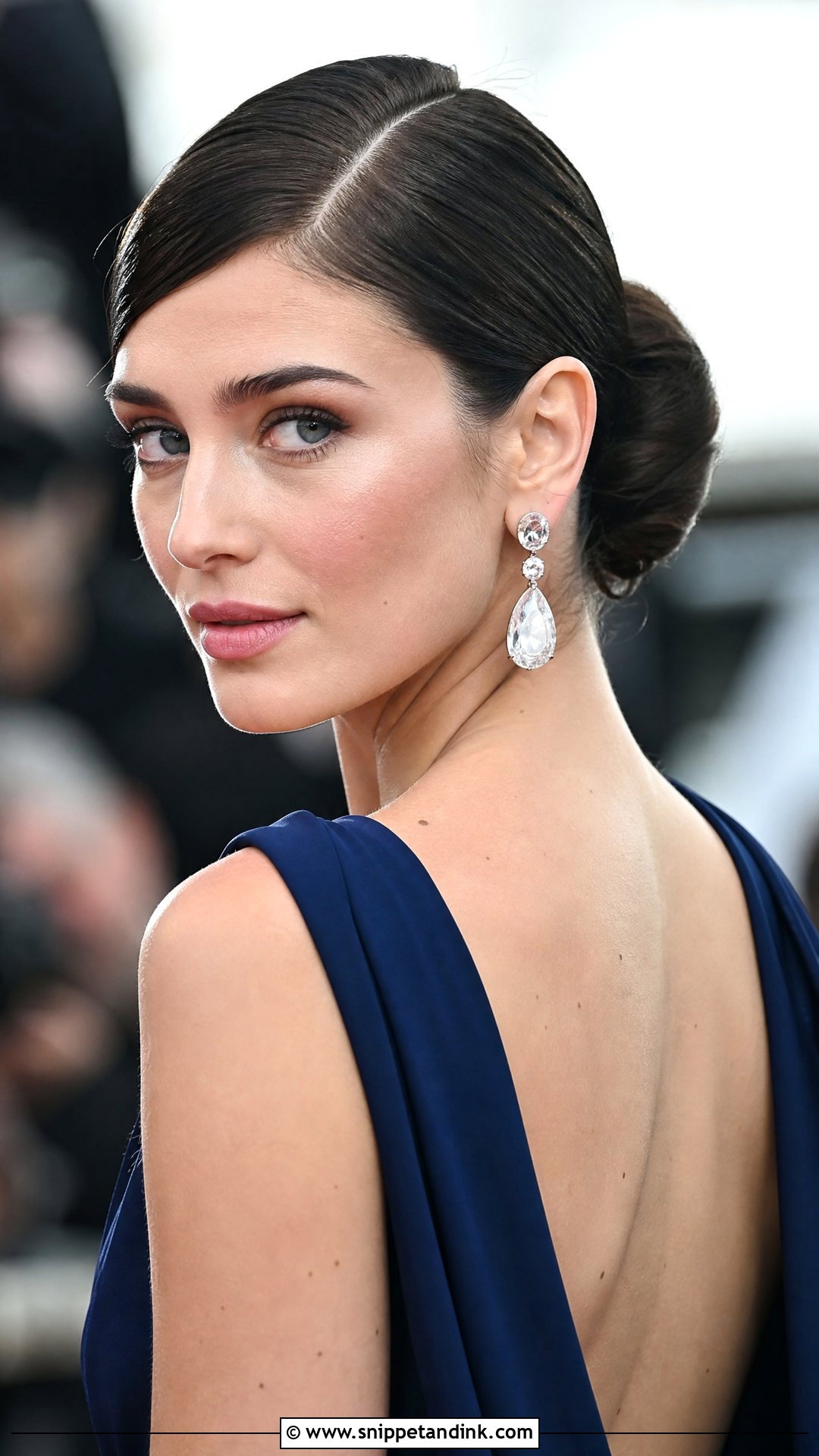
A sleek bun with a deep side part looks modern and very finished, and it’s unforgiving of flyaways. I smooth the hair back with a boar bristle brush and a little smoothing cream, secure a tight elastic, then wrap and pin the bun. The side part softens the face and suits formal weddings with bold earrings. Mothers with a lot of new growth or breakage around the hairline should know it shows every short hair, so a light flyaway stick is essential.
7. Loose Romantic Updo
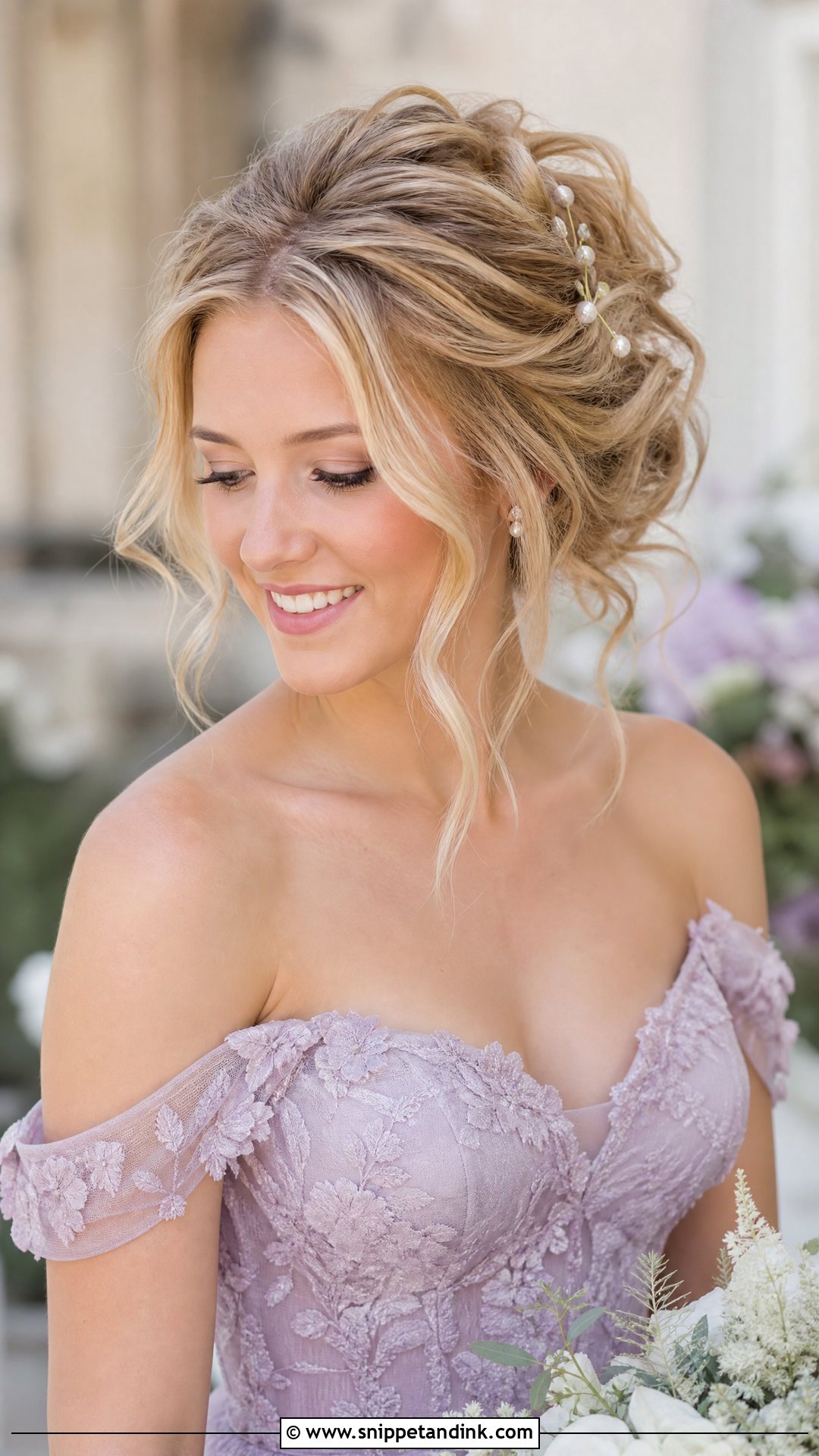
Loose updos look relaxed but take more skill than a tight bun, because there’s less tension holding them. I curl the hair first to give it grip, then gather it loosely and pin each section individually so nothing relies on a single elastic. A few pieces left out and curled soften the face. It suits garden, beach and outdoor weddings, and comes off best in natural light. Very silky, straight hair struggles to stay loose and secure at once, so I add texture spray to it before I start.
8. Pinned Curls Updo
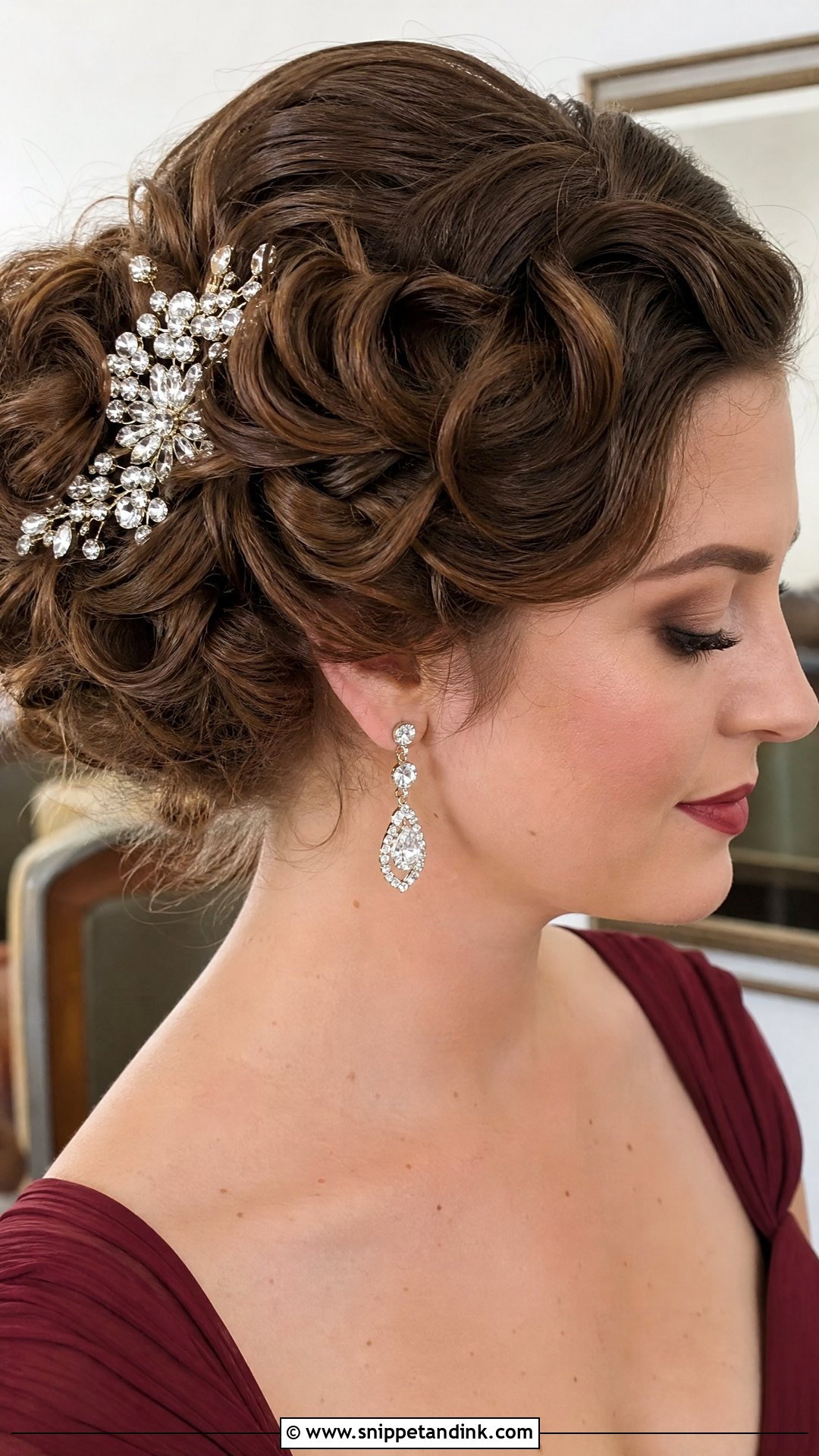
Pinned curls give a vintage, old Hollywood finish. The hair is curled in small sections, and each curl is arranged and pinned into a swirl at the back of the head. This is the updo where pin placement matters most: every curl gets its own pins, hidden inside the loop, so nothing pulls loose when you hug someone. Medium-length hair suits it best. A sparkly hairpiece at the side catches the light in photos, and a light hairspray holds the curls without making them crunchy.
9. Twisted Low Bun
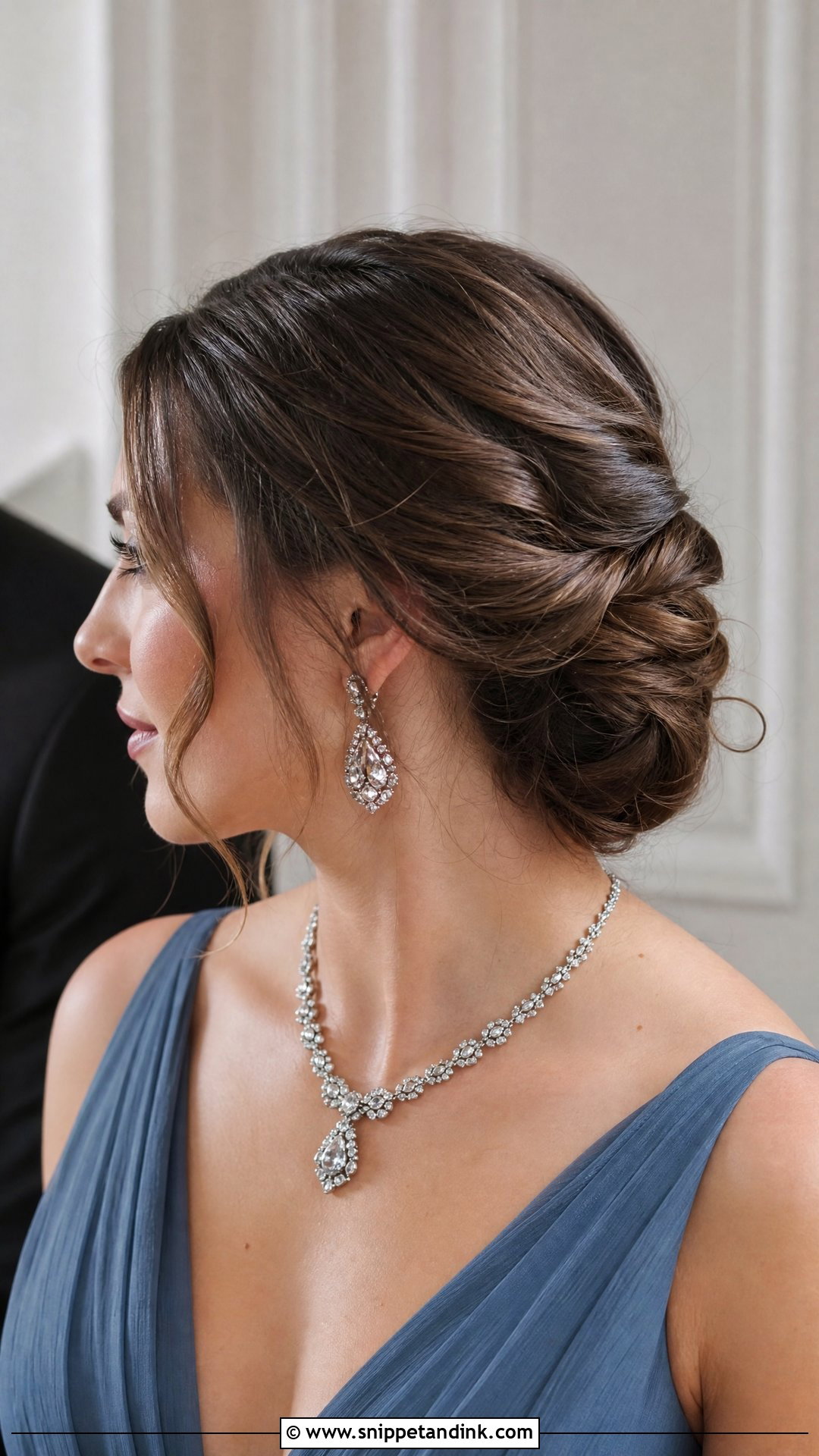
Twisting the hair into sections before gathering it adds texture to an otherwise plain low bun. I work in two to four twists, depending on thickness, then wrap them together at the nape and pin. It works on most lengths and textures, which makes it a dependable fallback when a trial of something else hasn’t held. Loose pieces at the temples soften it. The low placement means it won’t snag on a high-backed chair at dinner.
10. Updo with Side-Swept Bangs
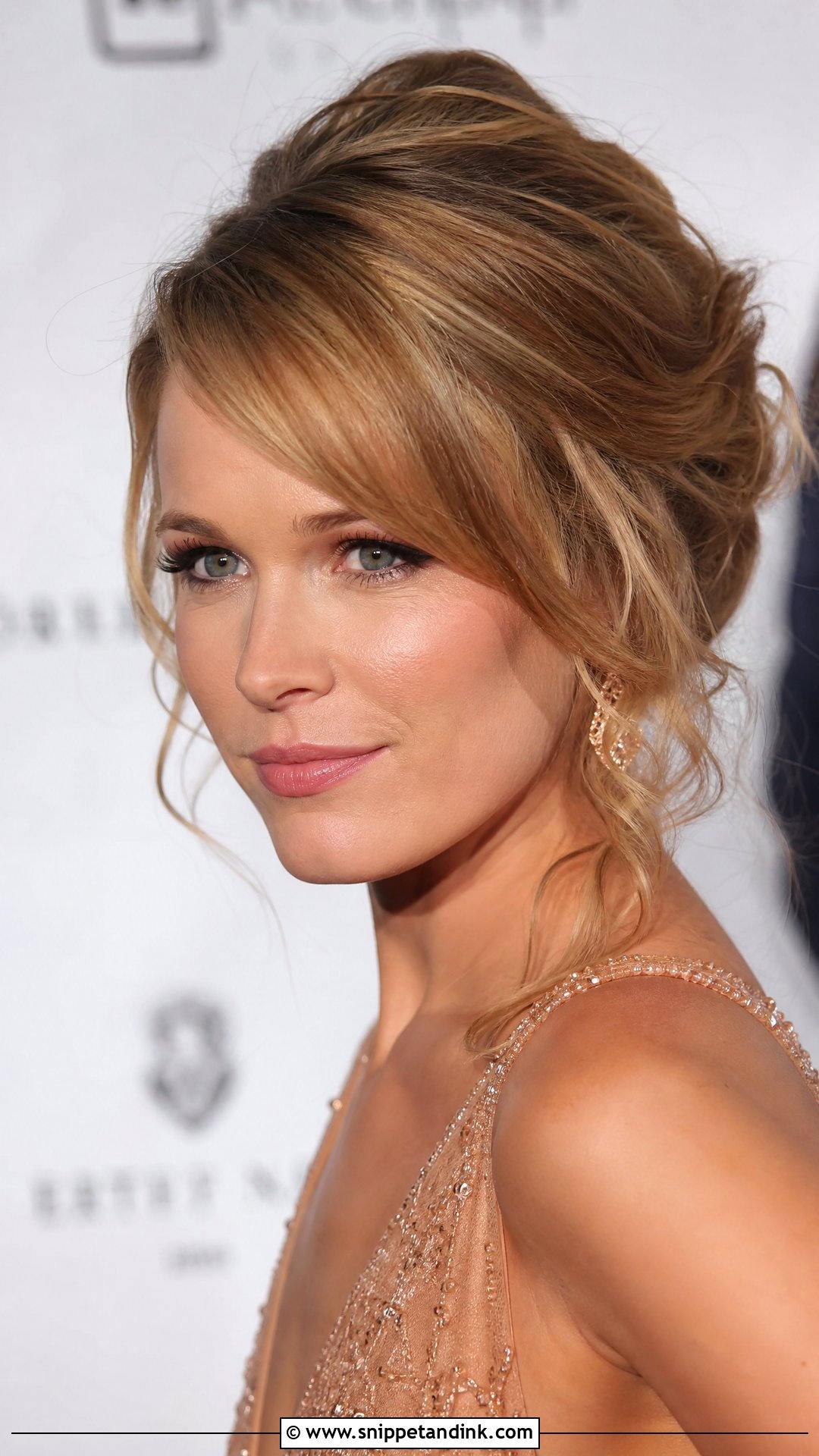
If you already wear bangs or face-framing layers, don’t pin them back for the wedding just because the rest goes up. An updo with side-swept pieces keeps the face you’re used to seeing. I gather the bulk of the hair up and back, then sweep the bangs to one side with a little curl so they blend into the updo rather than sitting flat on the forehead. Pinning bangs off a face that always wears them often makes the forehead look larger in photos.
11. Elegant Rolled Updo
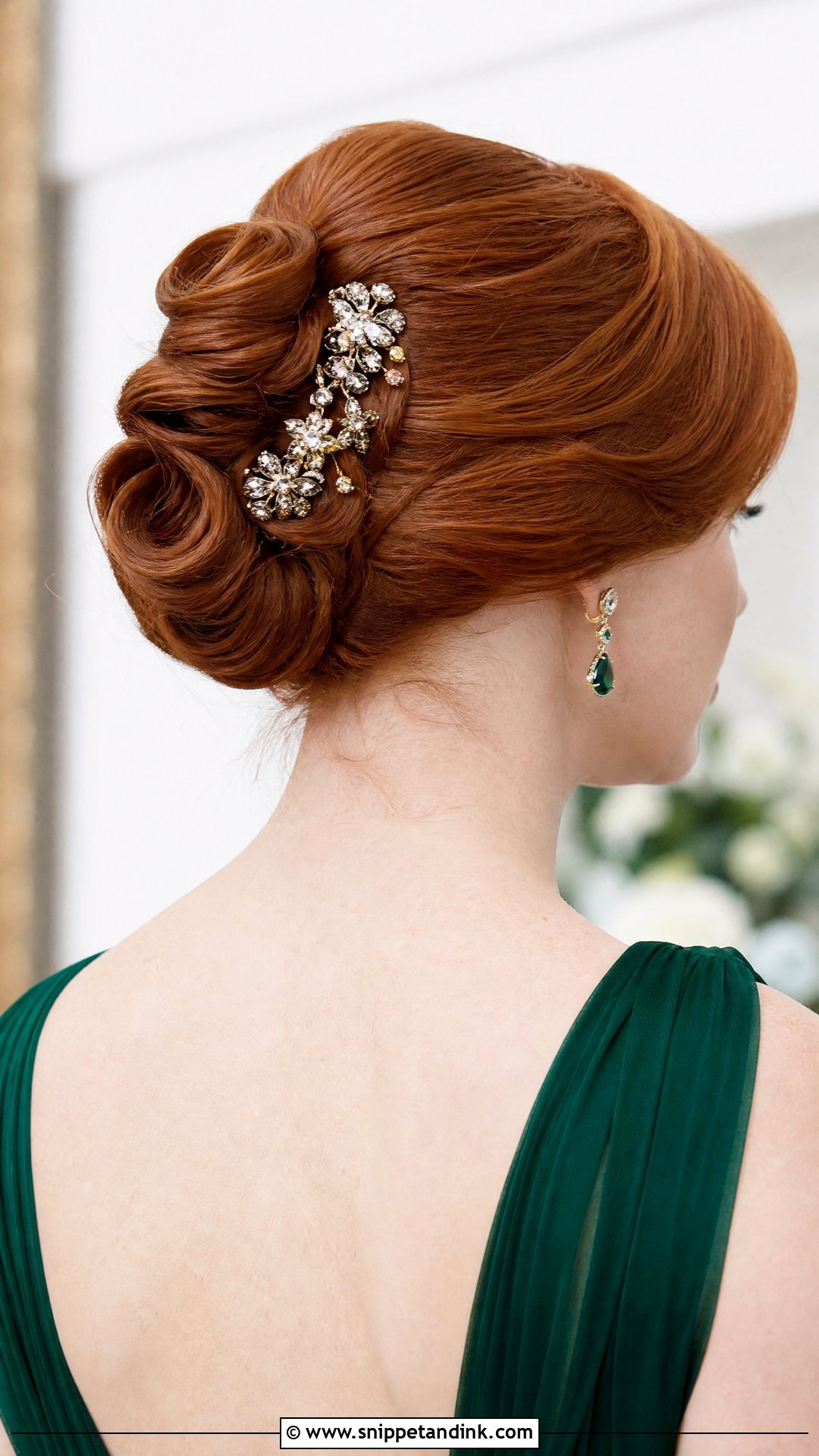
A rolled updo has a sculptural, vintage shape built from sections of hair rolled and pinned close to the head. It needs medium to long hair with enough length to roll. Each roll is anchored underneath with a pin crossed into the base, so the shape holds well all day. It suits formal weddings and structured gowns. I’d steer away from it for a relaxed outdoor wedding, where it can look a little stiff next to the setting. A decorative comb at one side breaks up the smoothness.
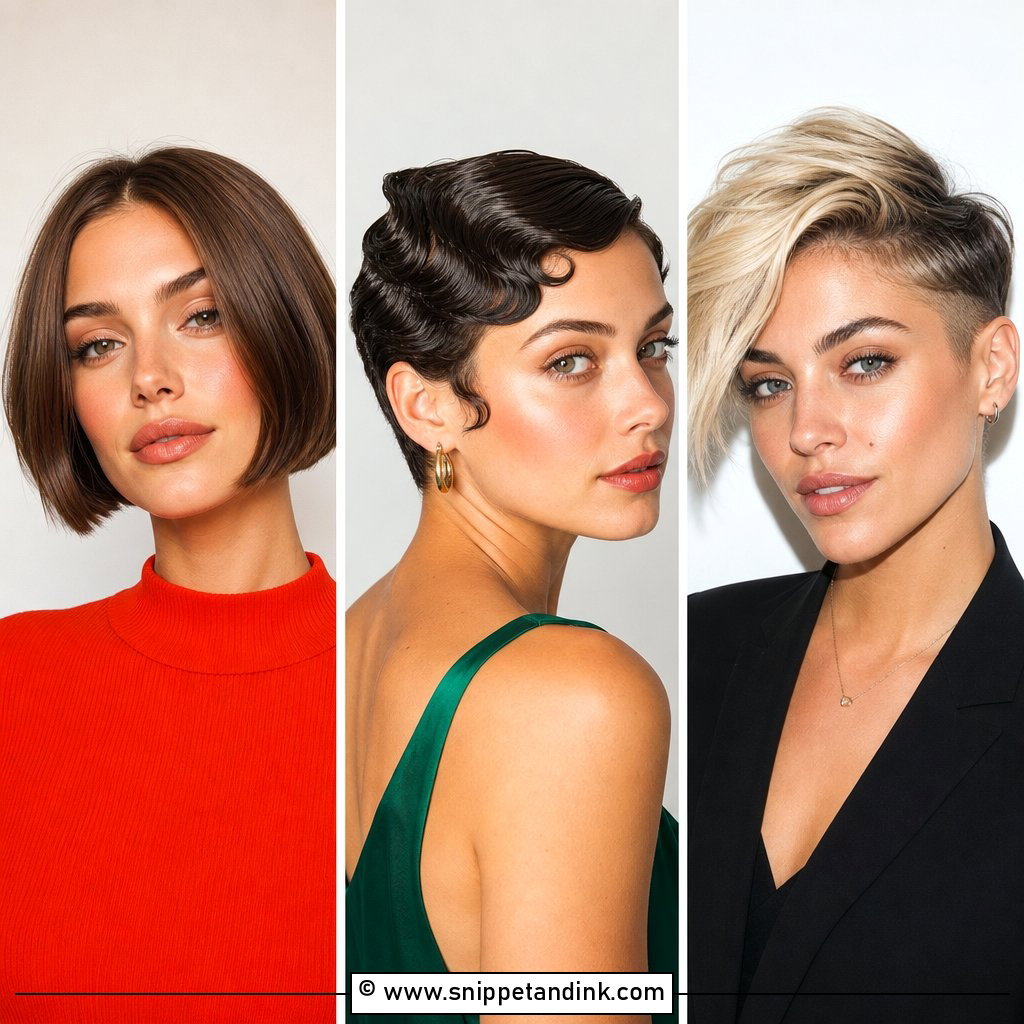
12. Soft Updo for Short Hair
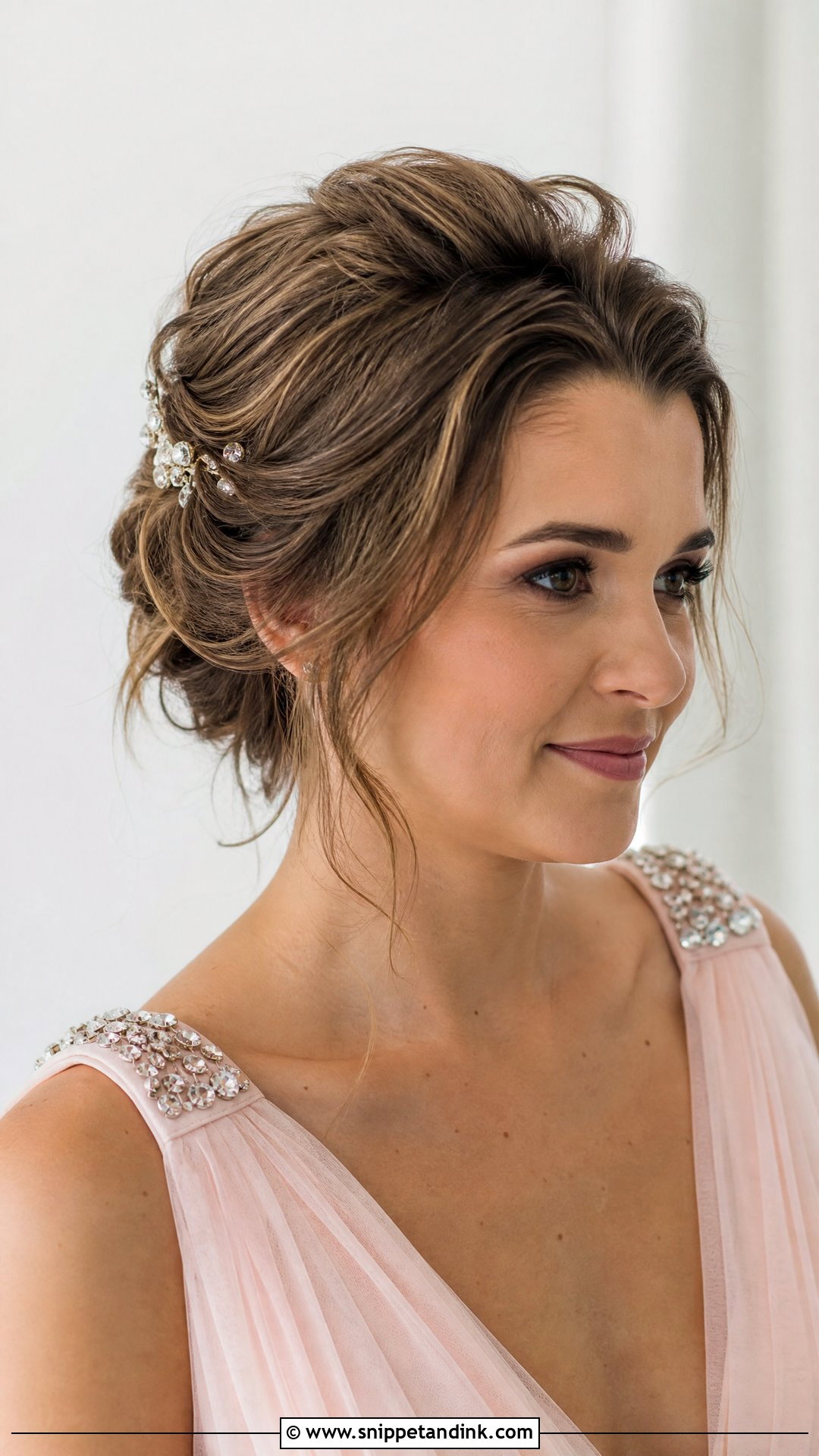
Short hair can go up too, as long as you’re realistic about the shape. I pin and twist the available length into small sections toward the back, lift the crown with a little backcombing, and use small pins that disappear in short hair. Chin-length bobs work; anything shorter than the ears usually doesn’t, and the result looks forced. A few wispy pieces left out keep it soft, and a sparkling hair accessory placed over the busiest pin area hides it well.
13. Braided Bun Updo
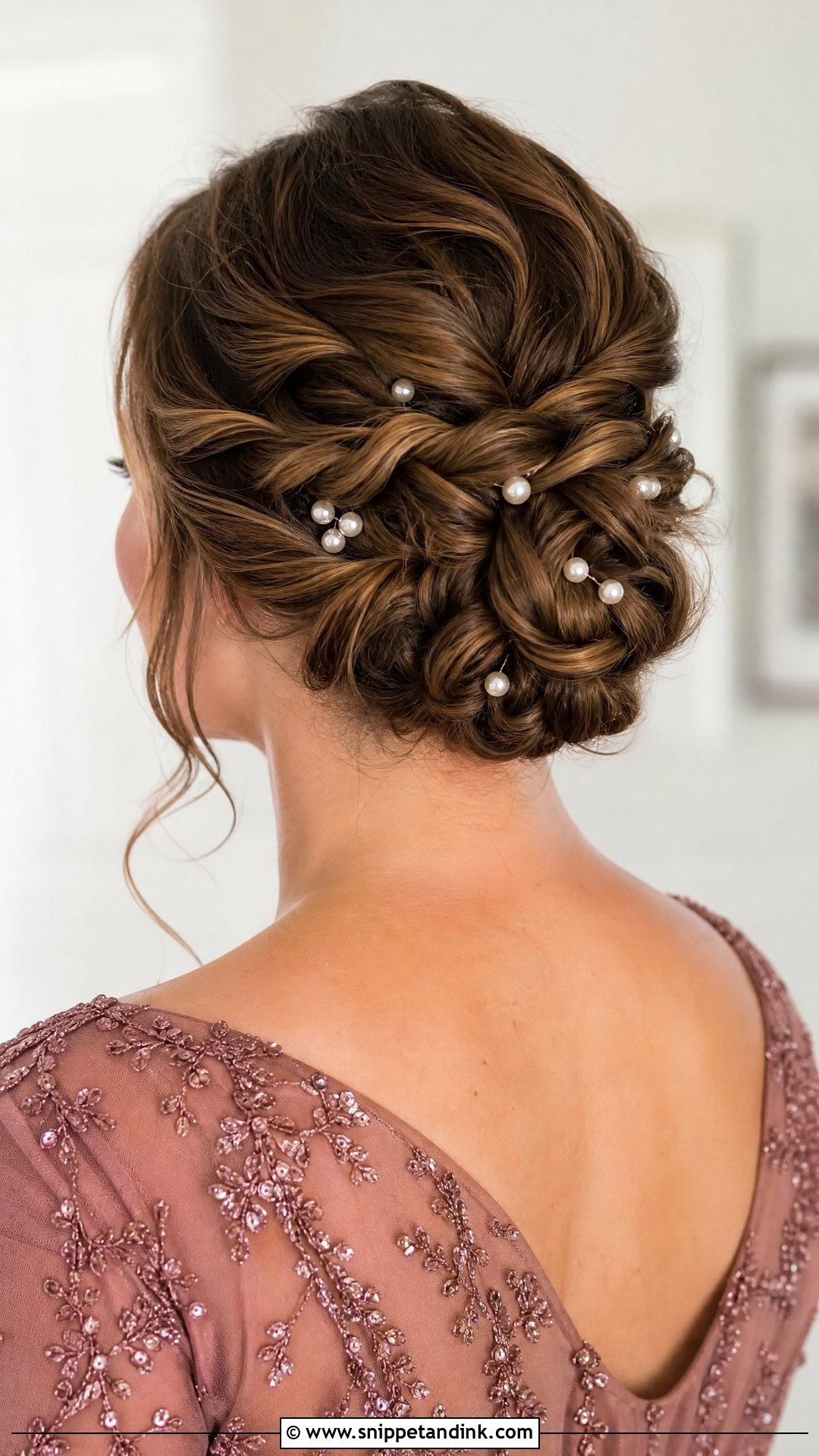
A braided bun coils a braid into a bun shape and pins it in place. It adds texture that a plain bun lacks, and it’s sturdy, because the braid itself holds the hair together before a single pin goes in. Set low it looks formal, higher it feels younger. It needs medium to long hair. Small pearls or flowers tuck easily between the braid’s loops. Coarse or very thick hair can make a big, heavy coil, so I sometimes thin out the braid by using only part of the length.
14. Updo with Face-Framing Tendrils
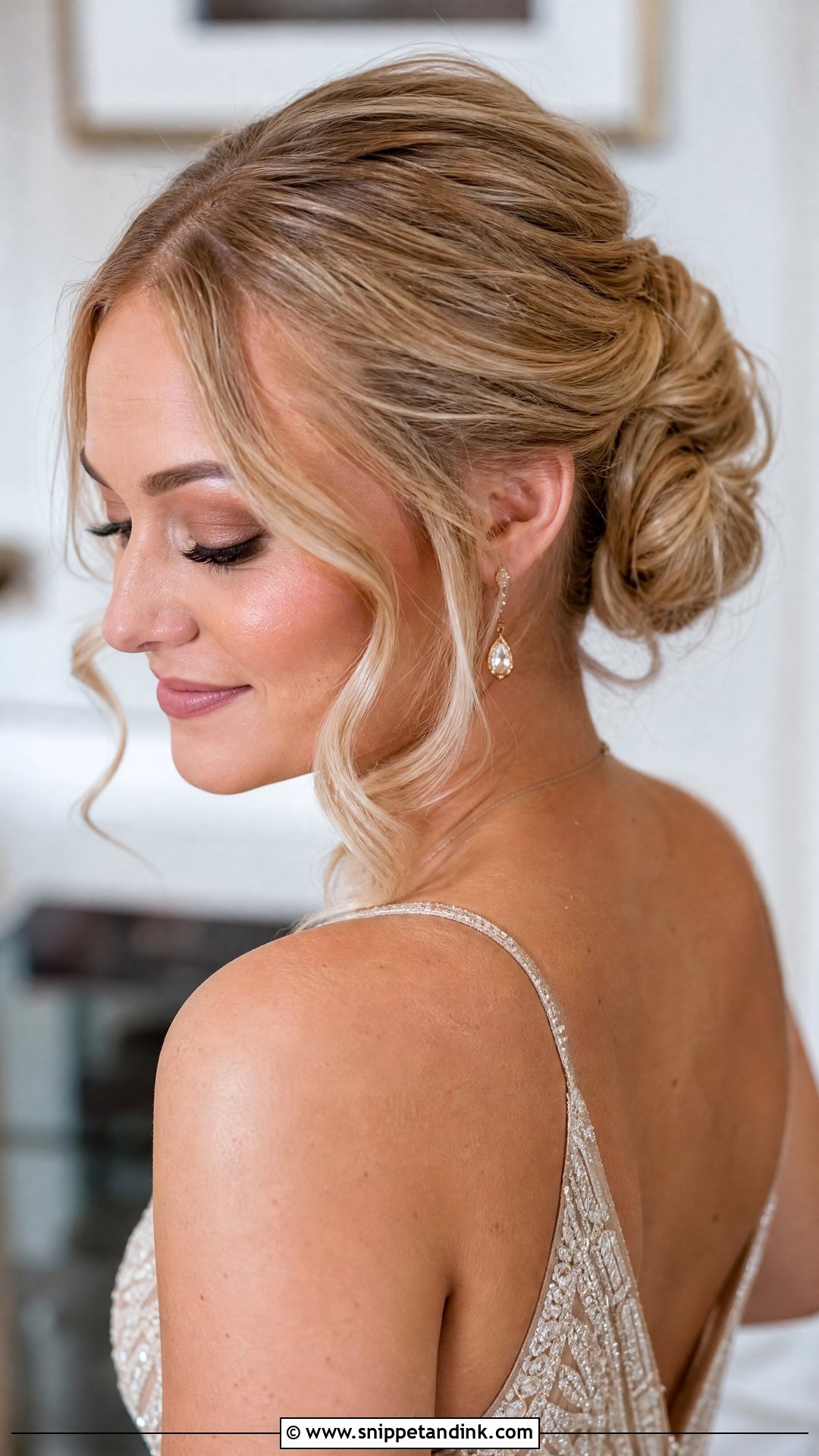
Soft tendrils loosen up any updo. The hair is swept into a bun or twist, then a few fine strands are left out at the front and curled. The usual mistake is leaving them too thick; chunky pieces look like they fell out by accident, while thin, curled tendrils look intentional. Curl them with a small barrel and spray lightly, because tendrils are the first part of an updo to go limp in humidity.
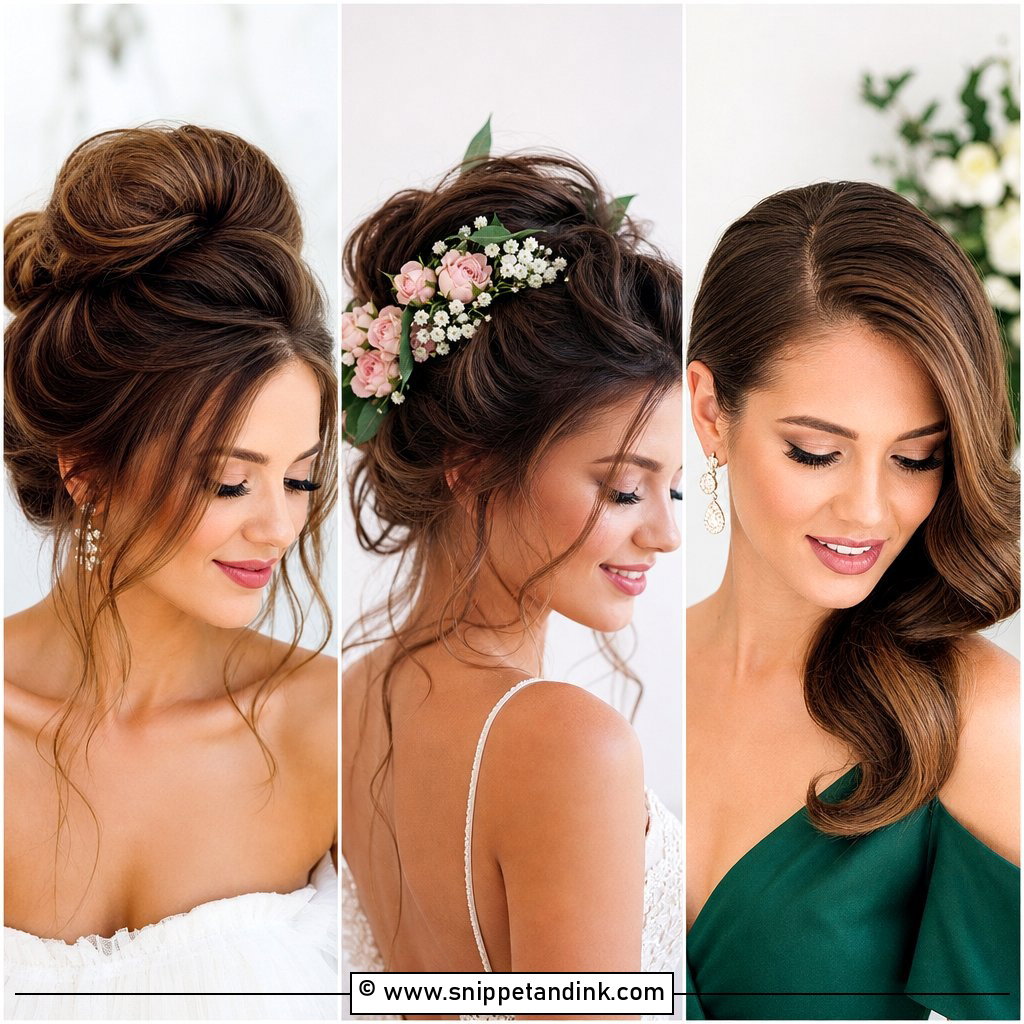
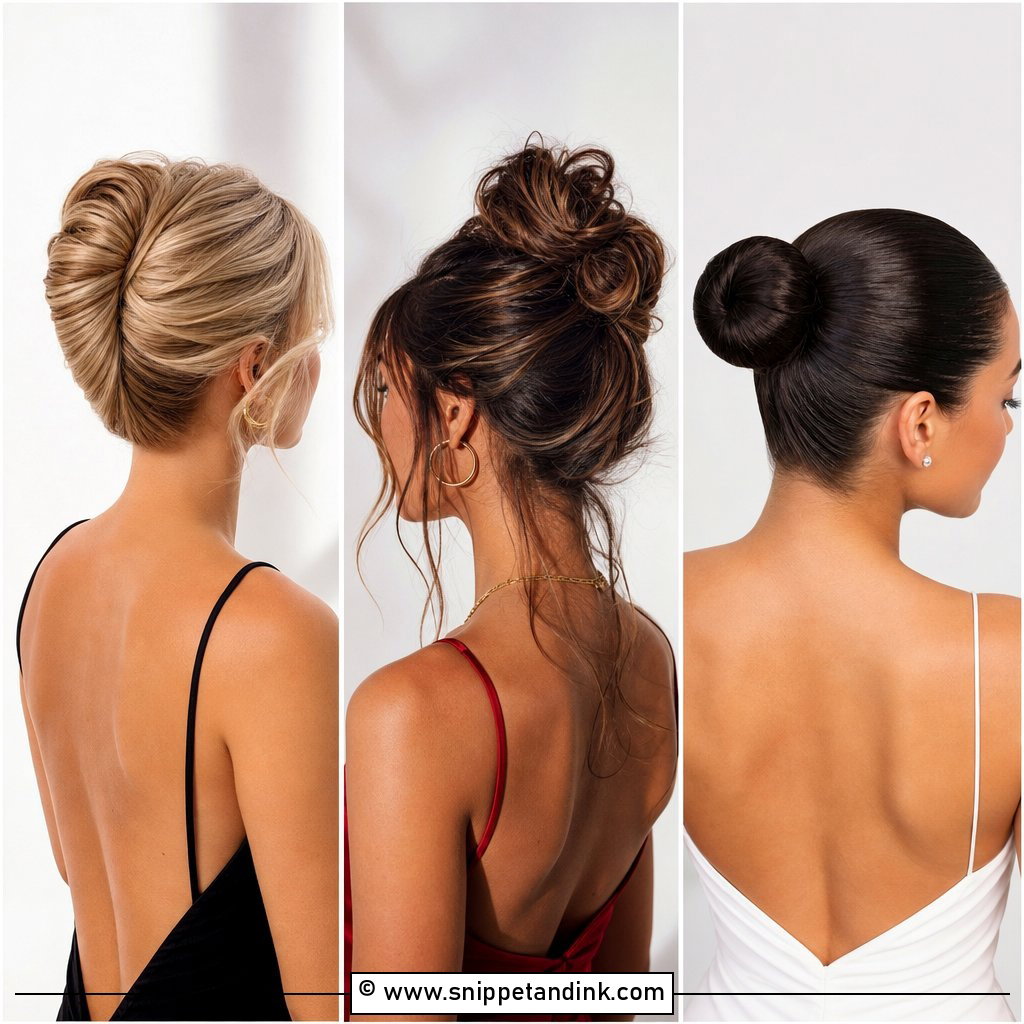
15. High Bun with Volume
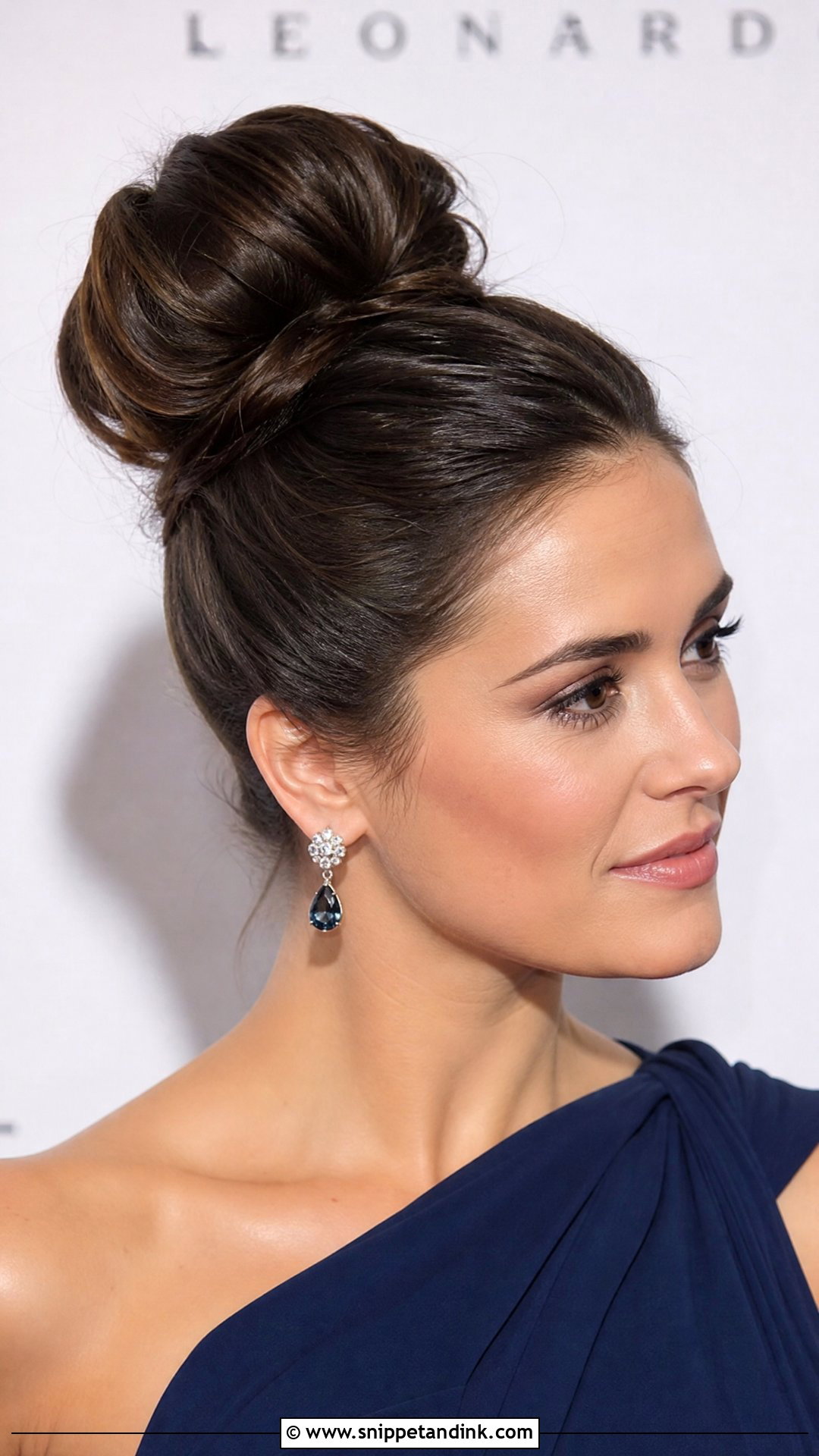
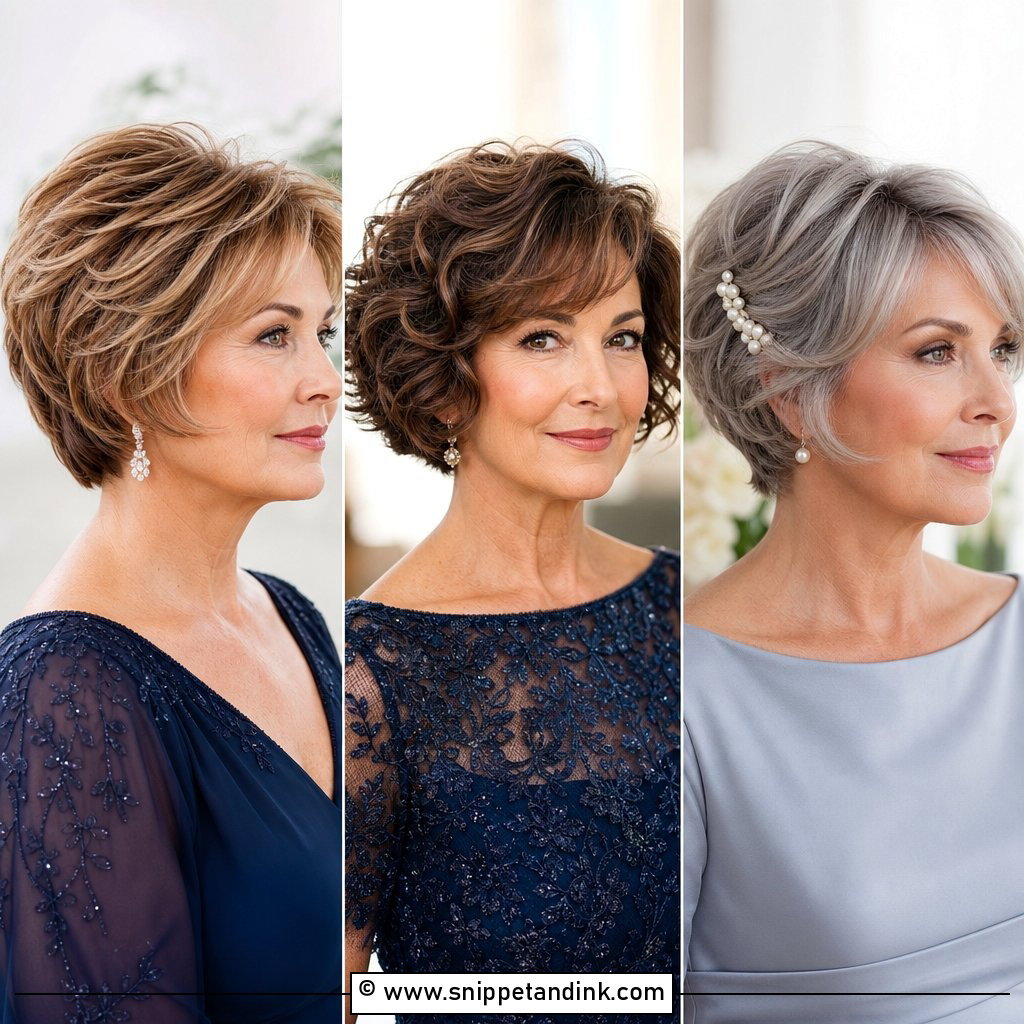
A high bun adds height and lengthens the neck, which makes it a confident, statement updo. I build volume at the crown with backcombing and smooth the top layer over it, then secure the bun with pins driven into the base of the ponytail rather than just the bun itself. A high bun is heavier on the scalp and can pull on a sensitive head, so do a trial and wear it for a few hours. Pair it with statement earrings and open necklines.
16. Twisted Side Updo
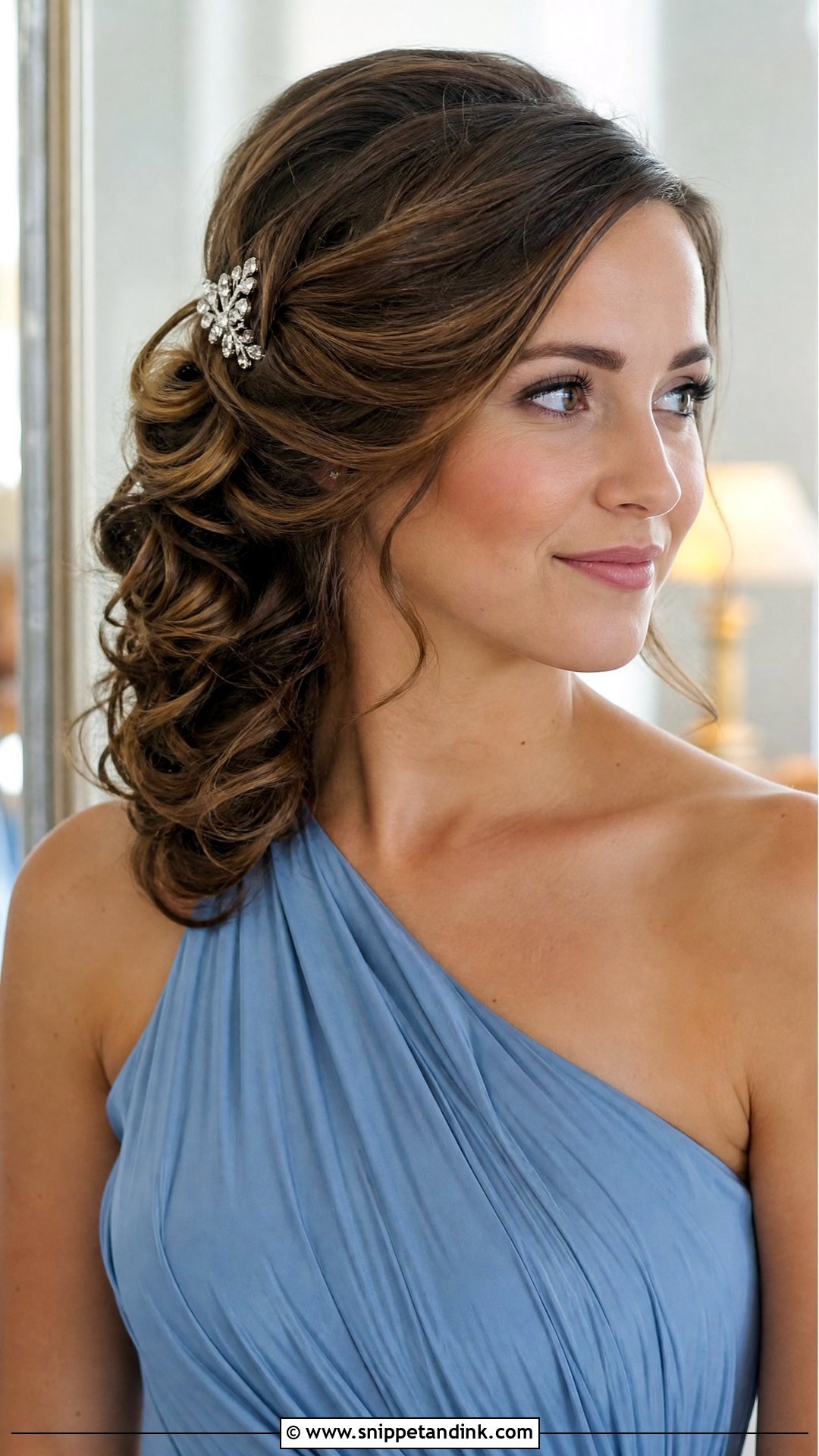
Pinning the hair to one side gives an asymmetric shape that suits off-shoulder or one-shoulder gowns. I twist the hair toward one side and pin it into a low bun or a cluster of curls just behind the ear. Check which side you’ll be photographed from most during the ceremony; the bun usually looks best facing the guests. Leave a few pieces loose on the opposite side for balance. A sparkling clip at the edge of the bun finishes it.
17. Classic Bouffant Updo
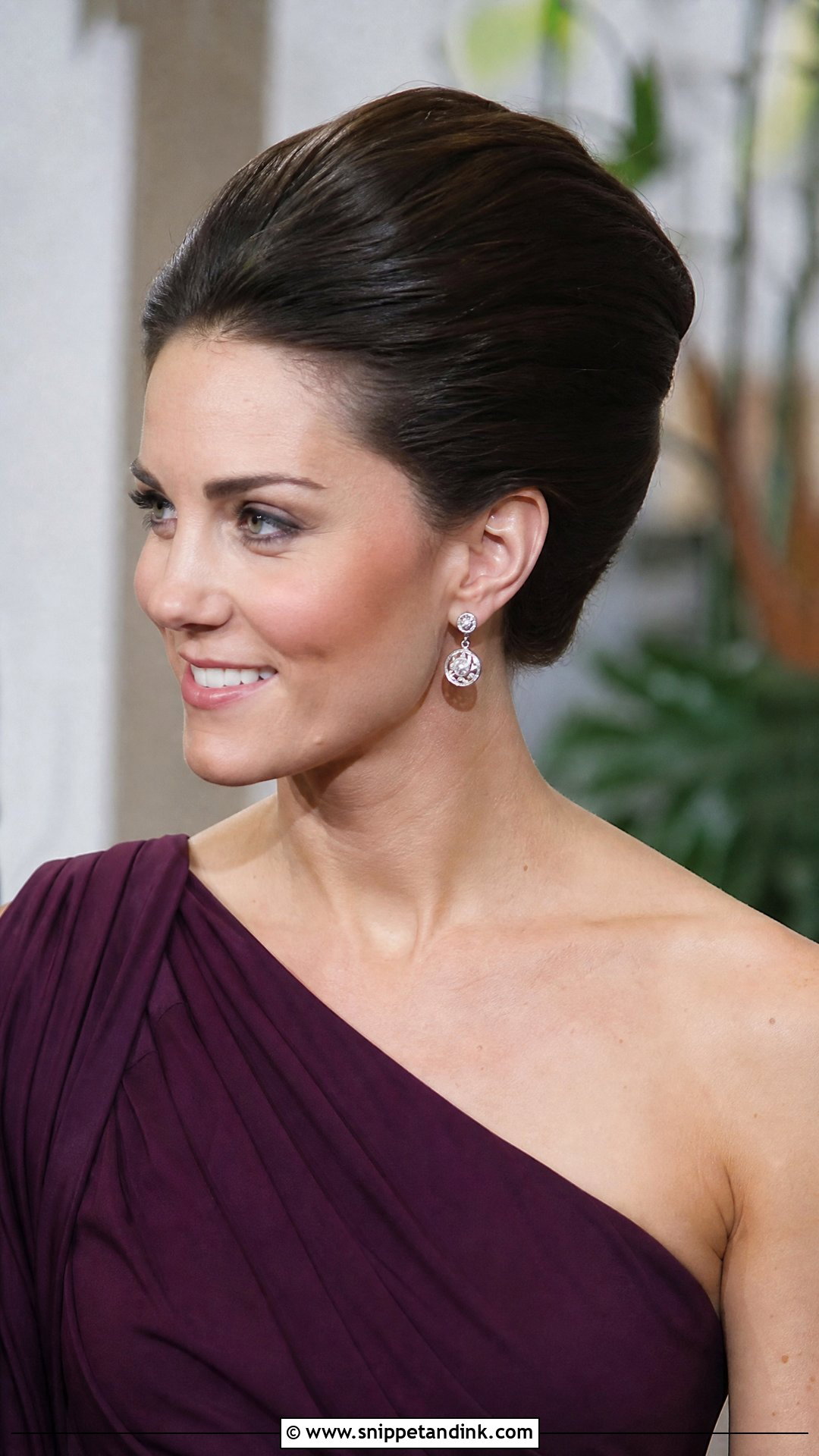
The bouffant updo adds height at the crown with gentle teasing smoothed over with a brush, then the length is gathered into a bun or twist behind. It suits mothers who like a vintage finish and works well with a classic gown and statement earrings. Too much height can look dated, so I keep the lift to about two finger-widths. The teased base needs a firm hairspray underneath and a lighter one on top, so the surface stays smooth and soft to the touch.
18. Low Twisted Knot
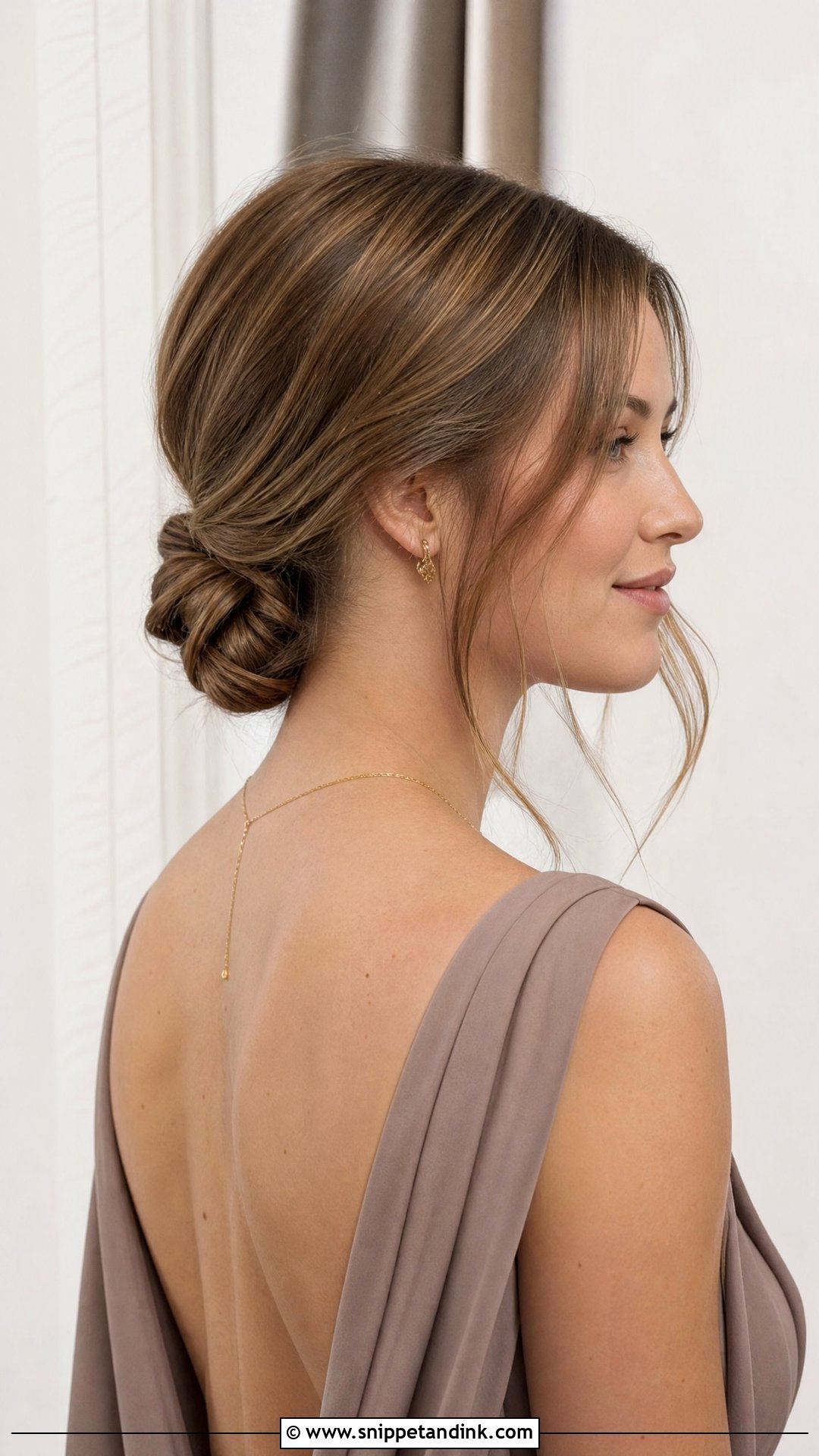
Twisted and looped into a soft knot at the nape, this is the most understated updo on the list. It suits mothers who prefer subtlety and have straight or wavy hair of medium to long length. I tie the knot loosely, then pin through the center so it doesn’t unravel. A few soft pieces frame the face. It stays comfortable all day because the weight sits low and spread out, rather than pulling on one spot.
19. Romantic Updo with Flowers
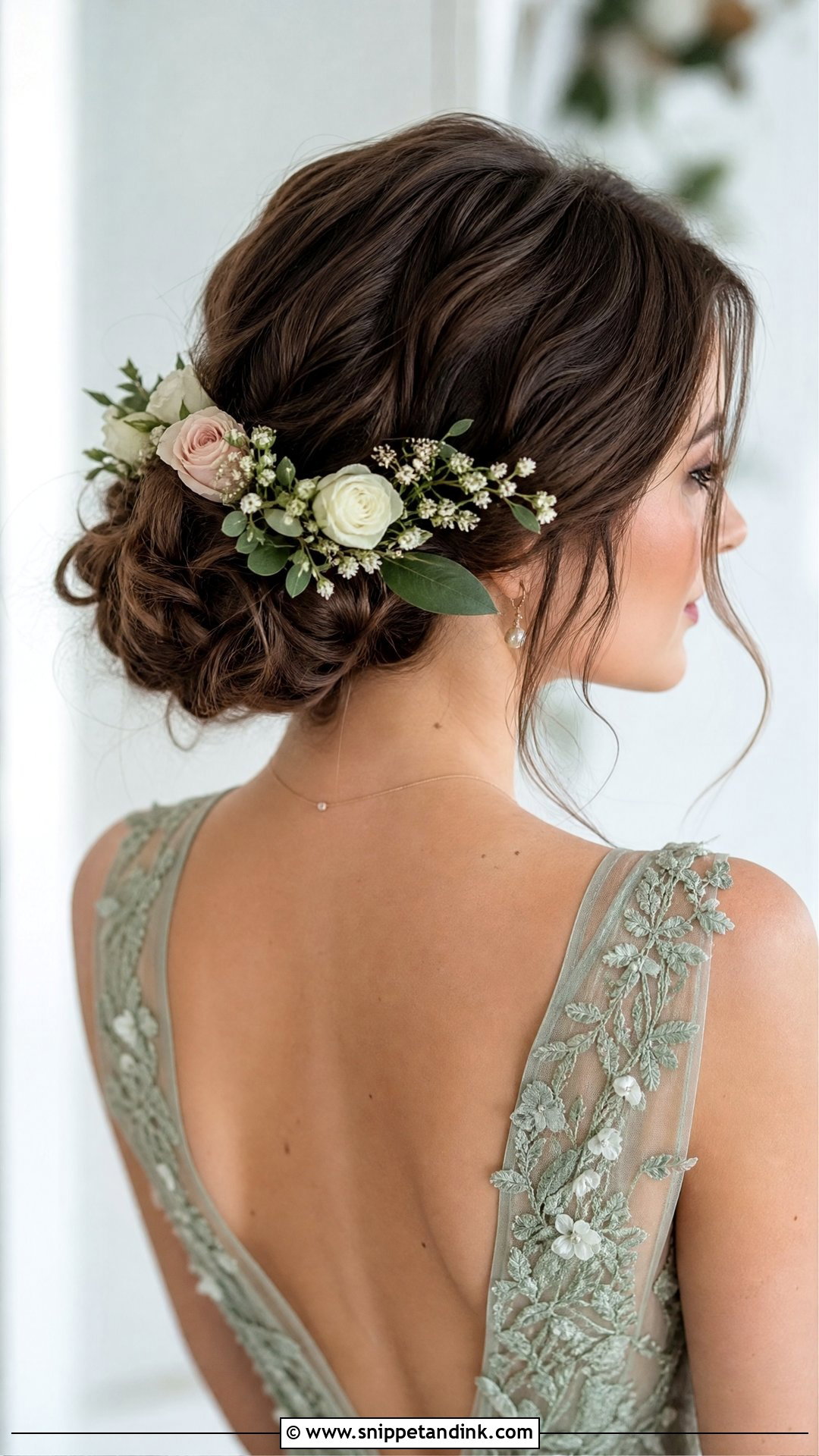
Fresh or faux flowers in an updo suit spring, garden and outdoor weddings. The hair goes into a bun or twist first, then is accented with small blooms tucked into the gaps. Fresh flowers wilt and can stain light hair, so I ask the florist for small, sturdy blooms, wired and taped, and pin them on last. Match the palette to the bouquet, and keep the flowers to one side or a loose cluster rather than spreading them all over.
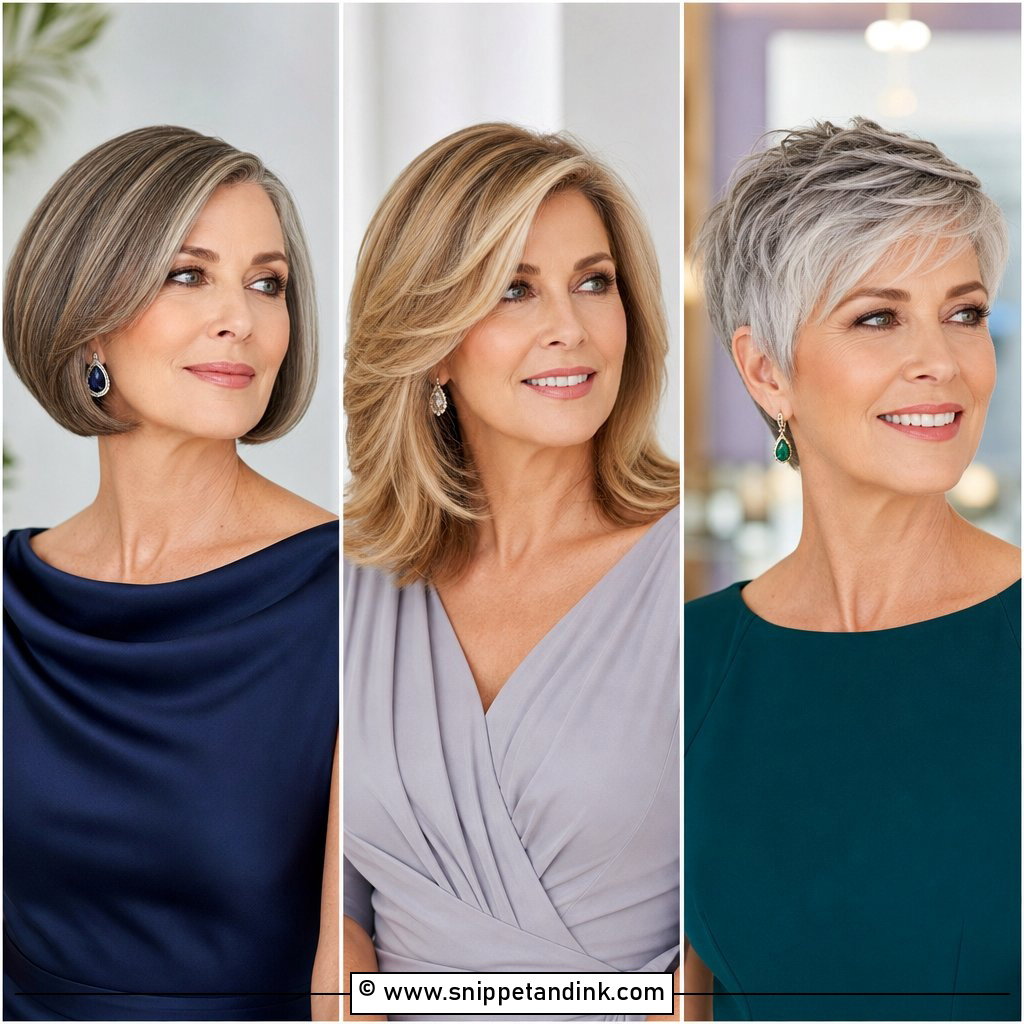
20. Sleek Ballerina Bun
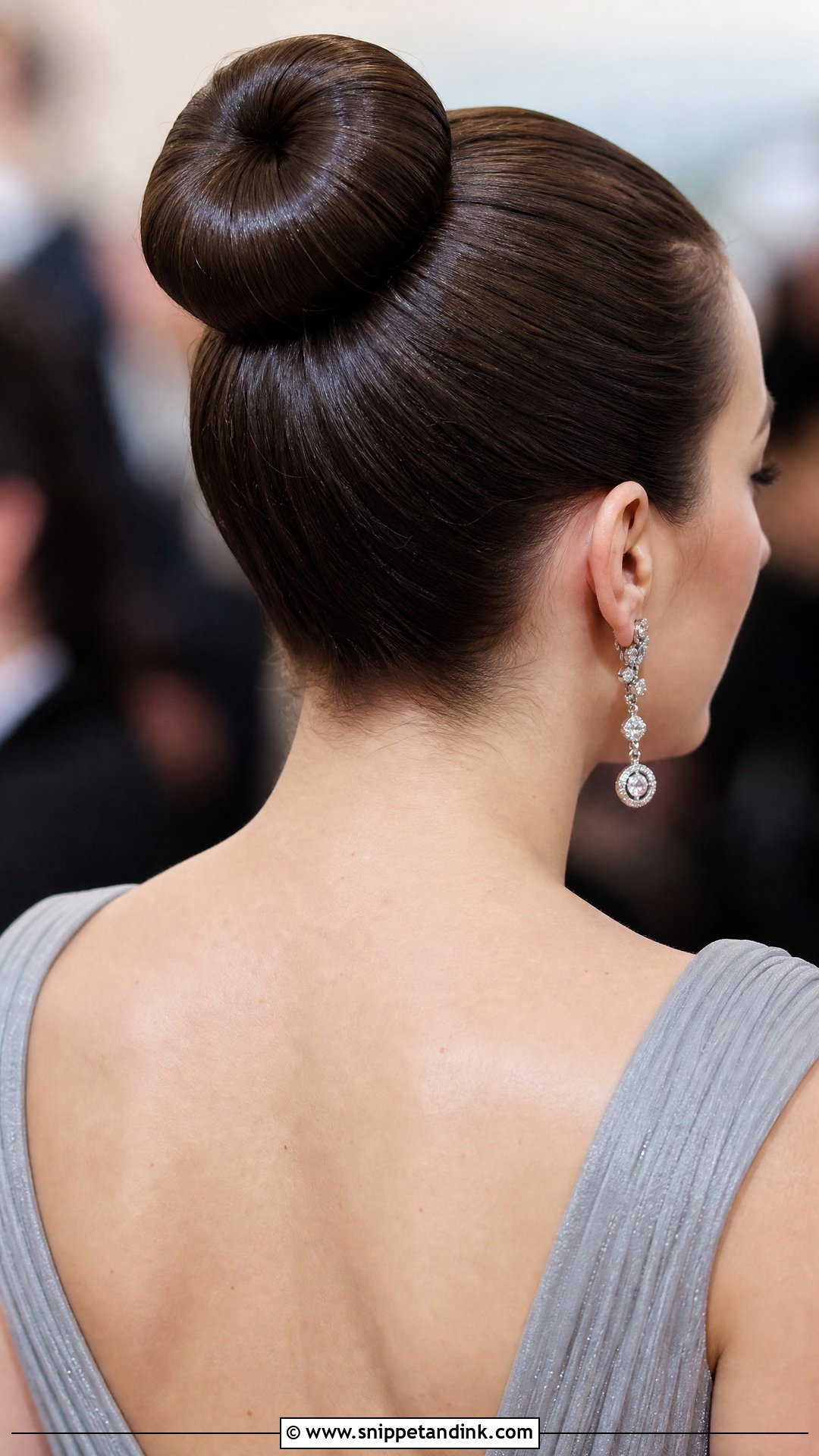
The sleek ballerina bun is smooth, round and sits high or mid-crown. I brush the hair into a tight ponytail, wrap it around itself, and pin all the way round so the bun stays perfectly round. Smoothing cream and a flyaway stick keep it glossy. It suits a minimalist style with strong earrings and a formal neckline. It’s hard on a sensitive scalp, so wear it for a few hours at the trial before committing.
Will an Updo Hurt by the Speeches?
It shouldn’t. A well-made updo holds through pin placement and structure, not tension. If a style feels tight at the trial, it will hurt by dinner, and you should say so on the spot. I’d rather rebuild it than have you pull pins out in the restroom.
Thinning at the temples or crown
Many women find their hair thinner at the part or temples in midlife. Tight pulled-back styles make those areas look sparser in photos and add stress to the hairline. I use softer, looser sections at the front, a deep part placed to cover the thinnest spot, and lower placement so the pull isn’t on the hairline.
If you wear glasses
Bring your glasses to the trial. Pins and tight sections behind the ears press against the arms of the frames and can give you a headache by afternoon. I leave a little room above the ears, and you should check the style in photos with the glasses on.
At the end of the night
Remove the pins before brushing, working slowly from the outside in, and then wash out the hairspray rather than brushing it through dry. Brushing teased, sprayed hair dry is what causes the breakage people blame on the updo.
Ten Hours in Pins, and Still Comfortable
The right updo suits your features, your dress and, just as much, your hair’s texture and length. French twists and low chignons are the most dependable, braided crowns and flower-accented buns soften things for a garden wedding, and short hair can go up as long as the shape stays realistic. Book a hair trial a few weeks out and wear the style for the rest of that day. If it still feels secure and comfortable by evening, you’ve found yours.
You'll Like These Ideas:


Leave a Reply