
The mother of the bride is usually in my chair right after the bride, and her updo has a harder job than people think: it has to survive a long receiving line, a lot of hugging, reading glasses going on and off, and a full day of photos taken from every side. Today’s mother of the bride updo hairstyles are softer than the lacquered sets of a generation ago. Below are twenty I’d happily put on a mum, from low chignons and wrapped buns to French twists and braided shapes, with notes on what each one needs from her hair, whether it’s fine, thick, silver or freshly highlighted.
Working Around Her Glasses, Hearing Aids and Neckline
Most of what I adjust for a mother of the bride has nothing to do with trends. It’s the practical things she lives with every day, and they’re much easier to plan for at the trial than at seven in the morning on the wedding day.
- Glasses: wear them to the trial. Arms sit right where a low bun or side pieces want to go, so I pin around them and keep curls in front of the ear rather than behind it.
- Hearing aids: tell me before I start. I’ll leave a little softness over the ear so the device is hidden, and keep pins and spray well away from it.
- Neckline: a high or bateau neck wants the bun low and compact; a V or scoop can carry a slightly higher, fuller shape. Bring a photo of the dress, or wear a top with a similar neckline.
- Thinning at the temples or crown: very common, and nothing to be embarrassed about. A side part, a little back-combing and coloured root powder hide it far better than pulling hair tight over it.
- Comfort: if your scalp is sensitive or you get tension headaches, say so. I’ll use fewer, better-placed pins and leave the base of the bun looser.
I’d also ask you to arrive with clean, dry hair washed the day before, not that morning. Hair that’s a day old holds pins and curl noticeably better, especially if it’s fine or freshly coloured.
1. Mother Of The Bride Low Chignon
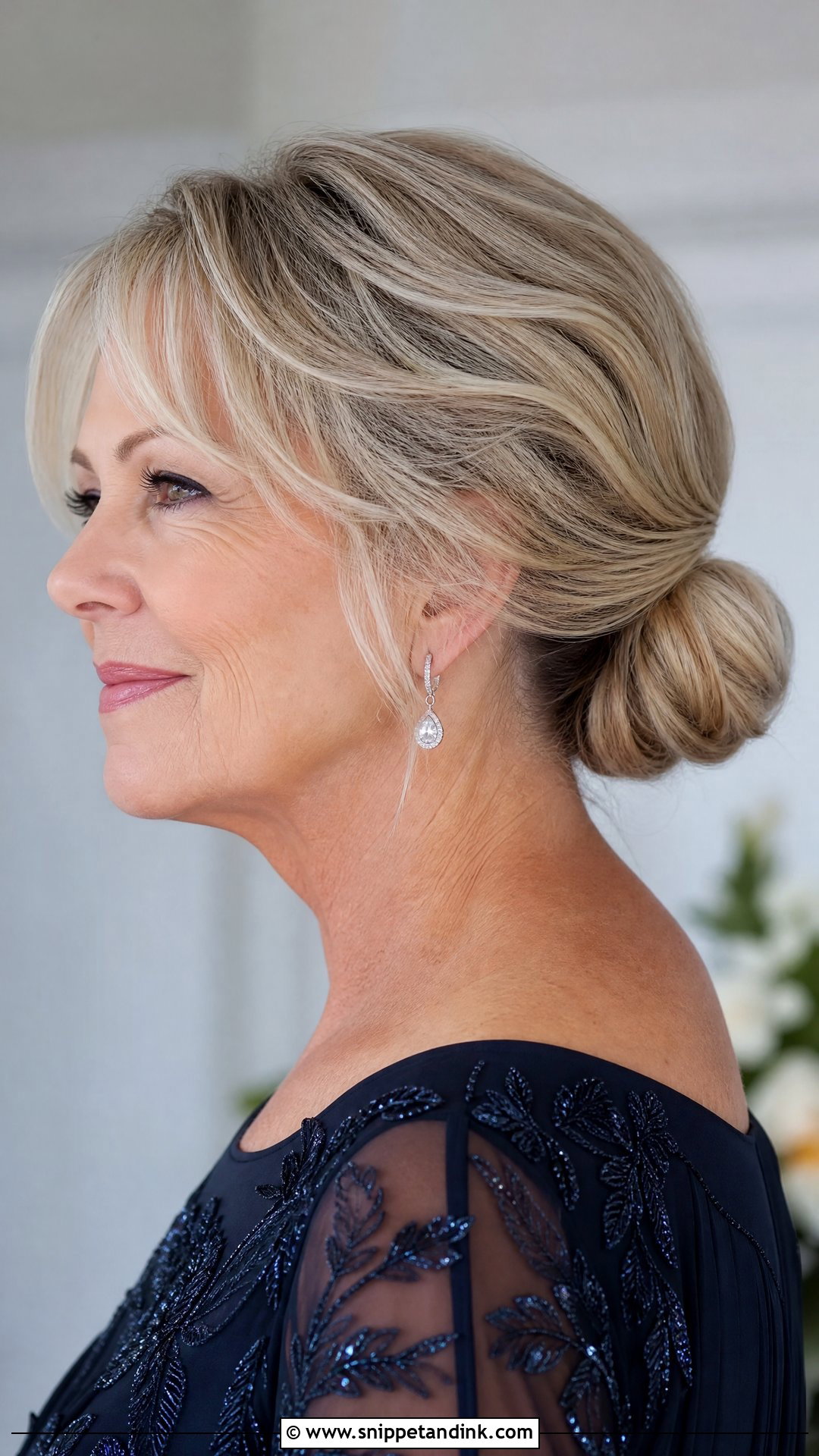
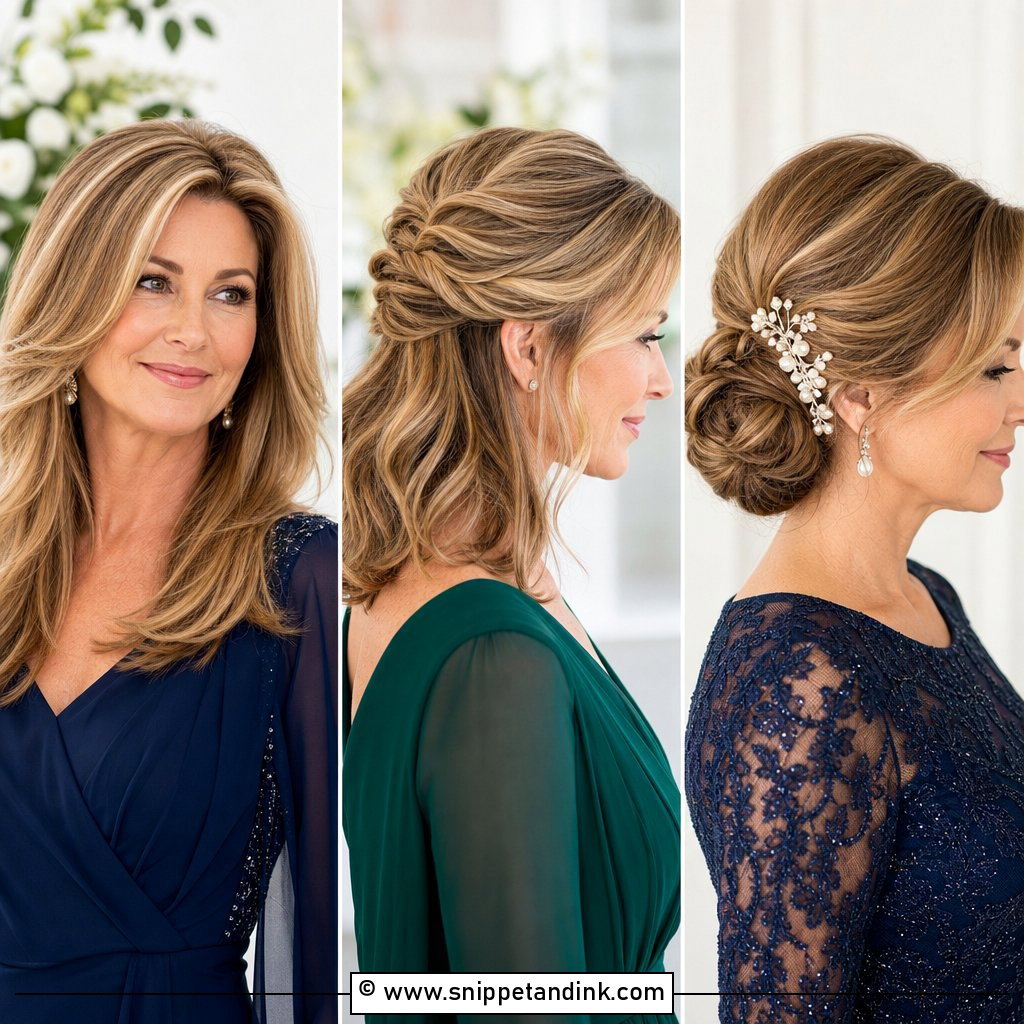
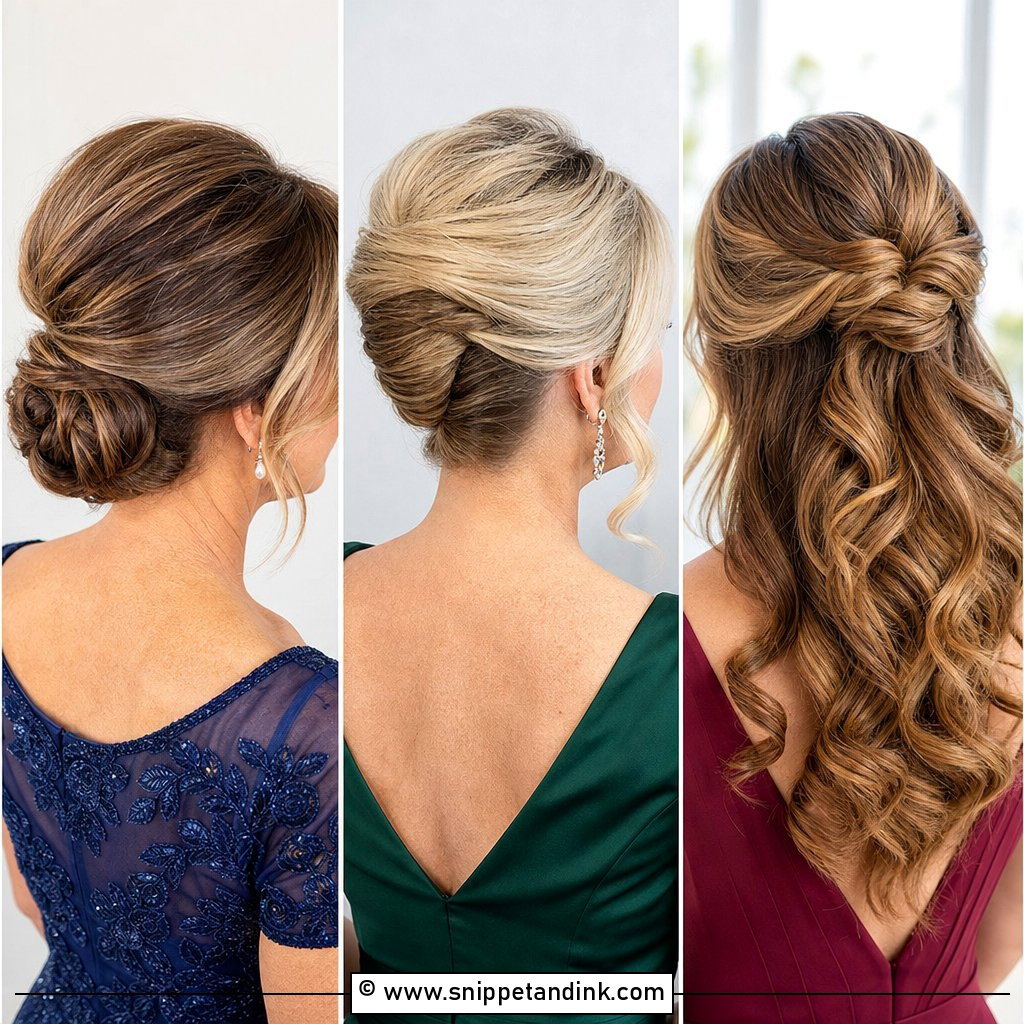
A mother of the bride low chignon sits at the nape, which keeps it clear of a headpiece and comfortable against a chair back during a long ceremony. I like it with lace backs and bateau necklines, where the neck stays visible. Sleek suits a ballroom; a little texture suits a garden. The one thing I always build in is gentle lift at the crown, because a chignon with a flat top reads much older on camera than it does in the mirror.
2. Mother Of The Bride Soft Twisted Bun
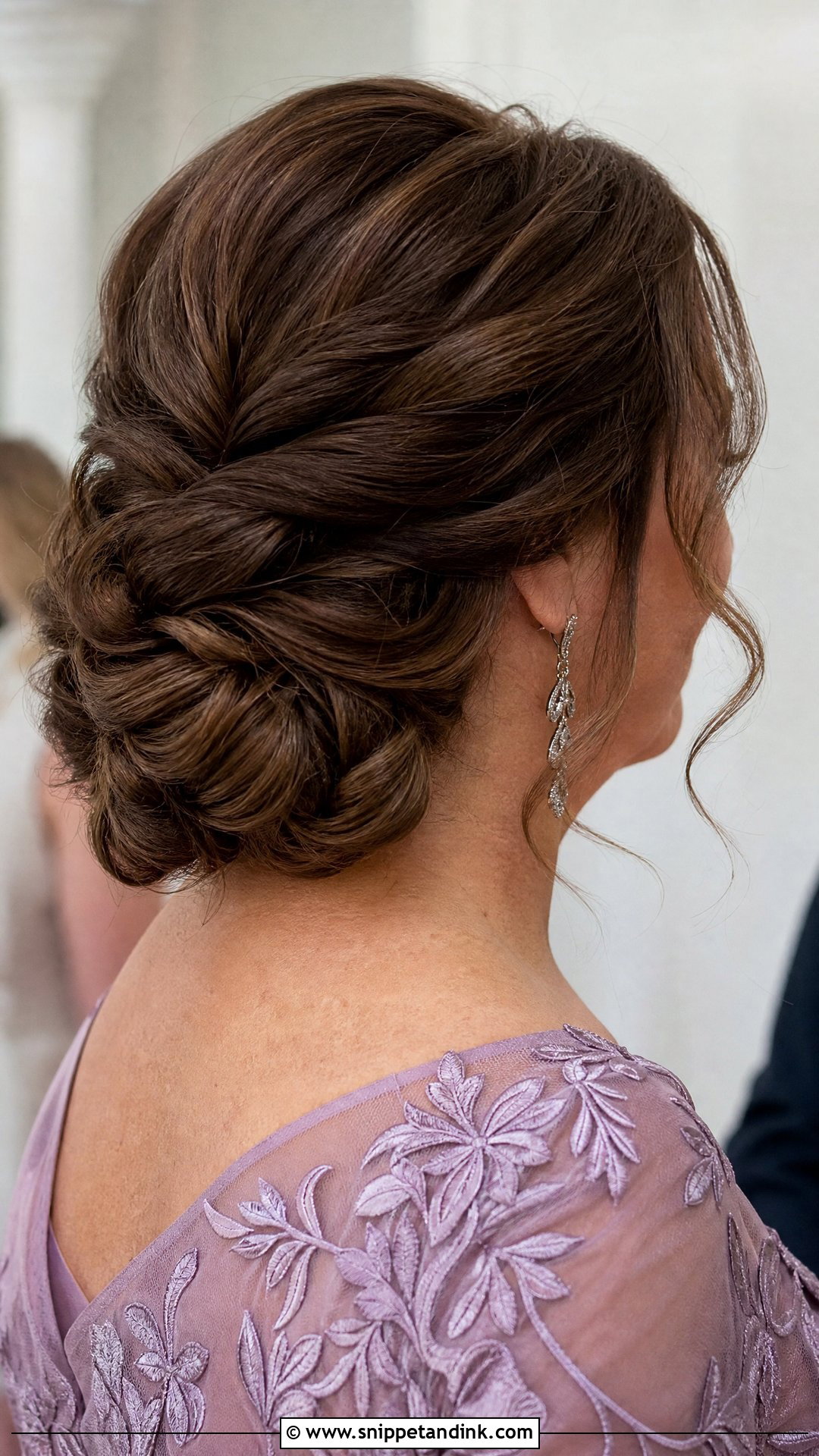
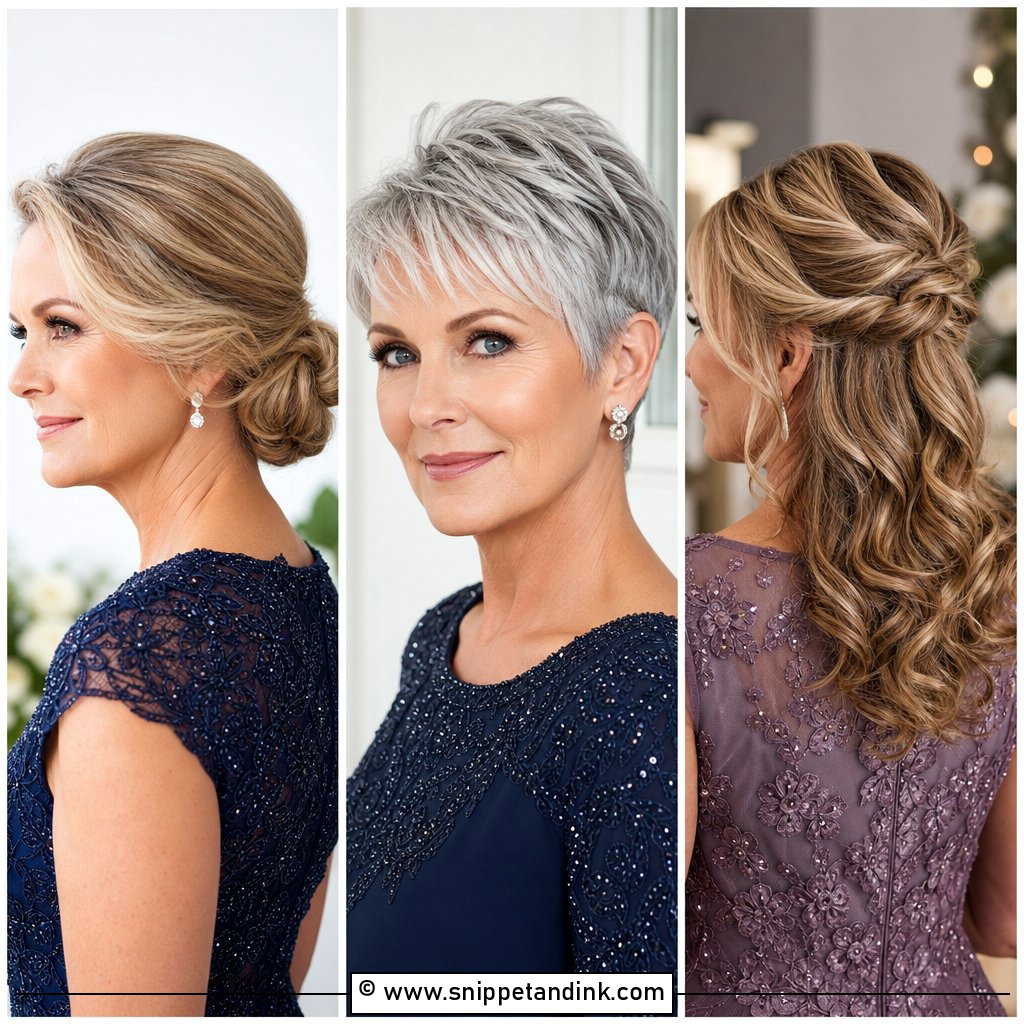
Twisting each section toward the bun, rather than brushing everything straight back, gives a soft twisted bun its movement. That’s the reason I reach for it on medium or fine hair: every twist adds visible bulk, so the finished shape looks thicker than the ponytail it started from. Natural gray and lowlights show off the twists well, since the different tones separate along each rope. I set it low or slightly off-centre, finish with a light-hold spray, and anchor each twist with a pin hidden under the next one.
3. Mother Of The Bride French Twist
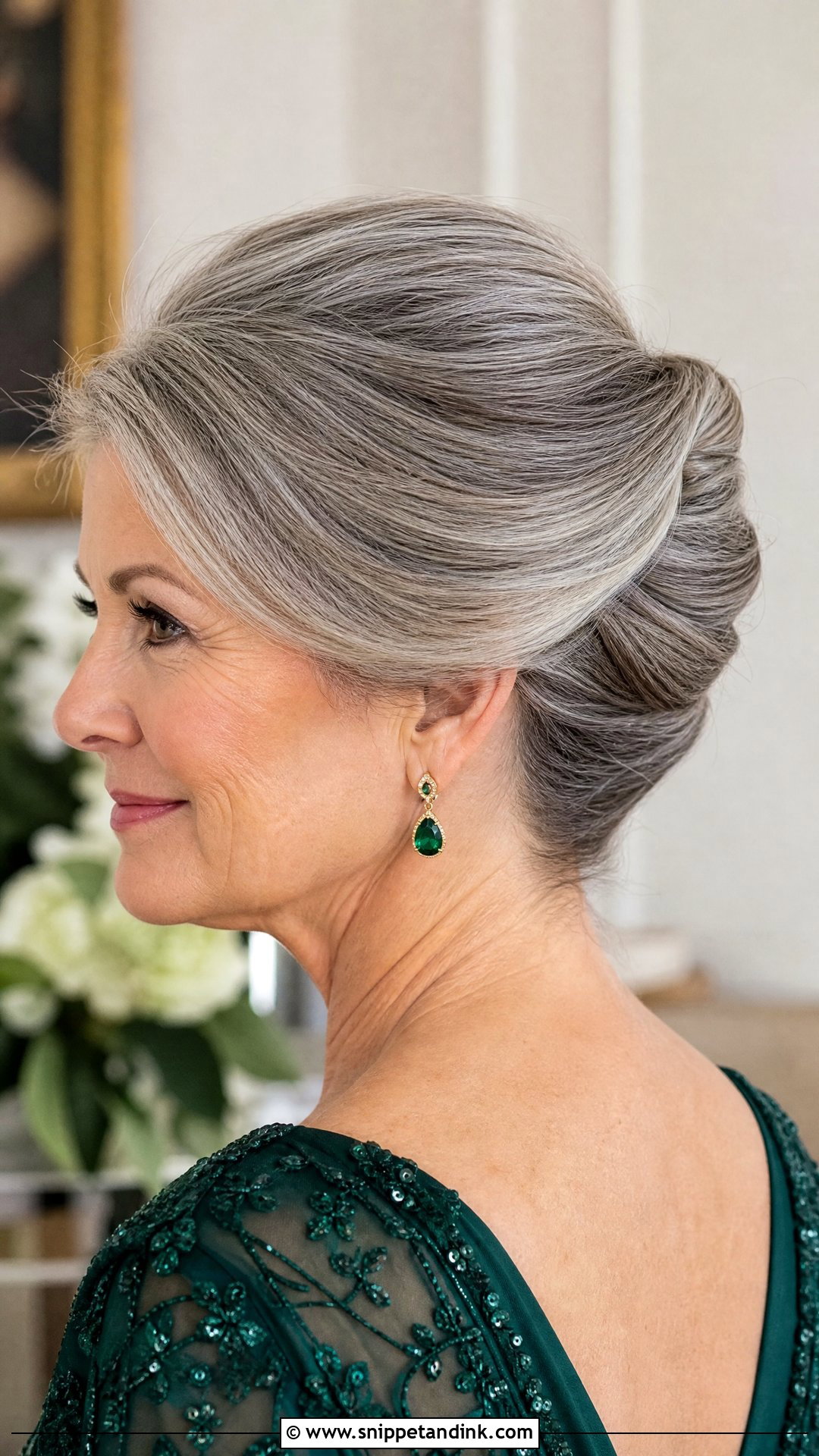
A French twist folds the hair upward into a smooth vertical roll, which lengthens the neck and makes a structured dress look even more formal. It pairs naturally with pearl studs and classic venues. The catch is that a twist depends on length and density along the back of the head. On fine hair I’ll back-comb the inner layer or slip in a small padding roll, otherwise the roll looks thin and starts to gape by the speeches. Leaving softness at the crown and temples keeps it from looking stiff.
4. Mother Of The Bride Messy Low Bun
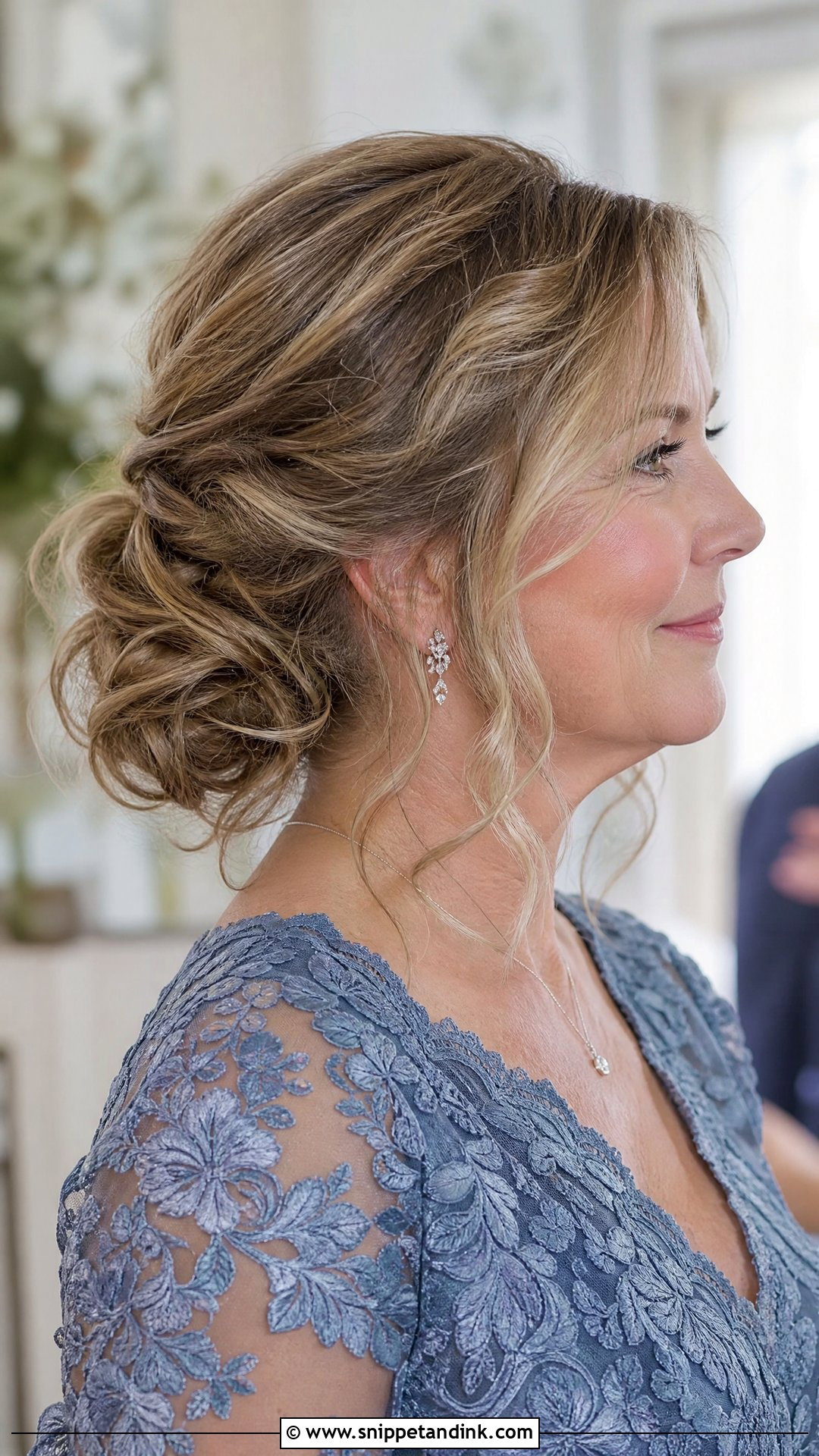
The messy low bun is the most misunderstood style on this list. Done well, it’s planned softness: I curl everything first, pin the sections loosely into a low shape, then pull out only the few pieces I want around the cheekbones. Layered hair is easy here because shorter ends blend straight into the texture. Outdoor weddings suit it, but it needs a flexible spray rather than a firm one, or the loose bits turn crunchy and stop moving.
5. Mother Of The Bride Sleek Low Bun
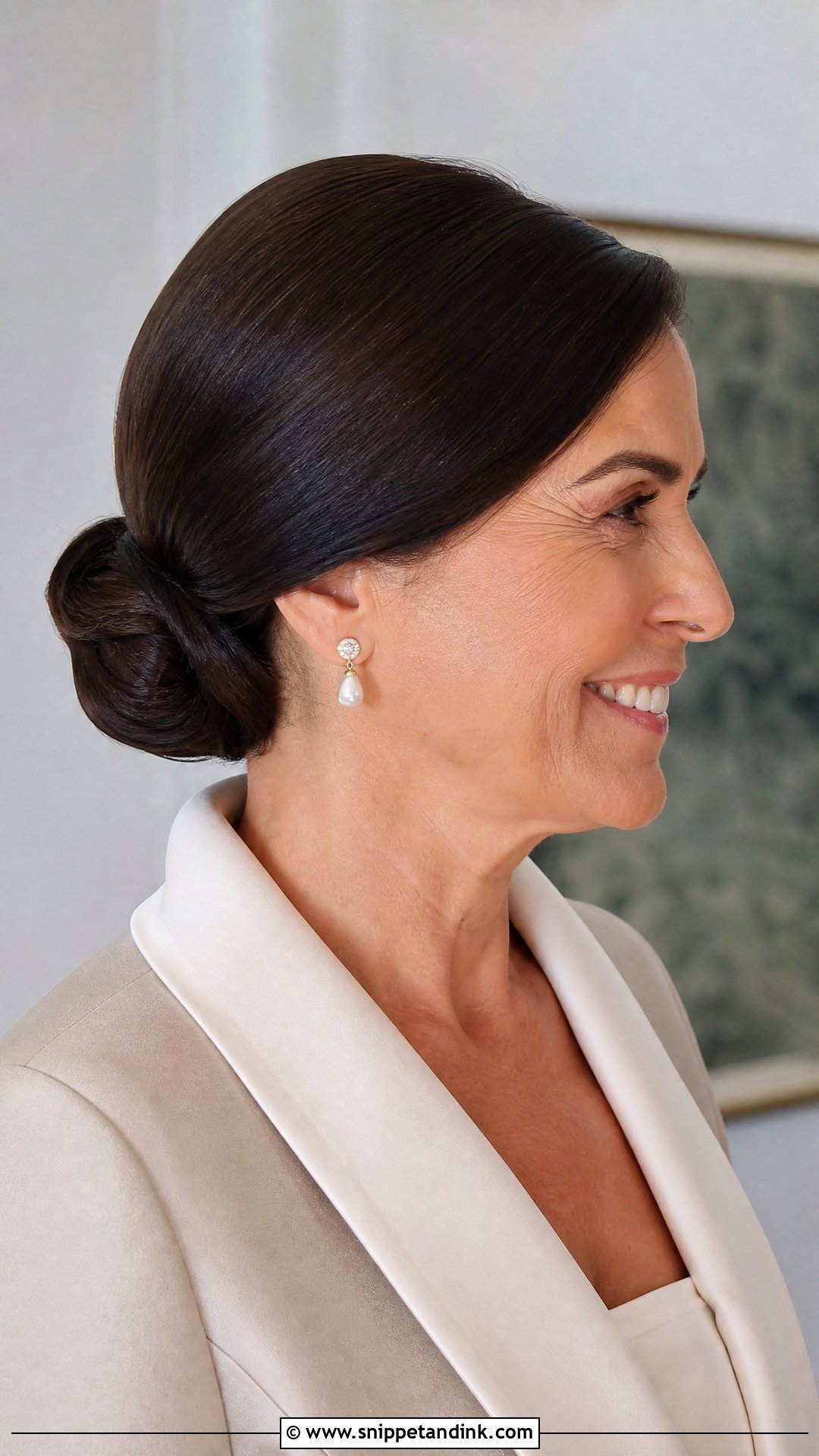
Satin, crepe and simply tailored dresses balance nicely against a sleek low bun, because the smooth hair adds polish without competing with the fabric. A centre part feels more fashion-led; a side part is softer on most faces. I never pull this one tight against the scalp, since a slicked bun that grips for twelve hours is a reliable headache. A touch of shine spray tames flyaways and gives gray or highlighted hair a healthier finish. In humid weather it’s the shape I trust most, because there’s nothing loose to frizz.
6. Mother Of The Bride Braided Low Bun
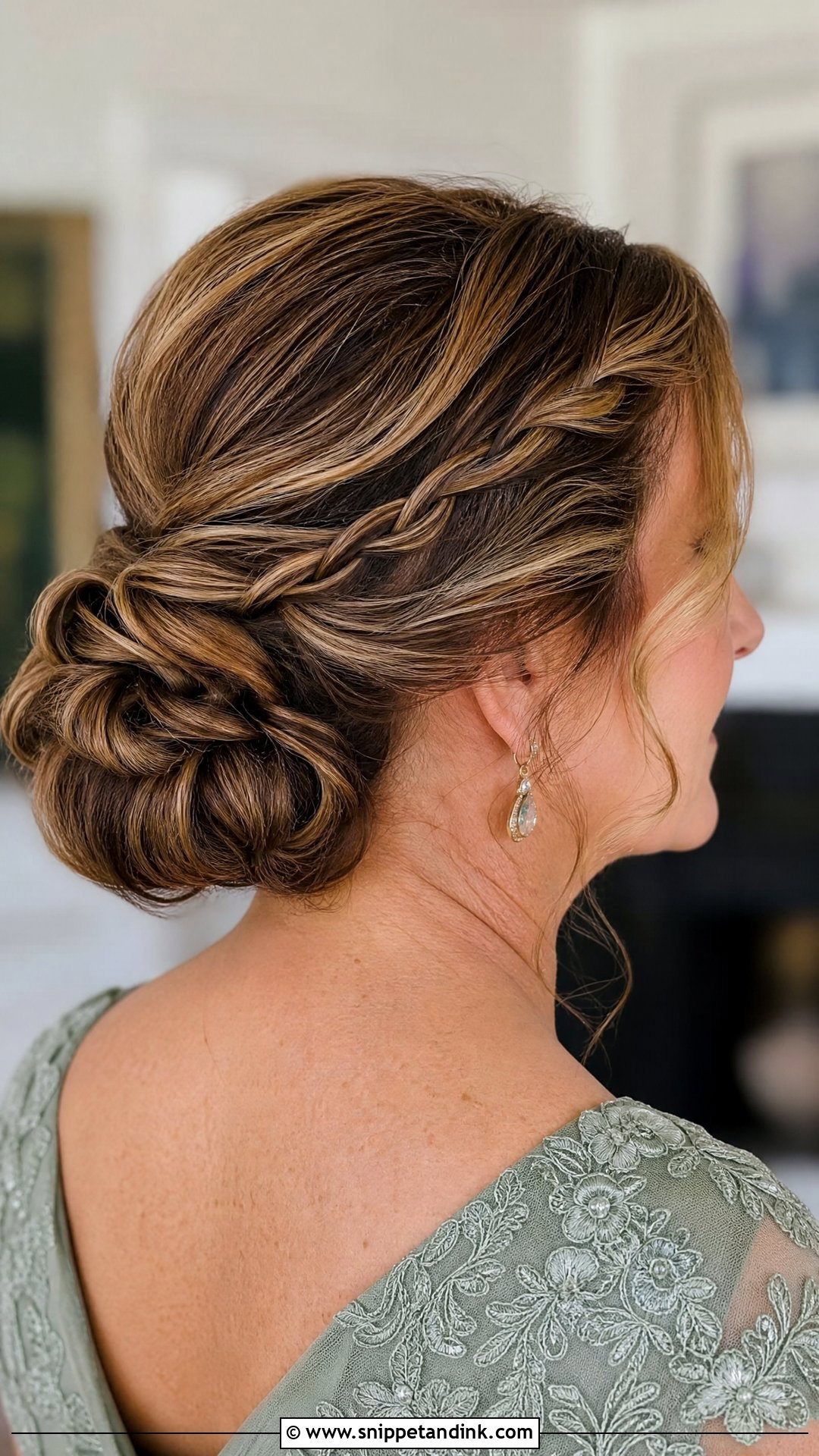
A braided low bun adds detail without looking youthful, as long as the braid stays fairly flat and tidy. I usually start it on one side and wrap it into the bun, or run it through the back as texture. Thick hair is the real winner: braiding compresses the volume, so the bun ends up smaller and lighter than a plain one. Woven sections also catch light on dimensional colour. Decorative pins are optional; the braid already gives the eye somewhere to land.
7. Mother Of The Bride Side Bun
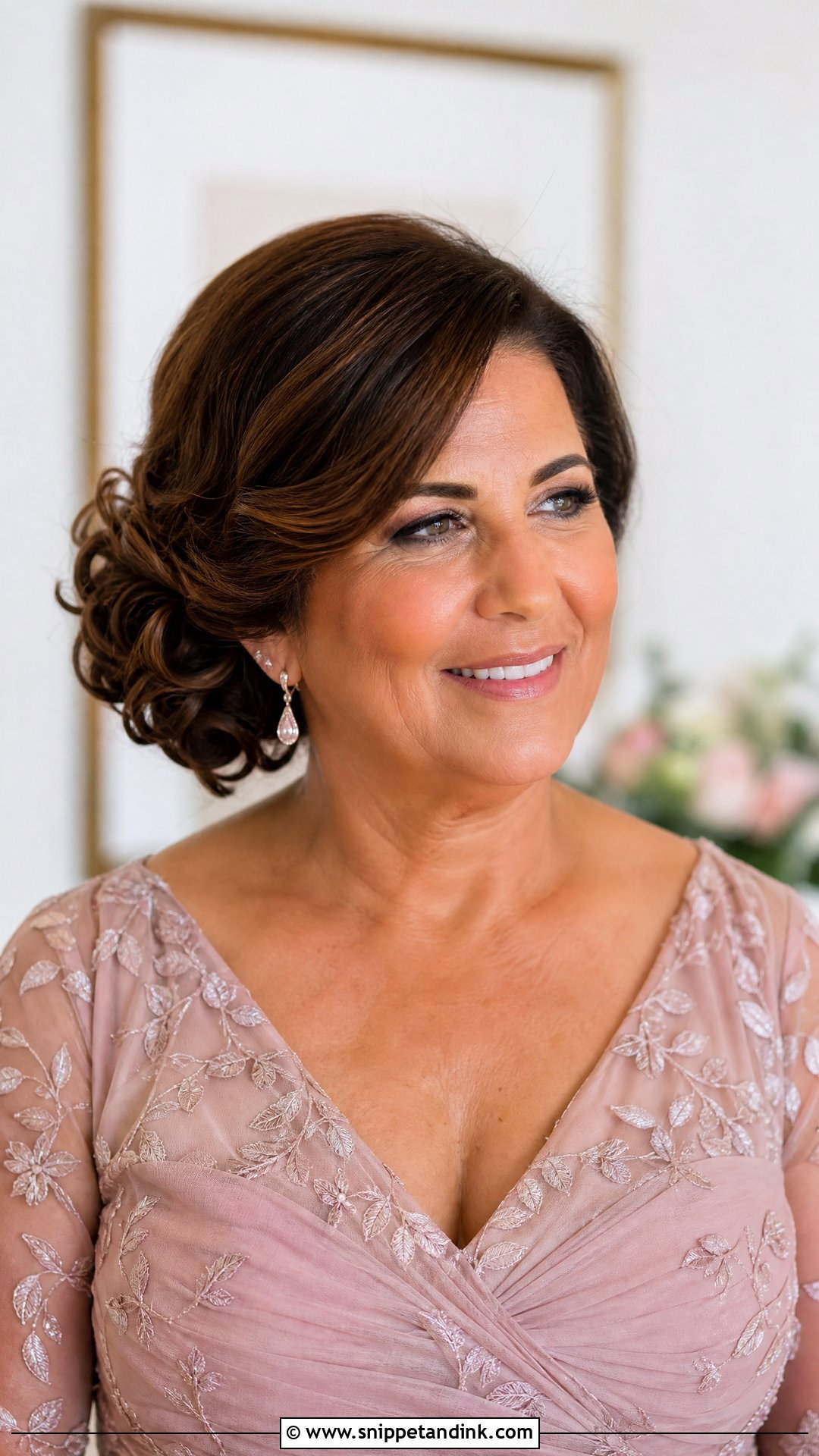
Front-on photos are where a mother of the bride side bun pays off, because the bun peeks out past the jaw instead of hiding behind the head. It sits low near one side of the nape and pairs well with side-swept fringes, asymmetric dresses and one-shoulder necklines. Proportion is the whole job. Too large or pushed too far round, it looks like it’s sliding off, so I place it behind the ear rather than under it and wave the hair first so the sides fold in with some movement.
8. Mother Of The Bride Curly Updo
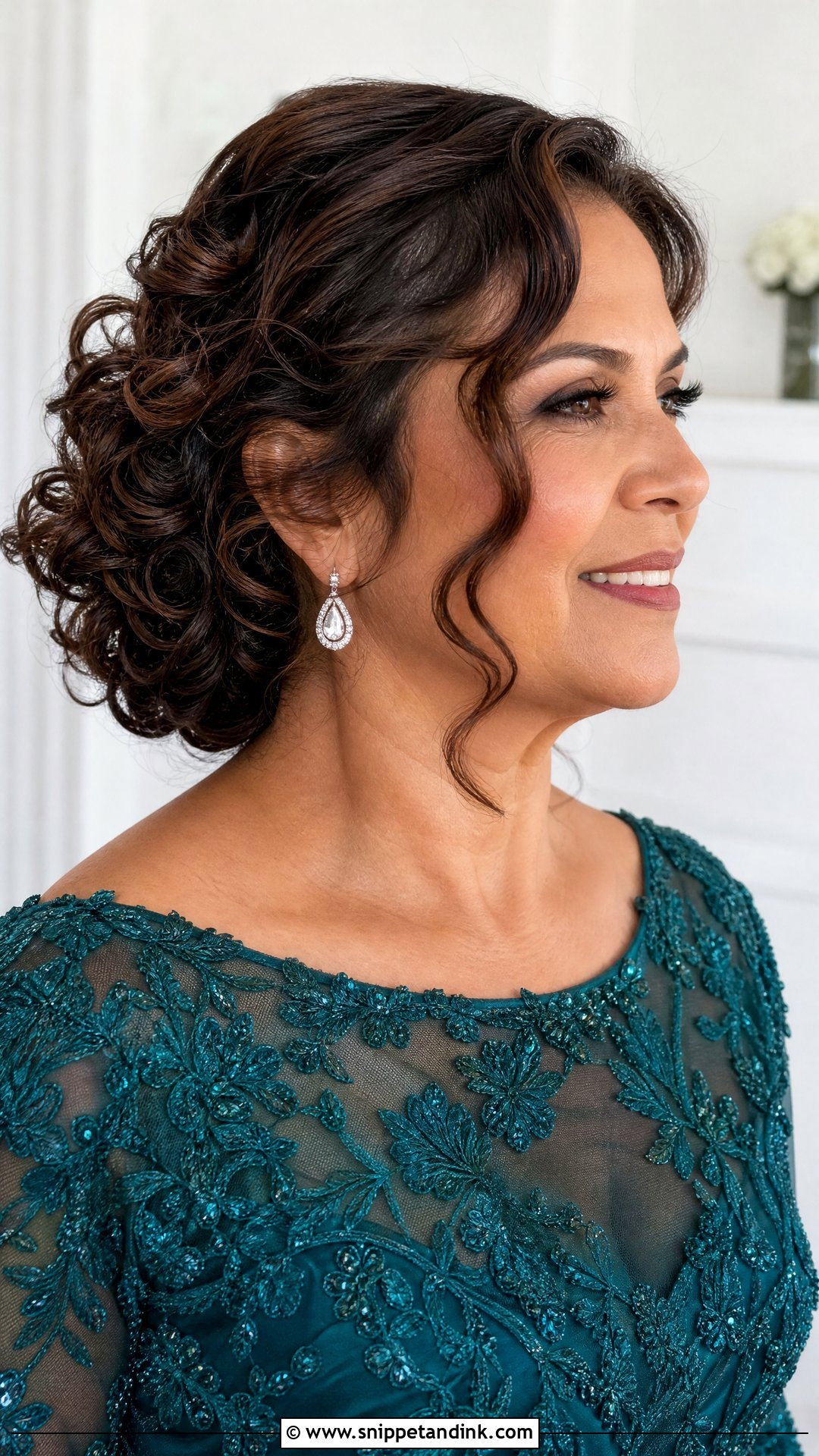
Natural curls make pinning easier, not harder, because curls hide pins and hold onto each other. I gather them loosely into a low or mid-height shape; straight hair gets curled first to build the same fullness. A curly updo doesn’t need to be smooth to look formal, but it does need definition around the face, otherwise the front can look unfinished in photos. A curl cream before styling and a humidity-resistant spray afterward stop the texture from collapsing into frizz by evening.
9. Mother Of The Bride Updo With Bangs
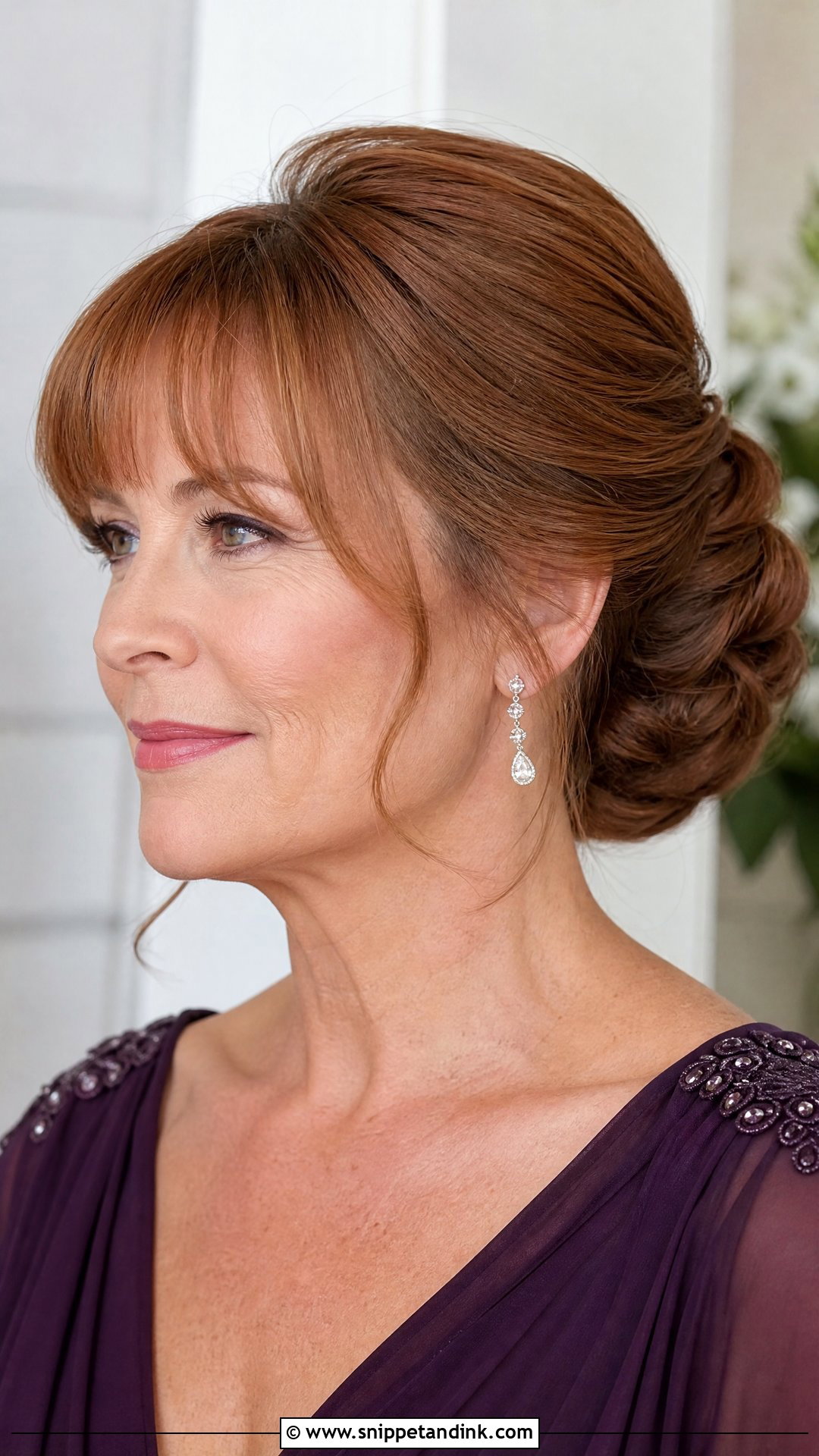
Keeping a fringe while putting the rest up is often what makes a mum agree to an updo at all. Side fringes blend into a low chignon, and curtain fringes soften a bun or a twist. A full blunt fringe needs blow-drying smooth with a slight curve so it doesn’t fight the pinned shape. My only rule is to style the fringe last and test it with her glasses on, since frames can push it flat or flick it out. The back can then be sleek, braided, twisted or curled.
10. Mother Of The Bride Updo For Short Hair
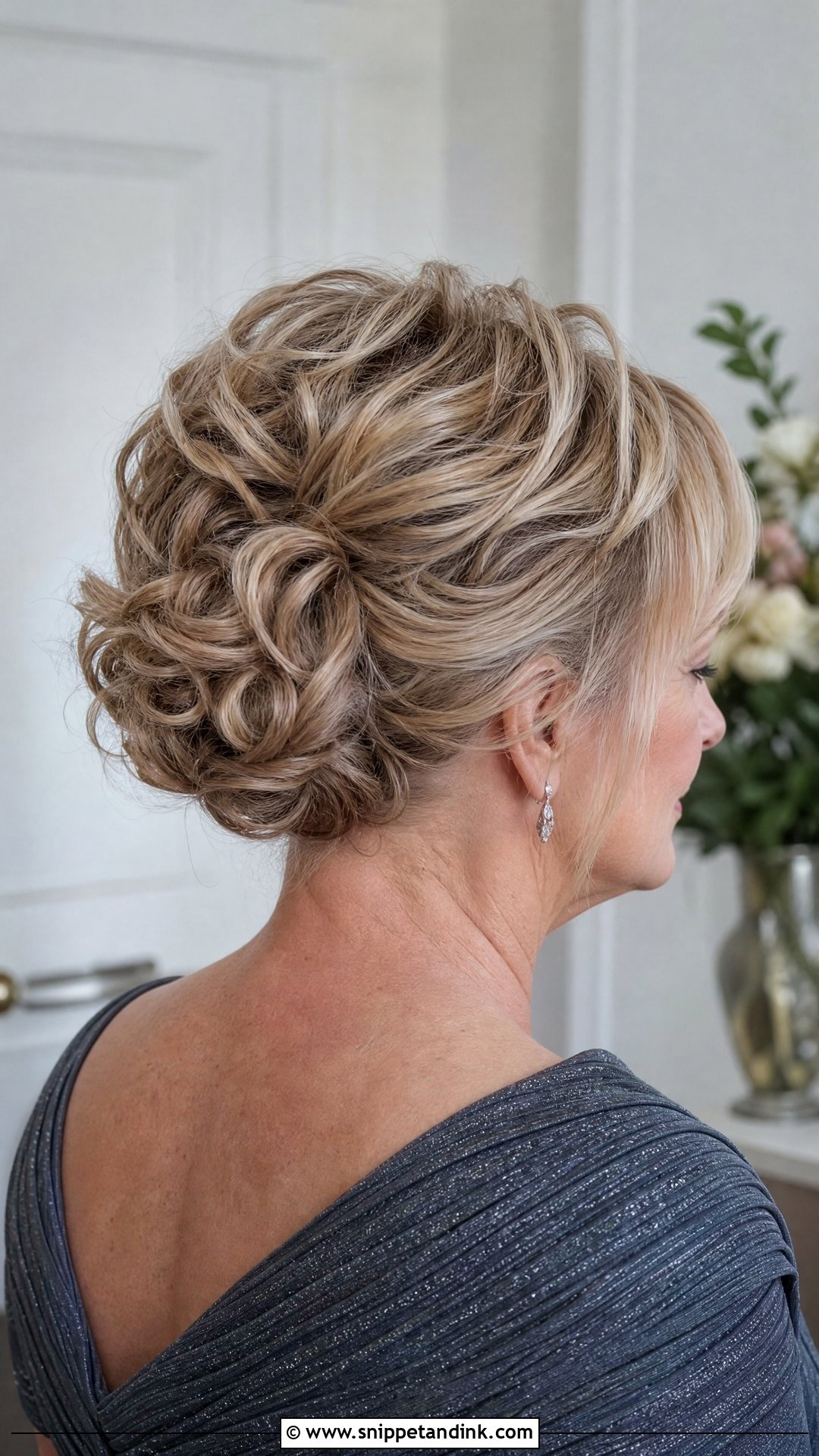
Short hair can absolutely go up; it just needs more pins and more texture than people expect. I curl it, sweep the sides back, and pin the lower sections so they suggest a soft chignon rather than form one. It suits chin-length bobs, short layered cuts and longer pixies. A comb or a small barrette helps lock the shape. If there really isn’t enough length at the nape, I stop chasing a bun and focus on crown height and a neat, sculpted back instead.
11. Mother Of The Bride Updo For Medium Hair
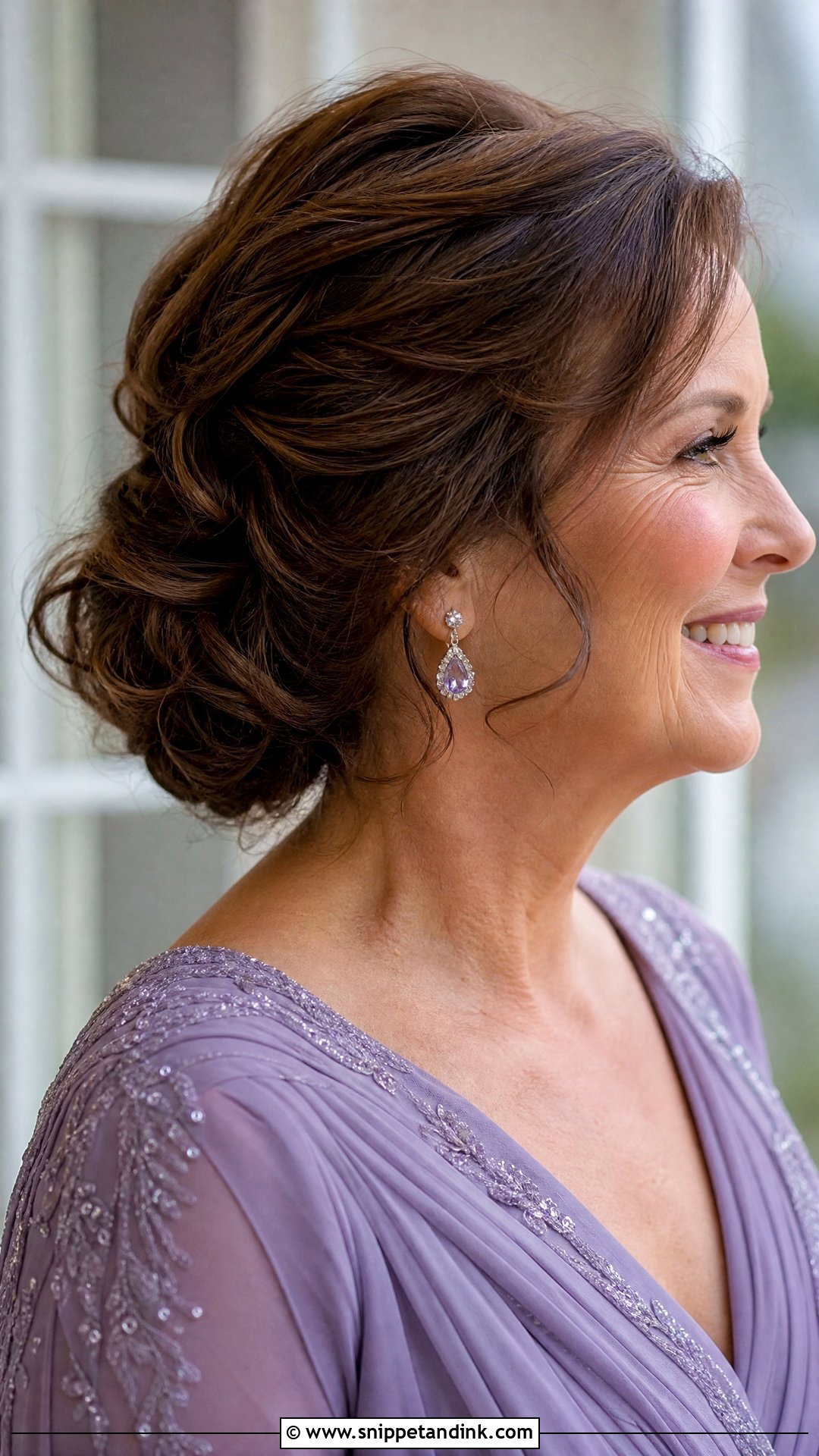
Shoulder-length hair is my favourite length to pin: long enough to wrap, light enough that it doesn’t drag a bun downward through the day. A low bun, twisted chignon or tucked roll all suit it. The common problem is short layers popping out at the nape, which is why I curl medium hair before pinning. The bend gives every pin something to grip. A little back-combing at the crown and texture spray through the sides makes it look fuller without feeling heavy.
12. Mother Of The Bride Updo For Long Hair
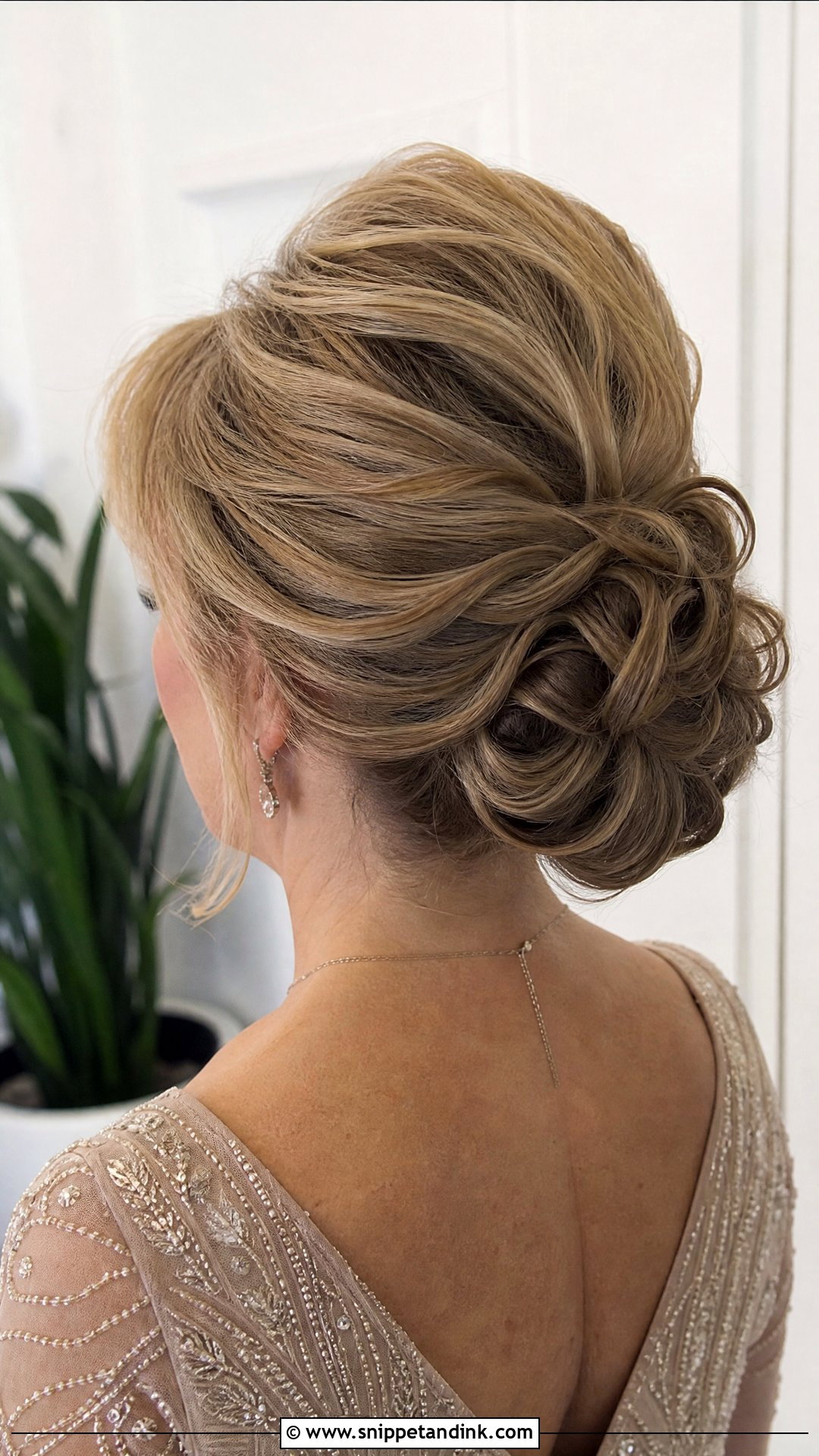
Long hair gives the most options and causes the most aching scalps. The answer is distribution: I split the length into several sections and pin each one separately, so the weight spreads across the head instead of hanging off a single anchor. That’s what keeps a big bun comfortable into the evening. Waving the hair before pinning gives the finished shape natural movement. With a detailed dress back, I tuck the bun low so the neckline stays visible.
13. Mother Of The Bride Updo For Fine Hair
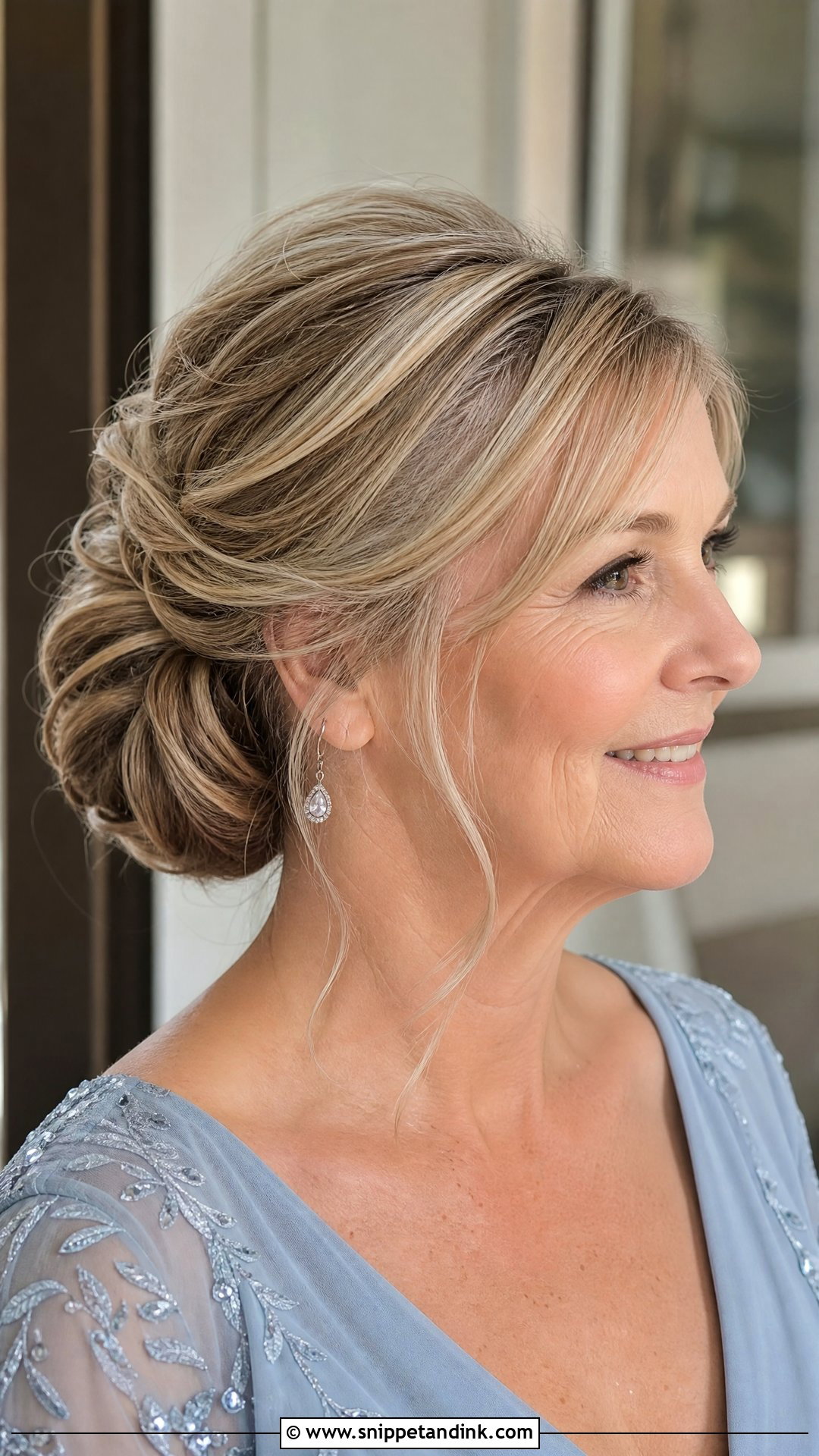
Fine hair collapses fastest under heavy product, so prep matters more than the shape. I use volumising mousse on damp roots, dry texture spray on the lengths, and sometimes a small padding piece, which together make a soft chignon look like twice the hair. A loose twisted bun is kinder to fine hair than anything slicked flat, which shows scalp under flash. Keep face-framing pieces airy and few. Too many, and fine hair separates into thin strings by mid-afternoon.
14. Mother Of The Bride Updo For Thick Hair
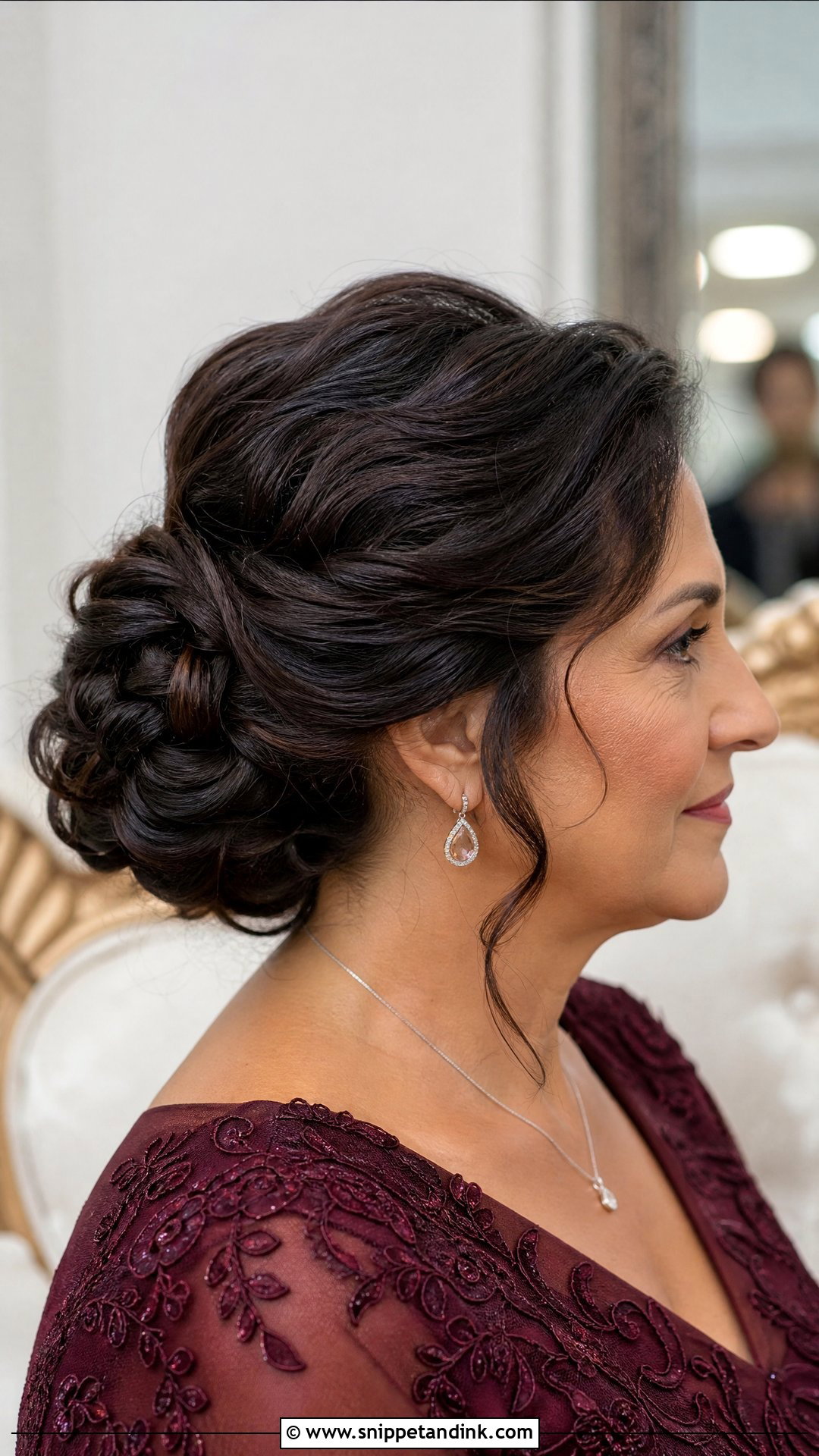
Thick hair looks wonderful pinned up, but one big bun of it can feel like carrying a bag of sugar on the back of your head. I break it into smaller pinned sections, often braiding or twisting a few first, so the bulk compresses and the weight spreads evenly. A low bun, braided bun or French twist all handle the volume. Smoothing cream goes on the surface only and the strong grips stay deep inside where nobody sees them. I keep the crown lifted, never tall.
15. Mother Of The Bride Updo With Side Part
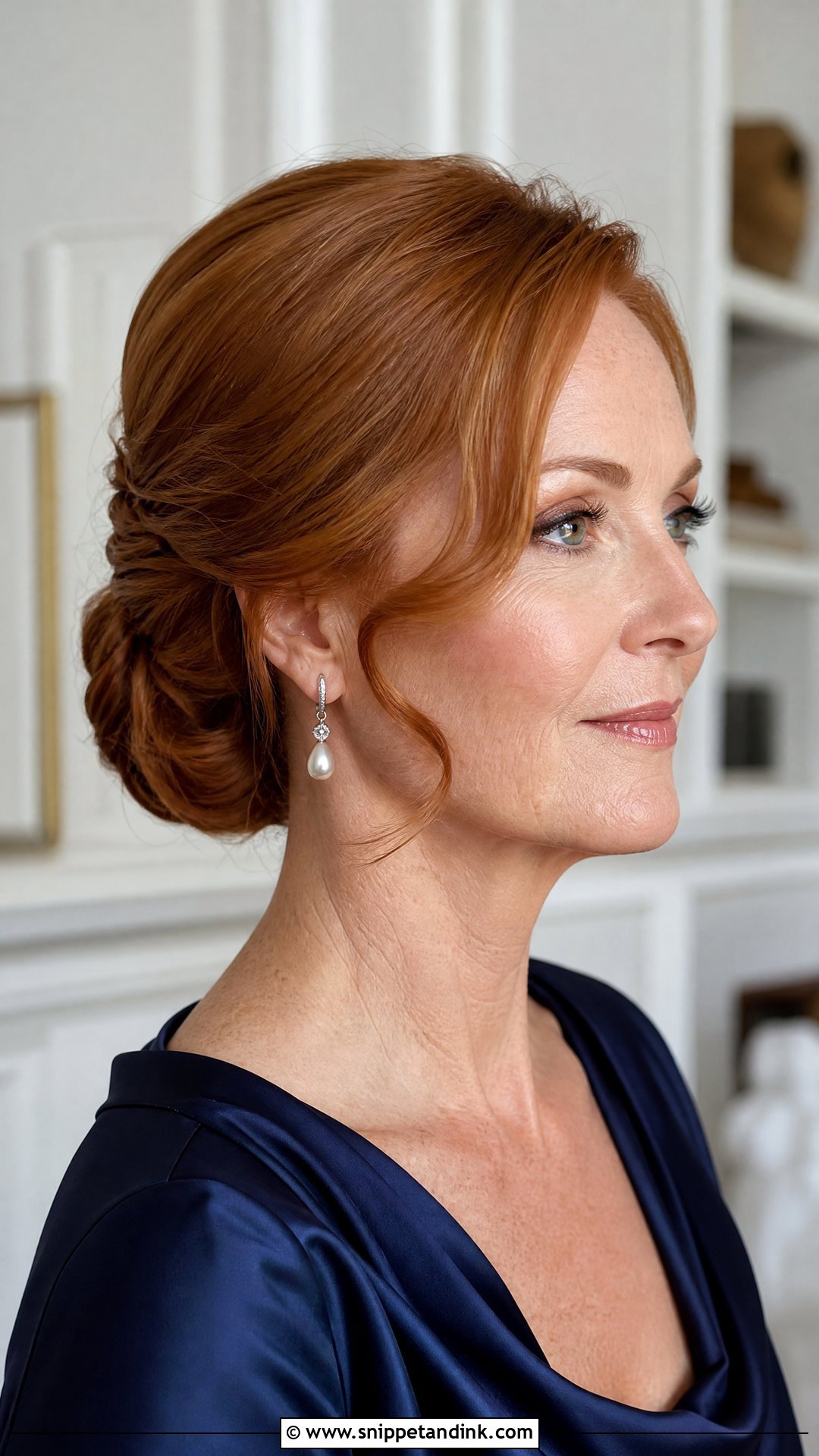
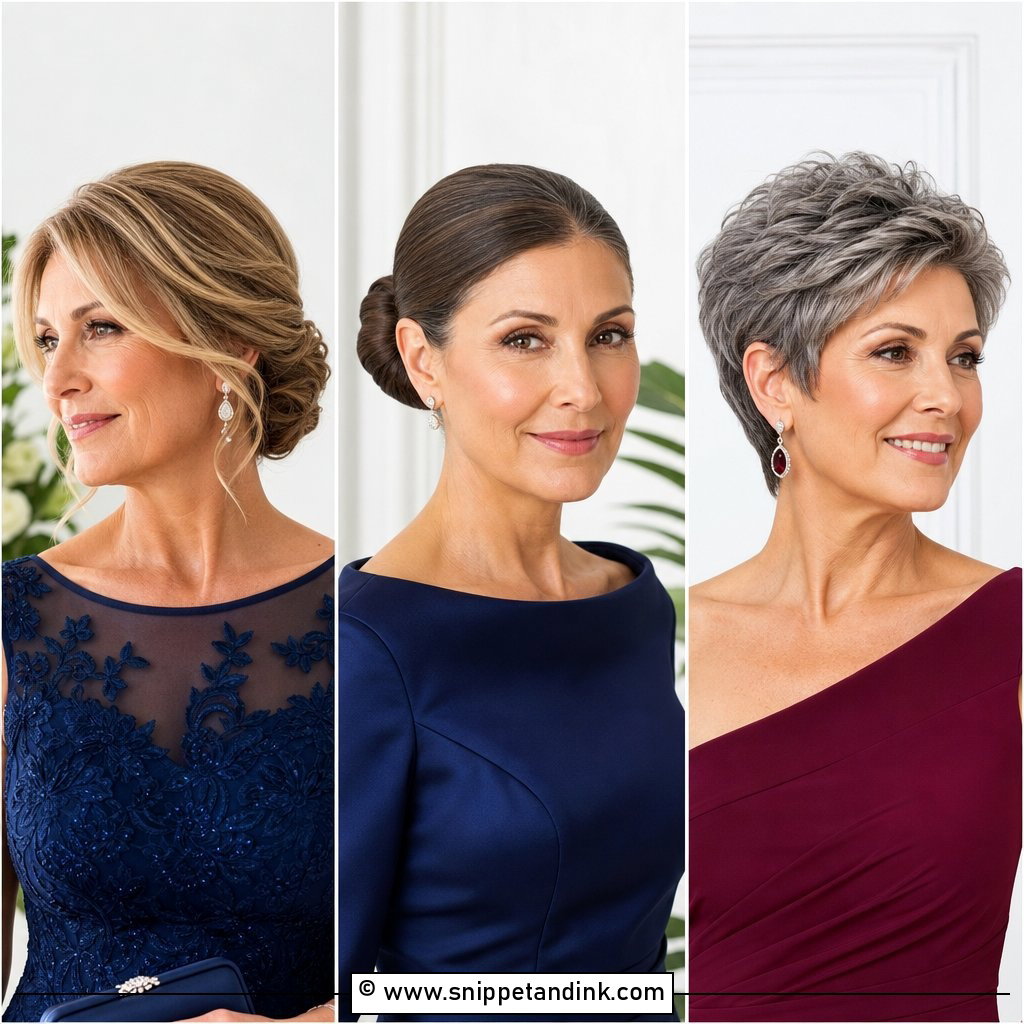
Moving the parting to the side is one of the quickest ways to soften an updo on a mature face. It drapes a little hair across the forehead or temples, which many mums prefer to a fully pulled-back hairline, and it works with buns, chignons, twists and curled shapes. A deep part reads more dramatic, a shallow one more natural. My advice is to use her natural part as the starting point, because hair always wants to fall back toward the side it grew on.
16. Mother Of The Bride Updo With Hair Pins
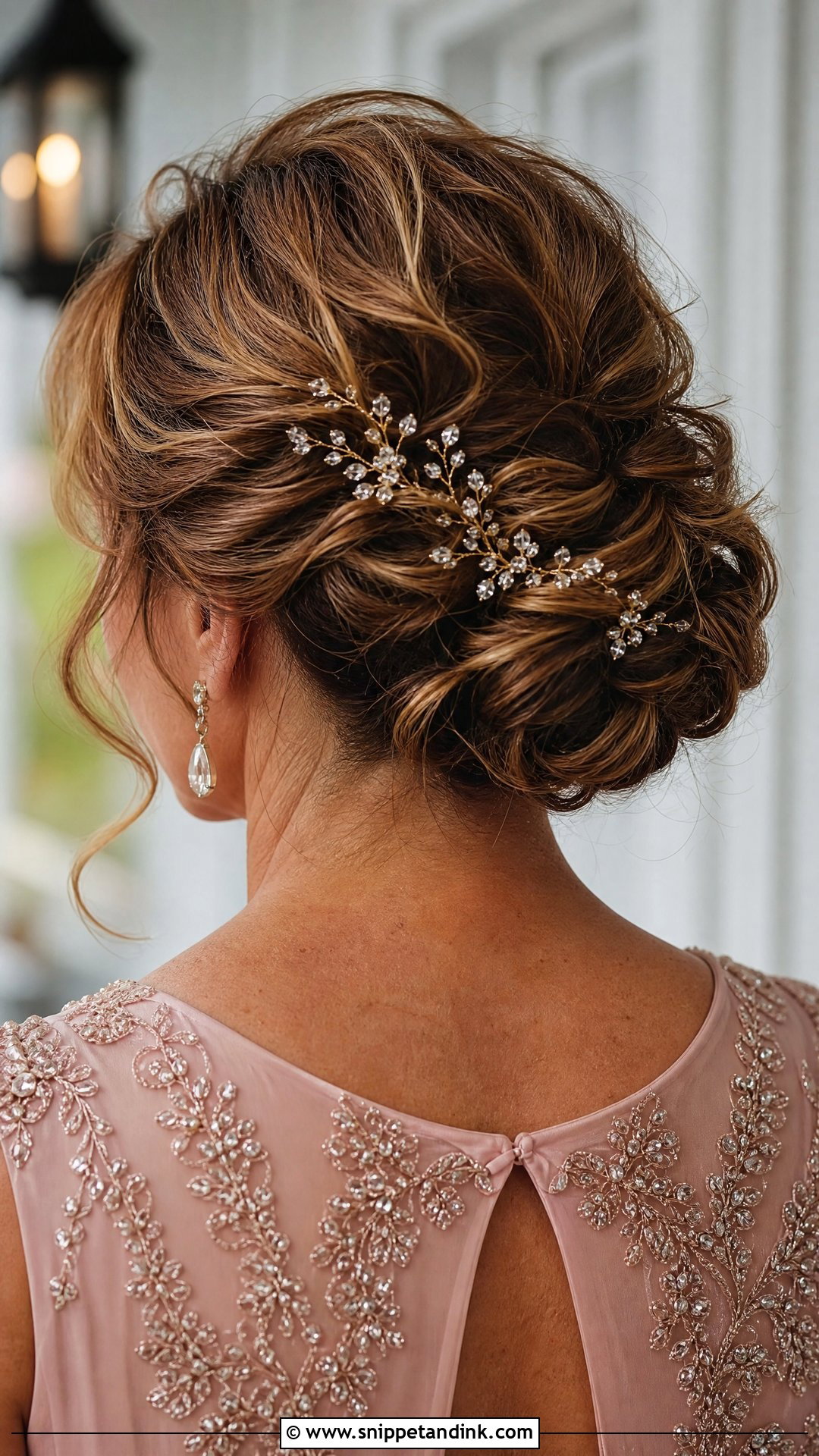
Hair pins are the easiest way to add sparkle without stepping on the bride’s accessories. Pearl, crystal, floral or metal pins can sit around a low bun, along the seam of a French twist, or scattered through a braid. I start with three and add one at a time while she looks in a hand mirror, because it’s very easy to overdo. Match the metal to her earrings rather than to the dress beading. Plain buns benefit the most, and family portraits are where the detail shows.
17. Mother Of The Bride Updo With Face Framing Pieces
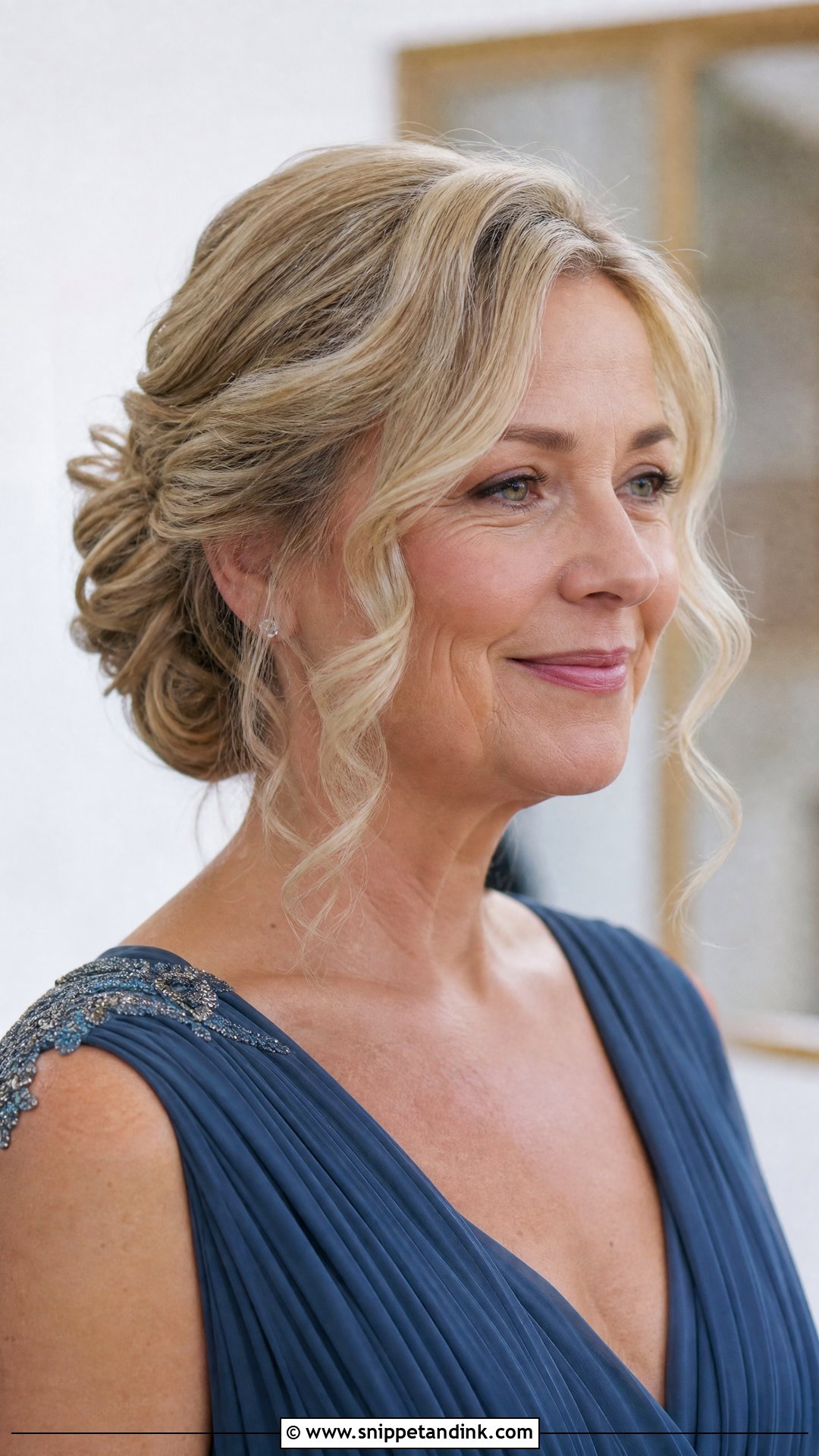
Face-framing pieces stop an updo from feeling severe, which is often the deciding factor for a mum who never wears her hair up. I curl them gently and let them fall by the cheekbones, jaw or temples, depending on her face and where her cut naturally breaks. The risk is stringiness: pieces that are too thin or over-sprayed separate by evening. If her hair frizzes, a light smoothing product before curling keeps them glossy. They sit best beside low buns, twisted chignons and softer, messier shapes.
18. Mother Of The Bride Updo With Crown Volume
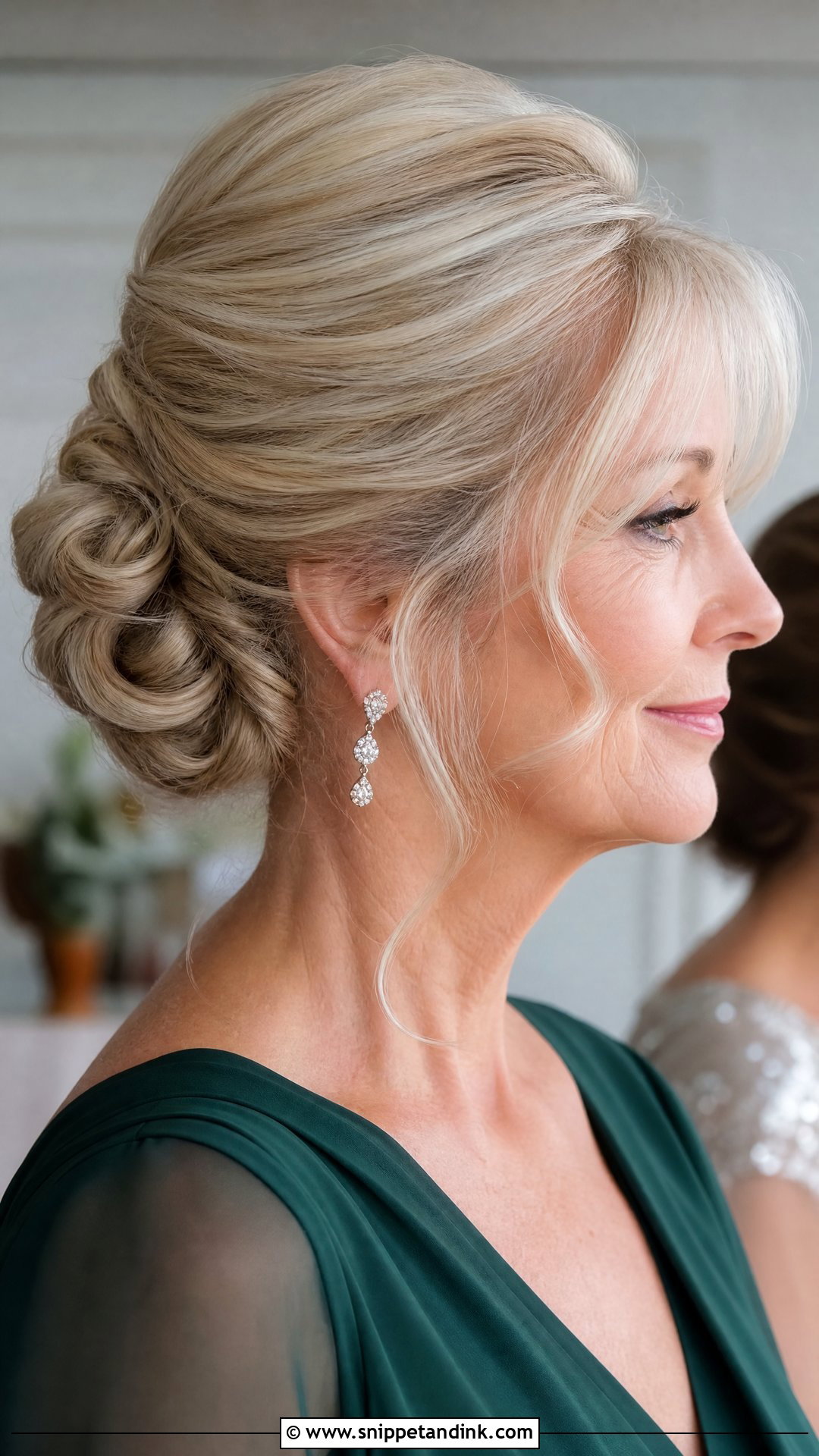
Crown volume doesn’t mean the tall bump of old photos. The modern version is a soft, blended lift that keeps the profile graceful and stops the head looking flat under bright venue lighting. Fine hair may need gentle back-combing or texture spray; thick hair often needs only a little shaping with the fingers. I add it to low chignons, side buns, French twists and curled updos alike. Crown volume is also what makes a style look current from the side, so I check the profile in the mirror before she leaves the chair.
19. Mother Of The Bride Updo With Pearl Accessories
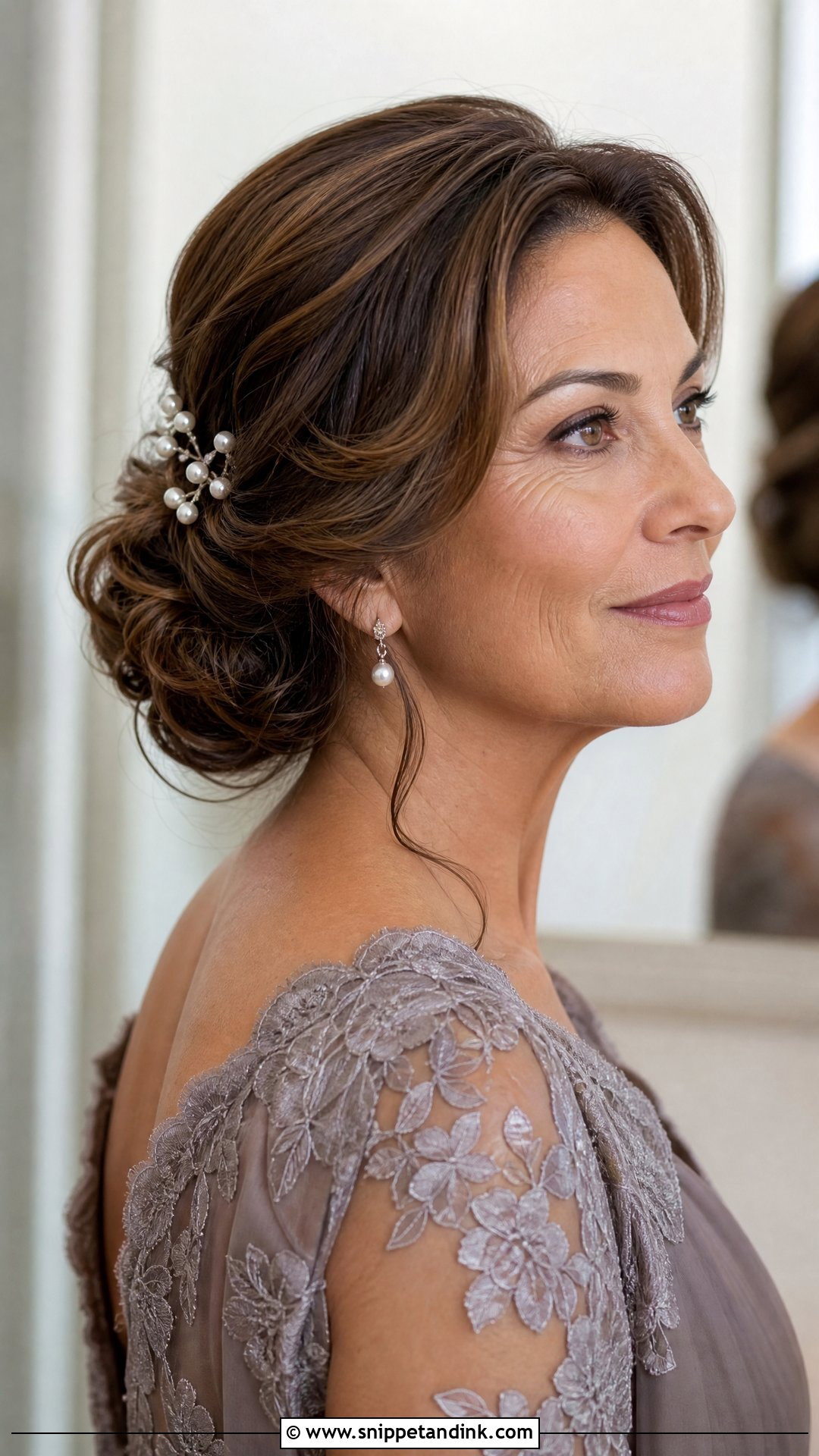
Pearls sit comfortably beside mother of the bride updos, and they flatter blonde, brunette, silver and highlighted hair without glare. I add them to a low chignon, tuck them along a French twist or press them around a braided bun. Smaller pearls look more refined than large ones, especially if the dress is already beaded or lace-trimmed. Keep the bun itself plain, since a busy shape and pearls together look fussy. A smooth bun with light texture gives them the cleanest background.
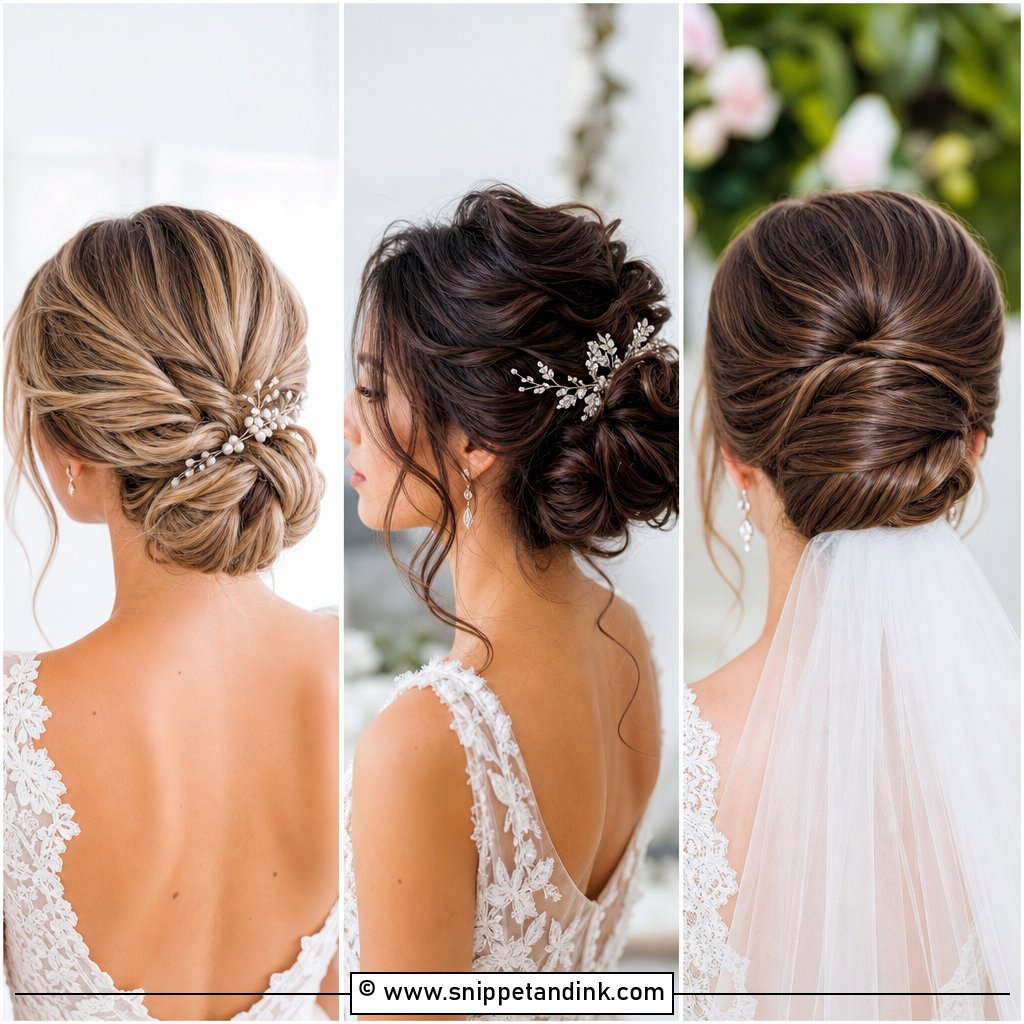
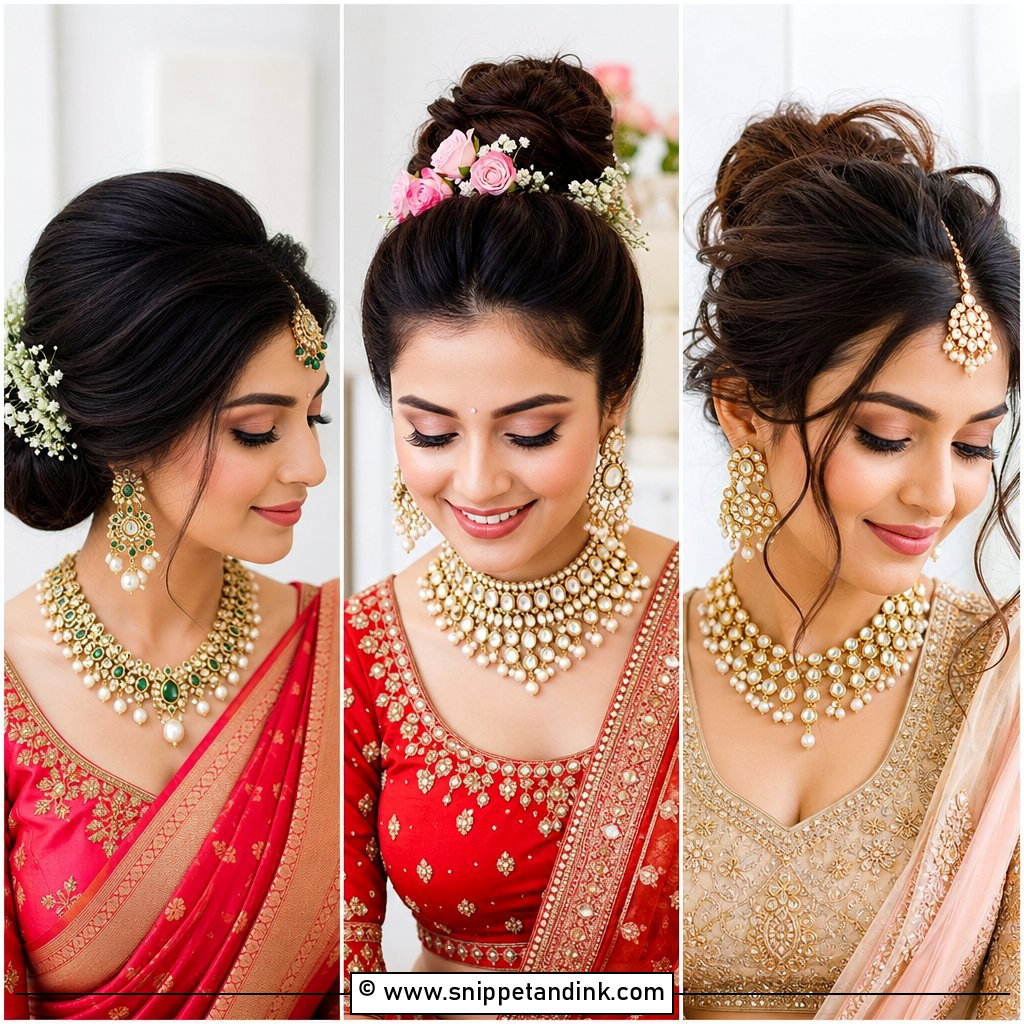
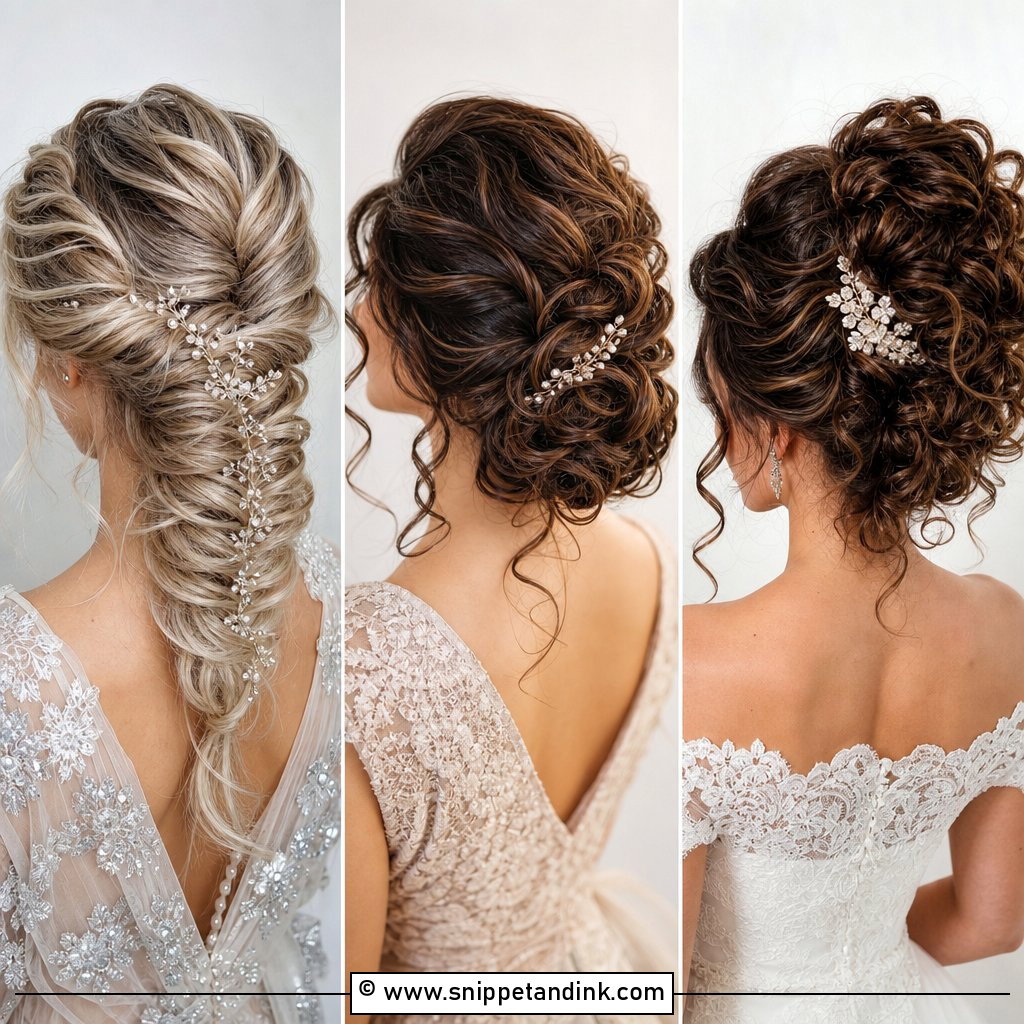
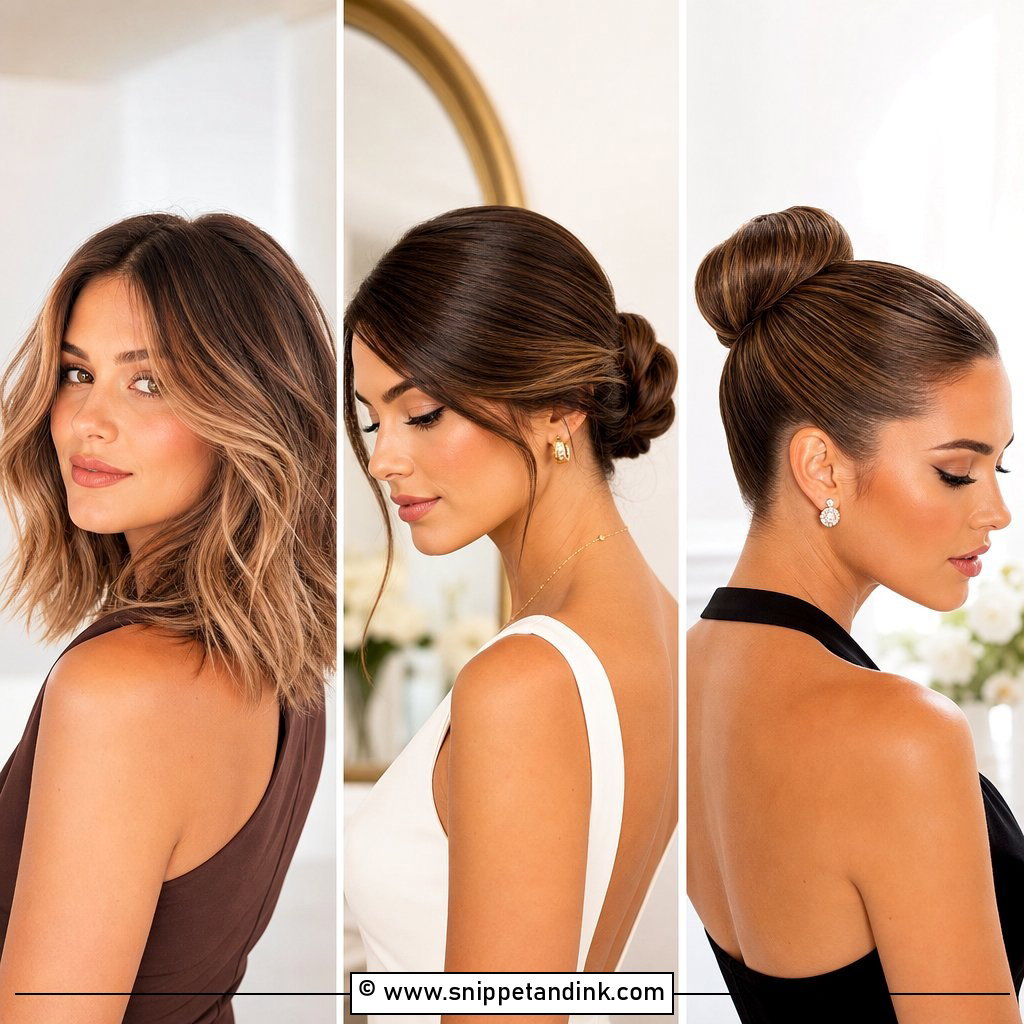
20. Mother Of The Bride Updo With Loose Curls
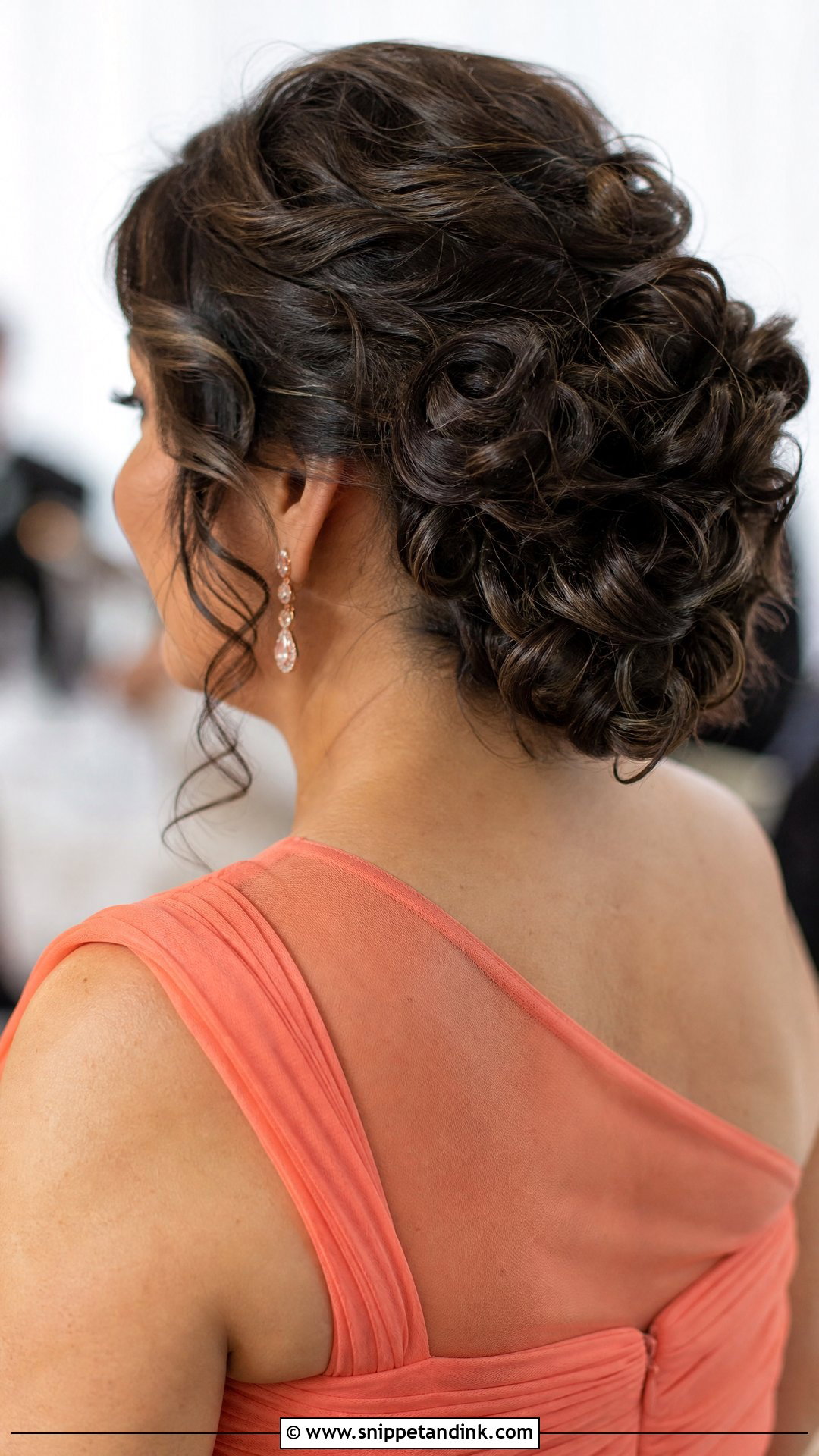
Loose curls pinned up keep movement in the style without letting hair fall onto the dress. I gather them into a low bun, tuck them into a side chignon or pin them softly through the back. Barrel size decides the mood: a larger barrel gives soft bends, a small one gives tight ringlets that look dated pinned up. Layered hair blends in easily. I leave one or two curls near the face so she isn’t completely pulled back.
Silver and Gray Hair Pins Up Differently
Gray hair often has a coarser, wirier texture than the colour it replaced, and it tends to be drier. That changes how I style it. It can resist curling, so I work in smaller sections with a little more heat protection, and it can frizz once the room warms up, so a smoothing cream through the lengths before styling helps a lot.
Colour is the other thing to watch. Silver can look slightly yellow under warm venue lighting, so if you use a purple or blue toning shampoo, do it a few days before the wedding rather than the night before, when it can leave a faint tint. Skip heavy oils on the day, since they flatten white hair and show as greasy patches under camera flash.
Getting it out at the end of the night
An updo that went in with thirty pins has to come out with thirty pins. Take them out slowly, starting from the bun, and don’t brush until most of the spray has been worked loose with your fingers. A little conditioner on dry ends before you shower makes the tangles from back-combing much easier to undo, and your scalp will thank you.
Your Trial Is Where the Real Decision Happens
A low chignon is the safest place to start, and a braided bun, French twist, side bun or curly updo adds personality from there. Fine hair needs texture and gentle lift; thick hair needs a shape that spreads its weight. Pearls, pins and small clips can finish the look, as long as you add them slowly. Above all, book a trial a few weeks out and wear it for the afternoon. That’s when you’ll notice whether it pinches, whether your glasses fit, and whether the front still looks right by evening.
You'll Like These Ideas:


Leave a Reply