
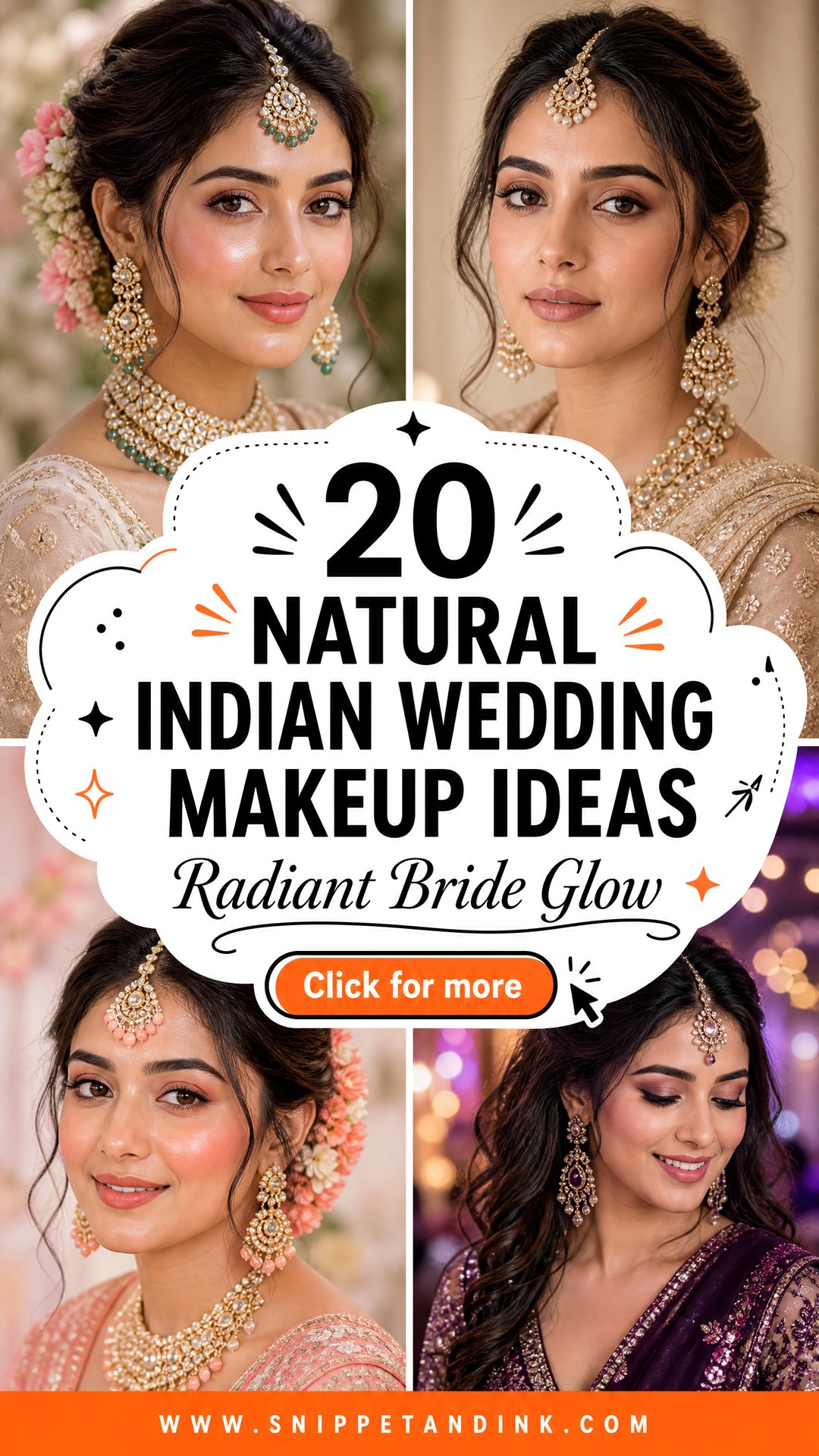
A natural look at an Indian wedding is harder to do than full glam, not easier. There’s nowhere to hide a base that oxidises, a lip that bleeds or a blush that vanishes under stage lights. Most of the faces I paint for 2026 weddings are skin-first: a thin, long-wearing base, softly lined eyes, warm cheeks and a lip that sits with the outfit rather than fighting it. The ideas below cover the bride, her sisters and the guests, across haldi mornings, mehndi afternoons and evening receptions, with notes on what I actually do to make each one last.
Why Foundation Turns Grey on Warm Indian Skin
The most common problem I fix at trials isn’t the eye or the lip. It’s a base that looks ashy in photos. Many brides pick foundation on the back of the hand, in shop lighting, and end up a shade too light or too pink. On warm, olive and golden skin that reads as grey, especially next to a red or maroon outfit.
- Swatch three shades on the jawline and check them in daylight, not under shop lights. The one that disappears is right.
- Match the neck and chest. A bridal blouse shows the décolletage, and a mismatch shows clearly in every full-length shot.
- Use a peach or orange corrector under the eyes and around the mouth before foundation. Covering dark areas with more foundation alone is what greys them out.
- Test your setting powder with flash. Some heavily brightening powders bounce white in flash photography; a quick phone photo with flash on will show it.
Foundation also darkens a little as it oxidises over the first hour. Give it time on the skin before you judge the match.
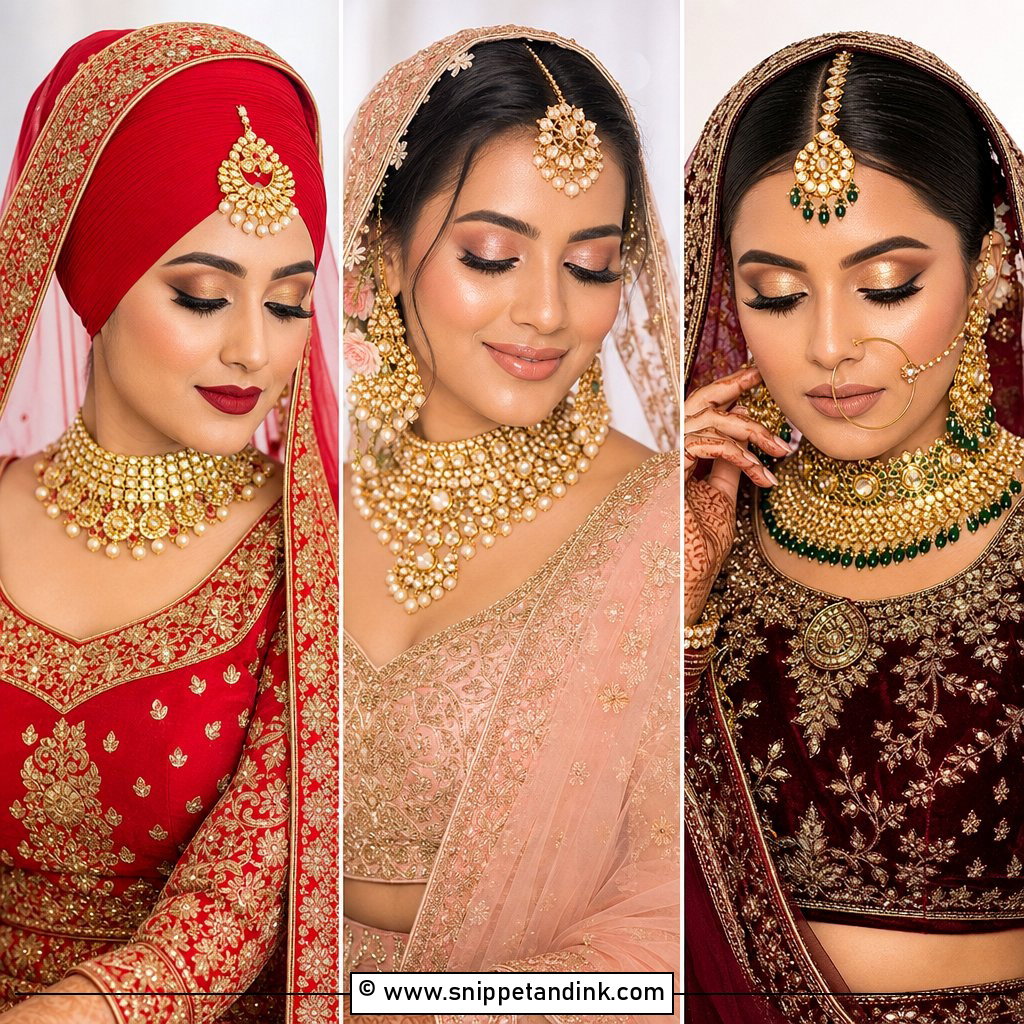
1. Natural Indian Bridal Makeup
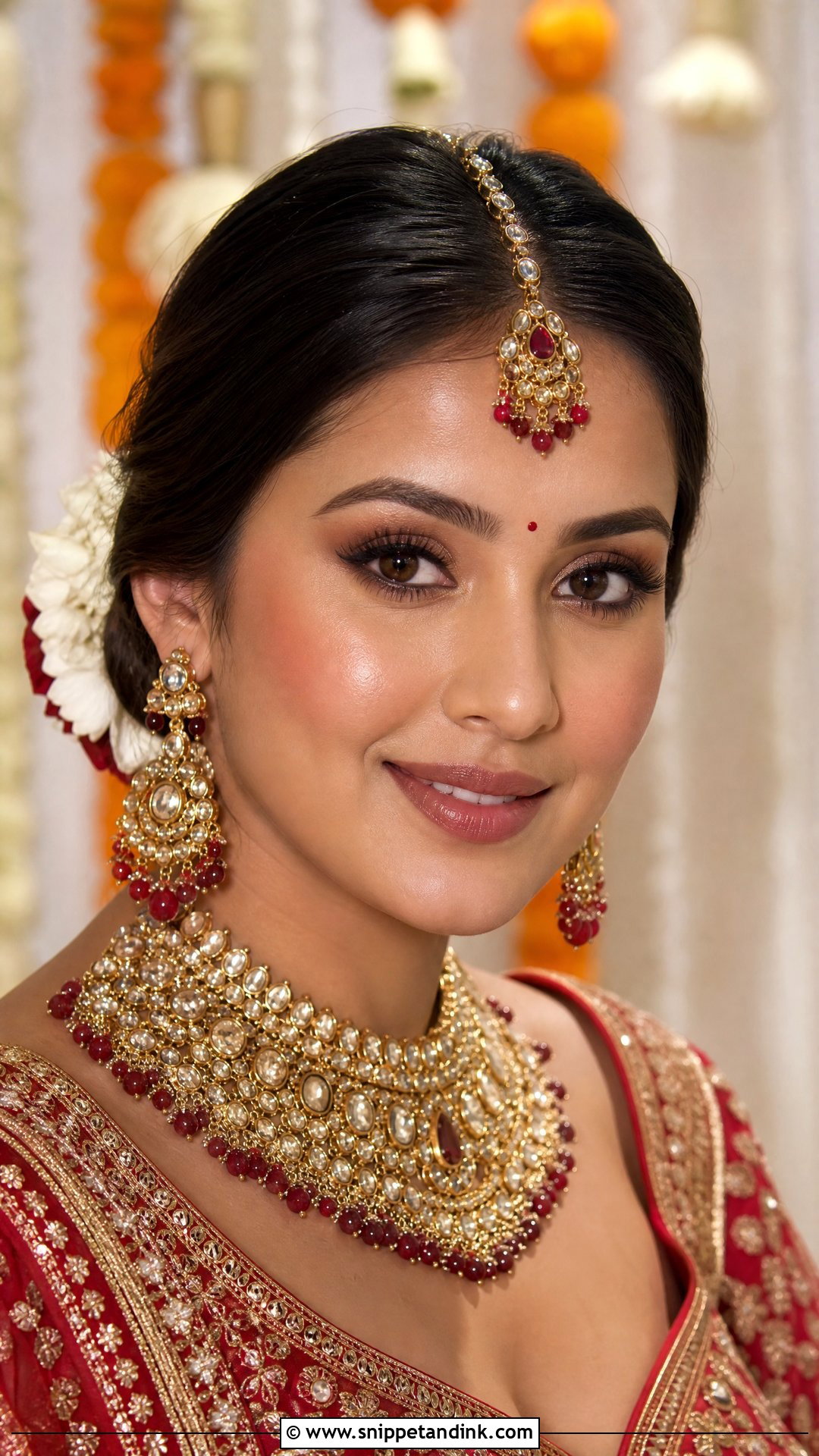
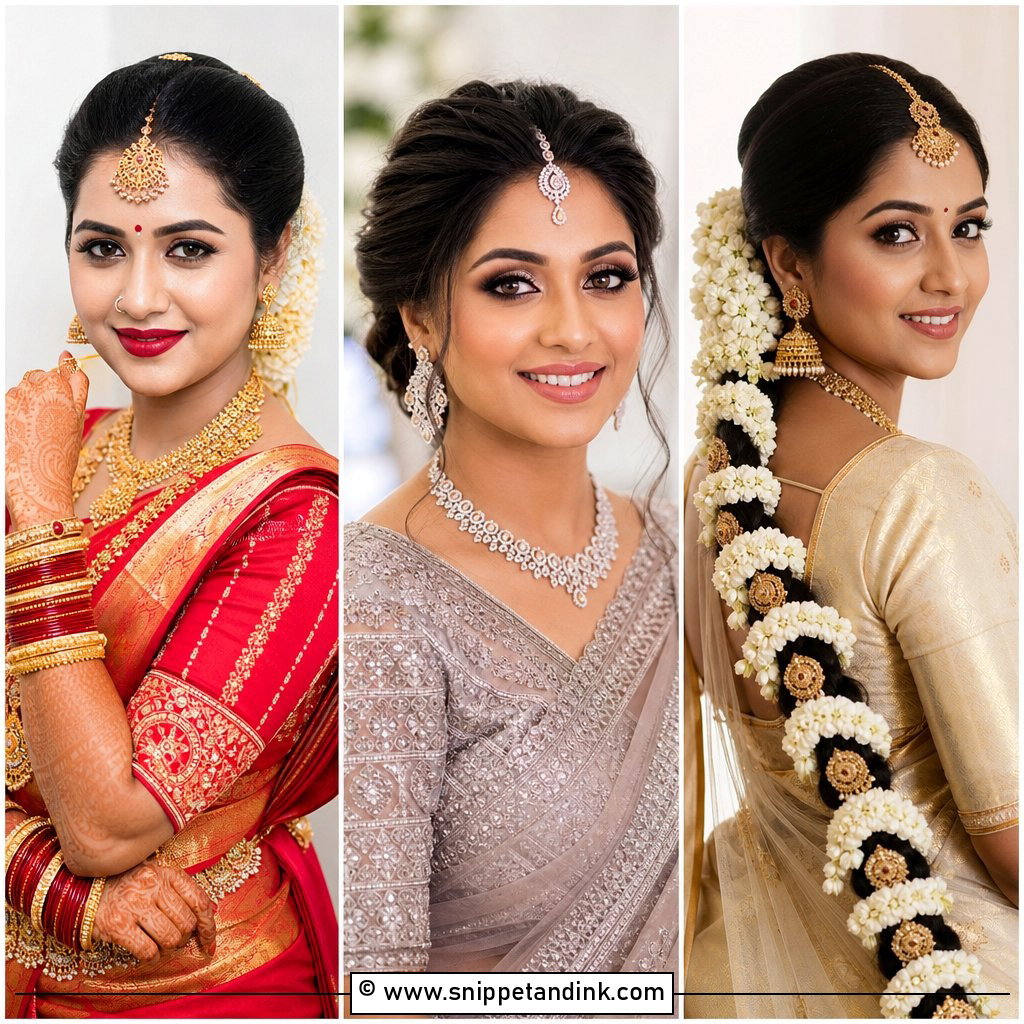
For a bride who wants to look like herself, I spend most of the time on skin, not colour. Hydrate first, then a thin long-wear base, with colour correction only on dark circles or around the mouth. The eyes get soft brown shadow, a tightline and fluttery lashes; brows are filled but never blocked into a solid shape, because a heavy brow ages the face in close-ups. A peach or caramel blush and a champagne highlight on the cheekbone bring the glow. I match the lip to undertone first, outfit second: rose-brown on cooler skin, soft terracotta on warmer. It sits well with red and ivory bridal outfits alike.
2. Soft Glam Indian Wedding Makeup
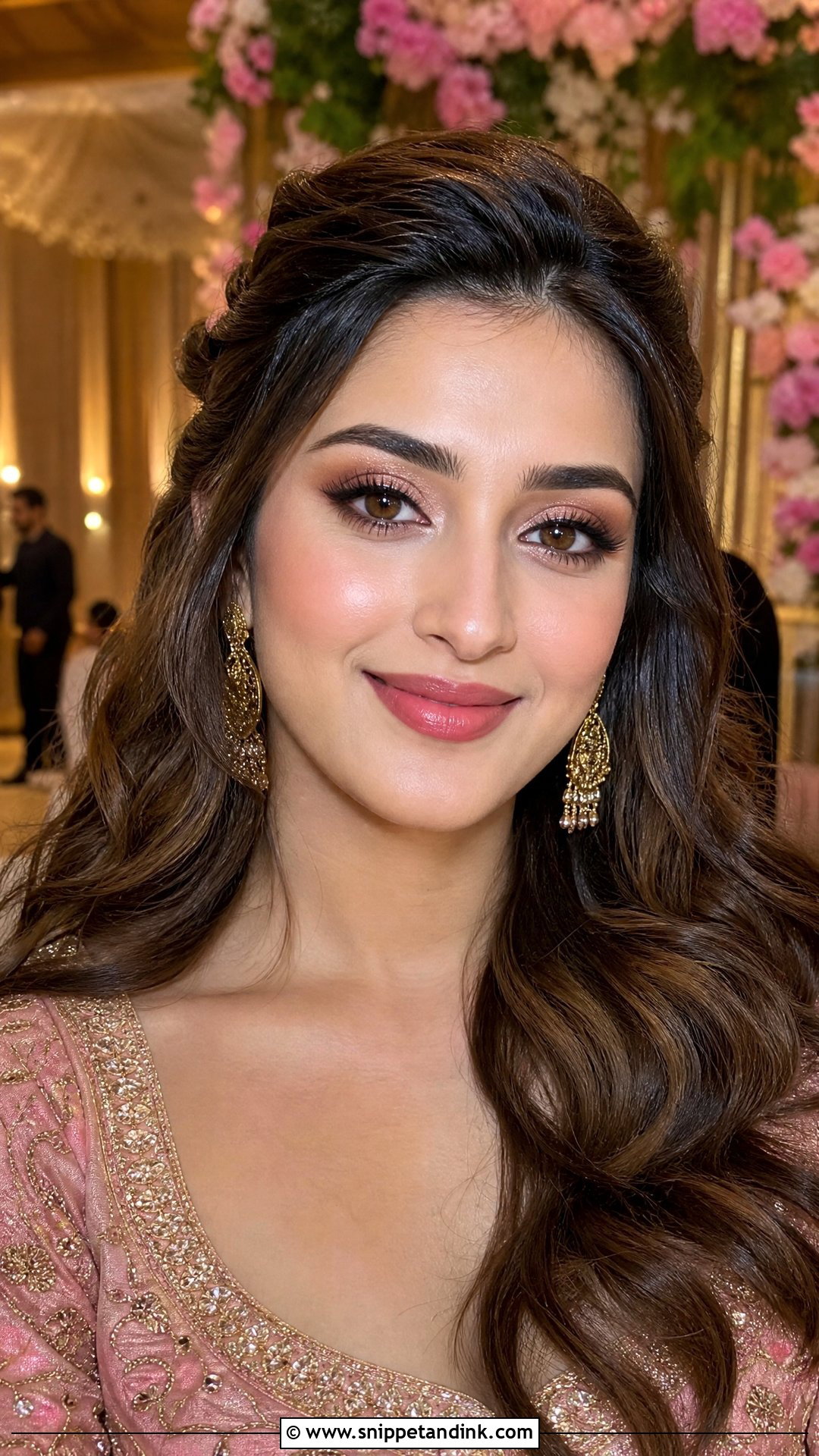
Soft glam sits between no-makeup makeup and full bridal drama, and it’s the look I’m asked for most at multi-day weddings. The base is smooth and slightly luminous with gentle contour. Warm matte brown goes through the crease and a soft shimmer on the lid, then a thin liner hugging the lashes. Individual lashes or a wispy strip read well on camera without weighing the eye down by hour six. Peach blush with a touch of bronzer keeps the cheeks warm, and a satin brown-pink lip finishes it.
3. Dewy Indian Wedding Makeup
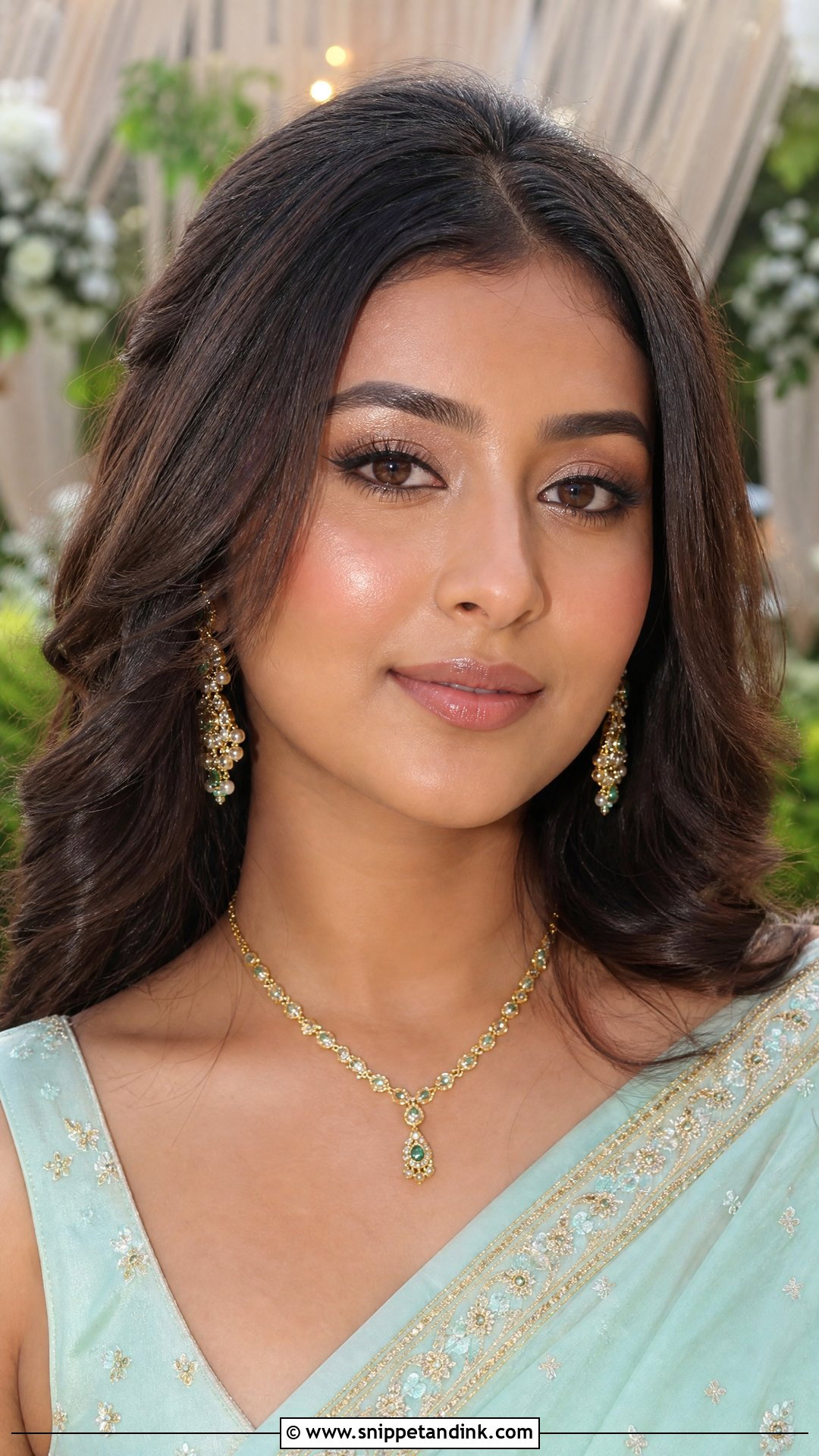
Dewy skin is lovely in daylight, but the glow has to be placed, not spread. I use a hydrating primer and a light foundation, then powder only the nose, smile lines and under the eyes, so the cheekbones keep their shine and the T-zone doesn’t turn greasy. Champagne shadow, curled lashes and brushed-up brows keep the eyes clean. Cream blush in coral or rose melts into the skin better than powder here. A glossy nude lip completes it. I wouldn’t put this on very oily skin for an outdoor afternoon; it slides by mid-ceremony. With pastel lehengas and floral sarees, though, it looks fresh.
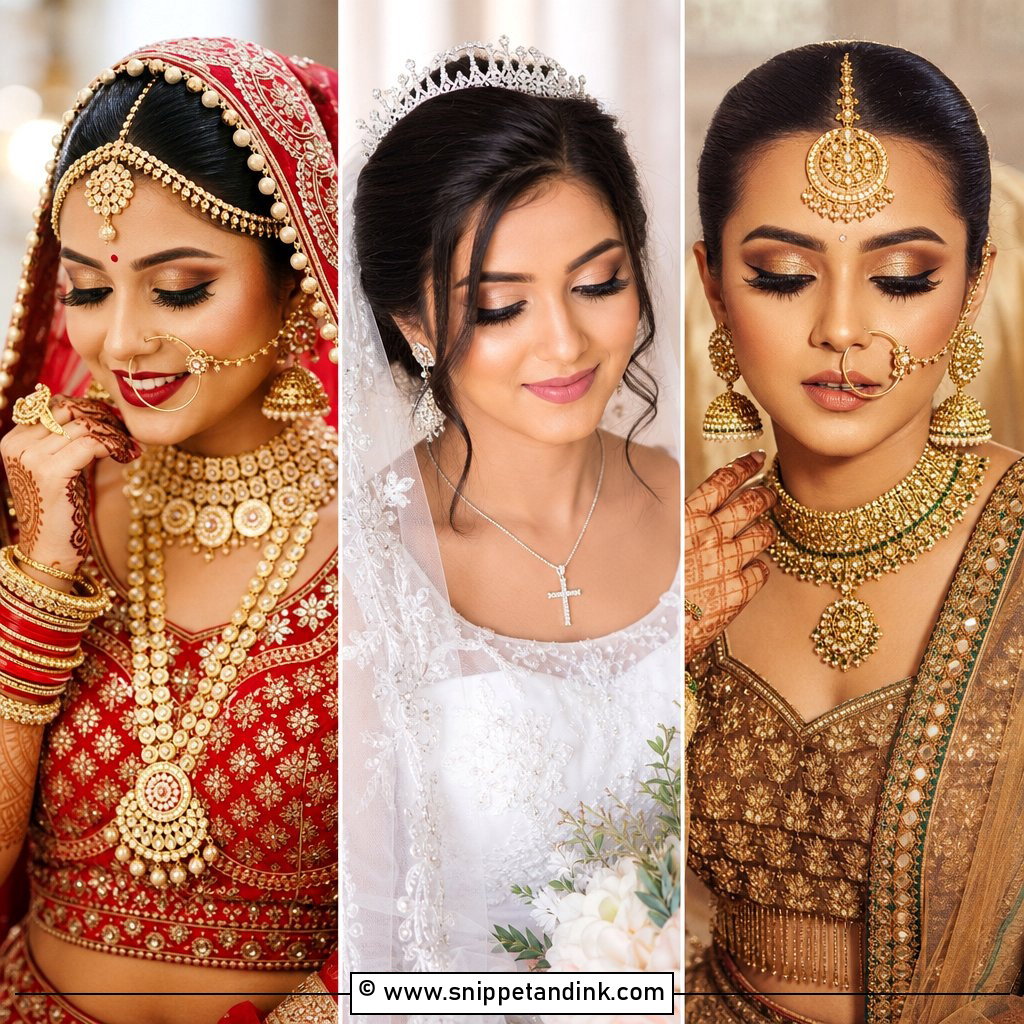
4. Matte Natural Indian Wedding Makeup
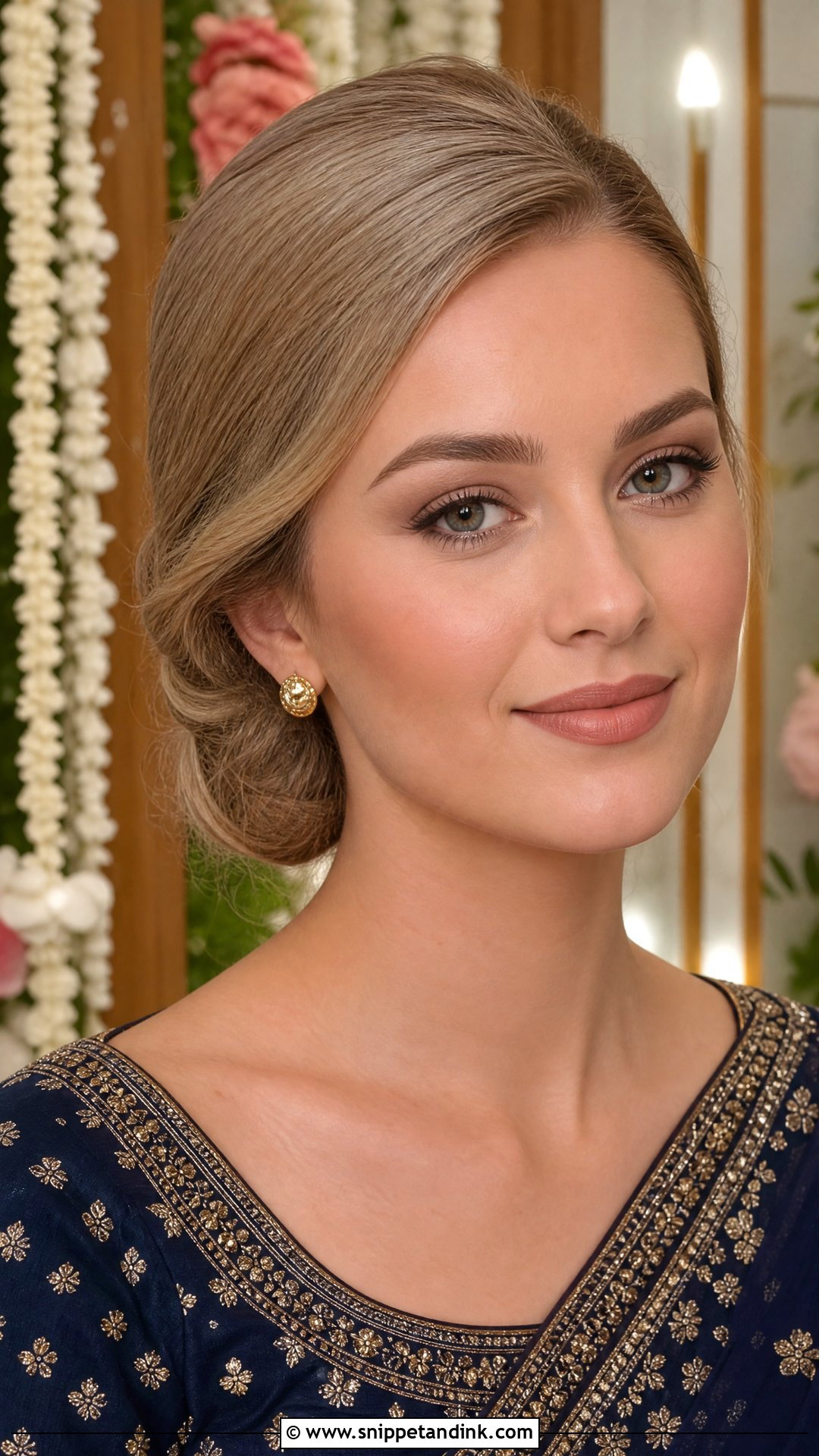
Matte is my choice for humid weather, oily skin and long ceremonies under hot lights. The risk is a flat, mask-like face, so I keep every layer thin: a pore-smoothing primer, foundation pressed in with a damp sponge, and finely milled powder. Matte cocoa or taupe on the eyes with a softly blended liner. Skip the harsh contour; a muted rose or terracotta blush gives shape on its own. A cinnamon or pink-beige matte lip gives the face its structure. Bridesmaids and guests do well with this one too, since it photographs cleanly in group shots.
5. Nude Indian Wedding Makeup
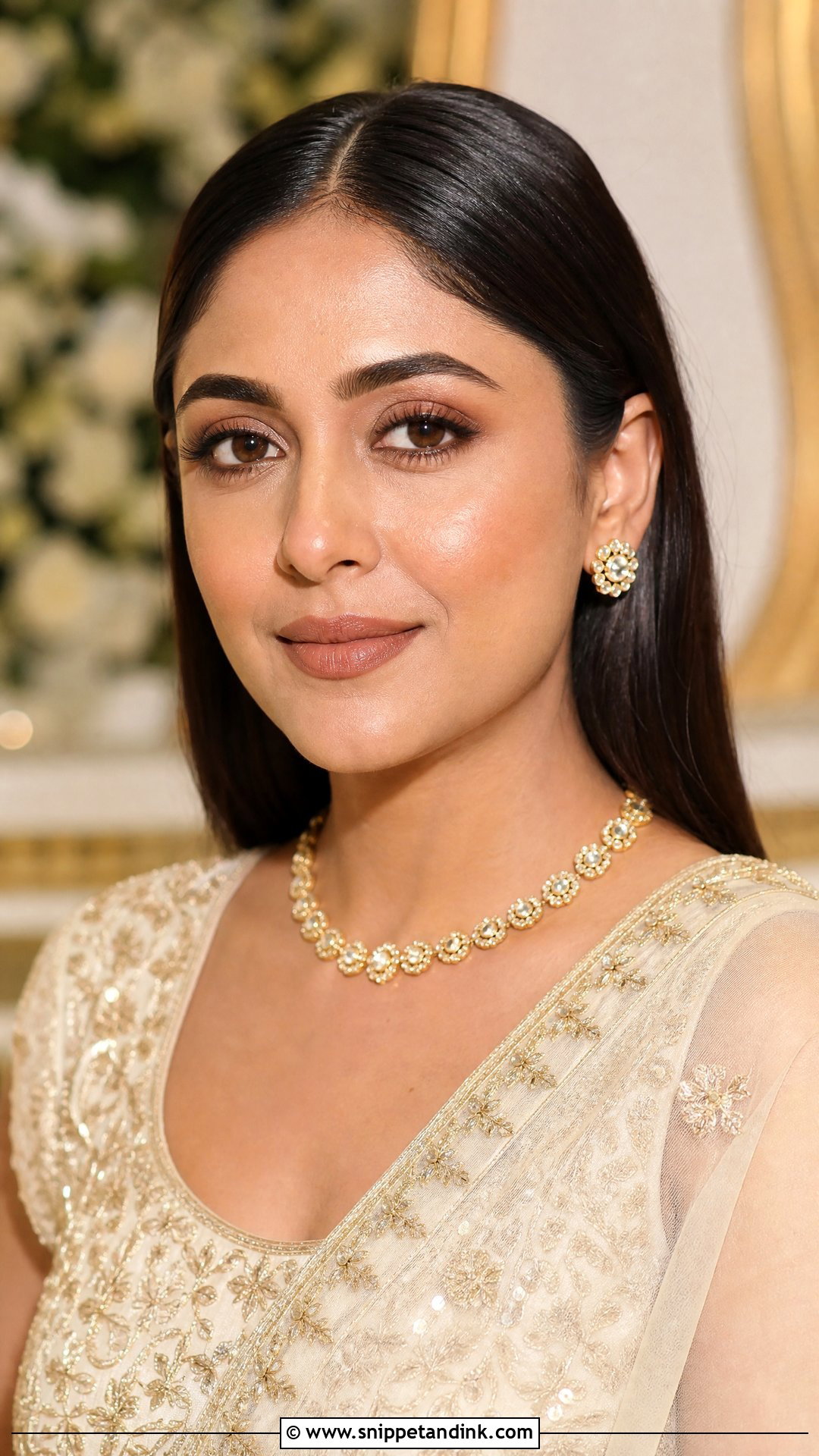
A nude face goes wrong when the shades are paler than the skin. Indian skin almost always needs warmth in a nude look, otherwise the bride looks tired next to an embroidered lehenga. I use a skin-like base, softly bronzed cheeks, and caramel or taupe on the lids, with a thin liner and natural lashes. For the lip I reach for pink-brown or mocha, never a beige that greys out the mouth. A touch of highlight at the inner corners and cheekbones. With heavy embroidery, this is the version that lets the outfit lead.
6. Peach Indian Wedding Makeup
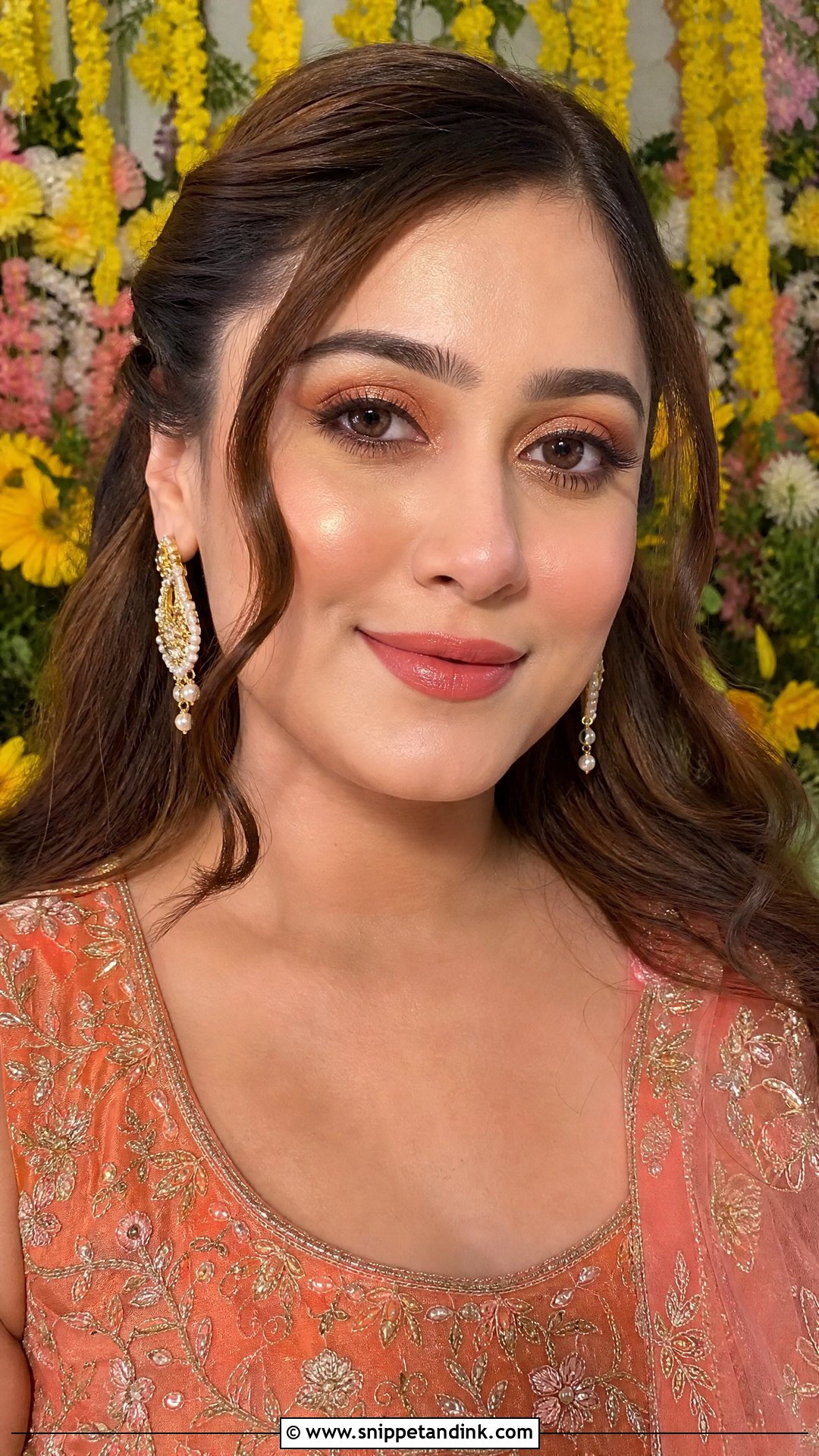
Peach warms the face without making it look made-up, which is why it suits mehndi, haldi and daytime weddings. A light-to-medium base with a natural finish, peach or apricot shadow across the lid, and brown liner instead of black. The peach blush goes high on the apples so it lifts rather than sits low. A golden highlight adds the festive note. On deeper skin I deepen the peach toward apricot or coral, because pale peach can look chalky. Yellow, mint and ivory outfits love this palette.
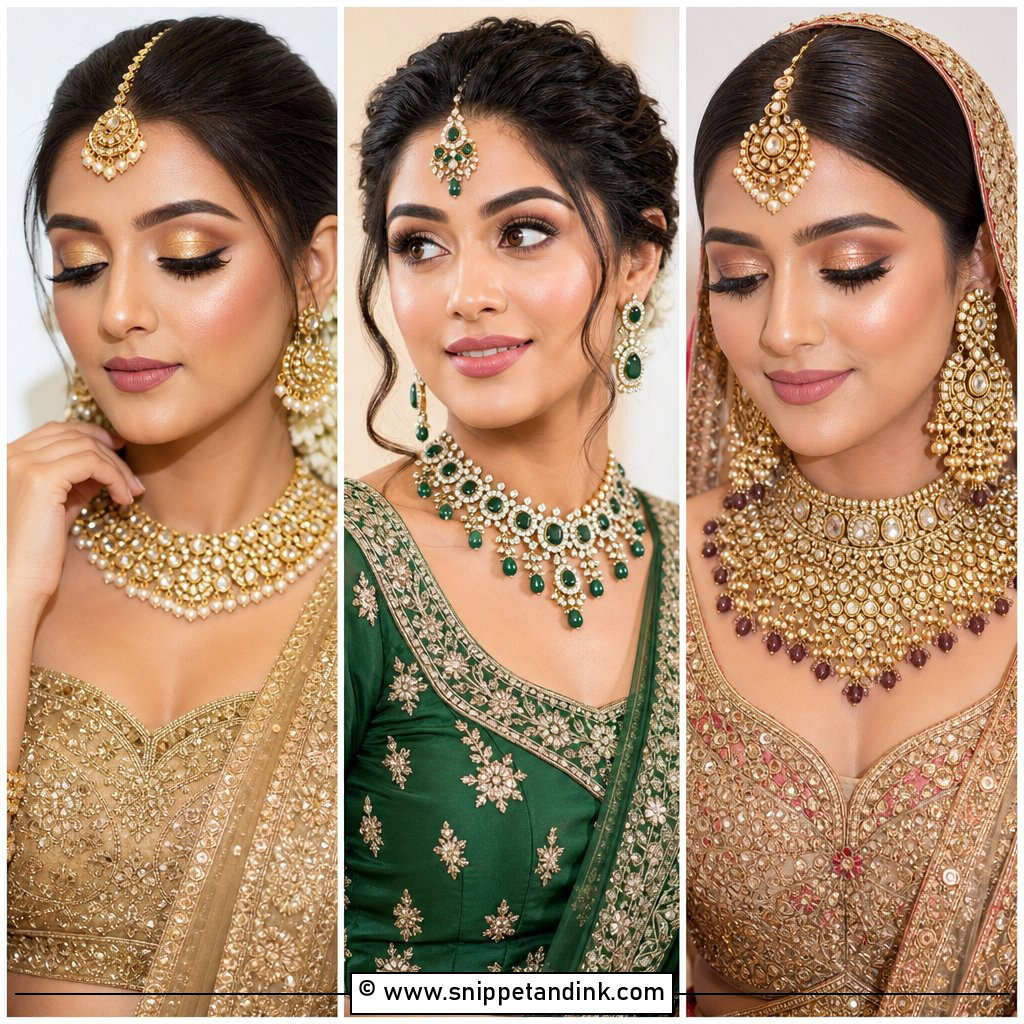
7. Rose Gold Indian Wedding Makeup
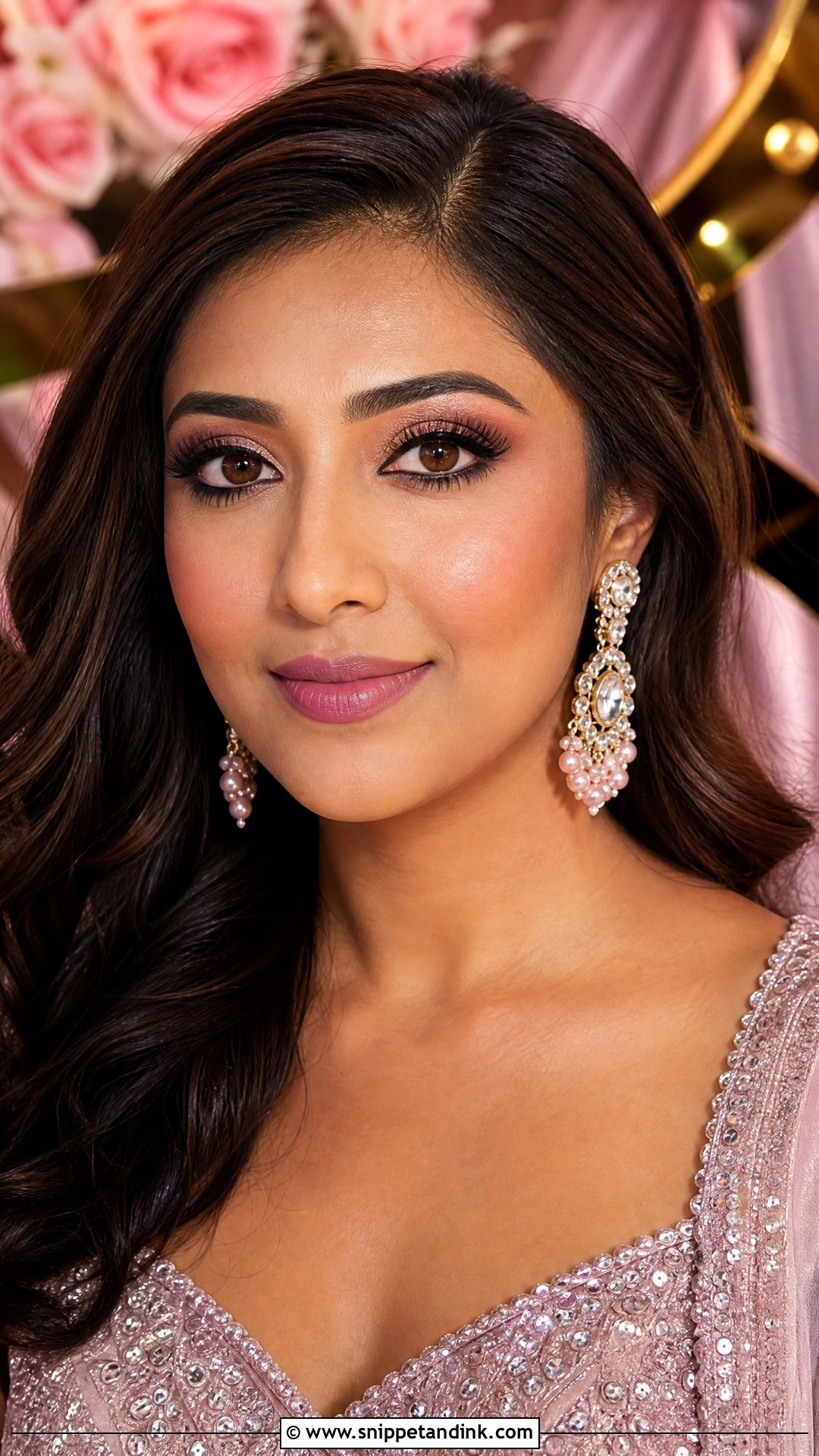
Rose gold flatters a wide range of skin tones because it carries pink, gold and bronze at once. I keep the base satin, contour lightly and add rosy blush. On the eyes, warm brown in the crease and rose gold shimmer pressed onto the centre of the lid with a fingertip, which gives more payoff than a brush. Liner stays thin and lifts slightly at the outer corner. Soft lashes that don’t cover the shimmer. A mauve-pink lip balances it. I use it for engagement ceremonies, sangeet nights and receptions, and for bridesmaids in blush or metallic outfits.
8. Brown Smokey Indian Wedding Makeup
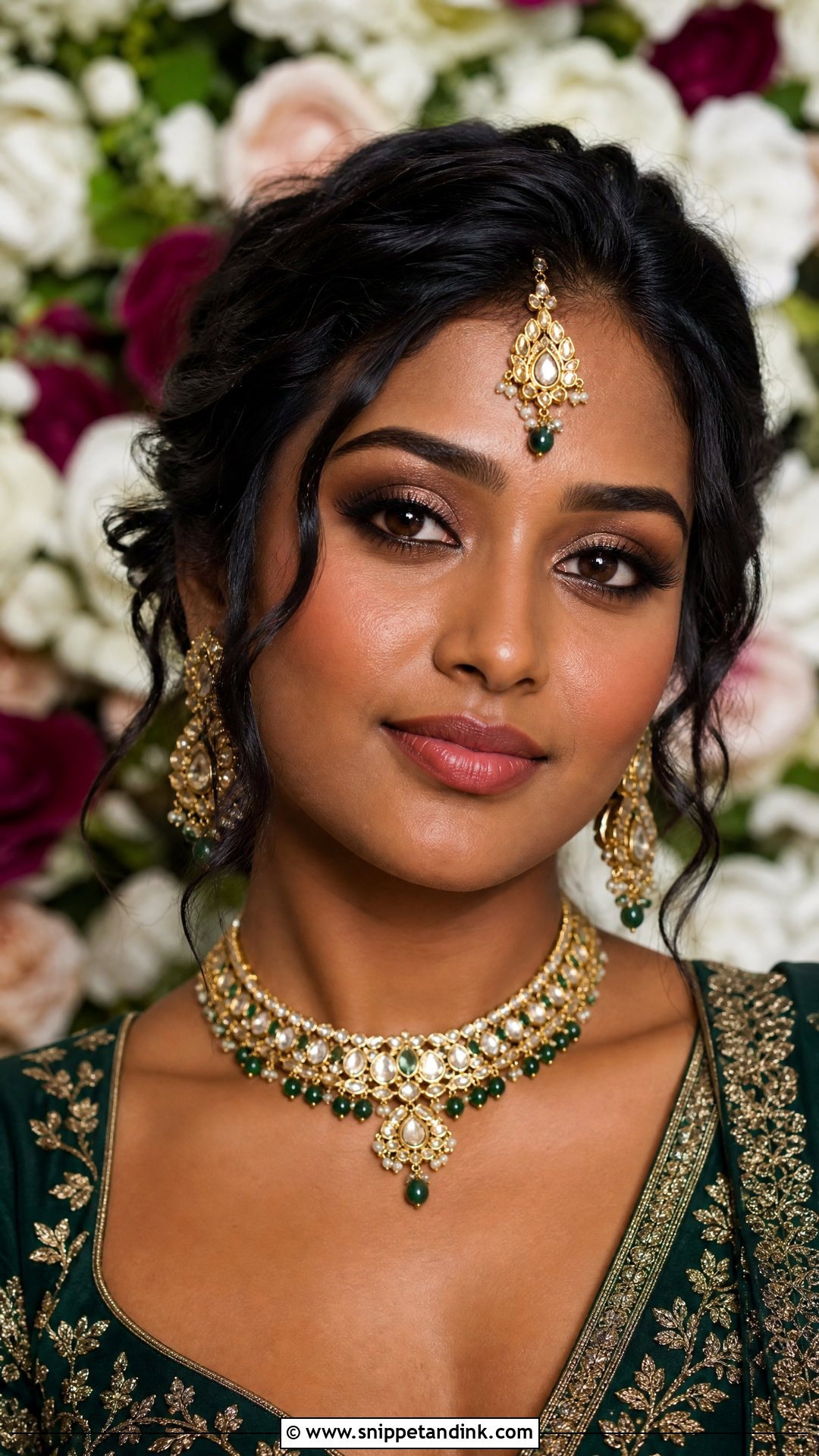
A brown smokey eye gives depth without the harshness of black, and it is far more forgiving if it smudges during a long night. Build it with chocolate and bronze, darkest at the lash line, and keep the edges diffused. A little shimmer on the lid suits an evening event. With this much going on at the eyes, the skin stays clean: soft bronzer, warm blush, a caramel rose lip. This is my reception go-to when a bride asks for drama that still reads as her own face.
9. Gold Indian Wedding Makeup
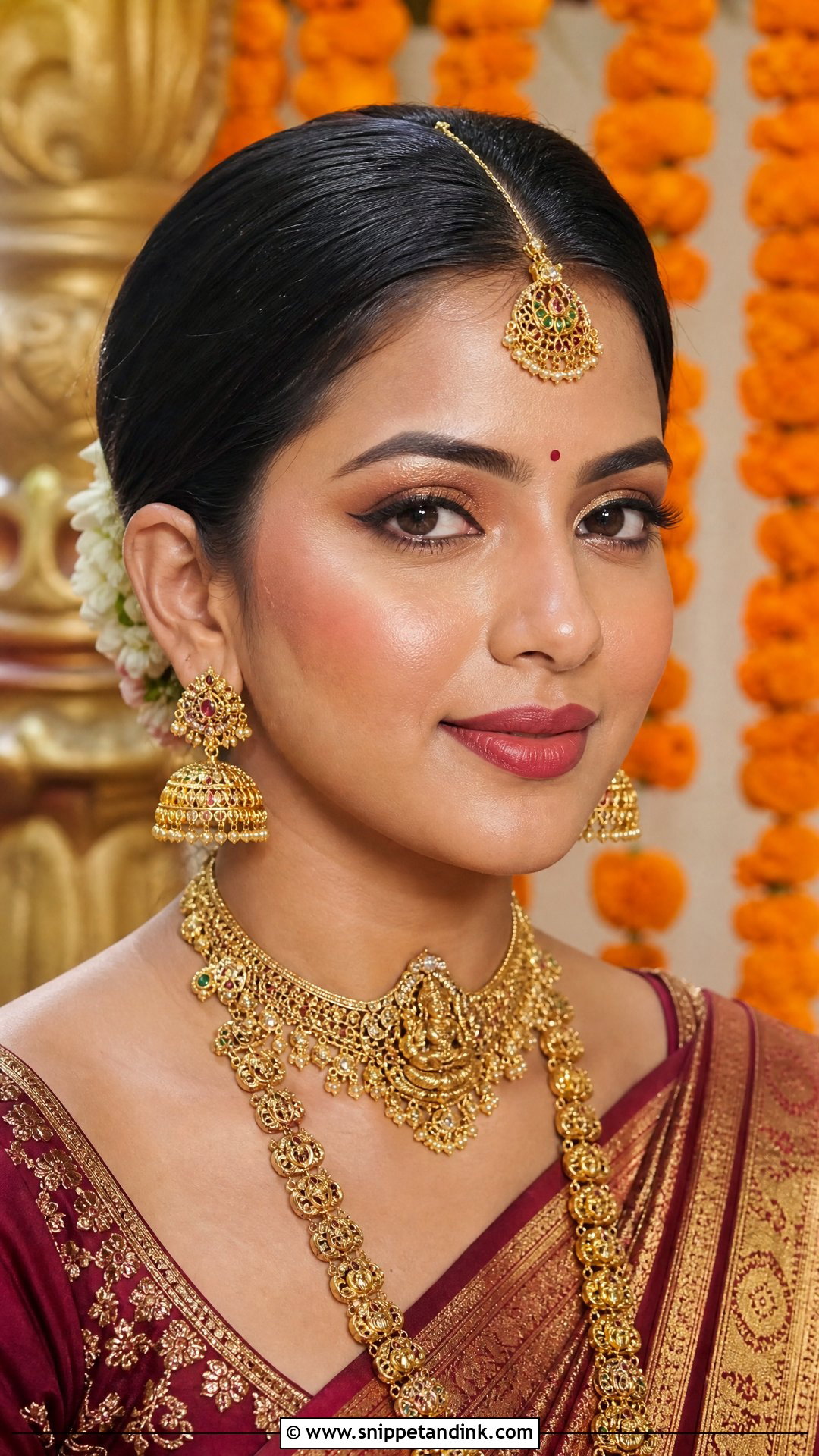
Gold is classic at Indian weddings, and the difference between natural and costume is the texture. I use a sheer gold shimmer instead of chunky glitter, which catches flash and can look like dots in photos. Warm bronze in the crease adds shape, with a thin wing or smudged brown liner. The complexion is warm, with terracotta blush and a light golden highlight on the cheekbones and nose bridge. A rose-brown or warm nude lip. Red, maroon and emerald outfits with traditional gold jewellery carry it best.
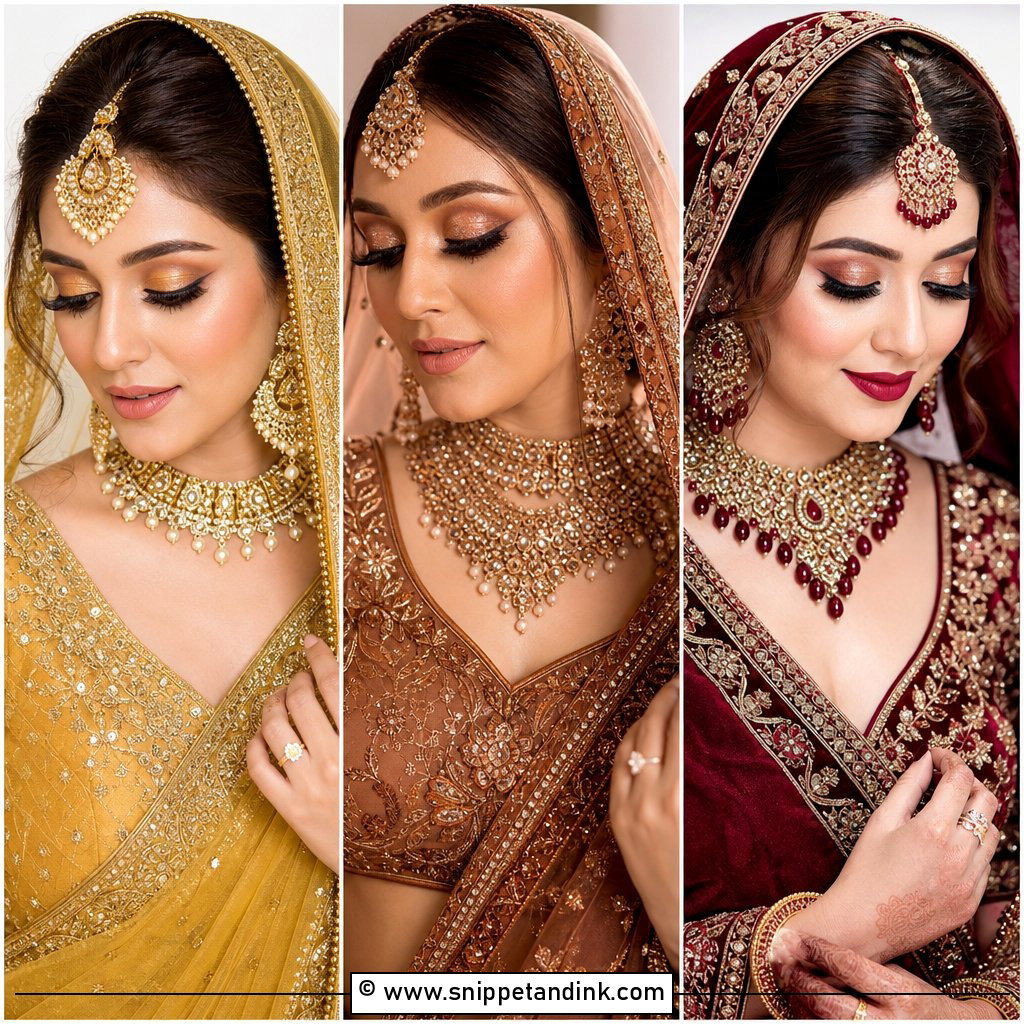
10. Simple Indian Wedding Guest Makeup
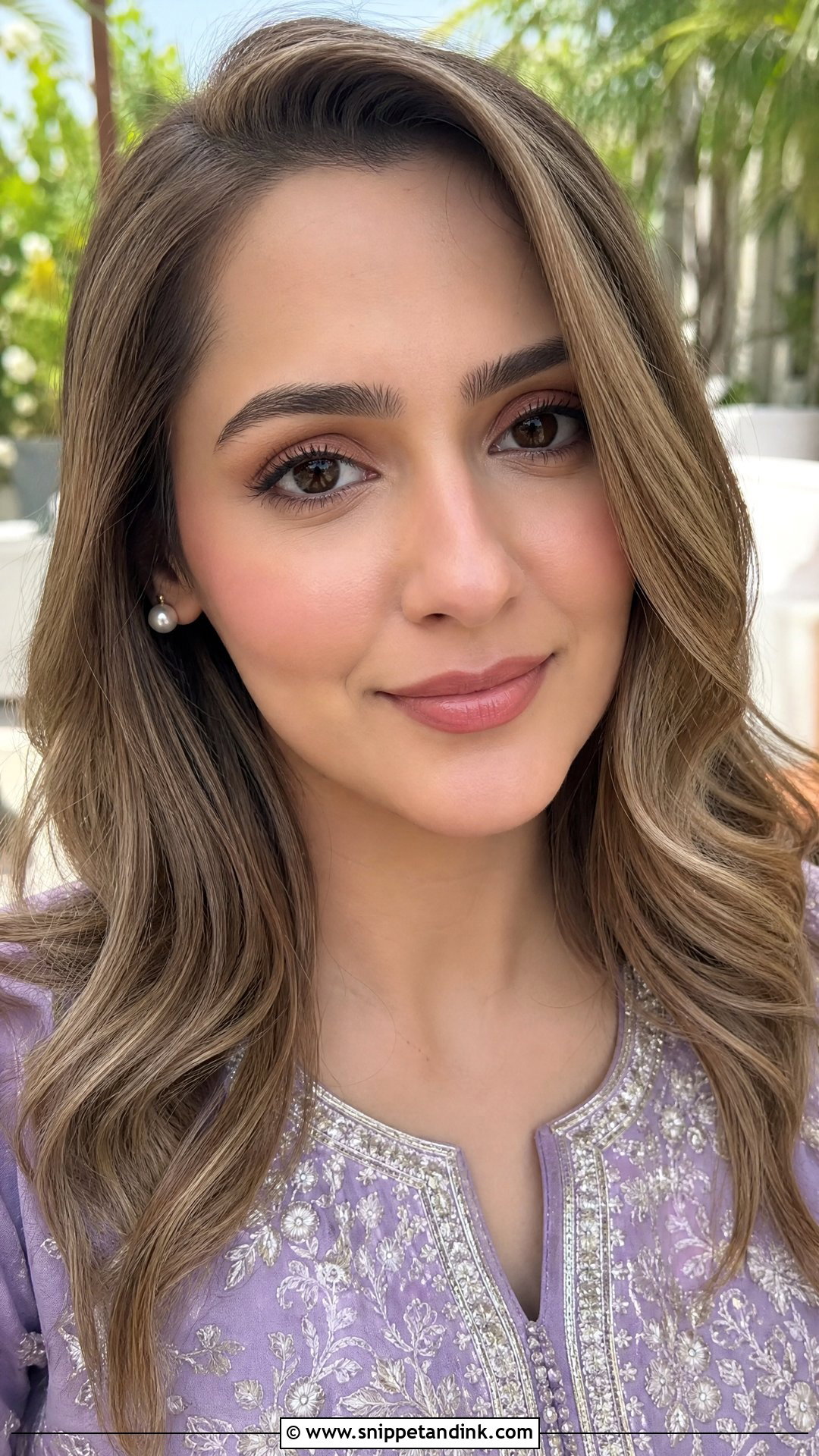
As a guest, you want a face that holds for hours without a mirror check. A tinted moisturiser or thin foundation, concealer only where needed, one neutral shadow, brown liner, mascara and tidy brows. Match the blush to your outfit family: peach with warm colours, rose with cool ones. A soft highlight, and a satin or matte lip in nude pink or muted coral. It’s easy to do at home in twenty minutes and holds up at morning ceremonies and smaller functions.
11. Minimal Indian Bridal Makeup
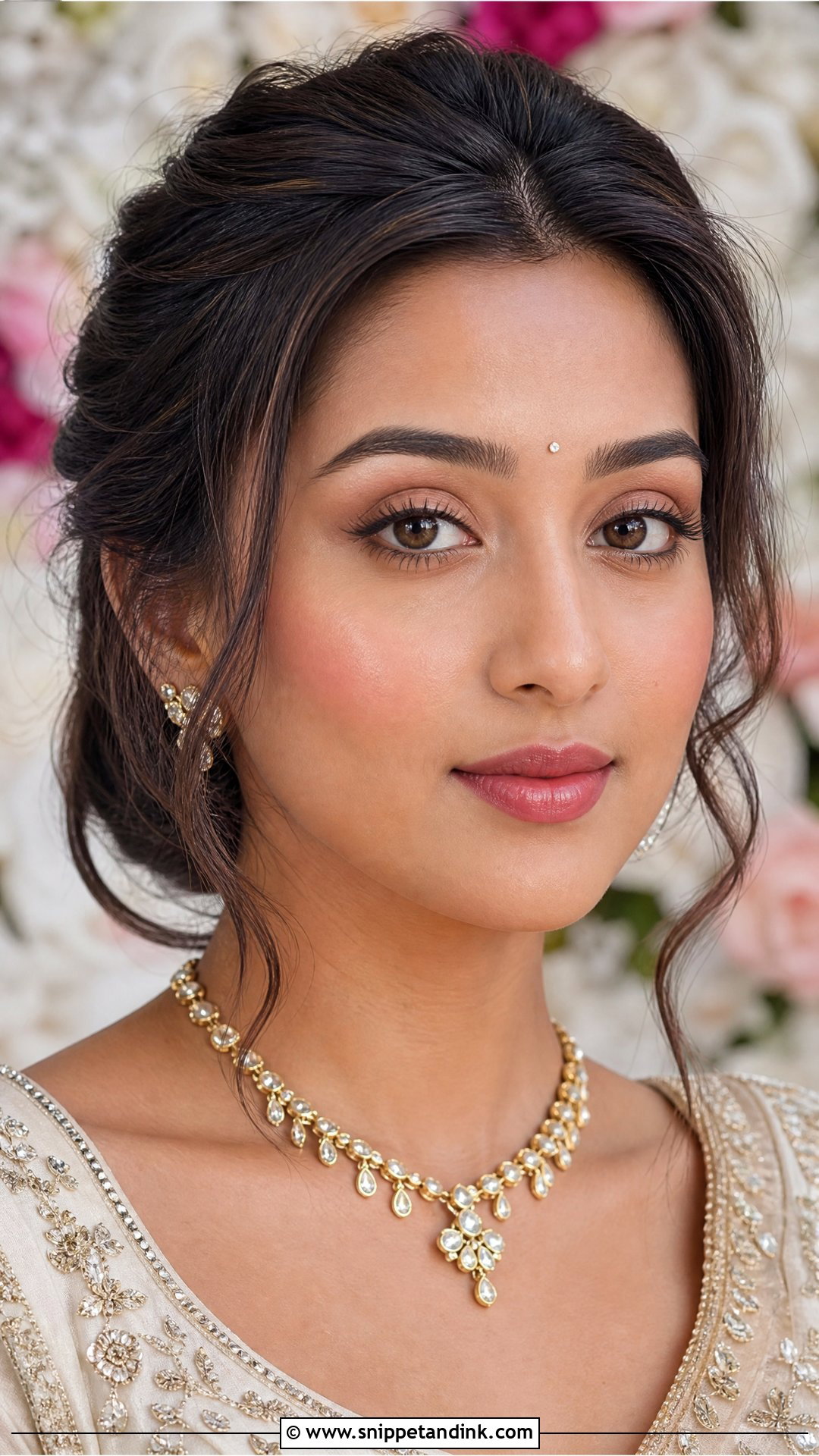
Minimal bridal makeup is not bare; it’s precise. The foundation has to match the neck and chest, not just the face, because a bridal blouse shows the décolletage and any line at the jaw shows in every portrait. I correct darkness lightly rather than piling on coverage. Taupe or brown shadow, a tightlined upper lash line and natural lashes. Cream blush in rose or berry gives dimension, and a satin lip close to the bride’s own colour. It’s the right call for brides who dislike the feel of heavy makeup and still want to look finished in photographs.
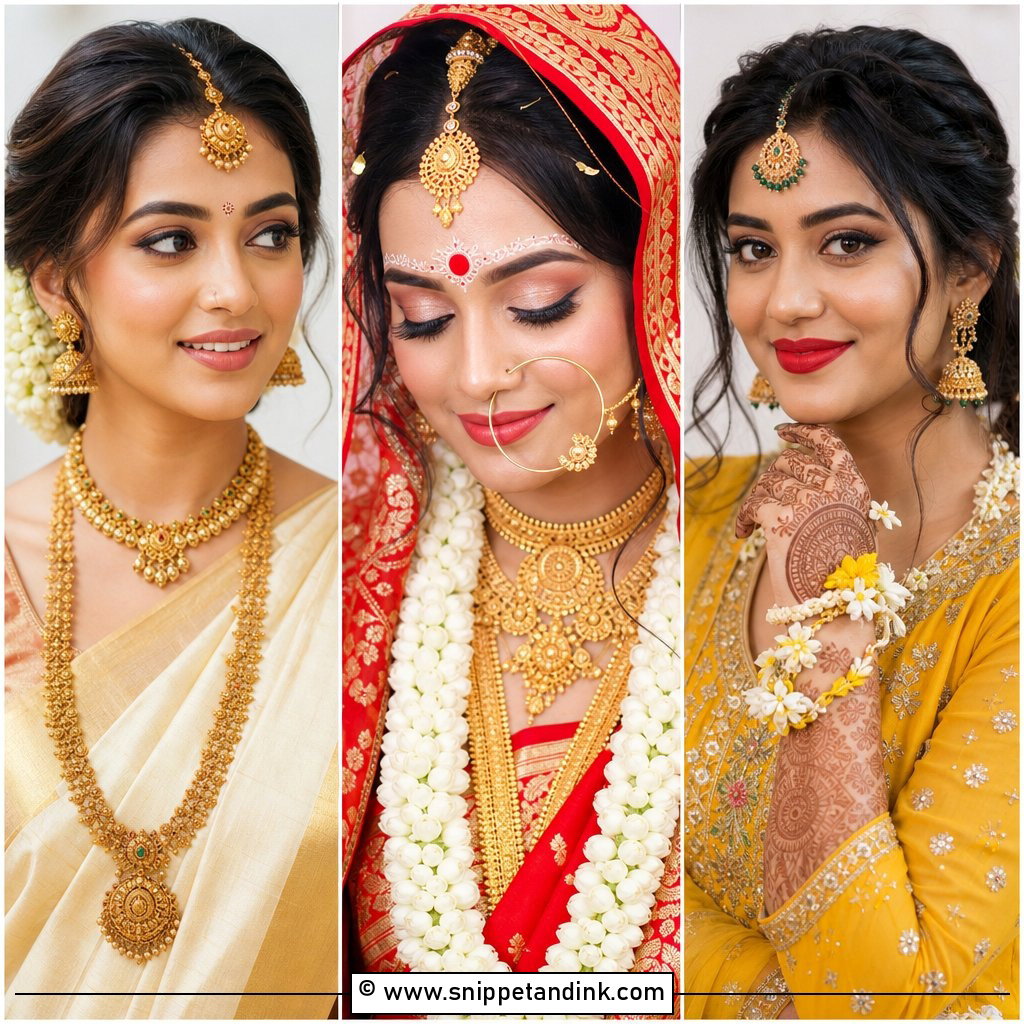
12. South Indian Wedding Makeup
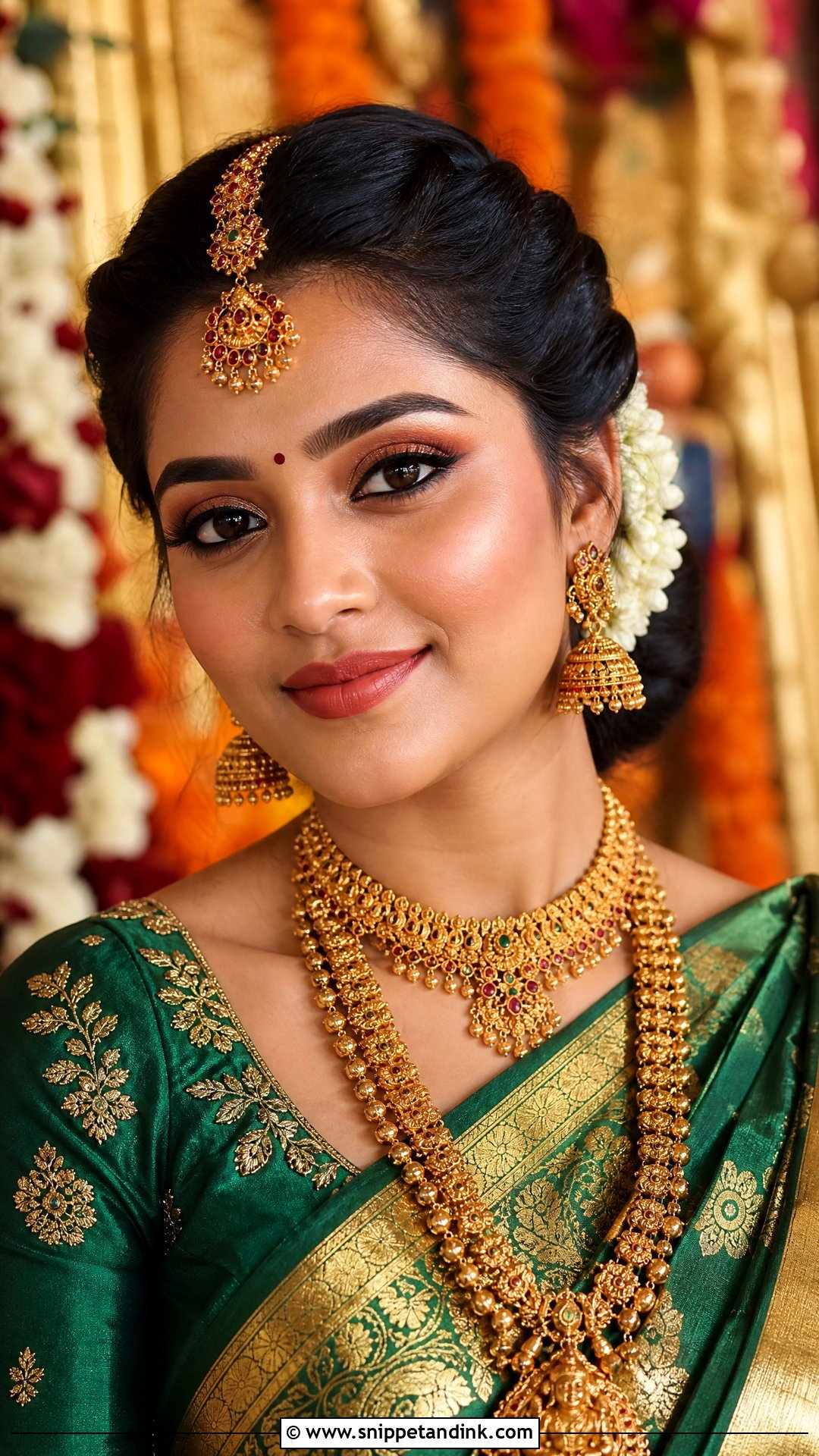
South Indian brides usually wear silk sarees, gold temple jewellery and jasmine in the hair, so the makeup has competition for the light. I keep the base radiant but controlled and go easy on highlighter, because the silk and gold already reflect plenty. Golden bronze shadow, softly defined kohl, lifted lashes. A brick or rose blush adds colour without overpowering. Rosewood or red-brown lipstick suits Kanjeevaram sarees in red, mustard, royal blue and deep pink. Kohl smudges in heat, so I set it with a matching shadow pressed over the top.
13. North Indian Wedding Makeup
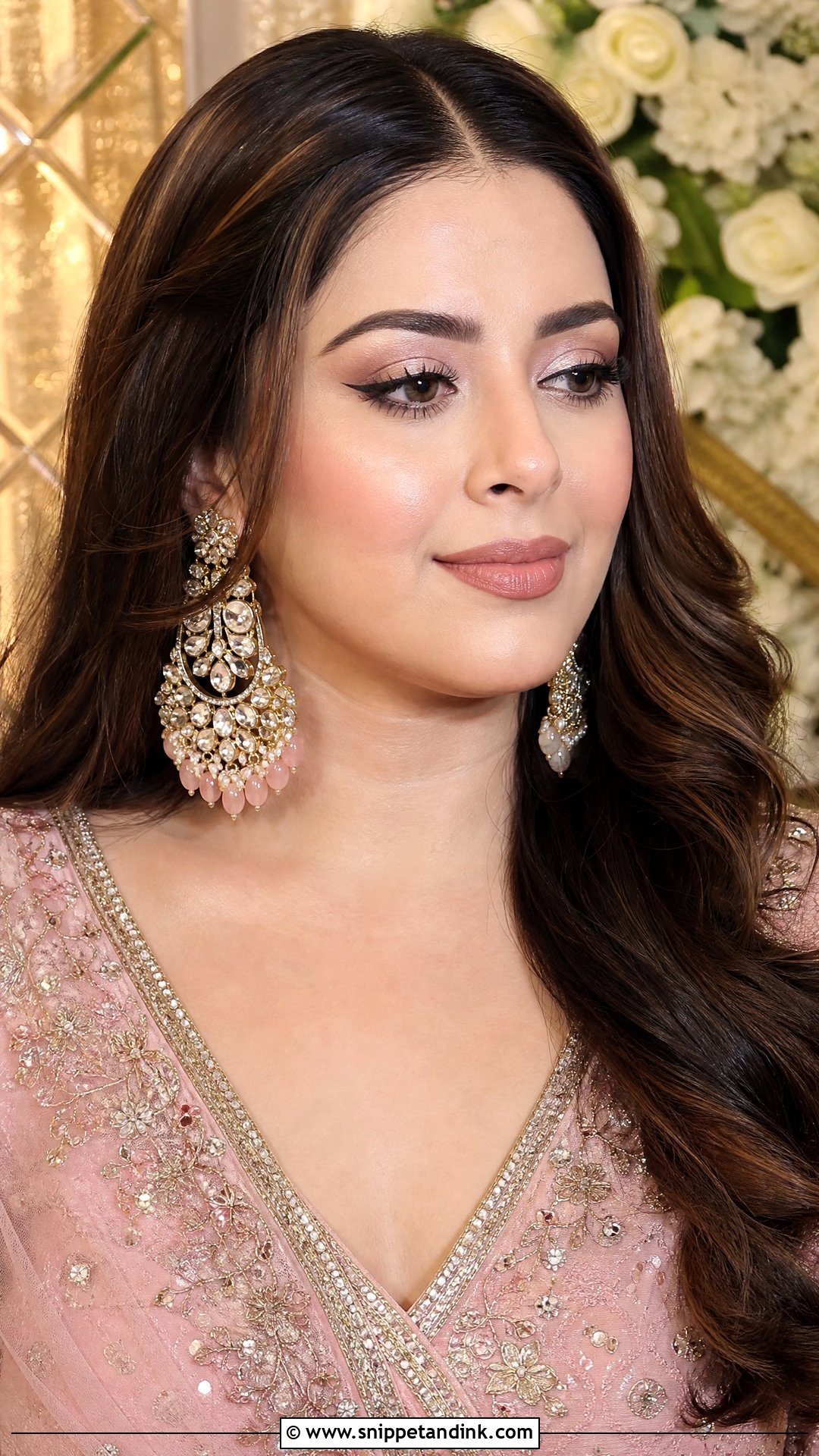
North Indian weddings mean lehengas, heavy dupattas and layered jewellery, so the face needs enough definition to hold its own. A perfected base with a natural matte or satin finish. Champagne shimmer, warm brown in the crease and a slim winged liner. The lower lash line is softly smoked rather than rimmed; a full lower rim closes the eye in photos. Blush goes slightly upward toward the temples for lift. A nude rose or soft berry lipstick keeps it elegant. Brides, sisters and guests all wear this well in close-up photographs.
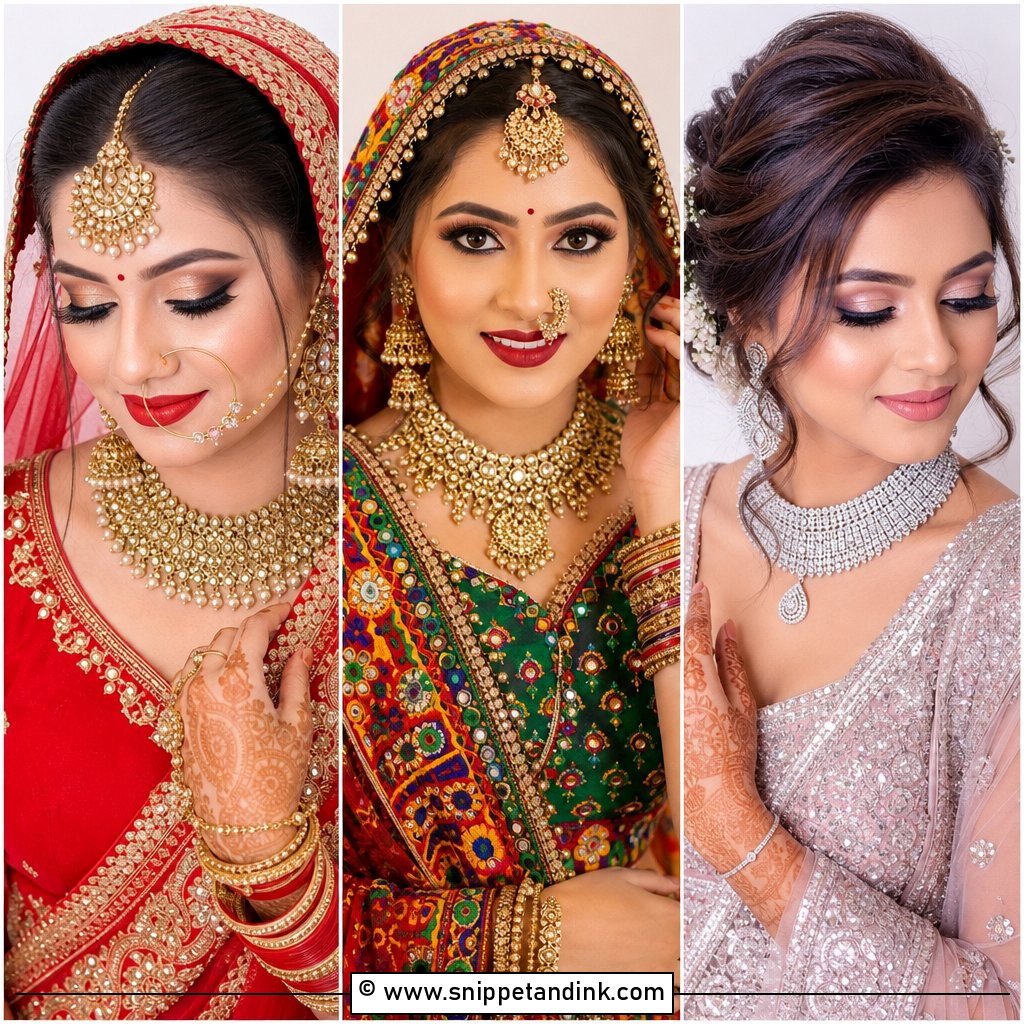
14. Muslim Indian Wedding Makeup
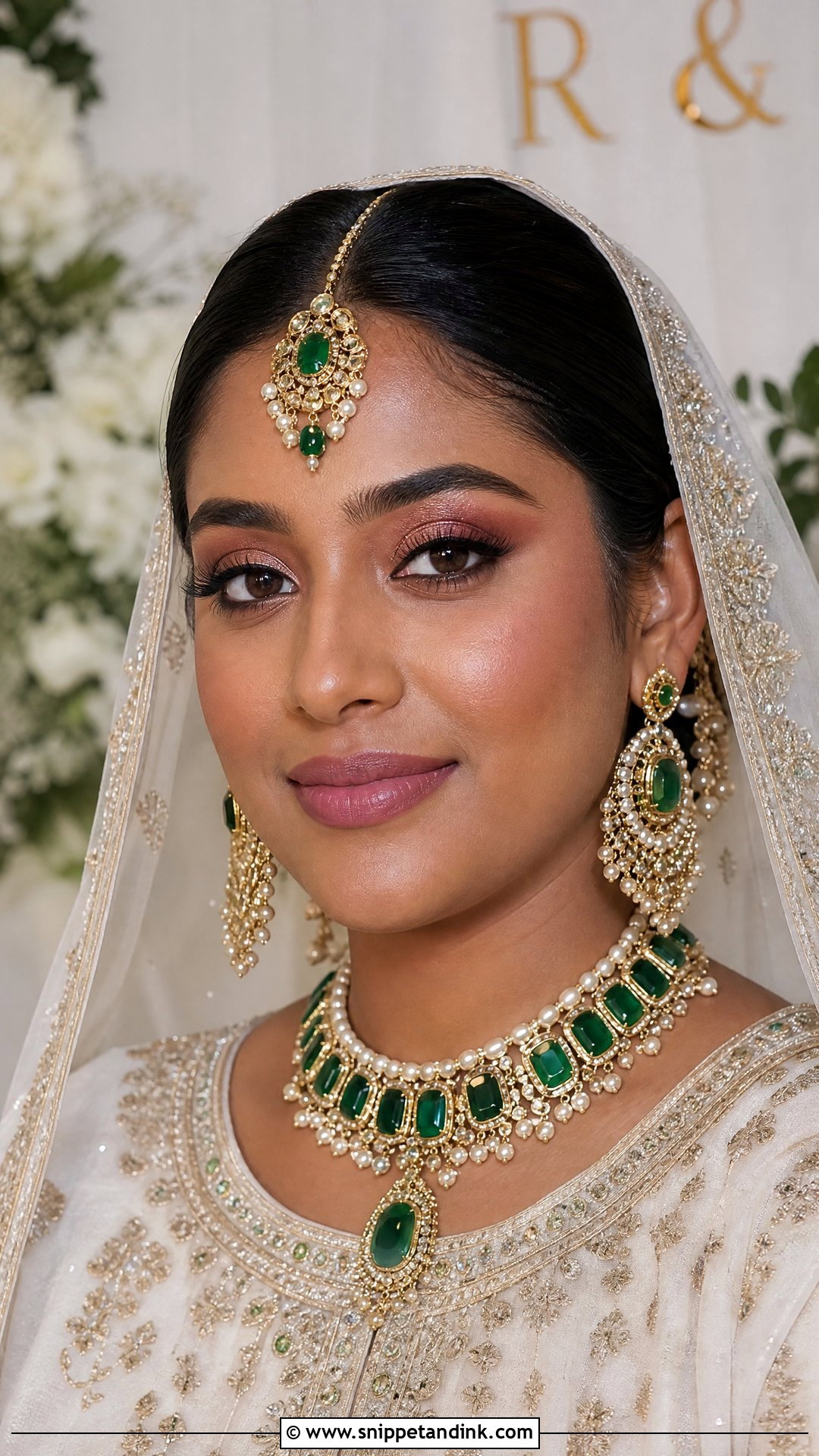
For many Muslim Indian brides, soft glam with smooth skin and defined eyes suits the rich fabrics of the nikah and walima. I focus on a lightweight base that looks even and softly sculpted cheeks. Neutral brown or rose shimmer on the eyes, thin liner and wispy lashes. Brows are cleaned up and softly filled. A muted rose or mauve lip. Highlighter goes on sparingly, since photography lights turn too much of it into shine. Shararas and ghararas with gold, pearl or emerald jewellery sit naturally with this palette.
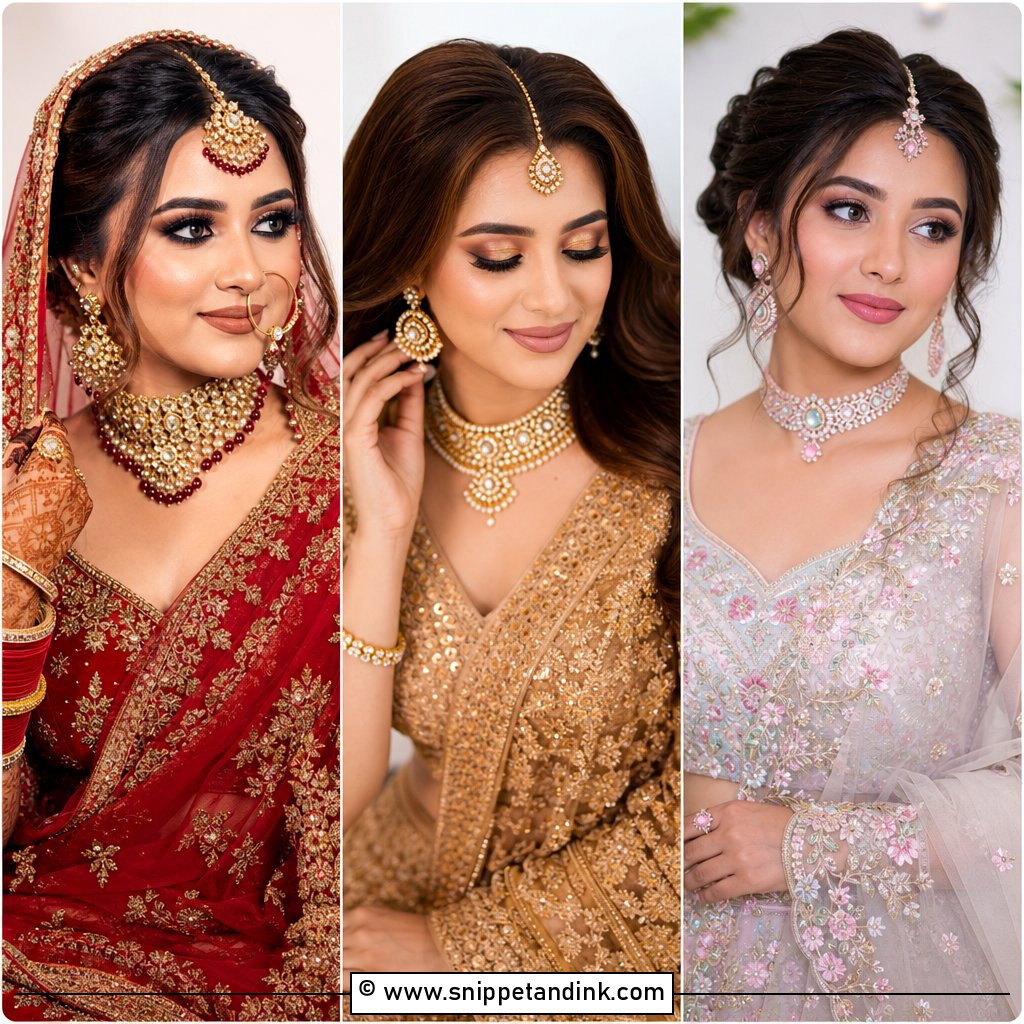
15. Hindu Bridal Natural Makeup
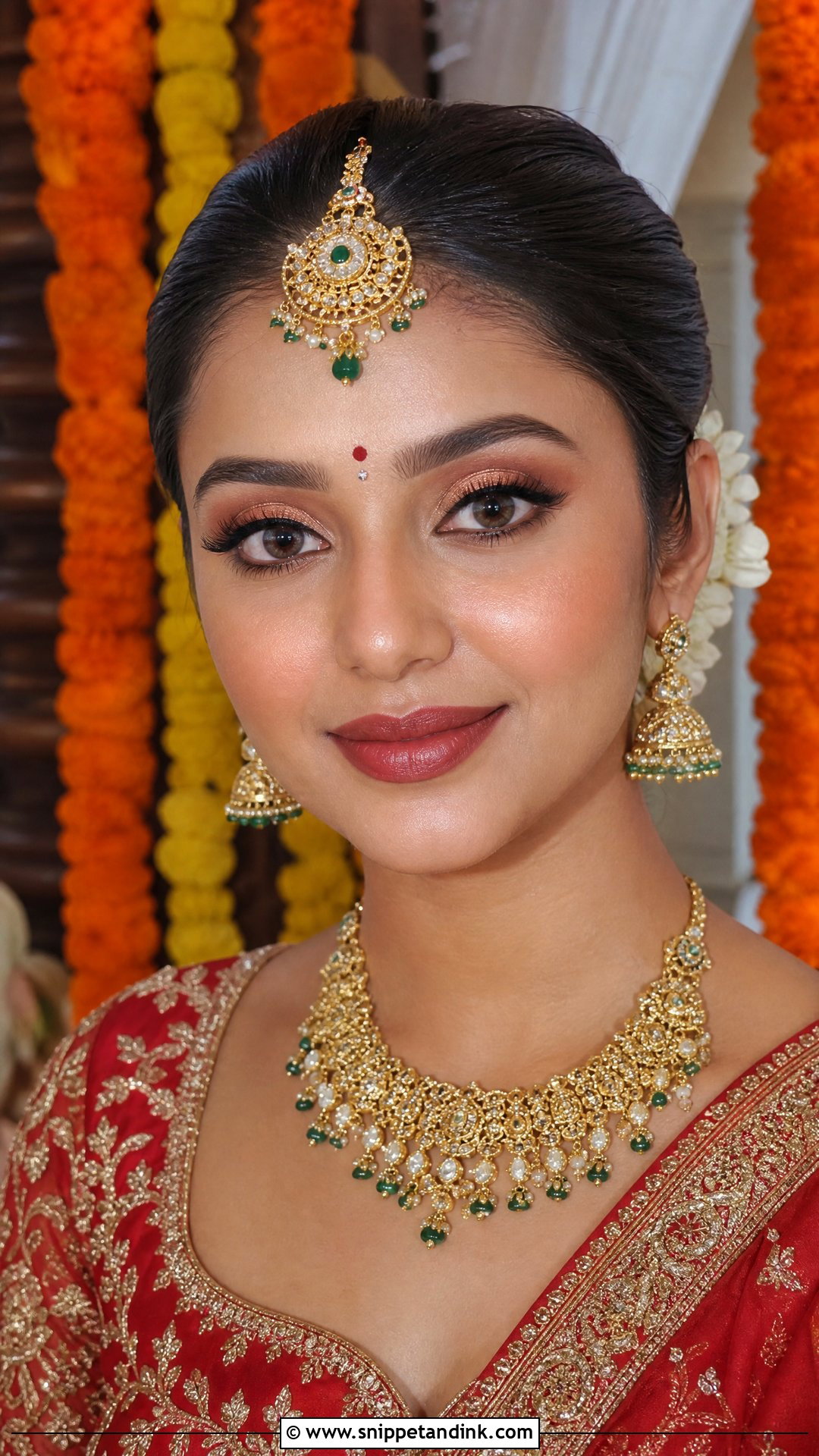
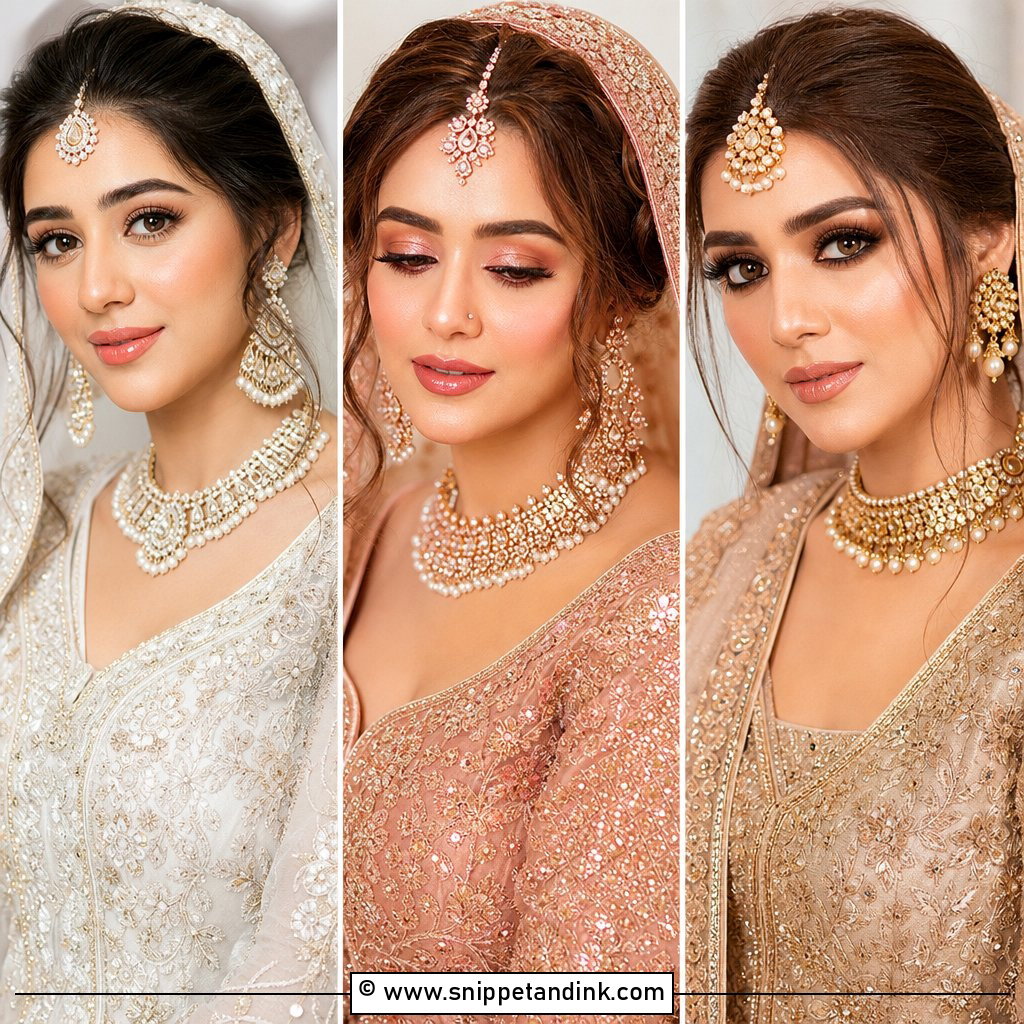
Hindu bridal natural makeup has to survive long rituals, the heat of the sacred fire and hours sitting cross-legged. I start with thorough skin prep and a thin base that won’t crack or turn grey as it oxidises. Warm brown or copper shadow complements bridal gold. Kohl defines the lash line but stays blended. Blush matters more than brides expect, since foundation flattens the face’s own warmth; peach or terracotta brings it back. A brick nude or soft red-brown lip reads bridal without heaviness, under a bindi and maang tikka.
16. Indian Reception Makeup
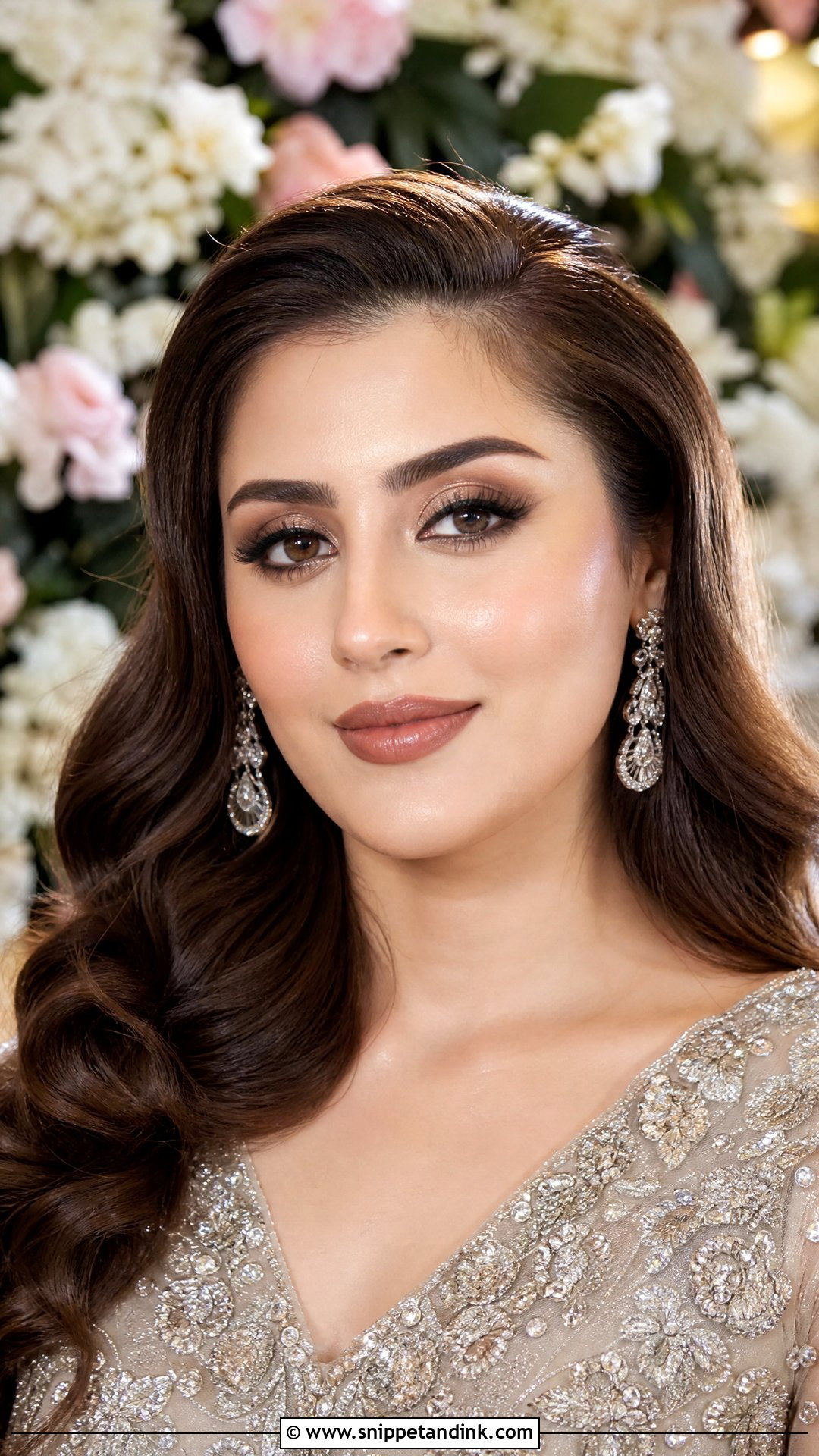
Receptions bring flash photography and warm evening light, so I make the base a touch more polished. A smooth satin finish, with the centre of the face set well so flash doesn’t bounce off the nose and forehead. Bronze or champagne shimmer with a lifted liner, and a little depth at the outer corners, blended out. Soft contour with rose or peach blush. A muted mauve or nude brown lip photographs evenly. It works with gowns and Indo-western outfits as easily as with a lehenga.
17. Indian Mehndi Makeup
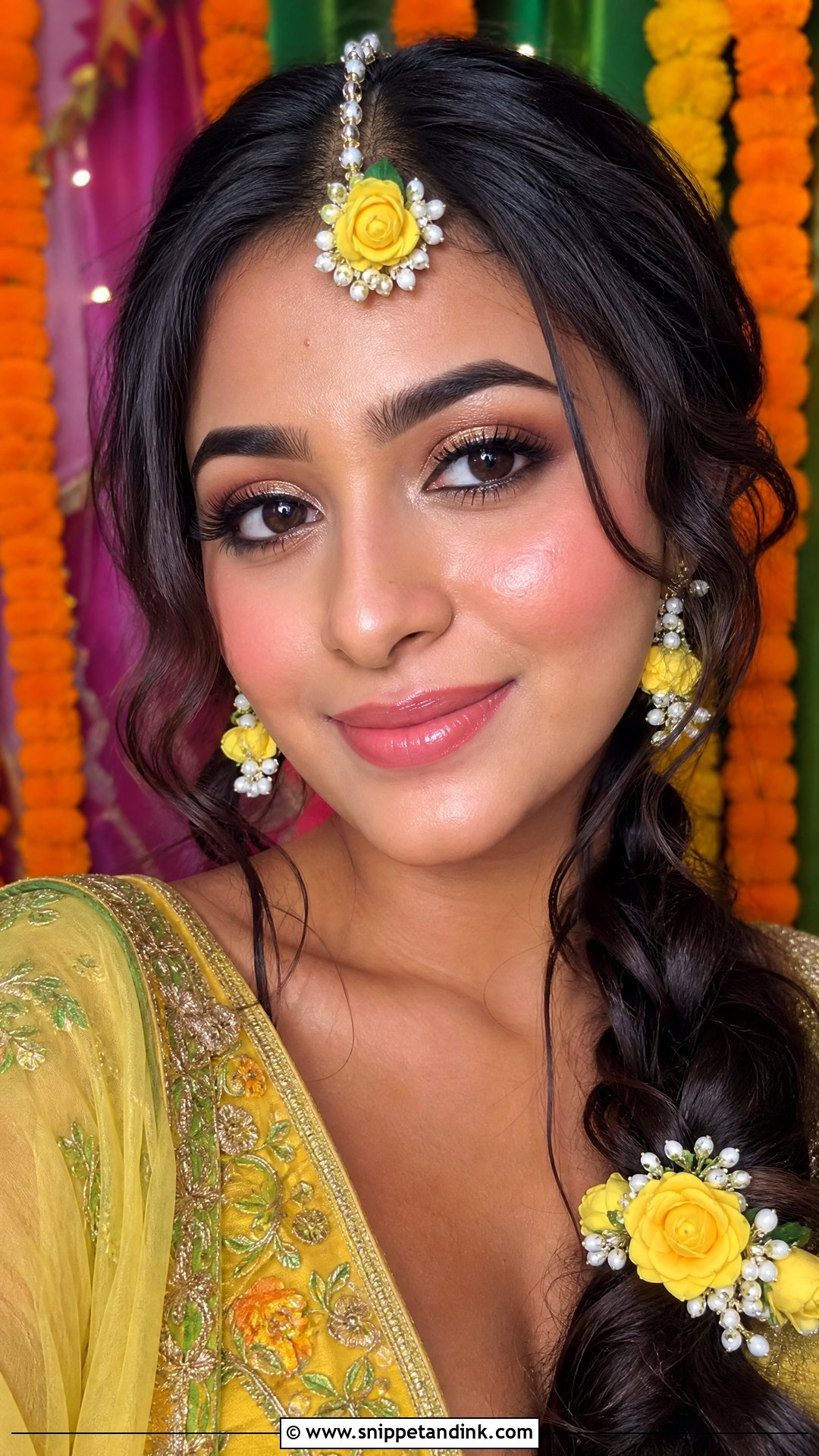
Mehndi is a daytime, colour-heavy event, so the makeup can be playful while staying light. A glowing, lightweight base, and eyes in peach, olive or warm gold depending on the outfit. Brown liner instead of black, which looks harsh in daylight. A juicy blush makes the skin look alive. The bride’s hands are covered in wet paste for hours, so I make sure everything is set and touch-up-free before the mehndi artist starts; she won’t be able to fix her lip herself. A peachy nude or coral gloss completes it.
18. Indian Haldi Makeup
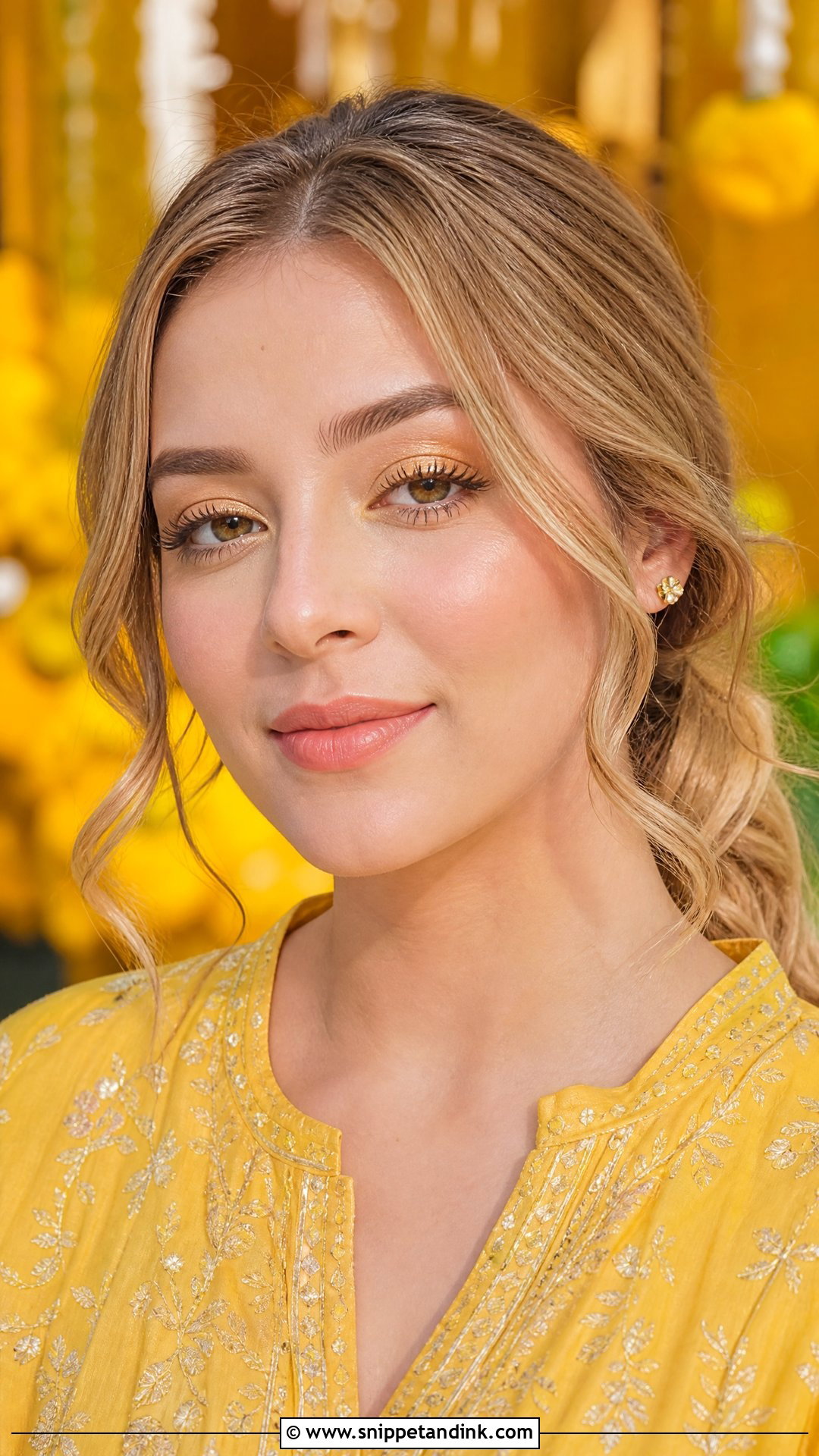
Indian haldi makeup faces turmeric paste, splashing water and a lot of laughing, so it has to be minimal. A tinted base, waterproof concealer, cream blush and a small amount of powder. Soft gold or peach shadow, waterproof mascara and no heavy liner, which will run. A coral lip tint stains rather than sits, so it survives the paste. Skip sticky gloss outdoors; turmeric and dust stick to it. Yellow and ivory outfits suit these warm shades.
19. Indian Sangeet Makeup
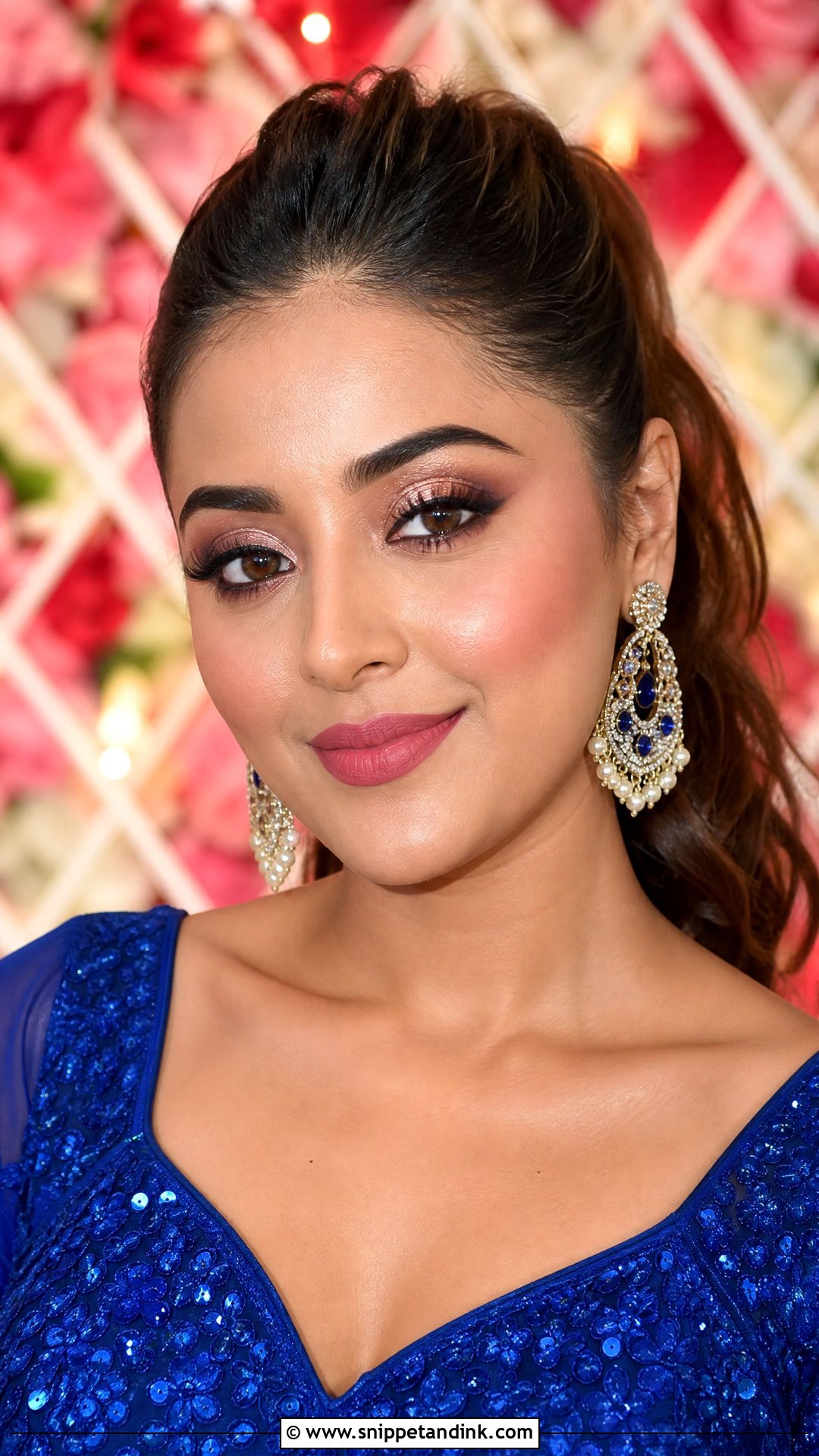
Sangeet makeup has to keep up with dancing, so the work is in the layering. A gripping primer, long-wear foundation, and setting spray misted between layers rather than once at the end. Bronze or rose gold shimmer with a smudged liner, and lashes glued firmly at the outer corners where they lift first. Bronzer and a blush that won’t disappear under coloured stage lights. A satin or matte lip in mauve or caramel nude is easy to reapply in the dark.
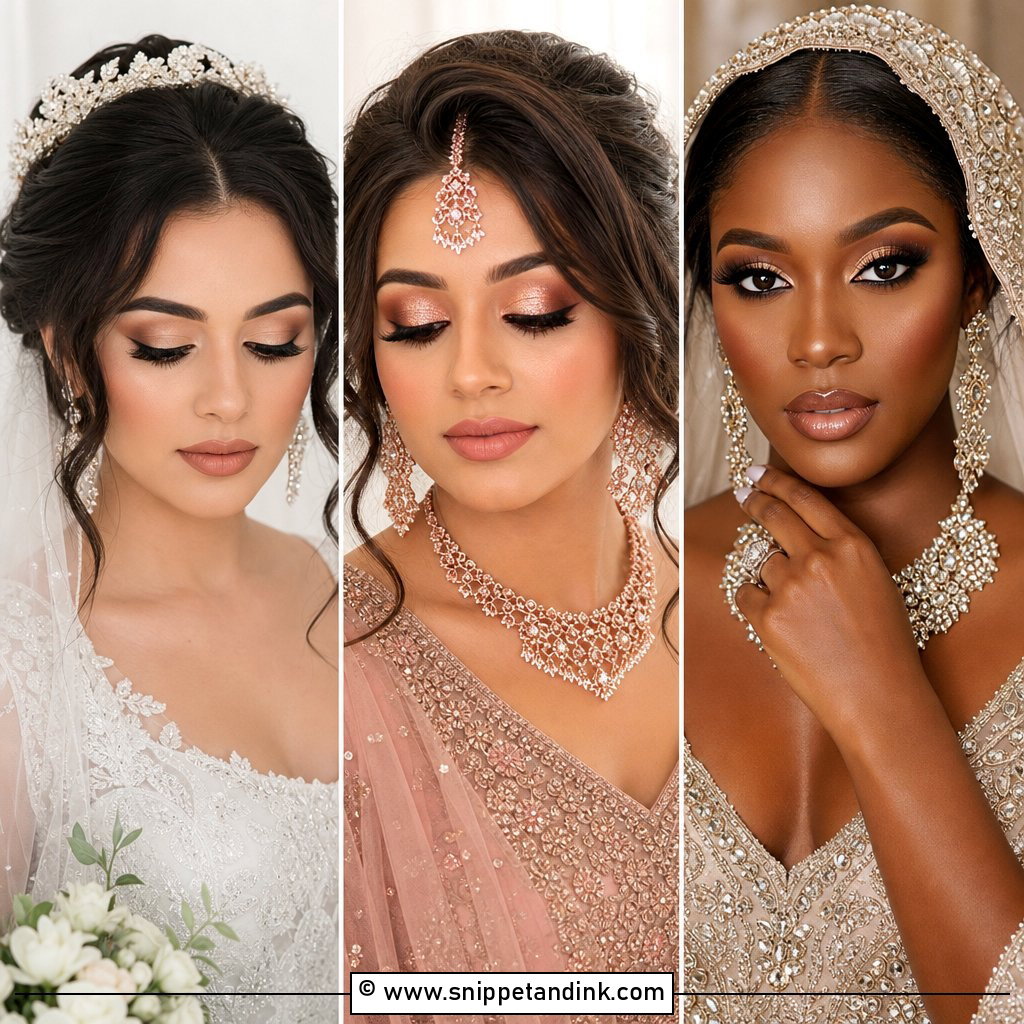
20. Indian Bridesmaid Makeup
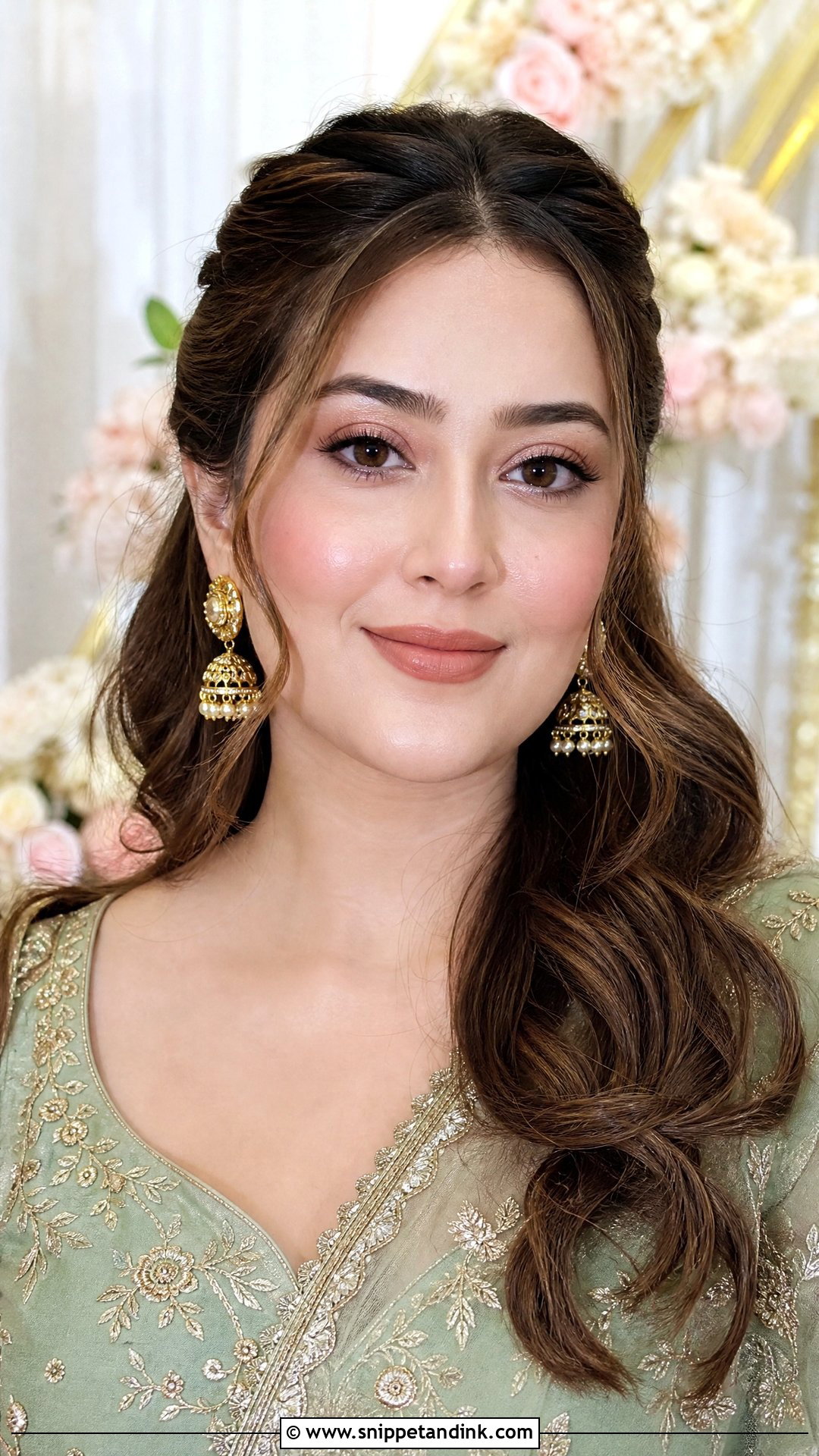
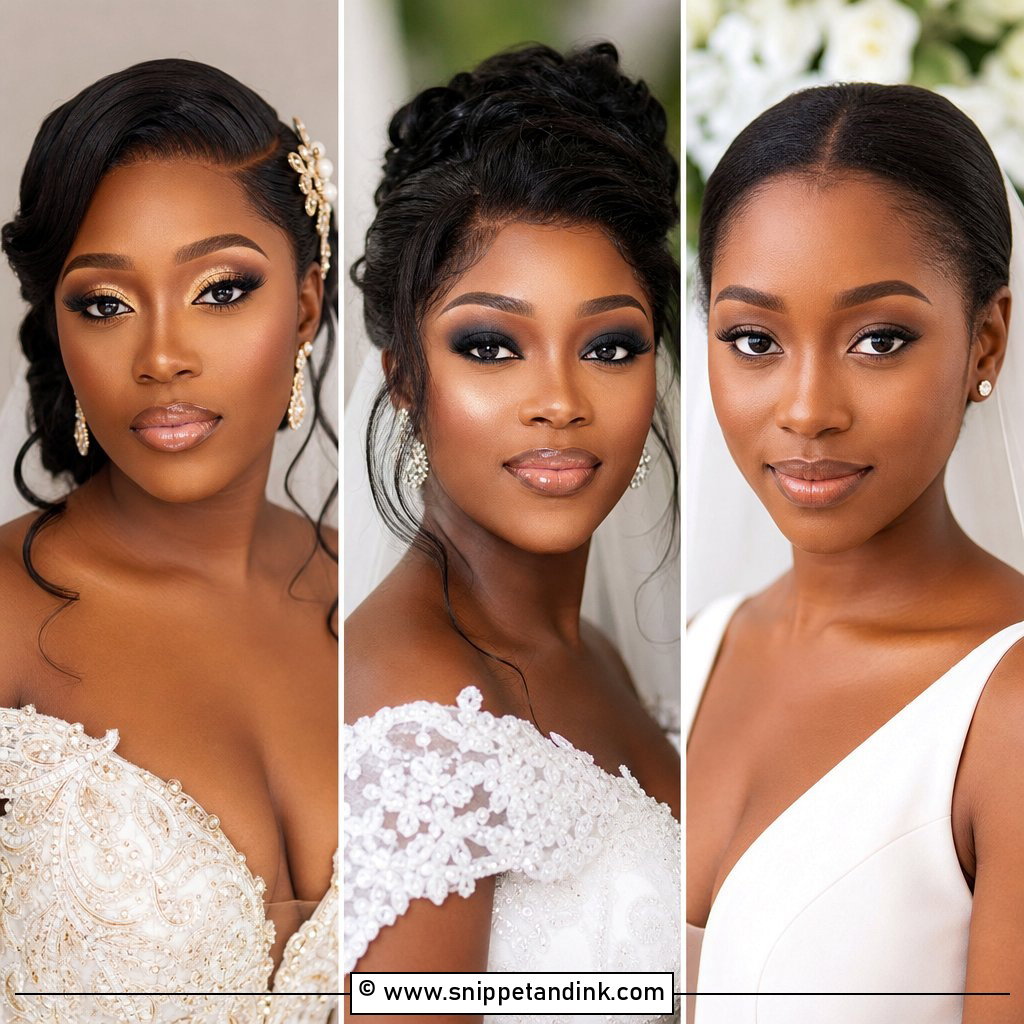
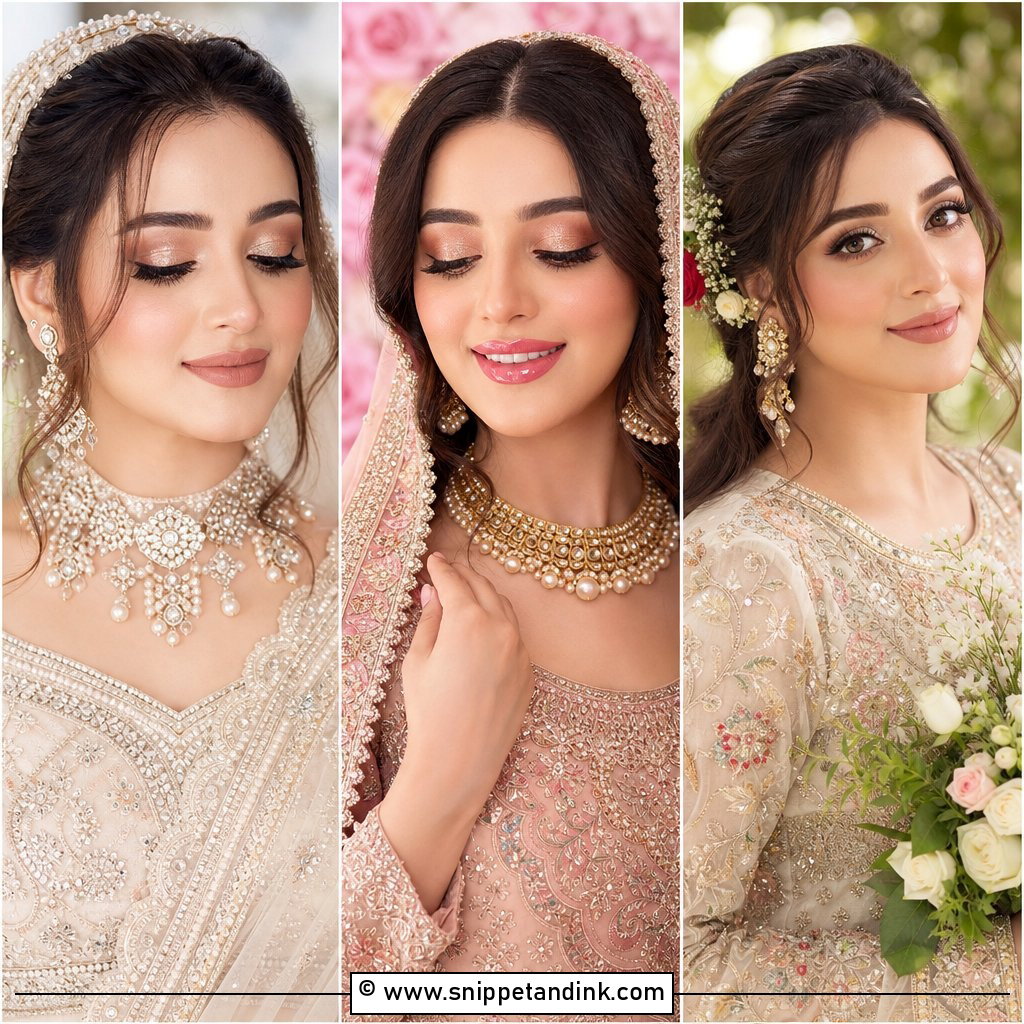
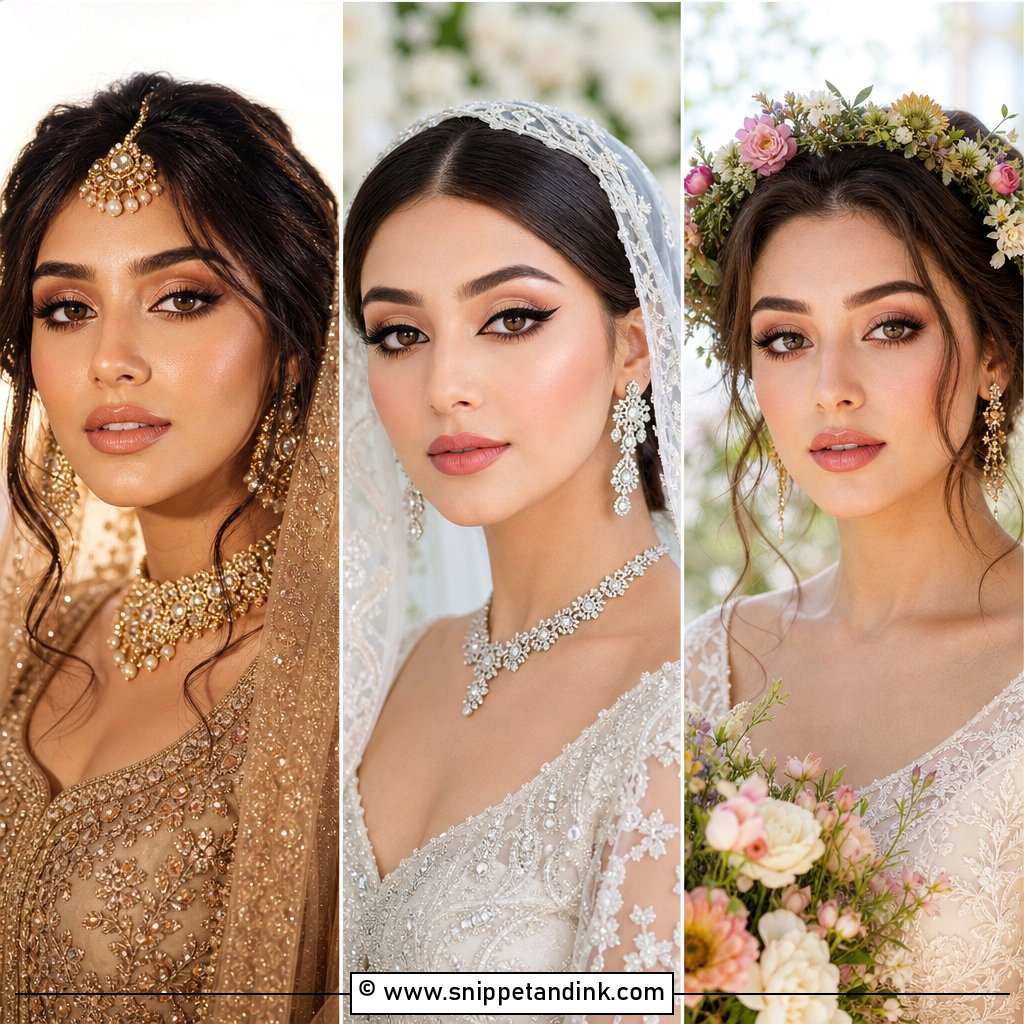
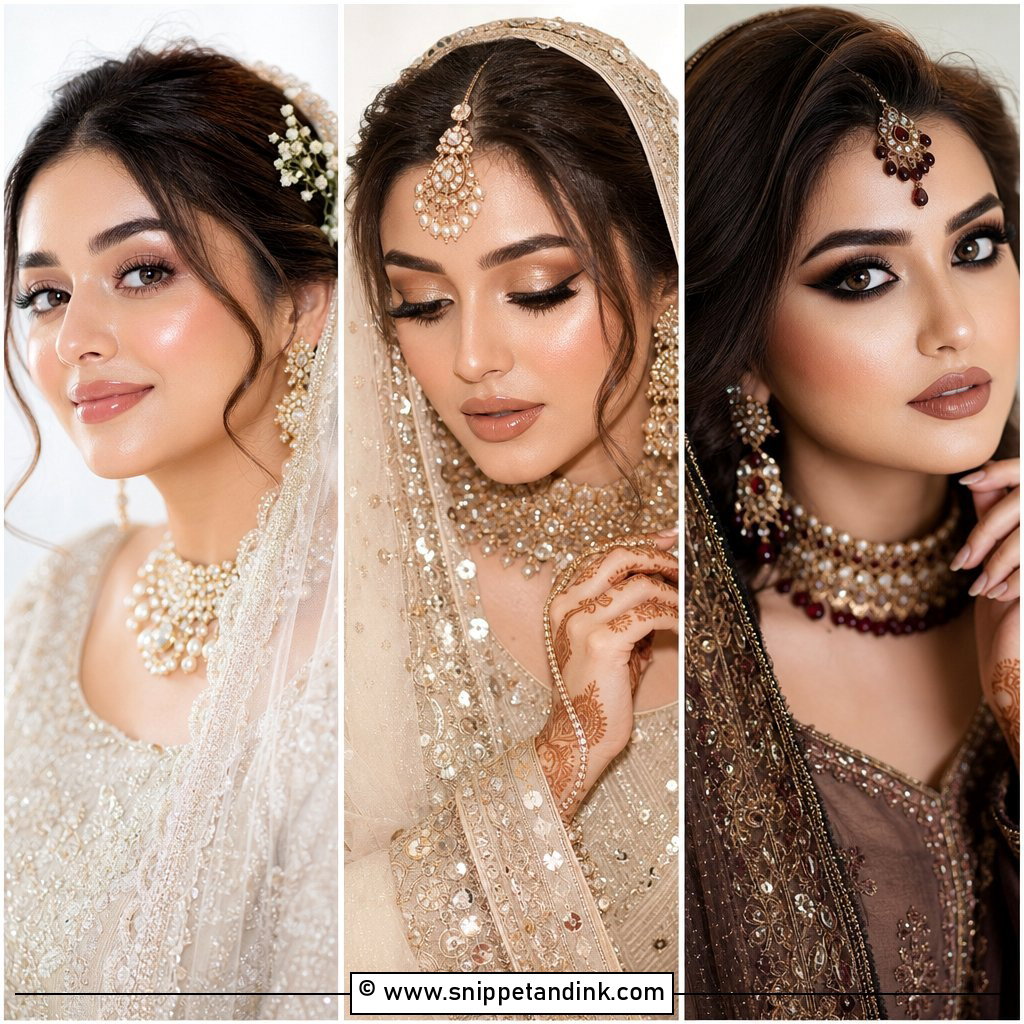
Indian bridesmaid makeup should sit beside the bride without matching her exactly or looking plain. A soft glam base, blended eyes in neutral brown or rose gold, thin liner, mascara and natural lashes. Contour stays soft, and blush follows the outfit palette. When I’m doing a group, I keep the lip family the same across everyone, nude rose or soft berry, so the group photos look coordinated even if the outfits differ. Satin, dewy or natural matte depending on the venue and weather.
The Dupatta, Nath and Matha Patti Change the Plan
Bridal jewellery and veiling sit right on top of the makeup, and I plan around them from the start. A heavy dupatta pinned at the head brushes the forehead and cheeks all day, so the base needs a good setting spray or it will wear off in a stripe. A matha patti or tikka can cover part of the brow, which means the brow shape underneath matters less than the arch below it.
A nath and the lip
A large nose ring sits close to the upper lip and can smear a glossy or creamy colour every time you talk. With a nath, I use a lip stain or a matte formula, line it carefully, and blot. I also check that the chain doesn’t rest on freshly applied lipstick before the bride leaves the chair.
Several functions, one face
Over a three or four day wedding, skin gets tired. Remove makeup fully each night with an oil cleanser, skip exfoliating acids that week, and keep lash glue off the lid if your eyes are sensitive. Keep a small touch-up pouch with your lip colour, a powder, blotting papers and cotton buds, and give it to a sister or bridesmaid; the bride rarely has a free hand.
Skin That Still Looks Like Yours at Midnight
A natural look isn’t skipping makeup. It’s choosing textures and colours that sit on the face instead of covering it: a balanced base, softly defined eyes, real blush and a lip that suits your undertone. In daylight, dewy skin, peach tones and light shimmer look fresh. After dark, a brown smokey eye and a satin lip add polish. Test your choice at a trial, photograph it near a window and under flash, and wear it for a few hours. If you still like it then, you’ll like it on the day.
You'll Like These Ideas:


Leave a Reply