
Airbrush works by spraying foundation as a very fine mist, so I can build coverage in thin layers instead of pressing product into the skin. On camera that reads as smooth skin with no brush marks, and a well-set silicone base holds up to crying, hugging and a long night of dancing. The finish can go natural or full glam, matte or glowing. None of that replaces skin prep or a sensible balance between eyes, cheeks and lips, though. Below are twenty bridal faces I’d build on an airbrush base, grouped roughly by finish, eye color, skin tone and season, with notes on how each one behaves once the day gets going.
Airbrush or Sponge? A Quick Skin Check First
Airbrush isn’t automatically the better base. It shines on some skin and fights others, so before you fall for a look, run through these:
- Oily or combination skin: a strong match. A silicone airbrush formula holds through heat and resists shine better than most creams.
- Redness or uneven tone: also a strong match. Color correction in thin mists looks lighter than thick concealer.
- Very dry or flaking skin: proceed carefully. The mist settles on dry patches and can make them more visible.
- Active breakouts or raised scarring: airbrush hides color, not texture. A pressed-in cream base often covers bumps better.
- Very sensitive skin: ask what the formula contains and patch test it at the trial.
Many artists mix the two: an airbrush base everywhere, then cream concealer pressed onto the spots that need more. Ask if yours does that, because it often gives the best of both.
1. Natural Airbrush Bridal Makeup
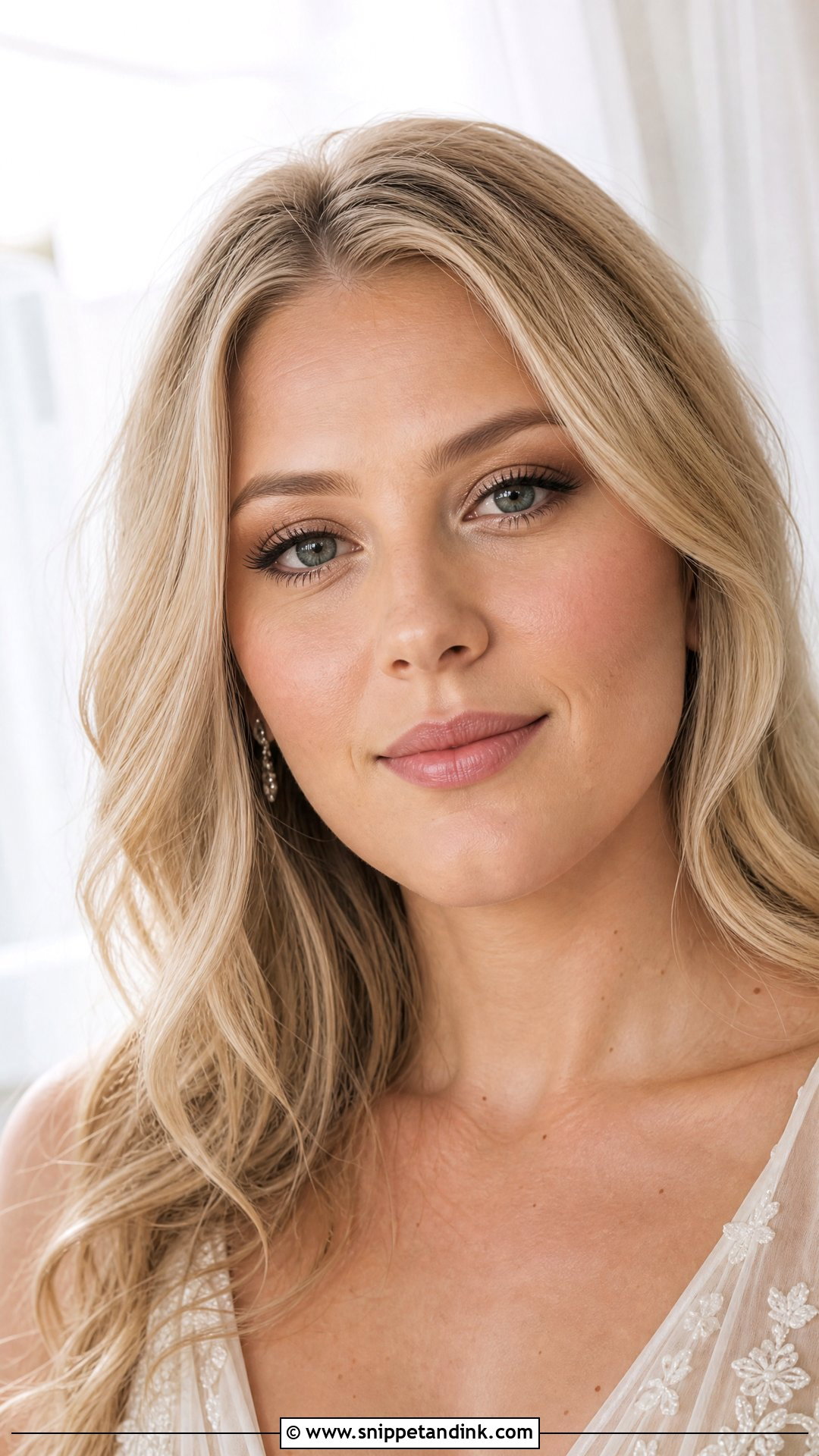
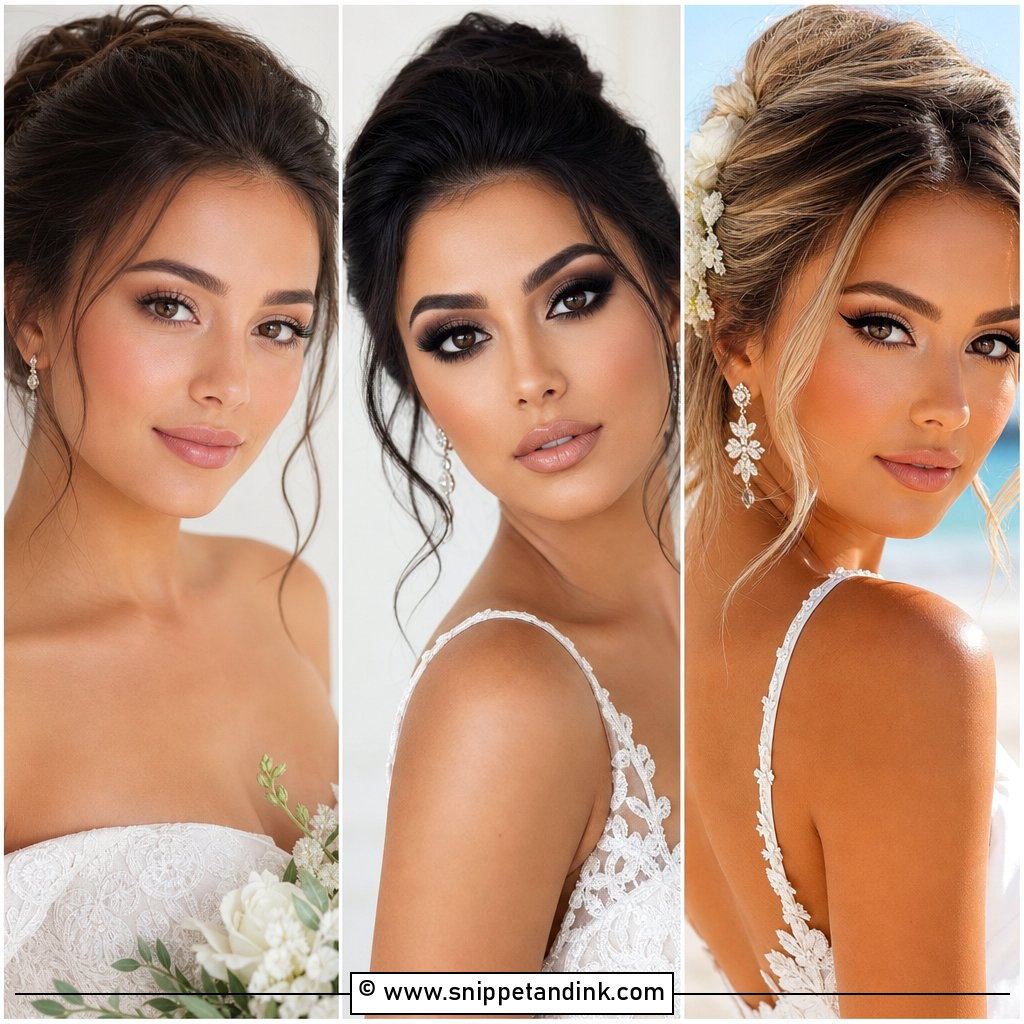
Natural airbrush is for the bride who wants to look like herself on a very good day. I spray sheer, aiming at redness around the nose and chin, and stop before the freckles disappear. Taupe on the lids, a soft brown liner, curled lashes and lightly filled brows keep the eyes awake. A fresh pink or peach blush matters more than you’d think, because a thin base can look pale in photos without it. Finish with a satin nude-pink lip. Minimalist gowns and outdoor ceremonies suit it.
2. Soft Glam Airbrush Bridal Makeup
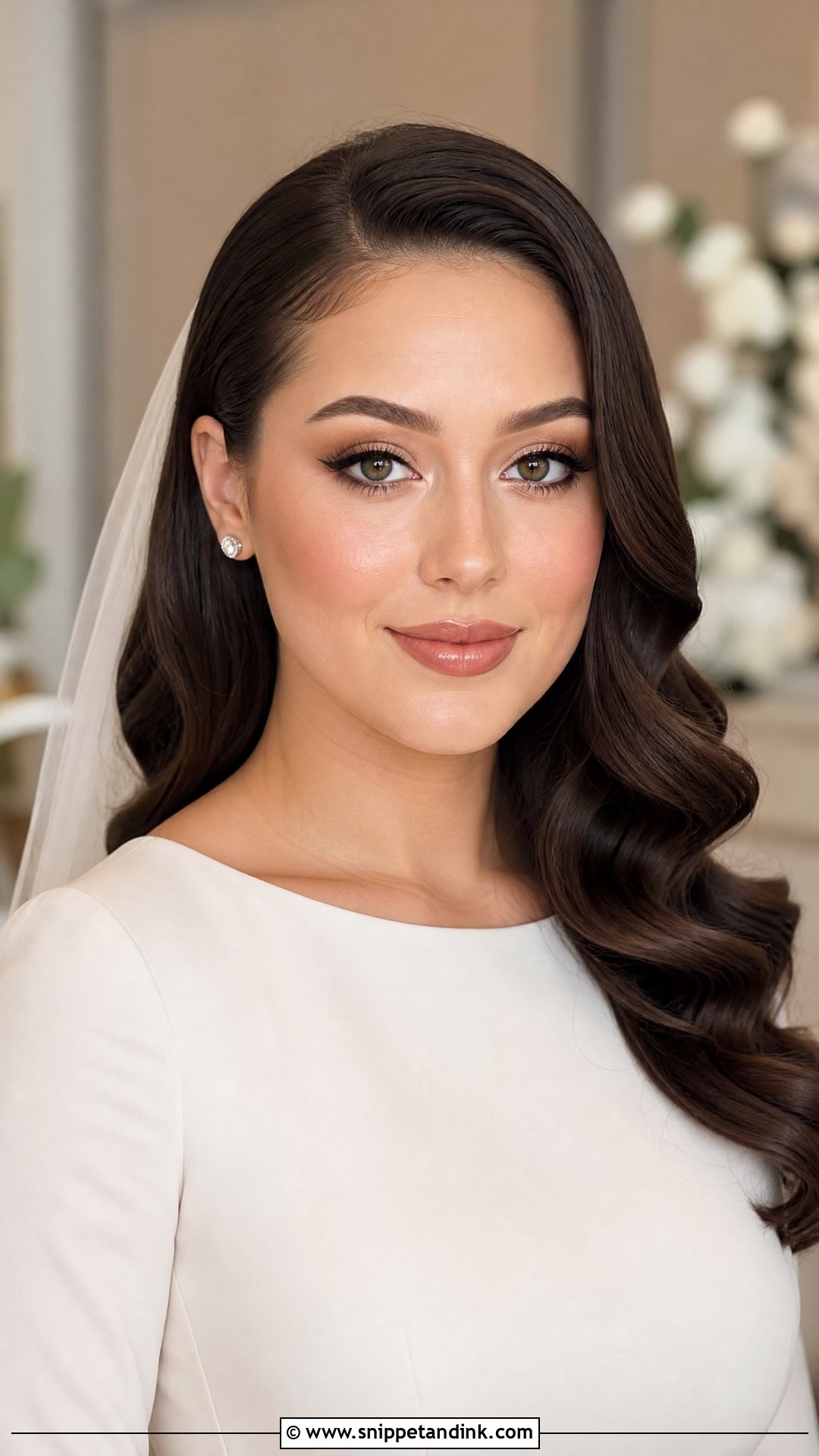
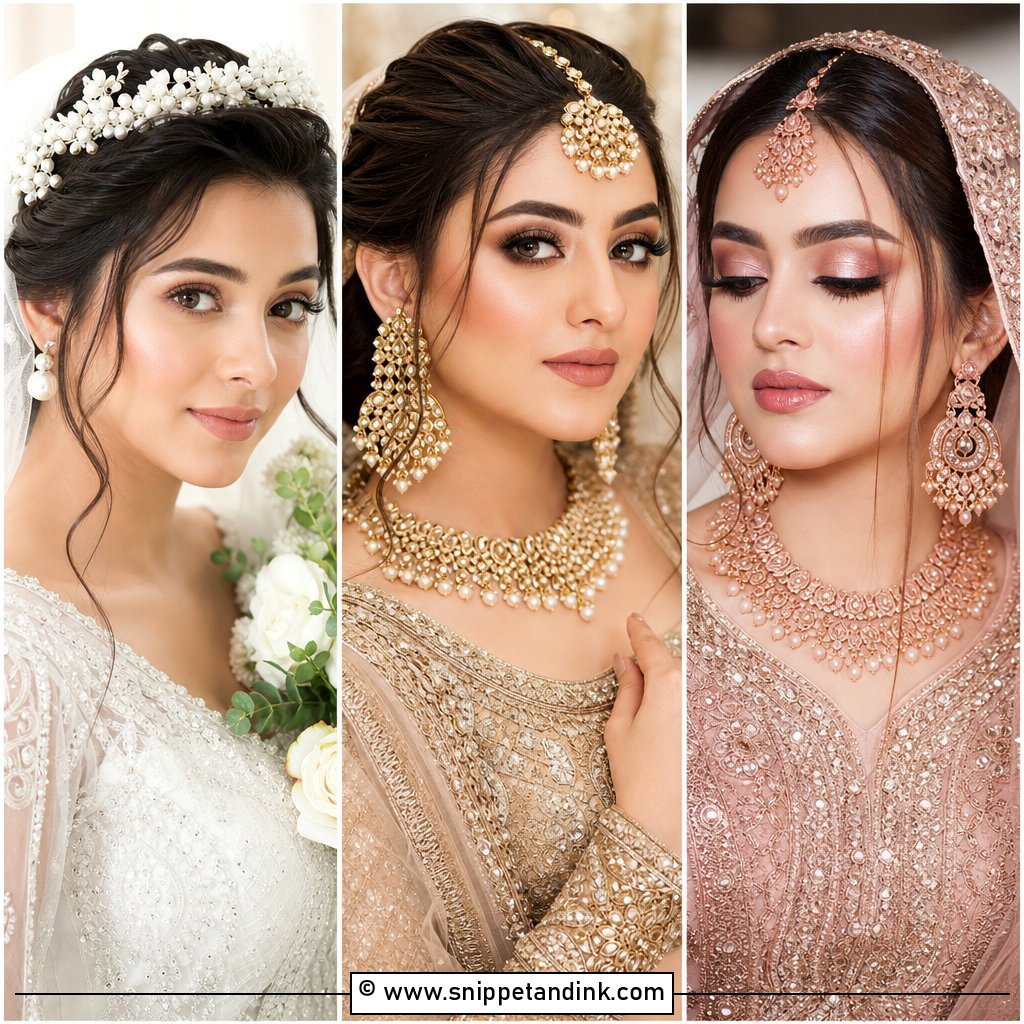
Soft glam adds shape without drama. Over the airbrush base, I place a little cream contour under the cheekbones and along the jaw, then blend it until there’s no visible stripe from the side, which is where cameras find it. Champagne shimmer on the lids, brown liner and fluttery lashes open the eyes. A nude rose lipstick keeps the balance. It has enough contrast to hold up in photos and still looks soft at arm’s length, which is why so many trials end here.
3. Dewy Airbrush Bridal Makeup
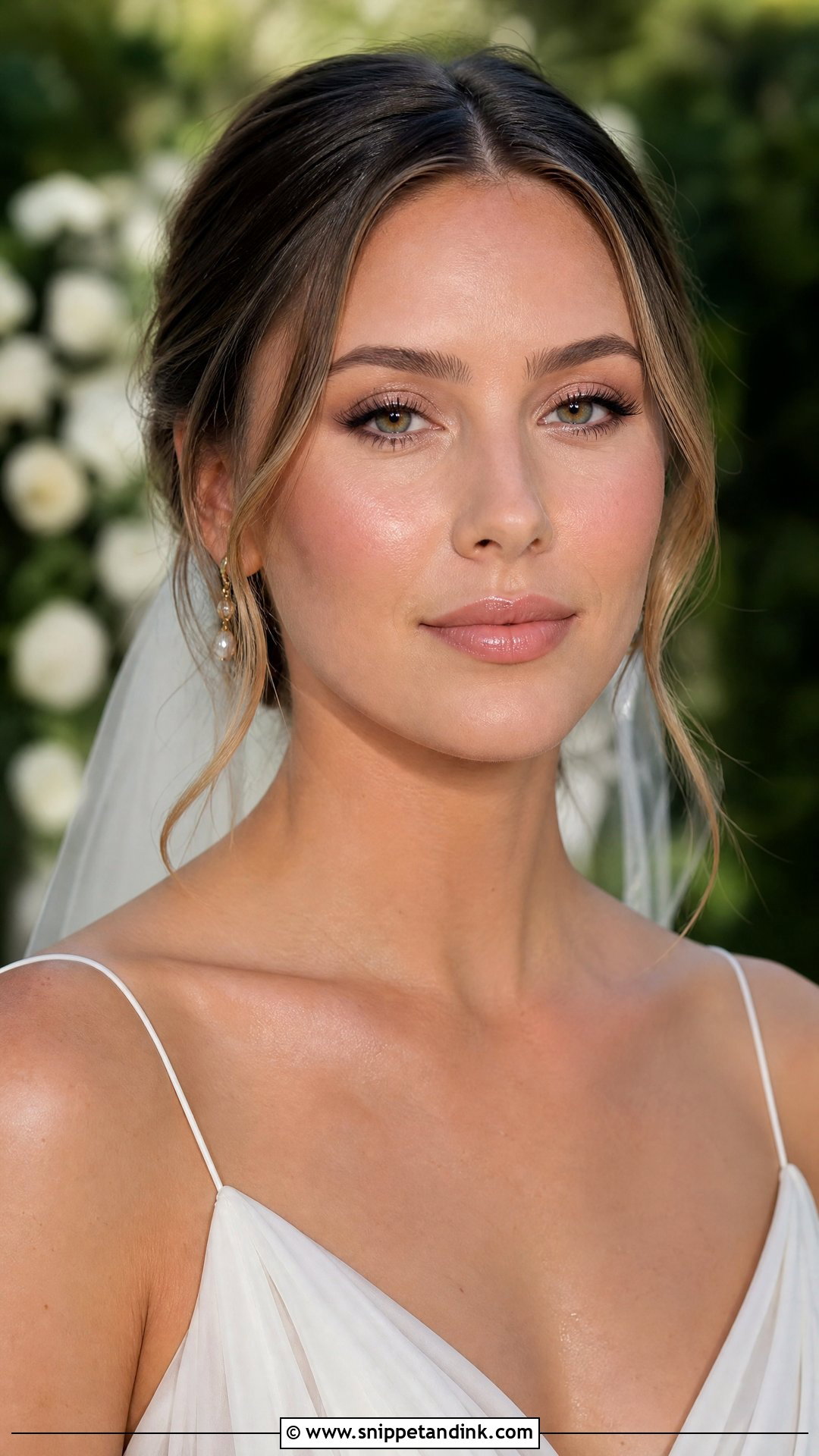
A dewy finish is about controlled radiance. I use a luminous airbrush base but still set the T-zone, then add glow only to the cheekbones, brow bones and the bridge of the nose. Spread it everywhere and the camera reads it as sweat. Beige or warm bronze on the eyes, peachy-pink blush and a glossy nude lip keep it light. I’d steer oily skin away from this; it suits normal and dry skin at spring and garden weddings.
4. Matte Airbrush Bridal Makeup
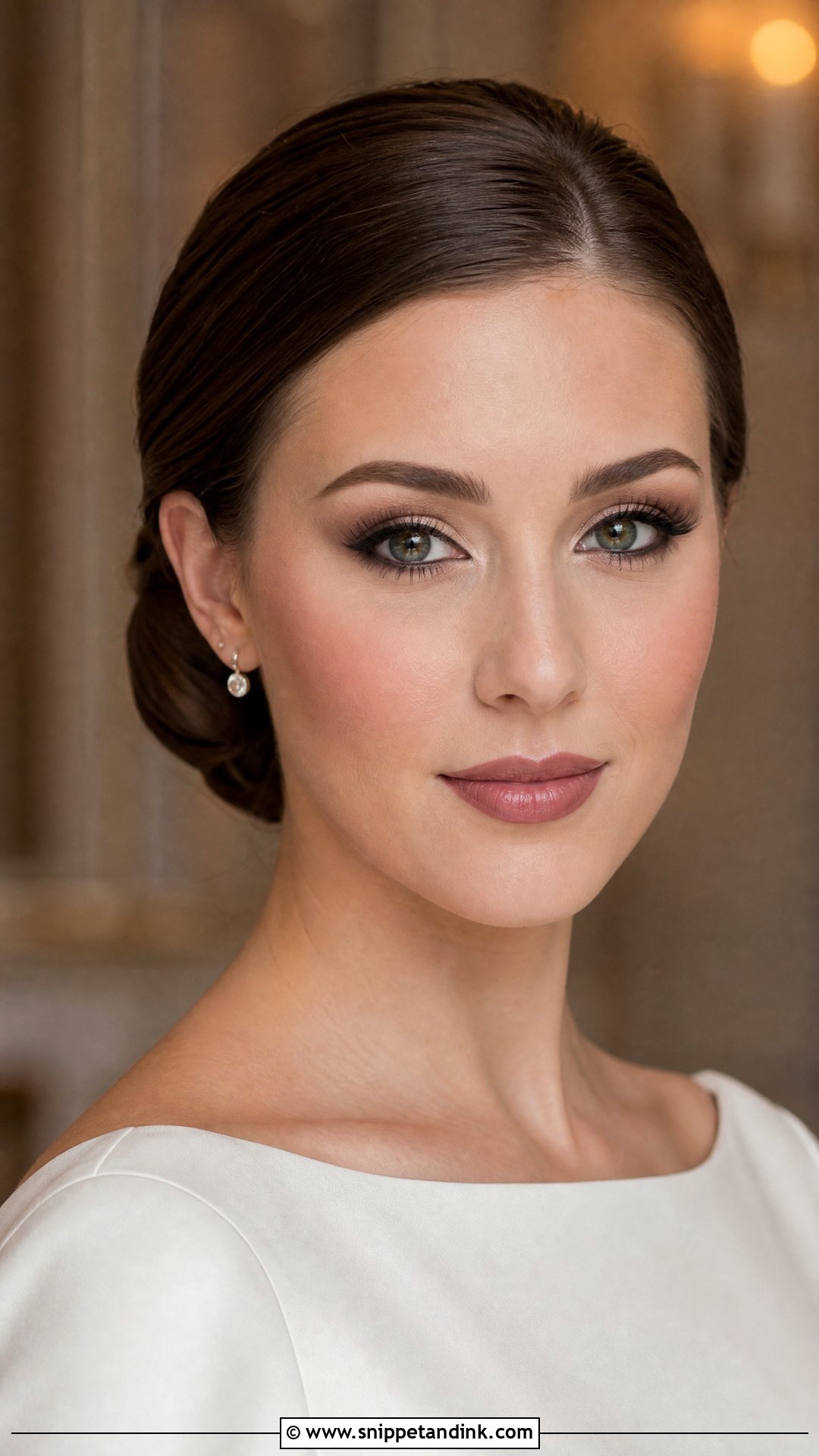
Matte is my safe bet for oily or combination skin and warm receptions. The aim is velvet, not chalk. I let the primer and a long-wear silicone formula do the shine control, then rebuild dimension with blush, contour and a touch of highlight on the very top of the cheek. Matte taupe or brown shadow, clean liner, defined lashes and structured brows match the finish. A satin-matte nude or mauve lip stays put through dinner better than a gloss would.
5. Classic Airbrush Bridal Makeup
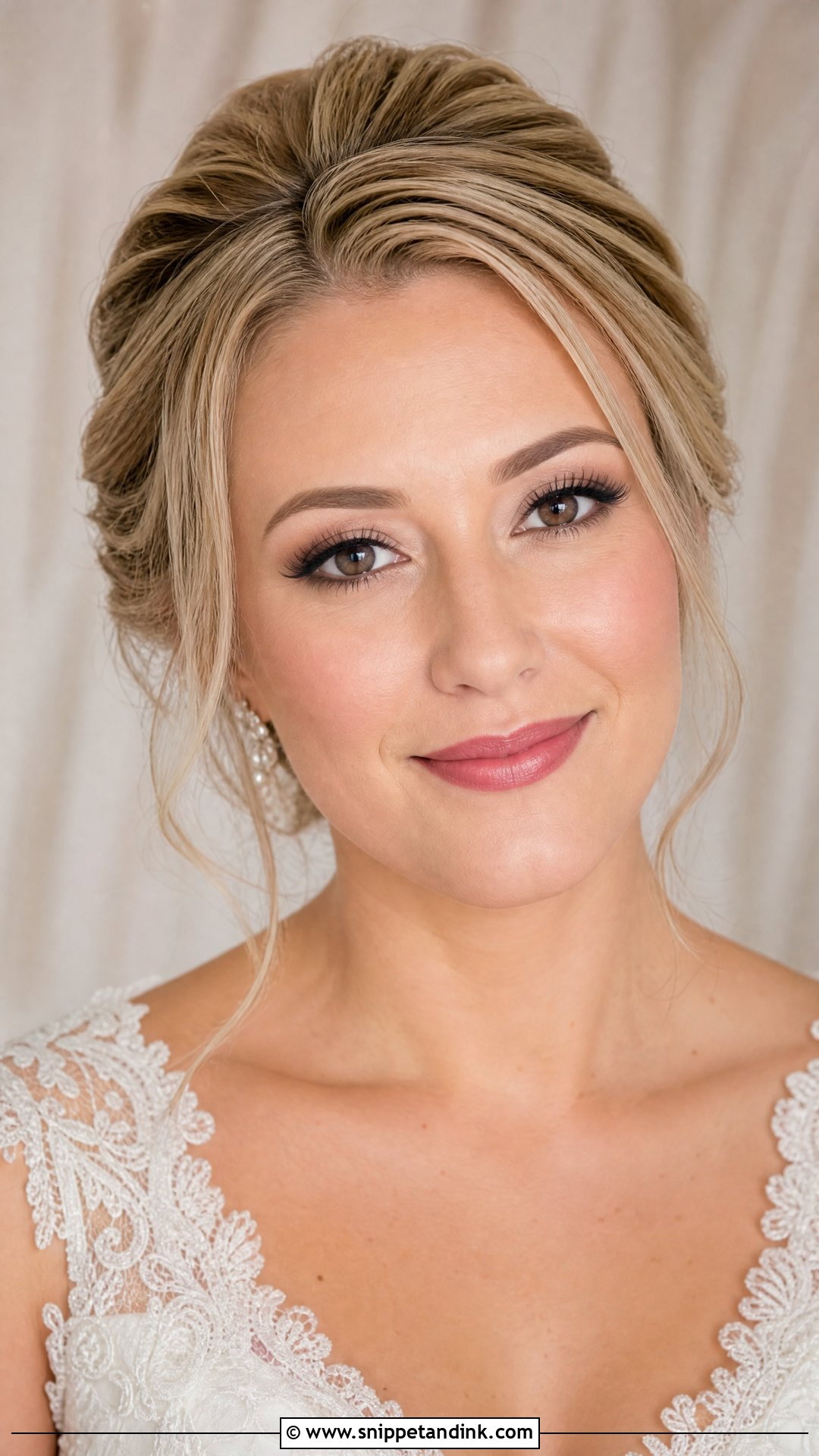
Classic bridal makeup is a study in restraint. The skin is even, contour is soft, blush is rosy and the highlight never sparkles. I use neutral brown shadow, a thin black or dark brown liner and lashes that look like your own, only fuller. Brows are shaped but not heavy, since dark brows date a photo faster than anything else. A soft rose or muted berry lip adds just enough color. It suits almost any dress and still looks right in an album twenty years on.
6. Full Glam Airbrush Bridal Makeup
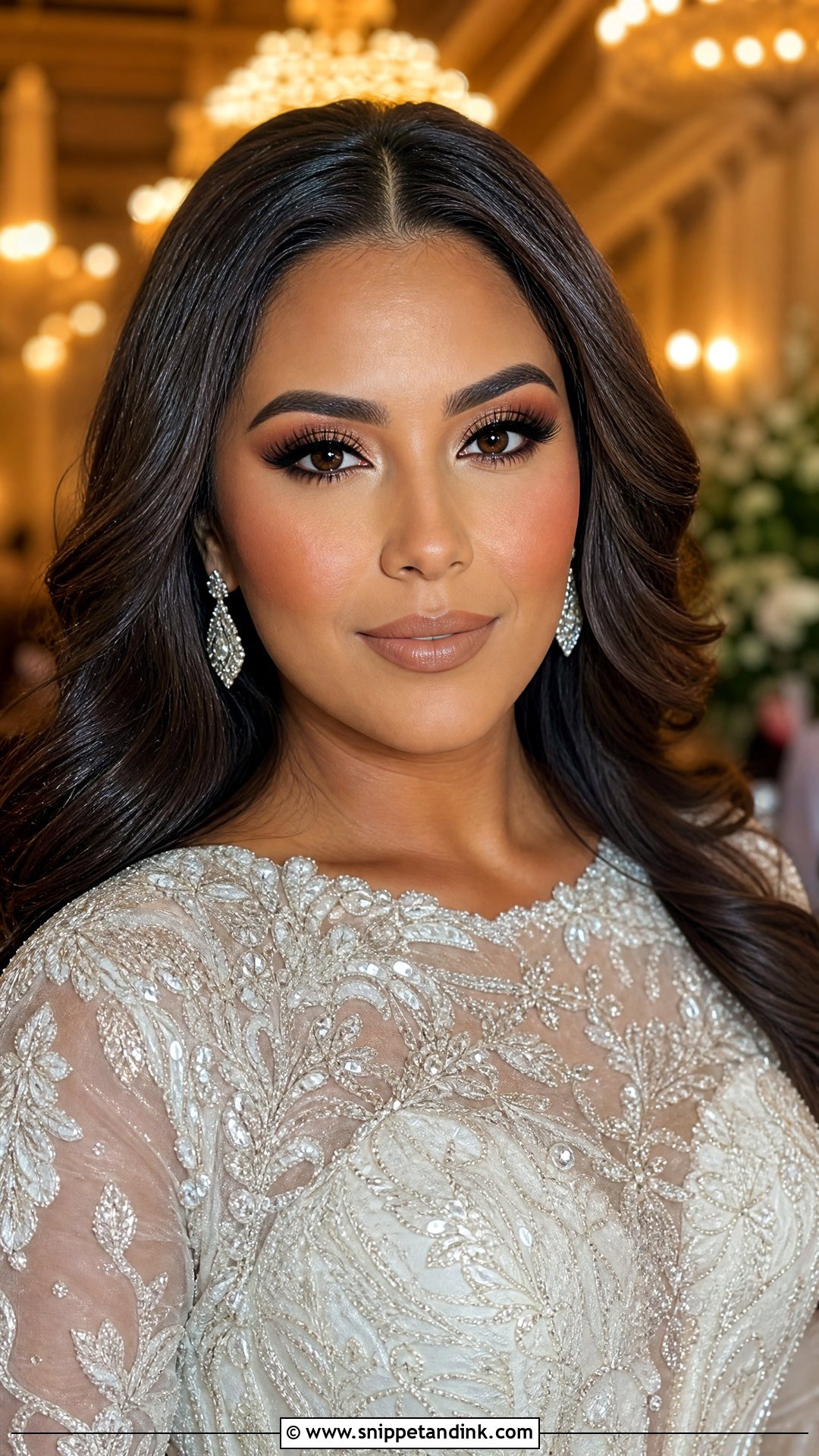
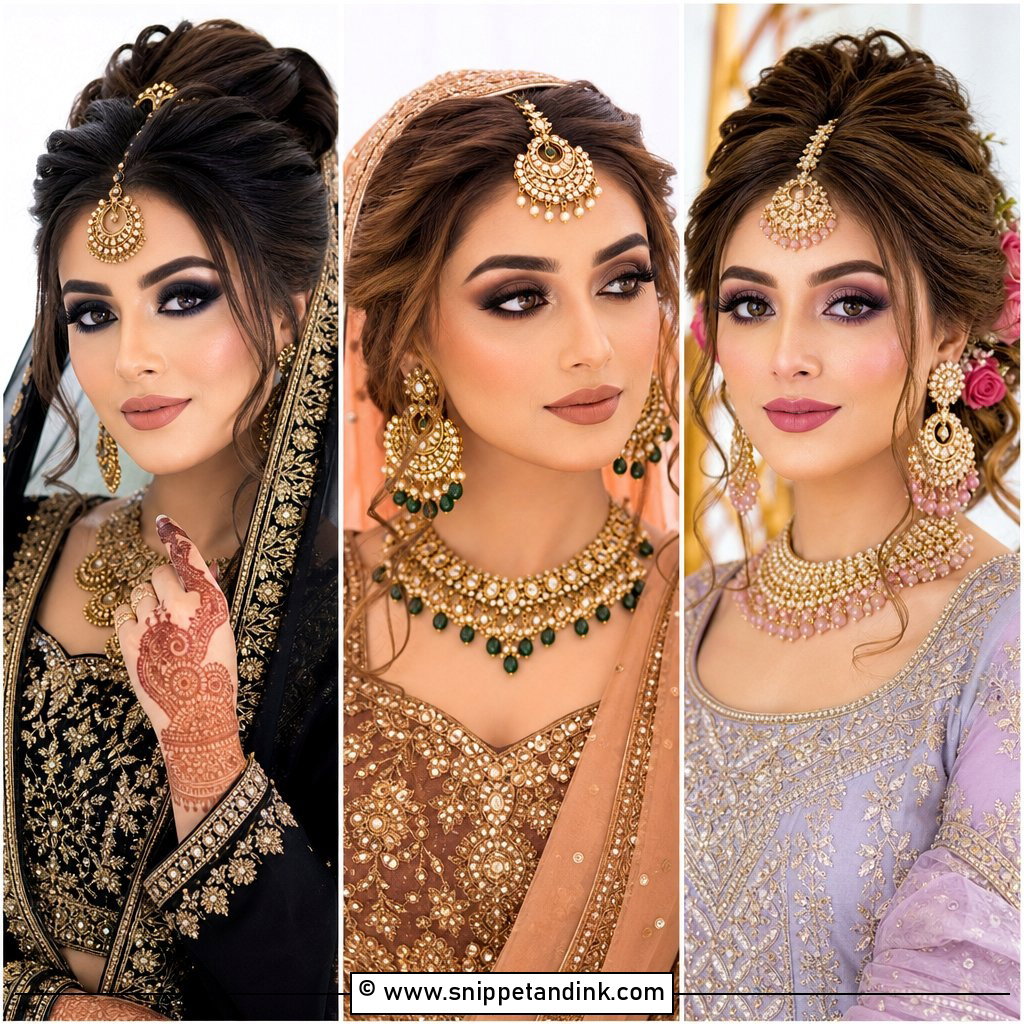
Full glam airbrush bridal makeup means building coverage in several fine passes until discoloration is gone, then sculpting on top: cheekbones, a defined nose contour, bright under-eyes and a strong lash line. Warm browns, bronze shimmer, black liner and full lashes carry the eyes. I keep the lip softer, nude beige or rosy brown, so the face doesn’t feel heavy. The one thing I watch is the hairline and jaw: full coverage needs blending into the neck, or the edge shows in flash. Evening ballroom weddings carry it best.
7. Airbrush Bridal Makeup With Red Lip
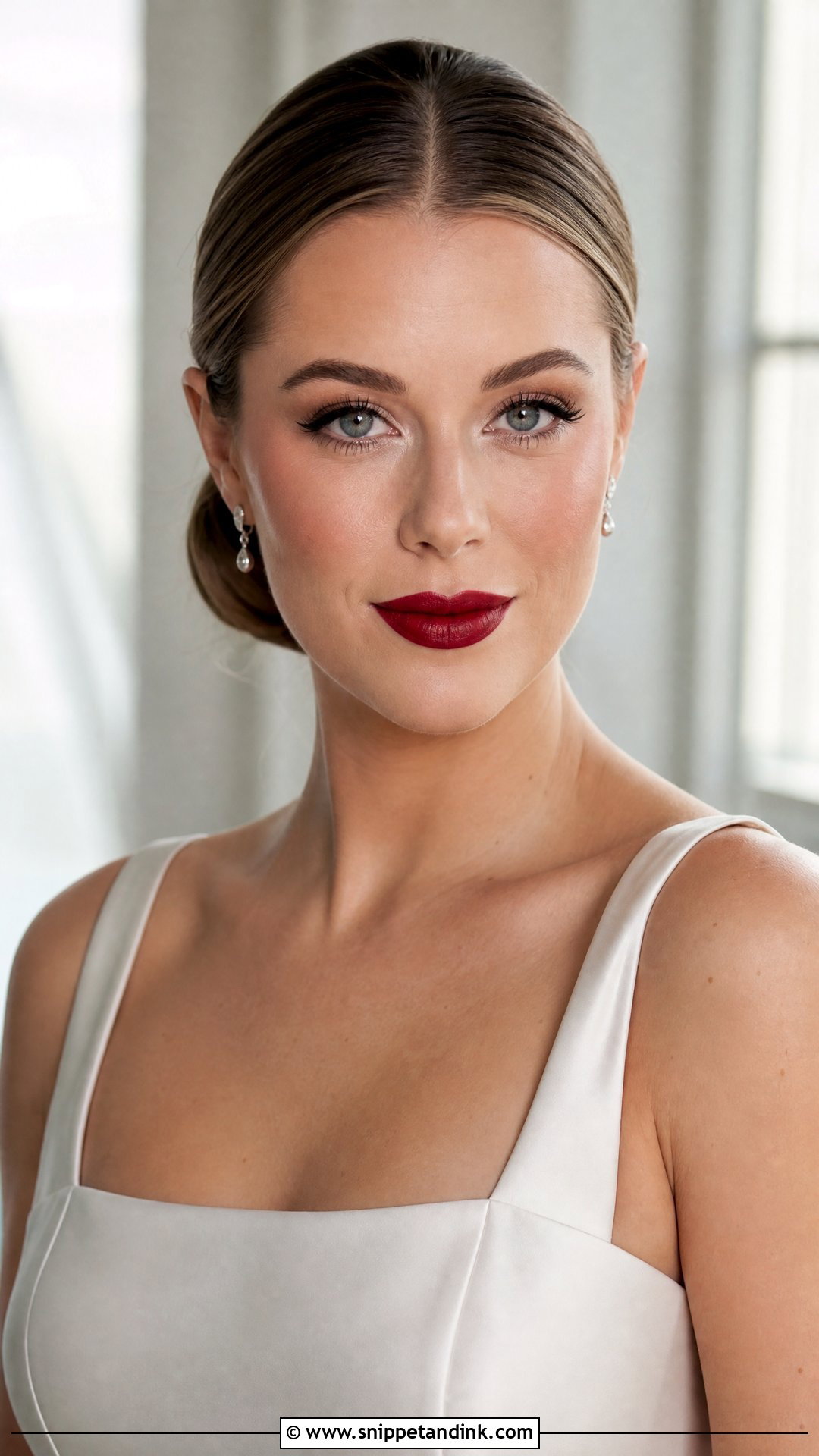
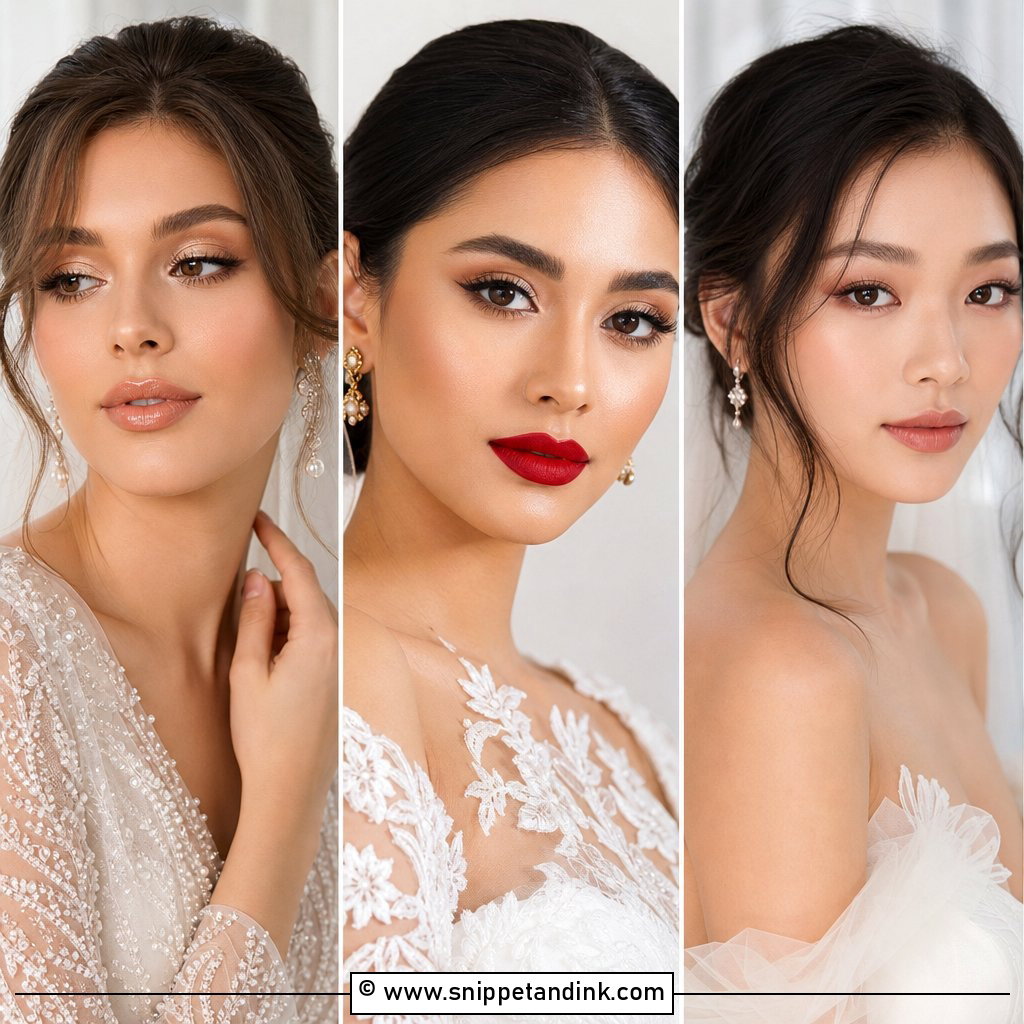
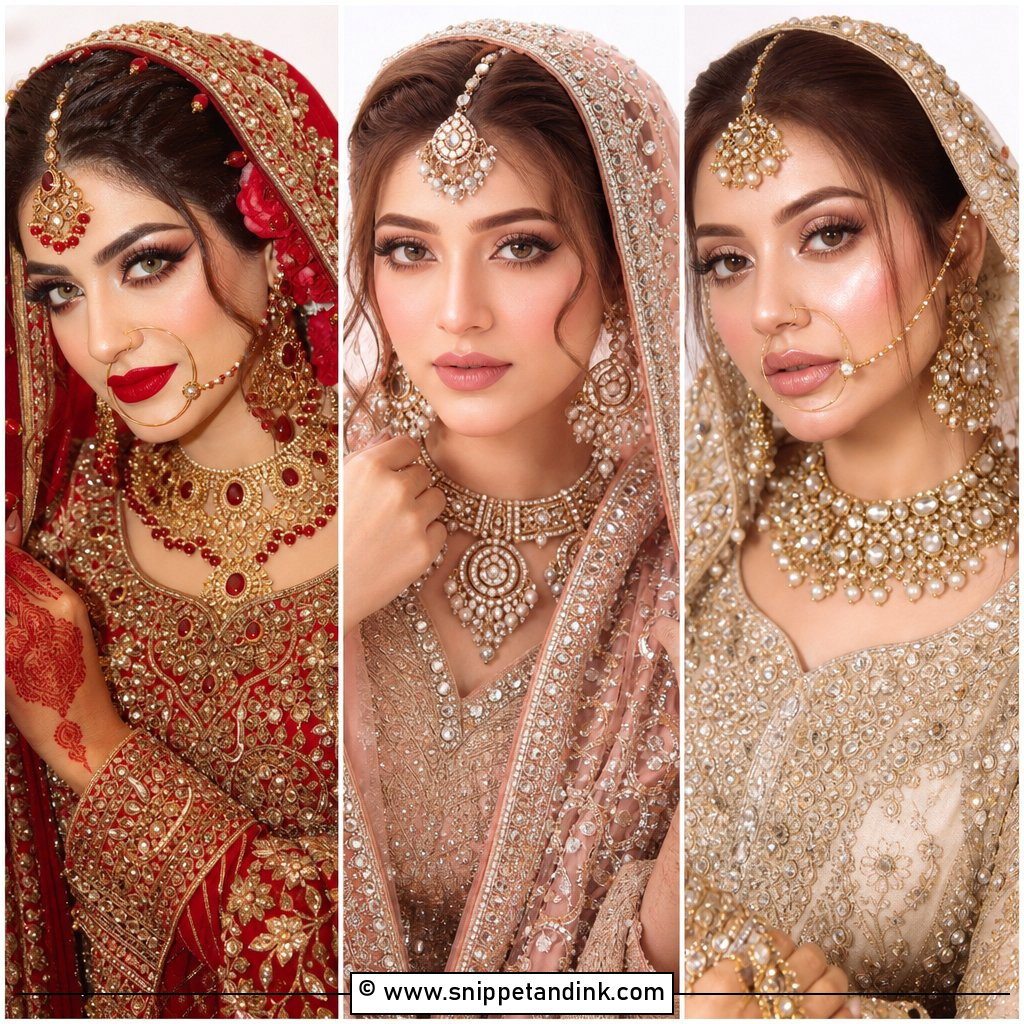
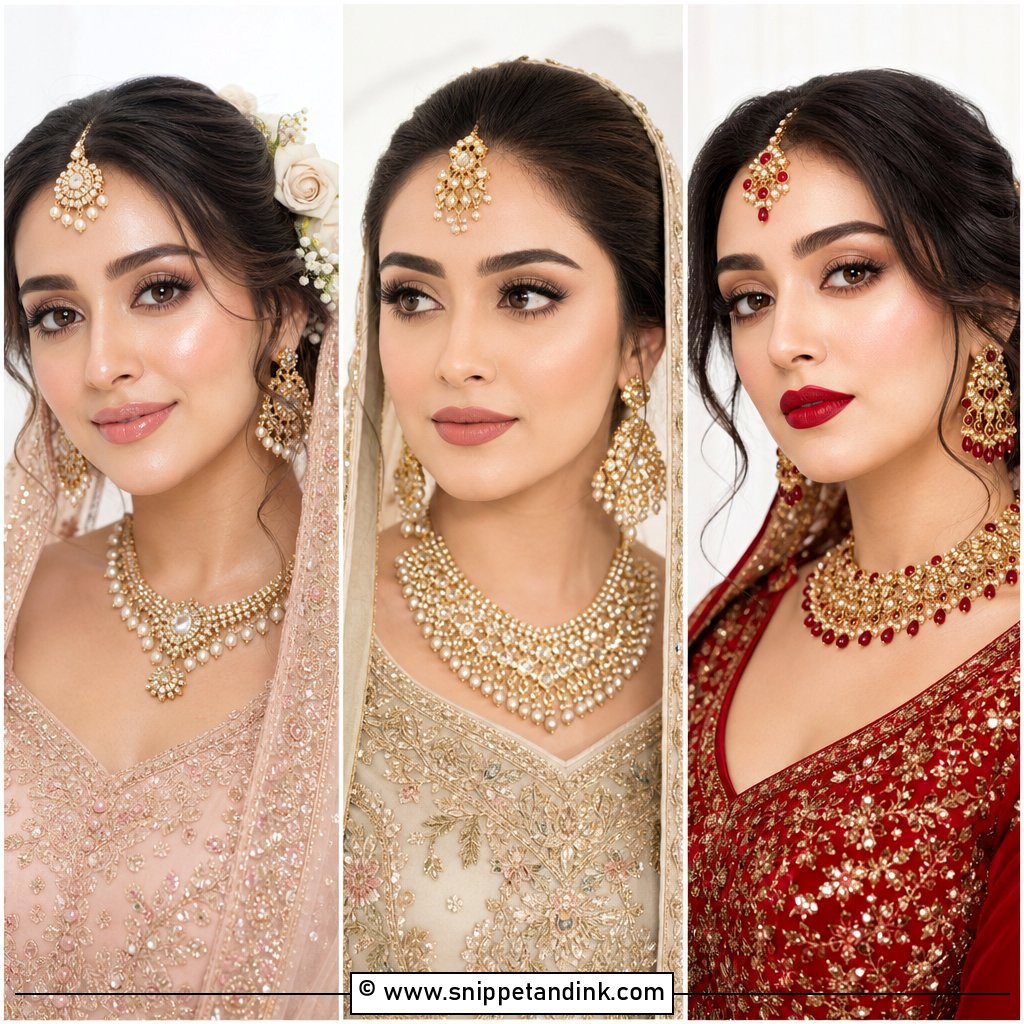
A red lip changes the job of everything else on the face. I keep the airbrush base softly matte and the blush quiet so the red isn’t fighting the cheeks. Neutral shadow, precise liner and defined lashes let the eyes hold their own. Match the red to your undertone: blue-red for cool skin, tomato red for warm skin, deep cherry for depth. I line and fill the whole lip with liner first, so when the color wears down at dinner there’s no bare edge. Sleek hair and classic gowns suit it.
8. Airbrush Bridal Makeup With Winged Liner
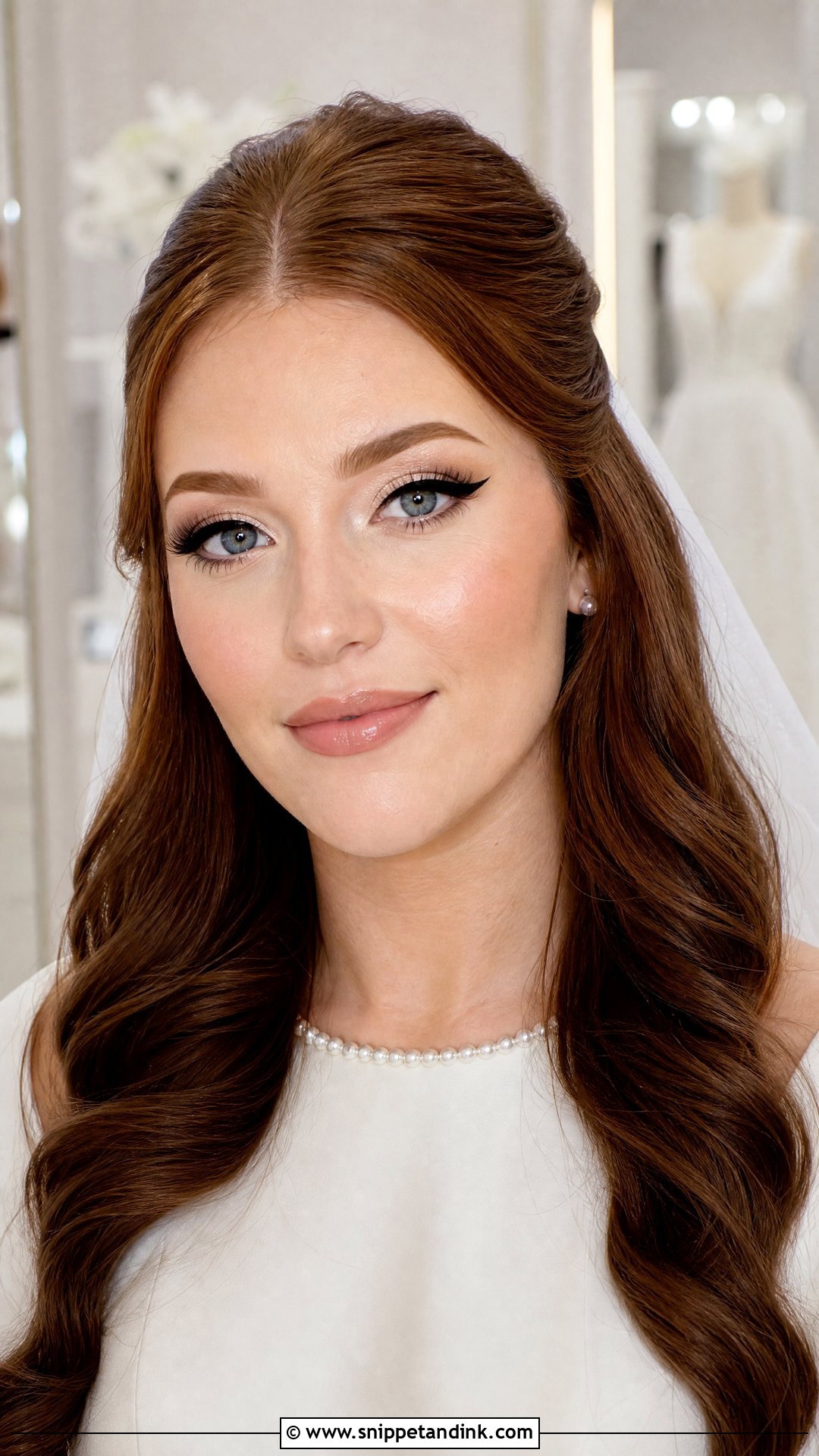
The wing doesn’t need to be long to work. A slim, lifted flick lengthens the eye, and on hooded lids I draw it with the bride looking straight ahead so the fold doesn’t swallow it. The airbrush base stays balanced: soft blush, light contour, a natural highlight. Matte beige on the lid keeps the line the focus, and wispy lashes soften it. A nude-pink or peach lip finishes it. Pearl details and updos sit well with this face.
9. Airbrush Bridal Makeup For Brown Eyes
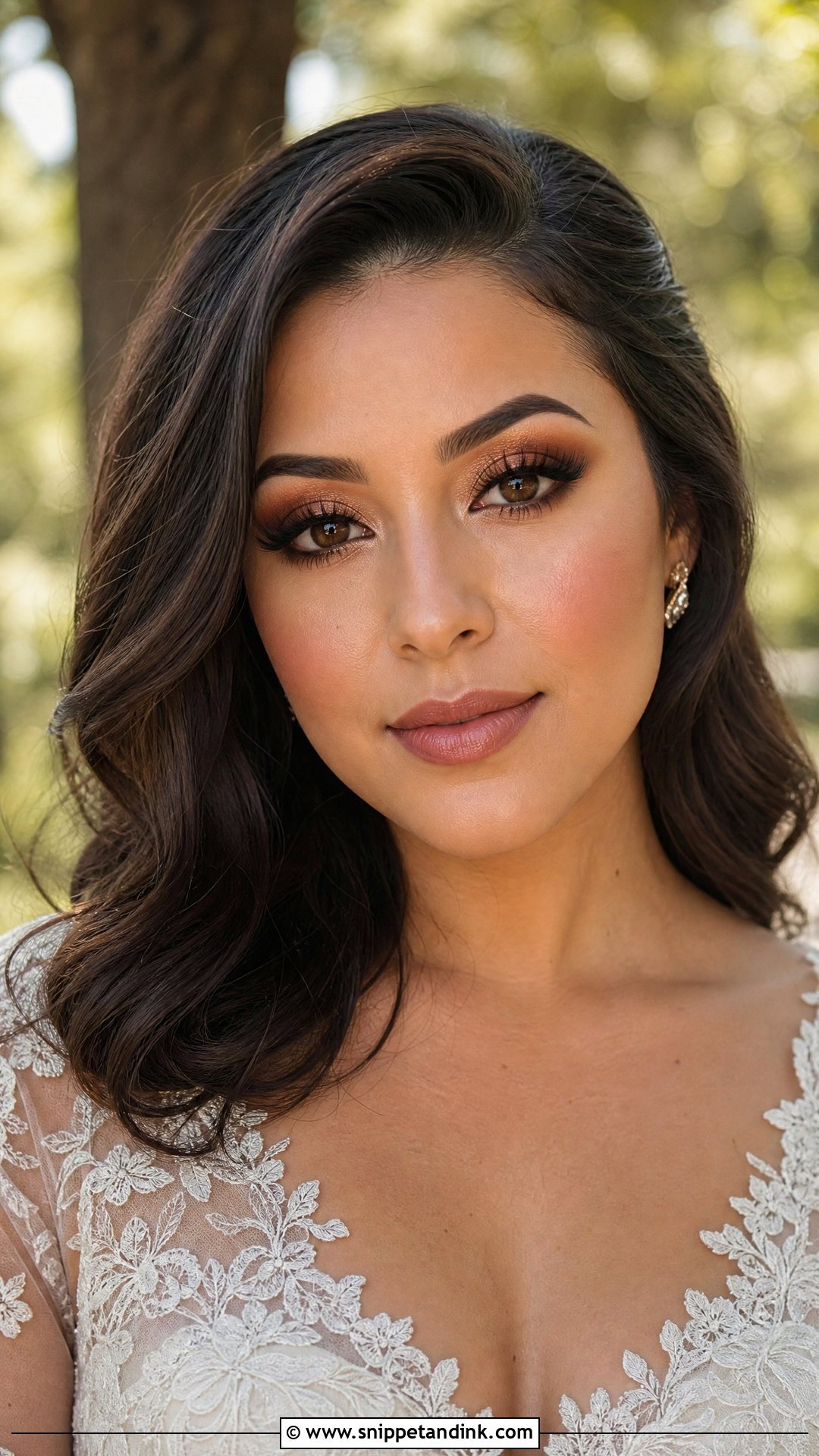
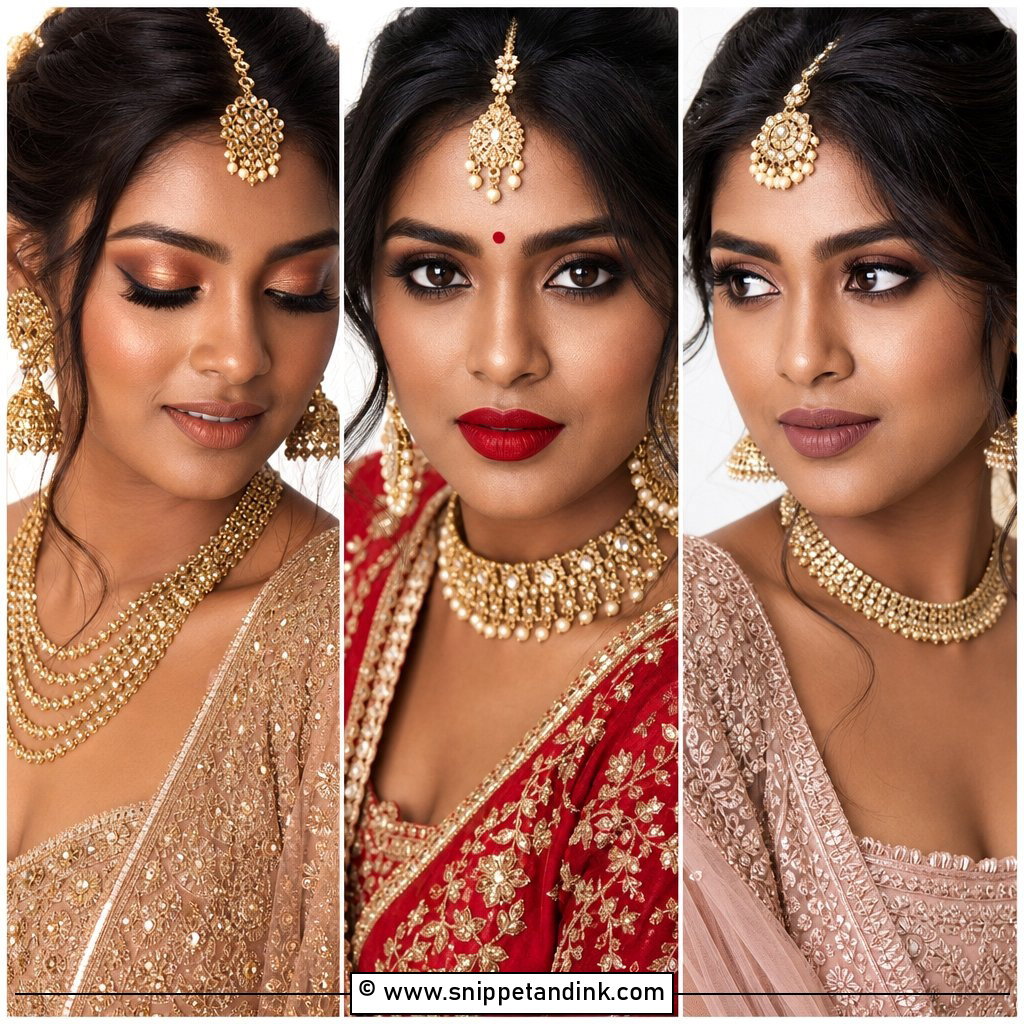
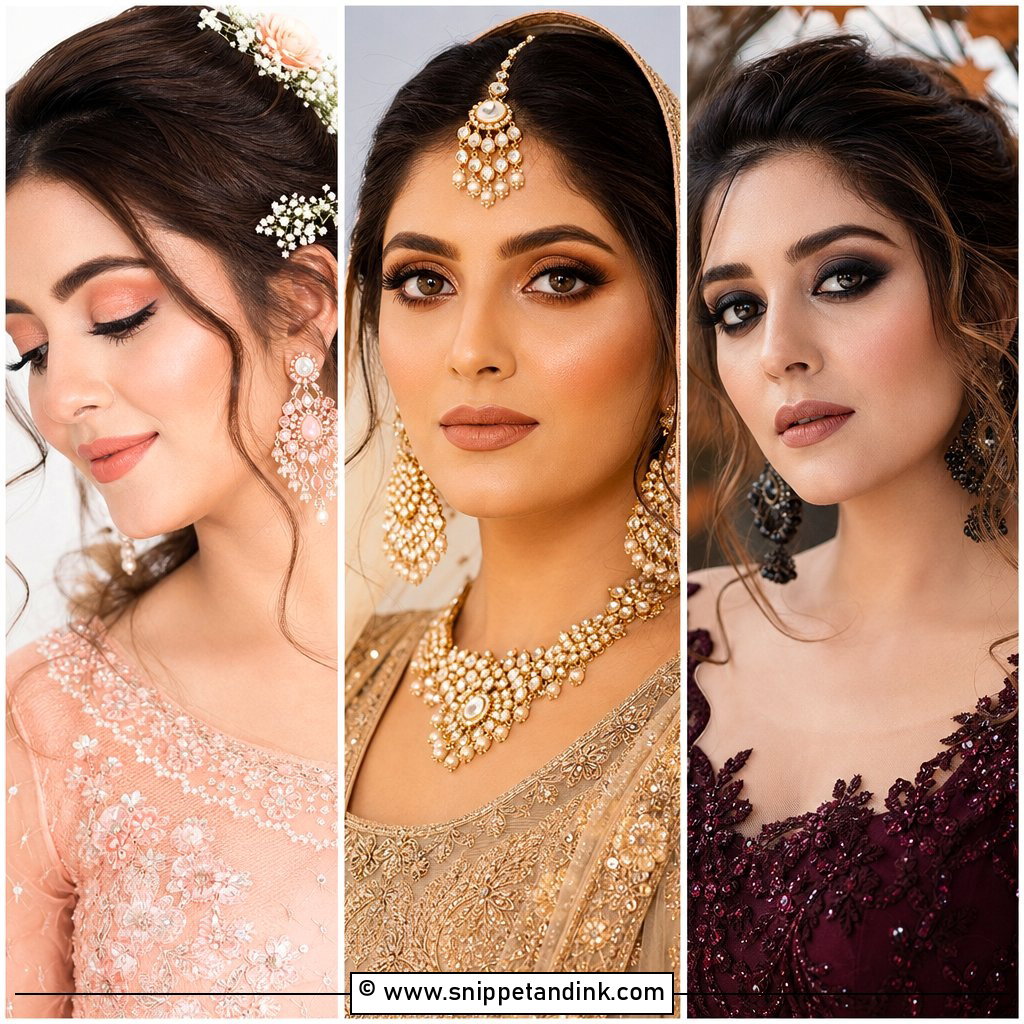
Airbrush bridal makeup for brown eyes can lean warm: bronze, copper, caramel and champagne all make brown irises look lighter and richer. I blend a medium brown through the crease, press shimmer onto the center of the lid and keep a dark brown liner tight to the lashes. A few individual lashes at the outer third lift without hiding the eye shape. Peach or rose blush warms the base, and a warm nude or soft terracotta lip finishes it.
10. Airbrush Bridal Makeup For Blue Eyes
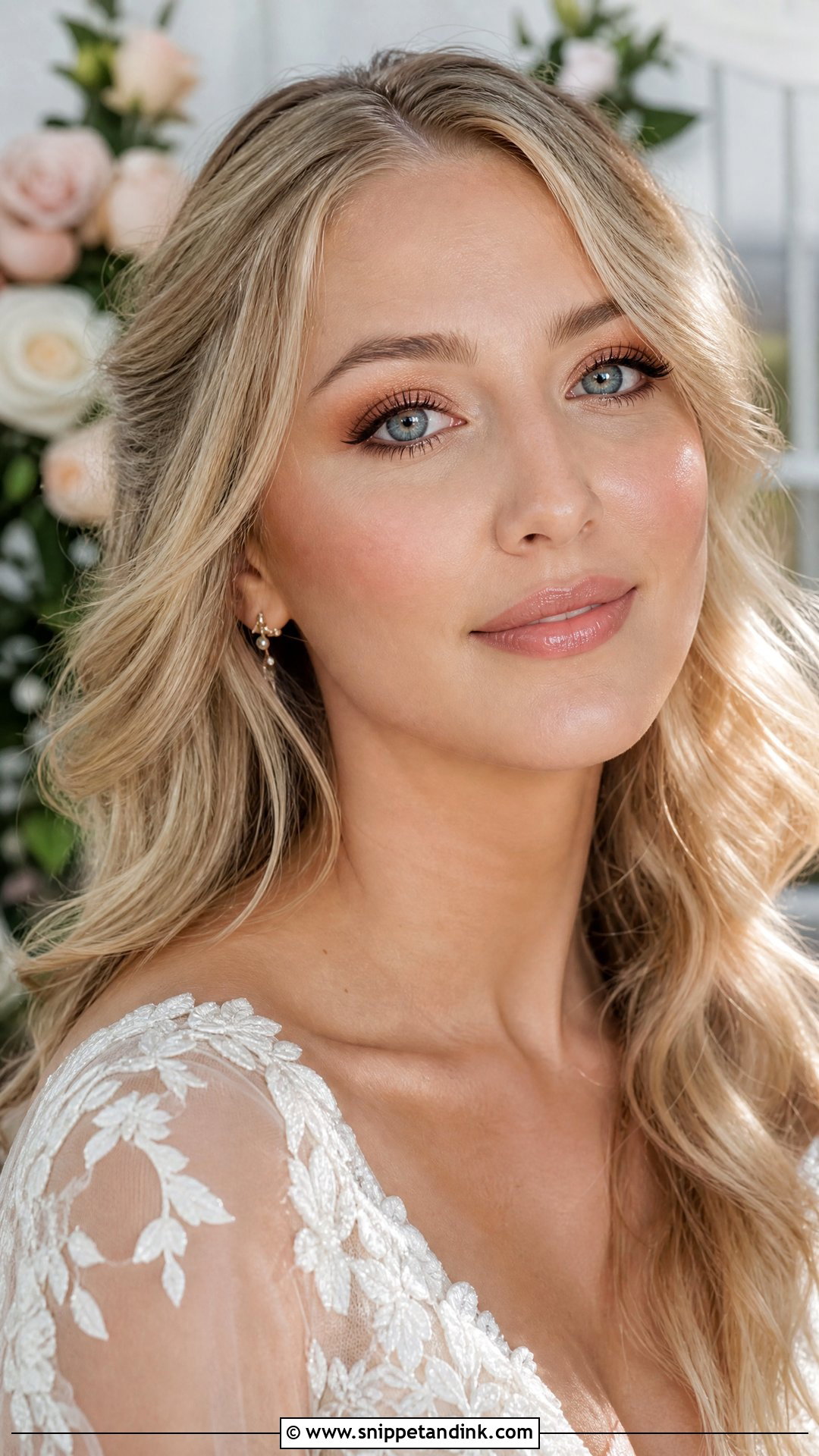
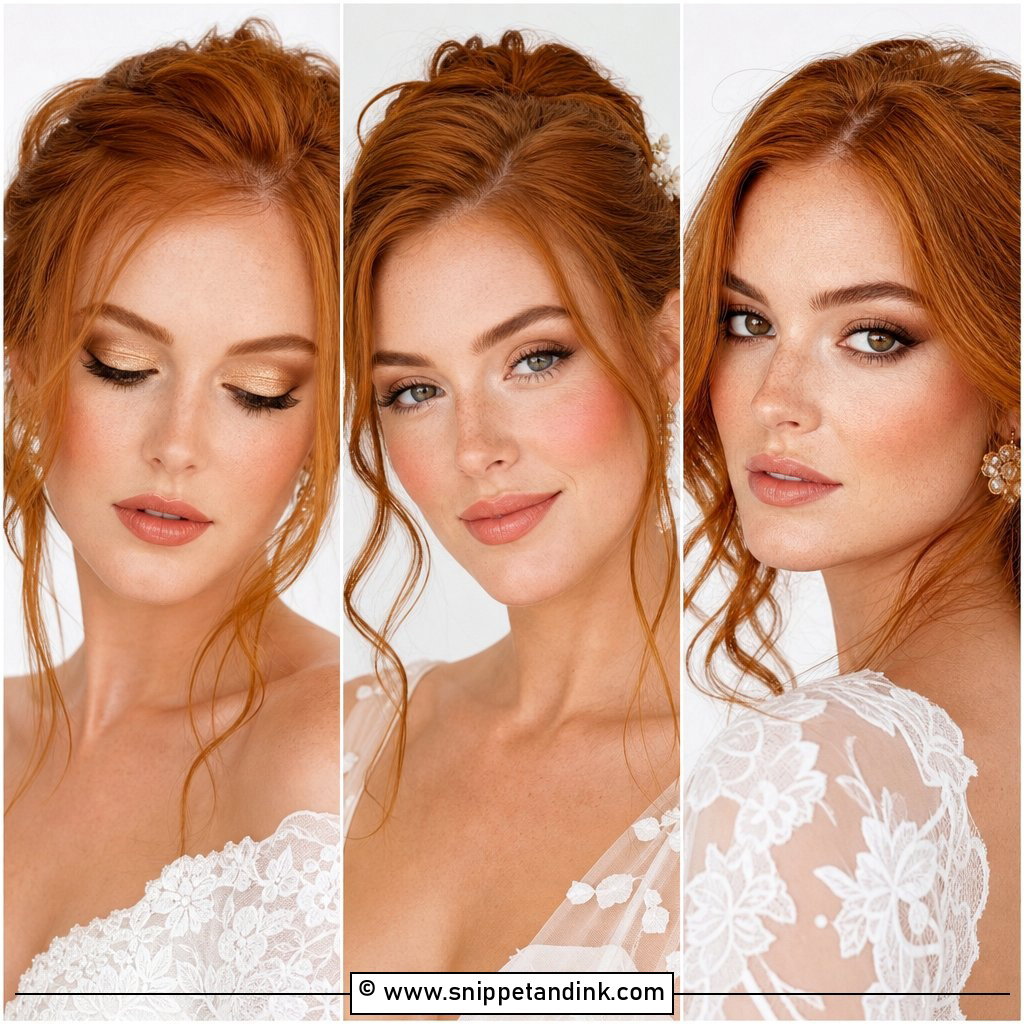
Blue eyes pop against warm neutrals because orange-based tones sit opposite blue on the color wheel. Soft bronze, peach and warm brown do the work without needing bold color. I keep the airbrush finish light, with pink-peach blush and a subtle golden highlight. Brown liner usually sits more gently than black in daylight. Add wispy lashes and softly defined brows, then a peachy nude or soft rose lip. Natural light at an outdoor ceremony shows this combination at its best.
11. Airbrush Bridal Makeup For Green Eyes
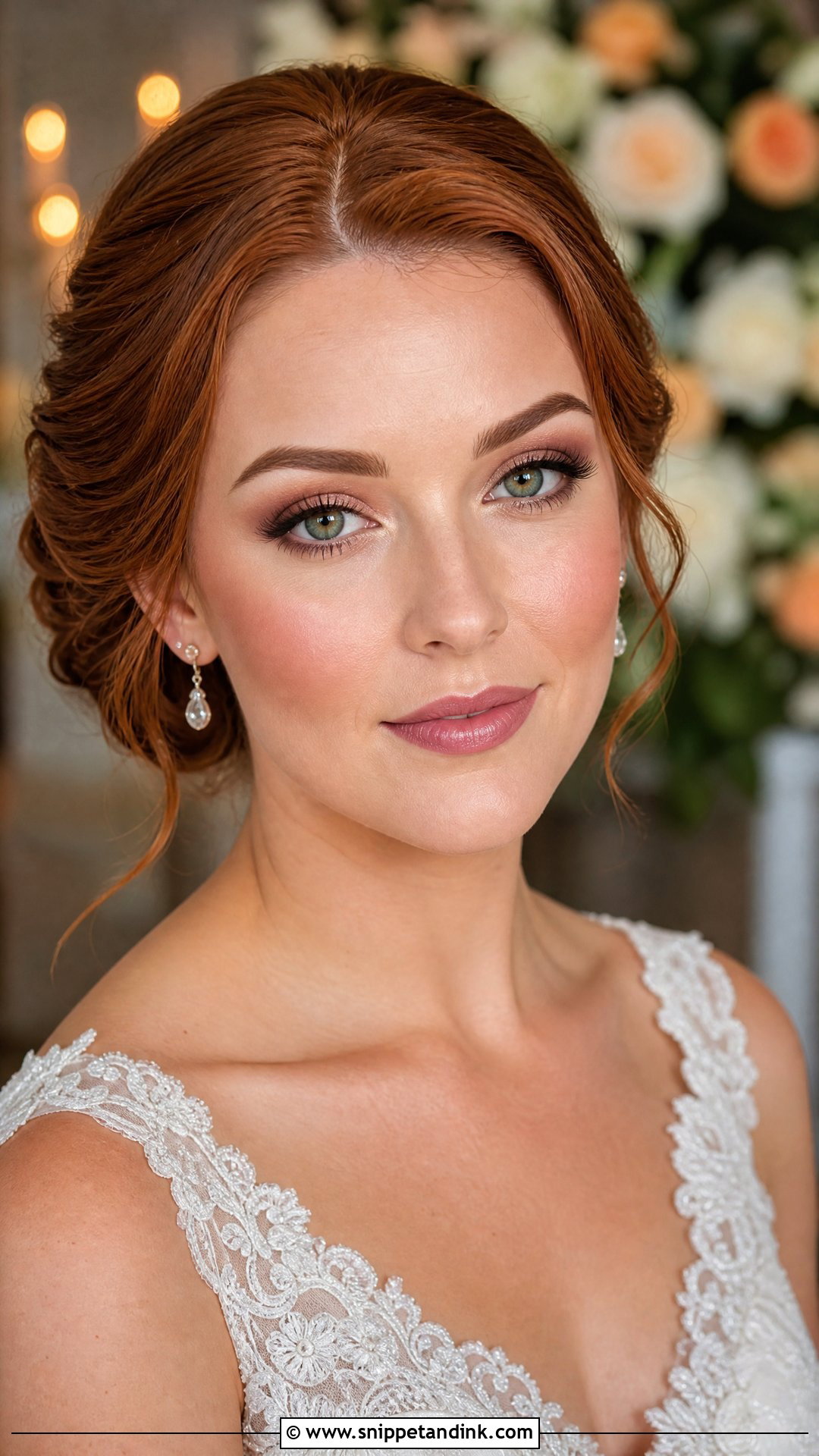
For green eyes, red-based shades create the contrast: mauve, plum-brown, copper and rose gold make the green read brighter. I’d avoid matching green shadow to green eyes, because it flattens the iris. The skin can take medium airbrush coverage with soft contour and rose or peach blush. A smudged brown liner gives a softer finish than a sharp black line. Curled lashes and a satin pink or mauve lip tie it together, and it sits well next to ivory or champagne fabric.
12. Airbrush Bridal Makeup For Hazel Eyes
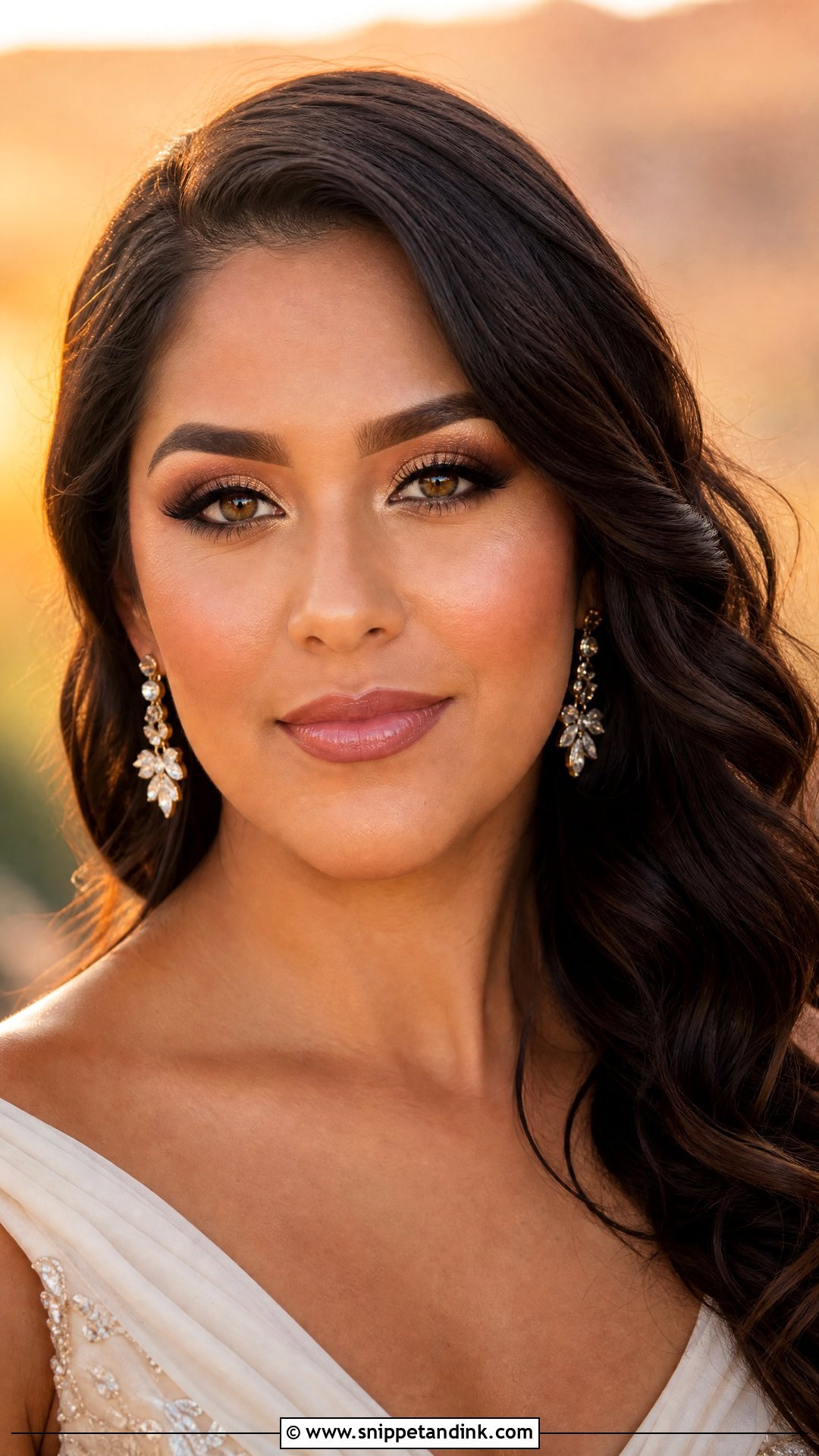
Airbrush bridal makeup for hazel eyes lets you choose which part of the iris to bring forward. Bronze and gold pull out the warm flecks; plum, mauve and olive-brown push the green. At a trial I’ll often do one eye each way so the bride can compare in the mirror. A smooth airbrush complexion, soft bronzer, warm blush and a light champagne highlight support either version. Liner stays close to the lashes, and I choose lashes that don’t hide the lid color. A peach-nude or soft caramel lip completes it.
13. Airbrush Bridal Makeup For Fair Skin
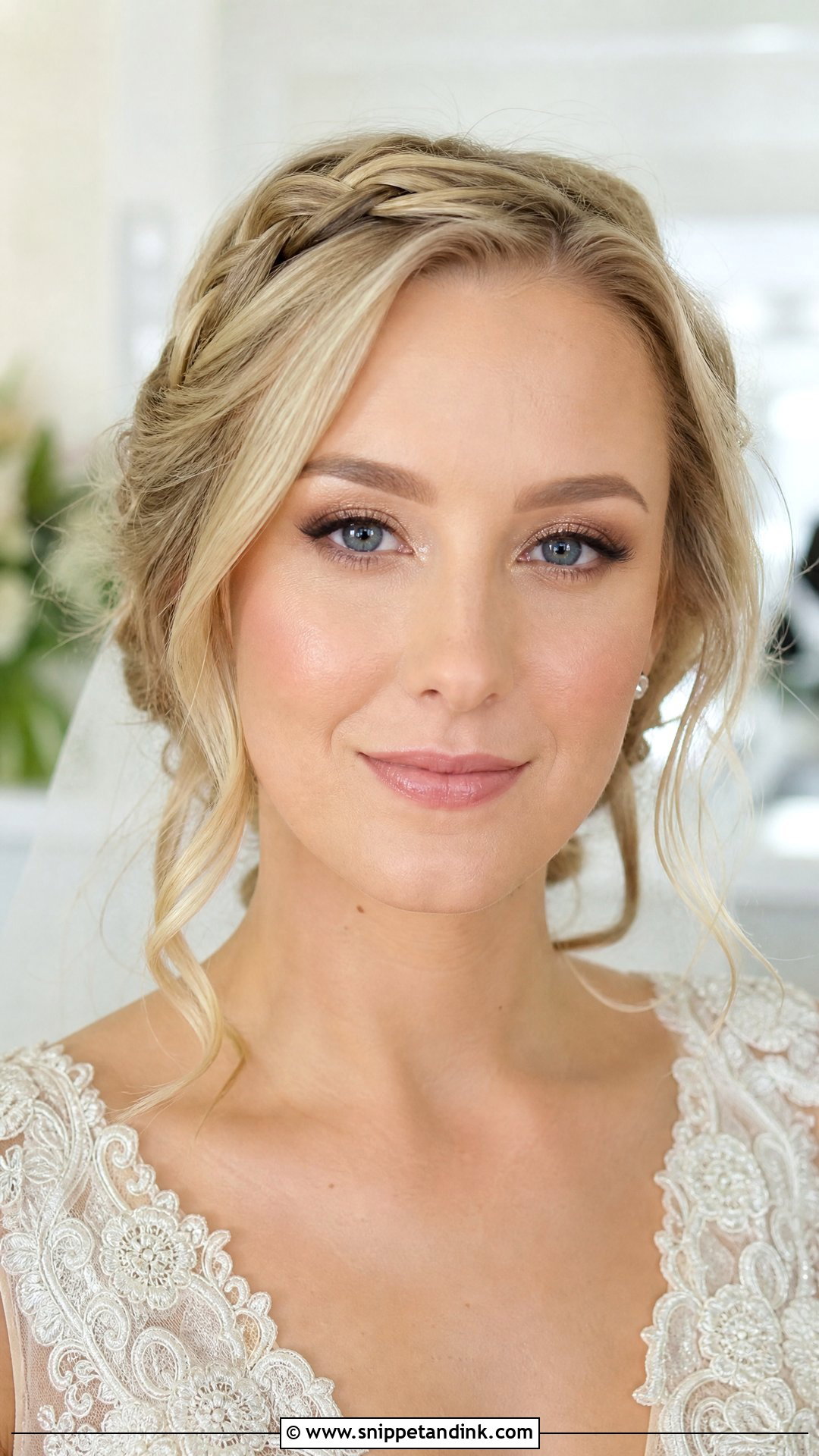
Fair skin shows a heavy hand quickly. I keep the airbrush layer light, enough to even redness while keeping natural brightness, and I’m careful with blush, since a strong shade can look like a flush that never fades. Soft pink, peach and light apricot usually sit right. Taupe, champagne, soft brown and rose gold give the eyes definition without harshness, and brown liner is often kinder than black for daytime. A pink nude or sheer berry lip finishes it.
14. Airbrush Bridal Makeup For Olive Skin
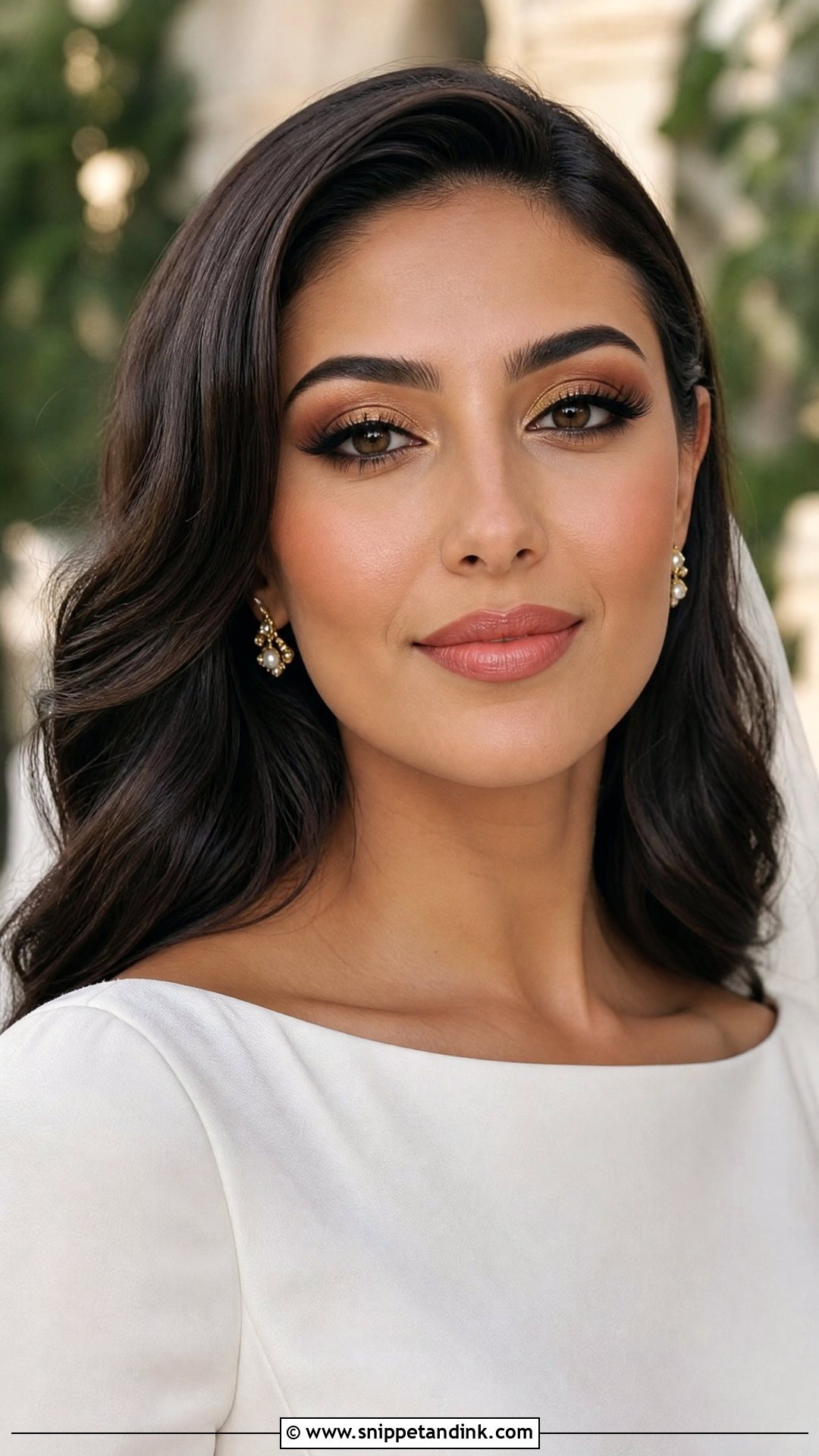
Olive skin is easy to turn grey with the wrong foundation. Olive undertones can be golden, neutral or slightly green, so I match the airbrush base to the neck and chest, not the jaw alone, and check it in daylight by a window. Bronzer brings warmth back; peach, coral or warm rose blush adds brightness. Bronze, gold, caramel and deep brown shadows suit the eyes, with a soft black or espresso liner for definition. Lips in peachy nude or cinnamon rose sit well. Sunset light flatters this complexion.
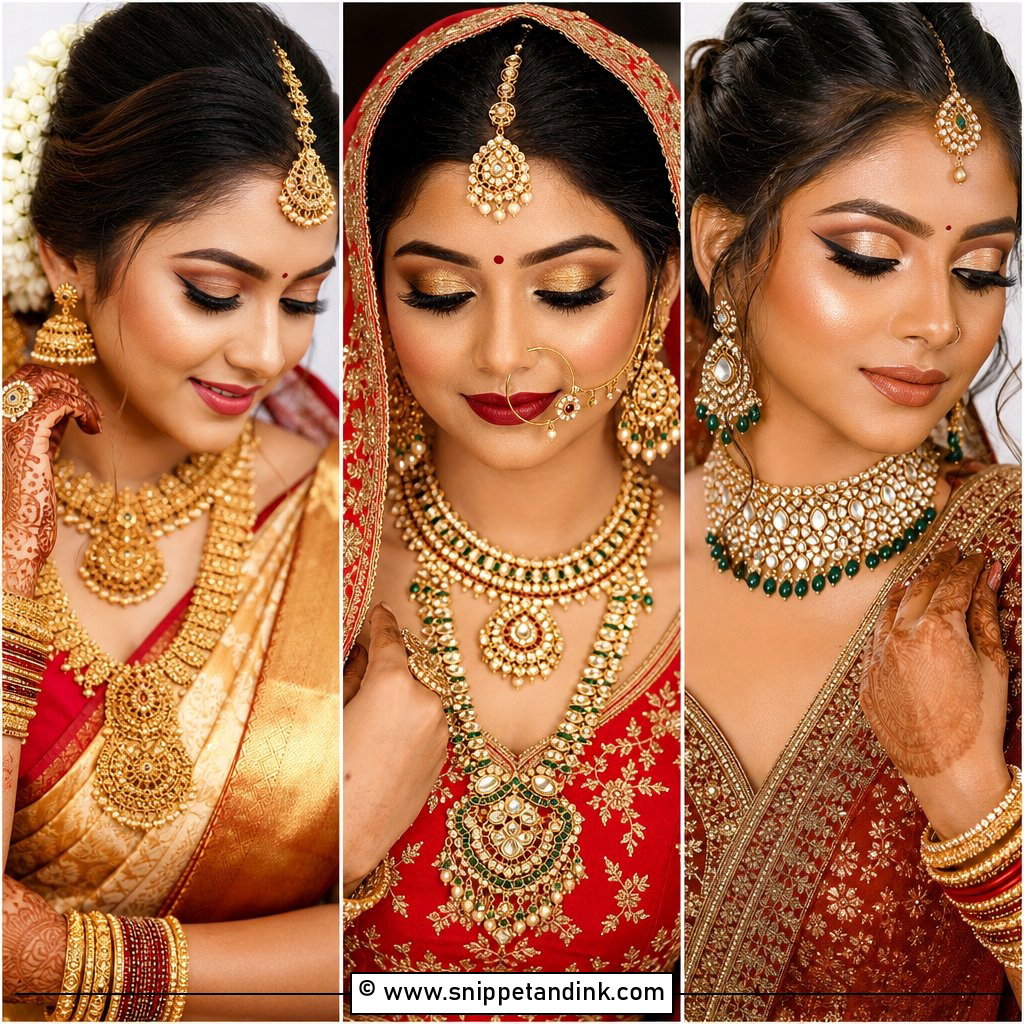
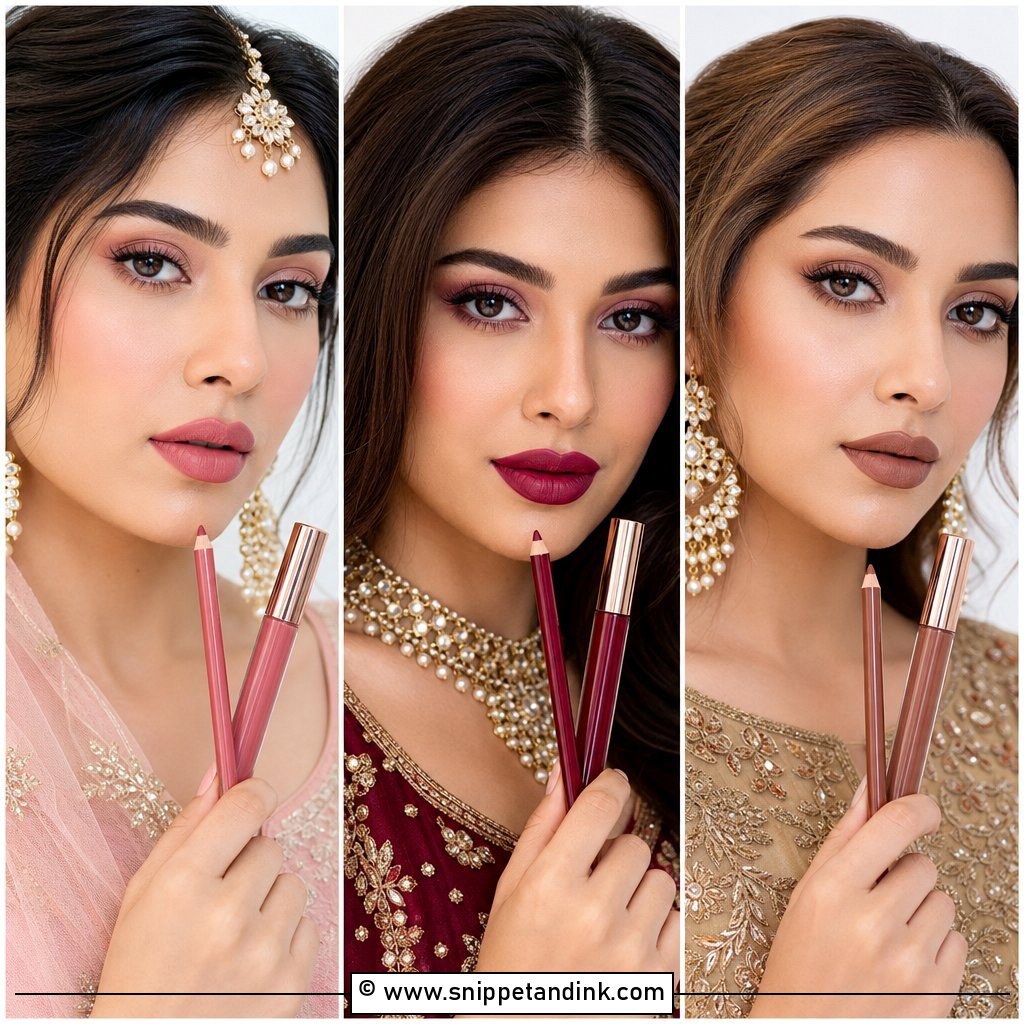
15. Airbrush Bridal Makeup For Dark Skin
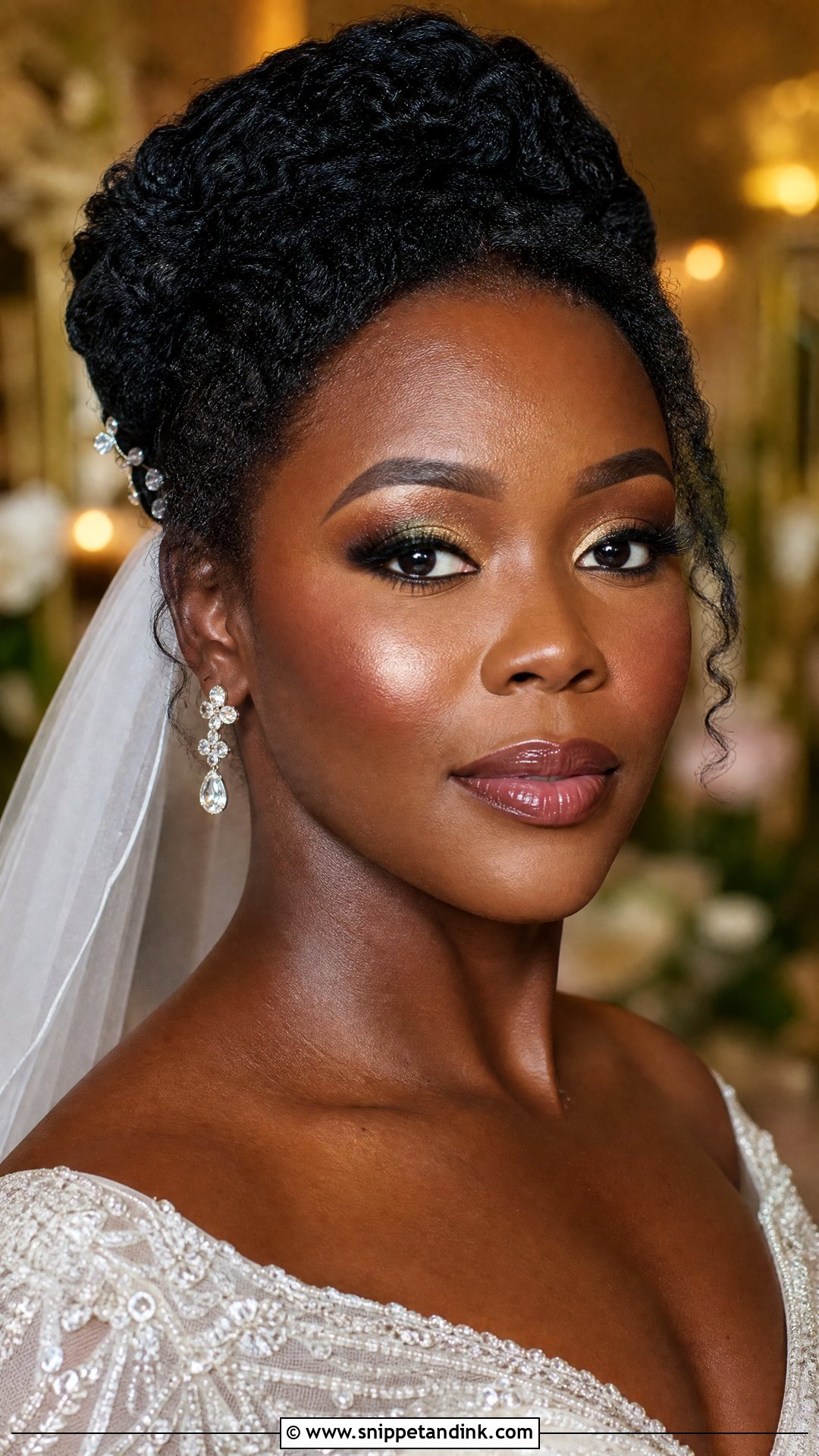
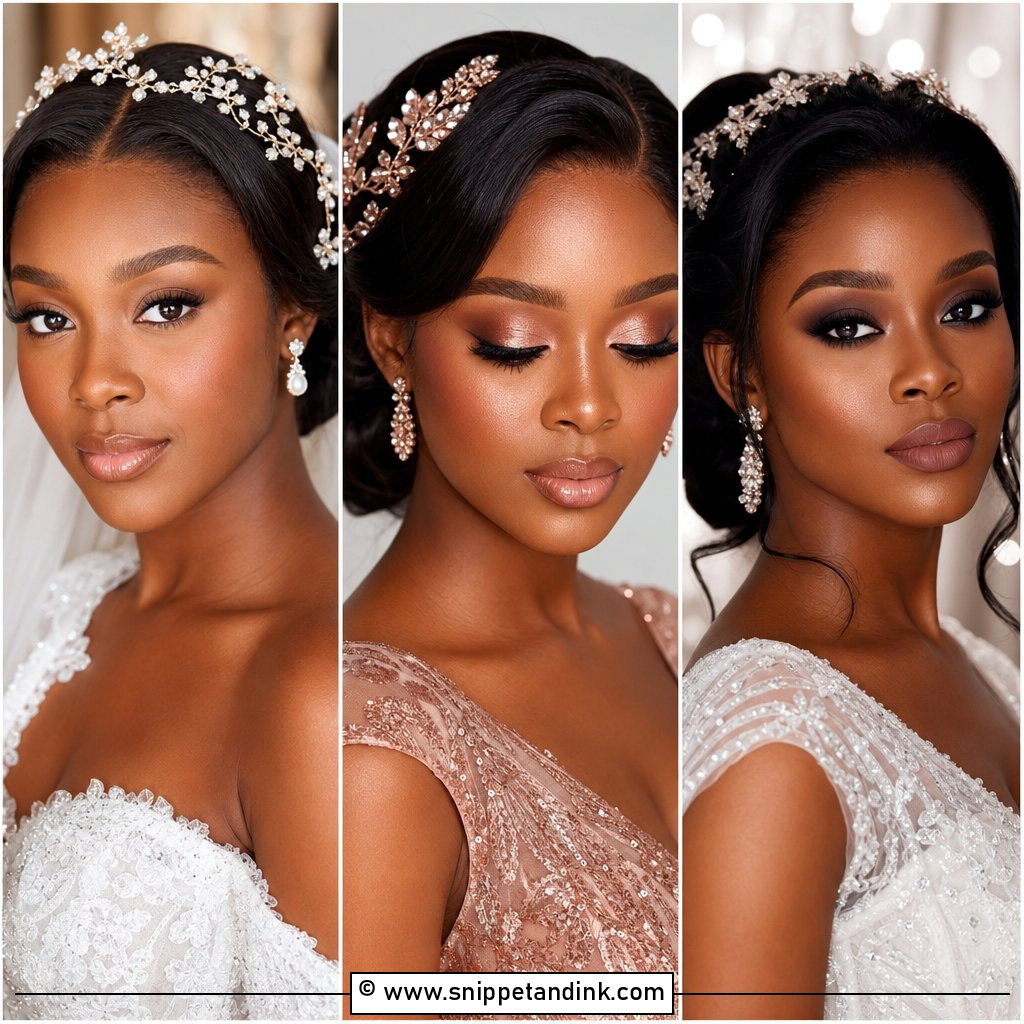
Airbrush bridal makeup for dark skin depends on a careful match. Deep complexions often have a lighter center and a richer perimeter, so I may use two shades: one through the center of the face, one at the edges. A single shade sprayed everywhere is what causes the ashy, flat look in flash. Strategic concealer and a soft setting powder in the right depth finish the base. Berry, terracotta or warm coral blush brings life to the cheeks, and gold, copper and burgundy shadows add dimension. Black liner, full lashes and a cocoa nude or deep rose lip complete it, and the skin keeps its luminous depth on camera.
16. Airbrush Bridal Makeup For Summer Wedding
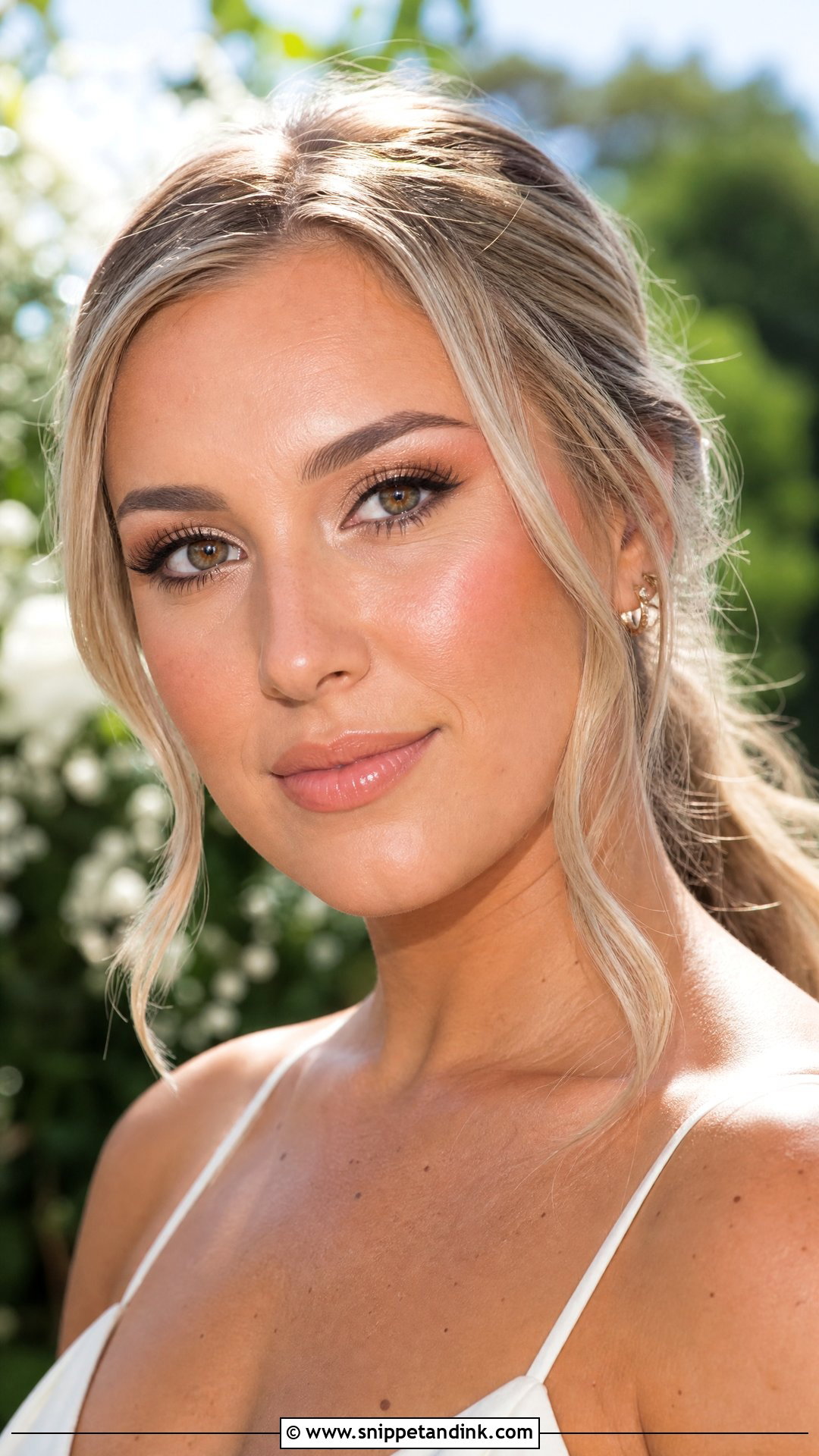
Heat makes makeup move, so for summer the prep and setting steps matter as much as the foundation. I mattify only where you get oily, spray a breathable satin-matte base and put glow only on the high points. Peach, coral and warm pink blush keep it lively. Bronze or soft brown shadow pairs with waterproof liner and lashes. On the lips, a peach nude or rosy gloss is easy to reapply from a clutch. Shade during portraits does more for your makeup than any setting spray.
17. Airbrush Bridal Makeup For Beach Wedding
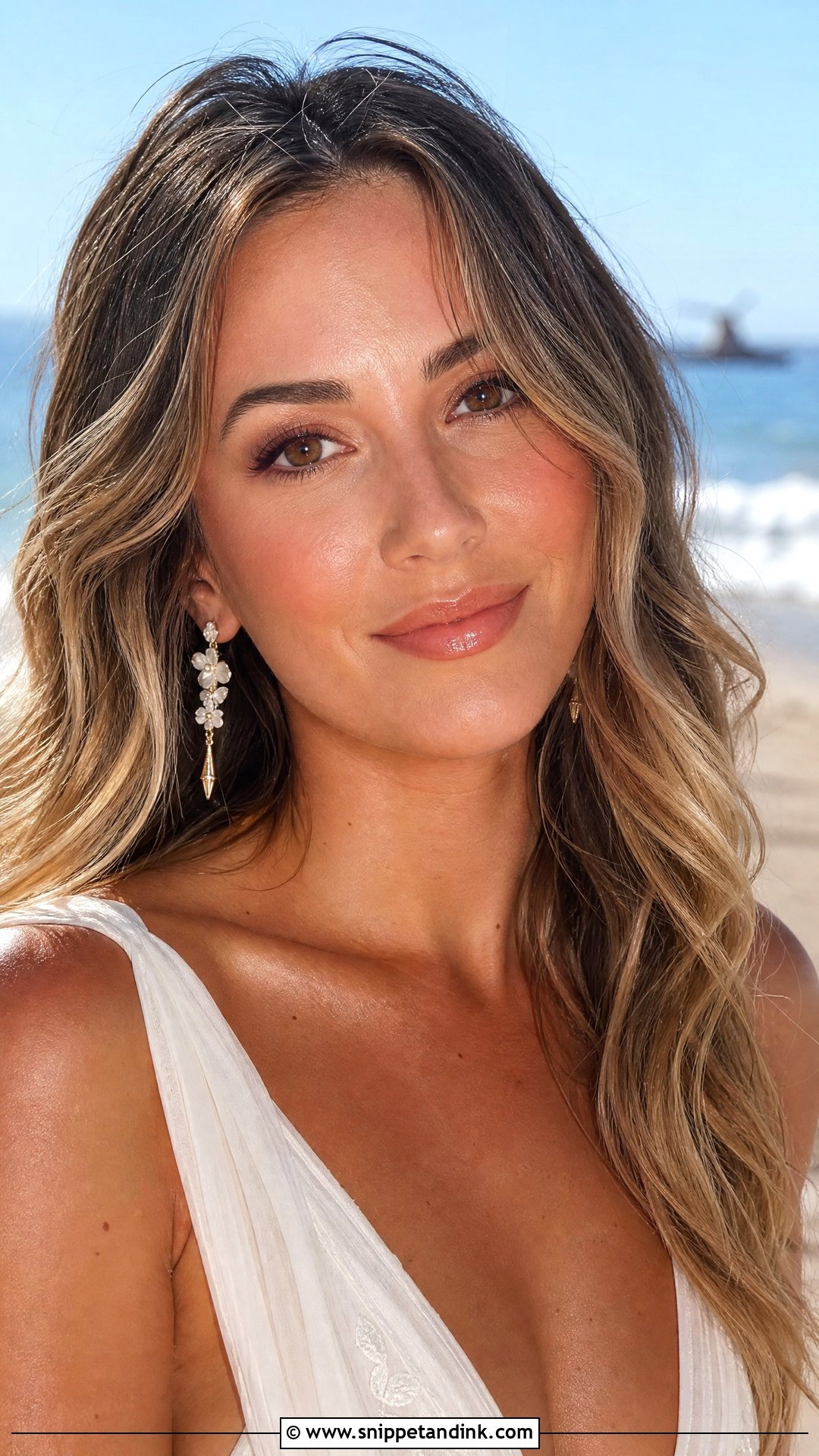
On the sand, less is more. I spray sheer to medium coverage so the base breathes in sun and breeze, then add warm bronzer, peach blush and a soft golden highlight. Eyes get waterproof brown liner, champagne shimmer and natural lashes; strip lashes can lift at the corners in wind and salt air. Dark smoky shadow looks muddy in bright daylight, so I keep it for evening. A glossy nude or soft pink lip suits the relaxed setting, though gloss does catch blowing hair, so keep a tissue handy.
18. Airbrush Bridal Makeup For Winter Wedding
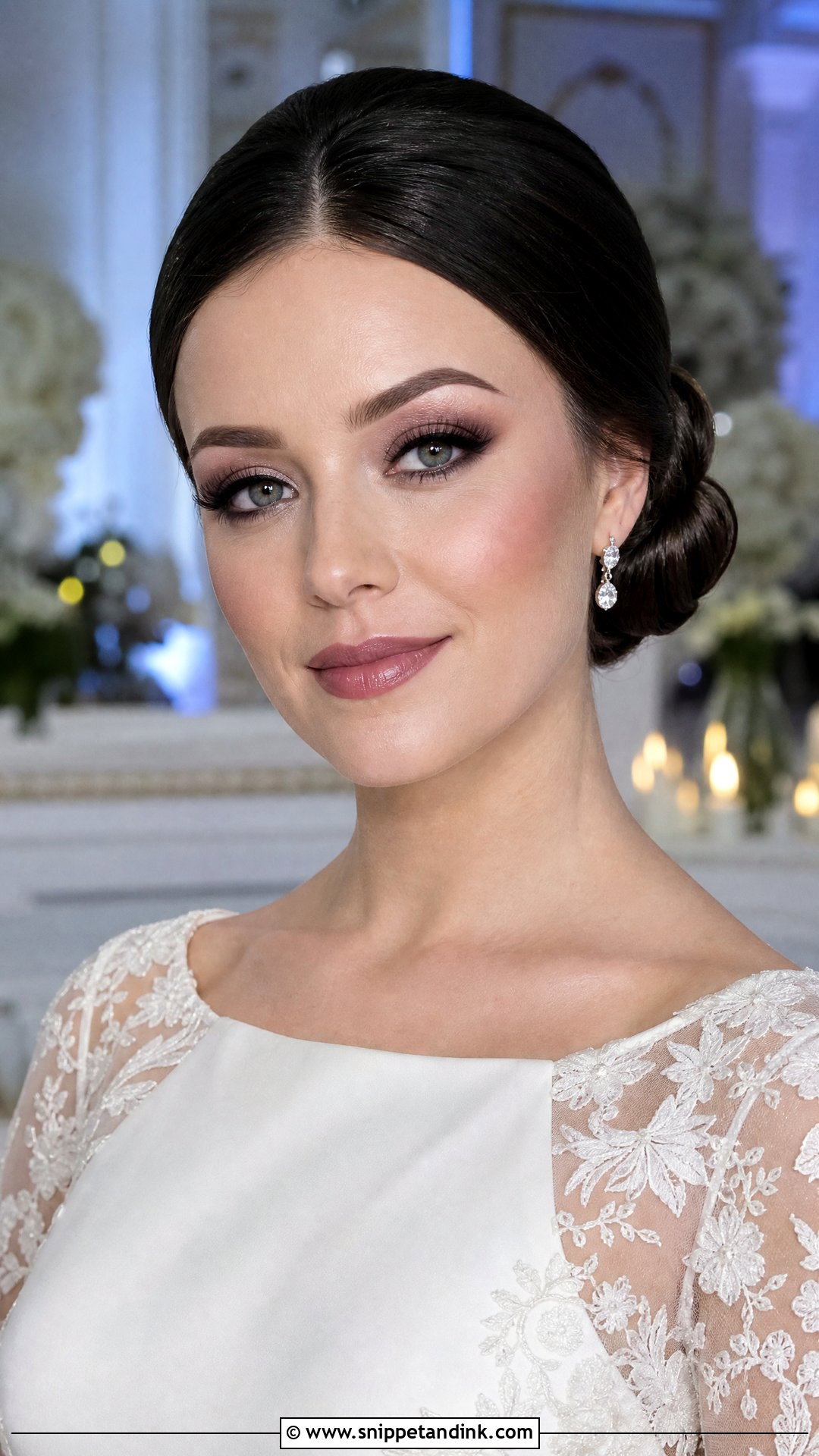
Winter weddings can carry a little more depth. Indoor lighting and evening photos take definition well, so I add a stronger lash line and slightly richer shadow: taupe, cool brown or soft plum, depending on undertone and the dress. Before any of that, I hydrate more than usual, since heating and cold air both leave skin tight. Rose blush, subtle contour and a controlled highlight go over the airbrush base. Lips can be mauve, berry or classic nude. Long sleeves and structured gowns pair well with it.
19. Airbrush Bridal Makeup For Older Brides
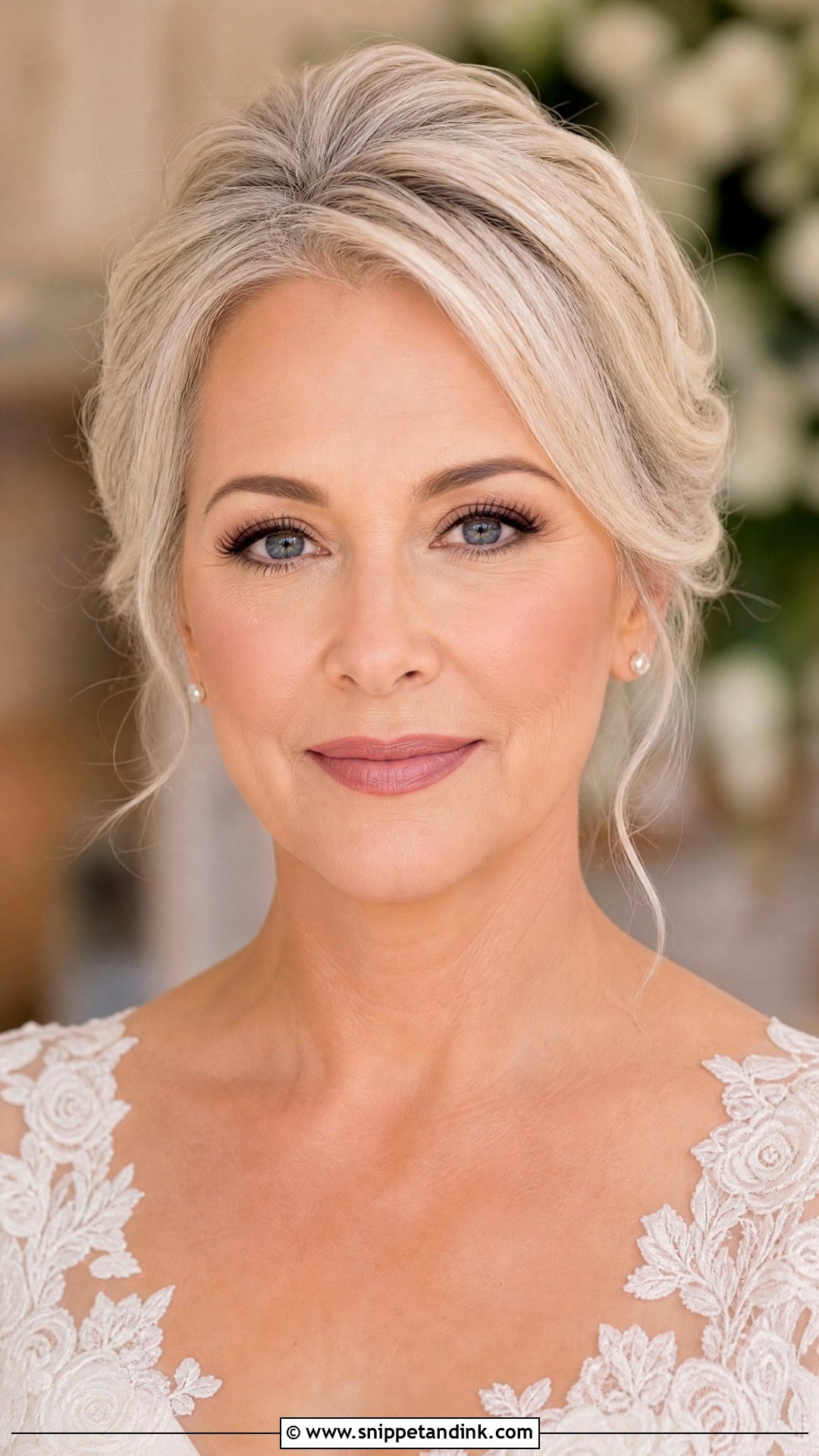
With older brides, I work in thin, flexible layers and target coverage only where it’s needed. Heavy powder, chunky shimmer and harsh contour all settle into texture by evening, so I leave them out. A soft satin airbrush finish with cream blush and a gentle highlight keeps the skin looking fresh. Neutral matte shadows with a touch of brightness on the center of the lid open the eye. Brown or charcoal liner sits more softly than strong black, and Individual lashes lift without weight. A rose or creamy nude lip completes it.
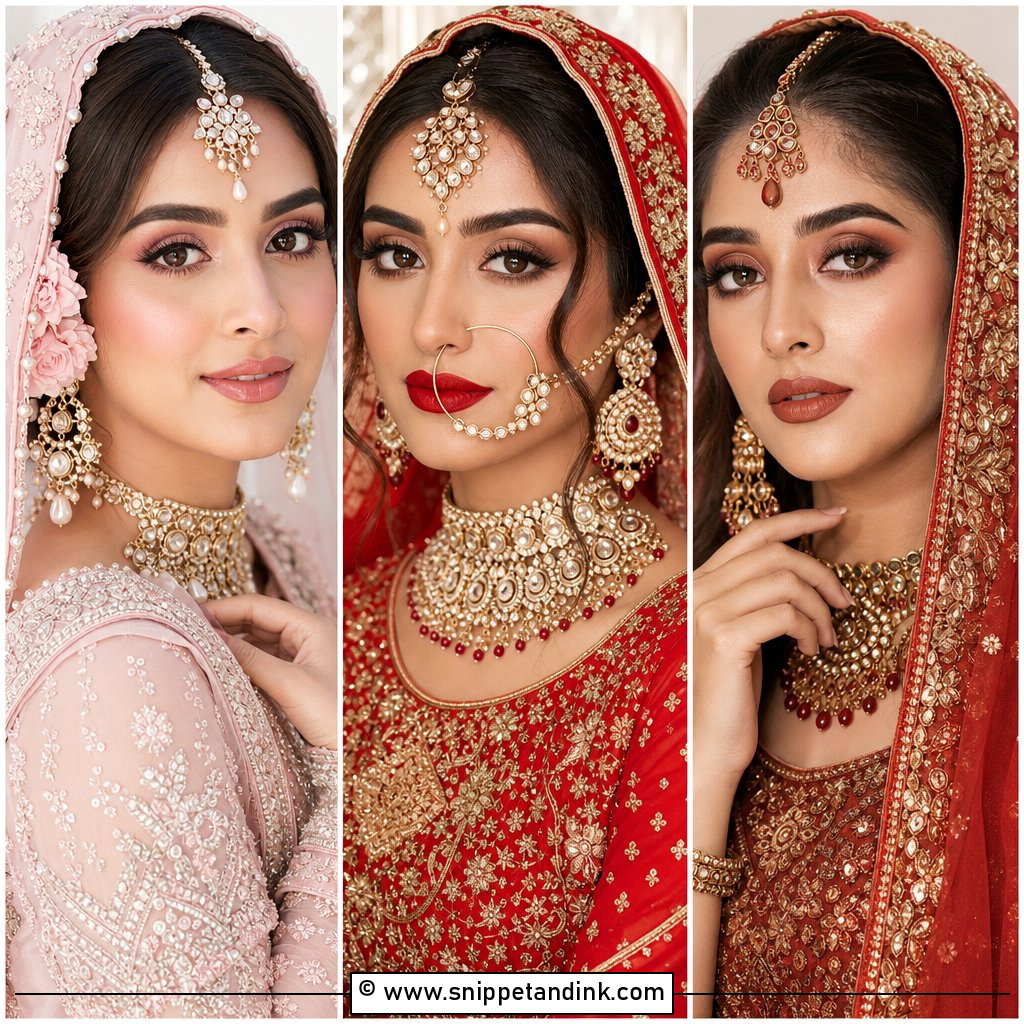
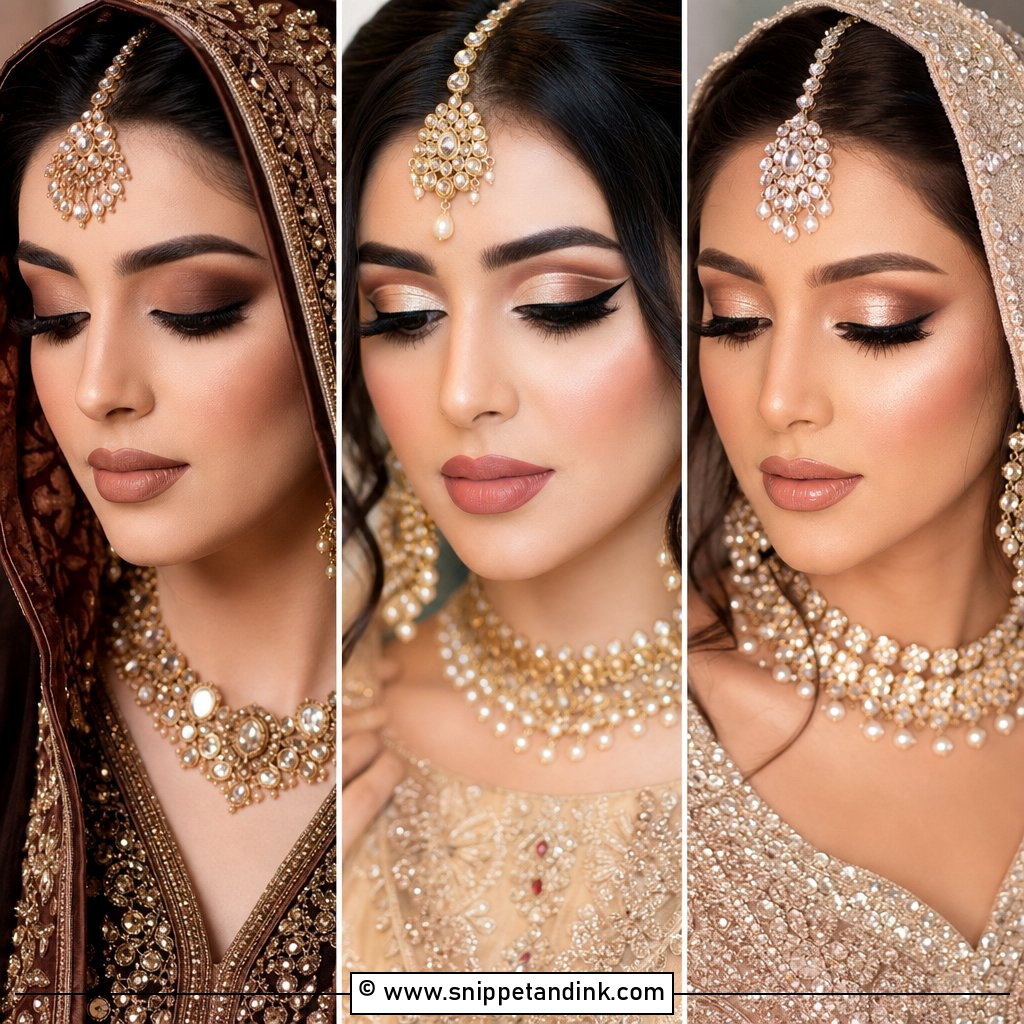
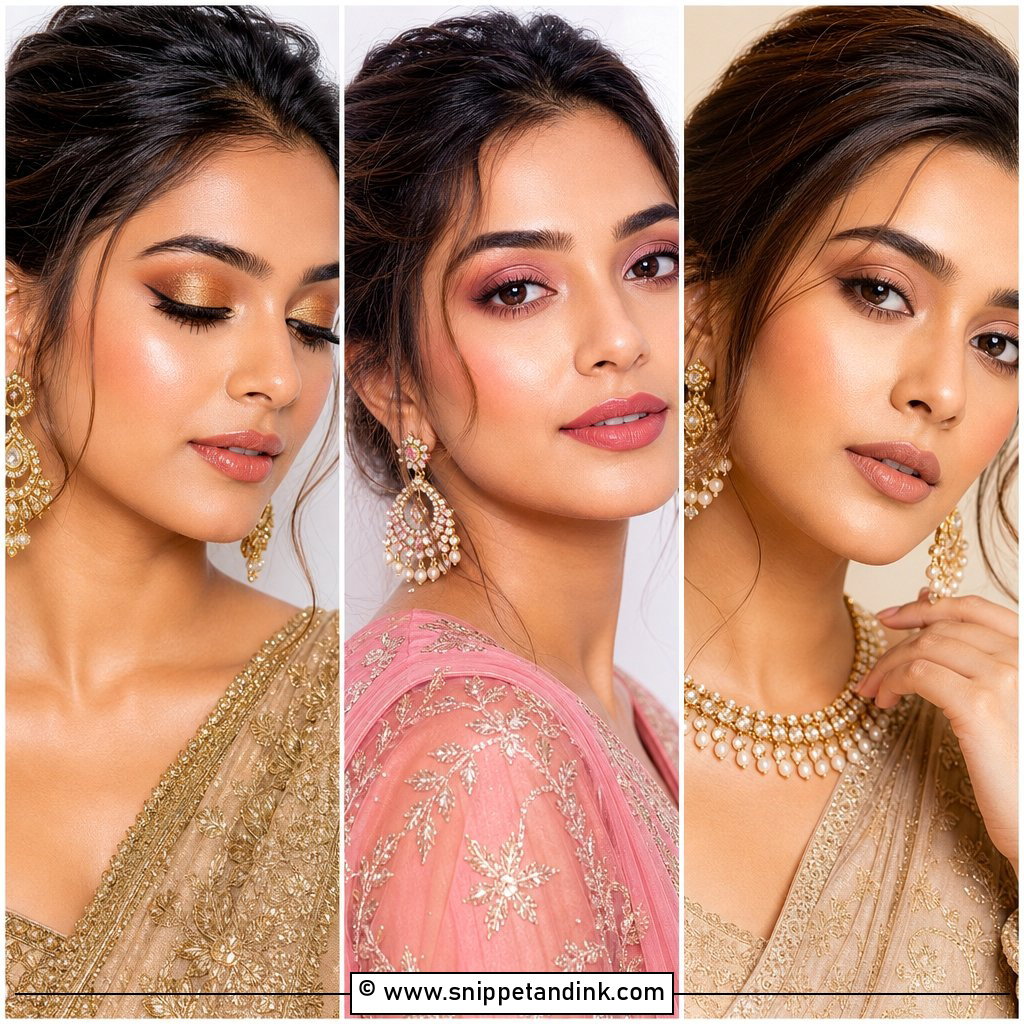
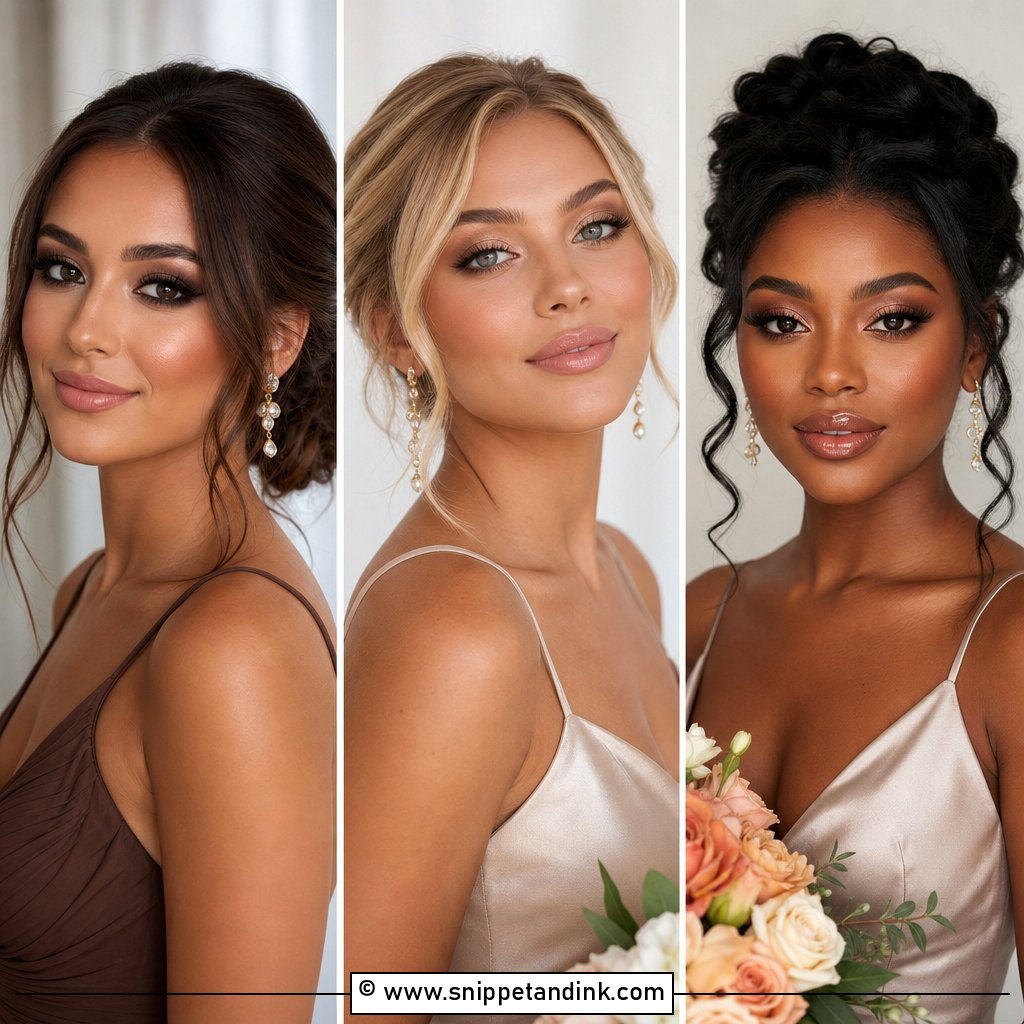
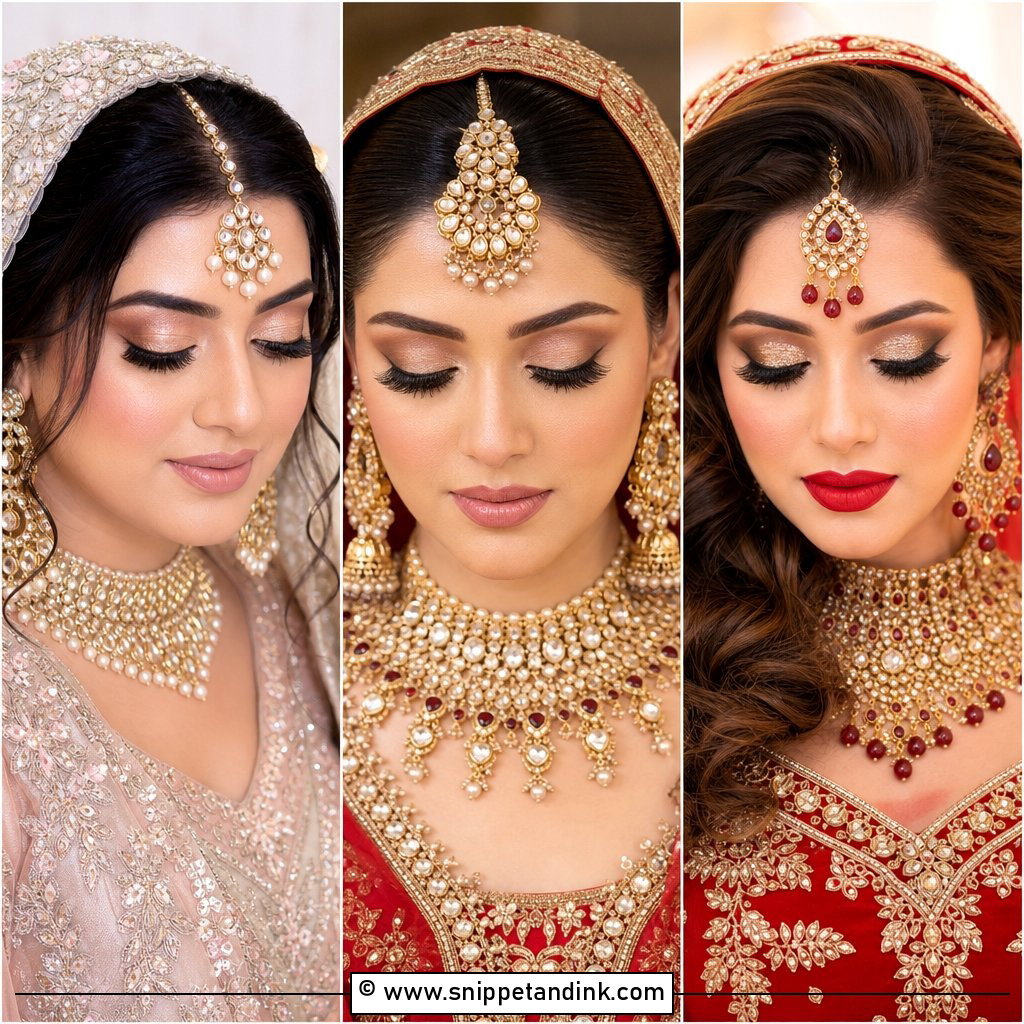
20. Airbrush Bridal Makeup For Bridesmaids
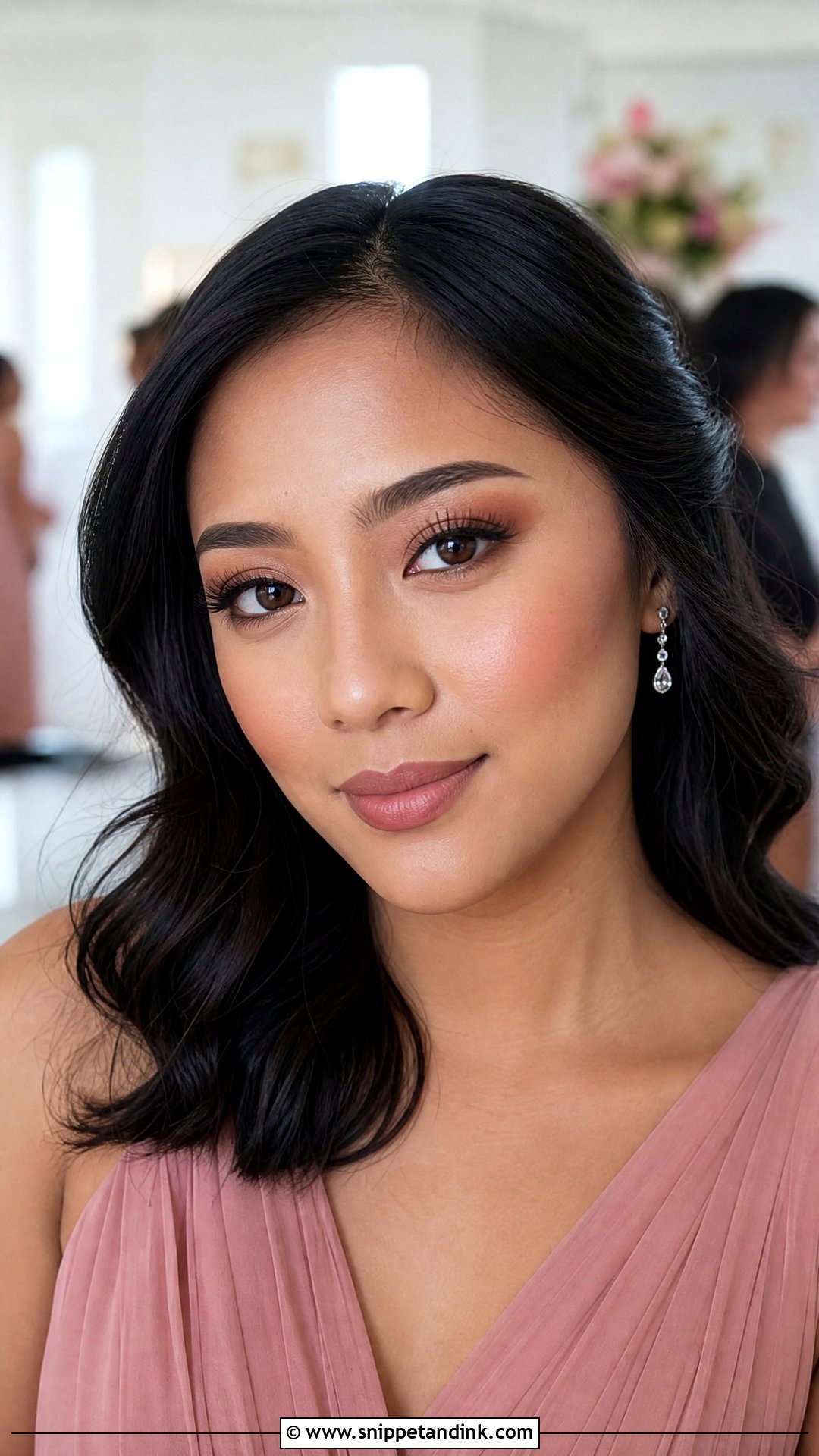
For bridesmaids, the goal is coordination, not copies. A bridal party usually spans different skin tones, ages and comfort levels, so I agree on a shared lip family and a shared eye intensity, then adjust blush and shadow to each face. Airbrush helps here because it gives everyone the same even, long-wearing base in group photos. Neutral shadow, softly blended liner and wispy lashes flatter most people. Lips stay in one family, nude rose, mauve or soft pink, so the line-up looks unified.
How Long Airbrushing a Whole Bridal Party Takes
Airbrush itself is quick. The time goes into prep, eyes, lashes and lips. As a rough planning guide, allow about an hour to ninety minutes for the bride and around forty-five minutes per bridesmaid or mother. Six people with one artist is a full morning, so larger parties usually need a second artist.
I schedule the bride near the end but never last. That keeps her makeup freshest for the ceremony while leaving a buffer if hair runs over. Moms often go first, since they tend to be ready early and have family to greet. Build in twenty minutes at the end for touch-ups, photos of the getting-ready moments and putting lashes back if one lifted.
If the Base Slips During the Reception
Even good airbrush can shift after hours of heat and emotion. The fix is gentle, never rubbing.
- Blot oil first with a paper, pressing, not wiping. Powder on top of oil turns patchy.
- Press a small amount of powder only where shine returned, usually the nose and chin.
- For tear tracks, dab a cotton bud under the eye and pat a little concealer over the gap.
- Reapply lip liner before lipstick so the edge stays clean in photos.
Ask a bridesmaid to carry the kit. It saves you from digging through a bag while guests are waiting for a picture.
Why Airbrush Only Works When the Shade Is Right
Airbrush adapts to almost every finish, which is why the decision should start with your skin type, season and venue rather than a single photo. The trial is where you test coverage, color, comfort and wear time. Bring inspiration photos, but listen when your artist explains why something won’t hold on your skin. When the shade is matched and the eyes, cheeks and lips are in proportion, the base becomes the part nobody notices, and that’s exactly the point.
You'll Like These Ideas:


Leave a Reply