
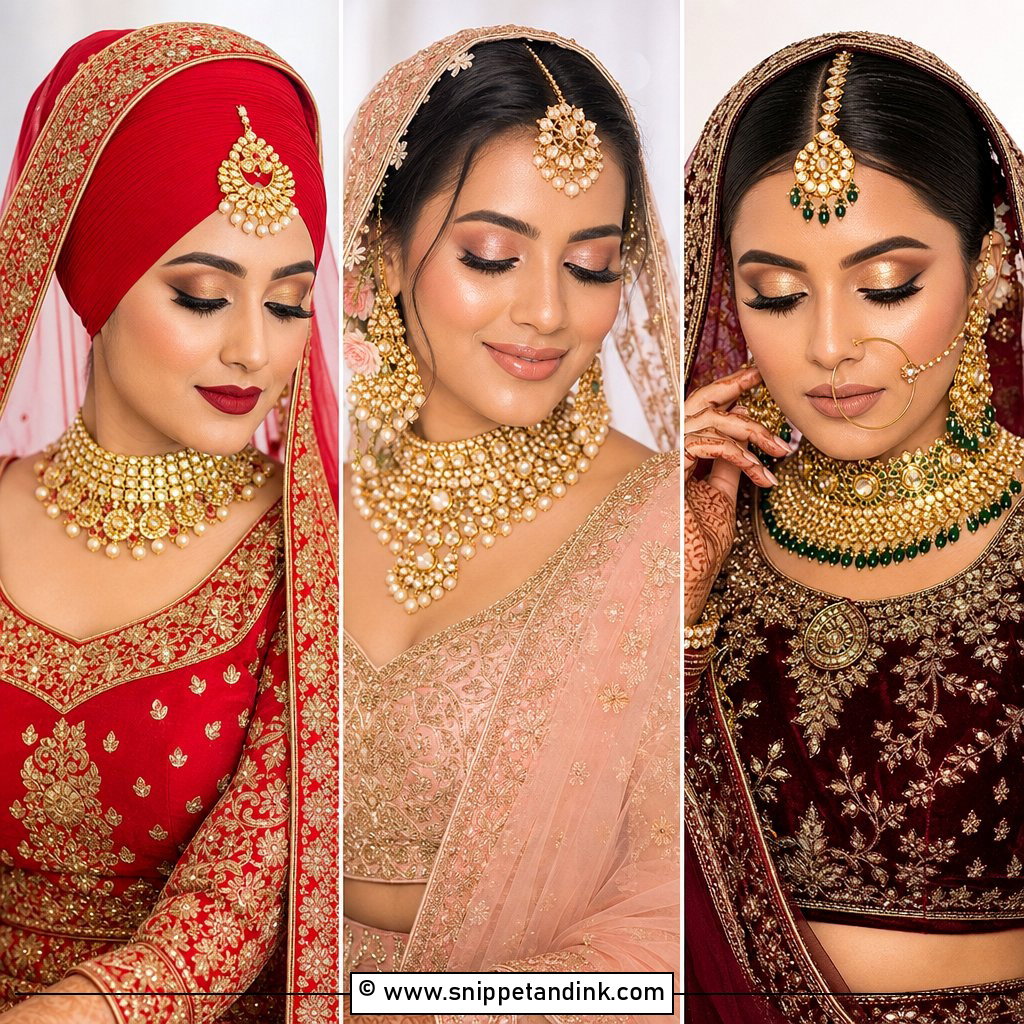
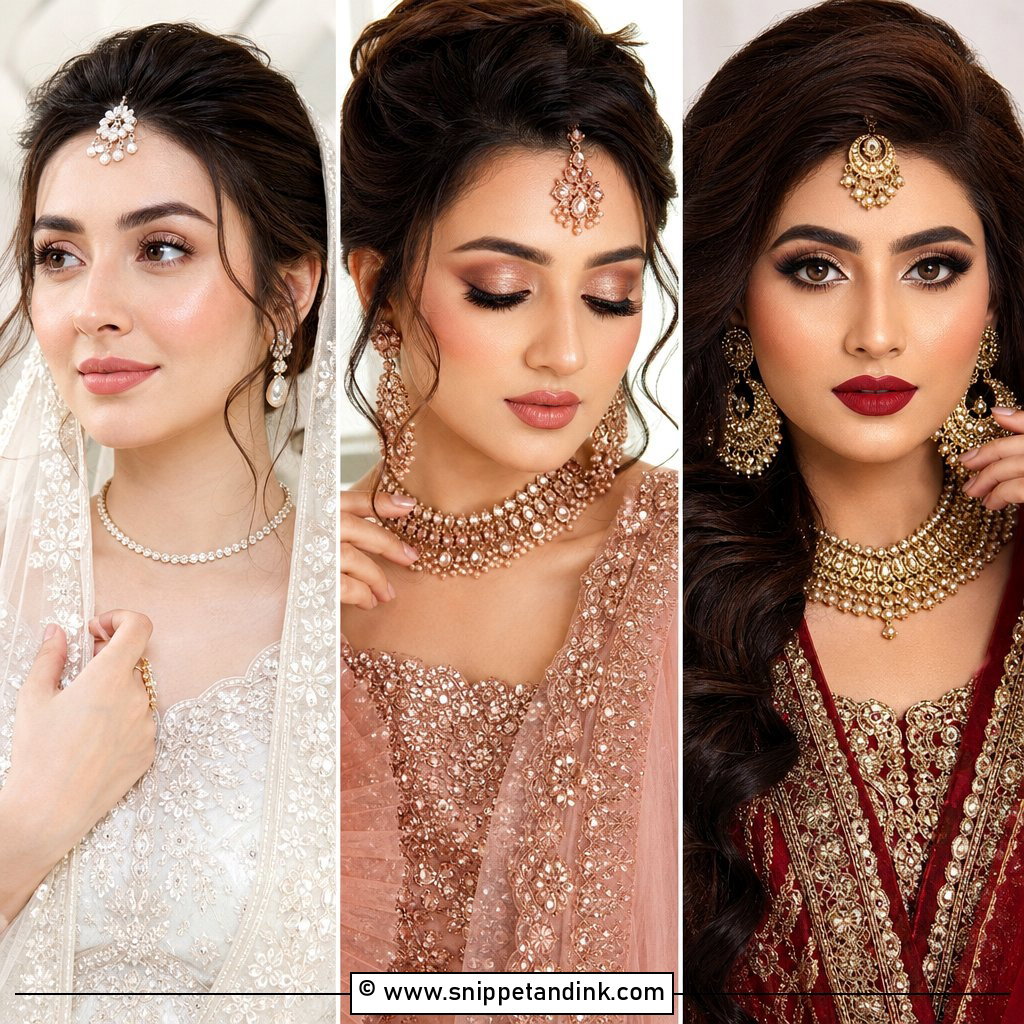
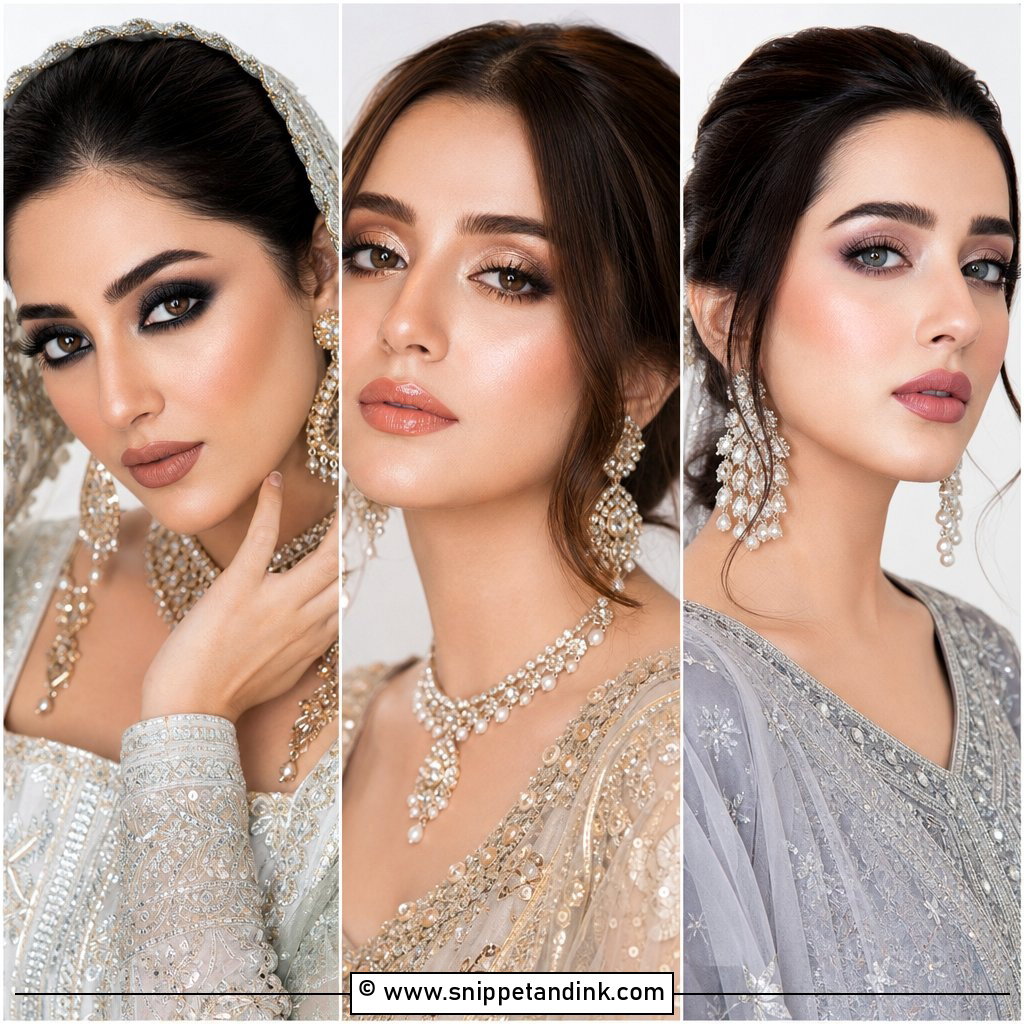
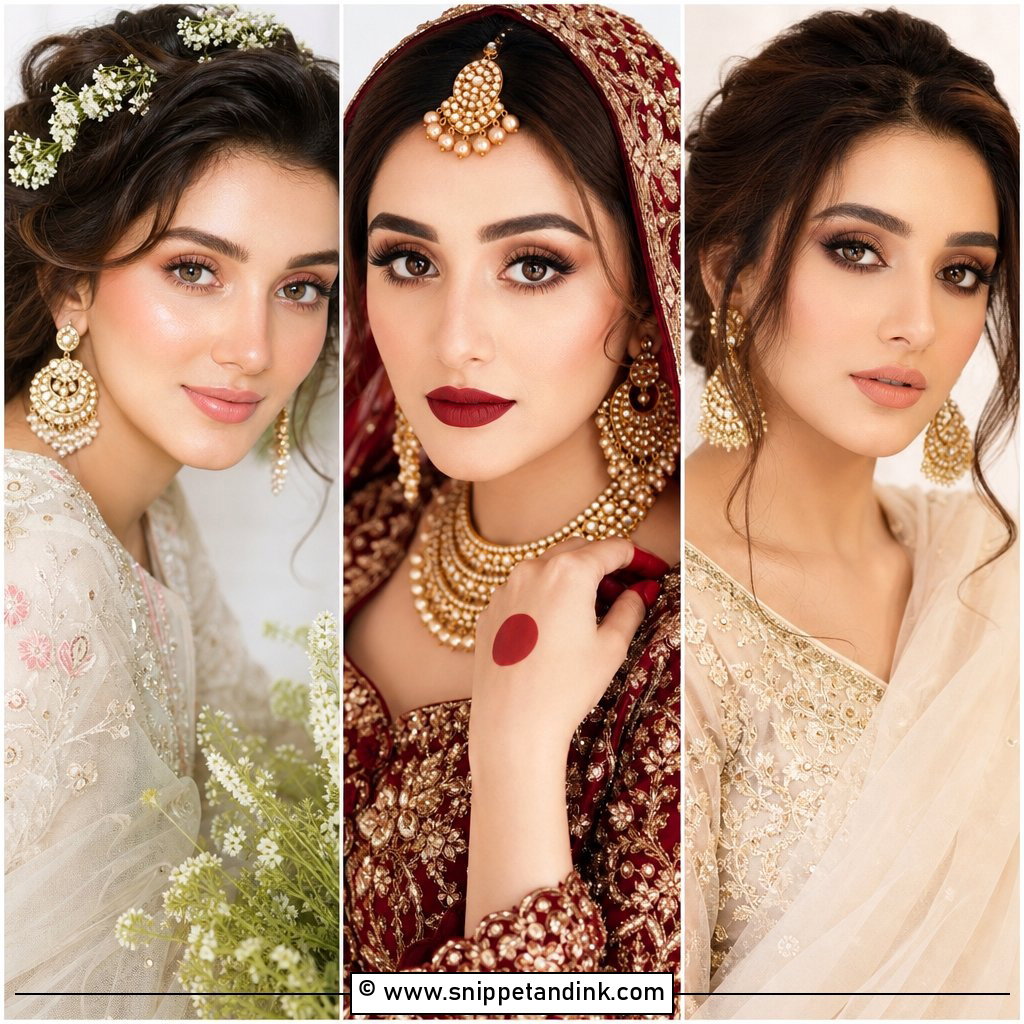
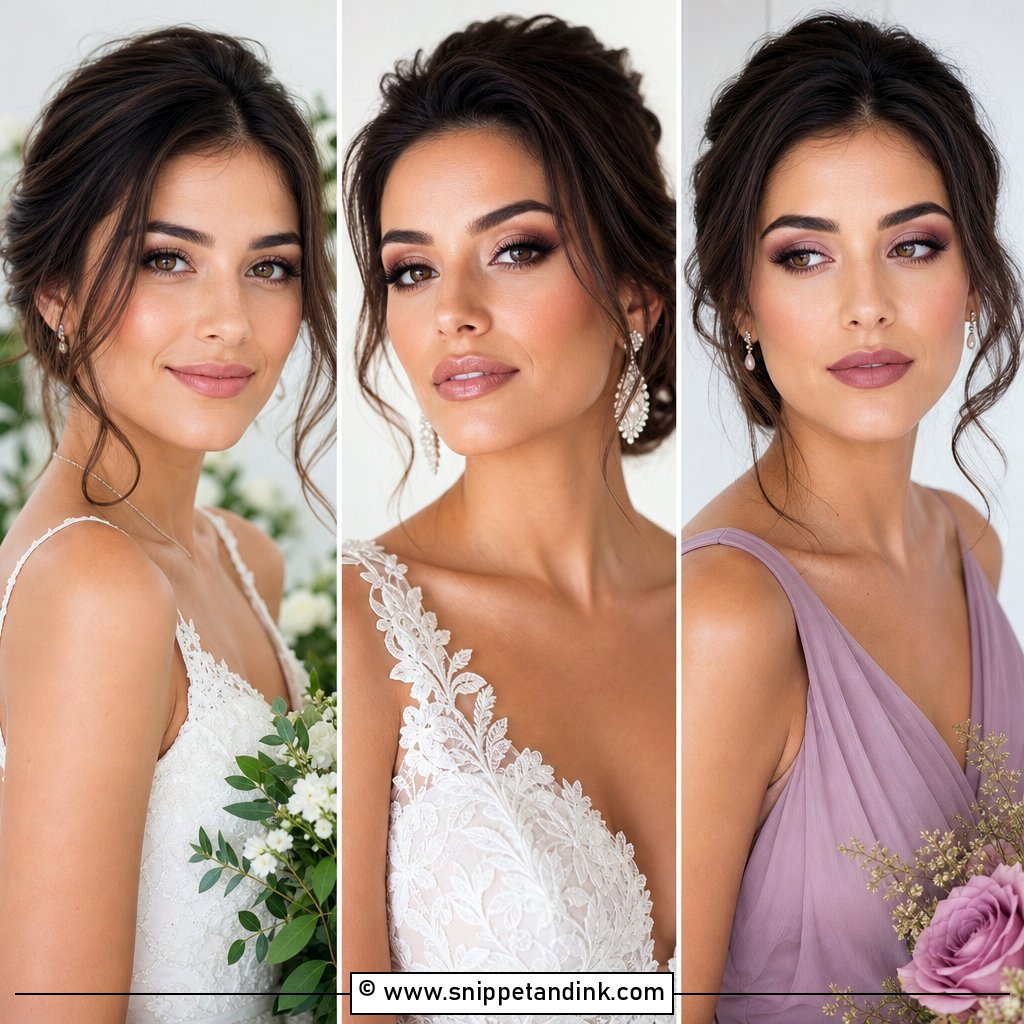
Most brides I sit down with already have a look in mind, and most of the time it needs adjusting once we see it on their actual skin, under their actual lighting. The twenty faces below run from barely-there polish to full glam, with red lips, smoky eyes and pearly glow in between. None of them is right on its own. What makes one work is how it suits your undertone, your eye shape, the time of day you marry and how long you need it to last, so I’ve added notes on how each one behaves once it’s on a face and not just in a photo.
Reading Your Undertone and Lid Shape Before You Pick a Look
Before I open a palette, I look at two things: undertone and how much lid shows when the eyes are open. Those decide more about which of the twenty looks will work than the photos you’ve saved.
A quick undertone check
Hold something pure white and something cream next to your bare face in daylight. If white flatters you, you likely lean cool and suit blue-reds, raspberry and pink. If cream looks better, you lean warm and suit peach, bronze and brick. If both look fine, you’re probably neutral, which gives you the widest choice. Vein color is less reliable than people think, so I don’t use it.
Why your lid matters more than your eye color
Hooded and monolid eyes hide anything placed only on the mobile lid, so I bring color up above the crease where it actually shows. Deep-set eyes look better with lighter shades on the lid and depth kept at the outer corner. Wide-open lids can carry almost anything, including a full cut crease. Eye color is a smaller detail; it changes which shimmer flatters you, not which look you should wear.
1. Natural Bridal Makeup
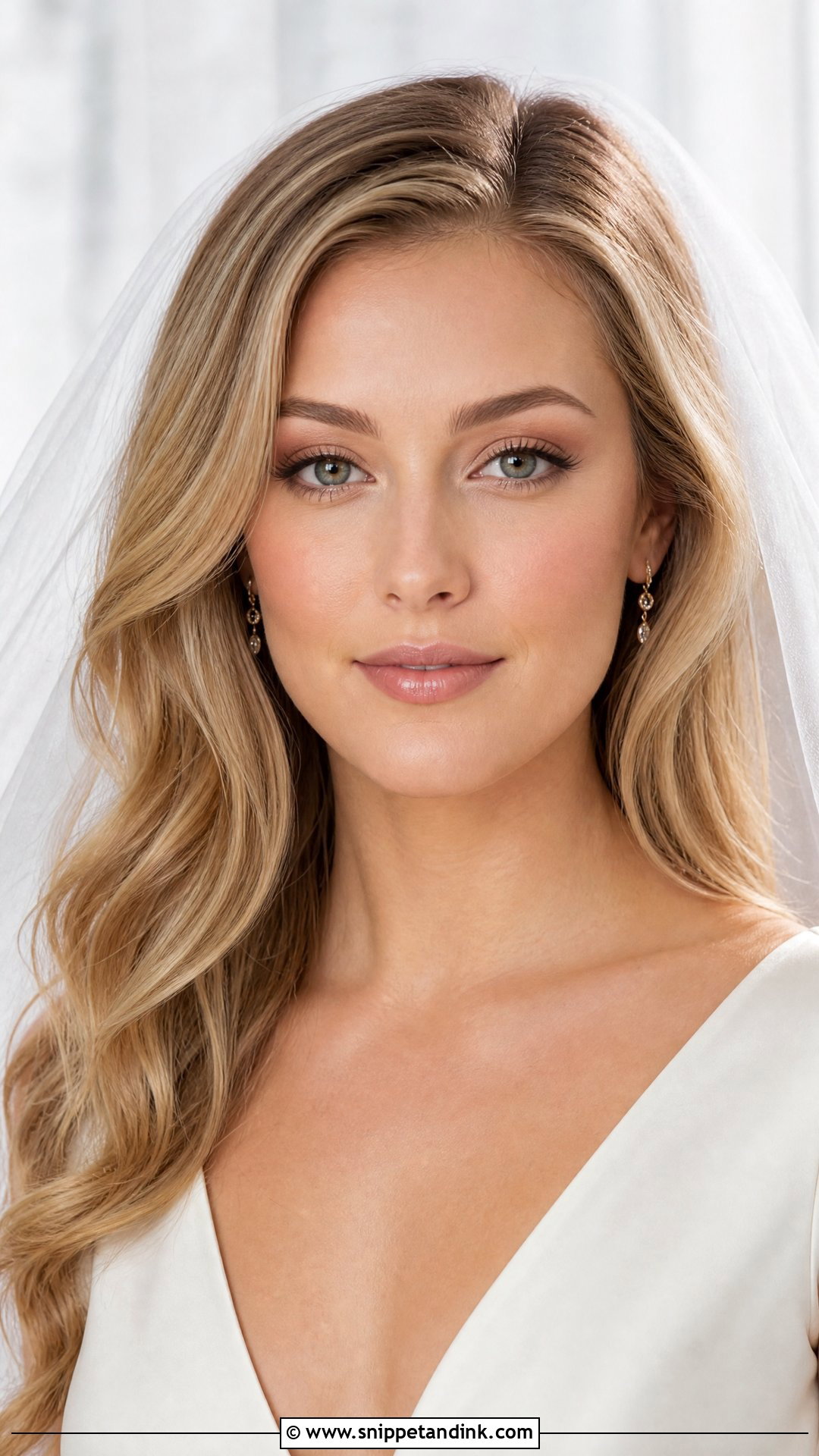
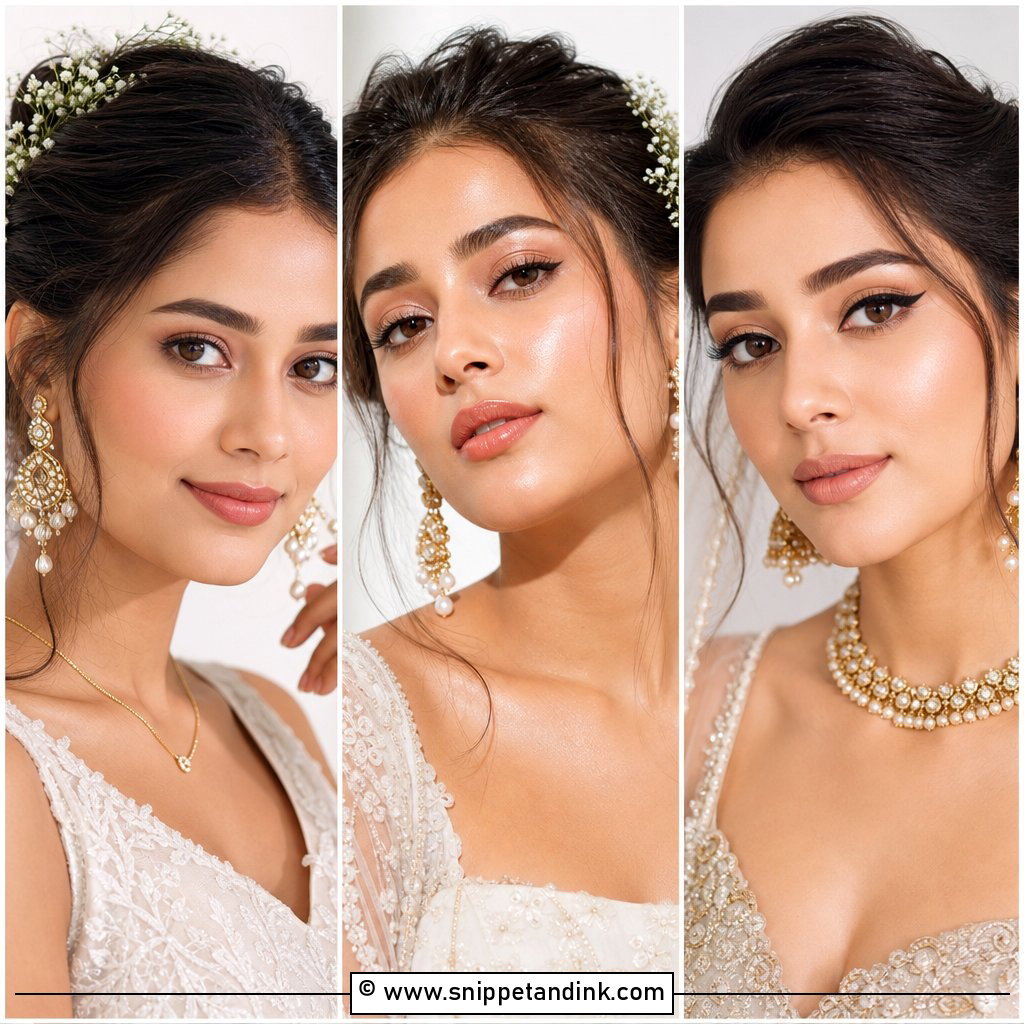
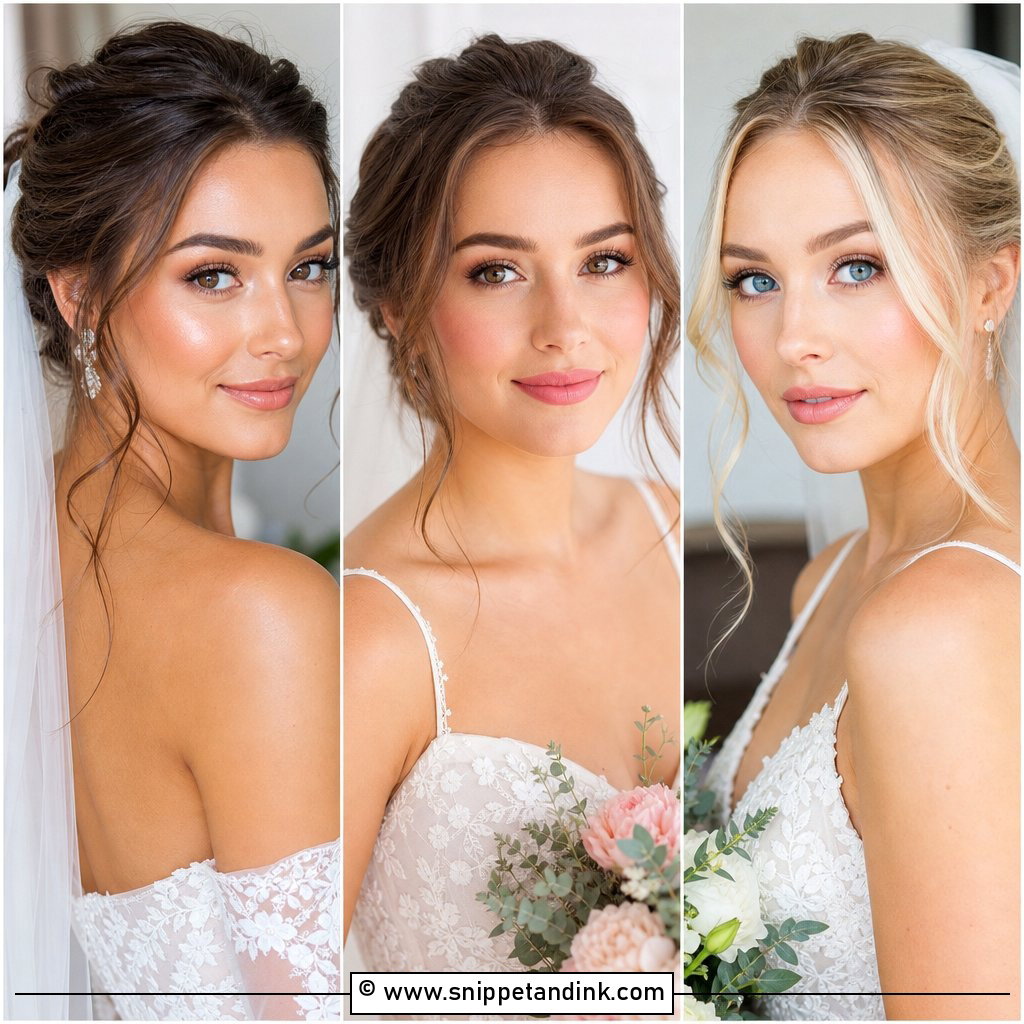
Natural bridal makeup is the hardest look to do well, because there’s nothing to hide behind. I build it with skin prep first, then a lightweight foundation only where the skin needs evening out, and concealer pressed in with a fingertip rather than swiped. Cream blush in rose or peach gives color that moves with the skin. Eyes get a taupe or soft brown wash, thin brown liner and curled lashes, with brows filled in short strokes. The one mistake I see constantly is skipping setting powder entirely: by the speeches, the T-zone is shiny, so I still press a little through the center of the face.
2. Soft Glam Bridal Makeup
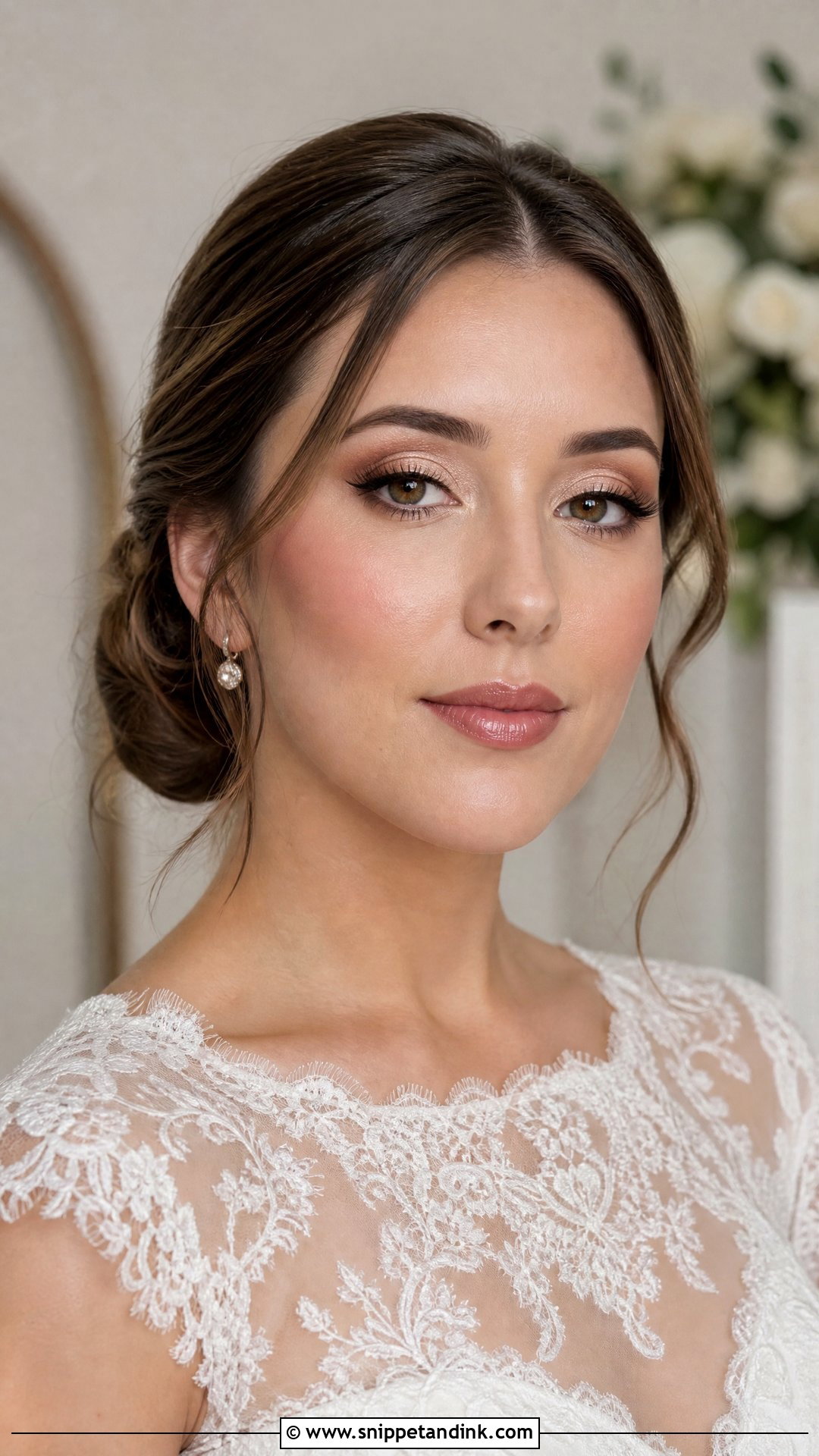
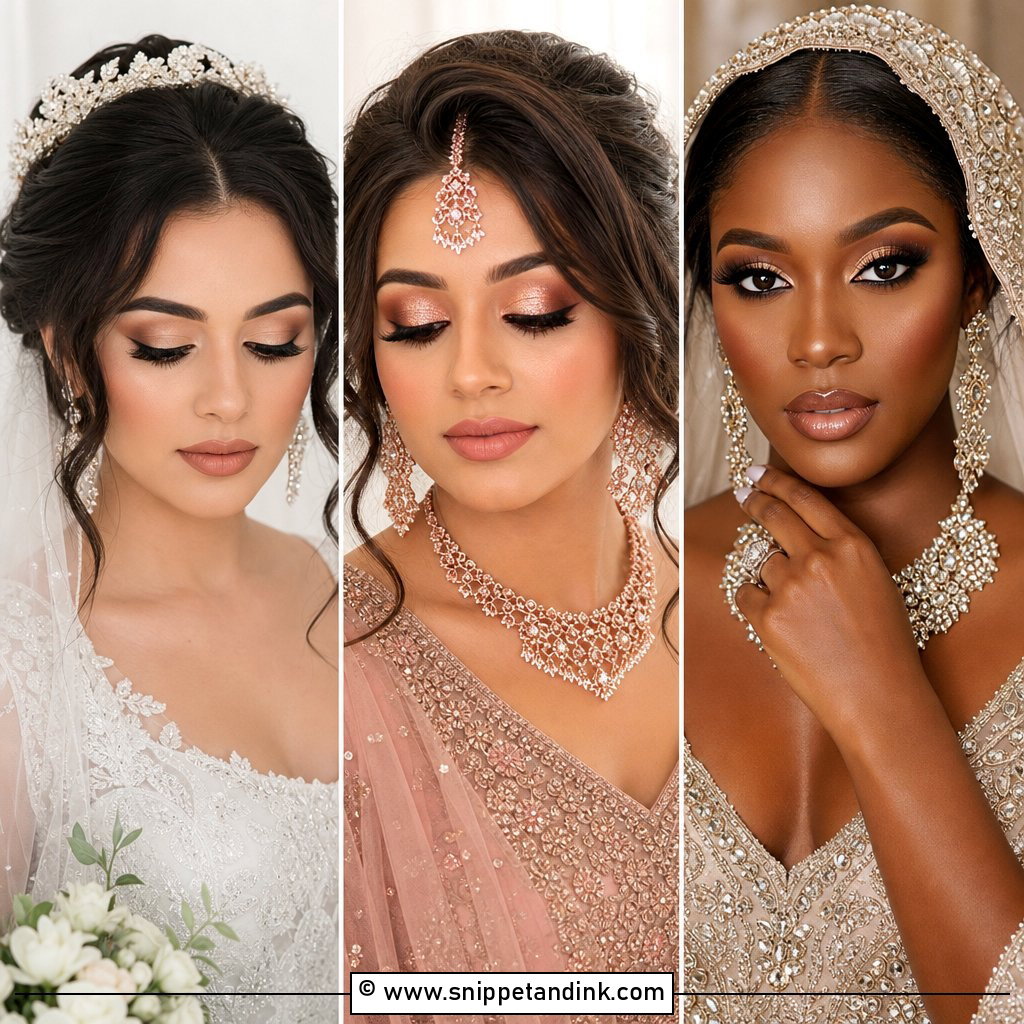
Soft glam bridal makeup is the look I’m booked for more than any other, and I understand why. It’s a satin base, softly sculpted cheeks, champagne shimmer on the lid with warm brown through the crease, and a smudged liner or small wing. The skill is in the blending; every edge should disappear when you look closer than a foot away. I keep highlighter to the very top of the cheekbone so it reads as light, not as a stripe. Finish with a rose or mauve lip that’s one shade deeper than your natural color, because camera flash washes lips out.
3. Classic Red Lip Bridal Makeup
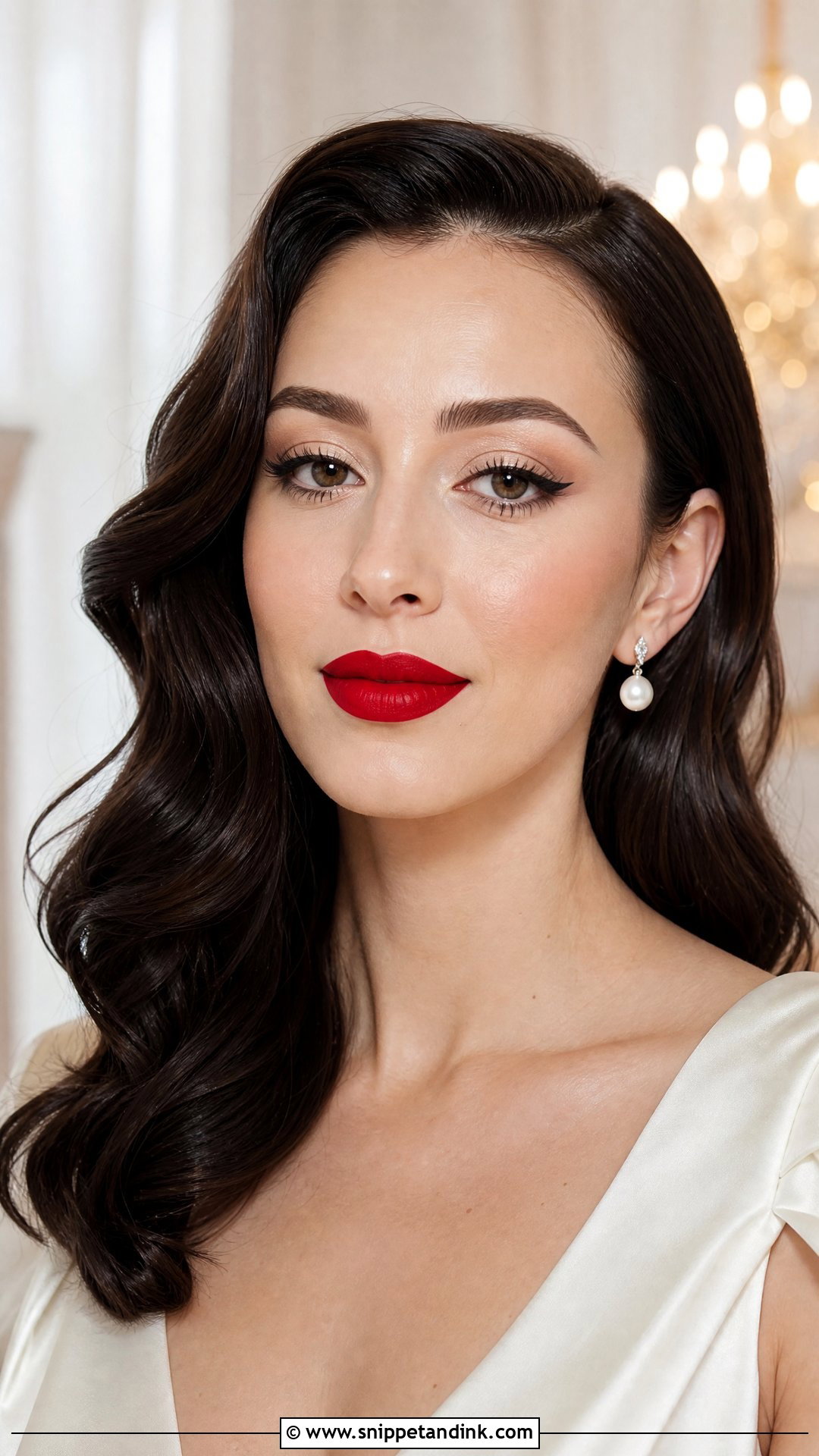
A red lip asks for discipline everywhere else on the face. I keep the eyes to soft matte shadow, a thin liner and defined lashes so nothing competes. Undertone matters more here than with any other shade: blue-reds suit cool skin, true reds suit neutral, and brick reds warm up olive and golden complexions. Before the lipstick goes on, I line the whole lip and fill it with the pencil, which gives the color something to grip when you’re kissing, eating and drinking. Expect to blot and reapply once after dinner. If you hate fussing with your lips, I’d honestly pick a different look.
4. Dewy Bridal Makeup
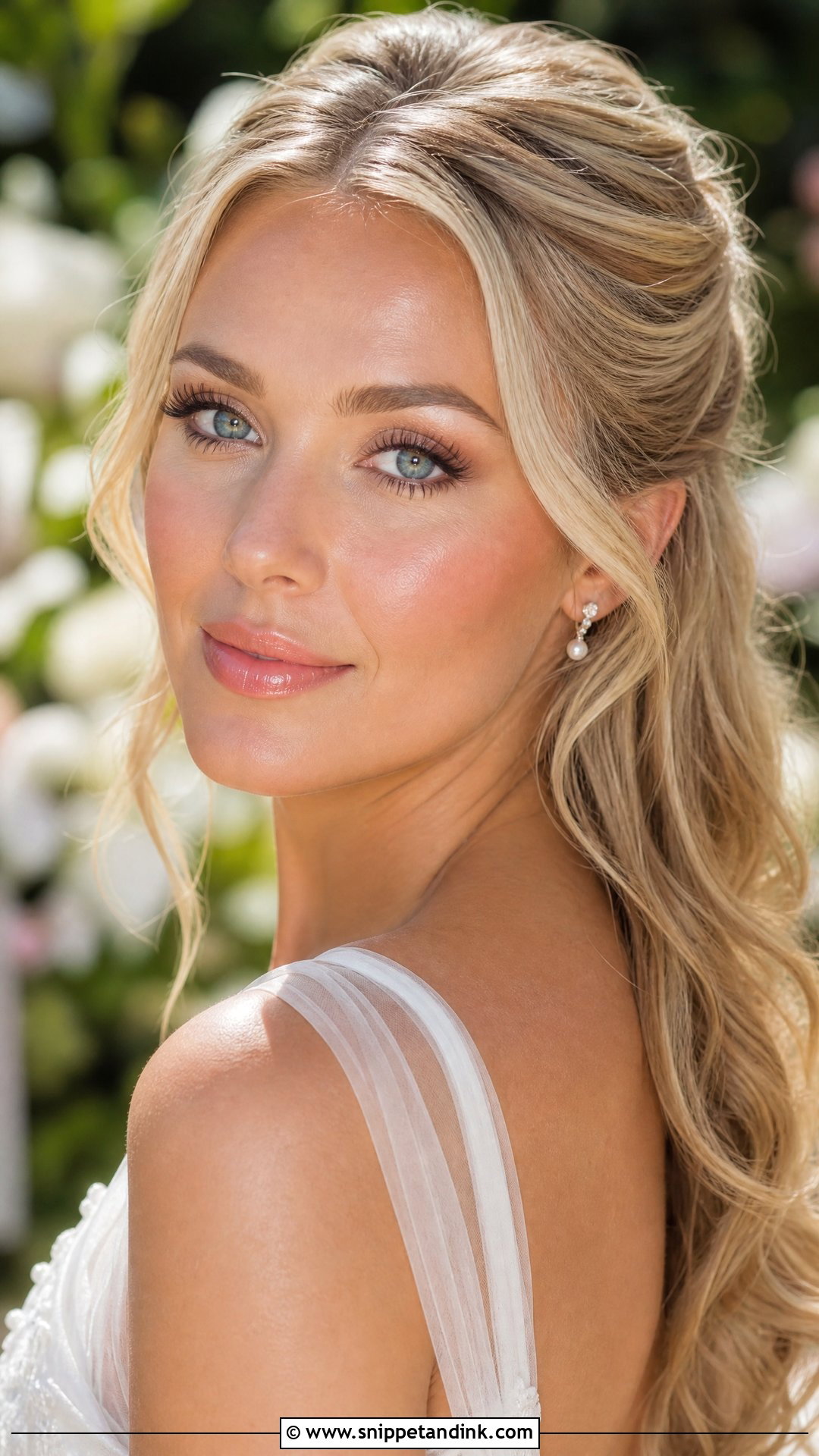
Dewy skin is controlled glow, and the word that matters is controlled. I hydrate first, use a radiant primer and a skin-like foundation, then place cream blush and a liquid highlight on the cheeks. Powder goes only down the center of the face: forehead, sides of the nose and chin. Eyes stay in champagne or warm beige with wispy lashes, and a glossy nude or peach lip finishes it. I’d steer oily skin and hot outdoor ceremonies away from a full dewy finish, because by the second hour glow and sweat look identical in photos.
5. Matte Bridal Makeup
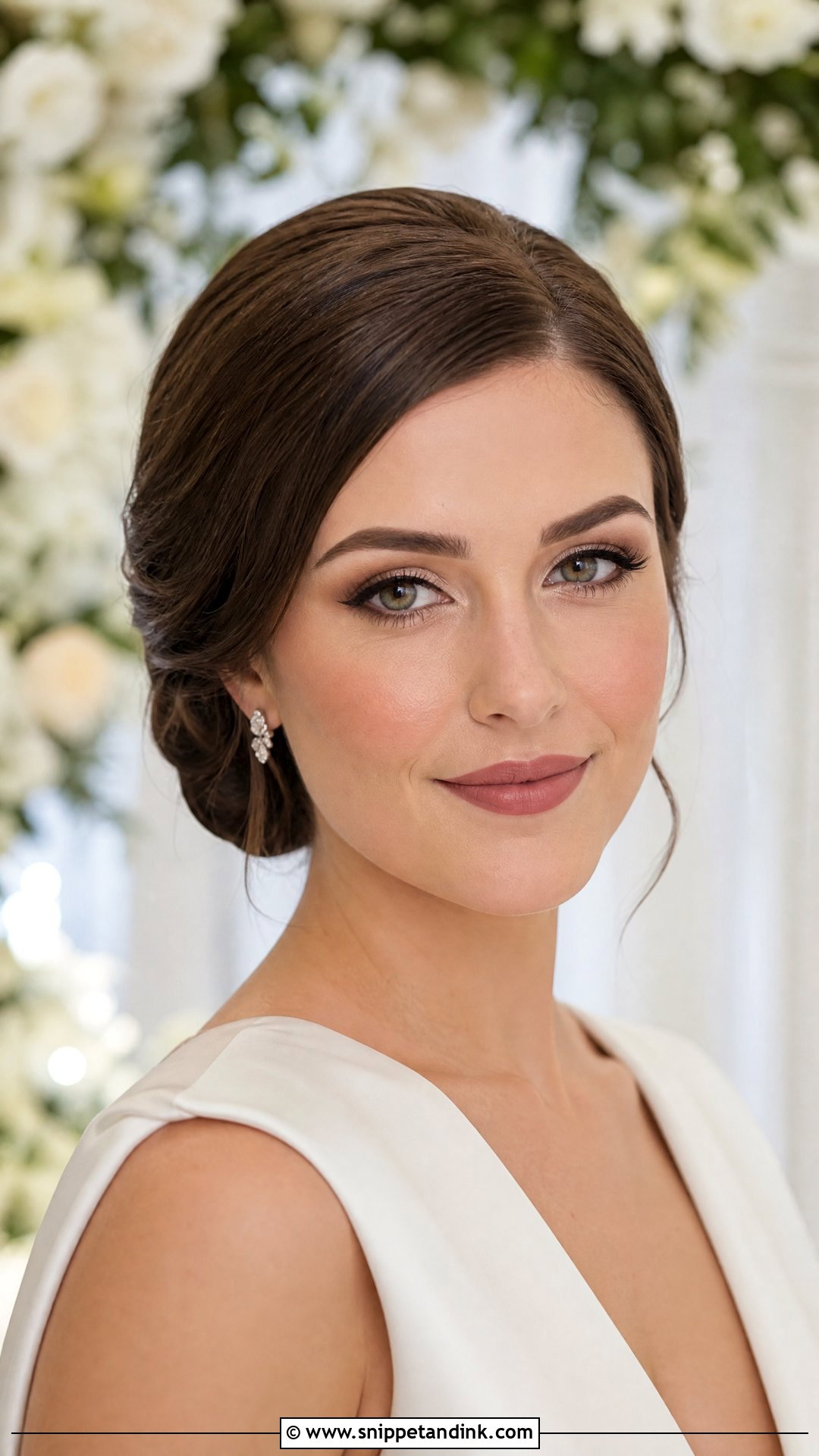
Matte makeup earns its place on oily skin, humid days and long schedules, but a fully flat face looks tired in pictures. My fix is to keep the base matte and bring the dimension back with cream blush and bronzer underneath a light veil of powder. Eyes can carry matte taupe, cocoa or soft plum with defined liner. A matte rose or berry lip adds structure. One warning from experience: very drying matte formulas settle into fine lines and dry patches by midafternoon, so I prep dry areas well and use the thinnest layer of foundation that still covers.
6. Romantic Pink Bridal Makeup
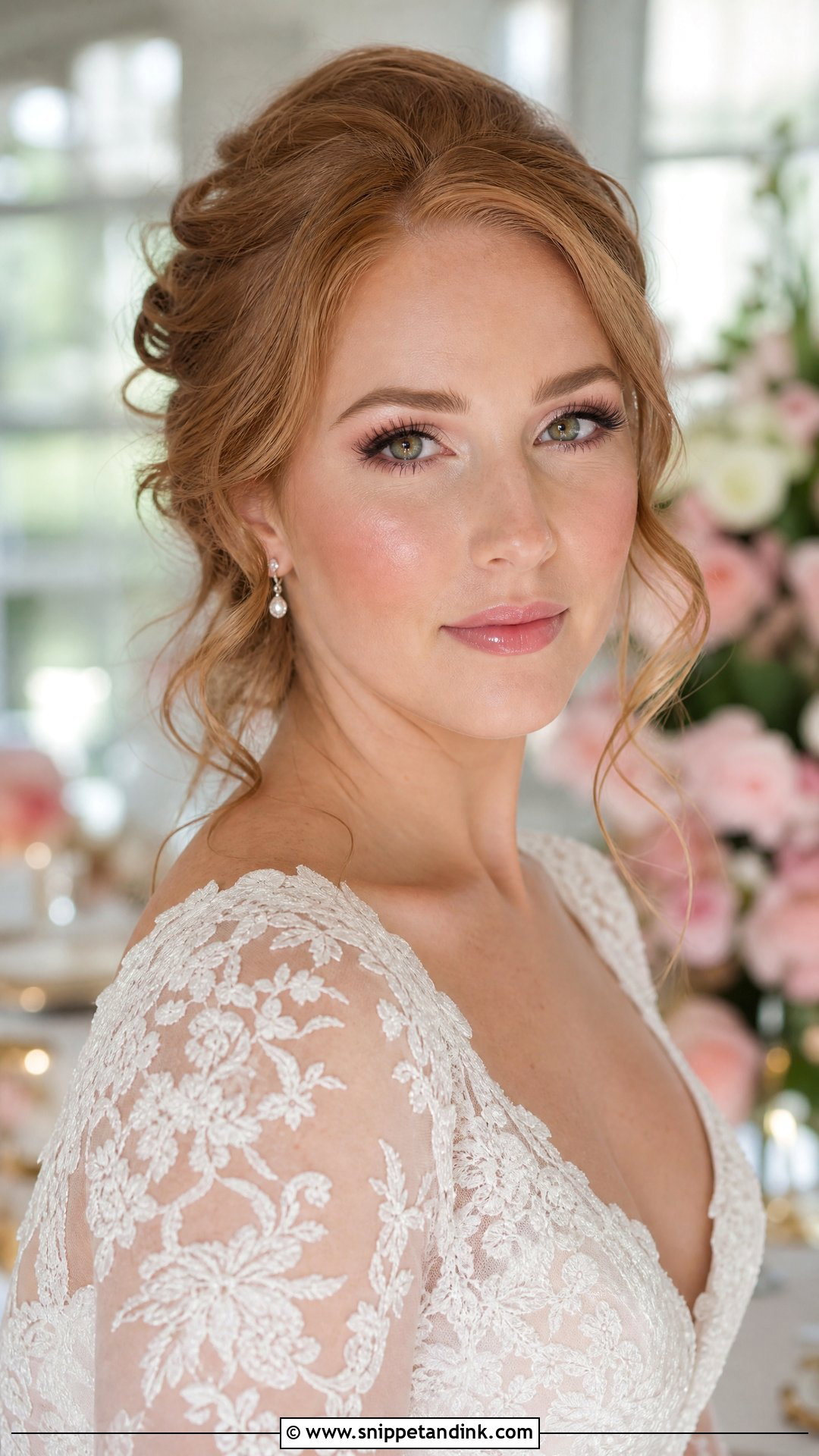
Pink works when it’s layered gently across the face rather than concentrated in one place: rosy cheeks, a pink-toned lid and a pink-nude lip that all sit in the same family. Depth is where brides go wrong. Fair skin carries petal pink, medium skin looks right in rose, tan skin wants a warmer pink, and deep skin needs berry-pink so it doesn’t turn chalky. I diffuse the eyes with brown liner and airy lashes. It sits naturally next to lace, tulle and floral embroidery.
7. Champagne Eye Bridal Makeup
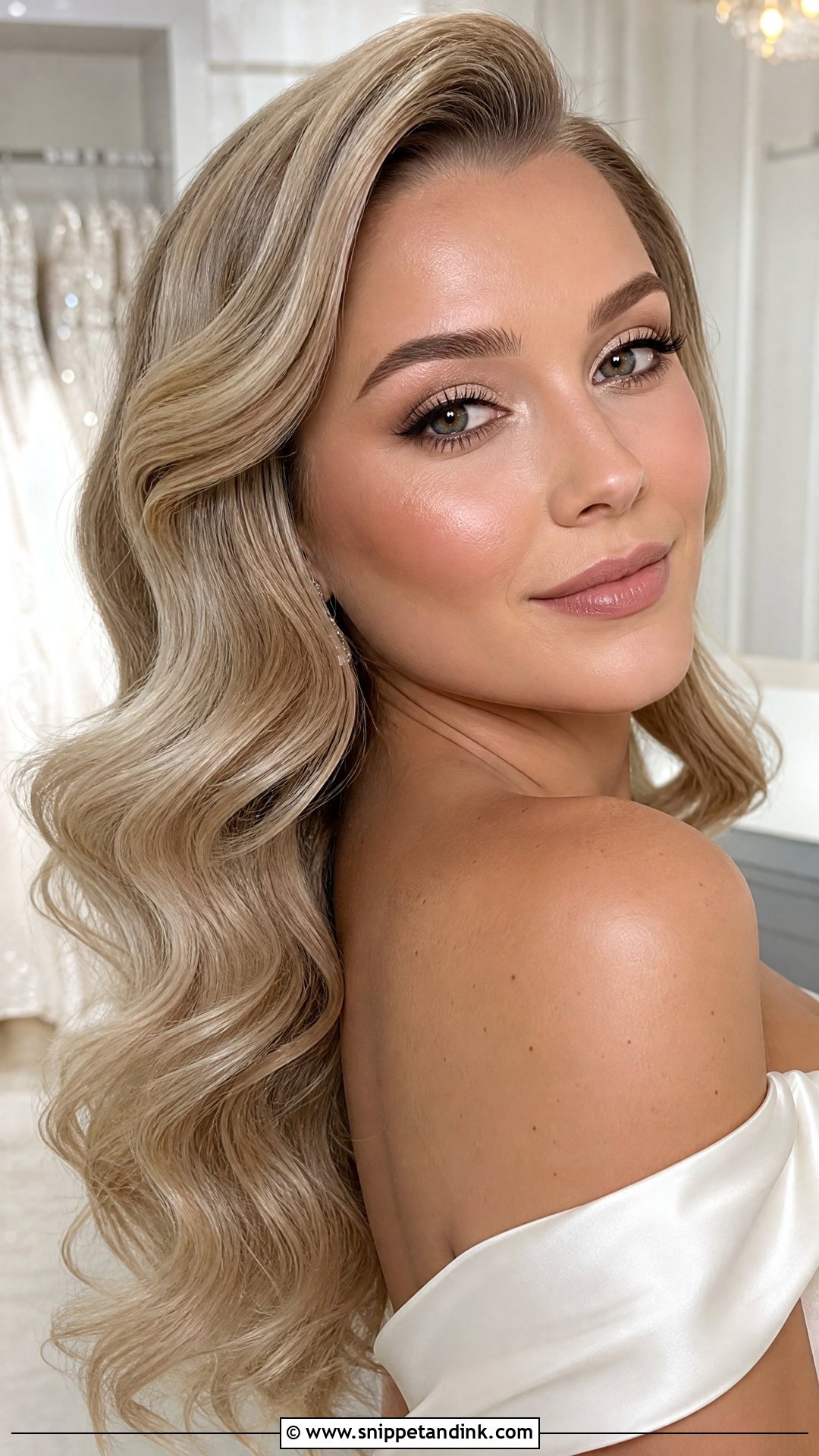
Champagne on the lid is the shade I reach for when someone can’t decide, because it brightens without reading as a color. I pair it with a matte taupe or warm brown crease and tightline the upper waterline in brown or black so the lashes look thicker at the root. The complexion can be satin or dewy with peachy blush and a natural highlight. Lips sit in nude pink or beige rose. Blue, green, hazel and brown eyes all look more awake with it. Avoid chunky glitter versions, though; fine shimmer stays put, while larger particles fall onto the cheeks by evening.
8. Brown Smoky Bridal Makeup
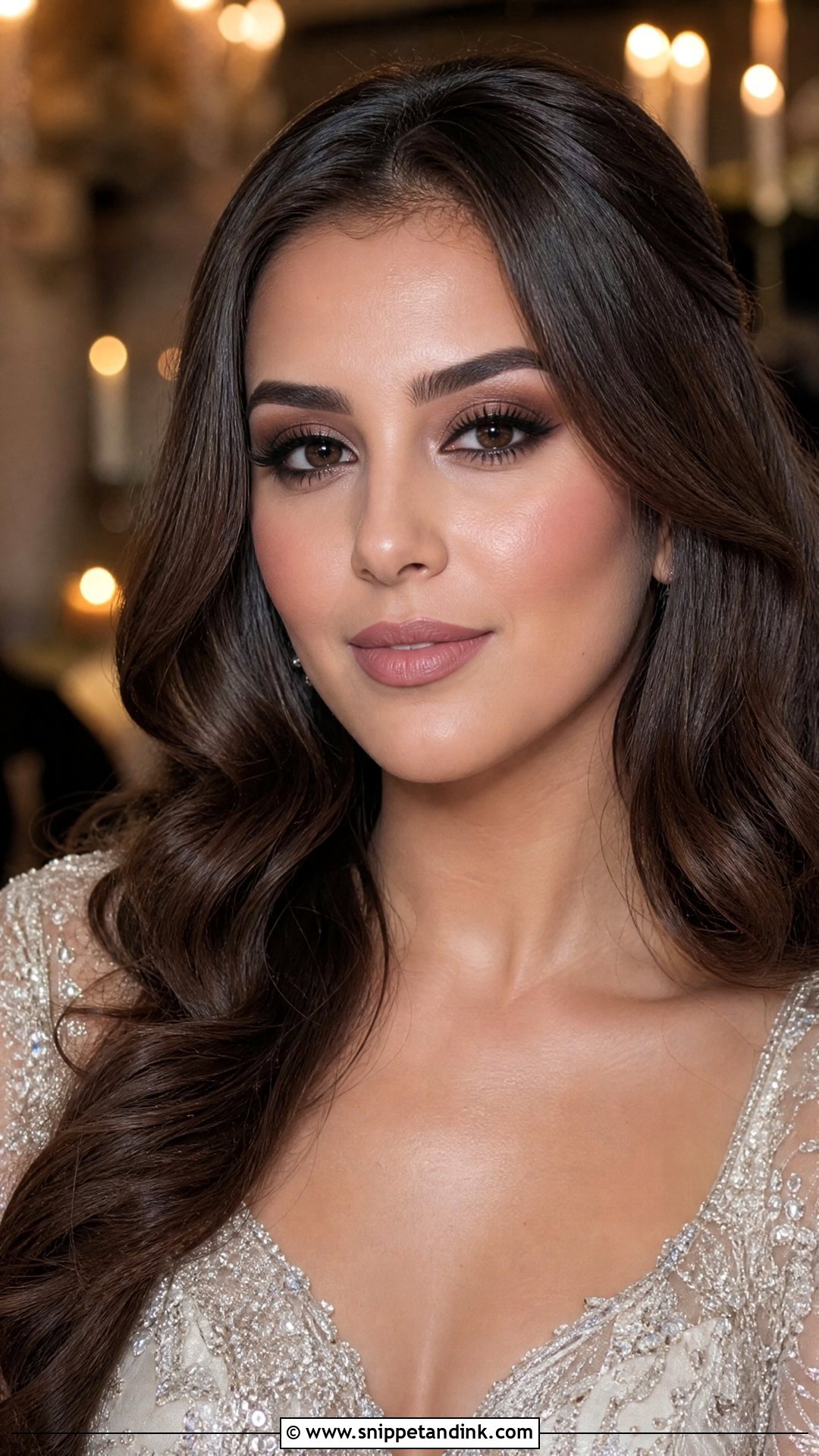
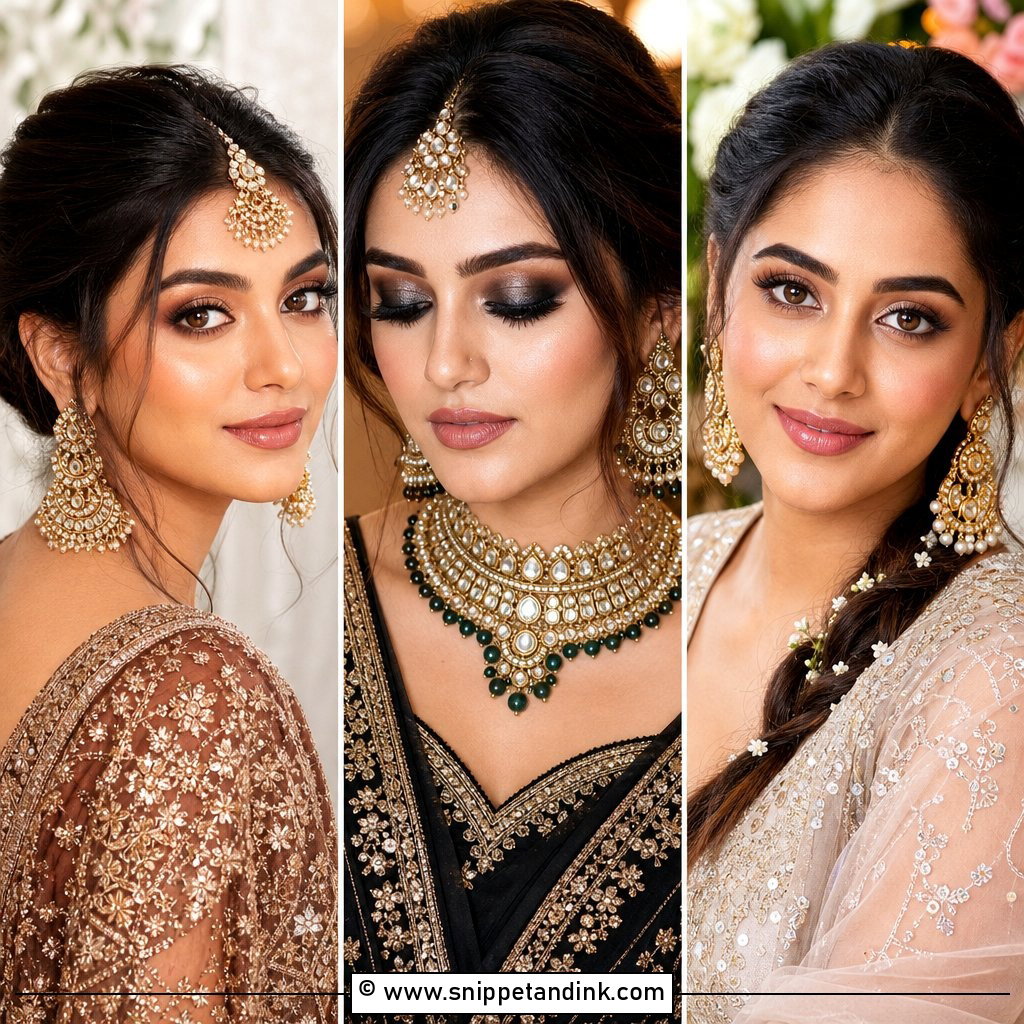
Swap black for warm brown, espresso or bronze and a smoky eye suddenly belongs at a wedding. Depth with softer edges is the whole idea, so I spend most of the time blending the outer edge until there’s no line where the shadow stops. Lifted lashes, a touch of inner-corner highlight and natural brows keep it from closing the eye. The skin stays fresh in satin with warm blush. Lips go neutral. I always do this one before foundation on the cheeks, because darker shadows drop fallout that’s easier to sweep away from bare skin.
9. Winged Liner Bridal Makeup
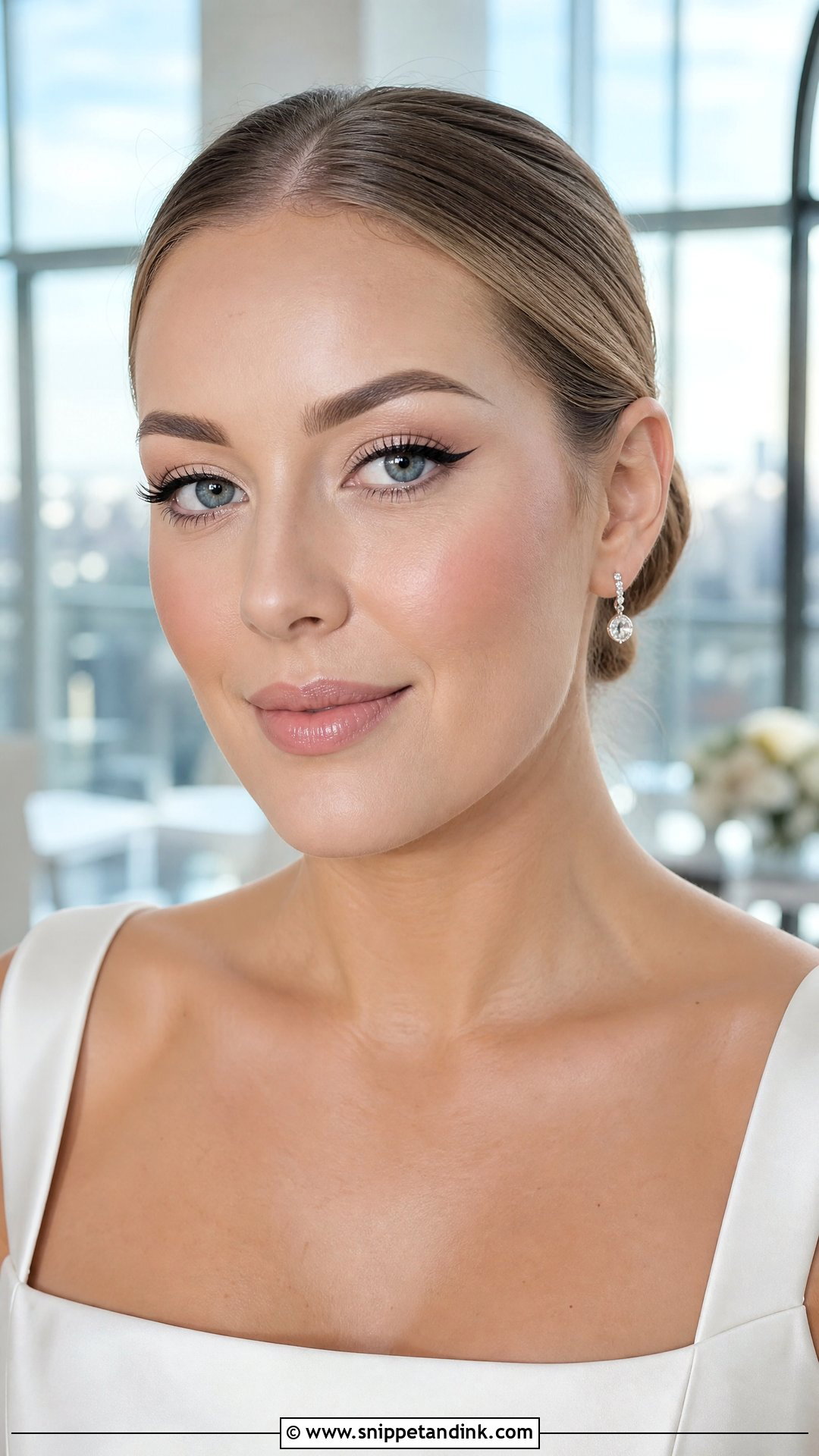
A winged liner should follow your eye, not a template. On hooded lids I draw the wing with the eyes open and looking straight ahead, because a wing drawn with the lid closed folds into a broken line the moment you look up. The lid stays in beige or champagne so the liner is the definition. Individual lashes at the outer corner lift the shape further. Almost any lip works here, red included. I use a waterproof gel or liquid and set the tip with a little matching shadow so the wing survives happy tears.
10. Peach Bridal Makeup
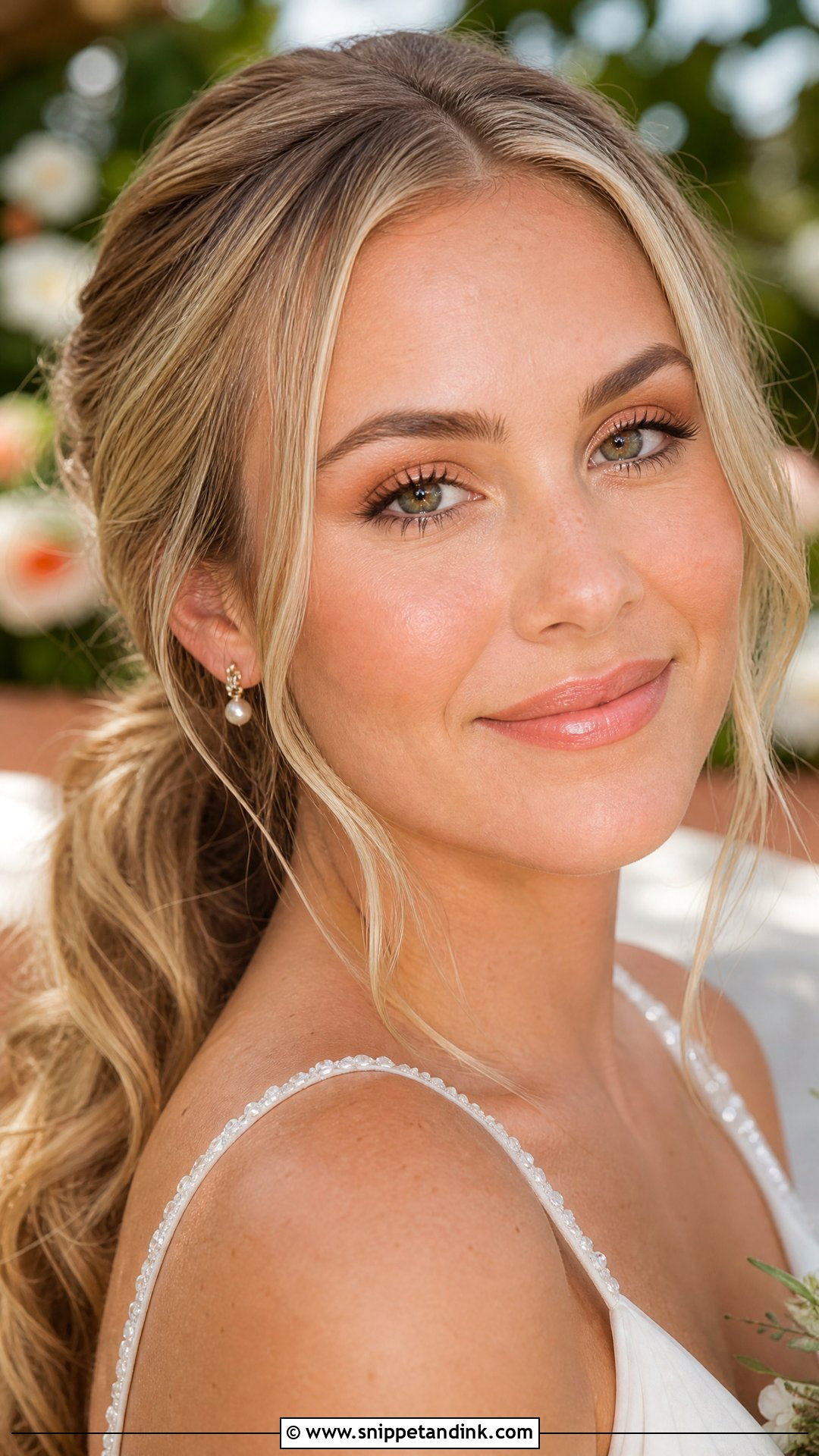
Peach brings warmth and a healthy flush, and it’s my default for daytime beach and garden weddings. I use peach blush high on the cheeks, warm beige or soft bronze on the eyes, and a peach-nude or coral-pink lip. Brown liner reads softer than black with this family. Brides who look washed out in pink often light up in peach, while very cool, rosy complexions can turn sallow in it, which a trial will show you in about five minutes.
11. Rose Gold Bridal Makeup
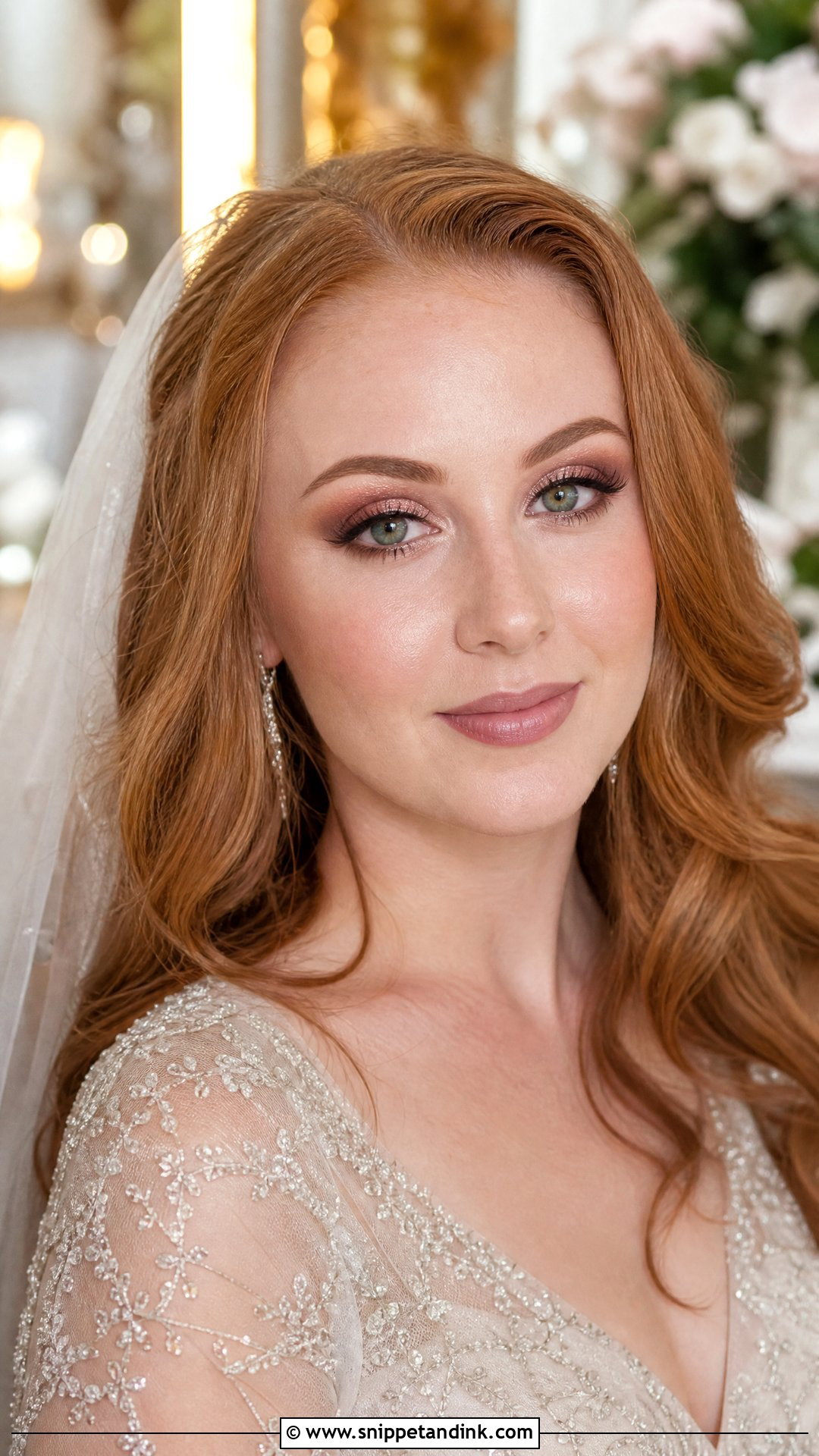
Rose gold on the lid with soft brown or mauve in the crease gives shimmer and warmth together. I keep everything else quiet: rose or peachy-pink blush, a nude rose lip and only a whisper of highlight, because a metallic eye plus heavy glow on the cheeks starts to look like glitter. It sits best beside gold jewelry and warm ivory gowns. Under bright white ceremony lighting, the pink in rose gold can read more copper than you expect, so check it in daylight and with a phone flash.
12. Vintage Bridal Makeup
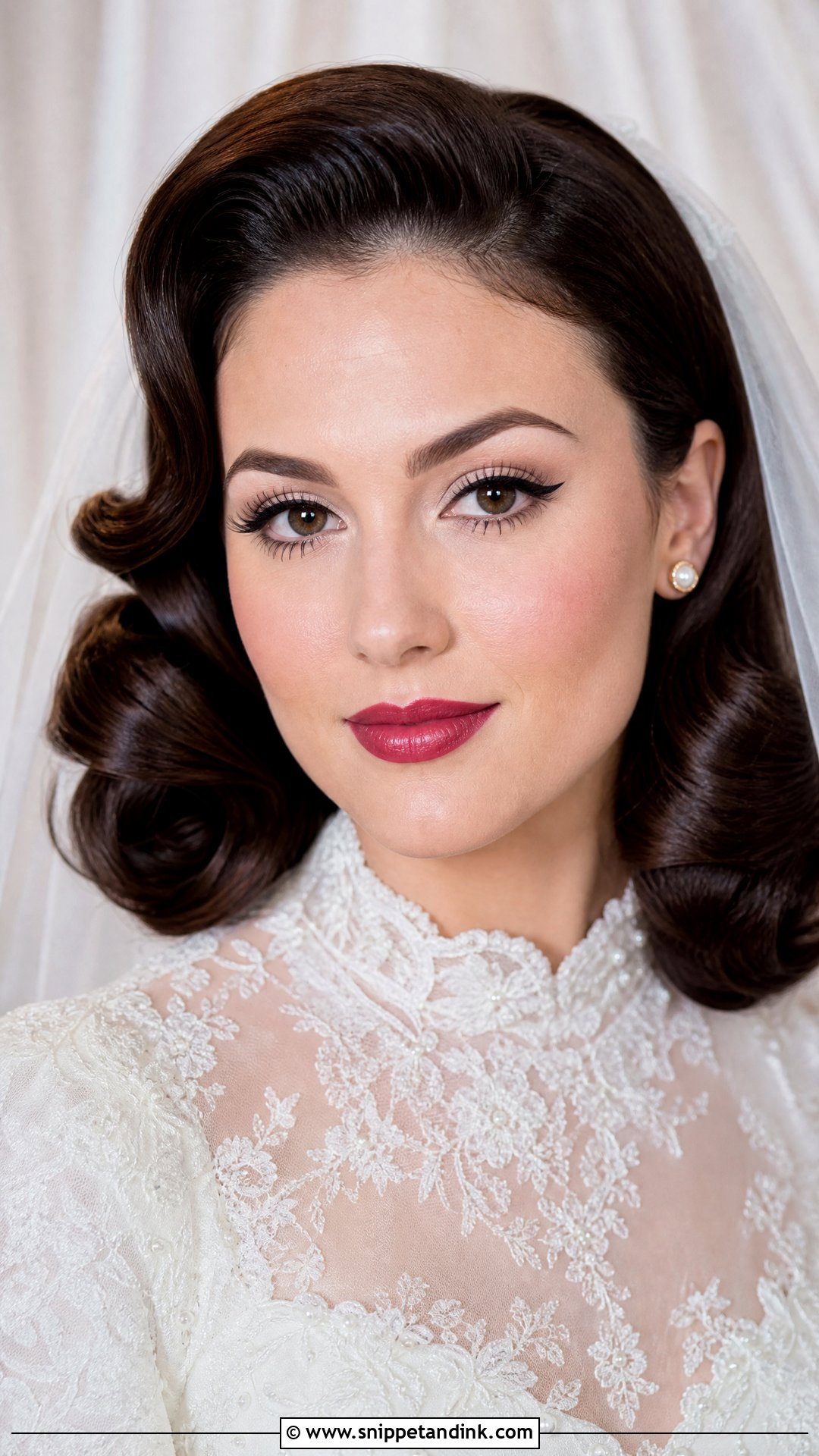
Vintage makeup is about choosing one era detail and keeping the rest modern, otherwise it tips into costume. The base is satin or soft matte with defined brows and clean liner. For a 1950s mood I use a black wing with a red or rose lip. For something gentler, taupe shadow, curled lashes and a muted berry or mauve lipstick do the job. Blush sits on the apples, not swept low. Pair it with lace or satin, pearls and structured waves or a polished updo.
13. Bronze Bridal Makeup
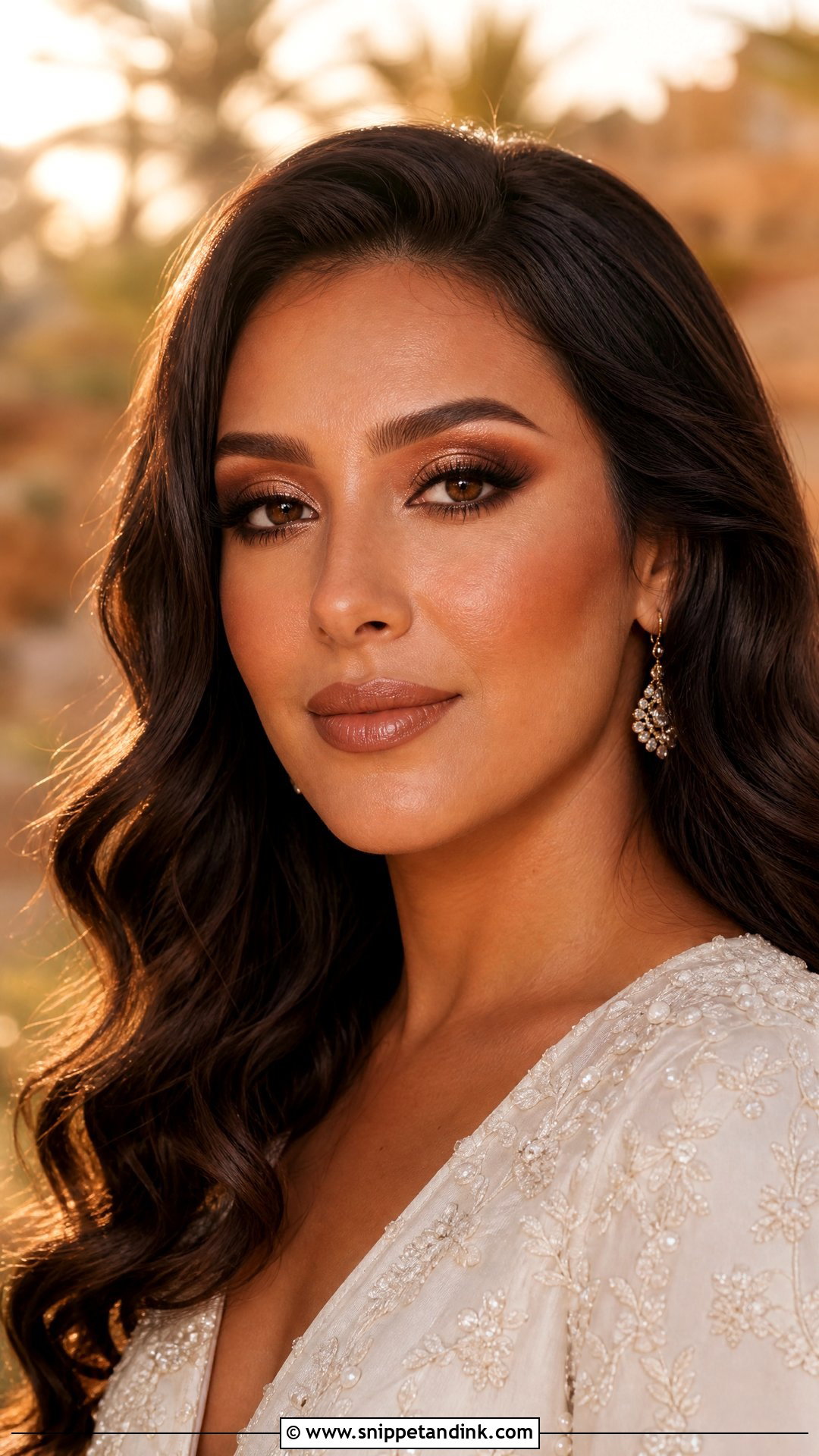
Bronze is built in warmth. I lay bronze or caramel shadow on the lid and deepen the outer corner with a richer brown, then warm the temples and cheekbones with bronzer before softening everything with peach or terracotta blush. A nude brown or caramel lip keeps the face cohesive. Base finish depends on skin type. It glows at golden hour and suits warm skin especially well, but on very fair, cool skin I go lighter than you’d think, because too much bronzer turns orange in photos next to a white dress.
14. Mauve Bridal Makeup
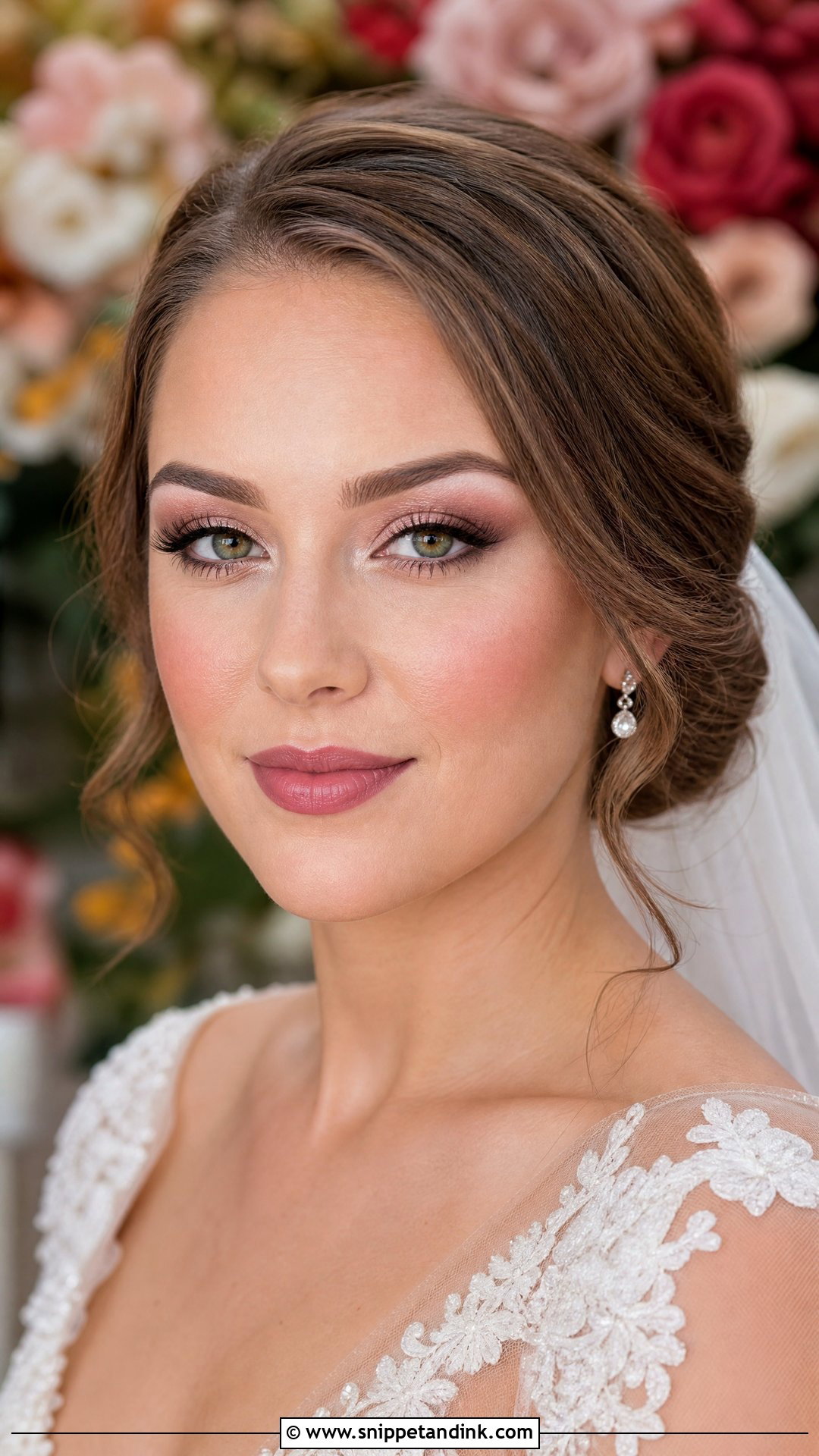
Mauve sits between pink, rose and purple, and that in-between quality is why it suits brides who don’t feel like themselves in peach or bronze. I use a matte mauve in the crease, a lighter shimmer on the lid and brown liner. Mauve-rose blush ties the cheeks to a satin mauve lip. Keeping the skin fresh matters, because mauve on a heavy, matte base can look bruised. It sits well with cool-toned gowns and autumn weddings.
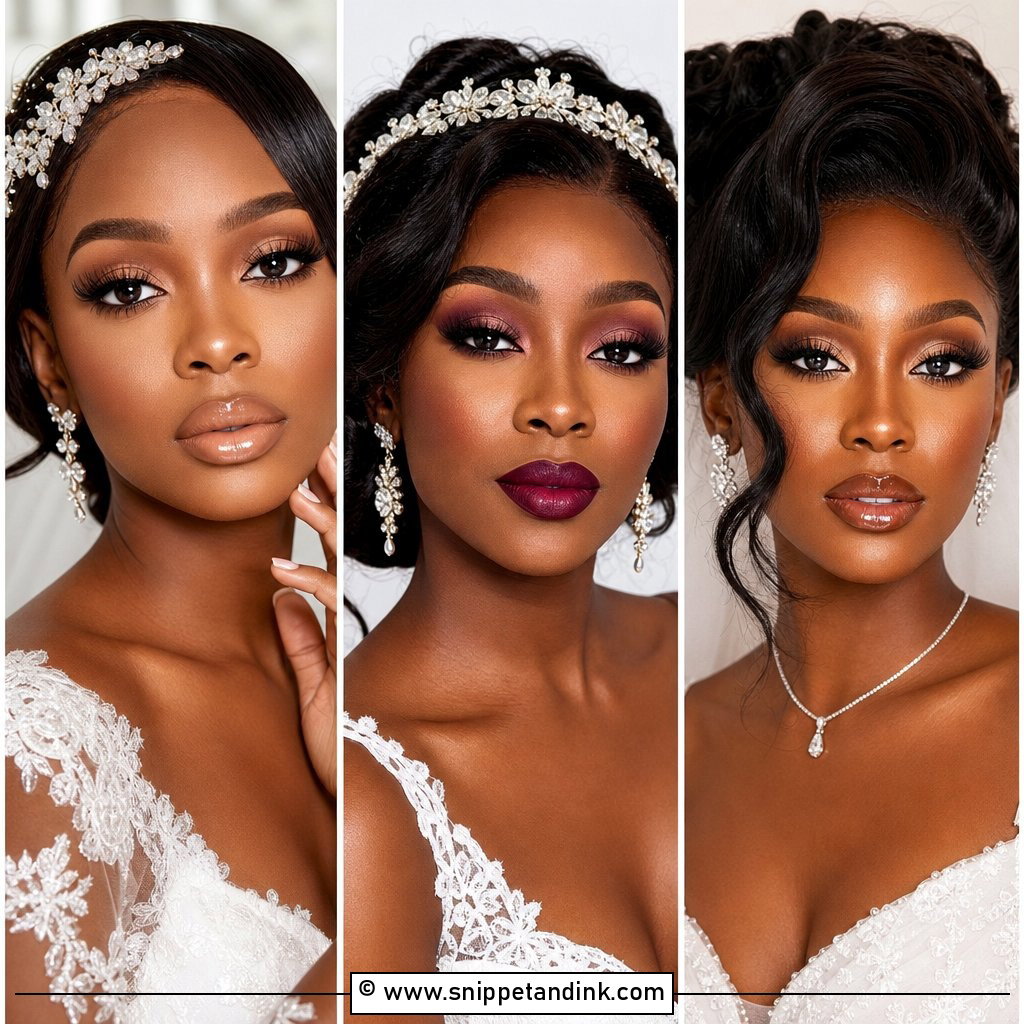
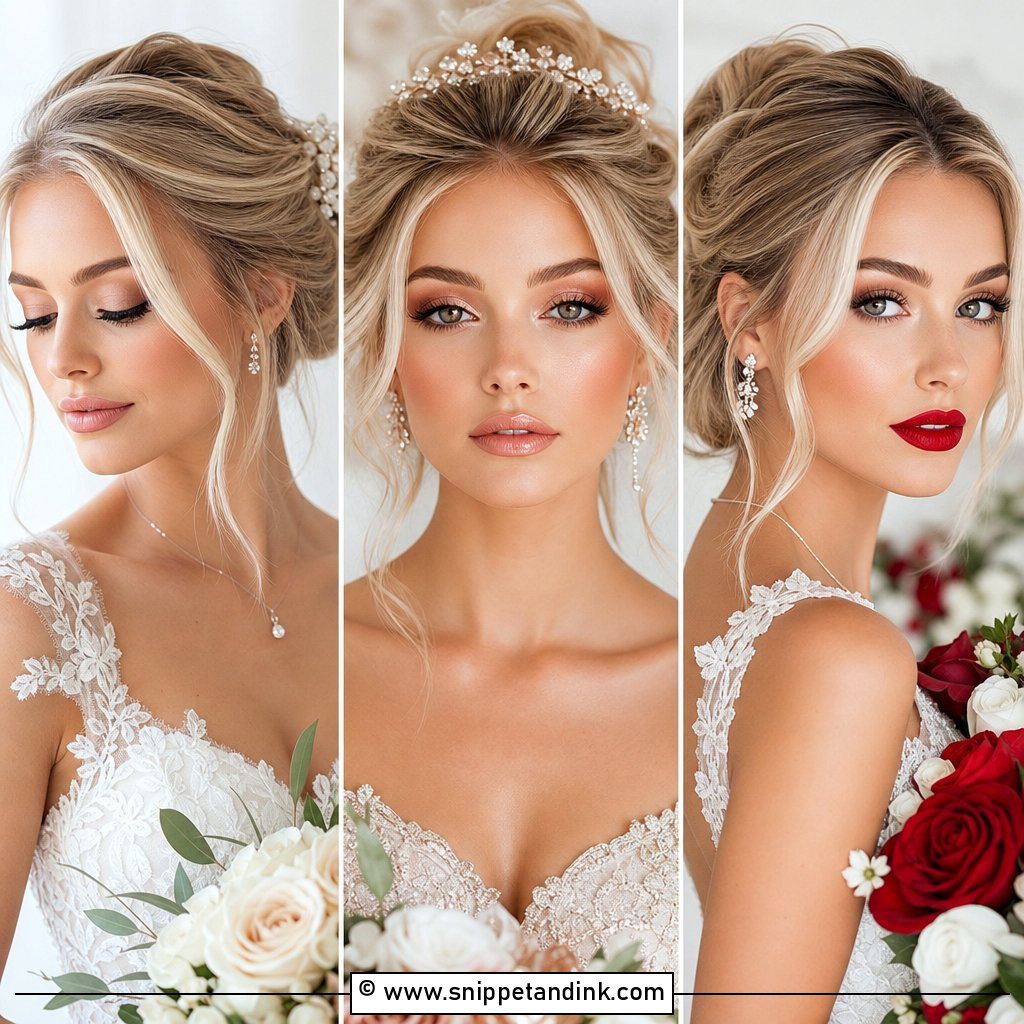
15. No Makeup Bridal Makeup
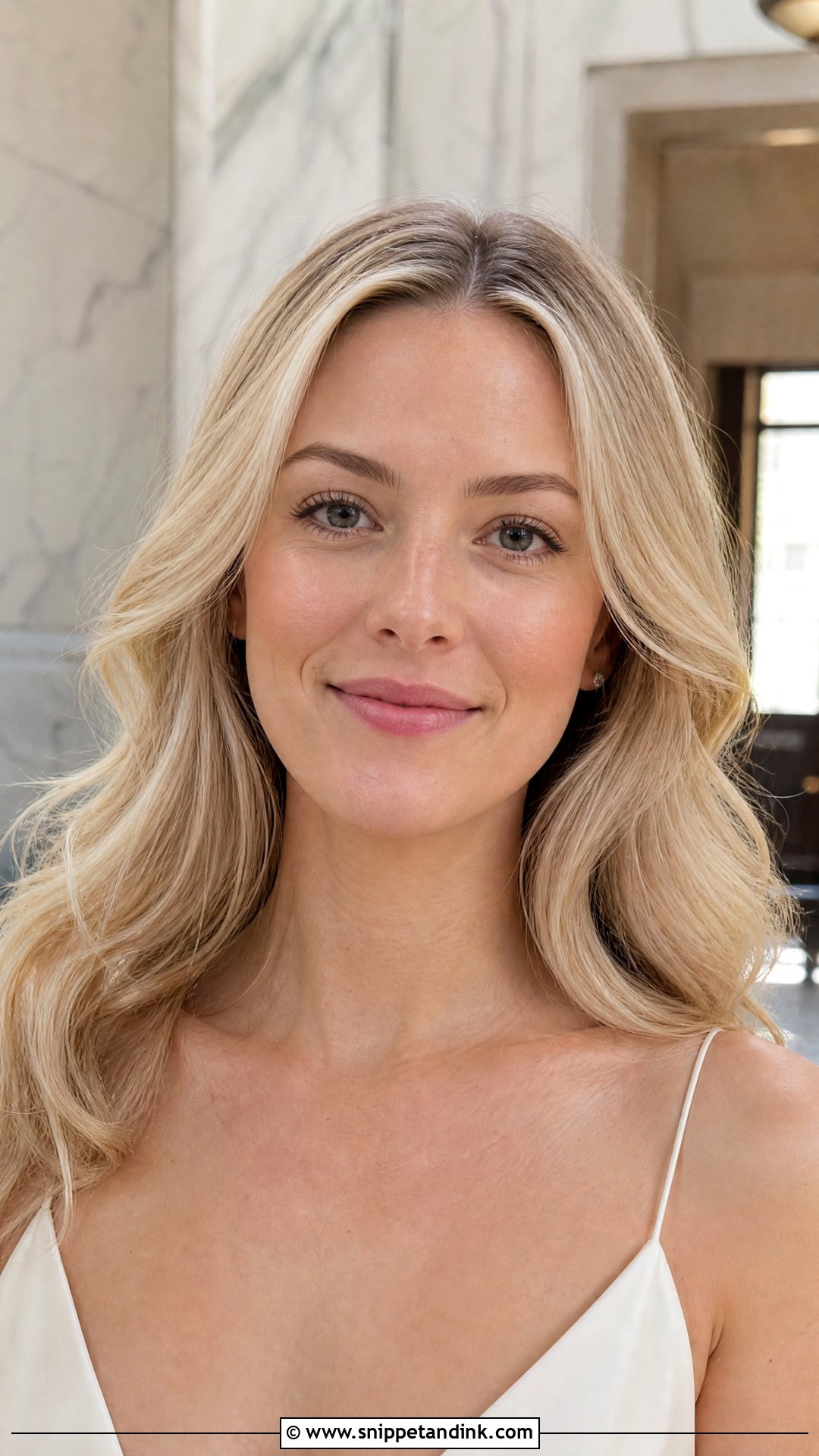
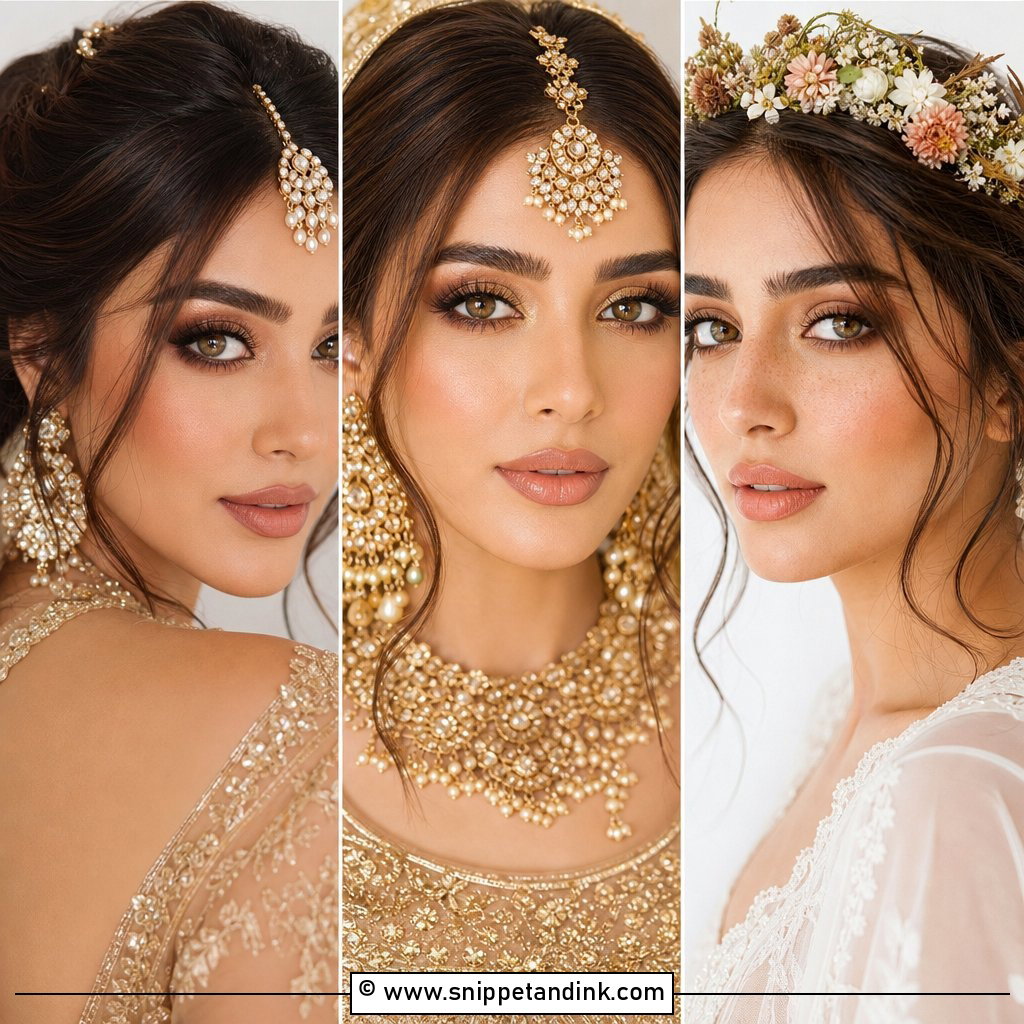
No-makeup makeup takes the most products to look like the fewest. I use a skin tint or sheer foundation, spot concealer, cream blush, tinted brow gel, curled lashes and a wash of neutral shadow. Brown mascara or a few individual lashes add definition without being noticed. Lips get a tinted balm or a nude satin. Where this goes wrong is longevity: sheer products wear off faster, so I set the base in thin layers and give the bride blotting papers rather than powder for later.
16. Full Glam Bridal Makeup
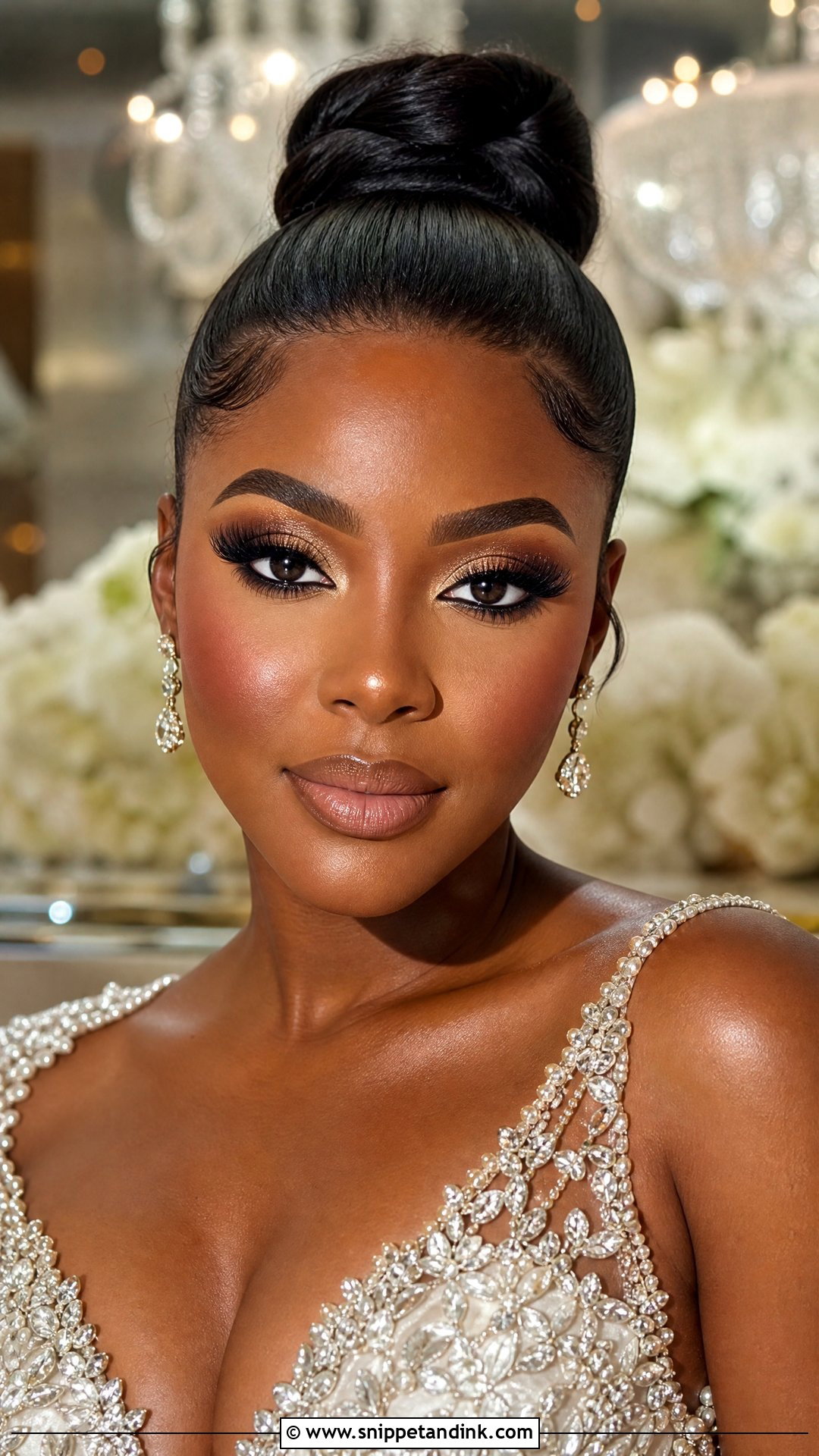
Full glam means full-coverage foundation, sculpted cheeks, defined brows, dramatic lashes, structured shadow and a precise lip. To keep it from dating, I stick to browns, champagne, bronze and soft black liner rather than whatever color is trending this season. The rule I use is one hero feature: bold eyes get a nude or rose lip, a bold lip gets softer shadow. This suits black-tie evenings and brides who already wear makeup daily. If you rarely wear foundation, full coverage can feel heavy by hour six, so try it for a whole day first.
17. Soft Cut Crease Bridal Makeup
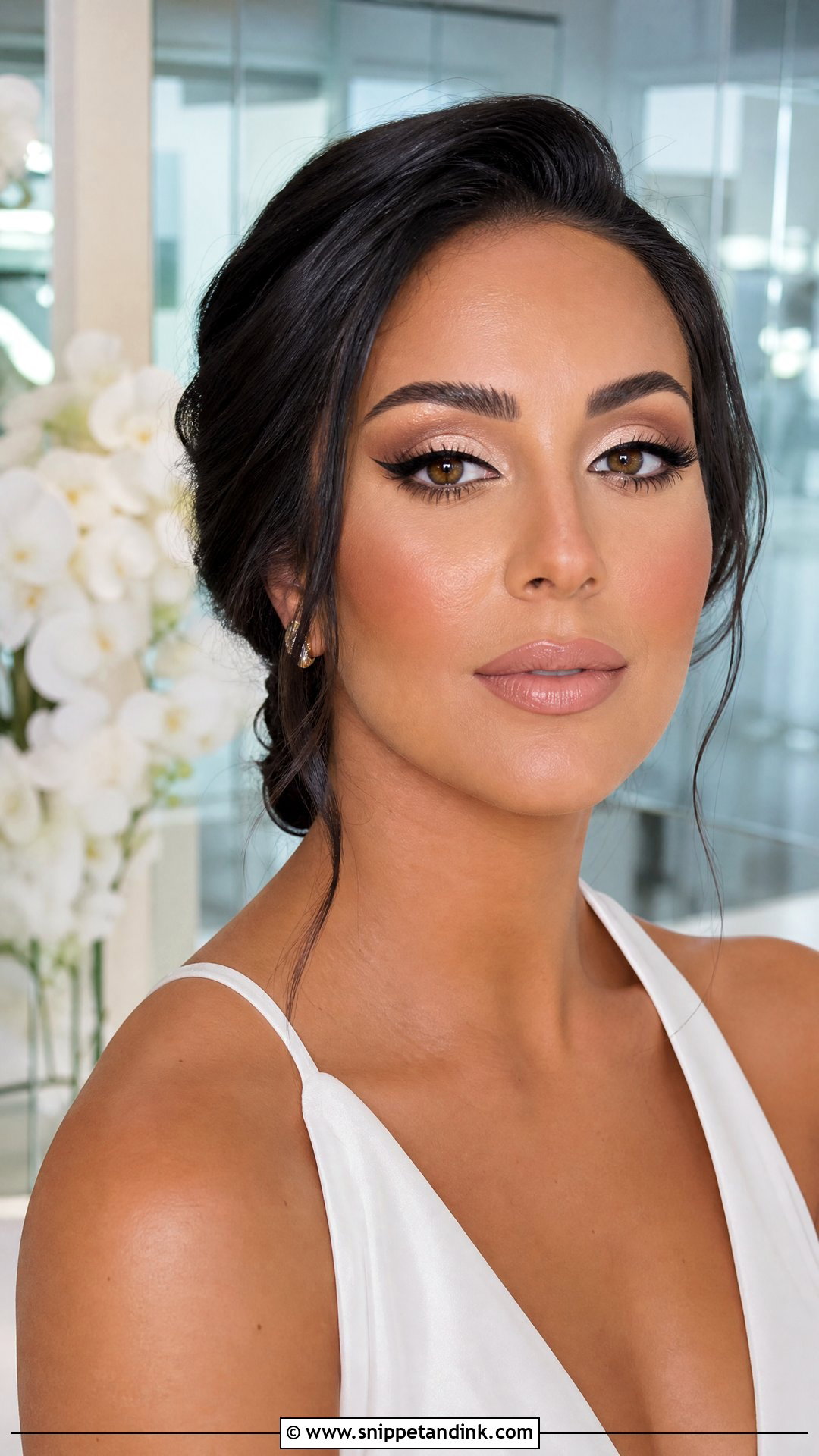
A sharp editorial cut crease reads too hard at a wedding, so I soften the edge. Matte brown, taupe or soft mauve goes just above the natural crease, the lid is brightened with ivory or soft gold, then liner and wispy lashes go close to the lash line. The complexion stays balanced with soft blush and highlight, and a nude rose or peach lip. It’s my go-to for hooded eyes because I can place the crease color where it’s visible with your eyes open, giving shape in photos without needing heavy dark shadow.
18. Berry Lip Bridal Makeup
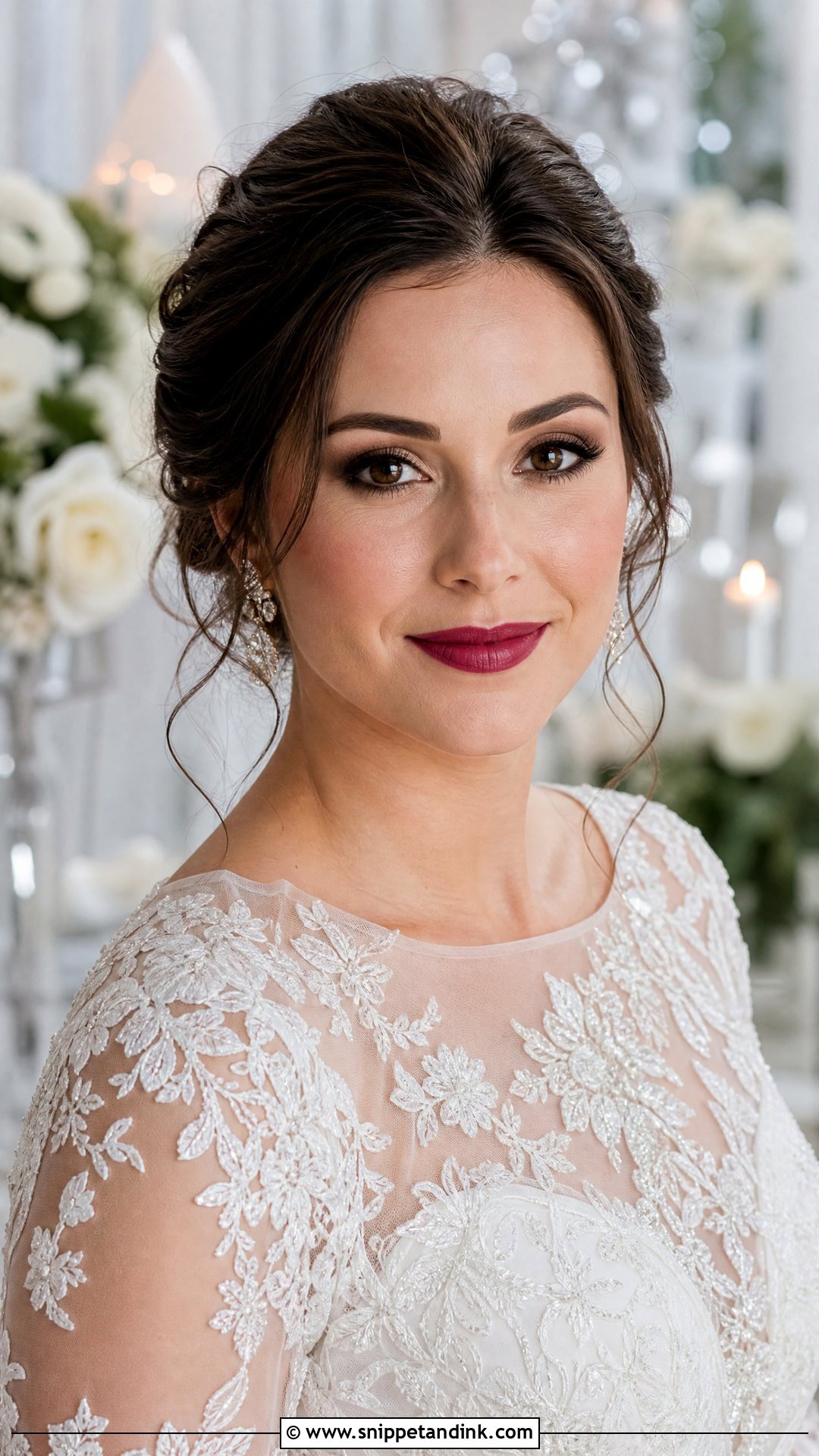
Berry is the bold lip for brides who find red a bit loud. Undertone guides the shade: raspberry for cool skin, cranberry for neutral, plum-berry for deeper and warmer complexions. I keep eyes simple in taupe or brown and tap a sheer layer of berry or rose blush onto the cheeks so the lip doesn’t float alone. Deep berries show every uneven edge, so I always line with a matching pencil and clean the outline with concealer. Autumn, winter and evening ceremonies suit it best.
19. Latte Bridal Makeup
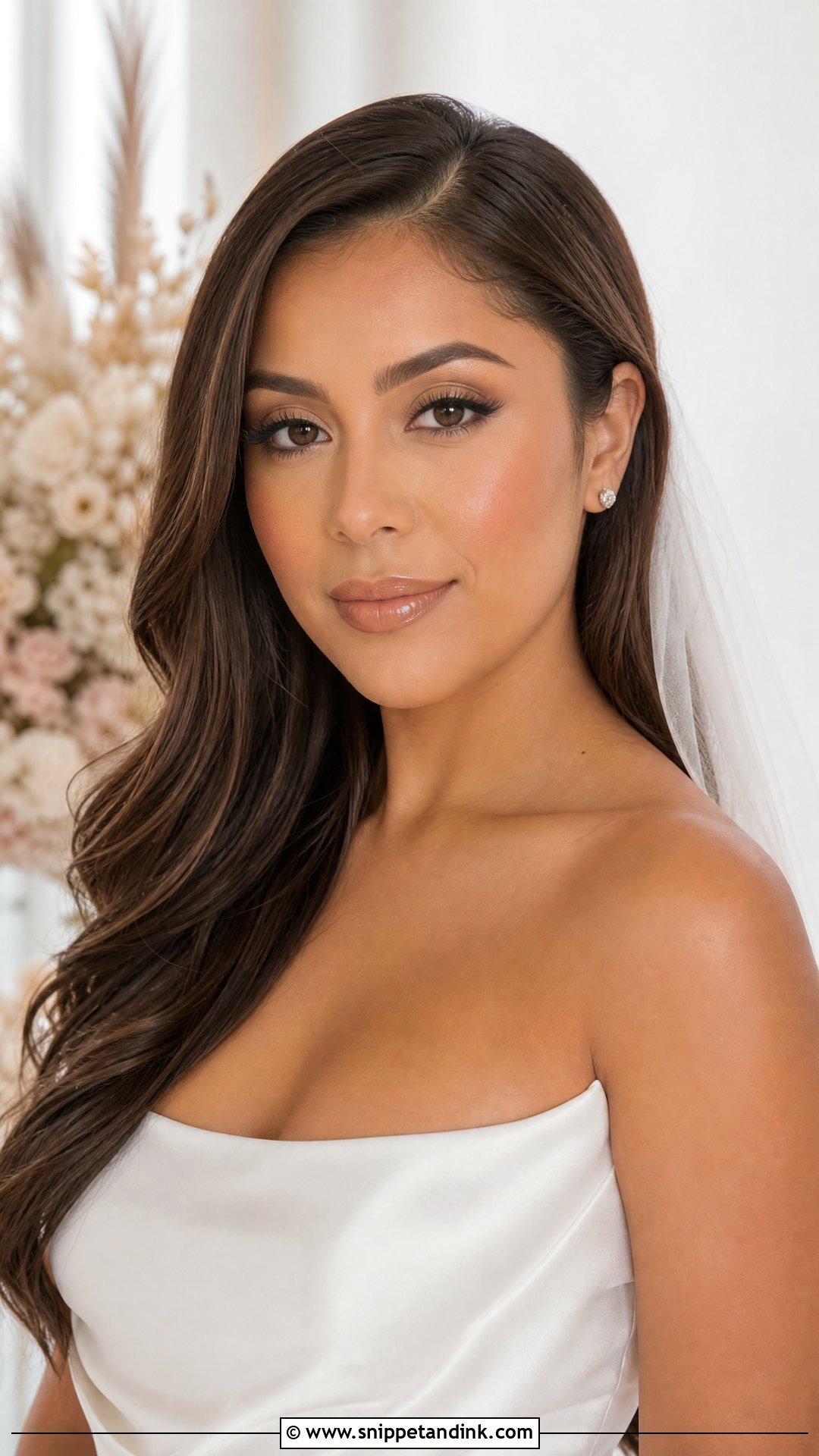
Latte bridal makeup lives entirely in beige, caramel, soft brown and cream. I put matte beige on the lid, caramel through the crease, brown liner and fluffy lashes, with a softly bronzed complexion and very little contour. Blush is nude brown or warm peach, and the lip is beige nude or brown-rose. Brides who dislike pink usually love it. The risk is a face that reads flat on camera, so I make sure there’s enough contrast between the crease and lid to show up from a distance.
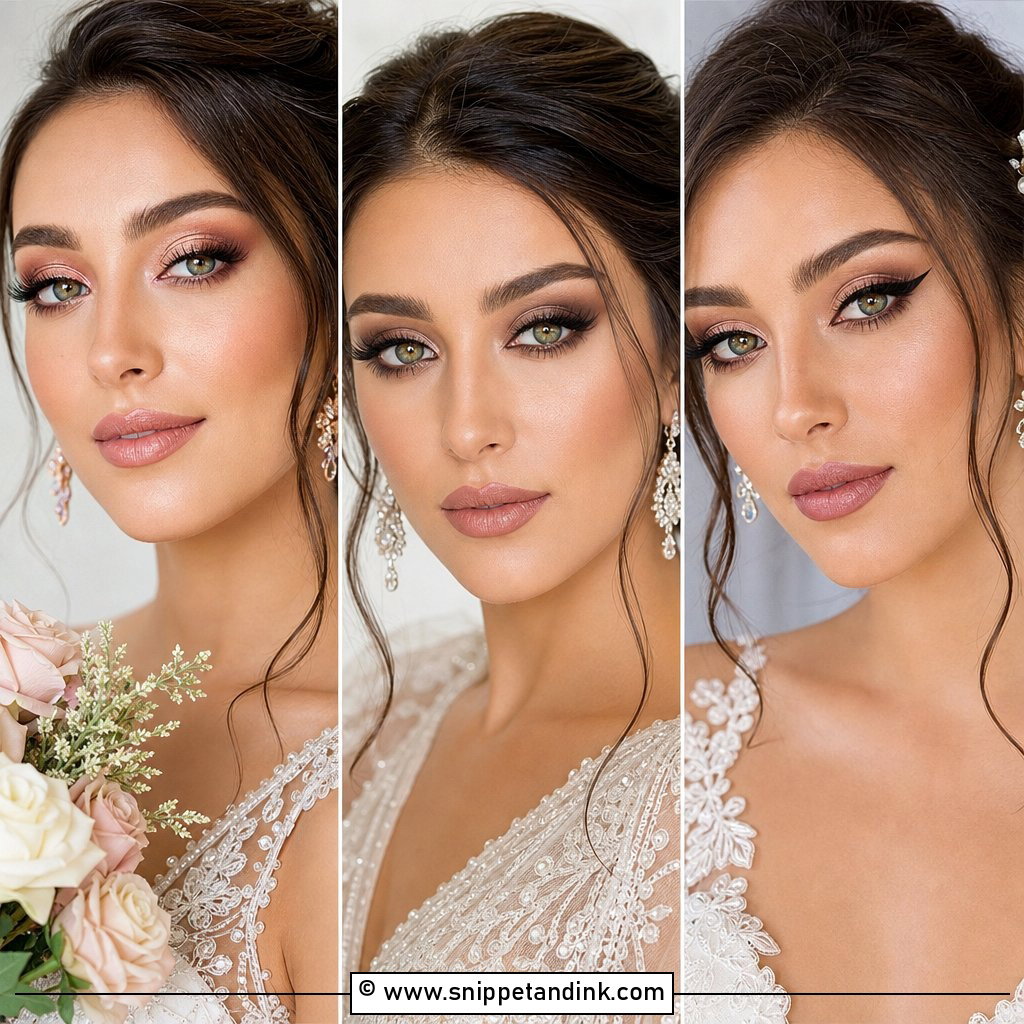
20. Pearl Glow Bridal Makeup
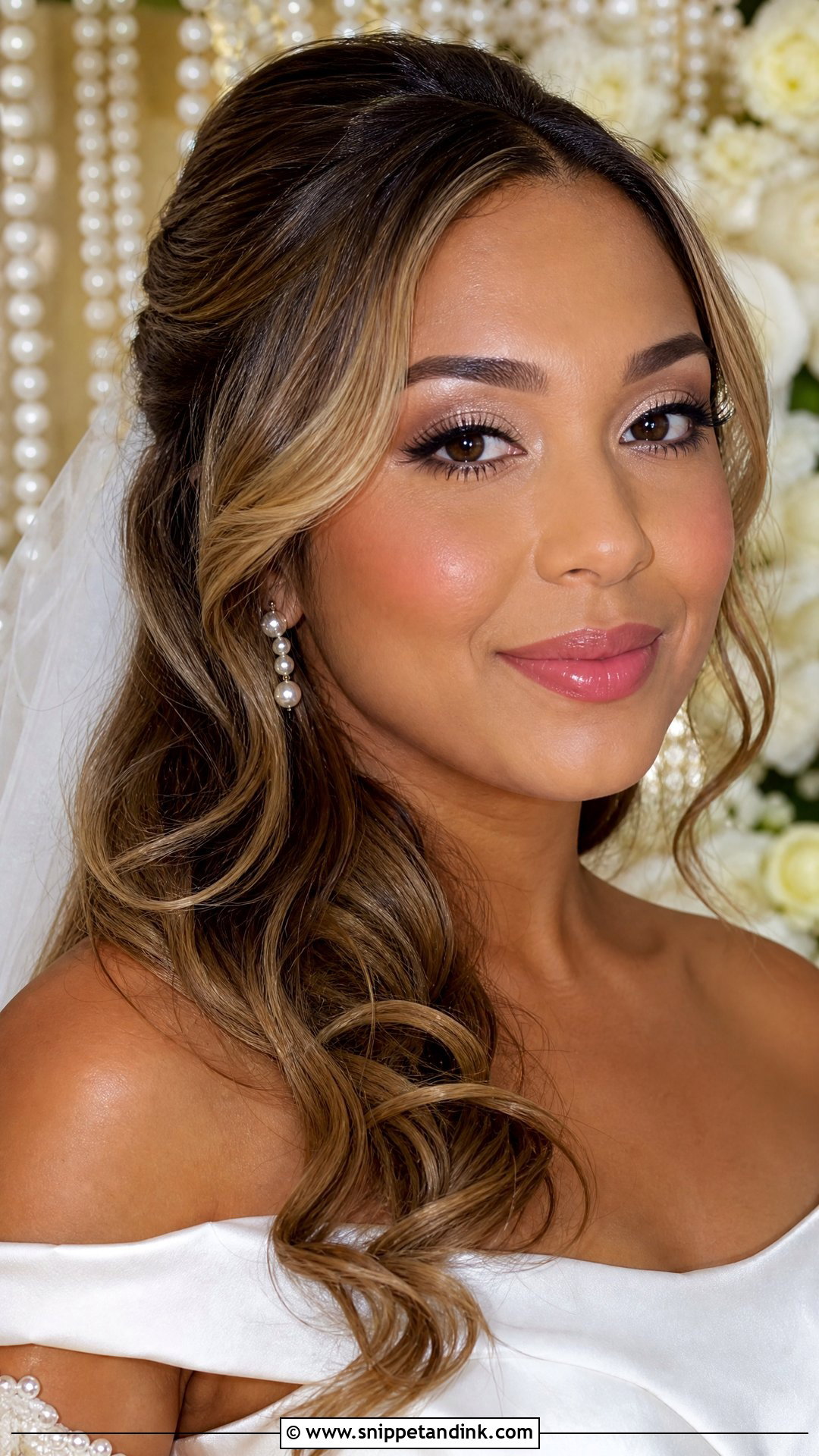
Pearl glow should look like light on the skin, not sparkle. I place a pearly highlight on the top of the cheekbones, the inner corners and lightly under the brow bone, and keep the lids in ivory or soft pearl with brown or charcoal liner. The base is satin with subtle radiance rather than wet. A soft pink or nude lip keeps it calm. It suits pearl earrings and satin gowns especially. I test the highlight under flash before the wedding, because some pearl formulas with a blue reflect make the skin look grey in photos.
Running Your Makeup Trial Like a Dress Rehearsal
A trial is only useful if it copies the real day as closely as possible. I ask brides to book it six to eight weeks out, ideally on a day with plans afterward so the makeup gets real wear.
- Arrive with clean, moisturized skin and no tinted products, so I’m matching foundation to you, not to yesterday’s concealer.
- Wear a top close to your neckline and color, or at least a white one, because a dark top changes how your skin reads.
- Bring photos of your dress, hair plan and the looks you like, plus one picture of makeup you know you hate.
- Take photos by a window, in shade and with a phone flash before you leave.
- Check the face again five or six hours later and note where it faded or shifted.
If something bothers you, say it at the trial. I’d much rather change the lip three times there than have you quietly wipe it off before the ceremony.
The Little Pouch That Carries You From Vows to Last Dance
Even the best long-wear base will need a little help over twelve or fourteen hours. I hand my brides a small kit and ask a bridesmaid to look after it, since a bride rarely has pockets.
- Your lipstick and its liner, the exact shades used, since lips are the first thing to fade.
- Blotting papers, which lift oil without adding more powder and building a cakey layer.
- A few cotton buds and a mini concealer for mascara smudges after happy tears.
- Lash glue, in case a strip or an individual cluster starts lifting at the corner.
- Mints rather than gum, which does nothing kind for a lip line.
My usual advice is a quick check after the ceremony and another before the first dance. Two minutes each time is plenty if the base went on well.
Restraint Is What Makes a Bridal Face Last
Every look on this list can read as classic or as dated, and the difference is almost always restraint plus good blending. Pick the version that suits your skin, your eye shape and your schedule, then do a proper trial and wear it for a few hours before you commit. If it still feels like your face after a long afternoon, it will hold up on the wedding day too.
You'll Like These Ideas:


Leave a Reply