
Romantic makeup is less about one particular color and more about how skin looks up close: alive, a little flushed, with definition that softens instead of sharpens. When I plan a bride’s face, I think about how she’ll actually be seen, which is mostly at arm’s length by people hugging her and at a distance by a camera. That’s why the looks below lean on real-skin finishes, rosy cheeks and diffused eyes, with lips in satin or gloss. Start with the direction that already feels like you, and then the tones get tuned to your dress, your venue’s light and your own coloring.
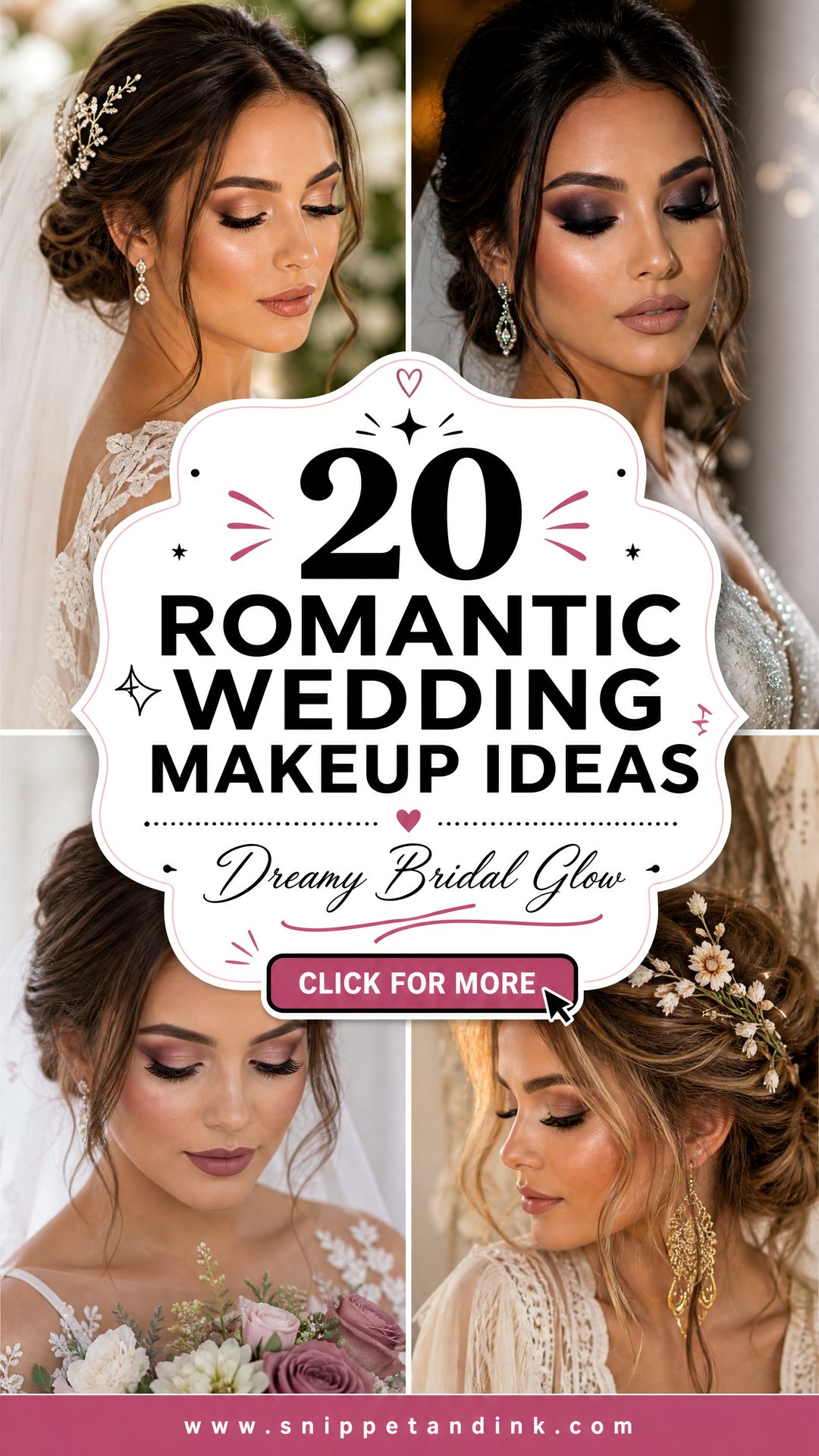
Layering Products So a Soft Look Lasts Past the Speeches
Romantic makeup uses lighter textures than full glam, and light textures wear off faster. The fix isn’t more product. It’s thinner layers that grip each other, applied in an order that lets each one settle before the next goes on.
The order I work in
- Skincare first, then a few minutes of waiting so moisturizer sinks in; foundation slides around on damp skin.
- Primer only where it’s needed: a gripping one through the center of the face, a hydrating one on dry cheeks.
- Base in thin coats, pressed in with a damp sponge instead of buffed, which keeps texture looking like skin.
- Cream blush and bronzer next, then a powder in the same shade pressed over them to lock the color.
- Powder through the T-zone only, so the cheeks keep their glow.
- Setting spray last, misted from arm’s length rather than up close.
This is also why I ask brides not to start any new skincare in the final week. A reaction or sudden oiliness changes how the base sits on the morning, and there’s no time left to adjust the plan.
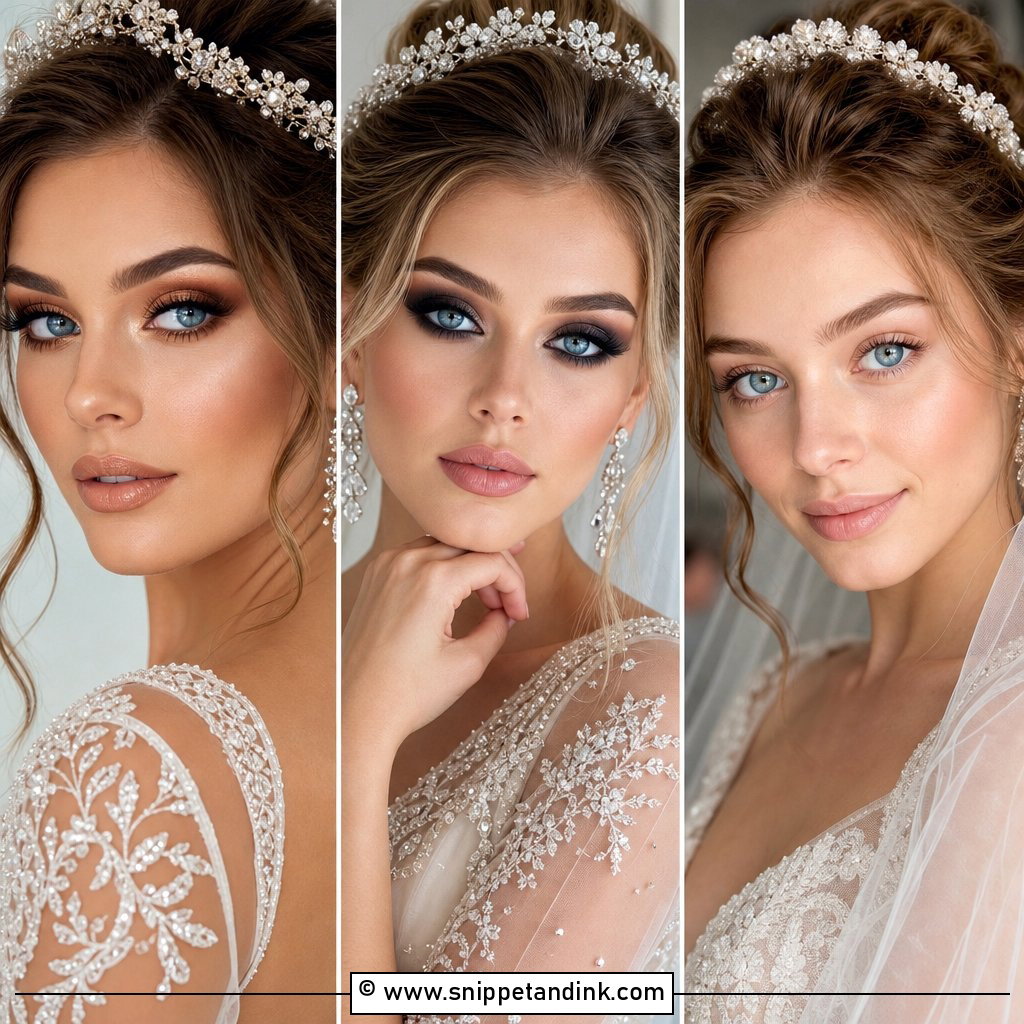
1. Soft Glam Wedding Makeup
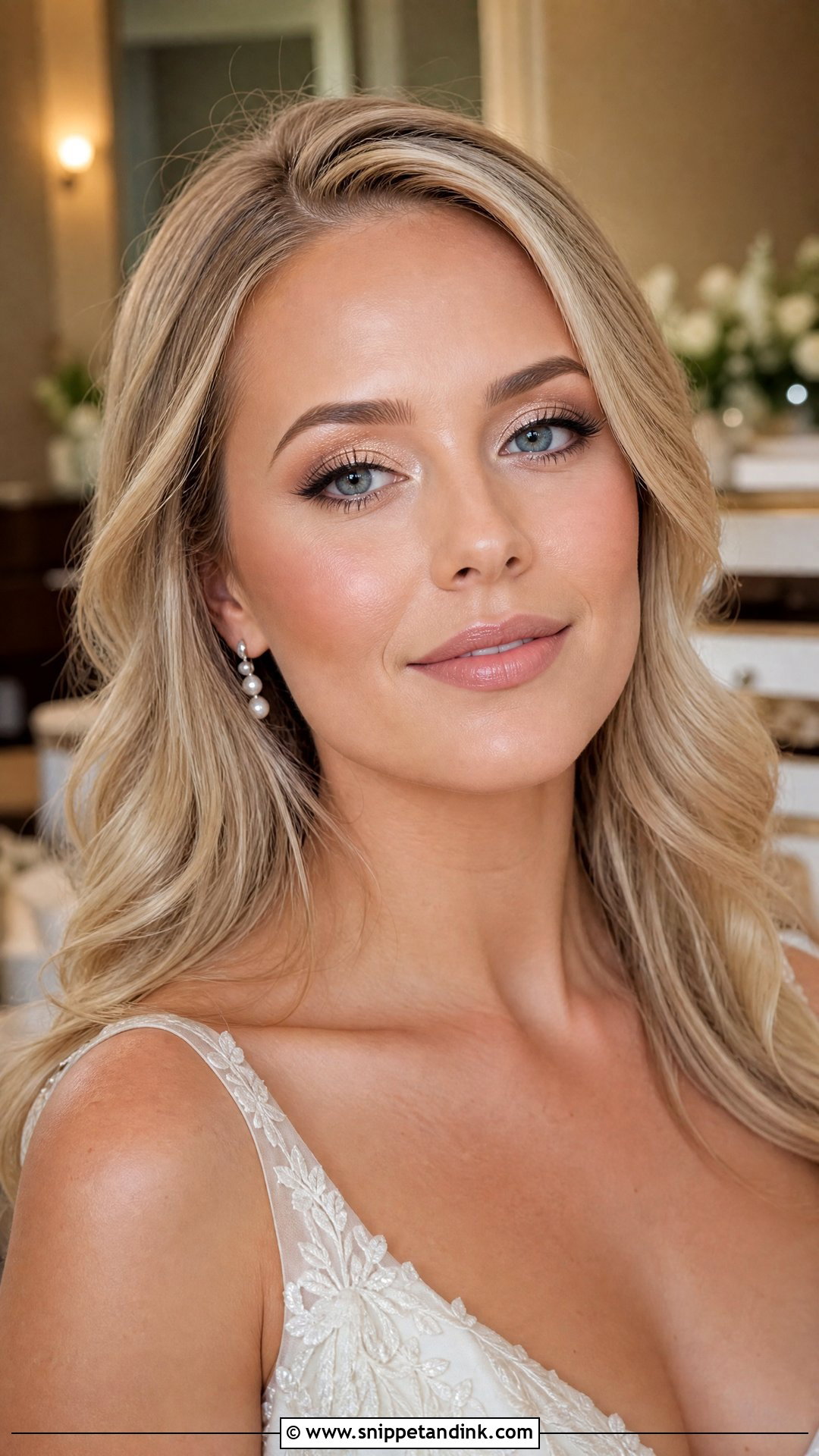
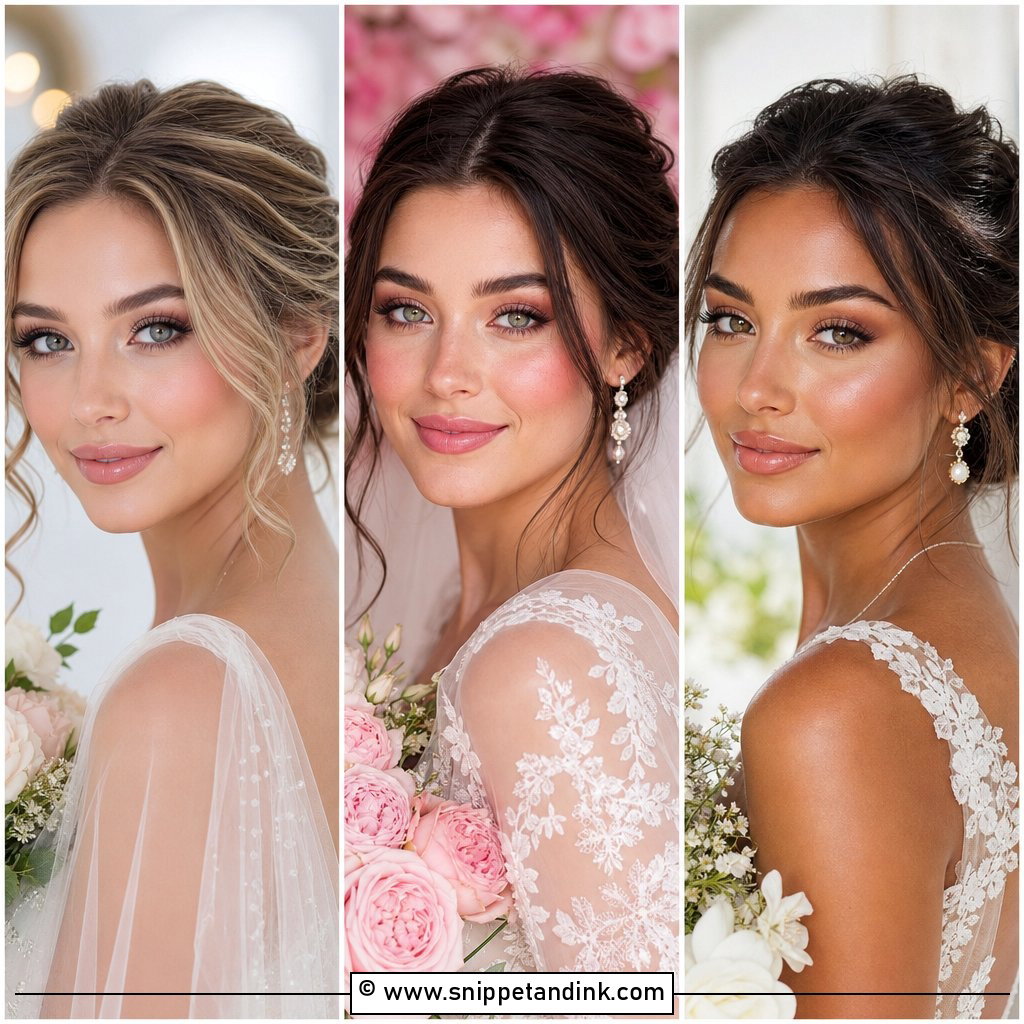
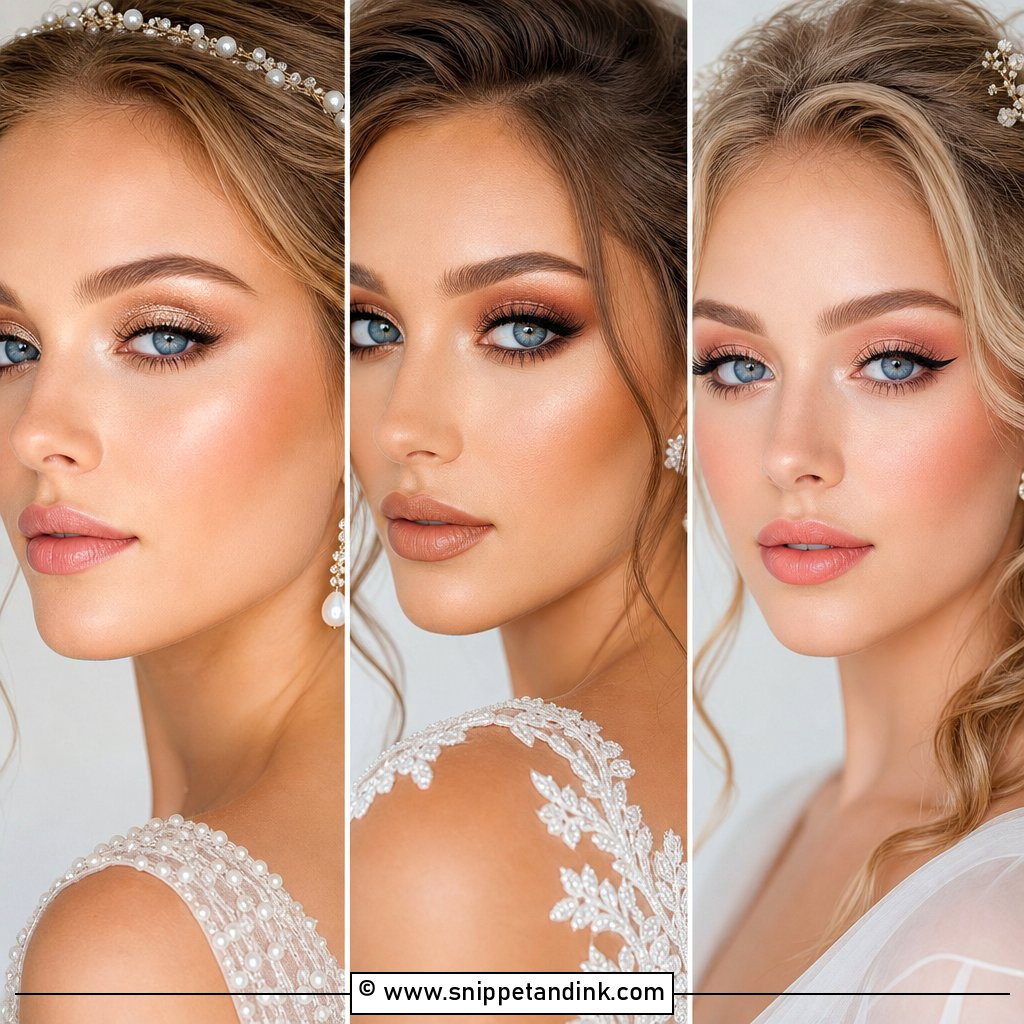
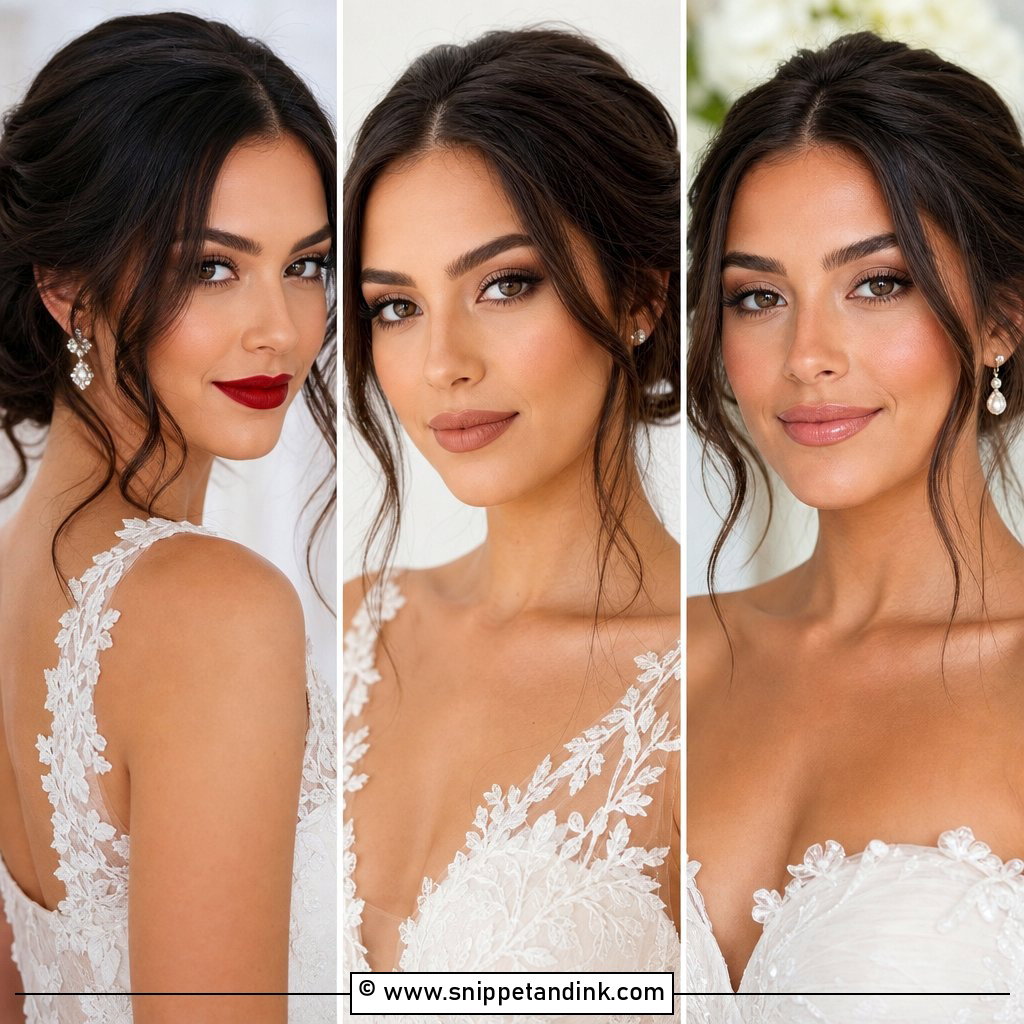
This is the look I’m asked for most, and it earns that by giving structure without reading as stage makeup. I keep the base satin, sculpt with a cream contour blended until there’s no visible edge, and set blush high so it lifts the face. Champagne shimmer goes on the lid with soft brown in the crease, and the liner is pressed into the lash roots rather than drawn on top, which keeps it from looking heavy when you smile. Wispy lashes stop it from turning harsh. A nude-pink liner under a creamy lipstick finishes it. It sits comfortably next to lace and loose waves, and there’s enough contrast for the camera without hiding your features.
2. Natural Wedding Makeup
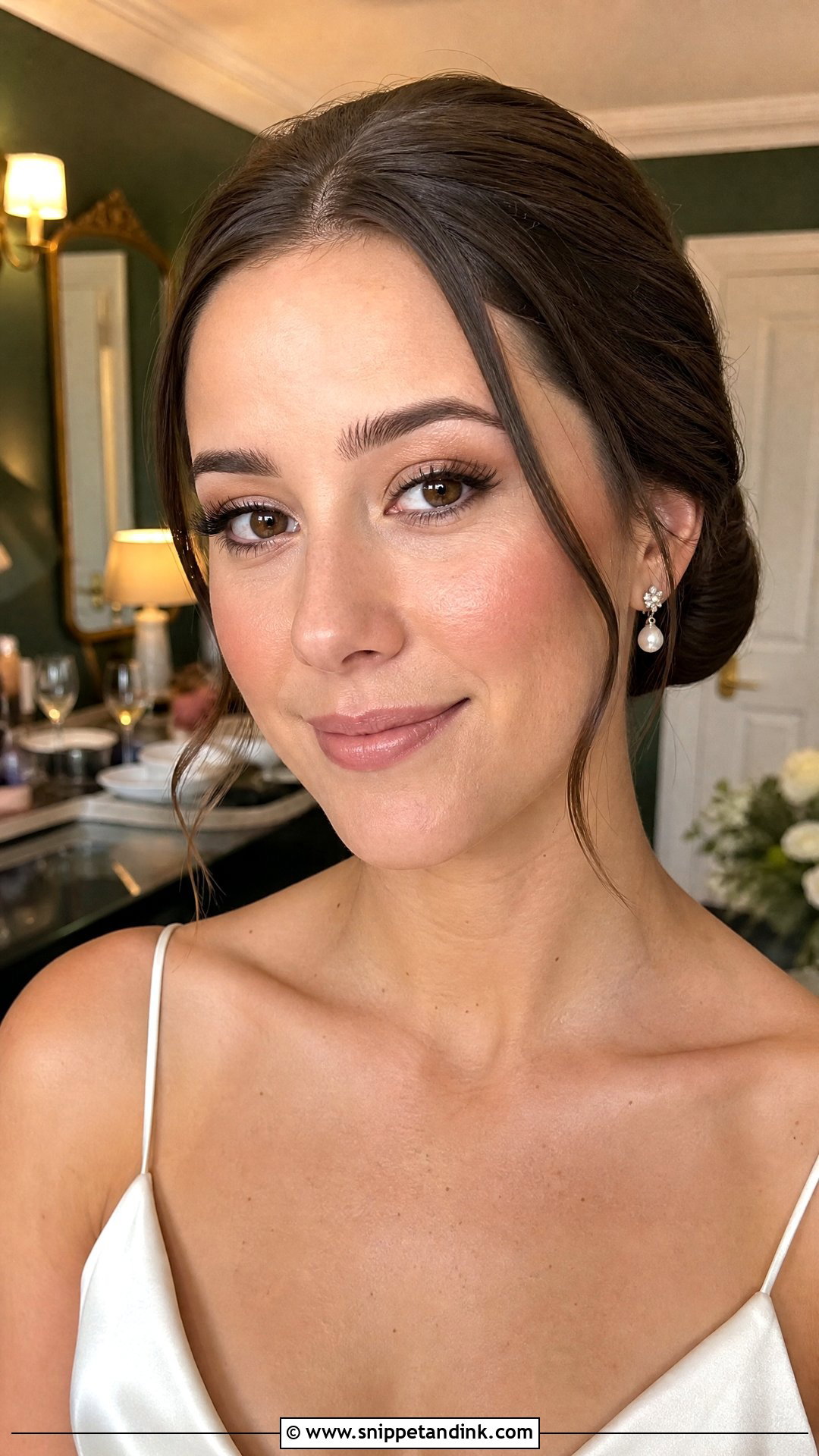
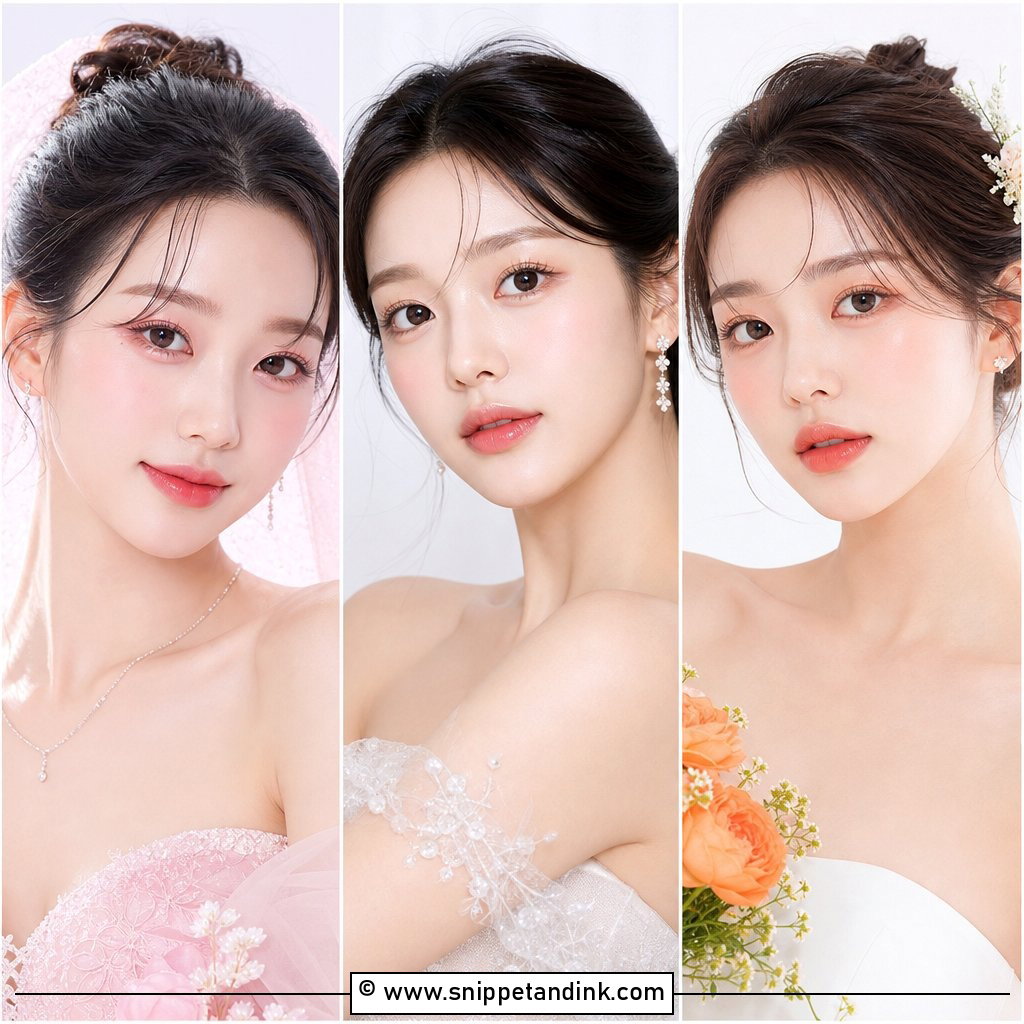
This is the hardest look to fake, because every shortcut in the prep shows. Natural wedding makeup is where I’d start anyone who rarely wears foundation. Most of my time goes into skin prep, then a thin base only where it’s needed, so freckles and natural warmth stay visible. Cream blush in rose or peach melts into bare-looking skin far better than powder. On the eyes, taupe shadow, a proper lash curl and a few individual clusters on the outer corners are enough, with tinted brow gel for structure. A peachy nude balm keeps the mouth soft. You should look like yourself on a very good day.
3. Dewy Wedding Makeup
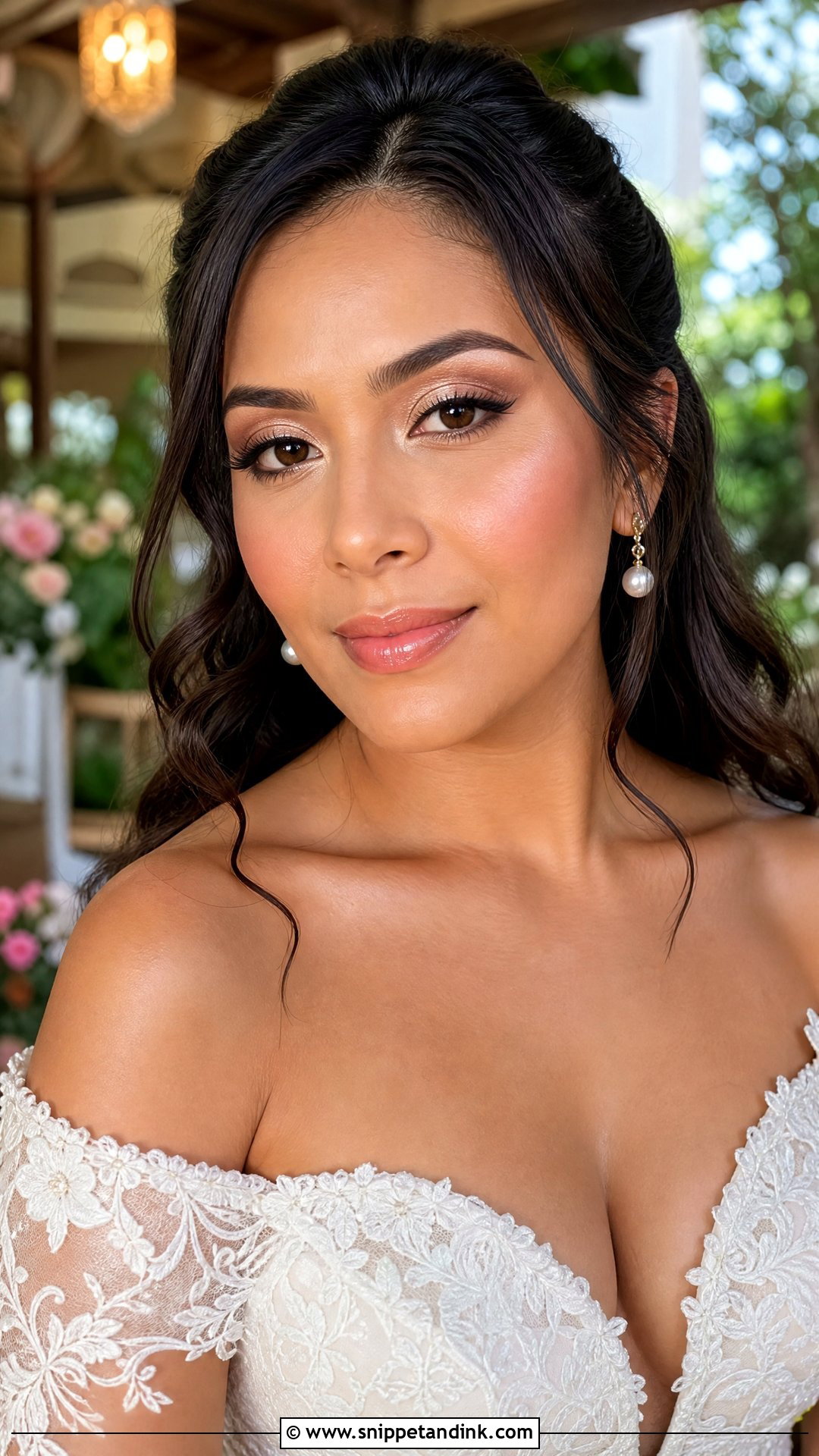
The real decision with dew is where the light is allowed to land. I prep with a hydrating primer, use a natural-finish foundation and keep every other product cream so it fuses with the skin instead of sitting on it. Highlight goes only on the high points: tops of the cheekbones, inner corners, brow bone and a touch on the cupid’s bow. Then I set the center of the face lightly, because shine on the forehead and nose reads as oil under flash, not glow. Pearl or rose shimmer on the lids, fluttery lashes and a glossy peach lip complete it. On very oily skin at a hot garden ceremony, I’d move you to satin instead.
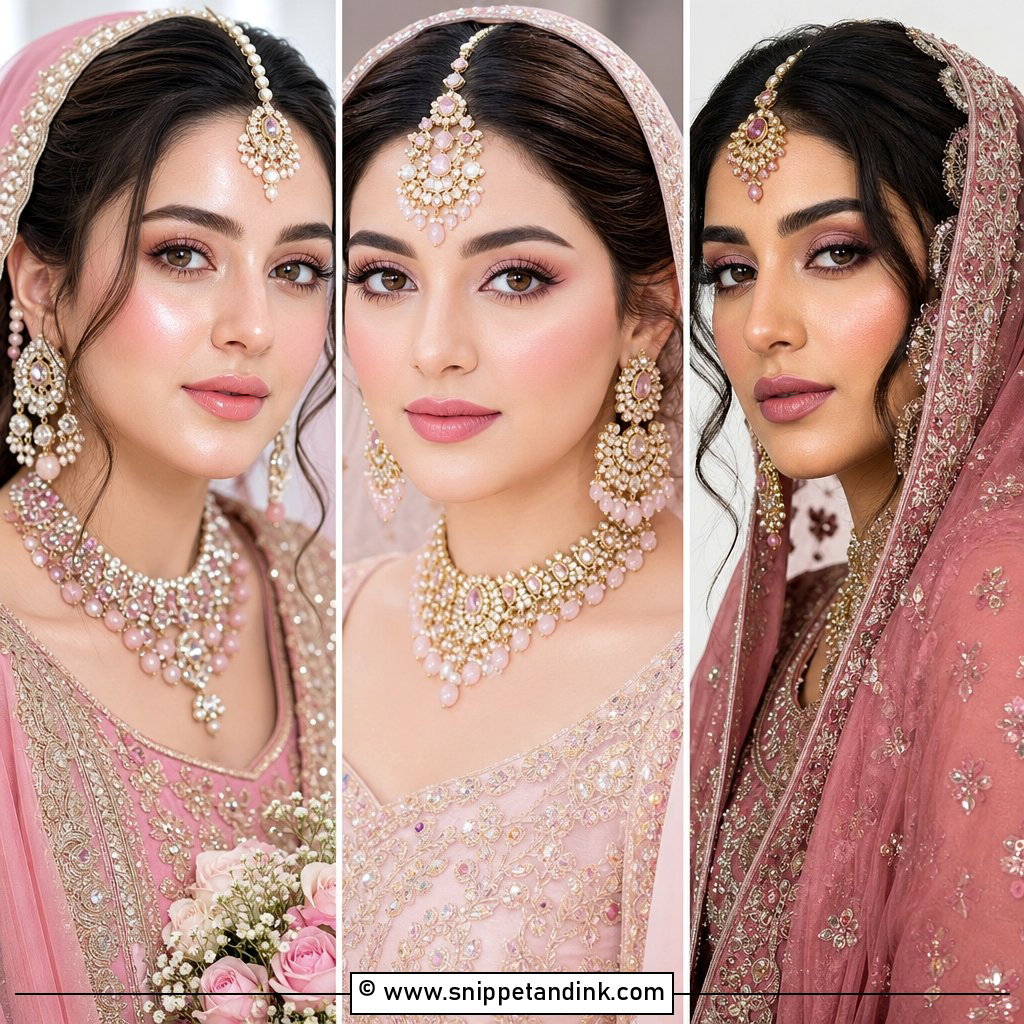
4. Pink Wedding Makeup
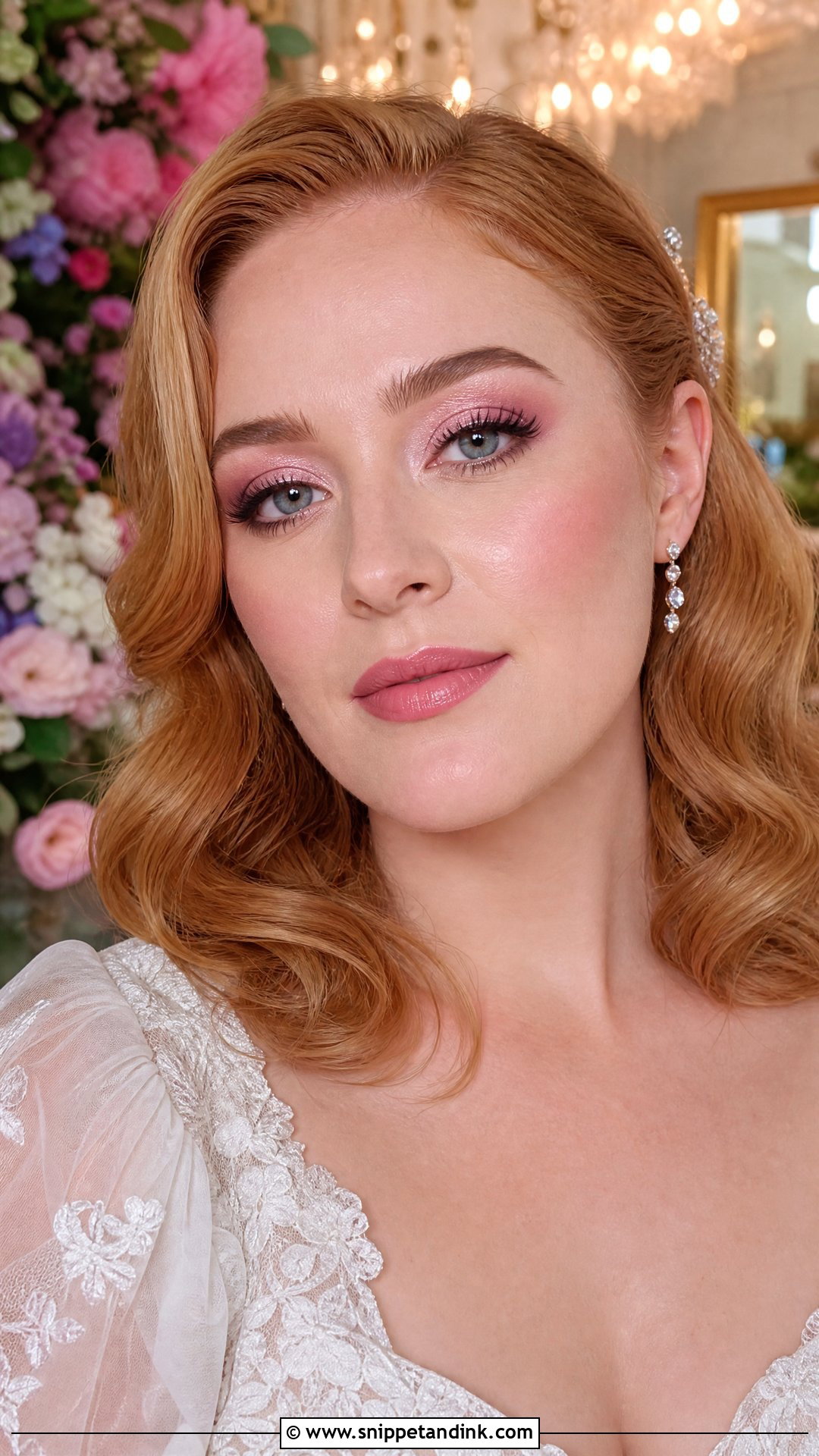
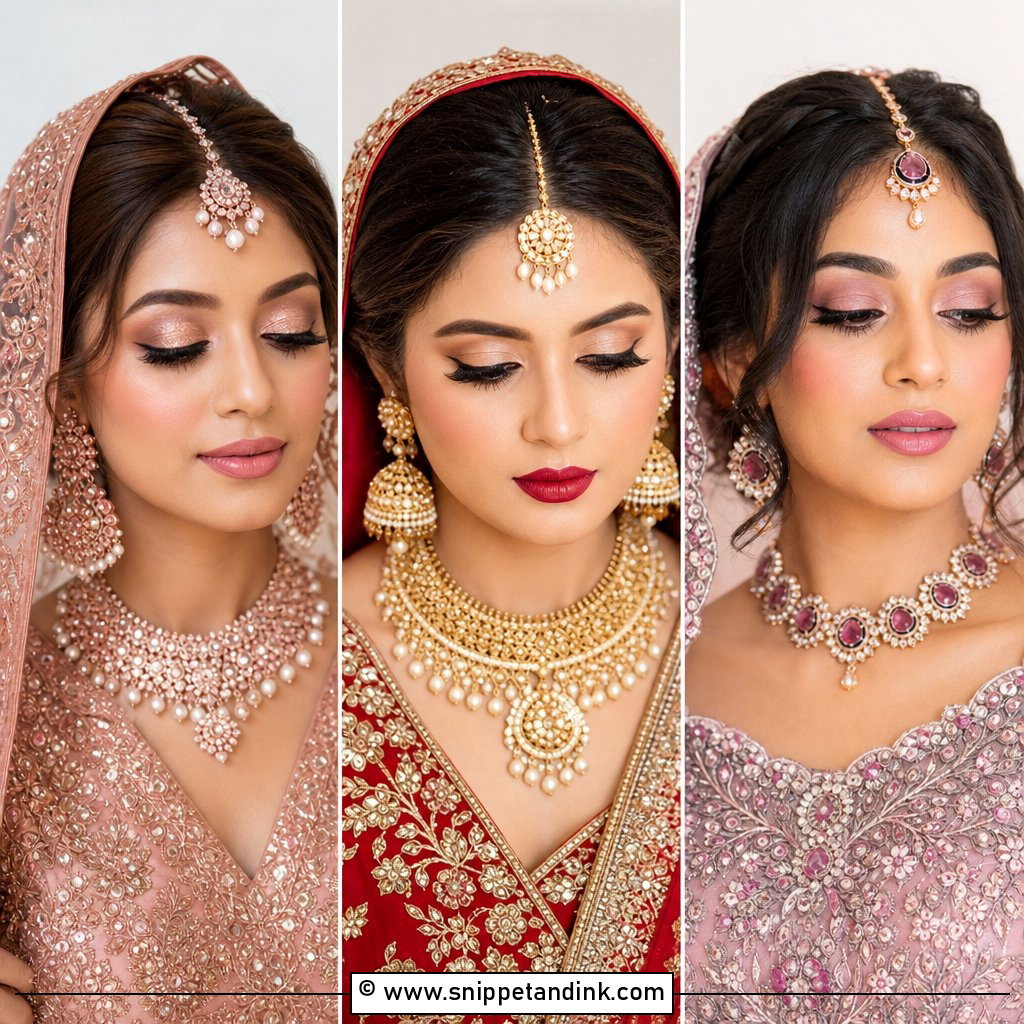
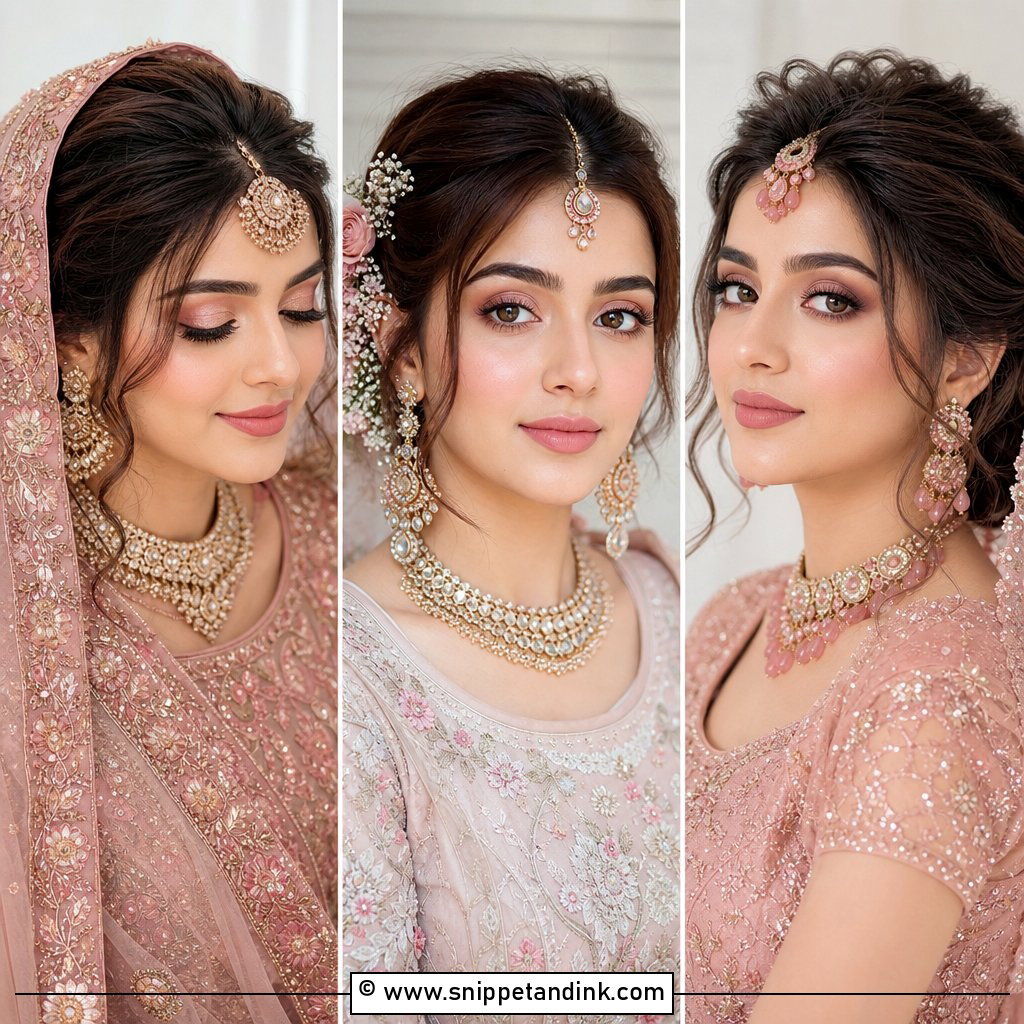
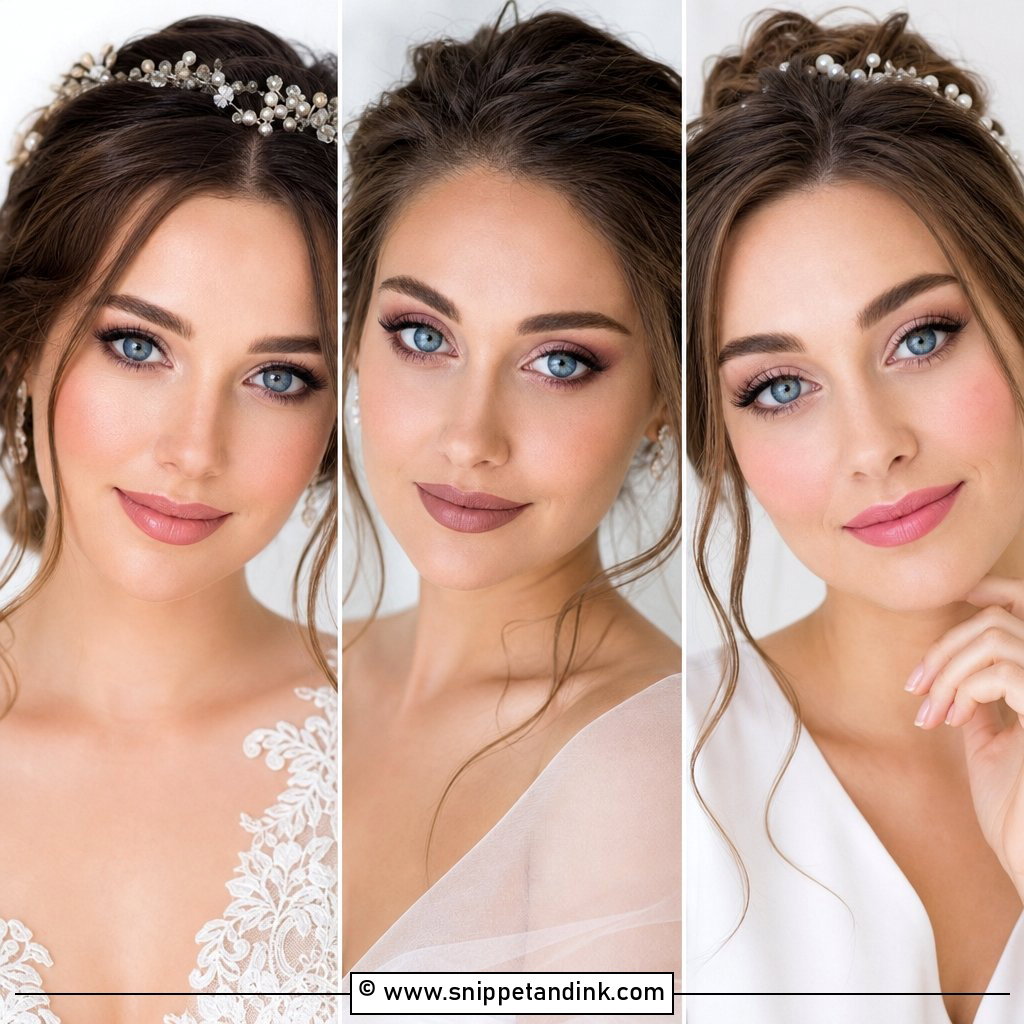
Undertone matters more with pink than with any other color, because the wrong pink turns chalky or makes skin look sallow. Baby pink tends to suit fair skin, rose sits well on light to medium, and berry-pink holds its color on deeper skin. I blend the blush wide across the cheeks, keep pale pink shimmer on the lid and anchor the crease with mauve, since a pink crease on its own can make eyes look puffy. Skip frosted formulas; they date the face and show every bit of lid texture. A rosy satin lip or a sheer gloss pulls it together, especially beside a blush bouquet.
5. Rose Gold Wedding Makeup
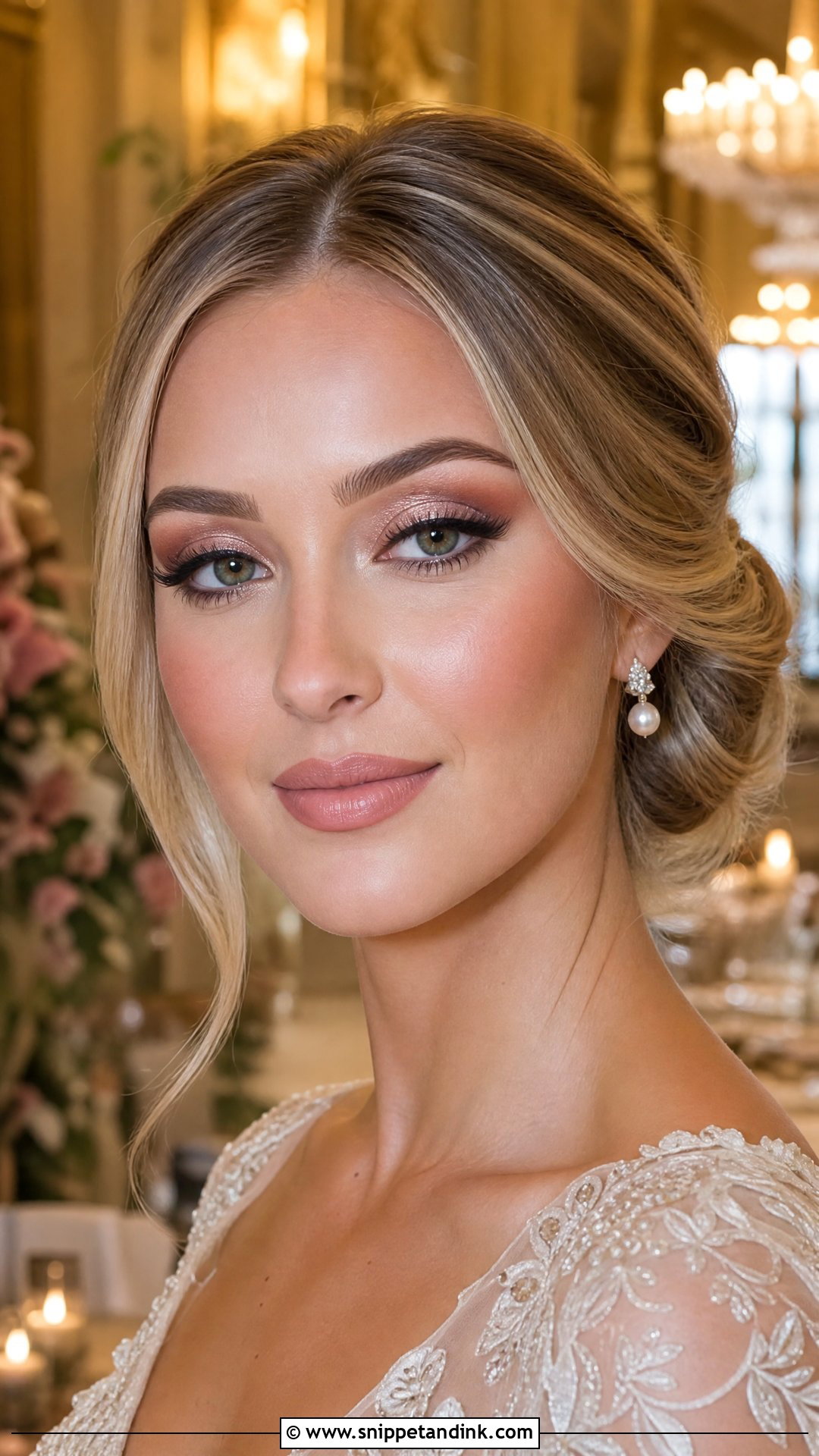
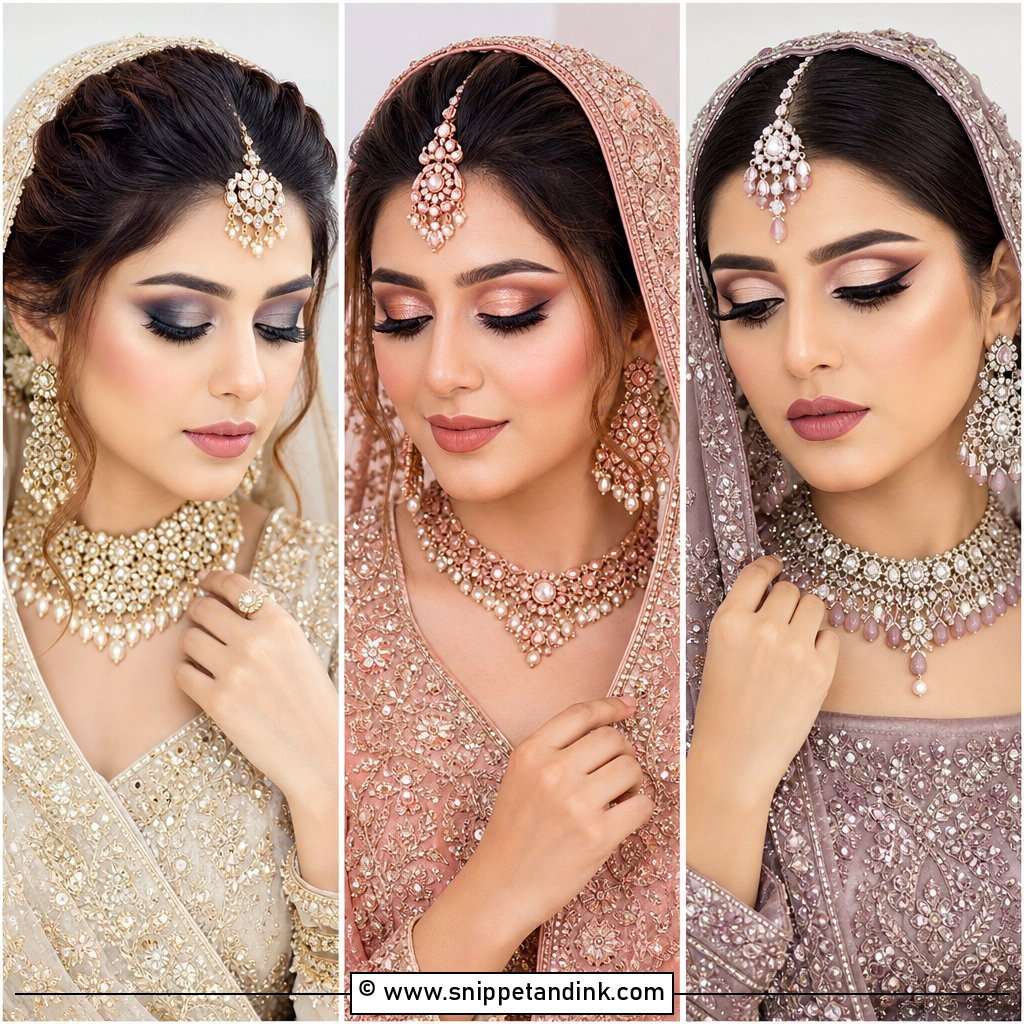
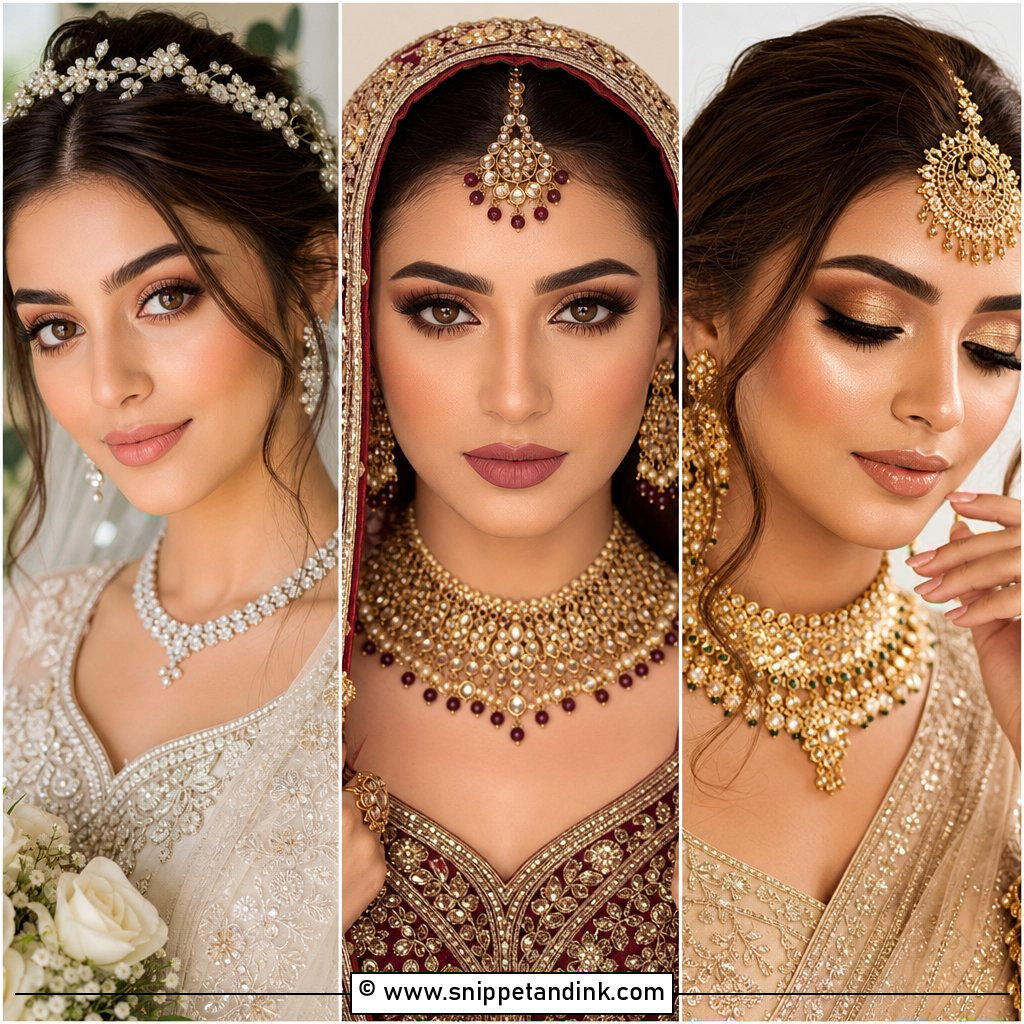
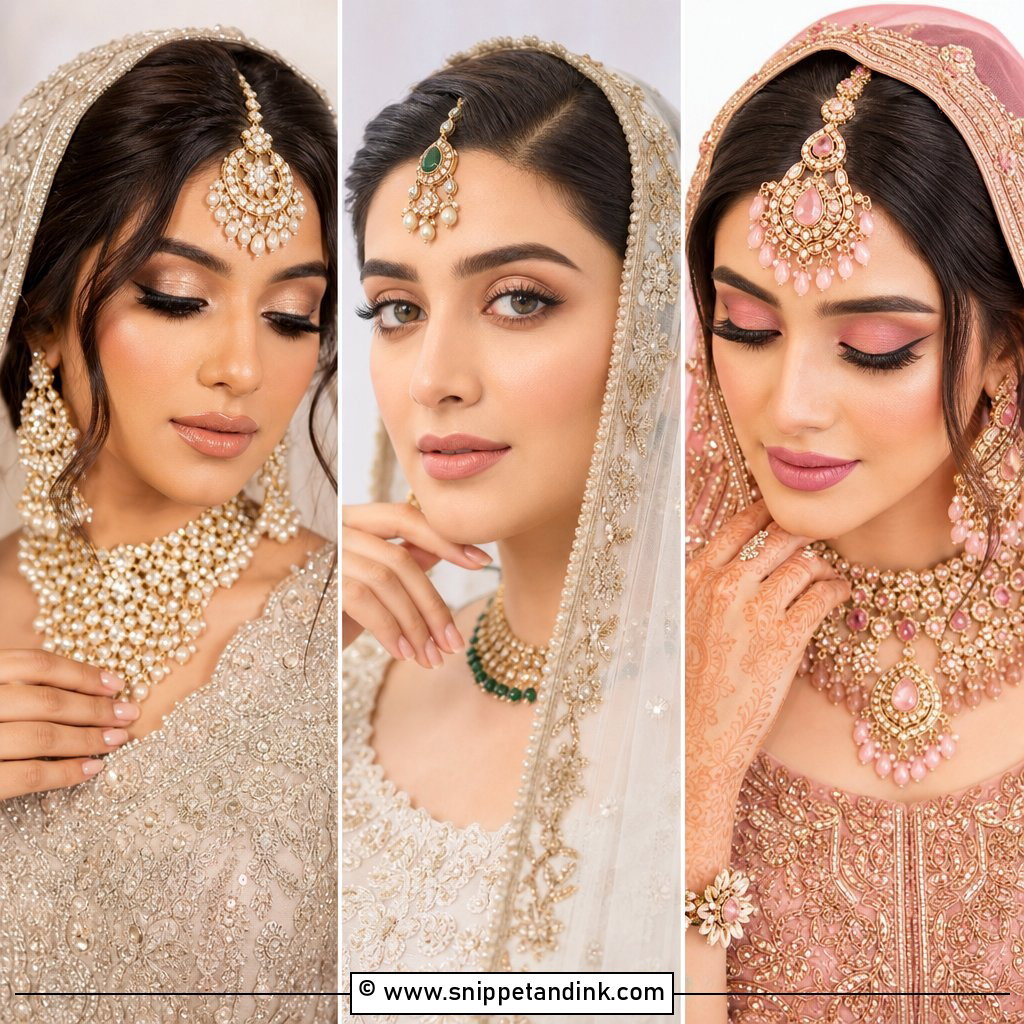
Rose gold carries both warm and cool pigment, so it flatters a wider range of skin tones than most metallics. I lay warm brown through the crease first, then press the shimmer onto the lid with a fingertip, which gives more payoff and far less fallout than a brush. A smoked-out liner shapes the eye more gently than a crisp wing. Peachy blush, a soft golden highlight and a satin lip in nude rose keep the face in balance. Low sunset light catches this pigment better than anything else, though it holds its own under ballroom chandeliers too.
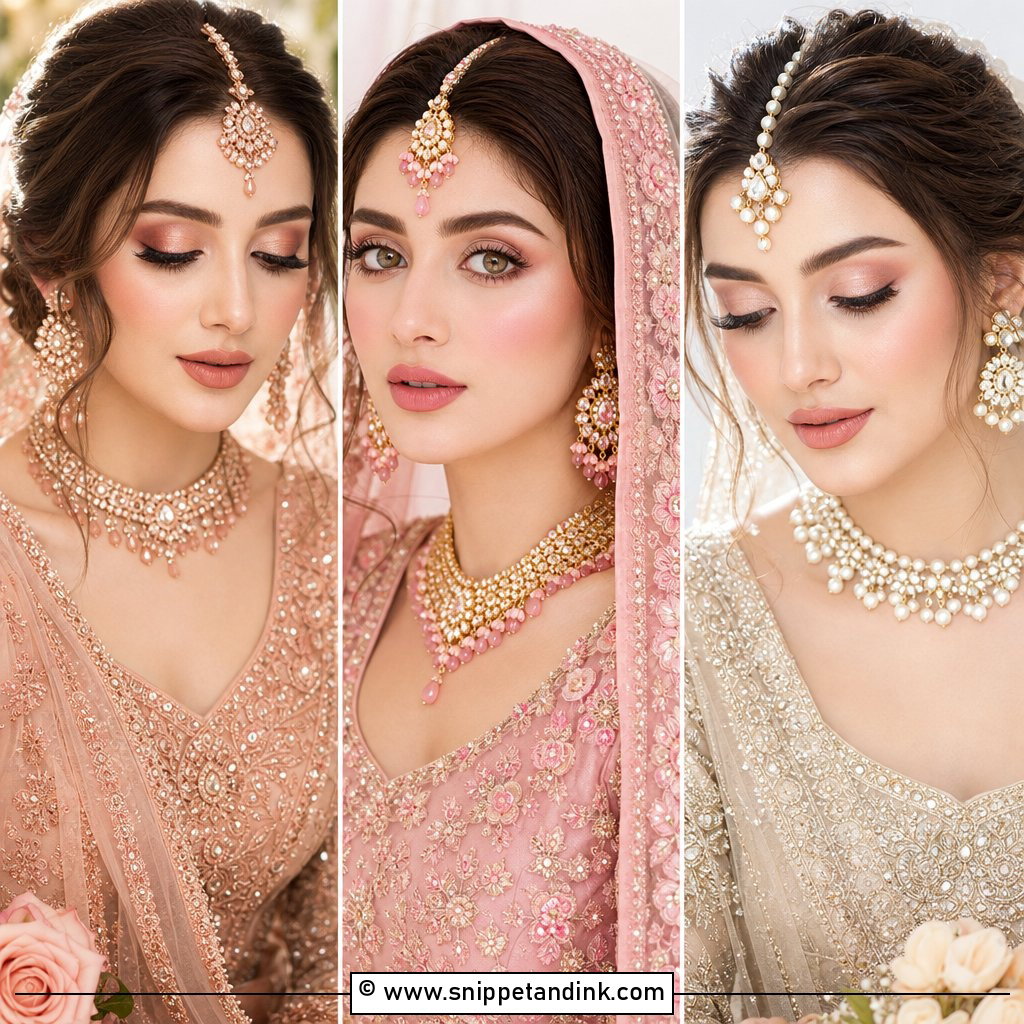
6. Peach Wedding Makeup
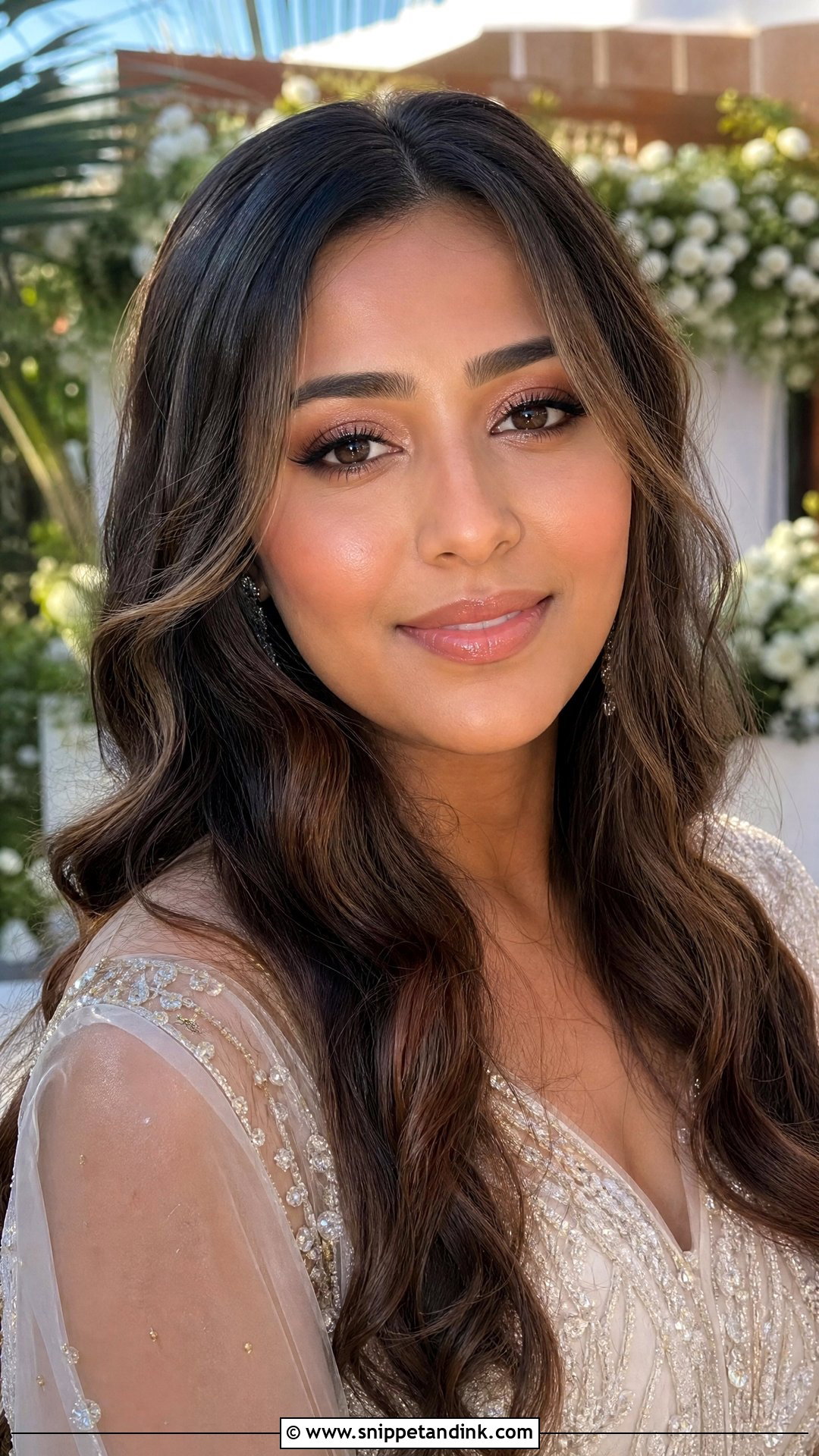
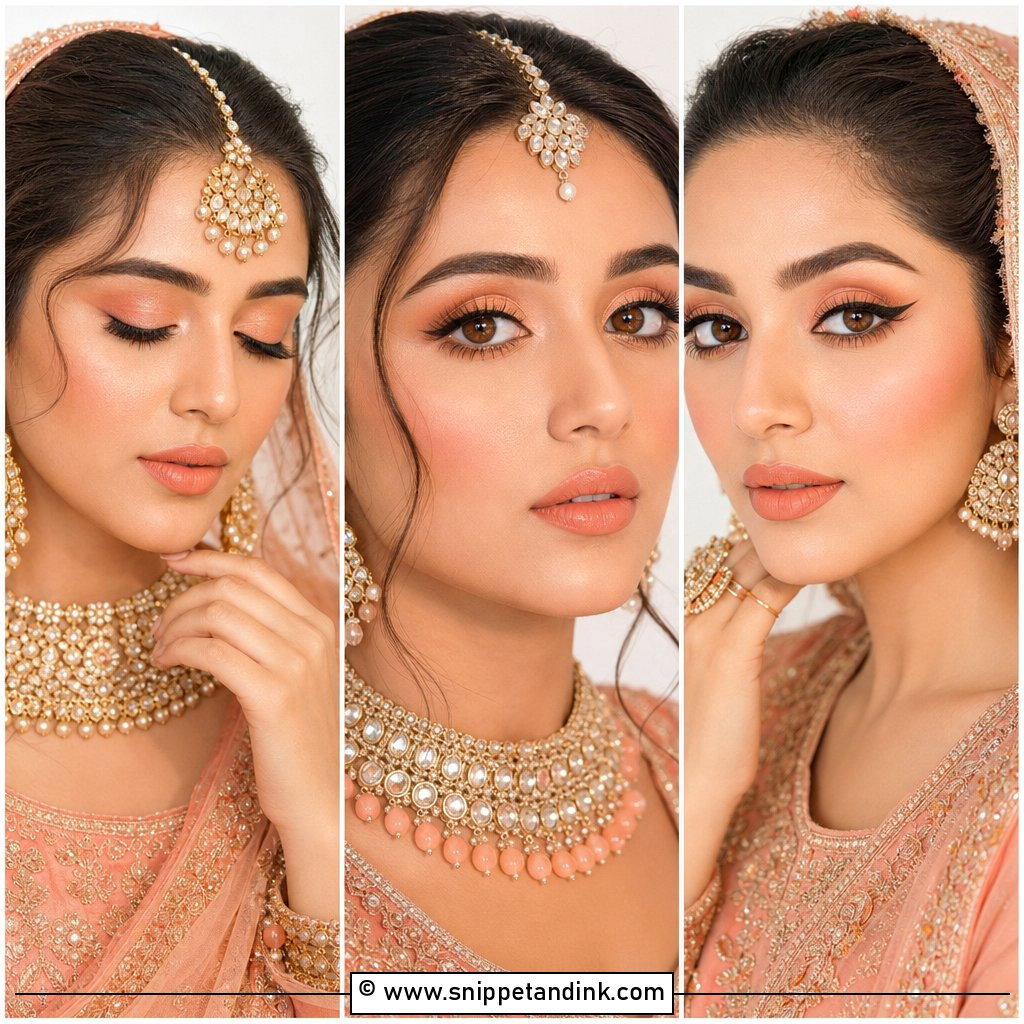
Peach warms the face without the sweetness pink brings, which is why I reach for it at beach and outdoor ceremonies. Start with fresh skin and a peach cream blush blended up into the cheekbone. On the eyes I use warm beige and soft apricot with a hint of light bronze, and brown liner rather than black, because black beside peach looks heavy in daylight. Lift the lashes, brush the brows up, and finish with a peach-nude lipstick or a glossy coral-beige. One warning: strong peach can turn orange on cool, pinkish skin, so test it against your jaw in daylight before committing.
7. Bronze Wedding Makeup
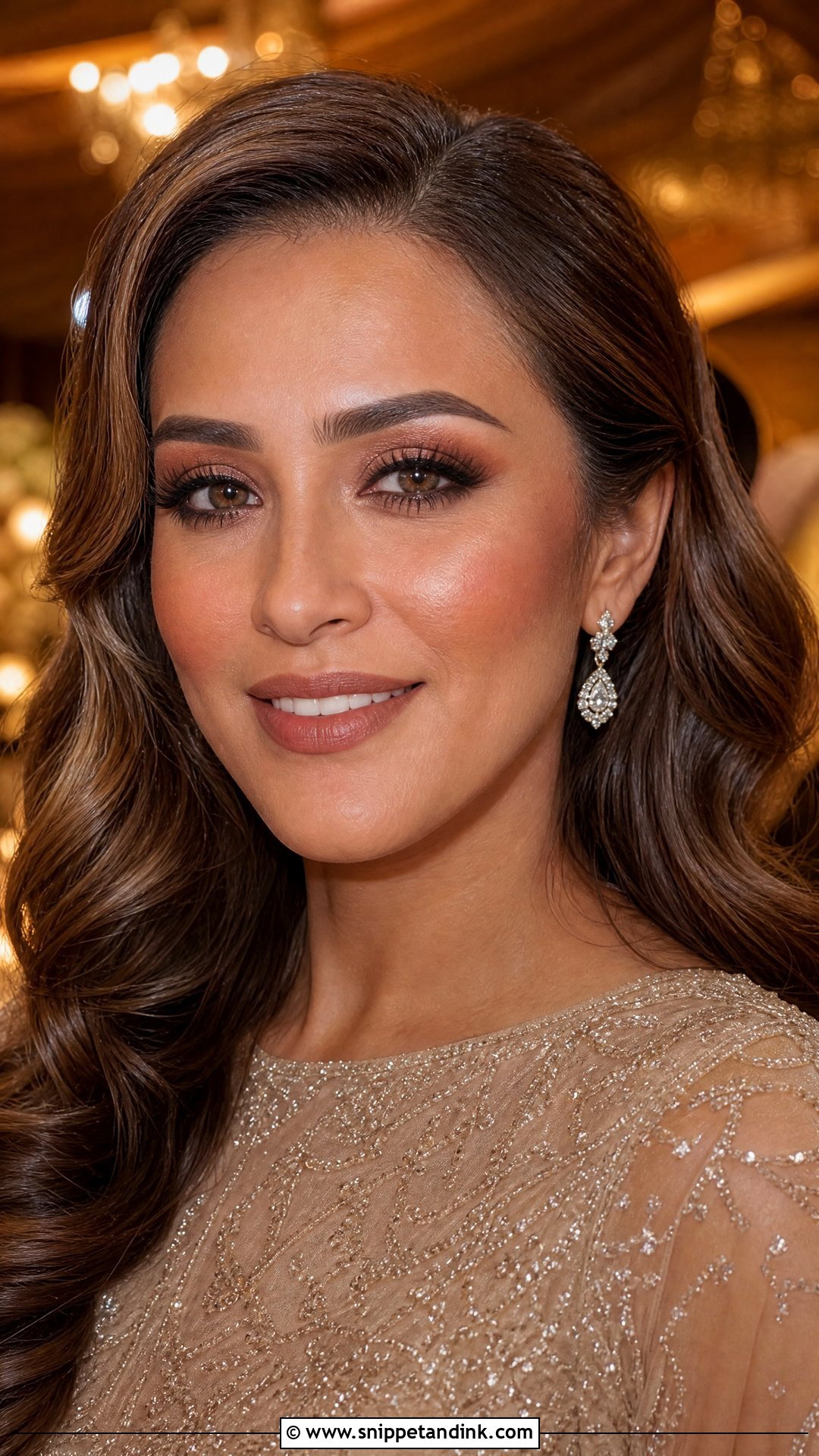
Warmth is the whole point, so I build it in thin layers rather than one heavy sweep. Bronze wedding makeup should look sun-kissed, not carved: bronzer goes where the sun naturally hits, at the temples, cheekbones and jaw, followed by a terracotta or warm peach blush. For the eyes, caramel through the crease, chocolate at the outer corner and a little shimmer in the center of the lid, with brown liner smudged along the lashes. Full, feathery lashes let the eyes hold their own against all that warmth. A peachy tan lip balances the face, and golden-hour portraits are where this palette comes alive. Always check the bronzer against your neck; a face warmer than the chest is the most common giveaway in photos.
8. Classic Red Lip Wedding Makeup
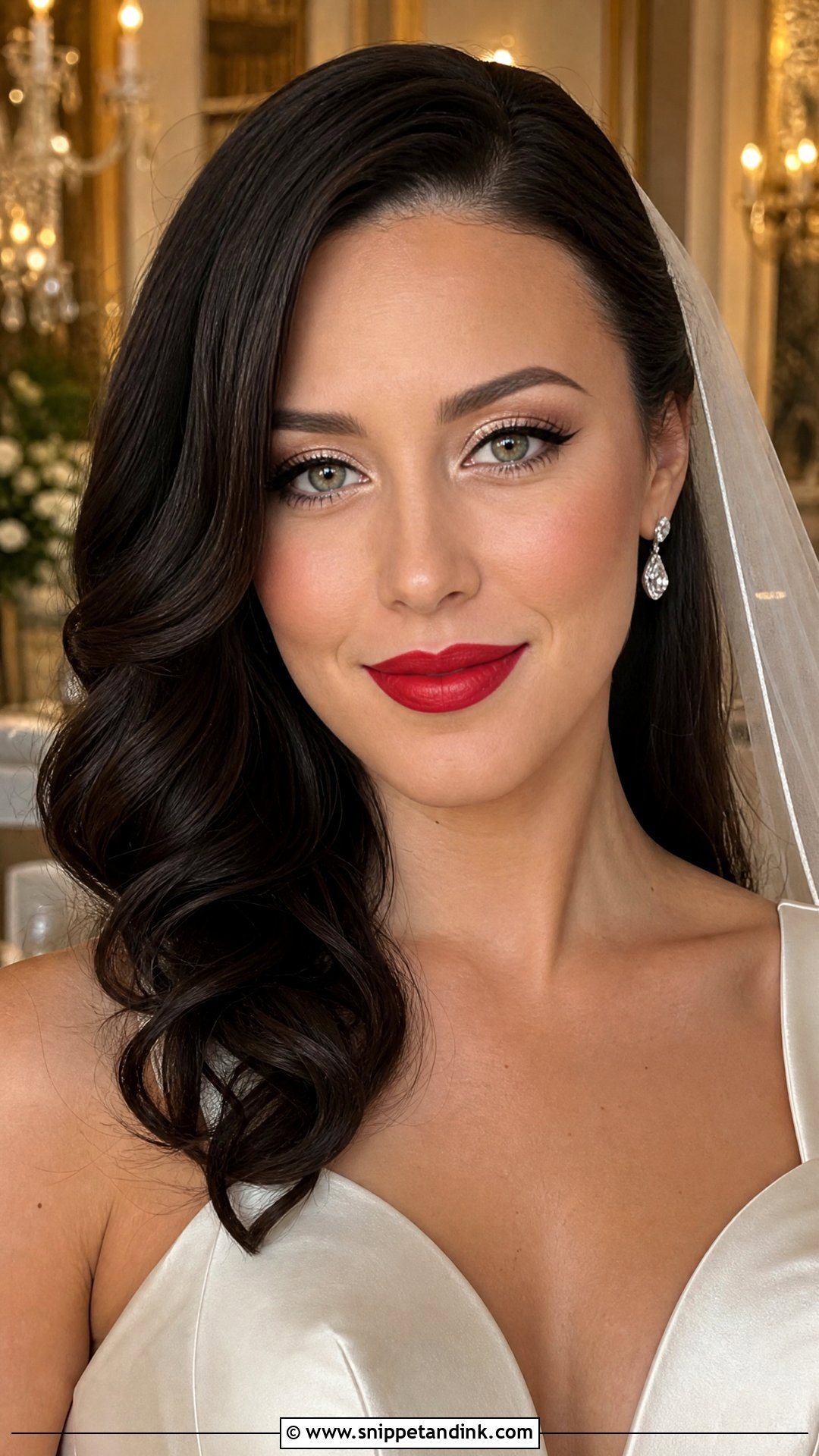
A red lip asks everything else on the face to step back. I keep the base polished but light, use a gentle contour and a quiet blush that won’t fight the mouth, and leave the eyes clean with champagne shadow, thin liner, curled lashes and groomed brows. Match the red to your undertone: blue-red on cool skin, true red on neutral, brick on warm. I line the entire lip, apply, blot and apply again, because layered red outlasts one thick coat and transfers far less onto a groom’s face. If you tend to touch your mouth when you’re nervous, plan to check it after every round of hugs.
9. Smokey Eye Wedding Makeup
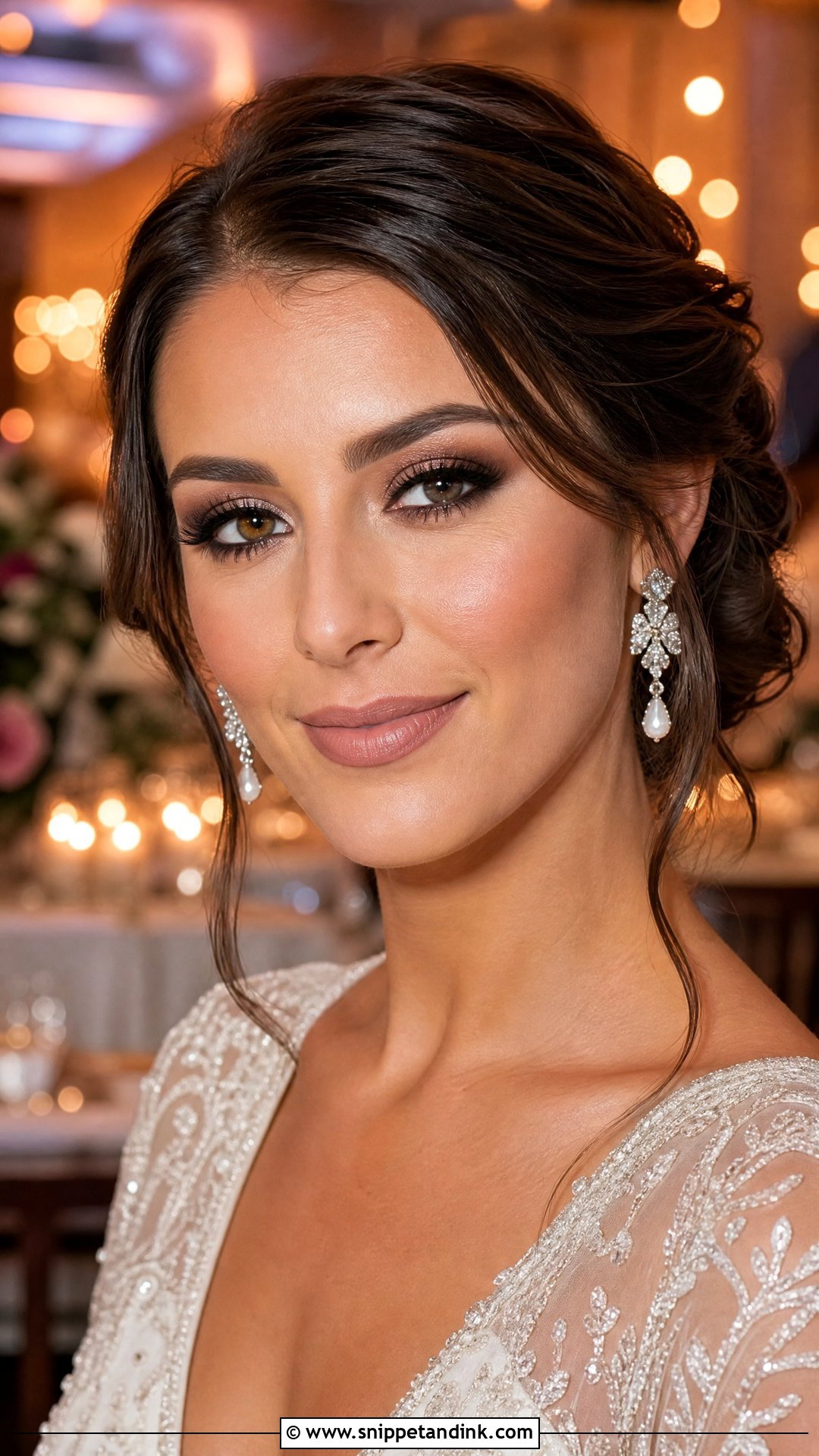
Everything depends on the edges. Smokey eye wedding makeup stays romantic when every border is diffused and the shades are brown, bronze, plum or soft charcoal instead of flat black. I keep the deepest tone tight to the lashes, blend upward with medium shades and add shimmer only to the center of the lid. Because the eyes carry so much weight, the skin stays fresh with neutral blush and a whisper of highlight, and the lip goes nude pink or soft mauve. On smokey looks I do the eyes before foundation, so any fallout can be wiped away without disturbing the base. It belongs to evening ceremonies and formal rooms, where low light flatters depth.
10. Matte Wedding Makeup
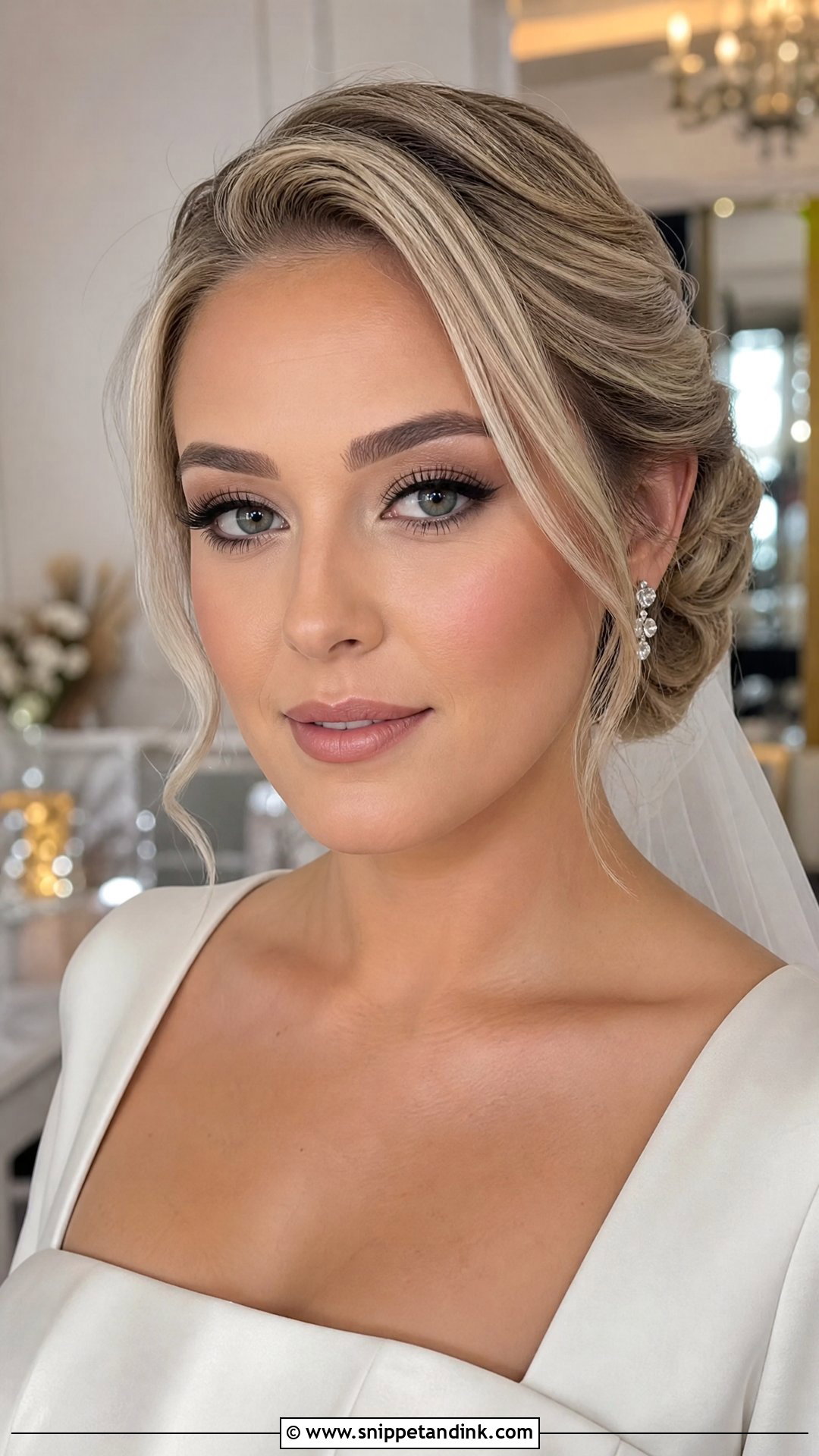
Matte has a reputation for looking flat, and on badly prepped skin it will. I avoid that by hydrating underneath, then using a soft-matte foundation and pressing finely milled powder only where the face gets shiny. Powder bronzer and a matte blush in rose or mauve put the warmth back. Matte beige and taupe on the eyes keep things neat, and a satin-matte lip stops the mouth from looking dry. For oily skin or a humid climate, this finish is my first recommendation because it simply lasts longer before you need to blot. Dry or mature skin usually looks better in satin.
11. Glossy Wedding Makeup
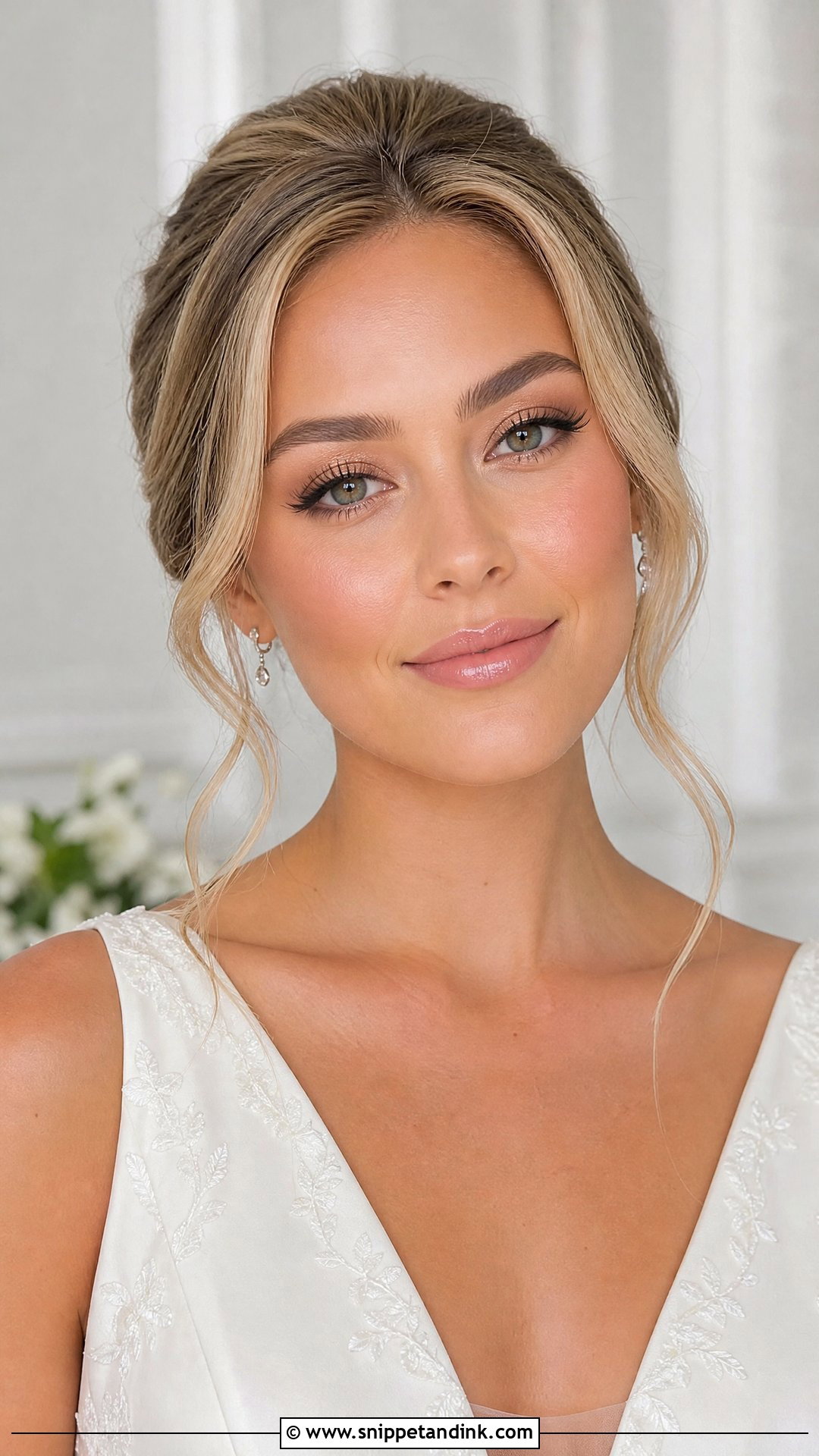
Gloss moves, which is its charm and its risk. I keep the base natural, add cream blush and a liquid highlighter, and leave the lids almost bare with a sheer champagne shimmer, since anything tacky on the eyelid creases within the hour. Lashes stay lifted and light. The lips carry the look, and I always line them underneath because gloss bleeds into the fine lines around the mouth when nothing holds the shape. Expect it to transfer onto cheeks during hugs and onto glasses at the toast, so keep the tube close. A minimalist dress and a daytime ceremony suit it best.
12. Mauve Wedding Makeup
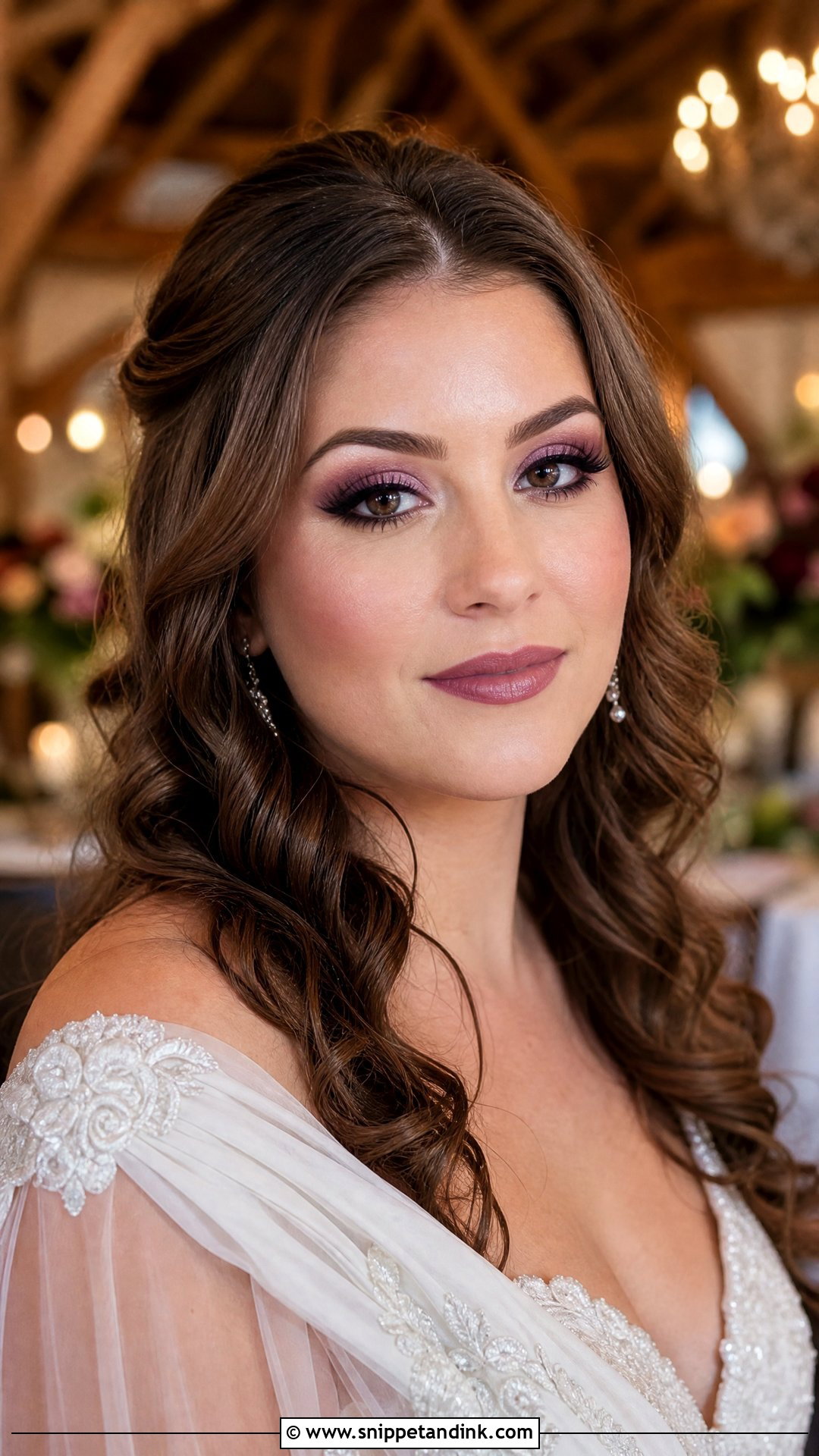
Mauve sits a shade moodier than pink, so I lean on it for fall, winter and evening, though blended lightly it can work in daylight too. A dusty rose blush over a neutral base sets the tone. I blend soft plum and taupe through the crease, press satin shimmer onto the lid and define with deep plum liner, which reads softer than black on lighter eyes. A mauve nude or rose-mauve lip finishes a monochrome face. On olive or sallow skin, pick a mauve with more pink in it; the grey-leaning versions can look tired under indoor lighting.
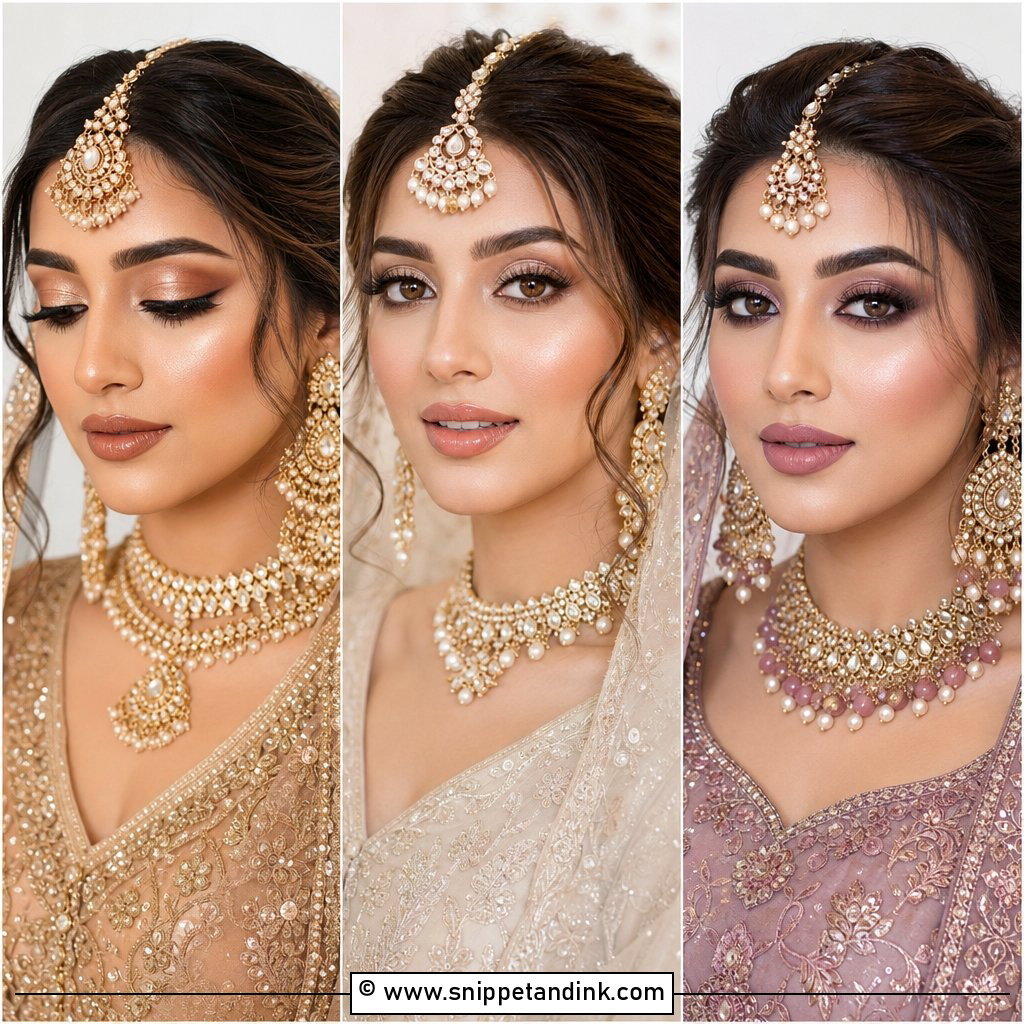
13. Champagne Wedding Makeup
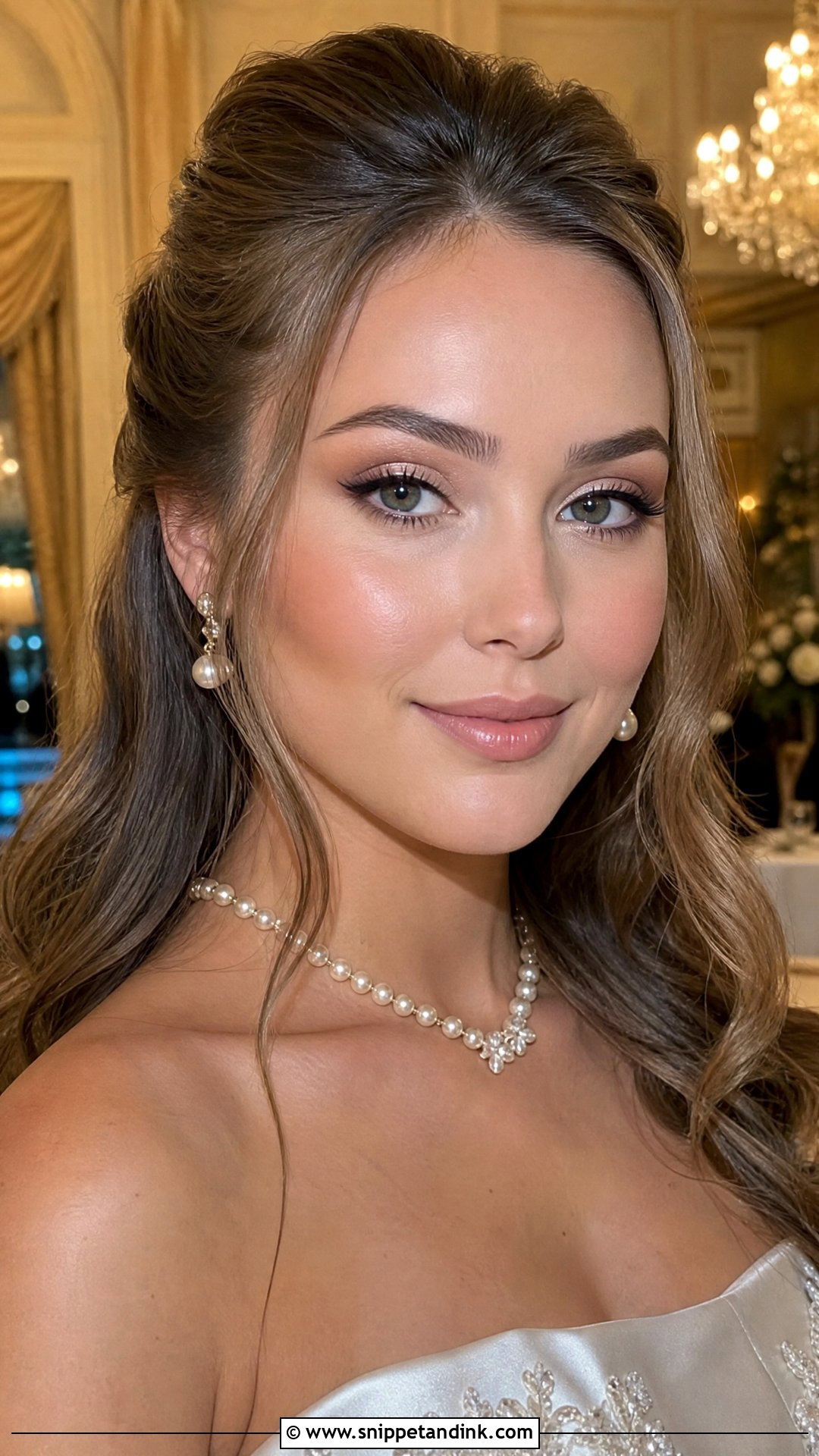
Champagne is my answer when a bride wants light around her eyes but no real color. A smooth base and a neutral blush set the stage, then champagne shimmer goes across the lid, beige into the crease, and a fine liner hugs the lashes. I only lightly define the lower lash line so the eyes stay open in photos. Choose a shimmer with very fine particles; chunky glitter catches flash as little white dots. A nude pink satin lip keeps the attention on the sparkle, and the palette sits nicely beside pearl earrings and a satin gown.
14. Brown Wedding Makeup
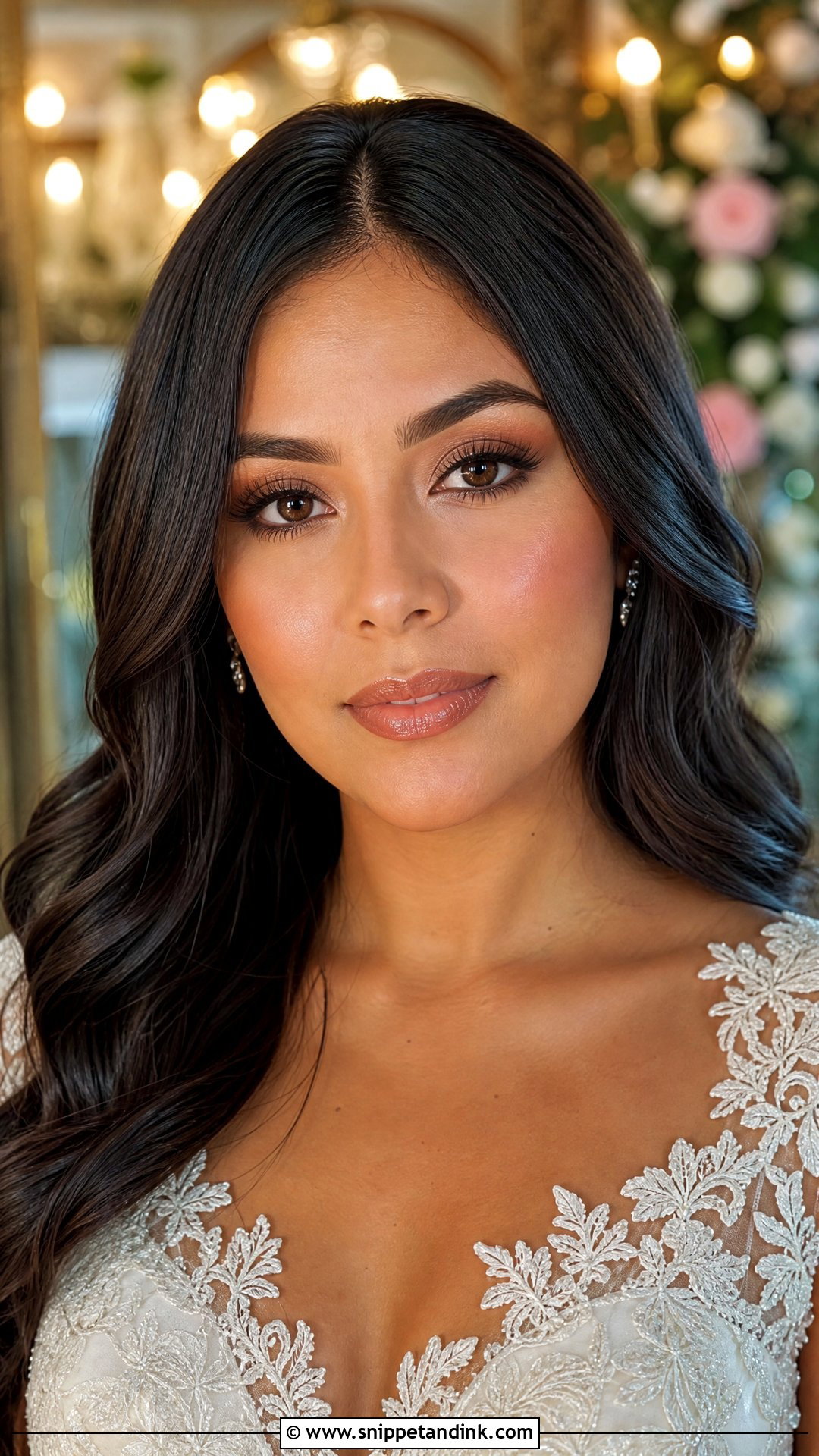
Brown gives depth without the hardness of black or grey, which is why it suits almost every eye color. Over a base matched to your undertone, I add bronzer and a natural blush, then build the eye from cream through tan and medium brown to espresso at the lash line. A brown pencil smudged into the roots creates a soft haze. Wispy lashes look more bridal than dense strips here, and the lips can stay nude beige or move toward soft cocoa. When a bride can’t decide between looks at her trial, this is often where we end up, because it adapts to any dress and any venue.
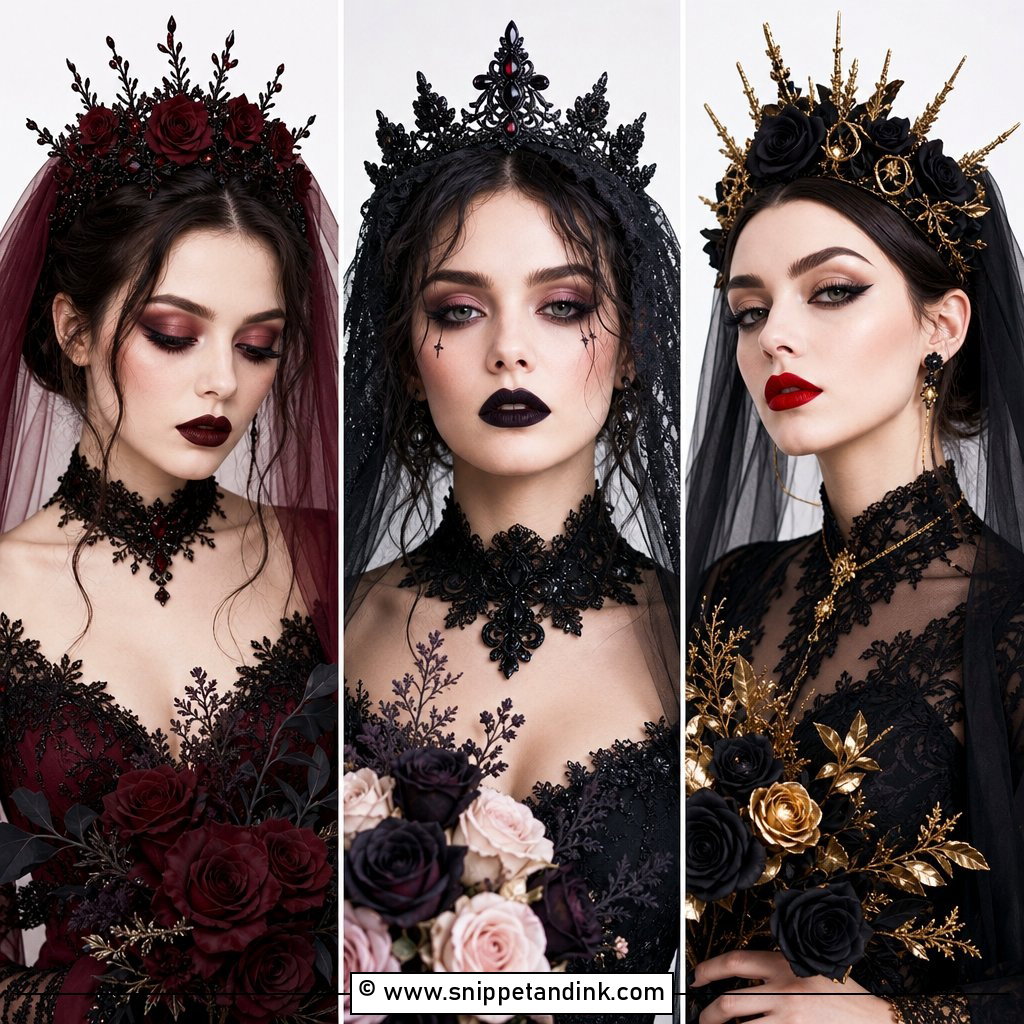
15. Berry Lip Wedding Makeup
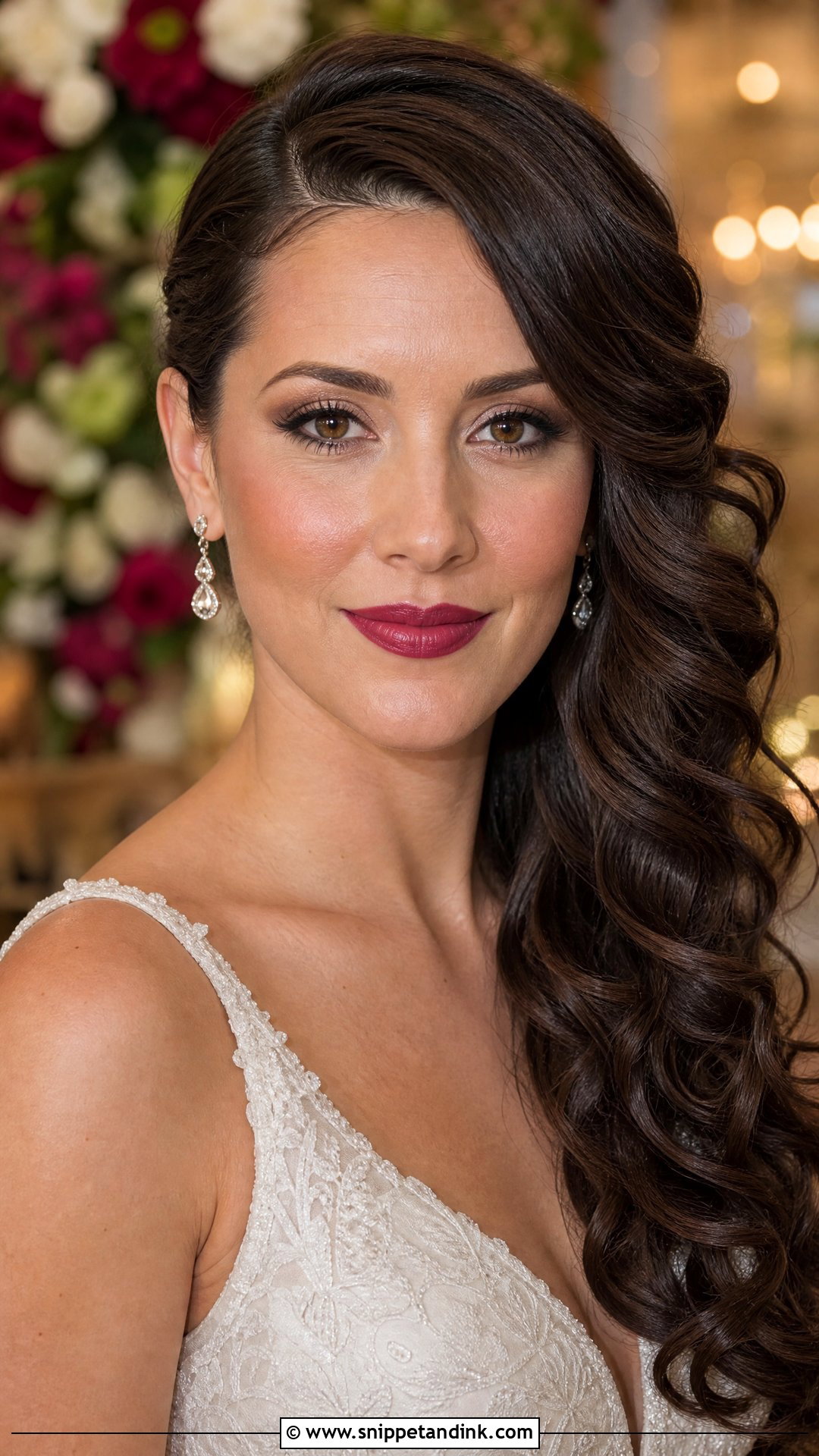
Berry is the softer cousin of red, and it works in any season. With the lip as the focus, I keep the eyes in neutral matte shadow with soft liner and well-separated lashes, and echo the berry in the blush at about half the strength. A stain gives color that fades evenly through the day, while a satin lipstick gives more impact. Stains are more forgiving after eating and kissing because there’s no edge to wear away. Deep berry shows every dry patch, so the lips get exfoliated and balmed at the very start of my session, before anything else touches them.
16. Blush Wedding Makeup
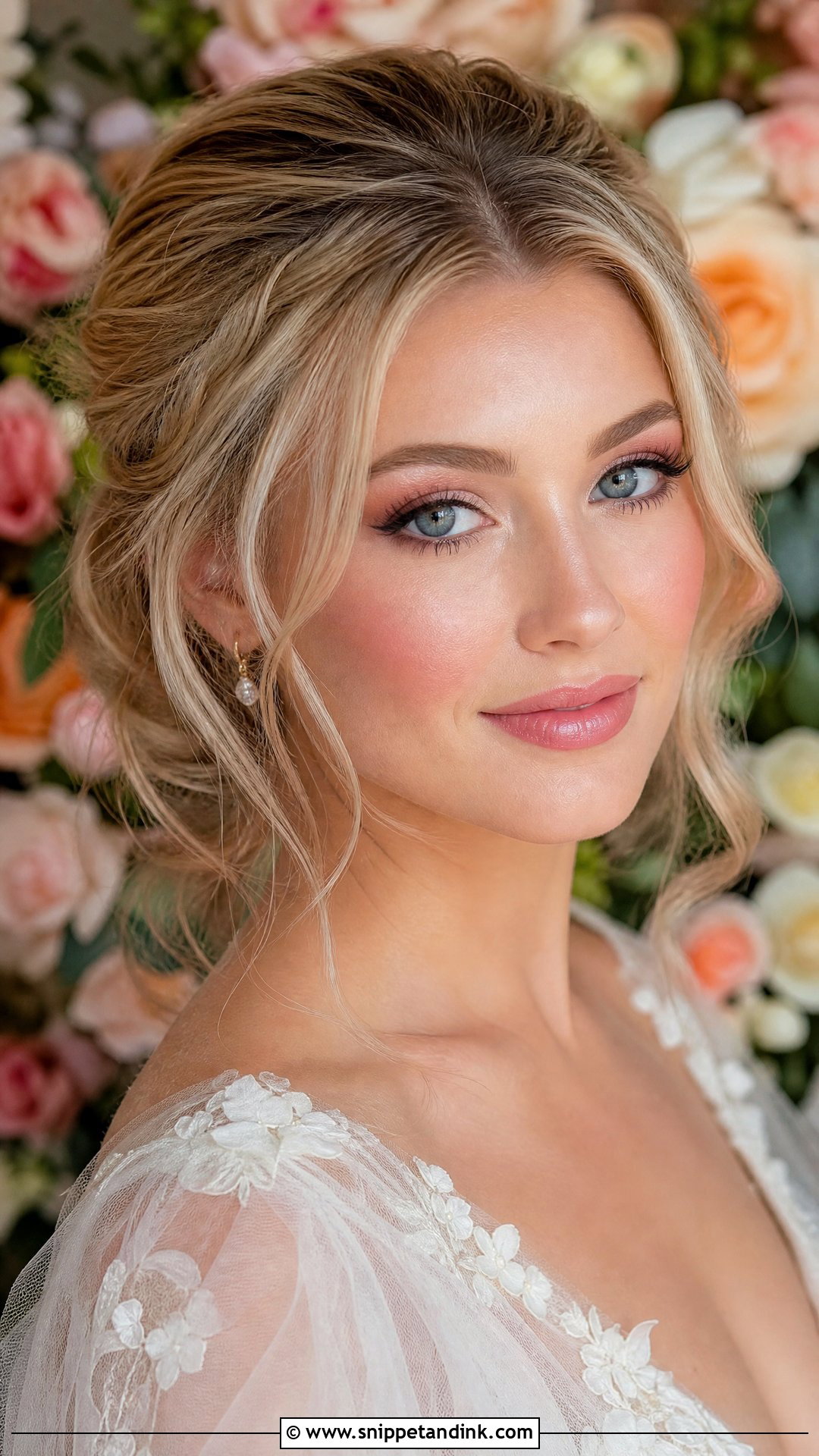
If I could keep only one product in my kit, it would be blush, because cheek color is what makes skin look alive on camera. I pick a shade for your skin tone and blend it from the apples upward toward the temples, which lifts the face instead of widening it. Eyes stay simple with rose-beige shadow, brown liner and light lashes. The lip comes from the same family as the cheek, peach with peach or pink with pink, so the face reads as one color story. I apply a cream blush first and set a matching powder over it; that double layer is what keeps cheek color visible past the first dance.
17. Vintage Wedding Makeup
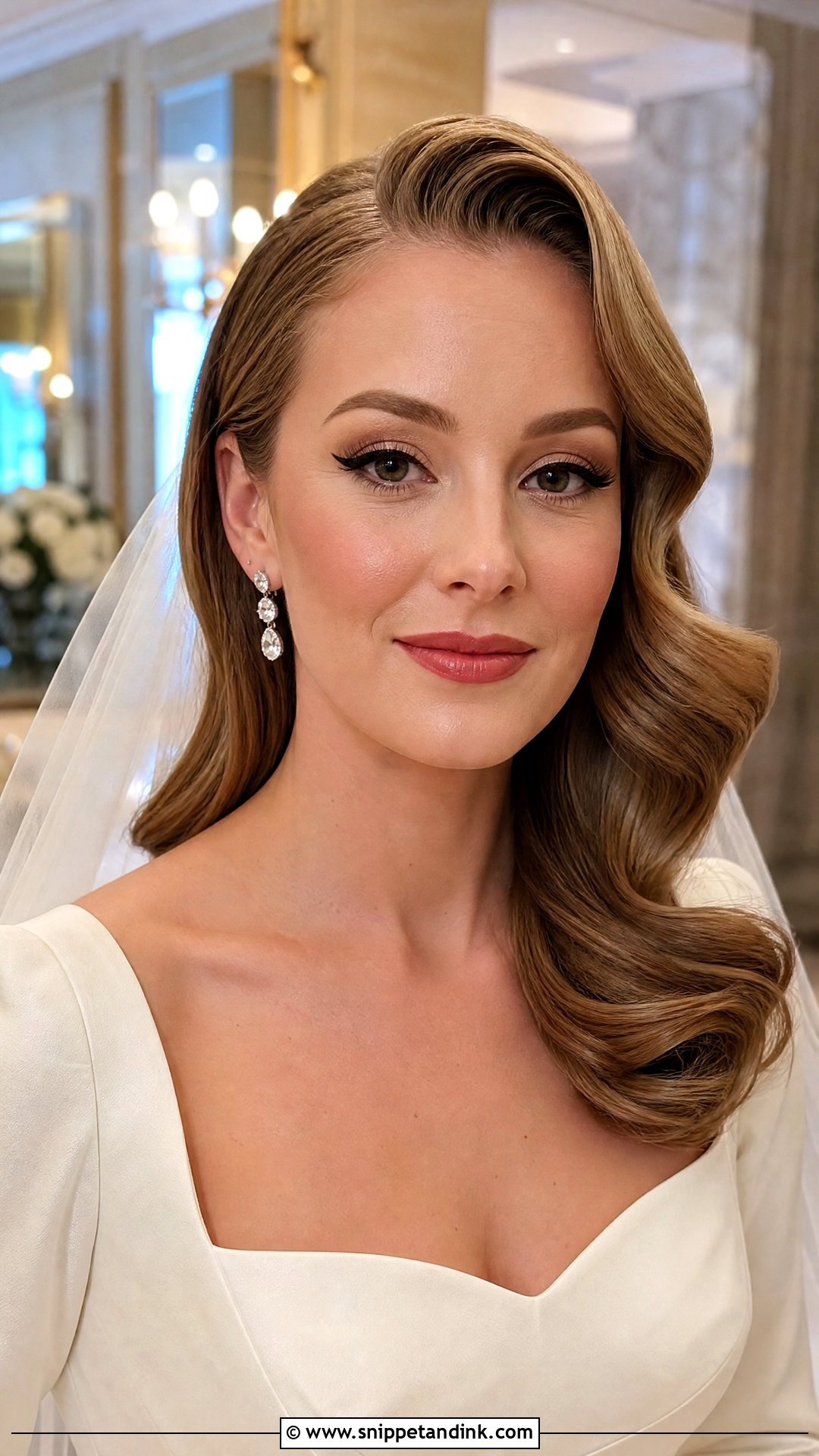
The line between vintage and costume is thin, and it usually comes down to how heavy the brows and liner are. I start with smooth satin skin and softly sculpted cheeks, keep the shadow neutral and draw a clean black or brown winged liner with defined lashes. Brows should be shaped but kept a shade lighter than your instinct suggests. Red, rose or muted berry on the lips depends on how bold you want to go, and a touch of highlight on the cheekbones keeps it from looking like a period film. Hooded lids need the wing drawn with the eyes open, or it vanishes into the fold. A birdcage veil completes the reference.
18. Boho Wedding Makeup
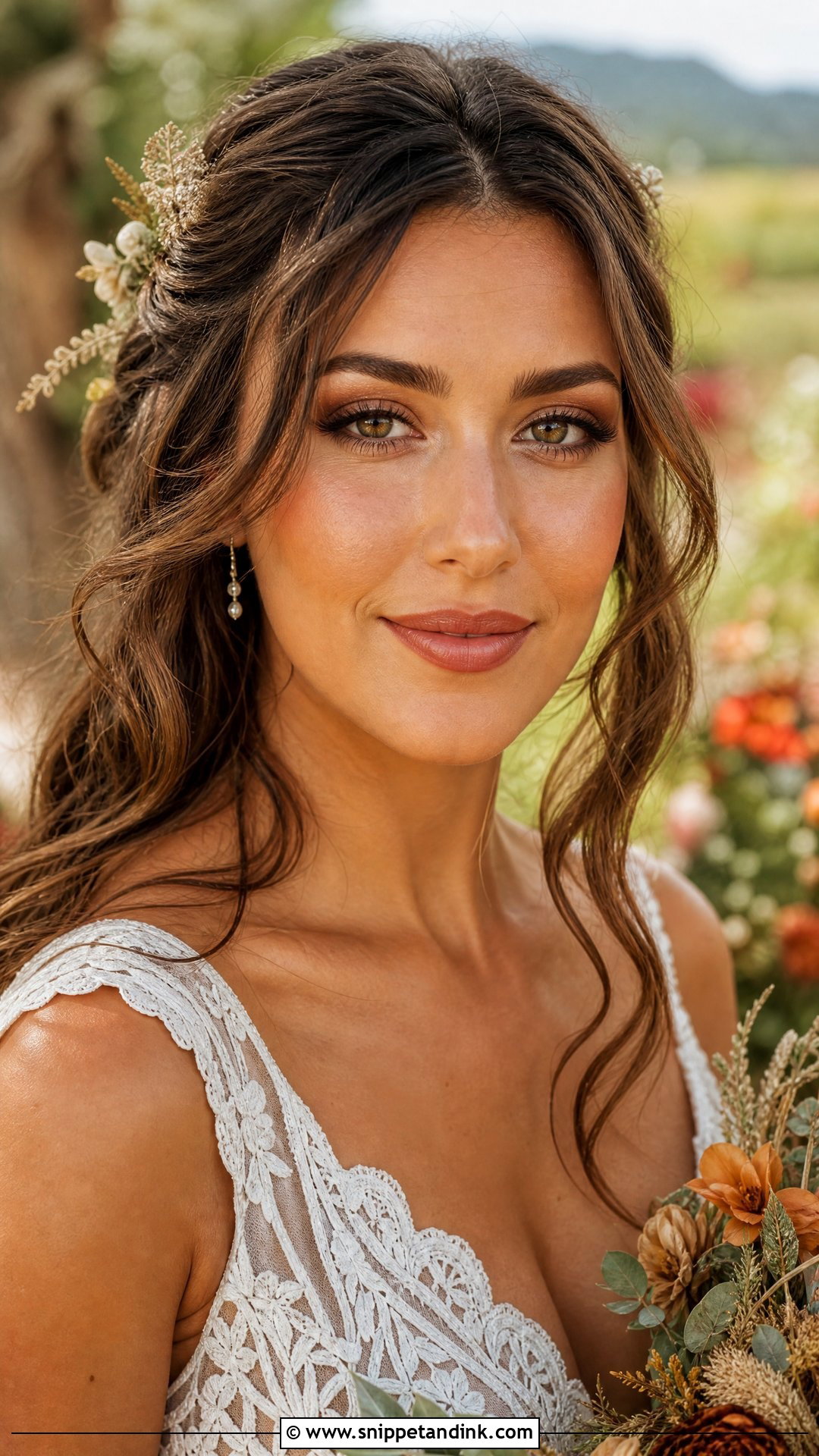
Boho makeup should look like you spent the morning outdoors, not in my chair. I keep the skin sheer and glowing with cream bronzer and a terracotta blush, then use sand and copper on the eyes with smudged liner, since a sharp line would fight the relaxed feel. Brows stay fluffy and brushed up, and a sheer caramel or rose-brown lip finishes it. Because the base is so thin, this one depends on good skincare in the weeks before: there’s very little coverage to hide a breakout. Loose waves and an airy dress outdoors are its natural setting.
19. Fair Skin Wedding Makeup
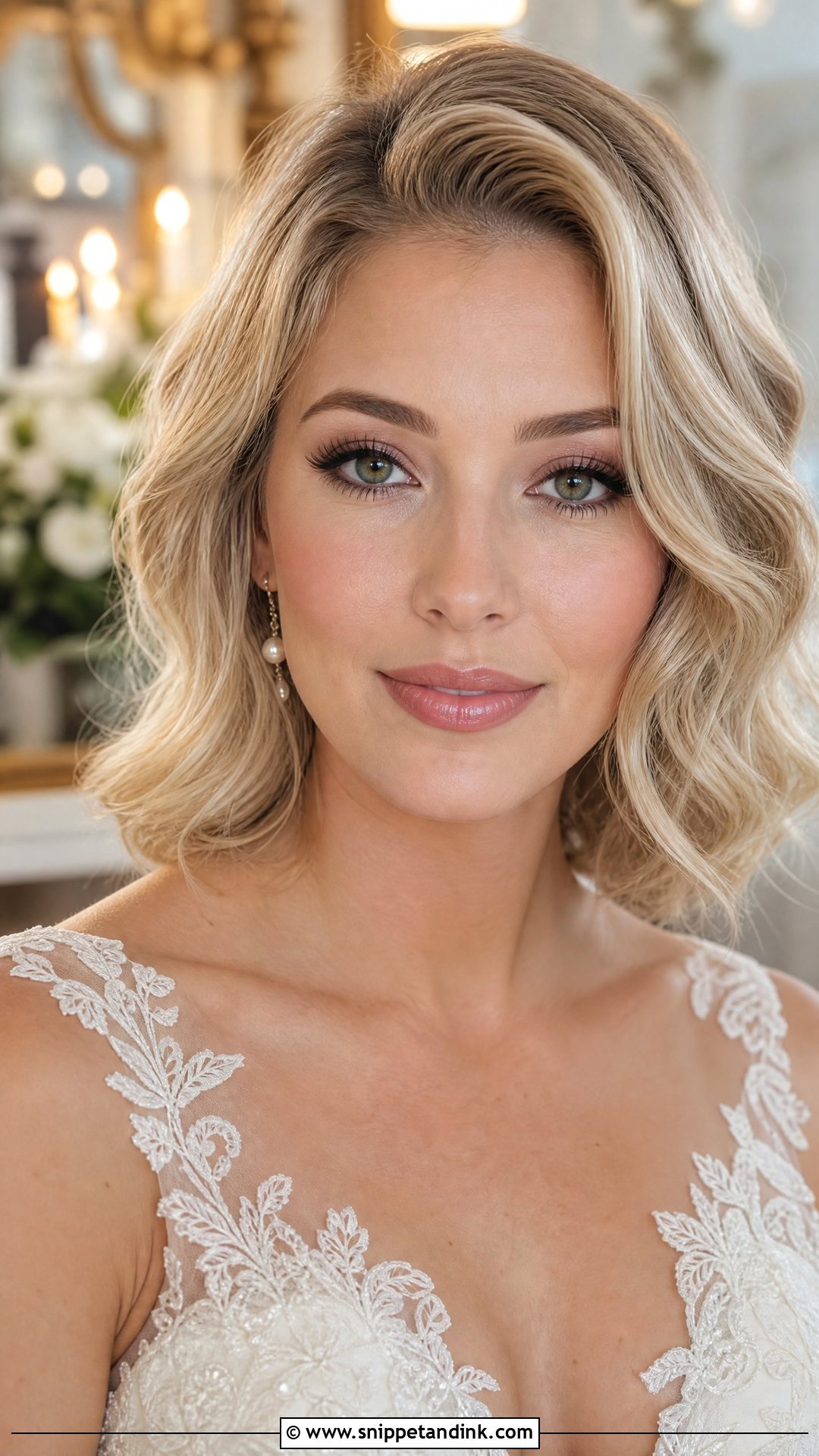
On fair skin the risk is color that vanishes on camera, so I go a little stronger than looks right in the mirror. A light satin base, cool pink or soft peach blush and a pearl highlight brighten the complexion. Taupe or rose beige on the eyes with brown liner is softer than intense black, especially in daylight. Lashes that add length rather than volume suit pale natural lashes, since heavy black strips can look stuck on. For lips, a pink nude or a sheer berry stain. Redness around the nose and chin is common on fair skin, and I correct it with a little targeted coverage before foundation rather than piling more base on top.
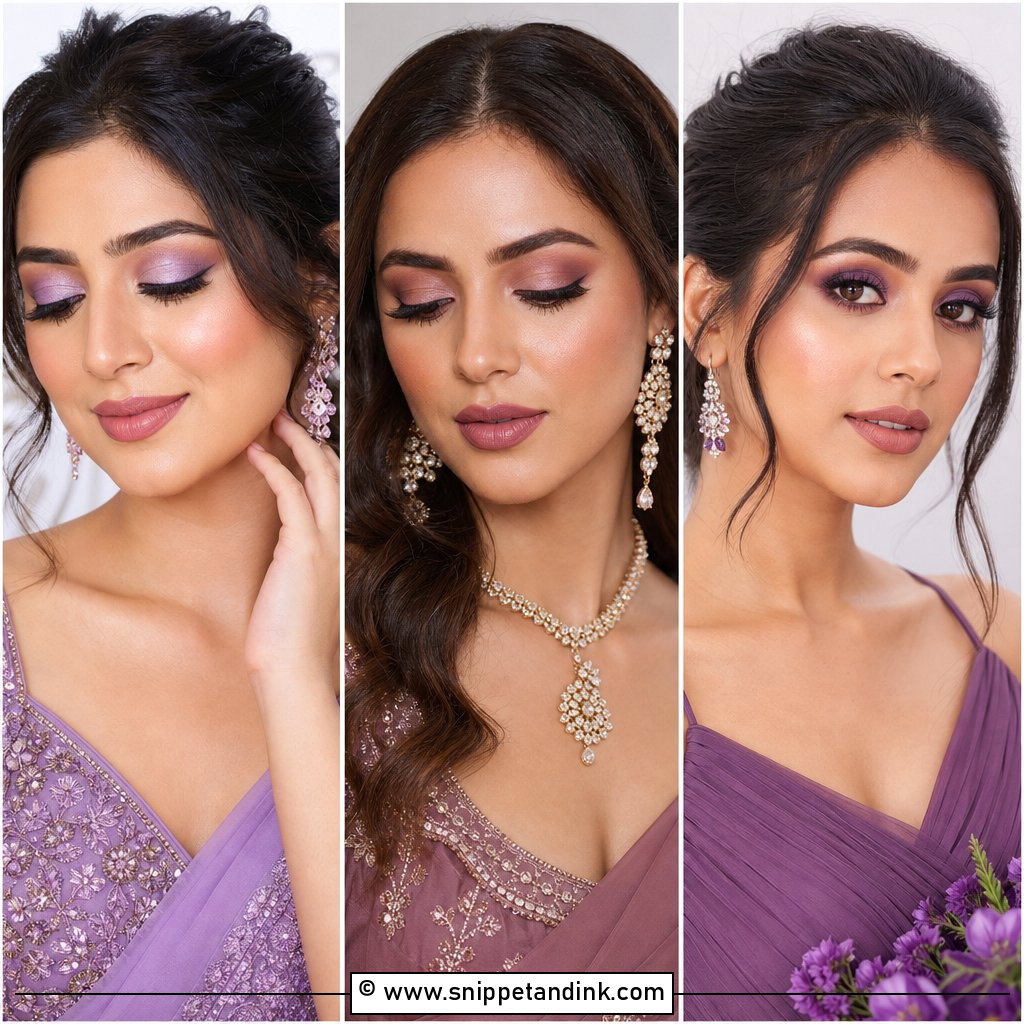
20. Deep Skin Wedding Makeup
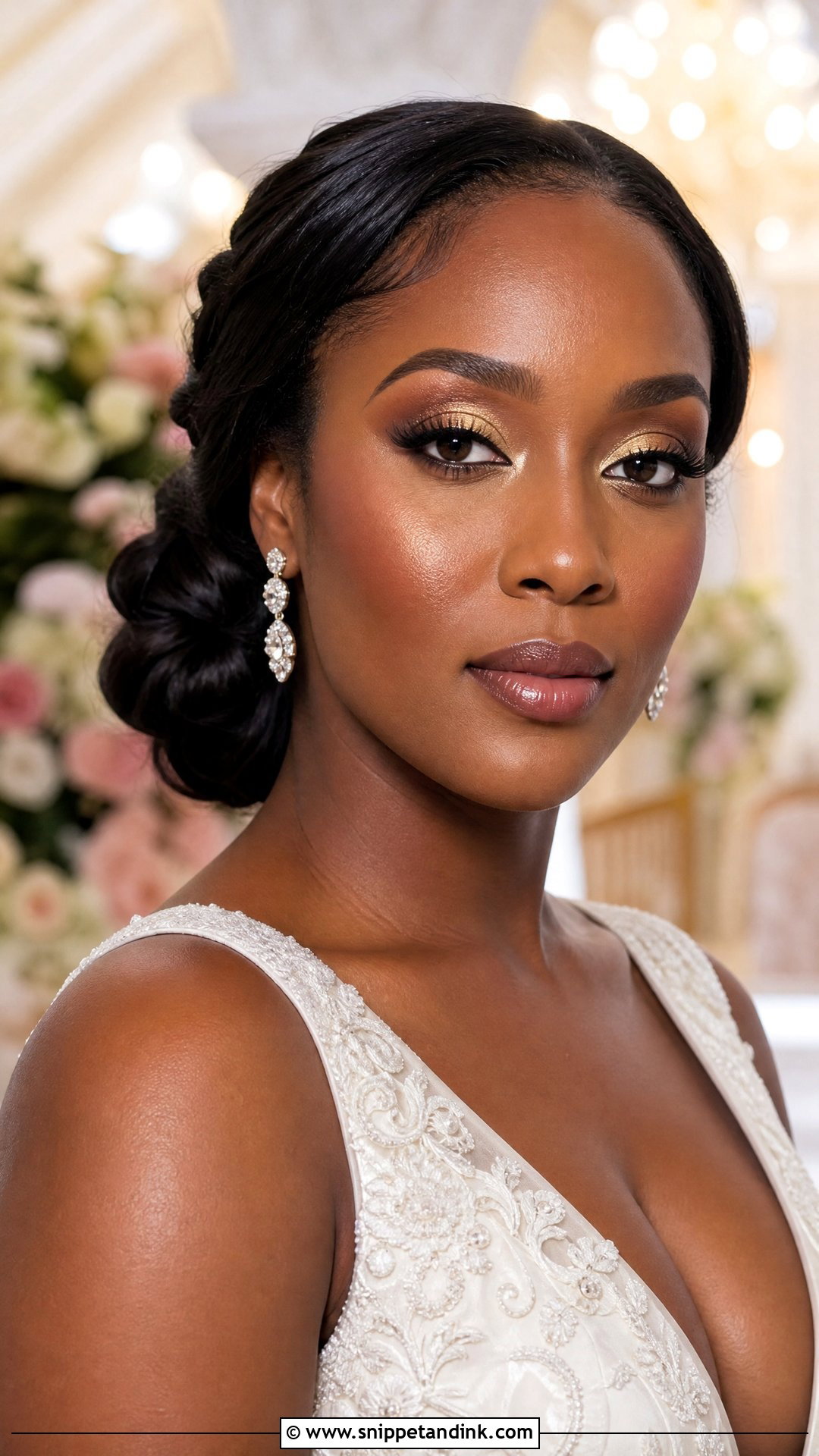
Getting the base right is my first job here, and it’s where I see the most mistakes. Deep skin wedding makeup needs a foundation that matches the face, neck and chest, often a mix of two shades to catch the right undertone, because a base that’s too light or too red turns ashy in flash. Dimension comes from warm bronzer or a soft contour, and blush in berry, plum or deep rose gives a flush that actually shows. Champagne gold, copper or chocolate shimmer brings light to the lids, with deep brown or black liner and soft lashes. Lips can be caramel nude, cocoa rose or deep mauve. I avoid white-based highlighters; golden and bronze ones melt into the skin instead of leaving a grey sheen.
Under the Flash, in Window Light and by Candle
Cameras flatten color. A blush that looks rosy in the mirror can read as almost nothing in a flash photo, so for a romantic face I usually go one step deeper on cheeks and lips than a bride would pick for everyday wear.
Flashback and white cast
Some sunscreen-heavy foundations and very fine setting powders bounce flash back and leave a pale cast across the face, most often under the eyes. I check every powder by taking a flash photo at the trial. If it glows white, it stays out of the kit for the wedding.
Shimmer on textured lids
Shimmer magnifies texture. On hooded or crepey lids I keep sparkle to the center of the lid and use satin everywhere else, so close-up portraits show light rather than creases.
Candlelit receptions
Warm, dim light swallows pinks and mauves. If your reception is lit mostly by candles, a lip with a little more pigment keeps your mouth defined in the evening shots.
Five Small Things Your Maid of Honor Should Carry
I rarely stay past the ceremony, so the touch-up kit goes to someone who will be beside you all evening. Keep it tiny; a bag nobody wants to hold gets left at the table.
- Your exact lipstick and lip liner, not a similar shade from her own bag.
- Blotting papers. Blot first, then powder, because powder pressed over oil cakes.
- The same powder used in the morning, in a compact with a clean puff.
- A few cotton buds for smudged liner after tears.
- A small mirror, since restroom lighting is rarely kind.
Wear the Whole Face for an Afternoon First
The look that serves you best isn’t the trendiest one; it’s the one that suits your skin, your eyes, your dress and the light you’ll be married in. Any of these directions can feel romantic once the details are balanced. Book a trial, keep the full face on for several hours afterwards, and photograph it by a window and again with a phone flash. Whatever still looks right at the end of that afternoon will carry you from the aisle to the last song.
You'll Like These Ideas:


Leave a Reply